All Activity
- Past hour
-
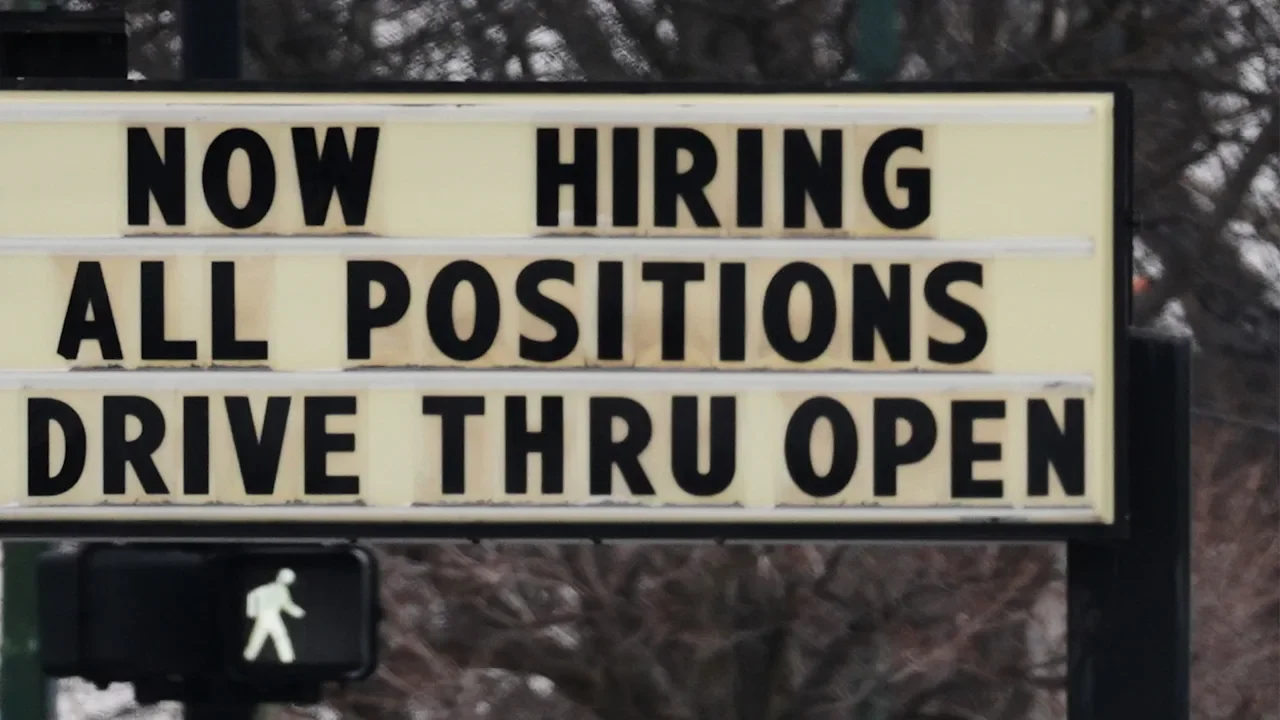
 U.S. employers added a surprisingly strong 130,000 jobs last month, but government revisions cut 2024-2025 U.S. payrolls by hundreds of thousands. The unemployment rate fell to 4.3%, the Labor Department said Wednesday. The report included major revisions that reduced the number of jobs created last year to just 181,000, weakest since the pandemic year of 2020, and less than half the previously reported 584,000. The job market has been sluggish for months even though the economy is registering solid growth. But the January numbers came in stronger than the 75,000 economists had expected. Healthcare accounted for nearly 82,000, or more than 60%, of last month’s new jobs. Factories added 5,000, snapping a streak of 13 straight months of job losses. The federal government shed 34,000 jobs. Average hourly wages rose a solid 0.4% from December to January. The unemployment rate fell from 4.4% in December as the number of employed Americans rose and the number of unemployed fell. Weak hiring over the past year reflects the lingering impact of high interest rates, billionaire Elon Musk’s purge last year of the federal workforce and uncertainty arising from President Donald The President’s erratic trade policies, which have left businesses unsure about hiring. Dreary numbers have been coming in ahead of Wednesday’s report. Employers posted just 6.5 million job openings in December, fewest in more than five years. Payroll processor ADP reported last week that private employers added 22,000 jobs in January, far fewer than economists had forecast. And the outplacement firm Challenger, Gray & Christmas reported that companies slashed more than 108,000 jobs last month, the most since October and the worst January for job cuts since 2009. Several well-known companies announced layoffs last month. UPS is cutting 30,000 jobs. Chemicals giant Dow, shifting to more automation and artificial intelligence, is cutting 4,500 jobs. And Amazon is slashing 16,000 corporate jobs, its second round of mass layoffs in three months. The sluggish job market doesn’t match the economy’s performance. From July to September, America’s gross domestic product – its output of goods and services – galloped ahead at a 4.4% annual pace, fastest in two years. Consumer spending was strong, and growth got a boost from rising exports and tumbling imports. And that came on top of solid 3.8% growth from April through June. Economists are puzzling out whether job creation will eventually accelerate to catch up to strong growth, perhaps as President Donald The President’s tax cuts translate into big tax refunds that consumers start spending this year. But there are other possibilities. GDP growth could slow and fall into line with a weak labor market or advances in AI and automation could mean that the economy can roar ahead without creating many jobs. Wednesday’s report included the government’s annual benchmark revisions, meant to take into account the more-accurate jobs numbers that employers report to state unemployment agencies. They cut 898,000 jobs from payrolls in the year ending March 2025. Despite recent high-profile layoffs, the unemployment rate has looked better than the hiring numbers. That is partly because President Donald The President’s immigration crackdown has reduced the number of foreign-born people competing for work. As a result, the number of new jobs that the economy needs to create to keep the unemployment rate from rising — the “break-even” point — has tumbled. In 2023, when immigrants were pouring into the United States, it reached a high of 250,000, according to economist Anton Cheremukhin of the Federal Reserve Bank of Dallas. By mid-2025, Cheremukhin found, it was down to 30,000. Researchers at the Brookings Institution believe it could now be as low as 20,000 and headed lower. The combination of weak hiring but low unemployment means that most American workers are enjoying job security. But those who are looking for jobs – especially young people who can be competing at the entry level with AI and automation – often struggle to land one. —Paul Wiseman, AP Economics Writer View the full article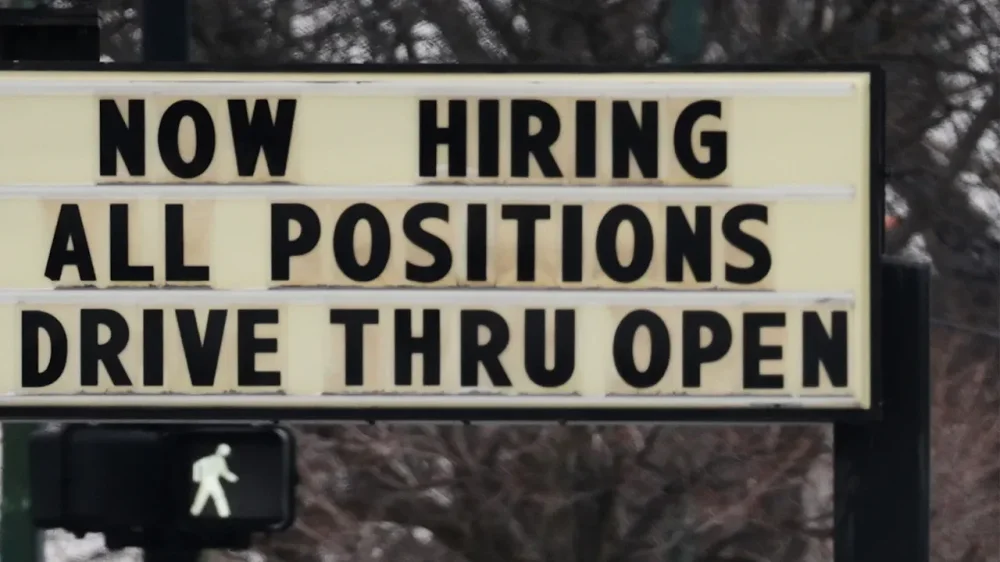
-
The federal government should step in to prevent an emerging patchwork of state regulations from stifling the benefits of applying the tools of generative artificial intelligence to the mortgage market. View the full article

-
AI search influence didn’t show up in our SEO reports or AI prompt tracking tools. It showed up in sales calls. “Found you via Grok, actually,” a new lead said. That comment stopped us cold. We hadn’t tried to rank in Grok. We weren’t tracking it. Yet it was influencing how buyers discovered and evaluated us. That disconnect kept appearing in client conversations, too. Everyone was curious about AI search, but no one trusted the data. Teams wanted visibility in ChatGPT and other AI tools, then asked the same question: “Why invest in a channel that doesn’t show up cleanly in attribution?” To answer that, we ran controlled experiments using assets we could fully control – an agency website, personal sites, an ecommerce brand, and purpose-built test domains. The goal wasn’t to win AI rankings. It was to understand what still matters once AI enters the decision process: Does AI search change what people buy, or just where brands appear? Can something influence revenue without ever appearing in analytics? Does AI recommendation affect performance across other channels? Why we ran the experiments Most AI search conversations fixate on visibility signals like brand mentions, citations, or visibility screenshots from AI prompt tracking tools. Search has always had one job: help people make a decision. We wanted to know if AI search performed the same job and actually changed commercial outcomes. AI systems now operate at the stage where buyers compare options, shortlist providers, and reduce risk. If AI mattered, it had to show up at the moment of decision. On measurement limits: We didn’t rely on API data because API responses often differ from what real users see. Instead, we observed live interfaces across ChatGPT, Perplexity, Gemini, and Google AI Overviews. We used prompt tracking to spot patterns, not to declare absolute wins. Your customers search everywhere. Make sure your brand shows up. The SEO toolkit you know, plus the AI visibility data you need. Start Free Trial Get started with Experiment 1: Self-promotional ‘best of’ lists on your own website A simple tactic became popular over the past year: Create a “best X” list on your site. Put yourself at the top. Let AI systems pick up the list. I’ve seen agencies do this locally and felt conflicted about it. It wasn’t spam. But it relied on a blind spot – LLMs struggle to separate independent rankings from self-written ones. Around the same time, Ahrefs published a large study that helped explain why this works. Glen Allsopp analyzed ChatGPT responses across hundreds of “best X”-style prompts and found that “best” list posts were the most commonly cited page type. Two things from the study stood out: Format: This included cases where brands ranked themselves first Freshness: Most cited lists had been updated recently I could have tested these observations on StudioHawk. Instead, I did it on my personal brand website to manage the risk. I published a list of the “Best SEO agencies in Sydney” and included my own website among the entries to test whether AI would “take the bait,” so to speak. Within two weeks, LawrenceHitches.com appeared across AI tools for “best SEO agency Sydney” style searches: The speed was surprising – traditional SEO rarely moves that fast. If visibility appears this easily, then visibility alone can’t mean much, so I tested it again. Experiment 2: Self-promotion of a fake business Initially, I could have been piggybacking off the already established StudioHawk brand, so I decided to run a self-promotion test on a fake website We used a basic landscaping site built only for SEO and AI testing and published the same type of page, a “best X” list. This time, the topic was “best landscapers in Melbourne”: Within two weeks, the list appeared in AI responses again. The result repeated almost exactly. If a brand-new test site can surface this fast, then “appeared in AI” doesn’t mean much on its own. Visibility vs. trust These two experiments showed one thing clearly: LLMs are still easy to influence at the surface level. I ran these tests back in August 2025, but the same pattern still appears today. A “best SEO agency Sydney” search run in January 2026 shows the same list-driven results: This creates a real conflict for brands. On one side, the data says yes – the Ahrefs research shows “Best X” pages attract citations. Large brands like Shopify, Slack, and HubSpot publish self-ranked lists without obvious damage to rankings or AI visibility. On the other side is buyer trust. As Wil Reynolds put it, listing yourself first on your own site doesn’t build confidence with buyers. That’s the tension. When bullish founders ask for the secret sauce to appear in ChatGPT, I’m blunt. List-based “best of X” pages that rank the author first have been a fast way to surface in some AI results. That doesn’t work everywhere, and it’s unlikely to hold up long term. Dig deeper: Google may be cracking down on self-promotional ‘best of’ listicles If a landscaping site with no reputation can surface this quickly, then appearing in AI means very little on its own. Why prompt tracking can’t be a success metric A lot of money is flowing into AI prompt tracking tools. Clients ask for them constantly. We use them too, but with a clear warning. I wouldn’t make major decisions based on screenshots or Reddit threads about where a brand appears in ChatGPT. Brand overlap between API outputs and real user sessions was as low as 24%, according to recent research from Surfer SEO comparing tracking APIs with scraped user experiences. That means three times out of four, what the API told you was happening wasn’t what the user was actually seeing. If a brand can appear in a screenshot but disappear in a real user session, then appearance alone isn’t a metric. We stopped asking if we showed up. Instead, we started asking, “Did this change how buyers behaved?” Did leads reference AI tools without prompting? Did sales calls skip education? Did the speed of buying change? Did price resistance soften? These signals were harder to collect. Dig deeper: 7 hard truths about measuring AI visibility and GEO performance Get the newsletter search marketers rely on. See terms. Experiment 3: Kadi and the limits of digital PR alone Kadi, an ecommerce brand we invested in that sells luggage, provided insight into our questions about whether AI results were affecting buyer behavior. Running tests on Kadi has been an eye-opening experience for two reasons: It’s the difference between running an agency and running ecommerce. It forced us to become our own client. To move fast, we led with digital PR. Kadi’s SEO foundation was solid but not perfect. We wanted to see how far off-site mentions could push SEO and AI visibility without heavy technical work or a polished site structure. We conducted a large number of creative data campaigns and product placements, including: Travel data studies: “Over-touristed destinations,” “Hidden fees,” “Best time to fly,” and “Happy Hour at 30,000 ft.” Advisory pieces: “Airport cybersecurity” and “duty-free shopping” guides Product and feature focus: “Kadi kids carry-on adventure,” “cloud check-in features,” and inclusions in “best suitcase round-ups.” It worked: Coverage landed. Authority grew without the need for “traditional SEO.” We saw temporary keyword spikes and traffic boosts. But there was a catch: Digital PR alone wasn’t enough to close the gap with competitors. It created quick traction in search results, but it didn’t resolve the underlying issues. After launch, SEO foundation work became the priority. Then, Black Friday made the reality obvious. A customer found Kadi through ChatGPT on a “kids carry-on” query. We saw this happen on the day of the query and showed the pathway: They didn’t buy immediately. They checked the shipping policy. They browsed the range. They added three additional products. They debated colour (olive over pink). Attribution later showed Instagram as the source. That order was the largest of the Black Friday period. On paper, AI did nothing. In reality, it was part of shaping the decision. Digital PR can get you visibility spikes, but it doesn’t address the whole picture. While AI traffic does convert, the attribution is inconsistent. Experiment 4: StudioHawk Across 2024 and 2025, StudioHawk underwent a full website rebrand and migration from WordPress to HubSpot. Our own site sat at the bottom of the priority list for years. It was always the project we would get to later. Finally, we paused other priorities and rebuilt the entire site. The work started in 2023, before terms like “GEO” existed. We were focused only on rebuilding service pages, social proof, and user experience end to end. After launch, rankings improved and continue to grow. In 2025, SEO became the agency’s strongest channel by efficiency. It drove 65% of inbound leads and close to 60% of new revenue. Between July and December 2025, AI search leads began to appear more often: Initially, these were “Oh, cool, we got a lead from AI” moments around the office. Sales calls started skipping early education. New leads arrived aligned based on fit and expectations. Over time, we saw that: SEO inbound leads: Averaged 29 days to close. AI search leads: Closed in roughly 18 days. That 10-day gap mattered. It meant less time educating, fewer scope objections, lower price sensitivity, and higher confidence earlier in the process. Within the first year, AI-influenced conversations contributed over $100,000 in closed revenue from 20+ leads, including deals with direct attribution from tools like ChatGPT, Perplexity, and Grok. The blind spot remains attribution paths such as Instagram, direct, or organic, where AI influenced the decision but didn’t appear in reporting (as seen in the Kadi example). Where direct AI attribution existed, buyers were more prepared. That preparedness shortened sales cycles and lifted revenue. AI compresses consideration We started by asking where people would search next. Our key finding? AI search doesn’t replace discovery. It compresses the consideration phase. Consideration is that messy middle where buyers reduce risk, shortlist vendors, compare tradeoffs, and ask, “Who should I trust?” They answer these questions before a buyer ever clicks a link. It means your website no longer carries the full load – AI summaries and third-party mentions do the pre-selling for you. This is the shift we now describe as the new consideration era. As the map illustrates, we’ve moved from a straight funnel to a complex, AI-influenced pathway where consensus is key: Because this happens off-site, last-click attribution is broken. A buyer might use ChatGPT to create a shortlist but convert later via direct search. Where traditional SEO still fits Strong SEO metrics were a core across all our experiments, but we’ve stopped viewing them as the primary driver of value: Keyword rankings confirm search engines understand your entity. However, those high rankings don’t guarantee effective pre-selling. Traditional SEO became a supporting signal – proof that the foundation is sound, rather than the end goal. What this means for brands After running a variety of AI search experiments, here’s what I think brands should focus on. 1. Measure where AI influence actually lands Stop obsessing over prompt appearances (e.g., citations, mentions). These are shiny objects, but they fluctuate too easily. Instead, measure: Sales velocity (Did deals close faster?) Quality of the lead (Did they ask fewer questions to learn?) Value per lead (Did price friction ease?) 2. Make clarity more important than creativity AI hates vagueness. Making pages that make it clear what you do and who it’s for. Pay attention to content that answers questions about risk, comparison, and price. 3. Change the content to help people decide what to buy Focus on content that answers comparison, risk, and pricing questions. This makes a bigger difference than general category explanations. 4. Make entity consistency a crucial factor Lack of consistency makes people doubt themselves. Conversely, consistency boosts confidence. Check to see that your website, reviews, and digital PR all talk about your brand in the same way. See the complete picture of your search visibility. Track, optimize, and win in Google and AI search from one platform. Start Free Trial Get started with AI search compresses consideration, not discovery In the end, the results were the same across all experiments. What we got from our sales pipeline was typical: Clear intent. Tight positioning. Consistent signals of authority. AI search isn’t replacing basic SEO. Instead, it shows weak positioning more quickly than traditional search ever did. What does that mean? Simply put, AI speeds up decisions that were already forming. Dig deeper: From searching to delegating: Adapting to AI-first search behavior View the full article
-
There are few things everyone can rally behind as much as finding a lost dog. But what if that mission is actually a workaround for mass surveillance? That’s the question many people are asking following a Super Bowl commercial from Ring, Amazon’s doorbell camera and home security brand. The 30-second video shows a series of missing dog posters and claims that 10 million pets go missing every year. It pitches Ring’s Search Party feature as the solution. Launched in November, Search Party takes a photo of the pet and taps into Ring cameras across the area. They can then use AI to identify the missing pet and send an alert. The ad claims that at least one dog a day has been found since the feature launched. It sounds like a happy ending, except that critics of Search Party see the ad’s framing as a way to normalize widespread biometric identification and a loss of privacy. Take a response from WeRateDogs, a dog-lovers’ account connected to 15/10 Foundation, a nonprofit raising money to get necessary medical help for shelter dogs. In a video posted to Bluesky on Tuesday, the brand’s creator, Matt Nelson, states, “Neither Ring’s products nor business model are built around finding lost pets, but rather creating a mass surveillance network by turning private homes into surveillance outposts and well-meaning neighbors into informants for ICE and other government agencies.” Solutions for finding lost dogs already exist Nelson further claims that Ring’s success rate of one dog found per day equals about 0.03% of reports shared. Instead of using Search Party, he suggests dog owners get their pet microchipped—a common means of tracking lost dogs. Vets and some shelters can microchip dogs. The Electronic Frontier Foundation (EFF), a nonprofit focused on “defending civil liberties in the digital world,” takes a similar stance on Ring. “The addition of AI-driven biometric identification is the latest entry in the company’s history of profiting off of public safety worries and disregard for individual privacy, one that turbocharges the extreme dangers of allowing this to carry on,” EFF wrote in response to the ad. The nonprofit continues: “People need to reject this kind of disingenuous framing and recognize the potential end result: a scary overreach of the surveillance state designed to catch us all in its net.” EFF points to instances such as in 2023, when Ring had to pay $5.8 million to settle with the Federal Trade Commission (FTC) after Ring employees were found to have had extensive access to customer footage—including in intimate spaces. In reaching the settlement, Ring denied violating the law. In early 2024, Ring claimed it would stop providing footage to the police without a warrant. But both Nelson and the EFF point to Ring’s late-2025 partnerships with Flock Safety and Axon. The companies can request footage from Ring customers—without a warrant—for a case and then send it to thousands of law enforcement agencies. Fast Company has reached out to Ring for comment and will update this post if we hear back. A May 2025 report by 404 Media found that police using Flock’s AI license plate reader regularly put the reason as “ICE.” In a specific case, the Johnson County Sheriff’s Office in Texas, used Flock in its search for a woman who self-administered an abortion. How to turn off Ring’s Search Party feature Ring’s Search Party feature is on by default, but users can turn it off. According to Amazon’s Ring support, you can turn off the Search Party feature by: Going to the Ring app and tap the menu icon (three lines) Clicking Control Center Choosing Search Party Tapping Enable or Disable Search for Lost Pets (Click the blue Pet icon next to it if you want to turn it on or off for specific cameras) Nelson’s post on Bluesky has attracted thousands of shares and hundreds of comments, with some pointing to a Reddit thread in which users are saying they plan to return their Ring camera for a refund. View the full article

-
Effective article-to-video workflows prioritize what to cut, what to keep, and how to structure 150 words that actually hold attention. The post From Article to Short-Form Video That Holds Attention appeared first on Search Engine Journal. View the full article
-
While ChatGPT has nearly a fifth of Google’s query volume, people use the platforms in different ways. I wanted to see how ChatGPT compared to Google, not just on the total number of searches, but also searches where they compete…Read more ›View the full article
-
The trove of documents released by the Department of Justice (DOJ) in relation to Jeffrey Epstein have revealed just how close the convicted child sex offender and financier was to all sorts of politicians, academics, business leaders, and other prominent figures. These figures not only talked about visits to Epstein’s private island, but also shared news articles, discussed personal events, and had long debates about science and philosophy. Epstein’s views, those conversations reveal, included peddling climate denialism and ecofascism—and illustrate how the ultra-wealthy undermine meaningful climate action. ‘Potentially a good thing for the species’ In a series of July 2016 emails with Joscha Bach, a German philosopher, AI researcher, and cognitive scientist, Epstein brings up climate change in the middle of a discussion about cognition and race. “Maybe climate change is a good way of dealing with overpopulation,” Epstein writes. “the earths forest fire. potentially a good thing for the species.” Linking the conversation back to the earlier topic of how brains function, Epstein adds: “too many people . . . [it] is the fundamental fact that everyone dies at some time. make it [impossible] to ask so why not earlier. if the brain discards unused neurons, why [should] society keep their equivalent.” (Regarding his correspondence with Epstein, Bach recently told SFGate that he hadn’t been aware of Epstein’s crimes after his 2008 conviction and that “his second arrest came as a shock.”) Citing climate change as a solution to overpopulation isn’t a totally surprising position for someone like Epstein, says Michael Mann, a climatologist and coauthor, with Peter Hotez, of the 2025 book Science Under Siege: How to Fight the Five Most Powerful Forces That Threaten Our World. The overpopulation quote is “entirely keeping with the ethos of this group,” Mann tells Fast Company via email, referring to Epstein and his elite associates. Studies suggest that becoming richer makes you less empathetic, and that those with more power often care less about those with little power; the ultra-wealthy can then therefore be more dismissive of the needs of poor people, communities in developing countries, and their lived realities. An example of this way of thinking, Mann notes, comes from Bjorn Lomborg, a political scientist who has been criticized for spreading climate denialism. Lomborg, who also makes an appearance in Epstein’s emails, has argued that poor people need fossil fuels. “Lomborg cynically uses his feigned concern for the poor and downtrodden people of the Global South to justify continued fossil fuel dependence, when in fact it is they who will suffer the most from continued planetary warming,” Mann says. According to the Epstein files, Lomborg had a meeting with the financier in September 2012. That conversation was about philanthropic investments, a spokesperson for Lomborg’s think tank, the Copenhagen Consensus Center, told Drilled Media. But there wasn’t any contact afterward, and the think tank did not receive money from Epstein. Epstein and climate misinformation In some places where the topic of climate change appears in the Epstein emails, Epstein is revealed to have shared messages that perpetuate climate myths. In December 2016, for example, Epstein sent a YouTube video featuring a climate change denier to theoretical physicist Lawrence Krauss. That video, titled “Nobel Laureate Smashes the Global Warming Hoax,” features Ivar Giaever (now deceased), who had long denied the climate crisis. Krauss does push back. “So you are listening to an old Nobel laureate whose expertise has nothing to do with this, who has never studied this in detail, built models, done experiments,” he replies. But Epstein isn’t fully deterred. “i liked the argument that more co2 is good for plants?” he says, repeating a classic myth from the climate denier’s playbook. (In reality, excess CO2 from the burning of fossil fuels leads crop yields to drop and also worsens drought, heat, and disasters that destroy harvests.) In a later reply, Epstein repeats another piece of climate change misinformation: “is the south pole getting colder and more ice?” Krauss responds that the “west Antarctic ice sheet is melting at an unprecedented rate.” This wasn’t the first time that the two discussed climate change—and seemed to disagree about it. In a 2013 email, Krauss sends Epstein an op-ed he wrote for The New York Times, headlined “Deafness at Doomsday,” which touched on how policymakers should not ignore scientists about climate change. “As usual i don’t have to agree but will support your decisions, congratulations,” Epstein replies. (Krauss recently told Nature, in response to questions about his interactions with Epstein, that he did not know about the “horrendous crimes” Epstein was accused of and that he was “as shocked as the rest of the world when Epstein was arrested.”) How plutocrats promote climate denialism Mann’s book details five forces that threaten science: plutocrats, pros, petrostates, phonies, and the press. “The Epstein Files is almost an advertisement for Science Under Siege because we see all of the key promoters of climate denial and anti-science that we talk about in the book,” Mann says. That includes, he notes, “propagandists” like Lomberg and Steven Koonin—a theoretical physicist who is only mentioned in the emails when others are sharing his work. In 2014, Nathan Myhrvold, former CTO of Microsoft, sent Epstein a Wall Street Journal piece headlined “Climate Science Is Not Settled,” by Koonin, calling it “a good summary.” Koonin has criticized climate science and was also an author on the The President administration’s 2025 Department of Energy report that downplayed the climate crisis. The Epstein files also mention connections to “petrostates” (nations whose economies are heavily driven by the extraction and export of petroleum, natural gas, and other fossil fuels), including Russia and Saudi Arabia. And finally, it’s filled with plutocrats, like Elon Musk and Bill Gates. (Musk has denied a personal connection to Epstein; Gates has said he “regrets” his time spent with Epstein and maintains that Epstein’s claims about him in the files are false.) Gates often writes and lectures about climate change; the billionaire Microsoft cofounder has invested billions of dollars into technologies like carbon capture and nuclear power. But Mann has also long criticized Gates’s approach for straying from the straightforward solution of stopping fossil fuel use. To Mann, this is a common tactic from the wealthy, one he describes as “stopping short of denying the basic science of climate change, but downplaying the impacts, dismissing the real solutions (i.e., clean energy), and ultimately acting as enablers of the fossil fuel status quo.” The Epstein files have offered a glimpse into the world of billionaires and the way they collect and wield their power—including billionaire philanthropists who are influencing our reactions to crises like climate change. At a time when public sentiment of billionaires has become increasingly negative, people are questioning just how much influence the ultra-wealthy should have on our society. Mann has previously made the point that the solution to the climate crisis isn’t going to come from “benevolent plutocrats.” “If nothing else,” he tells Fast Company, “the Epstein Files really drive home this point.” View the full article

-
The Bureau of Labor Statistics issued its delayed January employment report Wednesday morning, showing the economy added 130,000 jobs in January. But the agency also sharply revised its estimates for total jobs created in 2025 to 181,000 from 584,000. View the full article

- Today
-
This number is slightly higher than our 2022 study on anonymized queries. However, that’s the average. Some websites in our research saw dramatically higher percentages of anonymized queries. Read on to see how it might impact you. The problem is…Read more ›View the full article
-
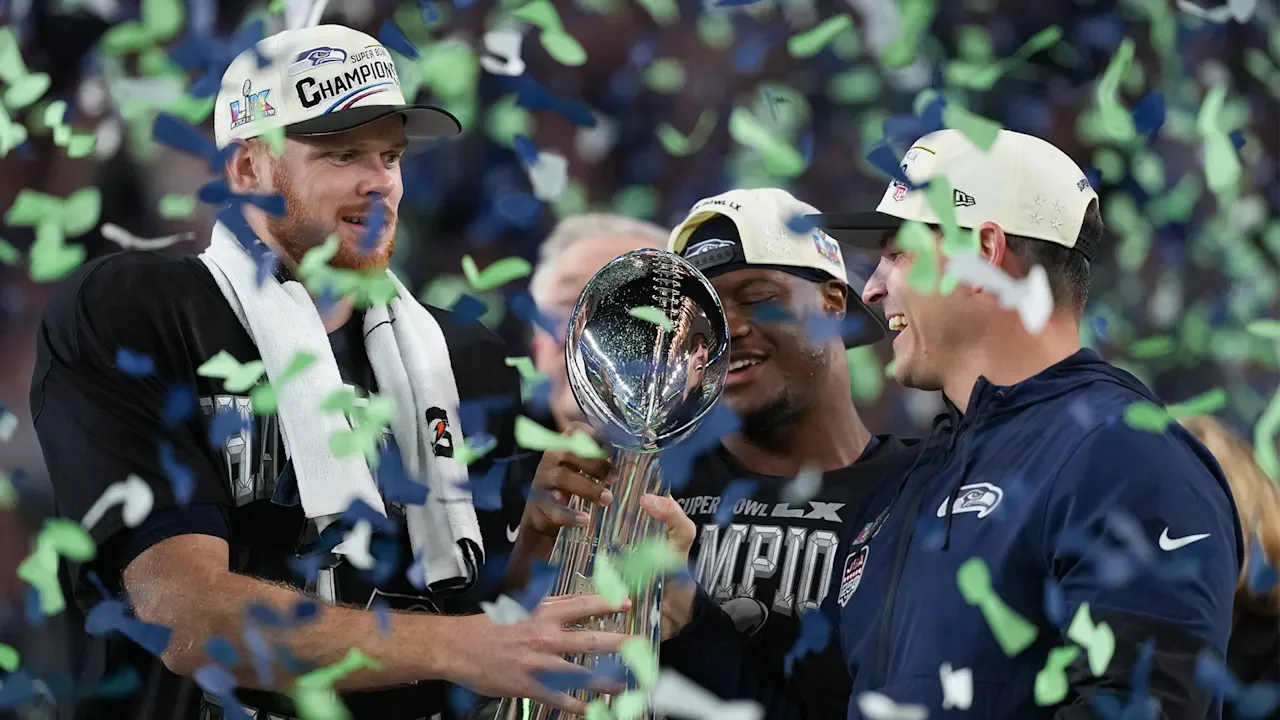
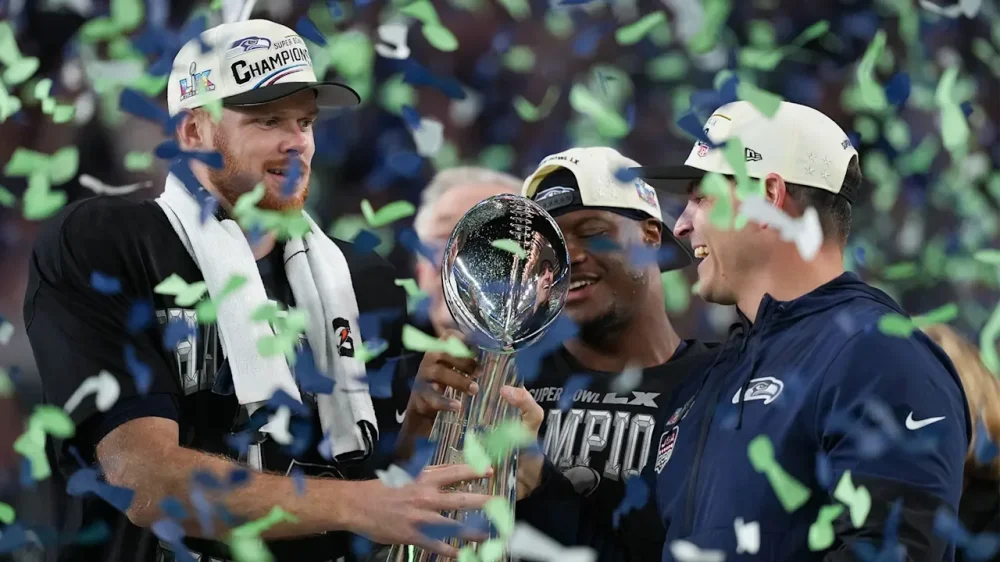
Sunday night’s Super Bowl and Bad Bunny fell short of setting records for most watched U.S. broadcast and halftime show. Seattle’s 29-13 victory over New England averaged 124.9 million viewers on NBC, Peacock, Telemundo, NBC Sports Digital, and NFL+, according to Nielsen’s Big Data + Panel rating system. That fell short of the 127.7 million U.S. viewers that tuned in for Philadelphia’s 40-22 victory over Kansas City last year on Fox. However, Super Bowl 60 is the most-watched program in NBC history. The network is celebrating its 100th anniversary this year. Bad Bunny’s halftime show averaged 128.2 million viewers from 8:15-8:30 p.m. Eastern. That would make it the fourth-most watched halftime behind Kendrick Lamar (133.5 million, 2025), Michael Jackson (133.4 million, 1993) and Usher (129.3 million, 2024). Peak audience sets U.S. record The audience for the game peaked at 137.8 million viewers during the second quarter (7:45-8 p.m. Eastern), which is a record. That surpassed the previous mark of 137.7 million during the second quarter of last year’s Super Bowl. This year’s audience ended a streak where the last four Super Bowls had experienced audience increases. It is the fifth straight year the game has averaged over 100 million viewers. After three straight years of Super Bowls that came down to the final minute, the last two have lacked excitement. Sunday’s game was the second in Super Bowl history in which a touchdown had not been scored in the first three quarters. Seattle was up 12-0 going into the final 15 minutes. Last year’s game was decided in the first half as Philadelphia built a 24-0 lead en route to a 40-22 victory. Bad Bunny vs. Kid Rock The Turning Point USA halftime show featuring Kid Rock peaked at 5 million at one point on YouTube. Nielsen did not measure any of the YouTube live stream viewership. Of the linear networks that carried it, the only one Nielsen measures is broadcast network Charge! Full Nielsen ratings for the prior week will be released on Wednesday. According to YouTube figures though, there have been 21,208,583 views of the alternate halftime show through Tuesday night, according to the conservative organization’s page. Bad Bunny’s show has already had 61,311,972 views. Halftime show on social media Total social media consumption of Bad Bunny’s halftime show set a record of 4 billion views after the first 24 hours, according to the NFL and Ripple Analytics. That is a 137% increase over last year. The social media figures include fans, owned platforms, broadcast partners and influencers. The NFL said over 55% of all social views came from international markets. Full global viewership for the halftime show is expected to be available early next week. Spanish audience record Telemundo averaged 3.3 million viewers, making it the most-watched Super Bowl Spanish-language broadcast in the United States. The Super Bowl has been televised in Spanish in the U.S. since 2014. The audience peaked during the halftime show, averaging 4.8 million viewers — also making it the most-watched Super Bowl halftime in Spanish-language history. Olympics benefit from Super Bowl NBC’s “Primetime in Milan” Olympic show, which featured the women’s downhill and team figure skating events, averaged 42 million viewers, the network’s largest Winter Olympics audience since Day 2 of the 2014 Sochi Games. It also was a 73% increase from the Olympics show after Super Bowl 56 (24.3 million). “The Super Bowl and the NFL once again delivered a blockbuster audience across the NBC broadcast network, Peacock and Telemundo, and provided an unprecedented lead-in to our Primetime in Milan coverage,” NBC Sports President Rick Cordella said in a statement. “The Super Bowl and the Olympics are the two most powerful events in the world, and we salute our talented production, tech and announce teams who delivered best-in-class presentations for our viewers, stations and partners.” Other NFL figures The NFL playoffs averaged 37 million viewers the first three weekends, up 5% from last year and the second-most watched in the last 10 years. That followed a regular season that averaged 18.7 million, the second-highest since audience averages began being kept in 1988. It was a 10% increase from last season. AP NFL: https://apnews.com/hub/nfl —Joe Reedy, AP Sports Writer View the full article
-
Sunday's Super Bowl LX (aka sixty) arguably featured the most powerful stadium Wi-Fi network of all time. The post How Levi’s Stadium is redefining connectivity for the world’s biggest events with 6 GHz Wi-Fi 7 and AFC appeared first on Wi-Fi NOW Global. View the full article
-
For the past few weeks, political ads attacking Alex Bores have been running in New York’s 12th Congressional District. The ads are funded by a pro-AI political action committee that supports the expansion of artificial intelligence, yet they aim to weaken Bores’s candidacy by tying him to his past work in tech. They accuse Bores, who has recently called for abolishing Immigration and Customs Enforcement, of hypocrisy because he previously worked at Palantir, a data-analytics company whose contracts with ICE have made it a frequent target of activists. The ads allege that Bores made hundreds of thousands of dollars building and selling technology for the agency. “Now he’s running from his past, while ICE is in our communities,” one ad warns. “ICE is powered by Bores’ tech… he should never, ever be in Congress.” Inside Palantir, the ads are starting to irk some employees. Two current employees and three former employees tell Fast Company that they view the campaign as opportunistic. Some believe the ads misrepresent Bores’s record at the company. Others say Palantir’s approach to its work with ICE has changed since Bores left the company many years ago. Several employees said they see the ads as less about immigration enforcement and more about politics within the tech industry. They point to the PAC funding the campaign, Leading the Future, as evidence that the effort is primarily about countering Bores’s support for AI regulation. That view is shared by one former Biden administration staffer who, speaking on condition of anonymity, emphasized that the ad campaign was “almost certainly” a response to Bores’s role as a lead sponsor of an AI safety bill in New York. “If Bores’ campaign is one that would restrict the tech industry’s growth, and his base is one that is already primed to be critical of Palantir, people (like me!) who watch this ad wouldn’t suspect that it’s people with significant interests in Palantir and the broader industry that are funding the ads, too,” one former employee tells Fast Company in a message. Bores, a member of the New York State Assembly who successfully pushed for AI regulation at the state level, is currently running for the Democratic nomination for New York’s 12th Congressional District. The district represents the very liberal and very wealthy neighborhoods of Manhattan’s Upper West and Upper East Sides, meaning the winner of the Democratic primary is all but guaranteed to win the general election. Bores has leaned into his tech background on the campaign trail. He says he is proud of his work at Palantir but left the company seven years ago in response to its work for ICE, a project he says he never worked on or participated in. Since then, however, he has been the subject of an extended ad campaign branding him an “expert in hypocrisy” and alleging that he profited from Palantir’s work with the Department of Homeland Security. The ads seek to capitalize on widespread anger over ICE, particularly following a massive escalation of raids and deportations and the killing of two American citizens. Bores’s campaign has since sent Leading the Future a cease-and-desist, Semafor recently reported. Joe Lonsdale’s role in the anti-Bores effort The ads are being released by Think Big, a group that describes itself as supporting pro-AI Democratic leaders. Think Big is funded by the Super PAC Leading the Future, according to Federal Election Commission documents. Leading the Future’s founding supporters, according to its own press release, include Palantir co-founder Joe Lonsdale, OpenAI co-founder Greg Brockman, venture capitalists Marc Andreessen and Ben Horowitz, and the AI company Perplexity. Multiple donors associated with the group—such as Lonsdale and Andreessen—have also been major contributors to Republican candidates and causes. Campaign finance records show that Lonsdale Enterprises is the only donor, aside from Leading the Future itself, listed on filings associated with American Mission, a separate PAC affiliated with the same network. (Super PACs can raise and spend unlimited sums but are prohibited from donating directly to candidates. Traditional PACs face strict contribution limits but are allowed to donate to campaigns, leading many political networks to operate both.) “The co-founder of Palantir started a Super PAC that is lying to New Yorkers about my work and the fact that I quit seven years ago over the ICE contract they continue to profit off of to this day,” Bores tells Fast Company. The real issue, Bores argues, is his work on AI regulation. He co-sponsored a New York state law known as the Raise Act, which was signed last year by Governor Kathy Hochul and imposes safety requirements on frontier AI developers. He has said he plans to pursue similar legislation in Congress. John Vlasto, a leader at Leading the Future, said in an emailed statement: “Leading the Future will aggressively oppose policymakers and candidates in states across the country who play political games with the future of American leadership and jeopardize American workers, families, and communities ability to benefit from AI innovation and growth.” Palantir did not respond to Fast Company’s request for comment. Now Palantir employees are grappling with the growing public scrutiny of the company’s work with ICE and the way that criticism is being deployed politically. One current employee said Bores was always upfront internally about his background and found it jarring that a PAC backed by tech funders would attack someone for having worked in the technology industry. Another current employee said the ads and campaign materials highlighting Palantir’s ICE contracts feel “disingenuous,” adding that the work remains controversial inside the company. (Indeed, Wired reported on Tuesday that Palantir employees have spent weeks pressing company leadership for answers about its work with ICE, prompting CEO Alex Karp to address the issue in a prerecorded internal video.) That tension has fueled anger among some employees that Lonsdale, a Palantir co-founder, appears to be amplifying criticism of the company based on its federal contracts. There’s even a Slack thread where people have flagged the ads and other campaign materials they’ve received, one employee tells Fast Company. “Nothing says ‘principled stance’ like a founder denouncing their own company’s employees for their own company’s choices,” Varoon Mathur, who worked on AI at the Biden White House, tells Fast Company. Another former Biden administration official similarly emphasized that the campaign was almost “certainly because” Bores sponsored AI safety legislation in New York. Controversy over ICE and Palantir The ads targeting Bores come amid growing criticism of Palantir’s work with ICE. The company has worked with the Department of Homeland Security for more than a decade, but its current relationship with the federal government primarily centers on ICE. That work includes a product called ImmigrationOS, which assists the agency with deportation operations, as well as support for an ICE tip line that was recently disclosed in the agency’s AI inventory. Work on the tip line began years ago but was shifted to Palantir during the second The President administration, a former DHS employee tells Fast Company. (Palantir has also faced criticism for its contracts with the Israeli military during the war in Gaza.) The company’s growing political baggage has made it a liability for some elected officials. In New York City, finance officials are pressing for an inquiry into the city’s pension fund, which is invested in Palantir. In Colorado, Sen. John Hickenlooper and Rep. Jason Crow announced this week that they would offset campaign contributions from current and former Palantir employees by donating to immigrant rights groups. In Florida, far-right candidate James Fishback has called for banning the company from the state. For Bores, that scrutiny has extended to his own tenure at Palantir. He previously told Fast Company that he left the company when, “or soon after,” Palantir renewed an ICE contract that expanded the scope of its work with the Department of Homeland Security. However, City & State reported last month that Bores remained at Palantir after controversy over the ICE contract first emerged. (Bores’s spokesperson told the outlet that he left before the contract was renewed, and he believed the contract’s renewal was likely.) Two Palantir employees who spoke to Fast Company said they had no reason to believe Bores worked on the ICE contract specifically, and one said they remembered him opposing the company’s work with ICE internally. Some Palantir employees have also donated to his campaign, Bores has said. Current and former employees describe a company long divided over its government contracts, particularly those tied to immigration enforcement. One former employee said the ads were frustrating but predictable, given Palantir’s history of pursuing government work across administrations. Another said they left the company after its approach to ICE shifted away from earlier guardrails, adding that the advertisements felt like retribution. A third former employee recalled internal conversations that “look pretty different from at least what I’m seeing publicly about Palantir now.” Bores, for his part, has tried to turn the PAC’s focus on him into a political asset, framing it as validation of his push for AI regulation. “Judge me by my enemies,” he wrote in a recent tweet, referring directly to Lonsdale. View the full article
-
We may earn a commission from links on this page. Deal pricing and availability subject to change after time of publication. The 64GB refurbished Amazon Kindle Scribe is down to $278.99 right now, which is its lowest price to date, according to price trackers. A brand-new model costs $449.99, so the savings are significant. In this case, “like-new” means Amazon has cleaned, inspected, and cleared the device to function like a new unit, just without the shrink wrap. That price gap makes this Scribe more approachable, especially if you were curious about combining an e-reader with a digital notebook but did not want to pay flagship-tablet money. Like-New Amazon Kindle Scribe (64 GB) - Your notes, documents and books, all in one place. With built-in AI notebook summarization. Includes Premium Pen - Metallic Jade $278.99 at Amazon $404.99 Save $126.00 Get Deal Get Deal $278.99 at Amazon $404.99 Save $126.00 This is the Scribe with the Premium Pen bundled in, and paired with its 10.2-inch E Ink screen, it offers a nice balance of size and sharpness, with 300 ppi, and an adjustable cool to warm-toned front light, which helps during long reading sessions. But even with that crisp display, it’s still grayscale, and the lack of color does feel limiting when compared to competitors (if you’re curious about your options, PCMag has a comprehensive roundup of the best e-readers for 2026). The software has gotten better, though—note-taking now includes direct annotation on books via something called Active Canvas. Just don’t expect the fluidity of an iPad or Supernote. Also, according to this PCMag review, things like drawing arrows or circling aren’t supported, and even Amazon’s AI features (like cleaning up your notes or summarizing) feel a little half-baked, considering the Scribe’s price point. That said, for pure reading, the Scribe still holds up. It’s light, looks good with its aluminum frame, has ample storage, and offers a battery that can last over two months with basic use. If you’re writing or sketching regularly, that drops to around three weeks—but even then, it’s more than respectable. You do need your own USB-C charging brick, though. And unless you like slippery backs, a case is basically required. At $278.99, this version makes more sense than it ever did at launch. Just know going in that while the writing feel is great, thanks to the paper-like texture of the screen, the software may not be as smooth or intuitive as you’d expect from a premium device trying to be both a digital notebook and Kindle. Our Best Editor-Vetted Tech Deals Right Now Apple AirPods 4 Active Noise Cancelling Wireless Earbuds — $139.99 (List Price $179.00) Apple Watch Series 11 [GPS 46mm] Smartwatch with Jet Black Aluminum Case with Black Sport Band - M/L. Sleep Score, Fitness Tracker, Health Monitoring, Always-On Display, Water Resistant — $329.00 (List Price $429.00) Apple iPad 11" 128GB A16 WiFi Tablet (Blue, 2025) — $299.00 (List Price $349.00) Blink Mini 2 1080p Security Camera (White) — $23.99 (List Price $39.99) Amazon Fire TV Stick 4K Plus — $29.99 (List Price $49.99) Samsung Galaxy Tab A9+ 10.9" 64GB Wi-Fi Tablet (Graphite) — $149.99 (List Price $219.99) Bose QuietComfort Noise Cancelling Wireless Headphones — $229.00 (List Price $349.00) Deals are selected by our commerce team View the full article
-
When left to its own devices, there are a couple of things Performance Max is absolutely great at doing for lead gen campaigns: Driving volume. Finding the lowest-quality leads it possibly can. It’s not inherently surprising that Google is doing what’s best for Google – that is, lining its own pockets – by heavily optimizing toward the cheapest, path-of-least-resistance conversion events. From experience with campaigns we inherit from new clients, this performance often catches brands off guard – especially those who take Google sales reps’ “helpful advice” at face value. It can take time for those brands to look past PMax’s shiny, low CPAs and realize the truth: those leads do little to nothing for real pipeline or revenue. However, Performance Max, when given the proper guardrails, can be a good source of incremental, quality leads – but the trick is in building those guardrails. This article covers lead quality tactics that work and how to execute them, tactics that don’t work, and important differences between Performance Max campaigns in Google and Bing. How to improve lead quality in PMax campaigns These are the specific levers that consistently influence lead quality in Performance Max. Use conversion goals focused on metrics that indicate a higher quality lead than just form fills. Depending on your data density, this could mean closed-won leads, opportunities, or (if you need to go up the funnel to get enough volume) sales-qualified leads. It’s important to note that the effectiveness of this tactic depends on good offline conversion tracking implementation and a clean CRM instance, so don’t turn on PMax lead gen campaigns until you’re confident in your HubSpot or Salesforce integrity. Use high-value lists for audience signals. This can be based on a certain activity, like “booked a meeting,” instead of simply including all converters. Keep the focus on the right audiences. Exclude irrelevant ones and upload Customer Match lists to help Google’s algorithm find similar users. Be smart with your campaign settings. Use brand exclusions to ensure you’re not letting PMax cannibalize your brand traffic. Restrict your location targeting to high-performing geos. Set strategic scheduling, such as excluding early-morning hours if those conversions tend to be lower quality. Evaluate search themes and placements, and be aggressive about negative keywords and placement exclusions. Use sitelinks to steer traffic to pages with full, detailed forms. Refine the forms themselves. Implement reCAPTCHA or honeypot fields in forms that keep bots from “converting.” Use field validation: Block disposable domains. Block freemails. Add freeform or disqualifying questions. “How did you hear about us?” “Do you have a budget for [solution]?” “How many employees are in your organization?” Dig deeper: Top Performance Max optimization tips for 2026 Your customers search everywhere. Make sure your brand shows up. The SEO toolkit you know, plus the AI visibility data you need. Start Free Trial Get started with Tactics that won’t affect lead quality On the other hand, some of the usual campaign optimization strategies won’t do much to move the needle on PMax lead quality. If that’s your sole focus, you can de-prioritize: Switching bid strategies (e.g., switching from Max Conversions to tCPA helps a little but doesn’t fix everything). Adding more assets. Adding more budget. Asking Google support (something I’d just stay away from in general these days). Get the newsletter search marketers rely on. See terms. Important (and subtle) differences to know between Google and Bing PMax campaigns Both Google and Bing have Performance Max campaigns, but there are differences in their offerings. Google’s Performance Max network spans search, display, YouTube, discovery campaigns, and Gmail. It’s an absolutely huge amount of inventory – especially display and YouTube, which can be huge spam drivers if left unchecked. Microsoft has far less video and display inventory. Their PMax campaigns primarily include Bing search, syndicated search, and the Microsoft audience network (which spans display, Outlook, and MSN). When comparing performance between the two, we haven’t seen any notable differences, but it’s worth monitoring updates to each platform’s reporting and inventory going forward. Dig deeper: Google and Microsoft: How their Performance Max approaches align and diverge See the complete picture of your search visibility. Track, optimize, and win in Google and AI search from one platform. Start Free Trial Get started with Performance Max isn’t broken, but it needs control If you’re considering running PMax for lead gen, you should approach it with a healthy dose of skepticism. While PMax has been effective at driving scalable revenue for ecommerce,those campaigns need considerable guidelines to maintain lead quality. For instance, preventing a high-end shoe retailer from racking up tons of conversions on things like replacement laces and shoe polish will require that the campaign develop sufficient PMax guardrails. Considering how Google is moving toward additional automation and AI in campaigns, it’s important to keep testing and experimenting to gain an understanding of the tools available to analyze and shape PMax campaigns. Google has issued some new releases to help as of late, including channel-level reporting, more options for exclusions, and campaign-level negative keywords.) There is a lead scale out there that can provide a healthy ROAS if you’re willing and able to wrestle the algorithm into submission. If you’ve tested Performance Max campaigns for lead gen but paused them once it was clear they weren’t driving revenue, do a quick post-mortem on your past efforts. You might find there’s room to whip Google into shape to do better this time around. Take note of the tactics you haven’t yet implemented and prioritize putting them in place before you waste another dollar of your 2026 budget on poor-quality leads that just junk up your CRM. View the full article
-
A canine health startup called Loyal has now raised more than $250 million to develop drugs that could help dogs—and perhaps one day humans—live longer, healthier lives. The company on February 11 announced it had raised $100 million in Series C funding as it pursues FDA approval of LOY-002, a beef-flavored daily prescription pill designed to extend the healthy lifespan of senior dogs. The drug mimics some of the effects of a calorie-restricted diet in addressing age-related metabolic issues without requiring pet owners to cut their dogs’ food supply or curbing canine appetites. “People do not want their dogs to not have food motivation, because that’s how you train dogs,” says Loyal founder and CEO Celine Halioua. “How we domesticated dogs was sharing meals with them; losing that can actually really impact the dog-human bond.” But, of course, people do want to share that bond longer than the typical canine lifespan allows. Halioua started Loyal in late 2019 after a stint as chief of staff at The Longevity Fund, a lifespan-focused investment fund founded by Laura Deming and an early backer of Loyal. She says she realized that dog longevity drugs could one day lead to similar treatments for humans, since the species are similar in many ways, and are easier to test, since dogs’ short lives mean tests of lifespan extension can be run in a shorter amount of time. And as a dog lover—a recent interview with Fast Company also included Halioua’s freshly adopted Rottweiler, Wilma—she also saw the potential market among owners and pets. Celine Halioua “It felt like a really tractable way to work on a problem that everyone cares about, which is having too little time with the dogs you love,” she says. LOY-002 is one of three canine longevity medications under development by the company, and Halioua says she’s hoping Loyal can submit the final requirement for the FDA’s expanded conditional approval of the drug this year. That would likely start a roughly six-month review process of what would be the first FDA-approved lifespan extension drug for any species. And its progress comes as interest rises overall in the potential of developing medical treatments that can help humans as well experience longer and healthier lives. “When I started pitching The Longevity Fund in 2013, it was a niche concept and people laughed me out of their offices,” Deming tells Fast Company in an email. “Now it’s a legitimate category of investment.” Loyal’s Series C backers include Age1, a new longevity-focused VC firm cofounded by Deming and Alex Colville, as well as Baillie Gifford and other existing investors in the company, which had previously raised more than $150 million in investments. “Aging is something that really affects everybody—every human and every dog on the planet experiences aging,” Colville says. “And I think that’s something that’s really unique about it as an opportunity and a space to work in.” Already, LOY-002 has met two of three milestones for FDA approval, known as the “target animal safety” and “reasonable expectation of effectiveness” sections of its conditional approval application. The final milestone involves demonstrating that the drug can be consistently manufactured at scale, Halioua says. The drug will likely be labeled for use by dogs at least 10 years old weighing at least 14 pounds, she says. Dosing, and thus costs, will depend on animal size, but Halioua says she’s optimistic the average dog will be able to take the drug for less than $100 per month. The company announced last July that it had completed enrolling dogs in a study it calls STAY, designed to test the effectiveness of LOY-002, which Halioua says is the largest-ever animal health clinical trial. Loyal has enrolled roughly 1,300 dogs in the study through 72 veterinary clinics, and Halioua says she’s hoping they’ll find that the drug confers at least one healthy to participants. Loyal also has two other dog drugs, a vet-administered injection called LOY-001 and a daily pill called LOY-003, in the works. Though Halioua says the company hasn’t publicized the exact biological mechanisms beyond the drugs, she says would look to extend lifespans of larger dogs by targeting a growth hormone that’s correlated with a shorter life, with big dogs usually living a shorter time than their smaller counterparts. “Once the dog is fully grown, you can then reduce the levels of growth hormone to hopefully extend their healthy lifespan and kind of compensate for the historical genetic issue that we gave them when we selectively bred for size,” says Halioua. If all goes well, those drugs could launch a year or two after LOY-002, she says. And if Loyal’s drugs prove helpful to dogs, they could one day lead to similar treatments for humans. “If we’re able to do something helpful for dogs, I think we’re going to learn a lot about how to do something helpful for humans, too,” says Halioua. View the full article

-
Zillow Group Inc. forecast first-quarter profit that falls short of analyst estimates as the home-search site balances legal costs from ongoing litigation and expenses from the company's partnership with Redfin. View the full article

-
Figure points to improvement in labour market following string of bleak dataView the full article
-
Country currently has 9.1mn permanent residents and experts fear the move would limit companies’ access to foreign talentView the full article
-
Client loyalty cards are programs designed to encourage repeat business by rewarding customers for their purchases. These cards can provide points, discounts, or exclusive benefits, depending on the business’s strategy. Customers typically register, sharing personal information, and accumulate rewards with each transaction. This system not only incentivizes customers to return but additionally helps businesses better understand their buying habits. To fully grasp the mechanics and impact of these programs, let’s explore their history and functionality further. Key Takeaways Client loyalty cards are tools that reward customers for repeat purchases, enhancing retention through discounts, points, or benefits. They can be physical cards or digital applications linked to a points system, tiered rewards, or discounts. Customers accumulate points or rewards with each purchase, typically requiring personal information for registration. Transactions are tracked through point-of-sale systems, facilitating easy rewards management for both customers and businesses. Different types of loyalty programs include points-based, tiered, and value-based, catering to various customer motivations. What Is A Client Loyalty Card? A client loyalty card is a strategic tool that businesses use to cultivate repeat purchases by rewarding customers for their loyalty. These cards allow you to earn rewards, discounts, or points with each purchase, making it easier for you to enjoy benefits over time. Client loyalty cards can come in various forms, such as custom punch cards, plastic cards, or even digital wallets. Often, they’re tied to your personal information, which helps businesses track your purchases and preferences effectively. Research shows that 75% of customers are more likely to buy when offered incentives through loyalty programs. This not only boosts your engagement but also aids businesses in grasping customer buying habits, allowing for targeted marketing efforts. Moreover, loyalty card printing can create visually appealing designs that improve your experience, making it easy to keep track of your rewards as you shop. The History Of Loyalty Card Programs Loyalty card programs have a rich history that dates back to the late 18th century, when businesses began using copper tokens to encourage repeat purchases. As time progressed, loyalty punch cards evolved, with the late 19th century introducing printed stamps. Betty Crocker‘s box tops were among the first notable frameworks for modern loyalty initiatives. By the early 1900s, box tops and similar rewards systems gained traction, leading to brand-specific loyalty programs that offered coupons and discounts. The late 20th century marked the rise of card-based loyalty programs, simplifying customer participation and tracking rewards. With the advent of digital technology in the 21st century, loyalty cards transformed considerably, facilitating mobile apps and POS integration for improved accessibility. Year Range Key Developments Program Types Late 18th Century Copper tokens Early loyalty programs Late 19th Century Printed stamps Betty Crocker’s box tops Early 1900s Box tops and coupons Brand-specific programs Late 20th Century Card-based programs Simplified tracking 21st Century Digital apps and POS systems Enhanced user experience How Do Client Loyalty Cards Work? When you participate in a client loyalty card program, you accumulate points or rewards for every purchase you make, which can later be redeemed for discounts, free products, or special offers. After registering for a loyalty card, you typically provide personal information, allowing businesses to tailor marketing efforts and understand your purchasing behavior better. Each transaction you make with your loyalty card is tracked through a point-of-sale system, which automatically calculates the points you earn based on the purchase value. You can choose between physical and digital loyalty cards; the latter often provide greater convenience through mobile apps for easy access and management. Many successful loyalty card programs feature tiered rewards, motivating you to spend more to reveal higher levels of benefits. This structured approach improves your shopping experience as well as promotes customer loyalty for businesses that offer these loyalty cards. Advantages And Disadvantages Of Client Loyalty Cards Client loyalty cards offer several advantages and disadvantages that can greatly impact both businesses and consumers. On the positive side, these cards notably boost customer retention, as research shows that existing customers are 60-70% more likely to make purchases than new ones. They also encourage repeat business, with 75% of customers more likely to buy after receiving rewards. Plus, satisfied members often share their experiences, improving brand reach through word-of-mouth marketing. However, there are drawbacks. Privacy concerns arise from the collection of personal information, which can lead to distrust if not handled properly. Moreover, loyalty programs can complicate the checkout process, resulting in longer wait times for customers. Advantages Disadvantages Increased customer retention Privacy concerns Encourages repeat business Decreased point-of-sale efficiency Improved brand reach Potential distrust among customers Word-of-mouth marketing Longer wait times at checkout Rewards encourage purchases Complicated transaction processes Where To Create Client Loyalty Cards When you’re ready to create client loyalty cards, you’ll find a variety of design options and printing services to choose from. Companies like VistaPrint and GogoPrint offer customizable templates for physical cards, whereas platforms like Design Wizard and My Creative Shop focus on digital designs. It’s essential to select a service that not only meets your design needs but additionally integrates seamlessly with your existing systems for efficient customer management. Design Options Available Creating effective client loyalty cards involves exploring various design options that suit your business needs. You can choose paper loyalty cards from services like VistaPrint and GogoPrint, which offer templates customized to your branding. If you prefer a digital approach, platforms such as Design Wizard and My Creative Shop allow for unique graphics that integrate easily with mobile apps. For added durability, consider custom plastic loyalty cards from companies like Plastic Resource, designed to fit specific point-of-sale systems. Many printing services additionally enable bulk ordering, helping you reduce costs while maintaining quality consistency. Utilizing design software or online tools can help you create visually appealing loyalty cards that reflect your brand identity and resonate with your target audience. Printing Services Recommendations Where can you find the best printing services to create your loyalty cards? Online platforms like VistaPrint and GogoPrint offer a range of design templates and customization options customized to your brand. If you prefer a hands-on approach, local print shops may provide competitive pricing and the chance to discuss your ideas in person. For user-friendly design, consider Design Wizard and My Creative Shop, which allow you to personalize cards easily. If durability is a priority, Plastic Resource specializes in custom plastic loyalty cards that fit various POS systems, ensuring longevity. Moreover, many services offer bulk order discounts, helping you save costs when producing large quantities for your loyalty programs. Choose the option that best suits your needs. Successful Examples Of Client Loyalty Cards Client loyalty cards have become an essential tool for businesses aiming to improve customer engagement and retention. For instance, Starbucks Rewards allows you to earn stars with every purchase, enabling you to redeem them for free drinks and food. Members typically spend 20% more than non-members. Sephora’s Beauty Insider program offers tiered rewards based on your annual spending, providing exclusive discounts and early access to new products, resulting in high engagement among its 25 million members. The North Face XPLR Pass rewards you with points for purchases and outdoor activities, nurturing a community of outdoor enthusiasts. Similarly, the Chick-fil-A One app lets you earn points for every purchase, contributing to a 14% increase in sales since its launch. Finally, CVS‘s ExtraCare program personalizes coupons and rewards based on your shopping history, boasting over 70 million active members and greatly boosting customer retention rates. Best Practices For Implementing A Client Loyalty Card Program Establishing a successful client loyalty card program requires careful planning and a strategic approach. Start by defining clear goals that align with your customer experience strategies and understand your customers’ preferences. This guarantees that the rewards you offer resonate with their interests and keep them engaged. Choose a loyalty card program type that suits your business model—whether it’s points-based, tiered, or value-based—to effectively target different customer motivations. Regularly review and analyze your program’s performance, utilizing detailed reporting features to adapt based on customer feedback and purchasing trends. Marketing your loyalty program effectively through various channels, like social media and in-store promotions, is vital for attracting and retaining members. Finally, streamline the registration process, allowing for both in-store and online sign-ups to maximize participation and collect valuable customer demographic data. By implementing these best practices, you can create a loyalty program that truly benefits both your clients and your business. Frequently Asked Questions What Is a Loyalty Card and How Does It Work? A loyalty card is a program that rewards you for repeat purchases. When you shop, you present your card, whether it’s physical or digital, to earn points or discounts. You usually need to register your information, which helps businesses track your buying habits. This data allows them to tailor offers to you, enhancing your shopping experience. In the end, loyalty cards encourage you to return, making you more likely to choose that brand again. What Are the 4 C’s of Customer Loyalty? The 4 C’s of customer loyalty include customer centricity, consistency, communication, and community. Customer centricity focuses on comprehending your needs and tailoring experiences accordingly. Consistency guarantees you receive reliable products and services every time. Effective communication keeps you informed about benefits and promotions, enhancing your loyalty. Finally, community nurtures connections among customers and the brand, creating a sense of belonging that encourages you to engage and advocate for the brand. What Are the 3 R’s of Customer Loyalty? The 3 R’s of customer loyalty are Retention, Referrals, and Revenue. Retention focuses on keeping customers satisfied, as it’s often cheaper to retain them than to acquire new ones. Referrals utilize positive customer experiences to attract new customers, which can lead to higher retention rates. Revenue comes from loyal customers, who typically spend more on repeat purchases. What’s the Point of Loyalty Cards? Loyalty cards serve to reward you for your repeat business, encouraging you to spend more at specific retailers. By accumulating points or rewards with each purchase, you can eventually receive discounts or free items. These programs not only improve your shopping experience but additionally provide businesses with insights into your preferences, leading to targeted marketing. Conclusion In conclusion, client loyalty cards are effective tools for encouraging repeat business by rewarding customers for their purchases. They operate through point-of-sale systems, allowing customers to accumulate points or benefits that incentivize return visits. Although these programs offer advantages like increased customer retention, they likewise come with challenges such as the need for personal data collection. By comprehending their function and considering best practices, businesses can successfully implement loyalty card programs to improve customer engagement and satisfaction. Image via Google Gemini This article, "What Are Client Loyalty Cards and How Do They Function?" was first published on Small Business Trends View the full article
-
Client loyalty cards are programs designed to encourage repeat business by rewarding customers for their purchases. These cards can provide points, discounts, or exclusive benefits, depending on the business’s strategy. Customers typically register, sharing personal information, and accumulate rewards with each transaction. This system not only incentivizes customers to return but additionally helps businesses better understand their buying habits. To fully grasp the mechanics and impact of these programs, let’s explore their history and functionality further. Key Takeaways Client loyalty cards are tools that reward customers for repeat purchases, enhancing retention through discounts, points, or benefits. They can be physical cards or digital applications linked to a points system, tiered rewards, or discounts. Customers accumulate points or rewards with each purchase, typically requiring personal information for registration. Transactions are tracked through point-of-sale systems, facilitating easy rewards management for both customers and businesses. Different types of loyalty programs include points-based, tiered, and value-based, catering to various customer motivations. What Is A Client Loyalty Card? A client loyalty card is a strategic tool that businesses use to cultivate repeat purchases by rewarding customers for their loyalty. These cards allow you to earn rewards, discounts, or points with each purchase, making it easier for you to enjoy benefits over time. Client loyalty cards can come in various forms, such as custom punch cards, plastic cards, or even digital wallets. Often, they’re tied to your personal information, which helps businesses track your purchases and preferences effectively. Research shows that 75% of customers are more likely to buy when offered incentives through loyalty programs. This not only boosts your engagement but also aids businesses in grasping customer buying habits, allowing for targeted marketing efforts. Moreover, loyalty card printing can create visually appealing designs that improve your experience, making it easy to keep track of your rewards as you shop. The History Of Loyalty Card Programs Loyalty card programs have a rich history that dates back to the late 18th century, when businesses began using copper tokens to encourage repeat purchases. As time progressed, loyalty punch cards evolved, with the late 19th century introducing printed stamps. Betty Crocker‘s box tops were among the first notable frameworks for modern loyalty initiatives. By the early 1900s, box tops and similar rewards systems gained traction, leading to brand-specific loyalty programs that offered coupons and discounts. The late 20th century marked the rise of card-based loyalty programs, simplifying customer participation and tracking rewards. With the advent of digital technology in the 21st century, loyalty cards transformed considerably, facilitating mobile apps and POS integration for improved accessibility. Year Range Key Developments Program Types Late 18th Century Copper tokens Early loyalty programs Late 19th Century Printed stamps Betty Crocker’s box tops Early 1900s Box tops and coupons Brand-specific programs Late 20th Century Card-based programs Simplified tracking 21st Century Digital apps and POS systems Enhanced user experience How Do Client Loyalty Cards Work? When you participate in a client loyalty card program, you accumulate points or rewards for every purchase you make, which can later be redeemed for discounts, free products, or special offers. After registering for a loyalty card, you typically provide personal information, allowing businesses to tailor marketing efforts and understand your purchasing behavior better. Each transaction you make with your loyalty card is tracked through a point-of-sale system, which automatically calculates the points you earn based on the purchase value. You can choose between physical and digital loyalty cards; the latter often provide greater convenience through mobile apps for easy access and management. Many successful loyalty card programs feature tiered rewards, motivating you to spend more to reveal higher levels of benefits. This structured approach improves your shopping experience as well as promotes customer loyalty for businesses that offer these loyalty cards. Advantages And Disadvantages Of Client Loyalty Cards Client loyalty cards offer several advantages and disadvantages that can greatly impact both businesses and consumers. On the positive side, these cards notably boost customer retention, as research shows that existing customers are 60-70% more likely to make purchases than new ones. They also encourage repeat business, with 75% of customers more likely to buy after receiving rewards. Plus, satisfied members often share their experiences, improving brand reach through word-of-mouth marketing. However, there are drawbacks. Privacy concerns arise from the collection of personal information, which can lead to distrust if not handled properly. Moreover, loyalty programs can complicate the checkout process, resulting in longer wait times for customers. Advantages Disadvantages Increased customer retention Privacy concerns Encourages repeat business Decreased point-of-sale efficiency Improved brand reach Potential distrust among customers Word-of-mouth marketing Longer wait times at checkout Rewards encourage purchases Complicated transaction processes Where To Create Client Loyalty Cards When you’re ready to create client loyalty cards, you’ll find a variety of design options and printing services to choose from. Companies like VistaPrint and GogoPrint offer customizable templates for physical cards, whereas platforms like Design Wizard and My Creative Shop focus on digital designs. It’s essential to select a service that not only meets your design needs but additionally integrates seamlessly with your existing systems for efficient customer management. Design Options Available Creating effective client loyalty cards involves exploring various design options that suit your business needs. You can choose paper loyalty cards from services like VistaPrint and GogoPrint, which offer templates customized to your branding. If you prefer a digital approach, platforms such as Design Wizard and My Creative Shop allow for unique graphics that integrate easily with mobile apps. For added durability, consider custom plastic loyalty cards from companies like Plastic Resource, designed to fit specific point-of-sale systems. Many printing services additionally enable bulk ordering, helping you reduce costs while maintaining quality consistency. Utilizing design software or online tools can help you create visually appealing loyalty cards that reflect your brand identity and resonate with your target audience. Printing Services Recommendations Where can you find the best printing services to create your loyalty cards? Online platforms like VistaPrint and GogoPrint offer a range of design templates and customization options customized to your brand. If you prefer a hands-on approach, local print shops may provide competitive pricing and the chance to discuss your ideas in person. For user-friendly design, consider Design Wizard and My Creative Shop, which allow you to personalize cards easily. If durability is a priority, Plastic Resource specializes in custom plastic loyalty cards that fit various POS systems, ensuring longevity. Moreover, many services offer bulk order discounts, helping you save costs when producing large quantities for your loyalty programs. Choose the option that best suits your needs. Successful Examples Of Client Loyalty Cards Client loyalty cards have become an essential tool for businesses aiming to improve customer engagement and retention. For instance, Starbucks Rewards allows you to earn stars with every purchase, enabling you to redeem them for free drinks and food. Members typically spend 20% more than non-members. Sephora’s Beauty Insider program offers tiered rewards based on your annual spending, providing exclusive discounts and early access to new products, resulting in high engagement among its 25 million members. The North Face XPLR Pass rewards you with points for purchases and outdoor activities, nurturing a community of outdoor enthusiasts. Similarly, the Chick-fil-A One app lets you earn points for every purchase, contributing to a 14% increase in sales since its launch. Finally, CVS‘s ExtraCare program personalizes coupons and rewards based on your shopping history, boasting over 70 million active members and greatly boosting customer retention rates. Best Practices For Implementing A Client Loyalty Card Program Establishing a successful client loyalty card program requires careful planning and a strategic approach. Start by defining clear goals that align with your customer experience strategies and understand your customers’ preferences. This guarantees that the rewards you offer resonate with their interests and keep them engaged. Choose a loyalty card program type that suits your business model—whether it’s points-based, tiered, or value-based—to effectively target different customer motivations. Regularly review and analyze your program’s performance, utilizing detailed reporting features to adapt based on customer feedback and purchasing trends. Marketing your loyalty program effectively through various channels, like social media and in-store promotions, is vital for attracting and retaining members. Finally, streamline the registration process, allowing for both in-store and online sign-ups to maximize participation and collect valuable customer demographic data. By implementing these best practices, you can create a loyalty program that truly benefits both your clients and your business. Frequently Asked Questions What Is a Loyalty Card and How Does It Work? A loyalty card is a program that rewards you for repeat purchases. When you shop, you present your card, whether it’s physical or digital, to earn points or discounts. You usually need to register your information, which helps businesses track your buying habits. This data allows them to tailor offers to you, enhancing your shopping experience. In the end, loyalty cards encourage you to return, making you more likely to choose that brand again. What Are the 4 C’s of Customer Loyalty? The 4 C’s of customer loyalty include customer centricity, consistency, communication, and community. Customer centricity focuses on comprehending your needs and tailoring experiences accordingly. Consistency guarantees you receive reliable products and services every time. Effective communication keeps you informed about benefits and promotions, enhancing your loyalty. Finally, community nurtures connections among customers and the brand, creating a sense of belonging that encourages you to engage and advocate for the brand. What Are the 3 R’s of Customer Loyalty? The 3 R’s of customer loyalty are Retention, Referrals, and Revenue. Retention focuses on keeping customers satisfied, as it’s often cheaper to retain them than to acquire new ones. Referrals utilize positive customer experiences to attract new customers, which can lead to higher retention rates. Revenue comes from loyal customers, who typically spend more on repeat purchases. What’s the Point of Loyalty Cards? Loyalty cards serve to reward you for your repeat business, encouraging you to spend more at specific retailers. By accumulating points or rewards with each purchase, you can eventually receive discounts or free items. These programs not only improve your shopping experience but additionally provide businesses with insights into your preferences, leading to targeted marketing. Conclusion In conclusion, client loyalty cards are effective tools for encouraging repeat business by rewarding customers for their purchases. They operate through point-of-sale systems, allowing customers to accumulate points or benefits that incentivize return visits. Although these programs offer advantages like increased customer retention, they likewise come with challenges such as the need for personal data collection. By comprehending their function and considering best practices, businesses can successfully implement loyalty card programs to improve customer engagement and satisfaction. Image via Google Gemini This article, "What Are Client Loyalty Cards and How Do They Function?" was first published on Small Business Trends View the full article
-
We may earn a commission from links on this page. Deal pricing and availability subject to change after time of publication. At $239, down from its usual $299, the Nothing Headphone (1) is currently at its lowest price ever, according to price trackers—and that might just be the nudge you needed if you’ve had your eye on them. Nothing Headphone (1) $239.00 at Amazon $299.00 Save $60.00 Get Deal Get Deal $239.00 at Amazon $299.00 Save $60.00 In line with Nothing’s design language, these over-ear headphones feature transparent elements and bold, geometric detailing that make them stand out from typical matte-black pairs. But it’s not just about aesthetics. These IP52-rated headphones come packed with 40mm drivers, hybrid ANC, and both USB-C and 3.5mm connectivity. They support high-res audio via LDAC, and Nothing’s companion app gives you both a basic and advanced EQ for fine-tuning sound. Battery life is impressive, too: 35 hours with ANC on, up to 80 without. But the hardware alone doesn’t define the experience—Nothing’s control scheme is what makes these wireless headphones stand out. Instead of touch panels or clunky buttons, you get a satisfying volume scroll wheel (they call it the Roller), a multi-function Paddle for track navigation, and a customizable Button that can switch EQ profiles or noise modes. The tactile design takes a minute to learn, but once you do, it’s intuitive and genuinely useful. You also get spatial audio and multipoint Bluetooth support, which work well across Android and iOS. That said, comfort may vary. The earcups aren’t the softest for long sessions, and while they’re padded, the shape might not suit everyone. Performance-wise, the ANC handles low-end noise well (think airplane engines and AC hum) but struggles with sharper, unexpected sounds like clanging dishes or chatter nearby. The sound profile is punchy, especially with a bit of EQ tweaking in the app, but you’ll need to put in some effort if you want the best results, notes this PCMag review. Our Best Editor-Vetted Tech Deals Right Now Apple AirPods 4 Active Noise Cancelling Wireless Earbuds — $139.99 (List Price $179.00) Apple Watch Series 11 [GPS 46mm] Smartwatch with Jet Black Aluminum Case with Black Sport Band - M/L. Sleep Score, Fitness Tracker, Health Monitoring, Always-On Display, Water Resistant — $329.00 (List Price $429.00) Apple iPad 11" 128GB A16 WiFi Tablet (Blue, 2025) — $299.00 (List Price $349.00) Blink Mini 2 1080p Security Camera (White) — $23.99 (List Price $39.99) Amazon Fire TV Stick 4K Plus — $29.99 (List Price $49.99) Samsung Galaxy Tab A9+ 10.9" 64GB Wi-Fi Tablet (Graphite) — $149.99 (List Price $219.99) Bose QuietComfort Noise Cancelling Wireless Headphones — $229.00 (List Price $349.00) Deals are selected by our commerce team View the full article
-
In the wake of a January Chapter 11 bankruptcy filing from Saks Global, owner of Saks Fifth Avenue and Neiman Marcus, the luxury retailer has begun to close a number of stores across its portfolio of brands. Last month, for instance, the company announced the shuttering of many of its outlet stores. But now, the Saks Global has announced the closure of some of its high-end department stores, for which the company is famous. Here’s what you need to know. What’s happened? According to a court document filed this week with the U.S. Bankruptcy Court for the Southern District of Texas, Houston Division, Saks Global has decided to close nine of its luxury department stores. These announced closures come just weeks after the company announced it was shuttering many of its outlet stores, including many Last Call and Saks Off 5th locations. The reason Saks Global has given for the shuttering of some of its flagship department stores is that the store closures will allow the company’s global debtors “to better serve their luxury customers, strengthen brand partner relationships and drive full-price selling to enable sustainable, profitable growth.” When are the department stores closing? According to court documents, the department stores marked for closure will close their doors for good on approximately April 30, 2026, less than three months from now. The company expects the store closing sales at the affected locations to begin around February 20. The store closures are subject to approval from the judge presiding over the bankruptcy case. A ruling is expected to be made on Friday. After the closure of these locations, Saks Global will have 35 Neiman Marcus stores and 25 Saks Fifth Avenue stores in operation. Which Neiman Marcus stores are closing? According to the court documents, only one Neiman Marcus store is closing: Massachusetts: 5 Copley Place, Boston, MA Which Saks Fifth Avenue stores are closing? Unfortunately, Saks Global has decided to close significantly more Saks Fifth Avenue stores. The list includes eight locations in eight different states: Alabama: 129 Summit Blvd, Birmingham, AL Arizona: 2446 East Camelback Road, Phoenix, AZ Louisiana: 301 Canal Street, New Orleans, LA New Jersey: Meadowlands Sports Complex, East Rutherford, NJ Oklahoma: 1780 Utica Square, Tulsa, OK Ohio: 1350 Polaris Pkwy, Columbus, OH Pennsylvania: 2 Bala Plaza Bala, Cynwyd, PA Virginia: 9214 Stony Point Parkway, Richmond, VA Why is Saks Global filing for bankruptcy? As Fast Company previously reported, the luxury department store owner has faced extreme financial difficulty in recent years. Like many brick-and-mortar retailers, the company’s stores have seen declining foot traffic, especially after the onset of the COVID-19 pandemic. Additionally, inflationary costs, tariffs, and increased online competition have all cut into the company’s bottom line. However, the major financial blow to Saks Global came when Hudson’s Bay, Saks’s previous parent company, acquired competitor Neiman Marcus in 2024 for around $2.7 billion. That move left the new company, Saks Global, saddled with debt. Announcing last month that its bankruptcy process was underway, Saks Global CEO Geoffroy van Raemdonck said the move “presents a meaningful opportunity to strengthen the foundation of our business and position it for the future.” View the full article
-
Prime minister defends making ex-comms chief a peer during heated exchange in the Commons View the full article
-
We may earn a commission from links on this page. Many academically minded types have written at great length and with fascinating eloquence on the connection between sex and death in horror movies. We'll cut right to the chase, offering up some of the best and most potent examples of sexuality in the horror-movie genre. But first, a disclaimer: These are horror movies, spanning decades, and, thus, don't always, or often, offer up the healthiest representations of human sexuality. Whether it's vampire eroticism or horny teen campers, sex in movies is complicated, and not always sex-positive, even as we're being invited to be aroused. Some of these movies have deep and complex, if often uncomfortable, things to say about the links between sex and death; others are pure titillation—movies that throw in some nude bodies and sweaty, writhing flesh in order to get more butts in seats. We're not here to make a distinction between high-minded horniness and baser sexual impulses—if it's sexy, it's under consideration. The Untamed (2016) Alejandra (Ruth Ramos) and Angel (Jesus Meza) don't have the greatest sex life: she's bored and frustrated, he's sleeping with her brother Fabian (Eden Villavicencio) on the side while acting like a homophobic creep in public. All typical family drama, until we meet Veronica (Simone Bucio), a new friend of Fabian's who's had a satisfying years-long sexual relationship with a many-tentacled creature that came from a meteor and now resides in an old couple's barn. But even the best relationships can take dark turns, and the sexy tentacle thing gets aggressive, causing an injury that raises questions and draws in the other characters. Things quickly get violent, but who can resist the allure of hot tentacle monster? Stream The Untamed on Tubi or rent it from Prime Video. The Untamed (2016) at Prime Video Learn More Learn More at Prime Video Don't Look Now (1973) Mourning the recent death of their child, Julie Christie and Donald Sutherland take off for Venice to get away from things—and then almost immediately run into a psychic who claims to be in contact with their daughter. Adapted from a Daphne du Maurier story, and ultimately about the ways in which grief and loss can profoundly alter a relationship for better or for worse, the movie includes one major sex scene involving the couple, but it quickly went down in horny horror history: Not only does it include a depiction of oral sex, unheard-of for a mainstream movie in 1973 and rare even today, given that it's a woman on the receiving end, but the scene is both emotionally raw and impressively frank. So much so that rumors have persisted in the decades since that the scene itself was entirely unsimulated. Probably not true, despite the Paramount executive who claims he saw it, but still gives you a sense of the scene's hold on imaginations. Warren Beatty (of all people) even fought to have the scene removed from the film, horrified that his then-girlfriend Christie would be involved in such a sordid business. Stream Don't Look Now on Kanopy or rent it from Prime Video. Don't Look Now (1973) at Prime Video Learn More Learn More at Prime Video Knife + Heart (2018) Yann Gonzalez’s slick and stylish French slasher is set, quite reasonably, in the world of ‘70s gay porn. Anne Parèze (Vanessa Paradis) runs a production company that makes the exploitation movies Knife + Heart centers on, but the series of murders that occur on set barely draw the attention of the local police, who aren’t terribly torn up about the deaths of gay porn actors. Anne decides that her next film will be about the murders themselves, unfolding a movie-within-a-movie that only draws the attention of the killer (and his spiked dildo). The movie celebrates giallo, with plenty of deep cuts for fans of classic Italian horror, and ‘70s sleaze more generally, but with a gorgeous look all its own. Stream Knife + Heart on Shudder and AMC+ or rent it from Prime Video. Knife + Heart (2018) at Prime Video Learn More Learn More at Prime Video Mulholland Drive (2001) I think we're supposed to call this a thriller to distinguish it from less-reputable horror movies like Friday the 13th, but no one evokes nightmarish disconnection and existential dread like David Lynch, and this story of the descent into madness by an aspiring actress is as horrific as they come. But it's not all bad for Naomi Watts' Diane Selwyn—or is it Betty Elms? She finds herself in a very hot, very heavy relationship with Laura Harring's Rita, climaxing (ahem) in one of mainstream cinema's hottest same-sex love scenes this side of Bound. It's also very nearly the moment when everything bright and hopeful turns dark and forbidding for our heroine, but I think that's more to do with the type of movie we're in than with the sexy gay stuff. Rent Mulholland Drive from Prime Video. Mulholland Drive (2001) at Prime Video Learn More Learn More at Prime Video The Hunger (1983) There's only so much plot here, but who needs plot when charting a stylish and sexy vampire love triangle among Catherine Denueve, David Bowie, and Susan Sarandon, all three at approximately their most beautiful. Deneuve is vampire Miriam Blaylock, while Bowie plays her longtime companion John. Miriam is truly immortal, but John is fading after centuries, and desperate to preserve not just his life but his youth. Enter Sarah (Sarandon) the doctor whom he seeks out for help, and who quickly becomes the latest target of Miriam's erotic fascination. Director Tony Scott's movie is all glossy, gauzy style and set design—but the chemistry (and sex) between Miriam and Sarah is delicious. Stream The Hunger on Tubi or rent it from Prime Video. The Hunger (1983) at Prime Video Learn More Learn More at Prime Video Def by Temptation (1990) K (Kadeem Harrison) and Joel (James Bond III, who also wrote and directed) have been best friends since childhood—but while Joel has become a minister, K has put his similarly religious upbringing aside to move to New York and become an actor. Still, it's Joel who becomes enamored of the mysterious woman that they meet during a night out in NYC. She's known only as Temptress (novelist Cynthia Bond), and she's been seducing and murdering men in seedy NYC bars for some time, what with being a succubus and all. It's a smart, stylish, and erotic bit of early 1990s horror that comes with more than its share of sex and nudity. Stream Def by Temptation on Prime Video, AMC+, Shudder, and Tubi. Def by Temptation (1990) at Prime Video Learn More Learn More at Prime Video Hellraiser (1987) She did it all for love, you see. Julia Cotton (Clare Higgins) will do whatever it takes to bring back her lost lover (who happens to be her husband's brother). He died while occupied with freaky cult stuff involving a particularly memorable puzzle box, and Julia's "whatever it takes" involves hooking up with guys in bars, bringing them back to her place, and killing them so her man can soak up the blood and gradually reconstitute his body. As anyone would. In the process, though, she invokes the Cenobites, who are hells kinkiest priests—a goth group inspired by writer-director Clive Barker's obsession with BDSM. Judge Julia if you will, but only if you've never made questionable choices to get laid. Stream Hellraiser on Prime Video and Tubi. Hellraiser (1987) at Prime Video Learn More Learn More at Prime Video Species (1995) There's an alien on the loose—and she must mate! The setup here is very 1950s monster movie, and that's what makes it fun. Scientists at SETI receive an alien genome from space and, believing the senders to be benevolent, go right ahead and splice it with human DNA. As you do. The result is SIl (Natasha Henstridge), a hybrid who grows to adulthood in just months, and who the scientists quickly realize is impossible to control. Fearing that she'll mate with humans (will she ever!) and eventually wipe out our gene pool, they try to kill her before she escapes and, as predicted, starts looking for humans to fuck. It might not be high art, but the movie's soft-core thrills inspired several sequels and even a couple of novels. Stream Species on Tubi or rent it from Prime Video. Species (1995) at Prime Video Learn More Learn More at Prime Video Cat People (1982) A loose remake of 1942's similarly sensual, if far less overt, original, Cat People stars Nastassja Kinski as Irena, who reconnects with her brother Paul (Malcolm McDowell) in New Orleans while learning some old family history. It turns out, you see, that they come from a long line of werepanthers (not as silly as it sounds, at least in the context of the movie), and the transformation tends to happen in moments of maximum passion. Sex transforms them, and only killing a human can turn them back. This complicates her crush on zookeeper Oliver (John Heard), and introduces a weird tension with Paul, who informs her that their kind are typically incestuous. The result is an erotic fever dream of a movie, with an absolutely wild ending. Rent Cat People from Prime Video. Cat People (1982) Learn More Learn More Bram Stoker's Dracula (1992) Not unlike Tod Browning's 1931 adaptation of Dracula, this Francis Ford Coppola take is an often unwieldy assortment of stunning imagery and more forgettable moments. Like that earlier movie, though, what works here works impeccably, and remains as haunting as it is hot. Gary Oldman's performance here is a campy career best, his entire motivation coming down to love (i.e. erotic obsession) for/with Winona Ryder's Mina Harker, who he believes to be the reincarnation of his beloved wife, Elisabeta (and why shouldn't he, given that they're played by the same actress). Come for the blood drinking, wolf-man sex, and passionate longing, stay for the horny and half-naked vampire thralls who populate Dracula's Castle and who can't keep their hands off of Keanu Reeves' Jonathan Harker. Stream Bram Stoker's Dracula on Netflix or rent it from Prime Video. Bram Stoker's Dracula (1992) at Netflix Learn More Learn More at Netflix Knock Knock (2015) Since we're talking about Keanu Reeves, we'll just forward to this 2015 sexy home invasion (-ish) horror movie from writer/director Eli Roth (Hostel, Thanksgiving). Family man Evan (Reeves) is left home alone when two very wet young women (Ana de Armas and Lorenza Izzo, who've been caught in a storm, you see) come to the door and quickly get flirty with the middle-aged dad. The three of them have fairly aggressive sex, which winds up being an understandable but extremely bad decision on poor Evan's part. It's a sexier and slightly more satirical take on more serious torture thrillers like Funny Games, and a solid reminder that you're absolutely correct to never answer your doorbell. Rent Knock Knock from Prime Video. Knock Knock (2015) Learn More Learn More Stranger by the Lake (2013) This slasher/horror movie also echoes the erotic thrillers of the good old days. Here, Pierre Deladonchamps plays Franck, a regular visitor to a nude beach and the surrounding woods, both popular cruising spots. Franck begins a passionate relationship (meaning: lots of pretty explicit sex in the woods) with Michel (Christophe Paou), who Franck later spots drowning someone in the lake. As the investigation into that event heats up, Franck finds himself struggling to give up a good thing, even in the face of murder. Rent Stranger by the Lake from Prime Video. Stranger by the Lake (2013) at Prime Video Learn More Learn More at Prime Video Daughters of Darkness (1971) Ah, yes: the erotic bisexual vampire genre, which definitely had a moment in the 1970s. Daughters of Darkness is better than most, and certainly more genuinely sexy. Eschewing the hot-lesbians-for-straight-guys vibe of other movies, Daughters has a look and feel that borders on arthouse, with a grand and elegant style, as well as a willingness to go deeper. Delphine Seyrig plays Countess Elizabeth Báthory, who happens upon a newlywed couple honeymooning in a remote region, and immediately sets about seducing the wife away from her boring human sexual and moral conformity. Stream Daughters of Darkness on Tubi and Shudder or rent it from Prime Video. Daughters of Darkness (1971) at Prime Video Learn More Learn More at Prime Video Daniel Isn't Real (2019) After witnessing a mass shooting as a child, Luke (Miles Robbins) develops an imaginary friend, the title's Daniel (played by White Lotus' Patrick Schwarzenegger). Perfectly reasonable response, until Daniel tells Luke to poison his mother. Years later, Luke's a shy college student struggling with his mental health and whaddaya know? Daniel is back. At first, he's helpful, encouraging Luke in his schoolwork and toward a relationship with an artist; before long, though, he's asserting his own will and taking over fully to engage in behavior that's increasingly erratic and sometimes violent. Daniel is also perfectly content endanger Luke's new relationship by having sex with other women, and not entirely on the sly. Or maybe this is all just Luke's subconscious acting out and...Daniel isn't real? Stream Daniel Isn't Real on Prime Video and Tubi. Daniel Isn't Real (2019) at Prime Video Learn More Learn More at Prime Video Interview With the Vampire (1994) The recent AMC series adaptation is great, and dispenses with any subtext where Lestat and Louis (and Armand!) are concerned. Subtext is way overrated when it comes to queer themes, but this 1994 adaptation walks impressively close to that edge, and seeing a couple of big-name male stars set up house and raise their surly vampire daughter while sucking each other's blood was thrilling back in the day. As threeways go, you could have done a helluva lot worse in the mid-1990s than to assemble Tom Cruise, Brad Pitt, and Antonio Banderas. The movie remains a thoroughly entertaining, and very, very sweaty, story of housekeeping and murder in New Orleans. Rent Interview with the Vampire from Prime Video. Interview With the Vampire at Prime Video Learn More Learn More at Prime Video Titane (2021) Just another movie about a gender-fluid erotic dancer and serial killer (Alexia/Adrien, played by Agathe Rousselle) who fucks a car, gets pregnant as a result, and is then taken in by a man (Vincent Lindon) who believes that, in Alexia (soon to identify as Adrien), he's found his long lost son. You know. Typical Hollywood. There's a lot going on in writer/director Julia Ducournau's wild love story, and the sex and eroticism aren't entirely conventional (unless Crash-style car sex is your thing), but the movie definitely has an undeniable, and undeniably weird, sensuality. Stream Titane on Tubi. Titane (2021) at Tubi Learn More Learn More at Tubi Shivers (1975) What looks like an STI outbreak at a luxury apartment tower is something quite a bit more gruesome, which would have been immediately obvious had I mentioned that we're in a David Cronenberg film (one of his earliest body horror classics). A weird science experiment has created a parasite that spreads via sexual contact and, helpfully enough, turns its victims into endlessly horny nymphomaniacs (the alternate title, They Came from Within, feels more apt). The veil of upper-middle-class respectability falls away entirely as the residents of Starliner Towers give in to an endless and increasingly violent orgy. Stream Shivers on Prime Video and Tubi. Shivers (1975) at Prime Video Get Deal Get Deal at Prime Video Lair of the White Worm (1988) The fact that it's a loose (very) adaptation of the Bram Stoker novel of the same name offers this one some plausible deniability when it comes to the nature of the titular white worm—but just barely, given that the plot turns first on Amanda Donohoe's typically nude priestess, and later on some weaponized dildos. Future Doctor Who Peter Capaldi plays an archaeology student investigating the skull of a rather alarmingly large snake in the East Midlands, and Hugh Grant is the local lord on whose land all of this horny folderol is unfolding. Stream Lair of the White Worm on Prime Video and Tubi. Lair of the White Worm (1988) Learn More Learn More Birder (2024) Lots of movies beat around the bush (ahem) before delivering sexy scares, but Nate Dushku's indie horror gem Birder builds its premise around giving the people what they want. It's set at a clothing-very-optional campground, so most everyone is immediately naked. Michael Emery plays Kristian Brooks, a bird enthusiast who's sweet, charming, and conventionally hot in a way that draws attention from the camp's regulars, who soon discover that he's also phenomenal in the sack (or on a towel, more typically). Which is all well and good, until Kristian's body count becomes more literal. There are underlying themes about the horror inherent in the violation of a positive, queer-friendly space but, for our purposes, feel free to focus on the serial killer running amok among naked people. Rent Birder from Prime Video. Birder (2024) at Prime Video Learn More Learn More at Prime Video Hatchet II (2010) Adam Green's slasher series was created as an explicit tribute to the trashy slashers of yore, with roles and appearances from actors better known for A Nightmare on Elm Street, Friday the 13th, Candyman, Halloween, etc. That means not only lots of gruesome practical effects, but also plenty of nudity (i.e. boobs) and sex. The second movie in the series, which finds the first movie's Final Girl Marybeth (Danielle Harris) returning to the swamp with plans to take revenge on murderous Victor Crowley (Kane Holder), goes further than the others in its (non-male) nudity and sex. Try to beat the sex scene involving the corpse that won't stop thrusting for intentional tastelessness. Stream Hatchet II on Prime Video and Tubi. Hatchet II (2010) at Prime Video Learn More Learn More at Prime Video Nadja (1994) Riffing on the classic 1936 Dracula's Daughter (with its extremely thinly veiled lesbian subtext and its "Save the women of London from Dracula's Daughter!" tagline, this film opens with the death of Count Dracula at the hands of his old nemesis, Van Helsing (Peter Fonda)—traumatizing the vampire's daughter, Nadja (Elina Löwensohn). On a sullen quest for revenge, she seeks out the daughter of Van Helsing to have sex with—Nadja will make her a thrall and use her to destroy the whole family. A late example of the sexy queer lady vampire genre, Nadja brings some arthouse style (David Lynch produces and has a cameo) to its blood, gore, and horny gay vamps. Stream Nadja on Prime Video. Nadja (1994) at Prime Video Get Deal Get Deal at Prime Video Swallowed (2022) Ben (Cooper Koch) just wants to pop off to Los Angeles for an exciting new life as a gay porn star—but, first, his friend Dom (who has a secret crush) has a great idea: They'll make a quick drug run across the Canadian border for some seed money, if you will. Actually, and unsurprisingly, it's a very bad idea, as the two are forced to swallow condoms full of a mysterious...something. Some of the condoms are broken during a confrontation with a bigot in a bathroom truck stop, and things go from bad to worse when they finally meet the drug boss (Mark Patton) who's simultaneously ruthless, and also extremely hot for Ben. Oh, and did I mention that the condoms are filled with the larvae of a bug that bites to get you high and or erect? Classify this one as Boner Body Horror. Stream Swallowed on Prime Video. Swallowed (2022) at Prime Video Learn More Learn More at Prime Video Thirst (2009) If you want subversive, it's hard to beat the great South Korean director Park Chan-wook (Oldboy, Decision to Leave), and he's at the height of his powers with this erotic vampire horror movie. Christian priest Sang-hyun (Song Kang-ho) volunteers to be infected by a virus for research, but finds himself with an endless hunger for blood, and also sex, as a result. It builds to a gory climax as Sang-hyun finds himself gradually shedding his earlier morality, but in the meantime there's a passionate affair, as well as some more uncomfortable moments of sexual violence. Genuinely a vampire film like no other. Rent Thirst from Prime Video. Thirst (2009) at Prime Video Learn More Learn More at Prime Video Possession (1981) A horror movie about a bad divorce written during the director’s real-life marital split, Andrzej Żuławski’s Possession deals with an allegory for marriage going wrong in the form of a literal monster. As her marriage to Sam Neill’s Mark disintegrates, Isabelle Adjani’s Anna is nurturing a creature whom seems to have taken Mark’s place in her affections; the movie includes a memorable sex scene with the shapeless mass of a monster that put it on the radar of the anti-video nasty crusaders in Britain, where it was banned. It's been recently restored to its full length, and makes a compelling case for the Isabelle Adjani and Sam Neill as two of the hottest actors in the game circa 1981. Stream Possession on The Criterion Channel and Shudder or rent it from Prime Video. Possession (1981) at Prime Video Learn More Learn More at Prime Video An American Werewolf in London (1981) Hardly the most graphically sexual horror movie, An American Werewolf in London still more than makes the cut for the presence of, and movie-length chemistry between, David Naughton and Jenny Agutter. It doesn't get much hotter than the movie's central shower-sex scene. Stream An American Werewolf in London on Tubi or rent it from Prime Video. An American Werewolf in London at Prime Video Learn More Learn More at Prime Video View the full article
-
Every seasoned PPC pro carries a few scars — the kind you earn when a campaign launches too fast, an automation quietly runs wild, or a “small” setting you were sure you checked comes back to bite you. At SMX Next, we had a candid, refreshingly honest conversation about the mistakes that still trip us up, no matter how long we’ve been in the game. I was joined by Greg Kohler, director of digital marketing at ServiceMaster Brands, and Susan Yen, PPC team lead at SearchLab Digital. Read on to see the missteps that can humble even the most experienced search marketers. Never launch campaigns on a Friday This might be the most notorious mistake in PPC — and yet it keeps happening. Yen shared that campaigns often go live on Fridays, driven by client pressure and the excitement to move fast. The risk is obvious. If something breaks over the weekend, you either won’t see it or you’ll spend Saturday and Sunday glued to your screen fixing it. One small slip — like setting a $100 daily budget instead of $10 — can burn through spend before anyone notices. Kohler stressed the value of fresh eyes. Even if you build campaigns on Friday, wait until Monday to review and launch. Experience can breed overconfidence. You start to believe you won’t make mistakes — until a Friday launch proves otherwise. The lesson: Don’t launch before holidays, before time off, or on Fridays. If clients push back, be the “annoying paid person” who says no. You’ll protect your sanity — and the campaign’s performance. Location targeting disasters Kohler shared a mishap where location targeting didn’t carry over correctly while copying campaigns in bulk through Google Ads Editor. By Saturday morning, those campaigns had already racked up 10,000 impressions — because the ads were running in Europe while the intended U.S. audience slept. The lesson: Some settings, especially location targeting, are safer to configure directly in the Google Ads interface. There, you can explicitly set “United States only,” which reduces the risk of accidental international targeting. The search term report trap Yen made it clear: reviewing search term reports isn’t optional. It matters for every campaign type—standard search, Performance Max, and AI-driven campaigns included. Skip this step, and it looks like you’re chasing clicks instead of qualified traffic. The real damage shows up months later. Explaining to a client where their budget went—when you could’ve caught irrelevant queries early—leads to uncomfortable conversations. Yen recommends reviewing search terms at least once a month. The time required is small compared to the spend it can save. The lesson: Regular reviews also help you decide what to add as keywords and what to block as negatives. The goal is balance. Too many new keywords create cluttered accounts. Too many negatives often signal deeper issues with match types. Google Ads Editor vs. interface: A constant battle The conversation surfaced a familiar frustration: Google Ads Editor and the main interface don’t always play well together. Features roll out to the interface first, then slowly make their way to Editor, which creates gaps and surprises. Yen explained that her team builds campaigns in Excel first, including character counts for ad copy, before uploading everything into Editor. Even so, they avoid setting most campaign configurations there. Instead, they rely on the interface to visually confirm that every setting is correct. Kohler added that Editor shines for franchise accounts with dozens — or hundreds — of near-identical campaigns. It’s especially useful for spotting inconsistent settings at scale. The lesson: For precision work like location targeting or building responsive display ads, the interface offers better control and clearer visibility. The automatically created assets problem Kohler called out automatically created assets as a major pain point. These settings default to “on,” and turning them off means clicking through multiple layers — assets, additional assets, then selecting a reason for disabling each one. The frustration gets worse when Google introduces new automated asset types, like dynamic business names and logos, and automatically applies them to every existing campaign by default. For Kohler’s team, which manages 500 accounts per brand, that meant reopening every account just to turn off the new features. The lesson: Set recurring calendar reminders to review these settings every few months. Google isn’t slowing down on automation, and most of it requires opting out. Importing campaigns from Google to Microsoft Ads Yen warned about the risks of importing Google campaigns into Microsoft Ads without a thorough review. The import tool feels convenient, but it often introduces real problems: Budgets that make sense for Google’s volume can be far too high for Microsoft. Automated bidding strategies don’t always translate correctly. Imports default to recurring schedules instead of one-time transfers. Smaller audience sizes demand different budget assumptions. Kohler added that Microsoft Ads’ forced inclusion in the audience network makes things worse. Unlike Google, Microsoft doesn’t offer a simple opt-out from display. Advertisers must manually exclude placements as they surface, or work directly with Microsoft support for brands with legitimate placement concerns. The lesson: import once to get a starting point, then stop. Treat Microsoft Ads as its own platform, with its own strategy, budgets, and ongoing optimization. The App placement nightmare Audience member Jason Lucas shared a painful lesson about forgetting to turn off app audiences for B2B display campaigns. The result was a flood of spend on “Candy Crush” views — completely irrelevant for business marketing. Yen confirmed this is a common problem, made worse by how well Google hides the settings. To exclude all apps in the interface, advertisers must manually enter mobile app category code 69500 in the app categories section. In Editor, it’s easier — you can exclude all apps in one move. Kohler added another familiar mistake: forgetting to exclude kids’ YouTube channels. His brands have accidentally spent so much on the Ryan’ World YouTube channel that they joke about helping fund the kid’s college tuition. The lesson: Build a blanket exclusion list that covers apps, kids’ content, and inappropriate placements, then apply it to every campaign — no exceptions. Content exclusions and placement control Beyond app exclusions, the group stressed the need for comprehensive content exclusions across every campaign. Their advice is to apply these exclusions at launch, then review placement reports a few weeks later to catch anything that slips through. The lesson: Consistency. Even when exclusions are in place, Google doesn’t always honor them. That makes regular placement monitoring essential. Automation can ignore manual rules, so verification is still the only real safeguard. Call tracking quality issues When the conversation turned to call tracking, Yen stressed the need for consistent client communication. Many businesses lack a CRM or close alignment with their sales teams, making it hard to evaluate call quality. The lesson: Hold monthly check-ins that focus specifically on call quality, Yen said. If calls aren’t converting, the problem may be what happens after the phone rings, not marketing. Kohler added a technical tip for CallRail users. Separate first-time callers from repeat callers in your conversion setup. Send both into Google Ads, but mark return calls as secondary conversions. That way, automated bidding doesn’t optimize for repeat callers the same way it does for new prospects. The promo date problem Litner flagged ongoing frustration with scheduled headline assets appearing outside their intended dates, especially for time-sensitive promotions. Although the issue now seems resolved, he still double-checks at both the start and end of each promotional period. Kohler reported similar problems with automated rules. Scheduled rules sometimes don’t run at all or trigger a day early, which can pause campaigns too soon or activate them late. The lesson: If you schedule a launch for a specific day, verify it manually that day. Don’t rely on automation alone. AI Max settings and control The conversation also touched on Google’s AI Max campaigns. Chad pointed out that all AI Max settings default to “on,” with no bulk way to disable them. The only option is digging into individual campaigns and ad groups. Kohler suggested checking Google Ads Editor for workarounds. In some cases, Editor makes it easier to control settings like landing page expansion across multiple ad groups at once. The lesson: While AI Max and Performance Max have improved, Yen noted they still demand close monitoring and manual exclusions to avoid wasted spend. Account-level settings that haunt you Yen called out an easy-to-miss issue: account-level auto-apply settings that don’t play nicely with AI Max and Performance Max campaigns. These controls live in three different places in the interface, which makes them easy to overlook unless you’re checking deliberately. The lesson: Build a standard checklist of account-level settings and run through it whenever you touch a new account or launch automated campaign types. Final wisdom Several themes kept surfacing throughout the discussion: Trust issues with ad platforms are justified, so verify everything. Fresh eyes catch mistakes that familiarity glosses over. Clear client communication prevents misplaced blame when performance slips. Manual checks still matter, even as automation expands. Well-maintained exclusion lists prevent repeat problems. Google Ads Editor and the interface serve different roles, so use each for what it does best. The bigger message: Mistakes happen to everyone, no matter how experienced you are. The real difference between novices and experts isn’t avoiding errors — it’s catching them fast, learning from them, and building systems so they don’t happen again. As Kohler put it, these platforms will eventually humble everyone. The key is staying alert, questioning automation, and never launching campaigns on Fridays. Watch: PPC mistakes I’ve made View the full article