All Activity
- Past hour
-
Elon Musk’s rocket company told investors it hopes to go public with a $1.75tn valuationView the full article
- Today
-
Jira is the homebase for software development projects in all sorts of organizations, from small startups to enterprise organizations. But while developers, team leads, and product managers might spend most of their days in Jira, that isn’t true of all teams they work with. Not only that, but key context for software projects often exists in other tools, from customer support platforms to spreadsheet reports. That’s why Jira integrations are so crucial to working effectively. Here’s how that works. What are Jira integrations? Jira integrations are bits of software that connect Jira projects with work items in other tools, like Asana, ServiceNow, Smartsheet, and GitHub. An integration can be something you build yourself, either from the ground up or leveraging a tool’s API (application programming interface). It’s also a service you can pay for, just like any other software. No matter if you build or buy an integration, they offer a wide range of support. Some integrations give you a quick snapshot of what’s happening in another tool right in your Jira issues — you can’t interact with that data, but you can at least see it. Other integrations can build field-by-field relationships, allowing you to create exact copies of Jira issues in other tools that are kept up to date automatically. Why integrate Jira with other tools? Integrating Jira allows you to: Get better visibility on software development projects. Save budget on duplicate software licenses. Dispatch ticket escalations to developers seamlessly. Improve code quality through fuller context. Increase productivity. Matching the right integration to your workflow can completely transform the way you work. For some workflows, getting full context without copying and pasting data back and forth can make a huge difference. For others, just having a screenshot of what’s happening in other tools can be enough. What are your options for integrating Jira? Every Jira integration transfers data between Jira issues and other tools. But there are differences between how much data each integration can transfer, how difficult they are to set up, and whether they need technical resources to set up. The integration triangle breaks down the three factors to consider when researching potential Jira integrations. Ease of use: Can anyone use the platform or does it require coding? Can you deploy the platform in a few days or does it take months? Breadth of integrations: How many integrations does the platform support? Do these integrations cover multiple types of tools or focus on one use case? Depth of integration: Does the integration only cover a few fields? Does it only push data in one direction or sync it back and forth? Here are some of the most popular types of Jira integration, and how they rate across each factor. Built-in Jira integrations The Jira platform is owned by Atlassian, which also offers tools like Trello, Confluence, and Bitbucket. These tools all have varying built-in integrations, like this integration between Trello and Jira, which supports everything from attaching Jira work items to Trello cards to adding previews of work items from Jira to those cards. Beyond Atlassian’s own tools, Jira’s Atlassian Marketplace offers apps that add extra functionality to your Jira projects. Over 3,000 of these apps are integrations, pairing Jira with tools like Miro, Figma, and GitHub. Some of these apps are built by Atlassian, while others are built by the companies behind these other tools. Either way, they all allow you to add integration functionality to Jira without leaving your Jira projects. Ease of use: Varies, but typically easier. Breadth of integrations: Wide. Depth of integrations: Varies, but typically lower. Automation tools Automation tools use if-this-then-that logic to push data from Jira to other tools or vice-versa, but they typically don’t sync data back and forth. These automations usually cover simple actions, like creating a single work item or updating a single field, with the automation ending after that. They rarely update data after that one action is performed. An automation could, for example, automatically create a ServiceNow record to match a Jira work item, but it won’t update any fields in that record while you work in Jira. One of the primary advantages of automation tools is that, due to their simple logic, they can support a broad rage of apps. Popular examples of automation tools include Zapier, Tray.io, and IFTTT. Ease of use: Typically easy. Breadth of integrations: Wide. Depth of integrations: Low. 2-way sync tools 2-way sync tools build relationships between Jira work items and work items in other tools, moving data back and forth between them. These integrations cover both automatically creating new work items and syncing updates as you work. Say, for example, that you’re syncing ServiceNow with Jira, so tickets automatically become work items in Jira when your customer success team escalates them. A two-way sync will handle that creation, as well as automatically updating both work items as developers and customer success agents work. Everyone has the context they need to do their best work. 2-way sync platforms are typically easier to set up, support more fields, though are more limited in integration choice. Ease of use: Easy. Breadth of integrations: Narrow. Depth of integrations: Deep. The 5 best Jira integrations If you haven’t integrated Jira with the rest of your toolstack yet, here are a few platforms you should prioritize. Repositories and CI/CD platforms Jira allows your software teams to organize their work, but the actual work typically happens in a repository or similar tool. Integrating these platforms with Jira allows developers to submit pull requests directly to team leads in Jira, while product managers can make relevant comments in Jira work items and see that pushed over to a repository automatically. Integrating repositories with Jira means you have access to development work right in your projects. Examples of these tools GitHub GitLab Bitbucket Customer support and ITSM tools For organizations that sell software solutions, customer support tickets might need to get escalated to developers so a fix can be worked on. With the right integration, these tickets get pushed to Jira automatically, where you can add them to sprints and work on them. Any questions or updates from developers can also get synced to customer support tools to streamline communication between departments. This kind of integration is especially important in ITSM, as it streamlines internal IT workflows. Examples of these tools ServiceNow Zendesk HubSpot Chat and meeting tools Chat apps are essential for collaborating in knowledge work, and software development is no different. Whether it’s sending updates on a sprint or getting additional context on replicating a bug, these apps are often the main communication channel for anything crossing department lines. When you integrate Jira with these apps, you can automatically send updates from Jira projects (or even just specific issues) to these chat apps or create Jira issues from messages in these apps. Examples of these tools Slack Microsoft Teams Knowledge bases Your knowledge base is your reference point for everything from internal workflows to your tool stack, and keeping that documentation up-to-date can be a full-time job all on its own. Software developers rely on your knowledge base to keep up with product updates or double-check processes they’re not entirely familiar with. A knowledge base integration means the information developers need is always at their fingertips. Examples of these tools Confluence Notion Other project management tools Just because you manage software projects in Jira doesn’t mean it’s the only project management tool your organization uses. By integrating Jira with other project management tools, developers and team leads have all the context they need to know how software projects affect other projects (and vice-versa). It also allows project managers across departments to report on all their projects to stakeholders, no matter which tool they’re in. Examples of these tools Asana Wrike Smartsheet Integrate Jira with your tool stack using Unito Unito is a 2-way sync solution for Jira and over 60 other tools that keeps all your work items up to date no matter where your teams work. With some of the deepest two-way integrations on the market, you’ll have all the data your workflows need right in Jira. Want to see how this integration works? Here’s a look at Unito’s Jira-ServiceNow integration. FAQ: Jira integrations What are Jira integrations? Jira integrations are software tools that bridge the gap between Jira and other tools, automatically creating work items and updating information in these work items. Some integrations push data in only one direction while other integrations like Unito offer two-way syncing back and forth. What’s the difference between a native Jira integration and a third-party tool? Jira has a number of built-in integrations for other Atlassian products, like Trello and Confluence, as well as other tools. These native integrations are usually more limited than third-party integration platforms, with the latter offering broader integration access and two-way sync. Does Jira support two-way sync with project management tools? Jira doesn’t offer two-way sync with other project management tools, you’ll need a third party tool like Unito to make that happen. Unito supports integrations with project management tools like Asana, Wrike, Smartsheet, ClickUp, and more. Which tools can Jira integrate with? Jira can natively integrate with over 3,000 apps, including Trello, Confluence, Miro, Figma, and more. Third-party integration tools like Unito can support more tools and more fields. What Jira work item types can be synced with other tools? Dedicated integration platforms like Unito can sync all Jira work items with other tools, including epics, stories, tasks, sub-tasks, bugs, and initiatives. View the full article
-
We may earn a commission from links on this page. Deal pricing and availability subject to change after time of publication. If money was on sale 20% off, you'd buy a ton of it, right? Well, this Roblox gift card is "worth" $100 in Robux, the online currency used on the gaming platform Roblox, but it's on sale for $80 during Amazon's Big Spring Sale. If you're reading this, chances are good that at some point in the next day/week/month, your child is going to hassle you for Robux anyway, so you might as well pay 20% less. (Your purchase also comes with a free "virtual item," but your child doesn't care about that.) Roblox Digital Gift Code for 10,000 Robux [Redeem Worldwide - Includes Exclusive Virtual Item] [Online Game Code] $80.00 at Amazon $100.00 Save $20.00 Get Deal Get Deal $80.00 at Amazon $100.00 Save $20.00 Speaking of children, parents, listen up: If you keep a bunch of these cards around, you'll never have to scramble for a last minute present again, whether for your kid's Easter basket or the birthday party you forgot about until the invite reminder showed up on your phone. The chances are very good that any kid who gets a Roblox gift card is going to like it better than all the stupid educational toys they were given, making your kid the hero of the day. Amazon doesn't put these cards on sale often, and not usually at such a deep discount. Here's a chart to show you how relatively rare an occurrence it is: Credit: Amazon The point is, don't wait. It will hurt 20% less next time your kid asks you to give them real money to spend on virtual items in a game they will probably tire of within a week. I love Roblox. Apple AirPods Pro 3 Noise Cancelling Heart Rate Wireless Earbuds — $199.00 (List Price $249.00) Apple iPad 11" 128GB A16 WiFi Tablet (Blue, 2025) — $299.00 (List Price $349.00) Sony WH1000XM6- Best Wireless Noise Canceling Headphones — $398.00 (List Price $459.99) Apple Watch Series 11 (GPS, 42mm, S/M Black Sport Band) — $299.00 (List Price $399.00) Blink Video Doorbell Wireless (Newest Model) + Sync Module Core — $35.99 (List Price $69.99) Ring Indoor Cam Plus 2K Wired Security Camera (White) — $39.99 (List Price $59.99) Fire TV Stick 4K Max Streaming Player With Remote — $34.99 (List Price $59.99) Amazon Kindle Colorsoft 16GB 7" eReader (Black) — $169.99 (List Price $249.99) Deals are selected by our commerce team View the full article
-
Lenders and condo market stakeholders are raising concerns that new GSE rules ending limited reviews and tightening reserve requirements could raise costs and limit access. View the full article
-
Recently, Angela Parker, cofounder and CEO of Realized Worth, posed a sharp question on LinkedIn: What is the point of a conference anyway? For years, the standard CSR conference playbook was built around a familiar formula: strong production, polished panels, practical takeaways, sponsor visibility, and enough inspiration to send people home feeling energized. But Angela is right. At a time when many professionals are navigating fatigue, fear, scrutiny, and real uncertainty about how to lead, it is not enough. Across industries, people are not showing up to gatherings simply looking for content. They are showing up carrying tension. They are asking harder questions about what leadership requires now, what courage looks like inside institutions, and how to move forward when the old scripts no longer fit. Conferences are out of touch when they ignore that reality. As an organizer of one of the largest corporate social impact events in the U.S., the Engage for Good Conference, here are three shifts I believe every modern impact-focused gathering must make. 1. Name the real tension in the room Too many conferences still operate as if their role is to smooth over discomfort. Whether the issue is political backlash, economic pressure, public mistrust, burnout, shifting stakeholder expectations, or internal misalignment, attendees can feel the gap between the world they are living in and the one being presented from the stage. When that gap is too wide, even the most polished programming loses credibility. Leaders build trust by naming and acknowledging the tension. It requires courage, and event organizers should model it and set the tone that this is where uncomfortable truths are welcome. A conference earns relevance when it reflects reality. Conferences need to create space for all of us to witness how the current moment is being experienced, from managers and leaders to executives and team members. 2. Design for candor, not just content For years, success in many conference settings has been measured by the quality of the speaker lineup or the polish of the stage. Big titles and celebrity speakers draw attendees, but they also are bound by what their PR and legal teams allow them to say publicly. In the age of AI, information is not scarce anymore. Insight is. People can access thought leadership anywhere. What they cannot easily access is a room where leaders speak honestly about tradeoffs, failures, risks, and decisions still in motion. That kind of candor has to be built into an event’s foundation. It means speakers should go beyond case study generalities and talk about what made the work difficult. It means talking about failures, accountability, and responsibility. It means asking better questions. It means creating smaller spaces for meaningful exchanges. It means building time for attendees to pressure test assumptions, compare notes, and wrestle with complexity alongside peers. It means debate that thrives on healthy friction. A polished keynote may inspire people for an hour. A candid conversation can change how they lead for the next year. 3. Activate the head and the heart The best gatherings reconnect people to purpose. In social impact, we spend a lot of time focused on strategy, measurement, stakeholder management, execution, and navigating constant change. While this work matters, the strongest leaders also make space for the heart work. They remember what brought them to this work. They reconnect to the communities they care about, their guiding values, and the deeper reason they continue to lead through difficulty. The most valuable gatherings offer rigorous thinking and evoke genuine emotion. They help people sharpen their judgment, but they also help them reconnect to conviction. Because in moments like this, people need more than new ideas. They need the courage to keep going. Many of us chose this work because we believed we could help build something better for our communities and for the world around us. A truly meaningful conference should help people remember that and return to their work with both greater clarity and deeper resolve. The old conference model was built for a different era. Today’s leaders need something more honest and more useful. They need gatherings that can hold complexity and invite candor. Gatherings that help people do the heart work alongside the hard work. Gatherings that do not just inform, but reconnect people to purpose. That is the point of a conference now. Muneer Panjwani is CEO at Engage For Good. View the full article

-
We may earn a commission from links on this page. Deal pricing and availability subject to change after time of publication. Flagship Apple Watches tend to start at $399, but the price only goes up from there. If you want a larger size, that's a slight bump in cost; if you want cellular connectivity, that's an even larger hit. But the titanium Apple Watch—the "premium" material, if you will—is the most expensive upgrade outside of the Ultra line. These models typically start at $699, but cost $749 for the larger size, and a whopping $799 if you want the stainless steel band. Right now, you can get a titanium Apple Watch for as low as $449 during Amazon's Big Spring Sale—so long as you're okay with using last generation's watch. Apple Watch Series 10 (Titanium) $449.00 at Amazon $749.00 Save $300.00 Get Deal Get Deal $449.00 at Amazon $749.00 Save $300.00 Here's the deal: Amazon currently has the titanium versions of the Apple Watch Series 10 on discount for the Big Spring Sale. You can get the Natural or Slate models with rubber sport bands for $449, or if you want the stainless steel band, you can get the watch in gold for $499. That's a pretty great price, considering the watch once retailed for $799. Now, this is the Series 10. The Series 11 is Apple's newest flagship watch. If you ask me, however, that isn't a big deal. The Series 10 is still the best Apple Watch for most people, since it has most of the Series 11's features, while often being available at a discount. They both have large displays that can reach 2,000 nits of brightness; they both have heart rate and sleep tracking with alerts for each; they both support Emergency SOS, and are water resistant up to 50m; they both have the same S10 chip, and support the same gestures; and both have Precision Finding, so you can use your iPhone if you misplace it. Really, the key advantages of the Series 11 are few, but noteworthy: The battery life is better, up to 24 hours instead of 18 hours; you get 38 hours in Low Power Mode versus 36 hours; and while both watches support fast charging (0-80% in 30 minutes), the Series 11 can get eight hours of battery life in 15 minutes of charge time. The Series 11 also supports 5G, if you opt for the cellular plan. That's largely it, however. Other than that, the Series 10 is virtually the same watch. Amazon does have the Series 11 discounted at this time, starting at $649. You just need to ask yourself whether those extra features are worth $200. Our Best Editor-Vetted Amazon Big Spring Sale Deals Right Now Apple AirPods Pro 3 Noise Cancelling Heart Rate Wireless Earbuds — $199.00 (List Price $249.00) Apple iPad 11" 128GB A16 WiFi Tablet (Blue, 2025) — $299.00 (List Price $349.00) Sony WH1000XM6- Best Wireless Noise Canceling Headphones — $398.00 (List Price $459.99) Apple Watch Series 11 (GPS, 42mm, S/M Black Sport Band) — $299.00 (List Price $399.00) Blink Video Doorbell Wireless (Newest Model) + Sync Module Core — $35.99 (List Price $69.99) Ring Indoor Cam Plus 2K Wired Security Camera (White) — $39.99 (List Price $59.99) Fire TV Stick 4K Max Streaming Player With Remote — $34.99 (List Price $59.99) Amazon Kindle Colorsoft 16GB 7" eReader (Black) — $169.99 (List Price $249.99) Deals are selected by our commerce team View the full article
-
Moscow close to completing phased deliveries of lethal weapons, food and medicine to TehranView the full article
-
We may earn a commission from links on this page. Deal pricing and availability subject to change after time of publication. There are all kinds of earbuds to choose from out there—especially if you aren't dedicated to one specific ecosystem. If you're an Android user, however, and especially if you're a Pixel user, you might find that Google's Pixel Buds Pro are among your best options. Right now, the latest model, the Pixel Buds Pro 2, have a solid 26% discount for Amazon's Big Spring Sale—bringing the price from $229 down to $169. Google Pixel Buds Pro 2 $169.00 at Amazon $229.00 Save $60.00 Get Deal Get Deal $169.00 at Amazon $229.00 Save $60.00 The Pixel Buds Pro 2 have a number of features you'd expect from earbuds sporting the "Pro" moniker. There's Adaptive Audio, which adjusts the volume based on your environment (if your surroundings get too loud, the volume turns up so you can hear); Loud Noise Protection, which dampens loud noises to protect your hearing; and Active Noise Cancellation. These Pixel Buds Pro are also the first to include a Tensor chip built in, Google's in-house chip. The earbuds use the Tensor A1 chip to power Active Noise Cancellation, which Google says cancels "twice the noise" as the first generation Pixel Buds Pro. As this is a Google product, and it's 2026, Pixel Buds Pro 2 also have AI features you can use—powered by Gemini, of course. You can use the buds to talk to Gemini Live without picking up your smartphone, answer calls by nodding your head, or have Gemini field your incoming messages, including summarizing long texts (though we know how AI summaries can be). Google says that Pixel Buds Pro 2 have 12 hours of listening time when Active Noise Cancellation is disabled, and up to 48 hours with the charging case. With Active Noise Cancellation turned on, you get eight hours of listening time, and 30 hours with the charging case. You can pop the earbuds in the case for five minutes to get 1.5 hours of listening time (with noise cancellation off). In their review, PCMag found the Pixel Buds Pro 2 "excellent," with "strong sound quality and solid noise cancellation in a comfortable design." In their view, the Pixel Buds Pro 2 were definitely best for Pixel users, though all Android users can access the Pixel Buds app for additional customizations. (Sorry, iPhone users.) If you have an Android phone, especially a Pixel, these earbuds are definitely worth a consideration—particularly with the price cut. It's not the lowest Amazon has had the buds for, but it is the lowest price since January. Apple AirPods Pro 3 Noise Cancelling Heart Rate Wireless Earbuds — $199.00 (List Price $249.00) Apple iPad 11" 128GB A16 WiFi Tablet (Blue, 2025) — $299.00 (List Price $349.00) Sony WH1000XM6- Best Wireless Noise Canceling Headphones — $398.00 (List Price $459.99) Apple Watch Series 11 (GPS, 42mm, S/M Black Sport Band) — $299.00 (List Price $399.00) Blink Video Doorbell Wireless (Newest Model) + Sync Module Core — $35.99 (List Price $69.99) Ring Indoor Cam Plus 2K Wired Security Camera (White) — $39.99 (List Price $59.99) Fire TV Stick 4K Max Streaming Player With Remote — $34.99 (List Price $59.99) Amazon Kindle Colorsoft 16GB 7" eReader (Black) — $169.99 (List Price $249.99) Deals are selected by our commerce team View the full article
-
We may earn a commission from links on this page. Are you still dusting off your electronics with disposable cans of compressed air? Get with the times, man. All the cool people are using rechargeable air dusters like this one. I love mine so much, and I think you will too—and it's on sale for 27% off during Amazon's Big Spring Sale. WOLFBOX MF70 Compressed Air Duster-110000 RPM Electric Air Duster with Extended Runtime, 3-Speed Rechargeable Air Blower for Keyboard, Computer, Camera, Car, Home, 5 Nozzles $43.99 at Amazon $59.99 Save $16.00 Get Deal Get Deal $43.99 at Amazon $59.99 Save $16.00 Seriously, you really need this thing, even if you don't think you do. For a one-time purchase, you can have endless compressed air, and blow the dust off anything you want to for the foreseeable future. It's so much better than compressed air cans: It doesn't get cold in your hand, it's makes a satisfying high-pitched whining noise, and it never runs out of propellant. You just recharge it and you're good to go blow. It doesn't create the waste of spent compressed air cans either. I got mine for Christmas, and I was skeptical at first. It's small enough to fit in your hand, so how could it have the blowing power of a can of compressed air? A couple pulls on the trigger prove it's better than compressed air. The motor's top speed is 110,000 rpm, more than enough power to blast the gunk out of electronics, all the little crevices in your car, air filters, and anything else that needs dusting. I use mine so often that I have started giving them out as gifts. It's the perfect for any practical person—the kind of tool you wouldn't think of buying for yourself, but that you'll use all the time. Our Best Editor-Vetted Amazon Big Spring Sale Deals Right Now Apple AirPods Pro 3 Noise Cancelling Heart Rate Wireless Earbuds — $199.00 (List Price $249.00) Apple iPad 11" 128GB A16 WiFi Tablet (Blue, 2025) — $299.00 (List Price $349.00) Sony WH1000XM6- Best Wireless Noise Canceling Headphones — $398.00 (List Price $459.99) Apple Watch Series 11 (GPS, 42mm, S/M Black Sport Band) — $299.00 (List Price $399.00) Blink Video Doorbell Wireless (Newest Model) + Sync Module Core — $35.99 (List Price $69.99) Ring Indoor Cam Plus 2K Wired Security Camera (White) — $39.99 (List Price $59.99) Fire TV Stick 4K Max Streaming Player With Remote — $34.99 (List Price $59.99) Amazon Kindle Colorsoft 16GB 7" eReader (Black) — $169.99 (List Price $249.99) Deals are selected by our commerce team View the full article
-
The Federal Home Loan Bank system, a Depression-era program designed to shore up mortgage lending that has morphed into a go-to — and controversial — source of cheap financing for banks and other financial institutions. View the full article
-
A Los Angeles County jury on Wednesday found Meta and Google liable for harming a young woman who used their social media platforms. The landmark decision—which could have an impact on whether future cases can be brought against tech companies—marks a win for the case’s plaintiff, a 20-year-old woman identified only as KGM, who jurors said is entitled to $3 million in damages from Meta and Google. The woman filed the suit against Instagram’s parent company Meta and YouTube owner Google in 2023, alleging the platforms, and design of their apps, deliberately addict and harm children. The jury on Wednesday found those claims to have merit, and found that the companies failed to sufficiently warn users about the dangers of their products. “We disagree with the verdict and plan to appeal,” a Google spokesperson told Fast Company. “This case misunderstands YouTube, which is a responsibly built streaming platform, not a social media site.” “We respectfully disagree with the verdict and are evaluating our legal options,” a spokesperson for Meta told Fast Company. The jury ordered the companies to pay $3 million in compensatory damages, holding Meta accountable for 70%, or $2.1 million, and Google for the remaining 30%. While Snap and TikTok were originally named in the lawsuit, those companies settled for undisclosed sums. As Fast Company previously reported, KGM alleged that using social media from an early age addicted her to the technology and exacerbated depression and suicidal thoughts and could pave the way for future lawsuits against tech companies. In a separate lawsuit on Wednesday, a New Mexico jury ordered Meta to pay $375 million in civil penalties for misleading the public, exposing children to sexual exploitation, and fostering adverse mental health. It was found guilty of 75,000 violations, each of which holds a maximum penalty of $5,000. View the full article

-
Bellwether trials are complicated but consequential. Pulled from a morass of claims, they’re designed to test how a jury responds to a broader legal theory. Often, they fall flat. Today in a California court, one did not. Kaley, a 20-year-old who alleged that social media harmed her childhood by addicting her and keeping her on platforms like Instagram for up to 16 hours a day, won $3 million in damages. A jury found Meta and Alphabet liable, assigning 70% of the damages to Meta and 30% to Alphabet. TikTok and Snapchat, also named as defendants, settled before trial without admitting fault. The amount—roughly 0.0015% of Meta’s 2025 revenue, and even less for Alphabet—is negligible for the companies, though punitive damages have yet to be decided. The precedent, however, may not be, as the case calls into question whether Section 230, the law that protects tech companies from liability by treating them as platforms rather than publishers, will indeed continue to act as an effective shield. In a move that more or less skirted Section 230, the jury found that Meta’s design and operation of Instagram was negligent, and that this negligence was a “substantial factor” in the harm Kaley suffered. It also found the company negligent for failing to warn users about the potential risks of its products. A Meta spokesperson said the company disagrees with the verdict and plans to appeal, adding that its lawyers are “evaluating our legal options.” A Google spokesperson echoed that position: “We disagree with the verdict and plan to appeal,” they said. Both companies have strong incentives to challenge the ruling, as the decision “is going to open up some floodgates,” says Duke University public policy professor Robyn Caplan, and “definitely makes it more likely there’ll be more lawsuits.” The bellwether case establishes that at least one jury believes there is a case to answer, though two of the twelve jurors dissented. It also arrives just one day after a separate ruling in New Mexico, where Meta was found to have endangered children by failing to adequately protect younger users. That case resulted in a $375 million penalty for violating state consumer protection laws. More cases are already on the way. Another trial is scheduled for July in Los Angeles, followed by a broader case this summer in Oakland brought by multiple states and school districts. What happens next is anyone’s guess. “The remaining trials will need to grapple with real evidence of causation, and that bar is much harder to clear,” says Vidushi Dyall, senior director of legal analysis at Chamber of Progress. The Los Angeles and New Mexico cases, she adds, hinged on a theory the scientific community has yet to reach consensus on. “These cases are all highly fact-specific, and I think an appeal is inevitable on two fronts: to avoid an even bigger flood of suits and to secure a more concrete precedent than a jury verdict to validate a very precarious theory.” But for the L.A. trial, the broader signal may matter as much as the outcome. “We have to see what happens in appeal, but this case is certainly an important signal,” says Catalina Goanta, associate professor of law at the University of Utrecht. “This is a case that paints a dire picture of social media platforms’ failure to take their legal responsibilities seriously.” The risks for Big Tech extend beyond the courts, as the ruling may embolden lawmakers to act. “We see this verdict as a clarion call to elected officials at every level of government: the time for half-measures and delays has passed,” says John M. Bennett, director of the California Initiative for Technology and Democracy, a lobby group. “Our children cannot afford to wait any longer. The lives, futures, and mental health of an entire generation are at stake. History will judge whether we had the courage to act.” View the full article

-
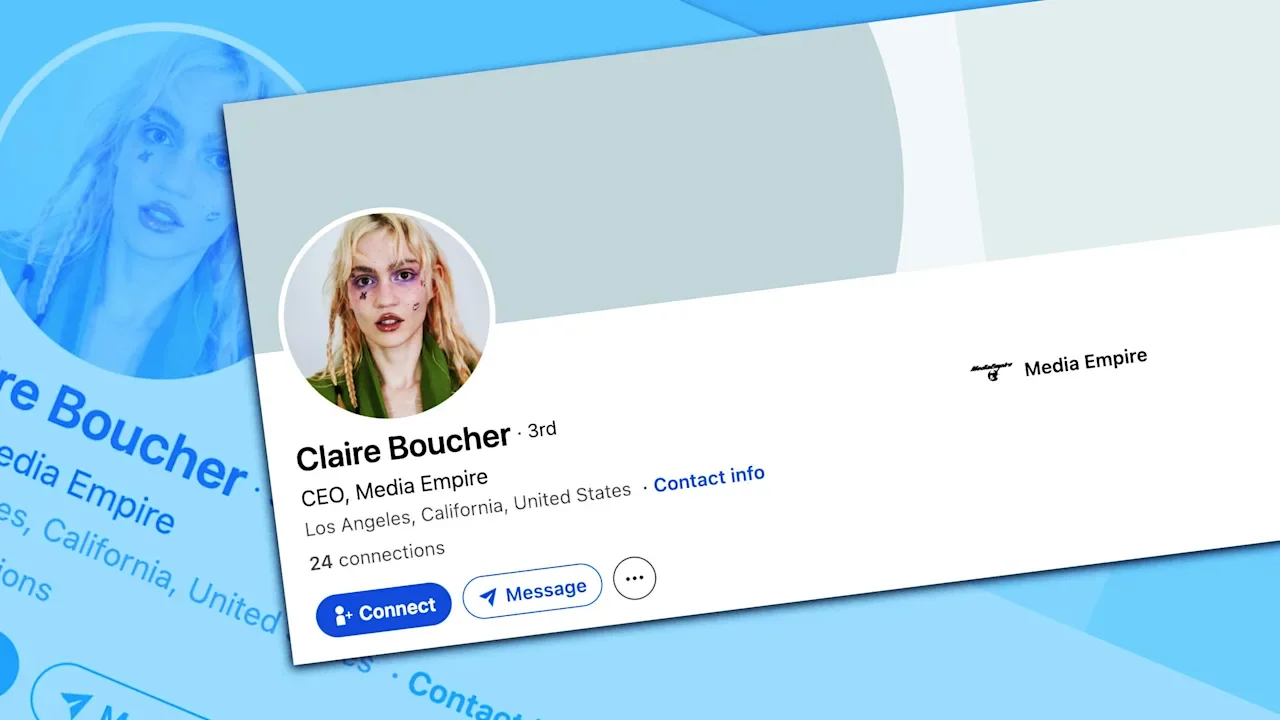
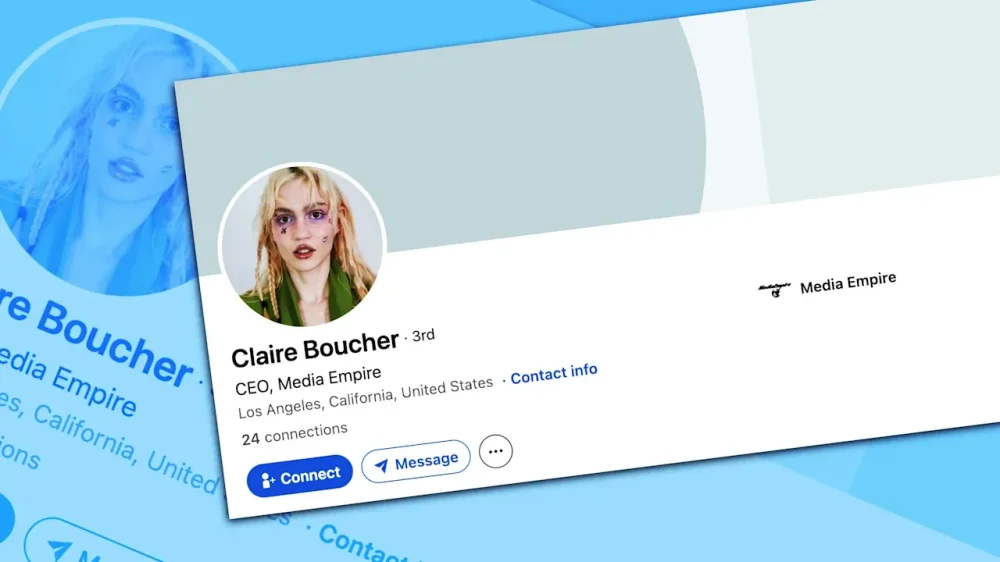
“I’m only gonna be releasing music on LinkedIn from now on,” Grimes posted on X in February 2025. A year on, and true to her word, a profile for Claire Boucher (her real name) appeared on the networking platform this week. What’s unclear is if it’s actually the Canadian techno artist, who shares three children with Tesla and SpaceX founder Elon Musk, and if she’ll actually be using it to release her music exclusively. In her profile, she lists her professions as CEO of the Los Angeles company Media Empire and an artist at Nazgul Recording LLC, the record publishing company she established in September 2014. The profile features many of Grimes’s professional achievements, including making 2012’s Visions using GarageBand, and her 2015 release Art Angels being named album of the year by Stereogum, NME, and Exclaim! magazine. In 2021, she writes that she “set the NFT world on fire” by releasing new music via a series of auctioned cryptocurrency art pieces using non-fungible tokens (NFTs). Also listed on her online résumé is her 2021 appearance as a judge on Fox’s virtual avatar game show, Alter Ego. With April Fool’s being only a week away, the timing of Grimes’s apparent hard launch on the platform of Easy Applying and cold DMing is curious. Some fans have commented with skepticism: “This is a performance piece…” one X user wrote. Another X user posited that it’s “GrimesAI having a laugh.” Fast Company has reached out to Grimes’s publicist for comment and confirmation. Either way, she is far from the only celebrity entering their LinkedIn era recently. Rapper and activist Meek Mill joined the platform just last weekend, writing: “Starting my LinkedIn journey as an artist, I have dedicated much of my time to honing my creative skills. Now, I am ready to transition into the business world and showcase my true potential. For too long, others have spoken on my behalf, but now I am taking the reins and speaking for myself, supported by a strong team.” He added: “I will be posting more content and business ideas to demonstrate the strength of the brand and my thought process.” In fact, other celebrities have been on LinkedIn for years, as they’ve pivoted from fields like acting or sports into entrepreneurship: Ryan Reynolds has over 3.5 million followers (and is also a Top Voice and has LinkedIn Premium). Paris Hilton, Jimmy “MrBeast” Donaldson, Snoop Dogg, Jessica Alba, Gabrielle Union, Logan Paul, Jennifer Lopez, Stephen Curry, and loads more celebs are also all on LinkedIn, have been for a while, and have thriving presences on the platform. So it’s totally plausible this new Grimes profile is legit. (The claim of only releasing new music on the professional networking site, however, is more open to interpretation.) Grimes’s most recent venture, launched in 2023, is voice deepfake software Elf.Tech, which invites users to record or upload vocals for regurgitation in Grimes’ own voice, in return for a 50-50 royalty split. Music production, video production, songwriting, illustration, and art direction are mentioned as Boucher’s top skills, and she has just 24 connections at the time of this writing. While Grimes previously hinted at releasing music via LinkedIn, the only post so far is an announcement for a panel talk titled “When AI Looks in the Mirror” at the AI conference Nvidia GTC, which took place last week. Whether or not the panel promo had something to do with her creating the LinkedIn account, or if Boucher intends to use the platform to push her music, or if it is—as some online are calling it, a “recession indicator”—remains unclear for now. In the meantime, Boucher may be accepting connection requests. View the full article
-
We may earn a commission from links on this page. Deal pricing and availability subject to change after time of publication. Fitbit devices are among today’s fitness tech deals during Amazon’s Big Spring Sale. The Charge 6 is down to $119.95 (from $159.95) and the Versa 4 is $149.95 (down from $199.95), but I think the best deal of the bunch is the Inspire 3 at $69.95 (down from $99.95). If you want a simple, minimalist fitness tracker, this is a great way to grab one on the cheap. Fitbit Inspire 3 Health & Fitness Tracker (Midnight Zen/Black) $69.95 at Amazon $99.95 Save $30.00 Get Deal Get Deal $69.95 at Amazon $99.95 Save $30.00 The Inspire 3 is, in many ways, a pared-down Charge 6. You can read my review of the Charge 6 here. It’s a basic fitness tracker that will count your steps and track heart rate during workouts, which may be all you want. To understand what you’re missing if you go for the Inspire 3: The Inspire 3 doesn’t have its own GPS, and thus needs your phone to be with you if you want to track your distance and pace when you jog or walk. (The Charge 6 has its own GPS, but doesn’t always work as well as you’d hope—more on that in my review.) The Inspire 3 doesn’t have Google Wallet, Google Maps, or YouTube Music. The Charge 6 has all three, but all require your phone to be nearby and music requires a subscription. The Inspire 3 has a smaller screen: 0.7x0.5 inches, instead of the Charge 6’s 0.86x0.58 inches. The Inspire 3 has 6 workout types, while the Charge 6 has 40+. If you’re OK without those extra features, I’d recommend the Inspire 3 for a minimalist fitness tracker. It’s got a 10-day battery life and a slim, bracelet-like shape. And if you want something more full-featured, consider Garmin's Vivoactive 5, which is on sale for just $179.95 today. Our Best Editor-Vetted Amazon Big Spring Sale Deals Right Now Apple AirPods Pro 3 Noise Cancelling Heart Rate Wireless Earbuds — $199.00 (List Price $249.00) Apple iPad 11" 128GB A16 WiFi Tablet (Blue, 2025) — $299.00 (List Price $349.00) Sony WH1000XM6- Best Wireless Noise Canceling Headphones — $398.00 (List Price $459.99) Apple Watch Series 11 (GPS, 42mm, S/M Black Sport Band) — $299.00 (List Price $399.00) Blink Video Doorbell Wireless (Newest Model) + Sync Module Core — $35.99 (List Price $69.99) Ring Indoor Cam Plus 2K Wired Security Camera (White) — $39.99 (List Price $59.99) Fire TV Stick 4K Max Streaming Player With Remote — $34.99 (List Price $59.99) Amazon Kindle Colorsoft 16GB 7" eReader (Black) — $169.99 (List Price $249.99) Deals are selected by our commerce team View the full article
-
Stakeholders rely on detailed, easy-to-read reports. From including cited data to using a structured format, learn how to simplify the lending reports process. View the full article
-
A Level 2 background check is an in-depth screening process that includes fingerprinting to access both state and national criminal records. This check reveals not just state offenses, but likewise federal crimes, including those that may have been expunged. It’s fundamental for roles in sensitive sectors like healthcare and education, where trust is significant. Comprehending its implications and benefits can clarify why this process is indispensable for both employers and the safety of the communities they serve. Key Takeaways Level 2 background checks involve fingerprinting to access comprehensive state and national criminal records, revealing federal offenses and expunged records. They are essential for industries like healthcare and education, ensuring the safety of vulnerable populations. These checks help employers comply with legal regulations, reducing potential legal liabilities and maintaining public trust. Level 2 checks provide detailed verification of employment and education histories, identifying discrepancies that might affect hiring decisions. They enhance workplace safety by ensuring that sensitive roles are filled by trustworthy individuals, fostering a secure environment. Overview of Level 2 Background Checks A Level 2 background check is a vital tool for employers, especially in sectors where trust and safety are paramount, like healthcare and education. So, what’s a Level Two background check? It’s a thorough screening process that includes fingerprinting to access state and national criminal records. This type of check reveals federal offenses, hidden or expunged records, and guarantees detailed verification of employment and education history. In Florida, Level 2 background checks are mandatory for certain industries, emphasizing the importance of safety and trustworthiness. The process typically takes three to seven business days, allowing you to manage hiring timelines effectively. By uncovering discrepancies in resumes and identifying disqualifying offenses, a Level 2 background check empowers employers to make informed hiring decisions, markedly reducing risks associated with negligent hiring. Comparison With Level 1 Background Checks When comparing Level 1 and Level 2 background checks, you’ll notice some key differences that can greatly impact hiring decisions. Level 1 checks are typically quicker and focus on state-level criminal history using name-based searches, whereas Level 2 checks involve fingerprinting and provide a more thorough review, including national databases and sealed records. Comprehending these distinctions is vital, especially for employers in fields that require a higher level of trust, like healthcare or law enforcement. Key Differences Explained Understanding the key differences between Level 1 and Level 2 background checks is essential for both employers and job seekers, especially in industries that require high levels of trust. Feature Level 1 Background Check Level 2 Background Check Data Source Name-based, state-level records Fingerprint-based, state & national Offenses Uncovered Limited scope of criminal offenses Broader range, including federal Processing Time Shorter duration 3 to 7 business days Level 1 checks focus primarily on state criminal and employment histories, whereas Level 2 checks investigate deeper, revealing more extensive information. Employers often require Level 2 checks for roles involving vulnerable populations, ensuring thorough verification for safety. Specific Use Cases Understanding of specific use cases for Level 2 background checks can help you see why they’re often preferred over Level 1 checks in certain fields. Employers in healthcare, education, and law enforcement typically require Level 2 checks because of the high level of trust and safety involved. Unlike Level 1 checks, which are name-based and focus on state records, Level 2 checks use fingerprints to access both state and national databases, revealing sealed or expunged records, including juvenile convictions. This thorough approach allows employers to make better-informed hiring decisions. In Florida, certain industries are legally mandated to conduct Level 2 checks, ensuring compliance with regulations aimed at protecting public welfare and vulnerable populations. Information Revealed by Level 2 Background Checks Level 2 background checks provide a thorough examination of an individual’s criminal history, revealing essential information that may not be included in more basic screenings. This level of scrutiny uncovers felony convictions, misdemeanors, and pending criminal cases, offering a detailed view of an applicant’s past. Type of Information Details Criminal History Felony convictions, misdemeanors, pending cases Vulnerable Populations Crimes against children and the elderly Expunged Records & Juvenile Arrests Information typically hidden in Level 1 checks Employment & Education Verification Detailed history to identify discrepancies Additionally, Level 2 checks can identify civil judgments and arrests leading to convictions. This guarantees that employers can make informed hiring decisions, promoting safety and integrity in sensitive positions. Overall, this extensive background check is essential for providing a reliable evaluation of potential candidates. Purpose of Level 2 Background Checks The primary purpose of Level 2 background checks is to guarantee a safe and trustworthy hiring process, especially for positions that involve significant responsibilities, such as those in healthcare and education. These checks are crucial in preventing negligent hiring by thoroughly screening candidates who’ll be in sensitive environments. They improve workplace safety by identifying potential risks and ensuring candidates don’t have disqualifying offenses, like felonies or serious misdemeanors. Limitations and Considerations of a Level 2 Background Check Though Level 2 background checks serve as an essential tool for evaluating potential employees, they likewise come with notable limitations and considerations that employers should keep in mind. These checks don’t cover medical records or outstanding warrants, which may leave gaps in an applicant’s background. Furthermore, the Fair Credit Reporting Act allows the reporting of convictions regardless of age, but arrests older than seven years can’t disqualify candidates. The accuracy of the results is likewise contingent on the reliability of databases used, which may lead to discrepancies. In addition, some sealed or expunged records might still surface, requiring prompt resolution of any errors. Employers must conduct due diligence beyond the Level 2 findings to fully assess a candidate’s qualifications. Limitation Description Consideration Missing Information Excludes medical records and warrants Verify further background information Age of Records Older arrests can’t disqualify Focus on relevant convictions Database Reliability Results depend on data accuracy Cross-check with other sources Benefits for Employers in Florida When you’re hiring in Florida, Level 2 background checks offer significant benefits that improve your recruitment process. These checks not just guarantee compliance with state regulations but additionally streamline your hiring by providing detailed insights into candidates’ backgrounds. Enhanced Trustworthiness in Hiring How can Level 2 background checks improve trustworthiness in hiring for employers in Florida? These checks are essential in sensitive sectors like healthcare and education, ensuring candidates lack disqualifying criminal records. By revealing thorough criminal histories, including federal offenses, Level 2 checks help protect vulnerable populations. They furthermore verify employment history and education, allowing you to assess candidates’ qualifications accurately. Here’s a quick overview of the benefits: Benefit Description Impact on Trust Thorough Criminal History Reveals full background, including expunged records Increases candidate reliability Employment Verification Confirms job history and qualifications Builds confidence in hiring decisions Safety for Vulnerable Populations Protects those at risk, such as children and the elderly Promotes a safer environment Culture of Accountability Encourages responsibility within the workplace Strengthens trust with clients Compliance With State Regulations Compliance with state regulations is vital for employers in Florida, especially in industries that involve significant responsibility or trust. By conducting Level 2 background checks, you not only adhere to legal mandates but likewise protect vulnerable populations. Here are three key benefits: Avoid Legal Penalties: Not performing required checks can lead to fines and legal repercussions, jeopardizing your business. Enhance Safety: Ensuring that individuals in sensitive roles don’t pose risks promotes a safer environment for everyone. Build Trust: Demonstrating compliance reassures clients and employees that your organization prioritizes safety and integrity. Implementing these checks is important for maintaining operational standards and nurturing a secure workplace, directly aligning with state and federal regulations. Streamlined Hiring Process Efficiency Streamlining your hiring process is essential for maintaining efficiency and effectiveness, especially in Florida’s competitive job market. Utilizing Level 2 background checks helps you quickly identify qualified candidates by accessing both state and national criminal records. This thorough screening reduces the time spent on discrepancies in resumes, leading to faster hiring decisions. Additionally, Level 2 checks typically complete within three to seven business days, allowing you to manage hiring timelines effectively and ensuring careful due diligence. Benefit Description Impact Quick Identification Access to extensive criminal records Faster candidate evaluation Reduced Discrepancies Fewer issues with applicant backgrounds Quicker hiring decisions Compliance Assurance Meets state regulations for specific roles Minimizes legal liabilities Improved Community Safety Hiring trustworthy candidates for sensitive roles Greater employee retention Efficient Timeline Management Streamlined process for hiring Effective resource allocation Frequently Asked Questions What Does a Level 2 Background Consist Of? A Level 2 background check consists of a thorough review of your criminal history, including arrests, convictions, and pending charges from both state and federal databases. It uses fingerprinting to access national records through the FBI’s systems, ensuring accuracy. Furthermore, it verifies your employment history, noting job titles, dates, and reasons for leaving. This check can likewise uncover sealed records and expunged information, providing a complete assessment of your background. What Causes You to Fail a Level 2 Background Check? You can fail a Level 2 background check for several reasons. Having a felony or serious misdemeanor, especially those involving moral turpitude, can disqualify you. If you’re on the Office of Inspector General (OIG) list or state exclusion lists, you won’t be eligible for certain jobs. Furthermore, falsifying information, lacking necessary licenses, or failing a drug test can lead to disqualification. Each of these factors is critical in determining your employment eligibility. Conclusion In conclusion, a Level 2 background check is crucial for ensuring safety and compliance in sensitive industries. By uncovering extensive criminal records, including federal offenses, it helps employers make informed hiring decisions. During this screening process has its limitations, its benefits in protecting vulnerable populations and nurturing secure environments cannot be overstated. For employers in Florida, conducting Level 2 checks is not just a regulatory requirement; it’s a critical step toward building trust and ensuring workplace safety. Image via Google Gemini and ArtSmart This article, "What Is a Level 2 Background Check and Why Is It Important?" was first published on Small Business Trends View the full article
-
A Level 2 background check is an in-depth screening process that includes fingerprinting to access both state and national criminal records. This check reveals not just state offenses, but likewise federal crimes, including those that may have been expunged. It’s fundamental for roles in sensitive sectors like healthcare and education, where trust is significant. Comprehending its implications and benefits can clarify why this process is indispensable for both employers and the safety of the communities they serve. Key Takeaways Level 2 background checks involve fingerprinting to access comprehensive state and national criminal records, revealing federal offenses and expunged records. They are essential for industries like healthcare and education, ensuring the safety of vulnerable populations. These checks help employers comply with legal regulations, reducing potential legal liabilities and maintaining public trust. Level 2 checks provide detailed verification of employment and education histories, identifying discrepancies that might affect hiring decisions. They enhance workplace safety by ensuring that sensitive roles are filled by trustworthy individuals, fostering a secure environment. Overview of Level 2 Background Checks A Level 2 background check is a vital tool for employers, especially in sectors where trust and safety are paramount, like healthcare and education. So, what’s a Level Two background check? It’s a thorough screening process that includes fingerprinting to access state and national criminal records. This type of check reveals federal offenses, hidden or expunged records, and guarantees detailed verification of employment and education history. In Florida, Level 2 background checks are mandatory for certain industries, emphasizing the importance of safety and trustworthiness. The process typically takes three to seven business days, allowing you to manage hiring timelines effectively. By uncovering discrepancies in resumes and identifying disqualifying offenses, a Level 2 background check empowers employers to make informed hiring decisions, markedly reducing risks associated with negligent hiring. Comparison With Level 1 Background Checks When comparing Level 1 and Level 2 background checks, you’ll notice some key differences that can greatly impact hiring decisions. Level 1 checks are typically quicker and focus on state-level criminal history using name-based searches, whereas Level 2 checks involve fingerprinting and provide a more thorough review, including national databases and sealed records. Comprehending these distinctions is vital, especially for employers in fields that require a higher level of trust, like healthcare or law enforcement. Key Differences Explained Understanding the key differences between Level 1 and Level 2 background checks is essential for both employers and job seekers, especially in industries that require high levels of trust. Feature Level 1 Background Check Level 2 Background Check Data Source Name-based, state-level records Fingerprint-based, state & national Offenses Uncovered Limited scope of criminal offenses Broader range, including federal Processing Time Shorter duration 3 to 7 business days Level 1 checks focus primarily on state criminal and employment histories, whereas Level 2 checks investigate deeper, revealing more extensive information. Employers often require Level 2 checks for roles involving vulnerable populations, ensuring thorough verification for safety. Specific Use Cases Understanding of specific use cases for Level 2 background checks can help you see why they’re often preferred over Level 1 checks in certain fields. Employers in healthcare, education, and law enforcement typically require Level 2 checks because of the high level of trust and safety involved. Unlike Level 1 checks, which are name-based and focus on state records, Level 2 checks use fingerprints to access both state and national databases, revealing sealed or expunged records, including juvenile convictions. This thorough approach allows employers to make better-informed hiring decisions. In Florida, certain industries are legally mandated to conduct Level 2 checks, ensuring compliance with regulations aimed at protecting public welfare and vulnerable populations. Information Revealed by Level 2 Background Checks Level 2 background checks provide a thorough examination of an individual’s criminal history, revealing essential information that may not be included in more basic screenings. This level of scrutiny uncovers felony convictions, misdemeanors, and pending criminal cases, offering a detailed view of an applicant’s past. Type of Information Details Criminal History Felony convictions, misdemeanors, pending cases Vulnerable Populations Crimes against children and the elderly Expunged Records & Juvenile Arrests Information typically hidden in Level 1 checks Employment & Education Verification Detailed history to identify discrepancies Additionally, Level 2 checks can identify civil judgments and arrests leading to convictions. This guarantees that employers can make informed hiring decisions, promoting safety and integrity in sensitive positions. Overall, this extensive background check is essential for providing a reliable evaluation of potential candidates. Purpose of Level 2 Background Checks The primary purpose of Level 2 background checks is to guarantee a safe and trustworthy hiring process, especially for positions that involve significant responsibilities, such as those in healthcare and education. These checks are crucial in preventing negligent hiring by thoroughly screening candidates who’ll be in sensitive environments. They improve workplace safety by identifying potential risks and ensuring candidates don’t have disqualifying offenses, like felonies or serious misdemeanors. Limitations and Considerations of a Level 2 Background Check Though Level 2 background checks serve as an essential tool for evaluating potential employees, they likewise come with notable limitations and considerations that employers should keep in mind. These checks don’t cover medical records or outstanding warrants, which may leave gaps in an applicant’s background. Furthermore, the Fair Credit Reporting Act allows the reporting of convictions regardless of age, but arrests older than seven years can’t disqualify candidates. The accuracy of the results is likewise contingent on the reliability of databases used, which may lead to discrepancies. In addition, some sealed or expunged records might still surface, requiring prompt resolution of any errors. Employers must conduct due diligence beyond the Level 2 findings to fully assess a candidate’s qualifications. Limitation Description Consideration Missing Information Excludes medical records and warrants Verify further background information Age of Records Older arrests can’t disqualify Focus on relevant convictions Database Reliability Results depend on data accuracy Cross-check with other sources Benefits for Employers in Florida When you’re hiring in Florida, Level 2 background checks offer significant benefits that improve your recruitment process. These checks not just guarantee compliance with state regulations but additionally streamline your hiring by providing detailed insights into candidates’ backgrounds. Enhanced Trustworthiness in Hiring How can Level 2 background checks improve trustworthiness in hiring for employers in Florida? These checks are essential in sensitive sectors like healthcare and education, ensuring candidates lack disqualifying criminal records. By revealing thorough criminal histories, including federal offenses, Level 2 checks help protect vulnerable populations. They furthermore verify employment history and education, allowing you to assess candidates’ qualifications accurately. Here’s a quick overview of the benefits: Benefit Description Impact on Trust Thorough Criminal History Reveals full background, including expunged records Increases candidate reliability Employment Verification Confirms job history and qualifications Builds confidence in hiring decisions Safety for Vulnerable Populations Protects those at risk, such as children and the elderly Promotes a safer environment Culture of Accountability Encourages responsibility within the workplace Strengthens trust with clients Compliance With State Regulations Compliance with state regulations is vital for employers in Florida, especially in industries that involve significant responsibility or trust. By conducting Level 2 background checks, you not only adhere to legal mandates but likewise protect vulnerable populations. Here are three key benefits: Avoid Legal Penalties: Not performing required checks can lead to fines and legal repercussions, jeopardizing your business. Enhance Safety: Ensuring that individuals in sensitive roles don’t pose risks promotes a safer environment for everyone. Build Trust: Demonstrating compliance reassures clients and employees that your organization prioritizes safety and integrity. Implementing these checks is important for maintaining operational standards and nurturing a secure workplace, directly aligning with state and federal regulations. Streamlined Hiring Process Efficiency Streamlining your hiring process is essential for maintaining efficiency and effectiveness, especially in Florida’s competitive job market. Utilizing Level 2 background checks helps you quickly identify qualified candidates by accessing both state and national criminal records. This thorough screening reduces the time spent on discrepancies in resumes, leading to faster hiring decisions. Additionally, Level 2 checks typically complete within three to seven business days, allowing you to manage hiring timelines effectively and ensuring careful due diligence. Benefit Description Impact Quick Identification Access to extensive criminal records Faster candidate evaluation Reduced Discrepancies Fewer issues with applicant backgrounds Quicker hiring decisions Compliance Assurance Meets state regulations for specific roles Minimizes legal liabilities Improved Community Safety Hiring trustworthy candidates for sensitive roles Greater employee retention Efficient Timeline Management Streamlined process for hiring Effective resource allocation Frequently Asked Questions What Does a Level 2 Background Consist Of? A Level 2 background check consists of a thorough review of your criminal history, including arrests, convictions, and pending charges from both state and federal databases. It uses fingerprinting to access national records through the FBI’s systems, ensuring accuracy. Furthermore, it verifies your employment history, noting job titles, dates, and reasons for leaving. This check can likewise uncover sealed records and expunged information, providing a complete assessment of your background. What Causes You to Fail a Level 2 Background Check? You can fail a Level 2 background check for several reasons. Having a felony or serious misdemeanor, especially those involving moral turpitude, can disqualify you. If you’re on the Office of Inspector General (OIG) list or state exclusion lists, you won’t be eligible for certain jobs. Furthermore, falsifying information, lacking necessary licenses, or failing a drug test can lead to disqualification. Each of these factors is critical in determining your employment eligibility. Conclusion In conclusion, a Level 2 background check is crucial for ensuring safety and compliance in sensitive industries. By uncovering extensive criminal records, including federal offenses, it helps employers make informed hiring decisions. During this screening process has its limitations, its benefits in protecting vulnerable populations and nurturing secure environments cannot be overstated. For employers in Florida, conducting Level 2 checks is not just a regulatory requirement; it’s a critical step toward building trust and ensuring workplace safety. Image via Google Gemini and ArtSmart This article, "What Is a Level 2 Background Check and Why Is It Important?" was first published on Small Business Trends View the full article
-
We may earn a commission from links on this page. Deal pricing and availability subject to change after time of publication. If you're dedicated enough to have a home gym, there's no reason you should waste precious workout time by digging through a heap of equipment or making multiple trips across your garage to grab different dumbbells between sets. Normally $129.99, this home gym storage rack is currently on sale for $79.98 as part of Amazon's Big Spring Sale. If you've been tripping over scattered dumbbells or wasting time hunting for the right weights mid-workout, this deal solves both problems for under $80. PLKOW Dumbbell Rack $79.98 at Amazon $129.99 Save $50.01 Get Deal Get Deal $79.98 at Amazon $129.99 Save $50.01 At 41.5"W x 37"H, this weight rack is specifically designed for a home gym. There are clear spaces for dumbbells, kettlebells, yoga blocks, resistance bands, medicine balls, and so on—and the whole set-up is on wheels. When all your smaller equipment piles up in corners or gets kicked under furniture, you end up dealing with completely avoidable obstacles to your workout routine. Having everything organized in one storage rack means you can actually find what you need when you need it. If you have an even bigger (and messier) home gym set-up, you could spring for the larger 50.4"W x 43.7"H version, currently on sale for $151.98 (down from $189.99). Take stock of just how much equipment you have, so that you can find the right storage solution and get back to training. Our Best Editor-Vetted Amazon Big Spring Sale Deals Right Now Apple AirPods Pro 3 Noise Cancelling Heart Rate Wireless Earbuds — $199.00 (List Price $249.00) Apple iPad 11" 128GB A16 WiFi Tablet (Blue, 2025) — $299.00 (List Price $349.00) Sony WH1000XM6- Best Wireless Noise Canceling Headphones — $398.00 (List Price $459.99) Apple Watch Series 11 (GPS, 42mm, S/M Black Sport Band) — $299.00 (List Price $399.00) Blink Video Doorbell Wireless (Newest Model) + Sync Module Core — $35.99 (List Price $69.99) Ring Indoor Cam Plus 2K Wired Security Camera (White) — $39.99 (List Price $59.99) Fire TV Stick 4K Max Streaming Player With Remote — $34.99 (List Price $59.99) Amazon Kindle Colorsoft 16GB 7" eReader (Black) — $169.99 (List Price $249.99) Deals are selected by our commerce team View the full article
-
As businesses grow, financial decisions become more complex. Cash flow planning, forecasting, hiring, pricing, and long-term strategy all start to matter more, yet many small and mid-sized businesses are not ready to hire a full-time Chief Financial Officer (CFO). That’s where fractional CFO services come in. A fractional CFO can give businesses access to high-level financial expertise without the cost or commitment of a full-time executive. For many companies, it’s the missing link between basic bookkeeping and true financial leadership. What Is a Fractional CFO?A fractional CFO is a senior financial professional who works with a business on a part-time or contract basis. Instead of being on payroll full-time, they provide strategic financial guidance for a set number of hours or on a recurring monthly basis. Fractional CFO services are designed to give business owners access to CFO-level insight without the overhead of a six-figure salary, benefits, and long-term employment commitment. While bookkeepers and accountants focus on recording transactions and reporting on what already happened, a fractional CFO focuses on what’s coming next and how to prepare for it. What Does a Fractional CFO Actually Do?The scope of fractional CFO services varies by business, but the role is always focused on strategy, planning, and decision support. Financial Strategy and Planning A fractional CFO helps businesses think beyond day-to-day operations. This includes setting financial goals, evaluating growth opportunities, and aligning financial decisions with long-term plans. They look at the full financial picture and help answer questions like: 1. Can we afford to hire? 2. Is now the right time to expand? 3. How much cash do we need to support growth?Cash Flow Management Cash flow is one of the biggest challenges for growing businesses. Even profitable companies can struggle if cash is not managed properly Fractional CFO services focus heavily on understanding cash inflows and outflows, identifying timing issues, and building systems that keep cash stable. This often includes cash flow forecasting, scenario planning, and identifying areas where working capital can be improved.Budgeting and Forecasting A budget is not just a spreadsheet. When done correctly, it becomes a roadmap for the business. A fractional CFO helps create realistic budgets and forecasts based on historical data, current performance, and future plans. These forecasts are updated regularly so business owners can see how actual results compare to expectations and adjust early when needed.Financial Reporting and Interpretation Most business owners receive financial reports but are not always sure what to do with them. Fractional CFO services include reviewing financial statements and translating the numbers into practical insights. This means explaining trends, identifying red flags, and helping owners understand what the data is actually saying about the business. The goal is clarity, not complexity.Pricing and Profitability Analysis Many businesses underprice their services or products without realizing it. A fractional CFO analyzes costs, margins, and pricing structures to ensure profitability is sustainable. This often includes evaluating which products, services, or clients are most profitable and where margins can be improved.Support for Big Decisions Major decisions like taking on debt, seeking investment, acquiring another business, or restructuring operations require careful financial analysis. Fractional CFO services provide objective insight during these moments. The CFO role is to evaluate risk, model outcomes, and help leadership make informed choices based on data rather than guesswork.How Fractional CFO Services Differ from Accounting and Bookkeeping It’s common for business owners to assume that bookkeeping, accounting, and CFO services all fall under the same umbrella. While they work closely together, each serves a different purpose. Bookkeeping focuses on recording transactions accurately and consistently. Accounting builds on that data to produce financial statements and handle tax compliance. Fractional CFO services sit above both, using that information to guide strategy and decision-making. In other words: Bookkeeping tells you what happenedAccounting explains itA fractional CFO helps you decide what to do nextAt firms like RMP Accounting, these services often work together, creating a complete financial support system rather than disconnected pieces. When Does a Business Need a Fractional CFO? Not every business needs fractional CFO services right away, but many reach a point where basic financial reporting is no longer enough. Some common signs include: Revenue is growing, but cash feels tightFinancial decisions feel reactive rather than plannedYou’re unsure whether growth is actually profitableYou need forecasts for lenders or investorsYou want clearer insight before making major movesBusinesses often seek fractional CFO services when they are transitioning from early-stage operations into a more structured growth phase. The Benefits of Fractional CFO Services Access to Experience Without Full-Time Cost Hiring a full-time CFO can be expensive and unnecessary for many businesses. Fractional CFO services provide access to senior-level expertise at a fraction of the cost. Objective, Outside Perspective A fractional CFO brings an outside viewpoint. This objectivity helps identify issues that may be overlooked internally and provides honest feedback grounded in financial reality. Better Decision-Making With accurate forecasts, clear reporting, and strategic insight, business owners can make decisions with confidence rather than relying on instinct alone. Scalability Fractional CFO services scale with your business. As needs change, the level of support can increase or decrease without the disruption of hiring or restructuring. How Fractional CFO Services Support Long-Term Growth Sustainable growth is rarely accidental. It requires planning, discipline, and financial clarity. Fractional CFO services help businesses: Plan growth without overextendingUnderstand the financial impact of decisions before actingBuild systems that support scaleAvoid costly mistakes caused by poor cash managementOver time, this kind of guidance creates stability and resilience, even during periods of rapid change. Choosing the Right Fractional CFO Partner Not all fractional CFO services are the same. Experience, communication style, and industry knowledge all matter. When evaluating a provider, business owners should look for: Clear explanations, not financial jargonExperience working with growing businessesA collaborative approach that fits their teamStrong foundations in bookkeeping and accountingAt RMP Accounting, we often provide fractional CFO services as part of a broader financial partnership, ensuring strategy is always backed by clean data and accurate reporting. Final Thoughts Fractional CFO services are not about replacing internal teams or adding unnecessary complexity. They exist to fill a critical gap between day-to-day financial tasks and long-term business strategy. For many growing businesses, a fractional CFO becomes a trusted advisor who helps bring clarity, structure, and confidence to financial decisions. When used effectively, fractional CFO services don’t just support growth. They help businesses grow smarter. For businesses considering fractional CFO services, RMP Accounting offers experienced, practical guidance to help you navigate financial decisions with confidence. Contact our team today. The information provided in this article is for general educational purposes only and should not be considered financial, accounting, or tax advice. Every business situation is unique. Please consult a qualified professional regarding your specific circumstances. View the full article
-
As businesses grow, financial decisions become more complex. Cash flow planning, forecasting, hiring, pricing, and long-term strategy all start to matter more, yet many small and mid-sized businesses are not ready to hire a full-time Chief Financial Officer (CFO). That’s where fractional CFO services come in. A fractional CFO can give businesses access to high-level financial expertise without the cost or commitment of a full-time executive. For many companies, it’s the missing link between basic bookkeeping and true financial leadership. What Is a Fractional CFO?A fractional CFO is a senior financial professional who works with a business on a part-time or contract basis. Instead of being on payroll full-time, they provide strategic financial guidance for a set number of hours or on a recurring monthly basis. Fractional CFO services are designed to give business owners access to CFO-level insight without the overhead of a six-figure salary, benefits, and long-term employment commitment. While bookkeepers and accountants focus on recording transactions and reporting on what already happened, a fractional CFO focuses on what’s coming next and how to prepare for it. What Does a Fractional CFO Actually Do?The scope of fractional CFO services varies by business, but the role is always focused on strategy, planning, and decision support. Financial Strategy and Planning A fractional CFO helps businesses think beyond day-to-day operations. This includes setting financial goals, evaluating growth opportunities, and aligning financial decisions with long-term plans. They look at the full financial picture and help answer questions like: 1. Can we afford to hire? 2. Is now the right time to expand? 3. How much cash do we need to support growth?Cash Flow Management Cash flow is one of the biggest challenges for growing businesses. Even profitable companies can struggle if cash is not managed properly Fractional CFO services focus heavily on understanding cash inflows and outflows, identifying timing issues, and building systems that keep cash stable. This often includes cash flow forecasting, scenario planning, and identifying areas where working capital can be improved.Budgeting and Forecasting A budget is not just a spreadsheet. When done correctly, it becomes a roadmap for the business. A fractional CFO helps create realistic budgets and forecasts based on historical data, current performance, and future plans. These forecasts are updated regularly so business owners can see how actual results compare to expectations and adjust early when needed.Financial Reporting and Interpretation Most business owners receive financial reports but are not always sure what to do with them. Fractional CFO services include reviewing financial statements and translating the numbers into practical insights. This means explaining trends, identifying red flags, and helping owners understand what the data is actually saying about the business. The goal is clarity, not complexity.Pricing and Profitability Analysis Many businesses underprice their services or products without realizing it. A fractional CFO analyzes costs, margins, and pricing structures to ensure profitability is sustainable. This often includes evaluating which products, services, or clients are most profitable and where margins can be improved.Support for Big Decisions Major decisions like taking on debt, seeking investment, acquiring another business, or restructuring operations require careful financial analysis. Fractional CFO services provide objective insight during these moments. The CFO role is to evaluate risk, model outcomes, and help leadership make informed choices based on data rather than guesswork.How Fractional CFO Services Differ from Accounting and Bookkeeping It’s common for business owners to assume that bookkeeping, accounting, and CFO services all fall under the same umbrella. While they work closely together, each serves a different purpose. Bookkeeping focuses on recording transactions accurately and consistently. Accounting builds on that data to produce financial statements and handle tax compliance. Fractional CFO services sit above both, using that information to guide strategy and decision-making. In other words: Bookkeeping tells you what happenedAccounting explains itA fractional CFO helps you decide what to do nextAt firms like RMP Accounting, these services often work together, creating a complete financial support system rather than disconnected pieces. When Does a Business Need a Fractional CFO? Not every business needs fractional CFO services right away, but many reach a point where basic financial reporting is no longer enough. Some common signs include: Revenue is growing, but cash feels tightFinancial decisions feel reactive rather than plannedYou’re unsure whether growth is actually profitableYou need forecasts for lenders or investorsYou want clearer insight before making major movesBusinesses often seek fractional CFO services when they are transitioning from early-stage operations into a more structured growth phase. The Benefits of Fractional CFO Services Access to Experience Without Full-Time Cost Hiring a full-time CFO can be expensive and unnecessary for many businesses. Fractional CFO services provide access to senior-level expertise at a fraction of the cost. Objective, Outside Perspective A fractional CFO brings an outside viewpoint. This objectivity helps identify issues that may be overlooked internally and provides honest feedback grounded in financial reality. Better Decision-Making With accurate forecasts, clear reporting, and strategic insight, business owners can make decisions with confidence rather than relying on instinct alone. Scalability Fractional CFO services scale with your business. As needs change, the level of support can increase or decrease without the disruption of hiring or restructuring. How Fractional CFO Services Support Long-Term Growth Sustainable growth is rarely accidental. It requires planning, discipline, and financial clarity. Fractional CFO services help businesses: Plan growth without overextendingUnderstand the financial impact of decisions before actingBuild systems that support scaleAvoid costly mistakes caused by poor cash managementOver time, this kind of guidance creates stability and resilience, even during periods of rapid change. Choosing the Right Fractional CFO Partner Not all fractional CFO services are the same. Experience, communication style, and industry knowledge all matter. When evaluating a provider, business owners should look for: Clear explanations, not financial jargonExperience working with growing businessesA collaborative approach that fits their teamStrong foundations in bookkeeping and accountingAt RMP Accounting, we often provide fractional CFO services as part of a broader financial partnership, ensuring strategy is always backed by clean data and accurate reporting. Final Thoughts Fractional CFO services are not about replacing internal teams or adding unnecessary complexity. They exist to fill a critical gap between day-to-day financial tasks and long-term business strategy. For many growing businesses, a fractional CFO becomes a trusted advisor who helps bring clarity, structure, and confidence to financial decisions. When used effectively, fractional CFO services don’t just support growth. They help businesses grow smarter. For businesses considering fractional CFO services, RMP Accounting offers experienced, practical guidance to help you navigate financial decisions with confidence. Contact our team today. The information provided in this article is for general educational purposes only and should not be considered financial, accounting, or tax advice. Every business situation is unique. Please consult a qualified professional regarding your specific circumstances. View the full article
-
In relation to loyalty rewards platforms, choosing the right one can greatly influence your business strategy. Each platform offers unique features customized to different needs. For instance, Open Loyalty’s API-first approach is perfect for custom experiences, whereas Smile.io suits small to medium e-commerce businesses with easy integration. Comprehending these distinctions will help you make an informed decision. What makes each platform stand out? Let’s explore their individual strengths and capabilities. Key Takeaways Open Loyalty: Ideal for customizable loyalty experiences with rapid implementation and built-in gamification to enhance customer engagement. Smile.io: Easy integration with e-commerce platforms, offering points-based programs and significant improvements in customer lifetime value. Cheetah Digital: Comprehensive marketing platform with personalized loyalty programs and strong reporting features to enhance customer retention. Talon.One: API-based solution for enterprises, allowing full control over loyalty mechanics and real-time analytics for optimized strategies. Antavo: No-code platform for quickly creating customized loyalty programs with user-friendly management and robust analytics tools. Open Loyalty Open Loyalty stands out as a headless, API-first loyalty platform that empowers businesses to craft customized loyalty experiences across various channels, such as web, mobile, and in-store environments. This flexibility makes it an excellent choice for hair salon loyalty programs, allowing you to design a salon loyalty rewards program that meets your specific needs. You can implement custom rules and manage loyalty points, tiers, and rewards seamlessly. With over 100 companies in 45+ countries using the platform, you’ll appreciate the rapid implementation and scalability it offers. Open Loyalty’s built-in gamification elements, such as achievements and leaderboards, improve customer engagement, making your loyalty rewards platform even more effective. Plus, real-time transaction processing and analytics capabilities enable you to track crucial metrics like retention and redemption rates efficiently. Its user-friendly interface allows mid-senior developers to configure settings without needing extensive technical expertise, streamlining the management process. Smile.io Smile.io offers a plug-and-play loyalty program solution customized for small to medium-sized e-commerce businesses, making it easy to integrate with popular platforms like Shopify and Wix. This platform enables you to implement points-based loyalty programs, referral campaigns, and VIP tiers, effectively converting one-time shoppers into repeat customers. If you run a salon, you can utilize this salon loyalty program to encourage clients to return for services, enhancing client retention. With a free plan available, you can access basic features, whereas paid plans provide more extensive customization options. Users have reported a 48% increase in customer lifetime value (CLV) and significant uplifts in repeat purchase rates, showcasing the platform’s effectiveness. The user-friendly dashboard simplifies managing your loyalty programs, and additional support is available through a knowledge base and community forum. Overall, Smile.io is a robust choice for building customer loyalty in your e-commerce business. Cheetah Digital For businesses looking to improve their marketing strategies, Cheetah Digital presents a versatile all-in-one marketing platform that includes loyalty program add-ons. This platform allows you to integrate your loyalty strategies with broader marketing efforts. Here are some key features to examine: Personalization: Tailor loyalty programs to individual customer preferences and behaviors. Reporting: Access strong reporting features to analyze customer engagement effectively. Engagement Focus: Boost customer engagement and retention through integrated marketing tactics. User Experience: Note that some users find the interface clunky, which may hinder program management. While Cheetah Digital offers valuable tools for loyalty programs, it does have limitations in depth compared to dedicated loyalty platforms. Businesses seeking deeper loyalty functionality might want to explore other specialized options. Talon.One Whereas many loyalty platforms focus on basic reward mechanics, Talon.One sets itself apart by offering an API-based promotion and loyalty engine designed for enterprises with complex needs. This platform gives developers full control over discounting, bundling, coupons, and loyalty mechanics, making it ideal for businesses with diverse product offerings. Talon.One supports hyper-personalized loyalty experiences with real-time updates and audience targeting, allowing you to tailor your customer engagement strategies effectively. Its plug-and-play adaptability guarantees seamless integration with various tech stacks, which is vital for companies operating in multi-brand ecosystems. You can create intricate loyalty programs without extensive coding, streamlining the implementation process while maintaining flexibility for customization. Furthermore, the platform’s real-time analytics and decision-making capabilities provide valuable insights, helping you optimize loyalty strategies and improve customer experiences, eventually driving better engagement and retention. Antavo Antavo stands out in the loyalty rewards space as a no-code platform that empowers businesses to quickly create customized loyalty programs designed to their specific needs. You can benefit from Antavo’s flexibility with various reward types, such as: Points for purchases that can be redeemed later. Discounts on future transactions to encourage repeat business. Gifts that surprise and delight loyal customers. Integrations with in-store kiosks and cards to boost engagement both online and offline. Although some users find the platform’s editor less intuitive than competitors, its user-friendly interface allows you to manage your loyalty programs with ease. Furthermore, Antavo includes analytics tools to track customer engagement and loyalty program performance, facilitating data-driven decisions. With its proven track record, used by several well-known brands, Antavo effectively supports diverse industries and customer loyalty needs. Frequently Asked Questions What Company Has the Best Loyalty Program? Determining which company has the best loyalty program depends on several factors, including user engagement, benefits offered, and overall satisfaction. For instance, Starbucks Rewards boasts millions of active users and substantial sales contributions from members. In the meantime, Sephora‘s tiered system encourages high spending and community engagement. Amazon Prime combines loyalty with membership perks, whereas REI nurtures community through shared values. In the end, the best program varies based on individual preferences and shopping habits. What Is the World’s Most Generous Rewards Program? The world’s most generous rewards program often revolves around airline loyalty programs, like Delta SkyMiles, allowing you to earn miles for flights and everyday purchases. You can accumulate enough miles for free international flights with strategic spending. Furthermore, credit card companies, such as Chase Sapphire Reserve, offer significant points for travel and dining. Programs like Marriott Bonvoy and Hilton Honors improve your travel experience by providing extensive point redemption options, including luxury hotel stays. What Is the Best Loyalty Scheme? The best loyalty scheme often depends on your preferences and shopping habits. Points-based programs reward you for purchases, whereas tiered systems, like those at Starbucks, offer escalating benefits based on your spending. Value-based programs, such as LEGO Insiders, engage you beyond purchases, nurturing community connections. Personalization plays an essential role, tailoring rewards to your behavior, which can increase satisfaction and retention. In the end, the effectiveness of a loyalty scheme hinges on how well it meets your needs. What Is the Largest Loyalty Program? The largest loyalty program is Starbucks Rewards, with over 34.3 million active members in the U.S. as of early 2024. This program has a stored value of $1.85 billion, contributing greatly to the company’s revenue. Members account for 41% of U.S. sales, highlighting its impact. The tiered rewards system allows customers to earn Stars for purchases, which can be redeemed for free items, enhancing customer engagement and encouraging repeat business. Conclusion In conclusion, choosing the right loyalty rewards platform depends on your business needs. Open Loyalty offers flexibility for custom experiences, whereas Smile.io simplifies integration for smaller enterprises. For personalized marketing, Cheetah Digital stands out, and Talon.One provides a robust API for complex loyalty systems. Finally, Antavo’s no-code platform makes customization quick and accessible. By evaluating these options, you can find a solution that improves customer engagement and drives retention effectively. Image via Google Gemini and ArtSmart This article, "5 Best Loyalty Rewards Platforms" was first published on Small Business Trends View the full article
-
In relation to loyalty rewards platforms, choosing the right one can greatly influence your business strategy. Each platform offers unique features customized to different needs. For instance, Open Loyalty’s API-first approach is perfect for custom experiences, whereas Smile.io suits small to medium e-commerce businesses with easy integration. Comprehending these distinctions will help you make an informed decision. What makes each platform stand out? Let’s explore their individual strengths and capabilities. Key Takeaways Open Loyalty: Ideal for customizable loyalty experiences with rapid implementation and built-in gamification to enhance customer engagement. Smile.io: Easy integration with e-commerce platforms, offering points-based programs and significant improvements in customer lifetime value. Cheetah Digital: Comprehensive marketing platform with personalized loyalty programs and strong reporting features to enhance customer retention. Talon.One: API-based solution for enterprises, allowing full control over loyalty mechanics and real-time analytics for optimized strategies. Antavo: No-code platform for quickly creating customized loyalty programs with user-friendly management and robust analytics tools. Open Loyalty Open Loyalty stands out as a headless, API-first loyalty platform that empowers businesses to craft customized loyalty experiences across various channels, such as web, mobile, and in-store environments. This flexibility makes it an excellent choice for hair salon loyalty programs, allowing you to design a salon loyalty rewards program that meets your specific needs. You can implement custom rules and manage loyalty points, tiers, and rewards seamlessly. With over 100 companies in 45+ countries using the platform, you’ll appreciate the rapid implementation and scalability it offers. Open Loyalty’s built-in gamification elements, such as achievements and leaderboards, improve customer engagement, making your loyalty rewards platform even more effective. Plus, real-time transaction processing and analytics capabilities enable you to track crucial metrics like retention and redemption rates efficiently. Its user-friendly interface allows mid-senior developers to configure settings without needing extensive technical expertise, streamlining the management process. Smile.io Smile.io offers a plug-and-play loyalty program solution customized for small to medium-sized e-commerce businesses, making it easy to integrate with popular platforms like Shopify and Wix. This platform enables you to implement points-based loyalty programs, referral campaigns, and VIP tiers, effectively converting one-time shoppers into repeat customers. If you run a salon, you can utilize this salon loyalty program to encourage clients to return for services, enhancing client retention. With a free plan available, you can access basic features, whereas paid plans provide more extensive customization options. Users have reported a 48% increase in customer lifetime value (CLV) and significant uplifts in repeat purchase rates, showcasing the platform’s effectiveness. The user-friendly dashboard simplifies managing your loyalty programs, and additional support is available through a knowledge base and community forum. Overall, Smile.io is a robust choice for building customer loyalty in your e-commerce business. Cheetah Digital For businesses looking to improve their marketing strategies, Cheetah Digital presents a versatile all-in-one marketing platform that includes loyalty program add-ons. This platform allows you to integrate your loyalty strategies with broader marketing efforts. Here are some key features to examine: Personalization: Tailor loyalty programs to individual customer preferences and behaviors. Reporting: Access strong reporting features to analyze customer engagement effectively. Engagement Focus: Boost customer engagement and retention through integrated marketing tactics. User Experience: Note that some users find the interface clunky, which may hinder program management. While Cheetah Digital offers valuable tools for loyalty programs, it does have limitations in depth compared to dedicated loyalty platforms. Businesses seeking deeper loyalty functionality might want to explore other specialized options. Talon.One Whereas many loyalty platforms focus on basic reward mechanics, Talon.One sets itself apart by offering an API-based promotion and loyalty engine designed for enterprises with complex needs. This platform gives developers full control over discounting, bundling, coupons, and loyalty mechanics, making it ideal for businesses with diverse product offerings. Talon.One supports hyper-personalized loyalty experiences with real-time updates and audience targeting, allowing you to tailor your customer engagement strategies effectively. Its plug-and-play adaptability guarantees seamless integration with various tech stacks, which is vital for companies operating in multi-brand ecosystems. You can create intricate loyalty programs without extensive coding, streamlining the implementation process while maintaining flexibility for customization. Furthermore, the platform’s real-time analytics and decision-making capabilities provide valuable insights, helping you optimize loyalty strategies and improve customer experiences, eventually driving better engagement and retention. Antavo Antavo stands out in the loyalty rewards space as a no-code platform that empowers businesses to quickly create customized loyalty programs designed to their specific needs. You can benefit from Antavo’s flexibility with various reward types, such as: Points for purchases that can be redeemed later. Discounts on future transactions to encourage repeat business. Gifts that surprise and delight loyal customers. Integrations with in-store kiosks and cards to boost engagement both online and offline. Although some users find the platform’s editor less intuitive than competitors, its user-friendly interface allows you to manage your loyalty programs with ease. Furthermore, Antavo includes analytics tools to track customer engagement and loyalty program performance, facilitating data-driven decisions. With its proven track record, used by several well-known brands, Antavo effectively supports diverse industries and customer loyalty needs. Frequently Asked Questions What Company Has the Best Loyalty Program? Determining which company has the best loyalty program depends on several factors, including user engagement, benefits offered, and overall satisfaction. For instance, Starbucks Rewards boasts millions of active users and substantial sales contributions from members. In the meantime, Sephora‘s tiered system encourages high spending and community engagement. Amazon Prime combines loyalty with membership perks, whereas REI nurtures community through shared values. In the end, the best program varies based on individual preferences and shopping habits. What Is the World’s Most Generous Rewards Program? The world’s most generous rewards program often revolves around airline loyalty programs, like Delta SkyMiles, allowing you to earn miles for flights and everyday purchases. You can accumulate enough miles for free international flights with strategic spending. Furthermore, credit card companies, such as Chase Sapphire Reserve, offer significant points for travel and dining. Programs like Marriott Bonvoy and Hilton Honors improve your travel experience by providing extensive point redemption options, including luxury hotel stays. What Is the Best Loyalty Scheme? The best loyalty scheme often depends on your preferences and shopping habits. Points-based programs reward you for purchases, whereas tiered systems, like those at Starbucks, offer escalating benefits based on your spending. Value-based programs, such as LEGO Insiders, engage you beyond purchases, nurturing community connections. Personalization plays an essential role, tailoring rewards to your behavior, which can increase satisfaction and retention. In the end, the effectiveness of a loyalty scheme hinges on how well it meets your needs. What Is the Largest Loyalty Program? The largest loyalty program is Starbucks Rewards, with over 34.3 million active members in the U.S. as of early 2024. This program has a stored value of $1.85 billion, contributing greatly to the company’s revenue. Members account for 41% of U.S. sales, highlighting its impact. The tiered rewards system allows customers to earn Stars for purchases, which can be redeemed for free items, enhancing customer engagement and encouraging repeat business. Conclusion In conclusion, choosing the right loyalty rewards platform depends on your business needs. Open Loyalty offers flexibility for custom experiences, whereas Smile.io simplifies integration for smaller enterprises. For personalized marketing, Cheetah Digital stands out, and Talon.One provides a robust API for complex loyalty systems. Finally, Antavo’s no-code platform makes customization quick and accessible. By evaluating these options, you can find a solution that improves customer engagement and drives retention effectively. Image via Google Gemini and ArtSmart This article, "5 Best Loyalty Rewards Platforms" was first published on Small Business Trends View the full article
-
On Wednesday, a Los Angeles jury found both Meta and YouTube negligent for their failure to warn their users about potential dangers associated with their apps and services. Specifically, the jury found that Meta and YouTube "harmed" a young user, a now 20-year-old identified as K.G.M., via addictive features that led to the user's "mental health distress." Meta and YouTube are now on the hook for $3 million in damages. Meta will pay the majority of the sum (70%, or $2.1 million), while YouTube will pay the remaining 30% ($900,000). It's a landmark case that could have wide-ranging repercussions for all social media platforms. What was the Meta/YouTube social media case about?K.G.M.'s case accused Meta and YouTube of acting like tobacco companies or digital casinos in creating products that are addicting and lead to anxiety and depression in their users. Rather than peddle in cigarettes or gambling, Meta and YouTube offer content via infinite scrolling, with recommendations served up by intelligent algorithms that know what users will be interested in. Snap (makers of Snapchat) and TikTok were also named, but settled for an undisclosed sum ahead of the trial. The case kicked off in January, while the jury began deliberating on Friday, March 13. It's not over, either: While the jury determined this initial compensation sum, they must now decide on punitive damages for malice or fraud, which could be much higher. Tech companies are facing many more lawsuits over social mediaK.G.M.'s case is far from the only one social media companies are facing. According to The New York Times, there are currently thousands of lawsuits targeting companies like Meta, YouTube, TikTok, and Snap, brought forward by teenagers, schools districts, and state attorneys general. Meta was previously found liable in New Mexico for failing to protect users from child predators; the jury in that case ordered Meta to pay $375 million in damages. It's an encouraging trend for the plaintiffs, as social media companies were once seen as legally protected in these cases—the idea was, the companies themselves weren't liable for how people made use of the platform. A Meta spokesperson told the Times: "We respectfully disagree with the verdict and are evaluating our legal options,” while YouTube did not return a request for comment. Where do social media companies go from here?There are still many cases to go, and the verdicts that have been delivered are still fresh. These things also take time: K.G.M. originally filed suit back in 2023, so we might be following many of these other lawsuits for years. But these initial results could be a bellwether for future cases, suggesting that social media companies may need to radically change their platform designs—or risk facing legal repercussions. In K.G.M.'s case, lawyers presented evidence that executives of both Meta and YouTube knew the harm their platforms caused minors. This is hardly a secret: Social media companies, including Meta, have been documented as being well aware of the effects their platforms have on children—they just chose profits and growth over limiting those potential harms. They might face more of a public reckoning now that these cases are coming back in favor of the plaintiffs. The key question is whether the impact of such lawsuits will be enough for Meta and the like to change course, or if they will determine their current models are more lucrative, even given the financial risk involved. I have a hard time believing that Meta will change its platform in fundamental ways unless the judgements go a lot higher. The fines involved need to be so great as to overshadow the money the company makes by maintaining the status quo. Otherwise, why would Meta or YouTube change their ways? To be fair, in recent years companies have started to roll out more controls for parents and more restrictions for underage users. But it's tough to efforts to protect children seriously when, for example, we know that internally, Meta was perfectly fine with its AI getting flirty with minors. View the full article
-
Few sectors of the economy show the growing divide between the haves and have-nots more than the airline industry, which is increasingly catering to high-income fliers in an effort to squeeze as much revenue per available seat mile as possible. United Airlines, which just announced newly designed economy seats you can lie flat and sleep on, found a clever way to appeal to everyone by bringing the couch to coach. This week, the airline announced what it calls “United Relax Row,” a row of three seats that transform into a single lie-flat space. The seats will begin appearing on United aircrafts in 2027. Reaction online to the airline’s announcement was joyous. “United built the product that everyone who has ever been on an airplane has wanted!” John Collison, president of the payments and financial services company Stripe wrote on X. How does the Relax Row work? The Relax Row is designed with armrests that go up all the way and adjustable leg rests that fold up to 90 degrees, giving fliers a wider flat surface to lie upon. United says booking the row will get you a custom-fitted mattress pad to go with the seats, plus blankets, extra pillows, and a plush toy for kids. The company plans to offer as many as 12 of these Relax Row sections per plane and roll them out to more than 200 aircraft by 2030. Premium customers already have the option to lie down during long flights in United’s Polaris business class seating, which comes with a custom Saks Fifth Avenue sleep set. In 2021, the German air carrier Lufthansa allowed customers to pay extra to book a row of three economy seats to themselves and get a mattress topper for their flight. United channeled these trends into its new cabin design. By putting the new seats in economy and pitching it to customers as “premium for all,” the airline can characterize the move as one that’s looking out for everyone in the back of the plane and not just first class—while still increasing profit margins. The company is the first North American airline to offer lie-down coach seating, and the company says the option is geared for families with young kids, couples, and solo travelers who want more space. Already, United offers complimentary kids meals, a Sesame Street-branded travel kit for children, and free family seating to seat families together. Giving customers with young kids the option to let them sleep soundly on a flat surface during a long-haul flight could further curry favor with families. Why better economy seating is good for business As fuel costs rise and lower-income customers pressured by years of inflation make up a smaller share of revenue, the K-shaped economic recovery from the COVID pandemic is showing up in the design of airline cabins in other ways, too. Southwest Airlines added skinnier seats that weigh less, while Frontier Airlines made bigger seats with extra cushions and wider armrests to upsell its budget flights. For United, the second-biggest airline by revenue behind Delta Air Lines, its challenge is the premiumization of an already premium brand. United said Tuesday that new cabin designs will have more premium seating and less economy seating, and Nocella explained on the company’s January earnings call that premium cabin revenue was up about 11% year-over-year while basic economy revenue was down 5%. Finally, an airline is offering a lie-down, long-haul flight option for economy flyers, but for United, it’s about more than just comfort. The new seats have the potential to make the back of the plane pricier for flyers who want more space, but more profitable for the airline’s bottom line. View the full article

-
The national delinquency rate ticked up seven basis points to 3.72% last month, coupled with a 10-basis-point increase in prepayment speed, according to ICE. View the full article