All Activity
- Past hour
-
Plume's new platform promises to cover all the operational needs of home broadband service providers and their subscribers, the company says. The post Interview: Plume launches Open Agentic AI Platform to enable ‘full ISP customer journey’ appeared first on Wi-Fi NOW Global. View the full article
-
The rise of full-body MRI scans has been framed as a victory for consumer empowerment. Skip the referrals. Skip the waiting. Pay out of pocket and finally see what is happening inside your body, before it’s too late. For many, especially women, these scans are compelling. They offer agency in a healthcare system that often feels slow, dismissive, and reactive, rather than preventive. What many women would be surprised to learn, however, is despite the name, many full-body MRI scans do not reliably screen for breast cancer, the most common cancer in women. Women make roughly 80% of healthcare purchasing decisions in the United States. They spend more out of pocket than men and are significantly more likely to engage in preventive care, before symptoms appear. Women are also, ironically, the same population driving the growth of direct-to-consumer healthcare, from blood testing and longevity clinics to wearables and these “full-body” scans. The assumption most consumers make is simple. If a scan purports to image the entire body, it must include the breasts. These scans assess the brain, spine, liver, kidneys, and reproductive organs. These scans may produce reports that say everything looks normal. They may even use language like “all clear.” What they cannot do, in many cases, is detect early breast cancer. Not a nuance This is not a subtle technical nuance. Breast-specific MRI requires precise conditions to be effective: dedicated breast coils, prone positioning, contrast enhancement, and high spatial resolution. Full body MRI scans are optimized for speed and coverage, not for the detailed imaging that breast tissue requires. As a result, these scans can miss small or early lesions, particularly in dense breasts, which affect nearly half of all women over 40 and are common in younger women. Radiologists understand this distinction. The companies selling these scans are aware of this as well, and they even include this disclosure in the fine print. However, the average consumer often isn’t aware. The issue is compounded by how reassurance, or an “all clear” report, can affect consumer behavior. Many women already avoid routine mammography because of fear, discomfort, radiation concerns, or prior negative experiences. Dr. Marty Makary, FDA Commissioner, pointed out in an interview recently that roughly 40% of women skip mammograms for these reasons. When those same women receive a clean full-body scan, even with disclaimers advising continued screening, the psychological effect is powerful. Relief tends to override caution. False sense of security This is not about bad intentions. It is about predictable human behavior. If a woman believes she has just paid for a comprehensive “full body” scan, she may deprioritize another screening that feels redundant or stressful. When the scan she relied on was never capable of evaluating her breasts in the first place, the sense of security becomes misleading. The way these scans are marketed makes the problem worse. Much of the language, imagery, and cultural framing around preventive imaging has been shaped by the same audience that dominates wellness and longevity media more broadly: The male “biohacker.” The optimization-focused technologist. The podcast-listening early adopter. This is not inherently negative, but it reflects who has historically held influence in venture-backed healthcare. Women, despite being the primary buyers, often remain peripheral in how these tools are designed and explained. The result is a mismatch between who the product is built for and who is actually using it. Breast cancer is the most commonly diagnosed cancer in women, and its incidence has been rising, including among younger patients who fall outside traditional screening guidelines. These are precisely the women drawn to proactive, cash-pay healthcare. Yet the most visible preventive imaging offerings do not adequately address the risk they face most. Valuable in some contexts To be clear, full-body MRI scans are not useless. I underwent one recently and not only enjoyed my experience, but was relieved upon receiving my report. These scans can surface certain conditions and provide valuable information in specific contexts. The issue is not that they exist, but that they are positioned as comprehensive reassurance without clearly communicating their limits. If a scan cannot screen for breast cancer, that fact should be explicit, prominent, and impossible to miss. Not buried in fine print, softened by marketing language, or deferred to a follow-up conversation after purchase. Healthcare innovation often celebrates disruption while reproducing old blind spots. Women are encouraged to take control of their health, to invest in prevention, and to advocate for themselves. When they do, they deserve tools that are designed with their bodies in mind and explanations that respect their intelligence. That gap is why I founded BeSound. Full-body MRI scans are a real step forward, but women also need specific imaging for the cancer they are most likely to develop. Breast cancer is the most commonly diagnosed cancer in women, and it should not require the cost of a full-body scan to screen for it. When dedicated breast imaging is done well and priced far lower, it becomes something women can actually access and repeat, not a one-time splurge meant to buy peace of mind. Preventive imaging should be honest about what it can and cannot do. It should prioritize conditions that are common, deadly, and detectable when found early. It should not rely on the comfort of a broad label like “full body” to imply coverage that does not exist. Peace of mind is not a marketing outcome. It is a medical one, and it only holds value when it is grounded in reality. View the full article
-
Search engines used to work one-to-one: one search query returned a unique set of results featuring pages that best matched the exact query searched. Then they evolved to many-to-one, recognizing that queries like “Sydney plumber” and “plumbing service in Sydney”…Read more ›View the full article
-
This year 40 companies had what it takes to land on the Best Mortgage Companies to Work For list. View the full article
-
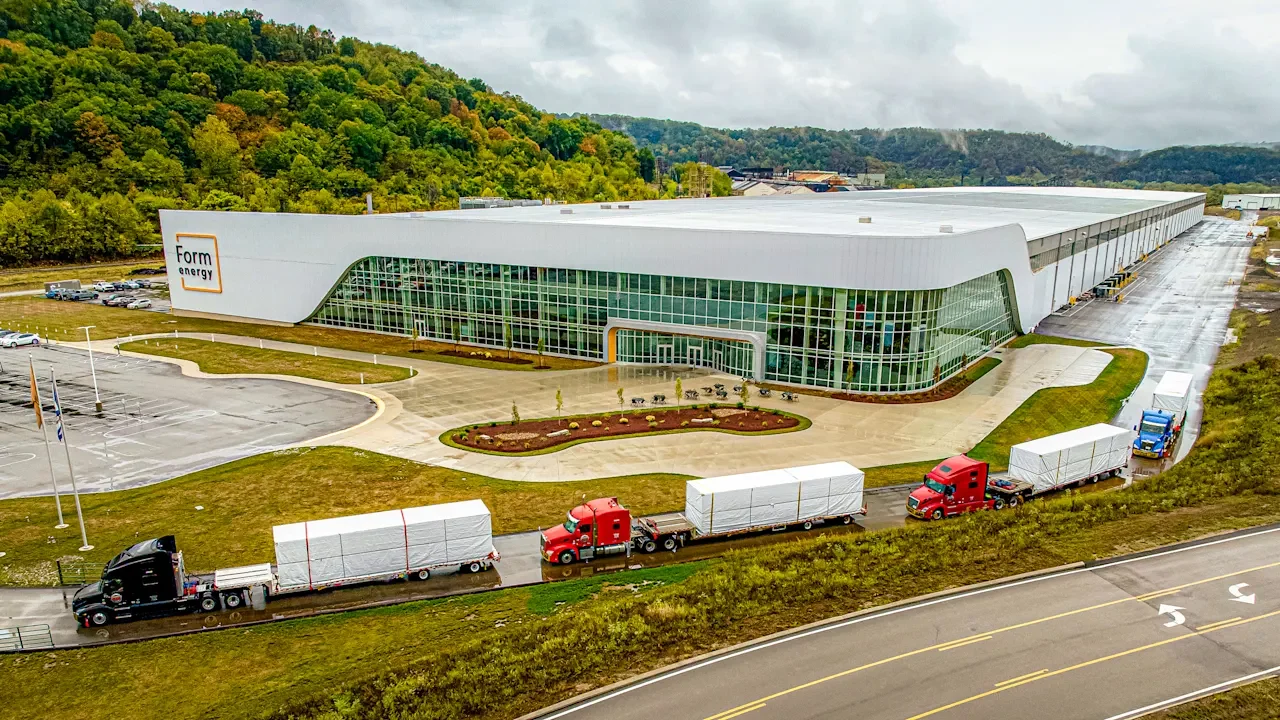
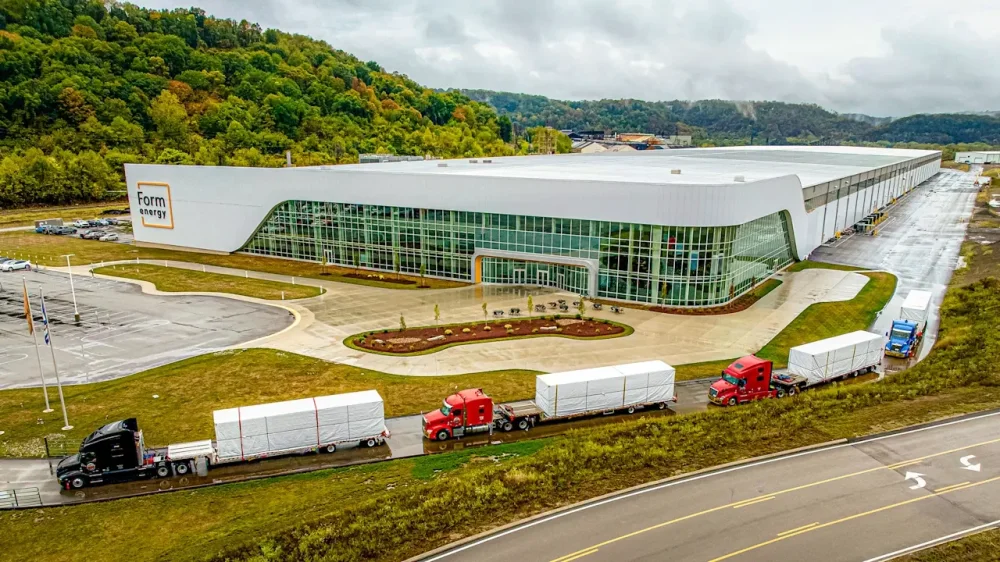
New data centers can lead to higher electric bills and lock in aging, outdated coal plants. But a Google project in Minnesota takes a different approach: The tech giant is paying to build enough clean power that existing customers won’t foot the bill, and the grid will get innovative new tech—a massive battery that will be the largest by capacity in the world. This week, major tech companies are expected to visit the White House and pledge to shoulder more of their own energy demand. The Minnesota project offers a concrete example of how that can go a step further and use clean power. “Google has long been committed to scaling our infrastructure responsibility, which includes paying for the electricity and associated costs of our growth,” said Lucia Tian, Google’s head of advanced energy technologies. “Investing in the systems that make our communities more resilient is table stakes for us.” To support the data center, which will be built in the small town of Pine Island, Google inked an agreement with the local utility Xcel Energy to fund 1,900 megawatts of new clean energy. It’s similar to an approach that Google took in Nevada to pay for a geothermal power plant from Fervo, a company with next-generation technology that otherwise would have been too expensive to add to the grid. In the Minnesota project, Google is paying for 1,400 megawatts of new wind power and 200 megawatts of solar power while helping pioneer another new technology—a battery that can store energy over days instead of hours. A unique battery for a more reliable grid The battery, from a startup called Form Energy, uses iron-air technology to help store renewable energy longer. The company describes it as reversibly rusting iron: The iron reacts with oxygen to store and release energy, with storage lasting 100 hours. The new plant in Minnesota will be big enough to deliver 300 megawatts of power and store an enormous 30 gigawatt-hours of energy, making it the largest battery by capacity that’s been announced so far. By comparison, that’s more storage than all of the battery projects built in the U.S. in 2024 added together. “The unique thing about Form is it’s one of the only options out there on the market for that 100-plus-hour storage,” Tian said. That’s useful to cover any gaps in renewable electricity. “A long-duration battery can help us maximize how we use renewable energy when we encounter extended periods of lower solar and wind generation, such as during the middle of winter when we can see several days of cloudy weather with very little wind,” Xcel said in a statement. The technology is cost-competitive with natural gas. The battery, along with the solar and wind power, won’t connect directly to the data center but will instead feed into the broader grid. Google declined to share the facility’s expected power consumption. But the new clean energy capacity will exceed what the data center requires—a reflection, according the company, of Google’s commitment to making the grid more resilient. “It’s serving as a grid resource,” Tian said. “And one of the things that is exciting for us about this project is it’s also serving to catalyze this new technology at a scale that it hasn’t been deployed at before.” The battery is a major project for Form Energy, which has spent the past few years ramping up production at its factory at a former steel mill in West Virginia. The company is finishing the installation of its first commercial battery at another site in Minnesota. That first project stores far less energy—just 150 megawatt-hours. But the system is modular, with the batteries inside shipping containers that just need to be added together for more capacity. “It’s not that we have to build a new machine at a larger scale,” said Form Energy CEO Mateo Jaramillo, who founded the company after working on energy storage at Tesla. “It’s just more of the same.” The biggest challenge was manufacturing the electrodes; the company had to produce 100,000 of them, or around 60 miles’ worth of material, to prove to itself and customers like Xcel and Google that it was ready for large-scale production. It’s planning to quickly scale up now. “Our hope is that this project sends that demand signal that allows them to build out their manufacturing here in the U.S.,” Tian said. Will the industry follow? Other tech companies, including Microsoft and Anthropic, have said they plan to cover the cost of new energy infrastructure needed for data centers. More are expected to make that pledge now after pressure from the The President administration, though the details of those agreements—likely nonbinding—haven’t yet come out, and it remains to be seen how closely some companies will follow them. It’s also not clear how many companies will voluntarily prioritize clean energy. Meta, for example, is installing natural gas generators to power a new data center in El Paso. Environmental advocates are skeptical. “We do believe it’s possible to responsibly build large-scale/hyperscale data centers, but it’s incredibly difficult to accomplish that task due to the resource demand of these facilities,” said Kyle Rosas, Minnesota deputy director for the nonprofit Clean Water Action. Many also question the need for them. The new Google data center will power its core services like YouTube and Maps, but most new data centers are being built for AI. “There are significant concerns about an AI bubble, and the lack of profit from these companies are not necessarily inspiring confidence in the future of the industry as-is,” Rosas said. “So as of right now, it’s difficult for us to say these facilities should exist at this scale.“ Pressure from communities can have an impact: Last year, at least 25 proposed data centers were canceled because of protests from people living nearby over concerns about electric bills, pollution from fossil fuel power plants, and water use. (It’s worth noting that Google’s new data center doesn’t use water for cooling; the company will employ air cooling, which uses more electricity, but that will be covered by the new clean power.) The risk of community pushback is another clear argument for tech companies to go as far as possible to do the right thing. The new Minnesota project shows how it can work. “We think this is a great example for how to do it well,” said Form Energy’s Jaramillo. “And I expect a lot more of this kind of thing to be happening.” View the full article
-
Reality is melting away before our eyes. Identity spoofing against older adults alone grew by 8x between 2020 and 2024, driven in part by convincing AI impersonations of friends and loved ones. It’s a problem costing people in the U.S. nearly half a billion dollars a year with no end in sight. Which is why a pair of design studios teamed up on a provocative solution that starts with a real-life handshake. Called Quartz, it’s a ring that adds friends to your network by literally shaking hands. And from there, it gatekeeps your online communications by proving you’re alive, proving you know the person you’re talking to, and proving provenance through encrypted channels. If any of these checks fails, then anything from text messages to Instagram DMs will be cut off to avoid spoofing. The speculative project was developed by design studios Modem and Retinaa. But while it’s purely a concept, the ideas offer a sort of blueprint that seems feasible for production. How Quartz works It all begins with a ring, fit with a chunk of quartz. That quartz is unique to your ring, with geometries that transpose directly to a blockchain certificate tied to your specific jewelry. The ring is also loaded with a vein scanner, which can see beneath your skin to measure your unique blood vessels. This scan becomes a verifiable image of you, similar to FaceID. Meanwhile, integrated pulse measurement assures that you are in living, breathing condition, any time your identity is verified. When you meet someone for the first time, you shake hands—and via NFC, your ring and their ring generate a “shared secret” cryptographic key. That key becomes the foundation to all of your future communications. If any piece fails, the communication channels go dark. Naturally, all of this friction limits how many people could be in your own Quartz network—reintroducing physical barriers to friendship that have been more or less erased in the modern world. Ultimately, not every friend on your Instagram or TikTok page could be part of this network. But that’s also what allows you to protect your most precious relationships so closely. Dystopia or Utopia? Now, there is still something . . . backward? . . eerie? . . depressing? about using a series of digital technologies to verify our real-life relationships. But that paradox is intentional, according to Scott Kooken, research and design director at Modem. “Where most online identity systems are built from abstract mathematics and invisible flows of data, Quartz reintroduces something physical and human,” he writes via email. “Physical presence is a foundational layer of the security stack. Without it, the system falls apart. In a world where everything else can be synthesized, that’s precisely what makes it the most valuable layer of all. The handshake isn’t symbolic: it’s part of the architecture.” Indeed, with Quartz, the security is the design which is the culture; your safety is built upon a human ritual that manages both the ring’s natural UX and its unseen cryptographic layer. To see what I mean by that, compare Quartz to the volleyball-sized eyeball scanner proposed by Sam Altman’s Tools for Humanity. This object has largely the same function as Quartz: scan someone’s biometrics to prove they are who they say they are. But this eye scanner is completely divorced from real-world rituals and interpersonal relationships; the whole idea looks torn from a 1990s James Cameron film, or a perhaps mid-aughts Logitech webcam. Right now, with AI blowing up more or less everything about our digital lives, we have the narrowest of windows to reimagine what we got wrong with our first swing at the internet and mobile technologies. We can decide whether we want to live in a society filled with handshakes or iris scans. But will we? Haha. No. We probably won’t. Just hardwire TikTok to my pacemaker and call it a day. View the full article

-
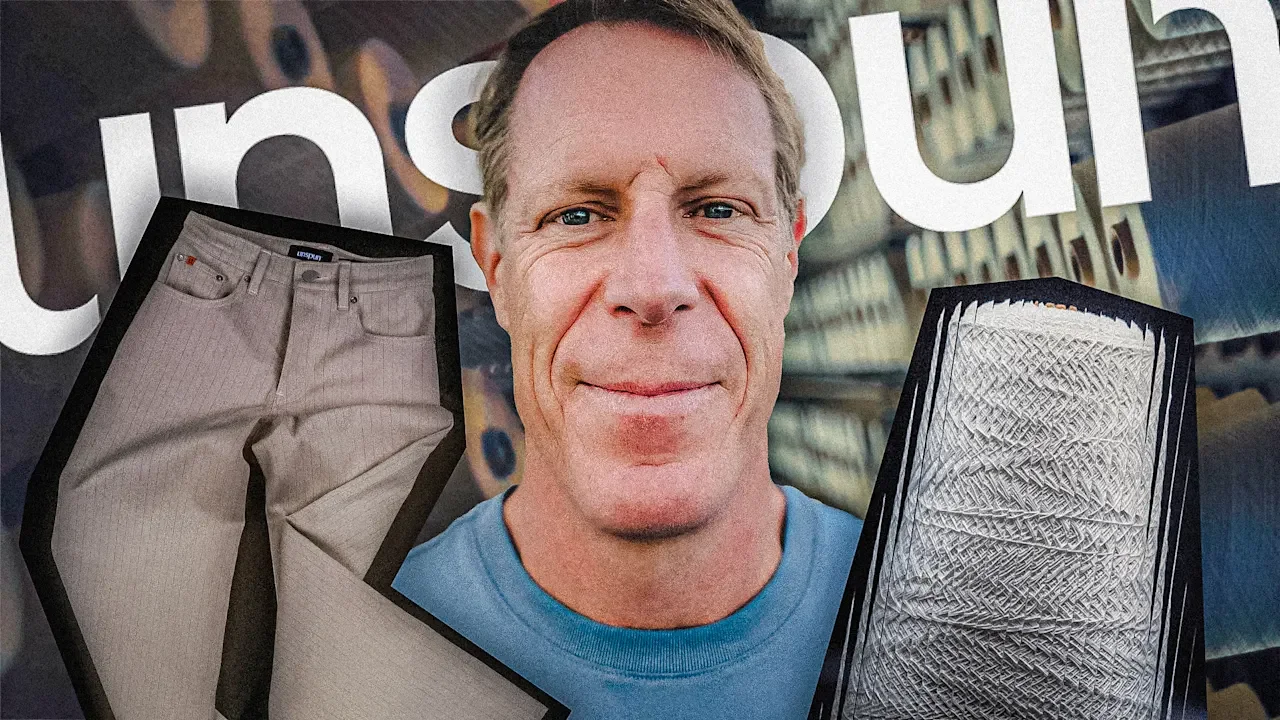
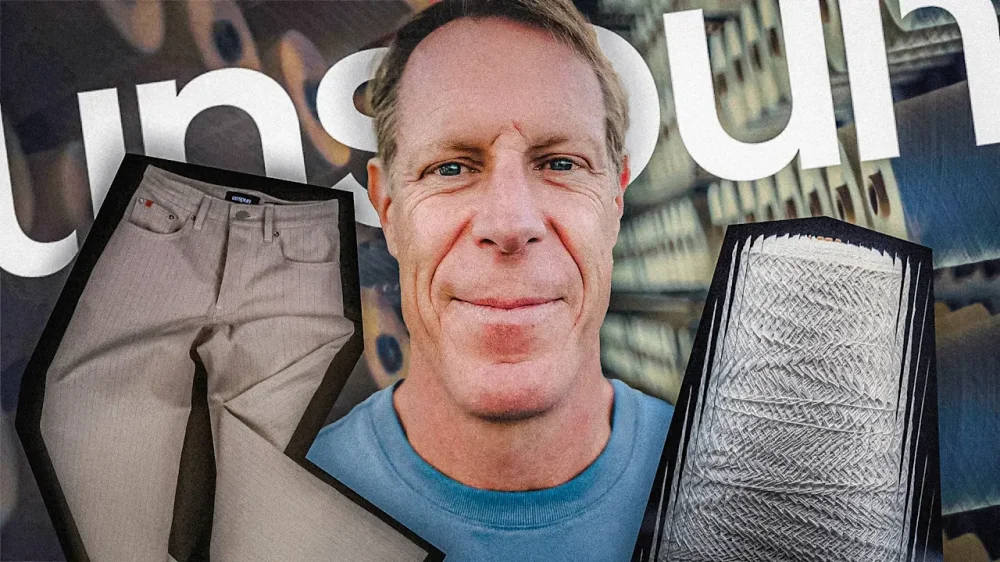
Over the last decade, as consumers became more aware of climate change, the fashion industry suddenly scrambled to curb its enormous environmental footprint. Everyone from Prada to H&M launched products made of recycled nylon and organic cotton. Gucci, Patagonia, and Timberland invested in regenerative agriculture. Adidas and Nike began designing fully recyclable sneakers. Resale programs popped up everywhere. According to many industry insiders, this moment has now passed. Politics and culture are no longer focused on the climate crisis. Consumers, faced with the higher price of sustainable products, consistently choose their wallets over their values. In response, many brands have quietly abandoned their sustainability goals. Arne Arens watched all of this from the inside. As CEO of The North Face and later Boardriders, the parent company of Quiksilver and Billabong, he lived through fashion’s sustainability push—and its retreat. But he hasn’t lost faith in the industry’s ability to clean up its act. Now he’s betting the next chapter of his career on a Bay Area startup called Unspun, which has developed proprietary 3D weaving technology capable of producing pants with significantly fewer carbon emissions, reduced waste, and shorter lead times. Unspun, which has more than $50 million in VC funding, has named Arens as its new CEO. The hire is a signal that a well-known industry leader believes the technology is ready to move from proof-of-concept to scale. The Enthusiasm That Faded Ask Arens about fashion’s sustainability retreat and he doesn’t hesitate. He confirms what anyone who covered the industry closely already sensed: There was real pressure, real investment, and then a gradual letting-go. “Part of that is that people have never really been able to figure out how to do sustainability cost-competitively,” he says. “Season after season we tried to move to 100% recycled nylon and polyester and cotton. But when we looked at the margin breakdown, we realized we’d have to price everything up by $5 to $10, and unfortunately consumers are just not ready to pay for that.” More broadly, the politics of sustainability shifted. In the U.S., we went from a president who installed a climate czar to one who has staffed his cabinet with climate deniers. Much like DEI, the cultural forces that made sustainability a corporate imperative changed, and brands no longer felt pressure to signal their green credentials. But taking a step back, Arens has come to the conclusion that making an ethical argument to consumers was never going to be a successful business strategy. Ethical brands needed to find a way to make sustainable products affordable—ideally, even cheaper than traditional products. That’s when he came across Unspun, which promises fashion brands cost savings while also slashing their environmental impact. “The financial rationale for adopting Unspun technology is even stronger than the decarbonization one,” he says. “You’re getting the zero waste piece for free.” The Machine That Changed the Math Kevin Martin cofounded Unspun a decade ago on a simple insight: The fashion industry’s biggest sustainability problem isn’t the materials. It’s the mismatch between what gets made and what actually sells. His vision was to build technology that would help the industry’s largest players operate with significantly less waste—and make the economics work while doing it. The fashion industry’s current model forces brands to place orders with factories nine to twelve months out. That planning horizon generates staggering inefficiencies. A brand might forecast that soft pink will be in style next spring and place large orders for dresses and shirts in that hue. If their prediction is wrong—as it often is in our current fast-moving fashion cycle—much of their inventory will not sell. Martin estimates forecast error typically runs between five and 20%—meaning a meaningful fraction of every season’s production will end up discounted, donated, or destroyed. “All of the money and time and energy spent to make something, move it around, not sell it, and then destroy it,” he says, is “the biggest slice of waste.” Unspun’s answer is a 3D weaving machine it calls Vega. The machine controls thousands of individual yarns simultaneously, producing a complete pant leg in a single automated process with minimal human finishing required. Every part of the system cuts cost. Labor costs are slashed. There is near zero fabric waste. And perhaps most importantly, companies can respond to real-time demand, rather than year-old forecasts. The technology currently produces woven trousers—everyday casual, workwear, chinos, and soon denim—with plans to expand. Trousers make sense as a starting product. The tube shape of the leg maps well to the weaving process. It is also a relatively simple design that can be replicated across different waist and inseam sizes, and colors. Passing the Mr. Burns Test Martin has a framework he uses when thinking about sustainability impact at scale. He calls it the Mr. Burns test—a reference to The Simpsons’ greedy nuclear plant owner. “If you want to have a big sustainability impact, you have to sell to Mr. Burns,” he says. The overlap between profitability and sustainability, he argues, “is where all of us with a mission of sustainability regardless of industry need to be focused.” Unspun’s pitch to brand partners leans on this logic. Arens, drawing on two decades watching brands manage inventory from the inside, describes the proposition in stark financial terms. The ability to reduce lead times by two-thirds or more means dramatically less capital tied up in future inventory, dramatically less waste at season’s end, and dramatically better margins overall. “There are gains from a working capital perspective because you don’t have to commit dollars to inventory that far out,” Arens says. “Then, you’re cutting out the wasted inventory that invariably results from ordering a year out. Instead, you’re getting full margin on every item you make. The overall financial impact is absolutely massive.” From Microfactory to Scale Unspun currently operates a small factory (or “micro-factory” in its parlance) in Emeryville, California, where it runs machines continuously and hosts brands for sampling and proof-of-concept runs. Walmart and Decathlon are among its confirmed customers, among others that can’t yet be named. The momentum is building quickly. Martin says that new customers are visiting weekly. Now, what is holding Unspun back is capacity. Unspun is now searching for a U.S. manufacturing facility, pursuing what Martin describes as a “consortium approach”—getting brands and factories to commit together to a facility that will be capable of serving many customers. In Europe, where apparel manufacturing infrastructure still exists in countries like Portugal and Turkey, the company is pursuing a faster path by selling machines directly into existing factories. This expansion is fueled by $50 million in venture capital, but future funding is expected to incorporate public-private partnerships. Martin points to New Mexico—which offers incentives to attract manufacturing—as an example of capital that could underwrite factory buildouts. “It’s not really a left or right issue,” he says. “The common interest is making things in America.” Why This Hire Matters In a moment when much of the fashion industry has gone quiet on sustainability, Arens is betting loud in the opposite direction—leaving a career arc of large, profitable brands for a startup still building out its first real factory. He’s candid about what he’s walking into. “It’s a very different size of company that I’m used to working at,” Arens acknowledges. But he’s equally convinced of Unspun’s central premise—that a technology simultaneously solving for speed, waste, and financial efficiency represents something significant. The fact that someone with that perspective is now the one making the pitch—to the very peers he left behind—may be the clearest signal yet that sustainability in fashion isn’t dead. It’s just finally learning to speak the only language that’s ever really moved the industry: the language of money. View the full article
-
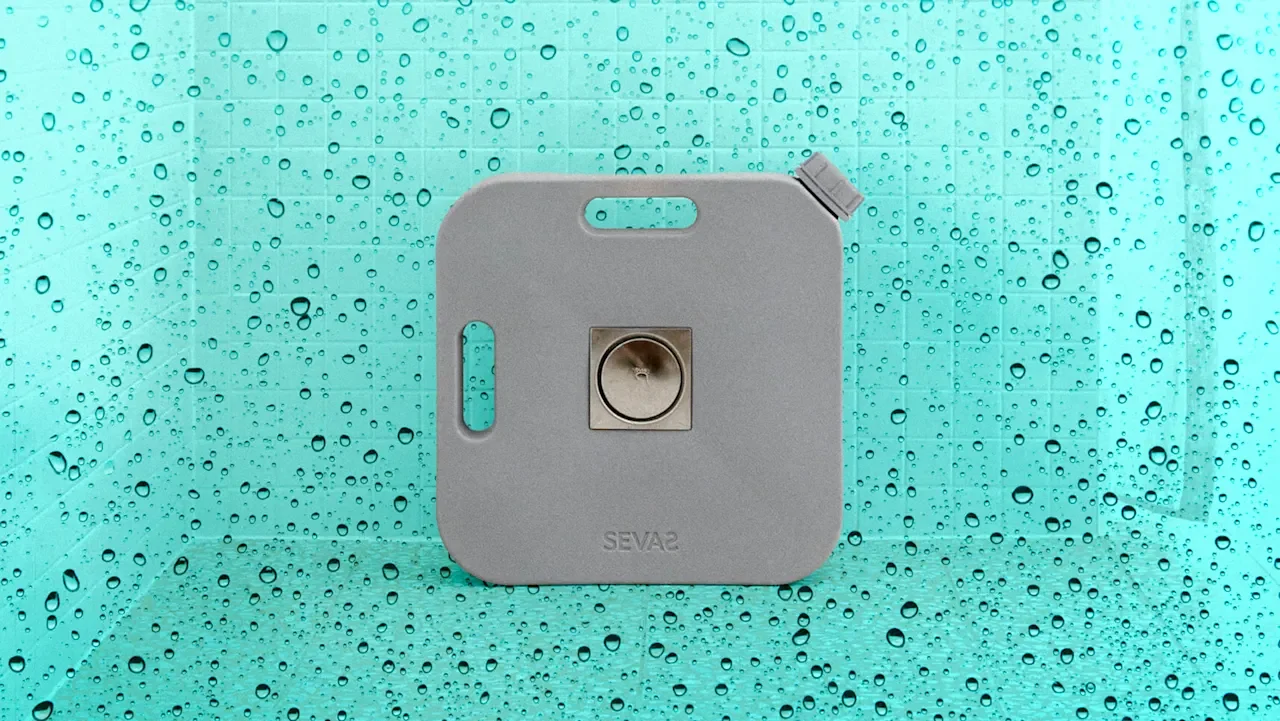
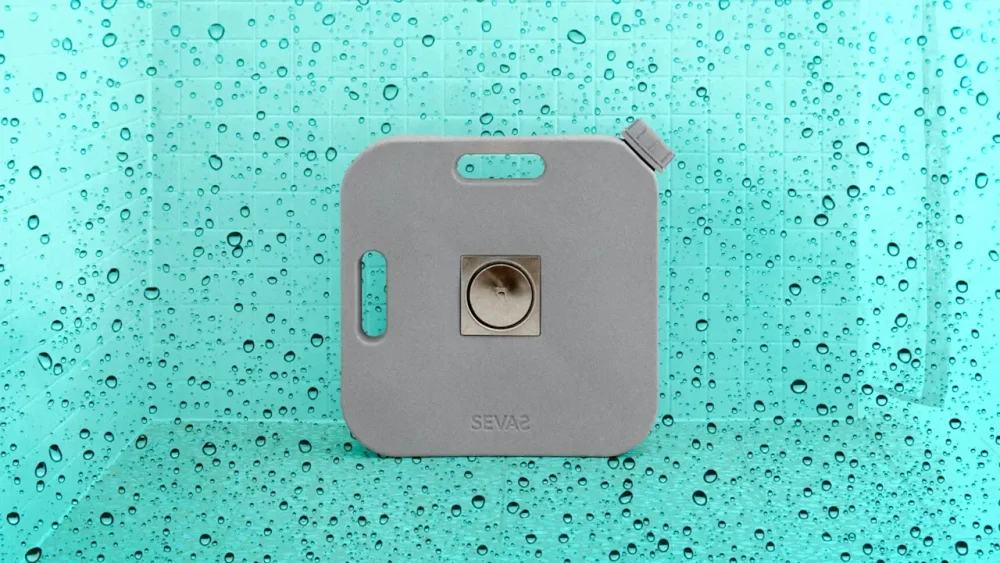
Australians dramatically reduced their water usage during the Millennium Drought in the 2000s. It was one of the longest recorded droughts in Australian history, and in some places where sprinklers weren’t allowed, people watered their plants and grass with shower water. Like turning off the faucet while brushing your teeth and using shower timers, keeping buckets in the shower became a part of daily life during the drought. Now a newly designed device seeks to update that water-saving impulse with a watering can specifically designed for the bathroom. The 17-by-17-inch Sevas water catcher is about the size of a bathroom scale, and holds 5 liters of water. The contraption lies flat over the shower drain to capture falling water as it heats. A silver push-latch plug can open or close the container with the push of your foot, and its sloping design funnels water into the container. Slim and easy to carry, the Sevas water catcher weighs about 2.6 pounds empty and up to 13.6 pounds when full. When not in use it can be stored vertically without taking up much space. There are wide handles on two sides; to pour the water out, there’s a separate opening where a removable watering spout can be attached. The water catcher is made out of fully recyclable HDPE plastic with a stainless steel plug. The Australian brand also commits to planting two trees and offsetting carbon with every product sold, claiming that if its contraption is used once a day, it can save 1,800 liters of water annually. Though the “big dry,” as Australians came to call it, broke by 2010 and water restrictions eased, old habits die hard, and water usage across cities in southeastern Australia remains lower than before the drought. The Sevas taps into those practices, and it’s had resonance outside Australia too. The brand, which launched last summer, sold out its U.S. stock in October. View the full article
-
I recently came across an interesting academic article in the journal Frontiers in Psychology. It was titled, “The relationships between social media use, time management, and decision-making styles.” The paper’s author surveyed 612 university students and young adults, asking them, among other things, about their digital habits and levels of personal organization. Using a linear regression analysis, she uncovered the following: “Social media use was negatively and significantly associated with overall time management and all its subscales.” Here’s the standard interpretation of this result: Social media is distracting, and if you’re distracted, it becomes harder to maintain control over your schedule. So, the more you use social media, the worse you become at time management. But I’ve become interested in the reverse form of this argument: the better your planning system, the less time you’ll spend on engagement-based applications like social media. Here’s my thinking… When you’re following an intentional schedule, your efforts are oriented toward goals that you find important. You also feel a satisfying sense of self-efficacy. These realities engage your long-term reward system, which can override the urges generated by its short-term counterpart, dissipating the drive for quick gratification from activities like glancing at your phone. In other words: The more you organize your analog life, the less appealing you’ll find the digital alternative. If this is true, then maybe the thing social media companies fear most is not some newly-powerful application-blocking software or impossibly strict regulation, but rather a good old-fashioned daily planner. In Other News: A lot of people I know have been freaked out recently by a viral essay with a grandiose title: “Something Big is Happening.” I recently released a short video in which I conduct a close analysis of this piece. (Spoiler alert: I wasn’t impressed.) Check it out. (More generally, I’ve been considering starting a separate weekly podcast/newsletter dedicated to providing a reality check on recent AI news. It feels like it might be useful to separate this discussion from my existing podcast and newsletter, which are more focused on how individuals can seek depth in a distracted world. But also, maybe this is a bad idea? I’m interested to hear your thoughts about this plan.) The post What Do Social Media Companies Fear? Time Management. appeared first on Cal Newport. View the full article
-
I recently came across an interesting academic article in the journal Frontiers in Psychology. It was titled, “The relationships between social media use, time management, and decision-making styles.” The paper’s author surveyed 612 university students and young adults, asking them, among other things, about their digital habits and levels of personal organization. Using a linear regression analysis, she uncovered the following: “Social media use was negatively and significantly associated with overall time management and all its subscales.” Here’s the standard interpretation of this result: Social media is distracting, and if you’re distracted, it becomes harder to maintain control over your schedule. So, the more you use social media, the worse you become at time management. But I’ve become interested in the reverse form of this argument: the better your planning system, the less time you’ll spend on engagement-based applications like social media. Here’s my thinking… When you’re following an intentional schedule, your efforts are oriented toward goals that you find important. You also feel a satisfying sense of self-efficacy. These realities engage your long-term reward system, which can override the urges generated by its short-term counterpart, dissipating the drive for quick gratification from activities like glancing at your phone. In other words: The more you organize your analog life, the less appealing you’ll find the digital alternative. If this is true, then maybe the thing social media companies fear most is not some newly-powerful application-blocking software or impossibly strict regulation, but rather a good old-fashioned daily planner. In Other News: A lot of people I know have been freaked out recently by a viral essay with a grandiose title: “Something Big is Happening.” I recently released a short video in which I conduct a close analysis of this piece. (Spoiler alert: I wasn’t impressed.) Check it out. (More generally, I’ve been considering starting a separate weekly podcast/newsletter dedicated to providing a reality check on recent AI news. It feels like it might be useful to separate this discussion from my existing podcast and newsletter, which are more focused on how individuals can seek depth in a distracted world. But also, maybe this is a bad idea? I’m interested to hear your thoughts about this plan.) The post What Do Social Media Companies Fear? Time Management. appeared first on Cal Newport. View the full article
-
It might come as a surprise that some open source projects like WordPress are said to be run by benevolent dictators for life. The post Why Open Source Projects Are Run By Benevolent Dictators For Life appeared first on Search Engine Journal. View the full article
- Today
-
Voiceprint Claude plugin clones your writing style based on five writing samples. Works with any SKILL.md-compatible tool. The post New “Voiceprint” Claude Plugin Clones Your Writing Style appeared first on Search Engine Journal. View the full article
-
We analyzed 1.9M citations last year in an attempt to answer that question. But, as with everything AI-related, a lot has changed since then. For instance, as of January 2026, AI Overviews are now powered by Gemini 3 to better answer…Read more ›View the full article
-
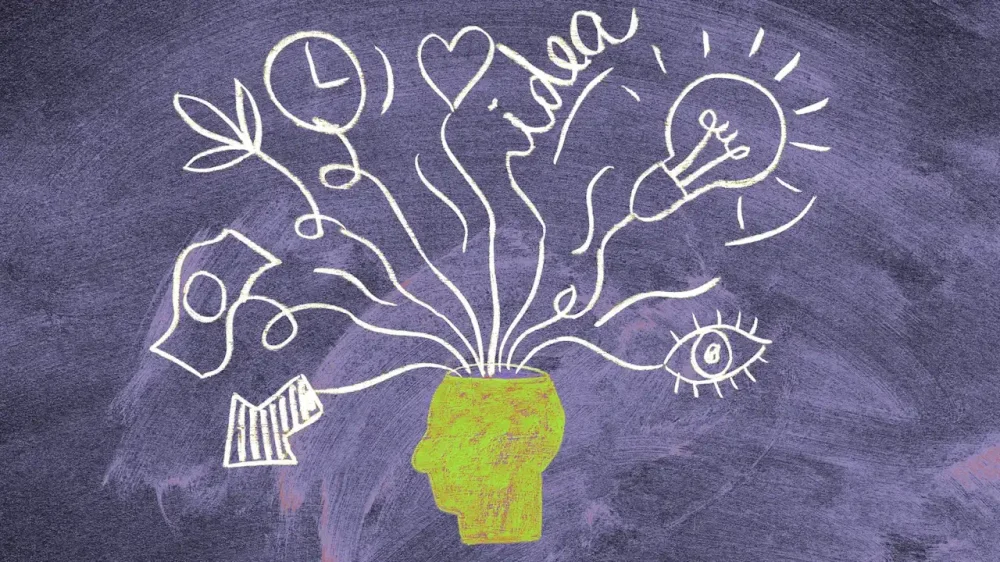
In 2025, New York Times columnist Ezra Klein and Derek Thompson from The Atlantic released a book called Abundance, which posited that America had developed a culture of scarcity. Overregulation and overall risk aversion from the government, the authors argued, were stifling the development of infrastructure and housing in the country. To remedy this, they proposed an “abundance agenda,” one that focused on a growth mindset among elected officials that would help foster long-term prosperity. Although the provocation has its challenges, it got me thinking: What if we applied the idea of abundance to our work? For over a decade, I’ve occupied two worlds simultaneously—one foot in the world of practice as an advertising executive and one foot in the world of academia as a marketing professor. On an average week, I’d work at the ad agency from 9 to 5 and then teach a night or two at the university from 6 to 8. This duality made me better at both jobs. I taught what I practiced, which made course concepts more applicable for students, and I applied what I studied, which made my practice more rigorous. I didn’t have the language for it then. I just thought, Why do I have to choose? Essentially, I had adopted an abundance agenda for my career. I removed the confines that restricted my career to a “one-job-at-a-time” approach to navigating corporate America. I was going to do both—not a side hustle, not a moonlighting gig, not a hobby, but a portfolio career that prioritized my development in both arenas. Before long, I found myself in a university class, but this time as a student studying consumer culture theory and pursuing a doctorate. In doing so, my career has prospered. But what if we applied an abundance agenda to our organizational culture? Apparently, Bing Chen, the cofounder and CEO of Gold House and managing director of AU Holdings, was one step ahead of me. As YouTube’s global head of creator development and management from 2010 to 2014, Chen helped build the platform’s multibillion-dollar creator economy. In 2018, he launched Gold House, a nonprofit that embraces an abundance mentality and is dedicated to accelerating the socioeconomic equity of Asians and Pacific Islanders. While experiencing all the accolades and praise from his many achievements at Google, he wanted something more. In fact, during our interview with Chen for the latest episode of the From the Culture podcast, he revealed that his very first word as an infant was “more.” And this idea of “more” resonates throughout the organization and Chen’s leadership style. If Gold House was going to succeed at supporting Asians and Pacific Islanders, it first had to succeed at supporting itself—its people. But that doesn’t mean merely supporting their work, safety, and well-being; that’s just table stakes for Chen. Instead, at Gold House, this means supporting your dreams. So, the first question Chen and his team ask candidates when they interview for a job centers squarely on getting to know the candidate’s dreams. Not their skill set. Not their experience. But their dream. Chen contextualizes the questions with a scenario: “If I gave you $10 billion and the world’s biggest Rolodex, where the person on the other end of the line will say yes to whatever you ask, what would you do?” According to Chen, if the job the candidate has applied for is not related to or accelerates that dream, he will end the interview right there. Why? Because he wants to support the long-term ambitions of his team members, just as he does his clients and his constituents. The lesson for leaders that Chen realized when he adopted an abundance agenda for Gold House was that the organization will get more out of its employees when the organization understands its employees’ greater ambitions and helps advance their trajectory to achieving them. This shift toward a culture of abundance has paid off handsomely for Chen because this approach has enabled the Gold House company to prosper. Not only is the organization behind paradigm-bending shifts to cultural narratives about the Asian Pacific community through its successful marketing campaigns and strategies for movies like Crazy Rich Asians and Everything Everywhere All at Once and the Netflix series Beef, but it has also accelerated the dreams of over 100 Asian Pacific founders with the $30 million Gold House Venture Fund. For Chen, this is the power of thinking audaciously enough to desire more and commit ourselves to it. It’s not a skill so much as it is a mindset; one that we all can adopt. Check out our full conversation with Bing Chen and how he developed an abundance mindset on our latest episode of the From the Culture podcast. View the full article
-
Patchstack's state of WordPress Security report shows more sites get hacked within hours of vulnerability disclosure The post Report Shows WordPress Sites Are Getting Hacked At Faster Rate appeared first on Search Engine Journal. View the full article
-
We live in a world, especially in Western cultures, that relentlessly promotes positive thinking and celebrates self-belief to the point of sidelining reality—that inconvenient thing that does not disappear simply because we ignore it. Self-help advice and pop-psychology slogans urge us to stop worrying about what others think, to believe in ourselves no matter what, and to focus on our strengths. They rarely stress the value of acknowledging our flaws and limitations, even when this requires revising, if not abandoning, our childhood ambitions. It may sound harsh, but science shows clear benefits to confronting our shortcomings, aligning our self-assessments with our actual abilities and, when necessary, adjusting them downward. What the research says Consider some key findings from academic research. 1. Metacognition is a key enabler of learning. In any domain of skill or competence, practice improves performance, but practice without feedback, or feedback without self-awareness, leads to stagnation. Progress depends on our ability to track our own development, to know what we do well and where we fall short. Metacognition, the capacity to think about and evaluate our own thinking and performance, is the mechanism that makes this possible. Whether you are learning a language, a musical instrument, or a sport, believing you are better than you are removes the incentive to improve. And when the gap between how good you think you are and how good others perceive you to be becomes too wide, the result is not confidence, but credibility loss. When others are of the opinion that you suck, and that you are totally unaware of the fact that you suck, they will think even more poorly of you than if you were aware. 2. Excess persistence can be more damaging than insufficient persistence. We admire stories of spectacular success built on grit and determination, but we forget that these winners usually combined persistence with talent, timing, and opportunity. They are vivid anecdotes, not representative data, and the plural of anecdote is not data. The far more common stories of people who persist heroically and still fail rarely make it into biographies or Netflix documentaries. Psychologists describe this as the false hope syndrome: People set unrealistic goals, overestimate the speed and ease of progress, and double down when reality resists. The result is wasted time, sunk costs, burnout, and foregone alternatives that might have suited them better. Sensible persistence is evidence-based. Just like competent scientists abandon hypotheses that do not replicate, rational investors cut their losses, and effective leaders know when a strategy has stopped working, recognizing when your effort is no longer productive is not a weakness, but a sound judgment call. In careers, as in research, the goal is not to try harder at everything, but to try longer only where feedback suggests improvement is plausible and success has a high-enough probability of occurring. As Daniel Kahneman noted: “Courage is willingness to take the risk once you know the odds”—but if you are blind or delusional about the odds, you are simply displaying wishful thinking or self-destructive recklessness rather than courage. 3. While deliberate practice and effort matter, talent and potential are key. The popular reading of deliberate practice implies that anyone can achieve elite performance with enough hours of focused training. Yet the evidence is more nuanced. A large meta-analysis found that deliberate practice explains about 26% of performance differences in games, 21% in music, 18% in sports, 4% in education, and only 1% in typical professions (knowledge work jobs) once other factors, such as prior talent or expertise, are considered. In other words, practice matters, but far less than we think. And the best predictor of performance is not practice, but how much talent and potential someone has to begin with. Baseline cognitive ability, personality traits such as conscientiousness and openness, access to coaching, health, and simple luck also play substantial roles. The implication is not fatalistic. It is practical. Improvement is possible in almost any direction, but not infinitely and not equally for everyone. Ignoring aptitude leads to wasted effort and frustration; aligning ambition with talent or potential allows effort to compound. As in investing, the goal is not to bet everywhere, but to double down where the expected return is highest. The power of positive illusions To be sure, there are short term benefits to ignoring weaknesses. Overconfidence can help you charm an interviewer or deliver a confident presentation, provided the audience is not too discerning. Positive illusions can protect self-esteem and reduce anxiety. Optimistic distortions (which, by the way, are the norm) sometimes encourage experimentation that reveals hidden strengths. Entrepreneurs often start companies precisely because they underestimate the odds. Yet these advantages are temporary. Eventually markets, colleagues, and customers provide brutally honest feedback. In the long run, reality excels at fact-checking. There is also a moral case for recognizing our limits. When leaders refuse to confront their blind spots, others pay the price. History is full of confident incompetence—from failed mergers to catastrophic political decisions. A little humility would have saved billions of dollars and countless careers. In organizational psychology, we often say that integrity is inferred from behavior over time. Acknowledging your weaknesses is a signal of integrity because it shows respect for evidence and for the people affected by your decisions. Intelligent self-awareness So how should we practice intelligent self-awareness without slipping into paralysis or cynicism? Three habits can help here. 1. Seek high-quality feedback. Peer ratings, 360 reviews, and objective performance data are better guides than intuition. As Rob Kaiser’s work shows, colleagues often detect strengths and flaws that individuals cannot see. Treat feedback as market research on your behavior, or a way to crowdsource your reputation or internalize your professional brand. 2. Experiment at the edges. Try roles, projects, or skills that stretch you but remain diagnosable. Instead of announcing a career reinvention on social media, run small pilots. Measure results. Iterate. Learn to fail well or fail smart, as Harvard’s Amy Edmondson notes. This is the scientific method applied to personal development, and it is far more reliable than inspirational quotes. 3. Cultivate curiosity about your own limitations. Ask why certain tasks drain you, why some colleagues energize you, why your best work appears in particular contexts. Patterns will emerge. Those patterns are clues about where your comparative advantage lies. The point of recognizing weaknesses is not self-punishment. It is efficiency: Time is finite, attention is scarce, and life is too short. In an age when generative AI promises to do everything faster, the scarce resource is thoughtful human judgment about where to invest effort. Honest self-knowledge helps allocate that effort wisely, and even gen AI can help you improve that. View the full article

-
Learn 16 practical tips for writing search-optimized content that gains visibility and drives traffic. View the full article
-
The past week's Wi-Fi news includes the eye-watering US$170M price tag for sensing company Origin Wireless. The post Roundup: Origin Wireless sold to ADT for US$170M, Turk Telekom & Interdigital sensing, Fritz! & Gemtek’s Wi-Fi 8 at MWC appeared first on Wi-Fi NOW Global. View the full article
-
Keir Starmer needed to let US use UK military bases for attacks but handling conflict’s wider impacts will be trickyView the full article
-
The light is shining through the windows of what looks like a well-appointed, book-lined apartment where Dario Amodei, the chief executive of AI giant Anthropic, is giving an interview. He smiles and laughs at the interviewer’s jokes, giving the impression of an approachable, amiable, ever-so-slightly unkempt scientist. But when the questions turn to AI’s impact on humanity, Amodei’s demeanor shifts. He says that while he is not a doom-and-gloomer, he is certainly worried. Previous disruptions took place over longer timescales, and he frets that the speed and scope of this one will make it much harder to manage. His concern “is that the normal adaptive mechanisms will be overwhelmed” and that more than half of entry-level white-collar jobs are at risk. As he speaks, Amodei sounds like a physician delivering a difficult prognosis: sober and compassionate, very concerned about the patient’s well-being, but ultimately helpless in the face of death’s inevitable arrival. Except Amodei is not just some powerless observer. He is the chief executive of one of the companies that is doing the most to bring about this jobless future. He is more architect than bystander, but you would never know it from the tone of his public utterances. Amodei is far from alone in this stance. In the years following the launch of ChatGPT in 2022, the AI industry’s messaging tended toward the reassuring: AI is not coming to take your jobs; instead, it will be a cognitive exoskeleton that augments workers, making humans more capable and more productive, both in the workplace and beyond. That reassurance is now being abandoned. The same week that Amodei’s interview was published, Mustafa Suleyman, Microsoft’s head of AI, told the Financial Times that most “white-collar work . . . will be fully automated by an AI within the next 12 to 18 months.” In July of last year, OpenAI chief executive Sam Altman told a Federal Reserve Board conference that “there are cases where entire classes of jobs will go away,” describing some categories as “totally, totally gone.” The Kidnapper’s Ransom The passive voice is doing a lot of work in these prognostications—jobs will simply “be automated” and roles will just “go away.” The disruption is presented as being like the weather—something we must prepare for, adapt to, endure. Hiding behind this phrasing is a very different reality: These changes are the downstream consequences of decisions made in specific boardrooms by specific people reacting to specific financial incentives. University of Oxford political philosopher G.A. Cohen identified this pattern of argument decades ago. His insight was that an argument changes its character entirely when the person delivering it is the same person whose choices make the premises true. Cohen’s analogy was vivid: Imagine a kidnapper who argues that children should be with their parents and, therefore, the ransom should be paid. The argument is logically valid. Its premises are true. But it is discredited by the fact that the person making the case is the one who created the crisis. Amodei sits across from us, expressing sober concern about a future of mass displacement. But the displacement he describes is not something that is just happening. It is something his company is building. When Amodei, Suleyman, Altman, and a few others tell us that artificial intelligence will cause a bloodbath of white-collar jobs, they are not observing an unstoppable force—they are the force. The Gravity of Automation In his essay “The Adolescence of Technology,” Amodei argues that “the idea of stopping or even substantially slowing the technology is fundamentally untenable,” because “if one company does not build it, others will do so nearly as fast.” This is not a trivial point. As someone who has spent the last three decades deploying new technologies across large companies and major government agencies, I have experienced these competitive pressures firsthand—the cost of falling behind is not imaginary. Amodei argues that even if all Western companies stopped their work on AI, “authoritarian countries would simply keep going.” And indeed, Beijing is pouring vast resources into AI development. So no single company, and arguably no single country, can unilaterally step back from the frontier without ceding ground that may not be recoverable. Anyone who dismisses this constraint is not being serious. This competitive pressure extends beyond the pace of development to its direction. A product that replaces a worker outright will often deliver faster and more directly measurable savings than one that makes the same worker more capable. And since businesses are duty-bound to maximize shareholder value, they are obliged to pursue automation when it offers the clearest path to increasing profits. There is genuine economic gravity pulling toward automation over augmentation, and pretending otherwise would be naive. Yet paths to profit do not exist in a vacuum. They are shaped by a range of incentive structures—such as tax codes, procurement standards, and regulatory frameworks—that are entirely in the hands of humans. The case for leaving these incentives untouched rests on the assumption that, when companies seek to maximize their profits, the results are economically beneficial for society as a whole. But it is hard to take that assumption seriously in the case of AI. The most influential figures in the tech industry are predicting outcomes that would devastate the job market, collapse consumer demand, and leave gaping holes in the tax base. As Sal Khan, founder and CEO of the free digital learning platform Khan Academy, put it recently: If even 10% of white-collar jobs are lost to the AI revolution, “it’s going to feel like a depression.” Shaping the incentive structure to favor augmentation in these circumstances is not an anti-market move. It is a recognition that markets require functioning consumers to survive. Unstacking the Deck The incentive structures that shape how businesses respond to technological advances are not natural forces over which we have no control. They are the direct product of the political choices we make around technology adoption. A team of economists led by MIT professor Daron Acemoglu has shown that the U.S. tax system currently incentivizes automation by taxing labor at a much higher rate than the capital expenditure involved in robotic automation. Acemoglu and his team show that a rebalancing of the relevant taxes could increase human employment by as much as 4%. Of course, the automation of white-collar work by AI agents differs from the automation of manual work by robots. AI agents will not, for the most part, be funded by capital expenditure but by the ongoing subscription model that is common in the software industry. However, the underlying insight stands. The incentive structures our governments endorse can steer companies toward or away from automation. A wide range of tools are available to shape the business environment, and we should consider all of them in the case of AI. Some of these tools—such as changes to government procurement policies or requirements for increased transparency around long-term strategies—would aim to gently nudge businesses toward augmentation over automation. But blunter instruments, such as taxes on automation, are also available. Many of the most influential figures in the AI world have suggested that a universal basic income may be a necessary response to AI-driven joblessness. Sam Altman himself has proposed an “American Equity Fund” that would tax companies and land at 2.5% of their value annually to fund direct payments to every adult citizen. But this concedes the central point: Left to its own devices, the market will produce outcomes so lopsided that highly intrusive state redistribution becomes necessary. If we can accept the kind of massive taxation required to fund a basic income for the entire population, why not take a proactive approach and apply much more limited taxes ahead of time to incentivize augmentation over automation? The Free-Market Case for Augmentation The obvious objection is that shaping incentives in this way would put the United States at a competitive disadvantage against nations that choose to automate more aggressively. As Amodei observed in his interview, when it comes to chess, AI models acting alone quickly surpassed human players who were augmented with AI. If we extend this logic to the economy, we should expect that fully automated businesses will outperform those with a hybrid human-AI workforce; a failure to follow this path will guarantee that the United States falls behind its economic competitors. But this analogy is too weak to justify the greatest economic upheaval in human history. On a fundamental level, the economy is simply not like a game of chess. A successful economy doesn’t just rely on optimizing outputs—it requires consumers who can buy the goods and services produced by its businesses. As Henry Ford warned a century ago: “The owner, the employees, and the buying public are all one and the same.” Any industry that undermines the buying power of its workforce “destroys itself—for otherwise, it limits the number of its customers.” A model of the future that focuses only on fantastical production gains—while ignoring the destruction of the consumer base—is not a model of an economy at all. It is a piece of lazy science fiction. What would it take for a nation to survive full automation? The answer becomes uncomfortable when we look at the competitor most frequently invoked by those who warn against falling behind. China’s AI development is largely state-directed and state-funded. If Beijing pursues full automation, it can deploy the apparatus of an authoritarian command economy to sustain a population that is no longer earning wages through traditional employment. The United States cannot. This is where the free-market case for maximal automation collapses on its own terms. For America, full automation leads to precisely the outcome that our economic and political philosophy rejects: mass dependence on government transfers funded by massive new taxation on the companies that eliminated their workforces. The most pro-market position available is not to maximize automation. It is to ensure that AI develops in a way that keeps humans economically productive. The alternative is a path that ends not in the victory of capitalism, but in an extreme form of the kind of socialism that America has spent a century defining itself against. Amodei and his peers have built extraordinary companies. They may even be right that the technology they are developing will ultimately benefit humanity. But when they sit across from us and describe mass job displacement as something that they are worried about but are powerless to prevent, we should demand better of them. At the very least, we should demand that they accept their own role in the process. Instead of hiding behind “jobs will be automated,” they owe it to us to say: “We are building systems that will automate these jobs, and here is what we are doing about the consequences.” But whether or not the titans of AI rise to the moment, the rest of us will have to meet its challenges head-on. The incentive structures that will decide whether AI augments human capabilities or hollows out the economy are being shaped right now by default. If we leave these decisions to the people building the technology, we already know which direction they will choose. They have told us. View the full article
-
US and Israeli air strikes have thrown energy markets into turmoilView the full article
-
Learn how AI bots interpret your content and affect customer perceptions. Optimize your website for the evolving world of AI. The post What AI Sees When It Visits Your Website (And How To Fix It) appeared first on Search Engine Journal. View the full article
-
People change jobs all the time. According to the Bureau of Labor Statistics, the oldest people in the workforce have probably held more than 12 jobs over the course of their lives. Those aren’t just new titles within a firm, they likely include larger career shifts. With globalization and changes in technology, the need to shift career paths can happen to people even in the last decade of their work lives. I myself have recently moved to the private sector after more than three decades as a university faculty member. If you make a significant career switch, what can you do to ease the adjustment to the new role and make a contribution quickly? Don’t be afraid of what you don’t know By the time you get deep into your career, you’ve learned a lot about the world of work. That expertise has helped you navigate many situations and often gave you some insight or wisdom that people newer to the workplace didn’t have. As a result, it can be difficult to be in a situation in which you’re no longer the trusted expert. Let that go. Your value at work and your identity does not need to be bound up in knowing everything. You will bring a lot of wisdom to the table (we’ll talk about that in a bit), but it’s okay to have lots of things that are new to you. You might think your colleagues will respect you more if you assert how much you know. In truth, they will appreciate the clarity you can give them around what you don’t know. On top of that, it’s actually fun—and healthy—to learn new things. Being exposed to new ways of working, new approaches to engaging with the world, and new knowledge is invigorating. As a bonus, when your brain can’t predict everything that’s going to happen next, you lay down lots of new memories, which makes time feel like it’s going slower. At an age where you may feel like your life is rocketing by, that’s valuable. Listen more than you play My general advice for starting any new job comes from jazz. If you play jazz, then you’re likely to sit in with new musicians. Despite the temptation to play a lot of notes quickly to establish what you can do, the standard advice is to listen more than you play. That way, you can tailor what you play to the style of what everyone around you is doing. Similarly, when you make a career pivot, people are going to be bringing perspectives to their work that differ from what you’ve encountered in the past. Even if you were hired to bring some aspect of your expertise to the workplace, you still need to make sure you play it in the style of the people around you. And you won’t be able to do that until you hear from them. When you start a new job in that career pivot, let everyone else talk first. Resist the urge to toss in your opinion early and often. Even when you hear people saying things you completely disagree with, let the conversation go on. Organizations often do things in a particular way because of an element of their history. Understanding both what people are doing and why will enable you to see any wisdom in their work that may not be obvious. And if you do feel like you want to suggest a change, listening will allow you to attach your suggestions to their reasons for doing what they do. Lean into your durable skills When you make a career pivot, you’ll find that there are a certain number of things you had learned to do well that just don’t translate from one sector to another. Most of these skills that have suddenly become useless involve specific tasks that were integral to your old career and not useful in the new one. As a college instructor, I had a lot of facility with the learning management system that students use to access course materials and submit assignments. Those skills are not things I need in my new role. Instead, the things that translate from one career path to another are more durable skills around problem-solving, critical thinking, interpersonal interactions, and cultural awareness. For example, I recently found myself in a meeting in which I was being asked to comment on a new process to be used to manage a project. Before trying to evaluate the process, I asked a lot of questions about the problem the process was designed to solve. I realized later that I was bringing a broader set of problem-solving strategies to bear on the conversation. So even though I was learning about the business, I was still able to contribute to the evaluation using skills I had already honed. More generally, when you switch careers, think about the skills that enable you to bring your experience to new situations. Your success in this new path will rest on maximizing the value of those durable skills in the new environment. View the full article
-
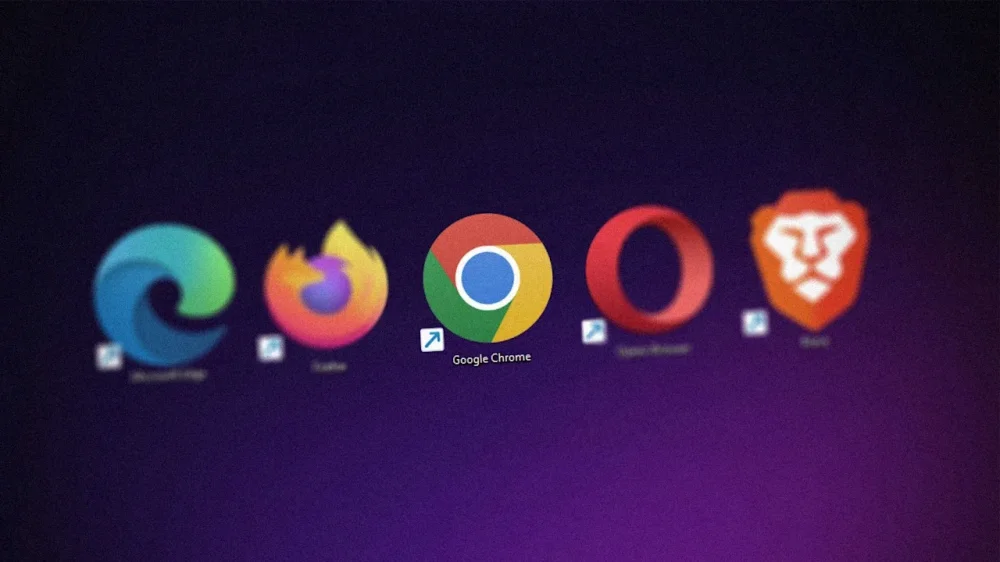
Let’s be honest: The web browser is the modern-day operating system for everything from managing spreadsheets to pretending to work while reading tech blogs. Google knows this. That’s why the Chrome team announced a trio of new productivity features designed for people who basically live inside their browsers. Best of all? They’re actually quite useful. Here’s what you need to know to get your tab-hoarding, PDF-losing life back in order. Split View You know the drill. You’re trying to reference a document while writing an email, or maybe you’re watching a tutorial while trying to write code. You end up clicking back and forth between two tabs until your eyes cross. Enter Split View. It does exactly what it says on the tin: It lets you view two tabs side-by-side in a single window. No more dragging and resizing windows manually like it’s 2004. The feature is built into Chrome now, creating a single, organized workspace that keeps you focused. Unfortunately, it’s not super obvious. To enable it, you’ll need to open a new tab, then right-click said tab, and select “Add tab to new split view.” You’ll then have to select which of your open tabs to add to the other split-view pane. It takes about three or four more clicks than it should, but there you have it. PDF Annotations File this one under “Finally!” The Chrome PDF Viewer has always been a handy way to look at documents, but looking was about all you could do. If you needed to highlight a line or add a quick note, you had to download the file, open a dedicated PDF application, make the change, save it, and probably upload it again. Exhausting. Now you can highlight text and add handwritten notes to PDFs directly inside the browser by clicking the little squiggle icon at the top of any open PDF. This stuff isn’t as robust as Microsoft Edge’s PDF features, which let you enter typed text into form fields as well. But it’s still a tiny friction remover that’s going to save an unreasonable amount of annoyance. Save to Drive If your Downloads folder looks like a digital landfill of files named “Invoice_Final_V4(1).pdf,” you’re not alone. You download an important file, completely lose track of where your computer put it, and spend 10 minutes searching your hard drive. To fix this, Chrome has added a direct “Save to Google Drive” feature. When you’re looking at a PDF, you can bypass the local download entirely by clicking the Google Drive icon in the upper-right corner. Chrome will whisk the file away to a dedicated “Saved from Chrome” folder right in your Google Drive. It’s instantly backed up, organized, easily searchable, and available on whatever device you decide to pick up next. View the full article
-
It’s five answers to five questions. Here we go… 1. Is it OK to compliment coworkers’ nails or haircuts? I believe that comments on people’s bodies are totally inappropriate at work, and in life in general. But if someone has changed their hair or has some cute nails (I myself do not do these cute things but notice them), is commenting on them in the same category as body stuff? Technically it is part of their body, but it doesn’t seem as bad to be “oh the magenta highlights are cool” or whatever. Should I stop commenting on haircuts and nail design? One school of thought is that it’s fine to comment on things that are obviously a deliberate choice — like a shirt or a haircut or nail design — but not things that are an inherent part of the person’s appearance, like their weight or their eyes. It’s not a bad rule, although in reality someone creepy can make comments on nail color sound creepy too. I think a better litmus test can be whether you’d say it to a gender you weren’t attracted to — so like if you’re a straight man thinking about complimenting a female coworker’s haircut, are you going to say it in the exact same way you’d say it to a man with a new haircut? If so, it’s likely fine. If not, you should skip it. 2. Should I tell interviewers I’m leaving my job because of its overly rigid culture? I am currently at a desk job that’s mostly fine, but very rigid. There’s absolutely no work from home under any circumstances, no deviation from hours allowed even when it doesn’t affect job performance or coworkers’ workload, and not a lot of sick or PTO time to make up for it. It’s very “this is the way things have always been done and we are never going to change.” But I know that other companies tend to allow people in my position to have flexibility and some work from home. In my understanding, this rigidity is abnormal in the Year of our Lord 2026. If I were to look for another job, how do I explain why I’m looking to switch without sounding like an entitled millennial brat? If they ask why I’m looking for a new job, is it okay to say the rigid corporate culture and I don’t vibe, or that I’m looking for more flexibility? Will it sound like I’m looking to shirk responsibilities at a new job? When I took this job, I was in dire straits to get out of a toxic nonprofit. I’ve been here over three years already, toughing out five days a week in office while my peers in other companies get at least three days in, two days WFH. I know I could keep going, the pay is good, the work is easy, the people are generally nice, but the boomer work mentality is insane and unfair. There are still a lot of companies that operate the way yours does. If it’s not for you, there’s nothing wrong with disliking it, but they’re not necessarily as out of step with other companies as you’re painting them as! They might be — if the PTO is really low, that would sway me — but the rest of it isn’t especially outrageous and you’ll find it in a lot of places. That doesn’t mean you shouldn’t change jobs over it — you definitely can! — but it’s helpful to calibrate your sense of how abnormal it is so that you make sure to confirm the next place will be different. (Although even that isn’t foolproof — lots of people who had work-from-home jobs are being told to return to the office five days a week.) As for interviewing: in general your answer about why you’re applying to a new job should focus on the appeal of the new job to you, far more than what you don’t like about the old job. In your case, you’ve been there for three years; it’s beyond reasonable to just be looking to take on something new, and then you can talk in specifics about what appeals to you about the job you’re applying for. You should still use the interview process to dig into what their culture is like and how much flexibility they have, but it shouldn’t be the focus of this particular question. Related: do I need to give interviewers a great reason for why I’m looking to leave my current job? can you say you’re looking for a new job because you want “a new challenge”? 3. My job won’t implement any of my ideas, but won’t give me a clear no I’ve been teaching in this school for several years now, and I have a problem. Every time I ask to do something fairly typical for a school, I hear, “That’s a great idea,” only to be told a week later that it’s not feasible this year. Again, these are typical things in schools: for example, adding a new class (one that is technically required by the state, no less) that I am the only person at the school qualified to teach, starting a club with several students expressing interest, or taking on a class that I have taught before here. I know partly why I am in this position. My sister died four years ago, and for the entire year after that, I was an atrocious teacher. I probably should have been fired, but there was a massive teacher shortage at the time. And then the year after that, I did better, but I was also pregnant for most of the year. I’m doing great now by most measures, and they keep adding things to my plate … but never the things I ask for. I ask at the very beginning of the year and get told, “I’ll get you the paperwork.” I send out reminders, and it never comes. Then, once they’ve put me off, I get told, “Not this year. Try next year.” I’m guessing they mean no, even though they’re saying to try later, but I honestly wish they would either just tell me no and give me any kind of reason why, or tell me how I can change things. Can you change schools? Fairly or not, sometimes it’s just very hard to get people to see you differently after they’ve fallen into seeing you a certain way. And even if you’re wrong about what’s going on, it seems clear that — for whatever reason — this is just how it’s going to go at this school. It might be very different if you can make a fresh start somewhere else. 4. My boss keeps asking about progress on a personal project I’m not doing I’m a new grad a few semesters out of college and landed a full-time role in my dream industry with a probationary period. It is a very small company and I report directly to the founder. Two weeks in, she told me she was not satisfied with my work, heavily implying I would be let go after the probationary period (at the end of May). She then suggested I make a specific project that would aid in my job hunting, framing it as trying to help me join a company I was truly passionate about. I nodded along with no real intent to go through with the project, thinking that would be the end of it. Since then, she’s asked me every single week how said project is going. I’ve dodged it for the most part, saying I’ve been brainstorming and planning, but not sure how long I can keep it up. I have no intention of making this project as I’m working on other projects for said upcoming job hunt, but my boss is insisting that this will be the key to my dream job and is very dismissive if I suggest otherwise, I simply nod along because I am a fresh grad and she is in the industry. I’m also very non-confrontational and I need to keep this contract until it ends to support myself; I’m not sure how to deal with this weekly nag about a project when it is my fault for even letting it go on for a few weeks. Proper HR does not exist at this company. Can you just tell her that you’ve spent some time playing around with it but you’ve decided not to pursue it for now because of ___? What you fill in the blank with will depend on the specifics, but it could be anything from time commitments outside of work to deciding you’d rather focus on some other aspect of the work. You could add that you really appreciate her making the suggestion. If you think that will just cause more issues, you could go with something vague like, “Yes, still sketching out ideas” or “still at the thinking and exploring stage” or similar … but you’re probably better off just more clearly telling her it’s not something you’re pursuing. 5. Applying for multiple jobs at the same company with only slightly different cover letters I was laid off recently, and one employer I’m focusing on applying to is a very large healthcare organization. Its application tracking system has you upload only one resume (per candidate profile) and only answer most of the applicant questions once, but then has a section at the end to upload up to 10 different cover letters (you’re supposed to put the job ID number in the cover letter document title when you upload). When I look at my candidate profile, I see my resume at the top and then multiple cover letters beneath. (I’m applying for a lot of very similar administrative openings, so it’s not like I’m just scattershot applying for random things. But I do really want to work for them.) From the HR/hiring manager’s side, how much does it matter if there’s some repeated phrasing in multiple of the cover letters? I do write a new cover letter for each one, and try to keep it warm and pertinent, but I do have some sentences I reuse in the opening/conclusion of each letter — otherwise it would take forever to apply for these very similar roles, if I’ve already used up the points I’m making about myself. Will HR care/compare them, or is it not worth worrying about? You’re fine. Ideally the letters shouldn’t all be identical, but they’re not; you’ve switched up some of your phrasing to make them each a bit different. They’re unlikely to bother comparing them, but even if they did, you’re fine. The post is it OK to compliment coworkers’ nails or haircuts, saying I’m leaving my job due to its rigid culture, and more appeared first on Ask a Manager. View the full article