All Activity
- Past hour
-
 In a rapidly evolving digital landscape, small business owners in the banking sector are about to witness a significant transformation thanks to Oracle’s latest suite of AI-enhanced applications. Oracle Financial Services is leading the charge with a revolutionary agentic platform designed to enhance customer engagement, streamline operations, and introduce a new level of intelligent service. By infusing artificial intelligence into the core of banking operations, Oracle is enabling financial institutions to anticipate customer needs with unprecedented accuracy. This new capability is not just about automating routine tasks; it aims to elevate service quality through intelligent, conversational interfaces and autonomous AI agents. As Sovan Shatpathy, Oracle’s senior vice president for Product Management and Development, noted, “Our agentic platform is not just a set of applications; it’s a foundational architecture for building truly intelligent banks.” For small banking institutions, the implications are significant. The combination of domain-specific AI, human-in-the-loop governance, and enterprise-grade scalability creates a robust ecosystem from which banks can derive enhanced insights and efficiency. Here are some tangible benefits of Oracle’s platform: Hyper-Personalized Customer Interaction: By leveraging AI, banks can engage customers according to their specific preferences and behaviors. The platform supports tailored interactions whether customers engage through mobile apps, online banking, or in-person visits. Operational Efficiency: Automation of key processes is a game changer. Tools like the Product Brochure Generation agent and the Application Tracker agent provide real-time, accurate information that helps bankers expedite client service. This not only enhances customer satisfaction but also allows staff to focus on more complex interactions. Data-Driven Decision Making: Utilizing AI for credit decisioning means that banks can make faster, more reliable lending decisions. The Qualitative Analysis & Credit Decisioning agent cuts down processing times and optimizes the use of data, creating more consistent outcomes. Regulatory Compliance: With built-in compliance checks, products like the Call Compliance Check agent ensure adherence to regulations, reducing the risk for smaller banks and allowing them to serve customers more effectively without the constant worry of regulatory pitfalls. These innovations are particularly crucial for smaller banks that compete against larger institutions with larger resources. The ability to implement AI tools can help level the playing field by allowing for superior customer service and operational management. However, small business owners in the banking sector should also be aware of potential challenges when considering integration of these technologies. The initial investment in AI infrastructures, combined with the need for training staff to effectively utilize AI tools, may be daunting. Moreover, there is the ever-present concern about data privacy, especially as customer interactions become more automated. Financial institutions will need to weigh the benefits of enhanced customer engagement against potential costs and challenges. For instance, while AI can streamline operations, bankers must ensure that there is still a human touch in customer interactions, especially in sensitive situations like debt collections. The Collector Call Summarization agent and others create efficiencies but must be managed to ensure they genuinely improve customer experiences rather than creating a sense of distance. In the coming year, Oracle plans to roll out hundreds of new retail and corporate banking agents, further enriching this agentic platform, making it worthwhile for small banks to consider investing in these innovations. For small business owners in banking, the potential to harness AI for customer engagement cannot be underestimated. As Oracle leads the way in reimagining banking for the AI era, small business owners would do well to assess how these technologies can not only improve operations but also enhance customer loyalty and satisfaction. For complete details on Oracle’s offerings, visit Oracle Financial Services and see how these innovations might apply to your banking operations. More insights can be found in the original press announcement here. Image via Google Gemini This article, "Oracle Revolutionizes Banking with AI-Driven Solutions for Personalized Service" was first published on Small Business Trends View the full article
 -
Let me guess: you just spent three months building a perfectly optimized product taxonomy, complete with schema markup, internal linking, and killer metadata. Then, the product team decided to launch a site redesign without telling you. Now half your URLs are broken, the new templates strip out your structured data, and your boss is asking why organic traffic dropped 40%. Sound familiar? Here’s the thing: this isn’t an SEO failure, but a governance failure. It’s costing you nights and weekends trying to fix problems that should never have happened in the first place. This article covers why weak governance keeps breaking SEO, how AI has raised the stakes, and how a visibility governance maturity model helps SEO teams move from firefighting to prevention. Governance isn’t bureaucracy – it’s your insurance policy I know what you’re thinking. “Great, another framework that means more meetings and approval forms.” But hear me out. The Visibility Governance Maturity Model (VGMM) isn’t about creating red tape. It’s about establishing clear ownership, documented processes, and decision rights that prevent your work from being accidentally destroyed by teams who don’t understand SEO. Think of it this way: VGMM is the difference between being the person who gets blamed when organic traffic tanks versus being the person who can point to documentation showing exactly where the process broke down – and who approved skipping the SEO review. This maturity model: Protects your work from being undone by releases you weren’t consulted on. Documents your standards so you’re not explaining canonical tags for the 47th time. Establishes clear ownership so you’re not expected to fix everything across six different teams. Gets you a seat at the table when decisions affecting SEO are being made. Makes your expertise visible to leadership in ways they understand. Your customers search everywhere. Make sure your brand shows up. The SEO toolkit you know, plus the AI visibility data you need. Start Free Trial Get started with The real problem: AI just made everything harder Remember when SEO was mostly about your website and Google? Those were simpler times. Now you’re trying to optimize for: AI Overviews that rewrite your content. ChatGPT citations that may or may not link back. Perplexity summaries that pull from competitors. Voice assistants that only cite one source. Knowledge panels that conflict with your site. And you’re still dealing with: Content teams who write AI-generated fluff. Developers who don’t understand crawl budget. Product managers who launch features that break structured data. Marketing directors who want “just one small change” that tanks rankings. Without governance, you’re the only person who understands how all these pieces fit together. When something breaks, everyone expects you to fix it – usually yesterday. When traffic is up, it’s because marketing ran a great campaign. When it’s down, it’s your fault. You become the hero the organization depends on, which sounds great until you realize you can never take a real vacation, and you’re working 60-hour weeks. Dig deeper: Why most SEO failures are organizational, not technical What VGMM actually measures – in terms you care about VGMM doesn’t care about your keyword rankings or whether you have perfect schema markup. It evaluates whether your organization is set up to sustain SEO performance without burning you out. Below are the five maturity levels that translate to your daily reality: Level 1: Unmanaged (your current nightmare) Nobody knows who’s responsible for SEO decisions. Changes happen without SEO review. You discover problems after they’ve tanked traffic. You’re constantly firefighting. Documentation doesn’t exist or is ignored. Level 2: Aware (slightly better) Leadership admits SEO matters. Some standards exist but aren’t enforced. You have allies but no authority. Improvements happen but get reversed next quarter. You’re still the only one who really gets it. Level 3: Defined (getting somewhere) SEO ownership is documented. Standards exist, and some teams follow them. You’re consulted before major changes. QA checkpoints include SEO review. You’re working normal hours most weeks. Level 4: Integrated (the dream) SEO is built into release workflows. Automated checks catch problems before they ship. Cross-functional teams share accountability. You can actually take a vacation without a disaster. Your expertise is respected and resourced. Level 5: Sustained (unicorn territory) SEO survives leadership changes. Governance adapts to new AI surfaces automatically. Problems are caught before they impact traffic. You’re doing strategic work, not firefighting. The organization values prevention over reaction. Most organizations sit at Level 1 or 2. That’s not your fault – it’s a structural problem that VGMM helps diagnose and fix. Dig deeper: SEO’s future isn’t content. It’s governance How VGMM works: The less boring explanation VGMM coordinates multiple domain-specific maturity models. Think of it as a health checkup that looks at all your vital signs, not just one metric. It evaluates maturity across domains like: SEO governance: Your core competency. Content governance: Are writers following standards? Performance governance: Is the site actually fast? Accessibility governance: Is the site inclusive? Workflow governance: Do processes exist and work? Each domain gets scored independently, then VGMM looks at how they work together. Because excellent SEO maturity doesn’t matter if the performance team deploys code that breaks the site every Tuesday or if the content team publishes AI-generated nonsense that tanks your E-E-A-T signals. VGMM produces a 0–100% score based on: Domain scores: How mature is each area? Weighting: Which domains matter most for your business? Dependencies: Are weaknesses in one area breaking strengths in another? Coherence: Do decision rights and accountability actually align? The final score isn’t about effort – it’s about whether governance actually works. Get the newsletter search marketers rely on. See terms. What this means for your daily life Before VGMM-style governance: Product launches a redesign → You find out when traffic drops. Content team uses AI → You discover thin content in Search Console. Dev changes URL structure → You spend a week fixing redirects. Marketing wants “quick changes” → You explain why it’s not quick (again). Site goes down → Everyone asks why you didn’t catch it. After governance maturity improves: Product can’t launch without SEO sign-off. Content AI usage has review checkpoints. URL changes require documented SEO approval. Marketing requests go through defined workflows. Site monitoring includes automated SEO health checks. You move from reactive firefighting to proactive prevention. Your weekends become yours again. The supporting models: What they actually check VGMM doesn’t score you on technical SEO execution. It checks whether the organization has processes in place to prevent SEO disasters. SEO Governance Maturity Model (SEOGMM) asks: Are there documented SEO standards? Who can override them, and how? Do templates enforce SEO requirements? Are there QA checkpoints before releases? Can SEO block launches that will cause problems? Content Governance Maturity Model (CGMM) asks: Are content quality standards documented? Is AI-generated content reviewed? Are writers trained on SEO basics? Is there a process for updating outdated content? Website Performance Maturity Model (WPMM) asks: Are Core Web Vitals monitored? Can releases be rolled back if they break performance? Is there a performance budget? Are third-party scripts governed? You get the idea. Each domain has its own checklist, and VGMM shows leadership where gaps create risk. Dig deeper: SEO execution: Understanding goals, strategy, and planning How to pitch this to your boss You don’t need to explain VGMM theory. You need to connect it to problems leadership already knows exist. Frame it as risk reduction: “We’ve had three major traffic drops this year from changes that SEO didn’t review. VGMM helps us identify where our process breaks down so we can prevent this.” Frame it as efficiency: “I’m spending 60% of my time firefighting problems that could have been prevented. VGMM establishes processes so I can focus on growth opportunities instead.” Frame it as a competitive advantage: “Our competitors are getting cited in AI Overviews, and we’re not. VGMM evaluates whether we have the governance structure to compete in AI-mediated search.” Frame it as scalability: “Right now, our SEO capability depends entirely on me. If I get hit by a bus tomorrow, nobody knows how to maintain what we’ve built. VGMM establishes documentation and processes that make our SEO sustainable.” The ask: “I’d like to conduct a VGMM assessment to identify where our processes need strengthening.” What success actually looks like Organizations with higher VGMM maturity experience measurably better outcomes: Fewer unexplained traffic drops because changes are reviewed. More stable AI citations because content quality is governed. Less rework after launches because SEO is built into workflows. Clearer accountability because ownership is documented. Better resource allocation because gaps are visible to leadership. But the real win for you personally: You stop being the hero who saves the day and become the strategist who prevents disasters. Your expertise is recognized and properly resourced. You can take actual vacations. You work normal hours most of the time. Your job becomes about building and improving, not constantly fixing. Getting started: Practical next steps Step 1: Self-assessment Look at the five maturity levels. Where is your organization honestly sitting? If you’re at Level 1 or 2, you have evidence for why governance matters. Step 2: Document current-state pain Make a list of the last six months of SEO incidents: Changes that weren’t reviewed. Traffic drops from preventable problems. Time spent fixing avoidable issues. Requests that had to be explained multiple times. This becomes your business case. Step 3: Start with one domain You don’t need to implement full VGMM immediately. Start with SEOGMM: Document your standards. Create a review checklist. Establish who can approve exceptions. Get stakeholder sign-off on the process. Step 4: Show results Track prevented problems. When you catch an issue before it ships, document it. When a process prevents a regression, quantify the impact. Build your case for expanding governance. Step 5: Expand systematically Once SEOGMM is working, expand to related domains (content, performance, accessibility). Show how integrated governance catches problems that individual domain checks miss. See the complete picture of your search visibility. Track, optimize, and win in Google and AI search from one platform. Start Free Trial Get started with Why governance determines whether SEO survives Governance isn’t about making your job harder. It’s about making your organization work better so your job becomes sustainable. VGMM gives you a framework for diagnosing why SEO keeps getting undermined by other teams and a roadmap for fixing it. It translates your expertise into language that leadership understands. It protects your work from accidental destruction. Most importantly, it moves you from being the person who’s always fixing emergencies to being the person who builds systems that prevent them. You didn’t become an SEO professional to spend your career firefighting. VGMM helps you get back to doing the work that actually matters – the strategic, creative, growth-focused work that attracted you to SEO in the first place. If you’re tired of watching your best work get undone by teams who don’t understand SEO, if you’re exhausted from being the only person who knows how everything works, if you want your expertise to be recognized and protected – start the VGMM conversation with your leadership. The framework exists. What’s missing is someone in your organization saying, “We need to govern visibility like we govern everything else that matters.” That someone is you. Dig deeper: Why 2026 is the year the SEO silo breaks and cross-channel execution starts View the full article
-
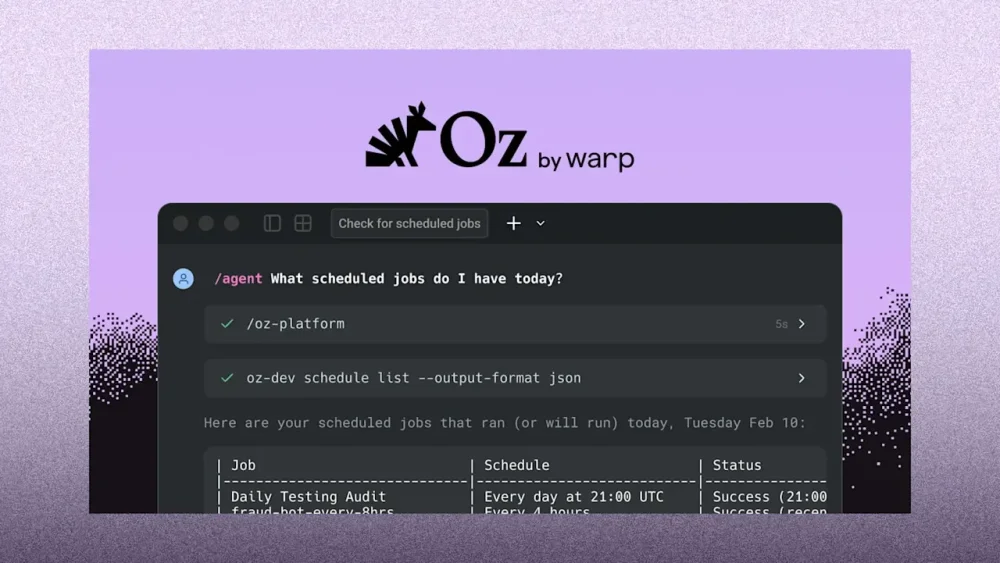
Warp, which builds software to help developers control AI agents and other software from the command line, is rolling out a new tool called Oz to collaboratively command AI in the cloud. Last year, Warp launched its agentic development environment, which lets programmers command AI agents to write code and other tasks. Developers can also use the software to edit code on their own and run command-line development tools. That release came as many developers became increasingly fond of vibe coding—the process of instructing an AI on what source code should do rather than writing it directly—and the industry produced a variety of tools, including Anthropic’s Claude Code and Google’s Antigravity, aimed at assisting with the process. But, says Warp’s founder and CEO Zach Lloyd, most existing agentic development software is geared at individual developers interacting with agents developing code on their own computers. That can make it difficult for teams to collaborate on agent-driven development and even make it hard for managers and colleagues to understand what individual developers already have AI agents working on. It can also make it difficult to guarantee agents are properly configured and securely handling company code and data, even in the face of deliberate attempts to steal data, like external “prompt injection” attacks meant to deceive AI, Lloyd says. “Right now, with everyone who’s using these agents on their local machines, it’s like the Wild West,” he says. “You don’t know what they’re doing.” Oz looks to solve that problem by providing secure, cloud-based sandboxes for AI agents to run as they write code, process customer feedback and bug reports, and handle a variety of other tasks, with all of their operations logged and accessible through a Warp app or web interface. “Every time an agent runs, you get a complete record of what it did,” Lloyd says. Through Oz, companies can heavily customize what access employees have to different agents and tweak what permissions agents themselves have to avoid security risks. And agents can be automatically scheduled to run at particular times or in response to particular events, or manually instructed to run as needed, says Lloyd, demonstrating one agent the company uses internally to root out potential fraudulent use of its platform. Developers can also switch between running particular agents in the cloud or on their own computers, which can be useful for interactive development, and the context of previous interactions and runs is automatically preserved. Since the cloud-based side of Oz is commanded via a standardized interface, locally run agents and other apps can even trigger agents to run in the cloud for purposes like generating code to respond to bug reports or feature requests. “Our view on this is to try to make it really flexible, because companies are going to have lots of different systems and ways of deploying agents,” Lloyd says. Warp says more than 700,000 developers are now using its software, which has expanded from an enhanced command-line terminal—the esoteric, text-based interface long beloved by power users on Linux and MacOS—to include tools for knowledge sharing and commanding AI agents. The company declined to share precise revenue numbers but said that annual recurring revenue grew by a factor of 35 last year. Users of Oz will generally be charged both for cloud computing and for AI inference costs, with limited use of the system also available in Warp’s free plans, but customers can also work with Warp to use their existing infrastructure or AI models of their choice. Warp, which reported at the end of last year that its agents have edited 3.2 billion lines of code, is in essence betting that even in an era when vibe coding is making it easier than ever to build custom software, companies interested in security, ease of use, and fast deployment will still prefer to use its tools for managing their coding agents rather than developing their own in house. “Every company this year that’s building software is going to want some sort of solution to do this, just because it’s such a big potential force multiplier for how software is produced,” says Lloyd. View the full article
-
A notorious ransomware and extortion gang known as Clop attacked Oracle's E-Business Suite, gaining access to Anywhere's employee and consumer data. View the full article

-
Honda reported Tuesday a 42% drop in profit for the nine months through December, compared to a year earlier, as U.S. President Donald The President’s tariffs hurt the Japanese automaker’s earnings. Tokyo-based Honda Motor Co.’s profit over the three quarters totaled 465.4 billion yen ($3 billion), down from 805.2 billion yen. That marked the second straight year that profit declined during the period at Honda, the maker of the Accord sedan, Civic compact and Odyssey minivan. Sales for the three quarters dipped 2.2% to 15.98 trillion yen ($102.6 billion) from the previous year. Honda stuck to its full fiscal year profit forecast at 300 billion yen ($1.9 billion). The slowdown in electric vehicles in the U.S. market was one negative factor, according to Honda, while the relatively healthy performance in its motorcycle division worked as a plus. Honda lowered its global EV sales ratio projection for 2030 to 20% from its previous target of 30%. It also said it canceled the development of some EV models, because the EV market was changing. The The President administration, which has favored the oil and gas industry, has backpedaled on prior programs supporting the proliferation of EVs, dismantling programs that kicked in during the Biden administration, which had encouraged environmentally cleaner cars and trucks. Last year, The President lowered the tariffs on automobiles and auto parts to 15% from an earlier 25% that he had initially announced. Japan promised to invest $550 billion in U.S. projects. Tariffs are a major blow to Japan’s export-reliant economy, including the automakers. Last week, Japan’s top automaker Toyota Motor Corp. reported a decline in recent profit, and announced that its chief financial officer, Kenta Kon, will become its new chief executive and president. Prime Minister Sanae Takaichi, who took office in October as Japan’s first female leader, scored a landslide parliamentary election victory for the governing party over the weekend. That’s expected to make it easier for her Liberal Democratic Party to push forward on its policies, including bolstering growth by boosting government spending, especially in technology and defense. Honda stock jumped 2.1% in Tuesday’s trading. The Nikkei 225 benchmark finished 2.3% higher, renewing a record high for the second day straight, in a rally set off, in part, by Takaichi’s popularity. Yuri Kageyama is on Threads: https://www.threads.com/@yurikageyama —Yuri Kageyama AP Business Writer View the full article

- Today
-
Energy groups, small-caps and materials companies have displaced AI-linked shares as the market’s best performersView the full article
-
Treasury yields experienced a bullish open with the 5-year yield dropping over 15 basis points in five days, ahead of key jobs and inflation reports, as the dollar demonstrated strong adherence to technical levels, according to the CEO of IF Securities. View the full article

-
New research shows synthetic personas can improve AI prompt tracking accuracy while cutting cost and research time dramatically. The post Synthetic Personas For Better Prompt Tracking appeared first on Search Engine Journal. View the full article
-
Media group adds ‘ticking fee’ to give shareholders additional payment for every quarter deal does not closeView the full article
-
Shortly after 7:00 local time this morning, the internet-famous walk for peace monks began the final miles of their 2,300-mile walking journey. They left Alexandria, Virginia, and are set to arrive in Washington, D.C., before 9:30 a.m., where they’ll take part in a public event at Bender Arena. The group plans to spend the next three days in and around the nation’s capital before traveling by bus to Fort Worth, Texas, where the journey began. Find out how they plan to spend the next few days. Who are the monks and why did they walk to D.C.? More than three months ago, a group of about 19 Buddhist monks and their rescue dog companion, Aloka, set out on a 2,300-mile walking journey to promote peace. The movement has been well-received in the United States and globally. Throughout the journey, massive crowds of people have gathered to welcome and celebrate the monks. They started the walk in Fort Worth, Texas, on October 26, 2025. After 108 days of walking, they arrived in Washington, D.C., this morning. The group’s Facebook page notes that they’re walking to “raise awareness of inner peace and mindfulness across America and the world.” The monks have been using their Facebook page to provide updates, share photos, and announce official events. An interactive map powered by Google Maps also let people follow along with the monks in real time. As their message of hope and peace has reached more people, their social media following has continued to grow significantly. They now have nearly 6 million combined followers across Facebook, Instagram, and TikTok. The monks’ rescue dog, Aloka, who has been part of the walking journey, has become an internet fan favorite. In January, Aloka had surgery to heal a leg injury. He’s doing well, but because he’s still recovering, he’s been traveling in an escort car that follows the walking route. Aloka has his own official social media accounts. He has a combined following of over 1.5 million fans across Facebook, Instagram, and TikTok. Here’s where the monks will be this week The group has shared the following schedule for the week: Tuesday, February 10: 7:00 a.m.: Walk from Alexandria, VA, to Washington, D.C. 9:30-10:45 a.m.: Public Event at Bender Arena Lunch stop: They’ll attend an invite-only lunch at the National United Methodist Church 1:00–2:30 p.m.: Interfaith Ceremony at Washington National Cathedral 2:30 p.m.: Unity Walk on Embassy Row In the evening, they’ll attend a private event at George Washington University Wednesday, February 11: 9:30 a.m.: Walk to Peace Monument / Capitol Hill begins Lunch stop: They’ll attend an invite-only lunch at St. Mark’s Capitol Hill Church 1:30 p.m.: Begin walking to the Lincoln Memorial 2:30-4:00 p.m: Peace Gathering and Concluding Ceremony at the Lincoln Memorial 4:30-7:30 p.m.: Meditation session with Venerable Bhikkhu Pannakara at George Washington University Smith Center Thursday, February 12: 9:00 a.m.: Begin walking from the Navy-Marine Corps Memorial Stadium in Maryland to the Maryland State Capitol 10:00-10:45 a.m.: Peace gathering at the steps of the Maryland State Capitol 12:30 p.m.: Depart for Fort Worth, Texas, by bus Saturday, February 14: The group is set to arrive in Fort Worth around 8:00 a.m. They plan to walk from downtown Fort Worth to the Hương Đạo Vipassana Bhavana Center, where the 2,300-mile journey began. The homecoming walking route is approximately six miles. To celebrate the completion of their journey, a peace gathering will be held at the Hương Đạo Vipassana Bhavana Center. If you’d like to follow along throughout the coming days, check their Facebook page for updates. View the full article

-
The urge to tame big corporate landlords is bubbling over among locals in woodsy Paulding County, Georgia, an Atlanta exurb where church steeples and old graveyards punctuate the rolling hills, and an 18-foot fiberglass Wonder Woman waves at drivers. View the full article

-
It is no secret that publishing SEO-friendly blog posts is one of the easiest and most effective ways to drive organic traffic and improve SERP rankings. However, in the era of artificial intelligence, blog posts matter more than ever. They help establish brand authority by consistently delivering fresh, valuable content that can be cited in AI-generated answers. In this guide, we will share a practical, detailed approach to writing SEO-friendly blog content that not only ranks on Google SERPs but is also surfaced by AI models. Table of contents What does an SEO-friendly blog post mean in the AI era? 9 tips to write SEO-friendly blogs for LLM and SERP visibility Bonus tips Target your readers always! Key takeaways SEO friendly blog post now means writing with search intent, ensuring content is clear and quotable for AI systems Key factors for SEO friendly blog posts include trustworthiness, machine-readability, answer-first structure, and topical authority Conduct thorough keyword research and find readers’ questions to match search intent effectively Use clear headings, improve readability, include inclusive language, and add relevant media to engage readers Write compelling meta titles and descriptions, link to existing content, and focus on building authority to enhance visibility What does an SEO-friendly blog post mean in the AI era? The way people search for information has changed, and with it, the meaning of an SEO-friendly blog post. Before the rise of generative AI, writing an SEO-friendly blog post mostly meant this: ‘Writing content with the intention of ranking highly in search engine results pages (SERPs). The content is optimized for specific target keywords, easy to read, and provides value to the reader.’ That definition is not wrong. But it is no longer complete. In the AI era, an SEO-friendly blog post is written with search intent first, answering a user’s question clearly and efficiently. It is not just about placing keywords in the right spots. It is about creating an information-dense piece with accurate, well-structured, and quotable sentences that AI systems can confidently extract and surface as direct answers. The new definition clearly shows that strong SEO foundations still matter, and they matter more than ever. What has changed is how content is evaluated and discovered. Search engines and AI models now look beyond clicks and rankings to understand whether your content is trustworthy, helpful, and easy to interpret. Here are some key factors that play a key role in determining whether a blog post is truly SEO-friendly: Trustworthiness (E-E-A-T): Demonstrating real-world experience, expertise, and credibility helps your content stand out from low-value AI-generated rehashes Machine-readability: Clear structure, clean HTML, and technical signals such as schema markup help search engines and AI systems understand what your content is about Answer-first structure: Placing concise, direct answers at the beginning of sections makes it easier for AI models to extract and reference your content Topical authority: Publishing interconnected, in-depth content around a subject is far more effective than creating isolated blog posts 9 tips to write SEO-friendly blogs for LLM and SERP visibility Now we get to the core of this guide. Below are some foundational tips to help you plan and write SEO-friendly blog posts that are genuinely helpful, easy to understand, and focused on solving real reader problems. When done right, these practices not only improve search visibility but also shape how your brand is perceived by both users and AI systems. 1. Conduct thorough keyword research Before you start writing a single word, start with solid keyword research. This step helps you understand how people search for a topic, which terms carry demand, and how competitive those searches are. It also ensures your content aligns with real user intent instead of assumptions. You can use tools like Google Keyword Planner, Ahrefs, or Semrush for this. Personally, I prefer using Semrush’s Keyword Magic Tool because it quickly surfaces thousands of relevant keyword ideas around a single topic. Here’s how I usually approach it. I enter a broad keyword related to my topic, for example, ‘SEO.’ The tool then returns an extensive list of related keywords along with important metrics. I mainly focus on three of them: Search intent, to understand what the user is really looking for Keyword Difficulty (KD%), to estimate how hard it is to rank Search volume, to gauge demand This combination helps me choose keywords that are realistic to rank for and meaningful for readers. If you use Yoast SEO, this process becomes even easier. Semrush is integrated into Yoast SEO (both free and Premium), giving you keyword suggestions directly in Yoast SEO. With a single click, you can access relevant keyword data while writing, making it easier to create focused, useful content from the start. Looking for keyphrase suggestions? When you’ve set a focus keyword in Yoast SEO, you can click on ‘Get related keyphrases’ and our Semrush integration will help you find high-performing keyphrases! Also read: How to use the Semrush related keyphrases feature in Yoast SEO for WordPress 2. Finding readers’ questions Keyword research tells you what people search for. Questions tell you why they search. When you actively look for the questions your audience is asking, you move closer to matching search intent. This is especially important in the AI era, where search engines and AI models prioritize clear, answer-driven content. For example, consider these two queries: What are the key features of good running shoes? This shows informational intent. The searcher wants to understand what makes a running shoe good. What are the best running shoes? This suggests a transactional or commercial intent. The searcher is likely comparing options before making a purchase. Both questions are valid, but they require very different content approaches. There are two simple ways I usually find relevant questions. The first is by checking the People also ask section in Google search results. By typing in a broad keyphrase, you can see related questions that Google itself considers relevant. The second method is to use the Questions filter in Semrush’s Keyword Magic Tool. This helps uncover question-based queries directly tied to your main topic. Apart from these methods, I also like using Google’s AI Overview and AI mode as a quick research layer. When I search for my main topic, I pay close attention to AI-cited sources, as they often surface broad questions people are actively seeking. The structured points and highlighted terms usually reflect the answers and subtopics that matter most to users. If I want to go deeper, I click “Show more,” which reveals additional angles and follow-up questions I might not have considered initially. Finding and answering these questions helps you do lightweight online audience research and create content that feels genuinely helpful. It also increases the chances of your blog post being referenced in AI-generated answers, since LLMs are designed to surface clear responses to specific questions. 3. Structure your content with headings and subheadings In our 2026 SEO predictions, we highlighted that editorial quality is no longer just about good writing. It has become a machine-readability requirement. Content that is clearly structured is easier to understand, reuse, and surface across both search and AI-driven experiences. How LLMs use headings AI models rely on headings to identify topics, questions, and answers within a page. When your content is broken into clear sections, it becomes easier for them to extract key information and include it in AI-generated summaries. Why headings still matter for SEO Headings help search engines understand the hierarchy of your content and the main points you are trying to rank for. They also improve scannability and usability, especially on mobile devices, and increase the chances of earning featured snippets. Good structure has always been a core SEO principle. In the AI era, it remains one of the simplest and most effective ways to improve visibility and discoverability. 4. Focus on readability aspects An SEO-friendly blog post should be easy to read before it can rank or get picked up by AI systems. Readability helps readers stay engaged and helps search engines and AI models better understand your content. A few key readability aspects to focus on while writing: Avoid passive voice where possible Active sentences are clearer and more direct. They make it easier for readers to understand who is doing what, and they reduce ambiguity for AI systems processing your content. Use transition words Transition words like “because,” “for example,” and “however” guide readers through your content. They improve flow and make it easier to follow relationships between sentences and paragraphs. Keep sentences and paragraphs short Long, complex sentences reduce clarity. Breaking content into shorter sentences and paragraphs improves scannability and comprehension. Avoid consecutive sentences starting in the same way Varying sentence structure keeps your writing engaging and prevents it from sounding repetitive or robotic. If you are a WordPress or Shopify user, Yoast SEO (and Yoast SEO for Shopify for Shopify users) can help here. Its readability analysis checks for passive voice, transition words, sentence length, and other clarity signals while you write. If you prefer drafting in Google Docs, you can use the Yoast SEO Google Docs add-on to get the same readability feedback before publishing. Use Yoast SEO in Google DocsOptimize as you draft for SEO, inclusivity, and readability. The Yoast SEO Google Docs add-on lets you export content ready for WordPress, no reformatting required. Get Yoast for Google Docs add-onOnly $5 / month (ex VAT) Good readability is not just about pleasing algorithms. It helps readers understand your message more quickly and makes your content easier to reuse in AI-generated responses. 5. Use inclusive language Inclusive language helps ensure your content is respectful, clear, and welcoming to a broader audience. It avoids assumptions about gender, ability, age, or background, and focuses on people-first communication. From an SEO and AI perspective, inclusive language also improves clarity. Content that avoids vague or biased terms is easier to interpret, digest, and trust. This directly supports brand perception, especially when your content is surfaced in AI-generated responses. Yoast SEO supports this through its inclusive language check, which flags potentially non-inclusive terms and suggests better alternatives. This feature is available in Yoast SEO, Yoast SEO Premium, and in the Yoast SEO Google Docs add-on, making it easier to build inclusive habits directly into your writing workflow. Inclusive language ensures your content is intentional, thoughtful, and clear, aligning closely with what modern SEO and AI systems value. 6. Add relevant media and interaction points A well-written blog post should not feel like a long block of text. Adding the right media and interaction points helps guide readers through your content, keeps them engaged, and encourages them to take action. Why media matters Media elements such as images, videos, embeds, and infographics make your content easier to consume and more engaging. Blog posts that include images receive 94% more views than those without, simply because visuals break up large blocks of text and make pages easier to scan. Video content plays an even bigger role. Embedded videos help explain complex ideas faster and can significantly improve organic visibility compared to text-only posts. Together, these elements encourage readers to stay longer on your page, which is a strong signal of content quality for search engines and AI systems alike. Media also improves accessibility. Properly optimized images with descriptive alt text make content usable for screen readers, while original visuals, screenshots, or diagrams help reinforce credibility and expertise. Use interaction points to guide and engage readers Interaction does not always mean complex features. Even simple elements can significantly improve engagement when used well. A table of contents, for example, allows readers to jump directly to the section they care about most. Other interaction points include clear calls to action (CTAs) that guide readers to the next step, relevant recommendations that encourage users to keep exploring your site, and social sharing buttons that make it easy to amplify your content. Interactive elements like polls, quizzes, or embedded tools further encourage participation and increase time on page. 7. Plan your content length Content length still matters, but not in the way many people think it does. A common question is what the ideal word count is for a blog post that performs well. A 2024 study by Backlinko found that while longer content tends to attract more backlinks, the average page ranking on Google’s first page contains around 1,500 words. That said, this should not be treated as a fixed benchmark. The ideal length is the one that fully answers the user’s question. In an AI-driven era, publishing long content that adds little value or is padded with unnecessary fluff can do more harm than good. If a topic genuinely requires a longer format, breaking the content into clear subheadings makes a big difference. I personally prefer structuring long articles this way because it improves readability, helps readers navigate the page more easily, and makes the content easier for search engines and AI systems to understand. Must read: How to use headings on your site If you use Yoast SEO or Yoast SEO Premium, the paragraph and sentence length checks can help here. These checks exist to prevent pages from being too thin to provide real value. Pages with very low word counts often lack context and struggle to demonstrate relevance or expertise. Yoast SEO flags such cases as a warning, while clearly indicating that adding more words alone does not guarantee better rankings. Think of word count as a guideline, not a goal. Your focus should always be on clarity, completeness, and usefulness. 8. Link to existing content Internal linking is one of the most underrated SEO practices, yet it does a lot of heavy lifting behind the scenes. By linking to relevant content within your site, you help readers discover additional resources and help search engines understand how your content is connected. Over time, this strengthens topical authority and signals that your site consistently covers a subject in depth. Good internal linking follows a few simple principles: Link only when it adds value and feels natural in context Use clear, descriptive anchor text so users and search engines know what to expect Avoid linking to outdated URLs or pages that redirect, as this wastes crawl signals Internal links also keep readers engaged longer by guiding them to related articles. This improves overall site engagement while reinforcing your expertise on a topic. From an AI and search perspective, internal linking plays an even bigger role. Modern search systems analyze content structure, metadata hierarchies, schema markup, and internal links to assess topical depth and clarity. Well-linked content clusters make it easier for search engines and AI systems to understand what your site is about and which pages are most important. For WordPress users, Yoast SEO Premium offers internal linking suggestions directly in the editor. This makes it easier to spot relevant linking opportunities as you write, helping you build stronger content connections without interrupting your workflow. A smarter analysis in Yoast SEO PremiumYoast SEO Premium has a smart content analysis that helps you take your content to the next level! Get Yoast SEO Premium »Only $118.80 / year (ex VAT) 9. Write compelling meta titles and descriptions Meta titles and meta descriptions help users decide whether to click on your content. While meta descriptions are not a direct ranking factor, they strongly influence click-through rates, making them an essential part of writing SEO-friendly blog posts. A good meta title clearly communicates what the page is about. Place your main keyword near the beginning, keep it concise, and aim for roughly 55-60 characters so it doesn’t get truncated in search results. Meta descriptions act like a short invitation. They should explain what the reader will gain from clicking and why it matters. Instead of stuffing keywords, focus on clarity and usefulness. Mention what aspects of the topic your content covers and how it helps the reader. Simple language works best. Pro tip: Using action-oriented verbs such as “learn,” “discover,” or “read” can also encourage clicks and make your description more engaging. If you use Yoast SEO Premium, this process becomes much easier. The AI-powered meta title and description generation feature helps you create relevant, well-structured metadata in just one click. It follows SEO best practices while producing descriptions and titles that are clear, engaging, and aligned with search intent. Bonus tips Once you have the fundamentals in place, a few extra refinements can go a long way. The following bonus tips help improve usability, clarity, and long-term discoverability. They are not mandatory, but when applied thoughtfully, they can make your blog posts more helpful for readers and easier to surface across search engines and AI-driven experiences. 1. Add a table of contents A table of contents (TOC) helps readers quickly understand what your blog post covers and jump straight to the section they care about. This is especially useful for long-form content, where users often scan rather than scroll from top to bottom. From an SEO perspective, a TOC improves structure and readability and can create jump links in search results, which may increase click-through rates. It reduces bounce rates by helping users find answers faster and improves accessibility by offering clear navigation. By the way, did you know Yoast can help you here too? Yes, the Yoast SEO Internal linking blocks feature lets you add a TOC block to your blog post that automatically includes all the headings with just one click! 2. Add key takeaways Key takeaways help readers quickly grasp the main points of your blog post without having to read the whole post. This is especially helpful for time-constrained users who want quick, actionable insights. Summaries also support SEO by reinforcing topic relevance and improving content comprehension for search engines and AI systems. Well-written takeaways might increase visibility in featured snippets and “People also ask” results. If you use Yoast SEO Premium, the Yoast AI Summarize feature can generate key takeaways for your content in just one click, making it easier to add concise summaries without extra effort. 3. Add an FAQ section An FAQ section gives you space to answer specific questions your readers may still have after reading your post. This improves user experience by addressing concerns directly and building trust. FAQs also help search engines better understand your content by clearly outlining common questions and answers related to your topic. While they can support rankings, their real value lies in reducing friction, improving clarity, and even supporting conversions by clearing doubts. 4. Short permalinks A permalink is the permanent URL of your blog post. Short, descriptive permalinks are easier to read, easier to share, and more likely to be clicked. Good permalinks clearly describe what the page is about, avoid unnecessary words, and include the main topic where relevant. They improve usability and help search engines understand page context at a glance. 5. Focus on building authority (EEAT aspect) Building authority is critical, especially for sites that cover sensitive or high-impact topics. Demonstrating Experience, Expertise, Authoritativeness, and Trustworthiness (E-E-A-T) helps both users and search engines trust your content. This includes citing reliable sources, showing real-world experience, maintaining consistent quality, and clearly communicating who is behind the content. Strong E-E-A-T signals are especially important for YMYL topics, where accuracy and credibility matter most. 6. Plan content distribution Writing a great blog post is only half the work. Distribution helps your content reach the right audience. Sharing posts on social media, repurposing key insights into newsletters, and earning backlinks from relevant sites can drive more traffic and visibility. Distribution also increases engagement signals and helps your content gain traction faster, which supports long-term SEO performance. Target your readers always! In AI-driven search, retrieval beats ranking. Clarity, structure, and language alignment now decide if your content gets seen. – Carolyn Shelby This perfectly sums up what writing SEO-friendly blog posts looks like today. Success is no longer just about rankings. It is about being clear, helpful, and easy to understand for both readers and AI systems. Throughout this guide, we focused on the fundamentals that still matter: understanding search intent, structuring content well, improving readability, using inclusive language, and supporting your writing with media, internal links, and thoughtful metadata. These are not new tricks. They are strong SEO foundations, adapted for how search and discovery work in the AI era. If there is one takeaway, it is this: always write for your readers first. When your content genuinely helps people, answers their questions, and respects how they search and read, it naturally becomes easier to surface across SERPs and AI-driven experiences. Good SEO has not changed. It has simply become more human. The post Tips and tricks to write SEO-friendly blog posts in the AI era appeared first on Yoast. View the full article
-
Google's Results about you tool now monitors Search results for government-issued IDs like passports, driver's licenses, and Social Security numbers. The post Google Can Now Monitor Search For Your Government IDs appeared first on Search Engine Journal. View the full article
-
Google announced two new ways for users to remove their sensitive information from the web Tuesday morning—or, at least, remove that data from Google Search. The first lets users request that Google remove sensitive government ID information from Search, while the second gives users new tools to request the same for non-consensual explicit images. Google's "Results about you" tool is getting an update Credit: Google First, Google is updating its existing "Results about you" tool, which helps users scour the internet for their personal information. Before today, this tool could already locate data points like your name, phone number, email addresses, and home addresses. Following the update, you can now find and request the deletion of search results containing highly sensitive information, including your driver's license, passport, or Social Security number. To launch this tool, click here. If you've never used "Results about you" before, you'll need to set it up to tell Google what to look out for. Once you do, you'll be able to add government ID numbers, such as your driver's license, passport, and Social Security number. If Google finds a match, the company will let you know. You can receive an alert from the Google app on your smartphone, which takes you to a summary of what data was found and where. From here, you can choose from "Request to remove," or "Mark as reviewed." Unfortunately, this tool won't remove the data from the websites that are hosting it, but it will eventually remove the search results—sharply reducing the chance that someone will find your data on their own. Google says these changes will roll out in the U.S. over the "coming days," while it is working on bringing them to other countries in the future. Google's simpler way to remove explicit images from Search Credit: Google In addition to these changes, Google is now rolling out a simpler tool for users to request the remove of non-consensual explicit images (NCEI) from Search. If you find such an image on Search, you can tap the three dots on that image, choose "remove result," then "it shows a sexual image of me." You'll have the choice to report whether the photo is real, or is artificially generated, as well, and you can report multiple images at once, if needed. Your requests will all appear in the Results about you hub, so you can track the progress of each. The tool lets you opt-in to an option that will filter additional explicit results in other searches. Google says it will also share links to "emotional and legal support" after you submit a request. View the full article
-
The terms workflow integration and workflow automation often appear interchangeably in vendor marketing, but they describe different approaches to solving related problems. Confusing them leads to buying the wrong tools or expecting capabilities that don’t exist. Workflow automation executes tasks automatically based on triggers. Workflow integration connects systems so data flows between them. The distinction matters because the tool that automates your approval process won’t necessarily keep your project management and CRM data synchronized, and the platform that syncs your tools won’t automatically send notifications or create follow-up tasks. Understanding where these categories overlap and diverge helps you build a technology stack that actually addresses your operational challenges instead of accumulating tools that almost solve the problem. What is workflow integration? Workflow integration is the process of connecting different software applications so that data and information flow between them as part of your business processes. When your sales team closes a deal in Salesforce, workflow integration ensures that customer information appears in your project management tool for the implementation team. When engineering marks a feature complete in Jira, integration updates the corresponding item in the product roadmap. The systems stay aligned without anyone manually copying information between them. ComponentWhat it doesData mappingDefines which fields in one system correspond to fields in anotherSync directionDetermines whether data flows one-way or bidirectionallyTrigger conditionsSpecifies when data should sync (immediately, on schedule, based on criteria)Transformation rulesConverts data formats between systems (e.g., status values, date formats) The goal of workflow integration is continuity. Information created in one system becomes available in other systems without manual intervention. Teams working in different tools see consistent data. Handoffs between departments don’t require copying and pasting. Workflow integration addresses the problems caused by organizations using 1,200 cloud applications on average, applications that weren’t designed to share information with each other. Without integration, each tool operates as an island, and your team becomes the bridge. Common workflow integration scenarios A product team maintains their roadmap in one tool while engineering tracks development in another. Integration keeps priorities aligned so engineering always sees current roadmap status, and the product team sees actual development progress without checking a separate system. A customer success team tracks accounts in a CRM while support manages tickets in a different platform. Integration ensures that support sees customer context when tickets arrive, and success managers see support history when reviewing account health. A marketing team runs campaigns from a marketing automation platform while sales works opportunities in a CRM. Integration keeps lead and contact data synchronized so both teams work from the same customer information without manual data entry. What is workflow automation? Workflow automation executes predefined actions automatically when specific conditions are met. It’s about removing manual steps from processes, not about connecting systems. When a support ticket reaches high-priority status, automation can notify the on-call engineer. When a form submission arrives, automation can create a task, send a confirmation email, and update a spreadsheet. When an invoice is approved, automation can trigger payment processing. ComponentWhat it doesTriggersEvents that start the automation (form submission, status change, schedule)ActionsTasks executed automatically (send email, create record, update field)ConditionsLogic that determines which actions run (if/then rules, filters)SequencesMultiple actions chained together in order The goal of workflow automation is efficiency. Tasks that previously required human intervention happen automatically. Processes that depended on someone remembering to do something now execute reliably. Manual, repetitive work gets eliminated. Workflow automation addresses the problem that knowledge workers spend 62% of their time on repetitive tasks rather than skilled work. Automation handles the routine so people can focus on what requires human judgment. Common workflow automation scenarios A sales team automates lead routing based on territory, deal size, or product interest. When a new lead enters the CRM, automation assigns it to the right rep and notifies them immediately rather than waiting for manual review. An HR team automates the onboarding sequence. When a new hire is added to the HR system, automation creates their accounts, assigns training materials, schedules orientation meetings, and notifies their manager, all without manual coordination. A finance team automates invoice processing. When an invoice arrives, automation extracts key data, routes it for approval based on amount thresholds, and schedules payment upon approval. Manual data entry and routing decisions are eliminated. How workflow integration and automation differ The distinction becomes clear when you examine what each approach actually does. AspectWorkflow IntegrationWorkflow AutomationPrimary functionConnects systems to share dataExecutes tasks without manual interventionCore problem solvedData silos between applicationsManual, repetitive workWhat it createsSynchronized records across toolsAutomated actions and notificationsRelationship between systemsOngoing connection (stateful)Trigger-action events (stateless)Typical outputSame information available everywhereTasks completed, notifications sent Integration example: A customer record created in HubSpot automatically appears in Salesforce with mapped fields. When either record is updated, the other reflects the changes. The two systems maintain alignment over time. Automation example: When a deal closes in Salesforce, an automation sends a Slack message to the implementation team, creates a project in Asana, and schedules a kickoff email. Each action fires once based on the trigger. The key difference is state. Integration maintains an ongoing relationship between records. Automation fires and forgets. Integration asks “how do we keep these systems aligned?” Automation asks “what should happen when this event occurs?” This distinction has practical implications for how you structure your operations. If you need a customer record to stay synchronized between your CRM and support platform, with updates flowing in both directions over time, that’s an integration problem. A trigger-action automation can create the initial record, but it won’t maintain alignment as both records evolve. Conversely, if you need a Slack notification when a high-priority ticket arrives, that’s an automation problem. The notification fires once when the condition is met. There’s no ongoing relationship to maintain between the ticket and the notification. Where integration and automation overlap The categories aren’t mutually exclusive, and many tools offer both capabilities to varying degrees. Automation platforms with integration features. Tools like Zapier and Make (formerly Integromat) started as automation platforms but added data sync capabilities. They excel at trigger-action workflows but can also keep simple data aligned between applications. For a deeper look at no-code workflow automation tools, several options exist beyond the major platforms. Integration platforms with automation features. Enterprise iPaaS platforms and specialized sync tools often include workflow automation as part of broader integration capabilities. You might sync data between systems and automate notifications when certain conditions are met. The overlap creates confusion because vendors position their products to capture both markets. A platform might describe itself as “workflow automation” while primarily offering integration, or vice versa. Evaluating based on your actual needs clarifies the choice: If your primary problem is data existing in multiple places with no connection between them, you need integration. If your primary problem is manual tasks that should happen automatically, you need automation. If you need both, look for platforms that handle your dominant use case well and can address the secondary need adequately. Questions that reveal which problem you’re solving: Are you tired of manually copying data between systems? That’s an integration problem. Are you tired of remembering to do the same task every time something happens? That’s an automation problem. Do you need the same record to exist and stay updated in multiple tools? Integration. Do you need a sequence of actions to execute when a specific event occurs? Automation. When you need integration vs automation Workflow integration makes sense when Different teams use different tools but need access to the same information. Your project management tool needs to reflect what’s happening in your development tracker. Your CRM data needs to stay aligned with your marketing platform. Updates made in one system should appear in others without anyone copying them manually. Workflow automation makes sense when You have manual, repetitive tasks that follow predictable patterns. Approvals that require routing to the right person. Notifications that should fire when specific events occur. Data entry that could be eliminated through automatic record creation. Sequences of actions that always happen together. You probably need both when Your operations span multiple tools AND include repetitive manual processes. Most organizations fall into this category. The question is which need is primary and which tools address each effectively. Consider a customer success team that manages accounts across a CRM and a project management tool. They need integration to keep customer data synchronized between systems so everyone sees the same information. They also need automation to alert account managers when renewal dates approach or when usage metrics cross certain thresholds. Neither capability alone solves the complete problem. Or consider an engineering team working across Jira and a product management tool. Integration keeps development status and product roadmap priorities aligned bidirectionally. Automation handles the notifications, status updates, and task creation that should happen when specific events occur. The tools complement each other rather than competing for the same job. Building an integrated and automated workflow stack The most effective approach combines integration and automation thoughtfully rather than expecting one tool to do everything. For integration needs, platforms built for two-way sync between work management tools maintain ongoing connections between your core systems. Records stay aligned. Updates flow bidirectionally. Teams work in their preferred tools while sharing consistent data. For automation needs, trigger-action platforms handle the “when X happens, do Y” workflows that don’t require ongoing data synchronization. Notifications, task creation, and process sequences work well in these tools. The combination works because each tool does what it’s designed for. Integration platforms maintain state and keep systems aligned over time. Automation platforms execute discrete actions based on triggers without maintaining ongoing relationships. Trying to force one approach to do both often creates complexity and workarounds that exceed the benefit of getting it right in the first place. Two-way sync: The future of workflow integration For teams whose primary need is keeping project management, development, and collaboration tools synchronized, two-way sync platforms solve the integration challenge without the limitations of trigger-based automation tools attempting to maintain ongoing data alignment. View the full article
-
If you’ve been managing PPC accounts for any length of time, you don’t need a research report to tell you something has changed. You see it in the day-to-day work: GCLIDs missing from URLs. Conversions arriving later than expected. Reports that take longer to explain while still feeling less definitive than they used to. When that happens, the reflex is to assume something broke – a tracking update, a platform change, or a misconfiguration buried somewhere in the stack. But the reality is usually simpler. Many measurement setups still assume identifiers will reliably persist from click to conversion, and that assumption no longer holds consistently. Measurement hasn’t stopped working. The conditions it depends on have been shifting for years, and what once felt like edge cases now show up often enough to feel like a systemic change. Why this shift feels so disorienting I’ve been close to this problem for most of my career. Before Google Ads had native conversion tracking, I built my own tracking pixels and URL parameters to optimize affiliate campaigns. Later, while working at Google, I was involved in the acquisition of Urchin as the industry moved toward standardized, comprehensive measurement. That era set expectations that nearly everything could be tracked, joined, and attributed at the click level. Google made advertising feel measurable, controllable, and predictable. As the ecosystem now shifts toward more automation, less control, and less data, that contrast can be jarring. It has been for me. Much of what I once relied on to interpret PPC data no longer applies in the same way. Making sense of today’s measurement environment requires rethinking those assumptions, not trying to restore the old ones. This is how I think about it now. Dig deeper: How to evolve your PPC measurement strategy for a privacy-first future The old world: click IDs and deterministic matching For many years, Google Ads measurement followed a predictable pattern. A user clicked an ad. A click ID, or gclid, was appended to the URL. The site stored it in a cookie. When a conversion fired, that identifier was sent back and matched to the click. This produced deterministic matches, supported offline conversion imports, and made attribution relatively easy to explain to stakeholders. As long as the identifier survived the journey, the system behaved in ways most advertisers could reason about. We could literally see what happened with each click and which ones led to individual conversions. That reliability depended on a specific set of conditions. Browsers needed to allow parameters through. Cookies had to persist long enough to cover the conversion window. Users had to accept tracking by default. Luckily, those conditions were common enough that the model worked really well. Why that model breaks more often now Browsers now impose tighter limits on how identifiers are stored and passed. Apple’s Intelligent Tracking Prevention, enhanced tracking protection, private browsing modes, and consent requirements all reduce how long tracking data persists, or whether it’s stored at all. URL parameters may be stripped before a page loads. Cookies set via JavaScript may expire quickly. Consent banners may block storage entirely. Click IDs sometimes never reach the site, or they disappear before a conversion occurs. This is expected behavior in modern browser environments, not an edge case, so we have to account for it. Trying to restore deterministic click-level tracking usually means working against the constant push toward more privacy and the resulting browser behaviors. This is another of the many evolutions of online advertising we simply have to get on board with, and I’ve found that designing systems to function with partial data beats fighting the tide. The adjustment isn’t just technical On my own team, GA4 is a frequent source of frustration. Not because it’s incapable, but because it’s built for a world where some data will always be missing. We hear the same from other advertisers: the data isn’t necessarily wrong, but it’s harder to reason about. This is the bigger challenge. Moving from a world where nearly everything was observable to one where some things are inferred requires accepting that measurement now operates under different conditions. That mindset shift has been uneven across the industry because measurement lives at the periphery of where many advertisers spend most of their time, working in ad platforms. A lot of effort goes into optimizing ad platform settings when sometimes the better use of time might’ve been fixing broken data so better decisions could be made. Dig deeper: Advanced analytics techniques to measure PPC Get the newsletter search marketers rely on. See terms. What still works: Client-side and server-side approaches So what approaches hold up under current constraints? The answer involves both client-side and server-side measurement. Pixels still matter, but they have limits Client-side pixels, like the Google tag, continue to collect useful data. They fire immediately, capture on-site actions, and provide fast feedback to ad platforms, whose automated bidding systems rely on this data. But these pixels are constrained by the browser. Scripts can be blocked, execution can fail and consent settings can prevent storage. A portion of traffic will never be observable at the individual level. When pixel tracking is the only measurement input, these gaps affect both reporting and optimization. Pixels haven’t stopped working. They just no longer cover every case. Changing how pixels are delivered Some responses to declining pixel data focus on the mechanics of how pixels are served rather than measurement logic. Google Tag Gateway changes where tag requests are routed, sending them through a first-party, same-origin setup instead of directly to third-party domains. This can reduce failures caused by blocked scripts and simplify deployment for teams using Google Cloud. What it doesn’t do is define events, decide what data is collected, or correct poor tagging choices. It improves delivery reliability, not measurement logic. This distinction matters when comparing Tag Gateway and server-side GTM. Tag Gateway focuses on routing and ease of setup. Server-side GTM enables event processing, enrichment, and governance. It requires more maintenance and technical oversight, but it provides more control. The two address different problems. Here’s the key point: better infrastructure affects how data moves, not what it means. Event definitions, conversion logic, and consistency across systems still determine data quality. A reliable pipeline delivers whatever it’s given, so it’d be just as good at making sure the garbage you put in also comes back out. Offline conversion imports: Moving measurement off the browser Offline conversion imports take a different approach, moving measurement away from the browser entirely. Conversions are recorded in backend systems and sent to Google Ads after the fact. Because this process is server to server, it’s less affected by browser privacy restrictions. It works for longer sales cycles, delayed purchases, and conversions that happen outside the site. This is why Google commonly recommends running offline imports alongside pixel-based tracking. The two cover different parts of the journey. One is immediate, the other persists. Offline imports also align with current privacy constraints. They rely on data users provide directly, such as email addresses during a transaction or signup. The data is processed server-side and aggregated, reducing reliance on browser identifiers and short-lived cookies. Offline imports don’t replace pixels. They reduce dependence on them. Dig deeper: Offline conversion tracking: 7 best practices and testing strategies How Google fills the gaps Even with pixels and offline imports working together, some conversions can’t be directly observed. Matching when click IDs are missing When click IDs are unavailable, Google Ads can still match conversions using other inputs. This often begins with deterministic matching through hashed first-party identifiers such as email addresses, when those identifiers can be associated with signed-in Google users. This is what Enhanced Conversions help achieve. When deterministic matching, if this then that, isn’t possible, the system relies on aggregated and validated signals rather than reconstructing individual click paths. These can include session-level attributes and limited, privacy-safe IP information, combined with timing and contextual constraints. This doesn’t recreate the old click-level model, but it allows conversions to be associated with prior ad interactions at an aggregate level. One thing I’ve noticed: adding these inputs typically improves matching before it affects bidding. Bidding systems account for conversion lag and validate new signals over time, which means imported or modeled conversions may appear in reporting before they’re fully weighted in optimization. Matching, attribution, and bidding are related but separate processes. Improvements in one don’t immediately change the others. Modeled conversions as a standard input Modeled conversions are now a standard part of Google Ads and GA4 reporting. They’re used when direct observation isn’t possible, such as when consent is denied or identifiers are unavailable. These models are constrained by available data and validated through consistency checks and holdback experiments. When confidence is low, modeling may be limited or not applied. Modeled data should be treated as an expected component of measurement rather than an exception. Dig deeper: Google Ads pushes richer conversion imports Boundaries still matter Tools like Google Tag Gateway or Enhanced Conversions for Leads help recover measurement signal, but they don’t override user intent. Routing data through a first-party domain doesn’t imply consent. Ad blockers and restrictive browser settings are explicit signals. Overriding them may slightly increase the measured volume, but it doesn’t align with users’ expectations regarding how your organization uses their data. Legal compliance and user intent aren’t the same thing. Measurement systems can respect both, but doing so requires deliberate choices. Designing for partial data Missing signals are normal. Measurement systems that assume full visibility will continue to break under current conditions. Redundancy helps: pixels paired with hardened delivery, offline imports paired with enhanced identifiers, and multiple incomplete signals instead of a single complete one. But here’s where things get interesting. Different systems will see different things, and this creates a tension many advertisers now face daily. Some clients tell us their CRM data points clearly in one direction, while Google Ads automation, operating on less complete inputs, nudges campaigns another way. In most cases, neither system is wrong. They’re answering different questions with different data, on different timelines. Operating in a world of partial observability means accounting for that tension rather than trying to eliminate it. Dig deeper: Auditing and optimizing Google Ads in an age of limited data Making peace with partial observability The shift toward privacy-first measurement changes how much of the user journey can be directly observed. That changes our jobs. The goal is no longer perfect reconstruction of every click, but building measurement systems that remain useful when signals are missing, delayed, or inferred. Different systems will continue to operate with different views of reality, and alignment comes from understanding those differences rather than trying to eliminate them. In this environment, durable measurement depends less on recovering lost identifiers and more on thoughtful data design, redundancy, and human judgment. Measurement is becoming more strategic than ever. View the full article
-
Americans’ hope for their future has fallen to a new low, according to new polling. In 2025, only about 59% of Americans gave high ratings when asked to evaluate how good their life will be in about five years, the lowest annual measure since Gallup began asking this question almost 20 years ago. It’s a warning about the depth of the gloom that has fallen over the country over the past few years. In the data, Gallup’s “current” and “future” lines have tended to move together over time — when Americans are feeling good about the present, they tend to feel optimistic about the future. But the most recent measures show that while current life satisfaction has declined over the last decade, future optimism has dropped even more. The finding comes from a longstanding Gallup question that asks Americans to rate their current and future lives on a scale from 0 to 10. Those who give themselves an 8 or higher on the question about the future are categorized as optimists. “While current life is eroding, it’s that optimism for the future that has eroded almost twice as much over the course of about that last 10 years or so,” said Dan Witters, the research director of the Gallup National Health and Well-Being Index. Gallup assesses people who rate their current life at a 7 or higher and their anticipated future at an 8 or higher as “thriving.” Fewer than half of Americans, about 48%, are now in that category. Democrats and Hispanic Americans, in particular, were in a darker mood last year. But even with President Donald The President back in the White House and his party in control of both houses of Congress, Republicans aren’t feeling nearly as good about the future as they were in the last year of The President’s first term. Democrats’ optimism fell significantly Americans’ attitudes toward the future tend to shift when a new political party enters the White House — generally, the party in power grows more optimistic, while the party without control is more down. For instance, Democrats became more positive about the future after Joe Biden won the presidency, while Republicans’ outlook soured. Witters notes that these changes typically happen “by roughly the same amount, same level of magnitude, so they cancel each other out.” That didn’t happen in 2025. Toward the end of Biden’s term and the start of The President’s second term, Democrats’ optimism fell from 65% to 57%. Republicans grew more hopeful, but not enough to offset Democrats’ drop. “The regime change in the White House almost certainly was a big driving factor in what’s happened,” Witters said. “And a lot of that was just because the people who identified as Democrats really took it in the chops.” But Republicans are still quite a bit gloomier about the future than they were in the last year of The President’s first term. A January AP-NORC poll found that while the vast majority of Republicans are still behind the president, his work on the economy hasn’t lived up to many people’s expectations. Hispanic adults grew more pessimistic Hispanic adults’ optimism for the near future also declined during The President’s first year in office, dropping from 69% to 63%. That decrease was sharper than among white and Black Americans, something that Witters said could be tied to overall cost concerns, health care worries or alarm about The President’s recent immigration policies. Last year, a survey by the American Communities Project found that people living in heavily Hispanic areas were feeling less hopeful about their future than in 2024. The President’s favorability fell among Hispanics over the course of 2025, according to AP-NORC polling, which also found that Hispanic adults reported higher levels of economic stress than other groups. A Pew Research Center poll conducted in October found that the administration’s tough immigration enforcement is highly visible in Hispanic communities. About 6 in 10 Latinos said they had seen or heard of Immigration and Customs Enforcement raids or arrests in their community in the past six months. “(Deportations are) something that everybody can see and look at with their own eyes,” Witters added. “But if you’re Hispanic, I think it’s fair to think that that might hit a little closer to home.” This data is a part of the Gallup National Health and Well-Being Index. The 2025 results are based on data collected over four quarterly measurement periods, totaling 22,125 interviews with U.S. adults who are part of the probability-based Gallup Panel. —Linley Sanders, Associated Press View the full article

-
This weekend offers several remarkable opportunities to save money across various categories. For instance, you can enjoy a BOGO deal at Yogurtland, making it a great time to indulge in frozen treats. Moreover, the Shark Cyclone Pet Handheld Vacuum is available for just $25, whereas Vera Bradley Throw Blankets are marked down to $12.34. With these enticing offers and more, you’ll want to explore all the savings available this weekend. Key Takeaways Take advantage of Yogurtland’s BOGO deal on yogurt or ice cream cups available for iOS and Android users on October 27. Grab the Shark Cyclone Pet Handheld Vacuum for only $25 with free shipping, originally priced at $70, perfect for pet owners. Enjoy Vera Bradley Throw Blankets at a sale price of $12.34, offering 81% off the original price of $65, ideal for gifts or home decor. Buy Miracle-Gro Indoor Plant Food 2-Pack on Amazon for as low as $9.39, promoting healthier plant growth with convenient doorstep delivery. Experience a Luxury Head Spa Treatment for $89, or $66.75 with the HALLOWEEN promo code, rated 4.9 stars, perfect for relaxation this weekend. BOGO Yogurt or Ice Cream Cups at Yogurtland on Oct. 27 On October 27, Yogurtland is offering an enticing Buy One Get One (BOGO) deal on yogurt or ice cream cups, allowing you to enjoy twice the treats for the price of one. This promotion is available for both iOS and Android users, making it easy for everyone to participate. You can use this opportunity to try new flavors or share with friends and family. To redeem the offer, simply visit a participating Yogurtland location on the specified date. This limited-time BOGO yogurt or ice cream cups deal is ideal for those looking to indulge in delicious frozen desserts as well as maximizing savings. Don’t forget to check for food coupons today to improve your experience even further. Shark Cyclone Pet Handheld Vacuum, Just $25 Shipped at HSN If you’re looking to improve your cleaning routine after enjoying those delicious frozen treats, the Shark Cyclone Pet Handheld Vacuum is now available for just $25 with free shipping at HSN, a marked down price from its regular $70. Designed particularly for pet owners, this vacuum thrives at removing pet hair from various surfaces, making it a practical addition to your cleaning arsenal. Its compact and lightweight design allows for easy maneuverability and storage, perfect for quick clean-ups. You can conveniently shop online, avoiding the hassle of visiting physical stores. Don’t forget to check your food coupons app for other savings and explore discounts near me to maximize your weekend shopping experience. Vera Bradley Throw Blankets Dropped to $12.34 at Target Vera Bradley Throw Blankets are now available for just $12.34 at Target, considerably reduced from their original price of $65. This sale offers a remarkable 81% discount, making it an excellent opportunity to improve your home decor or find a thoughtful gift. The blankets provide both style and comfort, perfect for those chilly evenings ahead. Nonetheless, availability may vary by location, so it’s wise to check your local Target store or their website for stock. As you shop, don’t forget to look for free coupons for food today or browse online food offers to maximize your savings. This weekend, treat yourself to a cozy blanket and explore other great deals at Target. Miracle-Gro Indoor Plant Food 2-Pack, as Low as $9.39 on Amazon If you’re looking to nourish your indoor plants without breaking the bank, the Miracle-Gro Indoor Plant Food 2-Pack is a great option at just $9.39 on Amazon. This product supports healthier growth and lively foliage, making it ideal for plant enthusiasts who want to keep their greenery thriving. Plus, buying the 2-Pack means you won’t need to repurchase as frequently, providing added convenience for your plant care routine. Affordable Indoor Plant Care In relation to affordable indoor plant care, the Miracle-Gro Indoor Plant Food 2-Pack stands out as a practical choice, especially at a competitive price of as low as $9.39 on Amazon. This product promotes healthy growth and lively foliage in indoor plants, making it easier for you to nurture your greenery. Each pack contains crucial nutrients, enhancing water absorption and overall health. Customers appreciate the convenience of Miracle-Gro, simplifying the feeding process for various indoor species. By choosing this deal, you can enjoy significant savings compared to traditional prices, allowing you to maintain your indoor plants without breaking the bank. Feature Benefit Price Crucial Nutrients Promotes growth $9.39 Convenient Use Simplifies feeding Affordable Multiple Species Versatile application Significant savings Convenient Amazon Shopping Option Indoor plant care can be simplified greatly with the Miracle-Gro Indoor Plant Food 2-Pack, now available on Amazon for as low as $9.39. This affordable option is perfect for plant enthusiasts looking to promote healthy growth in their indoor gardens. With crucial nutrients packed into each container, your plants will thrive, ensuring a lush environment. Purchasing the 2-Pack means you’ll have enough food to sustain multiple plants over time, providing a sustainable solution for your gardening needs. Plus, Amazon offers convenient shipping options, delivering right to your doorstep. Don’t miss out on these significant savings opportunities; keep an eye out for coupons and offers, including free food coupons, to further improve your shopping experience. Ninja Foodi Smart XL Air Fryer, Just $129.99 on Amazon Currently priced at just $129.99 on Amazon, the Ninja Foodi Smart XL Air Fryer offers significant savings from its regular price of $250. This versatile appliance combines multiple cooking functions, including air frying, roasting, baking, and dehydrating. With its Smart Cook System technology, it guarantees perfect cooking results by monitoring the internal temperature of your food. Ideal for families, it features a 5-quart cooking pot and a 3-quart crisper basket. Consider these benefits: Ease of Use: Many customers praise its user-friendly design. Healthier Meals: It produces crispy dishes using less oil than traditional frying methods. Versatility: Perfect for various meal types, making it a great addition to your kitchen. Don’t miss out on these weekly food deals and food app promos! Up to 70% Off on Sam’s Club Membership Take advantage of an incredible opportunity to save on your shopping needs with Sam’s Club membership, now available for just $15, down from the original $50. This limited-time promotion provides up to 70% off, making it an excellent choice for new members looking to maximize savings. With a customer satisfaction score of 4.3 out of 5, based on over 112,120 reviews, you can trust the quality of this membership. Enjoy exclusive access to discounts, promotions, and services that improve your shopping experience. For families or frequent shoppers, Sam’s Club offers bulk items, meal coupons, and various coupons and freebies that make saving even easier. Don’t miss this chance to raise your shopping as you keep costs down. Enjoy Luxury Head Spa Treatments for 1 or 2 W/Neck and Scalp Massage You can enjoy a luxury head spa treatment for yourself or a partner, complete with a soothing neck and scalp massage that promotes relaxation. Originally priced at $105, this treatment is now available for $89, and using the promo code HALLOWEEN brings the cost down to just $66.75, making it an excellent opportunity to improve your spa experience. Indulge in Relaxation Indulging in relaxation has never been more accessible with the luxury head spa treatment available for both individuals and couples, featuring a soothing neck and scalp massage. Originally priced at $105, this treatment is now just $89, and with the code HALLOWEEN, you can enjoy it for only $66.75. Located conveniently at Cityplace in Dallas, only 1.8 miles away, this high-rated service boasts a 4.9 customer satisfaction score. Here’s what you can expect: A serene escape from daily stressors Highly skilled therapists providing personalized care Perfect for couples looking to unwind together Don’t forget to check for any internet coupons or free meal coupons to further improve your relaxing experience. Enhance Spa Experience Looking to improve your spa experience? Treat yourself to a luxury head spa treatment for one or two, complete with a soothing neck and scalp massage. This indulgent service, originally priced at $105, is now available for just $89. Plus, you can save an additional 15% by using the code HALLOWEEN. Located conveniently at Cityplace in Dallas, only 1.8 miles away, this spa has earned an impressive rating of 4.9 out of 5 from 414 reviews, indicating its quality and popularity. Whether you’re seeking a serene escape or a couple’s retreat, this offer is perfect for alleviating stress. Don’t forget to check out food coupon codes and deals on food today to improve your entire weekend experience. Frequently Asked Questions Where Do Extreme Couponers Get the Coupons? Extreme couponers get their coupons from various sources. You can find printable coupons directly on Extreme manufacturer websites for your favorite brands. Subscribing to services like brandSAVER gives you access to exclusive digital and printable coupons. Retail circulars and local newspapers often feature weekly sales and coupons, which you can clip. Furthermore, couponing apps such as Coupon24 allow you to browse offers and scan them at checkout for easy redemption. What Is the WAYDAY20 Promo Code? The WAYDAY20 promo code provides a 20% discount on select items at Wayfair during promotional events. You can apply this code at checkout for eligible purchases, allowing you to save considerably on furniture and home decor. It’s important to check Wayfair’s website for specific dates and any exclusions, as certain brands or categories may not qualify. Furthermore, you can stack WAYDAY20 with other ongoing sales for even more savings on larger purchases. What Is the Best Site for Coupon Codes? When you’re looking for the best site for coupon codes, Rakuten stands out. It offers Cash Back opportunities from various retailers, making it easy to save money as you shop online and in-store. You can access exclusive discounts through the Rakuten app’s Hot Deals section. Furthermore, using their browser extension alerts you to potential Cash Back and coupon options as you shop, enhancing your savings effortlessly. Regularly checking for new deals can further maximize your benefits. What Is the TRIPLE10 Promo Code? The TRIPLE10 promo code provides you with a 10% discount on select online purchases. To use it, simply enter the code at checkout before completing your order. It’s applicable at various retailers during special sales or promotional events. Be sure to check the specific terms and conditions, as some products may be excluded, and the code may have an expiration date. Combining TRIPLE10 with other offers can maximize your savings even further. Conclusion This weekend offers significant savings across various products and services. You can enjoy a BOGO deal at Yogurtland, purchase a Shark Cyclone Pet Handheld Vacuum for just $25, and find Vera Bradley Throw Blankets for only $12.34. Furthermore, Miracle-Gro Indoor Plant Food is available for $9.39, and the Ninja Foodi Smart XL Air Fryer is priced at $129.99. New members can likewise join Sam’s Club for just $15, making it an ideal time to save. Image via Google Gemini This article, "7 Best Coupons and Offers to Save Big This Weekend" was first published on Small Business Trends View the full article
-
This weekend offers several remarkable opportunities to save money across various categories. For instance, you can enjoy a BOGO deal at Yogurtland, making it a great time to indulge in frozen treats. Moreover, the Shark Cyclone Pet Handheld Vacuum is available for just $25, whereas Vera Bradley Throw Blankets are marked down to $12.34. With these enticing offers and more, you’ll want to explore all the savings available this weekend. Key Takeaways Take advantage of Yogurtland’s BOGO deal on yogurt or ice cream cups available for iOS and Android users on October 27. Grab the Shark Cyclone Pet Handheld Vacuum for only $25 with free shipping, originally priced at $70, perfect for pet owners. Enjoy Vera Bradley Throw Blankets at a sale price of $12.34, offering 81% off the original price of $65, ideal for gifts or home decor. Buy Miracle-Gro Indoor Plant Food 2-Pack on Amazon for as low as $9.39, promoting healthier plant growth with convenient doorstep delivery. Experience a Luxury Head Spa Treatment for $89, or $66.75 with the HALLOWEEN promo code, rated 4.9 stars, perfect for relaxation this weekend. BOGO Yogurt or Ice Cream Cups at Yogurtland on Oct. 27 On October 27, Yogurtland is offering an enticing Buy One Get One (BOGO) deal on yogurt or ice cream cups, allowing you to enjoy twice the treats for the price of one. This promotion is available for both iOS and Android users, making it easy for everyone to participate. You can use this opportunity to try new flavors or share with friends and family. To redeem the offer, simply visit a participating Yogurtland location on the specified date. This limited-time BOGO yogurt or ice cream cups deal is ideal for those looking to indulge in delicious frozen desserts as well as maximizing savings. Don’t forget to check for food coupons today to improve your experience even further. Shark Cyclone Pet Handheld Vacuum, Just $25 Shipped at HSN If you’re looking to improve your cleaning routine after enjoying those delicious frozen treats, the Shark Cyclone Pet Handheld Vacuum is now available for just $25 with free shipping at HSN, a marked down price from its regular $70. Designed particularly for pet owners, this vacuum thrives at removing pet hair from various surfaces, making it a practical addition to your cleaning arsenal. Its compact and lightweight design allows for easy maneuverability and storage, perfect for quick clean-ups. You can conveniently shop online, avoiding the hassle of visiting physical stores. Don’t forget to check your food coupons app for other savings and explore discounts near me to maximize your weekend shopping experience. Vera Bradley Throw Blankets Dropped to $12.34 at Target Vera Bradley Throw Blankets are now available for just $12.34 at Target, considerably reduced from their original price of $65. This sale offers a remarkable 81% discount, making it an excellent opportunity to improve your home decor or find a thoughtful gift. The blankets provide both style and comfort, perfect for those chilly evenings ahead. Nonetheless, availability may vary by location, so it’s wise to check your local Target store or their website for stock. As you shop, don’t forget to look for free coupons for food today or browse online food offers to maximize your savings. This weekend, treat yourself to a cozy blanket and explore other great deals at Target. Miracle-Gro Indoor Plant Food 2-Pack, as Low as $9.39 on Amazon If you’re looking to nourish your indoor plants without breaking the bank, the Miracle-Gro Indoor Plant Food 2-Pack is a great option at just $9.39 on Amazon. This product supports healthier growth and lively foliage, making it ideal for plant enthusiasts who want to keep their greenery thriving. Plus, buying the 2-Pack means you won’t need to repurchase as frequently, providing added convenience for your plant care routine. Affordable Indoor Plant Care In relation to affordable indoor plant care, the Miracle-Gro Indoor Plant Food 2-Pack stands out as a practical choice, especially at a competitive price of as low as $9.39 on Amazon. This product promotes healthy growth and lively foliage in indoor plants, making it easier for you to nurture your greenery. Each pack contains crucial nutrients, enhancing water absorption and overall health. Customers appreciate the convenience of Miracle-Gro, simplifying the feeding process for various indoor species. By choosing this deal, you can enjoy significant savings compared to traditional prices, allowing you to maintain your indoor plants without breaking the bank. Feature Benefit Price Crucial Nutrients Promotes growth $9.39 Convenient Use Simplifies feeding Affordable Multiple Species Versatile application Significant savings Convenient Amazon Shopping Option Indoor plant care can be simplified greatly with the Miracle-Gro Indoor Plant Food 2-Pack, now available on Amazon for as low as $9.39. This affordable option is perfect for plant enthusiasts looking to promote healthy growth in their indoor gardens. With crucial nutrients packed into each container, your plants will thrive, ensuring a lush environment. Purchasing the 2-Pack means you’ll have enough food to sustain multiple plants over time, providing a sustainable solution for your gardening needs. Plus, Amazon offers convenient shipping options, delivering right to your doorstep. Don’t miss out on these significant savings opportunities; keep an eye out for coupons and offers, including free food coupons, to further improve your shopping experience. Ninja Foodi Smart XL Air Fryer, Just $129.99 on Amazon Currently priced at just $129.99 on Amazon, the Ninja Foodi Smart XL Air Fryer offers significant savings from its regular price of $250. This versatile appliance combines multiple cooking functions, including air frying, roasting, baking, and dehydrating. With its Smart Cook System technology, it guarantees perfect cooking results by monitoring the internal temperature of your food. Ideal for families, it features a 5-quart cooking pot and a 3-quart crisper basket. Consider these benefits: Ease of Use: Many customers praise its user-friendly design. Healthier Meals: It produces crispy dishes using less oil than traditional frying methods. Versatility: Perfect for various meal types, making it a great addition to your kitchen. Don’t miss out on these weekly food deals and food app promos! Up to 70% Off on Sam’s Club Membership Take advantage of an incredible opportunity to save on your shopping needs with Sam’s Club membership, now available for just $15, down from the original $50. This limited-time promotion provides up to 70% off, making it an excellent choice for new members looking to maximize savings. With a customer satisfaction score of 4.3 out of 5, based on over 112,120 reviews, you can trust the quality of this membership. Enjoy exclusive access to discounts, promotions, and services that improve your shopping experience. For families or frequent shoppers, Sam’s Club offers bulk items, meal coupons, and various coupons and freebies that make saving even easier. Don’t miss this chance to raise your shopping as you keep costs down. Enjoy Luxury Head Spa Treatments for 1 or 2 W/Neck and Scalp Massage You can enjoy a luxury head spa treatment for yourself or a partner, complete with a soothing neck and scalp massage that promotes relaxation. Originally priced at $105, this treatment is now available for $89, and using the promo code HALLOWEEN brings the cost down to just $66.75, making it an excellent opportunity to improve your spa experience. Indulge in Relaxation Indulging in relaxation has never been more accessible with the luxury head spa treatment available for both individuals and couples, featuring a soothing neck and scalp massage. Originally priced at $105, this treatment is now just $89, and with the code HALLOWEEN, you can enjoy it for only $66.75. Located conveniently at Cityplace in Dallas, only 1.8 miles away, this high-rated service boasts a 4.9 customer satisfaction score. Here’s what you can expect: A serene escape from daily stressors Highly skilled therapists providing personalized care Perfect for couples looking to unwind together Don’t forget to check for any internet coupons or free meal coupons to further improve your relaxing experience. Enhance Spa Experience Looking to improve your spa experience? Treat yourself to a luxury head spa treatment for one or two, complete with a soothing neck and scalp massage. This indulgent service, originally priced at $105, is now available for just $89. Plus, you can save an additional 15% by using the code HALLOWEEN. Located conveniently at Cityplace in Dallas, only 1.8 miles away, this spa has earned an impressive rating of 4.9 out of 5 from 414 reviews, indicating its quality and popularity. Whether you’re seeking a serene escape or a couple’s retreat, this offer is perfect for alleviating stress. Don’t forget to check out food coupon codes and deals on food today to improve your entire weekend experience. Frequently Asked Questions Where Do Extreme Couponers Get the Coupons? Extreme couponers get their coupons from various sources. You can find printable coupons directly on Extreme manufacturer websites for your favorite brands. Subscribing to services like brandSAVER gives you access to exclusive digital and printable coupons. Retail circulars and local newspapers often feature weekly sales and coupons, which you can clip. Furthermore, couponing apps such as Coupon24 allow you to browse offers and scan them at checkout for easy redemption. What Is the WAYDAY20 Promo Code? The WAYDAY20 promo code provides a 20% discount on select items at Wayfair during promotional events. You can apply this code at checkout for eligible purchases, allowing you to save considerably on furniture and home decor. It’s important to check Wayfair’s website for specific dates and any exclusions, as certain brands or categories may not qualify. Furthermore, you can stack WAYDAY20 with other ongoing sales for even more savings on larger purchases. What Is the Best Site for Coupon Codes? When you’re looking for the best site for coupon codes, Rakuten stands out. It offers Cash Back opportunities from various retailers, making it easy to save money as you shop online and in-store. You can access exclusive discounts through the Rakuten app’s Hot Deals section. Furthermore, using their browser extension alerts you to potential Cash Back and coupon options as you shop, enhancing your savings effortlessly. Regularly checking for new deals can further maximize your benefits. What Is the TRIPLE10 Promo Code? The TRIPLE10 promo code provides you with a 10% discount on select online purchases. To use it, simply enter the code at checkout before completing your order. It’s applicable at various retailers during special sales or promotional events. Be sure to check the specific terms and conditions, as some products may be excluded, and the code may have an expiration date. Combining TRIPLE10 with other offers can maximize your savings even further. Conclusion This weekend offers significant savings across various products and services. You can enjoy a BOGO deal at Yogurtland, purchase a Shark Cyclone Pet Handheld Vacuum for just $25, and find Vera Bradley Throw Blankets for only $12.34. Furthermore, Miracle-Gro Indoor Plant Food is available for $9.39, and the Ninja Foodi Smart XL Air Fryer is priced at $129.99. New members can likewise join Sam’s Club for just $15, making it an ideal time to save. Image via Google Gemini This article, "7 Best Coupons and Offers to Save Big This Weekend" was first published on Small Business Trends View the full article
-
This Ask an SEO explains how search, social platforms, and on-site content demand different optimization approaches without fragmenting strategy. The post Should I Optimize My Content Differently For Each Platform? – Ask An SEO appeared first on Search Engine Journal. View the full article
-
I am seeing some early signs of yet another unconfirmed Google Search ranking update with more volatility touching down today, February 10th. The chatter within the SEO community is starting to spike, and some of the third-party tracking tools are showing volatility.View the full article
-
Agentic AI is increasingly appearing in leadership conversations, often accompanied by big claims and unclear expectations. For SEO leaders working with ecommerce brands, this creates a familiar challenge. Executives hear about autonomous agents, automated purchasing, and AI-led decisions, and they want to know what this really means for growth, risk, and competitiveness. What they don’t need is more hype. They need clear explanations, grounded thinking, and practical guidance. This is where SEO leaders can add real value, not by predicting the future, but by helping leadership understand what is changing, what isn’t, and how to respond without overreacting. Here’s how. Start by explaining what ‘agentic’ actually means A useful first step is to remove the mystery from the term itself. Agentic systems don’t replace customers, they act on behalf of customers. The intent, preferences, and constraints still come from a person. What changes is who does the work. Discovery, comparison, filtering, and sometimes execution are handled by software that can move faster and process more information than a human can. When speaking to executive teams, a simple framing works best: “We’re not losing customers, we’re adding a new decision-maker into the journey. That decision-maker is software acting as a proxy for the customer.” Once this is clear, the conversation becomes calmer and more practical, and the focus moves away from fear and toward preparation. Your customers search everywhere. Make sure your brand shows up. The SEO toolkit you know, plus the AI visibility data you need. Start Free Trial Get started with Keep expectations realistic and avoid the hype Another important role for SEO leaders is to slow the conversation down. Agentic behavior will not arrive everywhere at the same time. Its impact will be uneven and gradual. Some categories will see change earlier because their products are standardized and data is already well structured. Others will move more slowly because trust, complexity, or regulation makes automation harder. This matters because leadership teams often fall into one of two traps: Panic, where plans are rewritten too quickly, budgets move too fast, and teams chase futures that may still be some distance away. Dismissal, where nothing changes until performance clearly drops, and by then the response is rushed. SEO leaders can offer a steadier view. Agentic AI accelerates trends that already exist. Personalized discovery, fewer visible clicks, and more pressure on data quality are not new problems. Agents simply make them more obvious. Seen this way, agentic AI becomes a reason to improve foundations, not a reason to chase novelty. Dig deeper: Are we ready for the agentic web? Change the conversation from rankings to eligibility One of the most helpful shifts in executive conversations is moving away from rankings as the main outcome of SEO. In an agent-led journey, the key question isn’t “do we rank well?” but “are we eligible to be chosen at all?” Eligibility depends on clarity, consistency, and trust. An agent needs to understand what you sell, who it is for, how much it costs, whether it is available, and how risky it is to choose you on behalf of a user. This is a strong way to connect SEO to commercial reality. Questions worth raising include whether product information is consistent across systems, whether pricing and availability are reliable, and whether policies reduce uncertainty or create it. Framed this way, SEO becomes less about chasing traffic and more about making the business easy to select. Explain why SEO no longer sits only in marketing Many executives still see SEO as a marketing channel, but agentic behavior challenges that view. Selection by an agent depends on factors that sit well beyond marketing. Data quality, technical reliability, stock accuracy, delivery performance, and payment confidence all play a role. SEO leaders should be clear about this. This isn’t about writing more content. It’s about making sure the business is understandable, reliable, and usable by machines. Positioned correctly, SEO becomes a connecting function that helps leadership see where gaps in systems or data could prevent the brand from being selected. This often resonates because it links SEO to risk and operational health, not just growth. Dig deeper: How to integrate SEO into your broader marketing strategy Be clear that discovery will change first For most ecommerce brands, the earliest impact of agentic systems will be at the top of the funnel. Discovery becomes more conversational and more personal. Users describe situations, needs, and constraints instead of typing short search phrases, and the agent then turns that context into actions. This reduces the value of simply owning category head terms. If an agent knows a user’s budget, preferences, delivery expectations, and past behavior, it doesn’t behave like a first-time visitor. It behaves like a well-informed repeat customer. This creates a reporting challenge. Some SEO work will no longer look like direct demand creation, even though it still influences outcomes. Leadership teams need to be prepared for this shift. Get the newsletter search marketers rely on. See terms. Reframe consideration as filtering, not persuasion The middle of the funnel also changes shape. Today, consideration often involves reading reviews, comparing options, and seeking reassurance. In an agent-led journey, consideration becomes a filtering process, where the agent removes options it believes the user would reject and keeps those that fit. This has clear implications. Generic content becomes less effective as a traffic driver because agents can generate summaries and comparisons instantly. Trust signals become structural, meaning claims need to be backed by consistent and verifiable information. In many cases, a brand may be chosen without the user being consciously aware of it. That can be positive for conversion, but risky for long-term brand strength if recognition isn’t built elsewhere. Dig deeper: How to align your SEO strategy with the stages of buyer intent Set honest expectations about measurement Executives care about measurement, and agentic AI makes this harder. As more discovery and consideration happen inside AI systems, fewer interactions leave clean attribution trails. Some impact will show up as direct traffic, and some will not be visible at all. SEO leaders should address this early. This isn’t a failure of optimization. It reflects the limits of today’s analytics in a more mediated world. The conversation should move toward directional signals and blended performance views, rather than precise channel attribution that no longer reflects how decisions are made. Promote a proactive, low-risk response The most important part of the leadership discussion is what to do next. The good news is that most sensible responses to agentic AI are low risk. Improving product data quality, reducing inconsistencies across platforms, strengthening reliability signals, and fixing technical weaknesses all help today, regardless of how quickly agents mature. Investing in brand demand outside search also matters. If agents handle more of the comparison work, brands that users already trust by name are more likely to be selected. This reassures leaders that action doesn’t require dramatic change, only disciplined improvement. See the complete picture of your search visibility. Track, optimize, and win in Google and AI search from one platform. Start Free Trial Get started with Agentic AI changes the focus, not the fundamentals For SEO leaders, agentic AI changes the focus of the role. The work shifts from optimizing pages to protecting eligibility, from chasing visibility to reducing ambiguity, and from reporting clicks to explaining influence. This requires confidence, clear communication, and a willingness to challenge hype. Agentic AI makes SEO more strategic, not any less important. Agentic AI should not be treated as an immediate threat or a guaranteed advantage. It’s a shift in how decisions are made. For ecommerce brands, the winners will be those that stay calm, communicate clearly, and adapt their SEO thinking from driving clicks to earning selection. That is the conversation SEO leaders should be having now. Dig deeper: The future of search visibility: What 6 SEO leaders predict for 2026 View the full article
-
Target Corporation has reportedly announced that it will cut about 500 roles at the company, partially in an effort to reallocate financial resources to boost the in-store customer experience. The job cuts would be the second major wave of cuts that Target has made in the last five months, and come less than two weeks after the company’s new CEO stepped into the role. Here’s what you need to know. What’s happened? On Monday, media outlets including CNBC and MarketWatch reported on a memo sent to Target employees by the company’s chief stores officer, Adrienne Costanzo, and its chief supply chain and logistics officer, Gretchen McCarthy. In the memo, the executives announced that the chain would be initiating more layoffs—this time cutting around 500 positions. However, the majority of the job cuts will not impact store-level retail workers. Instead, the memo says that about 400 jobs will be lost across its distribution and another 100 jobs will go across its store district level. Fast Company has reached out to Target for comment. We’ll update this story if we hear back. Target’s roughly 2,000 stores are divided into geographic districts staffed by corporate regional office workers. The memo stated that the number of these districts will be reduced, and thus some corporate workers overseeing these districts will be let go. Target has around 440,000 employees, most of whom work in its retail division. Job cuts of around 500 mean Target is laying off about 1/10 of 1% of its workforce. Why is Target cutting jobs? Besides a reorganization of its geographic districts, the financial savings from job cuts will allow Target to reinvest more money into front-line in-store staffing. “This change also fuels our ability to put significantly more payroll in our stores—primarily in additional labor and hours where needed most, but also in new guest experience training for every team member at every store,” the memo stated. In recent years, Target has faced customer criticism that checkout lines have gotten longer and stores have become messier. This has been attributed to lower staffing levels in stores and to store employees being taken off the floor to help fulfill online curbside orders. But the job cuts also come less than two weeks after Target’s new CEO, Michael Fiddelke, stepped into the role at the beginning of this month. Fiddelke was named incoming CEO last year and had previously served as the company’s operating officer. Fiddelke himself is the one who notified Target employees via memo in October that the company was laying off 1,800 workers. At the time, Fiddelke said those layoffs were “a necessary step in building the future of Target and enabling the progress and growth we all want to see.” Target hit by external and self-made problems In recent years, Target has had essentially flat year-over-year sales, not helped by the fact that many of its cost-conscious consumers are cutting back on their discretionary spending and inflation surges. A majority of the goods Target sells are discretionary items. Additionally, many of Target’s products come from China and other countries in Asia that have been hit hard by President The President’s tariffs, thus raising Target’s costs when it imports those goods to the United States. The company also shot itself in the foot last year when it reversed course on its celebrated diversity, equity, and inclusion (DEI) initiatives in the wake of The President entering the White House for a second term. The reversal of its DEI policies led to fierce consumer backlash and boycotts, resulting in foot traffic falling by almost 8% in many of its stores. How has Target’s stock price reacted to the layoff news? Investors in Target Corporation (NYSE: TGT) seem unfazed by the news of more job cuts. Yesterday, TGT shares closed roughly flat to $115.52 per share. And in premarket trading this morning, TGT shares are up only about 0.4%. Given this, investors seem to think the layoffs and district changes will have little meaningful impact on Target’s finances—at least in the immediate term. The good news for Target is that, as of yesterday’s close, the company’s shares are up over 18% year to date. While the company’s stock price is still down about 12% over the past year, TGT shares have now recovered significantly since their November low of around $83. View the full article

-
A month ago, we reported on a new help document on Google Ads for Performance Max optimization experiments: A/B testing assets beta. Well, now some are seeing this in the wild, where you can set up these A/B tests in a controlled environment. View the full article
-
There are some reports coming out that Grokipedia, the AI-based Wikipedia, is now showing a decline in search visibility in both Google and even ChatGPT. This comes after both an indexing and ranking surge in Google Search.View the full article