All Activity
- Past hour
-
 New residential construction in the US rose to a five-month high in December, as homebuilders boosted production to take advantage of lower borrowing costs. View the full article
-
Google Ads now surfaces Performance Max (PMax) campaign data in the “Where ads showed” report, giving advertisers clearer insight into placements, networks, and impressions — data that was previously unavailable. What’s new. The update makes it possible to see exactly where PMax ads are appearing across Google’s network, including search partners, display, and other placements. Advertisers can now track impressions by placement type and network, helping them understand how campaigns are performing in detail. Why we care. This update finally gives visibility into where PMax campaigns are running, including Google Search Partners, display, and other networks. With placement, type, and impression data now available, marketers can better understand campaign performance, optimize budgets, and make informed decisions instead of relying on guesswork. It turns previously opaque PMax reporting into actionable insights. User reaction. Digital marketer Thomas Eccel shared on LinkedIn that the report was historically empty, but now finally shows real data. “I finally see where and how PMax is being displayed,” he wrote. He also noted the clarity on Google Search Partners, previously a “blurry grey zone.” The bottom line. This update gives marketers actionable visbility into PMax campaigns, helping them understand placement performance, optimize spend, and identify which networks are driving results — all in one report. View the full article
-
Google I/O 2026 is nearly upon us. This is Google's annual opportunity to showcase the software features (and perhaps some of the hardware) the company has been cooking up behind the scenes. Like other big tech keynotes, anyone can tune in live and catch Google's latest announcements as they happen. Here's when Google I/O 2026 will kick off, and what we know about the conference at this time. When and what time is Google I/O 2026?Google tends to kick off its I/O event in May of each year, and 2026 is no different. This year, Google I/O will run May 19 through May 20. If you're used to watching one single livestream, that two-day schedule might come as a surprise. But I/O isn't just an announcement: It's a developer conference, spanning keynotes, demos, and product sessions. But if you're only interested in the company's main keynote, you'll want to get May 19 on your calendar. Google hasn't announced the exact time for its presentation, but it usually starts at 10 a.m. PT (1 p.m. ET), based on previous years. How to watch Google I/O 2026While Google invites a select group of journalists to watch its presentations live, and encourages developers to register to attend its various events, you can tune into the livestream wherever you are in the world. Google hasn't confirmed where its livestreams will be hosted this year, but looking to the past, you'll likely be able to stream the keynote from the official I/O website, as well as Google's official YouTube channel. What will be announced at Google I/O 2026?The short answer? We don't really know! Google is keeping I/O news close to the vest, and rumors haven't been particularly prolific this year—at least, not yet. Seeing as it's only February, it's entirely possible we'll hear more about Google I/O 2026 as we get closer to May. That said, there are some things you can expect to see regardless of leaks and rumors. Android 17 will almost assuredly take center stage at Google I/O this year. Google just released first beta for the OS on Wednesday, though it doesn't change all that much about Android 16 at this time. That said, I suspect beta testers will discover a number of new features and changes between now and May, as Google continues to add new things to its test software ahead I/O. Like the past couple of I/O's, this year should also be all about AI. Google seems to come out with new AI announcements multiple times a week, including adding its Lyria 3 AI music model to Gemini, or adding an agentic bot to Chrome to browse the internet for you. I expect Google I/O 2026 to be full of AI features—perhaps more than some of us would like to hear about. I/O 2026 could also show off some hardware, but that's no guarantee. Google did just announce the Pixel 10a, the company's latest "budget" phone, and it could reveal other devices in May, but I/O really is more about the software than the hardware. (It is a developer conference, after all.) View the full article
-
Federal Reserve Vice Chair for Supervision Michelle Bowman said in comments Wednesday that the central bank plans to publish its Basel III endgame capital proposal for public comment before the end of March. View the full article

- Today
-
Some market sectors face growing challenges related to a K-shaped economy as servicers play an increasingly important role in keeping customers. View the full article
-
In this guide, you’ll find everything you need to know about setting up an integration to sync Wrike with Asana using an automated flow from Unito. This integration supports Wrike tasks as well as Asana tasks, projects, and portfolios. Since Unito is a completely customizable platform with a no-code interface, you can set up this integration without any technical resources or extensive routine maintenance. No troubleshooting complex automations or relying on expensive consultants, either. Overview Tools: Wrike and Asana Use cases: Task management, project reporting, marketing reporting Great for: Project managers, consultants, marketers Unito’s two-way sync integration for Wrike and Asana allows users of any technical background, from product managers to software developers and team leads, to sync Wrike tasks with Asana tasks, projects, and portfolios. This integration syncs updates back and forth between both tools, creates new work items, and can even automate repetitive actions. This in-depth guide shows you how that’s done. Step 1: Connect Wrike and Asana to Unito Sign up for Unito. Click +Create Flow in the Unito app. Click Start Here to connect Wrike and Asana. Click +Choose Account for each tool and complete the authorization process. Click Confirm. Connecting tools to Unito for the first time? Here’s a quick guide to doing that. Step 2: Choose flow direction for new work items With flow direction, you determine where Unito automatically creates work items to match the tasks you open manually in Wrike or the work items you create in Asana. You have three flow direction options: 2-way: Both Wrike tasks and Asana work items are automatically created by your Unito flow to match the items you create manually in each tool. 1-way from Wrike to Asana: Asana work items will be automatically created by Unito to match the Wrike tasks you create manually. Unito won’t create new Wrike tasks. 1-way from Asana to Wrike: Wrike tasks will be automatically created by Unito to match the Asana work items you create manually. Unito won’t create new Asana work items. Want to know more? Here’s a guide to flow direction. Step 3: Build rules to sync specific work items Unito rules can do two things: Filter out work items you don’t want synced. For example, you could create a rule that only syncs Wrike tasks with a certain status. Automate certain actions. For example, you could create a rule that automatically assigns new Asana tasks to a certain person on your team. To start building your rule, click Add new rule, then choose a trigger and action. Need to learn more about rules? Check out this guide. Step 4: Map fields between Wrike and Asana When you map fields, you pair fields in Wrike with fields in Asana so data goes exactly where it needs to. Unito can usually map most fields automatically, whether they’re exactly the same (Assignee→Assignee) or just compatible (URL→Text). You can also choose to map fields manually to fully customize your flow. Here’s what you’ll see when Unito maps your fields automatically. You can add a field mapping by clicking +Add mapping, then Select a field. When you choose the field you want to map in one tool, Unito automatically recommends compatible fields in a dropdown under the other tool. Some fields have a cog icon. They can be customized once they’re mapped. For example, a Status field can be customized so its options match those in another field. Step 5: Launch your Wrike-Asana integration That’s it! You’re ready to launch your flow. Unito will automatically keep Wrike tasks and Asana work items in sync. This will allow your teams to collaborate more effectively without copying and pasting data or constantly switching tools. Ready to optimize your workflow? Meet with our team to see what Unito can do for your workflows. Talk with sales FAQ: Wrike-Asana integration Why should I integrate Wrike and Asana? Syncing Wrike tasks with Asana work items allows your teams to collaborate more efficiently without needing to constantly switch back and forth between tools. This allows: Leaders who plan strategies in Asana projects and portfolios to dispatch tasks to Wrike projects where individual collaborators work. Teams working in Asana can sync updates to Wrike so stakeholders have up-to-date reports in the platform they use regularly. Project managers working in Wrike can collaborate with freelancers and consultants using Asana. How do I add a Wrike task to Asana? While many teams transfer data between Wrike and Asana manually by copying and pasting or using spreadsheets, the best way to add a Wrike task to Asana is to use Unito’s two-way integration. A single flow can turn tasks in Wrike projects to work items in Asana automatically, syncing any updates between tools as you work. How much does a Wrike-Asana integration cost? The cost of a Wrike-Asana integration depends on the platform you use. Unito’s plans, for example, start at $49 a month, scaling up in price for custom enterprise plans. Other integration solutions, like Workato, can cost thousands of dollars a year or more. Why should I use Unito’s Wrike-Asana integration? Unito integrations offer the best of both worlds: deep two-way integrations with a setup that only takes minutes. When you connect Asana with Wrike, Asana work items become Wrike tasks and vice versa. That means everything from comments to due dates and assignees can get synced across with no extra work. Eliminate copying and pasting, reduce data entry errors, and never miss an update again. A Unito integration is as close as you can get to working in a single tool with forcing anyone out of their preferred platform. What’s next after integrating Wrike with Asana? Need to integrate Wrike or Asana with other tools in your stack? Check out our other guides: Syncing Smartsheet with Asana Syncing Wrike and Microsoft Excel Integrating Jira and Wrike Integrating Asana and Rovo Connecting Wrike and Salesforce Connecting Asana and Salesforce View the full article
-
Organic search clicks are shrinking across major verticals — and it’s not just because of Google’s AI Overviews. Classic organic click share fell sharply across headphones, jeans, greeting cards, and online games queries in the U.S., new Similarweb data comparing January 2025 to January 2026 shows. The biggest winner: text ads. Why we care. You aren’t just competing with AI Overviews. You’re competing with Google’s aggressive expansion of paid search real estate. Across every vertical analyzed, text ads gained more click share than any other measurable surface. In product categories, paid listings now capture roughly one-third of all clicks. As a result, several brands that are losing organic visibility are increasing their paid investment. By the numbers. Across four verticals, text ads showed the most consistent, measurable click-share gains. Classic organic lost 11 to 23 percentage points of click share year over year. Text ads gained 7 to 13 percentage points in every case. Paid click share doubled in major product categories. AI Overviews SERP presence rose ~10 to ~30 percentage points, depending on the vertical. Classic organic is down everywhere. Year-over-year classic organic click share declined across all four verticals. Headphones saw the steepest drop. Even online games — historically organic-heavy — lost double digits. In two verticals (headphones, jeans), total clicks also fell. Headphones: Down from 73% to 50% Jeans: Down from 73% to 56% Greeting cards: Down from 88% to 75% Online games: Down from 95% to 84% Text ads are the biggest winner. Text ads gained share in every vertical; no other surface showed this level of consistent growth: Headphones: Up from 3% to 16% Online games: Up from 3% to 13% Jeans: Up from 7% to 16% Greeting cards: Up from 9% to 16% In product categories, PLAs compounded the shift: Headphones: Up from 16% to 36% Jeans: Up from 18% to 34% Greeting cards: Up from 10% to 19% AI Overviews surged unevenly. The presence of Google AI Overviews expanded sharply, but varied by vertical: Headphones: 2.28% → 32.76% Online games: 0.38% → 29.80% Greeting cards: 0.94% → 21.97% Jeans: 2.28% → 12.06% Zero-click searches are high — and mostly stable. Except for online games, zero-click rates didn’t change dramatically: Headphones: 63% (flat) Jeans: Down from 65% to 61% Online games: Up from 43% to 50% Greeting cards: Up from 51% to 53% Brands losing organic traffic are buying it back. In headphones: Amazon increased paid clicks 35% while losing organic volume. Walmart nearly 6x’d paid clicks. Bose boosted paid 49%. In jeans: Gap grew paid clicks 137% to become the top paid player. True Religion entered the paid top tier without top-10 organic presence. In online games: CrazyGames quadrupled paid clicks while organic declined. Arkadium entered paid after losing 68% of organic clicks. The result? We’re seeing a self-reinforcing cycle, according to the study’s author, Aleyda Solis: Organic share declines. Competition intensifies. More brands increase paid budgets. Paid surfaces capture more clicks. About the data. This analysis used Similarweb data to examine SERP composition and click distribution for the top 5,000 U.S. queries in headphones, jeans, and online games, and the top 956 queries in greeting cards and ecards. It compares January 2025 to January 2026, tracking how clicks shifted across classic organic results, organic SERP features, text ads, PLAs, zero-click searches, and AI Overviews. The study. Search Isn’t Just Turning to AI, it’s being Re-Monetized: Text Ads Are Taking a Bigger Share of Google SERP Clicks (Data) View the full article
-
According to a New York Times report, Meta plans to add facial recognition technology to its Ray-Ban and Oakley smart glasses. The feature, called “Name Tag” within Meta, would allow users to identify people and get information about them through Meta's AI. The feature could be rolling out as early as this year. Adding the feature is not a done deal, however. According to an internal document cited by The Times, the company is weighing the “safety and privacy risks" of introducing facial recognition as well as discussing how to navigate the response to a no-doubt controversial feature. A document quoted by The Times suggests Meta is deliberately timing a potential rollout to minimize scrutiny. “We will launch during a dynamic political environment where many civil society groups that we would expect to attack us would have their resources focused on other concerns,” the document from Meta’s Reality Labs reads. Meta's long history with facial recognitionThis would not be the first time Meta dabbled in facial recognition. Meta debated adding facial recognition to the first generation of its Ray-Ban smart glasses in 2021, but decided against it due to privacy concerns. And Facebook, Meta's social media platform, identified and tagged people as early as 2010, but the company pulled the feature in 2021, citing "many concerns about the place of facial recognition technology in society.” Concerns also include the risk of doxxing. The ACLU characterized facial recognition used by law enforcement as a "systematic invasion of privacy," though personal use of the technology raises different issues. Facial recognition glasses could enable instant doxxing, linking anyone's face to publicly available information, including social media profiles, addresses, and phone numbers. Meta says it isn't planning to release a universal facial recognition tool. The company is considering glasses that identify only people a user knows based on their connection on a Meta platform, or only identify people who have a public account on a Meta site like Instagram. "While we frequently hear about the interest in this type of feature—and some products already exist in the market—we’re still thinking through options and will take a thoughtful approach if and before we roll anything out," Meta said in a statement. The upside of smart glasses with facial recognition technologyPrivacy concerns aside, the technology has genuinely beneficial applications, particularly to people with vision problems. According to The Times' report, Meta originally planned to introduce Name Tag to attendees of a conference for the blind before releasing it to the public, highlighting a group that could potentially benefit from facial recognition technology, though that plan was scrapped for unknown reasons. Mike Buckley, CEO of Be My Eyes, an accessibility technology company that works closely with Meta, said he has been in discussions with Meta about facial recognition glasses for more than a year. “It is so important and powerful for this group of humans,” Buckley told The Times. View the full article
-
Google's Jeff Dean explains why latency and cost make Flash Google's production tier for AI search, and why models are built to retrieve, not memorize. The post Why Google Runs AI Mode On Flash, Explained By Google’s Chief Scientist appeared first on Search Engine Journal. View the full article
-
Three AI companies—OpenAI, Google, and Perplexity—are on the verge of receiving approval to sell their technology, hosted on their own cloud systems, directly to the government, a person familiar with the matter tells Fast Company. That authorization will be on a “low impact” and pilot level, the person said, but constitutes a major step toward independence. That independence could help those companies avoid some of the complications created by ongoing partnerships between AI firms and longtime government tech contractors. As large language models have gone mainstream, AI companies have often relied on tech firms that have already passed arduous government security reviews—including Microsoft, Palantir, and Amazon Web Services—to host their chatbots for federal users. In the early days, these partnerships made it easier for AI labs to quickly get their tech in front of government officials, but also meant ceding at least some control over when and how their AI was made available. The downside of that kind of dependence is now playing out in the brewing feud between Anthropic and the Pentagon, which appears to have been fueled, in part, by its partnership with Palantir. The Defense Department is threatening to cancel a $200 million contract after Anthropic requested limits on the use of its AI for certain applications, including autonomous weapons and mass surveillance. Anthropic’s Claude model was made available to military officials with the help of Palantir’s systems and was even used in the U.S. operation to capture former Venezuelan President Nicolás Maduro, according to reports. According to Semafor, tensions mounted after an Anthropic official asked a Palantir executive how Claude had been used in the operation, prompting concern inside the Pentagon about the company’s willingness to support military applications. This is all to say that not relying on a company like Palantir makes selling to the government far less complicated. In pursuit of that independence, OpenAI, Perplexity, and Google applied for, and received, expedited review of their cloud systems last year under a federal security initiative called FedRAMP 20x. Now, Fast Company can report, they’re almost certain to be approved. These approvals are separate from any decision by a specific federal agency to purchase their products, but they show the companies have taken concrete steps to engage the government on their own terms. Anthropic, by contrast, has leaned heavily on partners like Palantir to help sell its technology to government customers. The company does not appear to have participated in FedRAMP 20x, though it’s not clear why. Still, the question of independence is one Anthropic has publicly acknowledged. “We would also like to be able to directly provide services to governments and not necessarily go through a partner at all times,” Michael Sellito, the company’s head of global affairs, told FedScoop in 2024. Neither Palantir nor Anthropic responded to Fast Company’s request for comment. View the full article

-
Loans will continue to be originated and closed in the name of Firstrust Bank but the MortgageCountry will oversee lending end-to-end and provide its leadership. View the full article

-
Sebastian Siemiatkowski, CEO of Swedish fintech company Klarna, says the organization is set to drastically downsize. And he says he shares his outlook on the workforce with another CEO: Anthropic’s Dario Amodei. Siemiatkowski made the comments on the 20 VC podcast with Harry Stebbings earlier this week, where the CEO didn’t deny that the company has been steadily shrinking. The CEO said that currently the company has about 3,000 employees. That’s down from 7,000 just four years ago. In another four, he says there will likely be less than 2,000—a reduction of one-third. Siemiatkowski cited both layoffs and the employees leaving the company and not being replaced, and explained that AI’s integration allows for fewer employees. Klarna’s slimming down comes even as buy now, pay later (BNPL) services are booming. Around 30% of Americans say they have used them, according to a 2025 Bankrate report. And in 2025, according to a PartnerCentric survey, 35% said they planned to use the services even more. The popularity is driven by the fact that Klarna, like other BNPL options, allows shoppers to split purchases into interest-free installments, pay within 30 days, or even opt for longer-term financing options. Likewise, thousands of retailers now accept BNPL. Still, the success of such businesses no longer seems to equate to the need for more employees, as AI’s impact looms larger—something some leaders have been increasingly warning about. Anthropic’s CEO Dario Amodei wrote of his gravest concerns about AI in a recent essay that included items like loss of autonomy, “misuse for destruction” and “powerful AI” which he writes is “definitely coming.” Amodei writes: “I think it should be clear that this is a dangerous situation—a report from a competent national security official to a head of state would probably contain words like ‘the single most serious national security threat we’ve faced in a century, possibly ever.’ It seems like something the best minds of civilization should be focused on.” The CEO also predicted AI could cut 50 percent of all white-collar entry-level jobs in the next one to five years, doubling down on a stance he’s warned about previously. Worryingly, Klarna’s CEO doesn’t disagree with Amodei’s stance, acknowledging that he’s “in Dario’s camp” on concerns around AI. “I want to be honest about the fact that I do think there’s going to be a very big shift,” Siemiatkowski said on the podcast. Specifically, he echoed the concerns around job loss. “I’m an optimist at heart, but I also want to be a realist around what’s going to happen in the shorter term, and it’s going to be a lot of turmoil in this.” Regardless, while the CEO seemed to express some major concerns around AI’s rapid advancements, Siemiatkowski has leaned into them heavily. In 2024, he announced that AI could handle a growing number of jobs as the company paused hiring and cut 2,000 employees. But it wasn’t long before customer satisfaction dipped, and the company had to scramble to reassign workers to customer support to handle the fallout. The CEO later took to X to explain what went wrong, writing that he was “tremendously embarrassed” about the turn of events. Fast Company reached out to Klarna to inquire on whether the company would scale back its relationship with AI. A representative said Klarna “did not lean too much into AI,” but its “thinking on human customer service” has changed. The representative continued, “When you automate a large amount of the simpler customer service requests, you are left with the most complex and sensitive cases . . . So we have begun to directly hire a small number of human agents directly employed by Klarna, not at outsourced providers.” View the full article

-
When I cofounded Brilliant Earth in 2005, e-commerce was still in its infancy. I believed technology could reshape the jewelry industry entirely—changing how customers find pieces they love, personalizing their own designs, and reimagining the customer experience. We launched as a digital-first venture to do just that. Now, two decades into our pioneering digital journey, I’ve realized something surprising: Our most sophisticated online tools have actually made in-person interactions more valuable. I believe the brands leading the next wave of innovation aren’t choosing between digital and physical. They’re using digital excellence to help create meaningful in-person connections and lifelong brand affinity. BOLSTER HUMAN CONNECTION THROUGH DIGITAL Over the years, Brilliant Earth introduced several industry firsts. Before we launched, buying diamond jewelry online was unheard of; we became one of the first companies to sell engagement rings and fine jewelry through e-commerce, and were early to offer lab-grown diamonds when few knew what they were. We developed online tools for customers to design their own engagement rings and fine jewelry. But we also understood that the future wouldn’t be dominated by digital. Seamlessly integrating online and physical experiences would be key. Even as digital tools get more sophisticated, leading companies aren’t eliminating the in-person element. They’re doing the opposite: harnessing these innovations to make human touchpoints more meaningful. In doing so, they create branded experiences that feel more personal and authentic than traditional retail was doing. This transformation spans every retail category—from IKEA’s Place app that lets customers visualize furniture in their homes to Nike’s data-driven inventory localization, based on neighborhood shopping patterns. Even legacy media companies are getting involved: Condé Nast is preparing to launch Vette, a creator-commerce platform using AI-driven tools to help influencers curate personalized storefronts. It bridges the gap between content discovery and purchase decisions. The key insight for any industry leader is this: Modern shoppers no longer see a divide between online and offline shopping. Both are now intrinsic parts of the customer journey, not opposing concepts. No matter your industry, customers expect each digital tool to serve a dual purpose: enhancing their online experience while creating richer, more meaningful interaction when they choose to engage in person. The companies getting this right aren’t using digital tools to replace human touchpoints. They’re giving their teams better information, so every interaction feels more personal and valuable. 3 PILLARS OF NEXT-GENERATION EXPERIENCE As I look toward the future, I see three fundamental principles driving the evolution of exceptional customer experiences: 1. Invest in tech-powered personalization: Digital tools that recognize customers across all touchpoints are delivering increasingly sophisticated personalization. Take Ralph Lauren’s “Ask Ralph,” which launched last fall. It’s like having a personal stylist in your pocket—one who knows the brand’s entire archive, drawing upon that knowledge to provide personalized styling advice, complete with live inventory. The experience feels like a natural extension of the world Ralph has built for almost 60 years. In the big box world, Walmart is using AI features like a personalized algorithm that can predict and preempt customer needs, including frequency and quantity of orders. It expanded testing of a GenAI shopping assistant to help customers make the best choices for their needs. At Brilliant Earth, we’ve taken this approach into our showrooms where we use dozens of customer data points to curate each appointment and continue that personalized journey long after customers leave our stores. But we’ve also learned to lean into what our customers find most special: the unique guidance and expertise they get from our jewelry specialists. The goal is to build unified systems that remember customer preferences no matter how they shop with you, so every interaction feels personal and connected. 2. Focus on immersive technologies to eliminate friction: Deploying smart technologies to allow customers to experience products before purchasing will fundamentally change how customers interact with your brand world. Released last summer, Warby Parker’s new AI-powered Advisor feature scans customers’ faces to capture style preferences and measurements, then recommends glasses while offering virtual try-on capabilities that calculate frame sizes. And Sephora launched its latest digital extension this fall called My Sephora Storefront, where creators can build their own beauty shops inside Sephora’s website and app, so shoppers never have to leave the platform. These integrations eliminate the traditional friction points between discovery and purchase, and allow customers to experience products virtually before committing. 3. Emphasize human-AI collaboration: The most successful AI implementations preserve authentic human connections while augmenting capabilities. Condé Nast’s Vette platform demonstrates another approach by using AI to handle complex backend operations—like inventory management, product recommendations, and sales analytics. This allows creators to focus on what humans do best: building authentic relationships with their audiences and providing personal curation reflecting their unique voice and taste. The best AI implementations don’t replace people—they make them better at their jobs. Smart companies are learning to use AI to give their teams insights about individual customers, making every interaction more relevant without losing the human touch that builds real loyalty. THE NEXT WAVE OF INNOVATION I’m proud of how far we’ve come in using innovation to enable self-expression and connect with authentic human needs at Brilliant Earth. But more than that, I’m energized by the opportunities ahead. Today’s digital transformation has given us capabilities that seemed impossible just a few years ago. While there are many questions about AI’s future impact on jobs and human connection to be answered, the companies and leaders succeeding right now aren’t using AI to eliminate human contact. They’re using it to make those human moments count even more. Those who get this right will reshape the next generation of retail. Beth Gerstein is the cofounder and CEO of Brilliant Earth. View the full article

-
Data breach extortion group ShinyHunters used social engineering to steal customer names, addresses and phone numbers from the blockchain lender. View the full article

-
Mark Zuckerberg and opposing lawyers dueled in a Los Angeles courtroom on Wednesday, where the Meta CEO answered questions about young people’s use of Instagram, his congressional testimony, and internal advice he’s received about being “authentic” and not “robotic.” Zuckerberg’s testimony is part of an unprecedented social media trial that questions whether Meta’s platforms deliberately addict and harm children. Attorneys representing the plaintiff, a now 20-year-old woman identified by the initials KGM, claim her early use of social media addicted her to the technology and exacerbated depression and suicidal thoughts. Meta Platforms and Google’s YouTube are the two remaining defendants in the case, which TikTok and Snap have settled. Beginning his questioning, the plaintiff’s attorney Mark Lanier laid out three options of what people can do regarding vulnerable people: help them, ignore them, or “prey upon them and use them for our own ends.” Zuckerberg said he agrees the last option is not what a reasonable company should do, saying, “I think a reasonable company should try to help the people that use its services.” When he was asked about his compensation, Zuckerberg said he has pledged to give “almost all” of his money to charity, focusing on scientific research. Lanier asked him how much money he has pledged to victims impacted by social media, to which Zuckerberg replied, “I disagree with the characterization of your question.” Lanier also asked Zuckerberg about what he characterized as extensive media training, including for testimonies like the one he was giving in court. Lanier pointed to an internal document about feedback on Zuckerberg’s tone of voice on his own social media, imploring him to come off as “authentic, direct, human, insightful and real,” and instructing him to “not try hard, fake, robotic, corporate or cheesy” in his communication. Zuckerberg pushed back against the idea that he’s been coached on how to respond to questions or present himself, saying those offering the advice were “just giving feedback.” Regarding his media appearances and public speaking, Zuckerberg said, “I think I’m actually well known to be sort of bad at this.” The Meta CEO has long been mocked online for appearing robotic and, when he was younger, nervous when speaking publicly. In 2010, during an interview with renowned tech journalists Kara Swisher and Walt Mossberg, he was sweating so profusely that Swisher asked him if he wanted to “take off the hoodie” that was his uniform at the time. Lanier spent a considerable stretch of his limited time with Zuckerberg asking about the company’s age verification policies. “I don’t see why this is so complicated,” Zuckerberg said after a lengthy back-and-forth, reiterating that the company’s policy restricts users under the age of 13 and that they work to detect users who have lied about their ages to bypass restrictions. Zuckerberg mostly stuck to his talking points, referencing his goal of building a platform that is valuable to users and, on multiple occasions, saying he disagreed with Lanier’s “characterization” of his questions or of Zuckerberg’s own comments. Zuckerberg has testified in other trials and answered questions from Congress about youth safety on Meta’s platforms, and he apologized to families at that hearing whose lives had been upended by tragedies they believed were because of social media. This trial, though, marks the first time Zuckerberg will answer similar questions in front of a jury. And, again, bereaved parents are expected to be in the limited courtroom seats available to the public. The case, along with two others, has been selected as a bellwether trial, meaning its outcome could impact how thousands of similar lawsuits against social media companies are likely to play out. A Meta spokesperson said the company strongly disagrees with the allegations in the lawsuit and said they are “confident the evidence will show our longstanding commitment to supporting young people.” One of Meta’s attorneys, Paul Schmidt, said in his opening statement that the company is not disputing that KGM experienced mental health struggles, but rather disputing that Instagram played a substantial factor in those struggles. He pointed to medical records that showed a turbulent home life, and both he and an attorney representing YouTube argue she turned to their platforms as a coping mechanism or a means of escaping her mental health struggles. Zuckerberg’s testimony comes a week after that of Adam Mosseri, the head of Meta’s Instagram, who said in the courtroom that he disagrees with the idea that people can be clinically addicted to social media platforms. Mosseri maintained that Instagram works hard to protect young people using the service, and said it’s “not good for the company, over the long run, to make decisions that profit for us but are poor for people’s well-being.” Much of Mosseri’s questioning from the plaintiff’s lawyer, Mark Lanier, centered on cosmetic filters on Instagram that changed people’s appearance — a topic that Lanier is sure to revisit with Zuckerberg. He is also expected to face questions about Instagram’s algorithm, the infinite nature of Meta’s feeds and other features the plaintiffs argue are designed to get users hooked. Meta is also facing a separate trial in New Mexico that began last week. —Kaitlyn Huamani and Barbara Ortutay, AP technology writers View the full article

-
A new $7.25 billion settlement between Bayer and a group of cancer patients could wrap up a huge wave of lawsuits against the company over allegations that it didn’t warn consumers about cancer risks associated with the weedkiller Roundup. Bayer faces more than 180,000 claims over Roundup, which contains the herbicide glyphosate – the chemical at the center of the controversy. Most of those claims are from people who used the weedkiller, which is sold at any hardware or garden store, at home. The lawsuits have prompted Bayer to pull glyphosate out of many products under the Roundup brand, though glyphosate is still commonly used by farmers and in the agriculture business broadly. The science around glyphosate is controversial. The Environmental Protection Agency has said that glyphosate is not likely to cause cancer in users if applied as directed, and does not require companies selling it to include a warning about links to cancer. The World Health Organization’s cancer agency classified the chemical as a substance likely to cause cancer in humans more than a decade ago, though those findings faced scrutiny a few years later over reports that the published version differed from a draft. Just last month, a landmark study determining that glyphosate didn’t pose a risk to human health was retracted, 25 years after its publication. The retraction, prompted by emails revealing Monsanto’s influence, undermines a longstanding regulatory foundation that has cited the key research for decades. A long battle The Supreme Court is set to hear arguments over Bayer’s effort to fend off an onslaught of cancer-related lawsuits over Roundup in April. While the new settlement proposal won’t affect that case, it could help both Bayer and the plaintiffs hedge their bets if the Supreme Court doesn’t side in their favor. Bayer, a German pharmaceutical and biotech giant, is best known for making the common pain reliever Aspirin. The company acquired Roundup maker Monsanto in 2018 for $63 billion, betting that owning a major player in the agriculture business would diversify its business and pay dividends down the road as farming supplies boomed. That hasn’t come to pass, and Monsanto’s costly litigation has further dragged Bayer’s share price down from its highs around a decade ago. Today, Bayer is worth less than the price it once paid for Monsanto. Hundreds of thousands of lawsuits Out of the cases against Bayer over Roundup so far, only a sliver were decided by a jury, yielding 13 decisions favoring the pharmaceutical giant and 11 siding with plaintiffs. Last year, a jury in Georgia ordered Bayer to pay $2.1 billion in damages to a plaintiff who suffers from non-Hodgkin’s lymphoma, a cancer that begins in white blood cells. Some other cases have been resolved in separate settlements, but many remain unresolved. Under the terms of the proposed settlement, Bayer would make payments into a designated fund on a yearly basis for 21 years, which could total up to $7.25 billion, to resolve most of the outstanding Roundup lawsuits. That money would then be doled out to people based on their Roundup usage, age of cancer diagnosis and the severity of their disease. Under the settlement’s terms, agricultural and industrial workers who faced regular exposure to the product’s chemicals could receive an average of $165,000 if they were diagnosed with non-Hodgkin lymphoma under the age of 60. Residential users, those diagnosed later in life, and those with less aggressive cancer could receive tens of thousands in compensation. Bayer has said that it could still cancel the settlement, which does not yet have court approval, if too many plaintiffs decide to opt out and reject its terms. Supreme Court poised to decide Last month, the Supreme Court said that it would hear a case on the issue in order to determine if federal laws protect Bayer, which complies with the Environmental Protection Agency’s rules, from lawsuits filed in state courts. The EPA does not require products including glyphosate to be sold with a cancer warning. Bayer praised the Supreme Court’s decision to take the case, arguing that farmers need regulatory clarity around the widely used product and calling the milestone an important part of its effort to “significantly contain” litigation around Roundup. “It is time for the U.S. legal system to establish that companies should not be punished under state laws for complying with federal warning label requirements,” Bayer CEO Bill Anderson said. View the full article

-
JPMorganChase said Wednesday it plans to open more than 160 new bank branches in over three dozen states—and renovate nearly 600 more—as part of a nationwide, multibillion-dollar push for more affordable financial services. Those branches will include locations in rural and low-to-moderate income (LMI) communities in the Northeast, Southeast, America’s “Heartland” or Midwest, and Southwest—including in North and South Carolina, Florida, Pennsylvania, Kansas, Massachusetts, and Tennessee this year. JPMorganChase tells Fast Company those will include branch locations in: “Greater Philadelphia, Greater Boston, the Tampa Bay area, Minneapolis–Saint Paul metro area, Raleigh–Cary metro area/The Triangle, and the Charlotte metro area.” According to The Brookings Institution, the affordability crisis has reached every corner of the country, hitting middle-and-lower income earners the hardest, resulting in a 29% cumulative price increase since 2019 for Americans. Along with opening the branches, Chase plans to invest in local businesses, affordable housing, and job training, help fuel economic growth, and build stronger communities. “Every Chase branch is a reflection of its neighborhood,” Jennifer Roberts, CEO of Chase consumer banking said in the release. “Each branch represents our promise to stand alongside our customers as partners, helping them navigate and achieve their financial goals.” The expansion is part of Chase’s 2024 strategy to open more than 500 new branches, renovate 1,700 locations, and hire 3,500 employees nationwide over a three year-period. JPMorganChase financials Shares of JPMorgan Chase & Co. (JPM) were trading up 1.3% in midday trading on Wednesday at the time of this writing. The company reported strong fourth-quarter earnings last month with adjusted earnings per share (EPS) coming in at $5.23, exceeding estimates of $4.92, and better-than-expected revenue of $46.77 billion versus, $46.20 billion. At the time of this writing, it had a market capitalization of over $847 billion. View the full article

-
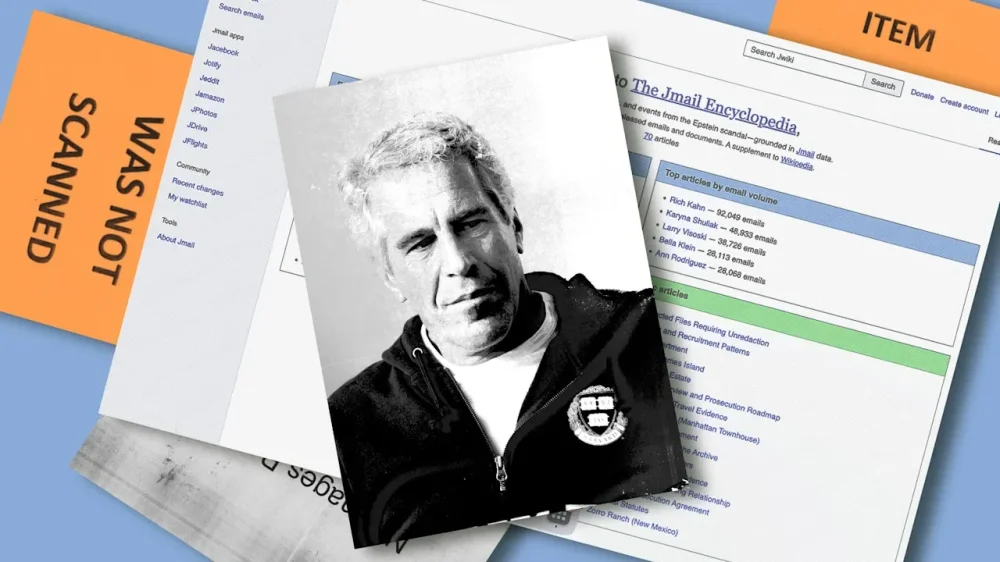
On February 2, wellness influencer Peter Attia stepped down from his role as chief science officer at the protein company David. On February 12, Goldman Sachs’ top lawyer Kathryn Ruemmler announced her resignation from the company. And on February 13, Hollywood agent Casey Wasserman revealed that he would sell his talent agency. All of these business execs worked in very different spheres, but their sudden departures can be traced back to the same point of origin: their names cropped up again and again in the Department of Justice’s (DOJ) latest trove of Epstein files, released in late January. Over the past few weeks, many prominent figures have stepped down from their high-profile positions amidst growing scrutiny over their relationships to the convicted sex offender Jeffrey Epstein. A new tool called “Jwiki” is dedicated to compiling all of that information in one place—on, as the name suggests, a webpage designed to mimic Wikipedia. It’s the latest interface from a team of developers who have spent the last several months converting the notoriously dense and convoluted Epstein files into easily searchable interfaces, condensing about 3.5 million pages of material spread across .txt files, zip files, and Google Drive folders into recognizable formats. With Jwiki, instead of sifting through all of the Epstein files for individual mentions of various public figures (a nearly impossible task for members of the public), users can simply search their name and receive a succinct summary of their involvement with Epstein. How two technologists build the “Jsuite” Jwiki comes courtesy of a team led by technologists Riley Walz and Luke Igel. Walz has previously built several viral websites, including San Francisco’s “Tech Jester” and a tool to track the city’s parking cops. In November 2025, Igel, who’s the CEO of an AI company called Kino, requested Walz’s help with a tool to demystify Epstein’s emails. They built the first iteration in just one night. That initial tool, called Jmail, allows users to wade through Epstein’s seemingly endless email correspondence in a Gmail-style interface. To build it, Walz and Igel used Google’s Gemini AI to run optical character recognition (OCR) on the individual emails and map it onto a simulation of Epstein’s actual inbox. Since then, Walz and Igel have relied heavily on vibe coding to expand the Jsuite into other apps like Jamazon; which tracks Epstein’s Amazon orders through receipts; Jflights, which converts his flight data into a searchable map; and Jphotos, which compiles the files’ thousands of photos into one massive folder. In an interview with the publication Arena on February 12, Walz and Igel said that the Jsuite is receiving an average of 10,000 visitors daily, with a peak of well over a million visitors in a single day. How to use Jwiki According to a post from the official Jmail account on X, Walz and Igel’s team built Jwiki using their existing Jmail data. Upon first opening the site, users are greeted with a homepage that includes sections for a daily featured article, top articles by email volume, and top articles by viewership. The wiki includes entries on people, places, and events referenced in the files. Users can either click on one of these displayed entries or look into their own areas of interest via a search bar. Clicking on Lesley Groff, Epstein’s longtime executive assistant, for example, leads to a Wikipedia-style summary that includes a breakdown of her background, correspondence with Epstein (a whopping 224,747 emails), personal connections, and visits to Epstein’s properties. It also includes a concluding section called “Criminal Exposure Assessment,” which, according to Jmail’s post on X, “cites U.S. codes that people may have been breaking as seen in the Jmail record.” “We believe that the US government has a responsibility to fully investigate the people implicated by these files,” the X post reads. Each Jwiki entry comes with the important caveat that its contents were generated by AI, meaning it’s fairly likely the resource is peppered with some inaccuracies and potential hallucinations. To address that concern, the Jmail team announced on X on February 18 that they’d opened the site for public contributions. Users can now sign in, propose edits to articles, and view the full revision history of every change. The edits are then reviewed and either approved or denied by a team of admins. Ultimately, the team says, its goal is “Wikipedia-style open editing, where the articles self-correct.” As the Epstein files slowly begin to bring powerful business leaders to account (albeit not in a court of law), Jwiki is one of the best tools available to the public so far to understand exactly what the rich and powerful were up to behind closed doors. View the full article
-
US president says Diego Garcia military base may be needed for strikes on IranView the full article
-
In terms of gathering customer feedback, choosing the right survey tool is crucial for effective results. Each tool offers unique features customized to different aspects of customer satisfaction. For instance, ProProfs Survey Maker is ideal for thorough surveys, whereas Qualaroo focuses on sentiment analysis. Grasping these differences can help you select the best option for your needs. So, which tool will you find most beneficial for enhancing your customer engagement strategy? Key Takeaways ProProfs Survey Maker offers customizable templates and a drag-and-drop editor for easy survey creation, enhancing user experience. Qualaroo utilizes nudge technology for unobtrusive feedback collection, focusing on customer sentiment analysis with AI-driven insights. Typeform engages respondents with a one-question-at-a-time format and supports multimedia questions for richer feedback collection. SurveyMonkey provides advanced analytics and real-time data visualization, helping identify trends and patterns in customer feedback. Qualtrics excels in customer experience management, integrating feedback for a holistic view and employing AI-driven predictive analytics for insights. ProProfs Survey Maker: Best for Comprehensive Customer Feedback Surveys With regard to gathering customer feedback, ProProfs Survey Maker stands out as a top choice for creating thorough surveys. This professional survey software offers over 100 customizable templates and a drag-and-drop editor, making it easy for you to design an extensive customer research survey. You can choose from various question types, such as multiple-choice, star ratings, and open-ended questions, ensuring diverse feedback collection. ProProfs likewise integrates seamlessly with popular tools like Freshdesk and Zendesk, enhancing its functionality. One of its best features is the detailed reporting capabilities, which include charts and graphs for easy visualization of your survey results. This makes analyzing customer satisfaction of McDonald’s or any other brand straightforward. As a free anonymous feedback tool, ProProfs is among the best survey tools available for conducting online customer satisfaction surveys, ensuring data security and reliability throughout the process. Qualaroo: Best for Customer Sentiment Analysis Gathering customer feedback isn’t just about collecting data; it’s furthermore about comprehending how customers feel about your brand. Qualaroo stands out as a leading tool for customer sentiment analysis, utilizing innovative nudge technology that unobtrusively prompts users for feedback during their website interactions. With AI-driven sentiment analysis, the platform helps you accurately interpret customer responses and emotions, making it invaluable for surveys market research. Qualaroo supports multi-language surveys, enhancing your reach across diverse markets. You can likewise customize survey designs to align with your brand aesthetics, ensuring a cohesive experience. Its real-time reporting features offer immediate insights, enabling quick decision-making and responsive strategies. Whether you’re exploring online survey jobs from home or looking for the best survey websites, Qualaroo serves as an influential resource. Furthermore, it includes free survey tools, making it accessible for businesses of all sizes. Typeform: Best for Engaging Customer Feedback Surveys In relation to collecting customer feedback, Typeform stands out by offering an engaging and interactive survey experience. This platform is among the best survey sites because of its unique one-question-at-a-time layout, which improves user experience and boosts response rates. With customizable templates, you can align your surveys with your branding, making them visually appealing and professional. Typeform also supports multimedia questions, allowing you to gather richer insights through images, videos, and audio clips. This feature can greatly improve the quality of feedback you receive. Furthermore, real-time response tracking means you can analyze feedback as it comes in, facilitating timely decision-making. With pricing starting at $35 per month, Typeform is a viable option for businesses seeking to improve their customer feedback collection. As a top-rated survey company, it’s a strong choice among good survey websites and product survey tools, especially for online surveys in Canada. SurveyMonkey: Best for Survey Analysis With regard to analyzing survey data, SurveyMonkey is a top choice for businesses looking to extract meaningful insights. It offers advanced analytics and reporting tools that help you derive actionable insights from your survey for business efforts. With real-time data visualization through charts and dashboards, interpreting results becomes straightforward. Its AI-powered insights feature identifies trends and patterns, enhancing your decision-making process. Here’s a quick comparison of SurveyMonkey’s features: Feature Description Analytics Tools Advanced reporting and data analysis Customization Options Wide range of templates and question types Starting at $25 per user per month, it’s one of the best-rated survey sites. Whether you’re conducting a company research survey or looking for an anonymous survey app, SurveyMonkey is among the best survey apps available, making it easy to take survey responses and gather additional survey data effectively. Qualtrics: Best for Customer Experience Management Though many platforms offer survey capabilities, Qualtrics stands out as the best tool for customer experience management due to its thorough approach to gathering feedback across various touchpoints. This platform excels in feedback integration, providing a holistic view of customer sentiment. With advanced analytics features, you can identify trends, pain points, and opportunities for improvement, which drive actionable insights. Furthermore, Qualtrics employs AI-driven predictive analytics to forecast customer satisfaction and loyalty, enabling you to take proactive measures to improve the customer experience. The extensive customization options allow for in-depth research, ensuring that you gather the most relevant data for your needs. In addition, customized solutions are available, accommodating organizations of all sizes with flexible pricing that fits your budget. Frequently Asked Questions What Are the Three Online Survey Tools? When you’re looking for online survey tools, consider SurveyMonkey, Qualtrics, and Typeform. SurveyMonkey offers various templates and advanced analytics, whereas Qualtrics focuses on customer experience management with AI-driven insights. Typeform stands out with its engaging, interactive design that presents one question at a time. Each tool caters to different needs and budgets, providing options from free to premium plans, ensuring you can find a solution that fits your survey requirements effectively. What Are the 3 C’s of Customer Satisfaction? The 3 C’s of customer satisfaction are Consistency, Communication, and Customer Experience. Consistency means providing reliable service or product quality, which builds trust. Effective Communication involves swiftly addressing customer concerns and offering clear information. Customer Experience refers to the overall path a customer takes with a brand, influencing their satisfaction and likelihood to return. What Is the Best Online Survey Tool? When choosing the best online survey tool, consider your specific needs. SurveyMonkey is versatile and user-friendly, starting at $25 per user monthly. Qualtrics offers advanced analytics but requires custom pricing. If you want engaging designs, Typeform starts at $35 per month. For a free option, Google Forms allows easy data collection, though it’s less customizable. Zoho Survey provides various question types and real-time reporting, with plans starting at $20, making it a solid choice. What Are CSAT Tools? CSAT tools measure how well your products or services meet customer expectations through structured surveys. They typically use a rating scale, such as 1-5, to assess satisfaction levels. You can calculate CSAT scores by dividing the number of satisfied customers by total respondents and multiplying by 100. Many tools offer analytics to identify trends and integrate with CRM systems, providing a thorough view of customer interactions and feedback. Conclusion In summary, selecting the right tool for online customer satisfaction surveys is crucial for gathering valuable insights. ProProfs Survey Maker, Qualaroo, Typeform, SurveyMonkey, and Qualtrics each offer unique features customized to different needs, from thorough feedback to advanced analytics. By leveraging these tools, you can effectively understand customer sentiment, improve engagement, and make informed decisions to enhance your business services. Prioritizing the right platform guarantees you maximize the effectiveness of your customer feedback strategies. Image via Google Gemini This article, "5 Essential Tools for Online Customer Satisfaction Surveys" was first published on Small Business Trends View the full article
-
In terms of gathering customer feedback, choosing the right survey tool is crucial for effective results. Each tool offers unique features customized to different aspects of customer satisfaction. For instance, ProProfs Survey Maker is ideal for thorough surveys, whereas Qualaroo focuses on sentiment analysis. Grasping these differences can help you select the best option for your needs. So, which tool will you find most beneficial for enhancing your customer engagement strategy? Key Takeaways ProProfs Survey Maker offers customizable templates and a drag-and-drop editor for easy survey creation, enhancing user experience. Qualaroo utilizes nudge technology for unobtrusive feedback collection, focusing on customer sentiment analysis with AI-driven insights. Typeform engages respondents with a one-question-at-a-time format and supports multimedia questions for richer feedback collection. SurveyMonkey provides advanced analytics and real-time data visualization, helping identify trends and patterns in customer feedback. Qualtrics excels in customer experience management, integrating feedback for a holistic view and employing AI-driven predictive analytics for insights. ProProfs Survey Maker: Best for Comprehensive Customer Feedback Surveys With regard to gathering customer feedback, ProProfs Survey Maker stands out as a top choice for creating thorough surveys. This professional survey software offers over 100 customizable templates and a drag-and-drop editor, making it easy for you to design an extensive customer research survey. You can choose from various question types, such as multiple-choice, star ratings, and open-ended questions, ensuring diverse feedback collection. ProProfs likewise integrates seamlessly with popular tools like Freshdesk and Zendesk, enhancing its functionality. One of its best features is the detailed reporting capabilities, which include charts and graphs for easy visualization of your survey results. This makes analyzing customer satisfaction of McDonald’s or any other brand straightforward. As a free anonymous feedback tool, ProProfs is among the best survey tools available for conducting online customer satisfaction surveys, ensuring data security and reliability throughout the process. Qualaroo: Best for Customer Sentiment Analysis Gathering customer feedback isn’t just about collecting data; it’s furthermore about comprehending how customers feel about your brand. Qualaroo stands out as a leading tool for customer sentiment analysis, utilizing innovative nudge technology that unobtrusively prompts users for feedback during their website interactions. With AI-driven sentiment analysis, the platform helps you accurately interpret customer responses and emotions, making it invaluable for surveys market research. Qualaroo supports multi-language surveys, enhancing your reach across diverse markets. You can likewise customize survey designs to align with your brand aesthetics, ensuring a cohesive experience. Its real-time reporting features offer immediate insights, enabling quick decision-making and responsive strategies. Whether you’re exploring online survey jobs from home or looking for the best survey websites, Qualaroo serves as an influential resource. Furthermore, it includes free survey tools, making it accessible for businesses of all sizes. Typeform: Best for Engaging Customer Feedback Surveys In relation to collecting customer feedback, Typeform stands out by offering an engaging and interactive survey experience. This platform is among the best survey sites because of its unique one-question-at-a-time layout, which improves user experience and boosts response rates. With customizable templates, you can align your surveys with your branding, making them visually appealing and professional. Typeform also supports multimedia questions, allowing you to gather richer insights through images, videos, and audio clips. This feature can greatly improve the quality of feedback you receive. Furthermore, real-time response tracking means you can analyze feedback as it comes in, facilitating timely decision-making. With pricing starting at $35 per month, Typeform is a viable option for businesses seeking to improve their customer feedback collection. As a top-rated survey company, it’s a strong choice among good survey websites and product survey tools, especially for online surveys in Canada. SurveyMonkey: Best for Survey Analysis With regard to analyzing survey data, SurveyMonkey is a top choice for businesses looking to extract meaningful insights. It offers advanced analytics and reporting tools that help you derive actionable insights from your survey for business efforts. With real-time data visualization through charts and dashboards, interpreting results becomes straightforward. Its AI-powered insights feature identifies trends and patterns, enhancing your decision-making process. Here’s a quick comparison of SurveyMonkey’s features: Feature Description Analytics Tools Advanced reporting and data analysis Customization Options Wide range of templates and question types Starting at $25 per user per month, it’s one of the best-rated survey sites. Whether you’re conducting a company research survey or looking for an anonymous survey app, SurveyMonkey is among the best survey apps available, making it easy to take survey responses and gather additional survey data effectively. Qualtrics: Best for Customer Experience Management Though many platforms offer survey capabilities, Qualtrics stands out as the best tool for customer experience management due to its thorough approach to gathering feedback across various touchpoints. This platform excels in feedback integration, providing a holistic view of customer sentiment. With advanced analytics features, you can identify trends, pain points, and opportunities for improvement, which drive actionable insights. Furthermore, Qualtrics employs AI-driven predictive analytics to forecast customer satisfaction and loyalty, enabling you to take proactive measures to improve the customer experience. The extensive customization options allow for in-depth research, ensuring that you gather the most relevant data for your needs. In addition, customized solutions are available, accommodating organizations of all sizes with flexible pricing that fits your budget. Frequently Asked Questions What Are the Three Online Survey Tools? When you’re looking for online survey tools, consider SurveyMonkey, Qualtrics, and Typeform. SurveyMonkey offers various templates and advanced analytics, whereas Qualtrics focuses on customer experience management with AI-driven insights. Typeform stands out with its engaging, interactive design that presents one question at a time. Each tool caters to different needs and budgets, providing options from free to premium plans, ensuring you can find a solution that fits your survey requirements effectively. What Are the 3 C’s of Customer Satisfaction? The 3 C’s of customer satisfaction are Consistency, Communication, and Customer Experience. Consistency means providing reliable service or product quality, which builds trust. Effective Communication involves swiftly addressing customer concerns and offering clear information. Customer Experience refers to the overall path a customer takes with a brand, influencing their satisfaction and likelihood to return. What Is the Best Online Survey Tool? When choosing the best online survey tool, consider your specific needs. SurveyMonkey is versatile and user-friendly, starting at $25 per user monthly. Qualtrics offers advanced analytics but requires custom pricing. If you want engaging designs, Typeform starts at $35 per month. For a free option, Google Forms allows easy data collection, though it’s less customizable. Zoho Survey provides various question types and real-time reporting, with plans starting at $20, making it a solid choice. What Are CSAT Tools? CSAT tools measure how well your products or services meet customer expectations through structured surveys. They typically use a rating scale, such as 1-5, to assess satisfaction levels. You can calculate CSAT scores by dividing the number of satisfied customers by total respondents and multiplying by 100. Many tools offer analytics to identify trends and integrate with CRM systems, providing a thorough view of customer interactions and feedback. Conclusion In summary, selecting the right tool for online customer satisfaction surveys is crucial for gathering valuable insights. ProProfs Survey Maker, Qualaroo, Typeform, SurveyMonkey, and Qualtrics each offer unique features customized to different needs, from thorough feedback to advanced analytics. By leveraging these tools, you can effectively understand customer sentiment, improve engagement, and make informed decisions to enhance your business services. Prioritizing the right platform guarantees you maximize the effectiveness of your customer feedback strategies. Image via Google Gemini This article, "5 Essential Tools for Online Customer Satisfaction Surveys" was first published on Small Business Trends View the full article
-
We may earn a commission from links on this page. As anyone who’s ever had to schlep their dirty linens to a laundromat knows, having in-house laundry is a godsend. But the convenience of doing laundry whenever you feel like it starts to feel less convenient if you're lacking in the necessary storage, shelving, or work space. If a total laundry room renovation isn't in the budget, though, don't fret: You can upgrade your home's laundry hub with just a few relatively inexpensive additions. Combined with some fresh paint and some other low-cost improvements, you can have a more beautiful and functional laundry area on a small budget. Use pedestal storage underneath your washer and dryerIf you’ve got a separate washer and dryer setup in your laundry area, picking up some appliance pedestals with built-in drawers is an easy way to add some useful storage. You’ll need to measure vertically in your laundry space to make sure you’ve got the required height, and you’ll probably need some help moving and lifting the appliances into place. But once that’s done, you’ll not only have a place to store all those unsightly bottles of detergent and other stuff, it will be easier to load and unload your clothes because you won’t have to bend down so far. Add shelves behind the laundry room doorIf your laundry area is its own room with a door, you can maximize your storage space by adding a slim shelving unit behind the door. It will be just deep enough to hold all your laundry materials, cleaning up the area without taking up any valuable floor space. Install shelves over your washer and dryerIf your laundry area lacks storage, you’ve got a few options. One of the easiest things you can do is to add a countertop over your washer and dryer set. This could be as DIY as cutting a slab of wood or using a leftover remnant from a kitchen remodel, or you could purchase a topper with edge rails like this one. This instantly transforms the top of your appliances into a usable flat surface that won’t let things slide off as soon as you turn your back. If you have more vertical space and need more options, a tiered over-the-appliance shelf system is a great option, giving you multiple shelves plus hanging rods to get everything off the floor and organized. Ulif U13 Medium Over Washer and Dryer Storage Shelves, 6 Tiers Laundry Room Standing Shelf with 2 Hanger Rods, Space Saver Clothes Drying Rack, 57.8" W x 22" D x 77.4" H, Black $139.99 at Amazon Shop Now Shop Now $139.99 at Amazon Add a space-saving ironing centerEven if you only iron your clothes once in a while, having a real ironing board makes a huge difference, and having that ironing board conveniently located near your laundry is ideal. If you have nothing but space, you can just have a board set up, of course, but if you don’t have a ton of space, or you’re just looking to keep the place tidy, you could opt for an over-the-door ironing board or a wall-mounted version like this. The board folds up when not in use, but is always easily accessible. If you want a fancy version, you could install the Iron-A-Way Ironing Center, which is pricey and probably requires professional installation, as it’s designed to recess into the wall and connect to the home’s power. Try a portable sink in your laundry roomHaving a utility sink in the laundry area is great—it lets you rinse out clothes, clean up detergent spills, and wet-scrub stains right there. If your laundry area isn’t plumbed, you might not relish the idea of hiring a plumber to run water and drain lines for a sink—but you don’t have to. This portable sink can give you that basic functionality without any wiring or plumbing. Just fill it with water, charge it using a USB-C cable, and place it in your laundry area to use whenever you need it. Install a clothing drying rackIt’s a simple addition, but having a place to hang clothes to dry right there in the laundry area is a great convenience. You can buy a freestanding drying rack, of course, but as an upgrade, consider a wall-mounted option instead. This one from mDesign looks great and folds up when not in use. mDesign Steel Wall Mount Accordion Expandable Retractable Clothes Air Drying Rack - 8 Bars for Hanging Garments - Mounted Organizer for Laundry/Utility Room, Bathroom, Garage, Bardo Collection, Bronze $40.99 at Amazon Shop Now Shop Now $40.99 at Amazon Pick up some laundry detergent dispensersDispensing liquid detergent can get messy, and when you’re in a rush, those measurements can get sloppy, too, leaving you with insufficient detergent for the load or wasting detergent, running up your costs. This rechargeable electronic detergent dispenser fits on top of most plastic detergent bottles and dispenses precise amounts of detergent with the touch of a button. If that’s a bit too fancy for your laundry area, you could pick up a cheap dispenser cup holder like this to make it a little easier and neater to fill your detergent cups. Add a freestanding island to your laundry roomIf you need some folding and storage space in your laundry area but there’s no vertical or wall options, take some inspiration from your kitchen and bring in a freestanding island or laundry cart. This one from Kitsorack is a clothes hamper with a shelf, so you can stuff your dirty clothes in there and have your supplies stored on top, but any mobile cart or island will make your laundry area more usable. View the full article
-
Minutes from January meeting show US policymakers saw risk that price growth will remain above 2%View the full article
-
Residential lending remains steady in select cities as resilient housing markets, strong employment, limited supply, and migration trends shape borrower demand. View the full article

-
Emerald Fennell’s Wuthering Heights is a love-it-or-hate-it kind of film—and for the most part, critics are falling in the “hate it” camp. The new adaptation of Emily Brontë’s classic novel is catching flak as critics say it oversimplifies a complex story of generational trauma and racial tension into a straightforward romance laced with Fennell’s signature shock value (she’s also the director behind Promising Young Woman and Saltburn—infamous bathtub scene and all). But a recent comment from star and producer Margot Robbie takes criticism out of the equation, instead saying that as an artist, critics’ opinions never cross her mind. At a recent panel for Vogue Australia, Robbie—given her dual role as producer and leading actress—was asked how much she thinks about her audience while making a movie, as opposed to immersing herself in the story. “I consider audience always. I’ve never, ever been on set and thought, ‘What are the critics going to think of this?’” Robbie replied. “I’m like, ‘What’s an audience going to feel right now? What’s their emotional response going to be?’ “I just believe you should make movies for the people who are going to buy tickets to see the movies,” Robbie added. “It’s kind of as simple as that.” Margot RobbieEmerald Fennell Robbie has produced all three of Fennell’s films, but Wuthering Heights is the first she appears in. “I love working with Emerald [Fennell] because she always prioritizes an emotional experience over a heady idea,” Robbie said. “She’ll let a cool idea fall by the wayside to offer the option that is going to be most exciting for an audience.” Robbie’s take was immediately divisive online. Some fellow filmmakers, including Cobra Kai writer and director Jon Hurwitz, echoed Robbie’s sentiment. “This is the way. Audience first. Always,” Hurwitz wrote in a post on X. This is the way. Audience first. Always. https://t.co/oX8hRlVH7M — Jon Hurwitz (@jonhurwitz) February 18, 2026 But others took issue with Robbie’s reading, noting that it frames films more as commercial products than as works of art—not to mention that critics are audience members themselves. Critic and editor-in-chief of AwardsWatch Erik Anderson pointed out that “actors and directors never say this when their films get good reviews” in his own response to Robbie’s statement. Why do actors and directors never say this when their films get good reviews https://t.co/PLl1LhFHhl — Erik Anderson (@AwardsWatchErik) February 18, 2026 On Rotten Tomatoes, Wuthering Heights is currently labeled “rotten,” with a critic score of 59%. In his review, The New Yorker’s Justin Chang deemed the adaptation “extravagantly superficial.” For The Guardian, Adrian Horton dubbed it a “big movie with a very small mind.” And in a take that went viral, Vulture’s Allison Willmore called the film “Fennell’s dumbest movie,” while also praising it as “her best to date.” That appeal to the lowest common denominator is working for Wuthering Heights, at least on a commercial level. The film made $83 million globally over the Presidents’ Day holiday weekend, debuting as the number-one movie in North America. Robbie’s audience-first philosophy clearly gets butts in seats—but if every creative ditches their “heady ideas” in favor of broad appeal, the future of film as an art form doesn’t look quite as promising. View the full article