All Activity
- Past hour
-
 On Jan. 26, use of the new Uniform Residential Appraisal Report shifts from limited production to the optional phase, giving lenders 10 months to get ready. View the full article
-
Apple will turn its Siri assistant into a full-fledged chatbot by next year. The company is working on a personal AI device to compete with the one OpenAI is building with Jony Ive. And Apple is putting control over its AI strategy into new hands within the company. So say a flurry of new reports, all advancing the larger story that Apple is doing what it can to get itself back in the AI race. And it’s doing it in a way that may allow it, in classic Apple fashion, to lead from behind. That is, it may hang back and benefit from the hard lessons learned by others marketing a new technology, then arrive fashionably late with a more polished product. Apple and Google announced on January 12 that the (notoriously slow) Siri assistant will be powered, at least in part, by Gemini models developed by Google’s DeepMind division. Apple has in the past voiced concern about the privacy implications of sending user data to AI models outside its own infrastructure. Apple has said it plans to run its AI models either within a secure Apple cloud, or, even better, on chips inside Apple devices. Bringing in Gemini But that may be changing. Bloomberg’s Mark Gurman reports that Apple is now in talks with Google to run the Gemini models powering Siri and Apple Intelligence features within the Google Cloud. Previous reports said Apple could be paying Google as much as $1 billion per year for access to the Gemini models. The “new” Siri is expected to show up with iOS 26.4 in March or April, the report states. The assistant will reportedly gain a better contextual understanding of the user by accessing some types of personal data stored on the user’s device. It may also have an awareness of what the user is viewing or working on on their screen, as well as better internet search. These are the same “Apple Intelligence” features the company promised to deliver in 2024, but later postponed, explaining that it wasn’t happy with the performance and reliability of the AI. Then, in 2027, another upgrade will make Siri feel more like a real chatbot, meaning that users will be able to have extended back-and-forths with the assistant (including via their voice), as is common with OpenAI’s ChatGPT and Google’s Gemini chatbots. Apple also plans to integrate the smarter Siri deeper into the operating system, which could make it a more functional intermediary between the user and the capabilities of the device. The Information reports that Apple is also in the early stages of developing a small personal AI device–about the size of an AirTag–that can clip to a lapel and contains two cameras, three microphones, a little speaker, a battery, and inductive charging tech. (A patent search yielded no Apple designs fitting this description.) OpenAI attracted a lot of attention last year after announcing that it was developing a personal AI device in collaboration with Apple’s former design guru Jony Ive. It’s worth noting, however, that other companies have tried selling such a product, notably Humane (founded by some ex-Applers), and none have found much success. A new AI leader inside Apple The Google Gemini deal and the AI device reports come in the wake of a pretty major power shift at Apple regarding the company’s AI strategy. Apple struggled for years to build its own AI models under the leadership of ex-Google AI chief John Giannandrea (while balancing its historical concern for data privacy), and failed to deliver models that performed like those from OpenAI, Anthropic, and Google. Now Apple has reportedly put its consumer AI problems in the lap of software chief Craig Fedherighi, who is known for his tall hair and utilitarian (and somewhat skeptical) views on the new technology. Fedherighi has viewed AI as an enabling technology that should work behind the scenes to make phone features work better. He’s also expressed concern over the predictability and reliability of the technology. Fedherighi is taking the reins at a pivotal moment. Apple is in a tough spot with AI. It fears the appearance of falling further behind OpenAI (and the punishment it might take from Wall Street), but it’s also traditionally hesitant to rush into an emerging technology that isn’t yet totally proven and reliable (AI chatbots still make mistakes and consumers don’t fully trust them). Apple is most comfortable taking a mature technology (like cell phones) and reinventing it for the mainstream with simplicity, utility, and artful design. So partnering with Google, talking about plans for new Gemini-powered features in the future, and preparing a personal AI device might be just the right moves for Apple right now. The deal with Google buys Apple time while its own researchers find ways to balance the twin needs of data privacy and high-performing models. (It might also shift some of the responsibility onto Google if the new Siri doesn’t work as promised.) Being late has worked out before There’s precedent for this. Apple relied on Intel processors in its computers while it built up the expertise and experience to make its own. Apple used Intel processors in its Mac computers for 15 years, before switching its lineup to Apple-designed chips. But planning the features of future Macs was difficult because it all depended on Intel’s roadmap for releasing new chips. Apple became acutely aware of the speed and efficiency gains to be had from designing custom chips that could be deeply integrated with its Mac operating system. Those improvements were first realised in the company’s first M-series Macs in late 2020. Apple also relied entirely on Qualcomm cellular modem chips for the iPhone before it was able to build its own. The first Apple-designed modem, the C1, shipped inside the iPhone 16e in 2025. While Qualcomm says it will continue to supply modems for iPhones in 2026, Apple’s intent is to build its own modem into the integrated silicon “system-on-a-chip” processor that powers iPhones, which could yield faster and more reliable cellular connections. However, in other cases, like internet search, Apple has been content to rely on Google as a partner. Who knows, Apple may believe generative AI will become a commodity in the future (models are indeed getting more efficient and cheaper to access), something it would rather buy than build. The news of an Apple AI device doesn’t hurt either. It shows an Apple that still has the appetite to mold emergent technologies into its own image and bring them to the mainstream, even without Ives. Apple’s relationship with generative AI is seen as rocky and mainly unsuccessful so far. That narrative may have seeped through the shell of Apple’s spaceship in Cupertino and caused a rush to ship a technology that wasn’t quite baked. The hype around generative AI is so thick now that we’re quick to judge any technology company that isn’t betting the farm on it. But it’s part of Apple’s culture to take the long view on new technology waves (notice that it didn’t change the company name when the “metaverse” was having its moment). Its hesitation, intentional or not, may give it more time to judge the real scale of the AI revolution, and more time to understand what it all should mean to Apple and its customers. View the full article
-
Federal immigration agents stationed in Minneapolis need not read polls or confront protesters to know how the city feels about their presence. Walking around just about any neighborhood in the area lately should provide a glimpse into the vast sprawl of graffiti and homemade yard signs expressing residents’ bone-deep aversion to ICE. One poster in particular, though, has been increasingly decorating the storefront windows of local restaurants, coffee shops, yarn stores, pubs, and bowling alleys, urging in no uncertain terms: “ICE out of Minneapolis.” This sign seems to have struck a chord within the community, not just because of its blunt message but the form it’s riffing on: a familiar red municipal sign highlighting snow emergency routes, already strewn throughout streets in the Twin Cities. While the original evokes the grill of a snowplow truck clearing out roads in the wake of a blizzard, the anti-ICE version includes helmets, rifles and handcuffs in the slushy waste. The new sign’s growing popularity suggests it’s tapping into residents’ regional identity as much as it is their love of creative protest art. Reimagining a local icon Burlesque of North America, a local design studio specializing in graphic arts and screenprinting, created the sign as a response to ICE’s incursion into Minneapolis. Owners Mike Davis and Wes Winship had previously created an anti-ICE enamel pin back in November when they first got the eerie sense something like Operation Metro Surge lay on the horizon. After their friends who run the nearby restaurant Hola Arepa were targeted by ICE in early December, the Burlesque team began playing with ideas for a protest poster. It didn’t take long for them to arrive at a concept rooted in the transportation department’s snow emergency sign. “We’ve been figuring out how to handle literal ice here for centuries,” Winship says. “And we’ve got this sign that’s pre-built, alerting people: There’s an emergency and we need to remove frozen precipitation from the streets.” It was clean, crisp iconography, on which to project a message of resistance. On top of that, it was instantly recognizable. “For the locals, everyone knows the sign. Everyone’s been living with it and responding to it,” says Davis. “But even people from out of town who don’t know the reference, they can still tell what it means and connect with it.” After working on a mockup, the two paused on the project as the holidays kicked into high gear. It remained set aside until January 7, the day an ICE agent shot and killed Renee Nicole Good. That drastic escalation spurred the pair back into action on their poster. By the following night, Davis and Winship had completed all the design elements. The next day, they’d screenprinted the first of what would become over 5,000 copies to distribute around Minneapolis. They also offered free PDFs on their website, an open-source touch allowing out-of-towners to print signs and shirts of their own. The power of posters Although projects like concert posters are Burlesque’s bread and butter, the team has been rooted in socially conscious art for ages. Amid the Syrian refugee crisis, for instance, they created a Refugees Welcome image that went viral in 2015 when the Walker Art Center featured it and several news outlets ultimately wrote about it. After George Floyd was killed in 2020, Davis and Winship printed out several artists’ protest graphics for free and handed out copies from their delivery truck at the intersection quickly dubbed George Floyd Square. It’s in that very area where the city’s love of protest art is most evident—made manifest by the iconic raised fist of steel in Floyd’s memory, designed by artist Jerome Powell-Karis. The Burlesque team have now seen, once again, how much that love still radiates throughout the city during moments of upheaval. As they handed out their anti-ICE posters, restaurant and shop owners lit up at the sight of it. Davis brought 600 copies to a protest in Powderhorn Park the weekend after Good was killed, and his supply was picked clean within 15 minutes. When the team later asked for donations to cover their ink and paper costs, they hit their goal in three days. Meanwhile, the response on Instagram was unlike anything the pair had ever experienced. “We’re still being contacted almost hourly by someone who either wants one or wants an entire stack to give away at their bike shop or trivia night,” Davis says. The signs seem especially resonant at restaurants, where some owners are now opting to keep their doors locked during daytime hours to prevent ICE from entering. Local service workers seem haunted by recent reports of ICE agents eating at a restaurant in a town outside of Minneapolis, only to detain several employees afterward. The anti-ICE signs add some extra oomph to the locked doors, and let prospective diners know where the establishment stands. (Many restaurants without this particular sign have homemade anti-ICE signage of their own.) Although the snow emergency poster has started gaining a lot of traction, it feels perfectly at home among all the other protest art on display throughout the city—whether it’s the signs featuring Minnesota state bird, the loon, melting ice with laser eyes, an image with roots in local lore; all the inventive DIY anti-ICE entries at last weekend’s Art Sled Rally; or the ubiquitous stickers depicting melted ice. The Twin Cities community has clearly come together around its resistance to the current siege and Burlesque is happy to have helped play some small part in it. “I’m not going to be out there with a gas mask at the Federal Building, catching rubber bullets,” Davis says. “So, it feels good that I have something to contribute to the cause. Like, I’m a graphic designer. This is what I can do.” View the full article

-
A lot of people chase bigger paychecks and fancier titles, convinced that their next role will finally make them happy. I know I did. That’s why I spent years stuck in a job that, on paper, many would consider glamorous. But deep down inside, I knew it was toxic. I took on more and more responsibilities, kept a chaotic schedule, and bent over backwards to please my demanding boss. All because I thought that’s what it took to be successful. Then I would get home and push myself more, scrolling job boards, tweaking my résumé, and submitting applications. I was working around the clock, and rest wasn’t an option. All because I was convinced that a new role would change everything. But my job was never the real problem. And, chances are, it isn’t yours either. Burnout is the real culprit The real issue? You work too hard, stress too much, and rest too little. Of course you’re struggling. As a certified health coach, I’ve learned that most people misunderstand what burnout actually is. They think they’re just tired and in need of a good sleep or a long weekend. But really, it’s chronic stress and exhaustion, and that doesn’t magically disappear after a few days off. Take Headway’s recent survey, 24% of people returned from the festive break feeling like they hadn’t rested at all. In the early stages, burnout causes low energy and constant fatigue. Then brain fog creeps in. Your concentration drops, you become forgetful, and your brain slows. So you work harder to compensate, yet get less done, and your workload piles up. You push through anyway, because you don’t want to fail, but that only makes things worse. And that little voice in the back of your head telling you to quit? That’s another clear sign. Burnout breeds cynicism, which fuels disillusionment and distrust towards your employer. When everything is awful, even your dream role can start to feel unbearable. But chances are, the grass won’t be any greener if you don’t first change the way you work. Why quitting your job won’t fix everything Headway’s recent survey found that 24% of people are looking for a new job or considering an entirely different career path. But handing in your resignation isn’t always the fix that you hope it to be. Starting a new role is a major life change, and 87% experience the “new job jitters.” You want to impress, and you’re terrified of failing, so you work harder than ever. You tell yourself you’ll rest once you’ve proven yourself. Then the thrill of quitting wears off, and you somehow feel just as drained (if you’re lucky). Feeling worse off, 30% end up wishing they had never left their old role. The thing is, the job was never the issue. As human beings, we’re just not meant to juggle everything and never switch off. Many of us try to do so anyway, and that is a recipe for burnout. If you’re thinking of jumping roles or changing careers, try going easier on yourself first. Give yourself time to recover, and you might just realize that your workplace isn’t toxic. You do, however, probably need to change how you’re working. More effort isn’t the answer And that doesn’t mean putting in more effort. What you really need is capacity, and you can’t magically increase your brain’s bandwidth by demanding more from yourself. That just drains your capacity further. This means working smarter with what you have. Start by setting boundaries and building healthier working habits. Log off at 5 p.m., take your whole lunch break, and stop trying to prove your worth through overworking. Saying “yes” to everything and taking on tasks that aren’t your responsibility doesn’t help anyone. It only wastes energy, and as a result, you don’t have as much energy for the work that you really need to do (and makes the most impact). Prioritizing yourself and setting boundaries doesn’t mean you care any less. It means you understand that you can’t work well unless you feel well. Research shows that burnout causes the hippocampus to shrink and damages the brain’s neuroplasticity. It literally reduces our mental capacity, harming everything from memory to focus, and impulse control to executive function. But once you stop overworking, you should feel your brain clear, and your mental capacity should grow. Don’t leave burnout in charge of your career Burnout has a way of convincing us that everything is awful and that only drastic measures, whether moving to Bali or changing careers, will help. But that’s just your stress response. After fighting for so long, it’s easy to see why flight feels like the only option. But you’ve been fighting the wrong thing. To do it, it’s important to address the cause and give your mind time to recover. Only then can you decide with any real clarity whether a career change will actually solve your problems. View the full article

-
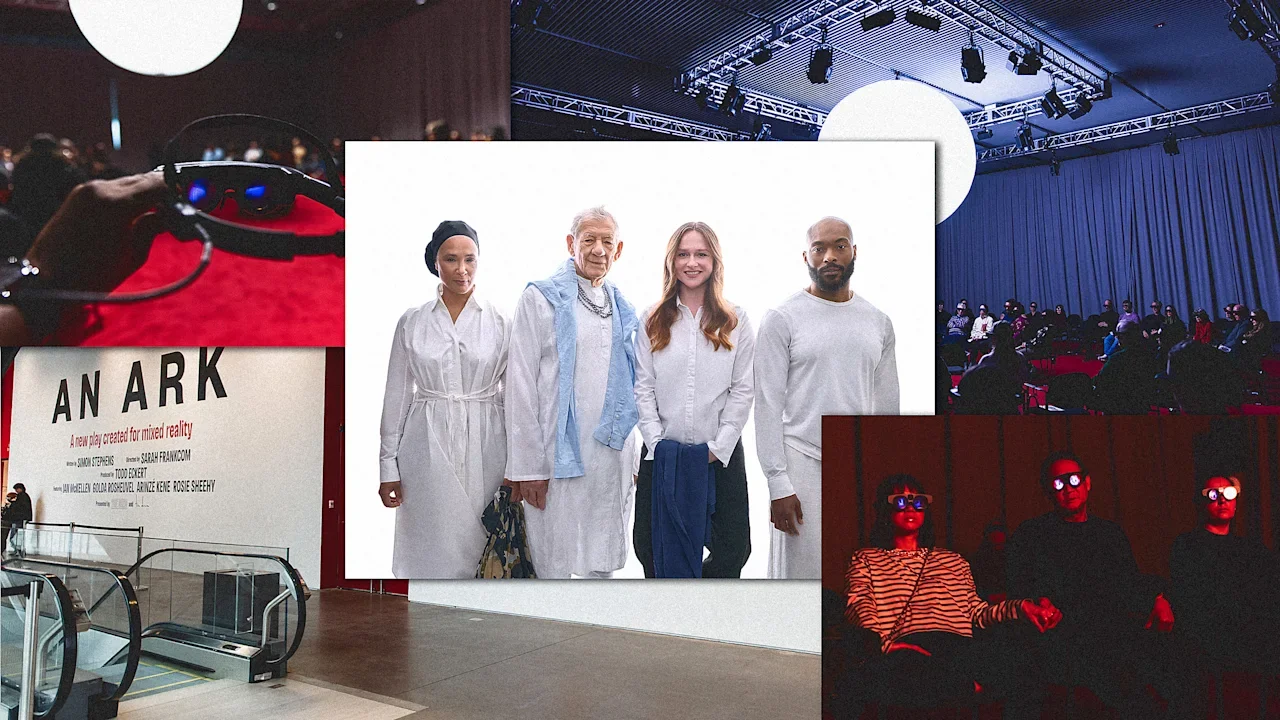
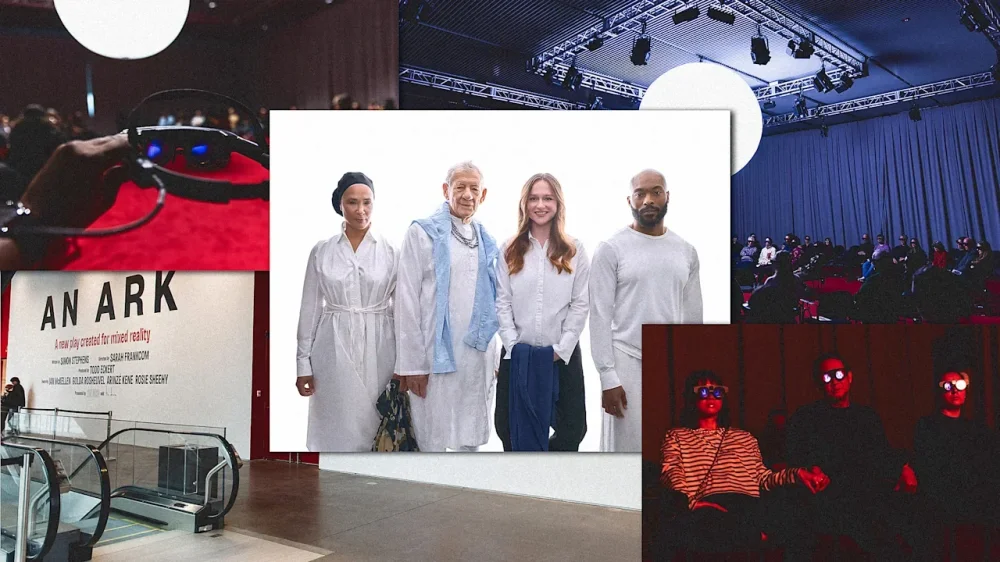
When a stranger smiles at you, you smile back. That is why, when Sir Ian McKellen (The Lord of the Rings, X-Men, Amadeus) walked on the stage in front of me, looked me straight in the eye, and smiled at me, I smiled back. It was the polite thing to do. It was also completely unnecessary, because McKellen was not actually on the stage in front of me. He smiled at me through a pair of special glasses. The reason for this unusual social interaction is called An Ark, which bills itself as the first play to be created in mixed-reality. Using Magic Leap glasses, the play blends the physical world with the digital realm, creating an unusually intimate theater experience. Opening January 21 at The Shed—the arts center in Manhattan’s Hudson Yards—An Ark tells a story of humanity through the perspective of four unnamed characters speaking to you from the afterlife. The characters—played by McKellen, Golda Rosheuvel of Bridgerton fame, Rosie Sheehy (a Welsh stage and screen actor, known for her work with the Royal Shakespeare Company,) and Arinzé Kene (a British actor and playwright who originated the lead role of Bob Marley in the West End musical Get Up, Stand Up!)—appear to sit in a semi-circle that you, a member of the audience, are part of. From the second they appear on stage, their eyes peer straight into your soul as they talk directly to you for the length of the play, which lasts 47 minutes. The illusion, which some might find disconcerting, is that each member of the audience is the center of the attention. In a purely physical world, this conceit would be impossible to realize unless the play were performed privately, one audience member at a time. But with the help of technology, it was convincing enough to elicit an unconscious smile from me—until my brain caught up to the trickery and the magic spell broke. The making of a mixed-reality play An Ark was written by British playwright Simon Stephens, who is perhaps most famous for his stage adaptation of The Curious Incident of the Dog in the Night-Time, and directed by Sarah Frankcom, a British director known for her work at the Royal Exchange and National Theatre. The mastermind is Todd Eckert, who both conceived of and produced the play. Eckert built a decades-long career in music journalism, film, and dance before embracing technology for its ability to liberate storytelling. In 2012, he joined Magic Leap as director of content development, where he helped pioneer mixed-reality hardware. Four years later, in 2016, he founded a mixed-reality studio called Tin Drum, bought 400 Magic Leap headsets, which he owns to this day, and set out to change what theater could be. First came The Life, a mixed-reality project with his long-time partner, the artist Marina Abramović. Then came Kagami, an ethereal, mixed-reality concert by the Japanese composer and pianist Ryuichi Sakamoto, who collaborated with Eckert to create the show before he passed away. Kagami, which first premiered at The Shed in 2023, and has since toured globally, was so dazzling that I wept when I attended a performance in Manhattan. Eckert is immensely proud of the work, but he says An Ark was even more ambitious. “Nobody had ever captured four people simultaneously,” he says of the underlying technology. The team gathered in London, where they rehearsed An Ark like you would rehearse a traditional play, from beginning to end, with no interruption. Then, they flew to Grenoble, in southeastern France, where 4DViews, the company that designed the volumetric video system that can capture all four actors in full 3D, is headquartered. In Grenoble, they filmed the play under the scrutiny of 48 cameras, including a cluster of two cameras that stood in for the eventual audience members. “We ultimately got three full takes,” Eckert recalls of the shoot, which took place in an entirely green room he’s previously likened to “Kermit land.” After three months of data processing, the play was ready for opening night. What’s next for theater? Theater is becoming an increasingly endangered art form. Since the pandemic, audiences have been slower to return to in-person performances, production costs have climbed, and public funding has shrunk. Across the country, regional theaters have been cutting back seasons and are still struggling to recover, while Broadway budgets now routinely reach into the tens of millions. As a result, ticket prices have risen, often putting live theater out of reach for younger audiences and first-time attendees. “There is an entire community of people who feel art is not being made for them,” says Daniel Sherman, a San Francisco-based artist who has been producing theater since 2010, and who also recently finished a play in mixed-reality (though it hasn’t been staged yet.) “If we can add a tech component, and meet people where they are, maybe this could be the thing that brings in younger audiences,” he says. One of the obvious promises of the mixed-reality technology is it could make theater more accessible. With no actors to tour, no sets to build or transport, and far fewer recurring labor and logistics costs tied to global touring, a mixed-reality play should be a lot more affordable than a traditional production. (A ticket for An Ark costs around $45.) There are other benefits, too. As producers around the world continue to rethink the genre, technology is increasingly being used not as a cost-cutting tool, but as a way to stretch what theater can do. In the Broadway production of The Picture of Dorian Gray, director Kip Williams used live video capture to allow a single performer (Sarah Snook) to inhabit multiple characters at once in ways that would be difficult to achieve through traditional staging alone. And in Briar & Rose, an augmented-reality children’s play that ran across Europe, Glitch studio combined physical performance with augmented reality technology, placing audiences inside a layered narrative space rather than in front of a fixed stage. Still, some have been skeptical of technology’s potential for years. Sarah Frankcom, An Ark‘s very own director, used to be one of them. In fact, when Eckert first approached her, she refused the job, arguing, as Eckert recalls, that she was not interested in technology; she was interested in humans in a room. What made her change her mind? She experienced Kagami through the glasses. “I was intrigued by how it put an audience in a different relationship to a live experience and the possibilities of its intimacy,” she told me in an email. “I was excited by the way it could summon up a communal experience.” Frankcom says that working with this particular technology has reframed her ideas of what theater could be. “This feels like the beginning of a new form,” she wrote. “And whilst there is no live acting in a traditional sense, I’ve been very struck by how much an audience interact with the actors and how they laugh, cry and reach to hold their hands.” What do we gain and what do we lose with technology? Is a play still a play if there are no live actors on stage? Perhaps that’s a matter of semantics. Or perhaps it helps to consider a definition of theater that doesn’t focus on the physicality of the experience, but rather the emotions that it conjures up. The technology promises cinematic realism, and it mostly delivers. While some glitches made the actors’ arms and feet flicker and stretch into their surroundings (glitches Eckert says he could fix if he had unlimited funds) their faces looked as real as they could through a pair of eyeglasses. The team also fine-tuned the distance between the actors and audience members so the experience feels as intimate as it would in real life. (You can’t ever see all four actors at the same time, forcing you to turn your head to stay engaged.) But there is only so much realism to conjure when all it takes to break the spell is to peek underneath the glasses and see a room full of bespectacled people staring into nothing. I like to think I would have felt the story in my bones if only the actors had delivered it to me in real life. But I will never be able to put my theory to the test because this exact play, in this exact configuration, could never be performed without technology. “What can we do that’s not possible in any other way?” Eckert first wondered when brainstorming what the play could be with Simmons. The idea, he says, was never to supplant traditional theater but rather to broaden its potential and having actors of such great caliber address audience members in such an intimate setting accomplishes just that. “Art, I think, is ultimately a way of making sense of things that don’t make sense,” Eckert told me after the show. If Ian McKellen ushered me off stage to guide me into the afterlife, it would not make sense without a strong sense of suspended disbelief. But here, in the hazy world that only mixed-reality can afford, it does. View the full article
-
Remember how much fun it was to shop on the internet a decade ago? If you visited the Goop website, Gwyneth Paltrow might introduce you to her favorite $75 candle or $95 vibrator. If you were looking for a lasagne recipe, you could find a good one on Food52—along with recommendations for a baking dish hand-selected by former New York Times food editor Amanda Hesser. Watch-lovers flocked to Hodinkee to see what founder Benjamin Clymer thought of the cool new Longines or Omega timepiece (with a handy link to buy it, in case you really liked it). At their peak, around five years ago, all of these media companies landed millions of dollars in venture capital and had valuations well into the nine figures. Legacy media ranging from the New Yorker to Vogue took a page from their book, too, linking to products you could buy directly from the pieces published on their websites. Gwyneth PaltrowKerry WashingtonGoop But over the last two years, this generation of content-to-commerce pioneers has fizzled out. Goop has gone through multiple rounds of layoffs and its website is a shell of what it used to be. In 2024, Hodinkee was sold at a fraction of its former valuation. And last month, Food52 declared bankruptcy and is headed towards a fire sale. It’s worth asking what happened to these startups—and what comes next, as AI transforms the way we shop online. The rise and fall of Food52 The rise and fall of Food52 offers insight into what went wrong with the content-to-commerce model. Founders Amanda Hesser and Merrill Stubbs had come from the traditional food media. They saw a gap between legacy magazines like Bon Appétit and Food & Wine, which prioritized the perspectives of elite chefs, and amateur food blogs, which were flooding the internet. With Food52, they invited home cooks to submit recipes, which their team would test. The best ones would be featured on the site, alongside beautiful photography. The concept resonated and site traffic grew quickly. Initially, the company generated revenue from advertising and brand partnerships. But in 2013, the site launched a shop that sold kitchenware and artisanal ingredients that Food52 staffers recommended. This approach made sense says Dan Frommer, founder of The New Consumer. One of the biggest problems with shopping online is the overwhelming volume of products available. First generation content-to-commerce startups offered expertise and a point of view, which gave them the authority to recommend products. “They were offering curation, which was a valuable service at the time,” he says. Goop and Hodinkee followed similar trajectories. They began as blogs centered around a particular perspective and aspirational lifestyle, driven by their well-known founders. Over time, they built up enough trust with their readers to sell them products. (Food52 declined to comment on the story. We reached out to Goop and Hodinkee, but neither got back to us by the time of publication.) In 2019 and 2020, investors still believed this might be the future of retail. They pumped millions into their startups to grow their audiences, start new revenue streams like events, and start their own product lines. Food52, for instance, was valued at $300 million in 2021, after an $80 million investment from TCG (which also invested in Hodinkee). But this funding may have inadvertently led to their decline. With the influx of cash, these startups had a mandate to scale, but they all struggled to grow sustainably. By the start of this year, Food52 had declared bankruptcy. America’s Test Kitchen has reportedly agreed to buy it for $6.5 million, of which $3.42 million is Chapter 11 financing. Frommer argues that there were many idiosyncratic reasons why each of these companies failed. Food52, for instance, appeared to have bitten off more than it could chew. In 2019, it launched its own in-house kitchenware line; it also acquired two entirely new companies, the Danish cookware brand Dansk and the lighting brand Schoolhouse. “There was a lot wrong with the business,” Frommer says. “There were failures in strategy and execution.” But taking a step back, it’s clear that there were also broader issues with the content-to-commerce model that affected all of these businesses. What Didn’t Work—and What Did These early content-to-commerce platforms accurately identified that consumers were overwhelmed with the avalanche of products available on the internet—and they also knew that taste could be monetized. Still, there were flaws with their model. For one thing, consumers often didn’t come to these websites with the intent to shop. They were there to take in the content: the recipes, listicles of clean beauty products, or a conversation with Ed Sheeran about his favorite watches. Only a small proportion of consumers would feel compelled to buy a product. Often, when a publication’s famous founder recommended a product, it would sell better; but over time, as the sites grew to have teams of writers, the sites no longer conveyed the distinct sensibilities of Paltrow, Hesser, or Clymer. Then there were the economics. It is hard to make money by marketing other brand’s products. These sites generated small amounts of revenue by selling products at a markup on their online stores or by making a commission by driving the customer to another brand’s website. All of these companies realized that a more profitable route was to make their own products, which they all did, from Goop’s beauty and fashion lines to Hodinkee’s watch straps and limited edition collaborations with brands like Longines. But this meant building out teams with expertise in designing and sourcing products, which was also a major investment. Finally, there was all the competition. Other media sites quickly realized they, too, could create a new revenue stream by linking to products. And some began doing it much more effectively. In 2016, for instance, the New York Times acquired Wirecutter for $30 million. Unlike Food52, Goop, and Hodinkee, Wirecutter was designed to help consumers at the moment when they were ready to buy a product. New York Magazine built its own product recommendation site called The Strategist, which has a similar model. “Content that really drives commerce is not just ambient recommendations around fun articles,” says Frommer. “It’s really purpose-driven content designed to help the consumer solve a problem. The majority of traffic to Wirecutter and The Strategist happens at the moment of need—they promote their humidifier recommendations when the winter air is dry.” The content-to-commerce model hasn’t disappeared; it has shape shifted. There are now massive players like Wirecutter that dominate the landscape. And at the other end of the spectrum, there are armies of individual content creators who recommend products to their followers on Substack, Instagram, or TikTok. It’s just the middle of the market that has collapsed. But as with everything on the internet, change is constant. And everything we know about how to shop online is about to get transformed by AI, which is already where many people begin their shopping journey. In many ways, AI agents are the ultimate blending of content and commerce: They offers product recommendations, personalized to the user, presented within a conversation. But what’s missing from AI is a unique point of view or sensibility—which is what the early content-to-commerce players excelled in. In an AI-driven shopping future, the winners won’t be the smartest algorithms. It’ll be the ones that blend data with something that feels like taste. View the full article

-
A reader recently sent me a viral video. It features a heavily muscled and perpetually shirtless fitness influencer named Ashton Hall demonstrating what he calls “the morning routine that changed my life.” It starts at 3:52 a.m. with Hall flexing in the mirror as he pulls off a piece of tape covering his mouth (presumably placed the night before to promote nose breathing during sleep). At 3:54 a.m., he brushes his teeth and gargles water from a fancy bottle. At 4:00 a.m., he walks onto his balcony to do push-ups. Then he performs some standing meditation. At 4:40 a.m., Hall journals. At 4:55, he listens to sermons on his phone while continuing to drink from the same water bottle, and at 5:46, he pours the remaining water into a bowl of ice and plunges his face into it. And so on… The video continues until 9:26 a.m., when Hall finally eats breakfast. It’s been five and a half hours since he woke up, and now he’s finally ready to start his day. This Ashton Hall video is obviously extreme. But it’s a good example of a popular type of online content that presents overly-complex routines that promise to deliver you a desirable reward, be it a superhero’s body or a supervillain’s bank account. Many commentators like to make fun of these influencers, and I get it, as these earnest efforts are out of step with an online culture that tends toward sardonic detachment. (One of the top comments on the Hall video dryly quips: “The last time I stepped on the balcony to do my morning pushups, I noticed I don’t have a balcony. Broke three ribs.”) But I’ve become worried that a deeper issue lurks. I’m less concerned about what makes these influencers cringe than I am about what makes them popular. This genre seems to work, in part, because the instructions it provides are hard enough that you can believe them capable of delivering real rewards, and yet are also sufficiently tractable that you can imagine yourself following them – a sweet spot that’s compulsively consumable. This formula essentially hijacks our natural ambition, shifting our attention from the hard, ambiguous, but ultimately satisfying efforts required for true accomplishment toward overwrought prescriptions that waste our time. I’m particularly worried about young people (a popular audience of this content) who might be diverted into these clickbait rabbit holes at a time when they should be seeking genuine mentorship instead. To help make sense of these issues, I recently sat down to talk with bestselling writer Brad Stulberg, whose fantastic new book, The Way of Excellence: A Guide to True Greatness and Deep Satisfaction in a Chaotic World, comes out tomorrow. Stulberg is an expert in the field of (actual, measurable) performance. His new book (which 9-time NBA Champion Steve Kerr described as capturing “a lot of what I believe as a coach”) makes the case that embracing a commitment to “genuine excellence” can deliver more meaning than the types of performative efforts popular online. Here are three useful things I learned from Stulberg, each set up by a quote from his book: → “There is no greater illusion than thinking the accomplishment of some goal will change your life.” Genuine excellence is more about craft than rewards. You need to find meaning in the act of trying to improve at something. This satisfaction is more lasting than any isolated achievement. → “Caring is cool.” You have to care deeply about what you’re pursuing, meaning it should align with your values and help make you a better person. This is quite different from, say, trying to develop biceps purely to impress girls or buying a fancy car to make your friends jealous. → “True discipline is not a chest-thumping, hype-speech giving, performative act of toughness.” Excellence works better when you disconnect. Don’t brag about your accomplishments online. Don’t look for brief hits of hype from emotionally manipulative videos. Instead, take care of your business with a quiet, inward satisfaction. If you’re worried about the internet hijacking your ambition (or the ambition of someone you care about), then keep these ideas in mind. It’s not enough to dismiss influencers like Ashton Hall; you need to replace what they’re offering with a more compelling alternative. Stulberg’s writing, in my opinion, points the way to one such alternative. “The real reward is that you become a better version of yourself,” he summarizes toward the end of his book. This might not be as exciting as sticking your face in ice water before sunrise. But it sounds about right to me. — It may go without saying that I highly recommend The Way of Excellence. It’s a must-read book that offers a path toward the discipline of mastery, competence, and mattering. Consider buying a copy today. And if you do, fill out this form to obtain some bonus material from Stulberg, including a video master class on the topic and a list of related reading. The post Is the Internet Hijacking Our Ambition? appeared first on Cal Newport. View the full article
-
A reader recently sent me a viral video. It features a heavily muscled and perpetually shirtless fitness influencer named Ashton Hall demonstrating what he calls “the morning routine that changed my life.” It starts at 3:52 a.m. with Hall flexing in the mirror as he pulls off a piece of tape covering his mouth (presumably placed the night before to promote nose breathing during sleep). At 3:54 a.m., he brushes his teeth and gargles water from a fancy bottle. At 4:00 a.m., he walks onto his balcony to do push-ups. Then he performs some standing meditation. At 4:40 a.m., Hall journals. At 4:55, he listens to sermons on his phone while continuing to drink from the same water bottle, and at 5:46, he pours the remaining water into a bowl of ice and plunges his face into it. And so on… The video continues until 9:26 a.m., when Hall finally eats breakfast. It’s been five and a half hours since he woke up, and now he’s finally ready to start his day. This Ashton Hall video is obviously extreme. But it’s a good example of a popular type of online content that presents overly-complex routines that promise to deliver you a desirable reward, be it a superhero’s body or a supervillain’s bank account. Many commentators like to make fun of these influencers, and I get it, as these earnest efforts are out of step with an online culture that tends toward sardonic detachment. (One of the top comments on the Hall video dryly quips: “The last time I stepped on the balcony to do my morning pushups, I noticed I don’t have a balcony. Broke three ribs.”) But I’ve become worried that a deeper issue lurks. I’m less concerned about what makes these influencers cringe than I am about what makes them popular. This genre seems to work, in part, because the instructions it provides are hard enough that you can believe them capable of delivering real rewards, and yet are also sufficiently tractable that you can imagine yourself following them – a sweet spot that’s compulsively consumable. This formula essentially hijacks our natural ambition, shifting our attention from the hard, ambiguous, but ultimately satisfying efforts required for true accomplishment toward overwrought prescriptions that waste our time. I’m particularly worried about young people (a popular audience of this content) who might be diverted into these clickbait rabbit holes at a time when they should be seeking genuine mentorship instead. To help make sense of these issues, I recently sat down to talk with bestselling writer Brad Stulberg, whose fantastic new book, The Way of Excellence: A Guide to True Greatness and Deep Satisfaction in a Chaotic World, comes out tomorrow. Stulberg is an expert in the field of (actual, measurable) performance. His new book (which 9-time NBA Champion Steve Kerr described as capturing “a lot of what I believe as a coach”) makes the case that embracing a commitment to “genuine excellence” can deliver more meaning than the types of performative efforts popular online. Here are three useful things I learned from Stulberg, each set up by a quote from his book: → “There is no greater illusion than thinking the accomplishment of some goal will change your life.” Genuine excellence is more about craft than rewards. You need to find meaning in the act of trying to improve at something. This satisfaction is more lasting than any isolated achievement. → “Caring is cool.” You have to care deeply about what you’re pursuing, meaning it should align with your values and help make you a better person. This is quite different from, say, trying to develop biceps purely to impress girls or buying a fancy car to make your friends jealous. → “True discipline is not a chest-thumping, hype-speech giving, performative act of toughness.” Excellence works better when you disconnect. Don’t brag about your accomplishments online. Don’t look for brief hits of hype from emotionally manipulative videos. Instead, take care of your business with a quiet, inward satisfaction. If you’re worried about the internet hijacking your ambition (or the ambition of someone you care about), then keep these ideas in mind. It’s not enough to dismiss influencers like Ashton Hall; you need to replace what they’re offering with a more compelling alternative. Stulberg’s writing, in my opinion, points the way to one such alternative. “The real reward is that you become a better version of yourself,” he summarizes toward the end of his book. This might not be as exciting as sticking your face in ice water before sunrise. But it sounds about right to me. — It may go without saying that I highly recommend The Way of Excellence. It’s a must-read book that offers a path toward the discipline of mastery, competence, and mattering. Consider buying a copy today. And if you do, fill out this form to obtain some bonus material from Stulberg, including a video master class on the topic and a list of related reading. The post Is the Internet Hijacking Our Ambition? appeared first on Cal Newport. View the full article
-
President Donald The President's recently filed lawsuit against megabank JPMorganChase and its CEO Jamie Dimon is not expected to succeed in court, legal experts say. View the full article

-
United Wholesale Mortgage, which was sued twice in December for alleged violations, put the blame for some text messages on an independent mortgage broker. View the full article
-
Prepayment speeds approached recent highs last month, but distressed borrower data paints a mixed picture about the current housing market, according to ICE. View the full article
-
Google's user intent extraction research shows how AI on mobile devices could be used to proactively assist users and automate tasks. The post Google’s New User Intent Extraction Method appeared first on Search Engine Journal. View the full article
-
Greater Manchester mayor seen as rival to Keir Starmer as party leaderView the full article
- Today
-
Key Takeaways Pixy Launch: Snapchat’s Pixy is a compact drone designed to elevate content creation for both casual users and seasoned enthusiasts, enabling stunning aerial shots for social media. User-Friendly Features: With its intuitive design and four preset flight modes—Hover, Reveal, Follow, and Orbit—Pixy makes capturing dynamic video content easy for users of all skill levels. Boosts Engagement: Pixy’s unique capabilities encourage the creation of user-generated content, helping brands foster community interactions and increase engagement across platforms like Instagram and TikTok. Brand Awareness: The ability to create high-quality visual content enhances brand storytelling, making Pixy a valuable tool for small businesses to improve their social media strategies and attract followers. Potential Challenges: Despite its innovative design, initial critiques regarding safety and technical issues highlight the importance of reliability in new marketing tools to maintain user trust and brand consistency. Competitive Advantage: By leveraging Pixy for influencer marketing and compelling content, small businesses can differentiate themselves and thrive in an increasingly competitive online landscape. Snapchat’s latest innovation, Pixy, is set to change the way you capture and share your moments. This new drone offers a unique blend of convenience and creativity, allowing you to take your Snapchat experience to new heights—literally. With its compact design and user-friendly features, Pixy is perfect for both seasoned drone enthusiasts and casual users alike. Overview of Snapchat Launches Pixy Snapchat introduces Pixy, a compact and intuitive drone aimed at transforming content creation. Designed for both casual users and experienced drone enthusiasts, Pixy enhances social media posts through stunning aerial footage. You can effortlessly capture moments by launching Pixy from your palm, making it ideal for diverse environments. Pixy delivers convenience with features that allow for easy sharing on your preferred social media platforms, like Instagram and TikTok. This integration boosts brand awareness, improving your overall social media strategy. By creating video content with Pixy, you enhance storytelling potential, leading to increased engagement rates. Consider using Pixy to produce user-generated content that resonates with your audience. This not only fosters community management but also elevates your social media engagement. As trends evolve, tools like Pixy help amplify your brand’s online presence while maintaining brand consistency across different channels. Utilize Pixy to develop effective social media campaigns. Capture unique angles and creative shots that stand out. As a small business, this innovation allows you to leverage influencer marketing opportunities, expanding your reach through partnerships with popular content creators. With Pixy, your brand can thrive in today’s competitive landscape, adapting to social media trends and driving organic growth. Features of Pixy Pixy’s features cater to your content creation needs, making it an excellent tool for small businesses looking to enhance their online presence. This pocket-sized drone offers unique functionalities that simplify capturing and sharing video content across social media platforms. Camera Capabilities Pixy boasts impressive camera capabilities, allowing you to capture high-quality footage effortlessly. The drone includes a built-in camera that enables you to create stunning aerial videos and photos. With 16 gigabytes of storage, Pixy holds approximately 100 videos or 1,000 photos, ideal for your social media marketing needs. You can easily showcase your products, services, or events, driving engagement rates with dynamic visual storytelling. This visual content can be shared on platforms such as Instagram, TikTok, and Facebook, effectively boosting brand awareness and attracting social media followers. Design and Usability Pixy’s compact design ensures portability, allowing you to take it anywhere. The user-friendly interface simplifies operation with four preset flight modes tailored for various scenarios: Hover: The drone floats in front of you for quick selfies. Reveal: The drone pans backward and rises, providing unique perspectives of your surroundings. Follow: The drone tracks your movements, perfect for action shots during events. Orbit: The drone circles around you, ideal for captivating videos. The recall mechanism adds convenience; simply turn your palm up, and Pixy lands gently in your hand. This functionality elevates your content creation, helping you maintain brand consistency across social media posts while engaging your audience more effectively. Incorporating Pixy into your social media strategy enhances customer interaction and elevates your storytelling methods. Impacts on Social Media Trends Pixy’s launch significantly influences social media trends, especially for small businesses looking to enhance their online presence. The pocket-sized selfie drone optimizes content creation, emphasizing the importance of innovative visual storytelling on platforms like Instagram and TikTok. User Engagement Engagement rates may see a boost as Pixy’s unique capabilities allow users to capture compelling video content from dynamic angles. User-generated content will likely flourish, encouraging followers to share their own Pixy experiences. This creative approach fosters community management and enhances brand consistency, as customers engage with your brand more meaningfully. Using Pixy can streamline content sharing across various platforms, aiding your social media strategy and maximizing organic reach. Competitive Landscape The competitive landscape shifts with Pixy’s introduction. Small businesses can utilize the drone to differentiate themselves through eye-catching social media ads and authentic storytelling, attracting followers more effectively. By harnessing Pixy for influencer marketing, you can tap into new audiences and optimize collaborations with reputable creators. Embracing such innovative tools is essential to maintain brand awareness, refine audience targeting, and adapt to evolving social media trends, ensuring your brand remains relevant amid fierce competition. Community Reactions Snapchat’s Pixy has garnered a variety of reactions from users since its launch. Feedback highlights the drone’s potential for enhancing content creation, particularly for small businesses focused on social media marketing. Positive Feedback Many users appreciate Pixy’s innovative design as a flying selfie camera, offering a unique way to capture engaging video content for platforms like Instagram, TikTok, and Facebook. The compact and portable nature of Pixy facilitates easy transportation, allowing you to integrate it into your social media strategy seamlessly. Users find the integration with the Snapchat app particularly beneficial, as it streamlines content sharing directly to your audience, enhancing brand awareness and customer interaction. The preset flight modes—Hover, Reveal, Follow, and Orbit—help users create dynamic social media posts that elevate storytelling and engagement rate, making Pixy an effective tool for social media campaigns. Critiques Some critiques emerged following a recall of 71,000 Pixy units due to safety concerns. This raised questions about reliability and safety protocols, leading to skepticism among potential users. Users expressed concerns about technical issues, which could impact the overall customer experience and, consequently, your business’s online presence. The safety feedback highlights the importance of ensuring product reliability, especially when incorporating new tools into your social media toolkit. Addressing these critiques is crucial for maintaining brand consistency and building trust with your audience as you navigate social media trends. Incorporating Pixy into your content marketing efforts offers substantial opportunities for social media growth, but ensuring that you maintain high standards and address any concerns is essential for your brand’s success. Conclusion Snapchat’s Pixy is set to revolutionize the way you capture and share moments. With its user-friendly design and impressive features, it caters to both casual users and seasoned drone enthusiasts. This innovative tool not only enhances your storytelling capabilities but also elevates your social media presence. As you explore Pixy’s potential, consider how it can transform your content strategy. By leveraging its aerial footage and unique angles, you’ll stand out in a competitive landscape. While addressing any concerns regarding reliability is crucial, the opportunities for engagement and creativity are immense. Embrace Pixy to take your social media marketing to new heights. Frequently Asked Questions What is Snapchat’s Pixy? Pixy is a compact, user-friendly drone developed by Snapchat to help users capture and share moments from a unique aerial perspective. Designed for both experienced and casual users, it aims to enhance content creation for social media platforms. How does Pixy improve content creation? Pixy allows users to capture stunning aerial footage effortlessly, making storytelling more dynamic and engaging. Its various preset flight modes cater to different scenarios, helping users create high-quality videos that can boost brand visibility. What are Pixy’s main features? Pixy offers impressive camera capabilities, allowing users to store around 100 videos or 1,000 photos. Its compact design enhances portability, and user-friendly flight modes like Hover, Follow, and Orbit make capturing content easier. How can small businesses benefit from using Pixy? Small businesses can use Pixy to create eye-catching social media ads and authentic storytelling, which differentiates them in a competitive landscape. It also fosters community management through user-generated content. What safety concerns have been associated with Pixy? A recall of 71,000 Pixy units was initiated due to safety concerns, leading to questions about reliability and technical issues. Addressing these critiques is essential for maintaining brand trust and consistency among users. How can Pixy enhance social media engagement? By producing compelling video content and allowing for unique angles, Pixy encourages user-generated content and interaction. This enhances storytelling methods and encourages active customer engagement on platforms like Instagram and TikTok. Image Via Envato This article, "Snapchat Launches Pixy: Discover the New Drone for Capturing Moments" was first published on Small Business Trends View the full article
-
For decades, people with disabilities have relied on service dogs to help them perform daily tasks like opening doors, turning on lights, or alerting caregivers to emergencies. By some estimates, there are 500,000 service dogs in the U.S., but little attention has been paid to the fact that these dogs have been trained to interact with interfaces that are made for humans. A team of researchers from the United Kingdom wants to change that by designing accessible products for, and with dogs. The Open University’s Animal-Computer Interaction Laboratory in the UK was founded in 2011 to help promote the art and science of designing animal-centered systems. Led by Clara Mancini, a professor of animal-computer interaction, the lab studies how animals interact with technology and develops interactive systems designed to improve their wellbeing and support their relationships with humans. The team’s first commercially available product is a specifically-designed button that service dogs can press to help turn on corresponding appliances at home, like a lamp, a kettle, or a fan. The Dogosophy Button took more than ten years to develop and was tested with about 20 dogs from UK charity Dogs for Good. It gives dogs more control over certain aspects of their home, which can make training them easier and further strengthen the bond between a human and their dog. It’s also taught the team a few lessons about how to design for humans. “I am now a better human designer,” says Luisa Ruge, an industrial designer who worked with Mancini and led the design of the button. For now, the Dogosophy Button is only available for purchase in the UK (for about $130). The challenges of designing for animals Anyone who’s ever designed a product for a human client knows the process relies on a perfect storm of variables like gender, age, background, and personal preferences. But these designers also have one advantage they likely take for granted: they can ask their client what they think at every step of the way. Getting feedback from a dog is much harder and requires an understanding of animal behavior. “There’s a lot of iteration,” says Ruge, “and a huge ethical and reflective component because I can’t be a dog, I don’t [feel] what they feel.” Ruge began her career as an industrial designer, but as she moved up the corporate ladder, she realized she was fascinated with animals. Her interest led her to train as a service dog trainer at Bergin College of Canine Studies in California. “One of the ways to bond is we had to be tied to our dog with a carabiner and leash for 8 days, 24/7,” she recalls. Later, she attended a conference on human behavior change for animal welfare, where she met Mancini and became interested in her lab. Ruge immediately enrolled in a PhD at The Open University, and spent the next three years writing a thesis on designing for the animal user experience and proving out her dog-centered methodology. Ruge followed the five human factors model, a method that helps designers understand the end user’s behavior by breaking down the UX into five factors. The typical list includes physical, cognitive, social, cultural, and emotional factors, but Ruge added a sixth—sensory—and then later, a seventh: consent. To understand the exact characteristics and abilities she had to design for, she focused on Labrador Retrievers, Golden Retrievers, as these are the most common breeds for service dogs. Her research led to various correlations that informed the design of the button. For example: since both breeds have long tails, the button should not feature sensors that might accidentaly be activated by it. Since both breeds are predisposed to hip dysplasia and joint problems, the button should also not be designed in a way that requires jumping to activate. And since all dogs see the world in hues of yellow, blue, and brown, the button should be made in one of these colors so it is easy to perceive. When Ruge first got involved, the prototype Mancini had developed was square in shape, and looked a bit like the standard metallic button that people with wheelchairs can press to open a door. Now—after about 20 iterations and five prototypes—the button is round, convex, and blue. It is textured to prevent a dog’s wet snout from sliding on it, and its push depth is such that a more timid dog shouldn’t have to press hard to activate it. Ruge had to test some of her designs the hard way. The first prototype she ever made took days to develop and the dogs destroyed it “in two seconds,” she recalls with a laugh. But dogs don’t know that a prototype should be handled with care. To them, a work-in-progress product looks no different than a finished product. Animal design as a discipline Designing for dogs humbled Ruge’s assumptions. “It lets you know you’re never 100% right,” she says, adding that the only way to confirm her theories was through extensive testing and observation. It also made her a better designer for humans, because she learned to better spot her biases and assumptions. “Sometimes, I’m assuming you feel a handle like I do, and you don’t,” she says. In the end, though, animal design is where Ruge’s passion lies. Since earning her PhD, she has moved back to her native Colombia and started a design consultancy called Ph-auna (pronounced “fauna”) where she focuses on animal centered innovation. She hosts a podcast called Pomodogo, guiding humans to better connect with their dogs, and is now working on an app that gamifies dog training and inspires humans to be better caretakers. “There’s an immense opportunity for animal design to be its own design discipline,” she says. Meanwhile, in the UK, the Dogosophy Button is available to individual customers willing to buy it, but the team is hoping to broaden its scope beyond the home. Mancini, who spearheaded the button project, says they first installed an earlier version of the button to operate the motorized door of a restaurant’s accessible toilet, but the restaurant ended up shuttering. Then, they tried installing it at a local shopping mall, but the plan fell through due to budget constraints. Still, she plans to continue developing new versions and adapt them for the characteristics of other species too. “It is my interest to try and install the buttons in public buildings,” she says. “I would love for whole cities to be more accessible for dogs and other urban animals.” View the full article

-
These questions aren’t easy to answer—especially since Google keeps AI Overview data under lock and key. But, if you keep reading, you might just find out… When people talk about “tracking AI Overviews”, they could be referring to a few…Read more ›View the full article
-
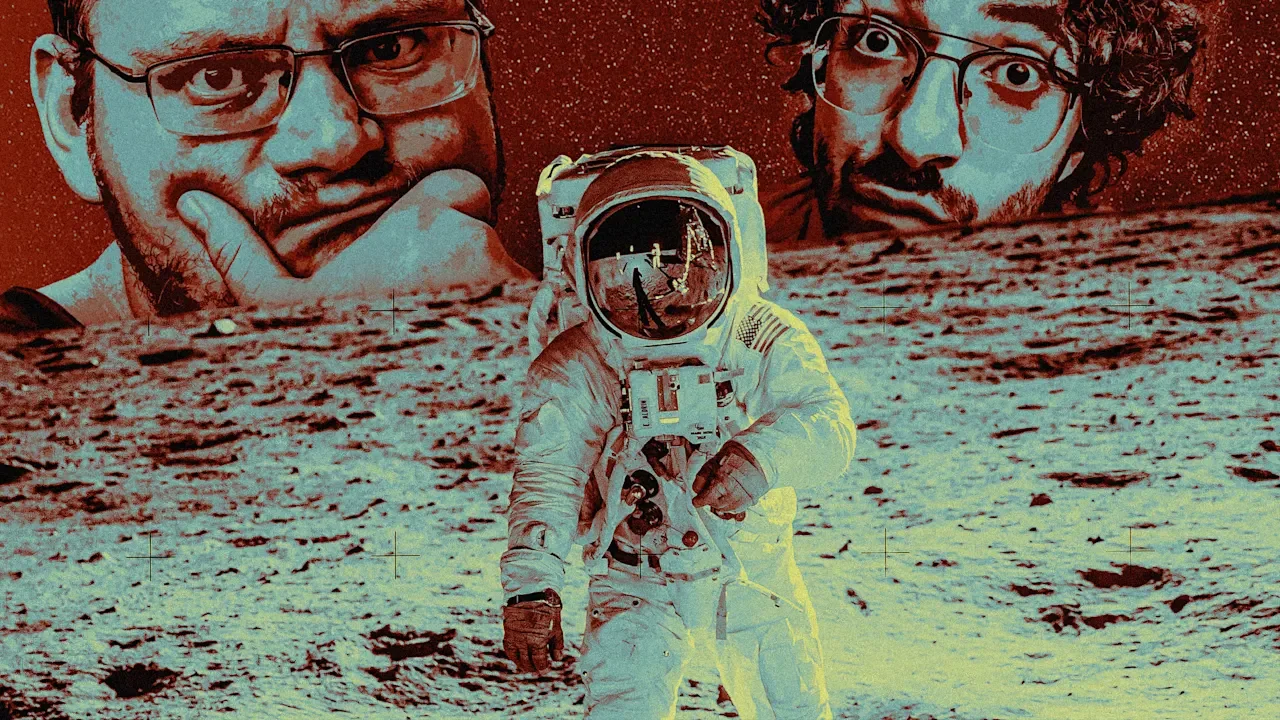
On my phone, there are already videos of the next moon landing. In one, an astronaut springs off the rung of a ladder, strung out from the lander, before slowly plopping to the surface. He is, alas, still getting accustomed to the weaker gravity. In another, the crew collects a sample—a classic lunar expedition activity—while another person lazily minds the rover. A third video shows an astronaut affixing the American flag to the ground, because this act of patriotism is even better the second time around. The blue oceans of Earth are visible, in the background, and a radio calls out: “Artemis crew is on the surface.” America is going back to the moon, and NASA is in the final weeks of preparing for the Artemis II mission, which will have astronauts conduct a lunar flyby for the first time in decades. If all goes well, during the next endeavor, Artemis III, they’ll finally land on the lunar surface, marking an extraordinary and historical and in some sense, nostalgic, accomplishment. The aforementioned videos are not advance copies, or some vision of the future, though. They were generated with OpenAI’s video generation model and are extremely fake. Still, this kind of content is a reminder that the upcoming Artemis missions promise a major epistemic test for the deniers of the original moon landing. This a small but passionate and enduring community who doubt the Apollo moon landing for a host of reasons, including that (they allege) the government lied or (they believe) it is simply physically impossible for humans to go the moon. Now, when NASA returns to the lunar surface, these people will be confronted with far more evidence than from the last time around. The space agency operation will be broadcast, live, and including camera technology and social media platforms that just weren’t around in the 1960s. But there’s also a bigger challenge before us. NASA will be launching its moon return effort in a period of major distrust in American scientific and government institutions, and, amid the proliferation of generative AI, declining confidence in the veracity of digital content. Most observers will be able to sort through the real NASA imagery, and anything fake that might show up. Still, there tends to be a small number of people who doubt these kinds of milestones, especially when a U.S. federal agency is involved. Adding AI to the conspiracy theory cocktail “When the moon landing first came in, AI wasn’t a thing. The sophistication of [the landing] didn’t necessarily make us question it,” says David Jolley, a professor at the University of Nottingham who studies conspiracy theories. “But now, with the power of AI and the power of images that you can create, it certainly offers that different reality if you want to interpret it in that way.” “It’s the trust in those sources that we need to kind of really create. Of course, if you haven’t got trust in our gatekeepers and you don’t trust scientists, well, suddenly you are going to lean into: well, this, is this real? Is this just AI?” he continues. The upcoming Artemis missions aren’t yet a major topic among lunar landing deniers. But there are hints it will attract more attention from conspiracy theorists. During the last Artemis mission, which was unmanned, Reuters had to push back on online posts suggesting the expedition “proved” that Apollo 11 didn’t actually happen. (Skeptics suggested longer Artemis I mission timelines, a product of a change in route, actually cast doubt on the original Apollo timeline). Other online skeptics have already suggested that, with Artemis, NASA is yet again faking a space endeavor. Some people in internet conspiracy communities suggest the upcoming moon missions will be entirely CGI (computer-generated imagery). Generative AI stands to introduce even more confusion, says Ben Colman, the CEO of Reality Defenders, a deep fake detection platform. Generating a believable image of a (fake) moon landing is now something any consumer can do. “Any astute physicist will be able to tell you if these videos get star placement or physics wrong, as they are likely to do,” he says, “but even that is getting better with each model iteration.” Conspiracy theories are sticky There are, of course, many reasons why people say they deny reality of the first lunar expeditions. They are canonical, misinterpreted references, like Van Allen belts, a zone of energetic charged particles that surrounds the planet (critics say the belts are too radioactive for manned vehicles to traverse) and the suspicious flag-in-the-wind (there’s no wind on the moon!). All of these points—and the many other points deniers bring up—have been thoroughly debunked. Still, this small community of self-appointed detectives are insistent. Even decades after the missions ended, people are still combing through NASA’s videos and images, mining for signs of alternations or other surreptitious editing. To them, an expected shimmer reveals a film operation just beyond the view of the camera. A movement that might not look right is a hint that the world has been duped. Open source intelligence (OSINT) becomes the rabbit hole. “Some allege we didn’t go to the moon, perhaps because we were trying to trick the Soviets into thinking that we had superior technology than they did,” explains Joseph Uscinski, a political scientist at the University of Miami who also studies conspiratorial beliefs. “Some people think we did go but it wasn’t televised. And that footage that we saw was made later in a sound studio. Some people think Stanley Kubrick was in charge of filming the ‘faked’ Moon Landing footage.” For its part, NASA is preparing to point to evidence, should any deepfake allegations come their way. Agency spokesperson Lauren Low tells Fast Company: “We expect AI experts will be looking closely at all our images and will be able to verify they are real images taken by real astronauts as part of the Artemis II test flight around the Moon.” Moreover, Low added, there will be many ways for people to watch the lunar flyby themselves, including live broadcasts, two 24/7 YouTube streams, a new conference, and “views from Orion cameras.” In other words, the reality of Artemis will be very hard to deny. Research suggests that conspiracy theories are entertaining, and even serve peoples’ core psychological needs, like a desire to understand the world or a way of dealing with uncertainty. Finding other people, including on social media, pushing these theories can help normalize them, and make someone feel like they’re part of a broader community. Some people simply don’t trust institutions, and evidence that something did, indeed, happen only raises further questions, and suspicions that it didn’t. To an extent, politics matters, too; people outside the United States are more likely to deny the moon landing, polls show. In the end, says Uscinski, we should prepare for people who are prone to conspiratorial thinking, or prone to mistrusting institutions, to take a skeptical view of any big news event. This may happen again when the Artemis missions finally launch. “The good news is that belief in conspiracy theories isn’t likely to get worse,” he explains. “The bad news is that this conspiratorial thinking has always been this pervasive.” “People are very good at waving away evidence that tells them things they don’t want to hear, and they’re very good at believing things, either without evidence or with really shitty evidence when it tells them what they do want to believe about the world,” Uscinski adds. “You don’t need AI or sophisticated technology to provide a justification.” View the full article

-
Search engines “think” in topics, not keywords. They understand entities—people, places, products, ideas—and how they relate. They focus on meaning, not word matching. If you want to do SEO today, or show up in AI recommendations, you need to understand…Read more ›View the full article
-
Andy Burnham veto leaves government where it started — with a weakened PM struggling to push controversial policy through parliamentView the full article
-
It looks like OpenAI is taking the “new year, new you” approach when it comes to its business strategy. To kick off 2026, the company announced it would soon introduce ads into ChatGPT—which was a bit of a surprise, considering CEO Sam Altman had previously said ads would be a “last resort” as a business model. It’s hard to say how final a resort this is without looking at OpenAI’s balance sheet, but we do know the company is feeling the heat. After Google released Gemini 3 in the fall—which scored well on leaderboards, market share, and plaudits from the AI community—Altman declared a “code red” at OpenAI to ensure that ChatGPT is best in class. And as impressive as OpenAI’s fundraising has been, Google is a $4 trillion company. OpenAI needs all the resources it can get. So ChatGPT users are getting ads. It’s a risky move, since there are strong indicators that consumers are wary of ads in AI answers. A report from Attest, a consumer research company, found that 41% of consumers trust AI search results more than paid search results, suggesting that AI users like that they don’t have to worry about ads in AI summaries, even if their accuracy may sometimes be questionable. Hallucinating is apparently less of an offense than selling out. However, ads in AI experiences look increasingly like an inevitability. Consumers don’t love ads on TV or streaming either, but they’re endemic to the media ecosystem. Google is already serving ads in AI Overviews and AI Mode, and it may someday bring them to Gemini, too, although company executives deny there are any plans to do this. Regardless of what it does with the Gemini chatbot, Google appears determined to weave advertising into many of its AI experiences, which is hardly a shock. Big Tech, bigger bite For the media, this isn’t exactly thrilling news. OpenAI entering the ad business means yet another Big Tech player is competing with them for digital ad dollars alongside platforms like Google, Meta, and Amazon. And there’s less traffic to go around since those same AI chatbots summarize content, often negating the need to click through. There’s a reason web traffic to publishers dropped by a third last year. However, advertising tied to AI answers might end up being exactly the leverage publishers need to make their case for compensation. When a publisher’s content is used to create the answer to a query, the line back to revenue is always somewhat indirect—after all, the user likely subscribed to the chatbot well before they ever typed their question, and most AI services have a free tier anyway. But if your content fuels an answer, and that answer directly leads to revenue for the AI company through either impressions or transactions, the chain from content to dollars is clearer. It’s also more trackable than it’s ever been. Whereas the world of SEO inferred a lot from search terms and clicks, queries in AI search are more specific, and the tools much better at pinning down intent. Understanding which answers, and what content within them, best facilitate transactions is a very knowable thing. OpenAI did its best to quash fears about commercialization by stating its first principles of advertising, one of them being that ads will not influence the substance of the answers in ChatGPT. The idea is that if, say, Coca-Cola pays for an ad campaign, then any answer will not be any more or less likely to mention Coke than if that campaign didn’t exist. But I wonder if the answer might be more or less inclined to steer the user toward buying a soft drink in general, with the ad providing a little card for you to tap on that does just that. Optimize and persuade Even if OpenAI insists that won’t happen, it can’t speak for all the brands and content providers that fuel the answer. How successful such efforts might be is extremely unclear at this point, but it’s a safe bet they’re going to try. The nascent field of GEO (generative engine optimization) seems destined to give rise to a new dimension—not just how content affects AI answers, but how it convinces users to take action. You’re not just optimizing for presence, but also for persuadability. All of this is theoretical, of course, and perhaps Google, OpenAI, and everyone else will succeed in keeping the ad-revenue pie all to themselves. But as revenue from AI answers increases, every marketer on the planet will want to know which answers are the most lucrative, and what content they’re made from. If publishers can prove they’re providing the secret sauce, they’ll have more leverage in demanding their slice. Proving that value is not trivial. Successful bargaining over this “content-to-click” effect starts with measuring it, and that’s going to take work. Understanding how content appears in and affects AI answers is brand-new science, but it is science: Experimentation, iteration, and leveraging different kinds of tools—like snippets, bot blocking, and dedicated GEO platforms—are what’s needed. Over the past 25 years, Silicon Valley slowly built tremendous platforms that ended up consuming the vast majority of advertising revenue, locking out the media in the process. And let’s be honest: There’s a good chance artificial intelligence will end up continuing that trend. But the irony of monetizing AI answers with advertising is that it may end up creating the best opportunity for publishers to define exactly how much value they bring to them. View the full article

-
Henry Ford famously noted, “Whether you think you can do it or not, you are usually right.” His point was that beliefs, especially about our talents, performance, and even luck, can be self-fulfilling. Irrespective of whether they are right or wrong, they will become true by influencing objective success outcomes. Ford was hardly alone. Along the same lines, decades of psychological research show that beliefs matter, often profoundly so. Perhaps the most influential work comes from Albert Bandura’s theory of self-efficacy, defined as people’s beliefs in their capability to organize and execute the actions required to manage prospective situations. Across hundreds of studies, higher self-efficacy has been linked to greater motivation, resilience, learning, and performance. People who believe they can improve are more likely to set challenging goals, invest effort, persist in the face of difficulty, and recover from failure. Closely related ideas emerged from attribution theory and expectancy value models, which showed that individuals who attribute success to effort rather than fixed ability, and who believe their actions will make a difference, tend to perform better in school and at work. The most popular variant of these, at least in the world of HR and management, has been Carol Dweck’s research on growth versus fixed mindsets, which popularized the idea that believing that abilities can be developed encourages learning-oriented behavior, greater perseverance, and better responses to feedback. Taken together, this body of research persuaded a large number of people of the importance of mindset, implying a counterintuitive causal chain whereby beliefs shape performance—rather than the other way around. Specifically, the story goes, irrespective of how rational our thoughts are, they will likely shape attention, effort, emotional reactions, and behavior, which in turn impacts tangible results and outcomes. A mental software update Suitably, much of the self-help industry has run with this idea at full speed. Bookstores, podcasts, LinkedIn feeds, and corporate off-sites are now saturated with advice urging us to “reframe,” “manifest,” “believe harder,” and “upgrade our mindset.” According to this logic, success is largely a mental software update away. Change your thoughts, and the universe will follow! This is where things start to get a little silly. Mindset does not suspend physics, probability, or competence. It still matters whether you can actually cross the road without getting hit by a bus. And even if you firmly believe you are Serena Williams on the tennis court, lacking the ability to play tennis means you may be the only person on earth who shares that belief. Confidence does not magically produce a serve, a backhand, or a Grand Slam title. Motivational cosplay At its most extreme, mindset culture drifts into motivational cosplay: people repeating affirmations in the mirror while ignoring the inconvenient details of skill, preparation, competition, and luck. Worse, it can quietly turn failure into a moral flaw. If you didn’t succeed, you must not have believed enough, visualized hard enough, or optimized your morning routine sufficiently. Structural barriers, unequal opportunities, and plain bad luck are written out of the story. The irony is that the science never claimed mindset was omnipotent. Beliefs help when they are tethered to reality. They amplify effort, persistence, and learning, but they cannot substitute for ability, practice, or opportunity. Positive thinking works best when paired with negative feedback, deliberate practice, and a sober assessment of constraints. In short, mindset matters (a bit), but not in the magical way the self-help industry sells it. Thinking you can do something helps you try. It does not guarantee you will succeed. And no amount of positive thinking will turn wishful confidence into world-class talent. Modest effects Indeed, a closer look at the scientific evidence indicates that popular interpretations on the power of mindset and positive thinking have gone too far. First, the effects of mindset are actually not that large. Meta-analyses show that growth mindset interventions produce small to moderate effects, particularly when compared with structural factors such as prior ability, socioeconomic status, quality of instruction, or access to opportunity. Put differently, believing you can improve is helpful, but it is no substitute for actually improving. Between thinking you are as good as Lionel Messi and being half as good as him, the latter is unequivocally preferable—unless your goal is to impress people who don’t understand soccer, in which case you can hope to deceive or fool them! Confidence without competence may feel empowering, but it rarely wins matches, promotions, or championships. (It does make for popular sitcom characters like Michael Scott or David Brent, though.) Second, beliefs do not operate in a vacuum. Confidence helps most when it is paired with real skills, feedback, and environments that reward effort. The problem with overvaluing confidence or self-belief is that, roughly half the time, it is correlated with actual ability. When people are genuinely competent, their confidence is often earned, which is why Muhammad Ali could plausibly claim that “it isn’t bragging if you can back it up.” In those cases, belief is less a psychological trick than a reasonably accurate signal of underlying skill. The trouble starts when confidence drifts away from competence. Underconfidence, while uncomfortable, can be oddly functional: It pushes people to prepare more, seek feedback, and close gaps they suspect (or know) they have. Accurate confidence, by contrast, reflects self-awareness—a realistic calibration between what one can do and what the situation demands. Delusional confidence is different altogether. It may help people impress, persuade, or temporarily fool others, but this is usually a short-lived strategy unless everyone else is equally deluded. When confidence consistently outruns competence, the cost is eventually paid, either by the individual when reality catches up or by everyone else who has to deal with the consequences. Third, an excessive focus on mindset risks slipping into a form of psychological moralizing, where success is credited to the “right attitude” and failure is blamed on the individual’s thinking rather than on constraints, inequality, or bad luck. This becomes especially problematic when people are encouraged to believe not only that they live in a meritocracy, but also that their outcomes hinge primarily on how strongly they believe in themselves. In such a world, effort and optimism are not just virtues but moral obligations, and when success does not materialize, the only plausible culprit left is the self. The result is a quiet but corrosive form of self-blame. If belief is supposed to be the main lever of success, then failing to succeed feels like a personal deficiency of character, motivation, or mental toughness. Structural barriers fade into the background, while disappointment is internalized as guilt. Ironically, this narrative can be demotivating, not empowering. A better way A more helpful alternative would be to focus less on upgrading people’s beliefs and more on developing their actual skills and competence. This remains valuable even when individuals start out with low confidence in their abilities, which may simply reflect an accurate awareness of the gap between their current and ideal selves. Closing that gap through practice, feedback, and learning does more for long-term performance and well-being than insisting people feel confident before they have much to be confident about. Needless to say, there is also evidence that positive beliefs can backfire when they become detached from reality. Inflated self-beliefs are linked to poor calibration, overconfidence, and reckless decision-making. In organizational settings, confidence without competence can be costly, especially when it crowds out learning, dissent, or accurate self-assessment. In some cases, acknowledging that you are simply not very good at something is not an act of pessimism but of strategic realism. Persisting in a poorly matched role or career path on the basis of “false hope” can be actively harmful. Psychologists refer to this as false positive self-beliefs or miscalibrated optimism (which appear to be the norm), where individuals overestimate their likelihood of success and continue investing in goals that are unlikely to pay off. By contrast, recognizing limits early allows people to redirect their effort toward domains where their abilities, interests, and opportunities are better aligned. There is also a social cost to miscalibration. If others realize you are less capable than you believe yourself to be, the reputational penalty is typically higher than if you had reached that conclusion first. Self-awareness signals judgment and maturity; obliviousness signals risk. In practice, what matters most is not how good you think you are, but how good others think you are, because it is other people who allocate opportunities, responsibilities, promotions, and trust. Ironically, some of the best performers are those who initially underestimate themselves. Mild underconfidence can motivate preparation, learning, and skill acquisition, leading to steady improvement and positive surprises. Conversely, people who overestimate their abilities often stagnate, mistaking confidence for progress and reassurance for feedback. Over time, belief divorced from performance does not just fail to help; it actively prevents development. The science, then, supports a more nuanced conclusion. Mindset matters, but it is not magic. Beliefs are best understood as enablers rather than engines of success. They help people make use of their abilities and opportunities, but they cannot substitute for them. And yet, we tend to praise self-belief far more enthusiastically than self-knowledge. Confidence is celebrated as a virtue; realism is often mistaken for negativity. But from the perspective of everyone else, self-knowledge is usually the more valuable trait. Most of us have worked with at least one person who is spectacularly pleased with themselves, modestly competent at best, and blissfully unaware of the gap between the two. Their confidence may be admirable in the abstract, but it is considerably less charming when they are making decisions, leading teams, or presenting their “vision.” If we evaluated the world from other people’s point of view, we would quickly realize that it is not in anyone’s interest for the unjustifiably confident to succeed because of those very flaws. When people advance on the strength of misplaced self-belief rather than demonstrated competence, the costs are externalized: Colleagues pick up the slack, organizations absorb the damage, and reality eventually intervenes, often expensively. A healthier mindset, then, is not blind optimism but informed confidence: knowing what you can do, what you cannot yet do, and where your effort will actually pay off. In short, self-belief may feel good, but self-knowledge gets things done. Reality rewards competence, not confidence. The only role of belief is to signal whether you know the difference. View the full article

-
Think of your creativity like a high-performance garden: If you focus only on the visible harvest (outputs) and never allow the soil to lie fallow (liminal space) or the bees to roam freely (play), the ground eventually becomes depleted. Boredom is the signal that the soil needs replenishing, ensuring that your next season of work is a flourish rather than a struggle. In our current “busyness addiction,” we have come to glorify the hustle, over-indexing on output while neglecting the very well-being that fuels it. We treat leisure and rest like guilty pleasures rather than sacred pauses. Yet the truth of the Imagination Era is this: Our best work often happens when we are not visibly working. To flourish in a world of ubiquitous technology and unprecedented burnout, we must stop grinding and start cultivating what I call the “sexy bits” of productivity: boredom, play, and the magical in-between of liminal space. Boredom: An Invitation to Create We often reprimand ourselves for feeling bored, yet boredom is not a behavior to repress, it’s an invitation. It serves as a neurological cue to find new sources of stimulation. When we allow ourselves to be bored rather than reach for a digital distraction, we activate the brain’s default mode network (DMN), the “meaning-making” part of the brain that connects dots, finds patterns, and synthesizes information when we are not laser-focused on external tasks. It acts like a “washing machine” for our ideas, taking deeply felt information and making sense of it. By viewing boredom as a trigger for curiosity, we move away from a mechanical “1 + 1 = 2” productivity mindset toward one of cultivation, where we value what is evolving in the dormant, invisible realm. Consider the following sobering insights from neuroscience and workplace research. “Mind-wandering” is your competitive advantage. While we spend 47% of our waking hours thinking about something other than what we are currently doing, mind-wandering isn’t a distraction. It’s a survival mechanism that, when channeled, aids in “aha” moments for problem-solving. Daydreaming is scientifically linked to an increase in alpha waves in the brain’s frontal cortex, a pattern directly associated with enhanced divergent thinking and creativity. Yet we’re suppressing it relentlessly. Here’s where it gets urgent: According to a November 2023 Linearity blog post, 80% of people believe that unlocking creativity is critical to economic growth. Yet 75% of respondents in a Thrive My Way study reported being pressured to be “productive” (output-oriented) rather than creative at work. We’re systematically shutting down the very neural pathways that drive innovation. Here’s something you could do to carve out time for creativity at work: Institute “thinking hours” in your calendar, protected time (even just 30 minutes daily) where team members are encouraged to step away from their screens with no agenda. A 2021 study by Tork found that 9 out of 10 employees reported being more likely to stay at a company where management encouraged taking breaks. That’s not wellness theater; that’s a retention strategy with a 90% success rate. So position this carved-out time explicitly as creative work, not procrastination. Measure the impact on idea generation in your next sprint or project cycle. The Power of Play and Meta-Cognition To navigate today’s complex systems, we must reintroduce play, which toy designer Brendan Boyle defines simply as “engagement.” The opposite of play isn’t work; the opposite of play is boredom. Integrating play at work, whether through prototyping rough draft mock-ups or gamifying meetings, boosts morale and stimulates critical executive leadership skills like empathy, negotiation, and the ability to improvise. This playful mindset is enhanced by meta-cognition: the practice of thinking about one’s own thinking. By engaging in what I call “backcasting” (reflecting on past experiences to make sense of skills acquired) we build an “inventory of courage.” This self-inquiry allows us to recognize that our pains plus our gains equal our assets, providing the firm foundation needed to leap into the unknown. The data on this is striking, and it challenges everything we think we know about efficiency. That same research by Thrive My Way showed that creativity training delivers a 350% return on engagement. Groups trained in creativity tools and principles generated 350% as many ideas—and those ideas were 415% more original—than those from untrained groups. This isn’t a soft-skill metric. This is innovation measured in the ideas that move your business forward. But we’re facing an engagement crisis. As of 2024, only 20% of employees are engaged, marking the lowest level of employee engagement ever recorded. We’re grinding harder while our teams check out. The correlation is clear: We’ve optimized engagement out of work entirely. You can avert an engagement crisis at your own company by launching a “play audit” in your next strategy session. Identify two nonnegotiable meetings per month that will be redesigned around play. Those could be improv exercises, Lego Serious Play, or physical problem-solving. Track engagement scores and idea quality before and after. You’ll likely find that the most serious strategic challenges get solved when your team stops taking them so seriously. Engaging the Liminal Space Amid Distraction We live in an age of “stolen focus,” where the average knowledge worker now switches tasks every 47 seconds. The shift is staggering: In 2004, the average knowledge worker switched tasks every three minutes. That’s a 73% compression of attention span in less than two decades. Research from distraction expert Gloria Mark indicates that we spend approximately 47% of our waking hours thinking about what isn’t currently happening, a type of mind-wandering often linked to unhappiness. This constant task-switching drains cognitive resources and spikes cortisol levels, creating a neurological state designed for crisis response, not creativity. The antidote is to intentionally engage in liminal space—that transitional “betwixt and between” phase where growth happens under the surface. Liminality can be physical, like a commute, or metaphorical, like the fallow time between project cycles. Instead of filling every gap with a screen, we should embrace restorative ambiguity, where we feel expectant and at peace in the not knowing. The financial toll of ignoring this is substantial, and something we all need to hear. Burnout is an economic crisis masquerading as a personal problem. Workplace stress is not just a personal issue but a massive economic one, costing U.S. industries more than $300 billion annually in absenteeism, turnover, and diminished productivity. Some 71% of knowledge workers reported experiencing burnout at least once in 2020, with burned-out employees taking 60% more sick days and being 2.6 times more likely to seek a different job. Many of us are performing productivity instead of creating it. The pressure to appear busy is pervasive, with 83% of full-time U.S. workers admitting to engaging in “performative work behaviors” (productivity theater) in the past year. Your teams aren’t actually more productive, they’re just better at looking busy while running on fumes. Whether it’s a two-minute daydream break or a weeklong sabbatical, these pauses allow us to unburden the cognitive load on our neocortex. By valuing the dormant times as much as the growth spurts, we transform our work from a series of tasks into a progression of cultivated learning experiences. In this new operating system, rest is not a soft perk, it’s a fundamental human right and a critical tool for sustainable, innovative leadership. Try mapping your organization’s task-switching velocity. How often are meetings scheduled back-to-back? How many channels are teams expected to monitor? Implement “no-meeting blocks,” similar to what Zapier did when it instituted a “get stuff done” week. These could be two-hour windows weekly where no meetings are scheduled. Explicitly frame these as liminal space where people can complete deep work or simply think. Monitor retention and productivity metrics over a quarter. You’ll likely see both move upward. The Bottom Line We stand at a crossroads. We can continue grinding our teams into burnout while generating incrementally better ideas, or we can cultivate organizations that honor boredom, play, and strategic pause as the foundations of sustainable innovation. The choice sounds simple until you realize it requires us to fundamentally redefine what “productivity” means. The organizations that will outthink their competition in the next five years won’t be the ones that eliminated downtime. They’ll be the ones brave enough to design it in. They’ll be the leaders who understand that creativity isn’t a luxury, it’s infrastructure. And they’ll be the companies that attract and retain the best talent because they respect something far more valuable than productivity theater: the human capacity to flourish. Your move. View the full article

-
In 2023, Ken Lux found himself in an FBI briefing on child trafficking. The CEO of Luxe Aviation was there as the past commander of the Sacramento County Sheriff’s Office’s Air Squadron, a volunteer cadre of 50 general aviation pilots supporting police missions and community service. Lux recalls the FBI agent relaying the story of a since-jailed airline pilot who used his credentials to traffic children to clients in the Philippines with chilling negotiations. “I have a girl that’s 12 years old for your client,’” the pilot said. The client’s response: “No, we think we need an 8-year-old.” The group was horrified. “I have two daughters,” Lux says. “We said, ‘Wait a minute, really? Where are these people?’ Until that time, I thought it only happened overseas. And they said, ‘No, it happens in every community in the United States.’” The agent showed them photos of girls crammed into squalid rooms, branded with clipped ears, tattoos, and burns, with life expectations averaging just seven years in such conditions. “A lot of times, it’s just kids that get mixed up with the wrong people, or somehow get tricked into it. And then they don’t know how to get out,” Lux says. Lux and his colleagues would learn the extent of the crisis—a $150 billion global criminal enterprise whose size trails only that of illegal drugs. Human trafficking involves more than 27 million victims worldwide—who are forced into marriages, slave labor, military service, organ sales, and sexual exploitation. That includes some 200,000 victims domestically, prompting January to be designated as National Human Trafficking Prevention Month. Flying rescue missions The briefing so rattled the squadron pilots that they began volunteering for police rescue missions, focusing on victims of sex trafficking. Their first trip shuttled a trafficked teen in Sacramento back home to Oregon. Then came more requests from surrounding counties and district attorneys needing to ferry the rare survivor brave enough to testify against her captor to court. AndrewBeltan “It’s really hard to pin down and prosecute these guys because they use burner phones and hide behind technology,” Lux says. “It’s not like the drug business, where they find you with so much cocaine in your car.” As demand grew, Lux realized that they needed a more formalized organization. In April 2024, he founded Flights to Freedom (F2F), a nonprofit that matches 200 volunteer pilots nationwide with law enforcement, Child Protective Services, aftercare advocacy centers, and medical staff. “We could probably use 200 [pilots] just in California because the problem is so pervasive,” he says. F2F board adviser Kevin LaRosa, the aerial coordinator for films such as Top Gun: Maverick and F1, considers the organization a lifeline to the most vulnerable. “Aviation isn’t just about speed and connectivity—it’s about human impact,” he says. “When law enforcement rescues a child from exploitation, swift and secure transport can literally be the first step toward healing and safety.” F2F has organized just over two dozen flights to transport survivors ages 12 to 24 across 11 states. But it can accept only half of its monthly requests due to time constraints or a lack of planes. Because law enforcement can’t reserve rescuers, F2F has only a 24- to 48-hour window to organize flights. “If I can’t find a pilot available, we have to turn [down requests],” Lux says. “It’s heartbreaking.” The nonprofit operates on a $60,000 budget, which covers insurance and an office at McClellan Airport in Sacramento. It is funded by individual donations and an annual fundraiser at the Aerospace Museum of California, where Lux was a past president. Except for a few regional jets, most of its pilots fly smaller airplanes that hold four to six people. (Lux’s ride is a Beechcraft 58 Baron, a six-seater twin-engine plane.) On rare occasions, F2F has chartered flights when it hasn’t found a pilot. “The problem is, we don’t have a lot of money,” he adds. Lux’s focus for this year is recruiting more pilots (who can apply here), partnering with larger charter companies, and increasing awareness of F2F and similar services like Freedom Aviation Network and Wings of the Way. He’s already mapped out a $750,000 to $1 million plan to eventually expand F2F’s operations. “We’ve proven it works; now it’s time to push it to the next level,” he says. The first steps in healing Every F2F flight includes a chaperone—usually a deputy sheriff, a Child Protective Services advocate, or a licensed therapist—who accompanies the survivors and evaluates both their state of mind and ability to fly by means of a customized psychiatric and medical questionnaire. The chaperone also serves as a buffer between the pilots, who are often male, and the very traumatized survivors. “They’re often on drugs. They’ve been brainwashed. They’ve been abused up to 20 times per day,” Lux says. “We don’t want someone to have a really bad experience on an airplane with a strange pilot and a strange plane going to different places. We follow a sterile cockpit policy—typically, the pilot doesn’t know who the deputies or survivors are. It’s all confidential. It’s all safe.” Victims, sometimes rescued in the middle of the night or in sting operations, are given backpacks with a blanket, a change of clothes, hygiene products, and a blue teddy bear. They’re walked down a red carpet to the plane entrance and treated to a private jet experience—often their first time on an airplane. “I feel like we really are one of the first steps in healing,” Lux says. “We hear back from some of the survivors through the agencies, and they’re just, like, ‘We are so grateful to Flights to Freedom, because it was the first time in my life anyone ever paid attention to me.’” View the full article

-
“If you’re a millennial and you’re going through your midlife crisis, this post is for you.” So begins a viral TikTok video posted last month by comedian Mike Mancusi. Many millennials are now in their forties, with the youngest about to turn 30, putting the generation at the beginning of the unofficial age bracket when midlife crises traditionally hit. But Mancusi argues that the millennial version is a singular experience. For past generations, a midlife crisis followed a familiar blueprint: graduate college, climb the career ladder, get married, have kids, then—somewhere between roughly 40 and 60—confront mortality and blow it all up for a red sports car or a younger trophy partner. That is not the case for millennials, many of whom missed those milestones due to economic and social upheaval during their formative years. In fact, according to a 2024 study from mental health platform Thriving Center of Psychology, 81% of millennials polled said they couldn’t “afford” to have a midlife crisis. “Can you imagine having a midlife crisis while owning your home, easily paying all your bills, and saving for retirement?” one user commented on Mancusi’s post. “Like what?” Mancusi suggests there’s another reason at play. “Other generations’ midlife crisis has been built off of looking forward,” he says in the clip. “Ours has been built off of looking back.” Where midlife crises were once triggered by a sense of fading youth, millennials are reckoning with something else entirely. “We look back and go, ‘Wait a minute, I was told to do all these things. I did them, and still I’m not happy,’” Mancusi explains. “And that is a way different crisis.” The stability that previous generations found stifling rarely exists in the same way today. The social contract between employees and employers has fractured. Millennials who followed the prescribed path and climbed the ladder are now realizing that the stability and success they were promised is largely a pipe dream. A majority of U.S. workers (60%) don’t have a “quality job” that provides basic financial well-being, safety, and autonomy, among other things, according to Gallup research. These days, 71% of millennial employees are not engaged or are actively disengaged at work, according to a separate Gallup report, and about 66% of millennials report moderate or high levels of burnout, according to a recent Aflac report. “The problem for millennials is we listened,” one commenter wrote. As another put it: “Our crisis isn’t mid-life, it’s existential.” Mancusi’s recommendation for anyone who fears a midlife or existential crisis coming on: “You have to find something else to do,” he says. “I don’t know what you’re into, but you need to find that thing and build it into every single day, because that is what’s going to allow you to move forward in a way that you feel in control of and that you feel passionate about.” In other words, instead of a sports car, get a hobby. View the full article

-
The “New Tab” page in Chrome is the digital equivalent of a blank stare. A white void. Nothing, and plenty of it. Why are we settling for this? Your browser’s start page is the most valuable real estate on your computer. It’s the first thing you see! Instead of looking at an empty space, you could be looking at a command center. Here are five Chrome extensions that turn that boring start screen into something actually useful. Momentum If you want your browser to feel less like a software application and more like a high-end wellness retreat, Momentum is the gold standard. Every day, it greets you with a stunning, high-res landscape photo and a simple question about your main focus for the day. It’s minimalism that works, keeping a single to-do list and your primary goal front and center so you don’t forget what you actually sat down to do. Bonjourr If Momentum feels a bit too inspirational, Bonjourr is the lightweight, open-source alternative built for speed and clean lines. It’s a minimalist’s dream, featuring transparency, clean fonts, and zero bloat. You can even tweak the CSS if you’re willing to dig into the code a bit, but most people will just appreciate that it loads almost instantly and looks beautiful while offering enough flexibility to use whatever niche search engine they’re currently experimenting with. Presentboard Maybe you don’t want a pretty picture; maybe you want data. Presentboard is a hidden gem that treats your New Tab page like a literal dashboard, using a grid-based system where you can drop widgets for Google Calendar events, latest emails, stock tickers, and custom RSS feeds. It’s for the person who wants to see their entire digital life at a glance before they even type a single URL. You can resize and move boxes around until the layout is exactly how your brain likes it, turning your browser into a functional workstation rather than just a window to the web. Dashy For those who have 14 apps open just to manage their life, Dashy acts as a “mega-dashboard” that lets you pin functioning widgets directly to your start page. We’re talking full integrations where you can check your calendar, scroll a Reddit feed, and manage Todoist tasks without ever leaving the New Tab screen. It even allows for custom profiles, so you can toggle between a “Work Mode” filled with Slack widgets and a “Weekend Mode” dominated by Spotify and news feeds. It’s the closest you can get to turning Chrome into its own operating system. This is for serious dashboard connoisseurs: The free version offers basic widgets and integration with popular websites, while the $5-per-month paid version offers unlimited widget access, a side panel, custom website embeds, and more. Tabliss If you’re tired of extensions locking the best features behind a monthly subscription, Tabliss is the open-source hero you need. It’s completely free, respects your privacy, and offers a massive library of backgrounds from Unsplash and Giphy. This one sits comfortably between beauty and simplicity, offering unique widgets like a “Work Hours” countdown or live sports scores. It’s highly modular and even includes a binary clock for the truly dedicated geeks who find reading time normally to be far too easy. View the full article