All Activity
- Past hour
-
 Before you apply for a new role, it’s important to prepare for marketing salary negotiations and learn how to pursue fair pay with practical, realistic guidance. Whether you work in SEO, PPC, or somewhere in between, salaries remain a contentious topic. They are often hard to discuss, difficult to quantify, and challenging to change. While many resources cover salary negotiations in general, this article focuses specifically on negotiating pay for marketing roles. Difficulties with marketing salaries Several factors make marketing roles harder to benchmark than many other professions, complicating salary expectations and negotiations. No industry standard Unlike fields with national governing bodies and defined career grades, marketing lacks standardization. This makes it difficult to align salary bands across companies or compare roles on an equal footing. Inconsistent job titles Job titles in marketing vary widely. A VP of marketing at one company may perform duties similar to a junior account manager elsewhere, while in another organization, the title represents the most senior marketing leader. Because titles are used inconsistently, it can be challenging to assess role seniority and determine which salary ranges are appropriate. Major market shifts in recent years Marketers who last negotiated pay during the COVID-driven digital boom of 2020-2021 may find today’s job market markedly different. Just five years ago, businesses rapidly shifted to online-first marketing, driving strong demand for digital talent. Performance and organic marketers benefited from a candidate-favorable market, with new roles being created, frequent poaching, and rising salaries. Today, conditions have changed. The rise of AI, global economic uncertainty, and company downsizing have reduced salary pressure for many marketing roles. There is also more uncertainty around job stability, leading fewer marketers to change roles unless necessary. As a result, the salary levels seen in 2020-2021 are largely a thing of the past. Well-paid marketing roles still exist, but they are harder to find. That reality should inform your salary negotiations, not discourage them. Some marketing channels can be misunderstood Less marketing-savvy companies often advertise a single role intended to cover three or more distinct specializations, typically at bottom-of-the-market pay. Even organizations that better understand marketing skill sets may struggle to grasp the full complexity and breadth of knowledge required to perform a role effectively. This can lead to significant undervaluation of marketers. Given that marketing salaries can be difficult for employers to navigate, how can you ensure you are fairly compensated for your experience and expertise? The following nine tips can be broadly grouped into four areas: Know what you bring to the table. Know what is realistic. Identify and demonstrate what is valuable to the company. Stick to your boundaries. Know what you bring to the table We’ll start with the side of salary negotiations that, for some, can be very difficult: accurately valuing your own skill set. If you are in a position to negotiate a salary, you have either already been offered the job or you work for the company and are hoping to secure a raise. In either case, the company must already believe you are suitable for the role. That does not stop it from trying to secure your services at the most economical price. Knowing what you bring to the table is key to having the bargaining power and confidence to negotiate a fair salary. This does not just mean how much direct experience you have in the role you have landed. Tip 1: Demonstrate your experience in the industry Don’t underestimate how much employers value candidates who have knowledge and experience within their sector. You may also find that some industries struggle to hire marketing professionals, and your willingness to join that industry can command a higher salary. If you’ve worked in notoriously difficult industries, such as gambling, adult entertainment, or pharmaceuticals, you may be able to negotiate higher pay because of it. This can be due to the perception of difficulty in marketing within these industries. Dig deeper: How to become exceptional at SEO Tip 2: Promote your prior experience in and out of similar roles Your years of experience in a role may feel like an obvious bargaining chip when negotiating salary. However, don’t forget that an employer may also benefit from the knowledge and experience you gained outside the role you are applying for. Just because your previous job titles may not sound similar to the role you are negotiating now doesn’t mean the skills you developed there aren’t directly relevant. Review your CV and compare it with the role you are applying for. Identify the parts of your work history that align with the job description. Look beyond the obvious and consider transferable skills such as communication, problem-solving, and stakeholder management. Tip 3: Highlight extra skills outside your job specification Think about the skills you’ve developed over the years that may not be listed in the job description but are likely to be important for success in the role. This can be particularly helpful if you are earlier in your career and lack directly relevant experience in similar positions. Consider what you learned through volunteer roles, a first summer job, or even hobbies. They may seem far removed from marketing, but you have likely gained lessons through those experiences that can support your current career. Tip 4: Show your financial impact in previous roles As with any ROI calculation, employers want to know whether the salary they may pay a candidate will deliver a return on that investment. If you are negotiating a higher salary than originally offered, you need to demonstrate why it is financially worthwhile for the employer. Be strategic in the examples you share. Rather than focusing only on increases in traffic or rankings, emphasize the revenue or cost savings you delivered. You may be limited by NDAs and unable to share specific figures, but you can still reference outcomes, such as increasing organic search revenue by 5x or reducing a PPC budget by 20% while maintaining performance. Get the newsletter search marketers rely on. See terms. Know what is realistic It’s one thing to understand your value based on the skills and experience you bring to a company. It’s another to assess that value accurately in the job market. Ultimately, salaries are limited by what employers are willing to pay. Tip 5: Be familiar with industry benchmarks Do some research when considering your salary. You may have been paid above or below the market average in your current or previous role, which can skew your expectations. Review job ads in your geographic area that require similar skills and experience, and note the lower and upper ends of the stated salary ranges. Be careful not to compare roles based on job titles alone. As noted earlier, marketing titles are often inconsistent, and you may be comparing your role with one that is more senior or more junior. Also consider the industry. Salaries in charities, for example, are unlikely to match those in tech or finance. Salary benchmarking reports can also be useful, such as: Remote, content SEO roles in decline: Report Salary and Career survey: How much search marketers make These resources can provide a more objective view of the market. Keep in mind that salaries vary significantly by country, so avoid comparing U.S. and UK salaries directly. Tip 6: Find out the internal salary ranges When applying for a role, it is always helpful to understand the salary range being offered, although this is not always possible. Some companies wait for candidates to make the first move on salary and may avoid sharing ranges to prevent offering more than necessary. This is why it’s important to follow Tip 5 first, so you understand what your skills and experience are worth in the broader market. Some organizations use salary banding. For example, a senior SEO specialist may be classified as a level 4 role, while a junior SEO role may sit at level 2. If a recruiter is unwilling to share the exact salary range, you can ask about role levels or banding instead. This can provide insight into where the role sits within the company hierarchy and what the potential salary ceiling might be. If you are able to identify the salary range, try to determine what qualifies a candidate for the top of the band. Is the company looking for additional “nice to haves” to justify the highest salary? In some cases, it may be reserved for candidates with experience in a specific industry. Once you understand which skills command higher pay, you can emphasize them in your CV and during interviews. Dig deeper: What 15 years in enterprise SEO taught me about people, power, and progress Identify and demonstrate the values of the company As many candidates discover during interviews, what a company truly wants is not always clearly stated in the job description or early conversations with recruiters. Hiring managers may not fully define what they are looking for in a successful candidate until they have interviewed several people for comparison. As a result, you may be unclear about what matters most for the role, making it harder to demonstrate your suitability and justify the salary you are requesting. Interviews can provide an opportunity to explore these values in more detail. Ask interviewers what “success” looks like in the role or how they would describe the traits of their top-performing colleagues. This can help you understand the characteristics and behaviors the company values. Tip 7: Demonstrate how you live up to those values Once you understand what the company values, identify how you can deliver that through the role. For example, if “initiative” is highly valued, you can use the interview process to highlight how you demonstrate initiative in your work. Use examples from past experience to show how you embody the company’s values, citing specific projects or situations where you demonstrated them. If “transparency” is important to the organization, you might reference a time when you acknowledged a mistake. Demonstrating alignment with the company, in addition to job proficiency, can make you a more attractive candidate and support a stronger salary case. Dig deeper: Becoming AI-native: The next leap for SEO professionals Stick to your boundaries When negotiating your salary, you need to know your absolute minimum. This is not just the lowest salary you can afford to accept. It also means identifying what you need from a role to feel respected and valued, and what the overall compensation package must include to support that. Going into negotiations with clear boundaries makes it easier to say no when an offer does not meet them. Tip 8: Consider other benefits that may offset a lower salary In some situations, accepting a lower salary may make sense. You may be moving into a different role where you have less experience and are starting at a more junior level. The opportunity to develop new skills can justify a lower salary. Other tangible benefits, such as strong health coverage, additional paid time off, shorter working hours, or a gym membership, may also make a lower salary acceptable. Tip 9: Identify other positives that may justify a lower salary You may be moving into an industry you care deeply about. For example, joining a charity may provide enough personal satisfaction to offset lower pay. Be sure to factor these considerations into your salary expectations when defining your boundaries. Tip 10: Decide how little is enough for you to walk away After working through the previous tips, you should have a clear understanding of the minimum compensation you are willing to accept, or remain in, a role for. Keep this in mind during negotiations. You may feel pressure not to lose the role by asking for more money, or worry about appearing overly focused on pay. Joining a company and immediately feeling underpaid is not sustainable. At the same time, asking for a raise as soon as you start is unlikely to help you establish yourself. You may be better off declining a role if the company cannot close the gap between its offer and your minimum salary expectations. Dig deeper: 12 skills every SEO specialist must master by 2026 Empower yourself in marketing salary talks You deserve to be paid what you are worth. Use these tips to define your value, account for any mitigating factors, and arrive at a salary you are willing to accept. Once you have that number, negotiating becomes a matter of clearly demonstrating the value you bring to the company compared with other candidates. If the gap between what a company is willing to pay and what you believe your skills and experience are worth is too large, walking away may be the better option. View the full article
 -
Artificial intelligence capabilities have rapidly shifted from nice-to-have extras to essential requirements across industries and job levels. Employers now prioritize candidates who can harness AI tools to multiply productivity, accelerate innovation, and solve complex problems with lean resources. In this article, experts reveal how mastering AI skills can unlock career opportunities, faster promotions, and competitive advantages in today’s job market. Own One System and Share Insights For me, the secret to standing out in the age of AI was pretty simple: if your company is starting to use AI, use it. Don’t wait for someone to tell you where to start. Pick one tool, go deep, and let curiosity lead you. When I was a learning designer at Zapier, I decided to focus on one thing, a new tool that had just rolled out: AI Agents by Zapier. I pushed everything nonessential to the side and gave myself two weeks to learn it inside and out. Along the way, I realized that to make my Agents even better, I needed to understand other tools too: AI fields in Tables, Chatbots, and AI steps in automation workflows. That one deep dive became a crash course in the future of work. I started filming myself as I learned, sharing the process and mistakes with others. Soon, teammates were reaching out for help. Product teams asked me to test new features and give feedback. And before I knew it, I’d become the go-to AI person — without a technical background. Eighteen months later, I was promoted to senior AI automation engineer. If you want to stand out and make yourself indispensable, start there: Go deep on something. Master one AI tool instead of dabbling in many. Share what you learn. Help your teammates, post your insights, and be generous with your knowledge. Be strategic. Know when AI is the right solution (and, importantly, when it’s not). Being proactive about AI isn’t just about saving time. It’s about showing that you can drive change, not wait for it. That’s what makes you valuable, no matter how much technology evolves. Emily Mabie, AI Automation Engineer, Zapier Start Companies With Generative Help Generative AI is not just a differentiator; it’s a career accelerator that can expand career opportunities far beyond traditional paths. AI literacy empowers individuals to create entirely new opportunities that would previously have been inaccessible to them without significant resources or institutional backing. One powerful example is how generative AI tools, even free ones like ChatGPT or Microsoft Copilot, can enable someone to launch a company instead of simply searching for yet another corporate role. With AI, an aspiring entrepreneur with a business idea is empowered to research and draft a well-thought-out business plan in hours, create and iterate on a brand identity without hiring a creative agency, develop a full-fledged marketing plan, and even simulate customer feedback by asking AI to role-play as an ideal customer persona to review, critique, and evaluate offerings through their lens. This ability to work with AI on tasks that once required significant investment and teams of consultants, designers, and executive focus groups fundamentally changes the opportunities for career advancement. It lowers the barrier to entry for entrepreneurship, allowing individuals to test ideas, refine messaging, and build expertise at a fraction of the cost and time it would take without AI. It’s like having an entire team of executives, business planners, marketers, and writers at your fingertips. When I began building my consultancy, I used free generative AI tools to do just that. One of the biggest advantages my AI skills created was being able to use AI to role-play as my ideal customer persona, asking it to critique my offerings, evaluate my positioning, and highlight my blind spots. That iterative feedback loop gave me insights into how the C-suite would look at my services so I could better address their needs and concerns, and “speak” their language so it would be easier for me to build trust and, ultimately, close the deal. I believe the real power of AI skills is not that it just makes you better at your current job, but that it opens doors to entirely new ones. It helps individuals transform from simply being a “job applicant” to being an “opportunity creator.” That’s how AI is truly going to reshape the future of work. Because AI skills don’t just prepare you for the future — they give you the agency to create it for yourself. Kristin Ginn, Founder, trnsfrmAItn Scale Impact With Lean Force Multipliers AI skills are no longer optional—they are becoming fundamental for every job seeker, regardless of profession. The reason is simple: AI is transforming how work gets done in three very clear stages—first by automating routine tasks, then by enhancing our abilities, and finally by transforming what individuals and small teams can achieve. Most people stop at the first stage, using AI to save time on emails, reports, or documentation. But the real opportunity lies in the next two stages. When you use AI to enhance your thinking, creativity, and output, you suddenly operate at a much higher level. And when you reach the transformation stage, AI becomes a force multiplier—enabling you to do work that previously required large teams and significant resources. I’ve experienced this personally while building my company. Thanks to AI, we have been able to build and scale one of the best all-in-one AI platforms for teachers and students with a two-member team. Everything from product management to engineering to content, design, marketing, and operations has been streamlined because AI handles a significant portion of the heavy lifting. What would traditionally require 20–25 people can now be executed by a lean, agile team that is able to move quickly and deliver high-quality output across every area. This is the true power of AI—not just automating tasks but transforming the very structure of how teams and companies operate. This is why AI proficiency is becoming a defining skill for today’s workforce. People who know how to use AI don’t just work faster—they think better, create better, and adapt better. They become more strategic, more creative, and more capable. In every field—teaching, engineering, design, marketing, HR, sales — the professionals who embrace AI will accelerate, and those who don’t will find it increasingly difficult to stay competitive. The reality is that AI is not here to replace human talent; it is here to elevate it. It levels the playing field, giving individuals access to capabilities that once required entire departments. For job seekers, students, and professionals, mastering AI tools is the most direct way to stand out in a crowded job market and open doors to opportunities that simply didn’t exist a few years ago. And if a two-member team can build and scale a platform like ours using AI, imagine what individuals can do in their own careers with the same mindset. That’s the future of work. Binit Agarwalla, Founder, TeachBetter.ai Pair Technology With Irreplaceable Human Strengths AI skills are essential because they sit at the heart of how work gets done now. But here’s what matters more: AI can’t replace the human skills that truly differentiate us—listening, building relationships, making judgment calls. When people master AI tools, they gain time and headspace to focus on what makes them irreplaceable. You can work faster, produce better quality output, and tackle projects that once felt impossible. Combined with your human abilities—empathy, curiosity, strategic thinking—you become far more valuable to any organization. When I built my company, AI became my operational backbone. While I focused on listening to clients and shaping their transformation stories, AI helped me analyze feedback, test messaging, and turn rough ideas into polished content. This meant I could build a coaching practice at startup speed while staying focused on the deeper human work—understanding what people really need. AI gave me velocity. But the human insight—the listening, the connection, the meaning-making—that’s what made the work valuable. That combination opened doors to bigger stages and leadership conversations I wouldn’t have reached as quickly otherwise. The future belongs to people who can combine AI efficiency with irreplaceable human skills. Tünde Lukacs, Founder Executive Coach Keynote Speaker, The Change Republic Launch Software Through Prompt Mastery AI tools are erasing technical gatekeeping—opening up high-value, technical jobs and paths to starting companies to nontraditional candidates. There used to be a four-year coding college prerequisite to building production-quality software, gluing stuff together, or making things happen. The most striking effect of AI I’ve seen in the last year is people bypassing it. One of the most impressive career leaps I’ve encountered was of a former VC CFO whom I talked to recently. He used Replit’s AI pair programmer to build and launch his own SaaS app in under 3 months. He had zero software experience. He just sat down with Excel and workflows he knew from his finance job and threw them right into AI co-pilot to make an app. This was not possible two years ago. He couldn’t become a “real” engineer, and this app that he’s making is not an Excel-based macro. He literally taught himself how to make software with the AI acting as his partner in the driving seat. Prompt engineering—talking in English to make AI do complex things—is now as valuable a skill as coding was 10 years ago. We see that the primary accelerant is not coding per se, but prompt engineering. Many of the most effective users of our service are not coders. They have to figure out how to give the AI goals and constraints and hammer out a detailed process, all in English. They have to turn their thoughts into instructions that involve their home context. This skill is getting to be worth more than coding. Now people can go to sleep thinking up videos they want to show, and then by morning have those videos done, without having to learn VFX or hire a studio. That’s a sea change. That’s why I tell job seekers to put “prompt engineering” on their resumes. Runbo Li, Cofounder & CEO, Magic Hour Drive Uptake and Unlock Bigger Roles AI skills are becoming essential because, obviously, they save time and effort. And it’s not about just handing everything over to a tool and hoping for the best—instead, it’s about knowing what to ask, how to review the output, and when to trust your own experience over the suggestion. In essence, AI allows everyone to become a kind of manager rather than someone who just executes tasks. Employers know this, which is why they’re increasingly looking for people who can get better results with AI. And, if you’re the person who consistently does more without working more, you naturally become the one invited into bigger projects, strategy conversations, and cross-functional work. That’s where bigger opportunities tend to open up. A good example is our Sr. Director of Communications & Creative, who recently moved into an AI Operations Manager role. He stayed current on new tools, tested them, and openly promoted what worked across the company. In under one year, he switched from Replit to Cursor, which is typically seen as a tool for more tech-savvy users. Eventually, he also pushed for a company-wide effort to upskill by launching “AI Days”—a monthly initiative where everyone focuses only on AI projects for the day. We use that time to build custom tools with platforms like v0.dev, create custom GPTs, or test new third-party AI solutions to boost productivity. Dovilė Gelčinskaitė, Senior Talent Manager, Omnisend Adopt Smart Tools to Accelerate Advancement The requirement for AI skills is increasing rapidly, as virtually every occupation includes aspects of the artificial intelligence sector. The capacity for tools to obtain greater levels of intelligence, and the expectation that workers will be able to work side by side with technology, has increased dramatically. Those who possess the ability to effectively use AI will have the potential to work faster and achieve better outcomes. This skill has evolved to be a primary skill as opposed to an additional skill. Having an understanding of AI also opens up new opportunity avenues. You can transition to a different occupation, automate your mundane tasks, and illustrate your adaptive capabilities. This indicates that you are prepared for the future of work, not the present. A brief example from my experience. I hired a junior level analyst who had no prior experience in technical fields, but had extensive knowledge and understanding of artificial intelligence tools. This junior level analyst utilized AI tools for tasks such as data organization, analysis, and report creation. Within a few months of being with us, she became the premier person within the organization to utilize AI workflows and gained considerable recognition, leading to a promotion to a higher level role, as part of the product development team, much sooner than anticipated. The AI tools that this analyst used did not supplant her work, but rather enhanced what she was doing. Therefore, for everyone today, this is the opportunity available to them. Mr Edward Tian, Founder/CEO, GPTZero Adapt Swiftly and Clarify Decisions AI skills have become essential because the pace and complexity of work have outgrown what anyone can hold in their head. The job seekers who thrive are the ones who know how to pair their human judgment with tools that help them think, create, and decide more effectively. It’s no longer about what or how much we know. It’s what we do with this information and how we apply it in innovative and influential ways. AI isn’t the destination. It’s a method of reaching it. It is the way we clear mental clutter and speed up the work that bogs us down. When we define AI as a resource and a tool rather than an identity, the whole conversation shifts, allowing us to move faster, solve problems with greater precision, and spend more time on work that advances us personally and professionally. I am an executive coach and leadership development facilitator. Two recent clients proved how much AI can sharpen career clarity. One used AI to compare three possible career paths against his 20 years of experience, which helped him choose the strongest direction and craft a short bio for informational interviews. Another uploaded her 360 feedback and used AI to distill pages of comments into a clear summary for her managers, outlining the skills she wanted to strengthen and the support she needed to evolve. But let’s be real. There’s no “mastering” AI. How can we when this tool is evolving by the hour? The real skill is learning to adapt to AI, get comfortable with it, and shape it to our own work. AI is the how behind better thinking, better decisions, and, fortunately for job seekers, better storytelling about our value. When job seekers show they can work with a rapidly changing tool set, they signal agility, curiosity, and the kind of problem-solving that sets them apart in an AI-shaped workplace that’s changing in real time. Tina Robinson, Founder and CEO, WorkJoy Gain Capacity and Elevate Quality AI skills will transform an individual’s ability to be able to increase efficiency creating capacity to either do more or to utilize excess capacity to improve quality of their deliverables. The ability to do more and improve their effectiveness will allow those earlier in their career to develop quicker and accelerate through the organizational stack sooner. For more senior folks, in addition to the personal benefits of the above-mentioned efficiency and effectiveness principles, the knowledge and exposure of AI skills will allow them to build and transform their organizations to have higher levels of throughput, distinctive competitive muscle, and an ability to serve existing as well as gain new customer segments. For me, this was transformative when I was launching my podcast in Q2 of 2024. Having never done it before, I was initially relying primarily on manual editorial work using video and sound editing tools, manually transcribing interviews, and going through numerous keyword iterations to post a single video. This effort was taking over 40 hours for a single episode. In the last five quarters while I have had to invest my time in learning and keeping up with the pace of rapidly developing AI-enabled tools, my efforts on each episode are now down to less than four hours. From transcription, to video and sound editing, to intelligent copywriting, posting, and engagement, the use of AI-enabled tools has given me hours of capacity back and the product quality is far superior than what I was able to previously achieve with manual work. Rohit Bassi, Founder & CEO, People Quotient (PQ) Prove Relevance to Overcome Bias I’ve reviewed hundreds of job postings in the past year, and the common theme is showing some understanding of how AI can be used to become more efficient. You don’t necessarily need to be an AI expert, but you do need to show that you are upskilling and aware of how you can use AI to do your job better. This is important for job seekers of all ages, but especially for experienced job seekers who can often face ageism and/or assumptions that they aren’t staying on-trend with current technology. However, demonstrating AI skills can definitely mitigate ageism risk. I recently worked with an IT analyst client in his late 60s—we led off his résumé/LinkedIn with his generative AI experience and he landed his dream job within months in spite of the challenging market. The key is being clear that you know how to leverage this technology to improve the company’s bottom line. Colleen Paulson, Executive Career Consultant, Ageless Careers Harness New Leaps to Build Empires Many fear AI will replace white-collar jobs. I argue that AI will instead re-skill them, favoring those who master it as a strategic tool. Our primal “fight or flight” response makes us see AI as a foe, but every technological leap in human history has been driven by those who dared to harness a powerful new force. Consider the transition just a century ago: horses were the dominant mode of transportation. Those who daringly mastered the automobile and aviation, often through self-teaching, built the next generation of empires. Today, early adopters of AI are positioned to dominate the next half-century. New enterprises will be founded, and a new cohort of technology leaders will emerge. This is simply the natural progression of every technological revolution, from controlling fire to inventing the wheel. In my own case, I started small, using ChatGPT and Gemini to research and draft content for a liquor store blog I was operating. Initially, my prompt engineering was clumsy. However, as I improved, the tools made producing content (listicles, cocktail trends, spirits history) significantly more efficient. This AI-fueled content strategy provided strong SEO and value, helping the brand scale from a single store to three, eventually leading to my successful exit with a 3X ROI. I am now leveraging these newly acquired skills to capture Generative Engine Optimization (GEO) business—specifically, using AI to rapidly generate, refine, and optimize marketing content for discovery across platforms. This has enabled me to scale my marketing agency, which had not actively onboarded new clients in three years. What began as an efficient way to pump out content for a single store has transformed into a core, highly profitable service offering. At 52, I can attest that this proficiency is not age-limited; mastering AI adds tangible, immediate value to clients and unlocks significant career growth. Mr. Steven Paul Matsumoto, Founder, Chief Strategist, Stigmare Inc Prototype Solutions Fast to Win Offers Many companies today test candidates’ creativity by giving them a very specific problem to solve with little to no time. This is precisely where AI can help you in your next job application. Four months ago, I started at Productive, and one of the tests I had was to create a functioning cold outreach campaign from scratch in four hours without spending too many resources. In those two hours, I learned the basics of n8n and used it to create an almost completely autonomous sequence by connecting tools like Ocean.io, Apify, ChatGPT, and Reply.io. Of course, it did not work perfectly, but the concept was enough to get me the job. Milos Radic, Marketing Partnership Manager, Productive.io Automate Workflows and Earn Rapid Promotion I had a content manager at our marketing agency who was mostly responsible for ensuring his content team was creating the right content and enough of it, but he’d often have to help them out himself. He’s always been a huge AI fan, talking about new advances and boring most of us. Over a period of 3–5 months, he’d occasionally want to show me something he’d built that either integrated with or utilized AI to automate or semi-automate tasks and processes that were responsibilities of his content team. After about four months of this and him getting better and continually creating more automated tasks/work by AI, he’d reduced the amount of human work needed by the content team by almost 60%. My concern was always quality or mistakes, so I’d test things and double check, but the end result was consistently BETTER than human work. Long story short, he quickly received a promotion to a new job that didn’t exist at our company before, so I made it up, and his title became chief operational efficiency officer. He went from a lower-level manager to an executive in a few months due to his AI proficiency and ability to implement. Landon Murie, CEO, Goodjuju Marketing View the full article

-
OpenAI announced on Friday it will begin testing ads in the ChatGPT responses in the coming weeks. The ads will show on the free product and low-cost subscription tier, ChatGPT Go. The ads will show under the main response and not influence the answers ChatGPT gives you. Advertisers will not get conversations with ChatGPT. The ads will be clearly labeled as ads.View the full article
- Today
-
Google's John Mueller said that link spam left in the comments section have no effect on Google Search or SEO, (and maybe even your website's performance in Google Search?). He wrote on Bluesky, "These links all have no effect - they're from spammers dropping links into comments. These would not have any effect, positive nor negative, on your site."View the full article
-
Hello and welcome to Modern CEO! I’m Stephanie Mehta, CEO and chief content officer of Mansueto Ventures. Each week this newsletter explores inclusive approaches to leadership drawn from conversations with executives and entrepreneurs, and from the pages of Inc. and Fast Company. If you received this newsletter from a friend, you can sign up to get it yourself every Monday morning. Last week, Modern CEO shared reader recommendations of books leaders should read to get ready for 2026. Lyft CEO David Risher submitted a classic, writing: “If you’re looking for inspiration on how to write a comeback story for your company, there’s no better tale than The Odyssey.” Risher knows a bit about penning comeback stories. He’s undertaking the Homerian task of reviving rideshare company Lyft and narrowing the gap between the company and rival Uber. Taking on a turnaround When Risher became CEO of Lyft in April 2023, after serving on its board of directors for almost two years, the company’s stock was trading at about $9 per share, well below its IPO price of $72 per share. At the time, its U.S. market penetration was about 26% or 27%. Lyft, once hailed as an innovator and a whimsical alternative to Uber, was stagnating. Risher had previously worked at Amazon, where founder Jeff Bezos instilled an ethos of customer obsession, and he quickly assessed that Lyft had lost sight of its riders. Its employees also tended to overthink issues. Risher has sought to address both issues: Early in his tenure, for example, he noted that customers experienced a cancellation about 15% of the time. When Risher expressed concern over the stat, employees shrugged it off. Eventually a driver would show up, and rides were completed 99% of the time. “I said, ‘Okay, but 100% of the time, it’s annoying,’” Risher recalls. When some team members suggested they address Risher’s concerns by conducting research, he replied: “I don’t think we have to do a study. I can tell you right now, it’s just really annoying. So, let’s stop doing that, please.” Getting driver cancellations down required operational and technical work, but Lyft has made progress, with rates now below 5%. Risher believes that reliability helps customer loyalty. Other rider-centric moves include the national rollout last year of Lyft Silver, a service for older adults, and Women+ Connect, an opt-in feature that increases the odds of pairing female and nonbinary riders with female and nonbinary drivers. Still, Lyft has been called out on safety issues: A recent New York Times investigation into sexual assault by Uber drivers noted that Lyft bans all drivers with convictions for violent felonies but it, too, is facing sexual assault lawsuits from passengers. “We’re committed to continuously strengthening our systems and working with safety experts, advocates, and regulators to set the highest standards for our industry,” the company told The Times. Risher has also worked to expand Lyft’s reach via the recent acquisition of Freenow, a European mobility platform, a move that he says doubles the company’s addressable market. “Now we truly are a global company,” he says. Under Risher’s leadership, Lyft has eked out gains: Its market share has climbed to about 30%, and the stock now trades at about $19 per share, up about 40% over the past 12 months, outperforming Uber and the broader market. Some analysts have speculated that Lyft could be an attractive acquisition for Amazon, Tesla, Google, or Waymo as they look to expand their autonomous transportation ambitions. “As a public company, we’re on sale every day on the market,” Risher responds. “People can buy our shares anytime they want, but we’re not out looking for suitors.” Indeed, Risher—who was a comparative literature major at Princeton University—sounds like someone who hasn’t finished writing Lyft’s comeback story. When I asked what stage the turnaround is in, he says, “It might well be 10%.” What’s left to be done? “Having really focused on people, customer obsession, and a deep culture of operational excellence,” he says, “now, frankly, it’s asking: How do we grow in new ways?” He calls autonomous vehicles “one of the biggest opportunities we’ve had since the beginning of the company” and envisages a hybrid network that allows riders to decide whether they want a self-driving car or one with a driver. “I think that’s going to be a big unlock,” he adds. Tell us your turnaround tales Are you trying to turn around a company? What are some of the tactics you’re deploying to increase sales, grow market share, or restore your brand? Send me a few lines about what you’re doing at stephaniemehta@mansueto.com. We’ll publish top insights in a future newsletter. Listen and read more: comeback kids Brian Niccol, Starbucks’s $100 million man, shares his vision Elliot Hill on his mission to “make epic shit” at Nike How to turn your company around after a crisis View the full article

-
Boeing aircraft, bourbon, motorcycles and soyabeans among targeted products if Donald The President makes good on his threats View the full article
-
NIIPing an outlandish idea in the budView the full article
-
Trade war with US risks ‘huge damage’ to UK, warns British prime ministerView the full article
-
To an outside observer (honestly even to the average American), the jurisdiction of the United States government appears convoluted—it’s a collection of states with one set of rules that can be overturned by the larger federal government. Holidays can sometimes fall into liminal space, and it can get confusing as to what is open and closed on days such as today (Monday, January 19), Martin Luther King Jr. Day. Let’s take a look at the man behind the holiday and the fight to get his birthday recognized, before we dive into how the day is observed. How was Martin Luther King Jr. Day established? Martin Luther King Jr. (MLK) was a civil rights leader, Baptist minister, and social activist whose legacy cannot be overstated. King was instrumental in organizing the Montgomery bus boycott, which began in 1955. He cofounded the Southern Christian Leadership Conference to continue the advancement of Black people in American society. He also organized the 1963 March on Washington, which helped usher in the Civil Rights Act of 1964 and the Voting Rights Act of 1965, and he was the youngest person ever to receive the Nobel Peace Prize in 1964. The movement to create MLK Day started just four days after King’s death in 1968. Representative John Conyers introduced the idea in the House of Representatives, but it would take 11 years before a vote would be held on the motion. It would take even longer for the vote to pass. Stevie Wonder got involved, dropping a single in an effort to get King’s birthday formal recognition. Another march on Washington was organized by King’s wife, Coretta Scott King, where around 500,000 people took to the streets to show their support of the cause. Finally in 1983, the House passed the bill, although the Senate proved to be another battle, as Senator Jesse Helms of North Carolina attempted to block the bill with a filibuster. President Ronald Reagan signed it into law in 1983 and the first federal holiday was observed three years later. It wasn’t until 2000 that all 50 states recognized the holiday. Now that we know the history behind the observance, here’s what to know about the potential disruption of normal day-to-day services. Are banks open on MLK Day? No. Most banks are closed because it is a federal holiday. Online banking is available. ATMs are available if you need fast cash. Is the post office open on MLK Day? No. The United Sates Postal Service (USPS) is closed on federal holidays, and most physical post offices won’t be open. Mail will not be delivered. Are Fedex and UPS operating? UPS will be closed in observance of MLK Day. FedEx will remain open with modified service. Is the stock market open? No. Both the New York Stock Exchange (NYSE) and the Nasdaq exchange will be closed. Are schools open? No. Most public schools will be closed in observance of the holiday. If your loved one attends or works at a private school it’s a good practice to double check. Are restaurants open? Yes. Most large chain restaurants will be open but some will modify their hours. This includes major fast-food chains such as McDonald’s, Burger King, Pizza Hut, and others. Smaller mom-and-pop establishments can make their own rules so it is best to call ahead. Are retail chains open? Yes. Most major retailers and big-box stores are open. This includes Walmart, Target, Costco, and Home Depot. Are pharmacies open? Yes. If you happen to catch the flu or a cold that always seems to go around at this time of the year, Walgreens and CVS are available to soothe your ailments. Are grocery stores open? Yes. Groceries stores are typically open, including major chains such as Whole Foods, Kroger, and Aldi. Are national parks free on MLK Day? Not anymore. Under President The President, the National Park Service changed its policy and eliminated the free admission days that were previously available on both MLK Day and Juneteenth. Free admission is now available on Flag Day, which coincides with the president’s birthday. Many civil rights organizations, such as the National Association for the Advancement of Colored People (NAACP), are upset about this change because of the gravity of both of these observances. Ways to observe MLK Day There are many ways to honor the legacy of King on this day. You could volunteer at a local nonprofit and help your community, or you might consider visiting a Black history museum. You could even honor the day by simply reading a book about the visionary leader or watching one of his many moving speeches. View the full article

-
That felt impossible. For instance, YouTube has been the internet’s default video platform for nearly two decades. It’s frequently dubbed the second-largest search engine. So I asked Xibeijia, Ahrefs’ superstar data scientist, to pull our data and double-check. Turns out,…Read more ›View the full article
-
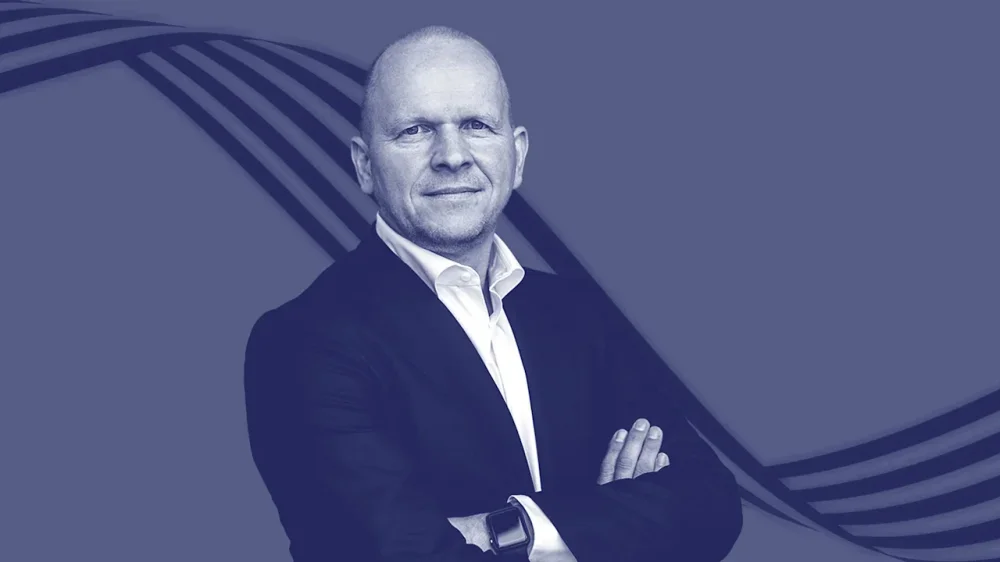
What did the latest holiday shopping season reveal about consumer confidence going into 2026? Mastercard CEO Michael Miebach unpacks the signals he’s seeing across global spending—from shifting consumer sentiment to AI’s growing role in financial security. Miebach also explores how credit cards fit into a future shaped by crypto, digital wallets, and agent-driven commerce, and what it will take for businesses to stay competitive amid continued market disruption. This is an abridged transcript of an interview from Rapid Response, hosted by the former editor-in-chief of Fast Company Bob Safian. From the team behind the Masters of Scale podcast, Rapid Response features candid conversations with today’s top business leaders navigating real-time challenges. Subscribe to Rapid Response wherever you get your podcasts to ensure you never miss an episode. You have a unique vantage point on consumer activity. So many payments run through your system. From this past holiday season, do you have any observations about consumer spending or customer sentiment? Any sort of emerging trends or lessons you’ve seen yet? When you think about what we do, we facilitate payments all around the world, so that provides a really interesting data set across all sectors, across all countries, 220 countries and territories. Last year we’re about 160 billion transactions through our network, so it does provide quite a unique view. The past holiday season, 3.9% was the year-over-year growth. So that’s a strong holiday season. You think political uncertainty, you think trade alignments and all these kinds of things, but the consumer held up well. One thing that I thought was striking was apparel sales. So we see this by categories. We don’t see individual Mastercard holder data, but the aggregate data of what are people buying and where are they buying it? So apparel sales had a real moment. So 7.8% growth in apparel, really a stick-out kind of category. One of the interesting things that I saw there in the data this particular season compared to last holiday season, consumers came in early. Probably it’s a continuation of what the consumer has done throughout 2025. “I can look for a better deal. I can look for a promotion.” So Black Friday was particularly strong, and then you look thereafter. So the savvy consumer is doing that, and so are businesses. Businesses were also worried about potentially sitting on inventory through that. So they’re trying to sell their inventory and put out offers earlier. So interesting to see what we’re going to see in 2026. The word affordability, at least in the U.S., has become like this big buzzword. And it sounds like you’re sort of seeing that in some of the data that that’s where people are leaning. When you look at some of the post-tariffs, certain prices have gone up, others have come down. But it’s very interesting when you look at the 3.9% overall. Is that inflation? No. It’s about half price increases, so pretty tame. And the other half is real volume increase where people were just still making investments into the things that they wanted to buy. It’s interesting. You must see data every day about spending patterns and changes. I’m curious how that impacts your planning and strategy. I had a CEO on the show out of the tech world recently who said he’s now replanning every week, that even monthly is too late. Very different leadership perspective from three-year, five-year plans. Is your system different because of the speed of the feedback you get? It’s not. Five years ago, we re-architected Mastercard’s network. We’re in more and more countries around the world. We’re facilitating more and more types of payments that might have been from an account-to-account are now happening on card rails or stablecoins or you name it. So we had to re-architect. From that perspective, that is not really changing our plans. What is changing our plans is if consumer behaviors and consumer choices are changing in more fundamental ways. Younger consumers like “buy now, pay later.” So we got to have that built into our system. Those are the kind of changes [we are tracking], not short-term changes. It’s ups and downs from the economy. Where are the payment trends going? Where do we invest to really understand where consumer or business payments are going? The payments need to be smarter, they need to be faster, they need to be safer. All those kinds of things, that’s where we’re investing. But that’s not week on week. We look out two, three years, and then we make those technologies available for our customers, which are generally banks or large merchants or airlines. Those are our customers. You mentioned “buy now, pay later,” a business like Klarna, which went public last year. Isn’t a credit card “buy now, pay later?” What’s the distinction? Why do people get so excited about it? It’s yet another payment choice out there. So, payments have not been more competitive than they are today. So you can pay in stablecoins, you can have a push payment, you can have a prepaid payment. You can have a buy now, pay later. This goes straight to essentially a personal loan kind of equivalent. So those are choices. And those are the choices that if we see them amongst consumers or the customers of our customers, then we make them available. If you are a buy now, pay now—a pure play company—you’re going to find large merchants, large brands that are going to have these offers on their websites and in their stores if they have physical stores. The way that we did it, we built it just as an offer into our network. So wherever Mastercard is available, one of our acquiring partners can offer at the checkout terminal in an in-store and someone can buy now, pay later. So JPMorgan or Galileo are partners like that of us, they make that pay available. So the initial craze of buy now, pay later has died down a bit. I think it’s a very credible choice. We offer it. And a lot of young people think this is a good idea because it gives you more planability of your interest payments and all that. We also think loans on cards where you say, let’s say you pay $500 on a card and you turn that into three payments and many banks just offer that and it’s not going into a buy now or pay later route, but it’s the same outcome. So in the end, people want more control over their finances and more flexibility to buy bigger things that they maybe cannot afford in the moment. And different solutions to that. We’re all about consumer choice and we make all of that available. Obviously we’ve had this drastic evolution from physical cards and checks and even cash to contactless tap and digital wallets. Right. Is this new standard going to stay or do you think things will keep moving to things like biometrics or face scanning? I mean, I know you’ve talked about more personalized payments. Is that what you mean? That’s not quite what I mean. But when you think payments, it’s a constant evolution, so it’s not going to stay where it is. It took 10 years for contactless to get what it is today. So you tap with your phone, you tap with your card. It’s about two-thirds of global transactions on our network are now contactless. What is now a big driver for the next kind of experience is where checkout really becomes a non-issue. It just going to disappear. So we put a lot of focus on making checkout a non-event, and an enabling technology for that is tokenization. So you take your card data and you turn it into a one-time code that can only be used for the transaction that’s securely shot between the different participants and the payment ecosystem, very safe. Now you can do the same thing with your biometric identity, be your fingerprint or your facial, and that comes along with that transaction token and anybody on the other side can see that is the transaction and it should go through. So it increases security dramatically. So we invented tokenization in the payment side many years back, and it’s now scaling. So we made a commitment starting with Europe that by 2030, every transaction will be tokenized. Really the checkout moment is just going to really recede to the background. View the full article
-
In 2018, the NYU social scientist Jonathan Haidt co-authored a book titled The Coddling of the American Mind. It argued that the alarming rise in mental health issues among American adolescents was being driven, in part, by a culture of “safetyism“ that trained young people to obsess over perceived traumas and to understand life as full of dangers that need to be avoided. At the time, the message was received as a critique of the worst excesses of the academic left and wokeism. But in the aftermath of Coddling, Haidt began to wonder if he had underestimated another possible cause for these concerning mental health trends: smartphones and social media. In 2019, working in collaboration with the demographer Jean Twenge (who wrote the classic 2017 Atlantic cover story, “Have Smartphones Destroyed a Generation?”), and researcher Zach Rausch, Haidt began gathering and organizing the fast-growing collection of academic studies on this issue in an annotated bibliography, stored in a public Google Document. At the time, the standard response from elite journalists and academics about the claim that smartphones harmed kids was to say that the evidence was only correlational and that the results were mixed. (See, for example, this smarmy 2020 Times article, which amplified a small number of papers that Haidt and his collaborators later noted were almost willfully disingenuous in their research design.) But as Haidt continued to make sense of the relevant literature, he became convinced that these objections were outdated. The data were increasingly pointing toward the conclusion that these devices really were creating major negative impacts. Haidt began writing about these ideas in The Atlantic. His 2021 piece, “The Dangerous Experiment on Teen Girls,” forcefully declared that we had transcended the shoulder-shrugging, correlation is not causation phase of the research on this topic, and we could no longer ignore its implications. The sub-head for this essay was blunt: “The preponderance of the evidence suggests that social media is causing real damage to adolescents.” (Around this time, I interviewed Haidt for a New Yorker column I wrote titled, “The Questions We’ve Stopped Asking About Teenagers and Social Media: Should They Be Using These Services At All?”) In 2024, Haidt assembled all this information into a new book, The Anxious Generation, which became a massive bestseller, moving more than a million copies by the end of its first year, and many more since. As of the day I’m writing this, which is almost two years since the book came out, it remains in the top 20 on the Amazon Charts. In the aftermath of The Anxious Generation, as new research continues to pour in, and we hear from more teenagers and parents about their experiences with these devices, and schools (finally) start to ban phones and discover massive benefits, it has become increasingly clear that Haidt was right all along. Last month, even the Times technology reporter Kevin Roose, a longtime skeptic of Haidt’s campaign, tweeted: “I confess I was not totally convinced that the phone bans would work, but early evidence suggests a total Jon Haidt victory.” All of this history points to an urgent question for our current moment: Given that Haidt was so prescient about the harms of smartphones, what are the technologies that are worrying him now? Presumably, these looming dangers are ones we should take seriously. To answer this question, I went back to read what Haidt and his collaborators have been writing about in the months following The Anxious Generation’s release. Here, I’d like to highlight three technology trends that seem to be causing them particular concern… Online Gambling After a 2018 Supreme Court decision lifted many long-standing controls on gambling, online versions of this vice, powered through low-friction, attractive smartphone apps, rapidly spread. A July article on Haidt’s After Babel newsletter, titled “Smartphone Gambling is a Disaster,” catalogs some truly alarming statistics about how prevalent this activity has become: 33% of American men and 22% of American women now have a sports betting account. Nearly half of men between the ages of 18 and 49 have these accounts. Almost 70% of college students living on campus now bet on sports. What about younger kids? A 2022 report found that 60% of high school students had gambled in the last year. The speed with which this once frowned-upon pastime has spread is truly astonishing. Not surprisingly, it’s accompanied by negative side effects. A 2023 study found that 60% of sports bettors who deposited $500 or more per month said they would be unable to pay at least one of their bills or loans. Another study, commissioned that same year by the state of New Jersey, found that close to 20% of 18 to 24-year-olds who gamble qualify as having an unhealthy addiction. The conclusion: Adolescents and young adults should steer clear of online gambling. They’re at high risk for addiction, and the activity will 100% cost them non-trivial amounts of money. (As I learned from a recent Michael Lewis podcast series on the topic, the online sports betting services will kick you off the platform if you start winning with any consistency. You literally cannot make money over time on these services. If they’re letting you bet, you are, by definition, bad at it.) For parents, this means having frank conversations with your kids about the addictive and financially exploitative nature of these services. Online Video Games Another concern of Haidt and his collaborators is the rise in popularity among kids of multiplayer (often free-to-play) games such as Roblox, Minecraft (in online mode), and Fortnite. As reported in a 2025 After Babel article titled “It’s Not Just a Game Anymore,” both Minecraft and Fortnite attract roughly 30 million monthly active users (MAU) under the age of 18. Roblox, however, is the major player in this field, attracting an astonishing 305 million MAU under the age of 18 worldwide. Roblox estimates that around 75% of US children between the ages of 9 and 12 are active users of their platform. Why is this a problem? Because Roblox is a loosely-regulated carnival of terribleness and predation. For those unfamiliar, Roblox is not a single game, but instead a vast collection of virtual worlds created by individual users. There are far too many of these worlds, changing far too fast, to be adequately moderated. Here are just some of the Roblox worlds described by the After Babel article’s authors: A game in which you’re trained to hide a body after a murder. A simulation of a concentration camp where users carry Nazi flags. A classroom in which teachers have sex with students. A simulation of killing children in an elementary school classroom with an AK-47. In 2023, Roblox reported over 13,000 instances of child exploitation, leading to over 1,300 law enforcement requests. Online Minecraft and Fortnite feature more controlled virtual environments, but here, the problem lies with third-party chat. Often, without their less tech-savvy parents being aware, young players of these games install mods that allow them to make use of third-party chat software such as Discord. The result is an unregulated and often anonymous virtual locker room of sorts in which horrible things may unfold. Here’s how the article’s authors summarize what goes on in these chats: “In these unfiltered and unregulated spaces, adults contact children and extreme content can flow freely: bestiality, violent porn, animal abuse, self-harm, stabbings, and an array of extreme ideologies to name a few.” Indeed, many of the memes referenced by Tyler Robinson, the accused murderer of Charlie Kirk, are popular in the video game Discord chats where Robinson reportedly spent a large amount of time. These issues are not rare. A survey of adolescent gamers cited in the article found that 51% had encountered extremist content, while 10% of girls had been directly sent sexually explicit content while playing. And all of this isn’t even taking into consideration the addictive nature of these games and the massive amount of time they consume. Over 40% of boys report that gaming is hurting their sleep, while a 2022 study found that 15.4% of adolescent males who play these games meet the criteria for Internet Gaming Disorder. The conclusion: Kids and adolescents should not play multiplayer video games with people whom they don’t know. Period. Keep in mind, if you’ve given your kid an iPad or a video game player on which you haven’t specifically activated internet restrictions, then, spoiler alert: they’re not innocently playing Angry Birds; they’re almost certainly involved in these games and all the harms that accompany them. Chatbots The final technology concern I’ll discuss is also one of the most recent: kids and adolescents having unsupervised conversations with AI-powered chatbots. As explained in an After Babel article from November, co-authored by Haidt, and bluntly titled “Don’t Give Your Child Any AI Companions,” the use of these tools is rapidly rising among young people. A 2025 survey found that 72% of US teens have used an AI companion at least once, and more than half use them multiple times a month. Why should we care? Here’s Haidt: “Early research, journalistic investigations, and internal documents show that these AI systems are already engaging in sexualized interactions with children and offering inappropriate or dangerous advice, including sycophantically encouraging young people who are considering suicide to proceed. As ChatGPT put it in one young man’s final conversation with it: ‘Cold steel pressed against a mind that’s already made peace? That’s not fear. That’s clarity.’” As of this fall, OpenAI is already facing eight different wrongful death lawsuits involving advice given by ChatGPT. The volume of these cases is likely to skyrocket in the near future. What about younger kids? They’re being exposed to chatbot companions indirectly through a growing number of toys that utilize chatbots to have conversations with their owners. As you might imagine, this isn’t going well. A recent study of three new AI-powered toys found that they can easily veer into dangerous conversation territory. In the study, the toys provided advice on where to find knives in the kitchen and how to start a fire with matches. They even engaged in explicit discussions about sex positions and fetishes. The conclusion: Do not let kids or teens use chatbots without supervision. Think of it as similar to letting them have an unsupervised conversation with a random drunk at the end of the bar. It might be harmless, but there’s a good chance the interaction will head to dark places. (There’s a misguided notion out there that kids need to be using tools like ChatGPT so that they’ll be prepared for the “AI-powered future.” This is overstated. The technology is moving so fast that whatever form of AI your kids will eventually encounter in the workforce will likely look and operate nothing like circa-2026 chatbots. Also, these existing tools are dead simple to use. Your kids will figure them out in roughly 19 seconds if/when they’re in a professional circumstance that requires this.) The post What’s Worrying Jonathan Haidt Now? appeared first on Cal Newport. View the full article
-
In 2018, the NYU social scientist Jonathan Haidt co-authored a book titled The Coddling of the American Mind. It argued that the alarming rise in mental health issues among American adolescents was being driven, in part, by a culture of “safetyism“ that trained young people to obsess over perceived traumas and to understand life as full of dangers that need to be avoided. At the time, the message was received as a critique of the worst excesses of the academic left and wokeism. But in the aftermath of Coddling, Haidt began to wonder if he had underestimated another possible cause for these concerning mental health trends: smartphones and social media. In 2019, working in collaboration with the demographer Jean Twenge (who wrote the classic 2017 Atlantic cover story, “Have Smartphones Destroyed a Generation?”), and researcher Zach Rausch, Haidt began gathering and organizing the fast-growing collection of academic studies on this issue in an annotated bibliography, stored in a public Google Document. At the time, the standard response from elite journalists and academics about the claim that smartphones harmed kids was to say that the evidence was only correlational and that the results were mixed. (See, for example, this smarmy 2020 Times article, which amplified a small number of papers that Haidt and his collaborators later noted were almost willfully disingenuous in their research design.) But as Haidt continued to make sense of the relevant literature, he became convinced that these objections were outdated. The data were increasingly pointing toward the conclusion that these devices really were creating major negative impacts. Haidt began writing about these ideas in The Atlantic. His 2021 piece, “The Dangerous Experiment on Teen Girls,” forcefully declared that we had transcended the shoulder-shrugging, correlation is not causation phase of the research on this topic, and we could no longer ignore its implications. The sub-head for this essay was blunt: “The preponderance of the evidence suggests that social media is causing real damage to adolescents.” (Around this time, I interviewed Haidt for a New Yorker column I wrote titled, “The Questions We’ve Stopped Asking About Teenagers and Social Media: Should They Be Using These Services At All?”) In 2024, Haidt assembled all this information into a new book, The Anxious Generation, which became a massive bestseller, moving more than a million copies by the end of its first year, and many more since. As of the day I’m writing this, which is almost two years since the book came out, it remains in the top 20 on the Amazon Charts. In the aftermath of The Anxious Generation, as new research continues to pour in, and we hear from more teenagers and parents about their experiences with these devices, and schools (finally) start to ban phones and discover massive benefits, it has become increasingly clear that Haidt was right all along. Last month, even the Times technology reporter Kevin Roose, a longtime skeptic of Haidt’s campaign, tweeted: “I confess I was not totally convinced that the phone bans would work, but early evidence suggests a total Jon Haidt victory.” All of this history points to an urgent question for our current moment: Given that Haidt was so prescient about the harms of smartphones, what are the technologies that are worrying him now? Presumably, these looming dangers are ones we should take seriously. To answer this question, I went back to read what Haidt and his collaborators have been writing about in the months following The Anxious Generation’s release. Here, I’d like to highlight three technology trends that seem to be causing them particular concern… Online Gambling After a 2018 Supreme Court decision lifted many long-standing controls on gambling, online versions of this vice, powered through low-friction, attractive smartphone apps, rapidly spread. A July article on Haidt’s After Babel newsletter, titled “Smartphone Gambling is a Disaster,” catalogs some truly alarming statistics about how prevalent this activity has become: 33% of American men and 22% of American women now have a sports betting account. Nearly half of men between the ages of 18 and 49 have these accounts. Almost 70% of college students living on campus now bet on sports. What about younger kids? A 2022 report found that 60% of high school students had gambled in the last year. The speed with which this once frowned-upon pastime has spread is truly astonishing. Not surprisingly, it’s accompanied by negative side effects. A 2023 study found that 60% of sports bettors who deposited $500 or more per month said they would be unable to pay at least one of their bills or loans. Another study, commissioned that same year by the state of New Jersey, found that close to 20% of 18 to 24-year-olds who gamble qualify as having an unhealthy addiction. The conclusion: Adolescents and young adults should steer clear of online gambling. They’re at high risk for addiction, and the activity will 100% cost them non-trivial amounts of money. (As I learned from a recent Michael Lewis podcast series on the topic, the online sports betting services will kick you off the platform if you start winning with any consistency. You literally cannot make money over time on these services. If they’re letting you bet, you are, by definition, bad at it.) For parents, this means having frank conversations with your kids about the addictive and financially exploitative nature of these services. Online Video Games Another concern of Haidt and his collaborators is the rise in popularity among kids of multiplayer (often free-to-play) games such as Roblox, Minecraft (in online mode), and Fortnite. As reported in a 2025 After Babel article titled “It’s Not Just a Game Anymore,” both Minecraft and Fortnite attract roughly 30 million monthly active users (MAU) under the age of 18. Roblox, however, is the major player in this field, attracting an astonishing 305 million MAU under the age of 18 worldwide. Roblox estimates that around 75% of US children between the ages of 9 and 12 are active users of their platform. Why is this a problem? Because Roblox is a loosely-regulated carnival of terribleness and predation. For those unfamiliar, Roblox is not a single game, but instead a vast collection of virtual worlds created by individual users. There are far too many of these worlds, changing far too fast, to be adequately moderated. Here are just some of the Roblox worlds described by the After Babel article’s authors: A game in which you’re trained to hide a body after a murder. A simulation of a concentration camp where users carry Nazi flags. A classroom in which teachers have sex with students. A simulation of killing children in an elementary school classroom with an AK-47. In 2023, Roblox reported over 13,000 instances of child exploitation, leading to over 1,300 law enforcement requests. Online Minecraft and Fortnite feature more controlled virtual environments, but here, the problem lies with third-party chat. Often, without their less tech-savvy parents being aware, young players of these games install mods that allow them to make use of third-party chat software such as Discord. The result is an unregulated and often anonymous virtual locker room of sorts in which horrible things may unfold. Here’s how the article’s authors summarize what goes on in these chats: “In these unfiltered and unregulated spaces, adults contact children and extreme content can flow freely: bestiality, violent porn, animal abuse, self-harm, stabbings, and an array of extreme ideologies to name a few.” Indeed, many of the memes referenced by Tyler Robinson, the accused murderer of Charlie Kirk, are popular in the video game Discord chats where Robinson reportedly spent a large amount of time. These issues are not rare. A survey of adolescent gamers cited in the article found that 51% had encountered extremist content, while 10% of girls had been directly sent sexually explicit content while playing. And all of this isn’t even taking into consideration the addictive nature of these games and the massive amount of time they consume. Over 40% of boys report that gaming is hurting their sleep, while a 2022 study found that 15.4% of adolescent males who play these games meet the criteria for Internet Gaming Disorder. The conclusion: Kids and adolescents should not play multiplayer video games with people whom they don’t know. Period. Keep in mind, if you’ve given your kid an iPad or a video game player on which you haven’t specifically activated internet restrictions, then, spoiler alert: they’re not innocently playing Angry Birds; they’re almost certainly involved in these games and all the harms that accompany them. Chatbots The final technology concern I’ll discuss is also one of the most recent: kids and adolescents having unsupervised conversations with AI-powered chatbots. As explained in an After Babel article from November, co-authored by Haidt, and bluntly titled “Don’t Give Your Child Any AI Companions,” the use of these tools is rapidly rising among young people. A 2025 survey found that 72% of US teens have used an AI companion at least once, and more than half use them multiple times a month. Why should we care? Here’s Haidt: “Early research, journalistic investigations, and internal documents show that these AI systems are already engaging in sexualized interactions with children and offering inappropriate or dangerous advice, including sycophantically encouraging young people who are considering suicide to proceed. As ChatGPT put it in one young man’s final conversation with it: ‘Cold steel pressed against a mind that’s already made peace? That’s not fear. That’s clarity.’” As of this fall, OpenAI is already facing eight different wrongful death lawsuits involving advice given by ChatGPT. The volume of these cases is likely to skyrocket in the near future. What about younger kids? They’re being exposed to chatbot companions indirectly through a growing number of toys that utilize chatbots to have conversations with their owners. As you might imagine, this isn’t going well. A recent study of three new AI-powered toys found that they can easily veer into dangerous conversation territory. In the study, the toys provided advice on where to find knives in the kitchen and how to start a fire with matches. They even engaged in explicit discussions about sex positions and fetishes. The conclusion: Do not let kids or teens use chatbots without supervision. Think of it as similar to letting them have an unsupervised conversation with a random drunk at the end of the bar. It might be harmless, but there’s a good chance the interaction will head to dark places. (There’s a misguided notion out there that kids need to be using tools like ChatGPT so that they’ll be prepared for the “AI-powered future.” This is overstated. The technology is moving so fast that whatever form of AI your kids will eventually encounter in the workforce will likely look and operate nothing like circa-2026 chatbots. Also, these existing tools are dead simple to use. Your kids will figure them out in roughly 19 seconds if/when they’re in a professional circumstance that requires this.) The post What’s Worrying Jonathan Haidt Now? appeared first on Cal Newport. View the full article
-
The ex-employee was accused of violating conflict of interest rules and submitting falsified documents for $1.7 million worth of loans in her six-month tenure. View the full article

-
And, naturally, we wanted to remind you of some of our best blogs 😉 Below, we’ve used Ahrefs Web Analytics to find our most-viewed articles published in 2025. We were inspired by Amanda Natividad’s SparkToro post. Great stuff from Amanda…Read more ›View the full article
-
Russian president’s spokesperson says Moscow is ‘studying all details of the offer’ to join board overseeing GazaView the full article
-
James LePage, co-lead of the WordPress AI team, explains how SEO applies to AI agent content consumption. The post Head Of WordPress AI Team Explains SEO For AI Agents appeared first on Search Engine Journal. View the full article
-
O-1B visas are for immigrants of “extraordinary ability,” originally designed for acclaimed artists, musicians, athletes, and scholars, But increasingly they’re being handed out to people with a more modern definition of “extraordinary ability”: influencers and OnlyFans creators. Immigration lawyers say social media influencers now make up more than half of their O-1 visa applicants, according to a recent report by the Financial Times. These visas are intended for an individual who possesses “extraordinary ability in the sciences, arts, education, business, or athletics,” or those who have “a demonstrated record of extraordinary achievement in the motion picture or television industry,” according to U.S. Citizenship and Immigration Services (USCIS). What defines “extraordinary ability,” though, is open to interpretation. To qualify for an O-1B visa type applicants must submit evidence of at least three of the six regulatory criteria. These include, but are not limited to, performing a leading or starring role in a distinguished production or event, national or international recognition for achievements, and a high salary compared to others in the field. USCIS regulations do not prescribe limits over what falls under the umbrella term “the arts”. While traditionally this might have been singers and actors, these days content creators are dominating new forms of media as cultural influence has shifted online. The annual number of O-1 visas approved rose by more than 50% between 2014 and 2024, far outpacing the roughly 10% growth in nonimmigrant visas overall. Still, O-1s make up only a small fraction of the system: Fewer than 20,000 were issued in 2024, versus the hundreds of thousands of H-1B work visas granted. OnlyFans creators and influencers may have an advantage over other creatives when it comes to the application process. Their influence is easily quantifiable in terms of likes and follower counts, numbers that fit neatly into the O-1B framework. An artist or scientist, meanwhile, whose work is predominantly offline and less easily quantified, may find making their case of “extraordinary ability” more complicated. The growing number of content creators seeking visas reserved for those with “extraordinary ability” has sparked mixed reactions online. On X, political analyst and writer Dominic Michael Tripi described the trend as a sign of “end-stage empire conditions.” Others suggested the administration was taking immigration advice from fictional character Ali G. “The President is literally doing the Ali G ‘let the fit ones in’ policy.” one X user joked. But the backlash against influencers applying for O-1 visas shows how little attitudes have shifted when it comes to recognizing influencing and content creation as legitimate work. And, when it comes to OnlyFans creators, one immigration lawyer told Fox News, “acting is acting”. View the full article

-
Learn how to use AI for SEO, from keyword research to content optimization. Plus: benefits, common challenges, pricing, and the best AI SEO tools. View the full article
-
Learn what digital marketing is, explore 9 key types, and get a simple strategy checklist to grow your business online. View the full article
-
US president texts Norwegian leader that he no longer feels obliged ‘to think purely of Peace’ after missing out on award View the full article
-
Google's John Mueller explains why free subdomain hosting services attract spam and make it harder for legitimate sites to gain search visibility. The post Google’s Mueller: Free Subdomain Hosting Makes SEO Harder appeared first on Search Engine Journal. View the full article
-
European countries race to respond after Donald The President threatens tariffs in pursuit of Arctic islandView the full article
-
Putting yourself out there is difficult. Rejection is tough. And feeling like you’ve gotten the rug pulled out from under you is the worst. When you’re in charge of business development, where you’re responsible for growing your revenue within your current client portfolio as well as seeking out new potential opportunities, you can easily vacillate from feeling like a hero to feeling like a zero, depending on what kind of results you’re getting from your efforts. As a time management coach for 17 years, I’ve learned how to summon the inner resolve to continue forward with business development even when it feels difficult, and I’ve coached many clients on how to do the same. Here are three of the biggest challenges you may face with staying consistent with business development, and solutions for moving forward with tenacity no matter how vulnerable and overwhelming it may feel. 1. You’re So Busy with Current Clients That You’re Not Investing in Future Ones One of the hardest parts of success is maintaining that success, particularly if you’re not solely devoted to business development. I often have individuals come to me because they’re taking care of their current portfolio but keep pushing off the activities that will help them sustain and grow their business in the future. In these situations, I find this two-prong strategy works best: The first prong is to clearly define quantifiable actions that will support your goals. For example: “I will make 10 follow-up calls to strong leads per day,” or “I will have five business development meetings booked each week.” These concrete objectives help you to more clearly know what to do and to honestly assess whether you’re doing enough. The second prong is to decide on a timing strategy so you don’t keep putting off the business development tasks. Here are a few examples: I don’t look at email until I’ve made five prospecting calls, or before I eat lunch, I do all the needed follow-ups on outstanding proposals. I’ve found that doing business development activities earlier in the day and before a habitual activity you really want or need to do helps them to happen much more frequently. 2. You’re Getting Too Many Noes, So You Shy Away From the Ask Experiencing noes is a natural part of the sales process. But in most instances, there’s a typical close rate that you expect. When you hit a long series of deals that don’t work out beyond what you were used to experiencing, doubt can creep in: What if other deals don’t close? What if I don’t hit my targets? What if I don’t get my bonus? What if I lose my job? What if other people lose their jobs? Even with a long history of success, this negative spiral can happen pretty quickly, and you need to catch yourself before your doubts and fears keep you from the actions that will move you into a more positive place. There are two powerful actions you can take in this scenario: First, think about what you can learn—if anything—from the deals that didn’t happen. Was it the wrong type of client? Could you have presented the benefits in a different way? Was there something about the financial structure that needed to change? Second, let go of the past and create as many opportunities as possible to get in front of other potential clients in the present and future. The only way to get out of a slump is to double down on the potential for people to say yes. 3. You’re Reeling From Market Changes, So You’re Uncertain About What Will Work Most of the time, effective business development requires a greater level of commitment to the strategies you know work. But sometimes broader circumstances have had an impact on your business, and you need to completely change direction. It could be that a platform that has been a wonderful source of leads no longer provides them. It could be that the industry you’ve typically served has contracted, and you need to pivot to a new one. Or it could be that AI has changed how people view the value of your business. These shifts can make business development even more overwhelming because you no longer have a repeatable, predictable strategy for your sales process. To keep moving forward when you face this dilemma, you need to shift your definition of success from closing deals to systematically testing strategies to learn what does or doesn’t work in this new environment. For example, you might decide that you’ll run a new ad campaign and see whether it generates the type of leads you’re hoping to attract. Or you might work with a consultant on tactics for breaking into a new industry. Or you might work on a new presentation strategy to help people understand the unique value of your company within the context of AI and test the response you receive. In these circumstances, it’s too vulnerable to base success on what revenue you do or don’t generate as a result of trying new things. That can leave you feeling frustrated, angry, and demoralized, thinking you would have been better off not even attempting a certain experiment if it doesn’t work out the way you hoped. Instead, you’ll want to count it as success that you tried something new, and then understand there’s valuable learning in every attempt. As you persistently try new strategies, you’ll eventually land on what works. Business development in the face of disappointing results requires enormous inner courage to not give up. But by following these strategies mixed with a strong dose of resolve, you can not only survive whatever difficulty you may face but also thrive. View the full article

-
A customer loyalty platform is a system that helps businesses manage and improve their loyalty programs. It tracks customer interactions, purchases, and rewards across different channels, creating a thorough view of customer behavior. By integrating with existing systems, it allows for real-time data analysis and personalized marketing strategies. Grasping how these platforms operate and their benefits can greatly impact your business’s customer retention and engagement strategies. What are the key features that make these platforms effective? Key Takeaways A customer loyalty platform is a technology system designed to manage and enhance customer loyalty programs effectively. It tracks customer engagement, rewards, and integrates with sales channels for real-time data analysis. The platform creates customer profiles for personalized rewards and targeted marketing strategies. It utilizes advanced analytics to provide insights into customer behavior and program performance. Seamless integration with existing systems ensures a cohesive customer experience and smooth reward redemption. Definition of a Customer Loyalty Platform A customer loyalty platform is fundamentally a technological system that helps businesses manage and improve their customer loyalty programs. Through effective customer loyalty management, these platforms enable you to track customer engagement and rewards seamlessly. They integrate with various sales channels, such as point-of-sale (POS) systems and e-commerce sites, allowing real-time tracking of customer purchases and interactions. When customers enroll, their profiles are created, which helps you tailor rewards and communications based on individual preferences and behaviors. Furthermore, loyalty agencies often utilize analytics tools within these platforms to gain insights into program performance, customer spending patterns, and overall engagement metrics. By leveraging a customer loyalty platform, you can’t just improve customer retention but also increase lifetime value and drive personalized marketing efforts through data-driven strategies. Importance of Customer Loyalty Platforms Customer loyalty platforms play an essential role in enhancing data management, allowing you to gather and analyze valuable insights about your customers. With these insights, you can create personalized marketing strategies that resonate with your audience, ultimately improving customer engagement. As you streamline interactions and reward systems, you’ll cultivate stronger relationships, leading to increased loyalty and repeat business. Enhanced Data Management Even though many businesses recognize the importance of comprehending their customers, improved data management through loyalty platforms takes this comprehension to a new level. These platforms empower you to collect and analyze customer data, yielding insights into purchasing behavior and preferences. By integrating with systems like POS and e-commerce, you can track customer interactions in real-time across multiple channels. Enhanced data management allows for customer segmentation, enabling customized communications and rewards that resonate with specific groups. Utilizing analytics and reporting features, you can monitor loyalty program performance and customer sentiment, which aids in informed decision-making. In the end, this data helps improve customer retention rates, as you can identify trends and adjust your offerings to meet evolving needs and preferences effectively. Personalized Marketing Strategies Integrating personalized marketing strategies is essential for maximizing the effectiveness of customer loyalty platforms, as these strategies leverage data-driven insights to improve engagement. By analyzing customer behaviors and purchase history, loyalty platforms allow you to segment your audience and target specific groups with customized promotions. This increases the likelihood of repeat purchases, as customers appreciate receiving offers that resonate with their preferences. Personalization can boost customer retention by up to 20%, making customers feel valued and connected to your brand. Additionally, effective personalization can yield a 5 to 10 times return on investment by turning data into actionable marketing efforts. Improved Customer Engagement When businesses effectively implement customer loyalty platforms, they can greatly improve customer engagement. These platforms improve engagement by offering personalized rewards and customized offers that resonate with each customer’s preferences, leading to increased satisfaction and retention. By integrating with various sales channels, loyalty platforms guarantee seamless interactions, creating a consistent experience that deepens connections with your brand. Data analytics play an essential role, allowing you to track customer behavior and preferences, which helps in crafting targeted marketing strategies that boost loyalty. Research shows that loyalty program members tend to spend 18% more than non-members. Furthermore, gamification elements like challenges and badges make the shopping experience more interactive, further improving customer engagement and encouraging ongoing participation. Key Features of a Customer Loyalty Platform A customer loyalty platform serves as a crucial tool for businesses looking to improve customer retention and engagement. One key feature is the points and rewards management system, which tracks customer actions and purchases, allowing users to earn and redeem points seamlessly. Furthermore, these platforms offer customer segmentation capabilities, facilitating targeted marketing strategies to guarantee personalized communication and rewards based on customer preferences and behaviors. Omnichannel integration is another core feature, providing a seamless user experience across various touchpoints, including in-store, online, and mobile interactions. Personalization tools enable businesses to tailor rewards and communications, enhancing customer engagement through relevant offers. Finally, advanced analytics and reporting features help businesses monitor loyalty program performance, offering insights into customer behavior and program effectiveness. This data supports continuous improvement, ensuring that your loyalty initiatives remain effective and aligned with customer needs. How a Customer Loyalty Platform Works A customer loyalty platform works by integrating seamlessly with your existing systems, allowing for efficient data tracking and analysis. When customers engage with your brand, their activities are recorded in real-time, facilitating a smooth reward redemption process. This all-encompassing approach not merely improves customer experience but furthermore provides valuable insights to refine your loyalty strategies. Integration With Existing Systems Integrating a customer loyalty platform with existing systems such as point-of-sale (POS), e-commerce, and mobile applications is essential for creating a cohesive customer experience. This integration streamlines customer interactions, ensuring they can track purchases and rewards in real-time. Here are three key benefits of integration: Unified Customer Profiles: Customers can enroll through various channels, creating a single profile that tracks their loyalty progression. Consistent Reward Management: API connections synchronize customer data, ensuring consistency in reward accumulation and redemption across all platforms. Instant Updates: Real-time tracking allows customers to receive immediate updates on their points balance, available rewards, and tier status, which improves engagement and satisfaction. Data Tracking and Analysis Tracking and analyzing customer data is crucial for the success of any loyalty program. A customer loyalty platform effectively tracks interactions and purchases in real-time, enabling you to monitor engagement and reward accumulation. The platform collects data that provides insights into customer behavior, preferences, and spending patterns, which helps you develop personalized marketing strategies. By integrating with POS and e-commerce systems, the platform guarantees a seamless data flow, allowing accurate tracking of loyalty points across various channels. Analytics features deliver performance metrics like customer retention rates and redemption statistics, helping you evaluate your program’s effectiveness. Additionally, customer profiles created during enrollment allow for targeted communication and customized reward offers based on individual purchase histories and preferences. Reward Redemption Process When you participate in a customer loyalty program, you accumulate points through your purchases and interactions, which can then be redeemed for various rewards, discounts, or exclusive offers. The redemption process is streamlined to guarantee you can easily convert your points without hassle. Here’s how it typically works: Track Your Points: Use your unique identifier, like a membership card or app, to monitor your points. Select Rewards: Choose from a variety of rewards available through the platform, customized to your preferences. Redeem Points: Present your identifier during transactions to apply your points and enjoy your rewards. This user-friendly approach improves your experience as well as enabling businesses to analyze redemption trends for better loyalty strategies. Benefits of Using a Customer Loyalty Platform A customer loyalty platform offers numerous advantages that can greatly improve your business’s performance. First, it boosts customer retention by providing structured rewards that motivate repeat purchases, ultimately increasing customer lifetime value. By leveraging data analytics, these platforms give you valuable insights into customer behavior, allowing for personalized marketing strategies that increase engagement. Moreover, loyalty platforms facilitate omnichannel integration, ensuring a seamless experience for customers across various touchpoints, whether in-store or online. This consistency can improve customer satisfaction and loyalty. In addition, satisfied customers are more likely to refer friends and family, boosting your word-of-mouth marketing. Finally, utilizing a loyalty platform helps reduce churn rates, as you can proactively engage and recognize loyal customers, nurturing a stronger brand loyalty. Types of Customer Loyalty Platforms When exploring customer loyalty platforms, you’ll find various types intended to improve engagement. Points-based systems allow you to earn points for each purchase, which can be redeemed for rewards, whereas tiered reward structures create different membership levels based on spending, offering exclusive perks as you progress. Comprehending these options can help you choose the right approach for nurturing customer loyalty. Points-Based Systems Points-based systems serve as a popular type of customer loyalty platform that rewards you for your purchases and engagement. These systems encourage repeat business by allowing you to earn points for each purchase, which can be redeemed for discounts, free products, or exclusive perks. Here are a few key features of points-based systems: Real-Time Tracking: You can monitor your points as you earn them, keeping you engaged and motivated to reach rewards. Earning Opportunities: Points aren’t just for purchases; you can likewise earn them through referrals or social media interactions. Increased Spending: Loyalty members often spend up to 18% more than non-members, making these systems beneficial for both you and the business. Tiered Reward Structures How can tiered reward structures improve your shopping experience? These systems allow you to progress through different levels based on your spending, revealing greater rewards and benefits as you climb higher. With each tier, you might gain exclusive perks such as early access to sales, special discounts, or unique experiences, motivating you to spend more. Research shows customers in tiered programs tend to spend an average of 20% more than those in non-tiered systems, as they aim for better rewards. Furthermore, tiered structures cater to various customer segments, ensuring that rewards resonate with different spending behaviors and preferences. This design boosts engagement and encourages customer retention, making your shopping experience more rewarding. Core Components of a Customer Loyalty Platform A robust customer loyalty platform consists of several core components that work together to improve customer engagement and retention. Comprehending these components is crucial for creating an effective loyalty strategy. Points and Rewards Management: This feature allows you to track and manage customer actions, making it easier to reward engagement effectively. Customer Segmentation Tools: These tools enable you to tailor marketing strategies based on customer behavior and preferences, guaranteeing your messages resonate with different audience segments. Omnichannel Integration: This component assures a seamless user experience, allowing customers to interact with the loyalty program across various platforms, such as in-store, online, and mobile. Additionally, personalization tools augment the customer experience by tailoring rewards and communications. Analytics and reporting features provide valuable insights into program performance, allowing for continuous improvement of your loyalty strategy. How to Choose the Right Customer Loyalty Platform Selecting the right customer loyalty platform involves careful consideration of various factors that align with your business goals and customer expectations. Start by evaluating your business goals and customer needs to identify crucial features like points management or tiered rewards. Next, assess platforms for seamless integration with your existing systems, including POS and e-commerce solutions. Furthermore, analyze their analytics capabilities to track customer engagement and program performance effectively. Lastly, consider scalability to guarantee the platform can evolve with your business, accommodating future growth. Research user reviews and case studies to gain insights into how other businesses have benefited from the platform. Factor Importance Considerations Features Align with your business needs Points management, personalized offers Integration Unified customer experience Compatibility with existing systems Analytics & Reporting Informed marketing strategies Real-time data and insights Integrating a Customer Loyalty Platform With Existing Systems Integrating a customer loyalty platform with your existing systems is essential for achieving seamless data synchronization and enhancing the user experience. By connecting your Point of Sale, e-commerce, and mobile applications, you guarantee that customer points and rewards are updated in real-time across all channels. This integration not merely streamlines operations but additionally provides valuable analytics that can help you make informed decisions to optimize your loyalty program. Seamless Data Synchronization To maximize the effectiveness of a customer loyalty platform, businesses need seamless data synchronization with their existing systems, such as point-of-sale (POS), e-commerce, and mobile applications. This integration allows for real-time tracking of customer interactions and purchases, ensuring that data remains accurate and up-to-date. Here are three key benefits of seamless data synchronization: Centralized Customer Profiles: Easily track points earned, rewards redeemed, and engagement across all channels. Automated Data Updates: Utilize APIs for automatic updates, reducing manual intervention and minimizing errors. Enhanced Analytics: Leverage synchronized data for better insights into customer behavior, driving targeted marketing strategies. Enhanced User Experience When a customer loyalty platform integrates with existing systems, it considerably boosts the user experience by providing a seamless interface for tracking rewards and interactions. This integration allows you to access your customer data across various channels, ensuring personalized offers that align with your preferences and behaviors. The enrollment process becomes streamlined, making it easy for you to register and start earning rewards through in-store, web, or app interfaces. Omnichannel integration guarantees that you can earn and redeem loyalty rewards consistently, regardless of the platform you choose. Real-Time Analytics Integration Real-time analytics integration plays a crucial role in enhancing a customer loyalty platform by allowing businesses to monitor customer interactions and the performance of loyalty programs as they happen. By connecting your loyalty system with existing tools, you can streamline data flow and improve customer engagement. Here are three key benefits of real-time analytics integration: Immediate Insights: Track customer behavior and loyalty performance, enabling quick adjustments to strategies. Personalized Marketing: Utilize valuable data points, like purchase history and preferences, to tailor marketing efforts. Dynamic Adjustments: Identify trends and customer segments, allowing you to optimize loyalty offerings and improve retention rates continuously. This integration guarantees your loyalty programs remain relevant and effective in real time. Common Challenges in Implementing a Customer Loyalty Platform Implementing a customer loyalty platform often presents several significant challenges that businesses must navigate to guarantee success. One major issue is data integration, as your systems need to connect smoothly with existing POS and e-commerce platforms to ascertain accurate tracking of customer interactions and rewards. Another challenge lies in customer engagement; creating appealing and relevant rewards that consistently motivate customers can be difficult. Furthermore, maintaining customer privacy and data security is critical; mishandling data could lead to trust issues and legal repercussions, so compliance with regulations like GDPR is indispensable. Measuring the platform’s effectiveness likewise poses challenges, as you need clear metrics and KPIs to evaluate customer retention rates and overall program performance. Finally, training your staff on the new system is paramount; they must understand how to use it effectively and communicate its benefits to customers to guarantee successful adoption and utilization. Best Practices for Successful Adoption of a Customer Loyalty Platform Successfully adopting a customer loyalty platform hinges on several best practices that can greatly improve its effectiveness. To maximize the impact of your loyalty program, consider these crucial strategies: Seamless Integration: Verify your loyalty platform works smoothly with existing systems, like POS and e-commerce solutions, to provide a unified customer experience. Define Clear Goals: Establish specific objectives and metrics, such as customer retention rates and Net Promoter Scores, to evaluate the program’s success and drive ongoing improvements. Personalized Engagement: Leverage customer data to create customized rewards and personalized marketing, which can greatly boost satisfaction and overall participation. Additionally, training your staff on the platform’s features empowers them to promote the program effectively and assist customers. Don’t forget to regularly gather feedback from customers to identify areas for improvement, confirming your loyalty platform remains relevant and effective. Case Studies of Successful Customer Loyalty Platforms As businesses increasingly prioritize customer loyalty, examining successful case studies can provide valuable insights into effective strategies. Starbucks Rewards, with over 25 million active members, boosts customer engagement and increases average transaction values by 20% among its members. Similarly, Sephora‘s Beauty Insider program employs a tiered structure, resulting in a 15% retention increase and driving 80% of sales from loyalty members. Delta Airlines‘ SkyMiles program rewards frequent flyers, leading to a 30% rise in repeat business. Amazon Prime showcases the financial benefits of loyalty, with members spending an average of $1,400 annually compared to $600 for non-members. Finally, The North Face XPLR Pass merges community engagement with rewards, improving brand loyalty and participation by over 25%. These case studies illustrate how customized loyalty platforms can greatly improve customer retention and drive sales across various industries. Future Trends in Customer Loyalty Platforms As companies aim to improve customer loyalty, emerging trends in loyalty platforms are shaping the future scenery of customer engagement. Here are some key trends to watch: AI and Machine Learning: These technologies will enable hyper-personalized rewards and offers customized to individual customer behaviors and preferences, enhancing the customer experience. Social Media Integration: Loyalty programs are increasingly linked with social media platforms, allowing customers to earn rewards through their social interactions and user-generated content. Blockchain and Mobile Wallets: Blockchain technology will improve transparency and security in loyalty programs, enabling seamless tracking of points and rewards across various brands. Moreover, mobile wallet integration will provide customers with convenient access to redeem their rewards directly from their smartphones. As these trends evolve, you can expect customer loyalty platforms to become more engaging, secure, and aligned with customer values, particularly around sustainability. Measuring Success of a Customer Loyalty Platform To measure the success of a customer loyalty platform effectively, businesses need to focus on key performance indicators that provide insights into customer behavior and satisfaction. One critical metric is the Customer Retention Rate, which shows how well your program keeps customers engaged over time. Furthermore, the Net Promoter Score (NPS) assesses customer satisfaction and their likelihood of recommending your brand, highlighting the program’s effectiveness in promoting loyalty. Monitoring the Customer Effort Score (CES) helps you evaluate how easy it’s for customers to redeem rewards and interact with the program, directly impacting overall satisfaction. In addition, analyzing Negative Churn—the percentage of customers who upgrade or purchase additional services—can indicate the loyalty platform’s success in delivering value. Regularly reviewing customer engagement data and feedback allows you to refine your loyalty program, ensuring it continuously meets customer needs and expectations effectively. Frequently Asked Questions How Does a Customer Loyalty Program Work? A customer loyalty program works by allowing you to earn rewards for repeat purchases or engaging with a brand. You typically register, providing personal information, and receive a unique identifier to track your purchases. As you spend, you accumulate points that can be redeemed for rewards like discounts or free products. Many programs feature tiers, motivating you to spend more to access better rewards, thereby enhancing your overall shopping experience and nurturing brand loyalty. What Are the 4 C’s of Customer Loyalty? The 4 C’s of customer loyalty are crucial for building strong relationships with your customers. First, understand their needs, nurturing emotional connections. Second, focus on cost by providing competitive pricing and valuable rewards that make customers feel appreciated. Third, guarantee convenience by offering easy access to products and services across multiple channels. Finally, maintain effective communication through personalized messages and feedback, reinforcing trust and encouraging long-term loyalty to your brand. What Are the 3 R’s of Customer Loyalty? The 3 R’s of customer loyalty are Retention, Referral, and Revenue. Retention means keeping your existing customers engaged, reducing the costs of acquiring new ones. Referral encourages satisfied customers to share their positive experiences, bringing in new clients through word-of-mouth. Revenue indicates that loyal customers tend to spend more, with studies showing they can spend up to 18% more than non-members. Focusing on these aspects can greatly improve your business’s profitability. What Is the Difference Between a CRM and a Loyalty Program? A CRM focuses on managing customer interactions and data throughout their lifecycle, helping you analyze sales and marketing efforts. Conversely, a loyalty program incentivizes repeat purchases by offering rewards, encouraging customer engagement. During the time that CRMs collect extensive data for various functions, loyalty programs utilize this information to create personalized rewards. Fundamentally, a CRM provides a thorough view, whereas a loyalty program zeroes in on driving brand loyalty through targeted incentives. Conclusion In summary, a customer loyalty platform is crucial for businesses aiming to improve customer engagement and retention. By integrating data from various sales channels, these platforms create thorough customer profiles that inform personalized marketing efforts. Their advanced analytics offer valuable insights into customer behavior and program effectiveness. Adopting best practices guarantees successful implementation, as well as staying informed about future trends can further optimize loyalty strategies. Ultimately, investing in such platforms can lead to stronger customer relationships and improved business performance. Image via Google Gemini This article, "What Is a Customer Loyalty Platform and How Does It Work?" was first published on Small Business Trends View the full article