All Activity
- Past hour
-
We may earn a commission from links on this page. The MacBook Neo seems to be anything anyone in the tech world can talk about this week. Apple somehow made a MacBook that does just about everything you want a MacBook to do, all for $599 ($499 with an education discount). That price point makes Apple's next-cheapest computer, the MacBook Air, seem borderline unreasonable for $1,099. MacBook Neo $599.00 at Amazon Shop Now Shop Now $599.00 at Amazon Part of what's fueling the hype here is how much the MacBook Neo could disrupt the budget and midrange laptop markets. Why spend $200 or $300 on a Chromebook when for a bit more, you could have a near-complete macOS experience? In the same vein, if you're turned off by Windows' insistence on unnecessary AI features and aggressive ads, but avoided Macs because of their high price tags, the Neo could turn you away from PC. In fact, much of the discussion around the Neo is how this might finally be the midrange Windows laptop replacement the market has been looking for. But a $499 MacBook isn't without compromises. The Neo has certain limitations you might not be used to from Apple's usual Macs, or from your Windows PC: There's only 8GB of RAM, even if you pay for the model with 512GB of storage; the keyboard doesn't have a backlight; and the USB-C ports are older, which means you can't charge as fast as other devices, or transfer data as quickly. But if you're coming from a Windows machine, and you're used to a certain way of doing things, you might be thinking: Can the MacBook Neo run Windows? The answer, it seems, is yes—but you probably shouldn't buy it for that. The MacBook Neo isn't the perfect Windows replacementFirst things first: the MacBook Neo can't run Windows natively. Those days are long behind us, once Apple switched from Intel chips to its own ARM-based Apple silicon. Intel Macs have "Boot Camp," which can install Windows directly onto a partition of the machine. With Apple silicon Macs, you need to use a third-party program to run Windows in a virtual machine. One such program is Parallels, long an option for Mac users looking to run Windows while still having ready access to macOS. As it happens, Parallels confirmed the MacBook Neo is compatible with its application, which means the computer's A18 Pro chip can handle running Windows in a virtual machine. Problem solved, right? Unfortunately, no. While Windows will run in Parallels on MacBook Neo, it might not be an ideal experience for many PC users. That's directly from Parallels itself, which commented: "For light, occasional Windows use, like a legacy business tool, or a Windows-only utility, MacBook Neo may provide an acceptable experience. For CPU- or GPU-intensive Windows applications, this computer is not the right choice." Part of the issue is that the virtual machine running Windows 11 requires at least 4GB of RAM. The MacBook Neo is locked at 8GB, which doesn't leave much room for macOS. Parallels runs concurrently with macOS, since it runs Windows 11 in its own window. It's like if Windows 11 was an app on your Mac, alongside Safari, Messages, or Mail. Once you start running too much at once, you could easily choke your machine. If you need to run Windows, consider these cheap laptopsIf you don't really care about Windows support, and you're just looking for a capable laptop at that $500 or $600 price point, then the MacBook Neo could definitely replace a comparable Windows machine. It'll also runs Microsoft apps that have Mac support, like Word, PowerPoint, and Teams. But I wouldn't recommend it for users looking for something that also runs Windows, and the Windows-only programs they're used to. If that sounds like you, you might want to look at budget and midrange Windows laptops, like the Acer Aspire 3 or Acer Aspire 16. If you still want both Windows and macOS access, consider a different MacBook. At that Neo price point, you could find an M1 MacBook Air with 16GB of RAM. The Neo actually outperforms the M1 in some ways, but that extra RAM will help you run Windows better in Parallels. View the full article
-
We may earn a commission from links on this page. This might be the whitest thing I've ever written, but I'm getting into sailing. A friend recently took me on a sail around Santa Barbara, and I finally really understand what Christopher Cross meant when he sang, "The canvas can do miracles. Just you wait and see." Except I don't know how to do it. So I was just sitting there, not actually sailing. It's personally frustrating to feel useless on the poop deck (It's called a "poop deck," right?), so I downloaded MarineVerse Sailing Club for the Meta Quest 3, and it became my "Upgrade of the Week." How I learned to sail the (virtual) seas with MarineVerse Sailing ClubThe next time I go sailing (which I hope is going to be soon, eh, Doug?), I'm going to be armed with whatever salty seamanship skills one can gain in virtual reality. MarineVerse Sailing Club lets you pilot and race five different crafts, from dinghies to yachts, in exotic VR locations all over the world like fake-Sydney and ersatz-Rio. But more importantly to me, it's a way to learn the basics of sailing: things like the names of parts of the boat, and more advanced boat-biz like tacking, jibing, and right-of-way rules. It features a series of easy-to-follow lessons that are way more interesting and fun than just reading about sailing, and you can take what you learn and face off with others in multiplayer races, or just sail around the virtual seas. MarineVerse Sailing Club $29.99 at Meta Get Deal Get Deal $29.99 at Meta I haven't really gotten into the community aspect of it yet, but Sailing Club has an active userbase of thousands of scalawags, many of whom are real-life sailors, who compete in organized racing leagues and jaw about the sea on Discord, just like a real sailing club. It's the kind of niche community that flourishes in virtual spaces. The focus is on realism instead of thrills and the graphics are very last-generation, so I don't know if I would recommend Sailing Club strictly as a game, but as a learning tool or cheap fix when you're far from the marina, it's worth $29.99. Even if you throw in the cost of a Meta Quest 3, that's a small fraction of the $10,000 you'd pay for a cheap sailboat. Obviously, you're only scratching the surface of sailing knowledge with a VR simulation, and the best VR sailing experience is about a two on the awesomeness scale compared to actually floating around in the ocean, but if you're like me, and you don't want to be a total sailing noob, it's a very fun first step. Ahoy! Meta Quest 3 512GB — The Most Powerful Quest — Ultimate Mixed Reality Experiences — Get Batman: Arkham Shadow - White $499.99 at Walmart $901.32 Save $401.33 Get Deal Get Deal $499.99 at Walmart $901.32 Save $401.33 View the full article
-
Six ways they can be used. By Danny Lohrfink The Holistic Guide to Wealth Management Go PRO for members-only access to more Rory Henry. View the full article
-
Six ways they can be used. By Danny Lohrfink The Holistic Guide to Wealth Management Go PRO for members-only access to more Rory Henry. View the full article
-
What can you anticipate and prepare for? By Jody Grunden Building the Virtual CFO Firm in the Cloud Go PRO for members-only access to more Jody Grunden. View the full article
-
What can you anticipate and prepare for? By Jody Grunden Building the Virtual CFO Firm in the Cloud Go PRO for members-only access to more Jody Grunden. View the full article
- Today
-
Tesla and SpaceX managers sent in to review work as billionaire’s start-up struggles to keep pace with rivalsView the full article
-
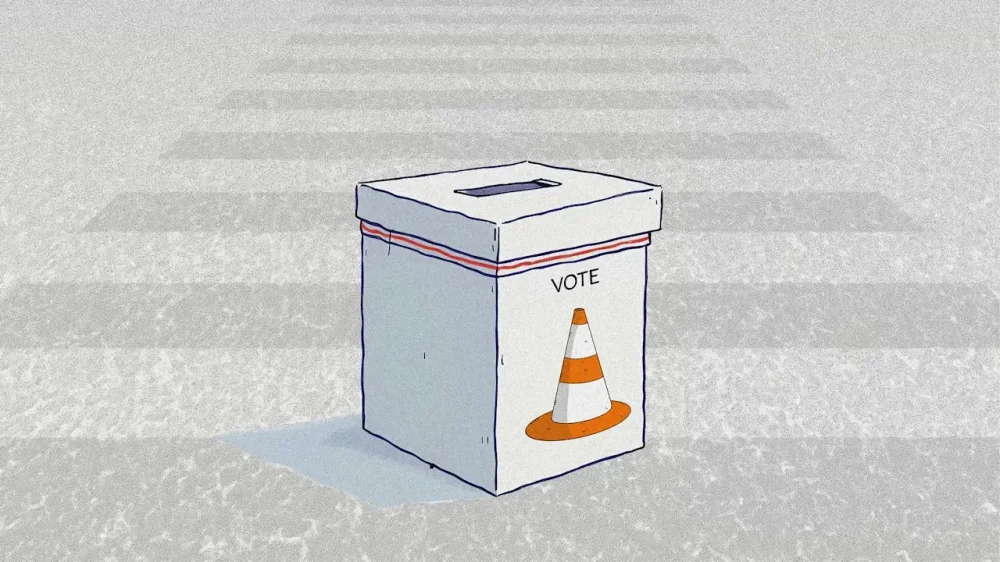
Every day in America, over 100 people are involved in a life-altering crash that severely injures them or kills them. And that 100-per-day doesn’t even include all the people whose lives are impacted indirectly by severe crashes. Vision Zero is a road safety philosophy that originated in Sweden in the 1990s and has since been adopted by cities across the United States and Europe. Its premise is straightforward: traffic deaths and serious injuries are preventable and can therefore be eliminated. With the right street design, traffic enforcement, and public awareness, everyone can get around safely. The problem is that severe crashes are a catastrophe so routine that it barely registers in the news cycle. Americans have been conditioned to think traffic violence is inevitable. One outcome of that conditioning is that people will campaign against transportation projects that improve safety. That’s right—against safety. Here’s a social media comment someone made to me in response to redesigning a street to improve safety: “Members of the public communicate their risk tolerance through voting. It is the job of engineers to comply with that, not to second guess democratic choices.” I get comments like that all the time, and it’s not just anonymous bots. Putting transportation safety projects up for a Yes/No vote reminds me of this quote that’s often attributed to Ben Franklin: “Democracy is two wolves and a lamb voting on what to have for lunch.” Democracy is a trap We don’t vote on airplane safety. Imagine being handed a survey when you board a plane: Should the airline prioritize your arrival time or the structural integrity of the landing gear? That would be absurd. We trust aviation engineers to design safe aircraft. Passengers vote with their wallets, but no one gets a veto over whether safety is a priority in the first place. Surface transportation doesn’t work this way. When a city proposes narrowing a street to reduce speeding, neighbors show up to meetings and call it an “attack on drivers.” When a protected bike lane is added to a corridor with a history of fatal crashes, it gets removed after community complaints. When a signal timing change is proposed to give pedestrians more crossing time, it gets killed because drivers worry about congestion. When illegal parking that blocks sightlines at intersections is enforced by police, the cries of over-reach flood city hall. Safety improvements frequently die by popular vote and public pressure. Americans, given the choice between their personal convenience and other people’s safety, have repeatedly chosen convenience. This is the democracy trap: the idea that every engineering decision must survive a public referendum, including decisions that exist specifically to protect human life. There’s a reflexive response to this argument that goes: “So you want to just override what people want by taking out a lane? That’s anti-democratic.” That framing means your life, your child’s life, your neighbor’s life, my life, are all subject to negotiation. It means a neighborhood miles away gets to weigh in on whether a dangerous intersection near your home gets fixed. It means the people who are most likely to be harmed—pedestrians, cyclists, children walking to school, elderly residents are outvoted by people who are primarily concerned about shaving seconds off their drive no matter the cost to others. We don’t hold referendums on building codes. We don’t ask neighborhoods to vote on whether restaurants should have to refrigerate meat. Some protections exist precisely because they shouldn’t be contingent on majority sentiment. The same logic should apply to street design. Get out the vote The binary Yes/No vote to allow or forbid safety improvements needs to be tossed out. That doesn’t mean the public should be shut out of transportation decisions, it means the kind of community engagement needs to change. Right now, transportation agencies and local governments often ask the wrong question: Do you want this safety improvement? That question is almost designed to fail, because most people don’t understand how street design contributes to crashes. They don’t know that wider lanes encourage faster driving. They don’t know that a 20 mph impact is survivable for a pedestrian while a 40 mph impact usually isn’t. They don’t know that on-street parking sometimes makes a street safer and sometimes makes a street more dangerous. City transportation systems are complicated. When you ask people an uninformed question, you get an uninformed answer. The better approach is education first, options second. Explain what Vision Zero is. Show people the data on speed and crash severity. Help them understand what road diets, raised crosswalks, curb extensions, signal changes, and what each one accomplishes. Ask for input about the problems they’re experiencing: People drive too fast on this street. I wish my neighborhood was quieter. I can’t see around the corner when I turn. Nobody stops their car for me at the crosswalk. The light turns red before I can walk across the street. There’s no easy way for my kids to ride bikes to school. I have to walk 15 minutes to the nearest bus stop. If I miss the bus, I have to wait an hour for the next one. That’s meaningful public engagement. It respects people’s intelligence while also respecting the reality that prioritizing human life is not up for debate. Culture shift is necessary In the US alone, tens of thousands are killed in traffic crashes every year. Hundreds of thousands more experience life-altering injuries. The idea that driving fast and without friction is a kind of birthright is woven into our infrastructure, our zoning, our politics, and our sense of personal freedom. Changing safety culture is hard, but it has changed before, in other places, and it can change here. We don’t ask voters to approve seatbelt laws every few years. We don’t hold referendums on speed limits every time someone complains. Engineers, pilots, air traffic controllers, and ground crews made aviation extraordinarily safe not by polling passengers, but by treating safety as a non-negotiable foundation, and then inviting the public to make choices within that foundation. That’s the model for reaching Vision Zero. Not a top-down dismissal of community voices, but a reordering of the conversation: safety first, preferences second. Engage people early and help them visualize what’s possible, and for crying out loud, build safer transportation systems. View the full article
-
We may earn a commission from links on this page. Cleaning your home can be exhausting and time-consuming at the best of times—but then there are all of those areas that are also just downright annoying to clean, often because they are difficult to reach or uncomfortable to work on. To help you out, here is a range of gadgets, tools, and products that can make cleaning those problem areas a little faster, easier, and less likely to raise your blood pressure. If you’re tired of climbing ladders, kneeling until your back aches, and wasting time doing cleaning tasks that don’t actually seem to leave your house feeling cleaner, consider these 10 products that can make cleaning less annoying. Pikk-it Vacuum Hair Brush Cleaner Tool $8.99 at Amazon Shop Now Shop Now $8.99 at Amazon FlexiSnake Drain Weasel $9.99 at Amazon Shop Now Shop Now $9.99 at Amazon Window Blind Duster Brush $6.99 at Amazon Shop Now Shop Now $6.99 at Amazon Instant Power Toilet Tank Cleaner $5.28 at Amazon $5.86 Save $0.58 Shop Now Shop Now $5.28 at Amazon $5.86 Save $0.58 Baseboard Cleaner Tool $21.99 at Amazon $29.99 Save $8.00 Shop Now Shop Now $21.99 at Amazon $29.99 Save $8.00 Broom Carpet Rake and Squeegee $31.99 at Amazon $35.99 Save $4.00 Shop Now Shop Now $31.99 at Amazon $35.99 Save $4.00 Grout Stain and Sealant Whitener $26.99 at Amazon Shop Now Shop Now $26.99 at Amazon Blade Maid Ceiling Fan Blade Cleaner $24.99 at Amazon Shop Now Shop Now $24.99 at Amazon Magnetic Window Cleaner $46.97 at Amazon Shop Now Shop Now $46.97 at Amazon Scrub Daddy Damp Duster $9.45 at Amazon $15.95 Save $6.50 Shop Now Shop Now $9.45 at Amazon $15.95 Save $6.50 SEE 7 MORE This picking tool will keep your vacuum brush cleanYour vacuum has a roller brush that gathers up hair and dust from the floor—and that brush can get completely wrapped up in hair and other debris, reducing its effectiveness. That results in more time spent running the vacuum, a shorter lifespan for the appliance, and a lot of frustration. This picker tool is a thread-ripper designed specifically to clean your vacuum’s brush. Just rake it through that tangled mess and pull all that hair and string out of there. This flexible drain cleaning tool is more effective than traditional snakesIf you’ve lately been standing in a half-inch of lukewarm shower water or waiting patiently for the water to go down in your sinks, it’s likely that your drains are clogged with hair and other...stuff. Cleaning out a drain requires either disassembling the drain or using harsh chemical cleaners that don’t always work (and can damage your pipes over time). Instead, pick up a drain weasel. It’s essentially a miniature drain snake—you push it into the drain, turn the crank, and pull out a wad of the grossest stuff you have ever seen. This tool makes cleaning blinds less time-consumingCleaning window blinds is a tedious task without the right tool. Blinds are flexible and easily damaged, so you have to be careful wiping them down with a rag or paper towel, which means you often leave a lot of damp dirt behind. This window blind duster brush makes things easier—just insert it between two of the blinds and wipe away all that dirt. The microfiber sleeves can be washed and re-used, and the tool works on two blinds at once. A cleaning powder to take care of the part of your toilet you never think aboutOne spot most people completely ignore in their house is the toilet tank. It’s just a reservoir of water, so why bother cleaning it? There are some good reasons, actually. Uncleaned tanks can lead to the growth of mold and bacteria that can stink up your bathroom and, in rare cases, cause health issues. Cleaning the toilet tank can be a thankless job, unless you use a cleaning product like this cleaning powder, which does it for you. Just dump it in and stir—preferably before you go to bed or leave the house, as the longer you let it work the better your results. Use this extension tool to clean your baseboards without straining your backOh, man, baseboards. They’re so easy to overlook, because they’re way down at floor level. But when you do happen to get an up-close look at them, you realize that they’ve collected months of dust, dirt, and stains, and that means getting down on your knees and cleaning them. But this baseboard cleaning tool makes it a lot easier. You can use it from a standing position, and the contoured pad makes it easy to clean all of the baseboard without resorting to the invention of new yoga positions. A silicone broom is a great way to deal with pet hair on your carpets and couchesIf you have pets, you know that they are essentially fur-generating machines, and it’s the fur that gets embedded into your carpets and upholstery that’s the real problem. Even the most powerful vacuums can struggle to pull it out. Save yourself the trouble and pick up a silicone broom like this one. After vacuuming, use the broom on your rugs and other areas—it will pull out a shocking amount of fur that’s been trapped in the pile. A gel that can clean mold and mildew from grout and other surfacesfew cleaning tasks are more frustrating than cleaning moldy grout or caulk. It takes a long time, and that time is generally spent sweating and kneeling as you scrub away with a cleaner that seems like it could melt steel, but which doesn’t seem to have any effect on the dark stains at all. Make this annoying chore a little easier with this grout stain whitening gel. Just apply it to your stained grout and caulk, leave it on for as long as needed (it’s clear, so you can literally see its progress), then wipe it off and enjoy your sparkling shower, sinks, and windows. This tool that cleans your ceiling fans, no ladder requiredCeiling fans make your house more comfortable and energy-efficient, but no one cleans them often enough. If you’ve ever had to climb up there and caught a glimpse of a weirdly sticky, dust-encrusted fan blade, you know how disgusting they can get. And they’re challenging to clean. Not only do you have to climb to their level, they often move around too much for easy scrubbing, and dust and dirt falls off of them onto your floors and furniture. The Blade Maid is a great solution—this tool allows you to clean your fan’s blades safely from the floor, using a clever dual-pad design that gets the top and bottom of the blades clean and traps debris. A magnetic double-sided window cleaner to clean both sides of your windows at onceCleaning windows is essential if you want your house to actually feel clean. No matter how tidy everything is on the inside, if you’re squinting through grime when you look out the window it won’t be enough, and you have to clean both the inside and the outside. This magnetic window cleaner makes doing both easier—and safe. Add detergent and water, secure the cord around your wrist so you don’t lose the tool, and clap each half on either side of the window to clean them both at once. A Damp Duster mop that works better than a dusting clothThe Damp Duster is essentially a grooved sponge, and it works by what feels like magic: You dampen it with water, then dust with it. It molds itself to surfaces and pulls dust and other dirt away easily, no sprays or solvents required—you just get it wet, dust a surface, rinse it, and repeat. It’s doesn’t leave streaks, and can be reused more or less forever. View the full article
-
This week's most important Wi-Fi news is mostly from Embedded World in Nuremberg. The post Roundup: News from Morse Micro & Qualcomm at Embedded World plus latest enterprise Wi-Fi 7 forecast from Dell’Oro appeared first on Wi-Fi NOW Global. View the full article
-
Carriers in the trucking and transportation industry are getting a significant boost with the recent collaboration between TCS Blockchain and PayPal USD. This partnership aims to resolve longstanding cash flow issues that small transport businesses have faced for decades. By utilizing blockchain technology and digital assets, PayPal and TCS Blockchain seek to offer a more efficient way for trucking companies to settle freight invoices. Traditionally, small carriers often relied on factoring companies to manage their cash flow, which subjected them to pay terms stretching between 30 to 180 days. This process not only delayed payments but also typically resulted in substantial fees, effectively cutting into their profits by 30% or more. The new solution promises a modern alternative, potentially upending legacy payment structures in this essential industry. TCS Blockchain has already made waves by settling the world’s first freight invoice on-chain and has processed nearly 30 million TCS Tokens in B2B settlement. The implications of this for small businesses are notable, as TCS offers same-day funding in a much more cost-effective manner—up to 90% cheaper than conventional invoice factoring. May Zabaneh, Senior Vice President and General Manager of Crypto at PayPal, emphasized the transformational potential of this technology: “If we were designing B2B payments from scratch, we wouldn’t accept months-long settlement and layers of fees. We’d expect speed, transparency, and 24/7 availability.” This statement sets a clear expectation for business owners who are eager to break free from the constraints of traditional finance. The partnership will allow carriers to easily onboard with TCS and set up accounts that facilitate seamless settlements through the conversion of TCS Tokens into U.S. dollars. This simplified process, paired with the speed and transparency offered by blockchain technology, bodes well for increasing not only the cash flow for these businesses but also their operational efficiency. As Todd Ziegler, CEO of TCS Blockchain, stated, “TCS is on pace for over one billion in annual freight invoice flows in 2026.” This growth will be supported by the use of PayPal USD as the back-end settlement currency. The streamlined approach indicates a substantial win for truck drivers and freight brokerages, placing financial power back in the hands of those who need it most. The practical implications for small business owners are significant. Embracing digital asset settlements makes it easier to manage cash flow, allowing businesses to reinvest in growth without waiting for invoicing cycles to close. With improved speed, transparency, and decreased fees, financial operations can become far more predictable, aiding in overall business planning. However, small business owners should also be aware of potential challenges. Adopting new technology can come with a learning curve, and not everyone in the trucking sector may be familiar with blockchain or digital assets yet. While the benefits are significant, the initial adaptation period may require time and training. Ensuring that your staff is educated on how to use these new tools will be essential for a smooth transition. Ultimately, the collaboration between TCS Blockchain and PayPal USD stands to create a more favorable financial landscape for trucking and transportation businesses. By leveraging blockchain technology, these companies can expect enhanced cash flow management, lower costs, and greater overall transparency in their financial dealings. As the industry moves towards this innovative future, small business owners are encouraged to consider how these developments could affect their financial strategies. The landscape of freight payment is evolving, and those who adapt early may gain a substantial competitive advantage. For more detailed information, you can refer to the original press release here. Image via Google Gemini This article, "PayPal and TCS Blockchain Transform Trucking Payments with Digital Currency" was first published on Small Business Trends View the full article
-
It’s the Friday open thread! The comment section on this post is open for discussion with other readers on any work-related questions that you want to talk about (that includes school). If you want an answer from me, emailing me is still your best bet*, but this is a chance to take your questions to other readers. * If you submitted a question to me recently, please do not repost it here, as it may be in my queue to answer. The post open thread – March 13, 2026 appeared first on Ask a Manager. View the full article
-
The days of building campaigns around long lists of keywords are fading. Today, AI-powered Google campaigns and features like Performance Max (PMax) and AI Max are changing the rules. These keywordless campaigns lean on automation, audience signals, and machine learning to find new opportunities, often faster and at greater scale than humans can. At SMX Next, three PPC pros — Nikki Kuhlman, VP of search at Jumpfly; Brad Geddes, founder of Adalysis; and Christine Zirnheld, director of lead gen at Cypress North — explained where PMax and AI Max fit into your broader campaign strategy, where humans still make the difference, and how to strike the right balance between automation and control. AI Max for Search: Best practices and what not to do AI Max for Search is not a new campaign type. It’s a one-click opt-in setting within existing Search campaigns. Without requiring you to switch to broad match, it expands your keywords — similar to broad match or Dynamic Search Ads — using your landing pages and other site assets. It then personalizes the ad copy and landing page the searcher sees. The evolution from traditional setup In the old setup, you might have used a keyword like “skincare for dry sensitive skin” that sent users to a moisturizer page with generic ad copy because you couldn’t capture every variation. With Google’s current matching, a specific ad group no longer guarantees that keyword will trigger that ad group. AI Max for Search addresses this by generating ad copy based on the search query, making it more relevant and directing users to a landing page that better matches their needs. Success with blog content One area where AI Max for Search is seeing success beyond the norm is blog content. While DSA campaigns traditionally excluded blogs, AI Max for Search can now serve blogs as landing pages—and they’re converting. The key is that these blogs guide readers to specific products, not just general content. The generated headlines are compelling and longer than what traditional RSAs allow, creating a more engaging user experience. Best Practices for AI Max for Search Do: Use it on existing campaigns with history and data, not brand new campaigns Test it as a 50/50 experiment instead of an outright change Use it on brand campaigns with brand inclusion capabilities Apply it to campaigns not hitting budget that could use more volume Review landing pages and utilize URL exclusions (individual or rule-based) Use landing page inclusions at the ad group level Review search queries regularly and add negative search terms Enable both text customization and final URL expansion for maximum value Turn off AI Max at the ad group level when specific ad groups drive poor traffic Don’t: Use it on brand new campaigns without data Change all campaigns at once without testing Use it on brand campaigns without name recognition or brand inclusion ability Apply it to budget-constrained campaigns Turn off both URL expansion and text customization — if you’re not using both features, stick with broad match and smart bidding Assume it works universally — test on individual campaigns Your action plan Week 1: Pick a search campaign to test (brand with brand inclusion, with budget capability, needing more volume). Review landing page URLs and add inclusions or exclusions. Week 2: Review search queries and add negatives. Week 3: Continue optimization and turn off AI Max at the ad group level as needed. Experiment checklist: Ensure enough volume for a 50/50 experiment Give the experiment 6 weeks to 2 months Set up a custom experiment if you need to enable brand inclusion or update settings For one-click experiments, change confidence level to medium and turn off auto-apply Match type performance: What the data shows A comprehensive study analyzing over 16,000 campaigns revealed surprising insights about match type performance across different bidding strategies. Match type basics Exact match: Should match only when the search term has the same intent as your keyword. Misspellings and word order haven’t mattered for years — focus on user intent. Phrase match: The search intent should match your keyword, but could have additional information around it, whether modifiers, phone numbers, or websites. Broad match: Shows for anything related to the search intent. The key difference is that broad match uses additional signals that exact and phrase don’t, such as content on the landing page, other keywords in the ad group, and, most powerfully, previous search history for that user. Performance by bidding strategy Max Conversion strategies (Max Conversions, Max Conversion Value): Most campaigns using max bid strategies have under 30 conversions per month, giving machines limited data to work with. The findings: Exact match has the best click-through rates and conversion rates Broad match had the worst conversion rates but the best return on ad spend Broad match also had lower CPA than phrase match Phrase match performed worst overall Recommendation: Start with exact match, then skip phrase match entirely and layer in broad match if you have more budget to spend. Target Bid Strategies (Target CPA, Target ROAS): Most campaigns using these strategies have over 30 conversions per month, with many at 50 or 100+, giving machines substantially more data. The findings: Exact match is again the best match type Phrase match comes second Broad match is third Phrase match performs better with more data Recommendation: Start with exact match, layer in phrase match with more budget, then add broad match if additional budget is available. The phrase match puzzle Why does phrase match perform poorly with limited data but better with more data? Broad match uses additional signals, particularly previous search queries, to determine bids. When conversion data is limited (under 30 conversions monthly), broad match’s ability to leverage previous search history makes it much stronger than phrase match. However, with sufficient data (50–100+ conversions), Google can properly match phrase match keywords using machine-learning pattern matching. Brand vs. non-brand considerations When you combine brand and non-brand data, exact match becomes even more powerful, delivering significantly higher click-through rates, higher conversion rates, lower CPAs, and much higher return on ad spend. That’s why segmenting keywords by brand and non-brand is crucial when determining your match type strategy. Ecommerce exception For ecommerce companies, broad match (and sometimes phrase match) can produce higher average order values than exact match. When someone searches for a specific product, and you carry that exact item, conversion rates are high, but they’re usually buying a single product with a lower checkout value. When shoppers haven’t decided on a product, they tend to match broader keywords and build larger carts — resulting in lower conversion rates but higher order values. Performance Max for lead generation There’s a common misconception that Performance Max only works for ecommerce and is too difficult for lead generation. That couldn’t be further from the truth. The critical success factor The biggest mistake you can make—one you should avoid entirely—is optimizing campaigns for form submissions alone. If you treat every form submission as your campaign goal, you’ll end up with spammy submissions and frustrated sales teams. The solution: integrate your Google Ads account with your CRM and import bottom-of-funnel leads—sales-qualified leads (SQLs), marketing-qualified leads (MQLs), opportunities, or even customers if the sales cycle is short. When you tell Google Ads what you actually want and set it as your campaign goal, Performance Max can cast a wide net while still bringing in qualified prospects. Available controls for regulated industries Performance Max has significantly more controls now than at launch, making it viable for highly regulated industries: Brand exclusions: Exclude all brand traffic from Performance Max campaigns Campaign-level negative keywords: Exclude unwanted search terms directly Search term reports: See what’s triggering your ads and exclude accordingly Channel reporting: View spending and performance across different networks Page feeds: Control where you send traffic on your site Final URL expansion toggle: Turn it off completely if needed Text enhancement controls: Optional feature that can be disabled entirely Text guidelines: Specify words to avoid (e.g., “discount” or “directory”) Device control: The secret weapon for B2B One of the most underutilized levers for B2B and regulated industries is device control, introduced at the beginning of 2025. You can turn off any device from your Performance Max campaign. A B2B SaaS example demonstrates the impact: Before device segmentation in January, the account had 224 SQLs from desktop at an acceptable CPA, but 33 from mobile at $319 CPA (above goal). After creating separate mobile campaigns with more aggressive target CPAs, they achieved 190 desktop SQLs and 37 mobile SQLs in a shorter month, with mobile CPA dropping to $204 and overall Performance Max CPA declining from $238 to $204. Real Performance Max results for B2B SaaS Despite lower conversion rates from Performance Max compared to search campaigns (due to broader reach), the results speak for themselves. In September 2025, one B2B SaaS account achieved: Search Campaigns: 150 SQLs at $237 CPA Performance Max: 204 SQLs at $220 CPA Performance Max cast a wider net with cheaper CPCs, bringing in not just more leads but more sales-qualified leads at a lower cost. How they did it: Optimized for SQLs, not form submissions Set lower target CPAs in Performance Max than search (to control spend while casting wider net) Created separate campaigns for off-hours to control weekend spending Turned off final URL expansion and text enhancements (client preference) Implemented separate mobile and tablet campaigns with aggressive target CPAs AI Max for Search in lead generation AI Max for Search brings the power of Performance Max to the search network, where bottom-of-funnel intent is strongest. This is especially valuable for lead generation accounts that spend on other networks in Performance Max but don’t generate leads from them. Early results: Higher ed financial services A higher education financial client (loan products) showed promising early results: Approved applications (primary KPI): Standard Search: 86 approved applications at $660 CPA AI Max: 70 approved applications at $579 CPA AI Max brought in qualified leads cheaper despite the highly competitive keyword environment. Down-funnel performance Beyond the initial conversion action (soft credit check), AI Max showed superior performance throughout the funnel: 42% of AI Max form submissions resulted in soft pulls vs. 36% for standard search 9.9% of AI Max form submissions resulted in bookings vs. 5.58% for standard search AI Max isn’t just bringing more qualified prospects at the top—lead quality remains higher throughout the entire funnel. How they did it: Optimized for approved applications, not form submissions Set lower target CPAs in AI Max than standard search Used high-performing bottom-of-funnel keywords with broad match types Kept final URL expansion and text enhancements disabled (still worked well without them) Win with AI without losing control PPC success requires embracing AI-driven campaigns while maintaining strategic human oversight. Whether you use AI Max for Search, Performance Max for lead generation, or adjust match types based on bidding methods and data volume, the key is understanding how these tools work and applying best practices aligned with your business goals. The data is clear: exact match remains powerful across scenarios, but phrase and broad match perform differently depending on bidding strategy and data volume. For lead generation, the game changer is optimizing for true bottom-of-funnel conversions rather than form submissions, combined with strategic device controls and proper campaign segmentation. The future of PPC depends on knowing when — and how — to apply automation and control for maximum impact. View the full article
-
Don't get stung. Here's how. By CPA Trendlines CPA Trendlines Academy Go PRO for members-only access to more Bradley Burnett. View the full article
-
Don't get stung. Here's how. By CPA Trendlines CPA Trendlines Academy Go PRO for members-only access to more Bradley Burnett. View the full article
-
President and high-profile officials among those who participated View the full article
-
Cambodia said Friday it has drafted its first law targeting online scam centers, after vowing to shut them down by the end of April. Cambodia is a major hub for scam operations, which extort money from victims online through bogus investment schemes and feigned romances. Victims around the world are estimated to have been cheated out of tens of billions of dollars annually. At the same time, thousands of people, especially from other Asian nations, have been recruited with false job offers and then forced to work in scam centers in conditions of near-slavery. “This law is the most important legal instrument for Cambodia in combating scams online, fighting money laundering and demonstrating that Cambodia is not a paradise or a safe haven for criminals,” Information Minister Neth Pheaktra said in a statement. The new legislation approved by the Cabinet sets five to 10 years in prison and a fine of 500 million to 1 billion riels ($125,000-250,000) for organizing or directing a technology fraud site. In case of human trafficking or violence, detention or confinement, the penalties rage from 10 to 20 years plus a fine of up to 2 billion riels ($500,000). In case of a death linked to a scam center, the offense is punishable by imprisonment from 15 to 30 years, or life. Workers have died when they tried to escape. The new legislation must be approved by Parliament. Senior Minister Chhay Sinarith, in charge of the Commission for Combating Online Scams, told The Associated Press in an interview on Wednesday that the government since July had targeted 250 locations believed to be carrying out online scams, and has shut down about 200. Since last July, the government has filed 79 cases involving 697 alleged scam ringleaders and their associates, according to Chhay Sinarith. Cambodia has repatriated almost 10,000 scam center workers from 23 countries, with fewer than 1,000 waiting to return home. Others who have escaped or been released from raided centers have returned on their own. Neth Pheaktra said that the government “has made strong efforts to combat this crime in order to protect Cambodia’s reputation and economy, which have previously been damaged by online scams, and the government does not receive any revenue from these activities.” Cambodia has launched previous crackdowns but without major effect on scam centers, and some experts are skeptical it can eliminate the criminal industry. “The real question is whether this effort targets the system that enables the industry, not just the buildings where scams happen,” said Jacob Sims, an expert on transnational crime and a visiting fellow at Harvard University’s Asia Center. “Past crackdowns in Cambodia have often left the financial and protection networks intact, allowing operations to quickly reconstitute.” —— Associated Press writer Grant Peck in Bangkok contributed to this report. —Sopheng Cheang, Associated Press View the full article

-
Ex-UK minister and former prince have both tried to downplay their friendships with convicted sex offenderView the full article
-
To improve sales performance, you need to implement effective strategies that cater to your customers’ needs. Start by comprehending what your audience wants, and use the sales funnel model to guide their path from awareness to purchase. Engaging with customers online and providing various payment options can greatly reduce cart abandonment. Furthermore, creating a referral program can amplify your reach. These foundational strategies are just the beginning; consider how bundling products or offering discounts can further impact your sales. Key Takeaways Understand customer needs through surveys and feedback to tailor sales strategies effectively. Utilize the sales funnel model to guide customers from awareness to purchase seamlessly. Enhance online engagement with real-time communication tools and social media interaction. Offer a variety of secure payment options to accommodate diverse customer preferences. Implement a referral program to leverage existing customers for new acquisitions and higher conversion rates. Understand Your Customers How well do you really know your customers? Comprehending their challenges, desires, fears, and concerns is vital for how to improve sales performance. Use surveys to gather insights into customer thoughts and preferences, tailoring your offerings to elevate satisfaction. Engaging with consumer research firms can provide deeper analyses that reveal customer perspectives not easily accessible through direct interactions. Moreover, utilize social media and your website to respond quickly to inquiries, thereby improving the overall customer experience. Remember, leveraging customer feedback identifies areas for improvement and shows customers that their opinions matter. This approach nurtures loyalty and trust, fundamental components for long-term success in sales. Prioritizing customer comprehension can greatly boost your sales performance. Use the Sales Funnel Model Utilizing the sales funnel model is essential for comprehending your customers’ path from initial awareness to final purchase. To effectively improve sales, you need to focus on each stage of the funnel: Awareness: Use content marketing and SEO to attract potential customers to your brand. Interest: Implement targeted email sequences to nurture leads, keeping them engaged and informed. Action: Streamline your checkout process to minimize cart abandonment, addressing common barriers. Interact With Customers Online Why is it vital to interact with customers online? Many consumers prefer researching online instead of making phone inquiries, so a strong online presence is significant. Utilizing social media and your website allows for real-time communication, letting you address questions and concerns swiftly. Implementing chat tools on your website can provide immediate responses, enhancing customer experience and increasing conversion rates. By regularly engaging with customers on social media, you can boost sales and nurture loyalty. Collaborating with marketing teams to respond to online comments builds community and trust, encouraging further engagement. Give a Variety of Payment Options Interacting with customers online sets the stage for a seamless shopping experience, but it’s equally important to contemplate how payment options can influence their purchasing decisions. Offering a variety of payment methods can dramatically improve your sales team performance by minimizing cart abandonment. Consider these strategies: Diverse Payment Methods: Include options like credit cards, digital wallets, and bank transfers to cater to different preferences. Mobile-Friendly Options: Guarantee your payment process is optimized for smartphones, as many customers shop on the go. Secure Payment Gateways: Implementing secure systems is vital; 85% of customers prioritize security when shopping online. Create a Referral Program Creating a referral program can greatly improve your customer acquisition strategy, especially since studies indicate that referred customers are 30% to 57% more likely to make a purchase than those acquired through other channels. To drive sales performance, consider offering double-sided rewards, like a 20% discount for both the referrer and the new customer. This approach not only incentivizes participation but also boosts the program’s effectiveness. Referral marketing can yield a conversion rate that’s 3 to 5 times higher than traditional methods, making it cost-effective. Furthermore, referred customers often have a higher lifetime value, spending 10% to 25% more over time. Promote your referral program through social media and email newsletters to maximize visibility and participation. Offer Discounts When you consider offering discounts, it’s crucial to understand the various types and the best timing for promotions. Different strategies, like percentage-off deals or limited-time offers, can attract attention and encourage purchases. Furthermore, aligning discounts with seasonal events or specific shopping trends can create urgency, prompting customers to take action sooner rather than later. Types of Discounts Discounts play a crucial role in improving sales and can take various forms to attract customers effectively. By implementing different types of discounts, you can discover new ways to boost sales performance. Here are three popular types: Buy One, Get One Free: This strategy encourages larger purchases and increases your average order value. Seasonal Promotions: Limited-time discounts create urgency, prompting customers to buy before the offer expires. Loyalty Discounts: Rewarding returning customers nurtures long-term relationships, boosting customer retention rates. Studies show that 84% of consumers are more likely to purchase when they see a discount. Timing for Promotions Have you ever wondered how timing impacts the effectiveness of your promotions? Timing for promotions is essential in executing successful strategies to improve sales. Offering discounts during key shopping seasons, like Black Friday or holidays, can greatly improve your sales. Research shows that retailers often experience a 20-30% boost during these periods. Furthermore, implementing limited-time discounts creates urgency, prompting quicker purchasing decisions; urgency can increase conversion rates by up to 25%. Promotions like “buy one, get one free” not only encourage larger purchases but likewise improve customer satisfaction, promoting repeat business. Finally, 68% of consumers are more likely to buy from a brand if they receive a discount, demonstrating the effectiveness of well-timed promotions in attracting customers. Bundle Products Bundling products can be a potent strategy for enhancing sales, as it not merely creates perceived value but furthermore simplifies the purchasing process for customers. By offering complementary items together, you can increase customer satisfaction and average order value. Here are three effective ways to implement bundling: Create attractive bundles: Pair best-sellers with slower-moving products to promote them effectively. Offer discounts: Price the bundle lower than the total cost of individual items to encourage bulk purchases. Simplify choices: Make the buying decision easier for customers by presenting bundles as convenient and cost-effective solutions. Frequently Asked Questions What Is the Best Strategy to Increase Sales? To increase sales, focus on implementing a referral program, as referred customers often show higher purchase intent. Offering multiple payment options can minimize cart abandonment, which greatly affects conversion rates. Furthermore, gather customer feedback through surveys to tailor your marketing approach effectively. Analyzing and optimizing your sales funnel helps identify weak points that hinder conversions, whereas training your Salesforce team on product knowledge improves their ability to address customer concerns effectively. What Are the 3 C’s in Sales? The 3 C’s in sales are Company, Customer, and Competition. First, grasping your Company means recognizing its strengths and weaknesses. Next, the Customer aspect involves identifying buyer personas and their preferences, which helps tailor your approach. Finally, analyzing Competition lets you monitor rivals’ strategies and offerings, allowing you to spot opportunities for differentiation. Focusing on these elements helps you create effective sales strategies that resonate with your target audience and drive growth. What Are the 4 P’s of Sales Strategy? The 4 P’s of sales strategy are crucial for effectively reaching your target customers. First, Product involves the features and quality of your offering, ensuring it meets customer needs. Second, Price refers to the competitive pricing strategy that aligns with customer expectations. Third, Place focuses on distribution channels, making your product accessible. Finally, Promotion encompasses all marketing tactics, like advertising and sales promotions, used to inform and persuade potential customers about your product. What Is the Most Successful Sales Strategy? The most successful sales strategy involves comprehension of your customers’ needs and preferences. By prioritizing excellent customer service, you’ll attract loyal clients. Implementing a referral program can furthermore boost your sales, as referred customers often purchase more frequently. In addition, offering various payment options can help reduce shopping cart abandonment, which is a major issue. Finally, utilizing the sales funnel model allows you to identify weaknesses in the customer experience and improve conversion rates effectively. Conclusion By implementing these seven proven strategies, you can greatly improve your sales performance. Comprehending your customers’ needs, utilizing the sales funnel, and engaging with them online are essential steps. Furthermore, offering various payment options, creating a referral program, providing discounts, and bundling products can further drive sales. Staying focused on these strategies will not just improve conversion rates but also cultivate customer loyalty, ultimately leading to sustained business growth and success. Image via Google Gemini and ArtSmart This article, "7 Proven Strategies to Improve Sales" was first published on Small Business Trends View the full article
-
President Donald The President is scrambling to replace the revenue the federal government lost when the Supreme Court struck down his biggest and boldest tariffs last month. If the effort succeeds, congressional Democrats warn in a study out Friday, the administration’s import taxes will cost American households an average of $2,512 in 2026, up 44% from $1,745 in tariff costs last year. And this at a time when U.S. consumers are already angry over the high cost of living and the war with Iran is pushing up energy prices. “Despite a Supreme Court ruling that much of The President’s tariff agenda is illegal, the The President administration refuses to provide relief for families,” said Sen. Maggie Hassan of New Hampshire, the top Democrat on the Joint Economic Committee. “As American families continue to struggle with high costs, the President keeps choosing to institute new tariffs that will push prices even higher.” Calling the study “phony,” White House spokesman Kush Desai said “President The President will continue using tariffs to renegotiate broken trade deals, lower drug prices, and secure trillions in investments for the American people.” The President last year invoked the 1977 International Emergency Economic Powers Act (IEEPA) to impose double-digit tariffs on almost every country on Earth. But the Supreme Court ruled Feb. 20 that the law did not give the president the authority to levy tariffs. The government now must provide refunds — expected to come to around $175 billion — to the importers who paid the IEEPA tariffs now declared illegal. The administration has moved quickly to impose new tariffs, and Treasury Secretary Scott Bessent has said that that new levies “will result in virtually unchanged tariff revenue in 2026.” The President has already announced a 10% tariff, invoking Section 122 of the Trade Act of 1974, and may raise it to 15%. But those levies can only last 150 days unless Congress agrees to extend them. And the Section 122 tariffs are also being challenged in court. A sturdier option is Section 301 of the same 1974 trade law, which authorizes the president to impose tariffs and other sanctions on countries engaged in “unjustifiable,” “unreasonable” or “discriminatory” trade practices. The President, accusing China of using unfair tactics to gain an advantage in high tech industries, used Section 301 to impose tariffs on Chinese imports in his first term, and they withstood legal challenges. On Wednesday, U.S. Trade Representative Jamieson Greer, announced a sweeping Section 301 investigation into whether 16 U.S. trading partners, including China and the European Union, are overproducing goods, flooding the world with their products and hurting American manufacturers. “The United States will no longer sacrifice its industrial base to other countries that may be exporting their problems with excess capacity and production to us,” Greer said in a statement. The probe is widely expected to end in a new round of hefty tariffs. “The fact that they launched 301 investigations is not surprising,” said trade lawyer Ryan Majerus, a partner at King & Spalding and a former U.S. trade official. “We all knew that’s what they were going to pivot to. The challenge is that this is way more sprawling than anyone expected.” That is because so many countries were targeted and because the inquiry — whether countries have excess industrial capacity and are overproducing goods — “can be framed pretty broadly.” The administration is rolling out another Section 301 investigation into banning imported goods made by forced labor. Greer told reporters Wednesday that additional Section 301 investigations could cover issues such as digital services taxes, pharmaceutical drug pricing and ocean pollution. The administration is also expected to make more use of Section 232 of Trade Expansion Act of 1962, which allows the president to impose tariffs on goods deemed to be threats to national security after an investigation by the Commerce Department. The U.S. already has Section 232 tariffs on steel, aluminum, autos and auto parts and other products. The report from Democrats on the Joint Economic Committee finds that the new tariffs will increase the burden on American households this year. That is partly because the tariff revenue would be collected for the full year; The President needed time to impose tariffs in 2025 and occasionally suspended them. The Democrats also assume that American households will absorb 100% of the tariff cost. They cite a Congressional Budget Office report concluding that importers can pass along 70% of the tariff costs to consumers. But the tariffs also allow domestic producers to raise prices — because of less competition from imports and increased demand for their tariff-free products. Combined, passed-along costs from importers and higher prices from domestic companies effectively mean that consumers end up footing the entire U.S. tariff bill, according to CBO. The The President administration’s new tariff push comes as the war in Iran pushes up the price of gasoline and other commodities in the runup to November’s midterm elections. Voters are already disgruntled by high prices. “If the affordability and other political issues really start to become cumbersome, that certainly can impact all this,” Majerus said. “What the world’s going to look like two months from now is going to be very different from what it is now.” —Paul Wiseman, AP Economics Writer View the full article

-
A recent Harvard Business Review piece echoes the shift we’re sseeing in the SEO industry: at a macro level, LLMs and Google’s AI-powered SERP features, such as AI Overviews, aren’t just creating a zero-click environment, but also changing user journeys and behavior. They’re collapsing what used to be multi-touch customer journeys into a single synthesized answer. For a more visual and emphatic metaphor, the monolith of “Search” is crumbling. When that happens, brands lose many of the touchpoints they once owned, and your marketing strategy must change accordingly. HBR captures this moment well, arguing that marketing now has a new audience and that algorithms increasingly shape first impressions. That said, while the article points in the right direction on the broader trend, its tactical advice is generic and falls back on shallow tactics. Much of the guidance returns to familiar marketing playbook ideas that sound strategic and innovative but lack real operational depth. That gap matters for the longevity and sustainability of visibility. The narrative may be easy for you to understand and repeat at the executive level, but it glosses over the deeper structural changes you must actually make to adapt to the new search ecosystem. The problem with flock tactics The HBR article centers on schema, authorship signals, and branded concepts. These recommendations risk becoming what I call “flock tactics.” These ideas spread quickly because they’re easy to explain, but they offer little lasting competitive advantage once everyone adopts them. Schema Schema has been one of the most debated topics in LLM and AI optimization. Microsoft Bing confirmed it uses schema for its LLMs, but the relationship between Google’s models and third-party LLMs isn’t as straightforward. While it isn’t necessarily wrong to recommend schema as part of your overall search optimization activities (SEO and AI), positioning it as a table-stakes tactic ignores diminishing returns once competitors implement similar markup and it becomes standard. Another gap is the role of external knowledge systems, such as Wikidata or authoritative publishers. Much of the information LLMs rely on comes from those sources rather than a single company’s website. This is less linear to understand, explain, and demonstrate as a single line item on an activity tracker, but these are nuances you now have to deal with, whether you like it or not. What’s also missing is any exploration — or even a nod — to how models ingest and prioritize structured data compared with the many unstructured signals they rely on. Your customers search everywhere. Make sure your brand shows up. The SEO toolkit you know, plus the AI visibility data you need. Start Free Trial Get started with E-E-A-T — shallow authorship signals Attaching the names, credentials, and biographies of real experts follows familiar E-E-A-T logic and represents reasonable hygiene. The problem is that the treatment remains superficial. It risks pushing you to focus on cosmetic signals such as bios, headshots, and credential lists without strengthening the underlying expertise pipeline. There is a meaningful difference between placing an author bio on a page and cultivating a genuine expert entity whose work appears in conferences, third-party publications, standards committees, or academic collaborations. Only the latter produces signals that models are more likely to recognize and trust. Vanity concepts The article also suggests creating branded frameworks or concepts — for example, something like “The Acme Index” — to help models associate ideas with your company. In theory this sounds appealing, but in practice it’s extremely difficult to execute. Unless those ideas spread into the trusted datasets LLMs tend to prioritize, they rarely gain traction. You need those concepts and frameworks adopted and discussed by entities other than yourself, including academic journals, technical standards, widely used software ecosystems, and other prominent entities in your category. What often results instead is a proliferation of branded labels that remain largely invisible to the models they were meant to influence. The structural blind spots Beyond these tactical issues, the analysis overlooks deeper structural challenges. It treats AI primarily as an external platform shift. The implication is that you must simply adapt to it rather than actively shaping your own environment. Internalizing AI infrastructure HBR never seriously considers the possibility of building AI into your own infrastructure. You can deploy assistants, RAG systems, and domain-specific agents within your own products and customer experiences. These systems operate in logged-in, transactional contexts where first-party data and controlled interfaces still matter enormously. In those environments, traditional concerns such as site architecture, structured data, and product design remain deeply relevant, though they operate differently from public search optimization. It’s not just SEO The discussion also frames SEO primarily as a page-ranking problem tied to discovery. That perspective misses the broader shift toward entity-level knowledge management (things, not strings). Visibility within LLMs increasingly depends on how well you structure entities, taxonomies, and knowledge graphs, and on how those systems connect with external data sources. Most LLMs don’t process data at the petabyte scale Google uses to understand entity relationships. There is a strong correlation that when something ranks well on Google, third-party LLMs often correlate and “trust” Google’s guidance on which brands to show, for what, and when. HBR’s phrase “engineering recall” points directly to this deeper data engineering work, yet the implications aren’t expanded. LLM model heterogeneity Another major omission is the diversity of AI systems themselves. Different AI assistants and models rely on different training datasets, refresh cycles, retrieval mechanisms, and safety layers. That heterogeneity means you can’t assume a single optimization strategy will work across all AI surfaces. It also doesn’t explore the risk of broad-stroke approaches. If you try to increase visibility within AI models without accounting for safety filters, attribution errors, or hallucinations, you may gain visibility in ways that are inaccurate or reputationally damaging. See the complete picture of your search visibility. Track, optimize, and win in Google and AI search from one platform. Start Free Trial Get started with Surface-level tactics won’t build AI visibility HBR’s article works well as a high-level explanation of how AI is changing marketing. It helps you understand that traditional SEO alone is no longer enough and that you must consider how AI systems see and describe your brand. As a practical guide, however, the advice is thin. Most recommendations focus on surface-level tactics that many companies will quickly copy, reinforcing the echo chamber of flock tactics that are easy to sell and quantify, but risk narrowing your focus to short-term wins at the expense of longer-term strategy. The real challenge is deeper. You need clear entity definitions, structured knowledge systems, reliable data in trusted sources AI models use, testing across how different models represent you, and AI-powered experiences within your own products. “Winning” in the AI era will depend less on cosmetic SEO improvements and more on the harder structural work behind the scenes. View the full article
-
ChatGPT retrieves far more webpages than it cites. A new AirOps analysis found that 85% of discovered sources never appear in the final answer. Why we care. If you want your content cited in AI-generated answers, discovery isn’t enough. Most retrieved pages never become visible to users. Key finding. In AI answers, retrieval doesn’t equal citation. Your page can rank and be retrieved yet still lose the citation to a source that better matches the prompt or supporting context. This shifts optimization toward earning selection inside the AI synthesis process—not just appearing in search results, per the report. By the numbers: 82,108 citations appeared in final responses. Only 15% of retrieved pages were cited. 85% of pages surfaced during research never appeared in answers. Citation rates also varied by query type: 18.3% for product discovery queries 16.9% for how-to queries 11.3% for validation searches Fan-out queries. ChatGPT often expands prompts with additional internal searches while generating an answer, creating what the report calls a “second citation surface.” Across the dataset: 89.6% of prompts triggered two or more follow-up searches. Fan-out searches expanded 15,000 prompts into 43,233 queries. 32.9% of cited pages appeared only in fan-out results—not the original prompt. 95% of fan-out queries had zero traditional search volume. Google ranking correlation. High Google rankings strongly correlated with citations: 55.8% of cited pages ranked in Google’s top 20. Pages ranking in Position 1 were cited 3.5 times more often than pages outside the top 20. About the data. AirOps analyzed 548,534 pages retrieved across 15,000 prompts to examine how ChatGPT expands queries and selects citations. The study. The Influence of Retrieval, Fan-out, and Google SERPs on ChatGPT Citations View the full article
-
New third-party data shows local publishers lost national reach after Google's Discover core update. The post Google Discover Core Update Data: Local Publishers Lost Reach appeared first on Search Engine Journal. View the full article
-
But there’s a practical distinction worth drawing, and it changes how you apply the idea. Search intent is about optimizing content to match what the search results reward. Keyword intent is the same concept applied one step earlier. Think of…Read more ›View the full article
-
Nearly every part of the United States is getting walloped by wild weather or just about to be. Days of downpours have begun in Hawaii. The Southwest will soon bake with day after day of record 100-degree-plus (38 Celsius-plus) heat. Two storms will dump snow by the foot over northern Great Lakes states. And the dreaded polar vortex will again invade the Midwest and East with soul-crushing Arctic chill. This forecast of extremes comes as weather whiplash already hit much of the East. On Wednesday, Washington, D.C. residents walked around in shorts in record-breaking 86 degrees Fahrenheit (about 30 Celsius). On Thursday, it snowed. “All of the country, even if you’re not necessarily seeing extremes, are going to see generally changing from cold to warm, or warm to cold to warm,” said meteorologist Marc Chenard of the weather service’s Weather Prediction Center in Maryland. Former National Oceanic and Atmospheric Administration chief scientist Ryan Maue said he expects extreme weather in all 50 states. Triple-digit heat persists in Southwest A heat dome will form early next week and park over the Southwest, baking temperatures to triple digits that haven’t been seen this early in the year, Maue and Chenard said. Some forecasts see 98 (almost 37 Celsius) in Phoenix on Tuesday, followed by 103, 105 and two days of 107 (almost 42 C). In 137 years of record-keeping, Phoenix never hit 100 before March 26 and usually hit its first 100-degree day in early May, according to the weather service, which warned people: “Since we are not acclimated to this level of heat this early in the year, it will be more impactful than usual.” It has already started in Los Angeles with unusual 90-degree March weather that had people in shorts and tank tops seeking shade anywhere they could get it, even if it was as slender as a light post. Shane Dixon, 40, usually runs about 5 miles near his home in Culver City without much effort, he said, his face glistening with sweat and his T-shirt tucked into his shorts. But Thursday was hard because of the heat, and he had to cut it short. “The back of my neck was melting,” he said. But he preferred it to the cold and snow that will hit elsewhere. “I could go literally soak myself and walk out in the sun and I’ll make it home fine. If it was freezing cold I could not do this,” he said. Single-digit cold invades North Around the same time as the heat starts blasting Phoenix, the polar vortex — a system that usually keeps frigid air penned up near the North Pole — is forecast to send its chill deep into the Midwest and East, even bordering some of the Southeast, Maue said Minneapolis will hover around zero for a low, and Chicago will be in the single digits Tuesday. The next day “temperatures in the teens and 20s in the northeast and 20s in the Mid-Atlantic,” Maue said. Even Atlanta could drop to the 20s. One-two snowstorm punch Two storm systems in a row — one Friday, then another Sunday into Monday — will chug along the country’s northern tier and Great Lakes and between them could dump 3 to 4 feet of snow in places, Maue said. That bigger second storm system will see its barometric pressure drop so quickly and sharply — meaning it is intensifying and winds are strengthening — that it will qualify as a bomb cyclone, which is quite unusual to develop over land. Normally bomb cyclones get their energy from warm ocean waters, but this one will draw power from the polar vortex. Even Alaska and Hawaii aren’t quite right Maue said Hawaii is getting an atmospheric river that will have such persistent heavy rain that flooding will be a major issue. Oahu is under a flash flood warning. And Alaska is normally frigid now, but it will be about 30 degrees colder than usual, he said. It is “the time of year where we can see stuff like this,” Chenard said. “But this does seem even anomalous from what you would typically see. I mean, some of these areas will be setting records. Record-high temperatures for March and maybe multiple times.” In the past week or so, tornadoes have killed at least eight people in Oklahoma, Michiganand Indiana. The forecast for severe storms doesn’t look as big or widespread for the next week, but dangerous thunderstorms could pop up “anywhere from the Mississippi Valley toward the East Coast” on Sunday or Monday, Chenard said. The jet stream goes nuts Underlying this is a jet stream gone wild, Maue and Chenard said. The jet stream is the river of air that moves weather from west to east on a roller-coaster-like path. Usually the plunges are as mild as a kiddie roller coaster. But now that jet stream is going on near-vertical, scream-inducing drops following by straight-up ascents. “Which means you get a lot of extremes next to each other,” Maue said. Storm fronts coming from the Pacific hit that high pressure heat dome in the Southwest and are pushed north to climb that mountainous jet stream peak, “grab access to that cold air reservoir up there” and bring it back down south down the other side of the hill, he said. Numerous studies have connected unusual jet stream and polar vortex activity to shrinking Arctic sea ice and human-caused climate change. But there is hope. “The first day of spring is 20th (of March), and then after that we get recovery,” Maue said. Associated Press writer Dorany Pineda contributed. The Associated Press’ climate and environmental coverage receives financial support from multiple private foundations. AP is solely responsible for all content. Find AP’s standards for working with philanthropies, a list of supporters and funded coverage areas at AP.org. —Seth Borenstein, AP Science Writer View the full article