All Activity
- Today
-
As the US‑Israel‑Iran war disrupts shipping through the Strait of Hormuz and boosts oil prices, investors and trade flows are responding, creating mixed pressures on mortgage rates, housing costs and building materials. View the full article

-
While two employees say they were never repaid for a $200,000 loan to the struggling lender, the CEO says the pair broke their promise to cover business losses. View the full article

-
New limits on trigger leads push originators toward first-party data, past customers and referral networks as they rethink how to reach borrowers. View the full article

-
These home lenders with under 100 employees are considered among their staffs the best mortgage company to work for in 2026. View the full article
-
Since 2018, the city of Tulsa, Oklahoma has dished out $10,000 to more than 4,000 remote workers for moving there—and according to a new study, generated more than four-times that sum in economic impact. Cities and towns have long offered tax incentives and other perks to employers that bring jobs. In recent years, however, the Tulsa Remote program—which is primarily funded by community-based nonprofit the George Kaiser Family Foundation (GKFF)—has proven that there can be equal or greater value in recruiting mobile workers one at a time. Though $10,000 might sound like a hefty sum, new research suggests each dollar given returns $4.31 to the local economy, including $2.09 in direct taxes and $1.80 in local job creation. “It’s about getting out of the old-fashioned way of thinking about economic development,” says Justin Harlan, managing director of Tulsa Remote. “It’s a little bit harder, but the return is there; it just takes a little bit different thinking, especially in today’s world where flexible workers have so much choice in terms of geography.” Most participants admit they wouldn’t have applied if not for the cash incentive. But for Harlan and Tulsa Remote, the focus is on helping new residents put down roots during their mandatory one-year stay. To that end, Tulsa Remote connects them with fellow program members and alumni, local nonprofits and business leaders, and a dedicated staff member to assist their transition. Since launch, 96% of participants completed their first year, and 70% have remained long-term. One even ran for mayor. Over the years, and especially in the wake of the pandemic, many communities have tried to emulate Tulsa’s model, but few have seen the same success. Pulling Back on Cash Rewards Savannah, Georgia, for example, once offered remote workers $2,000 to relocate. “We saw success with the incentive for 2020 and 2021,” explains Angela Hendrix, the chief marketing and public affairs officer for the Savannah Economic Development Authority. “But after that people were not moving quite as much for remote jobs.” A 2018 program that paid remote workers $7,500 to move to Vermont lost funding in 2023, after resources were allocated to more pressing needs like COVID and flooding, says Nick Grimley, the deputy commissioner of that state’s Department of Economic Development. Similar programs in the Shoals region of Alabama, in Rochester, New York and in Topeka, Kansas—which once offered remote workers between $5,000 and $15,000 for making the move—have since ended their programs. Some cite declining remote work opportunities in the wake of return-to-office (RTO) mandates, some expressed concerns over housing availability, while others say the programs were only funded temporarily. “In August of 2020, we added a remote worker option, where we offered anywhere from $2,500 to $10,000 for a remote worker to relocate, based on their income and whether or not they were renting or purchasing a home,” explains Trina Goss, the vice president of business and talent initiatives for Go Topeka. Goss explains that the remote worker incentive program was launched in tandem with a program that reimbursed employers for half of their employees’ relocation costs after one year. That program remains, and Topeka has since added similar cash incentives for military personnel and former Topeka residents. Those programs, according to Goss, offer an incredible 34 times return on investment over the course of five years, assuming the recipient remains. That is ultimately where the program struggled with remote workers: not in the attraction, but retention. “There are a lot of communities that offer incentives for remote workers, it’s become a very popular thing, and I think there are individuals who chase incentives,” Goss says. “They may come to Topeka for a year because we’re offering them $5,000, then they go to Tulsa because they’re offering this much money. Especially if they don’t have kids, they can easily go all over.” Goss says that Topeka’s new incentive programs require a home purchase to help guard against those incentive chasers. At the same time, she admits that there are things the city could have done to make it harder for remote workers to leave after they collect the cash. “We have learned through surveys that new residents sometimes struggle with getting engaged in the community, meeting people, ‘finding their tribe’ so to speak,” she says. “We fell short on that for a while, honestly, but we’re planning to launch some better engagement opportunities this year.” Remote Workers Wanted In the wake of the pandemic, many small and mid-sized cities temporarily converted business relocation incentive programs to attract remote individual workers with cash, only to switch back. More recently, however, smaller and more rural communities have seen success using the same playbook. “What you’ll see on our site is a lot of places that have been considered ‘flyover country,’ or that historically have exported talent out,” says Evan Hock, the chief operating officer of MakeMyMove, an online platform that connects remote workers looking for a new place to call home with cities and towns offering incentives. “They’re not able to participate in a traditional economic development play, which is recruiting a business to relocate, so they’re starting to view this as a viable tool to bring economic impact to their communities.” Hock co-founded MakeMyMove alongside fellow former Angie’s List executives Bill Oesterle and Mike Rutz in late 2020. The platform initially launched with 20 communities in their home state of Indiana and now includes 180 that are recruiting remote workers to communities in Kansas, Kentucky, Michigan, Wisconsin, Georgia and Oklahoma. By Hock’s estimate, about three quarters offer cash incentives, which typically range from $2,500 to $15,000. New Opportunities, and Competition According to a study conducted by Indiana University on behalf of MakeMyMove, for every $100,000 of annual income that relocated workers bring, the community sees an annual economic impact of $83,000 in the form of tax revenues, local spending and job creation. “What we’re seeing is communities starting to compete on non-monetary amenities and incentives to get people connected to that place,” Hock says. “For instance, Bloomington and Muncie, Indiana both let you serve on the board of a local nonprofit as a way to give back but also help them build new friend groups and professional networks.” Offering incentives that go beyond cash, according to Hock, will become more important as competition for mobile talent grows not just locally and nationally, but globally. “I think we’re going to see across the U.S. adoption of this sort of retail economic development recruitment programs, but we also see it as a global phenomenon,” he says. “The same issues that Indiana’s dealing with Italy is dealing with—and we’re seeing a lot of these programs spring up internationally trying to attract smart people.” View the full article

-
There’s a lot of money changing hands in the tech world these days. AI companies are racing to secure a steady supply of compute. Chipmakers are placing bets on who they expect to go the distance. And, occasionally, competitors are even investing in one another. OpenAI, on Friday, announced a $110 billion funding round, with $50 billion coming from Amazon and $30 billion from Nvidia, along with other backers. AMD and Meta last week unveiled a partnership that will see the chipmaker deploy 6 gigawatts’ worth of graphics processing units to Meta’s AI data centers, while the social media/AI giant may take up to a 10% stake in AMD. That announcement came just a few months after OpenAI and AMD struck a virtually identical deal. Nvidia, meanwhile, has become one of Intel’s largest shareholders, buying a 4% stake last September. And Amazon may buy up to 2.7% of semiconductor company STMicroelectronics over the next seven years. It’s a dizzying pace of deals and investments. But are they strategic, or a way to inflate AI’s growth by blurring the lines between real demand and companies effectively buying from themselves? The answer is complicated. The AI horse race Deals like the Meta/AMD collaboration certainly carry strategic value. The chipmaker secures long-term demand for its products, while AI companies lock in a reliable supply of the chips they need to stay competitive. That creates a feedback loop of sorts: Spending on chips fuels growth at the supplier level, which leads to more advanced chips, which in turn justifies more spending. Wash. Rinse. Repeat. “The AI industry represents a small core of companies that are building this ecosystem they believe will define the next era of technology,” says Jacob Bourne, an analyst with Emarketer. “Deals like this really underscore that belief.” Part of what’s driving this dealmaking is the jockeying for position among the dominant players. Nvidia commands a formidable market share, but AMD is working to carve out a stronger foothold, emphasizing lower costs. By landing deals like the ones it has with OpenAI and Meta, AMD gains both visibility and credibility in the AI space—even as it continues to operate in Nvidia’s shadow. However, says Bourne, while these deals have clear upsides for both sides, they also highlight how concentrated the current market is for the end product. “It illustrates we’re not dealing with a very diversified industry here,” he says. “This is not a validation of organic demand for AI. They’re making these deals and it’s circular. It’s a blurring of the line between customer revenue and partner investments.” A multibillion dollar bet on the future So, yes, the somewhat incestuous relationship between AI companies and AI chipmakers could be described as subsidized usage, but that usage is fueled by belief in the product. While there’s not a tremendous organic demand for AI right now, the companies behind the AMD (and other) deals are able to stockpile chips while cutting costs, says Bourne. The circular spending is essentially a bet on the long-term future of AI. Both chipmakers and AI companies acknowledge there will be pain points in the near and mid term. Those could include hurdles in consumer and corporate adoption, or cash flow problems that prevent AI companies from meeting their spending commitments. By diversifying in the way they currently are, the companies apparently believe they can protect themselves from those pain points. “There’s fierce competition among this small cohort of companies, while they’re also reliant on each other,” says Bourne. “They’re trying to stake claims in this ecosystem, really betting on the power of broader AI demand in the marketplace in the future.” View the full article

-
Around the globe, employers and employees are facing unprecedented situations. We’ve jumped from pandemic to geopolitical conflict, economic volatility to the rapid growth of artificial intelligence. At this point, aliens could arrive on Earth tomorrow, and nobody would question it. With 89% of businesses having experienced multiple major challenges in recent years (according to a PwC report), we’re clearly leading through the age of constant disruption. When turbulence was rare and temporary, businesses could rely on stability and resilience to preserve productivity until it passed. But today’s challenges aren’t isolated. They’re common and relentless. When there’s no clear endpoint, you can’t rely on “business as usual” to see you through. Why leaders need to accept reality The situation we’re facing is unprecedented for most leaders today, and it’s showing. More than 70% of CEOs admit they’re unsure which challenges to prioritize, according to a 2026 survey. Almost half say their knowledge and skills aren’t keeping up with the pace of change, and 40% admit their anxiety has increased as a result. You know these aren’t normal times, but you don’t want to trouble your team, so you insist everything is fine. At the same time, you’re not providing peace of mind. Your team reads the same headlines you do, and they know what’s going on in your industry and the wider world. All you’re really doing is showing your team that you have no idea how to navigate the uncertainty. That isn’t a great sign of leadership you can rely on during tough times. The right way to deal with disruption When issues arise, many leaders default to being ruthless. They slash headcount and put productivity and profit above all else. But all this does is pile pressure on people who are already struggling. It doesn’t provide long-term success, and even in the short term, it could accelerate the decline. Your workforce is dealing with the same fears you are in their personal lives. They’re worried that AI will replace them, and rising expenses will leave them in the red. If they believe that they’re easily disposable, you don’t see them as more than a mere resource, you shouldn’t be surprised when they quiet quit or start looking elsewhere. You also shouldn’t be surprised when productivity declines at the first sign of difficulty. What these troubling times can provide is a useful reminder that empathy is a critical leadership skill. Care and compassion provide a sense of psychological safety and strengthen loyalty. That frees the mind to focus on work and encourages employees to fight for the cause. Here’s how leaders can use empathy to deal with disruption in the right way Consider the personal impact Many of the issues impacting your business will affect employees on a personal level. There will be times when they can’t find the energy to get into the office, let alone focus on their work. That isn’t your cue to let them go, but to listen to their problems, acknowledge what they’re dealing with, and support them as best you can. When workers know they aren’t going to lose their jobs the second their performance wobbles, it makes it that bit easier to overcome stress and stay productive. Communicate early, communicate often Silence is uncomfortable. If you don’t communicate, your team’s anxious minds will fill in the gaps. They’ll convince themselves that the reason you’re not acknowledging the challenges is that you’re busy finalizing the list of layoffs or figuring out how little runway there is left. Even if you don’t have all the answers, sharing what you know and how you plan to face it will help to calm fears and maintain focus. Monitor energy, not output During difficult moments, you should expect productivity to dip. It’s cause for concern if it doesn’t. The problem is, some employees embody “business as usual.” They fight against burnout without ever admitting it. You need to pay attention to signs beyond output, such as mood, socialization, or energy levels. Don’t wait for your team to tell you they’re struggling. Make breaks mandatory, reward achievements with an extra day off, and keep the after-work drinks alive, even if nobody is in the mood. Teach resilience and adaptability One of the kindest things you can do for your team is teach them how to cope with hardship. We encourage our employees to prototype, try new tools, and explore creative ideas, even if they fall well outside of their core responsibilities. They often fail, and that’s incredibly rewarding. Remember, failure isn’t a waste of time; it’s an opportunity to pick themselves up and try again. Putting people ahead of profit During times of disruption, leaders can’t do it all alone. They need committed teams, determined to weather the storm. You don’t build that kind of loyalty by putting people second. Employers who show genuine care earn higher engagement, trust, and loyalty in return. Research by EY shows that 86% of workers believe empathetic leadership boosts morale, and 85% say it increases their productivity. As for unempathetic organizations? Over half of your team will be looking for a new role in the next six months, only adding to the disruption. Sure, the numbers might dip while people navigate life outside the office. But hard times pass, as this one will, and the support that you show now will pay off in a more resilient, determined team with the same commitment and loyalty you’ve shown them. View the full article

-
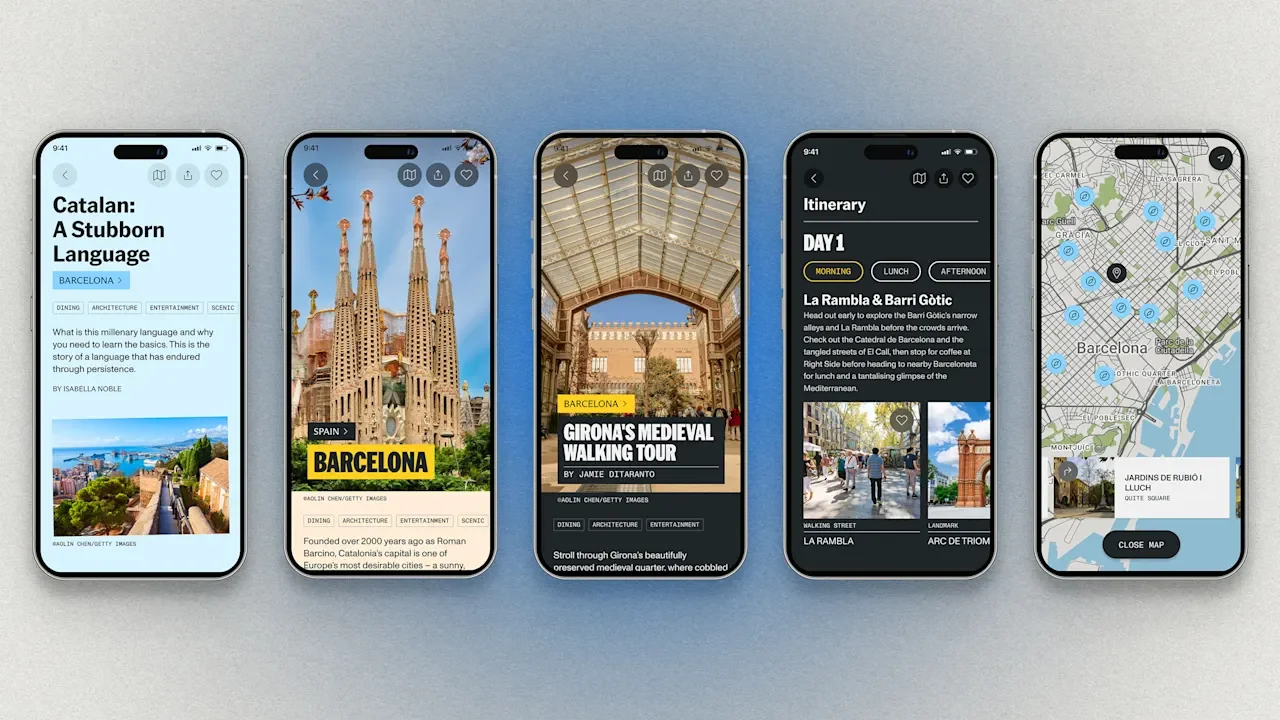
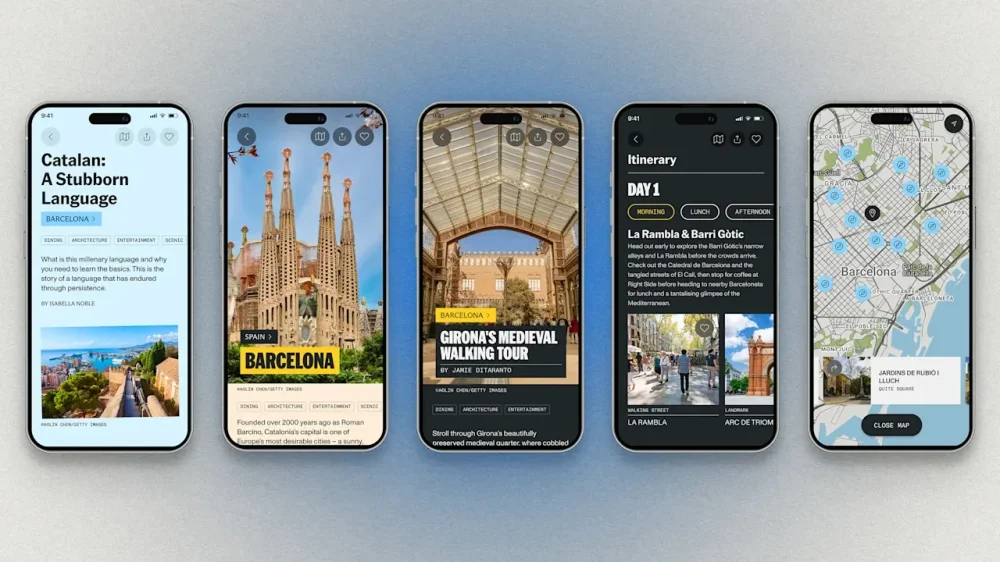
In my early twenties, I spent my summers backpacking through Pondicherry in South India, Yogyakarta in Indonesia, and Phnom Penh in Cambodia. I often traveled by myself, with my Lonely Planet guidebooks as my only companion. Since the 1970s, these iconic blue books have helped generations of young travelers navigate off the beaten track around the world. Written by a network of 450 local writers and experts, I found the Lonely Planet guides crucial as I tried to figure out what neighborhoods were worth visiting, where to stay, how to avoid tourist traps, and what restaurants locals love. But as essential as these books are—they’re the top travel guidebook brand in the U.S.—they do have some drawbacks. On a recent trip to Kyoto, I found myself constantly transferring information from my book to my phone—pinning locations on Google Maps, writing out day-by-day plans on my Notes app. In the age of the smartphone, Lonely Planet could use a technology update. Today, Lonely Planet is bridging the gap between its guidebooks and your phone. It’s launching an ambitious new mobile app packed with all of the knowledge and storytelling in its books, but outfitted with valuable features that travelers need as they’re planning trips and in the midst of traveling. When you come across a museum or restaurant that intrigues you, you can save it onto an itinerary or map. When you’re caught in a downpour in Barcelona, you can use the app to find things to do nearby. And unlike other travel content on the internet, the Lonely Planet app isn’t bogged down with sponsored listings or a deluge of reviews from fellow tourists. The content is tightly curated by the 450 local experts and editors that craft Lonely Planet’s guidebooks. And while many features of the app will be free, some premium content will come with a fee. The launch of the Lonely Planet app is a clear sign that this 53 year old travel brand is moving beyond its roots as a publisher and now sees itself as a travel platform. But as the company embraces technology, one challenge it faces is figuring out how to nurture the success of its physical guidebooks—which are more popular than ever—even as it drives customers to the new app. From Backpack to Platform Lonely Planet was born in 1973, when Tony and Maureen Wheeler self-published a scrappy guide to travel through Asia. The premise was radical for its time: practical, irreverent travel advice aimed at young people with more curiosity than cash. The guidebooks became a phenomenon. Generations of travelers have collected them, proudly displaying them on bookshelves as a sign of a life well lived. In the aftermath of the pandemic, as travel picked up, the books grew in popularity, driven in part by a younger audience that Lonely Planet has been courting through Instagram and its own direct-to-consumer store. “The brand became a community,” says Paul Yanover, who joined Lonely Planet as CEO a year ago. “People see the book tucked under someone’s arm—you’re traveling through India, I’m traveling through India—and there’s a bit of kinship.” Paul Yanover Yanover was among the many travelers who has relied on Lonely Planet guides to explore the world, but he also sees an opportunity to digitize the travel brand. He is well equipped for this task. He served as Fandango’s CEO between 2012 and 2022, finding ways to make it easier for movie-lovers to book tickets. Before Fandango, during his decade at Disney, he rose to managing director of Disney Online and helped fans engage with their favorite Disney content on the internet. These companies already had strong brands and scale; by incorporating more technology into their operations, Yanover felt like he could make them even more relevant to consumers. He believes he can do the same with Lonely Planet. His goal is to digitize the beloved brand without losing the qualities that made it so special: expert knowledge and a powerful sense of community. “In some ways we’re on a mission to restore Lonely Planet to a form of what it already was,” he says. What it already was, at its best, was not just a publisher, but a living guide that connected people to places and to each other. Over the past year, Yanover has laid the groundwork for Lonely Planet’s digital transformation: a brand refresh, a redesigned website, the launch of Lonely Planet Journeys (a curated travel concierge service powered by a network of local trip planners), and an expanding catalog of inspiration books alongside its flagship guidebooks. The app is the capstone. How The App Works The app is built around a theory of how people actually plan travel. It begins with a spark of inspiration, which then leads to collecting bits of information: what cities to visit, what neighborhood to stay in, what to see and eat. “There’s an enormous amount of information you’re collecting from friends, a magazine, Instagram, your Lonely Planet book,” Yanover says. “Then what do you do? You reduce it.” The app is designed to mirror that journey. It has four core sections. Discover is the inspiration engine—scrolling, article-based, full of vertical video and curated picks, all written by Lonely Planet’s global network of more than 450 local contributors and editors. (Think: “Five coffee shops you have to visit in Mexico city,” or “The next great undiscovered beach in Spain.”) When you have picked where you want to go, you move to Guides: reimagined digital guidebooks that go deep on a particular city. “At the core of the app are our in-depth destination guides driven by our local experts,” says Aly Yee, who leads digital business. “Every recommendation comes from someone who’s actually been there.” My Planet is the collection space, where you can save anything from Discover or Guides. And the Trip Builder is where it all comes together into an actual itinerary, complete with a map updated with all your saved places and the ability to drag and drop items, distinguish between firm commitments and loose possibilities, and organize by day. “The trip building tools are really focused on allowing you to customize it to the way that you travel,” Yee says. “You can craft itineraries using samples from our experts and then drag and drop things to make it personalized.” The app also has a distinctive in-destination mode. As you arrive somewhere, it shifts—surfacing expert picks nearby, so you’re never starting from scratch, never staring at your phone trying to remember which restaurant you bookmarked six weeks ago. After all, a trip rarely goes exactly as planned, so you need to be able to pivot quickly when it suddenly starts raining or you decide you’re tired of museums. Development kicked off about a year ago, led by Neil Ishibashi, who runs product and design, working alongside Yee. They brought in outside partner Arctouch to help build and deliver the product. At launch, users will get the full experience for free, as Lonely Planet gathers information about how people actually use the app. But over time, users will be able to pay for individual guides, or unlock all the content through an annual membership that will also include other perks, like members-only books or better pricing on Lonely Planet Journeys. The Future of Travel—and the Humans Who Will Guide It The experience of travel is changing. AI is upending search and recommendations, synthesizing millions of online reviews. Social media is flooded with travel inspiration from influencers sponsored by hotels. And yet, paradoxically, Yanover believes there’s a growing hunger for something more grounded—human perspective, editorial taste, the kind of insight that can’t be replicated by a large language model. “Our unique differentiator, especially in today’s AI world, is that we’re a human-powered network that’s providing advice and insight and recommendation,” Yanover says. That’s not to say that Lonely Planet is avoiding AI. But rather than simply using it to generate algorithmic itineraries, Lonely Planet is exploring how it can make the human guides more accessible. In the app, there will be an agent trained on all the Lonely Planet guide books and experts: AI as a means to access human expertise, not replace it. Ultimately, Yanover believes that Lonely Planet’s place in the digital age isn’t about offering more efficiency, but contextualizing your trip with storytelling and local insight. This is, in fact, similar to what the original yellow-and-green books offered to a generation of backpackers: a trusted friend who’s been there, who knows the history, who has taste, and who can help you make the trip your own. View the full article
-
There’s a saying: you can’t control the world, but you can control yourself. This perspective is critical when navigating an uncertain economy. I learned this lesson the hard way, right out of college, when taking my first steps into the full-time workforce. The timing was around the 2008 Recession. Despite being lucky to land a job that I loved, the economic instability pushed me to realize I could not depend on a corporate role for my livelihood long-term. So I started exploring freelancing in 2010, when I went on Craigslist and searched for freelance writing roles. That’s how I landed my first client. In 2011, one year after building my portfolio, I earned an extra $20,000 on top of my full-time job. In my second year, that number grew to $90,000 at about 10 hours per week. That was only the beginning. Almost two decades later, my freelance business is my full-time foundation. It consistently sustains six figures in annual revenue and has helped insulate me from economic uncertainty. If you’re curious to start your own journey, balancing full-time work and freelancing, here are the exact first steps I’d recommend if I were getting started again: Approach it like a business, not a series of gigs The average freelance income in the U.S. is around $99,230 per year in 2025, with top earners making over $200,000, according to Investopedia’s freelance income analysis. But those numbers don’t come from chasing one-off gigs. They come from building repeatable systems: clear offerings, reliable clients, and predictable revenue. Where gigs are fleeting and irregular, businesses provide true infrastructure as engines for revenue. Starting a business is about building something durable. When you’re looking for a full-time job, your goal is to get hired based on your individual capabilities. When you’re building a business, you’re creating a service entity with defined value, pricing, processes, and delivery. That foundation is essential for a stable footing. Choose a freelance business focus that brings you true fulfillment Freelancing takes motivation, especially on top of a full-time schedule. That’s why it’s critical to pick a focus that inspires you. Ideally, when you freelance, the work should complement the high demands of a full-time role. It should not add additional stress or pressure. If you’re a marketing strategist in your full-time role, consider freelancing as a designer, influencer program strategist, career coach, or fitness instructor. Done right, with a formula that works for you, freelancing can be enjoyable and fulfilling. Keep in mind, according to Upwork, 78% of skilled freelancers report satisfaction with their pay compared to 64% of those employed full-time. Establish strict and clear boundaries with your full-time job This means reading your employment contract to identify potential conflict of interest and disclosures, along with potentially consulting with an attorney to understand the laws in your region. It also means being mindful not to freelance on company time or to use your work laptop for client projects. Keep in mind, cross-pollinating intellectual property has the potential to cause legal problems for your employer and your freelance clients. Separation is key. Protect your personal time: family, friends, and wellness Learn to recognize the early signs of burnout, and make sure that you’re taking the best possible care of yourself. Taking these steps early-on is critical, as working a 40-plus hour week in addition to self-employment has the potential to lead to long-term health consequences. Balance looks different for everyone, and your routines may ebb and flow as your life situation changes. Define a clear, focused offering that you can package up and sell One of the strongest ways that a business, especially a one-person freelance operation, can gain efficiency is through a clear offering that customers want to buy. If you’re not sure what this offering should be, start networking through meetups and associations both in real life and virtually. Share your ideas and ask for feedback. You might find that it takes time to lock down what you’re offering—you may spend your entire first year or two figuring out what you’re selling, exactly. Take your time. Be open with your employer and clients The timing for this conversation will be when you’re ready to publicize your self-employment ambitions. Approach the discussion from a stance of humanity and mutual-empowerment. Here’s how: Mention, specifically, what you appreciate about your job and your intention to stay at the company. Discuss that entrepreneurship is of interest to you, so you’ve started a freelancing practice. Share that you’re maintaining strict professional boundaries in accordance with your employment contract. Emphasize that you are not freelancing on company time or with company equipment. Keep the dialogue open, and welcome your employer to share concerns. Likewise, ensure that your clients know that you’re employed, so that they do not expect immediate responses or phone calls during work hours. Consult with legal, accounting, and tax advisers When you begin generating revenue, you will need a contract to onboard your clients. You may also need licenses and registrations, depending on your area of specialization. When you earn money through your freelance practice, you will need billing infrastructure to collect those funds, which you will need to pay taxes on. Connecting the dots About one year into my freelancing journey, I honed in on several productized services that my customers valued. The asynchronous nature of this work means that I could build my business after hours and on weekends. It was hard, commuting three hours a day in Los Angeles traffic. But it was doable. Above all, I was respectful to and open with my employer. When I told my managers and the executives at my company, they were supportive. I asked them to write a short note to acknowledge and approve the situation to HR, and they did. I stayed in my full-time role for almost three more years and was promoted twice, along with pay increases that doubled my salary. My after-hours freelancing practice taught me to have an owner’s mindset, which was a valued skill in my full-time role. I quickly grew into higher levels at the company. Thanks to disciplined time management, I prioritized time for family, health, and wellness. It’s an asset that continues to grow with me. View the full article

-
Chancellor Rachel Reeves prepares to deliver update on public financesView the full article
-
Google's Titans architecture and MIRAS framework enable AI to handle massive amounts of data and work faster. The post Google’s Titans And MIRAS: Significant Advancement In Long-Context AI appeared first on Search Engine Journal. View the full article
-
In November 2025, Yoast announced a collaboration with NLWeb, an open web protocol developed by Microsoft designed to simplify building conversational interfaces for the web. Today, we are proud to introduce the first major result of that work: Yoast SEO Schema Aggregation. This is an opt in feature that brings your website’s structured data together in a clearer and more consistent way. By choosing to enable it, you can help search engines and intelligent agents better understand and use your content. If you want to see which schema types are available for your WordPress setup, our schema overview explains what is included across different product plans. Bridging the gap: from discovery to conversation Yoast has a history of helping WordPress websites be represented fairly and responsibly in the open web. 2019: Yoast introduced the first of its kind schema graph and API, helping search engines better understand your content as they moved beyond keywords and evolved into discovery engines. Today: we are taking the next step. As the agentic web becomes more important, we are helping your WordPress site move from being discovered to being understood and engaged with through conversation. Starting today, the new Schema Aggregation feature in Yoast SEO is here. It establishes a standardized connection between your website’s structured data and the systems that power AI-driven discovery and interaction. These include large language models, agents, and conversational assistants such as Copilot. It helps ensure your published content can be understood correctly by AI. This matters as AI becomes part of how people find and use information online. The NLWeb + Yoast integration is built in collaboration with the NLWeb team, including R.V. Guha, co-founder of Schema.org. Together, we are extending the open web standards you already rely on, so your WordPress website can participate confidently in the emerging agentic web in a responsible and future ready way. Benefits of the Schema Aggregation feature Questions about AI often come down to one thing: who can access your data. This feature is built with a privacy first approach from the start. Complete: All indexable content included Clean: No duplicate entities, no navigation clutter Connected: Relationships between entities preserved (author → articles) Compliant: Respects exisiting privacy settings Fast: Sub-100ms cached responses, pagination for large sites For developers and technical users who want more control, we have developer documentation on schema markup. It explains how to inspect and extend your schema graph. This gives you maximum personalization, while retaining standardization at scale. “You can’t stop the AI wave, but you can direct it. Our integration with NLWeb puts you back in charge. It allows you to manage server load efficiently and ensures that when AIs do access your content, they get the rich, semantic understanding necessary to represent you correctly.” Alain Schlesser – Principal Architect, Yoast. What’s new The next time you log in and open Yoast SEO (updated to 27.1), you’ll see a short guided walkthrough. It introduces the new Schema Aggregation feature. It also shows how to enable it using a simple toggle. We have added a new endpoint to Yoast SEO (free), making the Schema Aggregation feature available to all customers who choose to enable it. The endpoint exposes your site’s full structured data graph in a proposed new standard called a schemamap. That means, instead of an AI system crawling hundreds of pages individually (or however many pages you have on your website), it can now retrieve your site’s schema, including articles, authors, products, and organizational data, in one optimized request. Before and after: from pages to a connected site Below is an example of the structured data Yoast already outputs on an individual page. This page level schema helps search engines understand what that specific page is about, including its content type, author, and relationships. With Schema Aggregation enabled, Yoast provides a site-level view. Instead of looking at pages in isolation, your entire website’s structured data is connected. It consolidates into a single output called a schemamap. This can appear quite overwhelming to look at. It makes it easier for AI systems to understand your content. They can see how your articles, authors, products, and organisation relate to each other across the site. Nothing about your existing schema changes. The same data is reused, simply organized in a way that reflects how your website works as a whole. Here is a schema map example from Yoast.com, displayed with the Yoast SEO Schema Visualizer. How it works: Standardized, connected, and deduplicated The Schema Aggregation feature doesn’t just share data; it organizes it for AI consumption: Eliminates data mess: It merges duplicate mentions of authors, products, or articles into one scalable, connected record. Integrates automatically: If you use one of our Schema API partners like The Events Calendar or WP Recipe Maker, those schema types are included in the graph automatically. Developers can also explore our Schema Integrations page to see how Schema API partners connect to and extend the Yoast SEO Schema Framework (the graph). Collaborative innovation When working at scale across tens of millions of websites, careful testing is essential to ensure a safe and reliable launch. This feature was developed with agencies and advanced users in mind, and tested in controlled environments. We collaborated closely with Syde, our Innovation Partner, to test the new feature across a diverse range of real-world client scenarios. The approach for this release was tested in controlled environments to confirm scalability and consistent output quality before deployment. Syde’s feedback has been instrumental in refining the schema aggregation logic. We look forward to continuing this partnership, working together to help clients remain visible and accurately represented as AI driven systems evolve. Be visible, understood, and represented The rules of discovery are shifting, but your site doesn’t have to be left behind. With NLWeb and Yoast, your website stays at the center of the conversation. Ready to see it in action? Update to the latest version of Yoast SEO and enable the NLWeb integration in your Yoast SEO settings today. For more information about how to enable Schema Aggregation, visit this help article. The post New: Futureproof your website for the agentic web with Yoast SEO Schema Aggregation appeared first on Yoast. View the full article
-
This article is republished with permission from Wonder Tools, a newsletter that helps you discover the most useful sites and apps. I tested more than 200 educational sites, apps, and services last year. Some were so confusing that I quickly gave up. Others were too costly. A few went out of business. Many were narrowly useful, e.g., for 3D modeling, math, or music. The top-tier tools have consistently been super valuable for me—in my teaching, in my job at the City University of New York, and as a dad of two daughters. To save you the time and effort of sifting through the chaff, I’m sharing the ones I find most useful. Even if you’re not a teacher, these tools may help you gather, organize, share, and present material creatively. For context, the huge number of teaching tools clamoring for attention can be exhausting. School districts access 2,739 edtech tools a year, according to Instructure research and the 74, a nonprofit news organization that covers America’s education system, where I wrote recently about today’s tools. Below you’ll find my first batch of recommendations, whether you teach once in a while or every day, children or adults. The services are all free to try, with paid upgrades available. I don’t work for any of these companies, I’m just a prof and writer who appreciates and shares helpful teaching tools. My list—starting with part one today—is designed to support teaching and learning at any level. I’d love to hear about the tools you find most useful for teaching and learning. Add a comment to share here, or join the new chat thread about top teaching tools. Pathwright: Design a learning path Pathwright is one of the best-kept secrets among teaching tools. Launched by a nimble South Carolina startup, it’s a simpler, sleeker alternative to complicated learning management systems like Blackboard or D2L. It’s more elegant and flexible than Google Classroom. Rather than giving students dozens of menus to choose from, Pathwright lets you create a simple learning path to follow one step at a time. You can create a path with a few steps for guided independent learning, or set up a full online course that’s easy to navigate. I like making mini courses that students or readers can complete in an hour to quickly learn something new. Any learning step you create can include a reading, video, activity, assessment, embed, or any other interaction. Learning paths offer a visually delightful alternative to clunkier systems. They work well for professional development, and I’ve found Pathwright works well for remote journalism training. FigJam: Spark visual thinking with collaborative whiteboards When Google shut down Jamboard and Microsoft discontinued Flipgrid, teachers went searching for lively alternative tools. FigJam came to the rescue. Digital whiteboards enable the kind of open-ended visual thinking that’s invaluable, whether you’re teaching about historical networks, systems thinking, scientific processes, or anything requiring students to explore connections and relationships. The platform is free for educators. FigJam also has new AI capabilities, allowing you to instantly categorize student comments or transform a scattered brainstorm into an organized handout. You can even use FigJam for presentations. To add color and bring boards to life, FigJam includes playful stickers, stamps, and templates specifically designed for teaching and learning—from icebreakers to built-in timers. Gamma: Craft superb presentations Consider replacing PowerPoint or Google Slides with Gamma. You’ll save time preparing slides and they’ll be more engaging for students. Create vertical, square, or horizontal slides. Import existing PDFs or PowerPoint slide decks. Unlike PowerPoint, Gamma makes it easy to embed live websites, videos, or data visualizations inside your slides to make them stand out. You can even use Gamma to build simple sites, social posts, or interactive lessons. Gamma works well without any AI features for a traditional deck. Or use its AI to jump-start a new presentation from an outline, text prompt, or document you upload. You can export whatever you design to Google Slides or PowerPoint. Or share a link to your presentation. It’s free for educators to get started. Here’s a quick example deck I made about journalism tools. Before Gamma’s most recent popularity boom, I interviewed CEO Grant Lee about why he started the company, which now has 70 million users and a $2.1 billion valuation. Genially: Create interactive handouts Genially is terrific for creating interactive lessons. Add clickable hot spots to any image, timeline, map, or other image. When students interact with your creation, they’ll see informational pop-ups, links, videos, audio files, instructions, or whatever you’ve added. These hot spots transform static visuals—like simple maps or timelines—into engaging, exploratory learning elements. You don’t have to code anything; it’s easy for tech novices to use. I’ve used Genially to turn old handouts into resources with embedded audio. Students can click on images to hear brief recorded explanations or anecdotes. Examples: I’ve shared tips for day one of teaching, and introduced past cohorts of our entrepreneurial journalism program. The free version works well for teachers. You can invite an unlimited number of students into your workspace for free, and Genially is grounded in student privacy. It takes a bit of experimenting to get comfortable with the interface, but once you understand the basics, you can transform dry handouts into interactive, engaging learning materials. NotebookLM: Organize and build on your teaching materials NotebookLM is a free tool from Google that lets you apply AI to any collection of documents. It’s super useful for searching through your teaching materials, but also for strengthening and repurposing them. You can have 100 notebooks in a free NotebookLM account, and each notebook can have 50 sources in it. A source can be a PDF, Word Doc, image, audio file, link, or a Google Drive file (Docs, Sheets, or Slides). Each file can be up to 200 MB or 500,000 words. That’s much more than what you can typically upload with Claude or ChatGPT, although limits differ by plan. In any given notebook, you can fit dozens of lesson plans, handouts, syllabi, slides, rubrics, or even handwritten notes or voice recordings. NotebookLM makes everything instantly searchable and remixable. Here’s an example notebook about NotebookLM itself. NotebookLM’s semantic search can find things in your materials based on level, topic, style, or other characteristics. A simple Control-F search can’t do that. You can also use it to adapt teaching materials into new formats. Turn a dense reading into an engaging audio overview students can listen to, or transform a handout into a colorful infographic or slide deck. Students can create their own free notebooks and generate flash cards and interactive quizzes to help with studying. They can also use mind maps, infographics, or timelines to visualize connections across topics. You can create separate notebooks for each course you teach, or organize one for administrative tasks and another for curriculum development. NotebookLM works only from your uploaded sources—not generic web content. Citations for each query ensure you can validate information and see where it came from. This article is republished with permission from Wonder Tools, a newsletter that helps you discover the most useful sites and apps. View the full article

-
In graduate school, my experimental archaeology professor told a student to create a door socket—the hole in a door frame that a bolt slides into—in a slab of sandstone by pecking at it with a rounded stone. After a couple of weeks, the student presented his results to the class. “I pecked the sandstone about 10,000 times,” he said, “and then it broke.” This kind of experience is known as individual learning. It works through trial and error, with lots of each. Also known as reinforcement learning, it is how children, chimpanzees, crows, and AI often learn to do something on their own, such as making a simple tool or solving a puzzle. But individual learning has limits. No matter how much someone experiments through trial and error, improvement eventually hits a ceiling. Humans have been throwing javelins for a few hundred thousand years, yet performance has largely plateaued. At the 2024 Olympics in Paris, the gold medal javelin throw was about 5% shy of Jan Železný’s 1996 record. The level of expert play in the strategy game Go was essentially flat from 1950 to 2016, when artificial intelligence changed the equation. Throughout humanity’s existence, these limits on individual learning have not applied to technology. Since IBM’s Deep Blue defeated world chess champion Garry Kasparov in 1997, supercomputers have become a million times faster—and now routinely outperform humans in chess and many other domains. Why is technological improvement so different? My work as an anthropologist on cultural evolution and innovation shows that, unlike individual performance, technology advances through combination and collaboration. As more people and ideas connect, the number of possible combinations grows superlinearly. Technological innovation scales with the number of collaborators. My new book with anthropologist Michael J. O’Brien, Collaborators Through Time, reveals these patterns across human existence. It traces how 2 million years of technological traditions progressed through collaboration among specialists, across generations, and with other species. Expertise has been the key. Because traditional communities know who their experts are, specialization and collaboration have consistently underpinned human success as a species. I’d summarize our insight into how technology keeps advancing as TECH: tradition, expertise, collaboration, and humanity. Traditions and expertise—the critical foundation The longest technological tradition documented by paleoanthropologists was the Acheulean hand axe. The multipurpose stone tool was made by our hominin ancestors for almost a million years, including some 700,000 years at a single site in eastern Africa. People produced Acheulean tools through techniques they learned, practiced, and refined across generations. Later, small prehistoric societies of modern humans thrived on millennia of specialized knowledge, such as music, thatched roofs, seed cultivation, burying dead bodies in bogs, and making millet noodles and even cheese suitable for interring with mummies. As early as 22,000 years ago, communities near the Sea of Galilee stored and used more than a hundred plant species, including medicinal plants. Shamans—ritual experts in medicinal knowledge and caregiving—helped their groups survive. Archaeological evidence from burial sites suggests these specialists were widely revered across thousands of years: One shaman woman was interred with tortoise shells, the wing of a golden eagle, and a severed human foot in a cave in Israel. Collaboration—knowledge spanning time and place Traditional expertise alone does not advance technology. Technological progress occurs when different forms of expertise are combined. The wheel may have emerged from copper-mining communities. One expert sourced copper from the Balkans, another transported it, another smelted it. By about 4000 BC, additional specialists cast copper into an early wheel-shaped amulet: shaping a wax model, encasing it in clay, firing it in a kiln, pouring molten metal into the mold, then breaking the mold away. Transport technologies reshaped ancient product networks. As communities across Eurasia and Africa built wheeled vehicles and ships, and raised domesticated horses and other pack animals, collaboration expanded across continents. Maritime and overland trade linked blacksmiths, scribes, religious scholars, bead makers, silk weavers, and tattoo artists. Expertise was often distributed between cities and their hinterlands, with cities functioning as hubs in cross-continental product networks. In ancient Egypt, no single community could produce a mummy. Mummification experts at Saqqara drew on a continental network that supplied oils, tars, and resins, combining these materials with specialized techniques of antisepsis, embalming, wrapping, and coffin sealing. Around the world, states and empires—from the Indus Valley Civilization to the Vikings, Mongols, Mississippians, and Incas—expanded these networks, serving as hubs that coordinated the exchange of raw materials, specialized knowledge, and finished products. These exchanges could be highly specific: Chinese porcelain was shipped exclusively to 12th-century palaces in Islamic Spain via Middle Eastern traders who added Arabic inscriptions in gold leaf. The scale has changed, but the structure has not. Today, within a global product space, an iPhone is assembled from a distributed network of specialized expertise and facilities. Humanity—social learning Today, AI may disrupt the millennia-long pattern of technological advancement through TECH. Most large language models generate statistically common responses, which can flatten culture and dilute expertise and originality. The risk grows as untapped high-quality training data—our reservoir of expertise—becomes scarcer. This creates a feedback loop: Models trained heavily on low-quality content may degrade over time, with measurable declines in reasoning and comprehension. Some scientists now warn that humans and large language models could become locked in a mutually reinforcing cycle of recycled, generic content, with brain rot for everyone involved. The dystopian extreme is AI model collapse, in which systems trained heavily on their own output begin to produce nonsense. Brain rot is one reason some AI pioneers now question whether large language models will achieve human-level intelligence. But that, I think, is the wrong focus. The key to continually improving AI models is the same one that has sustained human expertise for millennia: keeping human experts in the loop—the E in TECH. Thanks to a kind of “pied piper” effect, an informed minority can guide an uninformed majority who copy their neighbors. In a classic experiment, guppies, following their neighbors, ended up schooling behind a robotic fish that guided them toward food. A recent study showed that traffic congestion eases when autonomous vehicles make up as little as 5% of cars on the road. In both cases, a small, informed minority reshaped the behavior of the whole system. Like humans, large language models are social learners, and the learning can go in either direction. Designers can increase the likelihood that models continue to improve by ensuring they incorporate the accumulated lessons of human expertise across history. In turn, this creates the conditions for people and models to learn from one another. In the 2010s, DeepMind’s AlphaGo rediscovered centuries of accumulated human Go knowledge through individual learning, then went beyond it by crafting strategies no human had ever played. Human Go masters subsequently adopted these AI-generated strategies into their own play. Well-trained large language models can likewise summarize vast bodies of scientific information, help talk people out of conspiracy thinking, and even support collaboration itself by helping diverse groups find consensus. In these cases, the learning flows both ways. From Acheulean hand axes to supercomputers, human innovation has always depended on tradition, expertise, collaboration, and humanity. If AI is tuned to find and trust expertise rather than dilute it, it can become humanity’s next great technology—on par with ancient writing, markets, and early governments—in our long story as collaborators through time. R. Alexander Bentley is a professor of anthropology at the University of Tennessee. This article is republished from The Conversation under a Creative Commons license. Read the original article. View the full article

-
Is Grokipedia a serious competitor to Wikipedia, or just a doomed exercise in billionaire hubris? Does Grok bring new value to the table, or just rehash the same old content? Does Grokipedia influence AI search in a similar way to…Read more ›View the full article
-
Below, Rebecca Hinds shares five key insights from her new book, Your Best Meeting Ever: 7 Principles for Designing Meetings That Get Things Done. Rebecca is a leading expert on organizational behavior and the future of work. Her research is consistently featured in publications like Harvard Business Review, The New York Times, The Wall Street Journal, Forbes, and Wired. What’s the big idea? If you’re tired of watching your organization suffer under the weight of bad, broken, bloated meetings, there are proven ways to replace that slow-motion dumpster fire with calendars that actually move work forward. By treating meetings like a product, you can design the best meetings ever. Listen to the audio version of this Book Bite—read by Rebecca herself—below, or in the Next Big Idea App. 1. Treat your meetings like a product. Meetings are your organization’s most important product. They’re where decisions are made, priorities are set, and culture is built. Yet meetings are the least designed, least tested, and least optimized product in your organization. In the U.S. alone, they burn well over $1.4 trillion a year—more than 5 percent of GDP. You would never ship a physical product to customers without thoughtful design, testing, iteration, and user feedback. But organizations ship meetings exactly this way every single day. Meetings need design. If you haven’t done the hard work of designing the meeting, you don’t deserve to hold it. And if meetings are a product, then we should design them using the same principles that make products great. 2. Clear your meeting debt. Just like products collect technical debt, meetings collect their own version: meeting debt. A recurring meeting lands on your calendar and often becomes immortal. No one remembers who created it, why it exists, or what it’s supposed to do. But everyone still shows up and goes through the motions. Week after week. Month after month. Eventually, the debt piles so high that the only real solution is to declare a Meeting Doomsday: a 48-hour calendar cleanse where you wipe recurring meetings off your calendar and rebuild from scratch. In the Meeting Doomsdays that I have run, participants reclaimed up to 11 hours per person, per month. Meeting Doomsdays work for two key reasons: They snap you out of the status quo. Traditional meeting audits (evaluating one meeting at a time) keep you defending the clutter already squatting on your calendar. A Doomsday jolts you out of autopilot and into the deliberate, effortful mode of thinking that Daniel Kahneman called System 2 thinking. They tap into the Ikea effect. Research shows we value things more when we build them ourselves, whether it’s an Ikea desk or a newly rebuilt calendar. When people redesign their own calendar, they value it more. They protect it. And they stop letting unnecessary meetings sneak back in. Doomsdays only work if they’re done with real intention. Do them poorly, and the old habits come roaring back. But done well, they become one of the most powerful ways to reboot not just your calendar, but your entire meeting culture. 3. Become a meeting minimalist. A Meeting Doomsday is a radical way to clear meeting debt. But a onetime purge isn’t enough. You need ongoing discipline to keep your calendar lean. The best products in the world are minimalist. Think about Google or ChatGPT: one search bar, one prompt bar, no fluff, no clutter, no nonsense. Meetings should work the same way. But minimalism isn’t human nature. As my colleagues Bob Sutton and Leidy Klotz have shown, humans have a built-in bias toward addition—what they call “addition sickness.” When we hit a challenge—or the faintest whiff of uncertainty—our instinct is addition. Add a meeting. Add more attendees. Add more minutes to the meeting length. Add more agenda items. “Research shows that standing meetings run about 25 percent shorter than sitting ones.” The good news is that research also shows that when people are primed for subtraction, addition sickness can be short-circuited. People start thinking like minimalist product designers. In meetings, becoming a minimalist means applying that mindset to four dimensions: the agenda, the duration, the attendees, and the frequency. Let’s take duration. Meetings suffer from Parkinson’s Law: Work expands to fill whatever time you give it. Give a meeting 60 minutes, and it will almost always use the full 60. If you want shorter, sharper meetings, you have to actively defend against the natural creep of filler, fluff, and rambling. One way to do that? Standing meetings. Research shows that standing meetings run about 25 percent shorter than sitting ones. Nobody wants to drag things out when their knees are fighting gravity. But it’s not just about saving time. Standing rewires how we collaborate in meetings. Research shows that people become less territorial. When we sit, it’s my chair, my slice of the table, my turf. The room is divided into tiny plots of land. But when we stand, the space becomes shared, and so do our conversations and ideas. It becomes less about turf and more about teamwork. 4. Apply systems thinking. We love to blame meetings for everything that’s broken about work. But meetings usually aren’t the root problem. They’re the symptom of a deeper issue: a broken communication system. Think about Apple. They don’t design products in isolation. Every piece fits into a larger ecosystem—hardware, software, services, user experience—all reinforcing one another. Meetings should work the same way: as part of a communication system, not random acts of scheduling. During the pandemic, the time people spent in dysfunctional meetings got worse, even as organizations adopted more digital tools than ever—tools that should have reduced the need for meetings. Why? Organizations added tools but didn’t give people guidance on how to use them. When people don’t know what deserves an email, a document, a Slack thread, or an asynchronous update, they default to meetings. And they do it for two reasons. “Meetings usually aren’t the root problem.” First, meetings are highly visible. You can’t see someone’s thinking. You can’t see someone’s judgment. You can’t see someone making good decisions. But you can see someone in a meeting. A packed calendar broadcasts importance. So, meetings become theater: a performance of productivity that often produces nothing. Second, meetings hijack attention. You can ignore an email. Skim a document later. Snooze a Slack message. But meetings are public. It’s anchored to a specific time slot. It claims physical territory on your calendar. And psychologically, that creates a social contract. You feel like you owe someone your attendance. Meetings become the fastest, bluntest, most reliable way to hijack someone’s attention. Before you can fix your meetings, you have to fix the system around them. Start with the 4D Test. A meeting should only exist if the purpose is to: Decide Debate Discuss Develop (yourself or your team) Everything else (status updates, broadcasts, one-way briefings) fails the 4D Test. That’s systems thinking. 5. Innovate with technology. No technology is more transformative, or more dangerously seductive, than AI. Here are two ways to use AI to make your meetings better, not just shinier: Calculate airtime. One of the strongest predictors of team performance is balanced airtime. When airtime gets lopsided, it distorts our perception of the people in the room. Researchers call this the babble hypothesis: the more someone talks, the more we perceive them as a leader, even if they are just spewing nonsense. AI can counter that. It can flag who’s dominating the mic, surface who’s getting steamrolled, and nudge the conversation back to one that isn’t warped by the loudest voice. Play devil’s advocate. One of the biggest traps in meetings is groupthink. We’re conditioned to believe brainstorming works best in groups, but research shows that people generate more ideas, and better ones, when they think alone first. Early research shows that AI can help counteract that. It can introduce alternative angles, challenge assumptions, and disrupt the gravitational pull toward consensus. AI doesn’t even need to be right to be useful. Enjoy our full library of Book Bites—read by the authors!—in the Next Big Idea app. This article originally appeared in Next Big Idea Club magazine and is reprinted with permission. View the full article
-
Over the past two years, AI has been framed as a productivity engine, a cost-cutting lever, an infrastructure race, and, on more dramatic days, as a civilizational rupture. Boards demand AI road maps. CEOs announce “AI-first” agendas. Entire divisions are reorganized around tools whose capabilities shift every quarter. But beneath the noise lies a quieter and far more consequential reality: AI does not create strategic clarity. It reveals whether you had any to begin with. I’ve argued previously that the next layer of advantage in corporate AI will not come from owning infrastructure, but from building better internal models of how your business world actually works. I’ve also warned that reducing AI to a headcount-reduction tool is strategically myopic, because general-purpose technologies rarely deliver their true value through simple efficiency programs. The next step in that logic is unavoidable: AI will not replace strategy. It will expose it. The illusion of imported intelligence There is a seductive assumption embedded in much of today’s AI discourse: that intelligence can be added to an organization the way you add software licenses. Deploy a large language model. Integrate generative tools into workflows. Automate analysis. Augment employees. Intelligence increases. But organizations are not empty vessels waiting to be filled with cognition. They are complex systems of incentives, legacy processes, tacit assumptions, fragmented data flows, and political equilibria. When AI enters that system, it does not float above it. It interacts with it. If your data is fragmented, AI will surface the fragmentation — at scale. If your incentives are misaligned, AI will optimize the wrong outcomes. If your strategy is vague, AI will scale the vagueness and wrap it in fluent prose. Large language models are powerful pattern machines, but as I previously explored, they do not possess grounded understanding. They “just” generate statistically plausible outputs. The same is true at the organizational level: Fluency is not coherence, and activity is not strategy. Shared infrastructure does not produce shared understanding. And shared tools do not produce shared judgment. AI as a strategic stress test Every technological wave exposes structural weaknesses. The internet punished companies that treated it as a brochure. Mobile punished those that clung to desktop assumptions. Cloud punished firms obsessed with owning hardware rather than building capabilities. AI goes further because it operates at the level of cognition: forecasting, pricing, hiring, risk assessment, customer interaction, product development . . . virtually every domain where organizations make consequential decisions. That makes it a strategic stress test. Two firms can adopt similar models and experience radically different trajectories. Company A has a clear articulation of how it creates value. Data flows across functions. Leadership tolerates experimentation. AI outputs are treated as hypotheses. Feedback loops are explicit. Assumptions are updated systematically. Company B announces an AI initiative. Pilots proliferate in silos. Each department optimizes for local ROI. Cost savings dominate the narrative. AI outputs are treated as answers. Strategy remains PowerPoint-deep. Same tools. Different outcomes. Research already shows that AI’s effects are uneven and contingent on organizational context. Harvard’s Digital Data Design Institute describes the “jagged technological frontier,” where AI excels at some tasks and struggles with others, reshaping collaboration patterns in unpredictable ways. That jaggedness means advantage accrues not to those who deploy fastest, but to those who learn fastest. Similarly, a large-scale NBER study of generative AI in customer support found meaningful productivity gains overall, but with heterogeneous effects, especially benefiting less-experienced workers and reshaping how knowledge diffuses within firms. AI acted not just as an automation tool, but as a mechanism for transmitting best practices. The implication is clear: AI amplifies existing organizational logic. It does not replace it. Automation of confusion One of the most dangerous executive instincts in this moment is to ask: How can AI improve this process? It is the wrong first question. If the process itself reflects outdated assumptions, optimizing it with AI simply makes the misalignment faster and cheaper. You’re not transforming the business. You’re automating confusion. A better question would be: What assumptions about our customers, our economics, and our competitive position are embedded in this workflow? And what happens if those assumptions no longer hold? This is where AI becomes uncomfortable. It forces organizations to confront contradictions they have long managed to ignore. The uncomfortable mirror There is a reason many companies default to cost-cutting narratives when discussing AI. Efficiency is measurable. Headcount reductions translate neatly into quarterly earnings. The story is legible. Strategic introspection is not. When AI surfaces fragmented data architectures, that reflects years of underinvestment in integration. When it reveals contradictory KPIs across divisions, that signals governance failure. When it produces inconsistent outputs because internal knowledge is siloed, that exposes cultural fragmentation. AI does not create these problems, it illuminates them. History should make us cautious about premature metrics. Robert Solow famously observed, “You can see the computer age everywhere but in the productivity statistics” in a 1987 New York Times Book Review piece. The broader productivity paradox of the IT era was later reframed through the idea of a “Productivity J-Curve”: Measurable gains lag because complementary investments (organizational redesign, skill development, new business models) are intangible and poorly captured in early data. AI will likely follow a similar trajectory. The most important gains will be diffuse, embedded in redesigned processes and new forms of coordination, not immediately visible in cost ratios. Treating AI primarily as a payroll-reduction mechanism risks sacrificing long-term structural advantage for short-term optical clarity. From tools to institutional cognition The deeper opportunity in AI isn’t automation. It’s institutional learning. Advanced models make it possible to simulate scenarios, surface anomalies, test counterfactuals, and compress feedback cycles dramatically. But speed creates value only if the organization can update its beliefs. In that sense, competitive advantage shifts upward: from infrastructure to cognition. As Iansiti and Lakhani argued in “Competing in the Age of AI,” AI-driven competition increasingly favors firms that can integrate data, algorithms, and organizational processes into coherent learning systems. The differentiator isn’t the model itself—it’s how tightly it’s woven into decision-making. That is the frontier executives should be thinking about. Not “Which model should we deploy?” But “What do we actually believe about how we win, and are we prepared for AI to challenge that belief?” A new form of competitive advantage AI infrastructure is rapidly commoditizing. Foundation models are widely accessible. Cloud computing is shared. Open-source ecosystems evolve at extraordinary speed. As infrastructure becomes common, differentiation moves upward. Not into proprietary chips. Not into scattered pilots. But into structured organizational intelligence. The companies that will accelerate in the AI era will not be those who automate the fastest. They will be those who learn the fastest, who treat AI outputs as hypotheses, who institutionalize feedback, who align incentives with long-term adaptation rather than short-term optics. AI will not replace strategy, but it will make the absence of one impossible to hide. View the full article
-
France and Italy are preparing to evacuate citizens but many have yet to launch flights due to closed airspaceView the full article
-
When I first started my freelance writing business, I assumed I should find clients who would put me on retainer. The appeal seemed obvious: steady income for me, predictable working relationship for the client. I even knew how to structure retainer agreements based on my prior roles at marketing agencies. But a few months into a solo career, I was willing to take any work that came my way. Which was primarily project-based work, not retainers. I quickly built a business based on ad hoc assignments from many clients, rather than relying on a few. The conventional wisdom would say that I was “doing it wrong.” Every solopreneur forum, coach, and freelancer community says the same thing: Lock in recurring clients. But after three-plus years of running my solo business on almost entirely project-based work, I’ve found the opposite to be true. Chasing retainers isn’t the only path to a stable solo business … and it might not even be the best one. The case against putting all your eggs in the retainer basket Retainers feel stable, but they can create real risk in your business. If one or two retainer clients make up the bulk of your income, losing one creates a giant hole. And, depending on your work, that hole might not be easy to fill immediately. The “stability” of retainers is often an illusion. You’re dependent on a small number of clients continuing to renew, and the decision might be outside your control. Budgets get cut. Leadership changes. Priorities shift. None of that has anything to do with the quality of your work. Retainers can also be a harder sell. When budgets are tight, asking a potential client to commit to a six-month engagement is a bigger ask than scoping a single project. That’s how I found myself with almost entirely project-based work. It lowered the barrier to entry: It was easier for a potential client to say yes to one deliverable than to an ongoing commitment. Clients can flex up or flex down how much work they send me, depending on their current needs. How project-based work builds a stronger foundation When you don’t have retainers to fall back on, you’re forced to create habits that actually sustain a solo business, including: Consistent marketing. I post on LinkedIn, nurture referral relationships, and stay visible because I’m always on the lookout for my next project. I can’t afford to go quiet for three months and hope the work shows up. Pipeline management. Retainer-dependent solopreneurs often stop marketing once they’re “full.” Then a client leaves, and they’re scrambling. (I’ve seen it happen many times.) Client diversification. With more clients at any given time, losing one is rarely catastrophic. Losing one project out of six is manageable. Losing one retainer out of two is stressful. I maintain all of these habits even when I’m busy. I have to trust that my next project is on the horizon—so I have to do the work to make sure it is. Project-based work doesn’t mean more hustle. On the contrary, if you build repeatable systems, it means that finding the next project isn’t a crisis every time. Doing these things is just part of running your business. Prioritize the habits that keep your income stable None of this is anti-retainer. Some solopreneurs offer services that naturally lend themselves to ongoing work or long engagements. If retainer clients are part of your business, that’s great. But I’d encourage you to maintain your marketing and pipeline habits as if those retainers suddenly don’t renew—because that’s always a real possibility. The solopreneurs who build sustainable businesses are the ones who’ve built the habits to keep a steady stream of work coming in. View the full article

-
European indices and US futures down as conflict escalates across regionView the full article
-
It’s a number that Donald The President’s business-focused mind would surely be proud of: Nearly $530 million was wagered on Polymarket trying to predict the timing of when the United States and Israel would strike Iran. And at least half a dozen gamblers struck it rich after they lucked out. Or did they? A number of the biggest winners from wagering on the Iran strikes had created their accounts that same month and bought their stakes in the trade long before the bombs were unloaded. It’s similar to a pattern seen by keen-eyed (or lucky) gamblers who managed to predict the capture and arrest of then-President of Venezuela Nicolás Maduro just before it happened—and hit the jackpot in the process. For some users, it’s a revolution. “They allow you to make money directly on real-world events in a way that has not been done before,” says Karl Lockhart, assistant professor of law at DePaul University. Lockhart believes that the prediction markets are using real-world events—from the words President Donald The President might say in his State of the Union speech to the time and date of when the attacks on Iran would take place—as little more than a “marketing strategy.” He points out that Kalshi, for instance, could remove many if not all of its political contracts and still be sitting pretty because sports account for 90% or more of revenue. But it’s the political stuff that gets people engaged—and enraged, especially, it seems, when they realize that some in the market appear to have a better base of understanding of what’s coming around the corner. The Israeli government said last month it had arrested military reservists for allegedly aiming to profit off of insider information about when the country would launch attacks. It’s not just in politics and warfare that suspicious activity is happening: OpenAI recently let go of an employee for placing bets on Kalshi using information they had by dint of being employed by the AI company. Insider trading on stock markets is forbidden under law. For prediction markets, however, there’s nothing improper about it. Some even suggest that the engagement of those who have additional knowledge is a boon, because it helps accurately set the odds for markets. “It feels like—to some degree—these entities are flying pretty close to the sun,” says Kelly, who is a specialist on betting and corruption. There’s no suggestion that either platform is corrupt, and both platforms’ U.S. arms are regulated by the Commodity Futures Trading Commission. But there’s an increasing unhappiness among those trying to make it rich on the platforms who feel they’re disadvantaged compared to gamblers with inside information. And when they do win—as in the case of those who laid bets on whether Iranian Supreme Leader Ali Khamenei would be “out” of his role, only to find their bets refunded because “out” didn’t cover “dead”—the victory can feel bittersweet, or be snatched from them entirely. (Neither Polymarket nor Kalshi responded to a request for comment.) Regulators increasingly feel compelled to act. Alongside states including Nevada, Massachusetts, New York, and Tennessee, where gaming regulators and attorneys general have filed lawsuits or issued cease-and-desist orders against Kalshi and Polymarket over alleged unlicensed gambling, there’s a broader consensus forming about the need to intervene. Former The President official Mick Mulvaney is spearheading an initiative to more tightly oversee how these markets operate. The head of steam against prediction markets feels like a turning point—but it will have to come soon. The more attention that’s drawn to them, the more people are likely to pick up their wallet and connect it to the platforms. “It’s one of these markets that is driven by interest, because we’re inundated with information about it,” says John Holden, associate professor in business law and ethics at Indiana University’s Kelley School of Business. However, when people get onto the markets, they seem to quickly realize that they’re not on equal footing with every other user. “To them, it feels like gambling, because the odds are stacked against them no matter what,” notes DePaul University’s Lockhart. Then they get pissed, as Trustpilot reviews for both websites demonstrate. And that’s terminal for their popularity. As Lockhart says, it “destroys the public’s confidence in the market.” View the full article

-
It’s five answers to five questions. Here we go… 1. Job application asked about age and caregiving responsibilities After hundreds of job applications in my career, this is a new one for me. I came across a required question on the application asking, “Do you have caregiving responsibilities such as childcare, eldercare, or disability care?” They added an asterisk stating, “We are building an organization that supports people in their many unique life situations. Knowing this information will make our hiring process, benefits, and professional development equitable and inclusive.” I find this question intrusive and I don’t believe their stated reason for asking it. Am I better off clicking “prefer not to say” or lying and saying “no”? I do have childcare responsibilities, but I have a great combo of daycare + spouse + babysitters, and none of this interferes with my ability to be an accomplished executive. And, none of this is any of their business! They have another required question: “How old are you?” with rather small age ranges (25-34, etc). I notice that the age range above “35-44” is suddenly much larger — “45-64″ and I’m pretty sure they’ll use this to disqualify anyone over the 35-44 age range. I find this question less bad than the childcare question, but I still don’t like it and want to answer “prefer not to say.” What do you think? This is ridiculous! It’s not illegal in the U.S. to ask those questions in hiring, but it is illegal to consider the answers — so there is zero reason they should be asking. If they want to ensure their benefits and professional development are equitable and inclusive, they can solicit feedback from their existing employees on those topics; there’s no reason it needs to be part of their hiring process. And if they want to ensure their process isn’t inadvertently screening out people with caregiving responsibilities or discriminating by age, there are better ways to do that (such as with surveys that are completely separate from the application, with clear info about how they’ll ensure the information isn’t correlated with your application, similar to the demographic surveys that the EEOC requires from large employers). Moreover, even if they genuinely have the best of intentions, (a) they have no way to guard against unconscious bias once they know the information and (b) they are going to deeply unsettle many applicants who will take it exactly the way you did. 2. Can I get in trouble for being friends with an employee? I’m a new manager and one of my newer employees and I get a long pretty well because we have a lot of common interests. They invited me out and I went but I keep wondering if I could get in trouble? I wanted to know if it would be a problem as they and a friend wanted to sort of meet up at a con in a few months as well. You’re not likely to get in trouble for what’s already happened, but it is likely to turn into a problem if you keep doing it. The bigger problem, though, is that you’re just looking at this through the lens of “will I get in trouble?” when the bigger concern you need as a manager is, “Is this appropriate for my role / will it inhibit my effectiveness in my job?” — regardless of whether anyone above you ever raises it with you. As a manager of a team, you need to keep professional distance between you and the people you manage. You can be warm and friendly, but you can be friends. You can go to the occasional team happy hour or dinner, but you can’t single out one person for friendship, because that will create the strong appearance of favoritism and special access to you, and other people on your team won’t trust that you’re managing fairly and impartially. More here: can a manager and employees be friends? 3. What should you do when you’re sick during work travel? I know parents always give the worst work advice, so I, a parent, am turning to you to ask about something going on with my son, who is in his early 20s. He’s entry level in a notoriously tough job — think consulting or finance. Long hours, lots of pressure, lots of money, etc. He’s currently on a team that’s traveling each week to a client site for a few days, staying at a hotel. This week he arrived at the client’s city with his team, and immediately fell ill with what sounds like the flu. He doesn’t need to go to a hospital, but he’s very under the weather. Now, he’s supposed to travel home tonight, but aside from feeling like utter crap, he probably shouldn’t be on a plane, even with a mask! (To make it even more fun, it would be two planes plus a layover.) My take on it is that he should say to his supervisor “I’m too sick to travel” and then either stay in Client City for a couple more days until he feels better, or potentially even stay there for longer, until the team returns next week. I know my kid, and I know that he never wants to make a fuss or ask for special treatment, even when it’s deserved. And I know he’ll be wondering who would pay for his hotel in this case. But before I do that Mom Thing and give him my thoughts, I decided to ask you! I’m with you. He should explain he’s too sick to travel, and he should assume that his company will cover the hotel since it’s an expense that arose from work travel. It would be astoundingly cheap for them not to, and I would be shocked if they declined to (particularly in this type of field, where they tend to throw money at people to make the travel-heavy lifestyle more bearable). 4. Cafeteria salad bar drama The salad bar in our cafeteria has a stack of clear plastic shells to place the salad into. Three days ago, when I went for mine, the top shell on the stack had a long, blonde strand of hair on it that was clearly from one of the cafeteria workers. I quietly took the first three shells from the top of the stack and discreetly threw them away. Then I took a shell from the middle of the stack for my salad. The hair wasn’t touching the food, so I figured that was an easy solution. I would’ve forgotten about it had I not later overheard a coworker tell another, “(MyName) used one of those clamshells that had a hair on it.” They both sounded grossed out, which is making me question my approach. I figured the hair was just a one time mistake on part of the kitchen staff, so I didn’t want to make a spectacle about it. What would they have done? Thrown away and wasted the entire stack over one hair? What should I have done instead? It doesn’t sound like they were saying you knowingly and intentionally chose a container with a hair on it, and that would be an extremely odd thing for anyone to conclude. Rather, it sounds like they were saying you didn’t know — i.e., that they were grossed out by the situation and feel bad that you may have had a hair in your food. I’m concluding this because they weren’t talking about you throwing the containers away, which you actually did; they were talking about you using one, which you didn’t. Your office has a very, very low bar for what it considers interesting enough to gossip about! 5. When I’m remote, which state laws cover me? I’m a transgender woman currently living in Tennessee, where there has been an onslaught of anti-transgender laws passed, with more being considered every week. There is an ominous feeling in the air living here, with reports of women like me being targeted for hate and violence. My family and I are moving to a blue state with strong protections written into law, where we feel like we can be safe to just exist. I work remotely for a large multinational company that’s also based in Tennessee. I’m not out at work. I still work and present as my dead name and assigned gender at birth. The company I work for has backed away from LGBTQ support and, with the political leanings of the people I work with, I’m not comfortable coming out yet. But as my transition continues, there’s going to be a point where it’s going to be too apparent to deny. I’m wondering where my legal protections lie, being a remote worker? Under the The President administration, I can’t rely on any federal protections. Even though the Bostock Supreme Court decision is still on record, the EEOC has completely stopped processing any cases. There are no Tennessee protections and there are currently bills in the state legislature trying to overturn Bostock and prevent any protections from ever being enacted. Would I be protected by the laws of the state where I, as the employee, resides, or am I still only covered by the state laws where the company is headquartered? You will be covered by the laws of the state where you work — so if you move to a state with stronger protections, those will apply. Whether or not your company will follow those laws is a different question, as is what practical recourse you’d have if they don’t. But the laws of your new state are supposed to cover you. The post job application asked about age and caregiving, salad bar drama, and more appeared first on Ask a Manager. View the full article
-
Bank explores extension of chief executive Sergio Ermotti’s tenure as it prepares for continued uncertaintyView the full article
-
Philip Lane says extended conflict and disruption to energy supplies could also lead to ‘sharp’ drop in Eurozone outputView the full article
-
Maga figures drown out opponents of conflict with loud support for the president View the full article