All Activity
- Past hour
-
 When the same information needs to exist in multiple systems, someone has to keep it consistent. Either a person manually updates each system when something changes, or software handles the synchronization automatically. Data synchronization is the process that makes the second option work. Organizations adopt specialized tools for different functions: a CRM for sales, a project management platform for operations, a support system for customer service, a marketing automation tool for campaigns. Each system stores data about customers, projects, or tasks in its own format. Without synchronization, these become isolated databases that require manual effort to keep aligned. The cost of that manual effort compounds quickly. Research shows knowledge workers spend 62% of their time on repetitive work rather than skilled tasks. A significant portion of that time involves moving data between systems that could synchronize automatically. What data synchronization means Data synchronization is the process of establishing consistency between data in different systems and maintaining that consistency over time. When data changes in one system, synchronization ensures the corresponding data updates in connected systems. The core components of data synchronization: ComponentWhat it doesSource identificationDetermines where data originates and which system holds authoritative recordsField mappingDefines how data fields in one system correspond to fields in anotherConflict resolutionEstablishes rules for handling cases where data differs between systemsChange detectionIdentifies when data has been modified and needs synchronizationTransformationConverts data formats, values, or structures between systems Simple synchronization might copy all records from one database to another on a schedule. Complex synchronization maintains bidirectional relationships between records across multiple systems, handling conflicts and transformations in real-time. The goal is data consistency without manual intervention. When a customer’s contact information updates in your CRM, that change should reflect in your marketing platform, support system, and billing software without anyone copying and pasting. Consider what happens without synchronization. A customer calls support to update their phone number. The support agent updates the support system. But the CRM still has the old number. So does the marketing platform. Next week, sales calls the old number wondering why the customer isn’t answering. Marketing sends SMS to a number that no longer works. The billing team has payment issues because the contact information is wrong. One data change should have propagated everywhere, but instead it created inconsistency that causes problems for weeks. Synchronization prevents this by ensuring that a change in one system automatically reflects in connected systems. The support agent updates the phone number once, and every system that needs that information receives the update. Types of data synchronization Different synchronization approaches fit different requirements. Understanding the options helps you choose the right method for each integration. One-way vs two-way synchronization One-way synchronization copies data from a source system to a destination system. Changes in the source update the destination, but changes in the destination don’t flow back. This works when one system is the clear authority and others just need to receive updates. Two-way synchronization maintains consistency in both directions. Changes in either system update the other. This works when different teams work in different systems and both need to modify the same data. Sync DirectionHow it worksBest forOne-waySource → Destination onlyReporting databases, read-only mirrors, data warehousesTwo-waySource DestinationCross-team collaboration, tools where both sides edit The choice matters because many business workflows require two-way sync even when it seems like one-way would suffice. A product manager updating the roadmap in their tool while engineering updates status in Jira needs changes flowing both directions. One-way sync from either system leaves the other outdated. Two-way sync is harder to implement than one-way. It requires conflict resolution logic, careful handling of which system is authoritative for which fields, and more sophisticated change detection. But for collaborative workflows where multiple teams modify the same data, two-way sync is often the only approach that actually works. One-way sync creates a second-class system where changes get overwritten, which defeats the purpose of letting teams work in their preferred tools. For a practical example, see how Airtable sync works with different methods. Real-time vs batch synchronization Real-time synchronization propagates changes immediately or within seconds of detection. When a record updates, connected systems reflect the change almost instantly. Batch synchronization collects changes and processes them on a schedule, whether every few minutes, hourly, or daily. Changes accumulate between sync cycles. Sync TimingHow it worksBest forReal-timeChanges propagate immediatelyCollaborative work, time-sensitive dataBatchChanges processed on scheduleHigh-volume data, systems that don’t need instant updates Real-time sync matters more than many organizations initially expect. When teams collaborate across tools, even a few minutes of delay creates confusion. Someone checks a status that changed two minutes ago and makes decisions based on stale information. For operational data where teams actively work, real-time synchronization eliminates that gap. The practical difference shows up in daily work. An engineer marks a Jira ticket as complete. If sync runs hourly, the product manager checking the roadmap tool won’t see that update for up to an hour. They might ping the engineer for status on something that’s already done. Multiply this by dozens of updates daily across a team, and the overhead from stale data becomes significant. Real-time sync makes this friction disappear. Full vs incremental synchronization Full synchronization compares and updates all records during each sync cycle. This ensures complete consistency but can be slow and resource-intensive with large datasets. Incremental synchronization only processes records that changed since the last sync. This is faster and more efficient for ongoing operations. Most modern synchronization platforms use incremental sync for regular operations with occasional full syncs to catch anything that might have been missed. Common data synchronization challenges Synchronization sounds straightforward until you encounter the edge cases that make implementation complex. Conflict resolution. What happens when the same record changes in both systems between sync cycles? Someone updated the customer phone number in the CRM while someone else updated it differently in the support system. Synchronization needs rules: last write wins, source system wins, or flag for manual review. Data format differences. Systems store data differently. One system might use “Active/Inactive” while another uses “1/0” for the same concept. Date formats vary. Required fields differ. Synchronization must transform data to match each system’s expectations. Relationship preservation. Business data includes relationships: projects have tasks, customers have contacts, tickets have comments. Synchronizing records without preserving these relationships creates orphaned data that loses its context. Historical data. New synchronization setups need to handle existing records, not just future changes. Migrating historical data while establishing ongoing sync adds complexity that many tools handle poorly. Scale and performance. Synchronizing thousands or millions of records requires infrastructure that can handle the volume without degrading system performance or creating bottlenecks. These challenges explain why organizations often settle for manual processes despite the inefficiency. Solving synchronization properly requires tooling designed for the complexity. The build vs buy decision matters here. Custom synchronization code is notoriously difficult to maintain. APIs change, edge cases multiply, and the developer who built the original integration moves to another role. Many organizations have a graveyard of broken sync scripts that nobody wants to touch. Purpose-built synchronization platforms handle these complexities so your team doesn’t have to rebuild solutions that already exist. When data synchronization matters most Not every data relationship requires synchronization. Identifying where sync delivers genuine value helps prioritize integration efforts. Cross-functional handoffs. When work passes between teams using different tools, synchronization ensures context travels with the work. Sales closes a deal in the CRM, and the customer information appears in the project management tool for implementation. No one copies and pastes. No information gets lost in translation. Collaborative work across tools. Different teams legitimately prefer different tools. Product managers live in roadmap software. Engineers live in Jira. Synchronization lets both teams work in their preferred environments while seeing the same priorities and progress. Customer data consistency. Customer information scattered across CRM, support, billing, and marketing systems without synchronization means every team works with potentially stale or conflicting data. Synchronization maintains a consistent customer record everywhere. Reporting and analytics. Accurate reporting requires current data. If the reporting database only updates weekly, decisions rely on week-old information. Synchronization keeps reporting data current. Tool transitions and migrations. When organizations adopt new tools, synchronization enables gradual transitions rather than disruptive switchovers. Teams can work in both old and new systems during the transition period while data stays consistent. This reduces the risk and stress of tool changes. Choosing the right synchronization approach The right approach depends on what you’re synchronizing, who needs access, and how current the data needs to be. Questions to clarify requirements: Does data need to flow one direction or both? If both teams modify records, you need two-way sync. How quickly do changes need to reflect across systems? Real-time for collaborative work, batch for reporting or archival. What happens when data conflicts? Define rules before you need them. How much historical data needs to migrate? Initial sync complexity varies significantly based on data volume. Who will maintain the synchronization? Custom solutions require ongoing development resources. Managed platforms shift that burden to the vendor. What’s the cost of sync failures? If synchronization breaks, how quickly do you need to know, and how severe are the consequences? Important data flows need monitoring and alerting. For work management tools where teams collaborate across Jira, Asana, Salesforce, HubSpot, and similar applications, platforms built for two-way sync handle the complexity of bidirectional updates, conflict resolution, and field mapping without requiring custom development. The goal isn’t synchronizing everything everywhere. It’s ensuring that the data people need stays current in the systems where they work. When your tools stay in sync, your teams can focus on the work itself rather than the overhead of keeping information aligned. The organizations that get synchronization right share a common trait: they invested in proper tooling rather than heroic manual effort or fragile custom scripts. The technology exists to keep your data consistent across systems automatically. The question is whether you’re using it. Two-way sync: The future of data synchronization For teams whose primary need is keeping project management, CRM, and development tools synchronized, two-way sync between work management platforms delivers data consistency without the complexity of building and maintaining custom integrations. View the full article
 -
AI search visibility in beauty is increasingly shaped before a prompt is ever entered. Brands that appear in generative answers are often those already discussed, validated, and reinforced across social platforms. By the time a user turns to AI search, much of the groundwork has been laid. Using the beauty category as a lens, this article examines how social discovery influences brand visibility – and why AI search ultimately reflects those signals. Discovery didn’t move to AI – it fragmented Brand discovery has fragmented across platforms. AI tools influence mid-funnel consideration, but much discovery happens before a user enters a prompt. The signals that determine AI visibility are formed upstream. By the time a user reaches generative search, preferences and perceptions may already be set. If brands wait until AI search to influence demand, the window to shape consideration has narrowed. That upstream influence is increasingly social. Roughly two-thirds of U.S. consumers now use social platforms as search engines, per eMarketer research. This shift extends beyond Gen Z and reflects how people validate information and discover brands. These same platforms consistently appear among the top citation sources in AI results. The dynamic is especially visible in the beauty category. In a study our agency conducted with a beauty brand partner, we found that Reddit, YouTube, and Facebook ranked among the top cited domains in both AI Overviews and ChatGPT. While Reddit is often viewed as an anti-brand environment, YouTube appears nearly as frequently in citation data, making it a logical and underutilized target for citation optimization. Dig deeper: Social and UGC: The trust engines powering search everywhere Your customers search everywhere. Make sure your brand shows up. The SEO toolkit you know, plus the AI visibility data you need. Start Free Trial Get started with The volume reality: Social behavior still outpaces AI It’s easy to focus on headline figures around AI usage, including the billions of prompts processed daily. But when measured against business outcomes such as traffic and transactions, the scale looks different. Social platforms are already embedded in mainstream search behavior. For many users, search-like activity on platforms such as TikTok and YouTube is habitual. Nearly 40% of TikTok users search the platform multiple times per day, and 73% search at least once daily. Referral data reinforces the contrast. ChatGPT referral traffic accounted for roughly 0.2% of total sessions in a 12-month analysis of 973 ecommerce sites, a University of Hamburg and Frankfurt School working paper found. In the same dataset, Google’s organic search traffic was approximately 200 times larger than organic LLM referrals. AI search is growing and strategically important. But in terms of repeat behavior, measurable sessions, and downstream transactions, social platforms and traditional search continue to operate at a substantially larger scale. The validation loop: Why AI needs social The most critical contrarian point for 2026 is that optimizing for social is also optimizing for AI. Large language models are not primary sources of truth. They function as mirrors, reflecting the consensus formed through human conversations in the data they are trained on. AI systems also demonstrate skepticism toward brand-owned properties. One study found that only 25% of sources cited in AI-generated answers were brand-managed websites. At the same time, AI engines prioritize third-party validation. Up to 6.4% of citation links in AI responses originated from Reddit, an analysis by OtterlyAI found. This outpaces many traditional publishers. There’s also a measurable relationship between sentiment and visibility. Research shows a moderate positive correlation between positive brand sentiment on social media and visibility in AI search results. Dig deeper: The social-to-search halo effect: Why social content drives branded search Get the newsletter search marketers rely on. See terms. Video and expert authority shape AI visibility Treating video as a “brand channel” or a social-first effort rather than a search surface is a strategic failure. On platforms such as TikTok and YouTube, ranking signals are shaped by spoken language, on-screen text, and captions – signals AI crawlers increasingly use to “triangulate trust.” In the beauty category, for example, ChatGPT accounts for about 4.3% of searches, while Google processes roughly 14 billion searches per day. However, for “how-to” and technique-based queries, consumers favor the detailed, personalized guidance of social-first video content. At the same time, the beauty sector has fractured into two universes, according to Yotpo’s GEO for Beauty Brands analysis. Science-backed brands such as Paula’s Choice and CeraVe dominate AI-generated results because they publish deep, structured educational content. Meanwhile, more traditional marketing-led brands are significantly less visible. The phrase “dermatologist recommended” correlates with high visibility in AI results because large language models treat expert social proof as a primary ranking signal, according to the same report. Breaking the high-production barrier: Creating content at scale One of the biggest hurdles brands cite is budget. Many believe they need a Hollywood production crew to compete in video environments. That is a legacy mindset. In today’s environment, high-gloss production can be a deterrent. The current landscape rewards authenticity over polish. Consumers are looking for real people with real skin concerns, not highly filtered commercials. Optimizing for video discovery doesn’t require filmmaking expertise. Brands can leverage internal talent without adding headcount. Partner with creator platforms: Platforms such as Billow or Social Native allow brands to work with creators for as little as $500 per video. When mapped to a high-intent query, that investment can drive measurable search visibility outcomes. Leverage social natives on staff: Often, the strongest asset is internal. Identify team members who are active on platforms such as TikTok and understand platform dynamics. Creating internal incentives or challenges to produce content can generate a steady stream of authentic assets while contributing to culture. Make strategy the differentiator: A large following is not a prerequisite for visibility. In one case, a TikTok profile built from scratch with one part-time creator at $2,500 per month generated hundreds of thousands of views within 90 days. The focus was not on viral trends, but on meaningful transactional terms that drive revenue. If a new profile can reach more than 100,000 views per video within three months on a limited budget, the barrier isn’t equipment. It’s clarity on the business case and disciplined execution. Dig deeper: How to optimize video for AI-powered search See the complete picture of your search visibility. Track, optimize, and win in Google and AI search from one platform. Start Free Trial Get started with The new beauty SEO playbook for 2026 The data is clear. Brands can’t win the generative engine if they’re losing the social conversation. AI models function as mirrors, reflecting web consensus. If real users on Reddit, YouTube, and TikTok aren’t discussing a brand, AI systems have little to surface. If marketers wait until a user reaches a ChatGPT prompt to shape perception, the opportunity has already narrowed. Discovery happens upstream. Validation occurs in the loop between social proof and algorithmic citation. Translating this into action requires rethinking team structure and priorities: Stop the silos: Your SEO and social teams shouldn’t speak different languages. Both must focus on search surfaces. Prioritize the “why” before the “what”: Don’t just fix a technical tag. Build the business case for how social sentiment and expert validation drive market share. Embrace scrappy execution: Whether through $500 creator partnerships or internal social-native talent, start building authentic assets now. We’re witnessing a shift from algorithm-driven discovery to community-driven discovery. It’s agile and multidisciplinary, and when executed well, it can meaningfully impact the bottom line. View the full article
-
This morning, shares of two of the largest computer memory companies that trade on U.S. markets are up yet again. The stock prices of Micron Technology, Inc. (Nasdaq: MU) and Sandisk Corporation (Nasdaq: SNDK) rose after a Japanese memory firm issued a surprising outlook. Here’s what you need to know. Stock prices jump as demand continues Shares in several memory chip makers traded on U.S. markets are currently up in premarket trading this morning. The companies include Micron and Sandisk, as well as Western Digital Corporation (Nasdaq: WDC) and Seagate Technology Holdings (Nasdaq: STX). As of this writing, Micron shares are currently up 2.9%, Sandisk shares are up 6.2%, Western Digital shares are up 3%, and Seagate shares are up 2.5%. While all four companies make memory chips, Western Digital and Seagate primarily focus on computer storage, leaving Micron and Sandisk as the two primary memory chip makers traded on U.S. exchanges. And those two companies are getting a lot of attention, not just today, but as of late, due to the memory chip shortage that global supply chains are currently dealing with. As Fast Company previously reported, there is a global memory chip shortage in 2026. Computer memory, also known as RAM, is the component inside a computer that saves and processes short-term memory (as opposed to long-term memory, which is what hard drives and SSDs store). Demand from artificial intelligence (AI) companies is fueling the shortage as they race to get as much RAM as they can get their hands on. These AI companies are currently building many AI data centers, which need powerful servers to run the AI, and those servers require memory to handle instructions. As a result, demand for memory chips is off the charts. And while that is bad for consumers, who are likely to see higher costs for smartphones and laptops this year due to rising memory prices, it’s very good for the companies that make memory, like Micron and SanDisk. Why are memory chip companies seeing their prices rise today? Today’s rise in memory company stock prices isn’t something totally out of the blue. The stock prices of memory companies have been rising for months as news of a memory chip shortage in 2026 spread. However, the stock price jumps in MU and SNDK today seem to be primarily due to a Japanese company called Kioxia. Kioxia is a Japanese flash memory supplier, and today, it reported fiscal third-quarter results. Those results, as noted by Investing.com, slightly exceeded expectations. Q4 guidance, on the other hand, blew past expectations. Most analysts had expected Kioxia to issue Q4 revenue guidance of ¥648.2 billion (about $4.2 billion). Instead, the company said its Q4 guidance is ¥890 billion at the midpoint (about $5.8 billion). That is a massive difference and one that many investors see as evidence that demand for memory chips isn’t going to slow anytime soon. And when demand is high, prices rise, and memory chip companies make more money. And investors seem to believe that if Kioxia is guiding much higher on revenue than analysts expected, that signals good news for memory chip companies on this side of the Pacific, too. Memory chip stocks have had a great 2026 so far Even before today’s Kioxia boost, U.S. memory chip stocks have had a pretty stellar run since the year began. As of yesterday’s market close, Micron was up more than 43% year to date, Sandisk was up 152%, Western Digital was up 58%, and Seagate was up 47%. To put those figures into greater context, the stock market they all trade on, the Nasdaq, has actually declined during the same period. As of yesterday’s close, the Nasdaq Composite was down about 0.7% for the year so far, according to data from Yahoo Finance. Looking back even further—over the past 12 months—the returns on these same four memory chip companies have been even more eye-popping. In the last year, Seagate has risen 316%, Micron has jumped 336%, Western Digital is up 425%, and Sandisk has risen a staggering 1,609%. During the same period, the NASDAQ Composite has risen 17.4% View the full article

-
Rethink SEO’s role as AI shifts discovery into the answer and reshapes how demand, trust, and preference are formed. The post From Performance SEO To Demand SEO appeared first on Search Engine Journal. View the full article
-
An Idaho-based beef processing facility is recalling about 22,912 pounds of raw ground beef over concerns that the products might be contaminated with E. coli O145. The company, CS Beef Packers in Kuna, issued the recall following testing by the U.S. Department of Agriculture’s (USDA) Food Safety and Inspection Service (FSIS), according to a recall notice published late Wednesday. An FSIS test at a “downstream customer” showed E. coli O415. This strand of the bacteria is a variation of Shiga toxin-producing E. coli (STEC). The USDA has labeled the recalled products as high risk, with the potential to cause adverse health consequences or even death. Here’s what you need to know about the recalled CS Beef Packers items. What products are affected? The recalled products come in cardboard cases and were produced on January 14, 2026. Each case has a time stamp between 7:03 and 8:32 printed on them and a use-by or freeze-by by date of February 4, 2026. Plus, they bear the establishment number “Est. 630” inside the USDA’s inspection mark (available on the outside of the case and the clear packaging of each chub). As that expiration date has passed, the FSIS is worried “that some products may be in food service freezers.” Think you might have some in a freezer? The below cardboard cases of products are included in the recall: Eight 10-pound chubs of “Beef, Coarse Ground, 73 L,” case code 18601 Four 10-pound chubs of “Fire River Farms Classic Beef Fine Ground 73 L,” case code 19583 Four 10-pound chubs of “Fire River Farms Classic Beef Fine Ground 81 L,” case code 19563 You can view images of the product labels here. Where and when was the product sold? According to the FSIS, CS Beef Packers shipped the impacted products to distributors in California, Idaho, and Oregon. However, they were likely then sent to food service locations for further distribution. The recall notice does not include a list of potentially impacted restaurants or food-service establishments. Fast Company has reached out to CS Beef Packers for information on where else the recalled products might have gone. We will update this post if we hear back. What should I do if I have this product? The FSIS states that “Foodservice locations are urged not to serve these products. These products should be thrown away or returned to the place of purchase.” What E. coli symptoms should I look out for? As of Wednesday, there have been no reported illnesses from consuming the beef. However, people can become sick between two and eight days after exposure to E. coli O145. According to the USDA, symptoms include diarrhea (typically bloody) and vomiting. Diagnosis occurs through a stool sample. In most cases, people feel better within a week through treatments like “vigorous” rehydration, the USDA states. In rare cases, a person might develop a kidney infection known as hemolytic uremic syndrome (HUS). This condition is most likely to occur in children under five-years-old, individuals with weakened immune systems, and older adults. Symptoms of HUS include easy bruising, pallor, and reduced urine output. Get medical help immediately if you experience any of these symptoms. View the full article

- Today
-
I'm the latest early-adopter in history. I finally got my hands on an Apple Vision Pro VR/AR headset, two years after launch, and I feel like I'm showing up at a party at 4 a.m., just in time to watch the last stragglers call for Ubers. Back in the more innocent days of 2024, Apple said the Vision Pro would be "the beginning of a new era for computing," but it's become an industry cautionary tale, proof that making a product that's better than everything else on the market (arguably) doesn't guarantee squat. I've had this thing strapped to my face nearly 24/7 for the last week, and it's a frustrating device. It's insanely cool, among the most impressive pieces of hardware I've ever used, but I don't need to have it. It struggles to answer the most basic question: "What would I actually do with this thing?" The same question was asked by many when it launched, and from my late-comer perspective, the answer has yet to arrive. The Apple Vision Pro's design is... astronaut chic Credit: Stephen Johnson I love the design of the Vision Pro. The aluminum grey and orange accent with bubbled-out faceplate screams "NASA moon mission." It looks like it's going to take you into orbit. It's so sleek: A single piece of rounded glass acts as both an optical lens for the cameras and a display for the Eyesight feature where people can see your eyes outside the headset. The aluminum alloy frame curves around your face and the cushy light shield snaps on magnetically. The fit and finish (as they used to say in car magazines) is top-notch too. Nothing rattles. No knob or button feels chintzy. There's a heft and solidness to the Vision Pro that makes it clear that this is equipment, not a toy. But that makes it fairly heavy too. A Vision Pro weighs between 26.4 and 28.2 ounces, about the weight of an iPad Pro and a half. The headband (much improved with the newest version of the Vision Pro) and external battery do a ton to keep it from feeling saggy, but after awhile—maybe an hour or two depending on your neck muscles—you definitely feel the weight. The Apple Vision Pro's technical specs are so good, they almost don't matter Credit: Stephen Johnson I could get into the tech specs of the Vision Pro, the micro-OLED displays and dual-chip architecture, with M2 and R1 processors and all that, but the important part is what the tech does: blow your mind. After a painless set up, the first thing I did with the Vision Pro was check out "Encounter Dinosaurs," a free app that comes with the device. In it, a window opens to a prehistoric world. I'm sitting there enjoying the dinosaur drama on 10-foot tall virtual screen, a little shook at how perfectly defined it is, when the damn Rajasaurus sticks its entire head into my living room. Then it makes eye contact. Genuinely feeling like prey, I said, "holy crap" out loud, and the thing reacted. It all feels entirely real. The lighting matches your room lighting. The sound comes from all around you. It's jaw-dropping. I was ready to go on a full dinosaur adventure in my new space helmet, but then the tech demo ended. It's a few minutes of dazzle. "Encounter Dinosaurs" encapsulates the overall experience of the Vision Pro—it's a tease, the suggestion of space flight, only to find you're the third backup astronaut who might get to go to the moon, if congress doesn't cut Apollo's spending first. But the tech is so good. The eye-scanning, gesture-based UI (no controllers here) is flawless and feels like you're operating a computer with your mind. The spatial audio is pristine. The integration with other Mac gear is seamless. The definition and brightness of the graphics is perfect—no pixels visible at all. You can even use it to do things. What it's like to use the Apple Vision Pro for work and entertainment Credit: Stephen Johnson I'm totally spatially computing right now. I'm looking at a wide-screen version of the display from my laptop floating before me, with a music app open and Olympic skiing in another window. I'm combining my laptop screen with apps from my helmet, sizing and arranging everything in virtual space, and navigating with my eyes and gestures. Everything works great. It's like living in the future. And the future is exhausting. It's not just the weight of the headset becoming more noticeable with each moment or the eyestrain headache I can feel coming on, it's the maximalism of it; it's too much. I'm sure some people dig it, but I feel like I need to escape, maybe to a nice beach or something. But the Vision Pro's streaming is excellent, as good or better than your TV, whether you're watching movies from major streaming services, getting fully immersed in an NBA game or Metallica concert (both amazing, by the way), or just scrolling TikTok. The colors are brilliant. There's no hint of edge-blurriness. The dual micro-OLED displays create a virtual screen that's approximately 3660 x 3200 pixels per eye. That's better than 4K, on a display that can be as big as a movie screen. No notes. Gaming is more of mixed bag. It's clear gamers weren't Apple's primary focus with the Vision Pro. You can link the Vision Pro to your PC or Mac for more complex games, but there aren't any real "AAA" games developed specifically for the device. There are some cool smaller titles, though. I was very impressed with recently released Retrocade, a collection of perfect ports of 1980s arcade games. They're the best ports I've ever played, because you play them on perfect virtual recreation of actual arcade cabinets, detailed down to reflections on the CRT screens. But it's kind of sad that the best gaming use of 2026's most advanced consumer technology is playing Frogger. There's so much possibility here, but the Vision Pro gaming section of the app store is a lonely place. I downloaded some random games—a shooter, a horror game—all glorified tech demoes. Overall, the Vision Pro apps in the App Store are few and mostly forgettable. Two years in, the ecosystem hasn't developed, which is a shame, given the possibilities. I'm not sure what I actually want from the Vision Pro. It's advanced technology that you can use to privately stream movies at extremely high quality, play a few mildly diverting games, or get some work done in a new way. Shouldn't that be enough? Maybe. Mine is borrowed, but if I had dropped $3,500 for a Vision Pro, I would not think, "This was a wise use of my money." It's not just the money, though, it's also the friction. What "augmented reality" is like on the Apple Vision Pro Credit: Stephen Johnson While full-immersion virtual reality is possible with the Apple Vision Pro, the focus has always been on augmented reality—real life, just with digital bells and whistles—but it's not really augmented reality. You can walk around with the headset on, but you're seeing the world through some cameras, with a field of view of 100° X 75°, about half of reality's FOV. And the outward looking cameras aren't nearly as good as the display, so "reality" is blurry around the edges, where "augmented" is clear as day. As good as the tech is, it still feels unsettling and alienating to use, particularly the transition from augmented life to just life. That sense of fakeness plus the strapping-a-heavy-thing-on-your-face factor adds up to it feeling like a chore to use a Vision Pro. It's the kind of device I'd use sparingly—pull it out to show a friend how cool it is or bring it on my next flight—but I haven't seen a killer app that overcomes the pain-in-the-ass factor enough to use it more often than that. Ok, except that dinosaur thing. I want augmented reality to be that, but for longer than a few minutes. I want the transformative, the transcendent, something you couldn't experience any other way to make the weight and digital claustrophobia feel worth it. Sadly, it seems unlikely that Apple will be putting out the Apple Vision 2 any time soon. The future is smart glasses, and it's going to be a few years (if ever) for augmented reality to get closer to reality-reality in a pair of spectacles. Until then, I'll be waiting for the dinosaurs to come back. View the full article
-
Local search remains one of the strongest drivers of consistent lead flow for service businesses. Outdated SEO tactics are losing impact as Google’s algorithm updates reshape local visibility. Success now depends on disciplined tracking and consistent execution. This 90-day sprint plan shows how to do both. Why local visibility is more volatile in 2026 Many service businesses aren’t current on how local search has changed or how Google Maps now determines visibility. They have a Google Business Profile (GBP) and a website, yet the phone is quiet. If a GBP isn’t visible, local prospects won’t find the business when they search for its services. That may sound obvious, but the rules behind that visibility have changed. Much of that shift traces back to Google’s 2025 spam updates, which significantly cleaned up map results and tightened enforcement. Review spam, keyword-stuffed business names, fake addresses, and profiles that don’t match real-world details are being filtered more aggressively. At the same time, Google is testing sponsored placements in the map pack, and AI-driven features are shaping how results appear. The result? Volatility. Rankings move even when nothing obvious has changed on the site. Business owners and SEOs regularly report drops in GBP impressions and map visibility in public forums. One thread doesn’t prove causation, but it reinforces a broader pattern: local search is less stable than many assume. Shortcuts that once produced temporary lifts now carry long-term risk. Buying reviews, stuffing keywords into a business name, or stretching service areas beyond reality can lead to suspensions or lost visibility — often just as momentum begins to build. That is why local SEO sprints matter. Local performance isn’t driven by one-time actions. Reviews, content, citations, links, and customer experience signals build over time. The businesses that win in 2026 aren’t chasing hacks. They execute consistently. This 90-day sprint plan provides the structure to do exactly that. Dig deeper: Why local SEO is thriving in the AI-first search era Your customers search everywhere. Make sure your brand shows up. The SEO toolkit you know, plus the AI visibility data you need. Start Free Trial Get started with 3 lead levers that matter most for local search If local visibility feels unstable, one of three core levers is usually weak. These levers form the foundation of any effective sprint plan and must work together. Fix only one, and results will be inconsistent. Strengthen all three, and you create stability and sustained lead flow. Lead leverWhat it meansWhat it changesRelevanceGoogle clearly understands your services and service area.More map pack visibility.ProminenceReviews, links, mentions, and local trust signals.More stability, more clicks.ConversionYour site and GBP make contacting you frictionless.More leads from the same traffic. Google evaluates local businesses across multiple signals, from proximity and service clarity to reputation and user behavior. Durable relevance comes from real local authority – accurate categories, consistent citations, strong service pages, and steady review growth. The 90-day sprint plan Here’s a structured way to strengthen each of the three lead levers. Sprint warm-up (Days 1-3): Establish your measurement baseline If you don’t track from day one, local SEO becomes guesswork — and guesswork doesn’t generate consistent leads. Without clear attribution, you can’t fix what’s broken or scale what’s working. When you begin working with a service business, start with attribution. Can you trace every call, form fill, and booking to its source? If not, optimization becomes trial and error. Use the table below as a stop sign. If the core tracking elements aren’t in place, pause and fix them before moving forward. Tracking checklist: Mark “yes” or “no.” This is your baseline. ItemWhat “done” meansYes / NoNotesGA4 setupGA4 installed and collecting data.Search ConsoleVerified and connected.GBP InsightsBaseline saved.UTM on GBP linkUTM added in GBP website field.Call trackingTracking number. Source known.CallRail is a solid optionForm trackingForm submit tracked. Source captured.Booking trackingBookings tracked and attributed.Weekly numbersWeekly tracking routine set.Monthly numbersMonthly summary routine set. Baseline snapshot: Complete the table below before making any changes. Save a monthly screenshot as a clear baseline as you run your 90-day sprint. MetricLast 7 daysLast 28 daysGBP callsGBP website clicksForm submissionsBooked jobsGSC impressionsGSC clicks Phase 1 (Days 4-10): Fix GBP fundamentals Start by fixing issues with your GBP. It’s where Google gathers local signals and evaluates what your business offers. If your profile lacks clarity, even a strong website won’t compensate. One basic element people often get wrong is the primary category. If you’re an HVAC contractor, your primary category should be “HVAC contractor,” not “Furnace repair service” or “Contractor.” Be exact. Secondary categories should reflect allied services only. Many businesses add long lists of secondary categories, believing it will generate more calls. In reality, it can dilute relevance and weaken the primary category. What about posts, geotagged images, inflated service areas, or keyword-stuffed business names? These tactics create activity, not impact. GBP areaWhat to doWhat to avoidPrimary categoryPick the closest match to your main money servicePicking a vague category “because it ranks”Secondary categoriesOnly true supporting servicesAdding everything under the sunServicesAdd real services you sellMade up services to chase trafficDescriptionKeep it simple. Service + areas + proofKeyword soupPhotosReal photos. Real jobsStock images and fake “before after” Address and service area reality Don’t try to cover an entire metro area if you can’t serve it. Set service areas based on reality and Google’s rules. If you’re not compliant, your profile faces a higher risk of suspension and video verification. If you’re a service area business, be conservative. Focus on the radius you can serve well. It’s better to rank and convert strongly within your true radius than to look “bigger” on paper and struggle to build real signals. Dig deeper: The local SEO gatekeeper: How Google defines your entity Get the newsletter search marketers rely on. See terms. Phase 2 (Days 11-35): Build service and location pages This is core relevance work. Your GBP can be perfect, but if your website is thin, you’ll struggle to hold positions long term. Many businesses have only a homepage and a contact page, yet expect Google to understand everything about what they offer. Google needs clear service pages, and so do customers. Each page should focus on one service and explain the process, benefits, and expectations in depth. These pages aren’t just for rankings—they answer questions, reduce hesitation, and drive calls. Start with your highest-value pages: Top 2-3 services you sell most. Top 2-4 areas you truly serve within a two-hour drive. Focus on your actual location and radius. That’s where you can build the right signals. For example, if you’re a plumber in Mississauga, Ontario, and you create thin location pages for every city in the Greater Toronto Area, you may get impressions. But without real proof, real jobs, and real conversion strength, those pages rarely hold. You end up with a bloated site that’s hard to maintain and easy for Google to ignore. What a money service page must include: This isn’t “SEO copy.” This is how you win calls. BlockWhat to includePricing rangeA range. Not “call for quote.” Explain why your pricing differs.ProcessHow do you do the service, step-by-step?ProofLicenses. Accreditations. Awards. Local reviews.FAQsReal answers to real questions customers ask. CTACall. Form. Booking. Make it easy for your potential customers. On pricing, don’t overthink it. You don’t need a perfect quote on the page — just a range and a reason for that range. Why is your pricing different? What is included? What changes the price? What does “emergency” mean? These details turn tire-kicking visitors into qualified calls. Location pages: Do them right or don’t do them at all Copy-paste location pages are a common mistake. You can’t just swap the city name and call it a strategy. Use this checklist to ensure each location page is unique and robust: Location page elementWhat makes it realLocal proofPhotos. Projects. Neighborhood references you actually serveService fitOnly services you provide in that areaLocal FAQs“Do you serve X.” “What’s the travel fee.” “Same-day service”ContactPhone and booking paths that work on mobile A simple and effective internal linking structure Build internal links on your site like they are a map. Because they are, for both site visitors as well as Google. If you leave pages disconnected, you waste the work you put into them. Check that: Service pages link to relevant location pages. Location pages link to top services. Relevant blog posts link to money pages. Phase 3 (Days 36-70): Strengthen reviews and local authority Phase 3 is about cadence. Continuity beats bursts. At this point, many feel tempted to “go hard for two weeks” and then move on to something else. That’s the wrong pattern for reviews and trust signals. A steady flow is safer and more believable. Reviews. Weekly. Forever. Collect reviews every week, not all at once and then radio silence. Put into place practices that regularly solicit reviews from recent customers. Also, make customers aware of what they can mention in reviews. The service you provided. Their location (neighborhood/city). Joy Hawkins has published case studies on review recency and performance, and continues to reinforce the idea that fresh reviews matter. But the bigger point is that this means utilizing a complete review strategy, not just a one-time push. Consider this review cadence plan: StepFrequencyBuild list of satisfied customersWeeklySend SMS review askWeeklySend email follow-upWeeklyRespond to reviews2-3x weekly Dig deeper: Want to win at local SEO? Focus on reviews and customer sentiment NAP consistency and citations Clear, consistent citations won’t fix a bad business. But they reduce confusion and strengthen local trust signals. The goal here is not “more listings.” The goal is “no contradictions.” Your name, address, and phone number (NAP) should match across: GBP. Website. Local citations. Local links that make sense Don’t buy backlinks. Build local authority that is real. What might this look like? Your City’s Chamber of Commerce membership and listing. Supplier and partner pages (real ones). Sponsoring local teams and events. Local causes. PR-worthy local stories. Partner pages built through real value. Spammy link tactics might give your site a short boost. But they’re harmful in the long run. Also, make certain that links are geographically sensible. If you’re a business in Canada, focus on links from Canada and not from random overseas sites. Relevance matters, and locality matters the most. Phase 4 (Days 71-90): Scale what’s working and report results By the end of Month 3, your GSC queries should start to look up. Higher impressions. Better clicks. If not, take a look at your pages that are in Positions 6-20. That’s where you’re getting impressions, but you’re not getting clicks. This is where many businesses make mistakes. A big one is that they keep publishing new pages instead of improving pages that are already close to winning. When you see queries and pages with Positions 6-20 in GSC If you have pages that are ranking in these positions, here are some things you can fix to help them move up: Update page titles to make certain that are relevant. Add answers on those pages to the questions your customers usually ask. Chunk the Q&A so that it’s easier for the crawler to scan. This matches how people consume information today: fast, on mobile, and looking for direct answers. Simple reporting dashboard Here’s a simple dashboard to help you keep track of how you’re doing during the 90-day sprint and beyond. Use it consistently to track growth. MetricThis monthLast monthNotesOrganic leadsGBP callsNew reviewsNew linksTop queries growth (GSC) Dig deeper: GEO x local SEO: What it means for the future of discovery Useful tools for the 90-day sprint There are countless SEO tools available, but this sprint does not require a complex stack. Keep it simple and focused: Tracking: GA4 and Google Search Console for performance data and attribution. Proof, not opinions. Call tracking: CallRail to track GBP-driven calls and clarify lead sources. Local grid tracking: Local Falcon or Whitespark to measure visibility by neighborhood. Citations: BrightLocal Citation Builder and data aggregators, if needed, to ensure consistency. Speed testing: PageSpeed Insights to benchmark and improve mobile performance. See the complete picture of your search visibility. Track, optimize, and win in Google and AI search from one platform. Start Free Trial Get started with An ongoing local SEO plan outperforms one-time optimization Local SEO is no longer something you “set up” and revisit later. Rankings shift. Reviews age. Competitors publish new pages. Google adjusts the map pack. One-time optimization fades faster than most teams expect. A 90-day sprint enforces consistency—tracking before changing anything, fixing core GBP issues, building real service pages, collecting reviews weekly, and improving pages already close to ranking instead of chasing new ones. The gains compound. IIt also keeps you away from the shortcuts that create problems in the first place. No: Keyword-stuffed business names. Fake addresses. Bought reviews. Copy-paste location pages. Random secondary categories. Purchased backlinks. Just as important, no operational gaps. If calls go unanswered or booking paths break, prospects move to the next listing. Over time, that lost engagement shows up in performance. Local SEO in 2026 rewards businesses that operate like real businesses—clear, consistent, responsive. A 90-day sprint builds that rhythm. One-time optimization doesn’t. View the full article
-
Asad Awan, who is in charge of monetization at OpenAI was interviewed by his own company on "The Thinking Behind Ads in ChatGPT." It is a 25 minute interview and one part he discusses how he would like to see advertisers simply prompt to create ads and ad campaigns and not have to hire an agency or "performance marketers" to run ads on ChatGPT.View the full article
-
Ineos founder has come under pressure to apologise for claim the UK was being ‘colonised’View the full article
-
Google is rolling out UCP, Universal Commerce Protocol, powered checkout in AI Mode. This launched as part of the Google Ads news from yesterday, and you can now see it in AI Mode for products from Etsy and Wayfair.View the full article
-
Google AdSense has added additional triggers for vignette ads. There are now a total of six triggers, three old ones and three new ones. These new triggers took effect on February 9, 2026.View the full article
-
The multimillion-dollar acquisition boosts PennyMac Financial Services' total portfolio above $1 trillion and adds to a wave of industry consolidation. View the full article

-
Google announced a new ad unit for AI Mode for shopping ads which promotes retailers. Google also launched Veo 3 support in Google Ads Asset Studio. Plus Vidhya Srinivasan, VP/GM of Ads & Commerce at Google, published her annual letter to the industry on the Google blog.View the full article
-
The Google Chrome team announced its early preview of WebMCP, "a standard way for exposing structured tools, ensuring AI agents can perform actions on your side with increased speed, reliability, and precision," André Cipriani Bandarra from Google wrote.View the full article
-
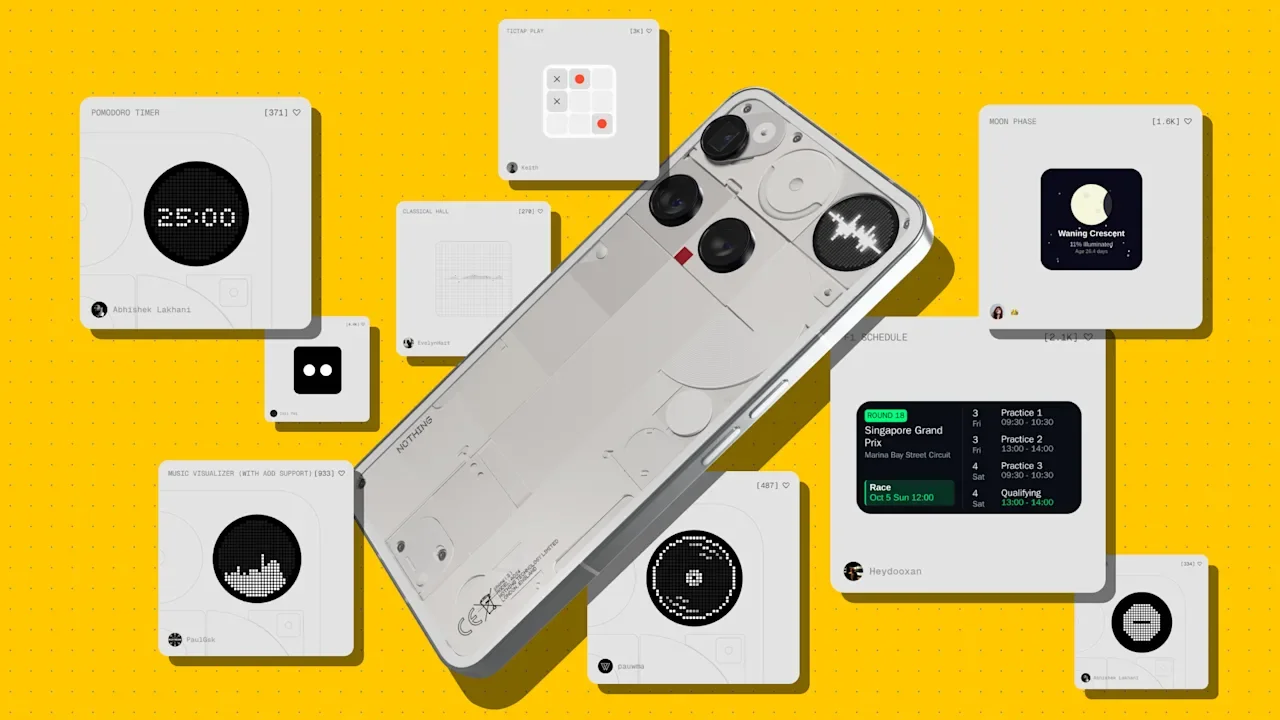
When the iPhone first introduced apps in 2008, a feverish gold rush followed. New APIs and design standards made it easier to make software—even by non-coders. The question became: Could you create a small experience, perhaps something as simple as a fart button app, that could make you a million dollars in a weekend? (And while some people definitely cashed in, a majority of us did not.) Nearly two decades later, the rest of us have another opportunity to rethink mobile software. We’ve entered the era of vibe coding—in which complex software can be generated with nothing but plain language prompts. Now, rather than offer developers the tools to make the next hit app, it seems phone manufacturers may urge everyone to vibe-code their next widget. The hypebeasty smartphone company Nothing Technology has launched what it’s calling Essential Apps in beta on its website. What that really means is that, for the first time, you can simply describe the widget you’d like to have (maybe the latest scores from your favorite team, or a slideshow of beautiful public domain imagery), and it will become a widget that you can download right to your phone, or even share with the public. Nothing’s mantra? “One billion apps for one billion people.” I still prefer the term “widgets” for what Nothing is sharing, but I’ll admit that it’s a good line. Because it seems quite feasible that, for many of us, our first experience with vibe coding will actually be a widget. The rise of widgets Full-blown apps have been the main modality of smartphones since the early days of the App Store. But the industry has embraced widgets for nearly as long—as lighter-weight, glanceable apps that are always open on your screen. Desktop computers had used widgets for years before Google introduced them to Android in 2009. Apple held out until 2014. While they’ve always represented a strange mortar of our digital lives, widgets have remained an established part of our app lexicon as bite-size vessels for information that can live wherever you want on your phone. Vibe coding is amazing, but it’s still involved in building something as complex as a modern app. Widgets, on the other hand, have such a limited scope that they seem perfect for an inexperienced vibe coder. The information you want is the interface, and there’s not a lot more to it. Nothing isn’t technically the first company to come up with the idea of vibe-coding widgets on a mobile platform. You may have forgotten that this was also the biggest promise from Rabbit, the early AI hardware company that captured the tech world’s imagination in 2024—before turning out to be less capable than promised. (Meanwhile, its founder, Jesse Lyu, is building a new piece of hardware completely dedicated to vibe coding that’s called the Cyberdeck.) Nothing has sold over 7 million devices to a loyal crowd that appreciates its quirkier, more expressive approach to design. Its phones have touches like its Glyph Button on the back, which can contain cute micrographics that evoke the Atari era. As it turns out, Nothing’s vibe coding supports new animations for this button—and people have already generated music visualizers and timers. Other early works you can find from Nothing vibe coders—which, for now, seem to be Nothing’s own employees—include tic-tac-toe and phases of the moon. They’re also letting people generate and share custom music equalizers and photo slideshows. Two different early hands-ons both suggest Nothing’s vibe coding isn’t as perfectly automated as we may imagine, but the modality seems promising all the same. While I don’t believe every human on earth is capable of developing the next Uber by vibe coding, it’s easy to imagine myriad people having a tiny, very specific problem related to their commutes, or a transportation challenge that they’d love to solve. And vibe-coded widgets offer a reasonable container for those solutions. This is only the beginning This is all to say that while Nothing was first(ish) out of the gate, I suspect vibe-coded widgets are going to be an extraordinarily popular modality sold by phone manufacturers. And not even necessarily because people need or want them, but because their limited scope seems just right for welcoming the masses into a cutting-edge behavior. Samsung, for instance, is already trying to distinguish its platform with AI integration of all types. Google, a global leader in all things AI at this moment, is almost certainly working on tools like this. On our December By Design podcast, former Fast Company design editor—and current Google senior staff designer working on Android AI—Cliff Kuang suggested vibe coding would be the biggest paradigm for “the next decade or even century.” Even Apple, a company I would naturally assume would never touch vibe coding, may come to surprise us. Consider that it’s already embraced generative AI in Messages and other apps, and it just signed a deal to source its next AI model from Google. I could certainly imagine Apple, working with its collection of internally designed components, creating a widget customizer for its users. And of course, we cannot count out Chinese companies, which produce around 50% of smartphones globally. Huawei, in particular, already offers a variety of Service Cards—an evolution of the widget that can turn an app into a little card, complete with the app’s core functions, right on the home screen. Why couldn’t AI make the perfect intermediary here, for a user to customize exactly what they want to surface from an app? I’m not saying that vibe-coded widgets will become the predominant way we interact with our smartphones. As few as 15% of Apple users report actively using them today. But I do believe that a combination of feasible scope and FOMO-driven strategy could drive the entire smartphone industry in this direction over the next year or two. In other words: If you haven’t delved into vibe coding yet, don’t be surprised if your first project is a widget. View the full article

-
It looks like ordinary paint, but a new coating called Lilypad Paint has a hidden ability to pull moisture out of the air. It works like a dehumidifier, without the energy use. If it’s on the wall in your bathroom, it can suck water vapor out of the air after you’ve taken a shower. The paint holds the humidity in nano-size pores, and then slowly releases it as humidity levels fall in the room. Under the paint, a layer of custom primer “acts like a smart gatekeeper ensuring that vapor doesn’t end up accumulating in the wall,” says Derek Stein, founder and CEO of Adept Materials, the startup behind the product. A passive fix for moisture in modern buildings The tech spun out of Stein’s research as a physics professor at Brown University. While working with students on the design of a solar-powered house, he learned about a growing problem: As buildings become more energy-efficient, air quality can get worse. “As we’re making buildings really, really tight thermally, they tend to trap in moisture and trap in air,” Stein says. A new house might use less energy for heating and cooling but more for ventilation—and if the system doesn’t work perfectly, the home could end up with mold. Older houses that don’t have mechanical ventilation also often have mold problems. Stein iterated on new materials that could passively regulate humidity inside a building and landed on the idea of a simple two-layer structure. It’s “like a material machine that can regulate humidity in a space while also teaching direction to the wall,” he says. The design moves moisture out of the wall while preventing it from getting in. In conversations with the construction industry, Stein realized there was a clear demand for a product like this. In 2018, he left Brown and launched the startup to bring it to market. “It became clear to me that to make this happen on any realistic time scale, I had to leave the ivory tower and go out into the proverbial real world to do this,” he says. Scaling up outside the lab The basic tech, which the company calls Vaporwisp, could be incorporated in many different building materials—drywall, for example, would benefit from humidity management. Adept Materials is also developing a new building wrap for construction that can keep moisture out without trapping it inside. In a seed round of funding a little over a year ago, investors included large home builders like D.R. Horton. “Why are home builders investing in this? It’s not just because of the paint. A lot of their problems, operationally, are related to moisture,” says Stein. (The technology can also have broader applications, including packaging to keep food fresh longer, or moisture-wicking clothing.) Paint was a logical place to start in part because it’s used both by builders and by consumers working on DIY projects. And unlike drywall—a low-margin, unbranded product—paint is something consumers can seek out by brand. In hundreds of lab tests on the paint, the team showed that the system worked as expected to absorb and release moisture. In two identical rooms filled with humidity sensors, testers painted one with Lilypad and one with ordinary paint, and ran a series of humidity assessments. The new paint kept moisture out of the walls. The process works as long as the paint is on the walls. In other words, the performance is tied to its physical properties, not to chemical additives that can wear out. “Lilypad works because it gives moisture a place to go, and a way back out,” Stein explains. “When humidity rises, water temporarily clings to tiny surfaces inside the paint. When the air dries, that moisture naturally releases back into the room. It’s the same everyday process that makes a bathroom mirror fog up and then clear again. The difference is scale: Inside a gallon of Lilypad, those invisible surfaces add up to about a million times the area of a mirror.” After ensuring that the coating worked as expected on humidity, the company optimized it as a paint. The finish had to be perfect. It was engineered to flow onto walls as smoothly as top paint brands. “We’ve really been engineering this to be a no-compromise paint,” Stein says. “The other thing, as a startup company, without the economies of scale that Sherwin-Williams and Benjamin Moore will have, we’re not going to be able to compete on price. And so we’re necessarily going to be competing with higher-end products. . . . We cannot be deficient in any of that.” Because it’s being sold not just as a paint, but as a coating to control moisture, it’s sold at a premium: A kit with a gallon of primer and a gallon of paint goes for $175. At launch, the coating is available only in white. “There’s a a kind of poorly kept secret within the paint industry that about 80% of paint sales are whites,” Stein says. “So people go into the paint store, they bring the pillows and a sample of the drapes and the whatever and they’re checking all the colors, and after an hour they go up to the front and they say, ‘A gallon of double white.’ We wanted to free people of the decision paralysis and free ourselves of the operational headaches of having to offer every color under the rainbow.” He notes that the company can easily add colors later. Saving energy and money In an ultra-tight new building like a passive house, the paint can’t replace mechanical ventilation. But it can reduce how much ventilation needs to be used, saving energy. “If you can automatically regulate humidity, it can lighten the load on the HVAC system—and that’s not insignificant,” Stein says. “The fraction of energy that goes to managing humidity in a building is typically . . . about 10% to about 40%.” In an older building, Lilypad coating can reduce moisture without the need to install expensive new HVAC systems. Adept Materials is now in discussions with the Boston Housing Authority about a pilot that would test the paint inside public housing apartments that don’t have exhaust fans in bathrooms. “It’s accessible by design,” Stein says. “My hope is that while we are releasing this and people are going to be putting it in fancy remodels, there’s also the opportunity to put it into public housing.” View the full article

-
Schruveen? Because Nuders sounds too rude View the full article
-
Learn how to use Google Search Console to monitor performance, fix issues, and improve visibility. View the full article
-
Need some recipe inspo for dinners this week? Look no further than the latest viral food trend on TikTok: boy kibble. The gym bro’s answer to girl dinner, which gained traction online in 2023 as an artfully arranged snack plate, boy kibble is consumed mainly by men trying to hit their protein goals while keeping calories low. “It’s 8PM and I’m rawdogging some 93/7 ground beef,” one enthusiast posted on TikTok. “We’re not the same.” In an era of strange diets (see meatfluencers scarfing down whole sticks of butter and wellness warriors championing E. coli–riddled raw milk) a meal that consists largely of rice, minced meat, and perhaps a handful of vegetables isn’t particularly shocking. Minor details like flavor matter less than how quickly and efficiently macros can be consumed. Here, food is simply fuel. A profile of the typical boy kibble consumer has emerged. Social media suggests these men are often corporate workers, the kind who also order a slop bowl for lunch from Cava or Sweetgreen. That said, some are pushing back on the stereotype. “Making boy kibble in a girl-dinner-trying-to-add-protein-to-my-meal way, not a scary-villainous-bro way,” one creator posted. The viral food trend has also been referred to as “human kibble” online, with women spotted eating it too. Substitute the ground beef for tofu and I feel horribly seen. Still, scrolling social media, it appears to skew male. The act of cooking and consuming boy kibble is now known as “ground beef o’clock.” One viral video shows two men in stacked apartment windows, both simultaneously pan-frying what we can only assume is ground beef. “Boyhood,” the caption reads. “Running home for ground beef o’clock” reads another video’s caption. In the clip, a man maintains a vice grip on his pack of beef while striding purposefully back to his apartment. Still, many people can relate to the feeling that coming up with a meal that sits within the Venn diagram of healthy, easy, and delicious every night for the rest of our lives can feel overwhelming. It may be part of why a recent viral New York Times article about Americans’ DoorDash habits struck a nerve. “Genuinely unnerved by the DoorDash discourse,” one X user wrote. “I am God’s worst and most unwilling cook and yet when I say ‘I don’t cook’ I mean I put $11 worth of pre-marinated meat in the air fryer and serve it with $2 worth of rice.” Genuinely unnerved by the DoorDash discourse. I am God’s worst and most unwilling cook and yet when I say “I don’t cook” I mean I put $11 worth of pre-marinated meat in the air fryer and serve it with $2 worth of rice. You’re telling me a large number of people can’t even do that pic.twitter.com/mr3H9nTaWW — Charlotte Lee (@cljack) February 2, 2026 In that context, boy kibble isn’t a sign of grindset optimization maxxing. Instead, it’s a simple, nutritious, and affordable way for burned-out workers to take one responsibility off their plates. View the full article

-
On the way to work, you see a TikTok video of the president admitting to a crime. In the elevator, you hear your favorite band, but the song is completely unfamiliar. At your desk, you open an email from an executive in another department. It contains valid sales information and discusses a relevant legal issue, but the wording sounds oddly wooden. After lunch, the CEO sends all managers a link to a new app she had casually proposed just a few days earlier. Later, you interview a job candidate via Zoom, but the person looks different from his LinkedIn picture. Any or all of these things—the video, the song, the email, the CEO’s app, the candidate—could have been generated by AI tools or agents. But our epistemic defaults, I’d argue, are still set to assume these things are human-created unless available information proves otherwise. We have not yet entered a “zero-trust” paradigm where content is “generated unless proven authentic.” Instead, we find ourselves in an anxious middle ground. The question now arises whenever we encounter a new image, video, or piece of information: Is this AI-generated? Increasingly, the answer will be yes. We are close enough to that zero-trust reality that we can see it approaching on the horizon. Beyond deepfakes Deepfakes were just the beginning. AI-generated video designed to mislead or incite was, not so long ago, seen as a novelty. Now it’s common in everything from revenge porn to politics. AI-generated music has gone mainstream. Last year, a fully generated country song called “Walk My Walk” by Breaking Rust reached No. 1 on the Billboard Country Digital Song Sales chart in the U.S. An AI-generated TV ad, made with Google’s Veo 3, Gemini, and ChatGPT, ran during Game 3 of the NBA Finals last year. According to a Gallup Q3 2025 report, 45% of U.S. employees now use AI at work. In a similar vein, the email deliverability firm ZeroBounce found in a September 2025 survey that one in four workers use AI daily to draft emails, and that number has likely increased. The same survey found that a quarter of workers suspect their performance review was written using AI. By most accounts, the use of AI agents in corporate workflows is still in the early innings. But AI companies say we’re moving toward a future in which agents from different departments collaborate to complete back-office tasks, such as compensating suppliers, or to compile decision-support materials, like a business case for entering a new market or making an acquisition. It’s already likely that AI agents, including deep research or business intelligence tools, play some role in assembling reports managers receive at work. Amazon’s AWS says its customers have used AI agents to save more than 1 million hours of manual effort. McKinsey predicts that by 2030 the use of agents and robots could create about $2.9 trillion in value in the U.S. if organizations redesign their workflows for “people, agents, and robots working together.” (Of course, McKinsey wants to help them do that.) Depending on her technical savvy, the CEO mentioned above may have mocked up a new app using Replit or Bolt. These so-called vibe-coding tools can generate a credible proof of concept in a weekend. She may then have handed it off to software engineering, whose developers might use Claude Code, Codex, or Cursor to turn the idea into a production-ready app that connects to company databases and third-party tools. A late-2025 Stack Overflow study claims that about 84% of developers now use, or plan to use, AI coding tools, with roughly half already using them daily. When applying for remote jobs, more candidates are trying to improve their odds with AI tools that enhance their face or voice or generate answers in real time during interviews. The voice authentication firm Pindrop says that in its own video interviews it regularly encounters applicants using deepfake software and other generative AI tools to try to land a job. Gartner predicts that by 2028 a quarter of all remote applicants will be AI-generated. Deepfakes once threatened to distort reality; now the distortion is structural, embedded in the systems that produce culture, manage companies, and decide who gets hired. AI, weaponized But the scammer may have a different goal in mind, and this points to scenarios where generative AI tools aren’t just used as timesavers, but as weapons. AI can help conceal the real identities of job applicants who are trying to extract sensitive company information or, worse, secure a role in order to install ransomware. Scammers are also increasingly using advanced face- and voice-swapping tools for outright fraud. In 2024, a team of scammers posed as top executives of the engineering firm Arup during a video call using sophisticated AI tools. They tricked a finance employee into sending them $25 million. We sense that our epistemic defaults—our AI slop detectors, if you will—may lag behind what technology can already do. And that suspicion is correct. The holy-shit moments accompanying new AI breakthroughs now arrive with striking regularity. Recently, some users and journalists concluded that the OpenClaw agent platform had become sentient after watching agents complete tasks independently, deploy humans to finish assignments, and then gather in their own online forum to discuss it. At the same time, many ChatGPT users are grieving the forthcoming loss of GPT-4o because they developed a personal attachment to the model. New Chinese video generation systems such as ByteDance’s Seedance 2.0 and Kling 3.0 are producing highly controllable video that’s increasingly difficult to distinguish from footage captured by a camera. The next tech wave Social networks, in many ways, act as intermediaries—providing a wide-angle lens through which a person sees the world. To increase engagement and ad views, Facebook distorted that lens, to the detriment of both democracy and children. This week, Facebook-parent Meta is defending itself in a Los Angeles courtroom after years of deploying design features, including endless scroll, that critics say proved harmfully addictive for younger users. That was the last tech revolution, and it depended on user-made content. But with AI, the web can generate its own content on demand. This may put an immense amount of power in the hands of a few AI companies, perhaps even more so than was given to social media companies. With so much money and influence at stake, the question is whether AI companies will do what firms like Meta did not and draw a clear line between human-created and machine-generated content. I seriously doubt it, especially with a billionaire class and a The President administration doing everything possible to stifle legislation that might protect AI consumers. If that’s the case, then maybe taking a zero-trust approach to everything that appears on our screens is the only rational path forward. View the full article

-
Want more housing market stories from Lance Lambert’s ResiClub in your inbox? Subscribe to the ResiClub newsletter. One of the clearest messages from KB Home’s leadership during its last earnings call was that the homebuilder—ranked No. 526 on the Fortune 1000—is intentionally shifting away from elevated spec inventory and back toward more built-to-order (BTO)—which will also help firm up its compressing margins given that BTO has higher margins than spec. “When the supply chain crashed [during the pandemic] and our build times significantly extended, it was very difficult to sell a built-to-order home to a buyer when it was going to take 10 or 11 months to build… You can’t lock the interest rate for that long,” Mezger tells ResiClub. So they did more spec. That’s over now. “We’ve significantly compressed our build times… We’re back down to four months or less, which is our historical level,” Mezger tells ResiClub. With shorter cycle times and shifted conditions, KB Home wants to move to less spec. “For years and years, [built-to-order] was 70% to 80% of our business,” Mezger noted. “In the fourth quarter, deliveries were around 50% BTO.”In late January 2026, ResiClub interviewed KB Home CEO Jeffrey Mezger and COO Rob McGibney. Beginning March 1, 2026, McGibney will assume the CEO role, with Mezger—who has served as CEO since 2006—moving into the newly created position of executive chairman. Below are some main housing market takeaways from our recent conversation with KB Home. KB Home says its Florida business is showing signs of stabilization—but the story is hyper-local Speaking on their September 2025 earnings call, KB Home executives said they had cut home prices across Florida—last year’s weakest pocket of the housing market—and were beginning to see signs of stabilization in the Sunshine State as a result. Do they still stand behind that “signs” of stabilization statement? “That’s still largely accurate… But it really remains very market specific,” McGibney tells ResiClub. McGibney adds that some Florida communities have improved, allowing KB Home to lift prices a little this spring. Other Florida communities remain sluggish, requiring additional price adjustments even after earlier cuts. “We look at every community as its own business,” McGibney explained. “It can vary significantly within the same metro—Tampa, Orlando, Jacksonville—you name it.” As for magnitude, KB Home estimates most Florida home price adjustments since peak are modest. “Even -10% would be on the extreme side,” McGibney said, referring to price moves from peak levels. “Most of what we’re talking about is in a -1% to -10% range.” The new-home supply pipeline is pulling back some in softer markets “We’ve seen [housing] starts come down year-over-year in many [weaker] markets,” Mezger tells ResiClub. “Especially spec starts.” KB Home says the pullback is helping limit further inventory pressure in markets like Florida, Phoenix, and Denver where “prices just ran up too much relative to incomes.” “It’s good to see that there’s not a lot more inventory being injected into some of the softer markets, and I think that’s going to help places like Florida stabilize,” Mezger says. The new-vs-existing price gap is compressing—and that’s making new construction more attractive According to the ResiClub New Home Premium Index, the median sales price of new single-family homes in October 2025 was -1.2% lower than the median sales price of existing single-family homes. This shift reflects how the affordability-strained housing market of the past three years has played out unevenly across segments. Many existing-home sellers have resisted downward price pressure, often at the expense of being able to transact. Homebuilders, by contrast, have been more willing to make affordability adjustments—most notably through price cuts, incentives, and a greater mix of smaller homes—to avoid a sharper pullback in new-home sales. While there’s no question that the new-construction premium has fallen meaningfully from a few years ago, national median comparisons (i.e., ResiClub’s index) likely overstate the magnitude of the decline somewhat due to mix-shift effects. KB Home says its premium has compressed; however, it still exists. “There’s a lot of [existing] sellers that have stuck to pricing that’s very high, and they haven’t moved off the pricing so it doesn’t trade. And historically, we’ve always, over time, been able to support a 10% premium to resale—and above 15% when there was no resale inventory. The premiums for the industry gapped well above that [during the Pandemic Housing Boom], and you have seen them compress. But in our case, we try to target our product when we open a community to be within that 10% to 15% range. And when we do that, we’ve [still] seen a buyer that will absolutely take new over used,” Mezger tells ResiClub. View the full article

-
You might think the most important amenities a hotel could provide would be a comfortable bed and a friendly concierge. For workers looking to shake up their WFH routine, though, a lightning-fast internet connection and electrical outlets aplenty may top that list. The chicer cousin of the coworking space, a hotel lobby is no longer a place to simply check in or out: It’s an often overlooked third space in major cities, where guests and remote workers alike can mingle, relax, and get work done. Kayla Terzi is a recent convert. The hospitality real estate broker used to bounce around different cafés while working remotely in New York City—that is, until she discovered the common area of the Soho Grand. “I started noticing hotels offer a quieter, more consistent environment, especially for long calls or focused work sessions,” Terzi, 26, told Fast Company. “At the same time, an energized, cool, social environment helps me stay inspired.” The concept of using hotels as coworking spaces is far from new, but as many companies increasingly opt for hybrid working arrangements, hotels are filling a growing gap between demand and supply when it comes to workspaces. Nearly one in three workers say their company has cut office space since 2020, with 43% reporting that no replacement workspace was provided. That’s according to a November 2025 study conducted by Engine, a booking platform for business travel. Additionally, the rise of the gig economy means there are more freelancers and self-employed workers than ever before. According to the MBO Partners State of Independence in America Report, there were an estimated 72.9 million Americans freelancing in some capacity in 2025. Those workers need space to work, with nearly one in five surveyed by Engine regularly going on “space scavenger hunts” for a change of scenery from their cramped apartments and desk-next-to-bed setups. Instead of turning visitors away, hotels are increasingly opening their doors to take in stray workers—even if they’re not guests. “As long as I order a coffee or something to eat, they usually let me work and hang out for as long as I need,” Terzi said. “Of course, I make sure not to overstay my welcome.” For those who are looking for a little more privacy, services like Engine Spaces make it easy for workers and business travelers to make use of professional workspaces and meeting rooms from the platform’s extensive hotel network, 82% of which otherwise sit empty most of the time, a December 2025 Engine survey found. “People shouldn’t need to call a hotel to get basic information about a meeting space,” Elia Wallen, founder and CEO of Engine, told Fast Company. “It’s 2026, and this is one of the last corners of hospitality that needs to come online, fast.” There’s a gap in the market, apparently. Within the first month of Engine’s beta launch, more than 1,000 spaces were added to the marketplace by hotels, according to the company. What Terzi looks for in a hotel lobby is reliable Wi-Fi, accessible power outlets, and comfortable seating. “One of my favorite lessons is that nothing extraordinary happens in ordinary spaces,” Terzi said. Remember, even if you’re not forking out hundreds or thousands of dollars a night for a room in a five-star hotel, in most cases you can still order a coffee and take advantage of the property’s common spaces. Then, following a productive day of work, seamlessly make your way to the hotel lobby bar. Because why not? View the full article

-
At $600, Jamie Haller loafers aren’t an impulse buy, but they’ve become one of those rare fashion items people evangelize anyway. The shoes, which resemble classic men’s leather loafers, have quietly built a cult following thanks to a surprising claim: Fans—from TikTokers to Wirecutter—say they mold to your feet the moment you step into them. This didn’t happen by accident. The Los Angeles-based designer spent years seeking out a factory that would be willing to make her loafers using sacchetto construction, a labor-intensive Italian technique more often found in bespoke men’s footwear. “Take all of the hard bits of the loafer out,” she remembers telling the cobbler in her Italian factory. “Just make it skin on skin so that it fits your foot like a slipper.” Now Haller is betting that the same philosophy—comfort engineered through old-world technique—can translate into her next hero product. On February 12, Haller is launching sneakers. The new style is made in Italy and uses the same sacchetto construction that turned her loafers into bestsellers. “I wanted to create a beauty-forward everyday sneaker that has the same very, very special construction that the loafers have,” she says. The sneaker, inspired by climbing shoes and ballet slippers, is low-profile, flexible, and subtly sculptural. “It feels like a hug,” Haller says. The New Class of Luxury Brands The sneaker launch comes as Haller’s business is accelerating quickly. She spent years designing for other labels, including Guess and Bebe. But in 2020—weeks into the pandemic—she decided to launch her own brand. At first, the business was built around a single slipper-like shoe that was a precursor to the loafer. But by early 2023, the Jamie Haller label had grown enough that she felt ready to leave her day job. Since then, the business has taken off. Year-over-year growth was in double-digit multiples early on, and momentum has continued as the business scales. Today, about 65% of sales are direct-to-consumer through her website and Montecito, California, store, with the rest coming from wholesale. The brand has expanded into ready-to-wear, bags, and now jewelry, and is entering more stores globally. Net-a-Porter picked up the shoe line and is adding ready-to-wear this spring—a major inflection point for international reach. Haller’s rise places her squarely within a broader shift in luxury, alongside other female designers like Nili Lotan and Trish Wescoat Pound, who design collections focused on quality and construction. Their clothes offer devoted customers a uniform they can wear repeatedly. “I’m toeing the line between casual and polished,” Haller says. Making Menswear Work for Women What makes Haller’s collections stand out is her deep affinity for vintage menswear. As a child, she loved her grandfather’s overcoats, well-worn briefcases, and shoes. She scours vintage markets to find classic men’s garments that might fit her but often doesn’t like how they hang on her curves. So she taught herself how to translate those garments to suit a woman’s figure, combining the hard edges of menswear with the sensuality of a woman’s body. It is this blending of masculine and feminine that is intriguing to her. Haller says men’s trousers usually don’t fit her well because she has curvaceous hips. To maintain the straight, slung look of a men’s trouser, she pulls seams forward and adds shape only where it’s needed, often in the back rise. “The visual appearance is still very straight,” she says, even though the pattern is doing more work underneath. That same logic applies across categories. Her shirts are cut with straighter armholes and dropped shoulders, often in Japanese yarn-dyed cottons meant to mimic the feel of a perfectly worn vintage Oxford. “It’s always a balance of small and big,” she says—rolling cuffs, opening collars, exposing just enough of the body to create contrast. Jewelry, too, follows this masculine thread. Haller’s debut jewelry collection, launched last fall, centers on chunky signet rings inspired by “the rings you’d see on an 80-year-old Sicilian man,” she says. They aren’t precious everyday pieces, but styling elements—meant to add contrast to an outfit built from polished basics. “It’s the styling layer you put on top of the button-down and the basic trouser,” she explains. At every stage, Haller designs for herself first. She fits everything on her own body and refuses to release pieces she doesn’t love. That conviction seems to resonate with customers, many of whom return again and again. “I’m making clothes they can wear every day very comfortably,” she says. Haller’s success reveals a shift in what women want. Many are eschewing larger, flashier designers for independent labels, brands offering understated clothing that doesn’t overshadow the woman wearing them but rather makes her feel put-together thanks to a relentless focus on quality and fit. Haller’s designs borrow the best of menswear—durability, ease, comfort—without losing sensuality. Now her customers will be able to swap their loafer for a sneaker to add a casual touch to their outfit. “I design to make myself happy,” Haller says. “If I’m wearing something every single day, that’s usually a good sign. And I never take these sneakers off.” View the full article

-
Sridhar Sharma, Mr. Cooper's chief innovation and digital officer until it was bought by Rocket, is the new president of the mortgage servicing tech provider. View the full article

-
The Federal Housing Finance Agency and Ginnie Mae agreed to look more closely at credit line use, according to the Government Accountability Office. View the full article