ResidentialBusiness
Administrators
-
Joined
-
Last visited
Everything posted by ResidentialBusiness
-
 Most of us want to remain in our existing homes as we grow older. The practice of “aging in place” aligns with preferences for familiar places and routines and preserves our sense of independence. These preferences, though, raise questions about what support seniors want and need in their current homes. Japan has advanced the use of robotics specifically for this purpose, with mixed results. Despite these early results, the continued development of robotics and artificial intelligence to assist those aging in place seems obvious. What’s less obvious is how seniors foresee AI and robots living alongside them and what specifically they envision these things doing. To better understand how seniors want AIs and robots to help in their homes, we asked them. We recruited seniors from the MIT AgeLab’s research cohort—each around 70 years old and in the early stages of retirement—and then engaged in wide-ranging conversations about their aspirations and fears about these technologies. This framework distinguishes between digital and physical AIs and outlines the key ways they’re meant to help people in their homes. [Image: courtesy Teague] During these conversations, we explored various forms of both digital and physical AI—everything from digital assistants to handy robots—each with different capabilities and limitations. The result: Here are four types of AIs that could operate in the future lives of seniors at home, along with what present-day seniors think of them, and the key considerations we’ll need to account for when designing them. Advisor AI A digital presence that suggests solutions to problems, surfaces opportunities, and helps its person remember to do things. Examples: The AI helps verify the veracity of unfamiliar communications like scam phone calls; identifies activities of interest and assists in planning how to participate; offers timely reminders to take medications; and prompts calls to friends and family members on their birthdays. What seniors think: Thanks to established assistants like Amazon’s Alexa and Apple’s Siri, seniors say they’re already familiar with this form of AI, both inside and outside their homes, and can easily anticipate its further evolution. Moving forward, though, seniors want more from the Advisor archetype. They want the Advisor to go beyond pragmatic help with reminders about daily life and grow into helping them with their social well-being. This will mean providing actionable support with emotional concerns, especially social isolation, by surfacing and facilitating a senior’s human connections. Butler Robot AI A physical presence that attends to its person by assisting with dynamic needs, such as deliveries, health, and home monitoring. Examples: The AI robot lifts a delivery from the porch to the foyer; assists in turning off the water at the source of a leak in the kitchen; and renders assistance—and summons help, if needed—in the event of a fall. What seniors think: Due to the confluence of connected personal devices like smartwatches and earbuds with connected home devices such as smart thermostats and automated lighting, seniors believe there are increasingly complex interactions between their bodies and their homes. So they see how an AI robot helping to manage these complexities could reduce their cognitive load. They also acknowledge, though, that this form of AI in the home is far from simple in its creation and requires a lot of features and expansive capabilities. Just like a human butler, here there’s a distinct possibility of robots just for rich people, which will require breakthroughs in manufacturability and new business models to avoid. Conductor AI A digital presence that operates connected systems of modules such as wheeled porters and object lifters. Examples: The AI responds to voice commands to transport meals from the kitchen to the living room with a wheeled porter; elevates an adjustable-height table adjacent to the dryer to ease folding clothes; and summons an autonomous vacuum to address a spill. What seniors think: This is a challenging archetype for seniors to conceptualize in their homes since it exists beyond any present-day solutions. Nonetheless, they’re compelled by the prospect of an overarching, digital administrator of a set of modular, task-driven devices. Perhaps because it’s the least familiar to them in terms of having existing corollaries, seniors are less confident in speculative interactions with this archetype because an AI with a lot of control must earn a lot of trust. At the same time, they see this form of AI as capable of adapting to their changing physical needs as they age simply through the addition of new connected devices. This will mean creating sets of modules that can be added and subtracted, potentially through subscription models. Valet Robot AI A physical presence that attends to its person by helping with everyday tasks, such as cleaning, dressing, and grooming. Examples: The AI robot replaces a light bulb in high-ceiling recessed lighting; helps a person put on their socks and pants; cleans everyday surfaces such as kitchen and bath countertops; and dusts bookshelves and framed prints. What seniors think: Seniors equate the possibilities of this form of AI in the home with early home robots such as iRobot’s Roomba vacuum. While the focus of this archetype is on “everyday” tasks that include common housecleaning (versus the “dynamic” tasks of the Butler Robot AI archetype), it also includes help with everyday personal tasks like dressing and grooming. Interestingly, here seniors have some concerns about this form of AI helping in ways that bring it into physical contact with their bodies. This will require forms of this AI that are aesthetically compatible with seniors for such personal interactions. View the full article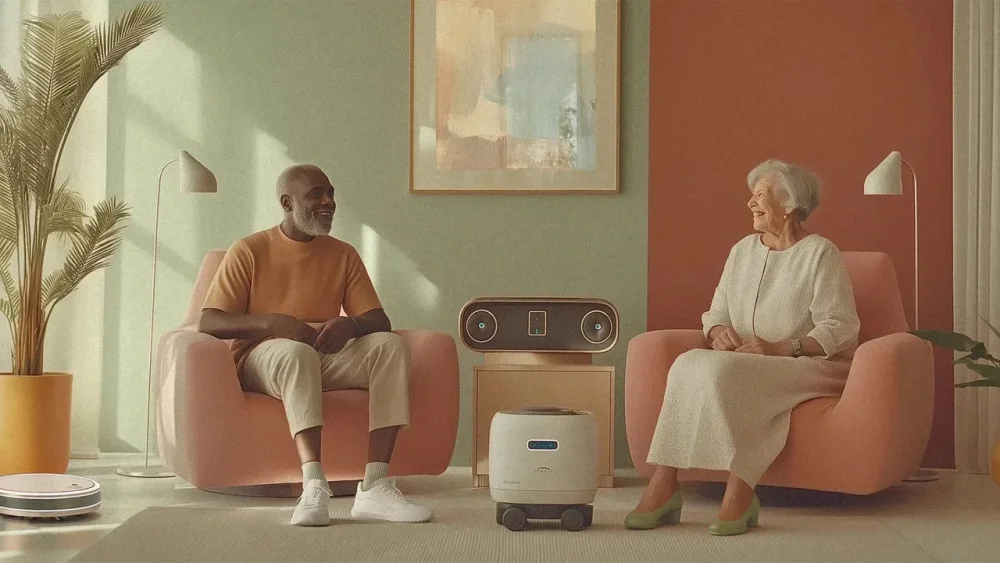
-
Scores of wildfires broke out across North Carolina, South Carolina and Georgia in early March 2025 as strong winds, abnormally dry conditions and low humidity combined to kindle and spread the flames. The fires followed a year of weather whiplash in the Carolinas, from a flash drought over the summer to extreme hurricane flooding in September, and then back to drought again. Storms on March 5, 2025, helped douse many of the fires still burning, but the Southeast fire season is only beginning. Wake Forest University wildfire experts Lauren Lowman and Nick Corak put the fires and the region’s dry winter into context. Why did the Carolinas see so many wildfires? Most of North and South Carolina have been abnormally dry or in moderate drought since at least November 2024. Consistently dry conditions through the winter dried out vegetation, leaving fuel for wildfires. When the land and vegetation is this dry, all it takes is a lightning strike or a man-made fire and wind gusts to start a wildfire. Hurricanes did flood the region in late summer 2024, but before that, the Carolinas were experiencing a flash drought. Flash droughts are extreme droughts that develop rapidly due to lack of precipitation and dry conditions in the atmosphere. When the atmosphere is dry, it pulls water from the vegetation and soils, causing the surface to dry out. In August and September, Tropical Storm Debby and Hurricane Helene caused extensive flooding in the two states, but the Carolinas received little rainfall in the months that followed, leaving winter 2025 abnormally dry again. How unusual are fires like this in the region? Fires are historically fairly common in the Carolinas. They’re a natural part of the landscape, and many ecosystems have evolved to depend on them. Carnivorous plants such as Venus flytraps and pitcher plants rely on frequent fire activity to remove shrubs and other plants that would grow over them and block the light. Even some wildlife depend on fire for their habitats and for food from the mix of native plants that regrow after a fire. The expected return periods for wildfires (how often fires have historically burned in a region) range from 1 to 10 years for the Piedmont and Coastal Plains in the east and 10 to 40 years in the Appalachian Mountains. However, many unplanned fires today are put out. That means underbrush that would normally burn every decade or so can build up over time, fueling more intense fires when it does burn. To avoid that overgrowth, land managers conduct annual prescribed fires to try to mimic that natural fire activity in a controlled way. These controlled burns are critical for removing vegetation that otherwise could provide additional fuel for more intense and damaging wildfires. Is dryness like this becoming more common? Extreme weather events are becoming more common across the U.S., including in the Southeast and the Carolinas. Increasing temperatures mean the atmosphere can hold more moisture, amplifying how much water it can draw from the land surface and eventually drop in heavier storms. That can lead to more extreme storms and longer dry periods. In humid regions like the Southeast, where there is an abundance of dense vegetation, periods of warm, dry conditions that dry out that vegetation will increase the risk of wildfire. According to the U.S. Drought Monitor, the southeastern U.S. experienced more droughts than other regions in the country in the first two decades of the 21st century. The weather variability also makes it harder to clear out forest undergrowth. Prescribed burns require that vegetation be dry enough to burn but also that winds are calm enough to allow firefighters to manage the flames. Studies show those conditions are likely to become less common in the Southeast in a warming world. Without that tool to reduce fuel, the risk of intense wildfires rises. Lauren Lowman is an associate professor of civil and environmental engineering at Wake Forest University. Nick Corak is a PhD candidate in physics at Wake Forest University. This article is republished from The Conversation under a Creative Commons license. Read the original article. View the full article

-
Collapse of vehicle battery maker deals major blow to Europe’s bid to rival China View the full article
-
Tazara project showcases Beijing’s leaner approach to overseas development just as western aid appears to retreatView the full article
-
Investment group with rights to songs by Shakira will be ‘fundamentally different’ under unified structureView the full article
-
Moves come as consultants strain to protect annual profit pool of close to £1mn per partnerView the full article
-
The US president’s officials are standing by their strategy to remake the world’s largest economyView the full article
-
ESG and DEI are out as the US president’s son makes lucrative investments that align with his father’s vision of AmericaView the full article
-
Capricious policies from Washington have created a very unpredictable economic environmentView the full article
-
Measures designed to protect the struggling US steel industry could also help a cohort of global producersView the full article
-
This post was written by Alison Green and published on Ask a Manager. It’s five answers to five questions. Here we go… 1. I get bad vibes from my new boss A new director recently joined my department, and I’ve had an immediate bad feeling about her. I’m not typically quick to judge, and I recognize that she reminds me — at least in some ways — of a family member who is a bit of a narcissist. I want to stay professional and give her a fair chance, but I also don’t want to ignore my instincts if they’re picking up on real red flags. I’ve just been having a gut feeling and maybe, unfairly to her, I am reacting to speech patterns and mannerisms that remind me of my relative. I don’t think I’m imagining all of it though. For example, despite us having met several times in person, she has made no effort to introduce herself to me or ask any questions about me or my role. I suppose I could have taken more initiative myself to engage, but since she is the leader of our team, it feels like initial outreach is her responsibility. I have a fair amount of influence and seniority at my company, but that is not obvious to new people, and to me it feels like she is ignoring or snubbing people who she perceives as having less power. There is probably a more generous way for me to look at this complaint (e.g., bosses can be introverts too) but something just feels off. How can I balance professionalism with due diligence in assessing this situation? And how do I determine whether my concerns are valid or just baggage from my past experience? I don’t want to accidentally start a whisper campaign over something as subjective as bad vibes. Keep your eyes open, but until you have actual signs that there are real problems, treat her exactly the way you would if she weren’t setting off your alarm bells. It’s very possible that you’re reacting to baggage from a family member. It’s also possible that you’re not, and instead your gut is picking up on something real. But until you know for sure, there’s no action to take! After all, if you decided to just blindly trust your gut, what would that look like? You definitely shouldn’t go around sharing your concerns with other people (which I’m assuming is what “accidentally start a whisper campaign” refers to) when she hasn’t done anything! And if you let your gut affect the way you interacting with her, there’s a very high chance of making the relationship worse than it otherwise would be — like not taking any initiative to engage with her even though taking that initiative could help you professionally. (We can argue over whether that should be her responsibility, but the fact is she hasn’t done it herself — so the more relevant question is whether it’s in your best interests to initiate some contact yourself, and in many cases it would be.) You asked about how to balance professionalism with due diligence in assessing the situation, and the answer to that is easy: professionalism wins out, because it’s in your own interests to remain professional. As for due diligence, that just means being willing to give the situation time. At some point, once enough time has gone by, you’ll have learned more about who she is and how she operates, and you’ll know whether your concerns are valid or not. But you won’t know that from day one, just like you wouldn’t know it about someone who wasn’t setting off alarms for you either. 2. I got in trouble for sending mail with upside down flag stamps I’m an admin who processes our outgoing mail. We buy rolls of stamps that over the last couple of years have had a three-flag design. For whatever reason, my brain has trouble with orienting them — I often place them on the mail upside down. (You can see here that they have even been posed for purchase upside down.) It’s not intentional, it’s not a political statement on my part, it just happens when I’m peeling them off and working in a hurry. My supervisor, however, has gotten very upset about it several times. I’ve tried to do better, but he wrote me up today for “making political statements in the company’s name with company materials” when he saw one I accidentally placed upside down. I want to speak to his boss about this to explain and ask if this can be removed from my file. Do you have any suggestions? My coworker suggested I go to the optometrist and get some kind of note but that seems like overkill. Yes, a note from the optometrist would be overkill. (What would it even say?) Your boss isn’t wrong to tell you that you need to place the stamps right-side up. I know it seems like a small thing that might not matter, but because the upside down flag is a symbol of distress, there is a movement around placing flag stamps upside down to make a political statement. It’s reasonable that your boss doesn’t want company mail going out with what could look like a political statement on it, whether or not you intended that way. Or just looking sloppy, for that matter — it might not be something you personally would notice or care about, but other people do and some will read it as less polished. You can certainly try explaining that this was a mistake, not an intentional act, and asking that the write-up be removed or at least if you can add a response to the write-up explaining it was a mistake. But your boss isn’t wrong to be concerned that it’s continued to happen after he’s told you to stop — whether you intended it or not, you’re still sending out mail with what looks like a political statement on it, and you say it’s happening often — and so you do need to figure out a system for making sure it doesn’t keep happening. (Can you lay them out correctly oriented before you start applying them?) 3. Using inappropriate passwords when someone else might see them I work for a large organization as the LMS manager. Someone recently reached out to me because they forgot their password. When I looked it up, I was surprised with the word they chose. I’m not offended but I felt that it was inappropriate for a workplace (mild swear but not offensive — “asshat”). I let them know they need to change it to a more workplace-appropriate word, reset the password back to the default, and they changed their password right back to the inappropriate one. (Makes me wonder how they could forget that!) I know passwords are to be private but if you forget it and have to ask for it, I do see them. Is using swear words in password okay for work? Should I not have said anything and just laughed it off? Well, first, in a secure password system, no one should be seeing anyone else’s passwords, even IT. But in a system where someone else can see the passwords and might need to retrieve one for someone, it’s pretty bad professional judgment to use a swear word (mild and ridiculous as “asshat” is; it’s really on the far fringes of what qualifies as a swear word, but we don’t have a good name for the work-inappropriate category it is in). It’s even worse judgment to refuse to change it after being directly told to. It’s not something I’d bother pursuing any further (unless you’re the person’s manager and there’s a pattern of bad judgment, in which case it’s the pattern that would matter more anyway), but I’d certainly think of them as someone with questionable judgment after this. 4. How to say thanks to a senior leader doing a great job in a terrible time I’m in an industry that’s been very hard hit by the insanity around the executive orders. The actual policy changes and funding cuts, combined with the sheer chaos, volume of new directives, and inconsistency around what’s going on have been brutal. Everyone at my organization has been working around the clock for weeks to try to figure out how to navigate the next meteor that has come crashing through from the government. With a few exceptions, people inside the organization have been amazing about this. We’re exhausted and confused, but people are pulling together and trying to problem solve as much as we can. We have a couple of senior leaders that I don’t work with regularly, but I’ve spent a ton of time with recently. One in particular has been nothing short of heroic. He’s been kind, patient, always available, expert, and fundamentally decent in every single interaction I’ve seen. He manages to combine a strong leadership steer with an ethical grounding and a recognition for the humans he’s working with that is not easy to figure out in the current nightmare. I cannot imagine how he’s doing it, and I shudder to think where we would be if he weren’t here. Is there any way that it would be appropriate to thank him for this? I know gifts are supposed to flow downward in the workplace, but this is so far above and beyond that I’d love to give some token of thanks for what he is doing. Any recommendations? A bottle of his favorite drink? A gift card to a meal out? Something else? I’m a broken record about this but: a personal note telling them everything you said above. That will have more far more meaning, and probably be kept and cherished far longer, than any physical gift you could give him. 5. My company is violating the state law on paid sick time Our office is in California and has three full-time employees. We’re paid by the hour, at the end of the month. In 2024, we were only allowed 24 sick hours and now this year as well. If we’ll need more than 24 hours, we must use vacation time or log zero hours. I’ve told the owner in mid-2023 and again in December 2023 that when we received the employment law posters employers are required to display, they clearly showed that as of January 2024, California employers must provide 40 hours of paid sick leave per year. I’ve also called our payroll company and asked them about this, and they stated our employer is not in compliance. They called and spoke to the owner’s daughter, who reports our monthly hours, yet nothing changed. What do we do about this? My two coworkers will not deal with this and are afraid to rock the boat. File a report with the California department of labor. California happens to be a state that is very assertive about enforcing compliance with its employment laws, and they’ll handle it from there. View the full article
-
Levies also set to apply to most derivative products such as tennis rackets and air conditioning unitsView the full article
-
Saltbox, a leading flexible co-warehousing and logistics provider, has announced the launch of the Luck of the Entrepreneur grant to support small businesses. Timed with St. Patrick’s Day, the initiative offers financial assistance to entrepreneurs, reinforcing Saltbox’s commitment to helping small business owners scale effectively. In response to ongoing supply chain challenges, rising costs, and operational obstacles, Saltbox is offering more than just financial aid. The company is providing access to a business community, expert logistics advice, and professional development resources to help entrepreneurs grow. “At Saltbox, we know that success in entrepreneurship isn’t just about luck—it’s about having the right resources, space, and support to turn big ideas into reality,” said Olivia Mariani, VP of Marketing at Saltbox. “With the Luck of the Entrepreneur grant, we’re giving small business owners a boost to help them level up in 2025.” Saltbox is awarding a $1,500 grant to one business that tours a Saltbox location by March 31. In addition, starting March 17, all new members will be entered into a monthly drawing for $1,500 in funding. Additional prizes include free growth consulting sessions, exclusive Saltbox merchandise, and gift cards. Existing members will also have access to funding opportunities through a quarterly drawing. “As entrepreneurs ourselves, we know firsthand the challenges that small business owners face every day,” said Katerina Cirilli, COO at Saltbox. “Saltbox was built to help logistics-enabled entrepreneurs thrive, and this grant program is another way we’re making sure they have the resources, community, and infrastructure to succeed—not just today, but for the long haul.” How to Enter Entrepreneurs located near any of Saltbox’s 11 locations are encouraged to tour a facility before March 31 to qualify for the grant drawing. The first winner will be announced on April 4. Current Saltbox members will be automatically entered into the new monthly and quarterly drawings beginning March 17. For more details on the Luck of the Entrepreneur grant and how Saltbox is supporting small businesses, visit Saltbox’s website. This article, "Saltbox Launches ‘Luck of the Entrepreneur’ Grant for Small Businesses" was first published on Small Business Trends View the full article
-
Saltbox, a leading flexible co-warehousing and logistics provider, has announced the launch of the Luck of the Entrepreneur grant to support small businesses. Timed with St. Patrick’s Day, the initiative offers financial assistance to entrepreneurs, reinforcing Saltbox’s commitment to helping small business owners scale effectively. In response to ongoing supply chain challenges, rising costs, and operational obstacles, Saltbox is offering more than just financial aid. The company is providing access to a business community, expert logistics advice, and professional development resources to help entrepreneurs grow. “At Saltbox, we know that success in entrepreneurship isn’t just about luck—it’s about having the right resources, space, and support to turn big ideas into reality,” said Olivia Mariani, VP of Marketing at Saltbox. “With the Luck of the Entrepreneur grant, we’re giving small business owners a boost to help them level up in 2025.” Saltbox is awarding a $1,500 grant to one business that tours a Saltbox location by March 31. In addition, starting March 17, all new members will be entered into a monthly drawing for $1,500 in funding. Additional prizes include free growth consulting sessions, exclusive Saltbox merchandise, and gift cards. Existing members will also have access to funding opportunities through a quarterly drawing. “As entrepreneurs ourselves, we know firsthand the challenges that small business owners face every day,” said Katerina Cirilli, COO at Saltbox. “Saltbox was built to help logistics-enabled entrepreneurs thrive, and this grant program is another way we’re making sure they have the resources, community, and infrastructure to succeed—not just today, but for the long haul.” How to Enter Entrepreneurs located near any of Saltbox’s 11 locations are encouraged to tour a facility before March 31 to qualify for the grant drawing. The first winner will be announced on April 4. Current Saltbox members will be automatically entered into the new monthly and quarterly drawings beginning March 17. For more details on the Luck of the Entrepreneur grant and how Saltbox is supporting small businesses, visit Saltbox’s website. This article, "Saltbox Launches ‘Luck of the Entrepreneur’ Grant for Small Businesses" was first published on Small Business Trends View the full article
-
A new report from Oxford Economics reveals that TikTok has become a key driver of employment in the United States, with 7.5 million businesses on the platform supporting more than 28 million workers. The study, published today, highlights TikTok’s role in job creation and economic opportunity, particularly for small and mid-sized businesses. 4.7 Million Jobs Directly Benefit from TikTok The Oxford Economics report estimates that 4.7 million jobs in the U.S. benefit directly from using TikTok. This includes: Over 3.1 million workers who use TikTok in their jobs by creating content for the platform or managing accounts. More than 1.6 million workers who benefit indirectly, such as sales teams generating leads, marketing teams engaging customers, and product teams analyzing user feedback. Businesses Scaling with TikTok The study found that 74% of businesses on TikTok reported the platform helped them scale their operations, a trend observed across both small and large enterprises. TikTok’s unique format enables businesses to create authentic and engaging content, expanding their reach and driving revenue growth. “Tiktok’s impact on the US economy continues to expand, with millions of small and mid-sized businesses using the platform to reach new customers, increase engagement, and create jobs,” said Blake Chandlee, President of Global Business Solutions at TikTok. “The latest Oxford Economics report underscores this growing influence, estimating that 28 million people are employed by businesses that leverage TikTok’s features. The platform isn’t just a tool for brand awareness—it’s a catalyst for real economic opportunity, fueling job growth and innovation across the country.” Laurence Wilse-Samson, Lead Economist at Oxford Economics, added, “The survey findings and an analysis of TikTok’s business account data suggest that millions of people in US businesses are either directly using the app as part of their jobs or benefit from the leads and opportunities it creates.” Building on Previous Research This latest report builds on Oxford Economics’ 2024 study, which focused on small and mid-sized businesses (SMBs) using TikTok. That earlier analysis estimated that SMBs contributed $24 billion to the U.S. GDP and supported 224,000 jobs across the supply chain. Unlike the previous study, this new report considers businesses of all sizes, leading to a significantly higher estimate of total jobs impacted by TikTok. The research was based on a 1,000-respondent survey conducted from December 2024 to January 2025, which included businesses from all 50 states, the District of Columbia, and Puerto Rico. To participate, businesses were required to have a TikTok account for business use. The findings also incorporate TikTok’s proprietary business account data and U.S. Census Bureau business population estimates. Real Business Success Stories Small business owners credit TikTok with transforming their operations and enabling them to grow. “We started in September 2016 with nothing but a small food stand in a local flea market—just me, my husband, and two employees,” said Vanessa Barreat, owner of La Vecindad in Las Vegas, Nevada. “Today, we have 60 employees, two locations, and a thriving community of customers who found us through TikTok. Dozens of families now rely on La Vecindad, and we can even send our children to college—something we once only dreamed of.” The platform’s impact spans various industries, including retail. “TikTok was one of the major factors that helped us triple our business,” said Alex Bellman, chief operating officer of Bellman Jewelers in Manchester, New Hampshire. “Because of TikTok, we had to hire eight new employees and are now opening a second location in Boston. Without this platform, we’d have to spend tens of thousands of dollars just to try to compete with larger brands. It’s helped level the playing field for small businesses like ours.” Beyond Business Accounts The report notes that TikTok’s economic impact extends beyond businesses that have official accounts. Many independent creators, entrepreneurs, and personal brands use the platform to generate income, build careers, and support their professional endeavors. This article, "New Report: TikTok Supports 28 Million Jobs Across 7.5 Million US Businesses" was first published on Small Business Trends View the full article
-
A new report from Oxford Economics reveals that TikTok has become a key driver of employment in the United States, with 7.5 million businesses on the platform supporting more than 28 million workers. The study, published today, highlights TikTok’s role in job creation and economic opportunity, particularly for small and mid-sized businesses. 4.7 Million Jobs Directly Benefit from TikTok The Oxford Economics report estimates that 4.7 million jobs in the U.S. benefit directly from using TikTok. This includes: Over 3.1 million workers who use TikTok in their jobs by creating content for the platform or managing accounts. More than 1.6 million workers who benefit indirectly, such as sales teams generating leads, marketing teams engaging customers, and product teams analyzing user feedback. Businesses Scaling with TikTok The study found that 74% of businesses on TikTok reported the platform helped them scale their operations, a trend observed across both small and large enterprises. TikTok’s unique format enables businesses to create authentic and engaging content, expanding their reach and driving revenue growth. “Tiktok’s impact on the US economy continues to expand, with millions of small and mid-sized businesses using the platform to reach new customers, increase engagement, and create jobs,” said Blake Chandlee, President of Global Business Solutions at TikTok. “The latest Oxford Economics report underscores this growing influence, estimating that 28 million people are employed by businesses that leverage TikTok’s features. The platform isn’t just a tool for brand awareness—it’s a catalyst for real economic opportunity, fueling job growth and innovation across the country.” Laurence Wilse-Samson, Lead Economist at Oxford Economics, added, “The survey findings and an analysis of TikTok’s business account data suggest that millions of people in US businesses are either directly using the app as part of their jobs or benefit from the leads and opportunities it creates.” Building on Previous Research This latest report builds on Oxford Economics’ 2024 study, which focused on small and mid-sized businesses (SMBs) using TikTok. That earlier analysis estimated that SMBs contributed $24 billion to the U.S. GDP and supported 224,000 jobs across the supply chain. Unlike the previous study, this new report considers businesses of all sizes, leading to a significantly higher estimate of total jobs impacted by TikTok. The research was based on a 1,000-respondent survey conducted from December 2024 to January 2025, which included businesses from all 50 states, the District of Columbia, and Puerto Rico. To participate, businesses were required to have a TikTok account for business use. The findings also incorporate TikTok’s proprietary business account data and U.S. Census Bureau business population estimates. Real Business Success Stories Small business owners credit TikTok with transforming their operations and enabling them to grow. “We started in September 2016 with nothing but a small food stand in a local flea market—just me, my husband, and two employees,” said Vanessa Barreat, owner of La Vecindad in Las Vegas, Nevada. “Today, we have 60 employees, two locations, and a thriving community of customers who found us through TikTok. Dozens of families now rely on La Vecindad, and we can even send our children to college—something we once only dreamed of.” The platform’s impact spans various industries, including retail. “TikTok was one of the major factors that helped us triple our business,” said Alex Bellman, chief operating officer of Bellman Jewelers in Manchester, New Hampshire. “Because of TikTok, we had to hire eight new employees and are now opening a second location in Boston. Without this platform, we’d have to spend tens of thousands of dollars just to try to compete with larger brands. It’s helped level the playing field for small businesses like ours.” Beyond Business Accounts The report notes that TikTok’s economic impact extends beyond businesses that have official accounts. Many independent creators, entrepreneurs, and personal brands use the platform to generate income, build careers, and support their professional endeavors. This article, "New Report: TikTok Supports 28 Million Jobs Across 7.5 Million US Businesses" was first published on Small Business Trends View the full article
-
Halving of staff thought to be precursor to campaign pledge of shutting down the agency View the full article
-
Financial regulator says it will scrap new public interest test after backlash from the City and government officialsView the full article
-
For ages, real estate has been defined by the tangible: buildings, land, square feet. Nowadays, however, the world’s most valuable businesses make their money from what is intangible—brands, networks, knowledge, and experiences. As of 2020, 90% of the value at the S&P 500 comes from intangible assets, up from 32% 40 years ago. The equivalent figure for major European companies lags behind, at just over 74% in 2020, a factor that likely contributes to Europe’s lower growth rate and per capita GDP. Much of the difference is made by a few unmatched American technology platforms. Real estate, too, must evolve beyond its physical footprint. At Atrium Ljungberg, where I work, we started that process a long time ago. Our market offering is not only built on bricks and mortar, but interactions and services happening inside and between offices, apartments, and retail spaces. This makes them greater than the sum of its parts. Our portfolio is more than a collection of buildings: It is the life between buildings. For that reason, we don’t operate buildings separately, but focus on developing large, interconnected districts. In a way, we could be seen as a platform company, enabling people, businesses, and ideas to connect and grow. This philosophy drives our megaprojects redeveloping parts of Stockholm. Real estate as a platform business At their core, platforms create value by coordinating interactions, reducing barriers and transaction costs, and enabling large-scale economic activity through network effects. The highest-performing businesses on the S&P 500 today create ecosystems where value is co-generated, but facilitated by these companies. Of the world’s 10 largest companies by market capitalization—from Amazon and Alphabet to Meta—seven can be considered platform businesses. All sprung up in the last two decades. Sweden’s most valuable company, Spotify, fits into the platform archetype too. Let’s apply platform logic to urban environments. A thriving city district is a dynamic system where different actors—residents, businesses, visitors, civil society, cultural institutions—interact in ways that ideally enhance each other’s experience. The role of a developer, then, is not just to build and lease space but to curate and connect—facilitating an ecosystem where people and businesses can thrive. This includes thinking beyond the traditional landlord-tenant relationship. A more holistic approach ultimately delivers increased value also to individual tenants. Just as nightclub owners need the right crowd, we carefully consider the first tenants in our developments: Who will create the most value for others in future? They lay the foundations for whoever comes next. This is also how you must start growing a platform. We’ve introduced flexible memberships that allow businesses to access workspaces across different locations. We’ve partnered with mobility providers to offer shared transport solutions that reduce car dependency. We’ve invested in cultural programming that extends a district’s life beyond office hours. In each of these cases, our broader ambition is to generate lasting impact for our customers and other stakeholders, including city councils. Why we report livability to financial markets Urban environments have always derived their value from interaction, not just location. The classic example is the agglomeration effect—why businesses cluster, for instance, in financial or life sciences districts, or why creative industries thrive in repurposed warehouse spaces. It’s no secret that economic productivity is shaped by knowledge, relationships, and culture—and you likely see this in your own work. This is why companies pay a premium for office space in vibrant areas, why retail thrives in lively environments, and why people prefer communities that offer more than a place to live. If a company attracts or keeps better talent because of the neighborhood it’s in, or if a retail street sees increased foot traffic because of a carefully curated mix of tenants and public spaces, the economic impact of these factors isn’t always obvious at first. But to every CEO, CHRO, or owner, their significance grows over time. Many employers that ignored these factors—whether by relocating or staying in the wrong place—later dealt with talent flight, engagement drop, and operational struggles. In retrospect, the consequences were clear. It is no coincidence that many of the world’s most valuable companies were born in Silicon Valley, which is an exceptionally livable and well-balanced environment. The repercussions of the area’s rapid economic growth have since put pressure on some livability aspects, but the livable foundation was a key ingredient to its success. Against this background, we’ve developed our own index to capture a wider set of critical livability values. The index not only measures factors like safety and accessibility, but also social interaction and cultural vibrancy. Over the past few years, we’ve significantly advanced our own index score measured across our developments. Since we are a listed company, this score is regularly reported to the stock market, alongside our financial and decarbonization reporting. However, the index is not just a reporting measure—it is directly linked to our sustainability bonds, integrating these intangible values into our financial structure. The more we improve livability, the lower our cost of capital. It’s a way of quantifying what the market increasingly understands: Places that cultivate interaction, well-being, and identity hold lasting value. Well-being as a shared value One of the most overlooked aspects of value, crazily enough, is well-being. Urban loneliness is rising. Stress levels are rising. The way we design and activate spaces in real life can either worsen these problems or help solve them. The platform mindset is crucial here: Isolation is the biggest obstacle to well-being, which relies on interaction, a core function of platforms. The best urban areas are those where people feel connected—to their neighbors, to culture, to work, and to nature. This is why we emphasize not just physical design but the social and emotional experience of a place. That includes shared green spaces and food—some would argue this matters most—to diverse retail, health, and leisure offerings. Developing a place which shapes people’s daily lives comes with great social and economic responsibility, affecting their health, creativity, and sense of belonging. How urban development must evolve in the platform era As the economy continues to shift toward intangible value, championed by platforms, the best real estate developers will understand their role not just as builders or operators, but as city life shapers. This means embracing new objectives, new partnerships, and a new mindset—one that sees urban areas and individual buildings as centers for interaction rather than just physical assets. Urban planners and architects play important roles, but developers are the economic engines defining both projects and functionality over time. Still, compared to architecture, real estate often lacks an innovation mindset—something that has real consequences. We need platform companies in the physical world to be as ambitious as platforms in the virtual one, otherwise it will lose its relative appeal. Relying solely on digital platforms to shape how people live and interact is hardly a sustainable model. To create conditions for greater well-being, we need to strengthen the real-world layer that digital platforms can’t replace. The real-world city naturally exposes us to spontaneous encounters and experiences, sparking creativity in ways algorithms cannot replicate. It engages our innate reward systems through meaningful interactions, making cities uniquely capable of driving both innovation and human well-being—whether or not we actively seek it. This is precisely what digital platforms, with their self-reinforcing bubbles, struggle to achieve. It is also why the city remains humanity’s greatest invention, effortlessly breaking through our mental echo chambers to prove its value as our ultimate interactive platform. Real estate clearly has a void to fill, as the industry isn’t fully delivering on the promise of cities as platforms. To change this, we must learn from the most successful platform companies today. They can teach us a lot about structural efficiency and capacity to shape behavior and economic activity. Digital platforms are not role models in every aspect, but they have certainly demonstrated how to challenge the status quo, link people and companies in new ways, and generate economic value on an unmatched scale. These are all needs in the physical world. There is a clear opportunity for the real estate industry to apply platform principles—and every reason for us to do it. Linus Kjellberg is the head of business development for Atrium Ljungberg. The Fast Company Impact Council is a private membership community of influential leaders, experts, executives, and entrepreneurs who share their insights with our audience. Members pay annual membership dues for access to peer learning and thought leadership opportunities, events and more. View the full article

-
I’ve always been vocal about the need to fight inequality in our own backyards. As a resident of New York’s Capital Region, I built my marketing business here. And in 2020, I founded Business for Good Foundation, a nonprofit philanthropy organization focused on closing the growing wealth gap and providing a hand up to underserved entrepreneurs. The inequality is blatantly real. The 23.3% poverty rate is more than twice as high in Albany versus the 11.1% national average. In fact, New York is one of the most economically unequal states in the country. While local and state government have made promises to help clean up the city, reduce crime rates, and create more affordable housing, the reality is that we haven’t seen much movement and things aren’t getting better. If we truly hope to level the playing field and tackle these inequities, then those of us driving change in the private sector will simply need to keep our eyes on the ball, and step in where government officials are not. The growing wealth divide in the U.S. While those in political power might not always care to acknowledge it, income inequality remains one of the greatest challenges facing our country, to the point that the U.S. continues to boast a significantly larger wealth gap between the rich and poor than any other developed nation in the world. To put the issue into perspective, according to the Peter G. Petersen Foundation, the income of the 20% of wealthiest U.S. households rose 165% between 1981 and 2021, whereas middle and low income households have only seen growth of 33% and 38%, respectively. And if our political leaders aren’t even willing to recognize, much less take action to address the nation’s growing wealth divide, then making a real impact will require the collective effort, dedication, and resources of private advocacy groups and philanthropists in our communities. The compounding threat of housing inequality Sadly, for the millions of people living in underserved communities across the nation, overcoming income insecurity isn’t about striving for the American dream, but rather ensuring they can feed their families and keep a roof over their heads. And as the U.S. economy continues to grapple with an ongoing housing shortage and affordability crisis, this growing sense of anxiety and desperation has the very real potential to result in further increases in poverty, crime and social unrest. The state of housing affordability in America today is frankly appalling. According to the National Low Income Housing Coalition, there is currently an estimated shortage of over 7 million affordable homes in the U.S., not even close to enough to accommodate the nearly 11 million extremely low income families throughout the country. I’ve witnessed this devastating reality firsthand while living in the Capital Region. To address these issues, Albany announced an executive budget proposal earlier this year that would include a $400 million investment toward revitalizing the community. However, Albany’s government has once again been slow to act, and the commitment has not been seen through, further underscoring the need for community and business leaders to work together to drive meaningful change, with or without state or federal institutional support. Relying on the private sector As someone who’s been lucky enough to have a successful career as an entrepreneur, and who recognizes how the unfair advantages provided to certain groups prevent others from getting ahead, I’ve frequently struggled to understand the state’s unwillingness to step in and put an end to the widespread inequalities that have been plaguing this country for so long. This is exactly the issue I set out to address when I founded the Business for Good Foundation. And if there’s one thing I’ve learned in my experience, it’s that providing those who are less fortunate with equal access to resources and opportunities is often all it takes to uplift an entire community. Going forward, I won’t simply sit on my hands any longer and wait for state leaders’ support to do what’s right. Instead, I plan to double down on our work in New York’s Capital Region through a heightened focus on fostering business growth, economic inclusion, housing stability, and community development to build a better, more equitable world for all. It’s my hope that other business leaders across the private sector will do the same. Ed Mitzen is cofounder of Business for Good. The Fast Company Impact Council is a private membership community of influential leaders, experts, executives, and entrepreneurs who share their insights with our audience. Members pay annual membership dues for access to peer learning and thought leadership opportunities, events and more. View the full article

-
The Irvine, California-based firm reported a net loss of $67.5 million in the fourth quarter. View the full article
-
Government says regulator’s merger with Financial Conduct Authority will reduce complexity and boost innovationView the full article
-
The company is a leading player in the primary and secondary markets for government-backed reverse mortgages and also has been developing proprietary products. View the full article
-
Legislation on stop-gap measure now moves to the Senate to avoid a government shutdownView the full article
-
Is compressibility an SEO myth? The surprising facts about whether Google uses compression as a quality signal The post Is Google’s Use Of Compressibility An SEO Myth? appeared first on Search Engine Journal. View the full article