ResidentialBusiness
Administrators
-
Joined
-
Last visited
Everything posted by ResidentialBusiness
-
 Transform your workday with generative AI and discover practical ways to save time. Quick Tech Talk With Steve Yoss CPE Today Go PRO for members-only access to more Stephen Yoss. View the full article
 -
Transform your workday with generative AI and discover practical ways to save time. Quick Tech Talk With Steve Yoss CPE Today Go PRO for members-only access to more Stephen Yoss. View the full article
-
Here is a recap of what happened in the search forums today...View the full article
-
A Position 1 ranking only matters if your result resonates with users and earns clicks. That’s why optimizing your click-through rate (CTR) is just as crucial as climbing the search results. By analyzing your current performance and making strategic improvements, you can turn rankings into real traffic. This article provides actionable tips to boost CTR, attract more clicks, and maximize your SEO efforts. Understanding the role of CTR in SEO CTR is a crucial SEO metric that’s often overlooked. For years, it was considered an indirect factor, but the antitrust trial against Google revealed that CTR is used as a ranking signal. Regardless of its impact on rankings, CTR determines how many users actually reach your site. As Eli Schwartz explains: “Rankings are just the potential; CTR is actualizing that potential.” – Eli Schwartz, “Focus on SEO CTR and not just rankings“ As an SEO professional, what could be more important? All our hard work is fruitless if we fail at the first hurdle, and no one wants a below-par CTR. With this in mind, I’ve outlined key tactics to help improve this critical metric. 1. Identify pages that need CTR optimization The best benchmark for click-through rate performance is your own dataset. Every industry is different, and so is every individual website. While comparing against industry averages can be valuable in some cases, it’s usually more beneficial to determine your own CTR range and “run your own race.” Start with Google Search Console data to check and download search performance metrics, including CTR. I recommend using at least 90 days of data and filtering out pages with very low impressions that might skew your results. From there, find your average CTR and focus on pages that fall below it. You might also revisit your keyword research and review search volume metrics to prioritize pages with the most potential – ensuring you get the maximum impact for the time invested. Pages with an above-average CTR can also be valuable. If they generate traffic despite lower rankings, they could perform even better in higher positions. A little optimization on these could go a long way. 2. Create high-performing title tags and meta descriptions The key to better click-through rates is compelling title tags and meta descriptions. This limited space is your chance to grab attention on a crowded search engine results page. Think of it as the organic equivalent of a search ad – adopting this mindset can help you optimize for CTR effectively. So, how do you write metadata that truly performs? Here are some tips. Use paid search data to improve SEO CTR If you’re running Google Ads, you already have a treasure trove of CTR data at your fingertips. Talk to your PPC team, review your Google Ads account, and analyze which ad copy performs best. Use this CTR data to inform your strategy for writing effective title tags and meta descriptions. Testing and learning are much easier with ad campaigns. Headline and ad copy testing are standard practices, and your colleagues are likely already working on ways to improve Google Ads CTR. Yet, sharing this data with SEO professionals is far less common. Don’t miss out on this goldmine of insights into what your target audience actually responds to. Dig deeper: Top 7 Google Ads and SEO synergies you should act upon Review email and social media campaigns Email marketing is another directly measurable channel, and subject lines are quick and simple to test. Assessing CTR data from email campaigns can provide valuable insight into your target market – what type of language they respond to and what drives them to click. The same applies to social media. Analyzing popular posts can help you better understand your audience and craft more effective title tags and meta descriptions. Get the newsletter search marketers rely on. Business email address Sign me up! Processing... See terms. Match search intent A mismatch between search intent and your key messaging can lead to a low CTR. After all, if users don’t expect your landing page to deliver what they’re looking for, why would they choose to click? Your average CTR could improve significantly by aligning your copy with user intent. Consider whether you’re using transactional or commercial wording appropriately, or if certain areas require a more informative tone. The right approach may vary across different sections of your website, so take the time to understand the intent behind key queries and adjust your language accordingly. Incorporate E-E-A-T in your metadata E-E-A-T (experience, expertise, authoritativeness, and trustworthiness) factors may also shape user perception. Since title tags and meta descriptions have limited space, adding language that builds trust in your brand could be the difference between earning a click and losing one. For example, some retailers differentiate their Apple Watch listings by mentioning warranty details to provide trust signals within search results. Others highlight affordability by showcasing deals and payment plans. Can you mention awards, accolades, guarantees, or promises specific to your industry? Even a small trust signal could be a game-changer in capturing more clicks. Harness AI to address CTR gaps If you’re optimizing click-through rate at scale, AI tools can help analyze data to identify behavioral patterns and preferences. This data can be used to create more compelling headlines or even generate different elements automatically. For example, Buddler offers an SEO CTR benchmark report that identifies CTR drops, below-average pages, and high-performing pages that may be worth improving. This can save valuable analysis time, allowing you to focus on tactics that drive better results. Taking a generative approach, the Danish news outlet TV 2 Fyn used AI-generated headlines to increase CTR by 59%. Tap into FOMO and psychological triggers to drive action Improving CTR isn’t just about SEO or using relevant keywords. Psychological triggers can have a powerful effect by tapping into user behaviors and emotions. Fear of missing out (FOMO) is a particularly strong motivator. While it’s more difficult to apply in long-term SEO strategies, limited-time or exclusive offers can be highlighted to boost clicks. For example, pages dedicated to Black Friday or time-sensitive deals should make this urgency clear. Power words can also trigger emotions, encouraging users to take action. However, use them carefully. Empty promises or unsubstantiated claims can backfire, reducing clicks and damaging customer trust. 3. Leverage rich snippets and schema markup Beyond title tags and meta descriptions, structured data provides more opportunities to increase engagement. Certain types of markup can trigger SERP features, making your listing stand out. For example, proper review markup can display star ratings in search results, helping your page attract more clicks. Pricing, return policies, and delivery details can also be shown, increasing visibility and credibility. Implementing these at scale can lead to incremental gains. 4. Optimize URLs for click-worthiness Often overlooked, URLs can send strong signals to potential visitors. Unnecessary parameters or overly complex URLs may deter users who are unfamiliar with your brand. Keeping URLs short, clear, and relevant reinforces trust and transparency. A well-structured URL can be the deciding factor for a user unsure about clicking. With these four SEO tactics in place, you can boost CTR and drive more traffic. But how does CTR interact with rankings? Let’s explore the connection. The interplay between ranking and CTR It’s well-recognized that higher-ranking pages generally attract more clicks. A recent FirstPage study found that on average: Position 1 organic search result receives 39.8% of clicks. Compared to 18.7% for the Position 2 result and 10.2% for Position 3. Since higher-ranked pages typically have better CTRs, looking beyond title tags and meta descriptions to improve page content, user experience, and page speed can help boost rankings – and, in turn, click-through rates. A better page ranks higher, leading to a higher CTR, which then further improves performance. One gain feeds into the other, creating a positive feedback loop. Testing and measuring CTR improvements Once you’ve implemented changes, tracking performance is key to success. Google Search Console allows you to monitor progress and adjust your approach if results aren’t meeting expectations. A/B testing can also be set up using tools like Bigmetrics, allowing you to measure the impact of different changes over time and determine what works best. Key takeaways for CTR success Remember to review your CTR metrics and make improvements alongside other SEO work. Prioritizing CTR optimization will help maximize your impact. Leverage data from other digital marketing channels, psychological triggers, and search intent matching for the best results. Test, learn, refine – and grow your traffic with smarter CTR strategies. View the full article
-
Party officials reject €500bn infrastructure fund plan and change to debt borrowing rules to fund defence spendingView the full article
-
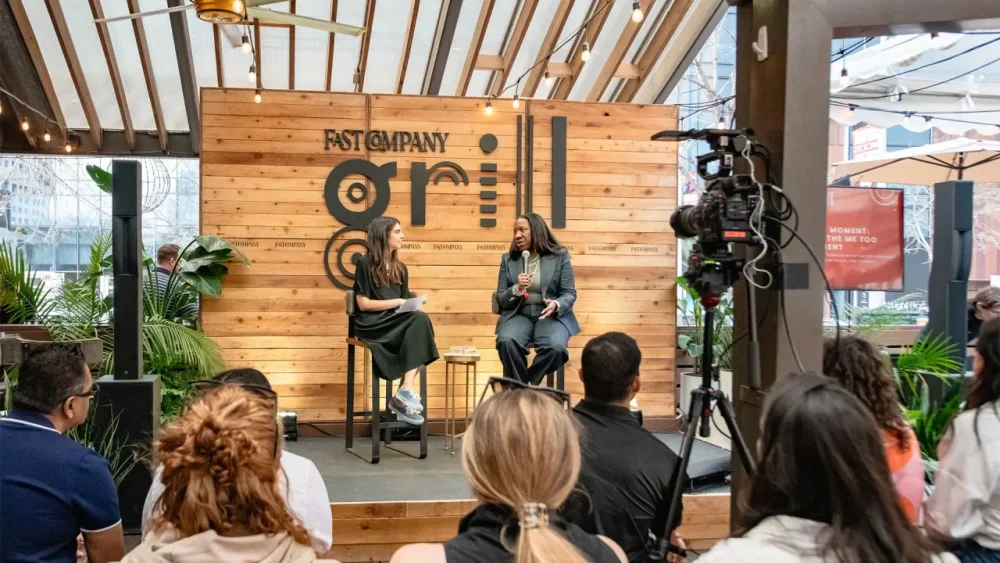
Even though Tarana Burke is still correcting some past misconceptions about the #MeToo movement that went mainstream about eight years ago—it’s not dead, for example, and it wasn’t a witch hunt—she’s focused on the future. Specifically, the movement’s founder said organizing has already begun for the 2026 U.S. midterm elections. “I’m really looking forward to what we can do to build on the campaign we started in 2024,” Burke, chief vision officer of Me too. International, said Saturday during a discussion at the Fast Company Grill at SXSW. “I’m really excited about the idea of building a constituency; imagine us voting along the lines of our survivorship.” One goal for the movement’s future, Burke said, is to help people see how sexual and gender-based violence is interwoven with so many other issues, including gun violence, homelessness, prison reform, food deserts, and maternal mortality. “Part of our work is helping people to understand that there’s not an issue that you care about that does not touch on sexual and gender-based violence,” she told the audience. “We need to stop trying to silo these issues; there’s so much work that we can do together.” Working in tandem on social issues may elicit more attention from politicians or leaders who don’t address issues of sexual and gender-based violence, according to Burke. “We need to keep holding people’s feet to the fire.” Solving a solvable issue That said, activists face new challenges. Funding for support work to end sexual and gender-based violence is at an all-time low, Burke said, while local rape crisis centers are at-risk of losing all of their federal funding. Writing a check, of course, is one solution, but the fight to end sexual and gender-based violence will require interventions on various fronts—similar to approaches taken to make America smoke-free. “This is a solvable issue if we want to solve it,” Burke said. There are still problems to be fixed, however, like the framing that a man’s life is being ruined if he’s accused of sexual violence and a frequent premise that the person making the accusation isn’t telling the truth. That’s why it’s important for people to be given the respect and dignity of an investigation, Burke said. “That helps everybody involved,” she added. “If you are the person being accused or you’re the person who has the accusation, everybody involved should be treated with respect and humanity.” A focus on accountability Another misconception is that people who inflict harm on others must be banished, and there’s no pathway back for them. Burke wants to see accountability from the people who have caused harm, rather than for them to disappear for a while and reemerge again as though nothing happened. “What we’re saying is, if you want to be amongst civil society, we need to understand that you won’t cause harm again, that you understand that you caused harm in the first place,” Burke told the audience. “And the biggest problem with a lot of these men who have these accusations and have these things that have actually been proven is that we don’t see any of that.” Without accountability, it’s tempting for voters to excuse past accusations by justifying some of the good work a politician did in the past. And there’s a pertinent example right now that Burke, a New Yorker, weighed in on. New York City currently has a “terrible” mayor in Eric Adams, at least in Burke’s opinion, but she feels “a little angry” that he could be replaced by another “terrible” politician. That’s because Andrew Cuomo, the former governor of New York who stepped down amid numerous sexual harassment accusations, recently announced he’s running for mayor. “I just want us to do better and dream better and think bigger,” Burke said of this political situation. “If we actually want these things to stop, if we want to make an impact on the issue of sexual and gender-based violence, we have to figure out where the line is and hold the line.” A movement of ‘everyday’ people Of course setbacks are inevitable, as Burke acknowledged, though when the pendulum swings back the other way, she said there are tangible signs of the movement’s progress since #MeToo went viral in 2017 that won’t simply disappear. She points to law and policy changes in that time, along with the way people think and talk about sexual violence. “There has been a cultural shift,” said Burke, who coined the “Me Too” phrase nearly two decades ago while working with sexual assault survivors. “This is a movement that has empowered so many survivors, that has helped so many find community, that has been such a catalyst for healing and action, which is what our organization is about.” Still, she said there is more work to be done. And looking to the future, Burke is calling on the public’s help. “Movements are not just about the people with the microphone, the person with the bullhorn in the front,” Burke said. “Movements are built from everyday people.” View the full article
-
The connectivity chip complements Synaptics new AI-native SR-series MCUs enabling a host of new intelligent use cases, the company says. The post Embedded World: Synaptics targets US$3.2B ultra-low-power IoT chip market with new Wi-Fi/BLE/Thread SoC appeared first on Wi-Fi NOW Global. View the full article
-
Hedge fund turned family office eclipses rivals with currency and bond wagers on a slowing US economyView the full article
-
Kendra Scott, founder of her eponymous jewelry brand, still believes business can be a force for good. And she’s got the numbers to back it up. Today, the brand announces that its foundation has donated $70 million in monetary and in-kind contributions over the last fifteen years to a wide range of causes. It’s supported literacy by providing multicultural and bilingual books to low-income elementary schools. It’s set up a women’s leadership institute at the University of Texas, Austin. It has funded more than 40,000 hours of breast cancer research. At a time when the government is cutting funding to education and medical research, pouring money into these causes matters more than ever. Speaking to Student Athletes at the Kendra Scott Center at UT Austin [Photo: Kendra Scott] Scott says she’s only getting started. As the company grows explosively—generating a reported $500 million in revenue last year, a 20% increase from the year before—Scott believes it has the potential to donate even more. And even though many other companies are pulling back on their diversity, equity, and inclusion efforts, Scott is continuing to prioritize DEI. The brand’s most recent impact report, lists many DEI initiatives including creating an internal “Hispanic Pod” to better connect with Hispanic consumers year-round. “I am not changing anything about my mission, end of story,” she says. “It doesn’t matter who the president is.” Scott’s stance goes against the grain in corporate America. Many companies that once boasted about their social justice and equity initiatives—like Target and McDonald’s—have pulled back from these efforts in response to the new political climate. Scott believes this is a mistake and will drive customers away. And indeed, there are now boycotts planned against both of these companies, and many others, including Amazon, Nestle, and General Mills. “If you’re constantly pivoting who you are as a brand, you will not survive,” says Scott. “You won’t just falter in this political climate; you’re not going to survive in future ones.” [Photo: Kendra Scott] Kendra Scott’s Unusual Philanthropy Model Scott was always interested in how she could build a profitable business that could also do good in the world. She launched the brand in 2002 out of a spare room when she was a young single mother. But even back then, she committed to helping any organization came to her asking for support. “I had no money at the time,” she says. “But I said that I wasn’t going to turn anybody away, even if all I could contribute was a pair of earrings for a silent auction.” Eventually, the brand took off. In 2010, she began opening stores, and that’s when she decided to formalize the charitable giving part of her business. Rather than picking a single cause, Scott wanted to give her customers some say in where money would go. So she developed a unique model where any customer can host a “Kendra Gives Back” event in-store where 20% of proceeds can go to a cause they care about. Last year alone, the company supported 12,600 causes, ranging from the girl scouts to pediatric cancer. [Photo: Kendra Scott] Scott believes this approach allows the brand to become more embedded in the community. “We’re fostering a genuine connection with our customers because we’re meeting them in some of the darkest moments of their life,” she says. “We’re meeting them when their kids are fighting cancer and raising funds for things that could be tragic. We are trying to spread light in dark places.” As the company has grown, Scott has been able to invest in other causes that are important to her. In 2016, when Scott lost a close friend to breast cancer, the foundation began pouring money into breast cancer research and has already donated $2 million to this cause. Scott is also passionate about supporting literacy efforts in under resourced communities. She’s launched a program called Yellow Libraries, where the foundation partners with a literacy non-profit called First Book to provide multicultural and bilingual books to low-income schools that receive federal funding. Now, the government is slashing funding to scientific research and is contemplating eradicating the department of education. Corporate donations are now increasingly important to keeping these causes going. [Photo: Kendra Scott] Social Good Is Good For Business While some business leaders worry that philanthropy might be a distraction from building a profitable company, Scott believes philanthropy has been directly tied to the brand’s growth. “It’s what differentiates our brand from our competitors,” she says. “It’s what keeps customers engaged and loyal.” The company is now scaling quickly, generating half a billion dollars in annual sales. In 2016, the private equity firm Berkshire Partners acquired a minority stake in the business, valuing the company at $1 billion. This allowed it to expand its retail operations. It now has more than 100 standalone stores, while also selling through retailers like Neiman Marcus, Nordstrom and Bloomingdale’s. It also sells products through its e-commerce website. The brand has been deliberate about appealing to new generations of customers. It offers a wide range of price points, and many tweens gravitate towards the brand’s more affordable necklaces like the Elisa, which sell at a rate of one a minute. Scott points out that Gen Z is very socially conscious, and are more likely to engage with brands that support a social cause. But the brand also remains popular with older customers, many of whom have been loyal fans for years. “When we closed all our stores during COVID, customers started writing in to ask about the employees in the stores,” Scott recalls. “It was a testament to how these stores were really part of the community and had shown up when customers needed donations.” Scott believes it would be a mistake to change the brand’s approach now, even as the political climate in the country is changing and many other companies are turning their back on social justice initiatives. “Consistency is so important,” Scott says. “When we say we’re going to do something, we do it.” View the full article

-
Helicopters, lifeboats and firefighting vessels sent to the scene off the coast of HumbersideView the full article
-
We may earn a commission from links on this page. Deal pricing and availability subject to change after time of publication. The Harman Kardon Onyx Studio 8 is currently $129.99 on Woot, a massive drop from its usual $499.95 price tag. According to price trackers, this is its lowest price ever—and if you're a Prime member, you get free shipping (otherwise, it's $6). This deal is set to last for the next 27 days or until it sells out, but note that you can't have it shipped to Alaska, Hawaii, or a PO box address. Harman Kardon Onyx Studio 8 $129.99 at Woot $499.95 Save $369.96 Get Deal Get Deal $129.99 at Woot $499.95 Save $369.96 The asymmetrical shape of this speaker might make it seem wobbly at first glance, but there are rubber feet to keep it stable. One of the standout features of this speaker is its room calibration technology, which automatically adjusts the sound to your space. Whether you’re in a small apartment or an open loft, the speaker fine-tunes its output for the best possible experience. The sound profile of the Onyx Studio 8 is well-balanced, particularly in the midrange, making it great for podcasts and general listening. However, if you love deep, thumping bass, this isn’t the speaker for you. It lacks serious low-end punch, so while bass lines are present, they won’t shake the walls. It also doesn’t have an EQ or sound customization options, so what you hear is what you get. Also, its controls are a bit of a mixed bag—they’re simple but suffer from inconsistent tap recognition, which could easily get frustrating when trying to adjust volume or playback. The Bluetooth multipoint pairing feature of this wireless speaker lets you connect two devices at once, but there’s noticeable latency with video playback (so if you’re planning to use this for movies or YouTube, expect some sync issues). While the Onyx Studio 8 improves in sound quality over its predecessor, the Onyx Studio 6, it drops its water resistance entirely, making it more suited to a safe, dry living room setup. That said, it does come with a one-year manufacturer limited warranty for added peace of mind. Battery life is advertised at eight hours, but real-world use is closer to seven, depending on usage (your mileage may vary). Also, there’s no auto-off function, so if you forget to power it down, you’ll lose battery even when the speaker's idle. View the full article
-
We’re all looking to improve our organic performance. We want the latest news, tips, and thought leadership to help push our website past the competition. That’s why we’re here! However, the less glamorous side of staying current in SEO is learning from others’ mistakes. This article looks at eight common mistakes you can easily avoid. 1. Treating organic traffic as the end goal It makes sense to use organic traffic as a key metric to measure SEO success. It’s one of the easiest to define. However, it’s not the reason your company employs you. Traffic doesn’t pay the bills. In reality, it costs money when you factor in hosting and tools. Growing organic traffic isn’t necessarily a bad goal, but it needs to be more defined. You could be ranking for keywords that will never convert or attracting visitors who leave immediately. That’s not helping your business grow. Instead of viewing increased organic traffic as proof your SEO efforts are working, treat it as an indicator – one that matters only if the traffic is well-qualified. Ask key stakeholders what they report on each month. If you’re speaking to the board of directors, they care about the company’s financial health. Consider SEO’s impact on revenue as a better measure of success than simply saying, “Organic traffic is increasing.” Dig deeper: Why SEO often fails before it even begins 2. Forgetting about the user Focusing more on traffic volume than the users behind it is a mistake. If you create content only to generate traffic without a plan to meet visitors’ needs once they arrive, you’re wasting your energy. It’s easy to see traffic as the end of an SEO’s responsibility, but that’s not the case. A high-ranking page is only valuable if it attracts and engages the right audience. Whether targeting users at the top or bottom of the funnel, have a clear plan for their next step and craft your copy to guide them there. Too often, I’ve seen SEO strategies that begin and end with “get more users to the site” – with little thought about what happens next. 3. Implementing short-term strategies When developing an SEO strategy, it’s important to consider how far ahead you should plan. A common mistake – one I’ve made myself – is limiting an SEO strategy to just a few months due to uncertainty about the future of SEO. While it’s wise to stay adaptable as new SERP features emerge or a new search engine gains popularity, planning less than a year ahead is likely neither ambitious nor realistic for long-term growth. Algorithm updates can affect progress and require adjustments to your approach. However, if your strategy spans 12 months, your overarching goals will likely remain the same, even if specific tactics need to change. For example, if your SEO strategy is designed to increase revenue through organic search for a new product launch, a Google algorithm update won’t make that goal obsolete. You may need to adjust certain activities, but the strategy itself will remain intact. The risk of short-term planning is that you’re constantly shifting from one project to another, requiring frequent buy-in. This approach can prevent genuine growth, making SEO more reactive than strategic. You’ll also be more susceptible to chasing trends instead of implementing sustainable tactics that drive long-term success. Dig deeper: 5 SEO mistakes sacrificing quantity and quality (and how to fix them) 4. Blaming the algorithms without reason It’s all too easy to blame traffic drops on algorithm updates. We’ve all been in meetings where an SEO confidently tells a stakeholder: “Google makes hundreds of algorithm changes each year, and we don’t always know what’s changed.” While true, this can also become a scapegoat. Instead of investigating the actual cause, it’s convenient to attribute the drop to a Google update – especially when stakeholders have no way to prove otherwise. Before jumping to “algorithm update” as the reason for a traffic drop, rule out other possibilities. Check if the decline is happening across multiple search engines. If it is, an algorithm update is less likely to be the cause. Look for technical issues affecting crawling and indexing. Consider whether shifts in user behavior or industry trends are impacting search demand. And remember: If you blame algorithms for traffic drops without proper investigation, you should also credit them when traffic goes up. That probably won’t sit well with your boss when they ask what impact your SEO efforts have had lately. Get the newsletter search marketers rely on. Business email address Sign me up! Processing... See terms. 5. Basing decisions on flawed data Another major mistake is making other SEO decisions without solid data. Most SEOs understand that data is key to a successful strategy, yet errors in data handling are all too common. For example, poorly designed tests can lead to misleading conclusions. Running a test on meta descriptions to measure their impact on click-through rates is pointless if you don’t verify which descriptions were actually displayed in the SERPs. Similarly, evaluating sitewide performance metrics instead of analyzing specific pages, topics, or templates can obscure important insights. These issues often stem from: Using the wrong metrics. Relying on mislabeled data. Failing to segment data properly. A common error is pulling a Google Search Console report without accounting for variations in traffic by country or device. Averages can smooth out meaningful peaks and troughs, leading to flawed conclusions. Dig deeper: SEO shortcuts gone wrong: How one site tanked – and what you can learn 6. Assuming Google lies This mistake is surprisingly common in the SEO industry – the assumption that “Google lies.” But when you really think about it, that idea doesn’t make much sense. It would require a coordinated effort from every Google representative we hear from to deliberately mislead SEOs. For what purpose, exactly? I don’t believe Google lies about SEO. What would Google employees gain from misleading us about things like whether Googlebot respects robots.txt or if there’s a way to encourage Googlebot to crawl a site? More often than not, what people perceive as “Google lying” is actually a misunderstanding of extremely complex topics. Google Search is powered by intricate algorithms involving machine learning, information retrieval, and technical systems that most of us will never fully grasp. Naturally, some details get lost in communication. Google’s representatives try to simplify, explain, and troubleshoot an incredibly advanced system, which can sometimes lead to confusion. That’s why we should test everything Google tells us – not because they’re trying to deceive us, but because testing helps us better understand how to optimize our sites so Googlebot can find and serve our content effectively. 7. Using the robots.txt to control indexing Since we’re on the topic of helping Googlebot find and serve content, let’s talk about a common mistake – misusing robots.txt. Robots.txt is meant to guide bots on what they can and cannot crawl, not what they can index. A common misconception is that blocking a page in robots.txt prevents it from appearing in search results. That’s not how it works. If a search engine bot has never crawled a page, it won’t see its content and likely won’t rank it well. But that doesn’t mean it won’t index the page at all. If a search engine finds links to the page and the context of those links provides enough information, the page can still appear in relevant search results. If a page was previously crawled and indexed, and then a disallow rule was added to robots.txt, it can still rank based on the last version Google saw. Essentially, you’ve given search engines a snapshot of the page before blocking it, and that’s what they will continue to rank. A related mistake is adding a noindex tag to a page while also blocking it in robots.txt. If the page is blocked, Googlebot can’t crawl it to see the noindex tag – so the page may stay in search results despite your efforts to remove it. Dig deeper: 5 SEO content pitfalls that could be hurting your traffic 8. Using conflicting signals Sending search engines mixed signals can lead to indexing and ranking issues. This happens in several ways: Adding a noindex tag to a page while also canonicalizing it to another page. Linking to the non-canonical version of a page, making it unclear which URL should be indexed. Combining hreflang tags with noindex, preventing localized versions from being properly indexed. Pointing a canonical tag to a page that has a noindex tag, sending contradictory instructions. Learn from others’ mistakes These are just a few common SEO pitfalls, but there are many more. Experienced SEOs have often learned these lessons the hard way – by making mistakes. You don’t have to. By recognizing these issues early, you can avoid them and refine your SEO strategy for better results. Dig deeper: The top 5 strategic SEO mistakes enterprises make (and how to avoid them) View the full article
-
Digits is taking on QuickBooks and Xero, with the world’s first AI-powered Autonomous General Ledger, allowing small business owners and accountants to put their accounting needs almost completely in the hands of AI. Digits announced the service—which went live Monday—at HumanX in Las Vegas, after working on it for the past five years in stealth mode and putting it in the hands of hundreds of companies to test out over the past year. The platform serves as an alternative to other accounting software or platforms, such as QuickBooks or Xero, but stands out as it uses its own proprietary AI technology. Jeff Seibert, the co-founder and CEO of Digits, says that puts the platform ahead of other competing accounting programs, even those that purport to also utilize AI technology. In many cases, he says, those platforms are simply throwing numbers into broad-based LLMs like ChatGPT, and not purpose-built AI tools, like what Digits has built in-house. “We went all the way,” Seibert says. “We went heads-down, and spent the past five years creating the first end-to-end accounting platform for the AI era.” And when comparing Digits to key competitors, Seibert says that “we’re feature-competitive, we can do everything that they can do,” but again, “the difference is that we’ve spent five years training our own models,” allowing for automation for “a vast majority of the work.” So, for accountants or small business owners, using Digits is a matter of connecting the right accounts, and letting the AI take over—it can record and categorize transactions in near-real-time, reconcile accounts, and then create insights and reports. In effect, processes that may take weeks can be winnowed down to minutes. Interestingly, Seibert says that he hopes Digits can help stymie a larger issue in the accounting field: The lack of accountants. Currently, three-quarters of accountants are near retirement age, and the number of prospective accountants (those taking CPA exams) is the lowest in decades. While there’s already a glut of accounting talent, it’s set to get worse. “Nobody in Gen Z wants to be an accountant,” Seibert says. As such, he hopes Digits can prove to be a stop-gap of sorts—not replace human accountants entirely, but allow those accountants to do more with less. Digits has already garnered a good amount of attention from investors, having raised around $100 million in recent years from investors such as Benchmark and SoftBank. And customers seem to be buying in, too, as the group of businesses that spent the past year testing the product are giving it a thumbs-up, according to Seibert. “We already have hundreds of firms that want to access it,” he says. “It’s magical.” View the full article
-
A one-day strike by workers at 13 German airports, including the Frankfurt and Munich hubs and all the country’s other main destinations, caused the cancelation of most flights on Monday. The 24-hour walkout, which started at midnight on Sunday, involves public-sector employees at the airports as well as ground and security staff. At Frankfurt Airport, 1,054 of the day’s 1,116 scheduled takeoffs and landings had been canceled, German news agency dpa reported, citing airport traffic management. All of Berlin Airport’s regular departures and arrivals were canceled, while Hamburg Airport said no departures would be possible. Cologne/Bonn Airport said there was no regular passenger service and Munich Airport advised travelers to expect a “greatly reduced flight schedule.” The ver.di service workers union’s strike also targeted the Bremen, Hannover, Duesseldorf, Dortmund, Leipzig/Halle, and Stuttgart airports. At the smaller Weeze and Karlsruhe/Baden-Baden airports, only security workers were called out. The German airports’ association, ADV, estimated that more than 3,500 flights in total would be canceled and about 560,000 passengers affected. The union announced the strike last Friday. But at Hamburg Airport, it added a short-notice walkout on Sunday to the strike on Monday, arguing that it must ensure the measure was effective. The so-called “warning strike,” a common tactic in German wage negotiations, relates to two separate pay disputes: negotiations on a new pay and conditions contract for airport security workers, and a wider dispute over pay for employees of federal and municipal governments. The latter already has led to walkouts at Cologne/Bonn, Duesseldorf, Hamburg, and Munich airports. Pay talks in that dispute are due to resume on Friday, while the next round of talks for airport security workers is expected to start on March 26. View the full article

-
Over the past 20 years, the Walt Disney Company has spent billions acquiring the world’s most recognizable intellectual properties, including Star Wars, Marvel, and Pixar. It’s not just putting those assets to use on the big screen. Increasingly, those properties are an ever-larger part of the company’s theme parks, including Disneyland in California and Disney World in Florida. Last August, Disney announced an expansion of its parks, and now, at the annual South by Southwest (SXSW) festival in Austin this month, Disney has provided more details about new experiences and rides coming to those parks—and yep, the upcoming theme park experiences are all about Marvel, Star Wars, and Pixar. Here’s what to expect. Fly like Iron Man at Stark Flight Labs Disney’s most valuable property in recent years has been Marvel. One of the cinematic franchise’s most popular and recognizable characters is Iron Man, made famous by Robert Downey Jr.’s portrayal in numerous films. It’s no wonder then that Disney is getting ready to launch a new Iron Man-themed experience at its Avengers campus in Disney California Adventure Park. The new experience is called Stark Flight Lab, and it will allow people to try out some of Iron Man’s toys. Walt Disney Imagineering reveals newly unclassified details for the new Stark Flight Lab attraction, inspired by Tony Stark's beloved robotic friend DUM-E, setting up shop in Avengers Campus at Disney California Adventure. 🦾 https://t.co/Wkvnq0C01X pic.twitter.com/lvrz1qDnJO — Disney Parks (@DisneyParks) March 8, 2025 Part of the experience will see guests “sit in ‘gyro-kinetic pods’ and roll along a track before stopping in front of a giant robot arm,” says Disney. “This robot arm will hoist you into the air where you’ll make several high-speed maneuvers inspired by Iron Man and some other Avengers.” Mandalorian and Grogu movie tie-in One of the biggest Hollywood tentpoles of 2026 is expected to be The Mandalorian & Grogu—the first new Star Wars film in nearly seven years by the time it debuts on May 22, 2026. Disney, never one to miss a cross-promotional opportunity, will also launch a new experience at its Millennium Falcon: Smuggler’s Run attraction in Disneyland. JUST ANNOUNCED! The new Millennium Falcon: Smugglers Run adventure featuring Mando and Grogu will debut May 22, 2026 at Star Wars: Galaxy’s Edge at Disney Parks! https://t.co/RRNZ9lsYBm 💫 #SXSW pic.twitter.com/SYY9aO23pE — Disney Parks (@DisneyParks) March 8, 2025 While details were scarce, Disney said the attraction will be based on scenes from the film. “This isn’t going to retell what happens in the movie – it’s more like participating in something that’s happening just off-camera from what you see in the film,” Mandalorian & Grogu director Jon Favreau said. Pixar’s Cars and Monsters get new rides, too Finally, Disney previewed two new Pixar-themed experiences at its parks. First up is a Cars attraction coming to Disney World that the company first announced last August. The company showed concept sketches of some of the race cars that will be part of its off-road racing ride. A closer look at early concept sketches and new race car personalities designed by @Pixar for the brand-new Cars attraction coming to Frontierland at @WaltDisneyWorld. https://t.co/RXOT36XOod #SXSW pic.twitter.com/2hGdhQXJBp — Disney Parks (@DisneyParks) March 8, 2025 But perhaps the most exciting for amusement park thrillseekers is the new ride based on Monsters, Inc. The ride, based on one of Pixar’s most popular films, will feature a first for Disney theme parks. “The upcoming door ride will feature the first-ever suspended coaster at a Disney Park, and the first-ever vertical lift,” the company said in a blog post. Walt Disney Imagineering shares a new look at the Monsters, Inc. coaster loading area and first-ever vertical lift that will hoist riders in the air like never before as they zoom into the door vault! https://t.co/9Rwf0YtRGX 🚪🎢 #SXSW pic.twitter.com/fnTaDIA6AR — Disney Parks (@DisneyParks) March 8, 2025 While Disney previewed the experiences above at South by Southwest, it has not announced a release date for any of the above attractions besides the new Mandalorian and Grogu experience, which opens in May 2026. View the full article

-
The US’s tariff policy evokes bafflement as well as fearView the full article
-
Consolidation of subscale operations comes as Big Four firms re-examine operating modelView the full article
-
Saturday, March 8, was International Women's Day. March is a whole women's month, even if Google erased it from its calendar. So I'm taking a look at young women—and not in a creepy way. I want to know: what's up with young women? What are they about? What are their dreams? How are they feeling deep in their hearts? So I'm checking out Reddit's woman-centric corners, listening to Doechii and "Call her Daddy," and consulting some "coochie doctors." The state of young women in two subredditsTo try to get some insight on young women between the ages of 18 and 25 or so, I took a look at some Reddit communities ostensibly made for, by, and about women. I started at Reddit's TwoXChromosomes. at over 13 million subscribers: This is by far Reddit's largest woman-centric community, and it's bleak. The top posts of the week are dominated by tales of creepy dudes, sexual violence, violence-violence, and more creepy dudes. There's an occasional "here's something funny/cute that happened" to lighten the mood a little, but overall, it's bad out there: "Growing up is realising how much the world hates you" is how redditor gaycat21 puts it. For a way less depressing and way more interesting women's subreddit, check out NSFW meme subreddit R/LetGirlsHaveFun. At only around 100,000 subs, it's much smaller than TwoX, but it's proof that crudeness and no-censorship vibe of online culture doesn't have to be misogynistic, and it's much funnier that way. According to its creator, Let Girls Have Fun is a place for "girls to post their deranged thoughts, from a girl perspective," because "Girls can also like edgy and crude humor." Posts like this, this, or this seem like open rebellion against society's endless set of rules and expectations for women, expressed in the most explicit way possible. Alex Cooper's Call Her Daddy is the biggest podcast among young womenAlmost everyone who listens to the Call Her Daddy podcast is a young woman. According to research firm Edison Research, 70% of CHD's audience are women, and 70% of them are under 35. A full 93% of its listeners are under 45. The podcast made news when it scored an interview with Vice President Kamala Harris in October, but politics isn't the show's usual subject matter. Host Alex Cooper has been described as "Gen Z's podcast queen" and "the female Howard Stern" by The Hollywood Reporter, tends to focus on sex and relationships when she's not interviewing celebrities like Miley Cyrus and John Mayer. Like Stern, Cooper is frank, open, and raunchy. In the early days of her show, she focused more on sex, but the subject matter has expanded into topics like female empowerment, self-love, and pop culture. Unlike boy's top podcaster Joe Rogan, Call Her Daddy's host doesn't regularly fall victim to believing in crap that isn't true. AI-generated "coochie doctors" invade TikTok When someone describes themselves as a "coochie doctor," it's probably safe to ignore any medical advice they offer, especially when they're online and they're not actually human. For the last few months, weirdos and/or algorithms have been using an app called "Caption" to spam TikTok with hundreds of videos featuring lifelike, AI-generated avatars who call themselves "coochie doctors," "booty doctors," "tata surgeons," "booby doctors," and "Korean butt doctors" followed by terrible medical advice. These videos generally start with a variation of the phrase, "13 years a coochie doctor and no one believes me when I say this," followed by some questionable health tips geared toward women like "rubbing fig seeds on your breasts will make them go from saggy to perky" and "sea moss is a great way to cleanse your gut." It's worth noting that these tips are about neither coochies nor butts, so these medical professionals are working outside their area of expertise. These videos generally end with exhorting viewers to search out a specific "wellness" product on Amazon. It's like all these medical professionals are only offering advice to get money out of the gullible! “Dating a GM,” and the mystery of what “GM” means A few weeks ago, TikToker @myak.tt posted the video you see above, a short, random clip with the caption "Dating a GM." It's been viewed over 11 million times since then, and sparked an online debate over what a GM is. My first thought is "game master," the more inclusive form of "dungeon master," but I'm a damn nerd, and that's almost definitely not what Myak.tt meant. Others have suggested "gang member," "gun man," or "grand master." It's frustrating because the video gives no information, and as of yet, the young woman who posted the video has offered no explanation. The video has inspired "99% accurate" reenactments like this one: and this one: But these give no indication of what a GM is either. Maybe as big a mystery is: Why did this video get popular? Why did the TikTok algorithm choose to share this over the millions of other short, meaningless clips posted all day on the site? I have no answers. (For a glossary of slang words I'm pretty sure I do know the definition of, check out 'Mewing,' 'Sigma,' and Other Gen Z and Gen Alpha Slang You Might Need Help Decoding') Viral video of the week: Doechii's “Anxiety” Rapper/singer/songwriter Doechii, born Jaylah Ji'mya Hickmon, has been blowing up over the past couple months. Aided by a legion of fans using her song "Denial Is a River" on their TikTok videos and a stand-out performance at the Grammy Awards, Doechii has become so popular that her older songs are being dug out of mothballs and getting huge. This week's viral video, Anxiety (Visualizer), was posted on Doechii's YouTube with no fanfare, and almost three million people watched it in its first two days online alone. The original video for the song was posted back in 2020, and features COVID-era Doechii rapping in her bedroom over Gotye’s “Somebody That I Used to Know." But part of Doechii's "Anxiety" was also sampled on a track from rapper Sleepy Hallow, for his song called "Anxiety." You know what: Here's Doechii explaining the deep lore around this song: This Tweet is currently unavailable. It might be loading or has been removed. View the full article
-
Dive into three trends for YouTube that matter most for marketers and discover ways to leverage them for success. The post The Top 3 YouTube Trends To Pay Attention To Right Now appeared first on Search Engine Journal. View the full article
-
Among the resignations are Mark McArdle, who was instrumental in creating the Qualified Mortgage rule, and Operations Chief of Supervision David Bleicken. It is unclear if the Consumer Financial Protection Bureau will hire anyone to succeed them. View the full article

-
We may earn a commission from links on this page. This is a website about hacks, so you know I'm not going to advocate for a cleaning product unless it really gets the job done. Lifehacker has years' worth of archives explaining how, for the most part, common things like hydrogen peroxide, baking soda, and vinegar get the major cleaning jobs taken care of, and all you need is a rag or a sponge to go with them. Still, there are some more specialized products that are worth having on hand. These are what I use to make cleaning easier and faster. Useful cleaning tools you might not haveFirst up, you need a little squeegee. In fact, I think you should have a few. The first one should be stored in your shower and, after you finish washing up, you should use it to get the fog, scum, and water off your shower doors and walls. Doing this every time you bathe takes just a few seconds, but drastically reduces how much and how often you need to clean the tile and glass in the shower. Get one with an adhesive holder so it dries straight up and down, then stick it to the shower wall. This one is $9.59. Second, you should keep one in the kitchen. Use it to scrape wet messes off your countertops or to gather spills on your floor. Why waste a bunch of paper towels or dirty up a rag when you could just push the wet mess off the counter and into a container, then put it in the trash? Pick up a two-pack for $13.99. We aren't finished with squeegees, actually. You also need a gigantic one for your floor. This will replace your broom and I'm serious. It's $29.99 (though you can apply a 30% coupon on Amazon right now) and it solves all the annoying little problems you face with a regular broom. There are no bristles, so hair and dust don't get caught in anything and there are no gaps for dirt and debris to slip through. To wash it, you just wipe down the silicone. What's even better is that, unlike a standard broom, you can tackle wet messes with this, dragging all the droplets and rivulets into a more concise puddle that is a lot easier to wipe up. Magic Air Broom $29.99 at Amazon /images/amazon-prime.svg Shop Now Shop Now $29.99 at Amazon /images/amazon-prime.svg Next, consider some soap-dispensing brushes. You may have seen these for dishwashing, which is great, but they're also perfect for scrubbing floors, tile, and hard-to-reach spots, all without having to fill up a whole container of soapy water and drag it around. Obviously, keep the one you use for household cleaning away from the one you use for the dishes, so get at least two. Better yet, this one for $9.89 comes with detachable heads, so you only need one handle. Speaking of brushes, it's time to upgrade to an electric one. Stop getting on your hands and knees, putting too much elbow grease in, or over-exerting yourself when you could outsource the strenuous part of your labor to technology. You can get an electric spin scrubber with a telescopic handle and eight different brush heads for $49.99, then use it as a handheld or long-reach solution when you just don't want to scrub. My favorite cleaning solutions and productsThe wide array of tools and gadgets available to address needs you didn't realize you had is great and all, but what about cleaning solutions and products? It might seem like, hey, an all-purpose cleaner is an all-purpose cleaner, but that's not true. For instance, I recently tested out "double concentrated" solutions from Pine Sol and Fabuloso and found both of them to be way more effective than their standard-concentration predecessors. Did you know floor-cleaning solutions were innovating? Well, now you do. Another innovation I really like counts as both a tool and a product. Yes, you probably have a melamine sponge, like a Mr. Clean Magic Eraser, on hand and yes, you probably also have some kind of foaming soap you use around the house. But now they've been combined into one product: It's called the Mr. Clean Ultra Foamy Magic Eraser and I can no longer live without it. You get five for $8.94 and with them, you can clean a lot faster and easier. It takes me far fewer passes of the eraser over any kind of grime to remove it than it does when I use the original version. Mr. Clean Magic Eraser Ultra Foamy Multi Purpose Cleaner, Foaming Magic Eraser Sponge Multi Surface Cleaner, 5ct $8.94 at Amazon /images/amazon-prime.svg Shop Now Shop Now $8.94 at Amazon /images/amazon-prime.svg And the last unexpected product that has really changed how I clean is this set of coatings from spotLESS. Three bottles of coating cost $24.99 and you get one for glass and mirrors, one for toilets, and one for sinks and fixtures. I spray these on their respective surfaces after cleaning and have definitely noticed I need to clean those areas again more infrequently. The coating works to keep grime from accumulating and makes it easier to wipe off when it eventually does appear. The glass spritz has proven especially helpful for the glass table I got a few months ago. Again, I didn't realize I had these problems until I found a product that fixed them. We're truly living in the future. View the full article
-
Google Ads scripts have long been a powerful way to automate account management, improve efficiency, and reduce manual work. Whether it’s managing search terms, optimizing bids, or generating reports, scripts allow you to scale your efforts while maintaining control over your campaigns. Now, with generative AI, particularly GPT, scripts are becoming even more accessible and adaptable. Advertisers no longer need to write every line of code manually or rely solely on predefined automation rules. GPT can generate, refine, and enhance scripts based on simple prompts, allowing even those with little coding experience to build powerful automation tools. At last year’s SMX Next, I walked through three ways advertisers can use GPT to improve Google Ads scripts in ways they might not have considered before. 3 ways GPT enhances Google Ads scripts 1. Generating a script from handwritten notes or a whiteboard sketch One of the biggest barriers to using Google Ads scripts is the perception that you need to be a developer to write them. However, with GPT, the process becomes much more accessible. You don’t need to start with a fully written code outline. GPT can create a functional script from: Rough notes. A simple process description. Even a whiteboard flowchart. Example: Automating negative keyword conflict detection A practical use case for this is detecting negative keyword conflicts. With Google’s recent changes to how negative match types work, advertisers might unintentionally block important keywords. This can lead to lost impressions and reduced ad visibility. Instead of manually reviewing every negative keyword for potential conflicts, you can use GPT to generate a script that: Retrieves all negative keywords from your account. Identifies possible typo variations that Google might treat as the same term. Cross-checks those variations against active campaign keywords. Flags potential conflicts in a spreadsheet for easy review. This approach eliminates guesswork and manual auditing, ensuring negative keywords do not unintentionally restrict relevant searches. To see how this works, here’s the script that automates this process: Negative keyword conflict script Dig deeper: 6 ways GPT Operator is changing PPC automation 2. Improving GPT’s accuracy by feeding it your own Google Ads data One of the biggest problems with AI is that it will hallucinate when it doesn’t have all the information to help it respond accurately. GPT generates more useful results when it has access to specific, relevant data, but the challenge is how to give it this data when that lives in another system, like Google Ads. Google Ads scripts can help because they pull the right data. There are two main ways to integrate GPT with your campaign data for more accurate and relevant outputs: Direct integration in a Google Ads script GPT can be incorporated into a Google Ads script that pulls real-time account data, such as search terms, ad performance metrics, or budget trends. The AI can then analyze this data and provide customized recommendations. Exporting data to Google Sheets and using AI within the sheet Instead of modifying scripts, advertisers can export Google Ads reports into a spreadsheet. The GPT for Sheets add-on allows AI to process this data, detect patterns, and suggest optimizations. This method is particularly useful for generating ad copy variations or identifying underperforming keywords. This approach ensures that AI-driven insights are based on real campaign data rather than general knowledge, leading to more effective recommendations. Dig deeper: Top AI tools and tactics you should be using in PPC Get the newsletter search marketers rely on. Business email address Sign me up! Processing... See terms. 3. Modifying and expanding an existing script instead of writing a new one Often, the best way to enhance automation isn’t to start from scratch but to build on what you already have. Instead of creating entirely new scripts, GPT can modify existing ones to add new features, improve efficiency, or repurpose them for different tasks. Example: Turning a search trends script into a newsletter content generator One example is repurposing a script designed to analyze trending searches into a content idea generator for newsletters and blogs. The original script pulled emerging search queries from Google Ads reports to help advertisers adjust their bidding strategy. By modifying it with GPT, I transformed it into a tool that: Identifies high-interest topics based on search trends. Suggests blog and newsletter content ideas tailored to current market interests. Automates the brainstorming process, making content planning easier for advertisers and marketers. This type of adaptive automation helps advertisers get more out of their existing tools by applying them in new, creative ways. Dig deeper: This Google Ads script uses GPT to summarize account performance Conclusion GPT isn’t a replacement for traditional automation tools, but it serves as a flexible building block that enhances existing processes. Whether you’re using it to generate scripts from simple notes, refine AI recommendations with real data, or modify scripts for new applications, integrating generative AI into your workflow can unlock new levels of efficiency and innovation in Google Ads. [Watch] Leveraging generative AI in ad scripts for Google Ads optimization To explore these strategies in more detail, you can watch my full SMX Next 2024 session. View the full article
-
No surprise here - Google will be testing and experimenting with ads in Google AI Mode. Google told Adweek that they will be "explore bringing ads into" Google AI Mode.View the full article
-
Google has updated its manual actions documentation around site reputation abuse, to expand on the next steps and actions you can take if you receive this manual action. Google now more clearly says that you should not block that content with your robots.txt file, if you use the noindex rule.View the full article
-
The US president has provided the biggest stimulus towards European integration since the end of the cold warView the full article