ResidentialBusiness
Administrators
-
Joined
-
Last visited
Everything posted by ResidentialBusiness
-
 Your phone’s camera does so much filtering, processing, and AI adjustments, it can make you question reality itself. In a world where Google can put you into photos you take, what's even real? If you'd rather avoid letting your phone decide what your photos look like, here's how to take control back from your camera app. Since Android is an open platform, the default apps on your phone may be different from someone else's. The various settings and apps I reference may be different on some phones, and some apps might not be compatible with all devices, but there are usually options that will work for you. Switch to RAW photos (where available)Much like higher-end cameras, many smartphones can now take RAW photos. These are specially encoded versions of photos that store all of the data your camera's sensor captures, uncompressed, in an easy-to-edit format. Some phones, like the Google Pixel phones, will take a RAW photo and a processed JPEG at the same time, allowing you to get the best of both worlds. On Google Pixel devices, you can swap to this mode by tapping the Settings icon on the bottom left of the camera app, selecting the Pro tab, and toggle on RAW/JPEG. The setting may be different on some phones, so poke around in your camera's app to see what you can find. Once you have a RAW photo, you can use apps like Adobe's Lightroom to edit photos how you prefer. You can adjust exposure levels, tweak highlights and shadows, or alter color tint to get a more realistic—or a more stylized—look. Use ZeroCam for one-button simplicityIf your phone doesn't support RAW photos—or if you prefer a simpler camera experience—ZeroCam is a handy alternative. This app has exactly one feature: It takes photos without any filtering or post processing. There are no sliders or adjustments, just a shutter button to take a photo. If your phone has multiple lenses, you can tap to swap between them, but there's not much else to the app. The one major downside of this app is that it’s only free on a trial basis (one week if you go for the annual plan, three days if you choose monthly), after which you’ll need to pay for a subscription. The good news is the service is dirt cheap at $1/month or $7.49 for a year, so it's not a huge expense, especially if the simplicity helps you focus more on the moment than what you’re using to capture it. Get more control with Camera FV-5I'll let you in on a little secret: Even when you shoot RAW photos, your phone's manufacturer is still making some decisions about what your photos are going to look like. That's because your camera has to automatically make decisions about things like ISO level, shutter speed, focus, or even which lens to use. If you want to get maximum control, you'll want an app like the Camera FV-5 Lite. This app gives you controls to adjust ISO, shutter speed, white balance, and other settings to get the exact shot you want. It also has some nice advanced features like burst photo mode, and automatic exposure bracketing. Some features—including capturing photos in RAW format—are only available in the paid version, which costs a one-time fee of $5. Pro controls for video with Blackmagic CameraBlackmagic is best known for its suite of excellent cinema cameras and free Davinci Resolve editing suite. The software that runs on Blackmagic’s cameras is some of the best and most intuitive in the business, and now you can get it on your phone with the Blackmagic Camera app. Well, some phones. It works on most of the recent flagship phones from Samsung, Google, OnePlus, and a few other manufacturers; you can check the full list of supported devices here. The Blackmagic Camera app technically only supports recording video, so if you primarily want photos, you might want to go with one of the other options on this list. However, this app is peerless for videographers. In addition to pro camera controls, it includes handy features like an RGB histogram and image stabilization to get the perfect shot. View the full article
 -
TC Energy chief says continent needs to deepen cross-border ties to avoid inflation and protect energy securityView the full article
-
The first Pixel Drop of 2025 is here—quarterly upgrades coming to Google's phones, tablets, and watches include improvements to Gemini Live and other AI-powered functionality (like scam detection for calls and texts), health and safety features, and camera and connectivity updates. Here's everything in the March drop, rolling out now. Gemini upgradesAs with the December Pixel Drop, much of what's new for Pixel this month is powered by Google Gemini. Gemini Live is getting smarter with the ability to automatically switch between 45 languages in conversation without having to change your language settings. Multimodal capabilities for adding images, files, and YouTube videos to conversations are expanding to Pixel 6 (and newer) as well as Pixel Fold devices, and live video and screen sharing are coming to Gemini Advanced. If you have a Pixel 9 phone with Gemini Nano, you'll soon get real-time Scam Detection that alerts you to malicious calls. The on-device, AI-powered feature identifies conversation patterns typical of scammers and gives you an on-screen prompt to end the call. Scam Detection is also available in Google Messages for anyone with a Pixel 6 or newer located in the U.S., Canada, or the UK. If the AI suspects a scam text message, you'll see a warning to report and block the number. Also in the AI category: Pixel Screenshots is getting a new suggestions feature and integration with work profiles, while Pixel Studio will be able to generate images of people based on a description of the person or scene. While many Pixel features remain limited to users in the U.S., Pixel Screenshots, Pixel Studio, Pixel AI weather reports, and Pollen tracker in the Weather app are being rolled out for those in Germany and Japan. Recorder App AI summaries will also be available in Japanese (on Pixel 9 only) as well as in English. New health features for Pixel WatchPixel Watch 3 wearers in the U.S. will soon have access to Loss of Pulse Detection. This feature detects if the wearer's heart stops beating, and then calls emergency services with an automated message if you remain unresponsive (your device must have a cell connection). The feature was recently cleared by the FDA and is expected to roll out toward the end of the month. Pixel Watch 3 is also getting on-device menstrual tracking and more accurate step counting for atypical walking patterns, such as pushing a cart or hiking with poles. Finally, Auto-bedtime Mode, which turns off your watch face and disables notifications when you fall asleep (and back on when you wake up), is expanding to Pixel Watch 2. Improved connectivityGoogle is releasing several safety-oriented connectivity features, including a Find My Device beta that shares your live location with family and friends. Satellite SOS—which lets you contact emergency services even if you don't have a cell or wifi connection—is expanding to Pixel 9 users in Hawaii, Alaska, Europe, and Canada, and satellite texting is now available for U.S.-based Verizon and T-Mobile customers. Camera and video upgradesA new feature called Connected Cameras lets you link your Pixel 9 to another Pixel phone (6 or newer) or GoPro camera (HERO10 Black or newer) to stream video from multiple angles directly to Facebook, YouTube, Instagram, TikTok, and Snapchat. Dual Screen Preview on Pixel Fold is adding support for video recording as well as Add Me for those on Pixel 9 Pro Fold. Additional accessibility and quality-of-life upgradesPixel's speech-to-text Recorder app is getting another update: The app will now automatically transcribe audio recordings, such as lectures, transferred from an older device or Pixel Watch to your current phone. And Gboard has a new Voice Toolbar so you can easily access voice-to-type without opening the full keyboard. A new Modes menu is coming to the Quick Settings panel, allowing you to switch between modes for driving, bedtime, do not disturb, and other customizations simply by swiping down. Finally, new actions for audio coming to Pixel Watch include fast forward, rewind, and the ability to adjust playback speed and control the playback queue. How to get new Pixel Drop features on your deviceTo check if these updates are available on your Pixel phone or tablet, go to Settings > System > Software updates. View the full article
-
When a business hires an SEO service, they expect immediate action – site tweaks, content strategies, and keyword targeting – rolled out fast. So when my recent client demanded these deliverables ASAP, my response caught them off guard: “You don’t need it.” It wasn’t what they wanted to hear. But it was exactly what they needed to understand. The problem: No one was converting The client was frustrated. Their website wasn’t converting, and they assumed the problem was a lack of SEO improvements. More content, more keywords, more tactics, surely that would solve everything, right? Not exactly. Here’s what I found after a quick audit: The website was too product-focused: It was all about features instead of the benefits that mattered to its target audience. The calls to action (CTAs) were nondescriptive: They lacked direction and urgency. There was no social proof: No reviews, no testimonials, and nothing to build trust or validate the product’s value. SEO wasn’t the solution here. The real issue was that the website wasn’t designed to convert traffic. It lacked a strong foundation to build on. Dig deeper: Top 10 SEO benefits of building a brand that people trust Throwing SEO out the window Instead of diving into SEO tactics, we pressed pause. We needed to fix the foundation first. Here’s what we did instead: Compiled internal data from studies, surveys, customer service, sales, and product teams. Built a trust section on the homepage, highlighting key testimonials, trust headers, and case studies to establish credibility. Added reviews and social proof, incorporating testimonials, ratings, and real customer experiences throughout the site to validate the product’s value. Replaced “features” messaging with benefits, focusing on how the product solves customer pain points and delivers real value. Revamped the CTAs, creating clear, benefit-driven calls to action that made it obvious what users could expect when clicking. Dig deeper: SEO and website design: How to build search engine-friendly sites The results: More sales without more traffic We didn’t increase the site’s traffic, but that didn’t matter. By making those updates, we drove immediate results: More time spent on site Higher conversion rates Increased sales And we did it without touching any traditional SEO deliverables. The lesson: Focus on what moves the needle This experience was a powerful reminder that sticking rigidly to standard deliverables can hurt growth. Many consultants and agencies focus on checking off tasks – writing blog posts, optimizing for keywords, and building backlinks – without addressing the real issues blocking business growth. But SEO isn’t about following a fixed playbook. It’s about diagnosing roadblocks and opportunities to grow – then finding the right solution, even if that means abandoning the “usual” tactics. Dig deeper: How SEO grows brands: The science behind the service Get the newsletter search marketers rely on. Business email address Sign me up! Processing... See terms. More things to keep in mind before executing your SEO Before diving headfirst into an SEO campaign, take a step back. Too many people rush in, thinking keywords and backlinks are the magic fix. But without a strong foundation, it’s like building a house on quicksand. Here’s how to set yourself up for success. 1. Get clear on your goals and audience Why are you doing this in the first place? If you don’t know the answer, stop right there. Whether you’re aiming to boost product sales, generate leads, or increase brand awareness, your goal will shape your entire SEO strategy. And don’t forget about your audience. What do they care about? What keeps them up at night? The more you know, the better you can meet them where they are. One of the most effective SEO strategies is to focus on your customers first. The better you understand and serve their needs, the more your content will naturally align with what they’re searching for. 2. Give your website a reality check Your website might look great, but is it working as hard as it could be? Before looking at traffic, do a deep dive. Check for trust factors, broken links, slow page speeds, indexing issues, and outdated content. Think of this like tuning up a car before a road trip. Don’t hit the gas until you’re sure everything is running smoothly. 3. Spy on your competitors (in a good way) You don’t need to reinvent the wheel. Look at who’s ranking at the top in your industry and analyze what they’re doing. What keywords are they targeting? What type of content are they creating? Where are they getting their backlinks? You’re not copying them. You’re learning from their wins (and avoiding their mistakes). 4. Diversify your traffic: Don’t put all your eggs in Google’s basket Think about where your audience spends time. When planning SEO efforts, don’t just focus on rankings. Consider how your content can be shared across multiple platforms from the start. This way, you’re not only getting more eyes on your content with less effort, but you’re also making your SEO work last longer. Dig deeper: How to diversify your traffic sources 5. Set up tracking tools to measure progress SEO without tracking is like throwing darts blindfolded. Use Google Analytics and Search Console to monitor what is and isn’t working. Keep an eye on organic traffic, keyword rankings, and conversions. Data doesn’t lie, and it’ll help you refine your strategy over time. 6. Create a plan that ties into business goals Before you start, map out a strategy that aligns with your business goals. Focus on creating landing pages and content that solve problems, answer questions, and fit different stages of the customer journey. Quality over quantity wins every time. By building this foundation, you’re setting yourself up for long-term growth – not just a quick bump in traffic. It’s about stacking the odds in your favor before the game even begins. Takeaway: Build a strong foundation first for better growth If your website isn’t converting, SEO won’t magically fix the problem. Take a step back. Look at what’s broken in your user journey. Improve what’s already there. Growth doesn’t come from checking boxes. It comes from solving real problems that hold your business back. You can drive traffic with SEO, but if your site lacks the basics – trust, clear messaging, fast loading speeds, or conversion-focused design – that traffic will slip through your fingers or fail to grow. By focusing on a strong foundation, you set yourself up for long-term success. This isn’t about short-term spikes in traffic, but building momentum that compounds over time. Before launching your next SEO campaign, ask yourself: What’s missing from my foundation that could help growth take off faster and last longer? Fix that, and SEO won’t just drive results. It will scale your business to new heights. Dig deeper: Driving traffic but not leads? How to win with SEO and CRO View the full article
-
The average 30-year fixed-rate mortgage fell to its lowest point so far in 2025, driving refinance activity 83% higher than the same time a year ago. View the full article

-
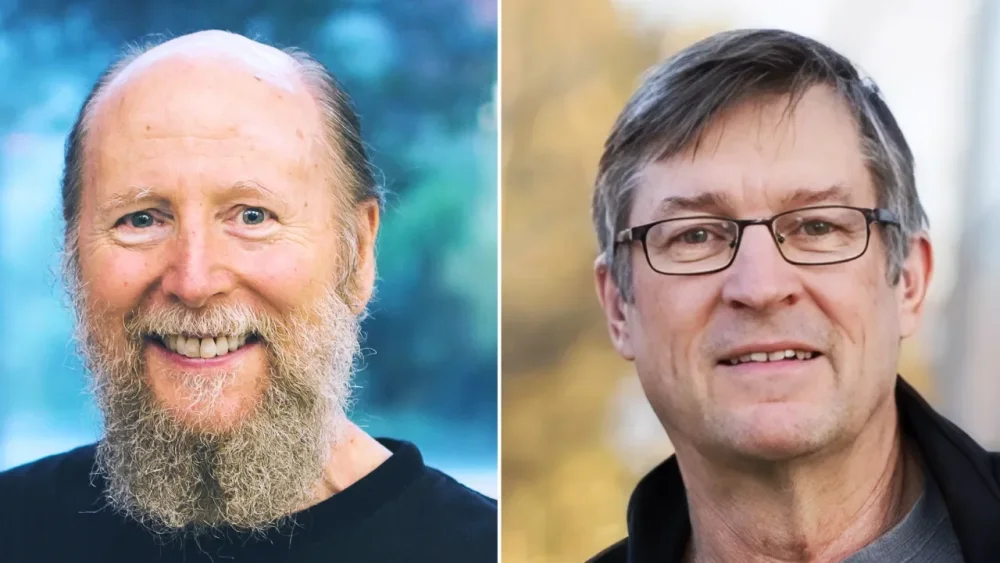
Teaching machines in the way that animal trainers mold the behavior of dogs or horses has been an important method for developing artificial intelligence and one that was recognized Wednesday with the top computer science award. Two pioneers in the field of reinforcement learning, Andrew Barto and Richard Sutton, are the winners of this year’s A.M. Turing Award, the tech world’s equivalent of the Nobel Prize. Research that Barto, 76, and Sutton, 67, began in the late 1970s paved the way for some of the past decade’s AI breakthroughs. At the heart of their work was channeling so-called “hedonistic” machines that could continuously adapt their behavior in response to positive signals. Reinforcement learning is what led a Google computer program to beat the world’s best human players of the ancient Chinese board game Go in 2016 and 2017. It’s also been a key technique in improving popular AI tools like ChatGPT, optimizing financial trading and helping a robotic hand solve a Rubik’s Cube. But Barto said the field was “not fashionable” when he and his doctoral student, Sutton, began crafting their theories and algorithms at the University of Massachusetts, Amherst. “We were kind of in the wilderness,” Barto said in an interview with The Associated Press. “Which is why it’s so gratifying to receive this award, to see this becoming more recognized as something relevant and interesting. In the early days, it was not.” Google sponsors the annual $1 million prize, which was announced Wednesday by the Association for Computing Machinery. Barto, now retired from the University of Massachusetts, and Sutton, a longtime professor at Canada’s University of Alberta, aren’t the first AI pioneers to win the award named after British mathematician, codebreaker and early AI thinker Alan Turing. But their research has directly sought to answer Turing’s 1947 call for a machine that “can learn from experience”—which Sutton describes as “arguably the essential idea of reinforcement learning.” In particular, they borrowed from ideas in psychology and neuroscience about the way that pleasure-seeking neurons respond to rewards or punishment. In one landmark paper published in the early 1980s, Barto and Sutton set their new approach on a specific task in a simulated world: balance a pole on a moving cart to keep it from falling. The two computer scientists later coauthored a widely used textbook on reinforcement learning. “The tools they developed remain a central pillar of the AI boom and have rendered major advances, attracted legions of young researchers, and driven billions of dollars in investments,” said Google’s chief scientist Jeff Dean in a written statement. In a joint interview with the AP, Barto and Sutton didn’t always agree on how to evaluate the risks of AI agents that are constantly seeking to improve themselves. They also distinguished their work from the branch of generative AI technology that is currently in fashion—the large language models behind chatbots made by OpenAI, Google and other tech giants that mimic human writing and other media. “The big choice is, do you try to learn from people’s data, or do you try to learn from an (AI) agent’s own life and its own experience?” Sutton said. Sutton has dismissed what he describes as overblown concerns about AI’s threat to humanity, while Barto disagreed and said “You have to be cognizant of potential unexpected consequences.” Barto, retired for 14 years, describes himself as a Luddite, while Sutton is embracing a future he expects to have beings of greater intelligence than current humans—an idea sometimes known as posthumanism. “People are machines. They’re amazing, wonderful machines,” but they are also not the “end product” and could work better, Sutton said. “It’s intrinsically a part of the AI enterprise,” Sutton said. “We’re trying to understand ourselves and, of course, to make things that can work even better. Maybe to become such things.” —Matt O’Brien, AP Technology Writer View the full article
-
Tax pros hold 44 percent of the market. By Beth Bellor Go PRO for members-only access to more Beth Bellor. View the full article
-
Tax pros hold 44 percent of the market. By Beth Bellor Go PRO for members-only access to more Beth Bellor. View the full article
-
We may earn a commission from links on this page. After a long winter of planning, strategizing, and buying seeds, you can finally start to plant this month. Most of that planting will happen inside, beginning the seedlings that will eventually move into your spring and summer garden. All the seeding tools like trays and heat mats come out of storage for a cleaning. As excited as you may be, it's important to exercise some restraint: You don't want to start all your seedlings at once. This is a game of timing. March only sees us starting a few spring seedings, as well as some seeds that take a long time. Everything else will get started next month. Once you start seeding for yourself, you can also lean into succession planting, which means that instead of planting everything at once—and then being done at the end of the summer—you plant throughout the spring and summer, and your harvests are staggered. For instance, it would be nice to have radishes ready to eat for a number of weeks, not a flush of them all at once. You can do this with lettuce and beans and flowers and all kinds of "short" crops (so called because they can be grown in less than 90 days). Onions, potatoes, and asparagusWhile it might not feel like these items are related, they are in the simplest way: You won’t be putting seeds in the ground. Onions you'll purchase from a nursery in a bundle of 25 or so five-inch starts, ready to go into the ground. (These are keeping onions, not scallions.) They go into the ground in long troughs you dig in the dirt. Potatoes will look like, well, potatoes, but you can cut each potato into many pieces, so long as each piece has at least one eye. Cut them the night before planting, and then allow them to heal over by leaving them out on a tray in the open air. These pieces get planted in your potato bed about a foot apart, then covered with compost and mulch. Asparagus come as crowns from your nursery, which look like sad desiccated roots when you buy them. But rest assured, these roots, once planted, produce actual asparagus. You plant them in a trench, not unlike roses, and they will make a perennial bed, coming back spring after spring. Asparagus needs three years of growth before you can harvest any spears, so while you could grow this plant from seed, buying these two- or three-year-old crowns gives you a jump start. Every kind of peaIf you do one thing this month, it should be getting peas into the soil. The best news is that peas are incredibly hard to screw up. You stick the seeds (which are large and easy to work with) in the soil. There are two kinds of peas to consider. Sweet peas, which are inedible and toxic but gorgeous and sweet-smelling, and their edible brethren can all be directly seeded outside right now. Plant both, but keep them separate, so you can tell them apart. For edible peas, make sure to plant shelling peas, snap peas, and sugar peas. You can, if you want, give them a head start by growing starts inside, and they’ll generally be ready to plant out in two weeks. Plant a second bunch of peas two weeks after the first so you have a spring succession. Peas need a structure to climb, so plant them on an arch or trellis. Best of all, both edible and sweet peas give your garden early color. Fast-rotation cropsThere are certain crops I have going constantly all season, like lettuces, radishes, scallions, and carrots. I make sure that as soon as the ground is workable, I am putting out a short row of radishes and scallions. I seed a few lettuces each week at this point, and all of this can take place outside. Carrots aren’t fast, but you can get a number of successions in during the summer, and they’ll germinate easier while you have a lot of rain. Get a row of them in every few weeks, starting now. StrawberriesHeed my cry: You never, ever need to buy strawberry plants. They multiply like tribbles, and you likely have enough from last year to relocate to anyplace you need them this year. You need to thin them yearly anyway so that each has at least six to eight inches around it. Even if you somehow do not have the supply, someone in your neighborhood does. Remember you want both June-bearing, which produces the sweetest berries but only for a short time, and ever-bearing, which produces bigger berries for the whole summer. Short spring cropsInside, I’m seeding cabbage, cauliflower, broccoli, kale, spinach, kohlrabi, and chard to go outside as soon as they’re ready, since they’re all cold-hardy. Spinach, in particular, loves the cold. Outside, I'm seeding beets and more kohlrabi into the ground. (The kohlrabi I'm seeding inside will go out in a few weeks, and have a later harvest date. This is a great example of succession planting.) Long summer cropsTwo crops that don’t get enough attention this time of year—but must be planted now in order to have enough time to mature by winter—are parsnips and Brussels sprouts. Both of these crops take the entire spring and summer to grow enough to be ready by fall. Plant parsnip seeds directly in the soil outside now, and pick up Brussels sprout starts at the nursery. Summer cropsSome summer specialties require a longer nurturing stage, like tomatoes, peppers, and eggplants. But you absolutely cannot put them outside without protection like Agribon or a greenhouse until temperatures are 50 degrees at night, and that can be a long time from now. Your planting date will be determined by your growing zone and last frost date—all things you can easily google. You’ll have to house, feed, and water these babies until then. Every moment they’re in your care, they are susceptible to pests, virus, fungus, and interference from family pets. You may see professionals getting their seeds in now—I’ll start mine in late March—but I have a greenhouse to move them to. Many people wait until April, and you shouldn’t feel anxious about doing so. Peppers first, then tomatoes, and finally eggplants. They’ll go into 50-cell trays to start, two seeds per cell. Within the first few weeks, I'll have ruthlessly cut the weaker seedling from each cell so the stronger seedling can thrive (do not try to separate them to save them both; learn to let go) and will be up-potting them into four-inch pots by the time they’re six weeks old. I don’t seed other summer crops like pumpkins, corn, or beans until late April or May. FlowersWhat I do try to get an early start on now is flowers. I want as many as possible, and as big and healthy as possible before I put them in the ground. I start with the earliest flowers now—snapdragons, poppies, Bells of Ireland, larkspur, dianthus, bachelor buttons, Love-in-a-Mist, and celosia. These are the most stubborn to grow and are spring-hardy, so the early start is warranted. You’ll be able to move them out relatively early in the season to make room for zinnias and sunflowers, which will be seeded later in the season. I plant these in trays of 72 or 128 cells. No matter how eager you are to plant all winter, when March hits, it often feels like you're behind. I assure you, you have time. It's still early, and if you don't have time to seed, you'll still be able to purchase starts at the nursery. View the full article
-
John Healey flies to Washington to persuade American counterpart to offer military ‘backstop’ for European forceView the full article
-
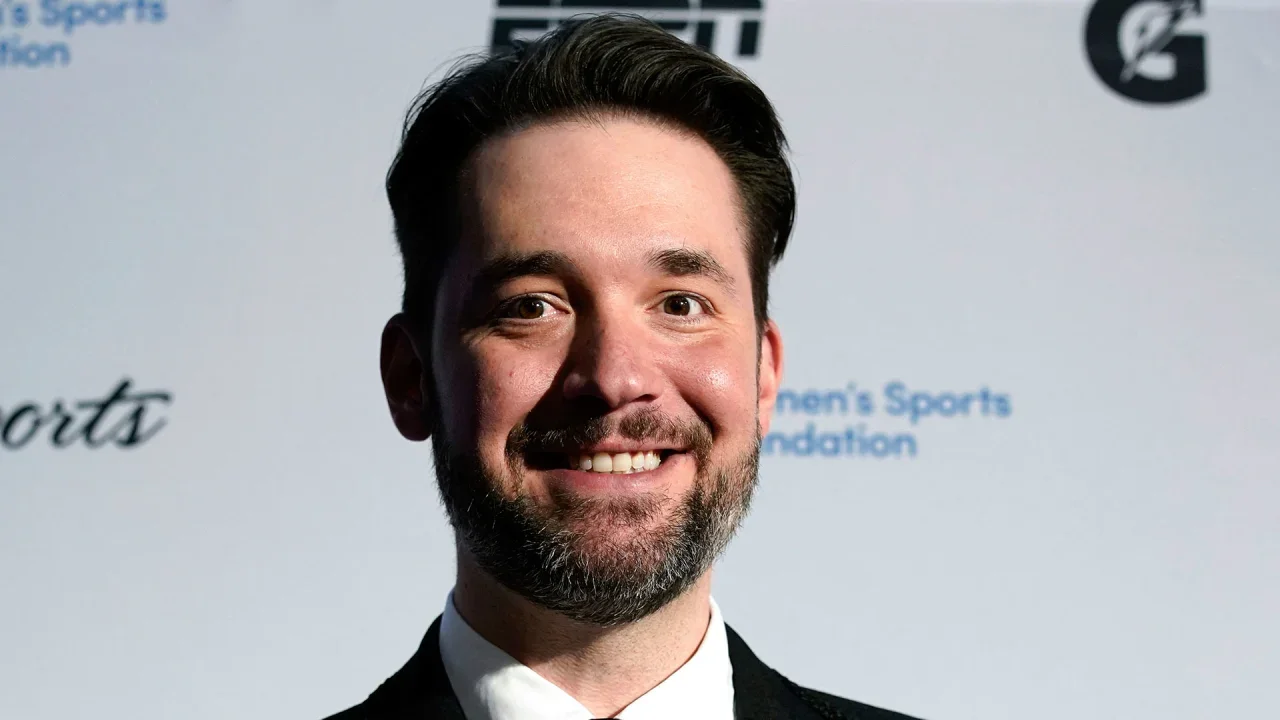
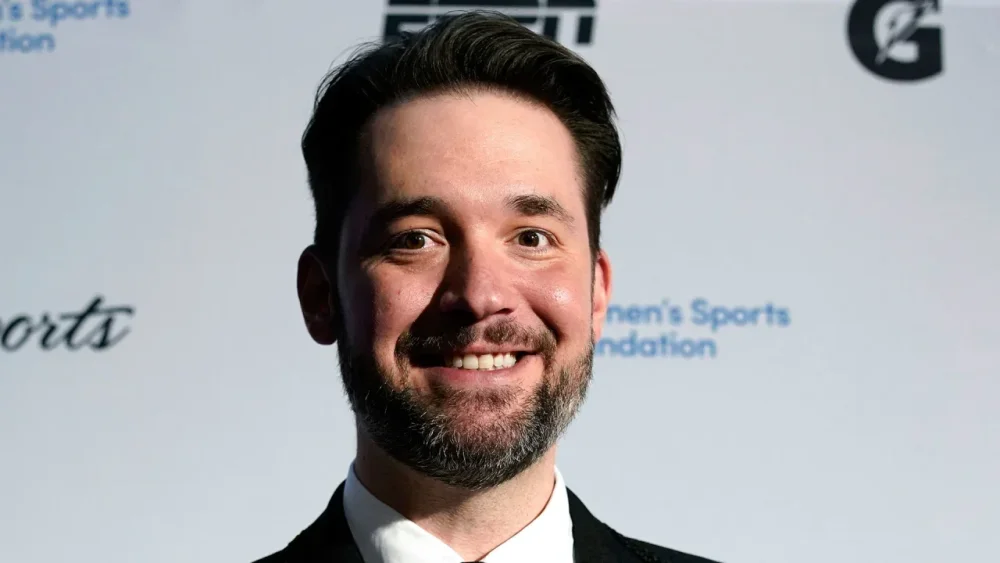
Before Reddit there was Digg, which popularized up- and down-votes on online posts. Now the founders of both platforms—social media veterans Kevin Rose and Alexis Ohanian—are relaunching the early Reddit rival with a focus on “humanity and connection” they hope will be boosted by the use of artificial intelligence. Rose founded Digg, which launched in 2004 and let people up- and down-vote (“Digg” or “bury”) content from users and from sources around the web. At its peak, it had 40 million monthly users—a high number for the time considering that Facebook only hit 100 million in 2008. Digg was divvied up and sold in 2012, with many of its assets and patents acquired by LinkedIn. Reddit, which launched in 2005 and was cofounded by Ohanian, took a similar approach to let users vote on what they thought was the best and worst content on the site. But much has changed since 2012—not just when it comes to advances in artificial intelligence but also how people treat each other online. “The social space online is definitely harsher, it feels like, than it’s ever been before,” said Justin Mezzell, who will serve as the new company’s CEO. “It feels really difficult to connect. I think the platforms have gotten more disconnected. You know, if ever there was a true town hall of the internet, it feels like it has been deconstructed in a pretty big way.” Digg’s new leaders say they want to use artificial intelligence to “handle the grunt work” of running a social media site while allowing humans to focus on building meaningful online communities. The question, Mezzell said, is how to get people to “show up and have conversations, to learn from each other, to share something they’re passionate about and do it earnestly?” Especially when some of today’s social media algorithms “exist really just optimize for outrage.” Rose said Digg will take a more nuanced approach to content moderation than banning or not banning content, which is a process that can be easy to get around. “There is a world where, you know, you show up in (a) meditation (group) and you’re swinging four-letter words all over the place, and you hit submit,” he said. And “we come back and we say, hey, you can post this, of course, but only 2% of the audience is going to see it, because the way that the moderator set the tone.” “That is unique. That is different. That’s not like a hard-defining rule,” Rose added “It’s more like just sensing the voice and how it fits within the entire ecosystem and the model that’s behind the scenes for that community.” The new Digg will launch in the coming weeks as a website and mobile app. —Barbara Ortutay, AP Technology Writer View the full article
-
Less than a month after Apple released its own "budget" iPhone, the iPhone 16e, Samsung is out with a new midrange Galaxy A series update for 2025. And unlike Apple's $599 phone, the Galaxy A26, an admittedly more budget-friendly device, starts at just $300. The Galaxy A56 on the other hand, a more direct iPhone 16e competitor, will be $500 when it launches later this year, yet nets you double the storage as the 16e. If you're thinking about picking up any of these phones, you might be curious about how they all compare on paper. While we'll need to wait for reviewers to get their hands on these devices before we truly know how they stack up, it's helpful to see the specs and price points side-by-side. iPhone 16e Credit: Apple What was once the iPhone SE is now called the iPhone 16e, and at a $599 starting price for the 128GB model, it's expensive for a midrange phone. But if you can stretch your budget, you do get a lot for that money. Yes, it has a notch and not a Dynamic Island, but you get a 6.1-inch screen, Apple's latest and greatest A18 chip (that's only missing one GPU core when compared to the iPhone 16 model), 8GB of RAM, Apple Intelligence, a 48MP single camera setup, and a long battery life. That said, since you're paying less than you would for the standard iPhone 16 or any of its upgrades, you do miss out on some bonuses. The screen is still only 60Hz; there's no always-on display; and you lose an ultra-wide lens, in addition to camera features like Cinematic mode and the new Photographic Styles. Apple even took out MagSafe. At its core, though, it's a solid iPhone. Apple is known for supporting its devices for years, and the fact that this has 8GB of RAM and the A18 chip means that the iPhone 16e will continue to stay fast and fresh for a good while. Samsung Galaxy A26, A36, and A56 Credit: Samsung There are three new phones to talk about here. The A26, starting at $300, the A36, starting at $400, and the A56, starting at $500. For the sake of this comparison, I will mostly focus on the A56, as it's the closest in scope to the 16e, but there are reasons to consider the other options, especially the $400 A36. All three phones run One UI 7.0, which includes new software features like the Now Bar and a redesigned interface that looks quite a bit like iOS. And while the complete Galaxy AI suite is reserved for Samsung's flagship phones, the A series devices do get Google's Circle-to-Search, Filters, Best Face, Auto Trim, and Samsung's AI Object Eraser tools. Samsung is calling this suite of features "Awesome Intelligence," which I'm sure won't be confusing to anyone. Samsung is also promising six generations of OS upgrades, and six years of security updates, which is up there with Google's seven-year updates promise for Pixel devices. As specs, go, all three phones get a 5,000 mAh battery, but the 45-watt fast wired charging is only available for the A36 and the A56. It's a similar story with the display too: the A36 and A56 both feature a 6.7-inch AMOLED display with a 120Hz refresh rate, a 1080 x 2340 resolution, and Corning Gorilla Victus+ Glass protection (not present on the iPhone 16e). The A26, though gets a smaller 6.5-inch screen, featuring the same 120Hz refresh rate, and the FHD+ display. The screen goes up to 1,200 nits when you're outside, and can push to 1,900 nits using the Vision Booster feature. The iPhone 16e, meanwhile, is locked to 800 nits. All three devices feature different processors and RAM configurations, with the best chip saved for the A56. The A26 features Samsung's Exynos 1380 chipset, 6GB RAM, and 128GB storage, while the A36 uses Qualcomm's Snapdragon Gen 3 processor, 6GB RAM, and 128GB storage. The A56 comes with the Exynos 1580 chip, 8 or 12GB RAM (depending on the configuration), and 128 or 256GB storage. When it comes to raw performance, however, the iPhone 16e easily beats out the A56. Based on early (leaked) testing data compiled by ZoneofTech, the Exynos 1580 in the Galaxy A56 scores 1353 in single-core and 3832 in multi-core performance. The A18 chip, on the other hand, scores 3317 in single-core, and a whopping 8165 in multi-core performance. That's more than double the raw performance on the 16e. Credit: ZoneofTech The body shape differs slightly between the three devices. The A26 has a plastic frame and body, compared to the more "premium" metals found on the other two devices. All three phones feature thin bezels around, but a prominent chin, so the bottom bezel is slightly thicker than the other three sides. There's a triple camera setup on every A series phone, compared to Apple's single 48 MP unit. All three Samsung units get the same 50 MP wide-angle lens. The A56 gets a 12 MP ultra-wide, and a 5 MP macro lens, while the A36 gets a 8 MP ultra-wide, and a 5 MP macro lens. The cheaper A26 gets 8MP ultra-wide and a 2 MP macro lens. All A series phones can take advantage of AI photography features like Best Take, which merges faces from different photos to create a better single image. There's also Samsung's Object Eraser tool which is better than Apple's Cleanup utility. The A56 and A36 can also record content in HDR from the main sensor. The 5,000 mAh battery in the A series devices is rated for 29 hours of video playback, while the iPhone 16e manages 26 hours on a single charge. Those might not reflect real-life battery tests, however, so we'll need to watch for reviewers before we know how these batteries really compare. In fact, that's true for a lot of features across these devices. We'll simply need to see how the A series' cameras and chips stack up against the iPhone 16e in real-world use before we can make any definitive calls here. But, for now, it's helpful to compare the specs and data we do have. The Galaxy A36 5G will be available March 26th in Black and Lavender, and an exclusive Lime color at Best Buy. While the A26 goes on sale March 27th and is only available in a Black color. But the A56 will be out in the US later this year, no details on the color options yet. View the full article
-
Each year, our Innovation by Design Awards celebrate the most notable projects across the design world. And while there are many design awards offered across the industry—perhaps too many!—Innovation by Design continues to be the most rigorous, facing the scrutiny of a panel of leading design journalists and influential designers. But it’s also time for Innovation by Design to evolve. So this year, you may see we’re doing things a bit differently. And we’re sure you will like these changes. First off, we’ve paired back our core design categories significantly, reducing them from 50 to 20. Why? The list had simply gotten big, with too many subcategories that had “feature creeped” over years of additions. We believe that this abbreviated list can fit any design project imaginable—ranging from UX, to architecture, to experience design, to interior design, to material design—but with a clarity that will allow you to know which categories make the best fit for your project. This update also means there will be fewer than half the winners we’ve had in the past, which will add to the prestige of receiving Innovation by Design recognition. It also means we can celebrate each of our honorees with more gusto. This year, our Innovation by Design winners will be celebrated at a ceremony in September during the Fast Company Innovation Festival, Sept 15–18. (Full details to come.) Truth be told, it’s the perfect excuse to throw a big party in New York City and celebrate the year with industry friends—and maybe even head home with a trophy. To enter Innovation by Design, submissions are due by April 11 . Good luck! View the full article
-
Here is a recap of what happened in the search forums today...View the full article
-
If you think that Search campaigns in Google Ads are still a text-only ad format, you are missing out! Image assets for search campaigns are a relatively new Google Ads feature that can help boost your click-through rate (CTR) and stand out from your competitors. Here’s what you’ll learn in this article: What are image assets for search campaigns? Eligibility requirements for image assets How to use image assets for search campaigns How to avoid image asset disapprovals What are image assets for search campaigns? Image assets for search campaigns allow you to make your responsive search ads more appealing and eye-catching. You can upload up to 20 square or landscape images (square is required, landscape is optional), which may appear alongside your headlines and descriptions. If someone clicks on your image asset, they’ll be directed to the same landing page as if they had clicked on your headline. Eligibility requirements for image assets Although you can set up a new Google Ads account, create a campaign and launch it in a matter of minutes, you can’t use image assets from day one. In order to use image assets for search campaigns: Your account must be active for at least 60 days. You must have been spending on search ads for at least 28 days. Your account must be in good policy compliance. You can’t operate in certain sensitive interest categories. How to use image assets for search campaigns As long as you meet the eligibility criteria, you should definitely start using image assets for all your search campaigns. You can add image assets at the campaign or ad group level, up to 20 images per campaign. Google recommends having at least four images per campaign. You can either upload image assets yourself, or use dynamic image assets; this gives Google permission to pick and choose images from your landing pages. And, if you have search partners enabled in your search campaign settings, your image assets will be eligible to appear in YouTube search results. How to avoid image asset disapprovals Because these images appear on Google’s precious SERP, image assets are subject to strict editorial guidelines. For example, your images could get disapproved if you: Add text on the image Have too much whitespace Upload a collage of images Use a blurry image Provide a heavily edited image Choose prohibited content If you haven’t tested image assets for search campaigns, and you’re eligible to do so, give them a try! Advertisers that use image assets see a 6% uplift in CTR, according to Google. This article is part of our ongoing weekly Search Engine Land series, Everything you need to know about Google Ads in less than 3 minutes. Every Wednesday, Jyll highlights a different Google Ads feature, and what you need to know to get the best results from it – all in a quick 3-minute read. View the full article
-
A federal judge has denied Elon Musk’s request for a court order blocking OpenAI from converting itself to a for-profit company but said she could expedite a trial to consider Musk’s claims against the ChatGPT maker and its CEO. U.S. District Judge Yvonne Gonzalez Rogers ruled late Tuesday that “Musk has not demonstrated likelihood of success on the merits” in his request for a preliminary injunction. She offered to hold a trial in her California courtroom as soon as this fall, “given the public interest at stake and potential for harm if a conversion contrary to law occurred.” Musk, an early OpenAI investor, began a legal offensive against the ChatGPT maker and CEO Sam Altman a year ago, suing for breach of contract over what he said was the betrayal of its founding aims as a nonprofit. He escalated the legal dispute late last year, adding new claims and defendants, including Microsoft, and asking for a court order that would stop OpenAI’s plans to convert itself into a for-profit business. Musk also added his own AI company, xAI, as a plaintiff, claiming that OpenAI was unfairly stifling business competition. He and a group of investors more recently made an unsolicited $97.4 billion bid to buy a controlling stake in the nonprofit—a move that undermined Musk’s “claim of irreparable harm,” the judge wrote. OpenAI said it welcomed the court’s decision. “This has always been about competition,” a statement from the company said. “Elon’s own emails show that he wanted to merge a for-profit OpenAI into Tesla. That would have been great for his personal benefit, but not for our mission or U.S. interests.” Musk alleges in the lawsuit that the companies are violating the terms of his foundational contributions to the charity. He had invested about $45 million in the startup from its founding until 2018, his lawyer has said. Musk attorney Marc Toberoff said in a statement late Tuesday that he is pleased that the court offered an expedited trial on the core claims. “We look forward to a jury confirming that Altman accepted Musk’s charitable contributions knowing full well they had to be used for the public’s benefit rather than his own enrichment,” Toberoff said. Gonzalez Rogers in a hearing last month called it a “stretch” to claim “irreparable harm” to Musk, and she called the case “billionaires vs. billionaires.” She questioned why Musk invested tens of millions in OpenAI without a written contract. Toberoff responded that it was because the relationship between Altman and Musk at the time was “built on trust” and the two were very close. “That is just a lot of money” to invest “on a handshake,” the judge said. The dispute has roots in a 2017 internal power struggle at the fledgling startup that led to Altman becoming OpenAI’s CEO. Emails disclosed by OpenAI show Musk had also sought to be CEO and grew frustrated after two other OpenAI cofounders said he would hold too much power as a major shareholder and chief executive if the startup succeeded in its goal to achieve better-than-human AI known as artificial general intelligence. Musk has long voiced concerns about how advanced forms of AI could threaten humanity. Altman eventually succeeded in becoming CEO and has remained so except for a period in 2023 when he was fired and then reinstated days later after the board that ousted him was replaced. Gonzalez Rogers, appointed by then-President Barack Obama in 2011, has handled a number of tech industry cases including Apple’s fight with Epic Games, though she said last month that Musk’s case is “nothing like” that one. That case was also the last time she granted a preliminary injunction, eight months before the case went to trial. O’Brien reported from Providence, Rhode Island. The Associated Press and OpenAI have a licensing and technology agreement that allows OpenAI access to part of AP’s text archives. —Matt O’Brien and Barbara Ortutay, AP Technology Writers View the full article
-
Doing so is the only effective means of saving UkraineView the full article
-
A recent outbreak of measles in West Texas has resulted in 159 cases of the disease in the state so far; 22 victims required hospitalization, and one has died. In response to the deadly outbreak, some Texas parents seem to be considering hosting "measles parties" instead of vaccinating their kids. Misinformation about measles can have deadly consequences, so here's a look at some ways people are getting measles wrong. Myth: Measles vaccines are potentially dangerousWhile a small percentage of people suffer side effects from the measles, mumps, and rubella (MMR) vaccine, they are almost always mild. The most common is a fever that hits between 5% and 10% of those vaccinated. About 2% to 5% develop a mild rash, and about 1 in 4,000 develop something more serious. The "side effects" of contracting the disease itself, on the other hand, are much worse: Nearly 100% of people who contract the disease develop symptoms that include fever, red eyes, a sore throat, and a blotchy rash. About one in 300 people who get measles will die. Myth: The measles vaccine gives people measlesThe belief that measles outbreaks are caused by the measles vaccine is growing in certain circles, helped along by advocates like Children's Health Defense, the anti-vaccine advocacy group founded by Secretary of Health and Human Services Robert F. Kennedy, Jr. The measles vaccine works by introducing a weakened form of the measles virus into the body to trigger an immune response. So the theory goes, people who have been injected with the measles vaccine are infecting others with the disease. But while the measles virus can potentially be detected in people for up to four weeks after a shot, it is extremely unlikely for the virus to be be transmitted to anyone in that weakened form—which is significant, given measles itself is among the most contagious diseases. As for the Texas outbreak specifically, to make sure, all cases have been tested, and they've all been declared to be the result of "wild" measles. No one got it from vaccine "shedding," because that doesn't really happen with the measles vaccine. Myth: The measles vaccine is linked to autismThe vaccine for measles has been around since 1963. It has prevented countless cases of the diseases and has long been proven safe and effective. But people are still hesitant to take it and/or give it to their children. The belief that the measles vaccine, or any vaccine, can cause autism is one of the reasons. A recent survey conducted by the University of Pennsylvania's Annenberg Public Policy Center, found that 24% of Americans believe there is a link between vaccines and autism, and 3% aren't sure. The supposed link between autism and vaccination is based on two flawed studies that have been thoroughly and overwhelmingly debunked. To put it simply, if you listen to the science, there's no there there. Vaccines for measles are safe and effective, and they prevent the disease and thus save lives. If enough people get vaccinated, we can eliminate measles from our country (in fact, the World Health Organization did declare it eradicated in the U.S. back in 2000, though as lower vaccination rates have recently resulted in more frequent outbreaks, that designation is at risk). It's really as simple as that. Myth: Measles can be cured or prevented with vitamin AThe idea that vitamin A can be used to treat measles has a grain of truth of it, but it's a small grain. Studies conducted in developing nations indicate vitamin A can help prevent complications in severe measles cases, and that children with low amounts of vitamin A tend to develop more severe cases of measles. But in the United States, where few children have such nutritional deficiencies, it's unclear whether there's any benefit to giving vitamin A for measles. Some doctors' position is "why not?" but vitamin A is not part of the measles treatment protocol in the U.S., let alone a recognized cure or preventative measure. It's definitely not a substitute for vaccination. To prevent measles cases in the current outbreak, public health officials are encouraging people to get vaccinated. One cool thing about the measles vaccine: As the Texas health department points out, a dose can still be given within 72 hours after you are exposed to the virus to lessen the severity of the disease if you do get sick. Myth: Measles can be prevented by "natural means"The only "natural" way you can prevent the spread of measles is by staying away from other people if you are infected with it. Measles doesn't care if you eat healthy food and work out. It's extremely contagious—according to the CDC, "if one person has it, up to 9 out of 10 people who are nearby will become infected if they are not protected." Being a generally healthy may result in a better outcome if you are infected, but not getting infected in the first place (by being vaccinated) is an infinitely healthier choice. Myth: Measles parties can help kids gain "natural immunity"While surviving measles will protect you from reinfection, this "natural" immunity offers no more protection from the disease than vaccination, and, again, it's much riskier: About three out of every 1,000 people who get measles die (a tally that sadly included a child in Texas amid the current outbreak) and more suffer life-changing complications. As Dr. Ron Cook, chief health officer for the Texas Tech University Health Sciences Center in Lubbock, put it in a press conference, "We can’t predict who is going to do poorly with measles, being hospitalized, potentially get pneumonia or encephalitis, or potentially pass away. "It’s a foolish thing to go have measles parties," he added, I imagine with a pained sigh. Myth: The current measles outbreak is normalDeadly measles outbreaks are unusual in the U.S. Until this year, we hadn't had a child die from measles since 2015. Heck, measles has been considered eliminated from both North and South America since 2000. Since 2000, our measles outbreaks have been small and sporadic, started by travelers who brought a case in from overseas. Quick action from the CDC and from local health authorities has usually managed to get things back under control. But low rates of measles vaccination make it easier for these small outbreaks to spread to larger areas, and we may be looking at a new and growing problem. Along with Texas, this year measles cases have been reported in Kentucky, California, New Mexico, Georgia, Alaska, New Jersey, and Pennsylvania, but there are less than 200 cases total, so it's unclear if the current wave is the beginning of a larger problem. But it isn't good. The fear is that the current climate of vaccine hesitancy and reduced vaccination rates will lower the percentage of immunized people enough that measles will reestablish a foothold in the U.S. According to the CDC a vaccination rate of 95% is needed for "herd immunity" but we're slipping below that magic number. Fourteen states have fallen under 90 percent. Myth: You can't get measles if you've been vaccinatedThe vaccine for measles is extremely effective (and safe) but it's not 100% effective. It's "only" 97% effective. No one knows why a small number of people get measles even though they've had shots. On the bright side, vaccinated people who suffer from "breakout" measles tend to have milder cases. Myth: There's nothing we can do about rising rates of measlesThe sudden spike in measles cases is alarming, but it's nothing compared to a measles outbreak that occurred in the early 1990s. That one was much worse, but it also provides historical evidence of how to combat a measles outbreak. Even though the vaccine was nearly 30 years old at that point, there were 27,000 cases of measles in the U.S. in 1990. Low-income communities in New York City were hit hardest, although outbreaks were also reported in Philadelphia, Chicago, Los Angeles, and Houston. The root cause was the same as with the current rash of the disease: Not enough people were being vaccinated. In 1990, the CDC estimated that about half of all inner-city toddlers in New York City had not been vaccinated by their second birthday, mostly because the vaccine was difficult to get or difficult to afford. The response from city, state, and federal government included wide-ranging public outreach programs, mobile immunization centers, the creation of the federal, congressionally approved Vaccines for Children Program, pro vaccine messages flashed in Times Square, and even Michelangelo from the Teenage Mutant Ninja Turtles emerging from a sewer to encourage kids to get vaccinated. In short, we really threw everything we had at pro-vaccine, anti-measles messaging. And it worked: Vaccination rates climbed above 90% in New York. Whether a similar effort would work in today's climate of distrust and misinformation is an open question, but at least there's evidence vaccination has worked to contain an outbreak once before. View the full article
-
Friedrich Merz leads German pivot in Europe’s ‘rearmament’ raceView the full article
-
While there seems to be no relief in sight for the high cost of eggs, it almost feels counterintuitive for people to celebrate two cracking, but it is a welcome distraction from the current political turmoil. Two bald eagles in Big Bear, California, have just become parents again to two chicks, with the potential for a third. This is egg-cellent news. Here’s everything to know about Jackie and Shadow’s journey to parenthood: Jackie and Shadow’s origin story Jackie and Shadow have been together since 2018. Shadow actually stole Jackie from another male, which is unusual for eagles who normally mate for life. They successfully raised two chicks but also experienced their fair share of loss over the years. Humans have come to know and love them while watching live streams of two bald eagle webcams maintained by the nonprofit Friends of Big Bear Valley. For the past two seasons, Jackie and Shadow’s egg did not hatch despite the parents’ best efforts making this season’s births even more special. 2025’s egg timeline This season, Jackie laid three eggs, which is unusual for eagles. The first made its debut on January 22. Three days later, another one appeared in the nest. The last was laid on January 28. The first pip, or crack, was spotted on Sunday at 3:09 p.m local time. The second came around 8 a.m. on Monday. The first chick fully hatched around 11:30 a.m. on Monday while the second one made its way into the world at 4:30 a.m. Tuesday morning. Typically, parents do not help the chicks with this process, but Shadow has stepped in from time to time. Temporarily, the babies are known as Chick 1 and Chick 2. Eventually, a naming contest will help the nonprofit come up with much more creative monikers. This has not been formally announced yet but historically a third grade class in Big Bear has the final vote. There is still a chance the third egg will also hatch. March 4 marked 35 days since it has been laid, which is normally when the hatching period begins. Fans are rooting for this since Jackie and Shadow have never raised three chicks at one time before. What’s next for this family of eagles? Chick 1 and Chick 2 don’t need to eat immediately because they absorbed the yolk on their way out of the egg. Eventually, Jackie and Shadow will bring them small pieces of raw meat. Some bird parents regurgitate their food but not bald eagles. At this young age, it is hard to guess the gender of the chicks. The only official way to tell is through a blood test, but once the chicks get to be around nine weeks old, their physical appearance will allow for an educated guess. Females tend to be larger. The chicks will stay in the nest for 10 to 12 weeks. Around this time they fledge or fly from the nest. For the next couple of months, they will remain close to home to test their wings. After that, they will typically head out to start their own adult life. How can I see the bald eagle action for myself? To watch the chicks grow up and root for another sibling, watch the two live-feed cameras. The first camera offers a close-up view of the nest while the second zooms out for perspective. As of Wednesday morning, almost 30,000 viewers were watching the nest live. We’ve also embedded the YouTube video below. View the full article

-
You can now use Siri with added ChatGPT on your iPhone, but Google is keen for you to use its Gemini AI bot instead: A few months ago, an official Gemini iPhone app was launched, and now we have some lock screen widgets to go with it. While you can't swap out the iPhone's default digital assistant entirely, as you can on Android, these six new lock screen widgets do give you easier access to Gemini on iOS, and are handy shortcuts if you prefer Google's AI. The widgets are available to you whether or not you're paying $20 a month for Gemini Advanced. To make use of these widgets, you first need Google Gemini for iOS installed. Launch the app after it's been downloaded, and you'll be asked to sign into your Google account. Next, switch to the lock screen, long press on a blank part of it, then choose Customize. Gemini now shows up in the lock screen widgets list. Credit: Lifehacker Tap inside any of the widget spaces—just below the clock, or in the lower corners—to find all of your widgets options, including the Gemini ones. Choose Gemini from the list, swipe left or right to scroll between the widgets on offer, then tap on the one you want to use or drag it into place on screen. First up there's Type prompt, which does exactly what its name suggests: It brings up the Gemini app and lets you start a new conversation with a text prompt. For a voice chat instead, you can add Talk Live, which launches the Gemini Live experience—designed to mimic talking to a person as much as possible. Open mic leads you to the more basic voice interaction mode in Gemini, while Use camera sends you straight to the camera interface: You can snap a picture of something and ask Gemini questions about it (like what species of flower you're looking at, or how to fix something that's broken). You've got six widgets to pick from, including Talk Live. Credit: Lifehacker Share image lets you pick an image from your iPhone for Gemini to work with—to ask a question about it, for example, or to create new AI art—and finally there's Share file, which lets you give Gemini a file to analyze. One way to use this would be to have the AI assistant summarize a PDF. All these widgets worked as advertised during my testing, and do indeed allow quick and easy access into the Gemini interface. You're only saving a couple of taps each time, but those taps can add up if you're using Gemini a lot—even if it's not quite as simple to get to Gemini as it is to Siri. The widgets should be available now in version 1.2025.0762303 of Google Gemini in the App Store. The release notes also mention improvements to the user interface, bug fixes, the option to share text, images, and links directly to Gemini from any other app, and access to Deep Research for Gemini Advanced users. View the full article
-
AI has been a part of PPC for years through features like smart bidding and audience targeting. But in the past 12-18 months, its influence has expanded – reshaping how PPC managers plan, execute, and optimize campaigns. By leveraging AI, you can streamline processes, improve performance, and focus on higher-level strategy. This article covers 15 essential AI tactics and the best tools to enhance your PPC management – from content creation to data analysis. The top AI tools for PPC marketers A variety of tools are available to assist with setting up and managing PPC campaigns, each offering unique capabilities and benefits. Advertising platforms are also evolving, with innovations like TikTok Symphony Creative Studio leading the way. Below are my recommended tools, categorized into content creation, visual creation, and data management. Many of these tools offer free versions, allowing you to generate a limited number of outputs at no cost. Content creation ChatGPT: Generates content at scale from prompts (from $0/month). Claude: Generates content at scale from prompts (from $0/month). Optmyzr: Provides ad copy suggestions (from $208+/month). Visual creation Canva: Creates imagery and video from prompts (from $0/month). Synthesia: Generates video content from scripts and prompts (from $0/month). Runway: Produces imagery from prompts (from $0/month). Microsoft Copilot: Generates visuals from prompts (from $0/month). Data analysis ChatGPT: Visualizes and analyzes large datasets (from $0/month). Claude: Visualizes and analyzes large datasets (from $0/month). Optmyzr: Analyzes data and provides performance recommendations (from $208+/month). Dig deeper: How does AI work in PPC? Key ways AI can support PPC managers AI should be embraced, not feared. When used effectively, it has vast potential to enhance PPC campaign management. Its applications can be grouped into three key areas: planning, building and managing, and reporting. Planning Competitor research. Keyword research. Audience research. Audience personas. User intent. Building and managing Ad ideation. Landing page content. Creative concepts. Video scripting. Image generation. Account structures. Bidding. Feed optimization. Reporting Report summaries. Theorizing. Stress-testing. By leveraging AI in these areas, you can free up time to focus on high-level strategy and tasks that drive greater impact. 15 tactics to use AI in PPC AI can enhance every stage of PPC management – from research and ad creation to performance analysis. Here are 15 actionable ways to integrate AI into your campaigns. We’ll explore several of these tactics in more detail below. Formulating a successful prompt. Researching competitor offerings. Understanding user buyer intent. Finding ideal audiences to target. Identifying what users are searching for. Building ad variations. Stress-testing performance feedback. Developing creative concepts based on audiences. Creating video concepts from specific scenarios. Turning video concepts into scripts. Reducing production costs through image generation. Improving product feed attributes. Summarizing performance from data sets. Creating a PPC assistant with custom GPTs for reusable prompts. Using a Google Sheets plugin to run AI in bulk. Formulating a successful AI prompt A well-crafted prompt is essential for effective AI outputs – whether it’s Google’s bidding algorithms relying on first-party data (like conversion volumes and targets) or ChatGPT generating ad copy ideas. Weak prompts lead to subpar results. The more detailed information, context, and guidance you provide, the better the output will be. The quality of your prompt directly affects the accuracy, tone, and relevance of the AI’s response. When writing an AI prompt, be sure to include these key elements: Desired output format – e.g., a list, table, or summary. Specific request – e.g., “10 ad ideas.” Intended recipient – e.g., “For Anicca Digital” (include a URL if possible). Context – e.g., “Anicca Digital is a digital marketing agency.” Target audience – e.g., “Marketing managers.” Usage location – e.g., “Google Ad copy.” Example of a low-quality prompt Example of a good prompt The difference in outputs Incomplete or vague prompts lead to basic, less tailored, and less relevant AI outputs. To achieve optimal results, your prompts should be precise and clear, providing detailed instructions on the desired output. AI tools like ChatGPT can be refined through iterative prompting. If the initial response isn’t effective, you can adjust the prompt to improve the output. Dig deeper: ChatGPT for PPC: 17 strategic prompts you can use today Get the newsletter search marketers rely on. Business email address Sign me up! Processing... See terms. Competitor research AI can streamline competitor research by quickly gathering and organizing information. Tools like ChatGPT can assist by: Creating a table of price points. Building a matrix of key features. Analyzing landing pages for calls to action. Example output Finding ideal customers to target Audience insights are essential for successful paid media campaigns across platforms like Google, Meta, LinkedIn, and YouTube. AI can help identify ideal customer profiles, preferred platforms, and messaging that resonates with them. You can generate detailed audience personas by providing AI tools like ChatGPT or Claude with information about a brand, its website, and its offerings. These personas guide ad copy and creative development, ensuring your messaging aligns with customer motivations. Understanding what users are searching for AI can significantly enhance the traditionally manual keyword research process, making it faster and more interactive. Similar to using classic keyword tools like Google Keyword Planner or Semrush, AI provides diverse results based on your prompt. You can: Give the AI context about the business or brand. Refine the output by providing additional guidance. Request search volumes and specify the target location. After generating keywords, you can validate the search volumes or estimate CPCs using traditional research tools. Example prompt Example outputs from ChatGPT and Claude Building ad variations AI tools like Claude can help overcome creative blocks by generating ad copy ideas and variations. AI can assist in the following ways: Suggesting ad copy: Provide detailed prompts, including brand context (with a URL if possible), target audience, and ad placement. Incorporating audience insights: Use AI-generated audience personas to identify key motivators and tailor messaging. Analyzing competitors: Ask AI to review competitor materials, such as customer reviews, to highlight pain points your business can address. Creating scripts for ad visualization: Use AI to generate scripts or code (e.g., Google Apps Script) to visualize ad copy in structured formats. Dig deeper: 4 practical ways to use generative AI for ad copywriting Stress testing performance feedback AI can act as a secondary voice of reason when you need to analyze or validate campaign performance. This is especially useful if you are working independently or want to prepare for meetings. AI can help stress-test: Performance changes. Campaign strategies. Key performance factors. New channel adoption. Tools like ChatGPT can simulate potential challenges and questions, enabling you to refine your approach and deliver stronger reports. Example ChatGPT output Improving product feed attributes Optimized product feeds are critical for successful shopping campaigns. However, managing large product catalogs often results in incomplete or suboptimal attributes. AI tools like ChatGPT can assist by: Providing strategies to improve product titles and attributes. Handling individual optimizations or bulk edits through document uploads. Integrating with Google Sheets for large-scale feed enhancements. Example individual product title optimization output Example Google Sheets bulk output Using the GPT for Sheets and Docs plugin, you can automate bulk optimizations. By applying AI-generated formulas, you can quickly return answers across multiple rows. Use formulas to generate enhanced product attributes. Apply the concatenate formula to append or prepend missing values (e.g., color or brand) to existing product titles. Final thoughts AI is transforming PPC management. Adopting it allows you to optimize workflows, enhance campaign performance, and free up time for strategic initiatives and first-party data development. However, AI is only as effective as the information it receives. PPC managers must guide, refine, and quality-check AI outputs to ensure the best results. [Watch] 15 AI tools and tactics you should be using in PPC Watch my full SMX Next 2024 session here. View the full article
-
It’s not just the tech industry that is facing layoffs in 2025. In recent weeks, a number of high-profile media and entertainment companies have seen job cuts. The most recent media giant to reportedly undergo layoffs is the Walt Disney Company. Here’s what you need to know about the layoffs affecting the media industry right now. ABC News and Disney Entertainment Networks cut jobs The Walt Disney Company company is getting ready to let go of about 6% of its employees who work in the company’s ABC News Group and Disney Entertainment Networks units, according to a report from the Wall Street Journal. The layoffs will total about 200 employees and will reportedly be announced today. The move is being made to save costs on what used to be more profitable divisions but now aren’t seen as important in the ongoing shift to streaming. Fast Company reached out to Disney for comment. As part of the move, ABC will reportedly merge 20/20 and Nightline into one unit, which will result in lost jobs. The news network is also reportedly shutting down the news site 538, which currently employs about 15 people. As for the Disney Entertainment Networks unit, WSJ says its scheduling and program planning units will see job cuts. E.W. Scripps and Tegna lays off employees American broadcaster E.W. Scripps will also reportedly lay off workers across its local TV stations, reports TheWrap. The company currently owns 61 stations across the country, and employees are said to have begun being notified about the job cuts yesterday. It is unknown exactly how many employees E.W. Scripps will be laying off, but the company is said to employ about 5,200 workers. “We can confirm there were some position eliminations across about a dozen Scripps stations,” an E.W. Scripps spokesperson told Fast Company when reached for comment. “The media industry is in a state of continued disruption and, while difficult, these changes are part of Scripps’ ongoing commitment to adapt through this disruption and ensure we can continue providing our communities with essential services well into the future.” The reported E.W. Scripps layoffs come after another American broadcast company, Tegna Inc., which owns numerous NBC-affiliated stations, laid off its its VERIFY fact-checking team. As AdWeek reported, Tegna’s fact-checking team included about 20 journalists and producers. Jobs disappear at WSJ and LA Times, too It’s not just broadcast jobs that are going in the media industry. Jobs at print media giants have also been lost in recent days, too. The Wall Street Journal editor-in-chief Emma Tucker sent a memo (via TalkingBizNews) to employees on Tuesday that the paper would be creating a new Technology & Media group based in New York to oversee its tech coverage. However, Tucker said the “changes do mean that some reporters and editors in San Francisco and New York will be leaving us.” Tucker did not say how many jobs would be lost. The Los Angeles Times will also see some journalists departing—but this is not due to layoffs. As noted by TheWrap, the newspaper’s owner, Patrick Soon-Shiong, has made buyout offers to over 40 newsroom staff. The buyout offer comes amid recent drama at the paper, including the pulling of the publication’s planned endorsement of Kamala Harris late last year. Silver lining: January job losses lower than a year earlier According to data from consulting firm Challenger, Gray & Christmas, the media industry—which includes television, film, streaming, and news—lost 624 jobs in January. That was a jump of 27% over the 490 jobs the industry lost in December 2024. However, January 2025’s job losses of 624 media jobs were down 41% from the 836 media jobs lost in January 2024. When it comes to just the news segment of the media industry—which includes digital, broadcast, and print—Challenger, Gray & Christmas says 192 layoffs occurred in January 2025, down 64% from the 528 cuts in January 2024. View the full article

-
We may earn a commission from links on this page. Deal pricing and availability subject to change after time of publication. If you don’t mind going the renewed route for automated home cleaning, you can now grab a refurbished iRobot Roomba j7+ for $249.99—a fraction of the cost compared to the $799 price tag on a new unit at Amazon or Best Buy. This deal gets you a Refurbished Premium model, meaning it’s been tested, inspected, and reconditioned to meet Amazon's "Renewed" standards, so you can expect it to work as intended. PCMag gave this vacuum an Editor’s Choice award for its ability to detect and avoid common household obstacles like power cords using its PrecisionVision Navigation system and machine learning technology. Plus, iRobot backs this model with its P.O.O.P. (Pet Owner Official Promise) guarantee, which means they’ll replace it for free if it fails to dodge solid pet waste in its first year. Also, it learns from your feedback to improve over time. iRobot Roomba j7+ (7550) Self Emptying Robot Vacuum (Renewed Premium) $249.99 at Amazon /images/amazon-prime.svg Get Deal Get Deal $249.99 at Amazon /images/amazon-prime.svg Beyond the smart navigation, this Roomba takes convenience up a notch with self-emptying capabilities. Once it’s done cleaning (or when its bin is full), it returns to its base and dumps the dirt into an allergen-sealed bag—holding up to 60 days' worth of debris, depending on how often you vacuum, making upkeep a lot simpler. Just a note, though, that it does get a bit loud during that process, but only for about 15 seconds. It’s also smart enough to resume cleaning after recharging, so if its 86-minute battery life isn’t enough for one run, it’ll pick up where it left off. If you are considering alternatives, the Eufy RoboVac G30 is a solid choice at $199.99. (Here is our full list of the best robot vacuums.) The Roomba j7+ moves efficiently across hard floors, carpets, and rugs, adjusting suction as needed, notes this PCMag review. Additionally, it works seamlessly with Alexa and Google Assistant, meaning you can start or stop a cleaning session by speaking your commands. The mapping feature of the J7+ takes a few runs to learn the layout, but once set up, you can enable targeted room cleaning, scheduled cleanings, customized clean zones for high-traffic areas, set up no-go zones, and more in the companion app. The app also tracks its cleaning runs, showing you exactly where it’s been, how much dirt it found, and whether it automatically emptied its bin when it docked. View the full article
-
Last summer, The Brandtech Group CEO David Jones and creative director James Dow went to Cannes Lions to convince the industry of the power in their company’s GenAI tools. To show off what the tools could do, Jones and Dow declared they could create a brand in 59 minutes. The Brandtech Group made a spree of AI acquisitions over the past few years. The company’s crown jewel is Pencil, which it acquired in 2023. Pencil uses AI to create static and video ad creative, and as of December, it had generated more than 2.35 million ads for more than 5,000 brands, and processed $2.65 billion in media spend since 2018. Soon after the acquisition, the company launched a premium platform, called Pencil Pro, with Unilever and Bayer as launch partners. Midway through last year, Brandtech claimed it had already produced an average 48% drop in an ad’s cost-per-action and a 78% boost in return on ad spend compared to a brand’s baseline. In episode two of Brand New World, I decided to interrogate the claims of Jones and Dow with my own idea for a toothpaste brand as a way to get a peek under the hood of how these tools are significantly changing the advertising we see. What should the toothpaste brand look like? What should it be called? What’s the market analysis and growth strategy? Their answers were… impressive. I also spoke to Omnicom Advertising Group’s chief operating officer Deepthi Prakash about TBWA’s CollectiveAI platform. The Omnicom-owned agency launched the platform last summer. It’s a collection of tools trained on the company’s past work to do everything from create social content and brand materials for clients, run ideas by synthetic audiences of any and every desired demographic, and use the company’s DE&I values to create more diverse casting, programs, and partnerships. This episode is about how ad agencies and other brand partners are retooling their services and business using AI, and how that is already impacting brand culture. And, of course, toothpaste. David Jones on the fears of GenAI’s impact on creativity: “One of the big fears people have is like, everything’s going to look the same. And my first answer to that is just go look at a reel of banking ads and car ads. And they all look the same. This isn’t an AI problem. This is a human problem. But actually you’re going to be able to do so much more to ensure that you can push your brands into different spaces.” Omnicom’s Deepthi Prakash on the value of ideas in the AI era: As creative becomes more automated, the volume of it is going to grow to an extent where it will be really hard to stand out And brands are going to have to work a lot harder. And that means you can’t get away with just making campaigns anymore. You actually have to figure out what you stand for, and have a strong and differentiated position if you’re going to survive and not be diminished in your margins, your costs, and even the quality of your product. The content is not going to break through as easily when everybody else can also make it really fast and really cheaply. Feeding the model what the model has created will no longer be useful. Listen to the full episode for more. And if you missed Episode One last week, check it out here. View the full article