ResidentialBusiness
Administrators
-
Joined
-
Last visited
Everything posted by ResidentialBusiness
-
 Lenovo has introduced a new lineup of AI-powered Yoga and IdeaPad laptops at MWC 2025, along with software advancements and innovative concept designs aimed at enhancing creativity and productivity. The company’s latest AI-driven devices include the Yoga Pro 9i Aura Edition, the IdeaPad Slim 3x, and the Yoga Solar PC Concept, which leverages renewable energy to power a laptop. “As we push the limits of AI innovation higher than ever, it is important to remember that delivering access to AI for all is equally a core tenet of Lenovo’s philosophy,” said Jun Ouyang, Lenovo’s Senior Vice President and General Manager of the Consumer Segment, Intelligent Devices Group. “With the announcement of innovations like the Yoga Pro 9i Aura Edition, the IdeaPad Slim 3x, and the Lenovo Yoga Solar PC Concept, Lenovo has delivered a suite of new devices and proofs of concept that empower end users to let their creativity shine, their ‘process’ unbounded by the processing of their PC thanks to AI-powered innovation.” Lenovo Yoga Solar PC Concept: Harnessing Solar Power for Computing One of Lenovo’s unveilings at MWC 2025 is the Yoga Solar PC Concept, which features a built-in solar panel with a 24% energy conversion rate. The device utilizes ‘Back Contact Cell’ technology to maximize solar absorption and employs a Dynamic Solar Tracking system to adjust charging settings for optimal energy efficiency. According to Lenovo, the solar panel can generate enough power in 20 minutes of direct sunlight to provide one hour of video playback. At just 15mm thin and weighing 1.22kg, the Yoga Solar PC Concept is the world’s first ultraslim solar-powered PC, reflecting Lenovo’s vision of integrating renewable energy into personal computing. New Yoga AI Laptops with Aura Edition Enhancements Lenovo’s Yoga lineup expands with two new Aura Edition devices, developed in collaboration with Intel. The Yoga Pro 9i Aura Edition (16”, 10) and the Yoga Pro 7i Aura Edition (14”, 10) feature Smart Modes for adaptive performance, Smart Share for cross-device content sharing, and Smart Care for AI-driven support and troubleshooting. The Yoga Pro 9i Aura Edition is designed for creators, featuring an Intel Core Ultra processor, an NVIDIA GeForce RTX 5070 GPU, and a 3.2K PureSight Pro tandem OLED display with 1600 nits of peak brightness. Lenovo X Power machine learning technology optimizes power consumption and thermal management, ensuring high performance while keeping the device cool and quiet. For portability-focused users, the Yoga Pro 7i Aura Edition features Intel Core Ultra 9 processors, 32GB RAM, and a 14.5” 3K OLED PureSight Pro display. The device balances AI-enhanced performance with portability and long battery life. IdeaPad Slim 3x: AI-Powered Productivity for All The Lenovo IdeaPad Slim 3x (15”, 10) offers AI capabilities and future-proof storage expansion in a budget-friendly device. Featuring a Snapdragon X processor with a 45 TOPS NPU, the laptop provides AI-powered productivity, extended battery life, and a durable metal design tested to MIL-STD-810H standards. The laptop supports Copilot+ AI experiences and allows for SSD storage expansion, making it a flexible and long-lasting productivity tool. Innovative Proofs of Concept: AI and Sustainability Beyond commercial products, Lenovo showcased multiple proof-of-concept (POC) designs at MWC 2025: Solar Power Kit for Yoga: A detachable solar panel using Maximum Power Point Tracking (MPPT) to optimize energy conversion, enabling mobile solar charging. AI Display with NPU Inside: A monitor featuring a discrete NPU, allowing non-AI PCs to leverage AI-powered tasks such as local Large Language Models (LLMs) and intelligent content recognition. Lenovo AI Stick: A USB-C-powered NPU device that enables non-NPU PCs to run AI-enhanced applications, including graphics acceleration and AI-driven search. Expanding AI-Powered Connectivity Lenovo and Motorola also announced AI enhancements to Smart Connect, an ecosystem integration tool. The update includes natural language search, AI-powered file retrieval, and voice-activated commands for seamless multi-device management across Lenovo and Motorola devices. Image: Lenovo This article, "Lenovo Unveils AI-Powered Innovations at MWC 2025" was first published on Small Business Trends View the full article
 -
Software helps, so here are three tips for choosing it. By Frank Stitely The Relentless CPA Go PRO for members-only access to more Frank Stitely. View the full article
-
Software helps, so here are three tips for choosing it. By Frank Stitely The Relentless CPA Go PRO for members-only access to more Frank Stitely. View the full article
-
With iOS 19 expected to be unveiled in June 2025 at Apple's Worldwide Developers Conference (WWDC), rumors about its features have been coming in fast. Although none of these rumors can be confirmed at the moment, they still give us a good idea about what Apple might be considering behind the scenes. Since AI is the flavor of the month, Apple Intelligence improvements are expected for iOS 19, but the camera app might also be getting some attention. Here's everything that's been leaked so far. The merging of Siri and Apple IntelligenceAccording to Bloomberg's Mark Gurman, Apple plans to merge Siri with Apple Intelligence sometime during the iOS 19 patch cycle. Yes, the assistant is currently listed as being part of Apple Intelligence, but behind the scenes, it's supposedly got a new LLM in the works that would unify its currently split architecture and allow it to more frequently handle complex requests. As of now, its AI features are much more limited, and most of Siri doesn't use AI at all. Gurman says he expects the merger to be completed by spring of 2026 with the launch of iOS 19.4. His report states that, originally, Apple's plan was to launch a more conversational Siri in the same update, but that's been delayed and is not expected to be unveiled at WWDC 2025. Gurman also indicates that because Apple has not yet completed last year's Apple Intelligence feature rollout, any as yet unannounced features shouldn't be expected for a while. A Camera app redesignAbout a month ago, YouTuber FrontPageTech revealed a leaked redesign of the iPhone's Camera app. He claimed to have seen a video of the rumored redesign and recreated it for a video. The render primarily focuses on the control system. Instead of swiping left or right to switch between camera modes, this leak indicates that we may see just two options when we open the app—photos and videos. Swiping switches between them, while tapping reveals more options such as panorama or spatial videos. You can also see a slightly larger viewfinder in the render, but all of this should be taken with a pinch of salt. Even if the sources are credible and the information accurate (other leakers have doubted FrontPageTech before), a lot can change between now and release. Features get shifted around all the time during development, and you can expect some of that with iOS 19 as well. No major UI changesThe FrontPageTech leak also suggests that Apple won't be making other major UI changes in iOS 19. With iOS 18's development not yet complete despite WWDC 2025 being right around the corner, I do have to agree that looks unlikely that big UI changes would follow so soon. Your iPhone will (probably) run iOS 19With no major UI redesign expected, there's no reason for Apple to axe more phones from the iOS 19 update lineup. Citing a source within Apple, French website iPhoneSoft.fr reports that any phone that runs iOS 18 should be compatible with iOS 19 as well. However, the iPad 7 will supposedly not be so lucky, as the website says it will not be included in the iPadOS 19 update. View the full article
-
The world’s biggest fast-food chain by locations isn’t Starbucks, KFC, or even McDonald’s. It’s Mixue Ice Cream and Tea. The Chinese quick service restaurant chain currently has about 45,000 storefronts across Asia and Australia, according to the research firm Technomic. That’s about 2,000 more than McDonald’s’ global store count and 5,000 more than Starbucks’s. But the boba tea purveyor really picked up broad attention when it debuted on the Hong Kong Stock Exchange on Monday—and raised an IPO of $400 million. Shares surged by around 43% before by the end of the day, bringing the company’s total valuation to $10 billion. (Storefronts aside, McDonald’s’s market cap is over 20 times that size at almost $223 billion, and Starbucks’s market cap is over 10 times at $129 billion.) Mixue was founded almost three decades ago in 1997. But for many Americans, its massive stock market debut might be the first they’re hearing of the company. Here’s what to know about the beloved chain. What’s on the menu? As the name suggests, Mixue specializes in ice cream and bubble tea, offering a curated selection of sundaes, ice cream cones, smoothies, milk tea, and fruit tea. Popular options include treats like the super boba sundae (vanilla ice cream, sweet caramel or brown sugar syrup, and boba topping), brown sugar bubble tea, and lemon black tea. Why is Mixue so popular, and what sets it apart from U.S. chains? The main driver of Mixue’s popularity is its competitively low prices. Drinks and ice cream typically range between six and 10 Chinese yuan, which converts to around 83¢ and $1.40, respectively. Even in China’s highly saturated bubble tea market, those kinds of numbers stand out. In an interview with the Wall Street Journal, Ernan Cui, a Beijing-based analyst for research firm Gavekal Dragonomics, noted that Mixue’s low prices have helped attract customers during an economic downturn: “People are chasing more cost-efficient products,” she said. Another key element of Mixue’s success is its expansion strategy. Several analysts have noted that Mixues tend to be relatively small by square footage but located in areas of high foot traffic, like near a university campus or squeezed between other popular shops. As the chain grows, this helps give the company a sense of ubiquity and build brand trust among repeated customers. Both Starbucks and McDonald’s have tried their hands at incorporating a more trendy menu that somewhat reflects Mixue’s strategy. Starbucks launched boba offerings in the summer of 2024. McDonald’s launched spin-off snack and bev concept store CosMc’s in December 2023. But aside from featuring significantly lower prices than either Starbucks or CosMc’s (a grande Starbucks boba cost around $7, while most of CosMc’s beverages land around the $5 range), Mixue stands out due to the relative brevity of its menu. Despite continuously expanding its locations, the company has kept its selection limited to the beverage and ice cream space, steering clear of any actual food for the time being. What about the branding and mascot? Mixue has gotten its branding down to a science. It centers around three main elements: sound, color, and character. To start, the chain has found a way to live rent-free in the minds of its regulars by blasting its signature jingle on a loop in many of its stores. The earworm is set to the tune of “Oh! Susannah” with lyrics that translate to, “I love you. You love me. Mixue Ice Cream and Tea.” While this strategy has created a sort of Pavlovian effect in customers, it’s unsurprisingly less pleasant for workers. “I worked in Mixue for two months and this song is killing me,” one former employee wrote under a lyric video of the tune. “If I hear this song one more time I’m going to die, this song is haunting me everywhere,” another commenter wrote. The Mixue branding stands out in storefronts and on socials with its simple, bright red-and-white color palette and bubbly font. Perhaps most recognizable, though, is the brand’s mascot: A somewhat confounding snowman-slash-superhero figure named Snow King. He’s pleasantly round, wears a red cape, and holds an ice cream cone on a stick like a scepter. Both Snow King and the brand jingle debuted around 2018, and the mascot has since become integral to the brand’s image and social media channels. Across Mixue’s various local accounts, Snow King can be seen in a mascot suit interacting with members of the public and participating in various trends—sort of like the Duolingo bird, but for bubble tea. View the full article

-
Excess cash flow will pay timely interest and protect against realized losses in the rated certificates before being paid out to the class X notes. View the full article

-
Plus outlooks from our exclusive expert council: Pipe, Dobek, Grundy. By Martin Bissett Passport to Partnership Go PRO for members-only access to more Martin Bissett. View the full article
-
Plus outlooks from our exclusive expert council: Pipe, Dobek, Grundy. By Martin Bissett Passport to Partnership Go PRO for members-only access to more Martin Bissett. View the full article
-
Chancellor says growth and inflation will be hit by fallout from global friction View the full article
-
The war in Gaza has come with an awful cost. Tens of thousands of Palestinian civilians have been killed, and thousands more are missing. And while a temporary ceasefire has allowed for increased aid delivery, easing the plight of those facing disease and hunger, experts predict malnutrition and health issues to persist for months or even years. Much of the territory’s infrastructure—its schools, hospitals and homes—has been damaged or destroyed. And yet, the tremendous human and societal loss has been augmented by a lesser reported but potentially catastrophic, consequence: environmental devastation. In June 2024, the United Nations Environment Programme conducted an environmental impact assessment to evaluate the damage resulting from Israeli military actions in Gaza. It found “unprecedented levels of destruction” from the intensive bombing campaign, along with the complete collapse of water and solid waste systems, and widespread contamination of the soil, water and air. And that was before another six months of bombing caused further damage to Gaza. As a scholar of environmental justice, I have thought carefully about the impact that a lack of clean water, access to sanitation facilities, and the absence of basic infrastructure can have on a community, particularly vulnerable and marginalized populations. The current pause in fighting is providing respite for the 2.2 million people in Gaza who have endured more than a year of war. It also provides an opportunity to evaluate the environmental damage to the densely populated enclave in three crucial areas: the water, sanitation and hygiene sector, or WASH; air quality; and waste management. Here is what we know so far: WASH sector According to an interim damage assessment released by the World Bank, U.N. and E.U. in March 2024, an estimated US$502.7 million of damage was inflicted on the WASH sector in Gaza in the initial months of bombing, including damage to approximately 57% of the water infrastructure. The United Nations reported that water desalination plants in Gaza, 162 water wells and two of the three water connections with Israel’s national water provider had been severely damaged. As a result, the amount of available water in Gaza was at that point reduced to roughly 2-8 liters per person per day—below the World Health Organization emergency daily minimum of 15 liters and far below its standard recommendation of 50-100 liters per day. In November 2024, meanwhile, the charity Oxfam reported that all five wastewater treatment plants in Gaza had been forced to shut down, along with the majority of its 65 wastewater pumping stations. This resulted in ongoing discharges of raw, untreated sewage into the environment. As of June 2024, an estimated 15.8 million gallons of wastewater has been discharged into the environment in and around Gaza, according to the U.N. environmental report. Meanwhile, sanitation facilities for Palestinians in Gaza are practically nonexistent. Reporting from U.N. Women states that people in Gaza routinely walk long distances and then wait for hours just to use a toilet, and due to the lack of water, these toilets cannot be flushed or cleaned. Smoke and clouds of dust rise after an Israeli attack in Gaza City on Jan. 5, 2025. [Photo: Khalil Ramzi Alkahlut/Anadolu/Getty Images] Air quality The air quality in Gaza has been drastically impacted by this war. NASA satellite imagery from the first few months of the war found that approximately 165 fires were recorded in Gaza from October 2023 to January 2024. With a shortage of electricity, residents have been forced to burn various materials, including plastics and household waste, for cooking and heating. And this has contributed to a dangerous decline in air quality. Meanwhile, large amounts of dust, debris and chemical releases have been produced from explosions and the destruction of infrastructure, leading to significant air pollution. In February 2024, the U.N. Mine Action Service estimated that, in the first few months of the war alone, more than 25,000 tons of explosives had been used, equivalent to “two nuclear bombs.” Waste management In the first six months of bombardment, more than 39 million tons of debris were generated, much of it likely to contain harmful contaminants, including asbestos, residue from explosives and toxic medical waste. Human remains are also mixed in with this debris, with estimates that over 10,000 bodies remain under the rubble. Moreover, the three main landfills in the Gaza Strip have been closed and are unable to receive waste or conflict-related debris. Substantial damage has been done to five out of six solid waste management facilities, and solid waste continues to accumulate at camps and shelters, with an estimate of 1,100 to 1,200 tons being generated daily. The charge of ‘ecocide’ With such environmental destruction, claims of “ecocide” have been made against the Israeli government by international rights groups. Although not presently incorporated into the framework of international law, there have been recent efforts for ecocide to be added as a crime under the Rome Statute, the treaty that established the International Criminal Court. Indeed, a panel of experts in 2021 proposed a working definition of ecocide as “unlawful or wanton acts committed with knowledge that there is a substantial likelihood of severe and either widespread or long-term damage to the environment caused by those acts.” To date, 15 countries have criminalized ecocide, and Ukraine is investigating Russia for ecocide for its destruction of the Kakhovka Dam in 2023. Various organizations, including the Al Mezan Center for Human Rights, the University of California Global Health Institute and the Women’s International League for Peace and Freedom, have stated that the level of environmental devastation in Gaza reaches the proposed legal definition of “ecocide.” Although the Israeli government has not responded to these accusations, it has consistently stated that it has a right to defend itself and that it seeks to protect civilians as it conducts its military operations. Health impacts of environmental harm Regardless of whether the charge of ecocide applies to Israel’s bombardment of Gaza, the environmental impact, the spread of disease, and other harmful health impairments will be felt for years to come. The United Nations Relief and Works Agency reported an increase in hepatitis A in the enclave, from 85 cases before the current war to 107,000 cases in October 2024. The WHO has reported 500,000 cases of diarrhea and 100,000 cases of lice and scabies, along with the reemergence of polio. The lack of adequate WASH facilities has also disproportionately affected women and girls by interfering with basic menstrual hygiene, harming their mental and physical health. Meanwhile, the increased presence of dangerous air pollutants has led to increases in respiratory issues, including nearly 1 million acute respiratory illnesses. Presently, the most common respiratory ailments in Gaza are asthma, chronic obstructive pulmonary disease, bronchitis, pneumonia, and lung cancer. Next steps As a licensed environmental engineer, I have never seen the scale of environmental destruction that has occurred in Gaza. While the situation is unprecedented, there are concrete steps that the international community can take to help Gaza’s environment recover. The three-stage ceasefire agreement between Israel and Hamas, which went into effect on Jan. 19, 2025, is a promising first step. This agreement has allowed some Israeli hostages to be released and Palestinian detainees to return to their homes. It also allows for more humanitarian aid to enter Gaza to deal with the current food crisis and health emergency. Nevertheless, there are significant challenges ahead for the people of Gaza. First, the ceasefire agreement will need to hold—and already there are signs of difficulty in implementing the agreement in full. Should fighting resume, that will close or delay the opportunity for engineers and surveyors to perform detailed, comprehensive field assessments. Meanwhile, the need for a post-conflict plan for Gaza has never been starker. Recovering from Gaza’s environmental devastation will require Israel and neighboring countries, as well as influential world powers such as the United States and the European Union, to work together to rebuild critical infrastructure, such as water and wastewater treatment plants and solid waste infrastructure. Moreover, to succeed, any long-term plan for the reconstruction of Gaza will need to prioritize the needs and perspectives of Palestinians themselves. Lesley Joseph is a research assistant professor of environmental engineering at the University of South Carolina. This article is republished from The Conversation under a Creative Commons license. Read the original article. View the full article

-
A handful of major data breaches that occurred in 2024 have already come to light in the last few months (including the PowerSchool and Community Health Center incidents), the latest of which affected a major employment screening and background check service and compromised information from more than 3.3 million people. DISA Global Solutions provides background checks for more than 55,000 employers across the country, and its systems were compromised for more than two months last year. What happened with DISA?According to the company's filing with the Maine attorney general's office, hackers accessed DISA's system between Feb. 9, 2024 and April 22, 2024 (when the breach was discovered) and stole the data of 3,332,750 individuals In its letter notifying consumers of the breach, DISA did not provide specifics as to what was stolen, noting simply that the hackers "procured some information." However, an additional filing located by TechCrunch indicated that the breach included Social Security numbers, medical records, financial account information, credit and debit card numbers, and other government-issued documents. In conducting background checks, DISA collects a wide range of consumer data, including credit, education, and employment histories; driving records; drug tests; references from employers and landlords; and criminal and civil legal filings. What you can do if your data was stolenThe best you can do after a data breach is to pay attention to your personal accounts, follow basic security best practices—such as being especially vigilant with suspicious communication that might be a phishing attempt—and lock down as much as possible to prevent any further damage being done with your information. If you haven't already, you should take steps like freezing your credit and placing a fraud alert to prevent anyone from taking on debt in your name, as well as considering identity protection services that can notify you of anything suspicious. You can also set up protections for your SSN so no one can take on employment or file taxes fraudulently. As of Feb. 21, DISA is notifying consumers affected by the breach and offering a 12-month membership to Experian's IdentityWorks identity monitoring service. To enroll, go to the IdentityWorks website and enter the activation code in your notice. You must sign up by June 30, 2025. View the full article
-
Conciliatory statement comes after White House clash led to abandonment of plan to sign agreementView the full article
-
This article is posted with permission from our partner MacPaw. MacPaw makes Mac + iOS apps that have been installed on over 30 million devices worldwide. Freelancers Union members receive 30 days of free unlimited access to CleanMyMacX and Setapp: https://freelancersunion.org/resources/perks/macpaw/ As a freelancer, your computer is your most valuable tool — your office, storage space, and sometimes even your creative playground. Keeping it clean and organized isn't just about freeing up space; it's about ensuring smooth performance, protecting your data, and boosting productivity. Here's how to give your computer the deep clean it deserves. Not only does your Mac benefit from regular cleanups, but many also find cleaning quite satisfying. The MacPaw team has always been fascinated by the ever-evolving world of technology. In 2008, our passion for the tech inspired us to create CleanMyMac, a Mac app that would help curb the never-ending digital clutter. As a team of Mac cleaning experts, we gathered the best practices to keep your Mac up and running. 1. Set a Cleaning RoutineRegular maintenance is key. Many professionals recommend cleaning their computers weekly or at least once a month. A cluttered desktop, sluggish performance, or frequent crashes clearly show that your system needs attention. Almost 47% of our teammates clean their Macs once a week, and the other 35% run cleanups monthly. 2. How do you determine if your Mac needs cleaning? Your device is running slower than usualYour storage is almost fullYour desktop and downloads folder are clutteredYour battery drains faster than normalYour computer takes longer to start up3. Declutter Your Files and FoldersStart by organizing your files. Move essential documents to dedicated folders, delete unnecessary files, and clear out old downloads. Don’t forget to back up critical data to an external drive or cloud storage. Step-by-step digital decluttering: • Remove outdated files and clean up your desktop • Uninstall programs and apps you no longer use • Scan for large and old files to free up space • Empty Trash • Restart your computer 4. Don’t Just Delete—Uninstall ProperlyDragging an app to the Trash (on Mac) or the Recycle Bin (on Windows) doesn’t always remove all associated files. Use a dedicated uninstaller or a system cleaner to ensure complete removal. One of CleanMyMac’s modules can do this task for you! 5. Protect Your Computer from MalwareFreelancers often download files from multiple sources, increasing the risk of malware. Protect yourself by: • Avoiding downloads from unknown sources • Using secure Wi-Fi networks • Regularly scanning for malware • Keeping your passwords updated and secure 6. Don’t Forget About Physical CleaningA dusty laptop fan or a keyboard full of crumbs can cause overheating and wear down your hardware. Use compressed air or a small vacuum to remove debris from your keyboard and vents. If you have pets, a lint roller can help remove cat or dog hair from your keyboard. 7. Make It a HabitConsider digital cleaning like maintaining your car—it’s easier to do it regularly. Adopt simple daily habits like clearing your downloads folder, organizing files, and shutting down your computer properly. By keeping your computer clean and optimized, you’ll boost its lifespan and work more efficiently. Whether it’s National Clean Out Your Computer Day or just another workweek, taking the time to maintain your device can make all the difference in your freelancing success. View the full article
-
This article is posted with permission from our partner MacPaw. MacPaw makes Mac + iOS apps that have been installed on over 30 million devices worldwide. Freelancers Union members receive 30 days of free unlimited access to CleanMyMacX and Setapp: https://freelancersunion.org/resources/perks/macpaw/ As a freelancer, your computer is your most valuable tool — your office, storage space, and sometimes even your creative playground. Keeping it clean and organized isn't just about freeing up space; it's about ensuring smooth performance, protecting your data, and boosting productivity. Here's how to give your computer the deep clean it deserves. Not only does your Mac benefit from regular cleanups, but many also find cleaning quite satisfying. The MacPaw team has always been fascinated by the ever-evolving world of technology. In 2008, our passion for the tech inspired us to create CleanMyMac, a Mac app that would help curb the never-ending digital clutter. As a team of Mac cleaning experts, we gathered the best practices to keep your Mac up and running. 1. Set a Cleaning RoutineRegular maintenance is key. Many professionals recommend cleaning their computers weekly or at least once a month. A cluttered desktop, sluggish performance, or frequent crashes clearly show that your system needs attention. Almost 47% of our teammates clean their Macs once a week, and the other 35% run cleanups monthly. 2. How do you determine if your Mac needs cleaning? Your device is running slower than usualYour storage is almost fullYour desktop and downloads folder are clutteredYour battery drains faster than normalYour computer takes longer to start up3. Declutter Your Files and FoldersStart by organizing your files. Move essential documents to dedicated folders, delete unnecessary files, and clear out old downloads. Don’t forget to back up critical data to an external drive or cloud storage. Step-by-step digital decluttering: • Remove outdated files and clean up your desktop • Uninstall programs and apps you no longer use • Scan for large and old files to free up space • Empty Trash • Restart your computer 4. Don’t Just Delete—Uninstall ProperlyDragging an app to the Trash (on Mac) or the Recycle Bin (on Windows) doesn’t always remove all associated files. Use a dedicated uninstaller or a system cleaner to ensure complete removal. One of CleanMyMac’s modules can do this task for you! 5. Protect Your Computer from MalwareFreelancers often download files from multiple sources, increasing the risk of malware. Protect yourself by: • Avoiding downloads from unknown sources • Using secure Wi-Fi networks • Regularly scanning for malware • Keeping your passwords updated and secure 6. Don’t Forget About Physical CleaningA dusty laptop fan or a keyboard full of crumbs can cause overheating and wear down your hardware. Use compressed air or a small vacuum to remove debris from your keyboard and vents. If you have pets, a lint roller can help remove cat or dog hair from your keyboard. 7. Make It a HabitConsider digital cleaning like maintaining your car—it’s easier to do it regularly. Adopt simple daily habits like clearing your downloads folder, organizing files, and shutting down your computer properly. By keeping your computer clean and optimized, you’ll boost its lifespan and work more efficiently. Whether it’s National Clean Out Your Computer Day or just another workweek, taking the time to maintain your device can make all the difference in your freelancing success. View the full article
-
Across the city of Chengdu, China, the quiet but remarkable buildings of Liu Jiakun has slowly pierced through the dominant stereotype of bombastic Chinese architecture. Liu, who has just been named the 2025 Pritzker Architecture Prize Laureate, has spent the past three decades carefully injecting pieces of socially conscious and transformative architecture into his hometown. Liu’s work includes subtle museums, historically informed preservation projects, and progressive urban projects that blur the edges of private space and public good. “In a world that tends to create endless dull peripheries, he has found a way to build places that are a building, infrastructure, landscape and public space at the same time,” writes Alejandro Aravena, chair of the Pritzker jury. Novartis (Shanghai) Block – C6 [Photo: courtesy of Arch-Exist] Liu, 69, has a unique background that informs his work. After studying architecture in the late 1970s and early ’80s, he worked at the state-owned Chengdu Architectural Design and Research Institute before volunteering to embed in remote Tibet where he developed a passion for meditation and writing. For a decade he left architecture to write novels and paint. In 1999 he returned to the field and established Jiakun Architects, when he was in his 40s. He now has more than 30 built projects to his name, many located in and around his hometown of Chengdu. In its citation for the 2025 Pritzker Prize, the jury commended Liu for his focus on the creating high-quality buildings for the lives of ordinary people. “While density appears to be a more sustainable solution for people to live together, the scarcity of space usually implies a poor quality of life,” the jury writes. “Liu Jiakun rethinks the fundamentals of density through cohabitation, crafting an intelligent solution that balances the opposite forces at play.” West Village [Photo: courtesy Chen Chen] This is especially evident in one of Liu’s standout projects, the West Village mixed use “urban complex,” which wraps the perimeter of a gigantic city block with a five-story building combining shops, offices, and community spaces. One full side of this megablock is made of a striking crisscross of steel ramps that serve to connect pedestrians and cyclists to the complex’s various spaces while also doubling as an inner city trail. A large courtyard of sports fields and gardens sits inside the built perimeter, with its towering ramps serving as a window frame for the 21-million-person city beyond. West Village [Photo: courtesy Qian Shen Photography] This socially minded work is continuing at an even larger scale in a forthcoming project. Liu’s firm is in the midst of creating a large park from a former steel factory in the city of Hangzhou. Opening once degraded land to the public while also celebrating its industrial heritage, the park strikes a soft balance between history and contemporary urban demands. Liu is just the second Pritzker Prize winner from China, after Wang Shu in 2012. No American has won the prize since 2005. View the full article

-
Deal involves sale of the bulk of ports owned by Hong Kong-based conglomerate CK Hutchison View the full article
-
Sycamore Partners is planning a three-way split of Walgreens Boots Alliance if a deal to take the struggling pharmacy chain private is reached, the Financial Times reported on Thursday, citing people familiar with the matter. Walgreens’s three businesses—U.S. retail pharmacy, Boots UK, and U.S. healthcare—will be separated and have distinct capital structures, according to the report. Sycamore and Walgreens both declined to comment on the report. Shares of the Deerfield, Illionois-based company rose 5% to $11.62 in early trading. The report “marks another twist in the potential go-private story” for Walgreens, Leerink analyst Michael Cherny said. Walgreens has reportedly been in talks to sell itself to private equity firm Sycamore since December, but a deal is yet to be reached. Media reports have also pointed to issues with financing for a buyout and discussion with Sycamore briefly falling out. The financing of the take-private deal is not expected to be an obstacle, according to the FT report. Walgreens’ executive chairman Stefano Pessina, who currently holds a 17% stake, is expected to maintain a significant share of the company, it added. —Bhanvi Satija and Sriparna Roy, Reuters View the full article

-
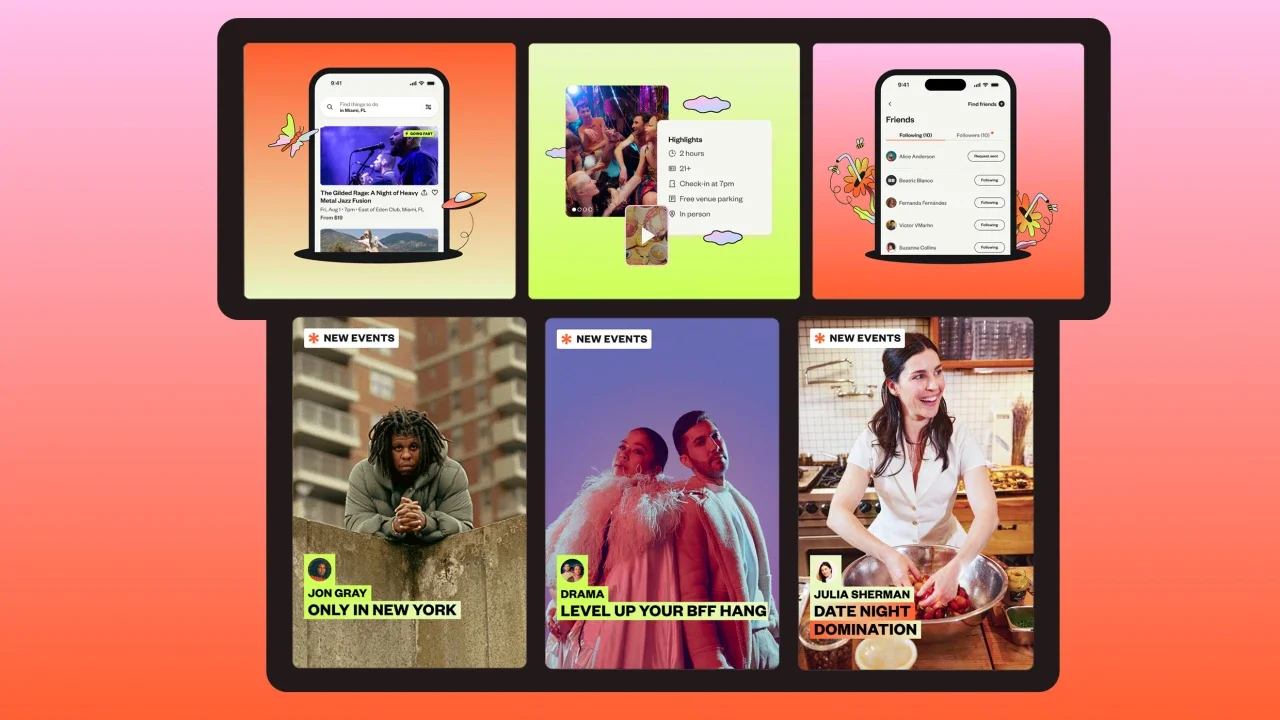
Ticketing platform Eventbrite has a new look—and an overhauled mobile app. The company just unveiled its first brand refresh and app redesign since 2019, signaling its increasing focus on surfacing event recommendations for its users. Coming less than a week after Eventbrite shared its Q4 and full-year 2024 earnings—posting a loss of $8.4 million for the quarter and loss of $15.6 million for the year—the new app is designed, in part, to help shore up the company’s 10% year-over-year decline in ticket sales by emphasizing event discovery. To do that, CEO and cofounder Julia Hartz tells Fast Company that Eventbrite’s strategy is cribbing somewhat from the music streaming world. “We believe that event discovery should be as intuitive as discovering music on Spotify,” she says. [Image: Eventbrite]The redesign and strategy shift is also informed by Eventbrite’s consumer research, which found users between 18 and 34 increasingly driven to attend live events—which Hartz calls “fourth spaces”—by a desire to bring their online interests into the real world—from podcasts to cooking and crafting. “We’re highlighting that niche is the new mass, especially for Gen Z and live experiences,” she says. Driving DiscoveryPutting a new app at the center of its strategy is how Eventbrite wants to capitalize on a highly engaged subset of users. Some 10% of the company’s 90 million monthly active users use the app, and that number is increasing at about 17% year over year. In a move pulled straight from streaming, Eventbrite’s Discover tab offers users recommendations based on past purchases. The new app also introduces It List—guides to events in 12 markets curated by more than 25 people Eventbrite calls “cultural creators.” In Chicago, for example, author Rebecca Makkai offers a guide to social art and literature events, and in Toronto, DJ Hangaëlle gives users a guide to the city’s nightlife. Users are able to save events they’re interested to come back to later, with a dedicated “Saved” tab in the app. [Image: Eventbrite]“Curated discovery is a game-changer” Hartz says, noting that early tests found that users engaging with It Lists are twice as likely to buy a ticket. “That’s not a new concept, but we bring it to life in this new experience. We know a lot about consumers, what they want to do, and how to drive action from intent, which is a big leap when you’re thinking about buying tickets to an event.” The new app also builds in a social function, allowing users to find and follow friends and see what events they may be attending. Hartz teases more features down the line, including user-generated It Lists. “[That would be] another way of connecting with your digital community and getting your friends to want to go out and experience real life with you,” she says. [Image: Eventbrite]Giving organizers a boostHartz’s comparison to the Spotify experience in the new app also extends to Eventbrite’s tools that help hosts promote their upcoming events. Since 2022, Eventbrite Ads has been a way for event planners to boost visibility of a listing—not unlike Spotify’s Discover Mode, which artists use to be promoted into a listener’s autoplay mix. [Image: Eventbrite]The ads program, which was introduced in 2022, has been a solid growth driver for the company, posting year-over-year revenue increases of 34% in Q4 and 83% for the full year. Hartz told investors last week that events using the ads tool sold four times more tickets than events that didn’t. She says that’s in part because of how engaged its app users are versus users on social media. [Image: Eventbrite]“While you’re getting a mass audience on Instagram, you’re getting a super high-intent audience on Eventbrite,” she says, noting that app users are two and half times more active in ticket sales than other users. That’s helped incentivize bringing the ads program into the redesigned app. “We’re expanding Ads placements to be in heavily trafficked places like It Lists and and category-specific landing pages,” Hartz says. We’re making it possible for creators to partake in that high-intent experience.” [Image: Eventbrite]Cornering the ‘fourth space’In surveying the swath of Gen Z and millennials aged 18 to 34, Hartz says Eventbrite is seeing the long tail of pandemic-fueled isolation start to evolve into renewed interest in IRL experiences—but for increasingly niche interests cultivated online. Eventbrite found three-quarters of the people it surveyed planned to spend more money on live events in the next six months. With home, work, and public spaces like parks and cafes constituting the first, second, and third spaces, Hartz sees these events—among them cosplay speed dating, run clubs, and culinary experiences—as a “fourth space.” [Image: Eventbrite]“There’s a mashup of niche interests coming together in really creative ways offline,” she says. “We think of ourselves as the infrastructure for fourth spaces.” When talking about Eventbrite’s focus on surfacing new events for niche audiences, Hartz sounds more like the head of a streamer than a ticketing platform. It’s an ambitious framing, but it’s not an accident. “We’re not ticketing large concerts and arenas and stadiums—we’re ticketing everything else that isn’t a backyard barbecue or birthday party,” she says. “Because of that, I think of Eventbrite’s content as a new type of media—content brought to life in tiny and massive ways. I think you could say that our competition is staying home and sitting on the couch.” View the full article
-
This post was written by Alison Green and published on Ask a Manager. A reader writes: I am to be married next year and decided to send out save-the-dates early. I really like my coworkers and my boss and wanted to invite them to the wedding. When my boss received my save-the-date, they swung by my desk to congratulate me and we got to chit chatting. The conversation led to my boss asking to see a photo of my fiancé as they had never met before. I showed them a photo from my engagement and — It was like the smile literally slid off their face. I asked if they were okay, and all they said was: “Is this who you are marrying?” I was really confused and had a very bad feeling. I went home that night and asked my fiancé why on earth this person would react to his face in such a manner. My fiancé claimed to not remember them, but clearly he recognized them. After a huge argument, he revealed that he was a prankster in school and may have sometimes involved them in “pranks.” I’m not stupid, I can read between the lines. “Pranks” are only funny when everyone is laughing and based on my boss’s reaction, it was clear they never found these pranks funny. We had another huge blow-up and only when I threatened to walk out did he reveal the full extent of these pranks, all the while telling me “he wasn’t this person anymore,” etc. etc. The pranks were horrific, atrocious, and not funny. Once, on a dare, he and his friends took pictures of my boss in the gym locker rooms and plastered his naked pictures all over the school. This is just the least horrific thing him and his friends did. I’m disgusted that the man I love and want to spend the rest of my life with could ever be this person. I returned to office the next day and requested to meet with my boss. My boss wasn’t in the office, and in fact took the next two days off. When they returned to work, they did not really engage with me or even look in my direction. Now I am unsure what I should do. My engagement is almost over. There is no way I can marry my fiancé now that I know what he is capable of. I’m humiliated. I don’t have any friends who aren’t his friends too. My parents are telling me to move and find another job and marry my fiancé because he is rich and treats me well. I’m unsure of how to navigate the situation at work, given that my boss really doesn’t want to engage with me. Any advice you can offer about the personal aspect of this situation will also be really appreciated. First, full disclosure: something about this letter pings my “is this real?” alarm. Apologies to the letter-writer if it is; life is often stranger than fiction. But even if it’s not, it’s useful and interesting to talk about how to handle it if it turns out your boss has a history with someone important in your life. With that said… A lot of people were very different as adolescents than they are as adults. A lot of people behaved badly toward others in their youth but learned from it, regret their behavior, and have resolved to be better people now. The troubling part to me is less that your fiancé was an asshole in school and more that he’s minimizing it now. If he originally didn’t come clean because he was ashamed, that’s one thing (although still not great). But if his position is that these were just youthful hijinks and no real harm was done and you shouldn’t be upset about it now, that’s about his character now. And if the best argument your parents, who presumably know him, can come up with for staying with him is that he’s rich and treats you well … that’s really not good. (It’s also fairly insulting to you, as if that’s the pinnacle of what you could expect in marriage.) You said you’re humiliated, and you shouldn’t be. You learned something about your fiancé and decided to act on it before binding yourself to him for life. There’s nothing humiliating about that. If anything, there’s admirable strength in knowing that sending out save-the-dates doesn’t obligate you to move forward with an enormous decision that you no longer believe is right for you, something not everyone has the wherewithal to do.) As for the work stuff, you really have two options: 1. You can make a point of acting aggressively normal with your boss and just give him some time to get back to normal with you. Sometimes when you’re doing this it can help to go out of your way to find opportunities to have aggressively normal interactions, so that his most recent associations with you are normal work things rather than whatever was going through his mind when he saw that photo. Also, if you do call off the engagement, make sure your office (and therefore your boss) knows. 2. You can address it head-on. Set a meeting with your boss or raise it next time you’re one-on-one and say, “I saw the reaction you had to seeing Bob’s photo and when I asked him about it, he was evasive but I learned enough to understand he was a jerk in school. What I learned through this conversation about his character now was enough for me to call off the engagement. I’m sorry if that photo was an unexpected shock. I’ve always valued my working relationship with you and I hope we can move forward without letting him affect that.” I lean strongly toward #1. I have a high tolerance for awkward conversations if they’re in the interest of getting everyone on the same page, but there’s a very good chance that #2 won’t be necessary after some time goes by … although you could keep it in your back pocket to use if things aren’t back to normal a few weeks from now. View the full article
-
YouTube will change how mid-roll ads are placed in videos starting May 12. YouTube aims to improve the viewer experience and increase revenue opportunities for creators. How it works: YouTube allows creators to manually place ad breaks or let the platform auto-insert them. Creators will be able to combine manual and automatic ad placement, with YouTube’s system potentially overriding manual selections if it finds a more natural break. The new system aims to improve automatic detection, ensuring better placement while also offering a combined manual and auto option. A new feature will flag “interruptive” manual ad slots, allowing creators to adjust them. Why we care. The update will shift ad placements to more natural breakpoints, like pauses and transitions, instead of interrupting sentences or action sequences — potentially reducing viewer drop-offs. However, with it being an additional setting and not a replacement for the old setting, you should be ready to revert to the setting that works best for your campaign. The impact: YouTube’s tests found that channels using both auto and manual mid-rolls saw a 5% revenue boost compared to those using manual placements alone. Older videos (uploaded before Feb. 24) with manual mid-rolls will automatically get new ad slots at natural breakpoints. Creators can opt out of additional placements via YouTube Studio, but interruptive mid-rolls may lead to lower earnings after the update. What’s next. These changes suggest YouTube is betting big on its automated ad detection, nudging creators toward auto-placement for a more seamless experience — and more ad revenue. View the full article
-
Despite government vow to listen to business, changes to be published on Tuesday will favour employeesView the full article
-
Tariffs, the employment pool and requirements to tap financing are potential roadblocks that need to be addressed in order to increase new builds. View the full article

-
American desktop users perform 126 unique Google searches per month, on average, according to a new analysis of search behavior published by SparkToro co-founder Rand Fishkin. The median average was 53 Google unique searches per month. By the numbers. Here are some additional findings about American searchers, beyond the headline statistic: 34% conducted more than 101 searches per month. 36% conducted 21-100 searches per month. 30% conducted 1-20 searches per month. Google Search by vertical. A whopping 86.94% of Americans use Google.com (Google’s homepage search experience) to search. As for Google’s other vertical options: Images: 10.62% Video: 1.16% Maps: 0.64% (which “is almost certainly undercounted,” according to Fishkin) News: 0.38% Shopping: 0.23% Web: 0.04% As the study notes about this section: “This breakdown is looking at the searches that happen in those tabs/sections, not the ones that simply result in a click on a Google News or Shopping result that appeared in the default Google search tab.” Why we care. There’s been much speculation that AI tools and answer engines will negatively impact Google’s search dominance. However, this data confirms that Google’s search volume is still massive. Future updates to this study could reveal whether there is any truth to Gartner’s oft-cited prediction that traffic from search engines will fall by 25% by 2026. The intrigue. Hours before this report was published, we reported that Google processes more than 5 trillion searches per year. Datos’ estimate for the number of annual Google searches: 5.9 trillion. According to Fishkin: “Our math above puts the number at 5.9 Trillion, a little high, likely because Datos’ panel focuses on wealthier countries where more search activity per person is to be expected. Still incredible that they’d come out with numbers the day we publish that help back up the veracity of these results, and the quality of Datos’ panel.” About the data. Fishkin partnered with Datos (a Semrush company), which only tracks web browser activity. That means searches made within mobile apps (e.g., Google search, Google Maps) are excluded from this research. Only searches on Google.com and its five main vertical options were counted. The research. How Often Do Americans Search Google? Which Search Verticals Do They Use? View the full article
-
Almost half of Americans have considered or plan to move abroad to improve their happiness, according to a Harris poll published today. Specifically, the poll found that four in 10 Americans have at least thought about leaving the country within the next few years. And among Gen Z and millennials, almost one in five respondents reported “seriously considering” an imminent move. The results show that Americans are becoming increasingly disillusioned with the “American Dream” as the cost of essentials like rent, healthcare, and education continues to rise. Here are three main takeaways from the poll: Home ownership and cost of living are top of mind Per the new poll, 68% of Americans are in agreement about two key statements: “These days I feel like I am surviving instead of thriving,” and “Homeownership is no longer attainable for most American citizens.” Of those who said that they’d consider moving out of the U.S., 49% reported cost of living as their primary consideration. Dissatisfaction with the current political leadership ranked as the second highest concern. Sentiments around cost of living revealed in this poll are backed up by several recent reports. In early February, an update from the Labor Department showed that the consumer price index—an inflation barometer that considers essential costs like gas, groceries, and cars—was up 3.3% year-over-year, compared to the previous January. For the past six months, inflation rates have hovered above the Fed’s 2% target. Meanwhile, Zillow’s most recent Home Value Index found that, “As elevated mortgage rates dampen demand for home purchases, many potential buyers are staying renters for longer,” predicting a 3.7% rise in single-family rents for 2025. The current economic reality can be even more disheartening for families: Based on a recent analysis by the National Women’s Law Center, the average family would need to earn at least $180,000 annually in 2025 to comfortably afford the national cost of infant care. Who is more likely to be eyeing the exit? According to the new Harris Poll, these converging economic factors are more likely to push away younger, non-white, and LGBTQ+ Americans. While only 25% of Gen X and 26% of baby boomers said they’d considered moving abroad, 63% of Gen Zers and 52% of millennials said the same, respectively. Additionally, LGBTQIA+, Hispanic, and Black respondents were all more likely to consider moving. Dual citizenship is attractive for young Americans Younger Americans also expressed a greater desire than their older counterparts to obtain dual citizenship, with 66% of Gen Zers and millennials affirming that they were at least somewhat interested in pursuing it for travel freedom, economic opportunities, and better access to public services. The top 10 countries that Americans would consider moving to, in order, are as follows: Canada The U.K. Australia France Italy Japan Mexico Spain Germany New Zealand View the full article
-
Dress for the job you want, not the job you have - yes, seriously. The Disruptors With Liz Farr Go PRO for members-only access to more Liz Farr. View the full article