ResidentialBusiness
Administrators
-
Joined
-
Last visited
Everything posted by ResidentialBusiness
-
 Howard Lutnick's influence in housing today is primarily tied to tariffs but his firm also had a storied past in mortgages and was hit hard by the 9/11 attacks. View the full article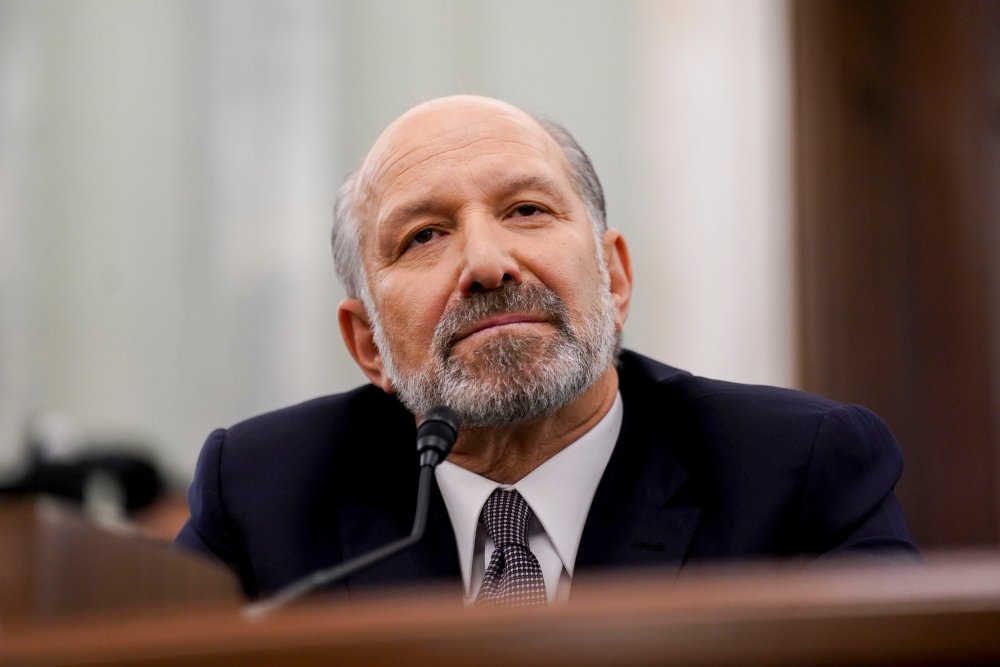
-
The $300 million strong team brings with it two top producers in the state. View the full article

-
We may earn a commission from links on this page. Over the years, I've accumulated dozens of makeup brushes, which means I’ve also spent far too much time cleaning them. Dirty brushes can screw up your glam, but can also cause breakouts and distribute bacteria and whatever else lurks in your makeup bag across your skin. In worst-case scenarios, you could even get an infection. Cleaning them regularly—every seven to 10 days—is important, but so, too, is doing it right. Some cleaning methods are ineffective and others are downright bad for the brush. Here's what to know about cleaning not only your brushes, but your sponges. How I clean my makeup brushesThere are loads of tutorials all over TikTok, YouTube, and Instagram, showing how influencers and makeup gurus clean their brushes, but a lot of them are full of bad information. For instance, using oil is a no-no; it’s extremely difficult to remove from bristles, which can make the brushes less effective and cause breakouts on certain skin types. I’ve also seen loads of videos where users are fully submerging their brush heads in soapy water. Again, no: Eventually, that can damage the glue, too. I am fortunate enough to be friends with a real-life professional makeup artist and model, Rachel DeFluri, and for years, I have followed her advice instead of tips from self-proclaimed online gurus. First, I start with a basic rinse to get the most obvious, external makeup off, filling a small bowl with micellar water and swirl each brush tip around in there. Ever since DeFluri told me to use micellar water to clean makeup brushes, I've loved it because, just as it somehow removes makeup from your skin with ease, it does the same thing here—very gently and easily. If you don’t have any, just run the brush tips under a faucet. Regular water will take a little longer, but the powders and liquids on the outer parts of the brush will eventually come off, leaving you to deal with the stuff that's really deep inside. DeFluri adds that micellar water can be used if you're in a rush and don't have time for any other steps: "Simply soak a cotton pad or towel with micellar water and wipe your brushes clean. While this won’t fully disinfect, it’s a great option for spot cleaning between deep washes." She also points out that if you are in a hurry and are sure your brushes are made of synthetic fibers, you can do this same technique with 70% isopropyl alcohol by applying it to a pad or rag and gently running it over the brush head. She cautions that while it "breaks down stubborn product buildup and kills bacteria on contact" and is great for disinfecting, "it can be drying over time, so use it sparingly." Only swirl the tips so the glue inside the brush doesn't get wet. At the end, your micellar water should look dirty, like the picture on the right. Credit: Lindsey Ellefson If you're not in a rush and want to do a full deep-clean, you move on to the next step. I refill that same bowl with plain, clean water and add a few drops of gentle dish soap (though you can also use baby shampoo). Avoid using anything else, like hand soap. Some bloggers have recommended Dove body wash in the past, too, but that contains some conditioning agents that can, over time, coat your bristles with a film. Our goal here is to strip everything from the bristles, not add anything to them, so plain dish soap is your best bet. The gentler and plainer, the better. Plus, according to DeFluri, it works the same whether you're cleaning synthetic or natural bristles, so you don't have to play any guessing games. Swirl your brush tips in there again, this time massaging them with your hands to “scrub” them. Any time the water gets too dirty, toss it and refill the bowl. Eventually, each brush will stop releasing powders and liquids and, when run back under the faucet, the water coming from them will be clear. A lot of influencers recommend using a bumpy silicone mat as a scrubber during the cleaning process, but those are specialty products that aren’t really necessary. They’re convenient, yes, but run the spectrum of costliness ($5 for a simple one at Ulta, $37 for the big one on Amazon) and don’t do much more than a good massage with your fingers can do. Their greatest benefit is that, by running your brushes over them, you get a lot of water out, but you can do that yourself by gently squeezing the bristles over your cleaning bowl or sink. My little hack is that I use my silicone dish sponge, the one I rave about for general cleaning, and it functions just as well as the specialty mats I've tried, plus I can use it for my dishes and cleaning the kitchen. Best of all, this multi-purpose wonder comes in a two-pack for just $9. Massage the product out of each brush with a mat or by hand, then carefully lay them out to dry. Credit: Lindsey Ellefson When the water runs perfectly clear through them, it’s time to fully dry your brushes. Lay them flat on a paper towel or a microfiber cloth. (I recommend the cloth because you'll actually need about seven paper towels stacked up to catch all the water that comes out over time.) A tip DeFluri is really serious about is this one: Don’t splay the bristles out unnaturally to dry them because they’ll dry that way and be difficult to use afterward. Instead, gently shape the bristles back into whatever shape they were before and let them air dry. I usually leave mine at least overnight and come back a few times to flip them over. Whatever you do, do not dry them upright in a container; this will affect the glue on the bristles, as the water will run down. You can even dry them while they hang upside down, but I don't have the space or mechanics necessary for that. If you figure out a way to affix a bunch of handles so the brushes are airborne, you let me know. Drying them flat is perfectly fine, but rotating them periodically so the bristles don’t flatten on one side is a smart move. How to clean a makeup spongeMakeup sponges, which had a popularity boom around 2016 but are still a staple in most makeup kits, are much easier to clean than brushes, since you can fully submerge them in water with no problem. You can do it in micellar water first and then switch to your soap-and-water mixture, or just go straight to the soap and water. (A lot of makeup sponge brands sell their own cleanser, but baby shampoo is just as good.) Submerge the sponge and massage it with your hands, squishing it around until you see makeup start to come out into the water. If it’s really, really dirty, let it sit in that soapy water for 10 minutes or so. Take it out and put some soap directly onto the wet sponge, working it into a lather. Run the sponge under a faucet to rinse it and don’t stop until the water runs clear. To dry the sponge, prop it up, if you can, and let it air dry. It can air dry flat, but you’ll want to turn it over a few times. Let it dry overnight to make sure there are no wet spots deep inside that could get mildewy. When you think it’s dry, give it a good squeeze to make sure you don’t feel any dampness. Don’t put it back in the drawer or its container until it’s fully dry. View the full article
-
We may earn a commission from links on this page. Before you can lift a loaded barbell, you have to find a bar and load some plates onto it. At some gyms, there’s only one type of bar, and it weighs 45 pounds, and that’s all you need to know. But that’s not the only type out there, and if your gym has different bars of different shapes and weights, it’s possible to get confused. Check end of the bar firstIf you’re wondering about what kind of bar you're looking at or what it weighs, always check the end of it. Sometimes you’ll find a label with a brand name, a description of what the bar is, and its weight. For example, this one has a little endcap that says “The Rogue Ohio Deadlift Bar. 27mm. 20kg.” Now you know that it weighs 44 pounds (20kg) and that it’s got a 27mm wide handle, just over an inch, which is slightly thinner than a typical power bar. Great! Problem solved. But on many bars, all you’ll see at the end is a rusty bolt, so we need to look for other clues. If the bar is seven feet long, it probably weighs 44 or 45 pounds. (How to know if it's seven feet long? Stand it on end, and compare to your own height. If you're six feet tall and it's about a foot taller, that's the kind I'm thinking of.) If you’re suspicious, though, trust no one. I’ve heard bystanders say “oh yeah, that one’s 55 pounds” for everything from a standard 45-pound bar to a monster of a 69-pound trap bar. There’s a simple way to find out how much any bar weighs: weigh it. Almost every gym has a bathroom scale kicking around somewhere, so you can weigh yourself holding the barbell, and then weigh yourself without it and subtract your own weight. (Ask the front desk staff for help if carrying it around to weigh it would be awkward. They may either know the weight, or may be able to help you wrangle it onto a scale.) That said, these are the most common bars you’re likely to encounter: Standard 44- and 45-pound barsThere are a few different kinds of bars in the 45-pound family, but I’m lumping them together because they are about the same size and weight, and can be used interchangeably for many lifts. Some are 44 pounds (because that's 20 kilograms, and 20-kilogram bars are standard in international competition), and some are 45 pounds (which are basically the same thing, but more American). Honestly: don’t worry about the difference. A 20 kilo bar loaded with two 45-pound plates is technically 134 pounds, but everybody in the gym will say it's 135 and you might as well go along with it. These 45(ish) pound bars are the most common ones you'll see in the gym. They are seven feet long, with the part you hold about an inch in diameter and the parts where the weight plates go about two inches in diameter. This type is sometimes called an "Olympic" bar to distinguish it from the "standard" bars that used to be common, and which you can still buy as home gym equipment. (Ironically, "standard" bars with their one-inch sleeves are no longer standard. But the name has stuck.) Within this category, there are a few different types of 44- and 45-pound bars: Men’s Olympic bars are 20kg (about 44 pounds) for the men’s bar, and 7.2 feet long. The sleeves (the wider parts on the ends) spin easily. If you load them up with plenty of weight, you will see that they tend to flex or bounce easily. These are designed with the two Olympic lifts in mind, the snatch and the clean and jerk. But you can use them for any lift you like, so you’ll still find them at gyms where nobody does any Olympic lifts. Cap Barbell THE BEAST Olympic Bar | For Weightlifting and Power Lifting, THE BEAST - Black/Chrome, No Center Knurl, 7' Olympic, (OBIS-86B) New Version $124.70 at Amazon /images/amazon-prime.svg $149.99 Save $25.29 Shop Now Shop Now $124.70 at Amazon /images/amazon-prime.svg $149.99 Save $25.29 Power bars, used for squat, bench, deadlift, and the like, are the same size and shape as men’s Olympic bars. They tend to be stiffer (thus not bending or bouncing as much when they're loaded heavy) and the collars will probably not spin as easily. If they’re not 44 pounds, they’ll be 45. Deadlift bars may be a bit longer than a typical power bar, and may be thinner and more whippy. They are usually still 45 pounds. Squat bars are a wild card here. Normally, the bar in a squat rack will be a regular power bar. But sometimes, it will be a specialized squat bar that is thicker and stiffer, and that may weigh 50 pounds, or sometimes 55 or more. Women’s Olympic barsWomen’s bars are lighter and slightly thinner than men’s Olympic bars, but they are also noticeably shorter—about eight inches shorter. They weigh 15kg, or 33 pounds. METIS Women’s 33LBS Olympic Barbell [6.6FT] - Complies with IWF Standards | Ideal for Beginners & Female Lifters $159.99 at Amazon Shop Now Shop Now $159.99 at Amazon Women’s Olympic bars exist for women to use when competing in the snatch and clean and jerk. They have two main advantages over a men’s bar (if you are an average sized woman): They are thinner, making them easier to grip, especially with the hook grip that Oly lifters typically use. They are “whippier,” so that the bar doesn’t require quite as much weight on it for it to be able to flex and bounce. This matters in Olympic lifting (for example, when you use the bounce to help you as you’re standing up from a clean) and means basically nothing for other lifts. Because they’re specialized for Olympic lifting, you’re only likely to see these bars in Olympic weightlifting gyms and in Crossfit gyms (and similar "functional fitness" spaces). You're not too likely to see these bars in your average commercial gym. In weightlifting and Crossfit gyms, you may also find lighter "technique bars" or "training bars" (often 5kg or 10kg, so 11 or 22 pounds) that exist to give you something lighter to work with if you’re not ready for a full size bar. They are usually the same dimensions as a women's Olympic bar, and are used by kids and beginners learning the lifts. Again, you're not likely to see these outside of an Olympic weightlifting gym, but you never know. They'll be clearly marked on the endcap, and usually shouldn't be loaded past about 50 pounds total. Curl bars and shorty barsAll of the bars I discussed above are what you might call "full size" barbells. But there are also shorter bars meant for lighter lifts, often four or five feet long. They might be called a "shorty" bar, or just a "5 foot bar" or maybe, in a nod to one of their common uses, a "curl bar." (But not an EZ-curl bar, which I'll discuss in the next section.) These shorter bars are used for exercises like barbell curls where you aren't going to be using a ton of weight, so you don't need a full size barbell. A five-foot bar is a lot easier to manage, especially if you're carrying it around a crowded gym or storing it in a small space in your home gym. That said, I wouldn't buy a shorty as your only bar for a home gym, since they don't fit in standard squat racks, and don't have enough room on the sleeves to load much weight. Curl bars are often, but not always, 25 pounds. Check for a label or weigh one to be sure. Olympic Barbell Curl Bar EZ Bar 4/5/6/7 FT Barbell Bar 300/400/500/600 Weight Capacity Strength Training Bar for Home Gym $69.99 at Amazon /images/amazon-prime.svg Get Deal Get Deal $69.99 at Amazon /images/amazon-prime.svg EZ-curl barsThese are the wiggly ones. They’re used like curl bars, for exercises that use smallish amounts of weight. Their handles are designed so that you can choose the position that’s most comfortable for your wrists. They may be 25 pounds or less; this one is 15 pounds. Elevens EZ Bar Curl Barbell 4ft-22LB 330LBS Capacity Olympic Bearing Barbell (330LB-Sliver), 47 inches (A-YD04001) $42.99 at Amazon /images/amazon-prime.svg $59.99 Save $17.00 Shop Now Shop Now $42.99 at Amazon /images/amazon-prime.svg $59.99 Save $17.00 Trap bars and other oddly shaped thingsThere are a variety of other bars out there, in odd shapes and varying weights. One is the trap bar or hex bar, a hexagon big enough that you stand inside of it. (It’s mainly used for trap bar deadlifts, where your hands are at your sides and you don’t have to worry about whether you’re going to smack the bar into your shins.) Some trap bars are 45 pounds, but some are more and some are less. CAP Barbell Olympic Trap Bar, Hex Bar, Shrug Bar, Deadlift Bar, Black $58.00 at Amazon /images/amazon-prime.svg $89.99 Save $31.99 Shop Now Shop Now $58.00 at Amazon /images/amazon-prime.svg $89.99 Save $31.99 There are also football bars, also called Swiss bars or multi-grip bars, that allow you to use a neutral grip for bench press or other pressing movements. Sometimes they’re 45 pounds, but again, sometimes they aren’t. You may also find safety squat bars, cambered bars, and other specialty items depending on your gym. Unusual bars aren’t standardized, so the weight is just whatever it ended up being when the bar’s maker welded all the parts together. Axles, which are two-inch-thick bars used in strongman competition, can vary wildly—some are made from a lightweight hollow pipe, and may only be 20 pounds or so. Others are made from solid metal and may be around 80 pounds. As always, when in doubt, weigh it. View the full article
-
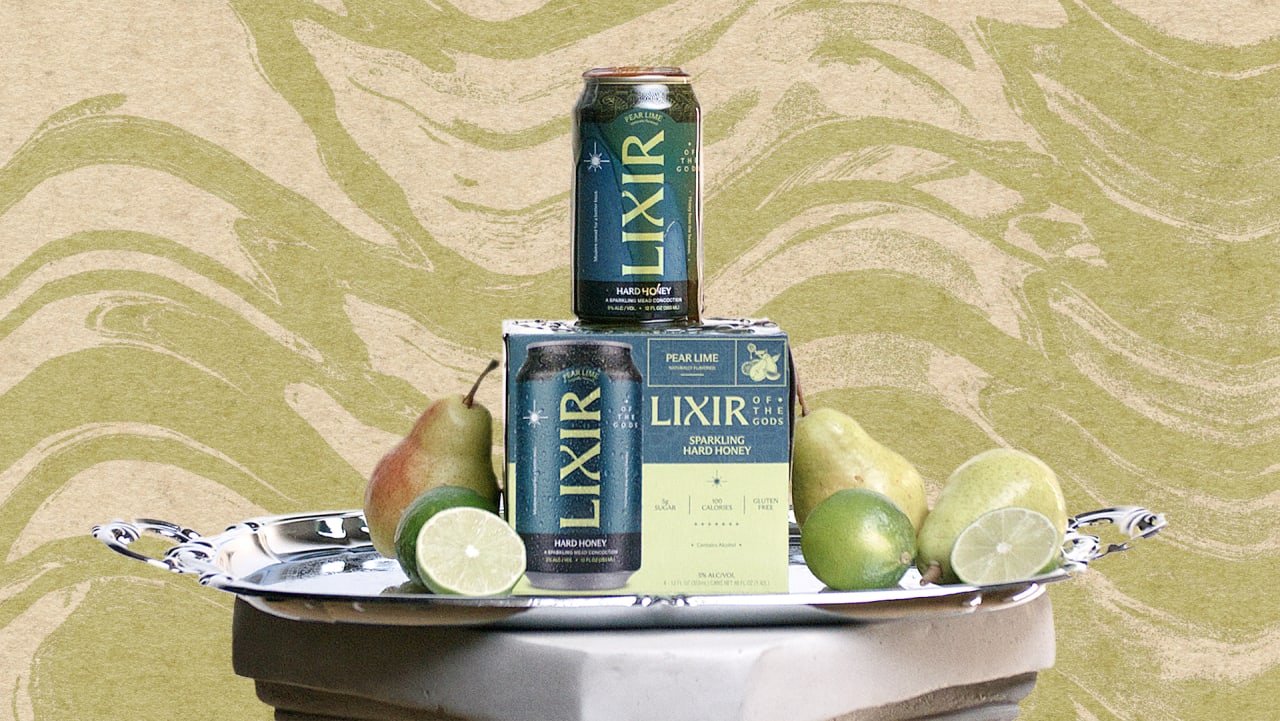
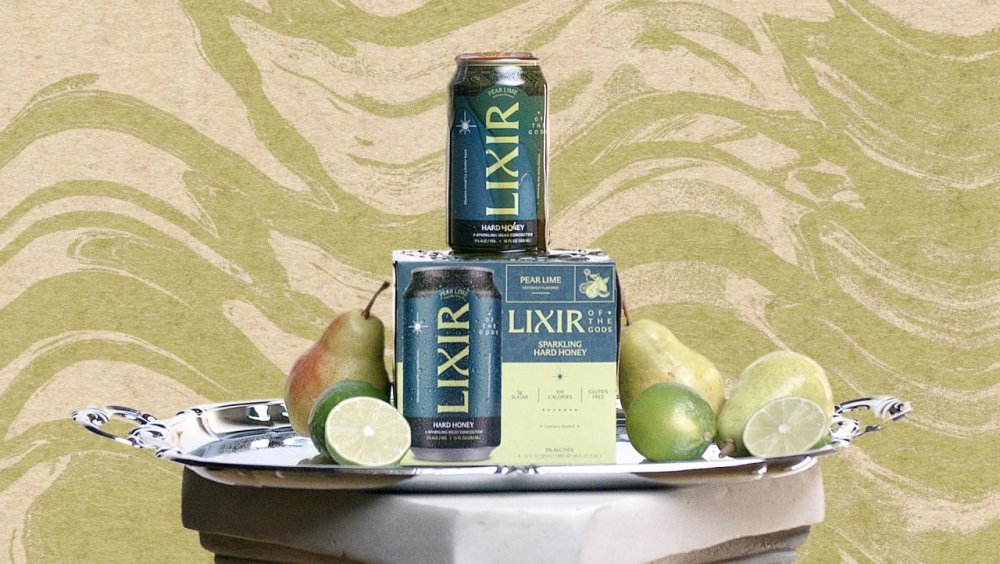
When he was a teenager, Collin McKenna’s interest in changing the food system led him to move from Colorado to Hawaii for high school. It was on that school’s regenerative farm that the now 30-year-old has entrepreneur discovered mead—the sweet, fermented honey beverage often referred to as “honey wine.” His first taste of alcohol was mead made by Hawaiian locals. With his 10-month-old brand LIXIR—a sparkling ready-to-drink mead brand he’s billing as “hard honey”—McKenna wants to make the ancient beverage accessible while turning LIXIR into just the second Regenerative Organic Certified (ROC) alcoholic beverage brand. “So many different cultures made different variations of it. But we wanted to reimagine mead for a modern consumer,” McKenna says. Making Mead Accessible One of McKenna’s first moves when starting Lixir was trademarking the term “hard honey,” papering over the knowledge gap around mead—one of the world’s oldest alcoholic beverages, but whose popularity fell as beer and wine became easier to produce on industrial scale. But mead has been having a resurgence. Fortune Business Insights data reveals that the mead market was about $533.3 million in 2023, and is projected to nearly triple by 2032. “There’s a lot of education behind trying to explain mead and where it comes from,” McKenna says. “As soon as we came up with the idea of hard honey, people were like, ‘I get it.’” With a concept in mind, in 2021, McKenna approached Frank Golbeck, founder of Oceanside, California’s Golden Coast Mead, to begin developing the formula for his hard honey. Since 2010, Golbeck has been focused on modern mead with a regenerative approach. He saw McKenna’s ethos and vision, and although his small factory had limited space, was willing to begin a partnership. Golbeck says mead represents “the synthesis of ecology, creativity and history coming together. Honey is this expensive product that is hard to make. Then to turn it into an alcohol that is similarly hard to make—and to do it well, consistently—has escaped people for generations.” The pair ultimately created a proprietary process for formulating a 5% ABV modern mead that’s less sweet and, unlike the traditional drink, slightly carbonated. LIXIR comes in three varieties: Pear Lime, Cherry Grapefruit, and Mango Orange. “There are so many different honey options—flowers and places where they forage—and they can make such different mead,” McKenna says. “We went through countless renditions of just trying to make the base. It was at least a yearlong process.” Since April, Lixir has debuted at Total Wine & More in its SoCal region as well as Jimbo’s natural grocery stores in San Diego, among several other small retailers and upscale restaurants and hotels. This Spring, it will also begin rolling out in Mother’s Market stores in Southern California regions. McKenna has raised more than $650,000 in funding, about half of its current goal amid a crowdfunding round. Jack Sinclair, CEO of Sprouts Farmers Market, is an advisor and investor in Lixir. [Photo: Courtesy of Lixir] Lixir’s regenerative approach Lixir’s branding helps make mead something a casual shopper might buy, but McKenna still has to solve for how to explain to buyers that their purchase is funding responsible farming. A survey out of Purdue University’s Department of Agriculture found that more than 70% of U.S. consumers are slightly or not at all familiar with the term “regenerative agriculture.” McKenna and Golbeck knew that their regenerative goals would rely on sourcing, so they decided to make Lixir with honey sourced from a Brazilian farm in the Atlantic Rainforest that pulls double duty as a nature and bee preserve. McKenna says Lixir is already a regenerative organic product, but has yet to receive certification from the Regenerative Organic Alliance—something no bee farm or honey brand has managed to achieve. McKenna and Golbeck say that’s because the ROA requires a three-mile forage radius to certify farms, something the founders view as impractical because bees fly far and wide. They have been working with groups like the Regenerative Apiculture Working Group, which focuses on promoting a regenerative honey ecosystem, to make changes to the requirements. “It’s so complicated,” McKenna says adds. “We’ve been chipping away for 10 years.” Though the ROA has certified a handful of beverage brands—among them Harmless Harvest coconut water and Guayaki yerba mate—LIXIR would become just the second alcoholic beverage brand with ROC status (outdoor lifestyle brand Patagonia’s beer and wine operation has received the certification). McKenna is hopeful ROC status could come within the next five years. “We want to educate people in the best way possible by creating a product that everybody can enjoy and have fun with,” McKenna says. “We want to be the brand behind the movement.” View the full article
-
Reality TV contributed to heightened demand for fixer-uppers and DIY projects, but today's economics are altering consumers' home buying considerations. View the full article

-
Rest is a crucial part of strength training. Depending on the exercise and your goals, you may find yourself resting 30 seconds, or one minute, or three to five minutes. So what do you actually do during that time? Let’s talk about your options, both in terms of training effectiveness and gym etiquette. Literally do nothingAs awkward as it may feel at first, this is the best option for most people, most of the time. Actually rest. Don’t stretch, don’t work a different muscle; just allow your body to recover. Some gyms will have stools, benches, or folding chairs near the platforms where people are lifting heavy (and thus need the longest rests). I’m mostly thinking of powerlifting and weightlifting gyms, but I’ve been to big-box gyms like Crunch that provide seating as well. And impromptu seats are common in many other places—who hasn’t sat on a plyo box or some other convenient surface? Do choresThere are plenty of little actions that you take at the gym (or should take) that are not explicitly exercise. The rest between sets is the perfect time to do these little maintenance tasks. Things like: Change the weights to what you’ll need for your next set. Write down what you just lifted in your notebook or lifting app. If you took a video, watch it to give yourself feedback for the next set. Trim that video so that you (or your coach, or your friends) don’t have to watch all 20 seconds of you fumbling with the camera and adjusting your belt before you actually lift. Have a drink of water and, if needed, a snack. Clean up after yourself! Rack any plates and dumbbells you aren’t using. Start warming up for your next exerciseDuring the last few sets of an exercise, it’s time to start thinking about what you’ll do next. This could mean grabbing the equipment you’ll need or changing your shoes, but it's also an excellent opportunity to start warming up—especially if it’s an exercise that can benefit from a little gentle mobility work. Let’s say you have a few sets of squats left, but after that you’ll do some overhead press. You probably want to warm up your shoulders with some mobility work so that you won’t be so tight when you hit that nice stable overhead position. Or maybe it’s the other way around, and you’re pressing, but next you’ll do squats. It’s a great time to start doing some ankle mobility work so that you’ll be able to comfortably hit a deeper squat. Walk (or dance)When the weights are routine, I sit and chill. When they get heavy, I need to pace. (At weightlifting competitions, I not only stake out a warmup platform, I also pick out a walking path that I can pace between attempts.) Or if you’re more of a cheerful, high-energy person, maybe you just want to dance. You’ll see this most often from people who lift at home, or at a chummy small gym where an impromptu dance party might occur between friends. (Alone in my garage gym, I’ve been known to put on some good karaoke songs and sing along, with or without dancing.) The idea is not to get some extra cardio or get your steps in, but just to stay busy and loose and have fun—or, if you’re nervous about a big lift, to keep your head. At a busy commercial gym, make sure not to walk too far away, and consider leaving your water bottle or gym bag on your equipment to let people know it’s still taken. Read or scroll your phoneI promise that it is actually OK to look at your phone between sets. You’re probably doing it anyway. There’s your lifting app, your videos that you took to check your squat form—and, yes, your usual texting and social media stuff. The risk you’re taking here is that you’ll get distracted and rest too long. From your own point of view, a 10-minute rest between sets may interfere with your next set, making you mentally and physically unprepared. It can also lengthen your workout; sticking to the minimum necessary rest times will get you in and out of the gym a lot faster. From others’ perspective, a person who sits on a machine for 10 minutes scrolling is committing an unforgivable sin in gym etiquette. Don’t take longer rests than you need, if you’re holding up equipment. (That said, if you’re polite to others who approach, and you accept requests to “work in” (take turns) while you scroll, you’re morally in the clear.) For your own sake, set a timer when you do anything that might distract you between sets. I like how I can program rest times into a Garmin watch workout, but Hevy also has a timer, and you can always use a regular ol’ timer from your watch or phone. Another tip: Be mindful about what you’re doing on your phone. Now is not the time to get into an argument on the internet, or check your work email and see what will be waiting for you back at the office. It is a good time to play little games on your phone, or read an ebook, or put together your next great workout playlist. Superset (sparingly) I’m leaving this option for last because I don’t want it to be your go-to. Just because you can do one exercise while resting for another, doesn’t mean you should. Why not? If you really want to give squats your full energy, for example, don’t do pull-ups on the squat rack in between. You’ll fatigue yourself more than you realize, and you won’t do your best on those squats. But supersets can be great if you’re willing to sacrifice a little weight for a lot of time. They’re best for exercises where the exact weight doesn’t matter—you can pair bicep curls with tricep extensions, or pull-ups with dips (so long as you’re a person who can bang out multiple reps of each with ease). To do a superset, you just do a set of the first exercise, then a set of the second, then rest a short time (if needed at all), and repeat. I have a list of the best superset pairs here—usually you’ll want to do opposing muscles, like a push exercise with a pull exercise. View the full article
-
Wall Street's pandemic gem is facing a broad selloff Wednesday as fears of constrained homebuilders' margins, bloated inventories and elevated mortgage rates rattle investor sentiment. View the full article

-
This week, the startup Humane—which raised $240 million to build an iPhone-killing AI Pin—announced its sale to HP for $116 million. While far short of the company’s original $1 billion asking price, it’s astonishing the brand scrapped for anything at all. A product that had promised to change the world instead became a worldwide laughing stock, indicative of the worst tendencies of Silicon Valley founder hubris. Universally panned, Humane sold fewer than 10,000 units. Sometimes its returns outpaced its sales. Units could catch fire. Humane co-founders Imran Chaudhri and Bethany Bongiorno thanked their few loyal customers by announcing their Pins would no longer work in just 10 days. Well, for anything but checking the battery level. “This investment will rapidly accelerate our ability to develop a new generation of devices that seamlessly orchestrate AI requests both locally and in the cloud,” said Tuan Tran, President of Technology and Innovation at HP in a press statement. “Humane’s AI platform Cosmos, backed by an incredible group of engineers, will help us create an intelligent ecosystem across all HP devices from AI PCs to smart printers and connected conference rooms. This will unlock new levels of functionality for our customers and deliver on the promises of AI.” Heh. I can understand why the world was fooled by the AI Pin when it launched in 2024. I have a little less sympathy for HP execs now, who have just completed one of the most tone deaf acquisitions in corporate history. The Ai Pin was flawed from the beginning Mystique around Humane had been swirling for years by the time Chaudhri took the stage at TED in May 2023 to present the idea of “the disappearing computer.” After spending his career at Apple working on some of its most important launches like the iPhone, he pitched a screenless AI interface that “allows us to get back to what really matters: a new ability to be present.” By simply asking it to “catch me up,” his computer cut through endless notifications to tell him what was important. By holding up a candy bar, his computer could tell him if he could eat it with lactose intolerance. And when his wife called, well, her name magically appeared right on his hand. Little did the audience realize: the computer had merely disappeared into Chaudhri’s jacket with a needle and thread. Even a bad magic trick can fool people who want to be fooled. And Humane’s vision struck a chord with a society that felt guilty for using its phones all the same. Freeing our eyes and hands sounded like liberation, and the promise of an AI that could do everything from translate languages in realtime to examining the foods you’d eaten through the day to determine if you’re aligned with your diet, seemed like the sort of just-out-of-reach magic that could finally be real. And, wait, was that a LASER BEAM THAT JUST SHOT ONTO HIS HAND? [Image: Humane/TED] The next time the AI Pin arrived on stage, it would be worn on the lapel of Naomi Campbell—true supermodel royalty—at Paris Fashion week. The closest parallel I could remember was Beyoncé donning an Apple Watch around its announcement. The product was starting to feel too big to fail. Its investors—including Tiger Global Management, Microsoft, Qualcomm Ventures, and Softbank, alongside individuals like Salesforce’s Marc Benioff and OpenAI’s Sam Altman—fed an $840 million valuation. It felt like something that deserved to be taken seriously. Naomi Campbell wearing a Humane pin during the Coperni Womenswear Spring/Summer 2024 show. Paris Fashion Week, 2023. [Photo: Francois Durand/Getty Images] Still, the TED Talk had struck me funny for reasons I couldn’t articulate. Later, Chaudhri canceled an on-stage interview with myself where he’d promised to speak about the product for the first time. He also declined an interview after my in-person demo (I’ve experienced a hundred or more product walkthroughs in my career, and I’ve never been unable to ask a question after any but with Humane). What I generously interpreted as shyness—Chaudhri’s soft spoken magnetism cannot be denied—increasingly seemed to be protecting a thin veneer. Five months before Marques Brownlee nuked the AI Pin into oblivion by calling it the worst product he’d ever reviewed, I’d been saying the same to friends in the industry who eagerly asked about my experience with the device. It was difficult to explain to people that this wasn’t hyperbole, that when I arrived in San Francisco in November 2023, the demo was really that bad. That every query took painfully long even inside a perfectly closed environment. That all the magical dietary food stuff didn’t seem to work at all. That I was expected to ooh and ahh when the Pin told me the weather. That I wasn’t even allowed to use the device myself. Still, Chaudhri and Bongiorno (who, note, always wore the Pin on a thick jacket to support its weight), had already planned for countless special edition releases, with the Pin in all sorts of limited edition candy colors. It didn’t work, mind you. The AI Pin was nothing more than a smartphone without a screen, stuck to your chest. Its limited capabilities somehow put technology more in the way. But the entire brand and packaging promised to usher us into a new era of computing, because Humane was focused more on optics than function. The project didn’t seem salvageable, but I was actually surprised when the world of tech reviewers mirrored my initial take. These are people who review Android phones for a living! And they hated the thing. Where this leaves HP Humane was always going to sell as scrap to something or someone. There was just too much invested into the company for there to be nothing to show. Its carefully engineered chipset (the AI Pin used little off-the-shelf hardware) is unlikely to be worth much of anything outside the device itself, but perhaps HP has a purpose. Its 300 patents around various AI/UX interactions likely have an appeal to any tech company, if only because AI isn’t going anywhere. And the purchase price isn’t beyond what companies will spend to acquihire tough-to-recruit technologists. I’m more surprised that HP has made such a public bet on the ashes of Humane, which has been immortalized in memes as a pile of bogusness. If this was some attempt at capturing whatever lingering spirit was left in the Humane brand, the two companies snuffed it out when bricking their devices. HP says that Humane “will form HP IQ, HP’s new AI innovation lab focused on building an intelligent ecosystem across HP’s products and services for the future of work.” For a company that’s still making billions in profits annually from predatory printer ink subscriptions, perhaps it’s a fitting end. The worst AI company of the last decade will linger as some sort of “smart” notification that your magenta is low. View the full article

-
Project templates are predesigned documents that help organize and manage a project from start to finish. They provide a standardized approach to common project tasks, helping project managers and teams stay consistent, efficient and aligned. These templates often include predefined sections, tasks, timelines and checkpoints that help guide the project through its life cycle. Download these free project templates to help with the project planning process, change management, project scheduling and more. But know that templates are only a bandaid and will prove frustrating in time. We suggest upgrading to project management software, but until one is ready, these free project templates will help manage projects to successful completion. 1. Project Plan Template A project plan is a document that thoroughly covers all the guidelines and procedures the project team needs to follow to deliver the project. It’s one of the project templates used during the project’s planning phase and will ensure that nothing important is overlooked. Download this free project plan template for Word to ensure that projects are started currently so they’ll have a better chance of being completed successfully. /wp-content/uploads/2020/09/Project-Plan-Screenshot.jpg The project template for planning is divided into five sections, each covering a distinct aspect of the project. It begins with the purpose, stating the goals, success criteria and the project’s general governance. That is followed by team management and stakeholder management. Next, scope management and the project schedule are created. Then, resources, procurement, budget and cost management are defined. Finally, there’s space to talk about change management and responding to risks. 2. Gantt Chart Template A Gantt chart is a visual tool, typically displayed as a horizontal bar chart, that illustrates the timeline of a project by showing the start and end dates of each task. This allows project managers to schedule work and track its progress, identify potential bottlenecks and manage project deadlines effectively. It’s no wonder it’s an essential tool in project management and an important project template. /wp-content/uploads/2024/10/Gantt-chart-template-for-Excel.png Download this free Gantt chart template for Excel to view the entire project in one place. It’s easy to use. Just fill out the spreadsheet, which makes up the left side of the template. There are columns to capture all the project tasks and their start and end dates. There’s also a column for the task’s duration, priority and percentage complete to help project managers track its progress. Of all the project templates, this might be the most useful. However, a Gantt chart template is nothing compared to Gantt chart software. ProjectManager is award-winning project and portfolio management software with robust Gantt charts that do more than schedule tasks, resources and costs. Unlike a template, our Gantt chart can link all four types of task dependencies to avoid delays and cost overruns. It can also filter for the critical path without having to do time-consuming and complicated calculations. Plus, once a baseline is set, the software automatically tracks progress and performance in real time against the project plan. Try doing that on a template! Get started with ProjectManager today for free. /wp-content/uploads/2024/04/critical-path-light-mode-gantt-construction-CTA.pngProjectManager has Gantt charts that leave project templates in the dust. Learn more 3. Project Proposal Template A project proposal is a written document that outlines the details of a proposed project, including its objectives, timeline, budget, potential risks and expected outcomes, aiming to persuade stakeholders to approve the project and allocate resources to it. Yes, it’s similar to the project templates for planning, but this is more about selling the idea to the project decision-makers. However, it can be useful if the project is approved as it will be used to create the project plan. /wp-content/uploads/2021/08/Project-Proposal-Screenshot.jpg Download this free project proposal template for Word and get a document that fully covers all the pertinent information needed to convince stakeholders of the project’s viability and why they should invest in it. There’s a cover letter to introduce the project and an executive summary to briefly explain the who, what, where, why and how of the project. Then it goes into the process, solution, deliverables, duration, costs, billing and much more. This is one of the project templates that makes sure all the bases are covered. 4. Project Budget Template The project templates discussed so far only touch on costs. This free project budget template for Excel is exclusively about the financial plan that will estimate the costs of the project. It’s a tool that project managers use to determine if a project is financially viable and can be completed on time and within budget. This is done during the planning phase of the project and using a project budget template will help ensure the financial forecast is as accurate as possible. /wp-content/uploads/2020/09/Project-Budget-Screenshot.jpg A budget includes the cost of labor, materials and equipment, which is called the direct costs. It also included overhead, which are indirect costs. It’s also a good idea to have a contingency reserve so there’s money set aside for unexpected expenses. This is one of the essential project templates for a project manager, who is typically responsible for creating the budget and, in the case of construction, will lose money from their profit margin if they calculate costs incorrectly. 5. Project Dashboard Template A project dashboard is a visual display that provides a real-time overview of key metrics, progress and performance indicators for a project. This free project dashboard template for Excel doesn’t have real-time capabilities because it must be manually updated, but it does aggregate and present data in an easy-to-understand format, using charts, graphs and tables to track important project aspects. This is another one of the many project templates that project managers can’t be without to monitor their projects and ensure they are delivered on time. /wp-content/uploads/2016/03/Project-Dashboard-template-UPDATE.png While the data has to be manually entered, the results are similar to what one would expect from real-time dashboards in project management software. It’s not the same, naturally, but for those not ready to upgrade it’s a good fix. This free project dashboard template is colorful and easy to read. It shows tasks and how far team members have gone in completing them. There’s also a bar chart to illustrate workload and task lengths. Finally, there’s a chart that measures the project cost to help bring it within the approved budget. 6. Task Tracking Template Task tracking is the process of monitoring the progress of individual tasks within a project, including their status, completion percentage, deadlines and assigned team members. This ensures the project stays on schedule and meets its goals. This is the kind of project template that is essential for actively following the progress of each smaller component of a larger project. Download the free task tracking template for Excel to get started. /wp-content/uploads/2023/05/Task-Tracking-Screenshot-1536x494-1.jpg This project template is divided into several columns. The first is a list of all the project tasks and a brief description. That’s followed by the dependent tasks, if any. Then there’s space to show who is assigned to the task. After that, add the priority, start and planned end date. There’s also a column for the actual end date, which helps to see if the work is being completed on time. There’s also a column to add whether the task status is opened or closed. 7. Business Case Template A business case is a document that outlines the reasons for undertaking a project, detailing the expected benefits, potential risks and costs involved. This is one of the project templates used to persuade decision-makers to approve the project by showing its strategic value and justifying the investment required to execute it. /wp-content/uploads/2022/07/Business-case-template-word-projectmanager.jpg Download this free business case template for Word to capture all the information needed to explain the need for the project. It begins with an executive summary to briefly explain what is to follow. Then there’s a mission statement that defines the objectives of the project. The product or service that is to be delivered by the project is described, the project plan outlines and much more to fully help stakeholders understand the project. 8. Project Estimate Template A project estimate is an informed prediction of the time, cost and resources required to complete a project from start to finish. This is one of the project templates typically based on historical data and considers factors like project scope, deadlines and potential risk to create a preliminary budget and timeline for the project. Download this free project estimate template for Excel to have an accurate estimate of the project./wp-content/uploads/2021/01/Project-Estimate-Screenshot.jpg The free template starts by capturing the company and customer information. There’s also a place to add the date, quote number, customer ID and the date through which the estimate is valid. Under that is space to describe the project to put the estimate in context. Following that section, are sections for each phase of the project. These phases are divided into columns that list the tasks of that phase, the vendor or contractor responsible for them and labor and material costs. 9. Critical Path Template This is one of the most important project templates for scheduling. That’s because it deals with the critical path method. The critical path is the longest sequence of dependent tasks within a project that must be completed on time for the entire project to be finished on schedule. Any delays in tasks on the critical path will directly impact the overall project completion date. Download this free critical path template for Excel to calculate the critical path of a project. /wp-content/uploads/2024/05/critical-path-method-screenshot.png This free critical path template includes everything needed to estimate the task duration and make an accurate project schedule by identifying the critical path. Each task is estimated for its earliest start and earliest finish, latest start and latest finish. There’s also slack, which is how long the task can be delayed before it impacts the project schedule. 10. Project Status Report Template A project status report is a document that regularly communicates the project’s current progress. It details how the project is performing against the established project plan. It includes key metrics like milestones achieved, tasks in progress, potential issues and any necessary adjustments to the schedule or budget. Download this free project status report template for Excel to share with stakeholders in meetings to keep everyone informed about the project’s health. /wp-content/uploads/2021/11/Status-Report-Screenshot.jpg This is one of the project templates that is an essential communication tool, not only keeping stakeholders updated but also helping project managers and their teams deliver successful projects. This free template addresses all the issues that project managers, teams and stakeholders are concerned about. There’s a project summary, with key accomplishments, completed work, etc. There’s an overview of project health, budget, schedule and more. Get a full and clear picture of the project over a specific period. ProjectManager Is a Better Project Management Tool Than Project Templates Project templates are fine. They can help manage projects, especially for those who aren’t ready to upgrade to project management software. But professionals who use them will soon hit a wall. They’ll get tired of constantly updating these static documents, which are flawed collaborative tools. There is a solution. ProjectManager is award-winning project and portfolio management software that updates statuses in real time and connects teams whether they’re in the office, in the field or anywhere else. Multiple Project Planning, Scheduling and Tracking Tools We’ve already gone into the power of our Gantt chart and how project templates are a mere shadow of what they can do, but there’s more. Our multiple project views allow those Gantt chart plans to be shared across other project tools. For example, project teams can execute their tasks on kanban boards, which visualize workflow, or talk lists, and all their work is updated on the Gantt and across other monitoring features, such as dashboards and reporting tools. That means progress is tracked in real time. /wp-content/uploads/2023/01/List-Manufacturing-Light-2554x1372-1.png Robust Resource and Cost Management Features Resources, both human and nonhuman, are scheduled on Gantt charts, which can also assign the team tasks. Before that, project managers can set the team’s availability, including PTO, vacation and global holidays, as well as skill sets, which makes it easier to know who to assign what and when. A color-coded workload chart shows resource allocation and can balance workload to keep everyone working at capacity without threatening burnout. A team page offers a summary of their daily or weekly activities and can be filtered by progress, priority and more. There are even secure timesheets that streamline payroll and track labor costs to keep projects on budget. /wp-content/uploads/2023/01/Team-Light-2554x1372-1.png Related Project Templates Content There are more free project templates available. We have over 100 free project and portfolio management templates for Word, Excel and Google that cover every aspect of managing projects across multiple industries. Here are some recent roundups of free templates. 30 Project Management Excel Templates & Spreadsheets 18 Free Project Planning Templates for Excel and Word 26 Must-Have Project Management Templates for Google Sheets 10 Free Project Portfolio Management Templates 10 Free Project report Templates for Excel & Word ProjectManager is online project and portfolio management software, which makes it superior to project templates when delivering successful projects. Teams can share files, comment at the task level and stay updated with email and in-app notifications. Join teams at Avis, Nestle and Siemens who use our software to deliver successful projects. Get started with ProjectManager today for free. The post 10 Free Project Templates for Excel and Word appeared first on ProjectManager. View the full article
-
We may earn a commission from links on this page. Deal pricing and availability subject to change after time of publication. Like most tech products, the Apple Watch has a basic model (the SE), a mid-tier model (the Series 10), and a high-end version (the Ultra 2). But the older Series 9 offers a sweet spot for those looking for a budget mid-tier option. The Series 9 offers many high-end features at a price that's closer to the price of the SE than the Ultra 2, and cheaper than the newer Series 10. Right now, the 45mm Apple Watch Series 9 is $370.99 for the GPS and Wifi version (originally $529), currently matching its lowest price since its release, according to price-checking tools. Apple Watch Series 9 GPS + Cellular 45mm $370.99 at Best Buy $529.00 Save $158.01 Get Deal Get Deal $370.99 at Best Buy $529.00 Save $158.01 If you're not sure whether the Series 9 is a better choice over the Ultra 2 or the Series 10, you can read our full breakdowns. Essentially, the Series 9 is a smaller watch with fewer features for outdoor enthusiasts than the Ultra 2. But if you want to save yourself a few hundred dollars and don't need a brighter screen or a more rugged design, the Series 9 is a great choice. PCMag gave the Series 9 an "outstanding" review for its powerful processor, the in-demand double-tap gesture for hands-free operation, access to Siri, and its bright display. You can expect up to 18 hours of battery life (or 36 hours in low power mode), sleep tracking, mental health and vision health tools, additional cycling and compass features, and more. This GPS and cellular version means you can access your phone without the need of a wifi network. In other words, you'll be able to go on a run without your iPhone, play music on your AirPods, and take calls. Right now, only the bigger 45mm sized screen is available for this deal, but the band size fits people with wrists from 140mm to 190mm. View the full article
-
We may earn a commission from links on this page. Deal pricing and availability subject to change after time of publication. Apple has been top dog in the premium tablet space for years, and the iPad Pro with an M4 chip released last year solidified their dominance. If you've been waiting for a discount on the best-performing tablet you can get, take your pick from the available options: the 11-inch iPad Pro wifi and celular version is $1,099 (originally $1,199), the 13-inch iPad Pro wifi version is also $1,099 (originally $1,299), and the 13-inch wifi and cellular version is $1,299 (originally $1,499). These deals bring all versions down to the lowest prices these iPad models have been since their release, according to price-tracking tools. Ultra Retina XDR Display, 256GB, 12MP Front/Back Camera, LiDAR Scanner, Wi-Fi 6E + 5G Cellular. Apple iPad Pro 11-Inch (M4, Wifi + Cellular) $1,099.00 at Amazon /images/amazon-prime.svg $1,199.00 Save $100.00 Get Deal Get Deal $1,099.00 at Amazon /images/amazon-prime.svg $1,199.00 Save $100.00 Ultra Retina XDR Display, 256GB, 12MP Front/Back Camera, LiDAR Scanner, Wi-Fi 6E, Face ID. Apple iPad Pro 13-Inch (M4, Wifi) $1,099.00 at Amazon /images/amazon-prime.svg $1,299.00 Save $200.00 Get Deal Get Deal $1,099.00 at Amazon /images/amazon-prime.svg $1,299.00 Save $200.00 Ultra Retina XDR Display, 256GB, 12MP Front/Back Camera, LiDAR Scanner, Wi-Fi 6E, Face ID. Apple iPad Pro 13-Inch (M4, Wifi + Cellular) $1,299.00 at Amazon /images/amazon-prime.svg $1,499.00 Save $200.00 Get Deal Get Deal $1,299.00 at Amazon /images/amazon-prime.svg $1,499.00 Save $200.00 SEE 0 MORE The M4 is about 1.5 times faster than the M2, the chip used in the previous generation of iPads. That's a big difference for anyone looking to use their iPad for more than just navigating the web and streaming media apps. The 11-inch screen is an OLED display with a maximum brightness of 1,600 nits and a contrast ratio of 2,000,000:1, making it ideal for creators who need to see accurate colors for pictures or videos. The processing power can easily handle heavy-duty apps like Final Cut Pro, Logic Pro, or Photoshop. A 120Hz refresh rate also means games will look smooth. As far as battery life, you can expect about 10 hours depending on your use, and a charge that takes about two hours to get to full. Keep in mind Apple switched to USB-C charging, and this iPad does not support wireless charging. If you don't get the cellular version, you'll be limited to wifi signal. You can get the Apple Pencil Pro and the Magic Keyboard if you want to complete the set, but of course, they're not necessary. If you're not going to be doing heavy work, the iPad Air will do just fine. But if you're looking for the best tablet to perform professional tasks, the iPad Pro M4 is at a great price right now. View the full article
-
Minutes from January meeting show US central bankers back ‘careful’ approach on reducing borrowing costsView the full article
-
UK prime minister keen to avoid upsetting relationship ahead of next week’s White House visit View the full article
-
As of a few days ago, Google now allows advertisers to use fingerprinting to track users across devices and websites, collecting data points like IP addresses, operating system details, and screen resolution. Why we care. Google’s decision to permit fingerprinting, a powerful user-tracking technique it banned in 2019, raises significant privacy concerns and has already drawn regulatory scrutiny. By allowing fingerprinting, Google gives advertisers a powerful way to track users across devices without relying on cookies, potentially improving ad personalization and attribution. However, the move also raises legal and ethical concerns, as regulators, especially in the EU, may impose new restrictions or penalties. Brands must carefully navigate these changes to balance ad effectiveness with growing consumer privacy expectations. The big picture. The reversal comes despite Google’s recent privacy-first initiatives, suggesting a prioritization of advertising revenue over user privacy protections. Between the lines. The timing of the announcement — just before Christmas — and Google’s careful avoidance of the term “fingerprinting” in its documentation has raised eyebrows. What they’re saying. The UK’s Information Commissioner’s Office (ICO) called the move “irresponsible,” noting that “fingerprinting is not a fair means of tracking users online because it is likely to reduce people’s choice and control.” State of play: Advertisers must still comply with privacy laws. Users won’t be asked for explicit consent. Data collection includes device specifics and usage patterns. The EU is expected to scrutinize the policy change. Bottom line. This represents a significant shift in Google’s privacy stance, potentially setting up conflicts with privacy regulators. View the full article
-
Your eyes are fragile, complex, and important to your well-being, but taking care of them can be expensive. First of all, it’s not easy to get glasses without a recent prescription, and the average cost of an eye exam without insurance coverage is close to $200. The average cost of the glasses themselves is about $230—and that’s before you add on the coatings you need. This can be a real challenge for the estimated 63% of Americans who don’t have vision insurance, meaning they’re paying out of pocket. There are resources that can offer low-cost or even free eye exams and glasses, however, if you meet certain requirements (like income level and lack of insurance). If you or someone in your family desperately needs new glasses, here’s where you can look for those services. Free examsWhether you’re shopping at a cheap online store for glasses or trying to get a free pair, you’ll need a relatively recent prescription (generally within the last two years). If you don’t have one, you can find cheap or free examinations using the following resources: EyeCare America offers eye exams and ongoing vision care at no cost to people over the age of 65 and people who are at a higher risk of glaucoma. These services are provided by volunteer ophthalmologists around the country. They don’t provide eyeglasses. All Children See offers vision care for children under the age of 18 who have failed a vision screening, have some other vision problem, and who are uninsured or unable to afford care. InfantSEE is administered by the American Optometric Association (AOA) and offers free eye assessments for babies ages 6 to 12 months, regardless of income or insurance status. Government programs like Medicaid, Medicare, and CHIP also offer low-cost or free eye exams, including VA Vision Care for veterans. Eyes of Hope offers no-cost eye exams to adults and children who have no insurance coverage and meet their income requirements. Many community health centers offer eye clinics with free or low-cost exams and eyeglasses. You can locate a CHC near you at this site. Free glassesOnce you have your prescription, you need to fill it. The following programs offer free or super-cheap eyeglasses once you have a prescription in hand: New Eyes provides a “basic” pair of eyeglasses for a $10 non-refundable application fee. You have to apply online (do it here). Eyes of Hope also provides free eyeglasses to adults and children who meet their income requirements. Lions Club International clubs collect and distribute donated eyeglasses. You can find a local club here and contact them directly to find out if they participate in the recycling program and how to start the process. Promotions. Many online stores offer a free first pair of glasses when you shop with them. While there’s no guarantee that these programs will be offered when you need them, sites like GlassesShop and Abbe offer a free pair of basic glasses (shipping and handling is extra) if you have a recent prescription. View the full article
-
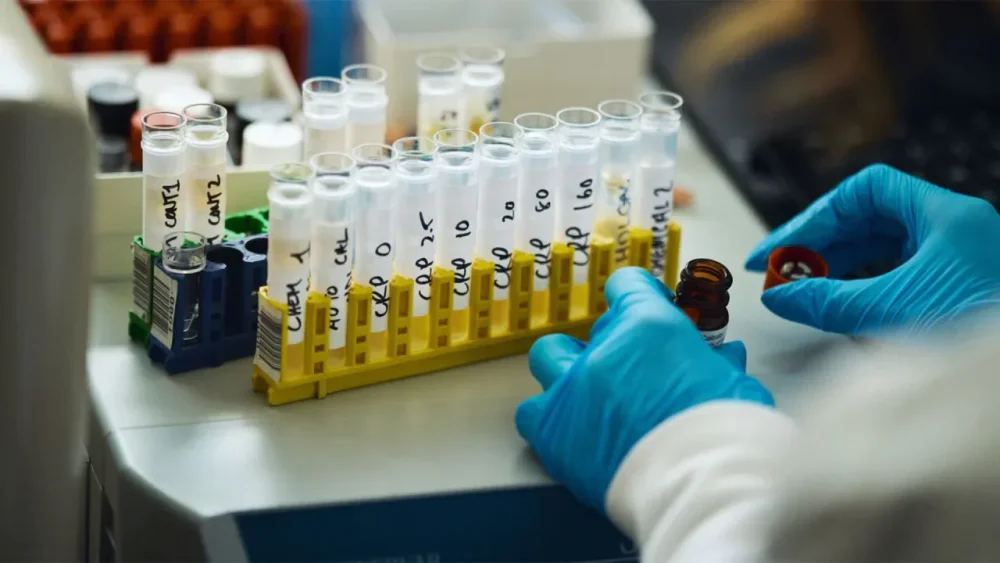
Amid a month of skyrocketing stock prices and unprecedented social media buzz, Hims & Hers is expanding its territory into at-home blood testing and diagnostics. Hims has acquired at-home lab testing facility Trybe Labs, the telehealth company said Wednesday. Using at-home blood draws, Hims will now offer over 70 at-home diagnostics tests, ranging from heart health to certain cancer detection tests. All these can be arranged through the app, without a doctor’s visit. “At-home lab testing is one more exciting step towards elevating the personal, comprehensive care customers in this country should expect,” Dr. Patrick Carroll, Hims & Hers chief medical officer, told CNBC. Trybe Labs is based in New Jersey, and Hims & Hers will use these labs to “process blood tests at low-cost for Hims & Hers members, using state-of-the-art diagnostic equipment,” according to its webpage. Pricing information for these tests will come out within the next year, according to the company. Hims & Hers stock was up 23% during midday trading on Wednesday, following the news of the acquisition. By offering at-home testing, Hims & Hers now puts itself in competition with industry juggernauts like Labcorp and Quest Diagnostics. Shares of Hims have jumped 230% in the last three months, while Labcorp’s and Quest’s have grown only by 4 and 6%, respectively. The move comes during what has seemed like a month of Hims & Hers domination. The telehealth company, which vows to let its members “skip the awkward doctor’s visits,” recently entered the public consciousness with a viral and controversial Super Bowl ad. The ad criticized the pharmaceutical industry while promoting itself as a cheaper alternative. Within the ad, a spokeswoman says: “There are medicines that work, but they’re priced for profits, not patients.” After the ad aired, Hims & Hers saw a 650% increase in website traffic and an 11% increase in stock price. View the full article
-
This post was written by Alison Green and published on Ask a Manager. A reader writes: In August of 2024, I left behind TV news reporting to become a social media manager for museums in my city. My career in TV news was full of manipulation, toxicity, long hours, and missed holidays. My new job was a standard 9-5, with occasional weekend events for a few hours. It was the boring job I needed. The local theater and museum (they are combined and owned by the same company) took an interest in me, and the CEO offered me a job with them. I was told I would need to work weekends about once a month for shows, and I was okay with that. After looking at the schedule posted to the theater’s website, I decided I was okay with working a few weekends. So, I accepted, excited for the opportunity to grow in this company. I emailed my soon-to-be boss a list of dates I was unavailable that I knew shows were on. I asked for a schedule of all events, but was told, “We’ll talk about it when you start here.” Well, I started in January and they gave me the event schedule, and I see why they waited to do it until after I started. There is something every. single. weekend. This schedule is DOUBLE the amount on the website. Everyone failed to mention that we host private events, some two weeks long. There were things like my baby sister’s birthday party that I didn’t ask off for and family weekends because I thought we were closed! I feel betrayed and lied to. And when I brought it up, I got the stereotypical “we are an events venue and you are expected to be at these events.” It felt very reminiscent of my job in TV news, where we were expected to devote our life’s to our jobs. If I had known about the private events (some of which are 12- to 16-hour days), I would have never accepted this position. My new boss told me I would only work two shows a month on my first day, but when I asked for additional days off after receiving the schedule, I was told, “Aside from the days you previously sent me, I would expect to work every other event day.” I didn’t leave TV news to still be unable to see my family. I can’t tell if I’ve been fooled or if I should have expected this, and I don’t know what to say to anyone that won’t result in me being fired. I don’t see why you should have expected it when you were told you would need to work one weekend a month. You took them at their word. The problem is they apparently lied to you. The question now is: if these schedule requirements aren’t going to change, do you still want the job? What you should do depends on that answer. If you’re willing to leave over it, you can be extremely assertive about it. Sit down with your boss and say: “When I was being hired, I was told I’d need to work one weekend a month and I accepted the job on that basis. I couldn’t have accepted if I’d been told I would be expected to work every other weekend. Since that’s not possible for me with my commitments outside of work, how should we proceed?” If she says it’s not flexible and you’ll need to work every other weekend regardless of what you were promised, then you should say, “If there’s no flexibility on that, it’s not a position I can stay in. What is your preference on how we proceed from here?” A big caveat: even if your boss says she’ll let you off the hook for some of these events, you should still proceed with a lot of caution. Unless her attitude is “this was a terrible miscommunication and I’m so sorry it happened and we want to work this out,” it’s highly likely that you’ll end up being pressured to work more weekends than you want to, regardless of what she says now. If you’re not willing to leave over it … well, first, I think you should be! They lured you into this job under false pretenses, so even if you’re not in a position to leave tomorrow, you should be actively looking for another job so you can get out. But if you need to stay meanwhile, you’d do a softer version of the above, which would mean something like: “When I was being hired, I was told I’d need to work one weekend a month and I accepted the job on that basis. I couldn’t have accepted if I’d been told I’d be working every other weekend. What’s the best way to resolve this?” If she says there’s no changing it now, you could say, “I can try to find some flexibility in my schedule, but since I was brought on with the promise of one weekend a month, are you able to give me some flexibility in return? Can we work out a schedule that is closer to what I was told would be required?” Maybe that will cut down on some of your weekend scheduling while you’re stuck there, maybe it won’t, but it’s worth a try. Also! Who told you originally that you’d only be working one weekend a month? If that was a different person than your current boss, and if they are higher up than your current boss is, it’s worth going back to them, explaining what’s happened, and asking if they can intervene on your behalf, as the person who promised you that. They may or may not be willing/able to, but it’s worth a try given their role in what happened. View the full article
-
Proposal sees smaller role for land troops to enforce ceasefire, but would require significant US support View the full article
-
As much as Apple would like it, iMessage is not the only messaging platform in the world. Yes, RCS is nice, but a lot of people prefer using WhatsApp and Telegram instead. And given the divisive state of world politics right now, secure apps like Signal have their own appeal. The reality is that, instead of just sticking to your default texting program, you're probably juggling between multiple messaging apps right now. Unfortunately, the iPhone doesn't really make this process easy. Now, there's a new app called DefaultSMS that's trying to bridge this gap. DefaultSMS uses a new, obscure iPhone setting to change your default messaging app for you. It'll kick in whenever you start up a new message, whether from a link, a preview page, or a contact page. This lets you automatically text using whatever app you want, even if that app doesn't yet officially support Apple's new setting. DefaultSMS works with WhatsApp, Telegram, or Signal, but conveniently, it also comes with the option to bring up a menu to instead choose between all of your messaging apps every time you go to text, so you can more easily navigate between them on a case-by-case basis. No matter your preference, there's a lot to like here. How to set up DefaultSMS on iPhoneAfter downloading the app from the App Store (it costs $0.99), make a trip to the Settings app. Scroll down to the Apps section, choose Default Apps, tap Messaging, and switch to the DefaultSMS app. Credit: Khamosh Pathak Now, open the DefaultSMS app to choose your preferred default messaging app. You can choose between Signal, Telegram, and WhatsApp. Or, if you frequently jump between Signal and WhatsApp, you can choose the Ask Each Time option instead. Again, when you use this feature, the app will prompt you to choose a messaging app each time you go to text, including the default Messages app. Now that setup is done, it's time to test it out. Credit: Khamosh Pathak Go to the Phone app, open a contact page, tap the Message button, and the DefaultSMS app will take over, opening a message to your contact in the app of your choice. I, personally, use this with WhatsApp, but regardless of your app of choice, it's nice not to have to hunt for each of my messaging apps on my home screen every time I want to use them. DefaultSMS still has some limitations. You'll still continue to receive SMS texts and iMessages in the default Messages app, and of course, this method only works if the person you're messaging has the app you're messaging them with installed. If they don't use Telegram, for instance, DefaultSMS won't magically let you them send them a Telegram message. View the full article
-
Starbucks is shaking things up with a new approach to its cold drink cups. Instead of the usual clear plastic, many locations are now serving iced drinks in cold compostable cups—a big step toward cutting down on plastic waste. The switch officially rolled out on February 11 across 14 states, according to Fox Business. A Starbucks spokesperson confirmed that the company “switched to commercially compostable cups and lids as part of our efforts to reduce waste and meet local market requirements.” Right now, about 580 stores have made the change, which is just a small fraction of Starbucks’ 17,000+ locations in the U.S. But if you’re grabbing an iced coffee in California, Washington, Hawaii, Minnesota, Arizona, New Mexico, Massachusetts, Michigan, Maryland, Connecticut, Virginia, South Carolina, Colorado, or Georgia, you might notice the new cups in action. Starbucks explained the purpose of the new cups, which were redesigned with a strawless lid, in a note on its website called “A Better Cup for All.” “We’ve set an ambitious goal for our cups to be 100% compostable, recyclable, or reusable; sourced from 50% recycled materials; and made using 50% less virgin fossil fuel derived sources by 2030. In the U.S. and Canada, we’re rolling out a more sustainable and accessible cold cup made with 10-20% less plastic – just one way we’re driving single-use packaging innovation.” The chain also mentioned other ways it’s working towards sustainability, such as the use of “for here” cups, which are coffee mugs and glasses that can be used for orders being consumed in the store and personal cups. The brand also explained that it’s testing reusable cups in more than 30 markets. “For instance, in Petaluma, California, we piloted a program that makes reusables the default option for to-go drinks across an entire city,” it said. According to a December 2024 CBS News report, about six million cold Starbucks drinks are sold each day, adding up to about 2.2 billion plastic cups a year. In April, Starbucks announced the invention of the new cold cups, and explained they could eliminate 13 million pounds of plastic waste—most of which ends up in landfills. The waste-reducing moves are, of course, good for the environment. But Starbucks cups have always been a hot-button issue. Whether it’s disagreements over holiday designs, or pushback over sustainability efforts, changes rarely go unnoticed, and they haven’t this time, either. Social media users were quick to critique the new compostable design, especially the new lid. “Trying to sip cold foam through them is awful,” one Reddit user shared. “The lid has an odd taste and texture and the hole is too small.” Many customers shared the insight that they prefer to see their drink before consuming it, especially drinks with layers, or that are meant to be aesthetically pleasing. And several comments pointed to the fact that it will be tough for TikTokkers to show off their drinks in the new cups, which are not see-through. “No more Tiktok drinks. Can’t flaunt a drink if it’s hidden,” the commenter lamented. While the change certainly will be noticeable on TikTok, as posting food and drink reviews is a wildly popular pastime, plenty of customers applauded the move. Because while the cup isn’t clear, the environmental impact sure is. “I’m all for that. I think we need more paper cups and less plastic ones,” one customer wrote. Another echoed the sentiment, writing, “If it means dramatically reducing the amount of plastic cups, we should all be rejoicing.” View the full article

-
A floral shop can be a fun and profitable business opportunity. If you already love flowers, you just need some basic business knowledge to get started. This article shows you how to open a flower shop and some other essential tips to help it thrive. Starting Your Own Flower Shop Business If you’re interested in becoming a flower shop owner, there are a few key steps to take before you can spend your day arranging flowers. Here are the most important elements of opening a flower shop. Research the Flower Shop Industry The flower shop industry has encountered several challenges in recent years. Growing competition from online and large retailers, combined with declining demand, has resulted in a decrease in the number of independent shops. Nevertheless, passionate floral designers with a solid business plan can still thrive. It’s essential to be aware of these challenges before learning how to open a flower shop. Know Your Target Market Many flower shops succeed by focusing their efforts on a specific unmet need in their community. For example, your research may show that there are plenty of grocery stores in your area that sell basic bouquets. So you may have more luck focusing on wedding flowers and centerpieces. This niche and mission statement allow you to focus your marketing and branding on these target customers. Research and Check out Your Floral Business Competitors Independent flower shops compete with grocery stores, e-commerce shops, and other local florists. Before starting any small business, it’s essential to identify where else people in your area can purchase similar products. After that, assess whether there is sufficient demand for your unique offerings. Create a Flower Shop Business Plan Every small business needs a plan to earn revenue. Here are some key elements to include: Business Summary Market and Competitor Analysis Product descriptions and pricing strategy Costs Marketing Plan Name Your New Flower Shop Business A flower shop needs a name that is both memorable and clearly indicates the services offered. For instance, Teleflora is catchy and effectively conveys the business’s purpose, as customers can easily order flowers online or by phone. Similarly, Blooms By the Box aptly reflects the company’s wholesale approach for large weddings and events. Once you have a name, register it with your state to keep others from using your name. You may also trademark it for extra legal protection. Get Your Branding Right Along with choosing a name, it’s important to design a logo and other branding elements for your website and marketing materials. Maintaining consistency in these elements helps customers easily recall your business and enhances your professional appearance. Choose a Location and Size If you plan to open a retail flower shop, you need a storefront. It should have enough space for your inventory and coolers to keep them fresh. A location with easy parking or walkability can make it easier for customers to visit. But find a lease that’s within your budget, taking other operating expenses and projected revenue into account. Open a Business Bank Account A dedicated business bank account simplifies the tracking of revenue and expenses while keeping your personal finances separate. You can open this account at your current bank or choose a different one using your business name and EIN. Additionally, obtaining a business credit card can assist in managing expenses and establishing a credit history, which may be beneficial if you plan to seek financing in the future. Research Licensing Permits and Fees Business licensing and permit requirements vary by state and community. So check with your city clerk or state business office for specific processes and fees. Here are some common ones a florist shop may need: General business license Zoning permit Seller’s Permit Building safety inspection Doing Business As a license Secure Funding for Your Business Funding can help you secure a location, purchase inventory and supplies, and hire employees. If you have good credit, you might qualify for a small business loan from a bank or online lender. Additionally, some communities may offer grants to revitalize their downtown areas. Alternatively, you may use a personal loan or credit to cover some startup costs. Choose a Legal Entity A legal entity specifies how your business pays taxes and what kind of liability you may be responsible for as the owner. Here are some common options. Sole proprietor: This business structure is only for small companies with no employees. The owner is solely liable for all potential damages. So it may only be relevant to small ecommerce businesses. Partnership: Partnerships are similar to sole proprietorships. But more than one person is listed as the owner. LLC: A limited liability company separates you from your business in terms of liability. So, if you’re sued, your personal assets should not be in play. Corporations: Corporations are distinct entities separate from their owners, which helps protect owners from personal liability. Additionally, they have different tax structures compared to LLCs, where the owner reports the income directly. Purchase Business Insurance Insurance protects businesses from an array of unexpected expenses. Here are some types that may be relevant to a flower store: General liability insurance: This covers costs from lawsuits. For example, if a customer is injured on your property, your policy covers up to a certain amount. Commercial property insurance: This helps property owners and businesses pay for necessary repairs or replacement items if the storefront is damaged in a natural disaster or fire. Workers compensation: For shops that have employees, this provides compensation if they’re injured while working. Commercial auto insurance: If you deliver flowers, an auto policy protects your vehicles if there’s an accident. Decide on Your Product Pricing Before you can start selling flowers, you need to price each item. For example, single roses may be the least expensive, while bouquets and custom arrangements may cost more. You may also have rates for special events or specialty flowers that require extra work to source. Source Inventory and Essential Items Locate a wholesaler that provides the flowers necessary for crafting your arrangements and products. Additionally, you might require supplementary supplies such as pruning shears and vases. For larger investments, consider acquiring coolers and a delivery vehicle. Market Your Business Once you’re set-up, it’s time to bring customers through the door. Consider local ads, social media or search ads, or outreach to relevant community groups. For example, partnering with local dress shops may help you reach more bridal clients. Consider Multiple Income Streams Flower sales may make up the bulk of your revenue. However, a successful business often requires multiple ways of making money. For example, you may also provide delivery to cemeteries or connect with a business partner like 1-800-Flowers to bring in more customers. Hire Staff If you cannot staff your own shop on your own, you’ll need extra employees to help customers. Register for an Employer Identification Number from the IRS and set up payroll and taxes to remain compliant. Enjoy the Grand Opening Your grand opening should be a fun event that introduces your products and services to target customers. Reach out to local publications and your local chamber of commerce to create buzz. Be a Successful Flower Shop Business Owner Maintaining a successful local florist business requires quality products, excellent customer service, and constant improvement of business skills. Constantly monitor trends in the flower industry and purchase flowers that your target customers are most interested in. Why You Should Open a Flower Shop Business Flower shop owners enjoy tons of benefits, both on a business and personal level. If you’re wondering whether or not this opportunity is the right fit, here are some flower shop statistics. Moreover, here’s why many local florists get started: Ability to express creativity through flowers Opportunity to connect with customers during major life events (weddings, anniversaries, etc.) Multiple streams of revenue (bouquets, centerpieces, full wedding flowers) The Florist Industry in the United States The floral industry in the U.S. is worth about $5 billion. However, independent flower shops have lost market share over the past several years due to competition from grocery stores and e-commerce sites. Despite this impressive figure, the landscape of this industry has been changing dramatically. Here are some key points to consider: Market Dynamics: Over recent years, independent flower shops have experienced a decline in market share. This trend can be attributed to increased competition from supermarkets, online retailers, and large floral chains. These competitors often offer lower prices and greater convenience, challenging small businesses. Opportunities for New Entrants: Unserved Markets: In areas without existing florist services, new entrants can find lucrative opportunities. Establishing a flower shop in these locations can meet unfulfilled customer needs. Personalization and Specialty Services: Small businesses can differentiate themselves by offering personalized services, unique floral arrangements, and specialized experiences that larger competitors may not provide. Local Partnerships: Establishing connections with local businesses and event planners can generate a consistent flow of clients. Focusing on weddings, corporate events, and other special occasions can be especially lucrative. Community Engagement: Engaging with the community through workshops, local events, and social media can build a loyal customer base. Challenges to Consider: Cost Management: Managing costs effectively is crucial, especially when competing with low-cost providers. Marketing and Branding: Developing a strong brand and marketing strategy is essential to stand out in a crowded market. Understanding these dynamics is crucial for anyone looking to enter the florist industry in the United States. The ability to adapt to the changing market and find unique ways to serve customers can be the key to success in this challenging yet potentially rewarding field. How Much Does it Cost to Start a Flower Shop? The costs of opening a flower business vary widely depending on the size of the store and inventory. Retail florists with large storefronts in busy areas may pay between $50,000 and $75,000 in startup costs for a lease, coolers, and inventory. However, those who sell flower arrangements online can save on retail space and large equipment. Smaller operations may cost $10,000 or less at first. Things You Should Know Before Starting a Flower Shop Business Before you start a flower shop, you need some specialized knowledge about running these local shops. Here are some florist resources that may help. Temperature Control Some flowers go through their food reserves more quickly in the heat. Keeping fresh flowers in a cooler or temperature-controlled storefront can keep them alive longer. Florist Software Florist software can help you manage inventory, facilitate purchases, and cover expenses. Here are a few options: QuickFlora: This floral POS helps florists complete purchases in a retail environment FloralFrog: This all-in-one solution includes options for collecting payments, managing daily tasks, and even routing deliveries Details Flowers: This software specializes in event design. So it’s ideal for those who focus on wedding flowers Holidays Holidays like Valentine’s Day and Mother’s Day are especially busy for flower shops. It may be worthwhile to focus marketing efforts around these holidays and ensure you have enough staff. Tips for Marketing and Promoting Your Flower Shop Business Having an attractive flower shop that provides high-quality products and services is just the starting point. To draw in customers and ensure the success of your flower shop business, it is essential to implement effective marketing strategies. Here are some tips for marketing and promoting your flower shop: Build an Online Presence: In today’s digital age, having an online presence is crucial. Create a professional website showcasing your floral arrangements, services, contact information, and any special offers or promotions. Use social media platforms like Instagram, Facebook, and Pinterest to share photos of your floral designs and engage with potential customers. Offer Online Ordering and Delivery: Provide the convenience of online ordering for customers who prefer to shop from the comfort of their homes. Implement a secure online payment system and offer delivery services to reach a broader customer base. Utilize Local SEO: Optimize your website for local search by using location-specific keywords and listing your flower shop on Google My Business. This will help your shop appear in local searches and on Google Maps. Participate in Local Events: Engage with your community by participating in local events, fairs, or markets. Set up a booth and showcase your floral arrangements to attract potential customers and create brand awareness. Collaborate with Local Businesses: Partner with other local businesses, such as event planners, wedding venues, restaurants, and gift shops, to cross-promote each other’s services. Offer discounts or special packages for customers referred by these businesses. Run Promotions and Discounts: Offer seasonal promotions, discounts on specific occasions, or loyalty programs to incentivize repeat business and attract new customers. Host Workshops and Events: Arrange floral arrangement workshops or demonstrations to display your skills and engage those interested in learning about flowers. These events can create excitement and draw potential customers to your shop. Send Out Email Newsletters: Build an email list of customers and potential clients and send out regular newsletters with updates, promotions, and tips on caring for flowers. Email marketing is an effective way to stay connected with your audience. Showcase Your Expertise: Share your floral knowledge and expertise through blog posts, videos, or social media content. Provide tips on flower care, arrangement ideas, and the meaning behind different flowers. Create Stunning Window Displays: Your shop’s window displays are like advertisements that entice people passing by to step inside. Change your displays regularly to keep them fresh and appealing. Engage in Local Sponsorships: Sponsor local events, school activities, or charitable causes to increase your shop’s visibility and demonstrate community involvement. Tips for Marketing Your Flower ShopDescription Build an Online PresenceCreate a professional website showcasing floral arrangements, services, contact info, and promotions. Use social media to engage users. Offer Online Ordering and DeliveryProvide online ordering and secure payment options, along with delivery services for customer convenience. Utilize Local SEOOptimize your website for local search with location-specific keywords and listing on Google My Business. Participate in Local EventsEngage with the community by showcasing floral arrangements at local events, fairs, or markets. Collaborate with Local BusinessesPartner with other businesses to cross-promote services and offer discounts for referred customers. Run Promotions and DiscountsOffer seasonal promotions, occasion-based discounts, and loyalty programs to attract and retain customers. Host Workshops and EventsOrganize floral arrangement workshops or demonstrations to showcase expertise and attract potential customers. Send Out Email NewslettersBuild an email list and send regular newsletters with updates, promotions, and flower care tips to stay connected with the audience. Showcase Your ExpertiseShare floral knowledge through blog posts, videos, or social media content, providing tips and arrangement ideas. Create Stunning Window DisplaysUse appealing window displays as advertisements to attract passersby and encourage them to enter the shop. Engage in Local SponsorshipsSponsor local events, activities, or causes to increase visibility and demonstrate community involvement. Remember that successful marketing is about understanding your target market, being creative, and consistently maintaining your brand image. By implementing these marketing strategies, you can effectively promote your flower shop and attract a steady flow of customers, making it a flourishing and profitable business. Is owning a flower shop profitable? Flower shops can be profitable if they keep costs low and create multiple revenue streams. Many shops offer bouquets, cut flowers, wreaths, delivery, custom arrangements, and special event flowers. So, if the purchase price of these products and services is high enough to cover the limited expenses of a flower shop, you should turn a profit. Where do flower shops get their flowers? Flower shops usually get inventory from wholesalers that offer an array of products in bulk. Or they may work directly with local flower farms. Image: Depositphotos This article, "How to Open a Flower Shop" was first published on Small Business Trends View the full article
-
A floral shop can be a fun and profitable business opportunity. If you already love flowers, you just need some basic business knowledge to get started. This article shows you how to open a flower shop and some other essential tips to help it thrive. Starting Your Own Flower Shop Business If you’re interested in becoming a flower shop owner, there are a few key steps to take before you can spend your day arranging flowers. Here are the most important elements of opening a flower shop. Research the Flower Shop Industry The flower shop industry has encountered several challenges in recent years. Growing competition from online and large retailers, combined with declining demand, has resulted in a decrease in the number of independent shops. Nevertheless, passionate floral designers with a solid business plan can still thrive. It’s essential to be aware of these challenges before learning how to open a flower shop. Know Your Target Market Many flower shops succeed by focusing their efforts on a specific unmet need in their community. For example, your research may show that there are plenty of grocery stores in your area that sell basic bouquets. So you may have more luck focusing on wedding flowers and centerpieces. This niche and mission statement allow you to focus your marketing and branding on these target customers. Research and Check out Your Floral Business Competitors Independent flower shops compete with grocery stores, e-commerce shops, and other local florists. Before starting any small business, it’s essential to identify where else people in your area can purchase similar products. After that, assess whether there is sufficient demand for your unique offerings. Create a Flower Shop Business Plan Every small business needs a plan to earn revenue. Here are some key elements to include: Business Summary Market and Competitor Analysis Product descriptions and pricing strategy Costs Marketing Plan Name Your New Flower Shop Business A flower shop needs a name that is both memorable and clearly indicates the services offered. For instance, Teleflora is catchy and effectively conveys the business’s purpose, as customers can easily order flowers online or by phone. Similarly, Blooms By the Box aptly reflects the company’s wholesale approach for large weddings and events. Once you have a name, register it with your state to keep others from using your name. You may also trademark it for extra legal protection. Get Your Branding Right Along with choosing a name, it’s important to design a logo and other branding elements for your website and marketing materials. Maintaining consistency in these elements helps customers easily recall your business and enhances your professional appearance. Choose a Location and Size If you plan to open a retail flower shop, you need a storefront. It should have enough space for your inventory and coolers to keep them fresh. A location with easy parking or walkability can make it easier for customers to visit. But find a lease that’s within your budget, taking other operating expenses and projected revenue into account. Open a Business Bank Account A dedicated business bank account simplifies the tracking of revenue and expenses while keeping your personal finances separate. You can open this account at your current bank or choose a different one using your business name and EIN. Additionally, obtaining a business credit card can assist in managing expenses and establishing a credit history, which may be beneficial if you plan to seek financing in the future. Research Licensing Permits and Fees Business licensing and permit requirements vary by state and community. So check with your city clerk or state business office for specific processes and fees. Here are some common ones a florist shop may need: General business license Zoning permit Seller’s Permit Building safety inspection Doing Business As a license Secure Funding for Your Business Funding can help you secure a location, purchase inventory and supplies, and hire employees. If you have good credit, you might qualify for a small business loan from a bank or online lender. Additionally, some communities may offer grants to revitalize their downtown areas. Alternatively, you may use a personal loan or credit to cover some startup costs. Choose a Legal Entity A legal entity specifies how your business pays taxes and what kind of liability you may be responsible for as the owner. Here are some common options. Sole proprietor: This business structure is only for small companies with no employees. The owner is solely liable for all potential damages. So it may only be relevant to small ecommerce businesses. Partnership: Partnerships are similar to sole proprietorships. But more than one person is listed as the owner. LLC: A limited liability company separates you from your business in terms of liability. So, if you’re sued, your personal assets should not be in play. Corporations: Corporations are distinct entities separate from their owners, which helps protect owners from personal liability. Additionally, they have different tax structures compared to LLCs, where the owner reports the income directly. Purchase Business Insurance Insurance protects businesses from an array of unexpected expenses. Here are some types that may be relevant to a flower store: General liability insurance: This covers costs from lawsuits. For example, if a customer is injured on your property, your policy covers up to a certain amount. Commercial property insurance: This helps property owners and businesses pay for necessary repairs or replacement items if the storefront is damaged in a natural disaster or fire. Workers compensation: For shops that have employees, this provides compensation if they’re injured while working. Commercial auto insurance: If you deliver flowers, an auto policy protects your vehicles if there’s an accident. Decide on Your Product Pricing Before you can start selling flowers, you need to price each item. For example, single roses may be the least expensive, while bouquets and custom arrangements may cost more. You may also have rates for special events or specialty flowers that require extra work to source. Source Inventory and Essential Items Locate a wholesaler that provides the flowers necessary for crafting your arrangements and products. Additionally, you might require supplementary supplies such as pruning shears and vases. For larger investments, consider acquiring coolers and a delivery vehicle. Market Your Business Once you’re set-up, it’s time to bring customers through the door. Consider local ads, social media or search ads, or outreach to relevant community groups. For example, partnering with local dress shops may help you reach more bridal clients. Consider Multiple Income Streams Flower sales may make up the bulk of your revenue. However, a successful business often requires multiple ways of making money. For example, you may also provide delivery to cemeteries or connect with a business partner like 1-800-Flowers to bring in more customers. Hire Staff If you cannot staff your own shop on your own, you’ll need extra employees to help customers. Register for an Employer Identification Number from the IRS and set up payroll and taxes to remain compliant. Enjoy the Grand Opening Your grand opening should be a fun event that introduces your products and services to target customers. Reach out to local publications and your local chamber of commerce to create buzz. Be a Successful Flower Shop Business Owner Maintaining a successful local florist business requires quality products, excellent customer service, and constant improvement of business skills. Constantly monitor trends in the flower industry and purchase flowers that your target customers are most interested in. Why You Should Open a Flower Shop Business Flower shop owners enjoy tons of benefits, both on a business and personal level. If you’re wondering whether or not this opportunity is the right fit, here are some flower shop statistics. Moreover, here’s why many local florists get started: Ability to express creativity through flowers Opportunity to connect with customers during major life events (weddings, anniversaries, etc.) Multiple streams of revenue (bouquets, centerpieces, full wedding flowers) The Florist Industry in the United States The floral industry in the U.S. is worth about $5 billion. However, independent flower shops have lost market share over the past several years due to competition from grocery stores and e-commerce sites. Despite this impressive figure, the landscape of this industry has been changing dramatically. Here are some key points to consider: Market Dynamics: Over recent years, independent flower shops have experienced a decline in market share. This trend can be attributed to increased competition from supermarkets, online retailers, and large floral chains. These competitors often offer lower prices and greater convenience, challenging small businesses. Opportunities for New Entrants: Unserved Markets: In areas without existing florist services, new entrants can find lucrative opportunities. Establishing a flower shop in these locations can meet unfulfilled customer needs. Personalization and Specialty Services: Small businesses can differentiate themselves by offering personalized services, unique floral arrangements, and specialized experiences that larger competitors may not provide. Local Partnerships: Establishing connections with local businesses and event planners can generate a consistent flow of clients. Focusing on weddings, corporate events, and other special occasions can be especially lucrative. Community Engagement: Engaging with the community through workshops, local events, and social media can build a loyal customer base. Challenges to Consider: Cost Management: Managing costs effectively is crucial, especially when competing with low-cost providers. Marketing and Branding: Developing a strong brand and marketing strategy is essential to stand out in a crowded market. Understanding these dynamics is crucial for anyone looking to enter the florist industry in the United States. The ability to adapt to the changing market and find unique ways to serve customers can be the key to success in this challenging yet potentially rewarding field. How Much Does it Cost to Start a Flower Shop? The costs of opening a flower business vary widely depending on the size of the store and inventory. Retail florists with large storefronts in busy areas may pay between $50,000 and $75,000 in startup costs for a lease, coolers, and inventory. However, those who sell flower arrangements online can save on retail space and large equipment. Smaller operations may cost $10,000 or less at first. Things You Should Know Before Starting a Flower Shop Business Before you start a flower shop, you need some specialized knowledge about running these local shops. Here are some florist resources that may help. Temperature Control Some flowers go through their food reserves more quickly in the heat. Keeping fresh flowers in a cooler or temperature-controlled storefront can keep them alive longer. Florist Software Florist software can help you manage inventory, facilitate purchases, and cover expenses. Here are a few options: QuickFlora: This floral POS helps florists complete purchases in a retail environment FloralFrog: This all-in-one solution includes options for collecting payments, managing daily tasks, and even routing deliveries Details Flowers: This software specializes in event design. So it’s ideal for those who focus on wedding flowers Holidays Holidays like Valentine’s Day and Mother’s Day are especially busy for flower shops. It may be worthwhile to focus marketing efforts around these holidays and ensure you have enough staff. Tips for Marketing and Promoting Your Flower Shop Business Having an attractive flower shop that provides high-quality products and services is just the starting point. To draw in customers and ensure the success of your flower shop business, it is essential to implement effective marketing strategies. Here are some tips for marketing and promoting your flower shop: Build an Online Presence: In today’s digital age, having an online presence is crucial. Create a professional website showcasing your floral arrangements, services, contact information, and any special offers or promotions. Use social media platforms like Instagram, Facebook, and Pinterest to share photos of your floral designs and engage with potential customers. Offer Online Ordering and Delivery: Provide the convenience of online ordering for customers who prefer to shop from the comfort of their homes. Implement a secure online payment system and offer delivery services to reach a broader customer base. Utilize Local SEO: Optimize your website for local search by using location-specific keywords and listing your flower shop on Google My Business. This will help your shop appear in local searches and on Google Maps. Participate in Local Events: Engage with your community by participating in local events, fairs, or markets. Set up a booth and showcase your floral arrangements to attract potential customers and create brand awareness. Collaborate with Local Businesses: Partner with other local businesses, such as event planners, wedding venues, restaurants, and gift shops, to cross-promote each other’s services. Offer discounts or special packages for customers referred by these businesses. Run Promotions and Discounts: Offer seasonal promotions, discounts on specific occasions, or loyalty programs to incentivize repeat business and attract new customers. Host Workshops and Events: Arrange floral arrangement workshops or demonstrations to display your skills and engage those interested in learning about flowers. These events can create excitement and draw potential customers to your shop. Send Out Email Newsletters: Build an email list of customers and potential clients and send out regular newsletters with updates, promotions, and tips on caring for flowers. Email marketing is an effective way to stay connected with your audience. Showcase Your Expertise: Share your floral knowledge and expertise through blog posts, videos, or social media content. Provide tips on flower care, arrangement ideas, and the meaning behind different flowers. Create Stunning Window Displays: Your shop’s window displays are like advertisements that entice people passing by to step inside. Change your displays regularly to keep them fresh and appealing. Engage in Local Sponsorships: Sponsor local events, school activities, or charitable causes to increase your shop’s visibility and demonstrate community involvement. Tips for Marketing Your Flower ShopDescription Build an Online PresenceCreate a professional website showcasing floral arrangements, services, contact info, and promotions. Use social media to engage users. Offer Online Ordering and DeliveryProvide online ordering and secure payment options, along with delivery services for customer convenience. Utilize Local SEOOptimize your website for local search with location-specific keywords and listing on Google My Business. Participate in Local EventsEngage with the community by showcasing floral arrangements at local events, fairs, or markets. Collaborate with Local BusinessesPartner with other businesses to cross-promote services and offer discounts for referred customers. Run Promotions and DiscountsOffer seasonal promotions, occasion-based discounts, and loyalty programs to attract and retain customers. Host Workshops and EventsOrganize floral arrangement workshops or demonstrations to showcase expertise and attract potential customers. Send Out Email NewslettersBuild an email list and send regular newsletters with updates, promotions, and flower care tips to stay connected with the audience. Showcase Your ExpertiseShare floral knowledge through blog posts, videos, or social media content, providing tips and arrangement ideas. Create Stunning Window DisplaysUse appealing window displays as advertisements to attract passersby and encourage them to enter the shop. Engage in Local SponsorshipsSponsor local events, activities, or causes to increase visibility and demonstrate community involvement. Remember that successful marketing is about understanding your target market, being creative, and consistently maintaining your brand image. By implementing these marketing strategies, you can effectively promote your flower shop and attract a steady flow of customers, making it a flourishing and profitable business. Is owning a flower shop profitable? Flower shops can be profitable if they keep costs low and create multiple revenue streams. Many shops offer bouquets, cut flowers, wreaths, delivery, custom arrangements, and special event flowers. So, if the purchase price of these products and services is high enough to cover the limited expenses of a flower shop, you should turn a profit. Where do flower shops get their flowers? Flower shops usually get inventory from wholesalers that offer an array of products in bulk. Or they may work directly with local flower farms. Image: Depositphotos This article, "How to Open a Flower Shop" was first published on Small Business Trends View the full article
-
Knowing how to find a manufacturer is crucial in turning your innovative idea into a profitable product. This comprehensive guide explores different methods for doing just that: Locating the perfect manufacturing partner. With the right strategy and our helpful tips, you can effectively identify a manufacturer that not only meets your specific needs but also enables you to bring your product idea to market. How to Find a Manufacturer: A Step-by-Step Process Finding the right manufacturing partner requires a step-by-step process. Here are three key steps to follow: Researching Potential Manufacturers When searching for manufacturers, utilizing online resources such as industry-specific directories and forums can provide a wealth of information. Networking with industry professionals or attending trade shows can also offer opportunities to connect with potential partners and learn more about their capabilities. Once you have compiled a list of potential manufacturers, it’s important to conduct further research to evaluate their experience, reputation, and compatibility with your needs. Shortlisting Manufacturers Based on Your Needs Narrow down your list of potential manufacturers by considering factors such as their location, experience, and production capabilities. Focus on those that align with your specific needs, such as production volume or customization requirements. This will help you select the best manufacturer for your project and streamline the evaluation process. Vetting Manufacturers for Quality and Reliability Before selecting a manufacturer, it’s crucial to vet them thoroughly to ensure they meet your quality and reliability standards. Review their reputation and customer reviews, request and review product samples, check references, and schedule a visit to their facilities. These steps can help you make an informed decision and choose a manufacturer that meets your needs. By following this systematic approach, you can ensure you choose a manufacturing partner that fits your needs and has the capacity and reliability to deliver a high-quality product consistently. Here are the steps in table form for quick reference: Step NumberProcessDescription 1Researching Potential ManufacturersStart by utilizing online resources such as industry-specific directories, forums, and social media networks. These platforms can provide valuable information on manufacturers in your product's niche. Networking with industry professionals, attending trade shows, or utilizing professional sourcing services can also provide additional opportunities to identify potential partners. Once you have compiled a list of potential manufacturers, it's important to dive deeper into their business histories, their reputation in the industry, and their overall compatibility with your business needs. 2Shortlisting Manufacturers Based on Your NeedsAfter thorough research, it's time to narrow down your list of potential manufacturers. Factors to consider in this process include their location, their experience in your specific industry, their production capabilities, and their ability to meet your specific needs in terms of production volume, customization requirements, and other factors. Careful evaluation based on these criteria can help you focus your search on the manufacturers that are the best fit for your project. 3Vetting Manufacturers for Quality and ReliabilityOnce you have a shortlist of potential manufacturing partners, it's time to thoroughly vet them for quality and reliability. This may involve reviewing their online reputation and customer reviews, requesting and evaluating product samples, checking references, and possibly even scheduling a visit to their facilities. These actions can provide invaluable insight into the manufacturer's operations and their ability to deliver a product that meets your standards. Understanding the Importance of Manufacturing Partners Small businesses, especially those involved in the production of physical goods, need to fully comprehend the importance of manufacturing partners in their operations. These partnerships can determine a business’s success, as they greatly impact the overall quality, cost, and efficiency of production processes. One of the primary roles a manufacturing partner plays is providing quality control over raw materials. By sourcing and verifying the quality of raw materials, they ensure that the final product meets or exceeds industry standards and customer expectations. This helps avoid potential problems associated with poor quality or failure to comply with regulations, which could damage the business’s reputation or result in penalties and returns. Another important factor that a manufacturing partner can assist with is managing production costs. The ideal partner leverages their knowledge, expertise, and network to identify cost-effective solutions while maintaining high-quality standards. This may include finding more cost-effective raw materials, adopting more efficient manufacturing techniques, or discovering methods to minimize waste. By taking these steps, the manufacturer can enhance the business’s profit margins, enabling either more competitive pricing or greater overall profitability. Efficiency in production is also an essential benefit provided by manufacturing partners. They possess the expertise and resources to optimize production processes, ensuring that products are manufactured and delivered within the stipulated timelines. Efficiency not only reduces costs by eliminating wasted time and resources but also ensures that the business can meet demand, prevent stockouts, and deliver excellent customer service. However, all these benefits can only be realized if a small business has a reliable manufacturing partner. Without this reliability, there is a risk of inconsistent product quality, unexpected cost overruns, or disrupted production schedules. Such issues can severely impact the profitability of a small business, damage its reputation, and even risk its very survival. For a visual enhancement to this article, the video ‘How To Find A Good And Reliable Manufacturer Or Supplier For Your Product Idea’ serves as a useful resource. This guide simplifies the supplier sourcing process, providing additional insight on research, negotiation strategies, and key questions to ask, offering a more interactive way to grasp these crucial concepts. Let’s explore the different types of manufacturers next. Three Main Types of Manufacturers When seeking a manufacturing partner, it’s vital to familiarize yourself with the different types of manufacturers available. This understanding will help you choose a partner that best aligns with your business’s needs and goals. Here are three common types of manufacturers: Contract Manufacturers: These are third-party entities that take over the entire production process on behalf of a company. They’re often utilized to reduce costs or when the hiring company lacks the necessary facilities or expertise. The services provided by contract manufacturers can vary widely but generally encompass all aspects of production, from initial design and prototyping to the final packaging and distribution of the product. They offer significant benefits in terms of scalability and cost-efficiency but require careful oversight to ensure product quality and consistency. Private Label Manufacturers: Private label manufacturers are specialists in creating products that are then sold under different brand names. These manufacturers typically produce a wide variety of items, which are customized to meet the hiring company’s specific branding requirements. For example, a supermarket might hire a private label manufacturer to produce its store-brand cereal, similar to other cereals but sold under the store’s brand. These manufacturers offer the opportunity for businesses to develop their unique brand presence, even if they do not have the capacity to produce the products themselves. Original Equipment Manufacturers (OEMs): These manufacturers produce parts, components, or entire products based on specific design specifications provided by the hiring company. The OEM products are usually integrated into larger systems or assemblies. For example, a computer company might hire an OEM to produce specific parts like hard drives or processors. OEMs are instrumental for companies looking to focus on product development and innovation while outsourcing the production of certain components. This partnership can significantly reduce production time and allow businesses to use the OEM’s manufacturing expertise. Each of these manufacturing types serves a unique role in the production process and offers distinct advantages. The best choice depends on a company’s needs, capabilities, and strategic goals. Navigating the World of Overseas Manufacturers Navigating the world of overseas manufacturing can be challenging but offers numerous benefits. Here are two key topics to consider: Pros and Cons of Overseas Manufacturing Overseas factories can offer lower costs and access to specialized expertise but come with potential communication and logistics challenges. How to Find Reliable Overseas Manufacturers To find reliable overseas manufacturers, use sourcing platforms, attend international trade shows, and work with a trading company to ensure quality and reliability. Working with a Trading Company: An Alternative Option Working with a trading company can be a viable option for those who want to start a business without investing too much capital. By partnering with a trading company, entrepreneurs can leverage their existing network and expertise to source and sell products. Trading companies can also provide access to international markets and handle logistics, which can save time and money. However, it is important to research and choose a reputable trading company to avoid potential risks. Sustainable and Ethical Manufacturing Eco-friendly Manufacturing Practices In today’s environmentally conscious world, aligning with manufacturers who prioritize sustainability is not just a moral choice but a business imperative. Eco-friendly manufacturing involves practices that minimize environmental impact through reduced emissions, energy-efficient processes, and sustainable sourcing of materials. When searching for a manufacturer, it’s essential to inquire about their sustainability initiatives, such as waste reduction measures, use of renewable energy sources, and adherence to environmental standards like ISO 14001. Ethical Labor Practices The ethical dimension of manufacturing cannot be overstated. It’s crucial to partner with manufacturers who ensure fair labor practices, safe working conditions, and respect for workers’ rights. This commitment should align with international labor standards, including fair wages, reasonable working hours, and a strict prohibition against child labor. Ensuring your manufacturing partner upholds these ethical standards not only reflects well on your brand but also contributes to social responsibility. Building Strong Supplier Relationships Communication and Collaboration The foundation of a successful manufacturing partnership lies in effective communication and collaboration. Regular, transparent communication channels should be established to discuss project updates, troubleshoot problems, and share feedback. Encouraging an open dialogue fosters a sense of partnership, where both parties work towards common goals. Collaborative efforts might include joint problem-solving sessions, shared training programs, and mutual development projects. Conflict Resolution Strategies Conflict in any business relationship is inevitable. The key to a long-lasting partnership is not avoiding conflict but managing it constructively. Developing clear conflict resolution strategies, such as setting up a conflict resolution committee or agreeing on a third-party mediation process, can help navigate through disagreements. It’s important to approach conflicts with a problem-solving attitude, focusing on the issue rather than personal differences. Legal Aspects of Manufacturing Partnerships Contracts and Agreements Legal documentation is a critical aspect of any manufacturing partnership. Contracts should clearly outline terms and conditions, including production timelines, quality standards, pricing, and intellectual property rights. These agreements protect both parties’ interests and provide a legal framework for the relationship. It’s advisable to involve legal counsel in drafting and reviewing these documents to ensure they are comprehensive and enforceable. Navigating International Trade Laws For businesses sourcing manufacturers overseas, understanding and complying with international trade laws is vital. This includes being aware of import/export regulations, customs duties, and taxes. Staying informed about trade agreements and tariffs affecting your industry can also impact your manufacturing strategy. It’s often beneficial to consult with trade experts or legal advisors specializing in international business to navigate these complexities effectively. Conclusion: How to Find a Manufacturer Key Takeaways In conclusion, finding the right manufacturing partner requires a strategic approach that includes evaluating your specific needs, gaining insight into the global manufacturing landscape, emphasizing sustainability and ethics, utilizing technology, and building strong relationships. The legal and logistical aspects also play a significant role in ensuring a fruitful partnership. Future Outlook The future of manufacturing partnerships will likely be shaped by technological advancements, increased focus on sustainability, and evolving global trade dynamics. Staying adaptable, informed, and proactive in these areas will be crucial for businesses to thrive in the changing landscape of manufacturing. Remember, the success of your product in the market is intrinsically linked to the quality and reliability of your manufacturing partner. Therefore, investing time and resources in finding and nurturing the right manufacturing partnership is not just beneficial but essential for your business’s long-term success. FAQs: How to Find a Manufacturer What Are the Key Factors to Consider When Choosing a Manufacturer? When selecting a manufacturer, it’s essential to consider factors such as their production capacity, lead times, quality control processes, and certifications. Evaluating their location, transportation costs, and communication channels are also important. Additionally, assessing their responsiveness, flexibility, and willingness to work with you on customized solutions can help ensure a successful partnership. How Can I Ensure My Intellectual Property Is Protected When Working with a Manufacturer? To safeguard your intellectual property, it’s crucial to use non-disclosure agreements (NDAs) and have clear ownership agreements in place. Conducting thorough background checks and regular audits of your manufacturer’s processes can also help ensure that they comply with legal and ethical standards. Choosing a manufacturer with a proven track record of protecting intellectual property and implementing strict security measures is also advisable. How Do I Negotiate Pricing and Payment Terms with a Manufacturer? When negotiating with a manufacturer, it’s important to have a clear understanding of your budget and timeline. Researching market prices and comparable offers can also help ensure fair pricing. Establishing open communication channels, outlining payment terms and schedules, and seeking multiple quotes can also aid in the negotiation process. What Are the Red Flags to Watch Out for When Evaluating Manufacturers? Some warning signs to look out for when assessing manufacturers include a lack of transparency, inadequate quality control measures, limited production capacity, and a history of legal or ethical violations. Failure to provide references, delays in communication or response times, and a lack of interest in customized solutions may also indicate potential problems. How Can I Maintain a Strong Relationship with My Manufacturer to Ensure Long-Term Success? To foster a positive and productive relationship with your manufacturer, it’s crucial to maintain open communication and provide regular feedback. Offering incentives, such as long-term contracts or volume discounts, can also help encourage a commitment to quality and reliability. Additionally, investing in relationship-building activities, such as visits to their facilities or attending industry events, can help solidify the partnership. How Can I Learn More About a Particular Manufacturing Process? To gain a deeper understanding of a specific manufacturing process, conducting online research, reading industry publications, and attending conferences or seminars can be helpful. Collaborating with experts in the field or seeking advice from industry associations can also provide valuable insights. Additionally, visiting manufacturing facilities or engaging in hands-on training can help you better understand the process. Image: Envato Elements This article, "How to Find a Manufacturer to Partner with for Your Business" was first published on Small Business Trends View the full article
-
Knowing how to find a manufacturer is crucial in turning your innovative idea into a profitable product. This comprehensive guide explores different methods for doing just that: Locating the perfect manufacturing partner. With the right strategy and our helpful tips, you can effectively identify a manufacturer that not only meets your specific needs but also enables you to bring your product idea to market. How to Find a Manufacturer: A Step-by-Step Process Finding the right manufacturing partner requires a step-by-step process. Here are three key steps to follow: Researching Potential Manufacturers When searching for manufacturers, utilizing online resources such as industry-specific directories and forums can provide a wealth of information. Networking with industry professionals or attending trade shows can also offer opportunities to connect with potential partners and learn more about their capabilities. Once you have compiled a list of potential manufacturers, it’s important to conduct further research to evaluate their experience, reputation, and compatibility with your needs. Shortlisting Manufacturers Based on Your Needs Narrow down your list of potential manufacturers by considering factors such as their location, experience, and production capabilities. Focus on those that align with your specific needs, such as production volume or customization requirements. This will help you select the best manufacturer for your project and streamline the evaluation process. Vetting Manufacturers for Quality and Reliability Before selecting a manufacturer, it’s crucial to vet them thoroughly to ensure they meet your quality and reliability standards. Review their reputation and customer reviews, request and review product samples, check references, and schedule a visit to their facilities. These steps can help you make an informed decision and choose a manufacturer that meets your needs. By following this systematic approach, you can ensure you choose a manufacturing partner that fits your needs and has the capacity and reliability to deliver a high-quality product consistently. Here are the steps in table form for quick reference: Step NumberProcessDescription 1Researching Potential ManufacturersStart by utilizing online resources such as industry-specific directories, forums, and social media networks. These platforms can provide valuable information on manufacturers in your product's niche. Networking with industry professionals, attending trade shows, or utilizing professional sourcing services can also provide additional opportunities to identify potential partners. Once you have compiled a list of potential manufacturers, it's important to dive deeper into their business histories, their reputation in the industry, and their overall compatibility with your business needs. 2Shortlisting Manufacturers Based on Your NeedsAfter thorough research, it's time to narrow down your list of potential manufacturers. Factors to consider in this process include their location, their experience in your specific industry, their production capabilities, and their ability to meet your specific needs in terms of production volume, customization requirements, and other factors. Careful evaluation based on these criteria can help you focus your search on the manufacturers that are the best fit for your project. 3Vetting Manufacturers for Quality and ReliabilityOnce you have a shortlist of potential manufacturing partners, it's time to thoroughly vet them for quality and reliability. This may involve reviewing their online reputation and customer reviews, requesting and evaluating product samples, checking references, and possibly even scheduling a visit to their facilities. These actions can provide invaluable insight into the manufacturer's operations and their ability to deliver a product that meets your standards. Understanding the Importance of Manufacturing Partners Small businesses, especially those involved in the production of physical goods, need to fully comprehend the importance of manufacturing partners in their operations. These partnerships can determine a business’s success, as they greatly impact the overall quality, cost, and efficiency of production processes. One of the primary roles a manufacturing partner plays is providing quality control over raw materials. By sourcing and verifying the quality of raw materials, they ensure that the final product meets or exceeds industry standards and customer expectations. This helps avoid potential problems associated with poor quality or failure to comply with regulations, which could damage the business’s reputation or result in penalties and returns. Another important factor that a manufacturing partner can assist with is managing production costs. The ideal partner leverages their knowledge, expertise, and network to identify cost-effective solutions while maintaining high-quality standards. This may include finding more cost-effective raw materials, adopting more efficient manufacturing techniques, or discovering methods to minimize waste. By taking these steps, the manufacturer can enhance the business’s profit margins, enabling either more competitive pricing or greater overall profitability. Efficiency in production is also an essential benefit provided by manufacturing partners. They possess the expertise and resources to optimize production processes, ensuring that products are manufactured and delivered within the stipulated timelines. Efficiency not only reduces costs by eliminating wasted time and resources but also ensures that the business can meet demand, prevent stockouts, and deliver excellent customer service. However, all these benefits can only be realized if a small business has a reliable manufacturing partner. Without this reliability, there is a risk of inconsistent product quality, unexpected cost overruns, or disrupted production schedules. Such issues can severely impact the profitability of a small business, damage its reputation, and even risk its very survival. For a visual enhancement to this article, the video ‘How To Find A Good And Reliable Manufacturer Or Supplier For Your Product Idea’ serves as a useful resource. This guide simplifies the supplier sourcing process, providing additional insight on research, negotiation strategies, and key questions to ask, offering a more interactive way to grasp these crucial concepts. Let’s explore the different types of manufacturers next. Three Main Types of Manufacturers When seeking a manufacturing partner, it’s vital to familiarize yourself with the different types of manufacturers available. This understanding will help you choose a partner that best aligns with your business’s needs and goals. Here are three common types of manufacturers: Contract Manufacturers: These are third-party entities that take over the entire production process on behalf of a company. They’re often utilized to reduce costs or when the hiring company lacks the necessary facilities or expertise. The services provided by contract manufacturers can vary widely but generally encompass all aspects of production, from initial design and prototyping to the final packaging and distribution of the product. They offer significant benefits in terms of scalability and cost-efficiency but require careful oversight to ensure product quality and consistency. Private Label Manufacturers: Private label manufacturers are specialists in creating products that are then sold under different brand names. These manufacturers typically produce a wide variety of items, which are customized to meet the hiring company’s specific branding requirements. For example, a supermarket might hire a private label manufacturer to produce its store-brand cereal, similar to other cereals but sold under the store’s brand. These manufacturers offer the opportunity for businesses to develop their unique brand presence, even if they do not have the capacity to produce the products themselves. Original Equipment Manufacturers (OEMs): These manufacturers produce parts, components, or entire products based on specific design specifications provided by the hiring company. The OEM products are usually integrated into larger systems or assemblies. For example, a computer company might hire an OEM to produce specific parts like hard drives or processors. OEMs are instrumental for companies looking to focus on product development and innovation while outsourcing the production of certain components. This partnership can significantly reduce production time and allow businesses to use the OEM’s manufacturing expertise. Each of these manufacturing types serves a unique role in the production process and offers distinct advantages. The best choice depends on a company’s needs, capabilities, and strategic goals. Navigating the World of Overseas Manufacturers Navigating the world of overseas manufacturing can be challenging but offers numerous benefits. Here are two key topics to consider: Pros and Cons of Overseas Manufacturing Overseas factories can offer lower costs and access to specialized expertise but come with potential communication and logistics challenges. How to Find Reliable Overseas Manufacturers To find reliable overseas manufacturers, use sourcing platforms, attend international trade shows, and work with a trading company to ensure quality and reliability. Working with a Trading Company: An Alternative Option Working with a trading company can be a viable option for those who want to start a business without investing too much capital. By partnering with a trading company, entrepreneurs can leverage their existing network and expertise to source and sell products. Trading companies can also provide access to international markets and handle logistics, which can save time and money. However, it is important to research and choose a reputable trading company to avoid potential risks. Sustainable and Ethical Manufacturing Eco-friendly Manufacturing Practices In today’s environmentally conscious world, aligning with manufacturers who prioritize sustainability is not just a moral choice but a business imperative. Eco-friendly manufacturing involves practices that minimize environmental impact through reduced emissions, energy-efficient processes, and sustainable sourcing of materials. When searching for a manufacturer, it’s essential to inquire about their sustainability initiatives, such as waste reduction measures, use of renewable energy sources, and adherence to environmental standards like ISO 14001. Ethical Labor Practices The ethical dimension of manufacturing cannot be overstated. It’s crucial to partner with manufacturers who ensure fair labor practices, safe working conditions, and respect for workers’ rights. This commitment should align with international labor standards, including fair wages, reasonable working hours, and a strict prohibition against child labor. Ensuring your manufacturing partner upholds these ethical standards not only reflects well on your brand but also contributes to social responsibility. Building Strong Supplier Relationships Communication and Collaboration The foundation of a successful manufacturing partnership lies in effective communication and collaboration. Regular, transparent communication channels should be established to discuss project updates, troubleshoot problems, and share feedback. Encouraging an open dialogue fosters a sense of partnership, where both parties work towards common goals. Collaborative efforts might include joint problem-solving sessions, shared training programs, and mutual development projects. Conflict Resolution Strategies Conflict in any business relationship is inevitable. The key to a long-lasting partnership is not avoiding conflict but managing it constructively. Developing clear conflict resolution strategies, such as setting up a conflict resolution committee or agreeing on a third-party mediation process, can help navigate through disagreements. It’s important to approach conflicts with a problem-solving attitude, focusing on the issue rather than personal differences. Legal Aspects of Manufacturing Partnerships Contracts and Agreements Legal documentation is a critical aspect of any manufacturing partnership. Contracts should clearly outline terms and conditions, including production timelines, quality standards, pricing, and intellectual property rights. These agreements protect both parties’ interests and provide a legal framework for the relationship. It’s advisable to involve legal counsel in drafting and reviewing these documents to ensure they are comprehensive and enforceable. Navigating International Trade Laws For businesses sourcing manufacturers overseas, understanding and complying with international trade laws is vital. This includes being aware of import/export regulations, customs duties, and taxes. Staying informed about trade agreements and tariffs affecting your industry can also impact your manufacturing strategy. It’s often beneficial to consult with trade experts or legal advisors specializing in international business to navigate these complexities effectively. Conclusion: How to Find a Manufacturer Key Takeaways In conclusion, finding the right manufacturing partner requires a strategic approach that includes evaluating your specific needs, gaining insight into the global manufacturing landscape, emphasizing sustainability and ethics, utilizing technology, and building strong relationships. The legal and logistical aspects also play a significant role in ensuring a fruitful partnership. Future Outlook The future of manufacturing partnerships will likely be shaped by technological advancements, increased focus on sustainability, and evolving global trade dynamics. Staying adaptable, informed, and proactive in these areas will be crucial for businesses to thrive in the changing landscape of manufacturing. Remember, the success of your product in the market is intrinsically linked to the quality and reliability of your manufacturing partner. Therefore, investing time and resources in finding and nurturing the right manufacturing partnership is not just beneficial but essential for your business’s long-term success. FAQs: How to Find a Manufacturer What Are the Key Factors to Consider When Choosing a Manufacturer? When selecting a manufacturer, it’s essential to consider factors such as their production capacity, lead times, quality control processes, and certifications. Evaluating their location, transportation costs, and communication channels are also important. Additionally, assessing their responsiveness, flexibility, and willingness to work with you on customized solutions can help ensure a successful partnership. How Can I Ensure My Intellectual Property Is Protected When Working with a Manufacturer? To safeguard your intellectual property, it’s crucial to use non-disclosure agreements (NDAs) and have clear ownership agreements in place. Conducting thorough background checks and regular audits of your manufacturer’s processes can also help ensure that they comply with legal and ethical standards. Choosing a manufacturer with a proven track record of protecting intellectual property and implementing strict security measures is also advisable. How Do I Negotiate Pricing and Payment Terms with a Manufacturer? When negotiating with a manufacturer, it’s important to have a clear understanding of your budget and timeline. Researching market prices and comparable offers can also help ensure fair pricing. Establishing open communication channels, outlining payment terms and schedules, and seeking multiple quotes can also aid in the negotiation process. What Are the Red Flags to Watch Out for When Evaluating Manufacturers? Some warning signs to look out for when assessing manufacturers include a lack of transparency, inadequate quality control measures, limited production capacity, and a history of legal or ethical violations. Failure to provide references, delays in communication or response times, and a lack of interest in customized solutions may also indicate potential problems. How Can I Maintain a Strong Relationship with My Manufacturer to Ensure Long-Term Success? To foster a positive and productive relationship with your manufacturer, it’s crucial to maintain open communication and provide regular feedback. Offering incentives, such as long-term contracts or volume discounts, can also help encourage a commitment to quality and reliability. Additionally, investing in relationship-building activities, such as visits to their facilities or attending industry events, can help solidify the partnership. How Can I Learn More About a Particular Manufacturing Process? To gain a deeper understanding of a specific manufacturing process, conducting online research, reading industry publications, and attending conferences or seminars can be helpful. Collaborating with experts in the field or seeking advice from industry associations can also provide valuable insights. Additionally, visiting manufacturing facilities or engaging in hands-on training can help you better understand the process. Image: Envato Elements This article, "How to Find a Manufacturer to Partner with for Your Business" was first published on Small Business Trends View the full article