ResidentialBusiness
Administrators
-
Joined
-
Last visited
Everything posted by ResidentialBusiness
-
 A group of investors led by Elon Musk has given OpenAI an unsolicited offer of $97.4 billion to buy the nonprofit part of OpenAI. An attorney for the group submitted the bid to OpenAI Monday, the Wall Street Journal reports. Per the Journal, the other investors in the group include Valor Equity Partners, Baron Capital, Atreides Management, Vy Capital, and 8VC, a venture firm led by Palantir cofounder Joe Lonsdale. Ari Emanuel, CEO of sports and entertainment company Endeavor, is also backing the offer through his investment fund. OpenAI uses a hybrid business structure that consists of a nonprofit parent entity (OpenAI, Inc.) and a for-profit subsidiary (OpenAI LP, referred to as a “capped-profit” company). In part because of the extraordinary high costs of inventing and training AI models, OpenAI created a for-profit subsidiary in 2019 that has let it raise billions from Microsoft and others. Altman is now in the process of turning the subsidiary into a traditional company and spinning out the nonprofit. The nonprofit would, however, own equity in the new for-profit. (Neither OpenAI nor Musk immediately responded to Fast Company’s requests for comment.) The situation may seem familiar to OpenAI board member Bret Taylor, who was chairman of Twitter’s board of directors when Musk bid for, then bought, the company in October 2022. Taylor left Twitter soon after, along with most of the board. The unsolicited bid ratchets up Musk’s ongoing battle with OpenAI and its CEO Sam Altman. Musk, who cofounded OpenAI with Altman and others in 2015 (and now leads the Department of Government Efficiency), has already filed two lawsuits against OpenAI complaining that the company has deviated from its original nonprofit mission and is now prioritizing profit over public benefit. In the second lawsuit, filed in November 2024, OpenAI’s backer Microsoft was named as a defendant. Musk and the other investors could conceivably end up owning a large share of the for-profit AI. Musk’s AI company, xAI, has said that it’s building large language models that are less constrained by political correctness and more focused on objective truth. OpenAI, meanwhile, has been focused on developing frontier models that achieve artificial general intelligence (AGI), or AI systems that can do most “economically valuable” tasks better than humans. OpenAI’s for-profit arm is growing quickly. Altman is currently in discussions with the Japanese investment bank, SoftBank Group, which may invest up to $40 billion in the AI company, upping its value to about $300 billion. View the full article
-
ASUS has introduced the Cobble SSD enclosure, a high-speed, durable external storage solution designed for gamers, professionals, and content creators. Featuring a USB-C 3.2 Gen 2×1 interface with transfer speeds up to 10Gbps, support for M.2 NVMe PCIe and SATA SSDs, and an IP55-rated water- and dust-resistant chassis, ASUS Cobble delivers both performance and protection. The 2024 Good Design award-winning ASUS Cobble SSD enclosure incorporates a cobblestone-inspired design, available in black or gray, with scratch-resistant speckle-painted surfaces. Its metallic chassis and heat-resistant coating offer stability in demanding conditions, while its compact size ensures portability. Designed for rugged environments, ASUS Cobble features IP55-rated protection against dust and water exposure, safeguarding data from spills, dirt, and debris. Its aluminum-alloy construction and built-in thermal pad enhance heat dissipation, preventing SSD overheating and extending lifespan. With a USB-C 3.2 Gen 2×1 interface, ASUS Cobble achieves transfer speeds of up to 10Gbps for PCIe SSDs and 6Gbps for SATA SSDs, allowing for rapid data access and storage. The tool-free Q-Latch and screwless-lock cover enable easy SSD installation without extra tools. ASUS Cobble is fully compatible with Windows 11, macOS, mobile devices, and gaming consoles, including ROG Ally, PlayStation 5, and Xbox, making it a versatile option for users managing large files or gaming libraries. Technical Specifications Interface: USB 3.2 Gen 2 Type-C (backward compatible with USB 3.2 Gen 1 and USB 2.0) SSD Compatibility: M.2 NVMe PCIe & SATA SSDs (22×42, 22×60, 22x80mm) Transfer Speeds: Up to 10Gbps (PCIe) / 6Gbps (SATA) Dimensions: 128.96 x 44.35 x 16.63mm Weight: 92±2 grams Temperature Range: 0–40°C (operation) / -40–60°C (storage) Water & Dust Resistance: IP55 certified ASUS Cobble SSD Enclosure is now available for purchase. For more details, visit ASUS official website. Image: Asus This article, "ASUS Unveils Cobble SSD Enclosure with High-Speed USB-C and Rugged Design" was first published on Small Business Trends View the full article
-
ASUS has introduced the Cobble SSD enclosure, a high-speed, durable external storage solution designed for gamers, professionals, and content creators. Featuring a USB-C 3.2 Gen 2×1 interface with transfer speeds up to 10Gbps, support for M.2 NVMe PCIe and SATA SSDs, and an IP55-rated water- and dust-resistant chassis, ASUS Cobble delivers both performance and protection. The 2024 Good Design award-winning ASUS Cobble SSD enclosure incorporates a cobblestone-inspired design, available in black or gray, with scratch-resistant speckle-painted surfaces. Its metallic chassis and heat-resistant coating offer stability in demanding conditions, while its compact size ensures portability. Designed for rugged environments, ASUS Cobble features IP55-rated protection against dust and water exposure, safeguarding data from spills, dirt, and debris. Its aluminum-alloy construction and built-in thermal pad enhance heat dissipation, preventing SSD overheating and extending lifespan. With a USB-C 3.2 Gen 2×1 interface, ASUS Cobble achieves transfer speeds of up to 10Gbps for PCIe SSDs and 6Gbps for SATA SSDs, allowing for rapid data access and storage. The tool-free Q-Latch and screwless-lock cover enable easy SSD installation without extra tools. ASUS Cobble is fully compatible with Windows 11, macOS, mobile devices, and gaming consoles, including ROG Ally, PlayStation 5, and Xbox, making it a versatile option for users managing large files or gaming libraries. Technical Specifications Interface: USB 3.2 Gen 2 Type-C (backward compatible with USB 3.2 Gen 1 and USB 2.0) SSD Compatibility: M.2 NVMe PCIe & SATA SSDs (22×42, 22×60, 22x80mm) Transfer Speeds: Up to 10Gbps (PCIe) / 6Gbps (SATA) Dimensions: 128.96 x 44.35 x 16.63mm Weight: 92±2 grams Temperature Range: 0–40°C (operation) / -40–60°C (storage) Water & Dust Resistance: IP55 certified ASUS Cobble SSD Enclosure is now available for purchase. For more details, visit ASUS official website. Image: Asus This article, "ASUS Unveils Cobble SSD Enclosure with High-Speed USB-C and Rugged Design" was first published on Small Business Trends View the full article
-
When Nvidia introduced the free Nvidia Broadcast app in 2020, it promised to use the AI capabilities of RTX GPUs to boost the video and sound quality of users' recordings, presuming they had the right hardware. This could be useful when a laptop’s built-in webcam and microphones may not capture the best looking footage or the richest audio, and could potentially help streamers get by with a cheaper setup. With version 2.0 of the Nvidia Broadcast app, released at the tail end of January, the capabilities are stepping up even higher...perhaps a little too close to the sun. In Nvidia Broadcast 2.0, microphones still have options for noise removal and room echo removal, but there’s now also a studio voice effect in beta that “enhances the quality of your mic to simulate a high end recording studio.” For video, the app can still make tweaks to your background (replacing, blurring, or essentially green-screening it), remove noise from grainy footage, zoom in and automatically keep you in frame, and strangely enough, make it look like your eyes are looking at the camera. But new with the update is virtual lighting, to better highlight you in your video. Some of these new features call for powerful GPUs. Studio voice, video noise removal, and virtual key light all call for a “high-end GPU” and aren’t recommended for use while gaming or using other GPU-intensive applications. All features require RTX hardware, meaning you’ll need at least an RTX 2060 or above to try them, but for the features that require a “high-end GPU,” Nvidia says an RTX 4080, 5080, or higher is “required.” That said, I was able to run both features on an RTX 4060 mobile GPU. Nvidia Broadcast in actionThe idea behind these AI features is cool, but how well they actually work is still in question. For one thing, they may really be as demanding as Nvidia says. Running either the virtual key light or studio voice feature on my RTX 4060-powered laptop showed the GPU was absolutely slammed by the process. Nvidia’s built-in GPU Utilization monitor was showing red, with the RTX 4060 all but maxed out and the performance overlay showing it drawing 60 watts. My laptop’s fans even ramped up as if I were gaming at full throttle. So just from an economics standpoint, these features are costly no matter how you look at them. You’ll need to have powerful hardware to run them, and then run that hardware hard. Plan on using these features on a desktop computer or with your laptop plugged in. Then there’s the even more crucial matter of how they really look and sound. Let’s start with video. Credit: Mark Knapp The eye contact tool, despite being available before Broadcast 2.0, has now come out of beta. But I’m not convinced it should have. Sure, enabling it makes it look like I’m staring into the camera in video footage. But in my testing, it invariably gave me big blue eyes that made me look like a White Walker right out of Game of Thrones. For reference, I do not have blue eyes. Even when I was making eye contact with the camera, Nvidia Broadcast still insisted on editing my eyes and making them blue. Credit: Mark Knapp The virtual key light did what it said. It created artificial lighting to boost brightness on me without bumping up the brightness on the whole video. The results failed to impress me, though. With it enabled, I simply look like I’ve gone radioactive. The lighting is very unnatural. As for the audio, at first blush, it sounds fairly impressive. The mics on my laptop are not very good. Even in a quiet room, they put out audio that has me sounding far away and slightly muffled. With studio voice enabled, my voice ends up much fuller and clearer sounding. But listening closely, there’s an odd digitization going on. It’s hard to characterize, but it doesn’t sound like it’s really my voice. It sounds more like a recording of my voice was used in a voice cloner, and then that repeated everything I said. It’s all just a little stilted and quavering. Listen below: The studio voice feature also can’t save the mic from a bad recording environment. Testing in a small room with a box fan running at full blast, the audio was a dramatic improvement in clarity compared to the raw recording from the microphones, but it was still audibly processed, and the efforts to subdue the background noise made my voice sound especially odd. If you have a half-decent microphone, studio voice might even make it worse. I made additional test recordings using the built-in boom mic on the Audeze Maxwell headset with it directly wired into my laptop. In both a quiet and loud room, it provided a loud, clear, and full recording of my voice without studio voice enabled. In both cases, turning on studio voice then introduced hard-to-miss digitization that not only made the audio sound worse but also made it harder to comprehend. Can Nvidia AI replace a proper streaming setup?Given the hardware requirements, performance demands, and quality of the results, the stars really need to align for these newer Nvidia Broadcast features to feel truly worthwhile. If you have an Nvidia-powered system, by all means, play with the tool. Some of the features can come in handy, like the auto-framing one. But I wouldn’t recommend shelling out for a new Nvidia GPU just so you can save money on audio and video recording gear, especially if you want to get anywhere close to professional quality. And don’t forget that the power draw of the GPU trying to run these features will add up over time. The audio quality I got from studio voice — perhaps limited by the RTX 4060 in my system — wasn’t something I’d want to share with any kind of audience on a regular basis, and it paled in comparison to the quality I could get just from having a headset with a boom mic. I’ve tested a lot of gaming headsets, and even very cheap wired headsets with a boom mic are leagues better than what I heard from studio voice. The eye contact feature failed to be anything other than unsettling, and I don’t think it’s going to fool anyone into believing you’re actually making eye contact with them. And the virtual key light, much like studio voice, doesn’t appear to be a quality substitute for a real key light, especially when affordable LED lights are a dime a dozen. View the full article
-
Google confirms an outage in the Business Profiles reviews system and says a fix is in progress. The post Google Confirms Business Profile Reviews Outage appeared first on Search Engine Journal. View the full article
-
Bid complicates CEO Sam Altman’s plans to turn artificial intelligence group into for-profit companyView the full article
-
This week's biggest event was the Super Bowl. While the game was a snore-fest reminiscent of the lopsided Super Bowl blowouts of the past, the halftime show was nothing like the performances of 1980s Super Bowl favorites "Up with People." If you compare the two performances (and you should), you'll see how far we have come as a society. Kendrick's jeans win the Super Bowl Super Bowl 2025 may have been more of beatdown than an exciting football game, but luckily Kendrick Lamar was around at halftime to provide some much needed drama. From "Uncle" Samuel L. Jackson providing a preemptive critique of the show from "mainstream" America, to Serena Williams crip walking for more total yards than the Kansas City offense, to the copious Drake-baiting, plus some provocative, timely questions about what "America" means anyway, all of it performed in front of the sitting president himself, it was a lot. But even still, Kendrick's jeans stole the show. Debates over jean length and style have been vital part of youth culture since forever, and K Dot's choice of washed, boot-cut jeans—flares, even—marks a turning point. For the last few years, kids have been wearing huge, Jnco style jeans dug up from the mid-1990s, often accented with some chrome studs, but Kendricks "loose fit on top; wild at the ankles" style is destined to be the must-wear cut for the foreseeable future. Hopefully kids will take note that Kendrick's jeans are the right length, and not do that "so long it's draggin on the ground" thing that was popular the last time people wore bell-bottoms. As for the future of jeans, look for the return of skinny jeans; it is inevitable. "What's a father?" memes take over the internetOnline wags recently rediscovered an old clip of an interview with deceased rapper XXXTentacion, and they have been turning out hilarious memes using it on X, TikTok, and everywhere else ever since. The original video was released in 2022 by TheFader. In it, XXX is asked “Do you have any relationship with your father?” He responds "What’s that? What’s a father?" and there's something so performativly poignant about it—so real-but-so-fake—that the moment defines cringe. This Tweet is currently unavailable. It might be loading or has been removed. The internet piled on after the initial post on X, with the consensus that XXX was corny. Then there were attempts to recreate the clip as accurately as possible: And lots of memes where XXXTentacion fails to understand other simple things, like showers and jobs. What does "reheating your own nachos" mean?"Reheating nachos" or "reheating your own nachos" is an evocative piece of slang that comes from online fandom and amateur cultural critics. It is used to refer to performers and/or artists, and it means something like "trying to recapture what was good about previous work." It's usually meant as negative criticism—nachos are generally not nearly as delicious when reheated—but it's possible to successfully reheat your own nachos too. For instance, many fans of Lady Gaga regard her new single "Abracadabra" as reheated nachos—it's got the same electronic beats, wordplay, and catchy chorus of her best work—but it's regarded as awesome by many, leading to the suggestion that she made the new nachos as delicious as the old ones and/or created new nachos from her old recipes. Like a good nacho cheese pull, it's possible to stretch this concept pretty far. What does "boombayah" mean? The slang term "boombayah" is a euphemism for having sex, sometimes phrased like "doing the boombayah." It's used mostly online, often to defeat censorship algorithms, so it's not the kind of word you're likely to hear said aloud. The word originated with K-Pop band BlackPink's 2016 song of the same name but has only recently caught on widely, first within the fandom of Squid Game (thanks to this video), from whence it spread to everyone else. Everyone hates "Influencer Smurf" Few things engender as passionate a reaction as reboots of beloved childhood media. When the new version of the old thing is done well, people absolutely love it, like the reaction to the recent Super Mario Bros. movie. But when it's done poorly, the vitriol is off-the-charts. So it is with the upcoming Smurfs movie. The plot, in which the Smurfs have to enter the real world for some reason, is seen as lazy, obvious, and also the same as the story for the quite poor 2011 live action Smurfs movie. But there's a special hatred for one character in the trailer: Influencer Smurf. His line in the trailer ("Smash that subscribe button!") and his smug look are seen as the worst kind of pandering, and a desperate bid to create modern relevance in the most obvious way possible. "Influencer Smurf will lead to a catastrophic event in July," sums up one Reddit poster. On the positive side of The Smurfs reactions, people like the casting of John Goodman as Papa Smurf. So there's at least something nice to say. There's also the fact that Smurfs were never anything but horrible, and people only liked Smurfs in the first place because they were 5 years old. A new generations of 5-year-olds is primed to fall in love this summer when The Smurfs is released. Again. Viral video of the week: Doug's winter party This week's viral video is so wholesome you can't help but love it. Taken by a Ring doorbell cam, Doug's Winter Party documents 85 year-old Doug visiting his neighbor Michelle to invite her and her family to his party. "Hi, I'm Doug across the street over here," Doug says. "This is an invite to a party on February 15. I didn’t want to leave it in the mailbox.” That would be fairly cute—maybe a five on a 10-point adorability scale—but Michelle follows with a video showing off the paper invitation, where Doug writes the party is from "4 p.m. until the cops arrive." That shoots it up to 11. An invitation to Doug's winter party is now the most coveted ticket in the world (or on the internet, anyway), with many angling for a spot on Doug's guest list and trying to impress with the dance moves they'll bring. We can all only hope that no weird strangers actually show up. Nobody wants that, least of all Doug. View the full article
-
We may earn a commission from links on this page. Everyone has their opinion on how to make a perfectly boiled egg—is it boiled from a cold start, hot start, steamed, pressure-cooked, or sous vide? This argument will rage all the more feverishly as periodic cooking enters the fray. According to science, periodic cooking yields the perfect boiled egg. The test required two pots of water at different temperatures, a two-minute timer, a notepad, and 32 minutes of uninterrupted focus. I must admit, the results were fantastic—but I’d never do it again. The special thing about eggs is that you have two substances: the egg white and the egg yolk, one encapsulating the other. As this study details, since those two components have different compositions, they require different cooking temperatures to reach perfection. But unless you literally cook them separately, how are you supposed to cook each part to a different temperature without overcooking the white? Why, with the periodic cooking method, of course. What is periodic cooking?Periodic cooking in regards to boiled eggs is a process where the cooking temperature alternates, in this case from boiling water (212°F) to warm water (86°F), over the course of 32 minutes until the white and the yolk proteins cook to their individual state of perfection. No overcooked rubbery whites or dusty yolks. Instead, a yolk that is just-gelled across the entire orb, and a white that is set, but not gummy. Credit: Allie Chanthorn Reinmann The group of scientists who conducted this experiment had a controlled environment, spectroscopy, and tasting experts at their disposal to settle on the most perfectly texture egg. Then they wrote up instructions on how to do the periodic cooking method at home. So I tried it out, of course. How to make the perfect boiled eggSet up two pots of water. Bring the smaller one up to boiling. This pot will be boiling for the entire time. Fill a second, larger pot up about halfway with warm water. Credit: Allie Chanthorn Reinmann Once these pots are at the right temperature, put the egg into the boiling water for two minutes, then take it out with a slotted spoon and drop it into the warm water for two minutes. You’ll do this cycle a total of eight times, which ends up being 32 minutes. If you want to try this method at home, here are some helpful tips: You’ll need a thermometer. A probe thermometer (I used the Thermapen One) or a low temperature clip-on thermometer. To me, 86°F water feels just pleasantly warm to someone who has cold hands. Credit: Allie Chanthorn Reinmann Use a big pot for the warm water. When the hot egg plunges in a few times, it won’t change the temperature of a great pool of water as much as a small one. Still, keep a cup of cold water close by if you have to cool it down, and take the temperature every time the hot egg goes in. Have a kettle of hot water nearby. Since you’ll be boiling that smaller pot of water for a half hour, be prepared for the water level to decrease. If you see the egg poking above the surface, top up the boiling water when the egg is in the warm water pot. Keep a notepad. Eight back-and-forths is a trap: You’re definitely going to forget what round you’re on unless you keep a tally. I did a tally mark every time I put the egg in the warm water, signaling the completion of one cycle. Is the perfect boiled egg worth it? Credit: Allie Chanthorn Reinmann As much as I enjoyed testing out this method of egg cookery, no, it is not worth it. Between the set-up, the amount of space needed, the attention required, and the length of time, the final result did not rock my world. And seeing as I usually crush boiled eggs on toast, the subtle differences are lost. I made three eggs so I could taste them all side by side. Crucially, the instructions from Science News do not indicate if the egg should be a fridge-cold or room temperature egg, so I did both. As a control, I made a steamed egg the way I normally do to get a set yolk. The cold egg and the room temperature egg produced similar results, which I think is good news if you want to do this at home. The fridge-cold egg had a noticeable barely-set ring of white around the yolk, while the room temperature egg did not have this. Judging from the results, I’d say the Science News article wants us to use room temp eggs. The yolk of the periodically cooked egg was markedly different from other boiled egg yolks I’ve eaten. So if you’re a big yolk connoisseur, you may like this. It’s velvety and has a consistent texture throughout. Traditional-method boiling yields egg yolks that have a less cooked center and become more cooked closer to the white. The white was delicate and easy to bite through, but I don’t think boiling produces very rubbery whites anyway, so the difference is rather subtle. I only noticed because I tasted the eggs side by side. Since “perfect” is in the belly of the beholder, I’ll likely be sticking with my usual fried and scrambled. View the full article
-
On Friday, we reported that the Google local reviews seem to be disappearing or being counted wrong. Well, Google finally confirmed the issue, just minutes ago, in the Google Business Profiles Forums.View the full article
-
We may earn a commission from links on this page. Americans are predicted to spend a whopping 2.5 billion dollars on flowers this Valentine’s day. If you are one of the people who are considering such a gift to your paramour, you may want to stop for a moment and consider your beloved’s beloved: Many popular flower choices are toxic for dogs and cats. Here's what to know before you choose your bouquet so you won’t have to apologize for a vet visit later. Flowers that aren't safe for petsFirst, consider whether your intended recipient has a cat or dog (or both), as they can have different reactions. For instance, lilies, a common Valentine’s Day choice, can be lethal to cats, even in very small amounts, including the plant itself and even the water it sits in. Lilies can cause kidney failure, which is often fatal. Lilies are dangerous to dogs, as well, causing gastrointestinal distress, but they don't carry the same risk for dogs as they do for cats. Tulips and daffodils, both bright and colorful enough to attract your pet, are toxic to dogs and cats. Both cause gastrointestinal distress, and while tulips usually result in vomiting and drooling, daffodils can be even dangerous: Ingesting the bulb of a daffodil can cause heart issues in animals. Fragrance is another reason some flowers are popular in bouquets: Hyacinth has a strong perfume and beautiful shape, but when ingested by dogs and cats, they cause severe drooling, vomiting, and tremors. Peonies, which are gorgeously ruffled and scented cause vomiting and diarrhea in dogs. Chrysanthemums, giant showy flowers which you might know as mums, are toxic to dogs, causing gastrointestinal issues, and incoordination. Tall, spiky flowers make for a dramatic and unique bouquet, but beware: Gladioli are toxic to both cats and dogs, causing drooling, lethargy, and diarrhea. Foxgloves are even more dangerous, causing cardiac arrhythmias and cardiac failure. Also out? Amaryllis (gastrointestinal distress, lethargy, and tremors), poinsettia (skin and eye irritation, vomiting, and drooling) and peace lily (vomiting, drooling, and difficulty swallowing). These flowers are safe for pet householdsIf you’re determined to order flowers, there are still plenty of choices that are safer for pets. Roses, though perhaps unoriginal, are non-toxic for cats and dogs—and florists usually de-thorn the roses, so even that risk is gone. Instead of tulips, consider gerbera daisies, which are bright, colorful, and safe for pets. Skip the daffodils and go for sunflowers. These giant blooms are like sunshine in flower form and are non-toxic for pets and people. The sunflower center becomes sunflower seeds, and you can even grill or cook the sunflower heart. If you want to be a bit more unique in your flower choices, snapdragons, a spiky flower alternative to foxglove and gladiolas, are safe and come in a wild array of colors. Want something scented like peonies? Try stock: This blandly named flower is deeply perfumed and has beautiful blooms along a single stalk. Freesia is also scented and has a beautiful shape of blooms on an arced stem, a bit like an orchid. If you’re looking for the impact of a chrysanthemum, ask for zinnias. They grow into similar shapes and petal structures with the same color and size impact. If you want a flower no one else will have that is fantastical and whimsical, celosia is non-toxic to pets and comes in both plume and cockscomb shapes. Of course, if you want to impress a pet parent on Valentine’s Day, you might consider ditching real flowers altogether and going right to bribery of the most important person in their life. View the full article
-
Want more traffic to your Shopify store? Start a blog. Why? Look at Gymshark. Its blog ranks for over 174K niche-related keywords and brings in over 673.1K visitors every month. That’s high-value SEO traffic it can funnel to its product pages. All without relying on ads. And here’s the thing: If you’re not blogging, you’re missing more than search traffic. You’re walking away from opportunities to connect with your audience and position yourself as a leader in your industry. Let’s fix that. Here are 9 Shopify blog examples to inspire your own blog (plus practical tips to steal). 1. Gymshark – Health and Fitness Blog Gymshark’s blog, Gymshark Central, pairs high-quality content with a sleek design. It’s one of the best Shopify blog examples I’ve seen. Because it focuses on what actually works: Super-actionable content that helps its readers crush their fitness goals Eye-catching visuals that make you stop scrolling And it does all this while staying SEO-friendly. It all starts with its optimized website architecture. This includes well-thought-out categories such as: Product & Style Fitness Health Plus, the blog covers a wide range of topics in different content formats. For instance, it has detailed guides for workout routines and inspirational lifestyle content. And these aren’t quick throwaway articles, either. They’re highly engaging content that captures attention and ranks well. Case in point: The article “The Six Best Bicep Exercises For Mass.” It’s a 4,000-word guide that goes deep. Each exercise comes with highly detailed instructions. Every step includes a GIF showing how to do each exercise. (And features models decked out in Gymshark gear, of course.) And it’s not just filler. The step-by-step guide, along with the visuals, works like your very own personal trainer. Everything you need about proper form and technique is right there. It’s the kind of post you bookmark and come back to again and again. The best part? This post ranks high in search, bringing in highly qualified organic traffic every month. It’s getting visitors for keywords such as “bicep workouts,” and “best bicep exercises.” People searching for these terms are likely gym-goers—Gymshark’s target audience. Sure, they might not be ready to buy yet. But these searches act as entry points into Gymshark’s funnel. How Gymshark Optimizes Content for Top SEO Rankings That biceps article shows all the hallmarks of content that rank well in organic search. It breaks down each exercise with easy, step-by-step instructions. Plus, it includes GIFs of each move, so it’s easier for readers to follow along. This depth keeps readers engaged. So, they spend more time on the page—a signal Google uses to measure quality content. What’s more, the blog post follows basic search engine optimization. For instance, meta tags use the target keyword: Plus, the title is in an H1 tag: And the internal links guide readers and search engines through a logical path: These are SEO best practices that help rank blogs for relevant keywords. And the results speak for themselves. The bicep blog post ranks for over 18K keywords and gets roughly 78K organic traffic every month. That’s the power of pairing high-quality content with smart SEO. 2. Stanley: Adventure & Lifestyle Blog Stanley’s blog goes beyond just talking about its products. Instead, it paints a picture of an adventurous lifestyle. This helps the business tap into its audience’s adventurous spirit. The strategy is clear: By focusing on broader experiences, Stanley anchors its brand in universal experiences. And embeds its products into these stories. The result: Stanley becomes a must-have for life’s memorable moments. Like brewing coffee outdoors, for example. This works because it transforms Stanley from a simple purchase into a lifestyle choice. Readers start seeing Stanley products as part of the experiences they want to have. And this creates an emotional connection that goes beyond the product’s practical use. It’s no longer about selling drinkware. It’s about selling a lifestyle, with Stanley a key part of achieving it. How’s that for selling without selling? How Stanley’s Blog Strategy Drives Marketing Success The brilliance of Stanley’s blog is that it works as a key part of how the brand connects with people online. It speaks to people at every stage: Whether they’re just learning about the brand, comparing options, or ready to buy. For example: For existing fans, you’ll see posts like “Give the Gift of Stanley Personalization.” These readers already know and love Stanley products. They’re just looking for what’s new. For visitors who aren’t shopping yet, Stanley shares stories like “Women in Conservation: Jennifer Schall.” These posts build connections through shared values before any product pitch. Finally, for current customers, it offers practical content like “How to Properly Clean Your Stanley Gear.” These helpful guides keep customers coming back. Because the blog has different types of content for different customers, it’s not just a content hub. It’s a relationship-building tool. And in ecommerce, this is a great foundation for channeling buyers to product pages, and driving repeat sales. 3. Darn Tough Vermont: Outdoor Lifestyle Blog Darn Tough Vermont’s blog stays true to its roots. It has the same down-to-earth, community-first vibe that fans of the brand love. How does this manifest? First of all, the blog prominently features on the homepage (Unlike many ecommerce stores that hide their blogs in the footer. As if they don’t really want you to find it.) Here’s what this tells us: The blog isn’t just an afterthought. It’s part of the website experience and shows that Darn Tough is more than a store—it’s a community. This sense of community comes through in how its blog invites readers to explore. For starters, it’s easy to navigate. There are two well-organized drop-down menus for blog categories. One organizes content by topics like “Sock 101” and “Merino Wool.” The other lets you filter by activity, like “Hiking” or “Snow Sports.” It’s a sign that it’s considered the diverse interests of its readers. Even the design reinforces this welcoming feel. The clean, 3-column blog design is easy on the eyes. And the search bar shows attention to detail. Why? It doesn’t just shove products in your face. You can filter specifically for blog posts, too. It’s a small touch, but it makes browsing smoother. And honestly, more enjoyable. And all this work is paying off. The blog gets traffic from general search queries like “best socks for sweaty feet” and “ski socks.” These non-branded keywords are incredibly valuable. People searching for them aren’t focused on a specific product. And they likely haven’t formed strong brand preferences yet. Reaching them at this stage gives Darn Tough the chance to guide their buying decisions. Side note: Thoughtful design also keeps people on the site longer and encourages them to engage. These are signals of high-quality content. Exactly what you need to align with Google’s ranking factors. How Darn Tough Engages Readers With Stories That Sell Darn Tough knows how to hook readers still in the research phase. It uses a storytelling framework that subtly primes people to buy. Without being pushy. Take the article “Best Socks for Sweaty Feet.” It follows a blog post template that informs and engages readers. For example, it uses a first-person voice, which immediately lowers the reader’s defenses (because it doesn’t sound like a sales pitch.) Then, there are the visuals: Real-life images that feel authentic, not staged stock photos. These make the content relatable and help boost credibility. Finally, the product links fit naturally into the text. All these subtle, non-intrusive elements leave a lasting impression. Even if readers don’t buy right away, they’re likely to think of Darn Tough when it’s time to buy premium socks. That’s how storytelling turns “just researching” to “I only buy Darn Tough.” 4. Taut: Health Blog Taut’s blog is an extension of its premium anti-aging supplements. It educates with content focused on its audience’s needs. And positions Taut as an authority in this competitive niche. The blog design echoes the brand’s high-end positioning: It features bright, engaging visuals—many showcasing women, its target audience. And it pairs this with a light color palette and clean, modern typography. The blog homepage sets the tone instantly. Above the fold, a full-width section grabs attention with a bold image and a strong blog post title and description. Scroll down, and you’ll find the latest posts. With topics that align with its products, such as: The role of collagen in skincare Solutions for brittle nails Collagen pills vs. powders These posts go beyond surface-level content. For example, the article on ingredients you can’t mix in skincare provides detailed advice. It breaks down exactly which ingredients to avoid mixing. Plus, the information is easy to skim, making it easy to see at a glance. This helps readers make smarter choices. And shows them the brand knows its stuff. And you know what? When people see you as knowledgeable, they start to trust you. That trust positions your brand as an expert in your niche. How Taut Builds Topical Authority Taut shows it gets the SEO game by focusing on topical authority: a key strategy for dominating your niche in the SERPs. Look through its content, and you’ll notice multiple posts on the same topic. This creates a web of content that Google loves. Take collagen, for example. It has various articles on this topic, such as: Collagen Pills vs Powders: Which Is Better, Peptides or Capsules? Best Collagen Drink & Water: Which Brand Is Best for the Skin? Collagen for Face: How to Increase Face Collagen When Losing It Covering different angles of the same topic signals to search engines that the blog is an authoritative resource on the subject. And it helps readers, too. They can explore a topic in depth without leaving the site. This lowers bounce rates and increases engagement. The cherry on top? Many of its blog posts rank in various SERP features. For instance: It’s on the first page of Google for terms like “collagen facial.” It also appears in the “People Also Ask” section for queries like “super collagen.” It’s even in Google’s AI overviews. It’s hard to quantify exactly how much traffic this strategy drives without internal data. But one thing is clear. Creating topic clusters works. Side note: Topic clusters help Google see how well your content covers a subject. Want to rank higher? Prove you’re the expert with topic clusters. We’ve got a free topical authority analysis tool to help you identify and optimize your keyword clusters. 5. Press London: Food Blog Press London’s “The Squeeze Magazine” doesn’t feel like a traditional blog. It looks and reads more like a wellness publication. Just the perfect fit for its health-conscious audience. Notice the magazine-style layout that draws you in: And the sharp curated photos that bring the content to life: Plus, the zero clutter that creates a polished vibe: Together, they complement the brand’s simplicity and wellness. But it’s not just about looks. The content also focuses on practical wellness advice its readers need. And then smoothly connecting them to helpful products when relevant. Take the article about hydration in winter. Notice how it mentions its products naturally within the content. This feels more like getting tips from a friend than a sales pitch. And when people feel that way, trust builds and skepticism fades—a step that needs to happen before anyone decides to buy. How the Squeeze Magazine Turns Blog Content Into Sales Press London makes its blog work harder by using strategic internal links to drive sales. It uses links to: Take you to products that fit what you’re reading about Connect its most important product pages Help you find related content Look at these examples: In “The 70/30 Rule: Is This the Secret to Weight Loss?” the article ends with a call to action to a product category page. Perfect timing. That’s because after readers learn about a helpful approach to weight loss, they’re ready to see products that support their new world view. Now, in “How to Stay on Track After a Meal Plan,” it uses keyword-optimized links to product pages. This helps readers find the exact products they need when they’re most interested. (And it passes valuable SEO link juice, too.) Lastly, in “Vitamin D: Benefits: The Signs of Deficiency, and How to Get More,” it includes a link to a related article. This keeps readers engaged, exploring connected topics they care about. Here’s the takeaway: Internal links aren’t just navigation tools. You can use them to guide readers to product pages so your Shopify blog becomes another sales channel. And here’s the bonus: Strategic internal linking also helps search engines crawl your site more efficiently. It’s not a magic bullet for rankings, but it strengthens your SEO foundation. Further reading: Internal Linking for SEO: The Complete Guide 6. Game of Bricks: Toy Blog Game of Bricks sells Lego lighting kits and accessories. And its blog is unmistakably made for Lego fans. The content is diverse and perfectly targeted to their interests. From product-focused posts to gift guides, it covers a wide range of topics, such as: Football LEGO Sets: The Ultimate Gift for Every Football Fan How to Build and Display the LEGO Plum Blossom What is LEGO 11031: A Retired LEGO Set Most Valuable LEGO Sets: A Collector’s Guide This variety means it’s got something for everyone: Parents can get ideas for gifts, and collectors can learn more about rare and retired sets. How Game of Bricks Turns LEGO Fans Into Customers Game of Bricks focuses on providing educational content. Product mentions often feel secondary. Take the blog post “The Best LEGO Brickheadz Sets to Collect.” It starts by giving readers what they’re searching for: a list of LEGO Brickheadz sets. As the article continues, it casually introduces Game of Bricks’ lighting kits. This builds product awareness without making it sound too salesy. It’s a great strategy that builds product awareness, encouraging readers to think: “Maybe I could use that for my set.” (Even if a lighting kit wasn’t something they had in mind when they started reading.) 7. Ruggable: Interior Design Blog Ruggable’s blog, Into the Wash, is more like a home and lifestyle magazine. Not a blog about rugs. Every post takes you into living spaces where rugs are the secret ingredient for Instagram-worthy homes. And in every shot, you’ll find Ruggable’s rugs. What’s more, the blog layout is clean and minimalist. And the single-column design works beautifully on mobile. But the real star is the visually rich lifestyle content. The posts feature high-quality photography that makes you dream about turning your space into a Pinterest-worthy haven. If you love great design, these photos will have you dreaming of creating your own picture-perfect space. #lifegoals How Ruggable Organizes Blog Categories to Improve Reader Experience Look at Ruggable’s blog categories. And you’ll see it narrowed down to just three, catering to different audience interests. The first category: “Home Design Ideas.” This is where Ruggable goes broad. It’s the bucket for inspiration on styling your living space. Like a mood board in blog form. Want Bridgerton-inspired decor ideas? This is your stop. Then, there’s “Behind the Collection.” The product-focused category. It offers readers a deeper look at the products. It’s the get-to-know-us category where you’ll discover its process, design partnerships, and the inspiration fueling its collections. And finally, the “Rug Guide.” It’s a category for the practical stuff, like how to layer rugs. By sticking to these three categories, the blog is easy to navigate while catering to different reader needs, including: Inspiration seekers exploring styling ideas Brand fans curious about product backstories Shoppers searching for tips and guides This structure boosts the reader experience. And with clear, organized content for different search intents, it also improves search engine rankings. The result? The blog ranks well for a variety of keywords. According to Semrush, the blog attracts visitors through both brand-related keywords, like “how to wash a Ruggable.” And also for broader, non-brand terms such as “dining room rug ideas.” Quite impressive. Note: Want to know what keywords your Shopify blog ranks for? You can use this link to access a 14-day trial on a Semrush Pro subscription. 8. Beardbrand: Grooming & Lifestyle Blog Beardbrand’s Urban Beardsman blog features more than 1,000 articles. And because of this large library of content, its minimalist design makes sense. Instead of a flashy layout, it goes for straightforward, prioritizing ease of navigation. On the blog homepage, big, eye-catching images direct readers to categories like “Beard” and “Mustache.” When you click one of these links, you’ll find a simple category page structure. There’s a short description at the top of the page. Plus, a straightforward list of article links below. No fancy layouts. No complex navigation. As a result: Readers easily find what they’re looking for Search engines know which pages to prioritize for crawling and indexing And it’s working for the blog. It attracts over 67K monthly visits for various relevant keywords such as: Mustache styles Beard trimming Sea salt spray for hair How Beardbrand’s Shopify Blog Connects With Its Audience Beardbrand’s blog speaks directly to the “urban beardsman” persona. Each blog post makes them feel seen and understood, whether the post is a grooming guide or a personality profile. Read the blog posts, and you’ll notice that product pitches are rare. When product links do appear, it’s subtle and natural. And often, it’s left out completely. The only thing that’s always constant (and takes you back to its ecommerce store) is the navigation menu bar. This approach builds trust in two ways: It shows it cares about helping its community It positions Beardbrand as an authority in the beard care space The content strategy is clear: Build a community first. Sell products second. And that’s the thing about a blog. It can be a great sales driver. But it’s also a great asset for building trust and earning loyalty over time. Expert Tip: Every blog post takes time, money, and effort. So make each one count. One of the easiest ways to get more out of your content is to use SEO best practices, like internal linking. Take Beardbrand, for example. It could improve its rankings and site crawlability by adding links to relevant product pages. The trick? Make the links feel natural and true to the brand. It’s a small tweak that can make a big difference. 9. Lovevery: Parenting Blog Lovevery keeps things simple with a clean, focused structure. It groups its entire blog content under four main categories: By Age Skills & Stages Playtime & Activities Podcast This streamlined approach works well. While it covers countless parenting topics, these four clear sections help readers instantly know where to go. It shows how thoughtful organization makes navigation easier. But how does it fit dozens of articles into just four categories? Through smart subcategories. Each main category branches into specific topics. Take “Skills & Stages,” for example. It branches into specific areas like “Motor Skills,” “Tummy Time,” and “Social Skills.” The “Playtime & Activities” category goes even further, organizing topics by both age ranges and themes. This clear structure helps parents find content based on: Their child’s age Specific skills they want to develop Activities they want to try And there’s a bonus: Search engines love this clear organization, too. Why? This clear hierarchy of categories and subcategories helps search engines understand how different pages relate to each other. No wonder Lovevery attracts tens of thousands of monthly organic visits. How Lovevery Uses Sitemaps to Boost SEO Rankings Lovevery takes its website organization one step further using its sitemaps. The main sitemap acts as an index, linking to individual sitemaps organized by content type, such as by: Age Range Skills & Stages Posts Each sitemap serves a specific purpose. For example, the “Age Range” sitemap links to hub pages for specific age ranges, like “43-45 months” or “4 years old.” These hub pages list articles and resources for each developmental stage. (Below is an example of what this hub page looks like on the site.) Meanwhile, the “Skills & Stages” and “Posts” sitemaps link to the category page and individual blog posts within that category. This sitemap organization is a textbook SEO strategy. It helps search engines understand the hierarchy and relationships between pages. That way, they know which content to index and rank. Best Practices to Steal From These Shopify Blog Examples The Shopify blog examples above show how your site can boost traffic with a well-executed blog. But none of this happens by accident. Their success comes from doing the right things well. Want to do the same for your blog? Here are eight essentials to get you started. 1. Write Posts That Actually Help Your Customers Create blog content your customers care about. Not sure where to start? Use tools like Semrush’s Topic Research tool or Answer the Public to uncover topics your audience is looking for. For example, in Semrush, you enter your product. And it’ll instantly generate a list of topic ideas. If you need help framing those topics for your blog posts, check out our proven blog post templates. These are the same templates we use that helped us grow our blog to over 770K monthly unique visitors. Note: Want to explore Semrush’s topic research tool? Try Semrush Pro free for 14 days with this exclusive trial link. 2. Create Content for Window Shoppers and Regular Customers Ecommerce product pages work well for people ready to buy. But what about window shoppers who aren’t ready yet? That’s where your blog helps. It can attract different types of potential customers: People who are just learning what you sell and exploring their options Those comparing your products with alternatives Shoppers who are almost ready to buy but need that final bit of reassurance For example, Beardbrand attracts top-of-funnel readers with the article “How to Deal with Unruly Coarse Hair.” These people know they have a problem but aren’t aware of a product that can help them. So, they’re searching for solutions, which gives you a chance to catch them early on. In contrast: Stanley uses the blog post “Level Up Your Hydration With The New IceFlow™ Flip Straw Collection” for readers who already know its brand. These are often people who’ve interacted with the brand before. Like those who’ve bought a Stanley product or are specifically looking for one. So, the focus shifts from introducing the brand to keeping them engaged with updates and new offerings. By creating different types of content, you engage a wider audience. That’s how you make your blog work hard and turn it into a tool for growing your business. Top tip: Wondering how to start and scale your blog? We’ve got you covered. Get practical tips straight from our Lead Editor, Michael Ofei, on how to scale content. And finally, learn strategies that many content marketing agencies keep to themselves. 3. Help People Find Your Blog on Google Ranking for organic keywords and getting search engine traffic is one of the biggest perks of a well-optimized blog. Take Lovery, for example. It gets over 64K monthly visitors from organic searches. Yes, it takes time and effort. And no, it’s not completely free (think writers, SEOs, hosting). But when you do it right, it’s one of the most cost-effective ways to drive long-term, sustainable traffic. So, how do you make sure your blog is set up correctly? Start with basic SEO practices like: Setting up proper analytics to track performance Conducting keyword research effectively Optimizing your content for SEO and visitors Then, use our SEO checklist to stay on track so you don’t miss a thing. It covers everything from SEO basics to link building. 4. Stick to a Regular Posting Schedule When it comes to blogging, consistency is the name of the game. It signals to Google your blog is active, which helps with rankings. Even better? The more you post, the more chances you get to: Rank for different keywords Link internally to other blog posts or product pages But don’t stop there. Give your older blog posts a refresh, too. You can: Update outdated information Add new valuable insights Tweak blog titles and headings We’ve seen this strategy work wonders. In fact, using this content refresh strategy, Brian Dean increased organic traffic to a blog post by 22%. That’s the power of a content refresh. 5. Get Your Posts in Front of More People You’ve already done the hard work to create one piece of content. Now, make it pull double (or triple) duty. Repurpose it into different formats for multiple traffic channels. It’s the quickest way to get your message in front of more people without starting from scratch. For example, Huel turned its blog post “Simple Ways to Meet Your Daily Fiber Intake Goals” into a carousel post on Instagram. And Darn Tough Shared a Facebook post linking to its latest blog article. Want more ways repurpose your content? Here you go. Create infographics to highlight key points Transform blog images into graphics for social media Turn posts into short videos for YouTube, Instagram Reels, or TikTok Pin blog visuals to Pinterest Further reading: What Is Repurposing Content? 6. Show Readers What to Do Next Potential customers need 7 interactions with a brand before they decide to make a purchase. This means the longer readers stay on your site, the more likely they will convert. So, make the most of their time by encouraging them to explore more. Guide them with clear calls to action (CTAs) that prompt interaction. And use sales-focused CTAs where the natural next step aligns with a purchase. For example, Everlane’s blog post “Going Western” links directly to product pages featured in the article and images. And Beardbrand takes a more direct approach with a prominent CTA button linking to its “Eau de Parfum” product page in its blog post, “The Complete Guide to Men’s Cologne.” But not every CTA has to push a sale. CTAs can also build trust and engagement by encouraging actions like: Reading another article Signing up for your email list Downloading a helpful resource Joining your community Subscribing to your newsletter Following or engaging on social media For example, Gymshark’s post “What Is #Gymshark66?” doesn’t link to a product page. Instead, it features a bold banner inviting readers to apply for its athlete search. 7. Use Images That Catch Attention Visuals are essential for engaging blog content. They help: Break up long sections of text Illustrate complex concepts Make content more shareable on social media Improve the user experience So, use them to your advantage. Create high-quality visuals to grab attention and improve readability and engagement. And as a bonus: Those same images can boost your search engine rankings, too. Not sure how to get started? Check out our image SEO guide for everything you need. 8. Design Your Blog for Mobile Users With most internet searches happening on mobile, it’s a cardinal sin to ignore mobile optimization. Google recommends asking the questions below to check if your site is mobile-friendly: Does your site load quickly? Is it easy to navigate? Is it easy to take action? Here’s the thing about mobile optimization: When you get it right, the benefits are huge. Readers will appreciate the smooth experience (and stick around longer). Plus, search engines reward mobile-friendly sites with higher rankings. It’s a win-win for your audience and your SEO. Further reading: Learn everything you need to know about mobile SEO with our comprehensive guide. Turn Insights from These Shopify Blog Examples into Your Store’s Success You’ve seen what works through these Shopify blog examples. Now, it’s time to take action and create a blog for your Shopify store. Sure, it takes effort. But the rewards—more traffic, stronger customer connections, and increased sales—are worth it. And with the right tools and guidance, you can get it right from day one. Here are the resources you need to get started: How to Design a Blog – Learn the exact steps to create a stunning, user-friendly blog. Shopify SEO: The Complete Beginners Guide – Discover the SEO tactics to drive traffic and boost your visibility. Content Marketing Strategy: 10 Steps to Build a Results-Driven Plan – Master the 10-step framework to create content that turns readers into customers. The post 9 Shopify Blog Examples You Need to See (+ Pro Tips) appeared first on Backlinko. View the full article
-
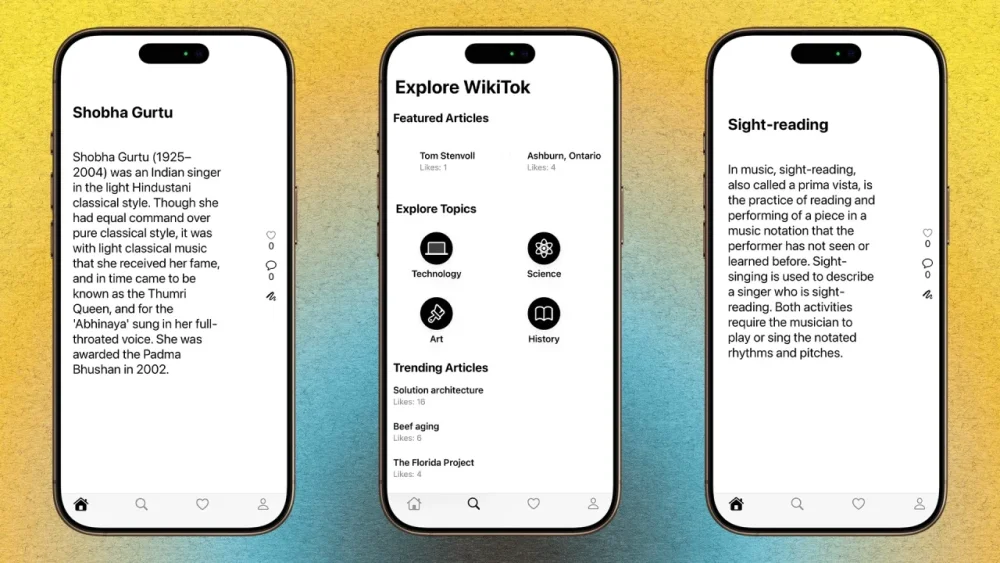
“Insane project idea: all of wikipedia on a single, scrollable page,” Patina Systems founder Tyler Angert posted on X earlier this month. “Even better, an infinitely scrolling Wikipedia page based on whatever you are interested in next?” replied Bloomberg Beta VC James Cham. “WikiTok,” added Angert. insane project idea: all of wikipedia on a single, scrollable page — Tyler Angert (@tylerangert) February 3, 2025 New York-based app developer Isaac Gemal stumbled across the discussion the following evening. Within two hours, WikiTok was live. If you’re the type to instinctively pull up Wikipedia to fact-check anything and everything, this app is made for you. WikiTok users can swipe through an endless stream of Wikipedia article stubs, discovering random facts and interesting information along the way. “Damn this is really cool, much better for the brain,” one X user posted. “The rabbit hole we didn’t know we needed. knowledge discovery powered by attention span instead of search terms. finally, a productive way to waste time,” another added. Free from invasive tracking and endless notifications, this app offers the closest thing to guilt-free scrolling. Instead of feeding you content based on an algorithm, it delivers a truly random selection of Wikipedia articles, pulled straight from the Wikipedia API and displayed in a TikTok-style interface. Each entry appears with an image from the corresponding article, and if something catches your interest, a simple tap on “Read More” opens the full Wikipedia page in your browser. Gemal made the code for WikiTok available on GitHub, allowing anyone to modify or contribute to the project. Currently, the web app supports 14 languages, article previews, and sharing capabilities across both desktop and mobile browsers. As the community grows, new features are expected to roll in as contributors get involved. The app is currently algorithm-free and Gemal plans to keep it that way. “I have had plenty of people message me and even make issues on my GitHub asking for some insane crazy WikiTok algorithm,” Gemal told Ars Technica. “And I had to put my foot down and say something along the lines that we’re already ruled by ruthless, opaque algorithms in our everyday life; why can’t we just have one little corner in the world without them?” One little corner, in other words, without doomscrolling. View the full article
-
The Department of Labor (DOL) is a critical federal agency that protects workers' rights, ensures workplace safety, and promotes employment opportunities across the United States. Around since 1913, the DOL is the latest government entity currently facing scrutiny from the newly formed Department of Government Efficiency (DOGE). On Friday, a federal judge declined to limit DOGE—which is not an official government department, but a task force led by Elon Musk—from accessing the DOL's systems and sensitive information. Not everyone is happy about that, because they are worried Musk might gut the agency in similar fashion to what is being done with USAID. But what does the DOL do? It's worth knowing, because the labor department impacts everyone who has an employer of some kind. What the Department of Labor actually doesThe mission of the Labor Department is “to foster, promote and develop the welfare of the wage earners, job seekers and retirees of the United States; improve working conditions; advance opportunities for profitable employment; and assure work-related benefits and rights.” The breakdown looks like this: Workplace safety: The Occupational Safety and Health Administration (OSHA), part of the DOL, sets and enforces workplace safety standards. This protects millions of workers from hazardous working conditions across industries. Wage and hour protection: The DOL's Wage and Hour Division ensures workers receive fair compensation, enforcing minimum wage laws, overtime pay, and child labor regulations. For instance, in 2024 the division recovered more than $273 million in back wages and damages for nearly 152,000 workers nationwide. Employment rights: The department enforces federal labor laws that prohibit discrimination, protect worker benefits, and ensure fair employment practices. This includes oversight of minimum wage requirements, overtime compensation, workplace discrimination protections, and family and medical leave rights. What laws does the Labor Department enforce?Some of the key labor laws the DOL enforces include: Fair Labor Standards Act, which sets standards for private and public employment including wages, overtime pay and child labor. Family and Medical Leave Act, which provides up to 12 weeks of unpaid leave for medical and family care reasons. Occupational Safety and Health Act, which protects workers from unsafe and unhealthy working conditions and is administered by OSHA. Workers’ compensations acts including those related to longshore and harbor workers; Department of Energy employees; coal miners; and federal employees. Affordable Care Act provisions related to employer health care coverage. Worker Adjustment and Retraining Notification (WARN Act), which requires employers to provide notice prior to large layoffs. Employee Retirement Income Security Act, which regulates private pension plans and benefits. Immigration and Nationality Act provisions applying to visa programs. Additional labor laws that the DOL enforces are listed here. How to contact the DOLTo file a complaint about an employer violating your rights, you’ll typically need to gather personal and work information including your name and contact information; the company you work or worked for and its location, contact information and manager or owner; the work you did; your payment and records of hours worked. File workplace complaints online at www.dol.gov Call 1-866-4-USA-DOL for assistance Report wage theft, safety violations, or discrimination Seek information about workers' rights The bottom lineThe DOL's impact extends to nearly every American worker, protecting fundamental employment rights and ensuring safe, fair working conditions. View the full article
-
Creative industries worry that generative artificial intelligence models could replicate or even replace their original works View the full article
-
Join for an insightful discussion designed for small business and agency marketers eager to transform their lead generation and conversion strategies. The post [Expert Panel] Effortless Conversions: Close More Sales With AI Data [Webinar] appeared first on Search Engine Journal. View the full article
-
If you want to give yourself some grace, you can see tub rings as a sign that you are a person who, at the very least, takes regular baths. Unfortunately, that doesn't make rings any less unappealing to behold. Getting rid of them, unfortunately, isn't exactly an easy task, but I've figured out the two best ways to get it done with the least amount of elbow grease. Why you have a tub ringEvery two weeks or so, I run some water in my tub, splash a little Fabuloso in there, and zhush it around to clean and refresh the tile, but since I started using a new body scrub, the ring buildup has gotten too bad for that to be an effective end-all-be-all in my bathroom-cleaning routine. So I did a little research about what tub rings are, and how to get rid of them. Rings around your tub can have a number of causes: They can come from oils, hard water mineral deposits, soap, or a combination of those. My new body scrub is oily, as is the human body in general, so that's probably why I've had more buildup lately. As for eradicating the tub ring, a number of hacks sprang up when I searched, but the two that made the most sense to me were a baking soda paste and isopropyl alcohol, since I knew they'd both dry out the oil that was causing the rings to stick. Isopropyl alcohol works for removing tub ringsThe first thing I tried was a mixture of equal parts water and isopropyl alcohol, which I applied in two ways: First, I dipped a melamine sponge into it and used that to gently scrub at part of the tub ring. Slowly—very slowly—it did work, seeming to gradually melt away the residue. That was time-consuming and labor-intensive, though, so I tried a different application approach, dabbing the mixture on a larger section of the ring and letting it sit for five minutes. When I went back at the alcohol-dampened sections with my melamine sponge, the ring came away much more quickly. Some soap scum and grime flaked into the basin of the tub, where I was able to remove it easily by hand, but a lot of it liquified, which was even better, as that made it simple to remove with a paper towel. Baking soda is great for removing tub rings, tooEven though the isopropyl alcohol worked well, I knew it wouldn't be cost-effective to use it on my entire tub; that bottle cost me $13 and I need it for other things around the house. Baking soda is cheaper and, based on what I know about how it works to soak up oils and scour messes, it seemed like it had the potential to be an even better solution for the problem at hand. There are a few ways you can apply baking soda to your tub ring. You can make a paste by adding some to a bowl, then gradually adding water and stirring it until you get a thick consistency you like, then slather it on the grime and let it do its thing. I did something much lazier and easier, though: I sprayed water all over the offending marks in my tub, then sprinkled the baking soda right over that, letting it stick to the wetness. It didn't form a paste, but it certainly made a grainy layer. Then, I left it alone for five minutes and returned to it with my melamine sponge when the time was up. The rings absolutely came right off—but the mixture of powder, water, and soap scum formed a sludgy substance similar to dirty sleet, which was a little grosser to scrape out of the tub at the end of the process. Progress after using baking soda to remove the tub ring. Credit: Lindsey Ellefson General tips to remove tub ringsAfter I saw how well the baking soda worked, I sprinkled it all around the tub and left it there for a while. I came back, wiped it all into a pile of slush, removed that, and finished up by using my alcohol-and-water mixture to do one final wipe-down to get any remaining gunk. This worked flawlessly. What you don't want to do is rinse any of the scum or baking soda down the drain—you don't want to inadvertently clog or damage your pipes—so shut the drain before starting and keep some paper towels on hand to manually wipe the basin as you go. Be careful with how you scrub, too. You don't want a sponge or brush that is too abrasive, as this can scratch tile or ceramic, especially when you're using the already-abrasive baking soda. I used my Mr. Clean Magic Eraser, but did so gently. You may want to consider using a microfiber cloth, especially if your tub is made out of a delicate material like acrylic. View the full article
-
Ever wondered what life is like for an astronaut? Now you can ask during NASA’s first Twitch event, where astronauts will be broadcasting live from the International Space Station (ISS). The stream is set to take place on Wednesday, February 12, at 11:45 a.m. ET on NASA’s official Twitch channel. The event will feature flight engineer Don Pettit, currently in space as part of the Expedition 72 launch which began on September 23, 2024, and ends in Spring 2025. He’ll be joined by NASA astronaut Matt Dominick, who returned to Earth in October 2024 after conducting scientific research for 232 days aboard the ISS. The NASA astronauts will answer questions about daily life up in orbit, as well as the research conducted in microgravity. They will also talk about how ordinary citizens can get involved with NASA, including via citizen science projects and programs across the STEM field. “This Twitch event from space is the first of many,” says Brittany Brown, director of NASA’s communications office. “We spoke with digital creators at TwitchCon about their desire for streams designed with their communities in mind, and we listened. In addition to our spacewalks, launches, and landings, we’ll host more Twitch-exclusive streams like this one. Twitch is one of the many digital platforms we use to reach new audiences and get them excited about all things space.” The agency has previously streamed spacewalks and liftoffs on Twitch and its own NASA+ streaming platform, with Earthbound viewers following along. But this will be the first stream where those in the chat have a chance to send their questions up into space. No pressure. View the full article

-
We may earn a commission from links on this page. It’s become fashionable to hate on Valentine’s Day, and I get it—the commercialization; the unreasonable expectations; the bland commodification of a deeply human experience. But here's why I clarify that it's also OK to love love. It’s OK to look forward to Valentine’s Day, whether because you’ve found your own storybook romance (whatever it looks like), or because you enjoy watching other people navigate the many possible relationship complications. Here are 25 movies that celebrate love, ranging from dark to outright comedic, If the expectations of V-Day start to feel overwhelming, throwing on a movie might offer you a break, or a reminder of why you are making the effort in the first place. Moonstruck (1987) Cher and Nicolas Cage are such distinctive, idiosyncratic performers that it’s hard to imagine a romantic pairing between the two being something other than a cartoon. Instead, it’s one of the great film romances of all time, with engaged widow Loretta Castorini falling for her boyfriend’s younger brother. That love triangle is the film’s core, but the troubled marriage of Loretta’s parents, played by Olympia Dukakis and Vincent Gardenia is a significant piece of the film’s heart. While most rom-coms deal with young people and first love, Moonstrucksuggests that that there’s room for romance even as life grows more complicated in middle age. You can stream Moonstruck on Prime Video, Tubi, Freevee, and The Criterion Channel. Moonstruck (1987) at Freevee Learn More Learn More at Freevee God’s Own Country (2017) Until relatively recently, gay romances (even many of the comedies) with happy endings were rather shockingly rare, with God’s Own Country representing a firm shift away from what felt like a dramatic necessity that these types of stories end in tragedy. It’s more pronounced here, because it simply doesn’t feel like the kind of movie that’s going to end well. Josh O’Connor (The Crown’s Prince Charles) and Alec Secăreanu play Yorkshire farmer Johnny and Romanian migrant worker Gheorghe. The initially tempestuous relationship that develops really does feel like it’s headed for tragedy (à la Brokeback Mountain), which makes the film’s unexpected turn even more joyous. You can rent God's Own Country from Prime Video. God’s Own Country (2017) at Prime Video Learn More Learn More at Prime Video The Philadelphia Story (1940) This is one of Hollywood’s all-time team-ups, with director George Cukor at the helm of a Katherine Hepburn vehicle in which she’s pursued by both Cary Grant and James Stewart (and, of course, her fiancé played by John Howard—but he never really has a chance). It’s hard to know who to root for. In one regard, this was Hepburn’s own attempt to manage and soften her public image—it worked, but only by adding shades to the perception of her as a woman in command. Even when she’s back-footed by the men in her life, she’s still the whole show, bandying brilliant dialogue in a movie that veers effortlessly from sophisticated to screwball. You can stream The Philadelphia Story on Tubi or rent it from Prime Video. The Philadelphia Story (1940) at Prime Video Learn More Learn More at Prime Video Love & Basketball (2000) As the title suggests, the film and its characters are split between forces that seem to be in opposition. Monica and Quincy (Sanaa Lathan and Omar Epps) share hoop dreams from their first meeting as children, as well as an attraction that grows over the years. What keeps them apart is the game that they both love, and their dedication to divergent careers in sports. It’s a sports movie, in part, but one in which the central relationship is more important than any big game. You can stream Love & Basketball on Max and Tubi or rent it from Prime Video. Love & Basketball (2000) at Max Learn More Learn More at Max Fire Island (2022) A bunch of friends go on vacation at the queer destination, only to find that social class is no less prevalent among modern gay friends than it was for the leads in Jane Austen's Pride and Prejudice, on which this is very explicitly based. Joel Kim Booster plays Noah, the Elizabeth Bennett character interested in Conrad Ricamora's rich lawyer Will, while Bowen Yank plays his friend Howie—fat (at least by movie standards), femme, and Asian, and insecure about all of it. As in the novel, the paths toward true(-ish) love hit some bumps, but it's a reminder that, in romantic narratives, things haven't changed all that much. You can stream Fire Island on Hulu. Fire Island (2022) at Hulu Learn More Learn More at Hulu Palm Springs (2020) If you could live your life without consequences, what, or who, could make you ever want to truly change? In this twist on Groundhog Day, Andy Samberg plays Nyles who, we learn, has been stuck in a time loop on the day of a wedding in Palm Springs for quite some time, mostly doing whatever the hell he wants when not being hunted by Roy (J. K. Simmons) who's stuck with him in the loop and blames Myles for his awful fate. Cristin Milioti's Sarah is soon drawn in with them, but when real feelings start to develop between her and Nyles, a life devoid of forward motion starts to seem less than ideal. You can stream Palm Springs on Hulu. Palm Springs (2020) at Hulu Learn More Learn More at Hulu Before Sunset (2004) This middle chapter of director Richard Linklater’s trilogy might not have the most unambiguously happy ending of the three, but it’s the most memorable—one of the great romantic movie endings of all time, really. Reuniting nearly a decade after Before Sunrise, Jesse and Céline (Ethan Hawke and Julie Delpy) spend a day roaming Paris, at which point the two are forced to decide whether or not they’re willing to leave their present dissatisfying lives and relationships—a scene perfectly set to Nina Simone. You can rent Before Sunset from Prime Video. Before Sunset (2004) at Prime Video Learn More Learn More at Prime Video Crazy Rich Asians (2018) Family is the biggest barrier to lasting love in Crazy Rich Asians, the rare example of a crowd-pleasing modern blockbuster that doesn’t involve car chases or capes. Constance Wu plays New York native Rachel Chu, an economics professor from a poor family who learns a little too late that her boyfriend Nick (Henry Golding) is the scion of one of Singapore’s wealthiest families. She’s not prepared for the level of conspicuous wealth, nor the snobbery she encounters when she travels with him for a family wedding—Rachel’s forced to decide if she can handle the pressure and judgement from Nick’s family, and if she even wants to. The happy ending here does not come easy for anyone. You can stream Crazy Rich Asians on Max or rent it from Prime Video. Crazy Rich Asians (2018) at Max Learn More Learn More at Max The Shape of Water (2017) The course of true love is unlikely to ever run smooth in a Guillermo del Toro movie, this story of the cleaner in a Cold War-era laboratory and the alluring fish-man with whom she develops a relationship. What follows is a dark fairy-tale romance with elements of horror that place it firmly in the classic Grimm tradition, but with an atypically happy outcome. You can rent The Shape of Water from Prime Video. The Shape of Water (2017) at Prime Video Learn More Learn More at Prime Video The Shop Around the Corner (1940) Launching a thousand similar movies, most of which aren’t half as good, The Shop Around the Corner isn’t the first time that mistaken identity was central to a romance, nor the first time that mutual loathing turned (slowly) to love, but it’s never really been done with quite this level of style. Set at a shop in Budapest leading up to the Christmas season, Margaret Sullivan and James Stewart play competing co-workers who are always at each other’s throats, even as they develop a romantic relationship via their anonymous correspondence (neither knowing that they’re falling in love with their real-life nemesis). It’s cute, but never silly, and with all the frothy trademarks of director Ernst Lubitsch. You can rent The Shop Around the Corner from Prime Video. The Shop Around the Corner (1940) at Prime Video Learn More Learn More at Prime Video Love, Simon (2018) Nick Robinson is closeted high schooler Simon, who takes inspiration from the anonymous confession of a similarly closeted student in his school. Without knowing the true identity of “Blue,” Simon strikes up an online friendship that turns into something more. Think The Shop Around the Corner, or You’ve Got Mail, with modern queer high schoolers. You can rent Love Simon from Prime Video. Love, Simon (2018) Learn More Learn More It Happened One Night (1934) The template for a million romantic comedies to come, It Happened One Night, despite appearing during the awkward early years of sound, and at the equally awkward end of the pre-Code era, remains unsurpassed in its charm and sexiness. Claudette Colbert and Clark Gable have terrific chemistry, and their relationship is one of near-equals—something that the coming Production Code would make nearly impossible for decades. In that way, it feels more modern than any number of much more recent movies. It’s also one of only three films to have won an Academy Award in every major category, and deservedly so. You can stream It Happened One Night on Tubi and The Criterion Channel or rent it from Prime Video. It Happened One Night (1934) at Prime Video Learn More Learn More at Prime Video Rafiki (2018) Kena (Samantha Mugatsia) is the daughter of a Nairobi shopkeeper, helping her dad run the store while she prepares for nursing school. Ziki (Sheila Munyiva), on the other hand, mostly just hangs out with her friends and makes up dances. Their attraction is instantaneous, but they only meet because their fathers are running against each other for county assembly. Their love story, in a place where it’s illegal, threatens to complicate their family’s lives as much as their own, but the film still maintains a wonderfully bright, colorful, and musical, atmosphere, leading to a happy ending—even if that ending takes some time. You can rent Rafiki from Prime Video. Rafiki (2018) at Prime Video Learn More Learn More at Prime Video 10 Things I Hate About You (1999) The modern classic, but very ‘90s, rom-com that retells The Taming of the Shrew in an American high school. And without some of the ugly misogyny. The film’s concluding exchange of a guitar for the title poem is delightfully memorable—there’s a reason the movie made stars of Julia Stiles and Heath Ledger. You can stream 10 Things I Hate About You on Disney+ or rent it from Prime Video. 10 Things I Hate About You (1999) at Disney+ Learn More Learn More at Disney+ Shelter (2007) Aspiring artist Zach (Trevor Wright) has had to give up his dreams of art school, literally flipping burgers in order to support his disabled father and young nephew. The vibe being so very SoCal, Zach spends whatever free time he has painting and surfing, and starts hanging out with his best friend’s older brother, Shaun (Brad Rowe). It’s very nearly love at first sight, none of which makes Zach’s family problems go away—fortunately, Shaun’s not going anywhere and, by the end, the two have formed not just a relationship, but a family. You can stream Shelter on Here TV. Shelter (2007) at Here TV Learn More Learn More at Here TV Love Jones (1997) Smart and atmospheric, Love Jones didn’t do much at the box office back in 1997, but it’s developed bit of a cult following since. Larenz Tate plays Chicago poet Darius, who develops an instant attraction to photographer Nina Mosley (Nic Long). The film’s blues-y, bohemian setting in a world of middle-class Black artists and intellectuals was unusual in the 90s, and not all that much less so today, which lends the film a style and intelligence that stands apart. The essential question of any romantic drama (will they or won’t they?) is left to the very last moments here. You can rent Love Jones from Prime Video. Love Jones (1997) Learn More Learn More My Fair Lady (1964) In the abstract, a movie about a wealthy aristocrat who molds a poor young woman into his female ideal doesn't sound like it the stuff romances are made of. Audrey Hepburn plays Galatea Eliza Doolittle, a Cockney street peddler whose societal rehabilitation becomes the personal project of Rex Harrison's Henry Higgins, who is eager to prove that even a poor can mingle with the upper crust if provided the right training and elocution (a not entirely regressive notion). She's game, for a time, but comes to realize that she's not content to be an experiment—which, in turn, leads Higgins to understand that the things he's come to love about her don't need fixing. Aw, you realized a woman has agency! Have a cookie. You can rent My Fair Lady from Prime Video. My Fair Lady (1964) at Prime Video Learn More Learn More at Prime Video The Princess and the Frog (2009) There's a classic Disney set-up at the heart of the company's last big 2-D animated princess story, set in New Orleans in the Roaring '20s. Tiana (Anika Noni Rose) works multiple jobs hoping to save enough money to open her own restaurant. When she is asked to make beignets for the wedding of the arrogant Prince Naveen, fate finds her mistaken for a princess—and both she and Naveen turned into frogs due to the scheming of a villain looking to steal the prince's fortune. By the end of this enemies-to-lovers story, each of them proves willing to sacrifice their human lives if it means they can be together. You can stream The Princess and the Frog on Disney+ or rent it from Prime Video. The Princess and the Frog (2009) at Disney+ Learn More Learn More at Disney+ Barefoot in the Park (1967) A little old-fashioned even in 1967, there’s so much chemistry among a cast headlined by Jane Fonda, Robert Redford, and Charles Boyer that it all works as a charming comedy (from a Neil Simon play) about a newlywed couple who very quickly come to believe that they’ve made a horrible mistake. Comedic and romantic complications ensue before a drunken climax on the roof of an apartment building leads to cheers from the supporting cast. You can rent Barefoot in the Park from Prime Video. Barefoot in the Park (1967) at Prime Video Learn More Learn More at Prime Video The Photograph (2020) A photograph left behind by her deceased mother leads Mae (Issa Rae) to explore her own family’s past, while also bringing her into the orbit of a young journalist played by Lakeith Stanfield. Learning about her mother’s mistakes ultimately leads Mae to think twice before turning love away in this beautifully shot, multi-generational love story. You can stream The Photograph on Freevee or rent it from Prime Video. The Photograph (2020) at Freevee Learn More Learn More at Freevee Desert Hearts (1985) Desert Hearts was an absolute breath of fresh air during an era in which queer characters were typically either serial killers or themselves dying of HIV/AIDS. Here, Vivian (Helen Shaver), an English professor in the middle of a divorce, meets Cay (Patricia Charbonneau), an uninhibited sculptor, at a ranch in Reno. Vivian struggles a bit with the unexpected lesbian attraction, but this romantic drama never veers toward tragedy, and is all the better for it. After years as a gem of queer cinema, the perception of the movie, of late, places it more in the category of outright classic. You can stream Desert Hearts on Max and The Criterion Channel or rent it from Prime Video. Desert Hearts (1985) at Max Learn More Learn More at Max Loving (2016) Based on the true story of the couple who took a challenge to their marriage all the way to the Supreme Court, Joel Edgerton and Ruth Negga play the couple who were arrested shortly after their marriage under Virginia’s anti-miscegenation laws. It’s a love story that, quite literally, changed the course of history. You can stream Loving on Peacock or rent it from Prime Video. Loving (2016) at Peacock Learn More Learn More at Peacock The Lady Eve (1941) I’m not convinced that a lot of real-life romances begin as con-jobs, but it absolutely seems to work in the movies, and rarely better than in this Preston Sturges classic. Barbara Stanwyck is out to fleece shy, clueless beer heir Henry Fonda. Stanwyck is never anything less than completely shameless, and yet, somehow, you’re still cheering for her to get her man. You can stream The Lady Eve on The Criterion Channel or rent it from Prime Video. The Lady Eve (1941) at Prime Video Learn More Learn More at Prime Video The Princess Bride (1987) There are any number of great romantic moments in The Princess Bride, all leading to an ingenious fairytale ending. It’s the silly, swoon-worthy moment, though, when Westley (Cary Elwes) and Buttercup (Robin Wright) are reunited following a long absence that qualifies as the film’s most romantic, with Buttercup only realizing that she’s met her true love after she throws him down a hill. There’s only one thing to do when in the grip of one of film’s all-time great romances: throw yourself right down after him. You can stream The Princess Bride on Disney+ or buy it from Prime Video. The Princess Bride (1987) at Disney+ Get Deal Get Deal at Disney+ Little Women (1994) As a Louisa May Alcott obsessive, I prefer Greta Gerwig's 2019 take on Little Women; a appreciate the way her version blurs Alcott's biography with Jo's character in the final act, cleverly acknowledging that Jo's romance with the older, duller Professor Bhaer was a puckish move on the author's part, rather than something we're meant to swoon over (were it not for editorial and audience demands, Alcott would have let Jo remain happily single). This 1994 take, however, pulls a similarly impressive feat in centering that romance and actually making us care about it. By the time Winona Ryder and Gabriel Byrne are kissing in the rain in the final moments, it's hard not to cheer them on. (Laurie is still an idiot though.) You can rent Little Women on Prime Video. Little Women (1994) at Prime Video Learn More Learn More at Prime Video View the full article
-
This post was written by Alison Green and published on Ask a Manager. A reader writes: As resume advice continues to evolve with the times (e.g., not including your street address on your resume), I’m wondering how important the location of each job is. Do employers really care if I worked in San Francisco, California, or in Dayton, Ohio? Would it be better to include in-person, hybrid, or remote? Yes, you should still list the city and state of each employer. Including the employer’s location helps verify that those companies actually exist. That doesn’t matter so much when the company is nationally known or when all your employers are local to the area you’re applying in, but otherwise it matters and will signal “this company is real and verifiable.” Also, the location of an employer can add useful context. For example, for some jobs it would be helpful to know that you’ve dealt with the issues of a large city versus a small community, or that you have experience with a particular market. If you were working remotely from a different location, you should still list the location of the company but put “(remote)” next to it. You can format it like this: Llama Grooming Inc., Providence, RI January 2018 – November 2022 Llama Midwife * accomplishment * accomplishment * accomplishment Or like this: Llama Grooming Inc., Providence, RI Llama Midwife, December 2022 – present Llama Assistant Midwife, January 2018 – November 2022 * accomplishment * accomplishment * accomplishment View the full article
-
Most participants in a monthly Wolters Kluwer survey no longer think the next short-term rate reduction will be in March.

-
White House also told to unblock billions in funding for clean energy projects earmarked under Inflation Reduction ActView the full article
-
Google is updating its gambling advertising rules. Preview the changes before they go into effect on April 14. The post Google Updates Its Gambling & Games Advertising Policy appeared first on Search Engine Journal. View the full article
-
As anyone who has ever tried to design their home knows all too well, neutral always works. Beige, white, and various subtle shades of gray are the safe choices in any room—they may not be exciting, but they also won’t irritate you over time or cause your guests to whisper about your choices behind your back. That safety combined with a long-running trend toward minimalist and uncluttered spaces has led to the color “pop”—a blast of vibrant color as an accent to add a dash of drama to your otherwise bland spaces. But as concepts like “unexpected red” demonstrate, you aren’t confined to painting an accent wall or buying a big red sofa when you want that pop of color. While picking one wall to paint a bold color is an easy way to bring energy to your room, that bold color can work in a wide variety of ways and in often unexpected spots. If you’re looking to turn up the color drama in your home, think about adding color in some of these less predictable spots. Behind the toiletIf your bathroom is a bit monochromatic, you might be looking for a way to bring color into the space. You have a lot of options, of course, ranging from colorful towels to an accent shower wall—but if you want something unexpected that concentrates the impact of a color pop, put it behind the toilet. It’s a bold choice that serves to define space in an open concept bathroom, with the (most likely) white toilet providing a touch of contrast that will make the color pop even more effective—or choose a toilet that’s not white for a more complex interaction. Inside cabinets and shelvingPainting the interior of cabinets in your kitchen or bookshelves in other rooms of the house creates a pop of color with a bit of surprise that also adds dimension to your storage, giving the impression of hidden depths. For a little extra oomph with your color pop, consider using wallpaper with a graphic design inside those cabinets and shelves. Every time you open up a cabinet to grab a coffee mug, you’ll be rewarded with a blast of vivid color. Interior doorsIf your interior doors are all white or neutral colors, an easy way to bring a pop of color into the room is to paint that door. It’s a large enough area to make an impact, but not so large as to overwhelm the space. If you leave the trim and surrounding wall a neutral color it will emphasize the color pop and really make it stand out. Window sills and trimThe inverse of painting an interior wall while leaving the trim white is painting the trim in the room a pop color while leaving everything else neutral. This has the effect of stretching that color pop throughout the room, making it part of the overall design without introducing a monolithic slab of color in one spot. If you have a picture window or other large window, using it as a transparent accent wall by painting the trim an eye-drawing color is a nice variation on the concept. FloorYou can create an accent area in your room utilizing the floor—either by painting a portion of it (yes, really) selecting a section to tile in a bold color or by simply dropping a brightly-colored area rug in the right spot. This allows you to leave the rest of the room in a neutral palette while still getting the effect of a color pop. Using an area rug also makes it easy to swap out different colors any time you want without having to break out the paint brushes or the sledgehammer. CeilingsAnother alternative to the accent wall is the accent ceiling, which works best in a small space, like a bathroom or small guest bedroom—in larger spaces it can get a little overwhelming. High ceilings amplify the impact, drawing the eyes up and emphasizing the height of the space while making a small room feel larger; but even if your ceilings aren’t that high painting them a bold color is unexpected and will surprise anyone who walks into the room (in a good way). StairsThe risers on your stairs are often overlooked opportunities for some design fun—they’re essentially a series of blank canvases. Since most people take stairs for granted, encountering stairs that have bright colors or bold patterns (using paint or wallpaper) on each riser will startle and delight people, and since the stairs are visible from the room but not part of the room, it’s a great way to get just a little bit of subtle color pop into a space. AppliancesFinally, if you’ve been riding the stainless steel kitchen appliance trend for the century or two it’s been in effect (or maybe it just feels like centuries), consider replacing (or vinyl wrapping) one with something more colorful. This very literally breaks up the otherwise fairly neutral color palette of a neutral kitchen with monochromatic appliances. For a more cohesive and visible impact, combine a colorful appliance with painted cabinet interiors. View the full article
-
HOW do successful people think? The key to doing well is thinking well. It’s a way of being in the world. Becoming great means making the hard choices necessary to get you there. Performance coach Doug Hirschhorn advances eight principles in 8 Ways to Great that direct the decisions of top performers. Principle #1: Find Your “Why?” How questions bring up negative thoughts and inadequacies. “The reason most people go through life with big dreams but fail to achieve them is because they ask themselves ‘how’ before they know their ‘why.’” The why question energizes and motivates, “Knowing your ‘why’ is what’s going to get you to figure out how.” Ask yourself, “Why have I chosen this, and why am I still doing it?” Principle #2: Get To Know Yourself Identifying and understanding your strengths and weaknesses allows you to leverage your strengths and minimize the weaknesses that hold you back. I’m talking about the kind of self-awareness that allows you to acknowledge both your strengths and your weaknesses so that you can use them to balance each other and keep yourself going overboard in either direction. Self-awareness allows you to do more of what you’re good at and less of what you’re not. It can also send up the red flag that lets you know you’re about to do something stupid. Your weakness can force you to put guardrails in place that address your issue in such a way that it strengthens the habits that drive you forward. Principle #3: Learn To Love the Process To reach your goals, you need a step-by-step plan that becomes part of the process of reaching your target. Process thinking allows you to avoid distractions and prioritize the next step you need to take. If you allow yourself to get distracted, you’re likely to abandon the process and start making stupid, self-destructive decisions. I just want to emphasize how important it is to concentrate on the step you need to take right now and not trip yourself up by looking too far ahead. Principle #4: Sharpen Your Edge Your edge is a two-sided sword. One side is knowing what sets you apart from others. The other side is learning all you can to increase the odds of your success. Your personal edge is something you develop and lead with to help set you apart. “In a world full of choices, establishing an edge can make the difference between success and failure in whatever you do.” The external edge guides you when to take smart risks. “Remember that your overall edge is determined by leveraging your strengths, minimizing your weaknesses, and then gathering as much information as you can before making a decision.” Principle #5: Be All That You Can Be Do not compare yourself to others. If you do, you may be doing well compared to them but still not doing your best. You don’t want to be doing just good enough. Challenge yourself to grow beyond your present level. “The difference between challenging yourself to be the best you can be and just trying to beat the next guy is that excellence is a constantly moving target, so you’ll always have something to work for.” Hirschhorn says, “Don’t get sucked into external markers of merit. Measure your success in terms of how well you performed and not only the outcome.” Principle #6: Keep Your Cool It’s human to get scared. But you don’t want to act out of panic, ego, or insecurities. Remain objective with your priorities in mind. You don’t need to always be right. “You can win when you’re losing when you make the decision you need to make instead of the one you might want to make even though you know that decision might mean taking a painful loss.” Know when to cut your losses. When it comes to growth, fear comes with the territory. “Sometimes, being scared is the most rational reaction to a given situation. There’s no shame in that. It’s when people give in to those feelings that they get into trouble. As I frequently say to my clients, ‘Feeling fear is okay as long as you don’t act afraid or make a decision because you are afraid.’” When you feel like panicking, “remind yourself of the process you’ve been following and stick to it; do what you need to do, not what you want to do. There are always aspects of even the scariest situation that are within your control. Take control of what you can instead of letting the situation carry you away. Thinking negatively is sure to tip the odds of success against you.” Principle #7: Get Comfortable with Being Uncomfortable The perfect magical moment never comes. “Waiting for that last piece of the jigsaw puzzle or the exact alignment of the stars is what keeps most people tied to a job they hate or afraid to take the step that would get them to the next level in their career.” Winners act. “If you want to make a change—I mean, really want to make a change—you have to be willing to do it right now. Not later, not tomorrow, not after the weekend, not on January 1, and certainly not only when that eternally elusive perfect moment arrives.” Uncertainty creates volatility, but people react to it differently. The most successful people don’t freeze or panic or buy everything in sight. Instead, they take the time to look around and assess the opportunities available to them. Principle #8: Make Yourself Accountable Often, what holds people back is that they don’t have the structure or discipline to do what needs to be done consistently. “Unless there is some meaningful reward for performing well and an equally meaningful consequence for making a stupid mistake or breaking your own rules, you may not take the steps necessary to put your best-laid plans into action.” It is easy to get caught up in the moment and get distracted. The fact is, “For most of us, the answer is to enlist the aid of someone to whom we make ourselves answerable.” * * * Follow us on Instagram and X for additional leadership and personal development ideas. * * * View the full article
-
What is an NFT? Non-Fungible Tokens (NFT) are digital assets such as collectibles, gaming, art, and virtual assets that are exchanged over blockchain platforms such as Ethereum, OpenSea, Rarible, Axie Marketplace, or NBA Top Shot Marketplace and come with their digital signature that designate ownership of the asset. As NFTs gain popularity, creators, businesses, and celebrities are increasingly buying and selling them to explore new avenues for brand commercialization and revenue generation through NFT collections. What Exactly is an NFT? Non-Fungible Tokens (NFT) are interchangeable digital assets traded over the internet. NFTs are generated and traded in cryptocurrency which is digital cash with an encrypted key often in the form of a random string of numbers. NFTs are popular today because they offer a unique marketplace for digital assets with even companies creating their own NFTs as part of their marketing mix. Besides these NFTs allow users a flexible way to store, control, and protect the information related to their identity. NFTs creatives can also receive royalties from their NFTs and receive a percentage of future sales of their NFTs. What does NFT stand for? Simply put NFT stands for Non-Fungible Token, which is a one-of-a-kind digital asset that belongs to its owners only. To create an NFT one would have to mint an NFT from a digital asset. Popular NFTs include digital works, digital collectibles, videos, and anything that can be digitalized. How do Non-Fungible Tokens Work? Essentially, a non-fungible token transforms a digital work of art and other collectibles into a one-of-a-kind, verifiable digital asset that can be traded on the NFT market or NFT blockchain technology. Many NFTs come with their own unique information, including ownership and transaction details stored under its smart contract. NFT creators can also add details to their NFTs, such as the creator’s identity, secure links to files, and more during transactions, Those interested in collecting or investing in non-fungible tokens need a digital NFT wallet. A digital wallet is a cryptocurrency wallet that supports the blockchain protocol on which NFTs are built. Users often use Bitcoin, Ethereum network, and Dogecoin as cryptocurrencies, which are the medium of exchange. NFT Vs. Cryptocurrency Cryptocurrencies are digital versions of physical money that are controlled by a private cryptographic key that often involves a string of random numbers. Like paper money, cryptocurrencies offer the same values and help to fuel the digital economy by acting as currency. Ownership of cryptocurrency is established through the possession of a private key, which is used to facilitate transfers. Cryptocurrencies also play a role in transforming a digital file into a non-fungible token, a process known as ‘minting’, and serve as the medium for transactions involving NFTs. Similar to cryptocurrencies, NFTs are issued on blockchains, Each NFT comes with its unique digital signature which allows owners to prove ownership as well as the authenticity of the NFTs. While NFTs and cryptocurrencies frequently function within similar ecosystems and utilize comparable technologies, they have different purposes and characteristics. Below is a side-by-side comparison to clarify the distinctions between them: FeatureNFTs (Non-Fungible Tokens)Cryptocurrencies UniquenessEach NFT is distinct and cannot be replaced with something else.Cryptocurrencies are fungible, meaning each unit is the same as every other unit. PurposeRepresents ownership of a unique item or piece of content.Acts as a medium of exchange, store of value, or unit of account. TradeabilityTraded on specific NFT marketplaces.Traded on various cryptocurrency exchanges worldwide. Creation ProcessMinted to create a unique digital item.Mined or staked, depending on the underlying blockchain protocol. Underlying TechnologyOften issued on blockchain platforms that support smart contract functionality, like Ethereum.Can be based on various blockchain protocols, not necessarily requiring smart contracts. SupplyTypically limited in number, making them scarce.Most cryptocurrencies have a maximum supply, but the exact number varies by coin. What Can be Made into an NFT? The realm of NFTs is vast, encapsulating a myriad of digital creations. From photographs capturing fleeting moments to pieces of contemporary art, music that resonates, or even whimsical GIFs, the options are nearly limitless. The beauty of NFTs is their inherent ability to bestow uniqueness on digital items, giving them a rarefied value. It’s not just limited to traditional forms of art either; even the casual tweet or internet meme can be transformed into an NFT. Thanks to the NFT marketplaces that act as auction houses, they have made it easy to trade in NFTs and offer support on how to sell an NFT. Music For the musicians and audio creators out there, NFTs present a promising avenue. Various platforms, such as Rarible, OpenSea, Mintable, Ethereum blockchain, Axie Infinity Market, and more, are ready to host your music. Once you’re registered, you get to decide the nature of your release. Do you want to offer an exclusive, one-off track? Or perhaps a series allowing multiple fans to own a piece of your creation? The possibilities are rich, ensuring that artists can express and monetize their music as they see fit. Digital Artwork The digital age has revolutionized art, allowing artists to craft their masterpieces using modern devices. Once they’ve created their vision, whether it be on a tablet, computer, or smartphone, artists can convert their pieces, whether they’re in JPG, PNG, or MP4 formats, into NFTs. This brings tangible value to their digital art, offering them a way to monetize their craft in the expansive NFT marketplace. Games Gaming has transcended just being a hobby; it’s an entire ecosystem now. Within this realm, in-game items, such as avatars, exclusive skins, weapons, or rare armor, hold significant value. Dedicated players who’ve spent hours, days, or even years accumulating these digital assets can now reap real-world benefits by selling them as NFTs. This intersection of gaming and blockchain tech has opened up new streams of revenue for players. Videos Video content, due to its dynamic nature, has carved out a notable place in the NFT universe. For example, NBA Top Shots offers collectors the opportunity to own iconic moments from basketball history. But the horizon is broader; scenes from cult movies, curated video art, or even user-generated content can be tokenized and traded. Platforms like OpenSea have become bustling digital bazaars, offering video NFTs that cater to diverse interests. Physical Artwork Physical artwork has its own beauty and charm. But in the digital age, artists have discovered that they can extend their reach by converting these physical masterpieces into the NFT format. This process involves creating a digital replica of paintings, sculptures, photographs, or any tangible art piece. By transitioning to the NFT marketplace, artists can eliminate the need for intermediaries, often galleries or agents, and engage directly with their audience. This not only provides them with the lion’s share of the profit but also empowers them to retain more control over their work. Furthermore, by embedding royalty clauses within the NFTs, artists can ensure a continued stream of revenue from secondary sales, fostering a sustainable income model. Collectibles Digital collectibles powered by NFTs have surged in popularity due to the unique value proposition they offer. Unlike traditional collectibles, these assets benefit from blockchain’s immutability, ensuring proof of rarity and authenticity. From rare player cards capturing moments of sports magic to exquisite digital art renditions, game paraphernalia, or even sought-after celebrity mementos, the scope is immense. The rarity and limited availability of such NFTs often make them sought-after assets, often fetching impressive prices at auctions. Platforms such as CryptoKitties, CryptoPunks, and NBA Top Shot have become bustling hubs for collectors and enthusiasts, bringing vibrancy to the NFT collectible ecosystem. Tweets and Memes In an age of social media dominance, tweets and memes have evolved from being mere modes of entertainment to valuable digital assets. This was aptly demonstrated when Twitter’s co-founder, Jack Dorsey, auctioned his maiden tweet, garnering a staggering sum of nearly 3 million dollars. In a similar vein, influencers and content creators are embracing meme culture by minting and selling iconic memes as NFTs. This blend of humor, culture, and blockchain technology has created a profitable niche, much to the enjoyment of both creators and collectors. Virtual Real Estate Virtual reality, once the stuff of science fiction, is now a tangible digital frontier. And NFTs have played a pivotal role in enriching this landscape. Beyond just gaming or experiencing alternate realities, users can now own a piece of the virtual world. From buying plots of virtual land and designing their dream digital homes to even cultivating virtual relationships, the possibilities are limitless. Platforms like Decentraland stand as a testament to this evolution, offering a life-like simulation where users can traverse landscapes, establish connections, and even conduct business through their avatars. Pros of NFT’s Non-fungible tokens come as tradeable and unique digital objects thanks to smart contracts. Their unique metadata acts as a digital ‘title deed’ that offers the authenticity of ownership and is trackable. Some of the pros of NFTs include: Cost and time-friendly: Creating an NFT is relatively simple, and determining its value is straightforward due to the availability of existing NFT marketplaces, which make minting, selling, pricing, and bidding for NFTs affordable. Boost Engagement: NFTs, besides being more than a collectible or piece of art, can be used by businesses to boost brand recognition by connecting better with customers and fans by offering them access to exclusive offers and the opportunity to earn rewards. Customer Relationship Management: Unlike physical goods, NFTs are trackable and help to identify the owners helping businesses glean valuable insights into their owners. These come in handy for segmentation and engagement strategies for their brands. In addition, they offer a nifty gateway to target tech-savvy clients. Potential Revenue Streams: because NFTs are driven by digital scarcity, creators can sell these exclusive, limited digital assets that can fetch them a tidy sum. Cons of NFT’s Though NFT trading is an exciting phenomenon, many people are now learning how to make money with NFTs it does come with its own challenges, though: Physical assets still reign supreme: as much as owning NFTs is enticing, the NFT remains a digital asset that pales in comparison to one-of-a-kind physical assets like paintings or sculptures. Environment impact: Minting and transactions of NFTs come with a significant computing process requiring massive amounts of energy. Price volatility: Prices for digital collectibles are subject to volatility, opening risks of losing money from the investment of NFTs and hurting your personal finances. Creating Your First NFT Creating your first Non-Fungible Token (NFT) is an exciting journey into the digital art world. Here’s how to get started: Choose Your Artwork: Anything digital can be an NFT – art, music, videos, or even a tweet. Ensure it’s original content that you have the rights to. Choose a Blockchain: Ethereum is the most commonly used platform for creating NFTs because of its extensive adoption and support. However, alternatives such as Tezos or Flow provide lower gas fees. Set Up a Digital Wallet: You’ll need a wallet that supports NFTs and the blockchain you’ve chosen. MetaMask is a popular choice for Ethereum. Mint Your NFT on a Platform: Platforms like OpenSea, Rarible, or Mintable allow you to mint NFTs. This process involves uploading your digital file and turning it into an NFT on the blockchain. Determine Pricing and Royalties: Establish a price for your NFT. Additionally, many platforms offer the option to earn royalties from subsequent sales. List Your NFT for Sale: Once minted, you can list your NFT for sale on a marketplace. You’ll need to connect your digital wallet to the platform. NFTs and Intellectual Property Rights Navigating intellectual property (IP) rights in the context of NFTs is crucial for creators and collectors: Ownership vs. Rights: Buying an NFT typically grants ownership of the token but not the copyright of the underlying digital asset unless explicitly stated. Creator Rights: Creators retain copyright to their work unless they transfer it. They can earn royalties from secondary sales of the NFT. Licensing: Creators can license their work for specific uses while minting NFTs, allowing for flexibility in how digital assets are utilized by buyers. Infringement Concerns: Both creators and buyers should be aware of copyright infringement risks. Creators must ensure they have the rights to the content they’re minting, and buyers should verify the authenticity and rights associated with an NFT. The Future of NFTs The future of NFTs holds vast potential as they continue to evolve: Wider Adoption: As understanding and interest grow, expect broader adoption across various industries, including art, gaming, entertainment, and even real estate. Technological Advances: Innovations in blockchain technology could reduce environmental impacts, lower transaction fees, and enhance security. Expanded Use Cases: Beyond art and collectibles, NFTs could revolutionize ticketing, certifications, identity verification, and more, offering a secure and verifiable way to represent ownership and rights. Regulatory Landscape: The increasing popularity of NFTs will likely attract more regulatory attention, which could shape the market’s future, potentially adding more security but also more complexity. What is an example of an NFT? The NFT artwork by the digital artist Beeple, ‘Everyday: The First 5000 Days,’ is by far the most popular NFT that brought the discussion of NFTs into households around the world. The digital artwork was auctioned by auction house Christie’s and sold for a whopping $69,346,250. In fact, price-wis,e NFTs, are projected to offer the same value as real-world items. Are NFTs Worth It? The NFT market is currently witnessing an explosive surge, transforming digital images and other forms of art into tangible assets on the blockchain. But the million-dollar question remains: Are NFTs truly worth the investment? As with any emerging market, the landscape surrounding NFTs is still unclear. Their novelty leaves many aspects unexplored, leading to significant uncertainty. Here’s a closer examination of some of the challenges and considerations: Legal and Regulatory Concerns: The legal framework around NFTs remains in its infancy. Issues related to contractual obligations, property rights, intellectual property considerations, privacy concerns, and securities regulations are still largely unaddressed. This poses potential risks for NFT investors and creators as they navigate a landscape that could see dramatic shifts as laws and regulations evolve. Cross-Jurisdictional Challenges: NFT marketplaces function on a global scale, operating seamlessly across borders thanks to the internet. This international dimension further complicates the legal landscape. With different countries likely to approach NFT regulation in varied ways, ensuring compliance and understanding the legal nuances across different jurisdictions becomes a daunting task. Market Volatility: The NFT market is characterized by its extreme volatility. Prices can skyrocket, but they can also plummet. As with any investment, there’s potential for high rewards, but the risks are equally pronounced. Perceived Value: Unlike traditional assets, the value of an NFT is largely subjective and tied to cultural and social trends. While some NFTs have sold for millions, others struggle to find buyers. It’s essential for potential investors to conduct thorough research and understand the market dynamics and the specific niche they’re looking to invest in. Longevity Concerns: While NFTs are the talk of the town today, it’s uncertain how they’ll fare in the long run. Will they continue to grow in popularity and become a mainstay in the investment world? Or will they fade as a temporary trend? Time will tell. In conclusion, while NFTs present exciting opportunities and have already proven lucrative for some, they come with a unique set of challenges and uncertainties. As with any investment, thorough research, understanding the risks, and perhaps even seeking expert advice is crucial before diving into the world of NFTs. Image: Depositphotos This article, "What is an NFT?" was first published on Small Business Trends View the full article