ResidentialBusiness
Administrators
-
Joined
-
Last visited
Everything posted by ResidentialBusiness
-
 Not long ago, much of the business world still ran on Rolodexes, fax machines and file cabinets. Today, most of those once indispensable tools have been rendered obsolete and replaced by modern technology that has redefined the way we work. This integration of technology into all facets of business operations is widely known as Digital Transformation (DX), and it’s happening across nearly every industry today. In fact, 74% of organizations now consider DX initiatives a top priority, with global spending projected to hit $3.9 trillion by 2027. While modern tech solutions offer significant benefits, the race to keep up with emerging trends can overwhelm decision-makers and lead to costly mistakes. But technology doesn’t have to be daunting. By asking the right questions of your team and vendors, you can identify, vet, and implement solutions that deliver real ROI for your business and customers. The following framework will guide you in developing a strategy to cut through the noise, mitigate risk, and empower your team to make technology investments that set you up for long-term success. So, whether you’re just starting, stuck in neutral, or somewhere in between, read on. The Wrong Solution Can Create New Problems This may sound elementary, but it’s critical to understand your problem before investing in a solution. For example, AI can drive efficiency by automating manual work, but it’s useless unless you know where to deploy it. So, audit how your team spends its time. Data is helpful here, but frontline team members can also provide invaluable anecdotal feedback on productivity bottlenecks that automation could solve. Plus, engaging your team early on builds the buy-in necessary for smooth implementation later. That audit might also reveal multiple issues, but that doesn’t mean you can or should try to solve them all at once. Instead, create a road map to help prioritize the most pressing challenges and then systematically work through others as time and resources allow. Once you’ve determined a problem, define the specific outcome you aim to achieve by implementing technology—like increasing role efficiency by 25 percent or decreasing cost per order by $1. Precision is key here, as vague objectives can lead to misguided investments in tools that fail to deliver results. Research Possible Solutions Now, you can start solutioning. Begin by reviewing potential vendor solutions and understanding their commonalities versus differentiation or even how industries outside your own address similar objectives. Though you work in fintech, you might be surprised by what you can learn about predictive analytics by studying how logistics service providers use data to lower shipping costs and improve efficiency or looking at how retail brands leverage AI to create hyper-personalized customer experiences. Keeping an open mind will always pay off. Make Data-Driven Decisions Next, conduct comprehensive due diligence on each potential solution. Go beyond the marketing materials—understand how the features apply to your specific problem, weigh costs against expected ROI, clarify what implementation support you’ll receive and consult team members who will use the tool. Arming yourself with all relevant data will help mitigate risk and drive buy-in across your organization. Product fit is just one part of the equation when investing in third-party technology. These solutions often address long-term opportunities, meaning you might work with a service provider for several years or more. If you sense any misalignment between your team and the service provider, trust your instincts and continue your search. Buying Versus Building You’ll also need to decide whether to buy off-the-shelf technology or develop a custom solution in-house. Enterprise-level organizations with extensive technology teams may have the resources to build in-house, while SMBs often find ready-made tools perfectly suitable and far more cost-effective. Regardless, factor in the total cost of these options, including employee onboarding, systems integration and tech support, as these expenses can add up quickly. Whether buying or building, most technology isn’t plug-and-play at scale. That’s why a detailed implementation and change management plan is essential. While making time for thorough employee training and troubleshooting may seem tedious, these steps are critical for achieving alignment and maximizing the solution’s impact, so don’t skip it. Continually Measure Success Once the initial implementation is complete, measure success against your goals. Ramp-up may take time, but if the solution doesn’t deliver results within six months, collaborate with your team and the service provider to identify issues and adjust course as needed. Tracking progress also helps maintain stakeholder support—providing updates on outcomes and celebrating milestones can keep the team engaged and help secure resources for further investment. Lastly, as your business evolves, don’t let this step slip by or stagnate your approach. Regularly revisiting and refining your review process as your needs change will ensure that a solution continues to deliver ongoing value over the long term or make clear when it’s time for something new. Investing in technology isn’t just about acquiring tools—it’s about solving problems that empower your team and deliver long-term results. If you’re new to this world, be patient with yourself and your team as you navigate the learning curve together. Mistakes are inevitable, but taking time to align solutions with clear objectives, evaluate vendors carefully and implement effectively will help mitigate potential risks and drive meaningful results for your team and business. View the full article
-
Follow these tips to improve your local SEO and reach nearby people looking for businesses like yours. View the full article
-
If you are someone with a green thumb and don’t mind getting your hands dirty, then commercial flower farming might be your special calling. Starting a flower farm is a great way to make money and provide beautiful blooms for your customers. It’s also an exciting venture that can be both rewarding and challenging. So, whether you’re just starting or have been flower farming for years, there are tips and tricks to help you maximize your output while keeping costs low. In this article, we will examine the best practices for flower farming, covering everything from selecting the appropriate plants to harvesting them at their optimal times. By implementing these strategies, you can transform your passion into a thriving business in no time! Flower Farming for Cut Flowers Flower farming is growing in popularity and can be very rewarding. People make money by growing cut flowers and selling them at farmers’ markets or to venues, flower stalls, and restaurants. You can also start small, which is financially stable for most cut flower farming. That means you can start with a small garden in your or your neighbor’s yard if they let you. You can also begin with just a few buckets of flowers. Once you get the hang of it, you can expand your cut flower garden and make more money. Simple Steps to Flower Farming Whether you’re a beginner flower farmer or looking to expand your business, there are certain steps you need to take to be successful. From choosing flower varieties to marketing your bouquets, here are simple steps you need to take to start and successfully run a flower farm: Benchmark Other Flower Farmers in the Area It is important to research flower growers in the area before you start a flower farm. This will help you understand better what flowers are most profitable, what growing seasons are best to plant in, what issues they run into and what methods other farmers use. It is also helpful to talk to other growers at the farmer’s market. Many of them will be glad to help you with growing tips and may even give you more agricultural business ideas. Plan Your Flower Business In this step, you are planning out the business aspects of your flower farm. From naming and branding to marketing your business to opening a business banking account, this is where you plan the groundwork that will ensure your flower business’s success. Create an action tracker – This will help you keep track of the tasks and goals you need to complete while starting and running your flower farm. Name and brand your flower business – This will help you create a more recognizable identity for your business. Develop a flower farming business plan – A business plan is essential for getting business loans and grants. Even acquiring a business partner or angel investor is easier with a good business plan. A solid business plan should, at the very least, contain: A summary of your business An overview of the market and industry Sales and marketing plans Financial projections Form a legal entity and register your business – This will help you protect your business and personal assets. Create a budget – This will help you manage your finances and better understand the costs of running a flower farm. Set up a business banking account – A business bank account is important for tracking and keeping separate the income, expenses, and other financials related to your business. Market and promote your flower business – You’ll need to figure out the best ways to reach potential customers and increase visibility for your business – such as by creating a website and engaging in social media. Sort out taxes and insurance – This will help you make sure your business complies with local, state, and federal laws. Choose the Type of Flower Farm You Want to Create Before you decide on specific flower varieties, you need to decide what type of farm you want to create. Are you looking to grow cut flowers for bouquets, or are you looking more toward potted plants? Do you want to specialize in one type of flower or grow a variety of flowers? Answering these questions will help you determine the types of flowers you want to start with. Set Aside Your Growing Area Once you have determined the type of flower farming operation you wish to establish, the next step is to designate a specific structure or area for your flowers. There are several options for this, including renting land or greenhouses, as well as cultivating and caring for fields and gardens in your own backyard. Begin Crop Planning Develop a crop plan for the year. This will help you determine what flowers to grow, when to plant them, and what supplies you need. You should also take into consideration things like weather patterns in your area, pest infestations, and soil conditions as well. Be sure to research any pests that are common in your area so that you can treat them accordingly. Buy Your Starting Seeds One of the best ways to ensure you have the tall varieties of flowers you need for cut flower bouquets is to buy and grow your own seeds. As far as bought seeds go, many nurseries don’t carry these types of flowers. So, if you want to create beautiful floral arrangements, you’ll need to take matters into your own hands and grow them from scratch. You can buy seeds from places like your local feed & seed store or highly-rated online bulk seed companies. Nurture and Grow Your Starter Flowers When starting your farm for your flowers, it is important to have the appropriate tools and equipment needed to successfully nurture and grow flowers. A heat mat, seed trays, grow lights, and quality seed starting mix are all essential items for any budding flower farmer. The heat mat will help keep the soil temperature at the optimal level for germination, while the grow lights will help stimulate and encourage more vigorous growth. Purchase any Supporting Structures and Materials Depending on the type of farm you’re running, you may need to purchase certain pieces of equipment. For example, if you’re growing potted plants, you’ll need some form of irrigation system to keep them hydrated. If you’re growing cut flowers for bouquets, you may need a greenhouse or cold frame and some cutting tools. You can purchase landscape fabric and other materials to create the environment you need for your plants. Also, if you are growing roses, which can be very profitable, you need to have excellent marketing facilities. Buy Farming Tools and Equipment If you’re looking to minimize your investment, starting small is an excellent option for new flower farmers. In this case, hand tools such as tillers, plows, and trowels are a fantastic initial investment. However, farming can be backbreaking work. If you plan on expanding your operation, it may be necessary to invest in larger equipment like electric tillers, tractors, and seed drills. You can also purchase a mule, wheelbarrow, and other items that will help make your job easier. Till the Growing Area After you have chosen your growing area, tilling the soil will help create a healthy and productive environment for your flowers. This process helps remove roots and weeds while breaking up large chunks of dirt and removing rocks. This way, air, water, and nutrients can better penetrate and enrich the soil. To till the soil, use either the double-dig gardening method or a hand-held or motorized rototiller to dig into the dirt. Make Any Soil Amendments Needed If you are planting in soil that is unsuitable for your chosen flowers, you may need to incorporate amendments like compost or mulch. This will help provide your flowers with the essential nutrients required for healthy and robust growth. Harden Your Plants There are some seeds you can plant directly in the soil – others you have to grow inside and transplant. Before transplanting your seedlings, be sure to harden them off. This process helps the plants become acclimated to outdoor conditions so they are better prepared for life in their new home. To do this, start by keeping the plants outside for a few hours during the day and then bring them back inside at night for a week or two. This process will help the plants adjust and grow stronger, resulting in better yields. Plant the Flowers and Take Care of Them Direct sow your seeds or plant the starter flowers in the soil in the area you have chosen and take care of them. Bear in mind that all flowers typically have different requirements when it comes to soil, water, and sun exposure. Consider special notes on your seed packages or in books. They give you helpful tips like the correct planting distances between plants, what plants grow well together, and when to plant your flowers (spring, late spring, fall /etc.). Additionally, fertilize regularly, water consistently, and remove any weeds that sprout around them. Pay careful attention to how your flowers are growing so that you can make adjustments as needed. Harvest the Flowers Once the flowers are ready, it’s time to harvest them. Harvesting and handling cut flowers is a process. Some general guidelines to follow: Before Harvesting Flowers: Flowers and other plants should appear healthy and turgid. Use white plastic buckets to hold your harvested plants. Plastic storage buckets and cutting tools such as knives or shears should be cleaned and sanitized inside before use. See the University of Massachusetts Amherst’s directions for cleaning and sanitizing here. Don’t stack buckets within each other if the inside is not as clean as the outside. Make sure all cutting tools are sharp. If you cut with dull tools, they will crush the stems and decrease their water intake. All plastic buckets used to harvest plants should contain clean water. Some floriculturists add biocide to the water To find out how to mix biocide and reference vendors that sell it, see “The Care and Handling of Cut Flowers” in the Further Reading for Successful Flower Farming section. During Harvesting: Harvest spike-type flowers when 1/4 to 1/2 of their individual florets open. Harvest daisy-type flowers when they are opened fully. To see a list of some commonly grown cut flowers and their development stages, see the fact sheet in “The Care and Handling of Cut Flowers” in the Further Reading for Successful Flower Farming section. Harvest in the cooler morning and evening hours. Remove any foliage on plant stems that will be underwater. Angle the cut flower stems to prevent them from resting flat on the bottom of the bucket, which will enhance water absorption. Don’t lay flowers on a dirty surface or the ground. Frequently disinfect your cutting tools – at least 2X each day. Grade and bunch plants and flowers immediately after you harvest. Bring flowers into the shade. Place them in plastic buckets of clean, acidified warm water and a biocide. Avoid overfilling containers with plants and flowers. Sell the Fresh Flowers Now that your flowers are harvested, you can enjoy the fruits of your labor and sell them! You can create beautiful bouquets to market and sell to local florists or even directly at a farmers’ market. By growing hardy annuals and other bouquet and vase-ready flowers, you have created a sustainable source of income for yourself and provided high-quality, freshly cut flowers for others. Save Some Seeds for Next Time Once you have finished harvesting your flowers, it’s a good idea to save some of the seeds for next season. This will help cut down on the cost of buying new plants and give you a head start in getting ready for planting season. You can store the seeds in a cool, dry place until springtime rolls around again. Expand or Diversify Your Business Once you have established yourself in the industry, it’s time to start thinking about diversifying your “flower portfolio.” You can start growing other varieties of flowers to offer your customers a larger selection or even venture into new realms altogether, such as creating wreaths and centerpieces or making rosewater out of leftover roses. With the right knowledge and ambition, you can turn your small-scale flower business into something much bigger! You can also teach flower farming classes to all the budding floriculturists out there. Here’s a summary table that brings all the steps together for easy reference: StepDescription Benchmark Local Flower Farmers- Understand profitable flowers and seasons. - Gain insights from local growers and farmers' markets. Plan Your Flower Business- Branding & naming. - Develop a business plan. - Legal registration, budgeting, banking, marketing, taxes, and insurance. Choose Your Flower Farm Type- Decide between cut flowers for bouquets or potted plants. - Specialize or diversify flower types. Set Aside Your Growing Area- Rent or allocate space for growing. Begin Crop Planning- Yearly crop plans. - Consider weather, pests, and soil conditions. Nurture Your Starter Flowers- Essential tools: heat mat, seed trays, grow lights, and seed starting mix. Purchase Supporting Structures- Depending on farm type: irrigation systems, greenhouse, or cold frame. Buy Farming Tools and Equipment- Basic tools: tillers, plows, and trowels. - Larger equipment if expanding. Till the Growing Area- Use rototiller or double-dig gardening to prepare the soil. Make Soil Amendments- Add compost or mulch for nutrient enrichment. Harden Your Plants- Acclimate plants to outdoor conditions for transplantation. Plant and Care for Flowers- Consider individual flower requirements. - Regularly fertilize and water. Harvest the Flowers- Harvest during cooler hours. - Use guidelines for flower types and stages. - Store harvested flowers appropriately. Sell the Fresh Flowers- Market bouquets to florists or at farmers' markets. Save Seeds for Next Time- Store seeds in a cool, dry place for the next planting season. Expand or Diversify- Grow other flower varieties or venture into related businesses. - Offer classes or workshops. Sustainable Flower Farming Practices Adopting Eco-Friendly Methods: In today’s environmentally conscious market, adopting sustainable practices can set your flower farm apart. Techniques such as composting, using organic pest control methods, and implementing water conservation strategies not only benefit the environment but can also attract customers looking for eco-friendly products. Explore options like rainwater harvesting and drip irrigation to minimize water usage and consider integrating beneficial insects for natural pest management. Renewable Energy Sources: Consider the use of renewable energy sources, such as solar panels, to power greenhouses or irrigation systems. This not only reduces your carbon footprint but may also lower operational costs in the long run. Additionally, promoting your use of renewable energy can enhance your brand’s appeal to environmentally conscious consumers. Diversifying Your Flower Farm Offerings Expanding Product Lines: In addition to selling cut flowers, there are many opportunities to diversify your product offerings and boost your revenue. Think about creating and selling value-added products like dried flower arrangements, natural potpourri, or floral-infused oils and candles. Hosting workshops on flower arranging or sustainable gardening can also draw a larger audience to your farm. Agrotourism Opportunities: Transform your flower farm into a destination for agrotourism. Hosting events like “pick-your-own” days, farm tours, or floral workshops can provide additional income and market your products directly to consumers. This not only generates revenue but also builds a loyal customer base that is engaged with your farming practices and product offerings. How Profitable is Flower Farming? The flower farming business is a lucrative one, as these specialty crops are one of the best cash crops you can grow. The flower experts at The Gardner’s Workshop say that farmers across the United States are reporting sales of $25K to $30K an acre on average. How much you are going to make is going to depend wholly on the region, the type of market you are selling into, and your skill at flower farming. What is a Flower Farmer Called? A flower farmer is generally referred to as a floriculturist. A floriculturist is someone who specializes in growing, harvesting, and marketing flowers. From selecting the right soil for planting to pruning for optimal growth and design, a floriculturist has many skills that are beneficial to running a successful flower farm. The Most Profitable Flowers to Grow The most profitable flowers to grow will be popular blooms for flower bouquets, flower crowns, and flower arrangements. Warm-season annuals are the easiest for beginning floriculturists to work with. You can sell them through the season, and they have a very broad appeal. The three best warm-season annuals you can try your hand at for the first time are celosia, sunflowers, and zinnias. In fact, many floriculturists only do sunflower farming since they are so popular and easy to grow. Other profitable flower varieties and plants to use for bouquets and bouquet fillers include: Ageratum: Thrives in full sun with well-drained soil, keep moist but not waterlogged. Scabiosa: Prefers full sun and well-draining soil; deadhead to promote continuous blooming. Larkspur: Requires full sun and rich, well-drained soil; benefits from staking in windy areas. Lavender: Loves full sun and dry, sandy soil; ensure good air circulation to prevent root rot. Eucalyptus: Grows best in full sun and well-drained soil; drought-tolerant once established. Carnations: Needs full sun and fertile, well-drained soil; pinch back to encourage bushier growth. Lilies: Thrive in full sun to partial shade with rich, well-drained soil; mulch to keep roots cool. Yarrow: Prefers full sun and well-drained soil; drought-tolerant and resistant to pests. Gladiolus: Loves full sun and sandy loam soil; plant corms in succession for continuous blooms. Snapdragon: Requires full sun to partial shade and rich, well-draining soil; pinch for business. Queen Anne’s lace: Grows best in full sun and well-drained soil; self-seeds prolifically. Holly: Prefers full sun to partial shade and well-drained slightly acidic soil. Lily of the Valley: Thrives in partial to full shade with moist, well-drained soil; spreads quickly. Dill: Needs full sun and rich, loose soil; water regularly and protect from strong winds. Tulips: Prefer full sun and well-draining soil; plant bulbs in fall for spring blooms. Baby’s breath: Loves full sun and well-drained alkaline soil; drought-tolerant once established. Roses: Require full sun and fertile, well-drained soil; regular pruning promotes healthy growth. Peonies: Thrive in full sun and well-drained soil; require cold winter period to bloom. Verbena bonariensis: Prefers full sun and well-drained soil; tolerates drought and poor soils. Heather: Grows best in full sun and acidic, well-drained soil; water regularly during dry spells. Ivy: Thrives in partial to full shade and moist, well-drained soil; great for ground cover. Stephanotis: Prefers bright, indirect light and well-drained soil; keep humid for best growth. Ammi/Daucus: Needs full sun and well-drained soil; resembles Queen Anne’s lace but taller. Strawflower: Loves full sun and well-drained soil; drought-resistant once established. Sweet pea: Requires full sun to partial shade and rich, moist soil; provides support for climbing. Cinnamon basil: Prefers full sun and rich, well-drained soil; water regularly for best flavor. Black-eyed Susans: Thrive in full sun and well-drained soil; drought-tolerant and self-seeding. Dahlias: Need full sun and rich, well-drained soil; stake tall varieties to support blooms. Bachelor’s buttons: Prefer full sun and well-drained soil; drought-tolerant once established. What to Grow for a Mixed Bouquet One of the most confusing things for a first-year flower farmer is planting for flower bouquets. When flower farming for a mixed bouquet, you want to choose flower varieties that will work together. Choose colors and flower types that not only look appealing but will also stand up well in a flower bouquet. Focal Flowers These flowers really stand out in a flower bouquet and draw your eyes to them. Focals should be unique, bold, and eye-catching. Zinnias are an example of a focal flower, and their vintage-like appearance makes them highly sought after. They come in a wide variety of colors and shapes and are considered workhorse flowers since the more you cut, the more they produce. Accent Flowers Accent flowers are smaller flower blooms that help fill out and support the flower bouquet. They should be bright, cheerful, and less expensive than focals. Examples of accent flowers are alstroemeria, lisianthus, and statice. These flowers can help add texture and color to the bouquet without breaking the budget. Hardy Annuals Hardy annuals tolerate a wide range of temperatures, humidity levels, and soil conditions. What’s more? They bring long-lasting color and texture to your flower bouquet and are a great option for the beginning flower farmer. The fast-growing black-eyed Susan is an example of a hardy annual. Susans radiate happiness and are especially suited for barn wedding bouquets. Daisies, sunflowers, and coneflowers can also be included in this group. Soft Annuals and Perennials Soft annuals and perennials are considered to be more delicate than hardy annuals and are often short-lived. Perennials come back year after year, creating the possibility of a continuous supply of flowers for your business. These flowers require more attention and care but can thrive in the right environment. Examples of soft annuals and perennials are cosmos, dahlia,s and snapdragons. Foliage Plants Foliage plants are essential for any flower bouquet and provide structure and texture to your arrangement. Ferns, eucalyptus, and ivy are great choices for foliage. These plants will add color, texture, and interest to your flower bouquet and won’t wilt as quickly as some of the softer flowers. Other Considerations In addition to the options above, you can also plant for desired characteristics. For example, if you want to have a good succession plant, try sunflowers. You only have to plant a bunch of them at the beginning of their growing season and one month following that. Plus, sunflowers produce more blooms the more often you cut them. You can also plant for vase life. The Oklahoma variety of zinnias has a great vase life. Also, be mindful of characteristics that aren’t ideal, such as sunflowers taking longer to go from seed to harvest than other single-stem flowers. Places to Sell Your Flowers If you’re seeking places to sell your flowers, numerous options are available. Begin by establishing a booth at local festivals and farmers’ markets. Once you have gained experience and confidence, you can explore mass marketing your flowers directly to garden centers, florists, and supermarkets that operate year-round. There are also pop-up stands, wholesalers, and online flower delivery services where you can build your floriculture sales. Another option is marketing your flowers and services toward wedding and other special event planners. After reading, be sure to check out Renee Nelson’s you-pick flower farm. The operation started making money in the first month and hasn’t stopped since. Will a Flower Farmer Make a Profit in The First Season? Yes, it is possible to make a profit in the first year of farming flowers. However, the first year of growing them has a steep learning curve. When starting out, it is best to focus on two or three types of flowers that are in high demand. It is also important to do your research, especially when it comes to growing best practices and competition. Researching the best-growing methods mitigates risk, and knowing the competition’s market prices helps you set pricing and earn a profit. How Much Capital Do You Need for a Cut Flower Farm? Starting a cut flower farm often requires more capital than the average garden or small business. The start-up costs often depend on the size of the operation and where it is located, but they generally include land, seeds or plants and bulbs, tools and supplies, labor, marketing expenses, and insurance. To give a ballpark figure, some floriculturists have started their businesses with as little as $1,000, and others spent $20,000 or more. Of course, there is some variability when it comes to start-up costs, with the figures largely dependent on your farm’s size or whether you invest in high-cost infrastructure (e.g., high tunnels, greenhouse, or irrigation systems). It’s also good to figure in any labor costs associated with keeping the farm going and any unexpected costs that may arise. Further Reading for Successful Flower Farming These books and online articles have inspired thousands to start growing flowers for sale locally. The Flower Farmer: An Organic Grower’s Guide to Raising & Selling Cut Flowers, by Lynn Byczynski DON’T PANIC: A Business Guide to Small Scale Cut Flower Farming Paperback, by Sarah Adams 8 Simple Steps to Arrange Flowers Like a Pro, by Better Homes & Gardens Postharvest Handling of Cut Flowers and Greens: A Practical Guide for Commercial Growers, Wholesalers, and Retailers, by John Dole et al. The New Organic Grower: A Master’s Manual of Tools & Techniques for the Home & Market Gardener, by Eliot Coleman Grow Organic: Over 250 Tips & Ideas for Growing Flowers, Veggie, Lawns & More, by Doug Oster & Jessica Walliser The Care and Handling of Cut Flowers, by the Oklahoma State University Extension Related Small Business Trends Articles for More Reading How to Start a Tree Farm How to Open a Flower Shop Flower Farming: The Bottom Line Starting a flower farm is more than just planting seeds; it’s about nurturing a vision, cultivating passion, and watching your entrepreneurial dreams bloom. Whether you’re inspired by the vibrant hues of petals or the prospect of turning a profit, here are the essential takeaways from our comprehensive guide: Start Small, Dream Big: Every flourishing field begins with a single seed. Launch your venture with a few flower types, focusing on those with high demand. Let your grand vision guide your growth. Research & Capital: Delving into best practices for growth and marketing is fundamental. Remember, an initial investment in land, labor, and supplies is crucial to getting your farm off the ground. Quality Over Quantity: A garden filled with thriving flowers is more valuable than one overflowing with struggling plants. Stay Updated: The realm of flower farming is constantly evolving. Be a perennial learner, absorbing new techniques, plant varieties, and market insights. Combat Challenges: A successful flower farm isn’t just about growth but also understanding how to tackle diseases and pests. Nurture Nature: As a flower farmer, your bond with the earth is sacrosanct. Respect and nourish this relationship, and nature will reciprocate in kind. With the right mix of passion, knowledge, and dedication, you’ll not only see your flowers flourish but also witness the blossoming of a profitable venture. So, here’s to planting the seeds of today and reaping the colorful rewards of tomorrow. Happy farming! Flower Farming FAQs We hope you enjoyed our beginner’s guide to flower farming and found it helpful! Here are some helpful FAQs for entrepreneurs wanting to know how to start a farm. How do flower farmers make money? Flower farmers make money by selling at farmers’ markets. They can also sell fresh cut flowers directly to florists, restaurants, or through flower delivery services. They can also offer workshops to teach others how to grow and care for their flowers. Also, if you have any leftover flowers after the harvest, give some away – it’s a wonderful way to spread the joy that flowers bring! Do florists buy from local flower farms? Yes, many florists buy locally grown flowers from flower farms. This helps support the local economy and provides customers with fresh-cut, high-quality blooms. What’s the difference between annual and perennial flowers? Annual flowers are those that complete their life cycle within one year, while perennial flowers can live multiple years. Annuals tend to be hardier and easier to grow, while perennials require more skill and knowledge. What’s the competition like in flower growing? The competition in growing and selling flowers can be quite high, especially if you are targeting a specific market. It is important to understand the local market and what makes your flowers stand out from the competition. Researching other flower farms in the area and understanding their pricing structures can also help inform your decision-making process. What flowers are best for a bouquet? It depends on what the bouquet will be used for. For instance, you’ll often see lilies, roses, and tulips used in weddings. Additionally, some hardy annuals, such as black-eyed Susans, work well in bouquets. When arranging bouquets, it’s important to consider the colors, shapes, and textures that you want when choosing flowers. What tips and tricks do professional flower farmers have? Professional flower farmers often employ a variety of strategies, such as rotating crops to reduce pest and disease risk, planting in succession to ensure a steady supply of flowers throughout the year, and using mulch and organic fertilizers to improve soil nutrient levels. Another important lesson in your first-year flower farming is that there is always more to do tomorrow. One specific tip is that heat mats are good for certain plants that thrive with heat. For instance, zinnias and basil will grow better inside if you use a heat mat. Image: Envato Elements This article, "How to Start a Flower Farm" was first published on Small Business Trends View the full article
-
If you are someone with a green thumb and don’t mind getting your hands dirty, then commercial flower farming might be your special calling. Starting a flower farm is a great way to make money and provide beautiful blooms for your customers. It’s also an exciting venture that can be both rewarding and challenging. So, whether you’re just starting or have been flower farming for years, there are tips and tricks to help you maximize your output while keeping costs low. In this article, we will examine the best practices for flower farming, covering everything from selecting the appropriate plants to harvesting them at their optimal times. By implementing these strategies, you can transform your passion into a thriving business in no time! Flower Farming for Cut Flowers Flower farming is growing in popularity and can be very rewarding. People make money by growing cut flowers and selling them at farmers’ markets or to venues, flower stalls, and restaurants. You can also start small, which is financially stable for most cut flower farming. That means you can start with a small garden in your or your neighbor’s yard if they let you. You can also begin with just a few buckets of flowers. Once you get the hang of it, you can expand your cut flower garden and make more money. Simple Steps to Flower Farming Whether you’re a beginner flower farmer or looking to expand your business, there are certain steps you need to take to be successful. From choosing flower varieties to marketing your bouquets, here are simple steps you need to take to start and successfully run a flower farm: Benchmark Other Flower Farmers in the Area It is important to research flower growers in the area before you start a flower farm. This will help you understand better what flowers are most profitable, what growing seasons are best to plant in, what issues they run into and what methods other farmers use. It is also helpful to talk to other growers at the farmer’s market. Many of them will be glad to help you with growing tips and may even give you more agricultural business ideas. Plan Your Flower Business In this step, you are planning out the business aspects of your flower farm. From naming and branding to marketing your business to opening a business banking account, this is where you plan the groundwork that will ensure your flower business’s success. Create an action tracker – This will help you keep track of the tasks and goals you need to complete while starting and running your flower farm. Name and brand your flower business – This will help you create a more recognizable identity for your business. Develop a flower farming business plan – A business plan is essential for getting business loans and grants. Even acquiring a business partner or angel investor is easier with a good business plan. A solid business plan should, at the very least, contain: A summary of your business An overview of the market and industry Sales and marketing plans Financial projections Form a legal entity and register your business – This will help you protect your business and personal assets. Create a budget – This will help you manage your finances and better understand the costs of running a flower farm. Set up a business banking account – A business bank account is important for tracking and keeping separate the income, expenses, and other financials related to your business. Market and promote your flower business – You’ll need to figure out the best ways to reach potential customers and increase visibility for your business – such as by creating a website and engaging in social media. Sort out taxes and insurance – This will help you make sure your business complies with local, state, and federal laws. Choose the Type of Flower Farm You Want to Create Before you decide on specific flower varieties, you need to decide what type of farm you want to create. Are you looking to grow cut flowers for bouquets, or are you looking more toward potted plants? Do you want to specialize in one type of flower or grow a variety of flowers? Answering these questions will help you determine the types of flowers you want to start with. Set Aside Your Growing Area Once you have determined the type of flower farming operation you wish to establish, the next step is to designate a specific structure or area for your flowers. There are several options for this, including renting land or greenhouses, as well as cultivating and caring for fields and gardens in your own backyard. Begin Crop Planning Develop a crop plan for the year. This will help you determine what flowers to grow, when to plant them, and what supplies you need. You should also take into consideration things like weather patterns in your area, pest infestations, and soil conditions as well. Be sure to research any pests that are common in your area so that you can treat them accordingly. Buy Your Starting Seeds One of the best ways to ensure you have the tall varieties of flowers you need for cut flower bouquets is to buy and grow your own seeds. As far as bought seeds go, many nurseries don’t carry these types of flowers. So, if you want to create beautiful floral arrangements, you’ll need to take matters into your own hands and grow them from scratch. You can buy seeds from places like your local feed & seed store or highly-rated online bulk seed companies. Nurture and Grow Your Starter Flowers When starting your farm for your flowers, it is important to have the appropriate tools and equipment needed to successfully nurture and grow flowers. A heat mat, seed trays, grow lights, and quality seed starting mix are all essential items for any budding flower farmer. The heat mat will help keep the soil temperature at the optimal level for germination, while the grow lights will help stimulate and encourage more vigorous growth. Purchase any Supporting Structures and Materials Depending on the type of farm you’re running, you may need to purchase certain pieces of equipment. For example, if you’re growing potted plants, you’ll need some form of irrigation system to keep them hydrated. If you’re growing cut flowers for bouquets, you may need a greenhouse or cold frame and some cutting tools. You can purchase landscape fabric and other materials to create the environment you need for your plants. Also, if you are growing roses, which can be very profitable, you need to have excellent marketing facilities. Buy Farming Tools and Equipment If you’re looking to minimize your investment, starting small is an excellent option for new flower farmers. In this case, hand tools such as tillers, plows, and trowels are a fantastic initial investment. However, farming can be backbreaking work. If you plan on expanding your operation, it may be necessary to invest in larger equipment like electric tillers, tractors, and seed drills. You can also purchase a mule, wheelbarrow, and other items that will help make your job easier. Till the Growing Area After you have chosen your growing area, tilling the soil will help create a healthy and productive environment for your flowers. This process helps remove roots and weeds while breaking up large chunks of dirt and removing rocks. This way, air, water, and nutrients can better penetrate and enrich the soil. To till the soil, use either the double-dig gardening method or a hand-held or motorized rototiller to dig into the dirt. Make Any Soil Amendments Needed If you are planting in soil that is unsuitable for your chosen flowers, you may need to incorporate amendments like compost or mulch. This will help provide your flowers with the essential nutrients required for healthy and robust growth. Harden Your Plants There are some seeds you can plant directly in the soil – others you have to grow inside and transplant. Before transplanting your seedlings, be sure to harden them off. This process helps the plants become acclimated to outdoor conditions so they are better prepared for life in their new home. To do this, start by keeping the plants outside for a few hours during the day and then bring them back inside at night for a week or two. This process will help the plants adjust and grow stronger, resulting in better yields. Plant the Flowers and Take Care of Them Direct sow your seeds or plant the starter flowers in the soil in the area you have chosen and take care of them. Bear in mind that all flowers typically have different requirements when it comes to soil, water, and sun exposure. Consider special notes on your seed packages or in books. They give you helpful tips like the correct planting distances between plants, what plants grow well together, and when to plant your flowers (spring, late spring, fall /etc.). Additionally, fertilize regularly, water consistently, and remove any weeds that sprout around them. Pay careful attention to how your flowers are growing so that you can make adjustments as needed. Harvest the Flowers Once the flowers are ready, it’s time to harvest them. Harvesting and handling cut flowers is a process. Some general guidelines to follow: Before Harvesting Flowers: Flowers and other plants should appear healthy and turgid. Use white plastic buckets to hold your harvested plants. Plastic storage buckets and cutting tools such as knives or shears should be cleaned and sanitized inside before use. See the University of Massachusetts Amherst’s directions for cleaning and sanitizing here. Don’t stack buckets within each other if the inside is not as clean as the outside. Make sure all cutting tools are sharp. If you cut with dull tools, they will crush the stems and decrease their water intake. All plastic buckets used to harvest plants should contain clean water. Some floriculturists add biocide to the water To find out how to mix biocide and reference vendors that sell it, see “The Care and Handling of Cut Flowers” in the Further Reading for Successful Flower Farming section. During Harvesting: Harvest spike-type flowers when 1/4 to 1/2 of their individual florets open. Harvest daisy-type flowers when they are opened fully. To see a list of some commonly grown cut flowers and their development stages, see the fact sheet in “The Care and Handling of Cut Flowers” in the Further Reading for Successful Flower Farming section. Harvest in the cooler morning and evening hours. Remove any foliage on plant stems that will be underwater. Angle the cut flower stems to prevent them from resting flat on the bottom of the bucket, which will enhance water absorption. Don’t lay flowers on a dirty surface or the ground. Frequently disinfect your cutting tools – at least 2X each day. Grade and bunch plants and flowers immediately after you harvest. Bring flowers into the shade. Place them in plastic buckets of clean, acidified warm water and a biocide. Avoid overfilling containers with plants and flowers. Sell the Fresh Flowers Now that your flowers are harvested, you can enjoy the fruits of your labor and sell them! You can create beautiful bouquets to market and sell to local florists or even directly at a farmers’ market. By growing hardy annuals and other bouquet and vase-ready flowers, you have created a sustainable source of income for yourself and provided high-quality, freshly cut flowers for others. Save Some Seeds for Next Time Once you have finished harvesting your flowers, it’s a good idea to save some of the seeds for next season. This will help cut down on the cost of buying new plants and give you a head start in getting ready for planting season. You can store the seeds in a cool, dry place until springtime rolls around again. Expand or Diversify Your Business Once you have established yourself in the industry, it’s time to start thinking about diversifying your “flower portfolio.” You can start growing other varieties of flowers to offer your customers a larger selection or even venture into new realms altogether, such as creating wreaths and centerpieces or making rosewater out of leftover roses. With the right knowledge and ambition, you can turn your small-scale flower business into something much bigger! You can also teach flower farming classes to all the budding floriculturists out there. Here’s a summary table that brings all the steps together for easy reference: StepDescription Benchmark Local Flower Farmers- Understand profitable flowers and seasons. - Gain insights from local growers and farmers' markets. Plan Your Flower Business- Branding & naming. - Develop a business plan. - Legal registration, budgeting, banking, marketing, taxes, and insurance. Choose Your Flower Farm Type- Decide between cut flowers for bouquets or potted plants. - Specialize or diversify flower types. Set Aside Your Growing Area- Rent or allocate space for growing. Begin Crop Planning- Yearly crop plans. - Consider weather, pests, and soil conditions. Nurture Your Starter Flowers- Essential tools: heat mat, seed trays, grow lights, and seed starting mix. Purchase Supporting Structures- Depending on farm type: irrigation systems, greenhouse, or cold frame. Buy Farming Tools and Equipment- Basic tools: tillers, plows, and trowels. - Larger equipment if expanding. Till the Growing Area- Use rototiller or double-dig gardening to prepare the soil. Make Soil Amendments- Add compost or mulch for nutrient enrichment. Harden Your Plants- Acclimate plants to outdoor conditions for transplantation. Plant and Care for Flowers- Consider individual flower requirements. - Regularly fertilize and water. Harvest the Flowers- Harvest during cooler hours. - Use guidelines for flower types and stages. - Store harvested flowers appropriately. Sell the Fresh Flowers- Market bouquets to florists or at farmers' markets. Save Seeds for Next Time- Store seeds in a cool, dry place for the next planting season. Expand or Diversify- Grow other flower varieties or venture into related businesses. - Offer classes or workshops. Sustainable Flower Farming Practices Adopting Eco-Friendly Methods: In today’s environmentally conscious market, adopting sustainable practices can set your flower farm apart. Techniques such as composting, using organic pest control methods, and implementing water conservation strategies not only benefit the environment but can also attract customers looking for eco-friendly products. Explore options like rainwater harvesting and drip irrigation to minimize water usage and consider integrating beneficial insects for natural pest management. Renewable Energy Sources: Consider the use of renewable energy sources, such as solar panels, to power greenhouses or irrigation systems. This not only reduces your carbon footprint but may also lower operational costs in the long run. Additionally, promoting your use of renewable energy can enhance your brand’s appeal to environmentally conscious consumers. Diversifying Your Flower Farm Offerings Expanding Product Lines: In addition to selling cut flowers, there are many opportunities to diversify your product offerings and boost your revenue. Think about creating and selling value-added products like dried flower arrangements, natural potpourri, or floral-infused oils and candles. Hosting workshops on flower arranging or sustainable gardening can also draw a larger audience to your farm. Agrotourism Opportunities: Transform your flower farm into a destination for agrotourism. Hosting events like “pick-your-own” days, farm tours, or floral workshops can provide additional income and market your products directly to consumers. This not only generates revenue but also builds a loyal customer base that is engaged with your farming practices and product offerings. How Profitable is Flower Farming? The flower farming business is a lucrative one, as these specialty crops are one of the best cash crops you can grow. The flower experts at The Gardner’s Workshop say that farmers across the United States are reporting sales of $25K to $30K an acre on average. How much you are going to make is going to depend wholly on the region, the type of market you are selling into, and your skill at flower farming. What is a Flower Farmer Called? A flower farmer is generally referred to as a floriculturist. A floriculturist is someone who specializes in growing, harvesting, and marketing flowers. From selecting the right soil for planting to pruning for optimal growth and design, a floriculturist has many skills that are beneficial to running a successful flower farm. The Most Profitable Flowers to Grow The most profitable flowers to grow will be popular blooms for flower bouquets, flower crowns, and flower arrangements. Warm-season annuals are the easiest for beginning floriculturists to work with. You can sell them through the season, and they have a very broad appeal. The three best warm-season annuals you can try your hand at for the first time are celosia, sunflowers, and zinnias. In fact, many floriculturists only do sunflower farming since they are so popular and easy to grow. Other profitable flower varieties and plants to use for bouquets and bouquet fillers include: Ageratum: Thrives in full sun with well-drained soil, keep moist but not waterlogged. Scabiosa: Prefers full sun and well-draining soil; deadhead to promote continuous blooming. Larkspur: Requires full sun and rich, well-drained soil; benefits from staking in windy areas. Lavender: Loves full sun and dry, sandy soil; ensure good air circulation to prevent root rot. Eucalyptus: Grows best in full sun and well-drained soil; drought-tolerant once established. Carnations: Needs full sun and fertile, well-drained soil; pinch back to encourage bushier growth. Lilies: Thrive in full sun to partial shade with rich, well-drained soil; mulch to keep roots cool. Yarrow: Prefers full sun and well-drained soil; drought-tolerant and resistant to pests. Gladiolus: Loves full sun and sandy loam soil; plant corms in succession for continuous blooms. Snapdragon: Requires full sun to partial shade and rich, well-draining soil; pinch for business. Queen Anne’s lace: Grows best in full sun and well-drained soil; self-seeds prolifically. Holly: Prefers full sun to partial shade and well-drained slightly acidic soil. Lily of the Valley: Thrives in partial to full shade with moist, well-drained soil; spreads quickly. Dill: Needs full sun and rich, loose soil; water regularly and protect from strong winds. Tulips: Prefer full sun and well-draining soil; plant bulbs in fall for spring blooms. Baby’s breath: Loves full sun and well-drained alkaline soil; drought-tolerant once established. Roses: Require full sun and fertile, well-drained soil; regular pruning promotes healthy growth. Peonies: Thrive in full sun and well-drained soil; require cold winter period to bloom. Verbena bonariensis: Prefers full sun and well-drained soil; tolerates drought and poor soils. Heather: Grows best in full sun and acidic, well-drained soil; water regularly during dry spells. Ivy: Thrives in partial to full shade and moist, well-drained soil; great for ground cover. Stephanotis: Prefers bright, indirect light and well-drained soil; keep humid for best growth. Ammi/Daucus: Needs full sun and well-drained soil; resembles Queen Anne’s lace but taller. Strawflower: Loves full sun and well-drained soil; drought-resistant once established. Sweet pea: Requires full sun to partial shade and rich, moist soil; provides support for climbing. Cinnamon basil: Prefers full sun and rich, well-drained soil; water regularly for best flavor. Black-eyed Susans: Thrive in full sun and well-drained soil; drought-tolerant and self-seeding. Dahlias: Need full sun and rich, well-drained soil; stake tall varieties to support blooms. Bachelor’s buttons: Prefer full sun and well-drained soil; drought-tolerant once established. What to Grow for a Mixed Bouquet One of the most confusing things for a first-year flower farmer is planting for flower bouquets. When flower farming for a mixed bouquet, you want to choose flower varieties that will work together. Choose colors and flower types that not only look appealing but will also stand up well in a flower bouquet. Focal Flowers These flowers really stand out in a flower bouquet and draw your eyes to them. Focals should be unique, bold, and eye-catching. Zinnias are an example of a focal flower, and their vintage-like appearance makes them highly sought after. They come in a wide variety of colors and shapes and are considered workhorse flowers since the more you cut, the more they produce. Accent Flowers Accent flowers are smaller flower blooms that help fill out and support the flower bouquet. They should be bright, cheerful, and less expensive than focals. Examples of accent flowers are alstroemeria, lisianthus, and statice. These flowers can help add texture and color to the bouquet without breaking the budget. Hardy Annuals Hardy annuals tolerate a wide range of temperatures, humidity levels, and soil conditions. What’s more? They bring long-lasting color and texture to your flower bouquet and are a great option for the beginning flower farmer. The fast-growing black-eyed Susan is an example of a hardy annual. Susans radiate happiness and are especially suited for barn wedding bouquets. Daisies, sunflowers, and coneflowers can also be included in this group. Soft Annuals and Perennials Soft annuals and perennials are considered to be more delicate than hardy annuals and are often short-lived. Perennials come back year after year, creating the possibility of a continuous supply of flowers for your business. These flowers require more attention and care but can thrive in the right environment. Examples of soft annuals and perennials are cosmos, dahlia,s and snapdragons. Foliage Plants Foliage plants are essential for any flower bouquet and provide structure and texture to your arrangement. Ferns, eucalyptus, and ivy are great choices for foliage. These plants will add color, texture, and interest to your flower bouquet and won’t wilt as quickly as some of the softer flowers. Other Considerations In addition to the options above, you can also plant for desired characteristics. For example, if you want to have a good succession plant, try sunflowers. You only have to plant a bunch of them at the beginning of their growing season and one month following that. Plus, sunflowers produce more blooms the more often you cut them. You can also plant for vase life. The Oklahoma variety of zinnias has a great vase life. Also, be mindful of characteristics that aren’t ideal, such as sunflowers taking longer to go from seed to harvest than other single-stem flowers. Places to Sell Your Flowers If you’re seeking places to sell your flowers, numerous options are available. Begin by establishing a booth at local festivals and farmers’ markets. Once you have gained experience and confidence, you can explore mass marketing your flowers directly to garden centers, florists, and supermarkets that operate year-round. There are also pop-up stands, wholesalers, and online flower delivery services where you can build your floriculture sales. Another option is marketing your flowers and services toward wedding and other special event planners. After reading, be sure to check out Renee Nelson’s you-pick flower farm. The operation started making money in the first month and hasn’t stopped since. Will a Flower Farmer Make a Profit in The First Season? Yes, it is possible to make a profit in the first year of farming flowers. However, the first year of growing them has a steep learning curve. When starting out, it is best to focus on two or three types of flowers that are in high demand. It is also important to do your research, especially when it comes to growing best practices and competition. Researching the best-growing methods mitigates risk, and knowing the competition’s market prices helps you set pricing and earn a profit. How Much Capital Do You Need for a Cut Flower Farm? Starting a cut flower farm often requires more capital than the average garden or small business. The start-up costs often depend on the size of the operation and where it is located, but they generally include land, seeds or plants and bulbs, tools and supplies, labor, marketing expenses, and insurance. To give a ballpark figure, some floriculturists have started their businesses with as little as $1,000, and others spent $20,000 or more. Of course, there is some variability when it comes to start-up costs, with the figures largely dependent on your farm’s size or whether you invest in high-cost infrastructure (e.g., high tunnels, greenhouse, or irrigation systems). It’s also good to figure in any labor costs associated with keeping the farm going and any unexpected costs that may arise. Further Reading for Successful Flower Farming These books and online articles have inspired thousands to start growing flowers for sale locally. The Flower Farmer: An Organic Grower’s Guide to Raising & Selling Cut Flowers, by Lynn Byczynski DON’T PANIC: A Business Guide to Small Scale Cut Flower Farming Paperback, by Sarah Adams 8 Simple Steps to Arrange Flowers Like a Pro, by Better Homes & Gardens Postharvest Handling of Cut Flowers and Greens: A Practical Guide for Commercial Growers, Wholesalers, and Retailers, by John Dole et al. The New Organic Grower: A Master’s Manual of Tools & Techniques for the Home & Market Gardener, by Eliot Coleman Grow Organic: Over 250 Tips & Ideas for Growing Flowers, Veggie, Lawns & More, by Doug Oster & Jessica Walliser The Care and Handling of Cut Flowers, by the Oklahoma State University Extension Related Small Business Trends Articles for More Reading How to Start a Tree Farm How to Open a Flower Shop Flower Farming: The Bottom Line Starting a flower farm is more than just planting seeds; it’s about nurturing a vision, cultivating passion, and watching your entrepreneurial dreams bloom. Whether you’re inspired by the vibrant hues of petals or the prospect of turning a profit, here are the essential takeaways from our comprehensive guide: Start Small, Dream Big: Every flourishing field begins with a single seed. Launch your venture with a few flower types, focusing on those with high demand. Let your grand vision guide your growth. Research & Capital: Delving into best practices for growth and marketing is fundamental. Remember, an initial investment in land, labor, and supplies is crucial to getting your farm off the ground. Quality Over Quantity: A garden filled with thriving flowers is more valuable than one overflowing with struggling plants. Stay Updated: The realm of flower farming is constantly evolving. Be a perennial learner, absorbing new techniques, plant varieties, and market insights. Combat Challenges: A successful flower farm isn’t just about growth but also understanding how to tackle diseases and pests. Nurture Nature: As a flower farmer, your bond with the earth is sacrosanct. Respect and nourish this relationship, and nature will reciprocate in kind. With the right mix of passion, knowledge, and dedication, you’ll not only see your flowers flourish but also witness the blossoming of a profitable venture. So, here’s to planting the seeds of today and reaping the colorful rewards of tomorrow. Happy farming! Flower Farming FAQs We hope you enjoyed our beginner’s guide to flower farming and found it helpful! Here are some helpful FAQs for entrepreneurs wanting to know how to start a farm. How do flower farmers make money? Flower farmers make money by selling at farmers’ markets. They can also sell fresh cut flowers directly to florists, restaurants, or through flower delivery services. They can also offer workshops to teach others how to grow and care for their flowers. Also, if you have any leftover flowers after the harvest, give some away – it’s a wonderful way to spread the joy that flowers bring! Do florists buy from local flower farms? Yes, many florists buy locally grown flowers from flower farms. This helps support the local economy and provides customers with fresh-cut, high-quality blooms. What’s the difference between annual and perennial flowers? Annual flowers are those that complete their life cycle within one year, while perennial flowers can live multiple years. Annuals tend to be hardier and easier to grow, while perennials require more skill and knowledge. What’s the competition like in flower growing? The competition in growing and selling flowers can be quite high, especially if you are targeting a specific market. It is important to understand the local market and what makes your flowers stand out from the competition. Researching other flower farms in the area and understanding their pricing structures can also help inform your decision-making process. What flowers are best for a bouquet? It depends on what the bouquet will be used for. For instance, you’ll often see lilies, roses, and tulips used in weddings. Additionally, some hardy annuals, such as black-eyed Susans, work well in bouquets. When arranging bouquets, it’s important to consider the colors, shapes, and textures that you want when choosing flowers. What tips and tricks do professional flower farmers have? Professional flower farmers often employ a variety of strategies, such as rotating crops to reduce pest and disease risk, planting in succession to ensure a steady supply of flowers throughout the year, and using mulch and organic fertilizers to improve soil nutrient levels. Another important lesson in your first-year flower farming is that there is always more to do tomorrow. One specific tip is that heat mats are good for certain plants that thrive with heat. For instance, zinnias and basil will grow better inside if you use a heat mat. Image: Envato Elements This article, "How to Start a Flower Farm" was first published on Small Business Trends View the full article
-
We may earn a commission from links on this page. Deal pricing and availability subject to change after time of publication. The Apple Watch Series 8 (GPS + Cellular, 45mm) is now $329.99 on Woot, down from its original price of $749—a $419 discount available for four days or until it sells out. This model comes in a silver stainless steel case with a white band that gives it a premium look and includes a one-year Apple limited warranty. Plus, Prime members get free standard shipping (while non-Prime users pay $6); note that shipping is not available to Alaska, Hawaii, PO boxes, or APO addresses. Apple Watch Series 8 (GPS + Cellular, 45mm) $329.99 at Woot $749.00 Save $419.01 Get Deal Get Deal $329.99 at Woot $749.00 Save $419.01 This PCMag Editors’ Choice and "Best of the Year 2022" winner smartwatch is built to handle real life, with its IP6X certification making it dustproof and its WR50 water resistance rating letting you swim with it or wear it in the shower. Additionally, its always-on OLED Retina display is reportedly bright at 1,000 nits, so it’s easy to read in any lighting. Swiping and tapping on the watch feel smooth and responsive, too (without any noticeable lag), even when you're running multiple apps at the same time. That said, its battery life is where you might pause—18 hours on a full charge is standard (you can push it to 36 hours in Low Power Mode), making it good enough for most people, but if you want multi-day battery life, this won’t cut it. Also, Apple doesn’t include a power adapter, so if you don’t have a spare plug, you’ll need to grab one, which might add to your overall cost. The model isn’t just about telling time. It’s got cellular connectivity, which means you can send texts, make calls, and stream music without having your iPhone on you. It also supports Family Setup, so you can manage an Apple Watch for someone who doesn’t own an iPhone. Now, onto the health perks. The Series 8 monitors heart rate, ECG readings, and blood oxygen levels. Plus, its dual-sensor temperature tracking helps with overnight body temperature monitoring and improves cycle tracking accuracy. Safety is another big plus. Crash Detection can alert emergency services if you’re in a severe car accident and Fall Detection does the same if you take a hard tumble. It’s one of those features you hope never to need—but it’s still great to have, notes this PCMag review. View the full article
-
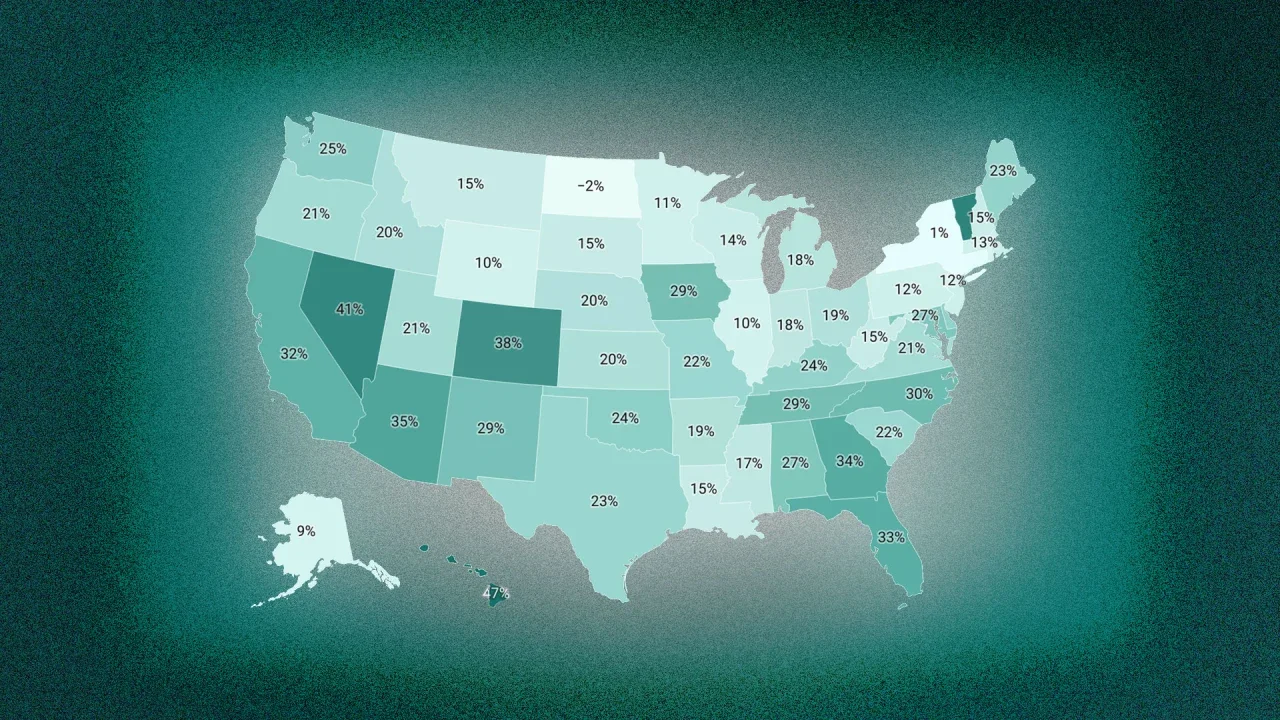
Want more housing market stories from Lance Lambert’s ResiClub in your inbox? Subscribe to the ResiClub newsletter. When assessing home price momentum, it’s important to monitor active listings and months of supply. If active listings start to rapidly increase as homes remain on the market for longer periods, it may indicate potential future pricing weakness. Conversely, a rapid decline in active listings could suggest a market that is heating up. National active listings are on the rise (up 24.6% between January 2024 and January 2025). This indicates that homebuyers have gained some leverage in many parts of the country over the past year, with some markets even feeling like balanced or buyers’ markets on the ground. However, nationally, we’re still below pre-pandemic active inventory levels (25.3% below January 2019), and some resale markets still remain tight—but, that’s not the case anymore in many pockets of the Sun Belt and Mountain West. Here’s how the total January inventory/active listings (according to Realtor.com) compare to recent historic levels: January 2017: 1,154,120 January 2018: 1,043,951 January 2019: 1,110,636 January 2020: 951,675 January 2021: 531,775 January 2022: 376,970 January 2023: 616,865 January 2024: 665,569 January 2025: 829,376 Click here to view an interactive version of the map below. Among the states with the biggest inventory jumps is Florida. As ResiClub well documented: In Florida, the biggest inventory increases initially over the past two years were concentrated in sections of Southwest Florida. In particular, in markets like Cape Coral, Punta Gorda, and Fort Myers, which were hard-hit by Hurricane Ian in September 2022. This combination of increased housing supply for sale—the damaged homes coming up for sale—coupled with strained demand—the result of spiked home prices, spiked mortgage rates, higher insurance premiums, and higher HOAs—translated into market softening across much of Southwest Florida. However, the inventory increases in Florida now expands far beyond Southwest Florida. Markets like Jacksonville and Orlando are also above pre-pandemic levels, as are many coastal pockets along Florida’s Atlantic Ocean side. One reason being that Florida’s condo market is dealing with the after effects of regulation passed following the Surfside condo collapse in 2021. This is compounded by a slowdown in work-from-home migration to Florida and significant home insurance shocks. Click here to view an interactive version of the map below. In December 2024, nine states were back above pre-pandemic inventory levels: Arizona, Colorado, Florida, Idaho, Oklahoma, Tennessee, Texas, Utah, and Washington. In January 2025, just three states are above pre-pandemic levels: Colorado, Florida, and Texas. But the reason the figure shrank isn’t that inventory growth (after accounting for seasonality) has stalled. Instead, it’s due to a denominator effect—since inventory shrank over the course of 2019, January 2019 had a higher comparable denominator, while December 2019 had a lower one. Why are Sun Belt and Mountain West markets seeing a faster return to pre-pandemic inventory levels than many Midwest and Northeast markets? One factor is that some pockets of the Sun Belt and Mountain West experienced even greater home price growth during the pandemic housing boom, which stretched costs too far beyond local incomes. Once pandemic-fueled migration slowed, and rates spiked, it became an issue in places like Colorado Springs and Austin. Unlike many Sun Belt housing markets, many Northeast and Midwest markets have lower levels of homebuilding. As new supply becomes available in Southwest and Southeast markets, and builders use affordability adjustments like buydowns to move it, it has created a cooling effect in the resale market. The Northeast and Midwest don’t have that same level of new supply, so resale/existing homes are pretty much the only game in town. Big picture: Over the past few years we’ve observed a softening across many housing markets as strained affordability tempers the fervor of a market that was unsustainably hot during the Pandemic Housing Boom. While home prices are falling in some areas around the Gulf, most regional housing markets are still seeing positive year-over-year home price growth. The big question going forward is whether active inventory and months of supply will continue to rise and cause more housing markets to see outright price declines. Generally speaking, local housing markets where active inventory has returned to pre-pandemic levels have experienced softer home price growth (or outright price declines) over the past three years. Conversely, local housing markets where active inventory remains far below pre-pandemic levels have, generally speaking, experienced stronger home price growth over the past three years. View the full article
-
Paid search audits are essential. But let’s face it: they can be a beast to do. It’s not just about understanding complex strategies; it’s about meticulously reviewing every setting, campaign, keyword, and ad, then translating all those details into actionable insights for stakeholders who may not be PPC experts. Before AI, I spent countless hours refining audit checklists and presentations, constantly second-guessing myself. Did I miss a crucial setting? Did I fully grasp the account’s nuances and how they align with business goals? I even resorted to downloading templates from other experts for reassurance. Now, AI chatbots like ChatGPT and Gemini have transformed my entire auditing process, bringing a new level of thoroughness, clarity, and actionability. They help me avoid missing critical details and analyze data faster than I ever could, freeing up my time for strategic thinking. Read on to learn how AI can help you conduct comprehensive, insightful, and actionable paid search audits that drive better performance. Streamline your initial account review Feeling overwhelmed when reviewing a new account? I used to, as well. Now, I simply open the account and dictate my observations directly into a Google Doc using my phone’s text-to-speech feature. I cover everything – from account structure and campaign settings to keyword choices and ad copy. Next, I feed this raw data into my AI chatbot, asking it to organize my thoughts and structure the observations. I can even paste the campaign structure for the chatbot to analyze, identifying issues like overly broad keywords or illogical setups. Suddenly, I have a clear, concise account overview, ready for deeper analysis. Explain complex topics with AI Explaining bid strategies or match types to someone unfamiliar with PPC can be challenging and frustrating. I’ve always struggled with this, especially after analyzing data all day. AI chatbots excel at simplifying complex concepts and translating technical jargon for stakeholders. For example, if you’ve identified a suboptimal bidding strategy, instead of a technical explanation about value-based bidding, you can ask the AI to tailor the message for different audiences: For an executive: “The current bidding strategy is likely costing us money by not focusing on the most valuable conversions.” For a marketing team member: “We can improve our bidding to reach more of the right customers and reduce wasted ad spend.” For a paid search manager: “I recommend transitioning to value-based bidding, as it helps inform the ads platform that we prioritize form submissions over phone calls.” Similarly, rather than saying, “The search terms report shows a high volume of irrelevant queries,” the AI can rephrase it as “We’re wasting money on clicks from people who aren’t interested in our products.” This approach ensures your insights are clear and actionable for all stakeholders. AI helps turn what’s in your head into polished presentations with actionable steps businesses can easily implement. Flag high-cost, low-converting campaigns, ad groups, or keywords AI chatbots aren’t just passive note-takers. They can be proactive analysts. Once you’ve provided the AI with account data, you can ask it targeted questions like: “What are the biggest opportunities for improvement in this account?” “Are there any red flags I should be concerned about?” “Which keywords have high cost but low conversions?” The AI can analyze the data and provide insights you might have missed. For example, in a recent audit of a luxury car accessories campaign, I analyzed a search terms report and asked AI to flag potential inefficiencies. One standout issue was high-cost, low-conversion keywords. The term “premium leather seat covers” had 128 clicks, a CTR of 4.6%, and only two conversions, resulting in a cost per conversion of $180 – much higher than the account’s target. Meanwhile, “heated seat covers for winter” showed a strong CTR of 25.8% and a conversion rate of 1.25%, but its cost per conversion was still high at $161. This data indicates a need for lower bids, better use of negative keywords, or landing page optimization. A high CTR combined with a low conversion rate suggests that while users are clicking, they are not converting – highlighting clear opportunities for improvement. Once I used AI to identify the opportunities, I can use AI to communicate this concept to an executive: “We’re seeing some instances where we’re paying a lot for clicks, but those clicks aren’t turning into sales. This is often due to targeting the wrong keywords or sending people to landing pages that aren’t optimized for conversion. By addressing these issues, we can reduce wasted spend and improve our return on investment.” This concise explanation focuses on the issue’s financial impact and potential for improvement, which is what executives typically care about most. It also avoids getting bogged down in technical details, like negative keywords, which is crucial when communicating with non-PPC experts when delivering audits. Believe me, when you start talking about negative keywords or match types with an executive, you’ve lost them! As subject matter experts, it’s so easy to get caught up in the details. Still, AI has been monumental in helping me bridge that communication gap and communicate what is important. Dig deeper: 7 tips for conducting Google Ads audits How to analyze your account with AI Remember to apply the process of analyzing data with AI at every level of the account hierarchy. Start with campaign data, then drill down to the ad group level within each campaign, and finally, review the ads and keywords. Analyzing campaign data with AI Download the relevant campaign data from Google Ads. Upload it to ChatGPT (or another AI tool). Ask targeted questions like: “Which campaigns are underperforming?” or “Which campaigns have the highest cost per conversion?” Analyzing ad group data with AI Download the relevant ad group data from Google Ads. Upload it to your AI tool. Ask questions like: “Which ad groups have the lowest click-through rates?” or “Are there any ad groups with high impressions but low clicks?” Analyzing keywords and ads with AI Download the relevant data (e.g., search terms report, keyword data, ad data) from Google Ads. Upload it to your AI tool. Ask targeted questions like: “Which keywords have high cost but low conversions?” or “Suggest new negative keywords.” or “Which ads have the highest conversion rates?” AI analyzes the data and provides insights within seconds, saving hours of manual review. This helps you quickly identify areas for improvement. As the human expert, you can then determine the best course of action, such as adding negative keywords, adjusting bids, or optimizing landing pages. You can also use AI to analyze your current audience targeting settings and suggest improvements, such as layering demographics, interests, and behaviors for more precise targeting. By applying this process at each level, you gain a comprehensive understanding of the account’s performance and can develop targeted recommendations for improvement and incorporate into your audit. Auditing ad copy with AI AI can be a valuable tool for generating ad copy variations and incorporating feedback on ad copy into your audits. With the rise of responsive search ads (RSAs), which allow for up to 15 headlines and four descriptions, it’s easy to overlook the importance of solid ad copy. We’re often stuck in a situation where many headlines or combinations simply don’t get served, making it difficult to know which ones are truly effective. By leveraging AI to analyze existing ad copy and campaign data, you can provide specific, data-driven suggestions for improvement directly within your audit reports. This enhances the value of your audits and streamlines the optimization process for your clients. Here’s how to use AI to enhance your paid search audits: Upload your campaign data to the AI platform, including ad copy, impressions, clicks, conversions, and other relevant metrics. Ask the AI to analyze the data and identify the top-performing ads in terms of key performance indicators (KPIs) like conversions or click-through rates (CTR). For example, you could ask: “Analyze this ad copy data and tell me which ads are driving the most conversions. Then, generate 3 new ad copy variations based on the top performer.” Filter the suggestions to align with your brand voice, character limits, and other campaign requirements. Incorporate the AI-generated suggestions into your audit report, providing specific, data-backed recommendations for improvement. Advise clients to A/B test the different variations to identify the most effective ad copy. Using AI to analyze your RSAs can help you uncover which headlines and descriptions are actually working and generate new variations based on those insights. This allows you to make data-driven recommendations for improving ad copy, even with the added complexity of RSAs. Gain competitor insights with AI Including competitor insights in paid search audits helps clients understand their market better and find ways to stay ahead. While there are tools available that provide competitor analysis, manual review and analysis of publicly available data can uncover valuable insights that might otherwise be missed. One powerful application of AI in this context is competitor website analysis. By providing the chatbot with your competitors’ websites or ad copy, you can ask it to: Analyze their strategies. Identify their strengths and weaknesses. Suggest opportunities for differentiation. This allows you to gain valuable insights into the competitive messaging landscape and refine your own approach to copy. Another application is to look at websites like Amazon or Reddit. For example, you could gather competitor reviews from platforms like Amazon and use AI to analyze the sentiment and identify recurring themes. You could also read what customers are saying about a brand on Reddit. This can help you understand what customers like and dislike about your competitors’ products or services, which can inform your ad copy and messaging. You can even ask the AI to generate ad copy variations based on these insights, ensuring your ads stand out from the competition and resonate with potential customers. Including this level of competitor intelligence in your audits shows a strong market understanding and gives clients actionable strategies to stay ahead. Get the newsletter search marketers rely on. Business email address Sign me up! Processing... See terms. Overarching vs. in-depth audits It’s important to remember that paid search audits can vary in scope. Some audits require a high-level overview, while others demand a deep dive into every aspect of the account. AI can be adapted to both scenarios. For comprehensive audits, you can use AI to analyze vast amounts of data and pinpoint areas for improvement across all levels of the account. For more focused audits, you can use AI to examine specific aspects, such as ad copy testing, keyword research, or campaign structure. Automate reporting with AI Compiling the findings into a clear and concise report is one of the most time-consuming aspects of paid search audits. This is where AI can shine, helping you automate the reporting process and create professional presentations with minimal effort. Here’s how you can leverage AI to streamline your audit reporting. Create a comprehensive audit template Develop a spreadsheet template that captures every single setting in the advertising platform you’re auditing (Google Ads, Bing Ads, Facebook Ads, etc.). Include checkboxes for items that meet best practices and text fields for observations or recommendations. This template serves as your standardized audit checklist. Populate the template As you conduct your audit, meticulously fill out the spreadsheet, checking boxes and adding notes where necessary. Leverage AI for report generation Once the template is complete, upload it to your AI chatbot. Provide clear instructions on the desired output. For example: “Generate a PowerPoint outline for a paid search audit report based on this spreadsheet. Include a slide for each section with key findings and recommendations. Highlight any critical issues or opportunities.” Refine and customize The AI will generate a PowerPoint outline based on the data in your spreadsheet. Review the output, refine the language, add your own insights, and customize the formatting to create a polished and professional presentation. This process allows you to leverage AI to automate the tedious aspects of report generation while maintaining control over the content and ensuring that your expertise shines through. Combining a standardized audit template with AI-powered reporting can save significant time and deliver high-quality audits that impress your clients. Dig deeper: 3 steps for effective PPC reporting and analysis A glimpse into the future of creative collaboration with AI While AI may not be a complete replacement for human expertise just yet, its rapid evolution hints at an exciting future where it significantly enhances our skills and knowledge. We all have strengths and weaknesses, and AI has the potential to bridge those gaps effectively. For example, I used to rely on a colleague with a knack for data visualization. I’d describe a concept, and they’d effortlessly create a compelling visual. Today’s AI tools are starting to offer similar capabilities, though they often require more guidance. Recently, I needed a flowchart illustrating the Google Ads auction process. I provided a detailed prompt to Canva’s AI, outlining the steps and desired visual elements. The result was a decent starting point, but it wasn’t quite what I envisioned. (See my prompt and the AI’s output below.) This experience highlighted the iterative nature of working with AI. It’s like a dance where both partners are learning and adapting. As we refine our ability to communicate effectively with AI, and as AI technology itself advances, the results will become increasingly impressive. Imagine a future where we can dictate a flowchart, outline complex processes with ease, and AI generates a stunning visual that surpasses anything we could create with traditional tools like Mermaid. This level of creative collaboration could revolutionize how we visualize and communicate information. My prompt: “Create a flowchart illustrating the Google Ads auction process. The diagram should show the following steps: User Search: A user searches for a query on Google. Ad Auction: Google’s ad auction determines which ads to show based on factors like bid amount, ad quality, and ad relevance. Ad Serving: Google serves the ad that is predicted to maximize the advertiser’s goal (clicks, conversions, or conversion value). User Interaction: The user may or may not interact with the ad (e.g., click, convert). Use simple shapes and arrows to represent the flow of the process. Label each step clearly. Consider using different colors to distinguish between user actions, Google’s decisions, and advertiser goals.” AI’s result: This visual isn’t accurate, but I believe as technology and prompting improve, we’ll reach a point where accurate diagrams and charts can be created quickly for presentations. AI-powered paid search audits: Faster, smarter, and more actionable AI technology is evolving rapidly, changing how marketers approach their work. Integrating a chatbot into your paid search audit process can help you deliver better results faster by automating tedious tasks. However, remember it is a tool to assist you, not a replacement for your expertise. Always review and refine the chatbot’s output, and use your judgment to ensure the quality and accuracy of your findings. Embrace these advancements, and you’ll be well-equipped to navigate the complexities of paid search and achieve outstanding results. Dig deeper: How to maximize PPC and SEO data with co-optimization audits View the full article
-
Scrapping of ‘de minimis’ rules could slow deliveries and raise costs for Chinese groups, say analystsView the full article
-
Della Valle suggests Brussels should ‘broaden the horizon’ of its own assessments to allow mergers to happen View the full article
-
Some of the biggest SEO trends are related to search intent, zero-click searches, and AI content. View the full article
-
Super Bowl ads don‘t stop after the final whistle. Discover how brands leverage digital platforms to keep the momentum going, and learn how you can track their post-game strategies with AdClarity. View the full article
-
Beijing seeks leverage against US president by reviving investigations into tech giants View the full article
-
The different types of SBA loans present a highly beneficial avenue for those seeking necessary funding to launch or expand their business ventures. Various SBA lenders cater to the diverse requirements of businesses by providing a range of loan products, each having its unique set of terms and conditions. This comprehensive article will offer you valuable insight into the diverse SBA loan types at your disposal and will guide you in determining the ideal loan type to suit your business necessities. Types of SBA Loans When seeking small business funding from the SBA, it is important to familiarize yourself with the different types of SBA loans available from this institution. The SBA provides several loan programs tailored for business owners, each designed to meet different business needs and circumstances. Let’s take a closer look at these loans: Type of SBA LoanPrimary PurposeLoan AmountKey Benefits SBA 7(a) LoansGeneral business needsUp to $5 millionVersatile, extended repayment SBA Express LoansQuick approvalUp to $350,000Expedited process SBA 504 LoansFixed assets (real estate, equipment)$125,000 to $20 millionLarge investments, expansion SBA MicroloansSmall, short-term needsSmall amountsSuitable for limited funding needs SBA Disaster LoansDisaster reliefVariesImmediate expenses, continuity of operations SBA Community Advantage LoansBusinesses in underserved marketsVariesVersatile, community support SBA Export Working Capital LoansSupport international salesVariesExport financing, short-term working capital SBA Export Express LoansQuick funding for export operationsUp to $500,000Quick approval, short-term arrangement SBA International Trade LoansSupport international tradeVariesBroad financial support, promote global competitiveness SBA 7(A) Loans The SBA 7(a) loan program has gained immense popularity among entrepreneurs due to its flexibility and range of applications. Whether it’s working capital, business expansion, equipment purchases, or property acquisitions, these loans can cover it all. They allow a maximum loan amount of up to $5 million, and they provide an extended repayment period of up to 25 years, easing the financial burden on small businesses. SBA Express Loans SBA Express loans, unlike traditional SBA 7(a) loans, are specifically designed to expedite the loan approval process. These are an ideal option for businesses requiring immediate funding up to $350,000. They’re especially beneficial for businesses that have a strong credit history and need rapid access to capital. SBA 504 Loans SBA 504 loans are specifically designed to finance the acquisition of fixed assets, like real estate or equipment. They offer financial assistance for expansion, renovation, or new construction projects. With loan amounts that range from $125,000 to a whopping $20 million, these loans cater to businesses planning substantial investments. SBA Microloans SBA microloans serve as the perfect financial solution for small businesses that need smaller amounts of funding. Typically utilized for working capital or inventory needs, these small, short-term loans are ideal for businesses that have strong credit profiles and require only a modest amount of funding to sustain their operations. SBA Disaster Loans In times of severe upheaval due to declared disasters, businesses often face immense challenges. SBA disaster loans emerge as a valuable source of financial relief in these trying circumstances. Specifically designed for businesses located in disaster-affected regions, these loans offer crucial financial assistance to address urgent needs, including repairs and the replacement of damaged equipment. Moreover, they provide crucial working capital to ensure that day-to-day business operations can continue unabated despite the prevailing crisis. SBA Community Advantage Loans SBA Community Advantage loans serve a crucial role in empowering businesses operating in underserved markets. They provide an economic boost to these businesses by offering financial support for a broad range of needs. Whether it’s securing working capital to meet immediate operational expenses, purchasing necessary equipment to enhance productivity, funding expansion initiatives for growth, or investing in property, these loans come with the flexibility to serve a multitude of business needs in marginalized communities. SBA Export Working Capital Loans If your small business is eager to expand its footprint in international markets, SBA Export Working Capital loans can be a vital source of funding. These loans, explicitly designed to cater to the financial requirements of small businesses looking to finance their international sales, can be leveraged to fund accounts receivable, maintain a steady inventory, and meet other short-term working capital needs. This program plays a pivotal role in supporting small businesses eager to tap into the lucrative opportunities in global markets. SBA Export Express Loans For businesses keen on expanding their operations by exporting goods or services, SBA Export Express loans can prove to be highly beneficial. These loans are designed to provide quick access to funding of up to $500,000, enabling businesses to seize international opportunities swiftly. They offer short-term arrangements with a maximum duration of 12 months, thereby providing a timely infusion of working capital to support export activities, promoting the growth and success of businesses in international trade. SBA International Trade Loans SBA International Trade loans are designed to boost businesses actively involved in international trade. They offer broad financial support, allowing businesses to cover a wide array of expenses, including but not limited to securing working capital, financing exports, and purchasing necessary equipment and real estate. These loans are instrumental in enabling businesses to seize global opportunities, leading to increased competitiveness and profitability in international markets. READ MORE: SBA Ignite Seeks to Connect Small Business Owners with SBA Loans What Is an SBA Loan? The Small Business Administration (SBA), a federal agency, is committed to extending its support to small businesses through lending and other forms of assistance. Numerous loan programs are offered by the SBA, which are distributed through lenders who have formed partnerships with the agency. These loans have a government-backed assurance where the SBA guarantees a specific part of the loan to the lender in case the borrower defaults. This guarantee facilitates the lender’s approval process for small business loans, thus promoting easier access to funding for businesses. READ MORE: SBA Ignite Seeks to Connect Small Business Owners with SBA Loans Why You Should Consider an SBA Loan for Your Small Business SBA-backed loans pose distinct advantages to small business owners when compared to conventional bank loans. This powerful financial tool can potentially transform your business prospects, providing you with much-needed funding and flexibility. Here are five potent reasons why procuring a loan from the SBA should be a consideration for the financial progression of your small enterprise: Lower interest rates. SBA loans typically have lower interest rates than traditional bank loans. You can use this loan to refinance debt, which can save you money on interest and help you get out of debt faster. Longer repayment terms. They tend to have longer repayment terms than traditional bank loans. This means that you will have more time to pay off the loan and lower monthly payments. More flexible eligibility requirements. SBA loans often have more flexible eligibility requirements than traditional bank loans. Loan proceeds can be used for a wider range of purposes, and businesses with less-than-perfect credit may still qualify. No collateral is required. Many SBA loans do not require collateral, making them a good option for businesses that do not have the assets to use as collateral. The government guarantees a portion of the loan. Because of the guarantee by the SBA on a portion of the loan, lenders are more likely to approve your loan request versus a traditional bank loan. How To Qualify for SBA Business Loans Qualifying for a small business loan through the SBA can be a lengthy process. Let’s discuss some of the basic qualifications for SBA loan programs: Good credit history. In order to qualify for an SBA business loan, you will need to have a good credit history. This means that you will need a minimum FICO score based on the specific loan you’re applying for. Ability to repay the loan. Lenders will also want to see that you have the ability to repay the loan. This means that you will need to have a strong business plan and financials. Business location. Your business must operate in the United States or its territories in order to qualify for this type of loan. Reason for the loan. You must use the loan proceeds for business purposes which include working capital, inventory, equipment, real estate, and more. RELATED VIDEO: What Is The Most Common SBA Loan? Among the diverse range of SBA loan programs available, the 7(a) loan program is arguably the most prevalent. This program offers an array of financial solutions tailored for businesses requiring resources for varied purposes such as working capital, equipment financing, or real estate financing. What makes these loans particularly appealing is their interest rate, which typically stands lower than the rates imposed by commercial banking entities, making it a more affordable alternative for small businesses seeking financial aid. Do SBA Loans Have to Be Paid Back? Indeed, types of SBA loans require repayment, just like any other loan. However, it is crucial to fully understand the terms and conditions of an SBA loan before deciding to borrow. A defining feature of types of SBA loans is their interest rates, which tend to be lower than those offered by conventional commercial lenders. In the unfortunate event of a borrower defaulting on the loan, the lending institution is permitted to seek reimbursement from the borrower’s personal guarantors. Any personal guarantee given may be backed either partially or entirely by collateral, adding another layer of security for the lender. How Do You Apply for an SBA Loan? Embarking on the SBA loan application process can appear somewhat daunting and lengthy to the uninitiated. As a first step, reach out to your local SBA office or an SBA-endorsed lender for guidance. Once a suitable lender is found, the next step is to fill out an application form and provide the necessary documentation, including business financial records and tax returns. After you submit your application, the lender will forward it to the SBA for their review and approval. Once your application is approved, you will need to sign a promissory note and provide collateral for the loan, confirming your commitment to repay it according to the agreed-upon terms. Conclusion Navigating the world of Small Business Administration (SBA) loans and programs is a crucial step for entrepreneurs and small business owners seeking financial support and growth opportunities. This FAQ guide has shed light on the fundamentals of SBA loans, their benefits, eligibility criteria, loan types, and the application process. SBA loans are a valuable resource for businesses of all sizes, providing access to funding with lower interest rates, longer repayment terms, and flexible eligibility requirements. These loans cover a spectrum of needs, from working capital and equipment financing to international expansion and disaster recovery. The SBA 7(a) loan program stands out as a versatile and widely utilized option due to its affordability and adaptability. However, businesses should explore other SBA loan programs to find the one best suited to their specific goals. It’s important to keep in mind that SBA loans, similar to other financial products, must be repaid. However, the SBA’s involvement in guaranteeing a portion of the loan lowers the risk for lenders, which in turn makes these types of SBA loans more accessible. When applying for an SBA loan, potential borrowers should gather their credit history, financial records, and a detailed business plan. Working together with an SBA-approved lender and the local SBA office can simplify the application process and enhance the chances of approval. Ultimately, types of SBA loans enable small businesses to pursue growth, innovation, and resilience. By taking advantage of these loans and grasping the complexities involved, entrepreneurs can create a clear path to realizing their business goals. As the economic landscape evolves and small businesses continue to play a vital role in driving innovation and employment, SBA loans remain a cornerstone of support for those with the vision and determination to succeed. Whether you’re starting a new venture or expanding an existing one, the SBA’s diverse array of loan programs is there to help you realize your entrepreneurial dreams and contribute to the growth of the small business ecosystem. Explore the opportunities, harness the benefits, and embark on your journey to business success with the valuable resources provided by the Small Business Administration and its loan programs. READ MORE: How to Get a Small Business Loan Small Business Financing Options How to Get an SBA Loan Image: Envato Elements This article, "Types of SBA Loans" was first published on Small Business Trends View the full article
-
The different types of SBA loans present a highly beneficial avenue for those seeking necessary funding to launch or expand their business ventures. Various SBA lenders cater to the diverse requirements of businesses by providing a range of loan products, each having its unique set of terms and conditions. This comprehensive article will offer you valuable insight into the diverse SBA loan types at your disposal and will guide you in determining the ideal loan type to suit your business necessities. Types of SBA Loans When seeking small business funding from the SBA, it is important to familiarize yourself with the different types of SBA loans available from this institution. The SBA provides several loan programs tailored for business owners, each designed to meet different business needs and circumstances. Let’s take a closer look at these loans: Type of SBA LoanPrimary PurposeLoan AmountKey Benefits SBA 7(a) LoansGeneral business needsUp to $5 millionVersatile, extended repayment SBA Express LoansQuick approvalUp to $350,000Expedited process SBA 504 LoansFixed assets (real estate, equipment)$125,000 to $20 millionLarge investments, expansion SBA MicroloansSmall, short-term needsSmall amountsSuitable for limited funding needs SBA Disaster LoansDisaster reliefVariesImmediate expenses, continuity of operations SBA Community Advantage LoansBusinesses in underserved marketsVariesVersatile, community support SBA Export Working Capital LoansSupport international salesVariesExport financing, short-term working capital SBA Export Express LoansQuick funding for export operationsUp to $500,000Quick approval, short-term arrangement SBA International Trade LoansSupport international tradeVariesBroad financial support, promote global competitiveness SBA 7(A) Loans The SBA 7(a) loan program has gained immense popularity among entrepreneurs due to its flexibility and range of applications. Whether it’s working capital, business expansion, equipment purchases, or property acquisitions, these loans can cover it all. They allow a maximum loan amount of up to $5 million, and they provide an extended repayment period of up to 25 years, easing the financial burden on small businesses. SBA Express Loans SBA Express loans, unlike traditional SBA 7(a) loans, are specifically designed to expedite the loan approval process. These are an ideal option for businesses requiring immediate funding up to $350,000. They’re especially beneficial for businesses that have a strong credit history and need rapid access to capital. SBA 504 Loans SBA 504 loans are specifically designed to finance the acquisition of fixed assets, like real estate or equipment. They offer financial assistance for expansion, renovation, or new construction projects. With loan amounts that range from $125,000 to a whopping $20 million, these loans cater to businesses planning substantial investments. SBA Microloans SBA microloans serve as the perfect financial solution for small businesses that need smaller amounts of funding. Typically utilized for working capital or inventory needs, these small, short-term loans are ideal for businesses that have strong credit profiles and require only a modest amount of funding to sustain their operations. SBA Disaster Loans In times of severe upheaval due to declared disasters, businesses often face immense challenges. SBA disaster loans emerge as a valuable source of financial relief in these trying circumstances. Specifically designed for businesses located in disaster-affected regions, these loans offer crucial financial assistance to address urgent needs, including repairs and the replacement of damaged equipment. Moreover, they provide crucial working capital to ensure that day-to-day business operations can continue unabated despite the prevailing crisis. SBA Community Advantage Loans SBA Community Advantage loans serve a crucial role in empowering businesses operating in underserved markets. They provide an economic boost to these businesses by offering financial support for a broad range of needs. Whether it’s securing working capital to meet immediate operational expenses, purchasing necessary equipment to enhance productivity, funding expansion initiatives for growth, or investing in property, these loans come with the flexibility to serve a multitude of business needs in marginalized communities. SBA Export Working Capital Loans If your small business is eager to expand its footprint in international markets, SBA Export Working Capital loans can be a vital source of funding. These loans, explicitly designed to cater to the financial requirements of small businesses looking to finance their international sales, can be leveraged to fund accounts receivable, maintain a steady inventory, and meet other short-term working capital needs. This program plays a pivotal role in supporting small businesses eager to tap into the lucrative opportunities in global markets. SBA Export Express Loans For businesses keen on expanding their operations by exporting goods or services, SBA Export Express loans can prove to be highly beneficial. These loans are designed to provide quick access to funding of up to $500,000, enabling businesses to seize international opportunities swiftly. They offer short-term arrangements with a maximum duration of 12 months, thereby providing a timely infusion of working capital to support export activities, promoting the growth and success of businesses in international trade. SBA International Trade Loans SBA International Trade loans are designed to boost businesses actively involved in international trade. They offer broad financial support, allowing businesses to cover a wide array of expenses, including but not limited to securing working capital, financing exports, and purchasing necessary equipment and real estate. These loans are instrumental in enabling businesses to seize global opportunities, leading to increased competitiveness and profitability in international markets. READ MORE: SBA Ignite Seeks to Connect Small Business Owners with SBA Loans What Is an SBA Loan? The Small Business Administration (SBA), a federal agency, is committed to extending its support to small businesses through lending and other forms of assistance. Numerous loan programs are offered by the SBA, which are distributed through lenders who have formed partnerships with the agency. These loans have a government-backed assurance where the SBA guarantees a specific part of the loan to the lender in case the borrower defaults. This guarantee facilitates the lender’s approval process for small business loans, thus promoting easier access to funding for businesses. READ MORE: SBA Ignite Seeks to Connect Small Business Owners with SBA Loans Why You Should Consider an SBA Loan for Your Small Business SBA-backed loans pose distinct advantages to small business owners when compared to conventional bank loans. This powerful financial tool can potentially transform your business prospects, providing you with much-needed funding and flexibility. Here are five potent reasons why procuring a loan from the SBA should be a consideration for the financial progression of your small enterprise: Lower interest rates. SBA loans typically have lower interest rates than traditional bank loans. You can use this loan to refinance debt, which can save you money on interest and help you get out of debt faster. Longer repayment terms. They tend to have longer repayment terms than traditional bank loans. This means that you will have more time to pay off the loan and lower monthly payments. More flexible eligibility requirements. SBA loans often have more flexible eligibility requirements than traditional bank loans. Loan proceeds can be used for a wider range of purposes, and businesses with less-than-perfect credit may still qualify. No collateral is required. Many SBA loans do not require collateral, making them a good option for businesses that do not have the assets to use as collateral. The government guarantees a portion of the loan. Because of the guarantee by the SBA on a portion of the loan, lenders are more likely to approve your loan request versus a traditional bank loan. How To Qualify for SBA Business Loans Qualifying for a small business loan through the SBA can be a lengthy process. Let’s discuss some of the basic qualifications for SBA loan programs: Good credit history. In order to qualify for an SBA business loan, you will need to have a good credit history. This means that you will need a minimum FICO score based on the specific loan you’re applying for. Ability to repay the loan. Lenders will also want to see that you have the ability to repay the loan. This means that you will need to have a strong business plan and financials. Business location. Your business must operate in the United States or its territories in order to qualify for this type of loan. Reason for the loan. You must use the loan proceeds for business purposes which include working capital, inventory, equipment, real estate, and more. RELATED VIDEO: What Is The Most Common SBA Loan? Among the diverse range of SBA loan programs available, the 7(a) loan program is arguably the most prevalent. This program offers an array of financial solutions tailored for businesses requiring resources for varied purposes such as working capital, equipment financing, or real estate financing. What makes these loans particularly appealing is their interest rate, which typically stands lower than the rates imposed by commercial banking entities, making it a more affordable alternative for small businesses seeking financial aid. Do SBA Loans Have to Be Paid Back? Indeed, types of SBA loans require repayment, just like any other loan. However, it is crucial to fully understand the terms and conditions of an SBA loan before deciding to borrow. A defining feature of types of SBA loans is their interest rates, which tend to be lower than those offered by conventional commercial lenders. In the unfortunate event of a borrower defaulting on the loan, the lending institution is permitted to seek reimbursement from the borrower’s personal guarantors. Any personal guarantee given may be backed either partially or entirely by collateral, adding another layer of security for the lender. How Do You Apply for an SBA Loan? Embarking on the SBA loan application process can appear somewhat daunting and lengthy to the uninitiated. As a first step, reach out to your local SBA office or an SBA-endorsed lender for guidance. Once a suitable lender is found, the next step is to fill out an application form and provide the necessary documentation, including business financial records and tax returns. After you submit your application, the lender will forward it to the SBA for their review and approval. Once your application is approved, you will need to sign a promissory note and provide collateral for the loan, confirming your commitment to repay it according to the agreed-upon terms. Conclusion Navigating the world of Small Business Administration (SBA) loans and programs is a crucial step for entrepreneurs and small business owners seeking financial support and growth opportunities. This FAQ guide has shed light on the fundamentals of SBA loans, their benefits, eligibility criteria, loan types, and the application process. SBA loans are a valuable resource for businesses of all sizes, providing access to funding with lower interest rates, longer repayment terms, and flexible eligibility requirements. These loans cover a spectrum of needs, from working capital and equipment financing to international expansion and disaster recovery. The SBA 7(a) loan program stands out as a versatile and widely utilized option due to its affordability and adaptability. However, businesses should explore other SBA loan programs to find the one best suited to their specific goals. It’s important to keep in mind that SBA loans, similar to other financial products, must be repaid. However, the SBA’s involvement in guaranteeing a portion of the loan lowers the risk for lenders, which in turn makes these types of SBA loans more accessible. When applying for an SBA loan, potential borrowers should gather their credit history, financial records, and a detailed business plan. Working together with an SBA-approved lender and the local SBA office can simplify the application process and enhance the chances of approval. Ultimately, types of SBA loans enable small businesses to pursue growth, innovation, and resilience. By taking advantage of these loans and grasping the complexities involved, entrepreneurs can create a clear path to realizing their business goals. As the economic landscape evolves and small businesses continue to play a vital role in driving innovation and employment, SBA loans remain a cornerstone of support for those with the vision and determination to succeed. Whether you’re starting a new venture or expanding an existing one, the SBA’s diverse array of loan programs is there to help you realize your entrepreneurial dreams and contribute to the growth of the small business ecosystem. Explore the opportunities, harness the benefits, and embark on your journey to business success with the valuable resources provided by the Small Business Administration and its loan programs. READ MORE: How to Get a Small Business Loan Small Business Financing Options How to Get an SBA Loan Image: Envato Elements This article, "Types of SBA Loans" was first published on Small Business Trends View the full article
-
Stay ahead of the SEO game with insights on adapting your strategy to AI-driven SERPs and the latest Google updates. The post 5 New SEO Ranking Challenges You’re Facing Right Now [& A Fix] appeared first on Search Engine Journal. View the full article
-
Shares in music streamer Spotify (NYSE: SPOT) are up nearly 9% in premarket trading as of the time of this writing after the company reported fourth-quarter earnings results for its fiscal 2024. It was a quarter that ended the music streamer’s first full year of profitability. And saw many important metrics increase by double-digit percentages. Here’s what you need to know about Spotify’s Q4 2024 earnings. SPOT Q4 2024 earnings by the numbers Spotify posted several investor-pleasing metrics today. Here are the main highlights of Spotify’s Q4 2024: Monthly Active Users (MAUs): 675 million (up 12% Y/Y) Premium subscribers: 263 million (up 11% Y/Y) Total Revenue: €4.2 billion (up 16% Y/Y) Spotify says its 35 million additional MAUs was the largest Q4 MAU addition in the company’s history and ended up exceeding the company’s internal forecasts by 10 million. Additionally, its Premium Subscriber additions of 11 million were 3 million more than the company forecasted. But perhaps the best news from Spotify’s results was that it reported its first full year of operating income profitability. Operating income in Q4 reached €477 million, and for the 2024 fiscal year totaled €1.4 billion. Spotify stock jumps After announcing its Q4 2024 results, Spotify shares jumped in premarket trading on the New York Stock Exchange. As of the time of this writing, SPOT shares are currently up almost 9% to above $596 per share. Year-to-date, SPOT shares were already up over 21% as of yesterday’s closing share price of $549. Spotify’s stock is trading significantly higher than where it was just a few years ago. In October 2023, the company’s share price was trading below $75 per share. But since then, it has steadily risen and, since mid-2024, has experienced a resurgence. Much of that resurgence can be attributed to the efficiency efforts the company has adopted in recent years, notes Yahoo Finance. Those efforts have included reducing costs through layoffs and shifts away from its beleaguered podcasts strategy. Looking ahead to 2025 Spotify is the largest music streamer in the world in terms of monthly active users. Its next closest competitor is Apple Music. But if Apple’s recent efforts are any indication, the iPhone maker could be gunning hard to overtake Spotify in 2025. Yesterday, Apple announced that it is offering new Apple Music subscribers six months of the music streaming service for just $2.99. That equates to less than 50 cents a month and shows the financial hit Apple is willing to take if it means gaining some of Spotify’s hundreds of millions of current subscribers, who currently pay $11.99 a month for individual plans. Spotify did not address Apple’s promotion in its Q4 results today, but the company’s CEO, Daniel Ek, said he was “very excited about 2025 and [feels] really good about where we are as both a product and as a business.” “We will continue to place bets that will drive long term impact, increasing our speed while maintaining the levels of efficiency we achieved last year,” Ek noted. “It’s this combination that will enable us to build the best and most valuable user experience, grow sustainably and deliver creativity to the world.” As for the first part of Spotify’s 2025, the company has issued a Q1 forecast in which it sees itself adding 3 million MAUs for the current quarter as well as another 2 million net new premium subscribers. View the full article

-
Super Bowl 2025 will be held on Sunday, Feb. 9. The “Big Game” will have around 50 minutes of TV commercials trying to change the hearts, minds, and actions of over 100 million viewers. However, many marketing executives ask, “Are Super Bowl ads effective?” And with a 30-second spot during the Big Game costing $8 million, some are also asking, “Are Super Bowl commercials worth it?” I asked Avinash Kaushik, who spent 16 years leading analytics at Google before becoming the chief strategy officer of Croud, to share the secret sauce for measuring Super Bowl ads. Below is an edited transcript of my questions and his answers. Are Super Bowl ads really effective? Greg Jarboe (GJ): “Back in 2017, The Harvard Business Review published ‘A Super Bowl Ad Is the Equivalent of Lighting Money on Fire (Which Can Be More Strategic Than It Sounds)’ by Tim Sullivan and Ray Fisman. What’s your take on this topic? Are Super Bowl ads effective?” Avinash Kaushik (AK): “If your Super Bowl commercial can stand out among the 60 to 80 that air during the Big Game, then it can be effective. But it’s really hard for anybody to remember 10 ads after the Super Bowl, which means they aren’t effective for the rest of the ads. At my former employer, we did studies around the half-life of a Super Bowl commercial. How long does it take for ads to lose half of the buzz that being in the USA Today Ad Meter, the YouTube AdBlitz winners, or somebody else’s top 10 list gives them?” The short half-life of Super Bowl buzz AK: “Marketers may have run Super Bowl commercials to generate water-cooler conversations. So, how long does it take to lose half and what you had gained when the Super Bowl ended? It takes less than six hours to lose half of what you have gained, and then you lose the rest of it in four days or so. And that was only for ads that managed somehow to stand out in those top 10 lists. So, it’s only the top ads that survive from 4 to a handful of days. I bet you and I can’t remember a single freaking commercial from last year, right? And you and I both watched it with interest. If the half-life of a TV commercial during the Super Bowl is that short, then what’s the point of a Super Bowl commercial?” Spike and sustain: The key to effective big-ticket advertising AK: “The best way to make a Super Bowl ad effective is through ‘spike and sustain’ marketing. Here’s how it works: First, you do a spike campaign to move your unaided brand awareness, purchase intent, or whatever KPI you’re solving for. You gotta move it up. So, if you were at 14 points before and after you’re at 16, then happy birthday. Next, you need to spend money sustaining your marketing. So, you stay at 16. But, if you don’t do sustained marketing within one week, that 16 will fall back to 14, and that’s the impact of what is known as ‘spike and silence.’ If you spend money on your campaign and go silent, then that half-life is about 4 days. ‘Spike and silence’ is a very bad idea. ‘Spike and sustain’ is the way to go. If you’re executing a strategy that is ‘spike and sustain,’ then one of your spikes can be the Super Bowl. It’s like you’re always in the market; you’re always running these ads at high frequency, low frequency, high reach, low reach, whatever it is. The Super Bowl can be a part of your spike strategy. Right after the Super Bowl is done, you will have lots of sustained marketing in the marketplace, and that will ensure that any lift you get from that few hours of buzz from the Super Bowl can be sustained by the rest of your marketing. At my former employer, if you were going to spend roughly $6 to $10 million on a Super Bowl ad for the media, creative talent, and production costs, then you also needed to put another $20 to $30 million into sustained advertising in the weeks following the Super Bowl. That was the only way to get the Super Bowl halo to last, right? Otherwise, it’ll disappear in hours. Nowadays, as a part of your ‘spike in sustain’ marketing strategy, the Super Bowl can be a spike. Likewise, ‘back to school’ can be a spike. Thanksgiving can be a spike. A new product launch can be a spike. If those are all spikes that you do in advertising to get higher reach, get back into the consciousness of a wider audience, then a Super Bowl ad makes sense. If you do not have sustained marketing before and after the Super Bowl, then usually the Super Bowl ad is an ego play. It’s a vanity spec, right? But remember, for every dollar you invest in a Super Bowl commercial, you’re going to have to invest $3 to $5 in sustained marketing for weeks after the Big Game. If you don’t do it, then you’re going to get a brand or sales lift for a few hours or a few days. But that’s about it. You’re not gonna drive long-term profits.” Get the newsletter search marketers rely on. Business email address Sign me up! Processing... See terms. How to measure advertising effectiveness GJ: “That framework is perfectly clear. But, with a 30-second spot during the Big Game costing $8 million, how do you measure advertising effectiveness so you can answer questions like, ‘Are Super Bowl commercials worth it?’” AK: “Do things really simple. Most of the time, there are two use cases: Performance. Brand.” Measuring performance marketing campaigns AK: “When I say Performance, I mean driving short-term sales, which could be for B2B, B2C, nonprofit, for-profit… If your Super Bowl commercial has: ‘Buy our product tomorrow.’ ‘We’re offering a Super Bowl coupon.’ ‘We’ve launched this brand new product.’ Or anybody responding to the Super Bowl ad gets a free lifetime supply of diapers with their product. If you’re doing a Performance Super Bowl ad for short-term sales purposes, we will: Measure the sales that come from it within the first 48 hours. Then, we’ll run some financial models to see if that performance, the sales that we got, lasted beyond 48 hours. But it is all based on short-term sales. This is easy to measure. If you could run a sophisticated Media Mix Model, you could include a simple analysis and your Google Analytics report the following month. But if your commercial is performance-oriented – it’s giving a coupon, launching a new product, starting a new promotion, etc. – then it’s all based on sales. We will measure short-term sales instantly, online, offline, and everywhere. For larger companies, we have models that will help us understand what it’s like a month later. We did see a 1% lift in sales compared to normal times, and we can attribute that to our Super Bowl commercial, right? It’s probably not going to last more than a few weeks, but you can measure it. That’s performance marketing. The purpose of your ad is to rush everybody to buy the new Doritos Locos Taco, which you launched at the Super Bowl.” Measuring brand marketing campaigns AK: “The second use case, which is a brand advertisement, is a bit more complex. Remember the days when Budweiser would run four or five commercials? They’re not trying to drive short-term sales. Sure, maybe a few more people will buy Budweiser, but those gorgeous horses pulling the beer are meant to evoke something about the brand. It’s solving a longer-term problem. If you and I were at Budweiser today, we might be trying to overcome the slump in sales for Budweiser over the last year… We’re trying to get people to reposition Budweiser back to the working man’s everyday, affordable beer with horses and good American feelings. This is a very good example of brand marketing. A whole lot of commercials for B2B companies like Salesforce are grand commercials. There is no intent to drive only short-term sales. We measure two different things for those, and that’s when ‘spike and sustain’ is particularly important. First, we’ll look at the brand outcomes from the Super Bowl. We’ll measure four important metrics: Percentage brand lift. Number of people lifted. Cost per individual lifted. Long-term impact on sales. A lot of these commercials are trying to move the metric unaided brand awareness. It’s not brand awareness or aided brand awareness. Those are crappy metrics. Unaided brand awareness is the good metric. Usually, they try to move unaided brand awareness to get more Americans who usually don’t know us to get them to remember our brands. So, we’ll measure the percentage of lifts, the number of people lifted, and the cost per individual lifted. What does that mean? For a Super Bowl commercial, it means how many points of unaided brand awareness were lifted over the next week. Now, let’s say we got two points, three points, or whatever it was. OK, great. How many people did we lift? How many people are going to remember a brand? If it was 300,000, even though over 100 million people watched the Super Bowl, that would be OK. Fine, 300,000. What was the cost per individual lifted? How much did it take to influence Greg, who is just one of the 300,000? You take your Super Bowl budget, divide it by 300,000, and get the cost per individual lifted. It’ll say, wow, it costs us $6 to get Greg to remember us for a few days now. You can see, was it worth it? But we measure brand impact and then keep tracking it over time, so that’s the brand play.” Brand impact vs. sales impact AK: “The dimension that we will measure first is the short-term impact of a brand ad; we measure those three metrics. Then comes the idea of a lagging sales effect from great brand marketing. You will measure this by the incremental sales driven and the cost per incremental sale from running the Super Bowl ad. Remember that’s the second tranche of measurement you will do. And this is where ‘spike and sustain’ is very important. Because if you did spike and silence, at best, if Jesus and Krishna are supporting you together, you will get some brand lift. In those three metrics, I mentioned, if you do ‘spike and silence,’ you will see zero impact on performance metrics like incremental sales or cost per incremental sale. But if you do ‘spike and sustain’ pitches and spend 3 to 5 additional dollars following the Super Bowl for every dollar you spend on the Super Bowl ad, you will also see a lift in sales, a drop in cost per sale, and a lift in incremental sales. And you will see that for B2B companies, nonprofits, beer, cars, insurance, and everything else advertising on Super Bowls.” Final takeaway: Is a Super Bowl Ad worth it? As Kaushik explains, Super Bowl ads can be effective, but their impact is short-lived unless supported by sustained marketing. Measuring their success depends on the ad’s objective: Performance ads focus on short-term sales and are easy to track using immediate sales data and financial models. Brand ads aim to build long-term awareness and should be measured in two steps: first by evaluating brand lift (percentage lift, number of people lifted, and cost per person lifted), then by tracking the ad’s long-term impact on sales. As Kaushik says, “Don’t judge a fish by its ability to climb a tree.” Brand ads shouldn’t be evaluated purely on short-term sales. Instead, they require a different measurement approach to assess their true value. The key takeaway? A Super Bowl ad works if it’s part of a larger “spike and sustain” strategy. Otherwise, the buzz fades within days. Dig deeper: Who won: Measuring the most effective Super Bowl 2024 Ads View the full article
-
As you know, Google updated its Search Quality Raters guidelines with 11 new pages a couple of weeks ago. But with that, Google also added the term "generative AI" to the quality raters guidelines for the first time, and it is listed 14 times.View the full article
-
Stay updated on the latest SEO news and trends by listening to these top SEO podcasts. View the full article
-
Google is now testing using generative AI to write descriptions within the popular products section in Google Search. We've seen this with knowledge panels, local listings and many other parts of Google Search but I don't think I've seen it for the popular products section.View the full article
-
Ever since we began seeing the new Yahoo Search AI features and AI Chat, we've been asking if they were powered by their own AI, by maybe OpenAI or maybe Microsoft Copilot. Well, it seems there is evidence that these features are powered by Microsoft Copilot.View the full article
-
Putting some numbers on the US president’s trade war threat View the full article
-
Over the past few weeks, both Meta and Microsoft have announced that they will be conducting company wide performance-based layoffs. Meta even put a marketing spin on the practice of getting rid of employees based on poor performance, calling it “non-regrettable attrition.” On the surface this may make sense: leaders want to ensure every individual at the company is making an impact in some way and contributing to the bottom line. And here’s the biggest mistake that can occur during performance-based layoffs: deciding to embark on this process assuming that there are well-defined goals and metrics for individuals, and a clear understanding of what “good” versus “poor” performance looks like. If you have been asked to be involved in executing performance-based layoffs, consider the following: Look at factors beyond the final performance rating Many leaders assign a number, on a scale of 1 to 5, aligning to a forced bell curve when it comes to assessing the performance of their talent. And we must take the time to consider factors and details beyond the final performance rating that was given to the individual. There can be so many details behind what can be perceived as “a low rating” or “poor performance” that need to be looked at. Consider the following: Is this person new to their role? I once worked at a company that had the following rule: Individuals who were new or six months into their role automatically received “not fully meeting expectations”—an automatic 2 rating regardless of how they were actually doing on the job How many new managers has this person had in the past year? Who rated this individual and are they still at the company? Does the most recent manager actually understand what this individual does and works on? Is this the first low performance rating they have received? What was their rating during their last review? Is there a pattern of this individual not performing or is this an outlier? Was this person on any type of leave? I once worked at another company where it was uncovered that a number of women, including myself, were given the lowest performance rating when we were all out on maternity leave. On the other hand, you can have individuals receiving high performance ratings because they are well-liked or friends with the CEO, but have actually not achieved their goals. Look beyond the number assigned to an individual to assess whether or not they are actually performing on the job. Review self-evaluations versus the manager’s evaluations When leading performance-based layoffs, take a look at the documentation that’s available from the most recent performance cycle. The truth about performance often lies in between an individual’s self-evaluation versus the manager’s evaluation: what the individual thinks they achieved versus what the manager believes they have achieved. Here are some things to look for in the reviews: Where do the reviews overlap? Are there any distinct differences? Where do you see subjectivity in the manager’s review? Do you spot any potential bias? Is the individual taking accountability for any performance gaps and sharing what they learned? Is there a team project that failed that somehow this one individual is being unfairly judged for? Don’t wait to deal with performance issues We must hold leaders accountable who don’t deal with performance issues. I have worked with too many leaders who don’t want to take responsibility for someone who is not performing on the job. Instead, they will try to eliminate their role, move them to another team and make them someone else’s problem, put them on a performance improvement plan, or create a difficult working environment to get them to resign. And finally, they wait for a company wide performance layoff so they don’t have to intervene. If you have chosen to lead other people, it’s a responsibility and a privilege. You have to teach them how to do their job, coach them through mistakes, and give them detailed feedback when they aren’t able to complete tasks. When you decide to label someone a low performer, it’s time to self reflect on what role you played in this situation. If someone can’t be upskilled to do the job, is unhappy in the job, or can’t achieve the clear metrics of the role, your responsibility is to help them move on to what they are meant to do next. And to deal with this quickly, and not wait for an entire year for company wide performance-based layoffs. Leaders who aren’t held accountable for their team’s poor performance should also have that reflected in their review and it should impact their compensation. While on the surface performance-based layoffs may sound like a good idea, make sure you are evaluating individuals fairly. Then you can make the decision if they should stay or move on externally to what they are meant to do next in their career. View the full article

-
If you embed resources on your pages, those embedded resources can be cached longer than other parts of the page in Google Search. View the full article
-
Webinar software has catalyzed a significant shift in the business communication and marketing arenas, becoming a cornerstone for company growth and brand enhancement. Since the rise of remote work and digital events, these platforms have been indispensable in cultivating relationships with global audiences, energizing marketing efforts, and bolstering sales through interactive customer engagement. The virtual rooms created by webinar software are not mere channels for product displays; they are vibrant, interactive forums where businesses can resonate with their audience, address pressing questions, and vividly showcase their offerings, thus accelerating the lead conversion process. The versatility of webinar tools transcends the traditional marketing and sales sphere. They act as pivotal educational platforms, accommodating lectures, seminars, and presentations that participants can access from anywhere. For teams spread across various locales, webinar software bridges the time-zone divide, facilitating synchronized collaboration and online training solutions. Marrying the personal touch of face-to-face interactions with the reach of digital marketing, webinar software stands out as a multifunctional tool that can capture live interactions and store them for on-demand access post-event, offering enduring value beyond the live experience. The selection of webinar software can propel a business to new heights thanks to its broad spectrum of advantages: Global Audience Engagement: This software eradicates geographical limitations, allowing businesses to connect and engage with audiences worldwide seamlessly. Lead Engagement and Conversion: Real-time interactivity features such as Q&A, polls, and chat capabilities transform webinars into engaging dialogues that can drive leads through the sales funnel more effectively. Flexible and Immersive Interaction: Far surpassing the capabilities of traditional calls, webinar platforms offer a rich, user-centric experience through their interactive and customizable nature. Marketing Synergy: When integrated with a company’s overall marketing strategy, webinars serve as a potent tool for brand promotion and customer outreach. Evergreen Content Creation: The ability to record and archive webinar sessions ensures that the content remains a valuable asset for participants to revisit and for businesses to leverage in their ongoing marketing efforts. Choosing the perfect webinar software for your business means considering factors like participant capacity, engagement tools, user experience, and marketing integration. These considerations are crucial in finding a platform that not only caters to your immediate needs but also supports your long-term business objectives. Our Methodology: How We Chose the Best Webinar Software Webinar software is a vital tool for businesses to host online events, training sessions, and conferences. The best webinar software ensures a smooth and engaging experience for both presenters and attendees. Here’s the framework we used to identify the top-performing webinar software solutions: Streaming Quality (10/10) Reliable and high-quality video and audio streaming capabilities are crucial for a professional webinar experience. We prioritize software that delivers consistent, high-definition streams. User Interface (9/10) A user-friendly interface for hosts and attendees guarantees a smooth experience. We emphasize webinar software that is easy to navigate and demands little technical expertise. Interactivity and Engagement Tools (9/10) Features such as polls, surveys, Q&A sessions, and chat functionalities are key to interactive webinars. We value software that supports audience engagement. Scalability (8/10) The software must be able to support a range of audience sizes, from small groups to thousands of participants, without compromising performance. Customization (8/10) The ability to customize the webinar environment, including branding options and registration pages, allows businesses to offer a consistent brand experience. Integration with Other Tools (8/10) Compatibility with CRM, email marketing platforms and social media enhances the functionality of the webinar software. We look for solutions that offer easy integrations. Analytics and Reporting (7/10) Post-webinar analytics on attendee engagement, participation rates, and feedback are valuable for measuring success and improving future webinars. Accessibility Features (7/10) We assess software for accessibility options such as closed captioning, keyboard navigation, and screen reader support to ensure inclusivity for all attendees. Mobile Responsiveness (7/10) In a mobile-first world, webinar software must provide a reliable and full-featured experience on smartphones and tablets. Recording and Playback (7/10) The ability to record webinars for on-demand playback adds value for both the host and the audience, who may want to review the content later. Security (6/10) Robust security features, including end-to-end encryption, password protection, and attendee verification, are essential to protect privacy and data. Customer Support (6/10) Accessible customer support and extensive knowledge bases ensure that any issues can be quickly resolved, minimizing disruption to events. Pricing (6/10) We evaluate the cost relative to the features offered, looking for software that provides clear value for money with transparent pricing structures. A superior webinar software not only facilitates clear communication and presentation but also enriches the interactive experience for all participants. Our methodology is designed to guide businesses toward software solutions that offer the best combination of performance, ease of use, and feature richness to ensure successful and engaging webinars. Webinar Platforms for Business If you’re looking for webinar software, you’ll find a large range of products to choose from. Below, we’ve collected the best webinar tools to let you decide which webinar platform is right for you. Zoom Video Webinar Considered among the best online meeting and webinar solutions on the market, Zoom Video Webinar helps you connect with both internal and external audiences by sharing live HD video. This webinar platform can accommodate an audience of up to 50,000 and then further your reach by live streaming your event on YouTube Live, Facebook Live, and other custom streaming services. When it comes to branding, you can customize your webinar registration page with reminder emails, promote your social share buttons, build a custom post-webinar landing page, use your brand as a watermark on your live streaming video, and more. Interaction features with this video conferencing tool include the ability to moderate Q&A sessions, conduct polls, promote attendees to panelists who can share audio and video, and gather attendee feedback with an automatic post-webinar survey. The tool also comes with the ability to collect contact information from registrants, push webinar contacts as leads into your CRM system, use marketing automation integrations and even the ability to monetize webinars through paid registration. The free plan offers the ability to host up to 100 people, conduct group meetings for up to 40 minutes, and hold unlimited one-on-one meetings. The paid version starts with an annual subscription of $149.90 and comes with robust capabilities to host up to 1,000 people with a large meetings add-on, hold group meetings of up to 30 hours in duration, do social media streaming, record up to 1 GB in the cloud, and more. GoToWebinar The GoToWebinar platform offers users features that include flexible scheduling for webinars by providing access to several in-built webinar templates. You also get automated email reminders for your webinars, customizable webinar invitations, and a converting registration page. To boost engagement, GoToWebinar comes with built-in polls and surveys, and automatic webinar recordings. Paid plans for GoToWebinar start at $49 a month and are billed annually. You can create pre-recorded events, use analytics, benefit from HD video quality, use built-in polls and surveys to engage your audience, provide automatic recording of your event, which can be shared online, and integrate with Zapier, Salesforce, Unbounce, and more. Zoho Meeting Zoho Meeting provides users with flexible and easy-to-use solutions when it comes to hosting online meetings or web conferencing. Meetings are user-friendly and easily scalable. It comes with file and screen sharing and audio and video conferencing. It can cater to single users as well as to large-sized organizations. You can host product launches, feature demonstrations, and sales presentations, and conduct webinars, trainings, and online meetings right from the comfort of your browser. Plans for Zoho Meetings start at $15 a month, billed annually. For this, you can accommodate up to 25 attendees, record and store up to 25 recordings, embed registration widgets, provide registration moderation, automate email invitations, change presenters during the webinar, add co-organizers, and generate and export customized reports. Demio Demio is a webinar software platform that is compatible with almost any major browser. It offers live and automated webinars, registration pages, and webinar replays to name a few features. Considered among the best webinar platforms around, this cloud-based webinar platform can deliver HD content in real-time, allowing you to join online meetings without any software downloads. In fact, Demio touts itself as 25 times faster for attendees to join from the browser than to download an application. This makes it unlike other webinar platforms. Users with Demio can also apply their branding and logos across all event materials to boost branding. The platform comes with an intuitive user experience and lets you upload your presentation slides or share videos directly from Demio. You can also save registration data and update contacts based on webinar behavior. Pricing for Demio starts at $34 per month, which offers standard features that include a three-hour session limit, support, and the ability to hold live events. A free trial of Demio is also available for those looking to try it out. BlueJeans Events BlueJeans is a video conferencing solution that helps you conduct town halls and webcasts and even engage with up to 50,000 attendees. The browser-based video conferencing toolbox includes Q&A, polling, and substantial moderator controls. It offers event cloud recording capabilities to capture events for future playback and sharing. You can also reach and connect with a global audience by streaming to Facebook Live with a single click. BlueJeans’s payment plan starts at $83 a month, billed annually at $996. With this tier, you can host an unlimited number of non-concurrent webinars. There are plans for 100, 200, and 500 attendees. Additional features include a maximum webinar duration of two hours, an attendee registration workflow and reporting, a moderator dashboard with production controls in a single pane, automated closed captioning, an intermission, a pause broadcast feature, and more. RingCentral Meetings Ring Central Meetings offers a variety of features for conducting online meetings, events, and training sessions, all with high-definition video capabilities. It allows you to host online meetings with an audience of up to 500 people; share screens, whiteboards, and files; integrate with Microsoft Outlook; use in meeting host controls to invite people; initiate chats; annotate content; record meetings, and more. The paid plan starts at $24.99 per month with no limit on the number of users; unlimited audio conferencing; video meetings with up to 100 people; up to 24-hour meeting duration; integration with Microsoft 365, Google Workspace, Slack, and more. WebEx WebEx is a webinar platform that offers features to hold online meetings, events, training sessions, interactive presentations, and team collaborations. It offers webinar tools and video conferencing capabilities to host live events and meetings. This includes chat, interactive whiteboards, screen sharing, file sharing, and automated callbacks for team collaborations. WebEx has its own AI-powered meeting assistant that helps you stay on track of meetings by taking notes, capturing meeting highlights, and providing real-time transcription and closed captioning. Furthermore, it creates post-meeting recap emails with highlights and action items to keep your workflow moving after the meeting. WebEx’s starter plan comes at $13.50 per host a month, where you can accommodate up to 50 audience members, five GBs of cloud storage, 1-9 host licenses, and more. A free 30-day trial is also available. Livestorm Livestorm is a webinar tool that helps users to run live, on-demand, or automated webinars while getting access to highly adaptable webinar themes that are easy to set up. With it, you have the option to provide interactive chats that include polls, Q&A, live chat, and more for a better interactive experience. It also helps you to integrate and analyze webinars and video meetings. Besides providing automation with webinar sequences, Livestorm gives you instant insights backed by enriched data, allowing you to keep in touch with your audience members. You can analyze your performance as your team is able to get access to attendee information. This makes it easy to analyze your events as a team. The free plan with Livestorm offers unlimited events, unlimited moderators, and instant meetings with up to four people for conversations of up to 20 minutes per event. The paid plan starts at $99 a month and is among a few webinar platforms out there that integrate with common marketing tools like Hubspot and Salesforce. EverWebinar EverWebinar is a webinar tool that comes in handy for small businesses looking to generate leads and boost sales through webinars. With this webinar platform, you get HD content for broadcasting and a flexible scheduling system that lets you select either a specific date and time in the calendar or recurring scheduled days and times along with the week and time zones based on your specifications. Participants can find your webinar sessions when they are about to start, watch replays, or join while they are in progress. EverWebinar also allows you to schedule a series of reminder notifications both through email and phone text, so participants are informed about the meetings. This platform’s plans come in installments ($1 for 14 days), annual ($499), and bi-annual ($799) payments. WebinarJam WebinarJam can be considered a traditional webinar platform designed to offer live event solutions. The cloud-based technology allows users to reach up to 5,000 people in one presentation. With WebinarJam, you can accommodate up to six presenters or host a roundtable of teams to collaborate and share knowledge on screen and even stream to Facebook Live and YouTube Live. Additional features that come with WebinarJam include live chats to engage with people, question and answer, private comments, moderation capabilities, highlighted comments, sticky announcements, real-time analytics, automated recordings, and more. WebinarJam plans start with the Basic tier billed at $499 a year, where you can accommodate up to 500 attendees, host unlimited webinars, and include two hosts with a two-hour max duration. Livestream Livestream is a webinar platform designed to create studio-like live streaming by incorporating lower thirds, transitions, and logos during your streaming sessions. With this platform, you can also incorporate live polls and Q&A into your broadcast as well as reach audiences across Facebook Live, YouTube, Twitch, and Twitter. Livestream offers a subscription priced at $75 per month, billed annually, to assist you in producing live video sessions that engage your audiences. With the subscription, you get full HD 1080p live streaming, brand control for your player and apps, ad-free streaming, and can stream to Facebook Live and other social media platforms. Livestream provides unlimited live events, automatic archiving and video management, analytics on viewership and other important metrics, and additional features. LiveChat LiveChat’s webinar solution helps businesses showcase their goods and services and make more sales while chatting with clients and prospects. It helps you qualify leads with custom forms and AI chatbot automation support. You also get alerts, call center management, canned responses, customer service analytics, email management, geotargeting, and more. Paid plans start at $16 per month, billed annually. This includes a 60-day chat history, basic widget customization, a ticketing system, email notifications, customer details, a daily summary of activities, and a guarantee of data security. Google Hangouts Meets Google Hangouts is a free webinar solution that easily integrates with Chrome browser and Gmail. With it, you can either host a webinar for up to 30 people or stream it on YouTube to gain access to a larger audience. However, in order to use Hangouts, you will need to install the application on your PC or smartphone device. Google Hangouts allows you to make video calls and message contacts. However, it lacks some of the more robust features such as automation and marketing capabilities other platforms provide. WebinarNinja WebinarNinja helps you run free webinars or paid virtual summits with relative ease. You can host live broadcasts, produce automated recorded webinars that run at certain times or on-demand or produce a combination of live and recorded videos. Webinarninja allows you to send automatic notifications, reminders, thank you notes, and follow-ups via email. Unlike many webinar platforms, with WebinarNinja you can easily create your branded landing page and even integrate it with all CRM and email software. In terms of analytics, with Webinarninja, you can see who registered, who attended, who clicked, who purchased, and more. Paid plans for Webinarninja start at $39 per month, billed annually. This lets you host up to 100 live webinar attendees, record webinars, add two additional presenters, host up to two-hour-long sessions, and more. Facebook Live Facebook Live is a live video streaming feature on Facebook that helps you broadcast to large audiences to connect with customers, teams, and even friends. It lets you broadcast a conversation, offer a presentation, hold Q&A sessions or create virtual events. While you broadcast live, members of your community have options to ask questions, comment, react, or just follow along in real time. Facebook Live offers analytics to measure engagement so you can tweak your presentations from your mobile device or your computer. Facebook supports small businesses by offering the option to host an online event and charge people to attend your event and promote it to your audience and customers. Facebook Live also offers opportunities to earn money by helping you to expand access to fan support products, such as fan subscriptions and stars. ClickMeeting ClickMeeting is a video conferencing platform designed to assist users in organizing online meetings with customers, trainees, and team members. It offers you the opportunity to customize your webinar room and other elements with a few clicks. With it, you can record your webinar once perfectly and let the automation do the rest. You can also record webinars and allow people to download them for sharing. ClickMeeting features include polls and surveys for feedback, live chat options and interactive sessions, connection to Facebook and YouTube, cloud-based storage for recorded sessions, analytics, and more. Paid plans for ClickMeetings start at $25 a month. However, a 30-day free trial is also available. LiveWebinar LiveWebinar is a cloud-based webinar tool that lets you host webinars, share screens, and stream live videos. It also offers recording features integrated with marketing, an automation tool, and social media broadcasting. You can organize webinars, meetings, training, and sales presentations in HD. The service also offers a virtual whiteboard where you can draw, write, and explain your thoughts better. The free version allows you to host up to five attendees, gives you two hours of recording time, and offers screen sharing. It also lets you conduct tests, polls, and surveys and offers marketing automation. The Pro plan comes with more robust features and has an $11.99 monthly subscription fee. My Own Conference MyOwnConference is a webinar software tool that helps you connect with your audience before, during, and after the webinar. It lets you record webinars in HD and share them with attendees. You also get instant messaging capabilities. And for the attendees, no download is required. To boost your reach, you can also share your videos on YouTube during your broadcast. The free version of My Own Conference allows you to host up to 20 attendees, use three cameras in webinars, use 500Mb of storage for recordings of up to 20 minutes of sessions. Paid plans start at $30 a month, billed annually, and come with online quizzes, more automation, and marketing features. YouTube Live YouTube Live offers a free webinar software alternative to reach your audience in real time by allowing users to upload, view, and share digital videos online. The leading video-sharing platform allows users to stream videos, conduct live music concerts, host live Q&A sessions, showcase product or service features, or conduct training. Before you can live stream, however, your YouTube channel needs to be verified. Once you’ve set up your channel and equipment, all it takes to broadcast is the click of one button, and there are no limits on the number of people attending like many other webinar services. The platform helps you to connect with audiences live in real time and facilitates interactions with audiences and communities. YouTube Live is fairly simple to set up. If you already have a website, you can simply copy and paste the embed link and create a landing page for your webinar. Once your broadcast on YouTube Live is finished, the recording is automatically available on your channel. YouTube’s competitive edge is in terms of searchability, and the video SEO benefits from being a Google-owned business. Videos on YouTube tend to rank relatively high. Additional perks that come with YouTube Live include unlimited storage, the ability to schedule events, post detailed descriptions, preview your stream before going live, and create playlists to help organize videos on your channel. GetResponse Even though GetResponse is more known as an email marketing platform, it also comes with webinar features. These features include quick scheduling, YouTube integration, recording options, analytics and more to align your marketing automation with some good webinar features from a single platform. In terms of promoting your event, you can send traffic to an SEO-optimized landing page where people can register for your event. A gallery of free invitation templates is also available for your choosing and is automatically prefilled with your webinar details. Paid plans start at $49. Additional features include sharing files, adding YouTube videos to your presentation, collecting feedback, and gathering data on your audience with surveys, polls, and tests. Other features include screen sharing, live conversations with chats, one-click Facebook Pixel integration to retarget page visitors, and more. Adobe Connect Adobe Connect is a webinar solution offering immersive virtual experiences to showcase their products, services, and brands. You get the full gamut of video conferencing tools and features, including high-quality video, polls, surveys, and open live chat capabilities. You can create unique registration pages and easily automate invitations, reminders, and follow-ups. The features include slide-sharing capabilities, presenter controls, recording, and integration of external conference lines, in addition to VOIP. Ideal for training, webinars, and meetings, the plans for Adobe Connect start at $130 per month; however, a 30-day trial period is also available. AnyMeeting AnyMeeting is a webinar solution with a user-friendly and intuitive interface for businesses and educational institutions. Its artificial intelligence capabilities allow for hosting a smarter, more engaging, and actionable online meeting experience. With it, you can host meetings easily straight from your browser while having access to features that include screen sharing, green room or attendee waiting room, integrated conference calling and VoIP, and even mobile attendee access. Paid plans come in the form of custom quotes but a 30-day trial is also available. Solutions on offer include unlimited online meetings of up to 30 attendees; HD video content; custom meeting URL; screen sharing and file sharing including videos, PowerPoint and PDF; group meetings lasting 40 minutes; meeting transcripts and insights; custom branding options; and integration with HubSpot Marketing Hub, Constant Contact, Microsoft Outlook, Zapier, Salesforce Sales Cloud, Microsoft 365, LinkedIn and others. On24 ON24’s solution offers interactive webinars, virtual events, and multimedia content experiences. You can create, scale, and personalize webinars and virtual events thanks to its customization and design features. This is further boosted by ON24’s AI, which provides personalized content recommendations to give you valuable insights for follow-up. This platform seamlessly integrates with your CRM, marketing automation platform, and other business systems to boost sales and optimize campaigns. ON24 does not list its pricing and requires a request for a quote first. Besides offering webinar hosting capabilities, it also offers alerts and notifications, polling, Q&A management, recording, online registration, analytics, and more. BigMarker BigMarker is a browser-based webinar solution that can help you accommodate up to 10,000 people at once without imposing any limits on the number of presenters. With this solution, webinar hosts get access to a suite of marketing tools to boost sales and conversions. You can access features that include custom invites, registration landing pages, email reminders, digital handouts, polls, live Q&A, and more. This platform does not require any software to be installed and gives you the capability to create live, automated, and evergreen webinars. When opting to use the on-demand video feature, you can embed an interactive video player into your presentation. Live events can be broadcast to participants via your website, Facebook, and YouTube pages. Plans for BigMaker start with monthly subscriptions of $79 and offer integrations with Salesforce, Hubspot, Mailchimp, ActiveCampaign, and others. Top Webinar Software Platforms: Key Features and Pricing Choosing the best webinar software is essential for enhancing your online events and meetings. To assist you, we have selected the top webinar software platforms, highlighting their key features and pricing. This table is specifically created to assist you in determining which service is most suitable for your business’s unique needs. Software NameKey FeaturesStarting PriceIdeal For Zoho MeetingUser-friendly, browser-based, scalable$15/month billed annuallySMEs requiring a versatile meeting solution Zoom Video WebinarHD video, CRM integration, monetizationFree, upgrades availableLarge audiences and extensive interaction GoToWebinarAutomated reminders, engagement tools$49/month billed annuallyFlexible scheduling and user engagement DemioBrowser compatibility, no downloads required$34/monthFast attendee joining and branding consistency BlueJeans EventsEvent cloud recording, social media streaming$83/month billed annuallyLarge-scale events and social media integration RingCentral MeetingsHD video, integration with productivity apps$24.99/monthSMEs needing a comprehensive meeting solution WebExAI meeting assistant, post-meeting recap$13.50/host/monthInteractive presentations and team collaboration LivestormAutomation, on-demand webinarsFree, paid starts at $99/monthEngagement and marketing analytics EverWebinarHD content, flexible scheduling$499/yearLead generation and sales conversion WebinarJamCloud-based, up to 5,000 participants$499/yearRoundtable discussions and large presentations Choosing a Webinar Software Selecting the ideal webinar software is a pivotal decision that can significantly impact the reach and effectiveness of your online events. The following points are designed to guide you through the essential considerations that should influence your choice, ensuring that the platform you select not only meets your current needs but also scales with your business growth. Determine the maximum number of participants you need to accommodate. Consider the level of interaction you want with your audience (Q&A, polls, chat). Evaluate integration capabilities with CRM systems and marketing tools. Look for the ability to customize branding on your webinar pages. Ensure the software supports your desired type of content delivery (live, on-demand, automated). Assess the software’s scalability and reliability for your specific use cases. Why should your business use webinar software? Webinar platforms offer businesses a wide range of benefits that help the modern entrepreneur organize virtual meetings or video conferences. They come with valuable tools for marketing, branding, sales, and outreach. If you are considering a webinar platform for your business, here are some of the reasons you can and should be taking advantage of it. Boost Your Online Content: A webinar software will help increase the amount of content available to your targeted audience. Besides videos, you have the ability to share materials such as the webinar presentation, images, drawing board, illustrations, infographics, case studies, photos, documents, and other marketing collateral to your participants. This boosts the collection of information you have on offer for both prospects and customers. An added bonus is that your online webinars can be additional content for blog posts, Q&A articles, and outreach materials. While sharing your unique content is important for the success of your webinar, it is just as important that you choose the best webinar software to deliver features and webinar services that suit your particular needs. Establish Your Business as an Authority: Besides showcasing your products and services, webinars can be one way you can establish yourself as an expert. By sharing your expertise on topics that your audience might be interested in, you can provide your audience with insights and valuable information to make informed decisions. Good webinar software will come with recording and storing features that allow your target audience to review them at their leisure, increasing interactions with your brand. Expand Your Reach: As your webinars are conducted online, your reach exponentially increases, as long as there is an internet connection. This helps you conduct virtual conversations with an unlimited number of video participants across several time zones from the comfort of your desk. You also have the option to opt for one-on-one in-person conversations with a prospect. Generate New Leads: An important aspect of running a business is to generate leads. Webinars can help support your lead-generation efforts and convert new customers as interactions speed up the decision-making process. As part of the event management process, some kind of registration is required for audiences to attend webinars. You can get access to prospects as they submit their name, email, and other information in order to register for an upcoming webinar event. An important note here is that you will need to adhere to webinar best practices. Include opt-in options for people to get their consent for the use of their data for future marketing engagements. Keep Audiences Engaged: Because these events are live in real time, you can have live interactions to gauge audiences, address queries, listen to your clients, and conduct interactive conversations with your audience during a webinar. Equally important, you are giving your audience a voice where they can opine, chat, ask questions, share their experiences, and more. Which webinar software is best for small businesses? With an estimated 300 million meeting events taking place on this webinar platform daily, Zoom is considered the best webinar solution. This powerful video conferencing software brings together cloud video conferencing, online meetings, and group messaging into one easy-to-use platform to help small businesses manage both their online meeting and webinar needs. This cloud-based video conference platform is easy to use, intuitive, and effective and has the capability to support up to 1,000 attendees at a time. It is packed with features a small business might need, including a video conferencing platform that offers file sharing, personal rooms or meeting IDs, scheduled meetings, calendar integrations, local recording, private and group live chat, host controls, raise-hand options, breakout rooms, and whiteboards. An additional nifty webinar tool is its Virtual Backgrounds tool where you can change your background to any other image of your choice or select a background for downloading via Zoom’s library. Besides the webinar tools, Zoom gives you the option to record meetings locally on all plans and even get cloud recording with the paid plans. Meanwhile, the Enterprise tiered plan offers unlimited cloud storage. Zoom attendees can access webinars either on their desktops or through their mobile apps. It also integrates with Gmail, Microsoft Office 365, and Microsoft Outlook, allowing you to schedule meetings directly from those programs. Once invitations are sent out, video meetings are automatically placed on attendees’ calendars. Zoho also provides resources on its site with a knowledge base that includes tips for hosting a webinar. What free webinar software works best? Zoho Meeting provides the best webinar offering under its free plan. It provides great webinar software, especially for those with a shoestring budget. Because of its generous free plan, it is a go-to webinar platform with tools and features that boost collaboration and interaction. This includes the ability to have up to three meeting participants, including a presenter; have up to 10 webinar attendees; VoIP/webcam sharing; the ability to remove people; mute/unmute features for participants?; webinar registration; the ability to produce customized registration forms; conduct polls and Q&A; webinar analytics and more. Zoho Meeting users can conduct meetings for as long as they want. This includes even in the free edition, unlike others that have a cut-off limit. These free webinar features come in handy when you are thinking of providing demonstrations of your products or services. You can also use it for sales pitches, lead generation, and conducting online meetings all right from your browser, with no downloads required to cram up your drive space. You can simply embed the links for meetings you create with Zoho Meeting on your web page. By just providing their email address, attendees can join meetings using the embedded links. Besides these free webinar features, Zoom can be integrated with Zoho CRM. This means you can schedule, invite, and host meetings and also view reports and recordings from your Zoho CRM account for better impact. You also have the option to send email invitations and follow-up reminders as well as track who will attend your meeting with the RSVP feature. Image: Depositphotos This article, "The Best Webinar Software Platforms" was first published on Small Business Trends View the full article