ResidentialBusiness
Administrators
-
Joined
-
Last visited
Everything posted by ResidentialBusiness
-
Mutual of Omaha, Finance of America and Longbridge Financial rank at the top of HECM endorsements over the past 12 months, Reverse Market Insight reported. View the full article
-
A US hedge fund is said to hold about £200 million ($268 million) of mortgage-backed facilities tied to the failed UK company and has declined comment. View the full article
-
Starmer says HMS Dragon will sail to island following drone attack on runway at RAF baseView the full article
-
Anthropic is taking steps to make it easier to switch to Claude. While the AI chatbot app is popular among developers and vibecoders, it's also been infamous for keeping its more advanced features behind a paywall (and for rate-limiting free users). But now, Claude is finally catching up to ChatGPT and bringing its memory feature to free users. The move follows Claude overtaking ChatGPT in the App Store to become the #1 most downloaded free app in the U.S., so the timing makes sense. As for what could have caused the sudden interest in the app, OpenAI recently announced that it will be working with the U.S. Department of Defense (unofficially titled the Department of War), a day after Anthropic CEO Dario Amodei expressed concern about unrestricted AI use by governments. Alongside the new free memory feature, Claude is also introducing a free import tool to help you bring your AI context along with you when moving from other chatbots. Technically, it's more of a guided prompt to feed into other bots, but the idea is that it can help new users avoid blank-slate syndrome. Within 24 hours of using the tool, Claude will theoretically know all the personal details you've previously shared with the chatbots you're importing from, including special instructions, your career, and your ongoing projects, making it easier to converse with Claude. How to enable memory in Claude for freeWhile Claude's memory feature is available for free for all users, it's not enabled by default. Let's fix that. Open the Claude website or the app, click the Profile icon, and go to Settings. Here, in the Capabilities section, you'll see a new Memory section up top. Enable the Generate memory from chat history feature. Now, Claude will automatically start remembering key details about your life as you share them. According to Anthropic, Claude "will automatically summarize your conversations and create a synthesis of key insights across your chat history (not including chats in projects). This synthesis is updated every 24 hours and provides context for every new standalone conversation." Say you're a dentist and you ask Claude for dental implants research; it will know that you're learning about implants the next time you ask a related question. Credit: Khamosh Pathak Of course, this does mean that Claude will start remembering your personal data, too, or at least your personal context. Claude does offer a couple of ways to get around this. If you try to disable memory (from the same menu where you enabled it), you'll see two other options. For a less severe workaround, you can use the Pause memory option to stop the chatbot from creating new memories while keeping its current memories intact. Or, you can choose the Reset memory option to permanently delete all memories, including project-specific memories. That way, you can manually dump what Claude knows about you every once in a while. Credit: Khamosh Pathak While you're in the Memory settings, you can also use the new Import feature. Click the Start Import button to bring up the new menu. Up top, you'll see a prompt that you'll have to copy. After that, paste it into ChatGPT or Gemini to snag your memories from these bots. You'll get your results in a Markdown file. Back in Claude, paste the Markdown file into the textbox below the prompt you copied and click Add to memory. Claude will synthesize it, and it will add its data to its memory file. View the full article
-
Google will begin enforcing a minimum daily budget for Demand Gen campaigns starting April 1, 2026. What’s happening: The Google Ads API will require a minimum daily budget of $5 USD (or local equivalent) for all Demand Gen campaigns. The change is designed to help campaigns move through the “cold start” phase with enough spend for Google’s models to learn and optimize effectively. The update will roll out as an unversioned API change, applying across all buying paths. Technical details: In API v21 and above, campaigns set below the threshold will trigger a BUDGET_BELOW_DAILY_MINIMUM error, with additional details available in the error metadata. In API v20, advertisers will receive a generic UNKNOWN error, with the specific validation failure referenced in the unpublished error code field. The rule applies when modifying budgets, start dates, or end dates in ways that push daily spend below the $5 floor — covering both daily and flighted budgets. Impact on existing campaigns. Current Demand Gen campaigns running below the minimum will continue serving. However, any future edits to budgets or scheduling will require compliance with the new floor. Why we care. For advertisers and developers, this adds a new compliance layer to campaign management workflows. Systems will need updating to catch and handle the new validation errors before deployment. The bottom line. Google is standardizing a minimum investment threshold for Demand Gen — prioritizing performance stability, while requiring advertisers to adjust budgets and automation accordingly. View the full article
-
Modified images of strikes circulate as fighting intensifies across the Middle EastView the full article
-
US and Israeli strikes against an expansive list of targets cause heavy damage in residential areas and civilian casualtiesView the full article
-
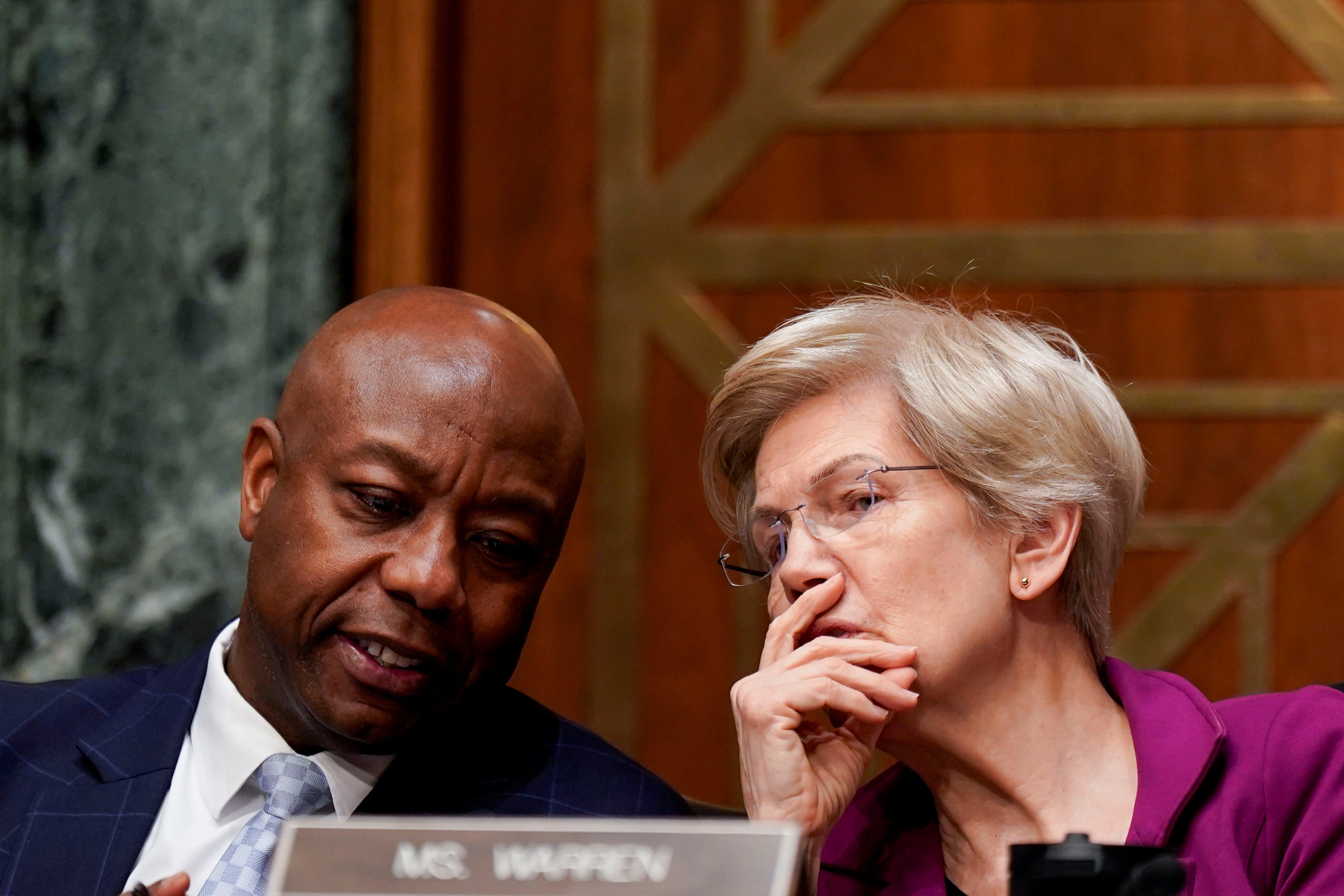
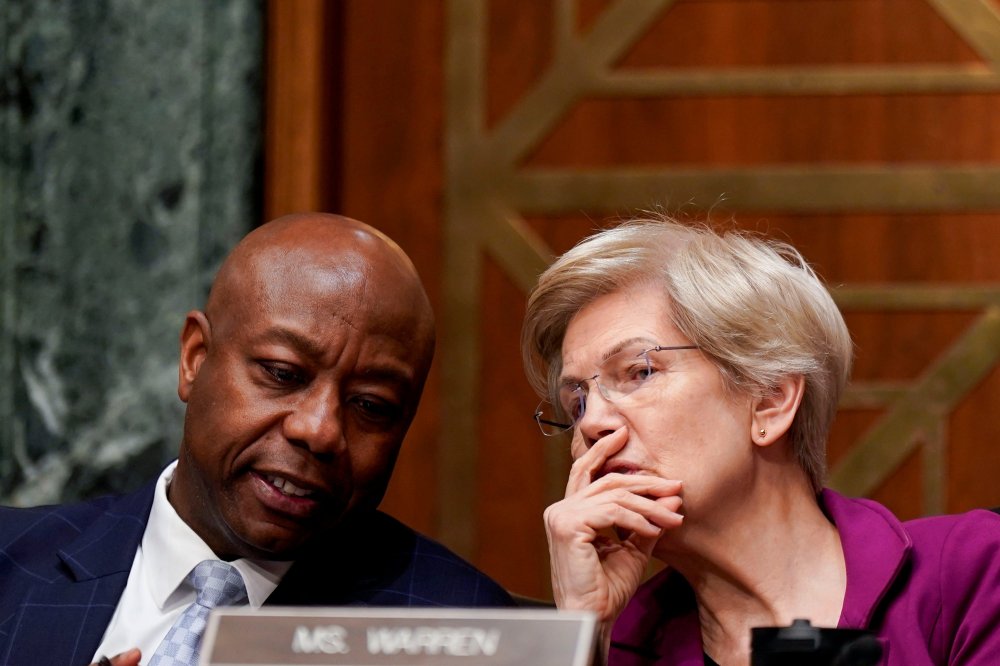
Sens. Tim Scott, R-S.C., and Elizabeth Warren, D-Mass., released new legislative language Monday night that includes a ban on institutional investors' purchase of single family homes and a temporary ban on the Federal Reserve issuing a Central Bank Digital Currency. View the full article
-
A note to corporations everywhere: Asking politely for the internet to stop making fun of you often has the opposite effect. Microsoft may have just learned that lesson the hard way, after it accidentally helped a not-so-nice nickname go viral. As Microsoft’s AI assistant Copilot is integrated into features across the company’s products—from its controversial Recall feature, to a dedicated AI button on Windows keyboards—it’s catching more and more flak, including a new term coined just to clown on Copilot: “Microslop,” a portmanteau of “Microsoft” and “AI slop.” The word was flying freely on Microsoft’s official Copilot Discord server, until users noticed a new filter had gone into effect. On March 1, Windows Latest reported that users’ messages were being blocked if they contained “Microslop,” instead garnering a message from server moderators reading, “Your message contain phrase that is inappropriate.” Microsoft is tired of 'Microslop,' and it's now blocking 'Microslop' comments in Copilot's official Discord server 😂 pic.twitter.com/OR2FFU69h8 — Windows Latest (@WindowsLatest) March 1, 2026 But a small slap on the wrist wasn’t about to stop an army of “sloppers,” as one user described themselves. Instead, Discord users brainstormed workarounds for the filter, like swapping one letter for a number—“Microsl0p,” with a zero instead of a one, was a popular choice—or inventing new terms that conveyed the same message. “Sloppysoft” and “MicroStop No-Pilot” were among the new pitches (not quite as catchy, but they get the point across). Things on Discord got even more dire when Microsoft locked the server after the backlash, blocking users from viewing the chat history and sending new messages. News of the “Microslop” filter quickly broke containment, spreading across social media and creating plenty of new fans of the word, who immediately added it to their lexicons. “Keep saying Microslop it seems to make them very upset,” one poster quipped. MICROSLOP MICROSLOP MICROSLOP MICROSLOP MICROSLOP MICROSLOP MICROSLOP MICROSLOP MICROSLOP MICROSLOP MICROSLOP MICROSLOP MICROSLOP MICROSLOP MICROSLOP MICROSLOP MICROSLOP MICROSLOP MICROSLOP MICROSLOP MICROSLOP MICROSLOP MICROSLOP MICROSLOP MICROSLOP MICROSLOP MICROSLOP MICROSLOP https://t.co/7mGjY2a9cQ — The Act Man (@TheActMan_YT) March 3, 2026 pic.twitter.com/EsSTKkMTOW — RΛSTΞRIZΞD DΩΩM (@rasterized_doom) March 1, 2026 Keep saying Microslop it seems to make them very upset 🤭 https://t.co/IijcFSqVPl — Is this a 3D model? (@IsThisA3DModel) March 2, 2026 Folks were quick to point out a phenomenon that Microsoft apparently forgot: the Streisand effect. Named for Barbra Streisand, whose attempts to bury a photo of her mansion only drew more attention to the picture, the Streisand effect describes when attempts to censor information instead encourage interest in it. If Microsoft had let “Microslop” slide, the term might have lived and died on Discord—but now, it’s going viral across social media instead. You're not going to win this one Microslop. https://t.co/XLlHTgcMJA pic.twitter.com/xLxgW67LN7 — Reid Southen (@Rahll) March 2, 2026 But was the filter made to protect Microsoft’s ego, or simply to keep the server spam-free? Microsoft claims the latter. In a statement to Fast Company, a spokesperson for Microsoft explained that the filter was meant to block a targeted spam campaign on the server, not to outright ban the term permanently. “The Copilot Discord channel has recently been targeted by spammers attempting to disrupt and overwhelm the space with harmful content not related to Copilot,” the spokesperson said. “Initially, this spam consisted of walls of text, so we added temporary filters for select terms to slow this activity.” “We have since made the decision to temporarily lock down the server while we work to implement stronger safeguards to protect users from this harmful spam and help ensure the server remains a safe, usable space for the community,” added the spokesperson. View the full article

-
A reader writes: My workload is mostly comprised of overflow tasks from other departments. I generally like this because it gives me a variety of things to do. I regularly deal with four managers. Three of them are good to work with. One, Alex, is … not. While the others always do a capacity check-in with me (asking if I have the bandwidth to take new work on), Alex regularly assigns me things without asking at all. It is not unusual that I will go on lunch and come back to a bunch of new tasks waiting for me with no discussion prior to assignment. The things Alex assigns me have exceptionally short deadlines, are often missing key pieces of information, and are often assigned to me and then she suddenly becomes unreachable. For example, she assigned a task midday and then didn’t respond to my questions to fill in any of the blanks for hours. It feels like she assigns me things and then runs away from the computer for the rest of the day. She also will regularly start a task, decide she doesn’t have the bandwidth to complete it, and then toss the half completed task at me with a “complete this for me, will you?” and little else. This means I have to stop everything else I am doing to try and figure out where she left off/how important it is because there is no documentation. Most of the time, I just end up redoing her work because the pieces they “completed” were rushed and done incorrectly. Then, when I kill myself to meet her incredibly short deadlines, I have to chase her for approval. Recently I was assigned something she wanted in two days, which I did, and when I asked her to approve it, she said she wouldn’t have any time to review it for five days. To me, if the project can just sit there for five days with nobody looking at it, then it wasn’t the rush I was led to believe. I like Alex as a person and I know she has a busy life outside of work, so I try to give her grace and understanding. When this started happening, I explained politely why these issues make my job harder and we talked about how to keep it from happening in the future. At the time, she seemed understanding and apologetic and I felt good about where we left things. But it feels like the conversation went in one ear and out the other, because again I just got three new things assigned to me without a heads-up, missing information and with incredibly short deadlines. I understand things happen and sometimes things happen last minute or information gets delayed, but this feels constant and I am trying to manage workflows from four people. I previously flagged this situation with my direct manager, but at the time said I was just mentioning the issue for transparency and that she didn’t need to take action because I was dealing with it myself. However, since it keeps happening, I am not sure what to do or how to articulate my issues in a productive way. I don’t want to be a tattletale and rat anybody out and I also don’t want to seem like I am just bitching to my boss about people having a different work ethic than me. I will fully admit, I am pretty type A and super organized, which is part of the reason I have the job I have. But this legitimately sucks and my hair is falling out from stress! What should I do? You can read my answer to this letter at New York Magazine today. Head over there to read it. The post my coworker gives me rush projects, then disappears appeared first on Ask a Manager. View the full article
-
Costs at the pump exceed level at the end of the Biden administrationView the full article
-
As small businesses continue to navigate the complex landscape of artificial intelligence (AI), recent developments between Intel and SambaNova offer fresh insights into enhancing AI capabilities. This strategic collaboration aims to provide efficient AI inference solutions that could potentially transform how small enterprises leverage technology. The partnership centers around building high-performance AI systems using Intel® Xeon® processors, a familiar name in the tech community. This could be particularly beneficial for small businesses looking to implement AI solutions without the need for hefty investments in new infrastructure. With AI workloads diversifying, the push for heterogeneous infrastructure—integrating various compute, memory, and networking systems—has accelerated. By synchronizing SambaNova’s expertise in AI infrastructure with Intel’s reliable hardware, small business owners may see a credible pathway to robust AI applications. For many organizations, AI can feel like a daunting task, laden with uncertainties about implementation and cost. SambaNova’s approach to AI workload may very well offer a chance to simplify that process, particularly for AI-native companies and model providers. “For customers with AI workloads well-suited to SambaNova’s approach, the combination of Intel CPUs and SambaNova’s AI platform can provide a compelling rack-level inference option,” says an Intel representative. This indicates that using these combined technologies can facilitate smoother and faster AI operations. Small businesses might find the potential for improved scalability very appealing. As operations streamline, teams can more easily adapt to increasing data influx or customer demands. The collaboration is also promising cost-effective solutions tailored to fit a variety of budgets—important for small business owners who need to stretch every dollar. While the announcement highlights the immediate benefits, small business owners should also keep an eye on some challenges that could arise with this development. For instance, integrating new technologies typically requires not only financial investment but also a commitment to training staff and altering existing processes. The collaboration does not shift Intel away from its ongoing investments in its GPU capabilities either—implying that businesses will need to stay updated as additional frameworks develop. Intel’s continued roadmap for competition in the AI space reinforces that small businesses will have access to ongoing improvements and innovation. However, the rapidly evolving nature of technology means small businesses must be agile and prepared to adapt quickly. This combination of Intel’s established products and SambaNova’s innovative approach could yield a powerful toolkit, but business owners will have to invest time in assessing their specific needs and workflows. The multi-year strategy discussed also aligns with Intel’s vision for edge-to-cloud engagements, indicating they are focused not just on data centers but on providing comprehensive solutions that suite various business sizes and types. This could translate to more tailored offerings for small enterprises, which is often overlooked in the broader tech landscape. As AI continues to evolve, small business owners equipped with the right solutions will be better positioned to harness its power. By leveraging the combined strengths of Intel and SambaNova, businesses may not only unlock efficiencies within their operations but also open new avenues for growth and innovation. For more details on this collaboration, you can visit the original press release here. As these developments unfold, it will be crucial for small business owners to stay informed and ready to embrace the opportunities that powerful AI infrastructure presents. Image via Google Gemini This article, "Intel and SambaNova Join Forces to Transform AI Inference Solutions" was first published on Small Business Trends View the full article
-
As small businesses continue to navigate the complex landscape of artificial intelligence (AI), recent developments between Intel and SambaNova offer fresh insights into enhancing AI capabilities. This strategic collaboration aims to provide efficient AI inference solutions that could potentially transform how small enterprises leverage technology. The partnership centers around building high-performance AI systems using Intel® Xeon® processors, a familiar name in the tech community. This could be particularly beneficial for small businesses looking to implement AI solutions without the need for hefty investments in new infrastructure. With AI workloads diversifying, the push for heterogeneous infrastructure—integrating various compute, memory, and networking systems—has accelerated. By synchronizing SambaNova’s expertise in AI infrastructure with Intel’s reliable hardware, small business owners may see a credible pathway to robust AI applications. For many organizations, AI can feel like a daunting task, laden with uncertainties about implementation and cost. SambaNova’s approach to AI workload may very well offer a chance to simplify that process, particularly for AI-native companies and model providers. “For customers with AI workloads well-suited to SambaNova’s approach, the combination of Intel CPUs and SambaNova’s AI platform can provide a compelling rack-level inference option,” says an Intel representative. This indicates that using these combined technologies can facilitate smoother and faster AI operations. Small businesses might find the potential for improved scalability very appealing. As operations streamline, teams can more easily adapt to increasing data influx or customer demands. The collaboration is also promising cost-effective solutions tailored to fit a variety of budgets—important for small business owners who need to stretch every dollar. While the announcement highlights the immediate benefits, small business owners should also keep an eye on some challenges that could arise with this development. For instance, integrating new technologies typically requires not only financial investment but also a commitment to training staff and altering existing processes. The collaboration does not shift Intel away from its ongoing investments in its GPU capabilities either—implying that businesses will need to stay updated as additional frameworks develop. Intel’s continued roadmap for competition in the AI space reinforces that small businesses will have access to ongoing improvements and innovation. However, the rapidly evolving nature of technology means small businesses must be agile and prepared to adapt quickly. This combination of Intel’s established products and SambaNova’s innovative approach could yield a powerful toolkit, but business owners will have to invest time in assessing their specific needs and workflows. The multi-year strategy discussed also aligns with Intel’s vision for edge-to-cloud engagements, indicating they are focused not just on data centers but on providing comprehensive solutions that suite various business sizes and types. This could translate to more tailored offerings for small enterprises, which is often overlooked in the broader tech landscape. As AI continues to evolve, small business owners equipped with the right solutions will be better positioned to harness its power. By leveraging the combined strengths of Intel and SambaNova, businesses may not only unlock efficiencies within their operations but also open new avenues for growth and innovation. For more details on this collaboration, you can visit the original press release here. As these developments unfold, it will be crucial for small business owners to stay informed and ready to embrace the opportunities that powerful AI infrastructure presents. Image via Google Gemini This article, "Intel and SambaNova Join Forces to Transform AI Inference Solutions" was first published on Small Business Trends View the full article
-
After nearly two years of pretrial motions, opening arguments are expected to begin Tuesday in the Justice Department’s lawsuit against Live Nation. The case could have dramatic ramifications for the live events business—though that outcome is far from guaranteed. The government alleges that the parent company of Ticketmaster has a chokehold on the concert ticket market, hurting both fans and artists. Live Nation denies that claim, arguing the market is broad and competitive, despite what the Justice Department contends. The fight has been brewing for far longer than two years. Fans have voiced frustration since the 2010 merger between Live Nation and Ticketmaster, when live entertainment prices began climbing steadily. Here’s what you need to know about the trial. What is the Justice Department claiming? The Justice Department initially argued that Live Nation held a monopoly across multiple parts of the live music industry. The company generates revenue from fans through ticket sales and from artists through venue rentals—arrangements that allegedly locked performers into using Ticketmaster to sell tickets. Last month, however, Judge Arun Subramanian dismissed the concert booking monopoly charges. As a result, the trial will focus more narrowly on claims that the company violated the Sherman Antitrust Act by forcing artists who use its venues to also use its promotional services, and by requiring other venues to sign exclusive contracts with Ticketmaster. Live Nation denies the charges. “Calling Ticketmaster a monopoly may be a PR win for the DOJ in the short term, but it will lose in court because it ignores the basic economics of live entertainment,” the company wrote in a statement on its website, “such as the fact that the bulk of service fees go to venues, and that competition has steadily eroded Ticketmaster’s market share and profit margin.” Could Ticketmaster and Live Nation be split up? Technically, yes. Realistically, probably not. While the DOJ is seeking a breakup, courts rarely force companies to split apart. That step is typically taken only when a judge is convinced no other remedy can address the harm. Should the government prevail, a more likely outcome is that Live Nation would be barred from continuing certain business practices deemed anticompetitive. Could this result in lower ticket prices? That’s a bigger question. One of the biggest complaints from fans is the fees that are added to ticket prices. If the Justice Department is successful in abolishing Live Nation’s exclusive agreements with venues, that might impact prices, but there’s no guarantee. Live Nation, for its part, says the case “won’t solve the issues fans care about relating to ticket prices, service fees, and access to in-demand shows.” The company maintains that ticket prices are set by venues and artists. Is Taylor Swift expected to testify in the trial? Sorry, Swifties: Taylor Swift is not listed among the expected witnesses, even though The Eras Tour ticket fiasco helped propel this case into the spotlight. The overwhelming demand for tickets and the meltdown of Ticketmaster’s site left many fans empty-handed and intensified scrutiny of Live Nation—particularly after it delayed its general sale event. Fans were furious and directed their ire at the company, prompting greater government attention. Kid Rock could be a potential witness against Live Nation, though. And othe rpotential witnesses include Minnesota Timberwolves CEO Matthew Caldwell, Roc Nation CEO Desiree Perez, Live Nation Entertainment CEO Michael Rapino and Mumford & Sons keyboardist Ben Lovett When is a decision likely? The trial is expected to last around six weeks. It’s a jury trial, so once the panel finishes deliberating, a verdict will be reached on whether Live Nation violated antitrust laws. If the government wins, the judge will determine the penalties, a process that could take additional time. Should Live Nation lose, it can, of course, appeal the verdict, which would delay any court-ordered changes. And the parties could settle the case before it gets to the jury. Could I get a refund for previous ticket purchases? That depends on the states. If Live Nation loses, several states plan to seek financial penalties. The amounts vary. Michigan, for example, caps civil antitrust penalties at $50,000 per violation. In Florida, penalties can reach as high as $1 million. Even if Live Nation loses, however, consumers shouldn’t expect to see any sort of refund for quite some time—and any payout would likely be modest. View the full article
-
A list of 21 issues to consider. By Marc Rosenberg CPA Firm Mergers: Your Complete Guide Go PRO for members-only access to more Marc Rosenberg. View the full article
-
A list of 21 issues to consider. By Marc Rosenberg CPA Firm Mergers: Your Complete Guide Go PRO for members-only access to more Marc Rosenberg. View the full article
-
Two months ago, a state administrative judge in California determined that Tesla broke the law by misleading consumers. The argument: Tesla led them to believe that its cars had real self-driving capabilities, calling them “Autopilot” and “Full Self-Driving” (commonly known as FSD). The issue is that Teslas can’t really drive by themselves; they still require drivers to remain constantly vigilant to prevent catastrophe. The verdict prompted the California Department of Motor Vehicles to threaten a temporary suspension of Tesla’s manufacturing and sales licenses. Two months after the ruling, on February 13, Tesla’s attorneys filed a complaint alleging the state “wrongfully and baselessly” labeled it a false advertiser, brazenly arguing that “it was impossible” to buy or use the “auto-pilot” software “without seeing clear and repeated statements that they do not make the vehicle autonomous.” Yet, their fine-print defense clashes with Musk’s failed promises and stunts, such as when he took his hands off the wheel on CBS’s 60 Minutes in 2018 and proudly declared he was “not doing anything.” Or when he showed fake, staged videos of Autopilot in action. Four days after Tesla’s complaint, California’s DMV backed off its shutdown threats when the company agreed to clean up its marketing, rebranding the $99-a-month subscription to “Full Self-Driving (Supervised)”. Now CNBC reports that Tesla is suing anyway to completely reverse the ruling. Musk is demanding the right to use his futuristic language to sell cars— determined false by the courts—while simultaneously relying on its owners’ manuals to shift the blame to drivers the second the system fails. The move prompted the DMV to declare it will “defend the Administrative Law Judge’s findings and decision in court” to protect the public. Dillon Angulo Long trail of bodies Tesla’s new legal gambit to defend its autonomous driving fantasy clashes with the brutal reality of a deficient technology. Tesla cars still only have a Level 2 autonomy—a mechanism designed to handle basic steering and speed—out of four levels (the fourth is true full autonomy, which so far only Chinese manufacturer BYD has been able to achieve while parking). According to the Tesla accident tracking site Tesla Deaths, in the decade after the release of Autopilot in October 2015 there have been at least 65 fatalities connected to Tesla’s Autopilot system. Of those, an April 2024 NHTSA report investigated and verified 29 fatal crashes. The common thread in these tragedies is a catastrophic failure of the Level 2 advanced driver assistance system to recognize stationary objects or crossing vehicles. In May 2016, Joshua Brown died in Florida when the system failed to notice the white side of an 18-wheeler against a bright sky, leading the National Transportation Safety Board to conclude the software permitted “prolonged disengagement from the driving task.” Incidents continued over the years, culminating in a landmark August 2025 federal jury verdict where Tesla was found 33% liable and ordered to pay $243 million after a 2019 crash in Key Largo, where the driver admitted, “I trusted the technology too much.” While Tesla continues to beta-test its software on public roads with deadly consequences, international competitors are quietly delivering the autonomous future Musk has been promising for a decade. Chinese automaker BYD recently deployed its ‘God’s Eye’ intelligent driving system over-the-air to more than one million cars, introducing a Level 4 autonomous parking feature that allows a vehicle to navigate a lot, find a spot, and park completely unattended. Unlike Tesla’s stubborn reliance on cameras alone, BYD utilizes a robust sensor architecture that includes up to 12 cameras, 12 ultrasonic sensors with 0.4-inch accuracy, millimeter-wave radars, and even lidar on higher trims. BYD is so confident in this technology that it issued a blanket guarantee to cover any damages if the system makes a mistake. They are not the only ones. Volvo, who uses Waymo’s self-driving system, also covers any damages. Tesla, on the other hand, deflects blame to the driver. Failure after failure Musk has been predicting the imminent arrival of FSD every year for over a decade now. The gap between his grand vision and Tesla’s actual engineering output has become a chasm of broken promises and delayed timelines. So much so that I’m beginning to think that, in his head, FSD must mean Full Self-Delusion. Musk promised a steering-wheel-free Cybercab by 2026, but January came and he changed the tune to “before 2027,” saying it was going to be extremely hard to produce them in big numbers. He also claimed that autonomy will begin moving the financial needle by mid-2026 and that the company’s humanoid Optimus robots will soon hit a production rate of one million units per year. Reality tells a drastically different story, with executives warning Musk that the profitability for the robotaxi venture would be “very, very hard outside the U.S.” It’s a reality check that is reflected in the data. According to the latest stats, Waymo’s autonomous cabs currently manage a staggering 17,311 miles between disengagements, while Tesla’s Full Self-Driving struggles to hit just 489 miles before a human has to intervene. Despite these internal warnings and external failures, Musk refuses to change course or adopt better hardware. He famously dismissed lidar—a crucial technology that uses pulsed laser light to map the environment in three dimensions, much like a bat uses echolocation to navigate in the dark—as a “crutch” and a “loser’s technology.” Instead, he opted to strip ultrasonic sensors from Tesla vehicles entirely, a cost-cutting move that has resulted in owners reporting persistent errors with basic parking assist features, particularly when rain, snow, or low light blinds the camera lenses. Tesla seems to be trying to change the narrative and manipulate public perception with words, but the public is increasingly not buying the propaganda. Tesla sales continue to tank quarter after quarter due to stale design, lack of innovation, and Musk’s personal brand failure. While the courts will ultimately decide if the automaker can continue advertising its flawed experimental program by dressing it up in the costume of a fully self-driving machine, the public has spoken. View the full article

-
America’s three major stock markets, the Dow, Nasdaq, and S&P, are all down sharply in morning trading as of this writing. The wave of red across investors’ monitors is primarily due to one major factor: uncertainty around how far the Iran conflict will travel and how long it will last. Here’s what you need to know about how markets are reacting. What happened? Over the weekend, President Donald The President ordered strikes on Iran, during which the country’s supreme leader, Ayatollah Ali Khamenei, was killed. The death of Iran’s leader and the ongoing conflict in Iran will have significant consequences for the region as a whole for years to come. Yet what those consequences will be is so far unknown. And it’s that uncertainty that is causing stock markets in the United States to fall significantly today, especially after Iran’s Revolutionary Guard Corps announced that the Strait of Hormuz is closed. The Strait of Hormuz is one of the most critical supply routes in the world, with around a fifth of all oil passing through it. Any blockage of the strait could have severe consequences for the global energy trade, and thus the global economy. On top of this, it is looking increasingly likely that the conflict against Iran could go on for some time, with The President not ruling out that US soldiers may need to be put on the ground in Iran. Stock markets sink as Iran uncertainty rises Given all the uncertainty surrounding Iran and oil trade routes, it’s little surprise the markets are reacting negatively at this time. Currently, the Dow, Nasdaq, and S&P are all down significantly: Dow: down 2.5% to $47,669 Nasdaq: down 2.5% to $22,179 S&P 500: down 2.4% to $6,715 Given that stocks and the markets they trade on are historically volatile in the wake of significant geopolitical events, it’s no shock that all three major markets are down. But with today’s fall, it also means that all three major markets are now in the red for the year. As of the time of this writing, the Dow Jones Industrial Average is now down 0.7% for 2026, the NASDAQ Composite is now down 4.4% for the year, and the S&P 500 is down 1.7% since the year began. Crypto and gold fall, too Of course, it’s not just the stock markets that are falling. Major digital currencies are also down as of the time of this writing. Over the past 24 hours, most household name tokens have fallen, including: Bitcoin: down 2.3% to around $67,200 Ethereum: down 3.9% to around $1,952 BNB: down 2.7% to around $626 XRP: down 3.2% to around $1.35 As with the stock markets, it’s little surprise that crypto markets are on the decline today. If there is an asset even more volitile that stocks, it’s cryptocurrencies. And when investors are uncertain, they tend to exit higher-risk assets like crypto to park any gains in “safe haven” assets like gold, which are historically less volatile than securities. However, even gold is having a bad day today. As of the time of this writing, gold has fallen over 4.8% to $5,052. That is a dramatic drop for the precious metal, especially on a day when investor jitters are high. Usually, nervous investors seek gold and other safe-haven assets, such as bonds. One reason gold could be down, however, is due to profit-taking. Gold has had a good run in 2026 so far, rising from around the $4,440 mark in early January to above $5,300 on the first of March. Where gold, crypto, and stocks go from here is anyone’s guess, and the longer uncertainty remains around Iran, the longer that guessing game is likely to persist. View the full article

-
The convergence of trends makes pricing changes imperative. By Jody Padar Go PRO for members-only access to more Jody Padar. View the full article
-
The convergence of trends makes pricing changes imperative. By Jody Padar Go PRO for members-only access to more Jody Padar. View the full article
-
Four responses from our expert council. By Martin Bissett Passport to Partnership Go PRO for members-only access to more Martin Bissett. View the full article
-
Four responses from our expert council. By Martin Bissett Passport to Partnership Go PRO for members-only access to more Martin Bissett. View the full article
-
In terms of operations funding for nonprofits, comprehension of the seven crucial sources can make a significant difference. Individual donations form the backbone of support, whereas foundation and government grants require detailed proposals. Corporate sponsorships can offer both financial and in-kind assistance. Special events not just raise funds but additionally boost community involvement. Exploring membership programs and online crowdfunding can further expand your reach. Each avenue has unique benefits that can sustain your organization’s mission. So, what strategies will you consider? Key Takeaways Individual donations are the backbone of operations funding, accounting for over two-thirds of charitable contributions in the U.S. Foundation grants provide targeted funding but require detailed proposals and strong relationships with program officers for success. Government grants offer various funding types aligned with public policy goals and necessitate thorough documentation for accountability. Corporate sponsorships provide financial support and in-kind services, emphasizing mutual benefits and strong partnerships for effective funding. Special events and fundraising activities generate revenue while fostering connections, making them vital for ongoing operations funding. Individual Donations Individual donations play a significant role in the funding environment for nonprofits, as they account for over two-thirds of all charitable contributions in the U.S. To effectively encourage individual giving, focus on building authentic relationships with donors through compelling storytelling. This approach not only nurtures loyalty but also increases long-term support. Consider donor segmentation, which allows you to tailor communications and engagement strategies to different donor groups, enhancing your fundraising efforts. Offering diverse giving options, like one-time donations, monthly recurring gifts, and planned giving, can attract a broader range of individual donors. Moreover, prioritize donor stewardship by sending prompt thank-yous and impact reports, reinforcing accountability and encouraging ongoing contributions. While individual donations are essential, you can explore grants for small businesses as another funding avenue. Grasping how to get grant money for business can complement your fundraising strategy, providing further resources for your nonprofit’s operations. Foundation Grants Foundation grants serve as a crucial funding source for nonprofits, offering structured financial support aligned with specific missions such as education, health, or the arts. These grants often require detailed proposals and rigorous reporting to guarantee accountability. Here are some key points to contemplate: Notable foundations, like the Bill & Melinda Gates Foundation and the Ford Foundation, provide significant operational grants. Comprehending a foundation’s priorities and building relationships with program officers can boost your chances of securing funding opportunities. Many foundations accept unsolicited proposals, making it easier for nonprofits to seek operational support. Collaborative proposals involving multiple organizations can improve applications by showcasing broader impact and shared resources. Government Grants Government grants offer various funding types that can support your nonprofit’s initiatives, aligning with public policy goals at multiple levels. Comprehending the application process is essential, as it often involves strict compliance and reporting requirements to guarantee transparency. Types of Government Grants Various types of government grants serve as vital funding sources for nonprofits aiming to address community needs and align with public policy objectives. These grants provide significant support for operations, enabling organizations to implement effective programs. Here are some common types of government grants you might consider: Federal Grants: Offered by agencies like the Department of Health and Human Services. State Grants: Funded by state governments to meet local community needs. Local Grants: Provided by municipalities to support grassroots initiatives. Project-Specific Grants: Focused on funding particular programs or services. Understanding these options is important for securing doc grants and ensuring sustainable funding for operations. Application Process Overview Maneuvering the application process for government grants can seem intimidating, especially since it often requires submitting detailed proposals that clearly outline your program’s goals, methods, and budget. Government grants are awarded by federal, state, and local agencies to support programs that meet public policy objectives and community needs. To improve your chances of success, focus on well-defined programs that address specific community issues. Maintaining thorough documentation is essential, as government grants typically have strict accountability standards. Furthermore, developing relationships with program officers can provide valuable insights into the application process, making it easier to navigate. Compliance and Reporting Requirements During maneuvering the terrain of government grants, comprehending compliance and reporting requirements is vital for your project’s success. You’ll need to provide detailed updates on fund usage, ensuring accountability and transparency. Adhering to regulations set by federal, state, and local agencies is mandatory, including specific formats and deadlines for reports. Submit a final report detailing expenditures and project impacts. Maintain thorough documentation of all expenses and activities. Be aware that audits may verify compliance with grant conditions. Understand that failing to meet these requirements can result in penalties, including funding loss. Corporate Sponsorships and Partnerships Corporate sponsorships and partnerships serve as fundamental funding sources for nonprofits, offering both financial support and in-kind services that align with businesses’ corporate social responsibility initiatives. To attract these partnerships, you need to effectively communicate the mutual benefits involved. Present compelling business cases that emphasize value beyond donations, such as increased community engagement and improved brand loyalty. Consider developing tiered sponsorship packages, which can appeal to a broader range of corporate partners by providing varying levels of visibility and engagement opportunities that cater to different budgets. Building strong relationships with local businesses is crucial; leveraging your board members’ networks can facilitate warmer introductions, increasing your chances of securing sponsorships. Finally, deliver regular impact reports to corporate partners. This transparency builds trust and demonstrates your accountability, which is fundamental for cultivating long-term partnerships and opening doors for future funding opportunities. Special Events and Fundraising Activities How can special events and fundraising activities effectively boost your nonprofit’s financial health and community engagement? These initiatives can generate significant revenue as they nurture connections with supporters and raising awareness for your mission. By organizing events like galas, golf tournaments, or online campaigns, you can appeal to various donor demographics and adapt to shifting engagement trends. Set clear financial goals and create a detailed budget. Secure sponsorships early to improve credibility and attract more attendees. Align the event with your organizational brand to maximize participation. Follow up with attendees and sponsors to build long-term relationships. Membership Programs Building on the foundation established by special events and fundraising activities, membership programs represent a strategic way for nonprofits to secure ongoing financial support in addition to nurturing a dedicated community of supporters. By offering regular contributions in exchange for benefits, these programs create a predictable revenue stream that strengthens financial stability. Implementing tiered membership levels can encourage higher contributions, guaranteeing accessibility for a diverse donor base. Engaging members through exclusive content, events, or merchandise cultivates a sense of community and belonging, which is vital for increasing donor retention rates. To maintain this engagement, effective communication of member benefits is fundamental. Organizations often survey members to confirm that the benefits align with their needs and expectations. Online Crowdfunding and Digital Fundraising Online crowdfunding and digital fundraising have become essential tools for nonprofits seeking to expand their reach and secure financial support. Platforms like Kickstarter and GoFundMe allow you to raise small amounts from a large audience, offering quick solutions for specific needs. To maximize your fundraising efforts, consider these key strategies: Utilize social media and email marketing to broaden your audience. Craft compelling stories that resonate and evoke emotional responses. Incorporate video content to showcase your mission and impact effectively. Factor in platform fees, which typically range from 3% to 10%, to guarantee you maximize net revenue. Research indicates that campaigns with strong storytelling and clear goals are more likely to succeed, as they encourage sharing within supporters’ networks. Frequently Asked Questions What Are the Three Sources of Funding? The three primary sources of funding for nonprofits are individual donations, foundation grants, and government grants. Individual donations make up the largest portion, representing over two-thirds of U.S. charitable contributions. Foundation grants involve structured awards from various foundations and often require detailed proposals. Government grants come from federal, state, and local agencies, supporting projects aligned with public policy. Each source plays a crucial role in ensuring a nonprofit’s financial health and sustainability. What Is the 33% Rule for Nonprofits? The 33% Rule for nonprofits suggests that no more than 33% of your budget should go toward overhead and administrative costs. This guideline emphasizes the importance of directing funds toward programmatic activities, ensuring your organization maintains operational efficiency and effectiveness. Funders often use this rule to assess your financial health, impacting their willingness to support you. Although it’s a helpful benchmark, communicating the need for some overhead is equally essential for your organization’s growth. What Are the Needs for Operating Funds? You need operating funds to cover vital day-to-day expenses like payroll, utilities, and rent. These costs typically account for 70-80% of your nonprofit’s budget. Without adequate funding, retaining staff becomes challenging, leading to high turnover and burnout. This instability can undermine program effectiveness. Operating funds in addition enable you to adapt to unforeseen challenges and invest in infrastructure, which is key for sustaining and broadening your organization’s mission and impact within the community. What Is the Best Source of Funding for a Business? The best source of funding for your business depends on its growth stage. If you’re a startup, personal savings or support from family and friends can be essential. Established businesses often turn to bank loans or venture capital for larger investments. Crowdfunding platforms like Kickstarter can additionally provide alternative funding options for various projects. In the end, evaluate your business needs, growth potential, and funding sources to determine the best fit for your situation. Conclusion In summary, securing operations funding for your nonprofit requires a multifaceted approach. By broadening your income sources—through individual donations, grants, corporate partnerships, special events, and digital fundraising—you can create a sustainable financial base. Each avenue offers unique benefits and challenges, so it’s crucial to tailor your strategies to your organization’s strengths and community needs. By effectively engaging donors and stakeholders, you can improve your organization’s impact and guarantee long-term viability in fulfilling your mission. Image via Google Gemini and ArtSmart This article, "7 Essential Sources for Operations Funding" was first published on Small Business Trends View the full article
-
In terms of operations funding for nonprofits, comprehension of the seven crucial sources can make a significant difference. Individual donations form the backbone of support, whereas foundation and government grants require detailed proposals. Corporate sponsorships can offer both financial and in-kind assistance. Special events not just raise funds but additionally boost community involvement. Exploring membership programs and online crowdfunding can further expand your reach. Each avenue has unique benefits that can sustain your organization’s mission. So, what strategies will you consider? Key Takeaways Individual donations are the backbone of operations funding, accounting for over two-thirds of charitable contributions in the U.S. Foundation grants provide targeted funding but require detailed proposals and strong relationships with program officers for success. Government grants offer various funding types aligned with public policy goals and necessitate thorough documentation for accountability. Corporate sponsorships provide financial support and in-kind services, emphasizing mutual benefits and strong partnerships for effective funding. Special events and fundraising activities generate revenue while fostering connections, making them vital for ongoing operations funding. Individual Donations Individual donations play a significant role in the funding environment for nonprofits, as they account for over two-thirds of all charitable contributions in the U.S. To effectively encourage individual giving, focus on building authentic relationships with donors through compelling storytelling. This approach not only nurtures loyalty but also increases long-term support. Consider donor segmentation, which allows you to tailor communications and engagement strategies to different donor groups, enhancing your fundraising efforts. Offering diverse giving options, like one-time donations, monthly recurring gifts, and planned giving, can attract a broader range of individual donors. Moreover, prioritize donor stewardship by sending prompt thank-yous and impact reports, reinforcing accountability and encouraging ongoing contributions. While individual donations are essential, you can explore grants for small businesses as another funding avenue. Grasping how to get grant money for business can complement your fundraising strategy, providing further resources for your nonprofit’s operations. Foundation Grants Foundation grants serve as a crucial funding source for nonprofits, offering structured financial support aligned with specific missions such as education, health, or the arts. These grants often require detailed proposals and rigorous reporting to guarantee accountability. Here are some key points to contemplate: Notable foundations, like the Bill & Melinda Gates Foundation and the Ford Foundation, provide significant operational grants. Comprehending a foundation’s priorities and building relationships with program officers can boost your chances of securing funding opportunities. Many foundations accept unsolicited proposals, making it easier for nonprofits to seek operational support. Collaborative proposals involving multiple organizations can improve applications by showcasing broader impact and shared resources. Government Grants Government grants offer various funding types that can support your nonprofit’s initiatives, aligning with public policy goals at multiple levels. Comprehending the application process is essential, as it often involves strict compliance and reporting requirements to guarantee transparency. Types of Government Grants Various types of government grants serve as vital funding sources for nonprofits aiming to address community needs and align with public policy objectives. These grants provide significant support for operations, enabling organizations to implement effective programs. Here are some common types of government grants you might consider: Federal Grants: Offered by agencies like the Department of Health and Human Services. State Grants: Funded by state governments to meet local community needs. Local Grants: Provided by municipalities to support grassroots initiatives. Project-Specific Grants: Focused on funding particular programs or services. Understanding these options is important for securing doc grants and ensuring sustainable funding for operations. Application Process Overview Maneuvering the application process for government grants can seem intimidating, especially since it often requires submitting detailed proposals that clearly outline your program’s goals, methods, and budget. Government grants are awarded by federal, state, and local agencies to support programs that meet public policy objectives and community needs. To improve your chances of success, focus on well-defined programs that address specific community issues. Maintaining thorough documentation is essential, as government grants typically have strict accountability standards. Furthermore, developing relationships with program officers can provide valuable insights into the application process, making it easier to navigate. Compliance and Reporting Requirements During maneuvering the terrain of government grants, comprehending compliance and reporting requirements is vital for your project’s success. You’ll need to provide detailed updates on fund usage, ensuring accountability and transparency. Adhering to regulations set by federal, state, and local agencies is mandatory, including specific formats and deadlines for reports. Submit a final report detailing expenditures and project impacts. Maintain thorough documentation of all expenses and activities. Be aware that audits may verify compliance with grant conditions. Understand that failing to meet these requirements can result in penalties, including funding loss. Corporate Sponsorships and Partnerships Corporate sponsorships and partnerships serve as fundamental funding sources for nonprofits, offering both financial support and in-kind services that align with businesses’ corporate social responsibility initiatives. To attract these partnerships, you need to effectively communicate the mutual benefits involved. Present compelling business cases that emphasize value beyond donations, such as increased community engagement and improved brand loyalty. Consider developing tiered sponsorship packages, which can appeal to a broader range of corporate partners by providing varying levels of visibility and engagement opportunities that cater to different budgets. Building strong relationships with local businesses is crucial; leveraging your board members’ networks can facilitate warmer introductions, increasing your chances of securing sponsorships. Finally, deliver regular impact reports to corporate partners. This transparency builds trust and demonstrates your accountability, which is fundamental for cultivating long-term partnerships and opening doors for future funding opportunities. Special Events and Fundraising Activities How can special events and fundraising activities effectively boost your nonprofit’s financial health and community engagement? These initiatives can generate significant revenue as they nurture connections with supporters and raising awareness for your mission. By organizing events like galas, golf tournaments, or online campaigns, you can appeal to various donor demographics and adapt to shifting engagement trends. Set clear financial goals and create a detailed budget. Secure sponsorships early to improve credibility and attract more attendees. Align the event with your organizational brand to maximize participation. Follow up with attendees and sponsors to build long-term relationships. Membership Programs Building on the foundation established by special events and fundraising activities, membership programs represent a strategic way for nonprofits to secure ongoing financial support in addition to nurturing a dedicated community of supporters. By offering regular contributions in exchange for benefits, these programs create a predictable revenue stream that strengthens financial stability. Implementing tiered membership levels can encourage higher contributions, guaranteeing accessibility for a diverse donor base. Engaging members through exclusive content, events, or merchandise cultivates a sense of community and belonging, which is vital for increasing donor retention rates. To maintain this engagement, effective communication of member benefits is fundamental. Organizations often survey members to confirm that the benefits align with their needs and expectations. Online Crowdfunding and Digital Fundraising Online crowdfunding and digital fundraising have become essential tools for nonprofits seeking to expand their reach and secure financial support. Platforms like Kickstarter and GoFundMe allow you to raise small amounts from a large audience, offering quick solutions for specific needs. To maximize your fundraising efforts, consider these key strategies: Utilize social media and email marketing to broaden your audience. Craft compelling stories that resonate and evoke emotional responses. Incorporate video content to showcase your mission and impact effectively. Factor in platform fees, which typically range from 3% to 10%, to guarantee you maximize net revenue. Research indicates that campaigns with strong storytelling and clear goals are more likely to succeed, as they encourage sharing within supporters’ networks. Frequently Asked Questions What Are the Three Sources of Funding? The three primary sources of funding for nonprofits are individual donations, foundation grants, and government grants. Individual donations make up the largest portion, representing over two-thirds of U.S. charitable contributions. Foundation grants involve structured awards from various foundations and often require detailed proposals. Government grants come from federal, state, and local agencies, supporting projects aligned with public policy. Each source plays a crucial role in ensuring a nonprofit’s financial health and sustainability. What Is the 33% Rule for Nonprofits? The 33% Rule for nonprofits suggests that no more than 33% of your budget should go toward overhead and administrative costs. This guideline emphasizes the importance of directing funds toward programmatic activities, ensuring your organization maintains operational efficiency and effectiveness. Funders often use this rule to assess your financial health, impacting their willingness to support you. Although it’s a helpful benchmark, communicating the need for some overhead is equally essential for your organization’s growth. What Are the Needs for Operating Funds? You need operating funds to cover vital day-to-day expenses like payroll, utilities, and rent. These costs typically account for 70-80% of your nonprofit’s budget. Without adequate funding, retaining staff becomes challenging, leading to high turnover and burnout. This instability can undermine program effectiveness. Operating funds in addition enable you to adapt to unforeseen challenges and invest in infrastructure, which is key for sustaining and broadening your organization’s mission and impact within the community. What Is the Best Source of Funding for a Business? The best source of funding for your business depends on its growth stage. If you’re a startup, personal savings or support from family and friends can be essential. Established businesses often turn to bank loans or venture capital for larger investments. Crowdfunding platforms like Kickstarter can additionally provide alternative funding options for various projects. In the end, evaluate your business needs, growth potential, and funding sources to determine the best fit for your situation. Conclusion In summary, securing operations funding for your nonprofit requires a multifaceted approach. By broadening your income sources—through individual donations, grants, corporate partnerships, special events, and digital fundraising—you can create a sustainable financial base. Each avenue offers unique benefits and challenges, so it’s crucial to tailor your strategies to your organization’s strengths and community needs. By effectively engaging donors and stakeholders, you can improve your organization’s impact and guarantee long-term viability in fulfilling your mission. Image via Google Gemini and ArtSmart This article, "7 Essential Sources for Operations Funding" was first published on Small Business Trends View the full article
-
UK chancellor’s short speech aimed at projecting economic credibility to voters and investorsView the full article