ResidentialBusiness
Administrators
-
Joined
-
Last visited
Everything posted by ResidentialBusiness
-
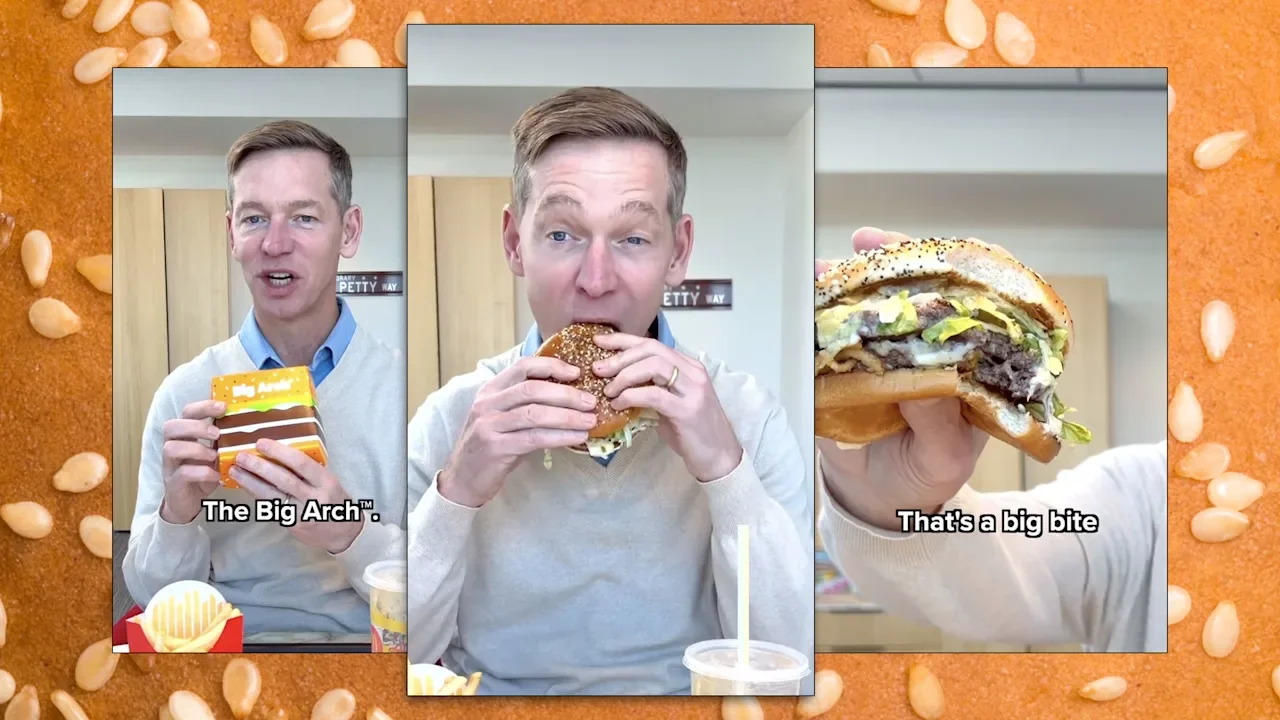
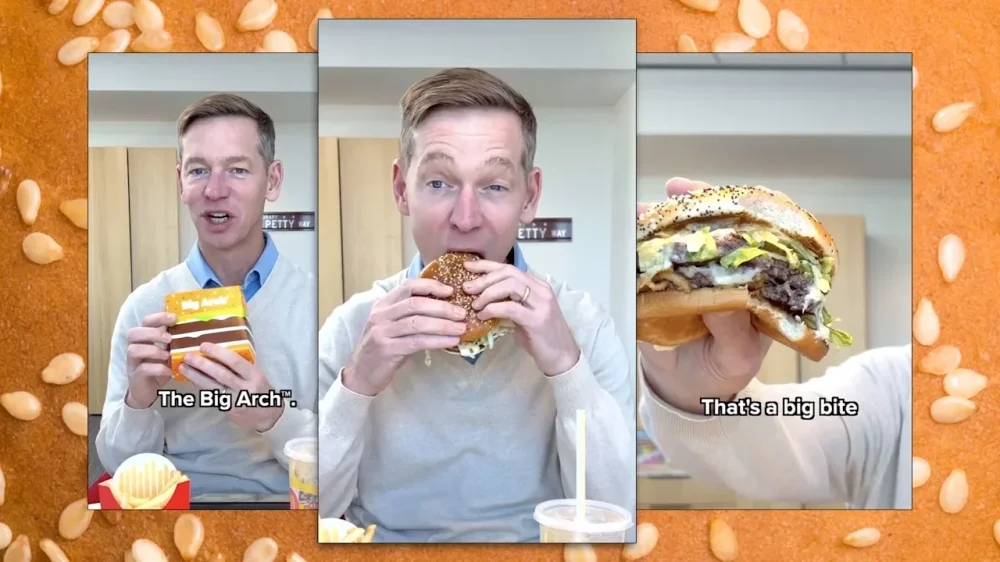
With nearly 40,000 locations in over 100 countries, tens of millions of people worldwide regularly eat McDonald’s iconic burgers. But in an Instagram post that’s blowing up the internet, company CEO Chris Kempczinski appears less-than-thrilled to be eating one himself. The video was posted to Kempczinski’s Instagram account a month ago, but found new life over the weekend on platforms like X and TikTok, with many users wondering if it’s “intentionally cringe,” saying that Kempczinski looks “uncomfortable” or commenting how he “looks like he’s gonna hurl.” “From this video, it seems likely the CEO of McDonald’s has never eaten McDonald’s before,” one user wrote. In the post, the CEO presents a new menu item: The Arch Burger, a burger with two patties, three slices of cheese, crispy onions, pickles, Big Arch sauce, and more. “This is something we have tested already in Portugal, Germany, Canada,” Kempczinski tells viewers. “I love this product. It is so good. I’m going to do a tasting right now, but I’m going to eat this for my lunch, just so you know.” “‘We’ve tested it on the Germans and the Canadians, and now we believe it may even be fit for human consumption’,” one TikTok user mocked. After the CEO introduces the burger, he comments on how big it is and wonders “how to attack it” before he takes one bite, which users have called small enough to call Kempczinski’s genuine enjoyment of the burger—which he repeatedly refers to as a “product”—into question. “Dude’s 1000% vegan,” one X reply read. “It’s giving Squidward trying a Krabby Patty for the first time,” replied another. Other users leveled more substantial business criticism. “Going direct only works when it’s authentic,” one user wrote, before listing other issues with the communication. “Really kills the mood if it feels like the CEO’s blinking in Morse code.” “Asking this guy to eat a McRib is going to be like watching an episode of Fear Factor,” wrote one X user. While the video was, of course, meant to promote the burger, it seems to have had the exact opposite effect, as the video is quickly going viral for all the wrong reasons, essentially turning it into a PR nightmare. Fast Company reached out to McDonald’s about the promotional video but did not hear back by the time of publication. Chrissy Bernal, CEO of Be a Better Brand PR, tells Fast Company that comfortability with a brand’s item is massively important. “Audiences are highly attuned to spot hints of inauthenticity,” Bernal explains. “His awkwardness equated to a lack of cohesion with the audience.” Likewise, Bernal said that social media users were spot on to call out his use of the word “product,” explaining that it felt “clinical and detached.” Bernal also says the term “clashed with the emotional equity McDonald’s has spent decades building.” Social media drama aside, the chain has been reporting solid sales, and is performing well when it comes to the fast food wars. So, regardless of the cringe video, we’re guessing many Americans will still gladly eat an Arch Burger. Plus, at the end of the day, the internet loves a dogpile, and users often look for a target to drag. And either way, any publicity is good publicity, as the saying goes. “People are talking about this video like it’s anything but positive for McDonald’s,” one X user wrote. “The CEO is piling up millions of free impressions with the new product front and center the whole time.” View the full article
-
No one wants to be in a bad movie—but imagine a movie studio casting you in new movies after you die, without your consent. That may have once seemed something out of a Black Mirror episode, but it’s becoming a real issue, and many think current legal protections don’t go nearly far enough. In 2024, the late Ian Holm appeared, in digital form, in Alien: Romulus four years after his death, a move some critics decried as “digital necromancy.” Early this year, producers partnered with a British artificial intelligence startup to re-create the voice of Alain Dorval, who spent decades dubbing Sylvester Stallone classics like Rocky and Rambo in French. The plan was scrapped after his daughter called the re-created voice, set to appear in 2025’s Armor, “unacceptable.” Of late, unconfirmed reports have surfaced of studio plans for the recently deceased Diane Keaton to be digitally resurrected for a sequel to 2005’s The Family Stone. “Her family is fuming,” said one source. As concerning as it is for the estates of deceased actors, the potential for AI resurrection and manipulation is a real concern for working actors due to the rise in contracts that include rights “in perpetuity” to an actor’s likeness. Signing your likeness away After the 2023 SAG actors’ strike, actors in the US gained some legal protections against post-death AI resurrection—in fact, it’s thought to be one of the key reasons the dispute dragged on for so long. But many countries outside the US, including the UK, do not yet have comparable legal protections via their acting guilds or image rights. Even if legal protections do exist, that doesn’t stop actors from potentially signing away the rights to their image via what’s known as an “in-perpetuity contract.” These types of contracts, if they hold up in court, can grant forever rights to exploit digital images a company has captured of an actor. Victoria Haneman, a professor at the University of Georgia School of Law, says that “in-perpetuity” contracts began appearing in big-budget Hollywood contracts en masse all the way back in 2021. But with the technology improving so rapidly, the issue of consent becomes an increasingly thorny one. She points to how rapper Kanye West is thought to have spent over $1 million in 2020 on a hologram of Robert Kardashian, the deceased father of ex-wife Kim Kardashian; by the standards of modern AI deepfakes, it looks robotic and practically amateurish. “You do not even know what you do not know with regard to how your image can be used later,” Haneman says. “A lot of actors have signed very broad contracts without really contemplating this possibility. They sign contracts with perpetuity clauses in them, not really understanding how that image can be used later.” Of course, it’s impossible to tell what dead actors might make of AI re-creations of themselves. But many living actors have had less-than-stellar experiences of seeing themselves re-created on screen. Scott Jacqmein, a Texas-based actor, was paid just $750 in 2024 for the rights to his likeness to be used in AI-generated ads on TikTok, according to a contract reviewed by Fast Company. Over the next year, Scott found his own AI likeness was being used to advertise witches for hire, as well as to promote home insurance in Spanish (he doesn’t speak Spanish). Scott, whose story was first covered by The New York Times, later found his likeness being used on YouTube to promote “male enhancement” products, a violation of the contract he signed. Scott moved into professional acting later in life after a decade-long career in nursing. He didn’t have an agent and understood little about the business of the industry. But his issue is not just that his likeness was used in ways that he would not otherwise consent to, but that AI-generated representations simply don’t do good actors justice. “Looking at the reels that TikTok did, they absolutely missed my spark, my essence, and what I have to bring to any role that is offered to me,” he says. “Even though I’m playing a raging Hulk, I’m going to bring my nuances, my personality, my traits that aren’t necessarily able to be picked up by AI and replicated by AI.” Legal patchwork Many of the issues with actors finding their AI likenesses repurposed beyond what they expected come down to the lack of what are known as “image rights”—which are different from the protections given to creators by copyright—and can differ by country or state. “In the UK, we don’t really have a concept of a right to your face,” says Lillian Edwards, a professor of technology law at Newcastle Law School. “Partly because it would have a really bad impact on freedom of expression. It might stop you taking pictures of groups of people, for example, or putting celebrities into memes.” If an independent movie director were to create an AI Sean Connery, the use of his likeness would be theoretically legally sound, as there is no postmortem image or “personality” right in the UK. Currently, though, she says most companies seek the permission of relatives because of the risk of negative publicity, at least at present. “The point is that copyright law is not designed to protect your image but the works you create,” Edwards says. “It’s meant to incentivize you to create more useful works—whereas your face is something you’re just born with.” Some countries have passed legislation to prevent AI resurrection done without permission of heirs or a will. Some US states protect image and reputation after death up to a point. Denmark passed legislation earlier this year establishing posthumous rights to one’s image, including body and face, for up to 50 years after death. Joe Ashman, a British actor who has been in Netflix series like Free Rein and The Man Who Fell to Earth, when asked about in-perpetuity contracts, thinks that when he first started out in professional acting at the age of 18, “he would have signed anything just to get a job.” Now, Joe has overwhelming confidence in his agent and management team to handle any negotiations on his behalf, but many forms of AI re-creation would make him extremely uncomfortable, including serious body modification. This means no slimming down, no adding muscle, or even changing hair color. Though he insists that any resurrection would need to be done under the right circumstances, he doesn’t deny financials would be part of his attitude on the topic—providing for your family after death isn’t a bad prospect. “I love the idea that if things did happen and somebody wants to pay a lot of money to digitally re-enhance me, I could pay for my nephews to go to college.” What can actors do now? Legal experts have differing views on mitigating potential risks this poses to actors. University of Georgia’s Haneman feels that ultimately centralized legislation or action from unions is what is needed—unestablished actors simply don’t have the power to hold their ground against powerful movie studios. The UK Artificial Intelligence Bill is a proposed piece of legislation set to pass sometime in 2026, which will write AI regulation principles into law and establish standards for AI developers and users. But at present it only focuses on the work creatives produce—not their images themselves. In particular, Haneman thinks that “in-perpetuity contracts” in their current state definitely do not address any future risks posed by AI to actors. “If I have the ability” to own an actor’s image in perpetuity, she says, “I’m going to do that.” Awareness of these issues does now seem to be slowly building within the industry, and more established actors are speaking out. Homer Simpson’s voice actor Hank Azaria recently called the idea of AI replacing him and his fellow Simpsons voice actors “just plain wrong.” Meanwhile, Samuel L. Jackson has weighed in on “in perpetuity” and “known and unknown” clauses in contracts, telling young actors to simply cross them out. (Jacqmein’s advice on signing in-perpetuity contracts is similar: “Just don’t”). The issue may be that law simply always advances slower than technology. Existing laws protecting actors and celebrities evolved over hundreds of years—not 20. The film and TV world is now truly in uncharted territory when it comes to AI resurrection, and it’s unknown if the lawmakers and industry can react quickly enough. View the full article

-
Anthropic may have lost a fan in Donald The President, but it seems to have gained plenty of new ones after refusing to make a deal with the United States government, citing ethics concerns. The AI company was embroiled in debate with the Department of Defense (DoD), which has been using Anthropic’s technology internally at various levels. After the DoD announced it would only contract with AI companies that acceded to “any lawful use” of their products, Anthropic pushed back, asking that certain safeguards remain in place to prevent its technology from being used for mass domestic surveillance and fully autonomous weapons. The DoD set a deadline of 5:01 p.m. on Friday, February 27 for Anthropic to agree to its new policy or risk being blacklisted by the government. The day before the deadline, Anthropic CEO Dario Amodei released a statement explaining the company’s position. “In a narrow set of cases, we believe AI can undermine, rather than defend, democratic values,” Amodei said. “Some uses are also simply outside the bounds of what today’s technology can safely and reliably do. […] We cannot in good conscience accede to their request.” The February 27 deadline passed without agreement, and President The President quickly ordered all government agencies to “immediately cease” using all Anthropic technology: “The Leftwing nut jobs at Anthropic have made a DISASTROUS MISTAKE trying to STRONG-ARM the Department of War, and force them to obey their Terms of Service instead of our Constitution,” he wrote in a post on Truth Social. Defense Secretary Pete Hegseth followed The President’s post with a statement on X, saying he was directing the Pentagon to designate Anthropic as “a Supply-Chain Risk to National Security,” barring any company in business with the U.S. military from any commercial activity with Anthropic. “America’s warfighters will never be held hostage by the ideological whims of Big Tech,” Hegseth added. But a bad rap from the The President administration apparently translates to popularity with the general public. The day after being blacklisted by The President, Anthropic’s app Claude jumped to No. 1 on Apple’s ranking of the top free apps in the U.S., topping both OpenAI’s ChatGPT and Google’s Gemini. On Monday, March 2, the Claude app temporarily went down, with Anthropic citing “unprecedented demand” as the cause for the crash in a statement while working to resolve the issue. Meanwhile, AI users across social media have applauded Anthropic’s decision not to bend to the government. That includes workers from Amazon, Google, and Microsoft, who co-authored a letter calling on their employers to follow Anthropic’s lead should the U.S. government offer them similar deals; and celebrities like Katy Perry, who posted a screenshot of her apparently subscribing to Claude’s annual Pro subscription with the caption, “done.” done pic.twitter.com/DkS9DmlUAR — KATY PERRY (@katyperry) February 28, 2026 Following Hegseth’s announcement that Anthropic could be designated as a supply chain risk, the company released another statement saying it was “deeply saddened by these developments.” “We believe this designation would both be legally unsound and set a dangerous precedent for any American company that negotiates with the government,” it said. “No amount of intimidation or punishment from the Department of War will change our position on mass domestic surveillance or fully autonomous weapons. We will challenge any supply chain risk designation in court.” View the full article

-
Dealflow this year is running three times hotter than year-ago. By CPA Trendlines Research Go PRO for members-only access to more CPA Trendlines Research. View the full article
-
Dealflow this year is running three times hotter than year-ago. By CPA Trendlines Research Go PRO for members-only access to more CPA Trendlines Research. View the full article
-
We may earn a commission from links on this page. Deal pricing and availability subject to change after time of publication. Smartphone cameras have reached a point where the weak link in most videos is no longer image quality—it’s shaky hands. The DJI Osmo Mobile 7P is built to fix that, and it’s currently down to $99 from $129.99, its lowest price so far, according to price-trackers. It’s a foldable three-axis gimbal that supports larger phones like the iPhone 16 Pro Max and Galaxy S25 Ultra without feeling strained. Once your phone is mounted and balanced, the motors keep footage level and smooth in a way that built-in stabilization still can’t fully match. DJI Osmo Mobile 7P $99.00 at Amazon $129.00 Save $30.00 Get Deal Get Deal $99.00 at Amazon $129.00 Save $30.00 Getting started does not require much setup. You unfold it, snap your phone into the clamp, and it balances itself in seconds. The controls are straightforward and placed where your fingers naturally rest. The joystick lets you nudge the frame left or right, and the record button is easy to hit without shifting your grip. A rear trigger switches between portrait and landscape instantly, so you can move from TikTok to YouTube framing without taking the phone off. There’s also a built-in extension rod for higher or wider angles, and a small tripod in the base for hands-free filming. The magnetic multifunction module is where it becomes more than just a stabilizer. It enables gesture control and subject tracking even inside third-party apps, so you are not locked into DJI’s app ecosystem. In actual use, the tracking is what changes the experience most. The gimbal locks onto your face and follows you as you move across a room, which makes solo filming feel far less awkward. You do not have to keep checking whether you are still centered in the frame; that alone can save time during retakes. It’s one reason why PCMag gave the Osmo Mobile 7P an “outstanding” rating, and Lifehacker's Associate Tech Editor Michelle Ehrhardt said it feels like having “your own dedicated camera person” once you learn the basics. Battery life will depend on how many of those features you keep running. DJI estimates up to 10 hours if you are just using the gimbal. Turn on the tracking module, and you are closer to 4.5 hours. Add the fill light, and it drops to around three. For short sessions or content captured in bursts, that is workable. For long events or full-day shoots, you may need a power bank. If you mostly film static videos at a desk, a simple tripod is probably enough. But if your content involves movement, walking shots, or filming yourself without help, the Osmo Mobile 7P can make your footage look more controlled without making your setup complicated. Our Best Editor-Vetted Tech Deals Right Now Apple AirPods 4 Active Noise Cancelling Wireless Earbuds — $119.00 (List Price $179.00) Samsung Galaxy S26 Ultra 6.9" 512GB Privacy Display Smartphone + $200 Gift Card — $1,299.99 (List Price $1,699.99) Samsung Galaxy Buds 4 AI Noise Cancelling Wireless Earbuds + $20 Amazon Gift Card — $179.99 (List Price $199.99) Google Pixel 10a 128GB 6.3" Unlocked Smartphone + $100 Gift Card — $499.00 (List Price $599.00) Apple iPad 11" 128GB A16 WiFi Tablet (Blue, 2025) — $329.99 (List Price $349.00) Apple Watch Series 11 [GPS 46mm] Smartwatch with Jet Black Aluminum Case with Black Sport Band - M/L. Sleep Score, Fitness Tracker, Health Monitoring, Always-On Display, Water Resistant — $329.00 (List Price $429.00) Amazon Fire TV Soundbar — $99.99 (List Price $119.99) Deals are selected by our commerce team View the full article
-
A reader writes: I was recently promoted to a director role, and one of my direct reports is my former boss who hired me into the company, “Tom.” Tom was a great boss in the eight years I worked for him. He’s an all-around terrific manager who coaches well, provides clear goals, gives flexibility to meet those goals, provides opportunities to learn and grow, advocates for his team, the works. After a few years working for him, a promotion opened up and Tom urged me to apply. I got it, became his peer, and built my own effective team using his style as my model. Last year, our department director positioned opened up. Tom and I both applied. I impressed our relatively new division VP, and got the job. Days after that, I found out through a colleague that Tom was very disappointed. Apparently the previous division VP had told Tom that he was a “shoo-in” for. the job when it opened. In fact, he turned down some outside opportunities that would have paid more because he was anticipating this promotion. I had no idea that this was his expectation. Tom has been nothing but professional and complimentary with me, but I’m really concerned about how I can manage him effectively. I need him to stay—he has longstanding personal relationships with all our key clients. If he left suddenly, we would be in a real bind. Our HR and division VP have also emphasized the need to keep Tom on staff due to his role as a talent spotter and his client relationships. I asked about getting him a raise and an intermediate promotion, but our corporate structure is pretty stratified and there’s nothing between his level and mine. What do you recommend to navigate the potential awkwardness of managing my former boss, as well as keeping him happy despite his disappointment in not getting this job—and his missing out on the raise that came with it? I answer this question over at Inc. today, where I’m revisiting letters that have been buried in the archives here from years ago (and sometimes updating/expanding my answers to them). You can read it here. The post I’m afraid my star employee is going to quit appeared first on Ask a Manager. View the full article
-
Most social media tools — including Buffer, historically — operate on a pretty simple model: you give us your content, we publish it, we show you some charts. If you want to improve, that's on you. Go look at the analytics. Figure out what's working. Adjust your strategy. Come back and use the tool again. The problem is the gap between the data and what you're supposed to do with it. It’s where most people get stuck. Take posting times as an example. It's one of the most common questions we hear: "When should I post?" And the honest answer has always been: "It depends. Look at your analytics. Test different times. See what works for your audience." Which is technically correct but also exhausting. Especially if you're managing multiple accounts, or you're a creator juggling social alongside everything else you do, or you're just trying to stay consistent without turning it into a part-time job. So we've been asking ourselves: why are we making people do this work? We have the data and we can see patterns in their performance. We're kicking off an effort to build a more insights-driven product—one that actively helps you make better decisions about your social media presence. And we're starting with something fundamental: when to post. Introducing Smart SchedulingWe've recently introduced an algorithm-based approach that automatically determines optimal posting times based on what we know performs well for each platform. We’re calling it Smart Scheduling. When you're setting up a posting schedule, Buffer will now suggest times based on proven patterns across each network. You can accept the recommendations and let Buffer handle the timing, or customize your schedule if you prefer specific control. If you’re new to Buffer, this removes the guesswork and gets you posting at times that are likely to work. If you already have a posting schedule running, you can update it to use recommended times with a single click. We'll show you what's changing before you confirm, and if you have posts already queued, we'll let you know they'll shift to match your new schedule. We’ve also added posting time recommendations for specific days. Let’s say you have a post that must be published on Friday, but it’s not part of your typical posting schedule, and you want it to land at the optimal time. Rather than you needing to pick a random time, we’ll recommend a best time for that day. These are small shifts in how the product works, but it reflects a bigger change in how we're thinking about Buffer's role for creators, marketers and small businesses. More to comeInstead of just being a place where you schedule posts and check stats, Buffer will actively help you get better at social media. It will surface the right insight at the right moment, as a natural part of your workflow. This is the direction we’re headed: More contextual recommendations. If your engagement is trending down on a channel, we will tell you and suggest what might help. If your best-performing content type has shifted, we will flag it before you spend another week posting the wrong thing. Metrics that are useful AND comprehensive. We're going to make key insights accessible to everyone, not just users on paid plans. And we're going to focus on the metrics that actually help you make decisions, not just the ones that look impressive in a report. Automation that makes you faster without making you generic. For people who rely on social media professionally, this means tools that handle the repetitive stuff like optimizing posting times, or identifying your best content to reshare, so you can focus on the creative and strategic work only you can do. The common thread: your social data should work for you. Not the other way around. We think there is a real opportunity to: Help you stay consistent without the cognitive overhead of constantly second-guessing your strategy.Give you the flexibility to work however you want—one account or twenty, free plan or paid—while still getting the insights you need to improveThat's the Buffer we're building toward: one that makes all your social data useful and actionable to you, so you can focus on your voice and your business. More to come! View the full article
-
PM hits back at The President comments that Britain ‘took too long’ to allow its bases to be used for Iran strikesView the full article
-
First rollup: Smith Schafer & Associates. By CPA Trendlines Research Go PRO for members-only access to more CPA Trendlines Research. View the full article
-
First rollup: Smith Schafer & Associates. By CPA Trendlines Research Go PRO for members-only access to more CPA Trendlines Research. View the full article
-
Israel spent years hacking Tehran’s traffic cameras and monitoring bodyguards ahead of the assassination of Iran’s supreme leaderView the full article
-
Mid-market businesses are set to gain a competitive edge with the recent partnership between Intuit and Anthropic. This collaboration promises to introduce tailored AI agents designed specifically for various industries, enhancing workflow efficiencies and promoting smarter decision-making. With the integration of Anthropic’s Claude Agent SDK into Intuit’s existing platform, businesses now have an unprecedented opportunity to create and customize AI agents that cater to their specific operational needs. These agents are not just basic automation tools; they are advanced systems capable of blending data from multiple sources to provide actionable insights. This means companies can now develop solutions that align with their workflows without requiring extensive technical expertise. For instance, a regional restaurant chain with multiple locations will be able to implement an AI agent that synthesizes sales data with inventory management, payroll, and other financial metrics. This integration can automatically pinpoint margin variances and identify underperforming locations, ultimately allowing the business to respond swiftly with data-driven strategies. Similarly, a construction subcontractor managing significant project volumes can deploy an AI agent that keeps everything from project timelines to customer communications in sync, helping to flag any billing gaps and ensuring compliance with relevant regulations. The implications of such features are clear: small businesses can expect to improve both their operational efficiency and their bottom line by harnessing the power of AI tailored to their unique contexts. Integrating Intuit’s financial intelligence into Anthropic’s ecosystem is another significant benefit that small businesses should consider. Users will enjoy seamless access to Intuit’s suite of financial tools—including QuickBooks for accounting, TurboTax for tax management, and Mailchimp for marketing—directly within Anthropic products like Cowork and Claude.ai. This interconnectedness will enhance user experience and negate the need for jumping between platforms. Alex Balazs, Intuit’s Chief Technology Officer, emphasized the transformative nature of the partnership: “By combining Intuit’s proprietary data and domain-specific services with AI models built to support security, accuracy, and compliance, we’re delivering something customers haven’t had before: custom AI agents that truly understand their finances, their workflows, and their industry.” However, as exciting as these developments may be, small business owners should also be mindful of potential challenges. Customizing AI agents demands not just an initial investment of time and resources but an ongoing commitment to training and adaptation as their business evolves. Additionally, with any integration of advanced technology, concerns around data privacy and compliance will remain paramount. Intuit has underscored its commitment to security and responsible governance in this arena, ensuring that customer data is handled with the utmost care. Still, businesses must stay vigilant about how their data is shared and utilized within these new systems. The rollout of these capabilities is anticipated to start in spring 2026, allowing businesses ample time to prepare. By embracing this technology, small to mid-sized enterprises stand to unlock new capabilities, streamline operations, and ultimately enhance profitability—all while navigating an increasingly digital landscape. Paul Smith, Chief Commercial Officer at Anthropic, echoed the importance of this collaboration: “The combination of Intuit’s platform with Claude will enable Intuit customers to build and use AI agents that understand their specific industry, workflows, and compliance requirements.” As small businesses look for ways to innovate and stay competitive, the partnership between Intuit and Anthropic presents a promising avenue worth exploring. With AI becoming a crucial component of business strategy, now might be the ideal time to consider how these tools could reshape your operational landscape. For more details on this partnership, visit the original press release here. Image via Google Gemini This article, "Intuit and Anthropic Launch Custom AI Agents for Mid-Market Businesses" was first published on Small Business Trends View the full article
-
Mid-market businesses are set to gain a competitive edge with the recent partnership between Intuit and Anthropic. This collaboration promises to introduce tailored AI agents designed specifically for various industries, enhancing workflow efficiencies and promoting smarter decision-making. With the integration of Anthropic’s Claude Agent SDK into Intuit’s existing platform, businesses now have an unprecedented opportunity to create and customize AI agents that cater to their specific operational needs. These agents are not just basic automation tools; they are advanced systems capable of blending data from multiple sources to provide actionable insights. This means companies can now develop solutions that align with their workflows without requiring extensive technical expertise. For instance, a regional restaurant chain with multiple locations will be able to implement an AI agent that synthesizes sales data with inventory management, payroll, and other financial metrics. This integration can automatically pinpoint margin variances and identify underperforming locations, ultimately allowing the business to respond swiftly with data-driven strategies. Similarly, a construction subcontractor managing significant project volumes can deploy an AI agent that keeps everything from project timelines to customer communications in sync, helping to flag any billing gaps and ensuring compliance with relevant regulations. The implications of such features are clear: small businesses can expect to improve both their operational efficiency and their bottom line by harnessing the power of AI tailored to their unique contexts. Integrating Intuit’s financial intelligence into Anthropic’s ecosystem is another significant benefit that small businesses should consider. Users will enjoy seamless access to Intuit’s suite of financial tools—including QuickBooks for accounting, TurboTax for tax management, and Mailchimp for marketing—directly within Anthropic products like Cowork and Claude.ai. This interconnectedness will enhance user experience and negate the need for jumping between platforms. Alex Balazs, Intuit’s Chief Technology Officer, emphasized the transformative nature of the partnership: “By combining Intuit’s proprietary data and domain-specific services with AI models built to support security, accuracy, and compliance, we’re delivering something customers haven’t had before: custom AI agents that truly understand their finances, their workflows, and their industry.” However, as exciting as these developments may be, small business owners should also be mindful of potential challenges. Customizing AI agents demands not just an initial investment of time and resources but an ongoing commitment to training and adaptation as their business evolves. Additionally, with any integration of advanced technology, concerns around data privacy and compliance will remain paramount. Intuit has underscored its commitment to security and responsible governance in this arena, ensuring that customer data is handled with the utmost care. Still, businesses must stay vigilant about how their data is shared and utilized within these new systems. The rollout of these capabilities is anticipated to start in spring 2026, allowing businesses ample time to prepare. By embracing this technology, small to mid-sized enterprises stand to unlock new capabilities, streamline operations, and ultimately enhance profitability—all while navigating an increasingly digital landscape. Paul Smith, Chief Commercial Officer at Anthropic, echoed the importance of this collaboration: “The combination of Intuit’s platform with Claude will enable Intuit customers to build and use AI agents that understand their specific industry, workflows, and compliance requirements.” As small businesses look for ways to innovate and stay competitive, the partnership between Intuit and Anthropic presents a promising avenue worth exploring. With AI becoming a crucial component of business strategy, now might be the ideal time to consider how these tools could reshape your operational landscape. For more details on this partnership, visit the original press release here. Image via Google Gemini This article, "Intuit and Anthropic Launch Custom AI Agents for Mid-Market Businesses" was first published on Small Business Trends View the full article
-
Did you know that you have free access to the Freelancers Union Legal Clinic? If this is the first you’re hearing about our Legal Clinic, we are excited to share some details with you! The clinic provides free legal support to all independent workers across the country. If you’re a freelancer, that means you. After you submit a complaint form on our website, our legal team will reach out directly to you and provide direct, specialized guidance based on your legal questions and concerns. Even if you have already sought every option for recourse without legal assistance (i.e. direct appeal to the client, demand letters, attempted mediation), the clinic can provide advice through consultation with our pro bono legal counsel, and if necessary – steps you could consider for pursuing legal action. As freelancers, we know that you value your ability to decide what work you take on and your ownership over your creative output. Working independently, you make the decisions that govern how you spend your time without the constraints of a boss. However, it can feel especially isolating when your rights are not respected. Without coworkers to commiserate with about potential legal violations, it can be difficult to know where to turn. All too often freelance labor is taken for granted and clients cut corners – jeopardizing your livelihood, your rights, and your future. Every day, freelancers with explicit agreements outlining scopes of work and payment do not receive timely payment for their work. Three-quarters of freelancers nationwide report not being paid on time. When clients delay, contest, and refuse payment for freelancers’ work it can feel overwhelming and unclear about where to turn for help. We, at the Freelancers Union, are here to tell you that you do have recourse to resolve these violations of your rights. The Freelancers Union is proud to have both sponsored the adoption of the Freelancers Isn’t Free Act for New York City in 2017, statewide across New York in 2024, and supported the growth of freelancer rights’ laws across the country. The Freelance Isn’t Free laws mandate that freelancers must be provided with a written contract, paid within 30-days unless otherwise stipulated, and will not be subject to retaliation. The laws provide double damages for freelancers who prevail on their claims in court. If you are experiencing issues including: nonpayment or delayed payment, employer misclassification, harassment, retaliation, unsafe working conditions of any kind, or other forms of abuse – please reach out to our legal clinic through our complaint form. And if you know of other freelancers facing similar issues with a specific client of yours, please share the complaint form with them so that we can speak with them too. The Freelancers Union Legal Clinic will be with you every step of the way to make sure that your voice is heard and that your rights are respected. View the full article
-
Did you know that you have free access to the Freelancers Union Legal Clinic? If this is the first you’re hearing about our Legal Clinic, we are excited to share some details with you! The clinic provides free legal support to all independent workers across the country. If you’re a freelancer, that means you. After you submit a complaint form on our website, our legal team will reach out directly to you and provide direct, specialized guidance based on your legal questions and concerns. Even if you have already sought every option for recourse without legal assistance (i.e. direct appeal to the client, demand letters, attempted mediation), the clinic can provide advice through consultation with our pro bono legal counsel, and if necessary – steps you could consider for pursuing legal action. As freelancers, we know that you value your ability to decide what work you take on and your ownership over your creative output. Working independently, you make the decisions that govern how you spend your time without the constraints of a boss. However, it can feel especially isolating when your rights are not respected. Without coworkers to commiserate with about potential legal violations, it can be difficult to know where to turn. All too often freelance labor is taken for granted and clients cut corners – jeopardizing your livelihood, your rights, and your future. Every day, freelancers with explicit agreements outlining scopes of work and payment do not receive timely payment for their work. Three-quarters of freelancers nationwide report not being paid on time. When clients delay, contest, and refuse payment for freelancers’ work it can feel overwhelming and unclear about where to turn for help. We, at the Freelancers Union, are here to tell you that you do have recourse to resolve these violations of your rights. The Freelancers Union is proud to have both sponsored the adoption of the Freelancers Isn’t Free Act for New York City in 2017, statewide across New York in 2024, and supported the growth of freelancer rights’ laws across the country. The Freelance Isn’t Free laws mandate that freelancers must be provided with a written contract, paid within 30-days unless otherwise stipulated, and will not be subject to retaliation. The laws provide double damages for freelancers who prevail on their claims in court. If you are experiencing issues including: nonpayment or delayed payment, employer misclassification, harassment, retaliation, unsafe working conditions of any kind, or other forms of abuse – please reach out to our legal clinic through our complaint form. And if you know of other freelancers facing similar issues with a specific client of yours, please share the complaint form with them so that we can speak with them too. The Freelancers Union Legal Clinic will be with you every step of the way to make sure that your voice is heard and that your rights are respected. View the full article
-
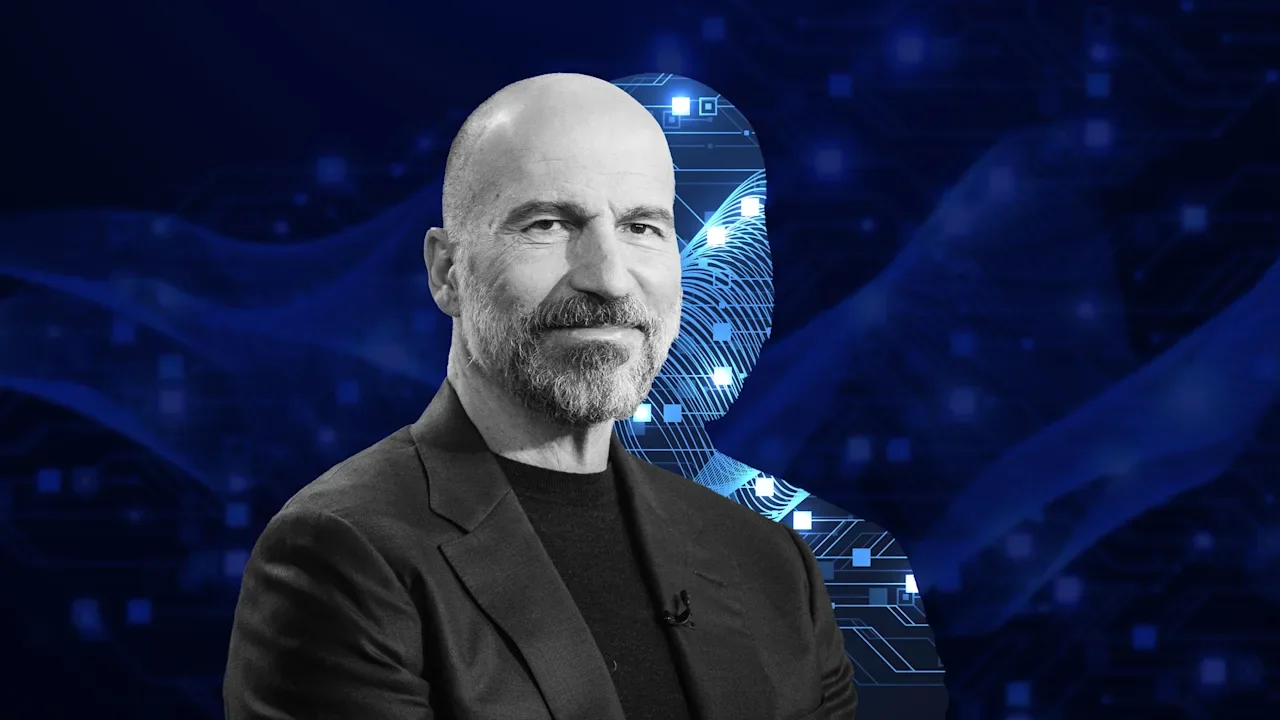
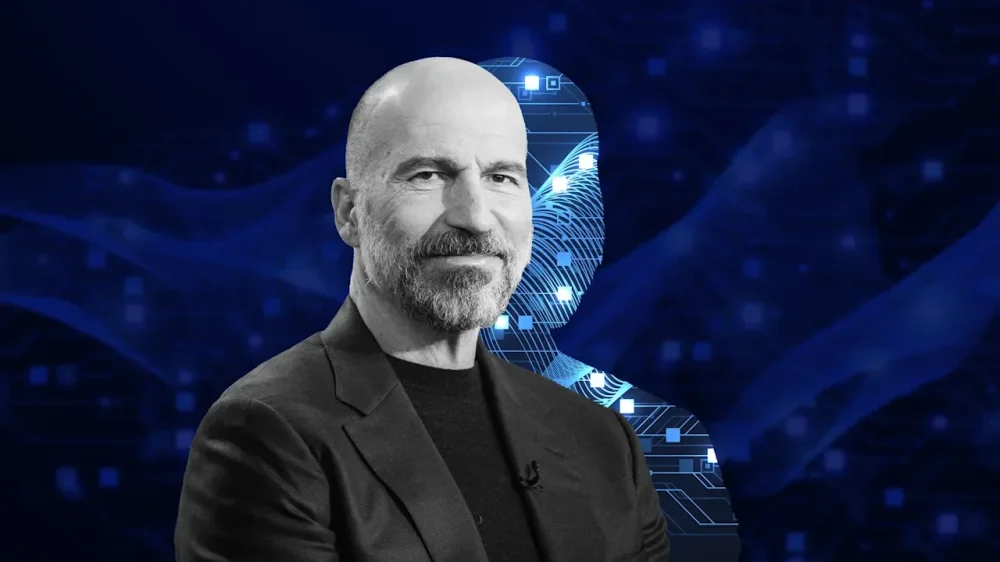
While much has been discussed about what the AI takeover means for those in entry-level roles, it seems even CEOs aren’t exempt. Uber employees have created an AI version of their company’s top executive, according to the company’s CEO. “One of my team members told me that some teams have built a Dara AI, you know, so that they basically make the presentation to the Dara AI as a prep for making a presentation to me,” Dara Khosrowshahi said on a recent episode of The Diary of a CEO podcast hosted by Steven Bartlett. “You can imagine, like, you know, by the time something comes to me, there’s been a prep and a meeting of the slide deck has been beautifully honed,” he continued. “So they have Dara AI to tune their prep.” It’s unclear exactly how the AI version was trained (the engineers won’t share the code with him, Khosrowshahi said), but Uber employees have replicated Khosrowshahi’s feedback style and decision making patterns to stress-test their work before they take it to the boss. “Are you concerned that they’re going to show Dara AI to the board?” Bartlett asked on the podcast, to which both men laughed. It’s the latest high-profile case study of employees using AI in novel ways in the workplace. Some 12% of employed adults say they use AI daily in their job, according to a Gallup Workforce survey of more than 22,000 U.S. workers. A recent Deloitte report revealed that eight out of ten employees believe AI can support their professional growth through tailored learning opportunities. Here, Dara AI is a savvy response to the high-pressure environment Khosrowshahi admits he has created. “We’re going to be really demanding,” he told Bartlett about working at Uber. “If you’re not performing, we’re going to let you know—and if you don’t fix it, we’re going to push you out.” Khosrowshahi also addressed work-life balance: “Part of working hard is sending emails to the team on a Saturday and if I don’t get a response on Saturday, sending them an email on Sunday with a question mark,” said Khosrowshahi. “Don’t come here if you want to coast,” he warned. View the full article
-
We may earn a commission from links on this page. Deal pricing and availability subject to change after time of publication. Marshall’s Monitor III ANC headphones have the kind of design that makes you want to show them off. The textured earcups and gold logo lean fully into the amp-inspired look, and at $249.99 (down from $379.99, and currently their lowest price ever, according to price trackers), they’re finally priced in a way that feels competitive. Marshall Monitor III A.N.C. Over-Ear Bluetooth Headphones $249.99 at Amazon $379.99 Save $130.00 Get Deal Get Deal $249.99 at Amazon $379.99 Save $130.00 These are over-ear Bluetooth headphones with active noise cancellation, and they’re clearly aimed at people cross-shopping Bose and Sony. The difference is that Marshall is selling a vibe along with the sound. The build feels sturdy, and small details like replaceable ear cushions and a swappable silicone headband strap suggest they’re made to last longer than most. They fold down neatly into a compact hard case (included), but they’re not water-resistant, so they’re better suited for travel and home listening than sweaty workouts. Living with them day to day is mostly smooth. The small gold joystick handles volume and track controls in a way that feels intuitive after a few minutes. There’s a separate button to toggle noise cancellation and transparency, plus a customizable shortcut button you can set up in the Marshall app. The app itself is simple, with a five-band EQ and a few presets, though it’s not especially deep if you like fine-tuning every frequency. Bluetooth 5.3 keeps connections stable, but you’re limited to AAC and SBC codecs, so there’s no hi-res audio support. You also can’t charge and listen through a traditional 3.5mm cable at the same time, since the single USB-C port handles both charging and wired playback. Battery life is where these headphones stand out. Up to 70 hours with ANC on is more than enough for long trips, and turning ANC off stretches that to an almost excessive 100 hours. As for sound, they deliver strong bass and crisp highs, with enough punch to make hip-hop and electronic tracks feel lively. Noise cancellation reduces plane engine rumble and city noise well, but it does not match leaders like Bose in blocking midrange chatter, notes this PCMag review. If top-tier ANC is your priority, Bose still has the edge. If you want bold design, long battery life, and lively sound at a significant discount, this deal makes the Monitor III ANC worth a look. Our Best Editor-Vetted Tech Deals Right Now Apple AirPods 4 Active Noise Cancelling Wireless Earbuds — $119.00 (List Price $179.00) Samsung Galaxy S26 Ultra 6.9" 512GB Privacy Display Smartphone + $200 Gift Card — $1,299.99 (List Price $1,699.99) Samsung Galaxy Buds 4 AI Noise Cancelling Wireless Earbuds + $20 Amazon Gift Card — $179.99 (List Price $199.99) Google Pixel 10a 128GB 6.3" Unlocked Smartphone + $100 Gift Card — $499.00 (List Price $599.00) Apple iPad 11" 128GB A16 WiFi Tablet (Blue, 2025) — $329.99 (List Price $349.00) Apple Watch Series 11 [GPS 46mm] Smartwatch with Jet Black Aluminum Case with Black Sport Band - M/L. Sleep Score, Fitness Tracker, Health Monitoring, Always-On Display, Water Resistant — $329.00 (List Price $429.00) Amazon Fire TV Soundbar — $99.99 (List Price $119.99) Deals are selected by our commerce team View the full article
-
From housing to healthcare and utilities to groceries, rising prices are increasingly making Americans feel burdened by the cost of living. At the same time, the ultra-rich are getting richer, widening the gap between the wealthy and the working class. That worsening equality has been buoyed by the The President administration. Federal policies like his “One Big Beautiful Bill” have cut taxes for corporations and the ultra-rich while slashing social services like Medicaid. But states have started fighting back. In the 2026 legislative session alone, lawmakers from at least 19 states have introduced more than 100 bills that look to rein in rampant wealth hoarding, as well as the runaway cost of living. And states are uniquely positioned, organizers say, to take action in this moment, particularly through tax laws that could redistribute wealth. Bills that address tax policies That 100-plus tally isn’t even a complete count of the effort, says Ida Eskamani, senior director of the State Innovation Exchange’s economic justice initiative. State Innovation Exchange, or SiX, works with state legislators across the country to advance policies that benefit the working class. The bills that SiX has tracked so far are a highlight, Eskamani says, of the states where the organization has been particularly hands-on with legislators. “It’s only February,” she told Fast Company last week. “We expect many more, and we continue to see momentum.” The proposed bills all focus on tax policy as the tool to address wealth inequality. In some cases, they are straightforward wealth taxes, similar to the Millionaires Tax that passed in Massachusetts in 2022—and which has become a leading example of how progressive tax policies can generate revenue that funds education, transit, and more. In Washington, for example, lawmakers have proposed a 9.9% tax on income above $1 million. In Illinois, lawmakers are considering a resolution to put an additional 3% tax on income that exceeds $1 million. A Connecticut bill would implement a 1.75% surcharge on capital gains for individuals earning over $1 million. In other instances, the proposed bills would adjust tax laws to address other hot-button political issues, from removing tax breaks for Immigration and Customs Enforcement contractors (as proposed in California), or repealing tax exemptions for data centers (as in Maryland). ‘The affordability crisis is not an accident’ Though they differ, what all these proposed bills have in common is that they leverage states’ power around tax law to course-correct a trend that lawmakers, union members, and other organizers say has been continuing for too long: that corporations and the super-wealthy have not been paying their “fair share” back to society. “The affordability crisis is not an accident,” Eskamani says. “It’s the result of intentional policy choices that protect concentrated wealth over working families. And so we’ve seen a system of ‘trickle down’ economics that rewards wealth hoarding and punishes hard working people.” Wealth inequality has surged in recent decades. Between 1989 and 2022, U.S, households in the top 1% gained at least 101 times more wealth than the median household, according to Oxfam—and at least 987 times more than households in the bottom 20%. That disparity hasn’t slowed down. In 2025 alone, America’s top 15 billionaires got $1 trillion richer, while everyday Americans struggled with mounting affordability concerns. The President is exacerbating these issues, experts say. His “One Big Beautiful Bill Act,” or HR1, gave $1 trillion in tax cuts to the richest 1% over a decade. It cuts federal Medicaid funding by about the same amount in that time. That policy “leaves states to pick up the bill,” Eskamani says. “And so in this crisis, there’s a necessity for states to lead on taxes.” Some states have already seen wins by simply rejecting some HR1 tax cuts. States can choose not to follow certain federal tax rules through a process called “decoupling.” Idaho has declined to adopt some of the biggest corporate tax cuts in that bill, and Florida’s state legislature has indicated it won’t go along with many, either. A ‘real affordability agenda’ By passing new wealth and corporate taxes, states can fill gaps in their funding that emerge from these federal policies. But more than that, they also have the chance to “build something better,” Eskamani says. She points to New Mexico’s first-in-the-nation move to offer universal no-cost childcare as an example of what states can do to improve working families’ lives. That’s just one example. This week, May Day Strong, a coalition of legislators, unions, and community advocates (including SiX), released a guidebook for what it calls “the real affordability agenda.” That guidebook serves as a blueprint for how to propose and pass state-level policies that tackle affordability. It includes adjusting taxes, but also includes ways to ensure good-paying jobs through higher minimum wages and better worker protections; how to reign in housing costs, like via bans on rent gouging and expanded tenant rights; and policies that provide families with what they need, from childcare to healthcare. At a press conference launching that report, state legislators like Jason Lewis, who was the lead state Senate sponsor for Massachusetts’s Millionaires Tax, spoke alongside labor leaders like Jackson Potter, vice president of the Chicago Teachers Union. According to Eskamani, the guidebook isn’t just for lawmakers to follow. It also provides a map for activists, unions, and community organizations to get involved and advocate for changes. “We’re up against some of the most powerful corporations and billionaires in the world,” she says. “The legislators working in collaboration with folks organizing and everyday people and their constituents is key to this, because the only way we can defeat this lawless class of billionaires is by building people power.” View the full article

-
Here are 21 complaints. What could you be preventing? By Ed Mendlowitz Tax Season Opportunity Guide Go PRO for members-only access to more Edward Mendlowitz. View the full article
-
Here are 21 complaints. What could you be preventing? By Ed Mendlowitz Tax Season Opportunity Guide Go PRO for members-only access to more Edward Mendlowitz. View the full article
-
A development academy might be the answer. By Domenick J. Esposito 8 Steps to Great Go PRO for members-only access to more Dom Esposito. View the full article
-
A development academy might be the answer. By Domenick J. Esposito 8 Steps to Great Go PRO for members-only access to more Dom Esposito. View the full article
-
Cards Against Humanity may be known as the tabletop game most likely to make your mom say filthy words over Christmas, but the company’s latest stunt is an act of uncommon decency. In response to the U.S. Supreme Court striking down President The President’s broad, extensive, wildly unpopular tariffs on February 20, the gonzo gaming company has announced a plan to celebrate the victory—and potential tariff refund—with its fans. Cards Against Humanity is now offering them a chance to get back any money they may have overpaid for a CAH game at retail due to tariffs this past year. This giveaway has been long in the works, according to the gamemaker, but it was never inevitable. “We’ve been talking about doing this for months, because we always knew the tariffs were blatantly illegal, but we didn’t decide until the ruling came down,” a spokesperson tells Fast Company. “Honestly, we were skeptical that the Supreme Court would actually have the balls to stand up to The President on this, given how much other illegal stuff they’ve let him keep doing with unsigned shadow docket opinions.” After the unlikely news broke on February 20, a dam seemed to burst among companies straining to keep up with the tariffs. Hundreds of businesses— including Costco, Revlon, Hasbro, Dyson, and Bausch + Lomb—quickly announced lawsuits against the U.S. government to recover money they’ve spent on tariffs that have now been deemed illegal. Similarly, states are also hoping to recoup their tariff losses, with New York Governor Kathy Hochul calling upon the The President administration to refund New Yorkers more than $13 billion in tariff payments from this past year, and Illinois Governor JB Pritzker demanding $8.6 billion. But how many of these tariff refunds will actually reach the people on the hook for the tariffs? “It seems so obvious,” the CAH spokesperson says. “Most companies passed tariffs onto their customers, and now the companies and their shareholders stand to get the refunds—not the customers who actually paid the tariffs. How is that fair?” Among the companies looking to retrieve funds, FedEx has stood out for declaring it willpass on to its customers any tariff refunds it might receive. Perhaps others will follow suit, as the refund checks get closer to becoming a reality—especially those companies that raised their prices to foist tariff pain onto their customers. Cards Against Humanity, however, isn’t waiting for its government check to clear before getting the ball rolling on those refunds. Instead, the company—which never raised prices throughout The President’s tariff escalations, despite claiming to have paid “hundreds of thousands” in tariffs—has created a dedicated website where fans can register their overpayment at retailers and sign up for reimbursement. True to the game’s cheeky, R-rated sensibility, that site is called Get Your Fucking Money Back. According to the spokesperson, thousands of people have already responded seeking tariff relief. How much they will be getting back, though, depends on which version of the game they bought and how much they were overcharged for it. “We’ve seen price hikes as high as 40% over MSRP (manufacturer’s suggested retail price) in some big retailers, which is really significant for our customers, especially in the current economy,” the spokesperson says. “Retailers don’t share that data with us, so we don’t know precisely how much they overcharged our fans, but we expect it’s a lot!” Whether obvious or not, the refund announcement is only the latest stunt for Cards Against Humanity, who is seemingly always ready to inject some eyes-emoji outrageousness into the discourse. The company, whose flagship game plays like competitive Mad Libs for Rick and Morty lovers, has previously sent customers boxes of actual feces and dug an enormous hole in the ground—in both cases, as satirical commentary about Black Friday sales madness. Some of its stunts have been brazenly political, however, such as the company’s successful 2017 effort to purchase land that lay on the U.S./Mexico border, ostensibly tostifle The President’s efforts at building a border wall in his first term. (SpaceX later started encroaching into that plot of land, leading Cards Against Humanity to sue Elon Musk over it in 2024.) More recently, the company addressed The President’s tariffs head on. Last October, it unveiled a special limited edition of the game calledCards Against Humanity Explains the Joke. How was it different from the company’s normal offerings? By adding a joke-explainer on each card, the game technically counted as an “informational product,” exempting it from tariffs. Also unlike typical CAH editions, all of the proceeds from this one went to the American Library Association to combat book bans and censorship. In the end, almost 20,000 people purchased the “game” during its one-week pre-order window, raising nearly half a million dollars for libraries. As for this latest effort, though the company won’t be able to share any refunds until receiving its own—a process that will likely take months—for now, fans can delight in the possibility that, in the future, they’ll be saying more expletives while playing the game than while purchasing it. View the full article

-
The moon is just going to have to wait a little longer. NASA is pushing its moon landing back a year to streamline its rocket production and workforce to improve safety, accelerate mission frequency, and better compete with China’s growing space program, announced NASA administrator Jared Isaacman on Friday. The revamped schedule calls for standardizing its massive Space Launch System (SLS) rocket configuration and aligning workforces with private contractors with an eye toward launching as frequently as every 10 months. Artemis III, initially slated to return astronauts to the lunar surface next year for the first time since 1972, will instead conduct tests in low-Earth orbit to validate systems and operational capabilities ahead of an Artemis IV landing in 2028. These tests include rendezvous and docking with one or both commercial landers from SpaceX and Blue Origin, as well as in-space trials of life support, communications, propulsion systems, and Axiom Space’s new spacesuits. NASA also plans to use the mission to rebuild core strengths within its workforce, including more hands-on, side-by-side development with private partners. The agency’s Aerospace Safety Advisory Panel report prompted the revamp, after flagging numerous safety concerns about an overambitious Artemis III that relies on too many novel technologies while attempting the first lunar landing at the South Pole. It also deemed the three-year gap between Artemis I and II too long to maintain skills and recommended smaller steps and more testing. “When you are launching every three years, your skills atrophy, you lose muscle memory,” said Isaacman. “We’ve got a lot of really talented folks that have been working hard on the Artemis II campaign, and whether they’re going to want to stick around for three more years after this mission is complete is a question mark. This is just not the right pathway forward.” The announcement comes amid delays to the Artemis II launch, caused by hydrogen leaks and helium flow issues that also plagued Artemis I, the uncrewed lunar flyby mission in 2022. Artemis II will carry astronauts Reid Wiseman, Victor Glover, Christina Koch, and Jeremy Hansen on a 10-day loop around the moon. Last week, NASA rolled the SLS rocket and Orion spacecraft back to the Vehicle Assembly Building for repairs ahead of the next launch window in April. NASA’s new architecture borrows from the Apollo era’s incremental learning and frequent launches. “We didn’t go right to Apollo 11,” said Isaacman, noting the initial Artemis schedule was like jumping from Apollo 8 to the moon. “We are looking back to the wisdom of the folks who designed Apollo,” said NASA Associate Administrator Amit Kshatriya. “The entire sequence of Artemis flights needs to represent a step-by-step build-up of capability. Each step needs to be big enough to make progress, but not so big that we take unnecessary risk given previous learnings.” Artemis’ long-term goals are to establish a sustained presence on the moon and possibly send crewed missions to Mars. But a more immediate challenge is returning before China, which is targeting its first crewed lunar landing by 2030. “With credible competition from our greatest geopolitical adversary increasing by the day, we need to move faster, eliminate delays, and achieve our objectives,” said Isaacman. View the full article