ResidentialBusiness
Administrators
-
Joined
-
Last visited
Everything posted by ResidentialBusiness
-
 I'm someone who routinely switches between Mac and Windows. It's a hazard of being a tech writer. But the thing is, I'm so used to the user friendliness in macOS that whenever I shift to Windows mode, there are some hiccups. Windows tends to throw up walls where there really shouldn't be any. I used to just white-knuckle through it, but that was before I fully embraced PowerToys. PowerToys is a collection of utilities made by Microsoft itself. It's free to download on GitHub, or a myriad of other places, and unlike with Windows 11, Microsoft actually adds useful and interesting features to it every couple of weeks. You can download and install PowerToys from the GitHub page, the Microsoft Store, or using Windows Package Manager. Here are a few of PowerToys utilities that have become a must for me (after installing the app, you really should browse all that it offers to see what strikes your fancy). If you took them away, I wouldn't be sure how to use my Windows PC anymore—this thing should really come pre-installed. Command Palette Credit: Khamosh Pathak These days, Windows Search can come across a little heavy and bloated, just like the Start menu. While it’s fine for opening apps once in a while, I can’t really use it for anything more than that. Plus, I’m a macOS user, so I’m used to Spotlight Search’s lightning-fast keyboard launcher. While you can use third-party keyboard launchers on Windows now (Raycast being the latest addition), my favorite option is actually Microsoft’s own keyboard launcher, the Command Palette that’s included in PowerToys. Like Spotlight Search, it’s light and fast, and you can assign any shortcut to it. I use it to quickly launch apps, search for files, and even search for open windows. Command Palette even has a really helpful Bookmarks feature that I use a lot. I’ve created bookmarks for quickly opening frequently used folders like Downloads and Screenshots, and even websites. A Bookmark can be triggered by searching for a keyword, or through its own dedicated keyboard shortcut (I’ve set one up for my Downloads folder, which is really handy). For more, I’ve got a detailed guide on setting up Command Palette that you should check out. Light Switch Credit: Microsoft It's mind-boggling that Windows 11 still does not have an automatic dark mode. Over the years, Windows 11's dark theme has slowly expanded to cover all the apps you care about. But there's no easy way to toggle it on, and there's no way to automatically turn it on in evening, or on a schedule. So, of course, there's a PowerToys utility for that. The recently added Light Switch utility lets you create a global custom keyboard shortcut for turning on the dark theme. For the Schedule section in the Light Switch utility, you can set up an automated schedule based on fixed hours, or using the local sunset time, which is how I use it. Peek Credit: Microsoft I shuffle between macOS and Windows 11 all the time, and there are some creature comforts in macOS that I now have a hard time living without. One of them is the ability to quickly preview any file in Finder by pressing the Space button. There is no such option in Windows, and until now, you needed a third-party app to enable it, which wasn't always reliable. Now, Microsoft has included a similar feature in PowerToys' Peek utility. Once enabled, you can press the Space bar after selecting any file to preview it. You can then use the arrow keys to navigate to other files in the folder as well. Press Enter to open the file in the default app. Text ExtractorWindows has a built-in OCR (or text extractor) feature for images that can be accessed via the Snipping Tool. But it's really slow. When I'm in a pinch and I need to copy text from an image, I prefer to use the Text Extractor utility in PowerToys instead. It's much faster. Use the dedicated shortcut Windows + Shift + T to see an overlay on the screen. Use the mouse to highlight the area that you want to transcribe. Once you let go of the cursor, the text will be saved to your clipboard automatically. Image Resizer Credit: Microsoft This is one of those PowerToys utilities that really should be a default Windows 11 feature by now. Resizing an image, or a batch of them, is something that I need to do often, as someone who writes online for a living. But you might need it too, from time to time, to compress or resize images for an online upload, or a presentation. Instead of opening a heavy image editing program and manually resizing images one by one, use this plugin instead. Once enabled, it will show up in the right-click menu in File Explorer. Select one or multiple images, click Resize with Image Resizer, choose one of the size presets (you can add more presets from the PowerToys app) or create a custom resolution, click the Resize button, and that's it. AwakeI can't imagine using Windows without PowerToys' Awake utility. It adds a handy little tray icon that I can click to keep my PC awake longer than the default sleep settings would allow for. I have a custom-built PC with a big honking power supply, so I take my auto-sleep settings quite seriously. But there are times when I'm downloading a large file in the background, or I have a long AI task running, when I want the PC to stay on. That's where the Awake utility really helps. You can choose to keep your PC awake indefinitely, or for 30 minutes, 1 hour, or any custom duration. FancyZones Credit: Microsoft The built-in window management in Windows is quite impressive in its own right, but it falls short for my workflow. I usually like working with my text editor, a browser, and Slack open at all times. Because I have a large monitor, I have my writing app and Slack on one side and a browser on another. But it can take me a while to get everything set up. This is where FancyZones really helps. I can create custom zones for each app I use that helps me puts them where I want them, and resizes them, too. To set this up for yourself, first go to the FancyZones section in PowerToys utilities. Here, open the Zones Editor and create a new custom layout. You can now use the mouse to move the zones around and to add a new zone. Once a layout is enabled, all you have to do is move a window around and hold down the Shift key. Dropping the window in any designated zone to instantly resize it. View the full article
 -
Effective team building and bonding activities can greatly improve team dynamics and collaboration. By implementing icebreakers, problem-solving challenges, and creative workshops, you can promote stronger connections among team members. Engaging in outdoor adventures and competitive games cultivates trust and camaraderie, as well as reflection sessions and goal-setting exercises guarantee that everyone is aligned and accountable. Comprehending these activities is essential for boosting morale and improving performance, so let’s explore each option in detail to maximize your team’s potential. Key Takeaways Icebreaker activities like Team Bonding Bingo foster connections and create a relaxed environment for team members to share interests. Collaborative problem-solving challenges enhance teamwork and critical thinking, boosting productivity and adaptability under pressure. Creative workshops, such as art and cooking classes, reveal hidden talents and promote inclusivity while enhancing innovative thinking. Competitive team challenges and outdoor adventures strengthen communication and trust, providing opportunities for bonding through shared achievements. Reflection sessions and goal-setting exercises improve team cohesion, aligning members on common objectives and promoting accountability. Icebreaker Activities to Foster Connections Icebreaker activities play a crucial role in nurturing connections among team members, especially when initiating a new project or meeting. These activities are designed to reduce tension and create a relaxed atmosphere for interaction. By participating in team building bonding activities, you’ll learn about each other’s interests, backgrounds, and experiences, cultivating a sense of belonging. Quick and engaging icebreaker games can easily be integrated into meetings, proving effective for maintaining team morale and connection, particularly in hybrid or remote settings. Research shows that structured icebreaker sessions can greatly improve team cohesion and communication, which leads to improved collaboration and productivity. If you’re considering professional help, team building agencies can offer customized icebreaker activities to guarantee inclusivity and value for all members from the outset. Emphasizing these activities sets a positive tone for engagement, making everyone feel welcomed and empowered as you begin your project. Collaborative Problem-Solving Challenges Collaborative problem-solving challenges are crucial for enhancing team dynamics, as they push you and your colleagues to work together under pressure. These activities simulate real-world scenarios, demanding creative solution development while nurturing resilience and adaptability. Team Dynamics Enhancement Engaging in problem-solving challenges can considerably improve team dynamics by cultivating collaboration among members who must work together to tackle real-world scenarios. These activities augment critical thinking and adaptability skills, simulating high-pressure situations where effective communication and decision-making are vital. Teams that participate in these exercises see improved cohesion and trust, which leads to more efficient project outcomes. By appreciating diverse perspectives and leveraging individual strengths, teams generate innovative solutions. Implementing structured challenges can boost productivity by 20% and markedly reduce conflict resolution time. Activity Type Benefits Key Skills Developed High-pressure scenarios Enhances communication Critical thinking Team debates Cultivates trust Adaptability Role-playing Encourages diverse perspectives Decision-making Creative Solution Development Building on the improved team dynamics achieved through various activities, creative solution development through collaborative problem-solving challenges plays a significant role in cultivating innovation. These challenges improve critical thinking skills by requiring teams to work together to generate innovative solutions for complex scenarios. By simulating real-world pressures, participants practice decision-making and adaptability, which directly translates to better performance in daily tasks. Engaging in structured problem-solving activities nurtures a sense of achievement, promoting camaraderie and shared commitment. Research shows that teams regularly participating in these challenges exhibit improved communication and collaboration, leading to faster project completions and increased efficiency. Incorporating diverse perspectives boosts creativity and strengthens interpersonal relationships, creating a more cohesive and resilient team dynamic. Pressure Test Scenarios When teams face pressure test scenarios, they encounter challenges that mimic high-stakes environments, pushing them to work together to devise effective solutions. These collaborative problem-solving challenges bolster critical thinking and decision-making skills, as participants must analyze problems, brainstorm ideas, and implement solutions in real-time. Engaging in these scenarios nurtures trust and communication among team members, requiring them to rely on each other’s strengths and expertise. Research shows that teams involved in pressure tests develop improved resilience and adaptability, crucial for today’s dynamic work environments. By incorporating these scenarios into team-building activities, organizations can see measurable improvements in performance, with reports indicating up to a 25% increase in project efficiency following such interventions. Engaging Team Games for Fun and Bonding In terms of engaging team games, interactive icebreaker activities can kick off your bonding experience whilst breaking down barriers. Competitive team challenges not merely promote a spirit of friendly rivalry but likewise improve collaboration and goal-setting among team members. Furthermore, collaborative problem-solving games encourage creative thinking, making them an excellent choice for reinforcing teamwork in any setting. Interactive Icebreaker Activities Interactive icebreaker activities play a crucial role in nurturing communication and building connections among team members. These engaging games help create a relaxed atmosphere where everyone feels comfortable sharing. Here are three effective icebreakers: Team Bonding Bingo: Encourage teammates to discover fun facts about each other, cultivating deeper connections. The Newlywed Game: Let team members guess each other’s preferences to promote engagement and awareness. Improv Games: Help participants overcome inhibitions, leading to laughter and camaraderie. Incorporating these activities can improve interaction and strengthen relationships. Whether it’s through a fun guessing game or sharing experiences, you’ll find that these icebreakers make a lasting impact on team dynamics, facilitating collaboration and open communication. Competitive Team Challenges Competitive team challenges serve as an effective way to improve team dynamics as well as promote a spirit of friendly rivalry among members. These challenges encourage collaboration, requiring you to strategize and work together to tackle tasks. Research shows that teams engaged in competitive activities report higher satisfaction and a stronger sense of achievement. Additionally, these challenges can be customized to accommodate various dynamics and interests, ensuring all members participate actively. Challenge Type Benefits Example Activity Physical Activities Boosts team morale Relay races Creative Challenges Cultivates innovative thinking Team-based art projects Problem-Solving Improves critical thinking skills Escape room scenarios Incorporating competition creates memorable experiences that strengthen relationships and improve team cohesion. Collaborative Problem-Solving Games Collaborative problem-solving games provide an excellent opportunity for teams to improve their critical thinking skills as they work together to find solutions under pressure. These activities not only improve communication but also encourage creative thinking and effective decision-making. Here are three key benefits: Real-World Relevance: Many games simulate actual workplace scenarios, helping teams adapt to challenges they may face on the job. Shared Success: Working together toward a common goal cultivates a sense of achievement and strengthens team bonds through shared experiences. Faster Conflict Resolution: Research indicates that teams engaged in these activities experience improved communication, leading to quicker resolution of conflicts. Incorporating collaborative problem-solving games into team-building efforts can greatly improve overall performance and cohesion. Outdoor Adventures for Team Building When teams engage in outdoor adventures for team building, they not merely promote physical fitness but in addition improve communication and trust among members in a natural setting. Activities like hiking and obstacle courses encourage you to step outside your comfort zone, improving problem-solving skills and resilience. As you tackle challenges together, these shared experiences in nature help to strengthen team dynamics, allowing for bonding over achievements in a less formal environment. Outdoor exercises often require collaboration and strategic thinking, which can bolster interpersonal relationships and improve overall team performance. Furthermore, research shows that physical activity in outdoor settings can reduce stress levels and uplift morale. This leads to a more positive workplace culture and increased employee satisfaction. Creative Workshops to Enhance Team Dynamics After exploring how outdoor adventures can strengthen team bonds, it’s important to contemplate another effective method for improving team dynamics: creative workshops. These sessions encourage collaboration and creativity among team members, offering a relaxed environment to bond during learning new skills together. Here are three key benefits of creative workshops: Improved Teamwork: Activities like art, cooking, or craft sessions promote a sense of accomplishment, reinforcing teamwork and cooperation. Skill Sharing: Participants can teach each other, revealing hidden talents and promoting inclusivity, which strengthens relationships within the team. Enhanced Problem-Solving: Engaging in creative tasks boosts innovative thinking, positively impacting organizational performance. Research shows that teams involved in creative workshops report increased engagement and satisfaction, contributing to a positive workplace culture and improved communication. Reflection Sessions for Growth and Understanding Reflection sessions serve as a vital component in promoting growth and comprehension within teams, as they provide an opportunity for members to share insights and lessons learned from previous activities. These sessions can be structured or informal, allowing flexibility in how you and your teammates choose to reflect on your experiences. By engaging in reflection, you promote open dialogue, which improves collective understanding and support among team members. Regularly holding these sessions can strengthen interpersonal relationships and increase overall team cohesion. To maximize effectiveness, it’s important that you assess dynamics and outcomes during these reflections, as this allows for adjustments in future activities. Goal-Setting Exercises for Shared Objectives Setting clear goals is essential for any team aiming to achieve shared objectives, as it nurtures alignment and focus on common outcomes. Engaging in goal-setting exercises can markedly improve your team’s performance. Here are three effective strategies: Collaborative Definition: Work together to define shared objectives. This promotes a sense of unity and guarantees everyone is on the same page. Brainstorming and Prioritization: Use brainstorming sessions to clarify aspirations, and prioritize these goals to establish measurable targets for success. Incorporate Accountability: Introduce measures that hold team members accountable. This builds commitment and a stronger sense of ownership over collective objectives. Research shows that teams involved in structured goal-setting are 20% more likely to achieve desired outcomes. Regularly revisiting and adjusting goals based on feedback can maintain motivation, guaranteeing continuous alignment and improving team cohesion. Frequently Asked Questions What Are Some Fun Team Bonding Activities? You can choose from various fun team bonding activities to improve collaboration. Consider escape room challenges, where problem-solving skills are put to the test. Cooking challenges encourage teamwork and creativity. Scavenger hunts promote cooperation as you explore your surroundings. If remote, virtual game nights and trivia contests keep everyone engaged. Outdoor adventures can likewise build trust and enhance team dynamics. These activities not only cultivate relationships but additionally contribute to overall project efficiency and morale. What Are the 5 C’s of Team Building? The 5 C’s of team building are Connection, Communication, Collaboration, Creativity, and Commitment. Connection focuses on building interpersonal relationships among team members. Communication improves clarity and effectiveness in interactions. Collaboration emphasizes working together in the direction of shared goals. Creativity encourages innovative problem-solving and idea generation. Finally, Commitment nurtures dedication to the team and its objectives, ensuring that everyone is aligned and motivated to achieve the desired outcomes, thereby enhancing overall team performance. What Are the 7 C’s of Team Building? The 7 C’s of team building are Communication, Collaboration, Cooperation, Coordination, Commitment, Creativity, and Conflict Resolution. You need effective Communication to share information clearly. Collaboration allows you to work together in the direction of shared goals, whereas Cooperation nurtures mutual support. Coordination guarantees everyone’s efforts align effectively. Commitment drives team members to stay engaged, Creativity encourages innovative solutions, and Conflict Resolution helps you manage disagreements constructively, in the end improving relationships and team dynamics. What Are the Big Five Teamwork Activities? The Big Five teamwork activities are intended to improve collaboration and problem-solving skills. Escape Room Challenges require small teams to solve puzzles under pressure. Cooking Team Challenges bring participants together in a kitchen setting to create a meal. Scavenger Hunt Adventures involve solving clues as a group. Volunteer Service Projects engage teams in community service, promoting empathy. Finally, Innovation Hackathons focus on creating new ideas collaboratively, emphasizing creativity and teamwork. Conclusion Incorporating a variety of team-building activities can greatly improve team dynamics and collaboration. By engaging in icebreakers, problem-solving challenges, and creative workshops, teams can nurture connections and improve communication. Outdoor adventures and team games promote trust and camaraderie, as well as reflection sessions and goal-setting exercises guarantee alignment in the direction of shared objectives. Regularly implementing these activities not merely boosts morale but additionally cultivates a positive workplace culture, eventually driving team success and improving overall performance. Image via Google Gemini This article, "7 Effective Team Building and Bonding Activities to Strengthen Teams" was first published on Small Business Trends View the full article
-
Effective team building and bonding activities can greatly improve team dynamics and collaboration. By implementing icebreakers, problem-solving challenges, and creative workshops, you can promote stronger connections among team members. Engaging in outdoor adventures and competitive games cultivates trust and camaraderie, as well as reflection sessions and goal-setting exercises guarantee that everyone is aligned and accountable. Comprehending these activities is essential for boosting morale and improving performance, so let’s explore each option in detail to maximize your team’s potential. Key Takeaways Icebreaker activities like Team Bonding Bingo foster connections and create a relaxed environment for team members to share interests. Collaborative problem-solving challenges enhance teamwork and critical thinking, boosting productivity and adaptability under pressure. Creative workshops, such as art and cooking classes, reveal hidden talents and promote inclusivity while enhancing innovative thinking. Competitive team challenges and outdoor adventures strengthen communication and trust, providing opportunities for bonding through shared achievements. Reflection sessions and goal-setting exercises improve team cohesion, aligning members on common objectives and promoting accountability. Icebreaker Activities to Foster Connections Icebreaker activities play a crucial role in nurturing connections among team members, especially when initiating a new project or meeting. These activities are designed to reduce tension and create a relaxed atmosphere for interaction. By participating in team building bonding activities, you’ll learn about each other’s interests, backgrounds, and experiences, cultivating a sense of belonging. Quick and engaging icebreaker games can easily be integrated into meetings, proving effective for maintaining team morale and connection, particularly in hybrid or remote settings. Research shows that structured icebreaker sessions can greatly improve team cohesion and communication, which leads to improved collaboration and productivity. If you’re considering professional help, team building agencies can offer customized icebreaker activities to guarantee inclusivity and value for all members from the outset. Emphasizing these activities sets a positive tone for engagement, making everyone feel welcomed and empowered as you begin your project. Collaborative Problem-Solving Challenges Collaborative problem-solving challenges are crucial for enhancing team dynamics, as they push you and your colleagues to work together under pressure. These activities simulate real-world scenarios, demanding creative solution development while nurturing resilience and adaptability. Team Dynamics Enhancement Engaging in problem-solving challenges can considerably improve team dynamics by cultivating collaboration among members who must work together to tackle real-world scenarios. These activities augment critical thinking and adaptability skills, simulating high-pressure situations where effective communication and decision-making are vital. Teams that participate in these exercises see improved cohesion and trust, which leads to more efficient project outcomes. By appreciating diverse perspectives and leveraging individual strengths, teams generate innovative solutions. Implementing structured challenges can boost productivity by 20% and markedly reduce conflict resolution time. Activity Type Benefits Key Skills Developed High-pressure scenarios Enhances communication Critical thinking Team debates Cultivates trust Adaptability Role-playing Encourages diverse perspectives Decision-making Creative Solution Development Building on the improved team dynamics achieved through various activities, creative solution development through collaborative problem-solving challenges plays a significant role in cultivating innovation. These challenges improve critical thinking skills by requiring teams to work together to generate innovative solutions for complex scenarios. By simulating real-world pressures, participants practice decision-making and adaptability, which directly translates to better performance in daily tasks. Engaging in structured problem-solving activities nurtures a sense of achievement, promoting camaraderie and shared commitment. Research shows that teams regularly participating in these challenges exhibit improved communication and collaboration, leading to faster project completions and increased efficiency. Incorporating diverse perspectives boosts creativity and strengthens interpersonal relationships, creating a more cohesive and resilient team dynamic. Pressure Test Scenarios When teams face pressure test scenarios, they encounter challenges that mimic high-stakes environments, pushing them to work together to devise effective solutions. These collaborative problem-solving challenges bolster critical thinking and decision-making skills, as participants must analyze problems, brainstorm ideas, and implement solutions in real-time. Engaging in these scenarios nurtures trust and communication among team members, requiring them to rely on each other’s strengths and expertise. Research shows that teams involved in pressure tests develop improved resilience and adaptability, crucial for today’s dynamic work environments. By incorporating these scenarios into team-building activities, organizations can see measurable improvements in performance, with reports indicating up to a 25% increase in project efficiency following such interventions. Engaging Team Games for Fun and Bonding In terms of engaging team games, interactive icebreaker activities can kick off your bonding experience whilst breaking down barriers. Competitive team challenges not merely promote a spirit of friendly rivalry but likewise improve collaboration and goal-setting among team members. Furthermore, collaborative problem-solving games encourage creative thinking, making them an excellent choice for reinforcing teamwork in any setting. Interactive Icebreaker Activities Interactive icebreaker activities play a crucial role in nurturing communication and building connections among team members. These engaging games help create a relaxed atmosphere where everyone feels comfortable sharing. Here are three effective icebreakers: Team Bonding Bingo: Encourage teammates to discover fun facts about each other, cultivating deeper connections. The Newlywed Game: Let team members guess each other’s preferences to promote engagement and awareness. Improv Games: Help participants overcome inhibitions, leading to laughter and camaraderie. Incorporating these activities can improve interaction and strengthen relationships. Whether it’s through a fun guessing game or sharing experiences, you’ll find that these icebreakers make a lasting impact on team dynamics, facilitating collaboration and open communication. Competitive Team Challenges Competitive team challenges serve as an effective way to improve team dynamics as well as promote a spirit of friendly rivalry among members. These challenges encourage collaboration, requiring you to strategize and work together to tackle tasks. Research shows that teams engaged in competitive activities report higher satisfaction and a stronger sense of achievement. Additionally, these challenges can be customized to accommodate various dynamics and interests, ensuring all members participate actively. Challenge Type Benefits Example Activity Physical Activities Boosts team morale Relay races Creative Challenges Cultivates innovative thinking Team-based art projects Problem-Solving Improves critical thinking skills Escape room scenarios Incorporating competition creates memorable experiences that strengthen relationships and improve team cohesion. Collaborative Problem-Solving Games Collaborative problem-solving games provide an excellent opportunity for teams to improve their critical thinking skills as they work together to find solutions under pressure. These activities not only improve communication but also encourage creative thinking and effective decision-making. Here are three key benefits: Real-World Relevance: Many games simulate actual workplace scenarios, helping teams adapt to challenges they may face on the job. Shared Success: Working together toward a common goal cultivates a sense of achievement and strengthens team bonds through shared experiences. Faster Conflict Resolution: Research indicates that teams engaged in these activities experience improved communication, leading to quicker resolution of conflicts. Incorporating collaborative problem-solving games into team-building efforts can greatly improve overall performance and cohesion. Outdoor Adventures for Team Building When teams engage in outdoor adventures for team building, they not merely promote physical fitness but in addition improve communication and trust among members in a natural setting. Activities like hiking and obstacle courses encourage you to step outside your comfort zone, improving problem-solving skills and resilience. As you tackle challenges together, these shared experiences in nature help to strengthen team dynamics, allowing for bonding over achievements in a less formal environment. Outdoor exercises often require collaboration and strategic thinking, which can bolster interpersonal relationships and improve overall team performance. Furthermore, research shows that physical activity in outdoor settings can reduce stress levels and uplift morale. This leads to a more positive workplace culture and increased employee satisfaction. Creative Workshops to Enhance Team Dynamics After exploring how outdoor adventures can strengthen team bonds, it’s important to contemplate another effective method for improving team dynamics: creative workshops. These sessions encourage collaboration and creativity among team members, offering a relaxed environment to bond during learning new skills together. Here are three key benefits of creative workshops: Improved Teamwork: Activities like art, cooking, or craft sessions promote a sense of accomplishment, reinforcing teamwork and cooperation. Skill Sharing: Participants can teach each other, revealing hidden talents and promoting inclusivity, which strengthens relationships within the team. Enhanced Problem-Solving: Engaging in creative tasks boosts innovative thinking, positively impacting organizational performance. Research shows that teams involved in creative workshops report increased engagement and satisfaction, contributing to a positive workplace culture and improved communication. Reflection Sessions for Growth and Understanding Reflection sessions serve as a vital component in promoting growth and comprehension within teams, as they provide an opportunity for members to share insights and lessons learned from previous activities. These sessions can be structured or informal, allowing flexibility in how you and your teammates choose to reflect on your experiences. By engaging in reflection, you promote open dialogue, which improves collective understanding and support among team members. Regularly holding these sessions can strengthen interpersonal relationships and increase overall team cohesion. To maximize effectiveness, it’s important that you assess dynamics and outcomes during these reflections, as this allows for adjustments in future activities. Goal-Setting Exercises for Shared Objectives Setting clear goals is essential for any team aiming to achieve shared objectives, as it nurtures alignment and focus on common outcomes. Engaging in goal-setting exercises can markedly improve your team’s performance. Here are three effective strategies: Collaborative Definition: Work together to define shared objectives. This promotes a sense of unity and guarantees everyone is on the same page. Brainstorming and Prioritization: Use brainstorming sessions to clarify aspirations, and prioritize these goals to establish measurable targets for success. Incorporate Accountability: Introduce measures that hold team members accountable. This builds commitment and a stronger sense of ownership over collective objectives. Research shows that teams involved in structured goal-setting are 20% more likely to achieve desired outcomes. Regularly revisiting and adjusting goals based on feedback can maintain motivation, guaranteeing continuous alignment and improving team cohesion. Frequently Asked Questions What Are Some Fun Team Bonding Activities? You can choose from various fun team bonding activities to improve collaboration. Consider escape room challenges, where problem-solving skills are put to the test. Cooking challenges encourage teamwork and creativity. Scavenger hunts promote cooperation as you explore your surroundings. If remote, virtual game nights and trivia contests keep everyone engaged. Outdoor adventures can likewise build trust and enhance team dynamics. These activities not only cultivate relationships but additionally contribute to overall project efficiency and morale. What Are the 5 C’s of Team Building? The 5 C’s of team building are Connection, Communication, Collaboration, Creativity, and Commitment. Connection focuses on building interpersonal relationships among team members. Communication improves clarity and effectiveness in interactions. Collaboration emphasizes working together in the direction of shared goals. Creativity encourages innovative problem-solving and idea generation. Finally, Commitment nurtures dedication to the team and its objectives, ensuring that everyone is aligned and motivated to achieve the desired outcomes, thereby enhancing overall team performance. What Are the 7 C’s of Team Building? The 7 C’s of team building are Communication, Collaboration, Cooperation, Coordination, Commitment, Creativity, and Conflict Resolution. You need effective Communication to share information clearly. Collaboration allows you to work together in the direction of shared goals, whereas Cooperation nurtures mutual support. Coordination guarantees everyone’s efforts align effectively. Commitment drives team members to stay engaged, Creativity encourages innovative solutions, and Conflict Resolution helps you manage disagreements constructively, in the end improving relationships and team dynamics. What Are the Big Five Teamwork Activities? The Big Five teamwork activities are intended to improve collaboration and problem-solving skills. Escape Room Challenges require small teams to solve puzzles under pressure. Cooking Team Challenges bring participants together in a kitchen setting to create a meal. Scavenger Hunt Adventures involve solving clues as a group. Volunteer Service Projects engage teams in community service, promoting empathy. Finally, Innovation Hackathons focus on creating new ideas collaboratively, emphasizing creativity and teamwork. Conclusion Incorporating a variety of team-building activities can greatly improve team dynamics and collaboration. By engaging in icebreakers, problem-solving challenges, and creative workshops, teams can nurture connections and improve communication. Outdoor adventures and team games promote trust and camaraderie, as well as reflection sessions and goal-setting exercises guarantee alignment in the direction of shared objectives. Regularly implementing these activities not merely boosts morale but additionally cultivates a positive workplace culture, eventually driving team success and improving overall performance. Image via Google Gemini This article, "7 Effective Team Building and Bonding Activities to Strengthen Teams" was first published on Small Business Trends View the full article
-
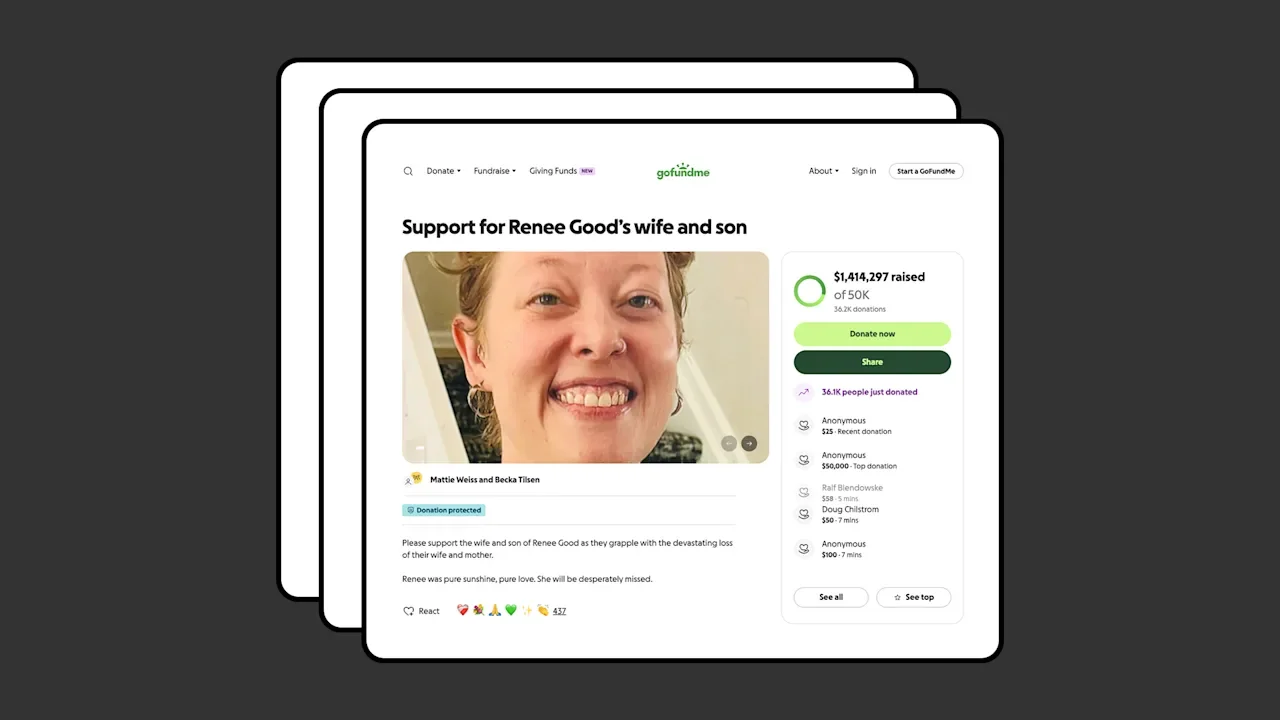
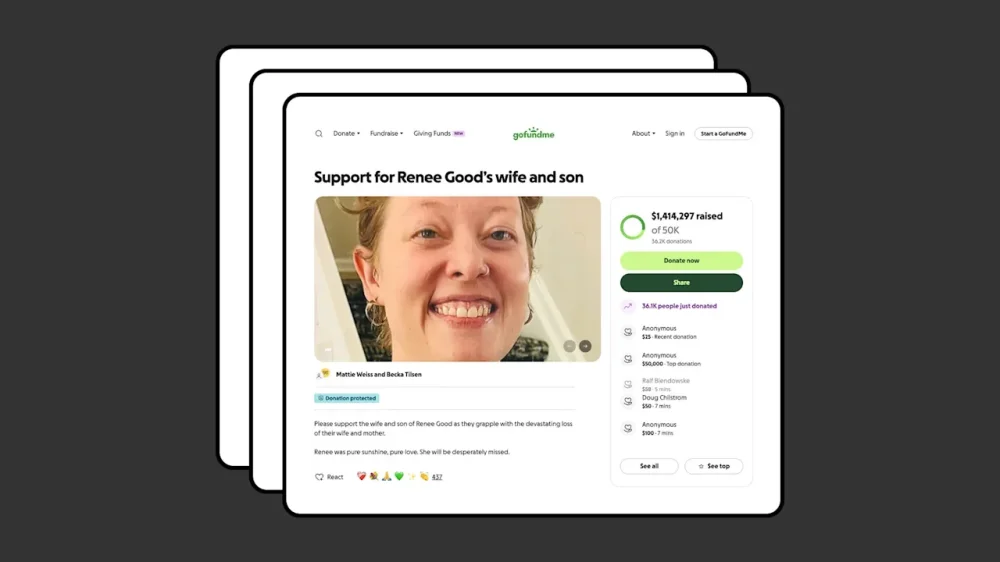
A viral crowd-funding campaign that has raised over $1.4 million and counting for Renee Good has been verified authentic, a spokesperson for GoFundMe told Fast Company. On Wednesday, January 7, an Immigration and Customs Enforcement (ICE) agent fatally shot Good in Minneapolis. The 37-year-old woman was killed while turning her vehicle away from the officer—as multiple videos clearly show, despite the federal government’s claim to the contrary. Immediately in the wake of Good’s death, a GoFundMe campaign for her wife, Becca, and six-year-old son appeared online and far surpassed its $50,000 goal with hundreds of thousands of donations. (Good also had two older children from her first marriage, according to media reports.) GoFundMe initially told Fast Company that it would hold the funds while it worked to verify the campaign. By that point it had, already raised close to half a million dollars. “Tidal wave of care” One of the campaign’s co-organizers is listed as Becka Tilson, who is identified as a “friend of the family.” “Thank you. Thank you. Thank you. We are here brokenhearted and in awe of your generosity,” Tilson wrote in an update on Thursday. “We will be adding Becca, Renee’s partner as a beneficiary as soon as possible. They will have direct access to all of these funds. Thank you again for your compassion. They feel this tidal wave of care and it really matters.” Some of Good’s GoFundMe contributors used the “words of support” section to applaud her and deliver scathing takedowns of the The President administration and its supporters. “We all know the truth we saw with our own eyes. This should not have happened,” wrote one donor. Another contributor wrote, “When an unarmed mother can be murdered by a masked mercenary in the streets of the United States, do you feel free?” Comments came from across the world and political parties: “A real conservative would support your constitutional right to protest peacefully and condemn your murder, despite political views. A real conservative would never celebrate your death. Rest In Peace.” The The President administration’s false narrative Under Secretary Kristi Noem, the Department of Homeland Security (DHS) has claimed that Good used her vehicle as a weapon against ICE officers “in an act of domestic terrorism.” President The President has also peddled this narrative, claiming in an interview with The New York Times that Good ran over the officer with her car. A series of news outlets with forensic teams have concluded that the DHS and The President variation of events are simply false. Videos from multiple angles show Good turning her car away from the officer, not onto him. Minneapolis Mayor Jacob Frey didn’t mince words in his response to the shooting, “ICE — Get the f*** out of Minneapolis. We do not want you here. Your stated purpose for being in this City is to create some kind of safety, but you are doing exactly the opposite.” Another ICE shooting on Thursday On Thursday, an ICE officer shot a married couple in Portland—claiming that they, too, had weaponized their vehicle against the agents. DHS Assistant Secretary Tricia McLaughlin further claimed that the couple were involved in the “vicious Venezuelan gang Tren de Aragua.” Oregon attorney general Dan Rayfield has opened an investigation into the shooting. Portland Mayor Keith Wilson also called for ICE to leave the city and shed doubt on the U.S. government’s version of events: “We know what the federal government says happened here. There was a time when we could take them at their word. That time has long passed.” View the full article
-
Star fund manager says he is ‘acutely disappointed’ and feels ‘the opposite of pride’ about returns for investors View the full article
-
In a rare move, NASA is cutting a mission aboard the International Space Station short after an astronaut had a medical issue. The space agency said Thursday the U.S.-Japanese-Russian crew of four will return to Earth in the coming days, earlier than planned. NASA canceled its first spacewalk of the year because of the health issue. The space agency did not identify the astronaut or the medical issue, citing patient privacy. The crew member is now stable. NASA officials stressed that it was not an onboard emergency, but are “erring on the side of caution for the crew member,” said Dr. James Polk, NASA’s chief health and medical officer. Polk said this was the NASA’s first medical evacuation from the space station although astronauts have been treated aboard for things like toothaches and ear pain. The crew of four returning home arrived at the orbiting lab via SpaceX in August for a stay of at least six months. The crew included NASA’s Zena Cardman and Mike Fincke along with Japan’s Kimiya Yui and Russia’s Oleg Platonov. Fincke and Cardman were supposed to carry out the spacewalk to make preparations for a future rollout of solar panels to provide additional power for the space station. It was Fincke’s fourth visit to the space station and Yui’s second time, according to NASA. This was the first spaceflight for Cardman and Platonov. “I’m proud of the swift effort across the agency thus far to ensure the safety of our astronauts,” NASA administrator Jared Isaacman said. Three other astronauts are currently living and working aboard the space station including NASA’s Chris Williams and Russia’s Sergei Mikaev and Sergei Kud-Sverchkov, who launched in November aboard a Soyuz rocket for an eight-month stay. They’re due to return home in the summer. NASA has tapped SpaceX to eventually bring the space station out of orbit by late 2030 or early 2031. Plans called for a safe reentry over ocean. The Associated Press Health and Science Department receives support from the Howard Hughes Medical Institute’s Department of Science Education and the Robert Wood Johnson Foundation. The AP is solely responsible for all content. —Adithi Ramakrishnan, AP Science Writer View the full article

-
Visa has recently taken a significant step in the digital payments landscape by launching USDC settlement in the United States. This initiative opens up new avenues for small businesses and financial institutions, enabling them to settle obligations using Circle’s USDC, a fully reserved, dollar-denominated stablecoin. With over $3.5 billion in annualized stablecoin settlement volume, this move signals a transformation in how businesses can manage their transactions and treasury operations. The new settlement option allows U.S. issuers and acquirers to process transactions more efficiently over blockchain technology, promising benefits such as faster fund movement, seven-day availability, and improved operational resilience—attributes that can be game-changers for small business owners. “Visa is expanding stablecoin settlement because our banking partners are not only asking about it – they’re preparing to use it,” said Rubail Birwadker, Global Head of Growth Products and Strategic Partnerships at Visa. “Financial institutions are looking for faster, programmable settlement options that integrate seamlessly with their existing treasury operations.” This sentiment indicates that the shift towards digital currencies is not just a trend but a prepared adaptation by financial institutions to better serve their clients. With traditional settlement options typically tethered to a five-business-day window, the introduction of a seven-day settlement process benefits businesses operating on weekends and holidays. This flexibility allows small businesses to maintain liquidity and cash flow more effectively, enabling them to react swiftly to market demands or unexpected expenses. Several early banking participants, including Cross River Bank and Lead Bank, have already begun utilizing the USDC settlement capability. Lead Bank’s CEO, Jackie Reses, emphasized the importance of speed and precision in treasury operations, stating, “This capability brings speed and precision to treasury operations and helps us deliver modern financial services to the communities we serve.” This highlights how even small community banks can leverage cutting-edge technology to offer better service to local businesses. While the technological advantages of stablecoin settlement are compelling, small business owners should also consider potential challenges associated with this transition. The integration of blockchain technology may require an adjustment period in terms of staff training and technological upgrades. For businesses that haven’t previously dealt with cryptocurrencies, ensuring compliance and understanding regulatory frameworks can be complex and resource-intensive. However, Visa has launched its Stablecoins Advisory Practice to help financial institutions navigate this evolving landscape, offering strategic guidance on market fit and implementation. Such resources can ease the learning curve for small business owners looking to adopt these new systems. Visa’s stablecoin settlement framework also emphasizes interoperability, bridging traditional payment structures with blockchain-based systems. This offers small businesses a wider array of choices in payment processing, increasing competition and potentially lowering transaction fees. The implications of Visa’s move extend beyond immediate financial operations. As the market adjusts and more businesses begin to embrace stablecoins, there could be increased pressure on tech infrastructure to manage these new transaction types and the accompanying flows of money. Small business owners will need to stay informed about these developments, considering how they might impact their operations and customer relationships. Though challenges exist, the opportunity to modernize treasury operations and enhance financial liquidity is unprecedented. By integrating stablecoin capabilities into existing systems, small businesses can not only catch up with larger corporations but also position themselves as forward-thinking players in their respective industries. As Visa gears up to broaden its USDC settlement availability through 2026, small business owners are encouraged to engage with their financial institutions to understand how they might benefit from this significant digital payments development. For more detailed information, you can read the full press release here. Image via Google Gemini This article, "Visa Introduces USDC Settlement in U.S., Revolutionizing Payment Speed" was first published on Small Business Trends View the full article
-
Visa has recently taken a significant step in the digital payments landscape by launching USDC settlement in the United States. This initiative opens up new avenues for small businesses and financial institutions, enabling them to settle obligations using Circle’s USDC, a fully reserved, dollar-denominated stablecoin. With over $3.5 billion in annualized stablecoin settlement volume, this move signals a transformation in how businesses can manage their transactions and treasury operations. The new settlement option allows U.S. issuers and acquirers to process transactions more efficiently over blockchain technology, promising benefits such as faster fund movement, seven-day availability, and improved operational resilience—attributes that can be game-changers for small business owners. “Visa is expanding stablecoin settlement because our banking partners are not only asking about it – they’re preparing to use it,” said Rubail Birwadker, Global Head of Growth Products and Strategic Partnerships at Visa. “Financial institutions are looking for faster, programmable settlement options that integrate seamlessly with their existing treasury operations.” This sentiment indicates that the shift towards digital currencies is not just a trend but a prepared adaptation by financial institutions to better serve their clients. With traditional settlement options typically tethered to a five-business-day window, the introduction of a seven-day settlement process benefits businesses operating on weekends and holidays. This flexibility allows small businesses to maintain liquidity and cash flow more effectively, enabling them to react swiftly to market demands or unexpected expenses. Several early banking participants, including Cross River Bank and Lead Bank, have already begun utilizing the USDC settlement capability. Lead Bank’s CEO, Jackie Reses, emphasized the importance of speed and precision in treasury operations, stating, “This capability brings speed and precision to treasury operations and helps us deliver modern financial services to the communities we serve.” This highlights how even small community banks can leverage cutting-edge technology to offer better service to local businesses. While the technological advantages of stablecoin settlement are compelling, small business owners should also consider potential challenges associated with this transition. The integration of blockchain technology may require an adjustment period in terms of staff training and technological upgrades. For businesses that haven’t previously dealt with cryptocurrencies, ensuring compliance and understanding regulatory frameworks can be complex and resource-intensive. However, Visa has launched its Stablecoins Advisory Practice to help financial institutions navigate this evolving landscape, offering strategic guidance on market fit and implementation. Such resources can ease the learning curve for small business owners looking to adopt these new systems. Visa’s stablecoin settlement framework also emphasizes interoperability, bridging traditional payment structures with blockchain-based systems. This offers small businesses a wider array of choices in payment processing, increasing competition and potentially lowering transaction fees. The implications of Visa’s move extend beyond immediate financial operations. As the market adjusts and more businesses begin to embrace stablecoins, there could be increased pressure on tech infrastructure to manage these new transaction types and the accompanying flows of money. Small business owners will need to stay informed about these developments, considering how they might impact their operations and customer relationships. Though challenges exist, the opportunity to modernize treasury operations and enhance financial liquidity is unprecedented. By integrating stablecoin capabilities into existing systems, small businesses can not only catch up with larger corporations but also position themselves as forward-thinking players in their respective industries. As Visa gears up to broaden its USDC settlement availability through 2026, small business owners are encouraged to engage with their financial institutions to understand how they might benefit from this significant digital payments development. For more detailed information, you can read the full press release here. Image via Google Gemini This article, "Visa Introduces USDC Settlement in U.S., Revolutionizing Payment Speed" was first published on Small Business Trends View the full article
-
Firm leaders can no longer ignore this conversation. Gear Up for Growth With Jean Caragher For CPA Trendlines Go PRO for members-only access to more Jean Marie Caragher. View the full article
-
Firm leaders can no longer ignore this conversation. Gear Up for Growth With Jean Caragher For CPA Trendlines Go PRO for members-only access to more Jean Marie Caragher. View the full article
-
Walk through almost any manufacturing plant today, whether the frontline professionals crushing oilseeds, processing corn, or producing ingredients, and you’ll notice something subtle but important. The tools that help turn agricultural crops into products that feed and fuel the world are getting smarter, more precise, and more capable. Most conversations about the bioeconomy focus on what farmers grow or what consumers buy. But the real transformation is happening in the middle, in the molecular steps that quietly make modern, low-carbon manufacturing possible. Catalysts and enzymes, the biological and chemical tools that convert agricultural inputs into usable materials, are becoming one of the most powerful and least visible forces in this shift. Their applications are multiplying, and the science behind them is moving faster than many leaders recognize. Catalytic systems aren’t new. What’s changing is their sophistication and the range of industries they can now serve. Advances in enzyme engineering, cleaner processing, and biomanufacturing design are giving companies more precise and adaptable ways to convert plant-based feedstocks. Steps that once relied on heat, pressure, or petrochemical ingredients can now be carried out through approaches that are more targeted and far less energy intensive. For manufacturers working to lower their carbon footprints, these systems are starting to function as foundational infrastructure rather than optional enhancements. THE NEW POWER OF CATALYTIC SYSTEMS The clearest evidence of this shift is in how plant-based inputs move through processing today. Instead of relying on heavy mechanical treatments, more producers are using smarter ways to break down natural materials. Enzyme-assisted milling and gentler separation methods improve efficiency and help capture more value from every bushel. In biofuels, for example, advances in ethanol yeast are combining multiple steps that were once handled separately. More advanced yeast strains can both produce ethanol and generate the enzymes needed to break down sugars, significantly reducing the need for separate enzyme production. That integration lowers energy use, simplifies operations, and improves overall efficiency, while still relying on familiar agricultural inputs. Catalysis itself hasn’t changed, but its effectiveness has. New enzyme blends are more consistent and adaptable, which means they keep working even when crop conditions fluctuate. Some research teams are developing combinations that adjust as they work, providing a real-time, responsive approach that brings biological tools and process engineering closer together. The result is a set of processes that can react to natural variability instead of being constrained by it. Increasingly, digital tools are accelerating this progress. Advances in artificial intelligence are helping teams model catalytic behavior, predict performance, and make better design decisions before systems ever reach a plant floor. AI-driven modeling supports faster discovery, more efficient catalyst design, and better operational control, allowing manufacturers to optimize processes in ways that were not possible even a few years ago. Chemical pathways are evolving as well. A familiar byproduct from biodiesel production, such as glycerin, can be converted into glycols used in cleaning and personal care products when processed through the right catalytic route. These improvements may seem modest, yet they open new uses for materials that once had limited outlets and show how far catalytic capabilities have come. APPLICATIONS ARE EXPANDING The impact is visible across a wide range of industries. In packaging, innovations in starch chemistry are enabling biodegradable materials that begin to match conventional plastics on performance. Starch nanofibers and nanocrystals, which offer strength and strong barrier properties, are being explored for packaging and early-stage 3D-printing applications. In home and personal care, catalytic processes support the production of plant-based surfactants, solvents, and functional ingredients. These pathways align with rising consumer expectations for renewable materials and reflect a shift already underway in categories like body wash, laundry care, and household cleaners, where plant-based glycols and citric formulations are gaining adoption. Industrial sectors are experimenting, too. Companies are evaluating agricultural inputs as alternatives for construction materials, drilling fluids, and hydraulic systems, areas that have historically relied on fossil-based components. Each example reflects the same dynamic: Catalytic systems are opening doors that were closed only a few years ago. These advances also have implications upstream. As catalytic systems unlock new uses for plant-based materials, they expand the range of agricultural inputs that can flow into manufacturing. Greater feedstock flexibility allows companies to use not only traditional crops but also fibers, residues, and byproducts that once struggled to find markets. Over time, that diversification strengthens the resilience of the agricultural supply base. WHAT INNOVATION LEADERS SHOULD TAKE FROM THIS MOMENT For corporate leaders in food, beverage, and agriculture, catalytic systems deserve closer attention. They are a meaningful lever for lowering emissions and expanding the role of plant-based materials in manufacturing. Three implications stand out: 1. Catalytic systems influence which materials companies can bring to market. Better catalysts open pathways to new categories of plant-based ingredients and polymers. 2. Scaling requires more than scientific breakthroughs. Success depends on integrating these systems into real operations, ensuring stable feedstocks and coordinating across technical disciplines. 3. The private sector sets the pace. Continued investment in catalytic innovation, both biological and chemical, including digital tools that accelerate discovery and improve performance, is essential to capturing the potential of low-carbon biomanufacturing. A new manufacturing model is taking shape. Catalytic systems are turning crops into cleaner fuels, fibers, ingredients, and chemicals, and doing it with far greater efficiency than the processes they are replacing. The work ahead is real, but so is the opportunity. Progress is coming from teams across science, engineering, and agriculture who are finding better ways to make use of what nature provides. Quiet tools, big impact. And if we keep investing in these molecular systems, they will help build the next generation of low-carbon production, harvest by harvest and molecule by molecule. Chris Cuddy is senior vice president and global president of the Carbohydrate Solutions unit at ADM. View the full article

-
Here is a recap of what happened in the search forums today...View the full article
-
As a Google Ads practitioner, you probably spend the bulk of your time optimizing Search, Shopping or Performance Max campaigns. That makes sense — the Google SERP is the foundation of Google Ads. But there is a big opportunity sitting right inside your Google Ads account that too many advertisers are ignoring. I’m going to go ahead and declare it: Demand Gen is the most underrated campaign type in Google Ads, and that has to end. If you’ve been hesitant to test Demand Gen, or if you tried it once and “it didn’t work,” let this be your sign to add it to your strategy in 2026. Demand Gen offers a fundamental shift in how we can use Google’s ecosystem to drive growth through paid advertising. Demand Gen campaigns are like Meta Ads… on Google The best way to wrap your head around Demand Gen is to stop thinking about keywords. Instead, think of it like running Meta (Facebook or Instagram) ads, but using Google’s inventory. On Search, you are reacting to a user’s query. On Demand Gen, you are reacting to the user. You are pushing creative – images and/or videos – to users based on who they are, not what they are typing or doing in that exact moment. Where do Demand Gen ads show up on Google? Your ads in Demand Gen can be placed across Google’s “owned and operated” properties, including: YouTube (Shorts, In-stream, In-feed) Gmail Discover Google Maps (coming soon!) I recommend starting with all applicable channels turned on, but you can opt in or out of specific channels if you want to. The Google Display Network is also an option in Demand Gen, but you should probably focus your investment on the Google-owned properties where the intent signals are stronger. How can you target your ads in Demand Gen? Because Demand Gen is a “push” style campaign, there is no content targeting. You aren’t picking specific YouTube channels or websites to show up on, you aren’t picking specific keywords or topics. Instead, you have the full suite of Google’s audience targeting options at your disposal: Lookalikes: Similar to Meta, you can build audiences that look like your converters. Remarketing: Re-engaging past website visitors, content viewers or customers. In-Market, Life Events & Affinity segments: Reaching people based on their interests, what they’re doing, or what they’re looking for Detailed demographics: Reaching people based on who they are Custom Segments: Targeting people based on search terms they have used previously, or the types of websites/apps they use Note that combined segments are not compatible with Demand Gen, and you can only exclude your data segments from a Demand Gen campaign. What type of creative assets can you use in Demand Gen? Demand Gen is versatile. You can run standard image ads, carousel image ads, and video ads. If you are in ecommerce, you can attach your Google Merchant Center feed to the campaign to run product-based ads, too, making the ad unit directly shoppable. What bid strategies are compatible with Demand Gen? Demand Gen is an action-focused campaign. Unlike a Video campaign, where you bid to impressions, reach or views, in Demand Gen, you bid for clicks or conversions. Specifically, you can use the following bid strategies in Demand Gen: Maximize Clicks Maximize Conversions Maximize Conversion Value Target CPC Target CPA Target ROAS You must select one conversion category for the campaign. It can be your “usual” conversion, like a form fill or purchase, or it can be a more unique “conversion,” like a YouTube subscription or engagement. And yes, you read that right. Demand Gen is the only campaign type that offers the new Target CPC bid strategy. In an era where Google is pushing everyone toward fully AI-powered bidding, Demand Gen still allows manual control over your cost per click. For advertisers who want to strictly control costs while testing top-of-funnel audiences, this is a big win. Why Demand Gen usually performed better than Display If you have been burned by the Display Network in the past – low-quality traffic, accidental clicks, or spam leads – you might be gun-shy about moving away from Search again. However, I recommend running Demand Gen over standard Display campaigns for a few key reasons. 1. Inventory Quality With Demand Gen, you are primarily serving ads on Google-owned inventory (YouTube, Gmail, Discover, Maps). With standard Display, your ads are splashed across millions of random websites and apps all over the internet. On Google’s properties, the user is usually authenticated (logged in), and the ad placements are organic to the content consumption experience. On the open web? You are often fighting for attention in the footer of a recipe blog or getting fat-finger clicks from a mobile gaming app. 2. Spam Reduction Because the audience quality is higher and the inventory is controlled, your chances of getting hit with spam leads are significantly lower with Demand Gen. For lead generation advertisers, this distinction is critical. A cheaper click on Display is worthless if it turns into a bot submission. 3. The Cost Reality CPCs in Demand Gen do tend to be a little higher than Display. But you get what you pay for. The quality of traffic is usually much better. That said, compared to Search, Demand Gen is still a bargain. You should expect CPCs to be much lower than your Search campaigns, usually hovering around $0.50 to $2.00. Are Demand Gen campaigns a black box? Demand Gen campaigns are often compared to PMax, but they are quite different. Performance Max can serve on Search & Shopping inventory, while Demand Gen can’t. And while Performance Max campaigns don’t let you control your targeting or placements, Demand Gen campaigns do! Both campaigns, however, now provide full transparency and reporting. In Demand Gen, you can see and control: Asset-level reporting: See exactly which text, image and video assets are performing well Audience insights: Pick who to target, then understand who is actually clicking and converting Channel segmentation: You can segment your data to see exactly where your ads are showing (YouTube vs. Discover vs. Gmail) and how performance differs by placement, opting out of certain placements if you so choose Placement reporting: See the YouTube videos and channels where your ads were shown, and add exclusions if needed How to get started with Demand Gen Ready to launch your first Demand Gen campaign? Here is how I recommend structuring a test based on your business model. For smaller businesses If you are just getting started and have a small budget ($5-40/day), you don’t need to overcomplicate it. Targeting: Focus on your “Google Engaged” remarketing audience and a Custom Segment of your top-performing search terms. Why: This captures high-intent users who haven’t converted yet, using the cheaper inventory of Demand Gen vs. Search. For ecommerce businesses Creative is king! Try running one Demand Gen campaign with your product feed attached, and one without (using lifestyle images/video only). Why: Sometimes the product feed drives direct sales, but sometimes the lifestyle creative builds better brand engagement. You won’t know which drives the results you need until you test them both. For larger businesses If you have the budget, Demand Gen shouldn’t just be a test – it should be a staple. Treat Demand Gen as your “always-on” audience-targeted layer driving awareness and consideration. Targeting: In-Market, Life Events, Detailed demographics and/or Affinities that make the most sense for your target audience. Why: It ensures you are front and center for the exact users you are trying to reach, keeping your brand top-of-mind even when users aren’t actively searching for you. The verdict: 2026 is the year of Demand Gen Demand Gen bridges the gap between the high intent of Search and the visual storytelling of Social. It offers better quality than Display and cheaper clicks than Search. So, is Demand Gen going to be part of your strategy this year? If you are looking for growth outside the search bar, it absolutely should be. This article is part of our ongoing Search Engine Land series, Everything you need to know about Google Ads in less than 3 minutes. In each edition, Jyll highlights a different Google Ads feature, and what you need to know to get the best results from it – all in a quick 3-minute read. View the full article
-
Housing starts in the US fell in October to the lowest level since the onset of the pandemic as data delayed by last fall's government shutdown showed builders continued to cut back amid still-high prices and mortgage rates. View the full article

-
Facebook parent Meta has reached nuclear power deals with three companies as it continues to look for electricity sources for its artificial intelligence data centers. Meta struck agreements with TerraPower, Oklo and Vistra for nuclear power for its Prometheus AI data center that is being built in New Albany, Ohio. Meta announced Prometheus, which will be a 1-gigawatt cluster spanning across multiple data center buildings, in July. It’s anticipated to come online this year. Financial terms of the deals with TerraPower, Oklo and Vistra were not disclosed. The Mark Zuckerberg-led Meta said in a statement on Friday that the three deals will support up to 6.6 gigawatts of new and existing clean energy by 2035. “These projects add reliable and firm power to the grid, reinforce America’s nuclear supply chain, and support new and existing jobs to build and operate American power plants,” the company said. Meta said its agreement with TerraPower will provide funding that supports the development of two new Natrium units capable of generating up to 690 megawatts of firm power with delivery as early as 2032. The deal also provides Meta with rights for energy from up to six other Natrium units capable of producing 2.1 gigawatts and targeted for delivery by 2035. Meta will also buy more than 2.1 gigawatts of energy from two operating Vistra nuclear power plants in Ohio, in addition to the energy from expansions at the two Ohio plants and a third Vistra plant in Pennsylvania. The deal with Oklo, which counts OpenAI’s Sam Altman as one of its largest investors, will help to develop a 1.2 gigawatt power campus in Pike County, Ohio to support Meta’s data centers in the region. The nuclear power agreements come after Meta announced in June that it reached a 20-year deal with Constellation Energy. —Michelle Chapman, AP Business Writer View the full article

-
In a remarkable rebuke of Republican leadership, the House passed legislation Thursday that would extend expired health care subsidies for those who get coverage through the Affordable Care Act as 17 renegade GOP lawmakers joined every Democrat in support. The tally, 230-196, signified growing political concern over Americans’ health care costs. Forcing the issue to a vote came about after a handful of Republicans signed on to a so-called “discharge petition” to unlock debate, bypassing objections from House Speaker Mike Johnson. The bill now goes to the Senate, where pressure is building for a bipartisan compromise. Together, the rare political coalitions are rushing to resolve the standoff over the enhanced tax credits that were put in place during the COVID-19 crisis but expired late last year after no agreement was reached during the government shutdown. “The affordability crisis is not a ‘hoax,’ it is very real — despite what Donald The President has had to say,” said House Democratic Leader Hakeem Jeffries, invoking the president’s remarks. “Democrats made clear before the government was shut down that we were in this affordability fight until we win this affordability fight,” he said. “Today we have an opportunity to take a meaningful step forward.” Ahead of voting, the nonpartisan Congressional Budget Office estimated that the bill, which would provide a three-year extension of the subsidy, would increase the nation’s deficit by about $80.6 billion over the decade. At the same time, it would increase the number of people with health insurance by 100,000 this year, 3 million in 2027, 4 million in 2028 and 1.1 million in 2029, the CBO said. Growing support for extending ACA subsidies Johnson, R-La., worked for months to prevent this situation. His office argued Thursday that the federal health care funding from the COVID-19 era is rife with fraud and urged a no vote. On the floor, Republicans also argued that the lawmakers should be focused on lowering health insurance costs for the broader population, not just those enrolled in ACA plans. “Only 7% of the population relies on Obamacare marketplace plans. This chamber should be about helping 100% of Americans,” said Rep. Jason Smith, the Republican chairman of the House Ways and Means Committee. While the momentum from the vote shows the growing support for the tax breaks that have helped some 22 million Americans have access to health insurance, the Senate would be under no requirement to take up the House bill and has already rejected it once before. Instead, a small group of senators from both parties has been working on an alternative plan that could find support in both chambers and become law. Senate Majority Leader John Thune, R-S.D., said that for any plan to find support in his chamber, it will need to have income limits to ensure that the financial aid is focused on those who most need the help. He and other Republicans also want to ensure that beneficiaries would have to at least pay a nominal amount for their coverage. Finally, Thune said there would need to be some expansion of health savings accounts, which allow people to save money and withdraw it tax-free as long as the money is spent on qualified medical expenses. GOP Sen. Bernie Moreno of Ohio, a leader in the group of about a dozen senators, said they hope to deliver a framework next week. He and others met with House colleagues on options. Sen. Jeanne Shaheen, D-N.H., who is part of the negotiations, said there is agreement on addressing fraud in health care. “We recognize that we have millions of people in this country who are going to lose — are losing, have lost — their health insurance because they can’t afford the premiums,” Shaheen said. “And so we’re trying to see if we can’t get to some agreement that’s going to help, and the sooner we can do that, the better.” The President has pushed Republicans to send money directly to Americans for health savings accounts so they can bypass the federal government and handle insurance on their own. Democrats largely reject this idea as insufficient for covering the high costs of health care. Republicans go around their leaders The action by Republicans to force a vote has been an affront to Johnson and his leadership team, who essentially lost control of what comes to the House floor as the Republican lawmakers joined Democrats for the workaround. After last year’s government shutdown failed to resolve the issue, Johnson had discussed allowing more politically vulnerable GOP lawmakers a chance to vote on another health care bill that would temporarily extend the subsidies while also adding changes. But after days of discussions, Johnson and the GOP leadership sided with the more conservative wing, which has assailed the subsidies as propping up ACA, which they consider a failed government program. He offered a modest proposal of health care reforms that was approved, but has stalled. It was then that rank-and-file lawmakers took matters into their own hands, as many of their constituents faced soaring health insurance premiums beginning this month. Republican Reps. Brian Fitzpatrick, Robert Bresnahan and Ryan Mackenzie, all from Pennsylvania, and Mike Lawler of New York, signed the Democrats’ petition, pushing it to the magic number of 218 needed to force a House vote. All four represent key swing districts whose races will help determine which party takes charge of the House next year. Jeffries said in a celebratory press conference afterward that Thune should bring the Democratic bill to the Senate floor for an immediate vote. The President encourages GOP to take on health care issue What started as a long shot effort by Democrats to offer a discharge petition has become a political vindication of the Democrats’ government shutdown strategy as they fought to preserve the health care funds. Democrats are making clear that the higher health insurance costs many Americans are facing will be a political centerpiece of their efforts to retake the majority in the House and Senate in the fall elections. The President, during a lengthy speech this week to House GOP lawmakers, encouraged his party to take control of the health care debate — an issue that has stymied Republicans since he tried, and failed, to repeal Obamacare during his first term. Associated Press writers Matt Brown and Steven Sloan contributed to this report. —Lisa Mascaro and Kevin Freking, Associated Press View the full article

-
Big Four join mid-tier companies and industry bodies to lobby against FRC’s policyView the full article
-
You can pinpoint the exact minute of the high-water mark for tech-based enthusiasm: January 9, 2007, 9:41 AM PST, the moment Apple CEO Steve Jobs introduced the iPhone to the world. Cell phones weren’t new—neither were cellphones with touch screens—but this one was different: so high-tech it seemed like it couldn’t be real, but so perfectly designed, it felt inevitable. And people were hyped. Not just tech nerds: normal people. The crowd at the 2007 Macworld Conference & Expo broke into rapturous applause when Jobs showed off the iPhone’s multi-touch—an ovation for a software feature!—because it seemed like Jobs was touching a better future. The iPhone, people said, was like something out of Star Trek. But unlike communicators or tri-corders, it was obtainable (if you had $500) evidence of a future where technology would finally free us from the drudgery of our lives so we could boldly go—wherever, it doesn't matter. The science fiction fathers of modern techSteve Jobs mentioned Star Trek as an inspiration for the iPhone all the time; apparently the show is quite popular among tech people. Gene Roddenberry created Star Trek, and thus was the spiritual father of the iPhone. He spent the 1960s lounging poolside in Los Angeles, dreaming of a post-scarcity tomorrow where the wise, brave men of The Federation kept the Romulans at bay and there were hot alien chicks on every Class-M planet. At the same time, the future’s real prophet, Philip K. Dick, was huddled in a dank Oakland apartment, a stone’s throw from Silicon Valley, popping amphetamines like breath mints and feverishly typing dystopian visions of corporate surveillance states and nightmare techno-realities into his Hermes Rocket typewriter. Roddenberry's Federation promised technology would help humanity evolve beyond its baser instincts. Dick saw technology amplifying our worst impulses. So what happened? How did we go from a Roddenberry future where each new product release seemed like another step closer to collective utopia to our Dick-esque present, where the first question we ask of any new technology is “How is this going to hurt me?" Where does tech excitement come from? Visionary heads of start-ups like to blather about "paradigm shifts" and "world-changing technology" but people don’t get excited for tech products that are going to, say, cure cancer. Most of life (for pampered Westerners, anyway) is dealing with routine annoyances, and tech promises a way out. Remember printing MapQuest directions before leaving the house? It was a pain in the ass. People were excited for the iPhone because it solved the MapQuest problem and so many other small, intimate problems, like “I can't instantly send a photo to my friend” or “I get bored while I’m riding the bus.” Products that do this flourish, and ones that fail are discarded like a Juicero. It’s hard to overstate how great the iPhone was back in 2007 in terms of solving annoyances. Buying one meant you no longer had to carry a notepad, camera, laptop, MP3 player, GPS device, flashlight, or alarm clock. It was all crammed into a single black mirror. But speaking of black mirror ... Excitement turns to boredom"We’re in an era of incremental updates, not industry-defining breakthroughs," says Heather Sliwinski, founder of tech public relations firm Changemaker Communications. "Today's new iPhone offers a slightly better camera, marginally different dimensions or AI features that no one is asking for. Those aren't updates that go viral or justify consumers shelling out thousands of dollars for a device that's only slightly better than what they already own." In economics, "marginal utility" is the additional satisfaction or benefit a consumer gets from consuming one more unit of a good or service. The marginal utility leap between a flip phone and the first iPhone was huge. But economics teaches us that marginal utility diminishes with each additional unit consumed. Each new iPhone release provided progressively less additional satisfaction compared to what users already had. Slightly faster chips, slightly better cameras, USB-C instead of Lightning, titanium instead of aluminum—who cares? If we were merely bored with tech products, it would be one thing. But increasingly, devices that were desired because we want to make our lives easier or more enjoyable are making them harder and worse. The great technological hassle“When you buy a new tech product today, you're not just buying one physical product. You're committing to downloading another app, creating another account and managing another subscription," Sliwinski says. "Consumers are exhausted by the endless management that comes with each new device." In economics, you’d call that “diseconomies of scale”: what happens when a business becomes so large its bureaucracy costs outweigh efficiency gains. In personal terms, it’s when the time and energy it takes to sync, charge, and coordinate your “time-saving” device makes you the middle manager of your own life. Then there’s the kipple. In Do Androids Dream of Electric Sheep?, Philip K. Dick defines “kipple” as useless objects that accumulate: ”junk mail or match folders after you use the last match or gum wrappers or yesterday's homeopape.” That drawer full of orphaned power cords and connectors, your broken earbuds, the extra game controllers, the Roku, Chomecast, and old Fitbit are physical kipple, but the virtual kipple is worse. “Personally, I have at least four different apps that I need to download and manage just to live in my apartment complex—smart lock system, community laundry, rent payments, maintenance requests,” Sliwinski says. According to Dick, kipple doesn't just accumulate; it metastasizes, growing constantly until the Star Trek lifestyle you envisioned becomes a Dick-esque swamp of dependencies, and The future goes from being a place you want to live to somewhere you’re trapped. The enshittiffication of everythingThe door refused to open. It said, “Five cents, please.”He searched his pockets. No more coins; nothing. “I’ll pay you tomorrow,” he told the door. ― Philip K. Dick, Ubik "Corporations have spent years trying to manufacture excitement around relatively low-importance features instead of genuinely useful developments, and consumers have learned to recognize that pattern," says Kaveh Vahdat, founder of RiseOpp, a Fractional CMO and SEO firm based in San Francisco. Nowhere does this consumer indifference seem greater than with AI. "Consumers are testing Sora or testing Grok and all of that, but there’s really not been a single use case or product for AI that I think consumers are excited about," says Sliwinski. This will not stop tech companies. Even without excitement, artificial intelligence is everywhere in tech, from toothbrushes to baby strollers (I think PKD would have found the AI stroller darkly funny: it's self-driving, but it won't work if you put a baby in it.) "There’s a lot of buzz around AI but we’re missing the 'so what?'" Beyond indifference and toward dreadBeyond "so what?" consumers have started asking "How will this hurt me?" "Is AI going to encourage my child to take their own life? Is it going to steal my job? Is it destroying everything pure about humanity?" Tech companies don't seem like they're scaling back on AI or doing an effective job of explaining its benefits, and if the recent past is an indicator, if they can't make our lives easier, they'll try to imprison us instead, employing psychologists, neuroscientists, and "growth hackers" specifically to make products harder to put down. The innovation isn't in new products that make life easier, but in encouraging addiction through variable reward schedules, social validation metrics, parasocial relationships, and other dark arts until eventually we end up like the half-lifers in Ubik, husks in cryopods, living in a manufactured reality where we still have to pay for the doors to open. That's the PKD take, anyway. "Maybe 10 to 20 years down the road we will have another huge step change like the iPhone that can condense all these different devices that we’re using or apps that we’re using —but the tech isn’t there yet," Sliwinski says. In Star Trek, humanity doesn’t abandon scarcity. Technology eventually makes scarcity indefensible, and that's only possible after a planet-wide war. From that Roddenberry-esque perspective, enshittification is what happens when old economic systems try to survive in a world where technology keeps eroding their justification, and each tiny "I don't care" iteration to tech products is a small step closer to Star Trek's promised land of holodecks, abundance, and hot aliens. View the full article
-
The world’s oceans once again hit a record high temperature in 2025, storing more heat than during any previous year since modern recording began. That heat is so extreme that it’s calculated in zettajoules, a measurement equal to one sextillion joules. In 2025 alone, ocean heat increased 23 zettajoules—or 23,000,000,000,000,000,000,000 joules of energy. That figure is daunting to understand. For comparison, the Hiroshima atom bomb “Little Boy” exploded with an energy of about 63,000,000,000,000 joules. That means in 2025, the amount of heat the oceans absorbed is equivalent to more than 365 million atomic bombs—or, as thermal sciences professor John Abraham says, “like 12 Hiroshima bombs being detonated each second, for every minute, hour, and day for the entire year.” Put another way, 23 zettajoules is about the same as 37 years of global primary energy consumption (based on 2023 figures). It’s more than 200 times the entire global use of electricity. ‘Global warming is really ocean warming’ The figure on ocean warming comes from a new analysis published in the journal Advances in Atmospheric Science, conducted by more than 50 scientists from 31 global research institutions. Ocean heat is important to pay attention to because it’s a barometer for climate change. The ocean acts as a heat sink for our emissions. When humans emit greenhouse gases into the atmosphere, those gases trap heat on our planet. But the ocean actually absorbs the majority of that heat—more than 90%. “Since the vast majority of global warming heat ends up in the oceans, I like to say global warming really is ocean warming,” says Abraham, who helped conduct the analysis. Rising ocean heat also drives climate impacts, like rising sea levels. Warmer oceans also strengthen heatwaves and worsen extreme weather like hurricanes. Rising ocean temperatures also hurt marine life, leading to coral bleaching and disrupting food webs. As humans emit more carbon dioxide, that CO2 also dissolves into the ocean, making it more acidic. A decades-long trend The ocean has been warming more strongly since the 1990s. When it comes to sea surface temperatures—which specifically affect weather patterns around the world, like heavier rains and stronger tropical cyclones—2025 was the third warmest year on record. Ocean temperatures have set a new record for each of the past nine years, notes Michael Mann, director of the Penn Center for Science, Sustainability and the Media, and another author of the analysis. “It is indicative of the steady heating of our planet,” he says, “which will increase until fossil fuel burning and human-generated carbon emissions cease.” The analysis about these rising ocean temperatures comes shortly after the The President administration pulled the United States out of the United Nations Framework Convention on Climate Change, a landmark climate treaty. “The President cutting ties with the world’s oldest climate treaty is another despicable effort to let corporate fossil fuel interests run our government,” Jean Su, energy justice director at the Center for Biological Diversity, said in a statement. “It’s foolish and downright deadly for The President to turn his back on the climate devastation ripping across the U.S. and the world.” The The President administration has also recently cut hundreds of millions of dollars from climate energy research, including for the National Center for Atmospheric Research and the National Renewable Energy Laboratory—which The President actually renamed, in December, to the National Lab of the Rockies. These cuts will make the U.S. even more vulnerable to climate impacts, experts say. “Research is important to help us plan for the new climate,” Abraham says. “This research saves us money in the long term and also helps us prepare for extreme weather like hurricanes, droughts, and floods.” View the full article

-
Google’s Danny Sullivan, the former Search Liaison, said not to create bite-sized chunks of your content because you think Google’s AI results and other LLMs like that type of content. He said, “we don’t want you to do that” and that he spoke with Google engineers about it and they said the same thing – don’t do it for LLMs. More details. Danny Sullivan said on the Search Off the Record podcast that was published yesterday: “One of the things I keep seeing over and over in some of the advice and guidance and people are trying to figure out what do we do with the LLMs or whatever, is that turn your content into bite-sized chunks, because LLMs like things that are really bite size, right?” He then said, don’t do that. He said: “So we don’t want you to do that. I was talking to some engineers about that. We don’t want you to do that. We really don’t. We don’t want people to have to be crafting anything for Search specifically. That’s never been where we’ve been at and we still continue to be that way. We really don’t want you to think you need to be doing that or produce two versions of your content, one for the LLM and one for the net.” But it works? Well, he addressed that too. He said, “Let’s assume that, in some edge cases, let’s even assume maybe in more than some edge cases, you’re finding you’re getting some advantage here.” It will only be temporary. You will be changing or making new pieces of content, in this new format, because you think it works for LLMs and Google’s AI results. But then these ranking systems will continue to improve and move towards rewarding content written for humans, and then those pieces of content you specifically designed to rank well for LLMs, the chunked content, will no longer do well. He said, “the systems improve, probably the way the systems always try to improve, to reward content written for humans. All that stuff that you did to please this LLM system that may or may not have worked, may not carry through for the long term.” As they say, “Skate to where the puck is going, not where it has been.” The podcast. Here is the podcast where he said this at the 18 minute mark: Why we care. Yes, I know even this site has published a lot of columns on the value of content chunking. But again, if you think about it how SEO strategies have evolved over the years, it all came back to writing stuff your users want. Building an audience so you are not dependent on Google or LLMs. Sure, there may be short-term gain, but is it worth it if it can hurt your reputation with your users? Of course, as SEOs, you need to test what works and go with the data. But what might work today, might not work tomorrow. View the full article
-
Paid media in 2026 demands sharper focus. Learn which strategies matter now and where marketers should shift budgets for stronger, more reliable performance this year. The post Paid Media Marketing: 8 Changes Marketers Should Make In 2026 appeared first on Search Engine Journal. View the full article
-
Getting found in all the right places has always meant being early to the next major shift in search. Today, that shift is toward GEO, or generative engine optimization, and SEO redefined as search everywhere optimization. Both describe the growing need to optimize content for AI-driven discovery. If YouTube still sits in the “nice-to-have” category of your SEO strategy, you are quietly ceding visibility in both traditional rankings and Google AI Overviews to competitors. YouTube is now core search infrastructure YouTube can’t be relegated to “brand” or “social” anymore because the platform is now core search infrastructure. YouTube is the second most‑visited website in the world, drawing roughly 48.6 billion visits per month, behind only Google.com itself. This is 5.4 times more visits than Facebook gets and 8.7 times more visits than ChatGPT gets. That scale alone makes YouTube impossible to ignore as a search destination. But reach is only part of the story. In just two decades, YouTube has gone from grainy webcam uploads to fully fledged studios producing popular talk shows and feature‑length films, and that evolution has changed where and how people watch. TV screens have now surpassed mobile and are the primary device for YouTube viewing in the U.S. by watch time. Nielsen data shows YouTube has been number one in streaming watch time in the U.S. for two years. For more and more viewers, “watching TV” effectively means “watching YouTube,” which turns the platform into a default, living‑room discovery surface for everything from entertainment to “how‑to” content. This shift to the big screen has direct implications for search. Viewers are watching over 1 billion hours of YouTube content on TVs every day, and that viewing now includes Shorts, podcasts, and live streams right alongside sports, sitcoms, and talk shows. In other words, the “new television” behaves like an interactive, multimodal search interface. Users bounce between long‑form videos, short clips, live commentary, and companion apps on their phones, all while sending strong engagement signals that recommendation systems and AI models can learn from. Dig deeper: The SEO shift you can’t ignore: Video is becoming source material YouTube’s connected TV growth is also reshaping the ad and commerce landscape that surrounds search. New big-screen formats, including QR codes and pause ads, along with second-screen experiences that let viewers comment or shop from their phones, generate more measurable intent signals across devices. Features such as “Watch With” let creators add live commentary and real-time reactions to major events, turning tentpole moments, including sports, into interactive search sessions for explanations, opinions, and highlights. All of this feeds back into Google’s broader ecosystem. YouTube videos now surface in Google’s main search results, featured snippets, Discover, Shorts modules, and – increasingly – as cited sources in Google AI Overviews. When the same asset can win visibility on the living‑room TV, in YouTube search and recommendations, and inside AI‑generated answers on Google.com, it stops being a side channel and becomes a core SEO asset. YouTube dominates AI search Up to 29.5% of Google AI Overviews cite YouTube, according to recent BrightEdge data, making it the top domain overall. This gives YouTube a 200x advantage over its nearest direct competitor (Vimeo at 0.1%). AI platforms like Perplexity and ChatGPT overwhelmingly cite YouTube, despite having no apparent incentive to do so. The queries that YouTube videos are more likely to show up are for tutorials (finance, software, medical “how-to” content) as well as pricing, deal hunting, product demos, and reviews. This means AI Overviews are not just summarizing webpages. Searchers are leaning hard on videos that clarify complex tasks, show physical techniques, or provide visual proof. If your YouTube catalog is thin, poorly structured, or misaligned with real queries, then your brand is less likely to be pulled into those machine-written answers. YouTube at 20: A creator-first discovery engine YouTube’s 20th anniversary in 2025 underscored a second, equally important shift: discovery is now dominated by creator-driven ecosystems, not traditional studio or brand content. For the sixth year in a row, MrBeast topped the U.S. creator leaderboards, but the deeper signal is that attention accrues to channels that understand pacing, storytelling, and community, not just production values. Gaming, entertainment, and music trends highlight how participatory culture drives discovery. User-generated Roblox experiences like “Grow a Garden” and “Steal a Brainrot” outperformed many polished, professionally developed games. Universes such as Squid Game and KPop Demon Hunters expanded because thousands of creators built skits, challenges, and commentary around them. In music, Rosé and Bruno Mars’ “APT.” becoming the fastest K-pop video to a billion views shows how Shorts, remixes, and fan engagement can outpace legacy hits like “Gangnam Style.” Dig deeper: Why creator-led content marketing is the new standard in search Get the newsletter search marketers rely on. See terms. Why this culture shift matters for SEO At first glance, Squid Game skits and Roblox challenges may feel distant from B2B SaaS or local services, but the underlying mechanics are exactly what AI-driven discovery rewards. YouTube’s recommendation system, and by extension the content that surfaces in search and AI Overviews, favors episodic content, clear topical clustering, as well as formats that invite interaction and repeat viewing. This means the old “upload a video, embed it on a landing page, and call it SEO” model no longer works. You now need: Video series that build authority on a topic. Shorts that accelerate demand for those series. Collaborations that plug brands into existing creator ecosystems. These are the same engagement and expertise signals AI systems lean on when deciding which sources to cite or summarize. Inclusion is the new ranking AI Overviews do not behave like a traditional 10-blue-links SERP. They synthesize answers and then expose only a handful of underlying citations, which can include videos, not just pages. In this environment, the SEO objective shifts from “rank position X for query Y” to “earn inclusion as a trusted source that the AI is willing to quote.” For YouTube, that means metadata, structure, and on-screen language become training data. Titles, descriptions, chapters, transcripts, and captions all shape what the model thinks a video is about and whether it deserves a mention in a synthesized answer. Winning is less about clever tags and more about making each asset legible, rich, and credible to both humans and machines. Dig deeper: How to dominate video-driven SERPs The 2026 YouTube SEO checklist You can operationalize this “inclusion mindset” by adopting a YouTube SEO checklist built for AI-mediated discovery, not just video search rankings. Four pillars drive that approach: Intent-driven metadata. Structural optimization. Authority signaling. Strategic integration. Intent-driven metadata First, rethink how titles and descriptions connect to actual search behavior. Reframing titles as queries means moving away from branding-heavy phrasing (“Acme Cloud – Spring 2025 Platform Update”) toward language that mirrors user intent (“How to cut cloud storage costs 30% without sacrificing performance”). This immediately increases relevance for both YouTube search and Google AI Overviews, which lean heavily on query–document alignment. Descriptions should act as structured summaries written for both “machine readers” and people, clearly stating: Who the video is for. What problem it solves. Which key steps or concepts it covers. On-screen language matters, too. When presenters speak target keywords and concepts clearly, or reinforce them with text overlays, you give speech recognition and vision systems more reliable data to work with. Structural optimization Second, treat each video like a chaptered resource rather than a monolithic asset. Timestamped chapters provide a roadmap of key moments that YouTube and Google can surface directly in results and AI Overviews, often linking to the exact point in the video that answers a question. Accurate, uploaded transcripts reduce the noise created by auto-captions and ensure that nuanced terminology, product names, and step-by-step instructions are correctly captured. Comprehensive captions serve accessibility and SEO at the same time. They help users watch in sound-off environments and give crawlers richer text to analyze, reinforcing topical relevance, entities, and relationships that matter to ranking and citation systems. Authority and topical clustering Third, shift from sporadic uploads to topical clusters that build authority. For instance, instead of publishing a single explainer on Core Web Vitals, consider building a series that covers measurement, prioritization frameworks, case studies, and implementation walkthroughs, all interconnected via playlists and end screens. This mirrors the content cluster strategies many SEOs already use on the web, but in a video-first format that AI systems increasingly value. Authority also comes from multimodal demonstrations. Walkthroughs, live teardowns, interviews with subject-matter experts, and deep-dive commentary all signal expertise far more clearly than generic talking-head pieces. A portfolio that mixes long-form, podcast-style episodes, shorter explainers, and live streams conveys both depth and breadth on a topic, which can increase the odds of being selected as a source when AI Overviews assemble an answer. Strategic integration with Shorts and creators Finally, integrate YouTube into a broader search strategy rather than treating it as an isolated channel. Shorts can act as an acceleration layer, teasing key insights from long-form videos and driving viewers (and engagement signals) back to cornerstone content. Aligning Shorts topics and hooks with the queries your SEO and PPC campaigns already target helps you surround high-value topics with multiple, complementary formats. Creators should be seen as collaborators, not competitors. Co-created content, guest appearances, and reaction formats can help your brand connect with existing fan bases and participatory cultures that already have momentum. When AI systems scan the landscape for trusted voices on a topic, these networked relationships and repeated cross-mentions help reinforce your authority, much like high-quality backlinks do for traditional SEO. Dig deeper: The future of SEO content is video – here’s why Avoiding classic YouTube SEO mistakes Many search teams still fall into patterns that made sense when video was only a supporting asset, but those habits now actively limit visibility. Common mistakes include: Treating video titles as pure branding. Writing descriptions only for humans. Skipping chapters. Relying solely on auto-captions. Posting sporadically rather than building series. Each of these choices removes a signal that AI systems could have used to understand, rank, and cite your content. There is also a strategic blind spot: separating “YouTube strategy” from “SEO strategy” and letting different teams own each in isolation. In an environment where AI Overviews are pulling from both webpages and videos, that silo hurts performance on both sides. The brands that win are aligning keyword research, topic clustering, and measurement across web and video, then feeding those insights back into content roadmaps. Redefining ‘all the right places’ in 2026 In 2026, getting found in all the right places includes: AI Overviews. Conversational interfaces. YouTube recommendations. Shorts feeds. Creator ecosystems. Podcast platforms. YouTube is no longer a peripheral channel for awareness campaigns. It is a structured, searchable, multimodal data source that feeds directly into Google’s most visible experiences. Teams that treat their YouTube channels as core SEO assets — designed to be understood and trusted by both people and AI — will be the ones still getting found in all the right places as the next decade of search unfolds. View the full article
-
Whether scrambling for a last-minute gift, looking for something belated to send after the holidays, or just thinking ahead to the next birthday on your calendar, the checkout line’s gift card rack has probably crossed your mind. Coffee shops, streaming services, big box retailers. You’ve done this dance before. Grab one, stick it in a card, call it a day. It’s easy. It’s simple. It’s also, for a growing number of Americans, starting to feel stale. Nearly one in five U.S. adults now say they’d rather receive crypto than a gift card this holiday season. That’s according to a new survey from the National Cryptocurrency Association and PayPal, and it’s not a number many saw coming. Gift cards have been the default for decades. They’re what you buy when you don’t know what else to get. But something’s shifting, and it’s worth paying attention to the driver. WHY CRYPTO IS SHOWING UP ON WISH LISTS The case against gift cards isn’t complicated. They can expire. They’re tied to a single store or brand. They sit in wallets and junk drawers until someone remembers they exist, and by then, half the value might be gone to fees or fine print. Americans, on average, waste $90 in unused gift cards every year. That’s not a gift; that’s a slow leak. Crypto doesn’t expire. It’s not locked to a single retailer. And while it can go up or down in value, it has the potential to grow in value. For younger consumers especially, that flexibility matters. According to the survey data, 58% of buyers see the potential for value growth as a real draw. Another 54% like the flexibility and choice that crypto offers. These aren’t abstract preferences; they’re practical. Think about your cousin who’s been slowly building a digital wallet on the side. For them, getting crypto as a gift isn’t weird or complicated. It’s exciting. It’s something they can save, invest, and even spend at checkout. Around 23% of shoppers planned to use crypto to purchase gifts this past holiday season, and 35% say the top reason they don’t shop and pay with digital assets more often is that not enough stores accept crypto payments. A MODERN GIFT FOR THE CURIOUS Not everyone wants to learn a new system just to open a present. Crypto is more flexible, sure, and a natural gift for someone already holding crypto. It does ask a bit more of the recipient who is new to crypto. There’s a wallet to set up, an exchange account to pick, and some basic security steps to learn. If the recipient isn’t a little curious about how it all works, the gift can feel more like a homework assignment than a present. Your grandma, for instance, may not appreciate getting crypto when all she asked for was a coffee from her favorite local spot. And while her go-to coffee shop may accept crypto payments, a gift card might still make more sense for her. It’s familiar, immediately usable, and it doesn’t require her to learn any new tech. But as crypto becomes more mainstream—and millions are becoming more crypto curious—there are plenty of free resources to learn about it, without the confusing hype or jargon. For example, the Crypto, Explained podcast or NCA’s 101 courses and simulator let you practice using crypto, without using real funds. When gifting crypto, there’s also the volatility question. The value of crypto can shift between when you buy it and when your recipient opens it. That is part of the appeal for some people, but for others, it could be a deterrent. If you’re in the latter group, consider stablecoins, a type of crypto designed to stay flat in value. And today, trusted financial companies like PayPal are processing crypto transactions and managing price changes behind the scenes so the merchant and consumer are unaffected. WHAT THIS SAYS ABOUT WHERE WE’RE HEADED The fact that crypto is even in the conversation as a holiday gift option says something about how far digital assets have come. A few years ago, this would have sounded like a tech enthusiast’s fantasy. Now crypto is showing up in gifting, shopping, donating, and beyond. Retailers are watching this closely. Payment platforms are too. The gift card industry isn’t going to disappear overnight, but it’s facing real competition for the first time in a long time (or maybe ever). And the competitors aren’t other retailers; they’re entirely different ways of thinking about value, ownership, and flexibility. For consumers, the takeaway is simple: You have more options now than you did a few years ago. Whether that means grabbing a gift card from the rack or sending some crypto to your friend’s wallet depends on who you’re buying for and what they actually want. The point isn’t that one is better than the other. It’s that the choice exists at all. SO WHO’S THIS GIFT REALLY FOR? Know your audience. If you’re buying for someone who already holds crypto, or who’s been curious about getting started, this could be the moment to skip the gift card aisle, whether it’s for a belated holiday gift, an upcoming birthday, or just because. Gift cards had a good run. And they’re not going anywhere just yet. But for a surprisingly large slice of the country, crypto is starting to feel like the more interesting option. That shift in consumer behavior, quiet as it is, might be the most telling thing about what’s to come next. Stu Alderoty is president of the National Cryptocurrency Association. View the full article

-
Hackers continue to find ways to sneak malicious extensions into the Chrome web store—this time, the two offenders are impersonating an add-on that allows users to have conversations with ChatGPT and DeepSeek while on other websites and exfiltrating the data to threat actors' servers. Beware these Chrome extensionsOn the surface, the two extensions identified by Ox Security researchers look pretty benign. The first, named "Chat GPT for Chrome with GPT-5, Claude Sonnet & DeepSeek AI," has a Featured badge and 2.7K ratings with over 600,000 users. "AI Sidebar with Deepseek, ChatGPT, Claude and more" appears verified and has 2.2K ratings with 300,000 users. However, these add-ons are actually sending AI chatbot conversations and browsing data directly to threat actors' servers. This means that hackers have access to plenty of sensitive information that users share with ChatGPT and DeepSeek as well as URLs from Chrome tabs, search queries, session tokens, user IDs, and authentication data. Any of this can be used to conduct identity theft, phishing campaigns, and even corporate espionage. Researchers found that the extensions impersonate legitimate Chrome add-ons developed by AITOPIA that add a sidebar to any website with the ability to chat with popular LLMs. The malicious capabilities stem from a request for consent for “anonymous, non-identifiable analytics data." Threat actors are using Lovable, a web development platform, to host privacy policies and infrastructure, obscuring their processes. Researchers also found that if you uninstalled one of the extensions, the other would open in a new tab in an attempt to trick users into installing that one instead. How to avoid malicious browser add-onsIf you've added AI-related extensions to Chrome, go to chrome://extensions/ and look for the malicious impersonators. Hit Remove if you find them. As of this writing, the extensions identified by Ox no longer appear in the Chrome Web Store. As I've written about before, malicious extensions occasionally evade detection and gain approval from browser libraries by posing as legitimate add-ons, even earning "Featured" and "Verified" tags. Some threat actors playing the long game will convert extensions to malware several years after launch. This means you can't blindly trust ratings and reviews, even if they've been accrued over time. To minimize risk, you should always vet browser extensions carefully (even those that appear legit) for obvious red flags, like misspellings in the description and a large number of positive reviews accumulated in a short time. Head to Google or Reddit to see if anyone has identified the add-on as malicious or found any issues with the developer or source. Make sure you're downloading the right extension—threat actors often try to confuse users with names that appear similar to popular add-ons. Finally, you should regularly audit your extensions and remove those that aren't essential. Go to chrome://extensions/ to see everything you have installed. View the full article
-
For decades, design followed a singular truth. Whether it was the insistence that “form follows function” or the later pivot toward “form follows emotion,” the industry tended to adhere to a simple formula for design thinking: Find your North Star and follow. But that formula does not fit today’s reality. “Form follows X” is no longer a clean equation, because X isn’t a single variable. It’s a constellation that refuses to be reduced to one guiding idea. Modern design across brands, products, and experiences must use a multidimensional approach, speaking to function, feeling, context, narrative, culture, and experience, all at once. HUMAN EXPERIENCE DESIGN Some of today’s biggest brands are already accomplishing this balancing act. Rivian offers a clear example of a brand showing up consistently across form, function, and feeling. At its core, Rivian builds electric vehicles, but the brand’s shift from product to experience is evident far beyond the car itself. From the thoughtful utility of the vehicles, designed for both rugged performance and everyday life, to its immersive retail spaces (“think playground, not showroom”), and community activations, Rivian operates at the intersection of engineering, lifestyle, and narrative. The result is a brand where technology, adventure, sustainability, and culture weave together to form a truly unique and modern design. Meanwhile, Netflix released the final episode of Stranger Things in theaters over the holidays, inviting people off their laptops and into the real world to watch the wildly popular show surrounded by super fans. This, combined with its multi-award winning shows in the West End and on Broadway, not to mention the newly launched Netflix House, is a great example of multidimensional thinking. For these brands, the new formula is clear: Consumers want experiences that operate on multiple dimensions at once. MULTIDIMENSIONAL DESIGN ARCHITECTURE To build for this new landscape, designers must move beyond linear thinking into a multidimensional approach, resting on three core pillars: 1. Anchored in narrative As in-person and digital environments continue to merge, narrative consistency becomes the glue holding an experience together. The brand story must show up authentically, whether someone is scrolling an app, walking through a flagship store, or entering a fully immersive activation. Nike does this beautifully. From its Run Club to House of Innovation stores to SNKRS drops, every dimension reflects the same core story: aspiration, movement, self-betterment. Each touchpoint has its own texture, but the spirit remains intact. 2. Breaks skill silos Multidimensional experiences emerge only when traditional design silos are intentionally broken. Architects, filmmakers, digital designers, spatial designers, game creators—each carries a different perspective, discipline, constraint, and freedom. It’s only when these ways of thinking converge that the richest experiences emerge. Disney Imagineering stands as perhaps the most iconic example of this intentional barrier breaking, bringing engineers, artists, storytellers, and technologists together to create environments where narrative, architecture, and emotion coexist seamlessly. 3. AI as the new experience engine AI is accelerating this shift, giving designers tools to create experiences as adaptive as the people who move through them. Picture entering a space that gently responds to your state of mind—lighting softens when you’re overwhelmed, or the physical environment adjusts like a host who senses what you need before you do. Multidimensional design thinking is building worlds that feel both impossible and inevitable. Both Spotify’s AI DJ and DeepMind’s Genie 3 hint at what’s coming: hyper-personalized experiences that meet every individual in real time. It’s the next frontier of design (and of hospitality). FROM NORTH STAR TO CONSTELLATION Multidimensional design recognizes that humans aren’t one-note, so our products, environments, and stories shouldn’t be either. The designers who thrive will be those who can move fluidly between dimensions, choreographing function, emotion, story, and technology into something deeply human. Brands like Netflix and Rivian are just early examples of what’s possible when we embrace every dimension of lived experience. Andrew Zimmerman is CEO of Journey. View the full article