Everything posted by ResidentialBusiness
-
 If a single type of building could define our present time, it would undoubtedly be the data center. Underpinning the increasingly online way we work, shop, and entertain ourselves, data centers provide the computing power and storage to handle all the Zoom calls, Amazon purchases, and Netflix streams a person can cram into their day. And now as compute-hungry artificial intelligence dominates the future of nearly every sector of the economy—and possibly society as a whole—the data center will become even more ubiquitous. A headlong data center building boom is already underway. One report finds that average monthly spending on data centers has increased 400% in the last two years, adding up to more than $50 billion in 2025 alone. One tally contends that there were more than 1,200 data centers either built or approved for construction in the U.S. by the end of 2024; another suggests the total number of data centers in the U.S. is now more than 4,100. The scale and spread of data center building is staggering, and there seems to be no end in sight. All of this is why it’s so disappointing that the design of data center architecture is, by and large, very, very boring. The typical data center looks something like this: a cluster of large, rectangular warehouses 15 or 20 feet tall, each covering about the area of a professional soccer field. The building’s walls are usually made from tilt-up concrete panels with little adornment. There are few windows, and if there were more they would look out on large outdoor clusters of equipment for cooling equipment, electricity generation, and wastewater treatment. Increasingly, the entire complex is surrounded by security fencing or even opaque walls. For anyone passing by or living in their vicinity, there may be little to see beyond the data center’s unending nighttime glow. For what could be considered the most important buildings of the decade, this is a decidedly dull aesthetic. It is the architecture of value engineering and the minimum viable product. The companies behind these facilities would argue that data centers are more like utilities or infrastructure and therefore don’t need the kind of design a more public-facing building would. But even when these data centers are not located near large communities—though many actually are—how they look can send a powerful message about their owners’ sense of responsibility for their many downsides. A missed opportunity By now, the negative externalities of big data centers are well known. From their excessive energy use to their inflationary impacts on local electricity rates to their deep thirst for water to the sheer size of their sprawling campuses, the costs of the data center building boom can feel excessively high, especially in the face of hallucinating chatbots, disinformation campaigns, and unavoidable AI slop. In this light, the warehouse design approach of most data centers is the architectural equivalent of burying one’s head in the sand, a supermax prison tucked out in the boondocks, far from any discourse over mass incarceration or human rights. The boring design of data centers is a missed opportunity to counter their negative externalities with at least a little upside. There are some data centers that are offering glimpses of what a better design could be. Some data companies and spec builders are turning to large and renowned architecture firms to add an extra layer of design to what can be fairly cookie cutter buildings meant primarily to house computers. Some designs are emphasizing natural light and natural materials in their small but important human-centric office and entry spaces. Others are prioritizing new building materials and server cooling equipment that lowers both the embedded and operational carbon impacts of the facilities. Still others are blending themselves into dense urban locations, bringing smaller scale data centers closer to specific types of users. Some look like modern office complexes. If they weren’t so big, some even look like they could hold a high end restaurant or retailer. But for every data center trying to soften its blow on society, there are dozens, if not hundreds, that are spreading as much computing power over as large an area possible that can draw in the enough resources to get the servers up and whirring as soon as possible. This looks to be the predominant developmental strategy. Design is largely an afterthought. AI companies and other so-called hyperscalers are scrambling for suitable building sites near electricity generation and transmission lines, making it likely that data centers will edge closer and closer to preexisting communities. This proximity will increase the need for more sensitive design approaches. Some better design is happening now. As the building boom carries on, much more will be needed. The companies behind the AI race have been unambiguous about AI’s potential to dramatically reshape society. If that’s true (the jury is still very much out), perhaps those companies could spend a bit more effort signaling AI’s importance by making its vast and growing physical footprint less of a total bore. View the full article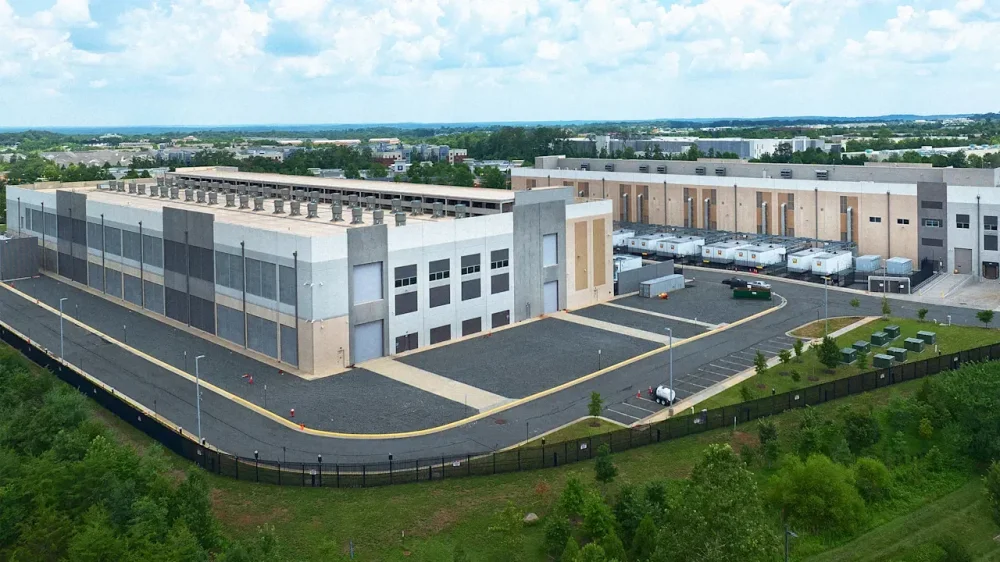
-
UK company strikes deal as it seeks to expand internationallyView the full article
-
A few weeks ago, I led a leadership workshop for a group of executive women leaders in Birmingham, Alabama. Before I begin leadership workshops, I ask the participants what they want out of our time together. This year, one answer has emerged consistently on top: connection. This isn’t surprising. As executives rise to higher levels of leadership, they often report increased feelings of loneliness. One Harvard Business Review survey found that 55% of CEOs acknowledge experiencing moderate but significant bouts of loneliness, while 25% report frequent feelings of loneliness. As your expertise becomes more specialized, it can be harder to find other leaders who understand the unique challenges of the corporate environment, with whom you can connect, learn from, and grow alongside. This is especially true for women leaders, as finding them in the senior ranks becomes less frequent the higher they climb. According to McKinsey, only 29% of C-suite leaders are women. As an entrepreneur, I’ve felt this, too. As my business grew, I realized that I didn’t have any coworkers to confide in, lean on, and seek counsel from. I had to create this network on my own. I’ve joined business groups, leadership retreats, and mastermind groups to create this support circle. THE IMPORTANCE OF A LEADERSHIP SUPPORT STRUCTURE As you advance at work, you can find yourself feeling more alone in the decision-making rooms. For example, if you manage the people who were once your peers and your relationship has evolved, this often means you can no longer rely on them for support as you used to. Challenging emotions also arise as your level of decision-making becomes larger and the stakes rise. Neuroscience research shows that when people make decisions under pressure, the brain shifts from thoughtful, deliberate thinking to more automatic, emotion-driven responses. This makes leaders more vulnerable to biased or short-term choices. However, research also shows that strong social support actually dampens the brain’s threat response under pressure, helping leaders think more clearly and make better decisions. In the era of AI, nurturing relationships is even more essential. One large-scale study on 6,000 UK employees found that technologies like AI are associated with a poorer quality of life. A 2023 analysis in Business Insider also warns that AI tools may make us lonelier at work by replacing quick check-ins with colleagues. Many of my clients echo this sentiment, saying things like, “With the rise of AI, I am constantly wondering if things are fake. Because of this, I crave real relationships more than ever.” Relationships are not only essential for combating loneliness, but they are also how deals get done, projects get awarded, and people get promoted. Here are some ways to prioritize them, even in the face of digital distraction. LEVERAGE YOUR SUPPORTERS Your supporters are the people in the organization who would advocate for you when you are not in the room (and you know it). They have your best interests at heart, and you have built solid relationship capital with them. Supporters are also the people who will give you unfiltered feedback that is focused on helping you advance. A good way to leverage your supporters is by asking them to socialize and support initiatives you may be launching. They can also play a critical role in helping you build new relationships in the organization and nurture strained relationships. However, before reaching out, consider what you can offer the relationship in return. CULTIVATE RELATIONSHIPS WITH “NEUTRALS” Neutrals are people in the organization whom you don’t know yet, or don’t know well. Maybe they are new, you are new, or you just haven’t crossed paths yet. Organizational network scholars like Ronald Burt have repeatedly shown that people whose relationships bridge otherwise disconnected groups (what he refers to as “structural holes”) receive higher performance evaluations and compensation, because they sit at key points of information and influence in the network. This is why neutrals in key stakeholder positions are critical to build relationships with. One strategy my clients enjoy using to build relationships with neutrals is called a 30:30 meeting. This is an opportunity to invite someone to a meeting or coffee. Thirty minutes are spent understanding them, their vision, goals, and offering your expertise in a way that might help them. The remaining 30 minutes are spent focused on your needs or area of expertise. The key to success in these meetings is that the focus is always on advancing shared goals and values. REBUILD CONNECTIONS WITH CHALLENGING PARTNERS Nearly every executive client I work with has one or two leaders with whom there exists some tension. It could be because individuals frequently stand in the way of their project implementations, or they consistently deny the resources they need to accomplish the work. Strained relationships are a normal occurrence when you work with people whose personalities differ from yours. However, as you advance in leadership, rebuilding these relationships will be essential to accomplish work and leverage organizational resources. To rebuild relationships, ask yourself: Do my challenging partners have good relationships with any of my supporters? Your supporters can often be bridge builders here. If you don’t have supporters who can act as bridge builders, this can be a good opportunity to cultivate and strengthen your relationship with neutrals. In times of conflict with challenging partners, it can also be helpful to focus on shared business goals and values, rather than defaulting to your fundamental differences. NURTURE YOUR NETWORK BEYOND WORK As an executive coach, the first place I direct clients to is their immediate network of leaders (old colleagues or current colleagues). However, there are also great connection opportunities that you can leverage from your loose network. The next place I encourage them to look is their industry or professional affiliated groups. Because there is a shared common interest of the type of work you do, this is a great place to foster connection through participating in conferences, meet-ups or even online forums. Another example is asking a mutual friend for an introduction to someone whose work you admire. The most effective leaders are not the most self-sufficient, but they often are the most connected. In a world where digital technology and AI are shrinking everyday interactions, relationships become your most valuable and tangible resources. View the full article
-
The recent announcement by McKinsey & Company that it plans to cut roughly 10% of its workforce has sent ripples through the consulting world, reigniting debate about the future of the industry. This is not about one firm, one round of layoffs, or one business cycle. It signals an irreversible shift in how value is created in consulting. Having spent a significant part of my career at McKinsey, I saw it grow and flourish in an era when information was scarce. Even basic market intelligence required large teams working for months to gather and synthesize data. The digital age brought a data explosion and democratized access, and McKinsey adapted again by expanding its capabilities into advanced analytics and technology-enabled transformation. That advantage is now under pressure in the AI age. The existential threat in the AI age While the digital age reduced information asymmetry, the AI age goes further. It increasingly equalizes analytical and recommendation capabilities. Firms like McKinsey built a powerful competitive moat by hiring the best analytical minds from top universities—excelling at data synthesis, first-principles problem-solving, and translating insight into recommendations. In the AI age, however, that advantage is becoming commoditized. This shift is part of a broader transformation of white-collar work. Contrary to early assumptions, AI is impacting knowledge work more than blue-collar roles. I expect that over the next five years, nearly 300 million white-collar jobs will be impacted globally, with around 100 million at risk of becoming obsolete. Work that is highly cognitive and already digitized is particularly susceptible. Consulting sits squarely within this zone of disruption. As the traditional consulting model faces growing pressure, the premium for future talent will no longer rest on analytical horsepower alone. The center of gravity has shifted: Consulting is being redefined The need for consulting services is not disappearing, but the source of value is shifting decisively. Traditionally, firms like McKinsey, BCG, and Bain (MBB) sat at the top of the consulting value chain through high-value strategy work. Over the years, McKinsey has invested significantly in building technology and execution capabilities, but structural challenges remain. In contrast, execution-centric firms like Deloitte, EY, and Accenture, built with a different DNA, were able to more naturally combine advisory with technology and large-scale execution. The growth numbers speak for themselves. While the MBB firms have reported slower growth, averaging approximately 5% to 6% compound annual growth rate, implementation-led firms such as Accenture, Deloitte, and EY have grown approximately 11% to 12% in recent years (average growth estimated based on revenues from company websites, annual reports, press releases, and analyst reports), reflecting the direction of client spend. Historically, strategy was viewed as the highest-value activity, and execution was treated as a follow-on—largely organizational and operational in nature. In the digital and AI age, execution is deeply technology-driven, and strategy and execution are no longer sequential but iterative and continuous. From being an enabler, technology has become the primary driver of both strategy and execution. Clients increasingly want partners who can bridge strategy, technology, and operations, and execute change at scale. Consulting firms, including the Big Four, have responded by reshaping their talent and operating models around large-scale execution and organizational transformation. The Battle of Relevance in the AI age: Where does McKinsey stand? The key question now is: Who will emerge as winners in this new consulting landscape? As the center of gravity shifts toward execution depth and the ability to drive continuous change, success will depend on how effectively firms rewire their DNA—building the operating model and talent engine required to implement and scale tech-led transformation. While strategy remains critical in the AI age, it demands a higher bar. As AI takes over analysis and recommendations, strategic advantage shifts from problem-solving to sense-making—from humans “in the loop” to humans “above the loop.” My bet is that two types of firms are best positioned to win. First, there are firms like Accenture, Deloitte, and EY, which have built strong execution capabilities and successfully strengthened their technology foundations. Second, there are industry specialists with exceptional domain expertise, where deep contextual understanding becomes the primary source of differentiation. Where does that leave McKinsey? While its brand, client relationships, global reach, and intellectual capital remain as formidable strengths, the transformation challenge it faces may be far greater than what it advises its clients on. Meeting it will require more than just new capabilities. It requires a structural reset, beginning with a mindset shift—from authority rooted in expertise to leadership grounded in learning and adaptability. Whether McKinsey retains its position at the top will depend on how effectively it embraces this shift. In the AI age, even the most storied institutions must continuously reinvent themselves—or risk being outpaced by those that do. View the full article
-
Resilience is a much-needed skill in today’s tough job market. Despite the headlines lambasting young employees as “lazy” and “entitled”, a Big Four consulting firm is taking matters into its own hands and offering training for recent grads. PwC will give its new young hires “resilience” training to toughen them up for careers as management consultants. The firm has introduced the initiative in the UK to help Gen Z brush up on their “human skills,” including communication with clients and handling day-to-day work dynamics, like pressure or criticism. “Quite often we are struck that the graduates that join us… don’t always have the resilience; they don’t always have the human skills that we want to deploy onto the client work we pass them towards,” Phillippa O’Connor, PwC’s chief people officer told The Sunday Times. Resilience requires, among other things, the ability to withstand, adapt or recover quickly from the challenges and inevitable setbacks that come with everyday work and life. A recent study by the McKinsey Health Institute shows that those who report high levels of resilience or adaptability show better holistic health and higher engagement than their peers. But simply telling employees to “be more resilient” and “toughen up” isn’t likely to achieve much. When the path forward is unclear, research shows that teams and employees default to what they already know: regardless of whether it’s the best approach. O’Connor isn’t alone; the notion of Gen Z (and younger millennials) lacking in the resilience department is one that’s popped up across the general discourse. Growing up as digital natives, missing formative in-person experiences during COVID, and now entering hybrid or remote-first workplaces, many young professionals simply didn’t get the chance to build and exercise certain human or “soft” skills. And no amount of resilience training can compensate for a broken workplace. Studies show that resilience may help in low-pressure settings, but in environments with overwhelming workloads and toxicity, it becomes both ineffective and even harmful. As companies gut layers of middle management, Gen Z hires are increasingly left reporting to stretched, exhausted managers with neither the time nor the bandwidth to offer the close, hands-on guidance they need. As companies continue to gut middle management, new hires find themselves reporting to overworked, burnt-out managers who lack the capacity for the hands-on support they need. Now a number of companies, like PwC, are addressing these concerns head on. Last month the accountancy giant Azets revealed it is exploring partnerships with major hotel, pub, and restaurant chains to offer temporary work assignments for trainee accountants and improve their soft skills. In 2023, fellow “Big Four” consulting firm KPMG supplied classes on ‘soft skills’ for its Gen Z recruits who graduated during the pandemic, out of concern they were struggling to adapt to professional life. Surviving a global pandemic during their formative years, thrown into a tumultuous job market, and faced with relentless criticism from those on higher rungs of the corporate ladder, Gen Z have more than demonstrated their resilience. Now? They’re looking for support. View the full article

-
In 1939, Simon & Schuster revolutionized the American publishing industry with the launch of Pocket Books, a line of diminutive volumes (measuring 4 by 6 inches) that cost only a quarter; a significant discount at a time when a typical hardcover book would set you back between $2.50 and $3.00. To make the economics of this new model work, Simon & Schuster had to move a huge volume of units. “[They] sold books where they had never been available before–grocery stores, drugstores and airport terminals,” explains Clive Thompson in a fascinating 2013 article about the Pocket Books phenomenon. “Within two years, [they’d] sold 17 million.” Thompson quotes the historian Kenneth C. Davis, who explains that these new paperbacks had “tapped into a huge reservoir of Americans who nobody realized wanted to read.” This demand, however, created a problem: there weren’t enough books to sell. In 1939, the book market was relatively small. (Thompson estimates that around this time, America had only 500 bookstores, almost exclusively clustered around a dozen major cities.) To make money on paperbacks, the pipeline of new titles released each year would need to increase drastically. This, in turn, required a significant loosening of the standards for what was worthy of publication, leading, among other changes, to the sudden prioritization of genre fiction writers who could churn out serviceable potboilers at a rapid clip. (Interestingly, this new class of writers included a young Michael Crichton, who, during his years as a medical student at Harvard in the 1960s, published preposterous paperback adventure novels under pseudonyms, which he finished by working at “a furious pace” on weekends and vacations. I’ve read some of these early works, and they’re mainly mediocre. But that wasn’t a problem, as the goal for many such paperbacks was simply to provide disposable distraction.) Predictably, the new prominence of these lower-quality genres concerned the elite class. Thompson quotes the social critic Harvey Swados, who described the paperback revolution as ushering in a “flood of trash” that would “debase farther the popular taste.” There was a fear that the mass appeal of these cheap books would eventually lead to the elimination of the more serious hardcover titles that had long defined publishing. Here we find a parallel to our current moment. As the platforms of the digital attention economy transition from social network models to providing maximally distracting short-form videos, more of the content available online is devolving toward that paragon of low-quality forgettability, commonly referred to as slop. Who will listen to a podcast or read a long essay, many now fret, when Sora can offer countless videos of historical figures dancing and X can deliver an endless sequence of nudity and bar fights? If we return to the paperback example, however, we might find a small sliver of hope. Ultimately, the explosion of these cheaper, often lower-quality books didn’t lead to the elimination of more serious titles. In fact, the opposite happened. Vastly more hardcover titles are published today than they were before the Pocket Books revolution began. A closer look reveals that by vastly increasing the market for the published word, paperbacks also vastly increased the opportunities to make a living writing serious books (which, for the sake of this discussion, I’ll define as books that require at least a year to write and are published in hardcover). There was, to be sure, a lot of trash put out during the heyday of the paperback, but this reconfigured publishing model also generated a lucrative secondary market for more traditional writers. Stephen King, for example, sold the hardcover rights to his first novel, Carrie, for around $2,500 in 1973 ($18,000 in today’s dollars). This was a nice bonus, but hardly enough to live on. The paperback rights for Carrie, by contrast, sold for $400,000 (almost $3,000,000 in today’s dollars), allowing King to quit his day job and become a full-time writer. King wasn’t alone; other acclaimed authors, from Ursula K. Le Guin to Ray Bradbury, to Agatha Christie, also would have never risen to such prominence without the opportunities provided by the paperback world. As for Crichton, we know what happened next. The nine, mostly cheesy paperbacks, he wrote using pseudonyms, helped him polish his craft. His first hardcover book, The Andromeda Strain, was a massive bestseller and initiated the beginning of a career as one of the most influential writers of his generation. As you know, I strongly dislike much of the current digital attention economy, and I believe that most people should be spending vastly less time engaging with these products. But in the spirit of trying to end 2025 on an optimistic note, I find some solace in the story of paperback books. Just because a certain type of low-quality media becomes immensely popular doesn’t necessarily mean that the deeper alternatives will suffer. Over one billion TikTok videos will be viewed today, and yet, you’re still here, reading a speculative essay about media economics. I don’t take that for granted. The post On Paperbacks and TikTok appeared first on Cal Newport. View the full article
-
In 1939, Simon & Schuster revolutionized the American publishing industry with the launch of Pocket Books, a line of diminutive volumes (measuring 4 by 6 inches) that cost only a quarter; a significant discount at a time when a typical hardcover book would set you back between $2.50 and $3.00. To make the economics of this new model work, Simon & Schuster had to move a huge volume of units. “[They] sold books where they had never been available before–grocery stores, drugstores and airport terminals,” explains Clive Thompson in a fascinating 2013 article about the Pocket Books phenomenon. “Within two years, [they’d] sold 17 million.” Thompson quotes the historian Kenneth C. Davis, who explains that these new paperbacks had “tapped into a huge reservoir of Americans who nobody realized wanted to read.” This demand, however, created a problem: there weren’t enough books to sell. In 1939, the book market was relatively small. (Thompson estimates that around this time, America had only 500 bookstores, almost exclusively clustered around a dozen major cities.) To make money on paperbacks, the pipeline of new titles released each year would need to increase drastically. This, in turn, required a significant loosening of the standards for what was worthy of publication, leading, among other changes, to the sudden prioritization of genre fiction writers who could churn out serviceable potboilers at a rapid clip. (Interestingly, this new class of writers included a young Michael Crichton, who, during his years as a medical student at Harvard in the 1960s, published preposterous paperback adventure novels under pseudonyms, which he finished by working at “a furious pace” on weekends and vacations. I’ve read some of these early works, and they’re mainly mediocre. But that wasn’t a problem, as the goal for many such paperbacks was simply to provide disposable distraction.) Predictably, the new prominence of these lower-quality genres concerned the elite class. Thompson quotes the social critic Harvey Swados, who described the paperback revolution as ushering in a “flood of trash” that would “debase farther the popular taste.” There was a fear that the mass appeal of these cheap books would eventually lead to the elimination of the more serious hardcover titles that had long defined publishing. Here we find a parallel to our current moment. As the platforms of the digital attention economy transition from social network models to providing maximally distracting short-form videos, more of the content available online is devolving toward that paragon of low-quality forgettability, commonly referred to as slop. Who will listen to a podcast or read a long essay, many now fret, when Sora can offer countless videos of historical figures dancing and X can deliver an endless sequence of nudity and bar fights? If we return to the paperback example, however, we might find a small sliver of hope. Ultimately, the explosion of these cheaper, often lower-quality books didn’t lead to the elimination of more serious titles. In fact, the opposite happened. Vastly more hardcover titles are published today than they were before the Pocket Books revolution began. A closer look reveals that by vastly increasing the market for the published word, paperbacks also vastly increased the opportunities to make a living writing serious books (which, for the sake of this discussion, I’ll define as books that require at least a year to write and are published in hardcover). There was, to be sure, a lot of trash put out during the heyday of the paperback, but this reconfigured publishing model also generated a lucrative secondary market for more traditional writers. Stephen King, for example, sold the hardcover rights to his first novel, Carrie, for around $2,500 in 1973 ($18,000 in today’s dollars). This was a nice bonus, but hardly enough to live on. The paperback rights for Carrie, by contrast, sold for $400,000 (almost $3,000,000 in today’s dollars), allowing King to quit his day job and become a full-time writer. King wasn’t alone; other acclaimed authors, from Ursula K. Le Guin to Ray Bradbury, to Agatha Christie, also would have never risen to such prominence without the opportunities provided by the paperback world. As for Crichton, we know what happened next. The nine, mostly cheesy paperbacks, he wrote using pseudonyms, helped him polish his craft. His first hardcover book, The Andromeda Strain, was a massive bestseller and initiated the beginning of a career as one of the most influential writers of his generation. As you know, I strongly dislike much of the current digital attention economy, and I believe that most people should be spending vastly less time engaging with these products. But in the spirit of trying to end 2025 on an optimistic note, I find some solace in the story of paperback books. Just because a certain type of low-quality media becomes immensely popular doesn’t necessarily mean that the deeper alternatives will suffer. Over one billion TikTok videos will be viewed today, and yet, you’re still here, reading a speculative essay about media economics. I don’t take that for granted. The post On Paperbacks and TikTok appeared first on Cal Newport. View the full article
-
Our experts expect a mortgage market reset in 2026 with an uptick in originations, but warn lenders not to skimp on compliance even as the reins loosen. View the full article

-
A group of college students braved the frigid New England weather on Dec. 13, 2025, to attend a late afternoon review session at Brown University in Providence, Rhode Island. Eleven of those students were struck by gunfire when a shooter entered the lecture hall. Two didn’t survive. Shortly after, a petition circulated calling for better security for Brown students, including ID-card entry to campus buildings and improved surveillance cameras. As often happens in the aftermath of tragedy, the conversation turned to lessons for the future, especially in terms of school security. There has been rapid growth of the nation’s now US$4 billion school security industry. Schools have many options, from traditional metal detectors and cameras to gunshot detection systems and weaponized drones. There are also purveyors of artificial-intelligence-assisted surveillance systems that promise prevention: The gun will be detected before any shots are fired, and the shooting will never happen. They appeal to institutions struggling to protect their communities, and are marketed aggressively as the future of school shooting prevention. I’m a criminologist who studies mass shootings and school violence. In my research, I’ve found that there’s a lack of evidence to support the effectiveness of these technological interventions. Grasping for a solution Implementation has not lagged. A survey from Campus Safety Magazine found that about 24% of K-12 schools report video-assisted weapons detection systems, and 14% use gunshot detection systems, like ShotSpotter. Gunshot detection uses acoustic sensors placed within an area to detect gunfire and alert police. Research has shown that gunshot detection may help police respond faster to gun crimes, but it has little to no role in preventing gun violence. Still, schools may be warming to the idea of gunshot detection to address the threat of a campus shooter. In 2022, the school board in Manchester, New Hampshire, voted to implement ShotSpotter in the district’s schools after a series of active-shooter threats. Other companies claim their technologies provide real-time visual weapons detection. Evolv is an AI screening system for detecting concealed weapons, which has been implemented in more than 400 school buildings since 2021. ZeroEyes and Omnilert are AI-assisted security camera systems that detect firearms and promise to notify authorities within seconds or minutes of a gun being detected. These systems analyze surveillance video with AI programs trained to recognize a range of visual cues, including different types of guns and behavioral indicators of aggression. Upon recognizing a threat, the system notifies a human verification team, which can then activate a prescribed response plan. But even these highly sophisticated systems can fail to detect a real threat, leading to questions about the utility of security technology. Antioch High School in Nashville, Tennessee, was equipped with Omnilert’s gun detection technology in January 2025 when a student walked inside the school building with a gun and shot several classmates, one fatally, before killing himself. Lack of evidence This demonstrates an enduring problem with the school security technology industry: Most of these technologies are untested, and their effect on safety is unproven. Even gunshot detection systems have not been studied in the context of school and mass shootings outside of simulation studies. School shooting research has very little to offer in terms of assessing the value of these tools, because there are no studies out there. This lack is partly due to the low incidence of mass and school shootings. Even with a broad definition of school shootings—any gunfire on school grounds resulting in injury—the annual rate across America is approximately 24 incidents per year. That’s 24 more than anyone would want, but it’s a small sample size for research. And there are few, if any, ethically and empirically sound ways to test whether a campus fortified with ShotSpotter or the newest AI surveillance cameras is less likely to experience an active shooter incident because the probability of that school being victimized is already so low. Existing research provides a useful overview of the school safety technology landscape, but it offers little evidence of how well this technology actually prevents violence. The National Institute of Justice last published its Comprehensive Report on School Safety Technology in 2016, but its finding that the adoption of biometrics, “smart” cameras, and weapons detection systems was outpacing research on the efficacy of the technology is still true today. The Rand Corporation and the University of Michigan Institute for Firearm Injury Prevention have produced similar findings that demonstrate limited or no evidence that these new technologies improve school safety and reduce risks. While researchers can study some aspects of how the environment and security affect mass shooting outcomes, many of these technologies are too new to be included in studies, or too sparsely implemented to show any meaningful impact on outcomes. My research on active and mass shootings has suggested that the security features with the most lifesaving potential are not part of highly technical systems: They are simple procedures like lockdowns during shootings. The tech keeps coming Nevertheless, technological innovations continue to drive the school safety industry. Campus Guardian Angel, launched out of Texas in 2023, promises a rapid drone response to an active school shooter. Founder Justin Marston compared the drone system to “having a SEAL team in the parking lot.” At $15,000 per box of six drones, and an additional monthly service charge per student, the drones are equipped with non-lethal weaponry, including flash-bangs and pepper spray guns. In late 2025, three Florida school districts announced their participation in Campus Guardian Angel’s pilot programs. Three school districts in Florida are part of a pilot program to test drones that respond to school shootings. There is no shortage of proposed technologies. A presentation from the 2023 International Conference on Computer and Applications described a cutting-edge architectural design system that integrates artificial intelligence and biometrics to bolster school security. And yet, the language used to describe the outcomes of this system leaned away from prevention, instead offering to “mitigate the potential” for a mass shooting to be carried out effectively. While the difference is subtle, prevention and mitigation reflect two different things. Prevention is stopping something avoidable. Mitigation is consequence management: reducing the harm of an unavoidable hazard. Response versus prevention This is another of the enduring limitations of most emerging technologies being advertised as mass shooting prevention: They don’t prevent shootings. They may streamline a response to a crisis and speed up the resolution of the incident. With most active shooter incidents lasting fewer than 10 minutes, time saved could have critical lifesaving implications. But by the time ShotSpotter has detected gunshots on a college campus, or Campus Guardian Angel has been activated in the hallways of a high school, the window for preventing the shooting has long since passed. Emily Greene-Colozzi is an assistant professor of criminology and justice studies at UMass Lowell. This article is republished from The Conversation under a Creative Commons license. Read the original article. View the full article

-
Vulnerability in Redirection For Contact Form 7 WordPress Plugin affects up to 300,000 installations The post Redirection For Contact Form 7 WordPress Plugin Vulnerability appeared first on Search Engine Journal. View the full article
-
At 10:24 p.m., while brushing his teeth, my husband’s phone pings. It’s not an emergency. No one is bleeding. No building is on fire. It’s an email that begins with the words, “Just circling back.” In France, this would be illegal. Or at least deeply frowned upon. Since 2017, French workers at companies with more than 50 employees have had a legally protected right to disconnect. That means, employers can’t expect workers to answer emails or messages after hours. Similar policies exist across Europe, including Spain, Belgium, and Greece. Meanwhile, in America, we’re circling back at bedtime. The Country That Turned “Always On” Into a Personality Trait In theory, Americans love freedom. In practice, we seem to love productivity even more. Historically, we don’t just work, we identify with our work. We humblebrag about being slammed. We apologize for vacations. We wear burnout like a well-earned Miss America crown. The unspoken rule is clear: If you’re not reachable, you’re not serious. I’ve interviewed hundreds of working parents over the years, and one thing comes up again and again: It’s not just the workload that is crushing them, it’s the anticipation of it. The constant low-grade anxiety that an email could arrive at any moment. That their boss might “just need one thing.” Silence could be interpreted as laziness. Work doesn’t end anymore. It’s like the constant background noise of our personal lives. America’s Love Affair with Hustle Culture (and Why We Can’t Quit It) Here’s the uncomfortable truth: We don’t just tolerate hustle culture, we reward it. We promote the people who respond fastest. We praise the ones who “go above and beyond.” We quietly penalize the ones who protect their time, especially women and parents. Especially mothers. Disconnecting in America isn’t seen as healthy; it’s seen as risky. And that’s the difference between us and Europe. In France, disconnecting is a labor right. In the U.S., it’s a personal boundary you have to negotiate politely without inconveniencing anyone important. Good luck with that. The Myth That Availability Equals Value One of the biggest lies of modern work is that responsiveness equals commitment. But study after study shows the opposite. Constant availability leads to burnout, cognitive fatigue, poorer decision-making, and lower creativity. When your brain never powers down, it doesn’t perform better; it performs worse. And yet, here we are. Answering emails from the sidelines of the soccer field and Slack-ing during bedtime. We’ve turned the ability to be interrupted into a marketable job skill. So, Could a Right to Disconnect Ever Work Here? Legally? Maybe. Culturally? That’s a higher hurdle. Because America’s resistance to disconnecting isn’t just about logistics. It’s about identity. Work isn’t just what we do; it’s who we are. For many of us, especially in an economy as frighteningly precarious as ours, being reachable feels like job protection. Until we change what we reward, no policy will fully save us. A right to disconnect would only work in America if we stopped confusing exhaustion with ambition and availability with worth. What Would Real Progress Actually Look Like? I’m not sure legislation is enough for a cultural shift. We will need leaders who model boundaries instead of martyrdom. With companies that measure output rather than online status. With workplaces that understand rest isn’t the enemy of success; it’s the fuel. And maybe, just maybe, it would start with all of us resisting the urge to “circle back” at 10:24 p.m.. The French have a phrase for this: la vie. It’s the part of life that happens after work. In America, we call it being unreachable, and we are still not sure we are allowed to be. View the full article

-
As the Consumer Electronics Show (CES) returns to Las Vegas from Jan. 6 to 9, the tech industry is gearing up for its annual spectacle of prototypes, silicon benchmarks and AI-branded gadgets. But one of the most consequential shifts in enterprise technology over the coming year will unfold far from the keynote stages and demo floors. HP, the 85-year-old Silicon Valley company long defined by PCs, printers, and enterprise hardware, is repositioning itself as a work-intelligence platform—where devices learn continuously, services anticipate needs, and AI dissolves the traditional boundaries between hardware, software, and the cloud. Under Jim Nottingham, senior vice president and division president of Advanced Compute Solutions, HP is treating AI not as a feature or a marketing layer but as a structural force reshaping how the company builds products, manages its supply chain, and generates revenue. As enterprise spending shifts toward intelligent, autonomous systems, that strategy is becoming central to HP’s future and to whether it can compete with contemporaries, including Dell and Lenovo on devices, while holding its ground against Microsoft and the cloud hyperscalers that control workplace software, data and AI workflows. Nottingham said HP’s transformation began with an uncomfortable realization that “work was not working as well as it should.” Customers had raised these issues for years, but the true scale of the problem became clear only after HP measured it through its 2025 Work Relationship Index. The findings were striking as just 20% of knowledge workers say they have a healthy relationship with work, meaning most feel overwhelmed by fragmented tools, constant interruptions and systems that make work harder rather than more productive. “We heard versions of this from customers across industries and geographies,” Nottingham says. “When you have visibility across millions of devices and organizations of every size, patterns like this become impossible to miss.” Those insights forced HP to confront a deeper truth about AI. “You can’t just add AI to a device and call it transformation.” Instead, HP rethought how devices, software, services and management systems work together across an entire workday. The shift cut across personal systems, print and services at the same time, pushing the company toward a single, platform-led vision of the future of work rather than three separate roadmaps. “At CES, we’ll demonstrate that platform-led view across the portfolio,” Nottingham says. “AI became the organizing principle because it’s the first technology capable of tying those pieces together and enabling work environments that are more adaptive, secure, and intelligent.” From hardware economics to intelligence at scale HP’s reinvention comes at a moment of pressure. Hardware margins are shrinking as devices commoditize, while hyperscalers increasingly control enterprise workflows and set the bar for intelligent work systems. HP’s counter is scale. Few companies span endpoints, managed fleets, printing infrastructure, and workforce software at a global reach. HP is betting that AI layered across that footprint can drive higher-margin services and recurring revenue without forcing customers to replace existing systems. Recent financial results help explain the company’s confidence. In the fourth quarter of fiscal 2025, the company reported revenue growth of 4% year over year, driven largely by strength in Personal Systems. AI PCs accounted for more than 30% of shipments during the quarter, and HP expects that share to approach 50% next year. Subscription and services businesses now generate billions of dollars in annual recurring revenue, reinforcing a shift away from one-time device sales toward a more durable, platform-driven business model. Industry experts argue that this shift reflects where enterprise computing is headed, but execution is what separates leaders from laggards. Pierre Baqué, CEO and founder of Neural Concept, said meaningful AI transformation requires intelligence to be embedded into system design from the outset, accounting for real-world constraints and tradeoffs. “The future of enterprise computing is about leveraging intelligent, AI applications that learn and adapt across the full lifecycle, improving how engineering teams accelerate and validate their operations,” says Baqué. HP’s AI PCs are built around that philosophy. The systems integrate neural processing units that run AI workloads locally, enabling real-time inference without constant reliance on the cloud. The payoff is lower cost, faster performance and stronger privacy—advantages that matter in regulated industries and bandwidth-constrained environments, and that distinguish HP’s approach from cloud-first Copilot PCs and consumer-led AI designs from Apple and Qualcomm. “For specialized workers inside companies—the people responsible for the most complex and demanding workflows—the stakes are much higher,” Nottingham adds. “Whether the work involves generative AI, simulation or data science, our solutions streamline complex workflows, remove friction and help increase productivity.” A different competitive wager HP is embedding AI across categories competitors often treat separately, including AI PCs, workstations, printing and device management. Print AI applies generative models to formatting, security and intent recognition—an area few expected to see meaningful AI impact. In AI PCs, documents, meetings and workflows can be queried instantly, while tasks such as video editing and image processing shrink from minutes to seconds, even offline. “By enabling hybrid compute that combines local responsiveness through AI with cloud scale, we are helping these teams work faster and more effectively without disrupting their flow,” Nottingham says. He added that AI PCs now make up a growing share of HP’s shipments, and adoption is accelerating. “It reflects where enterprise computing already is, not where it might be someday.” HP’s transformation raises a larger question for the industry: If a company with HP’s scale and legacy must become intelligent to stay competitive, what does that mean for every other maker of work devices? Autumn Stanish, a director analyst at Gartner, says the industry’s shift from device-driven revenue to software, services and lifecycle-based models has been inevitable. “This has been inevitable for a long while now, and a very slow transition for the hardware industry,” she said, as longer device lifecycles and price pressure eat into traditional hardware profits. “Device pricing isn’t going rise enough…to make up for that lost revenue,” pushing companies to look beyond selling PCs and other systems. She notes that HP’s expansion into digital employee experience tools such as DXP, along with managed device lifecycle services now offered by HP, Dell and Lenovo, reflects where competition is moving. “Cloud AI processing is expensive for providers and customers alike,” she added, making local, on-device intelligence increasingly essential. The future of work, then, may arrive not through spectacle, but through quiet reinvention—where AI fades into the background and systems adapt to how work actually happens. View the full article
-
US blockade on Venezuelan oil and bets on Fed rate cuts drive up prices of precious metalsView the full article
-
Everybody loves the idea of feedback, defined broadly as information provided to someone about their performance, behavior, or actions. This makes a great deal of sense. Indeed, many studies have consistently shown that feedback from others plays an important role in helping us understand who we are, including how we differ from others. It is vital for improving managers’ and leaders’ performance and for helping people evolve and develop, both professionally and personally. Conversely, being feedback-deprived, or having a tendency to ignore it, increases the gap between how good you think you are, and how good you actually are—at times, to painfully delusional levels. And yet, people often fail to accept and internalize feedback. This is particularly true when the feedback is misaligned with how we view ourselves or at odds with what we think about the situation. Contributing to this failure is often the poor quality of the feedback, due to factors ranging from sender expertise and intention to the politics and bias of subjective character evaluations. Unsurprisingly, meta-analytic evidence suggests that 1/3 of feedback interventions are ineffective, and another 1/3 actually worsen recipients’ performance. Feedback, in short, has a poor track record. And especially poor for more senior leaders. High-quality feedback is thus particularly scarce where it is needed the most—for those whose decisions and actions have the most far-reaching impact: in senior leadership. Why is this the case? The reasons First, when someone is powerful, others will go to great lengths to avoid upsetting or confronting that person, aware (consciously and not) that leaders have some power over their future, which explains why it is far more common for leaders to hear praise and compliments from subordinates than constructive criticism. A darkly comic illustration appears in Armando Ianucci’s movie The Death of Stalin. When Stalin collapses, his inner circle hesitates, panics, and second-guesses itself, terrified of acting without explicit permission. No one dares to take responsibility, question assumptions, or deliver unwelcome truths. The satire works precisely because it exaggerates a real dynamic: when power is concentrated and fear is high, feedback disappears, initiative dies, and silence becomes the safest strategy. Second, hierarchical cultures and traditional leadership archetypes conspire against leaders’ ability to create the necessary psychological safety for candor. Unless effort is put into creating these conditions, team members will perceive a negative cost-benefit analysis when it comes to voicing issues—especially with their leader’s decisions or behaviors—versus holding back and staying silent. While this may boost leaders’ egos, fostering self-enhancing and delusional estimates of their own talents—it will severely limit their ability to improve and get better. How can anyone, including a manager or leader, get better if they are unaware of a gap between their self-views and their actual performance? Why would anyone, including a manager or leader, seek to change and evolve if their perception is that everything is fine? Third, when someone seems devoid of self-awareness, to the point of being not just immune to feedback, but almost un-coachable, people will see no point in providing them with feedback, as it would be wasted on them. Unfortunately, when others are of the opinion that leaders are incompetent, and that, on top of that, they are totally unaware of this fact, they lose respect for that leader and approach their interactions with them as they would with a delusional narcissist or mad person. What to do Fortunately, there is a booming industry (at times comprising science-based instruments like evidence-based 360-degree feedback surveys and personality assessments) to tell leaders what they need to hear, especially when that’s not what they want to hear. Even in the absence of such instruments, here are five simple ways leaders can get better at receiving—and ingesting—constructive feedback. Ask for disconfirming data, not general impressions Instead of “Any feedback for me?”, ask narrowly framed questions that invite contradiction, such as “What is one decision I made recently that slowed the team down?” or “Where did my involvement add least value this quarter?” Research on feedback seeking shows that specific, behavior-linked requests increase both the honesty and usefulness of responses, while vague requests elicit politeness and noise rather than signal. Separate ingestion from reaction, deliberately and visibly High-status leaders often kill feedback not by rejecting it, but by reacting too fast. A defensive facial expression, explanation, or “contextual clarification” is usually enough to shut people down. Evidence from self-regulation and feedback intervention research shows that feedback is more likely to improve performance when recipients force themselves to pause evaluation and treat feedback as data, not judgment. One practical move is to explicitly say, “Thank you. I won’t respond now, so I can think about what you’ve said, and I’ll come back to you,” and then actually do so. Triangulate patterns, ignore anecdotes Single pieces of feedback are typically biased, idiosyncratic, or situational. Leaders should resist reacting to one voice and instead look for recurring themes across sources, time, and contexts. Meta-analytic work on 360-degree feedback consistently shows that behavior change is most likely when leaders focus on convergent signals rather than isolated comments. Treat feedback like data analysis, not testimony. Outsource truth-telling when power gets in the way At senior levels, the social cost of honesty becomes prohibitive. This is precisely why structured mechanisms such as anonymous upward feedback, external coaching, or validated personality and derailment assessments outperform informal conversations. Research on power and voice shows that hierarchy systematically suppresses upward dissent unless safeguards are in place. Leaders who believe their “open-door policies” are adequate are usually the least informed. Publicly act on one small piece of feedback, fast The strongest signal that feedback is welcome is not just saying “thank you,” but visibly changing something. Even a modest adjustment, communicated explicitly (“Based on your feedback, I’ll stop doing X and start doing Y”), recalibrates the perceived cost-benefit of speaking up. Evidence from psychological safety research shows that follow-through, not receptiveness rhetoric, predicts future voice behavior. Feedback cultures are built behavior by behavior, not intention by intention. Taken together, these practices treat feedback less as a moral virtue and more as an imperfect but essential data stream. Leaders who learn to filter, metabolize, and act on that data gain something far rarer than praise: a realistic picture of their impact. View the full article

-
Authorities say Fanil Sarvarov died in an explosion on MondayView the full article
-
Role for Louisiana governor Jeff Landry underlines US president’s determination to control Arctic islandView the full article
-
In November, Apple laid off dozens of sales employees in a rather unexpected move for the tech giant. Apple is the rare tech company that has steered clear of mass layoffs, particularly among its peers in the trillion-dollar club. The layoffs “came as a surprise” for those who lost their jobs, according to a Bloomberg report—and they impacted some employees who had been with the company for decades. The post-pandemic job market has come to be defined by layoffs, in tech and beyond: A Glassdoor analysis finds that there was a peak in 2023, but layoffs have since continued at a more frequent cadence relative to the years prior. A variety of sectors have been hit hard—and prominent employers like Verizon, Starbucks, and UPS have gone through multiple rounds of cuts this year alone, slashing thousands of jobs. But the tech industry has been uniquely reliant on layoffs as companies have gone through periods of overhiring and fluctuating priorities, with the rapid emergence of artificial intelligence now upending the sector. Since 2022, tech employers have laid off upwards of 700,000 workers, according to the tracker Layoffs.fyi. With the exception of Apple, which has conducted a handful of more targeted cuts in recent years, the Big Tech companies—namely Amazon, Meta, Google, and Microsoft—have laid off tens of thousands of employees over the last three years. “There are just so many new grads coming out, trying to enter the tech industry, and they feel like the promise of a high-paying job in tech is just not really being fulfilled,” says Daniel Zhao, Glassdoor’s chief economist and director of economic research. All this has led to a challenging environment for tech workers who are seeking new jobs and new graduates who are trying to find their footing. In the last two decades, Big Tech jobs held a certain cachet for millennial knowledge workers who were starting their careers. The sprawling campuses and free food were appealing, of course, but companies like Google also imbued their work with purpose and appeared to guarantee professional success. But as layoffs have roiled the industry, it seems as though the tech jobs that were once hailed as stable and desirable may no longer be a sure bet for workers. “Unfortunately, layoffs aren’t really a last resort response anymore,” says Brett Coakley, the principal executive coach at career consulting firm Close Cohen. “They’ve become more of an annual planning tool. These workers that thought they were insulated are realizing that prestige doesn’t really provide the protection that they’re used to.” The dream job has changed For years, these tech companies have promised both generous salaries and job security alongside lavish perks. Between recurring layoffs and strict return to office policies, however, something seems to have shifted—and it’s not just that the perks have dried up. Many large tech employers hired aggressively during the pandemic, only to turn around and lay off workers not long after. Companies like Amazon forced employees to return to the office five days a week—in some cases requiring that they relocate. The rise of generative AI is also radically reshaping tech companies, with many of them making multi-billion-dollar investments and courting top talent. Computer science graduates are finding it more difficult to land entry level jobs—in part because those roles are steadily being automated. Some companies, like Salesforce, have already replaced certain workers with AI, while others have warned that job losses are on the way and that employees need to meet the moment and adopt AI technology. Mark Zuckerberg noted earlier this year that AI could supplant mid-level engineers at Meta, while Amazon CEO Andy Jassy has said employees who “become conversant in AI” will have “high impact” and “help us reinvent the company.” (Whether AI will actually cull jobs at a rapid clip is almost beside the point, though it seems like companies are reticent to name the other issues driving their business woes—among them immigration policy and tariffs.) The result is workers have become more hesitant to stake their careers on a Big Tech job, Coakley says. “We see that folks that are coming into their early career have that same symptom,” he says. “‘Why would I go into this thing that isn’t stable? I can do a gig role, or I can do something that’s a little more skills-based.’ Or: ‘Why do I need to go to a four-year college to get this degree if I’m not going to get a job?’ We’re getting a lot of that sentiment.” Some workers who are early in their careers are looking at smaller companies or trying to bolster their AI skills for when the pendulum inevitably swings back and Big Tech starts hiring again, according to Coakley. Zhao argues that the high-paying job in tech still has its allure, though it feels increasingly out of reach for some new entrants to the industry. The number of workers who have been unemployed for over six months has ticked up as hiring has slowed—and college-educated workers now comprise a greater share of them. “These Big Tech companies are still very attractive jobs,” Zhao says. “If you ask any new grad, ‘Do you want to go work at Google?’ I think most of them would still say yes. It’s just a question of how you actually get your foot in the door.” What this means for tech workers old and new It’s not just people early in their career who are reevaluating where they want to work. The current climate has revealed that tenure and seniority won’t necessarily preserve your job, particularly when companies are chasing AI talent. For older employees who built their careers at Big Tech companies, the unease permeating the tech sector has sparked questions about how long they can expect to remain in their jobs. “We had a lot of folks at the beginning of the year coming to us after a layoff,” Coakley says. “So they didn’t see it coming, or they weren’t expecting it. [Now] I’ve started to see a lot of that other end of the spectrum, where people are being proactive and saying, ‘I don’t know if this is going to be here for me in six months.’” Experts often say layoffs have a clear effect on company culture, and Glassdoor’s analysis supports this idea: The volume of Glassdoor reviews surge by over 40% in the week following a layoff, and they continue to be referenced in reviews months later. Zhao points out that some companies seek to avoid the negative attention and press coverage that accompanies a mass layoff by making smaller, more frequent cuts. But tech workers can still see what’s happening, and Coakley says some of them are taking preemptive steps to carve out a new path. “The mid- to senior-level [employee] has really sort of built their identities inside of one corporation,” he says. “They’ve lived inside that bubble of Big Tech, but now that the bubble is sort of thinning, they’re asking themselves: Who am I outside this company?” Coakley has found that some senior employees are now interested in fractional roles, or startups that offer more work-life balance. “People are realizing that they’ve been relying on corporations for stability,” he says, “and that’s no longer viable.” Amid a tough hiring market, even workers who have soured on their Big Tech jobs may be scared to make any drastic moves. But that could change when the market eventually turns around—to the detriment of these employers. “If we see the balance of power shift back towards employees and away from employers, then a lot of this can change,” Zhao says. “And to some extent that’s a risk that employers should be paying attention to as well.” The culture of Big Tech may have changed, but workers have also changed accordingly, growing more emboldened by the upheaval of the last five years—and the realization that their employers are no different than their peers across corporate America. “I think the fact that workers feel so stuck right now,” Zhao says, “means that once the job market opens up again, all of those workers are going to hit the door.” View the full article
-
You’ve landed. You leave the chaos of the airport behind and drop into the chaos of a new city. It’s big, loud, and full of opportunities . . . and tourists. If you want to experience this new city like someone who actually lives there, you need tools that help you skip the lines, ditch the tourist traps, and navigate the local landscape with insider confidence. Forget the default maps and review sites everyone uses. Here are three genuinely free, under-the-radar apps that will transform you from a wide-eyed visitor into a savvy urban explorer. Atlas Obscura The biggest mistake a traveler makes is sticking to the big red arrow on the generic tourist map. If you want to find a city’s overlooked history, oddball museums, and secret public gardens, you need a guide for the curious. Atlas Obscura is exactly that guide. The free app is a comprehensive, community-generated catalog of the world’s most wondrous and peculiar places. The crucial feature is the map view, which instantly pulls up hundreds of fascinating and unique points of interest near your current location, turning a simple walk into a genuine treasure hunt. Citymapper Once you’re in a dense city, a car is often a liability. And while public transportation is an obvious strategy, navigating a new subway, bus, or ferry network can feel like trying to decipher ancient hieroglyphics. Citymapper is a public transit solution built by people who actually ride the subway. If you’re visiting New York, London, Chicago, or any of the supported major cities, this app will not only calculate the fastest route, but it will tell you hyper-specific details that Google Maps often misses. The standout feature is its granularity: It gives you the best subway car to board so you exit closest to your destination, provides real-time train and bus arrival times, and blends every mode of transport—from shared bikes to ferries—into one comprehensive itinerary. Roasters If you’re a serious coffee drinker, you know the despair of being stuck in a new city with only generic chain coffee shops. Finding a true, quality local experience often requires hours of tedious searching and review-sifting. Roasters is a free app built by coffee enthusiasts for coffee enthusiasts, specifically curating over 21,000 specialty coffee shops worldwide and cutting out the chains to focus only on independent businesses known for quality beans and preparation. The community-driven discovery map highlights shops that are often off the beaten path and lets you check reviews from fellow coffee lovers who share your high standards. View the full article

-
I’m on vacation. Here are some past letters that I’m making new again, rather than leaving them to wilt in the archives. 1. Coworkers are bringing kids to work but keeping it a secret from our boss I work in a small, open concept office and I am having issues with my coworker bringing children to work. My coworker “Sansa” has a grandchild the same age as the son of another one of my coworkers, “Arya.” The boys are best friends and they attended the same (all-day) preschool. There were several times over the course of the summer that the boys were present in the office, sometimes for the entire day, between times when their summer camps was not in session and my boss was not in the office. Arya burned through the small amount of vacation she received when she started working here six months ago, taking care of the boys after my boss found the boys in our conference room and had the office manager talk to Sansa and Arya about how this workplace was not a day care. This week, the boys started kindergarten (although they are in different classes, since the school has several). Sansa leaves the office at her scheduled departure time of 4 and then goes to pick up her grandchild and Arya’s son from school about five minutes away from our office. She then swings back to the office and drops off Arya’s son. Arya does not leave until 5. Since the boys don’t see each other all day and it’s “better” that they get to spend time together, Sansa stays with the boys in our office until it is time for Arya to leave. I have asked Sansa if she could take the boys outside or to the park a block away, and she stated it’s only for a hour, it’s hot out, and she can keep them quiet. She spends the entire time standing around in the office shushing them, which, as you might imagine, does not work. I have discussed this with our office manager, but she feels it’s okay because our boss leaves at 3 to go pick up his own child from school and therefore “(Boss) won’t know unless someone tells him.” What I really want to do is ask my boss if it’s possible to shift my hours to 8 to 4, so I don’t have to put up with these boys running up and down the office shrieking (in happy tones) for the last hour of my work day. I am concerned this request will require me telling my boss the reason I want my hours to shift, and the true answer — “because Sansa brings two happy little boys to the office every day at 4 who do not possess an indoor voice and I want to claw my eardrums out every day” is not very work appropriate. Wow. It sounds like your boss has already said this isn’t okay to do, and it’s happening again anyway, because of your coworkers’ willingness to intentionally hide it from him, which is pretty messed up. It’s additionally messed up that you’re being implicitly pressured not to speak up, even though there are shrieking kids in your office making it hard for you to work. (Third messed up thing here: There are shrieking kids in your office making it hard for you to work. It’s incredibly rude that Sansa and Arya are allowing this.) Ideally you’d tell Sansa and Arya that you’re not able to focus while the boys are there, but given that they’re actively doing something they know they’re not supposed to be doing, I’m not sure how well that’ll go over. It might just make them hostile to you without resulting in any other change. And really, while normally you owe coworkers the courtesy of talking to them before escalating something to their boss, they’re not entitled to that when they’re actively trying to deceive your boss. So I’d talk to your boss and say something like, “I’m finding it’s difficult to focus from 4-5 now that Sansa and Arya have kids in the office during that hour every day, often being pretty loud. Would you be okay with me shifting my hours to 8-4?” That’s a reasonable request, and you shouldn’t have to lie about your reason in order to cover for Sansa and Arya (and in fact, doing so would make you complicit in what they’re doing). – 2018 Read updates to this letter here and here. 2. My office is full of whispers I work on a smallish team in a large company. We work in an open plan office, so we are encouraged not to be too loud. However, my manager takes it a step farther. Most of her conversations with my coworkers are whispered, the way you would if you were telling someone a thing you don’t want overheard. It is audible enough that you can tell it is whispering – think stage whispering – but not enough that you can hear clear details. Sometimes I’m on the other end of those conversations (but not as often as other coworkers) and they often involve criticisms of other departments/projects and general bad news. So when I hear whispering, it is not a stretch to imagine it is more bad news. From there it’s not a stretch to worry that the bad news involves me. Our office has a certain amount of uncertainty about how long the flow of projects will last, is staffed largely by temps, and has a lot of turnover. I try to do my job well but am by no means a star employee, and I usually have no idea on any given day whether I will have a job the next week. As a result, every time the whispering starts (several times a day) I get incredibly anxious, particularly if I hear anything that sounds like it could be my name. But I don’t know what to do. I can’t not think about it when I can hear it in real time. I certainly can’t tell my superior how to talk. The office isn’t headphones-friendly and is designed in a way where sound carries. I’m medicated for anxiety but this is more situational. Is there anything else I can do? Ooooh, I would hate that too. There’s something about whispering that catches your ear and is far harder to tune out than normal conversations — and that’s before you even get to the “why are they being so secretive?” part. I’m sure your boss thinks she’s being considerate. It’s an open office, and she probably figures this is minimizing the distraction to others, not realizing that whispering can be the distraction equivalent of strolling through the office nude. I do think this is something you could potentially speak up about. Ideally you’d find out first if anyone else is bothered by it, because if there are, several of you can raise it (maybe at a team meeting) by saying something like, “I think it’s great that we try to be considerate of noise level since we’re working in an open space, but — kind of counterintuitively — sometimes whispering is actually more distracting! Could try low voices instead and see if that works better?” But also, there are things you can do on your own to talk yourself down when the whispering makes you anxious. Remind yourself that you hear whispering several times a day, which means that it’s just the way people there talk, not that they’re doing it so you won’t hear them talking about you. I do get that when you’re in an environment where you never know if you’ll have a job next week, this is going to be even more anxiety-producing. But really, the problem is that you’re in an environment where you never know if you’ll have a job next week, far more than it is the whispering. The best thing you can do in that situation is to be actively job hunting, so that you don’t feel like you’re just waiting for the ax to fall, and instead are actively taking steps to change the situation for the better and won’t be starting from scratch if the ax does fall. (In fact, you might be better off if you just assume the ax will fall and proceed accordingly.) – 2019 3. Our director wants us to be “enthusiastic and upbeat” at a town hall which will probably bring bad news My department recently received an email from our department director that said the following: “I am not typically a rah-rah kinda guy, but I am requesting that we be as enthusiastic and upbeat as possible tomorrow, without it being obviously phony. ” To fill you in, the smallish company I work for is owned by a large billion dollar organization. The company is under-performing due to our parent company not willing to invest in technology upgrades that are needed to become competitive again. Each year, the employees lose more and more. Our benefits are constantly downgraded, yearly bonuses removed, raises never higher than 1% or less, and that’s just a small sampling of the continual downward spiral of employee treatment. For the last two years, our quarterly “Town Hall” meetings have been coming with reorganization that includes employee layoffs. The last two included laying off individuals who had been with our little company since inception, and it was done without mentioning they were doing it. We would return from the off-site meeting and discover empty desks. All that coupled with continual spending to look the part of a casual tech company, and the continued growth of required job duties has really brought morale down. So this morning it was announced that a last-minute town hall was again scheduled to go over first quarter, with the instructions I posted above. Can the director really make such a request a requirement? I would appreciate any advice you may have. Well, I think it’s more nuanced than that. Is he going to fire you if you look a little downtrodden and less than enthusiastic to be there? Pretty unlikely. Might he hold it against you in more subtle ways? Sure. But the other question to ask is whether he’s giving this direction because he genuinely believes it’s in your best interest — for example, he may know that your whole department is being looked at for cuts, and he knows that if people look pissed off or checked out, that’s not going to help. He may also be negotiating for something more for your department and will have a harder time getting it if that’s how you all show up. Or, yes, he might just not be thinking any further than some vague idea of shiny, happy corporate citizens, which is gross. In any case, I don’t think you have to show up with pom poms, but it’s probably smart to look interested and engaged. – 2016 4. Sending clients a photo of my dog in a wedding dress I work in bridal sales, which is a weird world of its own. For 90 minutes I feel like I basically become best friends with my client and then I usually don’t see them again or maybe I’ll see them during their alterations. I really like some of my brides and after they buy a dress we send them a thank-you card from the boutique. I had an idea of also texting them from the store phone (it’s how we book our appointments) and creating a cute digital card with a photo of my dog in a little wedding dress as a more personalized thank-you. My coworkers think it’s too much, but I think I make my sales by being sweet and actually caring about my brides. I thought it was a great idea because I usually swap dog photos with my brides during the appointments anyway; I live in a very dog-friendly town. Now my coworkers have me second guessing and thinking I’m being weird. They’ve been in sales a lot longer than I have so I don’t know if I should just defer to their opinion. If you particularly bonded with someone and talked about your dogs, I don’t see anything wrong with sending it! However … what I do think is maybe too much is doing the thank-you card in the mail and this. As a customer, if I were getting multiple thank-you’s, I might feel that was overkill and wonder how much more contact I was going to be receiving. (But please feel free to show us your dog in that wedding dress.) – 2019 The post coworkers are secretly bringing kids to work, office is full of whispers, and more appeared first on Ask a Manager. View the full article
-
Gwyn Jenkins tells FT that Moscow is poised to deploy submersibles to damage critical cables and pipelinesView the full article
-
Marc Rowan tells investors firm is positioning itself for when ‘something bad happens’View the full article
-
Leaked files show continued activity despite links to terror networks, failed ID checks and other red flagsView the full article
-
Russian generals’ positive reports on Ukraine have convinced the Kremlin the war is going in its favourView the full article
-
The saga of Oracle’s PeopleSoft takeover might show what is needed to win Warner Bros Discovery View the full article
-
Chips, gold and guns have triumphed while ad companies and private equity struggledView the full article