ResidentialBusiness
Administrators
-
Joined
-
Last visited
Everything posted by ResidentialBusiness
-
 Foreign Office was hacked in October, ministers have revealedView the full article
 -
Nostalgia has been one of the dominant themes of 2025, from AI-generated scenes of the good ol’ days to the resurgence of analog hobbies. Retro, a friends-only photo journal, recently launched a new feature which taps into this mindset, turning your camera roll into a personal time machine. The Rewind feature, launched this week, resurfaces camera roll memories from this time last year. These are private to you unless you choose to share with others. “People are taking more photos than ever but they’re actually doing less with them. It’s almost as if those photos go into the ether,” Nathan Sharp, cofounder and CEO of Retro, tells Fast Company. “We built Retro to change that. Our mission is to bring friends closer and help you appreciate the important moments in life. The Rewind feature does that by surfacing forgotten photos and making it easy to share memories with the people who matter most,” Sharp adds. On the app, Rewind can be launched from the end of the row of shared photos, or from the middle tab in the bottom navigation bar on the app. Users have the option to share or send the photos to a friend, or hide those they’d rather not see. There’s also a “dice” icon, which takes users to a random memory when tapped. The idea of dusting off old photo albums is nothing new. Facebook’s “On This Day” feature performs a similar function, while Apple Photos has been known to make emotional slideshows of ephemera in its camera roll or surprise you with long-forgotten photos of an ex. “It’s not the solo nostalgia you get from apps built to store or manage photos. It’s also not the same as social platforms that prioritize links and news over friends’ content,” says Sharp. “That’s the difference: we’re building for genuine connection with real friends, not algorithms, likes, or audience growth.” Sharp, who previously spent over six years at Meta, founded the photo-sharing startup with Ryan Olson, Retro’s CTO, in 2022. Now with roughly a million users, Retro just hit #1 in photo apps in 12 countries, is the #1 overall app in six countries (including Germany, Austria, Finland, the Netherlands, Sweden, and Switzerland) above Instagram and ChatGPT, and is climbing fast in the U.S. It was also selected as a finalist for Apple’s 2025 Cultural Impact Award. The app’s main function is sharing unfiltered photos of what’s happening during your week with a private group of friends, or in shared albums. No public likes, algorithm-induced doomscrolling, or pressure to curate an aesthetic “photo dump”. A wider pushback against performativity and, in turn, surveillance culture, has internet users turning to online spaces and apps that exist beyond influencer culture, social clout and e-commerce. Here, the internet is restored to its original purpose: facilitating moments of authentic connection both ad-free and slop-free. “Gen Z is actively looking for an alternative to algorithmic feeds dominated by influencers and brands,” says Sharp. “We see social moving toward digital sanctuaries where connection is easy and authentic, not performative. That’s what we’re building.” View the full article

-
“Mad Max mode” may sound like something out of a video game, but it is a real-life setting for cars currently plying America’s streets. And it poses genuine danger. In an homage to the main character from George Miller’s dystopian 1979 film and its sequels, originally portrayed by current The President supporter Mel Gibson, Tesla created Mad Max mode as an option for vehicles equipped with its “Full-Self Driving” (FSD) system. The Mad Max icon is a mustachioed smiley face wearing a cowboy hat, bearing less of a resemblance to the film’s titular vigilante than to Tesla CEO Elon Musk’s brother, Kimbal. (Warner Bros., which released the films, has not filed suit.) Despite its name, FSD does not enable the car to drive itself. Rather, it is an advanced driver-assistance system (ADAS), capable of changing lanes, making turns, and adjusting speed as long as a human driver remains alert and ready to take over. Other automakers, such as Ford and GM, also offer ADAS systems. Mad Max mode is starkly different from other FSD settings like “Sloth” and “Chill.” Teslas using it will roll through stop signs and blast past other vehicles on the road. One driver posted a YouTube video showing his Mad Max-enabled Tesla hitting 82 mph while whizzing by a 65 mph speed limit sign. A social media user wryly suggested that Mad Max “should just immediately write you a ticket when you turn it on.” Tesla made Mad Max mode available briefly in 2018 and then reintroduced it in October. The National Highway Traffic Safety Administration quickly announced a safety investigation; the agency declined to give an update on its status. Musk’s company is not the only one programming its vehicles to treat traffic laws as suggestions rather than requirements. Waymo’s robotaxis (which, unlike ADAS such as Tesla FSD, do not require anyone in the front seat) have been spotted in San Francisco blocking bike lanes and edging into crosswalks where children are walking. In a recent Wall Street Journal story titled “Waymo’s Self-Driving Cars Are Suddenly Behaving Like New York Cabbies,” a Waymo senior director of product management confirmed that the company has programmed its cars to be more aggressive. He said that recent adjustments are making its robotaxis “confidently assertive.” Welcome to our brave new computer-powered future, where companies will determine which road rules are obeyed and which are ignored. We might not like what they decide. Mad Max, unleashed Traffic laws occupy a curious niche in the U.S., where most drivers break them regularly and without consequences. “There is this built-in acknowledgment that going 5 miles per hour over the limit is okay,” says Reilly Brennan, a partner at Trucks Venture Capital, a transportation-focused investment firm. “In other parts of our life, that wouldn’t be acceptable, like going 5% over in accounting or when a doctor performs some kind of task.” Indeed, many otherwise law-abiding drivers occasionally change lanes without using a turn signal or double park while grabbing coffee, knowing that these behaviors are technically illegal, but believing they are unlikely to result in a crash or fine. Driving more than 25 mph over the speed limit is a different story. Most people avoid doing so unless, say, rushing a child to the hospital, given the risk of getting into a crash or receiving a pricey ticket. But unlike humans, robotaxis and ADAS can violate traffic laws regardless of situational context. “You’ve taken away the agency of the person to decide whether it’s reasonable to break the law at that time,” says Phil Koopman, professor emeritus of computer science at Carnegie Mellon, who has studied autonomous driving extensively. Furthermore, companies like Tesla and Waymo may be shielded from the consequences of both minor and major traffic violations. The driver of a Tesla running FSD, for instance, is expected to remain alert and ready to take over, and the company claims that the driver—not Tesla—is liable for mishaps or collisions. “You have a company deciding to break the law, but the driver is being held responsible and suffering the consequences,” Koopman says. Last August, a Florida jury rejected Tesla’s attempts to pin crash responsibility on drivers alone, awarding $243 million to the family of a person struck and killed by a Tesla running Autopilot, the company’s less advanced ADAS. Tesla is appealing. Producers of fully autonomous software shoulder more responsibility for their vehicles’ actions than car companies offering ADAS. Still, accountability isn’t a given for them, either. State law in California and Georgia currently does not allow police to ticket vehicles without a driver, though California will close that loophole next year. (A Waymo spokesperson said the company supported California’s change). Everyone’s a road warrior now Without liability for traffic law violations, companies may program their vehicles to take more risks. Tesla likely launched Mad Max mode to appeal to the company’s hardcore customers, says author and podcaster Edward Niedermeyer, who has written a book about the company’s history and is currently writing a follow-up. “Tesla has a baseline incentive to release all kinds of weird, quirky, unique software updates that cost them almost nothing and fuel their online fan base,” he says. “Mad Max mode is an example of that, and it happens to also reflect the company’s casual attitude toward public safety.” Waymo’s robotaxis do not behave nearly as aggressively as Teslas running Mad Max. But the company faces an incentive to turn its assertiveness dial up a bit, if only to match the expectations of its paying passengers, who have become accustomed to violating traffic laws when they themselves sit behind the wheel. Driving “like your grandmother”—as writer Malcolm Gladwell described his Waymo passenger experience in 2021—isn’t exactly a juicy marketing line. “Consumers think that these systems should drive the way they drive,” Brennan says. Some circumstances clearly call for rule-breaking, such as moving across a double yellow line to navigate around a moving van that is being unloaded. “What we’ve learned through more than a hundred million real-world miles is that appropriate assertiveness is crucial for safety and traffic flow,” says a Waymo spokesperson. But other situations are trickier, such as dropping someone off in a crosswalk or bike lane when no parking spot is available. These behaviors may be common practice among human drivers, but they can endanger other road users and certainly inconvenience them. Last year, Waymo received 589 tickets for illegal parking in San Francisco. But the public may have limited patience for computer-powered cars that bend traffic rules or cause collisions. Researchers have found that people are more tolerant of risk in activities they can control (like driving) than those they cannot (like robotaxis). Case in point: A recent outcry erupted in San Francisco after Waymo vehicles ran over a cat and dog. Of course, countless American pets are killed by human drivers, including the estimated 100,000 dogs who die annually after being placed in truck beds. These tensions will not dissipate anytime soon, given how furiously makers of ADAS and autonomous vehicles are working to win over customers. Brennan envisions a future where riders might choose from varying levels of robotaxi assertiveness. “Right now, there is just one Waymo setting,” he says. But in a few years, there may be “three or four settings, and one of them is almost exactly like the way that you want to drive.” For that to happen, humans will have to grow accustomed to self-driven cars zooming past speed limits and playing chicken with pedestrians in crosswalks. Companies are designing their autonomous systems to reflect how humans drive, for better and for worse. View the full article

-
More than 20% of Americans will be diagnosed with mental illness in their lifetimes. They will, that is, experience conditions that influence the way they think, feel, and act—and that may initially seem incompatible with the demands of work. Our new research suggests that what people living with chronic mental illnesses need most to succeed at work is for their managers to be flexible and trust them. This includes the freedom to adjust their schedules and workloads to make their jobs more compatible with their efforts to manage and treat their symptoms. For that to happen, managers need to trust that these workers are committed to their jobs and their employers. We’re management professors who reviewed hundreds of blog and Reddit posts and conducted in-depth interviews with 59 people. And those are the most significant findings from our peer-reviewed study, published in the October 2025 issue of the Academy of Management Journal. Scouring Reddit posts and conducting interviews We gathered our data from three sources: anonymous blog posts from 171 people, Reddit posts from 781 people, and in-depth interviews with 59 workers employed in a variety of jobs across multiple industries. All these people worked while dealing with chronic mental illness, such as major depressive disorder, generalized anxiety disorder, and bipolar disorder. The blog posts were maintained by a nonprofit concerned with the experiences of individuals living with mental illness. We focused on posts tagged “work.” To identify relevant data on Reddit, we searched using a combination of the word “work” with several terms associated with mental illness. Additionally, we restricted our data collection to unsolicited narratives published prior to mid-March 2020 to avoid overlap with the employment changes that occurred during the COVID-19 pandemic. Because this data was gathered from the internet, we couldn’t obtain details about participants’ gender, age, profession, or education. We also recruited people to interview through social media postings, advertising in a public university’s alumni listserv, and contacting an organization that focuses on men’s mental health. We also made requests of those we’d already interviewed to see whether they had recommendations for other people to possibly interview. The interviews took place in 2020 and 2021. Speaking with people from all walks of working life About 37% of the people we interviewed identified as women, and their average age was 41.5 years. Approximately 80% of them identified as Caucasian, 3.5% Black, 3.5% Hispanic, and less than 2% identified as either Indian, Korean American, mixed race, or Middle Eastern and North African. About 3.5% chose not to answer. They held a variety of jobs, including lawyer, professor, touring musician, consultant, teacher, real estate manager, chief technology officer, salesperson, restaurant server, travel agency manager, graphic designer, tester for manufacturing plant, chemical engineer, and bus driver. Several worked in tech fields. When the employees who we studied were trusted and given flexibility, they became better able to do their jobs while also attending to their well-being. Employees who had lived with their condition for years used what we call “personalized disengagement and engagement strategies” to manage their symptoms. That refers to the fact that people with mental illness respond best to different coping strategies depending on their own preferences and symptoms, instead of using generic techniques they learned from self-help resources or peers. Examples of personalized disengagement strategies ranged from leaving workspaces to meditate to taking a walk to finding a quiet space to cry. Engagement strategies included immersing more deeply into work and having conversations with co-workers. These coping strategies will sound familiar to most people, including those without any chronic mental health conditions. But workplaces don’t always give employees, regardless of their disability status, the flexibility and self-determination necessary to enact their strategies. In fact, a recent survey by Mind Share Partners found that nearly half of employees didn’t even feel like they could disconnect from their jobs after working hours or while on vacation. Many employees also told us that they benefited from trust and flexibility in the period after they were diagnosed, when they needed to explore different therapies and treatment techniques. When managers allow for flexibility, trust workers to do what they need to do to address their symptoms, and convey their compassion, employees with chronic mental illness are more likely to keep their jobs and get their work done. Affecting most employers Mental illnesses became more prevalent in the aftermath of COVID-19, especially among adolescents and young adults. So, if you’re an employer, chances are that our research is relevant to your workforce. Depression, a common mental illness, had an estimated cost of US$1 trillion annually in lost productivity in 2019, the World Health Organization has estimated. People with anxiety and mood disorders, including bipolar disorder and major depressive disorder, may periodically have symptoms that interfere with their ability to do their jobs. And while doing those jobs, they risk being stigmatized by co-workers who may know little about mental illness or be judgmental about people with those chronic conditions. That adds further stress beyond what others would experience at work. Employee assistance programs could be falling short In response, many employers offer benefits to help employees cope with mental and emotional problems, such as employee assistance programs, mental-wellness app subscriptions, and stigma-reduction efforts. These one-size-fits-all initiatives can help improve functioning for those with occasional or short-term emotional problems, and they can help improve leaders’ ability to respond to employees’ distress, which is crucial. But as a whole, they are not enough to solve the problem. Employee assistance programs, which nearly all big companies offer, have not proved systematically helpful to workers in achieving their goals. One study found that they reduced employees’ absences but did not reduce their work-related distress. Another study even found that workers who used these programs became more inclined to leave their jobs. Not missing out on peak performers Contrary to stereotypes, people with chronic anxiety and depression, such as those we studied, are generally as capable of success in the workplace as anyone else in the right context. Extremely high performers, such as the late actor Carrie Fisher and the Olympic swimmer Michael Phelps, are two such examples of people with a mental illness who were top achievers in their field. If you were a manager, wouldn’t you want people of this caliber working for you? If so, then it’s important to create the right conditions, which many employers fail to do despite their best efforts. Needing more mental health support Companies will face increasing pressure to support those with mental illness and other mental health challenges. Monster’s 2024 State of the Graduate Report found that Gen Z employees (people born between 1996 and 2010 and are currently in their teens and 20s) are increasingly prioritizing support for mental health at work, with 92% of 18- to 24-year-olds surveyed wanting a job where they are comfortable discussing their mental health at work. This trend suggests that employers wishing to attract top entry-level talent will need to effectively support mental health, highlighting the importance of continuing to research this issue. Sherry Thatcher is a Regal Distinguished Professor of management and entrepreneurship at the University of Tennessee. Emily Rosado-Solomon is an assistant professor of management at Babson College. This article is republished from The Conversation under a Creative Commons license. Read the original article. View the full article

-
Nigel Farage and Zack Polanski have both had good years thanks to disastrous strategy from the two main partiesView the full article
-
Thomas Kuhn was a philosopher whose groundbreaking 1962 book, The Structure of Scientific Revolutions, is credited with bringing the term paradigm shift to pop culture. Kuhn described how scientific communities stick to established paradigms, even as evidence of their limitations mounted. Widely accepted paradigms for understanding and interpreting knowledge don’t crumble under the weight of mere data. Instead, they tend to persist until a crisis emerges—when anomalies become so disruptive that a shift to a new paradigm is unavoidable. Zoning was established in the early 20th century as a way to protect homeowners from unwanted industrial developments nearby. It was pitched as a way to separate heavy industry from residential areas, which made practical sense at a time when factories polluted neighborhoods. Early industrial cities were notorious for their noise, filth, sickness, and all-around misery. The wealthy had options, so they’d put some distance between themselves and factory life. You can imagine that the elite would want to guarantee never having to deal with the industrial riffraff. Zoning would give such guarantees. You can also imagine that social workers and other empaths would want to guarantee the poor and middle class had the same separation from the dirty parts of a city as the elites had. Zoning would give such guarantees. But zoning wasn’t used merely as a tool to separate heavy industry from residential zones. Local power brokers segregated all the land uses—separating single-family homes from apartments, office buildings from retail, residential from retail, and so on. The regulatory framework became so normalized in America that it’s hard for people to imagine life without it: “Without zoning, my neighbor might build a strip club and a paper mill.” Unintended consequences Normal science, the activity in which most scientists inevitably spend almost all of their time, is predicated on the assumption that the scientific community knows what the world is like. Much of the success of the enterprise derives from the community’s willingness to defend that assumption, if necessary, at considerable cost. As Kuhn would’ve predicted, the normal science of zoning has produced a number of “anomalies” that increasingly contradict zoning’s purported benefits. Housing Expense and Shortage: By restricting a variety of housing sizes and types, zoning codes limit the supply of housing, driving up prices and making places unaffordable for many residents. Environmental Degradation: Zoning encourages urban sprawl by pushing residential development outward into zones that are only practically reachable by car. Zoning codes create low-density, car-centric development, at great expense to our natural environment. Social Segregation: Zoning is a devilish segregation tool. Throughout pre-zoning history, cities had opportunities for people from all walks of life, social standing, and economic standing. Economic Stagnation and Opportunity Costs: By prohibiting a mixture of land uses in a neighborhood, zoning limits economic activity, making it difficult for small businesses to thrive in residential neighborhoods or for residents to access amenities without a car. Car Dependency: Neighborhood pharmacies are outlawed, so you drive to CVS just to get a birthday card. Neighborhood restaurants are outlawed, so you drive your kids to Chick-fil-A. Neighborhood salons are outlawed, so you drive to get your nails done. A resilient paradigm Changing a paradigm isn’t just about accepting new facts, it’s about challenging an entire worldview, and that’s something humans are generally reluctant to do. And in spite of all its harms, the zoning paradigm remains resilient among the experts because: Planning departments are organized around zoning administration. Professional credentialing still lionizes zoning codes. University programs train students to use zoning for the greater good. Thousands of attorneys specialize in zoning law. Lobbying pressure remains intense from industries that benefit from strict land-use policies. There are powerful incentives to preserve the system, even among professionals who privately acknowledge its failures. Kuhn observed that paradigms persist not because they work well, but because entire careers, departments, and professional identities are built upon them. Challenging zoning means threatening not just an idea, but the livelihoods and expertise of countless people. Much like a fundamentalist belief system, zoning has developed a language of justification that makes it difficult to challenge. Clever defenses like “preserving neighborhood character” or “protecting property values” are invoked to defend restrictive zoning policies, even when these policies have been proven to harm the vast majority of people. Zoning defenders use language not to inform, but to deflect and manipulate. A tipping point Kuhn would say a paradigm shift requires a moment of crisis, a point at which the old framework can no longer explain or accommodate the reality of a situation. I think we’re getting there with zoning, because the accumulating anomalies are becoming too severe to ignore. Scientific revolutions reshaped how we understand the world. A zoning revolution has the potential to transform our small towns, big cities, and sprawling suburbs in positive ways we have yet to fully imagine. We have 100 years of evidence that zoning has brought more harm than good. View the full article

-
An insightful look ahead at 2026 authored by Aprecomm CEO & founder, Pramod Gummaraj. The post Eight transformative tech trends reshaping networks and customer experience in 2026 appeared first on Wi-Fi NOW Global. View the full article
-
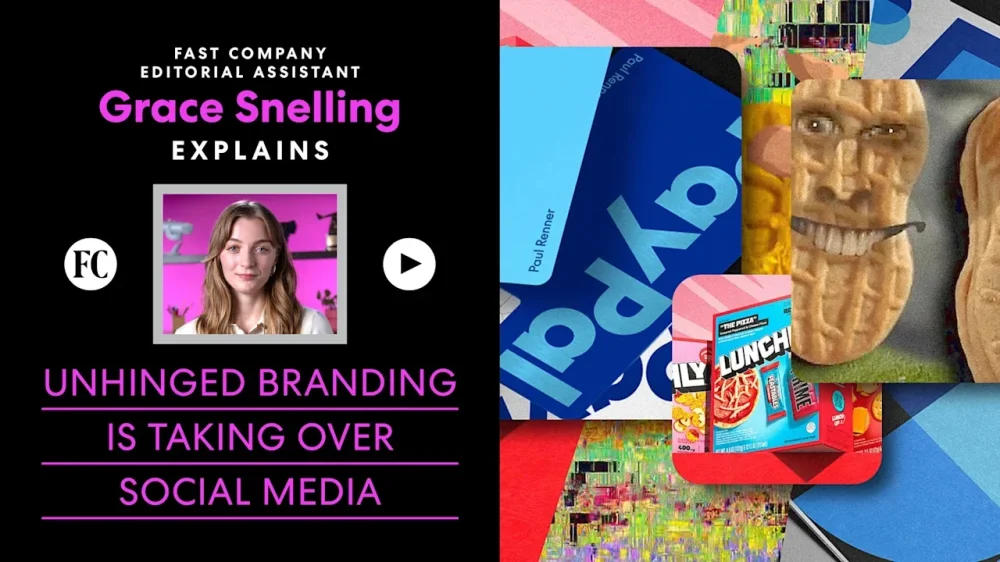
Dead cartoon owls, brain-rot cookie content, fake rebrands, and library thirst traps. Welcome to the era of DGAF branding. In this episode of FC Explains, Grace Snelling breaks down why major brands and public institutions are ditching polished ads for chaotic content and seeing massive results. From Nutter Butter’s unsettling TikToks and California Pizza Kitchen’s fake midlife crisis to Duolingo “killing” its iconic owl and libraries going viral with memes, this episode explores how being weird online has become a serious marketing strategy. We look at the numbers behind these stunts, the cultural forces driving them, and why leaning into chaos can sometimes cut through the noise better than a Super Bowl ad. View the full article
-
Inbox pinging. Deadlines stacking. Morale slipping. One choice could change everything. These 11 books unpack the decisions—and strategies—that distinguish great leaders. Learn something new every day with “Book Bites,” 15-minute audio summaries of the latest and greatest nonfiction. Get started by downloading the Next Big Idea app today! Inspire: The Universal Path for Leading Yourself and Others By Adam Galinsky Every leader leaves their mark on the hearts and minds of a workforce. This can go one of two ways: leaders can leave behind a legacy of inspiration, or infuriation. Based on thousands of perspectives collected from around the globe, Adam created a systemic formula for choosing and earning the lasting impact you want to have on others. Listen to our Book Bite summary, read by author Adam Galinsky, in the Next Big Idea app or view on Amazon. Why Are We Here?: Creating a Work Culture Everyone Wants By Jennifer Moss Leaders don’t need to take a ton of time overhauling company culture to create workplaces where employees want to spend their time. Simple shifts and incremental changes can foster community, fuel purpose, boost productivity, and deliver meaning to every team member. Jobs that employees actually like are the ultimate capitalist business strategy. Listen to our Book Bite summary, read by author Jennifer Moss, in the Next Big Idea app or view on Amazon. Lead Well: 5 Mindsets to Engage, Retain, and Inspire Your Team By Paula Davis To increase well-being, motivation, engagement, resilience, or the many words that describe thriving teams, we must understand that leadership behaviors drive employee experience. We need to advance the conversation beyond individual remedies for burnout and address root causes of stress and disengagement. Listen to our Book Bite summary, read by author Paula Davis, in the Next Big Idea app or view on Amazon. No One Is Self-Made: Build Your Village to Flourish in Business and Life By Lakeysha Hallmon A legacy of wealth, health, and purpose only comes from building villages that flourish, and that’s why nourishing community is critical for anyone ambitious. Our greatest work is achieved when it is pursued in support of collective power. Listen to our Book Bite summary, read by author Lakeysha Hallmon, in the Next Big Idea app or view on Amazon. You’re the Boss: Become the Manager You Want to Be (and Others Need) By Sabina Nawaz No leader wants to become a clueless jerk after obtaining a new position of power. But the pressures that come with becoming a boss can make it difficult to maintain their humanity, humility, and grip on reality. With the right tools, everyone from managers to executives, can turn pressure into clarity, power into connection, and act with thoughtfulness and courage at work. Listen to our Book Bite summary, read by author Sabina Nawaz, in the Next Big Idea app or view on Amazon. Masters of Uncertainty: The Navy SEAL Way to Turn Stress into Success for You and Your Team By Rich Diviney High performance under pressure isn’t limited to Navy SEALs. It’s not about being fearless or superhuman. It’s about tapping into human capabilities that we all possess—capabilities that can be trained, honed, and applied in any environment. Listen to our Book Bite summary, read by author Rich Diviney, in the Next Big Idea app or view on Amazon. Meaningful Work: How to Ignite Passion and Performance in Every Employee By Wes Adams and Tamara Myles The best burnout prevention, retention remedy, and workplace satisfaction guarantee comes down to meaning. Without feeling directly connected to the meaning behind a job, and without feeling seen for their contributions, people disengage and stagnate. Growth and innovation rely on leaders’ ability to build teams that know and feel their worth, individually and as a unit. Listen to our Book Bite summary, read by coauthors Wes Adams and Tamara Myles, in the Next Big Idea app or view on Amazon. The Psychology of Leadership: Timeless Principles to Improve Your Management of Individuals and Teams . . . and Yourself! By Sebastien Page Peak performance is a dangerous, albeit rewarding, adventure. There are plenty of hurdles on the path to sustainable success that can damage well-being or hinder positive outcomes. The Psychology of Leadership identifies timeless pillars of strong, ethical, lasting leadership. Listen to our Book Bite summary, read by author Sebastien Page, in the Next Big Idea app or view on Amazon. The Devil Emails at Midnight: What Good Leaders Can Learn From Bad Bosses By Mita Mallick The silver lining that comes from working for several bad bosses? You can learn what not to do as a leader. From every bad boss comes a valuable lesson about how to manage teams and contribute to a company’s success. Listen to our Book Bite summary, read by author Mita Mallick, in the Next Big Idea app or view on Amazon. Headamentals: How Leaders Can Crack Negative Self-Talk By Suzy Burke, Ryan Berman, and Rhett Power Leaders aren’t failing because they don’t have a strategy or skill. They are stuck because of their internal battles—their self-talk—not because of the challenges happening with customers or in the market. Headamentals is about directing that inner voice so that it becomes a competitive advantage and helps you build great teams. Listen to our Book Bite summary, read by co-authors Suzy Burke, Ryan Berman, and Rhett Power, in the Next Big Idea app or view on Amazon. Moral Ambition: Stop Wasting Your Talent and Start Making a Difference By Rutger Bregman What if everything we’ve been told about having a successful career is wrong? Rutger Bregman thinks most of us are wasting our working lives and argues we should stop trying to get rich and start trying to solve the world’s problems instead. Listen to our Next Big Idea podcast episode interviewing author Rutger Bregman, or view on Amazon. The Key Ideas in 15 Minutes “If you are going to get anywhere in life, you have to read a lot of books,” Roald Dahl once famously said. The only trouble is, reading even one book from cover to cover takes hours—and you may not have many hours to spare. But imagine for a moment: What if you could read a groundbreaking new book every day? Or even better, what if you could invite a world-renowned thinker into your earbuds, where they personally describe the 5 key takeaways from their work in just 15 minutes? With the Next Big Idea app, we’ve turned this fantasy into a reality. We partnered with hundreds of acclaimed authors to create “Book Bites,” short audio summaries of the latest nonfiction that are prepared and read aloud by the authors themselves. Discover cutting-edge leadership skills, productivity hacks, the science of happiness and well-being, and much more—all in the time it takes to drive to work or walk the dog. “I love this app! The Book Bites are brilliant, perfect to have in airports, waiting rooms, anywhere I need to not doomscroll… You guys are the best!” —Missy G. Go Deeper with a Next Big Idea Club Membership The Next Big Idea app is free for anyone to try—and if you love it, we invite you to become an official member of the Next Big Idea Club. Membership grants you unlimited access to Book Bites and unlocks early-release, ad-free episodes of our LinkedIn-partnered podcast. You also gain entry to our private online discussion group, where you can talk big ideas with fellow club members and join exclusive live Q&A sessions with featured authors. For a more focused learning experience, we recommend a Hardcover or eBook Membership. Every few months, legendary authors and club curators Malcolm Gladwell, Susan Cain, Adam Grant, and Daniel Pink select two new nonfiction books as the must-reads of the season. We then send hardcover copies straight to your doorstep, or eBook versions to your favorite digital device. We also collaborate with the authors of selected books to produce original reading guides and premium e-courses, 50-minute master classes that take you step by step through their most life-changing ideas. And yes, it’s all available through the Next Big Idea App. “My biggest Thank You is for the quality of book selections so far. I look on my shelf and see these great titles, and I find myself taking down one or two each month to reread an underlined passage. Full marks to all involved!” —Tim K. Learn Faster, from the World’s Leading Thinkers Whether you prefer to read, listen, or watch, the Next Big Idea is here to help you work smarter and live better. Wake up with an always-fresh Idea of the Day, the perfect shot of inspiration to go with your morning coffee. Then dive into one of our Challenges, hand-picked collections of Book Bites that form crash courses in subjects like communication, motivation, and career acceleration. Later, watch the playback of an interview with U.S. Surgeon General Vivek Murthy, Stanford psychologist Jennifer Eberhardt, or philosopher John Kaag. And be sure to check the “Events” tab in the app, so that you can join an upcoming live Q&A and personally chat with the next featured thought leader. If you’re hoping to grow as a person or as a professional, we hope you’ll join us and tens of thousands of others who enjoy the Next Big Idea. Get started by downloading the app today! Enjoy our full library of Book Bites—read by the authors!—in the Next Big Idea app. This article originally appeared in Next Big Idea Club magazine and is reprinted with permission. View the full article

-
The flap of a butterfly’s wings in South America can famously lead to a tornado in the Caribbean. The so-called butterfly effect—or “sensitive dependence on initial conditions,” as it is more technically known—is of profound relevance for organizations seeking to deploy AI solutions. As systems become more and more interconnected by AI capabilities that sit across and reach into an increasing number of critical functions, the risk of cascade failures—localized glitches that ripple outward into organization-wide disruptions—grows substantially. It is natural to focus AI risk management efforts on individual systems where distinct risks are easy to identify. A senior executive might ask how much the company stands to lose if the predictive model makes inaccurate predictions. How exposed could we be if the chatbot gives out information it shouldn’t? What will happen if the new automated system runs into an edge case it can’t handle? These are all important questions. But focusing on these kinds of issues exclusively can provide a false sense of safety. The most dangerous AI failures are not the ones that remain confined to one particular area. They are the ones that spread. How Cascade Failures Work While many AI systems currently operate as isolated nodes, it is only when these become joined up across organizations that artificial intelligence will fully deliver on its promise. Networks of AI agents that communicate across departments; automated ordering systems that link customer service chatbots to logistics hubs, or even to the factory floor; executive decision-support models that draw information from every corner of the organization—these are the kinds of AI implementations that will deliver transformative value. But they are also the kinds of systems that create the biggest risks. Consider how quickly problems can multiply: Corrupted data at a single collection point can poison the outputs of every analytical tool downstream. A security flaw in one model becomes a doorway into every system it touches. And when several AI applications compete for the same computing resources, a spike in demand can choke performance across the board—often at the worst possible moment. When AI is siloed, failures are contained. When AI is interconnected, failures can propagate in ways that are difficult to predict and even harder to stop. The 2010 “Flash Crash” in the U.S. stock markets showed how algorithms can interact in unexpected ways, causing problems on a scale that can be hard to imagine. On the morning of May 6th, more than a trillion dollars was wiped off the value of the Dow Jones Industrial Average in a matter of minutes as automated systems triggered a spiral of sell-offs. Despite several years of investigation, the exact cause of the crash is still unknown. What the Flash Crash revealed is that when autonomous systems interact, their combined behavior can diverge dramatically from what any single system was programmed to do. None of the algorithms were designed to crash the market and none of them would have done so if they were operating independently. But the interactions between them—each responding to signals created by others—produced an unexpected result at the systemic level that was divorced from the goals of any one part of that system. This is the nature of cascade risk. The danger lies not in any individual AI system failing, but in the unpredictable ways that interconnected systems can amplify and spread failures across organizational boundaries. The Hidden Connections Several characteristics make AI systems particularly susceptible to cascading failures. Shared data dependencies create hidden connections between seemingly independent systems. Two AI applications might appear to be completely separate, but if they rely on the same underlying data sources, a corruption or error in that data may affect both simultaneously. And a simultaneous failure may have consequences that are more severe than the sum of the individual failures. These kinds of dependencies and their possible outcomes often go unmapped until a failure forces the organization to take notice. Shared infrastructure creates similar vulnerabilities. Multiple AI systems running on common cloud resources or the same on-site computational infrastructure can all be affected by a single point of failure. During high-demand periods, competition between systems for resources can degrade performance across the board in ways that are difficult to predict or diagnose. Feedback loops between AI systems can amplify small errors into large disruptions. When one system’s output feeds into another system’s input, and the second system’s output then influences the first system, the potential for runaway effects increases. What begins as a minor anomaly can be magnified through successive iterations until it produces significant failures. Integration with critical operations also raises the stakes dramatically. When AI becomes embedded in systems that organizations depend on—supply chains, financial operations, customer service, manufacturing—cascade failures don’t just create technical problems. They disrupt the core functions that keep the business running. The Organizational Blind Spot Perhaps the greatest challenge in managing cascade risk is organizational rather than technical. The systems that interact to create cascade failures often span different departments, different teams, and different areas of expertise. No single person or group has visibility into all the connections and dependencies. This means that cascade risk management requires cross-functional coordination that cuts against traditional organizational structures. It requires mapping dependencies that cross departmental boundaries. It requires testing failure scenarios that involve multiple systems simultaneously. And it requires governance structures that can make decisions about acceptable risk levels across the organization as a whole, not just within individual units. Organizations that treat AI implementation as a series of independent projects—each managed by its own team, each evaluated on its own merits—will inevitably create the conditions for cascading failures. The connections between systems will emerge organically, without deliberate design or oversight. And when failures occur, they will propagate through pathways that no one fully understood. The alternative is to treat the entire AI ecosystem as an interconnected whole from the beginning. This means thinking about how systems will interact before they are built. It means maintaining visibility into dependencies as systems evolve. And it means accepting that the reliability of any individual system is less important than the resilience of the system of systems. Four Ways to Protect Your Organization from AI Cascade Failures 1. Map your AI dependencies before they map themselves. Most organizations discover their system interdependencies only after a failure reveals them. Don’t wait. Conduct a systematic audit of how your AI systems connect—what data they share, what infrastructure they rely on, what outputs feed into other systems’ inputs. Create a visual map of these dependencies and update it as your AI ecosystem evolves. The goal isn’t to eliminate connections (interconnection is often where value comes from) but to understand them well enough to anticipate how failures might propagate. 2. Design circuit breakers into your architecture. Financial markets use automatic trading halts to prevent cascading crashes. Your AI systems need equivalent mechanisms. Build monitoring systems that can detect unusual patterns—sudden spikes in error rates, unexpected resource consumption, anomalous outputs—and automatically pause operations before small problems become large ones. These circuit breakers buy time for human operators to assess situations and intervene. The cost of brief pauses is far less than the cost of cascading failures. 3. Test failure scenarios across system boundaries. Traditional testing evaluates whether individual systems work correctly. Cascade risk requires testing how systems fail together. Run exercises that simulate failures in one system and trace the effects through connected systems. What happens to your customer service AI when your data pipeline delivers corrupted information? How does your inventory system respond when your demand forecasting model produces anomalous predictions? These cross-boundary tests reveal vulnerabilities that single-system testing will never find. 4. Establish cross-functional AI governance. Cascade risks emerge from the gaps between organizational silos. Managing them requires governance structures that span those silos—a cross-functional team with visibility into AI implementations across departments and the authority to make decisions about system interactions, acceptable risk levels, and required safeguards. This team should own the dependency map, oversee cross-boundary testing, and ensure that new AI implementations are evaluated not just for their individual merits but for how they affect the broader ecosystem. The butterfly’s wings are already flapping. The organizations that thrive will be those that see the tornado coming—not by monitoring any single system, but by understanding how all their systems connect. View the full article

-
Other winners included Spectrum, Qualcomm/Xiaomi, Morse Micro, Bouygues Telecom, QuantalRF, Helium, Wyebot, and Plume. The post WiFI NOW Award winners announced: Cisco takes three trophies – see all the winners here appeared first on Wi-Fi NOW Global. View the full article
-
France sided with Belgium, Italy and smaller states in backing joint debt for Ukraine insteadView the full article
-
Volumes edged down 0.1% in November, reflecting subdued mood among consumersView the full article
-
FTAV goes hedge fund headhunting through the agesView the full article
-
I’m on vacation. Here are some past letters that I’m making new again, rather than leaving them to wilt in the archives. 1. I worked for my mom and now she won’t stop bugging me with work questions Five years ago, I was offered a job at the company my mom had been working at for 20+ years. At the time, I didn’t know what I wanted to do with my career and I needed the insurance and a higher wage, so I accepted the offer despite my knowing it was ultimately going to be a bad situation. Unfortunately, I stayed for five years in the horrible working conditions. One of which was working directly for my mom all five years. During my five years at that company, I took it upon myself to change/update many processes and procedures to enable people work more effectively and efficiently. I also created many instructions on how to do my job so if and when I left, anyone would be able to sit down and do my job. On my departure this past November, I made it clear I would be available to answer questions, but they would have to contract me for work if necessary. I also strongly recommended they hire at least a temp for my last two weeks so I could teach them before I left. Unfortunately, the COO decided they didn’t need to replace me and my mom could take on my job. This is not the case, but it’s their business, not mine. Because of this, I keep getting calls from my mom. These calls are for things I left instructions for, things she used to do for 20 years, things I trained her on prior to my departure, and things you could easily Google. I would understand if it was a question about where some information was, but when she calls me on a Friday afternoon on my way home from my current job asking if I could stop by the office and help her create a PowerPoint for a big meeting, it feels like she is crossing a boundary. Sometimes, she’ll even call and text me about work-related issues while I’m at my new job until I respond. When I tell her I cannot help her in this manner, but she could contract me, she pulls the “daughter card” and says I should do it for her as a favor. I don’t know how to react to this. I keep trying to remind her that I can’t do this as a favor because it used to be my job, she gets silent and offended and eventually hangs up. Is there some other way I could get my old boss/mom to stop calling me with work-related questions? If your mom is generally reasonable, you could try talking to her about this at a time when she’s not calling you looking for help. Go out to lunch with her or something and say, “Mom, it’s really important to me to make a clean break from Old Company and be able to focus on my new job. It’s not healthy for me to get pulled back into Old Company, and I definitely can’t answer question while I’m at my new job. I tried to leave a lot of documentation when I left, but I can’t help beyond that.” You could even say, “One reason I left was because it wasn’t good for our relationship to be working together and I was looking forward to just being mother/daughter again.” But if she’s not generally reasonable — and I suspect she might not be, based on what you’ve described — then you’ll need to just keep repeating, “No, I’m sorry, I can’t help with that.” Say it kindly but hold firm. At some point she’s likely to figure out she’s not getting anything from you and it will lessen (one hopes). But be aware that you’ll need to be consistent; if you give in and help one time in 10, you’ll train her to keep asking. If you’re really backed into a corner, though, you can also try, “Hmmm, I don’t remember — it’s been a few months now.” Also, consider screening her calls for a while. Call her back a day or two later so that she doesn’t get the immediate gratification of reaching you instantly when she has a work question. And mute phone notifications from her while you’re at work. – 2019 2. I don’t get my own parking pass because I’m married to a coworker I recently started working at the same company as my husband. We are in different departments, have different schedules, and are in buildings three blocks apart. Both buildings are in the downtown area of our city where parking is prohibitively expensive. The company offers reimbursement for a parking space in local parking garages that brings the cost down to about $40 a quarter from $300 a quarter. I never planned on commuting with my husband. I have not been bashful about saying this to anyone who asks. He runs late and we have different work schedules. I also don’t want the responsibility and stress of waking him up and keeping him on task. He is getting better at doing this on his own, but the progress has been hard fought due to mental illness. I’m afraid if I’m around pushing and pulling, he will lose that progress. My company (specifically the HR department) is now saying that as we are a married couple we can only have reimbursement for one parking pass. I reemphasized that I wanted my own pass and pointed out that we have schedules that sometimes vary by multiple hours. They talked to my manager and she said that I can move my schedule to match his when it is only an hour or two separate. HR also said I could use the bus when our schedule varies too much. Is this something I can/should push back on? I want to be viewed as an individual employee not the wife of so-and-so. I kind of feel like a brat being stuck on this but it is one of a couple surprises in the first week that mean I am taking a larger pay cut than I initially thought. Yes, push back on it. They’re making presumptuous assumptions about what will work for your marriage, and it’s odd. I could maybe see them asking if you’d need a pass or not, but their insistence on this once you said you did is bizarre. You shouldn’t receive fewer benefits simply because you’re married to another employee. I’d say it this way: “It’s not possible for me to share a parking pass with my husband because we’ll be driving to work separately, due to often having different commitments in the evenings. My understanding is that this is part of the benefits package offered to all employees, and I don’t want to miss out on part of the compensation package simply because of my marital status. Since I won’t be driving to work with Bob, I do need my own pass, like any other employee would.” Present “we won’t be driving to work together” as an unalterable fact — regardless of any schedule changes they offer — and see where that gets you. – 2018 Read an update to this letter here. 3. Should I send employers a lottery ticket with my resume? I have been job hunting for a while now without much success. I’m looking for creative ways to get noticed by employers, and I had the idea to send my resume along with a lottery ticket and the message “Take a chance on meeting me!” My thinking is that it’s a cute way to stand out and some hiring managers might be intrigued enough to call me for an interview. Do you see any downsides to this? Nooooo, do not do this. It’s really gimmicky, and it’ll look like you don’t trust your qualifications to merit an interview on their own (or understand why people get hired). It’s so gimmicky, in fact, that if I would have called you for an interview without the lottery ticket, this would make me hesitate to do it, both because the gimmick would raise questions about your judgment and understanding of professional norms and because I’d have qualms about reinforcing whatever thought process led to this. The way you stand out to employers is by being a highly qualified candidate with a resume that shows a track record of achievement and writing a compelling, personalized cover letter. I know that’s frustrating — how will you stand out if other people have those things too, after all? — but that’s the only way to do it, at least if you want to screen for good employers who hire competently. – 2019 4. My office wants to make me use a nickname My name is, let’s say, Jane Smith. I just received this communication on messenger from my office manager: Quick question: do you have a fav nickname you like to go by? How do you feel about “JS”‘? lol On a scale of 1-10, how excited are you about Smithy? I believe this is part of an overall strategy to improve office culture. How do I politely say I like to go by my first name/last name combination. Or just the former. Apparently everyone in the office got the same request and it’s mandatory. I have to submit a nickname by Monday! I honestly don’t have a nickname. My boyfriend suggested that I request to be referred to as “Your Majesty” but I’m a little worried that my coworkers might actually start calling me that. “I feel strongly that names are personal and I don’t go by a nickname or want to go by one. So just Jane for me.” If you’re pressed, “Really, I’m just Jane. In my family, names are a meaningful and personal thing and I would feel really uncomfortable having a nickname.” And if you’re up for it: “I appreciate that this is an attempt to make the culture here friendlier. Being forced to go by a nickname I don’t like and don’t use would be the opposite of morale-boosting for me. If we want to improve the culture, maybe we can talk about (insert actually useful thing your office needs here).” – 2019 The post my mom won’t stop bugging me with work questions, office wants me to use a nickname, and more appeared first on Ask a Manager. View the full article
-
A stalled economic conveyor belt is behind the rise of anti-system, anti-growth parties on both the right and leftView the full article
-
Financial gamification has upended traditional patterns of trust and oversightView the full article
-
Airlines on track for the biggest holiday season getaway in history as industry braces for record demand View the full article
-
Yields on 10-year government bonds exceed 2% for first time since 2006 after central bank’s fourth rate increaseView the full article
-
Money to be borrowed against bloc’s budget after leaders fail to agree on proposal using Moscow’s fundsView the full article
-
Monthly excess spread will confer credit enhancement to the notes, KBRA said, and while it will be released it will not be available as credit enhancement in future payment periods. View the full article

-
Restricted chipmaking tools are being retrofitted to make advanced AI chips, exposing cracks in US-led export controlsView the full article
-
IDEAS shared have the power to expand perspectives, change thinking, and move lives. Here are two ideas for the curious mind to engage with: I. L David Marquet and Michael Gillespie on focusing on our future self: “By changing our time-based point of reference, we inoculate ourselves from the present moment-biased effect of temporal discounting that we are otherwise subject to. The temporal distance reduces the importance and even the visibility of practical constraints. We do not feel them. When those practical constraints fade away, what we are left with is our ideal self. It is almost always a better human and allows us to focus on what we care most about, distinct from the urgent hassles, compromises, concessions, and justifications of today.” Source: Distancing: How Great Leaders Reframe to Make Better Decisions II. Margaret Andrews on managing yourself: “Self-understanding gives us insight, but self-management helps us get there. Altering the way we behave changes the way people perceive and respond to us, and can change the way we think and feel about ourselves. With time and practice, the new behavior becomes a more natural component of our leadership style and way of being. This, in turn, has transformative effect on our own leadership abilities as well as the product of the work we do with and through others.” Source: Manage Yourself to Lead Others: Why Great Leadership Begins with Self-Understanding * * * Look for these ideas every Thursday on the Leading Blog. Find more ideas on the LeadingThoughts index. * * * Follow us on Instagram and X for additional leadership and personal development ideas. View the full article
-
The option for holders of older government-sponsored enterprise bonds that predated the move to uniform mortgage-backed securities now has a deadline. View the full article
-
A coalition of mortgagees said the zombie seconds law negatively impacts 1.2 million junior liens statewide, despite just over 500 potential "zombie" loans. View the full article