ResidentialBusiness
Administrators
-
Joined
-
Last visited
Everything posted by ResidentialBusiness
-
 Microsoft's Patch Tuesday update for December is here, and Windows users should ensure their machines are updated as soon as possible to fix three zero-day vulnerabilities. These are security flaws that are actively exploited or publicly disclosed before the developer releases an official patch. As reported by Bleeping Computer, this month's update addresses 56 bugs in total: 28 elevation-of-privilege vulnerabilities, 19 remote-code-execution vulnerabilities, four information-disclosure vulnerabilities, three denial-of-service vulnerabilities, and two spoofing vulnerabilities. Three of the remote code execution flaws are labeled "critical." Note that these figures do not include updates released for Microsoft Edge and Mariner. Patch Tuesday is typically released on the second Tuesday of every month around 10am PT, so you can anticipate security updates at that time. Three zero-days fixedOne of the zero-days patched in December has been actively exploited in the wild, though Microsoft has not shared any details as to how. CVE-2025-62221 is an elevation-of-privilege vulnerability in the Windows Cloud Files Mini Filter Driver, and when exploited, give attackers SYSTEM privileges. The mini filter allows cloud applications, such as OneDrive, access to file system functions. The other two bugs fixed have been publicly disclosed: CVE-2025-64671 - GitHub Copilot for Jetbrains Remote Code Execution Vulnerability: This flaw, which can be exploited through a Cross Prompt Injection in untrusted files or MCP servers, allows attackers to execute commands locally. According to Krebs on Security, this could trick the LLM into adding malicious instructions in the user's auto-approve settings. CVE-2025-54100 - PowerShell Remote Code Execution Vulnerability: This bug could cause scripts embedded in a webpage to be executed when retrieved using Invoke-WebRequest. CVE-2025-62221 has been attributed to Microsoft Threat Intelligence Center (MSTIC) & Microsoft Security Response Center (MSRC). CVE-2025-64671 was disclosed by Ari Marzuk, while CVE-2025-54100 has been credited to multiple security researchers. View the full article
 -
Change would affect citizens of states including UK, France and AustraliaView the full article
-
Sen. Hassan sent letters to corporate owners of manufactured housing communities, looking for answers on affordability and living conditions for their residents. View the full article

-
Throughout the life of a project, you must report on a wide variety of information. This information will be compiled into different reports and passed along to managers, investors, clients and other stakeholders. From there, reports can be used to make project decisions and adjustments. Using project report templates, like a weekly status report template, ensure these reports are created quickly and effectively. Why Use a Project Report Template? No matter how thoroughly a project is planned, the unexpected is bound to happen. Project reports document these changes, whether good or bad, and inform future strategies. Without regularly completing project reports, valuable information and insights is missed out on. Status reports are an example of how reporting directly impacts a project, in both the short-term and long-term. These weekly reports outline many details about a project, and using a weekly status report template can save you from leaving gaps in the information. Project report templates also keep these reports consistent and organized throughout the life of the project. Disorganized, or “messy” project reporting is a major pitfall. Using a project report template ensures you’re getting the most from the data and presenting it to stakeholders in the right way. /wp-content/uploads/2020/10/Light-mode-reporting-CTA-e1711992940366.pngLearn more Free Project Report Templates Regardless of the project report, the document must convey information concisely—but that doesn’t mean the data should suffer. The challenge is providing information most efficiently. A project reporting template strikes a balance between too much detail and oversimplified reports that are useless to stakeholders. Project reporting templates make reporting easier and the data more straightforward. Each of the following free project report templates is designed for a specific purpose and focuses on different information. 1. Weekly Status Report Template A weekly project status report does exactly what one would think — it documents specific information during a project. These reports should be created throughout the life of a project to illustrate changes, whether that be successes or failures. A weekly status report is the first step toward understanding if a project is going smoothly. /wp-content/uploads/2021/11/Status-Report-Screenshot-600x319.jpg Our weekly status report template covers all the bases and presents information efficiently. This template includes major details such as an executive summary, project milestones, issues, risks and past and future projections. This status report template also ensures the information is presented in a way that makes the most logical sense. The executive summary defines the project and discusses goals and projections. It doesn’t make sense to present potential risks and changes to stakeholders before they’re hooked on the executive summary. 2. Project Dashboard Template A project dashboard is one of the most widely used project management tools. Our dashboard template is a visual tool to view the project’s current status, health, calendar and more. It’s a great complement to our weekly status report template. /wp-content/uploads/2016/03/Project-Dashboard-template-UPDATE.png A dashboard should include tasks, task lengths, costs and workload, but it shouldn’t necessarily illustrate the minutiae of them. Use this free project dashboard template to keep it simple without needing an oversaturated dashboard. Or if you’re looking for a dashboard for managing multiple projects or tracking the performance of your business operations, you can use our free KPI dashboard template for projects and businesses. 3. Project Progress Report Template A project progress template helps project managers compare actual progress against the projections and estimates included in the project plan. A progress report is a critical project management tool that works for both tracking and reporting. /wp-content/uploads/2021/03/Progress-Report-Screenshot-600x559.jpg 4. Risk Register Template As the project continues, new risks are bound to crop up. There’s no way to foresee every potential risk during the project planning phase, so reporting on new issues as they appear is required. This way, problems are identified before they happen and you gain a better understanding of what to look out for in future projects. /wp-content/uploads/2020/09/Risk-Tracking-Screenshot.jpg A risk register should include each potential risk and the impact it could have. It should also categorize the risk and describe what steps were taken in order to avoid it. While many of these risks will never become reality, it’s crucial to document and plan for them. Projects without risk registers walk the tightrope with no safety net. They also don’t inform future projects. Keeping a running list with this risk register template turns risks into references for the future. 5. Executive Project Status Report Template Sometimes, senior leaders need a quick, clear snapshot of a project’s overall health. Unlike detailed team reports, this template focuses on the information executives care about most: project status, major milestones, key accomplishments, upcoming work, risks or issues, budget or timeline concerns and any decisions or support needed. /wp-content/uploads/2025/12/Executive-Project-Status-Report-Template-Screenshot-600x715.png Its purpose is to simplify communication and keep leadership aligned without overwhelming them with details. By using a template, project managers can present updates consistently, highlight what truly matters and help executives make fast, informed decisions. 6. Change Log Template A change log is similar to a risk register. However, in a risk register, these are potential risks. In a change log, these are actual changes that took place. A change log template is where major changes in the project, what actions were taken to resolve them when the matter was resolved and other details will be listed. /wp-content/uploads/2019/08/Change-Log-Screenshot.jpg Why not add this information to a weekly status report? These are specific, unusual circumstances throughout the life of the project that need to be in one location. A change log template organizes the information about changes and what steps were taken to address them in one chronological list. Remember, a project report template is supposed to be a point of reference for project managers experiencing changes in future projects. An organized change log shows what responses worked in the past and what didn’t. 7. Project Update Template Project updates are integral to project reporting. Using a project update template benefits teams and stakeholders because it imposes consistency and clarity on reporting, making updates faster to prepare and easier to read. It ensures essential information isn’t overlooked, helps track progress, flag problems early, and communicate changes transparently. /wp-content/uploads/2025/08/Project-update-template-600x354.png With a consistent format, stakeholders always know where to find key information like accomplishments, upcoming work, risks and overall project health. This reduces confusion, saves time and ensures nothing critical is overlooked. 8. Project Closure Report Template At the end of the project, it’s time to wrap up and get stakeholder sign-offs with a project closure template. This report is the final sprint in the marathon of managing a successful project. Without this final push, all the hard work up to this point loses value. /wp-content/uploads/2020/10/Project-Closure-Screenshot-600x490.jpg A project closure report includes documentation of everything needed to complete the project, as well as any outstanding items that have not been completed. This report should summarize objectives, criteria for completion, successes, failures and lessons learned. It should also provide information about time spent, budget, scope and schedule. A project closure report sometimes asks for abstract information. Listing all the major takeaways from a project sounds challenging, but this free project closure template makes it as simple as following a checklist. 9. Post-Mortem Project Report Template A post-mortem is a medical term that refers to the examination of a dead body to determine the cause of death. In project management, the post-mortem is a report on a project that has just been completed, reviewing what worked and what didn’t. Download this free port-mortem template for Word and get a project report template that details the good, bad and ugly of a recently delivered project. This allows the project manager, team and stakeholders to honestly assess the project, issues and all, to apply what’s learned to the next project. /wp-content/uploads/2024/08/Post-mortem-template-screenshot-1-300x388.png This free project report template crucially outlines what the initial expectations were. There’s space to list the project milestones, achievements and obstacles. Stakeholders has a place to give their perspective, too, making this a comprehensive look at past projects to improve future ones. 10. KPI Dashboard Template Project report templates don’t have to look back at a closed project; they can be very helpful for tracking the progress of a current one. Being able to get a lot of data on the performance, cost, workload and more when managing a project provides information to make more insightful decisions. Download this KPI dashboard template for Excel to get valuable data that helps deliver projects on time, within budget and meeting quality standards. Project managers can use this project report template to quickly identify trends and respond to challenges or opportunities when they arise. /wp-content/uploads/2024/08/KPI-Dashboard-Template-Screenshot-600x369.png This project report has charts and graphs that help deliver projects and businesses alike. There are key performance indicators for budget, a yearly pay/loss overview, task status, resource planning, workload analysis and more. 11. Lessons Learned Report Template When a project is over, it’s not finished. There are documents to sign, teams to release to other projects and more paperwork. But the last and possibly most important item of business is documenting the knowledge obtained from the execution of the project. This free lessons learned template for Excel is a way to capture that knowledge, both positive and negative. Like the post-mortem, this project report template allows the team to reflect on the project and figure out how the next one can be better managed. /wp-content/uploads/2020/05/Lessons-Learned-Screenshot-600x199.jpg The lessons learned template divides each topic discussed as a win or an issue. From there, the team will describe what happened and its impact on the project. That leads to how it might change future projects and then a list of action items to address the win or issue. 12. Change Impact Report Template Change is a given when managing a project. That doesn’t mean project managers and business leaders just let it happen. They use this free change impact assessment template for Excel to understand how the change will affect the people, process and projects they’re involved with. Using this project report template can inform resource allocation and reduce the risk associated with the change. It helps analyze the type and extent of the change, and its impact on different departments in the organization, from employees to project teams, processes, technology and more. /wp-content/uploads/2024/06/Change-impact-assessment-template-screenshot-600x445.png The free project report template has space to describe the current state of the operation or business process. Then there’s a place to define the desired state. Next, the proposed change is explained and a list of questions will be provided to estimate the impact of the change. 13. Highlight Report Template A highlight report is a brief, high-level summary that gives stakeholders a snapshot of a project’s current status over a defined reporting period. This highlight report template keeps sponsors and stakeholders informed without overwhelming them with detail. /wp-content/uploads/2025/09/Highlight-Report-Template-600x360.png It focuses on what has changed since the last report, what needs attention and whether the project remains on track. Regular highlight reports improve transparency, support timely decision-making and help maintain alignment across teams. 14. After Action Report Template This structured document is used after a project, event, campaign or any major initiative is completed. It helps teams review what happened, compare outcomes to what was planned and reflect on successes and failures. /wp-content/uploads/2025/03/After-action-report-template-600x630.png Using an after-action report template benefits stakeholders by ensuring that insights and outcomes are consistently documented and shared. Rather than leaving conclusions in people’s heads (or scattered notes), the template forces teams to articulate what worked, what failed and why, which builds organizational memory. The Value of a Perfect Report All too often, projects are managed without reflecting on the successes and failures of past projects. The best projects are informed by past reports and create reports with the future in mind. Using project reporting templates means each report created is part of a larger reference for the future. Whether reporting on agile projects, programs, products, or managing any other type of project, there is a template that will benefit your reporting and results. This can mean simplifying your workflow and improving deliverables. Take Project Reporting Further with ProjectManager Using project templates is an excellent first step in the project reporting process, but templates can only take you so far. Fortunately, you can take project reports even further by using them in combination with project management software. Online project management software such as ProjectManager can create and share automated reports with the most up-to-date data. Take a free trial of ProjectManager and see just how much we can improve your project reporting experience. /wp-content/uploads/2023/10/reports.png Related Content Project Management Templates for Google Sheets 6 Project Report Examples (Free Download) Essential Report Templates for Excel Project Status Reports: The Ultimate Guide Project Performance Reporting: Key Performance Reports Understanding the Exception Report in Project Management ProjectManager is a cloud-based software that allows you to manage projects and create reports from anywhere. Import your project in minutes and create reports with ease. The ProjectManager dashboard shows an easy-to-navigate overview of your project, and our reporting tools give you the power to report on the information with the click of a button. See for yourself by taking this 30-day free trial today. The post 14 Free Project Report Templates for Excel & Word appeared first on ProjectManager. View the full article
-
If you don't yet have a REAL ID, you can continue to fly, but it's going to cost you. Beginning Feb. 1, 2026, the Transportation Security Administration (TSA) will start collecting a $45 fee from travelers using non-compliant forms of identification at airport security checkpoints. The agency previously proposed a fee of $18 to cover the administrative and IT costs of ID verification for those traveling without a REAL ID or passport but increased the total to $45 in an announcement released earlier this month. REAL ID requirementsThe 2005 REAL ID Act mandated the standardization of state-issued driver's licenses and identification cards. After multiple delays since 2008, the Department of Homeland Security earlier this year finally began requiring anyone age 18 and over to have a REAL ID-compliant license to clear airport security or enter certain federal buildings. Travelers can also comply with the regulations using a U.S. passport, U.S. passport card, DHS Trusted Traveler card, or state-issued Enhanced Driver's License (from Michigan, Minnesota, New York, Vermont, of Washington). Enhanced Tribal Cards, permanent resident and border crossing cards, Department of Defense IDs, and foreign passports are also accepted. You can still travel without a REAL IDThe vast majority of Americans—94 percent—already have a REAL ID or another accepted form of identification. Those who don't will have to complete an online verification process and pay the $45 fee before they are able to clear airport security. Travelers are being encouraged to do this in advance: If you arrive without approval, you'll be sent out of line to complete the process (which can take up to 30 minutes) before being allowed through. The $45 fee covers security checkpoint access for up to 10 days, after which you'll have to repeat the process and payment. Travelers whose REAL ID or passport has been lost or stolen also have to pay. View the full article
-
Pinterest attracts users who want inspiration and solutions, not passive browsing. The platform now reaches 600 million monthly active users, many of whom arrive with clear intent to research, plan, or purchase. That makes its ad formats especially valuable for marketers who want to appear in moments when people are actively looking for ideas and products. Here’s how each format works and when to consider it. Ad formats explained Pinterest Ads offers a variety of ad formats, many of which aren’t available on other social media platforms. Let’s take a look at what formats they offer and when you might want to consider using them. Carousel ads Carousel ads are an interactive format that showcase two to five cards (images), where users can swipe through the cards, tap a card to open a close-up view, or click through to a destination URL. This format is a great way for advertisers to showcase multiple messages or products and encourage users to engage with the ad via the swipe capabilities. Example: A wedding planner could use multiple cards to share statistics on the U.K. wedding market and rising costs of the average wedding, with the final card promoting an ebook on how to reduce costs, which is available to download for free on their website. Collection ads Similar to carousel ads, collection ads allow advertisers to show multiple products in one ad. The ad starts with a “hero” creative (either an image, a video, or a slideshow), which sits above three smaller images. When the user clicks on the ad and opens close-up mode, they are presented with up to 24 additional images or products. Above: An example of a Collection ad from Pinterest Academy This format can be used by advertisers who want to showcase multiple products, such as a specific collection or a product catalog. Example: A jewelry store could use a looping video of a woman putting on a gold set of jewelry, with the three smaller images showing product images of each item. Once the user clicks on the ad, they are presented with the full range of gold jewelry sold by the business. Idea ads Idea ads are made from a single full-screen image or video and appear on the homepage, in searches, and alongside related pins. This is an ideal format for advertisers who want their ads to have a more native feel while still being shoppable or facilitating site visits. Get the newsletter search marketers rely on. See terms. Standard ads This is the most basic ad offering on Pinterest, with the ad made from a single static image. Standard ads are a great option for advertisers looking for a simple format, can offer a visually compelling image, and want to take users directly to their site. Example: A CrossFit gym could use a photo from a recent shoot of one of its classes in action, with clear, bold text stating “Join us,” the logo in the top right corner, and a call to action to “Book your free class.” Video ads There are two types of video ads available on Pinterest: standard and max-width. Standard video ads are the same size as a standard pin and consist of a single video. Max-width video ads expand across both column feeds when viewed through the Pinterest app, making them twice the size of standard video ads. Due to their autoplay nature, these formats are ideal for grabbing users’ attention and for advertisers who are able to tell a story with video content. Shopping ads Shopping ads use a single, static product image, but unlike standard ads, they also show product details including price. An example of a Shopping ad from Pinterest Academy This format is ideal for ecommerce brands looking to showcase products through a shoppable format and those with a dependable product feed. Quiz ads Quiz ads enable advertisers to build a quiz with two to three questions and, depending on the answers given, show users two to three results. The results consist of a visual asset, a headline, and a description, from which the user can click through to a website to continue their journey. This is another interactive format, ideal for advertisers looking to offer users a more customized experience. Example: A beauty brand could use the quiz format to guide users to the product page for the right range for their skincare needs. This helps address users’ wants and needs and provides a more personal experience than sending them to the website homepage. Local inventory ads Local inventory ads help advertisers promote their products alongside real-time pricing for in-stock items. They require advertisers to set up store locations and local product information via a store feed and a local inventory supplemental feed. This format works well for advertisers looking to drive store visits and promote their convenience to local platform users. Dig deeper: Cross-platform, not copy-paste: Smarter Meta, TikTok, and Pinterest ad creative Ad formats in beta Pinterest ads regularly offers new ad formats, with the following two currently in beta Top of Search ads In September 2025, Pinterest began testing Top of Search ads, which appear within the first 10 slots of search results and related pins. Top of Search ads have a 29% higher average CTR than other campaigns, according to Pinterest’s test data. This is a promising format for advertisers looking to quickly and effectively capture the attention of high-intent users. Lead ads Lead ads are designed to help advertisers reach prospects on Pinterest by enabling them to collect information through a lead form, making them an ideal format for lead generation. Advertisers can choose what text appears in the descriptions, questions, and confirmation card, giving them control over the information they want to collect. The case for investing in Pinterest ads in 2026 Pinterest Ads offers a mix of visual and interactive formats that help brands stand out in front of a high-intent audience. As the platform expands its ad lineup, marketers gain additional ways to support research, inspiration, and purchase journeys with creative built for how people use Pinterest. With more formats in development and a growing user base, 2026 presents a clear opportunity for advertisers to build or deepen their investment in the channel. View the full article
-
Consider this: You want to book a multicity, international trip with flights from New York City to London, then Paris, and then back to New York City. There are numerous variables in the mix—different airlines, various ticketing levels, and more—that make the booking more complicated than anticipated. Accordingly, you may end up booking several separate flights, with multiple tickets and confirmation codes to keep track of. If you travel a lot, that can be a lot to manage. But Navan, a corporate travel and expense platform, says it has smoothed the whole process out for booking flights. Navan—which went public less than a month and a half ago, and mainly competes in the same space as companies such as Ramp and Concur—announced on Wednesday that it has unveiled a huge upgrade to its multicity booking process, making it easier than ever to book complex travel itineraries. That’s something that amounts to a rather large engineering breakthrough, its team says. While users previously could use Navan for exactly these types of complicated, multicity bookings, doing so, following the upgrades, is now much simpler. These types of itineraries amount to “around 10% of bookings” on the platform, says Ian Fette, vice president of Engineering at Navan, but “it wasn’t the feature that got all the attention and love.” However, the process has been “massively upgraded,” he says, although it took some time. Navan started working on the improved process during the second half of 2024. And, as noted, it’s the myriad variables that come into play when booking multicity trips that made it such a daunting task for engineers. “What’s hard about multicity [itineraries]is not all airlines can handle all the itineraries you can throw at them,” Fette says. “Some airlines have partnerships and can sell one ticket that covers the whole journey, or you can construct itineraries where one airline can fulfill all the routes,” he continues, “but it may not be price competitive—we try to break it up and see if we can fill it as one ticket, and get a good price.” Previously, balancing simplicity and pricing for multicity bookings has been the goal for travelers, and it generally involved a one-ticket approach (comprising all flights) or a series of one-way flights. Navan’s upgraded system spares travelers from “trying to do all that mental work of trying to put it together.” Fette says users are already lauding the changes, and that the upgrades lay the foundation for future enhancements to the Navan platform. “This unlocks our ability to continue to iterate our ticketing intelligence—how we use the knowledge and data we have to drive you to the best pricing,” he says. “This is an ongoing area of investment for us, and it’s a huge step up.” View the full article

-
Reading the news, it can feel like no one is partying anymore. People seem more excited to stay home than go out. Gen Z is drinking less than any other generation. Wellness clubs have replaced night clubs as the go-to spots to socialize. But partying is not dead — priorities have simply shifted, as highlighted in the Evite’s Pregame Report 2026 released today. The online invitations platform surveyed more than 5,000 party enthusiasts to uncover the hottest trends and the biggest pet peeves for party planning in 2026. As it turns out, partying no longer happens only at the club. It has shifted to smaller, connection-focused affairs. After birthdays and holiday celebrations, watch parties came in as the third-most-popular event types at 49%, followed by book clubs at 43% and celebrating pets at 35%. After all, a dog’s birthday party is still a party. Gen Z has been declared “generation stay-at-home.” But that doesn’t mean they aren’t inviting people over. According to Evite, home-based celebrations are booming as hosts prioritise comfort and intimate celebrations over big blow outs. “Post-pandemic, people discovered they prefer deeper, more meaningful connections over crowded events, and as a result their homes have become more central to their identity and social lives,” Olivia Pollock, Evite’s Etiquette & Hosting Expert, tells Fast Company. “There’s also a practical component at play. Hosting at home helps keep budgets manageable, 67% of respondents say they prefer affordable, personalized experiences.” If they aren’t going out, a new generation of hosts is instead getting creative at home, turning their apartments into makeshift coffeehouses and planning elaborate themed dinners designed with TikTok and Instagram in mind. If they are hosting outside the home, 69% favor outdoor and nature-based locations, with over half (52%) seeking unconventional venues. “In 2025, social media isn’t just a tool, it’s the unofficial co-host at gatherings,” says Pollock. Nearly a quarter of respondents plan to host content-friendly gatherings specifically designed to share online. “That might mean a unique spin on a charcuterie board, a themed tablescape, or even personalized touches like namecards, knowing that guests will definitely want to take a post on their socials.” Partying, in whatever form, is more important than ever, particularly at a time when 57% of Americans are lonely. Younger generations are feeling it worse than older Americans, a recent Cigna survey shows. Those figures are unsurprising given that in 2023, only 4.1 percent of Americans attended or hosted social gatherings on a given weekend or holiday, data from the U.S. Bureau of Labor Statistics shows. The antidote would be a nationwide effort to get out and party more. Even if that looks like hosting a wine and cheese night at home or a watch party for the finale of your favorite show rather than shaking ass at the club. It also means showing up. Evite found 62% of respondents cited guests RSVP-ing “yes” and then bailing as a top pet peeve, with ignoring RSVP deadlines just behind at 57%. Hosts also have a role to play. Being underprepared with a lack of details about the dress code or schedule is the cause of headaches for 67% of guests. Not enough food or drinks (49%) and poor scheduling or timing (39%) also are etiquette faux pas. Alcohol, once a party staple, is now less of a go-to, as the sober-curious movement continues to gain ground. Those aged 34 and under are drinking about 10 percent less now compared with two decades ago, according to a 2023 Gallup poll. Half of hosts now strive to offer a variety of beverage options, with soda (48%), crafted mocktails (39%), and tea or coffee (37%) topping the list of preferred guest beverages. In 2026, partying isn’t going anywhere. It just looks a little different. “The common thread is that people just want to connect,” said Pollock. “Regardless of the occasion, or the venue.” View the full article

-
A SpaceX initial public offering might be on the horizon. The aerospace company, run by founder and CEO Elon Musk, is reportedly planning an IPO aimed at raising over $30 billion, according to Bloomberg, which cited people familiar with the matter. The IPO could be as soon as mid- to late-2026 or 2027. In its recent 2026 US Venture Capital Outlook, PitchBook pointed to the rise in space-focused stock listings, citing favorable policies. Fast Company has reached out to SpaceX for comment and will update this post if we hear back. Reaching the $30 billion threshold would make SpaceX the largest IPO in history—and give it a reported $1.5 trillion valuation. Oil company Saudi Aramco currently holds the record, raising $29 billion in 2019. It hit a $1.9 trillion valuation, selling 1.5% of its ownership. Sources cited by Bloomberg claim that SpaceX will hit about $15 billion in revenue this year and estimate $22 billion to $24 billion in 2026. Most of that income is courtesy of Starlink, which has been used by governments and companies alike to provide satellite internet services. Executives at SpaceX have floated the idea of Starlink spinning off and doing its own IPO. However, last year, CFO Bret Johnsen said it would likely be “in the years to come.” Musk and the company’s board have reportedly already started making plans for an IPO, including hiring. The funds would, in part, go toward developing space-based data centers, presumably to help power the enormous computing needs of the AI boom. Stocks rise in space-adjacent companies News of a potential SpaceX listing has led to a spike in share prices of related companies. Take EchoStar Corporation, which sold spectrum licenses to SpaceX this fall. Between two separate deals, EchoStar received $11.1 billion in SpaceX private stock. The company’s shares (Nasdaq: SATS) closed up about 6% on Tuesday and jumped nearly 7% in premarket trading on Wednesday. Space transportation company Rocket Lab Corporation saw its shares (Nasdaq: RKLB) close up 3.6% and rise another 1.5% overnight. View the full article

-
When considering the key differences between an LLC and an EIN, it’s important to comprehend their distinct roles in business operations. An LLC, or Limited Liability Company, serves as a legal entity that protects its owners from personal liability, whereas an EIN, or Employer Identification Number, is a tax identification number issued by the IRS. Knowing how these two elements interact can impact your business strategy considerably. Let’s explore why grasping these differences is essential for your business success. Key Takeaways An LLC is a business entity providing liability protection, while an EIN is a tax identification number issued by the IRS. LLCs are formed at the state level, whereas EINs are assigned by the IRS for tax purposes. An LLC can have one or more members, while an EIN is issued to any business entity, regardless of its structure. Single-member LLCs may not need an EIN unless they hire employees, while multi-member LLCs must obtain one for tax compliance. An LLC offers operational flexibility and liability protection, whereas an EIN helps separate business and personal financial identities for tax purposes. What Is an LLC and How Does It Function? An LLC, or Limited Liability Company, serves as a versatile business structure that combines the benefits of both corporations and partnerships. This classification provides personal liability protection for its members, meaning you won’t be personally liable for business debts. LLCs additionally offer tax flexibility; you can choose to be taxed as a sole proprietorship, partnership, or corporation, potentially saving money. Forming an LLC involves a formal registration process governed by state laws, requiring you to file Articles of Organization. You can have one or multiple members, and the management can be either member-managed or manager-managed, providing operational flexibility. Compared to LLCs, LLCs have fewer formalities, making them easier for small business owners to maintain and operate efficiently. Understanding the Purpose of an EIN Comprehending the purpose of an Employer Identification Number (EIN) is essential for any business owner. An EIN, assigned by the IRS, serves to identify your business for tax purposes, separating your financial identity from your personal one. If you’re a sole proprietor, you might wonder, “Do I need an EIN as a sole proprietor?” The answer can depend on your business activities. Even though you can use your Social Security number for tax filings, obtaining an EIN can protect your personal assets and simplify hiring employees. If you’re running an LLC, you might likewise ask, “Does an LLC need a 1099?” Yes, for certain payments. In the end, having an EIN facilitates business growth and compliance with tax regulations. Key Distinctions Between LLC and EIN Comprehending the key distinctions between an LLC and an EIN is crucial for anyone traversing the business environment. Here are the primary differences to evaluate in the LLC vs EIN discussion: Nature: An LLC, or limited liability company, is a legal business entity providing liability protection, whereas an EIN is a federal identification number for tax purposes. Formation: LLCs can be formed by individuals or groups at the state level; EINs are issued by the IRS. Requirements: Most single-member LLCs don’t need an EIN except for hiring employees, whereas multi-member LLCs must obtain one for tax compliance. Function: An EIN aids in separating personal and business finances, whereas an LLC establishes a legal business presence. When Is an EIN Required for an LLC? When considering whether your LLC needs an EIN, it’s essential to understand the specific circumstances that require this federal identification number. If you manage a multi-member LLC, you’re required to obtain an EIN for tax identification. Even though you have a single-member LLC, you’ll need an EIN if you choose to be taxed as an S Corporation or a corporation, rather than as a disregarded entity. If you plan to hire employees, you must likewise acquire an EIN for payroll tax reporting. Furthermore, if your LLC’s activities involve federal tax reporting, such as alcohol or firearms sales, you’ll need an EIN. Finally, remember, changes in ownership or restructuring may require obtaining a new EIN. Benefits of Forming an LLC When you form an LLC, you gain several key benefits that can simplify your business experience. You’ll enjoy personal liability protection, which keeps your personal assets safe from business-related debts and legal issues. Moreover, LLCs offer tax flexibility and fewer administrative requirements, making them an attractive option for many entrepreneurs. Liability Protection Advantages Forming an LLC offers significant liability protection advantages, making it a popular choice for many business owners. As a limited liability company, your personal assets are typically safeguarded from business debts and legal responsibilities. This separation of personal and business finances helps minimize risk, especially in lawsuits or financial obligations. Here are some key liability protection benefits of an LLC: Protection of personal assets from business debts. Shielding members from liability for actions of others. Improved credibility with clients and vendors. Avoidance of double taxation on profits during enjoying liability protection. Understanding the sole MBR meaning is essential, as it allows single-member LLCs to benefit from the same protections, even if you still need to take into account the LLC self-employment tax. Tax Flexibility Options Beyond liability protection, one of the standout benefits of forming an LLC is the tax flexibility it offers. As a limited liability company, you can choose how your business is taxed. You might opt for pass-through taxation, reporting profits on personal tax returns, or elect to be taxed as an S Corporation or C Corporation. Unlike corporations, LLCs avoid double taxation, allowing you to distribute income without corporate-level tax implications. Moreover, you can withdraw profits anytime, enhancing your financial flexibility. You likewise have the ability to deduct business expenses easily and allocate profits and losses strategically. If you’re wondering, can a sole proprietor have an EIN? The answer is yes, and with an LLC, do you pay self-employment tax? Typically, yes. Administrative Simplicity Benefits Even though many business structures come with a host of administrative obligations, an LLC stands out for its simplicity in this regard. Here are some key benefits of forming a limited liability company: Fewer formalities: LLCs don’t require annual meetings or extensive record-keeping like corporations do. Flexible management: You can manage the LLC directly without needing a board of directors, making it easier for you and others—yes, two people can start an LLC. Less stringent regulations: LLCs face fewer regulatory requirements, simplifying compliance. Simplified taxation: With pass-through taxation, profits are reported on personal tax returns, easing limited liability company accounting and avoiding double taxation. If you’re looking to convert a sole proprietorship to LLC, these administrative simplicity benefits make it an attractive option. Advantages of Obtaining an EIN Obtaining an Employer Identification Number (EIN) offers several significant advantages for business owners. First, an EIN helps distinguish your business’s identity from your personal identity, reducing the risk of identity theft and personal liability. It’s crucial for opening a business bank account, allowing you to separate personal and business finances—important for managing taxes effectively. If you plan to hire employees, having an EIN guarantees compliance with federal tax regulations and facilitates payroll processing. Additionally, an EIN is necessary for establishing business credit, which can help secure financing and loans for growth. Finally, using your EIN instead of your Social Security Number (SSN) in transactions improves your privacy. Remember to reflect on how to fill out a W9 for an LLC, especially if you’re a single member LLC. The Application Process for EIN and LLC Formation Before you can apply for an Employer Identification Number (EIN), you need to complete the formation of your Limited Liability Company (LLC) by registering it with your state. Here’s how to proceed: Choose a unique business name and confirm its availability. File your Articles of Organization with the state. Obtain any required licenses or permits. After your EIN is formed, fill out the SS-4 form for your EIN. If you’re shifting from a sole proprietorship and wondering, “how do I change from sole proprietor to LLC?” make sure to update your business name and apply for a new EIN, as your sole proprietorship EIN won’t suffice for your LLC. Common Misconceptions About LLCs and EINs Many people have misconceptions about LLCs and EINs that can lead to confusion. It’s not true that every LLC needs an EIN; single-member LLCs without employees can use their Social Security Number instead. Furthermore, whereas an EIN serves as a tax identification number, it’s important to understand that it doesn’t define your business structure like an LLC does. EIN Not Required Always Although it’s a common misconception that every Limited Liability Company (LLC) is required to obtain an Employer Identification Number (EIN), this isn’t always the case. Sole proprietorships and single-member LLCs without employees can often use their Social Security Number instead. Here are key points to reflect on: Multi-member LLCs usually need an EIN. LLCs planning to hire employees must obtain one. Changes to business structure, like adding partners, require a new EIN. Even though not required, having an EIN offers benefits, such as privacy and easier banking. LLC Is Not EIN When starting a business, it’s essential to understand that an LLC and an EIN serve different purposes and aren’t interchangeable. An LLC, or limited liability company, is a legal entity that provides liability protection to its owners. The single-member LLC agreement helps clarify the operating structure. Conversely, an EIN, or Employer Identification Number, is primarily used for tax reporting. You might wonder, do you have to have LLC in your EIN? The answer is no; single-member LLCs without employees can use their Social Security Number instead. Nevertheless, obtaining an EIN can improve privacy and professionalism, regardless of whether it’s legally required, especially for multi-member LLCs or those opting to be taxed as corporations. Single-Member Exceptions Exist Grasping the nuances surrounding single-member LLCs and EINs can clarify common misconceptions that may lead to confusion. Here are some key points to contemplate: You can use your Social Security Number (SSN) for tax purposes unless you elect S Corporation status, which requires an EIN. Single-member LLCs are classified as disregarded entities by the IRS, meaning income is reported on your personal tax return unless you obtain an EIN. If you hire employees or file specific tax returns, you’ll need an EIN, in spite of being a disregarded entity. Some banks or creditors may require an EIN to open a business account or establish credit, making it beneficial to obtain one. If you’re looking to change your sole proprietorship to LLC, think about drafting a single member LLC operating agreement, and be prepared to fill out a W9 form LLC if necessary. Frequently Asked Questions Do I Need an LLC or Just an EIN? You need an LLC if you want liability protection for your business, as it separates your personal assets from business risks. An EIN, conversely, is necessary for tax purposes, especially if you plan to hire employees or open a business bank account. If you’re a single-member LLC without employees, you mightn’t need an EIN, but having one can simplify banking and improve privacy. Assess your business needs carefully. Can I Use My Existing EIN Number for My LLC? You can’t use your existing EIN for your LLC if you’ve changed your business structure. Each LLC requires its own EIN for tax and legal purposes, especially if it’s a multi-member LLC. If you formed an LLC after previously operating as a sole proprietorship, you’ll need to apply for a new EIN. This guarantees compliance with IRS regulations and avoids potential legal complications related to identity and taxation for different business entities. Does an EIN Make You a Business Owner? An EIN doesn’t make you a business owner; it’s simply a tax identification number assigned by the IRS. You need to formally register a business entity, like an LLC, to establish ownership. As an EIN is crucial for activities such as hiring employees and filing taxes, it doesn’t provide the legal protections or structure that come with being a registered business. Without this registration, you’re not recognized as a business owner. Should Each LLC Have Its Own EIN? Yes, each LLC should have its own EIN. This is especially true if the LLC has multiple members or hires employees, as it’s required for tax identification. Even single-member LLCs benefit from an EIN for privacy and to separate personal and business finances. Moreover, if an LLC is owned by another LLC or undergoes structural changes, obtaining a new EIN is necessary to comply with IRS regulations. Conclusion In conclusion, grasping the differences between an LLC and an EIN is vital for effective business management. An LLC offers liability protection and operational flexibility, whereas an EIN serves as a tax identification number necessary for separating personal and business finances. Forming an LLC often requires obtaining an EIN for tax purposes. By recognizing these distinctions, you can better navigate the intricacies of business formation and compliance, ensuring your venture operates smoothly and legally. Image via Google Gemini This article, "Key Differences Between LLC Vs EIN" was first published on Small Business Trends View the full article
-
When considering the key differences between an LLC and an EIN, it’s important to comprehend their distinct roles in business operations. An LLC, or Limited Liability Company, serves as a legal entity that protects its owners from personal liability, whereas an EIN, or Employer Identification Number, is a tax identification number issued by the IRS. Knowing how these two elements interact can impact your business strategy considerably. Let’s explore why grasping these differences is essential for your business success. Key Takeaways An LLC is a business entity providing liability protection, while an EIN is a tax identification number issued by the IRS. LLCs are formed at the state level, whereas EINs are assigned by the IRS for tax purposes. An LLC can have one or more members, while an EIN is issued to any business entity, regardless of its structure. Single-member LLCs may not need an EIN unless they hire employees, while multi-member LLCs must obtain one for tax compliance. An LLC offers operational flexibility and liability protection, whereas an EIN helps separate business and personal financial identities for tax purposes. What Is an LLC and How Does It Function? An LLC, or Limited Liability Company, serves as a versatile business structure that combines the benefits of both corporations and partnerships. This classification provides personal liability protection for its members, meaning you won’t be personally liable for business debts. LLCs additionally offer tax flexibility; you can choose to be taxed as a sole proprietorship, partnership, or corporation, potentially saving money. Forming an LLC involves a formal registration process governed by state laws, requiring you to file Articles of Organization. You can have one or multiple members, and the management can be either member-managed or manager-managed, providing operational flexibility. Compared to LLCs, LLCs have fewer formalities, making them easier for small business owners to maintain and operate efficiently. Understanding the Purpose of an EIN Comprehending the purpose of an Employer Identification Number (EIN) is essential for any business owner. An EIN, assigned by the IRS, serves to identify your business for tax purposes, separating your financial identity from your personal one. If you’re a sole proprietor, you might wonder, “Do I need an EIN as a sole proprietor?” The answer can depend on your business activities. Even though you can use your Social Security number for tax filings, obtaining an EIN can protect your personal assets and simplify hiring employees. If you’re running an LLC, you might likewise ask, “Does an LLC need a 1099?” Yes, for certain payments. In the end, having an EIN facilitates business growth and compliance with tax regulations. Key Distinctions Between LLC and EIN Comprehending the key distinctions between an LLC and an EIN is crucial for anyone traversing the business environment. Here are the primary differences to evaluate in the LLC vs EIN discussion: Nature: An LLC, or limited liability company, is a legal business entity providing liability protection, whereas an EIN is a federal identification number for tax purposes. Formation: LLCs can be formed by individuals or groups at the state level; EINs are issued by the IRS. Requirements: Most single-member LLCs don’t need an EIN except for hiring employees, whereas multi-member LLCs must obtain one for tax compliance. Function: An EIN aids in separating personal and business finances, whereas an LLC establishes a legal business presence. When Is an EIN Required for an LLC? When considering whether your LLC needs an EIN, it’s essential to understand the specific circumstances that require this federal identification number. If you manage a multi-member LLC, you’re required to obtain an EIN for tax identification. Even though you have a single-member LLC, you’ll need an EIN if you choose to be taxed as an S Corporation or a corporation, rather than as a disregarded entity. If you plan to hire employees, you must likewise acquire an EIN for payroll tax reporting. Furthermore, if your LLC’s activities involve federal tax reporting, such as alcohol or firearms sales, you’ll need an EIN. Finally, remember, changes in ownership or restructuring may require obtaining a new EIN. Benefits of Forming an LLC When you form an LLC, you gain several key benefits that can simplify your business experience. You’ll enjoy personal liability protection, which keeps your personal assets safe from business-related debts and legal issues. Moreover, LLCs offer tax flexibility and fewer administrative requirements, making them an attractive option for many entrepreneurs. Liability Protection Advantages Forming an LLC offers significant liability protection advantages, making it a popular choice for many business owners. As a limited liability company, your personal assets are typically safeguarded from business debts and legal responsibilities. This separation of personal and business finances helps minimize risk, especially in lawsuits or financial obligations. Here are some key liability protection benefits of an LLC: Protection of personal assets from business debts. Shielding members from liability for actions of others. Improved credibility with clients and vendors. Avoidance of double taxation on profits during enjoying liability protection. Understanding the sole MBR meaning is essential, as it allows single-member LLCs to benefit from the same protections, even if you still need to take into account the LLC self-employment tax. Tax Flexibility Options Beyond liability protection, one of the standout benefits of forming an LLC is the tax flexibility it offers. As a limited liability company, you can choose how your business is taxed. You might opt for pass-through taxation, reporting profits on personal tax returns, or elect to be taxed as an S Corporation or C Corporation. Unlike corporations, LLCs avoid double taxation, allowing you to distribute income without corporate-level tax implications. Moreover, you can withdraw profits anytime, enhancing your financial flexibility. You likewise have the ability to deduct business expenses easily and allocate profits and losses strategically. If you’re wondering, can a sole proprietor have an EIN? The answer is yes, and with an LLC, do you pay self-employment tax? Typically, yes. Administrative Simplicity Benefits Even though many business structures come with a host of administrative obligations, an LLC stands out for its simplicity in this regard. Here are some key benefits of forming a limited liability company: Fewer formalities: LLCs don’t require annual meetings or extensive record-keeping like corporations do. Flexible management: You can manage the LLC directly without needing a board of directors, making it easier for you and others—yes, two people can start an LLC. Less stringent regulations: LLCs face fewer regulatory requirements, simplifying compliance. Simplified taxation: With pass-through taxation, profits are reported on personal tax returns, easing limited liability company accounting and avoiding double taxation. If you’re looking to convert a sole proprietorship to LLC, these administrative simplicity benefits make it an attractive option. Advantages of Obtaining an EIN Obtaining an Employer Identification Number (EIN) offers several significant advantages for business owners. First, an EIN helps distinguish your business’s identity from your personal identity, reducing the risk of identity theft and personal liability. It’s crucial for opening a business bank account, allowing you to separate personal and business finances—important for managing taxes effectively. If you plan to hire employees, having an EIN guarantees compliance with federal tax regulations and facilitates payroll processing. Additionally, an EIN is necessary for establishing business credit, which can help secure financing and loans for growth. Finally, using your EIN instead of your Social Security Number (SSN) in transactions improves your privacy. Remember to reflect on how to fill out a W9 for an LLC, especially if you’re a single member LLC. The Application Process for EIN and LLC Formation Before you can apply for an Employer Identification Number (EIN), you need to complete the formation of your Limited Liability Company (LLC) by registering it with your state. Here’s how to proceed: Choose a unique business name and confirm its availability. File your Articles of Organization with the state. Obtain any required licenses or permits. After your EIN is formed, fill out the SS-4 form for your EIN. If you’re shifting from a sole proprietorship and wondering, “how do I change from sole proprietor to LLC?” make sure to update your business name and apply for a new EIN, as your sole proprietorship EIN won’t suffice for your LLC. Common Misconceptions About LLCs and EINs Many people have misconceptions about LLCs and EINs that can lead to confusion. It’s not true that every LLC needs an EIN; single-member LLCs without employees can use their Social Security Number instead. Furthermore, whereas an EIN serves as a tax identification number, it’s important to understand that it doesn’t define your business structure like an LLC does. EIN Not Required Always Although it’s a common misconception that every Limited Liability Company (LLC) is required to obtain an Employer Identification Number (EIN), this isn’t always the case. Sole proprietorships and single-member LLCs without employees can often use their Social Security Number instead. Here are key points to reflect on: Multi-member LLCs usually need an EIN. LLCs planning to hire employees must obtain one. Changes to business structure, like adding partners, require a new EIN. Even though not required, having an EIN offers benefits, such as privacy and easier banking. LLC Is Not EIN When starting a business, it’s essential to understand that an LLC and an EIN serve different purposes and aren’t interchangeable. An LLC, or limited liability company, is a legal entity that provides liability protection to its owners. The single-member LLC agreement helps clarify the operating structure. Conversely, an EIN, or Employer Identification Number, is primarily used for tax reporting. You might wonder, do you have to have LLC in your EIN? The answer is no; single-member LLCs without employees can use their Social Security Number instead. Nevertheless, obtaining an EIN can improve privacy and professionalism, regardless of whether it’s legally required, especially for multi-member LLCs or those opting to be taxed as corporations. Single-Member Exceptions Exist Grasping the nuances surrounding single-member LLCs and EINs can clarify common misconceptions that may lead to confusion. Here are some key points to contemplate: You can use your Social Security Number (SSN) for tax purposes unless you elect S Corporation status, which requires an EIN. Single-member LLCs are classified as disregarded entities by the IRS, meaning income is reported on your personal tax return unless you obtain an EIN. If you hire employees or file specific tax returns, you’ll need an EIN, in spite of being a disregarded entity. Some banks or creditors may require an EIN to open a business account or establish credit, making it beneficial to obtain one. If you’re looking to change your sole proprietorship to LLC, think about drafting a single member LLC operating agreement, and be prepared to fill out a W9 form LLC if necessary. Frequently Asked Questions Do I Need an LLC or Just an EIN? You need an LLC if you want liability protection for your business, as it separates your personal assets from business risks. An EIN, conversely, is necessary for tax purposes, especially if you plan to hire employees or open a business bank account. If you’re a single-member LLC without employees, you mightn’t need an EIN, but having one can simplify banking and improve privacy. Assess your business needs carefully. Can I Use My Existing EIN Number for My LLC? You can’t use your existing EIN for your LLC if you’ve changed your business structure. Each LLC requires its own EIN for tax and legal purposes, especially if it’s a multi-member LLC. If you formed an LLC after previously operating as a sole proprietorship, you’ll need to apply for a new EIN. This guarantees compliance with IRS regulations and avoids potential legal complications related to identity and taxation for different business entities. Does an EIN Make You a Business Owner? An EIN doesn’t make you a business owner; it’s simply a tax identification number assigned by the IRS. You need to formally register a business entity, like an LLC, to establish ownership. As an EIN is crucial for activities such as hiring employees and filing taxes, it doesn’t provide the legal protections or structure that come with being a registered business. Without this registration, you’re not recognized as a business owner. Should Each LLC Have Its Own EIN? Yes, each LLC should have its own EIN. This is especially true if the LLC has multiple members or hires employees, as it’s required for tax identification. Even single-member LLCs benefit from an EIN for privacy and to separate personal and business finances. Moreover, if an LLC is owned by another LLC or undergoes structural changes, obtaining a new EIN is necessary to comply with IRS regulations. Conclusion In conclusion, grasping the differences between an LLC and an EIN is vital for effective business management. An LLC offers liability protection and operational flexibility, whereas an EIN serves as a tax identification number necessary for separating personal and business finances. Forming an LLC often requires obtaining an EIN for tax purposes. By recognizing these distinctions, you can better navigate the intricacies of business formation and compliance, ensuring your venture operates smoothly and legally. Image via Google Gemini This article, "Key Differences Between LLC Vs EIN" was first published on Small Business Trends View the full article
-
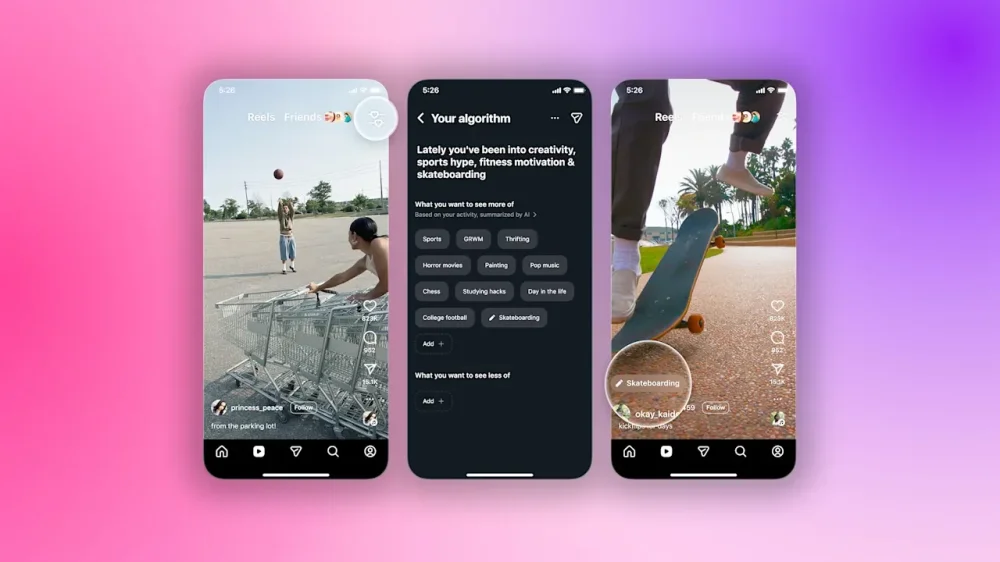
It’s a common experience: you search for white bean soup recipes one time on Instagram, and you are bombarded with white bean soup content on the app for seemingly all eternity. Instagram wants to fix that. Starting today, the company’s three billion users can have more control over their algorithm via a “Your Algorithm” feature. It’s not quite Bluesky, or the Instagram of yore that only displayed content from accounts users followed, but it does let users select or unsubscribe from different topics. The new feature, which leverages AI, lets users pick topics they want to see more or less of on their explore page. Users will first be able to see a list of suggested topics that their algorithm thinks they are interested in which they can modify. Users can also share their interests to their stories, allowing their followers to see and even replicate some of their feed. “We’re always trying to show people the best possible reels for them. After 2020 [we] slowly started figuring out how to do a good job of predicting people’s interests and showing them reels they’d be interested in,” Tessa Lyons, Instagram’s vice president of product, says. “I think we do a pretty good job today, but we don’t always get it right, and we know that people’s interests change. What we really want to do is give people control over the experience that they have on Instagram.” In designing the feature, Instagram had to balance Reels’ utility as a discovery tool with the features that give users control over what they will see. “The ideal Reels experience is one that helps you go deeper on the interests you already have and then discover new interests that you might not even know about. And getting that balance right is really important,” Lyons says, adding, “[your algorithm] is one input we have into your Reels experience. So even if you add a handful of different interests, that’s not going to be the only content you see. You’re still going to see other content as well.” Lyons also says that the feature can help Instagram’s algorithm learn about users and serve them relevant content more quickly; after she adopted a cat and tuned her algorithm to feature more kitten content, her feed immediately updated to include relevant reels. In the past, the algorithm may have needed a few days to understand she wanted to see more. By this same measure, the feature will likely improve the ad experience, as Instagram will be able to surface more targeted content for each user based on the interests they signal. According to Lyons, the inspiration for the feature started as a meme on Threads a couple of years ago, when users started writing posts to their respective algorithms, asking it to connect them with different interests, like writers or books. “It was just people expressing what they wanted from their Threads experience. Some of them would say, Dear Algorithm, I just don’t want to see politics anymore. I’m over it,” Lyons says. View the full article
-
There’s a fine line between being micromanaged and overly surveilled and being monitored enough that you get good work done. That line is actually called the Hawthorne Effect, and it’s a phenomenon in which people are more productive when they feel they’re being observed. If you’ve ever noticed you push yourself a little more when you’re working out in a full gym or group fitness class than when you’re working out alone, you already get the concept, but it can be applied to all kinds of scenarios to make you more productive—even if you’re not actually being observed. What is the Hawthorne Effect?This phenomenon is said to have been discovered during some research conducted at the Hawthorne Western Electric Plant, though there’s some debate on whether that’s true. What isn’t up for debate is the behavior trend itself: When someone is participating in an experiment, they may tend to work a little harder than normal, knowing they’re being watched. Even outside of experiments, an awareness of being observed or monitored can spur a little productivity boost. Researchers and social scientists have spent decades trying to figure out if the Hawthorne Effect, as described in early research, is real or not, but it’s still a concept that has been noted and studied for a long time—and to which you may relate. Consider your childhood: You probably cleaned your room a little more diligently when your mom was standing in the doorway glaring at you than if she just told you to go do it. Not everyone performs better under the watchful eye of someone else, but if you’ve found that you do better work when you have regular check-ins with a boss, stay more focused when you know your time is being monitored, become the master of your maps app when you and your friends are lost, or spring into action when colleagues are looking for a leader, you could benefit from tapping into the Hawthorne Effect. Putting the Hawthorne Effect to useYou can’t really make yourself be observed, right? You can’t ask your boss to monitor you all the time, for instance, but there are a few ways you can create the feeling of being watched or checked in on and harness it to be more productive. If you want to try to incorporate some of the Hawthorne Effect into your own life, try these ideas: Request regular check-ins with your manager, even if they’re just weekly, 10-minute chats. Adding structured, scheduled conversations to your week will enhance the feeling that they’ll be expecting to hear about your recent work and results. Find an accountability partner. This could be a coworker, classmate, roommate, or anyone who is working on something similar to what you’re doing. Check in with them regularly, again on a set schedule, and always be prepared to update them on your progress. Use apps that can give you a feeling of being tracked, at least when it comes to your goals. Here’s a list of apps that can serve the purpose, whether you’re looking for a virtual accountability buddy or even one that acts as a demanding “boss,” sending you messages demanding proof of your progress. I use Finch, an app that forces me to check off to-do list items so I can buy little outfits for a pixelated bird avatar. Even the feeling that the app is monitoring me—which it is, by awarding me streaks and points when I complete tasks—motivates me. Whatever works! Work somewhere with other people around you, like a coffee shop or communal workspace, if you aren’t in the office. This actually works great for me, as I find it embarrassing to zone out or scroll social media if I’m working from a coffee shop. Logically, I realize no one there actually cares what I’m doing, but illogically, I still want to appear productive in front of strangers. Take group fitness classes. I teach spin classes and take my colleagues' various class formats multiple times per week in addition to working out on my own, and I know from experience that it is truly motivating to be surrounded by other people. View the full article
-
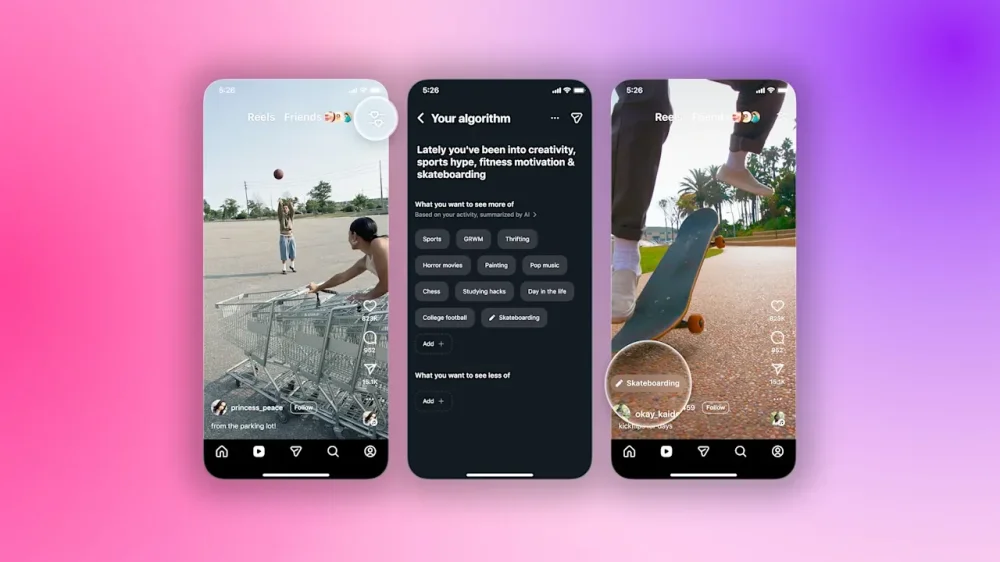
It’s a common experience: you search for white bean soup recipes one time on Instagram, and you are bombarded with white bean soup content on the app for seemingly all eternity. Instagram wants to fix that. Starting today, the company’s three billion users can have more control over their algorithm via a “Tune Your Algorithm” feature. It’s not quite Bluesky, or the Instagram of yore that only displayed content from accounts users followed, but it does let users select or unsubscribe from different topics. The new feature, which leverages AI, lets users pick topics they want to see more or less of on their explore page. Users will first be able to see a list of suggested topics that their algorithm thinks they are interested in which they can modify. Users can also share their interests to their stories, allowing their followers to see and even replicate some of their feed. “We’re always trying to show people the best possible reels for them. After 2020 [we] slowly started figuring out how to do a good job of predicting people’s interests and showing them reels they’d be interested in,” Tessa Lyons, Instagram’s vice president of product, says. “I think we do a pretty good job today, but we don’t always get it right, and we know that people’s interests change. What we really want to do is give people control over the experience that they have on Instagram.” In designing the feature, Instagram had to balance Reels’ utility as a discovery tool with the features that give users control over what they will see. “The ideal Reels experience is one that helps you go deeper on the interests you already have and then discover new interests that you might not even know about. And getting that balance right is really important,” Lyons says, adding, “[Tune your algorithm] is one input we have into your Reels experience. So even if you add a handful of different interests, that’s not going to be the only content you see. You’re still going to see other content as well.” Lyons also says that the feature can help Instagram’s algorithm learn about users and serve them relevant content more quickly; after she adopted a cat and tuned her algorithm to feature more kitten content, her feed immediately updated to include relevant reels. In the past, the algorithm may have needed a few days to understand she wanted to see more. By this same measure, the feature will likely improve the ad experience, as Instagram will be able to surface more targeted content for each user based on the interests they signal. According to Lyons, the inspiration for the feature started as a meme on Threads a couple of years ago, when users started writing posts to their respective algorithms, asking it to connect them with different interests, like writers or books. “It was just people expressing what they wanted from their Threads experience. Some of them would say, Dear Algorithm, I just don’t want to see politics anymore. I’m over it,” Lyons says. View the full article
-
In prison diary, former conservative French president rules out future attempts to ostracise Rassemblement NationalView the full article
-
The economy has had a volatile year marked by ongoing headwinds and uncertainties. Persistent inflation, unpredictability around tariffs, and a stock market that many fear is in the midst of an AI-fueled bubble are among the factors impacting consumers’ spending power. But there is one event today that will hopefully deliver some much-needed certainty to the economy and broader markets: the Federal Reserve’s interest rate cut announcement. Here’s what you need to know about a possible Fed rate cut today. What is the Fed rate cut announcement? The Federal Reserve is America’s central bank. One of its main responsibilities is setting the country’s interest rates. These interest rates are set by the Fed’s primary policymaking body, called the Federal Open Market Committee (FOMC). The FOMC is led by the chair of the Federal Reserve, who is currently Jerome Powell. The FOMC considers a wide array of data that informs its decision to cut interest rates or not. That data includes labor reports, inflation rates, consumer confidence numbers, and gross domestic product (GDP) information. Once the FOMC analyzes the data, the body will vote to do one of three things: raise interest rates, lower interest rates, or keep interest rates where they are. The current Fed interest rate is 3.75% to 4.00% (375 to 400 basis points). What are the benefits of a Fed rate cut? The main benefit of cutting interest rates is that it lowers the cost of borrowing money. If money is cheaper to borrow, consumers are more likely to take out loans, including mortgages, car loans, and increased credit card spending. Businesses are also more likely to take out loans, since borrowing is cheaper. Companies typically use loans to expand their operations, boost hiring, or buy needed equipment or supplies. Since borrowing is cheaper, lower interest rates can inject more money into the economy, thereby increasing spending. Lower interest rates can also boost the stock and cryptocurrency markets, because when interest rates are lower, safer assets like bonds have a lower rate of return. This spurs investors to put their money into riskier assets, such as stocks or cryptocurrencies, because they have the potential for higher returns. What are the drawbacks of a Fed rate cut? Low rates aren’t always a good thing. There are drawbacks to lower interest rates, too. When interest rates are lower, anyone with a savings account earns less interest. This can especially hurt retirees, who often have more cash parked in savings accounts than their younger peers, and who may rely on their monthly interest earnings to pay for necessities. Also, while lower interest rates can make everything from houses to cars more affordable, a plethora of cheaper money in the economy can have an inflationary effect, causing prices to rise, which negates the savings gained by the lower interest rates. What is the likelihood of a Fed rate cut? Right now, the current Federal Reserve interest rate is 3.75% to 4.00% (375 to 400 basis points). The Federal Reserve and Powell are under extreme pressure from the The President administration to lower rates. Because borrowing money would then be cheaper, lower rates would make many Americans feel like their purchasing power is going further as the holidays progress and we head into the new year. That would be a political win for President The President. But the Fed is supposed to be politically neutral, and Powell has shown no signs that he or the FOMC will make a decision based on politics. That said, many expect the Fed to lower interest rates today, but it likely won’t be by much. Data compiled by the Chicago Mercantile Exchange (CME) Group’s Fed Watch shows an 89.9% chance that the Fed will reduce rates by a 25-basis-point range today. If that scenario plays out, it means the federal interest rate range would drop from 3.75% to 4.00% (375 to 400 basis points) to 3.50% to 3.75% (350 to 375 basis points). When is the Fed rate announcement? The Federal Reserve’s calendar says it will announce its interest rate decision today, Wednesday, December 10. What time is the Fed rate announcement? The Federal Reserve’s interest rate announcement will be made at 2 p.m. ET today. How are stocks performing ahead of the announcement? Markets seem to be holding their collective breaths ahead of the Fed’s rate cut announcement today. As of the time of this writing, in premarket trading, S&P, Dow, and Nasdaq futures are all relatively flat: S&P Futures: down 0.04% Dow Futures: down 0.06% Nasdaq Futures: down 0.12% How are crypto markets performing ahead of the announcement? Many major cryptocurrencies are currently up over the past 24 hours ahead of the announcement. This suggests that crypto traders expect the Fed to cut rates, which could spur a rally in crypto markets. As of the time of this writing, here’s how major cryptocurrencies are performing: Bitcoin: up 1.9% Ethereum: up 6.4% XRP: up 0.2% BNB: down 0.5% Solana: up 3.2% How can I watch the Fed rate announcement? The Federal Reserve doesn’t actually announce its decision live. Instead, at 2 p.m., it will issue its results via its website. However, at 2:30 pm ET, the central bank will hold a press conference to discuss its decision on interest rates. You’ll be able to view a live stream of that press conference on the Federal Reserve’s YouTube channel. View the full article

-
Establish trust early in the buying journey to secure placement on shortlists. Uncover a trust framework for credibility across technical, peer, and continuous value layers. The post Addressing The B2B Trust Deficit: How To Win Buyers In 2026 appeared first on Search Engine Journal. View the full article
-
Google Discover is less aligned to Google Search ranking, Andy Almeida from the Google Trust and Safety team, said yesterday at the Google Search Central Live event in Zurich yesterday. A slide he posted on how existing systems help the Google Discover team solve problems, the slide says: “Minimal alignment to search ranking gives us the tools we need to combat emerging abuse.” What this means. It seems that this is an admission that Google Discover is not using Google’s search systems as tightly as it may have in the past for when it comes to combating abuse on that platform. I asked Andy Almeida at the event what this means, and he said it means that Google Discover aims to surface lesser-known, less-established, and smaller publishers in the Discover feed. So while Google Search may not rank these smaller and less known publishers, Google Discover does. It does this by relying less on Google Search ranking and more on its own systems. The spam problem. As I mentioned, Google Discover has a big AI spam problem. You have new sites using expired domains, or new throwaway domains, and finding loopholes to get spammy content surfacing in Google Discover. This is something that does not work as well in Google Search. In 2019, Google told us that the core ranking systems do impact Google Discover, specifically that being hit by a core update can impact a site’s visibility in Google Discover. This seems like a step back from this. Why we care. As we also said, Google is working hard on fixing the spam issues on Google Discover. Tweaking the balance of allowing new or lesser-known sites to perform well on Google Discover, while also preventing spam from showing up, is hard. Google is working on that now and hopes to find a solid solution for it. But it also means Google is looking for ways to reward smaller publishers, who may write more about niche topics, within Google Discover. This is a good thing for smaller, and upcoming publishers – if Google can also solve the spam problem on Google Discover. View the full article
-
UK chancellor believes decision to bolster fiscal headroom will mean she does not need to take extra steps in springView the full article
-
Learn how to get backlinks with methods like fixing broken backlinks, creating link-worthy content, etc. View the full article
-
Once upon a time, San Francisco was a manufacturing town. For decades, the Union Iron Works built ships—such as the U.S. Navy’s U.S.S. Oregon (1893) and U.S.S. Wisconsin (1898)—in its plant on Pier 70 in the neighborhood now known as Dogpatch. In recent years, that sprawling, long-abandoned complex has been rehabbed and filled with office space, housing, retail, and art studios. Among its tenants are startup accelerator Y Combinator and HR platform Gusto, neither of which has much in common with the Union Iron Works. And then there’s Astranis. The company is returning Pier 70 to its roots by applying human labor to turn raw materials into finished products. The products in question happen to be high-orbit satellites. Astranis has sent five of them into space, is currently building five more, and intends to scale up its capacity to manufacture 24 at a time. Now, by the standards of consumer electronics, cranking out 24 of something may not sound like a feat. For satellites, however, it’s ”a completely unprecedented number for geostationary and high orbits, where these satellites have historically been built one at a time,” says Astranis cofounder and CEO John Gedmark. Astranis’s breakthrough isn’t just about speed of production. Its MicroGEO satellites are remarkably compact—about the size of a commercial washing machine, downsized from typical school bus-sized units. They are designed to be affordable, in an industry where cost overruns in the billions have been common. Rather than relying on analog technology, they use software-defined radios, which make customization and updates far more practical. So far, Astranis’s quest has taken a decade and $800 million in funding from investors such as Andreessen Horowitz, BlackRock, and Fidelity. Signs that the company is on its way to success include its announcement in early August that two satellites it had launched for Anuvu—a provider of mobile Wi-Fi whose customers include Southwest Airlines—had reached orbit and were operating as intended. Later in the month, it said that it had been named as a prime contractor for the U.S. Space Force program, with an initial six-month contract to design and test a jam-resistant military satellite. If Astranis is still in the process of proving the worth of its unique approach to satellites, it’s in part because what it’s trying to do is so complex that nobody has attempted it before. “We had to go get a few hundred of the world’s best hardware engineers and put them all in one building, and have them working for years at a time, like a Manhattan Project, to get to this point,” says Gedmark. “To us, it’s not surprising that it hasn’t happened already, because it just turns out it’s really hard.” Space’s next frontiers Astranis’s current momentum is the culmination of Gedmark’s entire career in space technology. The son of a doctor and a hospital chaplain, he was born and raised in Kentucky. After earning degrees in aerospace engineering from Purdue and Stanford, he found work at big aerospace and defense contractors but was frustrated by the industry’s plodding pace. He then became director of rocket flight operations for the X Prize Foundation, which led to him cofounding and running a nonprofit trade group called the Commercial Space Federation (CSF). These jobs exposed him to the progress being made by new-wave space startups such as SpaceX and Virgin Galactic. “I got to see the birth of this new industry,” he remembers. During the first Obama administration, as the U.S. plotted a post-Space Shuttle future, Gedmark‘s role at the CSF allowed him to be part of the conversation. The ultimate decision was to rely on private companies to perform tasks such as delivering crew and cargo to the International Space Station, greatly accelerating the commercial space industry. John Gedmark Though Gedmark found this boom inspiring, he also identified a hole in it. “All the new activity and hype and excitement were in low earth orbit,” he says. “And nobody was doing things in these high orbits, like geostationary orbit [GEO]. And the crazy thing was that those orbits are actually incredibly important, and are historically where most of the value has been created in space.” Like the International Space Station, most satellites are in low earth orbit, no more than 1,200 miles away. Geostationary orbit is 22,236 miles from us. Rockets can’t get a satellite all the way there; the final leg of the journey requires onboard propulsion. But Gedmark and Astranis cofounder and CTO Ryan McLinko realized that even a small satellite in GEO could “cover an entire medium-sized country with broadband connectivity,” Gedmark explains. That fact—and the potential for a startup to move more quickly than the satellite industry’s giants—led them to start Astranis. In 2016, the company participated in Y Combinator’s accelerator program, years before they became Pier 70 neighbors. And a little over two years after its founding, it notched its first achievement by launching a 10-cm-square satellite, dubbed DemoSat 2, into orbit to help test its software-defined radio technology. “We decided when we were just a handful of people basically working out of an apartment that we wanted to put something in space and show we could do it quickly and show that it worked,” says Gedmark. Since then, Astranis has continued to chip away at its vision for transforming communications, though not without blips along the way. For example, the company didn’t meet its original goal of launching its first satellite in 2019. After further pandemic-related delays, its Arcturus satellite took off on SpaceX’s Falcon Heavy launch vehicle in April 2023. Problems with a component provided by a third-party supplier ultimately prevented Arcturus from fulfilling its original mission of providing internet access for an Alaska-based telecom company. “Space is hard,” noted Gedmark in a blog post about the mishap. Astranis VP Christian Keil joined the company in 2019, when it had 50 employees. Praising Gedmark as “super analytical” and “very, very detail oriented,” he says that space is particularly hard when your approach involves so many disruptive elements. “We’ve learned so much from doing all these things for the first time that if you transported any one of us back seven years, we’d be able to avoid some of the mistakes that we made along the way,” he acknowledges. “But that’s part of doing something new.” Made in San Francisco Almost eight years after its DemoSat 2 launch, Astranis has grown from a handful of people to 500 staffers. At first blush, it might be startling that the vast majority of them are in San Francisco. After all, the U.S. manufacturing renaissance, such as it is, has gravitated toward parts of the country where labor costs are lower. For instance, a few years ago, when Intel announced plans to dramatically ramp up its domestic chip production capacity, they involved expansion in Arizona and Ohio, both far afield of its Santa Clara, California headquarters. But Gedmark, who relocated to the Bay Area in 2012, says that everything about what Astranis was trying to accomplish told him it should be in San Francisco, from getting access to capital to hiring people who might otherwise be working at companies such as Broadcom or Qualcomm. “The Bay Area has those talent pools across all those different specialties in one place, I think, quite uniquely,” he says. “And then there’s something in the air of this place, knowing that you can go start some crazy new idea and people will jump in quickly and work on it.” The property the company ended up leasing at Pier 70 retains evocative evidence of its shipbuilding legacy. For instance, a vintage crane marked “30 TONS” still hovers majestically from the ceiling. But the place also has more recent ties to the San Francisco innovation economy—and maybe some reminders that not every hyper-ambitious attempt to change the world from San Francisco leads anywhere. That’s because most of it was originally rehabbed for Uber ATG, the ride-hailing company’s gambit to develop its own self-driving vehicles. The handsome renovation brought the long-decaying space up to modern earthquake safety code and even won architectural awards. Soon thereafter, however, Uber gave up on building its own robotaxis. It ended up offloading ATG to the autonomous trucking company Aurora, providing Astranis with the opportunity to snag itself a freshly remodeled headquarters. When the company expanded into an adjoining building, it found mysterious blueprints of giant orbs lying around. Only later did it learn that the previous occupant was a display technology startup that had been acquired by Madison Square Garden when it was creating Las Vegas’s Sphere. Astranis needs as much space as it does because it’s taking on full responsibility for its satellites, from crafting components and developing software to owning and operating the fleet. As Steve Jobs might have put it, the company is building the whole widget—not standard practice in the space business, where subcontracting and outsourcing are typical, and the companies that build satellites usually don’t manage them once they’re in orbit. Consequently, a portion of the company’s San Francisco headquarters is devoted to a 24/7 mission control center. Gedmark describes the company’s MicroGEO satellites as “pretty autonomous” and the atmosphere in mission control as “pretty chill,” though human oversight is crucial during launches and early deployment. It’s also occasionally necessary to fire thrusters to keep a satellite in its appointed orbital slot. As for the manufacturing process, Gedmark says that one of the big lessons has been how hard it is to move fast when you’re dependent on others. “We’ve had to do a lot more in-house than we thought we were going to need to,” he told me. “Lead times are a lot longer than we thought they would be.” And so, during my two visits to Astranis’s headquarters, the big news was the arrival of an enormous piece of machining equipment known as the Makino Mag3.EX. A lightly used second-hand model—Gedmark thinks it was formerly used in the production of F-35 fighter jets—Astranis’s Mag3.EX allows the company to make its own parts out of blocks of aluminum alloy. The process is responsible for the oily whiff of coolant in the air and produces detritus in the form of humongous quantities of tiny aluminum shards. They sit by the vatful near the Mag3.EX, awaiting recycling. Before Astranis was able to crank out aluminum components on the premises, it contracted out to get ones made using honeycomb sandwich construction, a common technique in satellite manufacturing. Such parts are lightweight and sturdy. But you might have to wait a year for your order to be filled. Aluminum is a tad heavier, but Gedmark says that the trade-off is eminently worth it. Astranis everywhere Watching Astranis at work, it’s clear that the company has come a long way since it was an untested big idea. The company’s original mission—cutting satellites down to size to bring affordable connectivity to underserved parts of the world—remains critical, and the company’s customer list is truly international, reflecting the U.S.’s dominance of the commercial space industry. “When [other countries] need something like this, they have to come to us,” says Gedmark. After I’d toured the factory, Gedmark told me that one of the satellites I’d seen in the process of being manufactured was for a customer in Thailand. Another was headed for the Philippines. Two more were for a Mexican internet service provider (ISP) that wants to provide 5 million people with broadband they can afford. Still another satellite currently in production was ordered by Taiwan’s largest telecommunications company. It will be the country’s first dedicated satellite. Taiwan also factors into a market that has emerged more recently for Astranis’s satellites: defense applications. That’s because of the long-feared possibility of the country being invaded by China, which Gedmark says he believes could become a reality in two to three years. The U.S.’s dependence on relatively few satellites could lead to war in space, with China seeking to hobble any attempts to come to Taiwan’s rescue. “In a conflict with China over Taiwan, one of the first things that will happen— literally on day one—is that a bunch of our most important military satellites will just blink out,” says Gedmark. “And by the way, we won’t necessarily know exactly who did it.” The impact would instantly overflow into civilian life, which is dependent on services such as GPS for everything from wireless phone calls to air traffic control. Already, Gedmark says, China has invested in a bevy of anti-satellite technologies, from lasers to satellites equipped with robot arms that would allow them to grab other satellites. It’s a terrifying prospect, but one that a swarm of MicroGEO satellites might be able to help forestall, he argues. “The hope is that it’s a deterrent, if you have enough of these satellites up that the Chinese are just like, “Oh, okay, we can’t shoot all of them down. It’s just too many.’ Then hopefully they decide not to go after this tempting target.’” Astranis fortifying the U.S.’s ability to defend itself in such a scenario is dependent on the company realizing its targets for satellite production and deployment. But developments such as the company being named as a prime contractor suggest it could have a future in military technology, an industry long dominated by a few slow-moving behemoths. Last year, it was also one of four companies that won Space Force contracts to work on design concepts for Resilient GPS, a version of the technology less susceptible to attack. According to Gedmark, the Pentagon is continuing to dial back the bureaucracy that has stood in the way of it acquiring technology from smaller companies, mirroring the changes at NASA that made the commercial space business possible. “It’s very exciting to see the Department of Defense, or the Department of War, come around,” he says, calling the organization by both its post-WWII name and the The President administration’s bellicose rebrand. “It’s the exact same playbook.” Could a relatively small company such as Astranis play a meaningful role in maintaining the U.S.’s preeminence over China, this century’s other space superpower? Gedmark thinks so. And he contends that the entrepreneurial model that made his startup possible in the first place still beats Chinese central planning. ”This is a uniquely American thing,” he says. “This is our edge. It’s our ability to get the capital together, get the people together, and go build a new thing that previously just did not exist.” Maybe the fact that Astranis built its factory in San Francisco—the epicenter of that go-for-it spirit—isn’t such a shocker after all. View the full article
-
Google isn’t rewarding whoever buys the most ads or uploads the glossiest photos. It’s rewarding the business that matches what people expect in the moment. That’s why the old checklist approach to local SEO breaks down – it assumes every customer behaves the same. In other words, Google does play favorites, the “signal-fit” kind. Google’s ranking system isn’t swinging blindly; it’s tuned to intent, behavior, and category nuance. However, recent trends call that old assumption into question. A single formula doesn’t guide Google’s Local Pack – it’s shaped by how people actually search. The notion that a generic playbook can successfully deliver the same results for a burger joint and a dental office simply doesn’t pass muster, especially when search is continually being tailored to every individual. What the data shows Yext’s analysis of 8.7 million Google Business Profiles across five U.S. industries cuts through the myth that brand size or ad budget secures visibility. (Disclosure: I’m the senior director of Yext Research.) What actually moves the needle is “signal fit” – how closely a listing aligns with local users’ expectations. Review cadence, photo quality, and profile completeness all matter, but not in the same way everywhere. Google’s weighting of these features changes across industries and even geographical regions. These granular insights underscore the fundamental truth that Google is indeed exhibiting preferences, but these preferences are rooted in the listing’s ability to precisely match local context and the user’s immediate needs. The takeaway for multi-location brands is simple: you can’t brute force your way into the Local Pack. Each industry requires a distinct strategy, tuned to the signals that matter most there. The concept of “signal-fit” is perhaps best understood through its industry-specific expressions, where Google’s algorithm adapts to the unique expectations of consumers. Hospitality: Functional information carries more weight than aesthetics. Business hours, a well-written description, and a complete profile matter most. Photo volume beyond a reasonable threshold adds little advantage. Travelers care less about another angle of the pool and more about whether there’s parking when they arrive at midnight. Healthcare: Patient satisfaction and access to care carry the most weight. Frequent, high-quality reviews, accurate hours, and a clear location description drive visibility far more than photos or marketing copy. Patients make choices based on credibility and reliability, not polish. In healthcare, trust is built through consistency. Retail: When deciding whether a store is worth the trip, shoppers rely most on what other customers say. Review volume and sentiment are the strongest indicators of performance in this category, showing one of the sharpest divides between leaders and laggards, second only to healthcare. A polished, up-to-date listing signals a store that runs smoothly. A neglected one sends a different message: if you can’t manage your own details, what else are you missing? Food and Dining: Among all categories, this one is the tightest race. Review ratings and steady brand engagement with customers are the strongest signals. Profile completeness still matters, but contributes less to visibility than in other industries. Diners respond to signs of activity, like fresh feedback, prompt replies, and a consistent flow of reviews. Financial Services: In “Your Money, Your Life” categories, trust depends as much on reputation as on real-world experience. A professional photo can project stability, but a steady stream of authentic reviews and responses does far more to build confidence. Regional differences don’t rewrite the rules, but they do bend them. In the Northeast, restaurants see stronger results when social media links are present, while in some areas, healthcare listings benefit less from photos. These patterns serve as a reminder that Google’s idea of “relevance” is always local. Get the newsletter search marketers rely on. See terms. How to align each location with local consumer signals Google Business Profile optimizations vary by vertical. Treating every location the same may simplify operations, but it costs visibility where it matters most. Applying the same checklist across every location will cost you customers (and revenue). Marketers must continually re-evaluate their local SEO strategies. The era of the universal checklist is over; the future belongs to the agile. Measure the localization effects: Observe each location in the context of its locale and what content and businesses users are seeking and engaging with. Prioritize relevant signals: Dial in the GBP features most impactful for your business category. Optimize for relevance, not routine. Implement continuous testing: Treat local SEO as an experiment. Set aside test markets and regional segments to compare approaches, track changes, and validate what actually works. The faster you detect shifts in signal fit, the faster you can adapt. Foster authentic engagement: Reviews only work if they’re part of a conversation. Responding quickly and sincerely shows customers – and Google – that you’re paying attention. Genuine engagement builds credibility that algorithms can measure. Maintain your digital footprint: Keep your Google Business Profile information up to date. Even incremental updates result in measurable gains. A 1% increase in updates corresponds to a 2.23% increase in Google clicks to brand websites. Detail continuity across third-party directories impacts Google validation grounding. Why precision will decide who gets seen next Google is always learning from its users’ behavior and dynamically adjusting to them. Generic SEO playbooks have a natural limitation, and that limitation will ultimately cost you revenue. “Best practices” may hedge against being invisible, but they won’t deliver steady wins in competitive environments. As artificial intelligence continues to reshape the discovery process by condensing choices into concise answers and confident suggestions, the aperture on who gets seen will only narrow. A hyper-localized GBP strategy will not merely be a competitive advantage; it will be a foundational differentiator. Google’s Local Pack algorithm already behaves like an AI-powered recommendation engine – rewarding relevance, not routine. For marketers, that means it’s time to transcend generic approaches and embrace the power of precision in local SEO. The brands that align with localized consumer signals will keep winning visibility long after the playbook changes again. The danger isn’t doing the wrong thing. It’s doing the same thing everywhere. View the full article
-
There’s plenty of chatter and research surrounding the so-called “laws” of productivity, but even the laws we use to govern other areas of our lives can be applicable when there are things that need to get done. Newton’s Laws of Motion can be adapted to productivity, especially the first one. What’s Newton’s first law all about?Newton’s first law of motion is this: “An object at rest remains at rest, and an object in motion remains in motion at constant speed and in a straight line unless acted on by an unbalanced force.” Obviously, he was talking about physics here, but in productivity spaces around the web, people who spend their time thinking about more efficient ways to get things done have started applying his wisdom to people. It makes sense: When you’re on a roll, say, cleaning your house, you kind of get into the zone and keep going. When you’re sitting on the couch dreading and putting off starting to work, it’s really easy to stay there and do nothing. The thinking reminds me of the productivity approach I fall back on most often, which I call the "one more" trick. Using it, you don't schedule out how long you'll work on a given task so much as you commit to getting started, then continually ask yourself, "Could I do one more?" with the "one" being any individual part of the overall task. The more you get done, the more motivated you are, and the more likely the answer to that question will be "yes." After years of failed attempts to follow other approaches, this is what I use when I'm cleaning, but it works for a variety of things, from doing reps at the gym to responding to emails. How can Newton’s law be applied to productivity? Research has looked into how adapting a mindset of getting into and staying in motion can help you be more productive. One review of its use by healthcare workers in a nuclear medicine department found it “novel,” but also able to “have a positive impact on productivity,” for instance. The trick isn’t staying in motion, but getting into it, so here’s where you should start. Try adhering to the two-minute rule, or the practice of immediately doing something if it will take two minutes or less. I use this in conjunction with the "one more" trick constantly, trying to do something the moment I think of it, or as soon as motivation or inspiration strikes. If an email comes in, respond to it right away. If you need to take the trash out, do it the minute you notice. If you have to cancel an appointment, call that second. Getting in the habit of doing smaller tasks immediately can help you build momentum. When I do pre-plan what I have to work on, I capitalize on the two-minute rule by frontloading my to-do list with simple tasks instead of opting for the “eat the frog” approach, which calls on you to do your biggest, most demanding duties first. One day when I was first starting to use this trick, for instance, I had to confirm a ticket order, fill out a W9, order my graduation attire, clean out my entire clothing rack, and do a 12-page paper. By doing the three smaller things first, I built up some positivity and momentum, which helped push me to do the more daunting stuff later in the day. It’s rewarding to see checkmarks fill up your to-do list, so knock out whatever you can in the moment to get that rush and make you want to secure the checkmarks on the bigger items. (I quite literally jot my to-dos down in my notes app and check them off as I get them done, just for the boost.) If you’re using a 1-3-5 to-do list (and you should be!) try flipping your day so you tackle the five small tasks before the three medium-sized ones and large one so you can harness the power of Newton’s law yourself. View the full article
-
Here’s how to Make It Happen in Your 20’s, 30’s, and 40’s… Financial independence is something many people dream of but few people realize is possible. However, the fast-spreading FIRE Movement is quickly sharing financial independence savvy and the ability retire with everyday people like you, and me. With all of the “get rich quick” ... Read moreView the full article
-
…according to 15 Best Personal Finance Book Good personal finance principles – budgeting, saving, and investing properly – are not intuitive for most people, but are the exact steps for how to become financially independent. If you want to achieve the common financial goals to gain financial independence retire early, and live on your own ... Read moreView the full article