ResidentialBusiness
Administrators
-
Joined
-
Last visited
Everything posted by ResidentialBusiness
-
 In a significant announcement for small business owners, the U.S. Small Business Administration (SBA) revealed that it delivered over $6 billion in assistance to disaster survivors during Fiscal Year 2025. This funding, aimed at homeowners, renters, and business owners impacted by disasters like hurricanes and wildfires, represents a pivotal resource for small enterprises striving to recover and rebuild in the face of adversity. U.S. SBA Administrator Kelly Loeffler made the announcement following her disaster visit to Alaska, highlighting the agency’s role as the federal government’s largest disaster lender. “The The President SBA is standing shoulder-to-shoulder with disaster survivors across America, delivering rapid and robust support to help them rebuild and thrive,” said Loeffler. The report underscores the agency’s commitment to expedited disaster relief, achieving an average loan approval time of just 17 days. This surge in funding correlates directly with major disaster events, including Hurricane Helene and the wildfires in Los Angeles. Over 51,000 disaster loans were approved, with more than $4.6 billion accessible to small business owners and communities since January 20, 2025. California has been a significant beneficiary, particularly in Los Angeles County, which accounted for a considerable share of the total loans. Small business owners particularly affected by disasters may find several key benefits in this federal assistance. Firstly, the low-interest federal disaster loans available to both individuals and businesses provide crucial capital needed for recovery efforts. After President The President’s recent disaster declaration, businesses in Alaska affected by severe storms can now access these loans, which can be essential for adaptation and continuity in operations. Key achievements from FY25 include the following: More than 18,586 loans totaling $1.77 billion approved for states like Florida, Georgia, and North Carolina following Hurricane Helene’s extensive damage. About 12,000 loans worth $3.2 billion earmarked for California residents impacted by wildfires, underscoring the agency’s commitment to community rebuilding. Loeffler also emphasized the SBA’s proactive measures to streamline the disaster recovery process by cutting red tape and implementing stronger fraud protections. This shift aims to eliminate discriminatory lending practices, notably recent advancements allowing faith-based organizations access to disaster loans, a policy change that could further support diverse business entities. However, while the SBA’s initiatives bring forth positive developments, small business owners should remain aware of some potential challenges. Various loans are designed to support businesses in specific disaster zones, and the requirement to demonstrate financial need before approval can become a barrier for some applicants. Furthermore, as was seen in California recently, delays in local and state permitting processes have caused setbacks for disaster survivors attempting to rebuild, complicating the disbursement of aid. The SBA offers several resources for access: businesses can apply for disaster relief online at sba.gov/disaster or contact the SBA’s Customer Service Center at (800) 659-2955 for further assistance. Email support is also available for questions or clarifications, making the application process accessible. As the SBA continues its efforts into FY26, small business owners should consider how these resources can be integrated into their recovery plans. Preparing to act swiftly in the aftermath of a disaster, utilizing low-interest loans, streamlining communication with local agencies, and understanding the nuances of available aid can significantly enhance a business’s resilience in challenging circumstances. For more detailed information about the assistance provided in FY25, you can read the full SBA announcement here. Taking advantage of these offerings could help many businesses navigate the tough road to recovery, ensuring they emerge stronger in the aftermath of disasters. Image via Google Gemini This article, "SBA Delivers $6 Billion in Disaster Assistance to Support Recovery Efforts" was first published on Small Business Trends View the full article
 -
In a significant announcement for small business owners, the U.S. Small Business Administration (SBA) revealed that it delivered over $6 billion in assistance to disaster survivors during Fiscal Year 2025. This funding, aimed at homeowners, renters, and business owners impacted by disasters like hurricanes and wildfires, represents a pivotal resource for small enterprises striving to recover and rebuild in the face of adversity. U.S. SBA Administrator Kelly Loeffler made the announcement following her disaster visit to Alaska, highlighting the agency’s role as the federal government’s largest disaster lender. “The The President SBA is standing shoulder-to-shoulder with disaster survivors across America, delivering rapid and robust support to help them rebuild and thrive,” said Loeffler. The report underscores the agency’s commitment to expedited disaster relief, achieving an average loan approval time of just 17 days. This surge in funding correlates directly with major disaster events, including Hurricane Helene and the wildfires in Los Angeles. Over 51,000 disaster loans were approved, with more than $4.6 billion accessible to small business owners and communities since January 20, 2025. California has been a significant beneficiary, particularly in Los Angeles County, which accounted for a considerable share of the total loans. Small business owners particularly affected by disasters may find several key benefits in this federal assistance. Firstly, the low-interest federal disaster loans available to both individuals and businesses provide crucial capital needed for recovery efforts. After President The President’s recent disaster declaration, businesses in Alaska affected by severe storms can now access these loans, which can be essential for adaptation and continuity in operations. Key achievements from FY25 include the following: More than 18,586 loans totaling $1.77 billion approved for states like Florida, Georgia, and North Carolina following Hurricane Helene’s extensive damage. About 12,000 loans worth $3.2 billion earmarked for California residents impacted by wildfires, underscoring the agency’s commitment to community rebuilding. Loeffler also emphasized the SBA’s proactive measures to streamline the disaster recovery process by cutting red tape and implementing stronger fraud protections. This shift aims to eliminate discriminatory lending practices, notably recent advancements allowing faith-based organizations access to disaster loans, a policy change that could further support diverse business entities. However, while the SBA’s initiatives bring forth positive developments, small business owners should remain aware of some potential challenges. Various loans are designed to support businesses in specific disaster zones, and the requirement to demonstrate financial need before approval can become a barrier for some applicants. Furthermore, as was seen in California recently, delays in local and state permitting processes have caused setbacks for disaster survivors attempting to rebuild, complicating the disbursement of aid. The SBA offers several resources for access: businesses can apply for disaster relief online at sba.gov/disaster or contact the SBA’s Customer Service Center at (800) 659-2955 for further assistance. Email support is also available for questions or clarifications, making the application process accessible. As the SBA continues its efforts into FY26, small business owners should consider how these resources can be integrated into their recovery plans. Preparing to act swiftly in the aftermath of a disaster, utilizing low-interest loans, streamlining communication with local agencies, and understanding the nuances of available aid can significantly enhance a business’s resilience in challenging circumstances. For more detailed information about the assistance provided in FY25, you can read the full SBA announcement here. Taking advantage of these offerings could help many businesses navigate the tough road to recovery, ensuring they emerge stronger in the aftermath of disasters. Image via Google Gemini This article, "SBA Delivers $6 Billion in Disaster Assistance to Support Recovery Efforts" was first published on Small Business Trends View the full article
-
Paid surveys may seem like easy money, as you can complete them anywhere, at any time, to earn gift cards or points that can be redeemed for cash. Naturally, scammers are using this model to collect your personal data and promising huge rewards that never materialize. According to a report from Malwarebytes Labs, bad actors are luring users into taking surveys through malvertising ads claiming you've won a Walmart voucher for hundreds of dollars. All you have to do is answer a few questions—easy enough—but you're actually handing over information that can be used to target you even further. Surveys promising big rewards are a scamThese scams start with malvertising (malicious advertising) like website pop-ups and banners, spam emails, and social media ads stating that you've been selected to receive a "free" gift card worth hundreds of dollars. The fake ads use official logos from recognizable brands, which build trust, along with countdown timers, which promote urgency. You may think you've gotten lucky, and all you have to do is take a short survey to earn a big payout. When you click through, though, you're redirected to a fake rewards page, which may also look credible thanks to stolen branding. You'll be prompted to provide personal information, such as your name, phone number, email, and address, as well as indicate interest in topics like home repair and insurance. You may be redirected again based on your answers—to a spoofed home improvement site for FindMyWindowPro or Renewal By Anderson, for example—where you're prompted to provide even more data. This endless loop of surveys doesn't end with a gift card payout, and along the way, you've handed scammers a lot of information that can be sold and used to target you with much more personalized scams in the future based on interests you've handed them. Survey scams may seem like simply a waste of time rather than a real threat, since you don't lose any money right away. But you may see more spam calls and believable phishing emails as a result. Avoid fake survey scamsLike all scams, this one plays on emotion: notably, the excitement of getting lucky and winning big. You're lured in with a sense of urgency and the illusion of low effort. Scammers also use real branding to make the scheme seem more credible. As always, these elements should raise suspicion. Retailers are almost never offering promotions that are too good to be true, and you should never provide personal information in exchange for a "free" prize. If you do click through one of these ads, look carefully at the URL, which is almost certainly not the retailer's official domain. How to actually get paid for taking surveysYou can get paid to take surveys or test apps and games, though you certainly won't earn the hundreds of dollars promised in survey scams. The pay is low for the time invested (in most cases, a few dollars per hour) and some survey platforms require you to hit a minimum amount earned to request a payout. You typically have to engage consistently and across multiple platforms to make it worthwhile. NerdWallet compiled a list of popular survey-for-money apps, including Make Money, Eureka, InboxDollars Surveys, Google Opinion Rewards, and Swagbucks. Reddit users also suggest Survey Junkie and Branded Surveys. Prolific is a relatively high-paying platform, though you have to join a waitlist to gain access. Of course, you should know that even legitimate survey sites collect a lot of personal information, such as your birth date, zip code, phone number, and health history. All of this may be sold to data brokers, and there's always a risk of a data breach that could lead to identity theft. Be sure to weigh the risks and rewards of signing up for these platforms. View the full article
-
Google parent Alphabet is expected to face a new EU investigation over claims that it demotes news publishers in search results if they run sponsored or promotional content, a significant revenue source for many media outlets. What’s happening. The European Commission, the EU’s top antitrust enforcer, is expected to announce the probe as soon as Thursday. The case falls under the Digital Markets Act (DMA), a law that bars tech “gatekeepers” from unfairly favoring their own services or penalizing others. Companies that break the rules can be fined up to 10% of their global revenue. Site reputation abuse. Google’s enforcement against publishers is based on a spam policy introduced in March 2024 and updated in November 2024. The policy targets “site reputation abuse” – better known to SEOs as parasite SEO – which occurs when third parties post low-quality content on trusted sites to piggyback on their authority and manipulate Google rankings. Google said this kind of content can confuse or mislead users, and has taken manual action against sites hosting it. The company later updated the policy to state that even content created with first-party oversight can violate the rule if its main goal is to exploit a site’s ranking signals. The report. EU readies fresh investigation into Google over news publisher rankings (registration required) View the full article
-
Royal Navy maintains permanent presence in the region supporting British Overseas TerritoriesView the full article
-
We recently talked about times AI got it really wrong, and here are 20 of the most ridiculous stories you shared. 1. The fake initiative Our execs usually send out a hype email right before the annual employee morale survey, emphasizing wins from the past year, basically trying to put people in a positive frame of mind. Last year’s included the announcement of a major new program we knew employees really wanted. But it was a bit surprising, because it fell in an area my team was responsible for, and we were out of the loop, despite advocating strenuously for this over the years. So I went to the exec to a) convey enthusiasm for his newfound dedication to launching this program and b) ask what support he needed from my team/get us involved again. It turned out the program wasn’t launching at all; he had just asked AI to edit the email to make it sound more exciting and appealing, and it had done so by … launching my initiative. 2. The predator Sometimes at work my colleague uses AI in Photoshop to extend a background in a photo or clean up the background. We had a photo of a senior staff member outside: the background shows a building to the left of him and some trees and a road to the right, but it was portrait and we needed landscape. He asked Photoshop to extend the background on the right. It generated a scary looking woman creeping up behind the staff member. 3. The nickname I was on a Zoom call with AI notetaking software and was referring to a colleague named Bridget–but on the transcription, every time I specifically mentioned her name, it appeared as “Piglet.” This did not happen when others on the call said “Bridget”! It looked like that was just my nickname for her. I was so embarrassed. 4. The fake charity My company hired an account manager who insisted he was a phenomenal writer and asked if he could contribute to our blog. The first pieces were just AI slop so I politely thanked him and said we had plenty of posts already. So he posts a third “article” on his own LinkedIn account in which the AI described how our company collaborated with the CDC on researching a certain disease and publishing a groundbreaking study. Then we apparently went into underserved communities and funded a bunch of clinics and immunizations. NONE of this happened. It was hours before I saw it and forced him to take it down, and there were many surprised comments and shares. Months later, we were nominated for an award on our commitment to caring for vulnerable populations. 5. The transcript I forgot the meeting was being transcribed and was talking to my cat while waiting for others to show up. “Baby, let me put it in” was at the top of the transcript to my absolute horror. I was talking about his ear mite drops. 6. The grievance meetings At my former workplace, the HR director did not know that her AI notes tool was recording her classified grievance meetings with the union representatives and sending a full recap after each one to all parties invited on the calendar invite, even if they weren’t in attendance. We got an email after a bit saying no one was allowed to use AI note takers any longer. 7. The “verifiable information” Me: I’m doing a competitor analysis on [product type] for [customer segment]. Please give me an overview of all the [product type] products offered by banks in [my country] for this type of customer. AI: (gushes) Sure! What a fantastic question, you’re a genius! (paraphrasing). Here is the overview. Me: (searching for one of the product names listed … cannot find it anywhere) I can’t find this product anywhere. Did you make it up? AI: Ooooh … did you mean actual products? Sorry! In future I’ll only reference verifiable information. Me: (eye roll, crying into coffee mug, closes AI window) (It continued to manufacture content.) 8. The job description My mother is on the board of a wildlife habitat nonprofit. They work with wetland preservation and with both bats and owls. They were looking for a new director, so someone on the search committee decided to have AI make up the job listing. It included several useful traits (a reasonable amount of education, experience with fundraising, etc.) – but it also said the position required “five years’ experience teaching birds to fly.” They rewrote the job listing. 9. The performance review I had an employee request to use an AI to take notes during her performance review. The summary was one line: “No meaningful conversation took place”. I was glad I decided to take pen and paper notes because it was a very productive conversation indeed. Apparently the AI disagreed! 10. The baby announcement At the end of a meeting, a colleague asked their boss to stay on the line for a couple of minutes. The colleague then confidentially shared the great news that they were expecting a baby, and they and their boss talked about a few next steps to plan for parental leave. The AI notetaker then sent out notes to everyone who had attended the meeting with the headline, “Colleague Is Having a Baby.” 11. “Dazzling you” I’ve been involved in beta-testing and quality-controlling AI translation output because my employer wants to see if has utility in professional use cases. Here are some highlights: – In an AI translation of a report about elder abuse, it randomly inserted the word “child” in front of the word “abuse” in various places. The concept of “child” did not appear in the source text at all. – Every single abbreviation in the text was incorrect in a different way every single time. There was not a single correct abbreviation, and not a single abbreviation was translated the same way twice. – The word “negro” was randomly inserted into a sentence for no apparent reason. This was early in my exposure to AI translation and I had no idea it could mess up that badly, so I spent ages trying to figure out if there was some stealth hidden racist dogwhistles in the source text. A colleague of mine also had a recurring problem of the word “bitch” randomly being inserted into sentences. – Random misnegating – for example, the statement “more work is being done” is translated as “no more work is being done,” – It translated the standard “Dear Sir or Madam” opening of a letter as “Dazzling you.” – Rewording the source text in the source language rather than translating it. Yes, all the settings were configured correctly. 12. The Powerpoint I asked Copilot to create a table comparing two things. It did an okay job. Then Copilot asked me if I wanted a Powerpoint slide of the table. I said sure, since I was going to put it into Powerpoint anyway. Copilot created the ugliest Powerpoint I have ever seen. Three slides (I only needed one) with a color scheme of lavender, salmon pink, and orange. The background of each slide had kind of a plaid pattern a coworker said reminded her of her grandmother’s couch. A random picture in a cartoon cloud shape. However, that is better than our company’s internal AI. It doesn’t have the ability to output content into powerpoint, excel, etc, but it thinks it does. It’ll offer to create one for you and then do nothing. Coworkers have spent ages trying to figure out where AI is saving their non-existent files. 13. The comp titles I work in publishing and I wanted to do some research on competing titles for a potential book we had in the pipeline. Asked AI for the bestselling current books on the topic, and it came up with a list that had some really interesting titles on it – great, I thought, I’ve never heard of half of these so we definitely need to check them out. Yep – turns out the AI had just completely made them up. 14. The editable document Me: Copilot, can you turn this scanned PDF into an editable word document? Copilot: Sure thing, Another Kristin, here you go! Me (after opening the file): Copilot, this file is completely blank. Copilot: Sorry, I made a mistake, here it is! Me: (opens second file, sees that it is also blank, closes AI window and puts in request for OCR software) 15. The attack A friend of mine showed me an AI summary of a meeting where the AI notetaker decided to attack someone for no reason– in the middle of the notes about what everyone was saying, it inserted, “Jane contributes nothing to the conversation.” I guess it was accurate because the coworker had been quiet since that part of the meeting wasn’t relevant to her projects … But why did it do that??? 16. The scam We work with a lot of small businesses just starting up, and as a result are asked to recommend professional services often. Knowing this, a client passed on a discreet warning about the bookkeeping firm we’d recommended to them. They had issues with their accounting software, Quickbooks, and called for help. It was right when Google started providing AI summaries for everything, and apparently their account rep pulled the phone number for Quickbooks’ support out of the AI summary, rather than off the website. You can probably guess where this is going. The number wasn’t legit, but instead put him in contact with a scammer who’d managed astroturf their way into the AI summary. The account rep gave the scammer full access to our client’s accounting software before he realized his error. Our client didn’t share a lot of details about the damages — I got the sense that they were saying very little because they were planning legal action — but they wanted to let us know so we wouldn’t recommend them again. 17. The transcript, part 2 A woman I work with introduced herself before an online presentation. Her last name is Buckman. The AI transcriber recorded her introduction as “Hi, I’m Amelia. F*ck, man, it’s nice to see you all today.” 18. The transcript, part 3 Two people stayed on the call after the rest of the team had left and complained about others on the project. Not only did the transcription record this, it tagged the individuals being discussed in the summary as an action item: “@Jane needs to stop dragging her feet and get her sh*t together” 19. The equipment I recently saw a ~$50,000 piece of industrial equipment damaged and taken out of commission for about a month because Google AI search told a worker that the tightening torque of a screw was 50 ft*lb instead of 50 in*lb. This resulted in them over-tightening the screw by a factor of 12, which unfortunately didn’t strip the threaded hole (which would have been a smaller problem) but instead warped a bearing assembly that required a full rebuild at considerable difficulty and expense. The kicker is that the correct torque value was clearly printed in the service manual that is stored in the machine. 20. The privacy expert We once had a IT person come into a meeting to talk about the importance of data privacy and security who didn’t realize he had an AI notetaker signed in until someone pointed it out. The post the fake charity, the Photoshop predator, and other times AI got it wrong appeared first on Ask a Manager. View the full article
-
World Labs, the AI model developer cofounded by AI pioneer Fei-Fei Li, has released its 3D-space generating model, “Marble.” At the Marble Labs website, creators can now input text prompts, images, or videos of pieces of a real-world environment. Marble uses them to create full 3D environments, which can include interior spaces or expansive exterior ones. Marble can reconstruct, generate, and simulate 3D worlds—think of it as a type of “world model.” In an interview with Fast Company, Li describes world models as a “significant” evolution of the generative AI era. “The large world model is really a significant step towards unlocking AI’s capability,” a category she calls “spatial.” Spatial intelligence refers to a system’s ability to perceive, model, reason about, and take actions within physical or geometric space—similar to how humans or animals choose their actions based on their understanding of their surroundings. World Labs launched in September of 2024, when it began working on the Marble model. Two months ago it released a preview of the model to a group of creatives, who began buliding worlds and giving feedback. This week, Li posted a sort of manifesto on Substack arguing that spatial intelligence is the next frontier in AI. For humans, she says, spatial intelligence of the physical world around us provides the scaffolding upon which we build our cognition. “Spatial intelligence will transform how we create and interact with real and virtual worlds—revolutionizing storytelling, creativity, robotics, scientific discovery, and beyond,” she writes. World Labs believes that endowing machines (including robots) with such “spatial intelligence” could be transformative for a number of industries in the coming years. Using a web interface, users can feed Marble a scene description, images or videos, or coarse 3D layouts and the model will generate a realistic 3D environment. A user might input a set of images from the bedroom where they grew up, then upload the images to Marble, which will then intelligently sew them together to create an immersive digital 3D version of the room. The user can then use a set of tools to refine or expand their bedroom recreation, making small touchups like adding a clock. Or, they might make larger changes: adding a desk and chair or rendering the whole room with a different kind of light. More advanced users can create (or import) a rough 3D scene including the major fixtures of an environment, then use text prompts to control the overall style. The editing tools “let you iterate with the model and go back and forth and edit what the world looks like in various ways to help you [get] that vision out of your head and making that perfect world,” says World Labs cofounder Justin Johnson. World Labs is also hosting a “hub” where people can share their 3D creations. Marble can output 3D worlds so that other creators, perhaps using other tools, can build on or enhance them. It can generate worlds as Gaussian splats, meshes, or videos—formats familiar to graphics pros. “That’s really cool because it lets you take those 3D assets and then compose them with all kinds of other traditional workflows,” Johnson says. “You could take your triangle mesh and drop it into a game. You could take your gaussian splat and then use it for a VFX shot and composite and other things.” In generative AI, a Gaussian splat is the highest quality way of rendering 3D objects and spaces. The model generates millions or billions of tiny “splats”—semi-transparent particles occupying different points within a 3D space. They are small, smooth blobs whose brightness, opacity, color, or density is greatest at their center, with those values falling smoothly off in a bell-curve shape down to zero at their edges. The blobs then interconnect with their neighbors, which increases the smooth, consistent feel. When billions of these splats overlap, they can approximate the smooth surfaces, colors, and lighting of a 3D scene. While anyone can now experiment with Marble, professionals such as artists, engineers, and VFX designers might find it useful in their work. Li and her cofounders, Ben Mildenhall, Johnson, and Christoph Lassner, say that this “spatial intelligence” could transform a variety of industries, including gaming, film production, and robotics. Li, who also codirects the Stanford Institute for Human-Centered AI, was recently awarded the Queen Elizabeth Prize for Engineering at a ceremony with King Charles in London. Her cofounders have impressive bona fides, too. Lassner developed Pulsar, a sphere-based renderer that paved the way for 3D Gaussian Splatting. Johnson, who worked with Li as a graduate student at Stanford, created real-time style transfer (in which the visual style of one image is applied to another), which was deployed by Meta, Snap, and Prisma. Ben Mildenhall cocreated the neural radiance field (NeRF) method, which revolutionized 3D scene reconstruction. World Labs is offering a tiered subscription plan, starting with a free tier that includes enough credits to generate four worlds. The higher tiers add more credits and more tools, with the top plan priced at $95 per month. View the full article

-
The government shutdown added an additional dose of pessimism about the U.S. economy to panelists' outlooks, Wolters Kluwer said in its latest survey. View the full article

-
When managing marketing campaigns, having the right tools is vital for success. There are five fundamental marketing calendar tools that can streamline your processes and improve collaboration. Each tool offers unique features customized to specific marketing needs. For example, Wrike shines in shared team calendars, whereas Klaviyo focuses on email and SMS campaigns. Comprehending these tools can notably impact your marketing strategy, so let’s explore what each one has to offer. Key Takeaways Wrike offers flexible calendar views for identifying key marketing dates, suitable for various types of campaigns, with integration capabilities for team collaboration. Klaviyo.com provides a centralized calendar for visualizing email, SMS, and push notification campaigns, enhancing marketing effectiveness with advanced segmentation. HubSpot Marketing features a user-friendly drag-and-drop calendar interface, customizable templates, and robust analytics to track campaign performance efficiently. Airtable combines a flexible database structure with an intuitive interface, allowing for a visualized content schedule and streamlined workflow integrations. CoSchedule centralizes all marketing activities in one platform, offering an intuitive calendar interface and analytics features to optimize campaign strategies. Wrike: Best for Online Shared Team Calendars When you need an effective solution for online shared team calendars, Wrike stands out as a top choice. This marketing calendar software boasts a flexible calendar view that helps you easily identify key marketing dates and deadlines. Wrike supports various calendar types, including editorial, marketing, and social media calendars, catering to diverse team needs. With a freemium version available, you can access basic features at no cost, whereas paid plans start at just $10 per user per month. The platform integrates seamlessly with popular tools like Slack and Microsoft Teams, enhancing collaboration. Wrike’s customizable dashboards allow you to tailor your calendars and project views according to specific marketing workflows, making it one of the most effective marketing calendar tools available. Klaviyo.com: Best for Email, SMS, and Push Notification Campaigns Klaviyo.com stands out as a premier platform for managing email, SMS, and push notification campaigns, as it offers a centralized calendar feature that allows you to visualize campaign schedules with ease. With an aggregated rating of 4.3/5, this software is recognized for its effectiveness and accessibility. Here are some key features: Centralized Calendar: Easily plan and execute your marketing strategies. Advanced Segmentation: Tailor your messaging based on customer behavior. Seamless Integrations: Works well with e-commerce platforms to boost sales. Affordability: Free plan available, with paid options starting at $45/month. Klaviyo.com is an excellent choice for businesses of all sizes looking to optimize their marketing efforts. HubSpot Marketing: Best for Drag-and-Drop Calendar Interface HubSpot Marketing is an exceptional tool designed for marketers who appreciate a straightforward, drag-and-drop calendar interface that streamlines campaign scheduling and management. This user-friendly platform allows you to create and manage various marketing campaigns, including social media posts and email marketing, using customizable calendar templates. By seamlessly integrating with HubSpot’s extensive marketing tools, it improves your overall marketing strategy execution. Moreover, HubSpot offers a free plan and a demo, with paid plans starting from $800/month plus $45/month for additional seats, making it accessible for teams of varying sizes. Its robust analytics capabilities enable you to track performance, letting you assess the effectiveness of your campaigns directly within the calendar interface, ensuring informed decision-making. Airtable: Best Content Marketing Calendar Software Airtable stands out as the best content marketing calendar software because it combines a flexible database structure with an intuitive interface that simplifies content planning and project tracking. You can efficiently manage and collaborate on marketing campaigns across various platforms thanks to its visualized content schedule. Key features include: Pre-configured apps and templates for quick setup, customized to your needs. Integration with various applications, streamlining workflows and enhancing productivity. Collaboration tools that allow team members to work together seamlessly. A 14-day free trial and paid plans starting at $20 per user per month, making it accessible for teams of different sizes. With Airtable, you can create a personalized and effective content marketing strategy. CoSchedule: Centralizes All Marketing Activities in One Platform CoSchedule is an effective solution for teams looking to centralize their marketing activities within a single platform. It allows you to manage your content and social media calendars efficiently, streamlining your workflow. With its intuitive drag-and-drop calendar interface, scheduling campaigns becomes easier, promoting collaboration among team members. CoSchedule integrates with various marketing tools, giving you a holistic view of your marketing efforts. You can also access analytics features that enable you to track campaign performance, ensuring your strategies remain data-driven and effective. Furthermore, CoSchedule offers a free Forever plan and a Pro Marketing Calendar starting at $29 per month per user, making it accessible for teams of all sizes, regardless of budget constraints. Frequently Asked Questions What Should Be Included in a Marketing Calendar? A marketing calendar should include key campaign dates like launch dates and content deadlines, ensuring timely execution. Clearly outline responsible team members for each task to improve accountability. Incorporate a visual layout, such as weekly or monthly views, to help your team quickly grasp upcoming activities. Track various marketing channels, including social media and email campaigns. Regular updates and progress monitoring are crucial for adapting to changes in strategy or priorities effectively. Does Canva Have a Marketing Calendar? Canva doesn’t offer a dedicated marketing calendar feature, but you can create custom calendars using its design tools. By utilizing their templates, you can tailor a calendar to fit your campaigns and branding. Although it surpasses in graphic design, Canva lacks project management features like timeline tracking and deadline management. For effective scheduling, you might want to integrate Canva with other marketing calendar tools to improve your campaign organization. Does Hubspot Have a Marketing Calendar? Yes, HubSpot does have a marketing calendar. Its user-friendly drag-and-drop interface simplifies campaign scheduling, allowing you to visualize upcoming activities easily. You can customize calendar templates for your content planning and collaborate effectively with team members. The calendar integrates with HubSpot’s marketing tools, enabling you to track analytics and evaluate performance. As there’s a free plan, paid options start at $800 per month for more features and user access. What Does a Marketing Content Calendar Look Like? A marketing content calendar typically looks like a structured grid, displaying rows for dates and columns for various marketing channels. You’ll see planned content, deadlines, assignees, and task statuses clearly organized. This format allows you to track all your content efforts in one place. Depending on your needs, it can include sections for editorial content, social media posts, and email campaigns, making it easier to manage your marketing strategies effectively. Conclusion In conclusion, utilizing the right marketing calendar tool can greatly improve your team’s efficiency and coordination. Whether you need Wrike’s shared calendars for collaboration, Klaviyo’s centralized campaign management, HubSpot’s intuitive interface, Airtable’s flexibility, or CoSchedule’s all-in-one platform, each option offers unique advantages. Choosing the right tool eventually depends on your specific marketing needs and goals, ensuring you can effectively schedule, track, and optimize your campaigns for better results. Image via Google Gemini This article, "5 Essential Marketing Calendar Tools" was first published on Small Business Trends View the full article
-
When managing marketing campaigns, having the right tools is vital for success. There are five fundamental marketing calendar tools that can streamline your processes and improve collaboration. Each tool offers unique features customized to specific marketing needs. For example, Wrike shines in shared team calendars, whereas Klaviyo focuses on email and SMS campaigns. Comprehending these tools can notably impact your marketing strategy, so let’s explore what each one has to offer. Key Takeaways Wrike offers flexible calendar views for identifying key marketing dates, suitable for various types of campaigns, with integration capabilities for team collaboration. Klaviyo.com provides a centralized calendar for visualizing email, SMS, and push notification campaigns, enhancing marketing effectiveness with advanced segmentation. HubSpot Marketing features a user-friendly drag-and-drop calendar interface, customizable templates, and robust analytics to track campaign performance efficiently. Airtable combines a flexible database structure with an intuitive interface, allowing for a visualized content schedule and streamlined workflow integrations. CoSchedule centralizes all marketing activities in one platform, offering an intuitive calendar interface and analytics features to optimize campaign strategies. Wrike: Best for Online Shared Team Calendars When you need an effective solution for online shared team calendars, Wrike stands out as a top choice. This marketing calendar software boasts a flexible calendar view that helps you easily identify key marketing dates and deadlines. Wrike supports various calendar types, including editorial, marketing, and social media calendars, catering to diverse team needs. With a freemium version available, you can access basic features at no cost, whereas paid plans start at just $10 per user per month. The platform integrates seamlessly with popular tools like Slack and Microsoft Teams, enhancing collaboration. Wrike’s customizable dashboards allow you to tailor your calendars and project views according to specific marketing workflows, making it one of the most effective marketing calendar tools available. Klaviyo.com: Best for Email, SMS, and Push Notification Campaigns Klaviyo.com stands out as a premier platform for managing email, SMS, and push notification campaigns, as it offers a centralized calendar feature that allows you to visualize campaign schedules with ease. With an aggregated rating of 4.3/5, this software is recognized for its effectiveness and accessibility. Here are some key features: Centralized Calendar: Easily plan and execute your marketing strategies. Advanced Segmentation: Tailor your messaging based on customer behavior. Seamless Integrations: Works well with e-commerce platforms to boost sales. Affordability: Free plan available, with paid options starting at $45/month. Klaviyo.com is an excellent choice for businesses of all sizes looking to optimize their marketing efforts. HubSpot Marketing: Best for Drag-and-Drop Calendar Interface HubSpot Marketing is an exceptional tool designed for marketers who appreciate a straightforward, drag-and-drop calendar interface that streamlines campaign scheduling and management. This user-friendly platform allows you to create and manage various marketing campaigns, including social media posts and email marketing, using customizable calendar templates. By seamlessly integrating with HubSpot’s extensive marketing tools, it improves your overall marketing strategy execution. Moreover, HubSpot offers a free plan and a demo, with paid plans starting from $800/month plus $45/month for additional seats, making it accessible for teams of varying sizes. Its robust analytics capabilities enable you to track performance, letting you assess the effectiveness of your campaigns directly within the calendar interface, ensuring informed decision-making. Airtable: Best Content Marketing Calendar Software Airtable stands out as the best content marketing calendar software because it combines a flexible database structure with an intuitive interface that simplifies content planning and project tracking. You can efficiently manage and collaborate on marketing campaigns across various platforms thanks to its visualized content schedule. Key features include: Pre-configured apps and templates for quick setup, customized to your needs. Integration with various applications, streamlining workflows and enhancing productivity. Collaboration tools that allow team members to work together seamlessly. A 14-day free trial and paid plans starting at $20 per user per month, making it accessible for teams of different sizes. With Airtable, you can create a personalized and effective content marketing strategy. CoSchedule: Centralizes All Marketing Activities in One Platform CoSchedule is an effective solution for teams looking to centralize their marketing activities within a single platform. It allows you to manage your content and social media calendars efficiently, streamlining your workflow. With its intuitive drag-and-drop calendar interface, scheduling campaigns becomes easier, promoting collaboration among team members. CoSchedule integrates with various marketing tools, giving you a holistic view of your marketing efforts. You can also access analytics features that enable you to track campaign performance, ensuring your strategies remain data-driven and effective. Furthermore, CoSchedule offers a free Forever plan and a Pro Marketing Calendar starting at $29 per month per user, making it accessible for teams of all sizes, regardless of budget constraints. Frequently Asked Questions What Should Be Included in a Marketing Calendar? A marketing calendar should include key campaign dates like launch dates and content deadlines, ensuring timely execution. Clearly outline responsible team members for each task to improve accountability. Incorporate a visual layout, such as weekly or monthly views, to help your team quickly grasp upcoming activities. Track various marketing channels, including social media and email campaigns. Regular updates and progress monitoring are crucial for adapting to changes in strategy or priorities effectively. Does Canva Have a Marketing Calendar? Canva doesn’t offer a dedicated marketing calendar feature, but you can create custom calendars using its design tools. By utilizing their templates, you can tailor a calendar to fit your campaigns and branding. Although it surpasses in graphic design, Canva lacks project management features like timeline tracking and deadline management. For effective scheduling, you might want to integrate Canva with other marketing calendar tools to improve your campaign organization. Does Hubspot Have a Marketing Calendar? Yes, HubSpot does have a marketing calendar. Its user-friendly drag-and-drop interface simplifies campaign scheduling, allowing you to visualize upcoming activities easily. You can customize calendar templates for your content planning and collaborate effectively with team members. The calendar integrates with HubSpot’s marketing tools, enabling you to track analytics and evaluate performance. As there’s a free plan, paid options start at $800 per month for more features and user access. What Does a Marketing Content Calendar Look Like? A marketing content calendar typically looks like a structured grid, displaying rows for dates and columns for various marketing channels. You’ll see planned content, deadlines, assignees, and task statuses clearly organized. This format allows you to track all your content efforts in one place. Depending on your needs, it can include sections for editorial content, social media posts, and email campaigns, making it easier to manage your marketing strategies effectively. Conclusion In conclusion, utilizing the right marketing calendar tool can greatly improve your team’s efficiency and coordination. Whether you need Wrike’s shared calendars for collaboration, Klaviyo’s centralized campaign management, HubSpot’s intuitive interface, Airtable’s flexibility, or CoSchedule’s all-in-one platform, each option offers unique advantages. Choosing the right tool eventually depends on your specific marketing needs and goals, ensuring you can effectively schedule, track, and optimize your campaigns for better results. Image via Google Gemini This article, "5 Essential Marketing Calendar Tools" was first published on Small Business Trends View the full article
-
Windows 10 is no longer officially supported by Microsoft, but that doesn't mean the company has actually stopped supporting it. It's not as confusing as it sounds: As of Oct. 14, Microsoft has stopped issuing security updates for Windows 10 users by default. However, Windows 10 users can continue receiving security updates if they enroll in Microsoft's Extended Security Updates program. The ESU gives these users an extra year of security support, so they can continue using an internet-connected Windows 10 device safely. Or, at least, that's how it's supposed to work. As reported by How-To Geek, Microsoft's first ESU update crashed upon release on Tuesday. When users try to sign up with the ESU enrollment wizard, a bug within Windows causes the process to fail. While Windows 11 users were having no trouble installing the company's Patch Tuesday update (which fixes a nasty zero-day vulnerability), Windows 10 users were unable to install the security patches they need to continue safely and securely using the OS. There's good news already, however: Not only is Microsoft aware of the issue, the company already has a patch out for Windows 10 users. That's a good response time, especially for an issue this critical. According to How-To Geek, the update, KB5071959, also contains security fixes from the company's Oct. 14 update, KB5066791. Once the update is installed and running on your PC, you should be able to enroll in the ESU program without issue. How to fix the ESU bug and enroll in security updatesIf you're running Windows 10 on your PC, you'll want to ensure you install this emergency patch ASAP in order to get your computer enrolled in extended security updates. To start, head to Start > Settings > Update & Security > Windows Update, then choose "Check for updates." Install the latest update (KB5071959). Once your PC starts back up, head back to Windows Update, and you should be able to run the ESU enrollment wizard to enroll. For anyone unaware, there are three ways to enroll in the ESU program. First, you can pay a flat $30 to receive the updates. However, if you don't want to pay, you can also opt into Windows Backup to sync your PC's settings to the cloud, or redeem 1,000 Microsoft Rewards points. Even if you do enroll in the ESU program, you won't receive updates forever. This program expires on Oct. 13, 2026. After that date, Microsoft will really be done with Windows 10 for good. That gives the OS' hundreds of millions of users about 11 months to figure out a new computing plan. However, for the time being, you can still take advantage of security updates—so long as you install this patch. View the full article
-
The lawsuit targets Zillow Flex, in which participating agents must meet Zillow Home Loans pre-approval quotas to maintain access to high quality leads. View the full article
-
Apple Music has been steadily getting useful new features since the release of iOS 26, and the latest changes are especially exciting. Finally, the music streaming service is adding support for offline lyrics, which will officially come in iOS 26.2 when it releases in the next few weeks (although you can try them out now via the iOS 26.2 beta). Meanwhile, in iOS 26.1, users got the ability to swipe on the mini player to go to the next or previous song in their lineup, alongside enhanced AI DJ features and playlist folders for improved music organization. These followed previous additions, such as lyrics translation, a new DJ-like feature called AutoMix, and animated cover art on the lock screen. If that sounds like a lot, I've got you covered. Here are all the new Apple Music features in iOS 26, starting with the most recent. Apple Music lyrics now work offlineWhen I travel, I rarely have access to great connectivity. It always annoys me when Apple Music just stops showing lyrics while I'm offline, which happens whenever I take a flight, or when I'm traveling in the beautiful mountains in my country. Previously, I would download songs from Apple Music to keep me company during these offline periods, but I did miss having access to lyrics. That's about to change with iOS 26.2, which is currently available in beta. Eagle-eyed Reddit users spotted support for offline lyrics in iOS 26.2, so you can expect it to ship to your iPhone soon. Swipe to change songs Credit: Pranay Parab This is one of the most exciting additions to Apple Music, and it came in iOS 26.1. When you're listening to music in the app, you can swipe left or right on the mini player to switch to the previous or next song. Previously, you had to expand the mini player to see the previous/next song buttons, but now swapping music is much faster. And even if the player is expanded, you can still swipe on the song's name up top to change the track. Lyrics Translation for your favorite songsApple Music has had time-synced lyrics for a while now, which works great when you speak the language the song was written in. However, it's not as helpful when you're listening to songs in different languages, and that's where Lyrics Translation comes in. It adds translations below each time-synced lyric line, making it easy to follow a song's meaning, too. I've been seeing translated lyrics for many songs across multiple languages, even when the primary song lyrics are in a non-Roman script. Learn how to pronounce lyrics correctly Credit: Pranay Parab Another iOS 26 lyrics upgrade lets Apple Music show you the correct pronunciations for lyrics in foreign languages. Not every song has lyrics in Roman script, so if you can't read the alphabet they're in, this new feature will help you learn how to pronounce those words. It does this by showing you a transliteration from the original script to Roman, which makes it easier to sing along. I've been listening to songs by various Indian musicians, and noticing that Apple Music almost always has transliterations available to help with pronunciation. AutoMix is an AI DJ for your playlistsAutoMix is a new addition to Apple Music's playback controls. You'll see it alongside the Shuffle, Repeat, and Autoplay buttons. When enabled, AutoMix will analyze the audio features of songs and use DJ-like tricks such as time stretching and beat matching to deliver continuous playback. Initially, I did not like AutoMix much because it often made the transitions between songs very jarring. Over time, that has become a lot less noticeable, but I still wouldn't use it with any of my own painstakingly curated playlists, where I've manually matched the sounds at the end of one song with the sounds at the start of the next one. With the release of iOS 26.1, Apple Music has also added AutoMix support over AirPlay. This means that, when using AutoMix while streaming songs from my iPhone to my HomePod mini (or any other AirPlay speaker), the AI DJ will continue to do its thing. Sort playlists into custom folders Credit: Pranay Parab I enjoy Apple Music's editorially curated playlists, but my friends and I have already curated a bunch of playlists for our various moods and occasions. I listen to these frequently, but finding them becomes a bit of a challenge when you've added hundreds of playlists to your account. Thanks to Apple Music's new playlist folders, I've been able to tame this chaos quite easily. Get started by opening the Music app on your iPhone and going to Library > Playlists. Tap the + button in the top-right, and select Create New Folder. The good news is that you're free to create nested folders if you wish, which is perfect for all those obsessed with organization. Pin your favorite playlistsThis is a sweet feature that lets you quickly open your favorite Apple Music playlists. You can press and hold any playlist in the Music app in iOS 26, and pin it to the top of the Library tab. If you've pinned your favorite contacts in Messages, then you'll find music pinning to be a familiar feature. You can pin up to six items at a time in Apple Music, which is ideal for bookmarking your favorites. Animated cover art comes to your lock screenAnimated cover art is one of the more visually appealing features of Apple Music, and now it's coming to your lock screen as well. When you play a song that has animated album art, you can tap the player on the lock screen to see it in a neat full-screen view. Home screen widgets for Apple Music Credit: Pranay Parab If you're not happy with having your music on the lock screen alone, you'll enjoy Apple Music's iOS 26 home screen widgets. You can quickly add different sized widgets to any of your iPhone's home screens, and start playing music without even launching the Music app. You can choose widgets that show recently played music, top music in your region, recommendations, or even radio stations. Each home screen widget for Apple Music is available in three sizes, so you can pick one that's best for your current home screen layout. A karaoke feature for Apple TV usersApple Music is also getting a new feature called Sing, which only works if you have an iPhone with iOS 26 and an Apple TV running tvOS 26. With all those requirements in place, you can use your iPhone as a mic and have your voice amplified by Apple Music to have a fun karaoke experience right at home. View the full article
-
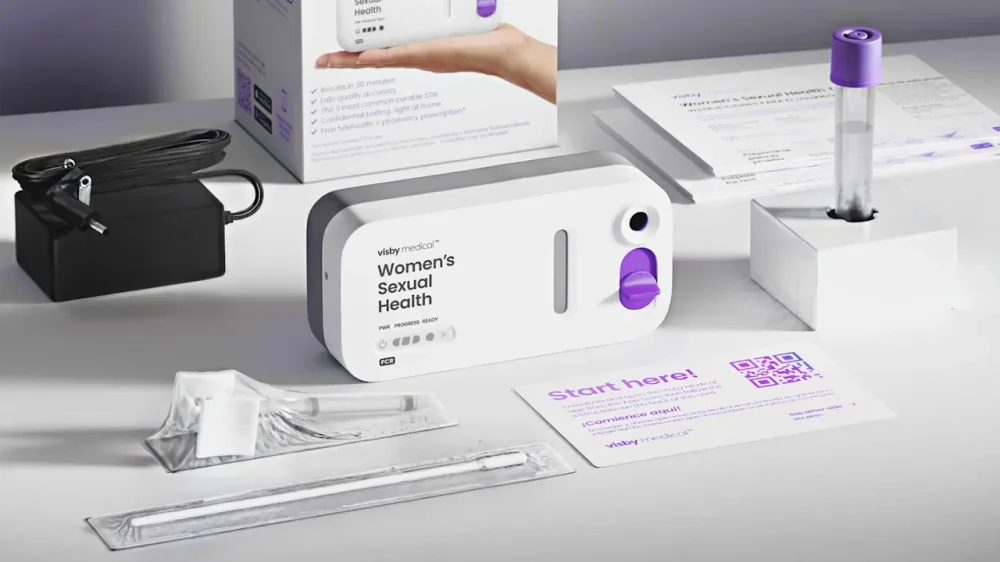
The worst part of any medical is waiting for results. That can be especially true of sexual health tests. Those conducted in person can take 24–48 hours, but if they’re submitted via at-home collection kit and mailed to a lab, it can take even longer. A new test from diagnostics company Visby Medical, launching nationwide today is changing that. Now that it’s successfully completed a pilot period, the company is bringing a 30-minute, lab-accurate PCR test for three common sexually transmitted infections to women at home. From a self-collected vaginal swab, the $149.99 test can diagnose chlamydia, gonorrhea, and trichomoniasis—three common infections that can all easily be treated with antibiotics. It also connects patients who test positive with a healthcare provider via United Healthcare’s OptumNow telehealth service. “If you tell somebody, ‘I have an STD test for the home,’ what they think I mean is ‘You’re going to give me a collection kit, I’m going to pee in the cup and send it back and get a result a week later,’” says Adam de la Zerda, founder and CEO of Visby Medical. With his machine, he says, “all they have to do is close the lid and the test starts running, and in 30 minutes you’ll get your result.” Cleared by the FDA in March as the first at-home diagnostic for these STIs, Visby’s test is now going wide with the test following a smaller pilot launch on its site and via diagnostics platform Everlywell. It parlayed that approval into a funding round that in July had brought in $55 million, led by healthcare investment firm Catalio Capital Management. The company last raised money in 2022, when a $135 million funding round—focused on developing the STI test and a point-of-care COVID and flu test—valued the company at more than $1 billion. According to PitchBook, it’s raised a total of $486 million To underscore the convenience element of the new test, Visby is also making it available for same-day delivery via GoPuff and DoorDash in 10 major cities including Las Vegas, Atlanta, New York, San Francisco, and Seattle. Orders can be placed via the Visby website, which helps identify the best delivery option for a buyer, and dispatched via one of the apps. “It looks and feels just like ordering lunch,” de la Zerda says. “It’s nobody’s business what you just received from DoorDash—it could be a bag of burritos or a Visby test.” Visby’s test is also getting a cosign from a competitor, with digital health platform Everlywell selling it. From test to treatment De la Zerda says that the STI test has been the company’s goal since it was founded in 2012. Visby had just finished its initial clinical trials on a test for use in doctor’s offices when the pandemic forced a pivot to COVID, for which Visby developed a point of care test. Even then, the focus was at-home PCR, with Visby landing $19 million from a federal prize competition with an early, point-of-care version of the test. The FDA authorization—via the agency’s De Novo pathway for novel medical devices—took roughly a year from submission to approval, included Visby’s app, which is powered by Google Cloud to decode the test results.The test itself demonstrated the ability to identify 98.8% of negative and 97.2% of positive chlamydia samples; 99.1% of negative and 100% of positive gonorrhea samples; and 98.5% of negative and 97.8% positive trichomoniasis samples. Visby’s ability to say that its test is actually diagnosing STIs—as opposed to other at-home STI screenings that require a lab test to confirm their results—meant de la Zerda wanted to build an easy way to be treated into the test process and price tag. “We got a true diagnostic claim,” de la Zerda says. “That enabled us to go to folks like United Health, OptumNow, and say ‘let’s leverage that telemedicine platform you guys have built and create that connectivity for people.’” With a 24/7 provider network active in all 50 states, OptumNow can connect Visby users with a clinician and have a prescription sent to a local pharmacy within about 7–10 minutes, de la Zerda says. “It’s a powerful thing to enable somebody to test for a stigmatized condition in the privacy of their home and not just leave them hanging with a diagnosis,” he says. That’s part of how Visby’s test ended up on a competitor’s platform. Team of rivals Besides the Visby website and its delivery partners, the test is also being offered via Everlywell, a digital health platform that offers home testing on conditions that include fertility, STIs, food sensitivities, and immune health. “STI specifically is an incredibly important, undertested epidemic where this [at-home] format lends itself to eliminating stigma and creating privacy,” says Julia Cheek, founder and CEO of Everlywell. Though the company sells its own five-panel sexual health testing kit for, it functions as a blood and urine collection kit that users have to mail into a lab for results. Cheek says the speed and convenience of Visby’s test made it an obvious choice for Everlywell, which serves a user base of 80% women. “It’s not fully comprehensive yet, but we want to be able to meet people where they are and offer them different options,” she syas. “We fundamentally believe the consumer deserves access to whatever test is available, accurate and gets them what they need.” Everlywell has offered Visby’s test since August, and she says users have responded positively, with both companies already planning to invest further in marketing the test to Everlywell users in 2026. Even as the STI test shows promise, de la Zerda sees today’s wide launch as a starting point. “If you rank the top 200 tests that people are running on a PCR machine, just about every single one of them we can have a Visby test to run it as well,” he says. “It’s the same technology.” View the full article
-
Inference inferred, revenue reconstructed, cash burn quantifiedView the full article
-
The Treasury Secretary highlighted the impacts the bond market has on affordability and previewed regulatory tweaks the administration is eyeing to keep yields stable and credit flowing. View the full article

-
We may earn a commission from links on this page. Deal pricing and availability subject to change after time of publication. I keep a lot of valuable things in my garage. Having the peace of mind that my garage is safe (to some extent) is huge for my sanity. That's why I love the myQ Smart Garage Door Video Keypad, which keeps an eye on who's lurking around your garage door, while letting you grant access remotely to guests or for deliveries. And it's surprisingly cheap right now—discounted 50% on Amazon, to $39.99. This is the lowest price it has ever been, according to price tracking tools. myQ Smart Garage Door Video Keypad Wide-Angle Camera,Customizable PIN Codes,and Smartphone Control–Take Charge of Your Garage Access Works with Chamberlain, LiftMaster and Craftsman openers $39.99 at Amazon $79.99 Save $40.00 Get Deal Get Deal $39.99 at Amazon $79.99 Save $40.00 To be able to control the keypad remotely, you'll also need a hub, which goes for $28.83 on Amazon. You can also buy the keypad and hub in a bundle for the same price as picking them up individually. If you want any video history of what the camera records, as well as features like people detection and downloading, you'll need a mY Q subscription, which starts at $24.99 per year. (Higher subscription tiers offer more advanced detection features.) The battery for the keypad lasts one to three months, but it's rechargeable. You can buy a bundle with a spare battery, or get the bundle that lets you wire your keypad so you never have to worry about it dying. The keypad integrates with Ring, Vivint smart home environments, Amazon Key, and IFTTT. It's also compatible with LiftMaster, Chamberlain, Craftsman, Raynor, and AccessMaster garage door openers manufactured after 1993. The camera records a 1080p video feed with a 160-degree viewing angle and a two-way audio system. The keypad lets you set multiple codes to open the garage manually or you can give temporary or permanent codes to guests through the companion app (up to 16). You'll need to connect it via 2.4GHz Wi-Fi network. And yes, the keypad screws into a wall, so nobody can just walk away with it. Our Best Editor-Vetted Early Black Friday Deals Right Now Apple AirPods 4 Wireless Earbuds — $84.99 (List Price $129.00) Apple iPad 11" 128GB A16 WiFi Tablet (Blue, 2025) — $324.99 (List Price $349.00) Shark AV2501AE AI XL Hepa- Safe Self-Emptying Base Robot Vacuum — $297.99 (List Price $649.99) Apple Watch Series 10 — $309.99 (List Price $429.00) Google Pixel 9 128GB Unlocked 6.9" OLED Smartphone (Obsidian) — $544.98 (List Price $799.00) Amazon Fire HD 10 (2023) — $69.99 (List Price $139.99) Sony WH-1000XM5 — $328.00 (List Price $399.99) Blink Outdoor 4 1080p Wireless Security Camera (5-Pack) — $159.99 (List Price $399.99) Ring Floodlight Cam Wired Plus 1080p Security Camera (White) — $99.99 (List Price $179.99) Deals are selected by our commerce team View the full article
-
What makes some people instantly likable? How can you make people want to be around you, to work with you, and follow your leadership? You may think it comes down to charisma that some people have and others don’t. In fact, there’s a simple habit that will make you instantly more likable. It’s the secret behind “magnetism,” according to Emma Seppälä, lecturer at the Yale School of Management and author of The Happiness Track. In a piece for Psychology Today, she cites research showing that “positive practices“—small moments of gratitude and caring toward other people—can turn you into one of those magnetic people others find irresistible. Showing genuine interest in others is one great example of a positive practice, Seppälä writes. That holds true whether it’s “the person at the cash register, your co-worker, your roommate, or your family. Sounds obvious (and even boring), but too often we’re too wrapped up in our own concerns and stresses to take notice of others.” Another positive practice is reminding yourself when someone seems inconsiderate or unfriendly that they may have a backstory that casts a different light on their behavior. “When you are genuinely curious, attentive, and kind when you interact with others, you can shift that entire person’s day, strengthen your relationship with them, and both of you will feel better after your interaction,” she writes. Positive emotions are contagious Why do small changes like these make such a big difference? Emotions are contagious, both good and bad, as multiple studies have shown. If you’re feeling stressed and you act grumpy, you’ll inspire other people to do the same. The reverse is also true. “Positive emotions bring out the best in us,” Seppälä writes. “They help us think more clearly, connect better, and become more creative. When we feel emotionally safe, we’re more open and engaged. We naturally connect with others more easily. Our relationships improve.” Seppälä has several suggestions for positive practices that can make a huge difference in how likable you are. It’s well worth reading her entire article. But one really stood out for me, perhaps because it’s something I need to do more often myself. It’s what she calls “tiny rituals of care.” “This could be texting a friend every Monday to check in, writing a quick thank-you note, or ending the day with a few minutes of conversation on the phone with a relative who lives alone,” she writes. Turning these small gestures into a habit, something you do regularly without thinking and that always fits into your schedule, is a very powerful way to harness the power of positivity. It can make you more likable, improve your relationships, and lift your own mood all at the same time. There’s a growing audience of Inc.com readers who receive a daily text from me with a self-care or motivational micro-challenge or tip. Often, they text me back and we wind up in a conversation. (Want to know more? It’s easy to try it out and you can easily cancel anytime. Here’s some information about the texts and a special invitation to a two-month free trial.) Many of my subscribers are entrepreneurs or business leaders. They know what an asset it is to have people like you and feel drawn to you. Should you give positive practices a try? —Minda Zetlin This article originally appeared on Fast Company’s sister publication, Inc. Inc. is the voice of the American entrepreneur. We inspire, inform, and document the most fascinating people in business: the risk-takers, the innovators, and the ultra-driven go-getters that represent the most dynamic force in the American economy. View the full article

-
With all the news in the quantum world this month—including DARPA’s new list of the most viable quantum companies, and Quantinuum’s announcement of “the most accurate quantum computer in the world“—IBM, not to be outdone, put out a statement of its own. The top-line message: We’re doing great! IBM’s quantum program is hitting all the milestones it’s set out in its most recent road map—and it is accelerating progress toward a large-scale, fault-tolerant quantum computer, by shifting production of its quantum processors out of its research labs to an 300mm quantum advanced 300mm wafer fabrication facility at the Albany NanoTech Complex. The move will double the speed at which IBM can produce quantum processors, and enable a tenfold increase in their physical complexity. The company also announced two new processors, which IBM Fellow and Director of Quantum Systems Jerry Chow told me, on a recent tour of the company’s lab in Yorktown Heights, represent the company’s two-pronged path moving forward. The IBM Quantum Nighthawk processor, which allows more complex computations with the same low error rates as its predecessor, is built for near-term “quantum advantage”—applications that show an edge over classical (non-quantum) computing approaches alone. By combining high-powered computing (HPC) with quantum processors, IBM believes that researchers will show verifiable examples of quantum advantage in 2026. The company has joined with Algorithmiq, Flatiron Institute, and BlueQubit to create an open, community-led “quantum advantage tracker” to systematically monitor and verify emerging demonstrations of advantage. The company’s experimental IBM Quantum Loon processor, on the other hand, is a step toward the company’s vision of large-scale “fault-tolerant” quantum computing, which it aims to realize by 2029. The Loon chip demonstrates a new architecture capable of implementing and scaling all the components needed for practical, high-efficiency quantum error correction. A year ahead of schedule, IBM also showed that using classical computing hardware, it could accurately decode errors in real-time, relying on efficient qLDPC (quantum low-density parity check) codes. “You can’t just wait for fault-tolerance,” says Chow. “Even when you get to those machines, you’re going to look at, how do you integrate with the classical side? How do you actually build all the tools and the libraries, all the software pieces [or applications]?” “You can already to start to build that with the machines today,” Chow continues. “They’re going to be at a different scale and more heuristic [trial and error] in nature. But it’s better to get on board than to just wait and have it show up on your doorstep and not know what to do with it.” View the full article

-
With aggressive ICE raids expanding to an increasing number of cities, I’m sharing the following guidance from a community organizer in Chicago about what to do if ICE shows up at your workplace. I’m in Chicago, which has been targeted aggressively by ICE and Border Patrol for the last two months. ICE actions are expanding into many other cities, and I wanted to share some resources and tips from our city’s experiences with your readers. Inc. has a solid article on the rights of business owners when ICE shows up. It’s important to know what your rights are, especially about private areas and documentation. However, ICE frequently and blatantly disregards legal limitations, and when confronted with armed, masked strangers, it may be difficult for individuals to physically intervene to stop them from going into off-limits areas. Owners and managers should provide information to employees about their rights, as immigrants and as citizens. Be prepared to document ICE when they’re at your business; you may need evidence of their actions if they violate your rights or abduct any workers. (The latter is critical to help families find out what happened if someone is taken.) As an employee, you may be more limited, especially if management isn’t supportive. Many places, especially large corporations, are adopting a neutral position towards ICE’s activities, which effectively means letting them operate unchecked. Employees can leave Know Your Rights (KYR) info in staff areas for people to take. Try to get in touch with your local ICE Watch or immigrant rights groups as well. Many of them are sending out alerts when ICE is active in a particular area, so you can be aware if they’re near your place of business. Some other, more hands-on tips: Landscapers, construction workers, and other contractors are extremely vulnerable. Despite claims that they’re arresting “the worst criminals,” ICE literally drives around and abducts brown people working outdoors. If your business employs any of these services, work with them to develop a safety plan if ICE shows up. For example, letting them come inside and go into an employee-only space until it’s all clear. Share information and resources, but do not make risk assessments for other people. Don’t tell Latino coworkers to work from home because it’s safer for them, for instance. Instead, if you’re in a position to do so, allow for more flexible WFH as a choice for anyone who might need it. If you’re a manager, try to offer compassion and flexibility. Vulnerable employees are going to be extremely stressed with the constant, unpredictable fear of friends, family, or even themselves being abducted. You may also have employees who are volunteering with ICE Watch organizations, which can be emotionally and mentally draining as well. In Chicago, raids have been extremely unpredictable day-to-day. We don’t know when or where they’re going to hit. You unfortunately have to assume that ICE could show up at any time. This is why it’s critical to have plans and education as soon as possible. Do NOT post about what you’re doing on social media or non-secure servers — which often includes workplace communications. Use a secure app like Signal or have conversations in person. This goes double if you record a raid. Don’t post it online, save it for the lawyers and immigration advocates. Above all else, the best thing that you can do in your community is to connect with local ICE Watch and immigrant rights orgs. They have information, resources, and contacts that will help you and your neighbors. Get info, coordinate with your coworkers, and build a community to protect each other. The post what to do if ICE agents come to your workplace appeared first on Ask a Manager. View the full article
-
Political deal reprieves fragile government, but undermines president’s signature economic policyView the full article
-
Federal Reserve Bank of Atlanta President Raphael Bostic won't seek reappointment following the end of his current term on Feb. 28, 2026. View the full article

-
In an age where agility and innovation are critical for business survival, the recent advancements from Google showcase how small businesses can leverage AI to enhance their operations. Google’s latest integrations and updates promise to transform workflows, improve efficiency, and elevate creative output. The introduction of the Gemini 2.5 Computer Use model is a game changer for developers working on AI applications. Designed specifically for user interaction, this model allows AI agents to seamlessly navigate websites, fill out forms, and perform other complex tasks. Fast performance and improved accuracy make it a compelling option for businesses looking to optimize their customer interactions or streamline processes. “Gemini 2.5 outperforms alternatives on benchmarks, meaning that businesses can expect quicker, more reliable results,” remarked a Google representative. This is particularly valuable for small business owners, who often juggle multiple responsibilities and require tools that simplify rather than complicate their operations. Google’s AI filmmaking tool, Flow, has also seen significant updates. The enhanced creative control allows users to refine their video presentations with newfound precision. Features like using multiple images to control characters and styles and generating integrated audio are essential for small businesses aiming to create impactful marketing content. As visual storytelling gains traction, these capabilities enable even the smallest companies to produce professional-grade videos that resonate with their audience. The rollout of vibe coding features in Google AI Studio lowers the barrier for small business owners venturing into app development. Instead of requiring extensive technical know-how, users can now describe their app ideas in simple terms. The Gemini model then handles the intricate backend processes, making AI-powered applications more accessible than ever before. An easier entry into tech could empower entrepreneurs to innovate and customize their solutions without the need for a dedicated IT team. Meanwhile, with the launch of Gemini Enterprise, Google aims to equip workplaces with robust AI capabilities. This platform not only utilizes advanced models but also integrates a company’s specific data, fostering a tailored experience to meet unique business needs. Early adopters, including HCA Healthcare and Best Buy, have already reported positive results, indicating that the secure environment for building, deploying, and governing AI agents is advantageous for businesses of all sizes. For small business owners, these updates not only present opportunities but also potential challenges. Transitioning to these new technologies might require a learning curve or investment in training. Additionally, concerns about data security and the management of AI-generated content are paramount. Small businesses must consider how to integrate these advanced tools effectively while ensuring they maintain control over their brand’s narrative. As these innovations become more mainstream, the competitive landscape will inevitably shift. Businesses that adopt these technologies can expect to streamline their operations, innovate their marketing efforts, and potentially increase their customer engagement. However, it is vital for small business owners to stay informed about not just the benefits but also the implications of implementing such advanced solutions. Overall, Google’s latest AI advancements present a unique opportunity for small businesses, offering tools that can drive efficiency and creativity. By embracing these technologies, business owners can better position themselves in an ever-evolving marketplace, all while enhancing customer interactions and storytelling capabilities. For more detailed information, you can access the full press release here. Image via Google Gemini This article, "Google Unveils Gemini 2.5 and New AI Tools to Empower Developers and Creators" was first published on Small Business Trends View the full article
-
In an age where agility and innovation are critical for business survival, the recent advancements from Google showcase how small businesses can leverage AI to enhance their operations. Google’s latest integrations and updates promise to transform workflows, improve efficiency, and elevate creative output. The introduction of the Gemini 2.5 Computer Use model is a game changer for developers working on AI applications. Designed specifically for user interaction, this model allows AI agents to seamlessly navigate websites, fill out forms, and perform other complex tasks. Fast performance and improved accuracy make it a compelling option for businesses looking to optimize their customer interactions or streamline processes. “Gemini 2.5 outperforms alternatives on benchmarks, meaning that businesses can expect quicker, more reliable results,” remarked a Google representative. This is particularly valuable for small business owners, who often juggle multiple responsibilities and require tools that simplify rather than complicate their operations. Google’s AI filmmaking tool, Flow, has also seen significant updates. The enhanced creative control allows users to refine their video presentations with newfound precision. Features like using multiple images to control characters and styles and generating integrated audio are essential for small businesses aiming to create impactful marketing content. As visual storytelling gains traction, these capabilities enable even the smallest companies to produce professional-grade videos that resonate with their audience. The rollout of vibe coding features in Google AI Studio lowers the barrier for small business owners venturing into app development. Instead of requiring extensive technical know-how, users can now describe their app ideas in simple terms. The Gemini model then handles the intricate backend processes, making AI-powered applications more accessible than ever before. An easier entry into tech could empower entrepreneurs to innovate and customize their solutions without the need for a dedicated IT team. Meanwhile, with the launch of Gemini Enterprise, Google aims to equip workplaces with robust AI capabilities. This platform not only utilizes advanced models but also integrates a company’s specific data, fostering a tailored experience to meet unique business needs. Early adopters, including HCA Healthcare and Best Buy, have already reported positive results, indicating that the secure environment for building, deploying, and governing AI agents is advantageous for businesses of all sizes. For small business owners, these updates not only present opportunities but also potential challenges. Transitioning to these new technologies might require a learning curve or investment in training. Additionally, concerns about data security and the management of AI-generated content are paramount. Small businesses must consider how to integrate these advanced tools effectively while ensuring they maintain control over their brand’s narrative. As these innovations become more mainstream, the competitive landscape will inevitably shift. Businesses that adopt these technologies can expect to streamline their operations, innovate their marketing efforts, and potentially increase their customer engagement. However, it is vital for small business owners to stay informed about not just the benefits but also the implications of implementing such advanced solutions. Overall, Google’s latest AI advancements present a unique opportunity for small businesses, offering tools that can drive efficiency and creativity. By embracing these technologies, business owners can better position themselves in an ever-evolving marketplace, all while enhancing customer interactions and storytelling capabilities. For more detailed information, you can access the full press release here. Image via Google Gemini This article, "Google Unveils Gemini 2.5 and New AI Tools to Empower Developers and Creators" was first published on Small Business Trends View the full article
-
In the space of a few months, a journalistic skill that might seem straightforward to many viewers—editing tape for broadcast—has been behind a $16 million legal settlement, a network’s change in how it offers interviews on a news show, and now, the resignation of two top leaders at the BBC. The other common denominator: President Donald The President. Britain’s BBC is reeling this week following the resignations of its director-general, Tim Davie, and news chief Deborah Turness amid accusations of bias in the editing of last year’s documentary, “The President: A Second Chance.” The BBC admitted filmmakers spliced together quotes from different sections of the speech The President made before the Jan. 6, 2021, storming of the U.S. Capitol to make it seem like he was directly urging violence. The President sued CBS’ parent company over a “60 Minutes” edit of Kamala Harris’ interview, resulting in this summer’s settlement, and the complaints of his Homeland Security secretary, Kristi Noem, about her “Face the Nation” interview in August caused a policy change. In a different time, the BBC episode would likely have led to a quick admission of a mistake, a correction, apology, and everyone would have moved on, said Mark Lukasiewicz, a former NBC News executive and now dean of Hofstra University’s School of Communication. “But in an era where every editing decision taken in a newsroom is now under a microscope and can be weaponized for political purposes,” he said, “it’s got to be something that is causing real caution in newsrooms all over the world now.” Editing decisions were once largely behind the scenes Questioning edits is another tool for the president to strike back at journalists who displease him. He has restricted access by The Associated Press after its decision not to follow his lead in renaming the Gulf of Mexico, sued outlets like The New York Times and Wall Street Journal, and stripped funding for public broadcasting because he doesn’t like its news coverage. Much like print reporters who search through notebooks for the perfect quote, video editors often labor to identify footage that will advance a story. Sometimes the perfect image does not exist, or a quote isn’t as succinct or sharp as a medium under constant time constraints demands. That can lead to the temptation to rearrange or even manipulate. NBC News got in trouble more than a decade ago for a story about George Zimmerman—who fatally shot Trayvon Martin, a young man who was in his Florida gated community. It quoted Zimmerman talking to a police dispatcher about Martin, saying “this guy looks like he’s up to no good. He looks Black.” In reality, Zimmerman’s description of Martin’s activities last longer, and his speculation about Martin’s race was a direct response to a police dispatcher’s question about it. Zimmerman sued NBC News for libel, a case later thrown out by a judge. NBC apologized to its viewers. Katie Couric apologized in 2016 when an editor for her “Under the Gun” documentary inserted an eight-second pause after footage of Couric questioning guns right activists about background checks. The activists actually responded right away. Quotes artificially compressed in BBC documentary In the BBC edit, different parts of The President’s 2021 Capitol speech are edited to appear as a single quote: “We’re going to walk down to the Capitol and I’ll be there with you. And we fight. We fight like hell.” But the second two sentences of that quote were actually said nearly an hour later than the first sentence, and part of his speech where he said he wanted supporters to demonstrate peacefully was omitted. In an interview that aired Tuesday on Fox News, The President said, “I guess I have to” sue the BBC. “Because I think they defrauded the public and they’ve admitted it.” In teaching video editing to students at Syracuse University, Jamie Hoskins said she repeatedly emphasizes the need not to be misleading. She’s a former news producer who worked in New York City, Washington, D.C. and Buffalo, New York. “I talk about that in every class at every level,” she said. “You don’t want to mischaracterize what people are saying or change their meaning by piecing things together.” The proliferation of video—ever shorter, ever snappier—on TikTok and Instagram adds to pressure placed on journalists. The ability of AI to manufacture completely false video is yet another complication. Fake, racist video of Black food assistance recipients complaining about missing benefits due to the government shutdown spread online; a Fox News digital story linked to some of the videos earlier this month and had to be corrected. “We live in a world now where people can get content from everywhere,” Hoskins said. “There is a difference between content and journalism.” A new way to protect against complaints At the root of The President’s complaint about “60 Minutes” was an exchange between correspondent Bill Whitaker and Kamala Harris, the president’s opponent in last year’s election. CBS aired two different reports—on “60 Minutes” and “Face the Nation”—depicting Harris giving two different answers to a Whitaker question about the war in the Mideast. CBS News said both responses were part of Harris’ long-winded answer to the same question. But to people who saw both broadcasts, the effect was jarring; other news outlets say they have a strict policy, when they show an interviewer posing a question, that the immediate, direct response is aired. CBS News defended it as routine editing. But it gave The President an opening to charge that it was done to benefit Harris’ campaign. “I don’t think the practices and standards are worse today than they were a few years ago,” Lukasiewicz said. “I think the consequences of mistakes are more serious than perhaps they used to be,” he said, because of the ability and willingness of politicians to seize on them. In Noem’s pretaped talk with “Face the Nation” moderator Margaret Brennan this summer, the Homeland Security secretary complained CBS News had “shamefully edited the interview to whitewash the truth.” The network had shortened the interview, removing some accusations Noem had made about Kilmar Abrego Garcia, the immigrant deported by the The President administration. In response, the network said that it would only air interviews on “Face the Nation” that were conducted live or, if taped in advance, would have to air in full. More often, networks are defusing potential editing controversies by posting online full, unedited transcripts of key interviews, Lukasiewicz said. CBS News did that immediately when it aired a pre-taped edited interview with The President on Nov. 2, along with video. The network didn’t release a transcript of its Harris interview for more than three months—not until The President had sued and the FCC launched an investigation of the news division. The The President transcript release created its own issues, with dozens of amateur editors comparing the transcript to the shorter, edited interview that aired on “60 Minutes” to see what producers had decided to leave out. This time, though, The President had no complaints. —David Bauder, AP media writer View the full article