ResidentialBusiness
Administrators
-
Joined
-
Last visited
Everything posted by ResidentialBusiness
-
 "The classroom is no longer a pipeline for work-ready professionals." Accounting Influencers With Rob Brown Go PRO for members-only access to more Rob Brown. View the full article
 -
"The classroom is no longer a pipeline for work-ready professionals." Accounting Influencers With Rob Brown Go PRO for members-only access to more Rob Brown. View the full article
-
Cash reserves at conglomerate hit record for the quarter as Warren Buffett prepares for retirementView the full article
-
In an era where efficiency is critical, small businesses often find themselves juggling multiple contracts across various departments. Enter Workday, a leader in enterprise AI solutions, which has just announced the launch of its Custom AI Model Library, enhancing its Contract Intelligence Agent. This new offering, boasting over 120 pre-built AI models, aims to simplify contract management for businesses of all sizes, including small enterprises. The potential benefits of these AI models are significant. Designed to streamline the review process, they allow organizations to quickly analyze contracts across HR, finance, legal, IT, and sales. With features that automatically identify key clauses, flag risks, and provide actionable insights, small business owners can expect to save time and reduce manual efforts, ultimately leading to better decision-making. According to Jerry Ting, vice president and head of agentic AI & Evisort at Workday, “AI in the enterprise often delivers piecemeal automation without true transformation. We aren’t just adding features; we are giving our Contract Intelligence Agent new skills that help solve real business problems.” This focus on practical application is what makes these tools especially relevant for smaller organizations looking to optimize their operations without overwhelming their existing resources. The Custom AI Model Library offers the ability to analyze a diverse range of contract types. For instance, small businesses often grapple with employment agreements, vendor contracts, and sales deals. With these new tools, teams can summarize complex employment terms into plain language, identify and extract key financial details for faster invoice processing, and analyze critical data privacy clauses. Additionally, the model can automatically extract lease terms, such as square footage and property tax requirements, minimizing the administrative burden on small business owners. Although the advantages are compelling, it’s essential for small business owners to consider potential challenges. Introducing AI technology requires an initial investment in time and resources, particularly for training staff to use the system effectively. Furthermore, ensuring that these AI models align with existing processes may take additional effort. While Workday emphasizes that no coding is required and that models can be refined through user feedback, there is still a learning curve associated with integrating new technology into everyday operations. Moreover, the questions of data security and compliance loom large, particularly for small businesses that may not have dedicated legal teams to navigate complexities. Ensuring that AI tools handle sensitive information appropriately becomes paramount, adding another layer of responsibility to business owners. Workday’s initiative to harness AI for contract management could be a game-changer in helping small businesses enhance their operational efficiency. By leveraging these advanced models, owners can delegate routine tasks to technology, enabling their teams to focus on strategic initiatives and growth-oriented projects. The thoughtful integration of AI not only prepares businesses to face current market pressures but also positions them to adapt to future challenges. Small businesses may find themselves not just keeping pace but thriving in an increasingly competitive landscape. For those interested in exploring this groundbreaking technology, additional details on Evisort’s AI-powered contract intelligence and contract lifecycle management solutions are available through Workday’s offerings. You can access more information by visiting Workday. As small business owners navigate the complexities of modern contract management, tools like Workday’s Contract Intelligence Agent signal a readiness to embrace technology that streamlines processes and drives efficiencies—ultimately empowering them to focus on what truly matters: growing their business and serving their customers. This article, "Workday Unveils 120+ AI Models to Transform Contract Analysis Efficiency" was first published on Small Business Trends View the full article
-
In an era where efficiency is critical, small businesses often find themselves juggling multiple contracts across various departments. Enter Workday, a leader in enterprise AI solutions, which has just announced the launch of its Custom AI Model Library, enhancing its Contract Intelligence Agent. This new offering, boasting over 120 pre-built AI models, aims to simplify contract management for businesses of all sizes, including small enterprises. The potential benefits of these AI models are significant. Designed to streamline the review process, they allow organizations to quickly analyze contracts across HR, finance, legal, IT, and sales. With features that automatically identify key clauses, flag risks, and provide actionable insights, small business owners can expect to save time and reduce manual efforts, ultimately leading to better decision-making. According to Jerry Ting, vice president and head of agentic AI & Evisort at Workday, “AI in the enterprise often delivers piecemeal automation without true transformation. We aren’t just adding features; we are giving our Contract Intelligence Agent new skills that help solve real business problems.” This focus on practical application is what makes these tools especially relevant for smaller organizations looking to optimize their operations without overwhelming their existing resources. The Custom AI Model Library offers the ability to analyze a diverse range of contract types. For instance, small businesses often grapple with employment agreements, vendor contracts, and sales deals. With these new tools, teams can summarize complex employment terms into plain language, identify and extract key financial details for faster invoice processing, and analyze critical data privacy clauses. Additionally, the model can automatically extract lease terms, such as square footage and property tax requirements, minimizing the administrative burden on small business owners. Although the advantages are compelling, it’s essential for small business owners to consider potential challenges. Introducing AI technology requires an initial investment in time and resources, particularly for training staff to use the system effectively. Furthermore, ensuring that these AI models align with existing processes may take additional effort. While Workday emphasizes that no coding is required and that models can be refined through user feedback, there is still a learning curve associated with integrating new technology into everyday operations. Moreover, the questions of data security and compliance loom large, particularly for small businesses that may not have dedicated legal teams to navigate complexities. Ensuring that AI tools handle sensitive information appropriately becomes paramount, adding another layer of responsibility to business owners. Workday’s initiative to harness AI for contract management could be a game-changer in helping small businesses enhance their operational efficiency. By leveraging these advanced models, owners can delegate routine tasks to technology, enabling their teams to focus on strategic initiatives and growth-oriented projects. The thoughtful integration of AI not only prepares businesses to face current market pressures but also positions them to adapt to future challenges. Small businesses may find themselves not just keeping pace but thriving in an increasingly competitive landscape. For those interested in exploring this groundbreaking technology, additional details on Evisort’s AI-powered contract intelligence and contract lifecycle management solutions are available through Workday’s offerings. You can access more information by visiting Workday. As small business owners navigate the complexities of modern contract management, tools like Workday’s Contract Intelligence Agent signal a readiness to embrace technology that streamlines processes and drives efficiencies—ultimately empowering them to focus on what truly matters: growing their business and serving their customers. This article, "Workday Unveils 120+ AI Models to Transform Contract Analysis Efficiency" was first published on Small Business Trends View the full article
-
Reforms including those to pensions have driven a doubling of flows into the investment wrappers structured as life insurance policies View the full article
-
This weekend, tennis star Novak Djokovic is serving snackers something a little different: a new sorghum-based, corn-free “popcorn” brand called Cob, which will compete in the same aisle as SkinnyPop and Orville Redenbacher’s. The popcorn’s launch coincides with the announcement of a $5 million seed round for the startup that’s led by Djokovic. Popcorn has become a particularly alluring category for celebrities over the past few years. New entrants have included Khloud Protein Popcorn backed by reality TV star Khloé Kardashian; singer Luke Bryan’s Boldly Grown Popcorn; and Rob’s BackStage Popcorn, cofounded by the pop rock band the Jonas Brothers. Why popcorn? What they are nibbling on is a growing market that’s welcoming to new brands that promote bolder flavors, avoid canola oil and artificial butter flavors and colors, and include claims of higher protein or low-carb formulations. The U.S. popcorn market grew by 31% to $3.5 billion over a five-year period through 2024, according to market researcher Mintel, and is forecasted to be valued at $3.84 billion by 2029. “I wanted to join the brand as cofounder, as well as lead the seed round, to give other investors confidence in our vision,” says Djokovic in an emailed statement. Cob is a gluten-free snack that’s made from the grain sorghum, which is naturally rich in fiber, iron, and plant-based protein. The brand was originally conceptualized and created by entrepreneur Jessica Davidoff, who was inspired to explore snacking alternatives that could be served to her son, who suffers from an allergy to corn. “My eyes were open to just how vast corn was in the American food system,” Davidoff tells Fast Company. That led her to visit a local grocery store in New York that promoted international ingredients and start testing snacks that could be made in the kitchen that were similar to popcorn, but without the key base ingredient. Davidoff felt that sorghum delivered the best taste from all the alternatives she tested. “It offers this new option for people who really like popcorn but want to take the nutrition component up a notch,” she says. Cob will be sold direct-to-consumer through online channels including the brand’s website, at a price of $59.99 for a 24-pack of 1-ounce single-serve snack packs. The initial launch features four flavors, including Mediterranean herb, and olive oil and pink salt. Davidoff says the brand intends to launch more sorghum-based products in the future. Djokovic will serve as an adviser on ingredients, formulations, and product line extensions, as well as support marketing and future brand collaborations. A growing trend Healthier popcorn brands began to emerge as a force in the category after SkinnyPop launched in 2010. The brand’s pitch was that it featured only three ingredients: popcorn, sunflower oil, and salt. This streamlined ingredient list resonated with snackers, and sales quickly soared. The brand’s parent company, Amplify, was later acquired by candymaker Hershey for $1.6 billion in 2017. Since then, newer popcorn brands have promoted their use of coconut, olive, and avocado oils and have avoided artificially added butters, which are most associated with the microwavable brands. “For people who really like to snack, popcorn is only 30 calories per cup,” says New York-based dietitian Samantha Cassetty, noting that the calorie count is less than what’s found in most other crunchy snacks. Brands like Cob have also promoted their alignment with GLP-1, one of the buzziest new trends in food as consumers increasingly embrace GLP-1 weight-loss medications like Ozempic and Wegovy. Cob says that sorghum is a resistant starch, meaning it can naturally boost a body’s GLP-1 to make a snacker feel fuller for longer. “All of the CPG [consumer packaged goods] companies are looking for ways to target that consumer who is snacking less,” Cassetty says. Kardashian’s Khloud voraciously promotes the nutritional claim of 7 grams of protein per serving that’s from a blend of milk protein isolate. The popcorn brand was created to tap into three big trends: Protein snacks are growing three times faster than the market, “protein” is the most trending ingredient among millennial and Gen Z consumers, and popcorn is the fastest-growing salty snack category, according to Khloud CEO Jeff Rubenstein. For years, protein-packed foods tended to come in the form of bars and shakes, frequently promoted to gym-obsessed men, Rubenstein says. “We can do this more femininely,” he says, noting the brand features more vibrant packaging that includes soft pink and blue. “We can attract a different audience to protein.” The brand debuted in April with a 60-day retail exclusive at Target, and by January will be sold in more than 25,000 retail stores including Kroger and Walmart. Rubenstein says Khloud has an authentic founder story with Kardashian: “She had an entire closet in her house that was dedicated to just snacks. She made Khloud a functional snack that is fashionable.” Djokovic was drawn to the popcorn category because while he prefers home-cooked meals with simple ingredients, the pro athlete travels a lot with a very hectic schedule. “At Cob, we’re creating packaged foods with the same ingredients and recipes we’d use in our own kitchens to allow people to eat well even when they’re away from their kitchens,” he says. Celebrities have craved snacks as an investment opportunity because similar to the beauty category, they can sell high volumes and drive more steady, repeatable purchasing patterns than apparel or jewelry. Snacks can also generate gross profit margins of 40% for manufacturers, according to Alex Kushnir, a real and consumer partner at consultancy Baringa, who notes, “It happens to be one of the more profitable categories in food.” View the full article

-
If you blinked this week, you might’ve missed a few major moves. Netflix decided it’s time for a stock split, Amazon trimmed thousands of jobs, and Walmart is already dropping “Black Friday” prices before the Halloween candy wrappers are even off. Meanwhile, housing trends, climate shocks, and AI budgets kept reshaping the conversation about what’s next for growth. Here’s a look at what mattered most this week, and why these stories could shape the months ahead. Mortgage-free America hits a new high A record 40.3% of owner-occupied homes are owned free and clear, up from 39.8% last year. Aging baby boomers and longer lifespans concentrate equity among older owners, and 64% of homeowners 65 and up have no mortgage. Lower-priced markets and older populations skew higher on mortgage-free rates, while places like Washington, D.C., and parts of the Mountain West skew lower. Expect more equity-tapping products to grow as retirees look for cash flow without selling. Palantir stock split chatter grows, but no commitment yet Investor chatter was growing this week that Palantir Technologies could potentially announce its first-ever stock split ahead of next week’s earnings report. Analysts say investors are eager for a cheaper entry point after the stock’s 150% surge this year. Despite the speculation, the Denver-based software firm hasn’t indicated any plans to split its shares. With Palantir trading at a lofty price-to-earnings ratio of about 630, some analysts warn its valuation may already be stretched. Amazon trims 14,000 corporate roles to move faster with AI Amazon announced plans this week to cut around 14,000 corporate positions within the company, focusing on shifting resources to bigger bets, including AI. The brand’s fulfillment staff remains intact ahead of peak season, which underscores an operating reset rather than a logistics pullback. Management suggested more hiring in specific areas in 2026, even as other layers come out. Investors want to see operating leverage and customer impact show up in results. Black Friday is arriving early, thanks to Walmart and Best Buy Both retailers unveiled staggered Black Friday and Cyber Monday calendars, with early “DoorBOOsters” and member-first windows. Pulling demand into late October and mid-November helps manage inventory and protect share in a slower-holiday-growth year. Expect heavy under-20-dollar deals and up-to-60%-off headlines to nudge cautious shoppers. Competitors now have to match earlier drops, tighter member perks, and quick delivery. Netflix is doing a 10-for-1 stock split Netflix will split shares by a ratio of 10-for-1 in mid-November, which lowers the share price per unit without changing market capitalization. The move improves access for employees through stock programs and can pull in more retail participation. Splits can also make options trading more granular for investors. Keep an eye on whether a broader holder base supports momentum or adds volatility. Chipotle’s stock slump flags a demand soft spot Chipotle met expectations, then cut its full-year outlook for the third straight time, which sparked a sharp stock sell-off this week. Fewer visits from households under $100,000 in income and from younger diners are pressuring comparable-store sales. Management still plans hundreds of new openings, including select international markets. Exact change, please, as pennies slow to circulate Kroger checkout signs asking for exact change reignited penny shortage questions this week. Minting has paused, and a lot of pennies are sitting in jars and drawers, which slows circulation. Retailers and banks may round cash transactions to the nearest five cents for a bit, while digital payments are unaffected. Retiring the penny would require Congress, so policy debate will continue. Starbucks confirms 520 U.S. closures in Q4 Starbucks reported 627 closures globally in the quarter, including 520 in the United States, which tops many outside estimates. The moves support a “Back to Starbucks” turnaround that focuses on service, simpler routines, and warmer in-store experiences. Management points to stabilizing comps as proof that the reset is working. Investors are weighing near-term disruption against cleaner long-term growth. Hurricane Melissa turns climate risk into a balance sheet story Super-warm waters helped Hurricane Melissa rapidly intensify into one of the strongest Caribbean landfalls on record. Early analyses tie higher odds and added severity to climate change, with monetary damages modeled in the tens of billions. That hits insurers, tourism, supply chains, and public infrastructure, which feeds back into local GDP. Expect more pressure on resilience spending and location strategy in 2026 plans. Meta posts record revenue, then raises the AI bill Meta delivered record revenue this week but took a large non-cash tax charge that hit net income and EPS optics. Management lifted expense and CapEx guidance, and signaled even higher spend in 2026 to meet AI compute needs. The bet is that better recommendations and ad performance will eventually outrun rising costs. The open question is timing, and how quickly monetization converts into durable margin. View the full article

-
Lots of research shows that doing mental exercises can ward off dementia and the effects of aging, but can it actually make you better at your job? While it’s hard to imagine the late musical theater virtuoso Stephen Sondheim needing any kind of extra creative stimuli, he in fact had a well-known love of stimulating puzzles and games. And he didn’t just play them. The Tony-winning composer behind Broadway hits such as Sweeney Todd, Company, and a heartwarming ditty about presidential assassins also cultivated a side hustle as a designer of cryptic crossword puzzles and a frequent host of game nights and scavenger hunts. Barry Joseph, a game researcher and designer and an adjunct professor at New York University, happened to notice a few years ago that no one had documented Sondheim’s niche passion in a comprehensive way. So he decided to do it himself. His new book, Matching Minds With Sondheim (Bloomsbury, October 2025), draws from eight decades of Sondheim’s brain-teasing ventures. It includes a mix of rare and rarely seen game designs, archival research, and interviews with Sondheim contemporaries who played along. Fast Company recently caught up with Joseph to discuss the book, what inspired it, and what he hopes readers will gain from trying to match minds with a musical legend. The interview has been edited for length and clarity. You have a background as a game designer and game researcher. How did you get interested in writing about Stephen Sondheim? Sondheim passed away in November of 2021. That means March, 22, 2022, was his first birthday after he passed away. And my birthday is two days later. For a present, my wife got me three Sondheim-related books . . . recognizing that I and many other Sondheim fans were still in mourning for having lost our musical hero. One was an academic book that was a review of all Sondheim shows, but from the perspective of postmodernism. That book left me thinking how interesting it was to look at Sondheim through one lens. What other lenses might there be? Then I read Stephen Sondheim’s biography from the late ’90s by Meryle Secrest, which barely talked about him having anything to do with puzzles and games. It’s mentioned here and there, but in the index in the back of the book, there’s nothing for games and nothing for puzzles—which tells you a lot about how seriously the topic was addressed. And the third book was James Lapine’s Putting It Together—the oral history of Sunday in the Park With George. Lapine had met Stephen Sondheim right after Sondheim had his critical disaster Merrily We Roll Along. For those who don’t know, it was a show that lasted under two weeks and was completely decimated by the critics, putting Sondheim in a very unpleasant state of mind—so much so that when he met Mr. Lapine, he was talking about leaving the world of musical theater. Lapine asked him what he was going to do next, and he said, “Maybe I’ll go into video game design.” That’s not what happened! They ended up working together to do Sunday in the Park With George. Sondheim kept doing musical theater. The rest is history, and they never mentioned it again in the book. Me, as a young person who grew up in the late ’70s, early ’80s, playing my Intellivision, my Atari, my Apple II Plus computer, I read that and wondered about Stephen Sondheim designing video games instead . . . I remember Intellivision being the middle stepchild of video game consoles. Not too many people had Intellivision. I was one of those people. I always liked things being outside the box. . . . In any case, I read that, and that blew my mind. I thought, “What is Sondheim doing talking about games?” And I said, “Is there something here? Is there a topic here? What is the lens on Stephen Sondheim from a game perspective?” Ludology is the study of games. And so I thought, “Can one look at Stephen Sondheim from a ludological lens?” And at the time, I didn’t know if there’d be much of anything. But after just a few weeks of some quick Google searches, what I found was that there were a lot of fascinating, enticing tidbits. He was the founding puzzle editor of New York magazine in 1968. He created a cryptic crossword puzzle once a week. His only Hollywood-produced movie, The Last of Sheila, a murder mystery, involves all sorts of devious puzzles and games. And I kept coming across these other mentions of people talking about going to his house for game nights. And there was an interview in Games magazine in 1983. There’s a bunch of his little tidbits here and there. And then the rest of it I found irresistible. So you find all these breadcrumbs, publicly known facts here and there, and realize there’s no larger body of work that has compiled all this? I learned enough to know that there was something there, and that it wasn’t waiting for someone just to write about. Because if it was, it would’ve been written. Did you find a moment or many moments where his love of creating these puzzles informed his creative work in a really specific way? The last chapter in the book is an analysis of all of his shows, looking at it from a playful language. Where are puzzles and games in the shows? Where are they in the structure of the shows, and where do they show up in the process of creating the shows? And once you start taking this lens at his theatrical work, you see it everywhere. The end of Sunday in the Park With George is a moment where this painting that we’ve been watching constructed on the stage suddenly comes into focus. And it’s one that we know the audience has some prior knowledge of—they expect to see a certain something. Suddenly, it all happens in that moment when all the pieces all click together. It’s those moments that Sondheim often talked about, where you’re forming order out of chaos. And that’s essentially a jigsaw puzzle being constructed. And I’m now thinking about Merrily We Roll Along, which you mentioned earlier. It’s told backwards. That feels like it’s its own puzzle. Think about it from the audience’s perspective, right? When you are watching something in which the effect happens before the cause, you have to hold it in your mind. And when you’re looking, it’s like a Where’s Waldo? What’s going to be the thing that caused that thing to happen? And then when you see it, it connects together. Sondheim didn’t write the book of Merrily, but I always wondered if that somehow influenced it. And so we see it throughout the shows, in the structures of the shows, in the way that games and puzzles are used, and sometimes in the process of how they developed. What if a reader wants to pick up your book—who is not necessarily super into puzzles or a hardcore puzzle doer? You have the puzzles in the book. Would the casual puzzle person find these kinds of puzzles challenging? Let me answer your question in a roundabout way. . . . When I talk about all of his games and puzzles, I talk about three particular values. The first is the principle of generosity. The second is the principle of playfulness. And the third is the principle of mentorship. Generosity means that I am here to help you have an engaging time. I’m here to make you feel good about yourself—not just feel good about how smart I am. And so it means creating opportunities to help people along the way. Helping along the way connects with the mentorship, which is building the scaffolding to help people solve the puzzles. And playfulness is just making it all fun. You mentioned that your wife bought you three Sondheim books, so you must have been a fan before you started writing this. When did you discover your love of Broadway? I’m laughing because I am in my room . . . and in my closet is a collection of Playbills that go back to the mid-1980s. I can’t even count how many are here. I grew up on Long Island. My mom loved musical theater, and it was a thing we often did as a family. I learned very early on that I loved what it meant to be in an audience for a musical. I loved the magic that was created on the stage. And more importantly, I loved the emotions that it brought out in me. View the full article

-
When I first learned about Roth IRAs and Roth 401(k) plans—the tax-advantaged retirement plans that are funded with a taxpayer’s after-tax income—I remember thinking that it must be nice to have enough income that you could afford to contribute money to your retirement without an immediate tax break. But even though you fund Roth accounts with after-tax dollars, making them more expensive on the contribution side, they are ultimately a savvy way to save money in the long run. Unfortunately, if you don’t know what these accounts are or how they work, you will miss out on all of their benefits. Here’s everything you need to know to make the most of Roth retirement accounts in your financial plan. History of the Roth In 1997, Congress introduced a new non-deductible IRA via the Taxpayer Relief Act. Named for Delaware Senator William V. Roth (and not, as I originally believed, for Van Halen frontman David Lee Roth), these accounts were designed to give you a tax break in retirement, rather than when you make contributions. Although Roth accounts were originally restricted to IRAs, Roth 401(k) plans became available through workplace retirement accounts as of January 1, 2006. As of 2023, 93% of workplace retirement plans offered a Roth 401(k) option, according to the Plan Sponsor Council of America’s annual poll published in December 2024. Roth account rules and limits There are some important rules surrounding these accounts—the kind of rules that can put you on the IRS’s naughty list. Specifically, there are specific income and contribution limits for Roth IRA and Roth 401(k) plans that you must not exceed. These limits can and do change from year to year. The current 2025 limits are listed in the table below. Roth IRARoth 401(k)Maximum income$150,000 for single filers; $236,000 for married couples filing jointlyNo income limitAnnual contribution limit$7,000 for those under 50; $8,000 for anyone 50+$23,500 for those under 50; $31,000 for anyone 50+; $34,750 for anyone aged 60–63 One thing to remember is that these yearly contribution limits encompass all IRAs or 401(k)s you may own. For instance, if you have a traditional IRA and a Roth IRA, you can’t send $7,000 to each one. (Not without waking Spike, the IRS enforcement officer who sleeps in the sub-basement). You will have to split your contributions between your traditional and Roth IRA so that your total contribution does not exceed $7,000. This is the same for your traditional versus Roth 401(k) contributions. Altogether, they cannot exceed the annual contribution limit set by the IRS. What the Roth has to offer Introducing the Roth retirement account can feel a little like when your friend busts out a board game with 178 pages of instructions while insisting “it’s a little slow to get started, but it’s so worth it!” However, despite the seeming complexity of Roth accounts, there are three main benefits to these retirement vehicles: Like traditional IRAs and 401(k) plans, your Roth contributions grow tax-free. Unlike traditional IRAs and 401(k) plans, any Roth withdrawals you make in retirement are 100% tax-free, provided you wait to take these distributions until after reaching age 59½ or after having held the account for at least five years, whichever comes last. You will pay the IRS a 10% penalty if you take an early withdrawal—but you won’t owe taxes. Also unlike traditional IRAs and 401(k) plans, there are no required minimum distributions once you reach age 73. You can keep your money in a Roth account forever if you want and take distributions of any amount at any time, as long as you’re older than 59½ and have held the account for at least five years. In other words, with a Roth account, for the low price of paying current income taxes, you get tax-free growth, tax-free withdrawals, and no required minimum distributions. Ripping off the tax Band-Aid Another way to look at a Roth account is to think of it as a way of paying taxes on your terms. Many young professionals are earning much less now than they will later in their career—and possibly less than they will be living on in retirement. Funding a Roth retirement plan now, while you are in a lower tax bracket, will save money later, once you have started earning a much higher income. Additionally, by putting posttax dollars aside in a Roth account today, it gives you a tax-free cushion for emergencies in retirement. Many retirees have a carefully planned tax strategy in retirement, which could be upended if they need to access a large chunk of their taxable retirement savings. Pulling $25,000 from a traditional IRA or 401(k) for a health problem or other emergency could throw a wrench in your tax plan for the year. But you can grab that money from your Roth account with no tax consequences. It may hurt to fund a Roth account with posttax dollars, but the benefits can outweigh the momentary pain. Enjoy what you have wrought in your Roth As the brainchild of Senator William V. Roth, tax-advantaged Roth accounts are unlike most traditional defined contribution plans and individual retirement accounts. Instead of deducting your contributions to these accounts from your income, you contribute money you’ve already paid taxes on into your Roth accounts. The money grows tax free and you can withdraw it tax-free in retirement, provided you wait until you are at least 59½ or have held the account for at least five years. You also don’t have to take required minimum distributions from these accounts, meaning you can leave the money there forever, if you choose. There are income and contribution limits to these accounts, which can and do change from year to year. And you should be aware that annual IRA and 401(k) contribution limits encompass all accounts you may own, including traditional and Roth versions, meaning you will have to split up your contributions among your accounts so you don’t go over the limit among the various accounts. Roth accounts offer a flexible way to give yourself a tax-free source of funds in retirement. That’s a helpful gift to provide for your future self. View the full article

-
Nick Foster is not a fan of how Silicon Valley imagines the future. As a designer and writer who has spent his career at places like Google, Nokia, and Sony, he’s had a front-row seat to the tech world’s relentless obsession with turning science fiction into science fact. The problem, he argues, is that the source material was never meant to be a manual for reality. “The primary function of science fiction is to explore ideas and to entertain. It shouldn’t be considered a brief,” Foster tells me. He worries when he hears people in meetings say, “We should make the thing from Minority Report.” To him, it’s a lazy shortcut—an idea taken from a cinematic universe built for drama, not for pragmatic, human-centered utility. “They’re sort of misreading the function of that art form,” he says. “They’re just trying to make something happen because they’re excited by it, not necessarily because it’s better or more pragmatic or more useful.” Foster, the author of Could Should Might Don’t: How We Think About the Future, has a more than a few thoughts on what does make for good futurism. “What I’m trying to do…is not create a method or a framework. We’ve got enough of those,” he explains. Instead, he offers a simple yet powerful vocabulary to dissect the ways we approach the future, arguing that humans tend to fall into one of four modes of thinking, often without realizing it. To break free of the Silicon Valley narrative, he says, requires changing the way we think about the future of technology. Four modes of futurism Foster’s first mode of futurism is Could futurism. This is the one we know best. It’s the futurism of opportunity, of “amazing gadgets, humanoid robots,” and breathtaking architecture. It’s the world of flashy tech demos, driven by a modernist belief in endless progress. Its weakness, however, is that it has been “absolutely co-opted by science fiction,” creating dazzling but ultimately alienating visions that feel disconnected from our lives and the messy path to get there. Then comes Should futurism. This is the future as a fixed destination. It’s the world of master plans, and of religions and laws that point us toward a desired state. It’s also the world of corporate strategists and their algorithmic projections—the confident dotted lines on charts that declare what’s coming. The obvious flaw, Foster says, is its brittleness. “The world is way more volatile than we think it is,” he warns. “All of our algorithmic projections and our dotted lines on charts are just stories. And often we’re way off.” As a reaction, Might futurism offers the opposite: a future of infinite scenarios. This is the domain of strategic foresight consultants, born from Cold War-era wargaming at the RAND Corporation. It’s a pluralistic view that maps out every possibility within a “futures cone.” But it has a fatal flaw. “Our imagination about future scenarios is actually based on the past,” Foster notes. This is why companies like Blockbuster could run countless scenarios and still never imagine a future where they weren’t dominant—until it happened. Finally, there is Don’t futurism, a mode that is gaining momentum in our anxious times. This is the future as a terrifying place to be avoided, the focus of protest movements campaigning against climate catastrophe, authoritarianism, or runaway AI. It is the future as a warning. While essential, its challenge is that it often “protests from the outside” and struggles to offer integrated, actionable paths forward. “It’s quite difficult to deliver a don’t in a helpful way,” Foster says, noting it can become strident and divisive. The China contrast The West’s default mode of futurism, Foster argues, is an unbalanced mix of these mindsets. But the tech industry, in particular, is overwhelmingly biased toward could futurism, driven by the commercial need to generate excitement and create market trends. Silicon Valley is blinded by sci-fi dreams, and its attitude towards the future gets worsened by Wall Street demand for growth. This stands in stark contrast to China’s approach, a country that understands future planning in a way the West cannot. Beijing just concluded the Chinese Communist Party’s fourth plenary session in October, during which they outlined a 2026-2030 five-year plan, the next-to-last chapter in their decades-long overarching plan to become a leading superpower by 2035. Foster points out that while Western democracies are trapped in short cycles—”it’s the midterms and then it’s the quarterly results and then it’s the next election”—China’s autocratic system allows it to plan on a generational scale. “In a sort of autocratic dictatorship where you sort of have a dynastic leadership, you can start to think at 10, 15, 20, 30 generational scales,” he observes. While acknowledging the immense human and societal cost, Foster identifies China’s strategy as a powerful, real-world example of should futurism. The government establishes a clear destination for the country and then commits all its resources to reaching it. This gives them a stability that the West lacks. Quoting William Gibson, Foster notes you need a solid place to stand to imagine the future. “China don’t seem to have that problem,” he tells me. “They’re very comfortable with where they want to be. And they seem to be working very hard to get there.” In our conversation, Foster didn’t offer a way for the West to achieve what China is already doing. In his book, his proposed solution to fixing our vision of the future is a cultural and intellectual one, aimed at leaders within organizations, especially in technology. He believes the crucial shift is for leaders to start communicating in a more balanced way, using all four modes of his framework. He wants to see leaders who can discuss opportunity (the could), articulate a clear mission (the should), admit uncertainty (the might), and acknowledge fears and risks (the don’t). There’s no magic tricks or shortcuts. Fostering a more responsible, rigorous, and honest conversation about the future is the necessary first step toward making better long-term decisions, regardless of the political system. To me, it seems like an impossible shift. If Western societies rarely look beyond the next quarter in the political, enterprise, and financial world; if a large number of people are living paycheck to paycheck; if even most of the entertainment and design is ephemeral and single use, how can we be balanced or really think about the future beyond what’s going to happen in the next few months? Could we have an honest future, please? Foster argues that the power of his approach is not in choosing one of these modes, but in learning to think with all of them simultaneously. He believes we need the optimism of could, the direction of should, the preparedness of might, and the caution of don’t. Foster champions a concept he calls “The Future Mundane.” It’s an antidote to the escapist fantasies of could futurism, which has been a cancer for both our future and present. Foster argues we should be grounding our visions in the messy, complex, and often boring reality of everyday life. Even the most transformative technologies, from GPS to AI, eventually become normalized and part of the mundane fabric of our lives. He’s less interested in the initial “wow” moment of a new technology and more in what happens next. “I want to try and figure out what it all means, what it actually leads to and how it changes how somebody might walk the dog or go and buy milk or go on vacation,” he tells me. This focus on the ordinary, he argues, grounds conversations about the future in a way that is not only more honest but ultimately more productive. In his book, Foster says that the value of this “Future Mundane” approach is that it forces creators to look past the initial “inspirational sugar rush” of a new idea and confront the messy, real-world consequences of its existence. By thinking about how a technology will actually integrate into the boring parts of daily life—how it will be used, misused, repaired, and eventually become obsolete—we can build more responsible and realistic products. It grounds the conversation in a way that helps us “ride out that hysteria” of the initial hype cycle and “figure out what it all means.” Thinking about the future isn’t about predicting what will happen in 2030; it’s an act of “pure human responsibility to our species” to consider the long-term effects of what we are building today. Foster says that companies tend to get trapped in the emotional extremes of the technology’s hype cycle. When a new technology like AI emerges, companies and their leaders tend to react in one of two “hysterical and a little unbalanced” ways. They either get swept up in the breathless optimism of could futurism (“Wow, it can do all these things”), or they become paralyzed by the fear and anxiety of don’t futurism. Foster writes that the “incessant pressure to find clients, balance the books, chase sales… and deliver results utterly dominates day-to-day affairs,” pushes any serious futurism work to the fringes where it is often seen as a “vanity” exercise rather than an integral part of the strategy. This polarization and short-term focus prevents companies from having the kind of rigorous, multifaceted conversation that leads to sustainable innovation. He doesn’t point to any company that does this right, however. My personal impression, from what I read and see every day as a journalist, is that there are not a lot of companies that think within the framework that Foster proposes. This is especially true in our current AI craze, where leading companies push the narrative that they are about honesty, responsibility, balance, and ethics. In reality, for the vast majority of companies, those are bullet points in a Powerpoint slide. Smoke and mirrors. All talk and no walk while they all are focused on the could, gunning to become the next unicorn, the next Wall Street darling. Perhaps I’m a cynic, but Foster believes that this may be an opportunity for those companies who actually want to practice a balanced, honest look at designing the future. For him, that is the path for lasting success: “The company that delivers that kind of story, I think will be the company that succeeds because it addresses all of the key motivators we have about the future.” View the full article

-
Want more housing market stories from Lance Lambert’s ResiClub in your inbox? Subscribe to the ResiClub newsletter. When assessing home price momentum, ResiClub believes it’s important to monitor active listings and months of supply. If active listings start to increase rapidly as homes remain on the market for longer periods, it may indicate pricing softness or weakness. Conversely, a rapid decline in active listings could suggest a market that’s heating up. Since the national Pandemic Housing Boom fizzled out in 2022, the national power dynamic has slowly been shifting directionally from sellers to buyers. Of course, across the country that shift has varied significantly. Generally speaking, local housing markets where active inventory has jumped above pre-pandemic 2019 levels have experienced softer home price growth (or outright price declines) over the past 36 months. Conversely, local housing markets where active inventory remains far below pre-pandemic 2019 levels have, generally speaking, experienced more resilient home price growth over the past 36 months. Where is national active inventory headed? National active listings are on the rise on a year-over-year basis (+15% from October 2024 to October 2025). This indicates that homebuyers have gained some leverage in many parts of the country over the past year. Some seller’s markets have turned into balanced markets, and more balanced markets have turned into buyer’s markets. Nationally, we’re still below pre-pandemic 2019 inventory levels (9% below October 2019) and some resale markets, in particular chunks of the Midwest and Northeast, still remain tight-ish. While national active inventory is still up year over year, the pace of growth has slowed in recent months—more than typical seasonality would suggest—as some sellers have thrown in the towel and delisted in weak/soft markets. October inventory/active listings* total, according to Realtor.com: October 2017 -> 1,287,322 📉 October 2018 -> 1,304,682 📈 October 2019 -> 1,208,311 📉 October 2020 -> 734,040 📉 October 2021 -> 565,707 📉 (overheating during the Pandemic Housing Boom) October 2022 -> 752,741 📈 October 2023 -> 738,082 📉 October 2024 -> 953,814 📈 October 2025 -> 1,100,001 📈 If we maintain the current year-over-year pace of inventory growth (+146,187 homes for sale), we’d have 1,246,188 active inventory come October 2026. Below is the year-over-year active inventory percentage change by state. While active housing inventory is rising in most markets on a year-over-year basis, some markets still remain tight-ish (although it’s loosening in those places too). As ResiClub has been documenting, both active resale and new homes for sale remain the most limited across huge swaths of the Midwest and Northeast. That’s where home sellers next spring are likely to have more power, relatively speaking. In contrast, active housing inventory for sale has neared or surpassed pre-pandemic 2019 levels in many parts of the Sunbelt and Mountain West, including metro-area housing markets such as Punta Gorda, Florida, and Austin. Many of these areas saw major price surges during the Pandemic Housing Boom, with home prices getting stretched compared to local incomes. As pandemic-driven domestic migration slowed and mortgage rates rose, markets like Tampa and Austin faced challenges, relying on local income levels to support frothy home prices. This softening trend was accelerated further by an abundance of new home supply in the Sunbelt. Builders are often willing to lower prices or offer affordability incentives (if they have the margins to do so) to maintain sales in a shifted market, which also has a cooling effect on the resale market: Some buyers who would have previously considered existing homes are now opting for new homes with more favorable deals. That puts additional upward pressure on resale inventory. At the end of October 2025, 17 states were above pre-pandemic 2019 active inventory levels: Alabama, Arkansas, Arizona, Colorado, Florida, Georgia, Hawaii, Idaho, Nebraska, Nevada, North Carolina, Oklahoma, Oregon, Tennessee, Texas, Utah, and Washington. (The District of Columbia—which we left out of this analysis—is also back above pre-pandemic 2019 active inventory levels. Softness in D.C. proper predates the current admin’s job cuts.) Big picture: Over the past few years we’ve observed a softening across many housing markets as strained affordability tempers the fervor of a market that was unsustainably hot during the Pandemic Housing Boom. While home prices are falling some in pockets of the Sunbelt, a big chunk of Northeast and Midwest markets still eked out a little price appreciation this spring. Nationally aggregated home prices have been pretty close to flat in 2025. Below is another version of the table above—but this one includes every month since January 2017. View the full article

-
When we talk about phones and location sharing, we’re typically talking about limiting how much info overly aggressive apps can access. But there’s another side to location sharing—and that’s actively opting to share your location with specific people (not companies!) for your own personal purposes. Whether it’s being able to keep tabs on kids, confirm the safety of parents or other loved ones, or simply know where a partner is at any given moment (with their permission, of course), your existing phone can turn into a powerful peace-of-mind provider and real-world life enhancer. The key is having the right software to make that happen in a way that’s both helpful and—just as important—also protective of your privacy. And that’s precisely where today’s Cool Tools discovery comes into play. This tip originally appeared in the free Cool Tools newsletter from The Intelligence. Get the next issue in your inbox and get ready to discover all sorts of awesome tech treasures! Location sharing, with a side of privacy For most folks, deliberate person-to-person location sharing tends to revolve around a few primary paths: Google Maps (or the other Google apps associated with it, on Android) Apple Maps (or the Apple Find My app, on iOS) Or Life360, a slightly pricey third-party service that people seem to have a bit of a love-hate relationship with All of these services have their strengths. But they also come with their own limitations as well as concerns around cost, privacy, and data protection. ➜ That’s why I was so intrigued to come across a new cross-platform location sharing service called Paralino. It attempts to address all of those asterisks with an offering that’s all about giving you an exceptional all-around experience—with privacy and security at the core. Specifically, Paralino promises: Complete end-to-end data encryption, so only you and the specific people you choose to share with ever see where you go No tracking, no profiling, and no ads of any sort Intricate control over exactly what info you share with anyone And the option to share and receive not only on-demand location info but also proactive alerts (with everyone’s permission) whenever someone in your group arrives at or exits specific places ⌚ You’ll need roughly two to three minutes to set it up and try it out. 🔽 First, download the Paralino app. It’s available for both Android and iOS, so you can put it on any phone you (or anyone else you know) might be using. ✅ Then: Open ‘er up and follow the prompts to create an account and sign in. You can opt to skip the sign-in and use the service only as a guest, if you want, but doing so makes it impossible to move your setup to another device in the future—so creating an account is really the most advisable way to go. When the app prompts you to pick a plan, tap the “x” in the upper-left corner of the screen to skip over that and stick with the service’s standard free level for now. The free level limits you to a single group for sharing, with one other person and up to two alert-generating places. If you end up really liking the service or wanting more than what the free tier provides, you can always look into Paralino’s premium plans—which range from 40 bucks a year to $70 in the U.S., depending on the specifics—later down the road. But you certainly don’t have to pay and can get quite a bit out of the app’s free level. Once you reach the app’s main screen, look for the prompts to enable all the pertinent permissions. The app will ask to be able to send you notifications, so it can actually give you the updates you want, and to be able to see your location all the time—even when you aren’t actively looking at it. It obviously needs that ability to be able to do what it does, and again, its core promise is that it always keeps everything encrypted and never saves any personal data. From there, all that’s left is to connect to someone else and start sharing. And then, you can always see exactly where that person is—and vice-versa—as well as get any alerts you both opt into about each other’s locations. It’s essentially a more fully featured and privacy-minded version of what Google and Apple offer—and a much more privacy-respecting, focused, and affordable version of what Life360 provides. And that’s exactly the kind of standard-challenging, small-scale competitor I love to see show up in arenas dominated by big players. 🤳 I’ve been using Paralino with my wife for several days now, and so far, it’s seemed both easy and effective—and true to its promises around privacy and quality. The effect on my battery life has been minimal with the service’s default settings, too, though it seems the app would update our locations more frequently (with the tradeoff of using more battery power) if we switched from the “Balanced” updating frequency to the more aggressive “Best Performance” path. My only real gripe is that the interface for creating an alert-generating place—a specific location where you get notifications when someone arrives and/or leaves—is kinda funky, with no apparent search function and instead only a clunky way to find a place by zooming around on a giant world map. That’s awkward. But that one relatively minor quirk aside, Paralino is shaping up to be a solid service and a welcome alternative to the typical options in this area. If you use any sort of location sharing already or think doing so might be beneficial for you, it’s well worth your while to try. Paralino is available for both Android and iOS. The company is also working on a fully open source version of its apps for the future The service is free, at its base level, with optional upgrades that lift limitations and unlock extra features. (If you do end up pursuing one of those plans at any point, you’ll absolutely want to look at the annual subscription options—which are much better values than their monthly equivalents.) And, again, this app is all about using strong encryption and avoiding so much as even seeing any manner of personal info—let alone sharing your data with anyone you don’t explicitly approve. Treat yourself to all sorts of brain-boosting goodies like this with the free Cool Tools newsletter—starting with an instant introduction to an incredible audio app that’ll tune up your days in truly delightful ways. View the full article

-
Billions in ‘Snap’ nutritional assistance programme benefits are stalled despite court orders View the full article
-
Frank Bisignano sold Fiserv stake worth hundreds of millions of dollars before problems emerged, avoiding massive loss View the full article
-
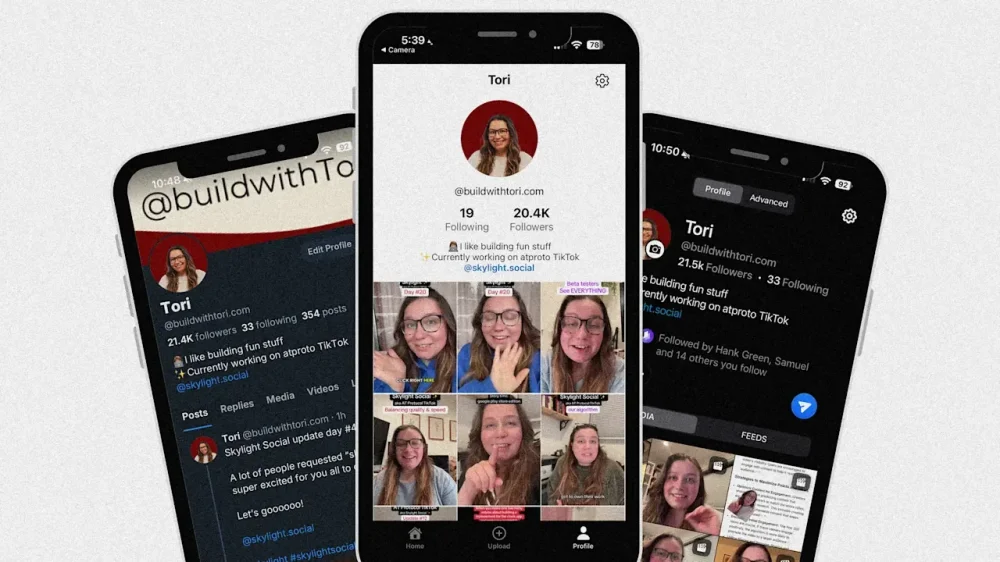
The current king of social media is the short-form video platform TikTok. It’s where trends are forged, news is broken, and opinions spread. Owned by China’s ByteDance, the app has an estimated 1.99 billion users—33% fewer than Facebook’s three billion—and yet Meta is desperately trying to mimic TikTok’s features in its apps (particularly Instagram). But despite its popularity, TikTok has been under siege in 2025. It is facing the threat of a U.S. ban, which would jeopardize the livelihoods of millions of Americans who rely on the app to earn a living. And even if it survives, by transferring its assets to U.S.-owned interests, TikTok’s U.S. algorithm could change under new owners, which could make their content less discoverable. A growing number of concerned TikTok users are starting to take precautions, gravitating toward a small but expanding short-form video platform called Skylight. Here’s why. What is Skylight? Skylight Social, better known as Skylight, is a baby in the social media world. It didn’t exist until earlier this year, after TikTok was briefly taken offline in the United States ahead of the government ban. The platform, which is currently accessible through dedicated Skylight iOS and Android apps, went live in April. It is the brainchild of a two-person team, CEO Tori White and CTO Reed Harmeyer. But it also has a big-name backer behind it: Mark Cuban. While on the surface, Skylight looks a lot like TikTok, with a scrollable feed of full-screen short-form videos you can like and comment on, it also has a significant difference. Skylight is built on the Authenticated Transfer Protocol, or AT Protocol for short. This is the same protocol that X competitor Bluesky is built upon. That upstart social media network now has more than 39 million users. The advantage of the AT Protocol versus TikTok’s protocol (and the protocols of other social media companies like Meta) is that the AT Protocol is decentralized. This means that the platforms that use the AT Protocol don’t hold power over the content you create; it is not tied to one company’s servers. If the AT Protocol platform you’re using shuts down or just no longer works for your needs, you can take all of your content and followers to another platform. As TechCrunch reported in April, in the face of a TikTok ban early this year, Cuban put out the call for someone to develop a TikTok competitor based on the AT Protocol. Harmeyer and White, the latter of whom had a following on TikTok and was worried about losing her community if the app were banned, decided to answer it. The two big benefits Skylight has over TikTok Skylight has two primary advantages over TikTok. Since it’s based on the AT Protocol, Skylight is a decentralized social media platform. That means your content and followers aren’t locked into the platform. You’re free to move all your videos and community to another AT Protocol short-form video app any time you want. This decentralization also makes Skylight fairly “ban-proof.” Any government can pretty easily block any social media network it desires because all major social media platforms are closed, centralized networks. But since decentralized platforms aren’t tied to any one app, even if an app itself is banned, a creator can simply take all their content, including likes, followers, and comments, to another platform and continue posting as usual. Indeed, the main marketing pitch Skylight uses on its website is touting the platform as “unbannable,” which, due to the flexibility of the decentralized AT Protocol, is a reasonable claim to make. But Skylight has another benefit. In August, the platform was updated with human-curated feeds. This differs from the algorithmically curated feeds used by major social media networks. Algorithmic curation is notoriously opaque, and, as DigiDay has noted, when it comes to TikTok, many existing users fear that its proposed new U.S. owners may change the existing algorithm to be friendlier to videos that align with their goals or ideology. Last month, CNN reported that TikTok’s new U.S. owners will include a consortium that will be comprised of Oracle, Andreessen Horowitz, and Silver Lake, and that this consortium will “be operated by a majority-U.S. board, including a member appointed by the The President administration.” With Skylight’s focus on human-curated feeds that users can choose to follow, the platform aims to help users feel assured that no algorithmic favoritism or censorship is occurring behind its digital walls. What is it like using Skylight? In an age where just a few trillion-dollar social media giants have control over not just our content, but the algorithms controlling who sees it, and where governments seem more willing than ever to ban platforms that millions of users rely on as their digital town squares, a short-form video platform like Skylight is sorely needed. But what’s it like actually using the app? On a basic level, it feels as familiar as using TikTok: you scroll, like, and comment. It works well. The one significant drawback, however, is its limited content. Currently, Skylight has nowhere near the wealth of videos that TikTok offers—which is no surprise, given the platform’s youth. In August, TechCrunch reported that the app had garnered around 240,000 downloads and had approximately 100,000 videos uploaded to its platform. But that could change. At one point, the AT Protocol-based Bluesky also had similar numbers, and now that decentralized platform is approaching 40 million users. Will Skylight ever reach that level? One should hope so. As tech giants and billionaires continue to consolidate their grip on the world’s social media networks, and even liberal democratic governments threaten to ban those same networks, the world needs platforms that their creators and users command. The future of free, unfettered speech that can’t be controlled by corporations may depend on it. View the full article
-
Dispute over Netherlands-based chipmaker has threatened to disrupt global auto supply chainsView the full article
-
Maybe you’re managing a team while being a caregiver, or breaking sales records while working remotely as a single parent. Each challenge carves a mark on your journey to growth, purpose, and legacy, and earns a spot on your résumé. A résumé of challenges is not a list of defeats, but a record of victories: the battles you’ve fought, the lessons you’ve learned, and the resilience that will carry you forward. Having an awareness and understanding of your résumé of challenges helps you understand your own strengths and ability to rise. Being able to speak to your honest (nonfabricated or misrepresented) résumé of challenges before and/or during a job interview can be an authentic way to highlight what you bring to the table, which may not be visible in your submitted résumé. Benefits of Having a Résumé of Challenges 1. Provides proof of critical intangible traits and abilities Challenges not only show what you’ve been through. They show your resilience, adaptability, grit, and problem-solving ability. A résumé of challenges highlights strength of character. It can demonstrate your integrity, as well as your ability to stay honest and truthful and to maintain ethical principles, even when it is difficult or personally detrimental. It allows you to demonstrate your growth by talking about the lessons, skills, and wisdom left behind from each challenge. Also, your résumé of challenges can be proof that you can thrive in uncertain environments. 2. Demonstrates credibility Sharing and discussing your résumé of challenges and what you have learned from them provides transparency. It makes you more relatable and garners more respect. It demonstrates authenticity. Also, being authentic—and having faced adversity and learned from it—makes you a better leader, and one that people trust. 3. Boosts self-confidence, fosters good mental health Reviewing your résumé of challenges can help remind you of what you are capable of accomplishing when facing new obstacles. This will feed and encourage your own personal confidence and empowerment. It also prepares you to face new obstacles without unwarranted fear. And maybe most of all, it helps you recognize your personal worth—beyond job titles or job descriptions. 4. Reframes setbacks as assets Your résumé of challenges provides you with the opportunity to explain how your failures were used as stepping stones to higher growth and development. It can help you transform pain into purpose, showing value in lived experiences. 5. Inspires others, leaves a legacy Sharing your résumé of challenges normalizes struggle as a part of success. It creates a ripple effect that motivates others to keep going. And lastly, your résumé of challenges is part of your legacy. It’s a record of strength that you can pass on to the next generation. Your story will tell them: Here’s what I endured. Here’s what I learned. Here’s how you can rise, too. In many ways, that résumé becomes the most valuable document of your life, because it tells the truth about who you are to your core. Here’s My Résumé of Challenges As an example, here are some things on my résumé of challenges. I was the first female, first Black person, and/or first Black female to achieve my roles in white male-dominated industries in corporate America. Because of this, I had to navigate the daily realities of sexism, racism, sexual harassment, and classism. During my engineering days, I often had to spend time in environments that did not have basic bathroom or sleeping accommodations for women. I also had to face many personal challenges while still showing up to perform and grow in my career, such as the loss of many dear loved ones, caring for my husband during his battle with colon cancer, and multiple health issues. Persevering through all these adversities, while maintaining my integrity, was proof of my resilience and character, earned me respect and trust, and shaped me into a person and leader who values diversity and inclusion, knows how to build high-performing teams, and strives to make everyone feel valued and appreciated. The next time you update your professional résumé, take a moment to update your résumé of challenges, too. Write down the hurdles you’ve cleared, the moments you thought you wouldn’t survive but did, and the lessons that reshaped you. Because in the end, it’s not the titles we hold that define us, but the challenges we’ve overcome to get there. And when you know and understand your résumé of challenges, you’ll never again doubt your ability to rise. View the full article

-
Travel accessories group Travel Blue calls for UK retailer to halt sales and demands damagesView the full article
-
Dispute threatens to cast shadow over $155mn Hollywood biopic of late star set for release next yearView the full article
-
Gigaclear’s investors and creditors including NatWest, Lloyds and the National Wealth FundView the full article
-
With few haven options, the best choice for many investors may be to ride the stock market surge and see where it takes usView the full article
-
The key to restoring both fiscal sustainability and productivity growth is to expand Britain’s most competitive businesses View the full article
-
Why the right are often better internationalists than the leftView the full article
-
Ireland’s president-elect Catherine Connolly caught the anti-establishment tideView the full article