ResidentialBusiness
Administrators
-
Joined
-
Last visited
Everything posted by ResidentialBusiness
-
 Few objects embody the endurance of the human spirit better than a medal. This Sunday, when the projected 55,000 breathless souls cross the finishing line of the annual TCS New York City marathon, they will be receive a one-of-a-kind medal to remember this achievement. The NYC marathon medal looks different every year. While many previous versions have attempted to etch the experience onto metal, the 2025 medal takes an even more tangible approach. At first glance, the surface of the new medal appears to be brushed with an array of diagonal stripes. But flip it on its side, and you will notice that the stripes are ribbed, and they reflect the actual elevation of the five-borough course. The brutal start up the Verrazzano Bridge; the seemingly endless 5th Avenue incline, the rolling hills of Central Park—these topographies can be felt (or re-felt) at the glide of a finger. The medal is an exquisite piece of design that celebrates the experience of running a marathon through touch. And it has been so popular since it was unveiled that it has even placated the prickliest of armchair critics. “In the 10 years I’ve been at this company, it’s the best reaction we’ve ever seen,” says Thomas Cabus, the creative director at nonprofit New York Road Runners, who designed this year’s medal. “All of them are positive, which is rare.” “Can we jazz it up a bit?” The TCS NYC marathon medal archive, on display at the NYRR Run Center, shows how wildly the design of marathon medals has been over the years. The 2005 medal showed a crowd of runners huddled against the Verrazzano Bridge. The 2018 medal was shaped like an apple. But some things never change: the TCS logo has to feature; the five boroughs have to be listed (in this case on the back of the medal) and there has to be room for willing finishers to get their initials engraved. Each medal also features braille lettering on the back. Since NYRR rebranded in 2023—courtesy of brand consultancy Chermayeff & Geismar & Haviv—the medal designers also have to include a variation of the new motif, namely diagonal stripes to symbolize the five boroughs coming together on marathon day. The idea for the 2025 medal was born while the team was experimenting with those diagonal stripes. “The idea was, can we jazz it up a little bit?” recalls Keziah Makoundou, lead designer at NYRR, who codesigned the medal alongside Cabus. Once the idea materialized, the team took an official graphic of the course and extruded that to a three-dimensional shape. The elevation map was born. Designing a time capsule Since the medal was unveiled in early October, it has been so popular that some runners who were planning on deferring are now considering walking the marathon just to get it. Others have called for this medal to become the signature medal of the TCS NYC marathon. But what makes each medal so special is precisely the fact that it acts as a time capsule from a particular race. Tomasz Sablinski, a 69-year-old running aficionado who splits his time between New York City and New Jersey, has run over 80 marathons across North America and Europe. This year’s five-borough race will be his 12th. “I must have over 100 medals,” he told me in an email. “And with so many of them, it’s fun when a medal stands out from the others because of its unusual design, or if it’s specifically related to the course it’s from.” Sablinski is particularly fond of some of his wooden medals, but he loves this year’s design for the NYC marathon medal because it is so directly tied to the course. “You won’t be able to look at this year’s medal without recalling the elevation of the bridges around the boroughs,” he says. When Sablinski crosses the finishing line on November 2, Cabus and Makoundou will be there to watch his and the reaction of 55,000 others when they receive their well-earned medal. And with so much positive feedback already, they feel both proud and pressured to top themselves next year. “Runners are very difficult people to please, so it’s like a challenge,” says Makoundou, before adding with a chuckle: “I don’t know what we’re going to do next year.” View the full article
-
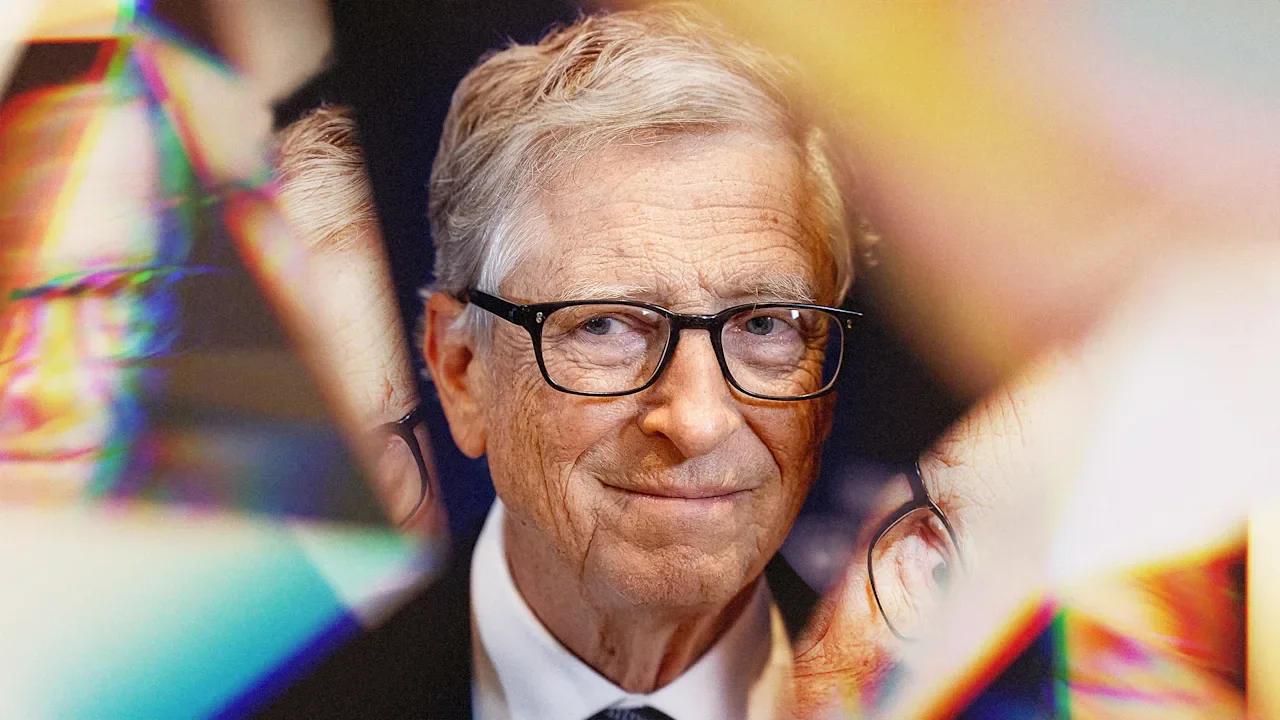
Bill Gates has invested billions over the last two decades to help fight climate change. But in a new blog post, he argues that world is too focused on cutting short-term emissions. “The doomsday outlook is causing much of the climate community to focus too much on near-term emissions goals,” he writes, calling for a “strategic pivot” to focus on “improving lives” by focusing development dollars more on agriculture and disease and poverty eradication. The logic is flawed, and built on a series of false trade-offs that ignore how interconnected climate and development goals are. Gates criticizes the “doomsday” view that climate change will “decimate civilization” in a few decades and writes that “it will not lead to humanity’s demise.” Because of the progress already made on climate—and since humanity will survive—he argues we should now be more focused on alleviating human suffering rather than continuing to so intently focus on rising temperatures. But climate scientists do not argue that civilization itself will end. Instead, they say, hurricanes, heat waves, and other climate disasters are already killing people, destroying homes and infrastructure, making it harder to grow food, and making life more difficult and expensive in other ways. The longer we wait to cut emissions, the worse those problems will continue to get, and the harder it will be to adapt. Human suffering is directly linked to whether or not emissions are curbed now. Gates’s essay uses “really false framing that pits improving people’s lives against science-based temperature and emissions goals that are intrinsically connected,” says Rachel Cleetus, senior policy director for the climate and energy program at the Union of Concerned Scientists. “If you look around the world right now, climate change is directly undermining human development goals, poverty eradication, and health goals. You just have to look at the disruption from the climate-supercharged Hurricane Melissa to see an example of that.” A report this week from the medical journal the Lancet explains that the impacts of climate change are creating “an unprecedented threat” to the health and survival of people globally, with millions already dying unnecessarily each year. That threat keeps growing. With higher temperatures and more rain, mosquitoes can thrive in new areas, increasing malaria risk, for example. “These are all directly connected,” Cleetus says. “You can’t solve these complex development and health challenges if you ignore climate change.” Gates argues that temperature goals are getting in the way of focusing on improving global poverty. But the most ambitious temperature goal in the Paris climate agreement—to limit global warming to 1.5 degrees Celsius—came from poor island nations who saw that sea level rise would hit them first. “Bill Gates has the audacity as a billionaire to say, ‘Well, climate people don’t care about the poor and the developing world,’ when it’s like, dude, the temperature stabilization framework in many ways came from the poor and the developing world,” says Leah Stokes, a political science professor at the University of California Santa Barbara. “Why do we have the 1.5 degree target? Because these least-developed countries, small island nations, banded together to say, ‘This is what we want.’ It wasn’t the big rich countries pushing that.” Having the temperature goal was critical, and a follow-up report from the IPCC talking about how much emissions would need to fall by 2030 to limit warming to 1.5 degrees. “That’s a timeline that policymakers can actually wrap their heads around,” Stokes says. It led to Biden’s ambitious climate policy in the U.S., and though The President has reversed that, it also spurred states, other countries, and companies to set short-term goals. Gates suggests that we shouldn’t cut funding for health and development to fight climate change. But that’s a straw man argument. When the The President administration slashed spending on international health, it didn’t move that money to climate programs. Globally, the funding comes from different sources. “It’s not the same money,” says Jigar Shah, co-managing director for Multiplier, a cleantech consulting firm, who previously ran the loan programs office at the Department of Energy. “USAID is not spending money on clean energy. The money for clean energy is coming from the private sector, and most of this stuff is now so cost-effective and so profitable, it’s not even coming from blended finance. It’s coming from pure private sector dollars.” Gates argues that communities can adapt to short-term climate impacts, and that economic growth will help avoid more deaths from climate change—if more people can afford air conditioners, for example, that will save lives. But that overlooks the limits of economic growth and resilience in the face of repeated disasters. “There’s no way for economies to grow when they’re getting slammed again and again by climate-fueled disasters,” Cleetus says. The essay also suggests that economic growth in developing countries is at odds with climate policy. “There’s not a single person in the world that’s making that argument,” says Shah. “None of the poor countries have ever been required to reduce their emissions.” At the same time, as renewables have become the cheapest source of electricity, developing countries can affordably build out energy access without steeply increasing emissions. Pakistan, for instance, imported the third most solar panels of any country in the world in 2024. “The entire solar revolution of the last three years in Pakistan was done with private sector capital and DIY videos on WhatsApp,” Shah says. Gates seems to suggest that it’s fine to wait to cut emissions further, because better technology (much of which is being supported with his investments) is on the horizon. But since climate change is a cumulative problem, waiting another decade to cut emissions means that we could easily pass critical tipping points. That’s the biggest contradiction in his argument: If he wants to protect lives and livelihoods, cutting emissions does need to happen now. “What the science is showing is within the next decade, if we don’t sharply curtail heat-trapping emissions, there’s a real potential to blow right past the various agreement climate goals,” Cleetus says. “That can unlock feedback loops in the earth system that we cannot turn back even if we reduce emissions in the future.” Gates urges world leaders at COP 30, this year’s global climate conference, to “prioritize the things that have the greatest impact on human welfare,” rather than centering emissions cuts. The ideas are probably unlikely to have much of an impact on what actually happens at the conference. But the messaging is bad for climate action globally. “I think the impact is more about piling on to a sense that climate change isn’t really something we should worry about,” says Stokes. Of course it makes sense to continue to develop better, affordable climate tech. The companies that Gates’s Breakthrough Ventures has backed can play a meaningful role. But Gates could do more to help scale up the clean tech that’s ready now. While startups can also help later, “I think it’s important to recognize that if you’re going to reduce climate emissions at scale and make electricity bills more affordable in this moment, you have to deploy technologies that are already at scale,” says Shah. “We have so many technologies that are stalled at, like, 5% of penetration,” Shah says. “We have 5% of our rooftops in the United States, maybe 6% now, with solar panels on them. Australia is at 30%. How do we go from 5% to 30%? We’re figuring that out today. I would love his help on that.” View the full article
-
The news that Microsoft is making 9,000 workers redundant this year, with a focus on jettisoning managers, has sent ripples through the business world. Andy Jassey, Amazon’s CEO, explicitly said this summer that AI advances will lead to job cuts. So it’s no wonder that workers all over the world, including one in five Gen Z workers, are “very concerned” that AI will take their job in the next two years (with Americans being more concerned than Europeans), and 32% of U.S. workers believe that AI will lead to fewer job opportunities. AI has advanced to encompass a vast range of skills, not only data-driven ones such as coding and debugging, but also more managerial tasks, including generating reports and managing schedules. With this technology snapping at managers’ heels and the worry about remaining relevant in a digitally driven world, how can you future-proof your management role and survive the AI purge? The answer lies in developing your human-centric skills. Valuing human-centric skills For years, the value of human-centric skills, such as empathy, active listening, and effective communication, has been diminished by the label “soft,” in opposition to “hard” skills like writing code or analyzing data, which are more easily quantified. In a world rapidly and increasingly reshaped by AI and automation, these distinctions are under scrutiny. We’re seeing that it’s the hard skills that AI can replicate incredibly easily, whilst soft skills remain the preserve of humans and are becoming increasingly crucial as managers need to navigate their teams through tumultuous change. They’re so important, in fact, that they need a name change. They’re no longer soft; they’re now the imperative “power” skills that will future-proof your management career. More than just a semantic shift, this is a fundamental re-framing of how “soft” skills are perceived and valued. No longer dismissed as inferior or fluffy, these power skills need to be appreciated as the foundations of excellent management that will amplify the effectiveness of every hard skill you possess—think nuanced judgment, strategic thinking, genuine connection, and intuition. And, in fact, power skills can be quantified; we can clearly see the impact they have on a workforce when used effectively by managers. Because good management and engagement matter. Gallup’s annual State of the Global Workplace research has shown that a manager accounts for 70% of the variance in employee engagement, which feeds into the fact that at least a third of the variance in productivity between countries and companies is due to poor management. However, once someone is empowered by their manager to recognize and utilize their strengths daily, they’re nearly six times more engaged. Businesses with highly engaged staff experience 78% less absenteeism and significantly lower turnover rates. The answer is a question So how can you develop these power skills and ensure you’re using them to truly engage the team you manage? The answer lies in learning to ditch the command-and-control approach to management and use an enquiry-led approach instead. Adopting coaching-related behaviors, which include developing situational awareness and knowing when and how to ask purposeful questions, is the core premise of a popular new approach to management known as Operational Coaching. Proven effective in large-scale research conducted by the London School of Economics, adopting this new approach as part of a manager’s everyday style has been shown to shift the paradigm from directive management to facilitative leadership, while managers also generated a 74x return on investment. Learning to adopt an Operational Coaching style of management isn’t about telling employees what to do, but rather about guiding them to discover their own solutions, leveraging their strengths and taking ownership of their contributions. At its heart is the power skill of thought-provoking questioning, where instead of jumping in to solve every problem themselves, managers ask powerful questions that encourage employees to engage in self-reflection, critical thinking, and problem-solving. This approach empowers individuals to take ownership of their challenges and solutions. It’s then supported by active listening and empathy, strengths-based development, and continuous feedback and reflection. Described as “the missing superpower,” this style of management fosters critical thinking, which in turn builds confidence as employees are empowered to unlock their potential. It’s particularly suited to working with millennials and Gen Z workers, who favor a collaborative and supportive work environment over rigid hierarchies, and crave purpose in their work with regular feedback and opportunities for growth. Operational Coaching also helps managers regain valuable time as it shifts the weight of routine problem-solving from themselves to their team members. This capacity can be reinvested in higher-value work, while empowering employees to develop their own skills. Measurable improvements in employee engagement levels, a direct result of the change in their managers’ approach, lead to higher profitability, increased productivity, and better business outcomes, including, for example, sales and customer service. A shift in what’s valued In an era of rapid change driven by the democratization of knowledge through AI, human-centric skills that promote engagement, creativity, collaboration, and critical thinking will be the key differentiator between managers who can and those who will be displaced from their roles. By moving away from a typically directive approach, managers who adopt an Operational Coaching style will cultivate environments of trust and psychological safety, where employees can experiment and take risks without fear of blame. As routine tasks become increasingly automated, our human value must shift towards how we think, adapt, interact, and lead. It’s time to stop viewing these as passive, soft traits and instead appreciate them as active, powerful skills that hold the key to future-proofing your role as a manager who can get things done by mobilizing and enabling the skills and talents of others. View the full article

-
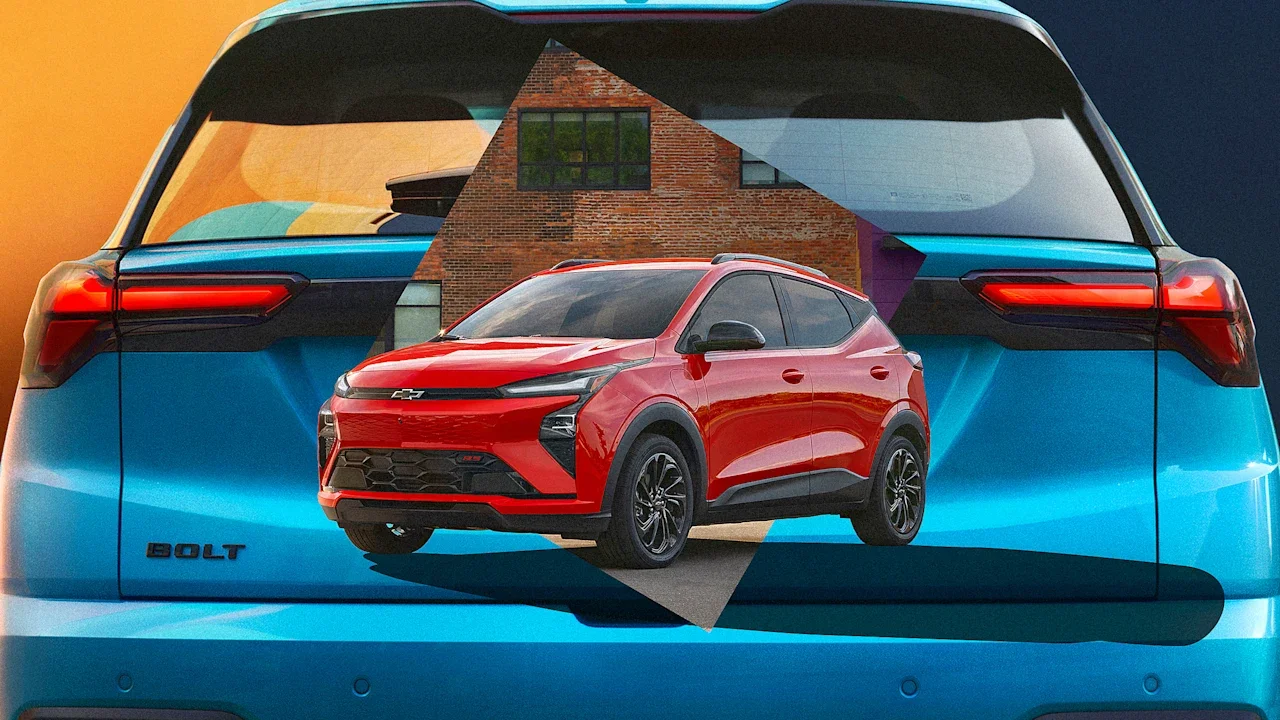
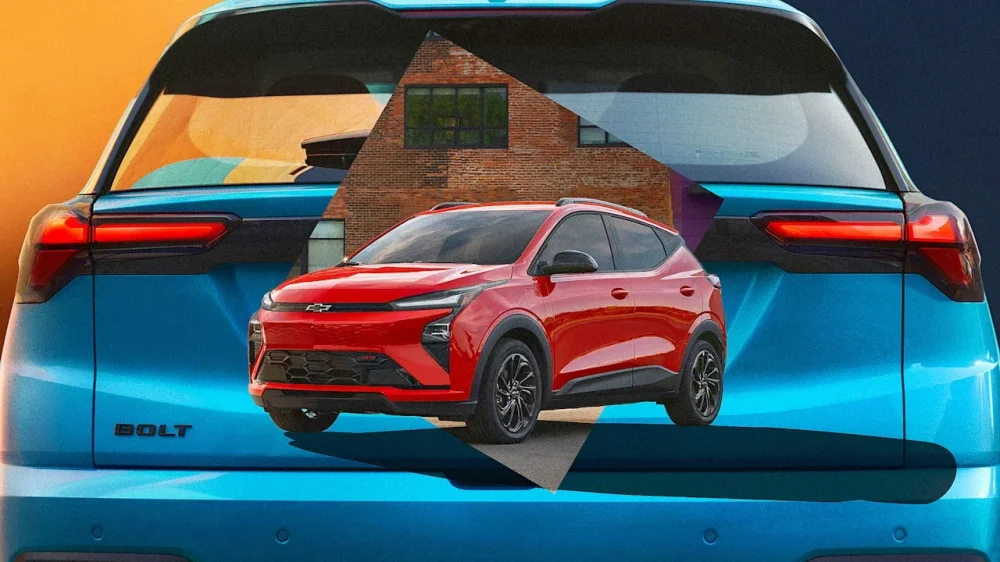
When the new Chevy Bolt arrives early next year, it will start at $29,995, making it one of the most affordable new EVs in the U.S. It’s thousands of dollars cheaper than Tesla’s “affordable” new versions of its Model 3 and Model Y. It’s also significantly less expensive than the average gas car, and like other EVs, it’s cheaper to operate. GM faces major headwinds with the loss of the $7,500 tax credit for electric cars, and it’s scaled back production plans and cut jobs in response. But the new Bolt is so affordable that it could win over consumers even without the incentive. “We wanted to get that under-$30,000 number,” says Jeremy Short, chief engineer on GM’s Bolt team. For Short and his team at GM, achieving that price required some creativity under constraint. Below, Short details how GM kept the price low. A new battery Instead of using standard lithium-ion chemistry, GM turned to a different type of battery that eliminates expensive materials like cobalt and nickel. Called lithium iron phosphate (LFP) batteries, they’re cheaper, longer-lasting, and safer than other lithium-ion batteries, though they don’t store as much energy. It’s the first time that GM has used this type of battery. “We had to develop this because we had an aggressive target to get to for price,” says Short. “And this is one of those things that balanced price and performance.” The company also engineered a new low-cost, low-weight battery pack. The battery can also charge more quickly than the battery in the previous version of the Bolt. When the original Bolt was developed as the first affordable EV with long range, fast-charging infrastructure was limited. Many EV drivers also charge at home most of the time. But the engineers knew that faster charging is a priority for customers. The new Bolt can charge from 10% to 80% in 26 minutes, with a peak speed of around 2.5 times faster than the older model. “We were really in tune with things in ’22 that customers thought there was some potential to improve,” Short says. “Top of that list was the charging rate.” The range is also slightly better than the previous version, at 255 miles versus 247 miles per charge. The new Bolt is also now compatible with Tesla’s Supercharger network. Now, Short says, a vehicle that had a reputation as a commuter car is “a bonafide road trip car.” When the company held a launch event in Los Angeles earlier this month, the engineering team drove four of the cars from Detroit to California. “At two of our lunch stops, we fully charged to 100%,” he says. “We had to start limiting our charges because we couldn’t even eat lunch fast enough.” The company is temporarily importing the batteries from China, subject to steep tariffs. But it’s also ramping up production at one of its U.S. factories, which will begin in 2027. (The company has said that it plans to absorb some of the costs of tariffs across all of its vehicles, with an estimated $3.5 billion and $4 billion hit on its bottom line in 2026.) Economies of scale The new Bolt also adds other new features, including around 20 safety and driver assist features that the last model didn’t have. Features like adaptive cruise used to be optional, Short says, but now are standard. That meant adding hardware like sensors. Extra features made staying on budget more of a challenge, but it was possible, he says, because of the new battery and economies of scale on other parts. To make those economy of scale happen, GM borrowed components from its other EVs to help keep the new Bolt’s price down. “When the original Bolt came out, it was a bespoke architecture,” says Short. “It had a unique battery, a unique motor, unique everything.” Now, after GM’s heavy investment in electric vehicles, it had more resources to work with. The Bolt uses the same front drive motor as the Equinox EV, the same integrated power electronics, the same drive mounts, and other parts, including a heat pump that helps make the car run efficiently when the heat is on. The center screen in the vehicle, with the ability to screen YouTube and HBO Max—something that drivers can use when they’re sitting at a public charger—is borrowed from the brand’s mid-size trucks. Adapting the parts meant redesigning them, in many cases, for the much smaller Bolt, but it helped make a significant difference on cost. “By teaming up with other programs, we were able to get some economies of scale for what are truly better parts than we had before,” Short says. “Between ourselves and the Equinox EV, we’re going to be the volume players for Chevy in EVs.” View the full article
-
It’s widely known that social media can quickly turn into a toxic cesspool of hate speech and ragebait, particularly during times of political turmoil. Across social media platforms, amplified by the algorithm, hate often breeds hate. But what exactly makes toxicity so contagious? It turns out, the problem may be coming from within. A study published this month in the Journal of Computer-Mediated Communication, co-authored by Alon Zoizner and Avraham Levy, looked at how social media users react when they’re exposed to toxic posts from people on their own political side, defined as the “ingroup,” compared with those from the opposing side, the “outgroup.” Highlighting the motivations behind toxic posts, the researchers suggested that exposure to toxicity from your own side tends to encourage similar behavior, as a way to show loyalty and signal belonging. On the other hand, seeing toxic posts from the opposing side can trigger defensive reactions, prompting users to hit back. Analyzing over 7 million tweets from 700,000 X accounts in Israel during 2023, a period of intense political division and conflict, the researchers found that toxicity mainly spreads online through ingroups. In other words, the more people see toxic behavior from those on their own side, the more likely they are to mirror it. Reactions to toxicity from the opposing side were fewer. People are motivated less by outrage at the “other side,” and more by a desire to fit in with their own. The design of social media makes this even worse. By highlighting political identities, it encourages social media users to see themselves as representatives of their group rather than as individuals—and to act accordingly. While much has been said about the polarizing effect of social media echo chambers, the researchers found that, contrary to their expectations, homogeneous networks are less affected by both ingroup and outgroup toxicity compared with those in more heterogeneous networks. They suggest two possible reasons for this. People in more mixed social networks may see a wider range of opinions, which can spark more conflict and toxic exchanges. Those in very like-minded networks, however, might already hold strong views, making them less influenced by others and less likely to feel the need to prove their loyalty through toxic behavior. Either way, toxicity is an unwelcome fact of the internet. Social media companies have engineered our feeds to keep us hooked on outrage and keep us online. Likes and shares then reinforce this cycle, rewarding those who perform their group identity most loudly, even when that means being the most toxic. View the full article

-
Berlin-based Stark failed to hit a single target in four attempts at two exercises with the British and German forcesView the full article
-
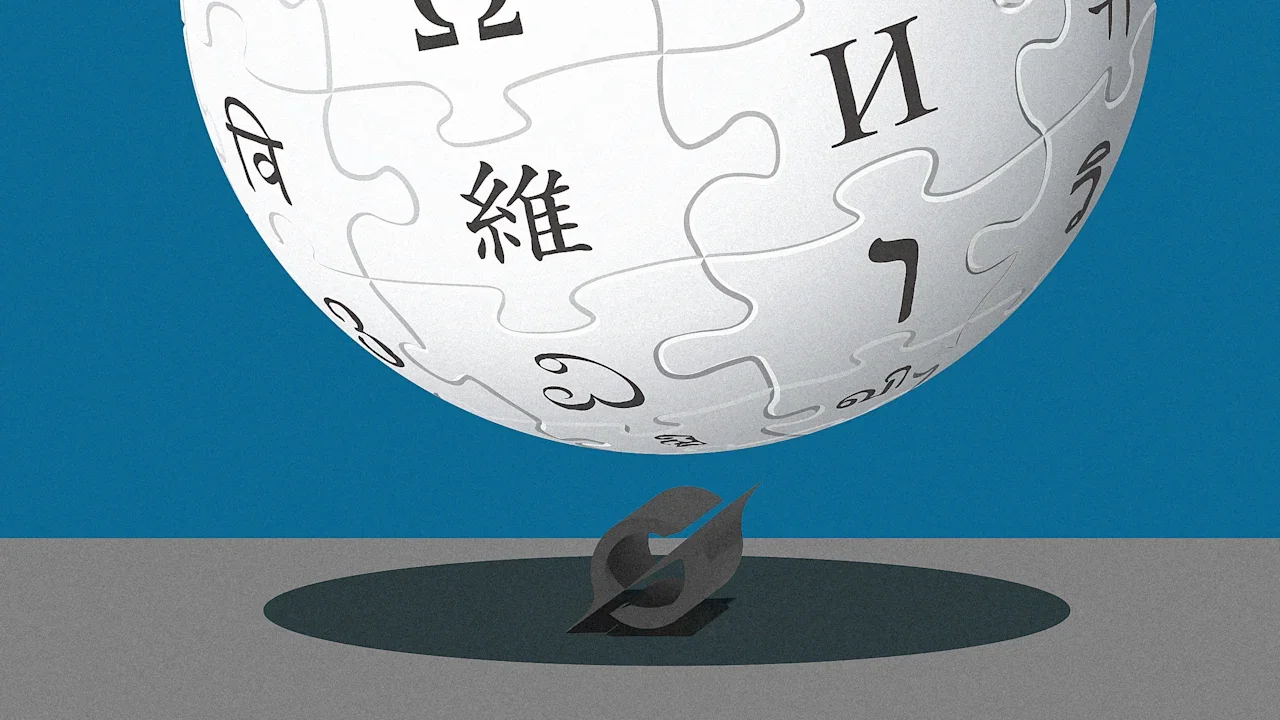
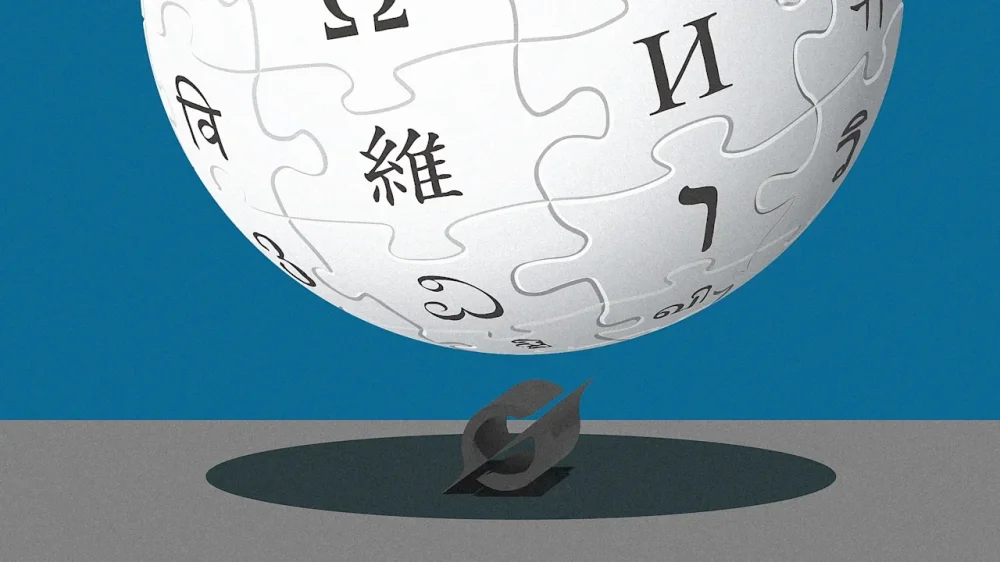
Elon Musk is the kind of entrepreneur who likes to have an enemy as motivation—traditional carmakers, the mainstream media, the “deep state.” His newest undertaking, launched October 27, is no exception: Grokipedia is positioned as an alternative to Wikipedia, which Musk claims is biased and “woke.” A product of Musk’s artificial intelligence company xAI, Grokipedia’s inner workings are unclear, but the pitch is that it’s an AI-generated compendium of what Musk calls “truth, the whole truth, and nothing but the truth.” One major factor that makes Grokipedia different from Musk’s other rival-fueled enterprises is that Wikipedia is quite popular, well-liked, and widely trusted. There’s no substantial burgeoning dissatisfaction with or opposition to Wikipedia fueling demand for an alternative. To the contrary, in the world of mass-market information, it’s one of the strongest brands out there. This wasn’t always the case. Founded in 2001, Wikipedia’s crowdsourced alternative to a traditional encyclopedia was treated with skepticism for its first decade or so, as consumers weighed the merits of formal expertise against what came to be called crowdsourcing. But by the mid-2010s, its trust grew even as long-established information brands struggled. For example, in a YouGov survey in the U.K., 64% of respondents said they trust Wikipedia “a great deal” or “a fair amount,” beating out the likes of the BBC and The Times; a five-country survey in 2019 found trust of Wikipedia at 78% or better. For techno-optimists, Wikipedia was touted as a portent of the internet’s utopian work-together future. In a world where top-down information “gatekeepers” were no longer trusted, Wikipedia attained a Web-era version of gravitas, a crowdsourced Walter Cronkite. That vision was replaced by the divisive realities of social media, but Wikipedia has hung on, remaining one of the world’s most popular sites, recognized as one of the great collective efforts of humanity, built on a robust internal debate structure from thousands upon thousands of individual contributors all around the world. Prior to Grokipedia’s launch, Wikipedia cofounder Jimmy Wales spoke to The New York Times about his new book, which “tries to apply the lessons of Wikipedia’s success to our increasingly partisan, trust-depleted world.” On the subject of Musk, Wales shrugged: “We’ll be here in a hundred years and he won’t. As long as we stay Wikipedia, people will still love us.” The truth is that the rise of AI more generally could pose a threat to Wikipedia: AI summaries in Google searches are already said to be cutting into Wikipedia traffic, and that could impact the combination of donations and volunteers that keep the effort afloat. But as for Grokipedia itself, the site is off to a rocky start. Wired found that it “pushes far-right talking points” on gender and other issues. The Atlantic noted that the entry for Musk himself left out reference to his apparently pro-apartheid grandfather, but did note that he’d lost 20 pounds. Some found that Grokipedia had, in multiple cases, simply rehashed its rival’s entries, and others just saw it as a bland knockoff, the exact opposite of Wikipedia’s human touch and originality. (Musk’s xAI has not been transparent about exactly how entries are chosen or assembled, but reports suggest they appear to be generated by some iteration of its Grok chatbot, seemingly working off Wikipedia entries in at least some cases.) But even Cronkite had skeptics, so of course Wikipedia does, too. Musk’s complaints about the online encyclopedia (specifically his own entry) fall in line with a wider conservative line of attack. These critics insist that Wikipedia has “systemic ideological biases—particularly a left-leaning slant in coverage of political figures and topics.” (Or at least that’s what Grokipedia says.) In a war of credibility, Wikipedia has become a formidable opponent, maybe especially to Musk. “For many people, their level of trust in Elon Musk is extremely low because he says wild things all the time,” Wales told The Times. “When he attacks us, people donate more money.” View the full article
-
Business minister hails food group’s listing as sign of stock market revivalView the full article
-
OpenAI's made ChatGPT Go available in 98 countries, including 8 in Europe and 5 in Latin America. The post Discounted ChatGPT Go Is Now Available In 98 Countries appeared first on Search Engine Journal. View the full article
-
A year ago, direct air capture—technology that pulls CO2 from the air—seemed ready to quickly scale in the U.S. Project Cypress, a massive undertaking in Louisiana designed to capture more than a million tons of CO2 each year, won $50 million in funding from the Department of Energy in early 2024. In Texas, another major direct air capture hub also won funding. Together, the projects were eligible for as much as $1.1 billion from the DOE, part of $3.5 billion Congress set aside for DAC hubs in the 2021 Bipartisan Infrastructure Law. Climeworks, a pioneer in the industry and one of the partners on the Louisiana project, was hiring a U.S. team, scaling up a new plant in Iceland, and signing large deals to sell carbon removal to companies like British Airways and Morgan Stanley. Heirloom, another tech company working on the Louisiana hub, closed a $150 million Series B round of funding. CarbonCapture, another startup in the space, raised $80 million. Multiple other DAC projects also won DOE grants. The situation is different now. In one round of cuts, according to a leaked list, the DOE might revoke around $50 million in grants to 10 different direct air capture projects. (The cuts are part of more than $7.5 billion in cancellations for what the administration calls “Green New Scam” funding.) A second leaked spreadsheet suggests that the flagship hubs in Louisiana and Texas might also be at risk. Earlier this year, Heirloom laid off some workers and reportedly canceled a planned project. Climeworks also had a round of layoffs. At the same time, a few projects are moving forward, and one key tax credit is still in place. Government support isn’t the only thing keeping the industry afloat. But the technology is still in the so-called valley of death—the stage when it still hasn’t reached large-scale commercial deployment—and funding cuts would be a major blow. Even as other countries offer incentives, it could slow down the industry globally. “I think it could slow down substantially,” says Eric O’Rear, associate director at the economic and policy research firm the Rhodium Group. “If you look at it from a policy perspective, the U.S. was really dominating this space.” From boom to uncertainty As an industry, direct air capture is still in its infancy. The technology was proven in a lab 26 years ago, but the first commercial plant, run by Climeworks in Iceland, didn’t open until 2021. It was a milestone, but tiny compared to what’s needed: It captures 4,000 tons of CO2 a year, or roughly as much as driving 930 gas cars over the same period. To deal with climate change, the world may need to capture 10 billion tons of CO2 a year by the middle of the century, according to one National Academy of Sciences estimate. (That’s on top of radically cutting emissions, not as a replacement.) Critics have argued that the technology is too expensive to be a realistic solution. But the companies developing it say that scaling up will bring costs down, both because of economies of scale and because engineers can learn by doing, improving materials and processes as they go. “Our approach, ‘deployment-led innovation,’ involves running DAC plants in the field for rapid, real-world learning,” Climeworks CEO Christoph Gebald told Fast Company in 2024. Now the company says that one key component of its tech, the sorbent, lasts 10 times longer than before, and it’s working on cutting its energy use in half, which would also cut costs in half. The company aims for a cost of $250 to $350 per ton captured by 2030. Ultimately, the industry aims to achieve $100 per ton—a tipping point that would make it affordable enough to be deployed at a very large scale. The first corporate buyers are early-stage adopters willing to pay much higher prices to help the technology grow. The two large planned DAC plants in Louisiana and Texas could help accelerate that process. But the future of those projects is still not clear. In a statement after a leaked spreadsheet listed the projects, the Department of Energy said that “no additional projects have been terminated,” and that the DOE “continues to conduct an individualized and thorough review of financial awards made by the previous administration.” Both projects have bipartisan support from state leaders, and when they were on a DOE “hit list” earlier in 2025, Republican leaders helped keep Project Cypress alive, at least temporarily. But it’s possible neither project will continue. Smaller direct air capture hubs that had planned on DOE funding may also struggle to continue—or possibly move. CarbonCapture, a startup that planned to install its tech in Arizona this year, has already relocated that project to Canada, to a site called Deep Sky that’s designed to help multiple companies scale up their technology in one place. Deep Sky announced last week that it plans to build a second large facility in Canada. The Canadian government offers strong incentives for DAC companies to build new plants. Some other countries, from Denmark to Japan, also have incentives for DAC projects. “Globally, we are seeing carbon removal continuing to scale,” says Ben Rubin, executive director of the Carbon Business Council. “I think the big question is, who will be home to those economic benefits and who will be home to those jobs?” Project Cypress, for example, was expected to create 2,300 jobs and bring billions of dollars to Louisiana’s economy. For the climate, it doesn’t matter if direct air capture happens in the U.S. or Iceland or Kenya. But the U.S. government, under President Joe Biden, started to take a leadership role in helping the tech grow faster. The political changes could slow global progress. What’s moving forward Some DAC projects are still underway, with or without government support. In Texas, 1PointFive, a subsidiary of the oil giant Occidental, is building a sprawling facility that could capture up to 500,000 tons of CO2 a year. 1PointFive told Fast Company that the facility is on track to start running this year—at which point it will be the largest direct air capture operation in the world. Some of the captured CO2 could be injected underground to help get more oil out of old oil wells, a controversial move from a climate perspective. But some of it will also be permanently stored in deep rock formations or depleted oil or gas wells. Earlier this year, the Environmental Protection Agency granted the company permits to inject millions of tons of CO2 in storage wells over the next 12 years. The captured CO2 could also be used to make everything from plastic to jet fuel. The project, called Stratos, doesn’t have any DOE funding. Microsoft, one of the project’s customers, agreed in 2024 to buy 500,000 tons of CO2 removal over the next six years, with the caveat that the CO2 won’t be used in oil production. BlackRock invested $550 million; the total cost may be more than $1.3 billion. Others are moving forward with smaller pilots. Avnos, a California-based startup, is nearing completion on a pilot called Project Brighton that was funded by the U.S. Office of Naval Research, and plans to begin operation before the end of the year. The company has an unusual hybrid approach that could potentially reach low costs earlier than others like Climeworks. Along with capturing CO2, it also captures water. The tech’s design means that it can cut energy use in half or more, dramatically cutting the overall expense. (At its first large project, it expects to capture CO2 for less than $250 per ton; as it scales up, CEO Will Kain says, it has a “good line of sight” to $100 per ton.) Because the technology produces water from the air, it also has the opportunity to potentially be used at water-hungry data centers, or at facilities that want to use CO2 to make products like chemicals and need water for those processes as well. Avnos is involved in DAC hub projects with DOE funding, and hasn’t yet heard what the ultimate fate of those projects will be. But it also has deliberately looked for a variety of sources of funding for other projects. “We’re diversifying our sources of funding,” Kain says. How the industry could keep growing Kain is still optimistic about the industry. “The global momentum for carbon removal is very strong,” he says. Even in the U.S., when most of the clean energy tax credits in the Inflation Reduction Act were axed by Congress this summer, a tax credit for direct air capture stayed in place and was actually expanded. (Now projects that use CO2 to make other products can get the same incentive as projects that permanently store CO2 underground.) If federal support for new projects wanes, as expected, “it certainly makes it harder for us to deploy first-of-a-kind pilots in the U.S.,” Kain says. “So companies like us have to get a little bit creative in how you fund.” Some companies are also working on new ways to lower the cost of direct air capture and work without government grants, including a Denver-based startup called Heimdal. The company has an unusual approach: Instead of using large fans to pull in air and extract CO2, it uses calcium oxide, a mineral that naturally reacts with the gas to capture it. “It’s very simple,” says Marcus Lima, cofounder and CEO. “It’s literally just spraying rocks on the ground.” The rocks are later heated up in a kiln to release the CO2 for storage or use. The cost is already low, at around $200 per ton. The startup opened a facility in Oklahoma in August 2024 that can capture up to 5,000 tons of CO2 per year. To help with costs, it makes some compromises that some competitors wouldn’t—selling the CO2 for use in oil production, and using natural gas as an energy source. But Lima argues that those are stepping stones toward an ideal for future operation. He also believes that companies should focus on bringing costs down without relying on grants. “My view is, at least for capital projects, federal funding should serve as an accelerant, as an enabler,” he says. “What we’re seeing now with the change of administration and the general cooling in the climate-tech capital markets is kind of a return to earth. Reality now starts to matter a lot more, because you don’t have hundreds of millions of dollars in the venture markets that you can just have like that. Projects need to make money.” Even companies with lower costs may face more challenges in getting investment now. “With this pullback in federal support, there is going to be increased uncertainty as it relates to how healthy the environment is for investing in the U.S.,” says Rhodium Group’s O’Rear. It still isn’t clear what will happen in the U.S. But more federal support would also help companies test a bigger variety of approaches to the technology. “We don’t know which of these technologies is going to be best at scale—best economic performance, best technical performance, the right kind of projects that communities want to host,” says Erin Burns, executive director of the carbon removal nonprofit Carbon180. As the world blows past 1.5 degrees Celsius of warming, it makes sense to test as many solutions as possible. Without support, some nascent technologies may be lost completely. View the full article

-
Walk into any grocery store to stock up for Halloween and you will discover that, for chocolate treats, you have two basic choices: Will it be Mars or Hershey? I often buy both, but that is beside the point. The point is that the two giants compete for market share, but both enjoy robust sales. In other words, a relatively stable duopoly defines the U.S. chocolate candy market. But it wasn’t always like this. Before the 1960s, the Hershey Chocolate Corp. reigned supreme as the undisputed chocolate king. It was in that decade that Mars went for Hershey’s jugular. Hershey Chocolate’s response brought lasting change to its candy business, the local community, and Hershey Park, its chocolate-themed amusement park. As a professor of American studies at Penn State Harrisburg who has recently published a book on Hershey Park, I am astounded by how these changes continue to reverberate today. Milton Hershey’s paternalistic capitalism Before the 1960s, change was not a word one associated with either the town of Hershey, Pennsylvania, or its famous chocolate company. Better words would be “stability” and “productivity”—and this was by the founder’s design. Milton Hershey When Milton Hershey entered the confection industry in the 1880s, violent clashes between corporations and labor roiled American society. Hershey imagined a better way: paternalistic capitalism. In the early 1900s, he built a chocolate factory and planned community out in the farms and pastures of central Pennsylvania. Instead of offering men and women wage-earning jobs and nothing else, he took care of his workers. They owned nice homes and benefited from a generous array of free or subsidized services and amenities: snow removal, garbage collection, trolley lines, good schools, a junior college, zoo, museum, sports arena, library, community center, and theater. They even had their own amusement park. But this was a reciprocal relationship. In return, employees were expected to work hard, exhibit loyalty, practice clean living, and refrain from labor agitation. With the exception of a strike during the Great Depression, the company and town lived in harmony. Milton Hershey called the place an “industrial utopia,” and residents largely agreed. “Moving to Hershey,” one recalled, “was like moving to paradise.” Harmony also defined Hershey’s relations with Mars. At the time, Hershey produced only solid chocolate—think of Hershey bars and Kisses. In contrast, Frank Mars’s company specialized in chocolate-covered snacks, such as Snickers or Milky Way, in which milk chocolate is poured over nuts, caramel, or nougat. Where did that chocolate coating come from? Hershey, of course. In those days, Mars was a client, not a rival. Without competition, Hershey enjoyed the luxury of not having to worry about market share. Amazingly, the company did not advertise under Milton Hershey and continued this policy after his death in 1945. Hershey in crisis Everything changed in 1964. The catalyst for change was Forrest Mars, the founder’s hard-charging son, who was a true disrupter. After seizing control of his father’s company, Forrest Mars set his sights on dethroning Hershey. As reporter and author Joël Glenn Brenner explains, the younger Mars boldly terminated the partnership with Hershey while ordering his engineers to learn how to make Hershey-caliber chocolate in six months. He also modernized the factory and ordered a surge in advertising, all to wrestle market share away from Hershey, the “sleeping giant.” The strategy worked. By the decade’s end, Mars had caught Hershey in terms of market share and pushed the chocolate colossus into crisis. The good news for Hershey was that it had at the helm two forward-looking leaders, Harold Mohler and Bill Dearden. Though standard practice had always been to hire locally and from within, Mohler and Dearden recruited outsiders with MBAs from Harvard and Wharton to initiate sweeping reforms aimed at modernizing its archaic business practices. The company opened a public relations office, conducted market research, installed IBM mainframe computers to crunch numbers, retrained its sales force, and created a marketing department. Many employees, a new executive joked, were so behind the times that they had thought marketing was “what their wives did . . . with a shopping cart.” This effort culminated with the release of the company’s first TV commercials starting in 1969. The sleeping giant had awoken. The company’s next move altered the town forever. As a cost-cutting measure, it terminated the free services and amenities at the core of Milton Hershey’s vision. The era of paternalism was over. As the company liquidated assets, residents howled in protest. “It was a very traumatic time for the community,” one executive recalled. For residents, the only consolation was that at least the amusement park would stay the same. Or would it? By the late 1960s, Hershey Park had degenerated into what one executive called “an iron park with a bunch of clanging rides.” Leadership faced a pivotal decision: renovate the park or close it forever. The park had such a “rich heritage,” one executive recalled, that to shutter it would “put a stamp of negative feeling within the community.” The company elected to renovate. Hersheypark’s transformation But how to renovate was another matter. In the 1960s and 1970s, owners of traditional amusement parks had to think twice before investing in their properties. That was because Disneyland, the nation’s first theme park, had caused a sensation when it debuted in 1955. Its incredible popularity, and the opening of the more spectacular Disney World in 1971, placed pressure on old-fashioned amusement parks everywhere. After commissioning a feasibility study, Hershey officials decided to gamble: Instead of fixing up the old amusement park, they would convert it into a Disney-style theme park. To pay for the massive overhaul, they redirected capital earned from the dismantling of Milton Hershey’s paternalism. Reborn as “Hersheypark” in 1973, the ever-growing complex has become a mecca for chocolate lovers and thrill-ride seekers from across the Northeast. Every year, Halloween reminds me of this remarkable transformation. The stores become stocked with Hershey brands, and the theme park comes alive with its spooky “Dark Nights” entertainment. In the past, workers at the Hershey plant would joke that they had “chocolate syrup in their veins.” These days, they clearly have innovation, too, and that creative spirit is largely due to Forrest Mars. By giving Hershey the jolt it needed, he shook up the status quo and changed the chocolate company, town, and park forever. Read more of our stories about Philadelphia and Pennsylvania. John Haddad is a professor of American studies at Penn State. This article is republished from The Conversation under a Creative Commons license. Read the original article. View the full article

-
The consulting firm Accenture recently laid off 11,000 employees while expanding its efforts to train workers to use artificial intelligence. It’s a sharp reminder that the same technology driving efficiency is also redefining what it takes to keep a job. And Accenture isn’t alone. IBM has already replaced hundreds of roles with AI systems, while creating new jobs in sales and marketing. Amazon cut staff even as it expands teams that build and manage AI tools. Across industries, from banks to hospitals and creative companies, workers and managers alike are trying to understand which roles will disappear, which will evolve, and which new ones will emerge. I research and teach at Drexel University’s LeBow College of Business, studying how technology changes work and decision-making. My students often ask how they can stay employable in the age of AI. Executives ask me how to build trust in technology that seems to move faster than people can adapt to it. In the end, both groups are really asking the same thing: Which skills matter most in an economy where machines can learn? To answer this, I analyzed data from two surveys my colleagues and I conducted over this summer. For the first, the Data Integrity & AI Readiness Survey, we asked 550 companies across the country how they use and invest in AI. For the second, the College Hiring Outlook Survey, we looked at how 470 employers viewed entry-level hiring, workforce development, and AI skills in candidates. These studies show both sides of the equation: those building AI and those learning to work with it. AI is everywhere, but are people ready? More than half of organizations told us that AI now drives daily decision-making, yet only 38% believe their employees are fully prepared to use it. This gap is reshaping today’s job market. AI isn’t just replacing workers; it’s revealing who’s ready to work alongside it. Our data also shows a contradiction. While many companies now depend on AI internally, only 27% of recruiters say they’re comfortable with applicants using AI tools for tasks such as writing résumés or researching salary ranges. In other words, the same tools companies trust for business decisions still raise doubts when job seekers use them for career advancement. Until that view changes, even skilled workers will keep getting mixed messages about what “responsible AI use” really means. In the Data Integrity & AI Readiness Survey, this readiness gap showed up most clearly in customer-facing and operational jobs such as marketing and sales. These are the same areas where automation is advancing quickly, and layoffs tend to occur when technology evolves faster than people can adapt. At the same time, we found that many employers haven’t updated their degree or credential requirements. They’re still hiring for yesterday’s résumés while tomorrow’s work demands fluency in AI. The problem isn’t that people are being replaced by AI; it’s that technology is evolving faster than most workers can adapt. Fluency and trust: The real foundations of adaptability Our research suggests that the skills most closely linked with adaptability share one theme, what I call “human-AI fluency.” This means being able to work with smart systems, question their results, and keep learning as things change. Across companies, the biggest challenges lie in expanding AI, ensuring compliance with ethical and regulatory standards, and connecting AI to real business goals. These hurdles aren’t about coding; they’re about good judgment. In my classes, I emphasize that the future will favor people who can turn machine output into useful human insight. I call this digital bilingualism: the ability to fluently navigate both human judgment and machine logic. What management experts call “reskilling”—or learning new skills to adapt to a new role or major changes in an old one—works best when people feel safe to learn. In our Data Integrity & AI Readiness Survey, organizations with strong governance and high trust were nearly twice as likely to report gains in performance and innovation. The data suggests that when people trust their leaders and systems, they’re more willing to experiment and learn from mistakes. In that way, trust turns technology from something to fear into something to learn from, giving employees the confidence to adapt. According to the College Hiring Outlook Survey, about 86% of employers now offer internal training or online boot camps, yet only 36% say AI-related skills are important for entry-level roles. Most training still focuses on traditional skills rather than those needed for emerging AI jobs. The most successful companies make learning part of the job itself. They build opportunities to learn into real projects and encourage employees to experiment. I often remind leaders that the goal isn’t just to train people to use AI but to help them think alongside it. This is how trust becomes the foundation for growth, and how reskilling helps retain employees. The new rules of hiring In my view, the companies leading in AI aren’t just cutting jobs; they’re redefining them. To succeed, I believe companies will need to hire people who can connect technology with good judgment, question what AI produces, explain it clearly, and turn it into business value. In companies that are putting AI to work most effectively, hiring isn’t just about resumes anymore. What matters is how people apply traits like curiosity and judgment to intelligent tools. I believe these trends are leading to new hybrid roles such as AI translators, who help decision-makers understand what AI insights mean and how to act on them, and digital coaches, who teach teams to work alongside intelligent systems. Each of these roles connects human judgment with machine intelligence, showing how future jobs will blend technical skills with human insight. That blend of judgment and adaptability is the new competitive advantage. The future won’t just reward the most technical workers, but those who can turn intelligence—human or artificial—into real-world value. Murugan Anandarajan is a professor of decision sciences and management information systems at Drexel University. This article is republished from The Conversation under a Creative Commons license. Read the original article. View the full article

-
Yes, it’s that time of year again, when most of the U.S. “gains” an extra hour of sleep as we “fall back” from daylight savings to shorter days, colder nights, and standard time. This Sunday, November 2, at 2 a.m local time, we will turn back our clocks to 1 a.m—and that will last until March 8, 2026 (when we will once again usher in daylight saving time). Although getting an extra hour of sleep sounds like a win, here’s what really happens to your health when the clocks change. Darker nights disrupt the body’s natural clock Darker evenings actually disrupt our body’s natural circadian rhythm, our mood, and our metabolism, according to Dr. Zaid Fadul, CEO of Bespoke Concierge MD. “Light is your body’s main ‘time-giver’ that sets your internal clock,” said Fadul, whose practice specializes in integrative medicine with a focus on sleep. “When evenings get darker sooner, your brain releases melatonin earlier, shifting your sleep schedule and throwing off your rhythm.” He added, “This disruption affects hormones like cortisol and insulin, lowering insulin sensitivity and increasing stress while also impacting serotonin and dopamine—the chemicals that control your mood and motivation.” The one-hour clock change also creates “social jet lag,” disrupting your body’s schedule, especially if you’re naturally a night owl, Fadul explained, noting, “Your sleep quality tanks—particularly the deep REM sleep your brain needs—leaving you foggy, tired, and less alert during the day.” While getting extra sleep doesn’t hurt, the issue is most prevalent in the spring, when people lose an hour of sleep. And that can have other impacts on health. How the time change impacts sleep and health Research shows a spike in heart attacks and cardiovascular issues after the switch to daylight saving time in the spring. Moving the clock forward or backward also alters the timing of when heart attacks occur in the week following these time changes, according to research presented at the American College of Cardiology’s 2014 Annual Scientific Session. The time change also affects night-shift workers more—which include a substantial number of the population, such as nurses, police, firefighters, and doctors. The best way to adjust your internal clock Here are Fadul’s recommendations for readjusting your internal clock after the time change. Morning light: Get outside for 10 to 20 minutes of natural sunlight within 30 to 60 minutes of waking up (no sunglasses, unless you really need them). Exposure to morning light is the fastest way to reset your clock. Evening light hygiene: Dim your lights two to three hours before bed and ditch the overhead lighting. Keep screens on warm mode with low brightness—or better yet, put them away. Consistent wake time: Wake up at the same time every day, even if you slept poorly. If you’re dragging, take a quick, 20- to 30-minute nap before 3 p.m. to recharge without messing up your nighttime sleep. Meal timing: Load up on calories and protein earlier in the day, and finish dinner at least three hours before bed. This supports your insulin rhythm and helps your body know when it’s time to wind down. Caffeine and alcohol: Cut off caffeine about eight hours before bedtime. Avoid alcohol during the adjustment window—it might help you feel drowsy, but it wrecks your sleep quality. Movement timing: Take morning or lunchtime walks to get natural light and movement together. Skip intense late-night workouts for the first two to three days after the time changes. Workouts might fire you up when you need to be winding down. Temperature cues: Keep your bedroom cool, around 64 to 66 degrees Fahrenheit (18 to 19 degrees Celsius). Take a warm shower one to two hours before bed—the cooling effect afterward signals your body that it’s time to sleep. View the full article

-
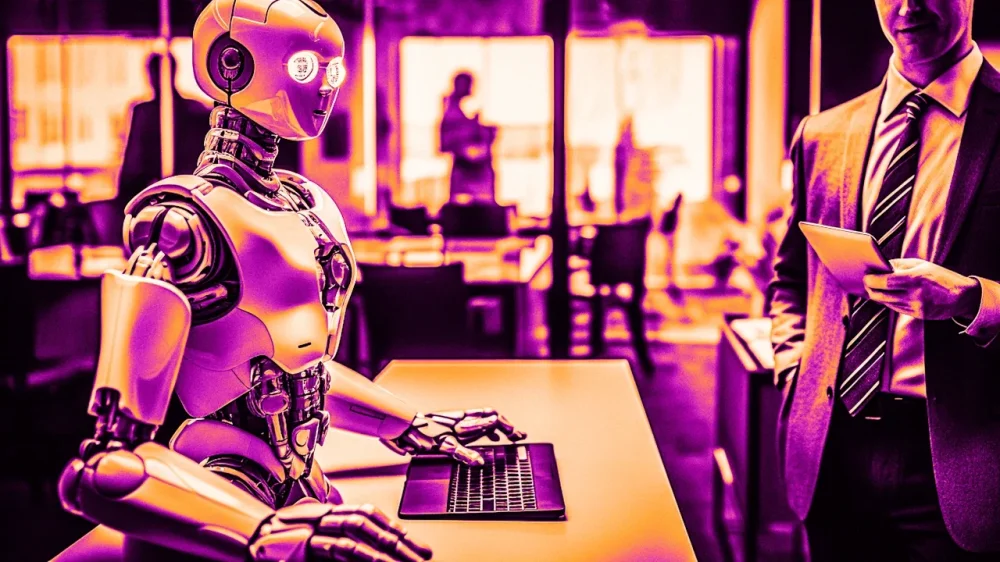
Imagine starting a new job where your onboarding feels personalized just for you, with an AI assistant guiding you through training, introducing you to teammates, and checking in on how you’re settling in. That level of personalization in the workplace isn’t just a concept for the future – it’s already here and happening more rapidly than many HR departments anticipate. AI is transforming HR in the workplace. In 2026, AI won’t just take over repetitive tasks, but it will fundamentally change how companies hire, onboard, coach, and retain employees. The result is HR teams that are more strategic, data-driven, and more human than ever. After more than a decade working in HR tech for small businesses and startups, I’ve seen that when AI is thoughtfully applied, it can enhance both efficiency and empathy. When used effectively, AI helps HR leaders focus less on paperwork and administrative tasks and more on the employees. AI is helping HR leaders drive meaningful change and streamline operations, all while preserving the human touch that’s at the heart of great workplaces. Here’s how I see AI reshaping HR in 2026 and the years to come: Streamlining Operations with AI AI is already automating many of HR’s most time-consuming tasks, from managing benefits to answering employee questions. IBM’s “Ask HR” platform, for example, is automating hundreds of roles previously devoted to automating answers to common inquiries. This kind of change allows HR professionals to redirect their time toward strategy, culture and engagement. AI is managing software and systems that previously couldn’t communicate. There are 5,700 pieces of payroll and HR software, most of which don’t talk to each other and need someone to manage them. The task of managing this software is ideal for AI automation, especially workflows, onboarding/offboarding, compliance & audits, and high-priority HR employee requests. It’s not always about efficiency. As automation advances, companies must ensure the human experience doesn’t get lost. The next generation of HR tools will blend speed with compassion, using AI to make employee interactions smoother and more supportive. Personalized Onboarding Workflows The first 90 days are critical for the retention and productivity of new hires. AI-driven onboarding systems can now customize each step of the process, tailoring introductions, training plans, and check-ins based on each role, skills, and personality. Instead of one-size-fits-all onboarding, new hires receive an experience that feels relevant and personal from the first day on the job. That level of automation and personalization not only accelerates ramp-up time but also builds a stronger sense of belonging, individualizing the journey for every new team member. Digital Coaching and Real-Time Support Coaching used to be an extra perk reserved for executives. Now, AI-powered tools and confidential chatbots embedded in Slack or Teams are bringing that level of guidance to everyone. These integrated tools can offer personalized collaborative feedback, monitor engagement trends, and provide employees with a safe, always-on space for support and sharing. The result is an environment where learning and growth become endless and available to all. Doing More with Leaner Teams In the startup world, especially, founders are increasingly scaling HR functions before hiring senior HR leaders. With AI platforms now able to assist with recruiting, compliance, and employee engagement, small teams can manage complex workforce needs effectively. Some are spending way too much time in the weeds of HR, manually tracking state registrations, scrambling to handle onboarding paperwork and worrying about payroll accuracy and compliance. With AI-powered tools, companies can focus on scaling their business and let the software ensure that every detail is done right. This ultimately gives founders their time back and makes HR a solved problem. This newer and more “lean HR” model allows startups to focus on strategy and workplace growth rather than administrative tasks, demonstrating that technology and AI tools can democratize access to quality HR, rather than replace it. Keeping Humans in the Loop The best AI systems will never replace the responsiveness and creativity of HR professionals. Instead, they’ll enhance and complement those skills. A “human-in-the-loop” approach ensures that technology supports human judgment, rather than replacing it. When humans and AI work together, HR teams can build workplaces that are not just efficient but also resilient and more connected. The future of HR isn’t about replacing people with algorithms. It’s about empowering people with better tools, platforms and resources. AI will take care of the repetitive so that humans can focus on trust, connection, and culture in the workplace. The true promise of AI in HR is not about losing humanity but enhancing it. View the full article
-
A year on from his re-election, diplomacy is being driven by the personal whims of the president to an extent that is unprecedented in the modern eraView the full article
-
UK chancellor in discussions over plans to reform the contentious welfare policyView the full article
-
Open hostility and high visa fees are a risky bet amid intensifying competition for the world’s brightest and bestView the full article
-
Former Goldman executive is a longtime board member of the fintech, which has struggled to win a UK banking licenceView the full article
-
Informa boss Stephen Carter resigns from House of Lords ahead of relocation to rapidly growing regionView the full article
-
Russian foreign ministry’s maximalist demands for ending Ukraine war led US to scrap planned meetingView the full article
-
All-round expertise is lacking, but urgently needed to run key public services efficientlyView the full article
-
It’s Halloween! Let’s revisit some Halloween questions from past years. 1. My coworker goes overboard with grisly Halloween decorations People in our office go bonkers over Halloween. Recently we were encouraged to decorate for Halloween. I would take that to mean a little black and orange garland, maybe a plastic pumpkin, right? Well, not hardly. People go overboard and apparently the only rule was no trip hazards in the aisle. The woman in the cubicle next to mine must have emptied out her storage area of Halloween decorations. Now there are gross bloody looking, ghoulish figures hanging from the ceiling above our desk space. There are skeletons with teeth, cobwebs strewn about, and a lifelike bloody head cut off at the neck with facial wounds and hair that appears to be matted with more blood, and a plaque with some sort of satanic looking symbol was hung up. Then she brings in a black cauldron that when plugged in emits what looks like smoke, gurgles, and has neon lighting. There is not a pumpkin in sight! To me, it’s very dark and not the atmosphere or space that I wish to spend my day in for weeks and yet I have no choice. This is very disturbing. I complained to my manager about the dead people hanging from the ceiling and she just said they weren’t dead people! Everyone thinks this person is so cool because she has a lot of decorations and they ooh and ahhh over it all day long. What is wrong with this picture? This is a large professional corporate office — the finance office for a huge group of physicians, no less. The manager encouraged this and thinks it is just great good-spirited fun and I am looking around thinking, “What is wrong with people”? Too late now, but is this even normal? Well, it’s pretty oblivious to the fact that not everyone is comfortable with macabre decorations, and I’m alarmed that your manager was so dismissive when she heard about your discomfort. Do you have HR? They might be more receptive than your boss. But otherwise, next year you could try approaching your coworker ahead of time and explaining that you were creeped out by some of what she put up last time and ask if she’d be open to a different motif. If your sense is that she won’t care, you could try with your boss again, despite her lackluster response this year. I do wonder how clear you were with her; if you didn’t plainly say that you can’t comfortably work around that kind of grisly imagery, it’s worth restating it that way. — 2021 2. My office’s “kid-friendly” Halloween party was terrifying My office held a Halloween party this week after hours (immediately after the work day in the office), and said in the invitation that kids and significant others are welcome. Some of us brought our young kids (ages 2-5 or so). When we arrived the signs were pretty ghoulish (dismembered bloody body parts, etc), and one employee, “Bob,” brought this very gruesome and realistic zombie puppet. It’s just as creepy as it looks in the video and it truly terrorized the kids in attendance. The parents are really upset, and would not have brought their kids if we knew that there would be this kind of adult Halloween horror. The person who did this is otherwise lovely, and is also very close to the CEO. It’s not like management was unaware before it happened, I think they were just clueless about how inappropriate this was for a family event. Before Bob arrived, the CEO was telling people, “I heard Bob is going to bring his special friend Sally” (meaning the puppet). How do we address this with management? Its hard enough in our company for moms of young kids, and I don’t want us to be seen as spoil sports, but I am also really really not okay with the company saying this is a bring your kids event and then having something like this happen. Any advice? Yes! Talk to whoever is in charge of party planning and logistics for your office and explain this wasn’t kid-appropriate at all! I’m guessing someone involved didn’t understand what is and isn’t kid-friendly and needs that spelled out more clearly. This won’t be you being a spoil sport; this will be you giving someone highly relevant info that they apparently didn’t have and probably would want. (Think if you’d done something similar — you’d want to know!) You could say, “I think there was a disconnect between whoever said the party would be kid-friendly and whoever planned the decorations. It definitely wasn’t kid-appropriate for small children — my kids and some of the the others were really upset by the some of the gruesome decor and Bob’s puppet. In future years, can we be more careful about that? It of course doesn’t need to be kid-friendly but if we say it is, I want to be sure it won’t terrify our kids.” Also, next year, make a point of raising this again in case people have forgotten or someone else is doing the planning. Mention that kids were scared last time, and ask for info about exactly what’s being planned. (Maybe talk to Bob in advance of next year’s too.) — 2019 3. Should I wear a Halloween costume my first week at a new job? I start a new job the week of Halloween and would love to wear a costume to work on Halloween, which I could not do at my old job. Of course I plan to ask about the office culture around celebrating, but if I hear that others do sometimes dress up for the holiday, would it be a bad idea for me to? Given that it will only be a few days after I start, I will still be in the period where my new coworkers and manager are figuring out who I am, and I worry that a full Halloween costume in my first week would affect how I am seen. The costume I want to wear is tasteful — nothing sexy or scary or likely to cause offense. But it would be a complete outfit, rather than just a prop or accessory. What do you think? Well, there are a lot of offices where Halloween costumes aren’t a thing at all — especially complete outfits, as opposed to, like, a witch’s hat. So this is the stick-in-the-mud answer, but unless you hear that the whole office dresses up and people go all out, I wouldn’t do it. You’re still getting to know the culture and people are still getting to know you, and I don’t like the thought of you ending up as the only person in a meeting wearing a full costume your first week at work. There are often a lot of meetings that first week, and people care far more about seeing that you’re listening and processing all that new information than they do about seeing you in costume. The counter-argument is that this is a fun way for your coworkers to get to know your personality. But I’d argue people manage to get to know their new coworkers without costumes every other month of the year, and the risks of it being weird are greater than the potential rewards. It’s a new job, the stakes are high, and there’s no real downside to playing it safe. If you want a compromise, though, you could go with a small prop or accessory, and save the full outfit for next year. — 2019 Read an update to this letter here. 4. Wearing a Halloween costume to an interview I have an interview on Halloween. Would it be ok to wear a costume to show my fun spirit? Nooooo. Unless you’re interviewing someone where “fun spirit” is a major and key job requirement, this would be a very bad idea (and even then, I wouldn’t do it). While I’m sure there’s some interviewer out there who would appreciate it and think it’s awesome, there are far more who will find it off-key and inappropriate for a professional situation. Plus, you want the focus on your qualifications, not what you’re wearing. — 2014 5. Moving a meeting so people can go out on Halloween Our office meeting is usually the first Wednesday of the month. The November 1st meeting is being moved to November 2. The reason … Halloween, so people can party that night. A lot of people work remotely so it doesn’t really apply since they won’t be in the office. I have an appointment with a client outside that I can’t change. Is this the path that office culture/protocol is going down? Is this a trend you’re seeing? Don’t read anything into it about office culture or trends. It sounds like your office just wants to be considerate of people who have Halloween plans. And why not? It’s good to accommodate people’s schedules when they can, and if means they get better engagement at the meeting that’s a plus too. – 2023 6. Do I really have to wear a Halloween costume to work? I am the assistant to the executive director of a nonprofit human services agency. The culture of the agency includes having the employees and the volunteers wear costumes to work on Halloween. In all of my long work history, wearing costumes to work on Halloween has never before been a part of the workplace culture. Part of my work involves interacting with the public, and my personal standards include the belief that it is not correct to for staff to wear Halloween costumes in the workplace, especially when interacting with members of the public. When I joined the agency four years ago, I wore a black pantsuit on Halloween and purchased a witch’s hat, and kept the latter item visible next to my desk. I have followed this practice since that initial year, without engendering any negative comments from my manager or other staff members. Halloween is almost upon us again. In the last staff meeting, my manager reminded everyone to wear costumes on Halloween, and said that the staff members who wore costumes would get to go home early on that date, while anyone not wearing a costume would have to stay until the normal 5:00 closing time. Going home early on Halloween is not a special treat for me, as I have work that needs to get done. I plan on following my usual practice of wearing a black pantsuit and bringing the witch’s hat to work. Although almost all of the rest of the staff, including the manager, show up each Halloween in new and specially purchased costumes, I believe that I am observing the letter of the office culture custom, if not the spirit. Am I under any obligation to go beyond my usual practice of wearing a black pantsuit and bringing the witch’s hat to work on Halloween? I wouldn’t think so, not in any reasonable office. I mean, some might think that you’re being a bit of a party pooper, but it’s not something that should have any real ramifications for you at work. In fact, it seems clear that it’s not a requirement, based on your manager’s wording that people not wearing costumes will just work until their normal ending time. That said, for what it’s worth, I think you’re probably being a bit too much of a stickler when you say that people shouldn’t wear Halloween costumes to work, especially if they’re interacting with the public. There are certainly some jobs where that’s true — for example, if you’re a doctor, you shouldn’t be giving patients bad news about their health while dressed as a giant banana or something — but for most jobs, it’s not inherently unprofessional to wear a costume, and if the culture of a particular office is one where people do that, that’s a perfectly reasonable way for that office to run. None of that obligates you to dress up if you’d rather not, and anyone who gives you crap about that is being a bit of a jerk, since different people have different preferences around this stuff. But at the same time, just as they shouldn’t be judgy about your personal preferences on this, I’d urge you not to judge the people who enjoy dressing up as incorrect either. — 2016 7. Halloween Christmas card The photo for our annual Christmas card is being taken on Halloween, prior to our office Halloween potluck, while people will be in costumes! (We are an medical software company, and our recipients include hospitals, clinicians, and universities.) Ugh. I feel that this is unprofessional, tacky, and weird — I don’t understand why we would use a clearly dated photo for our Christmas card. How, if at all, do I raise this concern to our higher-ups? If you want to raise it, you can be direct about it: “I think it will look really out of place for the season if we send a Christmas card where people are obviously in Halloween costumes. What about taking the photo next week instead?” But I wouldn’t worry terribly much about it. It’ll be a weird Christmas card! That’s okay. — 2018 The post grisly decorations, wearing a costume to an interview, and other questions about Halloween at work appeared first on Ask a Manager. View the full article
-
Improving your work life doesn’t always require sweeping changes. Sometimes, the most effective strategies are the simplest ones, whether that’s protecting time for personal care, restructuring your day for better focus, or carving out moments with family. These small adjustments can reduce stress, restore balance, and promote better productivity and focus. Here, Fast Company Executive Board members share the simple changes they’ve made that have significantly improved the quality of their work lives and why these shifts are worth considering. 1. DESIGNATING ‘OFF-LIMITS’ HOURS I protect my time, headspace, and energy. I have designated hours every day that are “off limits,” dedicated to my workout, personal matters, and focus time. I do not allow myself to take any “urgent” calls or meetings, unless there’s an absolute emergency during those dedicated hours. I treat those daily hours just as vital as I treat my meeting hours. – Slma Shelbayah, Shelbayah Consulting 2. TURNING OFF PUSH NOTIFICATIONS I turn off notifications on all devices for email and Slack to avoid the temptation to check messages when they come in and instead batch-read and respond. Doing so helps avoid context switching, which is far more costly than we like to admit. Also, when on vacation, I actually remove the email and Slack icons from my phone’s home screen to add a slight extra hurdle to checking messages too frequently. – Kurt Donnell, Freestar 3. BLOCKING TIME FOR STRATEGIC IDEATION I block time on my calendar for strategic ideation, review of decisions made during the week, and reflection on whether I am making decisions and engaging in work consistent with my values. I also work the calendar rather than it working me. – Jay Bhatt, Deloitte 4. WALKING AND BRAINSTORMING IN THE MORNINGS In the mornings, when it’s not too hot or too cold, I go for a walk and I talk with Perplexity voice mode, organizing my day, brainstorming my challenges, thoughts, and more. This way, I get my steps in and don’t waste the precious morning alertness on useless things. – Al Sefati, Clarity Digital, LLC 5. HITTING A DAILY STEP GOAL Hitting 9,000 steps a day was a game-changer. Even with 14 hours behind a desk, walking eased my hip and back pain. One day, a man I always passed waved and thanked me. He’d started walking too. A small change not only improved my life, but also inspired someone else’s. – Louis Camassa, Rithum 6. SUNDAY JOURNALING I struggle to turn off my “productivity” brain. One Sunday, I sat down and wrote. Not a to-do list, not an email—just a journal entry. Messy, unfiltered, just for me. It felt like exhaling. Now, I make it a practice. Sunday journaling is my pause button, my moment to get all the stuff out of my head and onto paper so I can start the week with a little more clarity—and a little less noise. – Irina Soriano, Seismic 7. PROTECTING DAILY FOCUS TIME One simple change I made was setting boundaries around focus time. I protect a few hours each day where I’m fully present with my work—no emails, no noise. It works because it restores clarity, reduces stress, and turns tasks into creative flow. Protecting your energy is the greatest upgrade to your work life. – Sudhir Gupta, FACTICERIE 8. DEDICATING WEEKENDS TO NATURE I have dedicated my weekends to being outdoors in nature, hiking, and totally disconnecting from work. This time away from work allows me to recharge, think clearly, and come to work on Monday not feeling burned out. Making this change was slight. As well as taking this time for myself, I am also more focused, energized, and satisfied with work. – Gianluca Ferruggia, DesignRush 9. SETTING ASIDE TIME FOR FAMILY One simple change I’ve made is to block out several times during the day to spend with my toddler son. Those moments reenergize me, give me perspective, and actually make me more productive when I return to work. It’s a reminder that recharging doesn’t always mean stepping away completely—it can mean leaning into the things that bring you joy outside of business. – Kristin Marquet, Marquet Media, LLC 10. SAYING NO TO THE WRONG PROJECTS I decided to stop accepting new projects unless they were genuinely committed to safety excellence. Many organizations claim to prioritize safety or that it is a corporate value, but often, their actions tell a different story. By saying no to clients lacking a true commitment to safety, I preserve my focus and energy for work that genuinely resonates with me and aligns with my core values. – Shawn Galloway, ProAct Safety, Inc. 11. OPTIMIZING MY WORK ENVIRONMENT I have optimized my work environment for productivity. I run my company from a home office in a high-rise apartment. I chose this property purposefully because of the cityscape view. I have the latest MacBook Pro, use Ethernet, and have everything organized. I also have inspiring artwork in the property, as well as home plants, and an external monitor. My office is “epic,” so to speak. – Leon Sylvester, Soberclear 12. GOING TO THE GYM DAILY I go to the gym every single day. It’s like making my bed. I feel like I’ve accomplished something by just showing up. It doesn’t have to be intense. Maybe I’ll make a phone call while walking on the treadmill or maybe I’ll just ride the bike and scroll through my emails. Other times, I will push myself on the weight machines and grow my overall confidence, seeing my strength increase over time. – John William Patton, ProVention Health Foundation 13. LIMITING PRIORITIES TO TACKLE EACH WEEK I’ve stopped trying to solve everything at once. Instead, I focus on three to four priorities each week that will truly move the business forward. While it’s not always easy to let go of smaller tasks, this approach has made me a stronger leader and colleague—and it’s also given me back valuable time. – Martin Pedersen, Stellar Agency 14. CHOOSING A WORK LOCATION BASED ON TASKS Here’s a simple change that’s improved my work life. I’ve started to “work for my day.” I head into the office for the moments that truly matter—collaboration, connection, big conversations—and I work from home when I need quiet focus to knock out thoughtful tasks without interruptions. It’s been a game-changer for both productivity and balance. – Britton Bloch, Navy Federal Credit Union 15. CLEANING UP MY DIGITAL WORKSPACE The change I made was cleaning up my digital workspace. Every week, I clean folders and files, and even unsubscribe from unnecessary emails. Clutter in the digital world creates hidden stress. By simplifying my digital environment, I cut the friction, save time hunting for information, and reduce the overall mental overload. It’s like decluttering an office, but the one I carry in my pocket. – Volen Vulkov, Enhancv View the full article

-
The head of the government-sponsored enterprise's oversight agency said the cuts were made to positions that weren't central to mortgages and new home sales. View the full article
-
Rocket Companies lost $124 million on a GAAP basis, but its management celebrated milestones regarding its Redfin and Mr. Cooper acquisitions. View the full article