ResidentialBusiness
Administrators
-
Joined
-
Last visited
Everything posted by ResidentialBusiness
-
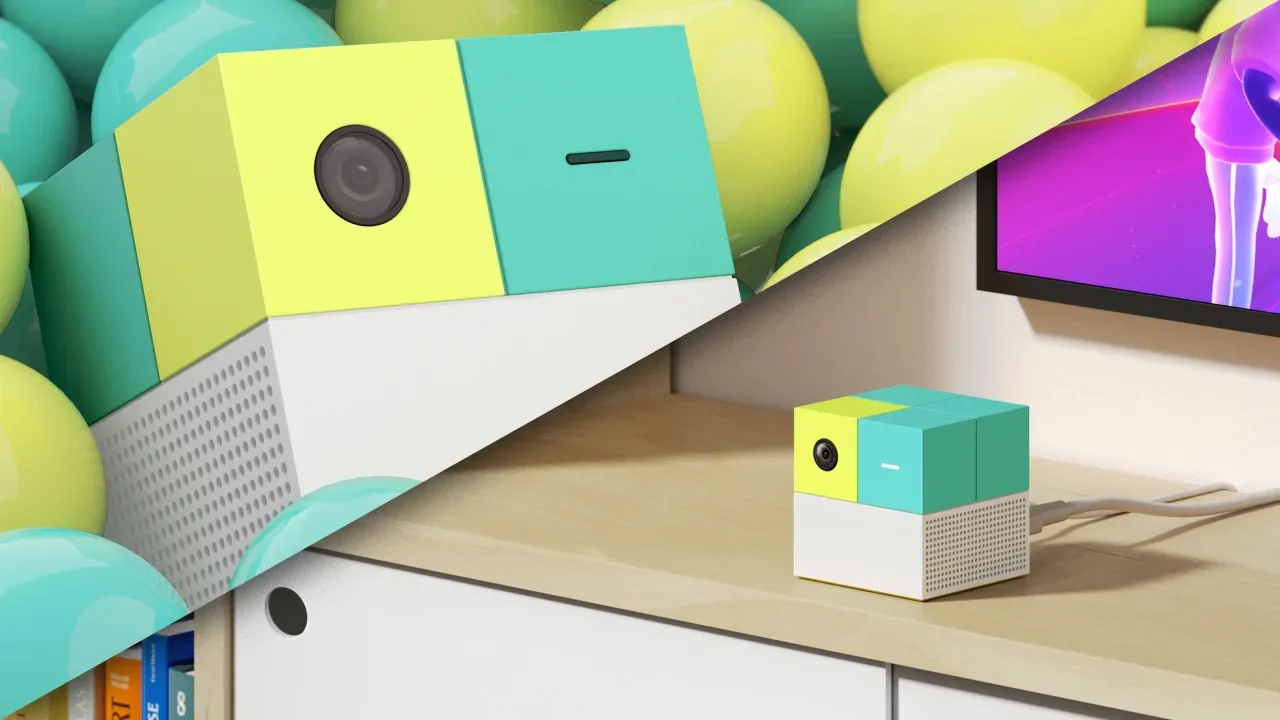
 Switch, PS5, and XBox might be the biggest names in video games, but David Lee and a group of entrepreneurial alums from companies like Apple, Google, Microsoft, and Meta are carving out a niche market with Nex, a new alternative. The company’s Nex Playground device has sold more than 200,000 units. Instead of buying individual games, families buy a subscription-based collection of 40-plus titles. Like the old Nintendo Wii, Nex focuses on family-friendly, movement-based games. The Nex device plugs into TVs for motion-controlled experiences. Instead of controllers, the device uses a built-in camera that enables you to play games by moving your hands and feet. With national retail expansion underway across 5,000 stores, Nex positions itself as a simpler alternative to pricier, fancier, thumb-based video games. Fast Company spoke with Lee, the founding CEO, about how Nex competes against industry giants and how the company develops distinct hardware and games. The conversation has been edited for length and clarity. How do you position Nex in relation to Nintendo and Xbox? We all have a focus on core customers. Nintendo went back to what they were doing—handheld gaming and Mario—their biggest franchises. Xbox users are gamers, people who got an Xbox to play games like Halo. When Microsoft was under pressure from PS4’s lower price, they unbundled Kinect and collapsed that system to compete. We come into this space without any of those existing customers. We decided from the ground up to serve motion gaming. The design of our device, the pricing, how we use one camera to track multiple people, moving sensors into software and AI—it’s all about keeping it affordable with a subscription service that takes care of the whole family. Why did you build a dedicated device after starting with mobile apps? Before we built Nex Playground, we were building motion games on phones. What we discovered is that when we create dedicated hardware instead, we have a much deeper relationship with customers. When there’s a device where the only thing it does is bring the family together to play active games, it shows big potential. When you use your TV for a motion-game experience, you pay much more attention to it than you would to a game on your phone. The experience is a lot better, and customers love it more. How are families using Nex in ways you didn’t expect? When we started searching for customers and building our Facebook community, which now has over 20,000 people, we discovered new use cases. We found that when kids come back from school, we have a half-hour where they just play. On weekends, they play when friends come over. We’ve also found that when kids are at school, parents want fitness experiences for themselves. Even grandparents derive benefits when they have something to do with their body. We’re defining what role we play for different people in the family, delivering benefits at different times of day, different days of the week, even different seasons of the year. In summer when kids are off school, we can occupy them and get them moving and learning. What’s your approach to developing games in a saturated market? We’re focusing on safety, privacy, and security first since we’re serving families. We have our first-party teams building games, but we also work with ten studio deals already, with seven games launched. We bring in partners whose games we like, and we share revenue with them. We want to keep our model simple—we have our subscription model and want to supply and delight users all year. We don’t want to open the system to many games that might be low quality. We’re curating a set of content and working with developers who are passionate about creating great things. Our business model is simple, honest, and sustainable—no ads, no in-app purchases. The moment you open to third parties, they think about different ways to make money. For families, we don’t want to overwhelm them—we just want to serve them really well. How do you keep up with hardware competition? We think about our hardware in a similar way to how Amazon thinks about the Kindle or Apple thinks about the iPad. Every year, we want to do something better to create perfect experiences. For example, we improved the remote control from 2023 to 2024. We learned that the joystick was a little hard for young kids to use—I saw my daughter struggling to press it—so we made it simpler. We’re always looking at what problems people face and how to improve. The hardware cycle is yearly, and we might be able to do something new each year. But we’re not thinking about something dramatically different—we have a pretty good long trajectory ahead. A lot of improvements actually come through software. With the same hardware, you get access to new technology we develop as detection technologies get better. We don’t want to force customers to buy new hardware to play something new. We think about compatibility and how not to fully obsolete customers. This is a device that can serve your family for years to come. Given how much attention is paid to Nintendo’s new Switch, how are people discovering Nex? According to our surveys, roughly 40% of customers hear about us from friends and families. The next-largest segment, about 20%, comes from our online ads. Another 13% first see us in retail stores. Currently, we’re in 700 Target stores, 100 Walmart locations, and 200 Best Buy stores. This year, we have a national retail expansion to over 5,000 stores. Amazon is also now recognizing us as a new gaming system category—if you look at Amazon video games, they put Nex Playground right next to PlayStation, Xbox, and Switch as top-level tabs, even though we’re way smaller than any of them. What’s your long-term vision for Nex? We want to keep kids active, bring families together, and even help keep elderly people active so they can stay independent. We want to tie your family together locally and remotely. We’re happy seeing more grandparents buying Nex for their grandkids and then saying “I want one too.” View the full article
-
Commuters in the New York City and New Jersey area are in for what is likely to be a weekend of increased congestion and more limited transit options after the engineers who run the New Jersey Transit rail system voted to go on strike. That strike is now in effect and could continue throughout the weekend—and potentially even longer. Here’s what you need to know about the NJ Transit strike. What’s happened? On Thursday, the Brotherhood of Locomotive Engineers and Trainmen (BLET) announced that its members who run the trains in the New Jersey Transit Corporation, better known as NJ Transit, were officially on strike. The strike came after the BLET and NJ Transit failed to reach a deal on a new contract for the approximately 450 engineers and trainees who run the railway and are represented by the union. The main issue centers around a disagreement on wage increases for the workers. News of the strike is no doubt a disappointment to the 100,000 NYC and NJ commuters who use the line daily, especially after both sides were reportedly “close” to a deal. Talks between both sides went on for 15 hours on Thursday and ended shortly before 10 p.m., reports CNN. The strike then officially began at 12:01 a.m., today, Friday, May 16. It is the first time union members working for New Jersey Transit have gone on strike in 42 years. The last time NJ Transit workers took to the picket lines was in 1983. What do the striking rail workers want? The BLET’s union members are striking because no acceptable deal was reached on wage increases for its members. In a notice announcing the strike, BLET says that its NJ Transit members have not received a raise for five years. The union also notes that NJ Transit engineers “make at least $10 less per hour” than the engineers for other passenger railroads that share the same train platforms as the ones used by NJ Transit. “NJ Transit has a half-billion dollars for a swanky new headquarters and $53 million for decorating the interior of that unnecessary building,” BLET National President Mark Wallace said in a prepared statement. “They gave away $20 million in revenue during a fare holiday last year. They have money for penthouse views and pet projects, just not for their front-line workers. Enough is enough. We will stay out until our members receive the fair pay that they deserve.” In addition to the strike now in effect, from 4 a.m. this morning BLET members began picketing at multiple locations, including NJ Transit’s Newark headquarters, New York’s Penn Station, and the Atlantic City Rail Terminal in Atlantic City. The union says that “despite the transit agency having the funds for a raise,” NJ Transit managers walked out of talks before 10 p.m. on Thursday. What does NJ Transit say? NJ Transit, for its part, has posted a fact sheet about the strike, which lays out six claims and what the transit agency says are the “facts” about the claims. NJ Transit says that it offered BLET members a “competitive wage and benefits package that all 14 other rail labor unions accepted in 2021.” It also says that under its offer, NJ Transit locomotive engineers would have seen their average total earnings rise from $135,000 per year now to $172,856 as of July 1, 2027. The transit agency says these wages are “competitive within the region” and higher than the wages Philadelphia’s SEPTA workers receive. It concedes that the wages are lower than those received by MTA (Metro-North Railroad and Long Island Rail Road) workers in New York, but it adds, “It isn’t reasonable to live and work in New Jersey, but demand to be paid like you live and work in New York.” How long could the strike last? That is impossible to tell at this point. In theory, NJ Transit and BLET could agree to return to the negotiating table at any time—although that’s unlikely to happen today. However, on Thursday, NJ Transit CEO Kris Kolluri said that both sides are currently scheduled to start negotiating again on Sunday. But just because negotiations are scheduled—or even begin—doesn’t mean the strike will be called off anytime soon. Indeed, if BLET would call off the strike, it may lessen the pressure on NJ Transit to meet their demands. CNN notes that when Southeastern Pennsylvania Transit Authority (SEPTA) workers went on strike in the 1980s, the strike lasted for 108 days. A strike of Metro-North workers lasted 42 days, and a strike of Long Island Railroad workers lasted 11 days. What should I do if I plan to use NJ Transit today? You should rethink your travel plans. NJ Transit has posted a notice warning of the “complete suspension” of services on its rail lines. The agency says it “strongly encourages all those who can work from home to do so and limit traveling on the NJ TRANSIT system to essential purposes only.” However, if you do need to commute, the agency says that it is “adding very limited capacity” to existing New York commuter routes on its bus services. The agency also says that from May 19, its regional Park & Ride service “will operate on a first come, first served basis.” Commuters who need to use NJ transit during the strike are strongely encouraged to check out the agency’s rail strike information page here. What if I’m seeing the Shakira or Beyoncé concerts? From this weekend, there are also two large music events planned in the area that NJ Transit normally serves. The first is the Shakira concert at MetLife Stadium in East Rutherford, New Jersey, which begins at 7:30 p.m. tonight, May 16. Then, Beyoncé is scheduled to perform at the same stadium for five nights between May 22 and May 29. MetLife Stadium has posted some travel options for concertgoers who are seeing the Shakira show tonight. The stadium points out that there will be no NJ Transit bus or rail service to the stadium tonight. It says that those coming to the concert from New York City may be able to use the Coach USA bus service, which it says will be “limited.” The venue also asks people who plan to arrive by car to please carpool and arrive early to help ease congestion. Will Congress step in? When it comes to transportation strikes, Congress does have the authority to act and compel workers to accept a deal and return to their jobs, notes CNN. The last time Congress did this was in December 2022 when it voted to force workers from the country’s four major freight railroads to accept a deal. However, CNN points out that Congress likely felt more compelled to step in at that time because the strike affected most of the country. The NJ Transit strike is a local affair, which means Congress may be more reluctant to interfere. View the full article

-
Key Takeaways Influencer Earnings: The richest Instagram influencers can earn between six to seven figures per sponsored post, showcasing the financial potential of influencer marketing. Engagement Importance: High engagement rates are crucial; they lead to better visibility and more lucrative sponsorships, benefiting both influencers and brands. Diverse Influencer Types: The landscape includes both celebrity and non-celebrity influencers, each offering unique opportunities for targeted marketing strategies. Strategic Brand Partnerships: Successful collaborations align with influencer audiences, enhancing authenticity and driving brand awareness through sponsored content and product placements. Content Creation: Effective influencers utilize engaging storytelling through formats like Instagram Stories and videos to resonate with their followers more than traditional advertising. Data-Driven Insights: Using social media analytics to track engagement and follower growth helps in refining strategies and maximizing the return on investment for influencer collaborations. Instagram has transformed from a simple photo-sharing app into a powerful platform where influencers reign supreme. With millions of followers and lucrative brand partnerships, some individuals have turned their online presence into a goldmine. You might be surprised to learn just how much these influencers earn, often raking in six or even seven figures for a single post. In this article, we’ll dive into the world of the richest Instagram influencers, exploring who they are and what makes their content so compelling. From fashion moguls to fitness gurus, these trendsetters not only shape the industry but also redefine what it means to be successful in the digital age. Get ready to discover the names and figures behind the glitz and glamour of Instagram’s elite. Overview of Richest Instagram Influencers Instagram influencers leverage their platforms to generate substantial income, making influencer marketing a powerful strategy for small businesses. Influencers often earn from six to seven figures per post, highlighting their influence across various industries. Their content creation focuses on engaging storytelling, connecting with audiences through visually appealing posts, videos, and Instagram Stories. These top influencers shape social media trends and enhance brand awareness through strategic brand partnerships. By successfully employing effective hashtags and leveraging social media analytics, they maintain high engagement rates, vital for effective social media campaigns. Their ability to foster community management and customer interaction creates an authentic connection with followers, which small businesses can emulate to grow their own online presence. Incorporating influencer partnerships into your social media marketing strategy can improve organic reach and boost social media engagement. By collaborating with the right influencers, you can enhance brand consistency, optimize content sharing, and utilize their audience targeting skills, thereby achieving a higher return on investment (ROI) for your campaigns. Stay attentive to social media tools that can monitor the effectiveness of these influencer collaborations. Track progress through social media analytics to ensure alignment with your brand voice and narrative. By understanding the landscape of the richest Instagram influencers, you can position your small business to not only navigate but thrive in the competitive world of social media. Top Earners in the Industry The richest Instagram influencers leverage their massive social media followings to generate significant income through partnerships and endorsements. Their success showcases the potential of influencer marketing for small businesses. Celebrity Influencers Celebrity influencers dominate the Instagram landscape. They maintain high engagement rates and millions of followers, making them valuable for brand partnerships. For instance, Cristiano Ronaldo attracts 651 million followers and earns between $2.5 million to $3 million per sponsored post. Utilize his brand power and visibility when strategizing your social media marketing. Kylie Jenner, with 394 million followers, generates nearly $2.3 million to $2.386 million per post. Her brands, Kylie Cosmetics and Kylie Skin, tap into beauty and fashion markets, demonstrating effective content creation and community management. Selena Gomez, boasting 421 million followers, earns about $2.5 million through paid partnerships. Her engagement rate is notable, with strategies that enhance brand awareness and storytelling through Rare Beauty. Celebrity influencers not only cultivate personal brands but also shape social media trends. You can learn from their multi-platform strategies to enhance your own online presence. Non-Celebrity Influencers Non-celebrity influencers also make significant income, often through niche markets. They typically engage with smaller, dedicated audiences, making them suitable for targeted campaigns. Examples include micro-influencers who focus on specific topics, from fitness to cooking. Fitness Influencers often share workout routines and meal plans, promoting wellness brands. They connect personally with their followers, driving customer interaction and engagement rates. Travel Influencers utilize stunning visuals and storytelling, collaborating with tourism boards and travel agencies. Their content showcases experiences, attracting social media followers who value authenticity and adventure. Non-celebrity influencers can enhance your social media strategy. Consider integrating their methods into your campaigns to build organic growth and brand consistency. Leveraging user-generated content and focused hashtags can further boost your organic reach across platforms like Instagram and TikTok. Factors Influencing Their Wealth Several elements contribute to the wealth of the richest Instagram influencers. These factors play a crucial role in maximizing their earnings and effectiveness on the platform. Engagement Rates Engagement rate significantly impacts influencer income. Higher engagement rates lead to better visibility and more lucrative sponsorships. Influencers with active followers generate more interactions through likes, comments, and shares on their posts. Small businesses benefit from partnering with influencers who maintain high engagement metrics. Such partnerships enhance brand awareness and attract new social media followers, driving organic growth for your brand. Brand Partnerships Brand partnerships are vital for influencers’ financial success. Successful collaborations often yield substantial revenue through sponsored content, product placements, and social media campaigns. Influencers carefully choose brands that align with their audience and maintain brand consistency. When you engage with influencers for marketing, ensure they embody your brand voice and values. This alignment fosters authenticity, appealing to their followers and enhancing customer interaction with your offerings. Utilizing influencer partnerships strategically can boost your small business’s online presence and improve social media ROI. Impact on Marketing Trends Richest Instagram influencers dramatically reshape marketing trends through their extensive reach and high engagement rates. These influencers create compelling content that resonates with their audiences, effectively driving brand awareness and fostering customer interaction. When you partner with such influencers, you tap into their ability to enhance your small business’s social media presence and boost organic reach. Influencer marketing poses significant advantages for social media campaigns. As you strategize, consider the impact these influencers have on consumer behavior. Their recommendations often lead to increased sales, as followers trust their endorsements. This trust translates to higher engagement rates, making your paid ads more effective when paired with influencer partnerships. Moreover, influencers excel in content creation, utilizing formats like Instagram stories and video content to captivate audiences. This style creates a dynamic environment that resonates more than traditional advertising methods. By harnessing their storytelling abilities and aligning with their brand voice, you create authentic connections with potential customers. Utilizing social media analytics helps in assessing the success of influencer partnerships. Metrics like engagement rates and follower growth provide insight into what works. Adjust your social media strategy based on data, and leverage tools that track performance across platforms like Facebook, Twitter, and TikTok. Tailoring your content calendar to incorporate influencer collaborations ensures consistent messaging and maximizes the impact of your marketing efforts. Working with the richest Instagram influencers creates valuable opportunities to elevate your small business’s brand awareness and drive meaningful connections with your audience. As you explore these partnerships, keep an eye on the latest social media trends to maintain a competitive edge in the ever-evolving landscape of social media marketing. Conclusion The landscape of Instagram influencers is ever-evolving and filled with opportunities for brands and businesses. By understanding the dynamics of the richest influencers you can leverage their reach and engagement to enhance your marketing strategies. Whether you choose to collaborate with celebrity influencers or tap into the authenticity of non-celebrity influencers, the potential for growth is immense. These influencers not only drive trends but also foster genuine connections with their audiences. Embracing influencer partnerships can significantly elevate your brand’s visibility and credibility in the crowded social media space. Stay informed about the latest trends and adapt your approach to make the most of this powerful marketing tool. Frequently Asked Questions What is the main focus of the article on Instagram influencers? The article explores the evolution of Instagram from a simple photo-sharing app to a platform driven by influencers earning significant income, detailing who the richest influencers are and how they impact various industries. How do influencers make money on Instagram? Influencers generate income primarily through sponsored posts, brand partnerships, and product placements, often earning six or seven figures for a single post due to their extensive reach and high engagement rates. Who are some of the richest Instagram influencers mentioned? The article highlights celebrity influencers like Cristiano Ronaldo, Kylie Jenner, and Selena Gomez, who lead in followers and earnings, demonstrating their brand power on the platform. What is the difference between celebrity and non-celebrity influencers? Celebrity influencers have millions of followers and high earnings per post, while non-celebrity influencers, such as micro-influencers, engage smaller, niche audiences, making them ideal for targeted marketing campaigns. How do engagement rates influence influencer earnings? Higher engagement rates increase visibility and lead to more lucrative sponsorship opportunities, helping both influencers and partnering businesses to achieve better marketing outcomes. Why is influencer marketing beneficial for small businesses? Partnering with influencers helps small businesses enhance brand awareness and foster genuine connections with their audience, leading to increased sales and improved returns on social media investments. What content formats do influencers use to engage audiences effectively? Influencers often utilize captivating formats like Instagram stories, video content, and visually appealing posts to gather audience attention and create a dynamic online presence. How can businesses leverage social media analytics in influencer partnerships? Utilizing social media analytics allows businesses to measure the success of influencer collaborations, adjust their marketing strategies, and maximize their engagement and ROI in influencer-driven campaigns. Image Via Envato This article, "Unveiling the Richest Instagram Influencers and Their Impact on Modern Marketing" was first published on Small Business Trends View the full article
-
Key Takeaways Influencer Earnings: The richest Instagram influencers can earn between six to seven figures per sponsored post, showcasing the financial potential of influencer marketing. Engagement Importance: High engagement rates are crucial; they lead to better visibility and more lucrative sponsorships, benefiting both influencers and brands. Diverse Influencer Types: The landscape includes both celebrity and non-celebrity influencers, each offering unique opportunities for targeted marketing strategies. Strategic Brand Partnerships: Successful collaborations align with influencer audiences, enhancing authenticity and driving brand awareness through sponsored content and product placements. Content Creation: Effective influencers utilize engaging storytelling through formats like Instagram Stories and videos to resonate with their followers more than traditional advertising. Data-Driven Insights: Using social media analytics to track engagement and follower growth helps in refining strategies and maximizing the return on investment for influencer collaborations. Instagram has transformed from a simple photo-sharing app into a powerful platform where influencers reign supreme. With millions of followers and lucrative brand partnerships, some individuals have turned their online presence into a goldmine. You might be surprised to learn just how much these influencers earn, often raking in six or even seven figures for a single post. In this article, we’ll dive into the world of the richest Instagram influencers, exploring who they are and what makes their content so compelling. From fashion moguls to fitness gurus, these trendsetters not only shape the industry but also redefine what it means to be successful in the digital age. Get ready to discover the names and figures behind the glitz and glamour of Instagram’s elite. Overview of Richest Instagram Influencers Instagram influencers leverage their platforms to generate substantial income, making influencer marketing a powerful strategy for small businesses. Influencers often earn from six to seven figures per post, highlighting their influence across various industries. Their content creation focuses on engaging storytelling, connecting with audiences through visually appealing posts, videos, and Instagram Stories. These top influencers shape social media trends and enhance brand awareness through strategic brand partnerships. By successfully employing effective hashtags and leveraging social media analytics, they maintain high engagement rates, vital for effective social media campaigns. Their ability to foster community management and customer interaction creates an authentic connection with followers, which small businesses can emulate to grow their own online presence. Incorporating influencer partnerships into your social media marketing strategy can improve organic reach and boost social media engagement. By collaborating with the right influencers, you can enhance brand consistency, optimize content sharing, and utilize their audience targeting skills, thereby achieving a higher return on investment (ROI) for your campaigns. Stay attentive to social media tools that can monitor the effectiveness of these influencer collaborations. Track progress through social media analytics to ensure alignment with your brand voice and narrative. By understanding the landscape of the richest Instagram influencers, you can position your small business to not only navigate but thrive in the competitive world of social media. Top Earners in the Industry The richest Instagram influencers leverage their massive social media followings to generate significant income through partnerships and endorsements. Their success showcases the potential of influencer marketing for small businesses. Celebrity Influencers Celebrity influencers dominate the Instagram landscape. They maintain high engagement rates and millions of followers, making them valuable for brand partnerships. For instance, Cristiano Ronaldo attracts 651 million followers and earns between $2.5 million to $3 million per sponsored post. Utilize his brand power and visibility when strategizing your social media marketing. Kylie Jenner, with 394 million followers, generates nearly $2.3 million to $2.386 million per post. Her brands, Kylie Cosmetics and Kylie Skin, tap into beauty and fashion markets, demonstrating effective content creation and community management. Selena Gomez, boasting 421 million followers, earns about $2.5 million through paid partnerships. Her engagement rate is notable, with strategies that enhance brand awareness and storytelling through Rare Beauty. Celebrity influencers not only cultivate personal brands but also shape social media trends. You can learn from their multi-platform strategies to enhance your own online presence. Non-Celebrity Influencers Non-celebrity influencers also make significant income, often through niche markets. They typically engage with smaller, dedicated audiences, making them suitable for targeted campaigns. Examples include micro-influencers who focus on specific topics, from fitness to cooking. Fitness Influencers often share workout routines and meal plans, promoting wellness brands. They connect personally with their followers, driving customer interaction and engagement rates. Travel Influencers utilize stunning visuals and storytelling, collaborating with tourism boards and travel agencies. Their content showcases experiences, attracting social media followers who value authenticity and adventure. Non-celebrity influencers can enhance your social media strategy. Consider integrating their methods into your campaigns to build organic growth and brand consistency. Leveraging user-generated content and focused hashtags can further boost your organic reach across platforms like Instagram and TikTok. Factors Influencing Their Wealth Several elements contribute to the wealth of the richest Instagram influencers. These factors play a crucial role in maximizing their earnings and effectiveness on the platform. Engagement Rates Engagement rate significantly impacts influencer income. Higher engagement rates lead to better visibility and more lucrative sponsorships. Influencers with active followers generate more interactions through likes, comments, and shares on their posts. Small businesses benefit from partnering with influencers who maintain high engagement metrics. Such partnerships enhance brand awareness and attract new social media followers, driving organic growth for your brand. Brand Partnerships Brand partnerships are vital for influencers’ financial success. Successful collaborations often yield substantial revenue through sponsored content, product placements, and social media campaigns. Influencers carefully choose brands that align with their audience and maintain brand consistency. When you engage with influencers for marketing, ensure they embody your brand voice and values. This alignment fosters authenticity, appealing to their followers and enhancing customer interaction with your offerings. Utilizing influencer partnerships strategically can boost your small business’s online presence and improve social media ROI. Impact on Marketing Trends Richest Instagram influencers dramatically reshape marketing trends through their extensive reach and high engagement rates. These influencers create compelling content that resonates with their audiences, effectively driving brand awareness and fostering customer interaction. When you partner with such influencers, you tap into their ability to enhance your small business’s social media presence and boost organic reach. Influencer marketing poses significant advantages for social media campaigns. As you strategize, consider the impact these influencers have on consumer behavior. Their recommendations often lead to increased sales, as followers trust their endorsements. This trust translates to higher engagement rates, making your paid ads more effective when paired with influencer partnerships. Moreover, influencers excel in content creation, utilizing formats like Instagram stories and video content to captivate audiences. This style creates a dynamic environment that resonates more than traditional advertising methods. By harnessing their storytelling abilities and aligning with their brand voice, you create authentic connections with potential customers. Utilizing social media analytics helps in assessing the success of influencer partnerships. Metrics like engagement rates and follower growth provide insight into what works. Adjust your social media strategy based on data, and leverage tools that track performance across platforms like Facebook, Twitter, and TikTok. Tailoring your content calendar to incorporate influencer collaborations ensures consistent messaging and maximizes the impact of your marketing efforts. Working with the richest Instagram influencers creates valuable opportunities to elevate your small business’s brand awareness and drive meaningful connections with your audience. As you explore these partnerships, keep an eye on the latest social media trends to maintain a competitive edge in the ever-evolving landscape of social media marketing. Conclusion The landscape of Instagram influencers is ever-evolving and filled with opportunities for brands and businesses. By understanding the dynamics of the richest influencers you can leverage their reach and engagement to enhance your marketing strategies. Whether you choose to collaborate with celebrity influencers or tap into the authenticity of non-celebrity influencers, the potential for growth is immense. These influencers not only drive trends but also foster genuine connections with their audiences. Embracing influencer partnerships can significantly elevate your brand’s visibility and credibility in the crowded social media space. Stay informed about the latest trends and adapt your approach to make the most of this powerful marketing tool. Frequently Asked Questions What is the main focus of the article on Instagram influencers? The article explores the evolution of Instagram from a simple photo-sharing app to a platform driven by influencers earning significant income, detailing who the richest influencers are and how they impact various industries. How do influencers make money on Instagram? Influencers generate income primarily through sponsored posts, brand partnerships, and product placements, often earning six or seven figures for a single post due to their extensive reach and high engagement rates. Who are some of the richest Instagram influencers mentioned? The article highlights celebrity influencers like Cristiano Ronaldo, Kylie Jenner, and Selena Gomez, who lead in followers and earnings, demonstrating their brand power on the platform. What is the difference between celebrity and non-celebrity influencers? Celebrity influencers have millions of followers and high earnings per post, while non-celebrity influencers, such as micro-influencers, engage smaller, niche audiences, making them ideal for targeted marketing campaigns. How do engagement rates influence influencer earnings? Higher engagement rates increase visibility and lead to more lucrative sponsorship opportunities, helping both influencers and partnering businesses to achieve better marketing outcomes. Why is influencer marketing beneficial for small businesses? Partnering with influencers helps small businesses enhance brand awareness and foster genuine connections with their audience, leading to increased sales and improved returns on social media investments. What content formats do influencers use to engage audiences effectively? Influencers often utilize captivating formats like Instagram stories, video content, and visually appealing posts to gather audience attention and create a dynamic online presence. How can businesses leverage social media analytics in influencer partnerships? Utilizing social media analytics allows businesses to measure the success of influencer collaborations, adjust their marketing strategies, and maximize their engagement and ROI in influencer-driven campaigns. Image Via Envato This article, "Unveiling the Richest Instagram Influencers and Their Impact on Modern Marketing" was first published on Small Business Trends View the full article
-
We may earn a commission from links on this page. Welcome to “Cookbook of the Week.” This is a series where I highlight cookbooks that are unique, easy to use, or just special to me. While finding a particular recipe online serves a quick purpose, flipping through a truly excellent cookbook has a magic all its own. Baking bread isn't for everyone, and I get it: Spending hours (or days) making one “simple” staple item that you could easily purchase at the store for a few dollars is arguably absurd. I fully accept that I may never be able to bring folks who feel this way over to the other side, and that’s fine. But what about the home cooks who are intrigued, rather than bothered, by the idea of bread baking? Despite generations-worth of recipes and tips, yeast-raised loaves are notoriously finicky, and nothing will defeat your spirit quite like tossing your third dense and doughy sourdough attempt into the compost bin. That’s why I chose to spotlight Bread Baking for Beginners this week. This cookbook creates a safe space where you can build the confidence and know-how you'll need for your illustrious future as a bread baker. A bit about the bookAs you can tell from the title, Bread Baking for Beginners has clear intentions. Author Bonnie Ohara has been the owner and baker of Alchemy Bread since 2014, and her experience of slingin' dough comes through on every page. She has a kind and teacherly way of instructing you on bread baking in this cookbook, and frankly, it’s a breath of fresh air in contrast to the aloof, know-it-all approach you’ll find all over the internet. This cookbook has a somewhat curriculum-style progression, but without ever feeling like a textbook. It’s actually quite approachable: Starting with terminology and equipment, and then moving from simple no-knead breads over to kneaded breads, and proceeding to enriched breads and sourdough starters, Ohara teaches you how to walk before you run. Credit: Allie Chanthorn Reinmann A great cookbook for the wannabe bread-headBeing a beginner at something is a vulnerable state. A messed up loaf of bread is akin to rejection, and a lot of people can’t handle that feeling. That’s why it’s important to have a good teacher. Throughout the pages of Bread Baking for Beginners, Ohara is there to cheer you on, and I fully believe that kind of supportive encouragement is what can keep a new baker coming back to the kitchen after a failed loaf or two. Ohara’s encouragement is never exaggerated or disingenuous. She has her own way of letting you know that perfection isn’t the goal. A little wiggle to your ficelle? It’s character! Your dough hasn’t risen enough? Don’t worry, it’s totally normal to adjust the proofing time on the fly. Every recipe is easy to start, with a short headnote and even shorter ingredient list, and the instructions are always clear. I appreciate that each recipe includes how to shape and how to check for proofing, because that can look and feel different depending on the type of bread you’re making. And what’s a lesson without a Q&A session? Common problems and helpful FAQs sections appear throughout. You’ll get likely answers for why your dough was too dense and why it exploded out of the bottom instead of the score mark. She'll offer suggestions on what to do if your loaf is seemingly ruined. Of course this is helpful for next time, but it also normalizes the act of messing up: It's all a part of learning. But unlike in math class, you can snack on your mistakes. The bread I made this weekI don’t normally go for no-knead breads, but I think they are the most welcoming recipes for new bread bakers. Clearly Ohara agrees, because they’re in the first chapter. From her offerings, I made the Master Recipe for No-Knead Breads. As may be expected, it is a classic four-ingredient lean bread. You can’t get simpler than flour, water, salt, and yeast. I’m not new to bread baking (you can peep my sourdough boule recipe here), so I was a little surprised to see all-purpose flour used. Bread flour is usually the go-to for its higher gluten content, which leads to better structure and increased elasticity. Credit: Allie Chanthorn Reinmann I flipped to the front to check out the author’s thoughts on the ingredient choice and she makes it clear that not only has she had success with regular all-purpose flour, but that it’s more accessible for most home cooks. I respect this choice. If a person can be successful with fewer obstacles, then they can make the switch on their own if and when they choose. However, a kitchen scale is also required (all of the measurements are in grams with no volume option), so there is still some expectation you'll acquire the right tools before getting started. (Personally, I'd switch to bread flour for this type of recipe.) Her no-knead bread is as simple as promised. I weighed my ingredients and mashed them all up with a wooden spoon as thoroughly as I could without it qualifying as kneading. As long as you aren't using expired yeast, I can’t see this bread failing to come to life. Ohara is very clear about ambient temperatures and reminds you of the ideal conditions for the best rise. Even with that advice, and a decade of bread baking under my belt, I managed to overproof my no-knead dough, but I’m not mad about it. The loaf came out light and evenly aerated. It strikes me as a good sandwich bread. And it's Bread Baking 101 that it takes a few trials to learn the personality of a new bread recipe. I’ll try it again soon enough. How to buy itI normally grab the hardcover for cookbooks, but I actually went with the softcover this week. It’s a great price, and since it’s more of a learning cookbook than a display piece, I figure I won’t feel as bad if the pages get flour, oil, or water marks on them. If you haven’t been lately, take a walk to your nearest bookstore and see if you can find it on the shelves. Bread Baking for Beginners: The Essential Guide to Baking Kneaded Breads, No-Knead Breads, and Enriched Breads $9.99 at Amazon /images/amazon-prime.svg $19.99 Save $10.00 Shop Now Shop Now $9.99 at Amazon /images/amazon-prime.svg $19.99 Save $10.00 View the full article
-
Roman Lavrynovych has been charged with three counts of arsonView the full article
-
Here is a recap of what happened in the search forums today, through the eyes of the Search Engine Roundtable and other search forums on the web. Google confirmed ads with AI Overviews make as much as ads without AI Overviews on the page...View the full article
-
This week, we covered, you guessed it, more Google search ranking volatility. Google also said they are rethinking its search stack from the ground up because of LLMs. Google is testing AI Overviews in more regions and languages prior to Google I/O/ Google is testing AI Mode buttons throughout Google...View the full article
-
Your video strategy isn’t working unless it’s search-friendly. Get real tactics to boost visibility where it matters. The post The Intersection Of Video SEO And Social Media: Tactics To Win appeared first on Search Engine Journal. View the full article
-
Sean Grzebin discusses his plans to leverage JPMorgan Chase's massive consumer audience to pick up mortgage market share. View the full article
-
Public relations (PR) is no longer just a supporting tactic, it’s becoming a core strategy for brands looking to stay visible in the age of AI search. AI-powered search engines increasingly rely on brand mentions, reputation, and authority signals pulled from across the web – areas where PR excels. In this new landscape, the question isn’t whether PR matters to search – it’s how much it now leads the charge. AI is changing human content discovery habits The rise of AI-powered search engines is radically changing how people discover information online. Traditional “blue links” on Google’s search results pages (SERPs) are being displaced by: AI-generated summaries like Google’s AI Overviews. Conversational interfaces like ChatGPT and Claude. Standalone AI search platforms like Perplexity AI and Bing Copilot. ChatGPT alone has seen impressive growth, doubling its users in the past six months and reaching 400 million weekly active users by February 2025. The product’s web search capabilities are hailed as a killer feature. Google is also no longer the search engine it used to be. It’s adopting AI search, in the form of AI Overviews and AI Mode. AI Overviews appear on billions of searches per day, so clearly, people are increasingly relying on conversational answers rather than sifting through multiple search results. Meanwhile, the “zero-click” phenomenon – where users find their answers without clicking on a website – is growing, further diminishing the value of traditional organic listings. Zero-click searches now account for some 60% of all Google searches, per a recent SparkToro study. Traditional SEO is about driving organic search referral traffic to your website. Optimizing for AI search is about surfacing your brand name in the context of answers and summaries. On the other hand, people do still click through from AI answers to websites. Media sources that appear in these overviews can enjoy more clicks, while some research shows that sources that don’t show up see declining performance. For example: Transactional queries: Web pages featured in AI Overviews receive 3.2 times more clicks than those in the traditional “blue link” results below. Informational queries: Pages included in AI Overviews get 1.5 times more clicks than those that don’t appear. Source: “Exploring the Impact of AIOs on Web Traffic,” Terakeet LLMs surface content very differently from traditional web search. AI search prioritizes entities (like brands and people), reputation, and authority signals gathered from across the web, alongside traditional SEO factors like backlinks and content relevance. This means that brands must optimize not just for keywords, but for contextual reputation and entity prominence. On the other hand, there is reason to believe that LLMs could be drawing information from SERPs. Up to 75% of the links surfaced in Google’s AI Overviews come from pages that already rank in the top 12 traditional organic search results, a 2024 study found. This shows a heavy reliance on established authority while introducing greater emphasis on entity recognition in Google’s AI algorithms. Even when AI models look beyond high-ranked SEO material, they are likely to turn to the same sites that traditional search engines view as authoritative. The overlap is nowhere near 100%, but it’s high enough to inform your earned media strategy. The sources that AI search engines prioritize typically include: Timely and authoritative news websites. Reputable industry publications. Knowledge platforms. Discussion forums. These are the types of media properties that PR firms have close relationships with. What AI search means for the role of PR Historically, PR complemented SEO by earning high-value, organic backlinks, securing brand mentions, and building credibility through media placements. Coverage in reputable outlets helped drive organic traffic and strengthen a site’s domain authority, influencing Google’s ranking factors. Today, classic PR tactics are being reimagined for the AI era. PR-driven mentions in high-authority media now influence human readers and inform AI training models. Fractl’s Kelsey Libert observes that: While “earning backlinks from high-authority sites was the golden ticket to building domain authority, trust signals, and rankings,” that’s not necessarily the case any more. “LLMs don’t ‘rank’ content the same way Google does. They don’t crawl and index live web pages. They generate responses based on pre-trained data, considering word frequency, contextual relevance, and surrounding content,” she adds. While AI search relies heavily on training data, some models also draw on real-time web data, and new tech like RAG-integrated AI agents may also soon change these dynamics. Many leading AI search solutions are built more directly on data from existing search engines (such as Google’s AI Overviews). Others are more independent (such as Perplexity AI, which prioritizes high-quality, frequently searched topics based on user behavior). “PR pros are perfectly positioned to help brands become discoverable through AI,” Orbit Media’s Andy Crestodina explains. “The goal is a large, visible digital footprint, but with AI, it’s more about providing rich, descriptive content that the AI can understand and recommend. It’s less about traditional links and more about ensuring your brand and expertise are well-represented in text.” This shift demands a recalibration of PR goals. It’s not enough to land a link or even a mention – the content must associate your brand with key topics and attributes in ways AI can easily ingest, understand, and reference. Dig deeper: Your 2025 playbook for AI-powered cross-channel brand visibility Get the newsletter search marketers rely on. Business email address Sign me up! Processing... See terms. PR mentions and authority signals for AI AI systems are hungry for high-quality, context-rich signals when generating answers. Brand mentions in trusted publications are now critical to building topical authority and entity recognition. About 61% of the signals that inform AI’s understanding of brand reputation originate from editorial media sources, recent analysis from Hard Numbers concludes. Source: Reputation in the Age of AI, Hard Numbers Consistency also matters to cement your brand association. If your brand steadily appears in the same contextual topics, such as creativity, reliability, accessibility, or innovation, the AI will learn to connect it with those brand values. In a similar vein, research by Kevin Indig indicates that brand search volume correlates strongly with visibility in AI chatbot searches. This points to the importance of using PR to build buzz around your brand name, as opposed to your product category’s keyword clusters. Source: What content works well in LLMs?, Kevin Indig This also reinforces the argument that frequent mentions are vital for shaping the ways that AI perceives your brand. Influential mentions have outsized importance, making it crucial to choose your PR targets wisely, and it’s worth it to stay active in conversations on trusted platforms. Specific factors contributing to entity authority in AI include: Trustworthiness of the mentioning source: Mentions in trade publications and local news outlets carry more weight than brand blogs. Contextual alignment: Mentions must consistently associate the brand with specific expertise or values. Structured data support: Brands backed by knowledge panels, Wikidata entries, and schema.org markup are better recognized by AI systems. Because AI search blends traditional ranking signals with newer, entity-based reasoning, strategic PR placements directly influence how AI “understands” and “recommends” brands. In the months ahead, we’re likely to see PR agencies (or hybrid PR-SEO agencies) release case studies demonstrating how they boosted a client’s visibility in AI answers thanks to earned media mentions. For now, we can chew on a report from Semrush that identified a leaderboard of websites currently enjoying more traffic referrals from ChatGPT than from Google blue links. These domains span industries and mainstream recognition, suggesting that their earned media strategies have yielded these results. For example, a software product for insurance appraisers has steadily seen around 100 backlinks pointing to its domain over the past two years, according to Ahrefs. The company has secured far more media mentions in the same time period, per Muck Rack Trends. How marketers can adapt to this new reality To future-proof your search visibility, marketers and SEOs must think differently. Here’s how to integrate PR into your AI search strategy effectively: Collaborate closely with PR teams. SEO and PR can no longer operate in silos. Align on target topics, audiences, and messaging. Prioritize high-quality mentions. Target media outlets and influencers that are seen as authoritative by both humans and AI engines. Build strong topical authority. Consistently secure coverage around core topics you want to own in AI search results. Be quotable. Craft unique insights, data points, or provocative quotes that journalists and bloggers want to cite. Focus on entity optimization. Ensure your brand is well-represented in structured data, Wikipedia, Google’s knowledge graph, and other trusted databases. Monitor your brand mentions. Leading brand monitoring tools can help you track how and where your brand is referenced, often yielding ideas for more coverage. There are also some emerging solutions for tracking AI answer visibility trends. Measure differently. Watch for upticks in branded search volume, direct traffic, and mentions in AI summaries. These are the new KPIs for search success. Dig deeper: How to optimize your 2025 content strategy for AI-powered SERPs and LLMs PR is the future of search visibility AI search is reshaping the rules of discovery, elevating brand reputation, mentions, and authority over traditional SEO tactics. In this new environment, PR has shifted from being a supporting act to a starring role in digital marketing strategies. Brands that invest today in strategic, AI-savvy PR – earning influential mentions, building consistent topical authority, and proactively shaping their digital footprints across domains – will be the ones leading tomorrow’s search landscape. The future of search isn’t just about links and keywords. It’s about being talked about accurately, contextually, and authoritatively, in the right places, and by the right voices. In the age of AI, visibility begins with reputation. If you’re not being mentioned, you’re not being found. View the full article
-
Last month we shared the spam efforts the Google Maps team announced - but did you know that in 2024 Google had almost one billion reviews published within Google Maps? That is 999 million reviews, 752 million photos and videos and 94 million place edits published just in 2024.View the full article
-
Drop is most acute among Labour voters in a sign that PM’s attempts to woo Reform supporters may be backfiringView the full article
-
Apple announced this week that it partnered with MICHELIN Guide; The Infatuation and Golf Digest to provide "insights, ratings, and reviews from expert sources" within Apple Maps. View the full article
-
Robby Stein, VP of Product at Google Search, confirmed Google is working on making it easier to share AI Overviews within Google Search and AI Mode responses.View the full article
-
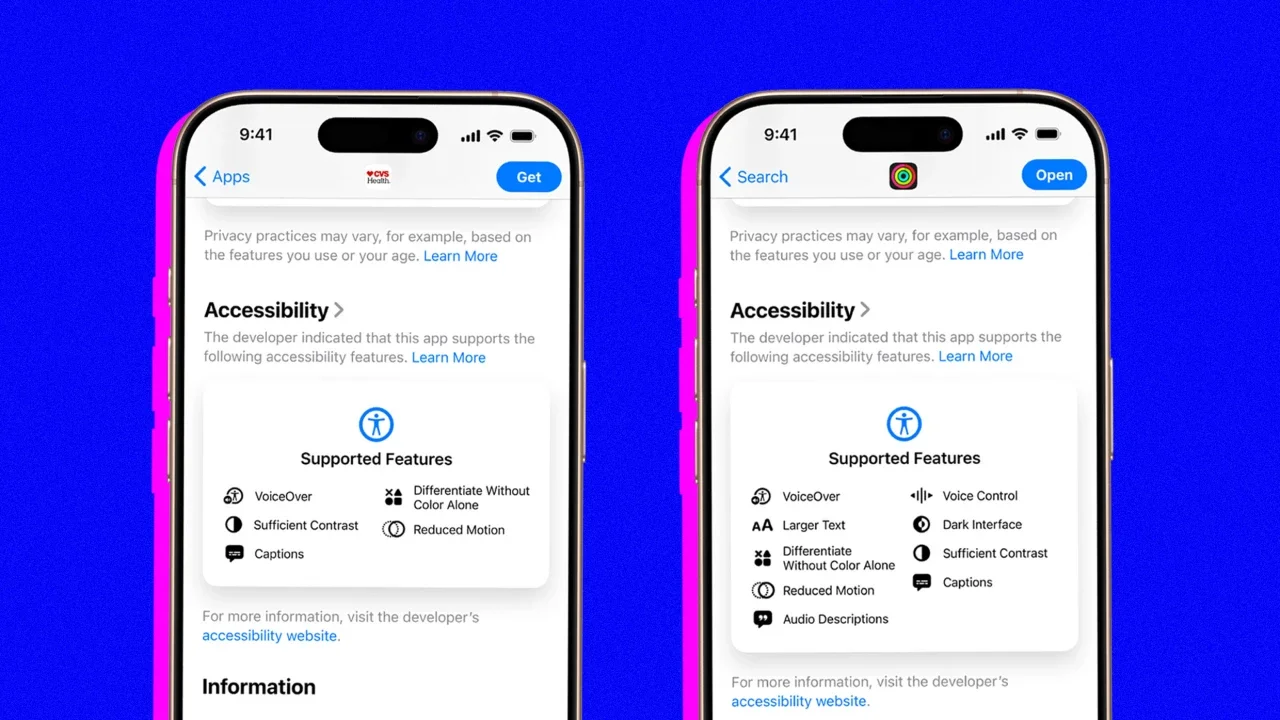
Cory Joseph has been blind since birth. So he’s among the people Apple aims to serve with an addition to its App Store called “Accessibility Nutrition Labels,” one of a raft of features the company announced earlier this week to mark Global Accessibility Awareness Day. Once the labels go live later this year, each app’s listing will detail the accessibility features it supports, such as the VoiceOver screen reader, voice input, options to adjust text size and screen contrast, and captioned audio. These enabling technologies can be the difference between an app being essential and unusable: “Having this level of transparency from the App Store is huge,” says Joseph. He isn’t just one of the users who will benefit from that information, though. As a principal accessibility solutions architect at CVS Health, Joseph is in the business of making sure software works for everybody. Given his employer’s scale—it’s the world’s second-largest healthcare company by revenue and reaches 100 million people a day—it’s a job with the potential for deep real-world impact. When using CVS’s apps, “everyone’s trying to find the best care, and we want to make sure that’s barrier-free for everyone,” explains Joseph. The 6-year-old team he’s on has been responsible for achievements that go well beyond taking advantage of the core accessibility features offered by Apple and other platform providers. In 2020, for instance, the company introduced a CVS Pharmacy app feature called Spoken Rx—“a baby of mine,” Joseph says. Special radio-frequency identification (RFID) labels on prescription containers enable it to read aloud vital information such as dosage instructions. CVS Health has also made some of its investments in accessibility freely available to other developers by open-sourcing them, including iOS and Android code, an automated system for testing website usability, and tools for annotating web designs in Figma. As a field, accessibility has come a long way since Apple first dedicated a team to it, initially known as the Office of Special Education. Over 40 years, the company has built a wealth of functionality into its products to facilitate their use by people with disabilities, including the technologies that make the iPhone useful even if you can’t see its touchscreen interface. Some of its recent advances, such as on-device generation of custom synthetic voices, would have been unimaginable just a few years ago. This week’s announcements even include support for brain-computer interfaces. By contrast, there’s nothing gee-whizzy about the Accessibility Nutrition Labels themselves. They just summarize the features that a given app has enabled. But by doing that in such a straightforward, prominent way, they’ll not only aid millions of users but also give some glory to the software makers who take accessible design seriously. Rather than be embarrassed by listings that make their lack of effort obvious, developers who don’t yet have much to brag about might finally get with the program. Joseph hopes that the labels’ associations are only positive. “It’s easy to think about this sort of thing as a badge of shame, and I think that’s not the right way to think about this,” he told me. “This is an opportunity for independent developers, large organizations, and everyone in between to highlight the good work they do.” Even though Joseph works for a company that has dedicated significant mindshare and money to that good work, he’s up front about the obstacles to rapid progress that large companies face, even when they have all the right intentions. “I would be lying if I said that there aren’t challenges,” he told me. “We’re a gigantic organization. There are challenges in every gigantic organization. Of course, we balance all of our work and plan everything out as best as we can, and we deliver the most successful experience that we can across our applications.” The good news, he adds, is that CVS Health-size resources aren’t necessary to make software accessible. “Realistically, it’s easier for smaller developers,” he says. “They can move more quickly, they can update their code faster, and they can adapt to and take in their user feedback in real time and make those changes by engaging directly. For independent and smaller developers, this shouldn’t be a burden.” I find that take heartening. And if Joseph is right that app creators don’t have to be humongous to get inclusive design right, Accessibility Nutrition Labels will soon prove it. You’ve been reading Plugged In, Fast Company’s weekly tech newsletter from me, global technology editor Harry McCracken. If a friend or colleague forwarded this edition to you—or if you’re reading it on FastCompany.com—you can check out previous issues and sign up to get it yourself every Friday morning. I love hearing from you: Ping me at hmccracken@fastcompany.com with your feedback and ideas for future newsletters. I’m also on Bluesky, Mastodon, and Threads, and you can follow Plugged In on Flipboard. More top tech stories from Fast Company Donald The President says he’s our ‘crypto president,’ but he’s tanking its best shot at adoption The president’s deep involvement in the crypto industry is raising red flags in Washington, leading to the collapse of a key stablecoin bill. Read More → AI is printing the rocket engine that could beat SpaceX at its own game Leap 71 is developing AI to build rocket engines faster and cheaper than ever before. Read More → Couples are saying ‘I do’ in ‘Minecraft’ as virtual weddings become more popular More couples are tying the knot in digital worlds, saving money and celebrating love in the places they met online. Read More → Apple teams up with a brain-computer startup to turn thoughts into device control The tech giant is working with Synchron to develop neural interfaces that let users control Apple devices with their brains. Read More → Meta is building a new data center in Louisiana—and this Senate committee wants to know why it’s being powered by gas (exclusive) The local utility says Meta’s AI data center requires three new natural gas plants. The Senate Environment and Public Works Committee is asking how this fits with Meta’s climate goals. Read More → These 5 free AI-powered Chrome extensions make Gmail so much better Significantly improve your Gmail experience without breaking the bank. Read More→ View the full article
-
Shamima Begum made grave mistakes. But she is our responsibility and no one else’sView the full article
-
Danish maker of obesity drugs says that new leadership is neededView the full article
-
Microsoft is testing shading the site names, the brand names, of retailers in the Bing Shopping search results. So the name Amazon is in a blue shaded background color as opposed to just saying Amazon.com.View the full article
-
It has been an odd few weeks for generative AI systems, with ChatGPT suddenly turning sycophantic, and Grok, xAI’s chatbot, becoming obsessed with South Africa. Fast Company spoke to Steven Adler, a former research scientist for OpenAI who until November 2024 led safety-related research and programs for first-time product launches and more-speculative long-term AI systems about both—and what he thinks might have gone wrong. The interview has been edited for length and clarity. What do you make of these two incidents in recent weeks—ChatGPT’s sudden sycophancy and Grok’s South Africa obsession—of AI models going haywire? The high-level thing I make of it is that AI companies are still really struggling with getting AI systems to behave how they want, and that there is a wide gap between the ways that people try to go about this today—whether it’s to give a really precise instruction in the system prompt or feed a model training data or fine-tuning data that you think surely demonstrate the behavior you want there—and reliably getting models to do the things you want and to not do the things you want to avoid. Can they ever get to that point of certainty? I’m not sure. There are some methods that I feel optimistic about—if companies took their time and were not under pressure to really speed through testing. One idea is this paradigm called control, as opposed to alignment. So the idea being, even if your AI “wants” different things than you want, or has different goals than you want, maybe you can recognize that somehow and just stop it from taking certain actions or saying or doing certain things. But that paradigm is not widely adopted at the moment, and so at the moment, I’m pretty pessimistic. What’s stopping it being adopted? Companies are competing on a bunch of dimensions, including user experience, and people want responses faster. There’s the gratifying thing of seeing the AI start to compose its response right away. There’s some real user cost of safety mitigations that go against that. Another aspect is, I’ve written a piece about why it’s so important for AI companies to be really careful about the ways that their leading AI systems are used within the company. If you have engineers using the latest GPT model to write code to improve the company’s security, if a model turns out to be misaligned and wants to break out of the company or do some other thing that undermines security, it now has pretty direct access. So part of the issue today is AI companies, even though they’re using AI in all these sensitive ways, haven’t invested in actually monitoring and understanding how their own employees are using these AI systems, because it adds more friction to their researchers being able to use them for other productive uses. I guess we’ve seen a lower-stakes version of that with Anthropic [where a data scientist working for the company used AI to support their evidence in a court case, which included a hallucinatory reference to an academic article]. I obviously don’t know the specifics. It’s surprising to me that an AI expert would submit testimony or evidence that included hallucinated court cases without having checked it. It isn’t surprising to me that an AI system would hallucinate things like that. These problems are definitely far from solved, which I think points to a reason that it’s important to check them very carefully. You wrote a multi-thousand-word piece on ChatGPT’s sycophancy and what happened. What did happen? I would separate what went wrong initially versus what I found in terms of what still is going wrong. Initially, it seems that OpenAI started using new signals for what direction to push its AI into—or broadly, when users had given the chatbot a thumbs-up, they used this data to make the chatbot behave more in that direction, and it was penalized for thumb-down. And it happens to be that some people really like flattery. In small doses, that’s fine enough. But in aggregate this produced an initial chatbot that was really inclined to blow smoke. The issue with how it became deployed is that OpenAI’s governance around what passes, what evaluations it runs, is not good enough. And in this case, even though they had a goal for their models to not be sycophantic—this is written in the company’s foremost documentation about how their models should behave—they did not actually have any tests for this. What I then found is that even this version that is fixed still behaves in all sorts of weird, unexpected ways. Sometimes it still has these behavioral issues. This is what’s been called sycophancy. Other times it’s now extremely contrarian. It’s gone the other way. What I make of this is it’s really hard to predict what an AI system is going to do. And so for me, the lesson is how important it is to do careful, thorough empirical testing. And what about the Grok incident? The type of thing I would want to understand to assess that is what sources of user feedback Grok collects, and how, if at all, those are used as part of the training process. And in particular, in the case of the South African white-genocide-type statements, are these being put forth by users and the model is agreeing with them? Or to what extent is the model blurting them out on its own, without having been touched? It seems these small changes can escalate and amplify. I think the problems today are real and important. I do think they are going to get even harder as AI starts to get used in more and more important domains. So, you know, it’s troubling. If you read the accounts of people having their delusions reinforced by this version of ChatGPT, those are real people. This can be actually quite harmful for them. And ChatGPT is widely used by a lot of people. View the full article

-
Google is testing a "Shuffle" button in some of its AI generated answers within the Google Search results. When you click the shuffle button, it seems to redo or change up the response Google's AI gives you.View the full article
-
President says Washington lacks capacity to strike deals with every nationView the full article
-
When Nicholas Bloom, the William Eberle Professor of Economics at Stanford University in California, started studying working from home in 2004, “it was hard to get anyone engaged,” he says. Even in 2018, “no one had any interest whatsoever.” In 2025, that’s hard to fathom. Between the pandemic and technological advancements, WFH has become a norm among white collar workers. Not only has it normalized; it’s also destigmatized. The act that used to generate memes of Homer Simpson on the couch, prodding a distant computer with a stick has gained “positive connotations,” says Bloom. Working from home is seen as a privilege. It’s also here to stay. For their latest study, “Working from Home in 2025,” Bloom and his collaborators analyzed responses from 16,000 college graduates across 40 countries and discovered that WFH levels appear to have stabilized as of 2025, but its embrace hasn’t been universal. WFH rates vary by location: highest in English speaking regions—the U.S., UK, Australia, Canada, New Zealand—the rate dips a little across continental Europe, then dips a lot across Africa and Central and South Americas. WFH is least prevalent in Asia. To be clear, when Bloom says WFH, he’s mostly talking about those on hybrid work schedules. “Sixty percent of people work fully in-person, 30% are hybrid, and 10% are fully remote,” he says of those countries where the policy has stuck. Hybrid typically means Tuesday through Thursdays in the office—a schedule Blooms values at “about 8% more pay…because it saves two to three hours a week of commuting [and] enables people to live further away” from their offices, often to where real estate is cheaper. Companies also benefit from hybrid policies, Bloom’s study found, since fewer employees tend to quit. With all these advantages, you’d think bosses would have embraced WFH worldwide. “Why on earth does, say, Japan have a third the work from home rates of the U.S.?” Bloom says. After looking at factors including development (Japan is about as developed as the U.S.), population density, industrial structure, and connectivity (no big differences there), it left Bloom and fellow researchers with one notable variable. “The big factor is cultural,” he says, “and it’s around individualism.” In conversation with Fast Company, which has been edited for length and clarity, Bloom elaborated on how individualism drives working from home, how much the pandemic really increased at-home work rates, and why people still tend to think we’re returning to the office even though the data says otherwise. Fast Company: What inspired you to look globally for your latest study? Nicholas Bloom: If you look at the data, there was clearly a return to office movement from summer 2020 onwards after the lockdown in the U.S. But from Spring 2023 onwards, the return to office seems to slow down. People seem surprised by that. They’re like, “Isn’t the media full of stories of Zoom canceling [WFH], Amazon canceling [WFH]?” Yes, there are a bunch of high-profile firms canceling or reducing work from home. Turns out there are just as many on the other side, because their leases expire. If you’re Goliath National Bank and your lease expires, it’s a perfect opportunity to reduce days in the office and save a chunk of money. What we’ve seen over the last couple of years in the U.S. is like a war, and it’s been fought to a standstill. That sparked the big question for us: What on earth does this look like globally? We last collected global data in 2023, so I really didn’t know. It turns out, globally, work from home has also stalled out. There has been no change since 2023. Globally, we’re in a new norm. Folks saying “when we return to the office” at this point are dreaming. This is the future. One of your findings I found particularly interesting was that WFH rates are higher in individualistic societies than in collectivist ones. Can you unpack that? In individualistic societies, managers typically aren’t micromanaging their employees. The U.S. setup is: A manager tells an employee what to do and gives them strong incentives, like performance evaluations and bonuses. In Japan, there’s much more micromanaging, because there’s much less hiring, firing, and bonuses. Managers want to see employees there. In Japan, you can’t leave the office until the boss has left. This long-hours culture exists for everyone. When the boss leaves, their junior leaves, then their junior leaves, etcetera. That is very problematic for work from home. If you talk to folks working for American firms in Japan, they’re typically on a hybrid setup. If they work for Japanese firms in Japan, often doing the same job, they’re required to come into the office every day. Culture seems to have a huge explanation for this difference across countries. To what extent do you think this comes down to bosses trusting their workers, or not? It is kind of trust, although in the U.S., it’s “trust but verify.” Bosses don’t just trust workers—they trust them, but then they monitor. Should companies without a WFH policy reconsider? The big selling point is that it’s profitable. In my paper in Nature in June 2024, we did a massive, randomized control trial at a big company called Trip.com. They’re a publicly listed company worth about $40 billion. They randomized whether you got to work from home two days a week or come in all five days—the former if your birthday fell on an odd day, the latter if it fell on an even day. For 24 months, we tracked 1,600 employees working in finance, marketing, computer engineering—professionals with college degrees. There was no effect on performance. However, quit rates fell by 35% for people allowed to work from home two days a week. For Trip.com, every person that quits costs about $50,000. If someone quits, you have to advertise, re-interview, re-recruit, get them up to speed, and take managers off activity to train them. By reducing quit rates by 35% with no effect on productivity, that’s increasing business profits by like $20 million a year. That is ultimately why work from home has stuck. On the flipside, an Economist article that mentions your study cited JP Morgan CEO Jamie Dimon’s worry that the “young generation is being damaged” by increased working from home. To what extent do you agree or disagree with that statement, and why? I advise my Stanford undergrads, particularly in their first five years of work, that it’s a good idea to go into the office four days a week, because Jamie Dimon is exactly right. It is easier to mentor, learn, and build connections in person. Typically, when I poll students, that’s what they want—they want to socialize, be mentored, and they don’t have a lot of space at home. As people get to their 30s and 40s, they’ve moved up that learning curve, but they still benefit from coming in, maybe three even two days a week. Another interesting data point from your study was the similar WFH rates for men and women across regions. What do you think accounts for that? They want to. You see a slightly higher preference for women to work from home. The main decider in the U.S. is: Do you have kids? A man with children under the age of 12 has a higher preference to work from home than a woman without kids, for example. Having a disability is also a huge driver, but gender doesn’t matter that much. What you see in countries like India is gender matters a lot more, because for women, there’s assault risk and massive sexism in the workplace. In lower income countries, the gender gap grows. What was the most surprising takeaway from your study? Working from home has stabilized globally. I did an online presentation for Australia last week, and people there are under the same view as in the U.S., that big companies were banning it. We just don’t see that in any data set. Fact and opinion are about as divergent as people’s views on crime—they always think crime is rising. On average, it’s tending to decline. Everyone thinks work from home is ending, but you don’t see it globally. View the full article

-
As a lifelong pop culture aficionado, I have a tendency to connect my favorite media to whatever I’m currently doing. When I purchased a secondhand easy chair a few weeks ago, my husband and I spent a sweaty 30 minutes struggling to get it up the stairs. With the chair still wedged at an impossible angle, we paused to catch our breath and I said, “You’re gonna need a bigger boat.” Similarly, anytime I use up the last of the milk or take the last cookie from a package, my brain always bellows “FINISH HIM!” But the pop culture in my head is more than just a running commentary on mundane moments. My favorite entertainment has also been an excellent teacher. In particular, the pop culture of my childhood taught me a number of financial lessons that I’ve never forgotten—including instruction on how to be an investor. Here are the timeless investing lessons I learned from 1980s pop culture. Lemonade Stand: the risk of playing it safe While the majority of my fellow late Gen Xers have deep and visceral memories of dying of dysentery on the Oregon Trail, my early childhood gaming trauma stemmed from the lesser-known Apple II game Lemonade Stand. This simple game teaches the basics of business planning by simulating a child’s lemonade stand. The player receives a weather report for the day and has to decide what to spend on lemonade ingredients and advertising as well as determine the price for each glass of lemonade. As a frugal and business-minded 7-year-old, I invested heavily in lemons and sugar when the game predicted a hot summer day on my first turn. I also set a reasonable per-glass lemonade price, knowing that it was folly to overcharge my customers. Though it seemed unnecessary on such a beautiful, 8-bit sunny day, I also splurged on a single advertising poster. Once my preparations were complete, I leaned back in my chair, ready for profits to rain down on me. To my shock, I only had two customers all day. I didn’t even make back the money I spent on cups. Pop culture lesson: know where to invest To little Emily, it made sense to spend money on ingredients, since you can’t sell lemonade without them. But I balked at the expense of advertising, which seemed unnecessary compared to lemons and sugar. I couldn’t predict or measure advertising’s return on investment, so I assumed it was a waste of money. (Unfortunately, I continued to make this mistake into adulthood. When I first started freelancing, I only owned a desktop computer. Investing in a laptop seemed like an unnecessary expense with no potential upside for my fledgling writing career—except that I traveled at least once a month and had to move heaven and earth to either work ahead or find a computer at my destination every single time.) The shock of losing my Lemonade Stand money taught me that playing it safe can’t protect you from loss. There is a risk to investing—whether you’re investing in advertising, a new laptop, or in the stock market—but there’s also a risk to playing it safe. You could lose your business because no one knows about it, lose your time (and your mind) because you don’t have the equipment you need, or your uninvested money could lose buying power over time because of inflation. There is no such thing as a risk-free financial decision, and playing Lemonade Stand in second grade taught me that better than anything else. The Westing Game: invest independently Ellen Raskin may as well have written her 1978 Newbery Medal winning book The Westing Game specifically to appeal to me. The novel begins after Westing Paper Products tycoon Sam Westing is found dead. Westing’s lawyer invites his 16 heirs—who all happen to be the only tenants of the newly constructed Sunset Towers—to the reading of the will. Once there, the heirs are paired off and given $10,000 and an envelope of mysterious clues written on paper towel scraps. They are invited to figure out who has taken Sam Westing’s life, and the winner will receive his $200 million estate. As much as that set up is more than enough to get my attention, it was the character of Turtle Wexler that really established this book as one of the pop culture giants of my childhood. This 13-year-old budding entrepreneur and investing genius captured my heart by being smart, funny, and financially confident beyond her years. Turtle and her partner, a 60-year-old dressmaker named Flora Baumbach, receive the incomprehensible clues SEA, MOUNTAIN, AM, and O, which the teen girl believes to be stock symbols. Since Westing was known to be a business wizard, Turtle thinks the stocks indicated by the clues must be clear winners. The pair invests the $10,000 in the clue stocks and in Westing Paper Products (stock symbol WPP). The clue stocks don’t perform as well as Turtle had hoped. Her daily perusal of The Wall Street Journal indicates that the Westing Paper Products stock is likely to go up, so she dumps the clue stocks and puts all their money in WPP. By the end of the game several weeks later, Turtle and Flora’s $10,000 stake has grown to $11,587.50. Pop culture lesson: lean into your knowledge Turtle taught me the importance of investing based on my own knowledge, expertise, and instincts, rather than following someone else’s lead. She starts her investing journey with the knowledge that Westing was a remarkably astute investor. She assumes the clue stocks must have been handpicked by Westing. But when the clue stocks don’t do well, she pulls her money from them and invests in something she has direct understanding of, rather than doubling down on her assumption that Westing must have known better. She changes her investing tactics once she has new information. Turtle also shrugs off Flora repeatedly asking if she is sure about her investing choices. She doesn’t let the concerns of her 60-year-old partner sway her, because she knows Flora doesn’t understand the stock market as well as she does, even though she is much older. All together, Turtle’s example made it clear to me that successful investing requires knowledge and a willingness to trust yourself. It’s helped me avoid following the crowd into decisions that don’t fit my investing strategies. Trading Places: anatomy of an investing scheme I loved the 1983 film Trading Places for Eddie Murphy’s brilliant comedic timing, but I was even more fascinated by the movie’s portrayal of revenge via short sale. It took me several rewatches to fully understand how the investing scheme resulted in financial doom for the film’s villains, the Duke brothers. To exact their retribution, Murphy’s character Valentine and Dan Aykroyd’s Winthorpe show up to the New York Commodities Exchange ready to trade. Their goal: sell as many orange juice concentrate futures as they can before the U.S. Department of Agriculture report on the nation’s orange crop. Meanwhile, the Dukes are buying as many OJ concentrate futures as they can before the report, essentially trying to corner the market. Between the heroes feverishly selling and the Dukes feverishly buying, OJ future prices skyrocket until the moment trading pauses for the crop report—which reveals the orange harvest will be strong. In the aftermath of the announcement, the Dukes are stuck with all the futures they purchased at inflated prices. To fulfill the margin call, they must pay $394 million. At the same time, Valentine and Winthorpe busily purchase futures from everyone but the Dukes at a greatly reduced price. This allows them to fulfill the orders they sold before the report dropped—and make a ridonculous profit. This scene fascinated me as a kid, but it also confused me. I knew that successful investing was about buying low and selling high. But I couldn’t understand how the characters could sell high then buy low. How could you sell something before you bought it? Pop culture lesson: stock sales aren’t always linear After many years of catching the movie on TBS reruns, I finally grasped that stock and commodities sales don’t have to follow a linear progression of cause then effect. It’s possible to buy low after selling high, provided you plan your investment strategy carefully. That’s because you don’t have to own something you sell. You can borrow a stock (or an OJ future, for that matter) for a fee. As long as you return it or an identical asset before the margin call, you can sell the borrowed asset even though you don’t own it. This is what Valentine and Winthorpe did to ruin the Dukes. They took their pooled money to pay the borrow fees of the futures, sold those futures at inflated prices before the crop report, then bought back the futures at the rock-bottom price afterwards so they could return the borrowed assets. While short sales like the one in Trading Places are unlikely to ever be part of my own investment strategy, understanding the fluid nature of ownership in stock and commodities trading has made me a better investor. It broke me out of the rigid cause-and-effect thinking that limited my investing creativity. Learning through story Despite being a lifelong money nerd, stories are my first love. So it’s no wonder the most enduring lessons I learned about finance come from the pop culture I loved as a child. Playing Lemonade Stand in my elementary school computer lab disrupted the story I’d told myself that it was possible to make a profit without risking an investment. Reading The Westing Game gave me the story of a confident financial heroine to remember when I’m tempted to follow the crowd. And Trading Places folded a satisfying revenge story into a creative investing scheme, which helped me feel smart and savvy when I finally wrapped my head around the details. View the full article

-
On weekdays, you could easily walk right past Knockdown Center, housed on an industrial stretch of road in Maspeth, Queens. The only thing that sets it apart from the neighboring auto body shops and wholesale warehouses is a rust-colored fence and a beat-up marquee that looks like it’s announcing a church rummage sale. But when Knockdown Center opens its gates at night and on summer weekends when its outdoor stage is set, the crowds of clubgoers streaming through its gate and pouring out of taxis, rideshares, and city buses is impossible to miss. The three-acre venue can accommodate up to 3,200 people inside and another 1,200 in its outdoor space, called the Ruins. This year has been especially busy. The nine-year-old Knockdown Center is hosting the fourth installment of its three-day Wire Festival from May 16 through 18, bringing together 55 artists for more than 50 hours of music across four stages indoors and outside. It will be the biggest iteration of the event yet and comes on the heels the venue’s recent hosting of the first U.S. installment of the C2C Festival, a 24-year-old dance and experimental music event held in Italy. Electronic music is booming, and everyone from tiny clubs to mega-festivals wants a piece of the action. At Coachella this year, 39% of the artists on the bill were electronic acts—nearly double the representation of indie-rock artists and almost four times the proportion of pop and hip-hop/rap acts each. At the 20,000-seat Sphere in Las Vegas, DJ Anyma sold out eight shows for a residency that began New Year’s Eve 2024, then added four more dates to accommodate demand. Later this year, storied Dutch EDM festival Tomorrowland will bring Unity (a joint effort with promoter Insomniac) to Sphere for a 12-date run, a length that doubled after the initial slate of shows sold out. @weirdhours Knockdown Center is proof that not every venue has to be on the same scale as Sphere to thrive in the electronic world. In 2024, it hosted 470,000 guests, says Tyler Myers, cofounder and executive director, adding that the venue has been profitable since 2019. After the standstill of live events in 2020 and 2021, Knockdown’s ticket sales grew 144% between 2022 and 2024. The venue has sold many of those tickets on a steady roster of global electronic artists. Operating a club in New York is not for the faint of heart: The rewards are high, but so are the risks. (Many are closing, and the nearby Brooklyn Mirage is struggling to open after ambitious renovations.) But by filling its lineup with a mix of recognizable acts and budding DJs and bands from around the world, Knockdown Center is pulling in steady audiences and a building a loyal community. “We’ve always been the right size for the business we’re doing,” Myers says. “We’ve worked really hard to get ourselves into a position where riskiness is less risky.” @weirdhours From Doors to DJs Opened in 1903 as a glass factory, the space became the home of the Manhattan Door Factory some three decades later. (In the 1950s, Manhattan Door owner Michael Sklar invented the knockdown-style door frame that gives the venue its name.) Myers and his two cofounders, working with owner David Sklar, took over the 50,000-square-foot space in 2016, renovating it into an events space. It’s since become a showcase for an ascendent electronic music scene that’s less akin to the over-the-top spectacle of the longstanding American EDM festival Electric Daisy Carnival—and more like the no-frills approach of Berlin’s legendarily cavernous techno club Berghain. “I had worked for a large entertainment company before this, and we’d always been looking for venues [this size] in New York City—and over the course of five years we never found one,” says Myers. “So with this space, it was like, holy shit this is unusual—and wouldn’t it be nice if we could figure out a sustainable way to support people who were taking risks with this kind of space.” @weirdhours After early efforts to showcase dance performances, theater, art installations, and murals, Myers and fellow organizers saw an opportunity to pair the venue’s scope with an ambitious music scene. “Some of the natural things we picked up early on were things that aspired to a sort of Detroit nostalgia for warehouse parties,” he says, adding that DIY festivals focused on electronic music were cropping up around the same time. In particular, he highlights Dripping and Sustain-Releaase—annual events that take place in the woods outside of New York—as upstarts that have grown by centering music and inspired Knockdown Center’s approach. “A lot of the innovation—a lot of the punk rock attitude in New York and globally—is in electronic music right now,” he says. “Our program is a reflection of [that] world.” @weirdhours An International Outlook Over the course of nine years, the venue has had its share of notable headliners—LCD Soundsystem played a 12-night residency in December; Fatboy Slim is set to reprise a 14-hour day-to-night set at the outdoor Ruins stage at the end of May. But a big part of Knockdown Center’s appeal has been built on its ability to bring a wide range of international acts to its stages. That’s been helped by events like Wire Festival. By design, the festival has included a growing number of international artists. Téa Abashidze, cofounder of Wire, says different collectives are invited to curate the festival’s second stage each year. “It’s about creating spaces where different communities can meet, share experiences, and start building new collaborations and ideas,” she says. This year, the stage is curated by Amsterdam’s queer techno organizers Spielraum and Berlin’s queer-focused art collective Pornceptual (don’t worry, that link is mostly SFW). Beyond Wire, Abashidze has played a key role in bringing international artists to Knockdown Center year-round. In 2019, she cofounded Basement, Knockdown Center’s underground, European-style nightclub that can hold up to 600 people. The space’s steady mix of local and international talent has been popular enough that Basement opened a second room in 2022, allowing for two performances to happen simultaneously. Wire Festival was initially an offshoot of the Basement project and its global vision. But when that vision involves crossing international borders, things can get complicated for artists given the expense and time required to get the proper visas—something fans don’t realize impacts their ability to see the artists they want to. “[Attendees] can be frustrated that they’re not getting access to events with some of the younger talent that’s coming up in Europe,” Myers says. “And are simply unaware that to do so legally is substantially expensive, time intensive, and risky.” @weirdhours The visa headache In April, British avant-garde artist FKA Twigs canceled her tour—which included two sold-out dates at Knockdown Center—due to visa issues. Though it was due to her team not submitting her documents with enough time for the application to clear, the episode underscored the way a complex process can keep even well-known artists from playing global shows. Myers wants Knockdown Center to be a resource for the artists who don’t have teams to assist in going international. “We continue to look for less resource-intensive ways that people could get a shorter visa or some other kind of visa to come play legally in the United States with less risk.” Myers says. “President The President’s policies and platform menace the artists we book from abroad, just as they do the artists we book at home, just as they do to the community we serve, and the employees we count on. But the process itself hasn’t suddenly become worse. It’s a big problem, but not a new problem.” Last summer, to make the process of getting a visa more straightforward, Wire and Basement partnered with online music and community site Resident Advisor—to launch Artist Visa Guide, a site that helps demystify what’s required to obtain an O-1 artist visa. @weirdhours To give smaller international artists exposure—and to help them offset the cost of a visa—Knockdown Center’s events that feature eclectic bills, even acts that might be unfamiliar to the venue’s audience. Since 2021, Jeff Klingman, Knockdown Center’s lead talent buyer, has curated Outline, a series of single-day festivals that bring together slates of performers from different genres and with different reach. “Broad programs like C2C and Outline are a nice way to showcase artists who need to go through that expensive visa process but aren’t necessarily going to sell 3,000 tickets on their own,” Klingman says. “But you need a broader framework to allow it—and that’s not going to happen at a bigger festival where you want your opening act to have 50K Instagram [followers] minimum.” @weirdhours Klingman has programmed 15 Outline events so far. The most recent installment, held in April, was headlined by established American post-rock band Explosions in the Sky, who shared the bill with Icelandic electronica act Múm, Guatemalan cellist and vocalist Mabe Fratti, Philadelphia shoegazers They Are Gutting a Body of Water, Danish electronic artist Upsammy, and Mexico City experimental band Diles Que No Me Maten. “Putting together the artists combinations that we do has become a beacon to the international community.” Klingman says. “It allows us to take modest chances in the spirit of art that we really believe in.” View the full article