ResidentialBusiness
Administrators
-
Joined
-
Last visited
Everything posted by ResidentialBusiness
-
 It's been calm for the past two weeks but we are seeing Google ranking volatility hit on May 8th. Google held another creator summit, this one in Washington, D.C. Apple said Google searches are declining in Safari, but Google said...View the full article
 -
Amazon’s updated FBA rules reward tight inventory control. This guide breaks down IPI scores, storage fees, and tactics to keep your business running smoothly. The post Amazon Sellers: Inventory Management Tips For 2025 appeared first on Search Engine Journal. View the full article
-
There’s an ongoing debate in the PPC community about whether ad strength is a metric worth measuring or optimizing for. While Google states that ad strength doesn’t directly influence ad serving eligibility, it’s often treated as a proxy for ad quality – up to a point. Understanding ad strength Google’s ad strength metric is designed to guide advertisers in creating higher-quality ads. Google wants to show the best combination of headlines and descriptions for every user. This ensures high ad relevancy and more clicks (revenue) for Google. Ads are rated from Poor to Excellent, and Google offers recommendations on how to improve your score. Google says advertisers who improve their ad strength from Poor to Excellent see an average 12% increase in conversions. What Google recommends Google generally recommends: Adding a high volume of unique, unpinned headlines and descriptions. Adding popular keywords to the ad copy. This can be done manually or with dynamic keyword insertion (DKI). Finally, Google will only rate ads as Excellent if ads are completely unpinned. Dig deeper: Top Google Ads recommendations you should always ignore, use, or evaluate Pinning headlines Responsive search ads (RSAs) allow users to “pin” a headline to a specific position. For example, an ad group containing keywords largely related to emergency plumbers may have headlines like: “Emergency Plumber Near You.” “Emergency Plumber Call 24/7.” There are also likely headlines like: “Accredited by the BBB.” “Thousands of 5-star Reviews.” Pins allow you to force the headlines that contain something similar to the user’s search into Position 1 and pin the value propositions into Position 2. This is pretty common practice among many advertisers: Sweetwater knows you’re looking for a Fender Guitar, so they make sure their ad matches that, then follow it with a value proposition – that they have the best selection. Nike does the same. Looking for soccer bottoms? We’ve got those. Want an Audio-Technica turntable? Best Buy has that, and you can pick it up curbside. But this is completely counter to Google’s recommendations, and will not earn you an Excellent ad strength score. It should come as no surprise that we see ads like this: You can tell that the people running Google Ads for Google Play, Google Ads, and Google Store are all following Google’s best practices. I doubt a human would write “Discover apps with Google Play – Download apps on Google Play” as a headline. This is the problem with striving for an Excellent ad strength rating. Completely unpinning your headlines can lead to odd combinations – multiple keyword-stuffed headlines or a string of repetitive value propositions – resulting in ads that feel spammy, awkward, and robotic. But ultimately, personal opinions don’t matter – good marketers rely on data. Fortunately, I have some to share. Get the newsletter search marketers rely on. Business email address Sign me up! Processing... See terms. The data on ad strength We’ll look at two sets of data: Anecdotal. Aggregate. Anecdotally, here are two accounts I recently audited: Account 1: Account 2: In both, ads rated as Poor tended to have higher CPCs and lower CTRs. That tracks. If the ad lacks popular keywords or includes too few headlines, it likely struggles with Quality Score’s “ad relevance” component. The more surprising finding came from Account 2: even the Excellent ads showed higher CPCs and weaker performance. My theory? A similar ad relevance issue. When headlines are completely unpinned, many combinations likely lack the right keywords. That drags down ad relevance, which pushes Quality Score lower and CPCs higher. To validate this beyond isolated audits, I analyzed performance across 3,660 generic (non-brand) search campaigns from the last 30 days. Each campaign was bucketed by the predominant ad strength across its ads. From where I sit, the takeaway is pretty clear. ROAS tends to hold steady, unless you’re running AI-generated ads that mash together odd headline combos, killing relevancy and inflating CPCs. That’s why Best Buy, Sweetwater, and Nike pin their headlines – even if Google doesn’t. (P.S. Google, if you need someone to rewrite your RSAs, I know a guy.) Conducting your own analysis To perform this analysis on your own account, navigate to the Campaigns > Ads report. Copy my columns as shown here: Download the data and create a pivot table like this one: Feel free to use Pivot Table Analyze > Fields, Items, & Sets > Calculated Field to add calculated metrics like CTR, CPC, and ROAS. I expect you’ll find that ads with Poor and Excellent ratings tend to perform worse, while those rated Average or Good do better. Be careful of confounding variables like the balance of ad strength across brand and non-brand campaigns. If you’re seeing a lot of spend flowing through Excellent ads and CPCs are climbing, try pinning a keyword-stuffed headline into Position 1 and see what happens. Most likely, your CPCs will come down, even if your ad strength gets worse. That’s an outcome most advertisers would be happy to achieve. Dig deeper: Google Ads best practices: The good, the bad and the balancing act Recommendations Avoid Poor ad strength to ensure better performance. Don’t chase Excellent ad strength as it likely compromises ad relevance. Pin headlines when necessary to maintain ad relevance. Utilize dynamic keyword and location insertion to keep ads relevant to users. Balance Google ad strength with real-world performance While Google encourages advertisers to unpin their headlines and rely on machine learning to do the heavy lifting, the technology simply isn’t there yet. The promise of personalized ad combinations is appealing, but in practice, completely unpinning headlines often produces spammy, inhuman ads that drive down CTRs and drive up CPCs. The single most effective thing an advertiser can do is ensure a keyword-stuffed headline always appears to the user. The best Google Ads specialists don’t blindly follow Google’s recommendations. They test, validate, and adapt those guidelines based on real-world results. If that means your ads are only “average” in Google’s eyes, so be it. View the full article
-
More homeowners are willing to take out a HELOC versus three years ago, but a knowledge gap remains around the use cases for the product, MeridianLink said. View the full article

-
When a big-box store files for bankruptcy and goes out of business, there's often an opportunity to buy its products at rock-bottom prices. But scammers are taking advantage of our love of a good deal: The Federal Trade Commission (FTC) is warning consumers about online clearance sales being advertised by fraudsters impersonating Joann Fabric and Crafts. Joann Fabric and Crafts filed for Chapter 11 bankruptcy (twice) and in February 2025 announced plans to shutter its stores with going-out-of-business sales. On March 5, the business disabled purchases on its website, but scammers have been promoting online clearance sales using ads on social media sites and running away with customer payments. How the Joann sale scam worksAccording to the FTC notice, fraudsters are posting ads for an online Joann bankruptcy sale on Facebook, Pinterest, and Nextdoor. When you click the ad, you'll land on a fake sale site with deals listed and the ability to actually "purchase" inventory items. You'll even get a receipt. Unfortunately, that money is going directly into scammers' pockets—the charge on your credit card will be something other than Joann, and you won't receive what you ordered. How to avoid online sale scamsWhether it's Joann's going-out-of-business event or another sale with supposedly great deals, use caution before buying. Scams of all kinds prey on emotions based in urgency, so don't immediately pull out your credit card for limited-time deals or too-good-to-be-true prices. Don't click on ads for online sales—always go directly to the company's website by typing in the URL to verify that a sale is real. In Joann's case, there is a notice on the website about fraudulent online sales that states, "There are no other authorized Joann shopping sites." If you do shop clearance sales, pay with a credit card and keep receipts. Credit cards have more protections than debit cards in cases of fraud and non-delivery of items you paid for—you can dispute charges and receive a refund. View the full article
-
Stocks knocked as US position tougher than expectedView the full article
-
Head of Britain’s official data agency has been criticised for flaws in key economic indicatorsView the full article
-
Google is showing the number of followers for a Facebook profile in the Google Ads, the search ads. We saw Google testing this for organic / free results two years ago, but now we see them being tested on sponsored search listings.View the full article
-
Did you know that you can quickly add parameters to the end of your Google Search URL to see search results in a specific language and/or country? Yes, you can do this from the advanced search settings screen in Google Search but you can also append &hl=(languagecode) + &gl=(countrycode) URL parameters, if you want to save some clicks.View the full article
-
Google said it is now able to catch "20-times the number of scammy pages," that it did in the past, leading to a reduction of "these scams by more than 80% in Search." Google credits investments in AI-powered scam detection systems and improved scam classifiers. View the full article
-
The tech entrepreneur on the risks and opportunities of AI, his dispute with Elon Musk and why he has the ‘most important job maybe in history’View the full article
-
As recently as 2021, Figma was a one-product company. That product was Figma Design, the dominant tool for creating app and web interfaces. The company’s subsequent addition of offerings such as FigJam (whiteboarding) and Figma Slides (presentations) was hardly a frenzied land grab. But the announcements Figma made this week at its Config conference in San Francisco cover so much ground that my impulse was to interpret them as a massive, sprawling new attempt to take on . . . well, almost everybody. Figma Make turns prompts into AI-generated code? Shades of GitHub Copilot, Cursor, and numerous other AI programming tools. Figma Sites provides features for constructing, hosting, and updating websites? Well, that’s a content management system, like WordPress, Squarespace, and Wix. Figma Buzz helps companies create marketing assets that retain a degree of consistency, with AI help if desired? Sounds akin to Canva and Adobe’s Canva rival, Express. Figma Draw lets people create free-form vector illustrations? So does Adobe’s 38-year-old Illustrator. When I asked Figma cofounder and CEO Dylan Field whether the company was indeed trying to compete directly with so many well-established players in multiple categories, he discounted the notion. Instead, he told me, the new products all support its original focus on turning raw concepts into shippable software. “The Figma journey that we’re trying to support users on is going from idea to product,” he told me. “Everything’s truly through that lens.” Still, it would be a mistake to regard Figma’s news as NBD. Even if its original product was a design tool, two-thirds of its users aren’t designers. They’re all the other people inside companies who play roles in product creation, and even if all the company does is address their needs, it will brush up against new rivals. As Field likes to declare, “Creativity is the new productivity.” Figma might be in as good a position as anyone to spread that vision to additional classes of software. As a business, Figma also has every incentive to think big. It’s been almost a year and half since its $20 billion deal to be acquired by Adobe fell apart over antitrust concerns, leaving it as an independent entity pursuing a self-contained vision. Last month, it confidentially filed a draft S-1 form with the Securities and Exchange Commission, beginning the process that will eventually lead to it going public. The more optimistic investors are about the company’s ability to keep growing, the better its IPO will fare. (Figma Design’s ubiquity as a UX design tool is manifestly obvious—90% of designers who responded to a 2023 survey said they used it—but as a private company, Figma is secretive about hard numbers relating to its business. It does say that 85% of users are outside the U.S., proving that it’s a global phenomenon. But the last time it talked about financial return was in September 2022, as part of the Adobe deal announcement. Back then, it said that it expected to do $400 million in revenue that year, with a gross profit of 90%. More current information will come out as part of the IPO process.) As Figma has decided which new products it might build, it hasn’t had to look far. Like Excel and Photoshop, Figma Design is the kind of tool that people grow comfortable with and call into service for jobs well beyond its theoretical mandate. Rather than turn it into too much of a kitchen sink, the company has tended to spin out tasks into new purpose-built apps. All of them have a familial resemblance and work together as a suite. The centrality of Figma Design does serve to set the company’s latest products apart from others in the same general zip code. Maybe Figma Buzz will win some hearts based purely on its quality. But it seems even more likely that people will pick it over Canva or Adobe Express because it’s optimized to serve workflows that are already Figma-centric. “It’s very easy to be able to push a template from Figma Design to the Buzz surface,” Field says. “And then people know exactly what they can edit. They can go edit it, insert images, or go find a different template if they so choose, and know that they’re on brand. Or they can go off the rails if they want to.” Then there’s AI, which was already in the air at Config 2023. At last year’s conference, the company announced a design-generating feature called Make Designs, which—like AI rollouts all over the tech industry—got off to a bumpy start. After controversy ignited on Twitter over the eerie similarities between a weather app it designed and the one Apple ships on the iPhone, Figma pulled back the feature and reworked it. Even now, designers are still puzzling out how they feel about AI. In a new study commissioned by Figma, only 31% said they currently use the technology for their core work, 69% were satisfied with it, and 54% thought it improved quality. All those figures were notably lower than ones reported in the same study by developers. Uncertainty over AI might be a sign the killer apps haven’t arrived. “People value efficiency,” Field says. “And so where we can help there, that’s really important. But also, they really value raising the ceiling and making it so they’re able to do better work. And I think that’s where AI has not yet had the impact it should.” Customer feedback might help explain Figma’s careful positioning of its new AI features. The company says some organizations may ship products created by Make, which lets users start with something they’ve roughed out in Figma Design and then use prompts to generate code. Mostly, though, it’s emphasizing the potential to quickly turn flat designs into rich prototypes that help push progress along. Another application: adding a dash of custom interactivity to websites powered by Figma Sites. AI is also present in both Figma Design and Figma Buzz in the form of image generation features based on OpenAI’s latest GPT-Image-1 model. But when I spoke with Field, he seemed less excited by the prospect of turning over image creation to a machine than by Figma Draw, a classical sort of illustration tool for people who want to hand-create imagery that’s precise, reflects a distinctive style, and may even mimic work done with old-school art implements such as a paintbrush. If Draw has any AI at all, it didn’t matter enough to merit a mention in the blog post introducing the product. “We have a lot of opportunity to build tools for folks [to] be more divergent and have more craft and stand out,” Field told me. “And we think that’s the differentiator that’ll make people win over time.” As some organizations lean too heavily on AI, we’re going to see more and more bland, look-alike products. It’s nice to think that doubling down on unmistakably human creativity could be a competitive advantage. And that Figma won’t stray too far from its traditional emphasis on helping create such work, even as it figures out how to make AI make sense. You’ve been reading Plugged In, Fast Company’s weekly tech newsletter from me, global technology editor Harry McCracken. If a friend or colleague forwarded this edition to you—or if you’re reading it on FastCompany.com—you can check out previous issues and sign up to get it yourself every Friday morning. I love hearing from you: Ping me at hmccracken@fastcompany.com with your feedback and ideas for future newsletters. I’m also on Bluesky, Mastodon, and Threads, and you can follow Plugged In on Flipboard. More top tech stories from Fast Company My favorite tools for a focused, restful second half of the day From post-lunch planning to bedtime wind-down, these apps, devices, and routines help me stay present, productive, and unplugged. Read More → ‘The school has to be evacuated’: Connecticut students are setting their Chromebooks on fire for TikTok Students are filming themselves inserting items into the charging ports of their school Chromebooks in order to spark a fire. Read More → LinkedIn’s new AI tools help job seekers find smarter career fits Users can now describe the kind of job they want in plain language, and AI helps surface matches they might have otherwise missed. Read More → Your Netflix app is about to get a ‘For You’ page The streamer’s mobile UI is about to look a lot more like TikTok. Read More → Bigger fonts and no trucks: How Lyft designed its new app for older riders Lyft Silver is the ride-sharing company’s simplified service for older adults. Read More → AI scam calls are getting smarter. Here’s how telecoms are fighting back Scammers are using deepfake voices, caller ID spoofing, and machine learning to target victims with frightening precision. But telecom providers and regulators are deploying AI defenses of their own to stop the surge in fraud. Read More → View the full article

-
Google AdSense announced that the Auto optimize feature is now configurable at the site level. Google moved it out of the Experiments section and made several improvements to Auto optimize.View the full article
-
Microsoft is testing a new pagination bar for its Bing Search results. Instead of the left arrow, page numbers and then right arrow, Bing is testing showing a "Next" button and then a "Prev" button.View the full article
-
Uncertainty has become a defining feature of life today, a reality that challenges workplace leaders to adapt rapidly, make decisions with limited information, and foster stability amid constant and sometimes highly erratic change. At the same time, this uncertainty directly affects employees, making it incumbent upon leaders to provide the support and direction their teams need to successfully navigate an unpredictable world with both resilience and clarity. It goes without saying that the role of a leader has grown increasingly more complex, requiring us to instill stability, foster adaptability, and maintain focus without being overwhelmed by the relentless pace of change. In just the past month in America, we’ve witnessed the introduction, removal, and reintroduction of tariffs, massively disrupted supply chains, a whipsawing stock market (putting everyone’s retirement savings at risk), major companies mandating a return to office work, and the emergence of artificial intelligence technologies—innovations sparking equal parts excitement and fear as they reshape industries and raise questions about job security and the future of work. It’s a lot for all of us to deal with. Through my own leadership experience, I’ve learned that it’s absolutely pointless to try to control chaos—and far wiser to coach teams on how to thrive in spite of it. The following are five strategies I’ve used over the course of my career that workplace leaders can adopt to help their people negotiate complexity and perform at their best—regardless of what turbulence the universe throws our way: 1. Be a Rational Optimist In today’s world, it’s all too easy for pessimism to seep into our consciousness and negatively shape how we interact with those we lead. Being an abject pessimist, however, is entirely at odds with effective leadership, as it curtails productivity, stifles creativity, narrows perspective, and stands in the way of meaningful progress. Yet, while pessimism can directly undermine progress, leaning too far into optimism also carries its own risks. Effective leadership requires striking a balance—offering hope and inspiration while remaining realistic about the challenges ahead. In his book Same as Ever: A Guide to What Never Changes, New York Times bestselling author Morgan Housel makes this exact point by urging leaders to be “rational optimists.” He emphasizes that our role as leaders is to imbue a deep belief in people that difficult challenges can indeed be overcome, while also being very honest about the strong likelihood that they’ll face setbacks, surprises, and disappointments along the way. When people know to expect a rough road ahead, choosing hope over despair naturally opens the door to opportunities and more creative solutions. 2. Foster Team Connection and Belonging When teams face uncertain times, the belief that “everyone is in this together” is a powerful force for fostering unity, sustaining morale, and motivating employees to collaborate and support each other to overcome major challenges. This is why leaders who prioritize team connection create environments where individuals feel secure enough to navigate difficulties together. The goal is to cultivate a team culture where no one feels isolated and everyone is inspired to have each other’s back—truly embodying the spirit of “all for one and one for all.” Recent research shows that feelings of belonging are the glue that holds teams together, as well as being the cornerstone of employee well-being. For leaders, creating this sense of belonging requires nurturing deeper relationships with our employees and learning their concerns. It’s also about fostering an environment where differences are celebrated, inclusion is more than a buzzword, and every voice carries weight. Togetherness can be a great source of strength. 3. Proactively Build Team Resilience Long before crises or unexpected setbacks arise, leaders must not only remind employees that risk is an inherent aspect of every business. They must equip them to respond emotionally, to even the smallest hurdles, with confidence and resilience. As Nassim Taleb, the author of bestselling books on randomness and complexity, wisely advises, leaders should “prioritize preparation over prediction,” focusing on flexibility and readiness rather than relying on forecasts that are often uncertain or incomplete. One way to achieve this is by regularly engaging employees in “what if” discussions—posing questions like, “How would we respond if this situation happened?” Additionally, empowering teams to collaboratively brainstorm solutions to everyday challenges on their own will help build their adaptability and creativity muscles, so they are ready when needed. Finally, workplace leaders must cultivate their own self-mastery during challenging times. Learning how to maintain composure, reframe setbacks as opportunities, and display optimism in the worst of times is a collective skill set that demands diligent effort and commitment to develop. In the end, leaders must model the behavior they’ll expect from their team. 4. Influence Through Stories, Less Through Data In Same as Ever, Morgan Housel clarifies that humans are wired for stories, not spreadsheets. Highlighting how storytelling creates clarity and sparks action, he explains, “We don’t think in terms of odds and probabilities; we think in terms of narratives.” Unlike raw data or abstract concepts, stories resonate deeply because they are inherently relatable and emotionally engaging. Imagine a CEO who’s suddenly faced with a market downturn. Instead of bombarding employees with forecasts and financial metrics, telling stories about times in the past when their company was faced with great difficulties—and triumphed—is a transformative way of framing the current challenge as being equally surmountable. According to Housel, “We live in a world where people are bored, impatient, emotional and need complicated things distilled into easy-to-grasp scenes.” So, craft stories that make the unknown feel conquerable, and watch them resonate with your teams. 5. Set Reasonable Expectations When unforeseen disruptions occur, projects often veer off schedule, and teams fall behind on critical targets. These setbacks are pivotal moments for leadership, as the urge to quickly regain momentum can place employees in an untenable position, feeling as if they’re fighting against the universe. In these circumstances, wise leaders display patience and avoid placing undue pressure on their teams by setting unrealistic goals. Instead, they emphasize that while external factors may be uncontrollable, effort is always within their influence—even in the absence of guarantees. In the 1970s, Disney’s stock dropped 70%. Walt Disney responded by setting modest internal goals, assuring employees that he believed the company would recover through steady, determined action. His measured approach proved to foster resilience across the organization. Navigating rough seas In times of turbulence, the teams that will thrive are those who work cohesively, maintain an optimistic yet pragmatic outlook (acknowledging that big challenges may not have simple solutions, but can be conquered), and are trained to pivot rather than freeze when circumstances seem most dire. And, while we might wish for life to be easier and our objectives more readily attainable, we should also always remember that “a smooth sea never made a skilled sailor.” View the full article

-
Branded is a weekly column devoted to the intersection of marketing, business, design, and culture. It’s the promotional event nobody asked for: You could call it Tariff Deal Days. From auto dealers to underwear brands, companies are cajoling consumers to buy now before tariffs jack up prices, cause shortages, or both. Despite constant uncertainty about how a U.S. versus everybody trade war might play out, the widespread consensus that prices will rise is translating into short-term marketing hook. Some brands have taken a blunt tone in messages to customers and on social media. Underwear maker MeUndies’ CEO criticized the tariffs with an expletive in an Instagram post—before announcing a tariff-inspired discount code. Lingerie and swimsuit brand Bare Necessities touted a “pre-tariff sale” in a text to customers that was picked up by CNBC and others: “We didn’t know how to spell tariff last week, but we do know this: Up to 30% off is a good idea!” Clothing brand Universal Standard emailed customers about a Mystery Box promotion offering deals on pieces already in its warehouses and thus un-tariffed. In an attention-getting message to shoppers, luggage brand BÉIS conceded price increases were likely on the way even though “we’ve considered everything from company-wide ramen diets to asking our CEO to start an OnlyFans.” The message: Buy now! While these Tariff Deal Days campaigns have been piling up lately, moves toward converting the looming tariff threat into a sales call to action were bubbling up even before the The President administration’s “Liberation Day” announcement of its sweeping tariff regime on April 2. At least one Subaru dealer began promoting “pre-tariff savings”—basically estimating a tariff’s potential future cost to shoppers and positioning it as discount—in late March. Sticker company Stickerjunkie admitted it was “as uncertain as everyone else” about price hikes in a March Instagram post promoting a “Pre-Tariff Sale” of its own. Other brand responses have ranged from limited-time markdowns to more general encouragement to shop before they’re forced to raise prices. Partly this is about signaling transparency and a we’re-all-in-this-together vibe to consumers in a muddled and ominous retail environment. But it’s also about getting sales on the books: Smaller brands and businesses may be particularly motivated to get more cash on hand as soon as possible to buy time to rethink supply chains and otherwise weather whatever that trade battles turn into in the months ahead, and beyond. And many consumers seem to be in a similarly uncertain state that’s left many open to deals. “There’s an expectation that certain products are going to be expensive, so having a promotion today is very valuable,” a KPMG analyst told NBC, citing a survey from the accounting firm finding roughly half of consumers are looking for pre-tariff deals. The flurry of pre-tariff branding moves comes on the heels of months of cautious watching and waiting by advertisers about what’s going to happen, and how to communicate with customers about it. A few, including Chipotle and Rivian, are currently saying they won’t raise prices. Others, such as Ford, are highlighting their best made-in-America stories. (About three-quarters of Ford vehicles are manufactured in the U.S., a fact that’s now marketing “gold,” according to Adweek; that said, Ford has also announced trade-war-related price bumps for three of its models.) Still others—from Adidas to Walmart to Mattel—are simply warning of likely price hikes; Black & Decker and Shein have started them. Many ad agencies expect ad budgets will be cut by up to 10% this year. Another notable strategy has come from discount online retailer Temu, which has begun breaking out and labeling the “export fee”—that is, tariff costs—that is driving up its prices. Amazon reportedly considered a similar move before the The President administration harshly criticized the idea. But consumers seem to want such information—nearly three-quarters of adults in one poll said they would be at least somewhat interested in seeing tariff impacts quantified. Maybe that thirst for clarity isn’t surprising, given the marketplace chaos that seems likely headed our way this year. In fact, while pre-tariff branding events will presumably be fleeting, the most important thing brands may achieve with their openly tariff-centric marketing is a sense of openness and communication with consumers. A protracted trade war will mean escalating rhetoric and frustrating uncertainties, and for better or worse brands will have to figure out the best way to be part of that conversation. View the full article
-
After a two-year battle with regulators, a federal judge ruled in late December to block the merger of grocery behemoths Kroger and Albertsons. The deal fell apart after facing significant pushback—and a lawsuit—from the Federal Trade Commission under the Biden administration, in part over concerns that unionized grocery workers would have less leverage to negotiate wage increases and respond to layoffs following a merger. Those concerns were not unfounded: The overwhelming majority of grocery workers (92%) are frontline staff in nonsupervisory positions, according to data from the Bureau of Labor Statistics—and as industry leaders, Kroger and Albertsons employ 28% of grocery workers across the country. Hourly wages for all grocery workers have effectively stagnated for the past two decades, hovering just under $18 in 2024 when adjusted for inflation, and weekly earnings have actually dropped by 15%. A new report by the nonprofit organization Economic Roundtable—which draws heavily on surveys of Kroger and Albertsons workers in California, Colorado, and Washington conducted by the United Food and Commercial Workers union—suggests that understaffing at these grocery stores impacts many workers and exacerbates the industry-wide issue of depressed wages. For many grocery employees, chronic understaffing and being denied additional hours on the job without a meaningful increase in hourly pay makes it even more difficult to earn a living wage. The report’s authors argue that reduced staffing at grocery stores has affected the shopping experience for consumers, as workers struggle to keep shelves fully stocked and manage their workload. Three-quarters of workers surveyed by UFCW said they struggled to finish assigned tasks during shifts. Kroger itself reported 14.1% fewer labor hours per store in 2023 than in 2019. But the Economic Roundtable’s report estimates that Kroger decreased labor hours despite increased demand due to e-commerce sales, leading to a labor shortfall of 21% relative to 2019. At Albertsons, which the report found was already understaffed in 2019, the shortfall amounted to 13%. In a statement to Fast Company, a Kroger spokesperson said, “We are committed to improving associates’ wages and benefits while keeping prices affordable for customers. We intentionally staff our stores to keep them running smoothly and creating an outstanding customer experience. Our decisions are data-driven to balance workload, schedules and customer service. Unrealistic demands by UFCW that do not reflect today’s competitive retail landscape will jeopardize the long-term sustainability of unionized businesses and advance non-union competitors.” (Albertsons did not respond to a request for comment.) The rise of lower staffing levels alongside wage stagnation also measurably affects workers’ ability to manage their finances and cover basic expenses. In the UFCW surveys, many grocery workers report getting their hours cut or being denied additional hours by their employer—a trend that is also captured by BLS data, which indicates that average weekly hours logged by nonsupervisory workers have dropped 11% since 2003 to under 29 hours. Grocery workers are also more likely, on average, to be part-time employees relative to workers in other industries, with the share of workers being 58% greater. By and large, the workers surveyed believed their pay did not fairly compensate them for their workload and experience, and that they saw themselves as essential frontline workers but were not treated as such by their employers. Many of them reported struggling to afford monthly expenses like rent, with more than two-thirds of grocery workers claiming to not have secure housing. Only 16% of grocery workers said they made enough money to cover basic expenses. On average, annual pay for nonsupervisory grocery workers in the regions surveyed is just over $25,000—and many such workers are eligible for Medicaid and other federal programs that help support low-income families. Over the past few decades, wage stagnation—and the yawning gap between worker pay and executive compensation—has impacted rank-and-file employees across industries. Even so, many workers have actually seen a bump in pay: According to the Economic Roundtable report, weekly earnings have increased by 15% over the past 20 years for production and nonsupervisory workers in other industries. Grocery workers, however, have experienced the opposite, leading to a 50% gap in pay relative to workers in other industries—a shift that the report finds has also coincided with a notable decline in union membership across the grocery industry. View the full article

-
Andrew Bailey believes agreement is ‘good news’ but warns that uncertainty is clouding business decisions View the full article
-
Content marketing is everywhere. We do keyword research, analyse markets, and publish landing pages and blog posts. The goal? To attract clicks, convert users, and climb the rankings. But what happens when that stops working? The internet is drowning in generic, AI-generated material. Search is becoming ambient, answer-led, and keyword-less. And search engines no longer need to crawl or rank your site to serve users. In fact, they’d often prefer not to. In these ‘solved query spaces’, answers are synthesised. Content is commodified. The old tactics don’t work anymore. If we want to reach and influence audiences, we need a new approach. We must stop treating content as a tool for visibility and start using it to solve real user problems. Tomorrow, everything changes I spend most of my time elbow-deep in websites, inspecting their code, architecture, performance, and accessibility. I look for flaws. I find slow JavaScript, bloated markup, broken links, and dodgy plugins. I see sites hosted on creaking servers and built by developers who never thought about (or were incentivised to care about) crawlability, discoverability, or speed. These are real problems. And while fixing them will make a site faster, cleaner, and easier to index, they aren’t the biggest problems that most businesses face. The real issues are strategic. Structural. Existential. Too many businesses are running on autopilot. They have a strategy. Kind of. It usually looks like this: pick a channel, spend some money, drive some traffic, optimize conversion rates, and retarget everyone who bounced. Rinse and repeat. That process, while deeply mediocre, has worked well enough for a decade. The bar was low. The tools were simple. The competition was equally lazy. But that era is ending. I see a storm on the horizon. And tomorrow, everything changes. The internet is shifting under our feet. The platforms are evolving, the rules are changing, and most businesses are sleepwalking straight into irrelevance. If we keep blindly doing what we’ve always been doing, our businesses will fail. Your content is (probably) garbage Almost everyone does some form of content marketing, even if they don’t call it that. Websites, landing pages, product descriptions, blogs, support hubs, press releases, articles – it’s all content. It’s how we explain our products, tell our stories, and try to influence decisions. In theory, content should be your differentiator. In a world where everything is becoming more commodified, where price, availability, and convenience are no longer competitive advantages, your content – your voice, your story – should be what sets you apart. But instead, we get garbage. Most content exists solely for SEO. It’s owned by the SEO team. It’s measured by how well it ranks. It’s produced for algorithms, not for humans. Which means it doesn’t educate, it doesn’t convince, it doesn’t build trust. It just ticks boxes. Worse still, it actively harms your brand. Just look at an average blog post, on an average website. Every dentist on the planet has at least one “8 great benefits of teeth whitening” style article, where the brand name shows up nine times, but none of the reasons say anything useful. Every mechanic has a “What is a car air filter?” definition style page that uses the term sixteen times (and has just as many interrupting popups), but barely explains what the thing actually does. Who is this content for? What problem does it solve? Who’s reading it, then sharing it with friends? Would anyone miss it if it disappeared tomorrow? Sure; you built an editorial calendar, picked your keywords, published your posts, and got the green light from your favourite SEO plugin. But did you create new value? Are those pages inherently useful? Almost certainly not. Most company blogs are a dumping ground. They’re where all the odd-shaped bits go – content that doesn’t quite fit on the homepage or the service pages, or the main navigation. They become a mess of outdated news, limp case studies, SEO filler, and half-hearted “thought leadership”. More often than not, this kind of content is just a shill. It’s you, talking about you, for your (theoretical) benefit, to an audience that doesn’t care. If content is supposed to be the filling – the value, the substance, the reason the website exists – then why are we treating it like leftovers? The process is lazy and broken Here’s how most content gets made: Someone runs a keyword report. They filter for high search volume and low competition. They paste everything into a spreadsheet. Then they produce content around those terms, hoping to climb a few spots in Google and scoop up some cheap traffic. Except everyone else is doing the same thing. With the same data. From the same tools. For the same keywords. You’re not just competing. You’re cloning. And the data you’re using? It’s flawed. Keyword volumes are rounded, aggregated, and wildly inconsistent. Cost-per-click metrics favour high-intent, high-competition queries. So you end up chasing the same “bottom of the funnel” keywords as everyone else, while ignoring the parts of the journey where people are actually researching and exploring. The parts where content could genuinely help. Then the work gets handed off. Maybe to an intern. Maybe to a freelancer. Maybe to an agency. Maybe to an AI. Whoever’s writing the thing almost certainly doesn’t understand the product, the problem, or the person they’re writing for. And the few people who do have that knowledge? They’re too busy. Or too cautious. Or too bad at writing. So they’re not involved. Nobody with insight is reviewing the output. Nobody with experience is shaping the narrative. The knowledge is locked inside teams that don’t publish, and the publishing is done by people without the knowledge. So what gets published is generic filler. Vague advice. Reworded summaries of what’s already out there. Stuff that ticks boxes, but doesn’t say anything new, interesting, or useful. And even if it ranks? It doesn’t convert. It doesn’t build trust. It doesn’t answer questions or inspire decisions. It doesn’t move anyone. It’s just word soup. This isn’t marketing. It’s not even ‘SEO’. It’s just busywork. Solved query spaces and zero-click futures More and more, when people search, they don’t click anything. They don’t have to. Google shows the answer right there in the results. Summarised, synthesised, often generated on demand. We call these “zero-click searches”. But that’s just the surface of a deeper shift. Google isn’t just showing snippets anymore. It’s generating its own content – collated from the pages it’s already crawled, ranked, and learned from. It’s using AI to understand the shape of a query, evaluate the knowledge that exists around it, and produce an output that often makes your content unnecessary. This is where we start to see “solved query spaces”. A solved query space is a topic area where Google already knows enough to answer the majority of queries, confidently, without needing to send users anywhere else. The knowledge is already there. The concepts are stable. The variables are known. And the scope is enormous. Google has a better view of your industry, your niche, and your competitors than you do. It sees billions of pages, updates in near-real time, and aggregates information across the whole web. It understands not just what people are asking, but how those questions evolve, how they relate to intent, and how content performs across different contexts. You can’t outscale that. You can’t outrank that with another listicle. Think recipes. Think definitions. Think simple how-tos and product comparisons. These are content categories where innovation is rare, nuance is minimal, and the demand is predictable. Once Google has ingested and understood enough examples, it can just fill in the gaps. You can even see it invent answers for things that don’t exist. If you search for a recipe that doesn’t (and perhaps shouldn’t) exist – say, “blueberry and salmon spaghetti bolognese with peanut sauce” – it’ll generate one for you. Google can just ‘invent’ it, based on what it knows. It had consumed enough adjacent recipes to confidently synthesise a new one, in real time, based on pattern recognition. This isn’t just trivia. It’s a warning. Because if your website exists just to summarise information, or to aggregate things that already exist – if you’re just an intermediary (and maybe, even if you own or influence the inventory) – you’re increasingly redundant. Google doesn’t need you. It doesn’t need your blog post about whitening your teeth or your affiliate review of five power banks. It can generate something faster, cleaner, and better. And that’s not just a threat to your visibility. It’s a threat to the entire system. We’re not just publishing low-quality content — we’re poisoning the well. Every SEO filler article, every regurgitated how-to, every AI-written listicle pollutes the dataset. It teaches the system the wrong things. It makes search worse. It makes generative AI dumber. It buries nuance, originality, and trust beneath a rising tide of sludge. We’re not just competing for attention anymore. We’re contributing to the decay of the very platforms we rely on. So if you’re not adding value – if you’re not bringing new information, original insight, or real expertise – then you’re just more soup in the soup. And it’s getting harder to float. So if you want to show up early in the journey – if you want to earn trust, build recall, and influence decisions before people are even ready to buy – then you need to change more than your strategy. You need to change your approach to content itself. Stop chasing clicks, and start (actually) solving problems So what do you do instead? You stop chasing traffic. You stop trying to game rankings. You stop optimising for the shallow end of the funnel. Instead, you solve problems. You go upstream. You talk to real people. You figure out what confuses them, what frustrates them, what they wish they’d known sooner. You listen for the questions they’re not quite sure how to ask – the hesitations, the half-formed thoughts, the unmet needs. And then you make content that helps. Not content that sells. Just content that’s useful. Don’t make ranking the objective – that’s the outcome when you get everything else right. When you educate. When you explain. When you walk with them. When you become the guide they didn’t know they were looking for. That’s how you earn trust. That’s how you build preference. That’s how you become the brand people remember when they’re finally ready to act. And there’s a hidden benefit no one talks about. When you show up early, you’re not just earning trust – you’re insulating that trust. You’re reducing the likelihood that someone will go elsewhere. You’re keeping them out of comparison tables, away from review roundups, and off your competitors’ radar. You’re giving them fewer reasons to start searching again. They’re less likely to wander. That’s not just helpful. That’s powerful. Be the first click There’s a popular mantra in SEO: “Be the last click.” It’s neat. It’s measurable. It makes sense – give people the perfect page, the perfect answer, so they don’t need to keep searching. But it assumes they’ve already made it through the journey. It assumes they’re already at the bottom of the funnel – informed, confident, and ready to act. It ignores all the pain, frustration, confusion and work they had to do to get there. Because most people don’t just search once, click once, and convert. Real journeys are messier. They span multiple devices, sessions, sites, and days. Most of those experiences suck; because everyone’s chasing the same end point. Everyone’s fighting to be the last click, while ignoring everything that came before. So be the first click. Don’t wait until someone is “in market.” Don’t just show up when you’ve got something to sell. Be there earlier. Be helpful when they’re lost. When they don’t know what to Google. When they’re not sure what to believe. When they’re still trying to make sense of the space. That’s when people need you most. And here’s the deeper shift: stop being customer-centric. Because customers are only ever a small slice of the total audience. They’re the outcome. They’re who get filtered through the system. But the system is changing. If you want to influence the customers – the in-market audience – you first need to be useful to the whole audience. You need to be audience-centric. That means publishing content that helps the curious, the passive, the problem-aware-but-not-solution-ready crowd. It means making things that are genuinely interesting, helpful, and worth sharing. Because that’s how you win at the gatekeeper level. That’s how you convince Google – and every other AI-powered filter – that your content deserves to be surfaced. That your site deserves to be visible. That you’re a source worth returning to. It’s also how you grow influence. How you earn links from journalists. How you get quoted, bookmarked, retweeted, remembered. When you show up for the audience – consistently, generously, and without a sales agenda – you earn the right to show up for the customer. Become a publisher If you want to serve your audience – not just your customers – you need to stop thinking like a marketer, and start thinking like a publisher. The phrase “become a publisher” has been floating around marketing circles for years. But most brands never got past the surface. They created a blog. They hired a content person. They published some posts. Maybe they ticked off a few SEO checklists. But they didn’t become publishers. Because publishing isn’t about having a blog. It’s not about pushing out content regularly or meeting a quota. It’s not about format – it’s about mindset. To publish, properly, means to think editorially. To approach content like a newsroom or a magazine would. To ask: what does our audience actually need to know? What hasn’t been said? What’s timely, insightful, controversial, or important? It means creating things that don’t already exist. That couldn’t just be generated or paraphrased by an AI. That show perspective, judgement, and taste. Real publishers pursue original research. They cite sources. They interview experts. They write with bylines and faces. They validate ideas before they hit “publish”. They don’t just rewrite what’s already out there. They create inputs, not summaries. They have editors. Review cycles. Standards. They care about tone and structure and clarity. And they understand the responsibility of shaping the narrative in their niche. They know that their content isn’t just there to attract – it’s there to influence. If you want to compete in a world where generative AI can rewrite anything in milliseconds, you can’t be derivative. You have to say something new. You have to say something only you can say. That means surfacing the humans inside your company. The subject-matter experts. The analysts. The founders. The people who’ve seen things, built things, fixed things. That’s your moat. If your content doesn’t have a face, a voice, or a point of view – it’s probably not publishing. It’s probably just content. And once you’re creating content worth reading – and worth sharing – you need to think carefully about where it lives. Because Google isn’t the only place people search anymore. And it’s definitely not the only place they make decisions. You have to compete elsewhere, and everywhere It’s easy to think SEO means Google. That “search visibility” means blue links on page one. But the way people search is changing. TikTok is undeniably a search engine. Reddit is a search engine. YouTube, Amazon, LinkedIn – they’re all search engines too, in their own ways. Maybe Tinder is a search engine, too. Your audience is already there. They’re asking questions. They’re comparing options. They’re learning how to do things. They’re finding solutions long before they even think to visit your website. If you’re only optimising for Google, you’re not just missing out – you’re invisible. Because people don’t trust every platform the same way. They go to Reddit for honest, unfiltered opinions. They go to YouTube for walkthroughs and demos. They go to TikTok for fast, practical tutorials. They go to Amazon to see what’s in stock and how it’s rated. Each platform plays a different role in the journey. So your content needs to be native to those spaces. Helpful in context. Optimised not for rankings, but for usefulness. That might mean short videos, comment replies, forum posts, or product guides; not just another blog article. This isn’t just diversification. It’s a surface-area strategy. You’re not building a funnel. You’re building outposts. Strategic content placements across the platforms where your audience already spends time, learns, and makes decisions. And here’s the kicker: when you do that well, it often comes full circle. Because Google increasingly surfaces those other platforms in its own results. Reddit threads. YouTube videos. TikTok videos. If your content lives there – and earns attention there – it’s more likely to appear in traditional search too. Which means you’re not just creating more surface area. You’re reinforcing your presence across the entire ecosystem. So, stop publishing content and hoping it gets found. Start building content that already knows where it belongs. The old playbook told you to build a site and wait. The new reality is that attention is fragmented, journeys are unpredictable, and search is everywhere. If your strategy hasn’t evolved to meet that, it’s not a strategy. It’s a liability. In summary Stop producing content that doesn’t create value. Stop writing pages that no one would miss if they disappeared tomorrow. Because the bar has moved. The game has changed. And if you’re still clinging to the old playbook – publish, rank, convert, repeat – you’re not just falling behind. You’re becoming invisible. Start thinking about the role of content in your business. Not as decoration. Not as lead bait. But as the product. As the experience. As the thing that makes people trust you, remember you, and come back when it matters. Content isn’t a channel. It’s your interface with the world. So raise your standards. Build content that serves the whole audience – not just the tiny sliver who are ready to buy. Build content that works wherever people go to learn, search, and decide – not just in Google. Build content with editorial integrity, human perspective, and a point of view – not just keywords and filler. Be useful. Be trustworthy. Be human. And above all, be early. Show up before anyone else does. Solve problems before they’re well-defined. Be the voice that helps someone feel less stupid, less lost, less alone. That’s how you earn attention. That’s how you build a brand. That’s how you become unforgettable. And if your content isn’t making the internet better, it probably shouldn’t exist. So set your content playbook on fire. And then build something that actually works. This article was originally published on Jono Alderson’s website (as Contentless marketing) and is republished with permission. View the full article
-
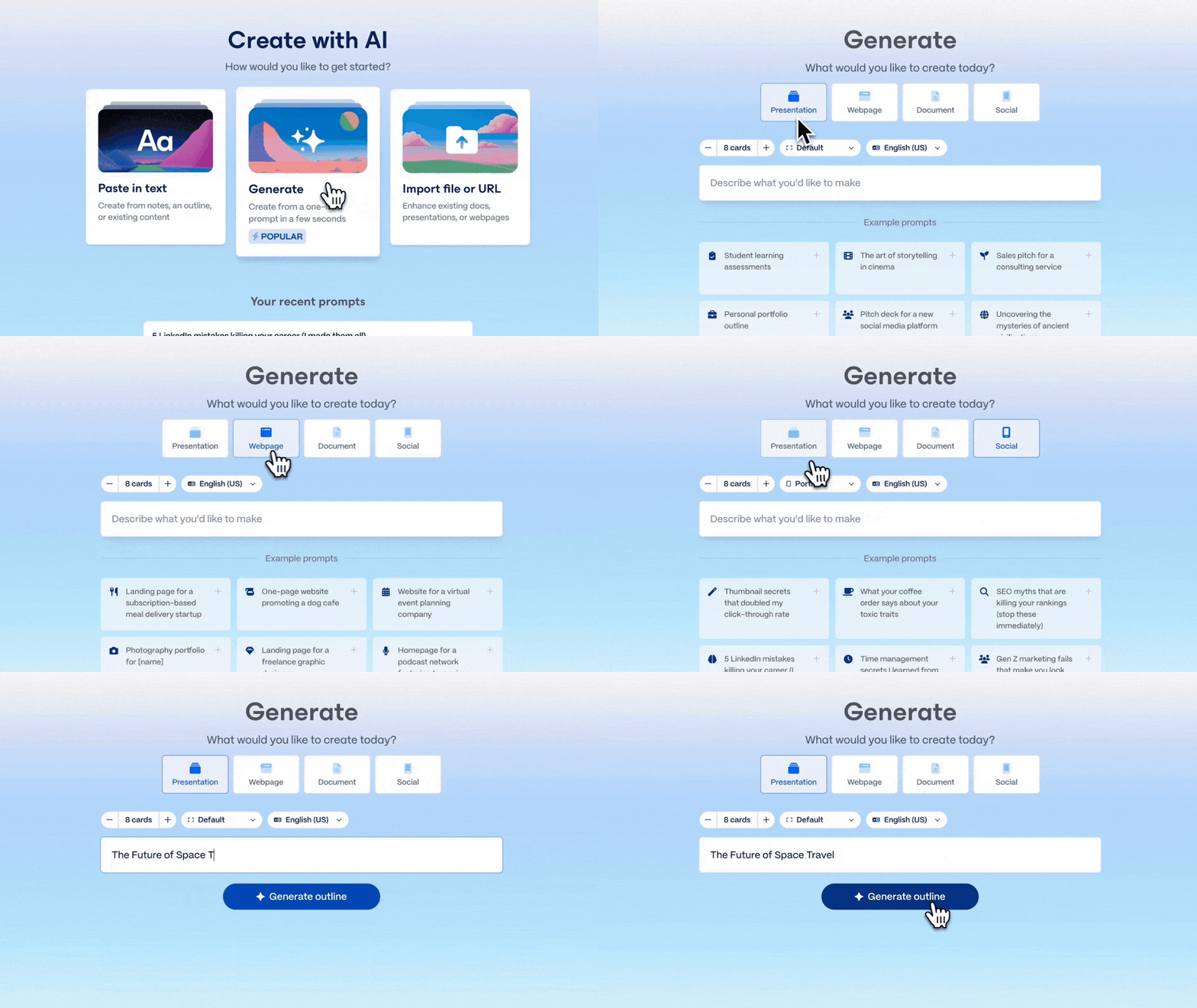
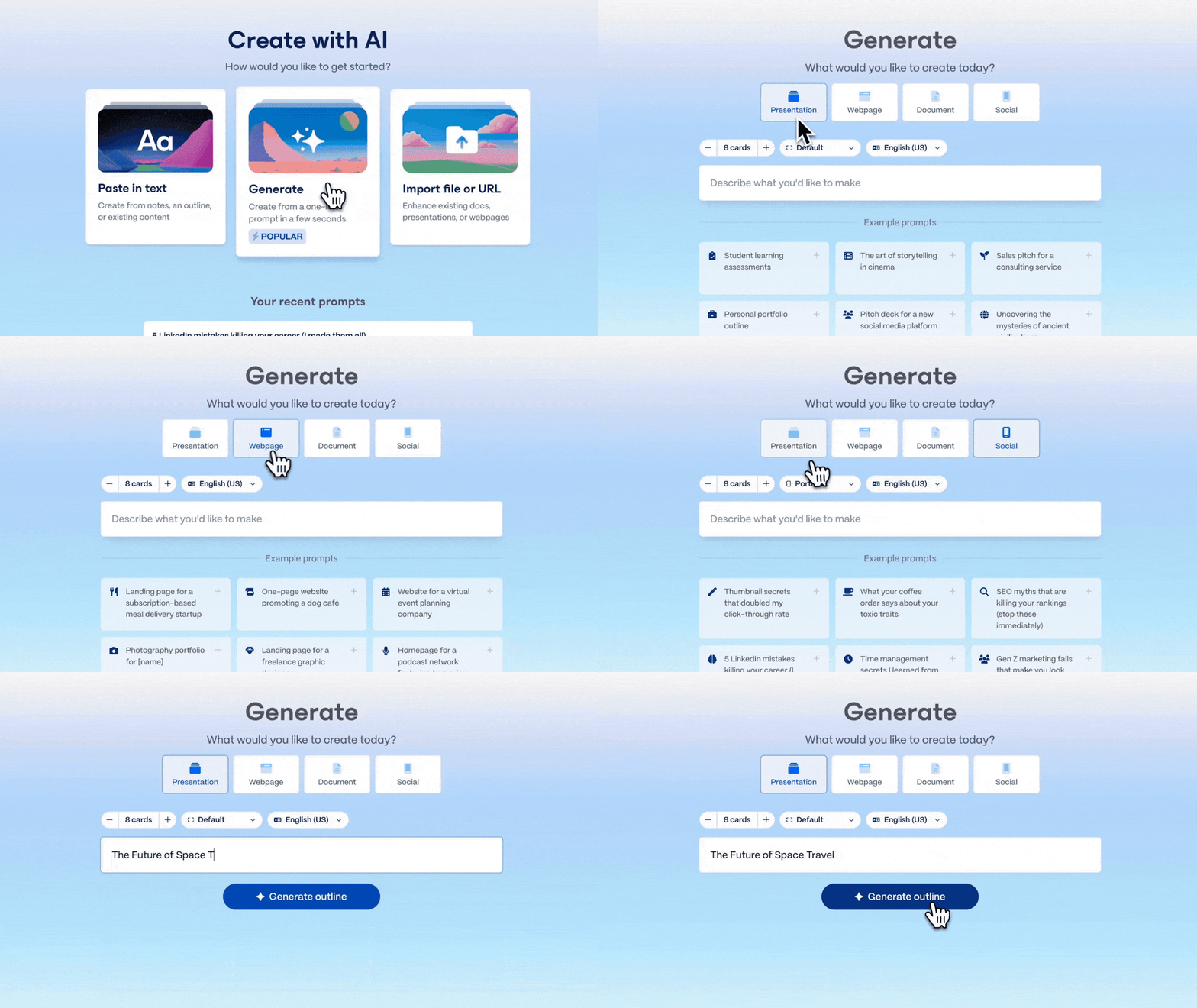
If there’s one thing worse than having to assemble a PowerPoint presentation, it’s being forced to sit through an achingly dull one conducted by someone else. So what if there were a better option—a way anyone, regardless of skill, could create a sleek and actually engaging slideshow that looks like a professional designer had a hand in it? If you ask Grant Lee, we’ve already reached the point where that’s possible. And it doesn’t end with presentations. Lee is the founder of an AI-centric startup called Gamma. You may not have heard of it yet, but 50 million people have—and are already using the service. That’s led the scrappy, 30-person company to reach a milestone of $50 million in annual recurring revenue a mere two years into its existence. “I realized just how important it was for people to be able to communicate their ideas in a visual way that others can consume,” Lee says. “Many of us have these ideas in our heads, but then to be able to actually convey that in a way that gets in other people’s heads—it’s really hard.” Lee came to that realization while working in investment banking. He spent his days immersed in underwhelming, clunky-to-create slide decks. Now, he wants to make sure no one else is forced to dawdle their days away with those sorts of distractions. If you’ve wasted any amount of time wading through painfully bad presentations—or documents, websites, or social media posts—Gamma could be just the upgrade you never knew you needed. But, like most generative AI tools of the moment, it isn’t without its limitations. A broader approach to AI creation Let’s get one thing out of the way now: On the surface, Gamma seems an awful lot like another AI-centric startup I wrote about for Fast Company last year—a now-eight-year-old presentation-making service called Beautiful.ai. But while both services do aim to take the pain out of presentation creation, they differ not only in their philosophical foundations but also in the scope of what they offer. “All of these [other] tools actually have the same sort of approach, which is a design-first approach,” Lee says. “We’ve always taken a completely different approach, which is: What if we were design later, or even design last? What if we were content first?” To that end, Gamma encourages you to not even think about things from a visual perspective. Instead, you just focus on the message, and the tool transforms that into any medium and form you want. “You start with writing or an outline or existing notes, then we turn that into something that’s much more dynamic, with rich content that can be shareable,” Lee says. Specifically, when you launch a new project in Gamma, you’re presented with three choices. You can paste in text—be it a series of loose notes or a fully finished document; you can import an existing document, presentation, or slideshow from PowerPoint, Google Slides, or another similar program; or you can simply input a single-line prompt and have Gamma’s network of AI models take the reins from there. “We don’t expect you to go in and try to move pixels around,” Lee explains. “We expect you to go in with your thoughts. We’re going to help you shape them [and] visualize them.” So, yes: You can drag and drop elements and adjust specific parameters around colors, styling, and so on. But the idea is that you don’t have to do that. Instead, you can let Gamma handle that heavy lifting while you focus entirely on what you want to say—not how you want to convey it. “We’re not trying to be incrementally better slide-ware,” Lee says. “We’re introducing a new set of building blocks.” Lee’s ultimate goal is to allow us, as humans, to focus solely on the content itself by leaning on AI to handle practically everything else. Even if Gamma’s creations are more of a starting point than a final, polished product, working with the framework it gives you is intended to be akin to editing a document—with a handy virtual helper at your side every step of the way. Want to improve the writing, for instance? Tighten up your copy? Even just make some block of text more visually appealing—or replace some existing images with more eye-catching illustrations? You’ll find one-step commands for all of those things within Gamma’s slide-by-slide AI menus. All you’ve gotta do is click. “It’s as if you have your expert designer sitting right next to you,” Lee says. “At the end, you get a beautiful output, and regardless of your technical or design abilities, you feel like you have something you’re proud to present to others.” The million-dollar question, of course, is how well all of that actually works in practice. After all, nearly every AI tool sounds incredible on paper. But when you move beyond the carefully controlled demos and start actually trying to use this type of technology in the wild, it’s frequently far less impressive than it initially appears. The short answer with Gamma is that it depends—both on the type of input you’re providing and on your expectations for how, exactly, the service should operate. The ups and downs of the AI designer We’ll start with the not-so-good piece of the puzzle: When I’ve tried putting in already-created PDFs or presentations and asking Gamma to jazz them up for me, the results haven’t exactly been awe-inspiring. Here, for instance, is a peek at Gamma’s take on an existing media kit presentation I had for my independent newsletter-publishing business, The Intelligence: It’s an awkward and ineffective interpretation of the original that honestly feels like a step in the wrong direction. Where Gamma has worked better, for me, has been when I start fresh. I give it a simple prompt, let it build a completely new framework on its own, and then use that as a starting point to fill in the actual info I want and finish things off from there. With that in mind, I tried to re-create that very same media kit from scratch, and the results were actually pretty decent. The specific information here isn’t at all accurate or even remotely related to reality, but it creates an interesting and attractive structure to use for adding in the right data and molding it into something sensible. And even that part of the process can be pleasingly easy—with Gamma offering a helping hand, as needed, to refine and polish everything from text to the layout itself as individual assets move around. All that AI effort does come at a cost, as you’d imagine. Gamma leans on a variety of generative AI engines to power its product—everything from OpenAI to Anthropic and Google’s Gemini technology, though the underlying logic automatically selects what it believes to be the best option for any given purpose, and you’re rarely aware of which model is being used when. Because of the expenses involved, Gamma’s free tier limits you to 400 AI credits per account and only basic AI image generation. For the full experience, you’ll need to pony up $96 a year for unlimited AI creation and advanced image access—or bump up to $180 a year for even more powerful capabilities. Long term, Lee believes Gamma will be able to provide enough value in exchange that the tradeoff will be a no-brainer. The Gamma vision So far, Lee says Gamma’s customers have primarily been a category of users he calls “prosumers”—individuals or small teams that need to create a lot of visuals and wouldn’t typically have the resources to work with a full-fledged design team in their organizations. But he envisions a future in which everyone, from freelancers and small business owners to sales and marketing teams in larger companies, relies on Gamma to do what’d otherwise require a lot of time, effort, and aggravation—even when traditional resources are readily available. And you’d better believe that same principle applies to creating PDFs, websites, and social media assets as much as it does presentations (and Lee says the list of available formats will only expand from here). The humble, hated slide deck was just the easiest and most logical entry point to what Lee sees as an entire ecosystem of convenient content creation—all with AI at its core. “We chose slides as the sort of initial wedge because slides as a format is ubiquitous,” he says. “[But] knowledge workers don’t just need to create slides. They actually have a need to create all forms of content.” Lee sees it all as a sliding scale with lots of blurred lines. At the end of the day, what’s really the difference between a presentation and a PDF? Or a PDF and a website? Or a website and a promotional LinkedIn post? Once you start relying on Gamma to help you create anything and everything, you quickly realize the various formats all share the same basic building blocks. And it doesn’t take much to move from one to the next. “Our bet is that presentations can always just be the gateway,” he explains. “We don’t want our users to have to think about it in a traditional sense—like, ‘Oh, I’m creating a slide deck.’ It’s more, ‘I’m creating a piece of content, and that can be consumed in different ways.’” The challenge, then, is getting people—and organizations—to break their habits and inch away from the uninspiring but familiar tools they’ve relied on for ages. And by making Gamma so simple to use that it requires virtually no specific skills or training, Lee’s optimistic he can win over crowds and frame the service as the one-stop shop for anything creative. “A tool like Gamma is trying to lower the floor so any knowledge worker can pick up skills that they couldn’t have imagined being able to do in the past,” he says. “We really believe that’ll open up doors for them.” Be the first to find all sorts of interesting tech tools with my free Cool Tools newsletter from The Intelligence. You’ll get a single new off-the-beaten-path discovery in your inbox every Wednesday! View the full article
-
Navigating professional transitions can be a whirlwind of emotions for employees, whether starting a new job or leaving a company. Onboarding is essential for creating a sense of belonging and shared purpose that extends throughout a new hire’s tenure. And this vital initiative should be about more than following a checklist. Onboarding provides an opportunity to make your newest colleagues feel genuinely connected to the team and confident in their contributions. This ensures they can thrive from day one until their final day with the company. The importance of onboarding The first 90 days are a crucial time for employees to establish themselves and for leadership to set the tone. It’s a great time to encourage new hires to envision their contributions to the business’s success. When leadership actively engages and guides new team members through this process, it fosters a sense of alignment with the organization’s goals. This transforms onboarding from a routine task into a long-term motivation, engagement, and loyalty initiative. Yet too often, companies miss the mark. A recent Gallup poll found that only 12% of workers strongly agreed that their firm excelled in onboarding them, and just 29% said they felt supported and fully prepared to start their role. These numbers reveal a huge opportunity gap. When companies approach onboarding as a mere formality, new employees can feel disconnected and disengaged, which leads to costly turnover and lost potential. Offboarding is another aspect of the employee experience that companies overlook. But it’s worth noting that how we support workers as they leave is just as important as onboarding them. A Gallup poll of 150 Fortune 500 CHROs found that just 10% considered their employer highly effective in managing departures. Leaders play a vital role in connecting employees to their colleagues and organization, especially during transitional seasons. Psychological safety invites belonging Thoughtfully designed onboarding and offboarding processes foster a supportive environment where the company makes new hires and seasoned veterans feel valued. Psychological safety is a critical element of this. It ensures employees can express themselves—ask questions, offer ideas, or admit mistakes—without fear of negative consequences. When managers promote this sense of security from day one, they lay the groundwork for their colleagues to make meaningful contributions to the business’s success throughout their tenure. Inclusion from the start The first three months are critical for new hires to understand their tasks and the company’s culture and values. Preboarding and starting onboarding before an employee’s first day can ease the transition. Simple initiatives like giving a tour, pairing new employees with peers to answer questions, or sharing background materials in advance have a significant impact. By pacing out key details, you allow new hires to adjust in comfortable increments. This ensures that you make them feel supported and included from the start. A community approach to onboarding Onboarding isn’t just about bringing our new colleagues up to speed. It’s about helping them see themselves as integral team members. When you do this right, onboarding goes beyond basic training and allows new employees to envision the unique impact they can have on the company’s success. This sense of ownership and alignment with the business’s values is critical, yet many companies still take a one-size-fits-all approach. Onboarding should be a strategic tool to drive long-term commitment and growth, benefiting both the employee and the company. Creating this connection requires a team effort—everyone has a role in making new team members feel welcomed and valued. Encourage early wins New hires often experience a mix of excitement and anxiety. While they may be eager to demonstrate what they can do, they might also be hesitant about when and how to engage. Empowering new recruits to take ownership of their work by notching early wins—whether that’s achievable projects or tasks—can build confidence quickly. Assigning a familiar project that aligns with their prior experience validates employees’ contributions from the start and is a great way to ease them into their new role. An early win is more than a confidence boost. It creates a connection with the broader team, allowing new employees to find their footing during those pivotal first three months and beyond. Shape meaningful departures How a business approaches an employee’s departure reveals more about the leadership culture than it does about the individual who is leaving. A respectful and supportive offboarding process should be an extension of the sense of belonging that an employee cultivates throughout their career with the company. However, offboarding processes often lack care. An inclusive offboarding process aims to gather feedback, enhance retention, and build trust among current and future employees. Effective exit interviews allow departing workers to express their thoughts, helping organizations understand the employees’ reasons for leaving. When former employees feel appreciated, they advocate for the company, promoting a positive reputation in the job market. A valuable exit experience reflects the organization’s values and leaves a lasting impression, strengthening a sense of belonging for the departing employee and current and future team members. Foster cohesion through belonging Taking a team-based approach to onboarding deepens everyone’s sense of belonging. It fosters collaboration and empathy while bolstering cohesion and satisfaction. By working together to integrate new hires, existing team members can refine their leadership skills. This approach helps dismantle the hypercompetitive tendencies that can become destructive within some workplaces. When new employees feel that they are part of a team that works together, they’re more likely to engage fully and contribute to the company’s long-term success; then, when they are ready to move on, their experiences and insights shape and inform the next generation of talent. View the full article

-
Humans have long been transfixed by the moon, awed and inspired by its reassuring presence in the night sky and its influence on the tides. In recent decades, though, our fascination with our nearest celestial neighbor has become somewhat more opportunistic: The moon contains valuable resources, and governments and companies are eager to get their hands on them. One such resource is helium-3 (He-3), a gas that some experts say could unlock clean and abundant energy on Earth as a fuel for fusion. It’s this gas that Interlune, a Seattle-based startup, has its sights on. The company wants to be the first to commercialize space resources, starting with He-3, which it plans to begin harvesting from the moon and selling on Earth by the end of the decade. Helium-3 is used mostly in medical diagnostics and national security, but it has great potential to unlock groundbreaking technological advancements, the most tantalizing of which is nuclear fusion. Fusion is what powers the stars, and as the climate crisis deepens, scientists are desperately trying to harness it in reactors to produce abundant energy without the use of fossil fuels. He-3 is a desirable fuel for fusion reactors because it would produce very little dangerous radioactive waste. “Helium-3 fusion reactors open up the opportunity to have power available for people on Earth in a way that’s never been available before,” says Aaron Olson, a research physicist at NASA’s Kennedy Space Center who has studied helium-3 extraction. “And that’s not only for those of us who happen to live in areas where we have grids that function really well, but it could bring energy to people who live in areas like sub-Saharan Africa, where 90% of the population doesn’t have access to electricity.” The problem is that He-3 is extremely rare on Earth, and therefore very expensive. A kilogram of the stuff will set you back roughly $20 million. Most of the terrestrial supply comes from the decay of tritium, which is a byproduct of nuclear reactors and aging nuclear weapons. The United States has been rationing He-3 since 2010. By contrast, the moon holds an abundance of He-3. The isotope is emitted from the sun’s corona and carried through the solar wind, and because the moon isn’t protected by an atmosphere or magnetic field, these particles have been embedding themselves in the lunar soil—or regolith—for billions of years. Recent estimates suggest the moon has about 1.1 million metric tons of He-3, compared to Earth’s reserves of just 1.6 tons. “Helium-3 is the only resource worth going all the way to the moon and back for,” Interlune’s director of business development, Nina Hooper, explained. “Now it’s up to us to go develop the technology that’s going to help us extract it.” Interlune’s plan is to send its “harvesters” to an area that’s about a mile wide and located near the moon’s equator on its near side, or the side that’s always visible to Earth. These unmanned machines will dig into the top three meters of lunar regolith, crush the rocks, extract the He-3 gas, and then put the regolith back where it belongs. “When we’re done, it looks like a tilled field,” says Interlune CEO and cofounder Rob Meyerson, who previously served as president of Blue Origin. Interlune is aiming to start with two test missions, one in 2027 and another in 2029, to measure He-3 levels on the moon, harvest it on a small scale, and bring some back to Earth. It wants to go to market with 20 kilograms of He-3 in 2030, ramping up to 100 kilograms over five years. “That will do a great job to stabilize the supply chain,” Meyerson adds. Could it also unlock the future of clean energy? Despite promising advances in fusion science, commercial fusion is still a ways off. “There is still a lot of work to be done before a functional reactor goes online,” says NASA’s Olson. “There are still questions that persist as to how quickly that can happen.” An abundance of He-3 for fusion research could, however, help speed up that process. In the meantime, Interlune has another sector in mind for its first target market: quantum computing. This market is projected to balloon between now and 2030, with big tech players like IBM, Nvidia, and Apple pouring billions into quantum tech research and development with the hopes of creating breakthrough innovations and rapidly solving stubborn problems across science, medicine, and other fields. Helium-3 helps keep these supercomputers cool enough to function efficiently, and Meyerson says Interlune has already secured contracts with “more than one” company and letters of intent for “more than a billion dollars” worth of He-3 even before it has demonstrated its technology. “These customers are relatively price insensitive, so they’re willing to pay something near the current market price, and they’re really, really eager to secure supply,” he says. This week, Interlune announced Maybell Quantum, a quantum infrastructure company, as its first commercial customer. Maybell agreed to buy “thousands of liters” of He-3 to be delivered between 2029 and 2035. The U.S. Department of Energy has also agreed to buy He-3 from Interlune in its quest to top up its reserves. Not everyone is eager to see the moon become an industrial hub, though. Astronomers are particularly worried about mining because the moon is an important outpost for space science thanks to how quiet, still, and cold it is. For example, the far-side of the moon is “the most radio quiet part of the inner solar system,” explains Richard Green, an astronomer emeritus at the University of Arizona’s Steward Observatory and a vocal advocate for preserving lunar science. That makes it the best place to use radio astronomy to learn about the universe and look for signs of life beyond Earth. “If the mining equipment is next door and blasting rocks and digging things up, that would just be inconsistent with the stable platform that those really sensitive detections need,” Green adds. He and other researchers want to see the creation of an international system that evaluates claims to certain regions on the moon and allows scientists to “reserve” sites in advance so they can study the area before any mining takes place. “It’s not that there’s anything wrong with mining, it’s a legitimate activity,” he says. “But so is science. How do we set up a system of communication and coordination that doesn’t lead to conflict?” The existing rules around space mining are fairly new, and don’t offer much help. A 2015 U.S. law ruled that private American companies can own any space resources they mine. In 2020, NASA’s Artemis Accords sought to introduce some guidelines on the practice of harvesting space resources, stating that any extraction must be done in compliance with the 1967 Outer Space Treaty. That means countries carrying out mining would have to do so for the benefit of all mankind. They’d have to avoid “harmful contamination of space and celestial bodies,” and would be liable for any damage they cause. All of that said, regulations might be hard to enforce. “There are no police that are going to land on the moon,” says Green. (Neither China nor Russia have signed onto the Artemis Accords, which aren’t legally binding anyway.) Meyerson is quick to underscore that what Interlune wants to do isn’t traditional mining. “There are no chemicals used to strip the helium-3 out of the material,” he says. “You’re not leaving contaminated tailings behind. So as far as comparing this to mining, it’s just 180 degrees apart.” He believes that by being the first to harvest moon resources, Interlune can set the standard as the lunar gold rush accelerates. Eventually, Interlune plans to expand its scope to harvest other lunar resources that could be used to build infrastructure and produce rocket fuel on the moon, all of which could serve as a stepping stone for future space exploration. “We’re in this for the long run of building an in-space economy,” says Meyerson. “We would be processing other resources on the moon, like water that we can turn into rocket fuel, metals like aluminum and titanium and silicon, and then construction material.” Some proponents of space mining also argue it’s an environmental Hail Mary. “There is the notion of the Earth becoming an oasis,” says Olson. “It’s an idea that harvesting resources, whether it be the moon or other places in space, could help us preserve the Earth for future generations in a way where maybe we’re not doing as much damaging extractive work on Earth, and some of that could be put in places that are, for lack of a better term, barren.” View the full article

-
When Christopher Pelkey was killed in a road rage incident in Arizona, his family was left not only to grieve but also to navigate how to represent him in court. As they prepared to confront his killer, Gabriel Horcasitas, during sentencing, they made an unusual and deeply controversial choice: to have Pelkey appear to speak from beyond the grave. To do so, they turned to technology: An AI-generated video featuring a re-created voice and likeness of Pelkey was presented as a victim impact statement ahead of sentencing. The video showed a digitally resurrected Pelkey appearing to speak directly to the judge. Of course, the statement wasn’t truly Pelkey’s. He couldn’t have possibly said those words—he died the day Horcasitas shot him. Yet the judge accepted the AI-generated message, even acknowledging its effect. “You allowed Chris to speak from his heart as you saw it,” the judge said. Horcasitas was sentenced to 10 and a half years in prison. The extraordinary courtroom moment has sparked widespread discussion, not just for its emotional power but for the precedent it may set. Arizona’s victims’ rights laws allow the families of deceased victims to determine how their impact statements are delivered. But legal and AI experts warn that this precedent is far from harmless. “I have sympathy for the family members who constructed the video,” says Eerke Boiten, a professor at De Montfort University in the U.K. specializing in AI. “Knowing Pelkey, they likely had a preconceived view of how he might have felt, and AI gave them a way of putting that across that many found attractive and convincing.” Still, Boiten is uneasy about how the video has been interpreted by both the public and possibly the court. “The video should be read as a statement of opinion from the family members, with AI providing a convincing presentation of that,” he explains. Yet public reaction suggests it was taken as something more. “The reactions show that it was taken as an almost factual contribution from Pelkey instead,” Boiten says. The victims’ rights attorney who represented Pelkey’s family told 404 Media that “at no point did anyone try to pass it off as Chris’s own words.” Yet the emotionally charged format of presenting a deepfaked version of the deceased gives those words far more weight than if they had simply been read aloud. And it’s worth emphasizing: Pelkey could never have written them himself. “It’s an inappropriate use of AI which has no relevance and should have no role at sentencing,” says Julian Roberts, emeritus professor of criminology at the University of Oxford and executive director of the Sentencing Academy. Data protection specialist Jon Baines of the firm Mishcon de Reya adds that the incident is “profoundly troubling from an ethical standpoint.” Roberts argues that using an AI-generated likeness of a victim oversteps the purpose of a victim impact statement. “The victim statement should inform the court about the impact of the crime on the victim and advise of any possible impact of the imposition of a community order, et cetera,” he says. “It is not an exercise in memorializing the victim.” In his view, that’s exactly what the Pelkey video did. Roberts also criticized the content of the statement itself: “The statement should contain information, not opinion or invention—human or AI-derived.” Still, a precedent has now been set—at least in Arizona. One that blurs the line between mourning and manipulation. One that allows people to “speak” from beyond the grave—and could, in the future, influence the length of prison sentences in ways that justice systems may not yet be prepared to handle. View the full article

-
An irony of mainstream corporate sustainability efforts is that they focus significantly on the power of consumption. H&M promotes its “Conscious Collection” that uses organic cotton or recycled polyester. Samsung’s “Galaxy for the Planet” showcases its use of recycled plastics in its devices and sustainable packaging. When companies advertise their products as sustainable, consumers frequently assume they can buy new items more frequently, making such moves paradoxically self-defeating. But these marketing ploys typically only focus on a selective element of a product’s impact. The problem is that while each individual product may have less of an impact than what came before it, the increase in overall consumption mitigates any environmental savings, and so inherently perpetuates the cycle of consumption that’s a root cause of today’s environmental problems. Over the last half century and more, the environmental movement has gradually morphed into a consumer movement, with corporate messaging expertly shifting responsibility from systemic change to individual purchasing decisions. We’ve been led to believe that the solution to environmental catastrophe lies in meticulously examining product labels for terms like organic, sustainably produced, green, and other buzzwords often coined by corporations themselves. Millennials and Gen Z are portrayed as eco-conscious generations that will correct the poor environmental decisions of their parents. But while many initiatives today tick corporate sustainability boxes and make individuals feel like their purchases are righteous, they fail to address the deeper systemic challenge: as long as companies prioritize endless growth, they will continue to push more consumption—and no amount of “green” products can offset that. We need to come to grips with the fact that consumption is—and will always be—exceedingly hard to constrain, especially when companies are spending over $1 trillion a year to convince us to buy more. Any sustainability effort that relies solely on the purchase of more responsible goods will fail. This challenge has only intensified in the current political landscape. Since returning to office, President The President and his administration have relaxed standards for fuel economy and greenhouse gas emissions for vehicles, and claimed that “more drilling would bring down energy bills.” Furthermore, the Department of Energy announced plans to pause efficiency standards for seven categories of appliances, while the Environmental Protection Agency began overhauling the WaterSense label program to prioritize “effectiveness and consumer experience” over efficiency. These policy shifts effectively prioritize short-term economic growth and resource extraction over environmental stewardship, and they create a regulatory landscape that rewards consumption rather than conservation and regeneration. Given this, what can companies do to address the fundamental paradox of sustainable consumption? Creating sustainable consumption opportunities starts before the purchase A first step for companies interested in consumption being sustainable is to ensure that their entire supply chains are built on sustainable and equitable principles. Reducing the footprint and environmental impact of products in this way is a much more robust path to sustainable consumption than today’s focus on telling consumers to buy products with green attributes. For instance, beverage maker Guayakí Yerba Mate has developed a regenerative model that connects the dots between consumers purchasing its products and positive societal and environmental effects in its supply chains. Ben Mand, CEO of Guayakí, told me that his company works in the Atlantic Forest communities in South America where yerba mate leaves from a tree in the holly family are grown. They work with smallholder producers to implement high environmental and social standards, and then ensure that the economic benefits of their work flow directly into the communities rather than being captured by intermediaries. In other words, if companies can ensure their production and distribution create an overall positive benefit, the environmental problems that stem from the eventual consumption of their products are significantly reduced. It may seem easy to dismiss strategies like these because they’re done by a company in a niche category. But I’ve observed similar practices being scaled in many other prominent multinational firms across industries around the globe. For instance, leading global coffee maker Illycaffè created a regenerative coffee production system, focused on enhancing biodiversity, improving soil health, and fostering resilient farming communities. Illycaffè collaborates directly with coffee farmers in South America and Africa to support agro-ecological practices that not only boost crop yields but also protect ecosystems. This approach ensures the long-term viability of coffee cultivation—a crop under significant environmental threat—while promoting fair trade and social equity. Thus, one way to mitigate the paradox of consumption is by starting with materials and supply chains and fostering a model where each purchase directly delivers social and environmental benefits to the communities producing the raw materials. The difference between H&M and Samsung versus Guayakí and Illycaffè is subtle but important. H&M and Samsung spotlight isolated “green” features—like recycled materials—to market select products. Guayakí and Illycaffè, by contrast, embed sustainability throughout their supply chains, prioritizing the overall impact of their businesses rather than promoting individual eco-friendly attributes. Helping consumers understand the extended life cycles of products Moving up the value chain also highlights the importance of the design of production systems. Ikea, the world’s largest furniture retailer with more than 480 stores across 63 markets, offers another example of how a global corporation can fundamentally reimagine its relationship with consumption. In an industry where Americans discard more than 12 million tons of furniture annually, Ikea is working to break the “take-make-dispose” cycle that has defined furniture retail. As Mardi Ditze, country sustainability manager for Ikea U.S., explained to me, a key initiative is the Buy Back & Resell program, launched in 2022, which allows customers to return an Ikea product they no longer want and then receive credits worth between 30% and 50% of the original price. Depending on the condition, items are either resold, refurbished, or recycled. This program is now operational in most U.S. stores and accepts nearly 3,000 products for resale. Each returned item undergoes a detailed evaluation process, prioritizing resale through their “As-is” section, with recycling as a last resort. Hege Sæbjørnsen, Ikea’s sustainability manager for the U.K. and Ireland, said the plan would help to promote Ikea’s progress toward achieving its “fully circular” and “climate positive” goals by 2030. In addition, Ikea has introduced the Ikea Preowned platform, which facilitates peer-to-peer sales of secondhand furniture. The program is currently being tested in Madrid and Oslo, with potential global expansion. The Swedish retailer already resells some 47 million products worldwide. Companies like Patagonia and Eileen Fisher are also challenging throwaway culture by designing programs that extend product life cycles and reduce waste. Patagonia’s Worn Wear initiative repairs and resells used gear—more than 130,000 items in 2024 alone—thereby encouraging shared responsibility between brand and customer. Eileen Fisher’s take-back program has reclaimed more than two million garments, transforming them into resale items, new clothing, or other goods, and built dedicated facilities to support this near-zero-waste model. Both companies demonstrate how brands can work to reshape purchasing habits and production systems to prioritize sustainability. Conclusion There’s no denying that people will want to keep buying new products. We must therefore move beyond current paradigms that place the onus on consumers to drive sustainability. If we are to achieve legitimate sustainable consumption, businesses must redesign their value chains from the ground up and embed environmental and social responsibility into every decision from design, sourcing, and production to also how they communicate with consumers. Since returning to office, the The President administration has systematically dismantled environmental protections that could have incentivized more sustainable business practices. But the examples of Guayakí, Illy, Ikea, Patagonia, and Eileen Fisher point toward an alternative paradigm—one where consumption isn’t positioned as the solution to our environmental crisis, but rather as one element in a broader economic system designed primarily to serve people and planet. View the full article
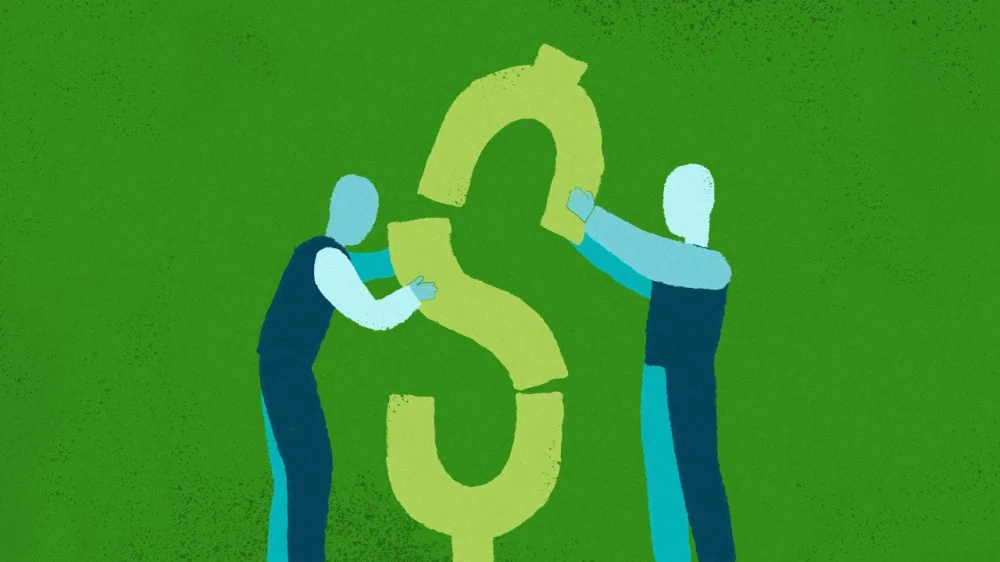
-
Federal Reserve Gov. Michael Barr said global supply chain disruptions and inflation caused by tariffs could weigh heaviest on small businesses, especially those with little access to credit. View the full article