ResidentialBusiness
Administrators
-
Joined
-
Last visited
Everything posted by ResidentialBusiness
-
 The The President administration's tariffs will hit American families hard, with estimates ranging from nearly $4,000 to almost $8,000 per household. Plus, when it comes to personal shopping, tariffs will disproportionately affect clothing and textiles, with apparel prices predicted to rise 17%. And if you're accustomed to ultra-cheap online shopping, dark days are ahead. Given all these rising costs, it’s more important than ever to keep on top of your spending habits. Making a budget is a great start, but following it easier said than done. It’s one thing to abstractly vow to “cut back on pricey coffee," but how do you stick to that when it’s 7 a.m. and you need caffeine ASAP? Or what if your restrictive budget causes so much anxiety, you impulsively start “revenge spending?" Let's take a look at some ways you can become a more conscientious spender, especially when prices are out of control. Figure out where your money is goingIn order to undo unconscious spending habits—like the costs of lifestyle creep—you have to confront some tough questions about your finances as honestly as possible. The most important question to answer: Where does my money go? Don’t settle for estimates, here. Go through your bank statements and look your spending habits full in the face. Then evaluate which expenses are actually valuable to you, and not some subscription service you forgot about long ago. It’s far easier to eliminate unconscious spending once you bring it out into the open. Recognize your spending triggersThe key to breaking any behavior is understanding what triggers it. Maybe you're prone to spending when you're stressed, bored, or celebrating. Or maybe it's simply about convenience, or social pressure, or compelling marketing tactics. Take time to reflect on your recent impulse purchases. What emotional state were you in? Were you influenced by others? Identifying these patterns is crucial to breaking the cycle. Get specific about your money goalsThe idea of “cutting back on spending” is abstract and hard to achieve. It’s like saying you want to “learn how to cook” without ever picking out a recipe or buying any ingredients. Instead, you need specific, attainable goals to guide your conscientious spending. One place to start with your specific spending goals is to physically write down the things you want to buy before you buy them. Use those bank statements to inform what items make your official “to-buy list.” When you read over items on this list, you’ll be able to make a more thoughtful decision as to what you really need. Create financial frictionWhen I was a teenager who needed to stop biting her nails, I started wearing gloves. Did I look cool? Definitely not. But it worked. Make unconscious spending more difficult by creating barriers—or "financial friction"—for yourself by: Removing saved payment information from websites Unsubscribing from retail emails and notifications Deleting shopping apps from your phone Using cash for discretionary spending Placing savings in less accessible accounts These obstacles seem small, but they can be a big help in curbing unconscious spending patterns. Implement a waiting periodAnother tactic is introducing a deliberate delay between the desire to purchase and the act of buying. Before making non-essential purchases, especially online, institute a mandatory waiting period: For items under $50: Wait 24 hours. For items $50-$100: Wait three days. For items over $100: Wait one week. This simple delay helps distinguish between wants and needs, often breaking the spell of impulsive desires. Think of it as a cooling-off period. Remember, you’re still allowed to treat yourselfCold-turkey restriction is a recipe for an unhealthy relationship with money. Instead, it’s important to indulge thoughtfully. Ask yourself, “How do I expect this purchase will make me feel? What do I want it to make me feel? What feelings am I trying to avoid by buying it?” When you feel confident that you’re spending only on things you love and not wasting money on things you don’t love, you will make much better financial decisions. Only you can determine what is truly valuable in your life. Personally, I’ve budgeted enough money for my daily coffee indulgence. For you, it might mean treating yourself to a fancy dinner once a month, or cutting back on restaurant costs in order to go wild on vacation in a few months. Allow yourself to indulge, especially if these indulgences improve your overall relationship with your money. View the full article
 -
In the crypto world, meme coins are mostly just jokes with no intrinsic value. But the The President family is parlaying the president’s meme coin into two valuable commodities: serious cash and access to the president. Since the coin was launched earlier this year, it has generated more than $320 million in fees for its creators, according to the blockchain analysis firm Chainalysis. And on Monday, The President promoted a dinner he’s set to attend on May 22 that’s open to almost anyone who buys enough of the coins. According to the contest’s rules, the top 220 holders of the meme coin will get to go to the dinner at The President’s Washington-area golf club. The top 25 holders will also get to attend a reception where they can rub shoulders with The President beforehand. “Let the President know how many $The President coins YOU own!” the meme coin said on its website promoting the dinner. Trading activity in the meme coin jumped after the dinner was first announced and the price rose as well. But the The Presidents don’t need to sell any coins to make money. How The President makes money off the meme coin Decentralization is foundational to cryptocurrency. Bitcoin, the world’s most popular crypto, was born in the wake of the 2008 financial crisis as a digital currency meant to be uncontrolled by banks or governments. The President meme coins can be traded on a decentralized exchange, which is essentially a place where traders can swap goods without a middleman. Instead of matching buyers and sellers one by one, decentralized exchanges use something called a liquidity pool to ensure trades can happen easily and instantly. Liquidity pools are essentially an automated pot of funds that pair meme coins like $The President with more popular types of crypto that can be easily traded. When the The President meme coin was first launched, its creators initially released 20% of the planned 1 billion total coins. Half of that 20% was put up for public sale while the other half was put into a liquidity pool. CIC Digital, an affiliate of the The President Organization, and another company receive “trading revenue derived from trading activities” of the The President meme coins, according to its website. Through the liquidity pool, the creators of The President’s meme coins make money by charging tiny fees on each trade. “You don’t really care about what happens to the price. You only care that there is continuous volume,” said Nicolai Søndergaard, a research analyst at the blockchain analytics firm Nansen. “Because the more volume there is, that means more trades and therefore more fees for you.” Since cryptocurrency blockchains are public, it’s possible to track how much in trading fees has been paid. Chainalysis said The President meme coin creators made more than $1.3 million in trading fees in the week after the dinner was first announced. The value of the meme coin jumped from about $9 to around $14 just after the announcement. It was trading around $11 on Monday afternoon. The President downplays profits Launched just before he took office, The President’s meme coin has become one of the most high-profile ways the norm-breaking president has mixed politics and his personal finances. The remaining 80% of The President’s meme coins, which are still under a lock-up, have been allocated to CIC Digital and another company. An ethics agreement prohibits The President from “day-to-day” decision making at the The President Organization when he’s president and limits the financial information about the business that can be shared with him. During an interview with NBC’s “Meet the Press” over the weekend, The President said he didn’t follow the price swings of his meme coin and dismissed the idea that he was profiting from the presidency. He also rejected a suggestion that he would forgo any profits made from his crypto endeavors. “Should I contribute all of my real estate that I’ve owned for many years if it goes up a little bit because I’m president and doing a good job? I don’t think so,” The President said. Heavy promotion The team behind The President’s meme coins has been aggressively trying to promote the chance to eat with the president. “Good News! President The President is allowing one more person to attend Dinner with The President,” the meme coin’s official account on X said last week, encouraging people to reply with memes featuring The President. “Our favorite $The President memes will be shown to President The President and we will pick 1 person who gets to come to the dinner on May 22nd!” The creators have also tried to up the ante by offering $100,000 The President-themed watches to the top four holders of The President’s meme coins. Unknown guests On Monday night, The President hosted a closed-door “Crypto & AI Innovators Dinner” fundraiser sponsored by his MAGA Inc. super PAC at his golf club outside Washington. An invitation to the event that circulated online instructs those invited to pay $1.5 million per person to attend. The White House did not provide a list of attendees, though the super PAC eventually will be required to list donors in its regular public disclosures. Whether the public will ever know who bought their way into the meme coin dinner with the president is unclear, though. Unlike political donations that must be publicly reported, there’s no disclosure requirement for meme coin buyers. Critics of The President’s foray into meme coins, which includes several Democrats, say the pseudonymous nature of cryptocurrency gives bad actors the opportunity to try and unduly influence the president through purchasing his digital assets. The The President meme coin website assures those who register for the contest that their full legal name and contact information will “never be publicly shown.” Instead, registrants pick a username that’s displayed on the website’s leaderboard. The ranking is dependent not just on how many The President meme coins someone holds, but also on how long. After No. 220, the board has a note of encouragement for those just below the cut to buy more of the meme coins. “You’re so close. FIGHT FIGHT FIGHT for your $The President dinner.” —Alan Suderman, AP business writer Associated Press reporter Will Weissert contributed. View the full article
-
United Wholesale Mortgage originated $32.4 billion, up 17% year-over-year and its best first quarter since 2022, helped by refinance volume of $10.6 billion. View the full article
-
UK media tycoon’s Northern & Shell suing Gambling Commission over National Lottery contractView the full article
-
US president says rebel group has agreed to halt its attacks on regional shippingView the full article
-
A WordPress bug is causing fatal errors on WooCommerce sites, resulting in widespread outages. The post WordPress WooCommerce Bug Causing Sites To Crash appeared first on Search Engine Journal. View the full article
-
VC-funded Aiwyn and Canopy seek to stand out among over three dozen contenders. By Seth Fineberg At Large Go PRO for members-only access to more Seth Fineberg. View the full article
-
Instacart is rolling out a new app, but it's not for ordering groceries—at least, not the essentials. Instead, Instacart sees "Fizz" as a party delivery app, designed for ordering snacks and alcoholic drinks. Fizz isn't the first to offer alcohol delivery, of course. Instacart itself supports alcohol delivery wherever it's legal, as does DoorDash. But perhaps the most notorious alcohol delivery app was Drizly: The service was a popular option for ordering alcohol, but its reputation suffered following a massive 2020 data breach. Uber acquired the app the following year, then shut it down in 2024. But Fizz isn't a Drizly clone. Instead, the app seems more like if Drizly crossed with a party-planning app like Partiful or Apple's Invites—not only do you order drinks and snacks, but you invite others to do so as well. In fact, Fizz is now embedded in the Partiful app, so you can use it when planning a party at large. Instacart says after you start a "party cart," you can share a link with friends to invite them to join. (They don't need the Fizz app to participate.) Everyone in the group can see what's already been ordered, and can add whatever they want. Anything you add to a party cart, you pay for yourself, which I feel mixed about. On the one hand, it's cool to let people "bring" what they want to the party, without needing to track people down to pay for their share. But for some parties and gatherings, it makes sense to split everything evenly. It'd be nice if Fizz would at least add that as an option. If you want to use Fizz with Partiful, you can choose to enable "Group Order" in the app. Then, everyone on the Partiful can access the Fizz link. Credit: Instacart As the app is made for ordering alcohol, it's only available to users 21 and older. There's also a flat $5 delivery fee for all orders, though that does not include a tip. If you live in a state or area where alcohol delivery isn't legal, you can't use Fizz (or any alcohol delivery service). According to TechCrunch, Fizz is available in Alabama, Arizona, California, Connecticut, Florida, Georgia, Hawaii, Idaho, Illinois, Iowa, Kentucky, Louisiana (some areas), Massachusetts, Michigan, Minnesota, Mississippi, Missouri, Nebraska, New Jersey, New Mexico (some areas), New York, Nevada (some areas), North Carolina, Ohio, Oregon, Texas, Tennessee, Virginia, Washington, and Wyoming. You can download the app by scanning the QR code on Fizz's website. View the full article
-
A reader writes: I’m a new-ish manager in a small company. I have two direct reports. One is professional and a joy to work with. The other is a recent hire (he’s been here two months) who is right out of college, Jake. In our most recent weekly one-on-one, Jake told me that he is “disappointed in the role” and the work is “not as interesting as he hoped.” I can understand how someone could find much of the work tedious. There’s a significant amount of data entry in the position. But I never hid this. I was clear with every candidate I interviewed that there would be tedious tasks and screened for people who seemed able to figure out strategies for handling that tedium. I’m wondering where to go from here. Jake was not able to give me any clear idea about what he wants the role to be instead, and even if he could, I hired him for the job he’s doing now. Part of me also feels like he hasn’t given this a fair shake. He’s only been here two months! A lot of those tedious tasks will start taking up less of his time as he gets better at them so he can expand other parts of the role, and I have told him that this is what I expect. And lastly, I’m not sure how much investment I want to put into someone who has expressed such disinterest so early. He has also had a couple of attitude problems that I have been addressing (he can come across as entitled and arrogant, which is not a good look for the most junior member of our staff), but those by themselves, I felt were coachable. I answer this question over at Inc. today, where I’m revisiting letters that have been buried in the archives here from years ago (and sometimes updating/expanding my answers to them). You can read it here. The post my new employee is “disappointed” with his job appeared first on Ask a Manager. View the full article
-
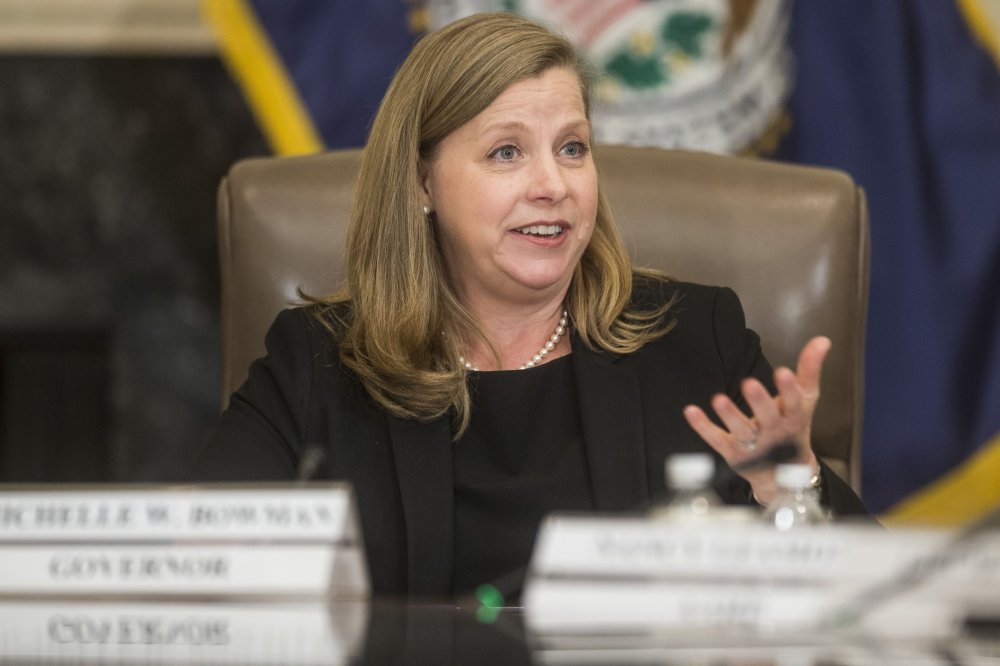
The Senate Banking Committee sent the nomination of Michelle Bowman to the full Senate in a party-line 13-11 vote. View the full article
-
Two government agencies are warning Americans about threats from Salmonella outbreaks this week. The Centers for Disease Control and Prevention (CDC) has cautioned about a multi-state outbreak of the potentially deadly bacteria in poultry, while the Food and Drug Administration (FDA) has posted two recall notices about tomatoes that are feared to be tainted with Salmonella. Although the poultry and tomato salmonella outbreaks are not reported to be linked, each should be taken seriously given the threat that Salmonella infections can pose. Here’s what you need to know about the Salmonella outbreak and recalls. CDC announces Salmonella outbreak linked to poultry On May 5, the CDC issued an investigation notice confirming a multi-state outbreak of the potentially deadly bacteria. The outbreak is believed to be linked to human contact with backyard poultry, including chickens and ducks. The agency says that two individuals who became sick “reported obtaining poultry from agricultural retail stores” beforehand. However, an individual does not need to consume poultry to become infected with Salmonella. The CDC says that simply touching infected birds, supplies the animals have come into contact with, or the eggs they have laid is enough to contract the bacteria. The CDC says that between February 9 and March 24, 2025, seven people across six states have been confirmed to have been infected with Salmonella. The illnesses occurred in the following states: Utah: 1 South Dakota: 1 Wisconsin: 1 Illinois: 1 Missouri: 2 Florida: 1 However, the CDC says that the number of sick individuals is likely much higher. That’s because many people who become infected with Salmonella get sick and recover fully at home without ever reporting the illness to health authorities. The CDC also notes that it usually takes between three and four weeks to determine if a sick individual is part of an outbreak, which means the agency’s current numbers may be lagging behind the actual number of cases up to this point in time. FDA posts Salmonella-linked tomato recalls Separately, the U.S. Food and Drug Administration has posted recall notices on its website for tomatoes that are feared to possibly be contaminated with Salmonella. There is no indication that the tomato recalls and the poultry outbreak are linked. On May 3, the FDA published a recall notice from Ray & Mascari Inc. of Indianapolis, Indiana. The voluntary recall covers the company’s 4 Count Vine Ripe Tomatoes product. The tomatoes were acquired from a Florida provider who discovered that they may be contaminated with Salmonella. The recalled product is as follows: Brand Name: Ray & Mascari Inc. Product name: 4 Count Vine Ripe Tomatoes Package: clam shell containers [20 oz. (1 lb. 4 oz) 567g] UPC: 7 96553 20062 1 Lot numbers: Lot# RM250424 15250B or Lot# RM250427 15250B The recalled tomatoes were sold by Gordon Food Service Stores in eleven states: Illinois Indiana Kentucky Michigan Missouri Mississippi New York Ohio Pennsylvania Tennessee Wisconsin On May 2, the FDA published a recall notice from Williams Farms Repack LLC of Lodge, South Carolina, for some of its tomato products over fears they could be contaminated with salmonella. The tomato products were sold in multiple package sizes under the brand name H&C Farms Label. The full list of products affected by this recall can be found here. The products covered under this recall were sold to wholesalers and distributors between 4/23/2025 and 4/28/2025. They were sold in the following states: Georgia North Carolina South Carolina There is currently no indication that the two tomato recalls are linked, nor is there any indication that they are linked to the multi-state poultry Salmonella outbreak. Consumers who believe they may have the recalled tomatoes should read the respective recall notices carefully for instructions on what to do. What is Salmonella? Salmonella is a bacterium that can make you very sick if ingested. According to the CDC, the symptoms of Salmonella can include: Watery diarrhea that might have blood or mucus Stomach cramps that can be severe Headache Nausea Vomiting Loss of appetite The agency says that symptoms can begin anywhere from six hours to six days after infection. Symptoms can last for anywhere between four and seven days. While many people can recover without treatment, some may require hospitalization. In certain cases, Salmonella infections can cause death. The illness can be particularly troublesome for people who have weakened immune systems, are 65 or older, or are younger than 5. In 2024, there were several significant Salmonella outbreaks, including a backyard poultry outbreak in May of that year that sickened more than 100 people and an outbreak reported in September linked to eggs that sickened at least 65 people. View the full article

-
China and others must think afresh as the US steps away from its role as balancer of last resortView the full article
-
Country has briefed diplomats and humanitarian officials on proposal to funnel supplies through little-known foundationView the full article
-
What firms of all sizes are doing. By Marc Rosenberg The Rosenberg Practice Management Library Go PRO for members-only access to more Marc Rosenberg. View the full article
-
What firms of all sizes are doing. By Marc Rosenberg The Rosenberg Practice Management Library Go PRO for members-only access to more Marc Rosenberg. View the full article
-
DoorDash, the ubiquitous U.S. food delivery app, has agreed to acquire British rival Deliveroo for 2.9 billion pounds ($3.9 billion) in cash, expanding its business in Europe, Asia, and the Middle East. San Francisco-based DoorDash will pay 180 pence ($2.40) for each Deliveroo share, 29% more than the closing price on April 24, the day before the offer was announced, the companies said in a joint statement before the London Stock Exchange opened for trading on Tuesday. The deal is DoorDash’s second major international acquisition in three years as the company expands from its traditional base in the U.S., Canada and Australia. After the purchase of Deliveroo, and the 2022 acquisition of Helsinki-based Wolt Enterprises, DoorDash will operate in more than 40 markets worldwide. “I could not be more excited by the prospect of what DoorDash and Deliveroo will be able to accomplish together,” DoorDash CEO Tony Xu said in the statement. Both companies were founded in 2013, using the then emerging technology of smartphones to link restaurants and their customers to a network of delivery riders. Deliveroo now operates in nine countries, including the U.K. and Ireland, which accounted for 59% of its business in 2023. It also does business in France, Italy, Belgium, Singapore, the United Arab Emirates, Kuwait and Qatar. The acquisition comes less than three months after technology investment company Prosus agreed to buy Amsterdam-based Just Eat Takeaway.com for 4.1 billion euros ($4.29 billion), boosting its food delivery portfolio in Europe. View the full article
-
Improve your conversion rate. By Martin Bissett Passport to Partnership Go PRO for members-only access to more Martin Bissett. View the full article
-
Improve your conversion rate. By Martin Bissett Passport to Partnership Go PRO for members-only access to more Martin Bissett. View the full article
-
Bloc’s latest package of measures targets more than 20 businesses it accuses of helping Moscow evade restrictionsView the full article
-
Big Four accounting firm PwC is laying off about 1,500 employees in the United States, a company spokesperson told Reuters on Monday. The workforce reduction equates to approximately 2% of our U.S. firm, the spokesperson said. PwC employs more than 75,000 people in the United States. “This was a difficult decision, and we made it with care, thoughtfulness, and a deep awareness of its impact on our people, appreciating that historically low levels of attrition over consecutive years have made it necessary to take this step”, PwC said in a statement. Last year, Reuters had reported that PwC was considering slashing up to half its financial services auditing staff in China, as a regulatory investigation and an exodus of clients darken business prospects. PwC last month shut operations in nine Sub-Saharan African countries following a strategic review. KPMG, PwC, EY and Deloitte make up the Big Four accounting firms. In November last year, Reuters had reported that KPMG would lay off less than 4%, or about 330 people, of its audit workforce in the United States. —Jaiveer Shekhawat, Reuters View the full article
-
We may earn a commission from links on this page. When I wrote about adding baking soda to ground beef for better browning and moisture retention, the readership was starkly divided—those who think this chemical reaction is pure snake oil, and those who want to know immediately how to apply this technique to hamburgers. Well, for those of you mapping out your Memorial Day weekend grill game, saddle up. This very real chemical reaction is indeed perfectly suited to improving your summer burgers. How does baking soda make meat tender? Baking soda reacts with the proteins in meats, whether ground or not, preventing them from winding up as tightly as they normally would when cooking. This is a technique that’s been around for ages in Chinese cooking, called velveting. You’ve probably seen steak, chicken, bacon, and hamburgers that haven’t been treated with baking soda shrink dramatically after cooking. The protein network starts to squeeze and clench up as it heats, expelling the meat's natural juices. When you bite into it, the meat feels rubbery and dry because the proteins are wound tight and the juices have been left behind in the pan or down in the charcoal pit. Baking soda-treated meats have looser protein networks that maintain a comparatively greater amount of natural juices. To the palate, this feels like a tender, juicy, more flavorful hamburger patty with a crispy brown exterior. Oh about that: The browning gets better too. How does baking soda improve browning?It turns out that the Maillard reaction (the attractive and flavorful browning that happens to foods when they cook at around 300°F) happens faster in a more alkaline environment. A sprinkle of baking soda is enough to increase the PH and cause more pronounced browning to occur faster, whether it's in banana waffles or with meat. This literally creates new flavors in your food, thus your burger will actually be more flavorful by incorporating a pinch of this basic pantry item. To demonstrate, I split up a pound of 93% lean ground beef and added a half teaspoon of baking soda to one half of the meat. I shaped the meat into patties and griddled up both types of burgers in a light spritz of canola oil to ensure good contact with the heat. I cooked each burger to reach 140°F to 145°F degrees for medium doneness. You can see in the picture, it’s pretty easy to tell which one was treated with baking soda. The baking soda treated burger on the right has better browning and less shrinkage occurred. Credit: Allie Chanthorn Reinmann How to make better burgers with baking sodaThis small amount of baking soda leaves no off flavors behind in your burger, and it reduces moisture loss, which keeps the shrinking to a minimum (you won’t end up with tiny burgers on huge buns). The result is tender meat, and you’ll be rewarded with a lovely brown crust. Here’s how I do it. 1. Season the ground meatI add the ground burger meat to a large bowl and season it with salt. Go ahead and add any other seasonings you like. Then dust baking soda over the surface of the meat. For every eight ounces (half-pound) of ground meat, I used a half-teaspoon of baking soda. Credit: Allie Chanthorn Reinmann 2. Mix it thoroughlyThen you need to get your hands dirty. I’m sure you could do this with a spoon but I find it much quicker to do it with my hands. I find that the seasoning gets more thoroughly distributed this way too. If you want to keep your hands clean, don some vinyl food-safe gloves. Squeeze and toss the meat in the bowl until it’s well mixed. 3. Shape the patties and cookForm the patties with your hands and have them ready on a sheet pan lined with parchment paper, or a plate for a small batch. Let them rest in the fridge while you get the pan or the grill ready. Cook as usual. I recommend testing for doneness with a meat thermometer rather than by color. With the accelerated browning of the exterior, you don’t want to remove the burger too soon. I use the Thermapen One and I love it. Try to insert the probe end at a side angle toward the center as much as possible. You want a reading for the center, not to poke through to the other side. Once done, let your burgers rest for a few minutes off the heat—which I think happens naturally as you plate them and dress them with fixin’s—and enjoy the first bite of summer grill season. View the full article
-
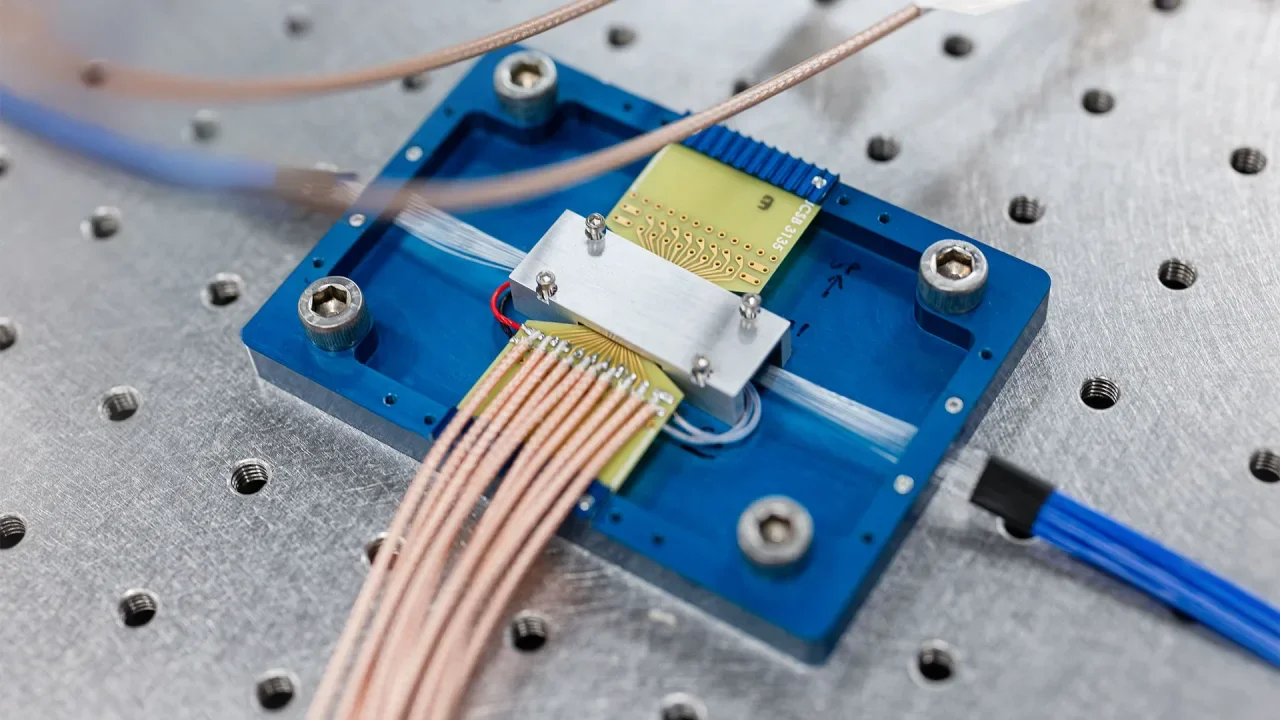
Cisco is the latest company to announce a quantum breakthrough. On Tuesday, the company said it has developed a prototype entanglement source chip that has the potential to cut the timeline for practical quantum computing by as much as a decade. The chip was developed in partnership with UC Santa Barbara and is novel in that it generates up to one million entangled photon pairs per second, and does so at room temperature, saving considerable resources. Additionally, Cisco is also announcing the opening of Cisco Quantum Labs, which will be the company’s dedicated quantum research hub in Santa Monica, California. The chip itself was developed at Cisco’s “Outshift” incubator, where Viljoy Pandey, senior vice president at Outshift by Cisco, says the company works on projects that are “slightly out of the comfort zone.” “We’re a networking company,” says Pandey. “We’re looking at quantum networking and quantum security.” “Our thesis is pretty straightforward: To make [quantum computing] practical, you need to scale it out,” he adds. “You need a network, and to have a quantum network, you need a quantum entanglement chip. That’s the first building block.” In practice, the chip will allow quantum computers to be networked together—similar to existing networks for classical computers—enabling distributed quantum computing. ‘There’s going to be a ChatGPT moment for quantum’ While other companies are focused on building quantum computers themselves, Cisco is working on the infrastructure to make quantum computing actually work—and it’s attempting to get ahead of things by developing the network and security frameworks while large-scale quantum demand is still likely years away. Moreover, while some experts have mused that quantum computing could be as far as 20 years down the road, Pandey says that Cisco’s breakthrough likely cuts that timeline by “between five and 10 years.” Building the chip took between three and four years, and now Cisco is looking at moving it into production, says Reza Nejabati, head of Quantum Research and Quantum Labs at Outshift by Cisco. “We’re working toward more commercial fabrication,” he says. “There’s a whole bunch of hardware and software technology that we’re bringing up. The quantum proof of concept is happening.” As for what’s next, Pandey says Cisco will work on software to help build out a quantum network and continue work on a quantum roadmap. “There’s going to be a ChatGPT moment for quantum,” he says. “We need to start putting the fundamental building blocks together to prepare.” View the full article

-
Venture funding heats up practice management sector. By CPA Trendlines Research Go PRO for members-only access to more CPA Trendlines Research. View the full article
-
Venture funding heats up practice management sector. By CPA Trendlines Research Go PRO for members-only access to more CPA Trendlines Research. View the full article
-
From answering complex queries to generating creative content, large language models (LLMs) are designed to deliver “zero-click” results – concise, direct answers that eliminate the need for further research. This shift raises a critical question: if users no longer need to visit a website to get the information they want, what happens to web traffic? While the broader implications for the future of websites are a conversation for another day, there’s a more immediate and tactical issue worth examining – links. Specifically: What kind of links are LLMs providing, and how can brands generate traffic from them? The critical role of links in LLM outputs Links in LLM results function as citations, giving users a way to verify the information presented and explore the original source material. This is especially important for maintaining accuracy and reliability, particularly in sensitive or complex topics. For brands, these citation links are the only viable path to generating inbound traffic from LLMs. The good news: Referral traffic from LLMs is up nearly 400%. If LLMs are driving significantly more traffic, then the nature of the links they provide becomes even more important. What the data tells us: Branded vs. third-party links I analyzed hundreds of prompts and categorized the resulting links into three buckets: The brand’s official domain. Third-party domains. Third-party domains that mention the brand name. The data revealed that only 9% of links pointed to the actual branded domain. This presents a clear problem for brands – they’re being mentioned in responses, but not receiving the direct credit of a link to their own site. Dig deeper: Optimizing LLMs for B2B SEO: An overview Real-world examples: Retail and financial services Here are a couple of practical examples from the retail and financial services sectors. In the retail case, I was shopping for a raincoat for an upcoming golf trip to Bandon Dunes. The results for raincoats were decent, but only one link in Perplexity pointed to Patagonia. The rest directed me to third-party sites. The same pattern emerged with a financial services and insurance prompt. The brands mentioned were the major players you’d expect, but every link pointed to third-party lead aggregator sites – sites that typically resell traffic back to those same brands, monetizing it through arbitrage. Get the newsletter search marketers rely on. Business email address Sign me up! Processing... See terms. Why LLMs prefer third-party sources From the LLM’s perspective, linking to a third-party site is a logical choice. It mirrors how people seek information in the real world. If you’re deciding which coat to buy, you don’t ask Patagonia for an unbiased opinion. LLMs appear to apply the same logic, favoring third-party sources that seem more “neutral.” This perceived neutrality is intended to provide a better user experience. However, nearly all of these third-party sites are monetizing traffic in some way, often by profiting from the brands they’re linking away from. Dig deeper: How to optimize your 2025 content strategy for AI-powered SERPs and LLMs What brands can do about it: A 3-step framework So what can brands do about it? Right now, there are three key actions to take: Step 1: Understand your results If you haven’t already, analyze how your brand appears across various LLMs and identify which links are being surfaced. You need a clear picture of the landscape before making any strategic decisions. Step 2: Audit the links Are the links coming from third-party sites? Do those sites have strong inbound link profiles or rely on user-generated content? These insights will shape how you approach Step 3. Step 3: Build a hypothesis LLMs are constantly evolving, and the inputs they rely on remain a bit opaque, so start testing. Based on the patterns you’ve observed, create control and test groups, then adjust your content and link strategies accordingly. Measure impact, revisit Step 1, and refine. Dig deeper: How to segment traffic from LLMs in GA4 Rethinking link equity in the AI era Links have long been the backbone of the web – and they now play a critical role in how LLMs are trained and how they deliver information. As these models become more deeply integrated into our daily lives, the importance of links will only grow. By understanding how links function within LLM outputs, brands can better navigate this shifting landscape and ensure they remain a credible, visible, and accessible part of the conversation. View the full article