ResidentialBusiness
Administrators
-
Joined
-
Last visited
Everything posted by ResidentialBusiness
-
 We may earn a commission from links on this page. Deal pricing and availability subject to change after time of publication. After Consumer Electronics Show (CES) brought some exciting new tech products this January, older flagship models began to drop in price, and TVs were no exception. A Pro version of The Frame TV was introduced, which made the 2024 versions drop in price. Fast forward to April, and those prices have dropped further for some of the sizes. The 43-inch The Frame from 2024 is on sale for $797.99 (originally $997.99), the lowest price it has been, according to price-tracking tools. The biggest size, the 85-inch series, is seeing a record discount of $1,800, currently $2,497.99 (originally $4,297.99). Display Technology: QLED, Resolution: 4K, Refresh Rate: 120 Hz, Special Feature: Built-In Speaker. 43-inch The Frame QLED 4K LS03D $797.99 at Amazon $997.99 Save $200.00 Get Deal Get Deal $797.99 at Amazon $997.99 Save $200.00 Display Technology: QLED, Resolution: 4K, Refresh Rate: 120 Hz, Special Feature: Built-In Speaker. 50-inch The Frame QLED 4K LS03D $997.99 at Amazon $1,297.99 Save $300.00 Get Deal Get Deal $997.99 at Amazon $1,297.99 Save $300.00 Display Technology: QLED, Resolution: 4K, Refresh Rate: 120 Hz, Special Feature: Built-In Speaker. 55-inch The Frame QLED 4K LS03D $1,197.99 at Amazon $1,497.99 Save $300.00 Get Deal Get Deal $1,197.99 at Amazon $1,497.99 Save $300.00 Display Technology: QLED, Resolution: 4K, Refresh Rate: 120 Hz, Special Feature: Built-In Speaker. 65-inch The Frame QLED 4K LS03D $1,497.99 at Amazon /images/amazon-prime.svg $1,997.99 Save $500.00 Get Deal Get Deal $1,497.99 at Amazon /images/amazon-prime.svg $1,997.99 Save $500.00 Display Technology: QLED, Resolution: 4K, Refresh Rate: 120 Hz, Special Feature: Built-In Speaker. 75-inch The Frame QLED 4K LS03D $1,997.99 at Amazon /images/amazon-prime.svg $2,997.99 Save $1,000.00 Get Deal Get Deal $1,997.99 at Amazon /images/amazon-prime.svg $2,997.99 Save $1,000.00 Display Technology: QLED, Resolution: 4K, Refresh Rate: 120 Hz, Special Feature: Built-In Speaker. 85-inch The Frame QLED 4K LS03D $2,497.99 at Amazon /images/amazon-prime.svg $4,297.99 Save $1,800.00 Get Deal Get Deal $2,497.99 at Amazon /images/amazon-prime.svg $4,297.99 Save $1,800.00 SEE 3 MORE Samsung’s The Frame smart TVs have come a long way since their 2017 release. Launched to appeal to the crowd that wants a big TV but doesn’t want that TV to dominate their decor, its main feature is an anti-reflection matte display that took the “framed artwork” aspect to new levels—and with 4K picture quality. As the name implies, the allure of this TV is that it can double as a digital art frame, with its anti-glare matte display and customizable frame. I first saw the 2022 version up close when it was released, admittedly having been fooled by my brother into thinking it was an actual painting (it really does look like one). The matte screen does a good job of making the TV seem like a painting, and it's great for bright rooms that might otherwise get a lot of glare from the screen. That version had an "average" review from PCMag due mainly to poor contrast and its price. However, the new 2024 version is the latest generation of this series and has notable improvements. You'll get an improved refresh rate of 120Hz, the same QLED display, and 4K resolution with a Quantum 4K processor. You can buy frames separately to your taste—and even design them with a Harry Potter theme, like this guy on TikTok did. View the full article
 -
I didn’t start out as a founder. I started out as an arms dealer. Not in the literal sense — but in the early days of Silicon Valley, I was on the front lines of sales, business development, and corporate development. I knew how to close deals, spot trends, and move fast. I was valuable but always on the periphery of the real action. I was building. I watched teams turn ideas into companies and products into platforms. After a while, it became clear — I was contributing but not creating. So I made a move. I joined Ooma as a founding executive. We set out to reinvent home phone service and take on the telcos. It was bold and ambitious and taught me what zero to one really looks like. From there, I co-founded Jangl, a privacy-forward voice platform that lets people connect without giving out their real number. We raised money, built the team, and got real traction. Then, the market shifted, and we hit the wall. That kind of moment can knock you down — or wake you up. What I’ve learned across every chapter since is this: transition points represent some of the most valuable terrain upon which you’re ever likely to stand. They’re confusing, uncertain, and usually uncomfortable. But they’re also where reinvention happens — if you let it. Too many people try to erase what came before when they make a change. I’ve done the opposite. I’ve treated every shift in my career like compound interest. Sales taught me how to tell a story. Founding taught me to see around corners. Product leadership taught me to zoom out and engineer systems at scale. Every new move built on the last. That’s the difference between a pivot and a reinvention. A pivot is reactive. Reinvention is expansive. Recognizing when it’s time But how do you know when it’s time for a reinvention? Here are five signs that I’ve learned to watch for: You know it’s time to move when you’re always executing someone else’s vision. You know it’s time when the job starts to feel too small for what you’ve grown into. You know it’s time when people keep pulling you back into what you’re already great at instead of asking what you want to learn next. You know it’s time when you feel a quiet envy toward the people doing what you wish you were doing. And you definitely know it’s time when the story you’re telling about yourself no longer fits who you’ve become. The key is to treat transition points not as gaps, but as launchpads. When Ooma ended, I didn’t run back to sales. I leaned harder into product. After two more startups, I shifted into leadership roles at companies like Facebook and VEVO, then helped build Disney+ and led streaming product and engineering at TelevisaUnivision. That kind of reinvention required unlearning, taking risks, and putting myself in uncomfortable rooms. But every time I did it, I unlocked new capabilities. Carrying forward what matters The trick is not to over-index on any one chapter — the startup that fails; the role that runs its course; the team that changes. All of it is temporary. What’s permanent is what you carry forward — the grit, the pattern recognition, the following your hunches. That’s the raw material for whatever comes next. Reinvention isn’t something you do once. It’s a muscle. And the people who stay relevant, energized, and dangerous in the best ways are the ones who keep flexing it. If you’re standing at a crossroads, don’t freeze. Don’t cling. Ask yourself: “Am I building something that reflects who I am right now?” And if the answer is no — what’s stopping you? * * * Michael Cerdá is a veteran product and technology leader who has served as Chief Product Officer and executive at several of the world’s most influential companies. As VP of Product for Disney Streaming, he helped launch Disney+ to over 100 million subscribers. Previously, he was Chief Project Officer at Goldman Sachs’ Marcus division, Chief Experience Officer at Live Nation/Ticketmaster, and Director of Product at Facebook. He has also founded multiple venture-backed startups and holds two technology patents. His new book, Build Something: Building Products, Business & Culture – A Journey of Hard-Won Lessons and Impactful Outcomes (Feb. 20, 2025), reveals the untold true stories behind some of the most transformative technologies of our time. Learn more at www.build-something.com * * * Follow us on Instagram and X for additional leadership and personal development ideas. * * * View the full article
-
The former hedge fund manager is being asked to lead negotiations with foreign governments amid America’s self-inflicted hit View the full article
-
Chancellor welcomes striking official data as allies set out ‘four-pronged response’ to Trump tariffs View the full article
-
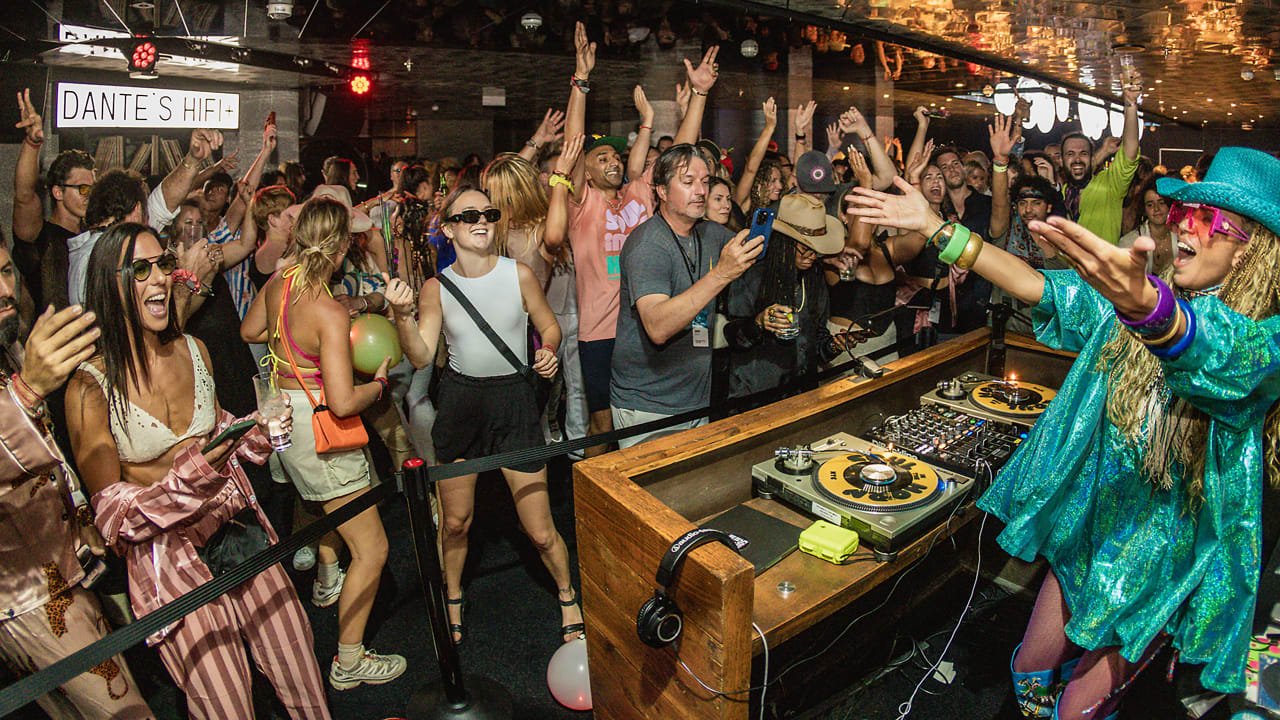
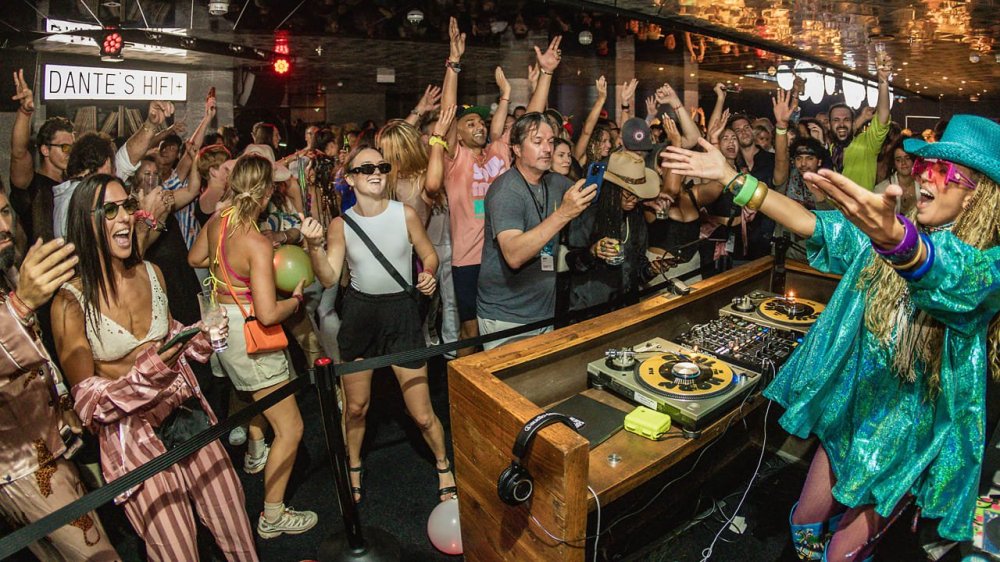
Fast Company is the official media partner of Summit Detroit. From the mouths of most companies, the word “community” amounts to nothing more than another cliched buzzword drained of any substance. But in some instances, the idea of community is so intrinsic to what the company is and stands for that the meaning behind the word evolves into something more. It’s why Jody Levy, CEO of Summit, had a hard time defining the word as it applies to her organization that hosts conferences and immersive experiences around the world. “Community is not the right word. Network is not the right word. Tribe is not the right word. None of these words actually describe what being part of Summit feels like and delivers for the people that choose to show up and participate in the ecosystem,” Levy says. “It’s like choosing to be a node in an interconnected latticework of people across the planet that have certain things in common.” Or as Summit cofounder Brett Leve describes it: a mutual aid society for entrepreneurs. “If you ask anyone who started a company, on Tuesday it’s a hiring problem. On Friday, it’s a finance problem. The next week it’s a supplier issue,” Leve says. “There’s all of these things that come up, and there just aren’t a lot of go-to resources or places that train people to address those challenges. That’s where we landed on the concept of community being this panacea.” Summit was founded in 2008 by a group of entrepreneurs looking to pool their resources and knowledge with other like minded individuals. Leve, who, at the time, was two years out of college with a business degree, understood he was still limited in what he learned on paper. “I don’t think any of that education gave me the tools that I needed to be an entrepreneur,” he says. “The entrepreneurial journey is so challenging. You need a very broad toolkit in order to address all of those challenges you bump up against.” And so Summit was born as an invite-only organization using events as a way to bring members together to both educate them through curated programming touching on wellness, creativity, and beyond—but also to provide a unique atmosphere made to forge new relationships. Summit’s flagship event heads to Detroit this June 5-8 and promises to create the kind of connections it’s become known for. Take for example Christina Sass who, in 2012 at a Summit event, met someone who “would change the course of my life,” as she puts it. A fellow Summit member introduced Sass to Jeremy Johnson simply because they both seem interested in the same thing. “‘You two won’t stop talking about access to education,’” Sass recalls the Summit member telling her. “‘You should talk to each other about it.’ She was absolutely right.” Fast forward two years and Sass and Johnson cofounded Andela, a marketplace for software engineers and other technical talent in emerging economies. The company grew to more than 2,000 employees and hit an annual revenue run rate of $50 million within five years of launching. Arturo Nunez, entrepreneur and board member of Estée Lauder and Abercrombie & Fitch, joined Summit in 2012 and says it reinforced his belief that being in the right rooms can change everything. “It’s not just about who you meet, but the energy, the exchange of ideas, and the way this community encourages you to think bigger, move with intention, and build with purpose,” Nunez says. “It’s a space where people don’t just dream—they execute.” And sometimes the connections at Summit are less about front facing networking and more of an internal, personal journey. “[Being part of Summit has] simultaneously helped me get over imposter syndrome while giving me a healthy dose of it,” says Phillip Cooley, former co-owner of Slows Bar BQ in Detroit. “It’s important to remain humble throughout life, but being in spaces with such wonderful people has also fortified my confidence and helped me trust my voice.” It’s those stories that speak exactly to why Leve and his cofounders created Summit. “I’m still as inspired by the concept of it 17 years in as I was when we started,” Leve says. “It’s like a collaborative art project that changes over time. That’s the exciting part about it—every time you add someone into the mix, the whole network becomes stronger.” Click here to learn more about Summit and apply to attend Summit Detroit this June 5-8, 2025. View the full article
-
On Thursday at 3 p.m. ET, a helicopter flew along the Manhattan skyline for less than 18 minutes before plunging into the Hudson River. The sightseeing helicopter carried a family of five from Spain. Law enforcement confirmed the identity of the passengers to ABC News as Agustin Escobar, an executive from European automation company Siemens, along with his wife, Merce Camprubi Montal, and their three children. The family, along with the pilot, all died in the crash. The helicopter was chartered by the company New York Helicopter, which posted photos of the smiling family inside the aircraft just before it took off. The chopper appeared to be a N216MH—a Bell 206L-4, according to a Flight Radar statement posted to X (formerly Twitter). The owner of the company and CEO, Michael Roth, said the pilot of the aircraft had radioed about needing fuel just before the aircraft began flying erratically. “He [the pilot] called in that he was landing and that he needed fuel, and it should have taken him about three minutes to arrive, but 20 minutes later, he didn’t arrive,” Roth told The Telegraph. Safety concerns in the wake of the tragedy The National Transportation Safety Board is investigating the incident, but the tragedy may concern potential future flyers. In the wake of the incident, the helicopter company’s track record is also being scoured, and it seems that a murky financial history, and previous close-calls. According to court records, per The Wall Street Journal, New York Helicopter seemed to be facing financial challenges. Just this February, Wynwood Capital Group, a cash-advance firm, sued the company. It alleged that it had advanced $50,000 to the company in January in exchange for nearly $75,000 in future receivables. But days later, the company was blocked from recouping the money. The outlet also reported that in December, one of the company’s aircrafts was repossessed by PHI Aviation, the company it was leased from for failure to make payments. In 2019, the New York Helicopter filed for bankruptcy. The New York Times also reported that in 2013, in an incident that now appears eerily similar to Thursday’s crash, one of the company’s aircrafts lost power. No one was injured in the incident, but the helicopter was forced to make an emergency “hard landing.” Another emergency situation occurred just two years later, in 2015. An investigation into the incident found that a faulty drive shaft had been painted, so it wasn’t possible to deduce whether it had been involved in a previous hard landing. Investigators called it “deliberate concealment and reuse” of the faulty component “by unknown personnel.” While adventurers may not want to swear off taking a helicopter ride just yet, it’s important to note that helicopter tours do come with some risk, and it’s important to research the tour company before booking. Still, according to data from the United States Helicopter Safety Team, crashes are not all that uncommon. Nationwide, there were 89 accidents in 2024, resulting in 30 fatalities. The previous year, there were even more accidents—101, but only 29 fatalities as a result. Fast Company reached out to New York Helicopter but did not hear back by the time of publication. View the full article

-
We may earn a commission from links on this page. Netflix has built a subscriber base more than 270 million strong on the backs of some great original TV series, and there’s a fair chance you’re watching (or have already binged) the biggies, from Stranger Things, to Bridgerton, to The Witcher, Ripley, and more. Even if you haven’t seen them, these shows are buzzy enough that you know their names—but there's more where they came from, including shows that are as good as (or better than) those flagship series. Here, in no particular order, are 40 of Netflix’s most entertaining, underrated originals—shows you maybe aren’t watching, but definitely should be. The Residence (2025 – , renewal pending) The latest from Shondaland (that's Shonda Rhimes' production company, natch) is maybe 10% too silly, and similarly a bit too derivative of other comedy-mysteries like Only Murders in the Building and Knives Out—and yet! There's a ton of fun to be had in this juicy, twisty-turny series set behind-the-scenes at the White House. During a state dinner for Australia, complete with guest Kylie Minogue, White House Chief Usher A. B. Wynter (Giancarlo Esposito) dies, possibly by suicide but probably by murder. Idiosyncratic, bird-loving consulting detective Cordelia Cupp (Uzo Aduba) is called in to solve the crime that the White House staff would like to keep as quiet as possible, especially given the party going on downstairs. Randall Park, Ken Marino, Isiah Whitlock Jr., Bronson Pinchot, Mary Wiseman, Jane Curtin, and Al Franken are just a few of the actors playing guests and suspects. You can stream The Residence here. A Man on the Inside (2024 – , renewed for a second season) Though their styles are very different, A Man on the Inside feels a bit like a successor to Michael Schur's earlier series, The Good Place, and not only because they both star Ted Danson. There's a deep humanity at the core of both shows, and that serves Inside particularly well, even when it isn't laugh-out-loud funny. Ted Danson plays Charles Nieuwendyk, a slightly hapless retired professor and recent widower who listens to his daughter's plea for him to find something to keep him active: He answers an ad from a private investigator looking for someone to go undercover living at a retirement community in San Francisco in hopes of discovering who's been stealing jewelry. As he comes to care about the people he's investigating, and lying to, his job only gets harder. You can stream A Man on the Inside here. Black Doves (2024 – , renewed for a second season) Spy shows are having a moment right now, and Black Doves feeds that while also standing apart a bit, playing somewhere in between realistic(-ish) dramas like The Agency and more action-oriented James Bond thrillers. Keira Knightley heads the cast here as Helen Webb, wife of Britain's defense secretary and also a mercenary spy whose identity is compromised when her lover is killed. See? Juicy. The titular Black Doves, for whom she works, send Sam (Ben Whislaw) to protect her. You can stream Black Doves here. Delicious in Dungeon (2024 – , renewed for a second season) An anime import from Japanese animation studio Trigger (Cyberpunk: Edgerunners), Delicious in Dungeon is a cute and clever fantasy series with just enough action to keep things lively. A group of adventurers set out on a traditional dungeon crawl-type adventure only to have the sister of the leader eaten by a red dragon. Out of supplies but in a rush to catch the dragon who's fled to the lowest levels of the dungeon, the party comes to the attention of a dwarven master chef, who convinces them that their idea of cooking and eating dungeon monsters isn't merely practical—it could be high culinary art. You can stream Delicious in Dungeon here. The Decameron (2024) A funny, dark, ultimately surprisingly humane show that takes on Giovanni Boccaccio's 14th-century short story collection with Bridgerton-esque swagger. With the plague ravaging Florence, a bunch of nobles and attendants make their way to a countryside villa to wait out the plague and drain the liquor supplies. Rules and mores are turned upside down, particularly by the servant Licisca (Tanya Reynolds), who kind of accidentally kills her lady on the way to the villa and decides to take her place. Somehow, despite being about mostly terrible people, this makes for an entirely addictive binge experience. You can stream The Decameron here. The Åre Murders (2025) So popular are Scandinavian cop dramas that Nordic noir is its own sub-genre (I've just learned), and this Swedish import is picking up very solid reviews. Plain-spoken, troubled (as in: under suspension) detective Hanna Ahlander leaves Stockholm to spend some time unwinding at her sister's place in remote Åre. Of course, a missing girl finds her back on the job, and up against local police officer Daniel Lindskog, who she's very reluctant to trust. Looking for a bleakly beautiful landscape and ambiguous morality? Åre might be the place for you. No word on whether or not more seasons are planned. You can stream The Åre Murders here. Cassandra (2025) There's not much of M3GAN in this import, unless you'd care to imagine Cassandra as our favorite AI doll's German mum. Here, a family movies into the oldest smart home in the country, built in the 1970s and retaining its AI household helper. Cassandra's been alone for over 50 years, and, while she seems quite friendly and helpful, she's very determined that she'll never be on her own again. A creepy robot with deliciously retro style. You can stream Cassandra here. Supacell (2024– , renewed for a second season) There's a whole lotta superpower shows out there, despite us all having long since agreed that we're burned out on superhero stuff. And yet, there are still stories that break through and reveal themselves as something special. Such is the case with British import Supacell, lead by former Doctor Who companion Tosin Cole as Michael, a young delivery driver in East London who discovers he can move through space and time. One such trip leads him to conclude that he needs to track down four other people in similar circumstances in order to avert tragedy. Smartly, this isn't a show about people becoming superheroes, but instead trying to live their increasingly complicated lives as superheroes—and the dangers in which they find themselves are more genuinely thrilling as a result. You can stream Supacell here. Blood & Water (2020– , renewed for a fifth season) In many respects it’s a top-tier teen drama, starring Ama Qamata as Puleng Khumalo, a teenage girl who’s lived her entire life in the shadow of a sister that was taken as a baby by human traffickers; Puleng’s parents even hold a birthday celebration for the sister each year. When invited to a party by popular Fikile Bhele (Khosi Ngema), a student at an elite school in Cape Town, Puleng can’t help noticing their similarities. Steeped in the story of her sister, Puleng transfers to the school to get to the bottom of things. There’s plenty of juicy high school drama and family secrets, but the show is elevated by its unexpected dramatic heft. It concluded its fourth season early in 2024 (an increasingly rare lifespan in the days of modern streaming cost-cutting), with a fifth season renewal pending. You can stream Blood & Water here. Shadow and Bone (2021–2023, two seasons) Based on the fantasy books of Leigh Bardugo from her series of the same name, the series follows Alina Starkov, an orphan and cartographer who discovers and grows into her vaguely magical Grisha abilities. It’s a beautiful and dense fantasy world—one that might be a little hard to grasp at first, but only because the series is content to drop you into its world without a lot of exposition. It’s worth the investment, even if a fan campaign to bring the show back for a third season didn't succeed. You can stream Shadow and Bone here. The Brothers Sun (2024) A fun action-comedy and member of the Netflix one-season-and-done club (get used to it, I guess), The Brothers Sun stars Oscar-winner Michelle Yeoh as Eileen Sun, the exiled matriarch of a family of Taiwanese gangsters. She'd come to Los Angeles years before, taking a son, Bruce (Sam Song Li), who grew up knowing little of his origins and has few ambitions beyond being really great at improv comedy. An assassination attempt sends his older brother to L.A., drawing Eileen and Bruce back into the fold—and into danger. You can stream The Brothers Sun here. The Midnight Club (2022) The least buzzy of Mike Flanagan's Netflix offerings is every bit as good as Midnight Mass, The Fall of the House of Usher, etc. Based on the YA novel by Christopher Pike, it involves a group of eight terminally ill young patients at a bucolic hospice home run by a secretive and mysterious doctor (A Nightmare on Elm Street's Heather Langenkamp). Each night the kids meet secretly to share scary stories, with each also promising to return from beyond the grave when the time comes. Very spooky, and surprisingly moving. It was planned as more than a miniseries, and the cancellation leaves some questions unanswered, but the ending is still pretty satisfying. You can stream The Midnight Club here. Sex Education (2019–2023, four seasons) There’s a fair bit of sex on TV (having migrated from the now largely sexless movies), but that’s not the same thing as sex positivity. In this British comedy-drama, Asa Butterfield and Gillian Anderson star as an insecure, shy teenager named Otis and his mother, Jean, a frank and sometimes painfully honest sex therapist. When a school bully needs some sex advice, Otis dispenses some of the wisdom he’s picked up from mom, eventually making a name for himself around school by selling his knowledge as expertise. It’s a funny and charmingly raunchy show, treating sex with humor and positivity, and also introduced the world to reigning Doctor Who Ncuti Gatwa, who co-stars. You can stream Sex Education here. Special (2019–2021, two seasons) One of the benefits of the age of streaming television has been the increase in real representation for diverse groups—in many cases moving light years beyond broadcast TV in telling stories by and about more than just the usual suspects. Special is a great example: a heartfelt, funny work/sex comedy about a gay man with cerebral palsy, starring and created by... a gay man with cerebral palsy (Ryan O’Connell). The result is charming and real, while also touching on perceptions of disability, as early on, Ryan rewrites his own narrative by telling people that his distinctive mannerisms are the result of a car accident. You can stream Special here. Heartbreak High (2022– , renewed for a third and final season) There’s a lot of history here that you don’t really need to enjoy the show, but Heartbreak High is a sorta soft-reboot of a popular and long-running 1990s show in Australia, which was itself a spin-off from a 1993 movie. Here, there’s a pretty solid blend of teen drama (sealing with issues related to gender identity, race, and teen sexuality) and comedy (the main characters corralled into the Sexual Literacy Tutorial, with the unfortunate acronym SLT). It all starts with Amelie and Harper, two students at a diverse Sydney high school, who set off a firestorm when they create a detailed map of the sexual exploits of the school’s students. You can stream Heartbreak High here. Dark (2017–2020, three seasons) Dark began as a mystery involving a missing child and evolved over its three seasons into one of the most complex series on television: a time travel-driven narrative that explores (appropriately) dark family secrets over the course of several generations. The first Netflix original import from Germany (after a few minutes, you won’t even notice the subtitles). It’s got a striking look and an incredibly atmospheric feel. After a few minutes, you won’t even notice the subtitles. 1899, from the same creators, was cut short after only one season—but Dark comes to a satisfying conclusion. You can stream Dark here. Dead Boy Detectives (2024) A particularly vocal fanbase couldn't save these dead boys from Netflix's axe, but its one season is nonetheless a satisfyingly complete story and an altogether fun comedy-drama. George Rexstrew and Jayden Revri star as Charles Rowland and Edwin Payne, two mismatched ghost friends who have elected to dodge the afterlife in favor of remaining on Earth to solve supernatural crimes. Young punk Charles was killed in 1989 after intervening to stop some bullies, while posh Edwin died in 1916 as part of a prank gone wrong, and he's still trying to come to terms with his attraction to boys. Their operation is turned upside down when they meet Crystal (Kassius Nelson), a young psychic who can communicate with them. You can stream Dead Boy Detectives here. Lockwood & Co. (2023, one season) Another one-season-and-done show, Lockwood & Co. is a clever supernatural detective series with a neat premise. In an alternate modern Britain, ghosts are an everyday occurrence, which is not to say they aren't a nuisance—their touch is deadly. Technological progress has largely ground to a halt, while ghost-hunting agencies abound and, since adults lose the ability to sense ghosts directly, kids and teens are on the front lines. Ruby Stokes (Bridgerton) plays Lucy Carlyle, an extremely sensitive listener who was cast aside when she was unfairly blamed for several deaths at her first job. With nowhere else to go, she joins up with the shady, unregulated Lockwood & Co., a two-orphan operation working outside the law. It's YA, generally, but smart and spooky all the same. You can stream Lockwood & Co. here. Jurassic World: Camp Cretaceous/Chaos Theory (2020 – , eight seasons) While the latest Jurassic World movies have skewed more toward nostalgia, these two animated action series' haven't forgotten that dinosaurs are at least as fun for kids as they are for middle-aged parents who remember seeing Jurassic Park back in the day. Camp Cretaceous, which ran for five seasons, takes place in and around the first Jurassic World movie and involves a bunch of kids invited to the title camp for a bit of dino-themed fun—you can imagine how it goes. Chaos Theory follows the kids—most of them, anyway—six years later. You can stream Jurassic World: Camp Cretaceous here. Derry Girls (2018–2022, three seasons) A legitimate sitcom that just happens to be set in Northern Ireland during the Troubles of the 1990s, when clashes between nationalists and unionists frequently resulted in violence. It’s a fascinating contrast, brought to life by a writer and creator (Lisa McGee) who lived it. It’s also laugh-out-loud funny—though doesn’t make any allowances for audiences unaccustomed to Irish accents, so don’t feel bad if you need subtitles until you get the hang of it. The show ended after three seasons, but comes to a satisfying conclusion. You can stream Derry Girls here. She-Ra and the Princesses of Power (2018 – 2020, five seasons) Nimona creator ND Stevenson also re-invented She-Ra for five seasons with plenty of action, heart, and some of the most impressive queer representation you're likely to find in a family cartoon. Aimee Carrero plays Adora, an orphan raised to be a soldier in the evil Horde alongside her best friend Catra (AJ Michalka). When Adora discovers a magic sword that transforms her into the legendary Princess of Power, she switches sides to rebuild the Princess Alliance to resist the tyrannical rule of Hordak. The series turns on rebuilding old bonds, including with the love she left behind. You can stream She-Ra here. Virgin River (2019– , renewed for a seventh season) We have plenty of edgy TV lately, and there’s nothing at all wrong with something a bit cozier. Virgin River stars Alexandra Breckenridge as Mel, a nurse practitioner and midwife who finds unexpected complications when she moves to the title Northern California town. It’s high-end comfort viewing, and has a pretty dedicated fanbase, even without the buzz of something like Stranger Things. You can stream Virgin River here. Sweet Magnolias (2020– , fifth season renewal pending) In a similarly cozy vein (in the best possible way), Sweet Magnolias stars JoAnna Garcia Swisher, Brooke Elliott, Heather Headley and Jamie Lynn Spears as a group of childhood friends supporting each other through various life crises in Serenity, South Carolina. The cast is engaging, and the quality of the performances adds some emotional heft to the show’s sweetness. You can stream Sweet Magnolias here. 3 Body Problem (2024 – , renewed for second and third seasons) This one might not be entirely off your radar, given that it represents the increasingly rare instance in which Netflix actually renewed a show. An adaptation of the heady Liu Cixin novel series, it begins during China's cultural revolution and finds astrophysicist Ye Wenjie (Zine Tseng and Rosalind Chao) making contact with an alien civilization, and making choices that will haunt humanity as the narrative moves into the present. You can stream 3 Body Problem here. Arcane (2021 – 2024, two seasons) Another one that’s pretty popular (and Emmy-winning), but that you might miss if you’re put off by the premise and/or its very slow release cycle. There are few scenarios in which a top-down game involving online opponents shooting lasers across a map should produce a show this impressive, but here we are. The League of Legends lore forms the backdrop for the show, but the pull is in the narrative involving two sisters caught up in the growing conflict between a utopian city and its oppressed underclass, without whom it couldn’t exist. The painted animation style is truly something special. You can stream Arcane here. Gentefied (2020–2021, two seasons) A half-hour comedy-drama, but with an emphasis on the comedy, Gentefied follows three Mexican-American cousins who have built lives in Los Angeles, only to be faced with a new challenge: the looming gentrification of the neighborhood they helped to build. This bilingual series has a lot of heart, and, though cut short after two seasons, the second is even better than the first. You can stream Gentefied here. The Way of the Househusband (2021–2023, two seasons) It’s a little bit of a throwback, sure: the Mr. Mom-style story finds a former yakuza boss getting out of the business in favor of taking over the household chores while his wife goes off to work. Wild! Still, there’s plenty of fun to be had as the deeply intense Tatsu deals with the daily complications of normal life. It takes a typical anime action show star and drop him into a show about making dinner—a solid premise executed with tongue firmly in cheek. You can stream The Way of the Househusband here. Raising Dion (2019–2022) There’s a bit of a Stranger Things-vibe to Raising Dion—a single mom helps her kids to cope with a wildly unexpected turn of events in their lives—but instead of supernatural horror, they’re dealing with their burgeoning superpowers. Seven-year-old Dion, specifically, develops mysterious abilities following the death of his scientist father (played in flashback by one of the show’s producers, Michael B. Jordan). The show wisely doesn’t shy away from depicting the unique challenges of being a Black single mother, which grow further complicated, naturally, when your kid can freeze objects in mid-air. You can stream Raising Dion here. Young Royals (2021–2024 , three seasons) Steamy soap Young Royals follows the fictional Prince of Sweden, Wilhelm (Edvin Ryding) as he embarks on a romance with another student, Simon Eriksson (Omar Rudberg) at their elite boarding school. While possessed of all the addictive qualities of the teen drama genre, Young Royals takes itself a bit more seriously than some, and feels remarkably fresh in its commitment to casting age-appropriate actors in all the key roles. You can stream Young Royals here. Sacred Games (2018–2019, two seasons) A crime-drama with a uniquely complex facility with world-building, this Indian import begins with an honest Mumbai cop played by Hindi-language film star Saif Ali Khan. Just as the rookie has become entangled in the police department’s corruption, he’s contacted by a long-believed-dead crime boss who warns him that, without his help, everyone in Mumbai will be dead in 25 days. The familiar cop-show beats play out against a larger-than-usual canvas, making for one of the best recent crime dramas from any country. You can stream Sacred Games here. Atypical (2017–2021, four seasons) There are plenty of shows featuring characters who serve as analogs for individuals on the autism spectrum (think Big Bang Theory), but very few that seem willing to, I dunno, forefront characters with autism. In that regard, Atypical isn’t perfect—in trying to show the positive face of autism, the well-intentioned series doesn’t always let the characters feel like real people. Still, issues aside, it’s a likable and funny show that gets closer to a realistic portrait of life on the spectrum than most. You can stream Atypical here. Sense8 (2015–2018, two seasons and two specials) Look, it’s a superhero show, but with orgies. That’s not the actual tagline, but maybe the show would’ve gone past two seasons had it been. Really, though, it’s a high-concept science fiction premise involving eight strangers from around the world who find with and between themselves with a deep, inexplicable connection. On one level, that means they can share their special abilities when needed. On another, it’s an impressively uplifting call for connection, and a recognition of our mutual interconnectedness. Also, the show is super queer—unsurprising, given it sprung from the minds of the Wachowskis (who co-wrote the episodes with Babylon 5's Michael J. Straczynski). You can stream Sense8 here. 3% (2016–2020, four seasons) The metaphor isn’t terribly subtle: In a near-future dystopia, the young, impoverished people of Inland have one chance to get out—“The Process,” a gamut of tests and puzzles to determine who will get to set off forever to live in a bountiful paradise. Most fail, and some die, leaving 3% of participants to move on to a utopia that it’s not much of a spoiler to say isn’t quite all it’s cracked up to be. Yeah, it’s more-or-less a Brazilian Hunger Games, but with longer-form storytelling and well-drawn characters that sell the concept. You can stream 3% here. Alias Grace (2017, one season) In some ways, it’s the other recent Margaret Atwood novel adaptation (existing well in the shadow of the bigger, buzzier Handmaid’s Tale on Hulu), but this miniseries is every bit as biting and well-crafted. It’s based on the true story of a poor Irish immigrant found guilty of a double homicide in 1843 under somewhat mysterious circumstances, and following a life of trauma. Years later, a psychiatrist comes to examine her and explores her past and the circumstances that might (just might) have driven a disenfranchised and powerless girl to murder. You can stream Alias Grace here. Star Trek: Prodigy (2021 – , third season renewal pending) Like One Day at a Time, Prodigy became a Netflix original in a roundabout way, having been ditched by Paramount+ (Star Trek's kinda/mostly streaming home) after the first season. A bit of smartly entry-level Trek, the show finds a bunch of orphaned teens forced to work in a labor colony discovering a long-lost Federation starship that they use to make their escape. With some help from the ship's built-in command training program (Kate Mulgrew, reprising her role as a holographic version of Voyager's Captain Janeway), the kids make their escape into a bigger universe. It's some of the best modern Trek, with an all-ages style and increasingly epic scope. You can stream Star Trek: Prodigy here. Gyeongseong Creature (2023 – , third season renewal pending) A bigger hit globally than in the U.S., this South Korean import blends historical drama with monster horror in a fun, compelling way. Set in 1945 Gyeongseong (what is now Seoul), and during the Japanese occupation of Korea, the series finds the titular monster arising out of human experimentation conducted in secret by the Japanese army. The scars of occupation have been justifiably fertile ground for storytelling in the last few years (see also Apple’s Pachinko), and Gyeongseong adds science fiction action to that mix. You can stream Gyeongseong Creature here. Hilda (2018 – 2023, three seasons) Hilda’s world feels like it could have come from the mind of Japanese animation legend Hayao Miyazaki, but with more trolls (it’s not Japanese, for the record, but based on a British graphic novel). The title character lives with her mother in the remote wilderness, a magical landscape filled with magic and animals that adventurous Hilda is very familiar with. Circumstances force the two to move to the city of Trollberg, a place that appears to have significantly less magic. It’s a distinctly lovely-looking show, with a curious and empathetic protagonist who’s also incredibly stubborn and set in her ways. It’s wonderful for kids and adults, and stars Belle Ramsey (The Last of Us) as the title character. There’s also a feature-length movie (Hilda and the Mountain King, also on Netflix). You can stream Hilda here. Kipo and the Age of Wonderbeasts (2020, three seasons) A collaboration between DreamWorks and the South Korean animation studio Mir (The Legend of Korra), this enchanting adventure series follows Kipo Oak as she seeks out her father in unique future dystopia: at some point, mutated animals rose up against their human oppressors and forced humans into underground burrows. During her journey, Kipo discovers new things about herself (for example, that she’s not 100% human), and finds friends and allies among the animals. It’s a gorgeous and delightful adventure, with a fair bit of casual diversity and queer representation. You can stream Kipo here. Anne With an E (2017–2019, three seasons) It doesn’t sound, on its face, like a great idea: Lucy Maud Montgomery’s classic novel Anne of Green Gables is pretty well synonymous with old-timey kid lit and a beloved ‘70s miniseries, and any modern adaptation could have run to treacly irrelevance or edgy revisionism. Instead, the reboot revisits the novel and mines its text (and subtext) for new ideas without betraying the spirit of the work. It feels perfectly fresh modern in unexpected ways. You can stream Anne With an E here. Kingdom (2019–2020, two seasons and then some) It’s not exactly a history lesson, but Kingdom does open a window into the middle of Korea’s Joseon Dynasty, a centuries-long era that ran to nearly the 20th century. During which time there wasn’t an actual zombie plague—so liberties have been taken. The show very deftly combines horror and medieval-esque political intrigue, making it something wholly unique to either genre. Based on a webcomic series authored by show creator Kim Eun-hee, it was Netflix’s first original South Korean series. So far there are two seasons and a feature-length special episode, with a spin-off movie Ashin of the North. You can stream Kingdom here. View the full article
-
Nine ways to measure client experience. By Hitendra Patil Client Accounting Services: The Definitive Success Guide Go PRO for members-only access to more Hitendra Patil. View the full article
-
Nine ways to measure client experience. By Hitendra Patil Client Accounting Services: The Definitive Success Guide Go PRO for members-only access to more Hitendra Patil. View the full article
-
Public ownership could be the saviour of the UK’s remaining steel industryView the full article
-
US government debt on course for worst week since 2019 as traders report worsening liquidityView the full article
-
President’s trade war likely to raise unemployment and slow economic growth ‘considerably’, says John WilliamsView the full article
-
This post was written by Alison Green and published on Ask a Manager. It’s the Friday open thread! The comment section on this post is open for discussion with other readers on any work-related questions that you want to talk about (that includes school). If you want an answer from me, emailing me is still your best bet*, but this is a chance to take your questions to other readers. * If you submitted a question to me recently, please do not repost it here, as it may be in my queue to answer. View the full article
-
Alphabet’s Google laid off hundreds of employees in its platforms and devices unit, The Information reported on Friday, citing a person with direct knowledge of the situation. The cuts in the division, which houses the Android platform, Pixel phones and the Chrome browser among other applications, follow Google’s January buyout offers to employees in the unit, the report said. “Since combining the platforms and devices teams last year, we’ve focused on becoming more nimble and operating more effectively and this included making some job reductions in addition to the voluntary exit program that we offered in January,” a Google spokesperson told The Information. Google did not immediately respond to a Reuters request for comment. Big Tech players have been redirecting spending towards data centers and AI development, while scaling back investments in other areas of their business. Facebook-parent Meta laid off about 5% of its “lowest performers” in January while pushing ahead with the expedited hiring of machine learning engineers. Microsoft also trimmed 650 jobs in its Xbox unit in September. Amazon laid off employees in several units, including communications, while Apple eliminated about 100 roles in its digital services group last year, according to media reports. Bloomberg in February reported that Google had laid off employees in its cloud division, adding that the round of cuts impacted only a few teams. In January 2023, Alphabet had announced plans to cut 12,000 jobs, or 6% of its global workforce. —Anusha Shah and Deborah Sophia, Reuters View the full article
-
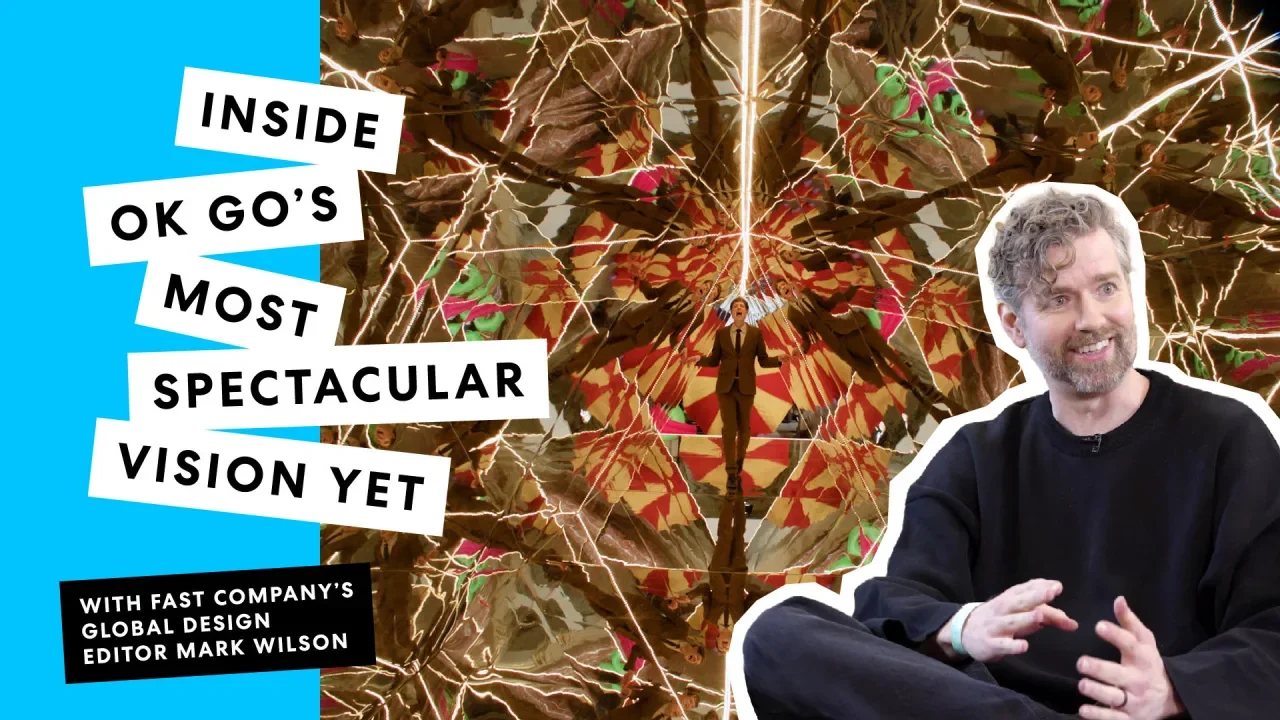
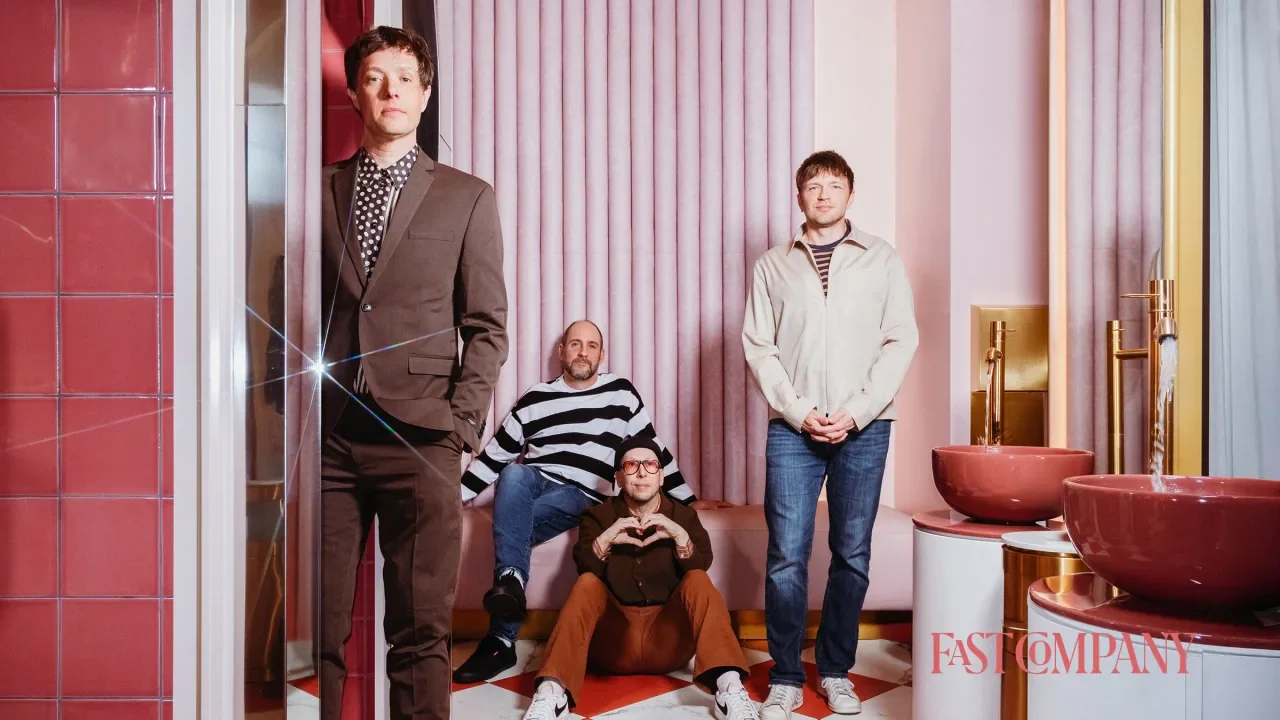
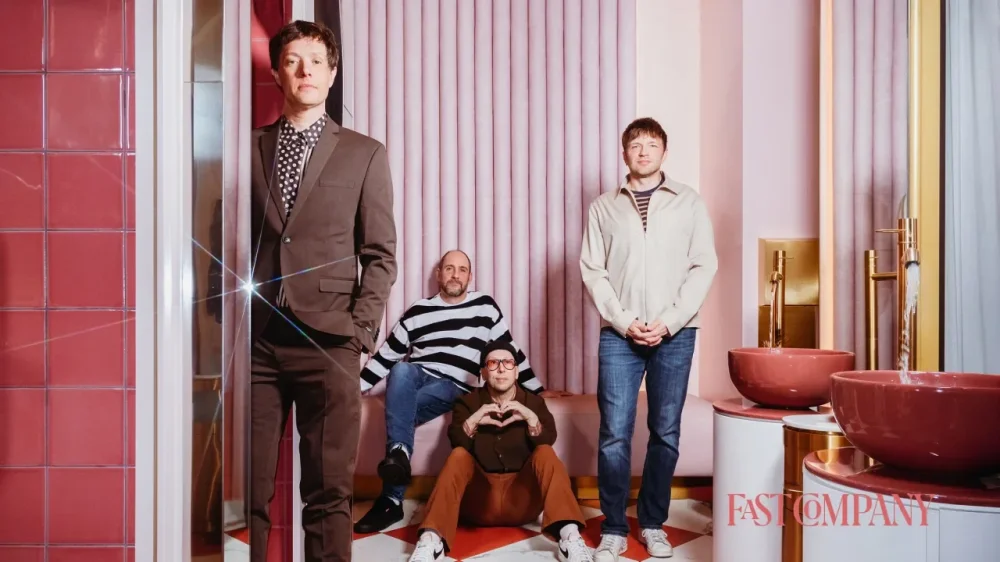
‘Fast Company’ global design editor Mark Wilson goes behind the scenes with the band in Budapest to decode the disciplined chaos of their genre-defying visual experiments. View the full article

-
Never underestimate the news media’s ability to amplify the mundane with urgent-sounding headlines. If you follow the twists and turns of the retail industry as closely as we news-watchers do, you may have noticed recently that the simple act of closing for the Easter holiday has been rebranded as a “retail blackout.” If you’ve been at all confused by this oversold terminology, here’s a brief explainer to help break it down: What’s happening? Over the last week or so, a number of news organizations—mostly from outside the United States—have reported on a so-called “retail blackout” that is set to take place on Sunday, April 20, which is Easter Sunday. Easter is a major holiday that is celebrated by billions of Christians around the world. The so-called blackout merely means that some retailers are closing in observance of this major holiday. So this is a new thing? Not at all. Retailers have long closed for Easter and other major holidays. In fact, if you dig into the lists for 2025, you’ll find that they haven’t changed that much in recent years. For example, Target, Costco, and Sam’s Club are closing on Easter 2025, according to USA Today (which, we should point out, did not use the term blackout). Those same retailers also closed on Easter in 2024 and 2023. Conversely, retail giant Walmart tends to stay open on Easter as it will again this year. Why are articles referencing an Easter “blackout” then? Probably because it sounds more exciting than just saying that stores are closing on Easter. However, we haven’t seen any retailers themselves refer to closing for the holiday as a blackout. As far as consumer activism goes, there have been legitimate attempts at economic blackouts this year—most notably in February, when consumers stopped buying things for 24 hours in protest of rising prices and corporate greed. But none of the articles linked to here are referencing any specific activist movement. Who started this and is it a terrible thing? That depends on how you feel about clickbait. The information in the articles is actually quite useful if you care about which stores are open and closed on Easter, which a lot of people do. The justification for using exaggerated terms to describe relatively ordinary occurrences is always going to be subjective. As for where this all started, it’s not totally clear which outlet was the first to do it. A reverse-chronicle search on Google News reveals that some outlets used similar terms last year too. View the full article

-
Hall of Fame leaders share the lessons, mistakes, and trends shaping the future of firm growth. Gear Up for Growth With Jean Caragher For CPA Trendlines Go PRO for members-only access to more Jean Marie Caragher. View the full article
-
Hall of Fame leaders share the lessons, mistakes, and trends shaping the future of firm growth. Gear Up for Growth With Jean Caragher For CPA Trendlines Go PRO for members-only access to more Jean Marie Caragher. View the full article
-
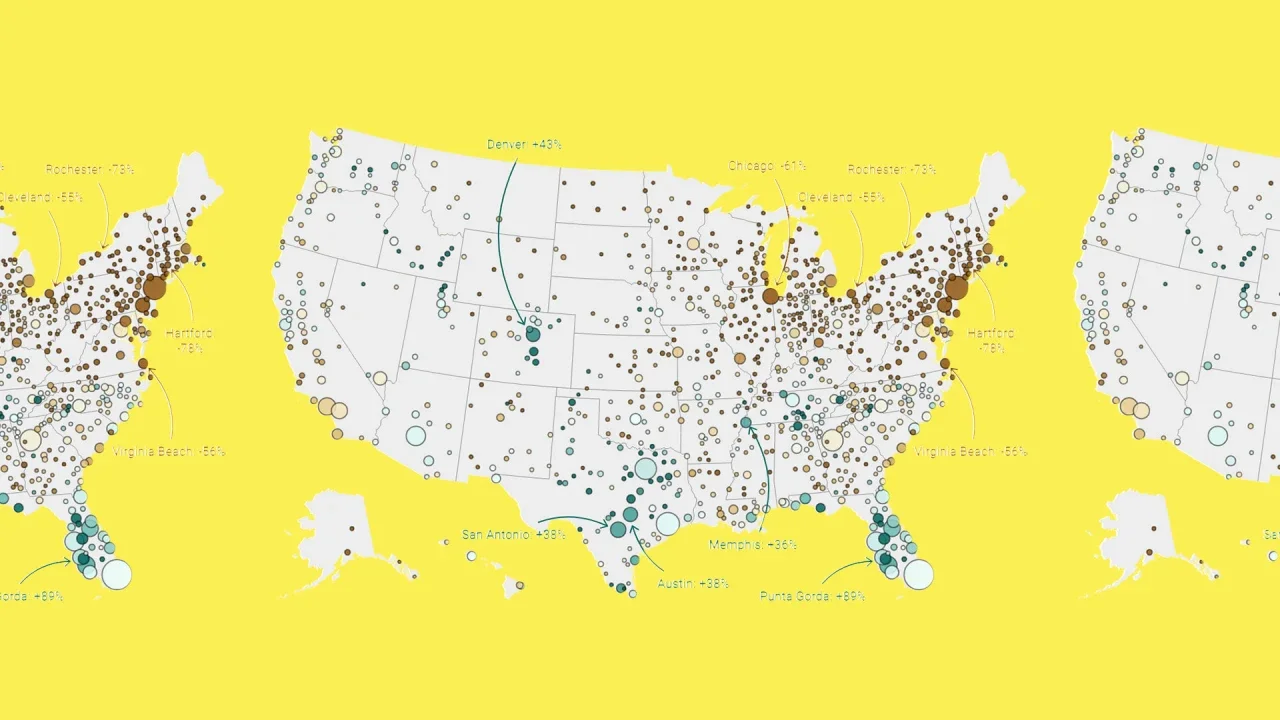
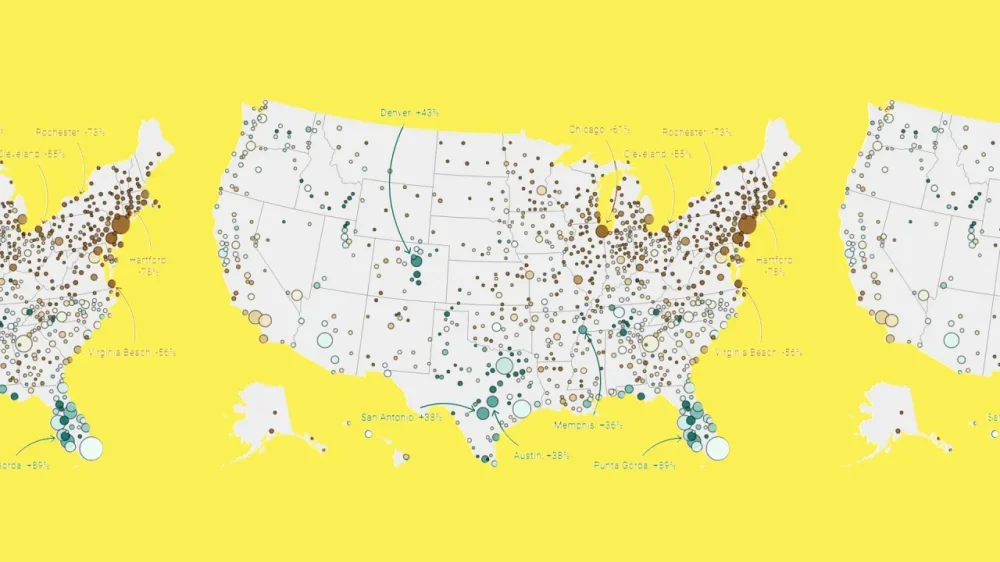
Want more housing market stories from Lance Lambert’s ResiClub in your inbox? Subscribe to the ResiClub newsletter. National active housing inventory for sale at the end of March 2025 was up 28.5% compared to March 2024. That’s just 20% below pre-pandemic levels back in March 2019. However, while the national housing market has softened and inventory has surpassed 2019 pre-pandemic levels in some pockets of the Sun Belt, many markets remain far tighter than the national average. Pulling from ResiClub’s monthly inventory tracker, we identified the tightest major housing markets heading into spring 2025 where active inventory is still the furthest below pre-pandemic 2019 levels. These markets are where home sellers have maintained more power compared to most sellers nationwide. Among the nation’s 200 largest metro area housing markets, 42 (see table below) at the end of March 2025 still had at least 50% less active inventory than they did in March 2019. Many of those tight markets are in the Northeast—in particular, in states like New Jersey and Connecticut. Unlike the Sun Belt, many markets in the Northeast and Midwest were less reliant on pandemic-era migration and have fewer new home construction projects in progress. With lower exposure to the negative demand shock caused by the slowdown in pandemic-era migration—and fewer homebuilders in these regions offering affordability adjustments once mortgage rates spiked—active inventory in many Northeast and Midwest housing markets has remained relatively tight, maintaining a seller’s advantage heading into spring 2025. View the full article
-
For three weeks now, OK Go has been on set in Budapest’s largest train station. The temperature in this wing is somewhere around 45 degrees, and much of the Hungarian filming crew has long ago gone numb. Against Keleti station’s baroque backdrop of frescos and pink marble pillars, the band has been working with roboticists and production designers to build one of its most complex music videos ever for a new song called “Love”. The video’s 140-foot-long contraption is built from 29 robots holding 60 mirrors that, in one long tracking shot, will crescendo into a brain-bending photonic spectacle of car-size kaleidoscopes and glimpses into the infinite. It’s almost lunchtime on the last day of filming. The sun will set in six hours. And OK Go has not captured a single frame. The crew is still choreographing the tricky final shot, which involves four Kuka robot arms—industrial grade automatons capable of lifting a car—spinning four sharp mirrors, while OK Go front man and the video’s codirector, Damian Kulash, stands singing in the middle of the action donning a glittering mirrored suit. Even testing the Kuka system at half speed with an operator holding a kill switch, tensions are high. “Three people just died!” shouts the assistant director. The robots must build Kulash three walls of an infinity room, while four strapping Hungarians—who have a penchant for shaking their rumps at the start of each take—erect the fourth. Just the day before, the Kuka mirrors hit the mirror with so much force that they shattered the fourth wall and pushed the entire stage by nine inches. This accident led to some last minute reprogramming and a change in the choreography, and made the entire gizmo look more like a Gundam deathtrap than a Yayoi Kusama exhibit. “Nobody died,” counters Kulash in a careful channel of calm. By the murmurs on set from people who know him best, Kulash doesn’t exactly have a reputation for zen. And he warns the AD, “We’ve gotta start fucking running this, or we’ll still be doing this at 6 p.m.,” before quick back pats hammer out a temporary reconciliation. Now, a little older than the last time you’ve seen him—a little grayer, a little horser, a little more contemplative—Kulash swallows his emotions before resetting to his first mark. He tunes out the mounting costs of the shoot, the skepticism of the crew, and the beyond looming deadline, and focuses on the reason they’re making the video in the first place: to capture the infinite sensation of love. Ornella MariFast Company The return of OK Go On April 11th, after a decade of quiet, OK Go will return with its fifth studio album titled And the Adjacent Possible. The band hasn’t released music since 2017, but its members assure you they haven’t been stagnant. Ok Go has been working on And the Adjacent Possible since 2019; and they developed a touring show for art centers where they played along with their music videos. Kulash spent two years directing the Apple TV movie The Beanie Bubble with his wife; bassist Tim Nordwind made an independent film. Three out of four of the band have fully embraced dad status. (Green room discussions involved topics like how much screen time is too much, and at one point, guitarist Andy Ross pauses our interview mid-sentence to call his children before they head to school.) For Kulash, “having kids was the biggest reset,” he says, noting that his family rescued him from burnout. “While it’s the most difficult and intense thing I’ve ever done, it also resets all sorts of wonder and all sorts of excitement about the universe in general. And it sort of made music fresh to me again and made art fresh to me in a whole new way.” Dubbed the “first post-internet band,” OK Go came into its own alongside the rise of YouTube. Before we had interviews over hot wings and bedrotting TikToks, OK Go defined millennial multimedia with its ambitious performance art videos. And to fund them, the band turned to an unlikely source: not a label, but a sponsor. In an era when the stamp of a logo generally meant selling out, OK Go established the fine line of commercial art, presaging a new creator economy subsidized by brands. In 2010, the band partnered with State Farm to sponsor its Rube Goldberg-esque video for “This Too Shall Pass.” Since then, most OK Go videos have been made with sponsorship funding, including Morton Salt, S7 Airlines, and Chevrolet. For “Love,” the band is working with Meta to bring its ambitious video to life. Before this year, the last significant video OK Go produced was from 2017. The final shoot for their last album, Hungry Ghosts, involved the band members dangling from wires to a backdrop of 567 printers. Stop motion captured each new print a frame at a time, with shoots that stretched to 4 a.m. Kulash remembers sleeping ten hours over four days. Whether or not this was the final straw, it was the final video before OK Go took a break. In the years since their last major video hit, the digital world that OK Go defined has gone through a generational shift. Horizontal video has given way to the vertical streams of TikTok and Reels. Artists have given way to “content creators” that churn out a steady stream of low-lift production to appease algorithms more than Facebook shares. “We are still figuring out how to navigate the new social media world, which is, you know, very different from the old social media world, which is very different from the YouTube world, which was very different from the MTV world,” says Kulash. “This universe is not built for anyone except for Mr. Beast, right?” Amidst all of these trends, OK Go believes, more instinctually than metrically, that there’s still value in doing things the real, hard way. And that they can still break out by producing one or two absurdly produced videos a year. Kulash admits that the views on OK Go’s first comeback video of 2025—shot across a mosaic of phones that required over 1,000 individual videos—was lower than the band hoped. But he felt that the media pickup around the video still had a similar scale to the old days. With little more guiding the decision than artistic license, OK Go has decided that the ambitious videos it creates will still be ambitious. And they will be shot in landscape rather than portrait. The band’s vision won’t bend for the predominant video style of our era. “It feels almost like an existential threat to what we do,” he says. “When something is vertical, it also becomes disposable.” Ornella MariFast Company Short ride in a fast machine By lunchtime on the Budapest set, Nordwind is laying his worried head right on the table, pressing his fingertips into his freshly cue balled scalp. Kulash has removed his brown suit jacket and two tearaway shirts, as he picks at a plate of food. During this break, he still needs to finish programming the lighting sequence of the final shot. Only then can the band begin filming as many takes as possible before the end of day. An OK Go video is a short ride in a fast machine—each feels like an attempt at breaking a sort of creative land speed record just before the bolts blow off. In this sense, an OK Go video is not like a traditional music video, which often functions simply as a new medium for a hit song. When I first spoke to Kulash in February, Kendrick Lamar had just won a Grammy for “Not Like Us.” Kulash, an astute observer of music videos, used it as a point of comparison. “Does that feel like you’re in the room with Kendrick?” he asked. “I feel the brand of Kendrick Lamar, but I don’t feel like this is an art piece of Kendrick Lamar. This is an advertisement for Kendrick Lamar music. It’s a great advertisement! That’s the purpose of a music video. You get the brand of Kendrick Lamar; I want to be more like him and move more like him and hang with his friends . . . but none of it feels like what we’re hoping to do with our videos.” Kulash wants the people on the other side of the screen to feel like they’re in the same room with the band. There is no constructed narrative beyond the experience itself. “You know that space between the speakers, where the only point is to feel this emotion? And that’s it?” he continued. “You’re not using that emotion to get somewhere else. That emotion is the end point . . . [In our videos] the only thing that matters is those three minutes of emotion. The video refers to itself, nothing else.” To create this sensation for “Love,” OK Go recruited cinematographer Jordan Buck and camera operator Pete Whitcombe, the latter of whom worked on the same crew crew behind the Oscar nominated WW1 epic 1917’s famous single take tracking shot. The production designer, Will Field, has made surrealist commercials for Pepsi and KFC, while moonlighting as an infinity mirror aficionado. The codirector Aaron Duffy, cofounder of the agency Special Guest, has worked for Apple and filmed OK Go’s illusion-loaded video for “The Writing’s on the Wall.” When the roboticist Miguel Espada, who served as the third codirector, isn’t filming projects as part of Special Guest, he’s a professor at the Complutense University of Madrid. For “Love,” Kulash was inspired by two closet mirrors that he and his sister would turn to form an infinite reflection in which they’d play for hours. It was a memory jogged during COVID when, picking up toys left out by his twins, Kulash caught their reflection in a mirror. These both felt like portraits of love. The initial melody came from Nordwind. The lyrics came from Kulash. The video’s earliest visual experiments started with Kulash, Nordwind, Ross, and Duffy spending a week in Los Angeles with Espada playing with about 20 small mirrors by hand. There, they established a vocabulary of tricks that would be neat, and only possible, for robots to choreograph. At the same time, production designer Field began developing a pre-visualization to imagine how the robots and mirrors would look and squeeze into a space. Later, Kulash and Ross flew to Barcelona where they met with Universal Robotics, which lent the team most of its equipment for the shoot. But being on set it’s easy to see how the best laid plans are just a sketch of what might be possible. Ross and Nordwind spend a solid hour shifting their feet by millimeters and balancing on slivers of wood, while Duffy holds a measuring tape to the floor, just so they are lined up in the exact sweet spot of head-swapping mirrors that they’ll need to hit from a jog. “I shoot a lot of commercials, 40–50 a year, and there’s such a seemingly risky idea to what you’re doing, but there’s also so much risk mitigation. It’s ‘we know we can do that, so we’re gonna do that,’” says Buck. “There were a few things for this [shoot], when before you get here . . . you’re like, ‘let’s see!’ Which is [fun] and excruciatingly anxious at the same time.” Field’s team built every mirror contraption on set or nearby, but over the course of planning and shooting, the mirrors ever-so slightly warped from temperatures dropping to a frigid 10 degrees at night. Earlier in the week, Field had to MacGyver a machine from fishing line and clips so the band could pull cords to make pool inflatables drop, which serve as the colors behind a kaleidoscope. Espada rewrote his own robot animation software, replacing frames per second with beats per minute, to sync each movement perfectly with the music. Together, these creatives push the limits, experimenting in ways that would never be feasible in a commercial shoot, feature film, or about any other industry that thrives on predictability. “The guy who sits there all day long with a six axis industrial robot that could lift the fucking building walks onto a job, and they’re like, ‘make it move the toothbrush,’” muses Kulash. “But no one’s ever gonna pay him to go, ‘what are the 1,000 other things this can do you’ve never seen?’” Part of the appeal to the viewer is that you can innately sense these stakes in an OK Go video. “You have to feel the risk involved, like it has to feel like it’s not going to work, right?” says Kulash. “It’s the unexpected, when that gear is doing something that gear isn’t supposed to do, that charges it with emotion.” In Budapest, that charge of emotion is almost crackling as something almost unsaid: This time, we actually might not pull it off. With half a day left and no frames captured on film, producers have taken to pacing back and forth with stoic faces and whispered conversations. “For people who do this commercially, this is not an acceptable place to be. You can’t ask people to do this every single day,” Kulash sighs. “But for us, it’s a once in every six months, once a year, once every five years kind of thing. And we are like, ’it is gonna happen,’ you know?” Ornella MariFast Company Building the band Before becoming the internet’s favorite spectacle, OK Go was just another indie band trying to break through. The beginnings of OK Go trace back all the way to 1987. Kulash and Nordwind have been friends since they were 11, after meeting at the artsy Interlochen summer camp in Michigan. Following that summer, Kulash (in D.C.) and Nordwind (in Kalamazoo) would mail each other mix tapes, and even visit each other across the country. In this pre-smartphone age, they’d set up the camcorder and act out sketches to make themselves laugh. (In one early skit they dressed up in flannels mocking the sacrosanct Seattle grunge movement.) Eventually the play codified to a plan: They’d go to college, and upon responsibly landing degrees, they promised to launch their own band. With Kulash at Brown, Nordwind set up at Depaul in Chicago, where he pieced together the earliest bits of OK Go. A fellow Interlochen alumni named Andy Duncan brought some theatrical energy and skill with guitar (to be replaced by Andy Ross a few years later), while the duo hunted for the perfect drummer. “There was a girl in my dorm who knew a guy that lived in the suburbs of Chicago who played drums. I was like, great, give me his number,” recalls Nordwind. “So we met [drummer Dan Konopka] at a cafe and asked him to do a beat on a table. He drummed on the table, and we were like, ‘You seem pretty good!’ And then got into a rehearsal space with him, and he really was good.” Kulash joined back up with Nordwind in Chicago, meshed quickly with the band, and in 1998, they took to the road in a van. Their theatrical quirk became a fixture in their stage performances, and they performed a mock boy band dance as they opened for acts like They Might Be Giants and Ira Glass’s This American Life. Kulash moonlighted in graphic design to pay for the tour, and the group quickly found its stride. It was signed by Capital Records in 2001. When OK Go’s first album arrived in 2002, it was part of a resurgent wave of indie rock including the Yeah Yeah Yeahs, Dirty Projectors, and Jet. Their label was obsessed with packaging OK Go with the same hardedge aesthetic of The Strokes, and their early videos were amplified with the typical wide angle lenses and testosterone beloved by MTV. “It’s all overplaying and acting,” says Konopka. “And if you’re playing drums correctly, you’re not going like . . .” (Konopka gestures his hands wildly over his head). “This is a show!” But despite playing by the label’s rules, OK Go wasn’t a breakout hit. They peaked at 20 on the alternative charts with Get Over It, just enough to get their second record greenlit, albeit without the full promotional investment of the label. “You have infinite potential before you’ve released anything,” says Kulash. “And once you release something, you’re limited by reality, and they go on to dream about the next bunch of 18-year-olds.” As they planned to go on tour to promote the second album, OK Go knew they needed to refresh their well-trodden boy band dance. So in 2005, the otherwise hard-edged rockers enlisted Kulash’s professional ballroom dancing sister to choreograph a new number—a sort of renaissance court dance to their single “A Million Ways.” Shot on Mini DV Tape in the backyard of Kulash’s childhood home in Washington, D.C., the band danced the routine live on tour, and they burned DVDs of it to hand out at the shows. “I remember showing it to the head of the new media arm of Capitol Records, whose first words were, ‘If this gets out, you’re sunk,’” recalls Kulash. “Because this would kill the image of any rock band.” Indeed, the humble home demo melted any lingering Gen X rocker aesthetic, making way for internet-beloved irony. Nordwind, in particular, demonstrates a certain unearned panache, taking a peacockian pride as he executes the simple dance steps. Somehow—the band still claims not to know—the dance ended up on the early video site iFilm, where it was downloaded hundreds of thousands of times. And months later, Kulash recalls getting an email from “chad@youtube.com” (Chad Hurley, who cofounded the site) asking they copy it over. It amassed millions of views, now dwarfing streams of their label’s official music video for the song by 12x. Following ”A Million Ways,“ OK Go codified their approach. They landed on the first of their big ideas—treadmills. And then they found the song in their catalog to best articulate it. Kulash confesses that, originally, the treadmills were shot to a song with a marching beat, to feel like a marching band. “When we started moving, it didn’t feel right. So we played the whole record, and we got on the treadmills, and filmed ourselves moving, and one of them felt right,” he says. The song was “Here It Goes Again,” which would propel OK Go’s fame to new heights. “It seems so fucking obvious [now]!” laughs Kulash. “Maybe that’s why it felt right. It’s because it’s literally the point of the song, you know!” “Here it Goes Again” amassed a million views within a week (and 42 million views before the first version was taken down). But it wasn’t just viral; it became an international pop culture sensation, with an early video cloned and re-created by fans online. OK Go performed the act live on stage at the MTV’s Video Music Awards later that year and bagged a Grammy for their performance. It’s still the most favorited music video ever on YouTube. After that, OK Go recognized a fork in the road. “It felt like we could either decide that we were too cool for this; we’re a band first, and so we’re just going to leave it here and go back to a more traditional route. Or we could lean into this,” says Nordwind. “If we’re going to do it, it seems like we need to continue to challenge ourselves, make sure that we don’t become bored with that process and start growing the scale of things, and ratchet up the level of challenge, absurdity, and all the rest of it.” The shoot begins The shooting starts after lunch. It’s 1:33 p.m. Buck shakes out his hands, which are sweating up his camera controls. The set grows eerily quiet with the anticipation in the air. The music kicks on and . . . it takes 20 seconds before Nordwind stumbles and someone bumps a robot. 1:46 p.m. Take 2 Cut, the camera is too close. 2:13 p.m. Take 7 The band makes it halfway, until something goes wrong with a ball drop. “Fastest reset possible, fewest notes we can,” shouts Kulash. Konopka’s rubber gloves are stuck on his hands. “Yeah but if we hit a mirror we’re fucked!” yells Buck over the intercom. 2:22 Take 8 Kulash has a wardrobe malfunction when his brown suit gets caught in his sparkle jacket, ruining the finale. But technically, the band has captured its first complete take. 3:24 Take 14 Producers note it takes about 15 minutes to reset between each attempt. That gives the band eight more takes before the sun goes down. Cut—Kulash’s tearaway shirt fails to tear away. Progress is slow, but try after try, the crew gets better. The band gets better. And you can begin to discern, comparing shot-to-shot, how the littlest of details matter—how soccer and ping-pong balls dropped into a mirror can sometimes look like silly toys, and sometimes look like a trip through the galaxy. The machine hones itself toward one purpose. And every failure stings a little more. “I’m getting angry, which is a good sign,” says Ross, critiquing his own deftness at poking a tennis ball on a stick during his guitar solo between takes. As we continue on, their patience for small talk wears thin. Following their first remotely useable take at 3:27 p.m., you can feel a most certain drop in cortisol across the room, but the celebration is nonexistent. The camera was a little sideways, and the technical execution still lacks any cohesive feeling of magic. Being close is somehow more unsettling than being far. Now is the time to grind. “After five good takes, I’ll feel like I’m on ecstasy,” says Konopka, who finds himself sweating despite the chilly temperatures. “But we’re not there yet.” 4:52 Take 19 Whiffs of magic fill the air as the band hits each mark for their best take yet. It’s still imperfect, and everyone knows it. But in a release of emotion, the band huddles together in a firm, cathartic hug. Ornella MariFast Company There’s no business being OK Go This shoot in Budapest is sponsored by Meta, which is a match made in part by the video’s production partner, Special Guest. Norwind, iconic for his glasses, admits some trepidation at being the corporate mascot for this shoot, but he seems settled by the time he’s donning the Ray-Bans in the initial frame to record a first-person perspective of the video. And at the very end of the run—after the band holds the letters “LOVE” up to the gundam robot mirrors—he says, “hey Meta, stop recording.” After several runthroughs, though, the final moment is still cringe. By 5:32 p.m. during what felt like a solid take, the energy across the train station seems to crescendo. With every hit mark, perfection feels ever more precarious until someone yells “cut.” But this run-through is going well. Very well. It might be The Take. Kulash’s sixth sense knew they were close, and he had already advised the crew to rush in and celebrate the end on camera. The band sticks the landing. The crew runs forward. You can almost taste the champagne—until, a terrible silence, and the words “Hey Meta” suck the air from the room. A sponsored video suddenly feels like the most laboriously produced ad in history. Silent tensions flare as the team rushes back to set up for another take, mulling this final creative hurdle. Producers pull Kulash aside, warning that they’re going into overtime—Meta, like OK Go’s other sponsors, don’t cover overages, which leads to mental math like, “how many live concerts will we need to play to pay for this?” The producers are also increasingly fearful that a tired crew or tenuous machinery will reach some catastrophic failure. “These things aren’t meant to stand a large amount of time in a space,” Field says of the set. “It was up for two weeks while people ran around testing, and then it had to survive two days of shooting.” However, Kulash shrugs off the out-of-pocket expense. Managing potential overtime is one reason they’re filming in Hungary, not California. It’s also a testament to OK Go’s careful creative structure: On most shoots, directors answer to producers, while anyone filming a commercial answers to a brand. But on this set? Everyone was hired by OK Go. The band gets to be its own thoroughly irrational client. Some OK Go videos do make the band money. Others do not. “We would always waste some money or forgo profit to make the better thing,” says Kulash, who notes that the band’s only business plan is akin to road runner darting off a cliff without looking down. Members of the group live relatively modest lifestyles. They each pursue projects outside the band including producing, coding, acting, and directing, while always enjoying a drip of residuals from licensing. They will even re-create a video for more formalized commercials if the payday is significant enough, as they did for the Chinese furniture brand Red Star Macalline back in 2015. And so they continue to expect that, “if one out of ten projects pays off 11-fold, you’re fine,” according to Kulash. By 5:50, the team gathers to review the latest footage on the monitor. With the sun now setting, the carefully lit sets make less sense as you can see night peeking in through the windows. Buck asks for an hour to relight. Kulash says no. “It’s not up to my standards,” says Buck. “I know it’s less professional, but the takes are getting so much better,” says Kulash. “I don’t usually do work at this level.” “I think it’s better to get five more takes, sorry.” “This is kind of always the crux of these videos,” Kulash explains later. “You have to stick your finger past the line impossible to, like, briefly touch the impossible and pull it back before anyone kills you.” 6:40 p.m., Take 27 The camera smacks Kulash right in the lips. * * * The morning after the shoot, Nordwind and Kulash sit down for an early hotel breakfast. Ross and Konopka are already on a flight out. Their new album features a track called Going Home, a celebration of being on the road too long and knowing you’re returning to your family. Their silence sits in the air as the song’s fourth verse. The band skipped out on the after-party, settling for lukewarm Dreher tallboys in the train station instead. Hugs followed as weeks of creative debates gelled into mutual appreciation. Every mirror illusion felt special. Nordwind hit the “hey Meta” so naturally that I literally didn’t even notice it. Buck circled back in the end, content with the shot and knowing anything odd could be fixed. It’s the happiest of endings. As Kulash sips an earned espresso over eggs and his preferred preparation of bacon (soggy), he confesses that he still hasn’t even watched the final take yet—the one in which, to thunderous applause, he declared for the camera “I think that’s the one!” and then, in a sudden earnest realization, “that truly was the one!!” The ultimate decider for Kulash was that this was one of the only two shoots all day where he felt present in the song. And if he ran the machine any longer, he could sense the bolts were about to blow off. Their cars to the airport arrive in just 20 minutes, and for now, everything is right in the world of OK Go. It seems like everyone in the production stops by our table to say a quick thank you, what the heck did we pull off? And goodbye. It all feels like something familiar, something I haven’t experienced in a long time. Nordwind, sensing the camaraderie—tossing a tired smile to his friend since grade school—offers the perfect observation. “It felt like summer camp,” he says. View the full article
-
We may earn a commission from links on this page. Deal pricing and availability subject to change after time of publication. If you’ve been holding out for a 240Hz gaming monitor without blowing your budget, the Samsung Odyssey G4 is currently at its lowest price ever, according to price trackers—$179.99 (down from $279.99). Samsung Odyssey G4 Gaming Monitor $179.99 at Amazon /images/amazon-prime.svg $279.99 Save $100.00 Get Deal Get Deal $179.99 at Amazon /images/amazon-prime.svg $279.99 Save $100.00 It’s a 25-inch, 1080p entry-level panel made for speed, not flash. No RGB backlighting or fancy extras here. The stand is basic and a little wobbly, and the design leans more “budget gamer” than premium setup. Still, if smooth gameplay tops your list, the G4 pulls through with a fast response time, low input lag, and both FreeSync and G-SYNC compatibility. Whether you're on AMD or NVIDIA, you’ll get tear-free performance as long as you’re using DisplayPort. This monitor is clearly built for PC gaming. At 240Hz with a solid response time across all refresh rates—60Hz, 120Hz, or 240Hz—you’re getting smooth motion with almost no ghosting or blur. It also includes some extra gaming features like a virtual aim point overlay (an always-on crosshair) and ultra-wide simulation mode that stretches your aspect ratio to 21:9 for a broader field of view. However, console gamers might want to skip this one. It doesn’t scale 4K or 1440p well and has poor VRR support on PS5. The Xbox Series X works a bit better, but you still won’t get full use of HDR or high-res modes. So if your gaming happens mostly on a console, this might not be worth the hassle. The image quality is decent for the price, but far from perfect. It handles glare well and gets bright enough for daytime use, but don’t expect deep blacks or dazzling HDR—this monitor doesn’t have local dimming, and the contrast ratio is pretty weak. Blacks often look gray in a dark room. Still, for most gamers playing in well-lit rooms, it holds up fine. The viewing angles are wide enough for side-by-side co-op without major color washout. The dual HDMI 2.0 ports, a single DisplayPort, and a 3.5mm audio jack cover the basics, and you also get other features like auto source switching, blue light filtering, and power-saving modes. View the full article
-
Here is a recap of what happened in the search forums today, through the eyes of the Search Engine Roundtable and other search forums on the web. Google has officially made AI Overviews text link back to more Google Search results, no...View the full article
-
Learn how to do a competitive analysis and compare your brand against your competitors. View the full article
-
The AICPA clarifies. By CPA Trendlines Research Go PRO for members-only access to more CPA Trendlines Research. View the full article
-
The AICPA clarifies. By CPA Trendlines Research Go PRO for members-only access to more CPA Trendlines Research. View the full article