Newsletter
Want to keep up to date with all our latest news and information?


ResidentialBusiness
Administrators
-
Joined
-
Last visited
Everything posted by ResidentialBusiness
-
More severe storms were expected to roll across the central U.S. this week following the weather-related deaths of more than two dozen people and a devastating Kentucky tornado. The National Weather Service said a “multitude of hazardous weather” would impact the U.S. over the next several days—from thunderstorms and potentially baseball-size hail on the Plains, to heavy mountain snow in the West and dangerous heat in the South. Areas at risk of thunderstorms include communities in Kentucky and Missouri that were hit by Friday’s tornadoes. In London, Kentucky, people whose houses were destroyed scrambled Sunday to put tarps over salvageable items or haul them away for safe storage, said Zach Wilson. His parents’ house was in ruins and their belongings scattered. “We’re trying the hardest to get anything that looks of value and getting it protected, especially pictures and papers and things like that,” he said. Here’s the latest on the recent storms, some tornado history, and where to look out for the next weather impacts. Deadly storms claim dozens of lives At least 19 people were killed and 10 seriously injured in Kentucky, where a tornado on Friday damaged hundreds of homes and tossed vehicles in southeastern Laurel County. Officials said the death toll could rise and that three people remained in critical condition Sunday. Wilson said he raced to his parents’ home in London, Kentucky, after the storm. “It was dark and still raining, but every lightning flash, it was lighting up your nightmares: Everything was gone,” he said. “The thankful thing was me and my brother got here and got them out of where they had barricaded themselves.” Survey teams were expected on the ground Monday so the state can apply for federal disaster assistance, Gov. Andy Beshear said. Some of the two dozen state roads that had closures could take days to reopen. In St. Louis, five people died and 38 were injured as the storm system swept through on Friday, according to Mayor Cara Spencer. More than 5,000 homes in the city were affected, she said. On Sunday, city inspectors were going through damaged areas to condemn unsafe structures, Spencer said. She asked for people not to sightsee in damaged areas. A tornado that started in the St. Louis suburb of Clayton traveled at least 8 miles (13 kilometers), had 150-mph (241-kph) winds, and had a maximum width of 1 mile (1.6 kilometers), according to the weather service. It touched down in the area of Forest Park, home to the St. Louis Zoo and the site of the 1904 World’s Fair and the Olympic Games that same year. In Scott County, about 130 miles (209 kilometers) south of St. Louis, a tornado killed two people, injured several others, and destroyed multiple homes, Sheriff Derick Wheetley wrote on social media. The weather system spawned tornadoes in Wisconsin and temporarily enveloped parts of Illinois—including Chicago—in a pall of dust. Two people were killed in the Virginia suburbs of Washington, D.C., by falling trees while driving. The storms hit after the The President administration cut staffing of weather service offices, with outside experts worrying about how it would affect warnings in disasters such as tornadoes. A history of tornadoes The majority of the world’s tornadoes occur in the U.S., which has about 1,200 annually. Researchers in 2018 found that deadly tornadoes were happening less frequently in the traditional “Tornado Alley” of Oklahoma, Kansas, and Texas, and more frequently in parts of the more densely populated and tree-filled South. They can happen any time of day or night, but certain times of the year bring peak “tornado season.” That’s from May into early June for the southern Plains, and earlier in the spring on the Gulf Coast. The deadliest tornado in Kentucky’s history was hundreds of yards wide when it tore through downtown Louisville’s business district in March 1890, collapsing multistory buildings including one with 200 people inside. Seventy-six people were killed. The last tornado to cause mass fatalities in Kentucky was a December 2021 twister that lasted almost five hours. It traveled some 165 miles (266 kilometers), leaving a path of destruction that included 57 dead and more than 500 injured, according to the weather service. Officials recorded at least 41 tornadoes during that storm, which killed at least 77 people statewide. On the same day, a deadly tornado struck the St. Louis area, killing six people at an Amazon facility in nearby Illinois. More storms threaten in coming days Thunderstorms with potentially damaging winds were forecast for a region stretching from northeast Colorado to central Texas. And tornadoes will again be a threat particularly from central Kansas to Oklahoma, according to the weather service. Meanwhile, triple-digit temperatures were forecast for parts of south Texas, with the potential to break daily records. The hot, dry air also sets the stage for critical wildfire conditions through early this week in southern New Mexico and West Texas. Up to a foot of snow was expected in parts of Idaho and western Montana. —Matthew Brown and Carolyn Kaster, Associated Press View the full article

-
If you’re like most folks, you use your home's entryway to hang a few coats, store an unruly pile of shoes, and give you a place to drop your keys and the mail when you walk in. If you have the space, you might use it as a full-fledged mud room—a space to shed your wet coats, boots, and umbrellas before stepping into the house proper. But your entryway could be a lot more than that—especially if you live in a small space and need to make use of every inch of square footage. Just because it’s a space you and your guests pass through on the way to somewhere else doesn’t mean you can’t use it for other purposes. And you can enhance the space for the guest experience as well, turning a transitional room no one remembers into a multi-functional space. Here are seven options for getting more out of your entryway. Use it as an office spaceIf you ever work from home or just need a space to do household paperwork or to noddle away at your hobbies, your entryway can easily be transformed into a tiny office. A fold-down desk that compresses into an unobtrusive wall unit when not in use, combined with an adjustable stool or other mobile seating that can be used for putting on and taking off shoes when you’re not working, is all you need. If you have the wall space, throw in extra shelving or a narrow filing cabinet (or combination piece like this filing cabinet/printer stand/shelving unit) for maximum office storage in a minimal footprint. When you’re not working, you can fold everything up and instantly have a clear entryway again. Turn it into a libraryNeed a place to store your books and set up a cozy reading nook? The entryway could be that spot. A row of shelves (or other book storage) along one wall, a small but comfy chair (with a slim console table for cups of tea or literary cocktails), and a floor lamp that’s great for reading, and you’re all set. When not in use, this area can also set a warm, comfortable vibe for visitors. Assemble a gallery displayIf you have lots of art pieces, collectibles, or mementos to display, your entryway is an ideal place to put them all. Hanging pictures or installing floating shelves to display your items not only beautifies the space, giving it a cohesive and personal style, it also makes it a lot more inviting for guests. Instead of moving through a chaotic or antiseptic place that pushes them to kick off their shoes and get into the main part of the house as quickly as possible, your entryway could be a place people want to linger. Build a conversation nookIf your home lacks a space to sit and chat without distractions, your entryway might be the ideal spot. If you have room for a shallow sofa like this one, or a pair of small accent chairs like these, you can set up a spot where you can visit with guests. Having a space like this in your entryway also makes it ideal for those casual encounters with neighbors—instead of standing awkwardly in the doorway for fifteen minutes, invite them in to sit. Add storageIf you’re hurting for storage space, consider all that underused wall and floor space in your entryway. You can store anything there, after all—it doesn’t have to be entryway-related, and no one will ever know what’s in those drawers and cabinets unless you tell them. Even a small foyer can be made into a storage paradise with some shelving, a shallow wardrobe or armoire, or a dual-purpose storage bench. Use it as a barYou want to host sophisticated gatherings fueled by social lubricants, but your bar is currently also your kitchen counter? Look to your entryway. A narrow bar cart against one wall could be the answer. If you want to make it a space people will linger in after securing their cocktails, add some floating shelves at counter heights (typically 36-48 inches high) to set down glasses. To really commit, a slim beverage refrigerator for beer, wine, and mixers next to the bar cart is a great addition. Turn it into your family information centerYour entryway can be the place where everyone in the house knows to look for daily information. A cork board or chalkboard (or a combination) mounted in the entryway makes it easy for everyone coming and going to check the day’s schedule, look for reminders, or pick up and drop off items for later retrieval. This can be a better option than the kitchen because it will be the last and first place people see when leaving or entering the house, increasing the chances that you’ll actually remember the things you’re reminding one another about. (When you have guests staying over, it’s also a perfect spot to mark down things like the WiFi password or important phone numbers.) View the full article
-
COO Joseph Gormley weighed in on cuts at the securitization guarantor and efforts to improve the industry's efficiencies and the government's. View the full article

-
The Mortgage Bankers Association latest forecast reflects the industry's current views on where their business is going, said Mike Fratantoni. View the full article

-
Agreement ranges over food, fishing, defence and youth mobility, but much remains to be finalisedView the full article
-
One of the main topics of this newsletter is the quest to cultivate sustainable and meaningful work in a digital age. Given this objective, it’s hard to avoid confronting the furiously disruptive potentials of AI. I’ve been spending a lot time in recent years, in my roles as a digital theorist and technology journalist, researching and writing about this topic, so it occurred to me that it might be useful to capture in one place all of my current thoughts about the intersection of AI and work. The obvious caveat applies: these predictions will shift — perhaps even substantially — as this inherently unpredictable sector continues to evolve. But here’s my current best stab at what’s going on now, what’s coming soon, and what’s likely just hype. Let’s get to it… Where AI Is Already Making a Splash When generative AI made its show-stopping debut a few years ago, the smart money was on text production becoming the first killer app. For example, business users, it was thought, would soon outsource much of the tedious communication that makes up their day — meeting summaries, email, reports — into AI tools. A fair amount of this is happening, especially when it comes to lengthy utilitarian communication where the quality doesn’t matter much. I recently attended a men’s retreat, for example, and it was clear that the organizer had used ChatGPT to create the final email summarizing the weekend schedule. And why not? It got the job done and saved some time. It’s becoming increasingly clear, however, that for most people the act of writing in their daily lives isn’t a major problem that needs to be solved, which is capping the predicted ubiquity of this use case. (A survey of internet users found that only around 5.4% had used ChatGPT to help write emails and letters. And this includes the many who maybe experimented with this capability once or twice before moving on.) The application that has instead leaped ahead to become the most exciting and popular use of these tools is smart search. If you have a question, instead of turning to Google you can query a new version of ChatGPT or Claude. These models can search the web to gather information, but unlike a traditional search engine, they can also process the information they find and summarize for you only what you care about. Want the information presented in a particular format, like a spreadsheet or a chart? A high-end model like GPT-4o can do this for you as well, saving even more extra steps. Smart search has become the first killer app of the generative AI era because, like any good killer app, it takes an activity most people already do all the time — typing search queries into web sites — and provides a substantially, almost magically better experience. This feels similar to electronic spreadsheets conquering paper ledger books or email immediately replacing voice mail and fax. I would estimate that around 90% of the examples I see online right now from people exclaiming over the potential of AI are people conducting smart searches. This behavioral shift is appearing in the data. A recent survey conducted by Future found that 27% of US-based respondents had used AI tools such as ChatGPT instead of a traditional search engine. From an economic perspective, this shift matters. Earlier this month, the stock price for Alphabet, the parent company for Google, fell after an Apple executive revealed that Google searches through the Safari web browser had decreased over the previous two months, likely due to the increased use of AI tools. Keep in mind, web search is a massive business, with Google earning over $175 billion from search ads in 2023 alone. In my opinion, becoming the new Google Search is likely the best bet for a company like OpenAI to achieve profitability, even if it’s not as sexy as creating AGI or automating all of knowledge work (more on these applications later). The other major success story for generative AI at the moment is computer programming. Individuals with only rudimentary knowledge of programming languages can now produce usable prototypes of simple applications using tools like ChatGPT, and somewhat more advanced projects with AI-enhanced agent-style helpers like Roo Code. This can be really useful for quickly creating tools for personal use or seeking to create a proof-of-concept for a future product. The tech incubator Y Combinator, for example, made waves when they reported that a quarter of the start-ups in their Winter 2025 batch generated 95% or more of their product’s codebases using AI. How far can this automated coding take us? An academic computer scientist named Judah Diament recently went viral for noting that the ability for novice users to create simple applications isn’t new. There have been systems dedicated to this purpose for over four decades, from HyperCard to VisualBasic to Flash. As he elaborates: “And, of course, they all broke down when anything slightly complicated or unusual needs to be done (as required by every real, financially viable software product or service).” This observation created major backlash — as does most expressions of AI skepticism these days — but Diament isn’t wrong. Despite recent hyperbolic statements by tech leaders, many professional programmers aren’t particularly worried that their jobs can be replicated by language model queries, as so much of what they do is experience-based architecture design and debugging, which are unrelated skills for which we currently have no viable AI solution. Software developers do, however, use AI heavily: not to produce their code from scratch, but instead as helper utilities. Tools like GitHub’s Copilot are integrated directly into the environments in which these developers already work, and make it much simpler to look up obscure library or AI calls, or spit out tedious boilerplate code. The productivity gains here are notable. Programming without help from AI is rapidly becoming increasingly rare. The Next Big AI Application Language model-based AI systems can respond to prompts in pretty amazing ways. But if we focus only on outputs, we underestimate another major source of these models’ value: their ability to understand human language. This so-called natural language processing ability is poised to transform how we use software. There is a push at the moment, for example, led by Microsoft and its Copilot product (not to be confused with GitHub Copilot), to use AI models to provide natural language interfaces to popular software. Instead of learning complicated sequences of clicks and settings to accomplish a task in these programs, you’ll be able to simply ask for what you need; e.g., “Hey Copilot, can you remove all rows from this spreadsheet where the dollar amount in column C is less than $10 dollars then sort everything that remains by the names in Column A? Also, the font is too small, make it somewhat larger.” Enabling novice users to access to expert-level features in existing software will aggregate into huge productivity gains. As a bonus, the models required to understand these commands don’t have to be nearly as massive and complicated as the current cutting-edge models that the big AI companies use to show off their technology. Indeed, they might be small enough to run locally on devices, making them vastly cheaper and more efficient to operate. Don’t sleep on this use case. Like smart search, it’s also not as sexy as AGI or full automation, but I’m increasingly convinced that within the next half-decade or so, informally-articulated commands are going to emerge as one of the dominate interfaces to the world of computation. What About Agents? One of the more attention-catching storylines surrounding AI at the moment is the imminent arrival of so-called agents which will automate more and more of our daily work, especially in the knowledge sectors once believed to be immune from machine encroachment. Recent reports imply that agents are a major part of OpenAI’s revenue strategy for the near future. The company imagines business customers paying up to $20,000 a month for access to specialized bots that can perform key professional tasks. It’s the projection of this trend that led Elon Musk to recently quip: “If you want to do a job that’s kinda like a hobby, you can do a job. But otherwise, AI and the robots will provide any goods and services that you want.” But progress in creating these agents has recently slowed. To understand why requires a brief snapshot of the current state of generative AI technology… Not long ago, there was a belief in so-called scaling laws that argued, roughly speaking, that as you continued to increase the size of language models, their abilities would continue to rapidly increase. For a while this proved true: GPT-2 was much better than the original GPT, GPT-3 was much better than GPT-2, and GPT-4 was a big improvement on GPT-3. The hope was that by continuing to scale these models, you’d eventually get to a system so smart and capable that it would achieve something like AGI, and could be used as the foundation for software agents to automate basically any conceivable task. More recently, however, these scaling laws have begun to falter. Companies continue to invest massive amounts of capital in building bigger models, trained on ever-more GPUs crunching ever-larger data sets, but the performance of these models stopped leaping forward as much as they had in the past. This is why the long-anticipated GPT-5 has not yet been released, and why, just last week, Meta announced they were delaying the release of their newest, biggest model, as its capabilities were deemed insufficiently better than its predecessor. In response to the collapse of the scaling laws, the industry has increasingly turned its attention in another direction: tuning existing models using reinforcement learning. Say, for example, you want to make a model that is particularly good at math. You pay a bunch of math PhDs $100 an hour to come up with a lot of math problems with step-by-step solutions. You then take an existing model, like GPT-4, and feed it these problems one-by-one, using reinforcement learning techniques to tell it exactly where it’s getting certain steps in its answers right or wrong. Over time, this tuned model will get better at solving this specific type of problem. This technique is why OpenAI is now releasing multiple, confusingly-named models, each seemingly optimized for different specialties. These are the result of distinct tunings. They would have preferred, of course, to simply produce a GPT-5 model that could do well on all of these tasks, but that hasn’t worked out as they hoped. This tuning approach will continue to develop interesting tools, but it will be much more piecemeal and hit-or-miss than what was anticipated when we still believed in scaling laws. Part of the difficulty is that this approach depends on finding the right data for each task you want to tackle. Certain problems, like math, computer programming, and logical reasoning, are well-suited for tuning as they can be described by pairs of prompts and correct answers. But this is not the case for many other business activities, which can be esoteric and bespoke to a given context. This means many useful activities will remain un-automatable by language model agents into the foreseeable future. I once said that the real Turing Test for our current age is an AI system that can successfully empty my email inbox, a goal that requires the mastery of any number of complicated tasks. Unfortunately for all of us, this is not a test we’re poised to see passed any time soon. Are AGI and Superintelligence Imminent? The Free Press recently published an article titled “AI Will Change What it Means to Be Human. Are We Ready?”. It summarized a common sentiment that has been feverishly promoted by Silicon Valley in recent years: that AI is on the cusp of changing everything in unfathomably disruptive ways. As the article argues: OpenAI CEO Sam Altman asserted in a recent talk that GPT-5 will be smarter than all of us. Anthropic CEO Dario Amodei described the powerful AI systems to come as “a country of geniuses in a data center.” These are not radical predictions. They are nearly here. But here’s the thing: these are radical predictions. Many companies tried to build the equivalent of the proposed GPT-5 and found that continuing to scale up the size of their models isn’t yielding the desired results. As described above, they’re left tuning the models they already have for specific tasks that are well-described by synthetic data sets. This can produce cool demos and products, but it’s not a route to a singular “genius” system that’s smarter than humans in some general sense. Indeed, if you look closer at the rhetoric of the AI prophets in recent months, you’ll see a creeping awareness that, in a post-scaling law world, they no longer have a convincing story for how their predictions will manifest. A recent Nick Bostrom video, for example, which (true to character) predicts Superintelligence might happen in less than two years (!), adds the caveat that this outcome will require key “unlocks” from the industry, which is code for we don’t know how to build systems that achieve this goal, but, hey, maybe someone will figure it out! (The AI centrist Gary Marcus subsequently mocked Bostrom by tweeting: “for all we know, we could be just one unlock and 3-6 weeks away from levitation, interstellar travel, immortality, or room temperature superconductors, or perhaps even all four!”) Similarly, if you look closer at AI 2027, the splashy new doomsday manifesto which argues that AI might eliminate humanity as early as 2030, you won’t find a specific account of what type of system might be capable of such feats of tyrannical brilliance. The authors instead sidestep the issue by claiming that within the next year or so, the language models we’re tuning to solve computer programming tasks will somehow come up with, on their own, code that implements breakthrough new AI technology that mere humans cannot understand. This is an incredible claim. (What sort of synthetic data set do they imagine being able to train a language model to crack the secrets of human-level intelligence?) It’s the technological equivalent of looking at the Wright Brother’s Flyer in 1903 and thinking, “well, if they could figure this out so quickly, we should have interstellar travel cracked by the end of the decade.” The current energized narratives around AGI and Superintelligence seem to be fueled by a convergence of three factors: (1) the fact that scaling laws did apply for the first few generations of language models, making it easy and logical to imagine them continuing to apply up the exponential curve of capabilities in the years ahead; (2) demos of models tuned to do well on specific written tests, which we tend to intuitively associate with intelligence; and (3) tech leaders pounding furiously on the drums of sensationalism, knowing they’re rarely held to account on their predictions. But here’s the reality: We are not currently on a trajectory to genius systems. We might figure this out in the future, but the “unlocks” required will be sufficiently numerous and slow to master that we’ll likely have plenty of clear signals and warning along the way. So, we’re not out of the woods on these issues, but at the same time, humanity is not going to be eliminated by the machines in 2030 either. In the meantime, the breakthroughs that are happening, especially in the world of work, should be both exciting and worrisome enough on their own for now. Let’s grapple with those first. #### For more of my thoughts on AI, check out my New Yorker archive and my podcast (in recent months, I often discuss AI in the third act of the show). For more on my thoughts on technology and work more generally, check out my recent books on the topic: Slow Productivity, A World Without Email, and Deep Work. The post AI and Work (Some Predictions) appeared first on Cal Newport. View the full article
-
Hard-fought reset lays bare the realities of the post-Brexit relationshipView the full article
-
We may earn a commission from links on this page. The Oura ring can give you a ton of data on your sleep, health, and fitness, but you need to pay for a $5.99/month subscription to see all of it. So what happens if you get an Oura ring but don’t pony up for the subscription? Here’s the full rundown, with screenshots of exactly what you’ll see—and a little-known way of getting data the app doesn’t show you.. As I explain in my review of the Oura ring 4, you should budget for both the ring and its ongoing subscription if you want to get the data and analysis the Oura ring is famous for offering. The subscription isn’t for premium extras; it’s for the basic functionality of the app, without which there isn’t much point to wearing the ring. But! There is a way to get the data the ring collects, without going through the app. It comes as a spreadsheet download, so it’s not useful for casual “how did I sleep last night?” use, but it's fine if what you really want is to do some data analysis. I’ll explain how to get that below, but first, let’s see what the app looks like sans subscription. The app only shows scores and meditations (mostly) The two screens you get without a subscription. Credit: Beth Skwarecki/Oura Here’s what you’ll see in the Oura app: not much. You’ll get a score for each of Activity, Readiness, and Sleep. Each score is out of 100—higher is better—and comes with a label like “good” or “optimal.” That’s it. No heart rate, HRV, hours of sleep, stress timeline, Advisor chatbot, meal tracking, none of that. Just three somewhat inscrutable numbers. Without raw data, I don’t consider these scores useful at all. (Imagine somebody asking “how did you sleep?” and you answer “82,” like they’re supposed to know what that means.) You do still get an Explore tab, which contains guided meditations and a few Oura tutorials, such as a one-minute video explaining what your readiness score is supposed to mean. Interestingly, after doing a meditation on my no-subscription account, I don’t see my heart rate or HRV during the session, but I do see some text giving my “baseline” for each of those measures. That’s not my most recent night’s reading, though. For that, you need to go download a spreadsheet. For comparison, a sampling of what you get with a subscription. Credit: Beth Skwarecki/Oura You can download your data from Oura’s website, even without a subscriptionAlright, here’s the fun stuff. If you are OK with getting your data in spreadsheet form, you can download it directly from the Oura website. Go to cloud.ouraring.com. If you had a subscription, you’d be able to view some cool graphs on your dashboard, but you don’t, so the page is mostly blank. Tap on My Account and scroll down to Export Data. You’ll see a list of .csv and .json files. The very first one, sleep.csv (I think that link will work for you if you have an Oura account) is probably the most useful. Go ahead and bookmark that link on your phone, and you can check it in lieu of checking the app. A partial view of sleep.csv (there are tons more columns than I can show in one screenshot). Credit: Beth Skwarecki From this spreadsheet, you can see your resting heart rate, HRV, and pretty much everything else that Oura logs every night. Your total sleep duration, for example, is in the 21st column, and it’s recorded in seconds. (28,410 seconds is about 7 hours and 54 minutes, if I’m doing my math right.) Explore the other files to see which ones have the data you’re most interested in. These are the downloads available without a subscription. Credit: Beth Skwarecki/Oura You need to give Oura a payment card to set up your ring in the first placeIf you want nothing to do with the subscription at all, there’s an important caveat: The only way to set up your Oura ring (when it first arrives) is to sign up for a free trial that rolls into a regular subscription. So if you want to avoid giving Oura any payment information at all, you’re out of luck. You can cancel the subscription renewal immediately after signing up, though, which will mean you won’t be charged. View the full article
-
Russian leader’s comments follow phone call with US President Donald The PresidentView the full article
-
Mortgage brokers say hurdles more pressing than a high interest rate environment range from nationwide inventory shortages to property tax increases. View the full article

-
Jake Knapp is a designer, investor, and general partner at Character Capital. He has spent the last 25 years helping companies create products that people genuinely love. He helped build Gmail, co-founded Google Meet, and has worked with hundreds of startups, including Blue Bottle Coffee, One Medical, and Slack. What’s the big idea? The foundation of success is shockingly simple, and yet most teams get bogged down for months trying to strategize a new idea. Making your next big project a hit relies on creating a powerful Founding Hypothesis from the get-go. When done right, this method ensures that everyone’s voice gets heard, there is enough clarity to accelerate experimentation, and a smart product gets to stand in a dazzling spotlight. Rather than wasting time, money, and missing opportunities, starting a project thoughtfully allows teams to move confidently and quickly toward solutions. Below, Jake shares five key insights from his new book, Click: How to Make What People Want. Listen to the audio version—read by Jake himself—in the Next Big Idea App. 1. Project beginnings are a hidden goldmine The beginning of a new project is a moment of massive opportunity. With a strong beginning, we define the right strategy, gain confidence, and build momentum. Without a strong beginning, it’s nearly impossible to succeed. Beginnings are crucial, but beginnings are totally overlooked. The world’s most popular approach to starting projects is chaos. Meet, and meet, and meet. Talk, and talk, and talk. Churn out slide decks, documents, and spreadsheets that no one reads. Outlast your opponents in a political cage match. Finally, rely on a hunch and commit to years of work. That’s the old way—and it is bonkers. Doing things the old way, it can take six months or more to develop a strategy. The old way is like assembling IKEA furniture by tossing parts, an Allen wrench, and a dozen squirrels into a broom closet, then hoping for the best. We don’t have to accept the old way. We can redesign how we start projects. We can structure the first hours so that we get the best contribution from every team member, make smart decisions, and find a winning strategy as fast as possible. 2. Most teams skip the basics Teams that build winning products share some fundamental traits. They know their customers, and the problem they can solve for them. They know which approach to take—and why it’s superior to the alternatives. And they know what they’re up against—and how to radically differentiate from the competition. These teams have mastered the basics. When I first began working with startups, I was embarrassed to ask founders basic questions like “Who are your competitors?” or “How will you differentiate?” because I didn’t want to waste their time or appear naive. “Smart, motivated people who respect their colleagues can still struggle to get on the same page.” But once I worked up the courage, I learned that if I asked three co-founders to write down their startup’s target customer, I got three different answers. If I asked a team what differentiated their product from the competition, I would witness a sixty-minute debate. Smart, motivated people who respect their colleagues can still struggle to get on the same page. Mastering the basics might be obvious, but it’s not easy. 3. A clear strategy starts with a clear calendar Business as usual stands in the way of mastering the basics. In the modern workplace, we’re supposed to attend meetings with teammates, managers, business partners, etc. We’re supposed to stay on top of our email and messages. We’re supposed to juggle multiple projects. And, of course, we’re supposed to meet deadlines and deliver results. But if we think we can take on ambitious projects and make them click with customers while bouncing along through business as usual, ricocheting from one context to the next, we’re fooling ourselves. Figuring out a project’s strategy takes intense focus. Choosing the best opportunity among many options takes intense focus. Designing and building a prototype to test our hypothesis? Yup, that, too, requires intense focus. The normal way of working does not allow for intense focus—especially intense focus that is shared by multiple members of a team. The solution is straightforward: make the difficult decision to call a timeout, drop everything—all the constant emails, constant meetings, constant context switching—and come together to think hard, make big decisions, and master the basics. 4. Silence and structure generate the best ideas The group brainstorm is our species’ natural response to collaboration. Gather a bunch of hunter-gatherers from the Ice Age and ask them to build a hut, and you’ll get a group brainstorm. Gather a bunch of Royal Society scientists from 17th-century England and ask them to come up with a business plan, and soon they’ll be shouting ideas and ordering out for pizza and sticky notes. “The normal way of working does not allow for intense focus.“ Group brainstorms are in our DNA. They’re fun—at least, for extroverts. But they don’t work. They produce mediocre ideas. They exclude those uncomfortable in the group, those who don’t excel at verbal sales pitches, and those who do their best thinking in silence. When it’s time to define your strategy, do not brainstorm out loud. Do not have an open-ended discussion. Instead, work alone together. Give each person time to generate proposals in silence, review others’ proposals in silence, and form opinions and vote in silence. 5. Strategy is better understood as a hypothesis Until a solution clicks with customers, “strategy” is just an educated guess. In one way or another, that guess is almost certainly wrong. Maybe we’re differentiating on speed when people care most about simplicity. Maybe we chose the wrong problem or the wrong customer. First guesses might be off by a lot or a little—but they are almost always off. So, instead of writing strategy documents, start with a Founding Hypothesis. A Founding Hypothesis is a simple Mad Libs-style sentence that describes the essential guesses behind every project: “If we solve [problem] for [customer] with [approach], then they will choose it over [competition] because our solution is [differentiation].” “First guesses might be off by a lot or a little—but they are almost always off.” The Founding Hypothesis is simple, and that’s exactly what makes it powerful. Products click when they make a compelling promise. That promise must be simple, or customers won’t pay attention. Best of all, once you’ve written a Founding Hypothesis, there’s no hiding behind slides, charts, and projections. Your educated guess is standing in a dazzling spotlight, and you’ll want to experiment, right away, to find out if the hypothesis is correct. This article originally appeared in Next Big Idea Club magazine and is reprinted with permission. View the full article

-
Continuing the steady stream of news about the upcoming Switch 2 console, Nintendo has now revealed that it's improved the console's ability to find lost Joy-Con controllers. The company demonstrated this in a video posted in the Nintendo Today app, which is available on Android and iPhone. How to locate missing Nintendo Switch 2 Joy-ConsTo find your missing Switch 2 Joy-Cons, go to the home screen, open the Controllers menu, and select Search for controllers. Now, select the missing controller to start your search. If you don't have the Nintendo Today app, check out this Bluesky post to see the feature in action. A similar feature was available on the original Nintendo Switch, where you could remotely trigger Joy-Con controllers to rumble, which would hopefully help you find them. Still, now you can go beyond a simple rumble. With the Switch 2, missing Joy-Cons will now vibrate and play a beeping sound, which should make it easier to hear your poor controller's cries for help. This process is quite similar to pinging your iPhone or Apple Watch. Nintendo hasn't yet revealed any speaker features for the Switch 2 Joy-Con, so it's likely the beeping sound is actually just some a retuned rumble. Still, that does paint an impressive picture of what HD Rumble 2 can do. This is not the only quality-of-life improvement Nintendo has confirmed for the Switch 2. Recently, the company revealed a charging limiter and the ability to lock the Switch 2 with a PIN. There's also support for third-party USB-C webcams. Still, not everyone will feel the need to spend more money to get the Switch 2. If you're on the fence, click through to compare the Nintendo Switch 2's specs with the original Switch. And don't forget to check out the list of games coming to the Switch 2, or the new mouse controls feature. View the full article
-
Federal Reserve Vice Chair Philip Jefferson said the central bank is in the "early stages" of enabling banks to pledge assets to both the Federal Home Loan Bank and discount window liquidity facilities. View the full article

-
Mortgage bonds supported by government-backed companies like Fannie Mae and Freddie Mac were trading slightly wider Monday morning after Moody's Ratings downgraded the US late last week.

-
Spain has ordered Airbnb to block more than 65,000 holiday listings on its platform for having violated rules, the Consumer Rights Ministry said Monday. The ministry said that many of the 65,935 Airbnb listings it had ordered to be withdrawn did not include their license number or specify whether the owner was an individual or a company. Others listed numbers that didn’t match what authorities had, it said. Spain is grappling with a housing affordability crisis that has spurred government action against short-term rental companies. In recent months, tens of thousands of Spaniards have taken to the streets protesting rising housing and rental costs, which many say have been driven up by holiday rentals on platforms like Airbnb that have proliferated in cities like Madrid and Barcelona and many other popular tourist destinations. “Enough already with protecting those who make a business out of the right to housing,” Consumer Minister Pablo Bustinduy told reporters on Monday. Airbnb said that it would appeal the decision. Through a spokesperson, the company said it did not think the ministry was authorized to rule on short-term rentals—and that it had utilized “an indiscriminate methodology” to include Airbnb rentals that do not need a license to operate. Last year, Barcelona announced a plan to close down all of the 10,000 apartments licensed in the city as short-term rentals by 2028 to safeguard the housing supply for full-time residents. The ministry said it had notified Airbnb of the noncompliant listings months ago, but that the company had appealed the move in court. Spain’s government said Madrid’s high court had backed the order sent to Airbnb. Bustinduy said it involved the immediate removal of 5,800 rental listings from the site. Two subsequent orders would be issued until the nearly 66,000 removals are reached, he said. Spain’s government said the first round of affected properties were located across the country, including in the capital, Madrid, as well as in the regions of Andalusia and Catalonia, whose capital is Barcelona. —Suman Naishadham, Associated Press View the full article

-
This story originally appeared in Global Voices. A decade after the first assessment, the 2025 Ranking Digital Rights Index: Big Tech Edition reveals a landscape of paradox. While some of the world’s most influential digital platforms demonstrate incremental improvements in transparency, particularly in governance disclosures from Chinese companies like Alibaba, Baidu, and Tencent, the overall picture suggests a concerning inertia. In a world grappling with rising authoritarianism, the use of AI tools, and ongoing global conflicts, the report shows that many Big Tech companies are largely continuing with “business as usual,” failing to address critical issues. The concentration of power within Big Tech remains a central concern. The report highlights how companies like Alphabet, Amazon, Apple, Meta, and Microsoft have aggressively acquired competitors, consolidating their dominance in the digital landscape. This market concentration, where Alphabet, Meta, and Amazon capture two-thirds of online advertising revenue, grants them power over online access and information flows. Despite increasing scrutiny from legal systems, evidenced by rulings against Google for illegal monopolies in search and advertising, the political influence of Big Tech appears to have increased. The symbolic image of US Big Tech CEOs in the front row of the presidential inauguration underscores their deep connections with government bodies, potentially hindering much-needed oversight at a time when human rights and democratic structures face unprecedented challenges globally. This dominance is further exacerbated in a context of conflict. “Alphabet, Amazon, and Microsoft have all developed tools meant for war and integration with lethal weapons. Their cloud infrastructure has powered military campaigns,” reveals the report. Ranking Digital Rights also calls attention to propaganda, especially on X and platforms owned by Meta. Lack of transparency While the report highlights pockets of progress, particularly among Chinese companies (Alibaba, Tencent, and Baidu), showing increased transparency in governance, patterns have been spotted throughout the analysis that raise concerns. Though Meta has shown improvements in disclosing how its algorithms curate content and has enhanced security with default end-to-end encryption on some messaging services, significant shortcomings persist across the industry. A common issue is the widespread lack of transparency in how companies handle private requests for user data or content restrictions, with Samsung notably disclosing no information in this area. The very engines of Big Tech’s profit—algorithms and targeted advertising—remain largely opaque. Despite the known risks for democracies linked to disinformation and election interference, none of the assessed companies achieved even half the possible score in this area. Alphabet and Meta even showed slight declines in transparency related to their targeted advertising practices. Most companies fail to disclose information about advertisements removed for violating their policies or provide evidence of enforcing their ad targeting rules. X declined significantly more than other companies analyzed. “The company’s transformation from the publicly listed Twitter to the privately held X Corp. and the elimination of its human rights team coincided with a significant drop in transparency across its governance, freedom of expression, and privacy practices,” the report emphasized. X failed to publish a transparency report in both 2022 and 2023. While a report finally surfaced in September 2024, it fell outside the assessment’s cutoff. Even more troubling is the reported removal of years’ worth of transparency reports dating back to 2011. Finally, the report points to a troubling pattern of policy evolution. Companies like Meta and YouTube have been revising their content policies in ways that have sparked widespread concern, such as Meta dismantling its third-party fact-checking program in the US and YouTube removing “gender identity” from its hate speech policy. Global Voices covered the consequences of this policy in Africa, and also how fact-checking practices are needed amidst digital authoritarianism, especially during elections, such as the case of Indonesia. This suggests a potential shift towards justifying existing behaviors rather than upholding previously embraced principles. The 2025 RDR Index demonstrates stagnation at a critical time. While acknowledging some positive developments, the report also calls for a renewed effort from different stakeholders, especially civil society, investors, and policymakers. View the full article

-
Credit downgrade is symbolic blow to American prestige and should spur Washington to get its fiscal house in order View the full article
-
You are probably hearing other business owners refer to the term “the second bite” with a big smile on their faces. The second bite refers to the opportunity that arises after a business owner sells less than 100 percent of their ownership stake. By leaving chips on the table, business owners have the chance to partner with a private equity firm to accelerate growth and business value. This can lead to a second bite which comes during the next sale of the business. At some point, many great businesses reach an inflection point: a time when the owner wants a partner who can help preserve and enrich the future of the business (and do it in the right way). When a business owner is selling and thinking ahead to a second bite (rolling equity and exiting again down the line), the three most important elements to focus on are: 1. Pick your dance partner wisely It is essential to find a partner who is a good fit for your business and its growth. This partner will work with you for the next three to seven years. To accelerate the business’s value, you have to bring in great talent, technology, and tools. The right business partner will help you make sure you invest in the right things at the right time. You have to assess the following: Does your potential partner share and support your vision for the next growth stage? Can they provide operational, financial, or strategic resources to accelerate growth? Do they have a track record of treating team members and founders well? Just like when dating, make sure you learn all you should before you agree to get married. 2. Roll the dice A lot has changed over the past 10 years, and now that capital is more founder-friendly, it means there are more opportunities for an owner to stay involved and “roll the dice.” It provides great outcomes for founders, and investors are more willing to partner with founders and create founder-friendly terms where they work hard on alignment while honoring the founder’s ability to take the next step. Set clear expectations on the equity rollover terms, clarify governance and control rights, i.e., will they remain on the board or continue in an operational role, and define liquidity terms and a clear timeline for how and when to monetize the second bite. 3. Align on growth plans and your participation Sellers and buyers must agree on how value will be created, whether through organic growth, mergers and acquisitions, or operational strategies. Also, the owner’s involvement can directly impact their second bite’s value. So, it’s essential to determine if you as the owner will be involved in day-to-day operations or you’ll be taking on a more strategic role. The second bite is an opportunity we’re seeing more frequently now, and it’s here to stay. It’s an excellent chance for founders to stay involved and participate in that accelerated growth with their new partner. View the full article

-
If you're a Firefox user, you need to update your browser. Mozilla has released a security patch for two zero-day vulnerabilities identified at the recent Pwn2Own hacker contest held in Berlin. Zero-days are critical security flaws that have been actively exploited or publicly disclosed before an official fix is available. Browsers are targets for malware, and Firefox isn't the only browser to discover zero-day exploits in recent days. Earlier this month, Google released an emergency patch for Chrome to address a high-severity vulnerability (CVE-2025-4664) that permitted full account takeover—CISA later confirmed that this flaw was being actively exploited in attacks. (If you're using Chrome, you should consider other privacy-focused browser alternatives anyway.) Zero-days discovered in FirefoxBoth zero-day exploits discovered at Pwn2Own Berlin are out-of-bounds flaws that allow attackers to read or write data, potentially gaining access to sensitive information or permitting code execution. CVE-2025-4918 allows read or write on a JavaScript Promise object (a proxy value for a process that hasn't been completed yet) while CVE-2025-4919 permits read or write on a JavaScript object (a collection of "properties," which are associations between keys and values). CVE-2025-4918 was discovered by Edouard Bochin and Tao Yan from Palo Alto Networks, while CVE-2025-4919 was reported by Manfred Paul—each won $50,000 for their hacks. The following versions of Firefox are vulnerable to these flaws and should be updated: Firefox before 138.0.4 Firefox Extended Support Release (ESR) before 128.10.1 Firefox ESR before 115.23.1 Firefox for Android While Mozilla was quick to address these flaws, the company notes that neither broke out of Firefox's "sandbox," which would be required in order to take control of a target's machine. That's a good sign for Firefox's overall security, as attackers at previous Pwn2Own competitions successfully broke out of the sandbox. Still, Mozilla recommends all users install the new patches as soon as possible. How to update Firefox to the latest versionIf you're a Firefox user, make sure your browser is up to date. You can check which version you're on by going to Firefox > About Firefox. Click the Restart to Update Firefox button if it appears. View the full article
-
Britain and the European Union hailed a new chapter in their relationship Monday after they sealed new agreements on defense cooperation and easing trade flows at their first formal summit since Brexit. Prime Minister Keir Starmer, who met European Commission President Ursula von der Leyen and other senior EU officials in London for talks, said the deals will slash red tape, grow the British economy and reset relations with the 27-nation trade bloc since the U.K. left the EU in 2020. “Britain is back on the world stage,” Starmer said. “This deal is a win-win.” Von der Leyen called the talks a “historic moment” that benefits both sides. More broadly, she said it sends a message at a time of global upheaval that the U.K. and EU are “natural partners standing side-by-side on the global stage.” Britain’s opposition parties slammed the deals as backtracking on Brexit. “We’re becoming a rule-taker from Brussels once again,” Conservative Party leader Kemi Badenoch said. Under the deals, a new U.K.-EU defense and security partnership will allow the U.K. to access a EU defense loan program worth 150 billion euros ($170 billion.) Other agreements include removing some checks on animal and plant products to ease food trade across borders, and a 12-year extension of an agreement allowing EU fishing vessels in U.K. waters. While the EU is the U.K.’s largest trading partner, the U.K. has been hit with a 21% drop in exports since Brexit because of more onerous border checks, laborious paperwork and other non-tariff barriers. Post-Brexit visa restrictions have also hobbled the cross-border activities of professionals such as bankers or lawyers, as well as cultural exchanges, including touring bands and school trips. Resetting relations Since becoming prime minister in July, Starmer has sought to reset relations with the EU, following years of tensions in the wake of the U.K.’s 2016 Brexit referendum. Post-Brexit relations have been governed by a trade agreement negotiated by then-Prime Minister Boris Johnson. Starmer thinks that can be improved in a way that boosts trade and bolsters security. Starmer hailed Monday’s agreements—the third package of trade deals struck by his government in as many weeks following accords with the U.S. and India—as “good for jobs, good for bills and good for our borders.” Burgers, fishing and youth mobility The defense pact will allow Britain’s defense industry to access cheap loans from a new EU loan program to buy military equipment, in part to help Ukraine defend itself. In trade, officials say they will reduce routine border checks and costs on some food imports and exports to make it easier for goods to flow freely. The changes will mean the U.K. can sell products like British burgers and sausages to the EU again, officials said. “We know we’ve had lorries waiting for 16 hours, fresh food in the back not able to be exported, because frankly it’s just going off, red tape, all the certifications that are required, we absolutely want to reduce that,” Cabinet Office minister Thomas-Symonds, who led the negotiations, told the BBC. In fisheries, the deal means European fishing boats will have access to U.K. waters until 2038. While economically minor, fishing has long been a sticking point and symbolically important issue for the U.K. and EU member states such as France. Disputes over the issue nearly derailed a Brexit deal back in 2020. The talks also included a youth mobility plan that’s expected to allow young Britons and Europeans to live and work temporarily in each other’s territory, though no details were provided. That remains a politically touchy issue in the U.K., seen by some Brexiteers as inching back toward free movement. The U.K. has similar youth mobility arrangements with countries including Australia and Canada. Starmer has stressed that the U.K. won’t rejoin the EU’s frictionless single market and customs union, nor agree to the free movement of people between the U.K. and the EU. Opposition objects to a ‘surrender’ Some of the trade-offs may prove difficult for Starmer, who faces growing challenges from the pro-Brexit and anti-immigration Reform U.K. party and accusations of “betraying” Brexit. Reform, which recently won big in local elections, and the Conservatives have called the deal a “surrender” to the EU. U.S. President Donald The President, who has backed Brexit, could also be a potential headache for Starmer. “The reset could still be blown off course by disagreements over how to consolidate existing areas of cooperation like fisheries and/or external factors, such as a negative reaction from the U.S. to the U.K. seeking closer ties with the EU,” said Jannike Wachowiak, research associate at the UK in a Changing Europe think tank. —Sylvia Hui, Pan Pylas, and Jill Lawless, Associated Press View the full article

-
34-year-old held on suspicion of conspiracy to commit arson with intent to endanger lifeView the full article
-
Bath & Body Works just announced its second new CEO in three years, and he’s coming straight from a leadership shakeup at Nike. According to a press release published this morning, Daniel Heaf will take over at Bath & Body Works, effective immediately. Heaf arrives at the company fresh off of his most recent executive position at Nike, a role which he departed in March after management chose to eliminate his role, according to documents reviewed by Bloomberg. Bath & Body Works’ current CEO, Gina Boswell, has stepped down from the position after just over two years. Alongside the CEO swap, Bath & Body Works also pre-announced better-than-expected first quarter results this morning. Per the press release, the company expects net sales to increase year-over-year by 3% to $1.4 billion for the quarter ending on May 3. It also maintains its initial full-year 2025 guidance that net sales are expected to rise by 1% to 3%, a change that the company says reflects a 10% tariff on Chinese goods but excludes any other potential tariffs. So far, investors haven’t been sold on the news of Heaf’s new role: Since market close, stock is down 1.42% as of this writing. Who is Daniel Heaf? Before joining Bath & Body Works, Heaf held leadership roles at both the BBC and Burberry. Most recently, he served a six-year stint at Nike. According to his LinkedIn, Heaf started at Nike as the vice president of global direct digital commerce. From there, he moved up to become the vice president of Nike Direct, the company’s direct-to-consumer branch, during which time he oversaw 45,000 employees across 41 countries and “more than doubled the business to $22.3 billion in five years,” per the press release. Heaf’s last position as Nike’s chief strategy and transformation officer started in 2023 and came to an unceremonious end this March. Bloomberg found that his position was eliminated as part of a larger corporate overhaul spearheaded by Nike CEO Elliott Hill, who took the helm in October. Hill has been fighting an uphill financial battle amidst the The President administration’s global trade war, given that Nike’s main country of import, Vietnam, is currently facing an impending 46% tariff. In March, Nike announced middling third quarter financial results and warned of a potentially worse fourth quarter, which ends this month. In his new role at Bath & Body Works, Heaf says he plans to harness the company’s “extraordinary untapped potential” and lead it into its “next chapter of growth.” “Together, with the foundation of an iconic brand, more than 50,000 associates, tens of millions of active loyalty members, and a strong North American store footprint and supply chain, we have an opportunity to become the defining home fragrance and beauty brand of choice globally,” Heaf said in the press release. View the full article

-
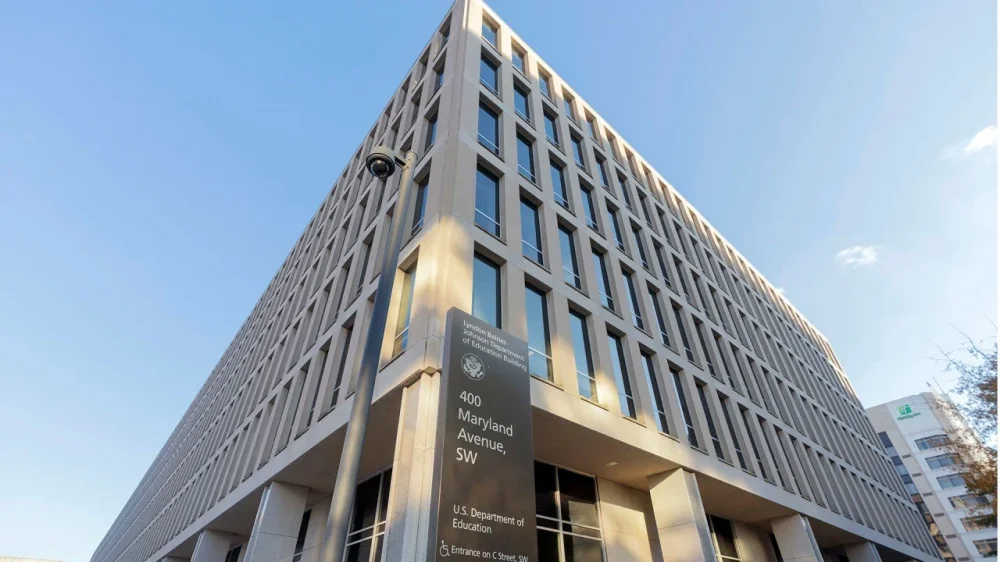
Between collections resuming, courts blocking student loan programs and layoffs at the Education Department, borrowers might be confused about the status of their student loans. Recently, the Education Department announced it would start involuntary collections on defaulted loans, meaning the roughly 5.3 million borrowers who are in default could have their wages garnished by the federal government. At the center of the turmoil are the government’s income-driven repayment plans, which reduce monthly payments for borrowers with lower incomes. Those plans were temporarily paused after a federal court blocked parts of the plans in February. “There’s so much confusion, they’ve made it very complicated,” said Natalia Abrams, president and founder of the Student Debt Crisis Center. At the same time, some borrowers are struggling to get their loan servicers on the phone, making it hard to find answers to their questions, said Abrams. If you’re a student loan borrower, here are some answers to your questions. What if I want to enroll in an income-driven repayment plan? Applications for income-driven repayment plans are open, but they’re taking longer than usual to process. The applications were temporarily shut down earlier this year after a federal court in Missouri blocked the SAVE plan, a Biden administration plan that offered a faster path to loan forgiveness. The judge’s order also blocked parts of other repayment plans, prompting the Education Department to pause income-driven applications entirely. Amid pressure from advocates, the department reopened the applications on May 10. Borrowers can apply for the following income-driven plans: the Income-Based Repayment Plan, the Pay as You Earn plan and the Income-Contingent Repayment plan. Abrams expects applications will continue to be approved but at a slower pace than before the application pause. Borrowers currently enrolled in an income-driven plan should be receiving notifications about recertification, said Khandice Lofton, counsel at the Student Borrower Protection Center. Recertification is required annually to update information on family size and income, and dates are different for each borrower. To review income-driven repayment plans, you can check the loan simulator at studentaid.gov. What if I applied to the SAVE plan? Borrowers enrolled in the SAVE plan have been placed in forbearance while a legal challenge is resolved. That means they don’t have to make payments and interest is not accruing. Time in forbearance normally does not count toward Public Service Loan Forgiveness. The Education Department will notify borrowers with updates on payments and litigation. “We don’t know for sure when the SAVE forbearance is going to end,” Abrams said. While the future of the SAVE plan is decided in court, Abrams encourages borrowers to explore their eligibility for other income-driven repayment plans. What if I want to consolidate my student loans? The online application for loan consolidation is available again, at studentaid.gov/loan-consolidation. If you have multiple federal student loans, you can combine them into one with a fixed interest rate and a single monthly payment. The consolidation process typically takes around 60 days to complete. You can only consolidate your loans once. What if my loan was forgiven? It would be difficult for the Education Department to reinstate loans that were canceled during President Joe Biden’s administration. So far, it isn’t believed to be happening, Abrams said. What about the Public Service Loan Forgiveness program? Nothing has changed yet. President Donald The President wants to change the Public Service Loan Forgiveness program to disqualify workers of nonprofit groups deemed to have engaged in “improper” activities. He signed an executive order to that effect, but it has yet to be enforced. Borrowers enrolled in PSLF should keep up with payments to make progress toward loan forgiveness, said Sarah Austin, policy analyst at the National Association of Student Financial Aid Administrators. “There could be some changes coming in regards to PSLF but at this current time PSLF is still functioning and there is still loan forgiveness being processed under the PSLF provision,” said Austin. An income-driven repayment tracker has disappeared from the federal student loan website for many borrowers, said Abrams. For keeping track of their status, Abrams is recommending that borrowers take screenshots of their payments. What if I can’t get a hold of my loan servicer? Contacting your loan servicer is crucial to managing and understanding your student loans. Due to the large number of people trying to get answers or apply for programs, loan servicers are taking longer than usual to respond. Abrams recommends borrowers prepare for long wait times. “We’ve heard borrowers being in hold for three or four hours, then being transferred to a supervisor and then being hung up on, after all that wait time. It’s incredibly frustrating,” Abrams said. What can I do if I’m delinquent on my student loans? If you’re delinquent, try to get back on track. Borrowers who don’t make their payments for 270 days go into default, which has severe consequences. “If you’re delinquent but have not defaulted yet, do whatever you can do to avoid going default,” said Kate Wood, a student loans expert at NerdWallet. Borrowers who are delinquent on their student loans take a massive hit on their credit scores, which could drop 100 points or more, Wood said. A delinquency stays on your credit report for seven years. Wood recommends contacting your servicer to ask for options, which can include forbearance, deferment or applying for an income-driven repayment plan. What if I’m in default on my student loans? The Education Department is recommending borrowers visit its Default Resolution Group to make a monthly payment, enroll in an income-driven repayment plan or sign up for loan rehabilitation. Betsy Mayotte, president of The Institute for Student Loan Advisors, recommends loan rehabilitation. Borrowers in default must ask their loan servicer to be placed into such a program. Typically, servicers ask for proof of income and expenses to calculate a payment amount. Once a borrower has paid on time for nine months in a row, they are taken out of default, Mayotte said. A loan rehabilitation can only be done once. What happened to Fresh Start? The Fresh Start program was a one-time temporary program that helped borrowers get out of default. This program ended Aug. 31, 2024. The Associated Press receives support from Charles Schwab Foundation for educational and explanatory reporting to improve financial literacy. The independent foundation is separate from Charles Schwab and Co. Inc. The AP is solely responsible for its journalism. —Adriana Morga, Associated Press View the full article
-
We may earn a commission from links on this page. The only thing I didn’t love about the Mammotion Luba robot lawn mower I tested last summer was its size. It’s a hulking four-wheel-drive robot and I live in the city, where we don’t have huge lawns. Enter the Luba Mini, a halved version of the Luba meant for smaller lawns (and tighter budgets). In fact, if you paid attention this spring, miniaturized versions of some of my favorite technology were everywhere. These mini-me versions seem to be driven, according to the companies themselves, by two market needs. While smart home tech is incredible in terms of functionality and independence, it often comes at a steep cost. But it’s not just price driving the shrinking of our tech; many companies realized was that many folks wanted the automation even when they didn’t have an acre of lawn to mow or a wall of windows to clean. Here’s how a few of my favorite pieces of technology have shrunk themselves to become more accessible and affordable. Mini lawn mowers Yuka full size on the left and mini on the right Credit: Amanda Blum Mammotion released mini models of both the Luba (AWD) and Yuka (2WD) robot mowers, and I’ve been testing them for the last month. In terms of size, they’re perfect for most suburban and urban lawns under ¼ acre and have almost the same functionality as the larger models. That's the point, according to Senior Product Manager David Cheng, who told me, "We weren’t just shrinking our existing models—we were filling a real gap in the market for homeowners seeking smart, perimeter wire-free lawn care that fits smaller outdoor spaces." Mammotion’s mowers require an RTK tower, which is a highly accurate GPS method that allows for triangulation between the mower, the tower and satellites. Using your phone as a remote control, you walk the robot around the perimeter of your lawn to set up zones, and create pathways between zones so the robot can navigate on its own. The minis have a new benefit, which is the ability for them to map spaces on their own, without you walking them around. If your yard has clear borders, I found it worked as well as mapping the area on your own. The larger Yuka comes with a hopper for grass clippings, which you can teach to dump the clippings anywhere you like—the mini doesn’t have that option. Still, I didn’t find the hopper very usable on the large version, so no loss there. I did find the minis had trouble, regardless of which version of mapping you used, getting to some edges of the yard. If there were overhanging shrubs casting a long shadow, the AI would interpret that as a no-go zone, avoiding it altogether. Still, that was the only degradation of features I found between the models. The mini has another benefit: It’s a lot less conspicuous parked at the dock, given the size. While you can install a 4g chip in your robot and set up notifications in case someone grabs it and goes, you just know where someone has absconded with it to. The models use the same app, and the minis mowed as well as the original models. At a dramatically lower price point, this gives you an excuse to invest in a robot mower if the thing holding you back was how large or expensive they are. Mammotion Luba full size robot mower at Amazon Shop Now Shop Now at Amazon Mammotion Luba Mini robot lawn mower $1,999.00 at Amazon Shop Now Shop Now $1,999.00 at Amazon Mammotion Yuka mini robot lawn mower $999.00 at Amazon $1,098.00 Save $99.00 Shop Now Shop Now $999.00 at Amazon $1,098.00 Save $99.00 Mammotion Yuka 2000 robot lawn mower $2,448.00 at Amazon Get Deal Get Deal $2,448.00 at Amazon SEE 1 MORE Smaller smart grills The original Brisk It Origin Credit: Amanda Blum Last summer I tested all the smart grills on the market, and my favorite was the Brisk It Origin. Through the fall, winter, and this spring, I have used it extensively because it turns smoking (a merciless task that involves a lot of overnight grill babysitting) into a flawless, hands-off experience. You tell the grill what you want to make, and AI kicks in to tell the grill how to make it, and it will notify you when it's time to flip things over or add a baste; when it's done, the grill turns itself off. You can, of course, edit the smoking program, create one on the fly, or just use the smoker manually as a grill. I went from someone who never rarely smoked on the grill to someone who does so once a week. On my recommendation, a BBQ devotee up the block added a Brisk It to their three-smoker lineup and revealed to me that it has become their favorite. Still, the original Brisk It clocks in just under $600 so I was excited to test the Zelos, a smaller, less expensive Brisk It with all the functionality of the Origin, albeit with less real estate. My experience isn't that unique, according to Christopher Huang, CEO at Brisk It. "Over 70% of U.S. adults say they want to cook more at home, but cite time and effort as their biggest barriers...and while more than half of home cooks express interest in smart kitchen tech, only 15% actually use it regularly." the mini has about 80% of the space of the original, seen here. I fit a whole rack of ribs plus a tray of chicken, but couldn't fit two racks of ribs. Credit: Amanda Blum Even as a highly enthusiastic home cook willing to put in the time, I cannot deny how much utility I get out of smart home automation in the kitchen. A smart grill is out of this world, since the notifications and temperature reporting of the grill and food means I don't have to stand over the grill. Brisk It even helps control the stall that barbecued meats often experience. Last month, I set up the Zelos (a thirty-minute affair) and invited neighbors over. I was worried about the smaller grill space (the Origin has 580 inches of grill space to the Zelos' 450 inches). While I could fit more racks of ribs on the Origin, the Zelos accommodated a full rack, plus a whole tray of chicken thighs, and I used the upper rack to smoke an array of vegetables. It didn't escape my attention that because the smaller grill uses less fuel (both are powered by pellets, although the control unit requires electricity), I'd be more likely to use it more often. Again, the app experience is the same on both models, and is highly functional and, dare I say, pretty fun. The AI the program uses is great for finding new recipes, a function I find underwhelming in practice on other products. At a reduced price, the Zelos makes an awfully appealing Father's Day gift, since it will also free up Dad from watching the grill all day. Brisk It Origin 940 Smart Smoker and Grill $849.99 at Amazon Shop Now Shop Now $849.99 at Amazon Brisk It Origin 580 Smart Smoker and Grill $549.99 at Amazon $599.99 Save $50.00 Shop Now Shop Now $549.99 at Amazon $599.99 Save $50.00 Brisk It Zelos Smart Smoker and Grill $449.99 at Amazon /images/amazon-prime.svg Shop Now Shop Now $449.99 at Amazon /images/amazon-prime.svg SEE 0 MORE A smaller window-washing robot In full disclosure, the only reason I haven't tested a Winbot, the window washing robot, is that I simply don't have the window real estate. The Winbot is about 13 inches square, and works by suctioning itself to your window and then putting it through a four-step wash process. I know people with Winbots, and if you have large square or rectangular windows, particularly those where some portion of the window is out of reach, it seems worthwhile. If you've got arched windows, though, the Winbot struggles with shapes that don't match the design of the robot itself, which has 90-degree angles. The Winbot also isn't for curved glass. These may seem like a lot of limitations, but I spent the winter in Arizona looking at a lot of glass patio doors, patio rooms, and walls of dusty windows and thought, "Ah...this is what the Winbot is for." Except now, there's a Winbot Mini, with an 8.5-inch square footprint. At that size, almost all my windows are fair game, so I'm excited to try it out. That was the point, according to Michelle Jones, U.S. spokesperson for ECOVACS, who said, "We saw an opportunity to bring the power of our larger window-cleaning robots to homeowners in the U.S. who have smaller or segmented window panes and don’t need a fixed cleaning station." But Ecovacs also points to a more specific problem that a lot of smart tech products suffer from, in my opinion: By the time the company has worked out the tech, the solution is often overly complicated. Ecovacs recognized that, as well, and simplified the offering in the Winbot Mini. The Mini ditches the rubber bumpers of the larger model, but that means better edge-to-edge cleaning. The mini also gains more portability by not having a heavy station like the full size model. What the mini lost seems like a worthwhile tradeoff for the price: The large Winbot has twice as many cleaning programs and more safety features (12 to the Mini's 9), but in both cases, what the Mini has seems sufficient. Priced around $250, the WinBot Mini feels like a luxurious piece of tech within reach for most folks. [add to list https://www.amazon.com/ECOVACS-WINBOT-Window-Cleaning-Robot/dp/B0DR8W696Y] Ecovacs Winbot W2 Pro Omni $499.99 at Amazon /images/amazon-prime.svg $599.99 Save $100.00 Shop Now Shop Now $499.99 at Amazon /images/amazon-prime.svg $599.99 Save $100.00 Ecovacs Winbot Mini $199.99 at Amazon /images/amazon-prime.svg Learn More Learn More $199.99 at Amazon /images/amazon-prime.svg SEE -1 MORE The Shelfy Lite the original Shelfy Credit: Amanda Blum For the last six months, I've had a Shelfy installed in my fridge. A small, charegable device, the Shelfy uses a catalyst on a ceramic filter, activated by LED lights in the device to mimic chlorophyll photosynthesis. To simplify, it purifies the air in your fridge to remove ethylene gas that ripens vegetables, and it removes odors and prevents cross contamination. I can confirm that it works to make your fridge smell better, and while I can't confirm the additional twelve days of freshness in vegetables that Shelfy claims, it has definitely added some shelf life to my fruits and vegetables. In particular, I notice the change in fruit. I buy strawberries and blueberries with some regularity year round, so I know traditionally how long they'd last before starting to form mold (two to four days). As long as I have Shelfy charged, I can get a full week out of strawberries and ten days out of blueberries. That's a huge difference that creates savings in my food budget. The CEO of Shelfy, Paolo Ganis, put a number to the savings, explaining that "the average family throws away approximately $1,996 worth of food each year—money that could easily be saved with better food preservation." Vitesy Smart Refrigerator Device | Extends Food Freshness $149.99 at Walmart Learn More Learn More $149.99 at Walmart Shelfy isn't large or particularly expensive (it's just under $150) but Vitesy has just introduced a Kickstarter for the Shelfy Lite, which will only be $66 (the project is already funded). "Through a number of user surveys, we consistently heard that people loved the idea behind Shelfy but wanted a version that was more accessible: smaller, more affordable," Ganis said. The Lite adds multiple modes to the device, one for the general fridge, one for the crisper drawer and a power mode for when someone buys a particularly stinky cheese. The Lite improves on the battery charging and performance over the original model, and comes in some additional accent colors, if you care about that sort of thing. The Lite is only marginally smaller than the original Shelfy, but at less than half the price, that seems immaterial. What I've enjoyed about the Shelfy is that there are no filters to replace; you simply wash and wet the ceramic filter when you recharge the device every few weeks. If you don't recharge it, there are no annoying beeps or notifications—it's been a quiet helper. A smart home hub for lessSometimes even I forget there are smart home hubs outside of Samsung, Amazon, Apple, and Google. But Homey, a hub that keeps all your connections local, has gained traction over the last few years since its introduction. Homey has a specific focus on automation through its "Flow" platform, which is a version of routines or automatons in any other platform. Homey fans claim Flow has far more flexibility, and although I've never found Alexa or Google Home difficult, Homey is noted for its appeal to beginner smart home fans. Still, at just under $400, the Homey Pro hub was an expensive way to dive into smart home tech, compared to other platforms. Jasper Foppele, head of marketing at Homey, was transparent about their strategy, explaining that their usage data and feedback made clear they had to rethink their offering. Instead of trying to offer everything (the Homey Pro supports 60 apps), the Homey product team chose the core technology they saw being used in the U.S. market (Matter, Thread, Zigbee) and winnowed the app coverage to the most common 25. "This approach allowed us to significantly reduce cost and complexity," Foppele said, "a privacy-first, locally running smart home hub priced at $199." The Homey Pro Mini still prioritizes local first connection, including backups, but it has an option for cloud backup. The Mini is on pre-order and will ship sometime this month. View the full article
-
Genetic data was on the auction block, and a U.S. biotech company ponied up the cash. New York-based Regeneron Pharmaceuticals announced on Monday that it has purchased DNA testing company 23andMe through a bankruptcy auction for a total of $256 million. The deal includes most of the company’s assets, including, notably, user and customer data. Regeneron’s announcement emphasizes that the company will comply with existing privacy laws and 23andMe’s policies, which were conditions of the sale. Privacy experts have said that any such sale presents special challenges given the sensitive nature of the genetic data that 23andMe collects. “The agreement includes Regeneron’s commitment to comply with the Company’s privacy policies and applicable law, process all customer personal data in accordance with the consents, privacy policies and statements, terms of service, and notices currently in effect and have security controls in place designed to protect such data,” the announcement reads. Regeneron says that 23andMe required any bidders to “guarantee” that they would comply with its existing privacy policies. A third-party consumer privacy ombudsman, or CPO, will be appointed by the court to examine the transaction, which is still subject to court approval. Such court-appointed ombudsman are often required in bankruptcy cases where sensitive data is involved, although 23andMe had initially tried to argue that one wasn’t necessary. Company leadership also doubled-down on the promises to protect the integrity of 23andMe’s customers’ data. “We are pleased to have reached a transaction that maximizes the value of the business and enables the mission of 23andMe to live on, while maintaining critical protections around customer privacy, choice and consent with respect to their genetic data,” said Mark Jensen, chair and member of the special committee of the board of directors of 23andMe, per the statement. A stellar rise and steep fall Founded in 2006, 23andMe gained popularity for its DNA testing kits, which were used to collect saliva samples and provide customers with a readout of their genetic ancestry and history. At one time, it had 15 million customers, but a data breach in 2023 hammered demand after seven million customer records were accessed, and 23andMe never recovered. The company went public by merging with a special purpose acquisition company in 2021, the height of the so-called SPAC craze. It briefly hit a valuation of $6 billion, but profits were elusive. By the middle of 2024, it was trading in penny-stock territory. Following the breach and the company’s subsequent Chapter 11 filing in March of this year, some policymakers—such as California Attorney General Rob Bonta—recommended that users delete their information, which could be done through a user’s profile on the 23andMe website. As for what’s next, the deal should close sometime later this year, and 23andMe is expected to continue to operate as a unit of Regeneron. Shares of Regeneron Pharmaceuticals (Nasda: REGN) were down about 1.1% in late-morning trading. View the full article