Newsletter
Want to keep up to date with all our latest news and information?


ResidentialBusiness
Administrators
-
Joined
-
Last visited
Everything posted by ResidentialBusiness
-
We may earn a commission from links on this page. Deal pricing and availability subject to change after time of publication. If you're looking to upgrade your home gym or fitness gear without breaking the bank, look toward Amazon's Fitness Memorial Day sale. I know Memorial Day isn't for another week, but naturally, the retail giant is kicking off the festivities early. Especially with summer right around the corner, now is the time to buy all the equipment you need to keep you motivated through the dog days. I know I've personally got my eye on massage guns and foam rollers to help me survive my upcoming marathon training. So, with Amazon's Memorial Day Sale is in full swing, I've done all the leg work for you using price-checking tools to bring you the best fitness deals you can find right now. Cardio equipmentAt-home cardio equipment feels like a major investment—not just in terms of space and money, but your lifestyle. I usually hate the treadmill, but when I'm training in peak summer heat, it's necessary. And if you're going to buy a treadmill, it's worth spending the money to get one that feels sturdy and safe. Right now the NordicTrack Commercial Treadmill is 20% off, bringing a true gym-quality machine (with interactive training features) into a far more affordable range. For apartment dwellers like me, the classic Original Peloton Bike also marked down 20%, offering studio-quality cycling without sacrificing space. Pelotons are the most popular indoor exercise bike, but they're notoriously expensive and don't go on sale often. While they're still expensive, the discounts are historically good, down to $1,145 (originally $1,445). Original Peloton Bike $1,145.00 at Amazon /images/amazon-prime.svg $1,445.00 Save $300.00 Get Deal Get Deal $1,145.00 at Amazon /images/amazon-prime.svg $1,445.00 Save $300.00 Strength training essentialsI'm a huge advocate for adjustable dumbbells; a good set eliminates the need for 30-some individual dumbbell pairs. Right now the adjustable Bowflex SelectTech 552 dumbbells are seeing one of their deepest discounts of the year. After testing the Nüobells and REP adjustable dumbbells, the Bowflex are next on my list; their reputation is pretty much the gold standard in the adjustable dumbbell world. Bowflex Adjustable Dumbbells $199.00 at Walmart $275.00 Save $76.00 Get Deal Get Deal $199.00 at Walmart $275.00 Save $76.00 The TRX All-in-One Suspension Training System is 25% off, perfect for bodyweight exercises that engage your entire core. Or if you're just looking for one addition to your home gym at just $20, this Vinsguir ab roller wheel is 40% off. Massage guns and foam rollersDon't neglect recovery in your fitness journey. The Bob and Brad D5 Pro Massage Gun is marked down by 30%, bringing you professional-grade percussion therapy at home. I'm personally a fan of this brand, if you're looking for alternatives to the (understandably) popular Theragun or Hypervolt at half the price. The highly-rated Lifepro vibrating foam roller is 15% off, helping you roll out those post-workout kinks with added vibration technology for deeper muscle relief. Fitness trackersIf you've been holding out on a new watch, now is a great time to finally snag some discounted wearable tech. Your classic Fitbit Charge 6 is available at 25% off. And anytime you're looking for a good smartwatch, Garmin's name is bound to come up. Right now the Garmin Instinct 2 is discounted by 33%, and the Solar version is down 44%. What's extra cool about the solar version is its potentially unlimited battery life, and it comes with Garmin Pay and plenty of customizable watch faces. Headphones and speakersFinally, it's worth mentioning there are solid deals on earphones and speakers, which are always a must-have in some way when you're working out. The Beats Studio Pro are a whopping 50% off, down to $169.95. For anyone who wants spatial audio, Apple-first integrations, and a good-looking pair of over-ears that feel comfortable over long sessions, this is a good deal. Also noteworthy: You can snag the AirPods Pro 2 at 24% off, and the JBL Go 4 portable (and waterproof!) speaker at 20% off. Beats Studio Pro $169.95 at Amazon /images/amazon-prime.svg $349.95 Save $180.00 Get Deal Get Deal $169.95 at Amazon /images/amazon-prime.svg $349.95 Save $180.00 Whether you're just starting your fitness journey or looking to fill gaps in your existing setup, now is a great time to take advantage of significant markdowns through the holiday weekend. View the full article
-
Key Takeaways Growing Demand: The rise of e-commerce and logistics creates a lucrative landscape for warehouse franchises, making them an appealing entrepreneurial option.Established Support: Franchise opportunities come with brand recognition, operational procedures, and ongoing support, which help mitigate risks for new business owners.Investment Versatility: Warehouse franchises often require lower initial investments and provide flexible business models that can adapt to changing market needs.Market Opportunities: Diverse franchise options exist, ranging from regional warehouses to tech-integrated logistics solutions, catering to various investment capacities and market demands.Strategic Location Matters: Success hinges on selecting the right location with strong demand for warehouse services while considering demographics and competition.Training and Support Importance: Ongoing support and training from franchisors enhance operational efficiency and business growth, essential for success in the warehouse industry. If you’re looking to dive into the world of entrepreneurship, warehouse franchise opportunities could be your golden ticket. With the rise of e-commerce and the demand for efficient logistics, investing in a warehouse franchise can be a smart move. It offers a unique blend of stability and growth potential, allowing you to tap into a booming market. Imagine running a business that not only provides essential services but also aligns with the ever-evolving supply chain landscape. Whether you’re a seasoned entrepreneur or just starting out, exploring these opportunities could set you on a path to success. Get ready to discover how you can leverage warehouse franchises to build a thriving business that meets today’s demands. Overview of Warehouse Franchise Opportunities Warehouse franchise opportunities offer a promising pathway for small business entrepreneurs. You can capitalize on the booming e-commerce sector by investing in a franchise that meets the growing demand for efficient logistics solutions. Benefits include brand recognition, established operational procedures, and ongoing support from franchisors, all crucial for success. Investing in a warehouse franchise provides stability with a steady revenue stream. The increasing need for storage and distribution capabilities creates a favorable environment for franchise growth. As an entrepreneur, you can position your small business to thrive by aligning with industry leaders and leveraging their expertise. Small business owners can find diverse franchise models, from smaller regional warehouses to larger distribution centers. Each model presents unique advantages depending on your investment capacity and market needs. Engaging with a warehouse franchise not only enhances your portfolio but also contributes to local economies by creating jobs and supporting supply chain efficiency. Benefits of Investing in Warehouse Franchises Investing in warehouse franchises offers significant advantages for small business entrepreneurs. You can tap into a sector with growing demand while benefiting from established support systems. Low Initial Investment You may find that some warehouse franchises require lower initial investments compared to starting an independent business. The franchisor’s established business model typically reduces upfront costs. This structured support helps you minimize risks, making it easier to launch your small business in the logistics industry. Flexible Business Model A warehouse franchise often provides a flexible business model. You can adapt operations to shifting market conditions while adhering to core principles. This flexibility allows your small business to remain competitive and responsive, addressing evolving customer needs in the dynamic logistics landscape. Key Players in the Warehouse Franchise Market Warehouse franchise opportunities arise primarily from existing business models focused on logistics and storage. While the specific warehouse franchise market lacks extensive data, notable players in related industries provide valuable insights for small business entrepreneurs. Notable Franchise Brands U-Haul: U-Haul offers franchise opportunities in moving and storage services. This brand provides a well-established business model that small business owners can leverage for local or regional operations. PODS Moving & Storage: PODS combines moving and storage solutions, making it an attractive choice for entrepreneurs looking for a franchise with logistical components. The brand’s reputation and operational framework support small business success. Other Companies: Various companies operate in the moving and storage sector, presenting additional opportunities for emerging small businesses. Engaging with recognized brands enhances visibility and credibility. Emerging Franchises to Watch Logistics and Supply Chain Franchises: With the e-commerce sector booming, new franchises are emerging that focus on warehouse management and inventory control. These franchises often cater to small businesses needing efficient storage and fulfillment solutions. Technology Integration Franchises: New business models incorporating advanced technologies like AI and robotics are gaining traction. Small business owners can explore these innovative franchises that offer enhanced operational capabilities and competitive advantages in the warehouse space. By considering these key players and emerging franchises, you can identify promising opportunities in the warehouse franchise market that align with your small business goals. Factors to Consider Before Investing Investing in a warehouse franchise requires careful assessment of several key factors. Understanding these elements helps you make informed decisions as a small business entrepreneur. Location and Demographics Assessing location and demographics is crucial for success. Examine the demand for warehouse services in your targeted area, focusing on factors like industrial activity and logistical needs. Areas with high levels of e-commerce activity present better opportunities for growth. Evaluate the competitive landscape, ensuring there’s adequate room for your franchise to thrive amidst existing operators. A strategic location contributes significantly to attracting clients and sustaining profitability. Franchise Support and Training Selecting a franchise with strong support and training programs enhances your operational efficiency. Look for franchises that offer comprehensive training to help you manage daily operations effectively. Ongoing support from the franchisor plays a vital role in navigating operational issues, marketing strategies, and technology integrations. The availability of these resources can strengthen your position as a small business owner in the competitive warehouse sector, allowing you to focus on growth and customer satisfaction. Conclusion Exploring warehouse franchise opportunities can be a game-changer for your entrepreneurial journey. With the e-commerce sector booming and the demand for efficient logistics on the rise, now’s the perfect time to dive in. Investing in a warehouse franchise not only offers stability but also provides you with a solid foundation to grow your business. You’ll benefit from established brand recognition and operational support, which can significantly reduce your risks. As you consider your options, think about the unique advantages each franchise model brings. By aligning your investment with market needs and leveraging the support available, you can position yourself for success in this dynamic industry. Embrace the potential of warehouse franchises and take the next step toward building a thriving business. Frequently Asked Questions What is a warehouse franchise? A warehouse franchise is a business model that allows entrepreneurs to operate a storage and distribution facility under an established brand. This model leverages recognized branding, proven operational systems, and ongoing support from the franchisor, making it easier for new business owners to succeed. Why should I consider investing in a warehouse franchise? Investing in a warehouse franchise offers stability and growth potential, particularly due to the rising demand in the e-commerce sector. Entrepreneurs benefit from brand recognition, established procedures, and training that reduce risks compared to starting an independent business. What are the benefits of a warehouse franchise? Benefits of a warehouse franchise include lower initial investment costs, ongoing support from franchisors, and a steady revenue stream driven by e-commerce needs. Additionally, franchisees can adapt to changing market conditions and take advantage of established business models for success. Who are the key players in the warehouse franchise market? Notable players include U-Haul and PODS Moving & Storage, which offer solid business models. Emerging franchises focusing on logistics and technology integration, such as AI and robotics, are also significant, providing new opportunities for entrepreneurs in the sector. How do I choose the right warehouse franchise? Consider factors such as location, demographics, and e-commerce potential when selecting a franchise. Evaluate the competitive landscape and ensure the franchise offers strong support and training programs that can enhance operational efficiency and boost your success. Image Via Envato This article, "Explore Lucrative Warehouse Franchise Opportunities for Aspiring Entrepreneurs" was first published on Small Business Trends View the full article
-
Agreement to forge closer links with Europe on defence and trade risks reopening Brexit arguments View the full article
-
Prime minister acknowledges besieged strip is approaching starvation after announcing plans to allow limited entry of aidView the full article
-
From defence to fishing access, the major changes agreed in trade talksView the full article
-
Deciding which movies warrant a trip to the theater isn’t always easy. Lately, though, trailers seem to be making the choice even harder, and not for the reasons one might think. The problem—if you could call it one—is an abundance of marketing riches across the entire cinematic spectrum. The trailer for A24’s new necromancy horror Bring Her Back is as dynamic as the one for Marvel’s retro romp, The Fantastic Four, not to mention DC’s new Superman reboot, Liam Neeson’s revival of The Naked Gun, and pretty much every other tentpole this year. Either the best summer movie season in decades is about to sweep through theaters or (more likely) trailers have simply gotten crazy good now, and it’s breaking our brains. Even the trailers themselves seem to be aware that movie marketing is firing on all cylinders lately. The one for A24’s just-released Friendship ends with Tim Robinson, creator of cringetastic meme factory I Think You Should Leave, saying direct-to-camera, “There’s a new Marvel out that’s supposed to be nuts.” It’s a nod to his film’s status as counterprogramming for the Marvel blockbuster, Thunderbolts, which also arrived this month. After the Friendship trailer debuted in February, though, Marvel dropped a Thunderbolts trailer touting its cast’s connections to past A24 movies—like a metatextual slap-fight between Goliath and Indie Goliath. Both sides win. The Friendship trailer quickly conveys how the unique tone of Robinson’s show will translate to film, while Thunderbolts’ trailers present it as an off-beat, low stakes side-quest in the Marvel world. How could anyone who’s even a little interested in either resist? Traditionally, trailers have followed a familiar cadence: Give the audience a hook, follow it up with some table-setting, and end on an escalation. But these days, trailers feel more like a self-contained mini-movie than part of a pattern. Some trailers, like those for Superman and Final Destination: Bloodlines, spend a full minute anchored by a single tense scene that lures viewers in; others, like those for the latest Mission: Impossible and Conjuring movies, dangle visuals from previous entries in clever ways, centering franchise lore to remind audiences what they loved about the characters and worlds in the first place. So how are trailer editors deciding which path to take? And how do they keep things from feeling stale? According to Erika Anaya, creative director at leading entertainment marketing agency Trailer Park, there are no hard and fast rules when it comes to charting a trailer’s trajectory. “It’s different for every single movie, regardless of genre or studio,” she says. “I would even say for something like a Marvel [film], you would think, ‘Oh, they pretty much have it down now,’ but it changes for every single one.” The promotional push for a major movie generally includes a teaser trailer and two official trailers. (These days movies also often feature an assortment of online-only bonus clips.) The composition of these packages used to be more codified, though. A teaser was once strictly an enticing, elusive introduction—more TikTok-length than YouTube. A classic example is the teaser for The Shining, which showed nothing but a nightmarish deluge of blood pouring out from a hotel elevator. While those kinds of teasers still exist—the new Naked Gun offers one extended gag—teasers can now be more comprehensive than trailers. The “teaser” for Thunderbolts lasted nearly three and a half minutes, giving viewers a lot to chew in for a first taste. “It used to be very common for the first piece out of the gate to be an amuse-bouche teaser, followed by a second trailer that leaned more heavily into story,” Anaya says. “But that’s not really a standard practice anymore.” Whatever their length or style, movie trailers sound better now, too. Or at least fresher. The era of slowed-down cover songs, starting with 2010’s The Social Network trailer and its haunting choral cover of Radiohead’s “Creep,” finally seems to have tapered off. Now, studios are more likely to score a trailer with a bizarro version of a classic rock song that features new instrumentation alongside the classic vocal stems. This summer’s entries include a lithe EDM update of Madonna’s “Material Girl” for A24’s The Materialists, a dreamy twist on Queen’s “Under Pressure” in Thunderbolts, and an enhanced take on “Happy Together” by The Turtles for Neon’s horror flick Together. The infamous “braaam” noise popularized by the Inception trailer is also on the wane. An audio shorthand for epicness, the oft-used trailer sound appears to have fallen out of fashion somewhere between 2021’s Dune and last year’s Dune 2. (“I think a lot of trailer editors—and viewers—got tired of that particular sound effect,” Anaya adds.) What might distinguish this season’s trailers most, though, is an intuitive command of how much to reveal and how much to hold back. While giving a flavor of a movie’s vibe can be just as important to a trailer as communicating the plot or flaunting some money-shot stunts, jokes, smooches, or death-traps, the amounts in each recipe are always in flux. The trailer for 2006’s cerebral drama, Little Children, starring Kate Winslet, is a tonal masterpiece that barely informs viewers what the film is actually about or what happens in it. A24 essentially cornered the market on this style of trailer in the 2010’s, with vibey, vague pieces like those for The Witch and Hereditary, and the studio’s trailer for Bring Her Back this summer takes a similar tact. Viewers will leave knowing only that the titular “Back” means “back from the dead”—and feeling supremely creeped out. So, how do studios decide how much to give away in a trailer? According to Anaya, big-budget films often go through multiple rounds of audience testing for their trailers—and the more the creators lean on that research, the more they tend to reveal. Ironically, the same viewers who later complain in YouTube comments about “spoiler-filled” trailers may be the ones asking for more upfront during test screenings. But lately, the trend seems to be swinging the other way. “A few years ago, it was more common to add more story, but I think there is a sense that we wanna leave something more, particularly for theatrical, for people to go and buy a ticket,” Anaya says. “So maybe that more old-school way of packing a trailer with too much information is starting to look like, ‘Is there a better way to do this?’ Can we intrigue them with less narrative, but enough to come through?” Neon’s trailer for the upcoming Together, for instance, is a triumph of the delicate balance between vibes, plot, and money shots. It gives viewers just enough string to put together that stars Alison Brie and Dave Franco are a troubled couple thrust into a gnarly body-horror situation, without quite spelling out what that situation is, let alone what started it or how far it will go. Rather than a standout, though, this is starting to feel like the standard. This summer’s trailers seem to be finding the precise middle between the magic of mystery and the dopamine rush of Too Much—and it’s getting confusing. Every trailer seems to pitch its product with a beautiful line drive right down the plate, but the movies themselves can’t all be home runs. Will some of the moody, plot-light trailers ultimately translate to plodding, plot-free films? Will any of those that confidently reveal some of their best moments turn out to have held back nothing for the actual film? Judging by the solid start to the summer box office, these trailers are successfully making people flee their homes to find out. View the full article

-
Hello and welcome to Modern CEO! I’m Stephanie Mehta, CEO and chief content officer of Mansueto Ventures. Each week this newsletter explores inclusive approaches to leadership drawn from conversations with executives and entrepreneurs, and from the pages of Inc. and Fast Company. If you received this newsletter from a friend, you can sign up to get it yourself every Monday morning. For years, famed restaurateur Danny Meyer has wanted to reinvent the way diners pay their bills. He’s dreamed of a world in which patrons can pay for their meals and simply walk out of an eatery without asking and waiting for the check. Meyer’s vision for frictionless payments found its way to Frank Bisignano, who served as CEO of Fiserv, the financial services technology provider, until becoming commissioner of the Social Security Administration earlier this year. By 2020, the two executives hatched an idea for a checkless solution that would enable diners to settle their restaurant tabs without taking out a credit card or phone. It then fell to Krystle Mobayeni, a senior vice president and head of restaurants at Fiserv, and Kelly Macpherson, chief technology officer of Meyer’s Union Square Hospitality Group (USHG), to build the software and systems that would bring their bosses’ idea to life. The result is a system called Checkless Payments, which the companies announced last week at the National Restaurant Association Show. It isn’t unusual for the top executive at a company to be the driver of innovation, especially at entrepreneurial or founder-led organizations. Nearly half the respondents to a 2024 Fast Company survey of its Most Innovative Companies honorees said their CEO was in charge of innovation, and 60% said their top innovation executive reported directly to the CEO. INNOVATOR IN CHIEF Since founding Manhattan’s Union Square Café in 1985, Meyer has been a force in the hospitality industry. He was an early adopter of online reservations and has served on OpenTable’s advisory board. USHG, where Meyer is executive chairman, has expanded beyond restaurants to include Hospitality Quotient, a consulting and professional development arm. In 2017, he launched Enlightened Hospitality Investments, a private equity fund that backs businesses that share his values around taking care of employees and customers. “I’ve made a career out of driving some people crazy, but in a nice way,” Meyer says. “If [an innovation] was easy, it would’ve been done already.” With Checkless Payments, Meyer challenged the USHG and Fiserv teams to develop a solution that was elegant enough for fine-dining establishments. He didn’t want patrons to have to take out their phones to scan a QR code to pay; nor was it practical to set up sensors or other hardware that are part of checkout-free experiences at Amazon Go stores and other retailers. And he didn’t want a “walled garden” that would require customers to use only one kind of credit card or mobile operating system. He also wanted a system that could eventually be extended to other aspects of hospitality, enabling dinners to, say, alert the coat check room or valet that they are getting ready to leave the restaurant, letting them retrieve their belongings or car without waiting. Checkless transactions can benefit not just diners but restaurants, too. Meyer notes that the cumulative time servers and diners spend could instead be used to “turn” tables—restaurant-speak for setting, seating, serving, and clearing a table. And Fiserv’s Mobayeni says restaurants can use the checkless enrollment process for deeper customer engagement. “They can let guests know there’s a featured menu item or they have a special wine,” she says. She envisions a day when diners might use the platform to place their first drink order in advance, which also helps the restaurant operate more efficiently. IT’S NOT “DINE AND DASH” USHG’s Macpherson admits that diners may need some coaching on the new system, which was piloted at Manhatta, the group’s fine-dining restaurant in New York’s financial district. “Even when I was using it there was this stigma of ‘dining and dashing,’” she says. Servers, too, will have to adopt a new etiquette. Says Meyer: “If I’m a guest, here’s what I’d want my server to say at some point: ‘I know you’re part of the [Checkless Payments] program, and I hope I’m going to have a chance to thank you and say goodbye, but you’re welcome to leave any time you want.’” USHG will begin rolling out the program at additional restaurants this summer. Fiserv, which last year reported revenue of more than $20 billion, will then make Checkless Payments available to customers of its new Clover Hospitality point-of-sale system for upscale restaurants. I asked Macpherson what it is like to work for an executive chairman who is also an innovator with a reputation for high quality. “It’s inspirational and exciting,” she says. “Danny is a beacon in the industry, pushing us and challenging us to think bigger. I like thinking big, too. How can we do what people might say is the impossible?” ARE YOU AN INNOVATOR IN CHIEF? Are you a CEO or executive chairman who leads innovation at your organization? Do your employees find your status as “innovator in chief” inspiring, or do you drive people crazy—in a nice way? Send your thoughts to me at stephaniemehta@mansueto.com. Read more: Innovation starts at the top Can startups solve our thorniest challenges? Meet Fast Company’s Most Innovative Companies of 2025 Mindset shifts to be a more innovative leader View the full article

-
“The best way to predict the future is to create it.” This timeless insight from renowned 20th-century Austrian-America management consultant Peter Drucker is especially relevant for startup leaders who aim to build something that stands the test of time. In today’s digital economy, global expansion has never been easier—yet many tech founders are still focused on an initial geographical market. While starting with that thinking may seem practical, failing to embed a global mindset from the get-go can limit long-term potential. The reality is, startups that delay international thinking face tougher roadblocks later—scaling infrastructure, product-market fit, cultural nuances, and competition become bigger hurdles than necessary. The best startups anticipate these challenges early, positioning for global impact before opening a second office. I’ve seen this firsthand—setting out to empower the world with your company’s tools shouldn’t just be a tagline; it should shape every product decision, hire, and expansion effort. For founders unsure where to start, here’s what I’ve learned about building global-first from day one. Establishing a clear vision A strong vision serves as a guiding light through the thousands of decisions a company must make. Startups that scale successfully have a clear and ambitious purpose that informs their strategy from day one. For example, at Canva, we’ve aimed to make our product accessible to anyone, anywhere in the world. And while this seemed massively aspirational at our founding, it’s helped us avoid complacency, and feels more realistic as you focus on hitting incremental milestones. In the early days, you won’t be able to build a solution for every conceivable challenge. Focusing on your most obvious core audience, or, finding a niche that isn’t too restrictive—tools for real estate, e-commerce, marketing, etc.—can ensure the foundation to support future expansion. Balancing ambition with practicality isn’t just a challenge—it’s a necessity. Those who master it pave the way for sustainable, scalable global success. Solve a problem that transcends borders Startups often face resource constraints, making it tempting to prioritize short-term gains over long-term scalability. However, founders must resist the urge to build products solely for their initial market. Instead, they should develop solutions with modularity and adaptability in mind. I believe in focusing on solving a fundamental problem—simplifying graphic design was our strategic focus—while ensuring that a platform can evolve for different industries, languages, and cultures. As your startup grows, maintaining flexibility becomes even more important. More than 10 years in, my company is still adapting to changing markets, shifting consumer expectations, and emerging trends. Balance focus and flexibility If you are an American startup founder, remember that 95.7% of the world’s population lives outside of the U.S., and many of them may fall into your target customer demographic. Therefore, the ability to refine strategies based on global opportunities is a crucial trait of long-term success. This goes far beyond just translating the interface. It involves integrating local payment methods, content, templates, SEO strategies, and much more. At Canva we refer to a helpful metaphor of cupcakes and icing. The cupcake is our core offering of design and workplace software. The icing is the way we build on top to suit different countries, languages, and industries. The most important thing is that the cupcake is made in a way that it can expand and serve all of these different needs. The power of passion and storytelling A founder’s passion is contagious. When a team believes in the company’s mission, they’ll go the extra mile to execute it. But passion alone isn’t enough—it must be communicated effectively and proven in actions. Founders should meaningfully lift the hood on their own motivations as often as is appropriate, whether it’s the inspiration behind the product, the obstacles overcome, or the impact their product has had on customers worldwide. I know from experience that this can be extremely successful in uniting a workforce around a shared mission. This becomes even more critical as a company scales across borders and languages. Consistently telling and refining your story ensures alignment and momentum, especially as new markets open up. A globally resonant narrative makes it easier to expand into different regions while maintaining a strong brand identity—and it starts at the top! Integrating emerging technologies Startups that embrace new technologies early gain a competitive edge. Staying ahead means keeping a pulse on industry shifts, making judgement calls as to whether a new technology aligns with your goals, and taking calculated risks. It also means building to adapt, and minimizing reliance on any single model or partner. Find ways to be “pluggable” with other tools and technologies so you can evolve your tech stack without starting from scratch. In Q3 2024, AI startups accounted for 31% of global venture funding, signaling an industry-wide shift toward automation and intelligent systems. AI is offering an unprecedented opportunity to grow efficiently, without adding costs. Companies that delay integrating these advancements risk falling behind. Regardless of a startup’s stage, a forward-thinking approach to technology is key to long-term success. Building internationally and for decades to come The most successful startups aren’t those that expand internationally just because they need to continue to grow sales; they’re the ones that embed a global mindset into their culture, strategy, and vision from the get-go. Founders must recognize that the world is their market, not just their home country. From my native Australia to America and everywhere in between, each market might benefit from a product in different ways. Wise founders will commit to exploring and embracing those differences by building adaptable products, crafting a resonant brand story, hiring teams with diverse perspectives, and leveraging technology to stay ahead. In the end, the startups that think globally from the beginning are the ones that don’t just react to the future—they create it, just as Drucker envisioned. View the full article

-
Key Takeaways Unique Southern Flavors: Southern burger chains stand out due to their incorporation of local flavors and fresh, regionally sourced ingredients, creating memorable dining experiences. Signature Recipes: Each chain boasts its own specialty items, with popular toppings like fried green tomatoes, pimento cheese, and spicy coleslaw that reflect Southern culinary traditions. Focus on Quality: Many Southern burger joints prioritize quality in their ingredients, often preparing meals from scratch, which fosters customer loyalty and supports community businesses. Diverse Offerings: Chains like Whataburger, Cook Out, and Krystal provide a variety of menu items, from large burgers and BBQ options to sliders and customizable trays, catering to diverse tastes and preferences. Community Connection: Southern burger chains are often family-run or independently owned, contributing to their local communities and embodying the spirit of Southern hospitality. Regional Specialties: Different states feature unique offerings, showcasing local flavors—like North Carolina’s BBQ at Cook Out or Texas’s hearty burgers at Whataburger—enhancing each chain’s appeal. When it comes to burgers, the South has a unique flavor that sets its chains apart. From juicy patties to mouthwatering toppings, Southern burger joints have perfected the art of creating unforgettable meals that reflect the region’s rich culinary heritage. Whether you’re a local or just passing through, these chains offer a taste of Southern hospitality that keeps you coming back for more. In this article, you’ll explore some of the most beloved Southern burger chains that are making waves across the nation. You’ll discover what makes each one special, from their signature recipes to their commitment to quality ingredients. Get ready to satisfy your cravings and learn why these burger spots are a must-try on your next culinary adventure. Overview of Southern Burger Chains Southern burger chains reflect the rich culinary traditions of the region. These establishments emphasize local flavors, often incorporating fresh, locally sourced ingredients into their menus. Many of these small businesses thrive on community support, offering a welcoming environment where customers feel at home. You’ll find that each chain has its own signature recipes, often featuring unique sauces, seasonings, and toppings. Popular offerings include burgers topped with fried green tomatoes, pimento cheese, and spicy coleslaw. These elements showcase the essence of Southern cooking while delivering satisfying flavor experiences. Small business owners often focus on quality, from the selection of meat to the freshness of produce. Many Southern burger chains proudly prepare their food from scratch, ensuring customers enjoy delicious meals made with care. This dedication to quality also fosters customer loyalty, as patrons recognize the value of supporting local enterprises. When exploring Southern burger chains, you engage with family-run restaurants and independently owned eateries that contribute to the character and identity of their communities. These chains not only satisfy burger cravings but also embody the spirit of Southern hospitality, making them must-visit destinations for both locals and visitors. Popular Southern Burger Chains Southern burger chains offer a unique dining experience and showcase the culinary traditions of the region. These establishments provide not just delicious menus but also reflect the commitment of small business owners to quality and local ingredients. Chain 1: History and Menu Highlights Whataburger, founded in the 1950s in Texas, has become an iconic name in the Southern burger scene. Known for its large burgers that require two hands to hold, it offers memorable items like the “Whataburger” and “Justaburger.” In addition to burgers, Whataburger features a variety of sides and breakfast items, appealing to a wide range of customers. Chain 2: Unique Selling Points Cook Out, based in North Carolina, stands out with its diverse menu featuring burgers, BBQ, and a plethora of sides. The chain’s unique trays allow customers to mix and match various sides, including hushpuppies and quesadillas, creating a customized meal. With over 40 flavors of milkshakes, Cook Out ensures there’s something for everyone. Chain 3: Customer Favorites Krystal is renowned for its small, square-shaped burgers, commonly referred to as “sliders.” With a simple menu and affordable prices, Krystal appeals to those seeking a quick, satisfying meal. Often compared to White Castle, Krystal maintains a distinct Southern presence that resonates with customers looking for comfort food and value. Comparison of Southern Burger Chains Southern burger chains offer distinct tastes and quality, appealing to customers who appreciate regional flavors and the dedication of small businesses. Taste and Quality Zaxby’s stands out for its hand-breaded chicken and specialty sauces, offering burgers with a Southern twist. Cook Out prioritizes fresh ingredients, serving classic Southern-style burgers. Whataburger gains attention for its large, Texas-sized flavor profiles. Hardee’s features larger burgers with various toppings, providing substantial options. Freddy’s excels with steamed burgers that deliver a classic American taste. Each chain reflects the culinary heritage of the South, highlighting the quality and uniqueness expected from small businesses. Price Range Zaxby’s prices burgers around $8-$12, emphasizing quality. Cook Out keeps prices under $4, appealing to budget-conscious customers. Whataburger and Hardee’s offer burgers typically costing between $6-$8, providing value for the size. Freddy’s burgers range from $5-$7, balancing quality and affordability. These varied price points cater to a broad audience, showcasing how small businesses adapt to meet diverse consumer preferences. Regional Variations Southern burger chains showcase distinct regional specialties that reflect the flavors and culture of their locations. Understanding these variations can help small businesses enhance their offerings and connect with local tastes. Specialties by State North Carolina: Cook Out stands out with its North Carolina-style BBQ options. This chain incorporates local BBQ flavors into its menu, appealing to burger lovers who crave authentic Southern cuisine. Texas: Whataburger thrives on its Texas roots, offering large burgers that resonate with local preferences. The chain’s menu embodies the bold, hearty flavors favored by Texans, making it a staple in the region. Georgia: Zaxby’s, while focusing on chicken, also includes burger options. This chain delivers a blend of regional tastes, appealing to customers who enjoy both chicken and burger choices. Influence of Southern Cuisine Southern cuisine plays a crucial role in shaping burger chains, infusing local flavors into their menus. Expect to find unique items like fried green tomatoes or pimento cheese as common toppings. Small businesses adapt to regional ingredients—like sweet tea or biscuits—to complement their offerings. This local approach not only enhances the menu but also builds community connection and loyalty, reinforcing the significance of supporting local businesses. Conclusion Southern burger chains offer more than just a meal; they provide a taste of the region’s rich culinary heritage. Each bite reflects the dedication to quality and the unique flavors that define Southern cooking. Whether you’re craving a classic Whataburger or the customizable options at Cook Out, these establishments embody the spirit of Southern hospitality. By choosing to support these local businesses, you’re not only enjoying delicious food but also contributing to the community. So the next time you’re in the South, make sure to stop by one of these burger joints and indulge in the flavors that make this region truly special. Your taste buds will thank you. Frequently Asked Questions What are Southern burger chains known for? Southern burger chains are known for their unique flavors, culinary heritage, and use of fresh, locally sourced ingredients. Signature toppings often include fried green tomatoes, pimento cheese, and spicy coleslaw, reflecting the rich traditions of Southern cooking. Which are some popular Southern burger chains? Popular Southern burger chains include Whataburger, known for its Texas-sized burgers; Cook Out, famous for customizable meal trays; and Krystal, which specializes in small, square-shaped sliders. Each offers a unique menu appealing to diverse tastes. How do Southern burger chains support local communities? These chains often prioritize local ingredients and operate as family-run businesses, creating jobs and fostering customer loyalty. By embracing regional flavors and traditions, they strengthen community ties and promote local enterprise. What are the price ranges of burgers at Southern chains? Prices vary across chains: Zaxby’s burgers are around $8-$12, Cook Out keeps burgers under $4, and Whataburger and Hardee’s range from $6-$8. Freddy’s burgers typically cost between $5-$7, making them affordable options for quality meals. How do Southern burger chains differ from each other? Southern burger chains differ in their menu offerings and flavor profiles. For example, Whataburger emphasizes bold Texas flavors, while Cook Out focuses on fresh ingredients. Zaxby’s blends chicken and burger options, catering to regional tastes and preferences. Image Via Envato This article, "Discover the Best Southern Burger Chains You Need to Try Today" was first published on Small Business Trends View the full article
-
As summer nears and states like Texas are already facing extreme heat, tariffs are about to make cooling your home a lot more expensive—and experts don’t expect prices to come down any time soon. The U.S. heating and cooling industry is highly dependent on overseas manufacturers, both for fully assembled units like air conditioners, heat pumps, and HVACs, and for the component parts used to build them. According to the Observatory of Economic Complexity, the U.S. imported more than $15 billion in AC units last year, mainly from Mexico and China. But according to Aydin Mehr, general manager of the HVAC contractor UniColorado, overseas manufacturers essentially halted production on new units when President The President announced his tariff plans back in early April, leaving U.S. distributors with an extremely limited supply of heating and cooling appliances. Last week, the The President administration paused its 145% tariff on China and replaced it with a 30% tariff in the meantime. Now, contractors are reeling from the whiplash of an uncertain manufacturing outlook and dealing with higher expenses across the board. Mehr says consumers can expect to face both delays and substantially higher prices on AC units and heat pumps this summer. The news comes as a record-breaking heatwave has already hit Texas and some parts of the Southwest, leaving the rest of the nation gearing up for a summer of extreme heat. Why is my AC getting more expensive? From a supply chain perspective, Mehr says, there are a few reasons why the heating and cooling industry has been hit particularly hard by the The President tariffs. First, he says, around 60% to 70% of completed AC, HVAC, and heat pumps are imported to the U.S. Second, while there are a few manufacturers that do assemble AC units in the U.S., Mehr explains those plants still overwhelmingly rely on component parts shipped from China. And third, he describes the industry as “very similar to car manufacturers,” because instead of stockpiling units, distributors anticipate demand based on the season and build their inventories around that. In the case of an unexpected situation like new tariffs, there are no “warehouses full of appliances” that can be ready to ship. “When the 145% [tariffs on China] first hit in April, manufacturers stopped producing and distributors stopped importing,” Mehr says. “No one was importing anything from China. No one was really trying to bypass it. Everyone just stopped to see what would happen. So because of that, there’s less units.” Tariffs on Chinese imports may have dropped, but the 30% tariff still represents a major markup in an industry that relies heavily on Chinese goods, on top of the fact that distributors are working with a majorly diminished supply. Today, Mehr says, essentially all of the components that go into building an AC unit are more expensive, including steel, sheet metal, and refrigerant. He predicts that, in order to avoid excessive sticker shock, American distributors will slowly increase their prices to offset higher expenses, so that, by the hotter summer months, “the full weight of the tariffs will be borne by the end customer.” “My expectation is that prices between now and the end of September will increase at least 10% to 15% at a minimum, on everything,” Mehr says. “So, if a repair costs 300 bucks today, it will probably cost 320 by then.” In addition to increased prices on both cooling appliances and associated repairs, Mehr says, there will likely be fewer options for customers to choose from. “Maybe you could pick from five things today, but probably in a month and a half, you can pick from two or three,” Mehr says. He adds that it’s possible the situation might improve by the late summer, when demand dies down, but in the meantime, most distributors don’t have much stock to offer. “It’s not a great situation, because the industry isn’t really made to have tariffs announced on Twitter: One day on, one day off, one day 145%, the next day 30%—it’s not really built to overcome that at all.” Bad news for a hot summer This isn’t the first time that the heating and cooling industry has been impacted by tariffs. Back in 2019, President The President imposed a 10% to 25% tariff on Chinese imports, which had a similar ripple effect across the supply chain—a situation that was only exacerbated by the pandemic. Since then, though, prices have only continued to rise rather than returning to pre-2019 levels. Mehr expects the hikes brought on by this most recent round of tariffs to become the new normal for distributors. “If someone has had an upgrade or major repair in mind, they should act on it soon, because even if tariffs are eased, all of these existing price increases are not going away,” Mehr says. “Being in this industry, I have never seen prices of anything go back down. When manufacturers raise it, it rises forever.” The price jumps come as climate change continues to drive extreme summer temperatures. Last summer, people around the world experienced 41 extra days of dangerous heat due to climate change, a trend that was both dangerous and expensive, given the mounting electricity bills needed to stay cool. And now, Texas is already experiencing a heat wave that has seen temperatures rise above 100 degrees in mid-May, causing electricity use to surge to a new May record of over 78,000 megawatts, according to the Electric Reliability Council of Texas. Per a recent study from the National Energy Assistance Directors Association, residential electricity costs are forecast to average $784 this summer, up 6.2% since last year. Paired with rising appliance costs and maintenance fees, that means AC could become prohibitively expensive for many Americans. And this isn’t just uncomfortable: It can be deadly. Heat is the leading cause of weather-related deaths in the U.S., killing more people than hurricanes, floods, and tornados. It can also exacerbate health conditions, impact people’s sleep, and contribute to cognitive issues. View the full article
-
Researchers at Carnegie Mellon University (CMU) have just answered a question that’s probably occurred to Lego fans for decades: What if I could instantly turn any idea into a Lego set? In a paper titled “Generating Physically Stable and Buildable LEGO Designs from Text,” published last week, six coauthors lay out an invention they’re calling “LegoGPT.” This generative AI model can take a text-based prompt, like “an acoustic guitar with an hourglass shape,” and determine all of the necessary Lego pieces needed to build that structure and how to assemble them. The LegoGPT demo and code is publicly available through the study, meaning that Lego hobbyists are free to try it out at home. Although outputs are currently limited to around 20 categories (including basic items like chairs, guitars, boats, trains, and cars), the researchers are working to expand the model’s capabilities into more complicated categories. Ultimately, they think a LegoGPT-type tool might serve as the basis for a variety of real-world tasks in architecture and product design. How LegoGPT predicts its next blockLegoGPT is a fine-tuned version of Meta’s LLaMA-3.2-Instruct-1B language learning model, which you can think of as an open source ChatGPT. To teach the model how to make Lego structures, researchers trained it using a database of 47,000 Lego structures and 28,000 unique 3D shapes, each with their own descriptive captions. Based on that vast swath of designs, LegoGPT is able to predict how to build a hypothetical object using only a text prompt. To do that, LegoGPT uses something called an autoregressive model, which is common among the most popular generative AI platforms. “ChatGPT and Llama are autoregressive models because, given the string of words that they’ve already outputted, they want to predict the next word,” explains Ava Pun, one of the study’s coauthors and a PhD student at CMU. “So if you ask, ‘What is the weather,’ and it predicts ‘The weather today is,’ then it will try to predict the next word: sunny, rainy, and so on. With Lego GPT, instead of predicting the next word, it wants to predict the next brick.” Once LegoGPT has created a 3D model it thinks will work, the LLM needs a way to make sure that the structure will actually be stable. According to Pun, that proved tricky, considering that existing simulators aren’t trained to understand the physics of a Lego brick. So, the CMU team built their own physics algorithm for LegoGPT to check its work. “We developed a customized physics reasoning algorithm that accounts for all the physical forces that the bricks experience: for example, the downward force due to gravity, friction forces, and contact forces from the other bricks that they’re touching,” Pun says. “The algorithm constructs a force model for the structure and then evaluates the forces over the entire structure. If these physical forces sum to zero, that means the structure will not move around.” LegoGPT automatically uses this algorithm to ensure that it’s found a viable solution. If any of the block it’s chosen is causing the model to turn out wobbly, the model will continue iterating until it lands on a new version that passes the test. A future real-world applicationSo far, researchers have used LegoGPT to create a range of structures, including vintage cars, steamships, and an electric guitar. Currently, the model only works on a 20x20x20 voxel grid, though Pun says the team is already planning on adding more brick types to the model’s database and expanding the grid resolution. For Lego fans who want to play around at home, the study’s demo, available through a public portal, can turn simple prompts into a buildable 3D Lego model and a list of necessary parts. Because LegoGPT isn’t made to be Lego-builder-facing, it doesn’t produce step-by-step instructions, meaning the main challenge will be figuring out how to arrange the component parts in the right order. Pun says her team used Lego brick assembly to test AI’s 3D-building capabilities because of the blocks’ accessibility. Eventually, though, they believe this concept could be applied to real-world scenarios, like helping architects draft buildings or designing custom furniture from a predefined set of parts. “Today’s generative AIs can’t offer that—you can generate a cool image or video of a chair, but the model doesn’t know how these things can be made in the real world,” Pun says. “We wanted to address this challenge by integrating physical laws and assembly constraints into generative models and creating objects that function in reality.” View the full article

-
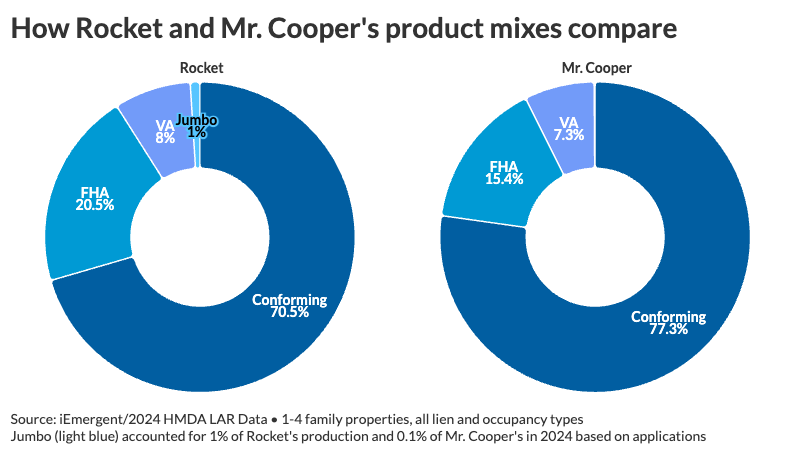
The numbers suggest Rocket Mortgage's acquisition of Mr. Cooper won't add enough dollar volume to outpace its closest competitor but they also show the deal has other benefits. View the full article
-
Key Takeaways Cost Components: Building storage units involves various costs including land acquisition, construction materials, labor, site preparation, and utility installations, which all significantly impact the overall investment. Location Matters: The geographical location affects the cost of land and construction, with urban areas typically incurring higher expenses but potentially offering greater demand for storage units. Size and Design Impact Costs: The size and complexity of your storage facility influence pricing, with larger and more intricate designs resulting in increased construction and material costs. Permits and Legal Fees: Always budget for permits and legal fees, which can add thousands to your total costs and vary based on local regulations. Financing Options: Explore various financing methods, including traditional loans, private equity, crowdfunding, and partnerships, to effectively manage construction costs and ensure financial flexibility. Long-Term Planning: Accurate budgeting and understanding of factors influencing costs are essential for maximizing returns in the storage unit business, allowing for informed decision-making before construction begins. Thinking about diving into the storage unit business? Understanding the costs involved is crucial for making informed decisions. From land acquisition to construction materials and operational expenses, several factors play a role in determining your overall investment. Storage units can be a lucrative venture, but the initial outlay can vary significantly based on location, size, and design. Whether you’re considering a small facility or a large complex, knowing the financial landscape will help you plan effectively and maximize your returns. Let’s explore the key components that influence the cost of building storage units and what you need to consider before taking the plunge. Overview of Storage Unit Construction Costs Understanding storage unit construction costs is crucial for small business owners entering this industry. Costs typically vary based on multiple factors that influence the overall investment. Key Components of Costs Component Estimated Cost Range Land Acquisition $1 to $5 per square foot Site Preparation $1,000 to $20,000 Building Materials $10,000 to $100,000+ Labor Costs $30 to $50 per hour Utilities Installation $5,000 to $15,000 Factors Affecting Costs Location: Urban areas often present higher land prices but may lead to increased demand for storage units. Size: Larger facilities incur more construction costs but can house more units, potentially increasing revenue. Design: Complex designs can elevate expenses, while standard layouts may reduce costs. Zoning: Local zoning laws may dictate construction requirements and costs. Accessibility: Sites with better access may require less investment in road construction and utility setups. Budgeting for these expenses allows you to calculate return on investment accurately. Understanding these components enhances your plan, ensuring you approach storage unit construction with informed financial expectations. Factors Influencing Storage Unit Costs Understanding the factors influencing storage unit costs is crucial for small business owners. Each element significantly impacts your overall investment. Location and Land Costs Location plays a vital role in determining your construction expenses. Urban areas usually come with higher land prices and labor costs compared to rural locations. Local building regulations and zoning laws can also raise your costs, depending on the community’s requirements. Consider site accessibility and necessary improvements to the land; these factors can substantially affect your budget. Size and Design Considerations The size and design of your storage facility directly influence construction costs. Average estimates for traditional storage units range from $25 to $70 per square foot. Larger facilities typically incur higher overall costs. Complex designs or added features, such as security systems and climate control, push costs even higher. Climate-controlled units can cost between $50 and $100 per square foot, mainly due to HVAC systems and specialized insulation. Construction Materials and Labor The choice of construction materials significantly impacts your expenditures. Steel buildings are common because of their durability and reduced maintenance needs, often leading to lower long-term costs. However, initial costs vary based on material quality. Labor costs fluctuate based on your region and the complexity of the project. Additionally, the quality of finishes for walls, roofs, and doors further influences overall pricing. Every small business owner must evaluate these factors carefully when planning for a storage unit construction project. Doing so enables accurate budgeting and prepares you for a successful venture. Cost Breakdown for Building Storage Units Understanding the costs of building storage units is essential for small business owners. These expenses can vary significantly, impacting your overall budget and financial planning. Permits and Legal Fees Permits and legal fees can vary widely based on your location and local regulations. Typically, these costs are part of the overall construction budget but can add several thousand dollars to your total expenses. It’s crucial to research these costs early to avoid surprises during the development process. Site Preparation Costs Site preparation costs are significant in building storage units. For a facility housing 100 storage units, site development expenses can range from $59,500 to $112,000. Additional costs include: Concrete Roads: Approximately $50,000 Electrical Installation: About $15,000 Security Cameras: Ranging from $5,000 to $15,000, depending on existing equipment. Careful planning of these expenses can enhance the effectiveness and appeal of your storage facility. Construction and Material Expenses Construction and material costs are major components of your overall investment. Construction Costs: For a single-story facility, expect to spend approximately $50 to $65 per square foot. For 100 units (assuming 10’x10′ units), the total construction cost ranges between $500,000 and $650,000. Material Costs: Budget around $85,000 to $140,000 for materials necessary for the same 100 units. Total Cost: Overall, building 100 storage units typically costs between $756,500 and $1,252,000. For larger facilities, total costs can range from $1.25 million to $3.5 million. These detailed breakdowns help small business owners like you optimize budgeting and investment strategies when entering the storage unit market. Financing Options for Storage Unit Construction Financing options play a crucial role in constructing storage units. Understanding these options can help you manage upfront costs effectively. Traditional Loans Traditional loans serve as reliable funding sources for construction projects. These loans offer fixed interest rates and predictable repayment terms. You can access these loans through banks or credit unions. Secure a loan based on your credit history and business plan, which usually includes projected revenues from the storage facility. Leverage this stability for long-term investments that can enhance your small business portfolio. Alternative Financing Methods Alternative financing methods can diversify your funding approach. Consider these options: Private Equity: Investors provide capital in exchange for a share of ownership. This option can offer substantial funding without immediate loan repayment pressures. Crowdfunding: Utilize online platforms to raise money from multiple contributors. This method enables you to connect with individuals interested in your project, making it a viable option for small businesses seeking initial investment. Partnerships: Collaborate with other investors to share costs and risks associated with building expenses, which can lead to greater financial flexibility. Mezzanine Financing: Combine debt and equity financing, creating a larger investment pool. This mixed approach helps you secure the necessary funds without significant upfront costs. These diverse financing options ensure you have the resources required to build your storage units while effectively managing the financial aspects of your small business venture. Conclusion Building storage units is a significant investment that requires careful planning and budgeting. By understanding the various costs involved and the factors that influence them, you can make informed decisions that maximize your potential returns. Consider the importance of location and design while keeping an eye on operational expenses. With the right financing options and a clear financial strategy, you can navigate the complexities of construction and set your storage unit business up for success. Taking these steps will help ensure that your investment pays off in the long run. Frequently Asked Questions What are the major costs of starting a storage unit business? Building a storage unit business involves several major costs, including land acquisition, construction materials, labor, permits, and utilities. Depending on the location and design, these costs can range significantly, making it important for investors to plan their budgets carefully. How do location and size affect storage unit costs? Location plays a vital role in determining costs; urban areas generally have higher land prices than rural locations. Similarly, the size of the facility directly impacts construction expenses, with larger units incurring higher overall costs due to increased materials and labor requirements. What are the average construction costs per square foot? For traditional storage units, average construction costs range from $25 to $70 per square foot. Climate-controlled options tend to be pricier, as they require additional materials and technology to maintain temperature and humidity levels. What financing options are available for building storage units? Investors have various financing options, including traditional loans, private equity, crowdfunding, partnerships, and mezzanine financing. Each option provides different benefits, making it crucial to consider multiple sources for funding. How can I maximize my return on investment in this business? To maximize returns, investors should conduct thorough market research and detailed budgeting. Understanding local demand, controlling construction costs, and strategically choosing facility design can significantly impact profitability in the storage unit business. Are there specific permits required for construction? Yes, obtaining the necessary permits is essential for construction. This may include zoning approvals and building permits, which can add to overall expenses. Checking local regulations beforehand helps in understanding the requirements and associated costs. Image Via Envato This article, "How Much Does It Cost to Build Storage Units? Essential Guide for Investors" was first published on Small Business Trends View the full article
-
Lending to buyout firms and private credit groups is up 20% in a year to $1.2tnView the full article
-
To Deb Cloutier, president and founder of the sustainability firm RE Tech Advisors, the news that the The President administration is planning to get rid of Energy Star simply didn’t make sense. The President’s claims that he wants to reduce Americans’ energy bills is “completely at odds with this move to scrap the program that certifies energy efficient appliances. And she sees no viable way for private companies or nonprofits to fill this gap. She would know what it takes: Cloutier is one of the original designers of the program. Energy Star officially launched in 1992, under President George H. Bush. Cloutier helped shape the program’s focus on building efficiency, and then worked as a consultant every year since its launch. In the past 30 years, Energy Star has “exceeded all expectations,” Cloutier says: It saves consumers more than $40 billion every year on their bills, and helps certified buildings use 35% less energy, which means lower operating costs. Energy Star is voluntary, not mandatory Energy Star was specifically intended to be a voluntary, nonregulatory way of getting businesses to adopt and understand energy efficiency. The program doesn’t force businesses or building owners to participate. And yet more than 16,000 companies and organizations do—from appliance manufacturers to school districts. “Dozens of voluntary programs exist today, but Energy Star was the seminal first program that proved that businesses working in concert with government in a collaborative fashion could learn from one another, and develop resources that would not be brought to market by the businesses on their own,” Cloutier says. It has been a model for other public-private partnerships since, some even directly taking Energy Star’s tools: Canada uses Energy Star’s buildings portfolio manager for how it rates and ranks its own buildings. Businesses don’t often want to be the first to adopt something new like energy efficiency metrics; it’s a risk, and not always clear how the market will respond. But Energy Star was able to convene industry leaders together so multiple businesses could adopt these standards at once. Then, it started recognizing the top 25% most efficient products, buildings, and manufacturers. “It really helped spark that competitive nature of businesses to try and set goals to have X percent of their portfolio that has energy Star certification,” Cloutier says. An impartial agency, and a recognizable symbol Because Energy Star is a government program, it provides an impartial scoring metric for efficiency, based on rigorous scientific research. Energy Star’s iconic blue label is also easily recognizable by consumers: According to the program, nearly 90% of American households recognize the symbol. Without one symbol from a trusted, third-party source, manufacturers or retailers may put their own efficiency labels on products, which would make for a confusing and crowded landscape for consumers. It also wouldn’t be clear if those labels are consistent in what they measure or reward, or who’s verifying those claims. And if a nonprofit were to take over Energy Star’s role, it’s unlikely that it could cover the same array of industries—retail, manufacturing, residential, schools, and state and local governments—that the federal government does. “It would be a tall order to find something that replicates the federal government’s impartiality and breadth,” Cloutier says. Energy Star simplifies the efficiency process The federal government is in a unique position to have the national energy data, the research from national laboratories, and the industry expertise that underpin Energy Star’s tools and standards. The program draws from other government agencies like the Energy Information Administration, and it incorporates state and local regulations around emissions caps and what information buildings must disclose around their energy consumption. “If you own and operate buildings in more than one state or multinational jurisdictions, it’s already a very complex compliant landscape,” Cloutier says. But Energy Star helps simplify the process through things like its portfolio manager software tool, which allows entities to enter their buildings’ energy consumption and receive a score between 1 and 100, and to track their improvement over time. The private sector not only would struggle to access all the national energy data and laboratory research crucial for Energy Star, it would also face challenges from businesses themselves. “I think most entities would be hesitant to give what they would consider to be confidential business information around energy usage to a third party,” Cloutier says. Private businesses likely couldn’t carry out Energy Star at a large scale either. Its portfolio manager is used by more than 280,000 properties. For a private business to fund such an expansive, far-reaching tool, it would likely have to charge for it, Cloutier says—which would burden American businesses, buildings, and families directly. As a government program, Energy Star is incredibly cost-effective: For every federal dollar invested, it delivers a return of $350. “When you look at the very small budget to run Energy Star, I would say it’s sort of the little engine that could in terms of its results,” she says. The program supports more than 750,000 U.S. jobs, and Americans purchase 300 million Energy Star-certified products a year, worth $100 billion in market value. Energy efficiency benefits everyone Energy Star has long had bipartisan support, and for good reason. Making products and buildings more efficient helps the entire country—not only by lowering people’s energy bills, but by putting less pressure on the national energy grid. That means less blackouts and brownouts, too. “The more we can help drive down the amount of energy used to live, work, and play in buildings, that helps produce more bandwidth on the grid,” Cloutier says. U.S. energy demand is only growing, especially with more data centers to support AI and cloud services, which will also likely raise energy prices for consumers. Without Energy Star, Americans might be more likely to choose the cheapest option at the appliance store, not realizing that doing so will actually increase their energy bills over time. It’s not easy, without a third-party label like Energy Star, to translate that trade-off in purchase price versus long-term savings. But by having the Energy Star product, consumers know that item inherently saves energy; Energy Star also details the annual energy use of a product—and how much that use compares to the federal standard. Consumers can even search for items like dishwashers and the Energy Star website will sort them by energy use. Losing Energy Star also means buildings might lag on efficiency, in part because the process to meet efficiency standards and implement energy-saving tools will be a more difficult undertaking. Building operators may then pass those increased utility costs on to residents, in the case of apartment buildings, or customers, in the case of hotels. Cloutier has seen numerous examples of how aligning with Energy Star standards has helped building operators save money; thousands of school districts, she says, have saved on operating costs that can then make more resources available for teachers. And Energy Star is authorized by Congress, which means it can’t legally be ended in this fiscal year. What happens after that isn’t clear, but Energy Star’s benefits are. During his first term, The President tried to end the program but faced strong opposition, and Energy Star survived. “I am highly encouraging our clients and peers in the industry,” Cloutier says, “. . . to defend the value of Energy Star again.” View the full article

-
In recent months, the New York City subway system has seen a string of shocking and deadly incidents of violence, including several passengers who have been shoved from the platform into the paths of moving trains. A recent report finds that misdemeanor and felony assaults within the subway system have tripled since 2009. For everyday riders and visitors alike, there is now a lurking fear that their next trip on the subway could be dangerous. Many, including the governor of New York, are seeking solutions, which range from adding more police presence to increasing surveillance to installing more lighting to combatting fare evasion. But there’s another approach that could go a long way to improving security and safety in the subway system. Through specific and targeted design interventions, the subway system itself could be retrofitted to reduce violent crime. This is one of the conclusions of What To Do (and Not To Do) About Subway Safety, a new set of policy recommendations from the urban policy journal Vital City. Based on input and research from criminologists, behavioral scientists, transit experts, and policy wonks, the recommendations include focusing on mental health and substance abuse among users of the system, increasing access to social workers, and using police forces more strategically. Claire Weisz, cofounder of the architecture and design studio WXY, contributed to the report with ideas for design interventions that could increase a sense of security and comfort for subway riders. These design ideas include improving sight lines within the system’s underground stations, increasing visibility between passengers, and reducing dead ends and other areas that can isolate people. Rather than calling for a wide scale and expensive investment in safety infrastructure like Japanese-style platform barriers, the design ideas proposed here are lower lift interventions. The standout design idea from Weisz and WXY is the addition of highly reflective surfaces throughout subway stations. Lining ceilings, walls, and even the areas right above the edge of the platform, these shiny surfaces passively increase visibility, spatial awareness, and navigation within the sometimes circuitous underground world of a subway station. “Mirrors or mirror-like surfaces, which could be stainless steel, in the right places can actually help people see around columns, see down hallways, see around corners, but also get a sense that I’m getting closer towards an exit, or I’m getting farther away, or here’s where a platform is,” Weisz says. “Right now, there isn’t kind of intuitive wayfinding.” Reflective surfaces can also increase a sense of security. Directly influenced by the violent shoving incidents that have been happening in recent months, the subway design interventions feature a curved reflective surface just overhead of the tracks, called a soffit. This gives people standing and waiting for trains the ability to catch glimpses of their surroundings without having to look behind their backs. “When you’re standing and waiting for the subway, you can see other people,” Weisz says. The soffit also visually tightens the station interior, making it feel more compact. “It closes down the space between the platform and the third rail on the tracks, so that you’re not as open to the whole track.” The idea behind these reflective surfaces comes from the world of hotel design, Weisz says. Hotel hallways and elevators are commonly outfitted with mirrors that let people see themselves but also, perhaps subconsciously, understand that they are also going to be seen by others in this public place. It’s a bit of social engineering informed by behavioral science that encourages more self-awareness and courteous behavior. The surfaces become like eyes on the platform. Adding these reflective surfaces could be a form of tactical design, improving conditions in subway stations without the need for a drastic and expensive redesign. But for a transit system with nearly 500 subway stations—and almost every one having a unique design—making widespread improvements will not be easy. “Everything’s expensive, but I do think a couple of pilots in stations that are complex would go a long way,” Weisz says. “My hope is some of these discussions are going to bring money forth from philanthropy or from academia to do a couple of pilots that really get monitored and recorded to find out if this is changing how people feel in these spaces as they move through the subway.” Weisz acknowledges that while the shoving attacks that have been reported in the subway system are rare, they’ve created outsized impacts on riders’ perceptions of safety within subway stations. To maintain the system’s essential role in the functioning of the city, she argues, those perceptions of safety must be improved. “Good design allows people to behave in a way that optimizes the use of public space in the system,” she says. View the full article

-
In a new bag from Freitag, every part—from the fabric to the zipper, straps, buckles, and the thread that holds everything together—is made from a single material. The product is the latest example of a “monomaterial” design approach that some brands are beginning to use for a simple reason: It means that the products can actually be recycled when they eventually wear out. Right now, a typical backpack or bag has components made from multiple different materials. Dismantling everything at the end of its life is too time-consuming and expensive to be feasible. But using one material makes it essentially as simple as recycling a plastic water bottle. “You can basically put that entire product into a shredder instead of taking things apart first,” says Elisabeth Isenegger, who leads international communications at the Switzerland-based, 32-year-old company. Then the material can be melted down and made into pellets to make something new. The company chose a material called polyamide 6, which is commonly used in everything from textiles to toothbrush handles. Because it’s ubiquitous, there’s a market for recycling it. But it was a challenge to find sources for every component that they needed. Freitag also had to find a way to avoid a water-repellent coating that would normally be used on the fabric, but would have made the fabric unrecyclable. To do this, the company worked with one of its suppliers to develop a version of the fabric with three layers, laminated together, that was water repellent on its own. A backpack using the approach came out last year, followed by the smaller new bag, the Musette, that just launched. If something breaks on the bag, consumers can bring it to a Freitag store and then the bag will go to one of the brand’s 10 global repair centers. (The team set up a new repair kit for the backpack and bag, since repairs can also only be made with the same material.) When the bag eventually wears out, consumers can bring it back, and Freitag will work with partners to recycle it; it’s not handled in typical municipal recycling centers. Before launching the first backpack, the company worked with the Switzerland-based Institute for Materials Technology and Plastics Processing to validate the process. Ultimately, Freitag aims to become fully circular in everything that it makes. The brand’s best-known product, messenger bags made from old truck tarps, are already a form of recycling. But the company is now also working with trucking companies to test a new type of tarp material that can also be fully recycled after it’s made into a bag. View the full article

-
Cultural planning has shape-shifted throughout its history, encompassing beautification initiatives, placemaking (and placekeeping) projects, and preservation work. But in the past decade, the field has accelerated significantly, according to Rana Amirtahmasebi and Jason Schupbach, the editors of The Routledge Handbook of Urban Cultural Planning, a new manual that compiles the most innovative programs, policies, and approaches to the discipline that have recently emerged. A throughline? That creative wellness is essential to cities, and that everything from the climate crisis to displacement, tourism, public space, and infrastructure can benefit by centering culture and the people responsible for it. It’s a provocative angle, considering how efficiency and technocracy—the opposite of the difficult to quantify nature of culture—still dominate urban planning. As Amirtahmasebi and Schupbach write in the book’s introduction, cultural planning “should be seen as a critical tool in the toolbox of building equitable communities” and no longer as a siloed topic on the fringes of city policy. The new manual, which clocks in at over 500 pages, features case studies from around the world on how arts and culture are entering urban planning in new ways. While the usual suspects of public art, museums, and cultural districts appear in the book, they’re joined by less expected approaches. For example, an essay describes how the Los Angeles Department of Transportation’s first resident artist helped pedestrian safety come across more urgently by centering real people and their stories instead of statistics in Vision Zero presentations. Meanwhile, a chapter on land trusts explores how new ownership models are combatting real estate speculation in Oakland, California. We spoke with Amirtahmasebi, an urban planner and cultural strategist, and Schupbach, Dean of the Westphal College of Media Arts and Design at Drexel University, about their new book and what it means for the future of cities. This interview has been edited and condensed for clarity. Congratulations on the book! What sparked it? Rana Amirtahmasebi: The field of cultural planning and policy has come a long way, but there was really no book about its intersection with other sectors and challenges like housing, gentrification, environment, economic development, public health, and disaster risk management. Jason Schupbach: We’re way beyond the just put a mural on a wall type of beautification project—although there’s an excellent article on murals in the book. Ideas are much more advanced today, but there hadn’t been a survey in almost 10 years, and there has been a massive explosion of thinking and networks and people in urban cultural planning. We thought, let’s get together all the people who are sophisticated about bringing cultural planning in conversation with other fields so that the handbook can be of actual use to people. Tell us about some of those new ways of thinking. I was drawn to a quote in the book from Dr. Maria Rosario Jackson, the former head of the National Endowment for the Arts, who argued that creative wellness is part of how we understand a good quality of life and that planners should take note. Amirtahmasebi: What we missed as urban planners and policymakers is that we looked at the city as a bunch of sectors, like housing and transportation and we really didn’t really think about how to bring all of them together. But the city is also a cultural construct. How do you make this into a place where people can live, thrive, and be happy? In one essay, Dr. David O. Fakunle and his coauthors write about the creative process of storytelling and how it’s a powerful tool to address disinvested communities, loneliness, and public mental health. So arts and culture can cultivate opportunities for human-centered approaches to individual and collective healing, growth, and empowerment. What are some of the new policies that represent a more integrated approach to cultural planning and cities? Schupbach: Cultural land trusts are a big one. We’re so challenged by land prices in many places, and culture is one of the things that will get priced out first. How do you hold on? There’s an interesting article by Dr. Angie Kim about community ownership in Oakland, California. There, the East Bay Permanent Real Estate Cooperative is exploring new financing models to buy land that might otherwise go to real estate speculators. And Erika Hennebury, a cultural affairs officer in the City of Toronto, offers a survey of cultural land trusts in Toronto, Vancouver, London, and San Francisco. Night mayors are another growing trend. Laia Gasch Caslas writes about how London implemented this policy, and there’s so much practical stuff in there. When the area around the Ministry of Sound, the legendary electronic music club, began to gentrify, the city required new development to have triple-pane windows and soundproof walls. A housing development person might not have been concerned about something like that, but a person in the city government paying attention to culture at night was. Guaranteed income for artists through programs that fund them to do work in communities is a new trend, too—like the Mellon Foundation’s $125 million Creatives Rebuild New York COVID-19 relief initiative. There have been some real interesting innovations, and it’s always in a place you might least expect where culture might intersect with city making. Equity and justice are strong currents throughout the book. To rewind a bit, the conversation in the aughts around urban cultural planning revolved around orienting cities toward “Creative Class” in service of economic growth, which contributed to gentrification and displacement. You argue that just framing cultural planning from an economic perspective is limiting. Why is that an important distinction? Schupbach: Cities are very complex things and you need every tool in your tool kit to try to make it better for all of the citizens. There are cultural tools, so why wouldn’t you use them? In the aughts, there was a strong economic argument that kind of rode a wave across cities around the world because of Richard Florida’s The Rise of the Creative Class book. It opened a lot of doors for mayors and cities to start a conversation about urban cultural planning. So I’m grateful for that. What Florida was talking about still matters, but we have a deeper level of sophistication about all the places that culture can help, and also how to build equity and justice. This work has come way beyond the creative economy. It intersects with transportation, as Katherine Dirga’s chapter on artists and transit planning explains. One chapter describes how a law lab at Northeastern University is working with community groups fighting housing instability. Amirtahmasebi: In a lot of contexts, when we talk about culture, we have to assign value. There’s no other way. In some places, there are grants available to develop theater or music or create a mural. But in a lot of parts of the world, when that money is not available, you have to make a case. So I think that’s why the creative class argument was very appealing to a lot of my colleagues and myself at the time. When you go talk to a mayor of a secondary city in Asia or Africa, how can you say let’s build a theater when you don’t have sanitation or housing? It’s extremely difficult to quantify qualities like social cohesion and social capital. Dr. Jackson says in the book that if you want to destroy a society, you kill the culture. It’s also true that if you want to build a society, you build their culture. It should be obvious, right? We shouldn’t have to make an economic case for it. Recognizing where value lies is another theme. You argue that “culture bearers” are important to center in planning and that expanding the field’s understanding of who these figures are is critical. Can you share a bit more about this? Schupbach: This concept of “culture bearers” is so important. It’s an inside urban cultural planning term, but it really is about who holds the culture in a place, and who passes it down. Everybody kind of knows who that is in their neighborhood probably, right? It’s not just about the formally trained artist. For example, altar makers in Los Angeles may not call themselves artists, but they are truly holders of the culture. There’s an article in the book on cultural asset mapping. It’s not just the number of artists and theaters; it’s really about digging deeper into what makes a place a place. Where would you like to see urban cultural planning go next? Amirtahmasebi: The next step is not thinking of culture as something that is completely separate from other sectors in the city. I would like cultural plans to be one chapter of the city’s overall plan. A lot of times, cultural plans don’t speak to what is happening with planning departments in other parts of the city. Schupbach: There’s huge potential in the under-explored public health space. Dr. Fakunle saw the power of storytelling in the loneliness crisis, as we talked about. Well, there are a lot of health crises. There’s a lot of stuff about art therapy, but how does it intersect with place in a smart way? And how does that connect to disaster? We’re in a moment of creative destruction right now in the United States. A lot of stuff is being torn down. I’m not so interested in the daily panic about the tear down; I’m really interested in what do we build on the other side? What are the new policy ideas? What are the new structures we can build? Things are changing. A lot of things for a lot of people weren’t working before. Let’s actually try to build something better. What do you see as the ultimate outcome of cultural planning applied to the fullest degree? Amirtahmasebi: The well-being of humans and being able to thrive, especially with intangible cultural heritage. To be the source of social and psychological resilience, especially in these times of hardship, everywhere in the world Schupbach: Hard same. The Routledge Handbook to Urban Cultural Planning is available from routledge.com. View the full article

-
Step inside a newly built apartment complex in almost any American city and you’re likely to find people congregating in an unexpected place. They’re not in the pool or the game rooms or the gym. The people are gathering in the mailroom. Through an unusual collision of building codes, postal regulations, shopping habits, and a global pandemic, mailrooms have become a new kind of social space in apartment buildings. And designers are finding new ways of taking what has long been a utilitarian peripheral space and turning it into a central square where residents can dwell and interact. Julia Lauve is an interior designer in Dallas and her firm Workshop Studio designed the mailroom for a recently completed 213-unit apartment building in suburban Lewisville, Texas. Instead of presenting a simple row of metal mailboxes, the mailroom appears to be more of a lounge, with a large U-shaped sofa in the middle, dark paneled walls, soft lighting, and wide carpeted floor. There are tables where residents can sit and open their mail or pull out a laptop, and doors to the street turn it into a waiting room for visitors or rideshare services. “It pulls you in with some soft seating and invites you to stay there for a little while instead of just opening your mailbox, getting your three or four pieces of junk mail, tossing them in the trash, and leaving,” Lauve says. The English Den The mailroom is also front and center in the building, rather than hidden in some back room. “It is an extension of the lobby and the community spaces within this property, instead of it being an afterthought and tucked away,” says Lauve. She’s created several other similar mailroom designs for apartment complexes in Texas, and there are residential projects from Arizona to Virginia where mailrooms are considered just as much of a resident amenity as a pool or a gym. The English Den Why mailrooms are such a desired perk The mailroom’s sudden rebirth may seem random, but it has come about through a perfect storm of outside influences. “A lot of it is driven by code,” says Sheena Brittingham, managing partner of Vida Design, an interior design firm based in Portland that has multiple mailroom design projects in its portfolio. Recent revisions to the Americans with Disabilities Act (ADA) require large apartment buildings to have at least some mailboxes within a “reach range” between 15 and 48 inches from the ground, and many local jurisdictions require all mailboxes to fall within that range, adding more linear footage to the overall mailroom size. Building codes that once required turning radii in hallways and common areas to be at least 60 inches have increased the minimum to 67 inches, adding additional space between rows of mailboxes. “[Mailrooms are] just getting larger and larger and taking up more space,” says Brittingham. “On most of our projects we’ve approached it like, let’s make this a beautiful experience and make it a place people actually want to come.” That means putting more design touches into a real estate footprint that has swollen in size. Lauve’s project in Lewisville, Texas, for example, has about 8,700 square feet of amenity space on two floors, including a clubhouse, a gym, and a business center. Almost 1,000 square feet of that is dedicated to the mailroom. “It’s a lot of space,” she says. The English Den The main courier of mail—the United State Postal Service itself—has also influenced this trend. Mail receptacle standards revised in 2020 now require that multifamily residential buildings locate their mailrooms “reasonably close” to the nearest place where a mail carrier can park their delivery vehicle, which many local postmasters have interpreted as a 100-foot rule of thumb. That’s brought mailrooms out of the dark corners and much closer to the front of the building, blurring the edges between mail infrastructure and the lounge-like lobbies and sleekly designed common areas many of these developments include. Brittingham says her firm used this new condition to influence its design concept for a mailroom in a recent project in San Diego, which sets aside some of the mailroom’s counterspace for a typewriter that nudges people to contribute to a public journal of sorts. “It’s trying to engage the residents a little bit more in an analog way,” she says. “Mail is such an analog experience that it’s kind of nostalgic.” Redesigning mailrooms for the work-from-home era With the rise of e-commerce, dedicating more space to mail has become a modern necessity. “Anything that you could possibly need can be delivered to your door,” says Lauve. “People are now receiving all of this stuff from mail services, delivery services. So it’s become this behemoth amount of space that a developer needs to consider to make everybody happy.” Parcel rooms and delivery lockers are now also part of the mailroom landscape, with an increasingly sophisticated array of hardware capable of handling the daily onslaught of deliveries too big to fit in a typical mailbox. Brittingham says some of her firm’s projects have invested in space and technology to make this process as smooth as possible for residents, including secure rooms with key-coded doors, video surveillance, and elegant lighting. “We want to really elevate that experience because everybody is going here almost every day to pick up their packages,” she says. “We don’t want it to feel like you’re going down some creepy corridor to get your stuff.” Increased rates of package delivery is one side effect of the pandemic. Another is the growth of flexible work, which has turned many spaces—intentionally or not—into places where people can do their jobs. “We’re seeing a lot of overlap in any amenity space for cowork,” says Brittingham. “Any space or any surface where you give people an outlet and Wi-Fi, it gets utilized.” Her firm’s mailroom design projects have built this reality into its designs, adding extra seating and tables to allow for people to linger or even decamp from their usual workspace. In post-occupancy studies of projects, Brittingham says the shared spaces within mailrooms are used regularly. “We see a lot of people coming down during the day and just sitting on their laptop or being on their phone in a public space and just wanting to be together in any common area,” she says. Building managers are also claiming these spaces for themselves. Brittingham says the loungelike atmosphere of the mailroom has become an informal area for a building’s leasing manager to meet with prospective tenants, closer to the ebb and flow of residential life, showing a glimpse of the social potential of living in a big apartment building. The reemergence of mailrooms is partly happenstance, but this space is becoming the heart of multifamily residential projects. It may be a more critical third place than the other conventional amenity spaces within these buildings. “We’ve done arcade rooms. We’ve done golf simulators. We’ve done coffee shops that are attached as part of a multifamily property. So there is this chase for what is the most sought after amenity,” says Lauve. “What we have really found through our experience is it’s not the amenity, it’s community.” View the full article

-
I don’t know about you, but I usually cringe when I get my weekly Screen Time Report. Did I really spend that much time online? Turns out, I’m pretty average. According to DataReportal’s 2025 Global Overview Report, adults worldwide clock in about six hours and 38 minutes on digital devices each day. While being average is comforting, I know I could benefit from more time unplugged. Yet, the thought of a full digital detox feels scary. “It’s very hard to completely disconnect yourself,” says Cristiano Winckler, director of digital marketing for Somebody Digital, a digital marketing agency. “But anything in excess is going to have negative consequences. The question is, how can we still be present online, but not in a way that is going to cause anxiety?” Worries about being offline are common, and Winckler analyzed the most common perceived career risks according to Google Trend search data. He found three of the biggest concerns—and why we shouldn’t stress over them so much. Being Inaccessible People who work remotely often fear that a digital detox may portray them as inaccessible or out of the loop, says Winckler. “For example, in our organization we have lots of different ways of communicating with each other,” he says. “We have emails, WhatsApp, and Slack. Some clients like to use Microsoft Teams. If you’re managing three to five clients, you have to communicate with them, plus your team members. People are afraid of being inaccessible.” Instead of being tethered to message apps all day, get ahead of other people’s expectations. For example, let your team members know when you’ll be offline or are doing focused work. Winckler adds that organizations should implement policies that help their employees feel more confident placing boundaries around their time. “You don’t have to be 100% available all the time,” he says. “People will feel more comfortable having conversations, and they will become more efficient in dealing with certain tasks than before.” Missing Networking Opportunities Social media, such as LinkedIn, can be a valuable networking tool, and another common worry is that a digital detox could cost opportunities if they don’t act quickly enough. But that’s not the case, says Winckler. “People need to understand they do not control how their posts are going to be presented,” he says. “I sometimes get comments from people on posts that I published several weeks ago because LinkedIn and other social media platforms don’t necessarily show that post to everybody on my network at the same time. They usually pace out the exposure.”’ Instead, Winckler recommends time-blocking an hour per week to go through your social media channels and interact and reply. “You can still keep that networking element, which is quite important, while still keeping a good balance,” he says. Lagging Industry Awareness In addition to networking opportunities, social media can serve as a real-time feed for industry trends and news. Implementing a digital detox may cause you to worry that you’ll fall behind on emerging practices and competitor updates. “If you completely disconnect yourself from important channels, you will definitely miss market trends,” says Winckler. “Everything happens superfast in the digital world, and I would not recommend that you disconnect completely.” Instead, utilize tools to curate content for you so you can spend less time staying current. For example, Winckler recommends using news alerts and filters. Or subscribe to channels and newsletters that package relevant information and events that happened last week in your field. “In the digital marketing world, for example, there are amazing channels on LinkedIn and other social media platforms that will summarize everything for you and will give you a snapshot of what you need to know,” he says. “You can consume what is relevant to you and spend more time on the topics that will have a direct impact on your career. It’s using technology in your favor.” Finding Balance You don’t need to go offline for long stretches of time to improve your relationship with the digital world. While it’s natural to be concerned about being inaccessible, missing network opportunities, and industry awareness, it’s also possible to create balance with boundaries, leveraging technology as a tool and not let it take over your life and habits, says Winckler. “That’s a true digital detox,” he says. “The benefits outweigh the concerns of not always being available by quite a margin. It can take time to establish, but you will see a positive impact. The goal is to be present online, but not in a way that is going to cause anxiety.” View the full article

-
We’ve been told that the future of work is all about freedom. Companies offer unlimited PTO, flexible hours, and asynchronous communication channels that we can access anytime. The promise is that fewer constraints will make us more empowered, more creative, and more connected. Sounds great in theory, but in practice, that kind of freedom without structure often leads to chaos. Without clear boundaries, work becomes a blur. Expectations go unspoken, resentment builds, and ultimately, trust erodes. And the very flexibility meant to liberate us begins to wear us down. The healthiest organizations aren’t boundaryless; they’re boundary-wise. Why Boundaries Matter More Than Ever In today’s workplace, where hybrid schedules, digital fatigue, and high emotional load are the norm, boundaries aren’t just a personal preference; they’re the cultural infrastructure. Consider this: 47% of employees say they feel burned out at work, and one of the top drivers is unclear or constantly shifting expectations. Meanwhile, 76% of remote workers report difficulty disconnecting from work. A workplace without boundaries doesn’t create engagement; it creates exhaustion. Boundaries aren’t about protecting hours but about safeguarding capacity in all its forms: the energy, focus, and attention we need to do meaningful work. Many people resist the idea of boundaries because they sound rigid or limiting. But boundaries don’t actually constrain our power—they clarify it. Boundaries reinforce trust by setting expectations, expressing what we truly value, and defining where we end and others begin. As workplace author Greg McKeown puts it: “Constraints don’t block progress, they shape it. A deadline forces a start. A boundary protects your attention.” We need to stop thinking of boundaries as barriers and start seeing them as containers—the structures that give freedom its form. Boundaries don’t prevent flow; instead, they create the conditions for it. A Moment When “Yes” Was the Problem I once worked with the leaders of an innovative climate tech company that was scaling fast. Responsiveness was a badge of honor, Slack was always on, meetings were rarely unscheduled and often urgent, and everything was an immediate “yes.” But beneath the surface, there was extreme fatigue, frustration, and blurred priorities. The culture looked high-performing on paper, but felt hollow in practice. In a facilitated session, one team member admitted, “I never know when I’m allowed to shut off. And I’m afraid that setting limits will make me look like I don’t care.” That moment shifted everything. What followed wasn’t a productivity fix—it was a shared reset. The team introduced core hours for collaboration, quiet blocks for focused work, and “Focus Fridays” without meetings or Slack messages. Within weeks, their energy felt reinvigorated. A sense of clarity returned, morale improved, and creativity reemerged. The team didn’t slow down; it just aligned itself using boundaries. When you stop trying to do everything, you make space for what matters most. How to Build Healthy Boundaries at Work Boundaries aren’t about shutting others out but about showing up with intention. Here’s a simple framework I use with leaders and teams: Be clear about your nonnegotiables. Before you can communicate boundaries to others, you need to define them for yourself. What lines can’t be crossed—whether that’s after-hours communication, personal ethics, or feedback norms? Clarity starts within, then becomes a shared agreement. Articulate your boundaries early. Don’t assume others know. Share them out loud, and revisit them when your context shifts. Setting boundaries isn’t a one-time conversation—it’s a leadership habit that evolves alongside your role and relationships. Leave room for a buffer. Not every line is absolute. Build a “pause zone” for conversation and recalibration—this could mean committing to a 30-minute delay before responding to nonurgent messages or setting up clear blocks in the week for focused work versus collaborative time. A pause zone creates space to respond with intention rather than react on autopilot. Align with your values. A boundary that protects your time but violates your purpose won’t hold. Make sure your boundaries serve your bigger “why.” The most sustainable boundaries are those that feel not only practical but deeply principled. Notice your signals. Resentment, anxiety, and exhaustion are often signs that a boundary has been breached or needs reinforcement. Your emotional patterns are data—listen to them before they become burnout. Communicate with care and clarity. Boundaries are an act of mutual respect, not a rejection. Consideration doesn’t require an apology. You can be both direct and generous—and that’s often when boundaries land best. Evaluate and evolve. What worked last year may not work now. Boundaries should shift with your life, your leadership, and your team. Revisit them regularly and treat them as a living part of how you work, not a fixed set of rules. Boundaries as a Cultural Practice Boundaries aren’t just personal; they’re also cultural. When leaders model them, teams follow. And when teams build them together, the results are measurable. Focus sharpens, collaboration becomes more intentional, burnout decreases, trust deepens, and innovation increases, not because people hustle harder, but because they’re working from a place of clarity and care. Boundaries don’t diminish connection. They deepen it—because they make it safe to be fully present. Start by asking yourself and your team these questions: Where in our work are we overextended, unclear, or always on? What’s one boundary you need to set, or revisit? Where is so-called “freedom” creating confusion or drift? In work cultures without boundaries, people don’t thrive. They scatter and self-protect, and eventually, they burn out. But when leaders and teams get clear on their edges—on what’s okay and what’s not—they build something far more powerful: trust, clarity, creative energy, and a deeper sense of shared purpose. Boundaries aren’t a sign of disconnection, but a practice of alignment. They don’t hold us back; they keep us together. View the full article

-
Key Takeaways Effective Management Practices: Focus on tenant management, inventory maintenance, security measures, and customer service to optimize storage unit property management and enhance tenant satisfaction. Technology Utilization: Implement property management software to automate tasks, streamline operations, and improve tenant interactions for greater efficiency. Financial Considerations: Conduct market research for competitive pricing strategies and maintain comprehensive budgets to manage operating expenses and ensure positive cash flow. Challenges and Solutions: Identify common challenges such as rising costs and customer retention difficulties, and adopt strategies like dynamic pricing, robust marketing, and improved customer service to address them. Regular Maintenance: Develop a maintenance schedule and perform consistent cleaning and equipment checks to uphold facility standards and tenant satisfaction. In today’s fast-paced world, managing a storage unit property effectively can make all the difference in maximizing profits and ensuring tenant satisfaction. Whether you’re a seasoned property manager or just starting out, understanding the nuances of storage unit management is crucial. You’ll find that a well-organized approach not only enhances operational efficiency but also attracts and retains customers. From maintaining inventory to implementing security measures, every aspect of storage unit property management plays a vital role in your success. By focusing on best practices and leveraging technology, you can streamline operations and create a seamless experience for your tenants. Dive into the essentials of storage unit property management and discover how you can elevate your facility to new heights. Overview Of Storage Unit Property Management Effective storage unit property management plays a vital role in maximizing profits and enhancing tenant satisfaction for your small business. Understanding this management’s core concepts equips you with the tools needed for success. Definition And Importance Storage unit property management involves overseeing and maintaining storage facilities, including managing tenants, handling reservations, and ensuring security. It’s essential for small businesses to focus on this aspect to drive increased occupancy rates, improve customer service, and reduce operational costs. Proper management fosters tenant loyalty, leading to higher retention rates and steady revenue streams. Key Components Several key components contribute to effective storage unit property management: Tenant Management: Establish clear communication with tenants. Use digital tools for leasing agreements and timely notifications. Inventory Maintenance: Regularly assess and manage inventory levels. Keep track of available units to avoid overbooking and ensure efficient space utilization. Security Measures: Implement robust security protocols. Install surveillance cameras, secure access gates, and adequate lighting to protect both the facility and tenant belongings. Marketing Strategies: Develop targeted marketing campaigns. Use online platforms and local advertisements to reach potential customers effectively. Technology Utilization: Adopt property management software. Streamline operations with tools that automate billing, manage reservations, and handle maintenance requests. Customer Service: Prioritize excellent service. Respond quickly to inquiries and concerns to create a positive experience for tenants. By managing these components efficiently, your small business can create a well-run storage facility that attracts and retains tenants while maximizing profitability. Best Practices For Effective Management Effective management in storage unit properties is vital for small businesses aiming to increase profitability and enhance tenant satisfaction. Implementing best practices can streamline operations and create a welcoming environment for tenants. Regular Maintenance Scheduling: Create a detailed maintenance schedule that incorporates essential tasks like cleaning, pest control, equipment checks, and property inspections. Consistent maintenance prevents issues and ensures a well-kept facility. Cleaning: Clean storage units promptly after move-outs to eliminate dust and grime buildup, creating a safe and appealing environment for new tenants. Regular cleaning contributes to tenant retention and satisfaction. Equipment Checks: Inspect and maintain equipment regularly to avoid breakdowns and ensure operational efficiency. Regular checks keep your operations smooth and minimize disruptions that could affect tenant experiences. Customer Service Strategies Personalized Service: Prioritize personalized customer service to build trust and satisfaction. A hands-on management approach fosters positive interactions, encouraging tenants to return and recommend your facility to others. Feedback: Pay attention to customer feedback. Regularly solicit and evaluate tenant opinions to identify areas for improvement. Addressing concerns promptly enhances operational effectiveness and tenant loyalty. Zeroing in on Customer Needs: Focus on understanding and addressing tenant needs efficiently. By responding quickly and effectively, you improve overall satisfaction and encourage long-term relationships, which are crucial for small business success. Technology In Storage Unit Management In storage unit property management, technology significantly enhances operations and improves tenant interactions. Small businesses can leverage various tools to streamline processes and ensure efficient management. Software Solutions Tenant and Unit Management: Using software like Storable Edge and Sitelink by Storable, you can effectively manage tenant records and unit inventory. These tools simplify tracking rent status and managing gate codes, allowing you to focus on enhancing tenant satisfaction. Automated Processes: Platforms like Self Storage Manager and Easy Storage Solutions automate tasks such as online rentals and payment collection. By reducing manual errors, these systems increase efficiency, enabling you to allocate resources better and improve service delivery. Reporting and Insights: Software solutions provide detailed reporting and analytics. With insights into business performance and market demand, you can make informed decisions that align with your small business goals. Automated Systems Online Rental Platforms: Automated systems allow tenants to rent units and make payments online. This convenience not only enhances customer experience but also reduces staffing needs, allowing you to focus on other critical areas of your small business. Access Control Systems: Automated gate control systems help secure access to facilities. With gate codes and security measures in place, you can protect your inventory and enhance trust with your tenants. Notification Systems: Automated notifications for rent reminders, lease renewals, and other vital events maintain smooth operations. Implementing these systems reduces the chance of missed communications, reinforcing tenant relationships and supporting retention efforts in your business. Financial Considerations Managing a storage unit property involves several financial factors that significantly influence your small business’s success. Attention to initial costs, operating expenses, and effective pricing strategies ensures your facility remains profitable. Pricing Strategies Setting competitive prices for your storage units impacts occupancy rates and revenue. Market Research: Analyze local demand and competitors to set optimal pricing without undermining your profitability. Dynamic Pricing: Adjust prices based on demand fluctuations, seasonality, and unit size to enhance revenue. Discounts and Promotions: Offer introductory rates, long-term rental discounts, or first-month specials to attract new tenants and minimize vacancy. Budgeting and Expense Management Budgeting is vital to maintain operational efficiency and profitability within your small business. Comprehensive Budgeting: Create detailed budgets encompassing development, pre-opening, and ongoing operational costs, including staffing, maintenance, and marketing. Expense Monitoring: Regularly review expenses such as utilities, maintenance, and management fees to uncover cost-saving opportunities. Cash Flow Management: Track rental income and expenses to ensure a positive cash flow that meets your financial commitments. Financial Analysis and Forecasting: Conduct feasibility studies and financial stress tests to prepare for market changes and potential investment risks. Focusing on these financial considerations enhances your small business’s resilience and positions you for long-term success in the storage unit management industry. Challenges In Storage Unit Property Management Storage unit property management presents various challenges that small business owners must navigate to optimize operations. Understanding these challenges helps in developing effective strategies. Common Issues Faced Rising Property and Maintenance Costs: Property owners experience increasing expenses related to rent, utilities, and upkeep. In particular, maintenance costs can significantly impact profitability. Difficulty in Attracting and Retaining Customers: Small businesses often struggle with marketing and delivering superior customer service, essential for tenant retention. A focused approach in these areas can improve tenant satisfaction and loyalty. Compliance with Environmental Regulations: You face challenges in adhering to regulations regarding waste disposal and hazardous material storage, which can strain resources and require ongoing staff training. Strategies To Overcome Challenges Adopt Technology: Leverage real-time data analytics to inform pricing strategies and streamline processes. Utilizing online rental platforms can enhance tenant interactions and ease operations. Dynamic Pricing: Implement dynamic pricing techniques based on demand and competitor analysis. Adjusting rental rates can attract more tenants while maintaining profitability. Strong Marketing and Customer Service: Focus on robust marketing strategies, such as targeted advertising and promotions. Foster excellent customer service to build strong relationships with tenants, enhancing retention. Cost Management: Identify cost-saving measures to improve operational efficiency. Regularly review expenses to find opportunities for reducing overhead without sacrificing service quality. Security Upgrades: Invest in advanced security systems to protect your assets and mitigate liability risks. Enhanced security measures can improve tenant confidence and contribute to higher occupancy rates. Conclusion Effective storage unit property management is key to achieving long-term success. By prioritizing tenant satisfaction and operational efficiency you can create a thriving business that attracts and retains customers. Implementing best practices in maintenance technology and customer service will not only enhance tenant experiences but also boost your profitability. Navigating challenges like rising costs and market competition requires a proactive approach. By leveraging data analytics and adopting dynamic pricing strategies you can stay ahead of the curve. Ultimately your commitment to excellence in management will pave the way for a sustainable and successful storage facility. Frequently Asked Questions What is storage unit property management? Storage unit property management refers to the oversight and maintenance of storage facilities, including managing tenants, reservations, and ensuring security. Effective management is essential to maximize occupancy rates, enhance customer service, and reduce operational costs. Why is effective management important for storage facilities? Effective management is crucial for maximizing profits and tenant satisfaction. It helps streamline operations, improve customer service, and reduce costs. A well-managed facility attracts and retains tenants, ensuring steady revenue streams. What are the key components of effective storage management? Key components include tenant management, inventory maintenance, security measures, marketing strategies, technology utilization, and customer service. Addressing these areas helps create a well-run facility that meets tenant needs and maximizes profitability. How can technology aid in storage unit management? Technology enhances operations through software solutions for tenant records, online rentals, and payment automation. Automated systems improve efficiency, security, and tenant interactions, making management processes smoother and more effective. What best practices should be adopted in storage management? Best practices include regular maintenance of units, prompt cleaning after move-outs, and customer service strategies like personalized service and feedback solicitation. These practices improve tenant satisfaction and foster long-term relationships. What financial aspects are crucial in storage unit management? Key financial aspects include initial costs, operating expenses, and effective pricing strategies. Conducting market research and implementing dynamic pricing can help attract tenants while budgeting and expense management enhance operational efficiency. What challenges do storage unit property managers face? Challenges include rising costs, attracting and retaining tenants, and compliance with regulations. To overcome these issues, adopting technology, implementing dynamic pricing, and focusing on strong marketing and customer service are recommended strategies. How can property managers increase tenant retention? Enhancing tenant retention can be achieved through excellent customer service, maintaining a clean and secure environment, and implementing effective communication strategies like rent reminders and lease renewals to reinforce relationships. Image Via Envato This article, "Effective Strategies for Storage Unit Property Management Success" was first published on Small Business Trends View the full article