Newsletter
Want to keep up to date with all our latest news and information?


ResidentialBusiness
Administrators
-
Joined
-
Last visited
Everything posted by ResidentialBusiness
-
When deciding if something is worth the effort, whether you’ve already exerted yourself or face the prospect of work, changes your calculus. That’s what we found in our new research, published in the Journal of Experimental Psychology: General. When you consider a future effort, more work makes the outcome less appealing. But once you’ve completed the work, more effort makes the outcome seem more valuable. We also discovered that hiding behind this general principle of timing there are individual differences in how future and past effort shapes people’s value for the fruits of their labor. What’s it worth to you? In our experiment, we gave participants a choice between a fixed amount of money and a household item—a mug—that they could take home if they exerted some amount of physical effort, roughly equivalent to walking up one, two, or three flights of stairs. This setup allowed us to determine the value each person placed on the effort—did it add to or subtract from the value of the item? For instance, if putting in a little more effort made someone switch their decision and decide to go with the cash instead of the mug, we could tell that they valued the mug plus that amount of effort less than that sum of money. We also manipulated the time aspect of effort. When the effort was in the future, participants decided whether they wanted to go with the cash or get the mug with some effort. When the effort was in the past, participants decided whether they wanted to cash in the mug they had already earned with effort. As we had expected, future effort generally detracted from the value of the mug, but the past effort generally increased it. But these general trends do not tell the whole story. Not everyone responds to effort the same way. Our study also uncovered striking individual differences. Four distinct patterns emerged: For some people, extra effort always subtracted value. Others consistently preferred items with more work. Many showed mixed patterns, where moderate effort increased value but excessive effort decreased it. Some experienced the opposite: initially disliking effort, then finding greater value at higher levels. These changing patterns show that one’s relationship with effort isn’t simple. For many people, there’s a sweet spot: A little effort might make something more valuable, but push too far and the value drops. It’s like enjoying a 30-minute workout but dreading a two-hour session, or conversely, feeling that a five-minute workout isn’t worth changing clothes for, but a 45-minute session feels satisfying. Our paper offers a mathematical model that accounts for these individual differences by proposing that your mind flexibly computes costs and benefits of effort. Why violate the ‘law of less work?’ Why should timing even matter for effort? It seems obvious that reason and nature would teach you to always avoid and dislike effort. A hummingbird that prefers a hard-to-get flower over an easy equal alternative might win an A for effort, but, exhausted, would not last long. The cruel world requires “resource rationality”—optimal, efficient use of limited physical and mental resources, balancing the benefits of actions with the required effort. That insight is captured by the classic psychological “law of less work,” basically boiling down to the idea that given equivalent outcomes, individuals prefer easier options. Anything different would seem irrational or, in plain language, stupid. If so, then how come people, and even animals, often prize things that require hard work for no additional payoff? Why is being hard-to-get a route to value? Anyone who has labored hard for anything knows that investing effort makes the final prize sweeter, whether in love, career, sports, or Ikea furniture assembly. Could the answer to this “paradox of effort” be that in the hummingbird example, the decision is about future effort, and in the Ikea effect, the effort is in the past? Our new findings explain seemingly contradictory phenomena in everyday life. In health care, starting an exercise regimen feels overwhelming when focusing on upcoming workouts, but after establishing the habit, those same exercises become a source of accomplishment. At work, professionals might avoid learning difficult new skills, yet after mastering them, they value their enhanced abilities more because they were challenging to acquire. What still isn’t known Sayings like “No pain, no gain” or “Easy come, easy go” populate our language and seem fundamental to our culture. But researchers still don’t fully understand why some people value effortful options more than others do. Is it physical aptitude, past experiences, a sense of meaning, perception of difficulty as importance or impossibility, moralization of effort, specific cultural beliefs about hard work? We don’t know yet. We’re now studying how effort shapes different aspects of value: monetary value; hedonic value, as in the pleasure one gets from an item; and the aesthetic value, as in the sense of beauty and artistry. For instance, we’re investigating how people value artful calligraphy after exerting different amounts of effort to view it. This work may shed light on curious cultural phenomena, like how people value their experience seeing the Mona Lisa after waiting for hours in crowds at the Louvre. These studies could also help researchers design better motivation systems across education, health care and business. Piotr Winkielman is a professor of psychology at the University of California, San Diego. Przemysław Marcowski is a postdoctoral researcher at the University of California, San Diego. This article is republished from The Conversation under a Creative Commons license. Read the original article. View the full article

-
The 0.5% contraction according to Halifax contrasts with economists’ bets of a 0.1% riseView the full article
-
If global long-only funds start to rotate out of risk the market turmoil could get worseView the full article
-
Chances are, you or someone you know has been the target of a scam. According to the Federal Trade Commission (FTC), reported scams cost Americans more than $12.5 billion in 2024—a 25% increase from the previous year. But as scams grow more sophisticated, so do their opponents. A growing number of online vigilantes are flipping the script, turning the scam on the scammers—and racking up millions of views in the process. Mashable’s Chris Taylor recently spoke to a few who’ve turned scambaiting into full-time work. Rosie Okumura got into scambaiting after her mother was tricked out of $500 by a pop-up on her computer. Now, she channels her acting skills—mimicking well-known voices like Britney Spears and Kim Kardashian—to waste scammers’ time while entertaining her audience. Her YouTube channel, IRLrosie, boasts most than 1.6 million subscribers, with another 1.2 million followers on TikTok. “I feel like teaching people how to avoid scams is better than helping someone who’s lost a ton of money, or putting myself in a dangerous situation,” Okumura said. Ashton Bingham and Art Kulik, the duo behind the YouTube channel Trilogy Media, also have 1.6 million subscribers—but they take their scambaiting offline. Their most-watched video, “Hunting a Scammer with Cops,” has amassed more than 5.6 million views since its 2022 release. In it, Bingham and Kulik team up with law enforcement to confront a “refund scammer” in person, armed with $40,000 in fake cash and a camera crew. With a subscription platform, Trilogy+, and a freshly signed deal for an unscripted TV show, scambaiting has become a profitable venture. Some scambaiters argue that by wasting a scammer’s time, they’re preventing real victims from being defrauded. But whether this tactic actually reduces online fraud is still debated. Research has also flagged ethical concerns, as some early scambaiters used racist, extreme, or even violent methods when confronting scammers. Still, for Okumura, the response has been overwhelmingly positive. “The best part is getting recognized at restaurants,” she told Mashable. “They will comp my bill!” View the full article

-
Some people, it seems, merely drift through life. While others appear driven and focused. Have you ever wondered why that is? Is it personality? Upbringing? Talent? Ambition? There’s no doubt that those factors play a role in how each of us approach life. But I think there is something more important, something available to all of us, that also motivates us to live intentional lives—and ultimately become the best version of ourselves. That potential can be found in the size of the dream we choose to pursue. You see, when the goals that we choose for ourselves are meaningful—when they matter deeply to our hearts and souls—they compel us and equip us to become better versions of ourselves. Therefore, getting clear on what is most important to us is an important step in self-development. We can drift through life pursing nothing. We can take small steps to accomplish small goals. Or we can live each day with passion and ambition to accomplish something lasting. There are two ways big dreams help us grow: 1. They almost always require our hardest work. And because of that, we are forced to improve and develop ourselves if we are ever going to meet them. 2. But even more important, our dreams and goals motivate us and shape us. When we pursue meaningful pursuits, work is no longer drudgery. Work becomes meaningful. Discipline and sacrifice are not activities to avoid. Our goals make them desirable—because our focus is on a prize worth giving everything for. In that way, we don’t become better versions of ourselves by accident or because someone required us to do so. That is always a recipe for disaster. We become better because the finish line is worth becoming better for. Unfortunately, not every dream brings out the best in us. If the biggest goals in our lives center on items that bring only fleeting or passing or temporary happiness, they may motivate us for a bit. But in the long run, our hearts and souls scream out to us that the pursuit is empty. Goals of accumulating money, possessions, or popularity can motivate for awhile. But often, at some point in our lives, we realize that we sold out our greatest potential for the fading trinkets of this world. When we are focused on self, comparison, leisure, or when we allow fear to dictate the size of our dreams, we end up chasing things that can never satisfy. And our development is stunted. There’s nothing wrong with being successful in a career or becoming the best employee or boss that we can possibly become. But we sell ourselves short when our dreams stop at comfort, status, or luxury. There are more meaningful dreams available to us: —Raising a family that can carry your values and legacy into future generations. —Solving problems that we see in the world. —Loving the people around us and contributing to society in a positive way. —Serving others, benefiting others, using our talents and gifts to help others. —Passing on wisdom and understanding to move people forward. —Bringing about the greatest good in the world with the one life that we have to live. These are the kinds of dreams that change us in the long-run. They shape our mornings, afternoons, and evenings. They shape how we spend our money and our hours. They redefine fulfillment and meaning. And in so doing, they compel us to become better versions of ourselves each day and every day. So dream bigger dreams for your life than possessions or money or status. The bigger the dream, the better version of ourselves we become. And everybody benefits from that. The post The Bigger Your Dream, The Better Version of Yourself You Become appeared first on Becoming Minimalist. View the full article
-
Beijing has room to more strictly enforce export controls and step up pressure on US companiesView the full article
-
Given its record, the risk is that the US central bank will do just that View the full article
-
Defence secretary’s trip comes after Washington threatens to retake waterway because of Chinese influenceView the full article
-
Greece’s Yannis Stournaras says looming trade war will drag down both growth and inflationView the full article
-
Deloitte report finds more businesses seeking shareholder approval for new policies to compete with USView the full article
-
Tariff fears pummel Australian stocksView the full article
-
UK government proposes lifting regulation threshold from £100mn of funds under management to £5bnView the full article
-
Declines come after the worst week for Wall Street equities since the pandemic View the full article
-
New rules will allow manufacturers to sell full hybrid and plug-in hybrid vehicles until 2035View the full article
-
Pensions and endowments seek exit from battered portfolios in blow to buyout industryView the full article
-
Far right leader addresses supporters at demonstration after conviction that could ban her from standing for presidentView the full article
-
Treasury secretary rejects recession fears and says tough reciprocal levies will not be delayedView the full article
-
The City of Raleigh has opened the fourth and final application cycle for its 2025 Facade Rehabilitation Grant Program, a long-standing initiative designed to support exterior improvements to commercial properties across the city. Applications for this round opened on Thursday, April 3, and will be accepted through Sunday, April 27. Award notifications are expected by Friday, May 16. Originally launched in the 1980s, the Facade Rehabilitation Grant Program provides matching reimbursement grants of up to $10,000 for eligible small business owners and property owners to enhance the exteriors of their buildings. The program aims to stimulate economic activity and revitalize older commercial areas by making storefronts more attractive and functional. According to the city, more than 100 businesses have benefited from the program over the years, transforming their buildings to better market their goods and services. To qualify, the proposed improvements must be visible from public streets, and the property must be located within the city limits. Residential properties and interior-only renovations are not eligible. The grant is structured as a matching program, reimbursing applicants up to 50 percent of qualified rehabilitation costs. Businesses located within the city’s designated Economic Development Priority Areas are eligible for up to $10,000 in reimbursement, while those located outside of these zones may qualify for up to $5,000. Qualifying exterior improvements include the removal of false fronts, repairs or replacements of windows and doors, façade materials, cornices, exterior lighting, and exterior painting when part of a larger rehabilitation effort. For projects involving murals or public art, funds may be used for artist fees, labor, construction, equipment rental, and related materials. Routine maintenance and projects that do not require permits are not eligible. Additionally, projects already underway or that have received permits prior to application are disqualified from grant consideration. Murals on façades already in good condition are also excluded from eligibility. To apply, interested property owners or business representatives must first complete a pre-application during the active cycle to determine eligibility. Upon approval, applicants will receive an official application form via email. Ineligible applicants will also be notified. The city requires all applicants to review the full list of program requirements available in the official program brochure before submitting a pre-application. Assistance and resources, including a Grant Portal User Guide, are also available online. Businesses can check if they are located within a designated Economic Development Priority Area by entering their address through a tool provided by the city. With the application window now open, Raleigh officials encourage interested parties to act quickly to take advantage of the opportunity to invest in property improvements and contribute to the city’s ongoing commercial revitalization efforts. This article, "Raleigh Opens Final Round of Facade Rehabilitation Grants for 2025" was first published on Small Business Trends View the full article
-
The vice-president thinks nothing of lecturing America’s friends and alliesView the full article
-
Voter and business sentiment will pile pressure on the president’s agendaView the full article
-
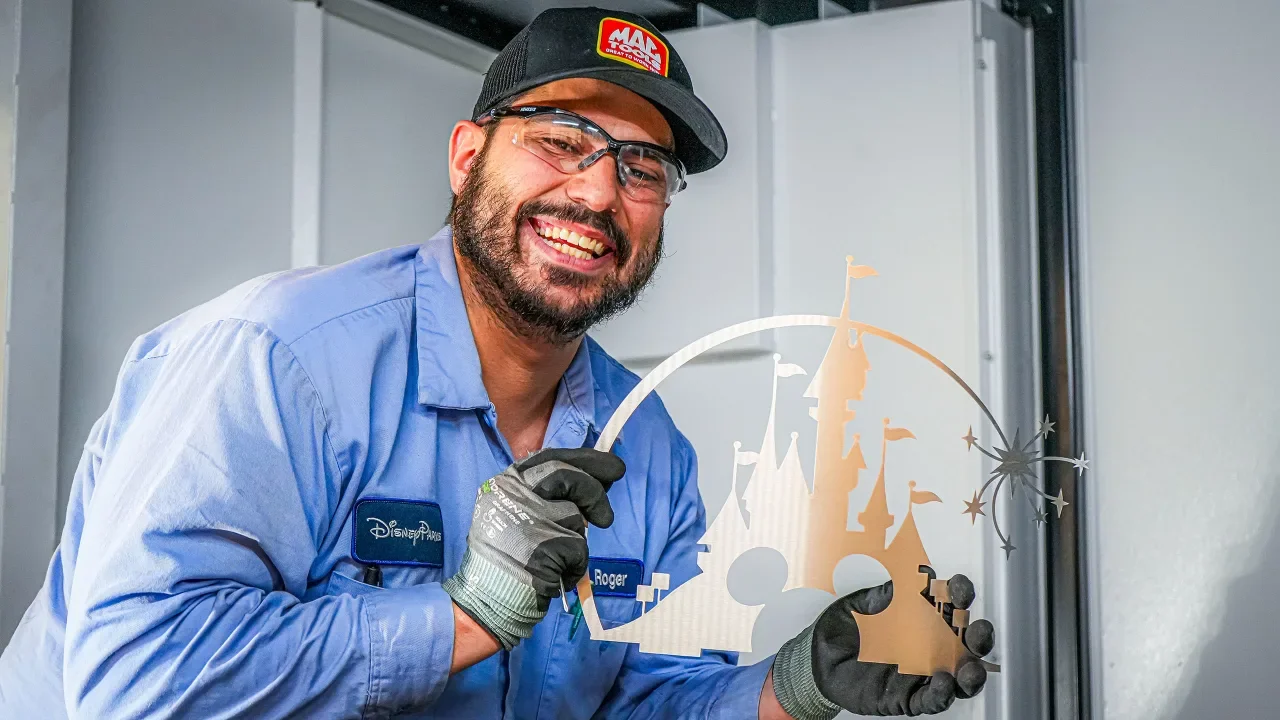
Roughly half a mile behind the Seven Dwarfs Mine Train and Ariel’s Grotto in Walt Disney World sits a nondescript cement warehouse with the words “the can-do people” written on the outside. Should tourists somehow get lost in that corner, located just outside the Magic Kingdom, it’s a place they would never pay attention to. What they might never imagine, however, is that generic building is the lynchpin of the Disney experience. Welcome to Central Shops, a rarely spoken part of Disney that’s off-limits to visitors and most of the company’s cast members (Disney’s term for its employees). It’s ground zero for Disney World’s ride safety and an essential part of park operations around the world. With 417 employees spanning 15 trades, from electricians to carpenters to painters, Central Shops is where every ride in the four Orlando theme parks is regularly inspected to ensure they’re safe to ride. At the same time, it’s also the corner of Disney where character heads for in-park meet-and-greets and parades in all global parks are manufactured. (Put another way, every Goofy, Mickey, Minnie, and Donald you see at the parks had their noggins made here.) Ripping apart Disney World rides Ride inspection is, arguably, the most important job of Central Shops. Every ride vehicle in the four Orlando theme parks ends up here on a recurring basis for inspection—and it’s far from a quick one. Ride vehicles are torn apart, down to their components. Every panel, bolt, etc. is inspected individually, a process that generally takes between 12 and 18 weeks from start to finish, says Fred Cox, director of manufacturing. For dark rides, like a Haunted Mansion Doom Buggy, a log flume from Tiana’s Bayou Adventure, or a horse on Prince Charming’s Carousel, that’s done on a calendar basis, scheduled breaks when select cars are taken out of commission and inspected. For thrill rides, like Space Mountain, it’s meter-based, meaning vehicles are taken off the line after they’ve been ridden a predetermined number of times. On a recent press trip through Central Shops, we saw a number of rides in various states of inspection. A collection of parts on one side was barely identifiable as a ride car from Guardians of the Galaxy: Cosmic Rewind. A few steps away, a honey pot from The Many Adventure of Winnie the Pooh gleamed, following a touch-up to its fiberglass. Sitting off to the side was a disassembled teacup from the Mad Tea Party. And scattered throughout the shop were parts of Astro Orbiter, a ride that has been completely (and temporarily) removed from the Magic Kingdom. Every 10 years, explained Rich Votava, manager of manufacturing, the bearing at the bottom of the ride (which sits atop the People Mover in Tomorrowland) needs to be replaced. Imagineers remove it completely, giving Central Shops a chance to inspect all the ride elements, from the boom arms on the decorative planets on the ride to the ride cars. (The Disney World ride is expected to be back in the park this summer, likely in May or June.) After ride cars are dismantled, each part is carefully inspected, some under X-ray to look for microscopic cracks in the metal. Once each part has been examined and refurbished (if needed), the components of vehicles are put back together, while the shells are repainted or refreshed. Once they are reassembled, cars are then returned to the park, where they run without riders for another two weeks to ensure everything is working properly. After that, visitors begin to pile in once again. (The maintenance schedule of most ride vehicles is staggered so that rides aren’t forced to close completely, like Astro Orbiter has.) “We break it down to the blueprints,” says Votava. Safety inspections go beyond ride vehicles, of course. Workers from Central Shops are in the parks nightly once visitors leave to make any necessary repairs and safety inspections for rides. Sometimes, that’s done with drones, which inspect areas humans can’t easily reach—such as atop Spaceship Earth in Epcot or under the water at one of the resort’s boat piers. And a tool called the Resistograph is used to check the density of wood throughout the park to alert Imagineers if there’s rot inside and a piece needs to be replaced. More than machines While there’s a lot of engineering work that goes on at Central Shops, there’s also a surprising amount of detail touch-up. In addition to creating character heads (in a top-secret room that Disney did not allow members of our press tour to view), the facility also handles repairs to character costumes at the Florida parks. Shoes get scuffed and details torn as Mickey and Buzz Lightyear interact with visitors. The stormtroopers are also getting a glow-up as Star Wars Day (May 4) approaches. Costumes are bought here, where they’re refurbished (a process that can take a week or two). Meanwhile, horses on the Magic Kingdom’s carousel are getting a touch-up. They have a lot of sentimental value, as they were purchased by Walt Disney himself, so the hand-carved maple stallions are treated with an especially delicate touch, with touch-ups done by artists and old layers of paint carefully sanded off so as to not hurt the detail of the carving. Some small elements that guests might not even notice are handled in Central Shops as well, such as adding details like the small trunk hairs on a baby elephant from The Jungle Cruise, which have to be inserted one at a time by hand. It’s detail-oriented work that’s done well out of view, so guests can stay in the Disney bubble. But with more than 115 attractions at the parks (along with more than 50 character experiences), Central Shops is essential to keeping the rides running smoothly and maintaining the parks’ reputation as the so-called “happiest place on earth.” View the full article
-
British foreign secretary says treatment of Yuan Yang and Abtisam Mohamed is ‘unacceptable and counter-productive’View the full article
-
If you’re finding yourself contemplating whether you can get an extension on this year’s tax return, you’re not alone. Forty percent of Americans still haven’t filed. There’s something almost perverse about the IRS placing tax day smack-dab in the middle of the loveliest month of the year. Want to enjoy the warm weather, cherry blossoms, and the sunshine reflecting off the pasty white skin of everyone venturing outside for the first time since last fall? Too bad! You have to excavate all of your financial decisions from the previous year while simultaneously trying to remember your math skills—or risk the wrath of an IRS agent named Spike. That’s why it’s something of a relief that every American taxpayer can get an automatic six-month extension on filing their federal income taxes. But, since this is the IRS we’re dealing with, there is a catch: You still have to pay what you owe by Tax Day. If filing your 2024 taxes has crept up on you this year (when did it get to be April already?), here’s what you need to know about getting an extension while staying on Spike the Auditor’s good side. File for an extension with Form 4868 While all taxpayers are eligible for an automatic tax return extension, you still need to request one. That’s where Form 4868, Application for Automatic Extension of Time to File U.S. Individual Income Tax Return comes in. Anyone who fills out and turns in Form 4868 (which can be filed electronically using IRS Free File) by the tax filing deadline of April 15, 2025, automatically receives a six-month extension for filing their 2024 taxes. This pushes the tax filing deadline back to October 15, 2025. Unlike your 1040 and other required tax forms, Form 4868 does not require a great deal of information from you. All you need to provide on this form is the following Your name Current address Social Security number Estimated tax liability for 2024 Amount of 2024 tax you have already paid The form also asks you to subtract your total 2024 payments from your estimated liability to calculate your balance due. Once you have completed and filed the form, you will automatically receive the filing extension. Just remember that you’ve only extended the deadline for filing your tax paperwork. You still have to hand over your estimated tax liability by April 15. Estimate your tax liability If you, like me, have never once figured out your tax liability (or overpayment, in the years you get a return) without actually filing your taxes, you might be wondering how you’re supposed to calculate your estimated tax liability for Form 4868. It doesn’t help that the IRS offers this not-at-all ominous warning on Form 4868: Make your estimate as accurate as you can with the information you have. If we later find that the estimate wasn’t reasonable, the extension will be null and void. Just in case you weren’t already stressed about tax season. Thankfully for those seeking a tax return extension, there are some guidelines for making a reasonable estimate of your tax liability. Knowing what’s “reasonable” Since one taxpayer’s “reasonable” is another’s “gross negligence,” the IRS helpfully defines a reasonable estimate as being 90% of the total tax you owe. If your estimate is at least 90% of the real number, and if you pay the remaining 10% or less balance when you file your tax return by the end of the six-month extension period, the IRS considers you all good. W-2 employees Traditionally employed taxpayers will typically have the easiest time estimating their liability. If you remained in the same job in 2023 and 2024 and your income didn’t change a great deal, you’ll just need to look back at your total tax liability for 2023. Go back to your 2023 tax return and check line 24, labeled your total tax. When you’ve found your 2023 total tax number, subtract the following from it: Any taxes you have already paid in 2024, includingmoney withheld from your paychecks by your employer any estimated tax payments you made Any 2024 tax credits you qualify for, includingthe child tax creditthe child and dependent care credit the earned income tax credit Taking your 2023 total tax liability and subtracting any 2024 taxes paid and 2024 tax credits from it should give you a reasonable approximation of your current liability. Self-employed taxpayers Freelancers, gig workers, entrepreneurs, and small business owners seeking a tax return extension have a tougher task ahead of them when estimating their tax liability. Instead of a handy-dandy W-2, these taxpayers have to rely on their own records to know their income and estimate their taxes. For these taxpayers, start with your total profits and losses from 2024 to get a back-of-the-envelope estimate of your income for the year. Plug that income estimate into a marginal tax rate calculator like this one from Bankrate to calculate your tax liability. Once you have that number, you can subtract any quarterly estimated taxes you paid in 2024, as well as any tax credits you qualify for. This should give you a reasonable estimate of your liability. Job-hopping taxpayers If you had more than one job in 2024, had an extreme change in your income, or otherwise had kind of a weird year money-wise, it’s probably best to calculate your tax liability with the IRS 1040-ES Estimated Tax Worksheet. This is a 12-page form, which means it will take more work than filling out Form 4868. (It may even be the IRS’s Machiavellian scheme to encourage procrastinating taxpayers to just file their taxes already, since this requires almost as much work). But using the 1040-ES will give you the most accurate method of calculating your tax liability if you need to file for the extension. Pay what you owe–or else pay even more If you don’t cough up the taxes you owe by April 15, there will be consequences—of the financial variety. The first consequence is a late payment penalty. This penalty charges you 0.5% of the unpaid taxes per month or partial month that the taxes remain unpaid. For example, let’s you owe Uncle Sam $5,000 for your 2024 taxes. Instead of making the $5,000 on April 15, you wait to pay until you file your tax return on October 15. You will face a 3.0% penalty or $150 because you made your payment six months after the April 15 deadline. The second penalty you’ll face will be interest charged on your unpaid taxes, which can really be a pain in your bank account. The IRS sets its interest rate at the federal short-term rate, plus 3%, and it changes the rate on a quarterly basis. As of April 2025, the IRS currently charges an interest rate of 7% per year, compounded daily, for underpayment of individual taxes. That means waiting until October 15 to pay your $5,000 in taxes would mean owing $178 in interest (provided the rate does not change). And that interest will continue to accrue until you pay what you owe. Don’t forget about state taxes If you live in a state with income tax, you probably need an extension for your state tax filing deadline, too. The good news is that many states automatically grant an extension for state taxes when you apply for a federal tax extension. But that’s not true of all states—some require a separate form to receive a state-level extension. You can find out what your state requires here. Just remember that you also have to pay your state income tax by the spring tax deadline, even when you apply for a state-level extension. There’s no avoiding the spring tax payment. Give yourself some breathing room If tax season snuck up on you, an automatic extension can give you more time to file your taxes. Just remember that Uncle Sam still expects the money you owe him on April 15. View the full article

-
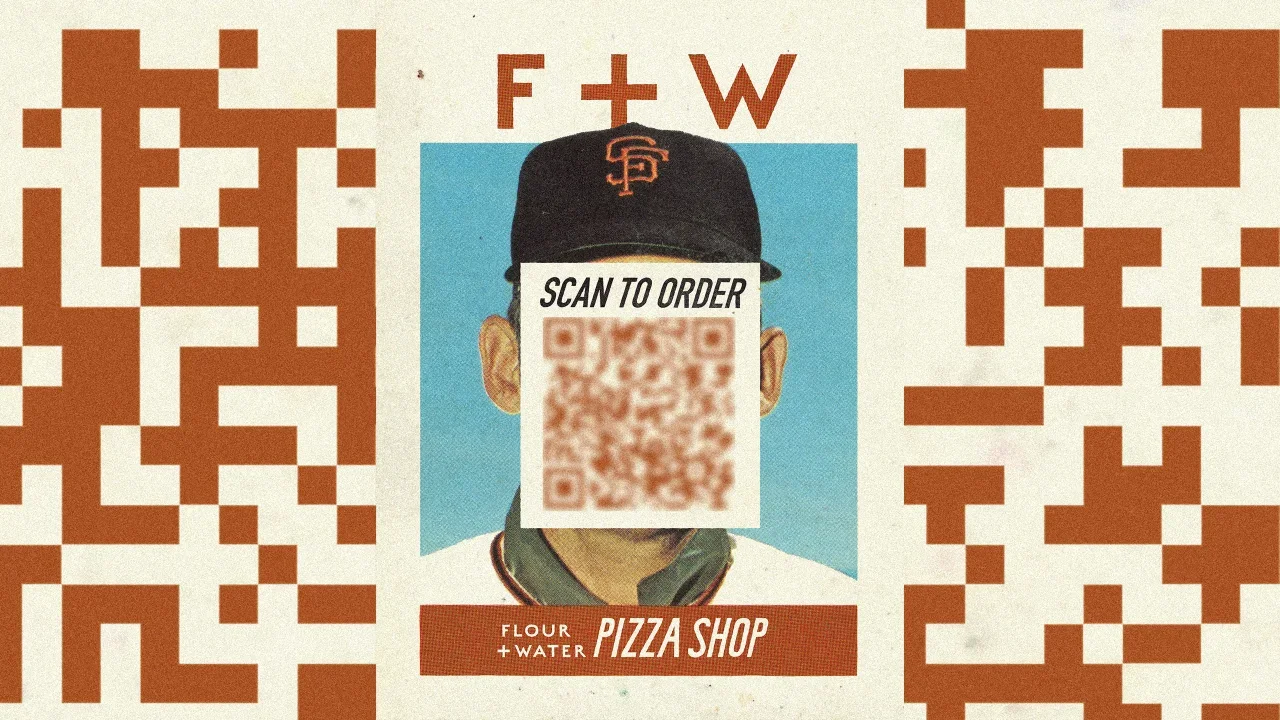
To San Francisco chef and restaurateur Thomas McNaughton, QR codes are an efficient way to serve a crowd. Sure, the codes—and restaurants that use them—have endured much loathing. And, yes, people still love to criticize them. But at the newest location of McNaughton’s Flour + Water Pizzeria, set to open later this month, QR codes are the star. There’s good reason. The 1,800-square-foot restaurant sits a few blocks from Oracle Park, where the San Francisco Giants just opened the baseball season. It needs to handle serious spikes in business from game-day crowds and pump out pizzas fast. “We envision a scenario where, for two hours, it’s completely gangbusters before the game. How can we help manage those crowds?” McNaughton says. The team, with the help of a local design agency, got creative. Inside the restaurant, guests can’t miss the large, stylized poster featuring a Giants player with a QR code for a face. Scan to place a takeout order, it reads, & pick up around the corner. The restaurant also printed baseball-style “trading cards” with the same image, for fast QR ordering (for pickup or delivery) from afar. Smaller codes dot a handful of tables. If you’re lucky enough to snag one, orders placed digitally are delivered right to your seat. Research from the National Restaurant Association shows that about half of diners are keen to order via QR code at a quick-service restaurant like this one—but you might not know it based on very loud grumblings everywhere you look. “The QR backlash has won,” declared a headline in the Wall Street Journal last year. A year earlier, I was quoted as an industry expert in a New York Times piece titled, “The QR-code menu is being shown the door.” About twice a month, someone sends me an Instagram post where a celeb or influencer or random stranger complains—still—about using the tech. For all the whining, the codes are . . . really useful. When deployed thoughtfully, they’re downright hospitable. The skepticism, McNaughton thinks, has to do with negative emotions associated with the moment that QR codes rocketed to restaurant infamy during the earliest days of the pandemic. “I think the pushback that you heard was partly because everything was so different,” he says. “Every restaurant was just trying to stay afloat and trying to be accessible while still being safe.” It’s true. Clunky QR-code menus promised to keep shared surfaces touch-free, an almost quaint, if completely misguided effort from a challenging time. Since then, the codes have evolved with utility in mind. Major restaurant technology companies like point-of-sale and payments giant Toast built QR ordering into their products. Now, customer orders go straight into the system, bypassing human servers and their potential human mistakes. Digital orders also shorten the distance between diner and kitchen, McNaughton explains, a shortcut that allows the pizzeria to pump out orders much faster and keep crowds happier. (People placing digital orders get to skip the presumably long line.) It’s a model specific to this location, which McNaughton calls “a fast-casual offshoot” of his restaurant group’s original, much larger pizzeria. Plenty of fast-casual and fast-food restaurants (or “quick service,” in restaurant lingo) are chasing digital orders. Last month, Taco Bell parent company Yum Brands tapped AI powerhouse Nvidia to coax more orders online, in an effort to one day digitize every order. Flour + Water Pizzeria isn’t planning to push all of its orders online; it employs humans who can take orders on countertop tablets, or, if necessary, flip them over to become self-service touch-screen ordering kiosks. The guest chooses based on how, and how fast, they want to get their order. “You can talk to somebody, you can use a kiosk, or you can just skip that line completely,” McNaughton says. “It’s about efficiency.” View the full article