Newsletter
Want to keep up to date with all our latest news and information?


ResidentialBusiness
Administrators
-
Joined
-
Last visited
Everything posted by ResidentialBusiness
-
Nintendo just wrapped up its long-awaited Nintendo Switch 2 Direct, and the experience was almost surreal. The company has avoided talking about the console for so many years, and even after it shared an early preview a few months ago, it's still odd to see Nintendo walk us through the console in such depth. Mind games aside, it's finally official-official, and we now know a lot about Nintendo's upcoming console. The Direct didn't answer every question about its capabilities, but if you're interested in the hardware specs, here's everything there is to know right now. How powerful is the Switch 2?From games to accessories, there's a lot to get excited about with any new console launch, but the biggest unknown for the Switch 2 has always been the hardware capabilities, or lack thereof: The Switch 1 was arguably already underpowered when it launched in 2017, though that didn't stop Nintendo from running with it for eight years to great success. If you were hoping the Switch 2 would take a different tack and offer a more powerful, modern gaming experience, you're probably going to be disappointed, though we don't actually know anything about the hardware itself just yet. Rumors suggest the Switch 2 is running a chip based on Nvidia' GeForce RTX 30 series, which dates from 2020, but we likely won't know for sure until someone tears the console down. The new design Credit: Nintendo of America/YouTube We now know the Switch 2 has a 7.9-inch display—0.9 inches larger than the Switch OLED, and 1.7 inches larger than the standard Switch screen. That display is 1080p, as opposed to 720p on the OG Switch, but like the latter, the Switch 2 sports an LCD screen. Though that's what the rumors suggested, I'm personally a bit bummed about it, since I've been enjoying the OLED display on my current Switch. That said, I might get over it once I actually see the display in action with my own eyes—the Switch 2 supports HDR, something the first Switch did not, as well as refresh rates of up to 120Hz. The console has a redesigned kickstand, which we knew about already; It supports a greater variety of angles, which should offer more flexibility when playing in tabletop mode. Speaking of which, you can finally charge the Switch in tabletop mode, as that second USB-C port on the top of the console is indeed a charging port as well. You can also use it to connect to the new Switch 2 Camera. (Oh yes, Nintendo will now sell you a camera for your Switch 2.) There's also a microphone, which you can use for GameChat, built into the console itself (more on that later). It's noise cancelling, which should help when using it in loud environments. Switch 2 supports "3D Audio," which promises to make it seem like sounds are coming from where they would be in the game world. (If a monster roars behind you, you'll hear it "behind" you.) Switch 2 comes with 256GB of internal storage, with options for expansion via microSD Express cards. These are different than the microSD cards supported on Switch 1, so you won't be able to use your existing Switch cards on the new console. Bummer. Dock mode mow supports 4KThe OG Switch runs at 720p in handheld mode, but when docked, can boost up to 1080p. The Switch 2 also will look better on a bigger screen: The console runs at 1080p up to 120fps in handheld mode, but can run at 4K and 60fps when docked. The dock also has a built-in fan to keep the console cool when outputting at the higher resolution. Credit: Nintendo of America/YouTube The Joy-Cons can do more Credit: Nintendo of America/YouTube The Switch 2's Joy-Cons are pretty different from the OG controllers. These things are larger and more rounded, which I imagine will make gameplay more comfortable. They also look different: The updated Joy-Cons are almost entirely black, save for some colorful accents. We finally know what that new C button is for: a new feature called GameChat, which lets you chat with friends directly through the Switch 2. When you press the button, you pull up the GameChat menu, which lets you control the chat experience, including turning on or muting your mic, and turning your camera on or off. Unlike the original Switch, you don't connect these Joy-Cons to Switch 2 by sliding them into the rails. Instead, their pair magnetically. Nintendo says the magnets are strong enough to not break off with force. To release them, you need to press in a button on the Joy-Cons first, similar to how you need to push the button on the existing Joy-Cons before you can slide them out of the rails. Perhaps the biggest change to the Switch 2's controllers is that they support mouse mode. That was a rumored feature that some might have dismissed at first glance, but it's true: Both the left and right Joy-Cons can be used on a table top to enable mouse controls in compatible games. There are mini games in the new Switch 2 expansion of Super Mario Party Jamboree, for example, that utilize these movement controls. New Pro Controller and GameCube controllers are on the way Credit: Nintendo of America/YouTube While not a component of the Switch 2 itself, a new Pro Controller is coming, optimized for the Switch 2. It looks similar to the Switch 1 Pro Controller, but you'll notice the new C button at the bottom, white buttons at the top, an audio jack, and new GR and GL buttons on the rear handles, for remapping controls. Similarly, Nintendo is releasing a GameCube controller for Switch 2, as the new console supports GameCube games as part of its retro online library. This controller looks nearly identical to the original GameCube controller, save for some small features, including the new C button at the top, a tiny ZL button on the left, a screenshot button, a pairing button, a Home button, and a USB port on top. You'll also notice a player number indicator along the top of the controller. Credit: Nintendo of America/YouTube The Switch 2 still uses game cards Credit: Nintendo of America/YouTube The Switch 2 game cards are similar to the OG Switch's, with some small differences. While they're the same size and shape, the new carts are red, not black. They also read faster. Exciting! When does Nintendo Switch 2 launch?The new console launches June 5 of this year. You can buy it as-is, or in a bundle with a digital copy of Mario Kart World—the newest game in the Mario Kart lineup. We don't know what this thing costs yet, but we will update this piece once Nintendo officially reveals that information. View the full article
-
CCC has urged ministers to limit aviation emissions to ensure Britain meets its net-zero targetView the full article
-
Purchase applications reached their highest level since January despite the average 30-year fixed rate falling by just 1 basis point last week. View the full article

-
Google search has steadily been getting worse, but most of its free alternatives just aren't as good at surfacing the things I'm looking for. Since Google makes money through advertising, its primary incentive is to boost revenue by showing you better ads. Of late, this has resulted in a noticeable decline in the quality of my search results. That brought me to the idea of using a paid search engine instead of Google. Enter Kagi. What is Kagi?Kagi is a paid search engine developed by the people behind the Orion browser. It lets you make 100 searches for free, but after that, you can pay between $5/month and $25/month for different tiers of its service. Thanks to search giants and AI companies, the idea of paying for web searches might seem absurd at first glance, but Kagi promises an ad-and tracker-free experience, which is tempting. Is it worth it to pay for a search engine?Kagi has lots of useful features (and no ads) that make it worth the price to me. After all, when the business model is to charge people for a service, the company is incentivized to create good products. I hope that Kagi is able to continue to do so in the long run. I've been using Kagi as my default search engine for the past few months and I've begun to really like it. Up until now, all my attempts to get away from Google search have failed, but with Kagi, I've finally found a good alternative to the search giant. Here are some of my favorite ways to use Kagi, all of which have convinced me that, sometimes, it's worth it to pay for a search engine. See AI results only when you need toI am so tired of AI being forced into everything, but Kagi's approach to AI is refreshing. The search engine has kept it opt-in, which is great to see. If you use Kagi, you won't encounter AI unless you manually trigger it. To do this, just add a question mark to your search query. This will show an AI answer above the search results. Remove AI generated images from search resultsKagi allows you to block AI generated images from your search results. This is a hard feature to implement effectively because the internet is absolutely filled with low-effort AI slop nowadays, but Kagi does an acceptable job. Just go to Kagi settings by clicking the hamburger menu icon in the top-right corner of the homepage and selecting Settings. Now, go to Search > AI and enable Exclude AI generated images. Kagi says it blocks AI images on a "best-effort" basis, which means that there's a chance that some may slip through the cracks. Kagi automatically labels AI generated images in its search results and, in addition to the settings option, provides search filters that let you show only AI images or remove them altogether. In my tests, it was able to identify about 50-60% of AI-generated images in the search results, and you can always block domains that serve up too many of these kinds of results to supplement the rest. You can read more about how Kagi implements AI image filters in its documentation. Try search filters to fine tune resultsWhen you search for something on Kagi, you'll see a list of suggested filters to help you fine tune your query right above the first result. While these buttons are displayed prominently, there's also a drop down menu right next to them with more options. These filters allow you to look for results from a different region, sort results by relevance, or by the number of trackers on the website, or recency, plus filter results by time period. Plus, there's an advanced search tab that lets you further refine results, if that's not enough. Hide clickbait from videosKagi also lets you search for videos, and it has two interesting features to reduce clickbait. First, you can replace clickbait thumbnails with screenshots from the actual video. Second, you can change titles to lower case or sentence case. This removes awful thumbnails and those annoying all caps titles from your results, making it easier to find useful videos. To enable these features, go to Kagi Settings > Search > General. Scroll to the bottom of the page and you'll see Video Search Settings. Click the drop-down menus next to the two options here and select what you need. Create lenses to refine results Credit: Pranay Parab If you want to limit your search results to a handful of trusted sites, try using Kagi's "search lenses." Each of these lenses lets you filter out unwanted results by focusing only on some sites. By default, Kagi has a few interesting lenses such as Small Web, which limits results to smaller websites, and Forums, which searches only forums. This allows you to surface some hidden gems that you may not otherwise find. You can also create your own lens by going to Kagi Settings > General > Lenses > Create New. I've created one to search for posts on websites that I write for and assigned a bang to it (!lh). Now I just need to append !lh to any search to look for results on these websites, which helps me find my own articles much faster. Tweak results to your likingYou can raise or lower the rankings of various domains in Kagi's search results (although only for your account). This feature also lets you see specific domains less, or block them entirely. To tweak this, simply go to Kagi Settings > Search > Personalized Results > Add Domains. You're also free to view Kagi's Domain Leaderboard to see which sites its users are raising, lowering, or blocking. Learn all the keyboard shortcutsOpening Kagi's website and pressing the ? key will reveal a full list of all supported keyboard shortcuts. Learning a few of these can speed up your workflow significantly, and I highly recommend doing so. I really like using !bang operators, which allow you to perform searches faster. For instance, you can append !v to any search term to look for videos. Similarly, !i does an image search, !n does a news search, and so on. I use two other keyboard shortcuts regularly: Shift-~ (tilde) to open the Kagi Control Center, and / to quickly return to the search bar and type another query. Open links in the same tabIt annoys me when websites open links in a new tab without asking me if I want to do the same. By default, Kagi is no different in that regard, because its default setting is to open links in a new tab. However, you can go to Kagi's General Settings page (Settings > Search > General) and disable Open Links in a New Tab to change this preference. Use redirects to reduce annoyancesKagi has a useful Redirects feature that lets you replace certain URLs with preferred alternatives. You can use this to bypass Google AMP links and go directly to the source website, or to open old Reddit every time you click a Reddit link in Kagi. This feature is under Kagi Settings > Search > Advanced > Redirects. It's worth going through Kagi's Redirects support page to learn how to make the most of them. Use the Privacy Pass for anonymityIf you want a more private Kagi search experience, you can use its Privacy Pass feature. Since Kagi requires you to be logged in to use the product, you can't actually do anonymous searches on the service. To get around that limitation, you can try the Kagi Privacy Pass, which authenticates your account using a token system and keeps your searches anonymous. The install process varies by browser, and this feature isn't supported in some browsers (such as Safari). There are many more advanced features that you can try in Kagi, but these are the ones that I find the most helpful. But as a bonus before I go, I'll also mention Kagi Translate, which is a good alternative to Google Translate. It displays alternative translations below each result, and if you hover over the translation, it explains what is different about it. This lets you pick the best variant of a sentence to share with others, or makes it easier to understand the context of a quote in another language. View the full article
-
An Internal Revenue Service division that helps authorize the release of tax transcripts used in lending through form 4506-C is tied to core functions. View the full article

-
Want to turn a video file into an MP3? Or any video into an MP4? If you have PowerToys installed on Windows, you don't need a third-party application—a quick copy-and-paste will do the job. We've talked about Powertoys, the longstanding Windows utility that offers all kinds of customizations to the operating system. One of the many tweaks added is the Advanced Paste feature, which can convert copied text into other formats. This is triggered by using the keyboard shortcut Windows-Shift-V to paste, instead of the usual Ctrl-V. A pop-up window asks which format you'd like to paste your text as—Markdown, HTML, and JSON are all offered. You can optionally set this up to use AI, useful if you want to convert text to a format not offered. It's very useful for anyone who regularly needs to convert text from one format to another. But now it can convert more than just text. A new feature means that Advanced Paste can turn any copied audio or video file into either an MP3 or an MP4 file. To use this feature, you need at least version v0.89.0 of PowerToys—open the application and check the General tab to make sure. Credit: Justin Pot If you have the feature, all you need to do is copy a video or audio file in File Explorer, then attempt to paste it using the keyboard shortcut Windows-Shift-V. Note that if you "Copy as Path," the feature won't be offered, as you haven't copied the file itself. There are two conversion options: "Transcode to MP3" and "Transcode to MP4." The MP3 option will extract the audio of any media file, including a video, and save it as an MP3. The "Transcode to MP4" option converts the video to use the H.264 video codec and the AAC audio codec. Now, there are use cases where this won't work—if you want to create an AAC audio file, for example, or convert a video to some other format. In those cases, software like Handbrake is essential. But it's nice to have a simple option built into PowerToys; give it a try next time you want to turn a video into an audio file. View the full article
-
A trailer for Avatar: Fire and Ash, the third film in James Cameron’s galactically successful series, starts by delivering on the title’s promise. Rivers of lava cascade through the forests of Pandora, reducing it to charred rubble. Soon, the score swells to epic proportions as the hulking, Smurf-colored Na’vi survey their ruined territory and swear vengeance on an unseen enemy. Released back in January, this trailer already has 3.5 million views. Not bad, considering it contains not one second of footage from the actual film. Whenever Cameron and 20th Century Studios do release the official first trailer for Avatar: Fire and Ash, which is headed to theaters in December, they certainly won’t release it through “KH Studio,” one of two video channels YouTube just demonetized to crack down on a larger issue. The fake Avatar trailer, which relies on some truly abysmal AI, is part of a scourge of similar videos designed to trick movie lovers into thinking they’ve found a first look at an upcoming flick. Crafty editors with access to Adobe Premiere take existing footage from previous media, splice in a dash of AI, and—voilà—a steady stream of clicks and views from eager film buffs. Google any major movie coming out later this year, and whether an actual trailer for it is already out there or not, the search will surface an impostor or two. Want a fake first glimpse of Edgar Wright’s upcoming reboot of The Running Man? It’s available on a channel called T Studio Movie’s (sic). How about a pirated preview of the next Conjuring movie? It can be conjured up on one called Skynet Studios. The most successful operators out there, though, appear to be the two that have newly attracted YouTube’s ire: KH Studio and Screen Culture. YouTube’s move comes as a result of Deadline investigating the fake movie trailer epidemic. The publication reports that movie studios such as Warner Bros. Discovery were quietly lobbying YouTube to send any ad revenue from those fake movie trailers their way, but YouTube opted instead to suspend heavyweights Screen Culture and KH Studio from its partner program. Apparently, these channels violated the video giant’s policies forbidding content doctored in such a way that it misleads viewers. “The two impacted channels were correctly suspended from the YouTube Partner Program following violations of our monetization policies,” says Jack Malon, Policy Communications Manager at YouTube. “Content isn’t eligible for monetization that uses metadata to deceive viewers into believing the content is different from what it actually is. For example, this could include a video title or description that alleges an official affiliation with a company. These suspensions are unrelated to any Content ID, or other copyright, enforcement.” The two channels’ differing approaches highlight the level of variety in this strangely popular space. Screen Culture has 1.4 million subscribers and offers three tiers of membership. As Deadline reports, the channel’s founder employs a team of a dozen editors, whose fake movie trailers are viewed so often, they occasionally outrank real trailers in YouTube’s search results. Screen Culture trailers are often slick and authentic-looking at first glance, mirroring the cadence and sound cues of typical Hollywood trailers with impressive alacrity. Only in the moments when the AI gets a touch shoddy, or the exposition extra disjointed, is it clear that these are forgeries. The other newly demonetized channel, KH Studio, is a bit goofier. Its more amateurish trailers feature robotic AI-voice narration and graphics that look like ancient video game cutscenes. Beyond fake trailers for soon-to-be-blockbusters like the next Avatar, it also offers trailers for movies that will never be released, such as Interstellar 2, a Millie Bobby Brown-led remake of Nightmare on Elm Street; and Titanic 2: The Return of Jack. The trailers on both channels offer warnings to viewers that these are merely “concept trailers.” The warnings come buried underneath the view count and a flood of hashtags, though; by the time the average viewer sees them, they will have already clicked on a link and inflated the view count that bit further. Although KH Studio claims in the warning that its videos are “created solely for artistic and entertainment purposes,” the channel’s trailers don’t seem to have enough artistry or originality in their use of borrowed material to meet YouTube’s monetization standards. They appear more like vehicles for siphoning off search traffic for notable movie titles. While the output of neither of those channels may rise to the level of art or originality, there’s a whole cottage industry of bait-and-switch trailers operating around them on YouTube. Channels like Blend FX and Dynatic Films publish videos about movies like the upcoming Naked Gun reboot starring Liam Neeson and simply add the word “trailer” in the title, guaranteeing at least some search-based traffic. The creators of those trailers can’t even bother cobbling together a semi-coherent narrative to bolster their deception. Both KH Studio and Screen Culture are entitled to appeal YouTube’s decision. If they lose, we may never know what the trailer for Eraserhead 2: Revenge of the Lady in the Radiator looks like. If they win, all the other fake trailers may just be a sneak preview of what’s to come. View the full article

-
‘Supranational’ vehicle would purchase for participating states at more favourable borrowing rates View the full article
-
If you ask me, graphic design peaked in 2001 with Windows XP's bright blue taskbar and green start button. Every UI design choice since was made by cowards. OK, you might not share my passion for the Windows XP taskbar, which is fine (I guess). But maybe you miss the simple grey aesthetic of Windows 2000, or the comforting orb of Vista. Whatever your taskbar preference, you can bring it back with RetroBar, a free, open source application that replaces the taskbar in Windows 11 with something better. (It will also work if you're running an older version, including Windows 7 SP1, Windows 8.1, or Windows 10.) To get started, download the application from Github. There's an installer and a portable application—use whichever you prefer. Note that Windows may prevent you from running the application because of an unknown publisher, which is a commonsense safeguard, but you can click the Run anyway button should you choose to use the software regardless. Once you do, you will immediately see the classic grey taskbar of yore. Credit: Justin Pot You can right-click an empty area in the taskbar and then click Properties to bring up the options menu, which allows you to choose from a wide variety of taskbars. (The one you're probably looking for is named "Windows XP Blue.") Credit: Justin Pot Obvious aesthetic benefits aside, the Windows XP taskbar does work differently from the Windows 11 taskbar in a few ways I find helpful: Every window is represented on the taskbar, not just each application. The launcher icons, to the left, are kept seperate from the currently open windows. You can also change the size of the taskbar to make more room, just like you could back in the day. You can customize what happens when you click the clock—I prefer seeing the calendar. If you decide you want the Windows 11 taskbar back after all, you can right-click an empty space on the taskbar and choose Exit Retrobar. You can always launch the application again, the next time you decide to reject modernity and embrace tradition. View the full article
-
Company loses crown of world’s best-selling electric-vehicle maker to China’s BYDView the full article
-
Glen Powell has done it all on screen—from battling storms in Twisters to trading banter in the rom-com Anyone but You. But his latest role? It’s a little unexpected: reinventing the American pantry. The actor is stepping into the food world as a cofounder of Smash Kitchen, a new condiment brand hitting Walmart shelves nationwide on April 2. The line includes ketchup, mustard, mayo, and BBQ sauce—all made with better-for-you ingredients like organic tomatoes and mustard seeds, cage-free organic eggs, and none of the usual suspects like high-fructose corn syrup or artificial additives. The goal? To bring all your favorite condiments under one cleaner, tastier brand. “We’re trying to give you the flavor that you love and you’re used to, with more integrity,” Powell tells Fast Company. “When you look at these legacy brands, they don’t evolve because they don’t have to evolve.” The Powell-backed brand is leaping into the $12 billion U.S. condiments category, which is projected to grow an additional $1 billion by 2029, according to market researcher Mintel. Unlike other food categories like coffee, soda, and yogurt where upstart brands have made inroads, Unilever’s Hellmann’s mayonnaise, Kraft Heinz’s namesake ketchup, and McCormick’s French’s mustard are the market leaders and have easily retained those positions for decades. “We have a tremendous sense of loyalty to these brands,” says Matthew Barry, food and beverage insight manager at researcher Euromonitor International. “People are really attached to Hellmann’s and Heinz ketchup.” Smash Kitchen is the first business venture that Powell has announced outside of his career as an entertainer, which began with his big screen acting debut in the 2003 film Spy Kids 3: Game Over. Powell has since racked up dozens of film and TV credits and recently formed his own production company called Barnstorm. The creation of Smash Kitchen, Powell says, was inspired by his affinity for hosting dinner parties and barbecues in Los Angeles and his home state of Texas. “My family life and my favorite memories always evolved around the kitchen,” says Powell. “Food is how we show our love.” Smash Kitchen is backed by venture capital firm Collaborative Fund, an early investor in Olipop, Sweetgreen, and Blue Bottle Coffee. Powell’s co-founders Smash Kitchen CEO Sameer Mehta, a cofounder of dog food brand Jinx and former VP of strategic partners at mattress company Casper, and President Sean Kane, who co-founded consumer goods purveyor the Honest Company. The trio were brought together through a mutual connection with venture capital fund Iconiq Capital founder Divesh Makan. “Ultimately, you shouldn’t have to choose what’s better for your budget and and better for your health, and Glenn is super excited to be able to bring that to not only his family, but people everywhere,” says Kane. Smash Kitchen’s pitch to shoppers is not only a focus on a “cleaner” nutritional label that avoids high fructose corn syrup and tomato concentrate, but prioritizing the creation of condiments that taste good. Retailers, Mehta says, told the team that “people aren’t picking up condiments for health benefits. They are picking it up for the flavor.” The more distinctive flavors from Smash Kitchen, like hot honey BBQ sauce and spicy mayo, may have greater success luring shoppers, as those flavor profiles aren’t as intrinsically linked to childhood memories as the classic Heinz ketchup. “We’ve seen hot honey get household recognition within the pizza category,” says Mehta. “Nobody has infused it with ketchup. It’s a flavor profile that we know consumers are wanting.” “There’s no hot honey sauce that is so emotionally resonant and widespread among the American consumer,” says Barry. “It’s open to disruption. Anyone could be the hot honey sauce of America.” Smash Kitchen’s range is priced slightly above what larger rivals command. The classic 20-ounce ketchup has a standard list price of $3.97 versus Heinz’s $3.48 at Walmart.com. Smash’s yellow mustard is priced at $3.47, compared to $2.54 for French’s. Barry says inflation-wary shoppers remain particularly sensitive to grocery prices, but may be willing to spend a bit more on a “cleaner” ingredient label. The organic claim, he adds, has lost some luster because it has become so ubiquitous across the grocery store. “If you can be a little fun treat for people, a little moment of happiness and joy at a reasonable price point, that’s really prominent right now,” says Barry. View the full article

-
We may earn a commission from links on this page. The Max streaming app has always benefitted from being the home for HBO hits like Game of Thrones, The White Lotus, and The Last of Us, but the streamer has also produced some quality original programming. Hacks is a buzzy award winner, and shows like Peacemaker and The Sex Lives of College Girls have drawn eyeballs toward the former "HBO Max." More recently, The Pitt is burning up social media, and Spanish-language import When No One Sees Us is drawing critical acclaim. Given the volume of streaming content out there, and the number of shows Max has already produced, there are some great choices that might have flown under your radar. In our current streaming era, in which good shows aren’t just canceled but erased from existence (farewell, Raised by Wolves), it never hurts to take a moment to consider the slightly less talked-about shows that are equally worthy of your attention. (The shows found below are all Max originals, which means they were either initially produced for and/or are currently distributed exclusively by the streamer, at least in North America. Stuff that originally premiered elsewhere in the U.S., like Adult Swim's recent buzzy hit Common Side Effects, don't qualify.) The Pitt (2025 –, renewed for a second season) E.R.'s Noah Wyle is back in scrubs as Dr. Michael "Robby" Rabinavitch, senior attending at the Pittsburgh Trauma Medical Hospital’s emergency room. Robby’s mentor died during the height of COVID-19, and he’s only just recovering from his traumatic experiences. It's gonna be a long day, though: Each episode represents a single hour of a tumultuous 15-hour shift, peppered by tragedies including a mass shooting. It feels like medical dramas are a dime a dozen, but this one is quite a bit more interesting, and a lot buzzier, than most. You can stream The Pitt here. Hacks (2021 –, fourth season coming April 10) After getting canceled over a tweet, 25-year-old writer Ava (Hannah Einbinder) struggles to get her career back in order, reluctantly taking a job for Deborah Vance (Jean Smart)—a comedy trailblazer who remains popular with an older Vegas crown, but whose career is largely on autopilot. They're an entirely mismatched pair, but their chemistry is ultimately explosive, with Jean Smart doing some of the best work of her incredible career as the (often) deeply unlikeable Vance, and Einbinder more than holding her own in return. It's funny, bitchy, and surprisingly moving when it wants to be. You can stream Hacks here. When No One Sees Us (2025, first season ongoing) A distinctive police thriller imported from Spain, When No One Sees Us stars Mariela Garriga (Mission Impossible – Dead Reckoning) as a Cuban-American special agent of the U.S. Army, and Maribel Verdú (Pan’s Labyrinth) as a Spanish Civil Guard sergeant, both investigating an apparent death by extremely violent suicide on an air base during Holy Week. It's a twisty-turny mystery, but the performances and the emphasis on character over plot make it an absolute standout. You can stream When No One Sees Us here. Trixie Motel (2022 – 2024, two seasons) A pick-up in its second season from Discovery+, Trixie Motel poses that all-important question: how would a drag queen with disposable income run a hotel? In the first season, RuPaul alum Trixie Mattel and then-partner David Silver buy a run-down Palm Springs motel and turn it into a campy desert destination; in the second the two buy and decorate a new home. Celebrity guests stop by to help the pair drag up their accommodations. It's fluffy, flashy, and fun. You can stream Trixie Motel season one here, and Drag Me Home, the second season, here. Doom Patrol (2019 – 2023, four seasons) Max’s early DC show was originally ported from the now-defunct DC Universe streamer (past and future episodes are now Max-exclusive), a largely forgotten effort. Thank goodness it survived; though ended after four seasons, it was an uncharacteristically bold and freaky entry in the superhero canon. Nearly indescribably weird, the show includes characters like the non-binary Danny the Street (a literal street), paranormal investigators the Sex Men, Imaginary Jesus, and orgasm-generating body builder Flex Mentallo—while also grounded in some really excellent, frequently emotional character work from the entire cast, including Brendan Fraser, Matt Bomer, Michelle Gomez, and Timothy Dalton. It’s also very queer and sex positive, making it a standout among the usually chaste and straight world of superhero cinema. You can stream Doom Patrol here. Full Circle (2023, miniseries) Creator Ed Solomon (Now You See Me) and director Steven Soderbergh navigate a big cast and a labyrinthine plot involving murder, kidnapping, corporate espionage, and magic—the title refers to a murder ritual conducted by a Guyanese crime lord (played by CCH Pounder) that involves drawing a literal circle in New York, centered on the scene of a murder. There are a few too many balls in the air at any given time, but watching the chaos unfold is addictive. Pounder is joined by Zazie Beetz, Claire Danes, Timothy Olyphant, and Dennis Quaid. You can stream Full Circle here. Scavengers Reign (2023, one season) A qualified recommendation for this one, only because it was cancelled after its first season with plenty left unresolved. Nevertheless! It's a smart, impressively voice acted, and beautifully animated sci-fi epic following the stranded survivors of the crashed interstellar cargo ship Demeter 227. The web of natural life on the world on which they find themselves is unusually complex, an the rules they're used to don't seem to apply. The creators are shopping a second season around, but it seems likely we'll be left with a few questions—which is maybe not the worst thing. You can stream Scavengers Reign here. The Flight Attendant (2020 – 2022, two seasons) Kaley Cuoco plays hard-living (i.e. alcoholic) flight attendant Cassie Bowden, who, in the first episode, wakes up in a Bangkok hotel room with no memory of the night before. Which could be a good thing or a bad thing, given that she's sharing a bed with a dead passenger from her last flight. Afraid to call the police, she tries, on her own, to piece together the increasingly convoluted memories of that last night. Impressively twisty-turny, but also with a hallucinogenic sense of fun, it's an impressively unique show that earned several Emmy nominations, including for a great Cuoco. Despite generating plenty of buzz and seemingly good numbers, it was canceled after two seasons—which will become something of a theme with Max. You can stream The Flight Attendant here. The Sex Lives of College Girls (2021 – 2025, three seasons) Kimberly (Pauline Chalamet) is an endlessly naïve scholarship student; Bela (Amrit Kaur), is an aspiring comedy writer on the make for the hottest guys; Whitney (Alyah Chanelle Scott) is an overachieving athlete and senator’s daughter; Leighton (Reneé Rapp) is a closeted sorority girl. They're randomly assigned to room together as freshmen at the fictional Essex College in Vermont, a mismatched quartet exploring young adulthood together. Created by Mindy Kaling and Justin Noble, the comedy-drama isn't nearly as salacious as its title suggests: There's sex, for sure, but like Sex and the City before it, the funny and queer-friendly show is more about female friendship. You can stream The Sex Lives of College Girls here. Jellystone! (2021 – 2025) The Hanna-Barbera cartoon pantheon has been largely dormant in recent decades, but this is a fun revisit, with the titular town serving as home to dozens of characters from back in the day, led by Mayor Huckleberry Hound, Yogi Bear (now a doctor at Jellystone Hospital), Augie Doggy, Jabberjaw, Top Cat, and dozens more, with out-of-towners like The Jetsons and Space Ghost popping in now and again. The show's silly, anarchic style is definitely not a one-for-one match to the source material, but it's not a terrible thing that the show is focused on appealing to modern kids rather than their parents (or grandparents, at this point). It's fun for that older elementary age group. You can stream Jellystone! here. Gremlins: Secrets of the Mogwai (2023 –, second season ongoing) It was weird, but kinda cool, that the original Gremlins movie was marketed toward kids, given that the plot turns on moments like a Mogwai blowing up in a microwave and an anecdote about someone's dead dad mouldering in a chimney dressed like Santa Claus. That all being said, this animated prequel is legit kid-friendly, even if it doesn't shy away from the Looney Tunes-esque style of the live-action movies. It also takes the awkward Orientalism of those movies and makes it a virtue: Sam Wing (played by Hollywood legend Keye Luke in Gremlins) is, here, a 10-year-old boy who meets Gizmo and is then forced to join him on a journey through the Chinese countryside, sometimes encountering mythical creatures. The stacked voice cast includes Izaac Wang, Ming-Na Wen as Fong Wing, B. D. Wong, and the great James Hong. You can stream Secrets of the Mogwai here. The Other Two (2019 – 2023, three seasons) Heléne Yorke and Drew Tarver stars as a couple of meandering siblings whose lives are turned upside down when their younger brother becomes a viral sensation. The show has a lot of fun dissecting modern pop culture, and, though it has a sweet side, it’s some of the best cringe comedy you'll find on Max. As class satires go, it never quite achieved Succession levels of obsession, but deserves a bit more love. You can stream The Other Two here. Tokyo Vice (2022 — 2024, two seasons) Your tolerance for Ansel Elgort may vary (given assault allegations), but he stars here alongside always-welcome Japanese actors Ken Watanabe and Rinko Kikuchi as a young journalist who becomes embedded with veteran detectives in Tokyo’s vice squad circa 1999. The show pays tribute to both the glitzy and wonderfully seedy aspects of the title city, while also working as an effective crime drama set in a very different context from more typical America-set shows. You can stream Tokyo Vice here. Rap Sh!t (2022 — 2023, two seasons) Issa Rae follows up Insecure with the story of socially conscious Miami rapper Shawna (Aida Osman), who winds up selling out, at least in her own eyes, when she teams up with her friend Mia (KaMillion), whose popular OnlyFans brings the new rap group a built-in fanbase. Meanwhile, Shawna’s boyfriend Cliff (Devon Terrell) has to come to terms with the fact that Shawna’s more commercial career path might put his dreams of political success in danger. Like Insecure, it’s deeply funny, but also has plenty to say about friendship and ambition between young Black women. You can stream Rap Sh!t here. The Big Brunch (2022, one season) Finally: a reality show for people who love brunch (some of whom, I’m informed, might even be straight). Schitt’s Creek’s Dan Levy hosts the cooking show involving ten chefs competing for the money to make all their dreams come true (to the tune of $300,000)—but only if they can make the perfect brunch. The show avoids the stressful elements of a Gordon Ramsey-type competition, while being quite a bit funnier than a GBBO. It’s a solid entry in the reality-cooking world with a unique style, though its one-and-done single season (at least so far) will be a pro or a con depending on how hooked you find yourself. You can stream The Big Brunch here. It’s a Sin (2021, miniseries) Russell T. Davies (Queer as Folk, Doctor Who) revisits the 1980s through the story of a group of friends living in London during the height of the HIV/AIDS crisis. The miniseries brings an impressive cast to bear on a story that tracks them through the early days of queer liberation through the developing menace of a disease that no one in the broader world was willing to talk about, much less do anything about. You can stream It's a Sin here. Peacemaker (2022 –, renewed for a second season) A funny and violent bright spot in the wildly convoluted onscreen world of DC Comics, Peacemaker spins out of James Gunn's snarky 2021 entry The Suicide Squad, with John Cena reprising his role. Having survived the events of that film, he's recruited once again by the United States government to join a team trying to stop mysterious butterfly creatures inhabiting human hosts. It's got the same bloody comic tone of the movie, but adds just enough dimension, and an emotional arc, to the the jingoistic superheroes' story that it's easy to root for him, even as his self-awareness remains limited. It also seems to be a bit of a bridge between the old DC movie universe and the upcoming, James Gunn-lead one—the upcoming second season will follow the events of the new Superman movie, and there's also a Viola Davis-lead Waller spin-off in the works. You can stream Peacemaker here. South Side (2019–2022, three seasons) Creators/writers Bashir Salahuddin and Diallo Riddle (who also have parts in the series) brought a unique style to their three-season sitcom set in Englewood—the close-knit cast and production crew (Bashir’s brother, Sultan, plays one of the leads) give the show a familial vibe. it follows two mismatched friends (Sultan Salahuddin and Kareme Young) trying to find success while running a rent-to-own store amid a widely diverse ensemble, and trying to find some kind of accord with the local PD. You can stream South Side here. Through Our Eyes (2021, miniseries) An original production from Sesame Workshop, each episode of the docuseries deals with a distinctive issue facing children, and each is directed by a different talented and acclaimed director. The four current episodes engage with kids with incarcerated parents, families displaced by climate crises, the children of veterans relying on caregivers, and those without permanent housing. The series offers a rare perspective, and takes an appropriately straightforward and honest approach without feeling the need to manipulate our emotions. It’s a miniseries at the moment, although there might be more coming. You can stream Through Our Eyes here. Equal (2020, one season) The well-done docuseries pulls in some star power to tell stories around some of the most significant events in LGBTQ+ history during the 20th century. The combination of talking head-style discussions alongside scripted reenactments is particularly effective. You can stream Equal here. Julia (2022 – 2023, two seasons) I’m increasingly drawn to stories of people who made it later in life, probably unrelated to being solidly middle-aged while having accomplished (as yet) nothing of note. Sarah Lancashire plays Julia Child magnificently, capturing much of her distinctive style and patter, and the show has a lot of fun with the production woes of early public television. Even though it has a light touch, the show’s also an important reminder of the importance of a woman like Julia, a woman in her 50s who become an unlikely trailblazer as not just an on-camera personality, but also as an innovative producer. Another one that deserved more than two seasons, but still delightful. You can stream Julia here. Expecting Amy (2020, one season) Not a stand-up special (although it does interweave with the development of one), but instead, another in Max’s impressive and (fairly) diverse docuseries offerings. What might otherwise be a vanity project (a doc about comedian Amy Schumer’s complicated pregnancy) is buoyed by a real sense of honesty, and by discussion of her husband Chris’s autism diagnosis around the same time. It probably requires a bit of an appreciation for Schumer going in, but it’s a fairly fascinating journey. Titans (2018–2023, four seasons) There’s an almost relentless “edginess” to an awful lot of the movies and shows based on DC superheroes, feeling at times as though they’re apologizing for the source material. Titans is right there, but with swearing, fucking, and some fairly intense violence. What it has, though, that some of the movies lack, is an addictive quality that mimics the feel of getting really into a good long-form superhero comic book storyline—but more swearsy. You can stream Titans here. Young Justice (2010–2022, four seasons) This is the little cartoon that could: canceled way back in 2013, picked up by the defunct DC Universe streamer for season 3, and then getting a final season as a Max original (those first three seasons are also on Max). There’s a reason it has hung in there, even without the name recognition of some of DC’s other stuff: It’s an impressively animated series that draws from any number of comics sources while scrupulously developing its characters. Unlike a lot of cartoons (or comics), it’s also allowed its characters to grow up over the years and introduced new generations of heroes along the way. You can stream Young Justice here. Heaven’s Gate: The Cult of Cults (2020, one season) It’s not always an easy watch (the ending episode, not surprisingly, is downright harrowing), but it’s not a terrible time to revisit the story of the Heaven’s Gate UFO-worshipping cult and its leader, Marshall Applewhite. The group had come to believe strongly in ideas that are fundamentally goofy, with deeply tragic consequences. Which is all sounding a little familiar lately. The doc makes use of never-before-released footage. You can stream The Cult of Cults here. Station Eleven (2021, miniseries) The miniseries, based on the Emily St. John Mandel novel, was released at either the best time or the worst possible time, the story of a flu pandemic landed on the former HBO Max right in the middle of the first phase of COVID. The show follows Kirsten Raymonde, a young stage actor whose performance in a production of King Lear is cut short by the onset of a virus with a 99% fatality rate. We meet Kirsten at the outset of the pandemic, and then visit her 20 years on, still an actor, in a world very much changed. It’s a slow burn, but ultimately, the series makes a moving case for the power of art, even (or especially) in moments when survival is on the line. You can stream Station Eleven here. Harley Quinn (2019– , renewed for a sixth season) Kaley Cuoco voices Harley in this very adult cartoon series starring the anti-hero who made her debut in Bruce Timm and Paul Dini’s Batman: The Animated Series way back in the day. Don’t expect traditional superheroics—it’s very much a zany comedy, but it’s often funny and delivers some solid queer representation. A Kite Man spin-off is in the works. You can stream Harley Quinn here. The Staircase (2022, miniseries) Going beyond the standard true crime tropes, The Staircase stars Colin Firth as Michael Peterson, the real-life novelist convicted of murder after his wife, Kathleen, was found dead at the bottom of the title’s staircase. Uniquely, the miniseries deals not primarily with the events surrounding the death, but instead the aftermath, and the filming of a French documentary during Peterson’s legal battle. The result is a smart look at the media’s impact on crime and punishment in our true-crime obsessed world. You can stream The Staircase here. Love & Death (2023, miniseries) The story of 1970s housewife Candy Montgomery has been told several times before, most memorably via a 1990 TV movie and a Hulu series from just last year. Here, Elizabeth Olsen gives a stellar performance as the woman who kills her lover’s wife, maybe in self-defense? It hits plenty of the expected true crime notes, but Olsen’s performance is top-tier, humanizing the lead character. You can stream Love & Death here. Search Party (2016–2022, five seasons) This very dark comedy became an HBO Max/Max original following its cancellation by TBS—but it still counts, kicking off with a Veronica Mars vibe involving Alia Shawkat’s Dory and her hunt for a missing college friend. The largely narcissistic characters are hunting for meaning and attention as much as for the missing friend, while the show grows weirder, funnier, and more interesting with each season, becoming a convincing chronicle of the absurdities of modern millennial existence. You can stream Search Party here. Our Flag Means Death (2022 – 2023), two seasons I think everyone probably knows about this one already—at least those of you who are extremely online—but the swashbuckling pirate comedy isn’t only wonderfully goofy and funny, it also features, unexpectedly, one of the most believable and compelling gay romances of the last several years, so I just wanted to give it a little extra love. Max cut it short after a mere two seasons which, boo! But that doesn't mean it's not worth diving in. You can stream Our Flag Means Death here. View the full article
-
UK prime minister tells MPs a trade war is ‘in nobody’s interests’ View the full article
-
Audiences are used to Hollywood mining pre-existing material for movies. For over two decades now, the industry’s go-to source for blockbusters has been comic books. And increasingly, it’s been video games. But occasionally, Hollywood turns to Reddit, too. This week, it was announced that the popular Hollywood actress Sydney Sweeney had acquired the film rights to a four-year-old Reddit post. As noted by The Hollywood Reporter, the Reddit post in question is a short story by a Massachusetts-based high school English teacher named Joe Cote. That short story and post, titled “I pretended to be a missing girl so I could rob her family,” is about a girl who shows up at the house of a family whose daughter went missing years earlier. The girl says she is their missing daughter so she can stay with them for the night—a lie she uses in her attempt to rob their house. The Hollywood Reporter says that Warner Bros. won the rights to the film deal, which was described as “competitive.” Warner Bros. picked up the rights after Sydney Sweeney became attached to star in and produce the short story adaptation. Sweeney reportedly then brought Oscar-winning scriptwriter Eric Roth, of Forrest Gump fame, to make the story into a screenplay. A release date and director have not yet been announced. Hollywood has been interested in adapting Reddit posts into films before But “I pretended to be a missing girl” isn’t the only Reddit post that has been picked up for a movie adaptation before. This is actually the second confirmed time a Reddit post has attracted Hollywood’s attention. The first time happened nearly 14 years ago. As reported by Variety in 2011, Warner Bros. (seems like the studio loves Reddit, doesn’t it?) picked up the film rights to a Reddit post with the lengthy title “Could I destroy the entire Roman Empire during the reign of Augustus if I traveled back in time with a modern U.S. Marine infantry battalion or MEU?” This post was another short story, and this one explored what would happen if a group of modern-day U.S. Marines were transported back in time to the Roman Empire. The film adaptation’s working title was “Rome, Sweet Rome.” The short story was written by author and “Jeopardy!” champion James Erwin. However, those Reddit scribes hopeful that their next post—short story or otherwise—will be picked up by Hollywood and see them soon walking down the red carpet need to understand one thing: just because a studio picks up the film rights to something doesn’t mean that the film will ever see the light of day. The majority of acquired film rights go on to languish in “development hell,” an industry term used to describe projects that get stuck in purgatory for whatever reason, often due to a revolving door of talent coming to and leaving a project. In 2018, Little White Lies reported that “Rome, Sweet Rome” was stuck in development hell. Of course, just getting anything picked up by Hollywood, even if it is never made into a movie, is a success in its own right. And when it comes to Reddit posts, it’s now happened at least twice. As the superhero genre continues to die a slow death, Hollywood is certain to be looking for something it can generate movie ideas from for years to come. As the two examples above show, Reddit may be one of those places. View the full article

-
It’s been a wild few years for Snowflake, from a record-breaking IPO to a plummeting stock price to a data-breach scandal. Sridhar Ramaswamy took over in the heat of the turmoil and helped steady the ship, in part by betting big on AI. Ramaswamy shares lessons from the company’s turnaround including insights behind high profile partnerships with OpenAI and Anthropic, how Snowflake embraced China’s Deepseek early, and why Ramaswamy calls Snowflake the most consequential AI-data company in the world. This is an abridged transcript of an interview from Rapid Response, hosted by the former editor-in-chief of Fast Company Bob Safian. From the team behind the Masters of Scale podcast, Rapid Response features candid conversations with today’s top business leaders navigating real-time challenges. Subscribe to Rapid Response wherever you get your podcasts to ensure you never miss an episode. I had a guest on the show recently who confided that a lot of CEOs are kind of paralyzed right now by sort of external uncertainties in the world, shifting tariffs, and regulations, and executive orders. How do you deal with, and think about, the environment and all the changes relative to the things that you can control yourself? One of my firm beliefs in life is that you need to focus on the things that you are going to have an impact on. There are many things that, let’s face it, we are simply not going to have any impact on. Obsessing about unchangeable things in the short term is the recipe for being uncertain about life. There is a lot of macro uncertainty. Businesses will react, and we will have to worry. For example, if the stock market keeps going down, or if the business climate gets worse, it’ll have an impact on Snowflake, but so far, it’s been heads down, get great product work done, get great customer deployments done. You recently said that Snowflake is the most consequential data and AI company in the world. That is an ambitious assertion, especially for a business that, at least previously, was known as a data storage company. How do you back up that claim? The most important data for the most important enterprises in the world is already stored on Snowflake. Snowflake is the gold standard for analytics. We have something like 700-odd Global 2000 companies that are on Snowflake, and if you exclude the folks from China that we are not even going after, that is 700-something out of 1,600. They all put their most important prized information on top of Snowflake. Large public companies close their books every month on top of Snowflake. Financial institutions share data with each other. Snowflake is the beating heart of at least the U.S. financial system in terms of how data moves from place to place. I mentioned at the beginning that Snowflake was one of the first U.S. companies to adopt DeepSeek. You’re also the only data platform, big one, to offer models from both OpenAI and Anthropic. What did you see in DeepSeek, and second, why have you leaned into having multiple models available? Our strength is as a data platform. We are not a foundation model company, and honestly, most companies have no business of pretending that they are foundation model companies. It takes very specialized expertise, incredible talent density, and a very, very big wallet. And so for this, we decided to go the way of partnerships. We collaborate with a lot of folks. We focus on developing data products, which, in my mind, is the place where value is going to be realized. When people think about OpenAI, they think, “Ah. These are the people that make the foundation models.” No, no, no. OpenAI is an amazing product company. ChatGPT is a legitimate product. It is going to approach the pantheon of the greats, the products that have a billion-plus users, and so helping people get value from models and the data that Snowflake has is what we are about. Hence the leaning into heavy partnerships. Things like hosting DeepSeek quickly, that’s just a little bit of making sure that you can still run the hundred-meter sprint in 10 seconds. It was a challenge. It was an amazing model. We had it out in two days flat. There was a lot of anxiety about DeepSeek. You don’t necessarily feel that same kind of anxiety, or even if you do, you feel like you have to have it available. Let’s break that anxiety down. There are many parts of DeepSeek. One is the open-source model. DeepSeek also offers services on servers that are hosted in China, where if you use their app, for example, everything that you are typing in is getting sent to China. Now, without getting too much into geopolitics, people will rightfully say that sending business data to China is a bad idea. It’s the same kind of fear that we have about TikTok. Hosting the DeepSeek model does not introduce any kind of security compromise. We host it. We take security and risk management very seriously. Us hosting DeepSeek did not cause issues like that. Any anxiety about, “Oh, DeepSeek can do things so much more cheaply than OpenAI. They’re cheaper, faster ways to build these models”? See, that’s the part of it that I actually like. That’s not anxiety. The reason I like that is because if there are highly capable-models that are freely available, the value of the data that is in Snowflake goes up. It doesn’t go down. The value of the model companies goes down, and they have to innovate even harder. But innovation is a good thing for all of us. The cheaper that models get, the more broadly adoption there is, the more benefit that we, as society, are going to get, and certainly, Snowflake as a business. You have mentioned the trend of businesses moving to India. You are an immigrant to the U.S. from India. You came from India with just a few suitcases and a couple hundred dollars, as I recall. There’s so much angst in the U.S. around immigration right now. How much do you think about it, given your personal experience? Look, I’m incredibly blessed. I came with a bachelor’s degree, yes, I think it was $700. Neither of my parents went to college. I got a doctorate from Brown that Brown entirely paid for. I got a monthly stipend and a free PhD, and I think I’ve contributed in meaningful ways to the country, helping create great, amazing businesses. I think the larger issue is that our population feels like there is enough prosperity to go around. People in our country need to feel like they have a prosperous future before they’re willing to lean in and say, “We want more immigrants to share in that prosperous future.” But I think those are the core issues that our government needs to address, where all of us feel like they have the opportunity like how I got the opportunity. My take is there’s no generosity without prosperity. What do people and business leaders most misunderstand about the state of technology right now? I think they are both feeling pressure about things like AI, but are also flooded with options for what to do. I think there’s just so much noise coming in terms of partnerships between X and Y or this new agent, take this or the other. I think that just separating out what is real from what is hype, I think, is very hard. I would say this is less a misunderstanding than an amount of confusion, and I don’t think the AI industry helps itself with things like not talking about hallucination rates or not talking about things like what it takes for something to truly be enterprise-grade? There’s a little bit of, “look, ma. It’s so cool,” kind of attitude to some of the things that happen in AI. I think there is a maturity process that is going to happen, but figuring out what is real from what is hype is the biggest challenge that business leaders, enterprise leaders face today. View the full article

-
We may earn a commission from links on this page. Every year around this time, I prepare to move my living room lemon tree outside for the season. In the fall, when temperatures drop below 40 degrees overnight, Daisy (yes, she has a name) gets rolled into my living room, where she winters under a grow light, and then as soon as the overnight temperatures stabilize in spring, back out she goes to live on the patio. Since I live in the Pacific Northwest, this is the only way to keep a lemon tree; they simply aren’t built to withstand a real winter outside. But, even if you are unwilling or unable to host your trees inside your home or greenhouse over the winter, you may still be able to turn your patio into a mini orchard. Generally, when you buy trees or shrubs, you plant them in the ground, and the expectation is that these plants will grow to get quite large. But if you don’t have the room to plant a large tree or shrub, you can consider getting a tree or shrub small enough to remain in a pot. Smaller and smaller dwarf type trees and shrubs are being cultivated all the time, and regardless of what kind of fruit you like, it is almost guaranteed that there will be a variety that is small or micro enough to remain in a pot. My potted lemon tree is not expected to get much larger than this, so I roll the pot into my living room each winter. Credit: Amanda Blum These potted plants, which should remain under six feet, can live on your patio, so long as they get enough sunlight, water and heat in the summer. In fact, your patio can provide the opportunity to better control the environment for your potted plant. You can provide shelter from storms, control the moisture level to help prevent disease, and move it around if the original location doesn’t suit it. At least for spring and summer, you and your micro trees should be very happy on your patio. The problem comes in winter. When you purchase plants you should always pay attention to their winter hardiness rating. For instance, cacti can’t survive a cold winter outside, but a pine tree has no issue. Plants generally go dormant over the winter, which means they focus on root growth, and not leafing, fruiting, or flowering. These small trees and shrubs are particularly vulnerable, since their roots are not in the ground, but a pot, so they lack the insulation the ground can offer. The first way to ameliorate the winter hardiness issue is to bring your plants into a greenhouse during winter—that’s what nurseries do. Of course, most people (including me) lack a greenhouse. The second best option is a spot in your home where the plant will be able to get enough light, water, and heat to survive the winter. Since your home is inevitably heated enough for the temperatures to remain above forty degrees at night, your tree is fine. Remaining situated near a window or under a grow light is sufficient for these plants. A third location might be the garage, or another unheated building, because even though temperatures will drop below forty degrees, if they consistently stay between 20 and 40, the plant will remain dormant, isn’t exposed to wind or freeze, and should be able to survive. Just because the plant is dormant doesn’t mean it won’t require care; you’ll need to check moisture levels every few weeks. You can’t allow the soil in the pot to get too dry. My lemon tree stays warm inside all winter under a grow light and some natural sunlight from a nearby window. Credit: Amanda Blum If you can’t bring your plants inside, you’ll need to find ways to insulate them outside, and you have a few options. Remember, the walls of your home provide some shield from the wind, and give off some heat, so relocating the plant next to the wall is a good start. You can create a cage around the plant using chicken wire and fill the cage with straw. The straw provides the insulation, while allowing for air flow, and the straw is unlikely to transmit disease or virus to the plant. You can also mound up compost or wood chips around the pot itself; this will recreate the insulation the ground offers to protect the roots. You can even purchase tree blankets, which provide a layer of breathable insulation. The thing to remember is that, like a blanket, this insulation only helps temper the winter conditions, not ameliorate them. For some trees, like citrus, this simply may not be enough warmth. For that reason, choose your patio fruit carefully, depending on what growing zone you live in and whether you have the ability to make these plants your roommates over winter. There are very winter-hardy citrus now, but you might be better suited to a patio blueberry or apple. If your plants are going to live outdoors, you’ll want to choose a heavy ceramic or concrete planter—one that provides some insulation from the cold. But if your plant is moving indoors with you all winter, you may be impressed by how good-looking plastic planters have become. Modern, self-watering, and—most importantly—light, they can make moving your patio tree indoors and out a lot easier. To find the right variety tree or shrub for your yard, you should start with a local nursery. However, don’t be afraid to buy a plant that will be shipped to you; I’m constantly surfing through the One Green World catalog, because they carry varieties of cold hardy trees my local nursery doesn’t. View the full article
-
There is nothing accountable or legitimate about unelected officials setting taxation and spending policyView the full article
-
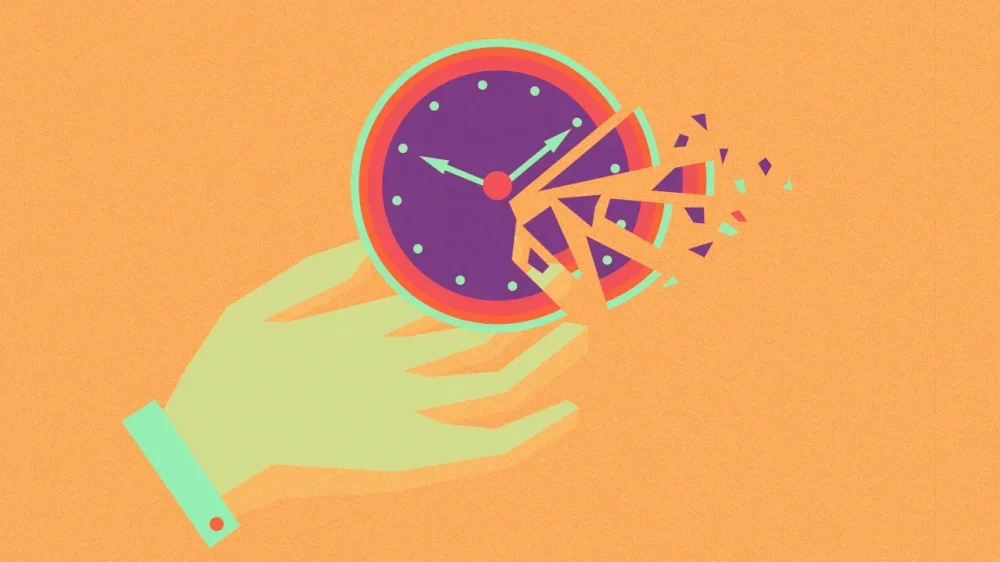
It’s rarely possible to be 100% efficient, 100% of our workday. We need breaks and working with others means we need time and space for that collaboration to happen. But oftentimes, a needed break or interaction can balloon into an unneeded time suck that leaves you feeling frustrated that you didn’t accomplish what you actually needed to get done. So how do you identify when you’re spending way too much time in an area and then eliminate that waste so that you have more time for what’s most important? As a time management coach, here’s what I’ve found to be the most effective ways to make this happen. Identifying your time sucks Honest awareness: Sometimes you already know exactly what’s stealing your time. You just need to be honest with yourself and willing to address it. Do you know that you just can’t resist checking your email every time a new message indicator pops up? Do you know that you think you can just watch one YouTube video and then seemingly the next second you realize you’ve watched 10? Do you know that you can never just send a quick text to your best friend, it always becomes a 20-minute text conversation? Write down what you already know is taking more time than it should during your day as a commitment to admitting it and fixing the issue. Automatic monitoring: Once you’ve recorded what you already know, one of the easiest next steps is to look at the automatic monitoring already in place on your phone. Most phones will give you a weekly report of where you spent time on different apps. You may think that you’re not scrolling that much on Instagram, but the data may tell a different story. You can also set up automatic reports of your computer usage if you find that’s an issue in addition to your phone. Personal time tracking: A third way to identify your time sucks is through personal time tracking where you can make note of where your time is going both on and off the screen. I typically recommend tracking your time for at least two days, but if you want to do a more thorough analysis, document it for a week. This can be done on paper, in an Excel document, or by using tools like Toggl or Timeular. My clients sometimes prefer the software options because of the ability to see consolidated reports. But if you find them overwhelming, it’s completely fine to keep things simple. If you complete the above three steps, you’re starting to get a clear picture of where your time might be overinvested. Then it’s time to take action. Here are some tips on eliminating, or at least reducing, the three biggest time sucks in most people’s days. Eliminating Your Time Sucks Screen time Some screen time can be a nice mental break. But if your data shows that you have more than 30 minutes of personal screen time during the workday that doesn’t fall into designated times off, like your lunch break, then you’re probably spending too much time in that category. If you can’t handle social media or news sites, put the nuclear option on your device so that you’re completely blocked from viewing them outside of scheduled times and have no option to undo the choice. You can also add online shopping sites or TV or movie sites like NetFlix or Hulu to the blocked list. If you work from home and are a gamer, considering locking up your controllers in a timed box so that you can’t even think about beating the next level. Communication In addition to screen time, inefficient communication can be a huge time suck in your workday. In fact, I see it as one of the biggest time wasters among people who are working much longer hours than they would prefer. To start, you’ll want to reduce or eliminate any scheduled meetings that don’t actually need to happen. There are many times where an email could suffice instead of a meeting. For example, when people contact me who I don’t know asking for a 15-minute meeting to explain something, I always reply by asking them to send over more information in written form. That way in less than a minute, I can scan what they sent and decide if it merits a conversation, and my workflow isn’t interrupted by unnecessary meetings. If you’re in an office environment, beware of the drive-by meetings. They can be super useful, but they also can be productivity destroying. If you really need to focus and have a door, close it. If you don’t have a door or people open your door spontaneously, put up a sign and/or put on headphones. Some of my clients even go so far to set up “office hours,” which are times when they’re OK with drop-in chats. Outside of those office hours, they request that people schedule a meeting. And finally, email and other asynchronous communication tools like IM or Slack can consume massive amounts more time than needed if you let them. One of the best ways to reduce time in these areas is to have designated times you log in and batch reply to all of the new messages, such as at the beginning, middle, and end of the workday. If that’s not permissible, at least give yourself a few spaces throughout the day to get focused work done by turning off notifications and if needed, putting up “Do not disturb.” Disorganization A final category of time suck during the workday is plain disorganization. You can waste so much time by being lost or losing items. Start with a plan: I encourage all of my clients to make daily and weekly planning a ritual so that they’re clear on their priorities and always know what to do next. But if that’s too overwhelming to start, at least write down the three most important things to accomplish for the day. That simple act can dramatically increase your progress on your most critical tasks. Leverage your energy: If you’re a super morning person, purposefully block that time from meetings, spend minimal time on email, and get your hardest tasks done first. If you’re barely awake until 10 a.m., do the opposite. Start slow responding to others and having a few meetings, and then block off 3 p.m. and later for your own work. Failing to organize your tasks around your energy levels can leave you frustrated because you have the time but not the mental capacity to get hard work done. Organize your environment: You don’t need office drawers worthy of a Pinterest post. But you do need to be able to find what you need when you need it. If your physical disorganization or electronic disorganization is causing you to waste needless time searching for things, take some time to get yourself in order. Sometimes that looks like spending a couple of hours purging your desk and filing things away. Other times, it’s best to work on a few papers or folders a day until you have sufficient organization. Your time will rarely be 100% utilized. But by following these tips you can dramatically reduce the time lost on time sucks so that you can invest it in what matters to you most. View the full article
-
Welcome to Pressing Questions, Fast Company’s work-life advice column. Every week, deputy editor Kathleen Davis, host of The New Way We Work podcast, will answer the biggest and most pressing workplace questions. Q: Help! None of my coworkers have kids and don’t understand what it’s like. A: No two people’s lives are the same and people with all kinds of family structures have issues that pull their time and attention away from work. That said, few things in life are as schedule-disrupting as being a parent. In an ideal world, your boss and coworkers wouldn’t need to be parents themselves to understand things like needing to miss work when you have a sick kid or having a hard out each day at daycare pick-up time. Also, in an ideal world the school day and calendar would align better with the typical work day. We are obviously not in an ideal world, and unfortunately resentment between parents and coworkers without children is common. Here are my suggestions to deal with it. Suggest changes that would benefit everyone Most parents can’t make 8 a.m. meetings, as that’s prime time for getting the kids out the door and to school. You know who else hates 8 a.m. meetings? Just about everyone. Rather have your colleagues resent you for being exempt from attending, suggest to your manager that morning meetings get rescheduled for after 9 a.m. The same goes for taking time off for life’s unexpected problems. You have to leave work when your kid is sick or when there’s a snow day, doctor’s appointment or a recital. But everyone has things pop up, whether it’s their own dentist and doctor appointments, or the needs of their relatives or pets. If you’re in a leadership position, you can help foster a culture that recognizes that life’s obligations sometimes need to take priority over work. If you’re not in a leadership position, you can be the change you want to see by happily covering for your colleagues when something comes up. Hopefully the next time your kid gets pink eye they’ll remember the time you took over for them when their dog had to go to the vet. Call it out If you feel like you’ve made a good faith effort to prove how you’re a team player, have demonstrated that you are just as productive as the non-parents on your team, and have offered solutions and you still feel resentment, you might want to be direct and talk to your coworker or manager about it. As with any difficult workplace conversation, you can still enter it with a collaborative mindset. There’s a problem and you are going to solve it together. You are not on opposing teams. As with other workplace disagreements, it can be helpful to approach the conversation with curiosity. Try something like: “I’ve noticed a lot of comments about my schedule. Is there something that’s causing an issue for the team or workflow that I’m not aware of?” If there is an issue you’re not aware of (like a domino effect of work falling on one person when you leave), once it’s out in the air you can problem solve. If there’s not an actual issue, just vague resentment, calling it out might force the person to address their own bias, or at least be the start of a conversation that can lead to more understanding. Want some more reading on working parents? Here you go: I’m the CEO of a family tech company. Here’s how I’ve created kid-friendly work hours The school year used to favor working parents, but not anymore 4 simple ways leaders can better support working parents How longer school days benefit working mothers View the full article

-
Welcome to Pressing Questions, Fast Company’s work-life advice column. Every week, deputy editor Kathleen Davis, host of The New Way We Work podcast, will answer the biggest and most pressing workplace questions. Q: Help! None of my coworkers have kids and don’t understand what it’s like. A: No two people’s lives are the same and people with all kinds of family structures have issues that pull their time and attention away from work. That said, few things in life are as schedule-disrupting as being a parent. In an ideal world, your boss and coworkers wouldn’t need to be parents themselves to understand things like needing to miss work when you have a sick kid or having a hard out each day at daycare pick-up time. Also, in an ideal world the school day and calendar would align better with the typical work day. We are obviously not in an ideal world, and unfortunately resentment between parents and coworkers without children is common. Here are my suggestions to deal with it. Suggest changes that would benefit everyone Most parents can’t make 8 a.m. meetings, as that’s prime time for getting the kids out the door and to school. You know who else hates 8 a.m. meetings? Just about everyone. Rather have your colleagues resent you for being exempt from attending, suggest to your manager that morning meetings get rescheduled for after 9 a.m. The same goes for taking time off for life’s unexpected problems. You have to leave work when your kid is sick or when there’s a snow day, doctor’s appointment or a recital. But everyone has things pop up, whether it’s their own dentist and doctor appointments, or the needs of their relatives or pets. If you’re in a leadership position, you can help foster a culture that recognizes that life’s obligations sometimes need to take priority over work. If you’re not in a leadership position, you can be the change you want to see by happily covering for your colleagues when something comes up. Hopefully the next time your kid gets pink eye they’ll remember the time you took over for them when their dog had to go to the vet. Call it out If you feel like you’ve made a good faith effort to prove how you’re a team player, have demonstrated that you are just as productive as the non-parents on your team, and have offered solutions and you still feel resentment, you might want to be direct and talk to your coworker or manager about it. As with any difficult workplace conversation, you can still enter it with a collaborative mindset. There’s a problem and you are going to solve it together. You are not on opposing teams. As with other workplace disagreements, it can be helpful to approach the conversation with curiosity. Try something like: “I’ve noticed a lot of comments about my schedule. Is there something that’s causing an issue for the team or workflow that I’m not aware of?” If there is an issue you’re not aware of (like a domino effect of work falling on one person when you leave), once it’s out in the air you can problem solve. If there’s not an actual issue, just vague resentment, calling it out might force the person to address their own bias, or at least be the start of a conversation that can lead to more understanding. Want some more reading on working parents? Here you go: I’m the CEO of a family tech company. Here’s how I’ve created kid-friendly work hours The school year used to favor working parents, but not anymore 4 simple ways leaders can better support working parents How longer school days benefit working mothers View the full article

-
Vaping devices are getting a makeover—one that seems likely to turn more teens into consumers. Experts have long worried that nicotine vapes appeal to minors with flavors like Cotton Candy and Blue Razz, along with bright candy-colored designs. Today’s vapes double as digital gadgets. Some mimic video games, others resemble smartphones or tamagotchi-style pets that “die” if you stop puffing. It’s gamified addiction. Behind the flashy designs lies a serious danger. Research shows that vaping harms both cardiovascular and respiratory health and can lead to nicotine dependency. Many of these new products are also unregulated, often smuggled in from overseas manufacturers. As vapes become more like toys, their health risks—and appeal to children—only increase. Vapes are going digital Dozens of vape manufacturers have started integrating screens into their products, originally meant to show simple battery displays. Some keep it basic—like Fumot’s design, which features a digital-clock-style percentage gauge below its signature monkey icon. But others are going bigger. Raz uses animated fire symbols, while Geek Bar displays constellations—mini light shows embedded in a puff. Some devices push things even further, embedding full-on video games just inches from the mouthpiece. The Craftbox V-Play, for example, comes in flavors like Strawberry Blowpop and Grape Escape, and features three built-in games: knockoffs of Pac-Man and Tetris, plus a fighter jet simulator. Marketed as a “Vapentertainment system,” the device even plays music as you game. For those seeking more connectivity, some vapes now function like smartphones. The Swype 3000 is perhaps the most well-known. It syncs with the user’s actual phone, displaying notifications and offering a limited suite of apps on the vape’s body. The tech is far from seamless—Business Insider’s Katie Notopoulos reported issues like buggy games and blurry alerts—but the concept is catching on. Brands like Airfuze, Vookbar, and Feed Sync are also producing so-called smart vapes. Despite their digital upgrades, vapes remain cheap, often selling for less than $20 wholesale (comparable to their analog predecessors). And, of course, they’re still disposable. Once the nicotine runs out, you’re left with a dead vape that doubles as a cheap video game console—or a phone with no service. A legal gray area Many gamified, screen-equipped vapes operate in a legal gray zone. They’re rarely manufactured in the U.S. (most come from Chinese factories) and almost none have received marketing authorization from the Food and Drug Administration. In 2024, the FDA sent a warning letter to the online retailer Vapes and Such cautioning against selling products that “may be attractive to youth” by “imitating a smartphone” or “imitating gaming technology.” Vapes have long faced criticism for their appeal to minors. In 2023, Juul agreed to pay $462 million in a settlement over its marketing tactics, which regulators said were designed to target children. Over time, concern shifted from flavors to design—sleek, candy-colored devices that looked more like tech accessories than tobacco products. “If it looks glamorous and it looks appealing, that’s going to be the first driver that will bring a horse to water,” Brian King, at the time the FDA’s tobacco regulator, told The New York Times. Screens represent the next evolution of that appeal. They don’t just make vapes look glamorous, they make them status symbols. With built-in games and push notifications, they’re nicotine devices and conversation starters. But that allure can be dangerous, especially for young users. View the full article
-
In today’s dynamic, diverse, and rapidly changing workforce, organizations’ success is dependent upon creating an environment where different perspectives come together. That’s how we produce the best ideas. Despite the recent attacks on them, Diversity, Equity, and Inclusion principles provide a crucial foundation for thriving companies. If companies want to experience the benefits of broad ideas, they need to attract talented employees from different backgrounds. And once they’ve hired those top talents, they need to make sure that they don’t exclude anyone from participating in discussions and sharing their honest views. Many arguments support why successful organizations need to be able to capture the best from as wide a range of people as possible. Here are a few of the main ones. 1. Results in greater creativity and innovation By bringing a wide range of perspectives, experiences, and ideas to the table, organizations ensure that they have a large enough reservoir that they need to come up with fresh approaches and new, groundbreaking solutions. In my book, Emotional Intelligence Game Changers: 101 Simple Ways to Win at Work + Life, I delve into how to create a culture of creativity. In an organization, employees need to be able to bounce new and diverse ideas off each other. They also need to trust that the company will value their uniqueness and contributions. In a diverse and rapidly changing landscape, organizations that limit their circle to people of similar backgrounds risk stagnation. They’re also likely to fail in their quest to recruit and keep talented people who are necessary for ongoing growth and success. 2. Boosts connection and collaboration When all employees feel free and empowered to share their thoughts and ideas, it builds a culture of connection and collaboration. As a result, teamwork skills begin to develop among diverse groups, breaking down barriers and increasing understanding of and respect for those who are different from us. The effect of this is increased motivation and commitment to work toward shared goals. CultureCon’s latest showed that when employees feel their voices are genuinely valued, they are 3.5 times more likely to report higher job satisfaction. 3. Increases the organization’s ability to attract and retain top talent Being known as an organization that supports DEI principles is attractive to people who are looking for a place to work where they will be treated fairly and equitably. These individuals are looking for places where they can thrive and get the opportunity to work with other talented people. When they find a place where companies appreciate and recognize them, they are more motivated to remain with the organization. CultureCon’s research found that 63% of employees are more likely to stay at a company that actively prioritizes DEI. 4. Improves job satisfaction and well-being When staff witness a genuine commitment to ensuring that they value, hear, and appreciate everyone, an atmosphere of trust and loyalty spreads through the organization. This leads to reduced turnover and enhanced job satisfaction, which makes people feel excited to be part of the organization. The result is greater productivity and overall organizational success. 5. Enhances the organizational brand and reputation Having a strong commitment to diversity, inclusion, and social responsibility has far-reaching effects beyond the organization itself. The reputation that it builds will make the organization stand out as a leader. It will also attract new loyal customers, and secure more business opportunities. Customers and clients will search out organizations that they trust will develop fair, equitable, and diverse workplaces. DEI might be under attack, but organizations that continue to invest in it will reap the rewards in the long run. An inclusive, supportive workplace that encourages a broad range of ideas to flourish will result in creativity, innovation, and a positive work culture. And in the long term, those are the organizations that will last. View the full article

-
Our phones are making us unhappy, but I’m not sure cutting myself off from humanity’s universe of information with a dumbphone is the answer. It’s kind of like how we know walking is healthier than driving, but it’s a moot point when the average person lives 27 miles from their workplace. However, maybe our smartphones don’t need a lobotomy. Maybe they just need to respect our boundaries. This is an idea explored in a new concept called Aperture, by the London studio Special Projects. It’s a case that crops your smartphone into a small square of your screen when you flip your case over, revealing a series of smart widgets. By the same firm that developed ideas like discrete, skin-pressed messages for Blackberry and a Paper Phone for Google, Aperture was inspired when Adrian Westaway, cofounder and director of technology and magic at Special Projects, flipped his iPhone case backward and saw a little window left open where the cameras were supposed to be. Senior designer Matteo Bandi ran with this idea in UI renderings, imagining a system in your full-feature smartphone could deliver a tiny version of just a few apps you need. These widgets might be a camera, step-by-step instructions pulled from a recipe, or even a compass pointing you toward your destination. It’s a smartphone’s function without the fluff. Most of these experiences are even presented in stoic black and white—slicing back the candy colors behind another dopamine hit. But the demo still finds a few moments of whimsy, largely through its little smiling mascots. (The mascots really come to life when, sitting at a table with friends, the faces from each phone look at one another and hop into a cozy ball.) “We’re trying to find the right balance between being helpful and not preachy,” says Clara Gaggero Westaway, cofounder and creative director at Special Projects. “It’s like, we don’t want to take technology away, but how can we help people to use technology in a way that makes them have a better life?” Aperture is clever but admittedly not entirely original. Special Projects points to all sorts of precedent within the industry playing with this same idea. UX designers have been exploring the concept for more than a decade now, from a very charming birdhouse alarm clock, to an Apple patent for a smart iPad case that reveals just part of the screen, to the current Samsung Smart View case that allows you to see the time, answer a call, and skip the track of a song. But Aperture is framed a bit differently than any of these approaches. Part of that sensation might simply come down to the fact that Aperture wouldn’t be as slickly integrated as Samsung’s Smart View that easily folds open and closed. Instead, the team imagines you literally take your case off and turn it around, opting into and out of the experience. “One of the words that I think is quite key is friction,” says Gaggero Westaway. “You cannot use it compulsively. You almost have to have a conscious behavior to say, ‘Okay, [now] I’m gonna take it off and doomscroll again.” At face value, we have products that get close to Aperture’s core idea. The Apple Watch’s original pitch was to be a product that kept you from looking at your phone, and its screen size isn’t so different from what an Aperture case would be. But Special Projects bristles just a bit at the idea of selling technology to amend your relationship with technology. “There’s also something weird about it feeling like you’ve made a new object,” Westaway says. “Like you can have two things in your hands that you’ve always had, and then you just [put them together]. And now it’s reshaped.” The other thing that Aperture reveals is what exactly makes our phones feel toxic these days. Tools to help with cooking and navigation feel additive to our experience. Screen time, in these senses, feels positive to our well-being. It’s when trying to picture something like an Instagram or TikTok feed squeezing into that little window that my stomach lurches just a bit, and the mechanisms of addiction reveal themselves. Instead of a mini social feed, Special Projects imagined that Aperture would instead offer a break from social media. So if you’re using Instagram when you flip your case around, Aperture will present a focus timer for you to do anything else but be on your phone. “We sort of arbitrarily translated [Instagram as a] timer as an escape. I think that will be a space for us to explore,” Bandi says, noting there are many ways to frame dedicated time to do something else. Aperture would be a challenging concept to bring to market, especially on iPhones, which have more rigid limitations than Androids. But a Special Projects client has expressed interest, and promised funding, to help commercialize the idea (probably in the form of a case you can buy). And with the advent of generative AI, it becomes easier to imagine how some of Aperture’s mini app interpretations, like its recipes, could feasibly work. But for now, Special Projects is putting Aperture’s earliest incarnations into the wild to solicit feedback, and understand what customers might want in such a product before realizing it for market. “We were just putting this out as a thought piece, and were absolutely not going to try and commercialize it. Then this [funding] opportunity came up,” Westaway says. “Rather than disappear for a year, we thought we could have an exploratory approach.” View the full article

-
Meghan Markle has been teasing the launch of her lifestyle brand, now called As Ever, for a while now, and Markle finally revealed its product line earlier this week. But while followers of the Duchess of Sussex are just now learning what her brand will offer, Markle’s fledging business has already faced its fair share of controversy. In the spring of 2024, Markle dropped the first hint at a potential business in the form of several artisanal jars of jam sent to various celebrity friends, each branded with the name “American Riviera Orchard.” The next update didn’t arrive until this February, when Markle announced on Instagram that she had scrapped the “American Riviera Orchard” brand for As Ever. Most recently, in a newsletter mailed to subscribers this Monday, Markle offered some insight into As Ever’s first product drop, which will include a raspberry spread, wildflower honey, dried flower sprinkles, various teas, and crepe and shortbread mixes. So far, it’s unclear when exactly As Ever’s products will be on sale, how much they’ll cost, and whether Markle plans to branch out from food and beverage into other types of lifestyle products. As fans of Markle await these details, fans of the drama are paying attention to several other stories overshadowing As Ever’s launch—including a legal dispute over its logo, concerns about the originality of its new name, and critiques around the tone of its marketing. Here’s everything you need to know about the drama surrounding As Ever. A logo mishap The strangest controversy that’s popped up around As Ever has to do with its logo. The brand’s emblem—a white-on-gold line drawing inside an elegant, elongated octagon—features a palm tree bookended by two symmetrical hummingbirds. An anonymous source told Vanity Fair that the brand chose the tree as a reference to Markle’s home in California, while the hummingbirds are a favorite of Markle’s husband, Prince Harry. But some outside viewers have been skeptical of the inspiration behind the design. Critics noted that the design looked oddly similar to the historic coat of arms used by Porreres, a small town in Majorca, Spain, since the 1400s. In an interview with The Sun in February, the mayor of Porreres, Francisca Mora Veny, said she was considering legal action against As Ever for the logo (though she went on to admit that she may not be able to afford such a challenge). “We don’t want our coat of arms to be perverted,” Veny said, adding, “The only difference with their logo and our coat of arms is that theirs shows two hummingbirds and ours are either swallows or pigeons—historians cannot agree.” In a further statement to the publication El País, she said, “It’s a total copy.” So far, it’s unclear whether Veny has reached out directly to Markle, or whether she plans to move forward with a legal dispute. New name, new challenges The change of brand name from “American Riviera Orchard” to “As Ever” has also drawn some unwanted attention to Markle’s business. In her Instagram announcement video, Markle shared that she originally chose “American Riviera” to represent her neighborhood, Santa Barbara, but she found that the title would limit her business to selling items that were manufactured and grown in the area. So, she explained in the video, she opted instead for “As Ever,” a name that she claimed was secured in 2022. Based on an application filed to the United States Patent and Trademark Office, Markle’s team submitted a request for the As Ever trademark on September 17, 2024. Per the document, the application had been approved by the examining attorney but had not yet been published as of March 26. Since Markle announced the name change back in February, at least two businesses of the same name have come forward to express their surprise. The first is a New York-based clothing brand called As Ever, run by owner Mark Kolski since 2017. Kolski told Vanity Fair that he was surprised not to have received advance notice about Markle’s brand, but that he didn’t plan to make any changes to his own business or to take action against Markle. “If they had intentions of making clothes out of the gate then it could have been a problem,” Kolski said. “They’re choosing not to make clothing at this time, but that could change. I have no interest in having any public forum battle against this new venture. That’s not who I am.” Jen Corbett, owner of the company As Ever Photography, has taken a similar stance to Kolski. In an initial Instagram post reacting to Markle’s branding, she wrote, “When one of the most famous people in the world starts using your biz name of 12+ years (that you named in honor of your grandmother), seems like they could throw me a lil bone?” However, that post has since been deleted, and Corbett has posted a follow-up story to clarify that, “I had a bit of fun posting about Meghan Markle using my biz name, but I am in no way interested in hate mongering against her.” As Ever’s perception problem Aside from its branding, As Ever is also drawing some backlash for the tone of its marketing. On As Ever’s new website, a message to fans notes, “As Ever is more than a brand—it’s a love language.” And in her newsletter sent to fans this week, Markle explained that her raspberry spread’s “keepsake packaging” could be repurposed to hold “love notes” or “special treasures.” In response to that suggestion, Margaret Hartmann, senior editor at The New Yorker, quipped that Markle’s latest “big idea” is “rinsing and reusing jam jars.” It’s a jab that builds on commentary surrounding Markle’s Netflix show, With Love, Meghan, which was widely criticized for presenting an out-of-touch look at Markle’s privileged life in Montecito (one particularly harsh review from The Guardian labeled it “toe-curlingly unlovable.”) It’s difficult to cast a judgment on Markle’s new brand just yet, considering that its products haven’t even dropped (though the number of number of issues As Ever has faced with its branding so far does seem concerning for such a new company.) If As Ever’s luxe look is anything to go by, Markle’s raspberry spread isn’t going to retail for prices one might find in the grocery store—in which case, it doesn’t seem likely that the brand will do much to repair the image of inauthenticity that’s plagued Markle’s other ventures as of late. View the full article

-
The web is being swamped by AI slop—but the swamp is creeping closer to home. Your email inboxes, phone SMS apps, instant messaging, and social media services are all being overtaken by inauthentic content. From AI-generated footage of Hollywood actor Brad Pitt that conned a French woman out of $800,000, to phishing emails that direct victims to live chats with AI bots purporting to be from a legitimate business but which are actually criminals, AI scams are everywhere. Two in every three people tested by Vodafone failed to identify an AI-driven phishing attack. One of those people was George Wilson, the founder of a small business based in Marietta, Georgia. Wilson asked Fast Company to use a pseudonym and not to disclose details of his business or bank information, concerned that being publicly identified as a scam victim could damage his company’s reputation and make him a future target. In November 2024, Wilson received an email claiming to be from his bank stating that an invoice payment he didn’t recognize was being delayed. After clicking a link in the email, he was taken to a convincing online chat page, where a supposed bank representative explained the situation. “It was all done in real time,” says Wilson. “Their dialogue was super natural, too, so while I was initially confused and suspicious, they managed to get rid of my fears.” The representative told him he was the target of an attempted scam and assured him the bank had blocked it. Wilson no longer has the chat log, but suspects he must have shared some information during the exchange that gave the scammers access to his account. The next day, several thousand dollars were taken from his business before he realized what had happened, contacted his bank, and learned he’d been scammed. The human-like interaction led Wilson to be defrauded of thousands—money he never recovered. “With AI, attackers can tailor messages to appear highly personalized, making it harder than ever for employees to distinguish a fake email from a legitimate one,” says Katie Paxton-Fear, an ethical hacker and cybersecurity lecturer at Manchester Metropolitan University. The lure of AI for cybercriminals is obvious, and mirrors why the general public uses LLMs and other AI tools: They can generate convincing content at scale with minimal work. A lab-based study published in Harvard Business Review found that AI-generated phishing emails successfully deceived victims 60% of the time. It’s a high payoff for low effort, especially as LLMs take over the burden of crafting emails. “We know that social engineering is one of the most effective forms of attack anyway, rather than malicious code, because you’ve got to try and have some way of landing the malicious code on victims,” says Alan Woodward, a cybersecurity professor at the University of Surrey. “It’s not surprising that LLMs are being used in the first instance to try and produce more effective versions of that.” As the public becomes more aware of AI-powered phishing, cybercriminals are already moving several steps ahead. Cybersecurity firm Kela reports that discussion of malicious AI tools on the dark web has increased 200% in the past year. In 2023, there were around 4 daily mentions; by 2024, they spiked to 14-plus. This booming underground market is a “seismic shift” in cyberthreat development, says Yael Kishon, AI product and research lead at Kela. Even open forums like Hack Forums are buzzing with discussions about optimal models for different attacks. A “Dark AI” forum regularly hosts new posts and replies, with a pinned mega list of AIs used for illicit purposes garnering nearly 20,000 views and more than 100 replies—on a public forum. Far more activity takes place in dark web spaces. This growing trade in malicious LLMs is a worry to the general public, but it’s not surprising. “Once upon a time, to be a cybercriminal you needed skills, you needed knowledge, and needed to be able to code,” says Rob Allen, chief technical officer at ThreatLocker, which monitors the rise of LLMs among criminals. “Now all you need, really, is bad intentions.” Only some mainstream LLMs have built-in guardrails to prevent malicious use, and dark web LLMs often rely on open-source models without safeguards or cracked versions of commercial ones. According to Kela’s analysis, discussions around jailbreaking LLMs have surged 52% year over year. Malicious LLMs sold on criminal forums typically fall into two categories: jailbroken commercial LLMs or altered open-source models. Their approaches vary. EscapeGPT, launched in August 2023 at around $65 a month, was based on ChatGPT’s 3.5 Turbo, analysis of its behavior showed. WormGPT, developed from an open-source model in 2021, reportedly brought in about $14,000 monthly by charging for access. This underground market reflects the legitimate AI industry: Competition is fierce, pricing strategies abound, and model creators market their tools aggressively. FraudGPT, a model released in July 2023, gets poor reviews (partly because its creators allegedly scam their own buyers) but still boasts in marketing materials about its 8.5-terabyte training data set. GhostGPT, one of the latest and most talked-about malicious LLMs, is either a jailbroken version of ChatGPT or a modified open-source model, according to researchers at Abnormal Security. “GhostGPT is a chatbot specifically designed to cater to cybercriminals,” the researchers say. “By eliminating the ethical and safety constraints typically built into AI models, GhostGPT can provide direct, unfiltered answers to sensitive or harmful queries that would be blocked or flagged by conventional AI systems.” Access is priced competitively: $50 for a week’s access to a Telegram bot, $150 for a month (less than OpenAI charges for access to ChatGPT Pro), or $300 for three months. The model can generate phishing emails and malware prompts on demand. It also boasts fast responses and no data logs, minimizing the digital trail for law enforcement. In testing, Abnormal Security got it to produce a convincing Docusign phishing email in less than a minute from the prompt “Write a phishing email from Docusign.” GhostGPT may be the newest model making waves in cybercrime circles, but it follows a familiar pattern. “We found that most use an API from OpenAI and jailbreaking prompts,” says Zilong Lin, a researcher at Indiana University Bloomington, who conducted an August 2024 analysis of more than 200 malicious LLMs available on the dark web. Criminals prefer jailbreaking existing models because building one from scratch is costly, Lin tells Fast Company. And with many models simply a single jailbreak prompt away from being shorn of their protections, it’s never been easier to leverage the capabilities of the world’s most powerful chatbots for nefarious means. But solutions can be complicated, says ThreatLocker’s Allen. “Fundamentally, everything is to a greater or lesser degree vulnerable,” he explains. “Most things are weaponizable.” This story was supported by Tarbell Grants. View the full article