Newsletter
Want to keep up to date with all our latest news and information?


ResidentialBusiness
Administrators
-
Joined
-
Last visited
Everything posted by ResidentialBusiness
-
eToro Group Ltd has announced that it plans to take itself public in an initial public offering. The company made the announcement in a press release today, in which it confirmed that it had filed its Form F-1 registration statement with the U.S. Securities and Exchange Commission (SEC). However, there are still many unknowns about eToro’s IPO. Here’s what we do know—and what still needs to be revealed. What is eToro Group Ltd? eToro Group Ltd is the name of the company that operates the eToro trading platform. Like other trading platforms, eToro allows investors to buy and sell a number of assets, including stocks and cryptocurrencies. But eToro is slightly different than your more traditional trading platforms like Charles Schwab or Vanguard. That’s because eToro is what is known as a “social trading” platform. The phrase signifies a platform that allows its users to see and, if they choose to, mimic the trades of other investors on the platform. This allows more novice investors to piggyback on the expertise of other investors whose decisions they trust. eToro Group was founded back in 2007. It is based in Tel Aviv, Israel with offices around the world. eToro by the numbers According to the company’s Form F-1 registration statement, eToro has the following metrics as of December 31, 2024: A global footprint that spreads across 75 countries. Approximately 3.5 million Funded Accounts across those countries. Net Contribution of $787 million (up 41% from $557 million in 2023). Total Commission of $931 million (up 46% from $639 million in 2023). Net income of $192 million (up 1,161% from $15 million in 2023). Adjusted EBITDA of $304 million (up 159% from $187 million in 2023). eToro’s F-1 also lists a number of its growth strategies, which the company says focuses on acquiring more users in existing markets, increasing its share of users’ assets, and moving into new markets. Among the risks the company cites are uncertain legal and regulatory landscapes as well as operating in a highly competitive industry. When is eToro’s IPO? That’s unknown. As of this writing, eToro has not divulged when its IPO may take place. In its press release about its intention to go public, eToro stated that “the offering is subject to market conditions, and there can be no assurance as to whether or when the offering may be completed.” What is eToro’s stock ticker? eToro’s stock ticker will be “ETOR.” What market will ETOR trade on? eToro shares will trade on the Nasdaq Global Select Market. What is the IPO share price of ETOR? That is unknown. eToro says that “the price range for the proposed offering have not yet been determined.” How many ETOR shares are available in its IPO? That, too, is unknown. The company says that the number of shares it plans to offer has also not yet been determined. How much will eToro raise in its IPO? That is something else we do not know at this time. Until eToro announces the number of shares it will offer and the offering price, it cannot be known how much the company plans to raise in its IPO. View the full article
-
We may earn a commission from links on this page. Deal pricing and availability subject to change after time of publication. One of my biggest pet peeves about the Oura ring platform is getting some temporary relief, thanks to Amazon’s spring sale. Chargers for the gen 4 ring (the newest model) are available for $35.40 today, so you can pick up a spare for close to half the usual price. Oura Ring 4 Charger $35.40 at Amazon /images/amazon-prime.svg $59.00 Save $23.60 Get Deal Get Deal $35.40 at Amazon /images/amazon-prime.svg $59.00 Save $23.60 And, yep, the usual price for an Oura charger is a whopping 59 bucks. The old gen 3 chargers don’t fit the new gen 4 rings, and the chargers are also sized: If you have a size 8 ring, you need a size 8 charger. And there aren’t third-party chargers for the gen 4 rings, so the official Oura ones are your only option. Hence my griping about the price. But now, at $35.40? That’s still not cheap, but it’s a lot better than full price. Your ring will have come with one charger, but it’s handy to have a spare so you can keep one at your work desk and one on your nightstand, or to keep an extra in your travel drawer. The Oura ring lasts most of a week on each charge—up to eight days, according to the company, although I found I only got about five days between charges with blood oxygen sensing turned on. That also accounts for charging the ring when it falls to 20% battery, which is the app's recommendation to be sure it won't run out of juice while you sleep. The fourth generation Oura ring has a good reason for not fitting the old chargers, by the way—the old rings had three sensor bumps on the inside, where the gen 4 has finally managed to fit its technology into a smooth interior that fits like a normal ring. So the ring is a different shape on the interior, and the sizing has also changed. For more on the differences between the gen 3 and gen 4 Oura rings, I have a detailed comparison here. I’ve also worn three different generations of the ring over the past four years, and I wrote a retrospective here with all my thoughts on how I’ve used my ring over the years, and where it has and hasn’t lived up to my expectations. Shopping for tech? Lifehacker can help you make the right decision. Browse our tech reviews and head-to-head comparisons for everything from laptops and smartwatches to e-bikes and home gyms. Subscribe to our deals newsletter, Add to Cart, for the best sales sent to your inbox, or browse our best-of lists directly on Amazon, including: The Best Over-Ear Headphones The Best Wireless Earbuds The Best Adjustable Dumbbell Sets The Best Projectors View the full article
-
We may earn a commission from links on this page. Deal pricing and availability subject to change after time of publication. Act fast if you want to pick up an Oura ring on a steep discount—some of them are available today for just $199 in Amazon's spring sale. I’m seeing this deal on gen 3 rings in the Heritage shape, and silver or black colors. Oura Ring Gen 3 $199.00 at Amazon /images/amazon-prime.svg $249.00 Save $50.00 Get Deal Get Deal $199.00 at Amazon /images/amazon-prime.svg $249.00 Save $50.00 This ring is a third-generation, or gen 3, ring. It’s not Oura’s newest, but it is still a solid pick with all the same core features as the newer gen 4. I have a comparison here of the gen 3 and gen 4 rings, if you’d like to know what you’re missing. The gen 4 gathers the same data but is sometimes more accurate, comes in a wider range of sizes, and has a smooth interior rather than the sensor bumps of the gen 3. Personally, I’ve worn both, but as I’m typing this I have a gen 3 ring on my finger—it’s absolutely fine. (You can read more about my long-term experiences with the Oura rings here.) The $199 rings are the flat-topped Heritage style, in silver or black. (Other colors cost more.) As of the time I'm writing this, the deal is available for all sizes, from 6 to 13. If you want the smooth Horizon model, those are available for $249, which is also a good price. Ever since the gen 4 rings launched in late 2024, the gen 3 rings have been at least $50 off their original price (which was $299 and up, with Heritage being the cheapest). Sometimes they have been $100 off. This price of $199 is the lowest I’ve ever seen for any Oura ring—it’s $150 off the ring’s original price for that style and color. The Oura ring still requires a $5.99/month subscription to use its best features, so make sure you figure that into your budget. Also, note that you’ll need to know your ring size to order, and that the gen 3 rings are not sized the same as the gen 4. Your best bet is to find a gen 3 sizing kit to try on in-person before you order. Shopping for tech? Lifehacker can help you make the right decision. Browse our tech reviews and head-to-head comparisons for everything from laptops and smartwatches to e-bikes and home gyms. Subscribe to our deals newsletter, Add to Cart, for the best sales sent to your inbox, or browse our best-of lists directly on Amazon, including: The Best Over-Ear Headphones The Best Wireless Earbuds The Best Adjustable Dumbbell Sets The Best Projectors View the full article
-
Tomorrow, NPR’s CEO Katherine Maher goes before a DOGE congressional subcommittee to defend the public media outlet’s case for federal funding. Maher gives a preview to her testimony, sharing how funding cuts would impact Americans’ broad access to crucial news and information, particularly in rural and local areas. Maher also reveals NPR’s strategy for reengaging with their audience, how the organization can better frame its identity as an outlet for all Americans, and more. This is an abridged transcript of an interview from Rapid Response, hosted by the former editor-in-chief of Fast Company Bob Safian. From the team behind the Masters of Scale podcast, Rapid Response features candid conversations with today’s top business leaders navigating real-time challenges. Subscribe to Rapid Response wherever you get your podcasts to ensure you never miss an episode. When you joined NPR last year, the organization faced plenty of business challenges: audience engagement, business model. Since then, the environment just got a whole lot more fraught. There was a high profile criticism about newsroom bias last spring from an editor on the staff. That sounds almost quaint right now though. You’ve been called to testify on Capitol Hill tomorrow to speak before the DOGE subcommittee in a hearing titled “Anti-American Airwaves,” alongside the head of PBS. What do you expect from that? What should we all expect? How do you prepare for that? Honestly, I view it as an opportunity. I view it as an opportunity to go and talk about all the great work that NPR does, but also the great work that our stations do. I think that that’s something that often gets lost in the conversation about public radio is the overall percentage of funds that go directly to local stations. The importance of the local station network, and the fact that when people are listening to public radio, they are not listening to us broadcasting from D.C., they’re listening to their local station, which is probably, chances are, attached to a local university. Or it’s a community nonprofit, and it’s making the choices about what folks hear on the air. It probably has some call-in public affairs show where you can talk about what’s going on that matters to you as a resident of your town, your city, et cetera. So, just really getting back to that, that feels like such an important part of what I’m there to do. And, how do you prepare? I mean, you prepare by making sure you know what you’re there to say, and you prepare by making sure you know what it is that you want to be able to communicate about the value of the work, and you prepare by a lot of practice. It’s like trying to go to Carnegie Hall. It’s a lot of practice. I was talking to a friend about doing this interview. He was telling me a story about talking to a colleague who’s a MAGA republican, and he mentioned an episode, he said, “Oh, I’ll send you this episode of This American Life.” And they were like, “Oh, it’s on NPR. Oh, no.” It almost sounds like there are people who are listening to NPR stations that maybe don’t realize they’re NPR stations, or don’t connect it to this conversation about, I don’t know, it being anti-American. I really want to rebuff this idea that in any way that public radio is anti-American. For starters, we are a uniquely American model. We are a public-private partnership. For every single federal dollar we get, local stations raise an additional seven. They rely on their communities, they rely on local businesses. NPR is 25% of what you hear on public radio airwaves on average. In fact, 75% of stations programming is either other shows that they purchase or local shows that they produce. And, “This American Life” is a great example. We love This American Life. I heard Glass used to work at NPR. But it’s not an NPR program. It is a public radio program. It’s part of the diverse texture of what is actually available. There’s 1,300 public radio stations across the country. They represent their local communities in ways that are hyper unique, whether we’re talking about high school basketball, the price of sorghum wheat. It’s easy to forget about if you’re just listening to the radio in perhaps New York or a DC, is that all of this is very much in tune with whatever’s going on in American lives at any particular point in time in this enormous nation of ours. NPR isn’t a federal agency, as you have said. You get money from lots of different places. But, the subtext of this DOGE hearing is the prospect of losing federal funding or some important part of it. What would the practical impact of losing that funding be? I can imagine you’ve been preparing for this possibility even well before this hearing came up. We have to be prepared for all scenarios all the time. The thing that I would want everyone to know about federal funding is the impact that loss of federal funding would have on local stations. 121.5 million goes to public radio on an annual basis, it’s a lot of money, I want to acknowledge that. And it’s also not a ton of money relative to the total size of the American public budget, right, the federal budget, a 100 million of that goes direct to local stations. And, disproportionately, the percentage of those funds goes to support stations that serve rural communities, that serve less affluent communities, that serve communities with really large areas of service, where the infrastructure investment in making sure that broadcast airwaves reach the country is significant. I think about my colleagues in Eastern Kentucky who have to put repeaters and hollers in order for Eastern Kentuckians to be able to hear those radio broadcasts. The loss of federal funding would directly impact the ability for stations to provide coverage, which currently 99.7% of the nation has access to airwaves. It would directly affect our ability to be part of the emergency broadcast system, and it would directly affect the ability of local stations to be able to continue to support commission and purchase programming about their communities. That’s where the harm would be. The harm would be for the local stations, and that’s what we’re trying to avoid, because it’s very easy, again, in DC to forget that we’ve lost a third of newspapers across the country in the last 20 years. One fifth of Americans live in a news desert. Public radio, public broadcasting, your local newsroom is often the only news that folks have that actually cares about their community and covers the issues that listeners care about. You’re for all Americans, but you had an editor at NPR say, “No, the news has been biased.” The way you talk about COVID, or the Mueller report, or whatever. There is this impression from certain people in America that NPR is not for all Americans, and obviously, that’s what the hearing’s about tomorrow. Yeah. And that’s one of the reasons that I’m here: I believe very deeply that that is our objective and our responsibility. I had someone come up to me and they said, “I’m a conservative. I grew up on NPR. I love NPR. And I’m just not sure it’s a home for me right now.” And that struck me. That cut me to the core. I want it to be a home for everyone. I want people to feel as though it’s their home for curiosity, it’s their home for understanding the world. Certainly, that’s the role it played in my life as a young person. So, for starters, we have really reoriented the organization around audience needs. Broadcast radio is not the greatest way to understand audience needs because we just don’t have that much information about how people are listening. But as we have more digital data around people who are coming to our websites, or listening to our podcasts, or even just streaming from our app, those linear radio experiences, it starts to be able to help us understand how to better serve audiences. In the past, the only audience research that we did was with people with college degrees, but only 35% of Americans have a college degree, which meant that we were not listening to the needs of all Americans. How do you run a media organization and say, “65% of my potential audience, I’m not going to ask them what they want.” So we’re doing that, which I think makes a really big difference. The thing that we’ve identified in terms of our audiences is that curiosity is the most common characteristic. And the great news is that curiosity is not a partisan trait. Curiosity exists in every demographic, every age group, every political persuasion. And so, that’s a great place for us to hone in on our curiosity. What’s going on in the world? How do we explain it? How do we give people the information to go a little bit deeper, give them that context that helps them situate themselves? And I think it’s time for us to reintroduce ourselves as if this is what we’re here to do, and yes, we’re here to do it for everyone. How’s the mood and morale on your team these days? They’re here to go to work. I just walked through the newsroom to get here to the studio, and everyone’s heads down, they’re working, they’re reporting, they’re producing, they’re getting ready to file their story for All Things Considered, or they’re getting ready for whatever band is coming in for Tiny Desk next. I think that the overall environment right now is that people really want to do the work. There’s a lot of news in the world today, whether we’re thinking about the transformative administration, whether we’re thinking about questions of space exploration. I think people feel as though, of course, this is a different moment in time, and it is really important that we show up and are responsive to people’s questions about the value of our work. I come back to the fact that when we talk about efficiency, public radio is remarkably efficient. The cost per public media per American is $1.60. It’s basically when you go to check out at CVS and you’re asked to round up to a good cause, that’s us. That’s what we cost. Public radio costs less than $1.60, the public media as a whole is $1.60 per American per year. As I said, for every dollar of federal funding, $7 of private funding. We’ve got a good story to tell, and 75% of Americans want to see public media maintain or increase its current funding levels. So, again, I think that’s the story we’re here to tell. View the full article

-
Officers found ‘no evidence’ the origins of the blaze were ‘suspicious’ View the full article
-
Companies like Apple have their own ecosystems, where it's easier to interact with other devices from the same company. For example, it's trivially easy to transfer photos from one iPhone to another, or to share a Wi-Fi password between iPhones with one tap. The same goes for a hotspot as well. You can start using your iPhone's internet connection on your iPad or Mac, without even lifting your iPhone. Android, unfortunately, mostly lacks this level of cross device integration. Samsung and Pixel devices do offer some exceptions, but usually only with other Samsung or Google devices, respectively. Now, though, a formerly Pixel-exclusive tethering feature named Instant Hotspot is coming to Samsung devices, starting with the Galaxy S25 series. How Instant Hotspot worksInstant Hotspot works with any compatible Android and Chromebook device, and they don't have to be from the same manufacturer. For example, you can use this feature to enable internet connection on a Chromebook or a Pixel tablet, or a secondary Android phone without a SIM connection. And all that can happen in a single tap. When the feature is enabled, you'll see a notification on the offline device, asking if you want to connect to the your online gadget and create a hotspot. The catch is that this only works for devices that are registered to your Google account, but it should make sharing data much simpler. How to enable and use Instant Hotspot on the Samsung Galaxy S25Instant Hotspot is built on top of Android's Cross-Device Services feature that was released last year. It was available on Pixel phones first, but finally other manufacturers are starting to integrate. Samsung's Galaxy S25 series devices are confirmed to be some of the first to get access to this feature, with the One UI 7.0 update. According to user reports seen by Android Authority, older devices with the One UI 7 update are starting to see this feature, too. To enable the Cross-Device Services feature, go to Settings > Google > Cross-Device Services. Tap Next to set up the feature. Then, tap OK to join a group of your devices that are all connected to the same Google account. Credit: Mishaal Rahman Now, you'll see settings for two new features, Call Casting and Internet Sharing. Make sure that both are enabled. Once that's done, you're off to the races. When your Galaxy S25 is near another Android phone, tablet, or Chromebook that's offline and in your Google account group, your device will get a gentle notification asking if you'd like to use your Galaxy S25's internet connection with it. Just tap the Connect button to create a temporary hotspot from your phone. If you don't see the notification, you can also manually browse the available Wi-Fi networks. You'll find the Galaxy S25 listed right up top. View the full article
-
Pent-up demand and the rapid pace of home appreciation is fueling the ongoing rise in home prices, even as mortgage rates present obstacles for buyers. View the full article

-
How do technocrats expect the needed macroeconomic adjustments to occur?View the full article
-
We may earn a commission from links on this page. When it comes to having the hottest, crispiest snacks at the ready, I’ve always had your best interest in mind. While any air fryer is better than no air fryer, in a perfect world the best air fryer would be available to us all at an affordable price. Well folks, my favorite air fryer is 39% off for Amazon’s Big Spring Sale and it’s a deal worth jumping on. The Cuisinart Air Fryer Toaster Oven is $139.95 right now, compared to its usual $229.95, and while it’s not cheap per se, I would say it dips down into a much lower price bracket for sure. If you were looking for air fryers in the $100 to $150 range, then the Cuisinart is worth considering. Cuisinart Air Fryer Toaster Oven $139.95 at Amazon /images/amazon-prime.svg $229.95 Save $90.00 Get Deal Get Deal $139.95 at Amazon /images/amazon-prime.svg $229.95 Save $90.00 I reviewed the Cuisinart Air Fryer Toaster Oven late last year and I was completely won over by how quiet it was. Convection ovens across the board are effective cooking machines, so I believe it’s the side benefits that make an air fryer right or wrong for a person—like, do you need double baskets? Or do you need a travel air fryer? There are many things to consider. The cherry on top is that this very air fryer also became my top pick for Best Overall Air Fryer when considering size, ease of use, price, and other features (like window or basket model). My favorite features of the Cuisinart Air Fryer Toaster Oven are the simple operating controls using turning knobs instead of digital buttons that might have you clicking 25 times just to increase the time, the ample interior space, and the sweet, sweet (near) silence of the convection fan. In a habitat like Brooklyn (near an above-ground subway train in a neighborhood that loves to honk horns for all communication) an air fryer as quiet as this is like a vacation. A vacation that gives you crisp tater tots at the end. Whether you have a new baby that wakes up at a pin’s drop, or you simply enjoy a quiet atmosphere, you can have peace and the perks of a high-quality air fryer for an excellent price right now. Shopping for tech? Lifehacker can help you make the right decision. Browse our tech reviews and head-to-head comparisons for everything from laptops and smartwatches to e-bikes and home gyms. Subscribe to our deals newsletter, Add to Cart, for the best sales sent to your inbox, or browse our best-of lists directly on Amazon, including: The Best Over-Ear Headphones The Best Wireless Earbuds The Best Adjustable Dumbbell Sets The Best Projectors View the full article
-
A private European aerospace company scrubbed its attempt on Monday to launch the first test flight of its orbital launch vehicle from Norway. Unfavorable winds meant that the Spectrum rocket couldn’t be launched from the island of Andøya in northern Norway, Munich-based Isar Aerospace said. The launch is subject to various factors, including weather and safety. The company said it could also conduct the test flight later in the week. Another date hasn’t yet been set. The 28-meter (91-foot) Spectrum is a two-stage launch vehicle designed for small and medium-size satellites. The company has largely ruled out the possibility of the rocket reaching orbit on its first complete flight, saying that it would consider a 30-second flight a success. Isar Aerospace aims to collect as much data and experience as possible on the first integrated test of all the systems on its in-house-developed launch vehicle. The startup, which says it has raised more than 400 million euros ($435 million) in capital, hopes to build up to 40 launch vehicles per year in the future at a plant outside of Munich. The launch vehicles are all to be used for putting satellites into orbit. Isar Aerospace is separate from the European Space Agency, or ESA, which is funded by its 23 member states. ESA has been launching rockets and satellites into orbit for years, but mainly from French Guiana—an overseas department of France in South America—and from Cape Canaveral in Florida. View the full article

-
Mike Waltz faces growing pressure to step down after classified details shared with journalist View the full article
-
We may earn a commission from links on this page. Deal pricing and availability subject to change after time of publication. It's Amazon's Big Spring Sale—not quite Prime Day, but as close as you're going to get in March. But while Prime Day usually includes a bunch of discounts of Apple devices, including the ubiquitous AirPods, they aren't included among the retailer's Spring Sale offers. But that's fine, because the Apple-made headphones I would actually recommend buying over the AirPods Pro actually are in the Big Spring Sale: the similarly full-featured, great-sounding Beats Fit Pro, which are currently $30 off. Beats Fit Pro ANC Earbuds $169.00 at Amazon /images/amazon-prime.svg $199.95 Save $30.95 Get Deal Get Deal $169.00 at Amazon /images/amazon-prime.svg $199.95 Save $30.95 The Pros were actually my second pair of Beats-branded earbuds. I started out with a set of their cheaper cousins, the Beats Studio Buds, which offer similarly strong active noise cancelling (ANC) and have earned decent marks from the likes of PCMag (especially for their price point—they're also part of the Big Spring Sale, and currently $99—$50 off the usual price). But when I left that pair behind at a hotel and needed to replace them, I decided to upgrade to the Beats Fit Pro for a few reasons: They have quality sound and good ANC. As our pals at PC Mag noted, they offer "deep bass and crisp highs with above-average noise cancellation." I'm not an audiophile and I mostly listen to podcasts, but my tunes (mostly streamed from Amazon Music) sound pretty good too. They provide a snug fit. I apparently have gaping earholes, because most earbuds fall right out of my ears at the slightest movement. Beats Fit Pro's wingtips and silicone tips provide a snug fit that keeps them comfortably in my ears, even when I'm sweaty. They have Apple's H1 chip. This was the main reason I upgraded: The Studio Buds don't have Apple's H1 headphone chip, which means they can't take advantage of many of the features that make AirPods so cool, like in-ear detection, device switching, and Find My functionality. The Beats Fit Pro can do all of that. They aren't AirPods. I get that AirPods are their own thing, and their look has become something of a brand of its own. But I've always thought they were kind of stupid looking. The Beats Fit Pro lack those dangling white stems that are the AirPods' signature, and I like them a lot better for it. I'm not including this on my list of reasons, but the Beats Fit Pro also come in a variety of pretty colors, and four of them are part of the Big Spring Sale. If you go with AirPods, you only have the choice between white and white. Shopping for tech? Lifehacker can help you make the right decision. Browse our tech reviews and head-to-head comparisons for everything from laptops and smartwatches to e-bikes and home gyms. Subscribe to our deals newsletter, Add to Cart, for the best sales sent to your inbox, or browse our best-of lists directly on Amazon, including: The Best Over-Ear Headphones The Best Wireless Earbuds The Best Adjustable Dumbbell Sets The Best Projectors View the full article
-
This week, there has been a lot of chatter in the weirder parts of the online world about the supposed discovery of a hidden complex of underground chambers beneath the Great Pyramids of Giza in Egypt. It seems a team of researchers announced they'd used SAR (Synthetic Aperture Radar) to reveal a number of underground buildings beneath the Khafre Pyramid. This discovery could offer proof the ancient Egyptian civilization was far more advanced than is generally believed, and possessed technology that rivals our own. It could change everything we think we know about humanity itself! In other words, big if true. Spoiler: It's not true though. All signs point to the “discovery” being an especially elaborate example of pyramid-based misinformation, another in a long string of untrue claims about the ancient Egyptian monuments that never seems to end, because cranks just love making up stories about the pyramids. What was supposedly discovered under the Great Pyramids? I gotta give the “researchers” behind this "discovery" an A for effort. The supposed results of the SAR-based research were shared with the world at a press conference held in Bologna, Italy, on March 15, and it all looks very official. Here’s a video of the event: It’s in Italian, and there are no English translation available yet, so I’m relying on other people’s translation work, but the gist is that the GIZA Project involves a team of “researchers, historians, archaeologists, and technologists” using high tech imaging techniques. They say they've discovered five identical structures connected by “geometric pathways,” eight “structures resembling vertical wells, surrounded by descending spiral pathways,” and “two large cubic structures measuring approximately 80 meters per side at a depth of 648 meters” at the site of the Great Pyramids. The conference featured multimedia detailing the supposed discoveries, charts and graphs, people acting very serious, and all sorts of “this is real science!” frippery, so as you’d expect, the easily fooled were fooled, easily. Alex Jones touted this as “greatest archeological find in HISTORY.” Others wondered if the structures under the pyramids are part of a massive power plant, or maybe an ancient super weapon, or part of the “legendary Amenti,” a subterranean city “linked to ‘universal knowledge of humankind and its ultimate spiritual transformation.’” Or maybe the entire thing is nonsense and nobody discovered shit. Where does this new pyramid research come from?Many of the claims made in the press conference aren’t based on any published research, so it’s just people saying stuff in Italian, but the facts that can be checked are largely based on a research paper published in the journal Remote Sensing in 2022. Corrado Malanga and Filippo Biondi are listed at the top of a paper named “Synthetic Aperture Radar Doppler Tomography Reveals Details of Undiscovered High-Resolution Internal Structure of the Great Pyramid of Giza.” It’s a dense read, full of technical information and equations like this: Credit: Remote Sensing Don't bother plowing through it and checking the math: The paper’s most notable feature is that it’s not peer reviewed, so you can safely ignore it for now. No independent expert in imaging has looked at this paper in a serious way to determine if SAR could even work like this, and radar experts doubt you could penetrate 648 meters through limestone bedrock. No archeologists have substantiated these claims. Neither have any historians or sociologists. Bottom line: without peer review, there’s no reason to take this paper more seriously than you’d take wild claims made by a random person on a bus. And that’s the generous interpretation. A less generous view is expressed by established Egyptologist Dr. Zahi Hawass, who wrote on his Facebook: All this information is completely wrong and has absolutely no scientific basis… the claim that a radar was used inside the pyramid is false…These people who announced this wrong information, they used techniques that are not approved nor validated, the details announced would never have been seen by using this technique. Until actual scientists have a look at this research (and I wouldn’t hold my breath) it’s safe to file it under “pyramid misinformation,” a hearty mind-weed that’s been around forever and seems impossible to kill. But pyramid myths are at least fun, so here are some other common things people get wrong about them. Myth: The pyramids were built by slaves or aliensConspiracy theorists often argue that “mainstream” archeologists and historians shouldn't be believed because they have a compelling interest in rejecting new ideas to maintain the academic status quo. But until relatively recently, many historians, archeologists, and most of the general public believed the pyramids were built by slave labor—specifically by the Jews. This is probably because Egyptians enslaving Jews is mentioned in the Bible (though the pyramids are not) and because Greek historian Herodotu reported that slaves were building the pyramids when he visited in 450 B.C. Even though it challenged the orthodoxy of their field of study, archeologists uncovered new evidence and reexamined existing evidence to change the conventional wisdom. It turns out the pyramids were not built by slave labor, at least not as we understand slavery today. Instead, the archeological evidence suggests the the pyramids were built by around 20,000 Egyptians who were paid, well-fed, had the equivalent of medical care, worked seasonally, and even left graffiti behind bragging about how awesome their work crew was compared to the others. This evidence also helps us cross "aliens" off the list of potential pyramid-makers. (Giants didn’t build the pyramids either.) Myth: Ancient people could not have moved the pyramids' heavy stonesWe don’t know exactly how the stones they used to build the pyramids were moved into place, but we have evidence that the ancient Egyptians loaded the stones on barges, floated them down the Nile, then dragged them on sledges over pathways they’d made of of slaked lime or tafla, probably using water to reduce friction. No advanced technology or extraterrestrial help was needed, and there’s no evidence at all to suggest they were employed. A lot of people working together can accomplish great things, especially if they have all been given enough beer. Myth: Pyramids existing independently in different prehistoric societies is evidence of a common cultureFrom Mayan pyramids in Central America to Angkor Wat in Cambodia, many disparate ancient civilizations built pyramid-shaped monuments, leading some to suggest they had a common culture or there was an ancient means of communication between groups. Some think there’s something inherently “spiritual” in a pyramid’s shape. While some ancient civilizations did communicate and trade with each other, the main reason pyramids all look similar is the same reason sand castles all have a vaguely pyramidal shape: It's the most stable way to build anything upwards, no matter where your ancient civilization is located. Plot-twist: A real anomaly was discovered near the Great PyramidThis news was not breathlessly tweeted by Alex Jones, but in 2024, real scientists announced they’d discovered a mysterious structure under the royal graveyard near the Great Pyramid of Giza. Using ground penetrating RADAR and electrical resistivity tomography, researchers from Higashi Nippon International University and other institutions identified an L-shaped structure that is about 33 feet long and is buried 6.5 feet deep. Maybe that's not as impressive as a city-sized proto-battery under hundreds of meters of limestone, but beneath that there's a "highly resistive anomaly!" It's totally unknown, so you can pretend it's an alien spaceship if you want, but scientists think it's probably a mix of sand and gravel or “an air void.” It’s not an underground city or the remains of an ancient battery, but at least it’s real. View the full article
-
Tesla’s market share in Europe continued to shrink in February as sales of the all-electric car maker dropped for a second month even as EV registrations overall on the continent grew. As competition grows and a slowdown in European economies hampers total car sales, Elon Musk’s battery-electric (BEV) brand has sold 42.6% fewer cars in Europe so far this year, data from the European Automobile Manufacturers Association (ACEA) showed on Tuesday. Tesla commanded 1.8% of the total market and 10.3% of the BEV market in February, down from 2.8% and 21.6% respectively last year. It sold fewer than 17,000 cars in the European Union, Britain, and European Free Trade Association countries, compared to over 28,000 in the same month in 2024. Tesla currently faces a number of challenges in Europe, ahead of the launch of its new Model Y midsize SUV this month. The EV maker has a smaller, aging lineup while traditional automaker rivals and new Chinese entrants alike continue to launch new, often cheaper electric models. Musk, the company’s CEO, has also stirred controversy by courting far-right parties in Europe, which has added to Tesla’s sales slump. “It will be interesting to see to what extent demand rebounds once the new Model Y hits markets across the region,” Felipe Munoz, Global Analyst at JATO Dynamics, said in a report on Monday. Overall, BEV sales in the same markets last month were up 26.1% versus February 2024, even as total car sales fell 3.1%, according to the ACEA. A growing interest in electric cars in the world’s second-biggest EV market is largely due to new EU emission targets and the launch of cheaper electric models, market experts say, but it is not enough to compensate for shrinking demand for petrol and diesel cars. “We continue to expect global auto volume essentially flat” this year, Citi analysts said in a note. An EU filing showed last week that Tesla had formed a pool to sell carbon credits to more than half a dozen automakers as they try to meet European CO2 emission targets which came into effect in January. While based on 2024 figures, analysts estimate that Tesla’s sales can more than compensate for those companies’ emissions, the situation might change if its sales continue to drop. The EU introduced the targets to help EV pickup in the bloc, but it is expected to approve on Tuesday a relaxation of those measures, to allow a three-year averaging of fleet emissions. While total new car registrations in the EU fell 3.4% in February, BEV sales jumped 23.7%, a second consecutive increase, while hybrid car (HEV) sales rose 19%. Electrified vehicles – either BEV, HEV or plug-in hybrids (PHEV)—sold in the bloc accounted for 58.4% of all passenger car registrations in February, up from 48.2% a year earlier. “2025 has started really brightly for Europe’s electric car market,” E-Mobility Europe’s Secretary General Chris Heron told Reuters. “We are seeing the early impacts from manufacturer plans to meet the EU’s scheduled CO2 limits”. Among Europe’s top-selling brands, Volkswagen and Renault’s sales rose 4% and 10.8%, respectively, from a year earlier in the EU, Britain and European Free Trade Association countries in February, while Stellantis’ sales fell 16.2%. Sales at SAIC Motor rose by 26.1% from a year earlier despite the impact of EU tariffs on Chinese-made EVs, while they were down 15% at Geely-owned Volvo. The market share of brands not accounted for by the ACEA, including BYD and other Chinese carmakers, rose to 2.5% from 1.5% a year earlier. Total car sales in Spain rose 11% year-on-year in the month, while they declined in other major markets, with registrations falling 6.4% in Germany, 6.2% in Italy, and 0.7% in France. —Alessandro Parodi and Greta Rosen Fondahn, Reuters View the full article

-
Carrier says customer satisfaction is high on its current direct service between London and PerthView the full article
-
We may earn a commission from links on this page. Deal pricing and availability subject to change after time of publication. Amazon’s Big Spring Sale, running from March 25 to March 31, doesn’t quite hit the same discount highs as Prime Day, but it’s still worth a look—especially if you've had your eye on big-ticket items or tech gifts. This is only the second time Amazon’s hosting the event, and unlike Prime Day, you don’t need a Prime membership to shop (that said, Prime members do get better deals). If you think it's worth it, a Prime membership starts at $14.99 per month, but if you're still on the fence about that kind of commitment, you can always sign up for a 30-day free trial, use it to shop the sale, and cancel afterward. If your kid’s been swiping your Kindle and you’ve thought it might be time to get them their own, this PCMag Editor's Choice-winning Kindle Paperwhite Kids (2024) is worth a look—especially now that it's at an all-time low price of $139.99 (down from $179.99), according to price-trackers. It’s not just a regular Kindle with a “Kids” sticker slapped on it or some dumbed-down screen with clunky interface. You’re getting the same seven-inch 300ppi display as the adult Paperwhite, but with a kid-friendly twist—a cute, colorful case in either Starfish or Cyber City, a two-year, worry-free guarantee (they break it, Amazon replaces it), and a six-month subscription to Amazon Kids+, which gives gives them access to a curated library of age-appropriate books, including Harry Potter, Percy Jackson, and more. After the six months, the subscription auto-renews at $5.99/month plus tax, but you can cancel anytime. All-new Amazon Kindle Paperwhite Kids (16 GB) – larger 7" glare-free display – Kids read an average of 1+ hour per day with Kindle – Cyber City $139.99 at Amazon /images/amazon-prime.svg $179.99 Save $40.00 Get Deal Get Deal $139.99 at Amazon /images/amazon-prime.svg $179.99 Save $40.00 The screen of the Paperwhite Kids is warm-lit and adjustable, so it’s easy on the eyes, even during bedtime reading. The interface is distraction-free (there are no games or ads here) and designed to help kids build a reading habit without nudging them toward screen time, according to this PCMag review. Battery life stretches into multiple weeks, even with daily use, and there’s 16GB of storage, which is plenty of room for books, comics, and audiobooks (it supports Audible via Bluetooth). Additionally, the Paperwhite Kids comes with an IPX8 waterproof rating, so a juice spill or a poolside accident won’t end in tears. That said, it’s not the cheapest e-reader for kids, and if your child isn’t into reading yet, this might be overkill. But if they’ve already shown a love for books, this is a well-rounded, future-proof option that can grow with them. Shopping for tech? Lifehacker can help you make the right decision. Browse our tech reviews and head-to-head comparisons for everything from laptops and smartwatches to e-bikes and home gyms. Subscribe to our deals newsletter, Add to Cart, for the best sales sent to your inbox, or browse our best-of lists directly on Amazon, including: The Best Over-Ear Headphones The Best Wireless Earbuds The Best Adjustable Dumbbell Sets The Best Projectors View the full article
-
We may earn a commission from links on this page. Deal pricing and availability subject to change after time of publication. Amazon's Big Spring Sale is back, running from March 25 through March 31. It’s basically Prime Day’s laid-back cousin—longer, with slightly less fanfare, but still a decent time to pick up things you've been eyeing for months. And no, you don’t have to be a Prime member, but the better deals go to those who are. Luckily, Amazon still hands out 30-day Prime trials like candy, so you can sign up now, grab the deals, and bail before paying a dime. If you’ve been waiting to upgrade your action cam setup, the DJI Osmo Action 5 Pro just dropped to its lowest price yet, according to online price-tracking tools. The Adventure Combo is down to $369 from $449 and comes fully loaded with accessories—three extended-life batteries, a protective frame, multiple mounting options, a lens cover and protector, a battery case that doubles as a charger, and a 1.5-meter extension rod (handy for wide shots or selfie-style vlogging). DJI Osmo Action 5 Pro Adventure Combo, Action Camera 4K with 1/1.3" Sensor, 12h Extended Battery Life with 3 Batteries, Stabilization, Dual OLED Touchscreens, Mini Action Camera for Travel, Vlog $369.00 at Amazon /images/amazon-prime.svg $449.00 Save $80.00 Get Deal Get Deal $369.00 at Amazon /images/amazon-prime.svg $449.00 Save $80.00 It’s a lot, but it makes sense if you’re shooting outdoors for long stretches or need the flexibility of different angles and setups. It was named Best Action Camera of 2024 by PCMag, thanks to features like its 10-bit D-Log M for richer color grading, sharp HDR video, and a front OLED touchscreen that’s bright enough to use in direct sunlight. The sensor size is also a healthy 1/1.3 inch, which reportedly makes a difference when you’re shooting in low light. Plus, it’s waterproof up to 20 meters without a case, and its image stabilization handles chaotic movement surprisingly well—great for someone capturing rough terrain on a mountain bike or filming themselves surfing. Read an in-depth review of the DJI Osmo Action 5 Pro here. That said, if you’re more of a casual creator or don’t need all the bells and whistles, the Essential Combo is probably enough. It’s $319, down from $339, and includes just one battery and the core mounts, though it lacks the horizontal-vertical protective frame. Same camera, fewer accessories. For day trips, vlogging, or hobby shooting, it’ll do the job without cluttering your bag. Just keep in mind that battery life hovers around two to four hours per charge (depending on usage), so having only one battery might get frustrating fast if you’re planning to shoot all day. Still, it’s hard to argue with the performance packed into such a small body, especially at this price. Shopping for tech? Lifehacker can help you make the right decision. Browse our tech reviews and head-to-head comparisons for everything from laptops and smartwatches to e-bikes and home gyms. Subscribe to our deals newsletter, Add to Cart, for the best sales sent to your inbox, or browse our best-of lists directly on Amazon, including: The Best Over-Ear Headphones The Best Wireless Earbuds The Best Adjustable Dumbbell Sets The Best Projectors View the full article
-
23andMe, the genetic testing company that has collected data from more than 15 million customers, has filed for Chapter 11 bankruptcy and is looking for a buyer. If you're one of those millions who has used 23andMe's DNA sequencing process, there are a number of serious privacy implications with a potential sale—and it's time to delete your data. How your privacy may be at riskIn a general sense, any time you give your data to a company, you cede some control over what happens to it. As 404 Media points out, in the case of 23andMe, this includes how your genetic information is analyzed, monetized, and secured, as well as whether it will be shared or sold (intentionally) or leaked or hacked (unintentionally). While 23andMe has stated that its bankruptcy filing "does not change how we store, manage, or protect consumer data," there's also no way to know what will happen to millions of users' genetic information in a potential buyer's hands. This presents a number of risks, according to privacy advocates interviewed by The Washington Post. 23andMe already suffered a data breach in 2023 in which hackers accessed the records of around 7 million customers, and users are now trusting a company navigating bankruptcy to keep their information secure going forward. 23andMe's privacy statement also leaves open the possibility of your data being sold or transferred to a buyer like an asset. If that buyer's privacy terms and practices differ, you're responsible for tracking those changes—and when is the last time you actually read a privacy policy? Organizations similar to 23andMe have shared users' genetic information with law enforcement, government agencies, and pharmaceutical and insurance companies, which opens a whole host of privacy concerns, from police using the data to identify suspects to insurers denying coverage based on genetic risk factors. Your genetic data is connected to your family members, so any invasions of privacy also extend to other people. 23andMe itself has collaborated with pharma companies like GSK, and other genetic databases have created similar partnerships after being sold to for-profit entities. How to delete your 23andMe dataAccording to a consumer alert from the California attorney general, there are a few steps you can take to protect your data from any potential privacy concerns. First, you'll want to delete your genetic data using the following steps: Log into your account on the 23andMe website. Go to Settings > 23andMe Data. Next to 23andMe Data, click View. Download your data if you want to keep a copy. Scroll to Delete Data and click Permanently Delete Data. Click the link in the confirmation email from 23andMe to finalize your request. You can also request that your test sample be destroyed under Settings > Preferences and revoke consent for your data to be used in research under Settings > Research and Product Consents. View the full article
-
We may earn a commission from links on this page. Deal pricing and availability subject to change after time of publication. Amazon’s Big Spring Sale is back for its second year, running from March 25 to March 31, and it’s basically a slower, longer version of Prime Day. The deals may not be as flashy, but the price drops are real—and you don’t need to be a Prime member to shop. That said, Amazon says Prime members will get access to better discounts and more options. If you’re not already subscribed, you can grab a free 30-day trial to take full advantage of the week-long event, then cancel before the billing kicks in. One of the biggest markdowns this week is on the Samsung 50-Inch QN90D 4K QLED TV, which is currently going for $899—almost $500 off its list price of $1397.99. That’s the lowest price it’s ever hit, according to price-trackers. Samsung’s QLED panels have always had a reputation for sharp visuals and punchy brightness, and the QN90D keeps that legacy going, especially with its Neo QLED tech, Quantum HDR+, and mini LED backlighting, which helps with contrast and HDR performance—blacks look deeper, highlights pop more, and you won’t be squinting during those darker movie scenes. Samsung 50-Inch QN90D 4K QLED TV (QN50QN90DAFXZA) $899.99 at Amazon /images/amazon-prime.svg $1,397.99 Save $498.00 Get Deal Get Deal $899.99 at Amazon /images/amazon-prime.svg $1,397.99 Save $498.00 The main trade-off here is the lack of Dolby Vision support—something Samsung has consistently skipped, and that hasn’t changed with the QN90D. If that’s your go-to HDR format, this TV might fall short. Additionally, while it does come with an ATSC 1.0 tuner for live TV, it skips ATSC 3.0, so you won’t get newer over-the-air 1080p or 4K broadcasts. For most people, that’s not a dealbreaker, but if you rely on an antenna instead of streaming, it’s worth keeping in mind. At 50 inches, this TV is best suited for a living room or bedroom where you’re sitting maybe six to eight feet away. It runs on Samsung’s Tizen OS, which can be a bit cluttered if you’re not used to Samsung’s smart TV interface, but it does support all the major apps out of the box, including Netflix, Prime Video, and Disney+. You can also stream straight from your iPhone, iPad, or Mac using Apple AirPlay, and it also works with Miracast or WiDi if you want to mirror your Windows PC. Amazon Alexa is built in, and thanks to the far-field microphones, you can use voice commands without picking up the solar-powered remote. Gaming-wise, the TV's 120Hz refresh rate push up to 144Hz with VRR and supports AMD FreeSync Premium Pro. Additionally, with an input lag of just 2.9 milliseconds in game mode, you can expect smooth, responsive gameplay, according to this PCMag review. Shopping for tech? Lifehacker can help you make the right decision. Browse our tech reviews and head-to-head comparisons for everything from laptops and smartwatches to e-bikes and home gyms. Subscribe to our deals newsletter, Add to Cart, for the best sales sent to your inbox, or browse our best-of lists directly on Amazon, including: The Best Over-Ear Headphones The Best Wireless Earbuds The Best Adjustable Dumbbell Sets The Best Projectors View the full article
-
Crackdown comes after jailing of Istanbul mayor sparked biggest street protests in more than a decadeView the full article
-
Big Bear’s internet-famous bald eagles—Jackie, Shadow, and their three chicks—have been a source of joy for millions of people during these unprecedented times. Unfortunately, that did not protect our feathered friends from tragedy. During a harsh late winter storm, the eldest chick died after the couple worked so hard to nurture it. This heartbreaking loss was a reminder of nature’s brutality and the ability to persevere. Let’s take a look at the timeline of this tragic event, the internet’s reaction to it, and how fans are moving forward, including with a chance to give names to the two surviving chicks: What happened to the baby chick? The week of March 9, California’s Big Bear Valley received two feet of snow. On Thursday, March 13, Jackie and Shadow’s instincts kicked in, sensing the upcoming storm, according to Friends of Big Bear Valley (FOBBV), the nonprofit that manages the bald eagle live cams. Shadow delivered three fish, five sticks, and three piles of fluff to prepare. Sometime after the 6 p.m. feeding, Chick 1 passed. Jackie covered up her babies for the snowstorm and did her best to protect them. Shadow perched nearby. The cameras revealed Chick 1 was not present during the first feeding the following day. The exact details of the chick’s death are unknown, according to the nonprofit. Even though the webcam operates 24/7, camera angles have their limits. Camera 1 was also damaged in the storm, with the nightlight and audio features taking the brunt of it. BOBBV did not jump to an immediate conclusion. As observers of nature, the staff and volunteers have much practice being patient. The organization even dispelled several rumors that were widely circulated on the internet. After more of the snow melted and the body of the deceased chick was spotted, the organization made a formal announcement on Sunday. At first it was not known which chick passed as it was hard to tell them apart because they were so close in size. Time eventually revealed that it was the eldest eaglet known as Chick 1. “In the midst of the sadness, we want to honor the life of this chick for its courage in getting as far as it did and for the joy it brought to us in its short time here,” the nonprofit told its more than one million followers on Facebook and Instagram. Jackie and Shadow appeared to be affected by the loss. On Sunday, Shadow moved the body from the nest bowl to the side of the structure. Jackie removed it from the nest altogether. The couple, however, do not have much time to mourn because they are kept busy raising the other two chicks. Thankfully, these eaglets appear to be in good health and thriving. How fans have responded to the loss These bald eagles have a massive internet following, so fans were understandably devastated at this news. It seemed especially cruel since during the last couple of seasons the eggs didn’t hatch, despite Shadow and Jackie doing everything right. “I wonder if Jackie and Shadow can feel the love of the thousands of us rooting for them day after day,” one fan mused on Instagram. “She was so brave throughout that storm, holding on for hours despite the high winds and pelting snow. What a gift it has been to watch these devoted eagles.” Many teachers use the webcam footage in their classrooms and were now faced with the difficult task of breaking the news gently to their students in an age-appropriate manner. “So tomorrow is the first day back to school after spring break and I’m not quite sure how to handle that our third baby did not make it,” posted one Facebook user who identified herself as a Pre-K teacher in Alabama. “But I’m sure I will find the words and I’m sure that they will be sad, but will understand that that’s just part of life.” Death is part of life, but so is the resilience that Jackie and Shadow have demonstrated. If they can ride out the storms, so can we. One way to honor the feathered family is to band together in community and help FOBBV name the chicks. Eagle naming contest ends on Friday On Sunday March 23, FOBBV announced a contest to name the remaining chicks. The deceased chick formerly, known as Chick 1, will now be remembered as Misty. This moniker honors former FOBBV volunteer Kathi Misterly who died of cancer and is dearly missed by the organization. It is tradition for Jackie and Shadow’s offspring to be named through a contest. The nonprofit asks for a small donation for suggestions to help offset the costs of running the webcam. It is $5 for one name, $10 for three names, or $25 for 10 names. The organization asks for gender-neutral options as the sex of the eaglets is not known at this time. Additionally, it warns that offensive and obscene names will not be considered. The deadline to get your entries in is Friday, March 28, at 11:59 p.m. Pacific time. All the acceptable monikers will be compiled and a computer will randomly make a list of finalists. While the world may seem more divided than ever, the enduring popularity of this family of bald eagles has proved that is simply not the case. These feathered friends have connected humans around the globe and inspired unity and compassion. If that same empathy were channeled into our daily interactions with each other, think of the larger ripple effect it would have on the political, social, and economic challenges of the world. View the full article

-
As Ankara’s future hangs in the balance, EU leaders must fill the void left by Washington and defend democracyView the full article
-
There was a time, not so long ago, that I was completely abusing my right to use boxed mixes. I made a crumb cake out of muffin mix, peach dump cake, very convincing black and white cookies, and a super tender boxed cake by adding too much oil and not enough egg. I’ve learned a lot from all this screwing around with boxed mixes (for science, of course). With the recent surge in egg prices and the rate of birthday celebrating as consistent as ever, I began to wonder if there was a way for folks to make boxed cakes without using up all of their precious eggs. Then I remembered, of course there is—you can skip them completely. It was when I was trying to manipulate boxed cake mix to make thick, soft black and white cookies that I made this crucial discovery: All boxed cake mix wants to be cake. I used Duncan Hines yellow cake mix and tried everything to change the batter. I took out the oil. I added only egg. I added just a few tablespoons of water. All of my attempts bubbled, spread, and puffed into full-blown cake. I ended up using muffin mix to come up with the right consistency for black and white cookies. If you think about it, this basic understanding (that cake mix will always become cake) is why we know dump cake works. For those unfamiliar with this casually named dessert, you simply dump fruit (canned or otherwise) into a casserole dish and sprinkle dry cake mix over the top. Even the scant liquid from simmering fruit is enough to moisten the dry cake mix and activate it. Boxed cake mixes, like those from Duncan Hines, Pillsbury, or Betty Crocker, are all designed to be nearly foolproof. You just need to add liquid—eggy or not—and it will become cake. Don’t get me wrong, in a side-by-side comparison (see one below) you’ll notice the difference in puff and color, but the flavor is consistently good. It’s really hard to screw them up to the point that they’re not delicious. I’ve been trying for years and I haven’t managed to make it taste bad. Changing the ratios, especially the oil, might actually give you a cake texture you prefer (more on that later). Two, one, or zero eggs all result in cakeI wanted to test out how far I could push cake mix so I did a Funfetti test. The batter, prepared with the manufacturer’s suggestions, takes a cup of water, half a cup of oil, and three eggs. I did a few iterations. One test with only a single egg and double the oil, one test with no eggs and double the oil, and one with the proper amount of oil but zero eggs. Left: no eggs and double oil. Center: no eggs and normal oil. Right: One egg and double oil. Credit: Allie Chanthorn Reinmann While the mixture properly prepared according to the package’s directions has more of a domed top than the other reduced-egg versions, absolutely all of them became fluffy, soft, delectable cake layers. I think the single egg and double oil cake was my favorite because the single egg was just enough of an emulsifier to support the extra fat. It wasn’t weighed down, but it was decadent and moist. Left: cake prepared according to directions. Center: cake with one egg and double oil. Right, Cake with no eggs and directed amount of oil and water. Credit: Allie Chanthorn Reinmann But I digress: The real victory here is that the cake with absolutely no egg was fantastic. It didn’t dome, which is actually preferable if you’re stacking layers for a cake with icing, the texture was fluffy and moist, and the flavor was as Funfetti as could be. There was no need to replace the egg with anything, by the way. No extra water. No banana. Just mix the indicated amounts of water and oil into the dry mix. Pour it into the pans and smooth out the tops. Keep in mind that you can do anything in between too. Add one egg. Maybe you have two leftover egg whites. A stray yolk lurking in your fridge? Toss it in instead of the suggested three whole eggs. Not all boxed mixes are as forgivingWhile boxed cake mix is completely fine without eggs, not all boxed mixes are as forgiving. I tried to skip the egg in boxed Ghirardelli walnut brownie mix and—ho boy. That was absolutely disgusting. I was surprised, honestly; I figured since there was only a single egg in the recipe, what harm could it do to skip it? Lots. I made six brownie bites—three with a no-egg mixture, and three with the batter prepared according to the manufacturer’s directions. You get three guesses which is which. Credit: Allie Chanthorn Reinmann Eggs are an emulsifier after all, and it seems like brownie mix truly needs the help of that single egg to integrate the fats and yield a moist and ungreasy final product. Your brownie mix is not the place to skip eggs. Do that with boxed cake mix instead. View the full article
-
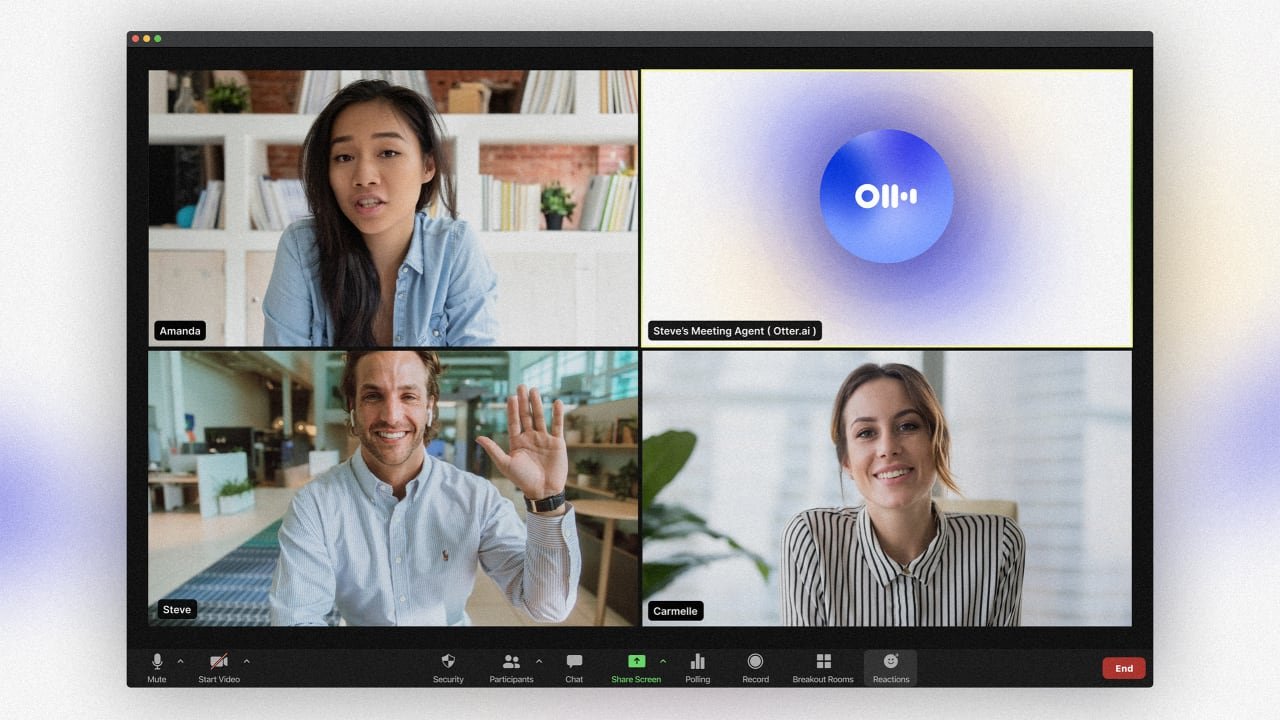
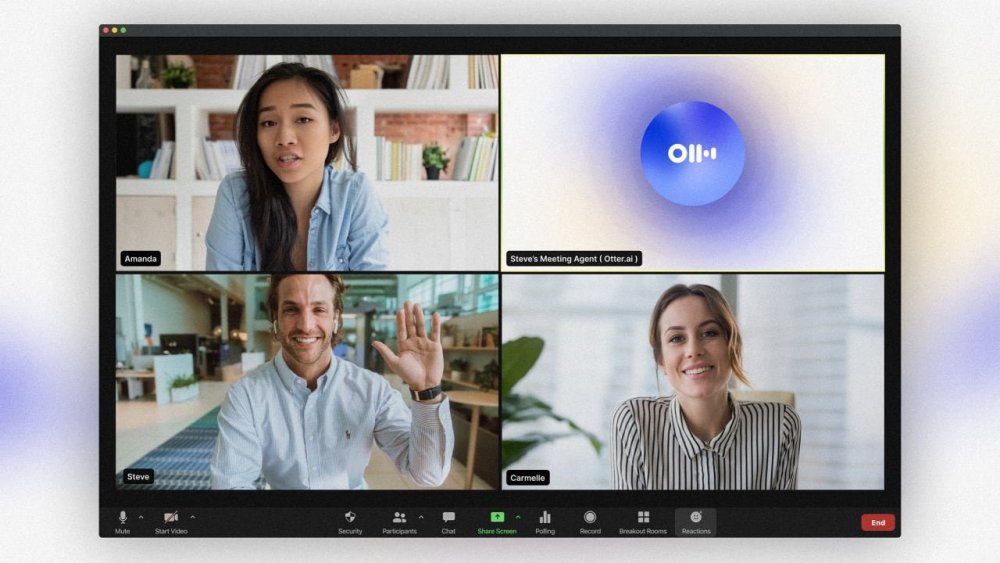
Otter, the AI-powered meeting assistant and transcription service, is introducing a new AI agent capable of answering spoken questions from meeting participants in real time. The AI can also perform tasks like scheduling follow-up meetings and assigning action items to the meeting record stored on Otter’s platform. When responding to questions, it can draw on both publicly available information for quick research queries and knowledge gained from previous company meetings. The AI will only provide answers based on meeting records that all current participants have permission to view, ensuring confidential information remains protected. [Image: Otter]The tool can also be connected to other sources of information, like company knowledge bases or customer-relationship management (CRM) software, and its abilities will only grow over time. “It’s some simple tasks, but pretty soon, it can do more and more complicated tasks,” Otter CEO Sam Liang says. Currently, the AI agent must be activated with a phrase like “Hey Otter,” similar to Alexa or Siri. In the future, though, it may also be able to chime in automatically—answering questions and offering information proactively, much like a human meeting participant would. The agent is being rolled out to all Otter users and is currently compatible with Zoom, with support for Microsoft Teams and Google Meet expected in the coming weeks. Otter, which recently announced it has reached $100 million in annual recurring revenue, is also rolling out other AI agents aimed at supporting sales teams. One of them, dubbed the Otter Sales Agent, can provide real-time guidance to salespeople during virtual meetings with customers, and can surface answers to product-related questions and suggest responses to customer objections on the fly. [Image: Otter]Once the meeting is done, the Sales Agent can assist with drafting follow-up emails to customers or entering data from the call into CRM tools. The tool is now available to Otter enterprise sales customers, with Otter’s team helping configure the agent using relevant product information from previous meetings and other data sources, Liang says. “Initially, we’ll provide white glove service to help them build the model,” he adds. “Gradually, it can become self-serve as well.” A third new AI agent—called the Otter SDR Agent (short for sales development representative)—can be embedded into websites to conduct interactive live demos of products. The goal is to give potential customers a glimpse at how products work and ask basic questions at any time, without waiting for a human sales rep (though the agent gathers user contact information for a follow-up call). [Image: Otter]The SDR Agent is already live on Otter’s website, demonstrating the company’s own features. Upon request, Otter can help set it up for customers to use to sell their own products. Otter, which first launched a chat-based AI assistant in 2023 to answer meeting-related questions and perform basic tasks, is likely to launch other AI agents geared at helping with other types of calls, including customer service, recruiting, marketing, and user research, perhaps with more launches as soon as this year, Liang says. And while plenty of other companies are building AI agents and assistants, Liang believes Otter has an advantage in meeting-focused domains, thanks to customers who’ve let the company use their meeting data for training. “A lot of users actually contribute some data to us, allowing us to use that to train,” he says. “We actually have the advantage to build the best conversational AI agent that can participate in meetings compared to some of the other AI [companies].” View the full article
-
Matthew Pennycook says decision to accept seats in O2 box is not ‘appropriate’ View the full article