Newsletter
Want to keep up to date with all our latest news and information?


ResidentialBusiness
Administrators
-
Joined
-
Last visited
Everything posted by ResidentialBusiness
-
Section 230 of the Communications Decency Act—the provision that protects tech platforms from legal liability for content posted by their users—has long been a point of contention among lawmakers. Since its passage in 1996, it has fueled frustration across the political spectrum, with critics arguing that it enables Big Tech to dodge accountability. Now, nearly three decades later, a bipartisan group of senators is making a renewed push to dismantle it, with Senators Lindsey Graham and Dick Durbin crossing party lines to draft a bill aimed at repealing Section 230, according to The Information. For years, Section 230 has been a scapegoat not just for politicians eager to rein in tech giants, but also for users frustrated by the prevalence of harmful content online. The clause has often been cited by platforms as a reason they cannot—or will not—remove content that, while not outright illegal, may be offensive or harmful, such as hate speech or harassment. Originally intended to foster innovation during the internet’s formative years, the provision now feels outdated to many observers. Few beyond the C-suites and legal departments of tech companies still support it. Still, experts warn that repealing Section 230 outright would be a mistake. “Sunsetting Section 230 without proposing ways to change it is like taking a hostage without having a list of demands ready,” says Adam Kovacevich, founder and CEO of the Chamber of Progress, a tech industry trade group. “This is a deeply unserious exercise that reflects the bipartisan opposition to 230 is only surface-deep.” Kovacevich argues that reform—not repeal—is the more responsible path forward. “If Congress doesn’t like Section 230, it should mend it, not end it,” he says. The bipartisan momentum behind the new bill gives it more traction than past attempts, which have often faltered due to partisan divides. But even with broader political alignment, a full repeal could backfire. Republicans have criticized the provision for allowing platforms to suppress content they favor, while Democrats believe it enables platforms to avoid accountability for hosting harmful material. Both sides want change—but for opposing reasons. “Both Democrats and Republicans should be wary of getting rid of Section 230,” warns Anupam Chander, a law professor at Georgetown University. He notes that the law protects a range of actions that each party values—even if it also enables behavior they oppose. “Section 230 protects platforms against lawsuits when they get rid of hate speech, such as lawsuits alleging discrimination against men or religion,” Chander says. That’s a key concern for liberal-leaning individuals who view anti-DEI backlash and culture war rhetoric as regressive. Yet conservatives, too, benefit from the law’s broad protections. “Section 230 also protects platforms like X or Truth Social so that they aren’t held liable for the speech they tolerate on their platforms,” he says. Without those protections, platforms could face costly legal challenges for hosting controversial speech—potentially chilling the very discourse their users want to preserve. “Both sides want different things from a post-230 world,” Chander adds, “but may find the speech they like deemed too risky by internet platforms.” Ultimately, he argues, it’s safer to reform the law than to scrap it entirely: “Being sued in the United States without a liability shield is an expensive and time-consuming undertaking.” View the full article

-
Turkish authorities have detained 1,133 people across Turkey since the start of protests five days ago against the detention of Istanbul Mayor Ekrem Imamoglu, Interior Minister Ali Yerlikaya said on Monday. The detention last Wednesday of Imamoglu, President Tayyip Erdogan’s main political rival, has triggered the biggest street protests in Turkey in more than a decade. On Sunday, a court jailed him, pending trial, on corruption charges that he denies. Despite bans on street gatherings in many cities, the mostly peaceful anti-government demonstrations continued for a fifth consecutive night on Sunday, with hundreds of thousands taking part. Yerlikaya said 123 police officers had been injured during the protests so far, adding that the government would not allow “the terrorising of the streets”. Those detained include nine journalists who covered overnight protests in several cities, the Journalists’ Union of Turkey said on Monday. It was not immediately clear why the journalists were detained. An Agence France Presse (AFP) staff photographer is among the detained journalists, the union said in a post on X. Imamoglu’s main opposition Republican People’s Party (CHP) has been calling for protests against the court decision to arrest the mayor, which they label as politicised and undemocratic. Imamoglu has denied the charges he faces as “unimaginable accusations and slanders” and has also called for nationwide protests. Erdogan said last week that the government would not accept “the disruption of public order”. His government denies that the investigations are politically motivated and says the courts are independent. Omer Celik, spokesperson for Erdogan’s ruling AK Party, said on Monday the CHP’s call for protests was aimed at covering up the opposition’s shortcomings. “Democratic protest is a (fundamental) right, but the language used by the CHP is not the language of democratic protest,” Celik said. JAILED ‘FOR NO REASON’ Imamoglu, 54, was jailed pending trial on Sunday, as the CHP held a primary election to name him presidential candidate. Some 15 million votes were cast in support of the mayor. News of Imamoglu’s arrest covered the front pages of Turkish newspapers on Monday, with opposition media suggesting the mayor was arrested for being the most credible challenger to Erdogan. The mayor’s supporters said on Monday the jailing of Imamoglu demonstrated a lack of justice in Turkey. “I think there is an injustice committed against Imamoglu. They put the man in prison for no reason,” said Adem Bali, a 22- year-old construction worker. Cigdem Tatlica, an unemployed 50-year-old, said she believed there was no justice in Turkey. “This system cannot continue like this.” In an address to the demonstration in Istanbul’s Sarachane district in front of the municipality building, CHP leader Ozgur Ozel said on Sunday that they would continue the protests until Imamoglu was released. —Huseyin Hayatsever and Ali Kucukgocmen, Reuters View the full article

-
Google's budget phone for the masses, the Pixel 9a, will retail at $499 when it launches in April. That's a full $100 less than the iPhone 16e and $300 less than the Pixel 9. Even so, the 9a has many of the same features as the Pixel 9. It carries over the same Tensor G4 chip, and promises to feature most of the Pixel 9's AI suite. Most, but not all. Ars Technica is now reporting that the Pixel 9a will be missing some crucial AI features at launch. That's because the Pixel 9a features 8GB RAM, while the Pixel 9 has 12GB RAM, and the Pixel 9 Pro models feature 16GB RAM. While the Pixel 9a comes with on-device Gemini Nano, Ars Technica confirmed with Google that it's going to be using the Gemini Nano 1.0 XXS ("extra extra small") model. This is the company's lightest available model, and the one that runs on the Pixel 8. The rest of the Pixel 9 series phones, by comparison, all run the Gemini Nano XS (extra small) model. While you can still use Gemini AI on Pixel 9a using the power button, being limited to the XXS model means it will lack some of the Pixel line's tentpole AI features. The 8GB RAM is not enough to run the Gemini AI models in the background, and the XXS model is text-only. Because it can't run in the background, and it can't process images, it therefore can't support features like Pixel Screenshots app, which require image processing in the background. It also won't support Call Notes, a feature that uses audio analysis to provide on-device AI summaries of phone conversations. Additionally, it's possible that the Pixel line's newly announced spam detection feature might not be available on the Pixel 9a, but that's not confirmed as of yet. Luckily, the Recorder app will still work, because the app creates a transcript first (not using Gemini AI), and then uses AI on the transcribed text, something that Pixel 9a can pull off. That's all we know so far. More details on what works and what doesn't will only be available once the Pixel 9a is available in the wild, sometime in April. With this Pixel 9a release, the gap between the flagship Pixel and the budget Pixel is widening. Luckily, it's limited to AI features for now. If you don't intend to use these on-device AI features, you won't feel the pinch. View the full article
-
Move could sharply increase levies on China and India, major purchasers of Caracas’s crude View the full article
-
The most affordable iPhone, or the most affordable Pixel? Which one is right for you? Google's Pixel 9a comes in $100 cheaper than the iPhone 16e, and has many AI features and specs from its flagship big brother, the Pixel 9. And it's a similar story with the iPhone 16e. The Pixel 9a starts shipping in April, while the iPhone 16e is out already (and we've already compared it with Samsung's mid-range lineup). But, as always, the devil is in the details. Here's how Google's new Pixel 9a compares to the iPhone 16e. Design Credit: Apple Both the iPhone 16e and the Pixel 9a have a similar design language. They have flat sides, flat fronts, and rounded edges. And unlike its flagship counterpart, the Pixel 9a does not feature a camera bump. This is a big departure for the Pixel line, but it does make it look more like an iPhone. Pixel 8a (left) vs Pixel 9a (right). Credit: Michelle Ehrhardt On the front, the iPhone features a notch-style display instead of the Dynamic Island found on the flagship iPhones. The Pixel 9a, comparatively, has a circular cutout at the top for the front-facing camera. The Pixel 9a weighs 6.6 ounces, while the iPhone 16e is ever so slightly lighter at 5.9 ounces. The iPhone 16e only comes in Black or White, but the Pixel 9a comes in four different color options: Porcelain, Obsidian, Peony, and Iris. The Peony color is the light-pink option, while the Iris color looks like a mix of purple and lavender. Display Credit: Michelle Ehrhardt The Pixel 9a has a 6.3-inch OLED screen (2,424 by 1,080 pixels), supports variable refresh rate (between 60-120Hz), and has a max brightness of 2700 nits (1800 nits typical brightness). The iPhone 16e on the other hand a smaller 6.1-inch OLED display with a nearly identical resolution (2,532 by 1,170 pixels), and offers a fixed 60Hz refresh rate and a maximum brightness of 1200 nits (800 nits typical brightness). On paper, it seems like the Pixel is out in the lead here, offering a high-refresh rate display that's slightly bigger, sharper, and much brighter than the iPhone. PerformanceBoth the iPhone 16e and Pixel 9a run on chips made by the same company, and are featured in their flagship counterparts. The iPhone 16e features an Apple A18 chip (minus one GPU core) that's found in the iPhone 16 series, while the Pixel 9a uses Google's Tensor G4 chip, same as the Pixel 9. Both devices feature 8GB RAM, which is a downgrade from the flagship. While the Pixel 9a benchmark scores aren't out yet, we can use the Pixel 9 as a comparison, as both devices share the same chip. In Geekbench, Pixel 9 scored 1,657 in single-core performance and 4,060 in multi-core performance. The iPhone 16e, on the other hand, score 2,706 in single-core testing and 7,942 in multi-core testing. Based on raw numbers, it looks like the iPhone 16e's performance is far better than Pixel 9a's. Both devices should be plenty fast for day-to-day use, but the extra headroom from the A18 processor bodes well for iPhone 16e's longevity. CamerasThe iPhone 16e famously has a single camera setup with a single 48MP lens at the rear, while the Pixel 9a has a 48MP ( f/1.7) wide-angle lens and an additional 13MP ( f/2.2) ultra-wide sensor. Apple's sensor lets in more light, however, which should make low-light photography better. Both devices capture 4K video at 30 or 60 frames per second. The iPhone also has options for 24 and 25 frames per second. iPhone and Pixels are generally good at photography, and each have their own slightly different look that largely comes down to computational postprocessing. Both devices also come with their own AI photo editing features, although it's uncertain which will be more useful until the Pixel 9a releases. Battery LifeBoth phones go big on battery life. Google has put in a massive 5,100 mAh battery in the Pixel 9a and is promising over 30 hours of battery life. The iPhone 16e, meanwhile, features a 4,004 mAh battery, and Apple says it has the largest battery life of any iPhone, promising 26 hours of offline video, or 21 hours of streaming video. In real life testing, PCMag found that the iPhone 16e lasted 21 hours and 39 minutes in a battery benchmark test, although Pixel 9a tests are still a question mark. PriceWith the Pixel 9a, you clearly get more for less. Google's budget phone starts at $499 for 128GB storage, and the upgrade to 256GB only costs $559. On the other hand, the iPhone 16e starts at $599 for 128GB, and goes up to $699 for 256GB, or $899 for 512GB. Although, it's worth reiterating that the iPhone 16e is available to purchase right now, while the Pixel 9a will start shipping sometime in April 2025. Which One Is Right For You?Your choice starts with the ecosystem. If you want a smartphone to work well with your Mac, the iPhone 16e might be the default choice for you. The same goes for Pixel 9a if you really want an Android phone. If you want the best AI features, the Pixel 9a might have an edge. It comes with Gemini Nano built-in, and the Gemini app adds support for AI features like Gemini Live, AI photo editing, and more. Apple Intelligence on the iPhone 16e also supports AI features like Writing Tools, photo Clean Up, and more, but the AI-enhanced Siri largely isn't out yet. As for hardware, if you want a phone that will last for a longer time, the iPhone 16e's slightly stronger chip is a better bet. However, the Pixel 9a is the value for money pick. Not only is the base model $100 cheaper, the 256GB version is $140 cheaper than the iPhone 16e. View the full article
-
After nearly 13 years leading PepsiCo design, its first chief design officer—Mauro Porcini—is departing the company. (Previous to PepsiCo, he was the first designer named to a chief design officer role at 3M.) Under Porcini, design at the PepsiCo family of brands has seen a significant glow up. He arrived shortly after 2008’s disastrous Pepsi rebrand during the era of flat design. And he spent the next decade investing in more internal talent—successfully arguing that the approach would actually save the company money while offering stronger creative autonomy. Porcini opened a flagship design center in NYC in 2012, then following its success, he added 18 more across the world, creating a team that swelled to 400 designers globally. Pepsi’s revenue has grown 40% over that time, while its stock has tripled. Porcini is leaving on two particular high notes—a well received black and blue Pepsi rebrand launched in 2023, and a new Mountain Dew that embraced its Appalachian roots last year. He also published the business memoir The Human Side of Innovation: The Power of People in Love with People, in 2022. Porcini’s next move is still unknown. Meanwhile, we’ve reached out to PepsiCo to inquire if the company intends to hire a new chief design officer and will update this story if we hear back. View the full article

-
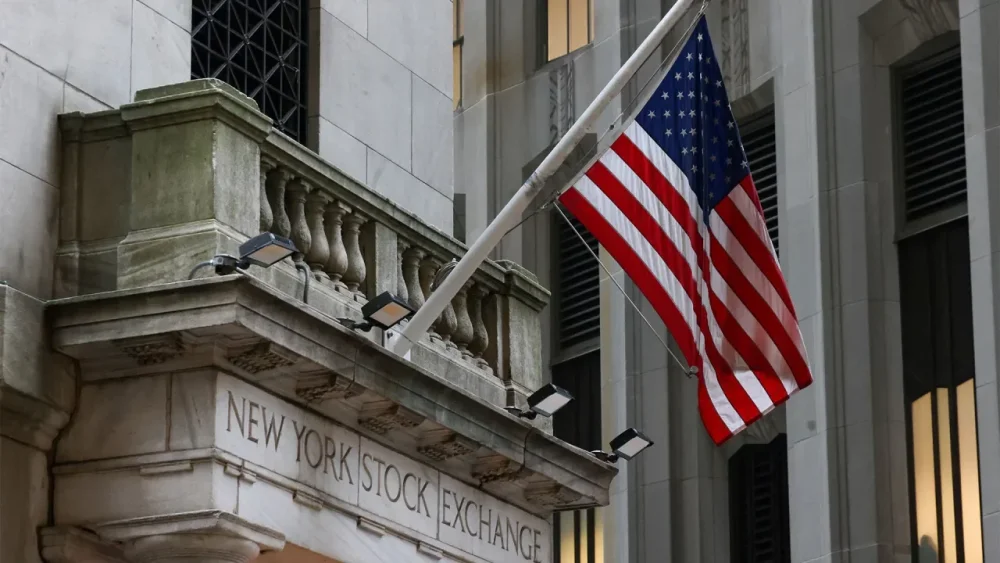
StubHub’s 2024 revenue surged 29.5%, it reported on Friday in its U.S. initial public offering paperwork, as the online ticketing marketplace moves ahead with its long-sought New York flotation. A handful of companies are moving ahead with stock market listings despite volatility arising from uncertainty around U.S. trade policy. Nvidia-backed startup CoreWeave and Swedish fintech Klarna are among the companies gearing up to go public in New York. StubHub, one of the biggest secondary ticketing marketplaces for live events, will sell new shares in the proposed offering, it said. Its revenue jumped to $1.77 billion in 2024, compared with $1.37 billion a year earlier, thanks to higher ticket sales. New York-based StubHub swung to a loss of $2.8 million in 2024, compared with a profit of $405.2 million in 2023. “StubHub’s filing follows on the recent filings of other high-profile deals set to go public soon, including CoreWeave and Klarna. This indicates a recovering U.S. IPO market with owners seeing a window of opportunity to go public,” said IPOX CEO Josef Schuster. “StubHub remains one of the most closely watched IPOs this year and ahead of FIFA 2026.” Founded in 2000, StubHub’s ticketing marketplace allows fans to buy tickets for live events. Buyers from over 200 countries purchased over 40 million tickets on its platform in 2024. CEO Eric Baker left StubHub ahead of its $310-million sale to e-commerce firm eBay in 2007. Baker in 2006 launched viagogo, a rival ticket reseller. Over a decade later, in 2020, viagogo bought StubHub from eBay for $4.05 billion. In 2022, StubHub and viagogo completed the integration of their businesses. StubHub’s major shareholders include buyout firm Madrone Capital and venture capital firm Bessemer Venture Partners. StubHub, which has tapped over 10 Wall Street banks for the IPO, will list on the New York Stock Exchange under the symbol “STUB.” J.P. Morgan and Goldman Sachs are the lead underwriters. IPO proceeds will be used to repay debt and for general purposes. —Arasu Kannagi Basil, Reuters View the full article
-
Filling out CAPTCHAs to prove you're a human is one of the regular annoyances of the internet—but maybe it doesn't need to be. A new feature in the latest version of One UI 7 for Samsung devices promises to solve CAPTCHAs (or Completely Automated Public Turing tests, to name them in full), but it's not yet clear how effective it will be. Why sites use CAPTCHAsCAPTCHAs pop up on numerous websites, often when you're trying to log in, and their purpose is to prove you're not a bot. The idea is that websites don't want to be overwhelmed with bot spam or come under attack from a swarm of bots, and CAPTCHAs are one way to prevent those problems. The challenge that you're met with is typically something that's relatively straightforward for a person to do, but tricky for a web bot. You may have to identify a group of misshapen letters that are put on top of a distracting background, or you might have to click all the pictures in a grid that have motorcycles in them. While it is necessary to put up defenses against bots, these CAPTCHAs can be a frustrating hurdle for users to get over, and they can often take up a minute or two to complete in full. What's more, some versions of these bot checkers also look at your behavior and actions in the browser to determine whether or not you're human—which isn't great from a privacy point of view. With all that in mind, Samsung is aiming to make your life online a little easier with a new feature called Automatic Verification, which essentially solves CAPTCHAs for you. As spotted by SammyGuru, it's available in the latest version of the Samsung Internet browser on One UI 7, so you can try it now on Galaxy S25 phones, and it's coming soon to older devices. How to turn on Automatic Verification Enabling the Automatic Verification feature. Credit: Lifehacker Open up Samsung Internet on your phone, then tap the menu button (three horizontal lines, bottom right) and Settings. Choose Privacy dashboard, then Smart anti-tracking, and you'll get to the Automatic Verification toggle switch—if it's not already enabled, you can turn it on here. The feature "prevents websites from using data collected during the user authentication process to track your activities" according to the notes accompanying the latest app update. "You can use Automatic Verification to skip the CAPTCHA step on websites." There are a few caveats to keep in mind. First, this is a feature that's restricted to the Samsung Internet browser, so you can't use it with other web browsers you might have installed on your device. Also, websites have to support the feature, Samsung says—it's not clear what that means, but it sounds like it won't work with every CAPTCHA you come across. Does Automatic Verification work?I tested the feature out on several websites, including the demos available at NopeCHA, and they all appeared as normal—it didn't appear that Automatic Verification made any difference. This could be a case of a feature that's great in theory but which doesn't actually work when put to the test. Alternately, it might be too soon to expect results, as Samsung has only just introduced the feature, so it's perhaps no surprise that it's not playing nicely with every website yet. If Automatic Verification is eventually supported more widely across the most popular websites, it could be another reason to stick to Samsung's built-in mobile browser. At this point, that's a big if. View the full article
-
ADHD content has been trending on TikTok for a while. Unsurprisingly, much of it has been found to be misleading. A study published last week in the journal PLOS One found that fewer than half of the claims in popular ADHD-related TikTok videos aligned with clinical diagnostic criteria or professional treatment guidelines. Researchers also warned that the more ADHD content young adults consume on TikTok, the more likely they are to overestimate both how common and how severe ADHD symptoms are in the general population. Even those with an ADHD diagnosis struggled to separate reliable information from misinformation. The sheer amount of misinformation becomes even less surprising when looking at the fact that about half of the TikTok creators analyzed in the study were using the platform to promote products like fidget spinners or services such as ADHD coaching. None of them were found to be licensed mental health professionals. Researchers from the University of British Columbia in Vancouver acknowledged that, at its best, mental health content on social media can provide support to those suffering, especially for those who feel isolated or overwhelmed. However, they cautioned that TikTok’s fast-paced, attention-grabbing format makes it difficult to convey the nuance necessary for accurate and responsible discussions about ADHD. Many ADHD creators on TikTok lean into comedy skits for content, prioritizing laughs and engagement over carefully sourced medical advice. While their intentions may be good, the need to feed the algorithm often overshadows the need for accuracy. Creators may start labeling perfectly normal behaviors as ADHD traits or exaggerating symptoms for comic effect, moving further and further away from clinical guidelines in chasing views. The study’s authors suggest that TikTok may also be contributing to an overdiagnosis crisis—an understandable concern given the rising rates of ADHD diagnoses (however, it’s worth noting that many consuming ADHD content will already have a formal diagnosis). “TikTok can be an incredible tool for raising awareness and reducing stigma, but it also has a downside,” warned lead author Vasileia Karasavva. “Anecdotes and personal experiences are powerful, but when they lack context, they can lead to misunderstandings about ADHD and mental health in general.” View the full article

-
An Orthodox Jewish passenger says a United Airlines pilot forcibly removed him from an airplane bathroom while he was experiencing constipation, exposing his genitalia to other flyers during a flight from Tulum, Mexico, to Houston. Yisroel Liebb, of New Jersey, described his trip through allegedly unfriendly skies in a federal lawsuit this week against the airline and the U.S. Department of Homeland Security, whose officers he said boarded the plane upon landing and took him away in handcuffs. Liebb and a fellow Orthodox Jewish traveler said the pilot made disparaging remarks about their faith. They said they were forced to miss a connecting flight to New York City while U.S. Customs and Border Protection officers paraded them through an airport terminal, placed them in holding cells, and searched their luggage. “CBP Officers responded to reports of a disturbance on a flight at the request of the airline,” CBP Assistant Commissioner for Public Affairs Hilton Beckham said. “Due to the ongoing litigation, we are unable to provide any further comment.” United Airlines declined to comment. Messages seeking comment were left for a lawyer representing Liebb and the other traveler, Jacob Sebbag. In the lawsuit, filed Wednesday in Manhattan federal court, Liebb said he was in the bathroom in the back of the plane for about 20 minutes on January 28 when a flight attendant woke Sebbag from a nap and asked Sebbag to check on him. Liebb said he explained his gastrointestinal predicament and assured Sebbag that he would be out soon. Sebbag then relayed that to the flight attendant, the lawsuit says. About 10 minutes later, with Liebb still indisposed, the pilot approached Sebbag and asked him to check on Liebb, the lawsuit says. The pilot then yelled at Liebb to leave the bathroom immediately, the lawsuit says. Liebb said he told the pilot that he was finishing up and would be out momentarily. The pilot responded by breaking the lock, forcing the bathroom door open, and pulling Liebb out with his pants still around his ankles, exposing his genitalia to Sebbag, flight attendants, and nearby passengers, according to the lawsuit. Liebb and Sebbag said the pilot then pushed them back to their seats while threatening to have them arrested and making remarks about their faith and how “Jews act.” After the two-hour flight landed in Houston, the men said about a half-dozen Customs and Border Protection officers boarded and escorted them off the plane. Liebb said when he asked why they were being detained, an officer tightened his handcuffs and responded: “This isn’t county or state. We are Homeland. You have no rights here.” The men said United booked them on a flight to New York City the next day for free, but any savings from the complementary tickets were lost because they had to pay for an overnight hotel stay and food during their delay. —Michael R. Sisak, Associated Press View the full article

-
We may earn a commission from links on this page. If you want to get started on doing your own home improvements, repairs, and maintenance, but you’re not sure where to begin, there are a few projects that can help you sharpen your DIY skills. Learning how to use your tools and getting the hang of techniques that you can apply when tackling larger jobs is a good way to cut your teeth on DIY home improvement. Hang some shelvesIf you haven’t ever tried it before, hanging shelves is a good way to get used to using a tape measure, a level, a stud finder, and a drill. DEWALT 20V Max Cordless Drill/Driver Kit $159.00 at Amazon /images/amazon-prime.svg $179.00 Save $20.00 Shop Now Shop Now $159.00 at Amazon /images/amazon-prime.svg $179.00 Save $20.00 For this project, you’ll use your tape measure to set the height of your shelves and make sure your shelf will fit in the area you want to hang it, your level to make sure it’s parallel to the ground, and your stud finder to find where the appropriate attachment points are. The drill can be used to drill holes for your shelf brackets and drive your screws into the wall. You can probably complete this project in about an hour and it should cost between $150 and $200 for all of the tools and materials you need. Patch a hole in your drywallIf hanging shelves didn’t go as planned, or you just need to patch a hole from an accident or an old set of brackets, a drywall patch is a good project for a DIY beginner. You'll use a drywall patch kit that comes with sandpaper, a small putty knife, some spackle, a small patch, and some gloves. To perform your repair, you’ll use your patch to cover the affected area, the putty knife to apply the spackle, and the sanding block or sandpaper to even out the surface to prepare it for paint. This repair takes between 30 minutes and an hour of work time and takes a full 24 hours to cure. The materials for this can cost as little as $20, including all the materials you need. Clean out your dryer ductCleaning out your dryer vent is a chore you should do at least once per year, and it’s simple enough for even the most novice DIYer to tackle. You’ll need either a dryer vent cleaning kit or a shop vac with a long nozzle attachment as well as some gloves and a screwdriver to detach the duct from the dryer. Sealegend 37-Piece Dryer Vent $26.95 at Amazon /images/amazon-prime.svg $34.95 Save $8.00 Shop Now Shop Now $26.95 at Amazon /images/amazon-prime.svg $34.95 Save $8.00 You’ll use your screwdriver to remove the hose clamp that holds your dryer duct onto the back of your dryer and the cleaning kit with your home vacuum or shop vac with a long nozzle to clear any lint buildup from inside the duct. This project takes about 30 minutes and only costs between $35 and $55. Replace a broken fence boardFixing a fence board will give you a chance to practice using your drill, a tape measure, your chop saw or hand saw, and some screws along with your fence board. You will use your tape measure to measure the height of your fence board, your chop saw or hand saw to cut it to length, and your drill to drive your new screws into your board to attach it to the fence. This project will cost between $150 and $300 for everything you need, depending mostly on whether you decide to go with a hand saw or a chop saw. If you only have one board to replace, a hand saw is likely sufficient, while cutting several boards will be much simpler with a chop saw. You can likely complete this project in about an hour including measuring and cutting as well as attaching your board. Regrade the gravel on a walkwayIf you have a gravel path, chances are at some point the gravel will be scattered from footfalls or from weather. To regrade your path and keep it from eroding, you’ll need some fresh gravel, a piece of string, a pair of stakes, tape measure and a rake. You’ll use your gravel to patch any bare spots on your path and your rake to spread it evenly along the path, using your stakes, string, and tape measure to ensure that the center of your path is one to two inches above the edges to allow for drainage. This project can take between one hour to an afternoon depending on how long of a path you have. The materials for this can cost between $30 and $100, depending on how much gravel you need. View the full article
-
We may earn a commission from links on this page. Deal pricing and availability subject to change after time of publication. The Sony Inzone H9 is currently on sale for $198—that's $100 off its regular price of $299.99 and the lowest it’s ever been, according to price trackers. Sony INZONE H9 Gaming Headset $198.00 at Amazon $299.99 Save $101.99 Get Deal Get Deal $198.00 at Amazon $299.99 Save $101.99 With a clean black-and-white build, RGB status rings, and enough angular flair to match the console’s vibe, this gaming headset is designed with PS5 users in mind. The headband has a nice amount of give without pressing too hard, and its earpads are soft enough for marathon sessions without ear fatigue. As for the controls, on the left earcup, you’ll find a permanently attached boom mic (which mutes when you flip it up), along with the ANC toggle, volume wheel, and USB-C charging port. On the right, you get power, Bluetooth pairing, and a rocker for balancing game and chat audio. It’s simple to use—even mid-match, notes this PCMag review. Performance-wise, the Inzone H9 brings active noise cancellation, decent bass, and surround sound simulation through Sony’s Inzone Hub on Windows. The ANC isn’t jaw-dropping, but it quiets low rumbles like fans or an air conditioner well enough. That said, high-pitched stuff still leaks in. The mic works fine for casual voice chat, but if you're planning to stream or record, it won’t cut it—the voice quality feels more “Zoom call” than “studio-ready.” Still, for gaming and Discord, it gets the job done. You can adjust sound profiles with the 10-band EQ on PC and enable spatial audio, but if you’re on PS5, that customization’s off the table. Sony's built-in 3D audio does kick in on the console though, so you're not totally missing out. A relative downside is the complete lack of a wired connection. The H9 operates solely over wireless—either via the 2.4GHz USB dongle or Bluetooth—so you’ll have to manage battery life. Speaking of battery, Sony promises up to 32 hours per charge depending on how you use it. That’s not bad, especially for a headset with ANC and Bluetooth running. You can pair it to your phone too, which adds flexibility. However, the Bluetooth audio quality won’t match the lower-latency, higher-quality signal from the dongle, especially if you’re gaming. If you’re looking for booming, theater-like bass, this headset won’t blow you away—but it holds its own in the low end without distortion, even at higher volumes. View the full article
-
A jury in Georgia has ordered Monsanto parent Bayer to pay nearly $2.1 billion in damages to a man who says the company’s Roundup weed killer caused his cancer, according to attorneys representing the plaintiff. The verdict marks the latest in a long-running series of court battles Monsanto has faced over its Roundup herbicide. The agrochemical giant says it will appeal the verdict, reached in a Georgia courtroom late Friday, in efforts to overturn the decision. The penalties awarded include $65 million in compensatory damages and $2 billion in punitive damages, law firms Arnold & Itkin LLP and Kline & Specter PC said in a statement. That marks one of the largest legal settlements reached in a Roundup-related case to date. Plaintiff John Barnes filed his lawsuit against Monsanto in 2021, seeking damages related to his non-Hodgkin’s lymphoma. Arnold & Itkin attorney Kyle Findley, the lead trial lawyer on the case, said the verdict will help put his client in a better position to get the treatment he needs going forward. “It’s been a long road for him . . . and he was happy that the truth related to the product (has) been exposed,” Findley told the Associated Press on Sunday. He called the verdict an “important milestone” after “another example of Monsanto’s refusal to accept responsibility for poisoning people with this toxic product.” Germany-based Bayer, which acquired Monsanto in 2018, has continued to dispute claims that Roundup causes cancer. But the company has been hit with more than 177,000 lawsuits involving the weedkiller and set aside $16 billion to settle cases. In a statement, Monsanto said Friday’s verdict “conflicts with the overwhelming weight of scientific evidence and the consensus of regulatory bodies and their scientific assessments worldwide.” The company added that it continues “to stand fully behind the safety” of Roundup products. For a variety of crops—including corn, soybeans, and cotton—Roundup is designed to work with genetically modified seeds that resist the weedkiller’s deadly effect. It allows farmers to produce more while conserving the soil by tilling it less. Some studies associate Roundup’s key ingredient, glyphosate, with cancer, although the U.S. Environmental Protection Agency has said it is not likely to be carcinogenic to humans when used as directed. Still, numerous lawsuits over the weedkiller allege glyphosate does cause non-Hodgkin lymphoma, arguing that Monsanto has failed to warn the public about serious risks for years. Findley said that evidence relating to Barnes’s case show “many years of cover-ups” and “backroom dealings.” He accused Monsanto of ignoring several scientific studies related to the toxicity of Roundup and said the company “tried to find ways to persuade and distract and deny the connection between this product and non-Hodgkin’s lymphoma.” Friday’s decision marks the fourth Roundup-related verdict that Findley’s team has won to date—the largest of which was awarded in Philadelphia in January 2024, with damages totaling $2.25 billion. And he said his law firm has “many more clients who are similarly situated as Mr. Barnes.” Monsanto, meanwhile, also maintains that it “remains committed to trying cases”—and argues its wider record of Roundup-related litigation continues to reinforce the safety of its products. The company said it has prevailed in 17 of the last 25 related trials, while some previous damage awards have been reduced. Bayer has recently renewed and expanded an effort across a handful of U.S. states to protect pesticide companies from claims they failed to warn that a product causes cancer, if labeling otherwise complies with EPA regulations. The company and other industry supports argue that litigation costs are unstainable and could impact Roundup’s future availability. But opponents stress that such legislation would limit accountability. —Wyatte Grantham-Philips, AP Business Writer View the full article

-
The US would suffer from the blowback if it impoverished its southern neighbourView the full article
-
Personal transportation company Segway, Inc. has announced a major recall of two of its scooters after dozens of reports that a critical component of the scooters could fail, leading to the injury of the rider—or possibly even death. Here’s what you need to know. What’s happened? On March 20, the U.S. Consumer Product Safety Commission (CPSC) published a recall notice on its website announcing that Segway has initiated a recall of its popular Segway Ninebot kickscooters. The recall was initiated after the company received reports that a component in the scooters could fail, leading to the risk of a fall hazard for the rider, which could result in serious injury or even death. The faulty component is the folding mechanism on the scooters, which could fail and cause it to fold while in use. Segway says that about 220,000 units of scooters are being recalled in total. What Segway scooters are being recalled? According to the CPSC notice, the following Segway scooters are being recalled: Segway Ninebot Max G30P KickScooter Segway Ninebot Max G30LP KickScooter Segway says the Max G30LP is gray with yellow accents, and the Max G30P is black with yellow accents. The brand name “ninebot” can be found on the handlebars and on the foot of both scooters, while the model number can be found on the side of the foot deck. You can find images of the recalled scooters here. Has anyone been injured? Unfortunately, yes. According to the CSPC notice, Segway has received 68 reports of the folding mechanism failing. Out of those incidents, 20 people have reportedly been injured. Injuries include broken bones, lacerations, abrasions, and bruises. But those aren’t the only possible consequences. On the recall page on its website, Segway notes that if the mechanism folds while the scooter is in use, “serious bodily injury or death” may occur. Where were the recalled scooters sold? The recalled scooters in question were sold from January 2020 through February 2025 for a retail price of between $600 and $1,000. The scooters were sold nationwide both at online retail locations and in physical retail stores. Those retailers include: Best Buy Costco Walmart Target Sam’s Club The scooters were also sold on Amazon.com and Segway.com. What should I do if I have a recalled scooter? Immediately stop using it, says the notice on the CSPC’s website. Owners can then use this online tool on Segway’s website to determine if their scooter is affected by the recall. If it is, owners of the scooters will be eligible to request and receive one self-maintenance kit that will allow them to adjust and tighten the folding mechanism. Full details of the recall can be found here. View the full article

-
Results come after Tesla’s EV rival announces five-minute charging systemView the full article
-
Marketing stunts tend to range from the banal to the broadly clever—but rarely do they border on the chaotically brilliant. Today, the beverage company Evolution Fresh is debuting a 10-gallon hat designed to smuggle 12-ounce cans of its new Real Fruit Soda (or really any beverage of your choosing) into movie theaters and concert venues where BYO is verboten. And you know what? Contrary to most gimmicks, it’s a delightfully offbeat and utilitarian flex that underscores the heart of its product. [Photo: Evolution Fresh] Evolution Fresh released the line last June, and the better-for-you soda category has only boomed in the months since, with Coke unveiling Simply Pop and Pepsi buying Poppi for nearly $2 billion. Molly White, CMO of Generous Brands (Evolution Fresh’s parent company), wrote in an email exchange that Real Fruit Soda is currently the No. 2 refrigerated alt-soda brand next to category leader Olipop, with some 3.6 million cans sold and a presence in 11,000 stores. Now, Evolution Fresh’s smuggling campaign is seeking to Trojan Horse its product into all those other places synonymous with traditional soda. “Today’s consumers want that fizzy, refreshing hit without the artificial ingredients and sugar overload,” White wrote. “Movie theaters, in particular, felt like the perfect battleground, where consumers often feel forced to choose between nostalgia and nutrition. Our solution? A playful act of defiance.” Partnering with BSSP on the campaign, Evolution Fresh explored a variety of smuggling vessels before settling on the cowboy hat—which, White notes, dovetails with the recent surge in Western wear. The hats hail from Two Roads, and a prop company designed a custom-fit foam compartment to stash a can securely into the top of them. They cost only $5 each and will be available while supplies last right here—but don’t let the marketing price point make you think they’re ephemeral landfill-filling dross, as these things tend to be. Rather, White detailed that the hats are made from 100% Australian wool, and the $5 price is a nod to the soda’s low sugar content of five grams. Can I pull off a cowboy hat? Probably not. Can I attempt to in order to smuggle a more affordable beer into a concert? For $5, it’s time to saddle up and find out. View the full article

-
This week's trip into the minds of people who aren't old enough to rent a car is like a potpourri of unrelated trends and memes that present a picture of the variety of ways young people are relating to the world. Some TikTokers are memorializing peak moments in their lives with a "Hozier yell," while others are spending their precious time on Earth creating brain-rot "juggtok" videos, or getting really, really angry about chess and chubbiness. It's a big world. What is a Hozier yell?A "Hozier yell" is used in TikTok videos to refer to a peak, climactic, awe-inspiring moment. Literary types might substitute "barbaric yamp." The end result is videos like these: The reference and the audio that goes with it is to the song "Northern Attitude," a 2024 collab between Hozier and Noah Kahan, in which Hozier hits a particularly climactic note just as the song climaxes. Hozier, by the way, is an Irish singer-songwriter whose songs are heavily influenced by folk music who is best known for his 2013 song "Take Me to Church." So far, nearly 200,000 videos have used the audio clip of Hozier and Kahan, commenting on everything from seeing a bear to marriage proposals to graduating cosmetology school. What does “Jugg” mean? And what is "Juggtok?"The slang term “jugg” (sometime “juug”) means to grab quickly or to steal. Like most modern slang, it is derived from AAVE, specifically from the South. "Jugg" has been around for awhile—the word is used in a number of rap songs from the 2010s—but it has come into wider usage lately as part of a TikTok meme format called "juggtok," a convoluted brain-rot-centric subculture in which specific slang words and acronyms are paired with a set of unrelated images and video clips in such a way as to render it all meaningless. If my reading is correct, juggtok and its offshoots and adversaries like slimetok and jollytok defy explanation on purpose. They are meant to be meaningless and self-referential. Here are a couple examples: (For more definitions, check out my slang glossary, 'Aura Farming,' 'Huzz,' and Other Gen Z and Gen Alpha Slang You Might Need Help Decoding.) Chubby filter causing TikTok controversyThe cultural argument over "fat acceptance" has been going on for a long time, but artificial intelligence is adding an exciting new wrinkle. This month, a video filter called "Chubby AI" allowed Tiktokers to visualize what it would look like if they (gasp!) gained weight, and videos like these started going viral: There was, as you'd probably expect, an instant backlash, as illustrated by this X post from writer Bec Shaw: This Tweet is currently unavailable. It might be loading or has been removed. If you had hope that younger people might be more accepting of people being overweight, since so many of them are, you'd be mistaken. But on the plus side, I'm confident that many skinny young people who look down on fat people will eventually grow fat themselves. Is chess.com trying to rename the bishop?Since we're doing controversy, a way dumber foofaraw was kicked off last week by chess.com that proves how everyone must pick a side of the culture wars, even websites about chess. The row began when chess.com's X account posted this seemingly innocuous piece of engagement-bait: This Tweet is currently unavailable. It might be loading or has been removed. Apparently some X users assumed that Chess.com wants to rename the diagonally moving piece because of religious connotation of the name "bishop," so the comments section quickly filled with responses like this, from a " friendly neighborhood Christian Nationalist:" This Tweet is currently unavailable. It might be loading or has been removed. And this, from some other goof: This Tweet is currently unavailable. It might be loading or has been removed. And this, from a normal person having a very normal day: This Tweet is currently unavailable. It might be loading or has been removed. Anyway, chess.com ensured more outrage by troll-posting: This Tweet is currently unavailable. It might be loading or has been removed. So is chess.com really trying to bring down Christianity? Sadly, no. They'd made a similar post earlier about The Rook: This Tweet is currently unavailable. It might be loading or has been removed. And no one freaked out. The seething outrage over a meaningless shitpost illustrates that X is worst website ever and no one should use it. I feel like I need a shower after even a few minutes there. Viral videos of the the week: Can You Fool A Self Driving Car? As the great Criswell intones in Plan 9 From Outer Space, the future is where you and I are going to spend the rest of our lives; no doubt a lot of that time will be spent driving, and driving will be very different in the future. Cutting-edge technology is rapidly taking over driver's decisions, whether it's emergency braking or full-on auto-driving so I can take a nap and go to Hardees. Computer-assisted driving is generally a good idea, but the technology has limits, and the future holds auto-related dangers that Henry Ford never dreamed of. For instance, how would an auto-driving car handle a brick wall painted to look like the road? That's the question at the center of this week's viral video of the week, in which YouTube legend Mark Rober pits the two leading self-driving car technologies against obstacles like thick fog, heavy rain, and a wall painted to look like the road. Rober's experiments features a car from Luminar with a self-driving system that uses a LiDAR (Light Detection and Ranging) to navigate, and a Tesla that uses cameras. Rober's tests are unscientific—this is an entertainment YouTube channel after all—but they are, as Elon Musk might post, "concerning." Few drivers will ever encounter a brick wall painted like the road (unless they're driving through a Warner Brothers cartoon) but whether a car on auto-pilot will brake for an obstacle in a heavy fog seems pretty relevant. And the results don't look promising for the Tesla. View the full article
-
DNA testing firm 23andMe has filed for Chapter 11 bankruptcy protection. The once high-flying San Francisco company—which provides DNA analysis to offer insights into ancestry, health traits, and genetic risks—is aiming to sell itself after facing significant challenges, including rejected acquisition offers and declining market value in the wake of a 2023 data breach that impacted millions of users. In addition, CEO Anne Wojcicki has stepped down, and CFO Joe Selsavage will serve as interim CEO during the restructuring process, 23andMe said on Sunday. The company plans to continue operating as it seeks a buyer. The bankruptcy filing punctuates a stunning downfall for what was once one of Silicon Valley’s buzziest companies. It follows a long series of setbacks for 23andMe, including mass layoffs and restructuring efforts. Last year, 23andMe reduced its workforce by nearly 40%, a move that was part of an effort to cut operating costs and pivot the company’s focus. 23andMe has also faced mounting financial losses, with its valuation dropping dramatically since its 2021 IPO. Shares of 23andMe (NASDAQ: ME) were down 43% in premarket trading on Monday following the bankruptcy news, bringing them down to penny stock territory. The company’s financial turmoil is compounded by an industry-wide decline in demand for at-home DNA testing, as well as ongoing concerns about privacy and data security, all of which were made worse by the 2023 breach. An urgent warning for customers On Friday, California Attorney General Rob Bonta urged customers to consider requesting that 23andMe delete their data and destroy any biological samples, and issued a consumer alert regarding 23andMe’s financial distress and the potential risks to customer data. “California has robust privacy laws that allow consumers to take control and request that a company delete their genetic data,” said Bonta. “Given 23andMe’s reported financial distress, I remind Californians to consider invoking their rights and directing 23andMe to delete their data and destroy any samples of genetic material held by the company.” Reached for comment about Bonta’s statement, 23andMe referred Fast Company to its open letter to customers, in which it insists customer data is safe. The company says the bankruptcy process will have no impact on how it stores, manages, or protects data. “[We] are committed to continuing to safeguard customer data and being transparent about the management of user data going forward, and data privacy will be an important consideration in any potential transaction,” said Mark Jensen, chair of the board of directors, in statement. View the full article

-
Wage growth has outstripped property price rises, official figures show View the full article
-
Recruiting veterans urge originators to track their future employer's pricing for a longer period of time, and to seek more details about the firm's culture. View the full article

-
Hello and welcome to Modern CEO! I’m Stephanie Mehta, CEO and chief content officer of Mansueto Ventures. Each week this newsletter explores inclusive approaches to leadership drawn from conversations with executives and entrepreneurs, and from the pages of Inc. and Fast Company. If you received this newsletter from a friend, you can sign up to get it yourself every Monday morning. Before there was Apple, Medtronic, or Tesla, there was General Electric (GE). Created in 1892 from the combination of Thomas Edison’s Edison General Electric and two other competitors, the American conglomerate was once the most powerful, valuable, and inventive company in the world. “At different times during its 130-year run, [GE] had been a leader in technological innovation and entrepreneurial drive,” writes Puck cofounder William D. Cohan in his 2022 book Power Failure. “The generation and distribution of electricity? GE. The light bulb? GE. The jet engine? GE. The X-ray machine? GE. The world’s first radio broadcast? GE. The first home television sets? GE. The first electric cars? GE.” Cohan’s book goes on to detail the management missteps—many related to its GE Capital financial services business—that ultimately led the once mighty company to split into three public companies specializing in aviation, healthcare, and energy. The power behind the name Scott Strazik, CEO of energy spinoff GE Vernova, says he is trying to lead the company by adopting some of the best parts of the GE legacy—its ambition and some its best talent—while embracing the freedoms of being a standalone company. “We were very thoughtful about the fact that we needed to have an entrepreneurial edge to everything that we did,” he says. That edginess starts with the company’s name: Vernova marries “ver” (short for verdant, or green) with “nova,” from the Latin word novus, or new. In contrast, the other GE spinoffs, GE HealthCare and GE Aerospace, selected more straightforward names based on the industries they serve. “We wanted to choose a name that very clearly said to all of our stakeholders that the world is changing, and we needed to change with it,” Strazik says. One of those stakeholder groups is the community of cleantech and energy transition startups, and Strazik is trying to forge partnerships with them. Last year, GE Vernova launched a joint venture with Montana Technologies, the maker of a system that harvests water from the atmosphere, and it invested in Form Energy, which develops energy storage solutions. “The greatest value we add for [Form Energy CEO] Mateo Jaramillo isn’t going to be the money we invest,” Strazik says. “It can be the supply-chain team I had at his factory in West Virginia last week or the commercial leader that’s meeting with his commercial team this week to help them understand contracting with a different type of customer than they’re used to.” Leading power’s next gen Strazik says GE Vernova can help other companies in the energy ecosystem better understand how to build products at scale and how to reach customers effectively—two muscles it built as part of the GE empire. But even the vaunted “synergies” of being part of a conglomerate, such as the ability to share technology or best practices, couldn’t always be optimized given that the divisions had such different customers. And Strazik says that as an independent company he no longer has to compete with other huge divisions for capital. GE Vernova sits at the intersection of two big trends—the demand for more electricity globally, much of it coming from AI data centers—and the need to diversify and clean up the way energy is produced. GE Vernova’s business includes power (gas, hydro, nuclear), wind (onshore and offshore), and software and systems, which include grid storage and power conversion. “We go into that discussion with a responsibility because 25% of the world’s electricity today is powered with our equipment,” Strazik says. “What’s becoming more pronounced and clear to the world at large is this is going be a game in which all [of the assets in our portfolio] are going to be needed for us to win.” By one measure, Strazik’s effort to recapture the prowess of GE in its heyday is off to a solid start—the company’s stock is up about 150% from its first day of trading nearly a year ago, and in that time, it has outperformed the market and siblings GE Healthcare and GE Aerospace. But as GE Vernova approaches its first anniversary, Strazik seems to believe there’s even more the company can do to recapture the entrepreneurial spirit of its former parent. “I want to look at different partnering models that we can pursue to provide leverage to Vernova and our shareholders,” he says. “We’re progressing, but I have such ambition for the role Vernova can play in the energy ecosystem that we’re going to ramp up expectations even further in year two.” How does your team keep entrepreneurial spirit alive? How has your company worked to retain the entrepreneurial or innovative zeal of your founders or its legacy? Send your responses to me at stephaniemehta@gmail.com. I’d love to publish your best answers. Read more: GE, then and now 3 leadership lessons from General Electric’s breakup The complicated business legacy of Jack Welch What’s really holding back renewable energy View the full article

-
Our workplaces are undergoing the next technological revolution, brought on by the warp-speed growth of artificial intelligence (AI). Generative AI is a total game changer for how we work. One day, we’ll look back and wonder how we did our jobs without this technology. But not today. Many of us are still living firmly in the discovery period of AI at work, and we’re dealing with a big dichotomy. Employees are incredibly curious about how to use AI to make their jobs easier and accelerate their growth, but very few people feel like they know how to do that. The results of a recent Wiley survey of around 2,000 individuals across a range of job roles and industries make this clear. The large majority—76%—of our respondents reported that they lack confidence in how to use AI at work. A recent Gallup survey reported similar findings, with only 6% of employees saying they feel very comfortable using AI in their roles, while about one-third say they feel very uncomfortable. Employees are stressed out about AI This transition is stressful; virtually all (96%) of those Wiley surveyed said they are experiencing some degree of stress about change at work. More than half reported at least moderate levels of anxiety as they navigate the complexities of AI adoption. This is completely natural for a change of this magnitude. Applications of AI generate emotions around job security and a general fear of this new unknown. Employees will often turn to their supervisor for guidance during times of change at work. But while the majority of respondents in our survey said that their manager is supportive of their efforts to integrate AI, only 34% of managers themselves reported feeling equipped when it comes to incorporating AI at work. This ends up causing more stress and worry for both managers and employees as a result. Getting past emotional barriers AI isn’t going anywhere. To be successful at work, we all need to get past emotional barriers and embrace AI. And it’s not merely just about staying current with industry trends. It’s about making jobs easier so that companies can compete in their industry and colleagues can accelerate their careers. Failure to drive access and adoption of AI technology can easily cause companies to lose their competitive edge in the marketplace. Your first priority should be to get everyone to adopt AI in their day-to-day work. In practice, this likely means increasing the availability of tools. Employees can’t use AI if they don’t have it readily available. But the successful adoption of AI hinges on more than just access—employees need to know how to use these tools and do so responsibly, with guardrails for their respective roles. Investing in upskilling is crucial in navigating this transition. This requires organizations to take a multifaceted approach that encompasses training, support, communication, and transparency. When people understand both what they are doing and why they’re doing it, they’re more likely to embrace change. Help employees feel comfortable using AI According to our survey, companies can help their employees feel comfortable in using this technology by providing them with three things: Clear expectations around the usage of AI—Employees need to have clear expectations to guide their AI usage given the risks involved. This might require many different steps to manage that risk based on what’s best for your organization. One way you can do this is by laying out a risk controls framework that is right-sized for your organization. It’s also important for company leaders to model the way and advocate for usage among employees. A clear understanding of organizational strategy—Making an explicit statement about the role AI plays in your organization’s strategy can also go a long way. Consider gathering a group of internal subject matter experts—whether that be business, technology, legal, and communications experts—to drive strategy and develop standards for your organization’s ethical and responsible use of AI. Training on ways to integrate AI—Once employees are comfortable with the tool, you need to train them to actually use the tool. Manager training and adoption are essential elements since so many people will turn to their direct supervisors for help. This group is extremely crucial in providing motivation and encouragement to their teams. Is AI going to create a once-in-a-generation transformation in the workplace? Probably. Is it overwhelming to a lot of people? Definitely. But if we let ourselves, our teams, and our organizations stay overwhelmed, we’ll never realize all the potential that AI has to offer. View the full article

-
When construction started on a new affordable apartment building in Brooklyn, most of the work on the site happened very quickly. Instead of typical construction, cranes lifted giant modular units into the air—each made up of two separate apartments, plus the corridor between them—and set them into place. Trucks delivered nearly four dozen 60-foot-long “mods” from the factory where they were built in Pennsylvania, staging them next to a nearby cemetery in the Brooklyn neighborhood of East Flatbush. Then, each day for two weeks, construction crews stacked together as many as six of the units. (The massive size of the units made them more challenging to transport than a single modular apartment at a time, but the configuration helped shrink the time for installation on site.) [Photo: courtesy RiseBoro] The apartments were essentially 100% complete inside. (Appliances were strapped to the corridors and just had to be slid into place.) The crew only had to weld the units together and connect wiring and plumbing from each apartment to the hallway. After all of the units were attached, the crew added continuous insulation to the outside and finished other elements like the roof. [Image: courtesy RiseBoro] A project of this size, with 57 apartments and four stories, could have taken 30 months to build, says Yolanda do Campo, director of construction at RiseBoro, the nonprofit developer behind the project. Instead, it took only 22 months. A shorter timeline means significant savings. “Less construction time means fewer months of interest payments,” do Campo says. Interest payments for the project average around $100,000 a month. It also means, of course, that residents can start moving in faster. In this case, the apartments are limited to seniors in New York City’s affordable housing lottery, with a percentage of the units reserved for seniors who were previously homeless. The process has still taken time, in part because of the bureaucracy involved with the housing lottery. The building was completed last fall; the first residents started moving in in January and only a handful live there so far. But faster construction helped. [Image: courtesy RiseBoro] As builders gain more experience in modular construction, it could happen even more quickly. “I really do think that we do this a couple more times and we’re seeing a building come in 15, 16 months, which is somewhat unheard of for something like this,” says Grayson Jordan, principal at PCA, the architecture firm behind the building’s design. While modular apartment buildings are starting to become more common in cities, the project went a step further with a “passive house” design, meaning that it has ultra-low energy demand. The building is well-insulated and airtight. The hot water system runs on a heat pump. The apartments are all-electric and designed to run on solar power, so the building can get as close to net zero energy use as possible. “RiseBoro pays for some of the utilities of the tenants,” says do Campo. “So being passive house and saving energy is critical to the business model—besides contributing to sustainability, we lower the monthly bills.” RiseBoro has pioneered energy-efficient design in other projects, including adding sleek new facades to aging apartment buildings to help them shrink energy use by 80%. Outside, the south side of the building has stepped terraces instead of a flat wall, creating a series of outdoor community spaces for residents and more space for solar panels. There was a learning curve to using modular construction; since the local construction crew didn’t have expertise working with modular units, Riseboro had to help coordinate between the factory and the crew on the ground. But it will get easier in the future, Jordan says. “I see a way forward where this becomes just normal construction,” he says. “It does not seem like rocket science. It just seems like, OK, well, you did this the first time. Let’s work out the kinks.” There are some other potential cost advantages to doing most of the work in a factory offsite. Labor in the Pennsylvania factory is less expensive. And crews can build the modular units year-round without delays because of bad weather. Jordan hopes that it also will become standard for larger affordable apartment buildings. “I think it really makes a lot of sense,” he says. “It’s just a matter of really getting the people who make the decisions comfortable with the idea of building a little bit differently than they’re used to . . . I think we all know that there’s a great need for affordable housing, and this is one of several tools that I think could be powerful in meeting that challenge.” View the full article

-
The most frequent mistake companies make when applying? They fail to focus on a single, representative example of internally grown innovation. Here’s some advice on how to produce a more compelling application for Fast Company’s Best Workplaces for Innovators 2025. Get Real Jargon won’t win you any awards. Applications that read as if they were written to appeal primarily to an internal audience are not likely to earn high marks from our judges. Use clear language to describe your innovation programs. We’re looking for companies that do more than just talk the talk. Be Current Focus on a recent or ongoing example. We’re looking for current hotbeds of innovation—organizations that are working to sustain a creative culture and aren’t resting on the laurels of a handful of breakthroughs from a decade ago. Be Specific We’re looking to honor companies that are accomplishing real innovation, not merely laying the groundwork for future breakthroughs. In other words, focus on real projects delivering measurable results. Be Precise We want details. Who did what when, and how? How’d the idea come about? What initial hurdles needed to be overcome? How big was the team? How long did it take? How much investment was required? Emphasize Outcomes Tell us exactly what was accomplished and what it means. What are the impacts or implications for the company, the industry, the broader community? Be Democratic Your big idea may have originated in the C-suite, but (full disclosure) we’re a bit biased toward ideas that come from the bottom up, from unexpected sources (think interns) because a) they’re more surprising and make for better stories, and b) they are more indicative of a pervasive culture of innovation that rewards exploration at all levels. That said, wherever the idea originated, the emphasis should be on the quality of the innovation, the rigor with which it was pursued, and the inclusivity of the effort to bring the idea to fruition. Tell a Story Exhaustive lists of initiatives are boring. Pick a project that seems most emblematic of your own particular culture of innovation and tell the story. (See Be precise and Be democratic above.) You can always include at the end of your example a quick list of other significant recent efforts that have benefited from the same culture. Don’t Procrastinate This year’s deadline for Best Workplaces for Innovators applications is now just a few days away, March 28. View the full article