Newsletter
Want to keep up to date with all our latest news and information?


ResidentialBusiness
Administrators
-
Joined
-
Last visited
Everything posted by ResidentialBusiness
-
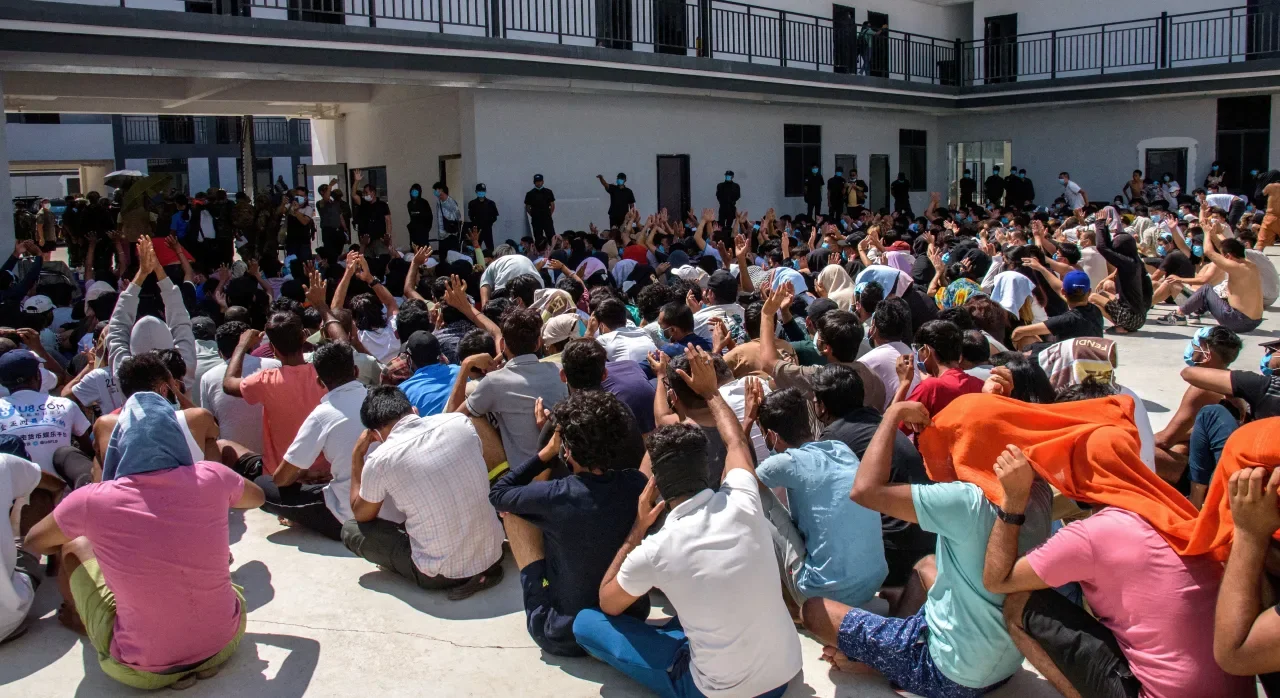
Despite a weekslong multinational crackdown, scam centers along the Thai-Myanmar border are still operating with up to 100,000 people working there, the top police general leading Thailand’s operations against the fraud compounds told Reuters. Thailand is fronting a regional effort to dismantle scam centers along its borders, which are part of a Southeast Asian network of illegal facilities that generate billions of dollars every year, often using people trafficked there by criminal gangs, according to the United Nations. Based on early assessments of some of the 5,000 people pulled out of sprawling scam hubs in Myanmar’s Myawaddy area, hundreds went there voluntarily, said Police General Thatchai Pitaneelaboot, calling for careful investigations among nationals of over a dozen countries to winnow out criminals. “Many people use Thailand as a pathway to sneak themselves into Myawaddy to find work, and this is not just the call center gangs but also online gambling work and other professions,” Thatchai said in an interview. His comments run counter to widespread reports that scam center workers in and around Myawaddy were victims, lured to go there by criminal bosses. Jason Tower, an analyst with the U.S. Institute of Peace and an expert on regional scam centers, said that many people who willingly travelled to areas such as Myawaddy were trapped in conducting scamming operations. “Many did go in willingly, only discovering that they had been trafficked later,” he said. Several former scam workers describe being trapped in the compounds, where they were forced to trick strangers online into transferring large amounts of money, often pretending to be romantic interests. Although these scam centers have operated for years, they came under renewed scrutiny following the abduction of a Chinese actor Wang Xing in Thailand in January, who was later rescued from Myawaddy. The incident sparked a social media firestorm in China, and Beijing dispatched officials to Thailand to coordinate operations targeted at breaking up scam hubs like Myawaddy and rescuing scores of its citizens, many of whom now have been flown home. “Since the Wang Xing case, there were 3,600 foreigners who travelled Mae Sot, and we did not find one who was tricked or coerced to come,” Thatchai said, citing information gathered by police checkpoints set up in the Thai district bordering Myawaddy. Among some 260 people from 20 nationalities who were sent from Myawaddy to Thailand in February as the crackdown gathered steam, most were not coerced, according to initial investigations conducted by Thai authorities, Thatchai said. “These people went there voluntarily,” Thatchai said, adding that he is waiting on information from countries including China and India that have repatriated hundreds of their nationals on whether they had been trafficked to scam centers in Myawaddy. MULTINATIONAL COORDINATION Thatchai said the crackdown so far has only affected a fraction of the vast operations in Myawaddy, which lies across a narrow river from the Thai town of Mae Sot. “It could be up to 50,000 or 100,000 people that are still left because we are still seeing their operations,” he said, based on Thai police intelligence as well as information gathered by Chinese authorities, who have identified at least 3,700 criminals continuing to operate in the area. Since February, more than 5,200 people have been extricated from scamming facilities in and around Myawaddy, according to Thai police citing Myanmar authorities. Over 3,500 have been sent back to their home countries via Thailand, which has also cut off electricity, internet, and fuel supplies to the area. With scam workers hailing from a wide range of countries, Thatchai said he is pushing for a multinational coordination center to repatriate, investigate, and share information to prosecute criminals involved in the fraud operations. Suspected criminals extricated from Myawaddy and other scam hubs should be prosecuted in their home countries, and the Thai police are ready to help wherever necessary, Thatchai said. The main focus of Thai authorities currently is to help coordinate the return of scam center victims to their home countries, with thousands of former workers still stuck in limbo on the Thai-Myanmar border, including some who are struggling to find their way back because of a lack of funds. “We have to discharge people as quickly as possible,” Thatchai said. “So that the Myanmar authorities and ethnic armed groups can conduct more crackdowns.” —Panu Wongcha-um and Panarat Thepgumpanat, Reuters View the full article

-
It’s been another bad week for Tesla shares so far. After closing down again yesterday, as of the time of this writing, TSLA shares are down over 5% in early morning trading on Tuesday. The stock’s decline this week comes after the company shed nearly 15% of its value in a single day last week. Much of Tesla’s recent stock declines have been attributed to the public souring of the company as its CEO, Elon Musk, has become increasingly involved in politics in both America and Europe. Since Musk’s political engagements, including his role in the Department of Government Efficiency (DOGE) in the United States and his support of the far-right party Alternative for Germany (AfD) in the EU, Tesla sales have slumped in several markets. While today’s decline could be a continuation of the worry over the brand’s declining image in the eyes of consumers, there are also three other possible reasons why TSLA shares may be heading lower today. Chinese rival BYD unveils new charging technology China is Tesla’s largest market outside of the United States. But the electric vehicle maker faces stiffer competition there than it does at home. And Tesla’s lead rival in China—BYD—has now announced a new charging platform that makes Tesla’s superchargers look archaic. As CNBC reports, BYD has announced its “Super e-Platform” charging technology, which the company says can deliver peak charging speeds of 1,000 kilowatts, allowing a car to be charged up enough to go about 249 miles (400 kilometers) in just five minutes of charging. To put that into perspective, Tesla’s Superchargers have a peak charging rate of just 500 kilowatts. It takes 15 minutes for a Supercharger to give a vehicle enough range to travel around 168 miles (about 270 kilometers). If BYD’s claims hold, the company’s Super e-Platform will be a serious blow to Tesla and its Superchargers. It could be enough to make many in China opt for a BYD over a Tesla. If they do, Tesla sales in the country could continue to decline. Cybertruck quality concerns Another issue that may be negatively impacting Tesla stock this week is reports on social media that the company’s beleaguered Cybertrucks have yet another problem. As GuruFocus reports, videos of Cybertrucks have gone viral on social media recently, showing that the vehicle’s metal panels seem to be detaching. The worry is that if these quality issues are not addressed, it could affect sales of the vehicle. Tesla gets lower price target Finally, on Tuesday, RBC Capital Markets—a traditional Tesla bull—revised its price target on TSLA. While RBC still maintains a “buy” rating on the stock, the firm lowered its price target on TSLA shares from $440 to $320, reports MarketWatch. RBC said it made its revision after it slashed its estimate for what Tesla will charge each month for its self-driving car software. RBC had originally thought Tesla would charge $100 a month, but now thinks a $50 price is more likely. The firm also cut its projection for Tesla’s share of the robotaxi market in Europe and China. It had expected around a 20% share of the markets there, but now says it expects Tesla to have a 10% share. Tesla shares are down 44% year-to-date As of the time of this writing, TSLA shares are currently down another 5.81% in early market trading to $224.19 per share. That means Tesla shares have now fallen over 44% since the beginning of 2025. Tesla shares peaked in December at over $488 apiece. While Tesla shares have crashed in 2025, they are still up about 29% over the past 12 months. View the full article

-
The Find My Device app for Android is getting an update: The new Find My Device app is now split up into two tabs, one for Devices, and one for People. With it, you can easily coordinate meet-ups with friends or check that your kids have safely arrived home. You'll find the app preinstalled on Pixels, and it's a free download for other Android devices. It's also available on the web, but there's no iPhone app. Despite that, you can still keep tabs on the real time locations of your contacts if they have iPhones—more on that in a moment. The new People tab in Find My Device. Credit: Lifehacker This is the same Find My Device tool that received a pretty major upgrade last year. While it's existed in some form for a long time, showing you Android phones and other gadgets on a map if they were ever lost and stolen, the new and improved version added a bunch of features to make it more useful. Whereas before you would need your phone to be on and connected to wifi to be able to find it, the 2024 improvements mean you can now enlist the help of all the other millions of Android gadgets out there to (securely and anonymously) track down missing devices (Apple's Find My Network works in the same way). The same location sharing list is available in Google Maps. Credit: Lifehacker There's also now support for third-party Bluetooth trackers, and recent Pixels can even be located when they're powered off. Phones and tablets you track down with the app can be made to play a sound to help you find them, plus you have the option to lock them or even wipe them remotely to keep your data safe. All those upgrades were already in place, and now people finding is the latest one to arrive: Contacts who trust you can let you see where they are on a map, and you can opt to share your own location with them in return. If you're thinking that sounds a lot like the functionality that was already built into Google Maps, that's because it is—it's just that now you've got another screen to access it from. Use Find My Device to find peopleOpen Find My Device on your phone and you'll see the People tab has a little Beta label next to it, indicating that this feature is a work in progress. There's also a sticker on the map, showing you that the location sharing feature is powered by Google Maps, even though you're accessing it through Find My Device. If you've already set up sharing through Google Maps, you'll see your contacts listed and their current locations shown on the map. Tap the + (plus) button to share your location with someone new: The default option is to share your whereabouts for an hour, but you can tap this to change it to Today only, Until you turn this off, and Custom duration. You can choose how long you save your location for. Credit: Lifehacker You can then pick a contact from the panel below, or generate a link to send to someone in an app of your choice. They'll be able to see the location of your phone for the time you've specified, as well as the battery level of the device, and they'll get the opportunity to share their location in return—though they don't have to. This is functionality that's been in Google Maps for some time: If you've never used it, you can find it in the Google Maps app by tapping your profile picture (top right) then Location sharing. As it works through Google Maps, contacts with iPhones can be added as well, and see your location—as long as they've got Google Maps installed. You can share your location with anyone who uses Google Maps. Credit: Lifehacker Back in Find My Device, tap on any contact in your list to see where they are on the map. The next screen enables you to get directions to their current location (via Google Maps, of course), and to stop sharing your location with them. Tap the three dots next to a name to hide them from the map, if you only want to check up on them occasionally. Head to Find My Device on the web, and you get the same Devices and People tabs, though you can't add new contacts in the web app. You're always in control when it comes to who can see where you are and for how long, and given the tight integration with Android, you might find it preferable to location sharing tools in apps such as WhatsApp. View the full article
-
Macron may not yet be bragging about it, but his crusade for strategic autonomy seems at long last to be vindicatedView the full article
-
Chancellor-in-waiting uses outgoing Bundestag to loosen debt brake and unleash investments in defence and infrastructureView the full article
-
European Commission president Ursula von der Leyen proposes central arms reserve capitals could draw fromView the full article
-
We may earn a commission from links on this page. Deal pricing and availability subject to change after time of publication. This deal on the refurbished Apple Watch Ultra (GPS + Cellular) for $359.99 on Woot (for the next six days or until it sells out) is tempting—especially considering that it’s going for over $445 on Amazon. That’s a solid price cut, but the catch is, this is a refurbished unit. That means some level of wear and tear is expected, but it has been tested to be fully functional with at least 80% battery capacity, and Woot backs it with a two-year limited warranty. If you’re OK with a few cosmetic imperfections in exchange for savings, this might be worth grabbing—just note that it’s only available for shipping within the contiguous U.S. Prime members also get free shipping, while non-members will have to pay $6. Apple Watch Ultra (GPS + Cellular) $359.99 at Woot $445.00 Save $85.01 Get Deal Get Deal $359.99 at Woot $445.00 Save $85.01 As for the Apple Watch Ultra itself, this thing is built tough. Designed for extreme conditions, its MIL-STD 810H certification means it can handle freezing temps, high altitudes, sandstorms, and general rough treatment. Apple says it’ll keep working between -4 and 130 degrees Fahrenheit, which is overkill for most people but great if you’re into extreme sports or outdoor adventures. The GPS + Cellular connectivity of this model is a big advantage, too, letting you take calls, stream music, or use maps even when you’re away from your phone—a huge plus for runners, hikers, and anyone who hates being tied to their iPhones. Also, its 1.9-inch OLED Retina screen is ridiculously bright at 2,000 nits, making it super easy to read in direct sunlight. The Apple Watch Ultra runs on watchOS 9, packing features like heart rate zone data, sleep stage tracking, advanced running metrics, and more. It also includes Apple’s safety and health tools like car crash detection and overnight body temperature tracking. Battery life holds up well, lasting 55 to 57 hours with normal use, even with the always-on display enabled, notes this PCMag review. If you want one of the most rugged Apple Watch ever made at a lower price (and don’t mind some cosmetic flaws), this Woot deal is worth considering before it sells out. But if you’d rather have a newer model without the Ultra’s bulk, the Series 10 ($359, down from $429) is the best iPhone-compatible smartwatch for most users, while the Watch SE ($249) is the best budget-friendly option, according to this PCMag "Best Smartwatches for 2025" roundup. View the full article
-
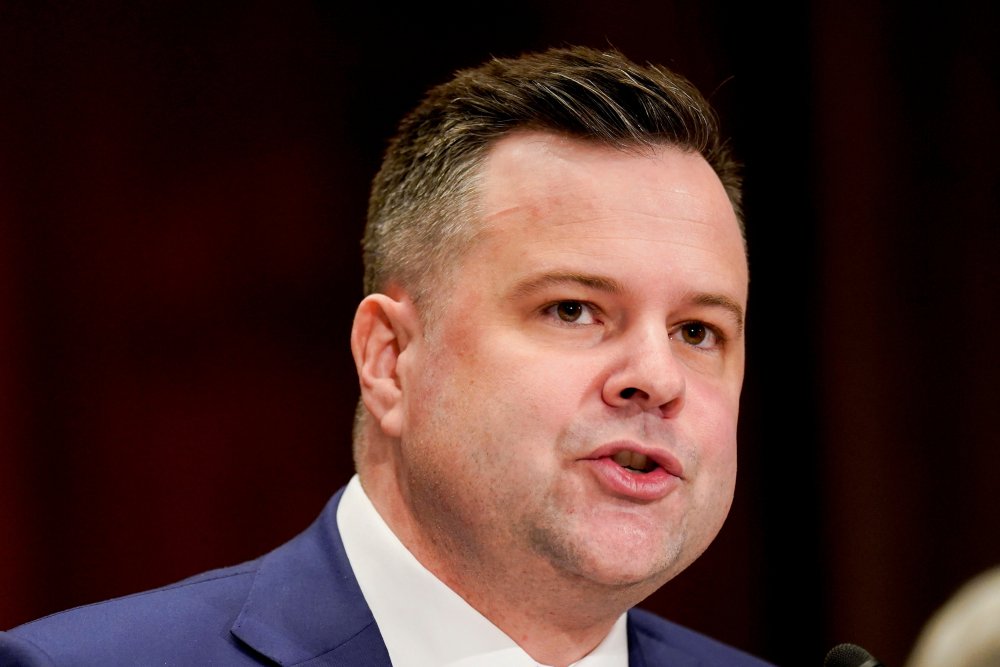
Federal Housing Finance Agency Director Bill Pulte is the new chair for both and he has removed several members while adding a few new names at each. View the full article
-
Tesla sinks as investors shift away from riskier holdingsView the full article
-
Hulu's lineup of original content is lighter in April than in previous months but includes the sixth and final season of The Handmaid's Tale (April 8), the dystopian drama based originally on Margaret Atwood's novel but that has long since evolved into a world of its own. According to the Hulu synopsis, June (Elisabeth Moss), Luke, and Moira make up the resistance to bring down Gilead. A sequel series, The Testaments, also based on an Atwood novel of the same name, is in development for release after The Handmaid's Tale ends. Hulu has a new original reality competition show launching in April to take on Peacock's hit series The Traitors. On Got to Get Out (April 11), 20 contestants are racing against time to steal $1 million from each other and escape without getting caught. The show is hosted by Simi Liu and includes reality stars like Spencer Pratt, Cynthia Bailey, and Val Chmerkovskiy. April also brings season two of Hulu original series No Man's Land (April 16) about the Syrian war and a new standup special from Jessica Kirson (I'm the Man, April 25). Here’s everything else coming to (and leaving) Hulu in April. What’s coming to Hulu in April 2025Arriving April 1Arrival (2016) Arrival En Espanol (2016) The Best Exotic Marigold Hotel (2012) Black Swan (2010) Boys on the Side (1995) Concussion (2015) Concussion En Espanol (2015) Copycat (1995) Enough Said (2013) The Equalizer (2014) The Equalizer En Espanol (2014) Gifted (2017) The Good Thief (2003) Gone Girl (2014) Gulliver's Travels (2010) The History of the World Part I (1981) I Heart Huckabees (2004) Interstellar (2014) Interstellar En Espanol (2014) Jumanji (1995) Jumanji En Espanol (1995) Jurassic Park (1993) Jurassic Park III (2001) The Karate Kid (1984) The Karate Kid En Espanol (1984) The Karate Kid Part II (1986) The Karate Kid: Part II En Espanol (1986) The Karate Kid Part III (1989) The Karate Kid Part III En Espanol (1989) Little Man (2006) Little Man En Espanol (2006) The Lost World: Jurassic Park (1997) Made in America (1993) Me, Myself and Irene (2000) Mrs. Doubtfire (1993) Oddity Red Sparrow (2018) The Revenant (2015) Runaway Jury (2003) Sexy Beast (2001) Shark Tale (2004) The Spy Who Dumped Me (2018) Superbad (2007) Superbad En Espanol (2007) Tombstone (1993) True Story (2015) 21 Jump Street (2012) 22 Jump Street (2014) Wall Street (1987) Wall Street: Money Never Sleeps (2010) War of the Worlds (2005) Widows (2018) Wild (2014) The Wolf of Wall Street (2013) The Wolf Of Wall Street En Espanol (2013) Year One (2009) You Will Meet A Tall Dark Stranger (2010) Arriving April 2Beyblade X: Complete Season 1B Arriving April 3Oklahoma City Bombing: One Day in America: Complete Limited Series Arriving April 4FX's Dying for Sex: Complete Limited Series Fire Force: Season 3 Premiere (Subbed) Classified (2024) The Darjeeling Limited (2007) Fantastic Mr. Fox (2009) The Life Aquatic With Steve Zissou (2004) The Royal Tenenbaums (2001) Rushmore (1999) Arriving April 5American Monster: Complete Season 3 Bering Sea Gold: Complete Season 3 Diners, Drive-Ins, and Dives: Complete Seasons 1-2 I Love A Mama's Boy: Complete Season 2 The World According to Allee Willis (2024) Arriving April 6Witch Watch: Series Premiere (Subbed & Dubbed) Arriving April 8The Handmaid's Tale: Sixth & Final Season Premiere Small Things Like These (2024) Arriving April 9Angels & Demons (2009) The Da Vinci Code (2006) Arriving April 10Court Cam: Complete Season 7 Houses of Horror: Secrets of College Greek Life: Complete Season 1 Ca$h (2010) Hesher (2010) Niko: Beyond the Northern Lights (2024) Red Dog (2011) So Undercover (2012) Spun (2002) Arriving April 11Got to Get Out: Series Premiere Garfield (2004) Garfield: A Tail Of Two Kitties (2006) Magpie (2024) Arriving April 12Fixer Upper: Complete Season 5 MythBusters: Complete Season 5 The Family Chantel: Complete Season 4 Arriving April 15Lake George (2024) Arriving April 16No Man's Land: Complete Season 2 Synduality Noir: Complete Season 1 (Dubbed) The Curious Case of Natalia Grace: Complete Season 3 Arriving April 17The Stolen Girl: Series Premiere Bible Secrets Revealed: Complete Season 1 Gangland Chronicles: Complete Season 1 Leah Remini: Scientology and the Aftermath: Complete Seasons 1 and 2 Martin Short: Complete Season 1 The Girl Who Wasn't Dead (2024) Arriving April 18The Order (2024) Arriving April 19Breaking Amish: Complete Season 4 Disappeared: Complete Season 6 Gypsy Sisters: Complete Season 3 Moonshiners: Complete Season 13 Arriving April 21Secrets of the Penguins: Complete Limited Series No Hard Feelings (2023) No Hard Feelings En Espanol (2023) Arriving April 22In a Violent Nature (2024) Arriving April 24Airline Wars: Complete Season 1 Customer Wars: Complete Season 4 Tell Me How I Died: Complete Season 1 Tiny House World: Complete Season 1 Husband, Father, Killer: The Alyssa Pladl Story Arriving April 25Jessica Kirson: I'm the Man: Special Premiere Azrael (2024) Arriving April 26Chopped: Complete Season 60 Four Weddings: Complete Season 9 House Hunters Renovation: Complete Season 16 Jessica Chambers: An ID Murder Mystery: Complete Season 1 Arriving April 29Ernest Cole: Lost and Found (2024) What’s leaving Hulu in April 2025Leaving April 6Agnes (2021) Leaving April 13She Will (2021) Leaving April 16Toni Morrison: The Pieces I Am (2019) Leaving April 20Totally Under Control (2020) Leaving April 24The Good Neighbor (2022) Leaving April 27Resurrection (2022) Leaving April 30After Everything (2018) Code Name Banshee (2022) Stars Fell Again (2023) View the full article
-
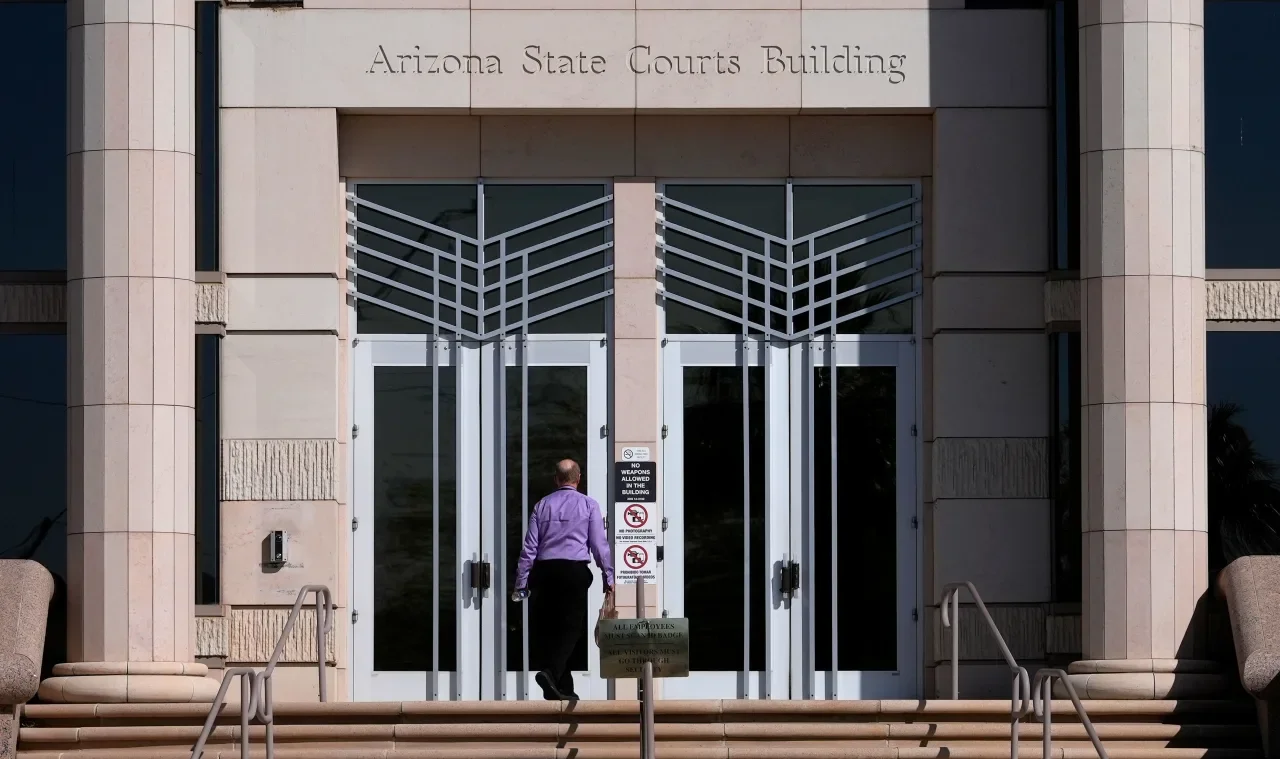
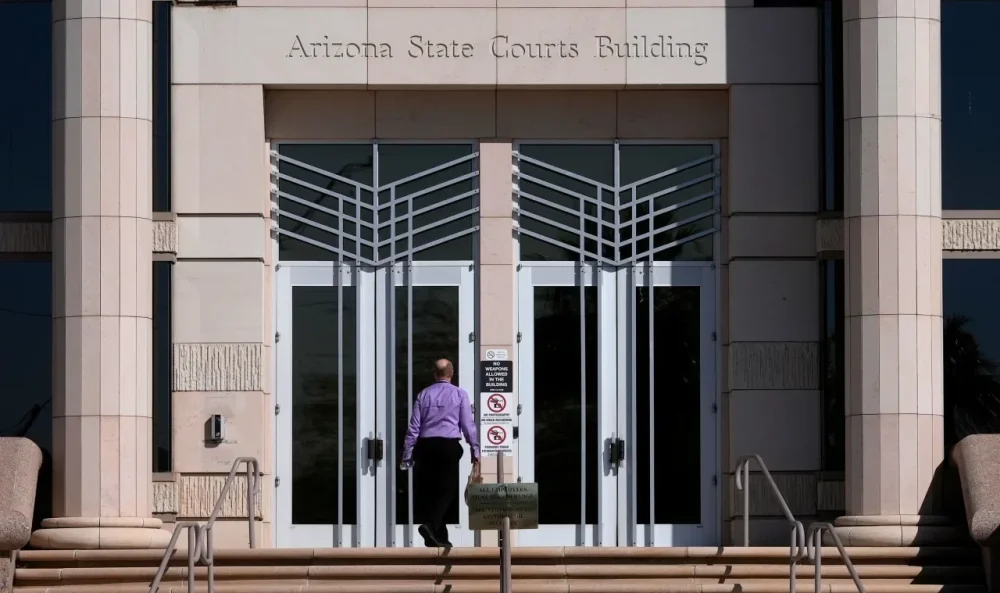
Arizona’s highest court has created a pair of AI-generated avatars to deliver news of every ruling issued by the justices, marking what is believed to be the first example in the U.S. of a state court system tapping artificial intelligence to build more humanlike characters to connect with the public. A court in Florida uses an animated chatbot to help visitors navigate its website, but the Arizona Supreme Court is charting new territory with the creation of Victoria and Daniel. Made of pixels, the two avatars have a different job in that they serve as the face of news coming from the court just as a spokesperson made of flesh and blood would do—but faster. The use of AI has touched nearly every profession and discipline, growing exponentially in recent years and showing infinite potential when it comes to things as simple as internet searches or as complex as brain surgery. For officials with the Arizona Supreme Court, their venture into AI is rooted in a desire to promote trust and confidence in the judicial system. What helped solidify the court’s need for more public outreach? There was a protest outside the state Capitol last April and calls for two justices to be booted after the Arizona Supreme Court ruled that a Civil War–era law that banned nearly all abortions, except when a woman’s life is in jeopardy, could be enforced. Emotions flared on both sides of the issue. When Chief Justice Ann Timmer took over the court last summer, she made public trust a key pillar of her platform. She had already been thinking about ways to reach out to the public using digital media for a few years, and the abortion ruling, among other rulings, helped her to solidify the idea that the court needs to be part of the narrative as people learn about opinions and what they mean. “We serve the public better by saying, OK, we’ve issued this decision,” she said. “Now, let us help you understand what it is.” Timmer told the Associated Press earlier this year that if the court had to do the abortion ruling over again, it would have approached the dissemination of information differently. In a Wednesday interview, she said that a news release and avatar video could have helped the public better understand the legal underpinnings of the lengthy decision—possibly including what it didn’t do, which she said some misunderstood. “We got a lot of backlash for it and probably deservedly so, in terms of how can we complain that people don’t understand what we did when we didn’t really do enough to give a simplified version,” she said in the January interview, explaining that people want to know the basis for the court’s decisions and what they can do, such as lobbying state lawmakers for whatever changes in law would support their positions. Democratic Gov. Katie Hobbs signed a repeal of the ban last May, and in November, Arizona voters approved a constitutional amendment expanding abortion access up to the point of fetal viability. Who are Daniel and Victoria, and how do they work? Created with a program called Creatify, Daniel and Victoria in a way bring to life the court’s news releases. Videos featuring one or the other are being posted for every ruling by the high court, and may be used for Access to Justice projects, community programs and civics information in the future. The court has been sending out releases since October to summarize and explain rulings. After seeing success with the releases, it began exploring options to convey that information through video. The AI-generated avatars were the most efficient way to produce videos and get the information out, said court spokesperson Alberto Rodriguez. Producing a video usually can take hours, he said, but an AI-generated video is ready in about 30 minutes. The court might introduce more AI-generated reporters in the future, Rodriguez said in a news release. The justice who authors the legal opinion also drafts a news release, the wording of which must be approved by the entire bench. The justice then works with the court’s communications team to craft a script for the avatars—the avatars aren’t interpreting original court decisions or opinions, Rodriguez said. Daniel and Victoria’s names and physical appearances were designed to represent a wide cross-section of people, Rodriguez said. He said they aren’t meant to come off as real people and the court emphasizes their AI origins with disclaimers. The court is exploring different emotional deliveries, cadences, and pronunciations as well as Spanish translations for the avatars, Rodriguez said. Will the avatars resonate with their audience? Mason Kortz, a clinical instructor at the Harvard Law School’s Cyberlaw Clinic at the Berkman Klein Center for Internet & Society, described the court’s new cyber employees as “quite realistic.” While their voices might give them away, he said some people could be fooled into thinking that Daniel and Victoria are real reporters if viewers are only reading the subtitles and looking at the characters’ movements and facial expressions. Kortz also said it would be better for the language of the disclaimer that is in the videos’ text description to be featured more prominently. “You want to make it as hard as possible for someone to advertently or inadvertently remove the disclaimer,” he said. Asheley Landrum, associate professor at the Walter Cronkite School of Journalism and Mass Communication at Arizona State University, said the avatars feel robotic. She said a format that mimics real dialogue and storytelling might be more engaging than an AI reading of a news release. “Because it’s not just about using AI or even creating videos,” she said, “but about doing so in a way that really resonates with audiences.” Still, it’s fine line. She said engaging characteristics can help to build trust over time but the danger is that content could appear biased. —Sejal Govindarao, Associated Press View the full article
-
Disney+ has sophomore seasons of two significant series coming in April. The second installment of Lucasfilm's Emmy-nominated thriller Andor—the prequel to Rogue One and set five years prior—tells the origin story of Rebel spy Cassian Andor and the formation of the Rebel Alliance. Diego Luna reprises his role from the film and the first season of the series. A three-episode premiere is set for 6 p.m. PT on April 22, with additional episodes dropping weekly on Tuesdays until mid-May. Also on the April schedule is season two of Doctor Who. Ncuti Gatwa stars as the Doctor, who is on a quest to get Belinda Chandra (played by Varadu Sethu) back to Earth. Millie Gibson stars as Ruby Sunday, with a guest appearance from Alan Cumming. After the premiere on Saturday, April 12, new episodes will be released weekly. Other content premiering in April includes season two of Light & Magic (April 18), a three-part docuseries about Lucasfilm's visual effects company Industrial Light & Magic, and Disney+ Original documentary film Pets (April 11) from director Bryce Dallas Howard. Disney+ will also be wrapping up weekly episodes of Marvel Television’s Daredevil: Born Again (Tuesdays through April 15) and releasing the final two installments of the six-part NatGeo docuseries David Blaine Do Not Attempt (April 7), which premiered last month. Here's everything coming to Disney+ in April. Disney Plus series with new episodes weekly in April 2025Andor (Season 2)—Disney+ Original, new episodes on Tuesdays beginning April 22 Marvel Television’s Daredevil: Born Again—new episodes on Tuesdays through April 15 Doctor Who (Season 2)—new episodes on Saturdays beginning April 12 Disney+ will also be streaming SC+, a SportsCenter show exclusive to the platform, every weekday at 6 a.m. PT and on weekend mornings. Each stream will be available for 24 hours. Movies and complete series/seasons coming to Disney Plus in April 2025Arriving April 1Lost Treasures of Rome (S2, 6 episodes) National Parks: USA (S1, 5 episodes) RoboGobo (S1, 24 episodes) Arriving April 3Oklahoma City Bombing: One Day in America (S1, 3 episodes) Arriving April 7David Blaine Do Not Attempt Not Just a Goof Arriving April 9Marvel’s Spidey and His Amazing Friends (S3, 4 episodes) Arriving April 11The Abyss 4K Pets Arriving April 12Titanic: The Digital Resurrection To Catch a Smuggler (S8, 8 episodes) Arriving April 16Big City Greens (S4, 7 episodes) SuperKitties (S2, 3 episodes) Arriving April 18Light & Magic (Season 2) Arriving April 21Secret of the Penguins (S1, 3 episodes) Arriving April 22ABC News Live Special: Last Lands (S1, 4 episodes) Sea Lions of the Galapagos Guardians of the Galapagos Arriving April 25Megastructures: Real Madrid Super Stadium Arriving April 30Chibi Tiny Tales: Shorts (S5, 7 episodes) Mickey Mouse Funhouse (S3, 5 episodes) Hulu + ESPN content coming to Disney+ in April 2025As in previous months, Disney+ subscribers will also have access to select content from Hulu and ESPN in March, including live streams of PGA Tour and NWSL events, the NCAA Women's Gymnastics Championships, and select NHL games. Here are a few of the other titles coming to Disney+: Clipped Tell Me Lies Interior Chinatown It's Always Sunny in Philadelphia White Collar Reasonable Doubt Prey Crazy Hearts Say Anything The Night House College Gameday Pardon the Interruption The Mina Kimes Show featuring Lenny Vince's Places P.K.'s Places E60 Once Upon a Time in Anaheim No Easy Victories: The 1994 New York Rangers View the full article
-
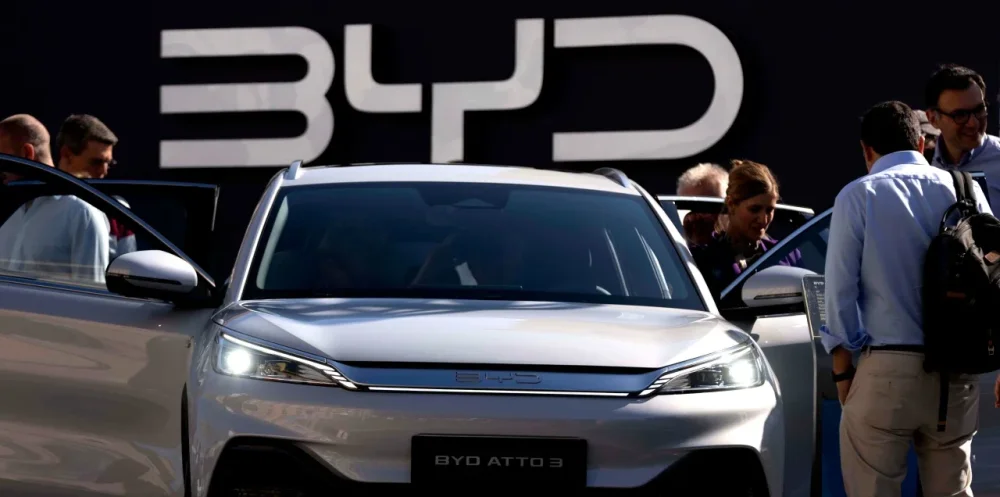
China’s energy and auto giant BYD has announced an ultra fast EV charging system that it says is nearly as quick as a fill up at the pumps. BYD, China’s largest EV maker, said Monday that its flash-chargers can provide a full charge for its latest EVs within five to eight minutes, similar to the amount of time needed to fill a fuel tank. It plans to build more than 4,000 of the new charging stations across China. Charging times and limited ranges have been a major factor constraining the switch from gas and diesel vehicles to EVs, though Chinese drivers have embraced that change, with sales of battery powered and hybrid vehicles jumping 40% last year. BYD’s news appeared to give Tesla a jolt on Monday, as the U.S. EV maker’s share price sank 4.8%. BYD, which stands for build your dreams, began pre-sales of its Han L and Tang L models, which are upgraded versions of earlier models. The Chinese company started out making batteries and has been refining its battery and energy storage technology while building an auto empire that is expanding outside China. It says its 1 megawatt flash chargers can provide power for 400 kilometers (nearly 250 miles) in five minutes. Ultra-high voltage and a large current are required to maximize charging speeds, BYD’s founder Wang Chuanfu said in a statement. “To completely solve users’ anxiety over charging, our pursuit is to make the charging time for EVs as short as the refueling time for fuel vehicles,” Wang said. The company also said that its flash-charging system relies on silicon carbide power chips with voltage levels of up to 1,500V that it developed on its own. Its Blade lithium-ion phosphate battery is perhaps the world’s safest and most efficient EV battery, with Tesla opting to use it in some of its EVs, industry analyst Michael Dunne said in a recent report. BYD reported it made just over 4.3 million “new energy vehicles” last year, up 41% from a year earlier, including 1.8 million battery electric vehicles and 2.5 million plug in hybrids. The price of its shares traded on China’s smaller market in Shenzhen has surged nearly 50% in the past six months. While BYD’s fanciest, latest premium models are expected to sell for up to about $40,000, it also makes much less expensive EVs including the Seagull, which sells for around $12,000 in China. BYD barely nudged ahead of Tesla in production of battery-powered EVs in 2024, making 1,777,965 compared with Tesla’s 1,773,443. In early January, Tesla said its sales dropped in 2024, a first in more than a dozen years, as rivals such as BMW, Volkswagen and BYD gained market shares with competitive EVs. But BYD has weaknesses as well, Dunne said, noting that JD Power’s 2024 China New Energy Vehicle Initial Quality Study ranked the BYD Seal and BYD Song Plus battery electrics at the bottom of its rankings. —Elaine Kurtenbach, AP Business Writer View the full article
-
New residential construction increased 11.2% to an annualized rate of 1.5 million in February, according to government data released Tuesday. View the full article

-
It's no surprise that companies continue to experiment with new AI features. Artificial intelligence has been the center of emerging tech for nearly three years now, and it's not going anywhere anytime soon. But whether you love generative AI or you find it useless, I think we can all agree that using AI to write Instagram comments is pretty stupid. And yet, Meta appears to be testing exactly that. As reported by SocialMediaToday, some Instagram accounts are now seeing a new icon to the left of the text field after choosing to leave a comment on a post. When you tap this icon (a pencil with a star), you pull up a new Meta AI menu, which presents a series of comment choices, presumably based on whatever content you happen to be looking at. In one example, the bot offers three choices: "Cute living room setup," "Love the cozy atmosphere," or "Great photo shoot location." Could there be anything lazier than this? I'll admit: This news took me a bit off guard. I know Meta is comfortable shoving its AI experiments down our throats—often with no way to turn them off. But even as it becomes more difficult to avoid AI-generated content on Meta's platforms, I didn't think the company would offload the "effort" of having to write comments to the bots. I can't imagine many (or perhaps any) Instagram users are so busy or exhausted that they'd rather scroll through an AI's idea of what to say rather than say something themselves. The human-generated comments on Instagram pages are already low-effort as it is; not to mention, there are too many comments from bots on social media platforms. Do we really want more bots in the comments, only this time sent to us by real people? We need to stop letting AI make the decisionsThis is just an experiment, and likely a limited one at that. For what it's worth, I do not have the option on my Instagram account, so I guess I'm forced to think up my own comments for now. (Or at least open another app to ask a different AI to generate a comment for me.) But this experiment speaks to the current state of AI in tech: offering solutions to problems that don't exist. Writing comments isn't hard, and yet, someone at Meta thought there was a usefulness—a market—for AI-generated comments. They probably want more training data for their AI machine, which tracks, considering companies are running out of internet for models to learn from. But that doesn't mean we should be okay with outsourcing all human tasks to AI. That's what bugs me most: ceding so many of our cognitive tasks and decisions to the machines. If you're on Instagram, you're already letting the algorithm choose the content you see. Please don't hand over even more decisions to the machines, as low-effort as those decisions may be. If you do see the experiment on your end, I encourage you not to use it; both for your own sake, as well as depriving Meta of any more training data generated by its user base for free. View the full article
-
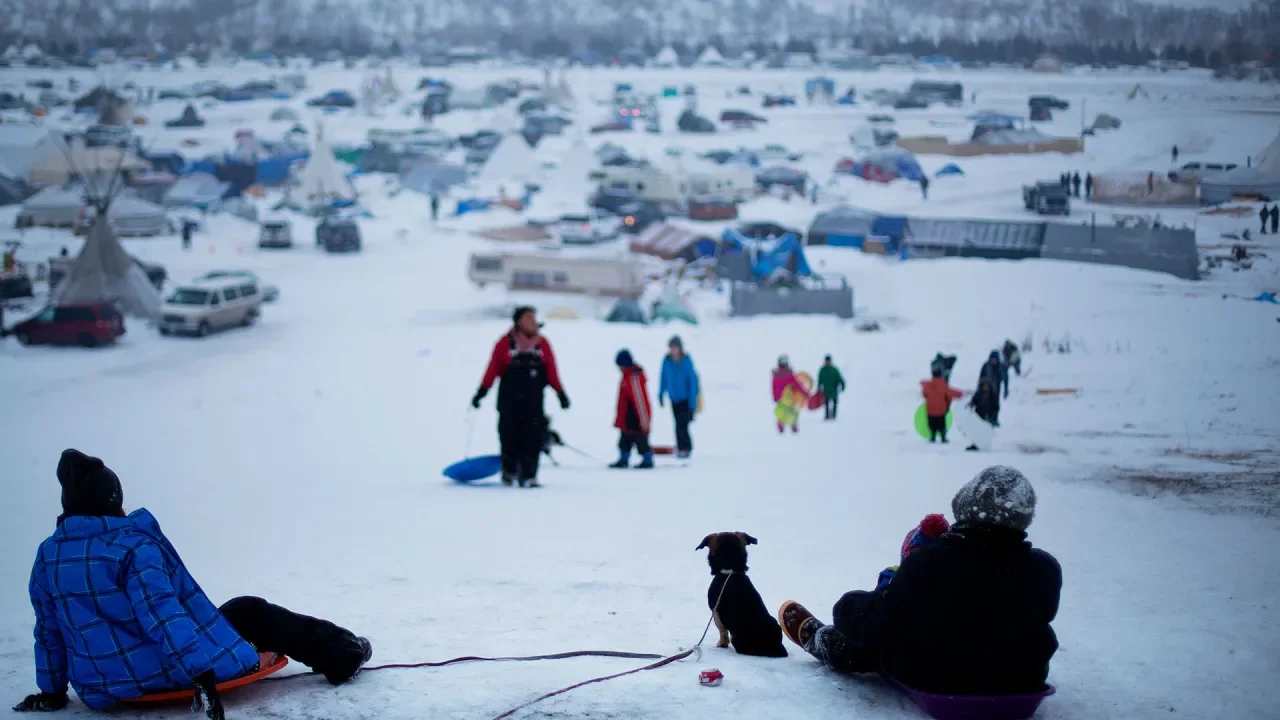
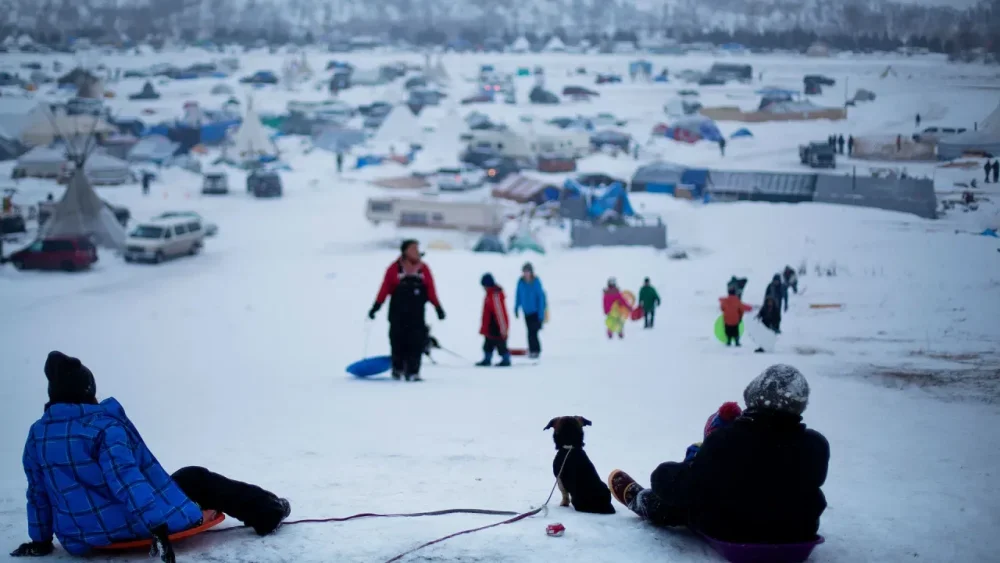
Greenpeace used malicious and deceptive tactics to disrupt the controversial Dakota Access Pipeline and keep it from going forward, an attorney for the company behind the project said Monday. But attorneys for the environmental advocacy group said during their closing arguments that Greenpeace had little involvement with the 2016-17 protests that are central to the case. A North Dakota jury began deliberating Monday after a weekslong trial over Dallas-based Energy Transfer’s argument that Greenpeace defamed the company and disrupted the project. What is the case about? The energy company and its subsidiary Dakota Access accused Greenpeace International, Greenpeace USA and funding arm Greenpeace Fund Inc. of defamation, civil conspiracy, trespass, nuisance and other acts, and is seeking hundreds of millions of dollars in damages. Nine jurors and two alternates heard the case after it went to trial in late February. Their verdict will include what damages, if any, to award. Trey Cox, an attorney for the pipeline company, highlighted damages per claim totaling nearly $350 million. The lawsuit is linked to the protests against the oil pipeline and its controversial Missouri River crossing upstream of the Standing Rock Sioux Tribe’s reservation. The tribe has long opposed the pipeline as a risk to its water supply. The pipeline has been transporting oil since mid-2017. What did the company say? Cox said Greenpeace exploited a small, disorganized, local issue to promote its agenda, calling Greenpeace “master manipulators” and “deceptive to the core.” Greenpeace paid professional protesters, organized or led protester trainings, shared intelligence of the pipeline route with protesters and sent lockboxes for demonstrators to attach themselves to equipment, Cox said. Among a number of alleged defamatory statements were that the company deliberately desecrated burial grounds during construction, which Cox said was done to harm Energy Transfer’s reputation in the international investment community. The company made 140 slight adjustments to its route to avoid disturbing sacred or cultural sites, he said. Greenpeace’s “lies impacted lenders,” Cox said. Energy Transfer suffered $96 million in lost financing and $7 million in public relations costs, he said. The pipeline was delayed by five months, and the company lost $80 million because it couldn’t turn on the spigot on Jan. 1, 2017, when oil was to start flowing, Cox said. He asked the jury to find the Greenpeace entities liable. “It needs to be done for Morton County. It needs to be done for Morton County’s law enforcement and the next community where Greenpeace exploits an opportunity to push its agenda at any cost,” Cox told the jury, referring to the county where the protests were centered. How did Greenpeace respond? Attorneys for Greenpeace said Energy Transfer didn’t prove its case or meet its legal burden for defamation or damages, that Greenpeace employees had little or no presence or involvement in the protests, and that Greenpeace had nothing to do with the company’s delays in construction or refinancing. A letter signed by leaders of Greenpeace International and Greenpeace USA and sent to banks involved in the project’s construction loan contained the alleged defamatory statement about desecrating burial grounds, which Cox equated to digging up dead bodies. Greenpeace International attorney Courtney DeThomas said the other side hasn’t shown how the one act of signing a letter with 500 other organizations damaged them, and that the letter would have been sent to the banks with or without Greenpeace’s name on it. Thousands of protesters were already at Standing Rock by the time the letter was signed, she said. Greenpeace USA attorney Everett Jack Jr. disputed the company’s claims as including costs from months before and years after the protests, with no witnesses to say that the Greenpeace entities were the cause. Jack also said no law enforcement officers or any of Energy Transfer’s security personnel testified that Greenpeace was the cause of any violence or property destruction, or was a leader, organizer or instigator in the protests. He said law enforcement “did a phenomenal job of watching the protests.” Greenpeace representatives have criticized the lawsuit as an example of corporations abusing the legal system to go after critics and called it a critical test of free speech and protest rights. An Energy Transfer spokesperson said the case is about Greenpeace not following the law, not free speech. —Jack Dura, Associated Press View the full article
-
In the past week, law enforcement agencies including the Federal Bureau of Investigation (FBI) and the Cybersecurity and Infrastructure Security Agency (CISA) have issued a warning about the ongoing threat of Medusa ransomware. Here’s what you need to know about the threat and how you can protect yourself. What is Medusa ransomware? Ransomware is a type of software that is designed to compromise your information, allowing hackers to steal it. Once these bad actors have your data, they then contact you (or the software contacts you on their behalf), and they inform you that unless you pay a ransom, your data will either be deleted, sold to the highest bidder, or released publicly for all to see. Medusa ransomware is a specific type of ransomware that is currently making the rounds. According to a cybersecurity advisory published by the Cybersecurity and Infrastructure Security Agency (CISA), Medusa ransomware “is a ransomware-as-a-service (RaaS)” that has been going around since at least June 2021. The advisory states that Medusa relies on “a double extortion model”—that encrypts the data on a victim’s hard drive so they can’t access it, as well as threatens to decrypt the data and sell it to third parties or release it publicly. Users must pay a ransom in order to gain access to their encrypted files again and/or in order to ensure that the files are not disseminated to additional parties. Ransom payments can range anywhere between $100 to $1 million. The CISA says that as of February 2025, Medusa has impacted “over 300 victims from a variety of critical infrastructure sectors,” which include medical, education, legal, insurance, technology, and manufacturing. How can I protect myself and my company from Medusa? The advisory posted on the CISA’s website states that Medusa is primarily spread through phishing campaigns to steal victims’ credentials. The ransomware can also infiltrate a system through unpatched software vulnerabilities. With that in mind, the notice states that there are several steps an individual and organization can take to mitigate threats from Medusa. These include: Using long passwords on accounts. Implementing multifactor authentication (also known as MFA or 2FA) on accounts. Keeping software and operating systems on all devices up to date. Use VPNs to protect your traffic. Have multiple copies of sensitive data backed up on more than just one device. Finally, it’s always a good idea to practice common sense measures that help reduce your vulnerability to phishing attempts. This includes never clicking on a link that is emailed or texted to you if you don’t recognize the sender. Likewise, never open attachments you receive from an unknown sender. And even when a sender appears legitimate, it is always best to contact them via another channel to ensure that they, indeed, were the one who sent you a link or attachment. A common phishing tactic bad actors use is to send emails to victims that appear to be from valid or known email addresses—but when you look closely at them, you’ll see that a character or two might have been changed. For example, an “I” in an email address might have been changed to a “1”). At first glance, the email looks legitimate, but the change is a giveaway that someone is trying to misrepresent who they actually are. The CISA maintains a webpage with myriad tips detailing how to further protect yourself from ransomware. View the full article

-
Move risks stoking biggest backbench rebellion of Sir Keir Starmer’s premiershipView the full article
-
Kim Atchison was hunkered down in her grandmother’s storm shelter with her 5-year-old grandson Saturday night in their tiny Alabama hometown of Plantersville when her husband and son raced in. “Get down; get all the way down to the bottom of the cellar,” they told her, saying they could see a twister coming. Atchison said she remembers first the “dead silence” and then hearing the wind that felt like a funnel and things outside hitting against each other. “All was quiet after that because it was that fast,” she said. “Like a snap of a finger and it was gone.” Atchison and her family were among the fortunate ones to avoid being killed in the three-day outbreak of severe weather across eight states that kicked up a devastating combination of wildfires, dust storms, and tornadoes—claiming at least 42 lives since Friday. Two people were killed by a twister in Plantersville. One of the lives lost was that of 82-year-old Annie Free, who “just looked out for everyone,” Atchison’s husband said. The tornado struck Free’s home, leaving only the front patio behind. Darren Atchison spent Monday delivering granola bars and sports drinks to the pummeled neighborhood, driving his all-terrain vehicle around downed trees. More than a half-dozen houses were destroyed while others were left in rough shape, some with walls peeled clean off. The tornado flipped a trailer onto its roof and toppled trees in every direction. When Heidi Howland emerged from her home after hiding in her bedroom underneath a mattress with her husband, kids and grandkids as the twister approached, she found fallen trees and broken car windows. Many of her neighbors whose houses were damaged came to her front porch to take refuge from the rain after the storm passed Saturday night. One was Free’s daughter, who Howland said cried late into the night because the first responders couldn’t find her mother. Free’s body wasn’t found until the morning. Also killed was Dunk Pickering, a fixture in the community who often hosted live music events and helped neighbors during tough times. Neighbor John Green found Pickering’s body in the wreckage of a building just across the street from Green’s home. “Whether he knew you or not, he would help anyone,” Green said. “I’ve known him for 20 years. He’s been like that ever since the day I first met him.” Green and other neighbors spent at least five hours Saturday night pulling people from the rubble and carrying them to paramedics who were unable to reach the area because roads were blocked by debris. Wildfires in Oklahoma Wind-driven wildfires across the state destroyed more than 400 homes over the weekend and will continue to be a threat in the coming days because of high winds. Dozens of fires were still burning across the state on Monday, said Keith Merckx at Oklahoma Forestry Services, and much of the state including the Oklahoma City area remained under fire warnings. While conditions over the weekend allowed crews to get a handle on most wildfires across Texas and Oklahoma, forecasters at the National Weather Service said extremely critical fire weather conditions were expected Tuesday over an area spanning from southeastern New Mexico through the Texas Panhandle and into western Oklahoma. “These fires, once they get started, become really hard to stop. They move more quickly than our resources can keep up with,” Merckx said. Four deaths so far were blamed on the fires or high winds, according to the Oklahoma Department of Emergency Management. More than 70 homes were destroyed by wildfire outbreaks Friday in and around Stillwater, home to Oklahoma State University. Tornadoes and high winds across the South In Mississippi, six people died and more than 200 were displaced by a string of tornadoes across three counties, the governor said. Within about an hour of each other on Saturday, two big tornadoes tore through Walthall County, Mississippi, according to the National Weather Service. The strongest one packed winds of 170 mph (274 kph) when it swept a well-built home from its foundation, leaving a pile of debris behind, the agency said in an updated report late Monday. Three people died in the county, including 7-year-old Carter Young, who was in a mobile home, Walthall County Coroner Chris Blackwell said. The other two people killed—Gabrielle Pierre, 34, and Jeffery Irvin, 42—were in a mobile home next door to the one where Young was found, Blackwell said. Scattered twisters and storm damage led to the deaths of at least 13 people in Missouri, including a 30-year-old man who along with his dog was found dead from carbon monoxide poisoning after he was using a generator indoors during the storm, authorities said. In Arkansas, officials confirmed three deaths. As the storm headed east, two boys ages 11 and 13 were killed when a tree fell on their home in western North Carolina early Sunday, firefighters in Transylvania County said. Firefighters found them amid the uprooted three-foot-wide tree after relatives said they had been trapped in their bedroom, officials said. A tornado touched down at about 3 a.m. Monday in a neighborhood in Perquimans County, North Carolina, destroying three mobile homes and damaging several others, according to the National Weather Service. Eight people were injured in the community, with no reported deaths, the weather service said. The community is about 50 miles (80 kilometers) south of Norfolk, Virginia. Dust storms in Kansas and Texas High winds spurred dust storms that led to almost a dozen deaths in car crashes Friday. Eight people died in a Kansas highway pileup involving at least 50 vehicles, according to the state highway patrol. Authorities said three people also were killed in car crashes during a dust storm in Amarillo in the Texas Panhandle. Seewer reported from Toledo, Ohio. Associated Press writers Jamie Stengle in Dallas, Sara Cline in Tylertown, Mississippi, Jeff Martin in Atlanta, Nadia Lathan in Austin, Texas; Rebecca Reynolds in Louisville, Kentucky, and Jeff Roberson in Wayne County, Missouri, contributed. —Safiyah Riddle and John Seewer, Associated Press View the full article

-
Social media apps aren't exactly known for their privacy and security features, but TikTok users are getting a little bit of help with a built-in tool to monitor their account security and keep their information safe. The new Security Checkup dashboard shows you where your TikTok security is lacking with step-by-step guidance to update your settings. How to use TikTok's Security CheckupTo get to your security dashboard on TikTok, go to your profile and tap Settings and privacy > Security and permissions. Security Checkup will show you which settings have been completed and which need attention, with guidance on how to update each: Adding an email and/or phone number for account recovery Enabling two-step verification Creating a passkey with device-based authentication like Face ID or Touch Unlock Checking which devices are logged into your account (and removing any that are unauthorized or aren't in use) TikTok will also flag "unusual account behavior" and log it in your Security Checkup for you to review. TikTok isn't the only social media platform with this kind of security feature. Meta, for example, has a Security Checkup on Instagram that guides users through improving their password strength, enabling two-factor authentication, and adding account recovery information. You can find this in your profile settings (tap the three vertical lines) and go to Accounts Center > Password and Security > Security Checkup to select the account you want to evaluate. Google has a similar dashboard that shows you where you are signed in with your Google account, apps and services you've connected, recent security activity, sign-in and recovery settings, and recommendations for improving your account security. View the full article
-
Now that the last pint of green beer has been poured, it’s time to move on to the next reason to celebrate March: college basketball. The National Collegiate Athletic Association’s (NCAA) annual single-elimination tournament, more commonly known as March Madness, kicked things off over the weekend with Selection Sunday. Here’s what you need to know heading into the First Four games and how to tune in. A very brief history of March Madness On the men’s side, the tournament dates back to 1939. Eight teams competed for the Division 1 Championship title, with Oregon taking home the inaugural trophy. The women got in on the action in 1982. Since then, the Tennessee Lady Volunteers have competed in every edition of the tournament. What happened during Selection Sunday? These days, the playing field has expanded to 68 teams on both sides of the tournament. Thirty-one of the teams are picked because they automatically qualify after winning their own Division 1 conference. The other 37 are picked by the NCAA Selection Committee, who takes factors such as the team’s overall season record into consideration. After the teams are chosen, that same committee grants each one a seed or ranking. This helps ensure the playing schedule is fair and balanced. It’s hard not to be an armchair critic when the teams and seeds are announced. Almost every year has some controversy, and 2025 is no exception. Men’s fans were shocked to see the University of North Carolina included in the tournament after its 22–13 record in the 2024–25 season. Bubba Cunningham, the UNC athletic director who also sits on the Selection Committee, assured CBS that he recused himself from the process. “All the policies and procedures were followed, and Keith [Gill, the commissioner of the Sun Belt Conference] can address exactly how North Carolina was discussed because I was not in the room for any of that,” he explained, as cited by CNN. Meanwhile, women’s fans were surprised to see the UCLA Bruins take the No. 1 seed from South Carolina. This is the first time since 2021 that the Gamecocks were not given the honors. Head Coach Dawn Stanley would like to have more insight into the decision-making process. “Obviously, it’s disappointing. It really is. I’d like to get some feedback on how they came to that conclusion because we put together, we manufactured a schedule that if done right it should produce an overall number one seed,” she said, according to CBS Sports. How can I watch or stream the First Four March Madness games? Now that the beginning of the brackets are ready to go, let’s watch some hoops. The action-packed tournament starts out with the lowest seeded teams facing off in what’s known as the First Four. For the first men’s game, St. Francis will take on Alabama State on Tuesday at 6:40 p.m. ET. Here’s the full First Four men’s schedule: Tuesday, March 18: Alabama State vs. Saint Francis: 6:40 p.m. (truTV) San Diego State vs. North Carolina: 9:10 p.m. (truTV) Wednesday, March 19: American University vs. Mount St. Mary’s: 6:40 p.m. (truTV) Texas vs. Xavier: 9:10 p.m. (truTV) For the first women’s game, Iowa State and Princeton will battle it out on Wednesday at 7 p.m. ET. Here’s the full First Four women’s schedule: Wednesday, March 19: Iowa State vs. Princeton: 7 p.m. (ESPNU) UC San Diego vs. Southern U: 9 p.m. (ESPNU) Thursday, March 20: High Point vs. William & Mary: 9 p.m. (ESPNU) Columbia vs. Washington: 7 p.m. (ESPN2) Every moment of the NCAA men’s and women’s tournament will be broadcast live. Because there are numerous games, it takes multiple channels to broadcast them all. This year the First Four men’s games will be on the TruTV channel. This lesser-known cable channel is included in most traditional cable subscriptions. The women’s First Four games will be on ESPNU and ESPN2. Cord-cutters should be able to find these channels on the following streaming services, but double check your local offerings before signing up: Hulu + Live TV YouTube TV Sling TV What about the rest of the tournament? The rest of the men’s games will be spread out on CBS, TBS, and TNT, and their streaming platforms, such as Paramount+. The women’s tournament will call ESPN’s networks and ABC home. For a printable men’s bracket and full schedule click here. For a printable women’s bracket and full schedule click here. View the full article

-
Salary will be up to £400,000 per year, plus an annual bonus of up to 60%View the full article
-
Airport security will probably always be somewhat of a hassle, but one friction point you can potentially minimize is utilizing a digital ID in place of a physical one—and if you're an Android user, your passport added to Google Wallet's ID pass is officially accepted by TSA. It's certainly convenient to not have to carry or keep track of your physical passport when you travel, and a digital passport in ID pass can get you through security screening if you don't have a REAL ID after the requirements take effect on May 7. That said, your digital passport doesn't completely replace your physical document, which you'll still need when traveling internationally and in situations where you have to present identification outside of TSA. Here's how to digitize your passport and other forms of identification for the next time you fly. How to add your passport to Google WalletTo add your passport to ID pass, open Google Wallet on your Android device and tap the + icon. Tap ID > ID pass, then hit the Get Started button. The app will guide you through a series of instructions to scan your passport and your face, which will take several minutes to complete and approve. You can also add a state-issued ID (like your driver's license) to Google Wallet using this same process—just select ID > Driver's license or state ID instead of ID pass. How to use other digital IDs for travelAt the time of writing, Apple Wallet and Samsung Wallet do not support passports, and ID pass for Google Wallet is the only digital passport accepted at TSA for domestic travel. However, your driver's license or identification card stored in Apple Wallet, Google Wallet, Samsung Wallet, or a state-specific mobile app can also get you through security screening if issued by one of the following states: Arizona California Colorado Georgia Hawaii Iowa Louisiana Maryland New Mexico New York Ohio Puerto Rico Utah Virginia West Virginia To add an ID to Apple Wallet, tap the + icon in the app and hit Driver's License or State ID. Select your eligible state, and follow the prompts. For Samsung Wallet, click the + icon, tap Digital IDs > Driver's License/State ID, and follow the instructions to scan your ID and face and authenticate with your fingerprint or a PIN. Note that some of the states listed (like New York and Utah) require you to use a state-specific app for digital IDs instead of your device's digital wallet. Even if you have a digital ID, don't count on being able to use it at every airport. Check TSA's digital ID map before you leave home to make sure any airport you are traveling through accepts eligible digital IDs. (On the flip side, TSA PreCheck members traveling on Delta Airlines, United Airlines, and Alaska Airlines out of a select number of airports can clear security solely on facial recognition—no physical or digital documents required.) View the full article
-
It’s easy to say that the name of the advertising game has always been attention. But the level of skill, belief, strategic rigor, creative confidence, and sheer will required to win this game has never been higher or more complex. Effectively engaging with culture in this pursuit has never been more important or desired by brands and marketers than it is right now, thanks to an ever-fragmented media landscape. There is almost nothing better at attracting our attention and, importantly, keeping it. Why? Because we care. We talk to our friends and family about it. We engage in online and IRL communities about it. The brands and agencies on this year’s list are finding more unique and impactful ways to genuinely embed their work into culture, or make our experience with it better, more interesting, helpful, or entertaining. That’s what’s really earning our attention. But there is a difference between engaging with culture and chasing it. This year’s honorees have kept their work from feeling late to the game or as if it’s capitalizing on stale trends. Every brand is seemingly into collaborations, but Liquid Death comes at its unpredictable iterations from a comedy angle. Airbnb managed to create a product extension through its own cultural intermingling, and now its Icons platform allows guests to book stays in IRL pop-cultural locales. Yeti’s product quality is its baseline, but it wears its heart on its sleeve with films that can defy marketing logic yet make perfect brand emotional sense. Norwegian agency NewsLab flipped our expectations for a tourism ad on its head and uses sarcasm to hilariously sell Oslo to the world. The work and companies honored this year have shown that there is no single magic bullet when it comes to utilizing culture, but you do have to know where to aim. 1. Liquid DeathFor giving the brand collab new life In a scene straight from the ’90s, two girls fawn over a heartthrob in a teen magazine. But instead of looking like Freddie Prinze Jr., the object of their affection is covered in Gene Simmons-style black-and white face paint. Suddenly, he materializes in the room holding a coffin-shaped, heavy-metal makeup kit from E.l.f. Cosmetics and water brand Liquid Death. Launched in March 2024, the ad hit 12 billion impressions in two weeks, and the limited-edition Corpse Paint sold out in less than 45 minutes. Founded by marketing veteran Mike Cessario, who copied the language of energy drinks while bringing his heavy-metal-themed water brand to life and has internalized the absurdities of commercial culture, the company spent 2024 using its collabs and other campaigns to spoof our culture’s entire relationship with advertising while still producing great creative. With ice cream brand Van Leeuwen, Liquid Death debuted a hot-fudge-sundae-flavored sparkling water last August that sold out in seven hours, cementing the questionable beverage as Amazon’s most successful limited-time grocery product. Alongside Depends, it launched the $75 Pit Diaper—a spiked pleather diaper made for moshing and avoiding dive-bar bathrooms. The product was a plug for Depends’ adult incontinence products, naturally. Being a strong collab partner has been good business. The company hit a record $333 million in sales in 2024, with a growth rate nine times the overall bottled water category. With its $1.4 billion valuation, the company is eyeing an IPO, retaining Goldman Sachs last summer to explore the possibility. Read more about Liquid Death, honored as No. 43 on Fast Company’s list of the World’s 50 Most Innovative Companies of 2025. 2. Superconnector StudiosFor pioneering a way to make brand work genuinely entertaining If you want to know what the future of brands infiltrating entertainment will look like, keep an eye on Superconnector Studios. Nearly two years since its 2023 launch, the company is is uniquely reshaping the relationship between brands and Hollywood. Last year, Superconnector worked with LVMH to create the luxury goods company’s new entertainment arm, 22 Montaigne, to explore content possibilities and Hollywood partnerships for its 70 brands. Now, it has 30 active film and television projects with A-list entertainment partners, such as Oscar-winning producer Stacey Sher, Imagine Entertainment, and Box to Box Films, across multiple LVMH brands, including Tiffany & Co., Hennessy, Dior, Moët & Chandon, Belmond, Marc Jacobs, Bulgari, and Sephora. Beyond LVMH, the company has been working with AB InBev’s Draftline Entertainment division, Box to Box Films (the studio behind Drive to Survive), Netflix, and Stella Artois on an upcoming sports documentary series focused on Wimbledon. The company has formalized its sports connections by launching Superconnector Sports, a division in partnership with 32-year Nike veteran and Nike’s longest-serving global CMO, and two-time Olympic athlete, Dirk-Jan “DJ” van Hameren. One person excited about the new sports division is Omaha Productions founder and NFL Hall of Famer Peyton Manning, who’s worked with Superconnector on a partnership between Bud Light and the next season of Omaha’s Netflix show Quarterback. “The team over at Superconnector has been great partners,” says Manning. “We’ve teamed up on several projects, and they’ve delivered on every single one. I’m excited to keep working together to help tell great sports stories.” 3. AirbnbFor turning iconic locations like the Roman Colosseum into epic marketing and a place to sleep Two years ago, Airbnb learned an important lesson when it rented out an IRL Barbie Dreamhouse, garnering twice as many impressions as the company’s IPO announcement: People get excited about iconic, unique locations tied to pop culture and history. That insight led to Airbnb launching a permanent feature called Icons. Combining experiential and brand partnership opportunities—such as giving people the opportunity to rent the house from Pixar’s Up or the X-Men mansion—it started in May with 11 experiences, with more added throughout the year. Each Icon opportunity has a countdown for when the listing goes live, and guests can request to book through the app. Guests are then picked from a drawing, and those picked get a digital golden ticket. Most Icons are free, and those that charge are priced under $100 per guest. All told, the company made 4,000 tickets available in 2024. More than a new product, Icons has fueled visitor growth for Airbnb. From May to September, there were nearly 57 million viewers of Icons on Airbnb’s site and more than 1 billion social impressions. It was also a major factor in the company registering 1.7 million new customer profiles between the Icons launch in May and the end of the year. 4. NewsLabFor completely and hilariously changing the vibe of what a tourism ad can be When it comes to tourism slogans, odds are that “I wouldn’t come here, to be honest” would rank pretty low among marketers, but it’s the line at the center of the tourism campaign for the Norwegian creative studio NewsLab. Launched in June 2024, the commercial follows Halfdan, an indifferent native Oslovian as he shows a camera crew around the city, questioning whether it is “even a city,” and lamenting the area’s walkability and beach access. He also finds fault in the city’s public amenities as he sullenly gazes out at beautiful landscapes. The ad quickly went viral for its dry humor and reverse psychology, which flipped the script on the often overproduced, and, frankly, corny approach that’s typical for American tourism spots. The result was more than 20 million views, global news coverage, and a complete vibe shift in what a tourism ad can be. And now we all know a bit more about Oslo than it being the hometown of Edvard Munch and A-ha. 5. Johannes LeonardoFor teaming with Anthony Edwards to put the swagger and fun back into basketball sneaker ads Ad agency Johannes Leonardo’s 2024 campaign for Adidas made one thing clear: the sportswear brand has a bona fide star on its hands with Minnesota Timberwolves player Anthony Edwards. Not only does he have the skills to be a future face of the NBA, he’s got a sense of humor, is a natural on camera, and talks just the right amount of trash. The campaign was strategically released only on Instagram in order to truly tap into the online communities of hoops fandom culture.The first spot had Edwards and his pal digging in a bag of other stars’ debut kicks—Ja Morant, Luka Dončić, and LeBron—and declaring the superiority of his own new shoe. In another spot, Edwards is shooting hoops while his pal reads out receipts of people criticizing him. Edwards reacts to real comments from legend Carmelo Anthony and rapper Cam’ron. Most brands shy away from controversy. But it’s exactly what Johannes Leonardo was going for. Stir the pot. Get people talking. What makes this campaign great is the brand and Edwards’s willingness to name names. Having Edwards respond to critics a day after being eliminated from the NBA playoffs was a bold move. But Johannes Leonardo and Adidas used the opportunity to remind everyone, as Ant says, that this is just the beginning. The work helped propel The AE 1 to be Foot Locker’s bestseller in 2024, generating 443 million impressions, and five sellout drops—without a dollar spent on traditional advertising media like TV ads. 6. McCann WorldgroupFor teaming up with Xbox to turn soccer gaming skills into an IRL job Football Manager is widely considered the most realistic game simulating what it’s like to manage a soccer team. So when it came to the launch of Football Manager 24, McCann had an incredibly ambitious idea for its Xbox client. If the game really was the closest thing to the real deal, why not make it that much closer? So McCann used the launch campaign to help the small English club Bromley FC recruit its next tactician from an untapped talent pool: gamers. The campaign invited gamers to apply for the job of a support performance tactician for the South London club. Eventually, 23-year-old Nathan Owolabi won the job, and his experience was chronicled in a three-part doc series called Everyday Tactician, which aired on TNT Sports in the U.K. Now, that would’ve been cool enough. But Owolabi used the data skills he honed while playing the game to help Bromley achieve its best season ever, getting promoted to League Two for the first time in its 132-year history. This is an incredible result. Global soccer is dominated by rich clubs that can afford to hire top coaches and analysts, so this campaign gave Bromley a massive boost. And for Microsoft, McCann’s work helped Football Manager 24 become the most-played edition in the history of the game franchise. 7. Wieden+KennedyFor helping to launch Caitlin Clark’s WNBA era Wieden+Kennedy continued to prove this past year that it knows how to help huge brands show up in big ways, in big moments. The agency in 2024 continued to flip the script on how McDonald’s shows up in culture by actually celebrating something that it didn’t create. For years, many famous manga books, anime films, and shows have featured references to “WcDonald’s,” a fictional chain with upside-down golden arches. W+K decided to collaborate with big names in anime and manga to re-create WcDonald’s IRL across more than 30 different markets with manga-inspired packaging, a special sauce, and anime episodes. A near perfect execution of a brand celebrating and collaborating over co-opting pop culture. The agency also helped McDonald’s ride an unexpected wave of newfound Grimace popularity. When Grimace threw the first pitch at a Mets game in June, it kicked off a seven-game win streak for the team, and a beautiful—and branded—relationship was born. As the team kept winning, W+K kept hyping the connection—across social media and IRL by turning the Empire State Building purple, and sending Grimace on the 7 train ahead of a playoff game. The Mets didn’t win the World Series, but the Grimace work got 9.6 billion impressions across social and earned media. For longtime client Nike, W+K effectively tapped into the incredible waves of hype surrounding Caitlin Clark’s final season of NCAA basketball. The “You Break It, You Own It” and “This Was Never a Long Shot” work around Caitlin Clark’s record-breaking college season generated more than 21 million impressions and views across Twitter, TikTok, and Instagram. 8. SauconyFor replacing screen time with running time What does a running shoe brand have to do with the ongoing discussion around the impacts of screen time? This was a question Saucony answered with “the Marathumb Challenge.” It created the world’s first branded experience that measured the distance you scroll on your phone, and then compared it to the distance you move in real time. The goal was to gamify the idea of replacing at least some of your screen time with a run. Within the platform, users could track their daily and weekly progress, check out past wins, and motivate others by sharing completed challenges on their social media channels. Each week, if consumers moved their feet more than they scrolled through their feed, they were driven directly to the Saucony site and rewarded with exclusive swag. The risk of such a project is that it will come across less as a utility for a healthier life balance and more like a corporate scolding. But Saucony threaded the needle perfectly. Participants in the Marathumb Challenge collectively ran more than 739,431 miles, and the app boasted an impressive 75% retention rate, completely eclipsing the average of 35%. The entire effort garnered over 1 billion earned impressions, including more than $11 million in advertising value. 9. New York LibertyFor making its mascot the MVP of the marketing team She rocks the pregame tunnel, is one of the most popular members of the WNBA champion New York Liberty, and is widely considered one of the most marketable sports stars in the Big Apple. With apologies to Sabrina Ionescu, the real star has been a 10-foot pachyderm named Ellie. The Liberty increased the number of sponsors by more than 60% year over year this season, which just happens to coincide with the team’s mascot Ellie the Elephant becoming a key part of the team’s partnership marketing efforts for the first time. Since being introduced in 2021, Ellie has established herself as a key part of the WNBA franchise’s brand and business model. The Liberty have cultivated her as the ultimate sports celebrity—one that never ages, sells a lot of merch, never demands a trade, and never misses a shot. Her performances go far beyond the home-court crowd, with more than 150,000 Instagram followers and 178,000 on TikTok. Ellie is a distinct star in a sea of mascots, thanks to her celebrity styling and fashion sense. What other mascot wears Nikes and carries a Telfar bag? Vogue chronicled her getting ready for game two of the WNBA finals. That distinction has allowed the Liberty to not only unlock new sponsors but give them more ways to engage with fans. Ellie has been in the starting lineup for marketing campaigns for Xbox, Bumble, and Hero Cosmetics. 10. YetiFor crafting branded content that is also a stand-alone piece of art The accessories and gear brand has long produced short films that tell compelling stories tied to the outdoors, but last year it managed to evolve that genre in an inspiring way. It takes a careful eye to spot the brand opportunity in a 34-minute portrait of Jimmy Buffett and his group of friends in Key West, Florida, back in the late 1960s and ’70s. But with All That Is Sacred, directed by Scott Ballew, Yeti saw a spiritual connection between the people who use its gear in the outdoors and the shared fishing obsession of writers like Tom McGuane, Jim Harrison, Guy de la Valdéne, and Richard Brautigan. The combination of interviews with those of the group still living, shot over the past few years, and footage from a little-seen 1973 doc called Tarpon, by de la Valdéne and Christian Odasso, is a magical portrait of a specific time and place. It’s also a clear evolution of Yeti’s ambitions with film as well as a signal that brands can push themselves artistically with the right amount of creative courage. Yeti produced the film and launched it for free on YouTube last July across its digital channels. When McGaune was asked what he thought of the film being produced and promoted by a brand, he said, “Given that it’s such a lovely piece of work, I hope it isn’t dismissed as a commercial.” No chance. 11. FCBFor racing the past versus the present with F1 and Michelob Ultra The key to any great brand partnership is to create work that people actually want to watch or experience. In April, FCB worked with Michelob Ultra and F1’s Williams Racing to create an incredibly unique sports TV special called Lap of Legends, the first-ever real-versus-virtual F1 race. Current F1 driver Logan Sargeant raced against the virtual avatars of Williams Racing legends like Mario Andretti, Alain Prost, and Jacques Villeneuve. The one-hour film used AR, AI machine learning and telemetry, as well as research from more than 720 races, 1,260 hours of footage, and 144,000 miles of racing to mimic the speed, style, technique, and strategy of the drivers and their cars. It was seen across 28 countries, scoring 4.5 billion impressions and 19 million views across all platforms. For FCB’s Michelob Ultra client, it boosted month-over-month growth in organic search by 1,650%, and 23% growth in month-over-month social reach. Meanwhile, for Dramamine the agency created “The Last Barf Bag,” a delightful short film about the airplane sickness bag through the perspectives of enthusiast collectors, offering a fun, kooky approach to an incredibly tough product category. 12. The Martin AgencyFor orchestrating distinct celebrity collabs, even for a pitchman as ubiquitous as Snoop It all started in late 2023, but continued well into last year. The social post heard ‘round the world, when Snoop Dogg announced he was giving up smoke, lit the internet on fire. For one of the planet’s most notorious weed smokers to even hint at giving it up was actually enough to get covered on the news. The agency’s work for Solo Stove smokeless fire pits eventually attracted 19.5 billion media impressions, more than 10,000 media placements across 68 countries, generating $100 million in earned media while boosting unaided brand awareness by 2.5 times. The brand saw a 500% spike in organic search, a 70% increase in revenue, a 20% higher average order value, a 22% reduction in customer acquisition costs, and its best four weeks of firepit sales. This was an epic pop-culture troll that managed to do two things: First, it found a unique way to utilize Snoop as a brand spokesperson, even though he is arguably the most overexposed celebrity in advertising. And second, it did it in a way that actually boosted results for the brand immediately, and in the long term. That wasn’t the Martin Agency’s only pop-culture play last year. The agency worked with Wyclef Jean for its client TIAA on a sponsored anthem on financial literacy for Black Americans. While it doesn’t immediately sound like fodder for a pop hit, the song was available on Amazon Music, and generated $100K in donations to First Generation Investors within a week, lifted TIAA’s brand awareness by 63%, and website visits by more than four times. 13. Nutter ButterFor making “unhinged” a long-term social brand strategy A cookie appears dripping over a playground that’s on fire, like a Salvador Dalí clock. A young woman asks, “Nutter Butter, are you guys okay?” and two Nutter Butter cookies with composite faces move up and down in tandem with a rainbow “Yes” dancing above them. This is the mystical universe of absurdist oddities and inside jokes that Mondelez International-owned Nutter Butter has crafted for itself across social since 2023, but really took off this past year. To the uninitiated, a visit to Nutter Butter TikTok may feel like The Annoying Orange made by a rogue marketer on acid. But at a time when many marketers are covered in fear-induced flop sweats over the potential to make a mistake or offend, the cookie brand’s calculated shift to the unhinged shows that a distinct vision and commitment to it can yield impressive results. The 10 videos posted to Nutter Butter’s TikTok page in September had more than 87 million views, and the brand more than doubled its follower count in 2024. The numbers also added up beyond social. According to Stackline, an AI-enabled retail intelligence and activation platform, Nutter Butter sales on Amazon alone grew as much as 190% in 2024. 14. TBWA\WorldwideFor harnessing AI tools to solve the needs of brands Last June, the global ad agency announced its CollectiveAI platform, a suite of tools that leverage its insights and lessons from more than 11,000 creative minds in over 40 countries. It’s not the only agency to develop in-house AI tools, but it is one of the most comprehensive and active over this past year. Featured in the suite is a tool that scales cultural research done through almost a decade of daily uploads. Brands can analyze certain cultural trends with a particular audience or product category, then generate ideas that can capitalize on that information. Another tool focuses on social media, trained on detailed case studies and data to provide pointed, expert solutions in research, strategy, and planning. It all sounds nice in theory, but TBWA has also been putting these tools into practice. For Moderna, the agency used these tools to build a Virtual Pharmacist to combat vaccine misinformation. For McDonald’s, it built a Fan Truth Bot trained on more than 15,000 guest experiences in 29 countries. The bot identifies themes, suggests variations on existing fan truths, and generates new ones, helping the agency see fans in more creative ways and discover new ideas faster. Speaking of creative new ideas, the agency also created scented billboards in the Netherlands that didn’t feature any outward branding except McDonald’s red and the distinct aroma of the chain’s famous french fries. 15. Uncommon Creative StudioFor grabbing New Yorkers’ attention—by putting rats under their feet Amid a fight for consumer attention, brand work can often veer into stunt products that don’t fit in with a company’s ethos or celebrity for celebrity’s sake. But Uncommon’s past year has seen it smartly deploy both tactics. Shortly after the London-based company opened its New York City office, it found a cunning way to capture locals’ attention and demonstrate its work. In February 2024, it put model and self-proclaimed rodent lover Jenny Assaf in its Ratboot—a custom pair of black leather knee-high boots, each with a taxidermied rat in the platform. Garnering more than 100 million views online in less than 48 hours, the boots went up for auction, with proceeds benefiting Mainly Rats Rescue, a nonprofit that finds homes for rehabilitated rats. Uncommon was equally creative in its work for clients. To celebrate mobile game developer Supercell’s first global launch in five years, Uncommon created a star-studded short film for the new game Squad Busters. Chris Hemsworth, Christina Ricci, Ken Jeong, Will Arnett, and Auli‘i Cravalho play game characters who follow one innocent man around his day, trying to convince him to join the game. At five minutes long, it risked resembling an overcooked SNL sketch. Instead, it’s a hilarious introduction to the game’s universe, while getting Nickelback’s “How You Remind Me” stuck in your head. It also helped Squad Busters become the fastest-ever mobile game to reach 40 million preregistrations. The company’s work helped it grow its revenue 40% year over year in 2024. Explore the full 2025 list of Fast Company’s Most Innovative Companies, 609 organizations that are reshaping industries and culture. We’ve selected the companies making the biggest impact across 58 categories, including advertising, applied AI, biotech, retail, sustainability, and more. View the full article

-
Good agriculture has always been about caring for the land—but today, that responsibility is more critical than ever. Innovative agriculture companies must now dedicate significant energy to ensuring future generations of farmers can continue to grow healthy, bountiful crops and feed the planet. The most innovative companies in agriculture for 2025 include forward-thinking businesses and nonprofits with at least one eye firmly on this future. Zero Foodprint takes the top slot, for funding regenerative farming through a model so simple, it becomes radical: Restaurants, grocers, and food companies are asked to contribute 1% of consumer purchases to directly fund farm conversions. On the farm equipment front, Four Growers released a fruit-picking robot for vertical farms that’s 10 times faster than human labor, automatically packs produce, and provides accurate yield forecasts to boot. Applied Carbon introduced a compact, seemingly steampunk-inspired incinerator that transforms harvest debris into carbon-rich biochar in a single pass, spreading it back onto fields to boost crop yields. In the AI arena, Arable’s sophisticated analytics platform and award-winning sensor have attracted partnerships with tech giants like Google to help farmers cut water use and improve the health of some 65 crops in 50 countries. ClimateAi uses advanced computer-learning models—akin to those in self-driving cars—to give farmers and major food manufacturers hyper-detailed forecasts, guiding decisions on when and where to plant specific crops. For biotech, Moolec Science achieved not one but three USDA approvals for the first crops that grow meat proteins, producing pork-infused soybeans, beef-enriched peas, and more. Pairwise made history with the world’s first CRISPR-edited food—a milder mustard green—and the first seedless blackberry. Addressing agriculture’s labor challenges, Seso offers software now used by one-third of America’s 100 largest agricultural employers to streamline the H-2A visa process for migrant farmworkers—a workforce the industry relies on heavily, at a time when it’s become a cultural flashpoint. Meanwhile, beverage giant Diageo expanded regenerative farming in Ireland for Guinness’s barley, Scotland for whisky grains, and Mexico for the agave used to produce its tequilas. And organic-farming pioneer the Rodale Institute has trained educational prowess on promoting regenerative farming in places where it can make a significant impact—like Ventura County, California, where in the past year it partnered with Patagonia to transition farmers to more sustainable methods. 1. Zero FoodprintFor funding “collective regeneration” Launched in 2020 by chef Anthony Myint and his wife Karen Leibowitz as platform to help restaurants go carbon neutral, Zero Foodprint today is advancing perhaps the most promising pathway to making regenerative farming the standard in America. Restaurants were initially encouraged to offset a portion of their emissions by donating 1% of sales to carbon farming. When the idea took off, ZFP ran with it—leading to a James Beard Award and Basque Culinary World Prize-winning nonprofit that’s partnered with Chez Panisse, Noma, Subway, and 100 other restaurants, enlisted prominent winemakers, and funded $19 million in regenerative farming projects, sequestering more than 100,000 tons of CO2e. This year, ZFP added its first grocery partner (New Seasons Market); recruited Bob’s Red Mill, Vital Farms, Tillamook County Creamery, and Stumptown Coffee as new backers; and made its boldest pitch yet, via a TED Talk, for scaling the “collective regeneration” model. Next up is utilities: It has helped draft a Washington State bill to earmark 1% of restaurant bills and $1 from trash bills statewide for regenerative ag projects. If scaled nationwide, this opt-out model could turn food and utility consumers into a vast revenue base. Unlike typical sustainability program funders and carbon credit firms that just move money around, ZFP collects funds directly and deploys them on projects it manages like a general contractor, ensuring their legitimacy. Myint’s TED Talk argued that the solution to sustainable farming is already before us, just overlooked. America has spent billions championing organic farming, but consumers don’t back agricultural change when they buy end products; fewer than 1% of today’s farms are certified organic. ZFP argues that because surveys show that consumers are eager to fund sustainable solutions, shifting the burden and scaling the 1% program through collective action is the answer. 2. Climate AiFor predicting the future for nine key commodity crops In the summer of 2024, ClimateAi unveiled forecasts that it promised could predict the weather for anywhere from one hour to six months in advance. Founded by Himanshu Gupta—an energy policy expert who advised Vice President Al Gore and helped draft the Paris Agreement—the six-year-old startup helps farmers to be ready to respond to weather changes as rapidly as they’re occurring nowadays. Its offers satellite imagery, temperature and rainfall readings, and a breakthrough use of physics-driven AI—the same technology used by self-driving cars. Together, this mix creates extremely accurate detailed forecasts and also tells farmers when to plant which crops where, even predicting their likely yields. ClimateAi’s software is equally sought by large companies. It claims more than 20 major food and drink brands are clients, from Japanese beverage giant Suntory to potato supplier McCain Foods to pistachio producer Wonderful Company and its wine subsidiary, Justin Vineyards. McCain recruited ClimateAi in 2023, once the spud grower began worrying in earnest if it will have a viable potato business in 10 years. ClimateAi now assesses crop risks for McCain’s various growing regions, then hands off high-level recommendations for the best practices to maintain current yields. Adjustments like these take time, sometimes decades, and Gupta has warned that companies hoping to make changes to stay climate-resilient are “running against time.” 3. PairwiseFor growing the world’s first CRISPR food Pairwise combines two concepts few humans would dare to fuse: food and CRISPR, the gene-editing technology known for designer babies and attempts to resurrect the woolly mammoth. The startup has built a system to select more desirable and nutritious crop traits. It then partners with major shakers in agriculture, everyone from Corteva to the USDA, in hopes of introducing them on grocery aisles. This past year, Pairwise and Bayer began working to scale leafy greens that are officially North America’s first “CRISPR food”—mustard greens whose wasabi-like pungency has been dialed down, making for a palatable new leafy greens option that packs twice the nutrition of romaine. Then in June, it rolled out the world’s first seedless blackberry, making use of something dubbed the Fulcrum Platform. This proprietary genetics technology was able to eliminate the hard pits surrounding a blackberry’s seeds, as well as the thorns that bedevil growers. Pairwise claims these seedless berries offer better flavor, are more consistent berry to berry, and have great market potential, similar to that of seedless grapes and watermelons. It contends that the breakthrough here equips it to do the same trick with new fruits, leading to possible produce section goldmines like pitless cherries. 4. Rodale InstituteFor leveraging its decades of knowledge in organic and regenerative farming to bring more farmers and consumers aboard The Rodale Institute is where the modern organic movement was born. For the past seven decades, it has been leading educational efforts to disseminate specific farming techniques. Rodale’s skill at inventing creative ways to win over stubborn farmers is now coming in handy as it furthers the burgeoning new cause of regenerative agriculture. This past year, its team of scientists and academics have worked on initiatives with 24 partners across America, putting some 41,000 conventional acres in transition to regenerative. It is on the ground with Patagonia in California, working to convert farms to regenerative in Ventura County, one of the world’s worst places for pesticide use and an area now plagued by respiratory problems, poor air quality, and other health issues. It also collaborated with tree startup Propagate to help more farmers see the prospects of agroforestry as less daunting. It even spent part of last year boosting organic hazelnut farming in Pennsylvania—hazelnuts currently grow almost exclusively in the Willamette Valley of Oregon. These projects come alongside others in recent years that Rodale says have involved helping major food companies from General Mills to Cargill and Bell & Evans adapt their supply chains to regenerative organic practices. 5. DiageoFor using Guinness, Johnnie Walker, Casamigos, and other spirits to lift the planet’s own As a brand that controls a disproportionate swath of the world’s grain supply because it is behind many of its biggest alcohol brands, Diageo has taken it upon itself to scale regenerative farming in three key growing regions: Ireland for Guinness’s barley, Scotland for whisky grains, and Mexico for agave used to produce its tequilas. The Guinness program is in its third year, but it has swelled to where it now involves 44 growers focused on enhancing soil health, reducing fertilizer use, and improving water quality. Data from the past year shows cover crops today encompass 1,400 hectares in a prime barley-growing area of southeast Ireland, leading to greater biodiversity, more pollinators and birdlife, improved soil fertility, and water retention. Last October, Diageo announced that these regenerative practices would expand across Ireland into farms that grow barley and wheat for Johnnie Walker, Talisker, and the Singleton whiskies, and it would also begin looking at the agave that impacts its top tequila brands like Don Julio, Casamigos, DeLeón, and Astral. Success in Mexico would require working closely with local agave producers, the company added, since it would need their decades of experience to understand how the plant could hold carbon for a six- to seven-year growth cycle. 6. ArableFor replenishing water in Nebraska Arable joins the umpteen other startups that in recent years have launched sophisticated analytics platforms to track weather risk and crop health. What makes Arable stand out is that its platform is showing impressive results, particularly for water reduction, that are drawing industry accolades. Now active in tracking 65 different crops in more than 50 countries, the company claims to process 28 billion datapoints every month. This, Arable says, allows it to custom-tailor farming down to the individual field or hyperlocal weather level. Among 2024’s highlights was a project with Bayer that addressed water scarcity in key basins in Mexico by giving farmers an award-winning new sensor, the Mark 3, to track and then tweak their own irrigation practices. Arable reports that the project is on pace to cut water use by more than half a billion gallons—an amount almost equal to the daily consumption of 2 million U.S. households. Through a collaboration with the nonprofit TomorrowNow, the same device equipped smallholder farmers in Africa with next-generation climate data, and Arable says the Mark 3 also played a key role in a project with Shell to estimate potential carbon credits in Brazil. A collaboration closer to home, this one with Google, put Arable in action on 25,000 acres in Nebraska to help farmers fight a bad drought while also clocking significant reductions in electricity and diesel usage. A trendsetting local farmer, Roric Paulman, whose farm has hosted modern agricultural initiatives like one in 2019 from IBM’s Watson, later called it “the most revolutionary step I’ve seen irrigation take,” explaining that Arable helped to reduce his water usage by 22% across 27 fields. 7. SesoFor helping farm workers work America has quintupled annual H-2A visas for migrant farmworkers since the mid-2010s—from 50,000 to over 250,000—yet finding labor has only gotten harder for the agriculture industry. Despite the H-2A’s lack of a numerical cap, each year visa application hang-ups cost the industry billions in rotted crops by delaying workers’ arrival. With a new administration prioritizing deportations, employers face mounting pressure to find foreign-born workers (70% of the workforce) and also secure them safe, legally protected jobs. Seso argues that it solves both problems. Started by founders with families who operate farms, Seso acts as hiring agency with recruitment offices in Latin America, then it shifts into the role of immigration consultant and document preparer for the visa application process. Seso started in 2019 by “cold-calling the smallest farms in America, offering to do their visas for free,” says CEO Michael Guirguis, but it’s now on a tea. It closed on $26 million of Series B funding in April led by Bond’s Mary Meeker and doubled revenue in 2024, allowing it to grow into the country’s second-largest farmworker visa agency and claim a third of America’s 100 largest ag employers as clients. Services have grown, too, to include automating payroll and insurance in back offices, lobbying Washington to address the federal immigration backlog, and sharpening relationships with stakeholder governments in Mexico and Central America. It also has a new product planned that will help farmworkers—an estimated half of whom are unbanked—set up checking and savings accounts, complete with a Spanish-speaking support center Seso has built from scratch. 8. Four GrowersFor saving the (vertical) farm Last year was not vertical farming’s best. Several top players bit the dust or went bankrupt (Bowery Farming, AeroFarms, Smallhold) after disclosing that they were struggling to scale. However, a new robot agtech startup called Four Growers has emerged that could perhaps turn a leaf for the industry: Its flagship GR-100 harvests produce grown in vertical farms. But the pitch isn’t that it’s another cool robot that picks fruit up to 10 times faster than humans; rather, it’s machinery that more fundamentally reimagines vertical farming operations. It adapts to the farm, can pack the fruit it picks, and has sophisticated-enough AI built in to deliver accurate yield forecasts to growers. Four Growers designed similar robotics for large farms on spec, like Nature Fresh, an organic tomato and berry brand available at Whole Foods, as recently as 2022. The GR-100 has picked up five large farm clients in the past year and a half. It now has a version ready for wider retail launch that is currently being demoed. The bot is equipped with four stereo cameras to help navigate complex greenhouse environments and also predict when unripe fruits will be ready. It harvests in a way that essentially packs by default, picking 24 crates’ worth of tomatoes at a time, and sorting them by weight with a weighted elevator system as it moves. Right now, the bots can also harvest cucumbers and peppers, but supposedly the “whole salad” is in the works. 9. Applied CarbonFor taking biochar production directly into the field While other agtech companies are building elaborate futuristic machines that are still working to prove their value in sucking carbon from the air, a startup called Applied Carbon is using a small incinerator to leverage a centuries-old agricultural practice that scientists believe could sequester 2 gigatons of carbon a year while also boosting crop yields. Its pyrolyzer might sound like it was hauled straight from a Victorian inventor’s workshop, but the device is cutting-edge: In a single pass, a procession of interlinked tractors collect debris from the harvest and transform it into carbon-rich biochar that gets spread back onto the field, enriching the soil and reducing the need for fertilizers. Biochar’s ability to improve soil health traces back to ancient Amazonian practices, when it helped to create that region’s fertile black soil. It has the capacity to store carbon for centuries, but scaling it is a real challenge, particularly moving agricultural waste to a biochar facility and the resulting biochar back to the farm. Applied Carbon solves the transportation problem by bringing the generator to the farm. Its current model can handle corn, rice, peanut, and cotton. The waste is chopped up, fed into a reactor that blasts the material at 1,000 degrees, then mixed into the field after being doused in water to cool it off. A syngas is also produced that cleverly powers the equipment itself. In July 2024, Applied Carbon announced that it had raised $22 million in funding to deploy its machines across Texas, Oklahoma, Arkansas, and Louisiana. Companies including Microsoft are already signed up to purchase the carbon offsets generated by the process. 10. Moolec ScienceFor inserting animal genes into plants, for better nutrition Moolec Science is helping plants to taste like meat by rewriting the instructions they follow to build their own proteins—yielding, so far, a pork-infused soy called PiggySooy and a pea that was spliced together with bovine DNA. Both products are USDA-approved, and suffice it to say, they push the boundaries of what people picture when they hear the words “molecular farming.” Detractors, of course, will argue that these mutant plants are GMO central and demand to know whether such reengineered crops that blur the line between plant and animal serve any real-world utility. Moolec says the answer is a much firmer “yes” than most people realize—that not only do they have the potential to improve the nutritional benefits, color, and sensory experience of plant-based proteins, they can produce literal animal proteins that are cheaper, Earth-friendlier, and more humane, and even boring old vegetable oils that are more nutrient-packed and functional. The company secured three landmark USDA approvals in the past year, including the world’s first for a pea enriched with cow iron, the pig soybean, and a safflower with the highest omega-6 fatty acid concentration on the planet—making it resemble a fish in this regard more than a thistly plant. Moolec reported earning $6 million in revenue for 2024, roughly a sixfold leap for the year, driven primarily by early sales of Piggy Sooy. The fish oil safflower is headed to market “imminently,” it says. Explore the full 2025 list of Fast Company’s Most Innovative Companies, 609 organizations that are reshaping industries and culture. We’ve selected the companies making the biggest impact across 58 categories, including advertising, applied AI, biotech, retail, sustainability, and more. View the full article