All Activity
- Past hour
-
Ten ways accountants can be newsworthy. By Sandi Leyva The Complete Guide to Marketing for Tax & Accounting Firms Go PRO for members-only access to more Sandi Smith Leyva. View the full article
-
Today's Bissett Bullet: “If the prospective client you’re meeting with needs to ‘recommend’ your proposal to others, they are not the person who can make the decision.” By Martin Bissett See more Bissett Bullets here Go PRO for members-only access to more Martin Bissett. View the full article
- Today
-
Google is filling a key measurement gap between awareness and consideration, giving advertisers a clearer view of how their brand is actually perceived — not just remembered. What’s new. Google Ads has introduced a new “Association” metric within Brand Lift Studies. Advertisers can define a concept, category or attribute, and Google will ask users a survey-style question: which brands they associate with that specific idea. How it works. Instead of measuring simple recall, the metric evaluates whether audiences connect your brand to a desired positioning. That could mean “premium,” “sustainable,” or even a product category — offering a more nuanced read on brand perception. Why we care. Google is giving you a way to measure brand positioning, not just awareness or recall. The new Association metric helps determine whether campaigns are actually shaping how consumers perceive a brand — a critical step between being known and being chosen. It also enables more strategic optimization of creative and messaging, especially for brands trying to own specific attributes or categories. Between the lines. Brand Lift has traditionally focused on awareness, recall and consideration. Association sits in between, helping advertisers understand whether their messaging is shaping how people think about the brand, not just whether they recognize it. The catch. There’s still a constraint: advertisers can only select three Brand Lift metrics per study, so adding Association means making trade-offs with existing KPIs. The bottom line. Association gives advertisers a more strategic lens on brand building — measuring not just visibility, but whether campaigns are landing the intended message. First seen. This update was first spotted by Google Ads expert, Thomas Eccel who shared the update on LinkedIn. View the full article
-
Intel Fellow & Wireless CTO Carlos Cordeiro delivered Intel's vision on how Wi-Fi 8 will enable AI. The post Intel @WWC: Intel aims at taking Wi-Fi 8 beyond core benefits to enable AI, better privacy, determinism, & network optimisation appeared first on Wi-Fi NOW Global. View the full article
-
Which LLMs are crucial for conversions? Get data-driven insights and optimize your AI search efforts for better results. The post ChatGPT vs. Perplexity vs. Gemini: Which LLMs Are Driving Real Conversions? [Expert Panel] appeared first on Search Engine Journal. View the full article
-
This week, the gaming community was abuzz with frustration, anger, and confusion over a supposed change in Sony's digital game policy. Reportedly, Sony was rolling out a new system, where digital games would need to connect to the internet once every 30 days in order to function as expected. When some players dug through a digital game's information page, they indeed found a timer, in the form of a "remaining time" deadline, stating how much time they had left before needing to connect to the internet again. If the player missed the deadline, they might lose access to the game, until they connect their PlayStation to the internet again. This is a pretty serious policy shift, and without confirmation from Sony, it sounded to me like a bit of internet speculation. After all, Sony once chided Microsoft for trying to implement the same policy back in 2013 (a policy Microsoft quickly ditched). But soon after, a PlayStation Support account confirmed the change to a customer, stating that the policy affected any digital games purchased after a March 2026 update, and that "The 30-day is a Valid Period and is not a sign of an account restriction or anything like that." Needless to say, gamers were pissed. Sony isn't making you connect to the internet once a monthThe good news, however, is this is not Sony's new policy—despite what one support staff member may have incorrectly asserted. After days of bubbling tensions over the issue, a Sony spokesperson finally made a public statement to GameSpot. It's true Sony is now requiring an internet check on digital games, but there's an important distinction: It only needs to happen once. Here's what the spokesperson said to GameSpot: “Players can continue to access and play their purchased games as usual. A one-time online check is required to confirm the game's license, after which no further check-ins are required." This is a huge difference in policy. Sony isn't threatening to block players who keep their PlayStations disconnected from the internet; rather, you need to confirm the license once, and you're free to play your games as you wish. If you're buying your games digitally, you're connected to the internet, which means this check likely happens at some point in that process anyway. Sony hasn't confirmed why this internet check is now necessary, but it's likely to do with piracy. It was possible to buy a game from the PS Store's website without downloading it to your console, copy the license file, then request a refund for the game. While Sony would remove the game from the customer's account, that user could take the license file to an illegal rip of the game, and, in effect, turn it into a "legit" title. Now, that license file won't activate until the game downloads to the console, and connects to Sony's servers. It's a good reminder to take internet rumors and discussions with a grain of salt, and to wait for official confirmation from a company when it comes to big policy shifts—even if a support page supposedly confirms the change first. PlayStation 5 (1TB) $624.99 at Walmart $499.99 Save 0.00 Shop Now Shop Now $624.99 at Walmart $499.99 Save 0.00 View the full article
-
If I had to name my Mount Rushmore of brands seen as quintessentially American around the globe, it would probably be Levi’s, Harley-Davidson, McDonald’s, and Budweiser. While there are an impressive number of iconic American brands—Apple, Coca-Cola, Nike, Google, Amazon, and Walmart among them—only a few have an identity that is also closely tied to the idea of “America” itself. So it should come as no surprise that Budweiser is tapping that identity to simultaneously celebrate America’s 250th, along with its own 150th anniversary. The brand just launched a new spot called “Great Delivery” to start its summer campaign that will also include limited-edition patriotic cans, and the Budweiser Clydesdales hitting the road to bring the mission of its non-profit partner Folds of Honor to communities across the country. Here we see Clydesdale-led wagons packed to the rim with beer making their way across the country to the wild shirtless lyrics, bong-rattling bass, and confident drumwork of Grand Funk Railroad’s “We’re an American Band.” Anheuser-Busch senior vice-president Todd Allen says the goal is to make this summer the most celebrated Budweiser has ever had. “Brands don’t turn 150 years old every year, and our anniversary lining up with America’s 250th birthday gives Budweiser a once-in-a-lifetime moment to celebrate,” says Allen. “When a brand has been part of the fabric of a country for more than half its history, a milestone like this isn’t just a marketing moment, but a chance to celebrate that shared heritage and the people who are part of it.” Allen is absolutely right, and given the occasion, Budweiser should be treating this entire year as one big Super Bowl. But if 2026 is particularly special, here’s hoping the generic look and feel of “The Great Delivery” is just the opening salvo in a summer of more inspiring work. Hot ‘MURICA Summer The year got off to such a great start for Budweiser at the Super Bowl, with the undeniably charming “American Icons,” featuring the budding friendship between a Clydesdale and a bald eagle. If the brand truly does see this year as more than a mere marketing moment, it needs to treat it as such. Sure, patriotic cans are cool, but also something the brand did in 2016 for its 140th anniversary. I’ve got my own Hot ‘MURICA Summer idea for Budweiser. Remember the brand’s epic 2017 Super Bowl spot “Born the Hard Way”? It was a 60-second version of the story behind company co-founder Adolphus Busch’s 1857 journey stateside from Hamburg, Germany, and meeting Eberhard Anheuser. Now that AB InBev has that significant deal with Netflix, let’s get a director like Peter Berg—a master of straddling both Hollywood and brand content—to helm a full-on miniseries based on that same story. One of the best ways to celebrate America today, amid an unprecedented level of political polarization, is to dip back into our shared history. This story has everything: an immigrant’s tale, the American West, the drama of entrepreneurship, and of course, beer. Hey, if they can do it for the House of Guinness, why not the King of Beers? View the full article

-
Aprecomm continues to expand its services footprint in South America, this time in Brazil. The post AI-based QoE provider Aprecomm lands deal with Brazil’s Nicnet to ‘elevate broadband experience,’ company says appeared first on Wi-Fi NOW Global. View the full article
-
A recent Washington Post investigation described something called “degree hacking” — students racing through accredited online bachelor’s and master’s programs in weeks rather than years. One woman earned both degrees in 2024 for a combined cost of just over $4,000. Another completed 16 college courses in 22 days. A cottage industry of YouTube coaches and $1,500 consulting packages has sprung up to help people game the system. Academic officials are alarmed. Accreditors are saying they may investigate. Reddit moderators at one university forum have had to create a separate subforum to contain the conflict between regular students and speed-runners. I am not alarmed. I’ve been warning about exactly this dynamic for years. If anything, I’m surprised it took this long. We’ve known this was coming since at least 2018 Back in 2018, I wrote a piece I called “Breaking Up the Degree Stranglehold.” The core argument was straightforward: the four-year college degree had become a blunt instrument — a filter employers used to manage hiring volume, not a reliable signal of whether a candidate could actually do the job. Drawing on research by Harvard’s Joseph Fuller, I pointed out that 67% of production supervisor job postings at that time required a college degree, while only 16% of employed production supervisors actually held one. More than six million jobs were already experiencing what Fuller called “degree inflation.” We weren’t hiring for competence. We were hiring for a credential — and then confusing the two. The costs were enormous and fell hardest on people who could least afford them. Requiring a bachelor’s degree for entry-level work knocked out nearly 83% of Latino candidates and 80% of potential African American candidates. It drove students into debt to obtain credentials that were, in many cases, economically irrational proxies for skills employers weren’t even that sure they needed. The degree had become, as I wrote then, “a handy shortcut” — a one-click filter that reduced the hiring pile without requiring anyone to think harder about what the job actually demanded. The shortcut was always a stand-in Here is the uncomfortable truth at the center of the degree-hacking controversy: employers never really cared about the degree. They cared about what the degree was supposed to represent. What does a bachelor’s degree signal? Loosely, it suggests that a person can manage sustained effort over time, read and write with reasonable competence, show up reliably, and work within institutional structures. It also, especially at selective schools, signals that the candidate has been sorted against a competitive peer group. These are real things. They matter in the workplace. But they aren’t what we’re measuring when we issue a diploma. We’re measuring seat time, credit hours, and completion of a curriculum designed, at its core, around the research interests of faculty rather than the capability needs of employers. The degree is a contract between a student and an institution. The employer is a third party who has agreed, by convention, to treat it as meaningful. When a student completes an accredited competency-based program in eight weeks, they have fulfilled the terms of that contract. The institution says they have demonstrated competency. The credential is technically legitimate. And yet something that employers were treating as a proxy for three or four years of formation and signaling has been compressed into a fraction of the time. No wonder they’re worried. The shortcut just got a shortcut. Both sides are now weaponizing technology What’s happening here follows a pattern that anyone who studies technological disruption would recognize. When a system creates a scarce and valuable signal — in this case, an accredited degree — the people locked out of it will use whatever tools they have to obtain it or replicate it. And the people benefiting from its value will use tools to defend it. We are now in a full-scale arms race. On one side, job seekers are using online learning platforms, competency-based pathways, credit transfers, and AI-assisted coursework to obtain credentials at a fraction of the traditional cost in time and money. One of the students profiled in the Washington Post finished her undergraduate and MBA at Western Governors for under $9,000 — covered largely by her employer and a Pell Grant — while raising a six-year-old and holding a full-time job. She subsequently earned a promotion to a higher-paying role. For her, hacking the system worked. She was richly rewarded for it. On the other side, employers are increasingly turning to AI-powered resume screening, structured skills assessments, and work-sample tests — precisely because they’ve figured out that the degree doesn’t reliably deliver what they thought it did. LinkedIn’s skills-based hiring tools, HireVue’s competency assessments, and a wave of pyschometric screening products are all essentially employers trying to get to the signal underneath the credential. Both sides are making rational choices. The system in between — the degree as a trusted proxy — is being hollowed out from both ends simultaneously. Purdue Global saw the problem clearly enough to stop allowing unlimited concurrent enrollments in its ExcelTrack program in January, citing concerns about “academic integrity and the value of a Purdue Global degree.” That’s one institution trying to defend the signal. But unless most institutions align around a similar standard, individual holdouts simply divert traffic to schools that don’t impose limits. This is a collective action problem, not an individual institutional one. The real fix is hard and nobody wants to do it The degree-hacking phenomenon will not be resolved by accreditors issuing stern inquiries, or by universities capping enrollment speeds, or by hiring managers adding another screening filter. It will persist until we do something genuinely difficult: reconnect what educational institutions actually certify with what employers are genuinely confident represents mastery. Right now, those two things are almost entirely decoupled. An accredited degree certifies that a student completed a curriculum designed by people whose primary professional incentive is research output, not employer-relevant skill formation. The accreditor certifies the institution’s process, not the student’s capability. The employer uses the resulting credential as a signal for things nobody in the chain actually measured directly. What would a real fix look like? It would require employers to define, with much greater specificity, what capabilities they actually need — and to be willing to assess those capabilities directly, rather than outsourcing the work to universities. It would require universities to design curricula around demonstrable competencies, not credit hours. It would require accreditors to evaluate whether graduates can actually do things, not merely whether the faculty had the right publications record. It may even mean changing the nature of incentives at universities to reward transfer of capability to students at least as much as being cited by academic peers. Some of this is happening. Competency-based education, when done rigorously, is a step in the right direction. So is the growing use of employer-designed certifications — think of how Google’s professional certificates have gained traction — and apprenticeship models that keep the learning tethered to real work. But “a step in the right direction” is not the same as a functioning system. Until we establish credible, widely accepted mechanisms for certifying that a student has reached a meaningful level of mastery in something specific — and until employers trust those mechanisms enough to hire against them — we will keep running this same race. The students degree-hacking their way through online programs aren’t the problem. They are a symptom. The problem is a credential infrastructure that was always a proxy, pretending to be a signal. View the full article

-
Unlock AI visibility through Reddit. Discover how using Reddit strategically can enhance brand credibility and drive sales. The post How Brands Are Increasing AI Visibility By Up To 2,000% [Webinar] appeared first on Search Engine Journal. View the full article
-
Reddit is quickly becoming a powerful platform shaping how people discover and perceive brands. As AI search engines increasingly surface Reddit threads and comments, these conversations now influence visibility. To understand this shift, I analyzed 117 SaaS brands on Reddit. People reveal what they really think there, which doesn’t always match polished marketing. As communities shape brand perception, Reddit is no longer optional. Here’s my analysis, plus how you can use Reddit to your advantage. How I analyzed 117 SaaS brands: The methodology My analysis of 117 brands across the SaaS industry started with identifying the verticals to address: Project management and productivity (15 brands) Customer relationship management (CRM) (10 brands) Marketing automation (14 brands) SEO and marketing intelligence (8 brands) Design and creative (8 brands) Development and software development and IT operations (DevOps) (12 brands) AI (12 brands) Customer support and engagement (10 brands) Analytics and data (10 brands) Sales and revenue (8 brands) Collaboration and communication (10 brands) From there, I created a Google sheet with the brand names for each vertical. Then, I mapped out the following details for each brand: Link: A direct link to the brand’s subreddit. Brand subreddit: When the brand’s subreddit was created, the number of weekly visitors and the number of weekly contributors. Subreddit features: The number of moderators and whether they were branded moderators. Topics: Common topics in the subreddit, including tips, use cases, compliments, criticisms, and subscription cost. Across all 117 brands, I analyzed over 300 Reddit threads, including brand mentions, sentiment, community engagement, and brand participation. Let’s dive into the key findings. 1. Reddit rewards authentic brands One thing became clear early on: people respond to people, not corporate brands. Brands run by moderators who were helpful, honest, and non-promotional were received more favorably than those using a polished, corporate tone. Redditors tended to ignore or downvote obvious marketing copy. In general, redditors don’t want to be marketed to. They want real opinions and real experiences. As a result, peer recommendations felt more credible than brand messaging. When redditors asked questions or shared frustrations, the most authentic answers came from other users. When brands stepped in with scripted or promotional responses, they often struggled to gain traction. However, when brands answered directly, acknowledged limitations, and used conversational language, responses improved. In some cases, brand moderators even earned upvotes and thanks. 2. Brands not on Reddit are missing out Redditors talk about brands, whether or not they’re present on the platform. In many cases, brands simply aren’t there. Thirty of the 117 brands I analyzed have no Reddit presence. Another 23 are on Reddit, but their subreddits are abandoned. In several instances, users asked direct questions like: “Anyone here used this?” “What should I use instead of X? “Best alternative to X?” They received responses from other redditors sharing experiences, opinions, recommendations, and problems. When brands aren’t there, the conversation continues without them. Over time, their reputation on Reddit exists outside the brand’s control. Other negative outcomes can follow. When brands aren’t present, others can take their place. In one instance, I found a community using a popular brand name that had nothing to do with the brand. This shows how easily brand presence can be shaped or misrepresented. Redditors are already discussing your brand. The only question is whether you’re part of that conversation. 3. Reddit is a customer research goldmine Reddit is an incredible source of unfiltered customer insights. If you want to know what drives people away, what people value, and how people compare tools, you’ll find the answers on Reddit. Here are some ways Reddit helps with customer research. Reddit captures feedback that traditional methods miss On Reddit, you’ll find people asking questions and sharing: Onboarding struggles. Integration challenges. Complaints about mobile usability. Frustrations with AI features. Confusion around updates. Users building alternative tools. Reddit users tend to say exactly what they think. This kind of honesty is hard to find anywhere else. These insights are critical for improving SaaS products. Traditional feedback methods don’t always capture these comments — but Reddit does. Reddit supports brand advocates Your Reddit community is a good place for happy customers to advocate for your brand. For example, this Reddit post by Monday shares a brand ambassador program. In the comments, some brand advocates share insights into their experience, helping elevate the post. Some brands have self-sustaining Reddit communities When discussing some community-led brands, redditors often highlight solutions to problems and help fill brand gaps. For example, I noticed users helped each other with troubleshooting, sharing fixes, and recommending integrations. In some cases, these communities were almost fully self-sustaining, requiring little brand involvement. Redditors highlight preferred competitor features and pricing frustrations Across the topics I reviewed, redditors often expressed negative sentiment about pricing and suggested alternatives, especially for enterprise SaaS tools. As a result, SaaS brands are often associated with soaring costs and limited pricing transparency, which can hurt perception. When users highlight competitor features, they surface gaps and alternative tools to consider. Redditors share their actual use cases Reddit attracts people who discuss how they use software. In my analysis, I observed that users shared: Workflows Screenshots and builds Tutorials and guides These posts and comments give brands insight into real use cases they can use to improve products. Reddit is essential for brand visibility and perception Reddit is no longer a side conversation. It’s where brand perception is shaped in real time. Across the 117 brands I analyzed, conversations are happening on Reddit — even when the brand isn’t present. Increasingly, those conversations feed into AI search, influencing what people see, trust, and choose. Smart brands shouldn’t ignore Reddit. They should track mentions, listen closely, show up where it matters, and treat Reddit as both a reputation channel and a product insight engine. View the full article
-
It’s the Thursday “ask the readers” question. A reader writes: Luckily no one in my office is biting anyone, but my formerly pretty-good job has devolved into a toxic mess. I found myself pressing my ear against my wall to try and glean basic (not sensitive or confidential) information I needed to do my job by eavesdropping on a conversation next door. My officemate wasn’t ruffled; instead he grabbed a glass to better hear it, because that was a reasonable reaction to the situation we are in. Obviously we need to get the hell out, and we’re working on it. But in the meantime, I’d love to hear readers share their own behavior that made perfect sense in the context of their office dysfunction … and would be horrifying anywhere else. (And advice on keeping your “normal meter” calibrated among that level of chaos is extremely welcome.) Readers, this is your moment! What dysfunctional behavior did a toxic office drive you to after warping your normal meter? And some related advice: does sharing strategies for dealing with toxic workplaces normalize bad jobs? are you haunted by your last bad job? how can I brace myself for my toxic new job? The post what dysfunctional behavior has a toxic office driven you to? appeared first on Ask a Manager. View the full article
-
Electric bills are rising in Ann Arbor, Michigan, just like in other cities. But a new city program is starting to install city-owned solar panels and batteries at homes, a move that could save some residents hundreds a year. The first projects are underway now. For residents, it’s a way to get the benefits of solar without the upfront investment. “Any other way, I couldn’t afford to do it,” says Bruce Schauer, age 80, who saw the advantages of adding solar panels and a battery, but wouldn’t have gotten a system otherwise. After his system is installed in the next couple of weeks and starts sending power to his home, he expects to save around $400 a year on his electric bills. “I’ve looked into solar in the past, but the upfront cost is huge,” says Myles Burchill, another resident who will get a system added in the coming weeks. “I would have loved to do it as soon as we moved in. With this opportunity, we don’t own the panels, but we get the benefits of paying lower rates. And if we don’t use all the electricity, the potential for [the local utility] to pay us.” The installations are happening first in a pilot in Ann Arbor’s lower-income Bryant neighborhood, where around 150 homes will add solar and batteries this year. The program will scale to around 1,000 homes next year, and then several thousand per year after that. The pilot is the first step for the city’s new Sustainable Energy Utility, which aims to speed up the grid’s transition to renewable energy. “It’s bringing clean, affordable and resilient energy to residents quickly who need it the most, and who’ve traditionally been left out of the energy transition,” says Shoshannah Lenski, executive director of the Sustainable Energy Utility, also known as A2SEU. Ann Arbor realized that by creating its own power company, it could add clean energy faster than the existing local utility, DTE Energy. DTE doesn’t plan to reach 100% clean energy until 2050 (and includes gas in its definition of “clean”). Instead of building large-scale wind and solar projects—which typically take several years to get approval and be built—the city also realized that it could more quickly create a distributed network of rooftop solar, batteries, and geothermal power throughout neighborhoods. As the program scales up, by buying equipment in bulk, it can negotiate lower costs. (For the pilot, solar panel and battery costs are being covered by a grant.) The city hopes to also negotiate lower costs with installers, who will be able to efficiently work on several homes in a neighborhood at once and avoid marketing costs, since the city will deliver customers. The city can also save on financing. “We can use municipal financing, with its lower cost of capital, to take on debt to install these systems,” says Lenski. Residents who sign up still have accounts with DTE. But the solar panels on their roof will cover their electricity needs first, sending extra power into the batteries for use at night and in cloudy weather. Any extra solar power after that can be sold back to DTE. In some cases, the system may cover nearly all of a household’s energy use. In other cases, it will just shrink the amount of power drawn from the grid. In the pilot, the city utility will charge a flat rate of $75 a month for the service from April to September, when it’s sunniest, and $25 a month over the fall and winter. Since the equipment is owned by the city, there’s no upfront cost. Residents will get solar without adding to their electric bills, and many may end up paying less in total. They’ll also get battery backup if the grid goes down, which has a financial value. “Maybe two, three times a year the power goes out,” says Schauer. “Last year, we lost $250, $300 worth of food.” DTE has raised its rates repeatedly in recent years, and proposed another $474 million rate hike on April 28, two months after its last 4.6% increase went into effect. The utility’s power rates per kilowatt-hour are the highest in the Midwest. While those rates go up, the city is offering guaranteed rates for the next four years. “Relying on renewable energy only, the A2SEU rates will never be subject to the volatility of fuel prices,” Lenski says. The approach is unique, but the city gets calls every week from other communities that are now being to consider doing something similar. “Part of the fun and part of the challenge is that we’re having to write our own playbook as we go,” she says. “We’re really hoping to do this in a way that we can document our learnings and share those with other communities that may want to follow in our footsteps.” View the full article

-
Chatbots typically don’t have access to real SEO data, so they often make things up and present them as facts. But once you connect AI to real SEO data, it becomes a keyword research tool you’ll wonder how you ever…Read more ›View the full article
-
Growth in retained and investment portfolios drove gains as the government-sponsored enterprise reported the highest refinancing share seen in four years. View the full article
-
In most organizations, collaboration between salespeople and developers is only possible with lengthy email chains and constant status update meetings. When a deal depends on development work to go forward, any delays in that collaboration can lose you customers and jeopardize your sales goals. But with Unito’s Jira-Salesforce integration, your teams can work together seamlessly, with all the data they need right at their fingertips in the tool of their choice. In this guide, you’ll learn how to build the Unito flow you need to make this happen. What is a Jira-Salesforce integration? A Jira-Salesforce integration is a piece of software that bridges the gap between these two tools, pushing data between Jira projects and Salesforce workspaces. Some of these integrations are built right into Jira and Salesforce, while others are third-party apps that support hundreds of other integrations. Why integrate Jira and Salesforce? Integrating Jira and Salesforce improves visibility between software teams and salespeople while eliminating manual administrative work (e.g., copying and pasting status updates) and inefficient alignment meetings. Stakeholders in sales and engineering also get better reporting, as data in both Salesforce and Jira can be represented in their dashboards and reports. Common integration approaches Teams working across Jira and Salesforce have a few options when integrating these two tools: Native connectors like Salesforce’s MuleSoft, which have the advantage of being built right into the tools you’re already using. Some come at an extra cost, while others are included in your main tool subscription. Marketplace apps like Appfire on the Atlassian Marketplace, which can vary in their effectiveness and integration depth. Custom API work, which requires using internal development resources or contracting development work out to third parties. Two-way sync platforms like Unito, which sync data back-and-forth in real-time. These platforms can typically be deployed in days, compared to other apps which can take months. Overview Tools: Jira and Salesforce Use cases: Ticket escalation, product management, software development Great for: Sales, customer success, software developers, product managers, RevOps Unito’s two-way sync integration for Jira and Salesforce allows users of any technical background, from product managers to software developers and team leads, to sync Jira issues with Salesforce objects. This integration syncs updates back and forth between both tools, creates new work items, and can even automate repetitive actions. This in-depth guide shows you how that’s done. Use case overview Salesforce is the operations center for your sales efforts, post-sales support, and whatever work needs to happen to get and keep customers. But if you’re selling products and services that require technical work from software developers and other specialists, your sales team will need to tag them in. In most organizations, that happens through a mess of emails, Slack messages, and offline requests. That makes it tough to keep track of what’s happening unless someone manually copies data between Salesforce and Jira. With a Unito integration, you can automatically pair Salesforce cases with Jira issues, streamlining collaboration between these two teams. Setup in Jira If you’re connecting Jira to Unito via OAuth2, then simply follow the on-screen instructions when adding your account for the first time: Not using OAuth2 to connect your Jira Cloud workspace? You’ll have to set your Jira contact email visibility to anyone in your Jira profile page. Then, you’ll have to set up an application link in Jira to sync your issues to Salesforce. If you’re connecting an on-premise Jira Server instance to Unito, you’ll need to follow this guide. You can also use ngrok to connect Jira Server to Unito. Step 1. Connect Salesforce and Jira to Unito Go to the Unito App and click +Create Flow. Click Start Here to start connecting Jira and Salesforce. Choose the accounts you want to connect. When you connect a tool for the first time, you’ll need to authorize it in Unito so your work items sync over properly. Here’s what the tool connection screen in Unito looks like once you’ve connected Jira and Salesforce. If you ever need to connect more Jira projects to Salesforce, you can just duplicate this flow once it’s done, modifying it as needed. Step 2. Set a flow direction between Jira and Salesforce In Unito, flow direction controls where new work items are created. In this case, that means Jira issues and Salesforce cases. When setting flow direction, you have three options: 2-way, which creates new Salesforce cases and Jira issues to match work items created in either tools. 1-way from Salesforce to Jira, which creates new Jira issues to match Salesforce cases you create manually. Creating Jira issues manually won’t create new Salesforce cases. 1-way from Jira to Salesforce, which creates new Salesforce cases to match Jira issues that are created manually. Creating Salesforce cases manually won’t automatically create new Jira issues. Note that this only affects the creation of work items, not the direction of updates for individual fields (e.g. due dates, assignees, comments). Even if you create a 1-way flow, you can tailor the flow direction of individual fields in the last few steps of this guide. Step 3. Set rules to sync specific Jira issues and Salesforce cases Think of rules like filters. They allow you to tailor your flows so only some work items get synced between Salesforce and Jira. For example, you could decide to filter out any Jira issues with a certain status (like Completed) or a specific label (like Level 1 for a support ticket). To start creating a rule, click Add a new rule. From there, you can choose what will trigger that rule and what will happen when it is triggered. You can learn more about setting rules here. Step 4. Map fields for your Jira-Salesforce sync When it’s time to map your fields, you have two options. Click Map automatically to let Unito do all the work for you — which works for most use cases. If you want more precise control over your mappings, you can click Map manually to start mapping fields from scratch. Note that even if you let Unito map your fields automatically, you can customize them after. If you map your fields automatically, you’ll see something like this. You can click +Add mapping, then Select a field to sync additional fields. Unito will automatically suggest compatible matches for any field you add through a drop-down menu. Fields with cog icons can be customized further (e.g. linking specific labels between apps). Step 5. Launch your Jira to Salesforce integration That’s it! You’ve built your first flow and you’re ready to launch. Once you do, Unito will automatically sync Jira issues with Salesforce cases, keeping all fields updated automatically. Any questions? Don’t hesitate to reach out to our team by clicking the chat bubble in the lower-right corner of your screen! Ready to optimize your software projects? Meet with our team to see what Unito can do for your workflows. Talk to sales Common use cases for Jira-Salesforce integration Teams collaborating across Jira and Salesforce usually start using integrations to cover one or more of these popular use cases: Ticket escalation: Support agents in Salesforce can’t always resolve the tickets sent to them. When they need to escalate a ticket to developers, crucial context often disappears in the gap between the two tools. That’s why the team at Anderson Business Advisors uses Unito to triage and dispatch tickets in Salesforce to developers in Jira. Sales-to-engineering handoff: When sales reps close a deal that requires custom development, a Salesforce opportunity needs to turn into a Jira epic so developers can plan work with full context. Unito can automatically create the new Jira epic and keep everything in sync across the two tools, including comments and questions from developers. Product release coordination: Salespeople don’t always have visibility on product features as developers work on them in Jira. A Unito integration can turn a shipped feature in Jira into a status update pushed to Salesforce, so the sales team knows what to promote in conversations with prospects. Cross-team reporting: Sync Jira sprint data to Salesforce dashboards or sync data from both Jira and Salesforce to a spreadsheet so leaders can get better visibility on software projects and how they contribute to revenue. FAQ: Jira-Salesforce integration What Salesforce objects can I sync with Jira? Unito can sync Jira issues with Salesforce opportunities, tasks, contacts, leads, and cases. Each Unito flow syncs one type of object for each tool. How long does it take to implement a Jira-Salesforce integration? The time it takes to integrate Jira and Salesforce depends on the integration platform you use. Pre-built connectors like Salesforce Connector for Jira can be deployed in a few weeks, though more complex iPaaS (integration platform as a service) platforms can take months. Unito’s two-way sync can be deployed within a few hours, whether you have technical knowledge or not. Why should I integrate Jira with Salesforce? Integrating Jira with Salesforce allows salespeople and development teams to collaborate more effectively. Whether it’s for planning Jira sprints with context from Salesforce or giving salespeople more visibility on product launches, integrations eliminate manual copying-and-pasting and constant status update meetings. What workflows does Unito’s Salesforce-Jira integration support? Unito’s Salesforce-Jira integration can support a number of workflows, including: Ticket escalation Software development Project management AI agent integration Time tracking and billing Record syncing Which Jira versions does Unito support? Unito supports Jira Cloud, Jira Server, and Jira Service Management. Can I sync custom fields between Jira and Salesforce? Yes, Unito supports syncing custom fields in both Jira and Salesforce. You can map them with other custom fields or standard fields. Is Unito’s Jira-Salesforce integration bidirectional? Yes, Unito’s Jira-Salesforce integration is a bidirectional sync by default, turning Salesforce items into Jira work items and vice-versa. Data from both tools also moves back and forth, meaning everyone has access to the same context, no matter where they’re working from. How does Unito handle Salesforce API limits? Salesforce limits API access to some plans, meaning that Unito integrations will only work if you use one of these Salesforce plans. Unito flows don’t usually hit Salesforce’s rate limits. Do I need admin access to set up the integration? You’ll find a full list of permissions you need to sync Salesforce in this Unito documentation. You don’t necessarily need admin access, but you will need API access, edit rights on any field included in your flow, access to custom fields included in flow, view all data permissions. To sync Jira data with Unito, you’ll need both project-based and issue-based permissions. You’ll find a full list of these permissions here. What happens to synced data if I disconnect the integration? Unito doesn’t delete any of your data, so even if you disconnect an integration, you won’t lose any of the work items it’s created. Unito just won’t sync any new information. View the full article
-
We may earn a commission from links on this page. With fine central chemistry, a sense of humor, and interesting things to say about the challenges of interfaith romance, Nobody Wants This has been a rom-com hit for Netflix, with a third season coming this year. The world may be a cesspit, but we still love love—at least on TV, and not only on the Hallmark Channel. With that in mind, here are 15 more streaming shows that deal with romance (exclusively) and comedy (mostly), all filled with will-they/won't-they suspense and wildly shippable characters. Fleabag (2016 – 2019) This critical favorite stars Phoebe Waller-Bridge as the title character (she's only ever referred to as "Fleabag") in a comedy-drama about a free-spirited, deeply angry single young woman in living in London and sharing her romantic ups and downs via confessional asides to us, the audience. She falls, rather reluctantly, for "The Priest" (Andrew Scott)—she's a confirmed atheist and he's, obviously, not, so it's a bit like Nobody Wants This but messier. Waller-Bridge won separate Emmys as the star, creator, and writer of the series. Stream Fleabag on Prime Video. Fleabag (2016 – 2019) at Prime Video Learn More Learn More at Prime Video Crash Landing on You (2019) That title isn’t just a metaphor: This Korean series involves a literal crash landing into the North side of the Korean Demilitarized Zone. Yoon Se-ri (Son Ye-jin) is an heiress and independent business owner whose complicated relationships with her family have caused her to step away from them. On a paragliding trip, a tornado sends her north, and she’s rescued from disaster by a captain in the North Korean Special Police Force. The romance between two characters, as well as the sensitive and humane portrayal of life in the North, made this a mega-hit on South Korean TV, and a fan fave worldwide. Stream Crash Landing on You on Netflix. Crash Landing on You (2019) at Netflix Learn More Learn More at Netflix Catastrophe (2015 – 2019) A family sitcom that feels far more believable than most, this British import sees Irish primary school teacher Sharon (Sharon Horgan) hooking up with American ad exec Rob (Rob Delaney) over the course of a week, only to discover that she's pregnant once he returns home. They don't really have feelings for each other, but decide to give a go at being a couple, eventually falling into marriage just before the birth of their child. There are lots of jokes and plenty of acerbic dialogue, but this isn't Married... with Children. Sharon and Rob can be a bit nasty, to each other and to their sloppy friend group, but there's also something rather sweet in the show's conviction that having someone to be a mess with can be one of life's great joys. Stream Catastrophe on Prime Video. Catastrophe (2015 – 2019) Learn More Learn More Younger (2015 – 2021) Younger follows Liza Miller (Sutton Foster), a recently divorced woman in her 40s who finds that age is a barrier to reentering the publishing industry she left years earlier. After a compliment convinces her that she could pass for a younger woman (poor thing), she manages to convince the right people that she's just 26 in order to land an entry-level job. Seven seasons of misadventures ensue, but much of the show revolves around the twisty-turny relationship between Liza and Josh (Nico Tortorella), a tattoo artist in his twenties. Stream Younger on Netflix. Younger (2015 – 2021) at Netflix Learn More Learn More at Netflix Normal People (2020) OK, not so much with the comedy here. This one comes from Sally Rooney's smart, bestselling novel about the appropriately steamy coming-of-age romance between Marianne (Daisy Edgar Jones) and Connell (Paul Mescal), characters and actors with impressive chemistry. She's rich but lonely, he's popular but the son of the housekeeper. As time goes on and their roles start to shift, life and love only grows more complicated. The plot isn't groundbreaking, but there's an uncommon intelligence here, as well as a frankness about sex and sexual violence that sets it apart. Stream Normal People on Hulu. Normal People (2020) at Hulu Learn More Learn More at Hulu It’s Okay to Not Be Okay (2020) Discussions around mental health remain fraught most anywhere in the world, and South Korea is no exception. Though opportunities for treatment are better than in many other places, social stigma remains a problem. Which is part of the reason Jo Yong and Park Shin-woo’s miniseries was such a sensation when it was released last year: Writer Jo based the show on her own life, plus a good bit of research. The show chronicles the slow-burn romance between Moon Gang-tae (Kim Soo-hyun), a health care worker living with his autistic brother, and a famous children’s book author (Seo Yea-ji) with antisocial personality disorder. It’s lovely, frequently quite funny, and was popular enough in South Korea to inspire a series of children’s books based on the work of the show’s fictional writer. Stream It’s Okay to Not Be Okay on Netflix. It’s Okay to Not Be Okay (2020) at Netflix Learn More Learn More at Netflix The Lovers (2023) Janet (Roisin Gallagher) is a deeply cynical, foul-mouthed supermarket employee. Seamus O’Hannigan (Johnny Flynn) is a very mildly famous, but incredibly self-involved TV presenter with a nice girlfriend. Given the title of this British comedy, you won't be surprised to learn that the mismatched pair fall in lust almost immediately, the indifferent Janet pricking Seamus' considerable ego in a way that seems to work for him. The relationship is prickly, but the chemistry here is palpable. Stream The Lovers on Prime Video. The Lovers (2023) at Prime Video Learn More Learn More at Prime Video Sex Education (2019 – 2023) There’s a fair bit of sex on TV (having migrated from the now largely sexless movies), but that’s not the same thing as sex positivity. In this British comedy-drama, Asa Butterfield and Gillian Anderson star as an insecure, shy teenager named Otis and his mother, Jean, a frank and sometimes painfully honest sex therapist. When a school bully needs some sex advice, Otis dispenses some of the wisdom he’s picked up from mom, eventually making a name for himself around school by selling his knowledge as expertise. It’s a funny and charmingly raunchy show, treating sex with humor and positivity, and features a great will-they-or-won't they couple in awkward Otis and the more fearless Maeve (Emma Mackey). Stream Sex Education on Netflix. Sex Education (2019 – 2023) at Netflix Learn More Learn More at Netflix Heated Rivalry (2025 – ) You've probably heard the buzz about this one: Shane Hollander (Hudson Williams) and Ilya Rozanov (Connor Storrie) are professional ice hockey players who compete on rival teams, the Montreal Metros and the Boston Raiders. Even as their public relationship remains contentious over a period of years, the two develop a casual (at least at first) sexual relationship that grows increasingly sweaty, ice notwithstanding. (If you want to narrow your recommendations to more shows like Heated Rivalry, we've got a list for that too—along with the books, movies, and video games to explore next.) Stream Heated Rivalry on HBO Max. Heated Rivalry (2025 – ) Learn More Learn More The End of the F***ing World (2017 – 2019) In this extremely unlikely, pitch-dark romantic comedy, James (Alex Lawther) is a budding self-proclaimed psychopath dreaming of killing a person for the first time. He decides on rebellious classmate Alyssa (Jessica Barden), and sets off with her on a road trip across England in order to work his way into her good graces first. It doesn’t work out the way he plans, not even a bit. You’ll finish the first season satisfied and convinced another isn’t necessary, and then be amazed as the second manages to top it. Listen: Sickos can enjoy rom-coms, too. Stream The End of the F***ing World on Netflix. The End of the F***ing World (2017 – 2019) Learn More Learn More The Good Place (2016 – 2020) Not a rom-com, at least not primarily, but there is nonetheless a strong romantic throughline in the relationship between central characters Eleanor Shellstrop (Kristin Bell) and Chidi Anagonye (William Jackson Harper), who are both...deceased. The show is set in an idyllic afterlife run by Ted Danson's immortal Michael, and Eleanor and Chidi are meant to be soulmates—except that rude, crude, and selfish Eleanor was mistaken for another woman, and assigned to the wrong place and the wrong soulmate. To avoid disaster, the two have to fake their love until it starts to become something a bit more real. Stream The Good Place on Peacock, Prime Video, and Hulu. The Good Place (2016 – 2020) at Peacock Learn More Learn More at Peacock Emily in Paris (2020 – ) Lily Collins stars as the faux pas-prone Emily Cooper, who moves to Paris and lands a temporary job at a glitzy French marketing firm kind of by accident. She doesn't speak the language and doesn't get the culture, but slowly manages to ingratiate herself to the locals while juggling work and a romance with Lucas Bravo's Gabriel. The series hails from Darren Star, creator of Sex and the City, so her budding high-fashion sense and tendency to narrate adventures à la Carrie Bradshaw make perfect sense. Stream Emily in Paris on Netflix. Emily in Paris (2020 – ) at Netflix Learn More Learn More at Netflix Modern Love (2019 – 2021) The theme of this series is, mostly, New York City—it's a genuine anthology with rom-com leanings, with episodes dealing with dating apps, mental illness, romance among older couples, etc., with each telling an entire story inspired by the New York Times column of the same name. Tina Fey, Julia Garner, Andrew Scott, Sophie Okonedo, Anne Hathaway, Dev Patel, and Cristin Milioti are just some of the performers who appear across the show's two seasons. If you get sick of NYC, Prime also has five spin-offs set in cities around the world (Hyderabad, Chennai, Tokyo, Amsterdam, and Mumbai). Stream Modern Love on Prime Video. Modern Love (2019 – 2021) at Prime Video Learn More Learn More at Prime Video Heartstopper (2022 – ) Repressed yearning is all well and good, but Heartstopper is the affirming high school/coming-of-age/queer teen love story we all kinda need right about now. While it never soft-pedals the dangers of homophobia, it likewise doesn’t wallow in tragedy. Kit Connor and Joe Locke deliver sensitive (and often very funny) performances in a show that’s nearly all smiles without feeling treacly. Stream Heartstopper on Netflix. Heartstopper (2022 – ) at Netflix Learn More Learn More at Netflix With Love (2021 – 2023) Last, but not least: Gloria Calderón Kellett (One Day at a Time) created this series that follows four couples at once, making for an excellent and very efficient use of your romantic-comedy screen time. At the center of the show is the large and tight-knit Diaz family lead by Lily (Emeraude Toubia) and her brother Jorge (Mark Indelicato), each of whom faces romantic entanglements across an entire year in each of the show's two seasons, with each episode involving a holiday starting with an eventful Nochebuena. Some of the storylines hit harder than others, but this sweet, funny show hits way more than it misses. Stream With Love on Prime Video. With Love (2021 – 2023) at Prime Video Learn More Learn More at Prime Video View the full article
-
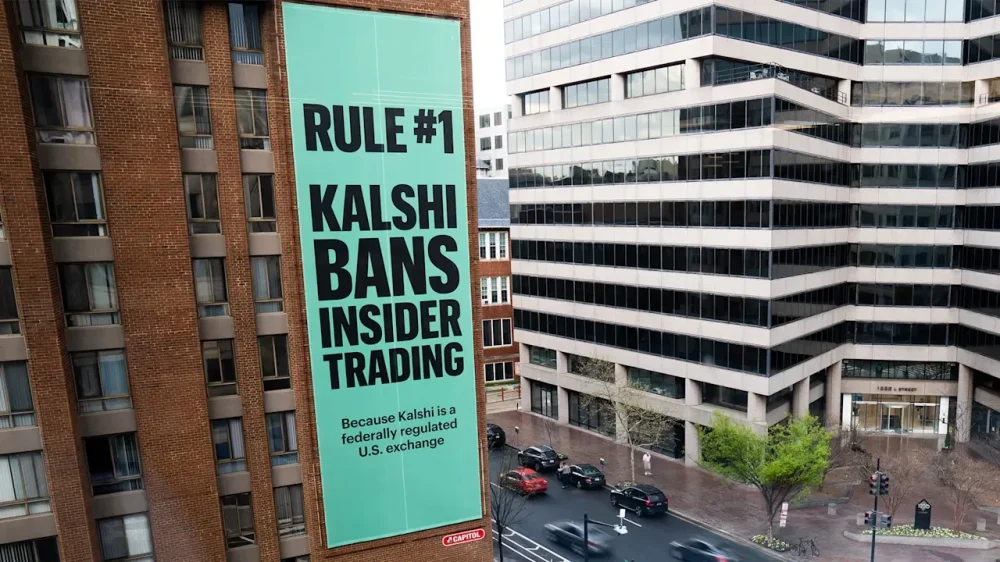
The soccer coach had blocked himself from sportsbooks by the time he found prediction markets. The tax accountant said he “got the same high” on those platforms that he got from gambling. “That was how I relapsed — with Kalshi and Polymarket. I lost a bunch of money.” The rapid growth of prediction markets has sparked a high-stakes debate that is playing out in courts and legislatures all over the country. Operators of those companies believe they should be regulated like the stock exchange because of federal law and their customer-to-customer structure, while sportsbooks and state officials think they should be supervised the same way as sports gambling platforms. While that argument continues with no sign of resolution, the clinicians who treat gambling disorders are more concerned about what they are seeing with their patients. In their spaces, when it comes to sports gambling and prediction markets, the end result is virtually the same. Two gambling addicts who spoke to The Associated Press — the soccer coach and tax accountant — say they had relapses on prediction markets after they took legal action to protect themselves from the allure of sports betting. They are being identified by their occupations because of the sensitivity of their situations. Their stories reflect what experts say they see with some of their clients. “There may be real differences in how these products are defined or regulated, but in the therapy room, we are often seeing the same cycle of anticipation, action and reaction play out again and again,” said Dr. Cynthia Grant, the vice president of clinical for Birches Health, which operates a national network of providers for treating gambling addiction. “I sometimes think of it like different doors into the same room. The label on the door may change, but once someone’s inside, the experience can feel very familiar.” The road from sportsbooks to prediction markets Sportsbooks and prediction markets offer a lot of similar options. Wagers on games, individual performances and other possibilities. But the format is different. Sportsbooks have in-house experts who set odds that dictate payouts for winning bets. It’s the house versus the gamblers. Traders on predictions markets swap contracts of yes-or-no questions, and profits and losses are dictated by the market. Win a “yes” holding on an event contract where most of the market guessed “no,” and the payout is bigger. Prediction markets generally make money through fees on contracts. For addicts, they are two paths to the same result. The soccer coach who spoke to the AP started gambling when he was 16. Small bets against friends in his New York neighborhood, everything from cards to basketball and tennis. When he turned 18, he started going to casinos and making bets at sportsbooks. Amid mounting losses, he turned to prediction markets. “I would be in all this debt and get a paycheck for $2,000 on a Friday and it would be gone by Saturday or Sunday,” said the coach, 21. “I wouldn’t have money to fill up my gas tank.” He was struggling with loans and maxed-out credit cards while working and going to college before he stepped away in January to confront his addiction problems, which also included smoking marijuana. He joined Gamblers Anonymous, and he was told he had to stop associating with people who gamble. “For a younger crowd, that’s difficult because it’s everywhere,” the coach said. “My friends from childhood — most of them all gamble.” The coach and the tax accountant had formally self-excluded from sportsbooks before they started trading on prediction markets. Self-exclusion programs provide an opportunity for gamblers to ban themselves from gambling facilities and betting apps. They are offered in many states as part of gambling regulations, but there is no widely adopted national system. The landscape for self-exclusion programs becomes even more fragmented when predictions markets are included. Kalshi started a voluntary opt-out program when it launched a customer protection hub in March 2025, and it’s one of several platforms — including Polymarket — collaborating on a national self-exclusion program for prediction markets. But it’s not clear if that program would ever overlap with the systems used by state gambling regulators. The accountant, 33, said his gambling problems started after New York launched legalized mobile sports betting in January 2022. He had “a boatload of debt” in August 2023 when he told his then-fiancée about what was going on with him. She married him anyway. Looking to save money after the wedding, they moved into a rental house owned by his parents. He self-excluded from sportsbooks. Then, after the couple lost their first pregnancy, the accountant started day-trading before signing up for Kalshi. “Prediction markets are the same thing packaged in a different way,” the accountant said. “It’s a dangerous loophole. … How can you do all that and say you’re not a sportsbook?” Tennis was his go-to sport — he liked the speed of the matches — before he went to rehab in Virginia last year. He had a relapse in December when he downloaded Polymarket and made a free $10 wager. He was confronted by his wife, who had his email connected to her phone and reached out to his sponsor. While there has been no substantive research into the effect of prediction markets on sports gambling addiction, the experiences of the coach and the accountant are not uncommon for treatment experts. “You’re seeing a lot of the same behaviors, whether it’s a prediction market or it’s gambling,” said Jody Bechtold, the CEO of The Better Institute, a Pennsylvania practice that works with people impacted by gambling disorders. “You’re seeing, you know, wagering more and more. Chasing losses, so ‘Oh, today was a bad day, I have to work tomorrow at the prediction markets to get my money back.’ … The lies, the secrecy, and that it’s impacting everyday life.” Kalshi spokeswoman Elisabeth Diana highlighted its programs for responsible trading — such as trading breaks and self-limits — and said it’s working on other measures to further facilitate healthy trading behavior. Compared to casinos, Diana said, Kalshi is “fairer, more transparent, and less predatory.” “There is no house that wins when customers lose,” she said. “This means that Kalshi doesn’t hook losers and penalize winners.” A message was left seeking comment from Polymarket. Event contracts are increasingly popular on prediction markets Sports have become a major category for prediction markets. Kalshi had more than $2 billion in total trading volume on this year’s NCAA men’s basketball tournament, according to Diana. Michigan’s 69-63 victory over Connecticut in the championship had $10.6 million in volume on Polymarket. The U.S. market for sports-focused event contracts could grow to approximately $1.1 trillion in annual volume, according to a Bank of America report. “A year ago, if you said prediction markets, I mean I don’t know what that is, I don’t see it,” said Dr. Timothy Fong, the co-director of the UCLA Gambling Studies Program. “Now we’re starting to see it more and more in our patients that come into the clinic. And it’s usually not one, it’s multiple platforms they’re betting on, right? … When you have something that’s available, that’s accessible, that’s anonymous, is super easy to use, multiple times in a day, of course that’s going to raise the risk of addiction for any human on Earth.” There are multiple ongoing lawsuits involving states and prediction markets, and the ramifications of the legal dispute are being felt on a variety of levels. Marlene Warner, the CEO of the Massachusetts Council on Gaming and Health — a private nonprofit health organization that provides educational programs on gambling along with other services — said the situation with prediction markets “feels a bit like the wild, wild west right now.” “We’re very used to like going to our state regulator or, you know, seeing a process go through where all of a sudden now you’re like, ‘OK, a piece of legislation has outlined what is appropriate for a licensed sports betting operator to do,'” Warner said. “And then you see the regulation come into place. And so you can track it. But right now, nobody knows kind of what the limits are.” In most states with legal sports gambling, it is limited to ages 21 and older, while prediction markets are open for 18- to 20-year-olds with some exceptions. Prediction markets also have a presence in states where sports betting is illegal, including Texas and California. “I don’t know enough frankly, we don’t know enough, nothing’s been studied about them, I can’t tell you whether they’re more less or exactly the same in terms of risk level,” Warner said. “But what I do know is they’re in a very gray, unregulated space and that alone makes it difficult.” Prediction markets fall under the jurisdiction of the federal Commodity Futures Trading Commission, which has a regulation that prohibits an event contract “that involves, relates to, or references terrorism, assassination, war, gaming, or an activity that is unlawful under any state or federal law.” CFTC chairman Michael Selig is backing prediction markets in their legal proceedings against several states, asserting the commission’s “exclusive jurisdiction over these markets.” While that argument continues, the soccer coach and tax accountant are rebuilding their lives — while doing their best to stay vigilant with their addictions. “You have to face this stuff or it just keeps getting worse,” the coach said. AP sports: https://apnews.com/sports The Associated Press receives support from Charles Schwab Foundation for educational and explanatory reporting to improve financial literacy. The independent foundation is separate from Charles Schwab and Co. Inc. The AP is solely responsible for its journalism. —Jay Cohen and Cora Lewis, Associated Press View the full article
-
In this political climate, corporate sustainability initiatives are not always a popular topic of conversation. But even though they are less visible, with companies greenhushing, sustainability commitments and actions are continuing—and in some cases growing. We asked our Fast Company Impact Council members how their approaches to sustainability have changed in the last year. Six leaders shared positive changes and thoughtful tactics their companies were taking. Some efforts are internal, some are external. But all are intentional. 1. B CORP CERTIFICATION We achieved B Corp certification last year for our Philadelphia location, which was a culmination of 15 months of work to improve every aspect of our business to align with positive environmental and social impact. In that process, we developed clear metrics and measurement methodologies around waste and emissions reduction and codified community engagement initiatives. — Bo Zhao, Baby Gear Group 2. SUSTAINABLE CONFERENCE Engage for Good’s annual conference is our biggest event and we’ve tried to make sustainability a series of practical choices rather than a slogan. We’ve moved away from printed agendas in favor of digital materials through our event app, encouraged speakers to share resources electronically, and worked with venues that prioritize water conservation and other sustainability efforts. Even small decisions, like offering strong vegetarian options, can meaningfully reduce the footprint of a large event. — Muneer Panjwani, Engage for Good 3. EXTERNAL APPROACH Our company was founded 75 years ago on a commitment to be forever 100% PVC-free. So in many ways there’s been no change internally, as we continue to champion more sustainable practices as the foundation of who we are. What has changed is our external approach. We’ve evolved our focus to creating and being part of industry-wide coalitions to raise awareness and promote education on the built environment’s significant impact on our ecosystem, inspiring tangible change and action on a wider scale. — Gordon Boggis, Carnegie 4. EMBED SUSTAINABILITY INTO OPERATIONS We’ve shifted from treating sustainability as a standalone initiative to embedding it into how we actually work. Being 100% remote, our globally-distributed team operates across time zones by design, which means less travel, fewer offices, and a delivery model that’s inherently lighter. The focus now is on removing waste from every process rather than layering sustainability on top of existing ones. — Peter Smart, Fantasy 5. BETTERMENT INTELLIGENCE We have evolved beyond passive sustainability toward what we call “betterment intelligence.” In the past year, we’ve integrated AI-first tools to simulate the long-term social impact of branding decisions before they are executed. As a Certified B Corp with a record score of 110.4, we no longer view sustainability as a departmental initiative, but as the primary standard of brand survival. Whether it’s branding the first smart farm in Mongolia or metropolitan identities in Busan, South Korea, our approach now demands that commercial success and social betterment are mathematically inseparable. — Sooyoung Cho, the bread and butter brand consulting LLC 6. COMMUNICATION AND TIMELY TOOLS In light of AI’s impacts on sustainability, we’ve reinforced actions to take a firmer stance and communicate this to employees and clients. We invested in local hardware to run as much of our generative platforms as possible. With full control, we closely monitor usage and right-size it for our 1,250-person firm. We’re also investing more in our sustainability and resiliency center as a growth engine, paired with responsible design including eco-friendly water re-use systems for data centers. It’s about being responsible, balanced, and providing timely tools while driving stewardship. — Mike Sewell, Gresham Smith View the full article

-
Google’s Preferred Sources now supports all languages, not just the English language. “Preferred Sources is now rolling out globally in all supported languages,” Google wrote on its blog this morning. “This feature gives you more control over the news you see on Search by letting you choose the outlets and sites you want to appear more often in Top Stories,” Google added. In December, Google rolled out preferred sources globally but it only supported English. Now it supports all languages globally as well. Stats. Google added some interesting data including: “Readers are twice as likely to click through to a site after marking it as a Preferred Source” “People have already selected over 200,000 unique sites — from niche local blogs to global news desks” Preferred Sources. Preferred Sources let searchers star publications in the Top Stories section of Google Search, and Google uses that signal to show more stories from those starred outlets. The feature entered beta in June, rolled out in the U.S. and India in August, and is now expanding globally. How it works. You click the star icon to the right of the Top Stories header in search results. After that, you can choose your preferred sources – assuming the site is publishing fresh content. Google will then start to show you more of the latest updates from your selected sites in Top Stories “when they have new articles or posts that are relevant to your search,” Google added. More details can be found over here. Why we care. Traffic from Google Search is hard and if you can get your readers, loyal readers, to make your site a preferred source, that can help. Google said those users are twice as likely to click, which can help drive more traffic. So add the preferred source icon to your site and encourage users to sign up. You can make Search Engine Land a preferred source by clicking here. View the full article
-
Deliberate experimentation can unlock value—without creating costly mistakes. Accounting ARC With Liz Mason and Byron Patrick Center for Accounting Transformation Go PRO for members-only access to more Center for Accounting Transformation. View the full article
-
Deliberate experimentation can unlock value—without creating costly mistakes. Accounting ARC With Liz Mason and Byron Patrick Center for Accounting Transformation Go PRO for members-only access to more Center for Accounting Transformation. View the full article
-
The difference between a 2% margin and a 20% margin increasingly comes down to whether you’re renting attention or owning the answer. For years, search rewarded the ability to buy visibility. That model is weakening. As AI systems increasingly resolve queries without a click, the value shifts from traffic acquisition to answer formation. When you move from buying clicks to engineering answers (i.e., structuring content so it can be surfaced, cited, and trusted by AI systems), you change what you own. Instead of renting placement, you build answer equity: durable inclusion in the outputs that shape decisions. The goal isn’t to turn off paid search. It’s to stop relying on it as your primary source of demand. Over time, this can lower acquisition costs and reduce volatility, because you’re not competing for every impression. An atomic sandwich To operationalize this shift, you need a content structure that maximizes what AI systems can extract. Think of it as an “atomic sandwich.” An atomic sandwich content structure shifts the focus from chasing traffic to maximizing intent density. Here’s how: The atomic fact (top bun) Most organizations treat their search budget like a high-interest payday loan. You keep pouring cash into the paid bucket for that immediate hit of traffic, and it feels like you’re winning. But the moment you stop feeding the meter, your brand disappears. The forensic proof (the meat) For many organizations, this isn’t just marketing inefficiency — it’s an organizational risk. In the emerging Answer Economy, your rented audience is evaporating. Data from Seer Interactive (Sept 2025) shows paid CTR on informational queries has dropped 68% when Google’s AI Overviews are present. You’re not just paying for clicks. In many cases, your paid traffic contributes to awareness that AI systems can later satisfy without requiring a click. The structural directive (bottom bun) The “box” has changed. Here’s the structural leak in your balance sheet: to survive 2026, you must stop buying a crowd and start engineering the answer. If your brand isn’t among the trusted sources behind the machine’s answer, your visibility — and influence — shrinks significantly. The new “box”: From librarian to forensic auditor We’ve moved from a search engine that directs users to a generative engine that validates information. Every dollar you spend on ads to cover a lack of E-E-A-T is money you’re burning. The data is clear: appearing in search results is no longer a viable model on its own. The organic collapse: A SISTRIX (March 2026) analysis found that when an AI Overview is present, position 1 CTR drops from 27% to 11% — a 59% decline. The global impact: Ahrefs (Dec 2025) found AI Overviews correlate with a 58% lower average CTR for the top-ranking page. The goal is no longer just to rank in search, but to be consistently included among the sources AI systems rely on. Without trust, you’re paying for ghost impressions. In the old box, you could survive by being loud. In the new box, you survive by being certain. The search addiction cycle (why your org can’t quit) Most companies are in organizational denial. You see the cost of rented clicks rising and quality falling, but you’re too afraid to stop because you’ve neglected your information architecture and have no foundation. That’s a balance sheet liability. Stage 1 — the vanity hit: early paid search wins made you feel like a genius. You mistook traffic volume for business health. Stage 2 — tolerance building: As the Answer Economy evolved, keywords got more expensive. Instead of fixing structural integrity, you upped the dose. Stage 3 — the context-debt overdose: You’re paying for zombie facts — content an AI can summarize in seconds. Zero-click searches have surged to 69%. Your expensive awareness is consumed for free by AI. Stage 4 — total dependency: Your marketing manager becomes a budget operator rather than a builder of durable demand. They aren’t building answer equity; they’re managing cash transfer to Google. The forensic intervention: The 7-point organizational health check Use this checklist in your next review to find where your Answer Equity is leaking. The Information Gain test: Ask Gemini to summarize your page. If it adds nothing beyond common results, you’re in violation of Google’s Information Gain patent. You have a zombie fact with zero value. The entity audit: Does your brand have a verified Google Knowledge Graph ID? Without it, you’re not an asset — you’re just text. Source of ground truth: Are you cited in AI Overviews? BrightEdge (Sept 2025) shows that without a citation, your visibility is effectively zero. The faucet test: If you cut PPC spend by 20%, does lead volume drop 20%? If so, you have no foundation — you’re renting revenue. Schema and provenance: Are you using Schema.org/Person to link experts to your brand? Unverified content is untrusted noise to a retriever. The “meat” ratio: Review your top 10 posts. Do they include primary research? If not, they’re fodder for the AI’s top bun with no reason to click. Machine-readable graph adoption: Is your team moving toward W3C RDF-star (RDF 1.2) or ISO/IEC GQL standards? These are the 2026 blueprints for verifying Answer Equity. The recovery plan: From rented clicks to owned authority 1. Purge the zombie facts (the information gain protocol) Stop rewarding word count. Every piece of content must deliver a “meat” layer — information gain a retriever can’t synthesize from the rest of the web. That’s how you reclaim your margins. Dig deeper: Information gain in SEO: What it is and why it matters. 2. Build your “E-E-A-T engine” (the trust infrastructure) Stop treating schema as a technical extra. It’s your trust score on the digital exchange. Ensure your authors have strong provenance so AI retrievers can instantly crawl and confirm your expertise. Dig deeper: Decoding Google’s E-E-A-T: A comprehensive guide to quality assessment signals. 3. Measure ‘intent density’ (the scoreboard shift) If your traffic drops but lead quality holds, you’re winning. Focus on users who bypass the summary because they need the deep, forensic expertise only you provide. Dig deeper: Measuring zero-click search: Visibility-first SEO for AI results. The final shift: Building your answer equity The shift from renting an audience to owning the answer is the most significant strategic pivot your organization will make this decade. It moves you from a marketing expense to a balance sheet asset. The paid trap offers a temporary high but leads to a fiscal dead end. Every dollar spent there is consumable — used once and gone when the auction ends. When you move that capital into your information infrastructure, you stop paying for the privilege of being ignored. You start building a digital entity that owns its facts, earns trust, and controls its future in the Answer Economy. Your first step: don’t boil the ocean. Take your top-performing paid landing page and run the seven-point health check. If it’s a “zombie fact” environment, engineer information gain back into the page. Stop asking for a ranking report; start asking for an entity audit. The 2026 organization isn’t defined by how much it spends to rent an audience, but by how much it proves it owns the answer. You have the blueprints. You have the data. Now stop funding the payday loan and start building answer equity. View the full article
-
It’s not just you. Workplace stress is at a breaking point and starting to manifest in some alarming ways. Overstressed workers are now crying, having panic attacks, and even using substances to cope with work stress while on the job in strikingly high numbers. A new report from Modern Health, a mental health platform offered as an employee benefit, surveyed on a random sample of 1,000 workers at companies of 250 or more employees. It found that employees are deeply stressed, feel largely unsupported, and that it’s all bubbling over to the point that it’s impacting their behavior at work. For many workers, AI fears are driving their stress levels. Two-thirds say AI has raised the bar in terms of what’s expected of them day-to-day and 64% say their stress has ticked up as a result. One in four employees say that AI is actually harming their mental health. The stress is changing the way employees show up at work: 63% report using alcohol, THC, or prescribed pharmaceuticals to unwind once they are home for the day. A staggering 52% said they’ve used substances at the office over the past year. Employees are also having more meltdowns than they did just a year ago. Per the report, 51% of employees said they’ve cried at the office within the last 30 days alone. That’s up 12 points from last year’s survey. Likewise, 52% say they’ve experienced an anxiety or panic attack at work. Often, this is the result of employees feeling bogged down with work but unable to set boundaries or take breaks. Case in point, 72% said they felt pressure to work through their mental health strains (up 10 points from the previous year). The same number said their employer prioritizes productivity over wellbeing. And over half (57%) said they felt pressure to respond to work messages outside of work hours. When employees feel like they can never log off, the lines between what they bring home and what they bring back to work get very blurred. As such, workplace stress is reshaping behavior in ways employers can’t afford to ignore. View the full article

-
Here is a recap of what happened in the search forums today, through the eyes of the Search Engine Roundtable and other search forums on the web. Google and Microsoft reported earnings...View the full article