ResidentialBusiness
Administrators
-
Joined
-
Last visited
Everything posted by ResidentialBusiness
-
 Google made a really small change to its spam policies documentation to say, "In the context of Google Search, spam refers to techniques used to deceive users or manipulate our Search systems into ranking content highly."View the full article
 -
Google seems to be working through the Google Business Profile support, reinstatement, and suspension appeal requests. As we reported twice already, once back in mid-February and then again earlier this week, Google confirmed the delay.View the full article
-
Victory in the Ukraine war would serve as the perfect justification for autocracy at homeView the full article
-
Google added a number of new features to the event rich results search feature within Google Search. Some of these might not be new, but now on these event results you can share the event, add it to your calendar, see similar events, get more details on the venue and find nearby food and drinks.View the full article
-
Google is testing replacing the low key website / URL button in the knowledge panels within Google Search, with a large blue button. I mean, this blue button makes it was more clickable, a much larger and more visible call to action, than the normal button you see in Knowledge Panels.View the full article
-
Gen Z isn’t just watching creators—they’re choosing them over traditional TV and movies. That’s the big takeaway from Deloitte’s 19th annual Digital Media Trends survey. The report finds that 56% of Gen Z and 43% of millennials find social media content more relevant than traditional entertainment options, and about half feel a stronger personal connection to social media creators than to actors or TV personalities. The entertainment industry is in a battle for attention, competing for an average of six hours of daily screen time per person. But that number isn’t increasing. In this landscape, tech platforms have the upper hand over traditional studios and streamers, with online creators catering to every niche imaginable. And younger consumers don’t just watch creators—they trust them. A majority of Gen Z and millennials say creator content is their favorite type of video, and about half feel a stronger bond with influencers than with TV personalities or actors. These parasocial relationships keep fans invested, scrolling, and coming back for more. For younger audiences, viral videos aren’t just entertainment—they’re the new primetime, and creators are today’s stars. That doesn’t mean the grass never looks greener. A number of creators are making the leap to network TV and streaming platforms, where they can secure lucrative and stable contracts, gain exposure, and grow their audiences. Just as creators are building on their fame in traditional media, celebrities are also establishing themselves as brands and amassing followings on social media. It’s not just attention that media and entertainment companies are fighting for—it’s also a limited pool of consumer spending. Subscription fatigue is real, and there are no signs of people paying more for streaming services. Instead, many are frustrated by rising prices and the hassle of juggling multiple subscriptions to access the content they want. Nearly half of those surveyed by Deloitte feel they’re overpaying for streaming services, and 41% say the content isn’t worth the cost. To compete for views in today’s media landscape, traditional studios and streamers need to get with the program. As recently as two decades ago, pay TV was considered just as essential in the household as toilet paper. Fast forward to today, and for younger generations, TV is background noise while they scroll on their phones. View the full article

-
At eight months pregnant with my first child, I walked into my boss’s office, ready for a pivotal meeting. I had spent months designing a new crisis management program for our university—one that would improve student outcomes and reduce institutional risk. This was the moment I’d learn whether my work would be implemented. I had poured everything into this project. It reflected my expertise, positioned the university at the forefront of best practices, and—for me personally—offered the challenge and recognition I craved. My current role felt stagnant, and this opportunity was exactly what I needed. My boss was thrilled with my proposal and agreed I was the right person to lead it. Then, she hesitated. “But,” she said, “you may not want it.” I was stunned. Of course, I wanted it. It was a promotion I had essentially built for myself. But she smiled and, with what she saw as kindness, said, “Once the baby comes, you may find that you’re less interested in work. You might be less . . . ambitious. You’re going to find that you’re a different person.” I assured her I wanted the role, and the promotion was official. But her words cast a shadow over the good news. Less ambitious? Change my identity? What kind of sexist nonsense was that? I knew exactly who I was, and I wasn’t about to prove her right. When motherhood becomes a career liability I hadn’t even given birth, yet I was already experiencing the motherhood penalty—a term that refers to the economic and career disadvantages that mothers often face in the workplace compared to their childless counterparts and fathers. Sociologists have long studied this phenomenon and have found that, to compensate, working mothers often feel pressured to downplay their parental responsibilities to be taken seriously at work. When I returned to work after maternity leave, I found myself doing exactly this. I shared my parenting experiences with only a small group of trusted colleagues, wary of confirming anyone’s biases. My boss’s words still echoed in my head. Even in an institution more supportive of working parents than most, I didn’t want anyone to doubt my dedication. The COVID-19 pandemic briefly shattered this illusion. When kids interrupted Zoom meetings asking for help with virtual school, hiding our parental roles became impossible. But now many of us feel pressure to return to the pre-pandemic norms of keeping motherhood in the background. The unspoken expectation remains: Be present as a professional first, a parent second. Of course, the pressure to separate our professional and personal identities comes at a steep cost. When employees feel they can’t be authentic at work, they disengage, burn out, or leave. This isn’t just a loss for individuals—it’s a loss for organizations that miss out on the creativity, resilience, and leadership working parents bring to the table. Bridging the gap Ironically, my boss was right—but not in the way she expected. After having my son, I did change. I returned to work with a broader perspective, increased flexibility in my thinking, and with a deeper well of empathy. And these changes made me a different kind of professional—they made me better. Parenthood forces us to develop skills that translate directly into leadership: patience, conflict resolution, adaptability, and emotional intelligence. It forces us to prioritize, make decisions under pressure, and manage competing demands. These skills and perspectives are deeply needed in today’s workplaces. We need to stop pretending that work and parenting exist in opposition. The more we integrate these identities, the stronger we become—as professionals, as leaders, and as humans—and the stronger our organizations become. It’s time to rewrite the narrative. Parenthood deepens our capacity for leadership, strengthens our problem-solving skills, and fuels our drive to create a better world for the next generation. The real challenge isn’t whether working parents can stay committed to their careers—it’s whether workplaces can evolve to recognize the full value they bring. So instead of downplaying our role as parents, what if we embraced it as an asset? What if we stopped proving our worth by pretending caregiving doesn’t exist, and instead reshaped professional culture to reflect the reality that so many of us live? The more openly we integrate our identities, the more we create space for others to do the same. I didn’t lose my ambition when I became a mother. If anything, it sharpened. The question isn’t whether we change after parenthood—it’s whether we allow those changes to make us stronger. And whether the workplace is ready to keep up. View the full article

-
Get better ad results by adjusting PPC schedules across time zones using automation, segmentation, and data-driven bidding in Google Ads and Microsoft Ads. The post Navigating Time Zone Differences: Scheduling Ads For Maximum Impact appeared first on Search Engine Journal. View the full article
-
Jono Alderson proposes a radical rethink of content strategy to compete against AI and win in Google Search The post Top SEO Shares How To Win In The Era Of Google AI appeared first on Search Engine Journal. View the full article
-
Apple Watch sales are enduring a years-long backslide. While Apple first launched its watch in 2015, sales didn’t spike until the pandemic, when consumers were highly focused on their health. But competitors quickly caught up, with fitness-focused companies like Garmin integrating more smart technology. Meanwhile, Apple stumbled in adding compelling new features—getting into some legal spats along the way. For the past three years, Apple Watch sales have declined year-over-year, according to research firm IDC. In 2022, Apple sold 43 million units; by 2024, that number dropped to 34 million. The Apple Watch also lost market share, falling from 29.6% to 22.5%, while high-end competitor Garmin and budget alternatives like Huawei and Xiaomi gained ground. And although Apple doesn’t break out revenue by individual product, its “Wearables, Home and Accessories” segment was the only one to decline year-over-year in the fourth quarter of 2024. “Apple is in a weird spot,” says Jitesh Ubrani, a research manager at IDC studying wearables. “They make great stuff but, at least on the watch side, things are a little bit iterative.” Where did the Apple Watch upgraders go? Apple Watch sales have fallen far from their 2022 peak. While some analysts remain optimistic—Ubrani expects Apple will regain modest growth in 2025—the numbers are still well below pandemic highs. Part of the drop, experts say, comes down to durability. “A lot of people bought a new smartwatch or replacement smartwatch during the pandemic,” says Ben Hatton, analyst of connected devices for CCS. “Those devices are yet to reach the point where they are beginning to be replaced. So there’s that longevity of device, especially for the top-end devices, that does hamper growth.” Unlike the iPhone, which users often upgrade for new features, the Apple Watch hasn’t changed dramatically in recent years. Ubrani notes that the device’s health and fitness sensors have remained largely consistent across generations. “You’re not getting a whole new experience, apart from maybe a shiny new case,” he says. (Apple did not respond to a request for comment.) That could soon change. According to Bloomberg, Apple is currently testing watches with added cameras and Apple Intelligence. Ubrani says these updates could appeal to Apple loyalists—but they’re already standard features among competitors. “If we’re talking AI, I think Apple is behind, and visual intelligence would be a part of that,” he says. “In terms of adding cameras, they wouldn’t be the first one.” Who needs an Apple Watch these days? Apple isn’t the only company facing headwinds; the entire smartwatch industry has seen declining sales over the past three years, per IDC. But Apple’s competitors have weathered the downturn more gracefully. In 2023, when Apple Watch sales fell 15.8%, Google’s declined just 4.3%. And while both are expected to return to growth in 2025, Google’s projected 9.4% gain far outpaces Apple’s 4.9%. Even in a shrinking market, Garmin is gaining ground. Though its share remains modest at about 5%, the company sold nearly two million more watches in 2024 than the previous year. “You’ve got a group of consumers that are looking to buy the best, top of the range fitness trackers,” Hatton says. “They may have gone into them through the Apple Watch or the Samsung Watch, but increasingly, they’re realizing that what they want it for is the pure fitness element. Garmin is probably best positioned to serve that demand.” The wearables category has also diversified. Watches once dominated the space, but now consumers can choose from smart rings that track sleep, headbands that boost focus, and AI-powered sunglasses. While these devices are still niche, Hatton says their rapid growth poses a longer-term threat. Apple sold an estimated 40 million watches last year; by contrast, only about 2 million smart rings were sold across all providers. “If they continue to grow very quickly, then they may start to become a real challenger to watches,” he contends. And some consumers are simply over it. Maybe they grew tired of the endless notifications. Maybe they were shamed for wearing an Apple Watch at their wedding. Maybe they just missed the feel of a classic timepiece. “There’s been a resurgence of traditional watches,” Ubrani says. “People like the idea of having something that’s a little less mass produced, something that’s away from the mainstream.” View the full article

-
Want to learn SEO? These nine expert-led SEO courses are completely free—and worth your time. View the full article
-
Opposition says law to bring politicians into selection process will bring Israel ‘to the brink of civil war’View the full article
-
Nearly 30 million Americans annually are impacted by water scarcity and don’t have reliable access to clean water. The water crisis stems from a wide range of issues, ranging from extreme weather events like hurricanes and flooding to depleted aquifers and overuse of wells. Our aging water infrastructure alone leaks 6 billion gallons per day, while pipe failures lead to nearly 10,000 “boil water” notices every year. Water is an essential and increasingly limited resource. It shapes where we live (or don’t). Vast lands across America remain undeveloped due to a lack of natural water resources, exacerbating the housing crisis. Water increasingly restrains and defines how we live. These crises expose a fundamental flaw in our water infrastructure: It’s centralized, fragile, and slow to adapt. For centuries, we’ve relied on massive, fixed water systems—municipal plants, aquifers, and reservoirs—assuming they’d always be enough. But droughts, disasters, and rising demand are pushing these systems to the brink. Neither resilient nor quite renewable, the problem isn’t just scarcity—it’s rigidity. Energy faced a similar challenge. Grids dependent on fossil-fueled centralized plants proved vulnerable to extreme weather and surging demand, while adding to pollution and climate change. The solution? Resilient and renewable eistributed energy resources (DERs)—solar panels, batteries, and microgrids that gave homes and businesses power independence. What if water worked the same way? What if atmospheric water generation (AWG), smart storage, and rainwater harvesting built a new paradigm of distributed water resources (DWRs)? This would make water supply resilient, renewable, and independent. Just as DERs revolutionized energy, distributed water will redefine water. The crucial foundation of DWRs is a renewable water source like rainwater collection and atmospheric water generation—producing clean water directly from the air. While the concept isn’t new—the U.S. military has explored it since the 1930s—early technologies were energy-intensive, expensive, and impractical for widespread use. Until now, atmospheric water was limited to niche applications. But today, technological advancements have changed the game. Large-scale atmospheric water capture is a reality, and when integrated with storage, entire homes and communities can be sustained with water sourced directly from the air, feeding into showers, kitchens, and more. (One of our companies, Brian Sheng’s Aquaria, builds and sells AWG systems.) This is a water equivalent to a renewable microgrid—the hydrogrid—and it’s already here. In Texas, rural homeowners have implemented a DWR model themselves, standing up rainwater systems, AWGs and water storage, and unplugging from their failing wells. In Hawaii, a developer is building a pioneering residential community integrating a hydrogrid with a rainwater harvesting system to secure a year-round independent water supply. No need to further stress—or rely on—overstressed terrestrial water sources and infrastructure. An Aquaria Hydropack unit is integrated with a rainwater catchment system in this off-the-grid home in Hill Country, Texas. [Photo: Aquaria] Big water infrastructure can’t close the supply-and-demand gap quickly At the Texas Water Day at the Texas Capital in March, water advocates shared that it costs about $2 million to build one mile of new municipal-type water pipe—pipes that only have about a 35-year life! As we expand our urban centers with new suburbs and exurbs, there’s no easy path to finance urgently needed new water systems to support growth. Like the energy grid, our water infrastructure is fragmented. A recent McKinsey report on water resilience found that of the nation’s nearly 50,000 water systems, 91% service small communities of under 10,000 people. It’s hard to imagine how these small-scale, rural systems will be able to afford the considerable costs associated with upgrading and maintaining water pipes. As McKinsey sees it, the overall infrastructure funding gap for water utilities in the U.S. could reach $194 billion by 2030. An Aquaria water generator and tank installed at a South Texas home supplements its water supply during drought conditions. [Photo: Aquaria] DWRs are the resilient solution that humanity needs Rural communities highlight why a DWR model is the most reliable, resilient, and adaptable approach to water infrastructure. Traditional hub-and-spoke systems are prone to pipeline failures, contamination, and supply disruptions, leaving entire communities without water or forcing them to live with “boil water” notices. By pairing localized rainwater collection and atmospheric water generation with storage, communities can remain self-sufficient and resilient—producing, storing, and using water on demand, reducing reliance on distant water. The amount of water in the air at any given time is about 3,100 cubic miles. This stays consistent and regenerates every week or so through natural cycles of precipitation and evaporation. This quantity is about 200 times more than humans consume annually. Water in the air is not only abundant, it is limitless. A homeowner can install an AWG and storage tank starting at around $20,000—comparable to the average cost of a residential solar installation. Installation is straightforward, requiring only a connection to the home’s water system and can typically be completed within a week. Residential rainwater systems range from humble rain barrels to large-scale systems with 50,000-gallon tanks to maximize collection during the season, plus water treatment, sensors, and even predictive modeling to manage use. Scaling rainwater harvesting and AWGs for community-level water generation is equally practical. These AWG systems are housed in containerized units, similar to container battery storage systems, making them highly modular and deployable within days. A single unit can produce thousands of gallons of clean water per day, and multiple units can be deployed in parallel or distributed to different locations based on demand. Aquaria’s Hydropack X unit, installed with a storage tank for backup water supply that’s needed due to unreliable piped water supply in Austin [Photo: Aquaria] Envisioning a new future for water In an ever-changing world, the time to secure water independence is now. Homeowners can install DWR systems into their homes to secure personal water supplies, while local, state, and federal governments can implement these systems at scale to protect their communities amid disaster and climate change, while protecting terrestrial water sources with renewable water. DWRs also enable new development opportunities. Land once considered unbuildable due to lack of infrastructure can now support housing, agriculture, and industry without costly municipal expansion. Imagine if we unlock a new way to harvest and deliver abundant water wherever it’s needed. A new model of distributed water resources can unveil a radical range of new possibilities in the same way that distributed energy resources did—delivering reliability, flexibility, sustainability, and independence in an uncertain future. The world is experiencing a growing and urgent water crisis. As Niccolò Machiavelli once said, “Never waste the opportunity offered by a good crisis.” World Water Day has now come and gone, but we must continue to acknowledge the state of the water crisis and recognize the urgency of strategic, communal action. We live in an era of both rapid technological advancement and accelerating water scarcity—and now is the time to bridge the gap. View the full article

-
After all these years, Napster is apparently worth $207 million. That’s how much artificial intelligence and extended reality company Infinite Reality purchased the former file-sharing service for on Tuesday. Under its new ownership, Infinite Reality said Napster will become a virtual concert venue that sells physical and virtual merchandise to musicians’ super fans and is capable of hosting social listening parties and gamifying fan engagement and loyalty. “By acquiring Napster, we’re paving a path to a brighter future for artists, fans, and the music industry at large,” Infinite Reality CEO John Acunto said in a statement. “This strategic move aligns with Infinite Reality’s vision to lead an internet industry shift from a flat 2D clickable web to a 3D conversational one—giving all creators modern tools to better engage, monetize, and measure their audiences.” [Image: Infinite Reality] Napster on repeat The bet is the Napster brand has some life left in it still, but the new owners face a challenge. The recent history of Napster shows it’s hard to buy an old brand for parts and transfer its nostalgic goodwill to a new but related service. When Napster operated in its original form from 1999 to 2001, it was a peer-to-peer platform that offered users free, though illegal, access to music online (not to mention computer viruses). It served as a precursor and catalyst for the music industry’s switch from physical music formats to digital downloads and streaming, and Napster’s new owners hope it will again lead the way to a new era for popular music “Napster revolutionized digital music in the ’90s and now, with Infinite Reality, we’re ready to do it again,” said Jon Vlassopulos, Napster’s CEO and the former global head of music at Roblox. “The internet has evolved from desktop to mobile, from mobile to social, and now we are entering the immersive era. Yet, music streaming has remained largely the same. It’s time to reimagine what’s possible.” The plans for the reimagined Napster mirror those of other companies seeking to bridge music, VR, and super fans. Meta has hosted virtual concerts by artists including Charli XCX and Sabrina Carpenter, Fortnite has sold special-edition skins, or virtual outfits, that match what artists like Ariana Grande and Travis Scott wore during their in-game concerts, and Spotify is considering a “Super-Premium” subscription tier for fans to pay for access to perks like early releases and exclusive deluxe editions of albums. If Infinite Reality has its way, the new Napster could be all of that and more, save for two big problems. The metaverse turned out to be a failure, and many before have tried and failed to attach the Napster name to a new music-based service. Zombie branding at its finest Functionally, Napster has become a music streaming platform, though far less popular than category leaders like Spotify and Apple Music. Napster’s assets have been previously owned by companies that tried merging it with the online music services Pressplay and later Rhapsody, and it was even owned by Best Buy from 2008 to 2011. Since 2020, Napster has changed hands between the virtual reality concert app MelodyVR to an investment group that bought it in 2022 and said it would “revolutionize the music industry by bringing blockchain and Web3 to artists and fans,” to its current owner today. Other turn-of-the-century tech brands have similarly bounced around owners and pivoted to new technologies, like the peer-to-peer file-sharing service LimeWire, which got into AI music generation. MySpace morphed from an early social network to a music-focused site once owned by Fox News parent company News Corporation. For its part, Napster is a zombie brand that’s still widely recognized but worth far less than during its Y2K-era heyday, and it’s seemingly resistant to being repurposed. Music is so tied to youth culture—and today’s youngest listeners are too young to even remember Napster. Plus, its recent history has shown you can’t just buy its brand assets and wear them like a skin. Napster once revolutionized music and technology, but whether its brand name and assets alone can still inspire that same sense of being on popular music’s cutting edge a quarter of a century later seems unlikely. View the full article

-
A few years ago, I was in the middle of an important client meeting when my phone started vibrating. Buzz. Buzz. Not wanting to be impolite, I kept my focus on my client. Buzz. Buzz. Buzz. Finally, I excused myself, peeked at my screen, and saw a string of texts from my son, increasing in urgency. The last few read simply: MOM. MOM. MOM. As the mother of three teenage boys, I had gotten texts like these before. There was no way to know how badly my son needed me: Was he just locked out of the house? Or was this a true, red-alarm emergency? In the end, he was fine—no blood or broken bones, no panic attacks or thoughts of self-harm. But as a parent and caregivers, these are the moments that send your heart rate through the roof. In the conference room that day, I was in two places at once. And I felt like no one else could know. That was the day I realized I’d gotten something important wrong about parenting. When my boys became teens, I figured the “hard part” was over. But in fact, it was just beginning. At exactly the moment our kids are going through some of the toughest years of their lives—facing bullying, pressures from social media and mental health challenges in record numbers—benefits and support programs for parents tend to disappear. In place of paid parental leave, pamphlets on feeding and sleep training, and friends and colleagues asking how we’re doing (and how they can help!), we face an endless stream of advice that only reinforces the sense of shame that so many of us feel: Here’s how to get your kid into a top college! Here’s how to turn your angsty teen into a happy, healthy, successful adult! Often implicit in all of this is possible judgment (or the feeling of being judged) that if our kids are struggling, it’s our fault. That with enough screen time monitoring and elbow grease, these challenges can be optimized away. But parents don’t need more advice. They need recognition and support. In recent years, the U.S. has made great strides in acknowledging the importance of supporting new parents. Thanks to tireless advocacy, policies like paid parental leave, affordable childcare, and flexible schedules have gone from fringe “family” issues to core economic ones. They’re discussed on presidential debate stages, integral to competitive benefit packages, and a key part of any serious conversation about the cost of living. The data on the economic impact of raising healthy kids in psychologically safe, loving environments—and giving parents and caregivers the tools they need to do this—is undeniable. And research has shown employers with strong policies can see the positive impact on their businesses firsthand, in the form of improved employee productivity, better recruitment and stronger retention. Of course, we’re nowhere near where we need to be; paid leave and affordable childcare remain inaccessible to too many. But we have changed the conversation around how we acknowledge, value and support parents of young kids—and with it, the lives of millions of people. Now it’s time we did the same for all parents and caregivers—finding new and better ways to support people whose sleepless nights don’t involve changing diapers but, instead, comforting a teen who may be suffering from depression or anxiety. Solutions won’t look the same as they do for new parents, and if history is any guide, public-sector reform is a long way off. But the first step toward meaningful change is to explore ideas that have a good track record in other contexts and a high likelihood of success. This is where business leaders can lead the way. We can start by recognizing that parents of kids at any age are still, and forever, parents. We can offer schedule flexibility for caregivers of all types. Robust coverage for mental health treatment. Family leave that includes caring for teens in crisis. Tools for team leaders. And resource groups for parents and caregivers of adolescents. Small changes, like explicitly and proactively stating that caregiver leave can be taken to help a child going through a mental health crisis, can go a long way. Beyond corporate policies and benefits, supporting parents and caregivers of teens means building a culture of genuine interpersonal support and understanding, where employees feel welcome and included. You don’t need a handbook to do that: No matter where you sit, you can be part of that change today. I wonder what would have happened around that conference table if, instead of reacting with embarrassment and trying to split my brain in two, I had simply told my client that my teen was in distress and needed me. It might have created a moment of connection and understanding. It might have made my client think about their own experiences, or that of parents on their teams. By normalizing these conversations and supporting caregivers all the way through their journey, we can make a lasting difference for kids and families—and for businesses and society along with them. View the full article

-
Improve SEO performance by reviewing existing content, targeting low-competition keywords, and more. View the full article
-
A child-size table and small chairs make up the centerpiece of a playroom. It’s where children do crafts, host tea parties for their dolls, play hide-and-seek, and build forts. So it makes sense that people buy a lot of them: By 2030, Americans will spend an estimated $12 billion on play tables. [Photo: Bauen] The market is flooded with sets, ranging from inexpensive ones like Ikea’s $50 version to more design-forward varieties like Lalo’s $300 set. Still, husband-and-wife entrepreneurs Lynn and Cassidy Rouse believe there’s room in the market for a better-designed version. More specifically, they wanted to create a set that was indestructible, easy to assemble, usable indoors and outdoors, and even portable. And they wanted to create chairs that were almost impossible to tip over. The Rouses—who have two young children—spent two years designing a play table and chairs, exploring hundreds of prototypes and materials, until they arrived at their final design: a whimsical-looking set made from recyclable plastic. The product has already won an iF Design Award. This week, they’re launching a $649 play table and chair set through their new brand, Bauen. Over time, they expect to redesign other children’s furniture. A Packed Market Child-size furniture has been around since the 18th century, when well-to-do families wanted to give their children opportunities to play and develop. Today such items are a staple of childhood. But when the Rouses scoured the market for a play table for their kids, they found most options lacking. Thanks to the rise of cheap, mass-produced furniture, you can find many affordable options from Target, Walmart, and Amazon. The problem is that most of them are made of inexpensive materials that break easily. “When we spoke to experienced parents, they said that they had gone through several sets of play tables,” Cassidy says. “It’s become a norm to get an inexpensive play set and expect to throw it out after a few years. If you have a second child, you just buy a whole new set.” [Image: Bauen] Outdoor play sets are slightly more durable, since they are made using heavy-duty plastic, but they’re often designed like picnic tables, and don’t look good indoors. “So you end up buying two sets—one for indoors, and another for outdoors,” he says. Today, thanks to improved child-safety laws, companies need to follow regulations when designing furniture for kids. After receiving reports of injuries, the U.S. Consumer Product Safety Commission established a rule that chairs marketed for children younger than 5 must go through a stability test issued by a third-party testing agency. The test involves putting the chair at an incline to show that it will not easily tip over if the child sits too far back or leans to one side. But in focus groups, the Rouses heard parents say their kids frequently tipped over in play chairs, partly because often they often sit quietly at the table, instead playing vigorously and leaning backward at an unsafe angle. “We didn’t think the standard accommodated the way children actually interact with this furniture,” Lynn says. [Image: Bauen] Redesigning a Classic So they set out to create a better product, starting by designing a chair that is more tip-resistant than others on the market. When you first see the chairs, their proportions look a little comical. They have a very wide seat, a very short 8-inch back, and thick legs (a now patent-pending design). All of this creates a low center of gravity, which makes them harder to tip over. “Most children’s chairs are designed like smaller versions of adult chairs,” Cassidy says. “But we had a breakthrough when we realized that toddlers don’t need a large, supportive back; their bodies are often leaning forward to see what is in front of them. By creating a wide seat and a low back, the chair is much more stable.” [Image: Bauen] Rethinking the chairs led the Rouses to rethink almost every aspect of the set’s design. They wondered whether it was possible to create furniture that would look good indoors but also be practical outdoors. They ended up using polyethylene, a type of durable plastic that’s often used to construct outdoor furniture. They sourced it from a company whose products are deemed toxin-free by the EU, which has higher product safety standards than the U.S. [Image: Bauen] Despite being plastic, the set doesn’t look like a traditional picnic table and chairs meant for the backyard. The furniture has interesting curves. Depending on how it’s styled, it can look fun and cartoony in a kid’s bedroom, or sleek in a modern home. But when the sun comes out, you can easily carry the set out to a deck or garden, so kids can eat and play outside. After trying out many other products on the market, the Rouses discovered things they disliked and avoided them in their own design. For instance, they didn’t like the way liquid would spill right off tables, so they designed raised edges so spills would stay contained. Lynn found it annoying that many chairs were not large enough for adults to sit on. “We wanted it to fit an adult bottom,” she says. “That way you can sit with your child at the table. But you can also bring it to the bathroom and sit on it while giving your kid a bath.” [Image: Bauen] Finally, they wanted to make the set easy to assemble. The chairs don’t require any assembly. For the table, you only have to attach the legs. It doesn’t require any tools, and it takes less than two minutes. Importantly, the table is designed to be disassembled easily so you can store it and transport it. “You might want to bring it on holiday with you,” Lynn says. The Bauen set is certainly thoughtfully designed, but it’s also much more expensive than other kids’ furniture on the market. At $649, it is more than double the cost of the Lalo set, which is already considered expensive. The table will likely be appealing to affluent, design-conscious parents. But the Rouses are also trying to make the case that their product is much more durable than others on the market, so it’s a good value for money. View the full article

-
As AI takes on a greater role in our media ecosystem, many journalists look at it like a farmer sees an invasive species: as a force that threatens to slowly choke, kill, and replace their work, potentially threatening their livelihood. There’s good reason for this: For reporters and editors, AI represents an assault on multiple fronts. Not only can large language models (LLMs) take over many tasks within journalistic work—research, writing, editing—AI systems also threaten to substitute media publications entirely. The more readers get their information from AI, the less reason they have to engage with publishers or journalists directly. Ask a journalist how it’s going these days, and you’re likely to hear, “Not great.” Many are understandably skeptical, if not outright antagonistic, toward AI. And while the many rounds of recent layoffs at media companies aren’t happening because AI is replacing journalists en masse, its growing presence in newsrooms is certainly a factor in how those organizations are restructuring themselves. There’s another perspective, however. While the rise of AI is, in many ways, painful for journalists, it may actually be healthy for journalism. Audiences are moving on The fact is more and more people are using AI to find news and information. ChatGPT now has 400 million weekly active users, and it’s showing up on top 10 lists of the most popular sites on the internet. A recent study from Adobe found that the amount of traffic that AI services are sending to retail sites has increased 1,200% in just the last seven months. Despite generating far fewer clicks than traditional search, AI tools are driving a massive spike in traffic—proof of their growing reach. AI use may be climbing fast, but it’s all a drop in the bucket compared to regular search. A recent analysis from search expert Rand Fishkin revealed that ChatGPT searches are less than 1% of overall search activity. Google’s “10 blue links” may still rule the day, but Google is going deeper into AI, too. Its AI Overviews—topic summaries at the top of search results—now appear in searches for more users, and it has recently expanded the availability of “AI mode,” which produces a summary that does away with the links altogether. While Google hasn’t yet begun applying these tools to current news articles in a significant way, the trend is clear: more AI in search, not less. So whichever way you turn, the picture is clear: a significant part of our future media ecosystem will be AI-mediated. The key question: How will these systems surface the content for the summaries they give? This is a difficult question to answer definitively, partly because AI companies aren’t eager to open up their “black boxes,” but also because the technology itself makes the decisions LLMs make fairly opaque. But we can infer a lot from the outputs they create, and what companies do say. OpenAI publishes a model spec for its LLMs—basically a set of first principles. One of them is “seek the truth together,” by which it means the AI and user collaborate to find whatever the truthful output is for the user’s query. Taken at face value, that’s well aligned with journalistic principles. Balance and neutrality are also encouraged by AI systems. Most topics in the news have left- and right-leaning takes, with chatbots giving a blended summary, possibly with a note that “opinions differ.” Overall, AI summaries are the result of a multisource approach that tends to reward depth and uniqueness. The new incentives of AI Deep and unique content that takes a balanced and neutral approach to the truth? We used to call that good journalism. If AI optimizes for these factors and allows for a business model that works, it would alter media incentives for the better. Because we couldn’t do much worse than the last decade. When search referrals and social reach ruled the day, publisher incentives were often not aligned with journalistic best practices. Even if you overlook the worst excesses of that era, such as clickbait and content farms, most digital newsrooms were obsessed with running up page views and unique visitors so they could sell big numbers to advertisers. As a result, incentives aligned around content that was provocative and disposable rather than thoughtful and rich. Success in the AI era, however, will be measured by how often your stories are cited in AI summaries. The content will need to be “definitive” in some way—that leaving it out would weaken the answer to the point where it’s incomplete or wrong. That’s great motivation for journalists to produce scoops, original quotes, and analysis you can’t get anywhere else. Of course, this all hinges on a big assumption: that AI systems can actually maximize accuracy and minimize bias—and be trusted to do so. Recent evidence suggests that’s far from a sure bet: An extensive study from Newsguard revealed an effort to influence LLM outputs to favor the Russian point of view on the Ukraine war. And it was apparently successful: the brute-force campaign affected the outputs of all the popular AI chatbots and search engines. OpenAI might align its model “seek the truth together” with the user, but reinforcements may be needed. There’s another snag: the copyright question. The major AI labs have attracted so many copyright lawsuits that elaborate data visualizations are required to keep track. That’s led to several AI companies inking content deals with various publishers, which might be good for business, but there’s a big downside for users: information in AI summaries will favor partners, which may not necessarily be the best possible sources. OpenAI, for instance, has said that ChatGPT does this, and it avoids citing, linking, or summarizing content from anyone litigating against it. Courts and legislators could step in, but they might not do so in a way that benefits news publishers. If they decide that the data ingestion that all AI systems do is fair use, that would instantly reduce the value of journalism in the AI market and disincentivize publishers from appearing in AI summaries at all. Extremely strong copyright, on the other hand, might make the information too expensive for AI companies to even offer a wide range of summarized news. This isn’t a surrender. It’s a strategy. So yes, there a lot to be sorted out before we declare a golden AI age of journalism. But the tools are there to create an ecosystem with the right incentives: a media that can build sustainable business through summarization, a journalism community where talent and hard work are rewarded instead of quick hits and clickbait, and a public that benefits from thorough and fair summaries of topics. The potential of such a vision is worth fighting for, and certainly a much more productive struggle than pushing back against AI as an existential threat. The fact is AI is here to stay, but there’s an opportunity to help shape a new system that rewards truth, originality, and transparency. Sure, robots can do a lot, but when journalists do the hard work of telling stories that matter, that impact should be apparent—even to a machine. View the full article

-
Growing up in the mountains of western Guatemala, Feliciano Perez Tomas cultivated the same type of native maize his family had for generations. The breed of corn was central to his Indigenous K’iche’ community’s diet, a grain and pulse-heavy intake that dates back to the time of the Maya Civilization. But over the years, more frequent and intense rains—linked to climate change—came earlier in the year, disrupting the harvest. “Before it rained in March and we would sow seeds when it happened, but these days the rains can begin in February, and there can be a lot of ice and colder conditions,” said Tomas, 42. “We would have to work so hard, but receive little.” Indigenous communities around the world are losing the crops their forebears had bred over centuries to a changing climate, deforestation, and industrial farming. Three-quarters of the world’s plant genetic diversity has been lost over the last century, according to the UN Food and Agriculture Organization, with only 30 plants fueling 95% of the calories that all humans consume globally. Such a homogenized food system raises the risk of crop failures, pests and diseases, malnutrition, and the extinction of unique and ancient plant species. Perez Tomas, left, at his local seed bank. [Photo: ASOCUCH] Though it’s difficult to gauge exactly how much the biodiversity crisis is costing farmers, one 2023 survey suggests smallholder farmers are spending $368 billion of their own income every year on measures to adapt to climate change, which include pest control, soil improvements, and biodiversity conservation. Increasingly, farmers like Tomas are turning to seed banks. These modest, community-run storage hubs—typically located within walking distance of the fields—preserve Indigenous, climate-resilient seeds adept at dealing with harsh conditions, while also providing farmers like Tomas with a free, direct supply of seeds. In turn, proponents say seed banks can help to protect biodiversity. A 2022 survey by the company Terraformation found more than 400 seed banks operating in 96 countries worldwide. “There are so many uses of the seed banks,” says Sergio Alonzo, senior technical manager of ASOCUCH, a Guatemalan nonprofit that works with 16,000 farmers in the Huehuetenango region where Tomas lives. “They protect biodiversity. They protect incomes. If there’s a disaster or emergency, they are there as a kind of insurance for farmers.” ASOCUCH launched its seed bank program in 2007 and Tomas joined in 2010. It has provided him with long-term, protective storage for his native seeds, meaning he no longer has to pay for them at the market, and crucially, a kind of insurance for when extreme weather strikes. Research by ASOCUCH has also found that cultivating these native seeds in banks has tripled farmers’ yields. “They increase food availability for families and create income from the sale of surpluses,” said Alonzo. Tomas’ local branch of the seed bank, run by a committee of local farmers of which he is a member, has seen his community through crop-destroying frosts, floods, heat waves, and a severe seed shortage in 2018. “Without the seed banks, it would have been disastrous,” Tomas said. “You save a lot of money not having to buy seeds, too.” Each storage hub holds hundreds of containers of seeds, divided into sections for each farmer. Seeds shown to be resistant to harsh weather are prioritized. Some farmers visit the bank every month, while others just use it in case of emergencies. When Tomas first joined the bank, he was one of only six participating farmers in the community—now there are more than 40 of them. “They saw the need,” he says. “Many farmers now see the importance of the banks.” Agricultural experts say that supporting the use of traditional seeds, also known as heirloom varieties, could minimize the likelihood of food shortages, improve diets amid growing malnutrition, and bolster the resilience of rural farming communities. “Farmers have long been conserving seeds—and the banks support them to do this,” said Ronnie Vernooy, a genetic resources specialist at the Alliance of Bioversity International and CIAT, a nonprofit. “It’s so important because we are losing crop diversity everywhere. We have to take action to protect seeds.” The emergence of modern seed banks follows in the path of the ancient Indigenous practice of seed-keeping, which is becoming increasingly important for areas relying on subsistence farming as they are disproportionately affected by climate change. “Before the focus was on national seed banks,” says Vernooy. “They would put seeds in a freezer and store them for as long as possible. But that has its limits. And that’s very far away from the farmers.” Instead, community seed banks provide a living use of seeds, at once supporting farmers and their families, helping to secure the future of native and climate-resilient seeds, as well as encouraging social cohesion, equality, and knowledge exchange among farmers. “They become more than a physical area, they increase interchange, sharing of seeds,” said Vernooy. A 2023 study co-authored by Vernooy focusing on community banks in Kenya and Uganda found that 2,630 smallholder farmers protected 72 “unique” crop and tree species, serving as a platform for community action and women’s empowerment. “Women have always played a key role in seed saving and management,” he says. Similar projects are sprouting up across Central America, home to large Indigenous populations who are knowledgeable about seed keeping, yet also on the frontlines of climate change. Many of these communities suffer high rates of malnutrition. In Nicaragua, a Swiss NGO is working with more than 7,000 farmers to identify native breeds of maize, grains, beans, and other legumes and develop new drought-resistant varieties. Mexico’s national FES Iztacala Seed Bank, a state-led initiative, works directly with community seed banks and international partners to conserve about 12% to 13% of the country’s 23,000 plant species. In the United States, volunteers gathered seeds to regrow native plants in areas of Southern California devastated by January’s wildfires. Seed Savers Exchange, based in Iowa, is one of the nation’s largest nongovernmental seed banks, holding some 20,000 species. But in order to live up to their potential, which could allow farmers to generate extra income through sales, advocates say the seed banks need more support from national governments. “Support is improving, but it remains lacking,” Vernooy said. Alonzo of ASOCUCH agreed that institutional backing would make it easier for farmers to develop and independently maintain their own seed banks while recognizing their crucial role in protecting biodiversity. “Even if the banks are working, climate change still presents challenges,” he says. “If we want to safeguard the needs, we need to recognize the value of these smallholder producers.” —By Peter Yeung, Nexus Media News This story was originally published by Nexus Media News, an editorially independent publication of MEDA (Mennonite Economic Development Associates). View the full article

-
Bellevue, Washington, is the home of thousands of Microsoft employees. Its AI-powered traffic monitoring system lives up to such expectations. Using existing traffic cameras capable of reading signs and lights, it tracks not just crashes but also near misses. And it suggests solutions to managers, like rethinking a turn lane or moving a stop line. But this AI technology wasn’t born out of Microsoft and its big OpenAI partnership. It was developed by a startup called Archetype AI. You might think of the company as OpenAI for the physical world. [Image: Archetype AI]“A city will report an accident after an accident happens. But what they want to know is, like, where are the accidents that nearly happened—because that they cannot report. And they want to prevent those accidents,” says Ivan Poupyrev, cofounder of Archetype AI. “So predicting the future is one of the biggest use cases we have right now.” Poupyrev and Leonardo Giusti founded Archetype after leaving Google’s ATAP (advanced technology and projects) group, where they worked on cutting-edge projects initiatives like the smart textile Project Jacquard and the gadget radar Project Soli. Poupryev details his history of working at giants like Sony and Disney, where engineers always had to develop one algorithm to understand something like a heartbeat, and another for steps. Each physical thing you wanted to measure, whatever that may be, was always its own discrete system—another mini piece of software to code and support. There’s simply too much happening inside our natural world to measure or consider it all through this one-problem-at-a-time approach. As a result, our highest-tech hardware still understands very little of our real environment, and what is actually happening in it. What Archetype is suggesting instead is an AI that can track and react to the complexity of the physical world. Its “Newton” foundational model is trained on piles of open-sensor data from sources like NASA—which publishes everything from ocean temperatures gathered with microwave scanners to infrared scans of cloud patterns. And much like an LLM can infer linguistic reasoning by studying texts, Newton can infer physics by studying sensor readings. [Image: Archetype AI]The company’s big selling point is that Newton can analyze output from sensors that already exist. Your phone has a dozen or more, and the world may soon have trillions—including accelerometers, electrical and fluid flow sensors, optical sensors, and radar. By reading these measurements, Newton can actually track and identify what’s going on inside environments to a surprising degree. It’s even proven capable of predicting future patterns to foresee actions ranging from the swing of a small pendulum in a lab to a potential accident on a factory floor to the sunspots and tides in nature. In many ways, Archetype is constructing the sort of system truly needed for ambient computing, a vision in which the lines between our real world and computational world blur. But rather than focusing on a grand heady vision, it’s selling Newton as a sort of universal translator that can turn sensor data into actionable insight. “[It’s a] fundamental shift to how we see AI as a society. [Right now] it’s an automation technology where we replace part of our human labor with AI. We delegate to AI to do something,” Giusti says. “We are trying to shift the perspective, and we see AI as an interpretation layer for the physical world. AI is going to help us better understand what’s happening in the world.” Poupyrev adds, “We want AI to act as a superpower that allows us to see things we couldn’t see before and improve our decision-making.” [Image: Archetype AI]How does Archetype AI work? Lenses.In one of Archetype’s demos, a radar notices someone entering the kitchen. A microphone can listen for anything prompted, like washing dishes. It’s a demonstration of two technologies that reside in many smartphones, but through the context of Newton, sensor noise becomes knowledge. In another demo, Newton analyzes a factory floor and generates a heat map of potential safety risks (notably drawn in the path of a forklift coming close to people). In yet another demo, Newton analyzes the work of construction boats, and actually charts out a timeline of their active hours each day. Of course, physics alone can’t extrapolate everything happening in these scenes, which is why Newton also includes training data on human behavior (so it knows if, say, shaking a box might be inferred as “mishandling” it) and uses traditional LLM technology for labeling what’s going on. Each different front-end UX described above required some custom code, and Archetype has been working with its early partners in a white-glove approach. But the core logic at play is all built upon Newton. “Our companies don’t care about some AGI benchmark we can meet and not meet,” Poupyrev says. “What they care about is that this model solved their particular use cases.” Much like entire apps are now built upon OpenAI’s ChatGPT and Anthropic’s Claude, Archetype is making Newton AI available as an API (and customers can request access now). Technically, you can run Newton from computers operated by Archetype, on cloud services like AWS or Azure, or even on your own servers if you prefer. Your primary task is simply to feed whatever sensor data your company already uses through a Newton AI “lens.” The lens is the company’s metaphor for how it translates sensor information into insight. Unlike LLMs, which work on question-answer queries that lead us to metaphors like conversations and agents, sensors output streams of information that may need constant analysis. So a lens is a means to scrutinize this data at intervals or in real time. And the operational cost of running Newton AI will be proportionate to the amount and frequency of your own sensor analysis. [Image: Archetype AI]Tuning the lens is surprisingly simple: You can use natural language prompts to ask the system something like “alert me every time there’s a safety issue on this floor” or “notify me if an alarm goes off.” But what’s particularly exciting to the company is that in analyzing sensor waveforms, Newton AI has proven that it doesn’t just understand a lot of what’s happening, but it can actually predict what may happen in the future. Much like autocomplete already knows what you might type next, Newton can look at waveforms of data (like electrical or audio information from a machine) to predict the next trend. In a factory, this might allow it to spot the imminent failure of a machine. To demonstrate this idea, Archetype shares data from an accelerometer measuring the swing of an elastic pendulum (aka a pendulum on a spring—which is a classic way to generate chaotic behavior). Even though the model has never been trained specifically on pendulum equations or been programmed to understand accelerometers, Archetype claims that it can accurately track the swing of the chaotic pendulum and predict its next movements. Poupyrev says the same is true for thermoelectric behaviors, like we might see in electronics. By observing patterns normally ignored, and coupling that information with predictive analysis, Archetype believes it can revolutionize all sorts of platforms, ranging from industrial applications to urban planning. And for its next act, the company wants Newton to output in more than text; there’s no reason why it can’t communicate in symbols or real-time graphs. The claims are, on one hand, outrageously large and tricky to grok. But on the other, Poupyrev has built his entire career on building mind-bendingly novel innovations from existing technologies—that actually work. For any company interested in Newton, Archetype is still working closely with partners to use their API. Pilots start in the mid-six figures, while annual projects range into the millions, depending on scale. View the full article

-
We live in an era of rapid technological change, where the rise of AI presents both opportunities and risks. While AI can drive efficiency and innovation, it also increases the temptation for leaders to prioritize short-term gains—automating decisions for immediate profit, optimizing for productivity at the cost of employee well-being, and sidelining long-term sustainability. Organizations that focus solely on AI-driven efficiency risk creating burnt out workforces, extractive systems, and fragile organizations that cannot withstand economic, social, or environmental disruptions. To build resilient organizations that can weather the future, leaders must embrace regenerative leadership. This requires shifting from exploitative business models that prioritize efficiency to people-centered leadership that actively seeks to restore and enhance resources, whether human, environmental, or technological. Regenerative leaders recognize that AI should augment human potential, not replace or exploit it. They create strategies that use AI to enhance long-term human, business, and environmental well-being rather than diminishing them. The key principles of regenerative leadership A regenerative leader creates sustainable systems. Unlike traditional leadership, which focuses on efficiency, profit, and centralized control, regenerative leadership nurtures ecosystems. Here are the key principles a regenerative leader follows: Systems Thinking: Sees organizations and ecosystems as interconnected, ensuring decisions benefit the whole rather than just isolated parts. Living Systems Approach: Draws inspiration from nature’s regenerative cycles to create adaptive, self-renewing teams and businesses. A self-renewing team is one that continuously learns and evolves. Purpose-Driven Leadership: Aligns business and leadership goals with meaningful long-term impact. Human Well-being: Prioritizes employee and stakeholder well-being including creating psychological safety and a collaborative environment. Resilience & Adaptability: Leads with agility in uncertain times, designing organizations that can thrive in change. Regenerative Value Creation: Moves beyond extraction of resources, talent, and energy to creating lasting value for people, communities, and nature. Collaborative & Decentralized Power: Encourages participatory leadership, where teams self-organize and contribute to a larger mission. Regenerative leadership in action Here’s how different companies have implemented regenerative leadership: Business Strategy: Companies like Patagonia and Interface have pioneered sustainable business practices that go beyond carbon neutrality and actively regenerate ecosystems. Both companies saw improved brand loyalty, cost savings, and competitive advantage from these efforts. Patagonia’s ethical stance boosted sales, making it one of the most trusted brands globally, while Interface’s sustainable innovations led to higher efficiency, lower production costs, and increased demand for eco-friendly products. Corporate Culture: Microsoft prioritizes employee well-being through flexible work policies, continuous learning programs, and mental health support. This fosters a positive work environment that enhances engagement, productivity, and ultimately long-term business success. Community Impact: The Hershey Company has made significant strides in community impact through its commitment to sustainable cocoa sourcing and education programs. These programs ensure a stable supply chain, enhance brand trust, and meet consumer demand for ethical products, driving long-term success. Developing regenerative leadership skills Regenerative leadership is not an innate talent but a skillset that can be cultivated. Here are some suggestions for becoming a more regenerative leader: 1. Expand awareness to think in systems, not silos. Regenerative leaders recognize that businesses must work in harmony with both the environment and human nature. Companies like Patagonia restore ecosystems through regenerative practices. They emphasize that great leadership works with natural flows rather than imposing rigid control. By shaping organizations that evolve organically, like ecosystems, leaders cultivate resilience, innovation, and lasting success. 2. Practice deep listening to lead with empathy. Success will start with deep listening to employees, customers, and stakeholders. The Buddhist concept of mindfulness will remind leaders to be present, ask the right questions, and cultivate trust, creating cultures where innovation thrives. 3. Embrace a growth mindset to stay adaptive. Regenerative leaders will see challenges as opportunities for reinvention. The Zen principle of Shoshin (beginner’s mind) will encourage curiosity, adaptability, and a culture of continuous learning, ensuring organizations do not just survive but evolve. 4. Foster collaboration and build networks, not hierarchies. The best leaders will empower teams, encourage co-creation, and shift from competition to co-elevation. By fostering inclusive, participatory decision-making, they will build self-renewing, resilient organizations. 5. Measure impact beyond profits. Success is more than profits—it includes ethical usage of technology, employee well-being, biodiversity restoration, and community impact. Regenerative leaders track holistic KPIs, driving sustainable business transformation. The future of leadership is regenerative By embracing regenerative leadership, leaders will move beyond short-term survival tactics and instead drive innovation, resilience, and long-term success while creating lasting positive impacts. This approach will become an ongoing practice of learning, adaptation, and alignment with the broader ecosystems of business, society, and technology. The choice will be clear: Leadership must not only sustain but regenerate—leveraging AI and emerging technologies as forces for good. View the full article

-
We're thrilled to announce a powerful new partnership and bundle designed to transform your meeting spaces: the Meeting Owl 3 + MAXHUB XCore Kit. View the full article
-
Office for Budget Responsibility warns a global trade war risks eliminating UK chancellor’s fiscal headroom View the full article
-
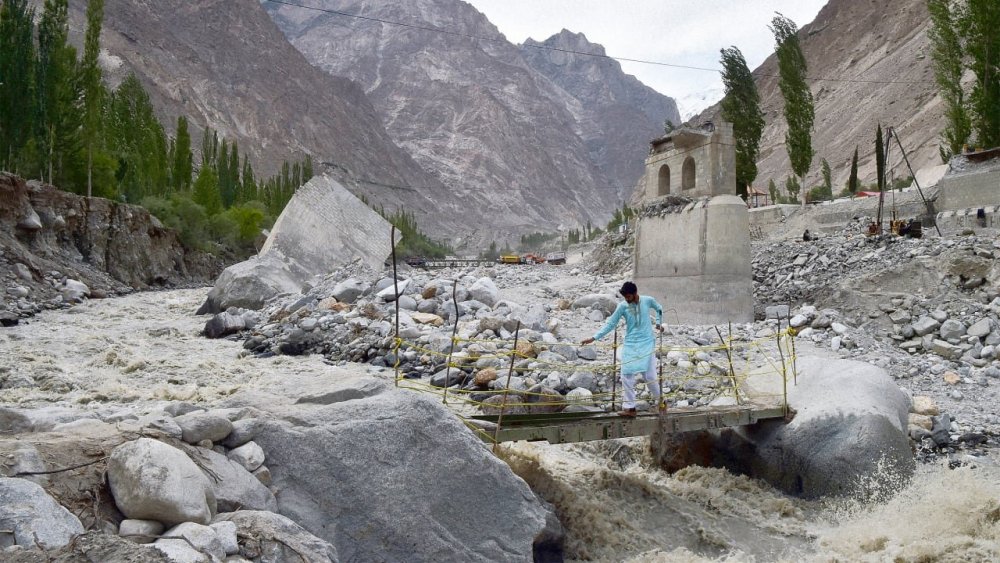
In mountain ranges around the world, glaciers are melting as global temperatures rise. Europe’s Alps and Pyrenees lost 40% of their glacier volume from 2000 to 2023. These and other icy regions have provided freshwater for people living downstream for centuries—almost 2 billion people rely on glaciers today. But as glaciers melt faster, they also pose potentially lethal risks. Water from the melting ice often drains into depressions once occupied by the glacier, creating large lakes. Many of these expanding lakes are held in place by precarious ice dams or rock moraines deposited by the glacier over centuries. Too much water behind these dams or a landslide into the lake can break the dam, sending huge volumes of water and debris sweeping down the mountain valleys, wiping out everything in the way. Today, over 10 million people across the world are vulnerable to glacial lake outburst floods. In High Mountain Asia alone, these flooding hazards are projected to triple by 2100, especially with continued high emissions. 📸⬇️ Read full @Nature paper: https://t.co/PsXcyH2jFC pic.twitter.com/RgZ44VF6v4 — International Cryosphere Climate Initiative (@ICCInet) May 30, 2024 These risks and the loss of freshwater supplies are some of the reasons the United Nations declared 2025 the International Year of Glaciers’ Preservation and March 21 the first World Day for Glaciers. As an earth scientist and a mountain geographer, we study the impact that ice loss can have on the stability of the surrounding mountain slopes and glacial lakes. We see several reasons for increasing concern. Erupting ice dams and landslides Most glacial lakes began forming over a century ago as a result of warming trends since the 1860s, but their abundance and rates of growth have risen rapidly since the 1960s. Many people living in the Himalayas, Andes, Alps, Rocky Mountains, Iceland, and Alaska have experienced glacial lake outburst floods of one type or another. A glacial lake outburst flood in the Himalayas in October 2023 damaged more than 30 bridges and destroyed a 200-foot-high hydropower plant. Residents had little warning. By the time the disaster was over, more than 50 people had died. Juneau, Alaska, has been hit by several flash floods in recent years from a glacial lake dammed by ice on an arm of Mendenhall Glacier. Those floods, including in 2024, were driven by a melting glacier that slowly filled a basin below it until the basin’s ice dam broke. Avalanches, rockfalls and slope failures can also trigger glacial lake outburst floods. These are growing more common as frozen ground known as permafrost thaws, robbing mountain landscapes of the cryospheric glue that formerly held them together. These slides can create massive waves when they plummet into a lake. The waves can then rupture the ice dam or moraine, unleashing a flood of water, sediment, and debris. That dangerous mix can rush downstream at speeds of 20 to 60 mph, destroying homes and anything else in its path. The casualties of such an event can be staggering. In 1941, a huge wave caused by a snow and ice avalanche that fell into Laguna Palcacocha, a glacial lake in the Peruvian Andes, overtopped the moraine dam that had contained the lake for decades. The resulting flood destroyed one-third of the downstream city of Huaraz and killed between 1,800 and 5,000 people. Teardrop-shaped Lake Palcacocha, shown in this satellite view, has expanded in recent decades. The city of Huaraz, Peru, is just down the valley to the right of the lake. [Image: Google Earth, data from Airbus Data SIO, NOAA, U.S. Navy, NGA, GEBCO] In the years since, the danger there has only increased. Laguna Palcacocha has grown to more than 14 times its size in 1941. At the same time, the population of Huaraz has risen to more than 120,000 inhabitants. A glacial lake outburst flood today could threaten the lives of an estimated 35,000 people living in the water’s path. Governments have responded to this widespread and growing threat by developing early warning systems and programs to identify potentially dangerous glacial lakes. Some governments have taken steps to lower water levels in the lakes or built flood diversion structures, such as walls of rock-filled wire cages, known as gabions, that divert floodwaters from villages, infrastructure, or agricultural fields. Where the risks can’t be managed, communities have been encouraged to use zoning that prohibits building in flood-prone areas. Public education has helped build awareness of the flood risk, but the disasters continue. Flooding from inside and thawing permafrost The dramatic nature of glacial lake outburst floods captures headlines, but those aren’t the only risks. As scientists expand their understanding of how the world’s icy regions interact with global warming, they are identifying a number of other phenomena that can lead to similarly disastrous events. Englacial conduit floods, for instance, originate inside of glaciers, commonly those on steep slopes. Meltwater can collect inside massive systems of ice caves, or conduits. A sudden surge of water from one cave to another, perhaps triggered by the rapid drainage of a surface pond, can set off a chain reaction that bursts out of the ice as a full-fledged flood. Thawing mountain permafrost can also trigger floods. This permanently frozen mass of rock, ice and soil has been a fixture at altitudes above 19,685 feet for millennia. Freezing helps keep mountains together. But as permafrost thaws, even solid rock becomes less stable and is more prone to breaking, while ice and debris are more likely to become detached and turn into destructive and dangerous debris flows. Thawing permafrost has been increasingly implicated in glacial lake outburst floods because of these new sources of potential triggers. In 2017, nearly a third of the solid rock face of Nepal’s 20,935-foot Saldim Peak collapsed and fell onto the Langmale glacier below. Heat generated by the friction of rock falling through air melted ice, creating a slurry of rock, debris, and sediment that plummeted into Langmale glacial lake below, resulting in a massive flood. A glacial outburst flood in Barun Valley started when nearly one-third of the face of Saldim Peak in Nepal fell onto Langmale Glacier and slid into a lake. The top image shows the mountain in 2016. The lower shows the same view in 2017. [Figures: Elizabeth Byers (2016)/Alton Byers (2017)] These and other forms of glacier-related floods and hazards are being exacerbated by climate change. Flows of ice and debris from high altitudes and the sudden appearance of meltwater ponds on a glacier’s surface are two more examples. Earthquakes can also trigger glacial lake outburst floods. Not only have thousands of lives been lost, but billions of dollars in hydropower facilities and other structures have also been destroyed. A reminder of what’s at risk The International Year of Glaciers’ Preservation and World Day for Glaciers are reminders of the risks and also of who is in harm’s way. The global population depends on the cryosphere—the 10% of the Earth’s land surface that’s covered in ice. But as more glacial lakes form and expand, floods and other risks are rising. A study published in 2024 counted more than 110,000 glacial lakes around the world and determined 10 million people’s lives and homes are at risk from glacial lake outburst floods. The U.N. is encouraging more research into these regions. It also declared 2025 to 2034 the “decade of action in cryospheric sciences.” Scientists on several continents will be working to understand the risks and find ways to help communities respond to and mitigate the dangers. Suzanne OConnell is a Harold T. Stearns Professor of Earth science at Wesleyan University. Alton C. Byers is a faculty research scientist at the Institute of Arctic and Alpine Research at the University of Colorado Boulder. This article is republished from The Conversation under a Creative Commons license. Read the original article. View the full article
-
A guide for the original bamboo railway in Battambang and the new bamboo tourist train in Banon. The bamboo railway in Battambang is a lightweight trolley (known as a norry) that was originally used to transport goods and passengers along the old railway. This makeshift trolley railway served a functional purpose when there was no rail service. The railway became a popular tourist attraction, and trolley rides were set up specifically for tourists. I visited the railway in 2016 after hearing that the bamboo railway would be closed down once the line was rehabilitated. I wrote a review of the bamboo railway before the line was rebuilt, which explains some of the history of the line. The plan was to move the norry railway to a new site once the Northern Line reopened. This didn’t make sense to me at the time, because why would they build a railway specifically for joyriding on bamboo trolleys? The Northern Line has since been renovated and there is now a passenger train between Phnom Penh and Battambang, but the original bamboo railway continues to operate. There is also a new bamboo railway at another site. I visited both of the bamboo railways, and here is what to expect. Map of the two bamboo railways in Battambang Province Map of the old and new bamboo railway locations in Battambang. [Map of bamboo railways in Battambang Province.] The original Battambang Bamboo Railway The original bamboo railway operates on a section of railway about 5 km from the city centre of Battambang. You can use Grab to get a tuk-tuk there, or arrange a tuk-tuk via your hotel. It costs $10 to take a trolley by yourself, or you can wait for other people and pay $5 for a shared trolley. I didn’t have to wait long for some other people to arrive, so I shared a trolley ride. The norries are a simple set up, with a bamboo platform on a steel frame, and a little engine that is easily removed. My first trip on the bamboo railway was in the dry season, so it was hot and dusty. I was here at the start of the dry season, so the countryside was still lush and green. The most noticeable change since my last visit was the new tracks. The line has been rebuilt with new sleepers and track ballast, and the tracks are visibly straight. Here is what the track looked like in 2016. [Section of railway near Battambang before it was renovated.] This is now a live track, but there is only one passenger train per day that arrives in the afternoon. There are also freight trains, so I’m not sure if they are forewarned of freight train schedules, or if they just pay attention to what is ahead of them. The trolleys stop at a tourist shop next to rice fields. You are invited to look in the shop while the trolleys are repositioned. Most of the tourists seemed to be foreigners. I shared a trolley with a British couple, and on the other trolleys there was a Singaporean couple and some Americans. Banon Bamboo Train The Banon Bamboo Train is the new Battambang bamboo railway, though it’s not in Battambang City and it’s not really a railway. The Banon Bamboo Train is an amusement ride in a leisure park. The park is next to Wat Banan, 21 km from Battambang City. The “train” at Banon Bamboo Train is how you get to the main area of the park. Tickets cost 17,000 KHR ($4.25 USD) for locals and $7.25 USD for foreigners. There is a queue for the trolleys that resembles a queue for a rollercoaster ride. I was by myself, so they put me on my own trolley. The trolleys are operated similar to the original trolleys, with a driver at the back running the engine. These trolleys have seats though. I was surprised with how busy it was. We passed several full trolleys on the way to the park, and everyone waved and yelled out hello as we passed. The track length is about 3 km, and it ends at a terminal at the leisure garden. The station at the end has a turntable for the trolleys, so no need to disassemble the trolleys for the return journey. The park entrance has a shopping area with some random Marvel characters. The garden is a nice place to walk around, and there are plenty of selfie props scattered throughout. I enjoyed the weird and wonderful animal statues in the gardens. I was the only foreigner there, and it seemed more like a place where locals go for a fun lunch trip on the weekend. An unintended benefit of this excursion was I got to visit Wat Banan. When I was negotiating with the tuktuk driver my itinerary, I pointed to the Banon Bamboo Train on the map. He took me to Wat Banan instead, probably because that is what most foreigners visit. Wat Banan has some interesting ruins on top of an incredibly steep hilltop. Which bamboo railway to visit The bamboo railway that runs on the actual railway is the one of most interest to foreigners. While the Banon Bamboo Train is not for my taste, I don’t mind it as a concept. I like that the Banon train pays homage to the bamboo railway without replicating it. The park was filled with locals who were having a day out with friends in a pleasant environment. When the original bamboo railway was supposed to shut down, I thought that was a good thing. Like Hanoi Train Street, the bamboo railway feels like foreigners celebrating dilapidated infrastructure. As I said in my original review, I would prefer to see a functioning passenger train that runs between Battambang and Phnom Penh. Read more about railways in Cambodia and train travel in Southeast Asia. View the full article