ResidentialBusiness
Administrators
-
Joined
-
Last visited
Everything posted by ResidentialBusiness
-
 Victory for France-backed ‘Buy European’ approach to defence spendingView the full article
 -
Google is testing moving the AI Overviews from the top position of the search results page (also known as position zero), to the middle of the search results page. We saw Google test this with featured snippets over the years, so it makes sense Google would test this with AI Overviews.View the full article
-
Google said it is expanding its AI Overviews and Knowledge Panels to offer more medical and health related answers. Plus, those are being expanded in more counties and languages. Also, Google launched a new "What People Suggest" search feature that shows you what other people are saying on the web about those topics.View the full article
-
Microsoft has opened access to the Copilot feature within Bing Webmaster Tools. I played a lot with it when I was in the limited beta in December and it is a cool nifty feature to use, but I am not sure how critical of a feature it is.View the full article
-
PPC for luxury fashion requires a strategic approach that considers unique audience behaviors, extended purchase journeys, and data-driven decision-making to maximize performance and long-term growth. The post Measuring PPC Performance In The Luxury Fashion Space appeared first on Search Engine Journal. View the full article
-
You can now compare date ranges of data directly in the Bing Webmaster Tools Search Performance reports without having to export it to a third-party tool.View the full article
-
Palestinians who returned home during the ceasefire are forced to flee againView the full article
-
Microsoft was caught testing way too many ads on its Bing Search results page. I saw 9 ads and only two organic/free listings on the page for a query on [garage door repair].View the full article
-
I’ve written plenty about how creators can monetize their social media — from general to platform-specific advice. But a few months ago, I decided it was time to stop just talking about it and actually put my theories to the test — starting with LinkedIn. Honestly, I had no clue if sponsored content would even work on LinkedIn — or if brands would care. So, I decided to find out publicly, and my community immediately responded with helpful feedback. However, I wouldn’t take any meaningful action until January of 2025, with what I called my #LinkedIncome Journey. I shared my goal to make $20,000 in 2025 from LinkedIn brand partnerships, and within two weeks, I got my first official LinkedIn brand partnership. It was a huge win, but more importantly, it showed me exactly what works (and what doesn't). I learned firsthand from trial and error, insightful conversations with established LinkedIn creators, and in-depth discussions with brand experts and influencer marketing agency pros. Now, I'm sharing everything I wish someone had told me at the beginning. In this article, you'll get a transparent, behind-the-scenes look at: Exactly how I landed my first LinkedIn brand partnership (even with zero prior sponsored content experience).Step-by-step guidance informed by seasoned creators who've successfully monetized LinkedIn.Practical insights from the brands and agencies actively looking for creators on LinkedIn right now.Ready to turn your LinkedIn into a meaningful revenue stream? Let's dive in. How I landed my first LinkedIn brand partnershipLet me start by saying this: LinkedIn was literally the first platform I ever monetized. Until this experiment, I’d never made money from sponsored posts or brand partnerships — not on Instagram, TikTok, or anywhere else. So when I decided to try monetizing my LinkedIn content, I didn’t have anything: no media kit, no portfolio of past deals, and definitely no idea what to charge. But what I did have was existing content and a newfound love of video. I’d already been talking openly about products and tools I genuinely loved without being paid for it. So when I got my first partnership, it felt inevitable. Here’s how it happened: I shared an organic shoutout about Spiral, a tool I genuinely enjoyed. When they reached out for feedback, I proactively proposed a sponsored post — and secured my first deal. Instead of simply replying with the feedback and calling it a day, I decided to take a risk. I sent them my honest insights, then added a simple but direct question at the end: "Would you be interested in partnering with me for a sponsored LinkedIn post?" Hitting send on that email felt nerve-wracking, but the response was quick and positive. We transparently discussed deliverables, timelines, and compensation. It helped me clarify our audience overlap and why the brand would benefit from partnering with me. We quickly landed on a deal that worked for both sides. Just like that, my first LinkedIn brand partnership was locked in — and it all started with one authentic, unpaid post and a simple email follow-up. So what’s the lesson here? You don’t need experience to start — genuine, organic content about products you already use is powerful. Since I got my first partnership, I’ve created a media kit, gotten paid, and secured two more. Now that you've seen exactly how I landed my first brand deal, let’s break down the process into clear, practical steps that anyone (including you!) can replicate. 7 steps to landing your own LinkedIn brand partnershipWhether you've never monetized your content before (like me!) or you're just new to LinkedIn partnerships specifically, these steps will set you up for success. Step 1: Clarify your niche so brands can find you and vice versaIt all starts here. There are two sides to this: Audiences scroll past creators who aren't crystal clear about who they're speaking to — so will brands. Even without a large follower count, the clearer your positioning, the more likely brands are to quickly identify you as a good match — and vice versa. “More brands are opening up to the idea of working with smaller creators (10-20k followers) to reach a much more targeted audience,” shared Tara Knight, Head of Operations at Creator Match. This approach aligns with what I’ve heard from creators who’ve successfully monetized their LinkedIn. Jayde I. Powell, Social Strategist & Content Creator, told me she’s highly selective about brand partnerships precisely because her niche is clear: “Relevance to my audience is one of the key factors in my decision-making when deciding whether I will partner with a brand or not. I have turned down many offers because I’m protective of the community I’ve built.” When I started, I didn’t try to speak to everyone. Instead, I focused clearly on creating content about content creation, personal branding, and remote work in video format — an approach that naturally aligned with my career and personal experiences. This clarity makes it easy for me to develop post ideas and recommend tools and products. Here are some practical actions you can take today: Clearly state your niche in your LinkedIn headline and bio. Instead of vague titles and keywords, say something like “Content Strategist helping creators monetize LinkedIn” or “Personal Branding Advisor for remote professionals.” Here’s mine:Regularly create content focused on specific topics within your niche (at least once a week).Pay attention to audience feedback — double down on content that resonates.I worried about narrowing things down too much at first, but clarity is exactly what brands (and audiences) love. Step 2: Optimize your LinkedIn profile so brands can reach outAs a LinkedIn creator, your LinkedIn profile is no longer a resume — it’s your pitch to potential brand partners. As Sarah Adam, Head of Partnerships & Influencer Marketing at Wix, shared, "When looking for influencers on LinkedIn, the influencer’s title and profession are really important, as they must align with the target audience and brief. Other metrics like average impressions per post, engagement rates, and post frequency are also very important." Don't stretch your numbers — brands have tools (like Creator Match's Chrome extension) to quickly verify your stats anyway. However, that only goes so far — LinkedIn search is not yet marketing-friendly, as AJ Eckstein, founder of Creator Match, highlighted, saying, “LinkedIn just isn’t built for creator marketing. Unlike Instagram or TikTok, there’s no marketplace, no standardized pricing, no real tools to help brands connect with the right creators... Because of this, brands are guessing which creators to work with.” This means your LinkedIn profile needs to do extra work — it has to clearly showcase your niche, your credibility, and exactly how brands can reach you. Ifeoluwa Akinyemi, Campaign Assistant at Creatorbuzz, pointed out how frustrating hidden contact details can be for agencies trying to find creators: “Having your email on your profile is such [an] issue. Every single time, I’m like, ‘I found this person,’ but they won't reply to LinkedIn messages fast enough. If I have your email, it’s so easy. You should always have your email there.” Here are some more tips to quickly optimize your profile: Put a professional email address prominently in your LinkedIn contact info or About section. If you don’t want a flood of messages in your inbox, set up a separate account just for this.Add clear examples of your best-performing content to the "Featured" section. This is a quick portfolio for potential sponsors.Your "About" section should clearly state who your audience is, what topics you cover, and why your content resonates.Pretend you’re a busy brand manager quickly scanning your profile. Can they immediately see who you serve, why you're credible, and how to contact you? If not, adjust accordingly. Step 3: Create authentic, brand-friendly content — without sacrificing your voiceBrands don’t just want exposure — they want authenticity. The best partnerships happen when sponsored content feels as natural as your regular posts. AJ Eckstein explained this perfectly, saying, “The best brand partnerships on LinkedIn don’t feel like ads — they feel like a typical post from that creator.” If your content suddenly feels forced or overly promotional, your audience (and brands) will notice. Sarah Adam emphasized the balance of branding and authenticity: "The content should be on brand for the creator, not on brand for the brand." When talking about brands, I don’t change my content style — and I won’t lie and say that I’ve used a product when I haven’t. Lindsey Gamble, a newsletter writer and LinkedIn creator, says, “I see paid partnerships as integrations rather than ads. I structure my content similarly to my organic posts. Instead of just promoting a product, I focus on why it matters and how it genuinely fits within my usual content style. Since I started my brand partnership journey, I have followed this checklist to decide whether to partner with a brand: Does the post sound like something I'd naturally share, even without the brand deal?Is my storytelling clear, relatable, and genuinely reflective of your personal experience?Will my audience genuinely find this valuable, beyond just learning about a product?This helps me say no more easily (even when it hurts). To keep the balance of sponsored and your regular content, create as if it's not sponsored. Aim for content you’d naturally post anyway, then integrate the sponsored element authentically. Always prioritize your relationship with your audience over any short-term deal. Authenticity today secures better partnerships tomorrow. Step 4: Proactively pitch brandsYou could wait for brands to come knocking, but you’ll land way more deals if you knock first. In fact, Tara Knight points out something surprising: "You'd be shocked how few creators actually reach out proactively. Brands are usually thrilled when a creator makes the first move, especially if they're genuinely familiar with the product already." On the other side, Lloyd George, an experienced LinkedIn creator, shared this insight from his success with this approach: "The quickest way to get a partnership is to find brands you've already mentioned organically and directly reach out. Offer them concrete ways your audience aligns with their goals." This is exactly how I landed my first two LinkedIn brand partnerships. Hitting send was nerve-wracking, but the payoff was immediate — a clear, enthusiastic "yes.” Here’s how to proactively pitch (without being pushy): Identify brands you genuinely like and already talk about organically.Start with simple outreach — email or LinkedIn messages clearly explaining why your audience aligns with their brand, plus ideas for how you can collaborate.Keep your pitch casual, conversational, and clearly focused on mutual value.Take the initiative today. Pick one brand you’ve mentioned organically, and reach out with a simple DM. You might just land your first (or next!) partnership faster than you think. Step 5: Negotiate confidently (even if it’s your first time)Negotiation can feel awkward — especially when you're new to brand partnerships and worried about losing an opportunity. But here’s a reassuring truth: Most brands actually expect you to negotiate. Jayde Powell has a simple, effective approach. "I always operate under the assumption that I can get more than the original offer. 80% of the time, when I ask if there’s room for a bigger budget, there is.” She also shared what she does if a brand’s budget is genuinely tight: "If brands can’t increase their rate, I may ask for a six-month or year-long subscription to their service, or a discount on their product, depending on how expensive it is." Personally, when I negotiated my first brand deal, I had one goal in mind: to fill up my portfolio. Although I would have appreciated the big bucks on my first-ever partnership, I was more focused on the benefits that flexibility with pricing would get me, like longer-term partnerships down the line, plus what was effectively a paid announcement that I was serious about partnerships. Here are some practical negotiation tips for your first LinkedIn brand partnership: Even if the initial offer is good, politely ask if there’s flexibility. It’s often built into the initial proposal.If the brand's budget is limited, propose alternatives such as longer subscriptions, product samples, affiliate commissions, or other creative perks.Know your absolute bottom line before you negotiate. It helps you approach negotiations more confidently.Play around with pricing for different formats. If your rate for a video feels too high for the brand, offer a text post or carousel instead (which might take less effort and still deliver great results).Now that I’m three partnerships in, I’ve refined my approach to negotiation and have been able to ask for more based on past success. I’ve also shifted my focus to brands I can see myself collaborating with long-term. Brendan Gahan, founder of Creator Authority, shared why long-term thinking benefits both creators and brands: “Long-term is best for all parties involved: creators preserve their credibility, brands secure better rates and benefit from economies of scale, and the process becomes more efficient.” When negotiating, mentioning your openness to a longer-term relationship can be an attractive incentive to brands. It can help you secure better terms, increased credibility, and ongoing income stability. Step 6: Execute professionally so you can secure future dealsYour first partnership is exciting, but brands really notice the small things — like quick responses, hitting deadlines, and being easy to work with. Sarah Adam explained how crucial this professionalism is for repeat partnerships. "Beyond content quality, professionalism is key. If influencers miss deadlines, don’t adhere to briefs, or are unresponsive, it affects our likelihood of partnering again in the future." AJ Eckstein reinforced this idea from the agency perspective: "Professionalism is critical. We’re always more inclined to return to creators who communicate clearly, meet their deadlines, and genuinely seem invested in the success of the campaign." When I secured my first LinkedIn brand partnership, I made a deliberate effort to impress the brand not just through great content but also by being easy and professional to work with. I responded quickly to emails, clearly clarified expectations upfront, delivered exactly what I promised (plus a little extra), and proactively shared the results. Here's exactly how you can make sure your professionalism shines through on your first brand deal: Confirm deliverables, timelines, approvals, and payment terms clearly before starting any content.Respond to all communications (emails or LinkedIn messages) within 24-48 hours — even if it's just to acknowledge receipt and let them know when you’ll reply fully.Follow the agreed-upon brief closely, but don’t be afraid to politely suggest ideas based on your knowledge of your audience. Brands usually appreciate thoughtful input.Always deliver on time (or even slightly early). If there’s an issue, communicate proactively — never leave a brand guessing.After posting, immediately track and share engagement metrics, key insights, and audience feedback. Brands appreciate creators who clearly demonstrate the value of their content.Treat each partnership like it's the start of a long-term relationship — because often, it is. Great execution builds trust, and trust turns one-off projects into ongoing opportunities. Step 7: Use past success to attract more partnershipsEvery successful brand partnership you secure is an opportunity to attract the next one. How? By clearly showcasing the impact of your content and proactively highlighting your successes to other potential brands. Gigi Robinson, a Creator Economy Expert & Speaker, emphasized the power of clearly documenting your wins: "Always have a clear record of your past collaborations—brands want tangible evidence that you can deliver. Showing clear results makes your future pitches far more compelling." Lloyd George agrees, pointing out that leveraging initial wins is a powerful way to build momentum. "Create early examples — even if initially smaller — to prove your value clearly. Those examples become your foundation for negotiating bigger deals down the road." When I landed my first LinkedIn brand partnership, I didn't keep quiet about it. Instead, I proactively shared the results of that partnership publicly on LinkedIn – getting me even more content and views on the original post. This immediately put me on the radar of other brands and agencies who quickly saw the potential in working together. Here’s exactly how you can practically use your successes: Summarize your sponsored content results clearly (impressions, engagement rates, and audience feedback). Even a simple PDF or slide can become a valuable asset in future pitches.Share brief posts publicly on LinkedIn, celebrating successful partnerships and clearly showing your results (always get the brand’s permission first). This signals to other brands that you're open and effective at sponsored content.Include recent sponsored post examples and performance metrics. A current, clear, and detailed media kit makes your future pitches irresistible.Every new outreach should reference recent partnership successes and metrics — brands love seeing proven results.Never assume brands will automatically see your value. Proactively showcasing your partnership results makes securing your next brand deal much easier. 5 common mistakes to avoid (according to the experts)Securing brand partnerships on LinkedIn gets easier over time — but only if you know how to avoid the common pitfalls that trip up even experienced creators. Here are the biggest mistakes creators make, directly from the experts who've seen them firsthand (and practical tips to avoid them): 1. Ignoring clear red flags about brand alignment: Jayde Powell learned this early: “Early on, I made the mistake of partnering with brands that weren't aligned with my audience. Those posts rarely performed well, and worse, risked eroding my audience’s trust.” Always ask yourself if your audience genuinely aligns with the brand’s values before saying yes. 2. Poor communication (slow responses, unclear expectations): Sarah Adam from Wix explained: “Lack of clear communication, slow responses, or missing deadlines significantly impacts whether we work with a creator again. Professionalism matters just as much as the quality of content.” Always respond quickly, clearly define expectations upfront, and proactively communicate. 3. Focusing only on follower counts or chasing virality: Brendan Gahan shared: “Follower counts are becoming less relevant. Brands today care more about engagement quality, relevance, and niche credibility.” Prioritize content quality and engagement — numbers alone won't impress brands. 4. Undervaluing yourself (or failing to negotiate): Lindsey Gamble warned: “I once proposed more content than I was compensated for just to secure the partnership. It closed the deal, but I unintentionally set a low precedent. Be careful about offering too much early on—you don’t want to undervalue your work long-term.” 5. Not clearly documenting or showcasing your success: Gigi Robinson emphasized: “Brands want tangible evidence you deliver results. Without clearly documented case studies or media kits, you’re making future negotiations much harder.” Summarize your sponsored post results and keep an updated, easy-to-share media kit. What’s next for LinkedIn brand partnerships – and me?Brand partnerships on LinkedIn are evolving at lightning speed. From my experience and conversations with creators, brand leaders, and influencer marketing pros, here are three clear trends shaping successful brand partnerships in 2025 (and beyond). 1. Brands are seriously investing in LinkedIn creators: The momentum is only increasing, and AJ Eckstein has seen this shift clearly: “We’re seeing budgets increase significantly for LinkedIn influencer marketing. Brands are realizing the quality of engagement and the audience's buying power here.” 2. Video is becoming a must-have format on LinkedIn: Brands are increasingly prioritizing creators who produce compelling video content. Lindsey Gamble shared, “…video content has been a strong negotiation lever…As LinkedIn has pushed video more, I’ve increased my video efforts, both to align with the algorithm and to offer sponsored video content for those brands that want that type of content for their partnerships.” 3. Long-term partnerships matter more than ever: Brands aren't just looking for one-off promotions anymore—they want sustained, authentic relationships with creators. Sarah Adam at Wix summed up this shift clearly: “We’re prioritizing long-term relationships because it creates more authentic connections with the audience, builds trust, and leads to significantly better results.” As for me, I’m firmly seated on the train as I send in my third video for a LinkedIn brand partnership today and three more pitches this week. Things are picking up for me, and I’ll continue to collect knowledge and gain experience to share with you. Take a step towards your first brand partnershipIf you’re looking to monetize your LinkedIn, here’s a challenge for you: take one step today. I started this journey publicly — and transparently — to see what was possible. Now it's your turn. Here's your challenge: Today: Clarify your niche and update your profile to make your focus crystal clear.This week: Reach out proactively to at least one brand you've already talked about organically.Next month: Share your progress publicly on LinkedIn — and tag me. I'd love to celebrate your wins or offer any help I can.The question isn't whether creators can monetize LinkedIn anymore — it's simply whether you'll take the first step. View the full article
-
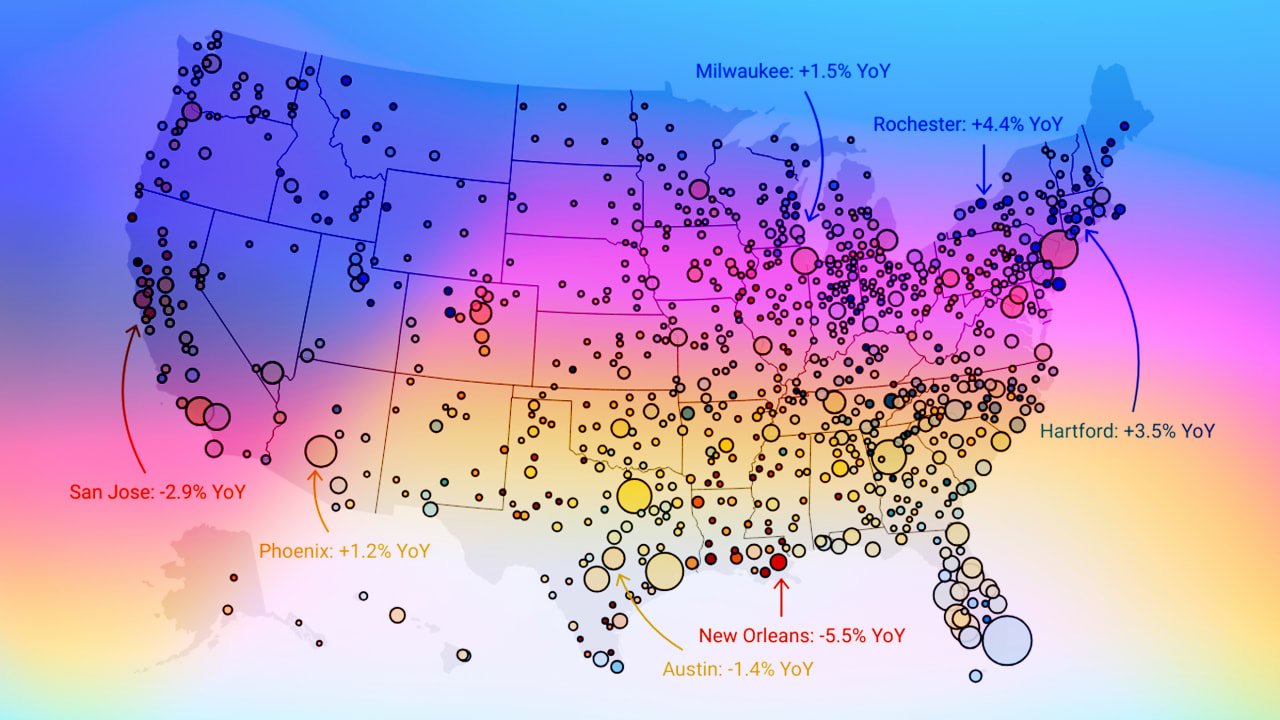
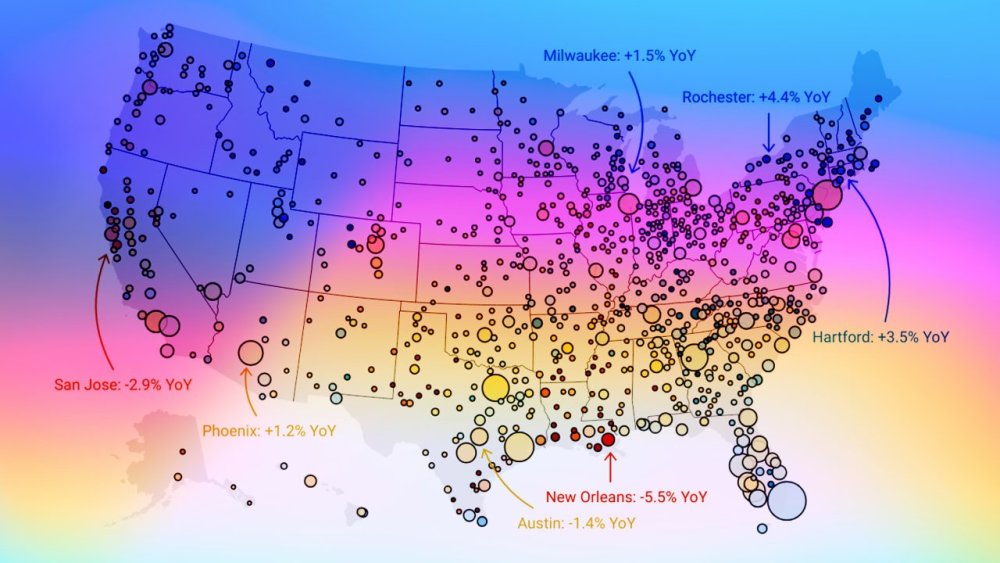
Want more housing market stories from Lance Lambert’s ResiClub in your inbox? Subscribe to the ResiClub newsletter. On Tuesday, Zillow economists published their updated forecast model, projecting that U.S. home prices, as measured by the Zillow Home Value Index, will rise 0.8% between February 2025 and February 2026. That’s another downward revision. Last month, their 12-month forecast projected a 1.1% increase in U.S. home prices, and the month before that, they expected a 2.9% increase. “The rise in [active] listings is fueling softer price growth, as greater supply provides more options and more bargaining power for buyers,” wrote Zillow economists on Tuesday. “Potential buyers are opting to remain renters for longer as affordability challenges suppress demand for home purchases” Not only do Zillow economists predict soft national home price growth this year, but they’re also predicting that the housing market will only see 4.1 million U.S. existing home sales in 2025. That would mark the third straight year of suppressed sales of existing homes. For comparison, in pre-pandemic 2019, there were 5.3 million U.S. existing home sales. Zillow economists added that: “As the home-buying season nears, Zillow anticipates a temporary boost in sales during the spring, followed by a seasonal slowdown. However, with little relief expected from mortgage rates, existing home sales are likely to remain below pre-pandemic levels. Until mortgage rates fall—to improve housing affordability— some downward pressure on home sales is expected to persist.” Among the 300 largest U.S. housing markets, Zillow expects the strongest home price appreciation between February 2025 and February 2026 to occur in these 10 areas: Atlantic City, NJ: +5.1% Knoxville, TN: +4.7% Kingston, NY: +4.7% Torrington, CT: +4.6% Bangor, ME: +4.6% Rochester, NY: +4.4% Vineland, NJ: +4.4% Concord, NH: +4.2% Norwich, CT: +4.1% Fayetteville, AR: +3.9% And these are the 10 areas where Zillow expects the weakest home price appreciation between February 2025 and February 2026 to occur: Houma, LA: -7.3% Lake Charles, LA: -7.0% New Orleans, LA: -5.5% Lafayette, LA: -4.6% Shreveport, LA: -4.4% Odessa, TX: -4.1% Beaumont, TX: -3.7% Alexandria, LA : -3.3% Chico, CA: -3.0% Midland, TX: -3.0% While Zillow expects home prices across most of Florida to rise over the coming year, ResiClub remains skeptical. After all, Florida has experienced a significant increase in active inventory and months of supply over the past year, which could signal potential pricing weakness. Indeed, single-family and condo prices are currently declining in most Florida housing markets. View the full article
-
Welcome to Pressing Questions, Fast Company’s work-life advice column. Every week, deputy editor Kathleen Davis, host of The New Way We Work podcast, will answer the biggest and most pressing workplace questions. Q: My coworkers are always complaining. What should I do? A: The world is made of all kinds of people, and so it follows that in any workplace you’ll also find a lot of personality types: The narcissist, the interrupter, the martyr, the workplace BFF (if you’re lucky), and the straight up jerk (if you’re unlucky). The office complainer is challenging in their own way. If you have one who is getting on your nerves, here are some ways to handle the situation. Consider the bigger picture Just as complaints from your partner are rarely actually about the dishes or the trash, it’s possible that your coworker’s complaints about the new software or the end of Bagel Fridays are actually about something bigger. Complaints about the loss of perks like free food might be masking fears about how the company is doing financially. Complaints about adjusting to a new software system could be a cover for fears about adapting to change or being pushed out because they are older. Consider the possible deeper context and, if you can, speak to management about these bigger concerns. If there’s nothing within your power that you can do to address the underlying larger concerns, at least the knowledge that it’s masking more legitimate gripes might make you feel more sympathetic. Just listen and let them vent Sometimes when someone has a complaint they just want someone to listen to them complain and validate that they are right to feel annoyed. Empowerment speaker Erica Latrice says: “If you are in an environment where you have to be around complainers a lot, just use the phrase, ‘If I were you, I would feel the same way.’” She says that a phrase like that allows them to feel heard and may stop them from feeling the need to keep repeating their complaint. Many people jump into problem-solving mode when they hear a complaint by either offering solutions to “fix” the complaint or reasons why it’s not as bad as the complainer says it is. Both of these approaches might be well-intentioned, but can feel dismissive to the person complaining (and could backfire by having them repeat their complaint until they feel heard). Ask for their ideas If offering unsolicited advice is the wrong approach, try asking the complainer for their thoughts on a solution. This is a great approach for those in management to address employee complaints, but also it also works for peers. The complaint might actually be the employee wanting to start a conversation about how to fix a problem. Simply asking, “what do you think we should do about it?” might open the floodgates. If not, dig a little deeper: “What would make the process easier?” “If we can’t change that, how do you think we should adapt?” “Do you think there’s a way to convince them to change their minds?” “Is there a better method you’ve seen work?” Beat them or join them If all else fails, you can decide to just live with the office Debbie Downer, or you can try to protect your peace and be honest with them. Saying something like: “Things are hard right now and I’m trying to stay positive. I’m not really in the headspace to handle so many workplace complaints right now.” That will likely not be well-received (and you may become the topic of their next batch of complaints), but it sends a clear message and they aren’t likely to share their thoughts with you anytime soon. Then there’s the “if you can’t beat them, join them” approach: Sometimes misery just wants company. So long as you trust the person you’re talking to (and you don’t take it too far and say something you’ll regret), you can join in with your own complaints. Want more advice on dealing with complainers at work? Here you go: The right (and wrong) way to complain at work What it’s like to go without complaining for a month 8 ways to deal with chronic complainers View the full article

-
Andriana18, CC BY-SA 4.0, via Wikimedia Commons W. Edwards Deming’s 14 principles transformed manufacturing by emphasizing quality, efficiency and continuous improvement. His ideas weren’t just about improving production lines—they were about creating a culture of adaptability and excellence. Today, marketing faces its own shift. The traditional, assembly-line model of campaign execution—where data, creative, and deployment are handled in rigid steps—is no longer fast enough for real-time customer engagement. Positionless Marketing builds on Deming’s legacy by enabling marketers to act independently, collaborate fluidly and use AI-powered tools to engage customers at the speed of interaction—without compromising quality. Below, we explore how each of Deming’s 14 principles applies to modern marketing and how they provide a foundation for Positionless Marketing. 1. Create a constant purpose toward improvement Deming emphasized long-term thinking—businesses should continuously improve rather than seek short-term fixes. Positionless Marketing follows this same philosophy. Marketers no longer rely on static, pre-planned campaigns but instead use AI-driven insights to continuously refine their efforts. The goal is not just to meet quarterly KPIs (key performance indicators) but to adapt dynamically to consumer behavior and ensure long-term engagement. 2. Adopt the new philosophy Deming urged organizations to embrace change rather than resist it. Businesses stuck in outdated models would struggle to compete. Positionless Marketing represents a fundamental shift from the assembly-line, rigid, step-by-step execution of traditional marketing to an agile, real-time approach. Instead of waiting for data teams, creative teams and campaign managers to complete their sequential tasks, marketers are empowered to execute across functions independently, reducing bottlenecks and delays. Marketers must embrace a fundamental philosophical change to expand capabilities beyond their area of expertise. It means embracing new technologies and methods. 3. Stop depending on inspections In manufacturing, inspections don’t improve quality—they just identify failures after the fact. Deming believed that quality should be built into the process from the start. Positionless Marketing applies the same principle. Instead of waiting for post-campaign reports, marketers can refine messaging, creative and targeting in real time using AI and automation. Without relying on data analysts or creatives, they can optimize on the fly, ensuring relevance and engagement without delays. By embedding optimization into the process, Positionless Marketers achieve continuous quality improvement while moving at the speed of the customer. 4. Improve constantly and forever Deming’s philosophy of continuous improvement is central to Positionless Marketing. Rather than treating marketing as a set-it-and-forget-it process, marketers use AI-powered tools to test, learn and iterate constantly. Real-time feedback loops allow campaigns to evolve as customer behaviors shift, ensuring that messaging stays fresh and relevant. 5. Use training on the job Deming emphasized on-the-job training so employees could continuously develop their skills and adapt to changing industry demands. Positionless Marketers must also embrace continuous learning. While AI and automation make execution easier, marketers must still refine their skills in data analysis, creative strategy and customer journey optimization. The best Positionless Marketers are adaptable and proactive learners. They are looking for the next breakthrough to help realize their multipotentiality. 6. Implement leadership Deming encouraged leadership that supports and empowers employees, rather than micromanaging them. Positionless Marketing follows this principle by shifting power to marketers themselves. Instead of waiting for executive approval at every step, marketers can leverage AI-driven insights to make informed decisions—speeding up execution without sacrificing quality. The best Positionless Marketer knows that the ultimate leader is the consumer who votes by increasing their lifetime value to the brand with unwavering loyalty. 7. Eliminate fear A culture of fear stifles innovation. Deming believed that employees should feel safe to experiment and make improvements. Positionless Marketing removes bureaucratic barriers that slow down execution. Marketers are encouraged to test, iterate and refine strategies without fear of failure—because AI and real-time analytics allow for immediate course correction. 8. Break down barriers between departments Deming advocated for cross-functional collaboration—he believed that siloed teams led to inefficiencies. Positionless Marketing eliminates silos entirely. Data, creative, and execution are no longer separate departments but rather interconnected functions within a single, AI-powered ecosystem. This allows for faster, more seamless marketing execution. In the end, Positionless Marketing ends the lags and delays caused by assembly-line marketing. 9. Get rid of unclear slogans Deming discouraged vague corporate slogans that lacked actionable guidance. Instead, he emphasized clear, meaningful communication. Positionless Marketing aligns with this, usurping slogans with real-time marketing execution. AI ensures that each interaction is tailored to individual customers—making brand communication more specific and relevant. 10. Eliminate management by objectives Deming warned against focusing solely on numerical targets, as this often led to shortcuts and a decline in quality. Positionless Marketing shifts the focus from vanity metrics (such as email open rates) to long-term customer engagement and lifetime value. Instead of chasing short-term performance spikes, marketers prioritize sustainable, customer-led growth. 11. Remove barriers to pride of workmanship Deming believed that employees should have ownership over their work, rather than feeling constrained by strict processes. Positionless Marketers have greater creative freedom. They can adjust messaging dynamically, respond to real-time customer behavior, and contribute meaningfully to brand engagement—rather than simply following a rigid set of rules. 12. Implement education and self-improvement Deming emphasized lifelong learning. Organizations should invest in continuous education for employees. Positionless Marketing encourages marketers to develop their expertise across multiple disciplines—from data analysis to creative execution. AI-powered tools assist with execution, but strategic thinking and continuous learning remain critical. In addition, Positionless Marketers embrace the future to always find ways to be more powerful augmented by technology. 13. Use a single supplier for consistency Deming promoted consistency in production, urging manufacturers to minimize variation by relying on trusted suppliers. To execute Positionless Marketing effectively, brands must continuously deploy the latest technology empowering marketers to reach their full potential. Marketing platforms and solutions that enable Positionless Marketing must be seamless, intuitive and built for marketers. Brands attempting to piece-meal multiple vendors risk creating a patchwork quilt system that can be stretched at the seams. To truly embrace Positionless Marketing, brands need a platform that frees marketers to work independently—from data to optimization—without relying on additional teams. 14. Make transformation everyone’s job Deming believed that improving quality was not just the responsibility of leadership—it was something that every employee should contribute to. Positionless Marketing follows this same philosophy. Instead of a top-down approach, marketers at all levels are empowered to take action, using AI to execute campaigns independently while still collaborating with experts when needed. Positionless Marketing based on Deming’s principles Deming’s ideas transformed manufacturing quality and today, they shape the future of marketing. Positionless Marketing doesn’t reject his principles—it builds upon them. Continuous improvement remains key but now happens in real time rather than post-campaign. Eliminating silos accelerates execution while maintaining quality. Removing approval bottlenecks fosters a more innovative, data-driven marketing culture. AI-powered optimization ensures quality is embedded in every step, rather than applied after the fact. Positionless Marketing isn’t just about speed—it’s about precision, adaptability and sustained engagement. If Deming were alive today, he might not be refining the assembly line—he’d be reimagining it for an AI-driven, Positionless future. View the full article
-
Ukrainian president says Putin broke his promise to pause attacks on energy infrastructureView the full article
-
Project completion rate is one of many KPIs you can use to keep an eye on how your project managers are performing and get a baseline for project success across your org. Here's how it works and how to track it (and why it's not always perfect). The post Project Completion Rate: What It Is & How To Calculate It appeared first on The Digital Project Manager. View the full article
-
For decades, talk of UAPs—unidentified aerial phenomenon, for the uninitiated—was relegated to conspiracy forums and X-Files reruns. Not anymore. The Age of Disclosure, which premiered to a standing ovation at South by Southwest this month, reframes the conversation with journalistic clarity and a big assist from some of the most powerful people in government going on the record. With critics and audiences alike buzzing over the documentary, director Dan Farah is pushing the UAP conversation out of the shadows and into the mainstream. That momentum is owed in large part to the fact that Farah (who is otherwise best known as a producer on the 2018 adaptation of Ready Player One) didn’t just scrape the surface, he went straight to the top. Secretary of State Marco Rubio, Senators Kirsten Gillibrand and Mike Rounds, former National Intelligence Director Jim Clapper, and dozens of other government officials lend their voices to a film that’s less “little green men” and more national security urgency. If disclosure feels like a cultural inflection point, that’s because it just might be. Fast Company spoke with Farah about how he landed these interviews, what shook him the most, and what happens if the truth really is out there. What sparked your interest in UAPs? It’s not a subject you’ve really explored in your filmmaking before. I’ve been interested in this topic my whole life. I’m 45, so my childhood was the ’80s and ’90s, and I grew up watching movies like ET and Close Encounters of the Third Kind. It’s just always been a lifelong interest. They made me curious about big questions: Are we alone in the universe? Does the U.S. government know more than they shared with the public? I was doing research on the topic a few years ago, and I started getting introduced, through some mutual friends, to people who have worked on this topic for the U.S. government. I started to realize that this is very serious and has incredible bipartisan support at the most senior levels of our government. At a time when Democrats and Republicans don’t agree on anything, Democratic and Republican leadership agree this is an extremely important topic and should be taken extremely seriously. The average person doesn’t know that Senator Schumer from the Democratic Party and Senator Rounds from the Republican Party co-sponsored the UAP Disclosure Act that attempted to bring this information out to the public. When you read the language of that act, it’s shocking. They’re talking about technology of nonhuman origin, they’re talking about all these things that seem very extraordinary but they’re taking it very seriously. The more I learned about it, and the more I became excited and motivated to make a credible, non-sensationalized documentary on the topic. When I started socializing my vision for it within intelligence, military, and government circles, I started to get a lot of support. Why do you think they offered that support? Why did they agree to sit down for an interview? I think I was presenting an opportunity that they hadn’t heard before. I was committed to making this independently so they didn’t have to worry about a studio or a network sensationalizing it. I gave the interview subjects strength in numbers: I was setting off to interview dozens of people and wasn’t asking any one person to go out on a limb. I had the support early on of a lot of people who were very influential in that space, including Luis Elizondo, Jay Stratton, Christopher Mellon. They all really believed in what I was trying to do, and not something to do in a “Hollywood” way. Now, something to keep in mind: Almost all the people I interviewed have knowledge on this topic at a classified level that they obviously cannot talk about. But there’s a lot of information that they can talk about, and historically they’ve just been discouraged from doing so, or they haven’t had a comfortable opportunity to share what they can lawfully disclose. To the best of your understanding, why has the government been so secretive? Historically, there have been understandable and valid reasons for secrecy. And there are also very valid reasons now for making some of the information more known to the public. For you, what was the most interesting discovery during this process? An interesting realization that came out of this is just a reminder of how our government works in general. Our elected officials largely pay attention to what their constituents tell them that they want them to pay attention to, right? So there’s a lot of very senior leadership in our country that knows this is a very serious situation, and they’re not really putting their bandwidth toward it because they’re worried about an historical stigma around the topic, and they’re not sure it’s one of the top issues for their constituents. I have great respect for the leaders of both parties right now who are taking it very seriously and putting themselves out there like Secretary Rubio, Senator Schumer, Senator Gillibrand, and on the House level people like you Representative Carson, Representative Garcia, Representative Luna—these people are really putting themselves out there. The film comes at a moment when our two major parties can’t seem to agree on much. I wonder what kind of political implications mutual acknowledging of the issue would have. This might be the one thing that could actually bring parties together—and maybe bring adversarial nations together: the acknowledgement that we’re not alone in the universe. But as the documentary points out, there’s also a lot of negative things that could come out of disclosure—it’s just another thing that nations could fight over. It’s really interesting to think about the fact that people who participated in the documentary share this extremely significant information that has extremely high stakes and impacts us all. And it’s very serious, yeah, but there’s still so much information they have that is informing their opinion that they can’t disclose, and you wonder what that is. View the full article

-
In an industrial park in North Las Vegas, near an Amazon warehouse and a waste storage facility, a new carbon removal plant is beginning to pull CO2 from the air and store it permanently. Called Project Juniper, it’s the first “integrated” plant of its kind in the U.S., meaning that it handles both carbon capture and storage in one place. (As a bonus, it also generates clean water.) Clairity Tech, the startup behind it, designed the new plant after raising a seed round of funding led by Initialized Capital and Lowercarbon Capital last year. After spending the last few months setting up the facility, it ran its full system for the first time last week. Founder Glen Meyerowitz, who previously worked on rocket and spacecraft propulsion testing at SpaceX, pivoted to carbon removal in 2022. “As I look at it, this is really the existential threat of our time and the most important problem that needs to be addressed,” he says. In order for the world to have any chance of meeting climate goals, CO2 needs to be captured from the air at a massive scale at the same time as the economy decarbonizes. As Meyerowitz researched the space, he saw an opportunity to take a slightly different approach than some other companies. The Clairity direct air capture reactor in Nevada [Photo: Clairity] First, Clairity uses a different material to capture CO2 from the air. “It’s in the same family as baking soda,” Meyerowitz says. “The materials are produced in millions of tons per year for a range of applications.” It’s abundant, cheap, and after it’s filled with CO2, it takes relatively little energy to remove it. Unlike some other chemicals used for direct air capture, it doesn’t degrade, so it can also be used longer. The plants are cheap enough to build that they don’t have to run continuously to make economic sense. That means that it’s also possible to run on cheap, intermittent solar power from the grid. (The caveat: The company will be competing with data centers that also want to run on renewable energy and may be willing to pay more.) Sorbent cartridge being inserted into adsorption station [Photo: Clairity] While many companies in the space plan to inject CO2 into underground wells, that system isn’t ready yet in the U.S. Clairity is starting with another direction: adding the CO2 to materials. For example, if it’s combined with fly ash—a byproduct from coal power plants—it can be used to make lower-carbon concrete. It won’t be the first direct air capture company to use CO2 in concrete: A startup called Heirloom previously partnered with a cement company. But Clairity is unique in that it handles both steps itself. The CO2 can also be injected into other waste materials to permanently store it. Building an underground storage well costs millions of dollars, and the process of getting regulatory approval is slow; building the company’s “ex-situ” mineralization equipment costs less than $70,000. It’s at a much smaller scale, but it allows the company to begin storage now. “We can actually deliver credits today and not from some future project,” Meyerowitz says. There’s also the potential to make more money by selling value-added products rather than only selling credits for storage. The company expects to be one of two facilities in the world to deliver certified credits for carbon stored this year. The other, 4,000-plus miles away in Iceland, is Climeworks, which partners with a company called CarbFix to inject its captured CO2 into Iceland’s deep rock formations and naturally turn the CO2 into stone. Clairity chose Vegas as its first location for a few reasons. First, the particular sorbent it uses to capture the CO2 works best in an arid climate (some others, like Climeworks’s, are better in humid climates). Nevada has abundant access to renewable power. The state has relatively little arable land, so there are more potential locations; the company plans to expand in Nevada and other parts of the Southwest. And because the company’s process generates clean water on the side, there’s also a potential market to sell that water to local utilities. (The water is produced when the company heats up its sorbent to release the captured CO2; water comes out at the same time and is separately stored.) “You can imagine that in water-stressed Las Vegas, that’s a really interesting side benefit,” Meyerowitz says. For now, it’s operating on a tiny scale. Project Juniper can capture 100 metric tons of CO2 a year; society generated more than 40 billion tons of CO2 last year. Clairity’s cost right now is around $700 per ton of captured CO2—which will need to dramatically decline to be feasible over the long term. (Federal tax credits currently help with the cost, and may be more likely to stay in place than some other climate-related incentives because of strong Republican support.) Despite the challenges, Meyerowitz believes it’s possible for the startup to scale up to an ambitious goal: 10 megatons of CO2 removal in the next decade, or 100,000 times more than its first project. View the full article

-
Stakeholders predict the future of homebuying will offer two distinct paths: an all-in-one bundle from companies like Rocket Mortgage and the traditional, local homebuying experience. View the full article

-
Potential investors are ‘hanging round the hoop’ with four parties said to be most committed to the processView the full article
-
Drive revenue with social commerce. Find out how social media platforms have become an essential channel for marketers to engage and convert customers. The post Social Commerce: How Marketers Can Drive Sales Through Emerging Platforms appeared first on Search Engine Journal. View the full article
-
Every year, American cars hit a staggering 1 million large animals like deer and elk. In California—a roadkill hot spot—vehicle collisions with animals cost more than $200 million every year. To address the problem, experts have long advocated for wildlife crossings that either span over high-speed freeways or burrow under them to help animals cross over safely. (The world’s largest wildlife crossing is set to open in 2026 in California, where it will help reconnect habitats bisected by the 10-lane 101 Freeway.) Other strategies involve reducing traffic or closing roads altogether at peak animal crossing times. Now, a new solution might be on the horizon, and it is mounted on the culprits themselves: cars. December 2024 marked the beginning of an ambitious experiment on the Japanese island of Amami Oshima. The island is known for its beautiful beaches, its handwoven silk, and a particularly dark-furred species of rabbit known as the Amami rabbit. Since 2004, the Amami rabbit has been an endangered species because logging and urban development have reduced its forest habitat, but also because the animals are often hit and killed by cars. According to Japan’s Ministry of the Environment, incidents involving Amami rabbits have increased for seven consecutive years, culminating in 147 deaths in 2023 alone. Three years ago, a team comprised of designers, government officials, researchers from three different universities in Japan, plus one automaker, set out to find a solution. The automaker? Nissan. The solution? A high-frequency alarm that is mounted at the front of the car to warn animals of its presence. The project, which was funded by Nissan, has been dubbed Animalert, and it is the brainchild of Tokyo-based ad agency studio TBWA\Hakuhodo. [Image: Nissan]An alert is bornThe story began while TBWA\Hakuhodo was working on a marketing campaign to promote the sound that Nissan’s EV cars make to alert pedestrians. (Stripped of the loud engines that come with their fuel-powered counterparts, electric vehicles are twice as likely to hit pedestrians.) Back in 2010, Nissan was one of the first automakers to introduce this kind of alert, which is known as a Vehicle Sound for Pedestrians, or VSP. But as Shuichiro Tsuchiya, project lead at TBWA\Hakuhodo, notes, not many people know they exist (hence the marketing campaign). [Image: Nissan]The team was brainstorming ideas when the news came out that Amami rabbits were being killed by cars at unprecedented rates. Almost immediately, they thought: could the vehicle sound for pedestrians be adapted to warn not just humans but animals, too? To find the answer, the team embarked on a journey that would end up taking more than three years. If the experiment proves successful—and enough automakers jump on the bandwagon—the technology could be expanded to work on other animals, and help reduce roadkill worldwide. A double-whammy marketing campaignAccording to Japanʼs Ministry of Land, Infrastructure, Transport and Tourism, more than 120,000 animals were killed on Japanese roads in 2022. The most commonly affected species were dogs and cats, closely followed by raccoon dogs, birds, and deer. Rabbits, in particularly those who live on Amami Oshima, were not on the list. Nonetheless, they were the perfect species for a pilot. Deer and other animals are scattered all over Japan, which would have made testing a new alarm with them difficult. “We would need devices for hundreds of thousands of cars,” Tsuchiya told me. The team only had one car at their disposal: a Nissan Sakura. Instead of launching a nationwide experiment, they narrowed down their focus on Amami Oshima, which covers about 275 square miles. The contained environment helped increase the team’s chances of encountering rabbits. And because—let’s not forget—the project still doubled as a marketing campaign, it helped them weave a compelling story. That of a conscientious automaker working to save rabbits lives. Fine-tuning the sound From the very beginning, TBWA\Hakuhodo partnered with the Ministry of Environment and the Amami City Government, which helped speed up government approvals. They also partnered with three universities, particularly Masachika Tsuji from Okayama University of Sciences, who has previously studied sound as an animal deterrent. (Most recently, his team helped install speakers at three major airports in Japan, where each speaker emits high-frequency waves designed to deter birds from flying near the runways.) Together, the team worked to find the right range of high-frequency sounds. The exact frequency remains undisclosed, but the resulting sound is one that rabbits have never heard before because it doesn’t exist in the natural world. “It’s almost like they encounter a ghost,” Tsuchiya says. The team performed two initial tests. First, they ran tests at Nissan’s R&D lab, to determine the most suitable position for the speaker that would emit the sound. Then, they traveled the island, where they placed a speaker in a field where rabbits are known to live to gauge their initial response. The first experiment worked and the rabbits that were there left the field almost immediately. So, the team installed the speaker on the car, and took to the roads. Amami rabbits are nocturnal, so the team ran tests at night. So far, they have tested the speaker over the course of five nights, driving the car at 6 miles per hour between 10 p.m. and midnight. Each time they drove, they recorded the view in front of the car with a drive recorder, so they could analyze it later. The ripple effect So far, they have encountered about 100 rabbits. Tsuji, the professor, explains that the team also tested the sound on other animals including deer, wild boars, and birds. He says that the car-mounted alarm only lasts for a fleeting moment (as long as it takes for a car to pass by). That time is long enough to deter animals, but not long enough to harm them. And since sound gets absorbed by trees and grass, it only affects animals on or near the road. So far, the results are promising, but more research is necessary before they can make concrete claims or publish a paper. The team is yet to identify the exact radius within which Animalert would be most effective. (In the artificial conditions of a lab, they say it can go as far as 160 to 200 feet.) Also, they are yet to test the technology while driving at the local speed limit, which is about three times the speed they used during testing. For an animal alert like this to be effective, critical mass is key. Eventually, the team is hoping to develop various high-frequency sounds that can force other animals, like deer, to flee the road as a car approaches. These sounds could be switched on by the driver based on the animals that live in the area. Or more aspirationally, they could be automatically adjusted by the car’s GPS. But for the technology to really make a dent and reduce roadkill worldwide, it would have to be implemented by as many automakers as possible. Like so many problems plaguing the world today, this is a problem that can only be addressed if competitors band together to solve the same goal. Still, Animalert is a promising start to a solution that could easily ripple across the industry. It would save many lives—and many dollars, too. View the full article

-
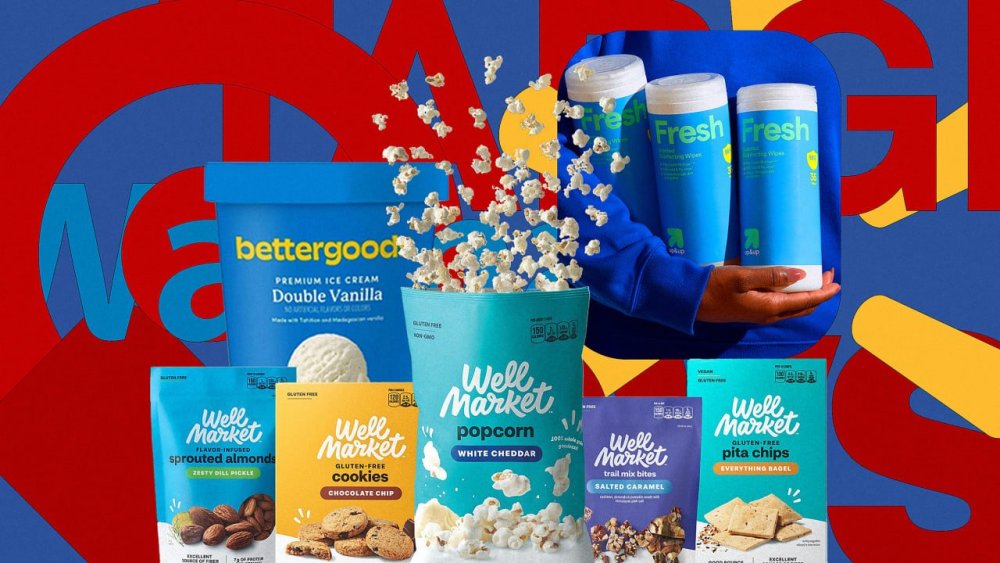
As shoppers have turned to cheaper alternatives to beat inflation, retailers from CVS to Target and Walmart have invested heavily in their private-label brands over the past year, wrapping store-branded products in new design-forward packaging. A new report finds that retailers’ efforts have paid off. Private-label goods accounted for one in every four food and nonfood grocery products purchased in the U.S. last year, according to a report from the Private Label Manufacturers Association (PLMA), which also found that sales of private-label products in the U.S. topped $270 billion in 2024, a record. Once purposefully packaged with no frills to convey their low price, retailers’ private-label products have gone from generic discount off-brands to colorfully packaged, beloved brands in their own right designed to appeal to a wider consumer base and higher-income shoppers. [Photo: Target] Target, a leader in the private-label space, recently updated its Up&Up brand to more colorful packaging courtesy of the design agency Collins. “It’s a brand that’s been around for a long time, has lots and lots of items, but it needed a refresh,” Rick Gomez, Target’s chief commercial officer, said on the company’s most recent earnings call. “And so we went in and invested in the brand, redesigned all the packaging graphics, took about 40% of the line and did product improvements, new fragrances, more sustainable packaging.” To Gomez, it was a no-brainer. “That’s what we think you need to do to keep brands contemporary and relevant,” he said. [Image: Walmart] Competitors have taken notice. Late last year Walmart introduced Bettergoods, a private-label brand with bright, color-on-color packaging; product offerings include plant-based, organic, and gluten-free food meant to appeal to the high-income shoppers who’ve increasingly turned to Walmart since inflation spiked. Walmart said last year that high-income shoppers represented the majority of its share gains, telling Fast Company that the Bettergoods brand had a high repurchase rate. CVS’s private-label brand, Well Market, also launched last year and showed the trend extends to pharmacies too. [Image: CVS] While national brands accounted for more sales overall in 2024—$1.3 trillion compared to more than $270 billion sold in store-brand products, according to the PLMA report—the growth of private-label products has proven key for retailers aiming to lure customers into their stores. Sales of store-brand products in the U.S. rose nearly 4% from 2023 to 2024, while sales of national brands grew just 1% in the same time period, according to the report. Once viewed as cheap knockoffs, private-label brands have become mainstays for consumers and retailers alike. View the full article
-
Online applications usually include an optional field where you can upload a cover letter. Think “optional” means you don’t have to include one? Think again. According to a recent survey of recruiters from the career services platform Zety, 89% expect a cover letter, and 87% say it’s a key factor when deciding whom to interview. “Job applications are super complicated today,” says Jasmine Escalera, Zety’s career expert. “You have to tailor your résumé to the job, and there are often so many moving parts to just submit one application. I understand when job seekers think, Does the cover letter actually add any value? Sometimes it can be equally as important as résumés when a recruiter is looking for a specific kind of individual to work within their company.” In other words, cover letters matter. More than 80% of recruiters have rejected applicants based solely on their cover letters, according to Zety. Here are four cover letter mistakes to avoid: 1. Repeating Your Résumé Your résumé is a keyword-rich document that lists your job experience, skills, and accomplishments. When writing a cover letter, candidates are often tempted to underscore their strengths by repeating them. Don’t, says Escalera. Zety’s survey found that the most important focus of the cover letter is to connect the dots between your experience and the demands of the role. “The cover letter is the place where you can talk about why this company or this position is the right fit for you, either now or moving forward in your career,” Escalera says. “It’s the place to inject some personality, some passion.” For example, if you’re applying to a nonprofit organization that has a mission that is close to your heart, explain why. If you’re applying for a leadership position, use the cover letter to share some additional information about your leadership style or philosophy, showcasing something that doesn’t come through on your résumé. If you’re making a career pivot or transition, use your cover letter to explain why the new industry or role is enticing to you. Or if you have a career gap because you got laid off or were a caretaker, address that in your cover letter. “The cover letter should complement and not regurgitate your résumé,” Escalera says. 2. Being Too Long When it comes to the letter’s length, Escalera says brief is better. Per Zety’s survey, 49% of recruiters think half a page is the right length, 26% prefer a full page, and 25% say a few sentences are sufficient. “We are in the age of the scroll,” says Escalera. “Recruiters want to hear how you’re connected to the role, and they want you to address questions or concerns the résumé might show. They don’t want your life story.” Make your letter easy to skim by not getting into too many details. “Give something high level that entices someone to say, ‘I want to get to know this person because they look like a great fit,’ or ‘Okay, I understand why they’re making this transition,’” Escalera says. 3. Addressing it ‘To Whom It May Concern’ Job ads rarely provide a hiring manager’s name, but that doesn’t mean you should send your letter without one. Escalera recommends addressing your letter to a real person instead of “To Whom It May Concern.” “It shows that you’re going the extra mile,” she says. “Personal touches make so much of a difference because, essentially, what you’re showcasing is, ‘I already know you. I know my potential manager. I’ve done my research.’” To find the information, Escalera says you need to do your homework. Sometimes the job description will give a title that the position reports to. For example, if you’re applying for a job as a project manager, it might say that you will report to the director of project management. “Do a little bit of digging,” Escalera advises. “Check out the company’s website. Do a Google search. Check LinkedIn to find out who that individual is.” Another way to find the right person is to see whether the job has been posted on LinkedIn by the recruiter or hiring manager. Or Escalera recommends finding the name of the company’s director of HR on LinkedIn and addressing your letter to that person. 4. Lacking Energy A lot of candidates apply for a role simply because they need a job. Even so, the position must have attracted you in some way, and your cover letter should convey that spark. “Maybe it fits your skill set,” Escalera says. “Maybe it fits with your career trajectory. Or maybe there is something special about the company that intrigues you. Inject your ‘why’ into the cover letter and share your enthusiasm.” Energy will come off the cover letter and provide some clue as to what kind of an employee you might be once you’re hired. Among the top things recruiters look for in the cover letter, according to Zety’s survey, are personality and communication skills. “Start your first sentence with, ‘I am excited to apply for this job,’” says Escalera. “Then restate your enthusiasm at the end of the letter, this time with a call to action. For example, ‘I am excited to learn more about this company,’ ‘I’m eager to hear about next steps,’ or ‘I am eager to discuss my experience in an interview.’ Putting energy and enthusiasm on the page can be really helpful.” Applicant tracking systems may scan your résumé for keywords, but your cover letter is often read by a real person. Take advantage of this extra chance to stand out by tailoring yours for the company and the job. View the full article

-
Europe is getting everything right when it comes to fibre. The same cannot be said about adoption of the latest Wi-Fi standards. The post Wi-Fi Alliance: “Faster adoption of new Wi-Fi standards means lower costs and less churn for operators in Europe” appeared first on Wi-Fi NOW Global. View the full article
-
Innovation doesn’t happen in environments bogged down by rigid rules, excessive oversight, or unnecessary bureaucracy. The most transformative ideas actually emerge when employees have the freedom to experiment, take risks, and truly own their work. As a former executive at Oracle and the current CEO of the software company Incorta, I’ve seen firsthand that traditional leadership structures often do more to stifle innovation than foster it. Instead of relying on rigid processes, leaders should focus on creating an environment where employees feel empowered to challenge the status quo. Here are four ways to cultivate that kind of workplace. 1. Hire for Capability—Then Focus on Outcomes Too many leaders mistake constant oversight—like ensuring employees sit at their desks from 8 a.m. to 7 p.m.—for productivity. In reality, great innovation comes from hiring smart, capable people and giving them room to solve problems in their own way. But hiring the right people is only part of the equation. Leaders must also focus on outcomes rather than rigid processes. At many companies, leadership unintentionally slows progress by overcomplicating decision-making. Rather than trusting their employees, they create layers of approvals and bureaucratic processes that drain time and enthusiasm. When leaders micromanage, they create a culture of hesitation, and employees become afraid to make decisions, innovation slows, and morale suffers. To build a culture of innovation, leaders must hire for capability and alignment with the company’s vision, then trust their employees to make the right choices. Instead of dictating every step, set clear objectives and let talented professionals determine the best way forward. When employees feel ownership, they take more initiative, leading to increased creativity and efficiency. Shifting the focus from rigid rules to impact-driven work fosters an environment where people feel trusted and motivated to find the best solutions. 2. Give Interns the Hardest Problems One of the most surprising lessons I’ve learned is that our interns often come up with the most creative solutions. They’re not burdened by outdated industry norms or ingrained ways of thinking, so they approach challenges with fresh perspectives. We put this philosophy into practice at Incorta by assigning interns some of our toughest projects—like refining AI models with advanced tools and building interactive data visualizations to enhance our marketplace. Time and again, they’ve exceeded expectations, offering insights that even senior team members might overlook. The key? Giving them the freedom to explore unconventional solutions. In contrast, companies that limit interns to low-stakes, mundane tasks miss out on a valuable source of innovation and enthusiasm. 3. Encourage ‘Lazy’ Thinking to Challenge Inefficiencies Some of the best innovations come from questioning the way things have always been done—and sometimes, from those looking for the easiest, most efficient way to get things done. I personally hate unnecessary steps. I don’t want to stop at gas stations or sit in traffic for hours. So, I plan my day to eliminate inefficiencies, like living close to work, planning direct routes, and canceling unnecessary meetings. Small choices like these add up to more time for what really matters in my life, like engaging with customers and spending more time with my family. The same thinking applies to business. Many organizations rely on outdated workflows that require extra steps, redundant approvals, and time-consuming processes. Some of the best problem-solvers are those who find ways to work smarter, not harder. I encourage my team to rethink how work gets done, whether it’s streamlining data processes, cutting out unnecessary steps, or automating tedious tasks. This fosters a culture of continuous improvement. Leaders should empower employees to identify bottlenecks and experiment with better approaches. Creating space for employees to rethink work ultimately leads to better decision-making, greater efficiency, and stronger business outcomes. 4. Embrace Controlled Chaos True innovation doesn’t happen in perfectly controlled environments. In fact, too much structure can kill creativity. Some leaders shy away from chaos, but I believe in structured freedom—providing clear goals without imposing unnecessary constraints. Creativity thrives in environments that allow for experimentation, play, and improvisation. Companies like Apple have long embraced this ethos, recognizing that some of the best ideas emerge when people are given the space to explore without fear of failure. Apple’s longstanding iterative design process, for example, allows for constant tinkering and refining, which has led to some of the most iconic products in tech history. A great way to foster this kind of culture is to take a page from improv comedy. The “yes, and” principle—where participants build on each other’s ideas rather than shutting them down—creates an environment where creativity flows freely. Play-based work environments lead to higher engagement and breakthrough thinking. Some of the most innovative teams operate with a sandbox mentality, where new ideas are tested, refined, and evolved without judgment. Instead of fearing chaos, leaders should create an open forum for ideas, where employees feel free to test, iterate, and push boundaries without constant oversight. With clear goals and a culture that embraces exploration, teams will feel more confident taking bold steps toward meaningful innovation. The Freedom to Innovate At the end of the day, the companies that thrive are the ones that encourage curiosity, creativity, and calculated risk-taking. By giving employees more freedom, leaders tap into hidden potential and drive innovation in ways they never expected. The world doesn’t move forward by following the status quo. It moves forward because people are willing to challenge it. So, if you want to create a truly innovative workplace, start by loosening the reins and letting your people do what they do best—think, explore, and create. View the full article

-
Coming soon…View the full article