ResidentialBusiness
Administrators
-
Joined
-
Last visited
Everything posted by ResidentialBusiness
-
 Female streamers are being told to hire security after a spate of recent attacks. Popular Twitch stars Valkyrae, Cinna, and Emiru were out in public at the Santa Monica Pier on March 2 as part of their “sisathon” streaming marathon, when a man lunged toward them, saying, “I’ll kill you right now.” The streamers called for help from security as the man chased them before the stream turned off. He had tracked their location using the live broadcast and earlier had gotten down on one knee, proposed to the three streamers, and asked one for her phone number, which she refused. Issuing an update later that evening on X, Cinna posted, “Hey everyone we are safe. Unfortunately, we have to end the marathon and need time to process what happened as we shock at the moment.” hey everyone we are safe. unfortunately we have end the marathon and need time to process what happened as we shock at the moment. Thank you for all the love and support on the marathon. We love you all. — cinna (@cinnabrit) March 3, 2025 Other streamers have rallied around the Twitch stars, advocating for increased safety measures, particularly for women in the industry. Popular streamer xChocoBars, who has advocated for more action to be taken against stalkers targeting streamers, posted on X: “The police and security need to do more for women who get stalked. I’m sick and tired of this law where they can’t do anything until something HAPPENS.” QTCinderella also shared details for the security firm she employs while streaming in public. “There have been times where they have had to be with me 24/7. It could save your life, save their info,” she posted on X. That same night, another popular streamer experienced a harrowing incident in her home. Amouranth, whose real name is Kaitlyn Siragusa, posted on social media that she’d been robbed at gunpoint by thieves trying to steal her crypto funds. “I’m being too robbed at gunpoint. I believe I shot one of them. They wanted crypto is what they were yelling they pulled me out of bed,” Amouranth posted on her X account on March 2 at 11:55 p.m. The Kick streamer and adult content creator later explained why she posted to X instead of calling emergency services. “Was at gun point they gave me phone and said log in with gun to my head and I tweeted because calling would be a death sentence,” she wrote. The attack comes just months after Amouranth posted a screenshot of a Coinbase account showing in excess of $20 million in BTC and ETH, along with the message, “Do I sell or hold my BTC?” Private security firms, such as Fast Guard Service, have reported a recent surge in demand from influencers spanning various platforms. Creators are now experiencing a number of concerning side effects that come with online fame, including unwanted attention, harassment, and even physical threats. What used to be an occupational hazard reserved for Hollywood celebrities and high-profile politicians is now a growing reality for influencers and internet personalities. View the full article
-
This post was written by Alison Green and published on Ask a Manager. It’s five answers to five questions. Here we go… 1. Coworker asks someone to get him food from the cafeteria every day I work as a consultant for a company and have an older male colleague (in his late 40s) who has mobility issues due to his weight. He sits almost all day and arrives very early before anyone else arrives. He cannot walk more than a few feet without pain and asks me (or another colleague) to grab meals for him at the cafeteria almost daily. He gives people money for his food, which is always junk food, and is very apologetic and appreciative. Most people, including myself, bring packed meals and rarely eat in the cafeteria. It’s very awkward being put on the spot, especially since everyone is polite and usually willing to help anyone. I’m a classic “people pleaser”, which is something I really need to work on. My work crosses paths occasionally with this colleague so I don’t want any bad blood impacting my interactions with him. I don’t know him very well and he is not a “work friend.” Even if he were, it is still an uncomfortable situation. While I sympathize with his chronic pain issues, I’m fed up and not his personal assistant! His boss often travels overseas and is rarely in the office. Due to my role, I work for an outside vendor with an unrelated HR team. He’s not in a supervisory role over anyone here, including me. If he needs a disability accommodation, that’s between him and his manager. How do I handle this colleague tactfully and avoid being offensive? “Oh, I’m sorry — I’m not going to the cafeteria today!” That’s it. If he asks if you’d mind going anyway and you don’t want to, you can say, “I’m sorry, I can’t — I’m swamped.” He’s likely to stop asking pretty quickly. For what it’s worth, I don’t think it’s an outrageous imposition that he asks people for help. There are probably people who don’t mind and who see it as a kindness they’re happy to offer, and it’s reasonable for anyone to say no if it’s too much of an inconvenience on any given day or in general. I think the issue here is more that you don’t feel comfortable saying no than that he’s asking in the first place! Kindly saying you can’t do it should take care of it. 2. New hire took the “fork in the road” and now we might not be able to hire a replacement I’m hoping to get a sanity check from you on a situation that just happened on my team. I know you generally say employees have to do what’s in their best interests, and sometimes burning a bridge is worth it, but this whole situation feels like more than just the “cost of doing business.” I work for a large federal agency in the D.C. area. Unlike many federal employees who are seeing their work slashed and burned, the team I lead has been launched from complete obscurity to being very high-visibility and is working incredibly hard. We used to be a strict 40-hour week team and now we routinely have team members staying past 8 or 9 pm to get all of our tasks done. During this time, we put out an internal job posting to hire a senior individual contributor position. We did interviews and selected someone who seemed pretty qualified, though not “knock it out of the park” qualified relative to the other candidates. He accepted and started working on the team recently. Within a couple of days after he started, our HR informed us this employee had taken the deferred resignation option, aka Elon Musks’s “fork in the road,” and his last day would be about two weeks after starting. The employee never informed us of any of this, and what makes me particularly peeved is that he sent in his deferred resignation several days before interviewing with us and accepting the position. All of this would fall under “not cool, but I guess we’ll just deal with it” except for one additional wrinkle: people who leave under the deferred resignation program can’t get their jobs backfilled. (Actually, my agency has to give up a billet for every single person that opted in, even if they don’t actually leave.) My supervisor is fighting to make the case that the unit he belonged to when he first resigned should be the one losing a billet, rather than our unit that he was in when he signed the final paperwork, but we don’t know how that’s going to turn out. We also don’t know, even if we can fill the position, whether we can just call up our second choice and make them an offer, or whether the rules will require us to go through a lengthy re-posting and re-interviewing process. And all the while, my team of junior employees are working their asses off without the help of a senior who could relieve some of the pressure. Either way, there’s nothing I can do, but am I off-base in thinking this was much more egregious than a standard situation of a new hire backing out? I feel that at least, the employee should have told us he opted in to the deferred resignation when he received the offer, so that we could have made an informed decision. Yeah, that’s pretty crappy. In fairness, it’s possible that he wasn’t confident that the deferred resignation email would be honored, since there’s still plenty of doubt about that. And he might have figured that at this point he doesn’t owe any particular courtesy to an employer that’s treated its workforce so disrespectfully (and … there’s something to that). But yeah, he screwed your team to get something for himself (which I wouldn’t say if he didn’t put you in a position where you might not be allowed to re-fill the job). However, it’s far, far more absurd that HR didn’t tell you before the hire was finalized! That’s relevant info that you should have been made aware of, and it’s either by extreme incompetence or deliberate design that they didn’t. 3. Should I tell my employees that someone assaulted me? I wish I did not have to ask this. I live in a very small community with a staff of about 10. I am a sexual assault survivor with CPTSD and anxiety disorder from that experience growing up. Unfortunately, this weekend I had a stranger break into my apartment and attempt to rape me. While the assailant was caught and arrested and I was able to fight them off (and I’m in therapy), I am understandably very shaken up and this has opened some new wounds. Is it appropriate for me to tell my employees what happened in general terms and ask them to be careful when approaching me, especially from behind over the next few weeks as this is very triggering for me? This was all over our local media and some of them already know, and I have taken the next few days off of work because of the event. How awful, I’m so sorry. Yes, you can absolutely share with your employees what happened in general terms so they have context for the requests you’re making (requests that will be completely understandable to anyone once they know why). “Broke in and attempted to attack me” will carry enough relevant information if you’re more comfortable with that wording. I hope you heal as quickly as possible. 4. The lack of clarity of “Sunday at midnight” I’ve always had a pet peeve as a student when I would get assignments that were due on, say, “Sunday night at midnight.” Does that mean you need my paper by Saturday night going into Sunday morning, or do you need my paper by Sunday night going into Monday morning? Because midnight is the start of the next day! I never asked because nobody else seemed to have an issue, but more importantly, it would only be a real issue if you weren’t completing your assignment in a timely manner. I always made a point to turn in my assignments at least 48 hours before a deadline anyway, so there was no reason to bring it up. Now, I’m a grad student who’s a teaching assistant for a professor, and I’m responsible for writing the homework assignments for his undergrads. I tell students, “Submit this assignment by Sunday at 11:59 pm.” I feel this is much clearer than “Sunday at midnight,” and if a student were to, say, procrastinate on a lab report, a 60-second difference will not matter. The professor, however, said that I should keep the “Sunday at midnight” vernacular because it’s industry standard (not just in our field, but in others). The actual amount of days given to complete the assignment was always correct, but I didn’t say anything because I feel like my concerns will be dismissed as mere semantics. It’s one of those weird little things where you feel silly for wanting to argue more for it, but you also feel frustrated because that means the other person is being equally silly for arguing against it. So then you just don’t argue to keep the peace but still have unresolved frustration. How common is “Sunday at midnight” in the working world? What should it mean? It’s incredibly common! And I am right there with you on it; you’re essentially giving a deadline that’s a day earlier than what you really mean and causing unnecessary confusion. The real deadline is Sunday at 11:59 pm. I think people are willing to live with it, though, because it’s not going to result in a student being late; if someone takes it literally, they’d be a day early instead. That’s still not particularly fair or clear … but if assignments were late as a result of it, they’d be more moved to change it. 5. Dealing with someone who’s in denial about their unreliable email A physician I see regularly is having problems with her email. I’m sure that the problems are on her end because (a) they happen repeatedly, (b) they happen with no one else in my contact list, and (c) other people (like my occupational therapist) also have problems with her email communications. Sometimes she doesn’t receive emails that I’ve sent her, but she also sometimes says she’s sent me an email that never arrived in my inbox. (I’ve checked for these emails thoroughly). I’m not sure if the problem is that she’s very loose in how she handles her email or if there’s some technical issue on her end. In any case, it’s causing me real problems from time to time. When I’ve brought this problem up, she’s been resistant to the possibility that the problem is on her end. She either shrugs off the missing email or implies that I somehow missed it or inadvertently deleted it — but I know, from ongoing exploration, as well as others’ communications with her, that the issue is definitely on her side. It feels quite rude to say to a professional, “I know that this problem might seem like a one-off, or like it might be a technical glitch on my end, but I have been tracking patterns for a while now, and I can tell you with confidence that some of your emails are not arriving and that you are often not getting the emails I send, and it is causing Big Problems. Could you fix it?” In some ways, I would prefer a simple workaround that acknowledged the situation without demanding that she address it: something like, “Since, as we’ve discussed, my emails don’t always make it to you, is there another way I could be corresponding just to make sure we’re communicating reliably? If I have a question, would you rather I call and leave a voice message with the question, or email you and then call to confirm receipt?” Does either of these seem likeliest to work, or most appropriate? Sure, that’s appropriate. But note at least for half the problem (the half where she misses your emails), you don’t even need to sort it out with her ahead of time. You can simply assume email isn’t a reliable method of reaching her and just switch to calling instead (or emailing and then calling to confirm receipt). The piece that you have a lot less control over is when she thinks she’s emailed you but hasn’t — so I’d focus on that piece of it. For example: “For whatever reason, your emails don’t reliably reach me. I don’t want to miss important messages from you, so can we switch to a different communication method, like texts or phone calls?” View the full article
-
S&P predicts higher bond issuance will push stock of long-term debt to $76.9tnView the full article
-
Generative AI is a tempting short-cut that can prevent those at university from gaining foundational skillsView the full article
-
Core voters in Georgia are keeping the faith as the US administration tears up the rule bookView the full article
-
Washington announces decision days after White House clash with Volodymyr ZelenskyyView the full article
-
Zoopla figures signal easing for tenants after prolonged squeeze on finances View the full article
-
Surge in grievances puts regulators under pressure ahead of crucial court case View the full article
-
China ‘more open’ to foreign business than the west, says executive vice-president Stella LiView the full article
-
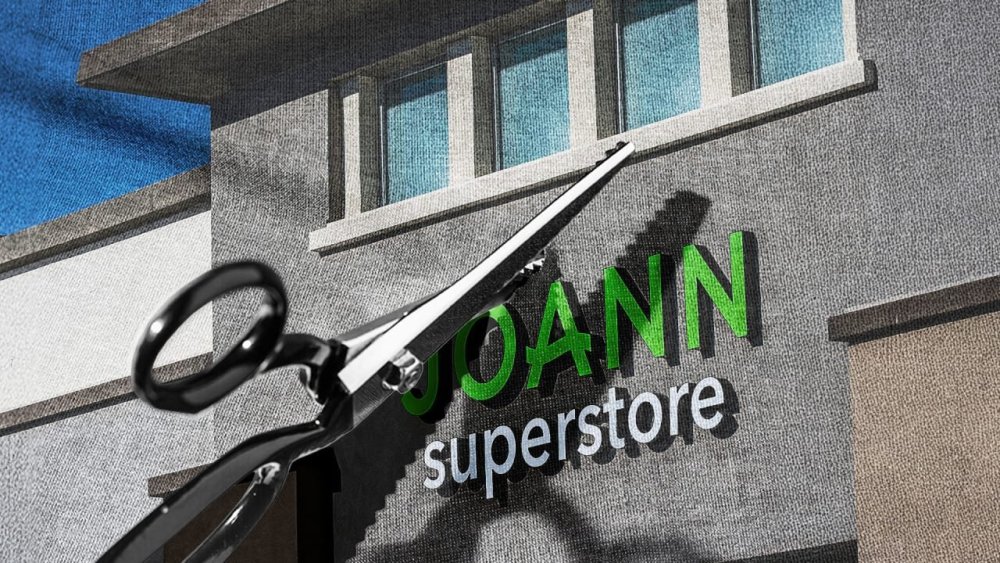
After more than eight decades in operation, craft retailer Joann is going out of business, closing all 800 of its stores and laying off 19,000 employees. The news comes after the retailer’s restructuring plans failed and a liquidator opted to purchase its assets. Joann is far from the only retailer in its death throes these days. Recent data shows that the number of retail-store closures is expected to double during 2025, to roughly 15,000 from the 7,300 or so in 2024. Accordingly, Joann is in a similar boat to companies such as Red Lobster, Big Lots, and Party City, which have each announced plans to either completely close up shop or enact big restructuring in recent months. And a commonality between many of them? Private equity firms are playing a large role. Private equity has been in the spotlight in recent years as it relates to many large-scale business restructurings and closings. For instance, restaurant chains Red Lobster and TGI Fridays—both of which filed for bankruptcy last year—were backed by private equity firms. Critics say that private equity, often simply referred to as PE, tends to come in and strip a company for parts and eventually kill it off rather than trying to make an honest attempt at turning the business around and making it profitable. While poor stewardship on the part of private equity can certainly contribute to a company’s downfall, experts say what happened with Joann appears to be more nuanced. “Private equity doesn’t have a crystal ball” Joann’s situation is somewhat unusual as it relates to its current situation. Back when it was known as Jo-Ann Stores, the company was acquired by PE firm Leonard Green & Partners in 2011 for roughly $1.6 billion as part of a leveraged buyout, taking the company private. The deal effectively put Joann and its resources up as collateral, and after some rebranding and leadership changes, the retailer went public again in early 2021, during a stretch when it was getting a jolt from pandemic-era growth in crafting and other such at-home activities. But the past few years haven’t been so kind, and Joann again faltered. It found itself in the lurch with two bankruptcies over the past year as its leadership was unable to successfully capture the brief momentum it had experienced in 2020 and 2021. It’s hard to ignore that Joann is a specialty retail company with a huge geographic footprint, large-format stores, and thousands of employees: exactly the kind of retailer that has found it increasingly difficult to thrive in the decades since e-commerce companies like Amazon have entered the fray. So while Joann did have PE backing, prevailing market conditions may be the firm’s ultimate undoing, experts point out. “People forget the incredible role that market conditions play,” says Donna Hitscherich, a senior lecturer in discipline, finance, and economics and director of the Private Equity Program at Columbia Business School. She says PE firms know how to operate businesses and are “singularly focused” on turning a profit. “There’s little or no incentive for PE to come in and have a business fail, as in the case of Joann,” Hitscherich says. “That wasn’t their plan. Private equity doesn’t have a crystal ball.” Though Joann did receive a shot in the arm during the pandemic, when many people took up new hobbies and crowded into craft stores, the retailer has been trending downward for a while. If a private equity firm purchases a struggling retailer only to see that retailer go under, “they’re just giving away money,” Hitscherich says. Mixed incentives There are ways that PE firms do make money even if the company it purchased is circling the drain, however. “Because of the laws and regulations that surround the PE industry, firms are often incentivized to extract money rather than to try and make a company succeed or survive,” says Brendan Ballou, author of the book Plunder: Private Equity’s Plan to Pillage America, and former special counsel with the U.S. Department of Justice’s antitrust division. “The issue is that PE firms also take fees from businesses, like management fees or transaction fees,” he says. In effect, PE firms may develop a sort of parasitic relationship with their portfolio companies, extracting money through fees even if it’s to the long-term detriment of the targets they acquire. This sometimes happens as part of a leveraged buyout, which may put target companies at a disadvantage, as they effectively receive a lifeline but go further into debt in order to secure it. Add in the fees on top of that, and companies that were already struggling to make money may find those struggles compounded. “The investors in the PE firm certainly want the business to succeed, but that’s not necessarily the case for the firm,” Ballou says. As such, there are mixed incentives at play. While some PE firms may end up speeding up the death of a portfolio company, rather than helping to resurrect it, supporters of private equity maintain that it plays an important role in the economy. A report from EY, provided to Fast Company by the American Investment Council, a PE-focused advocacy organization, found that the PE sector directly employed 12 million people during 2022, and a vast majority (85%) of the companies that PE firms back are small businesses with fewer than 500 employees. So, while there is a role for private equity, there are also legitimate questions to be asked when a beloved company like Joann or Red Lobster hits the skids. For Ballou, it all comes back to the issue of crossed incentives: “Failure for Joann doesn’t necessarily mean failure for a PE firm.” View the full article
-
The Federal Deposit Insurance Corp. board of directors approved a proposal to roll back its 2024 merger policy, reinstating previous guidelines while charting a new policy toward bank combinations. View the full article
-
Google's John Mueller shares his thoughts on low-effort content that "looks good" The post Google On Low-Effort Content That Looks Good appeared first on Search Engine Journal. View the full article
-
Traders had been expecting cartel to postpone its plan to boost outputView the full article
-
We may earn a commission from links on this page. Deal pricing and availability subject to change after time of publication. The Pixel 9 is the latest series of the Google Pixel phone lineup. They were released late last summer with the 9 Pro and Pro XL getting released as well. But if you're OK with an already good camera and prefer to save some money, the 128 GB unlocked Pixel 9 is just $599 (originally $799) after a $200 discount, the lowest price it has been since its release, according to price-tracking tools. You can get it in obsidian, peony, or porcelain. Brand: Google, OS: Android 14, RAM: 12 GB, Storage: 128 GB, Screen Size: 6.3 Inches. Google Pixel 9 (Obsidian) $599.00 at Amazon /images/amazon-prime.svg $799.00 Save $200.00 Get Deal Get Deal $599.00 at Amazon /images/amazon-prime.svg $799.00 Save $200.00 Brand: Google, OS: Android 14, RAM: 12 GB, Storage: 128 GB, Screen Size: 6.3 Inches. Google Pixel 9 (Peony) $599.00 at Amazon /images/amazon-prime.svg $799.00 Save $200.00 Get Deal Get Deal $599.00 at Amazon /images/amazon-prime.svg $799.00 Save $200.00 Brand: Google, OS: Android 14, RAM: 12 GB, Storage: 128 GB, Screen Size: 6.3 Inches. Google Pixel 9 (Porcelain) $599.00 at Amazon /images/amazon-prime.svg $799.00 Save $200.00 Get Deal Get Deal $599.00 at Amazon /images/amazon-prime.svg $799.00 Save $200.00 SEE 0 MORE As most Pixel fans are probably aware, the budget Pixel 9a is expected to release sometime this month, which probably explains the new discount of the Pixel 9. If the pattern continues, you'll likely see the Pixel 9a come out for $500 during the pre-order sale. Also, if the trend of a-series phones continues, the Pixel 9 might still be a better value than the 9a. The Pixel 9 comes with 12GB of RAM, starts with 128GB of memory storage, a maximum 120 HZ refresh rate, and the Android 14 operating system. Lifehacker's associate tech editor Michelle Ehrhardt deemed the more premium Pixel 9 Pro's hardware as the best Google has made so far, but its AI features still had hiccups. However, AI features will keep improving over time; the most important thing to get right is the hardware. The battery life can last almost 12 hours, according to PCMag's "excellent" review. The main camera has a 50MP shooter, a 48MP ultra-wide camera with a 123-degree field of view, same as the Pro models, but it has a single-zone laser detect autofocus (LDAF) sensor (the pro has multi-zone LDAF). If you have the Pixel 8, you might not notice a huge upgrade in this version. However, if you're upgrading from an older version or doing a switch from a non-Pixel phone, the 9 has a lot to offer. One of my favorite things about Pixel phones is the ongoing support for many years. My Pixel 6A still gets all of the updates and tons of AI features that make the phone feel fresh many years later, with the latest ones dropping last month. With the Pixel 9, you'll be getting a quality phone with software updates for a while (as long as seven years). View the full article
-
Serena Williams is joining the ownership group of the WNBA’s first Canadian franchise, the Toronto Tempo, the team announced Monday. She will partner with Larry Tanenbaum, Chairman of Kilmer Sports Ventures for the Tempo, who will begin play in the 2026 season. “I am thrilled to announce my ownership role in the first Canadian WNBA team, the Toronto Tempo,” said Williams. “This moment is not just about basketball; it is about showcasing the true value and potential of female athletes — I have always said that women’s sports are an incredible investment opportunity. I am excited to partner with Larry and all of Canada in creating this new WNBA franchise and legacy.” Williams, one of the greatest tennis players in history, will play an active role in future jersey designs. She made her professional tennis debut at age 14 at a tournament in Canada in 1995, and her last event was the 2022 U.S. Open. Williams won 23 Grand Slam singles titles — the most by a woman in the sport’s Open era — plus another 14 major trophies in women’s doubles alongside her older sister, Venus. “Serena is a champion,” said Tempo President Teresa Resch. “She’s the greatest athlete of all time, and her impact on this team and this country is going to be incredible. She’s set the bar for women in sport, business and the world — and her commitment to using that success to create opportunities for other women is inspiring — we’re thrilled to be marking the lead-up to International Women’s Day with this announcement.” Williams is the latest former pro athlete to join a WNBA ownership group. Magic Johnson, Tom Brady, Dwyane Wade and Renee Montgomery already are owners. This isn’t the first ownership venture for Williams. She has a stake in the Angel City FC women’s soccer team. She also holds minority stakes in the Miami Dolphins as well as TGL’s Los Angeles Golf Club, the virtual golf league headed by PGA stars Tiger Williams and Rory McIlroy. Williams’ husband, Alexis Ohanian, donated millions of dollars to Virginia’s women’s basketball program last year. He graduated from the school. —Doug Feinberg, AP basketball writer View the full article

-
Google’s Ads and Commerce product lead, Vidhya Srinivasan, today outlined how the company is reimagining advertising as “avenues for tailored exploration” in response to unpredictable consumer behavior. The big picture: Google is focusing on three key solutions to help advertisers break through: AI-powered shopping innovations. Google launched several new shopping features, including ads in Lens, AI-powered Google Shopping, 3D product spins, and virtual try-on experiences for clothing items. YouTube creator partnerships. The platform’s highly engaged audiences, particularly Gen Z, trust creator recommendations 98% more than those on other social platforms (according to Google figures). Google is developing more interactive ads with the aim of helping brands connect with relevant creators. Enhanced search experiences. AI-powered features like AI Overviews, Circle to Search, and Google Lens are expanding the types of questions people can ask. These new search capabilities has potential for increased commercial query volume. Why we care. As consumer behavior becomes increasingly fragmented across devices and platforms, Google is betting on AI to help advertisers create more personalized, relevant content that can break through the noise. With consumers rapidly switching between devices and platforms, these AI-powered solutions have the potential to help advertisers maintain visibility throughout the entire customer journey, from discovery to purchase, while leveraging trusted creator relationships that drive higher engagement, particularly among younger audiences. Although it is still key to ensure that adequate human intervention still remains as AI capabilities keep improving and evolving. By the numbers (according to Google internal research): People shop more than a billion times daily across Google Consumers used Google or YouTube in approximately two-thirds of purchases where they discovered something new YouTube viewers watch over 1 billion hours of content daily on TVs Google processes more than 5 trillion searches annually (416 billion searches per month) Between the lines. Srinivasan’s letter emphasizes that simply creating compelling content isn’t enough. Brands need to “show up everywhere people are, from discovery to decision” to capture attention in today’s fragmented media landscape. Bottom line. Srinivasan points to several AI-powered advertising innovations already launched, including ads in Lens, AI-powered shopping, 3D spins for ad images, and virtual try-on features for clothing, with promises of “much more to come.” Google is positioning itself as the solution to fragmented consumer attention by helping brands create more relevant content and appear at critical moments across the customer journey, from discovery to purchase decision. View the full article
-
The acquisition bucks recent trends that saw depository banks eliminate mortgage lending, but the 2025 market environment may be favorable for consolidation. View the full article
-
French discuss proposal for Kremlin to lose securities if it breaches a future ceasefire View the full article
-
As climate change causes more frequent disasters, more mortgages are at risk of going underwater. How can banks limit their exposure? View the full article

-
US president says there is ‘no room’ for further negotiationView the full article
-
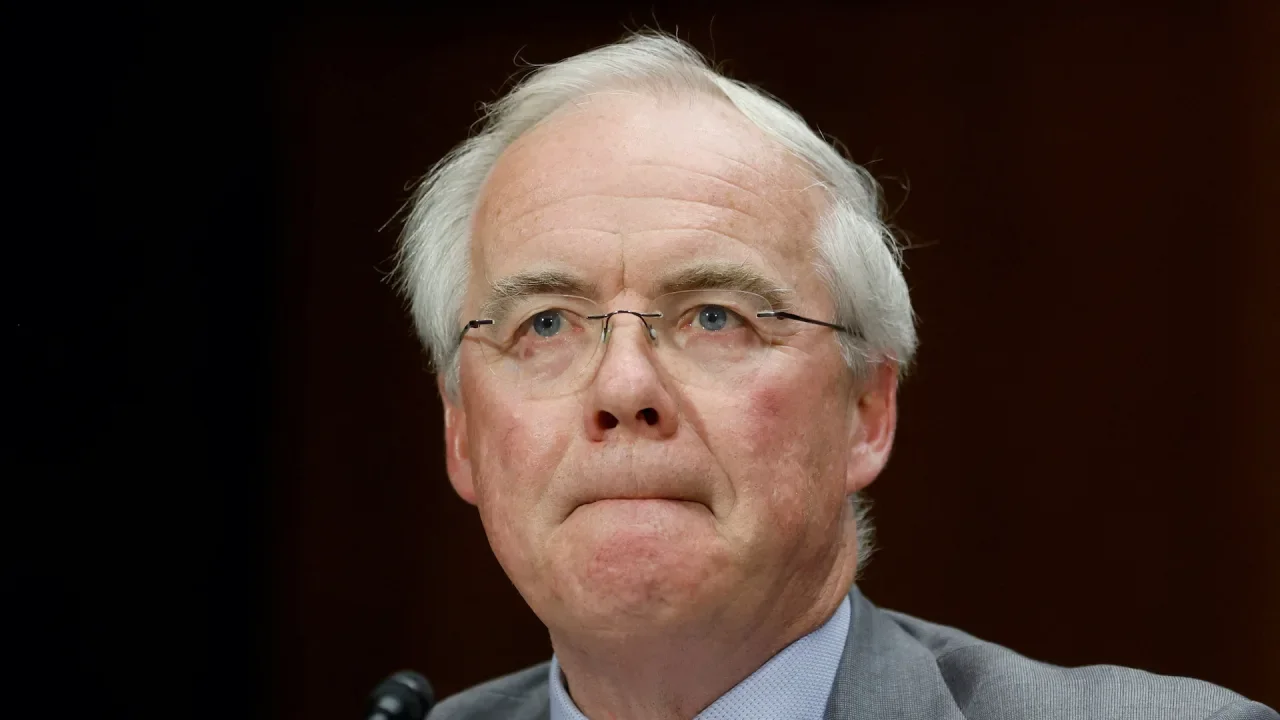
U.S. grocer Kroger said on Monday CEO Rodney McMullen has resigned after a board investigation found that his personal conduct was “inconsistent” with certain company policies. The conduct is not related to financial performance, operations or reporting, and it did not involve any Kroger associates, the company said. The surprise ouster of the 64-year-old executive comes after the company in December terminated a two-year effort to buy rival Albertsons in a $25 billion deal, an attempt McMullen had staunchly defended as a way to fight higher prices and better compete with Walmart and Costco. Meanwhile, Albertsons has sued Kroger for an alleged breach of contract that led to the demise of the deal. Kroger, when contacted, declined to provide more details on the exit of McMullen — who was its CEO for more than a decade and has been at the company since 1978 — and the nature of the conduct that led to his ouster. McMullen did not respond to a request via LinkedIn for comment. “McMullen stepping down certainly puts Kroger in a vulnerable position. The company is already dealing with the aftermath of its abandoned Albertsons merger, and a leadership change at this stage can complicate things,” said Riley Beam, managing attorney at Douglas R. Beam, a personal injury law firm based in Melbourne, Florida. “For investors, the risk is obvious — uncertainty.” The Cincinnati, Ohio-based company’s shares were down about 1.4% in early trading on Monday. The stock has more than tripled in value since McMullen took the helm in 2014. Following the failed merger plan in December, some United Food and Commercial Workers local unions urged Kroger’s board to replace McMullen after the company announced a $7.5 billion stock buyback plan. McMullen was trying to “distract attention from his multiple failures as CEO by announcing a massive one-time giveaway to shareholders,” the group had said. Kroger said on Monday the board was made aware of certain personal conduct by McMullen on February 21 and immediately retained an outside independent counsel to conduct an investigation, which was overseen by a special board committee. The board has appointed lead director Ronald Sargent as interim CEO. A long-time director at Kroger, Sargent was previously the CEO at office supplies chain Staples for more than a decade. He also serves on the board of Wells Fargo, where he is the chair of the human resources committee. Kroger said the board has formed a search committee and appointed a firm to conduct a search for its next CEO. The company said McMullen would not be eligible to receive a bonus for 2024. He received a total compensation of $15.71 million for fiscal year 2023, according to the company’s proxy statement. Kroger, scheduled to report its fourth-quarter results on Thursday, expects full-year adjusted earnings per share to be slightly above the high end of its forecast range. Several prominent CEOs have also been ousted for violating company policy, including McDonald’s CEO Steve Easterbrook in 2019 and Hewlett-Packard’s Co-CEO Mark Hurd in 2010. “If past is any guidance, there is usually no impact (on a company’s performance),” said Xu Jiang, associate professor at Duke University’s Fuqua School of Business. “The interim CEO will likely follow the previous CEO’s strategies so there is minimal disruption of Kroger’s business.” —Savyata Mishra and Aishwarya Venugopal, Reuters View the full article
-
Google processes more than 5 trillion searches per year. This is the first time Google has publicly shared such a figure since 2016, when the company confirmed it was handling “more than 2 trillion” queries annually. By the numbers. Google revealed the new figure in a blog post today, saying it is based on internal Google data: “We already see more than 5 trillion searches on Google annually.” Google added another tidbit in the same blog post: that “the volume of commercial queries has increased” since the launch of AI Overviews. However, Google didn’t share any data or a percentage to explain how much commercial queries have increased. Searches per second, minute, day and month. Now that we have an updated figure, we can also estimate how many Google searches there are pretty much down to the second. Here’s a breakdown based on this new Google data point: Searches per second: 158,548 Searches per minute: 9.5 million. Searches per hour: 571 million. Searches per day: 14 billion. Searches per month: 417 billion. Searches per year: More than 5 trillion. Google searches per year, over time. Curious about how the number of Google search queries has grown over time, at least based on what Google self-reported? Here’s a brief recap: 1999: 1 billion. This figure was based on 3 million searches per day, reported in August 1999 by John Battelle in his book, “The Search.” 2000: 14 billion. This figure was based on 18 million searches per day for the first half of 2000 and 60 million for the second half, as reported by Battelle. 2001–2003: 55 billion+. This figure was based on reports by Google for its Zeitgeist in 2001, 2002 and 2003. 2004–2008: 73 billion. This figure was based on Google saying it was doing 200 million searches per day in 2004. After that, it said only “billions” in Google Zeitgeist for 2005 and 2007. No updates were shared in 2006 or 2008. 2009: 365 billion+. A Google blog post, Google Instant, behind the scenes, said Google was doing more than 1 billion searches per day. No updates for 2010 or 2011) 2012–2015: 1.2 trillion. This figure is based on a 100-billion-per-month figure Google released during a special press briefing on search in 2012. Google repeated this figure in 2015, when expressing it as 3 billion searches per day. 2016-2024: 2 trillion+. Google confirmed to Search Engine Land that because it said it handles “trillions” of searches per year worldwide, the figure could be safely assumed to be 2 trillion or above. 2025: 5 trillion+. This figure is based on internal Google data and was reported in Google’s blog post, AI, personalization and the future of shopping. Why we care. Since 2016, we’ve known that Google processes “at least 2 trillion” searches per year. Now, nearly nine years later, we have a new official figure from Google for how many searches are conducted on Google annually: 5 trillion. View the full article
-
Zoho Corporation has announced the release of Notebook AI, an AI-powered note-taking assistant now available on iOS, Android, web browsers, and macOS. Users can activate a 15-day trial to explore the app’s features before purchasing, with pricing set at $4.99 per month or $49.99 per year for individual consumers. The company also plans to roll out Notebook AI to Notebook Business users within the next month at no additional cost to Business plan subscribers. Notebook AI integrates a suite of artificial intelligence tools designed to enhance note-taking, organization, and content creation. The app includes features such as content generation, translation, transcription, and shape recognition. It also offers grammar insights powered by BluePencil from Zoho Writer and voice-powered search through Zia Search. With the help of Retrieval Augmented Generation (RAG) and an interactive Q&A chatbot powered by Ask Zia, Notebook AI aims to simplify note management and improve productivity for users. Notebook AI offers a range of features to improve writing quality and efficiency. The AI-powered grammar tool refines text by correcting errors, eliminating redundancy, and ensuring inclusivity. The built-in Plagiarism Checker helps users maintain originality in their work. Additionally, Notebook AI suggests relevant tags to keep notes organized and searchable. The app also supports seamless translation, enabling users to convert notes into different languages effortlessly. “Notebook goes beyond note-taking, acting as a powerful translation tool that helps you translate your notes to any language,” Zoho stated. For users who rely on audio input, Notebook AI includes a transcription feature that converts recorded speech into readable text, making it easy to document meetings, lectures, and interviews. Its handwriting and shape recognition tools further enhance visual note-taking by refining handwritten text and perfecting drawn shapes. Notebook AI simplifies navigation with voice-activated search capabilities. Users can quickly locate notes without manually scrolling through entries, enhancing efficiency and accessibility. Currently available for individual consumers, Zoho plans to extend Notebook AI to business users in the coming month. With its broad array of AI-powered tools, Notebook AI is positioned to enhance productivity and organization for users looking to streamline their note-taking experience across multiple platforms. Images: Zoho This article, "Zoho Launches Notebook AI Across Multiple Platforms" was first published on Small Business Trends View the full article
-
Zoho Corporation has announced the release of Notebook AI, an AI-powered note-taking assistant now available on iOS, Android, web browsers, and macOS. Users can activate a 15-day trial to explore the app’s features before purchasing, with pricing set at $4.99 per month or $49.99 per year for individual consumers. The company also plans to roll out Notebook AI to Notebook Business users within the next month at no additional cost to Business plan subscribers. Notebook AI integrates a suite of artificial intelligence tools designed to enhance note-taking, organization, and content creation. The app includes features such as content generation, translation, transcription, and shape recognition. It also offers grammar insights powered by BluePencil from Zoho Writer and voice-powered search through Zia Search. With the help of Retrieval Augmented Generation (RAG) and an interactive Q&A chatbot powered by Ask Zia, Notebook AI aims to simplify note management and improve productivity for users. Notebook AI offers a range of features to improve writing quality and efficiency. The AI-powered grammar tool refines text by correcting errors, eliminating redundancy, and ensuring inclusivity. The built-in Plagiarism Checker helps users maintain originality in their work. Additionally, Notebook AI suggests relevant tags to keep notes organized and searchable. The app also supports seamless translation, enabling users to convert notes into different languages effortlessly. “Notebook goes beyond note-taking, acting as a powerful translation tool that helps you translate your notes to any language,” Zoho stated. For users who rely on audio input, Notebook AI includes a transcription feature that converts recorded speech into readable text, making it easy to document meetings, lectures, and interviews. Its handwriting and shape recognition tools further enhance visual note-taking by refining handwritten text and perfecting drawn shapes. Notebook AI simplifies navigation with voice-activated search capabilities. Users can quickly locate notes without manually scrolling through entries, enhancing efficiency and accessibility. Currently available for individual consumers, Zoho plans to extend Notebook AI to business users in the coming month. With its broad array of AI-powered tools, Notebook AI is positioned to enhance productivity and organization for users looking to streamline their note-taking experience across multiple platforms. Images: Zoho This article, "Zoho Launches Notebook AI Across Multiple Platforms" was first published on Small Business Trends View the full article
-
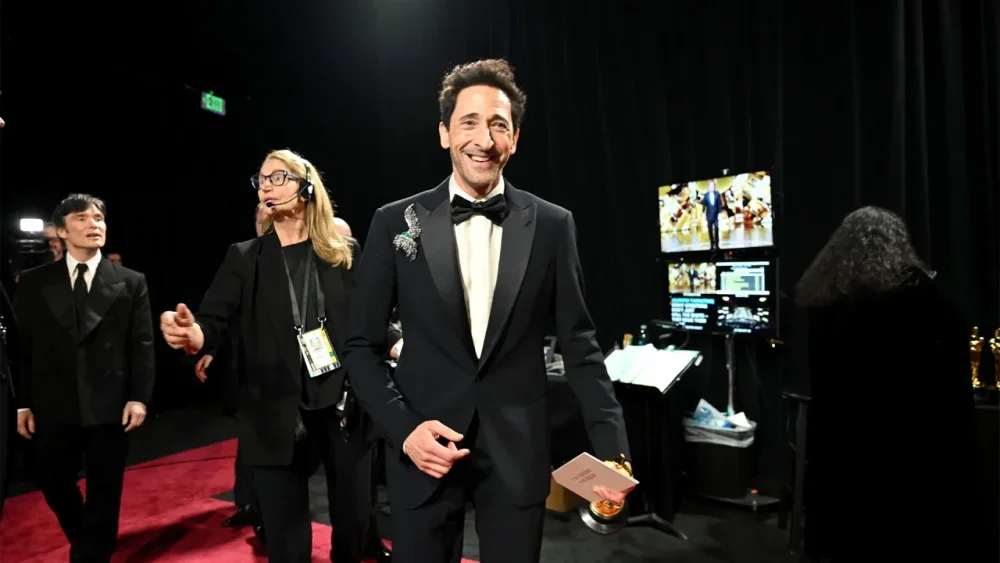
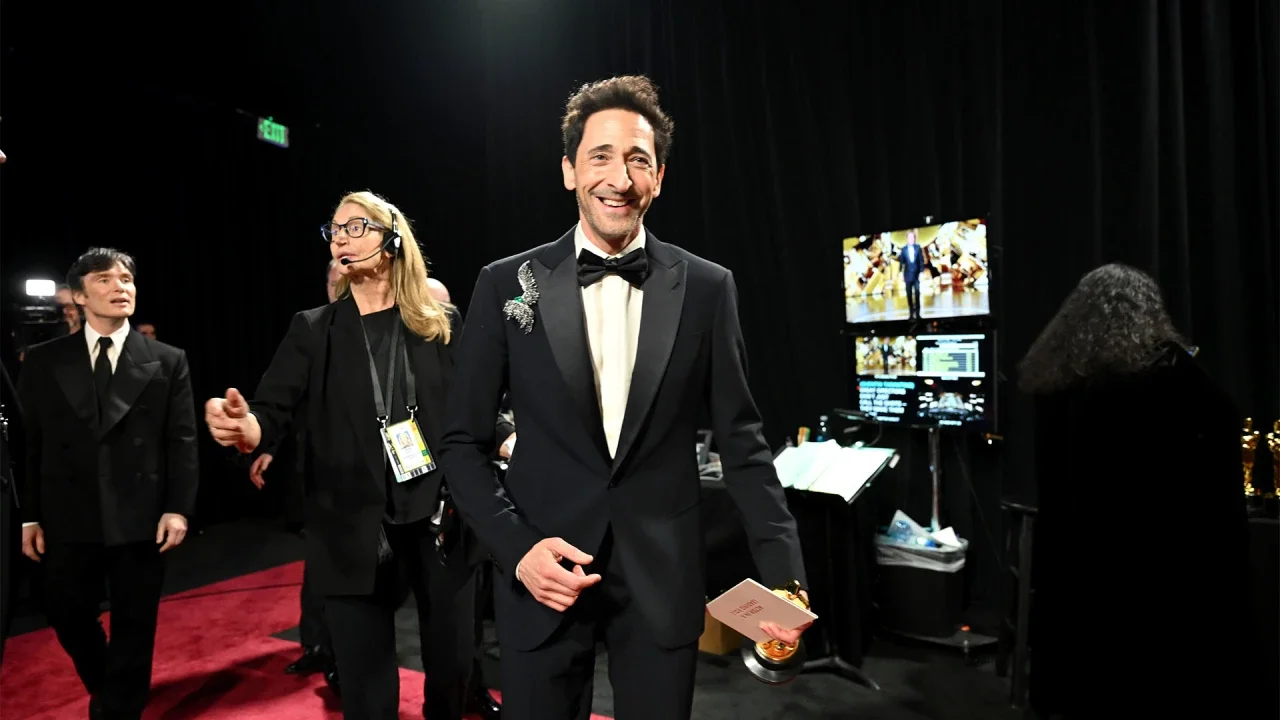
There’s more to winning than just winning. The way someone handles their tremendous success, after all, can transform a winner back into a loser—something Adrien Brody proved last night with a rambling, rule-defiant acceptance speech that managed to snatch reputational defeat from the jaws of career victory. With many of his peers gathered under one roof, and the whole world watching, he put on a masterclass in how not to behave at work. Not only did Brody win his second best actor award last night—this one for The Brutalist, putting him in an elite class of multi-winners along with Tom Hanks, Jack Nicholson, and Marlon Brando—he also won a slot in the Guinness World Records for longest acceptance speech in Oscars history. While many winners always tend to flout the tight 45-second limit in their speeches, Brody brazenly exceeded it by five full minutes. For many viewers and social media users, it came across as a breathtaking display of entitlement, in an industry famously riddled with self-regard. Instead of a winner worth rooting for, he resembled the most annoying guy in a meeting. Brody has never had much luck with live moments. Back when he won his first Oscar in 2003, for his work in The Pianist, he pulled Halle Berry into a long and not-entirely-consensual open-mouth kiss on his way to the podium. (“I bet they didn’t tell you that was in the gift bag,” he brayed into the mic immediately afterward.) It was a bizarre move that would never fly today, and barely did back then (even though Berry returned the kiss on last night’s red carpet). Brody bungled another live moment just a few months later, going rogue while hosting SNL by donning fake dreads and a painful patois to introduce Jamaican dance hall star Sean Paul. (He has not hosted the show again since.) Last night’s acceptance speech was a chance for redemption. Brody could have changed the paradigm of his problematic past by finally getting a big, live, victory-lap moment just right. Needless to say, he blew it. This speech started out at a low point, even before it began. On his way to the podium, Brody visibly remembered that he was chewing gum, and that it might not be a good look to continue doing that during his speech. Rather than swallowing the gum or placing it in his tuxedo pocket, Brody instead turned around and tossed the wad to his partner, Georgina Chapman. It might have been a cute moment if viewed in a vacuum, but given all the privilege dripping from the speech that followed, it made Chapman seem like Brody’s personal gum valet. After arriving at the podium, Brody lamented, “They’re already counting me down,” as though the timer was a vindictive hall monitor out to get him, rather than the same, standard shot clock everyone else had been asked to abide by all night. Not a great start! He then proceeded to speak in a trembly, deliberate cadence, taking his leisurely time. “If I may just humbly begin,” he said, after already saying several other things, “by giving thanks for the tremendous outpouring of love that I’ve felt from this world.” What followed was by far the strongest portion of Brody’s speech. “Acting is a very fragile profession,” he continued with obvious emotion. Throughout the long, winding road of a career that spans four decades, Brody has always been considered a richly talented actor, even during years when his star seemed to be on the wane. In this part of his speech, Brody made it clear he’s aware his career never quite reached the heights his first Oscar suggested were within his grasp, and that a lot of actors have had similar trajectories. Indeed, some Hollywood careers unfurl in long, graceful arcs, while others are more like short, bumpy roller-coaster rides. Brody seemed legitimately grateful his career had finally rebalanced, and it was touching to behold. Whatever goodwill Brody earned in that moment abruptly evaporated, however, when he began to ramble—“Winning an award like this signifies a destination”—and then refused to cede the spotlight long after the producers piped in the wrap-it-up music. It wasn’t just that he cruised past the time limit, it was the arrogance he exuded while doing so. “Please, please, I’m wrapping up, I will wrap up,” he said while making the universal hand gesture for cut it out. “I’ve done this before,” he added. “It’s not my first rodeo.” In that moment, Brody became every annoying, entitled coworker whose narcissism compels him to demand preferential treatment. You know, the kind who sucks up valuable time in the dwindling moments of a meeting because their ideas are simply too brilliant to be saved? Earlier in the night, best supporting actor winner Kieran Culkin proved it’s possible to ward off the wrap-it-up music without looking like a jerk. About 90 seconds into the acceptance speech for his work in A Real Pain, Culkin politely asked to not be played off so he could tell a quick story about his wife, Jazz Charlton. He then went on to tell an irresistibly cute anecdote about the negotiations between him and Charlton over how many children they would have together. Not only was the story adorable, it provided continuity from previous Culkin award speeches. It was also just as brief as the star promised, at about a minute, as he made a respectful effort to rush through without bungling his words. (And without throwing any gum at his wife, to boot.) Brody, on the other hand, kept going for even longer after refusing to leave, and continued speaking in the same unhurried tone, attempting to imbue each word with special meaning. The stark contrast between the two performers proves it’s not difficult to be a graceful winner. It might even require more effort to misread a room full of peers so egregiously. For a moment there, Brody had crystallized the narrative that his unlikely second Oscar proves he’s been undervalued for decades. But once his off-putting self-importance kicked in, he instead revealed that those fallow years were fallow probably for good reason. View the full article