ResidentialBusiness
Administrators
-
Joined
-
Last visited
Everything posted by ResidentialBusiness
-
 The roles that purpose, vision and culture play. By John Fenton The Holistic Guide to Wealth Management Go PRO for members-only access to more Rory Henry. View the full article
 -
President’s comments about Solana, XRP and Cardano boost market after recent shake-out View the full article
-
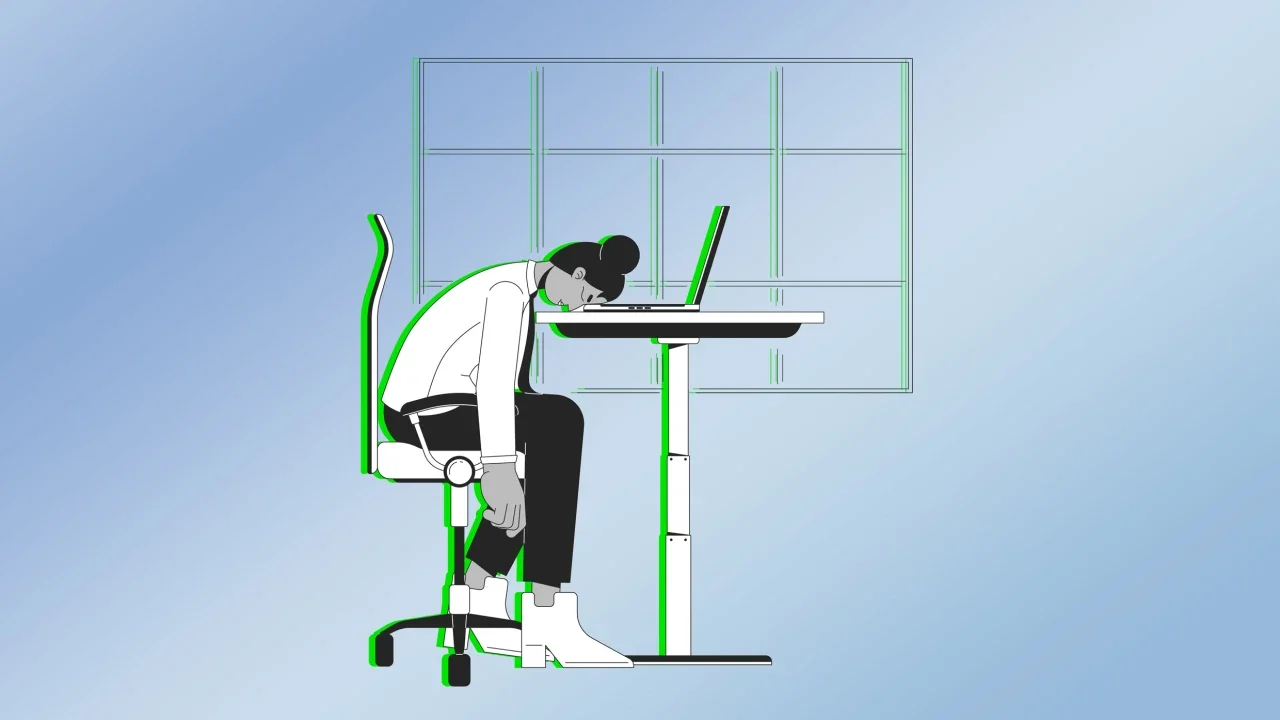
Remote work offers flexibility and freedom, but it comes with a unique set of challenges. How do you build trust when you can’t see your team? How do you provide accountability without creating an atmosphere of surveillance? How do you keep everyone in sync without communication constantly disrupting the workday? The lack of in-person interactions The post Building trust in remote teams: The role of transparent productivity tools appeared first on RescueTime Blog. View the full article
-
President Masoud Pezeshkian on defensive after impeachment of Abdolnaser HemmatiView the full article
-
Despite a traumatic beginning of the year from the devastating Eaton and Palisades fires, Los Angeles is ready to celebrate one of its largest exports: movies. Hollywood’s biggest bash, the 97th Academy Awards presented by the Academy of Motion Picture Arts and Sciences, will air tonight, March 2, at 4 p.m. PT / 7 p.m. ET. The action is taking place at the Dolby Theatre at Ovation Hollywood. Let’s get up to speed so you can watch like an A-lister: How the L.A. fires impacted the 2025 Oscars The fires delayed the Oscar nominations announcement twice and extended the nominations voting period. And though the actual awards ceremony date was not affected, the annual Oscars Nominees Luncheon was canceled out of sensitivity to the Southern California community, and the Scientific and Technical Awards ceremony had to be rescheduled from February 18 to April 29. Notable 2025 Oscar nominees Emilia Pérez dominates the Oscars with 13 nominations, making it the most nominated non-English movie in Oscar history. Jacques Audiard’s crime musical was once considered a tight contender for best picture, but controversy surrounding its star Karla Sofía Gascón’s raft of offensive tweets is expected to impact its chances (although it just won best film and best director at the Cesar Awards, France’s equivalent to the Oscars, on Friday in Paris). Gascón is the first openly trans actor to be nominated for an Oscar. Tied for second place with 10 nominations is Brady Corbet’s immigrant story The Brutalist and Jon M. Chu’s musical Wicked, both nominated for best picture. This is the first time two musicals have been in the best picture category since 1969 with Oliver! and Funny Girl. (Oliver! won.) With eight nominations each, A Complete Unknown and Conclave are also up for best picture. You can find a complete list of the 2025 Oscar nominees on the Academy’s website. Who is hosting the 2025 Oscars? Comedian, former late-night host, and podcaster Conan O’Brien is taking on hosting duties this year for the first time. The two-time Emmy Awards host revealed that he’s never even attended the Academy Awards before. “I only agreed to host so that I could get invited,” O’Brien said (jokingly?) during a news conference Wednesday. He will get backup from presenters including Oprah Winfrey, Ben Stiller, Sterling K. Brown, Willem Dafoe, John Lithgow, and Amy Poehler. Keeping with tradition, last year’s top acting winners, Robert Downey Jr., Cillian Murphy, Da’Vine Joy Randolph, and Emma Stone will also present. Who are the musical performers? Historically, the best original song nominees were performed during the ceremony. This year, the Academy is shaking things up and having songwriters share their personal reflections instead. That doesn’t mean the music stops. Wicked’s Cynthia Erivo and Ariana Grande will open up the night with a musical performance. Lisa of Blackpink, Queen Latifah, Doja Cat, and Raye are also cooking up something special. Who are some favorites to win this year? There have been lots of twists and turns leading up to the big night. Some categories, such as best supporting actor and actress, feel almost inevitable. Kieran Culkin and Zoe Saldaña will almost certainly walk away with Oscars in these categories. Best picture, actor, and actress are more unpredictable. In the actor race, Oscar-winner Adrien Brody seemed the front-runner until last weekend’s SAG Awards upset when Timothée Chalamet took home the honor for his portrayal of Bob Dylan. Traditionally, the Oscars don’t like to honor younger artists, but the times could be a-changin’. In the actress category, Demi Moore of The Substance and Mikey Madison of Anora have split the precursor awards. Moore’s heartfelt speeches at SAG, Critics Choice, and the Golden Globes ceremonies charmed audiences. But don’t count Madison out; she took home the BAFTA and Independent Spirit Awards trophies for best actress. Further complicating the issue, some critics are predicting a surprise third choice, I’m Still Here’s Fernanda Torres. This is truly anyone’s race. Best picture is also uncertain. Sean Baker’s Anora seemed to be a safe bet because of its PGA, DGA, and WGA wins, but Conclave’s SAG and BAFTA wins might make a case for Edward Berger’s papal thriller. How can I watch or stream the 2025 Oscars? There are many ways to see what film comes out on top. The most straightforward for those with traditional cable TV subscriptions is to tune into ABC at 4 p.m. PT / 7 p.m ET. You can also watch it for free on ABC with an over-the-air antenna. For the first time ever, cord-cutters can also stream the Oscars live directly on Hulu, which is offering a free trial for new subscribers. Or catch the show on one of the live-TV streaming services that offer ABC as part of a bundle: Sling TV (in some markets) Fubo TV YouTube TV Hulu + Live TV View the full article

-
High interest rates and uncertainty over immigration policy discourage homeowners from selling or renovating propertiesView the full article
-
Sometimes, authenticity can be a film’s most special effect. It took months for Best Actress front-runner Mikey Madison to learn how to pole dance like the titular exotic dancer in Anora and for her fellow nominee Timothée Chalamet to passably play guitar as Bob Dylan in A Complete Unknown. The naturalism of both performances helped keep audiences under the spell cast by their surrounding films. So, it should probably come as no surprise that a backlash has emerged in response to several of this year’s Oscar-nominated films using AI, paradoxically, to achieve “authenticity.” The reaction began on January 11, when editor Dávid Jancsó revealed in an interview that he and director Brady Corbet had used AI voice technology to make Oscar favorite The Brutalist. The film stars Adrien Brody as Hungarian-Jewish architect László Tóth, who, after surviving the Holocaust, emigrated to the U.S. where he is joined years later by his wife, Erzsébet, played by Felicity Jones. Although both actors, each of whom are nominated for Oscars, underwent vocal coaching to make the Hungarian dialogue roll off their tongues, according to Jancsó it “just didn’t work.” The creators ended up using Respeecher, a Ukraine-based AI voice-cloning tool, to enhance Brody and Jones’s accents. This revelation provoked an online uproar so intense that Corbet issued a statement to The Hollywood Reporter days later, downplaying AI’s significance in the making of the film. “The aim was to preserve the authenticity of Adrien and Felicity’s performances in another language, not to replace or alter them, and done with the utmost respect for the craft,” the director said in his statement. In the weeks since The Brutalist came under the microscope, similar revelations have tumbled out regarding other Oscar-nominated films. In a recently surfaced French-language interview from last year’s Cannes festival, for instance, rerecording mixer Cyril Holtz disclosed that trans musical Emilia Pérez, the most-nominated film in this year’s Oscar crop, also used Respeecher to enhance star Karla Sofía Gascón’s singing voice. (Emilia Pérez has far bigger fish to fry in terms of backlash, however, given Gascón’s shocking history of inflammatory tweets.) Leaning on AI to zhuzh up an actor’s performance has proven controversial this year, due to the technology’s rapid encroachment into traditionally human-created art. Some worry that AI will deprive film workers at various levels of jobs in the name of cost-cutting, while others fear it will usher in an era of cinematic soullessness. (Those folks have apparently never seen any of the ostensibly AI-free blockbusters shot entirely on green screen.) Indeed, part of the reason the writers’ and actors’ strikes of 2023 went on for so long was because of the difficulty in securing protections against AI. Ultimately, the strikes succeeded in placing guardrails around the tech’s use in generating scripts and requiring consent and compensation for using an actor’s likeness. Visual artists and animators have won no such protections yet, though. Considering all the looming fears about an unemployment crisis in film and TV art departments, it’s no wonder the use of AI in visual effects has proven especially unpopular recently. The acclaimed 2024 horror film Late Night with the Devil came under fire last spring for using AI to quickly create three briefly shown images; around the same time, the A24 thriller Civil War generated controversy for using AI just in its poster art. Now, the debate about the ethics of movie imagery that uses AI has reached the Oscars too. Since the brouhaha began over The Brutalist’s AI vocal enhancement, revelations have spilled out about other films using AI for visual effects. (Brutalist editor Jancsó also claimed in his infamous interview that some blueprints and finished buildings depicted in the film were partially AI-generated, though director Corbet disputes this.) When Australia-based Rising Sun Pictures submitted its work on Furiosa: A Mad Max Saga for an award at the 2025 Visual Effects Society Awards, the company boasted about using its Revize machine learning toolset to create effects for A Complete Unknown, adding a new dimension to the Oscars’ AI conversation. (As an individual familiar with the film told Indiewire, “The technology was used to assist in three brief wide shots on a motorcycle, not involving performance or creative enhancements. This technology is commonplace for making stunt people resemble their actor in films.”) On a similar note, another film nominated for multiple Oscars and starring Chalamet, Dune: Part Two, also used machine learning to create the striking ice-blue eye color of its Fremen characters. How much should any of this matter? Perhaps not that much. It’s not as if whole chunks of any of these films were created using OpenAI’s text-to-video tool Sora or Google’s Veo 2. Instead, the AI-infused visual effects are minimal and seem in line with the kind of VFX work that’s been rocking multiplexes for decades. Furthermore, the vocal tune-up in The Brutalist is limited to the few scenes where Brody and Jones actually speak in Hungarian. (For the bulk of the film, they talk in heavily accented English.) And as for Gascón’s juiced singing in Emilia Pérez, Rami Malek won an Oscar in 2019 for playing Freddie Mercury in Bohemian Rhapsody, and only a stunt vocalist contributed any real singing to that film. But at least the stunt vocalist was human. As the use of AI seems increasingly inevitable in film and TV’s future, despite the pronounced ongoing backlash, purists might decide to draw a line in the sand—boycotting any and all projects that utilize it. As if to accommodate them, the Motion Picture Academy is reportedly weighing a rule that would require filmmakers to disclose when their films use AI. In the meantime, some aren’t waiting around for such rules to be implemented and are instead taking the opposite tact. When the A24 horror movie Heretic came out last fall, it bore the following caption in its end credits: “No generative AI was used in the making of this film.” View the full article

-
Want more housing market stories from Lance Lambert’s ResiClub in your inbox? Subscribe to the ResiClub newsletter. Speaking before the U.S. Senate this month, Federal Reserve Chair Jerome Powell said that a decade or more down the road, homeowners in some parts of the country won’t be able to find home insurance. “Both banks and insurance companies are pulling out of coastal areas or areas where there are a lot of fires. So what that is going to mean is that if you fast-forward 10 or 15 years, there are going to be regions of the country where you can’t get a mortgage,” Powell told Congress. “There won’t be [mortgage] ATMs, there won’t be banks [lending mortgages], so it’ll fall on homeowners and residents. But it’ll also fall on state and local governments. Which is what you see happening now, where they’re stepping in, in states where insurance is going away. You’re seeing states step in because they want those areas to remain prosperous.” Hearing that comment made by a professor or analyst is one thing. But hearing it come from the Fed Chair is a bit unnerving for the housing sector. It raises the question: Is there any data out there to suggest which housing markets could be at the highest risk of bank and home insurer pullbacks? ResiClub did some digging and found a new proprietary analysis made by First Street, which forecasts—based on models estimating property-specific risk and expected climate risk—how much county-level home insurance premiums could shift between 2025 and 2055. To see where homeowners and investors could be impacted the most, ResiClub visualized First Street’s county-level home insurance forecasts. (Please note that forecasting in general isn’t ever guaranteed—let alone when a firm is trying to project three whole decades into the future. If you went back and found 30-year forecasts for anything finance-related made in 1995, they’d likely be pretty far off from how things transpired by 2025.) We asked First Street if their analysis accounted for future inflation as well. “These [insurance] values are based on today’s dollars with the only adjustment being related to the increase in climate exposure over time, but not to any expectations around inflation or market adjustments. . . . These values are not inflation adjusted in any way,” First Street tells ResiClub. Among the 500 most populous counties, these are the 20 where First Street expects the highest 30-year growth in home insurance premiums: Orleans Parish, Louisiana: +634% Miami-Dade County, Florida: +590% Pinellas County, Florida: +451% St. Tammany Parish, Louisiana: +351% Duval County, Florida: +333% El Dorado County, California: +291% St. Johns County, Florida: +290% Placer County, California: +256% Galveston County, Texas: +251% Manatee County, Florida: +242% Volusia County, Florida: +242% Clay County, Florida: +240% Palm Beach County, Florida: +195% Brevard County, Florida: +189% Broward County, Florida: +182% Coconino County, Arizona: +173% Hillsborough County, Florida: +162% Nueces County, Texas: +158% Hernando County, Florida: +152% Lafayette Parish, Louisiana: +149% The heightened risk of flooding, hurricanes, and tropical storms is ultimately why the First Street model projects the greatest insurance hikes around the Gulf. In fact, 12 of the 20 major U.S. counties expected to see the biggest increase are in Florida. As ResiClub has previously reported, homeowners in these areas are already experiencing elevated insurance hikes. While the median annual U.S. home insurance premium increased by 33% between the end of 2020 and the end of 2023, it surged more than 80% in many Florida counties. View the full article
-
Gen Z workers have been branded as demanding, unmotivated, and even entitled—a word that was used not too long ago to describe millennials. In an Intelligent.com survey last fall, 60% of employers said they had fired Gen Z workers not long after hiring them, and one in six managers said they were hesitant to hire recent college graduates. It’s no surprise that Gen Z continues to be misunderstood, or that older employees might rely on lazy tropes as they try to make sense of a new generation. While it’s true that Gen Z employees may have higher expectations for the workplace, that isn’t necessarily a bad thing—in fact, it may just be a necessary corrective in the face of questionable leadership. “What many have labeled ‘[quiet] quitting’ is actually a rational response to workplaces that lack fairness, structure, and alignment with employee values,” leadership strategist Jeff LeBlanc wrote recently. “Instead of writing off an entire generation, leaders should be asking: What are we doing wrong?” As baby boomers age out of the workforce, it’s imperative that employers find a way to better understand—and court—Gen Z employees, who will be a key part of the next generation of workers. So what can employers do to not just attract Gen Z workers, but make sure they stick around? Understand how Gen Z employees are different Rather than typically dismissing the concerns of Gen Z or painting them as difficult to work with, companies and managers should consider why younger employees might differ from their older counterparts when it comes to their expectations of the workplace. “Gen Z grew up amid economic uncertainty, social justice movements, and an increasing focus on mental health,” LeBlanc wrote. “They don’t just want jobs; they want workplaces that prioritize psychological safety, transparency, and fairness.” Research indicates that Gen Z is far more socially conscious than previous generations, and that these employees prize diversity, equity, and inclusion efforts and employee wellness. What older employees may perceive as being demanding is actually about advocating for themselves. This is also a generation of workers who grew up on the internet. “Gen Z is used to putting every thought out for others to like, dislike, and amplify,” wrote Amelia Dunlop, chief experience officer for Deloitte Digital. “When they show up at work, they expect their voice and opinions to be heard and taken into consideration.” Consider the impact of the pandemic Gen Z has also come of age during a period of intense upheaval, changing their experiences—and perhaps expectations—of the workplace. Many of these young workers finished college or started working at the height of the pandemic, which meant they had to acclimate to professional life while working from home. While there are benefits to young workers being in an office setting, many of them are also seeking more flexibility and want the option of working remotely. “Flexibility in the workplace is not just a perk for Gen Z, it is a necessity,” wrote leadership expert Cheryl Fields Tyler. “Despite this, many organizations operate with the assumption that Gen Z employees need to work in traditional office settings to ‘earn the right’ to have flexibility.” Think about what they want out of a job Gen Z employees do tend to have higher expectations of their colleagues and managers. That can be a shift for older employees who might expect them to pay their dues or show more deference. Unlike previous generations, Gen Z may not be as satisfied with an “inspirational leader.” Instead, they prize qualities like psychological safety and fairness—which includes equitable pay and access to professional opportunities—as well as a high degree of transparency, according to LeBlanc. Gen Z also wants to find meaning in the work they do. That shouldn’t come as a surprise to managers who have already worked alongside millennials. That’s also why younger workers may expect their employers to not just engage with social issues, but also align with their own personal values. In fact, research shows that Gen Z employees are three times more likely to stay at a job if they believe in the mission. And while work-life balance is important to other generations as well, it’s a major priority for Gen Z. As Andrew Roth, who runs the Gen Z consulting firm dcdx, explained: “Quiet quitting or stronger pushes for work-life balance are not threats or insults to tradition, but merely calls for respect, protection of our health, and the desire for a more fulfilling life for a generation growing up in this always-online world.” In many ways, Gen Z is simply looking for qualities that all employees should hope to find in their workplace, including transparency, clear expectations, and equitable treatment. Companies that take their concerns seriously are likely to cultivate more loyal, committed employees—of any age. View the full article
-
Sir Keir Starmer chairs meeting in London to discuss options for backing Ukraine View the full article
-
The Oscars don’t have a Best Poster category. (Or even a Best Title Sequence category, which they did sort of have for the very first Academy Awards in 1929 before—for shame—dropping it in 1930.) So this year, as in the past, we asked some of our favorite poster designers which Best Picture nominee should win Best Poster. Like book cover designers, key art creators are tasked with the unwieldy ask of distilling an entire universe of story into a single visual. It’s another standard of excellence in cinema—and we’d argue that there’s indeed correlation between great posters and great films. Consider: In our (admittedly wildly unscientific!) 2023 best poster poll, all participants nearly unanimously selected the off-the-wall treatments for the off-the-wall Everything Everywhere All At Once—which took home Best Picture. Last year, Vasilis Marmatakis’s unsurprisingly inventive posters for the unsurprisingly inventive Poor Things dominated—and the film subsequently nabbed Best Actress, Best Production Design, Best Makeup and Hairstyling, and Best Costume Design. Beneath our water-cooler correlation lies another truth: When a designer utterly nails the brief and creates a poster that rises to a film’s artistic heights, it’s transcendent—and it often yields the singular image we’re left with in our minds long after leaving the theater. Below, a panel of pros—Jay Bennett, who has worked with Netflix and others; Marie Bergeron, who has worked with Sony, Marvel, Ubisoft, and Warner Bros.; Tori Huynh, who has worked with the Criterion Collection, A24, HBO and more; and Eric Garza and Mitch Putnam, creative directors of pop culture and poster powerhouse Mutant—sound off on their picks for this year’s best Best Picture poster. [Photo: A24] “The most effective movie posters make you want to see the movie. A24’s one-sheet for The Brutalist delivers fully in this regard. Director Brady Corbet’s film epic is a bold and uncompromising work that celebrates minimalism and maximalism in equal measure. The poster supports that minimalist/maximalist approach with a design-forward layout that follows principles of Bauhaus and Brutalist design. The art challenges our expectations of traditional movie posters with its bold typography and asymmetrical layout, and is punctuated by an equally impactful visual of Lady Liberty turned on her head—signaling some of the film’s main themes. It’s not just an advert for the film, it feels like an extension of its worldview.” —Eric Garza [Photo: MUBI] “This one got my attention because of its simplicity, boldness, and because it says what it needs to say with very few elements. It’s [difficult to encapsulate a] story with only one image, and I always think that the best posters nail this part. Also, I’ve seen the film and it’s one of my favorites this year, so maybe [that’s why I chose it, too].” —Marie Bergeron [Photo: MUBI] “One of my favorite films of 2024 was The Substance. I love when horror films center the unimaginable dread of being a woman. Strange, sterile, and a pastel gore nightmare, I feel like the posters capture the bizarre icons within the film really well. What came first, the chicken or the egg? Or was the chicken modified, processed and fried beyond our comprehension [so] it is no longer recognizable from its original form? Summarizing all of these elements, and without showing Demi Moore’s face, no less, is such a bold choice. I also love the condensed typeface they used for the title and kept within the entirety of the film. From the look of the key art into the picture, I appreciate the commitment to consistency within the branding.” —Tori Huynh [Photo: Focus Features] “I have landed on the U.K. one-sheet for Conclave. I think it’s a bold approach for what is essentially a religious drama to lead with such a vibrant, thriller-esque palette, with the character arrangement creating a hint towards the split of the vote. The highlighted eye as Cardinal Lawrence’s main weapon in this conflict is a nice touch.” —Jay Bennett [Photo: NEON] “Many times, independent studios will try to push posters that feature big, loud graphic design or illustrative work to help their films stand out. That can be effective, but sometimes a simple piece of set photography is so perfect, it has to be used. Anora had my favorite poster of the year for exactly this reason. The photo screams youth, energy, love and euphoria, which is a hell of a lot to convey in one shot. The type perfectly complements the image and communicates everything necessary while also stepping back just enough so as to not compete for focal dominance. Uncomplicated in its design, this is one of those ‘I could’ve done that’ posters. But you probably couldn’t have.” —Mitch Putnam View the full article

-
Starmer says European initiative would then be discussed with White HouseView the full article
-
Forget SpongeBob SquarePants, Sesame Street, and the sourdough starter craze: a depressed German loaf of bread named Bernd das Brot is celebrating his 25th anniversary as the reluctant star of a children’s television program that accidentally became equally popular with adults. A cult classic in Germany, Bernd das Brot (Bernd the Bread) is a puppet renowned for his deep, gloomy voice, his perpetual pessimism and his signature expression, “Mist!” (Think “crap!” in English.) Played and voiced by puppeteer Jörg Teichgraeber, Bernd is a television presenter who wants nothing to do with TV and can’t wait to go home to stare at the wallpaper. This year, his friends—a sheep and a flower bush—are urging him to become a bread influencer. Bernd’s beginnings Born as a sketch on the back of a napkin in a pizzeria, Bernd’s infamous grimace was drawn by Tommy Krappweis who modeled it after co-creator Norman Cöster’s face. The duo had been asked to come up with mascots for KiKA, a German children’s public television channel. Comic artist Georg Graf von Westphalen designed Bernd as a pullman loaf—white bread typically sliced for sandwiches—with short arms and a permanent scowl. Bernd channels German stereotypes with his grumpy disposition, penchant for complaining and dry sense of humor and irony. Bernd’s first episode aired on KiKA in 2000 alongside his more-optimistic pals, Chili the Sheep and Briegel the Bush. A reluctant popularity Because KiKA is a children’s channel, there was typically dead air from 9 p.m. to 6 a.m. On January 1, 2003, the network put Bernd’s short episodes into the night loop for the first time. The move brought an adult audience into Bernd’s world, often those sitting at home and smoking pot, or returning after a long night of partying. The night loop cemented his popularity as a German cult classic. In 2004, Bernd won the Adolf Grimme Prize, the German television equivalent of an Emmy. The jury said he represents “the right to be in a bad mood.” “Bernd shows you that you are less vulnerable with humor and self-irony. And perhaps the most important point is: It’s totally okay if you don’t feel well sometimes. That’s completely fine,” Krappweis, Bernd’s creator, said in a KiKA Q&A about Bernd’s anniversary. Bernd’s broken heart Bernd is depressed for a multitude of reasons, including his failed attempt to be the mascot for a bakery’s advertising campaign (that’s how he ended up as a TV presenter, as a last resort). But it’s in Episode 85 that we finally learn about Bernd’s broken heart. “A long, long time ago I fell in love with a beautiful, slim baguette. She was so incredibly charming and funny,” Bernd tells Chili and Briegel. “But unfortunately it was in vain. “She only had eyes for this run-of-the-mill multigrain bread with its 10 types of grain. It was so depressing.” The kidnapping Despite Bernd’s best efforts—one of his catchphrases is “I would like to leave this show”—the episodes have never become stale. He sings, he dances, he’s been to space. He’s the star of merchandise, a video game, and headlines like “Give Us Our Daily Bernd.” He was even kidnapped! In 2009, his 2-meter-tall (6.56 feet) statue was stolen from his traditional place outside the town hall in Erfurt, where KiKA is based. A claim of responsibility surfaced on YouTube, by sympathizers of a group of demonstrators who were protesting a company that had produced cremation ovens for the Nazi extermination camp Auschwitz. The demonstrators, however, denied involvement in Bernd’s kidnapping and the video was removed from the internet. Bernd was held hostage for nearly two weeks before being discovered unharmed in an abandoned barracks. The anniversary year KiKA is honoring Bernd’s 25th anniversary, despite his complaints. New episodes, an update to his hit song, and online activities for kids and adults alike will be featured. The celebrations begin now, as Bernd’s birthday is February 29. The latest series will premiere in September as Bernd, Chili, and Briegel launch the social media channel Better With Bernd in their efforts to make him into a bread influencer. The trio will present inventions to make school, and life, easier for viewers, but naturally their concoctions backfire. Bernd instead becomes a defluencer—and an involuntary trendsetter. —By Stefanie Dazio, Associated Press AP journalist Kirsten Grieshaber contributed to this report. View the full article

-
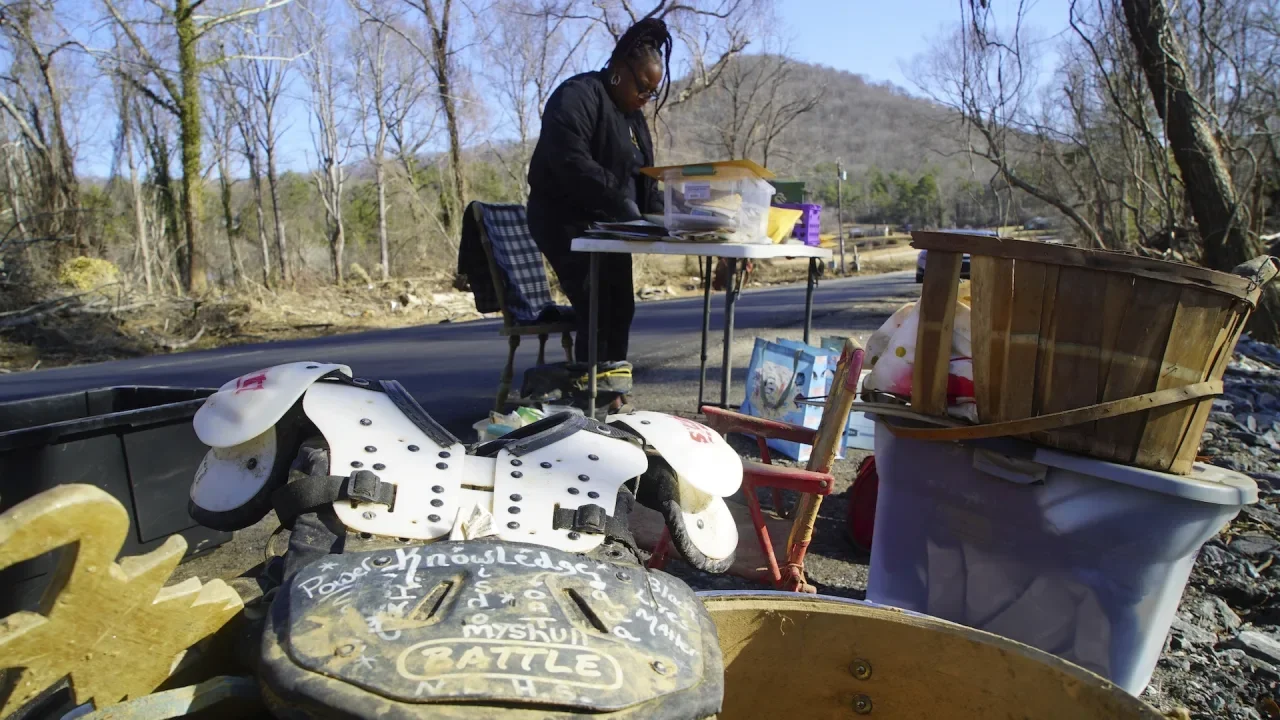
The tops of dried, bent cornstalks crunch underfoot. Jill Holtz’s gaze is fixed on the ground ahead. She wanders into the nearby woods and weaves between twisted branches. Then, Holtz spots something and starts to riffle through the withered twigs. To the untrained eye, it’s easy to overlook. But for Holtz, it’s instantaneous recognition. Scraggly, white lines give the appearance of shattered glass, but a name can still be made out at the top. It is a sonogram strip—crinkled, abused by the elements, but intact. In early February, Holtz combed through parts of a flattened cornfield in Swannanoa, North Carolina—a rural area razed by fierce floodwaters from Hurricane Helene a few months earlier. The deluge swept away entire homes, and with it, people’s beloved photos, keepsakes and family heirlooms. Many have accepted that they are gone forever. But lost items remain scattered across the region—tangled in gnarled trees, washed up in deep ravines and buried under mud. That’s why Holtz is on a mission: find and reunite those cherished possessions with storm victims who don’t have the time or energy to look themselves. “It’s not just trash, and it’s not just trees and pieces of metal,” Holtz says. “It’s their lives. This is their hearts, their homes, the generations of history.” Searching the cornfield Over the past few months, Holtz has spent much of her free time making the nearly four-hour drive from Raleigh to Swannanoa to search for lost items. She balances her job as a North Carolina National Guard captain and being a mom to two sons—a 10-year-old and a 24-year-old. It’s difficult being away, Holtz says, but her kids support her efforts. Holtz first visited western North Carolina after the storm on duty delivering aid. Then, while helping retrieve lost objects in Swannanoa for Violet Vardiman—a woman Holtz fondly calls “Miss Violet”—Holtz realized how many other missing belongings were out there. So she kept coming back. Holtz posts her finds to Facebook in hopes of finding their owners. At first, searching for lost belongings was overwhelming because of the sheer volume of objects strewn about, Holtz says. Now, she looks a few feet ahead of her at a time to stay focused. She’s learned other tips and tricks too. Use larger pieces of debris to store missing keepsakes while walking. Put on a hat or your hair will get caught in tree branches. Wear gloves and sturdy boots. And if you see a Dallas Cowboys mat, stomp on it first before picking it up—Holtz, after all, is a Buffalo Bills fan. After exploring the cornfield and adjacent woods for about 20 minutes, Holtz already has a handful to bring back—an 8-track tape, a teddy bear with golden wings and plenty of photos. Despite some scratches and their sun-bleached tone, the photos are in decent shape for what they’ve been through. As Holtz walks back to her truck, she squints and scours the cornstalks for anything she missed. Holtz views each valuable she finds as an opportunity for joy, and if it’s left behind, there’s no guarantee it will be there next time. Holding onto belongings until the time is right What Holtz found in the cornfield will join the collection of other lost possessions in her trailer as she tries to find their owners. The spread inside resembles a garage sale. Photos make up a large chunk of Holtz’s collection. Pictures captured from weddings, school and simple slices of life. Just from collecting photos, Holtz says she feels like she knows some people’s entire life story without ever meeting them. To restore photos, she’s developed her own cleaning routine: Use cool water and rubbing alcohol, then carefully scrub with a soft toothbrush. It’s time-consuming, yet therapeutic. Holtz sets down a large mud-spattered canvas—a piece that will require the toothbrush treatment—and slowly pours water over it. The gentle stream crackles against the crisp canvas. Faces emerge from the splotchy, brown haze. It’s a family portrait, Holtz says. “I hope I find the owner of that,” she says softly. Since Holtz started posting pictures of the lost possessions on Facebook, she’s consistently in contact with about 15 families. She has returned belongings to some and is waiting to connect in-person with others. Some of the families have evacuated the state and haven’t returned—but Holtz doesn’t mind holding onto their things. “I’m in no hurry, and I don’t expect them to be in a hurry,” she says. “They’re still getting their lives back together.” “Getting back history” The next day, Holtz sets up her trailer by the cornfield. She had posted her location to social media and patiently waits to see if anyone comes. About a half hour later, a silver SUV pulls over. A woman from Swannanoa, Angie McGee, steps out. McGee is looking for lost photos. The 42-year-old searched for her family’s belongings after Helene washed away her home, but she wasn’t successful. Wearing black latex gloves, she rubs caked dirt from the photos and notices familiar faces: her brother, her father, and her son. She even spots her ultrasound photos—the same scroll that Jill had picked up the day before. She is stunned. McGee can’t believe the photos traveled nearly 2 miles downriver from her home—much less that Holtz had somehow found them. After months of anguish over what she had lost, McGee says she is finally “getting history back.” “She done brought back a smile to me, she done brought back life to me. Not just me, my family,” McGee says. “Because, you know, there were things we lost that we thought maybe we never get back.” At one point, McGee’s gaze settles on football shoulder pads with silver marker writing. The sight brings her to tears. They belong to her 12-year-old son, Link. Holtz tries to not to cry. Later, the two women embrace before McGee leaves with her things. Giving people back their lost hope is why Holtz says she continues this work. But in these reunifying moments, it gives Holtz a little of her own hope, too. —By Makiya Seminera, Associated Press AP National Writer Allen G. Breed contributed to this report View the full article
-
First stage of the fragile truce lapsed early on SundayView the full article
-
HERE'S A LOOK at some of the best leadership books to be released in March 2025 curated just for you. Be sure to check out the other great titles being offered this month. You're the Boss: Become the Manager You Want to Be (and Others Need) by Sabina Nawaz as our job expands, the added pressure to perform corrupts our actions, and our increased power will blind us to the impact of those actions. Even the most well-intentioned manager can quickly become the boss nobody wants to work for. You’re the Boss is your executive coach in book form. It offers a fresh, evidence-based framework for managing pressure and power with grace and intelligence. Nawaz’s potent, proven strategies guide you to anticipate the unavoidable hazards of leadership without changing who you are, based on over two decades of coaching and in-depth research into the psychology of behavior and relationships. Discover a powerful way to manage yourself and others, navigate working relationships, and communicate effectively. Become the boss you want to be—and others need—while experiencing less stress and greater impact. Tiny Experiments: How to Live Freely in a Goal-Obsessed World by Anne-Laure Le Cunff Life isn’t linear, and yet we constantly try to mold it around linear goals: four-year college degrees, ten-year career plans, thirty-year mortgages. What if instead we approached life as a giant playground for experimentation? Based on ancestral philosophy and the latest scientific research, Tiny Experiments provides a desperately needed reframing: Uncertainty can be a state of expanded possibility and a space for metamorphosis. Neuroscientist and entrepreneur Anne-Laure Le Cunff reveals that all you need is an experimental mindset to turn challenges into self-discovery and doubt into opportunity. Readers will replace the old linear model of success with a circular model of growth in which goals are discovered, pursued, and adapted—not in a vacuum, but in conversation with the larger world. More Human: How the Power of Ai Can Transform the Way You Lead by Rasmus Hougaard and Jacqueline Carter with Marissa Afton and Rob Stembridge Humans have always been good at inventing tools that change the way we live and work—though not always good at adapting to those changes. Will the power of AI create a new era of robotic, impersonal efficiency, or will it catalyze a renaissance, redefining leadership and the world of work? So far, that question has mostly prompted a wave of anxiety about the disappearance of jobs and the loss of humanness in our work lives. AI has the power to transform leadership for the better—the key is in how leaders use it. By delegating tasks to AI and using it to augment skills and behaviors, leaders have an opportunity to unlock a truly human experience of work while enhancing organizational performance. The AI-augmented leader moves beyond a focus on the technology itself to constantly probe how it can enhance and deepen the core qualities of human-centered leadership: awareness, wisdom, and compassion. In this way, AI can help leaders and organizations become more human. The Next Conversation: Argue Less, Talk More by Jefferson Fisher No matter who you’re talking to, The Next Conversation gives you immediately actionable strategies and phrases that will forever change how you communicate. Jefferson Fisher, trial lawyer and one of the leading voices on real-world communication, offers a tried-and-true framework that will show you how to transform your life and your relationships by improving your next conversation. The Next Conversation will give you practical phrases that will lead to powerful results, from breaking down defensiveness in a hard talk with a family member to finding your own assertive voice at the boardroom conference table. Your every word matters, and by controlling how you communicate every day, you will create waves of positive impact that will resonate throughout your relationships to last a lifetime. Conflict Resilience: Negotiating Disagreement Without Giving Up or Giving In by Robert Bordone and Joel Salinas M.D. Conflict is getting the better of us. From our homes and community centers to C-Suites and Congress, disagreements are happening everywhere, with increasing frequency, and are being treated like zero-sum games that allow little margin for error and even less room for productive conversations. Conflict Resilience is not another book about conflict resolution, nor is it about problem solving. Conflict Resilience combines practical applications of advanced conflict management and study of the human brain to teach anyone how to turn conflict and negotiation into an act of union. This book provides the most cutting-edge and scientifically-grounded tools for driving agreement when possible and for empowering you to disagree better when the differences cut deep and the relationships matter most. This is a chance to bring people together, and an invitation to radically transform how we interact with our friends and families, our co-workers, our students, and our neighbors—anyone with whom we find ourselves in disagreement. Radical Listening: The Art of True Connection by Christian van Nieuwerburgh and Robert Biswas-Diener In our distracted, divisive world, the transformative power of true listening has never been more essential. Radical Listening is a revolutionary guide to mastering this vital skill from renowned experts Christian van Nieuwerburgh and Robert Biswas-Diener. Moving beyond simply hearing words, their groundbreaking framework teaches you to actively co-create meaning and connection. Though we spend nearly three hours a day on the receiving end of communication, listening is frequently neglected. We're bombarded by data, digital distractions, and a culture that celebrates talkers over listeners. Radical Listening provides the antidote, equipping you with six core competencies: Noticing, Quieting, Accepting, Acknowledging, Questioning, and Interjecting. The Super Upside Factor: Asymmetric Principles that Will 10X Your Life by Daniel Kang In The Super Upside Factor, Daniel Kang draws on his experience as a venture capitalist at Softbank Vision Fund and a Y Combinator-backed founder to adapt asymmetric principles for personal and professional life. He offers a clear framework for maximizing luck and generating outsized returns―what he calls Super Upsides. Through vivid, real-life experiments, Kang demonstrates how he put these principles into practice―from securing a book deal writing just 15 minutes a day; to recovering from a spiralling plane as a pilot; to raising millions by betting on pivotal career shift. Backed by decision science research and personal experimentations, the book strikes a balance between theory and practical advice, guiding readers to identify and optimize skewed life bets. Beyond the tactical elements, Kang explores the human side of applying these principles, including discussions on mental health, emotional struggles, and even tactically quitting. For bulk orders call 1-626-441-2024 * * * “You can't think well without writing well, and you can't write well without reading well. And I mean that last "well" in both senses. You have to be good at reading, and read good things.” — Paul Graham, Y Combinator co-founder * * * Follow us on Instagram and X for additional leadership and personal development ideas. View the full article
-
FX volatility expectations fall after traders ‘burned’ trying to react to US president’s trade threatsView the full article
-
Alison McGovern pledges to reform assessment process that ‘leaves people on the scrapheap’View the full article
-
Lesetja Kganyago warns institutions are increasingly a target as the principle of independence comes under attackView the full article
-
Economic case looked bleak even before the president’s re-election sent a chill through sectorView the full article
-
‘Tide has turned’ after backlash led to PFI being abandoned in 2018View the full article
-
Niels Troost’s lawyers argue EU may have been influenced by the trader’s estranged former business partner View the full article
-
US president’s actions have fuelled expectations in group that cases against Gautam Adani will collapseView the full article
-
Move raises fear that commodity will be next to be targeted for tariffs after levies on steel and aluminiumView the full article
-
The National Small Business Association (NSBA) released its 2025 Small Business Taxation Survey, highlighting the challenges small businesses face due to federal tax laws. The report underscores concerns about the expiration of the 2017 Tax Cuts and Jobs Act, which many small businesses fear will result in significant tax increases. According to the survey, 83% of small businesses are structured as pass-through entities, meaning they pay business taxes at the personal income level. This structure makes them particularly vulnerable to potential tax hikes if Congress does not extend expiring tax cuts. Other major findings include: More than 20 hours per year are spent dealing with federal tax compliance by most small-business owners, even though many hire external tax professionals. 90% of small businesses report that federal taxes impact their day-to-day operations, with one in three citing a significant impact. More than half of small-business owners say accessing needed information directly from the IRS is difficult. Tax administration and complexity—rather than financial cost—is cited as the largest burden. Among small businesses that outsource goods internationally, China is the most common country they purchase from. NSBA has long warned policymakers about the disruptions caused by sunsetting tax laws, emphasizing how these uncertainties place additional burdens on small businesses. The expiration of key tax provisions, including the 199A Qualified Business Income Deduction, remains a top concern. “Given that the majority of small-business owners pay business taxes at the personal income level—83 percent are pass-through entities—it’s no wonder small businesses are very concerned about potential and significant tax hikes if Congress fails to address the expiring tax cuts,” stated NSBA President and CEO Todd McCracken. The survey results come as small-business advocates urge Congress to prioritize tax stability and long-term relief. NSBA Board Chair Michael Canty, of Alloy Precision Technologies, emphasized the need for predictable tax policies that ensure small businesses are not disproportionately affected. “As Congress embarks on any tax extender or tax reform discussion, it is imperative that small businesses are afforded tax stability, predictability, and permanency, not to mention parity with larger businesses,” Canty stated. This article, "NSBA Survey Finds Tax Complexity a Major Burden for Small Businesses" was first published on Small Business Trends View the full article