ResidentialBusiness
Administrators
-
Joined
-
Last visited
Everything posted by ResidentialBusiness
-
 Chancellor had commissioned officials to examine the impact of her Budget on the sectorView the full article
 -
In this article, we find out if there're any differences between how AI systems handle JavaScript-rendered or interactively hidden content compared to traditional Google indexing. The post Ask An SEO: Can AI Systems & LLMs Render JavaScript To Read ‘Hidden’ Content? appeared first on Search Engine Journal. View the full article
-
Limited search volume doesn’t mean limited opportunity. Your entire target market might only search for your solution a few hundred times per month. High-volume advertisers can test 50 headline variations in a week, while you’re still waiting for your tenth conversion of the quarter. Most niche advertisers try to use the same strategies that work for high-volume accounts. That’s a mistake. Google’s automation needs data, and niche markets don’t generate enough searches to feed it. This mismatch either kills performance or prevents results altogether. This guide shows what actually works when search volume is low and conversion timelines stretch across months. Why low-volume markets break Google Ads playbooks Niche businesses face two distinct scenarios: You own your brand space: When someone searches your company name, product, or service, you show up organically. Your brand terminology is distinct. Think patented technology, unique category positioning, or specialized services where you’ve built thought leadership. You get washed out: Your keywords overlap with bigger competitors, adjacent industries, or generic products. A luxury pet brand competes with mass market pet supplies. A niche SaaS tool shares keywords with enterprise platforms. You’re constantly fighting keyword pollution. Your strategy changes dramatically based on which scenario you’re in. Remember, Smart Bidding strategies like Target ROAS and Maximize Conversion Value require at least 30 to 50 conversions per month to function effectively. Most niche industries don’t reach these thresholds solely from search traffic. If they do, they’re burning through budget getting a ton of leads (often low quality) at high CPL/CPA just to collect data. Not many can afford that. But automation isn’t off the table. You just need to feed Google signals differently. Dig deeper: How to tell if Google Ads automation helps or hurts your campaigns Signal stacking when search volume is low Google’s AI learns from every conversion signal, not just keywords. When search volume is low, build signals from multiple sources. Start with offline conversion tracking Phone calls, CRM entries, and deals closed months after the initial click all count if you track them properly. Use Google’s Data Manager API to sync sales data back to Google Ads. Every uploaded conversion strengthens Smart Bidding. Upload Customer Match lists Even 500 quality email addresses give Google enough pattern recognition to find similar audiences. A list of customers who’ve spent $10,000+ each beats 10,000 newsletter subscribers. Use audience signals strategically Layer in-market audiences, affinity audiences, and demographics into Performance Max in observation mode. This doesn’t restrict delivery; it teaches Google who converts. As Jyll Saskin Gales details in her work on audience targeting, the key is using custom segments to reach people based on their recent searches and site visits, rather than relying on broad demographics. If you own your brand space, signal quality matters more than volume. Your customers have specific job titles, visit specific websites, and search specific technical terms. Build custom audiences around these behaviors. If you get washed out by similar keywords, you need negative audience signals as much as positive ones. Exclude affinity audiences that align with your keyword competitors but not your actual customers. Dig deeper: 5 Google Ads tactics to drop in 2026 Campaign structure for small markets Running only Search campaigns is a mistake. Google’s AI Overviews now appear on roughly 16% of queries, with navigational queries increasingly intercepted. You need visibility across multiple surfaces. Start with Search, not Performance Max PMax needs conversion data to work, and not just any conversions. You need at least 30 conversions that are actual paying customers or qualified leads, with an emphasis on qualified leads. When you do launch PMax, use audience signals heavily and monitor where your budget actually goes using the Channel Performance report. If you own your space, PMax works well once you have data. If you’re fighting keyword pollution, you need aggressive negative keywords and brand exclusions to prevent budget waste. Add Demand Gen for awareness building Your prospects might not know solutions like yours exist. Demand Gen campaigns reach people on YouTube, Discovery, and Gmail before they’ve searched for your category. Don’t judge Demand Gen by last click conversions. It creates awareness that shows up as branded searches weeks later. This matters especially if you’re competing with larger brands, as you can reach prospects before they fall into competitor keyword traps. Protect your brand terms Even if you rank organically, run a small exact match campaign on your brand. Competitors steal clicks. If you own your space, you can pause this during slow periods. If your terminology overlaps with competitors, this is critical because you get washed out easily, and organic SEO can’t always do its job. Keep it running constantly. Dig deeper: Google Demand Gen campaigns: When to use them and best practices Get the newsletter search marketers rely on. See terms. Match types and keyword strategy Here’s real data from my niche B2B SaaS client over the past three months: exact match keywords delivered the majority of leads at the lowest cost per lead. Broad match received the second-highest conversions, but with a CPL 23% higher than phrase match. That contradicts the “go all in on broad match” advice. For niche industries, broad match without conversion data wastes budget on searches that never convert. But it also challenges those who swear by exact and phrase match only. Broad match can bring in quantity when you need it, but only after you have the data to control it. Start tight and expand carefully: Launch with exact match on your highest intent terms. Add phrase match for variations (many advertisers still rely heavily on phrase and exact match because they’re cautious about broad match, and that’s fine). Only introduce broad match after 30+ conversions and strong negative keyword lists. Exception: if you need data quickly and have budget to spend on the learning curve, you can test broad match earlier, but watch it closely. Mining search terms is critical With low search volume, Google often won’t reveal which specific search terms triggered your ads, even though you’re getting clicks and conversions. You’ll see performance metrics in your campaigns, but the search terms report won’t show you the actual queries because not enough people searched for them (Google hides this for privacy). When search terms do show up in your reports, pay close attention. Those represent the queries with enough volume for Google to reveal, and each one is meaningful for understanding your market. What you’re looking for in the search terms that do appear: Qualified searches that got clicks but didn’t convert. (Test bid adjustments or landing page changes.) Irrelevant searches burning budget. (Add as negatives immediately.) Keyword variations you hadn’t considered. (Expand exact match coverage.) Searches that are too early funnel. (Lower bids or pause.) If your brand terminology is distinct, you can be more aggressive with broad match because it naturally filters traffic. If you’re competing for polluted keywords, build extensive negative keyword lists before broad match becomes viable. Dig deeper: Google Ads search terms report: 5 tips for better results Ad copy that converts niche traffic With limited traffic, every click matters. Poor conversion rates can’t be masked with volume. Speak the exact language your market uses If they call it “ISO 13485 compliant quality management systems,” don’t simplify it to “quality software.” You’ll get wrong clicks from people who don’t know what ISO 13485 means. Pin your core differentiator in headline position 1 Let Google test supporting messages in positions 2 and 3. Yes, pinning limits reach and can increase CPCs. However, for niche markets, message precision matters more than slight differences in CPC. Test dynamic keyword insertion cautiously In high-volume markets, DKI helps scale relevance. In niche markets with ultra-specific keywords, DKI can make ad copy too technical or too generic. Test it, but don’t assume it helps. Dig deeper: How to assemble captivating Google Ads copy Use all 15 headline slots and 4 description slots Fill everything. Google will find combinations that work. In low-volume accounts where one good ad runs for months, you want maximum testing potential. Design landing pages around how quickly prospects need to self-qualify If you own your category, add technical specs, compliance certifications, and detailed case studies to speed up evaluation. If you’re competing in crowded spaces, differentiate immediately. Prospects probably just clicked a competitor’s ad. Your landing page has 5 seconds to clarify why you’re different. Conversion tracking for long sales cycles Standard 30-day attribution windows don’t capture reality for niche purchases. Someone researching your solution might take 6 to 12 months from first click to purchase. Extend conversion windows to match your actual sales cycle. Google Ads allows up to 90-day click-through attribution. For longer cycles, offline conversion imports let you attribute revenue indefinitely. Set up different conversion actions for each funnel stage. If 30% of demo requests close at $15,000, assign demo requests a conversion value of $4,500. Smart Bidding optimizes for real business outcomes, not just form fills. Use data-driven attribution to see how Demand Gen and Display campaigns contribute even when they don’t get last click credit. Budget strategy for limited spend Most niche industries work with $2,000 to $10,000 per month. Every dollar matters. If you have brand awareness, protect it first. Even a small branded campaign at $200/month matters when competitors can steal those clicks. But if nobody knows your brand yet, skip this and focus budget on top-of-funnel awareness through Demand Gen instead. Put the majority of remaining budget toward your high-intent campaigns – Search with exact match keywords and Performance Max with tight audience signals. When Google says campaigns are “limited by budget,” don’t immediately increase spend. For niche markets, that often means you’ve captured most available high-intent traffic. Adding budget pushes you down the intent curve into lower-quality clicks. The better move? Improve quality score to reduce CPCs, add negative keywords, and tighten geographic targeting. For nationwide targeting, most niche industries have geographic pockets of higher demand. Run campaigns for 30 days, review performance by state or metro, then reallocate budget to best-performing regions. Dig deeper: How Google Ads paces, caps, and recalculates spend when budgets change Competitive analysis In niche industries, you know your three to five main competitors personally. Use that strategically. Auction Insights reports show where you’re directly competing. If you’re losing impression share to a specific competitor in certain geographies or times, adjust bids. But in very small markets, bidding wars just increase costs for everyone. Sometimes, let a competitor win certain positions while you dominate others at lower CPCs. Don’t blindly bid on competitor terms. In small markets, this usually just raises industry costs. The exception is when a competitor doesn’t protect their brand terms. In those cases, you can capture consideration-stage traffic at reasonable CPCs. Monitor competitor ad copy and landing pages quarterly. Major messaging shifts signal market changes worth understanding. What works for each scenario If you own your brand space Use broad match more aggressively once you have conversion data. Your terminology naturally filters traffic. Focus budget on capturing all branded traffic and expanding to problem-based searches. Demand Gen works well for educating a market that doesn’t know you exist. Landing pages can be technical and detailed because prospects who find you are serious buyers. If you’re fighting keyword pollution Stay tight on exact match until 50+ conversions. Build extensive negative keyword lists shared across campaigns. Use in-market audiences in observation mode to find specific subsets within broader categories. Demand Gen needs precise audience targeting because you can’t blast generic industry interests. Landing pages must differentiate immediately. Assume every visitor just came from a competitor. How niche advertisers win in 2026 The niche advertisers who win in 2026 aren’t those with the biggest budgets. They understand that: Signal quality beats search volume. Multi-surface visibility beats search-only strategies. Precise targeting matters more than broad reach. Google’s automation works when it’s fed the right data. For niche industries, success comes from knowing which automation to use early, which to delay until enough signals exist, and which standard tactics simply don’t apply. View the full article
-
Microsoft is hiring a "very" Senior Product Manager who will initially work on fighting spam across Bing and Copilot. Fabrice Canel said this is a "very" senior PM role and the job description says the "initial focus on reducing Spam in Copilot, Bing, MSN and Ads."View the full article
-
Matched country name Capital city Afghanistan Kabul https://www.numbeo.com/cost-of-living/in/Kabul?displayCurrency=USD Albania Tirana https://www.numbeo.com/cost-of-living/in/Tirana?displayCurrency=USD Algeria Algiers https://www.numbeo.com/cost-of-living/in/Algiers?displayCurrency=USD Andorra Andorra la Vella https://www.numbeo.com/cost-of-living/in/Andorra-la-Vella?displayCurrency=USD Angola Luanda https://www.numbeo.com/cost-of-living/in/Luanda?displayCurrency=USD Antigua and Barbuda Saint John’s https://www.numbeo.com/cost-of-living/in/Saint-Johns?displayCurrency=USD Argentina Buenos Aires https://www.numbeo.com/cost-of-living/in/Buenos-Aires?displayCurrency=USD Armenia Yerevan https://www.numbeo.com/cost-of-living/in/Yerevan?displayCurrency=USD Australia Canberra https://www.numbeo.com/cost-of-living/in/Canberra?displayCurrency=USD Austria Vienna https://www.numbeo.com/cost-of-living/in/Vienna?displayCurrency=USD Azerbaijan Baku https://www.numbeo.com/cost-of-living/in/Baku?displayCurrency=USD Bahamas Nassau https://www.numbeo.com/cost-of-living/in/Nassau?displayCurrency=USD Bahrain Manama https://www.numbeo.com/cost-of-living/in/Manama?displayCurrency=USD Bangladesh Dhaka https://www.numbeo.com/cost-of-living/in/Dhaka?displayCurrency=USD Barbados Bridgetown ... Read moreView the full article
-
System of annual settlements from Foreign Office criticised by interim news chiefView the full article
-
Greg Gifford, a veteran automotive and local SEO, published a hard warning to vendors suggesting that they tell automotive dealerships to set up separate Google Business Profile department listings for separate services. He said, do not, do not, do this and that it can lead to your Google Business Profiles being suspended and removed from Google Search and Google Maps.View the full article
-
John Mueller, a Google Search Analyst, responded to a question on Reddit named Is SEO still enough, or do we need to start thinking about GEO too? In short, John said you should look at the "full picture, and prioritize accordingly."View the full article
-
Discover the 18 best content marketing tools to assist you across different stages of content production. View the full article
-
Adam Wathan the creator of Tailwind CSS posted that he had to let go of 75% of his engineering team because of AI. He said traffic to the Tailwind help documentation is down 40% and that is where most people learn about his solution and then buy commercial products. He added his revenue is down 80%.View the full article
-
The tremulous response to both the Venezuela coup and his threats to Greenland reflects hard truthsView the full article
-
Google seems to be testing showing call assets on Vehicle Ads within Google Search. So on the Vehicle Ads there is a way to call the dealer or seller, like you see on some other ads.View the full article
-
At the start of the year, we asked 11 experts to share their social media predictions for 2025. They pointed to big shifts — world-building, private communities, AI in everything and everywhere, LinkedIn’s rise, and a creator economy moving toward more sustainable businesses. Now that the year is behind us, it’s a good moment to pause and check the tape. Some predictions held up almost perfectly. Others played out more slowly or looked different than expected. That gap between prediction and reality is where the most useful lessons live. In this article, we’re revisiting seven themes from our original piece, from what actually happened, to where expectations missed the mark, and what creators and brands can take into 2026 planning. ⚡Revisit the 2025 predictions at 7 Predictions for Social Media in 2025 from Creator Economy Experts Prediction 1: LinkedIn as a creator & influencer hubVerdict: Largely accurate At the start of 2025, the prediction was that LinkedIn would evolve beyond a traditional professional network and lean more fully into the creator economy. That shift did happen, and it showed up in both platform features and creator behavior. Over the year, LinkedIn expanded video-first formats, rolled out more creator-focused analytics, and made it easier to publish consistently. At the same time, brands grew more comfortable partnering with creators on the platform, and employees used LinkedIn more intentionally to build personal and company brands. Key proof points: Video became one of LinkedIn’s fastest-growing formats, with uploads and viewership increasing 36% year over year.Creator–brand partnerships became more common across industries, with one agency reporting a 3x increase in monthly campaign volume and payouts to creators from August 2024 to April 2025. And if you need further proof, I was one of the creators who benefited from increased interest in brand partnerships in 2025.Employee-generated content gained momentum as a way to build trust and reach — something we’ve seen firsthand at Buffer as documented in How We’re Empowering the Entire Buffer Team to Become Creators.A growing Gen Z audience made LinkedIn feel less rigid and more creator-friendly overall.What this means for you: LinkedIn now sits at an interesting intersection: it offers professional credibility alongside creator-style engagement. For creators building authority, relationships, or long-term opportunities, it’s no longer just a résumé platform — it’s a place to publish, experiment, and grow. For planning ahead, the takeaway is simple: if your work benefits from trust and context, LinkedIn deserves a thoughtful spot in your strategy. Prediction 2: The rise of smaller, private communitiesVerdict: Very accurate At the start of 2025, we predicted a shift away from big, noisy feeds toward smaller, more intentional spaces. Over the year, that trend became hard to miss. Audiences gravitated toward places that felt calmer, safer, and more conversational — and creators followed them. Public platforms remained important for reach, but deeper connection increasingly happened elsewhere. Key proof points: Instagram Broadcast Channels continued growing as a lightweight way for creators to communicate with their most engaged followers.Substack Chat and Discord saw steady adoption, especially for niche communities and lower-pressure engagement.On Threads, Instagram and LinkedIn, posts where creators replied to comments saw 42%, 21% and 30% higher engagement respectively.Patreon crossed over 25 million paid memberships and passed the $10 billion lifetime creator payouts milestone — signalling growing creator demand for direct, private-community models.Private or “spam” pages gained traction as creators built quieter, more authentic spaces separate from their main profiles.What this means for you: Public feeds increasingly functioned as discovery layers — places to be found, sampled, and shared. While private communities became the loyalty layer, where trust, belonging, and long-term relationships formed. For creators planning ahead, the takeaway isn’t to abandon public platforms. It’s to pair them with spaces you control, where you can set the tone and build connection without competing for constant attention. Prediction 3: AI becomes a core part of content creation (with backlash)Verdict: Very accurate At the start of 2025, the prediction wasn’t just that AI would become more common — it was that platforms would fully integrate it, and audiences would have mixed feelings about that shift. That’s largely how the year played out. AI tools became deeply embedded across social platforms, touching everything from ideation to editing to distribution. At the same time, creator and audience sentiment remained cautious, forcing platforms and brands to slow down and think more carefully about how AI showed up in feeds. Key proof points: Major platforms introduced AI assistants and creation tools at scale, including auto-captioning, image editing, content suggestions, and search enhancements. And some AI-only platforms were introduced, such as OpenAI's Sora and Meta's Vibes.These rollouts weren’t always smooth. In some cases, new AI features triggered immediate pushback around feed quality, originality, and trust.Audiences grew more sensitive to content that felt automated — especially in personal or expertise-driven niches.Brands became more deliberate about how they used AI after early signals showed lower trust in heavily AI-generated creator content.Brands slowed their adoption of overtly AI-generated content after reports of lower trust, aligning closely with the prediction about backlash and transparency challenges.Why it mattered: AI didn’t replace creativity in 2025 — it replaced friction. Creators who used AI as a support layer — to brainstorm, outline, edit, or repurpose — often gained speed without losing connection with their audience. Those who leaned too hard on entirely AI-generated content sometimes saw the opposite effect. The year reinforced a helpful distinction: AI works best behind the scenes. But authenticity is still needed to avoid “sloppifying” your content. For planning ahead, the takeaway is less about whether to use AI and more about how visibly it shows up in your work. The creators who treated AI as an assistant, not a stand-in, tended to earn more trust over time. Prediction 4: Short-form video continues to dominateVerdict: Accurate, with nuance Short-form video didn’t slow down in 2025. It continued to expand across nearly every major platform, from TikTok and Instagram to LinkedIn and YouTube. What changed wasn’t its importance but its role. Instead of replacing other formats, short-form settled into a clearer position at the top of the funnel. It became the fastest way to reach new people, while longer formats carried more of the weight for depth and retention. Key proof points: Platforms continued investing in short-form discovery. LinkedIn rolled out its dedicated video feed more broadly, leading to a noticeable increase in face-to-camera clips and repurposed content from podcasts, webinars, and livestreams.YouTube Shorts remained a powerful discovery engine, especially for creators repurposing content across platforms.Instagram Reels maintained strong performance across both entertainment and education, often outperforming static posts for reach.Visual storytelling styles evolved quickly — fast cuts, text-forward narratives, and tightly edited micro-stories became familiar patterns across TikTok and Reels.At the same time, longer formats held their ground. Long-form YouTube videos continued driving trust and watch time, surpassing traditional and even modern broadcasters as the most-watched platform on TV in the U.S. in 2025. Why it mattered: Short-form video remained the fastest path to discovery — particularly for new or growing creators — but it wasn’t the only format that mattered. Creators who paired short, high-reach clips with deeper formats often saw stronger overall results. Short-form pulled people in; longer content gave them a reason to stay. By the end of 2025, the ecosystem felt more layered than dominant. Short-form shaped first impressions and momentum, while longer formats supported nuance, credibility, and retention. For planning ahead, the takeaway is balance: use short-form to open the door, but don’t expect it to do all the work once someone steps inside. Prediction 5: Platforms evolve into end-to-end ecosystemsVerdict: Accurate, but uneven across platforms At the start of 2025, the prediction was that platforms would try to keep creators inside their walls by offering more of the full workflow — creation, publishing, analytics, and audience management — in one place. That shift did happen. But it didn’t happen evenly. Some platforms made meaningful progress toward becoming all-in-one ecosystems, while others focused on narrower bets or moved more slowly on creator-side tools. Key proof points: Instagram and Facebook expanded native creation features, including multi-clip editing, AI-assisted captions, audio recommendations, and scheduling — reducing the need to bounce between editing apps.LinkedIn introduced deeper analytics and more robust creator dashboards, supporting its move from a posting platform toward something closer to a publication environment.Threads, Instagram, and Facebook became more interconnected, reinforcing Meta’s broader ecosystem approach through cross-posting, shared recommendations, and unified inboxes.YouTube continued refining its long-form, Shorts, Community, and Live ecosystem. It remained one of the strongest single-platform hubs, but most updates in 2025 were incremental rather than transformational.Where the prediction fell short: Not every platform pushed equally toward end-to-end workflows. TikTok leaned more heavily into commerce and search than creator-side production tools. X focused on monetization experiments, with fewer additions to creation features. And many platforms still rely on external tools for editing, planning, or collaboration. Why it mattered: For creators, this shift subtly changed how time was spent. In 2025, more work happened inside platforms — editing, publishing, reviewing performance — instead of entirely across third-party tools. But the experience wasn’t consistent. Some platforms began to feel like full creative environments; others still functioned mainly as distribution endpoints. The takeaway going into 2026 is flexibility. Platform-native tools can simplify parts of the workflow, but relying too heavily on any single ecosystem can also limit control. The most resilient setups balanced convenience with independence. Prediction 6: Creator business models evolve beyond “solo”Verdict: Partially accurate At the start of 2025, many experts predicted that creators would move away from one-person operations and toward more traditional business structures — small teams, clearer roles, and diversified revenue streams. That shift did happen, but mostly at the top end of the creator economy. For many others, growth looked different. Key proof points: Full-time creators with large audiences started hiring to expand their offerings, as evidenced by the constant stream of opportunities in newsletters like The Publish Press.Creator-led brands continued to expand, particularly in areas like education, finance, fashion, and digital products.Products like templates, courses, and paid communities remained steady, predictable income sources for mid-sized creators.Where the prediction diverged: The idea that “growth means building a team” didn’t scale across most creators. Instead, many creators stayed intentionally small. They leaned on AI, batching, and repurposing workflows to increase output without adding people or overhead. For this group, efficiency replaced expansion. At the same time, a parallel trend became more visible: founder-led content and the rise of storytellers. In 2025, more business owners and teams showed up as creators sharing lessons, experiments, and behind-the-scenes work. In some cases, this flipped the original prediction on its head. Rather than creators becoming companies, companies became more like creators. Why it mattered: The creator economy did mature in 2025 — but not in a single direction. Success didn’t automatically mean hiring or scaling headcount. More often, it meant building systems that supported consistency without burnout. For some, that looked like teams. For others, it looked like better tools, clearer workflows, and tighter focus. Looking ahead, the takeaway is flexibility. Sustainable growth doesn’t have one shape. The creators who thrived were the ones who designed businesses that fit their capacity — not someone else’s playbook. Prediction 7: World-building becomes a core creator strategyVerdict: Very accurate — but in an unexpected way In 2025, world-building did become more central to how creators grew their audiences — just not in the way our predictions imagined. Serialized storylines and cinematic content universes didn’t entirely take over social feeds (although they were definitely present; see Bilt with the popular series, roomiesroomiesroomies) Instead, creators began extending their worlds beyond the screen, building experiences that audiences could step into offline. That shift reflected something deeper: audiences weren’t just looking for more content. They were looking for connection. And the worldbuilding of 2025 Examples from the year: Entertainment brands and creators experimented with immersive, in-person experiences tied to digital IP. Netflix launched immersive Stranger Things and Squid Game experiences, while MrBeast opened Beast Land, turning YouTube IP into a real-world attraction.Large creators turned online audiences into live events, tours, and physical spaces. Colin and Samir expanded The Publish Press into a physical New York space in partnership with Spotify.Media brands and creator collectives hosted summits, meetups, and pop-ups that brought online communities together in real life. The All-In Podcast held a major in-person All-In Summit and creator groups like Dude Perfect continued turning digital fandom into live tours.Rather than expanding narratives purely through content, creators expanded them through presence. Why this mattered: World-building in 2025 was focused on creating a sense of belonging: something audiences could recognize, participate in, and return to. These offline extensions reinforced trust and loyalty in a way algorithms can’t. A live event, meetup, or shared experience made the creator–audience relationship feel more durable than any single post. What this means for creators: World-building doesn’t require massive budgets or spectacle. It can be as simple as hosting a workshop, running a small meetup, or creating spaces where people connect with each other — not just with you. The creators who leaned into this shift weren’t chasing novelty. They were responding to a very human desire: to feel part of something that exists beyond a screen. ConclusionAs we head into 2026, the most interesting question isn’t “What’s the next big platform shift?” It’s “How do creators stay adaptable when change is constant?” Looking back at these predictions, a clear pattern emerges. Growth in 2025 didn’t come from chasing every new feature or format. It came from making thoughtful choices about where to show up, how to connect, and what kind of work was sustainable to keep creating. Creators leaned into platforms that supported trust, not just reach. They paired public visibility with private connection. They used AI to reduce friction, not replace their voice. They balanced short-term discovery with long-term depth. And instead of scaling blindly, many focused on building systems or communities that fit their capacity. In other words, the creators who thrived weren’t trying to “win” the algorithm. They were building relationships that could outlast it. That’s the real takeaway from 2025: tools will keep changing, platforms will keep evolving, and predictions will always miss something. But clarity, consistency, and care for your audience remain durable advantages that everyone can access. As you plan for the year ahead, the goal doesn’t have to be doing more. It can be doing what already works but more intentionally, more sustainably, and with a clearer sense of why you’re showing up in the first place. That mindset will matter far longer than any single trend. View the full article
-
Move follows investigation into bank’s handling of trades between 2014 and 2019View the full article
-
Matched country name Capital city Cost Afghanistan Kabul https://www.expatistan.com/cost-of-living/kabul?currency=usd Albania Tirana https://www.expatistan.com/cost-of-living/tirana?currency=usd Algeria Algiers https://www.expatistan.com/cost-of-living/algiers?currency=usd Andorra Andorra la Vella https://www.expatistan.com/cost-of-living/andorra-la-vella?currency=usd Angola Luanda https://www.expatistan.com/cost-of-living/luanda?currency=usd Antigua and Barbuda Saint John’s https://www.expatistan.com/cost-of-living/saint-johns?currency=usd Argentina Buenos Aires https://www.expatistan.com/cost-of-living/buenos-aires?currency=usd Armenia Yerevan https://www.expatistan.com/cost-of-living/yerevan?currency=usd Australia Canberra https://www.expatistan.com/cost-of-living/canberra?currency=usd Austria Vienna https://www.expatistan.com/cost-of-living/vienna?currency=usd Azerbaijan Baku https://www.expatistan.com/cost-of-living/baku?currency=usd Bahamas Nassau https://www.expatistan.com/cost-of-living/nassau?currency=usd Bahrain Manama https://www.expatistan.com/cost-of-living/manama?currency=usd Bangladesh Dhaka https://www.expatistan.com/cost-of-living/dhaka?currency=usd Barbados ... Read moreView the full article
-
Profits available to be shared by partners fell by a fifth to £61mn for year to March 2025View the full article
-
The US leader represents a different kind of political authoritarianism View the full article
-
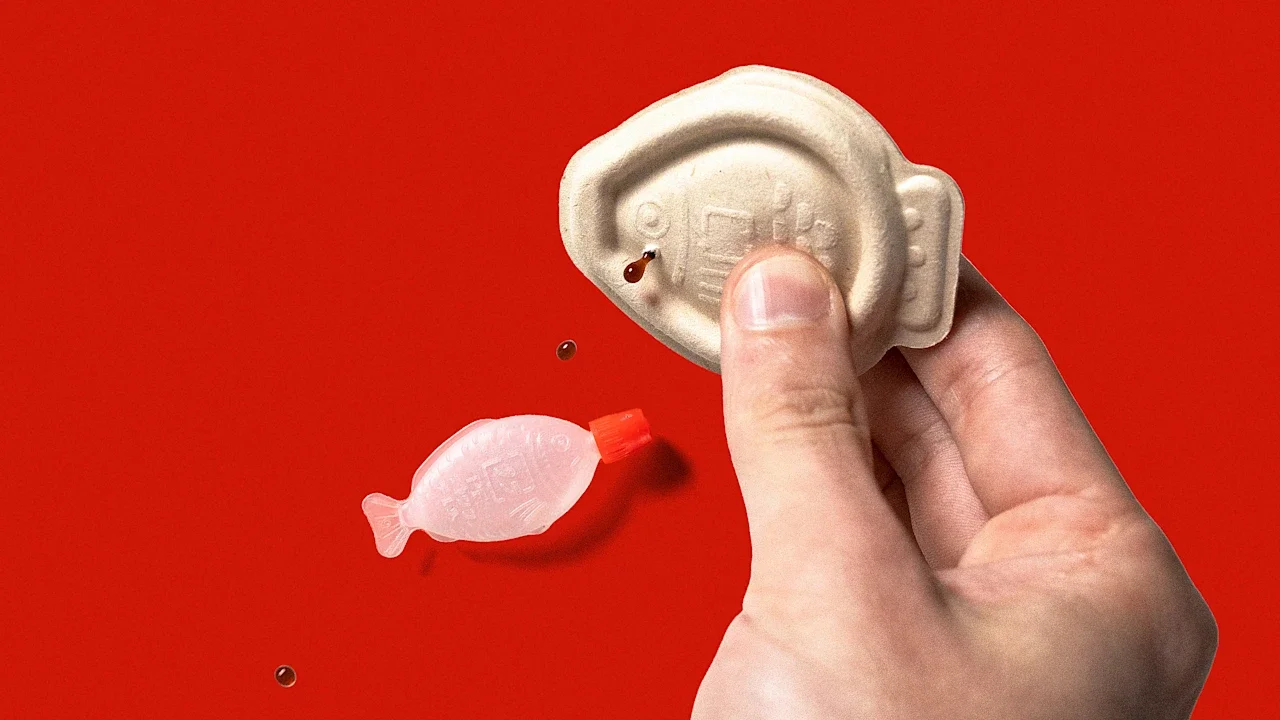
Single-use soy sauce packets for sushi take-out orders are now a whole lot more sustainable, thanks to a redesign that doesn’t use any plastic. While sushi lovers in the U.S. are used to getting their to-go soy sauce in rectangular packets like they do their ketchup and mustard, soy sauce in Australia often comes in small plastic fish bottles with a screw top. This typical mini fish-shaped bottle is cute, for sure, but the user is done with it in a few minutes. Its packaging lasts much, much longer by comparison, since plastics can take as long as 500 years to break down. Does the user experience really require packaging that lasts that long? The Holy Carp soy sauce dropper, now available for preorder, is a plastic-free and fully compostable alternative that solves this dilemma. The kraft-brown-colored dropper is made from bagasse pulp (plant residue), and it comes in two pieces that snap together. The lid, which is shaped like a fish, decomposes in four to six weeks, not centuries. Rather than a cap, the Holy Carp dropper dispenses sauce out of an opening under the fish’s eye, and restaurants fill them in-house. The dropper can hold sauce for 48 hours—probably longer than you’d want to keep your take-out sushi in the fridge anyway. The Holy Carp dropper was designed by Heliograf, an Australian design studio, with Vert Industrial Design House, and made in consultation with sushi restaurants. Since customers usually grab a handful of those plastic fish-shaped bottles with their take-out order, the designers made their compostable version of the fish dropper bigger, with 12 milliliters of capacity. The studios worked together in 2020, on Light Soy, a compostable fish-dropper lamp, to draw attention to single-use plastic waste, but with the Holy Carp, they’ve set their sights higher. You just need one fish lamp for your room, but you need soy sauce every time you get sushi. And that adds up to a lot of plastic: Heliograf estimates that somewhere between 8 billion and 12 billion fish bottles have been used since 1950. View the full article
-
Defendants argued the vendor doesn't operate a pricing algorithm, and said some of the implicated home loan players never used the software. View the full article

-
You’ve probably heard the saying, “If you need to get something done, give it to the busiest person you know.” This statement often rings true. However, if you find yourself nodding along to this, you could be doing yourself a disservice. Yes, reliability and dependability are strengths, but they can quickly become your Achilles heel if you’re everyone’s go-to person, all the time. Research shows that teams composed of people who are dependable perform better. In fact, Google’s Project Aristotle found dependability to be the second most important factor in high-performing teams. And yet if this dependability extends beyond the sustainable (for example, if it turns into hyper-independence or people-pleasing), what starts as well-intentioned can result in a myriad of negative outcomes. The possibility of quiet cracking We get it. Being the go-to person feels good. It gives you a sense of purpose and contribution. But saying “yes” at all costs, even when you’re overloaded, has a real impact on your professional performance, and on you personally. The unintended consequences of being everyone’s go-to person can result in workload imbalances, unspoken resentment towards your team, and even quiet cracking, which are precursors to burnout. Quiet cracking is a subtle, internal experience of emotional and mental depletion that happens when you feel stretched too far for too long. And it makes sense, being everyone’s go-to person without feeling appreciated or a sense of progress and advancement will likely leave you unhappy and unmotivated. It happens somewhere between burnout and quiet quitting, when you still show up and perform, but your engagement is silently eroding. So if you’re a high performer who is quietly cracking beneath the surface, it might be time to take off that busy badge and honor how you’re really feeling. This is a call to action for those quiet go-to people who are feeling resentful, tired, irritable, or have just had enough. The reality is that when you’re spread too thin, you can’t perform at your best. Here are four things you can do right now to help yourself. 1. Acknowledge how you’re really feeling You can’t fix what you won’t face, and denial isn’t a long-term strategy for success. The first step to breaking the cycle is admitting that the way you’re working right now isn’t sustainable. High performers are often the best at pushing through, even when they’re exhausted. However, resilience without reflection quickly becomes self-sacrifice. Start by allowing yourself to pause and be honest. Are you coping, or just going through the motions? Acknowledging the truth isn’t weakness. It’s the gateway to change. Is the way you’re working today actually taking you to where you want to go? 2. Get clear on the priorities and set boundaries around what’s not Get clear on the tasks that are most mission-critical in your role for both individual and team success. When everything becomes a priority, nothing is. Once you have clarity around key priorities, protect your time and energy to focus on those by setting better boundaries. Learn to communicate with your manager when work demands aren’t realistic. Set firmer boundaries with your colleagues and team members about what work you’re accountable for, and what’s within their remit. When you’re always saying “yes,” you’re teaching others how to treat you and demonstrating that you’re always available when people need you. Instead, be clear about what capacity you do have, and what you need to deprioritize if you’re to take on extra responsibility. If you need to say no to your coworkers, say something along the lines of, “I understand this project is important to you, let’s bring it to the table with the team to see who’s best placed to help.” 3. Share the load so that you don’t carry it alone You don’t build thriving teams due to one hero. You build them on shared ownership, distributed responsibility, and collective accountability. If you’re always the one stepping in, fixing things, or saving the day, you may unknowingly be holding the team back from developing capability, confidence, and resilience. When you take everything on, others don’t get the chance to learn, experiment, or rise to the challenge. Start by getting curious: Where are the bottlenecks? Where does work pile up around you? What tasks could someone else take on with support? Instead of quietly carrying more, raise the issue with your manager from a solutions-focused perspective. Not only does this relieve pressure on you, but it also lifts the bar for everyone. 4. Redesign your role around your strengths Dependability is your strength, but every overplayed strength can become an Achilles heel. If the work that once energized you now leaves you depleted, it’s worth reflecting on where you can best use your skills. Consider which tasks light you up versus the ones that flatten your energy. Use this self-awareness as a starting point for a conversation with your manager about workload design, growth pathways, and skill development. Figure out where you can add the most value, and what you may be able to redesign so that you can thrive. You don’t need to do everything to be valuable. Often, the work that drains you might be an opportunity for someone else to grow. When you realign your role with what you do best, your performance improves and so does your well-being. Being the go-to person doesn’t make you indispensable; it makes you invisible when you’re struggling. Boundaries, collaboration, and better role design aren’t signs of weakness; they’re leadership behaviors. When you protect your time, share responsibility, and play to your strengths, you create space for your best work, and for others to rise too. View the full article

-
Working from home might be frowned upon at some companies these days, but the rising number of layoffs last year and the growing collection of workers who are launching their own businesses means the number of people working out of a home office is on the rise. If you’re among them, you’ve no doubt learned that to make it a comfortable experience, you need a lot more than a laptop and a convenient table. At the Consumer Electronics Show (CES) in Las Vegas this year, plenty of items on display seemed well-suited to make work life easier for home-based employees. Here’s a look at the most notable tools. Xebec Tri Screen 3 If you’re used to a multi-monitor setup, you know the pain of having to adjust to a single monitor when you’re on the road or find yourself confined to a smaller workspace. Xebec has been providing solutions for that for a while, but the Tri Screen 3 is the easiest fix yet. Simply clamp the base onto the back of your laptop’s screen, plug it in, and in seconds you’ll have three independent screens with which to spread out your browser windows, spreadsheets, and documents. The Tri Screen 3 works with both PCs and Macs (adapter needed) and runs $699. Libernovo Omni A good office chair is critical for home workers. Plopping yourself down in a chair stolen from the dining room for long periods will result in back pain and decreased productivity. Libernovo’s Omni ergonomic chair has been on the market for a bit, but at CES, the company showed off upgrades that make it even more appealing. Rather than adjusting the chair itself, the Omni, which starts at $803, uses what it calls a “bionic” backrest, featuring 16 joints and eight panels, mimicking the human spine and following the user’s movement in real time. It also will offer a temperature-adaptive cooling cushion that adjusts to your body heat. Jackery Explorer 1500 Ultra Over the past few years, more and more areas of the country have experienced climate-related power outages, whether due to extreme heat, tropical activity, or some other meteorological quirk. But for the home-based worker, reliable power is essential. Jackery’s Explorer 1500 Ultra is a portable power solution that will keep the power running. Prefer to work outside on nice days? Jackery has also introduced a solar-powered gazebo, which can generate up to 10 kilowatt-hours per day. The company did not announce pricing for either product. Ugreen NAS storage Cloud storage has the advantage of accessibility, but security is sometimes a concern (and some cloud operators can shut down with little or no warning). Ugreen’s network-attached storage devices let you keep your data backed up and secure. The NASync iDX Series offers increased speed and fully local AI to help you parse the information you have collected. Prices start at $999 and increase as you add more memory. Motorola Mesh Wi-Fi There are plenty of mesh Wi-Fi receivers on the market, but you’d be hard-pressed to find one cheaper than Motorola’s current offering. At $129, it’s an affordable way to bring Wi-Fi 7 into your home office, with a range of roughly 2,000 square feet. Technically called the MNQ1525, it can support up to 120 devices, letting home-based workers unshackle themselves from their desks. View the full article

-
Bodies targeted include key UN climate treaty and those promoting development, democracy and human rightsView the full article
-
Swiss food company risks significant damage to revenue and reputation, analysts sayView the full article
-
You hear the blurps and bloops after you pass the food court in the Mall of Georgia on a fall Sunday afternoon, the unmistakable sound of points being scored and players eliminated. Then you see him: Standing in an oversize vitrine is a 6-foot-tall animatronic rodent. He’s grinning and waving, but frozen in place, preserved like a museum piece. This isn’t an outpost of Chuck E. Cheese, the 48-year-old family pizza chain with more than 460 restaurants in 45 states and another 88 abroad. It’s Chuck’s Arcade, a fledgling new enterprise launched this past summer by parent company CEC Entertainment in an effort to expand the brand’s reach to Gen Xers, nostalgic millennials, and teens who have outgrown the flagship. These 13-and-counting old-school arcades are crammed with a dizzying mix of options—elaborate games like Drakons Realm Keepers (flying dragon battles); games tied to Marvel and Jurassic Park and the NBA; arcade classics like Tempest; and analog options like Skee-Ball and air hockey. This one, in Buford, Georgia, draws a steady afternoon crowd of couples, families, and packs of teenagers. A pair of giggly tweens take a furtive selfie with the animatronic Chuck near the door. Five years after the pandemic plunged Chuck E. Cheese into its second bankruptcy, the brand is showing surprising energy. In addition to launching the new arcades in exurbs and mid-tier cities around the country, it has redesigned most of its restaurants in the U.S. and expanded its menu; most recently, it announced another spin-off focused on physical “active play.” And its financial picture appears to be stabilizing. While the company reportedly struggled earlier this year to raise funds to meet debt payments, in September it closed a $625 million private credit term loan, and ratings agency S&P Global forecast that the company’s 2025 same-store restaurant sales will grow between 2% and 2.5%. CEO David McKillips is not shy about his view of the brand’s potential. Since he took the helm, in 2020, the company has begun to leverage the intellectual property around Chuck E. Cheese, the character, inking several dozen licensing deals that have put the friendly rodent’s likeness on apparel, toys, frozen pizza, and more. A Chuck E. Cheese Christmas—an animated holiday special featuring not just Chuck but also his sidekick characters—debuted on Amazon Prime on Thanksgiving Day. All of this may seem like a long-shot vision for a brand that’s been more associated recently with cheap punch lines (California governor Gavin Newsom told Vice President JD Vance on social media that “ONLY SOMEONE WITH A LAW DEGREE FROM CHUCK E. CHEESE COULD BE AS DUMB AS YOU!!!”) and squalid Florida Man cringe (last July, a video of an employee being arrested on fraud charges while wearing his Chuck E. costume went viral). But the CEC executives spin it differently. “It’s impactful when Chuck E. Cheese is in the news, good or bad,” says Mark Kupferman, the company’s chief insights and marketing officer. “Chuck E. Cheese’s Q scores are amazing.” Shawn and Shelbie Moseley, a couple in their thirties who are making their second visit to Chuck’s Arcade today, share a fondness for Chuck—and the animatronics that used to be the chain’s signature. Shawn has enjoyed several YouTube documentaries about them. “Nostalgia,” he says with a knowing grin. It’s a sentiment that CEC is banking on. The company estimates that around 24 million kids, across four generations, have celebrated a birthday at Chuck E. Cheese. “My IP dream is a global movie release,” McKillips says, citing Shrek, Sonic the Hedgehog, and the cross-generational appeal of a Pixar property as reference points. “I won’t stop until we have a movie. There are theme park opportunities, gaming opportunities. . . . I’m not done until every 5-year-old is going to sleep in their Chuck E. Cheese pajamas and waking up and having Chuck E. Cheese cereal.” Nostalgia is an exercise in selective memory. And people remember things differently: One fan’s classic is another fan’s kitsch. Few brand mascots embody this tension better than Charles Entertainment Cheese. Born as “a giant cigar-smoking rat with a bowler, buck teeth, and a Jersey accent,” as Benj Edwards reported in Fast Company in 2017, Chuck first appeared alongside his animatronic bandmates— co-vocalist Helen Henny, guitarist Jasper T. Jowls, keyboard player Mr. Munch, and Pasqually on drums—at a pizza-and-entertainment restaurant that opened in San Jose in 1977. In those days, arcades seemed vaguely shady—hangouts for directionless teenagers. Chuck E. Cheese, as the chain came to be called, offered a family-friendly alternative with games, pizza, and music, geared to delight 2-to-12-year-olds. Yet the concept always had deeper undercurrents. It was developed and tirelessly championed by founder Nolan Bushnell, the eccentric, visionary tech entrepreneur who also cofounded Atari (and was Steve Jobs’s first boss). He had sought to evoke the mix of technology and carnivalesque ritual that he saw at the heart of collective human culture. And Chuck was a rat only by accident. Turns out Bushnell had always wanted to start a pizza parlor and had the name Coyote Pizza in mind. In the mid-1970s, not long after cofounding Atari, Bushnell ordered what he thought was a coyote costume—but it turned out to be a rat costume. Trotted out as a regular gag at Atari company events, the character became known alternately as Rick Rat and Big Cheese. Bushnell floated the idea of calling his restaurant Rick Rat’s Pizza, but his marketing folks intervened, coming up with an alternative: Chuck E. Cheese. The first restaurant had a sign out front reading “Chuck E. Cheese’s Pizza Time Theatre,” and by the mid-1980s, it had become a chain, with more than 240 locations. Hampered by overexpansion and a slew of copycats, the company went into its first bankruptcy in 1984. Bushnell resigned, and ShowBiz Pizza, a rival, bought the company in 1985, returning it to a suburban fixture again throughout the 1990s and 2000s. By the time Apollo Global Management bought the 577-location chain for $1.3 billion in 2014, Chuck had morphed into a cheerful adolescent, and, in the iPhone age, the animatronics were feeling antiquated. McKillips, formerly a Six Flags executive, paid his first visit to a Chuck E. Cheese on a Saturday in Grapevine, Texas, in 2019, and says he found the brand environment “tired” and “dated.” But just as he was about to leave, there was a verbal countdown to the arrival of Chuck himself. “It was like a Taylor Swift concert,” he recalls. “Kids were going bananas. And I was like, This is fricking awesome.” He left a 13-plus-year career at Six Flags to become CEO in January 2020—just as COVID-19 hit. Unexpectedly presiding over the chain’s second bankruptcy (filed in the summer of 2020 as diners stayed home), McKillips and his board raised $650 million in bonds, and ultimately spent $350 million to revamp its locations. “COVID was a little bit of a blessing in disguise,” he says. The brand was “crushed” for a time, and obviously the human toll on laid-off workers was severe. “But it allowed us to pause and really look at the business.” There’s a choice that youth-focused brands grapple with: Do we grow up with our audience—or stay forever young? Chuck E. Cheese had always been in the forever-young business, but had, McKillips felt, lost touch with today’s kids. Winking satires in It’s Always Sunny in Philadelphia (the Risk E. Rat’s Pizza and Amusement Center) and the horror movie Five Nights at Freddy’s didn’t help. Out went Munch’s Make Believe Band, as Chuck E.’s animatronic musical group was called. In came an interactive dance floor, with a jumbotron and Kidz Bop as an official music partner. Arcade games stayed, but the interiors got brighter and featured “adventure zone” areas with trampolines and “superhero playgrounds.” And the pizza got better. During COVID-19, the company converted its kitchens into ghost kitchens for its new delivery and takeout brand, Pasqually’s Pizza & Wings. In the process, the company reformulated its pizza recipe and expanded its menu with more toppings and options than it had ever bothered with before, an experiment that resulted in a new adult menu when its dining rooms reopened and the ghost kitchen brand was retired in the spring of 2025. The business model changed too. Borrowing a tactic from the amusement park industry, the chain started to offer a variety of seasonal and annual passes—such as a $49 Summer Fun pass for unlimited visits for eight weeks—providing discounts in a belt-tightening era, guaranteeing steadier revenue, and cementing loyalty. Chuck E. Cheese sold 79,000 passes in 2023. The next year, it sold nearly 400,000. Since the beginning, Chuck E. Cheese has been, on some level, a tech company. Today, its main restaurant chain is “the largest arcade in the world” and the biggest buyer of games, McKillips says. “We have 2 billion gameplays every single year.” The company opened a handful of arcades in malls in 2024, called the Fun Spot Arcade, which flopped. But Kupferman, the company’s chief insights and marketing officer (and another Six Flags veteran), began envisioning a new stand-alone arcade business that could carry Chuck E. Cheese branding. McKillips was resistant. “Doesn’t fit,” he recalls thinking. “We are about age 2 to 12, wholesome, safe family entertainment.” They ended up leaving the modern version of the mouse with the children’s pizza chain but using “traditional Chuck E.,” the retro version associated with the 1980s and 1990s, for the arcade. When the first Chuck’s Arcade launched in 2025, its logo featured the “nostalgic” version of Chuck, with the bowler hat and bow tie, and a salvaged animatronic rodent greeted people at the door. While the company won’t share specific data, a spokesperson says the switch to Chuck’s Arcade from Fun Spot has had “a very positive effect” on the performance of each location. A typical visitor, whether a teen or a 50-year-old, buys a $50 game card and exhausts it over an hour or so. Now the company is making another play for its millennial and Gen Z fans, this time alongside their Gen Alpha kids, with Chuck E. Cheese Adventure World. The first location—11,300 square feet, or 10 times the typical size of an active play zone in one of its restaurants—just opened in Arlington, Texas, in November. Features include slides and tunnels, climbing zones, a dance floor, and “exclusive character appearances” (as well as snacks, but curiously, no pizza). The company says it will test a handful of locations before setting any full rollout goals. As for the flagship chain, the company is currently leveraging all those new screens for its CEC Media Network, announced in May—a de facto television network utilizing almost 4,000 screens across hundreds of Chuck E. Cheese locations. Appealing to today’s screen-focused kids, this in-restaurant network plays selections from a library of original entertainment content, with more than 300 digital shorts featuring Chuck E. and the band, as well as partner content from Kidz Bop and others. “We are using that as a promotional platform, selling advertising, creating a new revenue model,” McKillips says. It’s seen by 40 million visitors a year. The company is also working with streaming technology provider Future Today to expand the CEC Media Network beyond the restaurants. CEC-branded channels now exist on other platforms, such as Roku, Fire TV, Samsung, LG, and Future Today’s own family-friendly platform, HappyKids. But for some, watching a screen isn’t as entertaining as interacting with it, and that’s what Chuck’s Arcade is for. Back at the Mall of Georgia, a young boy and his mom play a seated, two-player virtual reality game that involves fighting a frantic array of monsters, including Godzilla, from an armed helicopter. The kid is ecstatic, blasting away at monsters and feeling the effects supplied by the VR headset. “Mommy, we’re flying so high!” he squawks, but Mom doesn’t answer. She’s blasting away, too, lost in the game. View the full article

-
If you’re like most Americans, you’ve already set all manner of goals and resolutions for the New Year. And likewise, if you’re like most Americans, you’ll have entirely abandoned them by February 1. Studies have found that 23% of people quit their New Year’s resolutions within a week, and almost half drop them by the end of January. Only 9% of Americans actually complete anything from their list in a given year. The biggest issue, apparently, is that we’re all very bad at setting resolutions. The things we choose are too vague, too hard, or too external. That got me wondering: Could AI do any better? Specifically: Can I mine the vast treasure trove of personal information ChatGPT has gleaned from our conversations and use that to set better resolutions for the year ahead? Turns out, the answer is yes. Here’s how I funneled ChatGPT’s casual disregard for privacy into a list of specific, actionable resolutions for 2026—and how you can do it too. Remember Me Many users don’t realize that ChatGPT pays careful attention to every conversation you have with it. It’s constantly eyeing your language choices, facts you share about yourself, and data you upload in order to better understand what makes you tick. And it retains everything. This privacy-obliterating feature is called Memory. OpenAI rolled it out in 2024. And it’s been expanded and improved constantly ever since. OpenAI CEO Sam Altman called Memory one of the most important “breakthrough” areas for AI, and the company is leaning heavily into improving the feature in 2026. Memory is helpful because it allows ChatGPT to respond to your queries in a more personalized way. If the bot knows you’re a vegetarian, for example, it won’t recommend a meatball sandwich when you ask it for lunch ideas. But ChatGPT’s Memory can also get extremely granular—and strange. You can see what the bot knows about you by clicking your profile icon in the ChatGPT interface, choosing Personalization, finding the Memory section, and pressing Manage. Doing this for myself, I learned, for example, that ChatGPT knows my birthday, my marital status, where I live, and the names of my children. But bizarrely, it also believes that I’m “writing articles about asphalt” and has stored the fact that I like “straight ASCII quotes” in its vast Memory banks. While OpenAI talks about Memory as a personalization function to help ChatGPT provide more helpful responses, it’s also likely a way to lock you into OpenAI’s system. If ChatGPT knows more about you than Gemini, you’re more likely to keep using it. You won’t just flit over to a different chatbot provider every time they roll out a new model, as many users do today. All that stored info, then, is really there for OpenAI, not for you. But with the right prompting, you can readily access and mine it. Specifically, you can use it to make a killer list of resolutions. Resolving Wisely To do so, I fired up the ChatGPT interface and selected the GPT-5.2 model. I then set the bot to the Extended Thinking mode. That configuration ensures that ChatGPT uses its most powerful LLM, and spends as much time as possible processing a given query. I then gave the bot this prompt (feel free to steal it for your own resolution setting): “Look back at your memory of the conversations we’ve had over the last year. Based on what you find, make a list of 10 highly specific, actionable New Year’s Resolutions for me for 2026. Cover all aspects of life, including work, health, family, and more. Follow expert guidance and best practices for setting realistic, actionable and truly achievable New Year’s resolutions. Specifically, use your knowledge of me to tailor the resolutions to the things I value and care about, and phrase/structure them in a way that you know will resonate with me personally.” After thinking for several minutes, ChatGPT responded with a customized list. As requested, the resolutions are very specific. And the bot clearly knows lots about me. Its first recommendation is to “Run a 45-minute 925 Newsroom Sprint 4 days/week” with the goal of “publishing 3 locally sourced Bay Area Telegraph stories/week (permits, public safety, openings, schools, city hall) and miss no more than 6 weeks total.” Based on that, ChatGPT clearly knows that I run a local news publication and publish a newsletter about the Bay Area’s “925” region. But it also seems to know about how much time I take off every year (six weeks), and correctly inferred the kinds of stories I cover for my publication. For another resolution, ChatGPT advises me to “Hit 30 minutes of licensing progress 5 days/week” and gives specific ways I could do that—a reference to my day job as a news photographer with licensable photos. I mostly talk with ChatGPT about work, so many of its resolutions focus on my professional life. But it also recommended several health-related resolutions, like “Make LDL-friendly eating automatic with 3 defaults” including “one soluble-fiber item daily (beans, oats, chia, etc.)” Sometime in 2025 I must have uploaded blood test results and asked the bot to explain them to me. Since then, ChatGPT has apparently been worrying about my LDL cholesterol and would like me to tweak it (thankfully, my actual doctor is not worried). Other suggested resolutions focus on building a workout routine (including a less-strenuous “dad-of-3 version” for busy weeks), improving my Python coding, and traveling more to photograph hotels for work. Forget It Overall, I’m impressed by ChatGPT’s specificity and level of detail. My own real-life list of resolutions is laudable but vague, with items like “be more present in daily life.” ChatGPT’s, in contrast, are all about metrics, action items, and accountability. Based on expert advice, that’s probably a wise approach. Still, it creeps me out a bit to see how much ChatGPT knows about me. And it feels stranger because I never specifically asked the bot to remember any of those things—it just decided to retain all the minutiae I dumped into its interface. That’s fine when ChatGPT remembers things like my preferred format for em dashes, and the fact that I enjoy Jared Bauman’s writing (he’s a friend). But when the bot starts retaining highly specific medical information based on a conversation I forgot I even had, the whole thing starts to feel invasive. Thankfully, OpenAI makes it fairly easy to remove specific items from ChatGPT’s memory. You can do so on the same Manage page I referenced earlier. After seeing what the bot knows about me, I deleted several items that were too overtly medical or were simply wrong. You can also opt to switch off the function entirely, or to use a Temporary Chat for a specific, sensitive query. Those are short-term fixes, though. As Altman’s “breakthrough” comment suggests, Memory is becoming an increasingly important function of modern AI chatbots. That means LLMs will almost certainly retain ever more knowledge about us—especially as companies exhaust the performance gains of building ever-bigger models and data centers. And they may not always explicitly share what they know. For now, you can leverage that knowledge for good and set some resolutions for the year ahead. But as you do so, might I suggest adding another resolution to your list: “Share less with LLMs. And remember that what you do share they may never truly forget.” View the full article