ResidentialBusiness
Administrators
-
Joined
-
Last visited
Everything posted by ResidentialBusiness
-
 Here is a recap of what happened in the search forums today...View the full article
 -
We may earn a commission from links on this page. Deal pricing and availability subject to change after time of publication. Tools can be a serious investment—so if you're looking to up your DIY game in 2026, a tool bundle is often a good solution. Because they come with batteries and chargers, they’re a great way to get everything you need to use a new tool set right away, and they can be more economical than buying each tool individually. Milwaukee tool sets are often more than $1,000, but you can get a few of these bundles for under $700 right now at Home Depot. Why I recommend Milwaukee toolsI’ve been using Milwaukee cordless tools for over a decade on a variety of professional and personal projects, including projects around the house as well as large scale decking installations. These tools tend to be reliable and the batteries routinely last more than ten years, even working on outdoor projects, exposed to rain and dirt. Durability is a big consideration when I buy tools; the longer they last, the more economical they are. Because all of the current tools are backwards-compatible with all of the 18-volt batteries I have, it's easy to add tools to my set as new ones come out that I want to try, and as my needs expand. Milwaukee tool bundles on saleThe Milwaukee 18-volt, nine-tool combo kit is on sale for $649, 46% off its regular price. It comes with a drill, a ¼-inch impact driver, a ½-inch impact wrench, a 6 ½-inch circular saw, a one-hand reciprocating saw, an angle grinder, an oscillating multitool, a mini blower, a work light, two 5-amp-hour batteries, a charger, and tool bag. This is a good set for larger projects, and it has many of the tools included that I used for building a large outdoor deck. Two larger capacity batteries is a good place to start, although if you plan on using multiple saw simultaneously, you’ll need to add another battery or two to keep a fresh battery ready on the charger. Milwaukee 18-volt, nine-tool combo kit $649.00 at Home Depot $1,199.00 Save $550.00 Get Deal Get Deal $649.00 at Home Depot $1,199.00 Save $550.00 The Milwaukee 18-volt five-tool combo kit is on sale for $299, 50% off its regular price. This set includes a drill, a ¼-inch impact driver, a 6 ½-inch circular saw, a one-hand reciprocating saw, a work light, a five-amp-hour battery, a 1.5-amp-hour battery, a charger, and a tool bag. This set has everything you need to get started doing DIY projects, and it includes all the basic Milwaukee tools I use day-to-day for woodworking and smaller building projects like building shelves. This is a good starter set to build on, and it's very similar to the one I began with more than a decade ago. The Milwaukee 12-volt sub-compact drill and driver set is on sale for $199, 50% off its regular price. This set includes a 12-volt drill, an impact driver, a powered ratchet, two batteries, a charger, and a tool bag. While 12-volt batteries are often underpowered for larger projects, these smaller tools can be quite useful for projects like furniture assembly, putting up shelves, or doing appliance repair, as you often don’t need more than an hour or so of battery life to accomplish many of these tasks with your tools, and the smaller size makes them easier to fit into tight spaces. Milwaukee 12-volt sub-compact drill and driver set $199.00 at Home Depot $399.00 Save $200.00 Get Deal Get Deal $199.00 at Home Depot $399.00 Save $200.00 View the full article
-
Fashion collaborations are nothing new, but 2025 felt like a year particularly stuffed with branding matchups. There’s a reason why this might be happening. “Online platforms have become crowded, [there are] rapidly accelerating trend cycles, [and] it’s become more challenging than ever for brands to stand out,” Cassandra Napoli, a head culture forecaster at WGSN, says. Collaborations continue to be a unique and important tool for marketing and maintaining cultural relevance. The best lead to attention-grabbing virality, as was the case with Nike x Skims’ first drop, Sandy Liang x Gap, and Willy Chavarria x Adidas. “Collaborations have become so important because brands have a need to attract new cohorts of communities and consumers . . . as well as provide a new expression of brand DNA and satisfy many customers’ need for newness,” Gemma D’Auria, global leader of apparel, fashion, and luxury at McKinsey, tells Fast Company. But the truth is fashion has become inundated with collabs, and the net result of so much noise has ultimately had the opposite effect: We’re numb to them. A collaboration alone is no longer enough to excite. To sell, they’ll have to resonate with a brand’s core audience, while also tapping into culture and surprising consumers with something new. What brands could break the internet together? Insiders reveal their blue-sky collaboration ideas for 2026. 1. A Gap collab with a luxury design partner Gap has been on a roll. The American fashion brand not only wooed shoppers this year with the aforementioned Sandy Liang drop, but its denim campaign with Katseye went viral for good reason: an incredible campaign spot that called back to its Y2K days with rising talent and fresh choreo (unlike the controversy-laden American Eagle “good jeans” mess that dropped weeks before). Multihyphenate host and former Essence editor Blake Newby wants to see Gap bring more designer partners on board. “I feel like there’s a synergy in the brand ethos of a Loewe girl and a Gap girl,” Newby says, adding that Loewe has already proven it’s comfortable with collabs thanks to its drops with On Running, for instance. (Plus, Loewe has its own denim with real brand ID.) “Gap has also just been doing such cool creative things. We would of course expect this to be at a higher price point [than normal Gap], but it would be so fabulous to see Gap merge their love for denim and basics with the way Loewe does [a similar thing].” 2. A Chanel partnership that scales smaller masters of the métier People are expecting a lot from Chanel right now. The French luxury house is freshly under the creative leadership of Matthieu Blazy, who made his runway collection debut in October. He’s being celebrated for breathing new life into the brand, and fashion people are curious to see a Chanel collaboration. Technically, the brand edged into collab territory in October: Blazy revealed a white button-up on the runway in partnership with 187-year old Parisian shirtmaker Charvet. But for Blazy, it wasn’t a collaboration as much as it was highlighting a house of craftsmanship, as the brand already does in its Métier d’Art collection. “It’ll be interesting to see what other things [Chanel Creative Director] Matthieu Blazy taps into because he’s really attuned to craftsmanship,” Jalil Johnson, author of the Consider Yourself Cultured Substack says. “It would be more interesting for these storied houses to give resources to smaller entities to see what they can produce on a bigger scale, like if Chanel worked with Gee’s Bend quiltmakers,” referring to the intergenerational group of women in a rural Alabama town crafting brightly hued and intricate patterned textiles. 3. A pairing that dares to expand Hermès sportswear Adjacent to Chanel, strategist and collaboration expert Bimma Williams wants to see a storied house work with an unexpected brand. For Williams, the dream would be to see Hermès and its recently appointed Men’s Creative Director Grace Wales Bonner do a collaboration with Adidas. (Believe it or not, Hermès already offers an HermèsFit line, and Wales Bonner and Adidas have already done drops.) Adding Hermès to that mix, he thinks, would be a ”masterclass in craft and restraint, merging heritage, sport, and contemporary cultural intelligence.” Perhaps what people are craving is for an uber high fashion house to finally cave and break its mold to collaborate with another brand that seems out of the high-end purview. A spin on the Birkin would inject some much-needed energy into the highly coveted bag for Amy Odell, a New York Times bestselling author and writer of Back Row on Substack. “I think the Birkin is getting stale, and they’ve got to mix it up,” Odell, who wrote biographies on Anna Wintour and Gwyneth Paltrow, tells Fast Company. “Hermès won’t sell the Birkin to Nike . . . but what if you had a Birkin you could take to the gym? I feel like everyone would talk about that. Or, they could collaborate with Tiffany & Co.—opulence is coming back—and do a fully glittery, diamond bag.” The economy is recovering in a biforcated K-shape, meaning that while inflation and a tight job market has led to less spending among lower-income consumers, America’s wealthiest shoppers are still buying, so there could still be a market for what would surely be an exorbitantly priced luxury good. 4. A collaboration that revives ’70s era Elsa Peretti x Halston The Italian jewelry designer and fashion model Elsa Peretti has had a legendary collaboration with Tiffany & Co. since 1974. Peretti, who passed away in 2021, is behind the American jeweler’s popular bone cuffs and other sculptural pieces. But what some may not know is that Peretti also worked with Halston to design not only a fragrance bottle, but jewelry and accessories, too. A re-edition of this duo’s work would be a dream come true for The Millenial Decorator’s Julia Rabinowitsch, who recently collaborated on a shoe collection with Reformation. “I’d love to see a revival of the pieces Peretti did, especially as I collect vintage Elsa for Halston pieces, and they are becoming increasingly rare,” she adds. 5. A duo that offers a new take on classic Missoni patterns Across the board, experts want one thing in a collaboration: for it to be unexpected. For stylist and founder of experiential shopping platform Sweet Like Jam, Mecca James-Williams, “designer-led collaborations with bigger luxury houses” would catch her eye. Imagine Christopher John Rogers, known for his unique technicolor touch and bold silhouettes, with Missoni, she says. James-Williams isn’t the only one interested in merging Missoni’s signature zigzags and geometric patterns. British TV exec June Sarpong would be interested in the brand working with British artist Yinka Ilori, known for his savvy use of bright colors, evident in his collabs with The North Face and Bloomingdale’s. Across both fashion insiders, there’s a real interest in seeing how the brand would keep the foundations of its signature while playing with a more flexible element, namely color. Whatever brands decide to do in 2026, it’s important that their collaborations form with intention and a real understanding that to land well, they have to make us wish we thought of the pairing first. View the full article

-
There are many good reasons to get a VPN (Virtual Private Network) app installed on your phone or laptop: They make it harder for anyone else to track your browsing, they keep your data safe when you're on public wifi networks, and they even let you spoof your location so you can access geolocation-locked content. You'll also find plenty of choice when it comes to VPNs. Our own guides to the best paid VPNs and the best free VPNs show the wealth of impressive apps out there, and even when you narrow down the criteria, you've still got lots of options to pick from—see our recommendations for the best free VPNs for Android. So what exactly should you be looking for when it comes to choosing the right VPN for you? These are the features and selling points that you'll see mentioned when you're browsing VPN comparisons, and what they mean (and once you've built up a shortlist from these criteria, then you can look at the prices and extras). Browsing speedOne of the downsides of loading up a VPN is that your browsing speed can suffer, while your data gets pinged around multiple servers across the globe. Ideally, you want all the protection that a VPN offers, without too much of a hit on download and upload rates (no matter how many other people are using the same VPN). Unfortunately, this isn't really something you can gauge just by looking at VPN listings and ads, as most VPNs will claim to be the fastest. Either read benchmark tests put together by publications and authors you trust (watch out for sponsored content), or make use of as many free trials as you can and do some testing yourself. Server locations Even VPN service will tell you how many servers it has, and where they are. Credit: ExpressVPN Your VPN of choice needs to reroute your internet traffic somewhere, and how many servers a particular VPN has around the world can make a substantial difference to speed and availability. It's also going to determine where in the world you can pretend to be of course, if you want to jump to another country virtually. Broadly speaking, the more servers the better, though as with VPN speeds you may have to do some testing of your own to check reliability and transfer rates. Look for server locations close to you (for speed), and outside of heavily censored or surveilled countries (for privacy), and check any technical specs that are given for them. Split tunneling and kill switchesSomething else to look out for is split tunneling, or the ability to send only some of your internet traffic through a VPN. This means you get better speeds (and less security and privacy) on data that's not so important, if you're just reading the news or learning a language. It's a feature that many of the best VPNs now offer. Another feature worth checking for is a kill switch. It sounds rather dramatic, but it's simply a feature that shuts down your internet connection if the data encryption somehow fails—cutting you off from the internet, but preventing your connection and data from being exposed. Again, this is now fairly common, but not every VPN offers it. No logs or zero logs Mullvad VPN lets you pay by cash, if you don't want to enter payment info. Credit: Mullvad VPN You should only consider VPNs that have clear no-logs policies (no browsing data is permanently retained) or zero-logs policies (supposedly even stricter, covering more data). Don't take the VPN's word for it. though: Look for third-party audits from independent security companies, carried out regularly, to verify these claims. If these logs are retained, they might be sold to data brokers, or pulled by law enforcement agencies—so check the individual privacy policies for details of what happens when you're connected to your VPN. Some VPNs go above and beyond when it comes to letting you stay anonymous: Mullvad VPN lets you pay by cash through the post, for example. VPN protocolA VPN protocol is the way that the VPN connects to the internet at large: It makes a major difference to speed and security, and you'll often see it mentioned in VPN listings. However, as important as it is, it's not something that's easy to compare across different VPN services—most VPNs will simply say their protocol of choice is the best. Once you've got a shortlist of VPNs together, do some background reading on the protocols they use: Look for independent assessments of their security and transparency, technical benchmarks, and protocols that have been open sourced so they can be analyzed. OpenVPN and WireGuard are two well-regarded protocols, for example. Location and reputation Where a VPN is based is important, as well as where it connects to. Credit: Lifehacker VPN companies are bound by the laws and regulations of the country that they're based in—so it's a good idea to look for ones based in places where surveillance regulation and government monitoring is less strict. If necessary, check the VPN's policies on how it deals with data requests from the authorities and law enforcement in its local region. It's also worth weighinga VPN company's reputation: How does it make money? What other services does it offer? What's its record with data breaches? This is much more important with a VPN than it is with your streaming music provider, for example, because you're trusting it with all of your online data while you're connected. Trials and money backGenerally speaking, it's worth paying for a VPN, as you're giving it so much responsibility in terms of your online access and security. The paid options are almost always going to give you a faster and more reliable service, and if you regularly make use of a VPN then the monthly fee is well worth the investment. It is, however, worth looking for services that offer free trials and your money back if you're not satisfied (usually after 30 days). Not only does it reflect well on the VPN company, it means you can see if the VPN suits your needs—and check how fast its servers are—before signing up for any kind of payment plan. View the full article
-
If you’re job searching right now, it can feel like your efforts and outcomes aren’t lining up. The job search is changing, and competition isn’t easing. The result: nearly 80% of job seekers say they feel unprepared to find a new job this year. At the same time, two-thirds of recruiters say it’s become harder to find qualified talent over the last year. This tension has become a defining feature of the job hunt. There’s no denying that AI is reshaping how work gets done, and in the new year, both recruiters and job seekers are planning to use the technology to gain a competitive edge. The good news is that the fundamentals of what makes for a good hire haven’t changed drastically. But as AI tools continue to evolve, the way job seekers show up and hirers evaluate talent is shifting. As LinkedIn’s Career Expert, I have front-row access to how the job market is changing, based on our unique data and member insights, and have spent over a decade helping professionals navigate their careers with confidence as work continues to evolve. Here’s what job seekers need to know about how to stand out and make AI work for them, not against them, in 2026. Do focus on your skills, don’t try to game the system When job seekers update their résumé or LinkedIn Profile, many fall into the same trap: trying to say everything at once. In the age of AI, that can look like keyword stuffing in hopes an LLM picks it up. But this often backfires, making applications feel inauthentic or mismatched to the role. Instead, what works best is to lead with the actual skills you have—and specific explanations as to what you actually did, how you did it, and what came of it. Saying you “led a cross-functional launch that improved customer retention by 2x,” for example, gives far more insight than a dense list of generic responsibilities. This level of detail will help you stand out to recruiters, many of whom are already tapping AI to find candidates with skills they’d never have found before. So, take the time to revisit how you present your qualifications. You may even rediscover skills you’ve been applying for years without realizing they’re in-demand now, like problem-solving and adaptability, so you can stand out more and have an easier time spotting roles that are actually a good fit for you. Don’t be intimidated by the AI interview, do practice ahead of time For many job seekers, the first interaction with a potential employer now happens through an AI-led prescreen or interview. That alone can be enough to throw people off. The format feels unfamiliar, but my biggest advice to job seekers is to treat it like a normal interview. Today, AI-led prescreenings help hiring teams manage application overload so they can spend their time evaluating and interviewing candidates who are truly a good fit. In fact, two-thirds of recruiters say AI prescreening interviews can help them get better insights about candidates, even across a large applicant pool. For job seekers, I recommend practicing an AI interview beforehand so you’re not caught off guard the first time you encounter one. Use AI tools to practice a run-through, testing out your responses to common interview questions, how you’d introduce yourself, and how you’d describe your strengths and yes, your weaknesses (aka opportunities for growth!). If you’re able to clearly communicate your experience and what you’ll bring to the role, you’ll move more smoothly through the hiring process, from pre-screening to live interviews. Do invest in relationships, don’t wait until you need them Even as AI becomes more ingrained in the job search process, it’s still humans who make the biggest impact in your job search and career more broadly. But a mistake people make is waiting until they’ve started looking for a new job to tap into their network. Even well-intentioned messages can come across as transactional if you’re only reaching out when you need something. Strong connections often start with shared context, not a specific ask, so reaching out early and often to your network is the best approach. This can be as simple as sending a quick check-in to a former coworker, a past manager, or a recruiter you meant to follow up with. A simple “saw your promotion, congrats” or “this made me think of you” goes further than you think. If you’re not sure what to say, there are a ton of tools you can tap to help you find some common ground or the right words. The biggest takeaway: when relationships are warm, people are more likely to vouch for you or share opportunities you might not otherwise see. This can make all the difference, especially in a tough job market where many hiring managers give extra consideration to applicants who have a referral. Bottom Line: Use AI to get clearer, not slicker Hiring may look different than it did a few years ago, but the basics haven’t changed as much as it may feel. Skills, curiosity, and judgment still matter. What has changed is how job seekers can use AI to take charge of their job search. On LinkedIn, you can now describe what type of role you want, using plain language, and jobs you might not have thought to search for will come up. You can take a similar approach when looking for a new connection too, making it easier to build your network. When used strategically, AI can help you job search more intentionally so you can spend your energy where it matters most, and put your best foot forward in 2026. View the full article

-
LinkedIn’s AI-powered job search feature is expanding to new audiences. The tool—which lets job seekers find relevant open positions without needing to exactly match keywords in the job title or description—will soon be available to all LinkedIn members using the site in English and expanding to Spanish, French, German, and Portuguese. AI-powered job search is already used by 1.3 million people daily, with more than 25 million job searches conducted via the tool every week. And initial data indicates that job seekers without a four-year college degree who use the tool are 10% more likely to get hired than before, according to the company. “This is a really meaningful shift, because our vision is economic opportunity for every member of the global workforce,” says Rohan Rajiv, senior director of product management and product lead for job search at LinkedIn. “We know that in the past, if you were a line cook or a taco chef, it wasn’t that easy to find those jobs on LinkedIn.” The AI search tool even lets users specify general properties of a job, like saying “I want to protect the world’s oceans,” and find relevant listings, he says. That’s a result of careful, iterative development of a large language model-powered system that can parse job titles, descriptions and other data, understanding the nuances of how listings may vary by location and industry. One job listing may refer to “partnerships,” while another listing for a similar position refers to “business development” work, for example. And the AI is able to deliver both listings to potential applicants without them needing to search for a specific keyword. “Compared to traditional keyword searches, it felt more intuitive and less mechanical,” writes Anderson Cheng, who recently found a job at the Los Angeles County Affordable Housing Solutions Agency via the tool, in an email to Fast Company. “The biggest surprise was how well it surfaced roles I might have skipped over based on title alone, but that were actually a strong fit once I reviewed the description more closely.” The AI is carefully designed to be speedy, so users don’t have to wait long for results, as well as accurate and internally cost effective, Rajiv says. The results are created in part by LinkedIn staff evaluating them using a second LLM-powered system, then providing the core AI with additional examples in areas where it underperforms. Using AI to evaluate results lets the company check a broader sample than they could practically look at by hand. “The magic of building these products is that you’re able to evaluate these products at scale,” says Rajiv. The expanded AI access comes as the Microsoft-owned platform continues to evolve beyond a mere virtual rolodex and resume board, perhaps especially in the post-pandemic era. Revenue has more than doubled from $7 billion in 2020 to $17 billion in 2025, according to LinkedIn. It has long been used by recruiters to find potential candidates and vet applicants, making maintaining a profile there critical in many industries. “If you say something in your résumé, they might look at your LinkedIn and see if those things line up,” says Daniel Usera, a clinical associate professor at the University of Texas at Arlington who has studied LinkedIn. Job searches are also a big part of what LinkedIn offers. The company reports that every minute, nearly 50 new hires are made through LinkedIn and more than 11,000 job applications are submitted through the platform. It’s also a social network, where 17,000 new connections are formed every minute. Another recently released AI feature, known as AI-powered people search, helps users find potential connections based on plain language criteria, like “investors with FDA experience for a biotech startup” or “Northwestern alumni who work in entertainment marketing,” rather than simply looking people up by name and employer. The platform has also given people new ways to express themselves in recent years, including adding short-form video similar to TikTok. LinkedIn posts are sometimes mocked and parodied for their excessive business boosterism, and cringey work lessons drawn from personal trauma. But the site has become a legitimately unique place for people to share work updates, from promotions to hiring announcements, along with insights about their fields. “We kind of have this sense of professionalism in terms of how you’re supposed to post, how you’re supposed to interact,” says Usera. “And the topics are generally professional in nature.” More than 1.9 million feed updates are viewed every minute as of October 2025, according to the company, which reports that comments on the network are up 24% year-over-year. Usera says his research indicates that tagging other people in LinkedIn posts, perhaps in celebrating their achievements and contributions to your own work, can help boost engagement. And while he hasn’t yet formally studied the LinkedIn “cringe” phenomenon, he says awkward posts can result from attempts at modesty, where people allude to personal achievements in roundabout ways, and those forced analogies between the personal and professional. “Maybe the lesson is you don’t need to always be creative,” he says. “You can just be factual and just trust that your network supports you and will be happy for you.” And as the platform’s AI job search functionality expands, the same lesson likely applies to job postings. While job description language have historically sometimes been an afterthought, providing clear detail about what a position entails helps ensure it shows up in AI-powered searches, says Rajiv. “We are moving away from a world focused on keywords to a world where you need to say things as they are,” he says. View the full article
-
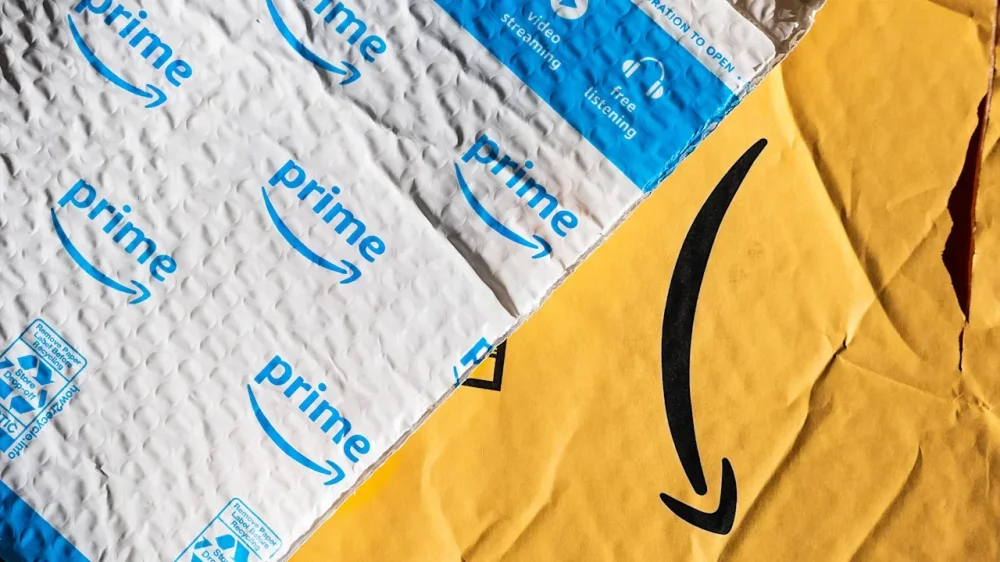
If you signed up for an Amazon Prime membership between June 23, 2019, and June 23, 2025, Amazon might owe you as much as $51. This comes after the online retail giant entered into a settlement agreement with the Federal Trade Commission (FTC) over allegations that the company used deceptive practices to enroll customers in its Prime membership. Here’s what you need to know. What’s happened? Amazon and the FTC have agreed to a settlement over allegations that the online retailer used deceptive practices to enroll people in its Amazon Prime membership, while also making it difficult for those same individuals to cancel the membership. The settlement was reached in September 2025, with Amazon agreeing to pay $2.5 billion to eligible U.S. customers. Of that, $1 billion goes toward paying a civil penalty. The remaining $1.5 billion will be used to refund eligible customers up to $51 each. As part of the settlement, Amazon did not admit to any wrongdoing. Who is eligible for the refund? There are two groups of people eligible for a refund. Both groups must have signed up between June 23, 2019, and June 23, 2025. Automatic payment group: In this first group, you must have enrolled in Prime through a so-called “challenged enrollment flow.” And you may not have used more than three Prime benefits in a 12-month period from June 23, 2019, to June 23, 2025. If you’re part of this group, you should have received your payment automatically by December 24, 2025, with no action required on your part. Claims process payment group: In this second group, you must have either unintentionally enrolled in Prime through a challenged enrollment flow or unsuccessfully tried to cancel Prime. Further, you must have used more than three Prime benefits but less than 10 during the covered 12-month period. The window for submitting a claim for the second group opened on Monday, January 5. According to the settlement website, eligible customers should receive a notice via mail or email with instructions for filing a claim by January 23. What is a challenged enrollment flow? According to the FTC and the settlement administrator, that term refers to various pathways to sign up for Prime: The Universal Prime Decision Page (UPDP), Shipping Option Select Page (SOSP), Prime Video enrollment flow, and Single Page Checkout (SPC). The good news is that you don’t personally need to determine if you signed up through a challenged enrollment flow to submit a claim. According to the FTC, Amazon will determine that for you. How much money does Amazon owe me? If you fall into either group, Amazon will refund your Prime membership fee up to $51. What do I have to do to get my refund? If you are part of the first group, you should have automatically received your refund payment from Amazon with no action required on your part. If you are in the second group, you should receive a notice via email or regular mail from Amazon that tells you how you can submit a claim. You have until July 21, 2026, to submit a claim. What else should I know? Those who think they may be eligible for a refund should check out the official settlement website, which has a list of frequently asked questions. View the full article
-
Denmark and Greenland are seeking a meeting with U.S. Secretary of State Marco Rubio after the The President administration doubled down on its intention to take over the strategic Arctic island, a Danish territory. Tensions escalated after the White House said Tuesday that the “U.S. military is always an option.” President Donald The President has argued that the U.S. needs to control the world’s largest island to ensure its own security in the face of rising threats from China and Russia in the Arctic. Danish Prime Minister Mette Frederiksen warned earlier this week that a U.S. takeover would amount to the end of the NATO military alliance. “The Nordics do not lightly make statements like this,” Maria Martisiute, a defense analyst at the European Policy Centre think tank, told The Associated Press on Wednesday. “But it is The President, whose very bombastic language bordering on direct threats and intimidation, is threatening the fact to another ally by saying ‘I will control or annex the territory.'” The leaders of France, Germany, Italy, Poland, Spain and the United Kingdom joined Frederiksen in a statement Tuesday reaffirming that the mineral-rich island “belongs to its people.” Their statement defended the sovereignty of Greenland, which is a self-governing territory of Denmark and thus part of NATO. This weekend’s U.S. military action in Venezuela has heightened fears across Europe, and The President and his advisers in recent days have reiterated the U.S. leader’s desire to take over the island, which guards the Arctic and North Atlantic approaches to North America. “It’s so strategic right now,” The President told reporters Sunday. Danish Foreign Minister Lars Løkke Rasmussen and his Greenlandic counterpart, Vivian Motzfeldt, have requested the meeting with Rubio in the near future, according to a statement posted Tuesday to Greenland’s government website. Previous requests for a sit-down were not successful, the statement said. French Foreign Minister Jean-Noël Barrot said he spoke by phone Tuesday with Rubio, who dismissed the idea of a Venezuela-style operation in Greenland. “In the United States, there is massive support for the country belonging to NATO – a membership that, from one day to the next, would be compromised by … any form of aggressiveness toward another member of NATO,” Barrot told France Inter radio Wednesday. Asked if he has a plan in case The President does claim Greenland, Barrot said he won’t engage in “fiction diplomacy.” While most U.S. Republicans have supported The President’s statement, Senators Jeanne Shaheen and Thom Tillis, the Democratic and Republican co-chairs of the bipartisan Senate NATO Observer Group, blasted The President’s rhetoric in a statement Tuesday. “When Denmark and Greenland make it clear that Greenland is not for sale, the United States must honor its treaty obligations and respect the sovereignty and territorial integrity of the Kingdom of Denmark,” the statement said. “Any suggestion that our nation would subject a fellow NATO ally to coercion or external pressure undermines the very principles of self-determination that our Alliance exists to defend.” Associated Press journalists Geir Moulson in Berlin and Mark Carlson in Brussels contributed to this report. —Stefanie Dazio, Associated Press View the full article

-
This analysis explains why AI-driven search surfaces out-of-market sources and how organizations can align semantic authority with commercial usability. The post Why Global Search Misalignment Is An Engineering Feature And A Business Bug appeared first on Search Engine Journal. View the full article
-
It's CES week, when the tech world gathers in Las Vegas to check out the latest gadgets, prototypes, and innovations that will shape the future. Lifehacker's tech team is on the ground at the convention, tracking down big stories and cool gear. What is CES?Billing itself as "The Most Powerful Tech Event in the World," CES (short for "Consumer Electronics Show") is the Consumer Technology Association's trade convention. It began in 1967 as a small showcase for televisions and radios, but over the decades CES has become a gathering of the tribes for tech culture. Everyone is there, from huge companies like Samsung and Sony, to scores of journalists, to scrappy startups with big dreams. From innovative AI tools to electric vehicles, laptops, e-readers, and robotic dogs, CES is where tech companies show off their wares, journalists dig up the next big story, and tech insiders network and sneak a look into the future. Where and when is CES 2026?CES is held in Las Vegas from Jan. 6-9. The Las Vegas Convention Center hosts the main show floor, but there are CES-related events at the Fontainebleau Las Vegas, Mandalay Bay, The Sphere, and other locations across Las Vegas. The biggest stories of CES 2026 so farAlong with the expected innovations in televisions and laptops, CES 2026 is crammed with artificial intelligence, robots, and mobility devices, and health-focused wearables. Here are some of the biggest announcements at CES 2026 so far. At its keynote, NVIDIA unveiled Alpamayo, "the world's first thinking, reasoning autonomous vehicle AI." This could be serious competition for Tesla. HP showed off a new mini desktop computer, The Eliteboard G1a. You just plug the keyboard into any monitor and go to town. Only time will tell if this is a gimmick or a new form factor. Hyundai and Boston Dynamics showed off humanoid robot Atlas. But Hyundai didn't show off any new electric vehicles, suggesting a cautious outlook for the near future. Broadcom showed off Wi-Fi 8 routers and chips, providing a practical look into the future. CES 2026 Event ScheduleBelow is a guide to some of the major events at CES 2026. Sunday, January 4: Media Day 1 at Mandalay Bay Monday, January 5: Media Day 2 at Mandalay Bay. C-Space: 9 AM - 5 PM Tuesday, January 6: Show Floor Press Conferences, Exhibits: 10 AM-6 PM, C-Space: 9 AM - 5 PM Wednesday, January 7: Show Floor Press Conferences, Exhibits: 9 AM-6 PM, C-Space: 9 AM - 5 PM Thursday, January 8: Exhibits: 9 AM-6 PM, C-Space: 9 AM - 5 PM Friday, January 9: Exhibits: 9 AM-4 PM Can't-miss keynotes and conferences at CES 2026Sunday, January 4 CES Unveiled Las Vegas – The Official Media Event of CES 2026 with innovative product previews – 4:00-7:00 PM Monday, January 5 AMD Chair and CEO Dr. Lisa Su, 6:30 PM, The Venetian Tuesday, January 6 Siemens President and CEO Dr. Roland Busch, 8:30 AM, The Venetian Lenovo Chairman and CEO Yuanqing Yang, 5:00 PM, Sphere Wednesday, January 7 Caterpillar CEO Joe Creed, 9:00 AM, The Venetian Can you attend CES 2026?CES is a trade-only event, so it's not open to the general public, but if you're affiliated with the tech industry in some way, you can register at CES's official site. If you're not a tech insider, you can check out the official CES livestream and read Lifehacker's CES 2026 live blog. View the full article
-
Consumers are increasingly using AI tools — not Google — as their first source of information. This is driven by frustration with traditional search and rising expectations that AI will play a much larger role this year, according to a new report from Eight Oh Two, an SEO and PPC marketing agency. Why we care. AI isn’t replacing search, but it’s reshaping where search begins, how people discover brands, and which options they consider. A hybrid journey is emerging: AI delivers the first answer, and traditional search confirms it. Brands now need consistency across both or risk losing credibility when users cross-check. As more consumers turn to AI, visibility, trust, and clarity will matter more than ever. AI as the starting point. More than one-third of consumers (37%) said they begin their searches with AI tools rather than traditional search engines, according to the study. Instead of scanning ads and blue links, users want one clear answer they can act on right away. Respondents consistently described AI as: Faster. Clearer. Less cluttered. Traditional search fatigue is real. AI wins when people want speed, simplicity, and relief from noise. Consumers are turning to AI to escape what traditional search has become. Their top search frustrations? Clicking through too many links (40%) Too many ads and sponsored results (37%) Difficulty getting a straight answer (33%) Repetitive or low-quality information (28%) AI answers are gaining trust. Six in ten respondents (60%) said AI delivers better, clearer answers than traditional search, while only 6% said it performs worse. At the same time, trust remains an issue: 80% feel confident AI provides unbiased information. 85% still double-check AI answers elsewhere. Traditional search engines remain the preferred option for: Product reviews and pricing. News and recent events. Images and videos. Health and medical information. AI is reshaping brand discovery. When people ask AI for recommendations, they get a short, curated list, often with explanations that highlight some brands and exclude others entirely. Nearly half of consumers (47%) said AI influences which brands they trust. First impressions are increasingly formed inside AI-generated summaries. If a brand isn’t easy for AI to understand, summarize, or differentiate, it may never be considered. AI now influences purchase decisions. AI’s role now extends well beyond casual queries, according to the survey: 47% of consumers have used AI to help make a purchase decision. 57% have used it to find the best prices. 54% have used it to compare products. 48% have used it for AI-generated review summaries. Younger consumers lead adoption, but usage spans categories — from everyday items to tech, travel, and financial services. That said, most purchases still happen on major retailer or brand websites, not directly inside AI tools. Expectations for 2026: more AI, fewer searches. AI is becoming the default interface for information, and consumers expect its role to grow quickly this year: 63% expect to use AI more. 59% believe AI will become their main way of finding information. Nearly half expect AI to handle full tasks end to end. At the same time, users want AI to improve in: Fact-checking and citations. Accuracy and transparency. Personalization and context. About the survey. Eight Oh Two surveyed 500 consumers who actively use AI tools, with data collected in November. The survey used multiple-choice, rating-scale, and open-ended questions to examine AI usage, search behavior, trust, brand discovery, and purchase decisions, offering a forward-looking view of how search is evolving this year and beyond. The report. 2026 AI and Search Behavior Study (registration required) View the full article
-
Only 6.4% of features drive 80% of user engagement. The other 93.6% represent misallocated effort, features that seemed important during prioritization but turned out not to matter. This isn’t a prioritization framework problem. Most teams have frameworks. They run RICE scoring, debate impact estimates, and leave planning sessions with clear priority orders. Three weeks later, engineering is working on something that wasn’t even in the top ten, and nobody remembers why. Prioritization frameworks solve the wrong problem. The hard part isn’t deciding what’s most important. The hard part is making those decisions persist through the chaos of execution. Priorities live in a spreadsheet or PM tool. Engineering’s work lives in Jira. The two systems don’t talk to each other, so priorities drift the moment the meeting ends. This guide covers the major prioritization frameworks and how to use them, but more importantly, it addresses why prioritization decisions don’t stick and what to do about it. Why feature prioritization frameworks exist Product teams face constant pressure from multiple directions. Sales has customer requests. Support has escalations. Executives have strategic initiatives. Engineering has technical debt. Everyone has good reasons for their priorities, but resources are finite. You can’t build everything, so you need a way to decide what to build first. Frameworks provide a common language for these decisions. Instead of arguing about which customer is more important or whose opinion carries more weight, you evaluate features against consistent criteria. Reach, impact, confidence, effort. Must-have, should-have, could-have, won’t-have. The framework doesn’t make decisions for you, but it makes the basis for decisions visible and comparable. The value of frameworks isn’t precision. Your impact estimates are guesses. Your reach numbers are approximations. The value is consistency: applying the same logic to every decision so that when priorities change, everyone understands why. The major feature prioritization frameworks RICE prioritization framework RICE stands for Reach, Impact, Confidence, and Effort. It produces a numeric score that allows direct comparison between features. Reach: How many users will this affect in a given time period? Be specific about the timeframe and the definition of “affected.” Reach of 1,000 users per quarter is different from 1,000 users per year. Impact: How much will this affect each user? Most teams use a scale: 3 for massive impact, 2 for high, 1 for medium, 0.5 for low, 0.25 for minimal. The scale is arbitrary; what matters is consistent application. Confidence: How sure are you about your reach and impact estimates? 100% means you have solid data. 80% means you’re fairly confident. 50% means you’re guessing. Confidence discounts speculative projects without eliminating them. Effort: How much work will this take? Measure in person-months, story points, or whatever unit your team uses. Effort goes in the denominator, so higher effort means lower score. The formula: (Reach × Impact × Confidence) ÷ Effort = RICE Score A feature with a Reach of 1,000 users, Impact of 2, Confidence of 80%, and Effort of 2 person-months scores: (1000 × 2 × 0.8) ÷ 2 = 800. RICE works well for teams with reasonable data about user behavior. It’s less useful early in a product’s life when reach estimates are speculative. MoSCoW prioritization framework MoSCoW categorizes features into four buckets: Must-have, Should-have, Could-have, and Won’t-have. It’s simpler than RICE and works well for release planning. Must-have: Features that are non-negotiable for this release. Without them, the release doesn’t ship. Be strict here; if everything is a must-have, nothing is. Should-have: Important features that aren’t critical. You want them in the release but can live without them if time runs short. Could-have: Nice-to-haves. Include them if there’s extra capacity. Cut them first when scope needs to shrink. Won’t-have: Features explicitly out of scope for this release. Listing them prevents scope creep and manages stakeholder expectations. MoSCoW forces binary decisions rather than relative ranking. It’s particularly useful for fixed-deadline releases where you need to know what can be cut. ICE prioritization framework ICE is a simplified version of RICE using Impact, Confidence, and Ease. It’s faster to apply because it skips reach estimation. Impact: How much will this improve the metric you care about? Score on a scale of one to ten. Confidence: How sure are you about the impact estimate? Score on a scale of one to ten. Ease: How easy is this to implement? Score on a scale of one to ten, where ten is easiest. The formula: Impact × Confidence × Ease = ICE Score ICE works well for growth experiments and rapid iteration. The lack of reach estimation makes it faster but less precise than RICE. Kano model The Kano model categorizes features by customer satisfaction dynamics rather than business value. Basic needs: Features customers expect. They don’t increase satisfaction when present but decrease it significantly when absent. Think login functionality or basic search. Performance needs: Features where satisfaction scales with performance. Faster load times, more storage, better accuracy. More is better. Delighters: Features customers don’t expect but love when they get them. These differentiate your product but can become basic needs over time. Kano is useful for product strategy and positioning but less useful for sprint-level prioritization. It helps you understand what kind of feature you’re building, which informs how you prioritize it alongside other frameworks. Value vs. effort matrix The simplest framework: plot features on a two-by-two matrix with value on one axis and effort on the other. High value, low effort: Do these first. Quick wins that deliver real impact. High value, high effort: Big bets. Plan carefully and execute with adequate resources. Low value, low effort: Fill-ins. Do these when you have spare capacity. Low value, high effort: Avoid these. The effort isn’t justified by the return. The matrix works for quick prioritization when you don’t need numeric precision. It’s particularly useful for roadmap discussions with stakeholders who aren’t familiar with more complex frameworks. Choosing a feature prioritization framework No framework is universally best. Choose based on your context: Use RICE when you have data about user behavior and need defensible numeric rankings. It’s good for comparing many features and explaining decisions to stakeholders. Use MoSCoW when you’re planning a release with a fixed deadline. It forces clear decisions about what’s in and what’s out. Use ICE when you’re running experiments and need to prioritize quickly. The tradeoff is less precision for more speed. Use Kano when you’re thinking strategically about product direction rather than sprint-level priorities. Use Value vs. Effort when you need quick alignment with stakeholders who don’t want to dig into formulas. Many teams use multiple frameworks for different purposes. RICE for quarterly planning, MoSCoW for release scoping, Value vs. Effort for stakeholder discussions. Why feature priorities don’t stick You can apply the best framework in the world and still watch priorities drift within weeks. The problem usually isn’t the framework. It’s the disconnect between where priorities are set and where work happens. The tool gap Prioritization typically happens in PM tools, spreadsheets, or meeting rooms. Work execution happens in Jira or similar development tools. These systems don’t automatically share information, so priorities exist in two places that quickly diverge. You rank features one through ten in your PM tool. Engineering sees tickets in Jira ordered by when they were created or by whoever yelled loudest in the last standup. The RICE scores from your prioritization session aren’t visible where work gets selected. The connection between prioritization and execution is you, manually keeping both systems aligned. This works when priorities are stable and the backlog is small. It breaks down when priorities shift frequently or the backlog grows beyond what you can manage manually. The communication gap Even when priorities are clear in your head, they may not be clear to everyone else. Engineering knows which ticket they should work on next, but they don’t know why it’s the priority. When tradeoffs come up during implementation, they make decisions without the context that would help them choose correctly. Priority communication isn’t just about the ranking. It’s about the rationale. Why is this feature more important than that one? What would change our prioritization? When team members understand the reasoning, they can make better decisions independently. The update gap Priorities change. Customer needs shift, market conditions evolve, dependencies resolve or emerge. A prioritization decision from six weeks ago may not reflect current reality. Many teams prioritize intensively at the beginning of a quarter and then let priorities drift until the next planning cycle. By mid-quarter, the prioritization is stale, but there’s no process for updating it. Teams either follow outdated priorities or make ad hoc decisions that bypass the framework entirely. Making feature prioritization stick The solution isn’t a better framework. It’s a system that connects prioritization to execution and keeps them aligned over time. Connect prioritization to development tools Your priority rankings should be visible where work gets selected. This might mean adding priority scores to Jira tickets, syncing status between your PM tool and Jira, or using a tool that manages both. The goal is eliminating the manual translation between systems. When you change a priority in your PM tool, the corresponding Jira ticket should reflect the change automatically. When a ticket’s status changes in Jira, your PM tool should update. Two-way sync between PM tools and development tools keeps priorities consistent without manual updates. Communicate the rationale Don’t just share the priority ranking. Share why. Create a brief summary for each prioritization decision that explains the logic. “Feature X is priority one because of high reach (affects 80% of users), high impact (addresses the top support request), and relatively low effort (estimated at two weeks).” This summary should be visible in both your PM tool and Jira. When an engineer picks up the ticket, they should understand why it matters, not just that it matters. Establish an update cadence Priorities need regular review. Weekly is too frequent for strategic priorities but appropriate for tactical ones. Monthly works for most teams doing quarterly planning. During priority reviews: Check if the original assumptions still hold Incorporate new information (customer feedback, market changes, dependency updates) Adjust rankings based on what you’ve learned Communicate changes to stakeholders Keep a changelog. When priorities shift, document why. This prevents the “I thought we agreed X was priority one” conversations and builds trust in the prioritization process. Make priorities visible Display current priorities where everyone can see them. This might be a dashboard, a shared document, or a dedicated view in your PM tool. When priorities are visible, drift becomes obvious. When they’re hidden in a spreadsheet, drift goes unnoticed until something ships out of order. Visibility also creates accountability. When stakeholders can see the current priority order, they’re more likely to follow proper channels for reprioritization requests rather than making side deals with individual team members. Putting feature prioritization frameworks to work A good prioritization framework gives you a defensible way to rank features. A good prioritization system makes those rankings stick through execution. The framework is the starting point; the system is what makes it work. Choose a framework that fits your context. Connect prioritization to where work happens. Communicate the reasoning behind decisions. Update priorities regularly. Make the current state visible. When all the pieces work together, prioritization becomes a strategic advantage rather than an academic exercise. If you’re ready to connect your product priorities to your engineering workflow, see how Unito helps product and engineering teams stay aligned. Need to align on priorities? Meet with Unito product experts to see how the right integration can transform the way you work. Talk with sales View the full article
-
Build “clear, consistent, data-driven workflows.” CPE Webinar: “Advisory Revenue Strategies: Navigating the New FICA Tip Credit Landscape.” With Jody Padar. Jan. 16, Noon ET. 1 CPE. $49.50. Register | Learn more Go PRO for members-only access to more Jody Padar. View the full article
-
Build “clear, consistent, data-driven workflows.” CPE Webinar: “Advisory Revenue Strategies: Navigating the New FICA Tip Credit Landscape.” With Jody Padar. Jan. 16, Noon ET. 1 CPE. $49.50. Register | Learn more Go PRO for members-only access to more Jody Padar. View the full article
-
Warner Bros. again rejected Paramount’s latest takeover bid and told shareholders Wednesday to stick with a rival offer from Netflix. Warner’s leadership has repeatedly rebuffed Skydance-owned Paramount’s overtures—and urged shareholders just weeks ago to back its the sale of its streaming and studio business to Netflix for $72 billion. Paramount, meanwhile, has sweetened its $77.9 billion offer for the entire company and gone straight to shareholders with a hostile bid. Warner Bros. Discovery said Wednesday that its board determined Paramount’s offer is not in the best interests of the company or its shareholders. It again recommended shareholders support the Netflix deal. Late last month Paramount announced an “irrevocable personal guarantee” from Oracle founder Larry Ellison—who is the father of Paramount CEO David Ellison—to back $40.4 billion in equity financing for the company’s offer. Paramount also increased its promised payout to shareholders to $5.8 billion if the deal is blocked by regulators, matching what Netflix already put on the table. The battle for Warner and the value of each offer grows complicated because Netflix and Paramount want different things. Netflix’s proposed acquisition includes only Warner’s studio and streaming business, including its legacy TV and movie production arms and platforms like HBO Max. But Paramount wants the entire company—which, beyond studio and streaming, includes networks like CNN and Discovery. If Netflix is successful, Warner’s news and cable operations would be spun off into their own company, under a previously-announced separation. A merger with either company will attract tremendous antitrust scrutiny. Due to its size and potential impact, it will almost certainly trigger a review by the U.S. Justice Department, which could sue to block the transaction or request changes. Other countries and regulators overseas may also challenge the merger. —Associated Press View the full article

-
To improve customer loyalty, you need effective retention strategies. Start by creating a strong onboarding experience, which sets the tone for long-term engagement. Personalizing interactions can make customers feel valued, as well as a well-structured loyalty program keeps them invested. Furthermore, regularly asking for feedback helps address pain points. These foundational strategies are just the beginning. Curious about how to effectively implement these and other techniques? Key Takeaways Implement strong onboarding experiences to enhance customer satisfaction and retention, achieving a 90% task completion rate when tailored. Offer personalized interactions and recommendations based on customer data to increase loyalty and satisfaction, as 71% expect customization. Create engaging content and loyalty programs that encourage repeat purchases, boosting retention by 70% through tiered rewards and referral incentives. Regularly solicit customer feedback to identify pain points and improve services, strengthening emotional connections and loyalty among 84% of consumers. Provide flexible return policies and transparent procedures to build trust, as 67% prefer retailers with hassle-free return options. Create a Strong Onboarding Experience Creating a strong onboarding experience is essential for guaranteeing customer satisfaction and retention from the outset. A smooth onboarding process greatly reduces buyer regret; studies show that 70% of customers who enjoy this experience are likely to recommend your product. To improve client retention, focus on transparency and efficiency, as hidden costs or slow implementation can lead to early cancellations. Effective onboarding sets a positive tone for the customer relationship, contributing to a 60% increase in retention rates. Tailoring the onboarding experience to customer needs can improve satisfaction, achieving a 90% completion rate for onboarding tasks. Regular check-ins during this phase help address potential issues early, with companies using this strategy seeing a 30% reduction in churn within the first year. These customer retention strategies not only promote loyalty but also guarantee that customers feel valued and understood, eventually leading to long-term business success. Personalize Customer Interactions Customizing customer interactions is crucial for building stronger relationships and improving retention. By offering customized recommendations based on past purchases, you can guarantee that customers feel understood and valued. Furthermore, personalized communication, such as addressing customers by name and acknowledging their preferences, improves their overall experience and nurtures loyalty. Tailored Recommendations Even though many consumers expect personalized interactions from brands, delivering customized recommendations can greatly improve customer satisfaction and loyalty. By utilizing Salesforce Customer Relationship Management (CRM) systems, you can analyze past behaviors to provide customized suggestions that resonate with individual preferences. This approach not only improves account retention but also aligns with effective customer service and retention strategies. Research shows that 71% of consumers anticipate personalized experiences, and when they’re not met, 76% express frustration. Incorporating AI tools can further refine these recommendations, ensuring you meet customer needs at scale. Moreover, implementing loyalty programs that reward personalized interactions increases the likelihood of repeat purchases, strengthening your relationship with customers and ultimately driving long-term business success. Personalized Communication Effective personalized communication can greatly improve customer interactions and build loyalty. By addressing customers by name and tailoring content based on their preferences, you can markedly improve their experience. Research shows that 71% of consumers expect personalized interactions, whereas 76% feel frustrated when these are lacking. Utilizing CRM systems helps you create relevant recommendations based on individual behaviors, which is vital for how to improve customer retention. In addition, AI tools can facilitate one-to-one personalized experiences, making customers feel valued. Implementing such strategies not only strengthens your customer service but likewise drives loyalty, with loyalty program members being 84% more likely to make repeat purchases. Implement a Customer Loyalty Program A customer loyalty program is a strategic initiative designed to encourage repeat purchases by rewarding customers for their continued business. Implementing such a program can increase customer retention by 5% to 25%, which directly boosts profits by 25% to 95%. To improve satisfaction, consider offering personalized rewards customized to customer preferences. A well-structured loyalty program often includes tiered rewards, motivating customers to reach higher spending levels, cultivating exclusivity. Feature Benefits Examples Personalized Rewards Increases repeat purchases Customized discounts Tiered Levels Encourages higher spending Bronze, Silver, Gold tiers Regular Updates Keeps program relevant Seasonal promotions Customer Feedback Improves program based on preferences Surveys to gather insights Frequently Ask for Feedback How often do you think about the importance of customer feedback in shaping your business? Regularly seeking customer input through surveys and direct communication can help you identify pain points and areas for improvement, ultimately improving satisfaction and retention rates. Actively listening to your customers allows you to uncover valuable insights that inform product development and service improvements, driving loyalty in the process. Closing the feedback loop by implementing changes based on customer suggestions demonstrates that you value their opinions, cultivating trust and encouraging continued engagement. Utilizing various channels, like social media and in-product prompts, can increase participation rates and offer diverse perspectives on the customer experience. Significantly, companies that effectively engage with customer feedback create stronger emotional connections; 84% of consumers feel more loyal to brands that prioritize their input. Provide Exceptional Customer Service To provide exceptional customer service, you must focus on training your staff effectively, ensuring they’ve the skills to handle inquiries and resolve issues quickly. Offering multiple support channels, such as phone, chat, and email, allows customers to reach you in the way that suits them best. Furthermore, a clear resolution process can improve customer satisfaction, making it easier for you to address complaints and follow up to confirm that customers are satisfied with the outcomes. Staff Training Importance Exceptional customer service relies heavily on effective staff training, which is vital for enhancing customer satisfaction and retention rates. When you invest in training, your staff develops important skills for handling inquiries, ultimately leading to a 70% increase in customer loyalty. Regular sessions empower employees to provide immediate assistance, as 83% of consumers expect quick responses. By equipping your team with tools like CRM systems, you can greatly improve response times; 47% of customers anticipate issue resolution in just one interaction. Additionally, companies that prioritize training see a 24% boost in customer retention. Continuous education on product knowledge and engagement strategies can further enhance customer advocacy by 10%, ensuring your team meets customer needs effectively and builds lasting relationships. Multiple Support Channels Offering multiple support channels is a key strategy in providing exceptional customer service. By offering options like phone, email, live chat, and social media, you allow customers to choose their preferred communication method, which can lead to higher satisfaction rates. Research shows that 64% of customers expect real-time assistance, regardless of the channel they use. Businesses that adopt omnichannel support can retain an average of 89% of their customers, highlighting its effectiveness. In addition, 90% of consumers expect consistent interactions across all channels, and meeting this expectation boosts customer loyalty. Implementing self-service options, such as FAQs and chatbots, can also reduce support costs by up to 30% during the process of providing immediate assistance that customers value. Quick Issue Resolution When customers encounter issues, resolving those concerns quickly can greatly impact their loyalty to your brand. Timely support is vital; studies show that 70% of customers remain loyal when their concerns are addressed swiftly. To improve your customer service, consider these strategies: Automate first-touch replies to acknowledge receipt of inquiries, setting clear expectations for response times. Train support staff effectively to handle inquiries efficiently, as positive experiences can turn customers into brand advocates. Communicate proactively during resolution processes, keeping customers informed on progress to build trust and patience. Simplifying return processes likewise plays an important role; a frustrating return experience can lead to a 92% likelihood of customers not making a future purchase. Utilize Social Media Effectively Utilizing social media effectively is vital for enhancing customer loyalty and engagement in today’s digital environment. Engaging with customers on platforms like Facebook and Instagram can greatly boost brand loyalty; in fact, 71% of consumers are more likely to recommend a brand that responds to their inquiries. Encouraging user-generated content through campaigns can also nurture a community around your brand, with engagement levels increasing by up to 28%. Regularly sharing valuable content, such as tips related to your products, keeps customers informed and can lead to a 67% increase in retention. Furthermore, personalized communication on social media is important, as 76% of consumers express frustration when they don’t receive customized interactions. Hosting exclusive events or promotions can further drive engagement, with 44% of consumers more likely to engage with brands offering special access. Offer Flexible Return Policies Offering flexible return policies can greatly improve the shopping experience for your customers, providing them with assurance through hassle-free returns. Clear communication about return procedures not only builds trust but similarly sets your Clear apart in a competitive market. Assurance Through Hassle-Free Returns A hassle-free return policy can greatly improve customer trust and loyalty, as many consumers prioritize ease of returns when shopping. Offering flexible return options not just boosts customer satisfaction but additionally boosts your brand’s reputation. Here are some key points to reflect on: Increased Trust: 67% of consumers are more likely to shop with retailers that offer flexible return policies. Higher Retention: Customers who enjoy a smooth return process are 80% more likely to make future purchases. Willingness to Pay More: 63% of consumers would pay a premium for products with easy return options. Enhance Trust With Clarity When you provide a clear and flexible return policy, you not just improve customer trust but also influence purchasing decisions notably. Studies show that 67% of consumers consider a hassle-free return process essential when deciding to buy. In fact, 92% are more inclined to make repeat purchases if the return process is straightforward. Transparent guidelines alleviate anxiety, as 77% of shoppers factor in return policies before completing their purchases. Furthermore, with 86% of customers likely to remain loyal to brands that prioritize easy returns, generous policies can greatly lower churn rates. In the end, businesses offering flexible return options can boost customer satisfaction ratings by up to 50%, nurturing long-term loyalty and advocacy. Competitive Edge in Market Flexible return policies provide a significant competitive edge in the market, as they directly influence consumer purchasing decisions. When you offer hassle-free returns, you improve customer trust and satisfaction, making them more likely to buy again. Consider these key points: 92% of consumers would repurchase if returns are easy. 67% of online shoppers check return policies before buying. Retailers with flexible policies see 30% higher customer retention rates. Build a Strong Customer Community Building a strong customer community can greatly improve brand loyalty and retention, as it encourages a sense of belonging among consumers. With 41% of people expecting increased involvement in online communities by 2024, nurturing such spaces is crucial. Engaged customers in these communities feel part of something larger than mere transactions, improving emotional connections and driving retention rates. Platforms like LEGO’s IDEAS allow fans to influence product designs, which boosts loyalty as well as cultivates customer advocacy. By creating customized communities that reflect your audience’s needs, you encourage participation and deepen relationships. This approach not only improves customer satisfaction but also provides valuable insights through the voice of the customer feedback. In the end, a thriving customer community serves as an influential tool for continuous improvement and long-term loyalty, positioning your brand favorably in a competitive market. Create Engaging Content How can you create content that truly resonates with your customers? Engaging content is crucial for cultivating brand loyalty. By producing value-driven material, you not only keep customers informed but additionally encourage repeat purchases. Here are three effective strategies to reflect on: Incorporate storytelling: Use narratives that reflect your brand’s values, helping customers connect on a personal level. Utilize user-generated content: Feature customer stories or reviews to improve relatability and build a sense of community, as 41% of consumers desire more involvement in online communities. Personalize your content: Tailor your messages based on customer preferences and past behaviors, which can lead to a 71% increase in satisfaction. Reward Customer Loyalty Rewarding customer loyalty is a strategic approach that can greatly improve your business’s profitability and customer retention. Implementing loyalty programs can increase repeat purchases by 70%, as customers feel valued for their ongoing support. Consider tiered programs; customers in premium tiers spend an average of 20% more than those in basic tiers, incentivizing higher spending. Personalizing rewards based on individual preferences can further boost engagement by 50%, making customers more likely to respond positively to customized offers. In addition, referral incentives, like discounts for both referrers and new customers, can improve customer acquisition rates by 25%, rewarding loyal patrons while attracting new ones. Keeping your rewards updated and including surprise perks can further raise customer satisfaction, with 84% of loyalty program members expressing increased engagement with brands that offer unexpected benefits. Consequently, these strategies effectively strengthen customer loyalty and contribute to long-term business success. Frequently Asked Questions How to Increase Customer Loyalty and Retention? To increase customer loyalty and retention, focus on personalized experiences and consistent communication. Regularly ask for feedback to understand customer preferences and make improvements. Implement a loyalty program that rewards repeat purchases, encouraging customers to return. Simplifying return policies can likewise build trust. Guarantee exceptional customer service by training staff to address inquiries effectively and swiftly. Finally, engage customers through social media and create content that adds value, reinforcing their connection to your brand. What Are the 4 C’s of Customer Loyalty? The 4 C’s of customer loyalty are Consistency, Communication, Convenience, and Community. Consistency guarantees customers receive the same quality experience every time, building trust. Communication involves regular, personalized engagement, enhancing customer connection. Convenience focuses on seamless interactions, such as easy navigation and accessible support. Finally, Community nurtures a sense of belonging among customers, encouraging engagement with the brand and each other, which can lead to increased loyalty and advocacy over time. What Are the 4 Pillars of Retention? The four pillars of retention are personalization, proactive support, engagement, and community building. Personalization tailors experiences to individual preferences, enhancing customer connection. Proactive support anticipates needs, addressing issues before they arise, which boosts satisfaction. Engagement involves creating loyalty programs and exclusive offers that promote a sense of belonging. Finally, community building encourages customers to share experiences, strengthening bonds with the brand. Together, these pillars create a robust strategy for maintaining customer loyalty. What Are the 3 R’s of Customer Loyalty? The 3 R’s of customer loyalty are Retention, Referral, and Revenue. Retention focuses on keeping existing customers engaged, ensuring they continue to choose your brand. Referral encourages satisfied customers to recommend your business to others, effectively bringing in new clientele. Revenue emphasizes maximizing the lifetime value of customers through repeat purchases. Conclusion By implementing these ten proven customer retention strategies, you can greatly boost loyalty among your customer base. A strong onboarding experience, personalized interactions, and exceptional customer service create a foundation for lasting relationships. Furthermore, engaging loyalty programs, flexible return policies, and active community building further improve customer satisfaction. Regular feedback helps identify areas for improvement, ensuring your business continuously meets customer needs. By focusing on these strategies, you’ll cultivate trust and encourage long-term loyalty. Image via Google Gemini This article, "10 Proven Customer Retention Strategies to Boost Loyalty" was first published on Small Business Trends View the full article
-
To improve customer loyalty, you need effective retention strategies. Start by creating a strong onboarding experience, which sets the tone for long-term engagement. Personalizing interactions can make customers feel valued, as well as a well-structured loyalty program keeps them invested. Furthermore, regularly asking for feedback helps address pain points. These foundational strategies are just the beginning. Curious about how to effectively implement these and other techniques? Key Takeaways Implement strong onboarding experiences to enhance customer satisfaction and retention, achieving a 90% task completion rate when tailored. Offer personalized interactions and recommendations based on customer data to increase loyalty and satisfaction, as 71% expect customization. Create engaging content and loyalty programs that encourage repeat purchases, boosting retention by 70% through tiered rewards and referral incentives. Regularly solicit customer feedback to identify pain points and improve services, strengthening emotional connections and loyalty among 84% of consumers. Provide flexible return policies and transparent procedures to build trust, as 67% prefer retailers with hassle-free return options. Create a Strong Onboarding Experience Creating a strong onboarding experience is essential for guaranteeing customer satisfaction and retention from the outset. A smooth onboarding process greatly reduces buyer regret; studies show that 70% of customers who enjoy this experience are likely to recommend your product. To improve client retention, focus on transparency and efficiency, as hidden costs or slow implementation can lead to early cancellations. Effective onboarding sets a positive tone for the customer relationship, contributing to a 60% increase in retention rates. Tailoring the onboarding experience to customer needs can improve satisfaction, achieving a 90% completion rate for onboarding tasks. Regular check-ins during this phase help address potential issues early, with companies using this strategy seeing a 30% reduction in churn within the first year. These customer retention strategies not only promote loyalty but also guarantee that customers feel valued and understood, eventually leading to long-term business success. Personalize Customer Interactions Customizing customer interactions is crucial for building stronger relationships and improving retention. By offering customized recommendations based on past purchases, you can guarantee that customers feel understood and valued. Furthermore, personalized communication, such as addressing customers by name and acknowledging their preferences, improves their overall experience and nurtures loyalty. Tailored Recommendations Even though many consumers expect personalized interactions from brands, delivering customized recommendations can greatly improve customer satisfaction and loyalty. By utilizing Salesforce Customer Relationship Management (CRM) systems, you can analyze past behaviors to provide customized suggestions that resonate with individual preferences. This approach not only improves account retention but also aligns with effective customer service and retention strategies. Research shows that 71% of consumers anticipate personalized experiences, and when they’re not met, 76% express frustration. Incorporating AI tools can further refine these recommendations, ensuring you meet customer needs at scale. Moreover, implementing loyalty programs that reward personalized interactions increases the likelihood of repeat purchases, strengthening your relationship with customers and ultimately driving long-term business success. Personalized Communication Effective personalized communication can greatly improve customer interactions and build loyalty. By addressing customers by name and tailoring content based on their preferences, you can markedly improve their experience. Research shows that 71% of consumers expect personalized interactions, whereas 76% feel frustrated when these are lacking. Utilizing CRM systems helps you create relevant recommendations based on individual behaviors, which is vital for how to improve customer retention. In addition, AI tools can facilitate one-to-one personalized experiences, making customers feel valued. Implementing such strategies not only strengthens your customer service but likewise drives loyalty, with loyalty program members being 84% more likely to make repeat purchases. Implement a Customer Loyalty Program A customer loyalty program is a strategic initiative designed to encourage repeat purchases by rewarding customers for their continued business. Implementing such a program can increase customer retention by 5% to 25%, which directly boosts profits by 25% to 95%. To improve satisfaction, consider offering personalized rewards customized to customer preferences. A well-structured loyalty program often includes tiered rewards, motivating customers to reach higher spending levels, cultivating exclusivity. Feature Benefits Examples Personalized Rewards Increases repeat purchases Customized discounts Tiered Levels Encourages higher spending Bronze, Silver, Gold tiers Regular Updates Keeps program relevant Seasonal promotions Customer Feedback Improves program based on preferences Surveys to gather insights Frequently Ask for Feedback How often do you think about the importance of customer feedback in shaping your business? Regularly seeking customer input through surveys and direct communication can help you identify pain points and areas for improvement, ultimately improving satisfaction and retention rates. Actively listening to your customers allows you to uncover valuable insights that inform product development and service improvements, driving loyalty in the process. Closing the feedback loop by implementing changes based on customer suggestions demonstrates that you value their opinions, cultivating trust and encouraging continued engagement. Utilizing various channels, like social media and in-product prompts, can increase participation rates and offer diverse perspectives on the customer experience. Significantly, companies that effectively engage with customer feedback create stronger emotional connections; 84% of consumers feel more loyal to brands that prioritize their input. Provide Exceptional Customer Service To provide exceptional customer service, you must focus on training your staff effectively, ensuring they’ve the skills to handle inquiries and resolve issues quickly. Offering multiple support channels, such as phone, chat, and email, allows customers to reach you in the way that suits them best. Furthermore, a clear resolution process can improve customer satisfaction, making it easier for you to address complaints and follow up to confirm that customers are satisfied with the outcomes. Staff Training Importance Exceptional customer service relies heavily on effective staff training, which is vital for enhancing customer satisfaction and retention rates. When you invest in training, your staff develops important skills for handling inquiries, ultimately leading to a 70% increase in customer loyalty. Regular sessions empower employees to provide immediate assistance, as 83% of consumers expect quick responses. By equipping your team with tools like CRM systems, you can greatly improve response times; 47% of customers anticipate issue resolution in just one interaction. Additionally, companies that prioritize training see a 24% boost in customer retention. Continuous education on product knowledge and engagement strategies can further enhance customer advocacy by 10%, ensuring your team meets customer needs effectively and builds lasting relationships. Multiple Support Channels Offering multiple support channels is a key strategy in providing exceptional customer service. By offering options like phone, email, live chat, and social media, you allow customers to choose their preferred communication method, which can lead to higher satisfaction rates. Research shows that 64% of customers expect real-time assistance, regardless of the channel they use. Businesses that adopt omnichannel support can retain an average of 89% of their customers, highlighting its effectiveness. In addition, 90% of consumers expect consistent interactions across all channels, and meeting this expectation boosts customer loyalty. Implementing self-service options, such as FAQs and chatbots, can also reduce support costs by up to 30% during the process of providing immediate assistance that customers value. Quick Issue Resolution When customers encounter issues, resolving those concerns quickly can greatly impact their loyalty to your brand. Timely support is vital; studies show that 70% of customers remain loyal when their concerns are addressed swiftly. To improve your customer service, consider these strategies: Automate first-touch replies to acknowledge receipt of inquiries, setting clear expectations for response times. Train support staff effectively to handle inquiries efficiently, as positive experiences can turn customers into brand advocates. Communicate proactively during resolution processes, keeping customers informed on progress to build trust and patience. Simplifying return processes likewise plays an important role; a frustrating return experience can lead to a 92% likelihood of customers not making a future purchase. Utilize Social Media Effectively Utilizing social media effectively is vital for enhancing customer loyalty and engagement in today’s digital environment. Engaging with customers on platforms like Facebook and Instagram can greatly boost brand loyalty; in fact, 71% of consumers are more likely to recommend a brand that responds to their inquiries. Encouraging user-generated content through campaigns can also nurture a community around your brand, with engagement levels increasing by up to 28%. Regularly sharing valuable content, such as tips related to your products, keeps customers informed and can lead to a 67% increase in retention. Furthermore, personalized communication on social media is important, as 76% of consumers express frustration when they don’t receive customized interactions. Hosting exclusive events or promotions can further drive engagement, with 44% of consumers more likely to engage with brands offering special access. Offer Flexible Return Policies Offering flexible return policies can greatly improve the shopping experience for your customers, providing them with assurance through hassle-free returns. Clear communication about return procedures not only builds trust but similarly sets your Clear apart in a competitive market. Assurance Through Hassle-Free Returns A hassle-free return policy can greatly improve customer trust and loyalty, as many consumers prioritize ease of returns when shopping. Offering flexible return options not just boosts customer satisfaction but additionally boosts your brand’s reputation. Here are some key points to reflect on: Increased Trust: 67% of consumers are more likely to shop with retailers that offer flexible return policies. Higher Retention: Customers who enjoy a smooth return process are 80% more likely to make future purchases. Willingness to Pay More: 63% of consumers would pay a premium for products with easy return options. Enhance Trust With Clarity When you provide a clear and flexible return policy, you not just improve customer trust but also influence purchasing decisions notably. Studies show that 67% of consumers consider a hassle-free return process essential when deciding to buy. In fact, 92% are more inclined to make repeat purchases if the return process is straightforward. Transparent guidelines alleviate anxiety, as 77% of shoppers factor in return policies before completing their purchases. Furthermore, with 86% of customers likely to remain loyal to brands that prioritize easy returns, generous policies can greatly lower churn rates. In the end, businesses offering flexible return options can boost customer satisfaction ratings by up to 50%, nurturing long-term loyalty and advocacy. Competitive Edge in Market Flexible return policies provide a significant competitive edge in the market, as they directly influence consumer purchasing decisions. When you offer hassle-free returns, you improve customer trust and satisfaction, making them more likely to buy again. Consider these key points: 92% of consumers would repurchase if returns are easy. 67% of online shoppers check return policies before buying. Retailers with flexible policies see 30% higher customer retention rates. Build a Strong Customer Community Building a strong customer community can greatly improve brand loyalty and retention, as it encourages a sense of belonging among consumers. With 41% of people expecting increased involvement in online communities by 2024, nurturing such spaces is crucial. Engaged customers in these communities feel part of something larger than mere transactions, improving emotional connections and driving retention rates. Platforms like LEGO’s IDEAS allow fans to influence product designs, which boosts loyalty as well as cultivates customer advocacy. By creating customized communities that reflect your audience’s needs, you encourage participation and deepen relationships. This approach not only improves customer satisfaction but also provides valuable insights through the voice of the customer feedback. In the end, a thriving customer community serves as an influential tool for continuous improvement and long-term loyalty, positioning your brand favorably in a competitive market. Create Engaging Content How can you create content that truly resonates with your customers? Engaging content is crucial for cultivating brand loyalty. By producing value-driven material, you not only keep customers informed but additionally encourage repeat purchases. Here are three effective strategies to reflect on: Incorporate storytelling: Use narratives that reflect your brand’s values, helping customers connect on a personal level. Utilize user-generated content: Feature customer stories or reviews to improve relatability and build a sense of community, as 41% of consumers desire more involvement in online communities. Personalize your content: Tailor your messages based on customer preferences and past behaviors, which can lead to a 71% increase in satisfaction. Reward Customer Loyalty Rewarding customer loyalty is a strategic approach that can greatly improve your business’s profitability and customer retention. Implementing loyalty programs can increase repeat purchases by 70%, as customers feel valued for their ongoing support. Consider tiered programs; customers in premium tiers spend an average of 20% more than those in basic tiers, incentivizing higher spending. Personalizing rewards based on individual preferences can further boost engagement by 50%, making customers more likely to respond positively to customized offers. In addition, referral incentives, like discounts for both referrers and new customers, can improve customer acquisition rates by 25%, rewarding loyal patrons while attracting new ones. Keeping your rewards updated and including surprise perks can further raise customer satisfaction, with 84% of loyalty program members expressing increased engagement with brands that offer unexpected benefits. Consequently, these strategies effectively strengthen customer loyalty and contribute to long-term business success. Frequently Asked Questions How to Increase Customer Loyalty and Retention? To increase customer loyalty and retention, focus on personalized experiences and consistent communication. Regularly ask for feedback to understand customer preferences and make improvements. Implement a loyalty program that rewards repeat purchases, encouraging customers to return. Simplifying return policies can likewise build trust. Guarantee exceptional customer service by training staff to address inquiries effectively and swiftly. Finally, engage customers through social media and create content that adds value, reinforcing their connection to your brand. What Are the 4 C’s of Customer Loyalty? The 4 C’s of customer loyalty are Consistency, Communication, Convenience, and Community. Consistency guarantees customers receive the same quality experience every time, building trust. Communication involves regular, personalized engagement, enhancing customer connection. Convenience focuses on seamless interactions, such as easy navigation and accessible support. Finally, Community nurtures a sense of belonging among customers, encouraging engagement with the brand and each other, which can lead to increased loyalty and advocacy over time. What Are the 4 Pillars of Retention? The four pillars of retention are personalization, proactive support, engagement, and community building. Personalization tailors experiences to individual preferences, enhancing customer connection. Proactive support anticipates needs, addressing issues before they arise, which boosts satisfaction. Engagement involves creating loyalty programs and exclusive offers that promote a sense of belonging. Finally, community building encourages customers to share experiences, strengthening bonds with the brand. Together, these pillars create a robust strategy for maintaining customer loyalty. What Are the 3 R’s of Customer Loyalty? The 3 R’s of customer loyalty are Retention, Referral, and Revenue. Retention focuses on keeping existing customers engaged, ensuring they continue to choose your brand. Referral encourages satisfied customers to recommend your business to others, effectively bringing in new clientele. Revenue emphasizes maximizing the lifetime value of customers through repeat purchases. Conclusion By implementing these ten proven customer retention strategies, you can greatly boost loyalty among your customer base. A strong onboarding experience, personalized interactions, and exceptional customer service create a foundation for lasting relationships. Furthermore, engaging loyalty programs, flexible return policies, and active community building further improve customer satisfaction. Regular feedback helps identify areas for improvement, ensuring your business continuously meets customer needs. By focusing on these strategies, you’ll cultivate trust and encourage long-term loyalty. Image via Google Gemini This article, "10 Proven Customer Retention Strategies to Boost Loyalty" was first published on Small Business Trends View the full article
-
The stock prices of RAM and NAND manufacturers surged yesterday, with Micron Technology (Nasdaq: MU) up 10%, Sandisk Corporation (Nasdaq: SNDK) up 27%, Western Digital Corporation (Nasdaq: WDC) up 16%, and Seagate Technology Holdings (Nasdaq: STX) up 14%. The driving factor behind this recent stock surge is a shortage of RAM, or random-access memory. The shortage expected to last throughout 2026, and it could mean that you’ll pay much more for personal computers and smartphones this year. Here’s what you need to know about the RAM shortage of 2026. Why is there a RAM shortage in 2026? The RAM shortage in 2026 can essentially be blamed on one thing: artificial intelligence. Major tech giants like Google and Amazon, as well as other so-called hyperscalers, are rushing to build as many AI data centers as possible. These data centers are packed with servers, and those servers run all the powerful AI services that are quickly becoming ubiquitous. Data center servers are made of various components—storage, CPUs, GPUs, and, critically, RAM—that are needed for them to be able to carry out their AI tasks. RAM is the short-term storage that digital devices use to quickly perform tasks. RAM, also colloquially known as memory chips, holds onto data for the short term. It differs from other forms of computer storage, like NAND chips, which are the flash storage used in SSDs, that are designed to hold data for the long term. The more RAM your smartphone or computer has, the faster it runs and the more quickly it carries out tasks. Manufacturers are racing to keep up with AI demand The problem now, which is driving the RAM shortage, is that RAM manufacturers have limited production capacity, so they must decide which types of RAM to produce. The servers used in AI data centers use a more advanced type of RAM than the RAM found in smartphones and personal computers—and right now, that RAM is in high demand from tech giants in need of data centers. Big Tech companies are willing to pay a premium to get their hands on as much RAM as possible for their AI data centers, which means RAM manufacturers are prioritizing the production of the RAM that AI companies require over the RAM that consumer electronics companies acquire. This prioritization is leading to a shortage of the traditional RAM that is used in laptops and smartphones. The shortage could mean pricier smartphones in 2026 A shortage of any component often drives up its price, meaning consumer tech companies are now paying more for the traditional RAM that their devices require. In a TrendForce analysis published on Monday, the market intelligence firm reported that conventional DRAM contract prices—the kind of RAM used in consumer electronics—have increased between 55% and 60% quarter over quarter. This price increase is due to the RAM shortage, and will likely mean that you’ll pay more for a new smartphone or laptop this year. Smartphone and computer manufacturers will typically not choose to absorb the costs of pricier components, instead passing them on to consumers to avoid a negative impact on their bottom lines. As for how much more consumers can expect to pay for their devices this year, the Financial Times reported this week that prices could rise by up to 20%. However, some industry analysts are expecting personal device price rises of less than 20%, notes the FT. That’s because consumer device companies could conceivably find ways to cut costs elsewhere, which they may be keen to do to avoid sinking sales of their devices during a period when most consumers already feel cash-strapped. RAM maker stock prices soar Given that the price of RAM chips is rising and demand from deep-pocketed Big Tech companies shows no signs of abating, it’s little surprise that the stock prices of memory makers are on an upward trajectory as of late. Yesterday, the share prices of four of the largest DRAM and NAND flash memory makers surged on the Nasdaq, with Micron, Seagate, Western Digital, and SanDisk all up by double digits. That sharp rise in memory maker stocks came after Monday’s report from TrendForce as well as after comments from Nvidia CEO Jensen Huang. At CES 2026 this week, Huang said that the memory storage market was a “completely unserved market today” and one that “will likely be the largest storage market in the world, basically holding the working memory of the world’s AIs,” according to Business Insider. Thanks primarily to this market demand, DRAM and NAND memory makers have seen their stock prices surge over the past six months. As of yesterday’s close, Micron’s stock price was up more than 44% in the past six months, Seagate’s was up 121%, Western Digital’s was up 231%, and Sandisk’s was up a staggering 653%. View the full article

-
Creating a stunning movie trailer requires a structured approach that anyone can follow. First, you’ll need to define the genre, characters, and atmosphere to set the tone. Then, selecting and arranging impactful clips is vital for showcasing the film’s core conflict. You’ll likewise want to incorporate music and sound effects that complement the visuals. Don’t forget to add dynamic texts and motion graphics for emphasis. To maximize exposure, saving and sharing the trailer in high quality is important. Want to explore each step in detail? Key Takeaways Establish the film’s genre and introduce key characters quickly to create emotional connections and set the tone. Select and arrange movie clips that showcase the central conflict, ensuring a dynamic three-act structure with quick cuts. Choose music and sound effects that complement the genre and emotional tone, syncing them with significant visual moments for impact. Add concise text and dynamic motion graphics to highlight essential elements like the film title and release date, ensuring visual cohesion. Export the trailer in high-quality formats and share it strategically on social media to maximize visibility and engagement. Step 1: Establish the Genre, Characters, and Atmosphere When creating a movie trailer, the first step is to establish the genre, characters, and atmosphere, as this foundation sets the stage for what the audience can expect. As a trailer maker, you’ll want to identify the film’s genre early on, whether it’s action, romance, or horror, to set the tone. Next, introduce key characters within the first 10-30 seconds; this helps establish emotional connections and gives viewers a reason to care about their adventures. Utilize visual storytelling techniques, such as distinct color palettes and lighting, to improve the film’s mood. Select memorable dialogue that showcases character personalities and relationships, and incorporate sound effects and music that resonate with the intended emotional response, creating an immersive experience. Step 2: Select and Arrange Movie Clips for Making a Trailer Selecting and arranging movie clips for your trailer is crucial, as it dictates how effectively you engage your audience. Start by choosing clips that highlight the film’s central conflict, pivotal moments, and character development. Organize these clips into a three-act structure, with an introduction, conflict, and a hint at the resolution. Use quick cuts and dynamic shifts to create an energetic pace, keeping the trailer exciting. Avoid revealing major plot twists; instead, present snippets that intrigue viewers and leave them wanting more. To maintain cohesion, confirm that the tone and style of the selected clips align with the overall theme and emotional arc of the film. Consider using an ai trailer maker for efficient editing and arrangement. Step 3: Add Music and Sound Effects Adding music and sound effects is essential for establishing the right atmosphere in your movie trailer, as these elements greatly influence how viewers perceive the film. As a trailer creator, you should select music that aligns with your film’s genre and emotional tone to set the mood effectively. Use sound effects strategically to improve key moments, building tension without overwhelming the visuals. Implement audio balancing techniques like Audio Ducking to maintain clarity between dialogue, music, and sound effects throughout the trailer. Sync music cues with significant visual moments to create rhythmic pacing, improving viewer engagement. Finally, consider utilizing royalty-free music or original scores to avoid copyright issues while ensuring the audio fits the desired atmosphere of your trailer. Step 4: Add Texts and Motion Graphics Incorporating texts and motion graphics is crucial for effectively conveying fundamental information and generating excitement in your movie trailer. You should include important elements like the film title, release date, and catchy phrases, during ensuring the font style and colors align with the film’s theme. Limit text to concise phrases to avoid overwhelming viewers and improve impact. To add depth, consider the following table: Element Description Text Elements Film title, release date, phrases Font & Colors Match theme for visual cohesion Motion Graphics Dynamic changes for engagement Animation Effects Add energy to capture attention Using an ai movie trailer generator can streamline this process, making it easier to create stunning visuals. Step 5: Save and Share the Trailer Once you’ve finalized your movie trailer, the next crucial step is saving and sharing it effectively. To guarantee your trailer reaches a wide audience, follow these steps: Export in compatible formats: Save your trailer as MP4 or MOV for easy sharing across platforms. Use high-quality settings: Choose export settings that maintain the integrity of your audio and visuals. Share on social media: Post your trailer on platforms like Instagram, Facebook, and YouTube to maximize visibility. Engage with communities: Tag relevant film communities and influencers, using appropriate hashtags to attract potential viewers. Frequently Asked Questions How to Make an Amazing Movie Trailer? To make an amazing movie trailer, start with a clear storyboard and script that outlines your film’s narrative, focusing on key characters and conflict. Select impactful clips that highlight central themes without revealing major plot points. Choose music that fits the genre and elevates emotion, and use sound effects to build suspense. Incorporate dynamic text elements for the title and release date, and keep the trailer length between 1.5 to 2.5 minutes for maximum engagement. How to Make a Trailer Step by Step? To create a trailer step by step, start by outlining a storyboard with a clear three-act structure: introduction, conflict, and resolution. Next, choose clips that showcase key characters and conflicts while avoiding major spoilers. Select music that fits the film’s genre, synchronizing it with vital moments. Incorporate important text elements, such as the title and release date, using motion graphics. Finally, export the trailer in MP4 format for high-quality sharing across social media platforms. How to Make a Quick Trailer? To make a quick trailer, focus on crafting a concise 1 to 1.5-minute clip that highlights your film’s most enthralling scenes. Structure it in three acts: introduce characters, showcase the central conflict, and hint at the resolution. Use quick cuts and dynamic shifts to keep the pace engaging. Pair your visuals with a high-energy, royalty-free music track that matches the tone, and include minimal, appealing text elements like the film title and release date. How to Make a Movie Trailer for School Project From Scratch? To create a movie trailer for your school project, start by brainstorming a clear concept that defines your film’s plot and characters. Next, gather and edit relevant clips, highlighting the introduction, conflict, and resolution. Select background music that matches the film’s mood as you adhere to copyright guidelines. Incorporate simple text elements like the title and release date, using appropriate fonts. Finally, utilize editing software to compile everything, ensuring a smooth flow within a 1.5 to 2.5-minute runtime. Conclusion Creating a stunning movie trailer involves a structured approach. By establishing the genre, characters, and atmosphere, you set the foundation for viewer engagement. Selecting impactful clips and arranging them effectively showcases the film’s conflict. Adding appropriate music and sound effects improves the emotional tone, as dynamic texts and motion graphics reinforce the theme. Finally, saving and sharing the trailer in high quality guarantees that it reaches a wider audience, maximizing its impact and visibility across social media platforms. Image via Google Gemini This article, "How to Make a Stunning Movie Trailer in 5 Easy Steps" was first published on Small Business Trends View the full article
-
Creating a stunning movie trailer requires a structured approach that anyone can follow. First, you’ll need to define the genre, characters, and atmosphere to set the tone. Then, selecting and arranging impactful clips is vital for showcasing the film’s core conflict. You’ll likewise want to incorporate music and sound effects that complement the visuals. Don’t forget to add dynamic texts and motion graphics for emphasis. To maximize exposure, saving and sharing the trailer in high quality is important. Want to explore each step in detail? Key Takeaways Establish the film’s genre and introduce key characters quickly to create emotional connections and set the tone. Select and arrange movie clips that showcase the central conflict, ensuring a dynamic three-act structure with quick cuts. Choose music and sound effects that complement the genre and emotional tone, syncing them with significant visual moments for impact. Add concise text and dynamic motion graphics to highlight essential elements like the film title and release date, ensuring visual cohesion. Export the trailer in high-quality formats and share it strategically on social media to maximize visibility and engagement. Step 1: Establish the Genre, Characters, and Atmosphere When creating a movie trailer, the first step is to establish the genre, characters, and atmosphere, as this foundation sets the stage for what the audience can expect. As a trailer maker, you’ll want to identify the film’s genre early on, whether it’s action, romance, or horror, to set the tone. Next, introduce key characters within the first 10-30 seconds; this helps establish emotional connections and gives viewers a reason to care about their adventures. Utilize visual storytelling techniques, such as distinct color palettes and lighting, to improve the film’s mood. Select memorable dialogue that showcases character personalities and relationships, and incorporate sound effects and music that resonate with the intended emotional response, creating an immersive experience. Step 2: Select and Arrange Movie Clips for Making a Trailer Selecting and arranging movie clips for your trailer is crucial, as it dictates how effectively you engage your audience. Start by choosing clips that highlight the film’s central conflict, pivotal moments, and character development. Organize these clips into a three-act structure, with an introduction, conflict, and a hint at the resolution. Use quick cuts and dynamic shifts to create an energetic pace, keeping the trailer exciting. Avoid revealing major plot twists; instead, present snippets that intrigue viewers and leave them wanting more. To maintain cohesion, confirm that the tone and style of the selected clips align with the overall theme and emotional arc of the film. Consider using an ai trailer maker for efficient editing and arrangement. Step 3: Add Music and Sound Effects Adding music and sound effects is essential for establishing the right atmosphere in your movie trailer, as these elements greatly influence how viewers perceive the film. As a trailer creator, you should select music that aligns with your film’s genre and emotional tone to set the mood effectively. Use sound effects strategically to improve key moments, building tension without overwhelming the visuals. Implement audio balancing techniques like Audio Ducking to maintain clarity between dialogue, music, and sound effects throughout the trailer. Sync music cues with significant visual moments to create rhythmic pacing, improving viewer engagement. Finally, consider utilizing royalty-free music or original scores to avoid copyright issues while ensuring the audio fits the desired atmosphere of your trailer. Step 4: Add Texts and Motion Graphics Incorporating texts and motion graphics is crucial for effectively conveying fundamental information and generating excitement in your movie trailer. You should include important elements like the film title, release date, and catchy phrases, during ensuring the font style and colors align with the film’s theme. Limit text to concise phrases to avoid overwhelming viewers and improve impact. To add depth, consider the following table: Element Description Text Elements Film title, release date, phrases Font & Colors Match theme for visual cohesion Motion Graphics Dynamic changes for engagement Animation Effects Add energy to capture attention Using an ai movie trailer generator can streamline this process, making it easier to create stunning visuals. Step 5: Save and Share the Trailer Once you’ve finalized your movie trailer, the next crucial step is saving and sharing it effectively. To guarantee your trailer reaches a wide audience, follow these steps: Export in compatible formats: Save your trailer as MP4 or MOV for easy sharing across platforms. Use high-quality settings: Choose export settings that maintain the integrity of your audio and visuals. Share on social media: Post your trailer on platforms like Instagram, Facebook, and YouTube to maximize visibility. Engage with communities: Tag relevant film communities and influencers, using appropriate hashtags to attract potential viewers. Frequently Asked Questions How to Make an Amazing Movie Trailer? To make an amazing movie trailer, start with a clear storyboard and script that outlines your film’s narrative, focusing on key characters and conflict. Select impactful clips that highlight central themes without revealing major plot points. Choose music that fits the genre and elevates emotion, and use sound effects to build suspense. Incorporate dynamic text elements for the title and release date, and keep the trailer length between 1.5 to 2.5 minutes for maximum engagement. How to Make a Trailer Step by Step? To create a trailer step by step, start by outlining a storyboard with a clear three-act structure: introduction, conflict, and resolution. Next, choose clips that showcase key characters and conflicts while avoiding major spoilers. Select music that fits the film’s genre, synchronizing it with vital moments. Incorporate important text elements, such as the title and release date, using motion graphics. Finally, export the trailer in MP4 format for high-quality sharing across social media platforms. How to Make a Quick Trailer? To make a quick trailer, focus on crafting a concise 1 to 1.5-minute clip that highlights your film’s most enthralling scenes. Structure it in three acts: introduce characters, showcase the central conflict, and hint at the resolution. Use quick cuts and dynamic shifts to keep the pace engaging. Pair your visuals with a high-energy, royalty-free music track that matches the tone, and include minimal, appealing text elements like the film title and release date. How to Make a Movie Trailer for School Project From Scratch? To create a movie trailer for your school project, start by brainstorming a clear concept that defines your film’s plot and characters. Next, gather and edit relevant clips, highlighting the introduction, conflict, and resolution. Select background music that matches the film’s mood as you adhere to copyright guidelines. Incorporate simple text elements like the title and release date, using appropriate fonts. Finally, utilize editing software to compile everything, ensuring a smooth flow within a 1.5 to 2.5-minute runtime. Conclusion Creating a stunning movie trailer involves a structured approach. By establishing the genre, characters, and atmosphere, you set the foundation for viewer engagement. Selecting impactful clips and arranging them effectively showcases the film’s conflict. Adding appropriate music and sound effects improves the emotional tone, as dynamic texts and motion graphics reinforce the theme. Finally, saving and sharing the trailer in high quality guarantees that it reaches a wider audience, maximizing its impact and visibility across social media platforms. Image via Google Gemini This article, "How to Make a Stunning Movie Trailer in 5 Easy Steps" was first published on Small Business Trends View the full article
-
US mortgage rates fell last week to the lowest level since September 2024, a hopeful sign for the sluggish housing market to start the new year. View the full article

-
Chat platform Discord filed confidentially for an initial public offering in the United States, Bloomberg News reported on Tuesday, citing people familiar with the matter. The U.S. IPO market regained momentum in 2025 after nearly three years of sluggish activity, but hopes for a stronger rebound were tempered by tariff-driven volatility, a prolonged government shutdown and a late-year selloff in artificial intelligence stocks. Deliberations are ongoing and the company could decide not to proceed with a listing, the report said. A Discord spokesperson told Bloomberg “the company’s focus remains on delivering the best possible experience for users and building a strong, sustainable business.” Discord did not immediately respond to a Reuters request for comment. Discord, which was founded in 2015, offers voice, video and text chatting capabilities aimed at gamers and streamers. It had more than 200 million monthly active users, according to a December statement on its website. —Prakhar Srivastava and Nathan Gomes, Reuters View the full article

-
Move follows failure of previous bid to capture vessel as it headed to VenezuelaView the full article
-
Turn fragmented SERPs and AI summaries into an advantage by building a brand structure that search engines and users can trust. The post How Search Engines Tailor Results To Individual Users & How Brands Should Manage It appeared first on Search Engine Journal. View the full article
-
For years, OpenAI set the pace of the generative AI revolution with ChatGPT. Their partnership with Microsoft seemed unbeatable, coupling innovation and enterprise distribution. However, the lead they once held is now in the balance. Faced with evidence that Google’s Gemini has not only caught up but surpassed capabilities in critical areas, OpenAI CEO Sam Altman made a dramatic decision by declaring an internal “code red.” Doing so paused all non-essential initiatives to focus exclusively on ChatGPT’s quality. The most significant casualty of this shift was OpenAI’s plan to introduce advertising into ChatGPT. It’s important to note that OpenAI’s advertising plans are postponed, not canceled. Currently, OpenAI cannot effectively monetize its product while simultaneously losing users to a top competitor. Retaining a loyal user base by fixing fundamental issues with speed, reliability, and reasoning is the top priority, but that doesn’t mean ads are off the table down the road. To understand why ChatGPT’s ad plans were put on hold, but will be inevitable in the future, we need to examine how OpenAI fell behind, the steps they are taking to recover, and what this delay means for the future of AI advertising. The great stumble behind OpenAI and Microsoft did not necessarily slow down. Rather, Google’s massive infrastructural investments paid off, revealing weaknesses in the Microsoft-OpenAI alliance. The primary reason for the shift in performance lies in model architecture. Google’s Gemini 3 was built from the ground up as a “native multimodal” model. It does not process text, images, video, and code separately. It understands them as intertwined data. In contrast, ChatGPT combines separate, specialized models: GPT-4 for text. DALL-E for images. Whisper for audio. This Frankenstein approach, while initially groundbreaking, has over time become slower, clunkier, and less cohesive than Google’s unified approach. Google leveraged its advantage of owning its own technology, controlling all the components that comprise Gemini: The custom-designed tensor processing unit (TPU) chips that train the models efficiently. The data centers and the model itself. The end-user applications, like Android, Gmail, and Docs. This allows for a level of optimization and cost control that Microsoft and OpenAI struggle to match. The Microsoft-OpenAI partnership relies heavily on costly Nvidia GPU integrations, a factor in projected OpenAI losses that could reach $140 billion by 2029, according to Deutsche Bank Research. Ultimately, the absence of an ecosystem significantly contributed to the shift in ChatGPT’s user sentiment. Google seamlessly embedded Gemini into users’ daily workflows, making it feel like one unified assistant across their workspace. Whereas Microsoft’s Copilot has been criticized for feeling disjointed, as an add-on feature that can be inconsistent across Word, Excel, Teams, and Windows. Recent benchmarks from LMArena showed Gemini 3 outperforming ChatGPT in reasoning, coding, and speed, indicating that a cohesive, integrated machine was beginning to surpass the alliance between Microsoft and ChatGPT. Dig deeper: OpenAI discusses an ad-driven strategy centered on ChatGPT scale and media partnerships How ChatGPT and Gemini solve the same problem differently Here’s an example scenario comparing the processing behavior of both GPTs to illustrate the distinction. The goal: You need to stay in Times Square to be near your office, but you hate the noise. You need a “quiet” tech-forward hotel, a verified coworking space nearby (since hotel rooms in Times Square are notoriously small), and a top-rated ramen spot that doesn’t require a 2-hour wait. The ChatGPT approach ChatGPT will likely provide a list of popular, high-volume hotels and restaurants that appear frequently in travel blogs. Process: It searches for “Top rated hotels Times Square” and “Ramen near 42nd St.” Result: “I recommend the Marriott Marquis or The Knickerbocker. For ramen, Ichiran is highly rated and just a few blocks away. You can find their locations on a map.” The gap: It may not realize that Ichiran Times Square often has a 90-minute wait on Tuesday nights, or that the Marriott’s lobby is chaotic for someone trying to take a deep-work Zoom call. The Gemini approach Gemini uses Google Maps and Workspace integrations to find “niche” results that specifically solve for a business traveler’s needs. Process: It identifies hotels with “Quiet/Urban” room ratings, maps the walking distance to a professional WeWork, and checks real-time “Popular Times” data for restaurants. Result: “I’ve optimized your stay for Times Square. I recommend LUMA Hotel Times Square. Their ‘Urban Rooms’ are specifically designed to be soundproofed from the street noise. The integrated logic: Coworking: Since LUMA’s lobby is small, I’ve mapped a 4-minute walk to WeWork at 1460 Broadway. It has a roof terrace with views of the square where you can work with your dog (based on past search history for ‘Pet-Friendly’ offices). Restaurant strategy: Instead of the main Ichiran, I suggest Raku on 9th Ave. It’s a 10-minute walk away, much quieter, and currently has a 4.7-star rating with ‘low wait times’ on Tuesday evenings. Action taken: I’ve added the walking route from LUMA to WeWork to your Google Maps ‘Favorites’ and saved a draft of this itinerary to your Google Calendar.” In this scenario, Gemini is like a helpful teammate who doesn’t just talk, but actually gets things done. ChatGPT acts more like a smart book that tells you facts. On the other hand, Gemini: Connects in real-time to see live traffic. Checks your calendar so you aren’t late. Even helps you write emails or stories directly in your own documents. It can remember huge amounts of information and see what is happening right now, solving real-life problems instead of just answering questions. Get the newsletter search marketers rely on. See terms. The ‘code red’ response The “code red” at OpenAI is an acknowledgment that new features and revenue experiments are meaningless if the foundation is crumbling, forcing them to pivot back to the basics. OpenAI released GPT-5.2 in December as part of a broader push to narrow Gemini’s lead in complex reasoning and coding tasks. The directive inside OpenAI is clear: Stop the hallucinations. Improve the speed. Make the model feel intuitive and personal again. They are moving away from a passive chatbot that simply “talks” and possesses agentic capabilities to a system that can reliably execute complex tasks on behalf of the user, an area where Google is currently leading. Microsoft faces an equal challenge on the product side. Their priority is to unify the Copilot experience so that it stops feeling like five separate AI tools and starts functioning as a cohesive system that understands user context across different applications. Microsoft must also solve its data silo problem. Google wins on personalization because it has access to users’ emails, calendars, and location data. Microsoft will likely need to leverage Office 365 data more effectively – and securely – to offer a similar personalized experience, beyond just reselling OpenAI’s models. Survival precedes monetization: The logic of the pause The decision to delay ads is a significant indication of the severity of OpenAI’s competitive crisis. Introducing paid ads can cause friction in a user’s experience. When a product, in this case ChatGPT, is the market leader, users will tolerate friction as the cost of access. However, now that ChatGPT is no longer the leader, users are being tempted by Gemini’s speed and better integration within the product’s free tier. As a result, introducing ads into ChatGPT would likely cause user churn. OpenAI realized that if they rolled out ads while their product quality was in the balance, they wouldn’t just fail to make money – they might permanently stifle their growth. As a result, retention must come before revenue. OpenAI needs to stabilize the loss of its user base by achieving equal or better performance over Gemini. Once trust is re-established and users feel that ChatGPT is their go-to again, can they afford to introduce advertising? Dig deeper: Sergey Brin: Google ‘messed up’ by underinvesting in AI Designing ads for conversational AI While the delay is significant, it is crucial to recognize that the pause is temporary. The financial strains facing OpenAI is what makes advertising inevitable in the future. To achieve profitability, it needs to generate hundreds of billions in revenue by the end of the decade. Subscriptions alone from users will likely not be enough; monetizing their free tier with ads will become a necessity. However, the “code red” and the pressure from Google will also likely change how those ads eventually appear. The delay buys OpenAI time to develop ad formats that are less intrusive and more trustworthy. This means that recent tests offering irrelevant app suggestions in the middle of conversations, is no longer going to work. Future ChatGPT ads will need to be integrated and contextually relevant to avoid driving users to Gemini. The goal will be to introduce ads natively without breaking the conversational flow of the product. Ultimately, the pause on ChatGPT ads is a stepping stone in its growth to contend in the competitive AI space. It is a necessary gamble for OpenAI to build a better “brain” fast enough to counter Google’s. The potential ad revenue is the prize waiting at the end, but OpenAI must hone in on product quality before they can claim it. View the full article