ResidentialBusiness
Administrators
-
Joined
-
Last visited
Everything posted by ResidentialBusiness
-
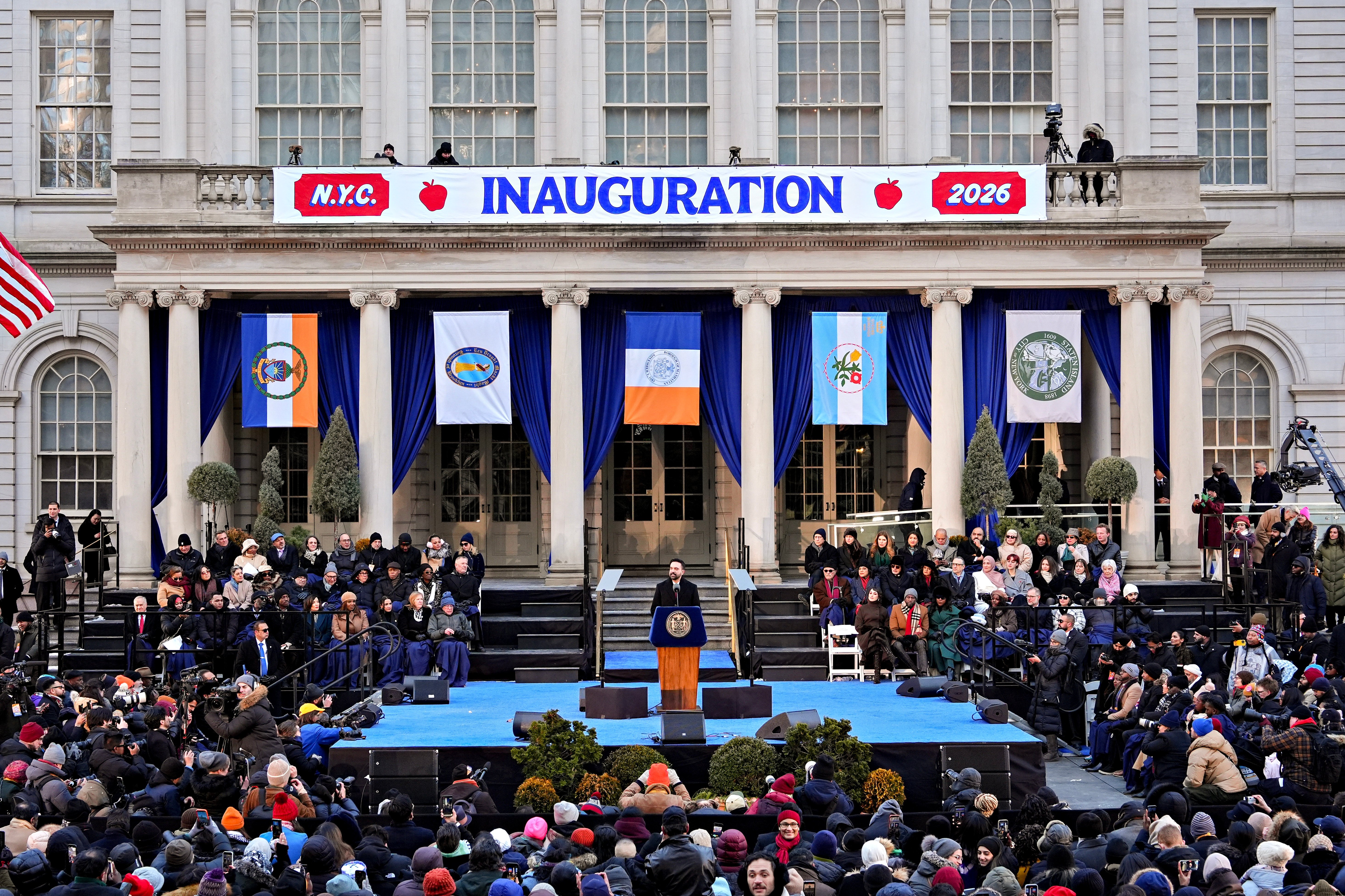
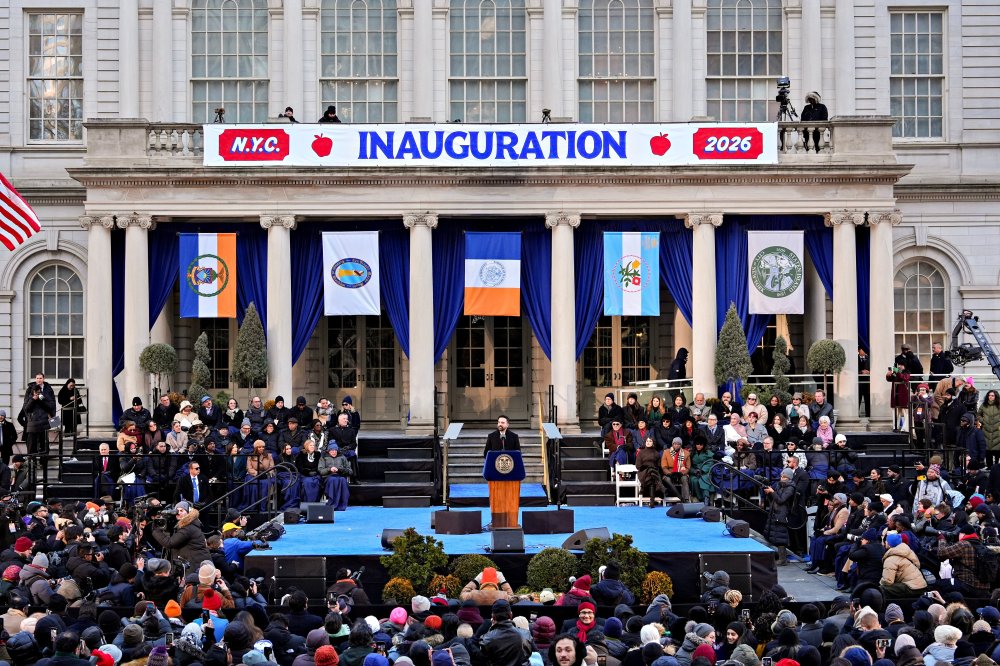
 Zohran Mamdani became mayor of New York City on Thursday, taking over one of the most unrelenting jobs in American politics with a promise to transform government on behalf of the city’s striving, struggling working class. Mamdani, a Democrat, was sworn in at a decommissioned subway station below City Hall just after midnight, placing his hand on a Quran as he took his oath as the city’s first Muslim mayor. After working part of the night in his new office, Mamdani returned to City Hall in a taxi cab around midday Thursday for a grander public inauguration where U.S. Sen. Bernie Sanders, one of the mayor’s political heroes, administered the oath for a second time. “Beginning today, we will govern expansively and audaciously. We may not always succeed, but never will we be accused of lacking the courage to try,” Mamdani told a cheering crowd. “To those who insist that the era of big government is over, hear me when I say this: No longer will City Hall hesitate to use its power to improve New Yorkers’ lives,” he said. Throngs turned out in the frigid cold for an inauguration viewing party just south of City Hall on a stretch of Broadway known as the “Canyon of Heroes,” famous for its ticker-tape parades. Mamdani wasted little time getting to work after the event. He revoked multiple executive orders issued by the previous administration since Sept. 26, 2024, the date federal authorities announced former Mayor Eric Adams had been indicted on corruption charges, which were later dismissed following intervention by the The President administration. Then he visited an apartment building in Brooklyn to announce he is revitalizing a city office dedicated to protecting tenants and creating two task forces focused on housing construction. ‘I will govern as a democratic socialist’ Throughout the daytime ceremony, Mamdani and other speakers hit on the theme that carried him to victory in the election: Using government power to lift up the millions of people who struggle with the city’s high cost of living. Mamdani peppered his remarks with references to those New Yorkers, citing workers in steel-toed boots, halal cart vendors “whose knees ache from working all day” and cooks “wielding a thousand spices.” “I was elected as a democratic socialist and I will govern as a democratic socialist,” Mamdani said. “I will not abandon my principles for fear of being deemed ‘radical.'” Before administering the oath, Sanders told the crowd that most of the things Mamdani wants to do — including raising taxes on the rich — aren’t radical at all. “In the richest country in the history of the world, making sure that people can live in affordable housing is not radical,” he told the crowd. “It is the right and decent thing to do.” Mamdani was accompanied on stage by his wife, Rama Duwaji. Adams was also in attendance, sitting near another former mayor, Bill de Blasio. Actor Mandy Patinkin, who recently hosted Mamdani to celebrate Hannukah, sang “Over the Rainbow” with children from an elementary school chorus. The invocation was given by Imam Khalid Latif, the director of the Islamic Center of New York City. Poet Cornelius Eady read an original poem called “Proof.” In addition to being the city’s first Muslim mayor, Mamdani is also its first of South Asian descent and the first to be born in Africa. At 34, Mamdani is also the city’s youngest mayor in generations. Free child care and bus rides At the watch party on Broadway, onlookers stood shoulder to shoulder gazing up at several jumbotrons and singing and dancing to stave off the cold, with some passing out hot cocoa and hand warmers. Many described feeling as though they were witnessing history. Among them was Ariel Segura, a 16-year-old Bronx resident, who had arrived five hours earlier to secure a place near the front of the crowd. “I’m out here fan-girling a politician, it’s kind of crazy,” he said, wiping away tears as Mamdani concluded his speech. “Now it’s time to hold him accountable.” In a campaign that helped make “affordability” a buzzword across the political spectrum, Mamdani ran on a focused platform that included promises of free child care, free buses, a rent freeze for about 1 million households and a pilot of city-run grocery stores. Mamdani insisted in his inaugural address that he will not squander his opportunity to implement those policies. “A moment like this comes rarely. Seldom do we hold such an opportunity to transform and reinvent. Rarer still is it the people themselves whose hands are on the levers of change. And yet we know that too often in our past, moments of great possibility have been promptly surrendered to small imagination and smaller ambition,” he said. But he will also have to face the everyday responsibilities of running America’s largest city: handling trash and snow and rats, while getting blamed for subway delays and potholes. In his speech, Mamdani acknowledged the task ahead, saying he knows many will be watching to see whether he can succeed. “They want to know if the left can govern. They want to know if the struggles that afflict them can be solved. They want to know if it is right to hope again,” he said. “So, standing together with the wind of purpose at our backs, we will do something that New Yorkers do better than anyone else: We will set an example for the world.” Quick rise to power Mamdani was born in Kampala, Uganda, the son of filmmaker Mira Nair and Mahmood Mamdani, an academic and author. His family moved to New York City when he was 7, with Mamdani growing up in a post-9/11 city where Muslims didn’t always feel welcome. He became an American citizen in 2018. He worked on political campaigns for Democratic candidates in the city before he sought public office himself, winning a state Assembly seat in 2020 to represent a section of Queens. Now that he has taken office, Mamdani and his wife will depart their one-bedroom, rent stabilized apartment in the outer-borough to take up residence in the stately mayoral residence in Manhattan. The new mayor inherits a city on the upswing, after years of slow recovery from the COVID-19 pandemic. Violent crime has dropped to pre-pandemic lows. Tourists are back. Unemployment, which soared during the pandemic years, is also back to pre-COVID levels. Yet deep concerns remain about high prices and rising rents. In opening remarks to the crowd, U.S. Rep. Alexandria Ocasio-Cortez praised New Yorkers for choosing “courage over fear.” “We have chosen prosperity for the many over spoils for the few,” she said. Dealing with The President During the mayoral race, President Donald The President threatened to withhold federal funding from the city if Mamdani won and mused about sending National Guard troops to the city. But The President surprised supporters and foes alike by inviting the Democrat to the White House for what ended up being a cordial meeting in November. “I want him to do a great job and will help him do a great job,” The President said. Still, tensions between the two leaders are almost certain to resurface, given their deep policy disagreements, particularly over immigration. Several speakers at Thursday’s inauguration criticized the The President administration’s move to deport more immigrants and expressed hope that Mamdani’s City Hall would be an ally to those the president has targeted. Mamdani also faces skepticism and opposition from some members of the city’s Jewish community over his criticisms of Israel’s government. Still, Mamdani supporters in Thursday’s crowd expressed optimism he’d be a unifying force. “There are moments where everyone in New York comes together, like when the Mets won the World Series in ’86,” said Mary Hammann, 64, a musician with the Metropolitan Opera. “This feels like that — just colder.” Associated Press writer Jake Offenhartz contributed to this story. —Anthony Izaguirre, Associated Press View the full article
-
For 2026, most Wall Street interest-rate strategists expect stable-to-higher Treasury yields as the Fed's rate-cutting cycle comes to an end. View the full article

-
It accelerates advisory work, but only if firms rethink pricing and risk. Gear Up for Growth With Jean Caragher For CPA Trendlines Go PRO for members-only access to more Jean Marie Caragher. View the full article
-
It accelerates advisory work, but only if firms rethink pricing and risk. Gear Up for Growth With Jean Caragher For CPA Trendlines Go PRO for members-only access to more Jean Marie Caragher. View the full article
-
Six years ago, the commercial production process for Fortune 500 companies, tech innovators, and global giants meant six-figure budgets, and months of research, scripting, and voice actor castings. Every campaign was a marathon of design thinking and strategic storytelling. Today, however, with the help of AI tools, those very steps can unfold in a fraction of the time, and a quarter of the cost. For marketing and communications leaders, the landscape has drastically shifted overnight. The most innovative brand leaders have always thrived on speed. What allowed them to exist beyond the curve was their ability to stay ahead of the story, and see around corners before anyone else could. This has always been important, but the velocity at which we’re witnessing ideas go from ideation to execution is different––and alarming. Every week seems to introduce a new AI tool that promises to do things smarter, faster, and better for half the price. The constant pressure to adopt or be left behind is palpable. In fact, according to Marketing Week’s 2025 Language of Effectiveness survey, 57.5% of marketers currently use AI to generate campaign content and creative ideas. Yet, 85% of those surveyed by Adweek say they feel pressure to keep up with the latest tools. The question that keeps arising for many leaders isn’t what’s next, but instead, at what cost? ETHICAL INTELLIGENCE: A BRAND DIFFERENTIATOR Debates about AI are often argued in extremes, either as magic wands or existential threats. What’s missing from that conversation is the middle ground. A place where brand leaders can lean into true stewardship, and where human values and intuition can meet machine precision. It’s the space where empathy meets foresight. The future of influence won’t be determined by who adopts the next big tool first, but by who uses it responsibly. Ethical intelligence is the muscle every leader needs to strengthen to discern which AI tools to trust, and how best to use them. Because, when you rely on a chatbot or content platform, you’re not just trusting its outputs, you are trusting its creators’ ethics, awareness, and intentions. Leadership in this new world of storytelling understands the cost, and therefore asks the harder questions: Who does this tool serve? And who could it harm? To build ethical intelligence in storytelling and content creation, brand leaders should anchor their choices by asking three questions: 1. Empathy: Have we considered how technology impacts the communities it touches? Large language models still struggle to detect the cultural nuances that build audience trust. This often shows up in subtle ways, like failing to capitalize “Black” and “Brown” when referring to ethnic communities, a detail that carries deep significance. At my agency, for example, we refrain from using “chief” for executive roles or “pipeline” to describe processes, out of respect for Indigenous communities. Language evolves daily, and the nuance of storytelling can’t be replaced by technology. The more we automate narratives, the greater the risk of eroding the human nuance that builds trust for audiences and consumers. Instead, we should look to culturally-attuned tools that are created or informed by the audiences you speak to, such as Aisha, an AI-powered guide informed by the Black experience. 2. Transparency: Are we being clear about how and why AI is shaping our stories? Consider recent headlines about Sora, OpenAI’s AI app and video generator that puts deepfake capabilities into users’ hands. A product like this tells us that authenticity and source are no longer a barrier or concern. I’ve witnessed these risks firsthand when my son created an AI-produced video of me getting my driver’s license (a milestone that never actually happened). Curious, I posted on my Instagram close friends’ list to see if anyone could spot the inauthenticity. No one did. Instead, my DMs were filled with congratulatory messages. While this example can be considered harmless, the broader consequences can be far more serious. In the wrong or ill-informed hands, AI-generated content can perpetuate inequity and racial stereotypes if left unchecked. Take the case of Liv, an AI-powered “digital influencer.” Marketed as a breakthrough in representation, Liv was created by an all-white male development team to personify a Black, queer woman. Lacking authentic oversight, the bot inevitably fell into harmful caricatures reminiscent of the “Mammy” stereotype from early American media. As scholar and author, Ruha Benjamin, observed in her book Race After Technology: Abolitionist Tools for the New Jim Code, “Technology is not creating the problems. It is reflecting, amplifying, and often hiding preexisting forms of inequality and hierarchy.” Liv became a case study in the urgent need for accountability and diverse perspectives in the development and deployment of AI-driven narratives. 3. Equity: Are we creating in ways that protect human dignity over data dominance? It’s worth asking what this constant reliance on technology is doing to our minds. People are doing so much cognitive offloading of their thinking that it’s reducing their critical thinking skills in ways that don’t bounce back, notes X. Eyeé, AI expert and CEO of the consultancy Malo Santo. As AI-generated content becomes more advanced, many leaders are using it to expedite proposals, campaigns, and creative productions. When it comes to data, the direction has been about volume. Yet some organizations are taking an opposing stance by embedding clauses into their contracts to restrict AI use. Not because they reject efficiency, but because they are signaling a pillar of their values that speed should never come at the expense of authenticity. In the future, transparency will be at the forefront of the most innovative companies. Where AI already plays a role in your workflows, be upfront about it with your team, clients, stakeholders, and audience. The next generation of brand leadership will be shaped by those who prioritize ethics and integrity in every decision about the way AI is used, and set a new standard for responsible innovation. Rakia Reynolds is a partner at Actum and founder/executive officer at Skai Blue Media, View the full article

-
Every week, another executive asks me: Where do we even start with AI? As we enter 2026, this question drives explosive demand for AI upskilling platforms and AI-powered learning solutions. Yet most enterprise AI training programs fail because they lack a systematic framework that moves the organization from confused to fluent to truly differentiated. Think of it as Maslow’s hierarchy, but for AI capability development. And 2026 is the year to climb that hierarchy. An effective AI upskilling platform must address five levels of organizational capability: foundational literacy, company-specific application, durable skills development, breakthrough innovation, and co-intelligence integration. THE FOUNDATION: BUILD YOUR BASE CAMP Just as you can’t achieve self-actualization without food and shelter, you can’t build an AI advantage without foundational literacy. Yet most organizations skip this step, rushing to deploy tools before their people understand what they’re actually working with. The three non-negotiables at the base: 1. Understand what AI actually is. Not the marketing promises, but the reality. When your teams understand the underlying mechanics, they make better decisions about when and how to apply these tools. The goal isn’t turning everyone into data scientists. It’s eliminating the dangerous combination of over-confidence and ignorance. 2. Safety and ethics literacy. Fear of “doing it wrong” stops more AI adoption than any other factor. People need clear guardrails: What data can we use? When must we disclose AI assistance? Without this clarity, your talented people will simply avoid AI entirely. 3. Core application skills. Everyone in your organization should understand how to effectively communicate with AI systems. In 2026, this isn’t optional AI literacy anymore—it’s as fundamental as email proficiency was in 2005. THE CRITICAL MIDDLE: YOUR COMPANY’S POINT OF VIEW Here’s where good companies separate from mediocre ones. The best organizations—Shopify, Zapier, Duolingo—don’t just teach generic AI skills. They build a distinctive point of view on how AI should work in their specific context. This means answering hard questions: What should AI do here? What should it never do? How does AI use align with our values and competitive positioning? Your “company POV—AI sandbox” becomes the space where teams safely experiment within defined boundaries. It’s structured freedom—clear enough to prevent dangerous mistakes, open enough to enable innovation. Then comes personalization. Generic training fails because a software engineer’s relationship with AI looks nothing like a customer service representative’s. Breaking down use cases by team, role, and workflow transforms abstract concepts into concrete daily practice. This is where enterprise AI upskilling platforms differentiate themselves, by enabling personalized AI training that adapts to each team’s workflow context. Research shows that personalizing training by role achieves much higher adoption than generic training programs. WHAT TO LOOK FOR IN AN AI UPSKILLING PLATFORM Organizations succeeding with AI transformation share common infrastructure: Cohort-based learning for peer accountability and shared discovery Workflow integration that brings training into daily work contexts Role-specific pathways rather than generic content Safe experimentation environments (AI sandboxes) Progress tracking that measures fluency, not just completion The right AI-powered learning platform doesn’t just deliver content—it builds organizational AI capability systematically across the hierarchy. THE TRANSFORMATION ZONE: DURABLE SKILLS Here’s the insight that escapes most organizations entering 2026: Crossing from competent to breakthrough doesn’t require more AI skills. It requires human skills that AI amplifies. Critical thinking. Curiosity. Entrepreneurial agency. These durable AI skills separate organizations that use AI to do the same things faster from those that reimagine what’s possible. Leading corporate AI training platforms focus on developing these capabilities through experiential learning and peer collaboration, not just content consumption. This tier splits into two paths: Scale and efficiency growth: AI’s ability to generate and personalize at near-zero marginal cost fundamentally changes business economics. Smart companies systematically examine every workflow, asking: Where does AI change our cost structure? Human-first breakthrough: The harder path, with far higher returns. This requires asking: How can AI make our company more human? How do we free people from tedious work to do more creative, caring, human work? How do we use AI to create experiences that are more personalized and genuinely helpful than humans alone could deliver? Most organizations stop at efficiency. The winners push through to augmentation and transformation. THE SUMMIT: CO-INTELLIGENCE At the peak sits a different relationship with AI entirely—one that forward-thinking organizations are achieving in 2026. Not tool and user, but genuine co-intelligence—where AI seamlessly integrates into workflows, giving your people capabilities they never had before. This is where empowered, curious, AI-native talent emerges. These individuals don’t think about “using AI.” They think through problems with AI as a natural extension of their cognitive toolkit. Organizations at this level aren’t just AI-fluent. They’re AI-native in their decision making, customer experience, and innovation process. YOUR 2026 AI TRANSFORMATION ROADMAP Whether you’re evaluating AI upskilling platforms or building internal corporate AI training programs, this hierarchy provides your 2026 roadmap. The organizations winning with AI aren’t those with the most tools—they’re those with the most systematic approach to workforce AI capability development. The beauty of this hierarchy is its clarity: If you’re at zero: Start with foundations. Build understanding, safety literacy, and basic skills across your organization. If you’re past foundations: Develop your company POV. Create your sandbox. Personalize by role and workflow. If you’re operationally fluent: Identify your catalysts. Build their durable skills. Set them loose on breakthrough opportunities. If you’re pushing toward co-intelligence: You’re writing the next chapter. The path isn’t easy. But it is clear. And in 2026, as AI capabilities accelerate and organizations remain paralyzed at the base, simply moving systematically up this hierarchy creates a genuine competitive advantage. The question isn’t whether your organization will become AI-fluent. It’s whether you’ll get there in 2026 before your competition does—and whether you’ll stop at efficiency or push through to transformation. Start climbing. Candice Faktor is co-CEO of Disco. View the full article

-
Here is a recap of what happened in the search forums today...View the full article
-
We may earn a commission from links on this page. Pebble, the early smartwatch pioneer, has added a new model to its relaunched lineup, and it’s the thin, round model Pebble fans have been waiting for. What’s even more intriguing to me is the fact that the Pebble Round 2 doesn’t have a heart rate sensor, signaling that a smartwatch doesn’t have to be a fitness watch, too. The Pebble Round 2 starts shipping in May, and is available for pre-order now at $199. The new watch is meant to be a modern remake of 2015’s Pebble Time Round. Pebble fans loved the round watch, and every thread about new products on the Pebble subreddit has at least a few comments begging for a new version of it. That wish has been granted. (I did notice that Pebble’s website had a teaser telling people who visited the website to “check back around” to see what’s in today’s announcement. Cute.) What’s in the Pebble Round 2The Pebble Round 2 is a round smartwatch in a stainless steel frame. It’s about the same size and shape as the old Pebble Time Round, but has a much larger display area with nearly double the resolution, better visibility at an angle, a dramatically increased battery life, and—unusually for smartwatches these days—no heart rate sensor. The specs include: 10 to 14 day battery life 42 millimeter size, 8 millimeters thick (that’s thinner than every Apple Watch) Color e-paper screen (the same technology Garmin calls MIP) 1.3-inch screen with 260x260 resolution Dual microphones for voice input Accelerometer Magnetometer Touchscreen Takes a 20 mm watch band (black and brushed silver models), or a 14 mm watch band (brushed silver and rose gold models) Works with iOS and Android Tracks steps and sleep Eric Migicovsky, founder of both the original Pebble company and its modern incarnation Core Devices, told me the e-paper screen is the same one Garmin used in its old Forerunners. You may recall that I think the Forerunner 255 is one of the best-kept secrets in the smartwatch world, and that MIP screens have some advantages over the AMOLED displays that are more common these days. I’ll say more about this below, but the lack of a heart rate sensor is an interesting choice. The Pebble Round 2 can still track steps and sleep by sensing motion, so it’s not like health tracking features are totally missing. But it’s not going to measure your heart rate during workouts, nor try to capture heart rate and HRV while you sleep. How the Pebble Round 2 bucks the smartwatch trend (and why that’s probably a good thing)This is a really interesting list of specs, to me. Microphones for voice input are a new trend that’s been rolling out to more and more watches (both Garmin and Coros added them to more models this year). The battery life is a nice improvement, since the old Pebble Time Round only had about three days of battery life, and even today's smartwatches often struggle to get more than a few days. The thin build is impressive—I believe it’s the thinnest on the market right now. But some aspects feel retro. The display technology is an older one that has seemd like it was on its way out. And the thing that I can barely wrap my head around as a fitness-focused writer is how do you release a smartwatch in 2026 that doesn’t have a heart rate sensor? This is madness! Or…is it? Over the past few years, maybe the past decade, smartwatches and fitness watches have been converging on each other. It seems like each device wants to be able to say “we have that feature too!” so Oura now tracks activities instead of just sleep, Whoop tracks steps instead of just heart rate and HRV, and Apple—always willing to be seen as a fitness company, but always lagging behind on fitness features—finally, in 2025, gave us a real fitness app. Every watch these days has a heart rate sensor, every brand is ditching MIP style screens for AMOLED ones, and there’s no longer any categorical difference between smartwatches and fitness watches. Everything tries to do everything. This trend isn’t necessarily good for users. For example: Garmin needed to add more features to the Forerunner 265 to justify a new model, but it already had pretty much everything a runner could ask for, at an already-premium price. So Garmin added a speaker and microphone to create the 570, and raised the price by $100. Should a middle-of-the-road running watch really cost $550? By contrast, the Pebble Round 2 leans into the things it’s good at (thin build, e-paper screen, microphone for input) and leaves off the things that, in theory, Pebble Round 2 users don’t care about. It’s missing both a heart rate sensor and a speaker, but its rectangular sibling the Pebble Time 2 has both. These two models sell for $199 and $225, respectively. I’m cautiously optimistic that Pebble’s approach might signal a change in the trend. Migicovsky wrote in a postmortem on the original Pebble company’s failure that Pebble could have kept its niche as “the smartwatch for hackers” but tried to be too many things to too many people. (In that same blog post, written in 2017 and updated in 2022, Migicovsky notes that the smartwatch market of 2015 was moving toward fitness, but Pebble wasn’t a fitness company and arguably shouldn’t have tried to be one.) “People want different things,” Migicovsky told me in a call earlier this week. He’s focusing Pebble’s new products on things he would want to use, not on what he thinks everybody else wants. That could be a risky move, since I’m not convinced that there’s a huge market for a heart-rate-less smartwatch. But I think he might be right that the smartwatch market is ready to stop being everything to everybody. View the full article
-
Ukraine’s former head of defence intelligence Kyrylo Budanov to become chief of staff following Andriy Yermak resignationView the full article
-
After the ceremony on Thursday, Mamdani announced three executive orders focused on housing affordability to kickstart his agenda. View the full article
-
Sprinkles Cupcakes, the company known for its sweet treats and iconic cupcake ATMs, is no more. Candace Nelson, the company’s founder, ended 2025 by confirming that all Sprinkles locations were shutting down as of December 31. In a video shared to Instagram and TikTok, Nelson said, “This isn’t how I thought the story would go. I thought Sprinkles would keep going and be around forever. I thought it was going to be my legacy.” Sprinkles has yet to make a formal announcement, but its Instagram profile appears to be gone and the store locator tab on its website now produces an error message. Fast Company reached out to the brand’s PR contact for additional details. Nelson started Sprinkles in 2005, but has held no stake in the company since selling it to private equity in 2012. KarpReilly LLC announced an investment in Sprinkles shortly after. That decision over a decade ago has led many social media users to question exactly how Nelson thought Sprinkles would live on and prosper under private equity ownership. While Nelson asked people to share their “special Sprinkles memory or story” with her, many of the comments under her post instead take a vehemently anti-private equity stance—and blame her for the demise. Below is just a sample of the types of comments Nelson has received: “Selling to private equity was the beginning of the end.” “What did you expect? Private equity has literally NEVER made things better for customers only for board members’ and investors’ pockets.” “You sold it to PE and expected it to not close?? What planet are you living on? I don’t begrudge you for selling as that’s entirely your choice but to think any PE firm cares about a company in the slightest is insanity.” “Legacies can’t be abandoned before they’re legacies.” PE fingerprints on many retail bankruptcies In recent years, private equity deals have appeared to play a role in the dismantling of a number of legacy retail brands, including restaurants Red Lobster and TGI Fridays, and fabrics chain Joann Inc. Private equity firms have a reputation for stripping down companies’ parts and leaving them saddled with debt, sometimes leading to bankruptcy. Fast Company has reached out to KarpReilly for comment and will update this post if we hear back. Individuals in the comment sections also claim that Sprinkles employees were blindsided with only one day’s notice and no severance. In response to one such claim on Nelson’s TikTok post, a purported former employee wrote, “Some of us don’t have backup plans we loved sprinkles and planned to be here forever.” Nelson responded to the above comment, “I’m so sorry this is heartbreaking.” View the full article

-
To effectively boost your revenue, it’s essential to implement various sales methods and strategies. By setting defined goals, targeting repeat customers, and broadening your geographic reach, you can create a solid foundation for success. Moreover, refining your pricing plan and exploring upselling techniques can greatly improve your sales potential. As you consider your options, you might find that incorporating subscription models and optimizing shipping strategies can further raise your business. What specific strategies will you prioritize? Key Takeaways Set S.M.A.R.T. goals to track progress and align sales strategies with market trends for improved performance and revenue growth. Target repeat customers through personalized communication, loyalty programs, and engagement strategies to enhance retention rates. Introduce complementary products or services and utilize bundling to increase average order value and customer satisfaction. Implement effective upselling techniques by training sales staff and showcasing premium options to boost conversion rates. Optimize subscription models and shipping strategies to create predictable revenue streams and enhance customer experience. Set Defined Goals Setting defined goals is critical for any sales team aiming to improve performance and drive revenue. By establishing quantifiable targets, you can effectively measure progress and success. Utilizing the S.M.A.R.T. framework—Specific, Measurable, Achievable, Relevant, Time-bound—enhances clarity, allowing your team to focus on what truly matters. Regularly tracking goal outcomes enables you to adjust strategies based on your sales process vs methodology, ensuring continuous improvement. Motivating your team through clearly defined goals encourages higher engagement and performance. Consistent reviews of these goals against key performance indicators (KPIs) help align your sales strategy with market trends and business objectives. In the end, well-defined goals serve as a roadmap, guiding your team toward achieving overall success and revenue growth. Target Repeat Customers To effectively target repeat customers, enhancing your communication channels is vital. By using personalized emails or texts, you can greatly boost engagement, leading to higher sales from your existing clientele. Furthermore, implementing a loyalty program can provide benefits that encourage customers to return, finally increasing their repeat purchase rates. Enhance Communication Channels Effective communication channels are essential for targeting repeat customers and enhancing their loyalty. By utilizing personalized email campaigns, you can inform repeat customers about promotions and new inventory, greatly boosting engagement. Studies show that personalized emails can generate six times higher transaction rates compared to generic messages. Implementing customer feedback mechanisms, such as surveys, allows you to better understand their needs, improving re-engagement strategies and potentially recovering up to 30% of lost customers. Furthermore, keeping customers updated on loyalty programs cultivates a sense of belonging, as 70% prefer engaging with brands offering personalized experiences. Engaging through SMS alerts about flash sales can likewise increase conversion rates, since SMS campaigns have an impressive 98% open rate, far exceeding typical email engagement. Loyalty Program Benefits Loyalty programs offer significant benefits for businesses aiming to retain customers and boost profitability. By increasing customer retention rates by 5-10%, these programs are crucial, as acquiring new customers can cost five times more than keeping existing ones. Customers in loyalty programs typically spend 12-18% more per transaction, which improves overall revenue. Implementing a well-structured loyalty program can lead to a 30% increase in repeat purchases, nurturing long-term relationships. Furthermore, around 70% of consumers are likelier to recommend brands with loyalty programs, broadening your customer base through word-of-mouth. Loyalty members are likewise 60% more engaged with promotional emails, increasing marketing effectiveness. This approach aligns with the best sales methodology for SaaS, driving sustained growth and profitability. Grow Geographic Reach Increasing your geographic reach can greatly boost your business’s revenue, especially when you tap into new markets. Broadening to new locations or enhancing service areas can lead to a 10-15% revenue increase. Implementing targeted advertising in neighboring regions can engage new customers, as e-commerce can further extend your reach, capturing over 20% of retail sales. Strategy Benefit Open New Locations 10-15% revenue boost Targeted Advertising Up to 50% engagement increase Online Sales Platforms Access to diverse demographics Data Analytics Utilization Higher conversion rates Utilizing effective sales methodologies, you’ll assess market potential and adapt your offerings to meet local demands, ensuring a successful broadening. Refine Your Pricing Plan Refining your pricing plan is crucial for staying competitive and maximizing revenue in today’s dynamic market. Regularly reevaluate your pricing strategy to align with market demand and improve revenue without sacrificing competitiveness. Even slight adjustments can markedly impact sales volume. Consider implementing tiered pricing models that cater to various customer segments, offering both budget-friendly options and premium choices. Analyze competitor pricing to identify strategic adjustment opportunities, ensuring your pricing remains attractive while maintaining perceived value. Simplifying subscription pricing structures can boost customer appeal and retention, making it easier for customers to engage. Furthermore, conduct regular customer surveys to understand price sensitivity and willingness to pay, using this data to refine pricing strategies that resonate with your target audience, utilizing effective sales methodology examples. Add Products or Services Incorporating complementary products or services to your existing offerings can greatly improve customer satisfaction and boost your average order value. By analyzing customer feedback and purchasing behavior, you can identify what resonates with your audience and strategically expand into new markets. This approach not just attracts new customer segments but likewise leverages your brand loyalty, in the end driving revenue growth. Complementary Product Offerings Complementary product offerings play a crucial role in improving customer satisfaction and boosting sales. By introducing related items, you can increase the average order value, as customers often prefer buying complementary products together. Businesses that effectively bundle these offerings may see sales increase by up to 30%, simplifying decision-making for consumers and providing them with perceived value. Listening to customer feedback helps develop these offerings, ensuring they cater to specific needs and preferences, which boosts satisfaction and retention. Furthermore, analyzing competitors’ strategies reveals market gaps, allowing you to differentiate your business effectively. Finally, launching complementary services alongside existing products creates extra revenue streams and cultivates customer loyalty through thorough solutions customized to your audience. Market Expansion Opportunities When exploring market growth opportunities, businesses can greatly improve their offerings by introducing new products or services that align with customer needs. Implementing an enterprise sales methodology allows you to identify gaps in your market. Adding complementary products can boost the average transaction value by up to 30% as customers often buy additional items that complement their initial choice. Broadening offerings based on customer feedback can increase satisfaction and loyalty by 15-20%, leading to repeat business. Additionally, exploring adjacent markets can create new revenue streams, enabling a 25% faster growth rate. Launching products that address specific pain points yields conversion rates of up to 20%, and a bundled product strategy can increase sales by 10-15% through perceived value savings. Bundle Products or Services Bundling products or services is a proven strategy that can greatly improve your sales performance. This approach not only boosts average order value by up to 30%, but it additionally taps into the most popular SaaS sales methodology. Here are some key benefits of bundling: Increases perceived value, making customers feel they’re getting a better deal Encourages purchases of complementary items, leading to higher sales Discounts on bundles can improve conversion rates, with 70% of consumers more likely to buy Simplifies the buying process, addressing multiple needs at once Analyzing bundled sales data refines future strategies and reveals customer preferences Upsell Products and Services When you upsell products and services, you’re not just increasing sales; you’re additionally enhancing the customer experience by offering them better options. By highlighting premium choices and effectively communicating their benefits, you can markedly boost the average transaction value. Monitoring your upsell success rates will help you refine your approach, ensuring that your strategies align with customer preferences for maximum impact. Effective Upselling Techniques Effective upselling techniques are essential for maximizing revenue and enhancing the customer experience. By implementing these methods, you can greatly boost your sales performance. Here are some effective upselling strategies to evaluate: Train your sales staff to recognize upselling opportunities. Provide informative materials that highlight the benefits of premium products. Bundle related items together to create cost-saving offers. Monitor upsell success rates and adjust strategies based on customer feedback. Use data analytics to identify trends and improve customer satisfaction. When you apply these effective upselling techniques as part of your sales methods and strategy, you can expect higher transaction values and improved customer loyalty, ultimately leading to increased revenue. Highlighting Premium Options Highlighting premium options effectively can make a notable difference in your upselling efforts. By showcasing higher-priced or improved products, you can considerably increase your average order value and overall revenue. Popular sales methodologies emphasize the importance of demonstrating clear benefits, as studies indicate that 70% of consumers are more likely to buy if they see value in the upsell. Train your sales staff in effective upselling techniques to guarantee they spend more time on premium offerings, which can lead to higher conversion rates. Furthermore, utilizing product displays and informational materials can amplify your upsell success rates by up to 25%. By adopting these strategies, you can leverage the potential of premium options to boost your sales performance. Monitoring Upsell Success Rates How can you effectively monitor upsell success rates to improve your sales strategy? Tracking upsell success is vital for enhancing your sales process and comprehension of customer engagement. Regularly analyze metrics like conversion rates for upsell offers to see what resonates with your audience. Use purchase history to tailor your upsell suggestions. Provide targeted training on effective upselling techniques. Compare sales process vs sales methodology to identify strengths. Gather and implement customer feedback for better offers. Refine your upselling tactics to boost revenue by as much as 30%. Offer Subscriptions and Discounts Offering subscriptions and discounts can be a game-changer for businesses looking to boost customer loyalty and streamline their revenue. By implementing a subscription model, you can automate sales through recurring orders, which leads to a predictable revenue stream and reduces the need for constant new customer acquisition. Offering discounts of 10-20% for subscribing not only encourages long-term commitments but furthermore lowers customer acquisition costs as well as increasing customer lifetime value. Moreover, limited-time discounts for new subscribers create urgency, resulting in higher conversion rates. Regularly evaluating subscription performance and gathering customer feedback can help refine your offerings within your sales frameworks, ensuring sustained growth in revenue and maintaining a competitive advantage in your market. Implement New Payment Options As customers increasingly seek convenience in their shopping experiences, implementing new payment options can greatly improve your business’s appeal. Adopting various payment methods not just boosts customer satisfaction but also reduces shopping cart abandonment rates, which hover around 74%. To stay competitive, consider the following strategies as part of the best sales methodology for big deals: Offer digital wallets and bank transfers. Implement secure and user-friendly payment gateways. Streamline the checkout process with fewer steps. Provide guest checkout options to simplify transactions. Incentivize immediate purchases with discounts or free shipping. Optimize Shipping and Delivery Strategies To boost sales and improve customer satisfaction, optimizing your shipping and delivery strategies is crucial. Offering free shipping can considerably increase sales, as 93% of consumers are more likely to purchase when this option is available. Integrating shipping costs into your product pricing can improve perceived value and reduce cart abandonment, since nearly 74% of customers leave because of unexpected shipping fees. Moreover, providing local delivery options appeals to 56% of consumers who prefer same-day or next-day services. Analyzing customer feedback on shipping preferences allows you to tailor delivery effectively, as 63% expect personalized experiences. Finally, testing various shipping strategies, including expedited delivery for a fee, can help refine your sales framework, as 79% of consumers would pay more for faster service. Frequently Asked Questions What Are the 5 P’s of Sales? The 5 P’s of sales are Product, Price, Place, Promotion, and People. Product refers to what you’re selling, ensuring it meets customer needs. Price involves setting a competitive yet profitable rate. Place focuses on how you deliver your product, ensuring it’s accessible to customers. Promotion covers your marketing strategies to attract buyers, and People emphasizes the importance of your sales team in building relationships and closing deals effectively. What Are the Four Methods to Increase Revenue? To increase revenue, you can implement several methods. First, consider upselling and cross-selling to encourage customers to buy higher-priced or additional items. Second, explore subscription services for a steady revenue stream. Third, bundle products to create perceived value, boosting sales. Finally, refine your pricing strategies, using tiered pricing or discounts to attract new customers. Each of these approaches can greatly improve your revenue potential when executed effectively. What Is the Best Strategy to Increase Sales? To increase sales effectively, you should consider a blend of inbound and outbound strategies. Start by attracting customers through valuable content as well as reaching out directly via calls or emails. Utilize detailed buyer personas to personalize your approach, enhancing engagement. Offering various payment options can likewise minimize cart abandonment. Regularly analyze your sales metrics to identify areas for improvement, and invest in ongoing training for your sales team to boost their performance. What Is the Most Effective Sales Technique? The most effective sales technique varies based on your audience and goals. Value-Based Selling highlights unique solutions customized to customer needs, whereas Consultative Selling nurtures long-term relationships through deep comprehension. SPIN Selling uncovers needs via targeted questions, and Challenger Selling educates prospects with new insights. Solution Selling focuses on recommending personalized products to address specific problems. Each technique has its strengths, so you should adapt your approach based on the situation and customer preferences. Conclusion Incorporating these ten effective sales methods can greatly boost your revenue. By setting defined goals, targeting repeat customers, and broadening your geographic reach, you create a solid foundation for growth. Furthermore, refining your pricing plan, upselling, and offering subscriptions can improve customer satisfaction and increase sales. Implementing new payment options and optimizing shipping strategies further elevate the overall customer experience. By adopting these strategies, you position your business for sustained success in a competitive market. Image via Google Gemini and ArtSmart This article, "10 Effective Sales Methods and Strategies to Boost Revenue" was first published on Small Business Trends View the full article
-
To effectively boost your revenue, it’s essential to implement various sales methods and strategies. By setting defined goals, targeting repeat customers, and broadening your geographic reach, you can create a solid foundation for success. Moreover, refining your pricing plan and exploring upselling techniques can greatly improve your sales potential. As you consider your options, you might find that incorporating subscription models and optimizing shipping strategies can further raise your business. What specific strategies will you prioritize? Key Takeaways Set S.M.A.R.T. goals to track progress and align sales strategies with market trends for improved performance and revenue growth. Target repeat customers through personalized communication, loyalty programs, and engagement strategies to enhance retention rates. Introduce complementary products or services and utilize bundling to increase average order value and customer satisfaction. Implement effective upselling techniques by training sales staff and showcasing premium options to boost conversion rates. Optimize subscription models and shipping strategies to create predictable revenue streams and enhance customer experience. Set Defined Goals Setting defined goals is critical for any sales team aiming to improve performance and drive revenue. By establishing quantifiable targets, you can effectively measure progress and success. Utilizing the S.M.A.R.T. framework—Specific, Measurable, Achievable, Relevant, Time-bound—enhances clarity, allowing your team to focus on what truly matters. Regularly tracking goal outcomes enables you to adjust strategies based on your sales process vs methodology, ensuring continuous improvement. Motivating your team through clearly defined goals encourages higher engagement and performance. Consistent reviews of these goals against key performance indicators (KPIs) help align your sales strategy with market trends and business objectives. In the end, well-defined goals serve as a roadmap, guiding your team toward achieving overall success and revenue growth. Target Repeat Customers To effectively target repeat customers, enhancing your communication channels is vital. By using personalized emails or texts, you can greatly boost engagement, leading to higher sales from your existing clientele. Furthermore, implementing a loyalty program can provide benefits that encourage customers to return, finally increasing their repeat purchase rates. Enhance Communication Channels Effective communication channels are essential for targeting repeat customers and enhancing their loyalty. By utilizing personalized email campaigns, you can inform repeat customers about promotions and new inventory, greatly boosting engagement. Studies show that personalized emails can generate six times higher transaction rates compared to generic messages. Implementing customer feedback mechanisms, such as surveys, allows you to better understand their needs, improving re-engagement strategies and potentially recovering up to 30% of lost customers. Furthermore, keeping customers updated on loyalty programs cultivates a sense of belonging, as 70% prefer engaging with brands offering personalized experiences. Engaging through SMS alerts about flash sales can likewise increase conversion rates, since SMS campaigns have an impressive 98% open rate, far exceeding typical email engagement. Loyalty Program Benefits Loyalty programs offer significant benefits for businesses aiming to retain customers and boost profitability. By increasing customer retention rates by 5-10%, these programs are crucial, as acquiring new customers can cost five times more than keeping existing ones. Customers in loyalty programs typically spend 12-18% more per transaction, which improves overall revenue. Implementing a well-structured loyalty program can lead to a 30% increase in repeat purchases, nurturing long-term relationships. Furthermore, around 70% of consumers are likelier to recommend brands with loyalty programs, broadening your customer base through word-of-mouth. Loyalty members are likewise 60% more engaged with promotional emails, increasing marketing effectiveness. This approach aligns with the best sales methodology for SaaS, driving sustained growth and profitability. Grow Geographic Reach Increasing your geographic reach can greatly boost your business’s revenue, especially when you tap into new markets. Broadening to new locations or enhancing service areas can lead to a 10-15% revenue increase. Implementing targeted advertising in neighboring regions can engage new customers, as e-commerce can further extend your reach, capturing over 20% of retail sales. Strategy Benefit Open New Locations 10-15% revenue boost Targeted Advertising Up to 50% engagement increase Online Sales Platforms Access to diverse demographics Data Analytics Utilization Higher conversion rates Utilizing effective sales methodologies, you’ll assess market potential and adapt your offerings to meet local demands, ensuring a successful broadening. Refine Your Pricing Plan Refining your pricing plan is crucial for staying competitive and maximizing revenue in today’s dynamic market. Regularly reevaluate your pricing strategy to align with market demand and improve revenue without sacrificing competitiveness. Even slight adjustments can markedly impact sales volume. Consider implementing tiered pricing models that cater to various customer segments, offering both budget-friendly options and premium choices. Analyze competitor pricing to identify strategic adjustment opportunities, ensuring your pricing remains attractive while maintaining perceived value. Simplifying subscription pricing structures can boost customer appeal and retention, making it easier for customers to engage. Furthermore, conduct regular customer surveys to understand price sensitivity and willingness to pay, using this data to refine pricing strategies that resonate with your target audience, utilizing effective sales methodology examples. Add Products or Services Incorporating complementary products or services to your existing offerings can greatly improve customer satisfaction and boost your average order value. By analyzing customer feedback and purchasing behavior, you can identify what resonates with your audience and strategically expand into new markets. This approach not just attracts new customer segments but likewise leverages your brand loyalty, in the end driving revenue growth. Complementary Product Offerings Complementary product offerings play a crucial role in improving customer satisfaction and boosting sales. By introducing related items, you can increase the average order value, as customers often prefer buying complementary products together. Businesses that effectively bundle these offerings may see sales increase by up to 30%, simplifying decision-making for consumers and providing them with perceived value. Listening to customer feedback helps develop these offerings, ensuring they cater to specific needs and preferences, which boosts satisfaction and retention. Furthermore, analyzing competitors’ strategies reveals market gaps, allowing you to differentiate your business effectively. Finally, launching complementary services alongside existing products creates extra revenue streams and cultivates customer loyalty through thorough solutions customized to your audience. Market Expansion Opportunities When exploring market growth opportunities, businesses can greatly improve their offerings by introducing new products or services that align with customer needs. Implementing an enterprise sales methodology allows you to identify gaps in your market. Adding complementary products can boost the average transaction value by up to 30% as customers often buy additional items that complement their initial choice. Broadening offerings based on customer feedback can increase satisfaction and loyalty by 15-20%, leading to repeat business. Additionally, exploring adjacent markets can create new revenue streams, enabling a 25% faster growth rate. Launching products that address specific pain points yields conversion rates of up to 20%, and a bundled product strategy can increase sales by 10-15% through perceived value savings. Bundle Products or Services Bundling products or services is a proven strategy that can greatly improve your sales performance. This approach not only boosts average order value by up to 30%, but it additionally taps into the most popular SaaS sales methodology. Here are some key benefits of bundling: Increases perceived value, making customers feel they’re getting a better deal Encourages purchases of complementary items, leading to higher sales Discounts on bundles can improve conversion rates, with 70% of consumers more likely to buy Simplifies the buying process, addressing multiple needs at once Analyzing bundled sales data refines future strategies and reveals customer preferences Upsell Products and Services When you upsell products and services, you’re not just increasing sales; you’re additionally enhancing the customer experience by offering them better options. By highlighting premium choices and effectively communicating their benefits, you can markedly boost the average transaction value. Monitoring your upsell success rates will help you refine your approach, ensuring that your strategies align with customer preferences for maximum impact. Effective Upselling Techniques Effective upselling techniques are essential for maximizing revenue and enhancing the customer experience. By implementing these methods, you can greatly boost your sales performance. Here are some effective upselling strategies to evaluate: Train your sales staff to recognize upselling opportunities. Provide informative materials that highlight the benefits of premium products. Bundle related items together to create cost-saving offers. Monitor upsell success rates and adjust strategies based on customer feedback. Use data analytics to identify trends and improve customer satisfaction. When you apply these effective upselling techniques as part of your sales methods and strategy, you can expect higher transaction values and improved customer loyalty, ultimately leading to increased revenue. Highlighting Premium Options Highlighting premium options effectively can make a notable difference in your upselling efforts. By showcasing higher-priced or improved products, you can considerably increase your average order value and overall revenue. Popular sales methodologies emphasize the importance of demonstrating clear benefits, as studies indicate that 70% of consumers are more likely to buy if they see value in the upsell. Train your sales staff in effective upselling techniques to guarantee they spend more time on premium offerings, which can lead to higher conversion rates. Furthermore, utilizing product displays and informational materials can amplify your upsell success rates by up to 25%. By adopting these strategies, you can leverage the potential of premium options to boost your sales performance. Monitoring Upsell Success Rates How can you effectively monitor upsell success rates to improve your sales strategy? Tracking upsell success is vital for enhancing your sales process and comprehension of customer engagement. Regularly analyze metrics like conversion rates for upsell offers to see what resonates with your audience. Use purchase history to tailor your upsell suggestions. Provide targeted training on effective upselling techniques. Compare sales process vs sales methodology to identify strengths. Gather and implement customer feedback for better offers. Refine your upselling tactics to boost revenue by as much as 30%. Offer Subscriptions and Discounts Offering subscriptions and discounts can be a game-changer for businesses looking to boost customer loyalty and streamline their revenue. By implementing a subscription model, you can automate sales through recurring orders, which leads to a predictable revenue stream and reduces the need for constant new customer acquisition. Offering discounts of 10-20% for subscribing not only encourages long-term commitments but furthermore lowers customer acquisition costs as well as increasing customer lifetime value. Moreover, limited-time discounts for new subscribers create urgency, resulting in higher conversion rates. Regularly evaluating subscription performance and gathering customer feedback can help refine your offerings within your sales frameworks, ensuring sustained growth in revenue and maintaining a competitive advantage in your market. Implement New Payment Options As customers increasingly seek convenience in their shopping experiences, implementing new payment options can greatly improve your business’s appeal. Adopting various payment methods not just boosts customer satisfaction but also reduces shopping cart abandonment rates, which hover around 74%. To stay competitive, consider the following strategies as part of the best sales methodology for big deals: Offer digital wallets and bank transfers. Implement secure and user-friendly payment gateways. Streamline the checkout process with fewer steps. Provide guest checkout options to simplify transactions. Incentivize immediate purchases with discounts or free shipping. Optimize Shipping and Delivery Strategies To boost sales and improve customer satisfaction, optimizing your shipping and delivery strategies is crucial. Offering free shipping can considerably increase sales, as 93% of consumers are more likely to purchase when this option is available. Integrating shipping costs into your product pricing can improve perceived value and reduce cart abandonment, since nearly 74% of customers leave because of unexpected shipping fees. Moreover, providing local delivery options appeals to 56% of consumers who prefer same-day or next-day services. Analyzing customer feedback on shipping preferences allows you to tailor delivery effectively, as 63% expect personalized experiences. Finally, testing various shipping strategies, including expedited delivery for a fee, can help refine your sales framework, as 79% of consumers would pay more for faster service. Frequently Asked Questions What Are the 5 P’s of Sales? The 5 P’s of sales are Product, Price, Place, Promotion, and People. Product refers to what you’re selling, ensuring it meets customer needs. Price involves setting a competitive yet profitable rate. Place focuses on how you deliver your product, ensuring it’s accessible to customers. Promotion covers your marketing strategies to attract buyers, and People emphasizes the importance of your sales team in building relationships and closing deals effectively. What Are the Four Methods to Increase Revenue? To increase revenue, you can implement several methods. First, consider upselling and cross-selling to encourage customers to buy higher-priced or additional items. Second, explore subscription services for a steady revenue stream. Third, bundle products to create perceived value, boosting sales. Finally, refine your pricing strategies, using tiered pricing or discounts to attract new customers. Each of these approaches can greatly improve your revenue potential when executed effectively. What Is the Best Strategy to Increase Sales? To increase sales effectively, you should consider a blend of inbound and outbound strategies. Start by attracting customers through valuable content as well as reaching out directly via calls or emails. Utilize detailed buyer personas to personalize your approach, enhancing engagement. Offering various payment options can likewise minimize cart abandonment. Regularly analyze your sales metrics to identify areas for improvement, and invest in ongoing training for your sales team to boost their performance. What Is the Most Effective Sales Technique? The most effective sales technique varies based on your audience and goals. Value-Based Selling highlights unique solutions customized to customer needs, whereas Consultative Selling nurtures long-term relationships through deep comprehension. SPIN Selling uncovers needs via targeted questions, and Challenger Selling educates prospects with new insights. Solution Selling focuses on recommending personalized products to address specific problems. Each technique has its strengths, so you should adapt your approach based on the situation and customer preferences. Conclusion Incorporating these ten effective sales methods can greatly boost your revenue. By setting defined goals, targeting repeat customers, and broadening your geographic reach, you create a solid foundation for growth. Furthermore, refining your pricing plan, upselling, and offering subscriptions can improve customer satisfaction and increase sales. Implementing new payment options and optimizing shipping strategies further elevate the overall customer experience. By adopting these strategies, you position your business for sustained success in a competitive market. Image via Google Gemini and ArtSmart This article, "10 Effective Sales Methods and Strategies to Boost Revenue" was first published on Small Business Trends View the full article
-
The year 2025 was scary good for investors. It was scary because the U.S. stock market plunged to several historic drops on worries about everything from President Donald The President’s tariffs to interest rates to a possible bubble in artificial-intelligence technology. In the end, though, it was a good year for anyone with the stomach to stick through the swings. S&P 500 index funds, which sit at the heart of many savers’ 401(k) accounts, returned nearly 18% in 2025 and set a record high on Dec. 24. It was their third straight year of big returns. Here’s a look at some of the surprises that shaped financial markets along the way: Tariff tremors The President dropped the biggest surprise on “Liberation Day” in April, when he announced a sweeping set of tariffs that were more severe than investors expected. It immediately triggered worries about a possible recession and spiking inflation. The S&P 500 plunged nearly 5% on April 3 for its worst day since the 2020 COVID crash. The very next day, it dropped 6% after China’s response raised fears of a tit-for-tat trade war. The tariffs’ impact went beyond the stock market. The value of the U.S. dollar fell, and fear even shook the U.S. Treasury market, which is seen as perhaps the safest in existence. The President eventually put his tariffs on pause on April 9 after seeing the U.S. bond market get “queasy,” as he put it, which sent relief through Wall Street. Since then, The President has negotiated agreements with countries to lower his proposed tariff rates on their imports, helping calm investors’ nerves. Wall Street motored higher through a remarkably calm summer thanks to euphoria around artificial-intelligence technology and strong profit reports from companies. The market also got a boost from three cuts to interest rates by the Federal Reserve. Trade worries can still cause havoc in markets, and The President sent stocks spiraling as recently as October with threats of higher tariffs on China. The President and the Fed Another surprise was how hard, and how personally, The President lobbied to get the Federal Reserve to lower interest rates. The Fed has traditionally operated separately from the rest of Washington, making its decisions on interest rates without having to bend to political whims. Such independence, the thinking goes, gives it freedom to make unpopular moves that are necessary for the economy’s long-term health. Keeping interest rates high, for example, could slow the economy and frustrate politicians looking to please voters. But it could also be the medicine needed to get high inflation under control. As inflation stubbornly remained above the Fed’s 2% target, the central bank kept rates steady through August. This drew The President’s ire – even though it was his own trade policies that were driving fears about inflation higher. The President continuously picked on Fed Chair Jerome Powell, even giving him the nickname “Too Late.” Their tense relationship reached a head in July when The President, in front of cameras, accused Powell of mismanaging the costs of a renovation of the Fed’s headquarters. Powell, in turn, shook his head. Even though Wall Street loves lower rates, the personal attacks caused some queasiness in financial markets because of the possibility of a less independent Fed. Powell’s turn as Fed chair is set to expire in May, and the wide expectation is that The President will choose a replacement more likely to cut rates. Good but not first “America first” didn’t extend to global markets. Even as U.S. stocks soared to another double-digit gain, many foreign markets fared even better. The technology frenzy that helped fuel gains for the S&P 500 and the Nasdaq composite drove Korea’s KOSPI higher in 2025, enjoying its biggest gain in more than two decades. South Korea is a technology hub and companies including Samsung and SK Hynix surged amid the focus on artificial intelligence investments and advancements. Japan’s Nikkei 225 had a double-digit gain for a third straight year. Besides the focus on AI and the technology sector, the gains were boosted in October and November following national elections and plans for a $135 billion stimulus package. European markets also had a strong year. Germany’s DAX got a boost as the government announced plans to ramp up spending on infrastructure and defense, which could fuel economic growth in Europe’s largest economy. The European Central Bank spent the first half of the year cutting interest rates, which helped give financial markets across Europe a boost. France’s CAC 40 was a laggard, but still gained more than 10%. Crypto’s ups and downs Even with a reputation for volatility, cryptocurrencies still managed to surprise market watchers. Bitcoin dropped along with most other assets early in the year as The President’s trade policies scared investors away from riskier investments. The most widely used cryptocurrency roared back as the White House and Congress threw their support behind digital assets and the The President family launched a number of crypto ventures. Retail investors joined in by pouring money into bitcoin ETFs, stock-like investments that allowed them to benefit from the run-up in price without having to actually store bitcoin in digital wallets. Some companies, notably Strategy Inc., made buying and holding crypto the crux of their business and their stocks jumped. Bitcoin hit a high around $125,000 in early October. But, almost as quickly, digital assets tanked as investors worried the prices for shining stars such as tech stocks and crypto had jumped too high. As of Wednesday afternoon, bitcoin traded around $87,700, down roughly 30% from the peak and 6% below where it started the year. What’s ahead? Many professional investors think more gains could be ahead in 2026. That’s because most expect the economy to plod ahead and avoid a recession. That should help U.S. companies grow their profits, which stock prices tend to track over the long term. For companies in the S&P 500, analysts are expecting earnings per share to rise 14.5% in 2026, according to FactSet. That would be an acceleration from the 12.1% growth estimated for 2025. But some of last year’s concerns will linger. Chief among them is the worry that all the investment in artificial-intelligence technology may not produce enough profits and productivity to make it worth it. That could keep the pressure on AI stocks like Nvidia and Broadcom, which were responsible for so much of the market’s gains last year. And it’s not just AI stocks that critics say are too pricey. Stocks across the market still look expensive after their prices climbed faster than profits. That has strategists at Vanguard estimating U.S. stocks may return only about 3.5% to 5.5% in annualized returns over the next 10 years. Only twice in the last 10 years has the S&P 500 failed to meet that bar. At Bank of America, strategist Savita Subramanian says the S& P 500 could rise by less than half as much as profits do in 2026. She said that could be a result of companies reducing stock buybacks, as well as global central banks implementing fewer rate cuts. __ Reporter Damian Troise contributed. —Stan Choe, AP Business Writer View the full article

-
Elon Musk’s carmaker delivered fewer fully electric models than its rival in 2025View the full article
-
This government behaves as if it is being run as a riposte to Nigel Farage rather than because it believes in anythingView the full article
-
At this year’s Web Summit in Lisbon, Hayden Brown, president and CEO of Upwork, was asked which leadership skills are most in demand today. Her answer was immediate: The demand for soft skills is rising. As AI algorithms increasingly take over routine tasks, the qualities that can’t be automated—communication clarity, the ability to work effectively with people, and conflict-resolution skills—are becoming essential for career growth. This trend extends far beyond the tech sector. According to LinkedIn’s Work Change Report, 70% of skills used across most professions will change by 2030; AI will be the main catalyst. Against this backdrop, I’ve become convinced that soft skills have no “expiration date.” They are what determine whether a leader can keep their team productive even during periods of radical change or crisis. I’ve identified five soft skills that draw a clear line between an average leader and an exceptional one—someone truly capable of leading through transformation. 1. EMOTIONAL INTELLIGENCE Imagine that one of your team member’s productivity drops threefold: They used to complete at least 15 tasks weekly, but now barely finish five. When evaluating the situation only through metrics, the leader might say: “I see you’re working slower. Can you fix this?” The answer will be predictable: “Yes, I’ll try harder.” And nothing will change. I’ve noticed that how a leader makes an employee feel during a difficult moment directly affects their engagement, trust, and performance. If instead of assigning blame the leader asks, “How are you feeling?” it reveals the real reason behind the performance decline. Often it is personal circumstances, stress, or overload. A leader with strong emotional intelligence can notice even subtle signs of worsening psychological well-being within the team and use empathy to understand what is actually happening. By identifying the root causes, they can find solutions that truly improve performance. 2. CONFLICT MANAGEMENT According to the Workplace Peace Institute, American employees spend two hours weekly resolving disputes. I’m convinced that many conflicts can be avoided if we learn to recognize them early. But when tension does escalate into an open confrontation, the leader must turn that conflict into a productive conversation. They should help both sides structure their thoughts, guide them toward a compromise, and clearly explain the reasoning behind their decisions. This is what effective conflict management looks like—channeling that energy into finding the best possible solution. To do this, a leader must separate people from the problem and avoid mixing emotions with arguments. 3. COMMUNICATION CLARITY Grammarly research shows that 64% of business leaders link higher team productivity directly to effective communication. In my view, clarity is the soft skill with the strongest impact on outcomes. When a leader fails to articulate goals, expectations, or the task context—such as constraints or why the business needs this decision right now—the team operates blindly. They complete the task based on their own interpretation rather than the original intent; that gap costs time, quality, and effort. When people don’t understand the outcome expected of them, they fill in the blanks with assumptions rarely aligning with reality. This affects the final result, but also team dynamics. Conflicts emerge, with a shared feeling that “no one listens to us.” Once I witnessed a situation where, due to urgency, a manager assigned a task to a developer who was less busy but had less experience. The more experienced colleague reacted indignantly: “Why wasn’t this ticket assigned to me? Is something wrong with my work?” The problem was that the manager hadn’t explained the criteria for choosing the assignee; the lack of clarity left room for incorrect assumptions. It’s important to communicate not just what we’re doing, but also why we’re doing it that particular way. Whether it’s task assignment, delegation, or shifting priorities, it’s worth giving the team the full picture. 4. COACHING MINDSET According to an analysis of 34 million U.S. managerial job postings, since 2007 employers have been three times more likely to look for leaders with skills in collaboration, coaching, and influence. At the same time, job postings have decreased wording usage for traditional leadership. Today, valued leaders not only manage processes but also create conditions for their team’s growth. And in this context, the coaching mindset takes center stage. A leader who possesses it can pose questions to people that stimulate them to seek their own solutions, rather than relying on directives. A coaching mindset fosters autonomy and strengthens people’s confidence in their abilities, ultimately enhancing the entire team. Leaders should not deprive their teams of the opportunity to arrive at solutions on their own. 5. RESILIENCE The modern world is full of uncertainty; leaders need to adapt to unforeseen changes, and also support others during challenging times. This is easier to do if they possess resilience and can stay calm under pressure, manage their own emotions, and recover quickly. I lead a team of 90 people, mostly Ukrainians. When Russia launched its full-scale invasion of Ukraine, my team—which suddenly found itself in danger—was disoriented and scared. As a leader, I could not give in to panic, because I was responsible for my people. They came to me with many questions, and my actions, advice, and support helped the team get through those difficult times. The good news is that resilience is not an innate trait, but it can be developed. A leader becomes more resilient by learning to pause, consciously choose their response to a situation, and avoid reacting to immediate triggers. Teams that see a leader’s resilience in challenging situations show six times higher engagement and innovation. This is no coincidence: People work more boldly and productively when they have an example of someone who doesn’t give in to anxiety and provides a sense of stability and security. Our team is proof of this. Illia Smoliienko is the chief software officer for Waites. View the full article

-
The past year was a landmark for AI proliferation, with sweeping implications for virtually every area of business and life. But with progress came peril. We saw cyberattacks explode in number and sophistication, outmaneuvering legacy security defenses to create record damage. These trends will only accelerate from here, and it’s not enough for teams to simply brace for impact. Instead, organizations must anticipate what’s ahead and reimagine their security stacks, thinking about how to preempt attacks and optimizing their workflows. Thinking about cybersecurity in the new year, it’s critical to have a clear vision and get to work fast to meet the moment. Here are three trends to watch. 1. Eyes on the evolving threat landscape In 2026, the mass personalization of cyberattacks will disrupt the classical kill chain model, which relies on observing and then reacting to stop threats. Attackers will leverage AI to understand business’s unique vulnerabilities and craft personalized, novel software for each enterprise. This means every organization will see a massive rise in sophisticated, tailored attacks that are not known to the majority of their current security tools, pitting them in a race against time to spot the attack and respond before sustaining widespread damage. Adding AI to reactive tools will help, but will be woefully insufficient to counter this new onslaught. Instead, this shift will require security teams to develop wholly new approaches to preemptively mitigate and avoid these highly personalized threats. AI will also lead to the development of malware that can adapt and evade defensive measures, posing a significant threat to cybersecurity teams. These make it less likely that the novel attacks mentioned above will be detected before they can do large scale damage. AI-powered, autonomous malware will be capable of changing code and behavior to avoid detection, making it harder for security systems to identify and neutralize it. The emergence of autonomous malware will mark a new era in cyberthreats, where AI-driven attacks become increasingly sophisticated and resilient and put further stress on existing security solutions that rely on a detect and respond model to be effective. Compounding these threats, the problem of deepfakes will significantly worsen. The proliferation of deepfakes will increase misinformation and social engineering, leading to major breaches and higher success rates for scams and theft. As AI technology advances, the creation of realistic deepfakes will become easier and more widespread. This will result in a proliferation of fake videos and audio recordings that can be used to deceive individuals and organizations, undermining trust and security. This will coincide and often be combined with a new generation of AI-driven email, text and social media-based attacks. These attacks are tailored to individuals and nearly indistinguishable from legitimate communication, enabling highly personalized, real-time social-engineering campaigns. Relying on humans as a last line of defense has long been a tenuous approach. Against threats this advanced, that approach collapses. Modern security demands automated, adaptive defenses that remove the burden from individuals. 2. Protect an expanding attack surface IoT and IT devices (networking and security infrastructure) will become a bigger target for attacks due to the ease of creating and deploying attacks against them. The proliferation of smart devices in businesses and homes presents an opportunity for attackers to get persistent footholds from which they can pivot and launch attacks or wreak havoc and create disruption of operations. Bespoke and out of date networking and security infrastructure likewise will be exploited as AI can readily adapt attackers for different operating systems and software levels. With AI, it will be much more attractive for cybercriminals to develop and execute attacks on these devices, leading to an increase in security incidents. AI itself is becoming one of the most attractive parts of the attack surface to exploit. Attacks on AI will increase dramatically, leading to significant data leaks and business process disruption. As AI gains ever wider adoption and is interwoven into all aspects of enterprise software, AI’s autonomous nature will be co-opted to enable the AI to function much like a human insider threat, where the internal AI models’ elevated access rights will be leveraged in large scale breaches. Robust security measures are needed to protect the rapidly expanding AI attack surface. 3. Cybercrime-as-a-service hits its stride The era when a cybercriminal’s reach was constrained by their technical skill is long gone. Today, an AI-driven underground economy is reshaping the threat landscape, empowering financially motivated actors with unprecedented capabilities. These adversaries no longer need deep expertise; they can tap into a growing ecosystem of ready-made services, ranging from exploit kits and ransomware-as-a-service platforms to stolen credential marketplaces and initial access brokers. Looking ahead to 2026, this “cybercrime-as-a-service” model is expected to reach new heights of sophistication. AI tools will enable even inexperienced attackers to execute complex, multi-stage campaigns with alarming precision. As a result, the traditional line between opportunistic hackers and highly organized cybercrime syndicates will continue to blur, driving both the scale and complexity of financially motivated attacks to levels we’ve never seen before. It’s time to reimagine cybersecurity considering the changes we’ll continue to see in 2026. The world’s pre-AI reactive model of security will not work in an AI-first attacker world. Simply adding AI to these legacy tools will give a false since of comfort in the face of the onslaught that is coming. This is an illusion of improved security that will be painfully exposed in 2026. Enterprises need to think differently in a post-AI world about cybersecurity, transforming from a reactive posture into a preemptive strategy that anticipates rather than reacts to attackers. Scott Harrell is CEO of Infoblox. View the full article
-
Tiered rewards programs are loyalty initiatives that categorize customers into levels based on their spending or engagement. Typically structured with three to four tiers, these programs offer incentives that increase in value as customers advance. You earn points or milestones to move up, which encourages greater participation and spending. Comprehending how these programs work and their potential impact on customer loyalty is vital for businesses looking to improve their engagement strategies. What factors should you consider when implementing such a program? Key Takeaways Tiered rewards programs categorize customers into levels based on engagement or spending, motivating them to reach higher tiers for better benefits. Most programs consist of three to four tiers, offering progressively valuable rewards from basic to exclusive perks. Customers earn points or milestones to advance between tiers, enhancing their loyalty and encouraging increased spending. Success depends on clear pathways for progression and regular assessments of customer engagement and feedback. Advanced analytics and gamification are emerging trends to personalize rewards and boost customer participation. Understanding Tiered Rewards Programs When you think about loyalty programs, tiered rewards programs stand out as a structured way to encourage customer engagement and spending. These tier programs categorize customers into multiple levels based on their engagement or spending. Typically, you start at an entry-level tier and earn points or meet spending thresholds to access higher tiers, each offering increasingly valuable benefits. Most tiered loyalty programs feature around three to four tiers, with the basic tier providing important rewards as higher tiers grant perks like VIP access and personalized services. Successful examples, such as Sephora‘s Beauty Insider and Starbucks Rewards, show that these tiered rewards programs greatly improve customer retention and spending, leading to higher returns on investment compared to non-tiered programs. Managing tier progression and communicating with customers effectively is vital, as it keeps you motivated to reach higher tiers for better rewards, ensuring ongoing engagement and satisfaction. How Tiered Loyalty Programs Operate Tiered loyalty programs operate by organizing customers into distinct levels based on their engagement or spending habits. Each level offers progressively more valuable rewards, motivating you to participate more actively. You earn points or reach milestones that help you advance to higher tiers, revealing exclusive benefits and incentives as you climb the ranks. Most programs feature three to four tiers, starting with an entry-level tier that provides basic rewards. Higher tiers include improved perks, such as personalized services and exclusive experiences, which encourage you to work for advancement. The design of tier thresholds is vital; they should be challenging yet attainable, guaranteeing you feel motivated rather than discouraged. Effective management of these programs includes regular assessments of engagement metrics and customer feedback, helping to guarantee that rewards remain appealing and aligned with your preferences. Benefits of Implementing Tiered Rewards Implementing tiered rewards programs offers businesses numerous advantages that can greatly improve customer engagement and profitability. These programs can yield a 1.8x higher return on investment compared to non-tiered methods, making them financially appealing. By motivating customers to engage more frequently and spend more to access higher tiers and exclusive rewards, tiered systems augment customer retention rates effectively. For instance, global hotel chains report a 59% increase in repeat business as a result of loyalty programs, illustrating their influence in driving customer loyalty. Furthermore, tiered structures create a sense of community among customers, as shared experiences and goals related to different tiers strengthen emotional ties to the brand. In addition, collecting and analyzing customer data through these programs enables businesses to gain insights into consumer preferences, allowing them to tailor marketing strategies and boost overall customer satisfaction considerably. Potential Drawbacks of Tiered Loyalty Programs Even though tiered loyalty programs can drive customer engagement, they furthermore come with potential drawbacks that businesses need to contemplate carefully. One major concern is customer frustration; if rewards seem unattainable, lower-tier members may feel discouraged and disengaged. In addition, the high implementation and maintenance costs associated with these programs can strain a company’s resources, making it crucial to evaluate the return on investment. Customers might likewise feel excluded because of significant gaps between tiers, which can lead to demotivation. Moreover, complex earning and redeeming rules can confuse members, resulting in dissatisfaction when they struggle to grasp how to access rewards. Finally, tiered programs often require collecting customer information, which raises data privacy and security risks. Businesses must implement robust measures to protect sensitive data, balancing the need for information with customer trust and safety. Ideal Structure for Tiered Loyalty Programs When designing an effective loyalty program, it’s crucial to establish an ideal structure that engages customers across multiple tiers. Typically, a superior program features three to four tiers, allowing you to create clear pathways for progression. Each tier should offer progressively valuable benefits; entry-level tiers can provide basic rewards like discounts, while higher tiers reveal exclusive perks, early access, and personalized experiences. It’s important that these tiers feel both achievable and challenging, striking a balance that keeps customers motivated without overwhelming them. A well-structured program should likewise incorporate both transactional rewards, based on your spending, and experiential rewards, such as unique events or experiences, to improve satisfaction and loyalty. Furthermore, regularly reviewing and updating the tier structure guarantees the program remains relevant and appealing, ultimately driving engagement and retention among your customers. Examples of Successful Tiered Loyalty Programs Many businesses have successfully implemented tiered loyalty programs that not only improve customer engagement but also drive brand loyalty. Starbucks Rewards features two main levels, Green and Gold, allowing members to earn stars for purchases, with Gold members enjoying exclusive offers and faster star accumulation through the mobile app. Sephora’s Beauty Insider program includes three tiers—Insider, VIB, and Rouge—offering escalating rewards such as early product launches and personalized makeovers as members spend more. Amazon Prime operates as a multifaceted membership program providing core benefits like free shipping, with supplementary tiers like Prime Student catering to specific demographics. Marriott’s Bonvoy program boasts five Elite tiers that reward members with points for stays, redeemable for travel experiences, with significant benefits at higher tiers. Finally, Uber Pro rewards drivers with points for completed trips, enhancing benefits based on tier status, which promotes ongoing engagement and improved performance. Strategies for Designing an Effective Program Designing an effective tiered rewards program requires a strategic approach that aligns with your brand’s goals as it appeals to customer preferences. To create a successful program, consider these key strategies: Engaging Names: Use clear, engaging names for each tier to cultivate a sense of belonging and community among customers. Diverse Structures: Implement both spend-based and points-based systems, allowing customers to advance through tiers via purchases and non-transactional activities, enhancing engagement. Exclusive Benefits: Reserve premium rewards for top-tier members, such as invitation-only events and limited-edition items, to increase perceived value and encourage loyalty. Gamification: Incorporate elements like progress bars and milestones to motivate customers, creating an addictive feedback loop that keeps them engaged with your brand. Measuring the Success of Tiered Rewards To effectively measure the success of tiered rewards programs, you’ll want to track various key performance indicators (KPIs) that provide insights into customer behavior and program effectiveness. Focus on metrics like customer retention rates, repeat purchase rates, and revenue generated from loyalty members. Here’s a table summarizing important KPIs: KPI Description Importance Customer Retention Rate Percentage of customers who continue to engage Indicates program loyalty Tier Movement Tracking how members shift between tiers Measures motivation and spending Revenue from Members Total revenue generated by loyalty participants Assesses financial impact Additionally, health metrics compare engagement behaviors of tiered and non-tiered members, whereas impact metrics assess tier movements. Continuous monitoring of customer feedback and market trends is crucial for keeping your program relevant and effective. The Role of Customer Engagement in Tiered Programs In tiered rewards programs, customer engagement plays an essential role in motivating you to increase spending to reach higher tiers. Exclusive tier-based rewards not just improve the value of your purchases but likewise encourage a sense of community as you connect with other members aiming for the same goals. Motivation to Increase Spending Even though many consumers may not realize it, tiered rewards programs effectively motivate increased spending by introducing structured incentives that encourage customers to aim for higher status. Here’s how these programs work to drive engagement: Incremental thresholds: You’re encouraged to spend more to reach the next tier, creating a sense of urgency. Consistent engagement: Maintaining or elevating your tier status often requires regular spending or participation. Psychological appeal: The exclusivity of higher tiers promotes a competitive spirit, motivating you to invest for premium rewards. Personalized strategies: Customized communications and gamification elements, like progress tracking, improve motivation, making you more likely to maximize your rewards. Exclusive Tier-Based Rewards Exclusive tier-based rewards play a significant role in improving customer engagement within loyalty programs. When you participate in these programs, you’ll notice that higher tiers offer increasingly valuable benefits, which motivate you to spend more and remain loyal to the brand. Successful tiered programs, like Sephora’s Beauty Insider, provide unique rewards at each level, nurturing a sense of accomplishment. Data shows that tiered loyalty programs yield a 1.8x higher return on investment compared to non-tiered programs, effectively engaging customers through structured rewards. Furthermore, emotional connections strengthen as exclusive experiences at higher tiers make you feel valued. Brands likewise implement gamification elements, like progress tracking and milestone rewards, to raise engagement and encourage ongoing participation in tiered loyalty programs. Community Building Through Engagement Community building thrives within tiered loyalty programs, as these structures naturally cultivate engagement among customers who share similar goals and experiences. Here’s how tiered programs encourage a sense of community: Exclusive events and challenges promote social interaction, creating bonds among members. Competitions, often featuring leaderboards, encourage friendly rivalry and collaboration, enhancing participation. Regular updates about tier benefits keep you informed, reinforcing your connection to both the brand and fellow members. Personalized marketing strategies resonate with community interests, increasing engagement and loyalty. Future Trends in Tiered Loyalty Programs As businesses look to the future, tiered loyalty programs are evolving markedly to meet the changing demands of consumers. Advanced data analytics and artificial intelligence will play an essential role in personalizing rewards, making your experience more customized and relevant. You’ll likely see gamification elements integrated into these programs, encouraging participation through challenges and badges, which can amplify your brand loyalty. Sustainability is likewise becoming significant; Eco brands are expected to reward eco-friendly purchases, appealing to your environmentally conscious side. With the rise of subscription models, hybrid loyalty programs are emerging, combining tiered structures with recurring membership benefits to improve your satisfaction. Furthermore, enhanced mobile experiences and digital wallets will streamline how you track your tier status and rewards. This seamless engagement process will encourage you to participate actively in loyalty programs, eventually improving your overall experience with brands. Frequently Asked Questions How Does a Tiered Loyalty Program Work? A tiered loyalty program works by categorizing you into different levels based on your spending and engagement. As you earn points through purchases and activities, you climb these tiers, revealing increasingly valuable rewards. Typically, there are three to four tiers, with basic benefits at the lowest and premium perks at higher levels. This structure motivates you to spend more, aiming for exclusive rewards and personalized services, ultimately enhancing your loyalty and engagement. What Are Tiered Rewards? Tiered rewards are structured loyalty systems that categorize customers into different levels based on their spending or engagement. Each tier provides increasingly valuable benefits, such as discounts, exclusive offers, or VIP access. By earning points and advancing through these levels, you can reveal more enticing rewards, which motivates repeat purchases. This system not just improves customer loyalty but additionally creates a community, allowing businesses to tailor marketing efforts based on your tier status and preferences. What Are the Benefits of Tiered Membership? Tiered membership offers several benefits that improve your experience. As you move up tiers, you access more valuable rewards and personalized perks, incentivizing increased spending. This structure promotes loyalty, as you’re motivated to maintain or raise your status. Furthermore, businesses often see a significant boost in repeat purchases and customer retention rates because of these programs. In the end, a well-structured tiered system improves your relationship with the brand, resulting in a deeper connection. What Is a Tier Reward? A tier reward is a benefit offered to you based on your level of engagement or spending within a loyalty program. As you progress through different tiers, you gain access to increasingly valuable rewards, which can include discounts, exclusive access, or personalized services. To reach higher tiers, you typically need to earn points or meet specific criteria. This structure incentivizes you to engage more, enhancing your overall experience and loyalty to the brand. Conclusion In conclusion, tiered rewards programs effectively improve customer loyalty by offering structured benefits based on engagement levels. They encourage increased spending and participation, whereas promoting community within the brand. Nevertheless, it’s crucial to evaluate potential drawbacks, such as complexity and customer frustration. By designing an effective program and measuring its success, businesses can optimize these initiatives to align with customer needs. As trends evolve, adapting tiered rewards can further reinforce customer relationships and drive long-term loyalty. Image via Google Gemini This article, "What Are Tiered Rewards Programs and How Do They Work?" was first published on Small Business Trends View the full article
-
Tiered rewards programs are loyalty initiatives that categorize customers into levels based on their spending or engagement. Typically structured with three to four tiers, these programs offer incentives that increase in value as customers advance. You earn points or milestones to move up, which encourages greater participation and spending. Comprehending how these programs work and their potential impact on customer loyalty is vital for businesses looking to improve their engagement strategies. What factors should you consider when implementing such a program? Key Takeaways Tiered rewards programs categorize customers into levels based on engagement or spending, motivating them to reach higher tiers for better benefits. Most programs consist of three to four tiers, offering progressively valuable rewards from basic to exclusive perks. Customers earn points or milestones to advance between tiers, enhancing their loyalty and encouraging increased spending. Success depends on clear pathways for progression and regular assessments of customer engagement and feedback. Advanced analytics and gamification are emerging trends to personalize rewards and boost customer participation. Understanding Tiered Rewards Programs When you think about loyalty programs, tiered rewards programs stand out as a structured way to encourage customer engagement and spending. These tier programs categorize customers into multiple levels based on their engagement or spending. Typically, you start at an entry-level tier and earn points or meet spending thresholds to access higher tiers, each offering increasingly valuable benefits. Most tiered loyalty programs feature around three to four tiers, with the basic tier providing important rewards as higher tiers grant perks like VIP access and personalized services. Successful examples, such as Sephora‘s Beauty Insider and Starbucks Rewards, show that these tiered rewards programs greatly improve customer retention and spending, leading to higher returns on investment compared to non-tiered programs. Managing tier progression and communicating with customers effectively is vital, as it keeps you motivated to reach higher tiers for better rewards, ensuring ongoing engagement and satisfaction. How Tiered Loyalty Programs Operate Tiered loyalty programs operate by organizing customers into distinct levels based on their engagement or spending habits. Each level offers progressively more valuable rewards, motivating you to participate more actively. You earn points or reach milestones that help you advance to higher tiers, revealing exclusive benefits and incentives as you climb the ranks. Most programs feature three to four tiers, starting with an entry-level tier that provides basic rewards. Higher tiers include improved perks, such as personalized services and exclusive experiences, which encourage you to work for advancement. The design of tier thresholds is vital; they should be challenging yet attainable, guaranteeing you feel motivated rather than discouraged. Effective management of these programs includes regular assessments of engagement metrics and customer feedback, helping to guarantee that rewards remain appealing and aligned with your preferences. Benefits of Implementing Tiered Rewards Implementing tiered rewards programs offers businesses numerous advantages that can greatly improve customer engagement and profitability. These programs can yield a 1.8x higher return on investment compared to non-tiered methods, making them financially appealing. By motivating customers to engage more frequently and spend more to access higher tiers and exclusive rewards, tiered systems augment customer retention rates effectively. For instance, global hotel chains report a 59% increase in repeat business as a result of loyalty programs, illustrating their influence in driving customer loyalty. Furthermore, tiered structures create a sense of community among customers, as shared experiences and goals related to different tiers strengthen emotional ties to the brand. In addition, collecting and analyzing customer data through these programs enables businesses to gain insights into consumer preferences, allowing them to tailor marketing strategies and boost overall customer satisfaction considerably. Potential Drawbacks of Tiered Loyalty Programs Even though tiered loyalty programs can drive customer engagement, they furthermore come with potential drawbacks that businesses need to contemplate carefully. One major concern is customer frustration; if rewards seem unattainable, lower-tier members may feel discouraged and disengaged. In addition, the high implementation and maintenance costs associated with these programs can strain a company’s resources, making it crucial to evaluate the return on investment. Customers might likewise feel excluded because of significant gaps between tiers, which can lead to demotivation. Moreover, complex earning and redeeming rules can confuse members, resulting in dissatisfaction when they struggle to grasp how to access rewards. Finally, tiered programs often require collecting customer information, which raises data privacy and security risks. Businesses must implement robust measures to protect sensitive data, balancing the need for information with customer trust and safety. Ideal Structure for Tiered Loyalty Programs When designing an effective loyalty program, it’s crucial to establish an ideal structure that engages customers across multiple tiers. Typically, a superior program features three to four tiers, allowing you to create clear pathways for progression. Each tier should offer progressively valuable benefits; entry-level tiers can provide basic rewards like discounts, while higher tiers reveal exclusive perks, early access, and personalized experiences. It’s important that these tiers feel both achievable and challenging, striking a balance that keeps customers motivated without overwhelming them. A well-structured program should likewise incorporate both transactional rewards, based on your spending, and experiential rewards, such as unique events or experiences, to improve satisfaction and loyalty. Furthermore, regularly reviewing and updating the tier structure guarantees the program remains relevant and appealing, ultimately driving engagement and retention among your customers. Examples of Successful Tiered Loyalty Programs Many businesses have successfully implemented tiered loyalty programs that not only improve customer engagement but also drive brand loyalty. Starbucks Rewards features two main levels, Green and Gold, allowing members to earn stars for purchases, with Gold members enjoying exclusive offers and faster star accumulation through the mobile app. Sephora’s Beauty Insider program includes three tiers—Insider, VIB, and Rouge—offering escalating rewards such as early product launches and personalized makeovers as members spend more. Amazon Prime operates as a multifaceted membership program providing core benefits like free shipping, with supplementary tiers like Prime Student catering to specific demographics. Marriott’s Bonvoy program boasts five Elite tiers that reward members with points for stays, redeemable for travel experiences, with significant benefits at higher tiers. Finally, Uber Pro rewards drivers with points for completed trips, enhancing benefits based on tier status, which promotes ongoing engagement and improved performance. Strategies for Designing an Effective Program Designing an effective tiered rewards program requires a strategic approach that aligns with your brand’s goals as it appeals to customer preferences. To create a successful program, consider these key strategies: Engaging Names: Use clear, engaging names for each tier to cultivate a sense of belonging and community among customers. Diverse Structures: Implement both spend-based and points-based systems, allowing customers to advance through tiers via purchases and non-transactional activities, enhancing engagement. Exclusive Benefits: Reserve premium rewards for top-tier members, such as invitation-only events and limited-edition items, to increase perceived value and encourage loyalty. Gamification: Incorporate elements like progress bars and milestones to motivate customers, creating an addictive feedback loop that keeps them engaged with your brand. Measuring the Success of Tiered Rewards To effectively measure the success of tiered rewards programs, you’ll want to track various key performance indicators (KPIs) that provide insights into customer behavior and program effectiveness. Focus on metrics like customer retention rates, repeat purchase rates, and revenue generated from loyalty members. Here’s a table summarizing important KPIs: KPI Description Importance Customer Retention Rate Percentage of customers who continue to engage Indicates program loyalty Tier Movement Tracking how members shift between tiers Measures motivation and spending Revenue from Members Total revenue generated by loyalty participants Assesses financial impact Additionally, health metrics compare engagement behaviors of tiered and non-tiered members, whereas impact metrics assess tier movements. Continuous monitoring of customer feedback and market trends is crucial for keeping your program relevant and effective. The Role of Customer Engagement in Tiered Programs In tiered rewards programs, customer engagement plays an essential role in motivating you to increase spending to reach higher tiers. Exclusive tier-based rewards not just improve the value of your purchases but likewise encourage a sense of community as you connect with other members aiming for the same goals. Motivation to Increase Spending Even though many consumers may not realize it, tiered rewards programs effectively motivate increased spending by introducing structured incentives that encourage customers to aim for higher status. Here’s how these programs work to drive engagement: Incremental thresholds: You’re encouraged to spend more to reach the next tier, creating a sense of urgency. Consistent engagement: Maintaining or elevating your tier status often requires regular spending or participation. Psychological appeal: The exclusivity of higher tiers promotes a competitive spirit, motivating you to invest for premium rewards. Personalized strategies: Customized communications and gamification elements, like progress tracking, improve motivation, making you more likely to maximize your rewards. Exclusive Tier-Based Rewards Exclusive tier-based rewards play a significant role in improving customer engagement within loyalty programs. When you participate in these programs, you’ll notice that higher tiers offer increasingly valuable benefits, which motivate you to spend more and remain loyal to the brand. Successful tiered programs, like Sephora’s Beauty Insider, provide unique rewards at each level, nurturing a sense of accomplishment. Data shows that tiered loyalty programs yield a 1.8x higher return on investment compared to non-tiered programs, effectively engaging customers through structured rewards. Furthermore, emotional connections strengthen as exclusive experiences at higher tiers make you feel valued. Brands likewise implement gamification elements, like progress tracking and milestone rewards, to raise engagement and encourage ongoing participation in tiered loyalty programs. Community Building Through Engagement Community building thrives within tiered loyalty programs, as these structures naturally cultivate engagement among customers who share similar goals and experiences. Here’s how tiered programs encourage a sense of community: Exclusive events and challenges promote social interaction, creating bonds among members. Competitions, often featuring leaderboards, encourage friendly rivalry and collaboration, enhancing participation. Regular updates about tier benefits keep you informed, reinforcing your connection to both the brand and fellow members. Personalized marketing strategies resonate with community interests, increasing engagement and loyalty. Future Trends in Tiered Loyalty Programs As businesses look to the future, tiered loyalty programs are evolving markedly to meet the changing demands of consumers. Advanced data analytics and artificial intelligence will play an essential role in personalizing rewards, making your experience more customized and relevant. You’ll likely see gamification elements integrated into these programs, encouraging participation through challenges and badges, which can amplify your brand loyalty. Sustainability is likewise becoming significant; Eco brands are expected to reward eco-friendly purchases, appealing to your environmentally conscious side. With the rise of subscription models, hybrid loyalty programs are emerging, combining tiered structures with recurring membership benefits to improve your satisfaction. Furthermore, enhanced mobile experiences and digital wallets will streamline how you track your tier status and rewards. This seamless engagement process will encourage you to participate actively in loyalty programs, eventually improving your overall experience with brands. Frequently Asked Questions How Does a Tiered Loyalty Program Work? A tiered loyalty program works by categorizing you into different levels based on your spending and engagement. As you earn points through purchases and activities, you climb these tiers, revealing increasingly valuable rewards. Typically, there are three to four tiers, with basic benefits at the lowest and premium perks at higher levels. This structure motivates you to spend more, aiming for exclusive rewards and personalized services, ultimately enhancing your loyalty and engagement. What Are Tiered Rewards? Tiered rewards are structured loyalty systems that categorize customers into different levels based on their spending or engagement. Each tier provides increasingly valuable benefits, such as discounts, exclusive offers, or VIP access. By earning points and advancing through these levels, you can reveal more enticing rewards, which motivates repeat purchases. This system not just improves customer loyalty but additionally creates a community, allowing businesses to tailor marketing efforts based on your tier status and preferences. What Are the Benefits of Tiered Membership? Tiered membership offers several benefits that improve your experience. As you move up tiers, you access more valuable rewards and personalized perks, incentivizing increased spending. This structure promotes loyalty, as you’re motivated to maintain or raise your status. Furthermore, businesses often see a significant boost in repeat purchases and customer retention rates because of these programs. In the end, a well-structured tiered system improves your relationship with the brand, resulting in a deeper connection. What Is a Tier Reward? A tier reward is a benefit offered to you based on your level of engagement or spending within a loyalty program. As you progress through different tiers, you gain access to increasingly valuable rewards, which can include discounts, exclusive access, or personalized services. To reach higher tiers, you typically need to earn points or meet specific criteria. This structure incentivizes you to engage more, enhancing your overall experience and loyalty to the brand. Conclusion In conclusion, tiered rewards programs effectively improve customer loyalty by offering structured benefits based on engagement levels. They encourage increased spending and participation, whereas promoting community within the brand. Nevertheless, it’s crucial to evaluate potential drawbacks, such as complexity and customer frustration. By designing an effective program and measuring its success, businesses can optimize these initiatives to align with customer needs. As trends evolve, adapting tiered rewards can further reinforce customer relationships and drive long-term loyalty. Image via Google Gemini This article, "What Are Tiered Rewards Programs and How Do They Work?" was first published on Small Business Trends View the full article
-
Enhanced tax credits that have helped reduce the cost of health insurance for the vast majority of Affordable Care Act enrollees expired overnight, cementing higher health costs for millions of Americans at the start of the new year. Democrats forced a 43-day government shutdown over the issue. Moderate Republicans called for a solution to save their 2026 political aspirations. President Donald The President floated a way out, only to back off after conservative backlash. In the end, no one’s efforts were enough to save the subsidies before their expiration date. A House vote expected in January could offer another chance, but success is far from guaranteed. The change affects a diverse cross-section of Americans who don’t get their health insurance from an employer and don’t qualify for Medicaid or Medicare — a group that includes many self-employed workers, small business owners, farmers and ranchers. It comes at the start of a high-stakes midterm election year, with affordability — including the cost of health care — topping the list of voters’ concerns. “It really bothers me that the middle class has moved from a squeeze to a full suffocation, and they continue to just pile on and leave it up to us,” said 37-year-old single mom Katelin Provost, whose health care costs are set to jump. “I’m incredibly disappointed that there hasn’t been more action.” Some families grapple with insurance costs that are doubling, tripling or more The expired subsidies were first given to Affordable Care Act enrollees in 2021 as a temporary measure to help Americans get through the COVID-19 pandemic. Democrats in power at the time extended them, moving the expiration date to the start of 2026. With the expanded subsidies, some lower-income enrollees received health care with no premiums, and high earners paid no more than 8.5% of their income. Eligibility for middle-class earners was also expanded. On average, the more than 20 million subsidized enrollees in the Affordable Care Act program are seeing their premium costs rise by 114% in 2026, according to an analysis by the health care research nonprofit KFF. Those surging prices come alongside an overall increase in health costs in the U.S., which are further driving up out-of-pocket costs in many plans. Some enrollees, like Salt Lake City freelance filmmaker and adjunct professor Stan Clawson, have absorbed the extra expense. Clawson said he was paying just under $350 a month for his premiums last year, a number that will jump to nearly $500 a month this year. It’s a strain for the 49-year-old but one he’s willing to take on because he needs health insurance as someone who lives with paralysis from a spinal cord injury. Others, like Provost, are dealing with steeper hikes. The social worker’s monthly premium payment is increasing from $85 a month to nearly $750. Effects on enrollment remain to be seen Health analysts have predicted the expiration of the subsidies will drive many of the 24 million total Affordable Care Act enrollees — especially younger and healthier Americans — to forgo health insurance coverage altogether. Over time, that could make the program more expensive for the older, sicker population that remains. An analysis conducted last September by the Urban Institute and Commonwealth Fund projected the higher premiums from expiring subsidies would prompt some 4.8 million Americans to drop coverage in 2026. But with the window to select and change plans still ongoing until Jan. 15 in most states, the final effect on enrollment is yet to be determined. Provost, the single mother, said she is holding out hope that Congress finds a way to revive the subsidies early in the year — but if not, she’ll drop herself off the insurance and keep it only for her four-year-old daughter. She can’t afford to pay for both of their coverage at the current price. Months of discussion, but no relief yet Last year, after Republicans cut more than $1 trillion in federal health care and food assistance with The President’s big tax and spending cuts bill, Democrats repeatedly called for the subsidies to be extended. But while some Republicans in power acknowledged the issue needed to be addressed, they refused to put it to a vote until late in the year. In December, the Senate rejected two partisan health care bills — a Democratic pitch to extend the subsidies for three more years and a Republican alternative that would instead provide Americans with health savings accounts. In the House, four centrist Republicans broke with GOP leadership and joined forces with Democrats to force a vote that could come as soon as January on a three-year extension of the tax credits. But with the Senate already having rejected such a plan, it’s unclear whether it could get enough momentum to pass. Meanwhile, Americans whose premiums are skyrocketing say lawmakers don’t understand what it’s really like to struggle to get by as health costs ratchet up with no relief. Many say they want the subsidies restored alongside broader reforms to make health care more affordable for all Americans. “Both Republicans and Democrats have been saying for years, oh, we need to fix it. Then do it,” said Chad Bruns, a 58-year-old Affordable Care Act enrollee in Wisconsin. “They need to get to the root cause, and no political party ever does that.” —Ali Swenson, Associated Press View the full article

-
Google completed the December 2025 core update this week and it hit some news publishers incredibly hard. I posted the annual Google algorithm update infographic. Google's Frankenstein AI-recipes are a complete horror. Google questioned the need for ccTLDs for international SEO...View the full article
-
Choosing the right mix requires clear performance modeling, transparent forecasting, and alignment on how each channel contributes to pipeline, CAC, and strategic growth. The post How To Get The Perfect Budget Mix For SEO And PPC appeared first on Search Engine Journal. View the full article
-
Kind Lending, Class Valuation, also add CFOs, Mortgage Capital Trading boosts artificial intelligence efforts and Acra welcomes an industry veteran. View the full article

-
We may earn a commission from links on this page. I do a lot of things on a regular basis that people might classify as “good habits.” I go for a walk every morning. I hit the gym nearly every day. I prep my meals on the weekends so I always have something healthy to eat for lunch. But I didn’t arrive at these behaviors solely through habit stacking or some other clever hack. Because the truth is, most “habits” are really skills that take work and time to develop—not simple set-it-and-forget-it hacks. Most “habits” aren’t that simplePsychologists define “habits” as things we do automatically in a specific situation. “For example, the act of hair twirling may eventually occur without the individual’s conscious awareness,” reads the definition from the American Psychological Association. But when we talk about building a habit, we usually mean something that we do on a regular basis. Maybe it happens automatically—that may be the goal—but it isn’t a reflexive reaction to our environment. For example, people commonly say they want to build “habits” like: Going to the gym Eating more vegetables Reading books Flossing teeth Getting to bed on time None of these are simple, reflexive, or unconscious behaviors. A few are relatively simple—you could probably use classic habit hacks like stacking to make sure you floss after you brush. But most habits take a lot more work to develop. What we really want is behavior changePsychologists have a different term for things like eating healthy, getting more sleep, and reading a book instead of doomscrolling social media. They call it "behavior change," and there are countless studies and theoretical models exploring how people actually end up changing their behaviors. What they’ve found is that adopting a new behavior (what we’ve been calling a “habit”) requires us to invest time and effort, and we go through several mindset shifts as we evolve from a person who doesn’t do the thing, to a person who does the thing all the time. See if you can spot yourself in one of these: Precontemplation: You are not yet interested in doing the thing (let’s say: going to the gym). Contemplation: You’re thinking about starting to do the thing on a regular basis. You might have started reading articles about what it would be like to visit a gym for the first time. Preparation: You’re taking steps toward doing the thing. This is where you visit your neighborhood gym for a tour, or buy a pair of running shoes. Maybe you try a workout or two, but you’re not committed yet. Action: You’re doing the thing. Note that this is not the first stage, nor the last. At this point, you still have a lot of questions, you may feel uncomfortable in your new routine, and if something goes wrong, you may give up. Maintenance: This is you once you’ve finally built the “habit.” Like maintaining a car or a relationship, keeping up a habit takes work. Things will turn up that disrupt the habit; you might take a vacation, or get injured, or get discouraged in your progress. While you’re in this stage, you need to learn to anticipate and deal with those potential problems in order for the behavior change to stick. It takes work, time, and mindset changes to move from each stage to the next. And the process isn’t always linear: Maybe you move to a new city and miss a few weeks’ worth of workouts, and then you have to find a new gym. That knocks you back a few steps on the chart, but it doesn’t have to push you off of it altogether. Every “habit” has its own learning processA lot goes into even the behaviors that seem straightforward. For example, if you want to eat more fruit, you could set out a fruit bowl. But that’s not the beginning or the end of it. You need to know what fruits you like. You need to buy them regularly. You need to know how to shop for them, avoiding the berries that are about to turn moldy and the bananas that are so underripe they’ll still be green for days. (It would also help to know that the berries will last longer if you store them in the fridge, and that you can buy green and yellow bananas in the same shopping trip so you have a week’s worth of perfectly ripe fruits.) Or to take another example: You might think of “go for a run every morning” as a simple habit. But there are a lot of things that go into becoming the sort of person who actually finds it simple to go for a run every morning. Here's what I mean. The best book I’ve ever read on becoming a runner is not one that centers around hacks like stacking your running habit with walking your dog. It’s The Non-Runner’s Marathon Trainer, which at first sounds like it will offer a training program. But of the book’s 300 pages, the training plan only takes up half a page (the bottom half of page two, to be exact). The rest of the book is what teaches you to be a runner. Before the introductory chapter is over, you’ve heard anecdotes from people who hated running and found it satisfying to train for a marathon, because it’s important to know that that dichotomy of thought is perfectly normal and does not need to stop you. Other chapters explain why you want to buy sweat-wicking clothes, how to prevent bloody nipples, how fast to run, what to tell yourself when you get tired and want to quit, how to recognize common injuries, how to track your weekly mileage, why you should increase your carbohydrate intake and what foods will help you do that, how to set appropriate goals, what to pack in your bag on race day, and how to get through the pre-race taper without losing your mind. These are all essential skills for any runner, and none of them come automatically, nor can they be done automatically at first. You have to learn them. You have to practice them. You have to figure out how they apply to you, personally—which mental tricks keep you motivated, which shoes are right for your feet, and so on. Even though I read this book toward the beginning of my time as a runner (I see penciled notes dating from 2003), it took me years to fully master the basics as they apply to me personally. And I’m still learning things about how to be a better runner. It’s okay to work for (and enjoy) your habitsThe classic habit hacks tend to assume that habits are boring and we have to trick ourselves into doing them. Maybe that’s true for flossing our teeth, but anything we truly want to do, we do because we enjoy it, or at least appreciate the benefits that come with it. It’s okay to enjoy things! Even, and especially, things that are good for us. If you treat “eating healthy” as something that you hate and will always hate, it will always be a chore. On the other hand, if you learn how to make delicious recipes (and maybe even get into cooking as a hobby in itself) you’ll keep doing it and you’ll like it. When we love a thing, we stick with it. When we feel something is drudgery, we look for excuses to get out of it. In fact, Donald Edmonson, a scientist who researches behavior change, has pointed out that we make long-term changes by taking ourselves off of autopilot. Habit hacks still have their placeIt’s not that habit stacking and other tricks like it are bad. They’re just too weak to power a long-term, meaningful change in your life all by themselves. Each of them can backfire if and when they fail, so think that through. If you temptation-bundle your favorite TV show with your treadmill time, one day you might just sit down on the couch and watch it anyway. If you meditate every day so you can get a streak on your calendar, you might just say “fuck it” and quit meditating entirely after losing a 364-day streak. If the only thing powering your habit is tricking yourself into it, you’ll never really reach that crucial maintenance stage. Little hacks can’t power big changes. But habit hacks do work well for simple, low-stakes items, or for smaller pieces of a larger goal. It can be helpful to think of them as reminders rather than motivation. Stacking is great for building a bedtime routine (or a morning routine, or a pre-gym routine), but that is only part of the larger behavior-change habit you’re really aiming for (“go to bed on time”). When you’re building your habits, you have to think big before you think small. View the full article