ResidentialBusiness
Administrators
-
Joined
-
Last visited
Everything posted by ResidentialBusiness
-
 For most of my career at L’Oréal, I sold confidence in a tube: lipstick. But lipstick isn’t just about applying color to your lips. It’s about identity. Ritual. Power. Beauty has never been superficial. It’s always been about self-esteem, self-confidence, and self-expression, knowing that how you’re feeling inside is reflected on the outside. Today, the boldest expression of that confidence comes from beyond the makeup bag: It’s a full night’s sleep working with a skincare routine, balanced hormones supporting a healthy glow, nutrients fueling both energy and radiance, and gut health supporting complexion. The truth is simple: Health is the new lipstick. Health amplifies beauty, and beauty reflects health. HEALTH AND BEAUTY: ONE SYSTEM Beauty and health have always been collaborators, even when industries treated them separately. Both are rooted in science, innovation, and empathy. And both rely on trust, with the aim of helping people feel good in their bodies and confident in their lives. It’s not a coincidence that the same ingredients work in products from both sectors. Hyaluronic acid hydrates skin while supporting joint comfort and gum health. Collagen strengthens hair, nails, skin, and bones. Omega-3s reduce inflammation that affects both your complexion and your cardiovascular system. Vitamin C brightens skin while boosting immunity. Consumers already see what brands are beginning to acknowledge: Health and beauty are inseparable. Their retinol serum sits next to their vitamins in the medicine cabinet. They use SPF and track their vitamin D. They meditate and hydrate, move their bodies and manage stress—not as separate rituals, but as one integrated practice of self-care. Younger generations, especially Gen Z, are leading this shift. For them, wellness is identity and self-expression. Their routines blend skincare with supplements, mindfulness with makeup. They don’t distinguish between looking good and feeling good—both are expressions of confidence and authenticity. This mindset is reshaping how the health and beauty industries must operate, not just as parallel markets, but as two sectors converging into a single wellness ecosystem. A CALL-TO-ACTION FOR BRANDS It’s time for us not to redefine wellness but embrace it in its entirety. Our consumers aren’t just investing in their well-being, they’re investing in confidence, energy, and vitality that can’t be replicated by the latest shade. That means that as leaders of health, wellness, and beauty brands, we must: 1.Celebrate holistic confidence. Emphasize that outer beauty and inner well-being are inseparable pieces of the same puzzle. 2. Invest in inclusive science. Diverse clinical research ensures that efficacy and safety reflect every skin tone, identity, and body type—and empowers each consumer’s sense of self. 3. Measure what matters. Let’s show impact not just in numbers, but in the confidence, comfort, and care we help people achieve. 4. Align, not compare. Beauty and health brands can share insights, language, and purpose to meet people where their needs intersect. As brands, we should be guided by the consistent actions consumers follow when developing new products: fueling their body with the right nutrients, getting a good night’s sleep, managing pain before it interferes with life, and yes, applying that favorite shade of lipstick before stepping out the door. When health and beauty work in harmony, confidence isn’t just worn, it’s lived. Nathalie Gerschtein is the CEO USA and president North America of Haleon. View the full article
-
More than half of those contacted by British Chambers of Commerce criticised the post Brexit arrangementsView the full article
-
There are a lot of gaming handhelds to choose from right now, but the Steam Deck is undoubtedly a fan-favorite. Just as the Nintendo Switch introduced the world to console gaming on the go, the Steam Deck was the pioneer in bringing PC gaming to a handheld form factor—even if it pushes the definition of "handheld." Part of the initial appeal of the Steam Deck is its price: While you could choose a souped-up model with an OLED display and expanded internal storage, you could also pick up an LCD model with a 256GB SSD at a reasonable $399. For less than the price of a Switch 2, you could have something that plays the entire Steam library, with its huge variation in games. It's a great deal—perhaps too great. If you go to Valve's official Steam Deck site, and scroll down to see your hardware choices, you'll notice something interesting: While there appear to be many 512GB and 1TB OLED Steam Decks in stock, ready to buy, the entry-level LCD model is "out of stock." Hardware selling out isn't uncommon, of course—other popular devices like the Switch 2 sell out fast, and can sometimes be hard to come by. The assumption then is that Valve will make more LCD Steam Decks, so that gamers can buy into the platform without spending the extra $150 for the 512GB OLED model. However, it doesn't appear that the LCD Steam Deck is coming back anytime soon—or at all. While it's easy to miss if you're just looking at the buy links themselves, scroll down a bit further on Valve's site, and you'll see the following footnote: "We are no longer producing the Steam Deck LCD 256GB model. Once sold out, it will no longer be available." And seeing as the item is currently listed as out of stock, it seems fair to say that the LCD Steam Deck is no more. Valve doesn't have an official reason why it is discontinuing the LCD Steam Deck, but some speculate the root cause is rising component prices—namely, RAM and storage costs. These computing parts are skyrocketing in price, which might lead companies like Valve to pare down its hardware selection. Why waste expensive resources on a $399 machine, when you could instead push some of those potential buyers into the $549 machine? Can you buy the LCD Steam Deck elsewhere?The short answer? Yes, but I'd encourage you not to. The most reliable seller to purchase a Steam Deck from is Valve itself. Otherwise, you may either overpay for your Steam Deck, or, potentially, get scammed. Take this Amazon listing, for example where the model appears to be $459.99. The seller has misspelled the name of the device, and has labeled it under "Apparel." While it might be tempting to save $90 when compared to the official 512GB OLED model, I'd skip the Amazon option. Another questionable Amazon seller has the 256GB model for $829.99, while selling the 512GB OLED model for $899.99. Again, that's either highway robbery, or a good old fashioned scam. If you're dead set on not spending $549 on a new Steam Deck, you could look at the used market, but even then, things are rough. People aren't really selling these things, and when they are, they're selling them for quite a bit. You might have some luck on a site like eBay, where I'm currently seeing some OLED Steam Decks selling around $400. But buyer beware: Buying items used through a third-party seller can be risky. Without the proper safety nets, you might be better off stretching for the official hardware from Valve. View the full article
-
It’s “where are you now?” month at Ask a Manager, and all December I’m running updates from people who had their letters here answered in the past. Here are four updates from past letter-writers. There will be more posts than usual this week, so keep checking back throughout the day. 1. My team received a suspicious text — and we wonder if our boss sent it as a way to secretly gain info It was reassuring to hear from you and the readers that I wasn’t being paranoid about the text. Unfortunately, the truth behind the mystery text remains unknown, though the official story is that it was “legit.” Shortly after your response, my manager ended up addressing the team, saying that she too got the weird text and spoke with her own boss about it. She said she was told it was valid and an additional way the company was trying to get feedback. It was, however, not guaranteed to be anonymous (which considering how we all received it, we figured it wasn’t) and that we didn’t need to respond to it. Whether this was the truth or her catching wind of our suspicion and altering the story, I don’t know. I believe someone in the comments had mentioned some companies will sometimes acquire old phone numbers to use, but the entire thing was still weird. I did not take things to HR at that point because I shortly after found a new job (whether to a better place is still up for debate and a topic for another letter), but I have been in touch with former coworkers and found out that the shady stuff has continued in my absence. The place is still barely functioning on a skeleton crew as the manager still can’t seem to find employees and continues to do manipulative things such as trying to guilt trip people out of their approved vacation so she can take time off instead. When I left, she asked me to rewrite my resignation letter to put in a good word for her and talk her up (to be clear, it’s not like I wrote anything bad; I kept my letter positive and professional). I was blown away that she had the nerve to ask me this and told her I wasn’t rewriting it. The staff has tried to talk with her directly about the growing problems within the office, per her request, and she became upset and offended. When she didn’t follow through, they finally went over her head to her boss and HR but again received little to no response. I question whether going over her head regarding the text would have amounted to much either. The entire place has been slowly falling apart, hence why I left. I honestly won’t be surprised if I eventually hear the office has closed down. It’s a shame because I think I jumped ship prematurely because of it, but here we are. 2. I was hired to replace someone who won’t retire Thank you for sharing my letter a few months ago. Your readers expressed alarm at the poor leadership of the president, the CFO never retiring, and the lack of accounting checks and balances. Reading the comments validated my feelings and gave me a big push to stop dawdling and get out of there. When I quit the family foundation, I didn’t call out the president on the many things I disagreed with. He hadn’t listened to me before, and it was no longer my problem! But I did make it clear that I was frustrated to have such limited challenge, influence, and impact. He was taken totally by surprise and despite me giving four weeks’ notice, said he wished I’d told him I wanted to leave sooner. (I think because it’s his family’s foundation he expects everyone to think of it as their family, stay forever, tell him everything, etc. … which is another red flag and a topic I didn’t even get into!) Your feedback and the readers’ comments were validating and encouraging. Only a few days after my letter was published, I came across a job posting I might have missed, and I’m now the director of finance for a statewide animal shelter. For context, a year and half ago I went back to grad school and pivoted to nonprofit work, hoping that I could someday work in animal welfare … so this is truly a dream come true. I’m so glad I didn’t wait any longer and risk missing this opportunity! My old job is so very far in the past, and I’m now busy and valued, and focused on a mission I care about deeply. 3. My manager disclosed medical information about my child to my coworker I ended up talking to my manager directly, about a week before I saw your answer posted on the site. I used lots of “I” statements, explained how I felt, and explained how frustrated I was. She was properly contrite, apologized profusely, and cried. I decided that I felt comfortable working on repairing the relationship and moving on. We didn’t meet again for about a month, and at our next meeting, I was informed that I would be switching supervisor. The explanation I was given was unrelated to her disclosure, and overall, it’s been a positive change. I feel a little frustrated that I went through the mental gymnastics of forgiveness, only to transition to working with her less, but we still do need to work together, so it’s not as though there isn’t an opportunity to continue to heal. I am keeping my eye on other opportunities at different organizations, and trying to focus on my own professional growth. Thanks for your great advice! 4. A colleague’s name and mine are so similar that clients mix us up (#3 at the link) My tiny update on the same-name-as-my-boss conundrum. I haven’t quite leaned in fully to going by “Dr. Jane,” but I have been introducing myself as “Dr. Jane Thomas” and I’ve let a few Dr. Janes slip out. I haven’t had anyone confuse us yet when I do this. The post updates: the suspicious text, the person who won’t retire, and more appeared first on Ask a Manager. View the full article
-
If you’re thinking of buying your kid a talking teddy bear, you’re likely envisioning it whispering supportive guidance and teaching about the ways of the world. You probably don’t imagine them engaging in sexual roleplay—or giving advice to toddlers about how to light matches. Yet that’s what consumer watchdog the Public Interest Research Group (PIRG) found in a recent test of new toys for the holiday period. FoloToy’s AI teddy bear Kumma, which uses OpenAI’s GPT-4o model to power its speech, was all too willing to go astray when in conversation with kids, PIRG found. Using AI models’ voice mode for children’s toys makes sense: The tech is tailor-made for the magical tchotchkes that children love, slipping easily onto shelves alongside lifelike dolls that poop and burp, and Tamagotchi-like digital beings that kids want to try and keep alive. The problem is that unlike previous generations of toys, AI-enabled gizmos can veer beyond carefully pre-programmed and vetted responses that are child-friendly. The issue with Kumma highlights a key problem with AI-enabled toys: They often rely on third-party AI models that they don’t have control over, and which inevitably can be jailbroken—either accidentally or deliberately—to cause child safety headaches. “There is very little clarity about the AI models that are being used by the toys, how they were trained and what safeguards they may contain to avoid children coming across content that is not appropriate for their age,” says Christine Riefa, a consumer law specialist at the University of Reading. Because of that, children’s-rights group Fairplay issued a warning to parents ahead of the holiday season to suggest that they stay away from AI toys for the sake of their children’s safety. “There’s a lack of research supporting the benefits of AI toys, and a lack of research that shows the impacts on children long-term,” says Rachel Franz, program director at Fairplay’s Young Children Thrive Offline program. While FoloToy has stopped selling the Kumma and OpenAI has pulled FoloToy’s access to its AI models, that’s just one AI toy manufacturer among many. Who’s liable if things go wrong? Riefa says there’s a lack of clarity here, too. “Liability issues may concern the data and the way it is collected or kept,” she says. “It may concern liability for the AI toy pushing a child to harm themselves or others, or recording bank details of a parent.” Franz worries that—as with big tech companies racing to one-up each other —the stakes are even higher when it comes to child products by toy firms. “It’s very clear that these toys are being released without research nor regulatory guardrails,” she says. Riefa can see both the AI companies providing the models that help toys “talk” and the toy companies marketing and selling them to children being liable in legal cases. “As the AI features are integrated into a product, it is very likely that liability would rest with the manufacturer of the toy,” she says, pointing out that there would likely be legal provisions within the contracts AI companies have that shield them from any harm or wrongdoing. “This would therefore leave toy manufacturers who, in fact, may have very little control over the LLMs employed in their toys, to shoulder the liability risks,” she adds. But Riefa also points out that while the legal risk lies with the toy companies, the actual risk “fully rests with the way the LLM behaves”, which would suggest that the AI companies also bear some responsibility. It’s perhaps that which has caused OpenAI to push back its AI toy development with Mattel this week. Understanding who really will be liable and to what extent is likely to take a little while yet—and legal precedent in the courts. Until that’s sorted out, Riefa has a simple suggestion: “One step we as a society, as those who care for children, can do right now is to boycott buying these AI toys.” View the full article

-
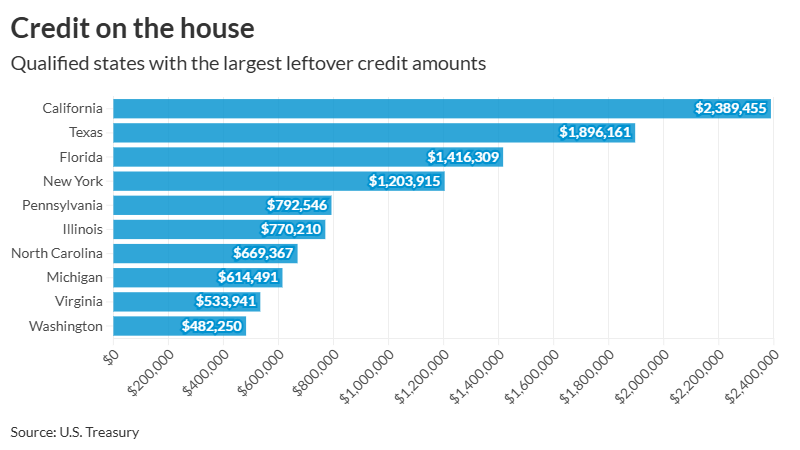
The carryovers range from some $2.4 million in California and some $1.9 million in Texas to $44,851 in Alaska and $39,297 in Vermont. View the full article
-
Perhaps you completely forgot about the “Secret Santa” gift exchange, or your estimated delivery date got pushed back to 2026. Whatever your reasons, you’re in need of a last-minute gift, and your options are limited. If you're reading this at a time when it's too late for online delivery, and in-person store options are already closed, then all that’s left is the glory of your local 24-hour drug store. If you have access to a major chain like Walgreens or CVS, you could be in surprisingly good shape for this last-minute gift. All it takes is a little ingenuity to level up this gift from "a protein bar" to "a gym bro collection," or "some loose nail polish" to a "curated at-home spa day." Following this logic, I’ve carefully categorized your gift options into three tiers. The first is for gift-givers willing to shell out a little extra cash in their panic in order to create something somewhat personalized. The second tier includes single-item purchases that are simply passable gift options. The third tier is a warning. Tier one: DIY signature collectionsLike a chef turning baskets of mystery ingredients into a three-course meal on Chopped, this category of gifts is all about your innovation. In these DIY arrangements, the sum is greater than its parts, which should all be available at most chain drug stores. Here are some of our ideas for themed collections, but feel free to customize at your convenience. Movie night: Popcorn. Funky popcorn toppings. Candy. Hot chocolate. Fuzzy socks. A little slip of paper with your Netflix login. You can’t go wrong with a cozy movie-night theme. Treat yo’ self: Think spa day materials, like face masks, nail polish, and bath bombs. Throw in a candle to help set the pampering vibe. Health and wellness: Browse around for gummy vitamins, supplements, protein powder, and whatever else catches your eye in the fitness aisle. Be warned: This one can quickly get expensive. The Jetsetter: Pick from the array of travel-sized must-haves, including ear plugs and perhaps even a neck pillow (with a note about how to wear it right). The Techie: Head to the electronics section and go wild with whatever gadgets are available and within your price range. Portable chargers and speakers are quality gifts in their own right. Tier two: It’s the thought that countsThese items aren’t necessarily bad gifts, but many will be easily detected as a last-minute purchase. The success of tier two drug store gifts will come down to the charm of the gift-giver and the chill factor of the recipient. Gift cards Candles Cosmetic bags Therapeutic massager Jewelry Insulated mugs Calendars or planners Notebooks Coffee/tea bundles Wine and a corkscrew (depending on your state’s liquor laws) Picture frames Electronics, like ear buds or portable chargers Tier three: “Gifts” that will do more harm than goodHey, buddy. All is lost, huh? Personally, I recommend a white lie about an imaginary gift that didn’t arrive in time. Unless you’re confident you can pull off a gag gift, proceed with caution should you opt to gift someone anything from the list below. Lottery tickets Command strips Batteries Pregnancy test Beef jerky Laxatives A toilet plunger Laxatives and a toilet plunger tied together with a bow There you have it. If you have access to a drug store, you should be able to pull together a last-minute gift with moderate success. View the full article
-
Content marketing strategies play a vital role in how brands communicate with their audiences. By examining top examples, you can identify effective techniques that drive engagement and build loyalty. From Spotify‘s data-driven insights to Duolingo‘s humorous TikTok presence, each strategy offers unique lessons. Airbnb improves user experience through personalized quizzes, whereas Warby Parker builds authority with educational content. Mint Mobile effectively uses comedy to connect with consumers. What can these approaches teach you about improving your own marketing efforts? Key Takeaways Spotify Wrapped: Engages users with personalized year-end music summaries, boosting brand loyalty and sign-ups through social media sharing. Duolingo’s TikTok Strategy: Utilizes humor and trending formats to connect with younger audiences, fostering a casual learning atmosphere without direct product promotion. Airbnb’s Design Personality Quiz: Offers personalized recommendations through interactive content, enhancing user experience and aligning with unique travel narratives. Warby Parker’s Buyer Journey Content: Establishes authority by providing educational resources on eye health, improving customer trust and engagement through social responsibility initiatives. Mint Mobile’s Comedic Video Campaign: Leverages humor and engaging video content featuring Ryan Reynolds to resonate with audiences and enhance brand visibility on social media. Spotify Wrapped: Engaging Users Through Data-Driven Content Spotify Wrapped stands out as a prime example of how data-driven content can effectively engage users and promote brand loyalty. Launched in 2017, this content marketing campaign provides personalized year-end summaries of users’ music listening habits, showcasing their top songs, artists, and genres. The visually engaging format encourages you to share your unique Wrapped results on social media, turning you into a brand advocate and considerably amplifying Spotify’s visibility. This campaign is one of the great content marketing examples, contributing to a 21% increase in new sign-ups in December 2020. Duolingo’s TikTok Strategy: Leveraging Humor and Relatability Duolingo’s TikTok strategy effectively showcases how brands can engage with audiences through humor and relatability, a tactic that has redefined educational marketing. By centering its content around the mascot Duo, Duolingo utilizes trending audio and meme formats to connect with a younger audience. This brand content strategy avoids direct product promotion, instead nurturing a casual and engaging atmosphere. With over 4.5 million followers, Duolingo embraces user-generated content, making language learning approachable and enjoyable. The strategy highlights great content marketing examples, demonstrating that entertainment can drive brand awareness and customer loyalty. In the end, Duolingo’s approach illustrates how brands can leverage social media to authentically connect with users, enhancing engagement without relying on traditional advertising methods. Airbnb’s Design Personality Quiz: Personalization in Marketing Airbnb’s Design Personality Quiz stands out as an innovative approach to personalized marketing, engaging users by offering customized recommendations based on their unique design preferences. This interactive content exemplifies effective content marketing examples, enhancing user experience as it appeals to a diverse audience interested in home design and travel. By aligning the quiz with its brand narrative of unique travel experiences, Airbnb reinforces customer-centric marketing. Not only does the quiz entertain, but it additionally drives traffic to Airbnb’s platform, encouraging participants to explore curated listings that match their design personality. This initiative highlights some of the best content marketing examples, showcasing how personalized strategies nurture deeper connections with users and amplify brand visibility through social sharing, making it a strong sample content marketing strategy. Warby Parker’s Buyer Journey Content: Establishing Authority When consumers seek eyewear solutions, they often have numerous questions regarding styles, fit, and eye health, which is where Warby Parker thrives in mapping out the buyer experience. Their content strategy example stands out in the optical industry, as they provide educational articles on eye health and style tips. This not only addresses common consumer concerns but furthermore positions Warby Parker as a trusted authority. The “Home Try-On” program improves the purchasing experience by allowing customers to try five frames at home, cultivating trust. In addition, user-generated content, like testimonials, reinforces credibility. Their commitment to social responsibility through the “Buy a Pair, Give a Pair” initiative is likewise one of the best content marketing strategies, demonstrating real impact beyond sales. Mint Mobile’s Comedic Video Campaign: Connecting With Audiences Mint Mobile has successfully leveraged comedic video content featuring actor Ryan Reynolds to build brand awareness and connect with audiences. This approach exemplifies a modern website content strategy that integrates humor with marketing, making it one of the best content marketing brands today. By using simple, engaging video formats that adapt to trending topics, Mint Mobile captures attention and encourages social media sharing. This strategy not only improves visibility but also nurtures a personal connection with viewers, effectively moving beyond traditional advertising methods. The campaign showcases how integrating entertainment into marketing can resonate with consumers who prefer dynamic content over conventional promotions, making it a notable example of marketing that demonstrates the potential for increased audience engagement. Frequently Asked Questions What Is an Example of a Content Strategy? An effective content strategy example is HubSpot‘s inbound marketing approach. It focuses on creating valuable content that addresses audience pain points, such as thorough blog posts and educational resources. By doing this, HubSpot not only draws in visitors but also cultivates leads through valuable information. This strategy has greatly increased their web traffic and lead generation, showcasing the importance of grasping your audience’s needs and delivering relevant content consistently. What Are the Top 7 Types of Digital Marketing Strategies? The top seven types of digital marketing strategies include search engine optimization (SEO), content marketing, social media marketing, email marketing, pay-per-click (PPC) advertising, influencer marketing, and affiliate marketing. Each strategy serves distinct purposes; for instance, SEO improves visibility on search engines, whereas content marketing engages audiences through valuable information. Social media marketing leverages platforms for brand interaction, and email marketing delivers personalized content directly to consumers, driving engagement and conversions effectively. What Are the 3 C’s of Content Marketing? The 3 C’s of content marketing are Content, Context, and Connection. Content refers to the valuable materials you create, like articles or videos, that resonate with your audience. Context involves delivering this content in a relevant manner, customized to your audience’s current needs and preferences. Connection focuses on building relationships through engaging, interactive experiences. What Are the 3 E’s of Content Marketing? The 3 E’s of content marketing are Educate, Engage, and Entertain. You should educate your audience by providing informative content that builds trust and authority. Engaging content encourages interaction, increasing customer loyalty. Finally, entertaining content, such as storytelling or humor, improves shareability, motivating consumers to recommend your brand. Conclusion In summary, these five content marketing strategies demonstrate the strength of creativity and data-driven approaches in engaging audiences. Spotify Wrapped personalizes experiences, whereas Duolingo’s humor humanizes learning. Airbnb’s quizzes improve user interaction, and Warby Parker builds authority through informative content. Mint Mobile effectively connects with viewers using comedy. By analyzing these examples, businesses can gain insights into effective marketing techniques that encourage engagement, build brand loyalty, and ultimately drive conversions. Image via Google Gemini This article, "Top 5 Content Marketing Strategy Examples" was first published on Small Business Trends View the full article
-
Content marketing strategies play a vital role in how brands communicate with their audiences. By examining top examples, you can identify effective techniques that drive engagement and build loyalty. From Spotify‘s data-driven insights to Duolingo‘s humorous TikTok presence, each strategy offers unique lessons. Airbnb improves user experience through personalized quizzes, whereas Warby Parker builds authority with educational content. Mint Mobile effectively uses comedy to connect with consumers. What can these approaches teach you about improving your own marketing efforts? Key Takeaways Spotify Wrapped: Engages users with personalized year-end music summaries, boosting brand loyalty and sign-ups through social media sharing. Duolingo’s TikTok Strategy: Utilizes humor and trending formats to connect with younger audiences, fostering a casual learning atmosphere without direct product promotion. Airbnb’s Design Personality Quiz: Offers personalized recommendations through interactive content, enhancing user experience and aligning with unique travel narratives. Warby Parker’s Buyer Journey Content: Establishes authority by providing educational resources on eye health, improving customer trust and engagement through social responsibility initiatives. Mint Mobile’s Comedic Video Campaign: Leverages humor and engaging video content featuring Ryan Reynolds to resonate with audiences and enhance brand visibility on social media. Spotify Wrapped: Engaging Users Through Data-Driven Content Spotify Wrapped stands out as a prime example of how data-driven content can effectively engage users and promote brand loyalty. Launched in 2017, this content marketing campaign provides personalized year-end summaries of users’ music listening habits, showcasing their top songs, artists, and genres. The visually engaging format encourages you to share your unique Wrapped results on social media, turning you into a brand advocate and considerably amplifying Spotify’s visibility. This campaign is one of the great content marketing examples, contributing to a 21% increase in new sign-ups in December 2020. Duolingo’s TikTok Strategy: Leveraging Humor and Relatability Duolingo’s TikTok strategy effectively showcases how brands can engage with audiences through humor and relatability, a tactic that has redefined educational marketing. By centering its content around the mascot Duo, Duolingo utilizes trending audio and meme formats to connect with a younger audience. This brand content strategy avoids direct product promotion, instead nurturing a casual and engaging atmosphere. With over 4.5 million followers, Duolingo embraces user-generated content, making language learning approachable and enjoyable. The strategy highlights great content marketing examples, demonstrating that entertainment can drive brand awareness and customer loyalty. In the end, Duolingo’s approach illustrates how brands can leverage social media to authentically connect with users, enhancing engagement without relying on traditional advertising methods. Airbnb’s Design Personality Quiz: Personalization in Marketing Airbnb’s Design Personality Quiz stands out as an innovative approach to personalized marketing, engaging users by offering customized recommendations based on their unique design preferences. This interactive content exemplifies effective content marketing examples, enhancing user experience as it appeals to a diverse audience interested in home design and travel. By aligning the quiz with its brand narrative of unique travel experiences, Airbnb reinforces customer-centric marketing. Not only does the quiz entertain, but it additionally drives traffic to Airbnb’s platform, encouraging participants to explore curated listings that match their design personality. This initiative highlights some of the best content marketing examples, showcasing how personalized strategies nurture deeper connections with users and amplify brand visibility through social sharing, making it a strong sample content marketing strategy. Warby Parker’s Buyer Journey Content: Establishing Authority When consumers seek eyewear solutions, they often have numerous questions regarding styles, fit, and eye health, which is where Warby Parker thrives in mapping out the buyer experience. Their content strategy example stands out in the optical industry, as they provide educational articles on eye health and style tips. This not only addresses common consumer concerns but furthermore positions Warby Parker as a trusted authority. The “Home Try-On” program improves the purchasing experience by allowing customers to try five frames at home, cultivating trust. In addition, user-generated content, like testimonials, reinforces credibility. Their commitment to social responsibility through the “Buy a Pair, Give a Pair” initiative is likewise one of the best content marketing strategies, demonstrating real impact beyond sales. Mint Mobile’s Comedic Video Campaign: Connecting With Audiences Mint Mobile has successfully leveraged comedic video content featuring actor Ryan Reynolds to build brand awareness and connect with audiences. This approach exemplifies a modern website content strategy that integrates humor with marketing, making it one of the best content marketing brands today. By using simple, engaging video formats that adapt to trending topics, Mint Mobile captures attention and encourages social media sharing. This strategy not only improves visibility but also nurtures a personal connection with viewers, effectively moving beyond traditional advertising methods. The campaign showcases how integrating entertainment into marketing can resonate with consumers who prefer dynamic content over conventional promotions, making it a notable example of marketing that demonstrates the potential for increased audience engagement. Frequently Asked Questions What Is an Example of a Content Strategy? An effective content strategy example is HubSpot‘s inbound marketing approach. It focuses on creating valuable content that addresses audience pain points, such as thorough blog posts and educational resources. By doing this, HubSpot not only draws in visitors but also cultivates leads through valuable information. This strategy has greatly increased their web traffic and lead generation, showcasing the importance of grasping your audience’s needs and delivering relevant content consistently. What Are the Top 7 Types of Digital Marketing Strategies? The top seven types of digital marketing strategies include search engine optimization (SEO), content marketing, social media marketing, email marketing, pay-per-click (PPC) advertising, influencer marketing, and affiliate marketing. Each strategy serves distinct purposes; for instance, SEO improves visibility on search engines, whereas content marketing engages audiences through valuable information. Social media marketing leverages platforms for brand interaction, and email marketing delivers personalized content directly to consumers, driving engagement and conversions effectively. What Are the 3 C’s of Content Marketing? The 3 C’s of content marketing are Content, Context, and Connection. Content refers to the valuable materials you create, like articles or videos, that resonate with your audience. Context involves delivering this content in a relevant manner, customized to your audience’s current needs and preferences. Connection focuses on building relationships through engaging, interactive experiences. What Are the 3 E’s of Content Marketing? The 3 E’s of content marketing are Educate, Engage, and Entertain. You should educate your audience by providing informative content that builds trust and authority. Engaging content encourages interaction, increasing customer loyalty. Finally, entertaining content, such as storytelling or humor, improves shareability, motivating consumers to recommend your brand. Conclusion In summary, these five content marketing strategies demonstrate the strength of creativity and data-driven approaches in engaging audiences. Spotify Wrapped personalizes experiences, whereas Duolingo’s humor humanizes learning. Airbnb’s quizzes improve user interaction, and Warby Parker builds authority through informative content. Mint Mobile effectively connects with viewers using comedy. By analyzing these examples, businesses can gain insights into effective marketing techniques that encourage engagement, build brand loyalty, and ultimately drive conversions. Image via Google Gemini This article, "Top 5 Content Marketing Strategy Examples" was first published on Small Business Trends View the full article
-
For 50 years, America’s generosity has been stuck in neutral with charitable giving frozen at 2.5% of GDP. But not because people stopped caring. In 2024, total giving hit record highs, and food banks saw donations surge as families faced delays in SNAP benefits. The heart is there. What’s missing is technology that turns generosity into lasting impact. We can’t solve today’s biggest problems, from food insecurity to climate change to health inequity, without unlocking the full potential of AI. For the first time, technology connects data across causes, predicts needs before they arise, and turns generosity into measurable progress. If generosity is the fuel, AI is the engine. As we look to reignite that engine, the clear path forward is to empower the social good ecosystem with smarter, more human technology. Enter the Generosity Generation. It’s not an age group, but a global movement of people across every generation using innovation to turn compassion into scale. The movement is built on the belief that connection beats competition, collaboration beats control, and impact grows when information flows freely. Achieving that scale requires a shift in how technology serves people. The next leap won’t come from software that asks humans to do more work, but from AI that helps them do more good. Human-led AI doesn’t replace purpose; it amplifies it. It’s how we break 50 years of stagnation and build a more generous world. THE HIDDEN COST OF SOFTWARE IN THE SOCIAL SECTOR Software is meant to save time. Instead, for many organizations, it feels like one more task to manage before the real work begins. In the corporate world, software transforms productivity. In the social sector, those same gains often require a level of investment, in time, training, and expertise, that smaller nonprofits can’t afford. Every new platform promises efficiency, but the cost of setup and maintenance may outweigh the benefits. Time meant for impact gets traded for time spent logging impact. Picture a grant-writing team adopting a “streamlined” new tool. Weeks later, they’re back in spreadsheets because the learning curve was too steep, the data entry too heavy, the payoff too slow. Agentic AI works quietly in the background, scanning thousands of grant opportunities overnight, drafting proposals, surfacing insights, and freeing people to do hands-on work: building relationships, telling stories, and driving missions forward. That’s the real shift, from software that creates work to software that creates capacity. But transformation doesn’t start with automation. It starts with trust. And that’s where every organization, from a grassroots nonprofit to a Fortune 500, must now lead. TRUST: THE REAL METRIC FOR AI AI’s most important metric isn’t speed or scale. It’s trust. Even the most tech-oriented nonprofits must ensure that the tools they use reflect their own values: transparency, security, and accountability. In the social sector, trust is currency. For nonprofits, a single breach undermines years of donor confidence. For companies, it erodes brand equity overnight. Across every mission-driven organization, trust is the shared foundation, and every tool must protect it. That’s why human-led AI matters. Agentic systems act, recommend, and adapt, but they should never act alone. Keeping people in the loop ensures every decision reflects human judgment, not just machine logic. When AI earns that trust, the impact multiplies. Fundraisers find the right message faster. Corporate teams see where volunteer hours matter most. Foundations match funding in days, not months. And when it’s guided by transparency and accountability, AI not only protects trust, but deepens it. WHEN AI ELEVATES HUMAN IMPACT Data has always told us what happened. AI finally shows us what’s possible. In the nonprofit world, every community, cause, and donor is different. Yet, most tools still offer one-size-fits-all answers. Agentic AI changes that by turning data into understanding, helping every organization communicate with its community in the language of shared values, rather than generic outreach. For decades, personalization has helped businesses build trust with customers. Now, it helps the social sector establish trust with its constituents. Because personalization here isn’t about selling more, it’s about seeing more: who needs help, what inspires them, and where generosity has the most impact. The real turning point is when understanding shifts into empathy, and that empathy fuels action. When data builds transparency, people engage. When they engage, generosity grows. That’s how trust translates into impact. Pair human purpose with autonomous tools, and giving doesn’t just scale, it transforms. That’s how we turn information into action, and generosity into a movement. Across every generation, people want to do more good. Now they finally have the means to do it. Human-led AI gives us back what every mission needs most: time, connection, and trust. Imagine if America’s giving rate rose by just half a point, from 2.5% to 3%. That single shift would unlock $141 billion in new annual giving. Enough to lift every American above the poverty line. Enough to make college tuition-free. Enough to prove what’s possible when technology empowers human purpose instead of replacing it. That’s the power of the Generosity Generation, proving that when human purpose meets the right technology, possibility becomes progress. Whether you lead a nonprofit, a foundation, or a Fortune 500 CSR team, your mission is the same: turn information into measurable action. Use technology not to automate generosity, but to amplify it. AI won’t build the Generosity Generation. People will, with the freedom, insight, and tools to lead it. Scott Brighton is the CEO of Bonterra. View the full article

-
Proxy advisory firm Institutional Shareholder Services recommended approval of Fifth Third's $10.9 billion proposed acquisition of Comerica. View the full article

-
We may earn a commission from links on this page. Ankle weights seem to have tunneled through a wormhole from the 1980s to the present moment, appearing in countless TikToks and Instagram posts. Do they really help tone your legs? Are they worth buying at all? The promises are overrated, but in some cases ankle weights do actually work. Here’s what you need to know. Where ankle weights work bestAnkle weights’ best use is to add a little bit of resistance to exercises where you are moving your legs against gravity. For example, side-lying leg raises become substantially more work for your muscles with even a pound or two of weight on the ankle that you’re raising in the air. Donkey kicks and hollow body holds would fall into this category as well. Weights like these, with 2.5 pounds per ankle, may be a good option if you're new to strength training or new to these particular exercises. The ankle weights aren’t necessarily making your ankles or legs work harder, in these examples; they just add resistance to what is still an exercise for your hips, butt, or abs. And the main source of weight is actually your leg itself. If leg raises are challenging, leg raises plus an ankle weight will be more challenging. These uses of ankle weights make sense, because they’re a way to add resistance over time. To continue progressing, you’ll need to use heavier weights when your current ones become too easy. Eventually, you may get to a point where an ankle weight exercise is no longer challenging and you’ll need to work those same muscles in a different way. Ankle weights work best for exercises where you're using muscles toward the center of your body (like abs or hips) to move your legs. In these exercises, your legs provide most of the weight; the ankle weight is just adding to the difficulty. Ankle weights being light, you need to put them at the end of a long lever. In a leg raise, your legs are basically a very long third-class lever. Or to put it another way: the farther away a small weight is from your body, the heavier it feels. When ankle weights won't helpIf you’re running, jumping, or walking, ankle weights can make the motion a little bit harder, but they’re probably not a good addition. Think about why you’re doing these exercises in the first place. If your goal with running or walking is to burn calories, you can do that more efficiently by running faster or farther, no ankle weights necessary. Some trainers even warn that wearing ankle weights while running or walking may set you up for muscle imbalances or for injury; though it’s not clear if that’s really the case or not. I couldn’t find any solid evidence about injury either way, but historian Conor Heffernan pointed me to a 1988 paper that concluded ankle weights don’t provide any significant extra calorie burn, and aren’t worth the potential risk. That may be the source of the warning, which I recall hearing way back in the olden days of the 1990s. How much a small weight can actually help youAny time you’re looking at a small weight—whether it’s a pair of ankle weights, or a tiny dumbbell, or anything else—think of it in terms of progressive overload. Progressive overload is one of the basic principles of strength training. To keep getting results, you have to use heavier and heavier weights over time. That’s how somebody who starts deadlifting with just the bar can end up strong enough to lift hundreds of pounds. Small weights can help you get started on that journey, but they won’t sustain it. Ankle weights are often just one or two pounds each, although I have a set like this one that can be loaded with about ten pounds if you put all the little sandbag inserts into just one cuff of the pair. It was handy when I was rehabbing an injury; my physical therapist recommended side-lying leg raises. At first I was doing them without added weight, but I ended up needing most of the weights in the set by the time my rehab was through. Fitness products often exist only because they’re easy to sellLooking through ads and Instagram posts for this article, it became clear why ankle weights are popular all of a sudden. You can advertise them by putting them on a model with great legs in a snazzy pair of leggings, and having her work out by a beach or in front of a vibrantly colored wall. They just look cool, especially some of the newer styles that look like blocky bangles. Also, being fairly lightweight, they’re cheaper to manufacture and ship than, say, a kettlebell. So while they may have a place in your workout routine, it would be a mistake to think you’re buying a versatile or long-lived piece of equipment by treating yourself to a pair of ankle weights. View the full article
-
The long-awaited release of Jeffrey Epstein’s files by the Department of Justice arrived on December 19 with a bureaucratic whimper and bang of public outrage. While the Epstein Library technically fulfills the government’s legal obligation under the Epstein Files Transparency Act, the result is a user experience failure. Thankfully we have another option. Jmail.world makes searching the Epstein files as simple as searching your email. The project has been publishing the convicted child sex offender’s emails—and those of the people who talked with him, like Noam Chomsky, Steve Bannon or Ken Starr—since November using a Gmail user interface clone. Jmail’s database was filled over the weekend as it added the latest Epstein file release. jmail.world Created by technologists Riley Walz and Luke Igel, there’s no better way to explore this Himalaya of filth. It uses a UI you already know: Gmail and the rest of Gmail apps, like Drive. Its creators have been updating it quietly since its launch, even adding an AI called Jemini to search across media, to demonstrate that the DOJ claims that due to technical limitations, it’s impossible to search certain materials—like handwritten notes—is simply not true. How Jmail was built Jmail began in November, after the House Oversight Committee released 20,000 pages of Epstein’s estate emails. Walz and Igel saw a “design problem” in those unsearchable PDF dumps. Using Optical Character Recognition (OCR), they extracted the text and mapped it onto a simulation of Epstein’s actual Gmail inbox. jmail.world The result was a tool that feels unnervingly familiar—at least I feel weird and dirty browsing it. It’s a standard inbox with “Star” icons and threaded conversations that forces users to confront the banality of Epstein’s daily operation. The Gmail clone works as you would expect. Instead of navigating complex federal indices, you simply type “Maxwell” or “Bannon” or any phrase that comes to mind into a search bar that queries every email, attachment, and contact instantly. The same happens in the other apps. And you can also click on Jemini—introduced on December 3—and just query the AI about whatever content you want, all across the database. Why email is the right interface for the Epstein files You may wonder why the Epstein Files needs a specialized site at all. After all, the official DOJ site has a “Search Full Epstein Library” bar. The problem is, it comes with a crippling disclaimer: “Due to technical limitations and the format of certain materials… portions of these documents may not be electronically searchable.” In practice, this means thousands of scanned pages—where the real secrets lie—are invisible to the search engine. To understand the brilliance of Jmail, you have to understand the DOJ’s barebones compliance with the law dictated by Congress. The files are there, yes, but they are effectively buried under the weight of their own disorganization. The DOJ’s rolling release strategy has resulted in a fragmented archive where “First Phase” declassified files sit separately from “Data Set 7,” and where vital context is usually hidden behind thick black redaction bars. jmail.world As Representative Thomas Massie has pointed out, it “grossly fails to comply with both the spirit and the letter of the law.” By dumping thousands of unsearchable, context-free PDFs onto a confusing web portal, the Justice Department has technically checked a box while affectively obstructing the public’s ability to understand the contents. The data may be public, but it is certainly not accessible, hence rendering it almost useless for the public. In a discussion on Hacker News dated December 19, Igel revealed the collaborative effort to beat the DOJ at its own game: “We had a ton of friends collaborate on building out more of the app suite last night in lieu of DOJ’s ‘Epstein files’ release… JPhotos, JDrive, JAmazon.” They launched a full “app suite” designed to make the files grokable. By organizing the chaos into familiar tools, Jmail.world provides the searchability the government claimed was technically impossible, serving as a critical, citizen-led solution to official opacity. Meanwhile, the new version of Jmail is the closest thing we have to a complete picture of the Epstein case files. The site fulfills the promise that the Transparency Act made but failed to keep: making the truth actually visible. I just wish the AI could be smart enough to turn those black bars into the actual names. View the full article

-
Instacart said Monday that it will no longer allow retailers to use an AI-powered price testing program, two weeks after an extensive investigation showed wide discrepancies in the cost of groceries purchased through the platform. Effective immediately, retailers will no longer be able to use Eversight technology to run price tests on Instacart, the San Francisco-based company said in a blog post. Previously, a small number of retail partners were able to conduct testing that resulted in different prices for the same item at the same store—something that “missed the mark for some customers,” Instacart said in a blog post. “At a time when families are working exceptionally hard to stretch every grocery dollar, those tests raised concerns, leaving some people questioning the prices they see on Instacart,” the company said. “Now, if two families are shopping for the same items, at the same time, from the same store location on Instacart, they see the same prices—period.” Monday’s announcement of the end of item price tests marks the third time that Instacart has responded to a widely-shared study by Consumer Reports and Groundwork Collaborative. The monthslong investigation conducted by the magazine and progressive policy group found that algorithmic pricing might result in price differences for the same items of as much as 23%. INSTACART IN FOCUS IN D.C. Instacart responded swiftly to the concerns raised in that investigation. In a lengthy blog post late last week, the company sought to clarify what sorts of pricing tests it does—and doesn’t—allow on the platform by responding to four different “myths,” including that it was engaging in “dynamic” or “surveillance” pricing. But the tech company also came under renewed scrutiny in Washington, D.C. as a result of this study. Rep. Angie Craig, a Democrat from Minnesota, demanded answers from Instacart regarding the scope and implications of pricing tests, while the Federal Trade Commission sent a civil investigative demand to Instacart about its pricing practices, as Reuters reported last week. Instacart was recently the subject of an FTC investigation regarding deceptive business practices. The company was ordered to pay $60 million in consumer refunds, though it denied any allegations of wrongdoing and answered questions from the government agency regarding its AI pricing tools as part of that settlement. REGAINING TRUST The company reiterated again Monday that it has not permitted retailers to do price testing based on supply or demand, personal data, demographics, or individual shopping behavior. Instagram ended the price testing program to engender trust with its customers. “Customers should never have to second-guess the prices they’re seeing,” the company said. Though shares of Instacart fell about 2% in mid-day trading on Monday, it has almost fully recouped a nearly 6% selloff that followed the publication of the price testing study earlier this month. View the full article

-
Coinbase said on Monday it will buy prediction markets startup The Clearing Company, its tenth acquisition this year, as the crypto exchange looks to expand beyond its core digital assets business. Prediction markets let users buy and sell contracts tied to the outcomes of real-world events, ranging from elections and economic data to sports and policy decisions, effectively turning investors’ forecasts into tradable markets. Supporters say the prices can reflect collective expectations more accurately than polls or forecasts, while critics argue the products blur the line between financial markets and betting, drawing growing scrutiny from regulators. Prediction markets surged into the mainstream during the 2024 U.S. presidential race and have since drawn rapid interest and investments from all corners of the financial ecosystem. Meanwhile, trading platforms are broadening their product suites to encompass multiple asset classes under one roof as competition intensifies. This shift, analysts say, could help Coinbase reduce its reliance on crypto trading as new players crowd the market. “Prediction markets offer the company a high-engagement, high-frequency product that broadens the reasons for opening its app beyond crypto,” analysts at brokerage Benchmark wrote in a note last week. Earlier this month, Coinbase launched its prediction markets platform and said it will start letting users trade stocks, positioning it as a direct competitor to brokerages such as Robinhood and Interactive Brokers. “We see many of Coinbase’s new initiatives encouraging and incentivizing customer engagement, which has been episodically more limited,” analysts at brokerage J.P. Morgan wrote in a note after the products were unveiled. The deal for The Clearing Company is expected to close in January. Coinbase did not disclose the terms of the transaction. Among its notable deals this year, Coinbase agreed to buy derivatives exchange Deribit for $2.9 billion in May, and struck a roughly $375 million deal for investment platform Echo in October. Its shares were last up 2.6% in afternoon trading. —Manya Saini, Reuters View the full article
-
The judge's order allows potentially thousands of consumers to join the lawsuit against the company, similar to other fights between borrowers and servicers. View the full article

-
Fresh content or content freshness simply means how new or recently updated a page is. Keeping your content up to date tells Google and AI assistants that your information is current, helpful, and reliable, which helps you keep good rankings…Read more ›View the full article
-
Overall satisfaction is highest when customers receive status updates from mobile apps, according to the J.D. Power's 2025 U.S. Claims Digital Experience Study. View the full article

-
It’s “where are you now?” month at Ask a Manager, and all December I’m running updates from people who had their letters here answered in the past. Remember the letter-writer who was the chair of a board and had one board volunteer making everyone’s jobs harder because of his struggles with technology? Here’s the update. I found your advice and the advice in the comments very helpful. To start, I wanted to clear up something that that came up in the comments: this is not a 501(c) organization, though we do volunteer work for them. I fudged some of the details to make my story less recognizable, but this is actually an employer-sponsored affinity group. So no, there is no requirement to have a secretary and no legal forms to complete or anything like that. Other than chair and vice chair, all other board positions are up to our discretion both in title and responsibilities. After you published my letter, the rules and guidelines of our affinity group were thrown into chaos because of anti-DEI executive orders. While our group was not eliminated, it became very difficult to get anything approved and we had to re-work all our plans for the year. I used this as an excuse to sit down with each of our board members and redefine their roles and responsibilities to better align with our new guidelines. I worked with John to figure out where he can contribute without slowing anyone down. As it turns out, he was starting to get stressed because he couldn’t keep up and was happy to take more things off his plate if he got to keep participating! Ultimately, we decided that he would continue scheduling and taking notes for our regular monthly meetings. I’d send him a thorough agenda ahead of time, which limited the number of notes he needed to take. Then, any non-standard or urgent meetings would be scheduled by the vice chair. Those meetings would be event-specific, and whichever board member was leading that event would set the agenda and take notes. This seemed to work well for the team! John got to stay involved without getting overwhelmed, other board members got a chance to step up and lead meetings, and I got to focus on making sure our events would be approved under the new rules. I’ll be stepping down from the chair role at the end of this year, but I’m working hard to recruit new members to support the new chair next year! John asked to stay on the board, and the new chair is happy to have him. The post update: our board volunteer makes everyone’s jobs harder appeared first on Ask a Manager. View the full article
-
We may earn a commission from links on this page. 2025 was a fun year to review fitness devices. We saw three companies introduce devices that could have been Whoop killers, and one definitely came closer to the mark than others. One running watch gobsmacked me with its accuracy, one device was so inaccurate it sent me down an investigative rabbit hole to figure out why, and two devices delighted me with how well they solved a real problem no other device even tried to tackle. Read on for the winners of my very subjective award categories. Most accurate: Garmin Forerunner 570 Credit: Beth Skwarecki Garmin’s Forerunner 570 and 970 were new devices this year. I felt ambivalent, on average, about the upgrades they made from previous devices like the 265. But I want to call out the heart rate sensor on the 570 for being so accurate it confused me. See, Garmin’s previous watches, like the Forerunner 265, had a perfectly good heart rate sensor. I’d put them in the same tier as most Coros watches, a smidge higher than the Apple Watch, and generally as good as, or better than, most other high-end devices. But Garmin put its very best heart rate sensor in the Forerunner 570. This same sensor, the Elevate version 5, is also in Garmin’s Forerunner 970, Venu 3 and 4, and Fenix 8. I was not prepared for how much better it would be. I test all my devices against an electrical heart rate chest strap, the gold standard for this sort of thing, and a good wrist-based sensor will only show a few small deviations between its heart rate graph and the one I get from the chest strap. But the 570 sometimes showed exactly the same data. The graph below shows what I expect from a good sensor (top) and what I got from the 570 (bottom). Yes, there are two lines in the bottom graph. Credit: Beth Skwarecki At first I thought I had screwed up, and gotten the chest and wrist data mixed up somehow, maybe uploading the same file twice—that’s how close they were. But with further testing, and also zooming in to see the occasional tiny difference between the two lines, I confirmed that the 570’s sensor really was that accurate. Damn, Garmin. I’m impressed. Coolest concept (that actually works): Core 2 Thermal Sensor Credit: Beth Skwarecki The summer heat is a problem for every runner in a climate with warm summers. Not only are those hot runs unpleasant, the heat literally slows you down, and puts you at risk of heat illness. If you can manage to adapt your body to the heat, you can withstand it better and make your summer training a lot more bearable and productive. You don’t need a specific gadget to do heat training, but there’s a lot of guesswork in the process, and it’s hard to know whether you’re doing enough heat training (or too much). The Core 2 sensor promised to handle this for me, and it worked well. You can read about my experience here. You clip the device to your heart rate chest strap, and it measures your body temperature in two different ways: a temperature sensor detects your skin temperature, and a heat flux sensor paired with a heart rate algorithm delivers an estimate of your core (internal) body temperature. From that data, the device can tell you when you’re hot enough that your workout counts as useful heat training, and it can warn you when you’re getting too hot and need to take a break. The biggest downside was that I only got my training data if I wore a heart rate chest strap for every hot weather workout, which I couldn’t always be bothered to do. But once I had gotten through the spring and early summer, and hit 100% heat adaptation, I found I didn’t really need the device. I found the device incredibly useful, especially since it could broadcast my temperature data to my Garmin watch during runs. I could also log sauna sessions in the device’s app (without taking the device into the sauna) and see how heat-adapted I was becoming. The data I got from the app seemed accurate, and as a result I had probably my most productive and enjoyable summer of running ever. Runner-up: DFC Credit: Beth Skwarecki The Data Fitness Connector is a little box that you connect to the cables on the back of your Peloton Bike (original Bike only, not the Bike+) It felt a little sketchy to order this device from a crowdfunding site with few reviews available, and unfortunately it can only give power data, not speed or distance. But it works! You can read my review here. I took a chance on the DFC because I had canceled my Peloton subscription, but still wanted to use the Bike and sync my workouts to my fitness watch. The DFC did exactly what it promised: beamed power data over Bluetooth so that my watch or phone could pick up the information and log it in a workout. My Garmin was able to give me an FTP estimate and recommend power-based workouts, and there was no ongoing cost. (The $125 price costs less than three months of the Peloton All-Access subscription.) I can highly recommend the DFC for anyone with an OG Bike who wants to opt out of the Peloton subscription world. Best upgrade and best overall: Coros Pace 4 Credit: Beth Skwarecki Coros’s running watches tend to lag a little behind Garmin’s, in terms of features, but they more than make up for it on price. I’ve consistently found the Coros Pace line (Pace 3, Pace Pro, and Pace 4) to be reliable, accurate, and conveniently usable. The Pace 3, in particular, has long been one of my favorite budget watches, even though it has a few small downsides. But late this year, Coros introduced the Pace 4. Between the new features in that watch, and an extra thing or two that dropped in the December software update, it’s hands down the best fitness watch for the money and is my overall pick for the best fitness watch of 2025. You can read my review here to learn more about why I feel this way. In terms of upgraded features, the Pace 4 improved on the Pace 3 by adding an AMOLED screen, better battery life, and a new button and microphone. Those last two items unlock two features that seriously upgraded my runs and training sessions: voice pins, which let me quickly make notes about a location while you’re hiking or trail running, and voice training logs, which mean I’m prompted to record a 60-second voice note right when I finish a workout. These notes are transcribed and attached to the workout in the Coros app, giving me information that I would pretty much never get around to adding after the fact. And then the December software update added a major feature that has kept Coros lagging behind Garmin and other watches: the ability to control media that is playing from your phone. The interface for that isn’t as smooth as I would like, but it’s there, and that’s huge. Runner-up: charging features on the Pixel Watch 4 Credit: Beth Skwarecki The next best upgrade of 2025 belongs to the Pixel Watch 4. You can read my review here, where I found the upgrades to be a mixed bag. (Dual band GPS? Great! Brighter screen? Eh, not really.) But the headline improvement here, to me, was the ultra-fast charging. I only needed half an hour for nearly a full charge—specifically, I charged the watch from 3% to 97% in 31 minutes. No other smartwatch out there charges this fast. The Pixel Watch 4 also ships with a new magnetic dock-style charger that is far more convenient than the back-of-watch puck that previous versions used. Best Whoop alternative: Amazfit Helio Strap Credit: Beth Skwarecki This summer, a somewhat unexpected competition popped up: three different device makers (Garmin, Polar, and Amazfit) were rumored to be working on screenless fitness trackers that could compete with Whoop. All three companies released their promised or rumored devices over the following months, and I tested them all. Garmin’s device turned out to be a $170 sleep tracker; fine, I guess, but not what so many of us were hoping for. Polar’s $200 device looks and acts more like a Whoop, in terms of hardware, anyway. It’s a welcome addition to the market, since Whoop had this product category all to itself for too long, but I have to admit I couldn’t get too excited about it. The winner, surprisingly, turned out to be the Amazfit Helio Strap. At just $99, it does everything the Polar device does, but (in my experience) more reliably, and it costs half as much. It goes without saying that it leaves Garmin’s sleep band in the dust. You can read my review of the Amazfit Helio Strap here. None of the devices are even attempting to compete with Whoop’s subscription app on software features, which is to be expected—Whoop is really a software company that gives you a cool gadget to go with the app, while the other companies in this space are hardware companies that figure their app doesn’t matter very much as long as you’re happy with the physical device. I think that’s a fair take on the market: These new products are for people who like the idea of a screenless tracker but don’t want to pay for a Whoop-caliber app. I expect Amazfit will have a lot of happy customers. Biggest disappointment: Powerbeats Pro 2 Credit: Beth Skwarecki The idea of putting a heart rate sensor in your ears is intriguing, and I really wish it had worked out for the Powerbeats Pro 2. But the company that placed their bets on this technology this year—Beats—just didn’t execute it well enough. As I discovered through extensive testing (here, and then more in my review here), the heart rate sensor doesn’t make good contact with your skin unless your ears are a particular shape and size. Changing out the silicone ear tips doesn’t change the fit of the heart rate sensor (or at least, not enough to fix the issue), so some people simply end up with unusable or unreliable heart rate data. From my limited data, it appears that people with larger ears get reasonably good data, while smaller people may have more issues. I suspect the flaws affect women more than men, but Beats hasn’t shared any data with me that would confirm or deny that hypothesis. A September software update improved the heart rate algorithm slightly, and included a feature that warns users if their fit is poor enough to affect heart rate readings. That’s a good start, since otherwise you wouldn’t even know if you’re getting inaccurate readings. But if you’re one of the people for whom tweaking the fit doesn’t give you usable data, you’re out $250 for a device that doesn’t actually work for you. On the bright side, they are good gym headphones even with the heart rate feature turned off. View the full article
-
When a major power outage left tens of thousands of San Francisco residents in the dark weekend, the city’s fleet of high tech self-driving vehicles went offline too. Videos circulating on social media showed Waymo robotaxis clogging up intersections, addled by the sudden absence of guidance from traffic lights. In one video posted to TikTok, a Waymo robotaxi sporting its telltale rooftop cluster of sensors blocks a busy intersection as human drivers stream around it on both sides. “This car did not move for 10+ min – it only left when the passengers ditched the car,” the TikTok user who caught the footage wrote in the caption. In another widely circulated video, at least five of the self-driving cars blocked a neighborhood road, flashing their hazards in confusion. The outage also took chunks of San Francisco’s public transportation system offline and disrupted local businesses during one of the busiest shopping weekends of the year. In light of the chaos, Waymo temporarily paused its service to San Francisco on Saturday evening. “While the failure of the utility infrastructure was significant, we are committed to ensuring our technology adjusts to traffic flow during such events,” a Waymo spokesperson said in a statement provided to Fast Company, adding that Waymo would prioritize “rapidly integrating” lessons learned from the weekend outage. Because self-driving cars rely on a complex array of sensors rather than human judgment, unusual or unexpected events can cause them to behave unpredictably or shut down altogether. Even within normal traffic patterns, self-driving cars like those in Waymo’s fleet sometimes break traffic laws and endanger other drivers and pedestrians. Earlier this year, the National Highway Traffic Safety Administration opened a probe into Waymo following reports that the company’s autonomous vehicles were zooming around stopped school buses, endangering children exiting the bus. An Austin school district reported that the self-driving cars continued to pass its stopped school buses, even after Waymo said it pushed a software fix. San Francisco’s power outage isn’t the first time that Waymo’s fleet has terrorized the city, which regularly serves as a testing ground for new technologies developed nearby – whether residents like it or not. In late October, a Waymo self-driving car struck and killed a beloved bodega cat in the Mission, leading to a public outpouring of feline love and anti-AI ire. San Francisco goes dark More than 120,000 people in San Francisco lost power in the weekend’s outage, leading to strange scenes of a mostly dim Bay Area skyline on Saturday night. By Sunday morning, around 24,000 homes were without power as PG&E worked to get the city back online. By Monday morning, a handful of blocks near Golden Gate Park and around the Civic Center remained affected, with PG&E promising to restore power to those areas by 2 p.m. Pacific Time. According to PG&E, a fire in one of the power company’s substations caused “significant and extensive ” damage, plunging parts of the major West Coast city into darkness for multiple days. “This is a very complex work plan and will require the highest amount of safety focus to ensure safe work actions,” PG&E wrote in an update on its website. The utility company, one of the largest in the U.S., reported no injuries to its workers or city residents related to the outage. The San Francisco outage is the latest black eye for PG&E, which has faced criticism, bankruptcy and even criminal charges in the course of providing power for major swaths of the West Coast. In 2020, the utility pleaded guilty to over 80 counts of manslaughter for the 2018 Camp fire, which leveled the Northern California town of Paradise, destroying 11,000 homes and most buildings. “Our equipment started the fire. Those are the facts, and with this plea agreement we accept responsibility for our role in the fire,” then PG&E President Bill Johnson said at the time, acknowledging that the company’s badly maintained equipment ignited the deadly blaze and erased a rural California town from the map. View the full article

-
The The President administration on Monday suspended leases for five large-scale offshore wind projects under construction along the East Coast due to what it said were national security risks identified by the Pentagon. The suspension, effective immediately, is the latest step the administration has taken to hobble offshore wind in its push against renewable energy sources. It comes two weeks after a federal judge struck down President Donald The President’s executive order blocking wind energy projects, calling it unlawful. The administration said the pause will give the Interior Department, which oversees offshore wind, time to work with the Defense Department and other agencies to assess the possible ways to mitigate any security risks posed by the projects. The statement did not detail the national security risks. It called the move a pause, but did not specify an end date. “The prime duty of the United States government is to protect the American people,” Interior Secretary Doug Burgum said in a statement. “Today’s action addresses emerging national security risks, including the rapid evolution of the relevant adversary technologies, and the vulnerabilities created by large-scale offshore wind projects with proximity near our east coast population centers.” Wind proponents slammed the move, saying it was another blow in an ongoing attack by the administration against clean energy. The administration’s decision to cite potential national security risks could complicate legal challenges to the move, although wind supporters say those arguments are overstated. Projects paused over national security concerns The administration said leases are paused for the Vineyard Wind project under construction in Massachusetts, Revolution Wind in Rhode Island and Connecticut, Coastal Virginia Offshore Wind, and two projects in New York: Sunrise Wind and Empire Wind. The Interior Department said unclassified reports from the U.S. government have long found that the movement of massive turbine blades and the highly reflective towers create radar interference called “clutter.” The clutter caused by offshore wind projects obscures legitimate moving targets and generates false targets in the vicinity of wind projects, the Interior Department said. National security expert and former Commander of the USS Cole Kirk Lippold disputed the administration’s national security argument. The offshore projects were awarded permits “following years of review by state and federal agencies,” including the Coast Guard, the Naval Undersea Warfare Center, the Air Force and more, he said. “The record of decisions all show that the Department of Defense was consulted at every stage of the permitting process,” Lippold said, arguing that the projects would benefit national security because they would diversify the country’s energy supply. A judge ruled blocking wind projects was unlawful The administration’s action comes two weeks after a federal judge struck down The President’s executive order blocking wind energy projects, saying the effort to halt virtually all leasing of wind farms on federal lands and waters was “arbitrary and capricious” and violates U.S. law. Judge Patti Saris of the U.S. District Court for the District of Massachusetts vacated The President’s Jan. 20 executive order blocking wind energy projects and declared it unlawful. Saris ruled in favor of a coalition of state attorneys general from 17 states and Washington, D.C., led by New York Attorney General Letitia James, that challenged The President’s Day One order that paused leasing and permitting for wind energy projects. The President has been hostile to renewable energy, particularly offshore wind, and prioritizes fossil fuels to produce electricity. Wind proponents slam the move Wind supporters called the administration’s actions illegal and said offshore wind provides some of the most affordable, reliable electric power to the grid. “For nearly a year, the The President administration has recklessly obstructed the build-out of clean, affordable power for millions of Americans, just as the country’s need for electricity is surging,” said Ted Kelly of the Environmental Defense Fund. “Now the administration is again illegally blocking clean, affordable energy,” Kelly said. “We should not be kneecapping America’s largest source of renewable power, especially when we need more cheap, homegrown electricity.” The administration’s actions are especially egregious because, at the same time, it is propping up aging, expensive coal plants “that barely work and pollute our air,” Kelly said. Connecticut Attorney General William Tong called the lease suspension a “lawless and erratic stop-work order” that revives an earlier failed attempt to halt construction of Revolution Wind. The wind project has been vetted and approved through every layer of federal and state regulatory process, including a careful review of security issues raised in the latest announcement, he said. “Every day this project is stalled is another day of lost work, another day of unaffordable energy costs, and other day burning fossil fuels when American-made clean energy is within reach,” Tong said. “We are evaluating all legal options, and this will be stopped just like last time.” Suspension is praised by anti-wind group A New Jersey group that opposes offshore wind hailed the administration’s actions. “Today, the president and his administration put America first,” said Robin Shaffer, president of Protect Our Coast New Jersey, a nonprofit advocacy group. “Placing largely foreign-owned wind turbines along our coastlines was never acceptable,” he said, arguing that the projects posed serious national security risks. But the Conservation Law Foundation, a Boston-based environmental group, called the pause “a desperate rerun of the The President administration’s failed attempt to kill offshore wind,” noting that courts have already rejected the administration’s arguments. “Trying again to halt these projects tramples on the rule of law, threatens jobs and deliberately sabotages a critical industry that strengthens — not weakens — America’s energy security,” said Kate Sinding Daly, senior vice president for law and policy at the law foundation. —Matthew Daly, Associated Press Associated Press writer Jennifer McDermott contributed to this report. View the full article

-
Over the weekend, rapper Nicki Minaj made a surprise appearance at Turning Point USA’s AmericaFest convention, where she praised President Donald The President and Vice President J.D. Vance, mocked California Governor Gavin Newsom, and instructed listeners, “If you are born a boy, be a boy.” On TikTok, her queer fans appear to be overwhelmingly disappointed. The event was hosted by Erika Kirk, the widow of slain conservative pundit Charlie Kirk, who now serves as the CEO of the conservative nonprofit Turning Point USA. Kirk took the stage with Minaj, where the two discussed Minaj’s recent alignment with the MAGA movement. During the talk, Minaj called The President and Vance “role models” for young men. For Minaj, the appearance was an official confirmation of a political stance that she’s been hinting at on social media for several months. Back in 2020, the rapper said that she was “not gonna jump on the Donald The President bandwagon.” This November, she signaled otherwise by reposting an official White House TikTok celebrating the administration’s supposed successes, including the claim “Our cities are safer than ever,” which appears to be a reference to the administration deploying the National Guard and ICE officers to multiple major cities, as well as the anti-trans sentiment, “No men in women’s sports.” Now, Minaj’s queer listerners—who have always represented a large portion of her fanbase—are expressing feelings of betrayal on TikTok. Nicki Minaj’s queer fans speak out In past years, Minaj positioned herself as an ally to the LGBTQ+ community, offering words of encouragement to her gay fans and, at one point, describing herself as bisexual. By aligning with MAGA, repeatedly promoting anti-trans rhetoric, and working with Turning Point USA (which has an extensive track record of anti-LGBTQ+ animus), she appears to be alienating some of her most dedicated supporters. One of the most-viewed clips from Minaj’s appearance is a TikTok with nearly 300,000 likes in which the rapper states, “If you are born a boy, be a boy,” adding, “boys will be boys, and there’s nothing wrong with that”—apparently discouraging trans women from transitioning. The comments are flooded with negative comments from disappointed fans. “She built her career from the queer community,” one user wrote. “Literally almost half her fandom is part of the LGBTQ community,” another added. A number of commenters noted Minaj’s guest appearance on season 12 of RuPaul’s Drag Race as further evidence of her shifting support. Others have shared that they plan to revoke support for the rapper after the recent appearance with Kirk. In one TikTok with nearly 50,000 likes, an old clip of Minaj championing her gay fans is overlaid with the caption, “I miss the old Nicki who actually cared about the LGBTQ community. R.I.P. 1982-2019 Nicki, you would’ve hated 2025 MAGA Nicki.” View the full article

-
Elusive street artist Banksy appeared to confirm Monday that a new mural in London, depicting two children lying down and pointing up at the sky, is his latest work. The artist posted two photos of the artwork on his official Instagram account Monday, hours after its appearance on a wall on the side of a building in Bayswater, west London sparked speculation over whether Banksy was behind it. The black and white mural, painted above a garage, depicts two figures dressed in winter hats and boots lying on the ground, with one of them pointing a finger upwards. An identical image appeared at the foot of a tower in central London on Monday, but the graffiti artist did not post that version on his account. Banksy began his career spray-painting buildings in Bristol, England, and has become one of the world’s best-known artists. His paintings and installations sell for millions of dollars at auction and have drawn thieves and vandals. While his work is often critical of government policy on migration and war, the latest artwork did not seem to carry an overt political message. In September, he made headlines with a mural showing a judge holding a gavel looming over an unarmed protester holding a blood-splattered placard. That piece, which appeared on an external wall of a Royal Courts of Justice building, was swiftly covered up and authorities said it had to be removed out of consideration of the building’s historical significance. View the full article

-
A customer experience survey is a structured tool designed to collect feedback on how customers perceive and interact with your brand. It plays an essential role in comprehending satisfaction levels and identifying areas for improvement. By gathering insights, you can make informed decisions that improve customer loyalty and retention. As you explore the components and best practices of effective surveys, you’ll discover how they can greatly impact your business growth and adapt to future trends. Key Takeaways A customer experience survey evaluates customer interactions and feelings across various touchpoints to understand satisfaction trends. It collects important feedback that informs businesses about strengths and weaknesses in their customer experience. Metrics like NPS, CSAT, and CES are used to measure customer loyalty, satisfaction, and effort, guiding strategic improvements. Gathering customer feedback enhances brand loyalty and informs better decision-making, crucial for retaining customers. Effective surveys adapt to evolving customer expectations, driving sustainable growth and competitive advantage through continuous insights. Understanding Customer Experience Surveys Comprehending customer experience surveys is essential for any organization aiming to improve its services and augment customer satisfaction. A customer experience survey is a structured questionnaire that evaluates customer feelings and interactions across various touchpoints. These surveys collect diverse customer feedback, enabling you to understand trends in customer satisfaction and whether expectations are being met. By leveraging metrics like Net Promoter Score (NPS), Customer Satisfaction Score (CSAT), and Customer Effort Score (CES), you can effectively measure different aspects of customer engagement. The insights gained from customer experience data analytics reveal both strengths and weaknesses in your customer experience (CX), helping you identify areas that require improvement. This information is critical for enhancing customer loyalty and building a responsive organization. In the end, a well-designed customer experience survey not only captures individual feedback but likewise provides a representative sample that informs your continuous improvement strategies. The Importance of Gathering Customer Feedback Collecting customer feedback is essential for enhancing brand loyalty, as it helps you understand market expectations and drive product improvements. When you actively seek input from customers, you not just identify areas for growth but additionally show that their opinions matter, nurturing a stronger connection with your brand. This informed approach can lead to better decision-making and in the end improve customer satisfaction and retention. Enhancing Brand Loyalty In a competitive marketplace, insight into what your customers think and feel about your brand is crucial for improving loyalty. Gathering customer feedback through surveys plays a critical role in customer experience research, enabling you to identify areas of enhancement in your customer experience strategies. With 52% of consumers abandoning brands because of poor experiences, grasping their sentiments can help you improve customer experience and cultivate customer loyalty. Significantly, there’s a perception gap; whereas 90% of executives believe loyalty is rising, only 40% of consumers agree. Addressing this gap through effective feedback collection can build trust, a foundational component of brand loyalty. By investing in customer loyalty initiatives, you can better respond to evolving customer expectations, ensuring long-lasting relationships. Understanding Market Expectations Grasping market expectations is crucial for any business aiming to thrive in today’s fast-paced environment. Customer experience companies must prioritize gathering customer feedback through surveys to comprehend evolving expectations. Significantly, 52% of consumers stop using a brand because of a bad experience, underscoring the urgency of collecting insights. Executives recognize that customer expectations are changing faster than their companies can adapt, with 70% acknowledging this challenge. By conducting customer experience market research, you can identify gaps in perception, as only 40% of consumers believe customer loyalty has increased. Furthermore, transparent feedback collection is important for maintaining trust, as 93% of consumers would lose faith if their data is mishandled. Ultimately, improving customer experience hinges on comprehending and addressing these market expectations. Driving Product Improvements To drive product improvements effectively, it’s vital that businesses prioritize customer feedback, as it provides insights into consumer preferences and needs. Gathering customer feedback through experience surveys is significant; 57% of consumers stop using a product after a single bad experience. By regularly conducting surveys, you can capture valuable information about customer satisfaction, which helps identify areas for product improvement. The American Customer Satisfaction Index emphasizes measuring product quality, guiding companies to create customized surveys for specific insights. These surveys highlight strengths and weaknesses in customer service, nurturing brand loyalty. Engaging customers through feedback shows you value their opinions, leading to higher retention rates and increased referrals from satisfied customers, eventually enhancing the overall customer experience. Key Components of an Effective Survey To create an effective customer experience survey, you need to start by defining clear goals that guide your questions. Thoughtful question design is essential, as it helps you gather meaningful insights during keeping respondents engaged. Survey Goals Definition Defining the goals of your survey is fundamental, as it guarantees alignment with specific, actionable outcomes that can drive improvements in customer experience. A clear survey goals definition helps you focus on one primary objective, ensuring your customer experience study yields relevant insights. Identifying your target audience is key, whether you survey all customers or a representative sample. This focus allows you to gather data that directly contributes to improving client experience. Crafting concise questions, ideally between 5 to 13, is critical for effective data collection. By doing so, you support creating a positive customer experience and maximize the benefits of customer experience, eventually leading to actionable strategies for enhancing satisfaction and loyalty. Thoughtful Question Design How can thoughtful question design improve the effectiveness of your customer experience survey? By limiting your survey to 5-13 well-crafted questions, you maintain respondent engagement and gather actionable data. Guarantee your questions are clear and unbiased, using quantitative metrics like NPS, CSAT, and CES, alongside qualitative open-ended queries for deeper insights. Mixing formats, such as Likert scales and multiple-choice options, enriches feedback and amplifies your customer experience report. Implementing survey logic, like conditional questions, tailors the experience to previous answers, keeping respondents involved. Regularly refining your questions based on past feedback helps you identify ways to improve client experience, guaranteeing your survey remains relevant and effective in capturing evolving customer service and support experiences. Best Practices for Designing Customer Experience Surveys When designing customer experience surveys, it’s vital to focus on best practices that not merely improve response rates but likewise guarantee the quality of the feedback you receive. Limit your survey to 5-13 questions to maintain engagement and ascertain completion. Use a mix of metric-based questions like NPS, CSAT, and CES alongside open text fields to capture both quantitative and qualitative insights. Organize your questions logically, starting with simpler ones to create a smooth flow and boost the user experience. Clear, unbiased language is fundamental in your questions to avoid confusion and ascertain accurate responses. Furthermore, consider offering incentives for participation; this can greatly increase response rates without skewing the sentiment of the feedback collected. Analyzing Survey Results for Actionable Insights Analyzing survey results is crucial for turning raw feedback into actionable insights that can greatly improve your customer experience strategies. Start by cleaning your data to exclude disengaged participants, ensuring accurate insights for decision-making. Utilize crosstab analysis and predictive analytics to spot key trends and correlations within customer feedback. Regularly reviewing and adapting your survey processes based on findings nurtures continuous improvement in your customer contact experience. Centralizing survey results on accessible platforms boosts collaboration across departments, allowing you to share insights more effectively. To gauge loyalty, satisfaction, and effort, employ diverse metrics like NPS, CSAT, and CES. This approach helps you identify targeted advancements that can positively impact your customer experience digital strategy. Metric Purpose Frequency NPS Loyalty Quarterly CSAT Satisfaction Monthly CES Effort Bi-Annually Trend Analysis Insights Continuous Feedback Review Strategy Ongoing The Role of Customer Experience Surveys in Business Growth Customer experience surveys play a significant role in driving business growth by offering valuable insights into what customers truly think about your products and services. By gathering feedback, you can improve customer satisfaction and boost customer loyalty. Here’s how these surveys contribute to your success: Identify strengths and weaknesses through metrics like Net Promoter Score (NPS) and Customer Satisfaction Score (CSAT). Show customers that their opinions matter, which cultivates loyalty and encourages retention. Adapt your strategies quickly to meet evolving customer expectations, as 70% of executives recognize this need. When you leverage the insights from customer experience surveys, you’re not just improving your offerings; you’re likewise informing your marketing strategies. This leads to brand advocacy and referrals, crucial components for sustainable business growth. In the end, prioritizing customer feedback through surveys helps you stay competitive and aligned with your customers’ needs. Future Trends in Customer Experience Surveys As technology continues to evolve, the future of customer experience surveys is poised for considerable transformation. The increased use of AI and machine learning will provide deeper insights and more sophisticated analyses, helping you understand customer behavior and preferences more effectively. Automation will streamline the feedback collection process, allowing for real-time responses and actions based on customer input, thereby enhancing engagement and satisfaction. Conversational feedback methods are emerging to combat survey fatigue, making the feedback process feel more interactive and less tedious. Furthermore, hyper-personalization will allow you to tailor questions and formats to individual customer profiles, which greatly boosts relevance and response rates. To address growing concerns about customer privacy, the adoption of synthetic data will protect sensitive information while ensuring accurate feedback. These trends will redefine how you gather insights, creating a more efficient and secure experience for both you and your customers. Frequently Asked Questions What Is a Customer Experience Survey? A customer experience survey’s a tool you use to gather feedback on your interactions with a brand. It measures your satisfaction, identifies strengths and weaknesses, and assesses whether your expectations are met. What Is Customer Experience and Why Is It Important? Customer experience reflects your perception of every interaction with a brand, shaping your feelings and loyalty. It’s essential since positive experiences lead to increased loyalty and engagement, whereas negative experiences can result in lost trust. Research shows that over half of consumers abandon brands after a poor interaction, emphasizing the need for organizations to adapt to evolving expectations. Meeting these standards is critical for maintaining competitive advantage and retaining customers in a dynamic market. Why Are Customer Surveys Important? Customer surveys are vital as they provide direct feedback, helping you gauge customer satisfaction and identify areas for improvement. By regularly collecting insights, you can adapt to evolving customer expectations, which is critical since many customers abandon brands after negative experiences. Surveys likewise show customers that their opinions matter, nurturing loyalty and enhancing your brand’s image. In the end, they contribute to better product quality and increased retention rates, benefiting your organization greatly. What Are the 4 P’s of Customer Experience? The 4 P’s of customer experience are Product, Price, Place, and Promotion. Product quality and features directly impact satisfaction, as one bad experience can lead to 57% of consumers discontinuing use. Price reflects perceived value, with 69% of buyers comparing costs before engaging with a brand. Place emphasizes accessibility and convenience, essential for shaping initial experiences. Finally, Promotion involves marketing strategies that effectively communicate value, as 70% of executives recognize swiftly evolving customer expectations. Conclusion In summary, customer experience surveys are crucial tools for businesses aiming to understand their customers’ needs and improve satisfaction. By gathering and analyzing feedback, companies can identify strengths and weaknesses, leading to informed decisions that improve brand loyalty. Implementing effective surveys and analyzing the results helps drive business growth and adapt to future trends. In the end, valuing customer opinions not just cultivates better relationships but additionally contributes greatly to retention and overall success in the competitive marketplace. Image via Google Gemini This article, "What Is a Customer Experience Survey and Why Is It Important?" was first published on Small Business Trends View the full article