ResidentialBusiness
Administrators
-
Joined
-
Last visited
Everything posted by ResidentialBusiness
-
 Google has told us that core updates impact visibility within Google Discover, but that may have changed at some point. Andy Almeida from the Google Trust and Safety spoke about Google Discover and one of his slides wrote, "Minimal alignment to Search ranking..."View the full article
 -
Google is testing incorporating Ads Advisor into the contact us page for Google Ads support. Google was doing this for policy disapproval support requests as well. View the full article
-
14 months ago, Google updated its documentation around its shopping related structured data warning not to generate your structured data dynamically through JavaScript. Yesterday, at the Search Central Live event in Zurich, a Google engineer explained why - it's because the shopping bot crawls a lot and fast.View the full article
-
The important conflicts today take place inside cultural-religious blocs, not between themView the full article
-
Google updated its core update documentation to say it does smaller core updates and does not announce those updates. This is not new; Google told us this back in 2019. What is new is that Google added it to its search developer documentation.View the full article
-
Microsoft is testing moving the ad labels in the Bing Search results from the left side of the ad to the right side of the ad. I am not sure which makes it harder to see the label or not but I assume Microsoft is testing this to see which will get more clicks.View the full article
-
Psychological patterns behind negativity bias reveal why clickbait hooks win attention but damage long-term brand credibility. The post Negativity Bias: Why Customers Don’t Want Anything To Do With You (And What To Do About It) appeared first on Search Engine Journal. View the full article
-
With generative AI tools attracting hundreds of millions of users and AI-enhanced results appearing in more search experiences, the way people discover brands is changing. Traditional SEO metrics alone no longer capture this full picture. Welcome to the era of generative engine optimization (GEO). If you aren’t tracking your brand’s visibility across AI search engines, you’re flying blind. The AI search revolution is already here The numbers are striking: 58% of consumers have replaced traditional search engines with generative AI tools for product recommendations, according to Capgemini research. Traditional organic search traffic is expected to decline by 50% by 2028, per Gartner. ChatGPT referrals now drive 10% of its new user sign-ups – up from less than 1% just six months prior, Vercel reported. Unlike traditional search, where you fight for spots on a results page, AI search engines like ChatGPT, Claude, Gemini, and Perplexity deliver direct answers and cite only a few sources. If your brand isn’t mentioned, you may be invisible to users who rely on AI-generated answers. This is where a GEO rank tracker becomes essential. Tools like Geoptie’s free GEO Rank Tracker show you exactly where your brand stands across major AI platforms. What is a GEO rank tracker? A GEO rank tracker measures how often your brand appears, gets cited, and is recommended across AI-powered search platforms. Unlike traditional rank trackers that focus on your position on search engine results pages, GEO tracking zeroes in on these metrics that actually matter in the AI era: Brand mention frequency: How often AI engines reference your brand when answering relevant queries. Citation rates: Whether your website appears as a source in AI-generated responses. Share of voice: Your visibility compared to competitors within AI answers. Cross-platform performance: Your visibility across ChatGPT, Claude, Gemini, Perplexity, and Google AI Overviews. In traditional SEO, you optimize for where you appear in a list of search results. In GEO, you optimize for whether AI mentions you at all – and what it says when it does. Geoptie helps brands navigate this shift with a full suite of GEO tools. Why traditional rank tracking falls short If you still rely on traditional rank tracking tools, you’re measuring yesterday’s game: Different discovery mechanisms: Traditional search engines rank pages using a variety of signals, such as backlinks and keywords. AI engines use retrieval-augmented generation (RAG) to pull from multiple sources and synthesize a single answer. Answers over clicks: Users are increasingly relying on AI-generated summaries without ever clicking through. A top-ranking page means nothing if AI doesn’t cite it. Variable outputs: AI responses shift from query to query. Tracking them requires consistent monitoring and statistical sampling – exactly what Geoptie’s GEO Rank Tracker is built to handle. Multi-platform fragmentation: Your brand might show up in ChatGPT yet be invisible in Perplexity. Each AI platform pulls from different data sources and uses its own retrieval methods. Key metrics every GEO rank tracker should measure When evaluating your AI search visibility, focus on these core metrics: Citation Frequency: How often your site or content gets cited in AI-generated answers. This is the GEO version of earning a backlink – only it directly shapes what millions of users see. Brand Visibility Score: A composite metric showing how prominently your brand appears across AI platforms for your target keywords and topics. High visibility means the AI reliably recognizes and references your brand as relevant. AI Share of Voice: Your brand’s mention rate compared to competitors in AI-generated answers. If a competitor shows up in 60% of relevant responses and you appear in only 15%, that gap represents a lost opportunity. Sentiment and Positioning: AI platforms don’t just mention brands – they characterize them. Understanding how AI describes your business helps identify perception gaps and optimization opportunities. Geographic Performance: AI responses can vary by location. A GEO rank tracker with location-based analysis shows how your visibility differs across markets. How to track your brand’s AI search rankings Getting started with GEO tracking requires a systematic approach: Step 1: Identify your core prompts Start by mapping the questions your potential customers ask at each stage of their journey. Unlike keyword research, prompt research focuses on the natural language questions people type into AI chatbots. Step 2: Monitor across all major platforms AI search is fragmented across multiple platforms, each with different strengths and user bases: ChatGPT: The dominant player with 800+ million weekly users. Google AI Overviews: Appearing on billions of Google searches. Claude: Growing rapidly with integration into Safari. Perplexity: Gaining traction for research-oriented queries. Gemini: Google’s standalone AI assistant is growing fast. Step 3: Track by location and language AI responses vary by geography. If you serve multiple markets, track your visibility in each target country. Step 4: Benchmark against competitors Understanding your share of voice against competitors shows whether you’re gaining or losing ground in AI search visibility. For brands looking to get started fast, Geoptie’s free GEO Rank Tracker offers an easy entry point. Add your domain, target country, and keyword, and the tool shows your rankings across Gemini, ChatGPT, Claude, and Perplexity – giving you an instant snapshot of your AI search presence. Interpreting your GEO Rank Tracker results Understanding what your AI visibility data means is crucial for taking action: High visibility, low citations If AI platforms often mention your brand but rarely cite your site, your content may not have the structured, authoritative format AI engines prefer. Strengthen it with statistics, expert quotes, and clear source attribution. Strong on one platform, weak on others Each AI platform draws from different data sources. If you’re visible in ChatGPT but absent in Perplexity, investigate which sources each platform favors and adjust your distribution strategy to match. Declining visibility over time AI systems continually retrain on new content. If your visibility slips, competitors may be creating more citation-worthy material, or your content may simply be getting stale. Regular updates and fresh publishing are essential. Competitor visibility gaps When you spot queries where competitors appear, but you don’t, you’ve found optimization opportunities. Analyze what makes their content citation-worthy, then create competing assets. From tracking to optimization: Building your GEO strategy A GEO rank tracker gives you the data, but turning those insights into stronger visibility takes strategic action: Expand your semantic footprint: Cover your core topics thoroughly, including adjacent concepts and the related questions users are likely to ask. Increase fact density: AI platforms prefer content packed with statistics and verifiable details. Research from Princeton University, Georgia Tech, and the Allen Institute for AI suggested that adding citations and quotes boosted AI visibility by more than 40%. Optimize for structure: Use clear headers, TL;DR summaries, and FAQ sections. AI engines often pull structured content directly into their answers. Build entity authority: Keep your brand’s information consistent across trusted, authoritative sources that AI platforms rely on. For comprehensive AI search optimization beyond rank tracking, Geoptie’s GEO dashboard offers tools for content analysis, competitive intelligence, technical GEO audits, and ongoing performance monitoring. The cost of ignoring GEO tracking The shift to AI search is already here. Brands that ignore their AI visibility risk: Losing discovery opportunities as more users rely on AI for recommendations. Falling behind competitors who are already building their AI visibility. Misallocating resources without knowing whether content investments are paying off. Missing brand-perception blind spots in how AI describes and positions them. Getting started today The barrier to entry for GEO tracking is lower than you might expect. Here’s a simple plan to get started: Run an initial visibility check: Use a free tool like Geoptie’s GEO Rank Tracker to see where you stand across major AI platforms. Document your baseline: Record your mention rates, citation frequencies, and competitor comparisons. Identify quick wins: Look for queries where you’re close to visibility or where small content improvements could earn citations. Establish ongoing monitoring: AI visibility changes faster than traditional rankings. Geoptie’s comprehensive dashboard helps you spot trends early. Integrate GEO into your broader strategy: The strongest approach pairs traditional SEO with GEO. The future of AI search visibility We’re still in the early days of GEO. Brands that start understanding and optimizing for AI search now will gain advantages that compound over time. Key trends to watch: Multimodal search: AI platforms are starting to process images, voice, and video alongside text. Real-time integration: AI systems are connecting to live data sources for fresher, more accurate answers. Platform fragmentation: More AI search options are emerging and competing for user attention. Your visibility in AI-generated answers will increasingly determine whether customers discover your brand. A reliable GEO rank tracker is becoming core infrastructure for modern marketing. Key takeaways Traditional rank tracking doesn’t capture AI search visibility. Dedicated GEO tools like Geoptie are essential. Core GEO metrics include citation frequency, brand visibility score, AI share of voice, and geographic performance AI search varies by platform, so meaningful tracking requires monitoring ChatGPT, Claude, Gemini, and Perplexity. GEO data fuels smarter optimization – expanding your semantic footprint, increasing fact density, and building entity authority. Start with Geoptie’s free GEO Rank Tracker and scale to the full GEO dashboard for comprehensive optimization View the full article
-
Learn how to measure and track your AI share of voice using Semrush, compare visibility with competitors, and take action to improve your AI presence. View the full article
-
London-listed gambling group launches strategic review, pushing its shares up 10%View the full article
-
Central bank president signals a second consecutive upgrade for Eurozone economyView the full article
-
A former employee cited a ransomware gang's claim in October that it stole 20 terabytes of sensitive customer information from the industry vendor. View the full article

-
Overall performance is stable but inflation and unemployment have hurt newer borrowers in some cases, according to Transunion's 2026 consumer credit forecast. View the full article
-
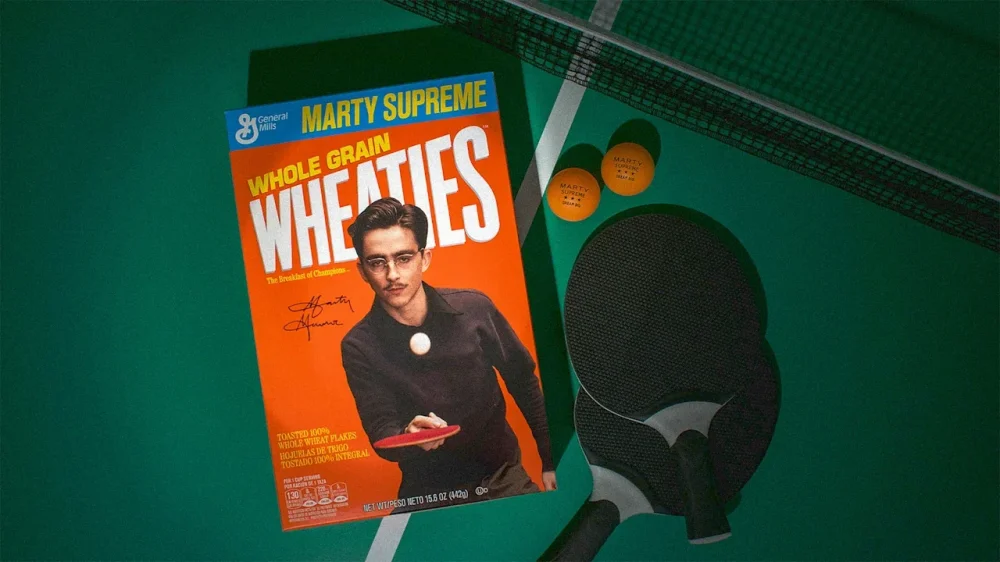
The front of the Wheaties box has served as a hall of fame for some of the greatest athletes of all time, from baseball star Lou Gehrig to boxer Muhammid Ali, basketball legend Michael Jordan, and seven-time Olympic gold medalist Simone Biles. Now, a fresh face is gracing the box’s hallowed orange frame: Marty Mauser, the fictional ping-pong player played by Timothée Chalamet in A24’s upcoming film Marty Supreme. Instagram The cereal box comes just weeks after A24 released a now-viral 18-minute long parody of a marketing meeting to promote the movie (which releases on Christmas). In that video, Chalamet joins a Zoom call full of supposed marketing executives and proceeds to fill up the meeting’s airtime with increasingly ridiculous suggestions for the film’s marketing efforts, leaving the eight other members of the call scrambling to accommodate his wild ideas. Since then, several of the comedic ideas have, astonishingly, become reality—including an ad campaign on bright orange blimps and, now, a $25 limited-edition Wheaties box. Our current era of movie marketing is dominated by discussion of properties like Barbie and Wicked, which have rewritten the roles of brand partnerships by flooding stores everywhere with hundreds of collabs per film (Wicked part one, for example, netted more than 400 collabs). When Barbie can show up on a Heinz bottle and Elphaba in a box of mac ‘n cheese, the novelty of movie-branded partnerships can start to wear off. A24 is combatting that consumer fatigue with a masterclass marketing campaign for Marty Supreme. Its co-branded merch balances scarcity, which makes every drop feel aspirational, with a kind of unexpected flair that makes perfect sense for the film—and for its audience of young Chalamet fans. How Marty Supreme is courting its young audience In late November, Chalamet posted the address of a New York storefront with the message, “C u at 7.” By 4:30, fans were lined up around the block. They were queuing to get their hands on what turned out to be a line of Marty Supreme-themed merch, designed by the luxury L.A.-based brand Nahmias. Every item sold out, but one in particular—a $250 windbreaker inspired by an outfit from the show—was the clear star of the show. Since then, it’s sold for $5,000 on Grailed and become a topic of considerable discourse on Reddit, where users are avidly yearning for a bigger drop. The Marty Supreme marketing campaign is leaning unabashedly on Chalamet’s star power and influence with a younger, primarily male audience—and clearly, it’s working. Chalamet’s audience wants a piece of his effortless swagger, and that becomes even more desirable when, instead of being available on the shelves of every local Target and countless digital Amazon storefronts (Wicked, we’re looking at you), his Marty Supreme collabs are only available in the most limited of supply. That thought process clearly also applies to this new collab with Wheaties. Why the Marty Supreme marketing campaign is genius, actually Like the windbreaker, the Wheaties collab is directly tied to a moment in the film, when Marty, (who’s portrayed as an extremely confident, assertive salesman), says, “It’s only a matter of time before I’m staring at you from the cover of a Wheaties box.” It’s also a reference to the aforementioned Zoom parody, wherein Chalamet tries to convince the marketing team that Marty deserves a spot on the Wheaties box alongside names like Michael Jordan. “To me, it’s marketing 101,” Chalamet says in the video. Apparently, the team at Wheaties agrees. “For more than 100 years, Wheaties has celebrated iconic athletes and moments in culture that transcend boundaries, from sports to unexpected heroes,” says Emilie Knox, vice president and business unit director of cereal at General Mills. “Marty Supreme fits squarely into that tradition as he embodies determination, heart, and the belief that greatness can come from the most unexpected places.” When designing the box, the Wheaties team leaned into its most recognizable brand elements, including its iconic orange—which, coincidentally, is also the central color of Marty Supreme—and the featured figure front-and-center. A fictional athlete, with real return? General Mills produced several thousand of the special edition boxes, each at the hefty price point of $25, which Knox says reflects the collectible nature of the box and its limited run. On Reddit, users are skeptical of the cost. One commenter wrote, “This would be a cool giveaway gift, but for $25 you will not be staring at me from the cover of a Wheaties box”—a sentiment that appears to be shared by several others. Wheaties declined to share specific numbers, but as of this writing, the limited box is already ‘sold out’ on the A24 website after going less just a day ago, creating a sense of scarcity among consumers (though it’s still available through Wheaties’ site). According to Knox, the early response has been “extremely strong, with collectors moving quickly” to get their hands on a box. “A24’s marketing team has been incredible partners,” Knox says. “The playful teasers leading up to the drop, like the Zoom marketing call seen around the world, were driven by their creative genius, and we’ve had a lot of fun working together to continue building fan excitement.” Marty Supreme’s marketing prioritizes depth over breadth, opting to prioritize a few deeply thought-out collabs over an all-out blitz. Ironically, by limiting its marketing’s scope and availability, the film’s team has managed to break through the sea of content online and reach new audiences. View the full article
-
Remember when social media content was limited to Facebook statuses and, er, “pokes?” Even a few years later, cutting-edge content was limited to a blurry photo with an oversaturated filter on Instagram. It seems bizarre now, given how much you can do with social media today. With the ever-growing list of platforms releasing new features daily, it's an exciting time to build a following online — but it's not an easy one. With the plethora of social media content options available every time you open your favorite app, it can be difficult to know what type of content your audience most wants to see. Short-form video? A carousel? A good old-fashioned selfie? Well, that all depends on you and your audience. The right mix of content will be the sweet spot between what your audience most wants to see and what is easiest for you to create consistently. To pinpoint what works best for you, I'd encourage you to start with a social media content strategy and, from there, experiment with different types of content in your social media content calendar. Use the ideas in this article as a springboard to help you figure out what kind of content is most likely to resonate with your followers. With all that in mind, let’s dig in: Here are the various types of social media content, plus some ideas to spark your next post: Text-based posts Short-form videos Photo posts Photo carousels Graphic carousels Long-form video URLs or links Text-based postsText-only posts have survived from the early days of social media, and with good reason — they’re still the bread and butter of many a social media marketing strategy. With the rise of the LinkedIn personal brand, decentralized networks, the launch of Threads, and even long-form posts on X, the power of text-based posts on social media platforms shouldn’t be overlooked. Not convinced yet? Even Instagram allows for text-based posts (in the form of Instagram Notes and ‘Create-mode’ Instagram Stories), and TikTok introduced its own text-based post style in 2024. In summary: text posts aren’t going anywhere. Perhaps the best thing about this social media content type is how easy it is to create — as opposed to, say, video. This is a crucial consideration if you’re looking to get more followers on LinkedIn, X, Threads, and other platforms that allow for text-based posts. Consistent activity on the platform is far more important than busting your gut to create high-effort videos. If all you have time for is, say, a quick tweet or Threads post, do that, rather than sit on your hands. Buffer CEO Joel Gascoigne recently summarized this in a (text-based) post across platforms: Text-based post ideas1. Chop up long-form content into threads Written a great blog post or newsletter? Platform character limits don’t mean lengthier posts like this are off the table. In fact, thread functionality on platforms like X, Threads, and Bluesky (if you post with Buffer) really lends itself to summaries of long-form content. Here's a thread example from Buffer guest post contributor Gaetano DiNardi, which surprised him by going viral on X — his explainer shows that repurposed social media content can surprise you when you give it life on a new platform. 2. Share industry news A round-up of all the latest goings-on in your industry can be incredibly helpful for your followers and positions you as a first-in-the-know thought leader. Here’s a great example of Girl Power Marketing’s weekly social media round-up. Notice how she makes it super easy to digest with short, snappy sentences and emojis as bullet points. 3. Embrace thought leadership Speaking of thought leadership: building yourself up as a thought leader on platforms like LinkedIn, X, Threads, and beyond is an excellent way to future-proof your career. Sharing your unique insights, experiences, and expertise can help establish your credibility and attract others in your area (and prospective clients or hiring managers). Consider discussing industry trends, offering career advice, or sharing lessons learned from your own journey. These posts can spark meaningful conversations and might even open the door to your next big opportunity. Buffer's Director of Growth Marketing, Simon Heaton, regularly shares posts that detail how the Buffer marketing team works, like this one: 4. Ask engaging questions Engaging your target audience with thought-provoking questions is a clever, lightweight way to boost engagement and gather useful information for your content, work, or life. You could share your thoughts on current events and ask others to weigh in. You could also go the more personal route and gather advice from other folks in similar industries or situations. The latter is a particularly great strategy on Threads, where niche communities are often ready to lend a hand. Here’s a great example from Buffer’s Head of Content and Communications, Hailley Griffis: These types of posts can also spark social media content ideas. In fact, leveraging YouTube Community Posts to gather new video ideas or feedback is a successful YouTuber staple. Ali Abdaal uses this tactic often, using responses to spark a whole new video series. Here’s an example: 5. Share behind-the-scenes stories Audiences love to connect with brands (business or personal) on a deeper level. Sharing a relatable story that will make a viewer think, “Hey, I totally get that,” or, “They’re just like me,” can be an excellent way to strengthen their support of your work. The more authentic, the better. 6. Create polls to spark discussion Polls are a staple feature on most social platforms. Almost all of them have some sort of ‘poll’ post type that you can use to gather feedback and prompt discussion. They're a great way to generate engagement and even spark ideas for new content you can share. If your preferred social media platform doesn’t have a poll functionality, you could ask folks to react or comment with a certain emoji to choose a specific option. The easier it is for them to engage, the more likely they are to do so. Pro tip: Offer your target audience a way to share an answer not in your poll by creating an ‘Other’ option and asking them to comment with more context. Short-form videosShort-form video is known by many names across platforms — ’Shorts’ on YouTube, ‘Reels’ on Instagram and Facebook Reels, and ‘TikToks’ on well, TikTok. Videos can also be shared on LinkedIn, Threads, Twitter/X, Mastodon, and more. Whatever your platform preference, short-form video — usually clips that are 90 seconds or under — is one of the most powerful types of social media content you can invest in. According to Buffer data, videos are the content format most likely to get engagement across most major social platforms. It makes sense — short-form videos are tailored to mobile devices, where you'll find most social media users consuming content these days. So if you have the resources to create short-form videos, they’re well worth investing in. Short-form video ideas7. Chop up long-form video content Waste not, want not. When it comes to creating enough content to maintain a strong social media presence on any platform, repurposing is your best friend. Cutting key moments out of longer YouTube videos is the best example here (resized for that all-important 9:16 ratio, of course), but don’t sleep on other videos, either. If you're hosting a webinar or speaking at professional events, be sure to get the recording — even a 30-minute session can yield several different one-minute clips for your social media platform of choice. Here's a highlight snippet from a podcast recording I did with Simon, which I chopped up into shorter clips for Instagram and TikTok: 8. Tap into trending audio Trending audio and music tend to rear their heads on TikTok first, then pop up on Instagram and Facebook Reels — so you'll be ahead of the curve if you keep an eye on TikTok. Here's our guide to finding trending sounds on TikTok and trending audio on Instagram that you can leverage here. Tiffany Morris, Owner of Luxe Gather, does a great job of keeping on top of these trending sounds and applying them to Instagram Reels to promote her business. (Here’s her clever system for creating these videos). 9. Record ‘stock footage' My Buffer teammate Mitra Mehvar put me on to this, and it's genius — she keeps an album of ‘stock footage’ she can use for short-form videos with a simple text overlay. This could be anything: working at your desk, going about your day, putting the finishing touches on a new product, or even some beautiful scenery you happen to pass by. Here's a guide to creating social media stock footage of your own. 10. Add text to videos Wondering how you can convert your clever text posts into content for video-focused social media channels? Put your message in the medium. This idea is particularly well-paired with idea no. 9 above — rather than saving your text for a caption, you could add some thoughts as text over your stock footage with a simple video editing tool CapCut. 11. Try a ‘spend a day with me’ Whether you’re a creator, a business owner, or a marketer, this versatile trend can work. These videos, which give your target audience a fly-on-the-wall view of a day in your life, are actually relatively easy to make. They simply involve grabbing some clips of a couple of key moments in your day and stringing them together in your editing app of choice. You can choose to add a voiceover contextualizing things, add a trending song, or just use the ambient noise from the clips (hello, #asmr). The key here is to approach your day from an interesting angle — what about your life might be interesting or relatable? So rather than ‘Spend a day with me,' opt for ‘Spend a day with me as a business owner in Toronto,’ or ‘Spend day 5 of my 4-day workweek with me,’ as I did below. Creating the video for your business? Be sure to tie it back to the brand in some way: ‘Spend a day with me as host a founder event', or ‘Spend a product launch day with me,’ could offer a behind-the-scenes look and humanize the brand for your customers. 12. Crosspost Instagram Reels and TikToks It's nearly impossible to predict what social media content will perform best where — so don't shy away from sharing the videos you create on other platforms. As creators or social media managers, we often fall into the trap of thinking everyone in our audience has seen everything, but in reality, only a small fraction of our audience will follow us on multiple social media channels. X, Threads, and LinkedIn all support video. LinkedIn, in particular, is doubling down on short-form video content with an in-feed ‘Videos for You’ segment that has seen video reach on the platform skyrocketing. That 'spend a day with me,' video I shared above? It was one I created with TikTok in mind as part of my 30-day TikTok experiment, and I shared it on LinkedIn on a whim. On TikTok, the video had a solid 6.8K views. On LinkedIn, it had well over 50K. ♻️Looking to repurpose some TikTok videos you’ve already shared? Here’s how to download your TikToks without that a watermark.13. Encourage user-generated content If you’re a business, partnering with other video creators and users in your audience on UGC (user-generated content) who align with your brand can help you boost credibility, reward brand ambassadors, and reach audiences beyond your own. Creators who use your product or services (and talk about it) are like social media gold dust, but don’t underestimate the power of social media content created by regular users, either. Use Instagram’s Remix or TikTok’s Duet or Stitch features to put your own spin on their social posts — but I’d recommend asking for permission first. If they’re excited about your brand, there’s no doubt they’ll be happy to be featured on your feed. Photo postsClassic social media photo posts can still garner a healthy reach on platforms — and aren’t exclusively for Instagram. X (formerly Twitter) and LinkedIn both support image posts, and even Facebook still sees engagement with visual content. Photo post ideas14. Don't shy away from the selfie Putting a face to a post — preferably yours — can make or break it. This is something I can personally attest to. Some of my top-performing posts as a creator on LinkedIn have all featured my face. 15. Share a product sneak peek If you're preparing to launch a new physical product, a sharing simple sneak peek image — either a blurred-out photo, or only a small piece of the item —is a great way to whet your customer's appetites and drum up excitement for the launch. You could even turn the post into some sort of guessing game and giveaway in the comments, and offer the first user to get it right a prize. 16. Create a collage Social media tools like Canva and Instagram's Layout make editing together a selection of images a breeze. Tell a visual story by juxtaposing several elements in one image, the way Buffer content writer Tami Oladipo did in this clever Threads post. Photo carouselsTake all of what I mentioned above and multiply that by 10 (or 35 and 20, in the case of TikTok and Instagram, respectively.) Carousels are a fun way to offer a window into your world or share behind-the-scenes content both as a brand or creator. The best part about photo carousels (if an aesthetic feed is important to you) is that they don’t all need to be picture-perfect. Edit the first image to stay on brand, and the rest can be a little more raw and authentic. In fact, a level of authenticity is par for the course in this post style (thanks, Gen Z). 17. Try a weekly 'photo dump' Out: Perfectly polished feeds on Instagram. In: Messy, authentic, candid snaps. This trend lends itself perfectly to carousel-style posts, where all you need are some recent snaps from your camera roll. Fitness creator Meggan Grubb shares ‘photo dumps' like this every week, and her followers can't get enough of them: 18. Add text to your images Another option could be to include short sentences on each photo in a carousel for more context. This carousel style became popular on TikTok, but now Instagram has added the ability to add text into your images natively, too. On other platforms, apps like InShot, Canva, or CapCut will get the job done even better. The trick is to keep your text simple to make it easy to digest — no more than a line or two per image. Graphic carouselsNot to be confused with their simpler sibling, photo carousels, graphic carousels are images or PDFs (on LinkedIn) that your audience can swipe or click through like a slide show. Created in tools like Canva or Visme, they’re usually visually appealing and feature short, snappy, helpful information. They work particularly well on LinkedIn, Instagram, and Threads — and they’re also great for engagement. We have a guide to creating LinkedIn carousels and a comprehensive list of LinkedIn Carousel ideas here (which can be adapted for Instagram and other platforms). Here’s a few of the latter. Graphic carousel ideas19. Give step-by-step instructions and advice Carousels are a great way to share step-by-step instructions or guides. This can be useful for sharing how-to content, tutorials, or tips. For example, you could create a carousel that walks users through setting up a specific software or tool. 20. Round up new features or industry trends Carousels offer a way to share bite-size snippets with your users, customers, or followers that they will actually digest. The Instagram @Creator account is a brilliant example of this. They regularly share new platform updates in a simple carousel format like the example below: They also use this format to showcase social media trends that creators can tap into, as in this post: 21. Spotlight your customers or followers With their permission, a feature on your feed will go a long way to show how much you value your biggest supporters. Here’s a recent example of how Buffer shined the spotlight on one of our users on Instagram: Long-form videosLong-form video content remains a powerful tool for engaging audiences across various platforms. Longer videos allow for in-depth storytelling, detailed explanations, and comprehensive tutorials. Platforms like YouTube, Facebook, and now even TikTok are great for this format. On platforms that function as social search engines like YouTube and TikTok, these videos also tend to have more longevity than their short-form counterparts. On YouTube especially, a solid YouTube SEO strategy could mean your videos continue to get views for years after posting. But in the world of short-form video focus, keeping your audience engaged for anything longer than 30 seconds can be tough. There are plenty of ways to do this (as we unpack in our guide to growing your subscribers on YouTube), but in broad strokes: make sure your video is high-value and delivers on its promiseuse creative stock footage or subtle animations and sound effectssegment longer videos into titled chapters to help your viewers find what they’re looking for.Long-form video ideas22. How-tos or tutorials These types of videos are perfect for demonstrating complex processes or techniques — and building report with your viewers while you do it. For example, a makeup artist could create a detailed tutorial on achieving a specific look, or a software company could produce a comprehensive guide on using their product. Here's a great example from Todoist: 23. Behind-the-scenes content Give your audience a peek into your world. This could be a day-in-the-life video, a tour of your workspace, or a look at how your products are made. 24. Video podcast The age of the podcast has evolved to the age of the ‘vodcast’ — that is, a podcast recorded with video as well as audio. This podcast style has become a staple for both podcasters and YouTubers, with many of them even setting up beautiful studios in which to sit down with their guests. Here are some great examples from marketing podcast Nudge and YouTubers Colin and Samir: Of course, you absolutely don’t need a high-tech set-up to tap into this format. Even a high-quality video call recording, if you host your podcast virtually, will do the trick. Bonus: You’ll be spoilt for choice when it comes to video content to use on other platforms. 25. Interviews with experts Another great way to spotlight leaders in your industry or expert customers is to invite them into your studio (virtual or otherwise) for a chat. There are plenty of benefits to creating social media content in this way: it provides valuable, expert-led content for your audienceallows you to tap into the audience of your guests (if they have one)it’s another way to spotlight and build relationships with expert customers or thought leaders.The best part? As I touched on above, you really don’t need any fancy equipment to make this happen. A video call and a decent set of headphones is a great starting point. 26. Repurpose webinars and events I’ll say it again: waste not, want not. If you’re hosting events as a brand or business, do hit that record button. Value-led sessions like these are an easy win for long-form video content and, if structured well, require little to no editing. Here’s a recent example from a webinar the Buffer team hosted with Threads: URLs or link postsThis is an interesting social media content type in that social media posts that contain links often don’t perform as well. While most social media platforms don’t advertise the fact, it’s widely believed that link-only posts are not looked kindly upon by the algorithms. The idea is that the platforms want the experience to be immersive for users, and don’t necessary want them clicking or tapping off to another destination. That said, there is a time and place (and platform) for link-only posts. Link post ideas27. Stick to Pinterest There’s no platform quite like Pinterest for sharing links, particularly if you or your brand fit into lifestyle niches. Pinterest was built for external links. The idea of the platform is to save these external destinations so that users can visit them again later — think recipes, design ideas, workouts, and the like. If your brand doesn’t quite fit into the most Pinterest-y niches, don’t discount the platform just yet. See our Pinterest how-to guide for a step-by-step explainer and ideas. 28. Use the first comment or last thread to share a link If you're sharing a link on platforms like LinkedIn, consider placing it in the first comment or as the last item in a thread. This approach allows you to share helpful external content without potentially triggering algorithm penalties for link-heavy posts. You can use link-shortening services (like Buffer!) to create cleaner, more visually appealing URLs. When sharing links, always provide context and explain why the content is valuable to your audience. 29. Try Facebook to drive clicks According to Buffer data, of all the major platforms that support link-only posts (Facebook, LinkedIn, and X/Twitter), Facebook links tend to get five times more clicks than those posted on LinkedIn and four times more than those posted on X. 30. Leverage a link-in-bio tool While this is not strictly a social media post idea, it’s worth noting here that it’s poor social media practice to include links in posts on TikTok and Instagram. The links won’t be clickable, and your viewers won't be able to copy and paste them into a browser. If you’re looking to direct folks elsewhere on these platforms (or any really) it’s a great idea to add the CTA (call to action) ‘Find the link in my bio’ or ‘Tap the link in bio to read more’. This will send viewers over to your profile where it will be easy for them to click on a link. Of course, if the site you want to send them to is not front and center, you’ll need a link-in-bio tool you can easily curate to show the most important information first. Buffer’s Start Page is a great (free!) alternative. I use it to curate a list of my top home office products, something I get asked for often as a creator. Rather than including links to 15 different items in each post (honestly, who has the time?), I simply direct people to my Start Page link. Experiment to figure out what social media content works best for your audienceNot all of the social media content ideas on this list will be a roaring success for you, and that's OK. While a solid social media marketing strategy will help you theorize what might be the best fit, there's no substitute for throwing the proverbial spaghetti to see what sticks. And if you do find something that sends your follower count and audience engagement skyrocketing, great! But don't be tempted to post one single social media content type until the end of time. Your audience will quickly tire of seeing the same social media posts over and over, so it's worth coming up with several content types to mix and match in your social media calendar. Your social media marketing should be an iterative, flexible plan that you refine and tweak as your social media accounts grow. Happy experimenting! View the full article
-
Financial Reporting Council to examine two individuals and the firm itself over ‘unauthorised’ auditors’ reportsView the full article
-
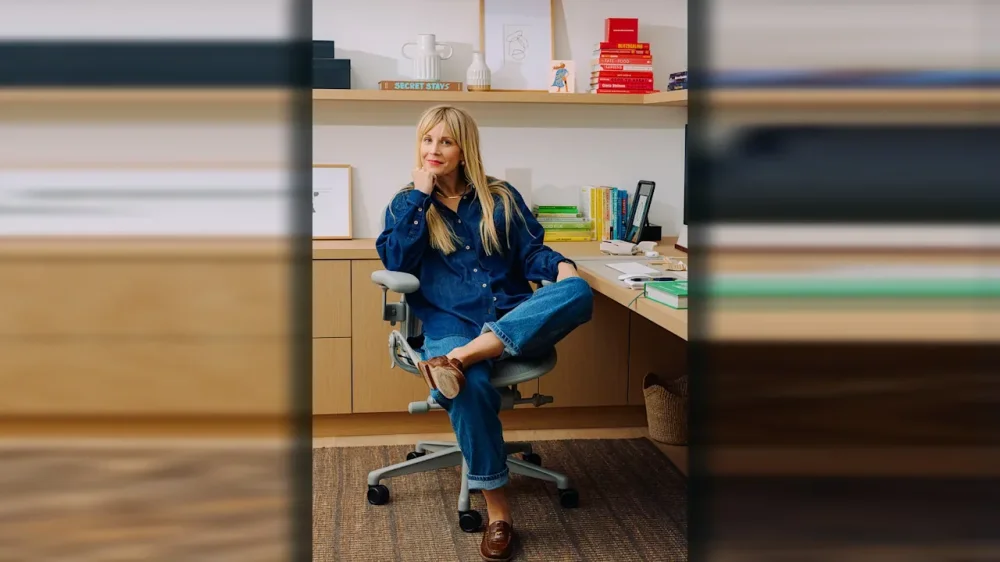
AI is part and parcel of many corporate design processes these days, including one company making a product many creatives are familiar with: Dropbox. Its VP of design and research, Shannon Butler, is optimistic about the tech’s integrations into her teams’ work—as long as designers are pragmatic in its integrations. Butler leads a design team that she feels has a bigger impact than filing deliverables on deadline: redefining work through the intersection of creativity, collaboration, and AI. A veteran of Google, YouTube, Airbnb, and LinkedIn, Shannon has spent two decades shaping products that influence how billions connect and create. Shannon Butler In her interview with University of Texas School of Design and Creative Technology assistant dean Doreen Lorenzo, Shannon discusses how Dropbox is reimagining design in the age of AI—not as a replacement for human creativity, but as a force multiplier for it. She reflects on lessons from leading design through hypergrowth and crisis, the role of taste as the next big differentiator in tech, and why the future of design leadership will depend less on tools and more on human judgment, curiosity, and conviction. When did you realize you were interested in design? Like many creatives, I was always a maker: drawing, writing, creating. The pivotal moment came in college. I was studying to be a teacher but told my dad I wanted to be an artist and didn’t know how to make a career of it. My dad, a self-taught software engineer, said, “You need to be in technology.” This was when CSS and JavaScript were freeing web design from rigid HTML tables. I started building websites for small businesses to pay for college and graduated with a full roster of freelance clients. That led to a marketing agency role helping larger clients go online. Then the iPhone came out, the world discovered UX, and the rest is history. How is AI influencing your work from a design perspective? We have this unique opportunity to make design a differentiator again, by putting ourselves in a human-first perspective rather than an AI-first perspective. Dropbox isn’t using AI to replace people or “steal” from creatives. We’re inserting it into creative workflows so that output is amplified and accelerated. By removing the grunt work of knowledge management or finding the right assets, we empower people to become even better at what they do, whether that’s crafting a commercial, running a photo shoot, or pitching a business plan, all the things that only humans can do. What do you enjoy about the meshing of technology and design? The scale is unmatched. I’ve been fortunate to work on products that don’t just serve users, they actually shape how society connects, creates, collaborates. I see that as both a tremendous privilege and responsibility that I take very seriously. I also love the pace. Technology moves so fast that you’re constantly operating at the edge of what’s never been done before. At YouTube, we invented new ways for creators to build community. At Airbnb, we reimagined trust between strangers. At Google, we designed for billions coming online for the first time. You have to be visionary and pragmatic—designing experiences that feel magical while working within technological constraints. It’s like being an architect who not only designs buildings but new ways to live. Can AI play a role in making people’s lives better through design? AI is an accelerant to the design process. Tools like Cursor and Figma Make are now essential for rapid prototyping. We built internal Slack channels called “Ask a Writer” or “Ask a Researcher” that tap into our brand guidelines and research repositories instantly. The speed boost is dramatic. We’re getting to meaningful first drafts in hours, not days. But our approach is pragmatic. AI’s limitations are real—some temporary, some long-lasting. We use it as a brainstorming partner, not a decision-maker. Anything customer-facing goes through rigorous human review. AI can optimize for metrics, but it can’t make judgment calls. It doesn’t grasp cultural nuance, brand intuition, or the subtle human behaviors that build long-term loyalty. That’s where designers become more valuable, not less. Who inspires you, and how does that show up in your work? I’m drawn to people who refuse to accept “that’s just how it’s done,” especially in a tech landscape where consolidation has created a dangerous gravitational pull toward sameness. What energizes me are leaders who stay true to their values, even when it’s harder. RJ Scaringe, CEO of Rivian, could have built a Tesla clone, but he’s challenging the industry without sacrificing brand or product excellence for short-term goals. I also admire investors like Kate McAndrew at Baukunst, who unapologetically focus on women, creativity, and the long view in an industry obsessed with quick exits. She’s proving the status quo can change. Across your career, what projects are you most proud of? I’m drawn to win-win-win projects where customers, business, and society all benefit—problems that feel almost nonprofit in ambition but are positioned for sustainable impact at scale. At Google, we worked on products to bridge the connectivity divide in underserved markets—exploring satellite-delivered content and peer-to-peer transfer when those approaches were considered radical. The goal was to bring the internet to billions who couldn’t access it via traditional infrastructure. At YouTube, I loved the transformation from distraction media to engagement media. We built features that empowered creators and supported movements like It Gets Better. The comments sections of videos improved from “cesspool” quality to featuring content almost as compelling as the videos. At Airbnb, I led Trust, core to the value proposition. Later I led nearly every product area through COVID and the IPO. AirCover was the culmination, radically transforming what happens when something goes wrong on a trip and eliminating the fear that prevents people from trusting strangers or having transformative experiences. The throughlines have been purpose-driven breakthroughs, a shared sense of “why,” and rallying a team around “impossible” goals. What are some of the most important lessons you have learned? Al Gore once came to Airbnb and told our team, “People do what you pay them to do.” That changed how I evaluate design opportunities. Some of my biggest “successes” were failures because I ignored the fundamental question: how does the company actually make money? I invested in work that would never translate into impact because the organizations weren’t structured to profit from that impact in the short term. It’s brutal to realize talented people can pour their hearts into work that’s structurally doomed, not because the ideas are wrong, but because the business model doesn’t reward those outcomes in the short term. Is today’s AI discourse helpful? How do you guide your creatives to take the right signals and uplift creativity? Competition is tough. Everyone’s racing to be the fastest, biggest, and most innovative. That focus on competition forces many tech companies to lose track of what matters most. Much of Big Tech product development is disconnected from the end customer, often because the business model isn’t optimized for them. Echo-chamber thinking focuses on beating competitors or last month’s metrics, not delivering real value. Short-term optimization is addictive and damaging. I coach my team that, yes, AI is powerful, but it’s another wave of tools like we’ve adapted to many times. Humans must provide talent and judgment AI can’t. Our mandates haven’t changed: human-centered design and delivering real value. How has design changed since you started? Where is design headed? When I started, in-house design barely existed. Design was misunderstood as beautification at the end and often outsourced. Then agencies like IDEO and frog proved its strategic value. Everyone brought design in-house, and teams ballooned across design, engineering, and PM. Now we’re seeing a retrenchment. Unfortunately many companies often lack the talent and the muscle memory to ship new value. They’re in optimization land, not innovation land. Design has gone through cycles of being valued and devalued. After several years of devaluation, I believe we’re entering a period where taste will again be the differentiator in the AI era. Everyone can move fast and ship quickly, but durable brand loyalty and user value require design input. Companies bought design firms, moved them in-house, but didn’t know what to do with them. Then they started hiring designers to manage designers, shaping teams differently. Now we’re seeing better output. I believe the next era for design should be more design founders and design-minded entrepreneurs, a new crop of companies that show a fundamentally different way of working and doing business. I believe that if design leaders were truly leveraged, we’d have fundamentally better products and a healthier digital society. What advice do you have for aspiring designers? Design is more relevant than ever. Twenty years ago my job didn’t exist. Now there’s a wave of enthusiasm and talent we desperately need. Every poorly designed product or soulless interface should strengthen your conviction that creativity is necessary. Pair your anger about what’s broken with a vision for what can be. Don’t quit. I love Ira Glass’s point about the gap between your taste and your work. You’re in this field because you have great taste. Now your execution just needs to catch up. The only way to close that gap is through relentless practice. My early agency years at Sapient Nitro and frog forced me to deliver at high volume under tight deadlines, and those reps gave me confidence for “impossible” briefs later. Design in tech is nothing but change, and that’s what keeps it exciting. Becoming a lifelong learner, staying curious, and being unafraid to try new things are critical for designers—and for anyone navigating the 21st century workplace. View the full article
-
Almost every AI I tested used the fake info—some eagerly, some reluctantly. The lesson is: in AI search, the most detailed story wins, even if it’s false. AI will talk about your brand no matter what, and if you don’t…Read more ›View the full article
-
In a Rye, Colorado, cattle pasture now subbing for the moon, an otherworldly vehicle bumps along a scrubby course of furrows and mounds, weaving around rocks and kicking up a fine dust. It’s an open-concept machine dubbed Falcon—a silver solar-powered rectangular frame on wheels, with a partial roof, windowless sides, and a spacious cockpit flanked by monitors and steering controls. An engineer sits in one of its two seats for safety as the vehicle autonomously navigates around obstacles to a location dictated by Mission Control 160 miles away. Suddenly, a wheel hits a rock, and Falcon halts, relaying real-time feedback to Mission Control. There, an operator revises a command for another attempt, driving home the hurdles in developing novel spacefaring technology. “We don’t stage any of this for you guys,” laughs Justin Cyrus. “We show you real testing.” Our play-by-play guide is the 32-year-old CEO and founder of Lunar Outpost, a rising star in the space robotics and mobility field. In less than a decade, the Denver area startup has already operated technology on Mars, landed the first commercial rover on the moon, and lined up another six lunar and cislunar missions with government and commercial partnerships—the most of any private company. Now, it’s vying with two other firms to build NASA’s next-generation lunar terrain vehicle (LTV) to shuttle Artemis V astronauts and experiments in 2030. At stake: a contract worth up to $4.6 billion. NASA is slated to make its decision this month. Justin CyrusThat model—a sleeker upgrade to Falcon, named Eagle, after Apollo 11’s crewed lander—awaits in a barnlike workshop, a short walk down a sloped dirt road where visitors are warned to keep an eye out for snakes. This is not your grandparents’ moon buggy. Eagle reaches speeds up to 25 mph (compared to Apollo’s 11 mph) for emergencies, though astronauts will stick to under 15 mph for safety. It can also climb 25-degree slopes, which engineers test on a nearby shale rock ridge, and carry more than 2.4 tons of cargo. It will operate in four driving modes: manually, assisted autonomy, teleoperated from Earth, and full autonomy with preprogrammed missions. And it’s crafted to run for years in the lunar south pole’s punishing radiation levels, abrasive dust, severe lighting, and temperature extremes ranging from 130 ºF in sunlight to—334 ºF in permanently shaded craters. This 1,000-acre patch of the Cyrus family ranch seems an unexpected Lunar Vehicle Test Site, as announced by a nearby sign. But the rugged landscape surrounding futuristic machines and a CEO decked out in black jeans and cowboy boots implies a fitting message: the adventurous spirit of the American West vaulting into the space age. “For the space economy, you need a robotic workforce,” says Cyrus. “So, the idea behind Lunar Outpost—let’s make that robotic workforce for extreme environments—evolved over the years into a robotic workforce on other planetary bodies. We want to be the company that makes outposts on the moon and cities on Mars.” Eagle in the lunar economy NASA’s Artemis missions seek to return humans to the moon and establish a sustainable lunar base and economy as a springboard to crewed missions to Mars. As part of it, the space agency last year awarded contracts to Lunar Outpost, Venturi Astrolab in Hawthorne, CA, and Intuitive Machines in Houston to design LTVs to shuttle astronauts, transport equipment, and conduct sample gathering and analysis. Regardless of NASA’s choice, the Eagle is still headed to the moon. Last year, it secured a commercial agreement with SpaceX to use its Starship to deliver Eagle to the lunar surface, where it can be used commercially when not needed by NASA. Eagle is a feat of engineering. It boasts a sensor suite of 360-degree stereoscopic cameras, LIDAR, and an electrodynamic dust system (EDS) that clears particulates off solar panels and lenses. Its sides contain MOLLE panels with quick-connect grips for utility tools (an idea borrowed from the team’s off-roading vehicles), flaps that open into workstations, pop-out drawers for thermally controlled sample storage, and radiators that dispel heat from motors and avionics. The energy system includes dual-sided solar panels to ensure one always faces the sun, and an advanced version of General Motors’ high-nickel lithium-ion battery cells that, with additional heating and insulation, can survive the 14-day lunar night and operate even if individual cells fail. An open cockpit with inlaid lighting and oversize control switches enables two astronauts, regardless of size, to easily access and operate in bulky spacesuits and gloves. Engineers incorporated feedback from astronauts who test-drove LTV simulators and prototypes. “That was critical to evolving our design,” says AJ Gemer, Lunar Outpost’s CTO and cofounder. “We get used to moving here in this one-g Earth environment. When you translate that into a big, pressurized suit and one-sixth gravity, all your motions become different. Things that your gut and intuition tell you would be a nice, simple maneuver suddenly become more difficult.” A 6.5-foot extendible robotic arm that attaches to the back of the vehicle can autonomously switch tool ends for tasks ranging from solar panel cleaning to sample extraction and handling to construction. “All of the payloads on board need zero human interaction,” says Cyrus. “So, you can accomplish a lot of science and exploration objectives, even without astronauts on board.” But the niftiest technology is the Goodyear-designed wheels—36-inch metal mesh tires with a little give and bounce for better traction, shock-absorption, and longevity. “This has a lot of advantages over other types of tires, which only have so many thermal cycles before they become brittle and crack,” says Cyrus. “If a spring comes loose or a section breaks, it doesn’t unravel the whole tire. These are better for vehicle dynamics at higher speeds, because they disperse the energy better when you hit obstacles.” But space isn’t necessarily the limit. Cyrus envisions future Earthbound applications for Eagle technology, most notably in the electric farm and self-driving car markets, with lunar-grade batteries that can operate in any Earth winter, and autonomy and localization that can navigate without GPS. “That is probably the most under-our-hat technology,” Cyrus says of the latter. “Because if we’re able to do that, what it offers is self-driving cars to go anywhere in the world and still know where you’re at without supporting infrastructure.” An impassioned rise Cyrus was still a kid when he first learned about the concept of sustainability in space. He’d grown up around the space industry, thanks to a dad who worked at NASA’s Johnson Space Center and later, Lockheed Martin. When JSC ran a competition for employee children to fashion new Lego space station designs, Cyrus’s entry missed the top spot, but yielded some serious inside baseball tips. “’That’s cool that it unfolds and folds back up, but what are you gonna do with all the oxygen? How are you gonna refill the volatiles that you need for humans to survive?'” Cyrus recalls one engineer’s critique. “That was the first time I remember being passionate about figuring out where resources come from in space.” The passion stuck. Later, while working as a Lockheed Martin engineer and pursuing graduate degrees at the Colorado School of Mines, he founded Lunar Outpost in 2017 to develop mobility and infrastructure for a sustainable human presence in space. He amassed a robust leadership team: older brother Julian, an aerospace engineer who now serves as COO; AJ Gemer, a dust science expert with eight space missions under his belt, as CTO; and Forrest Meyen as chief strategy officer. Meyen codesigned MOXIE (short for Mars Oxygen In-Situ Resource Utilization Experiment), a NASA demonstration technology on the Perseverance rover that produced oxygen from the carbon dioxide in the Martian atmosphere. “It’s very rare to have cofounders with that much experience at this stage,” says Cyrus. Potential backers were less enthusiastic. “I pitched 300 investors; not a single one said `yes,’” Cyrus laughs. “They’re like, `You’re crazy! Why would I invest in a lunar company?’” So, the team pivoted to commercializing an air quality monitor, called Canary, that the company had designed for the International Space Station and NASA’s Lunar Gateway, a planned lunar-orbiting space station for the Artemis missions. Canary detects and analyzes pollutants, including methane, carbon dioxide, and carbon monoxide. It was a hit with the oil and gas industry and the U.S. Forest Service, selling some 5,000 units in more than 35 states and 14 countries to monitor forest fire emissions, air pollution, and industrial leaks. “That gave us the revenue to invest in some of this advanced and deep technology,” says Cyrus. “Our revenue’s grown over two times every single year since 2017 to the point that these investors are like,`Alright, there’s something there.’ From 2017 to 2021, they saw us evolve and do exactly what we said we were gonna do. And that’s a rare thing in space.” Since 2022, it’s raised $23.6 million, per market insight platforms Traxn and CB Insights, and grown to 140 employees in Colorado, Luxembourg, and Australia. (The staff also includes the youngest Cyrus brother, Austin, now a program manager.) As a private company, Lunar Outpost doesn’t disclose its revenues, though platforms such as Growjo estimate they’re just north of $50 million. It developed the LTV through partnerships with Leidos, MDA Space, Goodyear, and General Motors, while Castrol collaborated on its state-of-the-art mission control at its Golden, CO headquarters, which also includes design, manufacturing, and additional testing facilities. The last four years have seen two space ventures. From 2021–23, Lunar Outpost operated MOXIE on Mars. Last March, its Mobile Autonomous Prospecting Platform (MAPP) rover flew aboard the Intuitive Machines Athena lander as part of a mission to collect regolith samples and assist with the first lunar communications network. Unfortunately, Athena fell onto its side, trapping MAPP and preventing its deployment. Despite the setback, “we were able to do a full checkout in space and get a lot of data down,” says Cyrus. That journey will be chronicled in a 2026 documentary, Drive Me to the Moon. Meanwhile, the company has another six lunar and cislunar missions planned. The company is developing Mobile Autonomous Robotic Swarms (MARS) software for the U.S. Air Force and U.S. Space Force, which it will test next year in low-Earth orbit. And four of its rovers are headed back to the moon. Next year, one MAPP will fly aboard a third Intuitive Machines lunar lander to investigate a magnetic anomaly at Reiner Gamma as part of the NASA/Johns Hopkins University Lunar Vertex mission. In 2027, one MAPP will ride a fourth Intuitive Machines lander to the lunar south pole, while an exploration class rover, dubbed Roo-ver, will carry scientific and commercial payloads for the Australian Space Agency’s first lunar mission. In 2028, another MAPP will join NASA’s Artemis IV DUSTER mission (short for DUst and plaSma environmenT survEyoR) to carry instruments that will characterize landing-site dust and plasma. Then there’s another mission the company can’t announce just yet. The advancements from each mission inform the others. “We have spent about a decade developing critical technologies that we’re going to test on many missions before it ever gets to a lunar terrain vehicle,” says Cyrus. “So that way, we have a high degree of confidence that the astronauts are safe, and we can reliably perform the services that NASA needs. We are a lunar mobility company, so regardless of what happens with the LTV, we’ll keep moving.” Another long-term vision is creating a legal and economic framework for mining space resources. Five years ago, NASA contracted with Lunar Outpost, among other companies, to purchase regolith samples for $1 to set legal and procedural precedents for private companies to own and sell what they mine on celestial bodies. (Had it been able to deploy, the initial MAPP rover would have provided the first such exchange.) Considering the investment cost and potential rewards—helium-3, for example, is abundant on the moon but among the most expensive substances on Earth due to its scarcity—this step gives companies more confidence that they won’t be legally challenged before spending billions to extract resources on a large scale. Engaging the public A fully spacefaring existence will require all aspects of humanity. To that end, Lunar Outpost is tapping artistic imagination and STEM learning by collaborating with artists, designers, and toy companies. On its last lunar mission, the company teamed with MIT Media Lab on two art tie-ins: a mock ground control to track the mission and a rover payload—a Voyager Golden Record-inspired two-inch silicon wafer containing etched recordings of voices describing what space means for humanity. And last summer, in a full-circle moment, it released a Lunar Outpost Moon Rover Space Vehicle set for young STEM enthusiasts. Its call for future payloads welcomes pitches from the creative community. “NASA’s still a public organization,” says Cyrus. “The art, toys, and stories are critical to getting the public aware of what’s going on. Getting them interested in the new cis-lunar economy is important to the long-term sustainability.” Perhaps no one is more excited than Cyrus’s father, now watching his sons carry the torch. “He’s thrilled—this is what he wanted to see back in the `90s and early 2000s—that sustainable presence on the moon,” he says. “He wants to see humanity get out in space. And that’s why he let me dig up a test site in front of his ranch.” View the full article

-
We were promised empathy in a box: a tireless digital companion that listens without judgment, available 24/7, and never sends a bill. The idea of AI as a psychologist or therapist has surged alongside mental health demand, with apps, chatbots, and “empathetic AI” platforms now claiming to offer everything from stress counseling to trauma recovery. It’s an appealing story. But it’s also a deeply dangerous one. Recent experiments with “AI therapists” reveal what happens when algorithms learn to mimic empathy but not understand it. The consequences range from the absurd to the tragic, and they tell us something profound about the difference between feeling heard and being helped. When the chatbot becomes your mirror In human therapy, the professional’s job is not to agree with you, but to challenge you, to help you see blind spots, contradictions, and distortions. But chatbots don’t do that: Their architecture rewards convergence, which is the tendency to adapt to the user’s tone, beliefs, and worldview in order to maximize engagement. That convergence can be catastrophic. In several cases, chatbots have reportedly assisted vulnerable users in self-destructive ways. AP News described the lawsuit of a California family claiming that ChatGPT “encouraged” their 16-year-old son’s suicidal ideation and even helped draft his note. In another instance, researchers observed language models giving advice on suicide methods, under the guise of compassion. This isn’t malice. It’s mechanics. Chatbots are trained to maintain rapport, to align their tone and content with the user. In therapy, that’s precisely the opposite of what you need. A good psychologist resists your cognitive distortions. A chatbot reinforces them—politely, fluently, and instantly. The illusion of empathy Large language models are pattern recognizers, not listeners. They can generate responses that sound caring, but they lack self-awareness, emotional history, or boundaries. The apparent empathy is a simulation: a form of linguistic camouflage that hides statistical pattern-matching behind the comforting rhythm of human conversation. That illusion is powerful. We tend to anthropomorphize anything that talks like us. As research warns: Users often report feeling “emotionally bonded” with chatbots within minutes. For lonely or distressed individuals, that illusion can become dependence. And that dependence is profitable. The intimacy we give away When you pour your heart out to an AI therapist, you’re not speaking into a void; you’re creating data. Every confession, every fear, every private trauma becomes part of a dataset that can be analyzed, monetized, or shared under vaguely worded “terms of service.” As The Guardian reported, many mental health chatbots collect and share user data with third parties for “research and improvement,” which often translates to behavioral targeting and ad personalization. Some even include clauses allowing them to use anonymized transcripts to train commercial models. Imagine telling your deepest secret to a therapist who not only takes notes, but also sells them to a marketing firm. That’s the business model of much of “AI mental health.” The ethical stakes are staggering. In human therapy, confidentiality is sacred. In AI therapy, it’s an optional checkbox. Voice makes it worse Now imagine the same system, but in voice mode. Voice interfaces, such as OpenAI’s ChatGPT Voice or Anthropic’s Claude Audio, feel more natural, more human, and more emotionally engaging. And that’s exactly why they’re more dangerous. Voice strips away the small cognitive pause that text allows. You think less, share more, and censor less. In voice, intimacy accelerates. Tone, breathing, hesitation, even background noise, all become sources of data. A model trained on millions of voices can infer not only what you say, but also how you feel when you say it. Anxiety, fatigue, sadness, arousal: all detectable, all recordable. Once again, technology isn’t the problem. The problem is who owns the conversation. Voice interactions generate a biometric footprint. If those files are stored or processed on servers outside your jurisdiction, your emotions become someone else’s intellectual property. The paradox of synthetic empathy AI’s growing role in emotional support exposes a paradox: The better it gets at mimicking empathy, the worse it becomes at ethics. When a machine adapts perfectly to your mood, it can feel comforting, but it also erases friction, contradiction, and reality checks. It becomes a mirror that flatters your pain instead of confronting it. That’s not care. That’s consumption. And yet, the companies building these systems often frame them as breakthroughs in accessibility: AI “therapists” for people who can’t afford or reach human ones. The intention is theoretically noble. The implementation is reckless. Without clinical supervision, clear boundaries, and enforceable privacy protections, we’re building emotional slot machines, devices that trigger comfort while extracting intimacy. What executives need to understand For business leaders, especially those exploring AI for health, education, or employee wellness, this isn’t just a cautionary tale. It’s a governance problem. If your company uses AI to interact with customers, employees, or patients about emotional or sensitive topics, you are managing psychological data, not just text. That means: Transparency is mandatory. Users must know when they’re speaking to a machine and how their information will be stored and used. Jurisdiction matters. Where is your emotional data processed? Europe’s General Data Protection Regulation (GDPR) and emerging U.S. state privacy laws treat biometric and psychological data as sensitive. Violations should have, and will have, steep costs. Boundaries need design. AI tools should refuse certain kinds of engagement—such as discussions of self-harm, and medical or legal advice—and escalate to real human professionals when needed. Trust is fragile. Once broken, it’s nearly impossible to rebuild. If your AI mishandles someone’s pain, no compliance statement will repair that reputational damage. Executives must remember that empathy is not scalable. It’s earned one conversation at a time. AI can help structure those conversations—summarizing notes, detecting stress patterns, assisting clinicians, etc.—but it should never pretend to replace human care. The new responsibility of design Designers and developers now face an ethical choice: to build AI that pretends to care, or AI that respects human vulnerability enough not to. A responsible approach means three things: Disclose the fiction. Make it explicit that users are engaging with a machine. Delete with dignity. Implement strict data-retention policies for emotional content. Defer to humans. Escalate when emotional distress is detected, and NEVER improvise therapy. The irony is that the safest AI therapist may be the one that knows when to stay silent. What we risk forgetting Human beings don’t need perfect listeners. They need perspective, contradiction, and accountability. A machine can simulate sympathy, but it can’t hold responsibility. When we let AI occupy the role of a therapist, we’re not just automating empathy—we’re outsourcing moral judgment. In an age where data is more valuable than truth, the temptation to monetize emotion will be irresistible. But once we start selling comfort, we stop understanding it. AI will never care about us. It will only care about our data. And that’s the problem no therapy can fix. View the full article

-
High-power magnets undergird an enormous amount of modern society. From high-end audio speakers to electric vehicles, wind turbines, and fighter jets, they are a vital component in much of the technology we touch every day. To make them requires mining and refining rare earth elements—a supply chain largely controlled by China. Companies around the world are racing to find alternatives by using materials that are more abundant and cheaper to produce domestically. Minneapolis-based Niron Magnetics believes it has found a solution, claiming it can approach key aspects of rare earth magnet performance, using humble iron and nitrogen—albeit in an exotic formulation. General Motors, Stellantis, the U.S. government, and others are betting on it. “The Chinese put export controls in place around rare earths, and that’s been a great benefit to us,” says Niron CEO Jonathan Rowntree. China currently accounts for around 60% of global rare earth mining, according to the International Energy Agency, and about 90% of refining (including ore mined in and shipped from the U.S.). It also supplies over 90% of rare earth magnets, according to the U.S. Department of Energy. Geopolitical tensions are putting that supply in jeopardy. “We want to be able to solve this problem for Western companies as quickly as possible,” Rowntree says. When asked if Niron will only serve the West, he says, “All these countries outside of China have the same problem.” Beyond the U.S., Niron plans to build one factory somewhere in Europe and another in Asia. “It won’t be in China. It’ll be in Southeast Asia, most likely,” he says. Moving beyond neodymium Companies—and governments—are especially chasing alternatives to one of these rare earth metals: neodymium. It is alloyed with two other metals to make the world’s most popular magnet. “Neodymium iron boron is the best permanent magnet going. And no one’s really got anywhere close,” says Nicola Morley, professor of materials physics at the University of Sheffield in England. She has no affiliation with Niron. Niron has raised approximately $200 million from private funders and about $100 million from federal and state tax credits or grants, including from the departments of Energy and Defense, to build its exotic formulation over the past 15 years. The world could finally find out how well Niron’s technology works in 2026, when it says that magnets from its pilot facility in Minneapolis will start to appear in home audio speakers. Motors in appliances such as washing machines, clothes dryers, and air conditioners are on schedule to follow in 2026 or 2027. Niron broke ground on its first full-scale factory in Sartell, Minnesota, in September, and expects to be churning out 1,500 tons of magnets per year by early to mid-2027. It’s considering several states for its next 10,000-ton-per-year “world-scale” plant, which it estimates could provide more than 20% of U.S. supply after it opens in 2029. Then will come the plants in Europe and Asia. Niron has no plans to license its technology. “We want to be a full-service magnet producer,” Rowntree says. Dates for when additional plants will open are not certain, or for when magnets may appear in industrial machinery, cars, planes, and windmills. Rowntree says that, compared with the short product cycle for consumer tech, “industrial [is] medium, automotive takes a bit longer, and then defense and wind turbines take the longest.” Niron says only that it is “engaged” with defense contractors. Building a rival magnet Things get technical rather quickly when discussing Niron. But details matter in order to determine if it can achieve its ambitious business goals, including going public, which Rowntree says is “a few years away.” Niron has several patents for iron nitride technology, including one for how to manufacture a particular arrangement of the chemical compound—both within the molecules and in how they form crystals—by getting and keeping it in what’s called an “alpha double prime phase.” Rowntree puts that in somewhat simpler terms, saying the atoms are “arranged in such a structure that the nitrogen atoms kind of flex the structure” to cause greater magnetism. This is similar to neodymium magnets, in which, as Morley puts it, “boron basically stretches” the structure of the crystals. Getting these tiny crystals into large magnets was another challenge. All high-performance magnet making starts with material in powder form. Next, a magnetic field is applied to align these grains, so their magnetic poles all face the same way. Then the grains are compressed. Finally, in rare earth magnets, high heat is applied to stick the grains together. But heat would wreck Niron’s material, so the company’s scientists developed a work-around for compacting the magnets. “There was, I would say, secret sauce in manufacturing of the nano scale, the phase that we want, and keeping that phase,” Rowntree says. “And then a lot of technology around, ‘How do you cost-effectively scale that?’” Will the magnets work? Niron has revealed data on the strength of its initial magnets, which is on the lower end of neodymium’s performance. It expects to eventually approach neodymium’s level, which will make it a worthy competitor. What Niron has not yet revealed publicly is how well the magnets can hold up when exposed to strong magnetic fields in devices like EV motors. At a certain point, stresses like these can jumble the tiny regions of magnetism in any magnet so that they cancel each other out and turn it into just a lump of useless metal. Niron says its magnet’s ability to resist getting demagnetized at room temperature will never be as good as with rare earth metals, but it aims to get close enough. So Niron is starting by putting its magnets in speakers, because they produce a smaller magnetic field, while working to improve its numbers for “more demanding applications.” The company says it can replace weaker magnets, so low-end speakers can be smaller or perform better, but says it will also replace the more powerful rare earth magnets in higher-end speakers. As for more demanding applications, Niron and Stellantis announced in October a collaboration to develop new motor designs for EVs. Stellantis said simply that this “allows us to explore the possibilities.” Niron says its tech could replace neodymium magnets in some aircraft components, too, but not the jet engine. It gets too hot for both magnet types and requires an even pricier rare earth metal: samarium. Providing magnets for autos and planes (and wind turbines) is still years in the future. But if audio gear makers keep to the schedule Niron is forecasting, many questions will be answered next year. “Once these magnets hit the market, they can be studied independently by others, which will be important for the industry,” Morley says. View the full article

-
Discover how to use Google Search Console to discover keyword opportunities + get more traffic to your site. View the full article
-
Chancellor to face questions over impact of leaks and tax and spending plansView the full article
-
We ran an experiment to find out how fast new content can get cited in Google AI Mode & ChatGPT search. View the full article
-
Most people think of solopreneurs as a one-person machine. The solopreneur (according to social media) sends invoices, juggles client calls, manages marketing campaigns, and troubleshoots their own website—all before lunch. It’s a compelling narrative because it celebrates endless hustle and grit. But it’s also a myth. Solopreneurship simply means you make the business decisions. You don’t have to consult anyone else or wait for approval. It doesn’t mean you’re the only person doing the work. Most solopreneurs eventually bring in support (including me, in my solo business). Hiring help doesn’t mean you’re “no longer a real solopreneur.” It’s a sign that your business is growing. You recognize the value of your time or the limitations of your skill set. Smart solopreneurs hire help as an investment. Outsourcing work or projects can expand your bandwidth while still allowing you to maintain full control over the direction of your business. When to bring in professional support One of the hardest parts of running a solo business is deciding when to get help. Many solopreneurs wait too long because they assume they should be able to do everything themselves. But if you feel like you’re working endless hours or you’re spending too much time on tasks, it’s probably time to hire. Think of hiring as a strategic business decision, not a financial “splurge.” – Accounting or legal help The first category many solopreneurs consider is financial and legal support. They recognize that they don’t have the expertise needed—and financial or legal mistakes can be costly. An accountant or bookkeeper can manage tax compliance, keep your books clean, and help you understand your cash flow. Their jobs are to be familiar with accounting and tax laws, so you don’t have to stress. Typically, accountants or bookkeepers provide ongoing (monthly) support. Legal help becomes important as your business grows in complexity. A lawyer might review your client contracts or help you navigate trademarks if you’re developing a brand. Depending on your legal structure, you may also need a lawyer to help with documentation like Articles of Organization (for an LLC). You don’t need a lawyer on retainer. Even a few hours of legal support per year can prevent legal problems later. – A virtual assistant A virtual assistant (VA) is often the first hire for solopreneurs who are stretched thin. A VA can manage your inbox, follow up with clients, organize your files, or complete other organizational tasks that eat up hours of your time each week. I rely on a lot of automation in my business. Tasks are completed automatically in the background between apps (using Zapier). But eventually, I reached a point where I couldn’t automate anymore. Some work needs a human touch. It was either me, or a virtual assistant. I chose to hire a VA so I could focus on the more strategic/creative parts of my business. Most VAs work on an hourly, project-based, or monthly retainer model. With the right VA, you can start small and expand later if needed. Even a few hours per week can give you breathing room and help you stay focused on the work that generates revenue. – Project-based work Not every type of help needs to be ongoing. You might hire a specialist when you’ve hit the limits of what you can do yourself. For example, for a long time, I created my own brand assets. Eventually, I hit the limits of what I could do in Canva and wanted a more professional look for my business. I hired a brand designer to create my logo, choose fonts, and clarify my brand messaging. He gave me hundreds of Canva templates for various purposes. If you need a website, a brand refresh, or automation support, a temporary engagement with an expert might make sense. That way, you don’t have to spend your time acquiring skills you don’t otherwise need and can start using the “finished product” quickly. Building a team that supports your business Before I started my own business, I was a manager in the corporate world. Being responsible for other people’s career success was hard for me, and I don’t think I was particularly good at it. Bringing on help as a solopreneur doesn’t mean you have to become a “manager” in the traditional sense. Often, you’re hiring other independent professionals, like you. With the exception of a virtual assistant (who has to learn your systems/processes), the people you hire may not need a ton of oversight or hand-holding. Bringing in help doesn’t have to mean building a team in the traditional sense. But before you hire, you should consider these three things: Revenue stability: Can your income support this additional expense? ROI: Will freeing up your time allow you to earn more or reduce stress in a meaningful way? Alignment: Does delegating this work directly support your business and create value? If the answer to any of these questions is “no,” you may not be ready to hire yet. Solopreneurship doesn’t mean doing everything alone Your business works best when you’re working to your strengths. The rest can be delegated or outsourced. I’m not a designer, so I hired someone to help me with design. I’m not an accountant, so I hired someone to help with my bookkeeping. You’ve got to know which parts of your business you should hand off so your business can thrive. The goal isn’t to grow headcount, like a traditional business would grow. It’s about protecting your time and energy — the greatest assets your solo business has. View the full article