ResidentialBusiness
Administrators
-
Joined
-
Last visited
Everything posted by ResidentialBusiness
-
 We may earn a commission from links on this page. Deal pricing and availability subject to change after time of publication. Black Friday sales officially start Friday, November 28, and run through Cyber Monday, December 1, and Lifehacker is sharing the best sales based on product reviews, comparisons, and price-tracking tools before it's over. Follow our live blog to stay up-to-date on the best sales we find. Browse our editors’ picks for a curated list of our favorite sales on laptops, fitness tech, appliances, and more. Subscribe to our shopping newsletter, Add to Cart, for the best sales sent to your inbox. Sales are accurate at the time of publication, but prices and inventory are always subject to change. The DJI Osmo Action 5 Pro (Adventure Combo) is down to $369 from its usual $449, which price trackers confirm is the lowest it has ever gone. Plenty of people default to GoPro for action cams, but DJI has been steadily carving out a space of its own. The Action 5 Pro shows why, as highlighted in our Associate Tech Editor Michelle’s review. DJI Osmo Action 5 Pro Adventure Combo $369.00 at Amazon $449.00 Save $80.00 Get Deal Get Deal $369.00 at Amazon $449.00 Save $80.00 It’s small, light at 5.2 ounces, and surprisingly sturdy. It’s waterproof down to 65.6 feet without extra housing, which makes it safe for pool dives or sudden rainstorms. The camera shoots sharp 10-bit 4K120 footage, and its ultra-wide 155-degree field of view gives your clips a more dramatic look without obvious distortion. It also has dual touchscreens—front and back—which helps when you’re framing yourself or switching modes mid-shot. Most people buy an action camera for two things: stability and reliability. DJI leans hard into both. Its RockSteady stabilization keeps movement under control, even if you’re running, biking over uneven roads, or strapping it to a helmet. The tradeoff is a slight crop, but the wide sensor covers that gap well. What stood out in testing, including PCMag’s “Outstanding” review, which named it the Best Action Camera of 2024, is the battery performance. DJI uses a 1,950mAh Extreme Battery Plus and a new 4nm image processor, and the results hold up in real use. The reviewer recorded 26 minutes at 4K60, 154 minutes at 4K30, and 182 minutes at 1080p30 before needing a break, and none of these tests triggered overheating. A GoPro Hero13, under the same conditions, lasted only about half an hour at 4K60 and shut down from heat. For anyone planning long shoots or travel content, that difference matters more than any spec sheet. This particular Adventure Combo is also loaded with extras. You get the camera, three Extreme Battery Plus packs, a horizontal-vertical frame for quick orientation changes, two quick-release mounts, an adhesive curved base, locking screws, a USB-C PD cable, and a multifunctional battery case that holds and charges the batteries. DJI also includes a 1.5-meter extension rod, a rubber lens protector, a glass lens cover, and an anti-slip pad. It even has 48GB of internal storage, which is rare for action cams, plus a microSD slot for expansion. For $369, it's still not a small spend, but compared to the competition, this one’s clearly built to go further without burning out, and it gives you a full setup out of the box. What stores have the best sales on Black Friday?Nowadays, both large retailers and small businesses compete for Black Friday shoppers, so you can expect practically every store to run sales through Monday, December 1, 2025. The “best” sales depend on your needs, but in general, the biggest discounts tend to come from larger retailers that can afford lower prices: think places like Amazon, Walmart, Target, Best Buy, and Home Depot. You can find all the best sales from major retailers on our live blog. Are Black Friday deals worth it?In short, yes, Black Friday still offers discounts that can be rare throughout the rest of the year. If there’s something you want to buy, or you’re shopping for gifts, it’s a good time to look for discounts on what you need, especially tech sales, home improvement supplies, and fitness tech. Of course, if you need to save money, the best way to save is to not buy anything. Are Cyber Monday deals better than Black Friday?Black Friday used to be bigger for major retailers and more expensive tech and appliances, while Cyber Monday was for cheaper tech and gave smaller businesses a chance to compete online. Nowadays, though, the distinction is almost meaningless. Every major retailer will offer sales on both days, and the smart move is to know what you want, use price trackers or refer to guides like our live blog that use price trackers for you, and don’t stress over finding the perfect timing. Best Black Friday/Cyber Monday Top Deals Apple MacBook Air M1 13” Laptop — $749.00 (List Price $999.00) Apple Watch Series 9 (GPS, 41mm, Midnight, Sport Loop) — $299.63 (List Price $399.00) Bose QuietComfort Earbuds II — $229.00 (List Price $279.00) Samsung Galaxy Tab A8 Tablet (64GB, Dark Gray) — $239.00 (List Price $279.99) SAMSUNG Galaxy Buds 2 True Wireless Earbuds Noise Cancelling Ambient Sound Bluetooth Lightweight Comfort Fit Touch Control US Version, Black Graphite — $144.99 (List Price $144.99) HP Pavilion x360 (Intel Core i5 12th Gen, 256GB SSD, 16GB RAM) — $969.99 (List Price $969.99) Gigabyte G5 (Intel Core i5 12th Gen, RTX 4060, 512GB SSD, 8GB RAM) — $999.99 (List Price $999.99) Lenovo Slim 7 Pro X (AMD Ryzen 7 6800HS, RTX 3050 Max Q, 1TB SSD, 16GB RAM) — $394.99 (List Price $1,399.99) Alienware m18 (Intel Core i7 13th Gen, RTX 4060, 1TB SSD, 32GB RAM) — $1,699.99 (List Price $1,899.99) Lenovo LOQ (Intel Core i5 13th Gen, RTX 3050, 1TB SSD, 8GB RAM) — $258.99 (List Price $949.99) Alienware Aurora R16 (Intel Core i9 13th Gen, RTX 4080, 1TB SSD, 32GB RAM) — $2,199.99 (List Price $2,799.99) Motorola Razr+ (2023) — $499.00 (List Price $499.00) Roborock Q7 Max+ Self-Emptying Robot Vacuum — $869.99 (List Price $869.99) iRobot Roomba Combo j5+ Self-Empty Robot Vacuum and Mop — $519.99 (List Price $519.99) Samsung Galaxy Tab S6 Lite 10.4", 64GB WiFi Tablet Oxford Gray - SM-P610NZAAXAR - S Pen Included — $249.99 (List Price $249.99) 48" LG A2 Series OLED 4K HDR Smart TV — $143.99 (List Price $599.99) 75" Samsung TU690T 4K UltraHD HDR Smart TV — $509.99 (List Price $599.99) Samsung HW-B650 3.1ch Soundbar With Subwoofer — $399.99 (List Price $399.99) Dell XPS 13 9315 (Intel Core i7 12th Gen, 512GB SSD, 16GB RAM) — $799.00 (List Price $1,099.00) Alienware m16 (AMD Ryzen 9 7845HX, RX 7600M XT, 1TB SSD, 16GB RAM) — $1,299.99 (List Price $1,799.99) Dell Inspiron 15 3520 (Intel Core i7 12th Gen, 1TB SSD, 16GB RAM) — $519.99 (List Price $699.99) Dell Inspiron 15 3525 (AMD Ryzen 7 5700U, 1TB SSD, 16GB RAM) — $449.99 (List Price $649.99) Dell XPS 8960 (Intel Core i7 13th Gen, 1TB SSD, 16GB RAM) — $999.99 (List Price $1,099.99) Lenovo Legion Tower 5i (Intel Core i5 13th Gen, RTX 3060 LHR, 512GB SSD, 16GB RAM) — $625.99 (List Price $1,249.99) Deals are selected by our commerce team See 14 More See 14 Less View the full article
 -
New research exposes how just a few hundred malicious documents can plant backdoors in AI models and distort product comparisons. The post AI Poisoning: Black Hat SEO Is Back appeared first on Search Engine Journal. View the full article
-
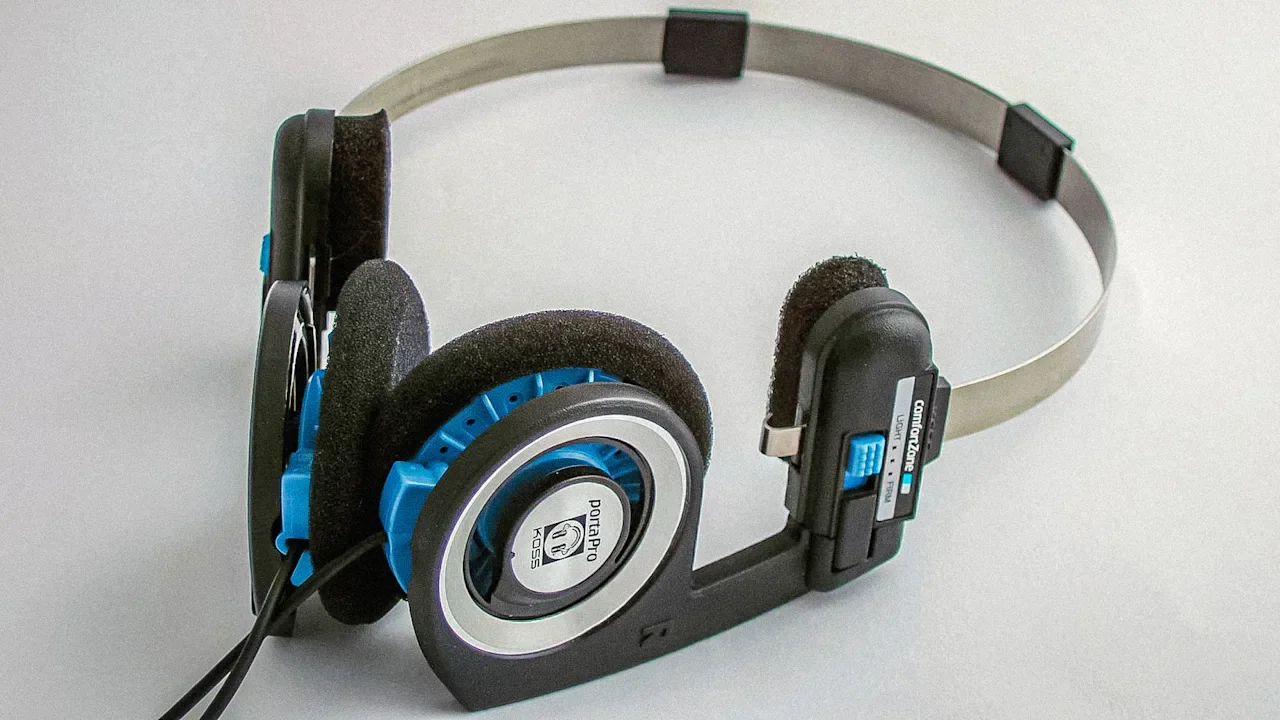
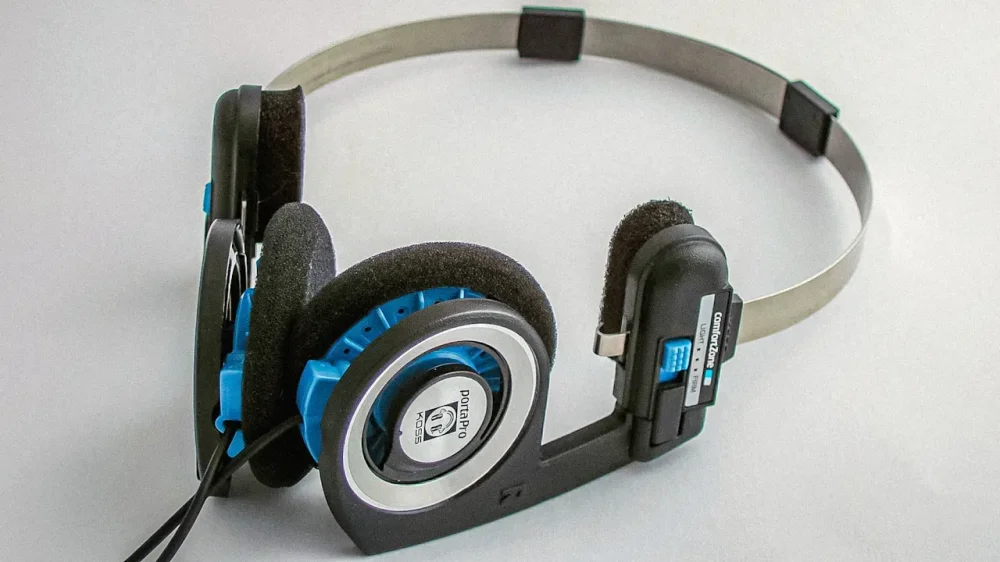
The Koss Porta Pro headphones are one of the most iconic and popular designs in the history of audio equipment. The headphones were first released in 1984 in response to the rise of the Sony Walkman and aimed to translate the company’s audio prowess into a portable, affordable form factor. The results were unmistakably odd. The collapsible headband, blue driver housings and striking shape meant you could spot them from a mile away. But Koss managed to deliver its trademark warm, bassy sound signature into an accessible product, and its retro-futuristic industrial design has never quite gone out of style. Wikimedia Koss, which is still a family-run business headquartered in Milwaukee, sold the Porta Pro virtually unchanged for decades. At under $50, they remained a great option for on-the-go listening. But with the demise of the smartphone headphone jack, eventually a modern wireless update was an obvious move. Going wireless Unfortunately, Koss’s first attempt in 2018 was a whiff. Despite coming after Apple’s AirPods made their debut, the wireless Porta Pro relied on a cable that housed an inline remote and a battery that rested on the wearer’s neck. Between the awkward wearability and a persistently flashing blue LED, the feedback was generally scathing. But recently, I found out that Koss released a radically updated version around a year ago, dubbed the Porta Pro Wireless 2.0. This feels like the sort of thing I should have noticed at the time, but apparently Koss didn’t feel the need to actually tell anyone about the new version. There’s a press release, sure, but for some reason the product got virtually no coverage in the usual channels. Major sites like The Verge didn’t follow up on withering coverage of the 1.0 model. You won’t find reviews on major audio equipment outlets. Even the thread on legendarily obsessive audiophile forum Head-Fi has just 13 posts. (For comparison, the thread on my own Koss go-tos, the relatively obscure KPH30i, has 392.) The Porta Pro Wireless 2.0 is, however, freely available to order on Amazon for $99, so obviously I had to check it out. Nailed it I am pleased to report that Koss actually nailed everything with this 2.0 edition. These are, for mostly better and occasionally worse, exactly what you would have expected from a wireless set of Porta Pro headphones in the first place. Most importantly, the dangly neck wire has been banished. It’s now actually accurate to call these “wireless.” You lose the controls on the inline remote, sure, but I think most people would take that tradeoff. And while the design of the cans themselves remains the same as the original, the lack of wire makes them much more practical to wear. On the tech side of things, Koss has thankfully upgraded the 2.0 model to USB-C for charging. There is still a pulsating LED that indicates connectivity, but it’s tucked away on the underside of the right earpiece and isn’t bright enough to be an annoyance. And unlike the previous model, these support analog audio through a cable when the battery dies. Porta Pro headphones were never known for their sturdy build quality—in fact, they’re positively flimsy. But the upside of this is that they’re very comfortable and can be squeezed down easily into a small circular footprint, which Koss takes advantage of with the helpful inclusion of a compact round hard case. As for the sound, well, they sound like Porta Pro headphones, which is to say they sound awesome for what they are. They’re not exactly reference-level audio hardware, but the thumping bass and smoothed-off treble is a great fit for rock, rap and beyond, while the semi-open-back design allows for sound that feels wider and less claustrophobic than noise-cancelling Bluetooth cans. The Porta Pro Wireless 2.0 does still feel pretty retro, for better and worse. There’s the lightweight plastic design, of course, which I imagine Koss correctly deemed to be nonnegotiable. But there’s also the lack of modern features that are standard on headphones these days, like easy pairing. Getting these up and running on your phone is a roughly equivalent experience to using a Bluetooth earpiece in your car 15 years ago. If you’ve never used Porta Pro headphones before, I should also point out that these are not necessarily the most versatile headphones around. The on-ear, semi-open-back design is what enables the surprisingly wide soundstage, but it also means they offer virtually no sound isolation, and your audio is going to leak out to people around you. In other words, don’t plan to use them on a plane. Still, overall the Porta Pro Wireless 2.0 does exactly what it ought to—these are Porta Pro headphones, but wireless. Maybe the muted launch was because Koss was stung by the reception to the previous wireless model. If so, I think that was a mistake. That was a bad product, and this is not. I think the world should know that you can, in fact, now buy a great wireless version of Porta Pro headphones, which remain a genuine design classic to this day. I’m honestly not sure why this was news to me, but if it’s news to you too, my work here is done. View the full article
-
UK move aims to make it easier for drugs to be approved for use in order to secure carve-out from import leviesView the full article
-
The Chinese leader is ending the year in a better position than his American and Russian counterpartsView the full article
-
Google is reportedly working on a new Gemini App user experience, which it is calling 2.0. The company is putting "huge investment" into this update of the Gemini user experience but we are not sure when this new look and experience will be released.View the full article
-
December is a month that many look forward to as holiday festivities kick into full gear and extended R&R with our loved ones nears. But for cryptocurrency investors, the month is off to anything but a good start. As of the time of this writing, cryptocurrency prices are down across the board on the first day of December trading. This encompasses significant price drops of major cryptocurrencies, including Bitcoin, Ethereum, XRP, and Solana. Here’s what you need to know. Cryptocurrencies begin December with steep declines Nearly every major cryptocurrency is seeing significant declines on the first trading day of December. As of the time of this writing, most major coins are down over the past 24 hours, including: Bitcoin: down 5% Ethereum: down 5.5% XRP: down 6.8% BNB: down 5.9% Solana: down 6.8% Additionally, meme coins have also declined, with Dogecoin down 8%. Unfortunately, these drops aren’t outliers for cryptocurrencies as of late. Over the past month, big-name cryptocurrencies have been hit hard as investors sold off the digital tokens amid declining risk appetites. Over the last 30 days, Bitcoin has now declined 21%, dropping from around $111,000 per token to today’s current price of just over $86,600. During the same period, Ethereum fell by more than 26%, XRP by more than 18%, BNB by more than 24%, and Solana by more than 31%. Dogecoin is down more than 26% over the past month. Why are Bitcoin and other cryptocurrencies dropping today? There isn’t a single event weighing on Bitcoin and other cryptocurrencies today, just like there has not been one single event weighing on the digital token markets over the past month. Instead, the first trading day of December drops in cryptocurrencies across the board are likely being spurred by multiple factors. Perhaps the most significant factor behind the December 1 crypto drop is ongoing uncertainty about whether the Federal Reserve will vote to cut interest rates when the central bank meets to vote on the matter on December 9-10. A drop in interest rates is generally seen as a good thing for cryptocurrencies as rate drops increase liquidity in the markets, which typically spurs investors to take more risk. As cryptocurrencies are among the most volatile assets, increased risk-taking can stimulate investment in the coins, sending their prices higher. Yet if the Fed does not reduce rates, that increase in liquidity will not materialize, which could impact risk asset investments. Barchart reports that the markets are discounting an 83% chance that the Federal Reserve’s monetary policymaking group, the Federal Open Market Committee (FOMC), will cut interest rates by 25 basis points. However, rate drops aren’t the only reason Bitcoin and other cryptos are starting December on the wrong foot. As Fast Company previously reported, in November, investors increasingly turned sour on artificial intelligence stocks, including on AI heavyweights like Nvidia Corporation (Nasdaq: NVDA) and major OpenAI investor Microsoft Corporation (Nasdaq: MSFT). Over the past month, NVDA shares have declined nearly 12% and MSFT shares are down more than 9%. The share prices of AI and AI-adjacent companies have been highly volatile this year amid growing fears of an AI bubble. Many investors who invest in those companies have high-risk appetites, which is why many AI investors are also cryptocurrency investors. And when one high-risk asset declines, investors tend to sell off their other high-risk assets to lock in any gains and prevent further losses. Continuing fears of an AI bubble, then, could be influencing declines in cryptocurrency prices. Aside from these two ongoing factors that have been weighing on crypto markets for a while now, there are a few more recent events that may be contributing to crypto losses on the first trading day of December. According to a report from CNBC, People’s Bank of China issued a warning on Saturday about illegal activities involving digital tokens. That warning sent shares of companies in the digital asset sector lower on the Hong Kong market. Additionally, CoinDesk reports that early Monday saw notable forced liquidations in crypto markets as traders failed to meet margin requirements for leveraged positions, putting pressure on cryptocurrency prices. 2025 turns negative for crypto When the year began, many investors and industry watchers expressed optimism that Bitcoin and other cryptocurrencies were in for a tremendous year of growth in 2025, largely thanks to the incoming The President administration and its crypto-friendly policies. But while tokens like Bitcoin did reach an all-time high of more than $126,000 this year, the crypto king has declined well below its 2025 starting price. As of this writing, Bitcoin has lost about 7.24% of its 2025 opening value. Ethereum has lost 14.6% of its value, and Solana has lost 32%. BNB is a rare bright spot for major cryptocurrencies this year. The coin has seen growth of nearly 18% so far this year. Of course, given the volatile nature of cryptocurrencies, it’s always possible that things could reverse quickly. There is still one month left in the year, and if there is a late bull run on the tokens, Bitcoin and other cryptocurrencies could still come out green for the year. Whether or not that happens likely depends a lot on the Fed’s rate cut decision next week—and, of course, the greed and fear that investors feel in the run-up to the new year. View the full article

-
Google is testing a new widget at the top of the Google Discover feed. It is called "Top Searches," and it will randomly show some of the top searches across Google Search. And guess what, when you click on them, it takes you into AI Mode, not Google Search.View the full article
-
Google is testing using inline, hover-style links for citations in the AI Mode results. When you hover your mouse cursor over the link card, it will hover the link card sources over the answer. View the full article
-
Google has confirmed that the Search Console index coverage report, also the page indexing report, are now delayed about two weeks. Google confirmed the issue and is working to resolve the issue, but said this only impacts reporting and that crawling; indexing and ranking of websites are not impacted. Page indexing report. The page indexing report shows you which pages Google can find and index on your site, and learn about any indexing problems encountered. You can also submit “fixes” to that report to see if Google confirms your fix actually worked. But since that report is now two weeks delayed, you won’t be able to confirm your fix worked until the report updates. What it looks like. Here is a screenshot of one of my reports showing it was last updated on November 17th, note – some are seeing the 18th: What Google said. Google confirmed the issue and posted on LinkedIn: “FYI – Page indexing report delays We’re currently experiencing longer than usual delays in the Search Console Index Coverage report. This only affects reporting, not crawling, indexing, or ranking of websites. We’ll update here once this issue is resolved. Thanks for your patience!” Why we care. I know it is the first of the month and many of you have to prepare client reports. I suspect this report will catch up in the coming days but until then, if your reporting depends on the page indexing report, then you will have to also delay your reporting to your clients and stakeholders. Until then, do know this is a reporting glitch only. View the full article
-
Google Ads published new documentation on a tool called "Website Optimizer." Now, some of you OGs may remember Website Optimizer from 2008 or so. Well, it was renamed to Google Optimize and then sunset on September 30, 2023. Google Ads may be bringing it back or making something new within Google Ads named Website Optimizer.View the full article
-
Hello and welcome to Modern CEO! I’m Stephanie Mehta, CEO and chief content officer of Mansueto Ventures. Each week this newsletter explores inclusive approaches to leadership drawn from conversations with executives and entrepreneurs, and from the pages of Inc. and Fast Company. If you received this newsletter from a friend, you can sign up to get it yourself every Monday morning. Leaders juggle a lot of demands and priorities. However, most CEOs tell me they’re highly attentive to company culture, change management, and workforce transformation in the age of AI—all areas that their chief human resources officers (CHROs) or chief people officers (CPOs) are tackling, too, notes Jennifer Wilson, cohead of the global Human Resources Officer practice at leadership advisory firm Heidrick & Struggles. “The only other seat besides CEO that has a cross-enterprise view is the chief human resources officer,” Wilson says. “The best CHROs these days are weighing in and shaping strategy around big corporate issues.” Yet CHROs are rarely tapped for the CEO role. Heidrick & Struggles’s data shows that only 16 CEOs at America’s 1,000 largest companies by revenue have previous HR experience. An overlooked role Most of those executives worked in HR as part of their climb up the corporate ladder. General Motors CEO Mary Barra, for example, was a vice president of global human resources at GM for two years between roles as a vice president of global manufacturing engineering and a promotion to senior vice president of global product development. Joanna Geraghty, CEO of JetBlue Airways, was the CPO of the airline for four years after serving as associate general counsel and before moving to an executive vice president role overseeing customer experience. More unusual is the case of Leena Nair, who was the CHRO at Unilever when Chanel, the privately held luxury brand, recruited her to be its global CEO. At a time when chief financial officers, chief technology officers, and even lawyers are moving to the CEO role, Tami Rosen, chief development officer and a board member at Pagaya, an AI-powered fintech, and former CPO at Atlassian, says overlooking HR executives is a miss. “For too long, CHRO and CPO roles have been miscast as operational or administrative when in reality they are the only seats with a true 360-degree view of the company, driving strategy, mission, culture, risk, performance, and people,” she says. The CEO’s support system Megan Myungwon Lee was CHRO and vice president of corporate planning and strategic initiatives when she was promoted to chairwoman and CEO of Panasonic North America in 2021. Lee says Osaka, Japan–based Panasonic has a history of viewing HR, finance, and strategy as a three-legged stool supporting the CEO. “In Japan, if you hire a person, it’s a $3 million investment because people usually retire with the company,” she notes. “It’s not a variable cost.” Lee says her experiences in HR—Panasonic initially hired her as a bilingual secretary—exposed her directly and indirectly to all aspects of the company. It has also shaped her leadership style. “Being a leader is like [being] a parent in that you lead with empathy—guiding, setting boundaries, and making tough decisions—while always asking, ‘How would I want someone to treat my own children in this situation?’” Boards of directors may disregard CHROs in their CEO succession planning for any number of reasons: Some want their chief executive to have client-facing experience; a tech company may prioritize a leader with an engineering background. But Pagaya’s Rosen says boards ignore HR talent at their peril. “More CHROs and CPOs should be elevated to CEO because theirs is the most well-rounded role in the company, connected to the business, the strategy, the culture, and every team,” she says. Does your team elevate HR pros to the top? Does your company have a CPO or CHRO who is a candidate to succeed the CEO? If so, what are the reasons why your company may elevate them? I’d like to hear your stories. Send them in an email to stephaniemehta@mansueto.com. Read more: human resources Meet Beth Galetti, the woman behind Amazon’s explosive growth Why Tesla and FedEx pay this staffing firm millions of dollars The most innovative HR companies of 2025 View the full article

-
As a freelancer, I always wondered, “What would happen if I needed to take an extended medical leave?” I’m not the kind of person to take a month-long trip, and I’ve never taken more than 7-10 days off at a time (which requires meticulous planning ahead of time!). If I don’t work, my revenue is $0. I run a solo business, so my income is 100% dependent on me. So what would happen if I couldn’t work? Would my clients understand? Would my social media engagement take a nosedive? Would my business crumble? I found out this year when I was diagnosed with a brain tumor. Not exactly what I was expecting. I needed brain surgery, and recovery was expected to take a minimum of six weeks — possibly longer. I only had six weeks between my diagnosis and surgery. I’ve always been a Highly Organized Person, so I kicked into gear. Preparing for an extended medical leave — including preparing my social media — was necessary as a solo business owner. It also gave me a sense of control when so many other things felt outside of my control. Here’s what I did. The importance of social media for my businessThree years ago, I started my freelance writing business, writing long-form content for B2B SaaS companies, mostly fintech. My social media presence has been crucial for my business. I’m active on LinkedIn, and it’s one of the main ways clients find me. Almost all of my business is inbound, either through LinkedIn or my website (and I’m pretty sure that website inquiries find me on LinkedIn first). I typically schedule two posts per day, plus spend time engaging with other people. I also create resources for solopreneurs and share content on other social media platforms (like Threads) — though I’m not depending on them to find clients right now. (Outside of LinkedIn, my social media presence is more geared towards supporting fellow freelancers and solopreneurs.) I know that might sound like a lot, but I have a really efficient system that helps me do all this. I chatted with Buffer about it a few months back, if you’d like to learn more: Even with that system in place, going silent on social media for such a long period of time made me nervous. I thought the algorithms would punish me if I “disappeared,” making it harder to ramp up again later. My plan for this extended time off was to do what I could to keep my social media presence as active as possible. Even if I couldn’t engage with other people, I could pre-schedule content for my profiles. How I prepared to step away I figured I would need enough content to cover eight weeks of medical leave. I let a few of my social profiles go silent, but I wanted to keep LinkedIn, Threads, Bluesky, and my LinkedIn Company Page active. Reduced my posting frequencyI created a Google Sheet to track the number of posts I needed to create for each profile to cover eight weeks. LinkedIn, for example, was twice a day, every day. At 14 posts per week, I needed to write 112 posts… on top of writing regular social media content in the weeks leading up to surgery. I quickly realized that I could not write enough posts to cover my posting frequency. Social media wasn’t the only thing I needed to worry about. I also have long-form content (like my Substack), along with client work. And aside from my business, I also needed to write notes and instructions for my parents, who would be taking care of my kids while I was in the hospital. In the end, I changed my Posting Schedule in Buffer to reduce the Posting Times for each channel. I post a lot, but asked myself, “What’s a reasonable amount to keep my profile active?” I reduced the number of posts to less than half of my normal volume. Instead of posting twice a day on LinkedIn, I decided to post once per day and skip weekends. Relied on my backlog of potential postsAnother step in my preparation was going through my backlog of content ideas. I have a very large repository of ideas for social media posts. Hundreds. I had no shortage of ideas… just not enough time to do the actual writing. I accumulate post ideas from automations I have set up. Zapier creates draft social posts based on my long-form content and podcast transcripts. I use a combination of Zapier and ChatGPT to rewrite posts from one platform (LinkedIn) so that they fit the vibe of another platform (Threads). I also re-share links to blog posts I’ve written in the past. Once I’d reduced my Posting Schedule in Buffer, I started working through my queue of ideas. Some had drafts that only needed a small amount of editing. Others were nothing more than a passing thought. I try to share a variety — text-based posts, images, and links — so I worked through my backlog until I’d created enough posts for eight weeks of content. Asked friends to helpI was worried about “posting and ghosting.” The rumor on many social platforms is that if you post and don’t engage, you’ll diminish your reach. Even though I’ve always pre-scheduled my content, I’m always on the social platforms to engage with people throughout the day. A few friends asked how they could help. I asked them to engage with my posts by either reacting or commenting. I hoped the algorithms wouldn’t punish me too badly if there was some engagement on my posts. It was a way they could help that didn’t require too much effort. For the first few weeks after my surgery, I wasn’t able to log into my social platforms at all. I had some vision issues and couldn’t handle the glare from screens. During that time, my friends came through for me. Some even re-shared my content to their own networks. Why I paused my Buffer queueI managed to hit my goal. By the time my surgery date arrived, my Buffer queues were full and ready. Eight weeks of content, carefully planned and pre-scheduled. However, I eventually paused my Threads queue in Buffer while I was recovering. At the time, I still had more than 90 posts in the queue. As soon as I was able to type, I started sharing real-time updates on Threads. Whenever I shared updates, I got a lot of support and encouragement — from complete strangers. Lots of people replied, “You’ve got this!” or “I had brain surgery also, I know what you’re going through.” Because of this, it felt weird to intermix posts like “I had a follow-up appointment with my neurosurgery team today” and pre-scheduled content like “Here are tools you can use to organize your freelance business!” Once I was back to work, I unpaused my queue and re-shuffled my posts into new Posting Times. Returning to my social media routineSix weeks after my brain surgery, I started working again at a very low level. I knew I had a few weeks of pre-scheduled content left, and then I’d need to start writing posts again. It has been harder than I thought. At first, I was fighting fatigue and needed to put my energy into my client work. A few more weeks passed, and I still struggled to get back to my normal routine with social media posts. Perhaps I should have planned for a longer leave and pre-written 10 weeks of content instead of eight. That way, I would have had more of a buffer (pun intended?) as I ramped back up. But I’m not sure that would have been realistic, given my time constraints. However, the experiment with fewer posts was a good one. I don’t feel like my business fell apart. I’m glad I pre-scheduled content to keep my profiles active, but I’m also glad that I gave myself some grace to write less. During my leave, my inbound leads slowed substantially. I had fully prepped my virtual assistant to respond to leads when I couldn’t, but she barely had to do anything. I don’t know this for sure, but my gut says that people saw on my LinkedIn profile that I was recovering from surgery — even though I only posted occasional updates. Once I was back to working (and made an announcement to that effect), the inbound leads resumed. Do what works for youI would never tell someone that they need to do as much prep work as I did. I was lucky that I had several weeks to prepare, but it might have been a very different situation if I’d needed more immediate medical attention. I also found the prep work to be a good distraction. However, that’s my personality. I could have instead taken the time to focus on other things. You matter most in your business. If writing social media posts in advance of a medical leave stresses you out, don’t do it. Step away, and your social media accounts will be waiting for you when you’re ready. View the full article
-
PM defends last week’s Budget and says ‘there was no misleading’ about economic forecastsView the full article
-
AI now handles the entire research stage, so now the real fight in SEO is about earning a place inside those answers The post Pragmatic Approach To AI Search Visibility appeared first on Search Engine Journal. View the full article
-
Big-picture plans for the government-sponsored enterprises get the spotlight, but other issues may affect the industry more directly. Part 1 of a series. View the full article

-
As you know, Google finally launched custom annotations within the Google Search Console performance reports. Well, one issue we noticed is that it does not allow for adding annotations for data it does not have yet, like for today. Today, Google rolled out support for current/future dates.View the full article
-
When the Los Angeles wildfires swept through the city earlier this year, experts flocked to the internet to dissect the anatomy of a fire-resistant building. Many of them ended up describing bunker-like architecture with boxy buildings, sparse landscape, and lots of concrete. A new building in Malibu offers a more nuanced approach. Malibu High School, which opened in August, is located in an area that Cal Fire (the California Department of Forestry and Fire Protection) recently designated as a very high fire hazard severity zone. This means that the school, which has replaced a nondescript building from the 1950s, had to comply with stringent fire safety regulations. The new school is distributed across two connected buildings. It was constructed entirely of noncombustible materials like concrete shear walls and floors, steel columns and beams, and fire-rated glass. It is surrounded by a newly built fire road to allow easy firetruck access, and drought-resistant landscaping. Still, it looks less like a fortified concrete bunker, and more like the kind of airy, low-lying buildings you might find elsewhere in Malibu. “The messages the building sends about your safety is much more like a community center,” says Nathan Bishop, lead architect and principal at local firm Koning Eizenberg Architecture. “It’s about making it feel like a social place to hang out and just be.” A balanced approach to fire-resistant architecture Malibu High School, part of the Santa Monica-Malibu Unified School District, is nestled between the Pacific Ocean and the Santa Monica Mountains. It is located near a ring of coastal shrubs that is notoriously flammable but is also protected by the California Coastal Act as Environmentally Sensitive Habitat Area (ESHA.) In 2018, the area was hit by the Woolsey Fire, which destroyed over 1,600 structures, and burned nearly 97,000 acres in Ventura and Los Angeles counties. The former high school building, which stood on the same site, narrowly survived, but according to Bishop, the “shared memory” of Woolsey was present in everyone’s mind. “There are still teachers who haven’t replaced their houses because they burned down,” he said. It’s no surprise, then, that fire resiliency was part of the architects’ mandate from the very beginning, when they won an RFP to redesign the school in 2019. The challenge was ensuring the school didn’t look like a bunker. To lighten the visible footprint of the building, the architects positioned solar panels over a canopy so they could cast shadows on the building’s glazed facade. This helped reduce solar gain while allowing the building to have more glass to balance the concrete. The panels, which remain quite visible, help the building achieve its net-zero goals, but they also help communicate the value of sustainability to students. The team used textured concrete that makes the building feel like it is part of the hillside, and copper panels that add some color and texture. They also implemented a dedicated air filtration system for wildfire events. “[The school] is fortified and strong, but not in a defensive way,” says Bishop, noting the school can now serve as a community wildfire shelter. The open design ensured the building feels like it belongs on the rugged hillside of Malibu. The surrounding drought-resistant landscape, by San Diego-based Spurlock Landscape Architects, further anchors the school with a coastal landscape that doubles as a fuel modification zone. This is meant to reduce the risk of wildfire by thinning or replacing combustible vegetation. The landscape architects used California-native plants like aloe vera and agave interspersed with locally sourced rock mulch. They laid out the plants so they would grow from low succulents closer to the building to larger canopies on the outer perimeter. Since many buildings catch fire from what is closest to them, the areas nearest to the building are mostly hardscape. (The January 2025 wildfires didn’t reach as far north as the high school, which was therefore spared.) Rethinking the American high school By the time Koning Eizenberg Architecture got involved in 2020, Malibu High School had been seeing enrollment issues for years. (The school enrolled about 440 students in 2021, compared to nearly 1,000 in 2017.) To compete with nearby private schools, where enrollment issues haven’t been as stark, the Santa Monica-Malibu Unified School District wanted to rethink not just the building but also the way high schoolers studied inside it. Instead of organizing the school by academic departments, the high school follows a more distributed model where “everything is everywhere,” as Bishop puts it. Science labs abut art studios and teacher rooms are scattered around the campus instead of concentrated in a single building. The distributed model allowed the architects to abolish the archetypal silos that have become high school movie tropes—science geeks hang out here; jocks hang out there—and foster more encounters between different disciplines. “There is something about rethinking the story of the American high school, and the social fabric of the American high school,” says Bishop. Before they moved into the new building, high schoolers shared the old building with local middle schoolers, where they studied in nondescript classrooms. Now, each classroom is adjacent to an outdoor space, creating a “fuzzy edge that lets the life of the building spill out,” says Bishop. Students in marine biology class go down to the beach to collect samples. Those in pottery class bring their wheels into the courtyard. Meanwhile, the preserved ESHA acts as a learning lab, where students can learn about ecology. Instead of cutting off the building from its surroundings, the architects carefully integrated it within the landscape, proof that students can learn from nature instead of turning their back on it. View the full article

-
Now that AI can control your web browser, the next frontier might be to take over your entire computer. At least that’s what Seattle-based startup Vercept is trying to do with Vy, a currently free Windows and Mac app that can manipulate your mouse and keyboard to automate tedious or repetitive tasks. You just tell it what you’re trying to do, and then it takes control. Vy first launched as a beta for Macs in May, but has now been rebuilt and is available for Windows as well. My experiments with Vy have yielded mixed results. If you’ve ever yelled at ChatGPT for failing to follow instructions, that frustration becomes magnified when AI is piloting your entire computer — tasks you might want to automate might just be done faster manually. Still, I can see some areas where an AI computer agent could be useful, which is why other companies (including Microsoft) are pursuing the same goal. I spent a lot of time waiting Kiana Ehsani, Vercept’s CEO and co-founder, says Vy is more human-like than the agent features in AI web browsers such as Perplexity Comet and ChatGPT Atlas. While those browsers reportedly work by inspecting the underlying structure of web pages, Vy takes frequent screenshots to analyze what’s happening on your screen. It then executes mouse or keyboard commands to mimic the way you’d control the computer yourself. Ehsani says people are using it to automate Excel work, extract data from the web for sharing into apps like Slack, or figure out how to use new software. “We want to have a model that understands your screen and takes action very similarly to how you do it,” Ehsani says. This ends up taking a while, though, as each individual action requires Vy to take a screenshot and upload it to its servers for analysis. Everything from opening an app to clicking a menu button requires another screenshot and more time waiting for a response — so a routine that takes 10 seconds for a human might take Vy five minutes. Vy has a couple ways to mitigate this. One option is to run tasks in “Background” mode, which lets you keep using your computer while Vy does its work in an invisible browser window. Vy’s capabilities are limited in this mode, though, as it can interact with files and web pages but can’t control other apps. (I had some impish fun getting Vy to fulfill various Microsoft Rewards tasks on my behalf—performing daily Bing searches, filling out various quizzes—but felt guilty about how much compute power must’ve been burned along the way.) The other option is to schedule tasks for when you’re not around. For instance, I set up a daily routine for 7 a.m. that minimizes any open windows on my desktop, opens Obsidian, moves it to the center of the screen, and loads my to-do list. Watching Vy do this in real-time is excruciating, but scheduling it to run before I sit down at my computer—thereby forcing me to confront my to-do list—is pretty helpful. Ehsani hopes that on-device AI will speed things up in the future. Instead of having to constantly upload screenshots and download instructions, the goal is for Vy to process everything directly on the computer, though it’s unclear when that might happen or how powerful a PC you’d need. It needs a lot of hand-holding Getting Vy to perform tasks on your computer can be a bit like bossing a child around, in that it’s liable to ignore or misinterpret your instructions. A quirk of Obsidian, for instance, is that if you load the app while it’s already running, it will load an entirely new instance of Obsidian with a menu for choosing which notebook vault to open. To keep this from happening in my to-do list scenario, I asked Vy to only click the Obsidian icon on the Windows taskbar, which would load any existing instance of Obsidian instead of launching a new one. But every time I tested the routine, Vy kept ignoring my instructions and would try to click the Obsidian icon on the desktop, thereby opening a new window. I would interrupt the assistant and tell it to focus on clicking the taskbar icon, but it had trouble finding it and kept trying to open the app in other ways. At one point it even clicked the Windows Start menu to launch Obsidian from there. Ultimately I had to edit my workflow with clear instructions to never click the desktop icon, never open the Windows Start menu, and avoid using other methods to open Obsidian outside of the taskbar. I also had to lay out explicit guidance to look for a purple crystal icon that appears next to other icons in the taskbar. All told, I spent about 20 minutes troubleshooting this tiny routine that mostly involved minimizing some windows and clicking a button. Vy does have an alternative “Watch and repeat” tool for creating workflows, in which it records your screen while you perform the desired steps. But this was even less reliable in my experience. When I tried setting up my Obsidian automation this way, Vy didn’t minimize any of my open windows and instead just moved its own app to the middle of the screen. It raises some privacy and security concerns Watching Vy take persistent screenshots of my desktop was also a reminder of how much personal info could wind up on Vercept’s servers. Every time Vy takes a screenshot, it captures everything on your screen, even if it’s unrelated to the task. Until I started asking Vercept about its data retention policies, the company did not publish them on its website. Vercept now says it keeps screenshots for six months unless you delete the underlying chat manually. Either way, it keeps data for up to 30 days for safety purposes. Ehsani says it doesn’t capture screenshots when Vy isn’t actively working on a task, and doesn’t perform any post-processing on screenshot contents. Still, a few people at Vercept have full access to users’ data, including their screenshots. “There is a trade-off here,” Ehsani acknowledges. As with any agentic AI system, Vy risks making users vulnerable to prompt injection attacks, in which an attacker hides malicious instructions in web pages, emails, or calendar invites. Vercept says it has some ways to mitigate this—for instance, by instructing Vy to watch for signs of malicious behavior—but no AI system has a foolproof answer to this problem yet. It seems inevitable anyway Despite the potential problems and limitations, AI agents that control your devices are coming. Microsoft already has a mode for its Copilot Windows assistant that can scan what’s on your screen and provide guidance, and it’s testing a “Copilot Actions” feature that can perform tasks on your behalf. Other developers are also pursuing this idea. Github is full of experimental AI control projects, and commercial alternatives include NeuralAgent and Screenpipe. Vercept is notable among these efforts for having raised a $16 million seed round in January, with backers including former Google CEO Eric Schmidt and DeepMind Chief Scientist Jeff Dean. Ehsani says the goal is to expand beyond just a single computer. An Android app is also in the works, and she hopes that you’ll eventually be able to give Vy instructions on your phone and have it carry the actions out on your computer, or vice versa. “One of our main visions is getting rid of mouse, keyboard, and touchscreens altogether,” Ehsani says. For now, at least, the natural speed at which humans can click around a desktop gives them the edge. View the full article
-
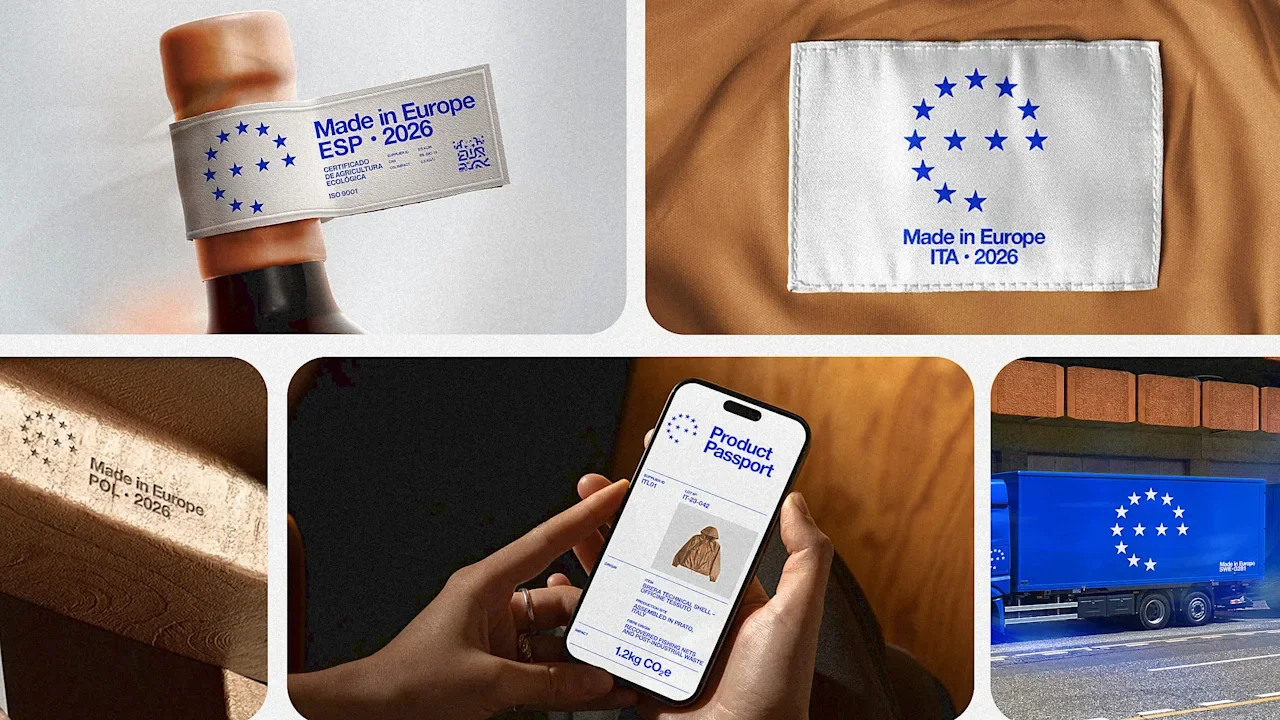
As the U.S. and China battle over technology, tariffs, and global influence, one question still looms for Europeans: what is Europe’s edge? That was the question recently posed by 21st Century, a Copenhagen-based think tank that collaborates with policymakers and thought leaders to explore the future of Europe. According to Johanna Fabrin, managing director and partner at 21st Century, the answer lies in the EU’s regulatory backbone—think GDPR-level data protection, rigorous environmental standards, and food‑safety rules. “From a consumer perspective, knowing that if something is made in Europe, there will not be arsenic in it, there’s that trust that is important,” she says. To convey that trust, the team has proposed a “Made in Europe” label that would signal quality, safety, and adherence to European standards. Similar to the CE label, which signifies that a product meets EU health, safety, and environmental protections, companies could display it on products to help consumers make informed decisions. The ultimate goal? To elevate the European brand as one that is trusted. ‘Debrandifying’ the label “Made in Europe” was developed in collaboration with British studio Dada. But it is more than a label—it’s a certification. “A symbol of trust,” says Alice Shaughnessy, head of operations at Dada. Shaughnessy’s team worked hard to “debrandify” the design so it reads less like a corporate logo and more like a stamp of approval. They cycled through dozens of proposals—from a wordmark spelling out “EUR” to the words “Made in Europe” set into a circle—before landing on twelve stars arranged in the shape of a lowercase “e”. By referencing the quintessential European symbol found on the EU flag, the design creates a clear association with the European institution. It conveys clout while remaining instantly recognizable. “It was important for us to be able to sit within that hall of great European design in some small way,” says Shaughnessy. Like all initiatives developed by 21st Century, the label is intended as a blueprint that sparks conversation. The team has built a “living ecosystem” of use cases that show how the label could integrate into daily life—from a simple logo on a fruit sticker to an embossed mark on the side of a leather chair. The label was designed to pair with Digital Product Passports—a QR code the EU will require by 2027 for categories like batteries, textiles, electronics, and furniture. Eventually, it could subsume existing certifications like CE, acting as an umbrella label that is relatable and easy for consumers to understand. Instead of decoding what B-Corp or CE means, you would see ‘Made in Europe’ and immediately associate it with European values like sustainability, ethical production, and consumer protection. Building on a momentum This isn’t the first time the idea of a European “made in” label has surfaced. Back in 2014, the European Parliament backed a proposal for source-country labeling, including a voluntary “Made in the EU” tag. But the proposal stalled due to political resistance and fragmented enforcement. Now, Fabrin and Shaughnessy argue, the conditions are different. For one, Europe’s leverage on the geopolitical stage is rising: Russia’s war on Ukraine has renewed interest from candidate countries like Georgia, Moldova, and Ukraine; Brexit has made the EU passport all the more desirable; and growing disillusionment with the American brand has made some companies turn to the EU for answers. Fabrin says she is hearing it firsthand as some IT consultants ask for CRMs based in Europe because of GDPR regulations. “This kind of momentum usually motivates the European Commission to act quite quickly,” she says. The biggest hurdle may be adoption: smaller businesses will need incentives to retrofit supply chains for this label. But 21st Europe’s vision is not to wait for law—it’s to catalyze a movement. Countries like Canada and Denmark have already started to take action with their own versions of “made in” labels. If large corporations like, say, Lego, were to adopt the mark voluntarily, it could inspire smaller companies to think about the label as a positioning exercise. “[We’re] thinking about the European brand as a long-term investment,” says Fabrin, “and a ’Made in Europe’ label is one contributor to building that brand.” View the full article

-
Prosecutors alleged organisational ‘deficiencies’ relating to the Mozambique ‘tuna bonds’ scandalView the full article
-
Google Search Console's page indexing report is delayed again, stuck at two weeks ago, November 17, 2025. This is a much longer than normal delay for this page indexing report, but it is just a reporting issue and it does not mean your site has any issues with indexing.View the full article
-
“Parasocial” is the Cambridge Dictionary’s Word of the Year. That feeling that you and Harry Styles would instantly become friends if you ever bumped into each other? Yes, that’s parasocial. The term dates back to 1956, coined by sociologists Donald Horton and Richard Wohl to describe how TV watchers formed “para-social” relationships with those on their screen. The word has taken on even greater meaning in the age of social media, where we have unparalleled access to the lives of influencers, online personalities, and celebrities via phones. Take Taylor Swift and Travis Kelce’s engagement. The news triggered mass hysteria online, with many displaying genuine raw emotion for a couple they’ve never even met. Or British singer Lily Allen, whose latest album West End Girl details a breakup and sparked a “parasocial interest in her love life,” according to the Cambridge Dictionary. It’s not just celebrities. This year, the dictionary noted a surge in those looking up the word after the Youtube star IShowSpeed blocked an obsessive fan, identified as his “number 1 parasocial.” A number of popular female streamers have spoken publicly about dealing with stalking, some resorting to hiring security while navigating online fame. Oftentimes these parasocial relationships are built unintentionally. After spending so many hours consuming content from influencers and content creators, it’s only natural that fans feel a sense of kinship and emotional attachment, even if it’s one-sided. So strong are some of these parasocial ties, a 2024 study revealed that parasocial relationships with YouTubers more effectively filled emotional needs than relationships with “real” acquaintances or colleagues. However, it can bleed into something darker. Add artificial intelligence into the mix and things get even more complex. Many confide in AI tools like ChatGPT as they would friends or romantic partners. By September of 2025, the Cambridge Dictionary definition of parasocial was updated to include the possibility of a relationship with an artificial intelligence. Colin McIntosh, Cambridge Dictionary’s chief editor, said the word “captures the zeitgeist of 2025, as the public’s fascination with celebrities and their lifestyles continues to reach new heights.” He noted in a statement: “It’s interesting from a language point of view because it has made the transition from an academic term to one used by ordinary people in their social media posts.” The other words shortlisted this year were “pseudonymization”, which spiked in interest this year in relation to discussions around protecting personal data. Also “memeify” as it relates to internet culture. The dictionary added 6,000 new words this year, including internet neologisms like “delulu,” “skibidi” and “tradwife.” Looking ahead, words to watch include “glazing,” “vibey,” “bias,” “breathwork,” and “doomspending.” View the full article
-
Kazuo Ueda’s remarks ‘clearly signal’ possibility of tightening in December meeting, say analystsView the full article
-
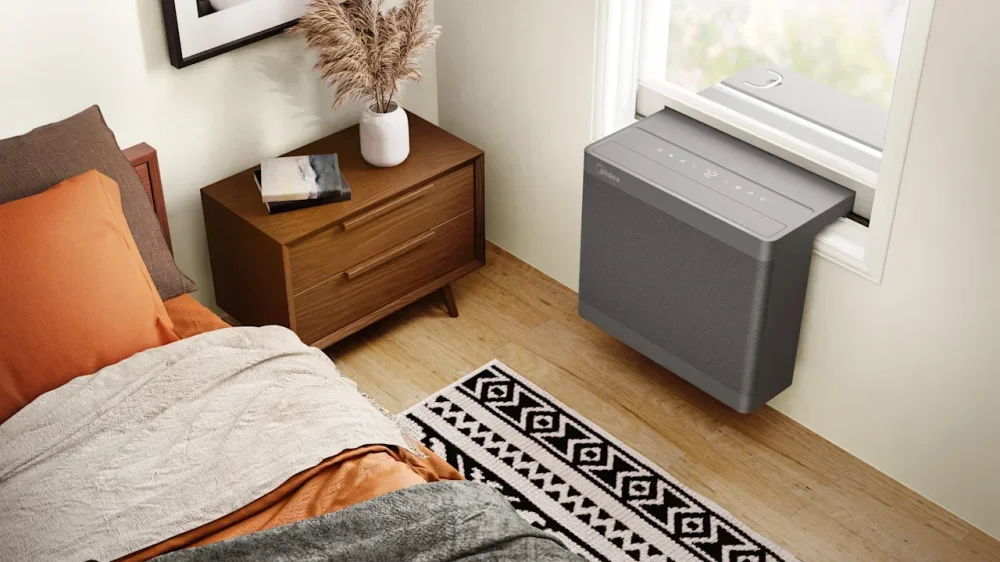
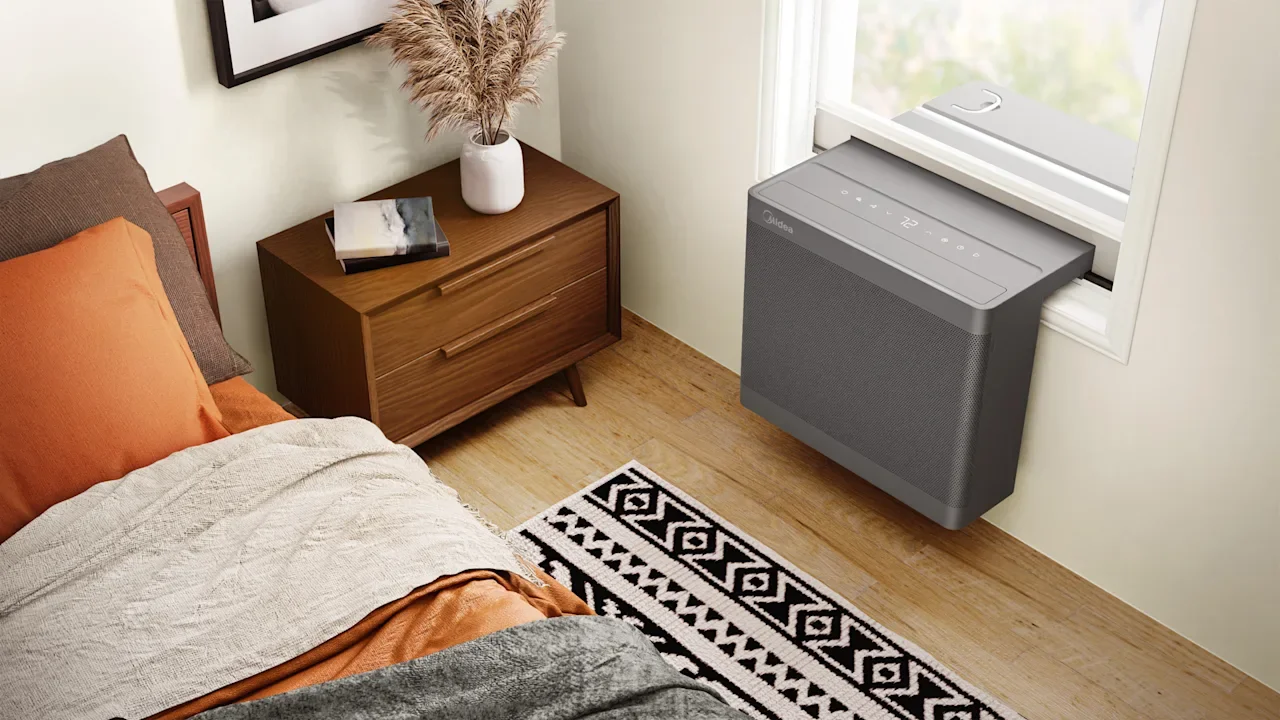
It looks a little like a sleek window AC, but a new device from Chinese appliance giant Midea is actually a reversible heat pump that can both cool and heat a home—and it’s designed to heat efficiently even when the temperature outside drops as low as 22 degrees below zero. The heat pump, called the Midea PWHP, just launched commercially after years of development. Over the last few weeks, I’ve been testing it in freezing temperatures in upstate New York. It works better than my gas furnace, and uses less energy. And the form factor and cost could help heat pumps—which already outsell gas furnaces—spread even faster. A new type of heat pump Like other heat pumps, the PWHP transfers warmth from the outdoor air to heat your space, using relatively little energy. But the new heat pump is designed to be much easier to install than other versions, which reduces the overall cost and complexity of switching. The inspiration for the idea originally came from New York City, where the state and local government launched the Clean Heat for All Challenge in 2022—which offered the potential of a contract with the city’s public housing authority, which controls more than 177,000 apartments within 335 housing developments—as the city looked for ways to decarbonize apartment buildings. Right now, most heat pumps come in one of two formats: “mini splits” that are installed in the wall, or central units that can connect to ducts and replace a gas or oil furnace. Both work well, but they’re time-consuming and can be expensive to install. Putting in a mini-split often involves adding new wiring, since older homes don’t have the right voltage, and cutting holes in the wall. One unit might take a day of work and require multiple licensed tradespeople. Replacing a gas furnace in a house typically takes a couple of days—and can also . In a large old apartment building in New York, the challenges are multiplied. Midea started working on the challenge in its Louisville office, which focuses on R&D. “We’re essentially a startup with the world’s largest appliance manufacturer as the backer,” says Brian Langness, a senior project manager at the Midea America Research Center. (Gradient, a startup, also separately worked on a different design for a window heat pump for New York.) Midea began designing a new unit to meet the city’s strict requirements: sized to fit in a window, quiet to run, with reliable heating in very low temperatures that wouldn’t need backup from electric resistance heat. It also couldn’t require electrical upgrades, needed to have a saddle shape that wouldn’t block views, and had to be easy enough to install that it could theoretically be a DIY job. Engineering the PWHP The design team sprinted to adapt heat pump technology to the new format, working closely with the company’s manufacturing team in China. “It was a 24-hour design cycle,” says Langness. “They would work on the design while we were sleeping. We’d wake up in the morning, and we’d ask the things that needed to be worked on. That was really the way that we were able to get this done in such a short amount of time.” While there are some other window heat pumps on the market, they don’t work in very low temperatures. To make it possible for a compact, self-contained unit to work well in cold weather, Midea designed a brand new compressor, changing components and modifying algorithms. (The company owns its own compressor manufacturer, making this step easier.) The compressor monitors the outside temperature and only runs as much as it needs to. “Older style compressors were either on or off,” says Langness. “This one modulates that power to ensure that you’re hitting that sweet spot to make sure that you’re maintaining the room’s comfort, but not consuming an unnecessary amount of energy.” By the summer of 2023, they had installed 36 prototypes at a city-owned public housing complex in Queens. Tenants started testing the units as air conditioners, and then as heaters the following winter. “Because of the timeframe, the residents were basically our field test engineers,” Langness says. Based on feedback from tenants, the team tweaked the design. The unit has a flat top that acts like a windowsill, and one tenant had a cat that kept jumping on it and turning the device on and off; the engineers added a child safety lock. After some extreme cold weather, they also modified how the system runs so it ramps up more slowly to a specific temperature, making it more efficient. Earlier this month, after a successful pilot, New York’s housing authority took out the pilot units and started installing 150 units of the final design. Midea also started selling the units to consumers through its distributors, at prices ranging between $2,800 and $3,000. Eventually, the company may sell the product directly at big box stores like Home Depot or Lowe’s. Real-world performance Although the unit was designed so that it could theoretically be installed by anyone, in the initial launch, Midea’s distributors will work with professional installers to ensure the installation is correct. (I worked with AI Global Enterprise, a New York City-based distributor, and an HVAC company called Halco to install the review unit for this article.) But because it doesn’t require electrical upgrades or other major steps, it’s a simple and quick job. The unit is heavy, but uses shock absorbers to lower itself gently into place after it’s set in the window. After some experience, NYCHA’s staff could install three units in as little as 45 minutes, Langness says. When I started testing the heat pump, the first thing I noticed was how comfortable the room felt. I recently moved into a 180-year-old former schoolhouse in upstate New York, and it’s not exactly energy efficient. The house has no added insulation, though its double brick walls with an air gap provide some natural temperature moderation. When I crank up the gas heat to 72 degrees, some corners of the house still feel chilly. The heat pump, which gradually heats up surfaces like walls and floor, felt like it heated the room more evenly than my gas furnace can I tested the heat pump in a back room with a fireplace, which isn’t connected to the central heat in the rest of the house. That was also the only place I could put it: the room was a later addition, and the rest of the house’s walls are so unusually thick that the heat pump’s u-shaped design wouldn’t fit over the other windowsills. Of course, the heat pump would work even better in a well-insulated space. But when I turned up the heat with temperatures in the 20s outside, it soon felt toasty in the room—and more comfortable than the rest of the house. The fan was far quieter than the vents for my gas furnace, which are sometimes so incredibly loud that I have to turn off the heat temporarily when I’m in a meeting. The heat pump also has a “silent” mode that keeps the temperature up but makes the fan barely perceptible. While my furnace blows air through dusty vents, the heat pump keeps the air clean. The air also felt less dry than in my rooms with gas heat. It uses relatively little energy—less than a space heater, while heating a bigger area. In the pilot in the New York City apartments, the city noted that it saw an 87% drop in energy use and 50% drop in energy cost compared to the old steam radiators. My only complaint is the size: the heat pump takes up quite a bit of room under a window, similar to an old-fashioned radiator. For homeowners who can afford the extra cost and time, a mini split on the wall might fit better in some rooms (some mini splits look better than others, like the stylish design from the startup Quilt). The Midea PWHP is designed to heat a living space between 300 and 500 square feet, depending on the layout of the rooms. In my case, the back room is separated, but I could feel the heat moving into my adjacent kitchen. In NYCHA’s two-bedroom apartments, Midea installed three units, one in each bedroom and one in the living room. A less expensive heat pump Midea is focused primarily on supplying the heat pump for apartment buildings. When NYCHA first launched the challenge, it estimated that it would need more than 150,000 window heat pumps to meet its 2050 climate goals. The company is in active discussions with other housing authorities, including in Boston, about pilots modeled after the program in New York. Another pilot is about to begin in Canada. The company isn’t actively pushing direct sales to consumers at this point—as of right now, to buy one, you have to email the company to be connected with a local distributor. But the product could be a good fit for some homeowners, landlords, or even tenants who want a temporary climate solution that they can bring with them when they move. At $2,800 or $3,000, it isn’t cheap, though Midea says that the price will eventually come down as production scales up. And until the end of the year—when most clean energy tax credits will expire thanks to The President’s policies—it’s eligible for a federal tax credit of up to $2,000 on qualified installations. State, local, and utility incentive programs, such as New York State’s Clean Heat program, can also help offset the cost. And the total cost is still less than typical mini split heat pump, which can cost as much as $8,000 with installation in some regions. For some people who might not otherwise have decided to get a heat pump, it could be a first step to getting off fossil fuels. “We recognize that whole home heat pumps and mini splits are an investment,” says Matt Slimsky, VP of production at Halco, the company that installed my review unit. “This window unit is still an investment, but it’s a heck of a gateway.” View the full article