ResidentialBusiness
Administrators
-
Joined
-
Last visited
Everything posted by ResidentialBusiness
-
 Google is testing using inline, hover-style links for citations in the AI Mode results. When you hover your mouse cursor over the link card, it will hover the link card sources over the answer. View the full article
 -
Google has confirmed that the Search Console index coverage report, also the page indexing report, are now delayed about two weeks. Google confirmed the issue and is working to resolve the issue, but said this only impacts reporting and that crawling; indexing and ranking of websites are not impacted. Page indexing report. The page indexing report shows you which pages Google can find and index on your site, and learn about any indexing problems encountered. You can also submit “fixes” to that report to see if Google confirms your fix actually worked. But since that report is now two weeks delayed, you won’t be able to confirm your fix worked until the report updates. What it looks like. Here is a screenshot of one of my reports showing it was last updated on November 17th, note – some are seeing the 18th: What Google said. Google confirmed the issue and posted on LinkedIn: “FYI – Page indexing report delays We’re currently experiencing longer than usual delays in the Search Console Index Coverage report. This only affects reporting, not crawling, indexing, or ranking of websites. We’ll update here once this issue is resolved. Thanks for your patience!” Why we care. I know it is the first of the month and many of you have to prepare client reports. I suspect this report will catch up in the coming days but until then, if your reporting depends on the page indexing report, then you will have to also delay your reporting to your clients and stakeholders. Until then, do know this is a reporting glitch only. View the full article
-
Google Ads published new documentation on a tool called "Website Optimizer." Now, some of you OGs may remember Website Optimizer from 2008 or so. Well, it was renamed to Google Optimize and then sunset on September 30, 2023. Google Ads may be bringing it back or making something new within Google Ads named Website Optimizer.View the full article
-
Hello and welcome to Modern CEO! I’m Stephanie Mehta, CEO and chief content officer of Mansueto Ventures. Each week this newsletter explores inclusive approaches to leadership drawn from conversations with executives and entrepreneurs, and from the pages of Inc. and Fast Company. If you received this newsletter from a friend, you can sign up to get it yourself every Monday morning. Leaders juggle a lot of demands and priorities. However, most CEOs tell me they’re highly attentive to company culture, change management, and workforce transformation in the age of AI—all areas that their chief human resources officers (CHROs) or chief people officers (CPOs) are tackling, too, notes Jennifer Wilson, cohead of the global Human Resources Officer practice at leadership advisory firm Heidrick & Struggles. “The only other seat besides CEO that has a cross-enterprise view is the chief human resources officer,” Wilson says. “The best CHROs these days are weighing in and shaping strategy around big corporate issues.” Yet CHROs are rarely tapped for the CEO role. Heidrick & Struggles’s data shows that only 16 CEOs at America’s 1,000 largest companies by revenue have previous HR experience. An overlooked role Most of those executives worked in HR as part of their climb up the corporate ladder. General Motors CEO Mary Barra, for example, was a vice president of global human resources at GM for two years between roles as a vice president of global manufacturing engineering and a promotion to senior vice president of global product development. Joanna Geraghty, CEO of JetBlue Airways, was the CPO of the airline for four years after serving as associate general counsel and before moving to an executive vice president role overseeing customer experience. More unusual is the case of Leena Nair, who was the CHRO at Unilever when Chanel, the privately held luxury brand, recruited her to be its global CEO. At a time when chief financial officers, chief technology officers, and even lawyers are moving to the CEO role, Tami Rosen, chief development officer and a board member at Pagaya, an AI-powered fintech, and former CPO at Atlassian, says overlooking HR executives is a miss. “For too long, CHRO and CPO roles have been miscast as operational or administrative when in reality they are the only seats with a true 360-degree view of the company, driving strategy, mission, culture, risk, performance, and people,” she says. The CEO’s support system Megan Myungwon Lee was CHRO and vice president of corporate planning and strategic initiatives when she was promoted to chairwoman and CEO of Panasonic North America in 2021. Lee says Osaka, Japan–based Panasonic has a history of viewing HR, finance, and strategy as a three-legged stool supporting the CEO. “In Japan, if you hire a person, it’s a $3 million investment because people usually retire with the company,” she notes. “It’s not a variable cost.” Lee says her experiences in HR—Panasonic initially hired her as a bilingual secretary—exposed her directly and indirectly to all aspects of the company. It has also shaped her leadership style. “Being a leader is like [being] a parent in that you lead with empathy—guiding, setting boundaries, and making tough decisions—while always asking, ‘How would I want someone to treat my own children in this situation?’” Boards of directors may disregard CHROs in their CEO succession planning for any number of reasons: Some want their chief executive to have client-facing experience; a tech company may prioritize a leader with an engineering background. But Pagaya’s Rosen says boards ignore HR talent at their peril. “More CHROs and CPOs should be elevated to CEO because theirs is the most well-rounded role in the company, connected to the business, the strategy, the culture, and every team,” she says. Does your team elevate HR pros to the top? Does your company have a CPO or CHRO who is a candidate to succeed the CEO? If so, what are the reasons why your company may elevate them? I’d like to hear your stories. Send them in an email to stephaniemehta@mansueto.com. Read more: human resources Meet Beth Galetti, the woman behind Amazon’s explosive growth Why Tesla and FedEx pay this staffing firm millions of dollars The most innovative HR companies of 2025 View the full article

-
As a freelancer, I always wondered, “What would happen if I needed to take an extended medical leave?” I’m not the kind of person to take a month-long trip, and I’ve never taken more than 7-10 days off at a time (which requires meticulous planning ahead of time!). If I don’t work, my revenue is $0. I run a solo business, so my income is 100% dependent on me. So what would happen if I couldn’t work? Would my clients understand? Would my social media engagement take a nosedive? Would my business crumble? I found out this year when I was diagnosed with a brain tumor. Not exactly what I was expecting. I needed brain surgery, and recovery was expected to take a minimum of six weeks — possibly longer. I only had six weeks between my diagnosis and surgery. I’ve always been a Highly Organized Person, so I kicked into gear. Preparing for an extended medical leave — including preparing my social media — was necessary as a solo business owner. It also gave me a sense of control when so many other things felt outside of my control. Here’s what I did. The importance of social media for my businessThree years ago, I started my freelance writing business, writing long-form content for B2B SaaS companies, mostly fintech. My social media presence has been crucial for my business. I’m active on LinkedIn, and it’s one of the main ways clients find me. Almost all of my business is inbound, either through LinkedIn or my website (and I’m pretty sure that website inquiries find me on LinkedIn first). I typically schedule two posts per day, plus spend time engaging with other people. I also create resources for solopreneurs and share content on other social media platforms (like Threads) — though I’m not depending on them to find clients right now. (Outside of LinkedIn, my social media presence is more geared towards supporting fellow freelancers and solopreneurs.) I know that might sound like a lot, but I have a really efficient system that helps me do all this. I chatted with Buffer about it a few months back, if you’d like to learn more: Even with that system in place, going silent on social media for such a long period of time made me nervous. I thought the algorithms would punish me if I “disappeared,” making it harder to ramp up again later. My plan for this extended time off was to do what I could to keep my social media presence as active as possible. Even if I couldn’t engage with other people, I could pre-schedule content for my profiles. How I prepared to step away I figured I would need enough content to cover eight weeks of medical leave. I let a few of my social profiles go silent, but I wanted to keep LinkedIn, Threads, Bluesky, and my LinkedIn Company Page active. Reduced my posting frequencyI created a Google Sheet to track the number of posts I needed to create for each profile to cover eight weeks. LinkedIn, for example, was twice a day, every day. At 14 posts per week, I needed to write 112 posts… on top of writing regular social media content in the weeks leading up to surgery. I quickly realized that I could not write enough posts to cover my posting frequency. Social media wasn’t the only thing I needed to worry about. I also have long-form content (like my Substack), along with client work. And aside from my business, I also needed to write notes and instructions for my parents, who would be taking care of my kids while I was in the hospital. In the end, I changed my Posting Schedule in Buffer to reduce the Posting Times for each channel. I post a lot, but asked myself, “What’s a reasonable amount to keep my profile active?” I reduced the number of posts to less than half of my normal volume. Instead of posting twice a day on LinkedIn, I decided to post once per day and skip weekends. Relied on my backlog of potential postsAnother step in my preparation was going through my backlog of content ideas. I have a very large repository of ideas for social media posts. Hundreds. I had no shortage of ideas… just not enough time to do the actual writing. I accumulate post ideas from automations I have set up. Zapier creates draft social posts based on my long-form content and podcast transcripts. I use a combination of Zapier and ChatGPT to rewrite posts from one platform (LinkedIn) so that they fit the vibe of another platform (Threads). I also re-share links to blog posts I’ve written in the past. Once I’d reduced my Posting Schedule in Buffer, I started working through my queue of ideas. Some had drafts that only needed a small amount of editing. Others were nothing more than a passing thought. I try to share a variety — text-based posts, images, and links — so I worked through my backlog until I’d created enough posts for eight weeks of content. Asked friends to helpI was worried about “posting and ghosting.” The rumor on many social platforms is that if you post and don’t engage, you’ll diminish your reach. Even though I’ve always pre-scheduled my content, I’m always on the social platforms to engage with people throughout the day. A few friends asked how they could help. I asked them to engage with my posts by either reacting or commenting. I hoped the algorithms wouldn’t punish me too badly if there was some engagement on my posts. It was a way they could help that didn’t require too much effort. For the first few weeks after my surgery, I wasn’t able to log into my social platforms at all. I had some vision issues and couldn’t handle the glare from screens. During that time, my friends came through for me. Some even re-shared my content to their own networks. Why I paused my Buffer queueI managed to hit my goal. By the time my surgery date arrived, my Buffer queues were full and ready. Eight weeks of content, carefully planned and pre-scheduled. However, I eventually paused my Threads queue in Buffer while I was recovering. At the time, I still had more than 90 posts in the queue. As soon as I was able to type, I started sharing real-time updates on Threads. Whenever I shared updates, I got a lot of support and encouragement — from complete strangers. Lots of people replied, “You’ve got this!” or “I had brain surgery also, I know what you’re going through.” Because of this, it felt weird to intermix posts like “I had a follow-up appointment with my neurosurgery team today” and pre-scheduled content like “Here are tools you can use to organize your freelance business!” Once I was back to work, I unpaused my queue and re-shuffled my posts into new Posting Times. Returning to my social media routineSix weeks after my brain surgery, I started working again at a very low level. I knew I had a few weeks of pre-scheduled content left, and then I’d need to start writing posts again. It has been harder than I thought. At first, I was fighting fatigue and needed to put my energy into my client work. A few more weeks passed, and I still struggled to get back to my normal routine with social media posts. Perhaps I should have planned for a longer leave and pre-written 10 weeks of content instead of eight. That way, I would have had more of a buffer (pun intended?) as I ramped back up. But I’m not sure that would have been realistic, given my time constraints. However, the experiment with fewer posts was a good one. I don’t feel like my business fell apart. I’m glad I pre-scheduled content to keep my profiles active, but I’m also glad that I gave myself some grace to write less. During my leave, my inbound leads slowed substantially. I had fully prepped my virtual assistant to respond to leads when I couldn’t, but she barely had to do anything. I don’t know this for sure, but my gut says that people saw on my LinkedIn profile that I was recovering from surgery — even though I only posted occasional updates. Once I was back to working (and made an announcement to that effect), the inbound leads resumed. Do what works for youI would never tell someone that they need to do as much prep work as I did. I was lucky that I had several weeks to prepare, but it might have been a very different situation if I’d needed more immediate medical attention. I also found the prep work to be a good distraction. However, that’s my personality. I could have instead taken the time to focus on other things. You matter most in your business. If writing social media posts in advance of a medical leave stresses you out, don’t do it. Step away, and your social media accounts will be waiting for you when you’re ready. View the full article
-
PM defends last week’s Budget and says ‘there was no misleading’ about economic forecastsView the full article
-
AI now handles the entire research stage, so now the real fight in SEO is about earning a place inside those answers The post Pragmatic Approach To AI Search Visibility appeared first on Search Engine Journal. View the full article
-
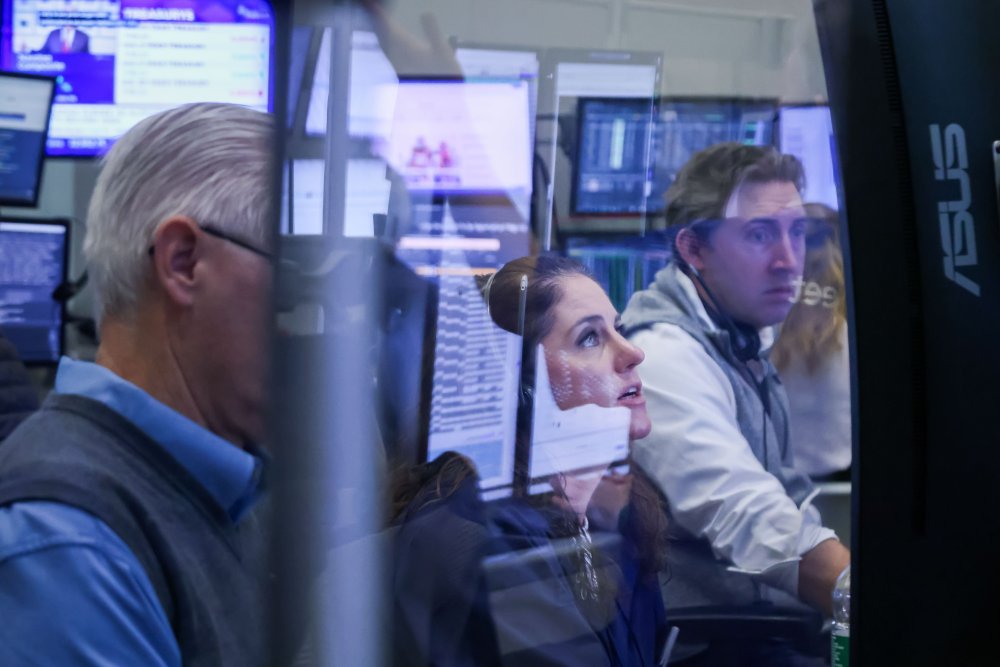
Big-picture plans for the government-sponsored enterprises get the spotlight, but other issues may affect the industry more directly. Part 1 of a series. View the full article
-
As you know, Google finally launched custom annotations within the Google Search Console performance reports. Well, one issue we noticed is that it does not allow for adding annotations for data it does not have yet, like for today. Today, Google rolled out support for current/future dates.View the full article
-
When the Los Angeles wildfires swept through the city earlier this year, experts flocked to the internet to dissect the anatomy of a fire-resistant building. Many of them ended up describing bunker-like architecture with boxy buildings, sparse landscape, and lots of concrete. A new building in Malibu offers a more nuanced approach. Malibu High School, which opened in August, is located in an area that Cal Fire (the California Department of Forestry and Fire Protection) recently designated as a very high fire hazard severity zone. This means that the school, which has replaced a nondescript building from the 1950s, had to comply with stringent fire safety regulations. The new school is distributed across two connected buildings. It was constructed entirely of noncombustible materials like concrete shear walls and floors, steel columns and beams, and fire-rated glass. It is surrounded by a newly built fire road to allow easy firetruck access, and drought-resistant landscaping. Still, it looks less like a fortified concrete bunker, and more like the kind of airy, low-lying buildings you might find elsewhere in Malibu. “The messages the building sends about your safety is much more like a community center,” says Nathan Bishop, lead architect and principal at local firm Koning Eizenberg Architecture. “It’s about making it feel like a social place to hang out and just be.” A balanced approach to fire-resistant architecture Malibu High School, part of the Santa Monica-Malibu Unified School District, is nestled between the Pacific Ocean and the Santa Monica Mountains. It is located near a ring of coastal shrubs that is notoriously flammable but is also protected by the California Coastal Act as Environmentally Sensitive Habitat Area (ESHA.) In 2018, the area was hit by the Woolsey Fire, which destroyed over 1,600 structures, and burned nearly 97,000 acres in Ventura and Los Angeles counties. The former high school building, which stood on the same site, narrowly survived, but according to Bishop, the “shared memory” of Woolsey was present in everyone’s mind. “There are still teachers who haven’t replaced their houses because they burned down,” he said. It’s no surprise, then, that fire resiliency was part of the architects’ mandate from the very beginning, when they won an RFP to redesign the school in 2019. The challenge was ensuring the school didn’t look like a bunker. To lighten the visible footprint of the building, the architects positioned solar panels over a canopy so they could cast shadows on the building’s glazed facade. This helped reduce solar gain while allowing the building to have more glass to balance the concrete. The panels, which remain quite visible, help the building achieve its net-zero goals, but they also help communicate the value of sustainability to students. The team used textured concrete that makes the building feel like it is part of the hillside, and copper panels that add some color and texture. They also implemented a dedicated air filtration system for wildfire events. “[The school] is fortified and strong, but not in a defensive way,” says Bishop, noting the school can now serve as a community wildfire shelter. The open design ensured the building feels like it belongs on the rugged hillside of Malibu. The surrounding drought-resistant landscape, by San Diego-based Spurlock Landscape Architects, further anchors the school with a coastal landscape that doubles as a fuel modification zone. This is meant to reduce the risk of wildfire by thinning or replacing combustible vegetation. The landscape architects used California-native plants like aloe vera and agave interspersed with locally sourced rock mulch. They laid out the plants so they would grow from low succulents closer to the building to larger canopies on the outer perimeter. Since many buildings catch fire from what is closest to them, the areas nearest to the building are mostly hardscape. (The January 2025 wildfires didn’t reach as far north as the high school, which was therefore spared.) Rethinking the American high school By the time Koning Eizenberg Architecture got involved in 2020, Malibu High School had been seeing enrollment issues for years. (The school enrolled about 440 students in 2021, compared to nearly 1,000 in 2017.) To compete with nearby private schools, where enrollment issues haven’t been as stark, the Santa Monica-Malibu Unified School District wanted to rethink not just the building but also the way high schoolers studied inside it. Instead of organizing the school by academic departments, the high school follows a more distributed model where “everything is everywhere,” as Bishop puts it. Science labs abut art studios and teacher rooms are scattered around the campus instead of concentrated in a single building. The distributed model allowed the architects to abolish the archetypal silos that have become high school movie tropes—science geeks hang out here; jocks hang out there—and foster more encounters between different disciplines. “There is something about rethinking the story of the American high school, and the social fabric of the American high school,” says Bishop. Before they moved into the new building, high schoolers shared the old building with local middle schoolers, where they studied in nondescript classrooms. Now, each classroom is adjacent to an outdoor space, creating a “fuzzy edge that lets the life of the building spill out,” says Bishop. Students in marine biology class go down to the beach to collect samples. Those in pottery class bring their wheels into the courtyard. Meanwhile, the preserved ESHA acts as a learning lab, where students can learn about ecology. Instead of cutting off the building from its surroundings, the architects carefully integrated it within the landscape, proof that students can learn from nature instead of turning their back on it. View the full article

-
Now that AI can control your web browser, the next frontier might be to take over your entire computer. At least that’s what Seattle-based startup Vercept is trying to do with Vy, a currently free Windows and Mac app that can manipulate your mouse and keyboard to automate tedious or repetitive tasks. You just tell it what you’re trying to do, and then it takes control. Vy first launched as a beta for Macs in May, but has now been rebuilt and is available for Windows as well. My experiments with Vy have yielded mixed results. If you’ve ever yelled at ChatGPT for failing to follow instructions, that frustration becomes magnified when AI is piloting your entire computer — tasks you might want to automate might just be done faster manually. Still, I can see some areas where an AI computer agent could be useful, which is why other companies (including Microsoft) are pursuing the same goal. I spent a lot of time waiting Kiana Ehsani, Vercept’s CEO and co-founder, says Vy is more human-like than the agent features in AI web browsers such as Perplexity Comet and ChatGPT Atlas. While those browsers reportedly work by inspecting the underlying structure of web pages, Vy takes frequent screenshots to analyze what’s happening on your screen. It then executes mouse or keyboard commands to mimic the way you’d control the computer yourself. Ehsani says people are using it to automate Excel work, extract data from the web for sharing into apps like Slack, or figure out how to use new software. “We want to have a model that understands your screen and takes action very similarly to how you do it,” Ehsani says. This ends up taking a while, though, as each individual action requires Vy to take a screenshot and upload it to its servers for analysis. Everything from opening an app to clicking a menu button requires another screenshot and more time waiting for a response — so a routine that takes 10 seconds for a human might take Vy five minutes. Vy has a couple ways to mitigate this. One option is to run tasks in “Background” mode, which lets you keep using your computer while Vy does its work in an invisible browser window. Vy’s capabilities are limited in this mode, though, as it can interact with files and web pages but can’t control other apps. (I had some impish fun getting Vy to fulfill various Microsoft Rewards tasks on my behalf—performing daily Bing searches, filling out various quizzes—but felt guilty about how much compute power must’ve been burned along the way.) The other option is to schedule tasks for when you’re not around. For instance, I set up a daily routine for 7 a.m. that minimizes any open windows on my desktop, opens Obsidian, moves it to the center of the screen, and loads my to-do list. Watching Vy do this in real-time is excruciating, but scheduling it to run before I sit down at my computer—thereby forcing me to confront my to-do list—is pretty helpful. Ehsani hopes that on-device AI will speed things up in the future. Instead of having to constantly upload screenshots and download instructions, the goal is for Vy to process everything directly on the computer, though it’s unclear when that might happen or how powerful a PC you’d need. It needs a lot of hand-holding Getting Vy to perform tasks on your computer can be a bit like bossing a child around, in that it’s liable to ignore or misinterpret your instructions. A quirk of Obsidian, for instance, is that if you load the app while it’s already running, it will load an entirely new instance of Obsidian with a menu for choosing which notebook vault to open. To keep this from happening in my to-do list scenario, I asked Vy to only click the Obsidian icon on the Windows taskbar, which would load any existing instance of Obsidian instead of launching a new one. But every time I tested the routine, Vy kept ignoring my instructions and would try to click the Obsidian icon on the desktop, thereby opening a new window. I would interrupt the assistant and tell it to focus on clicking the taskbar icon, but it had trouble finding it and kept trying to open the app in other ways. At one point it even clicked the Windows Start menu to launch Obsidian from there. Ultimately I had to edit my workflow with clear instructions to never click the desktop icon, never open the Windows Start menu, and avoid using other methods to open Obsidian outside of the taskbar. I also had to lay out explicit guidance to look for a purple crystal icon that appears next to other icons in the taskbar. All told, I spent about 20 minutes troubleshooting this tiny routine that mostly involved minimizing some windows and clicking a button. Vy does have an alternative “Watch and repeat” tool for creating workflows, in which it records your screen while you perform the desired steps. But this was even less reliable in my experience. When I tried setting up my Obsidian automation this way, Vy didn’t minimize any of my open windows and instead just moved its own app to the middle of the screen. It raises some privacy and security concerns Watching Vy take persistent screenshots of my desktop was also a reminder of how much personal info could wind up on Vercept’s servers. Every time Vy takes a screenshot, it captures everything on your screen, even if it’s unrelated to the task. Until I started asking Vercept about its data retention policies, the company did not publish them on its website. Vercept now says it keeps screenshots for six months unless you delete the underlying chat manually. Either way, it keeps data for up to 30 days for safety purposes. Ehsani says it doesn’t capture screenshots when Vy isn’t actively working on a task, and doesn’t perform any post-processing on screenshot contents. Still, a few people at Vercept have full access to users’ data, including their screenshots. “There is a trade-off here,” Ehsani acknowledges. As with any agentic AI system, Vy risks making users vulnerable to prompt injection attacks, in which an attacker hides malicious instructions in web pages, emails, or calendar invites. Vercept says it has some ways to mitigate this—for instance, by instructing Vy to watch for signs of malicious behavior—but no AI system has a foolproof answer to this problem yet. It seems inevitable anyway Despite the potential problems and limitations, AI agents that control your devices are coming. Microsoft already has a mode for its Copilot Windows assistant that can scan what’s on your screen and provide guidance, and it’s testing a “Copilot Actions” feature that can perform tasks on your behalf. Other developers are also pursuing this idea. Github is full of experimental AI control projects, and commercial alternatives include NeuralAgent and Screenpipe. Vercept is notable among these efforts for having raised a $16 million seed round in January, with backers including former Google CEO Eric Schmidt and DeepMind Chief Scientist Jeff Dean. Ehsani says the goal is to expand beyond just a single computer. An Android app is also in the works, and she hopes that you’ll eventually be able to give Vy instructions on your phone and have it carry the actions out on your computer, or vice versa. “One of our main visions is getting rid of mouse, keyboard, and touchscreens altogether,” Ehsani says. For now, at least, the natural speed at which humans can click around a desktop gives them the edge. View the full article
-
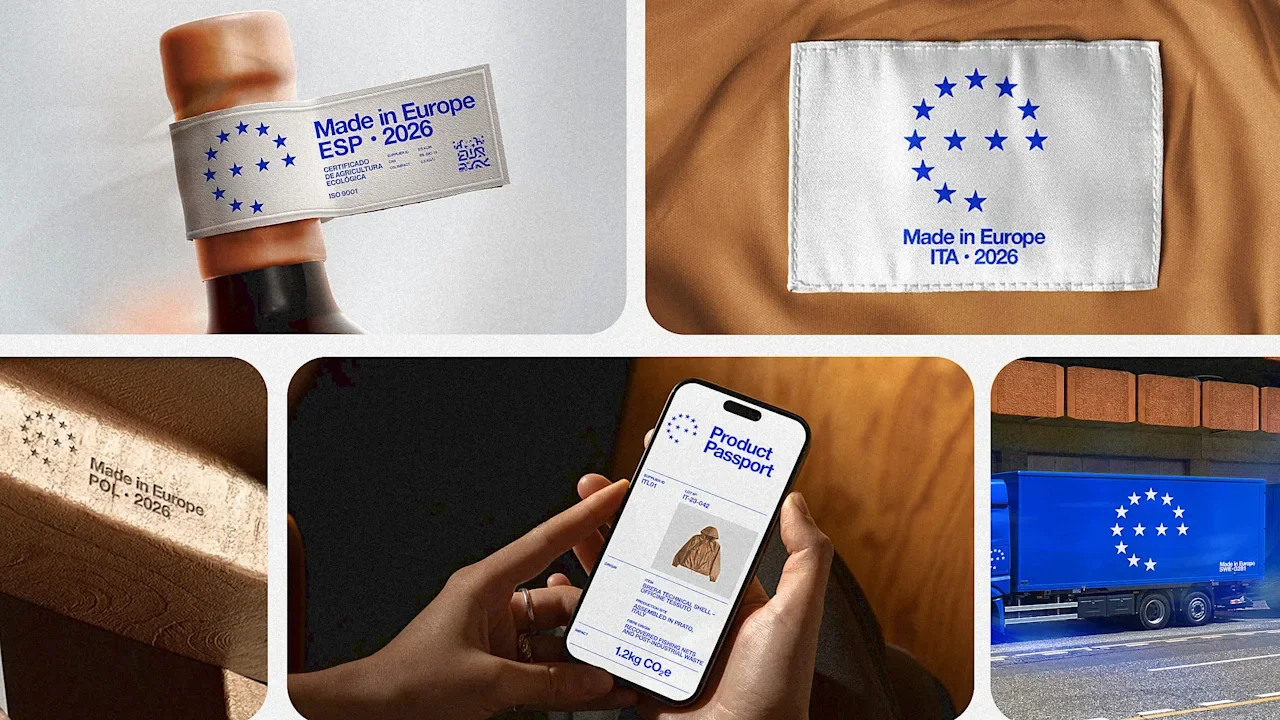
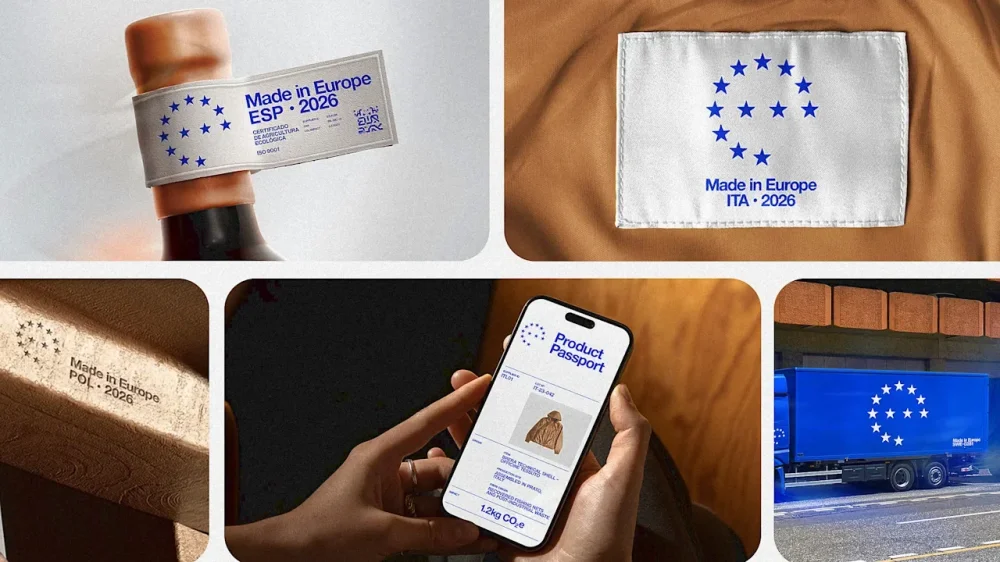
As the U.S. and China battle over technology, tariffs, and global influence, one question still looms for Europeans: what is Europe’s edge? That was the question recently posed by 21st Century, a Copenhagen-based think tank that collaborates with policymakers and thought leaders to explore the future of Europe. According to Johanna Fabrin, managing director and partner at 21st Century, the answer lies in the EU’s regulatory backbone—think GDPR-level data protection, rigorous environmental standards, and food‑safety rules. “From a consumer perspective, knowing that if something is made in Europe, there will not be arsenic in it, there’s that trust that is important,” she says. To convey that trust, the team has proposed a “Made in Europe” label that would signal quality, safety, and adherence to European standards. Similar to the CE label, which signifies that a product meets EU health, safety, and environmental protections, companies could display it on products to help consumers make informed decisions. The ultimate goal? To elevate the European brand as one that is trusted. ‘Debrandifying’ the label “Made in Europe” was developed in collaboration with British studio Dada. But it is more than a label—it’s a certification. “A symbol of trust,” says Alice Shaughnessy, head of operations at Dada. Shaughnessy’s team worked hard to “debrandify” the design so it reads less like a corporate logo and more like a stamp of approval. They cycled through dozens of proposals—from a wordmark spelling out “EUR” to the words “Made in Europe” set into a circle—before landing on twelve stars arranged in the shape of a lowercase “e”. By referencing the quintessential European symbol found on the EU flag, the design creates a clear association with the European institution. It conveys clout while remaining instantly recognizable. “It was important for us to be able to sit within that hall of great European design in some small way,” says Shaughnessy. Like all initiatives developed by 21st Century, the label is intended as a blueprint that sparks conversation. The team has built a “living ecosystem” of use cases that show how the label could integrate into daily life—from a simple logo on a fruit sticker to an embossed mark on the side of a leather chair. The label was designed to pair with Digital Product Passports—a QR code the EU will require by 2027 for categories like batteries, textiles, electronics, and furniture. Eventually, it could subsume existing certifications like CE, acting as an umbrella label that is relatable and easy for consumers to understand. Instead of decoding what B-Corp or CE means, you would see ‘Made in Europe’ and immediately associate it with European values like sustainability, ethical production, and consumer protection. Building on a momentum This isn’t the first time the idea of a European “made in” label has surfaced. Back in 2014, the European Parliament backed a proposal for source-country labeling, including a voluntary “Made in the EU” tag. But the proposal stalled due to political resistance and fragmented enforcement. Now, Fabrin and Shaughnessy argue, the conditions are different. For one, Europe’s leverage on the geopolitical stage is rising: Russia’s war on Ukraine has renewed interest from candidate countries like Georgia, Moldova, and Ukraine; Brexit has made the EU passport all the more desirable; and growing disillusionment with the American brand has made some companies turn to the EU for answers. Fabrin says she is hearing it firsthand as some IT consultants ask for CRMs based in Europe because of GDPR regulations. “This kind of momentum usually motivates the European Commission to act quite quickly,” she says. The biggest hurdle may be adoption: smaller businesses will need incentives to retrofit supply chains for this label. But 21st Europe’s vision is not to wait for law—it’s to catalyze a movement. Countries like Canada and Denmark have already started to take action with their own versions of “made in” labels. If large corporations like, say, Lego, were to adopt the mark voluntarily, it could inspire smaller companies to think about the label as a positioning exercise. “[We’re] thinking about the European brand as a long-term investment,” says Fabrin, “and a ’Made in Europe’ label is one contributor to building that brand.” View the full article
-
Prosecutors alleged organisational ‘deficiencies’ relating to the Mozambique ‘tuna bonds’ scandalView the full article
-
Google Search Console's page indexing report is delayed again, stuck at two weeks ago, November 17, 2025. This is a much longer than normal delay for this page indexing report, but it is just a reporting issue and it does not mean your site has any issues with indexing.View the full article
-
“Parasocial” is the Cambridge Dictionary’s Word of the Year. That feeling that you and Harry Styles would instantly become friends if you ever bumped into each other? Yes, that’s parasocial. The term dates back to 1956, coined by sociologists Donald Horton and Richard Wohl to describe how TV watchers formed “para-social” relationships with those on their screen. The word has taken on even greater meaning in the age of social media, where we have unparalleled access to the lives of influencers, online personalities, and celebrities via phones. Take Taylor Swift and Travis Kelce’s engagement. The news triggered mass hysteria online, with many displaying genuine raw emotion for a couple they’ve never even met. Or British singer Lily Allen, whose latest album West End Girl details a breakup and sparked a “parasocial interest in her love life,” according to the Cambridge Dictionary. It’s not just celebrities. This year, the dictionary noted a surge in those looking up the word after the Youtube star IShowSpeed blocked an obsessive fan, identified as his “number 1 parasocial.” A number of popular female streamers have spoken publicly about dealing with stalking, some resorting to hiring security while navigating online fame. Oftentimes these parasocial relationships are built unintentionally. After spending so many hours consuming content from influencers and content creators, it’s only natural that fans feel a sense of kinship and emotional attachment, even if it’s one-sided. So strong are some of these parasocial ties, a 2024 study revealed that parasocial relationships with YouTubers more effectively filled emotional needs than relationships with “real” acquaintances or colleagues. However, it can bleed into something darker. Add artificial intelligence into the mix and things get even more complex. Many confide in AI tools like ChatGPT as they would friends or romantic partners. By September of 2025, the Cambridge Dictionary definition of parasocial was updated to include the possibility of a relationship with an artificial intelligence. Colin McIntosh, Cambridge Dictionary’s chief editor, said the word “captures the zeitgeist of 2025, as the public’s fascination with celebrities and their lifestyles continues to reach new heights.” He noted in a statement: “It’s interesting from a language point of view because it has made the transition from an academic term to one used by ordinary people in their social media posts.” The other words shortlisted this year were “pseudonymization”, which spiked in interest this year in relation to discussions around protecting personal data. Also “memeify” as it relates to internet culture. The dictionary added 6,000 new words this year, including internet neologisms like “delulu,” “skibidi” and “tradwife.” Looking ahead, words to watch include “glazing,” “vibey,” “bias,” “breathwork,” and “doomspending.” View the full article

-
Kazuo Ueda’s remarks ‘clearly signal’ possibility of tightening in December meeting, say analystsView the full article
-
In 2021, Prada created “Candy,” an influencer designed to sell perfume. With an appearance rendered using then-state-of-the-art tools, Candy’s not-quite-real vibe felt straight out of the Silicon (Uncanny) Valley. It was peppy, but cartoonlike, and it was hard to see how Candy could sell perfume it could never smell. Since then, technologies have greatly improved. A brand can now render any persona with a product, create movies with that model persona animated in a realistic way, and show them demonstrating products. By creating their own influencers, brands can keep their advertising budgets down and generate profits. It’s possible that the virtual influencers will come for even more human-influencer jobs as the financial opportunities continue to grow. Long before the internet, the idea of “influencing” existed as “sales.” People have sold things to others since currency began, and while it takes labor, time, and effort to persuade others to buy what one is selling, different types of techniques and tactics emerged over the years to varying degrees of success. The rise of social media channels such as Facebook, X, Pinterest, and especially Instagram, enabled broader reach for those unable to afford network advertising. As a result of this shift, brands began to outsource marketing to people using these models to share and demonstrate their products and services through brand partnerships. In a short time, the influencer industry has exploded in growth: The global influencer marketing platform market size is set to grow from around $23.6 billion this year to roughly $70.9 billion by 2032, according to Fortune Business Insights. Influencing has become an aspirational profession for one in three people ages 18 to 30—and for those who succeed, a substantial income awaits. Influencers are successful due to their relatability, charm, resonance, and the ways they represent a lifestyle or objects that others wish to emulate, replicate, or possess. Martha Stewart, an early influencer, started with books before harnessing television and print media to convince thousands that they could also realize the fantasy that she portrayed. Her partnerships with Target, Macy’s, QVC, and Kohler, brought her “endorsements” of products, tools, and decorations, into homes, creating a multichannel, multisensory impression—and earned her a $400 million fortune. Celebrities like Paris Hilton, the Kardashians, Gwyneth Paltrow, and Brooke Shields may not invent what they sell, but they successfully promote products to their fans, building upon the parasocial (one-sided) relationships that fans project onto them. Influencing has gotten increasingly personal over time, with Influencers extending their reach to give us peeks into their homes and lives. But influencers can also be regular people with the attributes and willingness to invite their followers into their lives. Influencers with no celebrity status, but the ability to be persuasive salespeople for brands, are plentiful. Virtual influencers already exist with varying degrees of success and popularity, ranging from animated characters to realistically modeled personas. With the kind of money that is up for grabs, some businesses are creating AI personas or are considering applying these technologies to replace human influencers to maximize profits. Or will they? A sense of agency is what defines successful human influencers. We don’t know what they are going to do, or how they are going to do it—and that novelty is appealing. Part of what attracts us to influencers are their stories, their lived experiences, and their families. These, in turn, create a brand message that attracts endorsements and piques our interest. Without a story and background, an influencer’s sponsored post is just an ad similar to any other. There is, of course, a price to being an influencer. Megs Mahoney Dusil is the co-owner of the Purse Forum, a premier destination for handbag, jewelry, and brand communities. In “The Price of Influence: When Your Life Becomes Your Brand,” Dunsil reflects on 20 years of being influential, observing that for her, “kids” and “tragedy” were the highest performing topics for platform traffic. She describes the performative aspect of being an influencer as “emotional labor in disguise, a tightrope of constant negotiation between the person you are and the persona you project.” Good or bad, Dusil’s realization may pave the way for humans and AI to form influencer partnerships, where their demonstrations and emotional connections are combined with software tools and renderings to provide a quasi-real experience. Human influencers could keep their profits (and their privacy), by using software like Synthesia, Vidyard, Rephrase AI, Adobe Substance 3D, and others to generate facsimiles of themselves, without having to reveal all. They could also benefit from the cost savings of realistic software tools, too, saving money and time on travel by creating the environment they present in a home studio. Time will tell if virtual influencers will make a difference as to how we are persuaded. We already see influencers through mediated channels, so it won’t be that different for us to have a window into the fantasy of a digitally realized influencer hearth, rather than their actual home. But will we be comfortable buying products sold to us by beings that aren’t real? We might. We already have been acclimated to fantasy advertising campaigns. This would just circle us back to “celebrity territory” where the parasocial relationships we have with the personas selling us things, are those one-sided ones that we project onto them, and are not real. As with most jobs lately, it’s likely that AI will come for influencers, but with some savvy vibe-coding, influencers may be able to retain their brand partnerships, privacy, and income. View the full article

-
It looks a little like a sleek window AC, but a new device from Chinese appliance giant Midea is actually a reversible heat pump that can both cool and heat a home—and it’s designed to heat efficiently even when the temperature outside drops as low as 22 degrees below zero. The heat pump, called the Midea PWHP, just launched commercially after years of development. Over the last few weeks, I’ve been testing it in freezing temperatures in upstate New York. It works better than my gas furnace, and uses less energy. And the form factor and cost could help heat pumps—which already outsell gas furnaces—spread even faster. A new type of heat pump Like other heat pumps, the PWHP transfers warmth from the outdoor air to heat your space, using relatively little energy. But the new heat pump is designed to be much easier to install than other versions, which reduces the overall cost and complexity of switching. The inspiration for the idea originally came from New York City, where the state and local government launched the Clean Heat for All Challenge in 2022—which offered the potential of a contract with the city’s public housing authority, which controls more than 177,000 apartments within 335 housing developments—as the city looked for ways to decarbonize apartment buildings. Right now, most heat pumps come in one of two formats: “mini splits” that are installed in the wall, or central units that can connect to ducts and replace a gas or oil furnace. Both work well, but they’re time-consuming and can be expensive to install. Putting in a mini-split often involves adding new wiring, since older homes don’t have the right voltage, and cutting holes in the wall. One unit might take a day of work and require multiple licensed tradespeople. Replacing a gas furnace in a house typically takes a couple of days—and can also . In a large old apartment building in New York, the challenges are multiplied. Midea started working on the challenge in its Louisville office, which focuses on R&D. “We’re essentially a startup with the world’s largest appliance manufacturer as the backer,” says Brian Langness, a senior project manager at the Midea America Research Center. (Gradient, a startup, also separately worked on a different design for a window heat pump for New York.) Midea began designing a new unit to meet the city’s strict requirements: sized to fit in a window, quiet to run, with reliable heating in very low temperatures that wouldn’t need backup from electric resistance heat. It also couldn’t require electrical upgrades, needed to have a saddle shape that wouldn’t block views, and had to be easy enough to install that it could theoretically be a DIY job. Engineering the PWHP The design team sprinted to adapt heat pump technology to the new format, working closely with the company’s manufacturing team in China. “It was a 24-hour design cycle,” says Langness. “They would work on the design while we were sleeping. We’d wake up in the morning, and we’d ask the things that needed to be worked on. That was really the way that we were able to get this done in such a short amount of time.” While there are some other window heat pumps on the market, they don’t work in very low temperatures. To make it possible for a compact, self-contained unit to work well in cold weather, Midea designed a brand new compressor, changing components and modifying algorithms. (The company owns its own compressor manufacturer, making this step easier.) The compressor monitors the outside temperature and only runs as much as it needs to. “Older style compressors were either on or off,” says Langness. “This one modulates that power to ensure that you’re hitting that sweet spot to make sure that you’re maintaining the room’s comfort, but not consuming an unnecessary amount of energy.” By the summer of 2023, they had installed 36 prototypes at a city-owned public housing complex in Queens. Tenants started testing the units as air conditioners, and then as heaters the following winter. “Because of the timeframe, the residents were basically our field test engineers,” Langness says. Based on feedback from tenants, the team tweaked the design. The unit has a flat top that acts like a windowsill, and one tenant had a cat that kept jumping on it and turning the device on and off; the engineers added a child safety lock. After some extreme cold weather, they also modified how the system runs so it ramps up more slowly to a specific temperature, making it more efficient. Earlier this month, after a successful pilot, New York’s housing authority took out the pilot units and started installing 150 units of the final design. Midea also started selling the units to consumers through its distributors, at prices ranging between $2,800 and $3,000. Eventually, the company may sell the product directly at big box stores like Home Depot or Lowe’s. Real-world performance Although the unit was designed so that it could theoretically be installed by anyone, in the initial launch, Midea’s distributors will work with professional installers to ensure the installation is correct. (I worked with AI Global Enterprise, a New York City-based distributor, and an HVAC company called Halco to install the review unit for this article.) But because it doesn’t require electrical upgrades or other major steps, it’s a simple and quick job. The unit is heavy, but uses shock absorbers to lower itself gently into place after it’s set in the window. After some experience, NYCHA’s staff could install three units in as little as 45 minutes, Langness says. When I started testing the heat pump, the first thing I noticed was how comfortable the room felt. I recently moved into a 180-year-old former schoolhouse in upstate New York, and it’s not exactly energy efficient. The house has no added insulation, though its double brick walls with an air gap provide some natural temperature moderation. When I crank up the gas heat to 72 degrees, some corners of the house still feel chilly. The heat pump, which gradually heats up surfaces like walls and floor, felt like it heated the room more evenly than my gas furnace can I tested the heat pump in a back room with a fireplace, which isn’t connected to the central heat in the rest of the house. That was also the only place I could put it: the room was a later addition, and the rest of the house’s walls are so unusually thick that the heat pump’s u-shaped design wouldn’t fit over the other windowsills. Of course, the heat pump would work even better in a well-insulated space. But when I turned up the heat with temperatures in the 20s outside, it soon felt toasty in the room—and more comfortable than the rest of the house. The fan was far quieter than the vents for my gas furnace, which are sometimes so incredibly loud that I have to turn off the heat temporarily when I’m in a meeting. The heat pump also has a “silent” mode that keeps the temperature up but makes the fan barely perceptible. While my furnace blows air through dusty vents, the heat pump keeps the air clean. The air also felt less dry than in my rooms with gas heat. It uses relatively little energy—less than a space heater, while heating a bigger area. In the pilot in the New York City apartments, the city noted that it saw an 87% drop in energy use and 50% drop in energy cost compared to the old steam radiators. My only complaint is the size: the heat pump takes up quite a bit of room under a window, similar to an old-fashioned radiator. For homeowners who can afford the extra cost and time, a mini split on the wall might fit better in some rooms (some mini splits look better than others, like the stylish design from the startup Quilt). The Midea PWHP is designed to heat a living space between 300 and 500 square feet, depending on the layout of the rooms. In my case, the back room is separated, but I could feel the heat moving into my adjacent kitchen. In NYCHA’s two-bedroom apartments, Midea installed three units, one in each bedroom and one in the living room. A less expensive heat pump Midea is focused primarily on supplying the heat pump for apartment buildings. When NYCHA first launched the challenge, it estimated that it would need more than 150,000 window heat pumps to meet its 2050 climate goals. The company is in active discussions with other housing authorities, including in Boston, about pilots modeled after the program in New York. Another pilot is about to begin in Canada. The company isn’t actively pushing direct sales to consumers at this point—as of right now, to buy one, you have to email the company to be connected with a local distributor. But the product could be a good fit for some homeowners, landlords, or even tenants who want a temporary climate solution that they can bring with them when they move. At $2,800 or $3,000, it isn’t cheap, though Midea says that the price will eventually come down as production scales up. And until the end of the year—when most clean energy tax credits will expire thanks to The President’s policies—it’s eligible for a federal tax credit of up to $2,000 on qualified installations. State, local, and utility incentive programs, such as New York State’s Clean Heat program, can also help offset the cost. And the total cost is still less than typical mini split heat pump, which can cost as much as $8,000 with installation in some regions. For some people who might not otherwise have decided to get a heat pump, it could be a first step to getting off fossil fuels. “We recognize that whole home heat pumps and mini splits are an investment,” says Matt Slimsky, VP of production at Halco, the company that installed my review unit. “This window unit is still an investment, but it’s a heck of a gateway.” View the full article

-
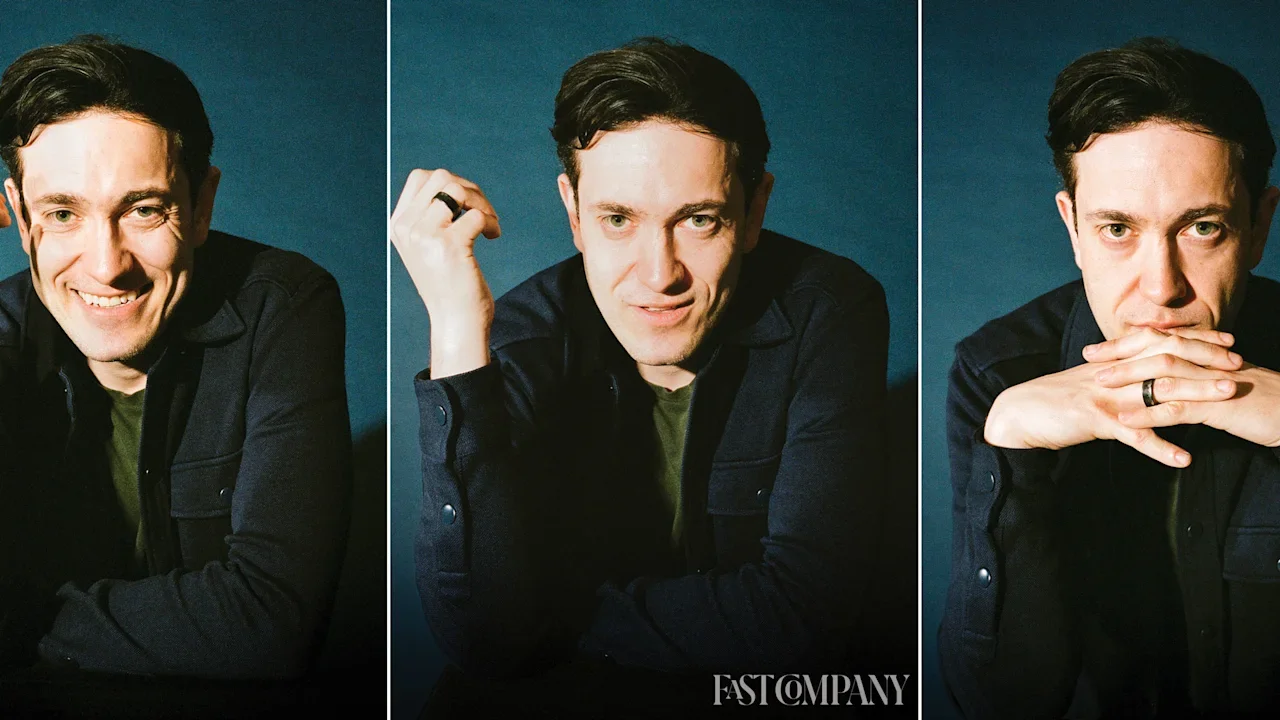
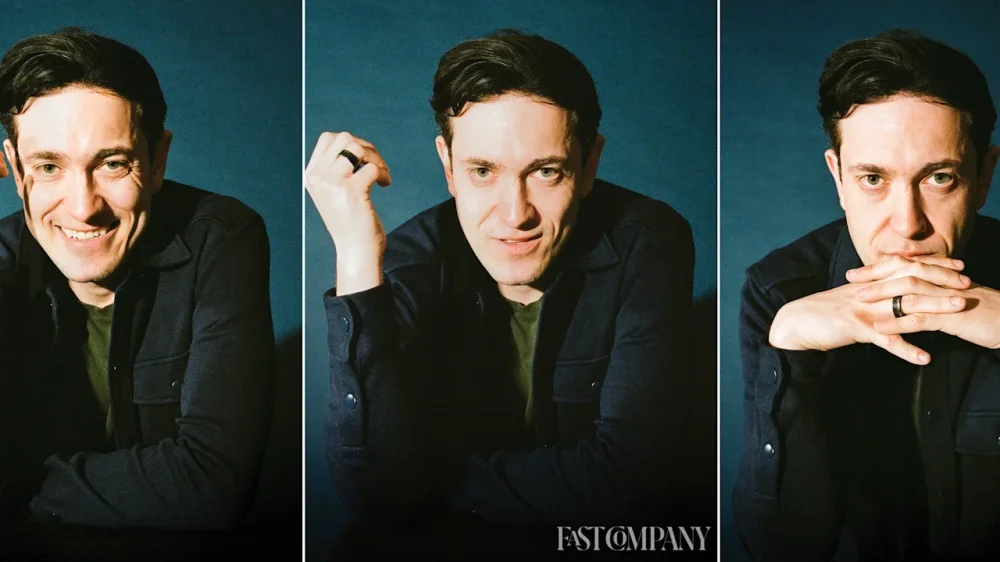
Ed Zitron peels off his green button-up shirt to reveal the gray tee beneath. Now properly uniformed, two cans of Diet Coke queued up before him, he’s ready to record this week’s episode of his podcast, Better Offline, at audio behemoth iHeartMedia’s midtown Manhattan studio. The topic on this July afternoon, as usual, is artificial intelligence. One of Zitron’s guests, screenwriter, director, and producer Brian Koppelman, talks about paying $200 a month for ChatGPT Pro. When Koppelman earnestly asks, “Do you not think AI is mind-bogglingly great at times?” Zitron’s answer—“No!”—comes so quickly it seems to spring directly from his cerebral cortex. It would have been startling if he’d responded any other way. As AI has become the tech industry’s principal obsession, Zitron—who runs a public relations firm that represents technology companies—has developed an unexpected side hustle as one of its highest- profile naysayers. “I’ve tried all of these different things, and I still can’t tell you with clarity what it is that’s so amazing with these products,” he tells me. Countless people in and around the tech industry share Zitron’s dim view of generative AI’s usefulness, the billions of dollars that companies are pouring into the technology, and its voracious appetite for computing resources. But his take-no-prisoners punditry sets him apart from other noted gadflies such as cognitive scientist Gary Marcus. On Better Offline and in his email newsletter, Where’s Your Ed At, he’s particularly unsparing in his appraisal of CEOs such as Meta’s Mark Zuckerberg (“a monster”), OpenAI’s Sam Altman (“a con man”), and Microsoft’s Satya Nadella (“either a liar or a specific kind of idiot”). Zitron says that his work is motivated by “[seeing] these bastards and what they’re doing, how much money they’re making doing it, and how shameless they are.” He has his own name for the pursuit of growth above all other goals, regardless of its impact on customers and society at large: the “rot economy.” He believes the current AI boom will end in disaster. “When it’s very obvious the money isn’t there, there’s going to be a big, horrible correction with tech stocks—a harmful one,” he declares, referring to the fallout should AI companies not ever be profitable. “I say this with a degree of trepidation, because it’s not going to be fun.” Zitron’s influence in the AI conversation is palpable and still expanding. On Bluesky, where he has 169,700 followers, attorney and activist Will Stancil recently wrote, “People love to say ‘I’m begging you to read something by an actual expert’ and they mean, specifically, Ed Zitron.” Produced by Cool Zone Media, an iHeartMedia subsidiary specializing in podcasts of a progressive bent, Better Offline is regularly among the 15 most popular tech shows on Spotify and Apple Podcasts. A bustling Reddit forum spun off from the podcast attracts 74,000 people a week with links to news stories about AI and caustic, sometimes darkly funny conversations about them. Where’s Your Ed At—its name riffs on “Where’s Your Head At,” a 2001 song by U.K. electronic music duo Basement Jaxx—has more than 80,000 readers, about 3,000 of whom receive bonus newsletters available exclusively to subscribers who pay $70 per year and up, an option Zitron added last June. His book on tech dysfunction, Why Everything Stopped Working, is due out in late 2026 or early 2027. Yet as prolific as Zitron is, he doesn’t feel remotely tapped out. “As things get more brittle and chaotic,” he says, “there’s only going to be more things for me to rifle through and explain to people.” Zitron didn’t set out to build a mini media empire around AI doomerism. The West London–born tech enthusiast, a onetime video game journalist, founded his company EZPR in New York in 2012 and went on to write two books about public relations. When he sent out his first Where’s Your Ed At newsletters, in 2019, he focused on personal interests such as gaming, his Peloton, and the NFL draft. And then he didn’t get around to publishing again for a year and a half. Late in 2020, he caught COVID. Suddenly in need of activities to fill his time, he found his newsletter a welcome distraction. “If I’m not writing, I haven’t really thought through anything,” he explains. “So I just started writing every day.” Increasingly, he turned his attention to the tech industry’s ills, leading to the February 2023 piece in which he coined the term the “rot economy.” It quickly went viral. Over time, Zitron has found a voice that comes off as entirely uncensored. He runs his newsletters by an editor—fellow Brit and tech-skeptic newsletter author Matt Hughes—but you wouldn’t know it from their style and substance. One particularly operatic recent example, last July’s “The Hater’s Guide to the AI Bubble,” marshals 14,500 words of facts, figures, and spicy commentary (Salesforce’s claims for its Agentforce AI are “a blatant fucking lie”) to argue that tech giants and startups alike are wasting billions pushing products built “on vibes and blind faith.” He also turned “The Hater’s Guide” into a four-part Better Offline series, where his accent and dramatic flair only heighten its impact. On Reddit, one fan called him “the David Attenborough of AI critique.” Zitron says that his supremely pissed-off persona isn’t just a schtick. “It’s just never come easily to me to pretend to be anything other than what I am,” he stresses. His friend and fellow tech critic Molly White, author of the crypto-busting newsletter Citation Needed, agrees. “He’s very passionate about the stuff that he is writing about,” she says. “I think it sort of consumes him and his attention.” Yet the full story of his relationship with AI is more complex. Along with savaging the technology in newsletters and on podcasts, he pitches its benefits to media outlets (including Fast Company) on behalf of EZPR’s clients. Startups that he’s repped range from technical assessment platform CodeSignal to Nomi, which touts its chatbot’s ability to serve as a virtual companion, girlfriend, or boyfriend. Zitron rejects the idea that his two jobs—AI basher and AI promoter—present any fundamental tension or conflict of interest. At EZPR, he says, “What I advocate for are companies with real purpose that do things their customers like, that build sustainable businesses based on actual use cases.” Does his growing fame as a writer and podcaster benefit his PR firm? He allows that it helps—journalists recognize his name and are more likely to open his emails—but considers that a side effect. The point, he says, is to speak his mind on a topic he cares deeply about. Evidence is mounting that some of the initial exuberance over generative AI was, in fact, irrational. A recent MIT study reported that 95% of enterprise pilot programs involving the technology hadn’t shown a return on investment; another from Bain says that even by 2030, the tech industry might be $800 billion short of finding enough new revenue to fund the computing resources necessary to keep up with demand for AI. Speaking with reporters in August, OpenAI’s Altman admitted the existence of a bubble. “Are we in a phase where investors as a whole are overexcited about AI?” he asked. “My opinion is yes.” Nonetheless, he added that OpenAI intends to invest trillions in additional data center infrastructure. That same month, OpenAI released a new version of ChatGPT built atop GPT-5, the latest update to its large language model. Once widely anticipated as a giant leap forward, it landed with a thud once users tried it and deemed it less than transformative. To Zitron, it was a classic example of the company’s puffery exceeding its product road map. “Two years ago, people were talking about GPT-5 like it was going to be AI Jesus,” he says. “I feel that OpenAI likely had to get something out the door.” Arguing that Altman’s stated plans for OpenAI—such as building 250 gigawatts of data center capacity in eight years—are impossible, Zitron continues to press the case that the company will run out of venture funding before reaching self-sufficiency. “OpenAI is not building ‘the AI industry,’ as this is capacity for one company that burns billions of dollars and has absolutely no path to profitability,” he wrote in an October newsletter. “This is a giant, selfish waste of money and time, one that will collapse the second that somebody’s confidence wavers.“ OpenAI’s failure, he contends, could take out other companies such as cloud-computing provider CoreWeave. It would also inflict serious damage on giants such as SoftBank, which led OpenAI’s $40 billion investment round last March, and Nvidia, whose chips power most of the world’s generative AI. Citing one VC’s estimate that AI funding could dry up within six quarters, Zitron has said the industry could face “total collapse” in early 2027. Even as the industry braces for a correction, Zitron’s prediction that it will effectively cease to exist makes him an outlier. “I just don’t think that Ed makes a strong case that this is going to happen,” says Timothy B. Lee, author of the newsletter Understanding AI. You don’t need to buy Altman’s utopian vision of “intelligence too cheap to meter” to accept the possibility that AI has a future. OpenAI going under would mean it never found a way to operate at a profit, regardless of any technological efficiencies, price adjustments, or new markets yet to come. In his newsletter and on his podcast, Zitron projects an air of ferocious certitude. In person, he is willing to toy with the notion that his prognostications might not pan out. Characterizing himself as “a brokenhearted romantic” when it comes to tech, he says he’d welcome being proven wrong—and would write about it. “It’ll be really annoying, and I really don’t think it’ll happen,” he emphasizes. “But the only way to do this [work] honestly is to be prepared for that, to be willing for that to happen.” As a commentator, Zitron’s stock-in-trade is the gusto with which he dismantles assessments of AI he considers invalid. Now the only question is whether he’ll get to say he told us so—or end up being his own ripest target. View the full article
-
At this fall’s prestigious New York World Spirits Competition, a wheated bourbon that’s widely available for about $30 claimed the title of Best Overall Bourbon. The blind-tasting competition drew a crowded field of bourbons that included bottles that are typically impossible to find—or exorbitantly marked up on shelves. Among more than 100 contenders, including bourbon heavyweights like Blanton’s Gold Edition and W.L. Weller Full Proof, the reasonably priced Green River Wheated Bourbon landed the top title. Green River Wheated is an approachable 90 proof (45 percent ABV) and a blend of four- to six-year-old barrels. The judging panel described it as “a richly textured bourbon, opening with aromas of peppery spice followed by a palate of grains, oats, and creamy butterscotch layered with hints of oak. This all leads to a smooth, long finish where grain fades into soft honey, spice, and warm barrel notes.” As a fan of the bourbon—and every Green River bottle I’ve sampled—I agree with the panel’s assessment, but add that there’s also a tropical fruit note that brings a brighter layer of flavor to contrast with the darker oak tones. Green River Wheated also claimed the Wheated category over fellow finalist Weller Full Proof. The Weller line of wheated bourbons has grown famous over the past decade as the next best thing to Pappy Van Winkle. Both brands are produced by Buffalo Trace and blended from the same base whiskey. Though there’s a lot of hype surrounding Weller from the Pappy association, it’s a fantastic family of whiskeys in its own right. For the younger, cheaper Green River to best not just its Weller equivalent, Special Reserve, but the 114-proof bruiser of the family is quite an achievement. What is wheated bourbon? All bourbon is at least 50 percent corn. Most have a portion of rye and a smaller helping of malted barley. Wheated bourbon swaps out the spicier rye grain for wheat, which brings a sweeter character. Green River Wheated, for example, is 70 percent corn, 21 percent wheat, and 9 percent malted barley. If you’ve tried more than a few bourbons in your life, you’ve tried a wheated brand. Maker’s Mark is about 16 percent wheat and an excellent example of the sweet fruit notes the gentle grain brings. There’s also a more rounded balance to these bourbons, as wheat replaces the sharper character of rye. This balance is a major factor in what helps the Van Winkle (and Weller) line stand out. What does Green River Wheated bourbon taste like? When I sip a dram of Green River Wheated, the predominant flavors I get are honey and caramel over a smooth vanilla oak backbone with that bright fruit note. It’s subtle, but makes this bourbon stand apart from its peers as not merely tasty and smooth, but as complex and interesting as a much older bourbon. At 90 proof, I’d sip it neat but wouldn’t judge you for adding a few ice cubes—this can stand up to a bit of water. However, if you prefer a higher-proof bourbon, there’s a strong, older version, albeit not under the Green River family. The Seelbach’s Private Reserve Wheated Bourbon is a house label for the online spirits retailer. That doesn’t sound impressive unless you know that its founder, Blake Riber, has one of the best palates in the industry for selecting and blending whiskeys. His Seelbach’s Wheated is a 107-proof combination of not-quite five-year-old and seven-year-old barrels of Green River Wheated. The younger whiskey brings that bright fruit, while the older adds depth. Either are excellent buys, but with the holidays approaching, the Green River Wheated jumped out at me as an easy gift for the bourbon fans in your life, or in your office. If they haven’t heard of Green River, all the better. You get to share how this underdog of a bourbon recently beat the best at a major international spirits competition. —Matthew Allyn This article originally appeared on Fast Company’s sister publication, Inc. Inc. is the voice of the American entrepreneur. We inspire, inform, and document the most fascinating people in business: the risk-takers, the innovators, and the ultra-driven go-getters that represent the most dynamic force in the American economy. View the full article

-
The world's leading enterprise Wi-Fi vendor presented what's next in connectivity and beyond at WWC Dubai. The post Enterprise megatrends by Cisco: Simplified network assurance, AI-based UI, smart spaces, & ultra-low latency backhaul appeared first on Wi-Fi NOW Global. View the full article
-
Chancellor was instead far too optimistic about public finances and government’s ability to secure cutsView the full article
-
To a certain point, cars are fantastic inventions making it easy to get to far-flung places, opening doors for new places to live or work or play. But there’s a tipping point when the built environment and our lives are arranged around motor vehicles where the benefits start to come undone. Building to prioritize space-hogging cars brings a long list of negative externalities. In Greek mythology, the god Dionysus granted King Midas his wish for the power to turn everything he touched to gold. Midas revels in the effortless wealth—objects, furniture, and even the ground beneath him turn to gold. The Midas touch was great right up until he wanted to eat or drink or just hug his daughter. There’s a King Midas aspect to motor vehicles, this technological gift that promised and delivered abundance until it became a curse. Personal cars expanded opportunities like never before. Post-World War II America saw vehicle ownership explode from 25 million in 1945 to over 100 million by 1970. Having access to a family car made far-flung places viable for living, working, and playing, fueling a middle-class expansion across previously rural areas. An entire car-oriented ecosystem emerged. The promise of freedom and wealth held until cities and suburbs began optimizing for vehicle throughput instead of local access and mobility. When Everything Turns to Asphalt Like Midas discovering he couldn’t eat golden food, we’re discovering that car-dependent places can’t sustain the human activities they were meant to enable. The same infrastructure that promised connection now isolates. What began as freedom morphed into obligation. American cities now dedicate somewhere between one-third and one-half of their land area to streets, parking lots, and garages. In downtown Los Angeles, parking occupies more space than all the buildings combined. We’ve paved over so many of the destinations cars were supposed to help us reach. The economic costs of car dependency are brutal at the household level. Transportation often ranks as the second-largest expense after housing, consuming up to 30% of household income. The “drive until you qualify” phenomenon pushed families toward affordable suburban housing, only to burden them with commutes that devoured time and money. Car loan defaults have jumped 50% in the last 15 years, and in 2024, car repossessions hit the highest number since 2009. Meanwhile, the infrastructure itself demands constant funding. Roads, bridges, and parking structures deteriorate faster than municipalities can maintain them. The American Society of Civil Engineers estimates a multi-trillion-dollar backlog in deferred transportation maintenance. Every lane-mile of road requires ongoing investment that property taxes in sprawling development patterns often can’t support. The Isolation Paradox Car dependence promised mobility but delivered immobility for anyone without a vehicle or unable to drive. Children lost independence because nothing is within walking or biking distance, and the elderly face isolation when they can no longer drive safely. People with disabilities, those who can’t afford vehicles, and those who simply prefer not to drive find themselves trapped in places without practical mobility alternatives. The distances themselves became barriers. When corner stores give way to big-box retailers miles away, when schools require driving rather than walking, when social spaces exist only as isolated destinations rather than chance encounters, community itself attenuates. Neighbors pass each other at 45 miles per hour on six-lane arterials rather than at 3 miles per hour on sidewalks. The “third places” that anchored community life (cafés, parks, plazas, etc.) disappeared into the car-oriented strip malls and shopping centers. The Health Toll The King Midas curse extends to our bodies. Vehicle-oriented development correlates strongly with obesity, cardiovascular disease, and respiratory illness. When walking becomes impractical and driving becomes mandatory, physical activity disappears from daily routines. Air pollution from vehicles contributes to asthma, especially in children living near major roadways. Traffic crashes kill 40,000 Americans annually, and injure hundreds of thousands more. Larger vehicles, faster vehicles, and inattentive driving create an increasingly deadly environment. Breaking the Curse King Midas eventually begged Dionysus to reverse his wish, washing away the golden touch. Like Midas, our situation is fixable. People are rediscovering that neighborhoods can be planned and designed at a human scale that welcomes motor vehicles without squashing the good life. Zoning reforms that allow mixed-use development are the single most important starting point. When someone can walk to a store, bike to work, or take transit to social activities, the car returns to being a useful tool rather than an iron requirement. But that only happens if a local government legalizes a variety of land uses in neighborhoods. Cars are fantastic inventions. The Midas predicament emerges when we optimize everything around them, when we mandate their use, and when we eliminate alternatives. A city where people can choose to drive, walk, bike, or take transit according to their needs is fundamentally different from one where driving is the only option. The Midas story ends with the king learning wisdom through suffering. We’ve suffered quite a bit from the built environment. But even in real life, things can get better in the end. View the full article

-
Below, Jon Levy shares five key insights from his new book, Team Intelligence: How Brilliant Leaders Unlock Collective Genius. Levy is a behavioral scientist. For the last 15 years, he has studied what makes leaders and teams succeed, working with everyone from Nobel laureates to Olympic captains and Fortune 500 executives. He is also the founder of The Influencers, a one-of-a-kind private dining club with thousands of members, many of whom are some of the world’s most respected leaders. What’s the big idea? Success isn’t about raw talent or a single heroic leader. It’s about how we align, focus, and unlock the resources within our teams. Intelligent teams create cultures that let people thrive together. Listen to the audio version of this Book Bite—read by Jon himself—below, or in the Next Big Idea App. 1. Why star talent fails We’ve been taught that the surest way to win is to gather the most talented people. But stacking a team with stars doesn’t guarantee success. In fact, it often undermines it. Take the 1980 U.S. Olympic basketball team. They were just college kids, facing NBA All-Stars in a series of exhibitions. On paper, the pros should have crushed them. Instead, the college players won four out of five games, including one by 31 points. The less talented team consistently defeated the stars. Business tells the same story. Quibi was a short-form streaming platform, led by Disney’s Jeffrey Katzenberg and eBay’s Meg Whitman. It raised nearly $2 billion, but leadership was so insulated and overconfident that they ignored feedback. The company shut down within months. Or DaimlerChrysler. In 1998, Mercedes’s parent company merged with Chrysler in what was billed as the perfect match of German engineering and American scale. Instead, cultural clashes and competing egos derailed the merger, wiping out billions in value. Psychologists call this the “too-much-talent problem.” When too many stars are in the room, cooperation breaks down and performance collapses. Skill is just the ticket to play. What really matters is how people work together. Teams win not because they have the best individuals, but because they combine their efforts into something greater than the sum of their parts. 2. The myth of the perfect leader When we think of great leaders, we often imagine someone charismatic, visionary, maybe even larger than life. But the surprising truth is that there are no universal traits of leadership. For more than a decade, I’ve hosted a series of dinners. The format is simple but unusual: 12 strangers come together to cook a meal, and until we sit down to eat, nobody is allowed to talk about their careers or even share their last names. When we sit to eat, people reveal they are Nobel laureates, astronauts, Olympic captains, CEOs, and Grammy-winning musicians. Over the years, I’ve connected with some of the most accomplished leaders on the planet, and what strikes me is that there is no single personality profile that is common to all these leaders. Some are introverts who prefer quiet reflection. Others are outspoken and brash. Some are methodical planners, while others thrive in chaos. If it’s not about personality, what makes someone a leader? The answer, by definition, is that they have followers. “Leaders give us the feeling of a new and better future.” So, why do we follow? The answer isn’t something as easy to pin down as vision or charisma. Instead, it’s an emotional response. Leaders give us the feeling of a new and better future. When we interact with them, they cause us to feel that tomorrow will be better than today. But there aren’t any specific skills that cause this. Maybe you’re brilliant at solving problems under pressure, or maybe you’re the person who can think at scale and move fast. It’s not about being well-rounded, it’s about your unique super skill being enough for people to believe that with you, the future is worth pursuing. Find the strengths that make you effective and use them to create a vision that others want to join. That’s what real leadership looks like. 3. The three pillars of team intelligence In the early 2000s, Lego was in serious trouble. The company had expanded into video games, clothing, and even theme parks, but in the process, it lost sight of what made it special. Lego was drowning in debt and close to bankruptcy. That’s when they brought in Jørgen Vig Knudstorp, a former McKinsey consultant with a background in organizational behavior. Knudstorp didn’t try to rescue Lego by chasing bold new ideas or hiring more star executives. Instead, he focused on building the conditions that allowed the teams they already had to succeed. What he put in place mirrors what I call the three pillars of team intelligence: Reasoning: Alignment around clear goals Knudstorp got everyone back to Lego’s core mission of inspiring creativity through play, not distracting side ventures. Attention: Knowing when to collaborate and when to focus Lego teams had to learn when to come together intensely on critical decisions, and when to step back so designers and engineers could innovate without constant interference. Resources: Unlocking and empowering the talent already inside the company Lego had world-class designers and engineers, but their best ideas were being buried under corporate bloat and scattered priorities. By elevating and focusing those creative resources, the company rediscovered the very expertise that had always been its greatest strength. Knudstorp sold off the theme parks, cut the side businesses that drained attention, and redirected investment back into the bricks. Most importantly, he gave designers and engineers the freedom to create again. That shift produced runaway successes like Lego Star Wars, Lego Harry Potter, and Bionicle. By aligning goals, sharpening focus, and empowering internal talent, Knudstorp rebuilt Lego from the brink of collapse into the world’s most valuable toy company. Individual talent matters, but what really makes teams thrive are the systems that guide how people align, communicate, and unlock the resources they already have. 4. The super chicken problem If you’ve ever worked on a team full of high achievers, you’ve probably seen this play out. People compete for airtime, ideas clash, and collaboration takes a back seat to ego. The assumption is that more talent should always mean better results, but research shows the opposite is often true. Decades ago, biologist William Muir at Purdue University ran an experiment with chickens to test productivity. At the time, the most productive egg-laying chicken was the Dekalb XL. This was like the Ferrari of chickens. It could outlay anything, but the focus on pure productivity during breeding led it to become violent. After all, the only way to become more productive at a certain point would be to peck other chickens to get their resources. Muir believed that you could have chickens that were very productive and humane. So, he took an average crossbred chicken, created 200 coops, and would have them work together in small groups to lay eggs. Those that laid the most eggs were rebred generation after generation. “The assumption is that more talent should always mean better results, but research shows the opposite is often true.” After six generations, Muir set up an experiment to see who was more productive: a coop of the super chickens—the Dekalb XLs—or his kinder, gentler birds. Muir’s kinder, gentler birds, bred both for prosocial behavior and productivity, beat the DeKalb XLs by a long shot. Mostly because, due to pecking each other to death, only three Dekalb XLs remained at the end of the experiment. When you stack a team entirely with stars, competition overwhelms cooperation. Studies in sports also show that teams overloaded with superstar players often underperform. The same holds true in business: Companies built around celebrity CEOs or elite hires often stumble because the team dynamic collapses under the weight of competing egos. Success is about creating conditions where people can thrive together and collaboration, trust, and shared purpose matter more than individual stardom. 5. The Miami Heat and the power of culture In 2010, the Miami Heat pulled off what looked like the greatest talent coup in NBA history. LeBron James, Dwyane Wade, and Chris Bosh—all superstars—joined forces. At the announcement, LeBron famously promised multiple championships. But then, they lost. Raw talent wasn’t enough. The Heat had assembled the crew, but they hadn’t figured out how to make them work together as a team. That changed when Shane Battier joined the roster. To this day, it would be easy not to notice that he was on the team. Battier wasn’t flashy, he didn’t dominate the highlight reels, and his stats looked modest. But his teammates called him a “no-stats all-star” because he had a unique ability to elevate everyone else’s game. “Even in teams stacked with stars, it’s often the glue players, the ones who make everyone else better, who determine success.” Battier studied opponents obsessively, knew when to set the perfect screen, and often took on the toughest defensive assignments. He was even nicknamed “Lego,” because when he was on the court, everyone else clicked into position. His presence allowed LeBron, Wade, and Bosh to maximize their talent, and the championships followed. Even in teams stacked with stars, it’s often the glue players, the ones who make everyone else better, who determine success. Don’t just chase superstars. Value the people who connect the pieces, create trust, and turn potential into performance. They’re the difference between a team that stumbles and one that builds a dynasty. Enjoy our full library of Book Bites—read by the authors!—in the Next Big Idea App. This article originally appeared in Next Big Idea Club magazine and is reprinted with permission. View the full article

-
Few Zoom calls have made me quite as self-conscious as my chat with Robert Biswas-Diener. An executive coach and psychologist, he recently coauthored a book on “radical listening.” Like many people, I’d assumed that I was a pretty good listener, but what if I’ve been doing it all wrong? By the end of the conversation, my fears have been confirmed—of the half-dozen skills he describes, I demonstrate only half. The good news is that we can all improve, and the advantages appear to be endless. By lending a more attentive ear to the people we meet, we become better negotiators, collaborators, and managers, while enhancing our own mental health. “It can be an antidote to many problems,” says Biswas-Diener. Better listeners = better on the job Being a good listener is a lot more than staying quiet and periodically nodding politely. There’s a practice called “active listening,” and research confirms it’s one of life’s most valuable skills. Consider a study from 2024 by Guy Itzchakov at the University of Haifa in Israel and colleagues. The team first asked 1,039 workers across various industries to judge their colleagues’ listening skills by rating statements such as, “When my colleagues listen to me, they genuinely want to hear my point of view” and “They show me that they understand what I say.” Over the following five days, they found that these scores predicted each participant’s commitment to their organization, their emotional resilience after stressful events, and their willingness to cooperate with other employees. Feeling heard may be especially important in times of uncertainty. A survey by Tiffany Kriz, an associate professor of management and organizations at MacEwan University in Canada, for instance, has shown that bosses with better listening skills are far more effective at soothing feelings of job insecurity following layoffs. It is not just the people around us who will benefit. Itzchakov has found that people with enhanced listening skills enjoy better mental health through their closer connections with their colleagues. They are less likely to suffer work-related burnout, for example. The question is, how do we go about improving the habits that we have always taken for granted? That’s why I called Biswas-Diener, whose book on the subject, Radical Listening: The Art of True Connection, came out earlier this year. Your step-by-step guide to becoming a better listener The first step is practical: Eliminate as many distractions as possible. Close the door to your office, put your cell on silent, shut your laptop—whatever you need to focus solely on the person in front of you. No one likes being “phubbed” (phone snubbed) as you check your notifications. (Hands up: I’m guilty of this.) Now’s the time for the mental work, which begins by establishing your intention for the conversation: Do you want to be entertained or to learn something new? “That’s going to guide what you’re paying attention to,” he says. At the same time, you should identify your conversation partner’s intentions: Are they looking for advice, practical support, or compassion? Each will require a different kind of response. This principle, called “optimal support matching,” should prevent those awkward moments that could lead to misunderstandings. Remember: Part of being a good listener is knowing the appropriate thing to say based on what you heard while you were listening. In many conversations, you will need to navigate disagreement. This means raising your intellectual humility so that you don’t carelessly dismiss the other person’s point of view. “It’s not posing as if you have less worth than another person, but recognizing that your opinion may be limited and biased,” Biswas-Diener says. “And if you don’t like what the person’s saying, you can always be curious about them,” he says. Listen, instead of looking for a fight. The psychological research shows that small signs of genuine interest in other’s views can be incredibly disarming. It both defuses the potential for conflict and encourages the other person to acknowledge their own doubts, so they are more receptive to your point of view. That may be because people tend to overestimate how much others are intent on changing their mind, and any display of open-mindedness will allay those fears. Being a humble, active listener, and simply asking someone why they have come to a particular judgement, can lower their defences, thus potentially making the communication more successful. Whenever possible, you should also validate the qualities that you admire. “Maybe you don’t like their personality, but you can always acknowledge how honest, forthright, or reflective they are,” Biswas-Diener says. Listen carefully to find something you can compliment. Finally, and perhaps most counter-intuitively, Biswas-Diener suggests listening and then actively interjecting at apposite moments. While this may seem to run against all good-etiquette guides, a few ecstatic interruptions—“yes!”, “I was thinking the same!”, “I didn’t know that”— can raise the energy of the conversation and emphasize your interest in what they are saying. For similar reasons, you can feel free to finish someone’s sentence for them. Even negative feedback—such as cutting in to explain that you have already heard the story before—offers proof that you are listening, whereas patient silence can seem cold, distant, or distracted. The speaker’s reaction will all depend on your timing and how much airtime you expect to take: Remember to balance any interjection with the all-important listening. “If I jump in and jump out, it’s a completely acceptable interjection,” says Biswas-Diener. “The only time they’re not comfortable is when you grab the podium.” An entire mindset shift I’ve been practicing these skills for the three weeks since I first spoke to Biswas-Diener, and I have already noticed some of the benefits. Despite some reservations, I’ve been braver at interrupting people mid-flow, and was pleasantly surprised to see the energy of the conversation rise as a result. Changing the way I listen changed the way both my conversation partner and I act during the discussion, in really productive ways. By mentally clarifying my intentions, I have found that work calls are much more efficient and rewarding, and by demonstrating more curiosity in alternative points of view, I have found that successful compromises are now far easier to find. Biswas-Diener suggests that, like our physical muscles, these empathic abilities should build over time. “You can even practice it when listening to radio interviews, and ask what the interviewer is doing well.” Those subtle signs of humility, curiosity, and acceptance will soon become far more obvious to you. “You’ll start hearing listening,” says Biswas-Diener. And by emulating them, you will soon build stronger social connections. View the full article