ResidentialBusiness
Administrators
-
Joined
-
Last visited
Everything posted by ResidentialBusiness
-
 We may earn a commission from links on this page. Deal pricing and availability subject to change after time of publication. Black Friday sales officially start Friday, November 28, and run through Cyber Monday, December 1, and Lifehacker is sharing the best sales based on product reviews, comparisons, and price-tracking tools before it's over. Follow our live blog to stay up-to-date on the best sales we find. Browse our editors’ picks for a curated list of our favorite sales on laptops, fitness tech, appliances, and more. Subscribe to our shopping newsletter, Add to Cart, for the best sales sent to your inbox. Sales are accurate at the time of publication, but prices and inventory are always subject to change. Rowing is my go-to workout these days. If you're like me and are fed up with waiting for one of the two rowing machines to open up at the gym, you need an at-home rowing machine. After a few months of testing the new Hydrow Arc Rowing Machine—which I reviewed in-depth—I trust Hydrow as a brand name. Right now, the Hydrow Origin Rowing Machine is available for $1,645 on Amazon for Black Friday, a 25% discount off its list price of $2,195. Hydrow Origin Rowing Machine $1,645.00 at Amazon $2,195.00 Save $550.00 Get Deal Get Deal $1,645.00 at Amazon $2,195.00 Save $550.00 The Hydrow Origin is the company's original model, but don't confuse "original" for "bare-bones." This machine still has a 22-inch screen and plenty of streaming content, which is where the real value lies. I've found these how-to videos and wide-ranging workouts are what make Hydrow such a great workout (much like how Peloton is so much more than just its bikes). Compared to a more basic rowing machine you might be used to at the gym, Hydrow machines have electromagnetic drag technology that really do mimic the feeling of rowing on water. And at today's $550 off, it's never been a better time to buy. If you're still shopping around, I recommend checking out guides like our live blog, where we use price trackers to make sure you're really getting the best deals this Black Friday. And if you have an Amazon Prime membership, make the most of it. How long do Black Friday deals really last?Black Friday sales officially begin Friday, November 28, 2025, and sales run throughout “Cyber Week,” the five-day period that runs from Thanksgiving through Cyber Monday, December 1, 2025. But Black Friday and Cyber Monday dates have expanded as retailers compete for customers. You can get the same Black Friday sales early, and we expect sales to wind down by December 3, 2025. Are Black Friday deals worth it?In short, yes, Black Friday still offers discounts that can be rare throughout the rest of the year. If there’s something you want to buy, or you’re shopping for gifts, it’s a good time to look for discounts on what you need, especially tech sales, home improvement supplies, and fitness tech. Of course, if you need to save money, the best way to save is to not buy anything. Are Cyber Monday deals better than Black Friday?Black Friday used to be bigger for major retailers and more expensive tech and appliances, while Cyber Monday was for cheaper tech and gave smaller businesses a chance to compete online. Nowadays, though, distinction is almost meaningless. Every major retailer will offer sales on both days, and the smart move is to know what you want, use price trackers or refer to guides like our live blog that use price trackers for you, and don’t stress over finding the perfect timing. Our Best Editor-Vetted Early Black Friday Deals Right Now Apple AirPods Pro 3 Noise Cancelling Heart Rate Wireless Earbuds — $219.99 (List Price $249.00) Apple iPad 11" 128GB A16 WiFi Tablet (Blue, 2025) — $279.99 (List Price $349.00) Amazon Fire HD 10 (2023) — $69.99 (List Price $139.99) Sony WH-1000XM5 — $248.00 (List Price $399.99) Blink Outdoor 4 1080p Wireless Security Camera (5-Pack) — $159.99 (List Price $399.99) Amazon Fire TV Stick 4K Plus — $24.99 (List Price $49.99) NEW Bose Quiet Comfort Ultra Wireless Noise Cancelling Headphones — $298.00 (List Price $429.00) Shark AI Ultra Matrix Clean Mapping Voice Control Robot Vacuum with XL Self-Empty Base — $249.99 (List Price $599.00) Apple Watch Series 11 (GPS, 42mm, S/M Black Sport Band) — $349.99 (List Price $399.00) Western Digital 14TB Elements Desktop External Hard Drive — $169.99 (List Price $279.99) Deals are selected by our commerce team View the full article
 -
The credit score firm partnered with Plaid to bring additional cash-flow data into its previously released UltraFICO score. View the full article
-
While President Donald The President has struggled to settle on a way to address Americans’ concerns about high costs, Vice President JD Vance on Thursday offered a more direct and empathetic message, saying, “We hear you” and “there’s a lot more work to do.” But the American people need to have “a little bit of patience,” Vance said in remarks at an event hosted by Breitbart News. The vice president’s remarks come as the White House grapples with how to speak to voters about the cost of living, an issue that emerged as a vulnerability for Republicans in this month’s off-year elections in New Jersey and Virginia gubernatorial races. Vance said the The President administration has “made incredible progress” in tackling cost-of-living concerns as they worked to undo policies from former President Joe Biden. “As much progress as we’ve made, it’s going to take a little bit of time for every American to feel that economic boom, which we really do believe is coming. We believe that we’re on the front end of it,” Vance said. The President, whose tariffs have contributed to higher prices for many goods, has insisted that prices are down, pointing to gas and egg prices specifically. The president has said Democrats’ arguments about affordability during the election were “a con job,” and saying, “I don’t want to hear about the affordability, because right now, we’re much less.” However, in recent days he has shifted his response, acknowledging that there is room for consumer prices to drop further. Vance addresses Republican infighting Vance was asked about recent high-profile rifts within The President’s Make America Great Again coalition. The President broke with one of his most loyal backers, Georgia Rep. Marjorie Taylor Greene, over her complaints he was spending too much time on foreign policy and had dragged his feet on releasing files related to Jeffrey Epstein. The President also has been reluctant to disavow white nationalist Nick Fuentes and conservative commentator Tucker Carlson, who recently hosted Fuentes for a friendly interview, touching off turmoil on the right. Vance did not directly address the recent infighting, but said he thinks the debates within the party are healthy. “It’s totally reasonable for the people who make up this coalition to argue,” about issues, said Vance, who often publicly engages in online debates on his X account. But The President’s MAGA coalition needs to remember, “that we have a lot more in common than we do not in common” and that supporters are up against “a radical leftist movement.” “Have our debates — but focus on the enemy, so that we can win victories that matter for the American people,” Vance said. The vice president and former senator said Republicans have to keep their coalition united, especially heading into next year’s midterm elections that determine control of Congress. He said the working class voters who elected The President to the White House don’t necessarily turn out to vote in midterm elections and said Republicans need to motivate them. “I think that’s one of the lessons that we learned in Virginia and New Jersey is that when Donald The President is not on the ballot, you’ve got to give people something to actually believe in, something to be inspired by, to get out there and vote,” Vance said. “They’re not going to vote just because you have an ‘R’ next to your name.” —Michelle L. Price, Associated Press View the full article

-
This week, chips were on the menu in the White House. “When you ask about AI and chips, Saudi Arabia has a huge need for computing power,” Crown Prince Mohammed bin Salman (MBS) said at a press conference on Tuesday with President The President, where he floated a potential $50-billion purchase of American microchips. The President’s Commerce Department signed off on exporting 70,000 such advanced microchips made by Nvidia to state-owned AI firms in the United Arab Emirates (UAE) and Saudi Arabia. Little wonder why Jensen Huang, Nvidia’s high-flying CEO, joined a gaggle of tech moguls – including Elon Musk, Tim Cook, and Michael Dell – at a dinner honoring the Saudi royal. By the time MBS was on his flight back to Riyadh, he could tout a new data-center partnership with Musk’s xAI and fleshed-out joint ventures with firms like Amazon and Cisco. Silicon Valley’s bevy of deals with the oil-rich Gulf states are central to so-called “AI diplomacy”: a policy bet that the United States can leverage access to select tech to compete with China’s broader economic influence. “We’re leading by a lot on AI,” The President chimed in during the press conference. “China would be in second place, but we’re leading by a lot.” In his administration, this has been a constant refrain. David Sacks, his AI czar and a venture capitalist, has argued that chip sales could “shift the balance of power in the region,” as the White House’s AI diplomacy “boxes China out of the Middle East.” Yet the reality is that there’s no amount of chips that the United States can throw at Saudi Arabia, the UAE or other Gulf states, to persuade them to decouple from China. China-Gulf relations are already deeply entrenched, with Gulf rulers relying on Chinese supply chains to pursue ambitious visions of domestic economic transformation. So while offering access to Nvidia chips might be useful for securing Gulf-state investments in the United States, they are by no means a “killer app” that can easily re-establish U.S. market share — or geopolitical influence — in the region. Chips-based diplomacy It’s easy to see why the oil-rich Arab monarchies have emerged as the key test case for AI diplomacy. Saudi, Emirati, and other Gulf rulers want to transform their current resource wealth into post-oil sources of income and influence, amping up their strategic value to global powers by routing the flow of global data – not just oil – through the Persian Gulf. Washington, in turn, wants to capture that strategic value and use the Gulf as a beachhead for pushing back against China’s growing global influence, ensuring that American tech companies build out Gulf compute infrastructure and that Gulf capital, in turn, flows into U.S. markets. Withholding chips from the Gulf states, Sacks argues, would “drive [these states] into the arms of China,” helping to “create a Huawei Belt and Road” in the Gulf, a reference to the tech firm. China ties There’s a glaring problem with this argument, though: The building blocks of Gulf rulers’ AI visions are overwhelmingly manufactured in China. While the Gulf monarchies might downplay economic cooperation with China out of respect for American sensitivities, they are unlikely to go all-in on a second American century short of a monumental shift in what the United States can offer them. Since 2010, the Gulf states’ Chinese imports have nearly tripled, even as imports from the United States have barely increased – with little reason to expect these trends to reverse in the near future, owing to the fallout from The President’s tariffs and China’s continued manufacturing growth. This extends beyond cheap commercial goods, encompassing important pieces of digital or electrical infrastructure like cell-phone networks and solar panels. The Gulf states have ramped up imports of semi-conductors as part of investments in knowledge-economy industries, data centers, and government e-services. Semiconductor imports to the UAE, for example, grew from around $500 million in annual spending from 2015 to 2019 to over $730 million from 2020 to 2023, with over two-thirds of imports in the latter years sourced from Chinese firms. The UAE also expanded its annual imports of higher-end graphics chips to nearly $1 billion in 2023, with Chinese firms providing over half of that value. Geopolitical annoyance It’s little wonder, then, that the Gulf states have resisted pressure from Washington to “pivot from China” on matters of economic or even security cooperation. The UAE, for one, has repeatedly annoyed Washington through the closeness of its ties to China, facing allegations of leaking sensitive information about U.S. national-security capabilities to Chinese firms. While state-run AI firm G42 committed to severing ties with Chinese entity Huawei as a condition of partnering with Microsoft in 2024, it did so by selling off its Chinese holdings to yet another state-run Emirati firm – overseen by the same Emirati royal. Saudi Arabia, generally more sensitive to U.S. policymakers’ views on China, has likewise kept its options open with respect to Beijing. Saudi entities continue to partner with Hong Kong-based SenseTime in AI development and deployment, even as the company remains under U.S. sanctions for its role in surveillance of Chinese Uyghurs. This hedging also reflects Gulf rulers’ concerns about the staying power of present-day U.S. technological advantages. At a time when the United States is floating new restrictions on Chinese students and scholars, the UAE is welcoming them to its Mohamed bin Zayed University of Artificial Intelligence. The Gulf states will do what they need to keep the door open to U.S. technology – including outright bribery – but they’ll be building compute in partnership with China no matter what the United States does. Can they even build it? Set aside the “strategic-competition” framing, and more practical questions come up – like whether the Gulf states can even build and power these projects. While the UAE has pulled off complex projects before, its proposed 5 GW Stargate campus would be larger than the largest AI data center in the United States and around 50 times larger than the largest such in-country installation. Saudi Arabia’s proposed 500 MW data-center partnership with Elon Musk’s xAI is larger than the country’s entire installed capacity at present, and comes even as the monarchy is quietly abandoning its failed megaprojects of yester-year. To be sure, Silicon Valley firms will want these deals all the same, and – properly structured – such partnerships might shore up U.S. influence alongside China’s economic influence in the region. But at least for now, there’s no level of U.S. direct investment or degree of technology sharing that will get the Gulf states to pivot back away from China. And that means asking hard questions about how much the United States can afford to place critical digital infrastructure on a geopolitical fault line for generations to come. View the full article

-
We may earn a commission from links on this page. Deal pricing and availability subject to change after time of publication. Black Friday sales officially start Friday, November 28, and run through Cyber Monday, December 1, and Lifehacker is sharing the best sales based on product reviews, comparisons, and price-tracking tools before it's over. Follow our live blog to stay up-to-date on the best sales we find. Browse our editors’ picks for a curated list of our favorite sales on laptops, fitness tech, appliances, and more. Subscribe to our shopping newsletter, Add to Cart, for the best sales sent to your inbox. Sales are accurate at the time of publication, but prices and inventory are always subject to change. Black Friday and Cyber Monday are nearly here. Starting the day after Thanksgiving and extending through the weekend and into Monday, there will be deals at basically every major store in the country. You don't have to wait until then to score, though. Discounts have already started at places like Amazon, Walmart, and Target. If you're trying to do a little home improvement, this could be the time to load up on tools, decor, or whatever else you need. Here are the best early Black Friday deals we've found so far. The best early Black Friday deals on cordless drillsThe other night, someone came to buy a big piece of furniture I listed on Facebook Marketplace. It was bolted into the wall so I got out my drill which, stylishly, happens to be pink. He deadpanned, "That's adorable." Reader, it is adorable—but it's also functional. Everyone, from a sporadic little DIYer in a small rental apartment like me to a true weekend warrior on a suburban estate, needs a good drill. If you don't have one or need a new one, adorable or otherwise, start here: First up, my pink drill set, which includes not only the adorable drill, but a hammer, level, various screwdrivers, and a variety of other implements, is on sale for $30 instead of the $50 I paid. It's not as powerful as the others on this list, but it works surprisingly well. Now, some heavier hitters if you need them. The Milwaukee 18-volt cordless drill set in on sale for $99, 50% off its regular price. It comes with a 2-amp-hour battery, a charger, and a tool bag, and it’s a good tool for building a new cordless kit or to replace an existing Milwaukee drill. Since batteries are often the most expensive part of a cordless tool set, a quality set that comes with a battery and charger for under $100 is a good deal. More Milwaukee: The Milwaukee 18-volt cordless quarter-inch impact driver set is also on sale for $99, 50% off its typical price. This set comes with a 2-amp-hour battery, a charger, and a tool bag. This is a good companion to a Milwaukee drill, and a good addition to a tool set that uses 18-volt Milwaukee batteries—it can drive fasteners with more force than a regular drill, and can help you get through tougher materials like 2x4s more easily. Finally, a Ryobi 18-volt cordless drill set with three batteries is on sale for $148.97, 44% off its usual price. This set is an excellent starter set because it comes with a 1.5-amp-hour battery, 1 2-amp-hour battery, and a 4-amp-hour battery, as well as a charger. Extra batteries are an oft-overlooked, but essential, part of any new cordless tool collection. The best early Black Friday deals on saws and cutting toolsI recently made a shelf by hand, and I had to cut it with a hand saw—which, inexplicably, is something I have lying around in my tiny Manhattan apartment. I had to manually hack away at that piece of wood. I am a small woman. It took me 20 minutes. You know what I needed? A cordless saw. I don't have room for that, so I'm stuck like this, but you? You could get one. Do it for me. Here are two great options: The Ryobi 18-volt cordless 7 ¼-inch compound miter saw is on sale for $159, 52% off its regular price. This saw can cut compound angles for trim and woodworking projects without needing to be plugged into an outlet, so you have more flexibility in where and when you work. It comes with a 4-amp-hour battery and charger, which makes it a good addition to a Ryobi cordless tool set, as it can make up to 900 cuts per charge on the battery. The Milwaukee 18-volt oscillating multitool set is on sale for $99, 50% off its regular price. It comes with a 1.5-amp-hour battery and a charger. It can cut, shape, and trim things like pipe and plaster, plus sand everything for a fine finish. It's a hard worker for a good price. It's not a saw, but it's also not not a saw: Have you ever considered getting a mini chainsaw? This one from Greenworks can be operated with one hand and is on sale for $85 instead of $100. You can use it in the traditional way to cut some firewood or prune some bushes, but it comes in handy around the house, too. Cut PVC pipe when you're doing a little plumbing project, for instance. Again, it's operable with one hand but powerful enough to demonstrate usefulness in a variety of ways. The best early Black Friday deals on combo tool setsIf I had the space, I would want a whole work station for my silly little projects. I'd want every tool on the market and I'd start with the combo tools that pack a bunch of goodies into one. Here are two I'd consider if I were you: The Milwaukee 18-volt seven-tool combo set is on sale for $500, 50% off its regular price. It comes with a drill, an impact driver, a circular saw, a one-handed compact reciprocating saw, an oscillating multitool, an angle-grinder, a work light, two 3-amp-hour batteries, a charger, and a tool bag. This is a real all-in-one set that is as suitable for a first-timer as a regular DIY wizard. DeWalt's first appearance on our list is a good one: The DeWalt three-tool combo set is on sale for $399, 33% off its regular price. This set comes with a drill, a driver, an oscillating multitool, two 6-amp-hour batteries, a charger, and a tool bag. This is a solid set for most home maintenance projects and the batteries can last a long time. What stores have the best sales on Black Friday?Nowadays, both large retailers and small businesses compete for Black Friday shoppers, so you can expect practically every store to run sales through Monday, December 1, 2025. The “best” sales depend on your needs, but in general, the biggest discounts tend to come from larger retailers who can afford lower prices: think places like Amazon, Walmart, Target, Best Buy, and Home Depot. You can find all the best sales from major retailers on our live blog. Are Black Friday deals worth it?In short, yes, Black Friday still offers discounts that can be rare throughout the rest of the year. If there’s something you want to buy, or you’re shopping for gifts, it’s a good time to look for discounts on what you need, especially tech sales, home improvement supplies, and fitness tech. Of course, if you need to save money, the best way to save is to not buy anything. Are Cyber Monday deals better than Black Friday?Black Friday used to be bigger for major retailers and more expensive tech and appliances, while Cyber Monday was for cheaper tech and gave smaller businesses a chance to compete online. Nowadays, though, distinction is almost meaningless. Every major retailer will offer sales on both days, and the smart move is to know what you want, use price trackers or refer to guides like our live blog that use price trackers for you, and don’t stress over finding the perfect timing. Our Best Editor-Vetted Early Black Friday Deals Right Now Apple AirPods Pro 3 Noise Cancelling Heart Rate Wireless Earbuds — $219.99 (List Price $249.00) Apple iPad 11" 128GB A16 WiFi Tablet (Blue, 2025) — $279.99 (List Price $349.00) Amazon Fire HD 10 (2023) — $69.99 (List Price $139.99) Sony WH-1000XM5 — $248.00 (List Price $399.99) Blink Outdoor 4 1080p Wireless Security Camera (5-Pack) — $159.99 (List Price $399.99) Amazon Fire TV Stick 4K Plus — $24.99 (List Price $49.99) NEW Bose Quiet Comfort Ultra Wireless Noise Cancelling Headphones — $298.00 (List Price $429.00) Shark AI Ultra Matrix Clean Mapping Voice Control Robot Vacuum with XL Self-Empty Base — $249.99 (List Price $599.00) Apple Watch Series 11 (GPS, 42mm, S/M Black Sport Band) — $349.99 (List Price $399.00) Western Digital 14TB Elements Desktop External Hard Drive — $169.99 (List Price $279.99) Deals are selected by our commerce team View the full article
-
In today’s fast-paced business environment, choosing the right online HR system is essential for effective workforce management. Systems like Paycor and SAP SuccessFactors cater to different business sizes, offering features that streamline payroll and onboarding. Meanwhile, GoCo is customized for nonprofits and education sectors. Each platform has unique strengths, such as UKG for analytics and Rippling for automation. Identifying the best fit for your organization can greatly improve productivity and efficiency. What options will best suit your needs? Key Takeaways Paycor offers essential HR functionalities and onboarding software, ideal for small businesses seeking streamlined workforce management. SAP SuccessFactors provides AI-assisted applicant screening and payroll processing in 50 countries, perfect for midsize and large organizations. GoCo tailors its features for nonprofits and education, including payroll processing and an employee self-service portal for easy record management. UKG Pro excels in reporting and analytics, offering customizable dashboards and real-time data for informed decision-making in workforce management. Workday focuses on comprehensive benefits management and employee self-service, ensuring efficient HR processes and increased employee satisfaction. Paycor: Best HR Software for Small Businesses In relation to finding the best HR software for small businesses, Paycor stands out with its impressive 4.8-star rating. Its Core and Complete packages offer solid core HR functionalities, including payroll, which are crucial for managing your workforce effectively. Furthermore, Paycor provides onboarding software HR that simplifies the employee integration process, making it easier for you to bring new hires on board. Although services like time and attendance and benefits administration are sold separately, Paycor’s competitive pricing structure guarantees you receive good value for your investment. The platform likewise integrates seamlessly with other online HR systems, enhancing your existing business tools and improving implementation efficiency. Plus, strong customer support is a notable feature, as highlighted by user reviews. SAP SuccessFactors: Top Choice for Midsize and Large Businesses In relation to HR solutions for midsize and large businesses, SAP SuccessFactors emerges as a leading choice, boasting a perfect 5.0-star rating. Its AI-assisted applicant screening capabilities streamline your hiring process, ensuring you find the right talent efficiently. Supporting payroll processing in 50 countries, it simplifies global HR operations for diverse workforces. The platform also features a digital Work Zone, enhancing employee communication and collaboration, which boosts overall engagement and productivity. Designed for larger organizations, the Employee Central Service Center requires a minimum of 1,000 employees, making it ideal for thorough HR management. Furthermore, SAP offers a migration program for existing ERP Human Capital Management customers, ensuring a seamless shift to its advanced tools. GoCo: Ideal for Nonprofits and Education For nonprofits and educational institutions seeking an effective HR solution, GoCo stands out with a commendable 4.7-star rating. This platform offers vital features like payroll processing, benefits administration, and employee engagement tools particularly designed to cater to the unique needs of nonprofit organizations. You’ll appreciate the robust employee self-service portal, which allows your staff to manage their records and benefits easily, a significant advantage for organizations with limited HR resources. Moreover, GoCo seamlessly integrates with popular applications like QuickBooks and Slack, enhancing usability for your team. With competitive pricing starting at just $5 per employee per month, GoCo presents an affordable option for organizations operating on tight budgets, ensuring you can manage your HR needs effectively. UKG: Best for Reporting and Analytics How can organizations make informed decisions about their workforce? UKG Pro stands out for its exceptional reporting and analytics capabilities, empowering HR professionals to derive detailed insights into employee performance and workforce trends. With customizable dashboards and reporting tools, you can visualize key metrics and make data-driven decisions effectively. Key features include: Advanced Analytics for predictive modeling, allowing you to forecast workforce needs and optimize staffing levels. Real-time data reporting that improves your ability to respond swiftly to changing business conditions and employee requirements. Compliance tracking features that guarantee adherence to labor regulations, reducing the risk of penalties and boosting operational efficiency. Zoho People: Most Affordable Option Zoho People stands out as an exceptionally affordable HR solution, with pricing starting at just $1 per employee per month. This cost-effective platform offers crucial features like time tracking, employee onboarding, and performance management, making it ideal for small to midsize businesses. You can customize workflows and forms to suit your specific HR processes without incurring extra charges, ensuring that the software aligns with your organization’s needs. Furthermore, Zoho People integrates seamlessly with other Zoho applications and popular third-party tools, enhancing its functionality. Users appreciate the intuitive interface and user-friendly design, which simplify HR management tasks and boost employee engagement. Overall, Zoho People provides excellent value for organizations looking to streamline their HR functions. Rippling: Best for Workflow Automations Rippling stands out for its extensive automation capabilities, allowing you to design custom workflows that fit your HR needs with ease. You can seamlessly integrate various applications, like Google Workspace and Slack, to improve your efficiency as you reduce manual data entry. With features like automated onboarding and customizable reports, Rippling makes it simple to streamline processes, all starting at a competitive price of $8 per user per month. Comprehensive Automation Capabilities In today’s fast-paced business environment, automating HR processes is vital for enhancing efficiency and reducing administrative burdens. Rippling thrives in extensive automation capabilities, enabling you to streamline key functions like onboarding, payroll, and compliance management. Its intuitive workflow builder allows you to create custom automations using drag-and-drop features and conditional logic, making operations more efficient. Automate employee onboarding workflows for consistency and speed Integrate with popular apps like Google Workspace and Slack for seamless data syncing Utilize customizable reports for strategic headcount planning Customizable Workflow Design When seeking to improve your HR operations, customizable workflow design plays a crucial role in tailoring processes to fit your organization’s unique needs. Rippling’s workflow builder tool utilizes a drag-and-drop interface, allowing you to create custom automation processes effortlessly. You can set triggers and actions across different modules, streamlining tasks such as employee onboarding and performance tracking without needing extensive IT knowledge. This capability boosts productivity by automating repetitive tasks, greatly reducing your HR team’s manual workload. Additionally, since workflows can evolve as your business needs change, Rippling guarantees that your HR processes remain aligned with your overall goals. Feature Description Benefits Workflow Builder Drag-and-drop interface for custom processes Easy to use, no IT knowledge required Automation Triggers Set actions based on specific events Streamlines onboarding and tracking Flexibility Adapt workflows as business needs evolve Keeps HR aligned with business goals Seamless Integration Options Seamless integration options are essential for modern HR systems, and they enable you to connect various applications and tools without hassle. Rippling stands out for its exceptional integration capabilities, allowing you to link popular platforms like Google Workspace, Slack, and QuickBooks effortlessly. This integration boosts the efficiency of your HR processes, making tasks smoother and more streamlined. Key features include: A unique workflow builder tool that allows for custom automations using drag-and-drop functionality. Support for automated onboarding, payroll, and benefits management, which reduces manual tasks considerably. Custom APIs for advanced users, enabling customized integrations to meet specific business needs. These options enhance user satisfaction and create a unified experience across HR, payroll, and IT management. Workday: Leading Benefits Administration Software In the realm of benefits administration, Workday stands out as an all-encompassing solution that streamlines the management of employee benefits. Its seamless integration features allow you to connect finance and HR processes effortlessly, as employees self-service portals enable staff to access their benefits information easily. Comprehensive Benefits Management Thorough benefits management is vital for organizations aiming to improve employee satisfaction and streamline HR processes, and Workday stands out as a leading software solution in this area. With robust features, Workday enables you to manage employee benefits efficiently through customizable plans and enrollment processes. It provides real-time analytics and reporting on benefits utilization, allowing you to make informed decisions about offerings and compliance. Automates reporting requirements for ACA compliance Integrates seamlessly with core ADP and payroll systems Offers a user-friendly interface for self-service access Seamless Integration Features Effective benefits management is just one aspect of what makes Workday a standout solution in HR technology. With seamless integration capabilities, Workday connects effortlessly with over 300 third-party applications, ensuring compatibility with your existing systems. This improves functionality and user experience greatly. Custom APIs allow you to link Workday with your specific business tools, streamlining workflows to boost efficiency. Workday’s integration features enable real-time data synchronization, maintaining accuracy across HR and finance functions. Furthermore, the platform’s robust reporting capabilities are greatly enhanced by integrated data from various sources, providing you with thorough insights. Designed with user experience in mind, these integrations are intuitive, minimizing the need for extensive training and facilitating smooth adoption throughout your organization. Employee Self-Service Portals In today’s fast-paced work environment, having an Employee Self-Service Portal can greatly empower employees by giving them control over their HR-related tasks. Workday’s intuitive portal enables you to manage personal information, enroll in benefits, and request time off seamlessly, enhancing your engagement and autonomy. Key features include: Real-time access to paycheck information and tax documents, keeping you informed and reducing HR’s administrative load. Mobile capability, allowing you to manage HR needs on-the-go, ensuring access anytime and anywhere. Robust security measures that protect your data and maintain compliance, safeguarding sensitive information. With its user-friendly interface, Workday makes maneuvering through these tasks efficient, minimizing the need for extensive HR intervention and improving your overall experience. Frequently Asked Questions What Is the Best Workforce Management Software? When choosing the best workforce management software, consider your specific needs. For extensive solutions, Rippling offers HR, payroll, and IT integration starting at $8/user/month. If you’re managing global teams, Deel stands out in compliance and contract management. For hourly workers, Homebase provides real-time scheduling with a free plan. If you need headcount analytics, ChartHop features AI-powered dashboards. Finally, Agendrix specializes in mobile shift scheduling, enhancing communication and efficiency within your organization. What Are the Three Top HRIS Systems? The three top HRIS systems currently include Rippling, Gusto, and BambooHR. Rippling starts at $8 per user per month, offering an all-in-one platform for HR, payroll, and IT functions. Gusto focuses on small businesses, providing onboarding and payroll with excellent customer support. BambooHR is customized for small to medium-sized companies, facilitating data migration from spreadsheets and enhancing HR workflows with features like accurate reporting and applicant tracking, streamlining the HR process effectively. What’s the Best HR Management Software? The best HR management software depends on your business size and specific needs. For small businesses, Paycor, with its 4.8-star rating, offers crucial HR and payroll features. If you’re in a midsize or large company, SAP SuccessFactors stands out with a perfect rating of 5.0, providing advanced functionalities like AI-assisted applicant screening. GoCo is another solid option for small to midsize businesses, combining payroll and employee engagement tools effectively. What Are the 5 Types of HRIS Systems? There are five main types of HRIS systems you should know about. First, HR Management Software handles employee data and payroll. Next, Applicant Tracking Systems streamline recruitment processes. Performance Management Systems help track and improve employee performance. Learning Management Systems (LMS) provide training resources for employee development. Finally, Time and Attendance Systems monitor work hours and scheduling, ensuring compliance with labor laws. Each system plays an essential role in efficient workforce management. Conclusion In conclusion, selecting the right online HR system can greatly improve your workforce management. With options like Paycor for small businesses and SAP SuccessFactors for larger organizations, there’s a solution customized to your needs. GoCo shines in nonprofit and education sectors, whereas UKG and Rippling offer superior reporting and automation features. For affordability, consider Zoho People, and if benefits administration is a priority, Workday stands out. Each platform provides unique strengths to boost efficiency and productivity in your organization. Image via Google Gemini This article, "7 Top Online HR Systems for Streamlining Workforce Management" was first published on Small Business Trends View the full article
-
In today’s fast-paced business environment, choosing the right online HR system is essential for effective workforce management. Systems like Paycor and SAP SuccessFactors cater to different business sizes, offering features that streamline payroll and onboarding. Meanwhile, GoCo is customized for nonprofits and education sectors. Each platform has unique strengths, such as UKG for analytics and Rippling for automation. Identifying the best fit for your organization can greatly improve productivity and efficiency. What options will best suit your needs? Key Takeaways Paycor offers essential HR functionalities and onboarding software, ideal for small businesses seeking streamlined workforce management. SAP SuccessFactors provides AI-assisted applicant screening and payroll processing in 50 countries, perfect for midsize and large organizations. GoCo tailors its features for nonprofits and education, including payroll processing and an employee self-service portal for easy record management. UKG Pro excels in reporting and analytics, offering customizable dashboards and real-time data for informed decision-making in workforce management. Workday focuses on comprehensive benefits management and employee self-service, ensuring efficient HR processes and increased employee satisfaction. Paycor: Best HR Software for Small Businesses In relation to finding the best HR software for small businesses, Paycor stands out with its impressive 4.8-star rating. Its Core and Complete packages offer solid core HR functionalities, including payroll, which are crucial for managing your workforce effectively. Furthermore, Paycor provides onboarding software HR that simplifies the employee integration process, making it easier for you to bring new hires on board. Although services like time and attendance and benefits administration are sold separately, Paycor’s competitive pricing structure guarantees you receive good value for your investment. The platform likewise integrates seamlessly with other online HR systems, enhancing your existing business tools and improving implementation efficiency. Plus, strong customer support is a notable feature, as highlighted by user reviews. SAP SuccessFactors: Top Choice for Midsize and Large Businesses In relation to HR solutions for midsize and large businesses, SAP SuccessFactors emerges as a leading choice, boasting a perfect 5.0-star rating. Its AI-assisted applicant screening capabilities streamline your hiring process, ensuring you find the right talent efficiently. Supporting payroll processing in 50 countries, it simplifies global HR operations for diverse workforces. The platform also features a digital Work Zone, enhancing employee communication and collaboration, which boosts overall engagement and productivity. Designed for larger organizations, the Employee Central Service Center requires a minimum of 1,000 employees, making it ideal for thorough HR management. Furthermore, SAP offers a migration program for existing ERP Human Capital Management customers, ensuring a seamless shift to its advanced tools. GoCo: Ideal for Nonprofits and Education For nonprofits and educational institutions seeking an effective HR solution, GoCo stands out with a commendable 4.7-star rating. This platform offers vital features like payroll processing, benefits administration, and employee engagement tools particularly designed to cater to the unique needs of nonprofit organizations. You’ll appreciate the robust employee self-service portal, which allows your staff to manage their records and benefits easily, a significant advantage for organizations with limited HR resources. Moreover, GoCo seamlessly integrates with popular applications like QuickBooks and Slack, enhancing usability for your team. With competitive pricing starting at just $5 per employee per month, GoCo presents an affordable option for organizations operating on tight budgets, ensuring you can manage your HR needs effectively. UKG: Best for Reporting and Analytics How can organizations make informed decisions about their workforce? UKG Pro stands out for its exceptional reporting and analytics capabilities, empowering HR professionals to derive detailed insights into employee performance and workforce trends. With customizable dashboards and reporting tools, you can visualize key metrics and make data-driven decisions effectively. Key features include: Advanced Analytics for predictive modeling, allowing you to forecast workforce needs and optimize staffing levels. Real-time data reporting that improves your ability to respond swiftly to changing business conditions and employee requirements. Compliance tracking features that guarantee adherence to labor regulations, reducing the risk of penalties and boosting operational efficiency. Zoho People: Most Affordable Option Zoho People stands out as an exceptionally affordable HR solution, with pricing starting at just $1 per employee per month. This cost-effective platform offers crucial features like time tracking, employee onboarding, and performance management, making it ideal for small to midsize businesses. You can customize workflows and forms to suit your specific HR processes without incurring extra charges, ensuring that the software aligns with your organization’s needs. Furthermore, Zoho People integrates seamlessly with other Zoho applications and popular third-party tools, enhancing its functionality. Users appreciate the intuitive interface and user-friendly design, which simplify HR management tasks and boost employee engagement. Overall, Zoho People provides excellent value for organizations looking to streamline their HR functions. Rippling: Best for Workflow Automations Rippling stands out for its extensive automation capabilities, allowing you to design custom workflows that fit your HR needs with ease. You can seamlessly integrate various applications, like Google Workspace and Slack, to improve your efficiency as you reduce manual data entry. With features like automated onboarding and customizable reports, Rippling makes it simple to streamline processes, all starting at a competitive price of $8 per user per month. Comprehensive Automation Capabilities In today’s fast-paced business environment, automating HR processes is vital for enhancing efficiency and reducing administrative burdens. Rippling thrives in extensive automation capabilities, enabling you to streamline key functions like onboarding, payroll, and compliance management. Its intuitive workflow builder allows you to create custom automations using drag-and-drop features and conditional logic, making operations more efficient. Automate employee onboarding workflows for consistency and speed Integrate with popular apps like Google Workspace and Slack for seamless data syncing Utilize customizable reports for strategic headcount planning Customizable Workflow Design When seeking to improve your HR operations, customizable workflow design plays a crucial role in tailoring processes to fit your organization’s unique needs. Rippling’s workflow builder tool utilizes a drag-and-drop interface, allowing you to create custom automation processes effortlessly. You can set triggers and actions across different modules, streamlining tasks such as employee onboarding and performance tracking without needing extensive IT knowledge. This capability boosts productivity by automating repetitive tasks, greatly reducing your HR team’s manual workload. Additionally, since workflows can evolve as your business needs change, Rippling guarantees that your HR processes remain aligned with your overall goals. Feature Description Benefits Workflow Builder Drag-and-drop interface for custom processes Easy to use, no IT knowledge required Automation Triggers Set actions based on specific events Streamlines onboarding and tracking Flexibility Adapt workflows as business needs evolve Keeps HR aligned with business goals Seamless Integration Options Seamless integration options are essential for modern HR systems, and they enable you to connect various applications and tools without hassle. Rippling stands out for its exceptional integration capabilities, allowing you to link popular platforms like Google Workspace, Slack, and QuickBooks effortlessly. This integration boosts the efficiency of your HR processes, making tasks smoother and more streamlined. Key features include: A unique workflow builder tool that allows for custom automations using drag-and-drop functionality. Support for automated onboarding, payroll, and benefits management, which reduces manual tasks considerably. Custom APIs for advanced users, enabling customized integrations to meet specific business needs. These options enhance user satisfaction and create a unified experience across HR, payroll, and IT management. Workday: Leading Benefits Administration Software In the realm of benefits administration, Workday stands out as an all-encompassing solution that streamlines the management of employee benefits. Its seamless integration features allow you to connect finance and HR processes effortlessly, as employees self-service portals enable staff to access their benefits information easily. Comprehensive Benefits Management Thorough benefits management is vital for organizations aiming to improve employee satisfaction and streamline HR processes, and Workday stands out as a leading software solution in this area. With robust features, Workday enables you to manage employee benefits efficiently through customizable plans and enrollment processes. It provides real-time analytics and reporting on benefits utilization, allowing you to make informed decisions about offerings and compliance. Automates reporting requirements for ACA compliance Integrates seamlessly with core ADP and payroll systems Offers a user-friendly interface for self-service access Seamless Integration Features Effective benefits management is just one aspect of what makes Workday a standout solution in HR technology. With seamless integration capabilities, Workday connects effortlessly with over 300 third-party applications, ensuring compatibility with your existing systems. This improves functionality and user experience greatly. Custom APIs allow you to link Workday with your specific business tools, streamlining workflows to boost efficiency. Workday’s integration features enable real-time data synchronization, maintaining accuracy across HR and finance functions. Furthermore, the platform’s robust reporting capabilities are greatly enhanced by integrated data from various sources, providing you with thorough insights. Designed with user experience in mind, these integrations are intuitive, minimizing the need for extensive training and facilitating smooth adoption throughout your organization. Employee Self-Service Portals In today’s fast-paced work environment, having an Employee Self-Service Portal can greatly empower employees by giving them control over their HR-related tasks. Workday’s intuitive portal enables you to manage personal information, enroll in benefits, and request time off seamlessly, enhancing your engagement and autonomy. Key features include: Real-time access to paycheck information and tax documents, keeping you informed and reducing HR’s administrative load. Mobile capability, allowing you to manage HR needs on-the-go, ensuring access anytime and anywhere. Robust security measures that protect your data and maintain compliance, safeguarding sensitive information. With its user-friendly interface, Workday makes maneuvering through these tasks efficient, minimizing the need for extensive HR intervention and improving your overall experience. Frequently Asked Questions What Is the Best Workforce Management Software? When choosing the best workforce management software, consider your specific needs. For extensive solutions, Rippling offers HR, payroll, and IT integration starting at $8/user/month. If you’re managing global teams, Deel stands out in compliance and contract management. For hourly workers, Homebase provides real-time scheduling with a free plan. If you need headcount analytics, ChartHop features AI-powered dashboards. Finally, Agendrix specializes in mobile shift scheduling, enhancing communication and efficiency within your organization. What Are the Three Top HRIS Systems? The three top HRIS systems currently include Rippling, Gusto, and BambooHR. Rippling starts at $8 per user per month, offering an all-in-one platform for HR, payroll, and IT functions. Gusto focuses on small businesses, providing onboarding and payroll with excellent customer support. BambooHR is customized for small to medium-sized companies, facilitating data migration from spreadsheets and enhancing HR workflows with features like accurate reporting and applicant tracking, streamlining the HR process effectively. What’s the Best HR Management Software? The best HR management software depends on your business size and specific needs. For small businesses, Paycor, with its 4.8-star rating, offers crucial HR and payroll features. If you’re in a midsize or large company, SAP SuccessFactors stands out with a perfect rating of 5.0, providing advanced functionalities like AI-assisted applicant screening. GoCo is another solid option for small to midsize businesses, combining payroll and employee engagement tools effectively. What Are the 5 Types of HRIS Systems? There are five main types of HRIS systems you should know about. First, HR Management Software handles employee data and payroll. Next, Applicant Tracking Systems streamline recruitment processes. Performance Management Systems help track and improve employee performance. Learning Management Systems (LMS) provide training resources for employee development. Finally, Time and Attendance Systems monitor work hours and scheduling, ensuring compliance with labor laws. Each system plays an essential role in efficient workforce management. Conclusion In conclusion, selecting the right online HR system can greatly improve your workforce management. With options like Paycor for small businesses and SAP SuccessFactors for larger organizations, there’s a solution customized to your needs. GoCo shines in nonprofit and education sectors, whereas UKG and Rippling offer superior reporting and automation features. For affordability, consider Zoho People, and if benefits administration is a priority, Workday stands out. Each platform provides unique strengths to boost efficiency and productivity in your organization. Image via Google Gemini This article, "7 Top Online HR Systems for Streamlining Workforce Management" was first published on Small Business Trends View the full article
-
If the football games, boxing matches, and comedy specials weren’t indication enough that Netflix is making a bold move for the live television market, here’s another: Beginning in 2026, it will air live baseball for the first time. Major League Baseball announced a new three-year media rights agreement on Wednesday with NBC, ESPN, and Netflix that could see baseball fans channel surfing to find their games. The shakeups in the agreement mostly see NBC and its parent company, NBCUniversal, commanding a larger share of baseball coverage, picking up several key games and events previously aired by ESPN, including “Sunday Night Baseball.” And, for the first time in 26 years, NBC will once again air baseball games on its broadcast network. ESPN, meanwhile, opted out of its $550 million rights to “Sunday Night Baseball” games earlier this year, which it has aired since 1990. But the sports network will continue a nearly-four decade partnership with MLB as it will instead receive rights to a national midweek game package, along with MLB.TV. Finally, streaming giant Netflix is now up to bat with a limited number of special event games, including the T-Mobile Home Run Derby and an Opening Night exclusive. “Our new media rights agreements with ESPN, NBCUniversal, and Netflix provide us with a great opportunity to expand our reach to fans through three powerful destinations for live sports, entertainment, and marquee events,” MLB Commissioner Robert D. Manfred, Jr. said in a statement. INSIDE BASEBALL If all of this sounds like some inside baseball, it kind-of is: While diehard baseball fans aren’t likely to be so impacted, the new agreements may help the league expand its reach. But these rights do come at a price, according to reporting by CNBC: MLB is losing about $300 million for the rights to the same games previously paid for by ESPN. Still, the league says that much of its national broadcast rights remain unchanged, as Fox, TBS, and Apple TV will continue to air other games. But the MLB is trying to raise TV revenue at the end of the 2028 season, when the rights agreements announced this week expire, according to CNBC. There’s some optimism about keeping the momentum going in the wake of the World Series last month, which saw an average of 51 million viewers globally when the Los Angeles Dodgers ousted the Toronto Blue Jays, according to the league. And finding new ways to reach potential fans is key, especially as baseball is appealing to a younger demographic. The MLB saw double-digit increases in audiences this year among fans under the age of 17 and between the ages of 18 and 34, it reported.. View the full article

-
Federal Reserve Gov. Lisa Cook, citing several studies, outlined her concerns Thursday that generative AI could be used to manipulate markets, and regulators have not yet thought through how to police such activity. View the full article

-
Salesforce is making a significant move in the realm of enterprise search by announcing its intention to acquire Doti, a company renowned for its innovative agentic search solutions. This acquisition is set to bolster Salesforce’s AI research and development initiatives in Israel and aims to create a more unified, intelligent search experience that small businesses can leverage for enhanced productivity. In a landscape where information overload can stiflе decision-making, the integration of Doti’s search capabilities stands to benefit small business owners by streamlining access to vital data. As organizations increasingly rely on technology to drive efficiency, the partnership between Salesforce and Doti promises to enhance how employees interact with information. Denise Dresser, CEO of Slack, underlined the significance of this acquisition, stating, “Doti’s expertise fast-tracks our vision to reinvent enterprise search across Salesforce. Together, we’re transforming how every employee finds, understands, and acts on information, through the power of AI and most importantly the conversational context that lives in Slack.” This integration is especially relevant for small businesses that utilize Slack for team communication and collaboration, allowing them to extract insights and take action based on connected data effortlessly. Matan Cohen, Co-Founder and CEO of Doti, echoed this sentiment, noting that their mission has been to make enterprise data “instantly accessible and actionable.” By joining forces with Salesforce, Doti aims to leverage the company’s extensive resources to expedite this vision. For small business owners, this means a potential reduction in the time spent searching for information, ultimately leading to more agile decision-making and improved operational efficiency. One potential application of this unified search capability is in customer relationship management (CRM) systems. Small businesses can expect improved insights into customer interactions and streamlined access to data that can drive sales strategies. With Doti’s technology, the information that employees need will become more interactive and contextually relevant, thanks to the integration with Slack. This will enhance collaboration, making it easier for teams to share knowledge and insights when they matter most. While the benefits seem promising, small business owners should also consider some challenges associated with adopting new technology solutions. Transitioning to a new system can require time and resources, and training employees to use these tools effectively is vital. It’s essential for small business leaders to weigh these factors against the expected productivity gains. Moreover, the acquisition is still pending closure in Salesforce’s fiscal year 2026, which means that immediate changes will not be in place just yet. Small businesses should keep an eye on the timeline and prepare for the potential shift in their workflows when the integration becomes available. Overall, the acquisition of Doti highlights Salesforce’s commitment to enhancing the way organizations access and utilize data. For small businesses, this could translate into a more streamlined workflow that not only saves time but also fosters a collaborative team environment. As the tools become available, business leaders can take advantage of the enhanced search capabilities to empower their teams and enhance overall productivity. For further details on this acquisition, visit the original announcement on Salesforce’s website here. Image via Google Gemini This article, "Salesforce Boosts AI with Doti Acquisition to Enhance Enterprise Search" was first published on Small Business Trends View the full article
-
Salesforce is making a significant move in the realm of enterprise search by announcing its intention to acquire Doti, a company renowned for its innovative agentic search solutions. This acquisition is set to bolster Salesforce’s AI research and development initiatives in Israel and aims to create a more unified, intelligent search experience that small businesses can leverage for enhanced productivity. In a landscape where information overload can stiflе decision-making, the integration of Doti’s search capabilities stands to benefit small business owners by streamlining access to vital data. As organizations increasingly rely on technology to drive efficiency, the partnership between Salesforce and Doti promises to enhance how employees interact with information. Denise Dresser, CEO of Slack, underlined the significance of this acquisition, stating, “Doti’s expertise fast-tracks our vision to reinvent enterprise search across Salesforce. Together, we’re transforming how every employee finds, understands, and acts on information, through the power of AI and most importantly the conversational context that lives in Slack.” This integration is especially relevant for small businesses that utilize Slack for team communication and collaboration, allowing them to extract insights and take action based on connected data effortlessly. Matan Cohen, Co-Founder and CEO of Doti, echoed this sentiment, noting that their mission has been to make enterprise data “instantly accessible and actionable.” By joining forces with Salesforce, Doti aims to leverage the company’s extensive resources to expedite this vision. For small business owners, this means a potential reduction in the time spent searching for information, ultimately leading to more agile decision-making and improved operational efficiency. One potential application of this unified search capability is in customer relationship management (CRM) systems. Small businesses can expect improved insights into customer interactions and streamlined access to data that can drive sales strategies. With Doti’s technology, the information that employees need will become more interactive and contextually relevant, thanks to the integration with Slack. This will enhance collaboration, making it easier for teams to share knowledge and insights when they matter most. While the benefits seem promising, small business owners should also consider some challenges associated with adopting new technology solutions. Transitioning to a new system can require time and resources, and training employees to use these tools effectively is vital. It’s essential for small business leaders to weigh these factors against the expected productivity gains. Moreover, the acquisition is still pending closure in Salesforce’s fiscal year 2026, which means that immediate changes will not be in place just yet. Small businesses should keep an eye on the timeline and prepare for the potential shift in their workflows when the integration becomes available. Overall, the acquisition of Doti highlights Salesforce’s commitment to enhancing the way organizations access and utilize data. For small businesses, this could translate into a more streamlined workflow that not only saves time but also fosters a collaborative team environment. As the tools become available, business leaders can take advantage of the enhanced search capabilities to empower their teams and enhance overall productivity. For further details on this acquisition, visit the original announcement on Salesforce’s website here. Image via Google Gemini This article, "Salesforce Boosts AI with Doti Acquisition to Enhance Enterprise Search" was first published on Small Business Trends View the full article
-
We may earn a commission from links on this page. Deal pricing and availability subject to change after time of publication. Black Friday sales officially start Friday, November 28, and run through Cyber Monday, December 1, and Lifehacker is sharing the best sales based on product reviews, comparisons, and price-tracking tools before it's over. Follow our live blog to stay up-to-date on the best sales we find. Browse our editors’ picks for a curated list of our favorite sales on laptops, fitness tech, appliances, and more. Subscribe to our shopping newsletter, Add to Cart, for the best sales sent to your inbox. Sales are accurate at the time of publication, but prices and inventory are always subject to change. Thanksgiving is a week away, but Black Friday sales are already here. This year, Amazon's Black Friday deal event is taking place from Nov. 20-28, and Lifehacker will be here with all the best deals throughout the mega-sale. Right now, one of them is on my absolute favorite headphones for running—the Shokz OpenRun Pro 2. They're currently $124.95, a 31% discount off their list price of $179.95. Shokz OpenRun Pro 2 $124.95 at Amazon $179.95 Save $55.00 Get Deal Get Deal $124.95 at Amazon $179.95 Save $55.00 If you're unfamiliar with the world of bone conduction headphones (BCH), let me try to convert you. I love noise-cancelling tech when I'm in the gym, sure. But when I'm exercising outside, I'm grateful for BCH technology to keep my ears open to traffic, other runners, and reckless cyclists—all without sacrificing audio quality. As my colleague Daniel Oropeza reviews in-depth here, the Shokz OpenRun Pro 2 are the best set of BCHs that either of us have ever tried. With these Shokz, I've experienced little to no ear fatigue, even during 20+ mile runs. I've worn these headphones for over a year now, through humid summer runs and unexpected downpours, and they're holding up great. Most important for me, their battery life holds up, lasting even my longest training runs. Even if I forget to charge the night before a run, a quick five-minute charge gives me around 1.5 hours of listening time. Shokz is a go-to brand for a reason, and this 31% discount could be the nudge you need to snag the OpenRun Pro 2 headphones for yourself. If you're still shopping around, I recommend checking out guides like our live blog, where we use price trackers to make sure you're really getting the best deals this Black Friday. And if you have an Amazon Prime membership, make the most of it. Our Best Editor-Vetted Early Black Friday Deals Right Now Apple AirPods Pro 3 Noise Cancelling Heart Rate Wireless Earbuds — $219.99 (List Price $249.00) Apple iPad 11" 128GB A16 WiFi Tablet (Blue, 2025) — $279.99 (List Price $349.00) Amazon Fire HD 10 (2023) — $69.99 (List Price $139.99) Sony WH-1000XM5 — $248.00 (List Price $399.99) Blink Outdoor 4 1080p Wireless Security Camera (5-Pack) — $159.99 (List Price $399.99) Amazon Fire TV Stick 4K Plus — $24.99 (List Price $49.99) NEW Bose Quiet Comfort Ultra Wireless Noise Cancelling Headphones — $298.00 (List Price $429.00) Shark AI Ultra Matrix Clean Mapping Voice Control Robot Vacuum with XL Self-Empty Base — $249.99 (List Price $599.00) Apple Watch Series 11 (GPS, 42mm, S/M Black Sport Band) — $349.99 (List Price $399.00) Western Digital 14TB Elements Desktop External Hard Drive — $169.99 (List Price $279.99) Deals are selected by our commerce team View the full article
-
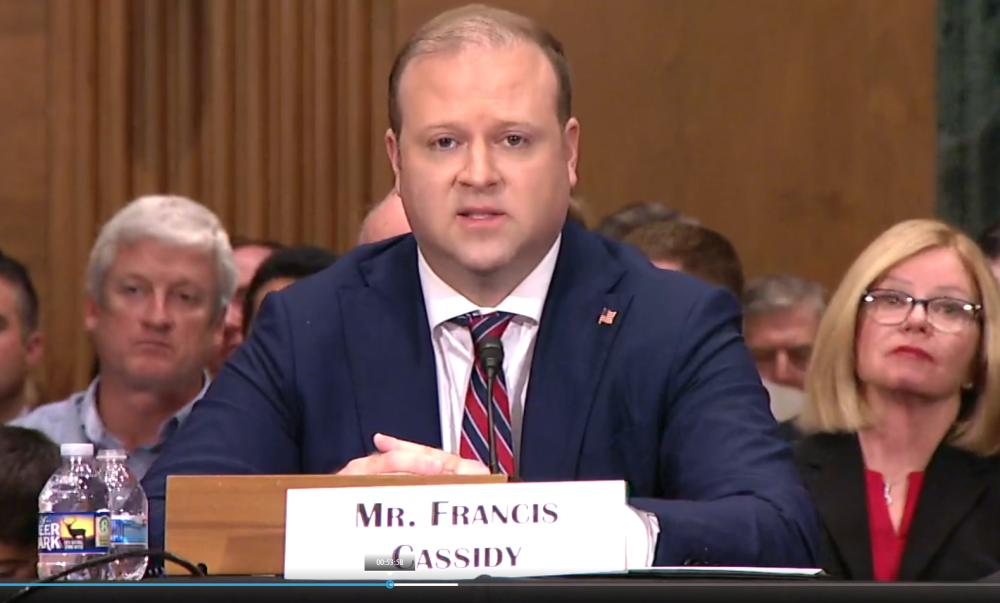
Frank Cassidy, who is currently principal deputy assistant secretary at the Department of Housing and Urban Development, will soon face a full Senate vote. View the full article
-
We may earn a commission from links on this page. Black Friday and Cyber Monday are coming up soon, but deals are already trickling out across marketplaces across the Internet. If you're shopping for home goods or home improvement items (like I always am), this is the time to load up on tools, organizers, appliances, and more, all for cheaper than you'll pay during other times of the year. Check this live blog often to see the best sales on home products that we're finding in the lead-up to Black Friday and Cyber Monday. View the full article
-
We may earn a commission from links on this page. Black Friday and Cyber Monday are fast approaching, but many deals are actually already here. I'm always hunting for deals on at-home fitness products, but whether you need some dumbbells, more serious equipment, or anything else to boost your health and wellness journey, this is the moment to save. Check this live blog often to see the best fitness sales we're finding in the lead-up to Black Friday and Cyber Monday. View the full article
-
We may earn a commission from links on this page. If you’re like most people, you bought a standard claw hammer once long ago and never thought much about its weight or design. I was like that for a long time, too, but I noticed that every time I worked on a project involving lots of hammering, my arm would get fatigued quickly, and the last half of the work would be a misery. I recently fell down a bit of a rabbit hole regarding hammers—the different weights and types-and decided it was time to splurge a bit and buy a titanium hammer (specifically, this one). It was one of the best purchases I’ve made recently. Titanium vs. steel hammerMost hammers are made from steel, with either a fiberglass or wood handle. They get the job done—steel is an excellent material for a hammer, and it will last a long time. I still have an old steel hammer handed down from my father; it has a nail bent over the head at the top to hold it in place, but it still works. And steel hammers are pretty cheap—this 16 ounce model from Estwing is just $25 as I write this. You can’t beat that price for a tool that will probably last decades. Estwing 16 oz Straight Rip Claw Hammer $24.98 at Amazon Shop Now Shop Now $24.98 at Amazon The problem with cheap steel hammers is the strain they put your body through. If you use your hammer once a year, you’ll never notice. But when I started doing work around the house on a regular basis, I began to feel it: My arm would get tired, and my elbow and shoulder would ache a little after a few hours. Steel doesn’t absorb the impact of each strike very well, and transmits it to your arm. You can minimize that impact a little with anti-vibration wraps or grips, but it’s never going to go away completely. Fed up with suffering through every project, I did some research and splurged on a titanium TiBone 10-Oz. Trimbone hammer—and it’s worked out amazingly well. The TiBone is just 10 ounces, but because it’s titanium, it has the same striking force—the force it delivers to the nail—as a much heavier steel model. In other words, whatever weight hammer you’re used to swinging, you can go much lighter with a titanium hammer. That’s less weight to swing, and less strain on your arm. Stiletto TRIMBONE 10 Oz. Smooth-Face Framing Hammer with Curved Titanium Handle $370.49 at Walmart $289.99 Save 0.00 Shop Now Shop Now $370.49 at Walmart $289.99 Save 0.00 The Trimbone has a few other features I like—you can swap out the face and grip easily, so it will last longer and is more flexible for different jobs, it has a side nail-puller and a magnetic nail starter, and the grip is comfortable. But it’s mainly the lighter weight without sacrificing performance that I (and my shoulder) like. It’s specifically a framing hammer, but I find it’s terrific as a general-purpose hammer for most jobs. The big downside is cost. It’s currently $370.49, which is, you may notice, almost 15 times more expensive than the perfectly good steel hammer I referenced above. You might be able to find it cheaper somewhere with a little effort, but it will still be an order of magnitude more expensive. For me, it was worth the cost—I haven’t needed to take a bunch of ibuprofen after working all day since I bought it. If you’re also struggling with arm fatigue with your current hammer, it might be time to consider the upgrade. View the full article
-
For consumers heavy on savings and light on credit history, a new partnership in the world of credit scores could help you lock down a loan. FICO, the company basically synonymous with the credit score, is teaming up with Plaid to bring real-time data showing how much cash you have on hand to lenders. Plaid, a fintech company that links bank accounts with financial apps, has a lot of visibility into how its customers move cash between bank accounts, payments apps, investment platforms, and just about everything else. Plaid’s technology runs under the hood across a huge network of 12,000 financial institutions that partner with the fintech startup, which has grown into a key part of the web’s financial infrastructure since its founding in 2013. All of those connections make Plaid a no-brainer as a partner for Fair Isaac Corp. (FICO), creator of the gold standard credit score used by most lenders. By partnering with Plaid, FICO will be able to offer a historical picture of “money flowing into and out of a consumer’s transaction accounts” through Plaid’s network of finance data, which consumers opt into through their accounts. “By bringing together FICO’s trusted credit score intelligence with Plaid’s cash flow data, we’re creating the foundation for more comprehensive lending decisions,” Julie May, FICO vice president and general manager of B2B scores, said in a press release. “This is the beginning of a new chapter in responsible and inclusive lending.” The credit score slog Credit scores notoriously require consumers to build up a credit history and demonstrate that they can make timely loan payments—factors that outweigh other aspects of a person’s financial health, like savings and income. While the system is good business for companies that evaluate and track credit scores, it creates some weird incentives on the consumer side. It’s not uncommon for credit score-conscious consumers, in order to build up a credit history, to open a credit card and regularly use it for payments even if they have more than enough cash to handle their expenses. To capture a more complete financial picture for both borrowers and lenders, FICO has been building up an alternative to the traditional credit score for years now. That score, called an UltraFICO, was introduced in 2018. The company frames the UltraFICO score as a “more inclusive approach” that includes checking, savings, and money market accounts to help borrowers show lenders that they can afford a loan, even without a stellar credit history. FICO describes the UltraFICO score as part of a “layered” strategy that can help borrowers secure a loan and lenders find new customers beyond the people who would normally qualify. Plaid’s data will slot naturally into that strategy, offering a broader picture of financial health. The new UltraFICO option will be available through Plaid’s consumer reporting agency, Plaid Check. Last month, Plaid launched its own alternative credit score, LendScore, which also aims to paint a fuller financial picture for borrowers and lenders by “leveraging cash flow insights, income patterns, and financial account connections to reveal a borrower’s real-time financial story.” Plaid’s LendScore system is in beta testing now and collecting names for its wait list. “High-quality cash flow data is becoming essential for lenders who want a more comprehensive view of a consumer’s financial picture,” said Adam Yoxtheimer, Plaid’s head of partnerships. “By combining Plaid’s real-time connectivity and intelligence with FICO in this next generation credit score, we are helping lenders make more confident, inclusive credit decisions through a simple and scalable solution.” View the full article

-
An analysis of 300k domains found LLMs.txt file adoption is low and has no measurable link to AI citation frequency. The post LLMs.txt Shows No Clear Effect On AI Citations, Based On 300k Domains appeared first on Search Engine Journal. View the full article
-
In our consumer driven culture, where the cost of goods is soaring, one of the most radical things you can do this Black Friday is not to buy anything. That’s the message from “Mass Blackout,” a coalition of grassroots groups that are protesting the The President administration’s policies and urging you not to participate in this year’s extended Black Friday sales. starting the day before Thanksgiving (Thursday, November 26) until the day after Cyber Monday, (Tuesday, December 2). There’s also a second boycott underway targeting Amazon, Target and Home Depot called “We Ain’t Buying It” around the same time. Don’t think boycotts work? Just look at Target, which just reported another lackluster quarter and declining sales, partially due to customer backlash and a boycott from customers after a rollback of DEI policies. The idea of buying locally, or from businesses aligned with your politics, isn’t all that radical. In fact, many Canadians have started to banning American products, and only buying “locally,” as the “Buy Canadian” movement has drawn record participation as a reaction to The President’s high tariffs on their country’s goods.) What’s happening with the ‘Mass Blackout’ protest? “NO SPENDING. NO WORK. NO SURRENDER. The system isn’t broken. It’s working exactly as designed—for the wealthy,” according to the Mass Blackout, a nationwide economic action, organized by a coalition of grassroots organizations is calling Americans to: Stop online or in-store shopping (except for small businesses) Stop streaming, cancel subscriptions, no digital purchases Stop work (if you can) If you must spend: support small, local businesses, and pay in cash. “We’re not targeting small businesses or communities—we’re targeting the corporate systems that profit from injustice, fuel authoritarianism, and crush worker power,” their website explains. The boycott also includes: avoiding non-essential travel, restaurants and normal consumer behavior; staying off ad-driven platforms unless organizing; halting spending; logging off entertainment platforms; and donating to Feeding America to support those refusing to work. What’s happening with the “We Ain’t Buying It’ boycott? The “We Ain’t Buying It” campaign targets three companies: Target, Home Depot and Amazon, and is made up of a coalition of progressive groups including the No Kings Alliance, and Indivisible, behind the protests earlier this year. It is asking Americans “to withhold their purchasing power from Thanksgiving through Cyber Monday (Nov. 27-Dec. 1) to protest three retailers who, they argue, are cooperating directly with the The President administration in these ways: Target, for its rollback on DEI Home Depot, for working with ICE (Immigration and Customs Enforcement) which has been arresting, detaining and deporting immigrants Amazon, for funding the The President administration to secure corporate tax cuts “When corporations align with cruelty and authoritarianism, they must understand that our purchasing power matters,” LaTosha Brown, co-founder of Black Voters Matter Fund, a member of the “We Ain’t Buying It” coalition, said in a statement. “Economic noncooperation is a powerful, nonviolent tool for a free people, and we plan to use it to make America better for all of us – not just the wealthy few.” Why are these Black Friday boycotts happening now? The boycotts come as the gap between the richest and poorest Americans is widening in what’s increasingly bifurcated economy and target billionaires and businesses supporting the The President administration, which they argue is eroding civil rights, labor protections, diversity, equity, and inclusion initiatives, and weakening the United States’ democratic institutions. Its both a political and economic boycott. View the full article

-
We may earn a commission from links on this page. Deal pricing and availability subject to change after time of publication. Black Friday sales officially start Friday, November 28, and run through Cyber Monday, December 1, and Lifehacker is sharing the best sales based on product reviews, comparisons, and price-tracking tools before it's over. Follow our live blog to stay up-to-date on the best sales we find. Browse our editors’ picks for a curated list of our favorite sales on laptops, fitness tech, appliances, and more. Subscribe to our shopping newsletter, Add to Cart, for the best sales sent to your inbox. Sales are accurate at the time of publication, but prices and inventory are always subject to change. I'm a big fan of Aura's digital picture frames. They look great, and it make it easy to casually see all of the pictures that might otherwise get lost in your Photos app. Ahead of Black Friday, some stores are selling Aura frames at a pretty steep discount. That includes Amazon, which has the Aura Carver Mat frame for 22% off. That means you can buy it right now for $139, down from $179. Aura Digital Picture Frame $139.00 at Amazon $179.00 Save $40.00 Get Deal Get Deal $139.00 at Amazon $179.00 Save $40.00 There are a couple things that I really like about Aura's frames in particular. First is the ease of use: You can add your photos to the frame via Aura's app, which is convenient for adding new pictures as you take them. In my house, we usually add new photos after parties, weekends away with friends, or long trips. It's nice to walk into the kitchen and see the pictures you just took, alongside your usual favorites. If you've gifted the frame to someone else, the app lets you add pictures to their frame from afar. The Aura frame also just looks nice. You won't be tricked into thinking this is a real picture frame, mind you. However, it doesn't just look like a mini computer screen on your desk. It looks and feels classy, and the image quality is excellent. I also appreciate how the backlight compensates for the lighting in your room: When the sun's bright, your frame gets brighter. As the sun sets, your frame dims as well. And when all the lights are out in your room, the frame automatically turns off. My favorite feature, however, is the small touchpad at the top of the frame. This is an easy feature to miss: If you run your finger along the top edge, you can swipe back and forth between photos. It's great if you want to see another photo that Aura recently swapped out, or you want to skip one you don't feel like looking at right now. Plus, it's tucked away, so the frame doesn't clutter itself up with buttons. Speaking of which, the touchpad doubles as a button if you long-press it. You'll be able to choose whether to exclude a photo from the current collection, or to turn off the frame entirely. While I personally love my Carver Mat Aura frame, Amazon has early Black Friday deals on a host of different Aura models, if you're looking for something different. Our Best Editor-Vetted Early Black Friday Deals Right Now Apple AirPods Pro 3 Noise Cancelling Heart Rate Wireless Earbuds — $219.99 (List Price $249.00) Apple iPad 11" 128GB A16 WiFi Tablet (Blue, 2025) — $279.99 (List Price $349.00) Amazon Fire HD 10 (2023) — $69.99 (List Price $139.99) Sony WH-1000XM5 — $248.00 (List Price $399.99) Blink Outdoor 4 1080p Wireless Security Camera (5-Pack) — $159.99 (List Price $399.99) Amazon Fire TV Stick 4K Plus — $24.99 (List Price $49.99) NEW Bose Quiet Comfort Ultra Wireless Noise Cancelling Headphones — $298.00 (List Price $429.00) Shark AI Ultra Matrix Clean Mapping Voice Control Robot Vacuum with XL Self-Empty Base — $249.99 (List Price $599.00) Apple Watch Series 11 (GPS, 42mm, S/M Black Sport Band) — $349.99 (List Price $399.00) Western Digital 14TB Elements Desktop External Hard Drive — $169.99 (List Price $279.99) Deals are selected by our commerce team View the full article
-
Earlier this year Pepsi purchased probiotic drinker maker Poppi, and now the soda giant is introducing a new prebiotic cola drink in its quest to capture Gen Z drinkers: Pepsi Prebiotic Cola. The drink drops on November 28 and will be available at Walmart, on Amazon, and TikTok shop, as well as in select markets on Kroger.com, DashMart, and GoPuff. The “Unbelievably Pepsi” drinks will be available in two flavors: Original and Cherry Vanilla and contain 30 calories and five grams of sugar. They also have three grams of prebiotic fiber. Still, the drinks are highly marketable, given they’re a soda alternative, and appear to offer some health benefits. As many Americans have turned to weight loss drugs like Ozempic, options that fit into their new diets are more desirable. That may be especially true when it comes to drinks that contain protein, a trend which Pepsi has also jumped on given Americans are desperate to consume more protein. According to the brand, 71% tried to up their protein intake last year. In the wake of the protein craze, the brand introduced a ready-to-drink Starbucks protein coffee and a protein water by Propel. “We want to redefine the protein conversation,” Ram Krishnan, CEO of PepsiCo’s U.S. beverages business, previously said in an interview with Fast Company. “Everybody in the country is talking about protein, but it’s actually crowded and confusing and the consumers really don’t understand all of the science behind protein.” Previously, Pepsi has offered healthier alternatives. Back in 2016, the brand partnered with KeVita, which makes sparkling probiotic drinks and kombucha. At the time, the brand said it was “continuing to evolve” its “health and wellness offerings to meet consumers’ changing needs.” Of course, Pepsi isn’t the first brand to launch a “healthier” soda option. There’s been a surge of prebiotic and probiotic sodas appearing on shelves in recent years. In addition to Poppi, Culture Pop and Olipop are also well-known brands that claim to have gut-boosting benefits. But while prebiotic and probiotic sodas are typically lower in sugar content and have fewer calories than regular sodas, some critics have questioned how beneficial the sodas are, given they don’t have the same variety of good bacterias that fermented foods do. “Here, you’re only getting the type of prebiotic that’s added in, while you’d likely benefit more from the variety of prebiotics in fiber-rich foods,” says Amy Keating, RD, a Consumer Reports (CR) nutritionist, per the outlet. “At Pepsi, we are experts in great tasting cola – and have been for decades. The launch of Pepsi Prebiotic Cola marks a significant moment in our brand’s history and the cola category,” Gustavo Reyna, VP of Marketing at Pepsi said in the release. “This breakthrough innovation upholds the iconic taste of Pepsi that people love, now with no artificial sweeteners, lower sugar and functional ingredients. It’s an inimitable taste – designed to meet the demands of cola lovers, cola newcomers, and everyone in between.” Pepsi’s new cola will drop on Black Friday and be around “until supplies last”. According to the release, you can check out the drink during Amazon Prime Video’s Black Friday Football game. It said, “the spot will bring bold flavor and feel-good refreshment to homes nationwide – with the ability to shop it live, right from your TV screen.” View the full article

-
A reader writes: Sending in a question I truly never thought I would have to ask: what are some things that my organization, as an employer, can do to help ensure staff safety in areas of increased and contentious ICE action? We have staff of Hispanic heritage (“present” Hispanic, names clearly of that background if ID or car registration were checked) who are frequently on the road for our organization. This includes many areas where they are an ethnic minority and which have colloquial reputations for profiling (but staff do not report previous issues) — and areas with increased, visible, concerning ICE enforcement. We’re talking large scale “operations” which seem to have very broad goals, many agencies, masked agents. Staff are often on the road solo, in their personal vehicles. Our staff are authorized to work in the U.S. but we certainly see from media reports that people are not given the chance to even establish their status in these raids. We spoke today with those potentially impacted by concerns about ramp-ups in the area. In some situations, staff members come from families/communities with many undocumented individuals, where those families may be limited in their safe ability to get involved. I am struggling what we can do to help support safety and very open to suggestions My thinking so far: * We have a lot of flexibility on when/where we decide staff will take these trips (we’re talking about attending events with partner orgs, not service provision to a specific population) — so for us, conveying that they can always flag if a trip doesn’t work for them based on their needs (and they don’t need to spell out this issue as the concern!). * OFFER the opportunity to have another staff member check in with them to ensure they have arrived at destinations for any trips they want (all, some, whatever), and have a plan for what to do if they do not pick up. (For example: call once, call 15 minutes later, call 30 minutes later, then authorized to call their emergency contact to check in.) * OFFER location-sharing for any trips they’d like with a similar plan — if you’re not at the location you had planned to be at within a certain time frame, begin calling. * Have an informal leadership plan of what we would do next if there was a situation where we believe the staff member may be in trouble, including a contact for legal counsel and a list of detention centers in the region for inquiries. How are folks handling this? I want our staff members safe, period, but feel a particular concern when they are going out into the world specifically to do the work of our org! I checked in with the community organizer in Chicago who offered advice earlier this month on what to do if ICE comes to your workplace. She said: This person already has a pretty solid safety plan in place! I’d want to emphasize a point I included in my original letter: don’t make risk judgments for people. Give them information and resources, but don’t tell people they can’t take trips to specific places based on their last name, ethnicity, etc. It might also be good to have contacts within the partner orgs who can handle things locally. If someone needs to be picked up from detention, for example, it’s better to have someone who’s at least somewhat trusted and known to the employee than not. Otherwise, though, I think they already have a really good plan in place. She also notes, “The main Border Patrol force has left Chicago and is now terrorizing Charlotte, N.C., and a lot of groups doing this work anticipate seeing similar patterns — one or two cities getting very aggressively targeted, while many other locations have much smaller ICE or Border Patrol deployments. So these kind of resources are going to become increasingly important as these agencies spread across the country, unfortunately.” I checked with another person who works in this field and they offered this: Personally, I think this employer’s first impulse to make work travel completely voluntary is the best thing they can do. Employees could know all their rights, and employers could have the perfect safety plan, but if law enforcement or ICE disregard someone’s constitutionally-protected rights or attempt to fast-track their deportation without due process — even if they have legal status — the consequences for employees and their families can be absolutely devastating. If that’s not a risk the employees want to take, and the travel isn’t necessary, then making the travel voluntary is probably the best thing employers can do to help mitigate that risk. Some additional resources that may help: Know Your Rights Pages: Immigrants’ Rights: This has some specific information about your rights if you’re stopped and questioned about your immigration status, including advice about being stopped by police, ICE, or Border Patrol while in transit. Enforcement at the Airport: This has specific information about encountering law enforcement at the airport, if that’s part of their work travel. Safety plans: The ACLU of DC has a hub of really useful resources — in particular, see the advice on “preparing for immigration enforcement actions” and “preparing for ICE raids,” which both have bullet points about preparedness and creating an emergency plan. The post how to protect employees traveling to areas with increased immigration raids appeared first on Ask a Manager. View the full article
-
A media calendar template is a crucial tool for anyone looking to streamline their content planning across various platforms. It outlines publication dates, content types, and team responsibilities, making it easier for you to coordinate efforts and maintain consistency. By using this template, you can avoid the chaos of last-minute content creation and guarantee your posts align with audience engagement peaks. But how exactly can you create and utilize a media calendar template to maximize its benefits? Key Takeaways A media calendar template organizes and schedules content across various platforms, enhancing collaboration and workflow efficiency. It includes essential details like publication dates, content types, and responsible team members to prevent overlaps and gaps in posting. By allowing for advanced planning, it helps maintain consistency in posting and reduces last-minute content creation. Performance metrics integrated into the calendar enable tracking content effectiveness and inform future content strategies for better engagement. Customizable templates can be tailored to specific needs, incorporating organizational branding and various content types for streamlined management. Understanding a Media Calendar Template A media calendar template serves as an essential tool for anyone looking to effectively plan and manage their media content. This structured tool helps you organize and schedule various content types across platforms, ensuring a strategic approach to delivery. Typically, a media calendar template includes critical details like publication dates, platforms, content types, titles, and the team members responsible for each task. By using a drop calendar template or an event planning calendar, you can improve collaboration among your team, providing a clear overview of upcoming content and deadlines. This clarity reduces confusion and boosts workflow efficiency. Moreover, tracking publication dates and performance allows you to analyze engagement metrics, refining your content strategies for better results. Benefits of Using a Media Calendar Template Using a media calendar template brings several notable benefits that can greatly improve your content strategy. You’ll notice improved consistency in posting, as it helps you plan and schedule content in advance, ensuring you stay on track. Furthermore, it boosts organization by clearly laying out your content across various platforms, making it easier to manage deadlines and maintain a streamlined scheduling process. Improved Consistency in Posting When you implement a media calendar template, improved consistency in posting becomes an achievable goal. This structured approach helps you plan your content, ensuring a steady flow of posts that engage your audience. Here are three key benefits: Scheduled Posting: By setting specific dates and times, you align your content with peak engagement periods, maximizing visibility. Variety in Content: Organizing different content types and themes prevents repetition, keeping your audience interested through diverse formats. Reduced Scrambles: Planning ahead eliminates last-minute rushes, allowing you to maintain a regular posting schedule that cultivates trust and familiarity among your followers. Using a media calendar template not only improves your posting consistency but also reinforces your brand’s presence across social media platforms. Enhanced Content Organization Improved content organization is one of the primary advantages of adopting a media calendar template, as it creates a structured framework for planning and scheduling. This template helps you account for all content types and platforms in one cohesive document, enhancing team collaboration and productivity. By clearly defining publication dates, content types, and responsible parties, it reduces confusion and guarantees timely delivery of your content. In addition, using a media calendar allows for effective performance tracking, enabling you to document and analyze publication dates and content effectiveness. This leads to data-driven strategy improvements. Moreover, it promotes accountability within your team by assigning tasks and deadlines, resulting in smoother workflows and more effective content management aligned with your marketing goals. Streamlined Scheduling Process A media calendar template greatly improves the scheduling process for content teams, allowing you to visualize and manage your media posts across various platforms effectively. Here are three key benefits of using a media calendar template: Streamlined Workflow: It helps reduce last-minute content creation and prevents missed deadlines, saving you time and resources. Enhanced Collaboration: With a centralized location for content details, deadlines, and responsibilities, team members can communicate more effectively, reducing confusion. Consistent Posting: The template guarantees a regular posting cadence, vital for maintaining audience engagement and retention. Key Features of a Media Calendar Template A media calendar template offers centralized content organization, allowing you to schedule and manage your publications efficiently. With improved collaboration tools, team members can easily coordinate their efforts and stay aligned on deadlines. Furthermore, performance tracking features help you monitor the effectiveness of your content, ensuring you can adjust strategies as needed to meet your goals. Centralized Content Organization Even though managing content across various platforms can often feel overwhelming, a media calendar template provides a structured solution for centralized content organization. This template allows you to track publication dates, platforms, and content types in one cohesive document. Key features include: Essential Columns: Post copy, approval status, and assigned team members keep everyone informed about responsibilities and deadlines. Consistency in Messaging: Aligns content with marketing goals and audience engagement strategies, enhancing your overall communication. Visual Overview: Helps prevent overlaps and gaps in posting schedules, ensuring a steady flow of communication with your audience. Enhanced Collaboration Tools When teams use a media calendar template, they gain access to improved collaboration tools that streamline content management and communication. This centralized platform allows team members to view, edit, and comment on scheduled content, ensuring everyone stays aligned on messaging and deadlines. Features for tracking approval statuses let you see which pieces are awaiting review, facilitating a smoother feedback process for content production. Customizable roles and responsibilities clarify accountability for each piece, promoting a sense of ownership within the team. Furthermore, integration capabilities with project management tools improve coordination across platforms, as shared access and real-time updates reduce miscommunication. Together, these features enable teams to adapt quickly to changes in content strategy or scheduling. Performance Tracking Features Incorporating performance tracking features into a media calendar template improves your ability to monitor essential metrics like engagement rates, impressions, clicks, and conversions. This integration helps you guarantee that your content aligns with organizational goals. Here are three key benefits you’ll find: Data-Driven Insights: Identify which types of content resonate with your audience, allowing you to adjust future campaigns effectively. Visualization Tools: Access graphs and charts that illustrate performance trends over time, making it easier to analyze content effectiveness. Accountability: Track approval statuses and deadlines, guaranteeing timely performance evaluations and a streamlined content creation process. With these features, you can facilitate regular reviews, optimizing your content strategies based on audience feedback and engagement patterns. Types of Media Calendar Templates Media calendar templates come in various forms, each customized to meet specific needs in content planning and scheduling. Social media calendars help you schedule posts across different platforms, outlining publication dates, content types, and engagement strategies to keep your online presence consistent. Editorial calendars cater to writers and publishers, focusing on deadlines and themes to guarantee timely submissions and drafts. Marketing calendars have a broader scope, coordinating email campaigns, events, and content efforts to align with your overall business goals. Finally, campaign calendars track activities related to individual marketing campaigns, making sure all elements are synchronized and executed according to the planned timeline. Each type of template serves a distinct purpose to improve your content strategy effectively. How to Create a Media Calendar Template To create an effective media calendar template, start by defining your objectives, so you know what content needs to be scheduled. Next, choose a template that suits your needs, whether it’s a simple spreadsheet or a more detailed document. Finally, schedule your content strategically, considering publication dates, platforms, and assigned team members to guarantee everything runs smoothly. Define Your Objectives Establishing clear objectives is crucial when creating a media calendar template, as it provides direction for your content strategy. Start by defining measurable goals that will help guide your planning and execution. Consider these three key objectives: Engagement: Aim for specific interaction rates, like comments and shares, to gauge audience interest. Reach: Set targets for the number of impressions or unique views across platforms to expand your audience. Conversions: Identify desired actions, such as sign-ups or purchases, to measure the effectiveness of your content. Incorporate flexibility in your template to adjust for real-time trends or unexpected events. Regularly review and update your calendar based on performance metrics and audience feedback to stay aligned with your marketing goals. Choose a Template Creating an effective media calendar template requires attention to several key components that boost organization and clarity. Start by defining elements like publication date, platform, content type, title, status, and assigned team members. These components help streamline your workflow and provide clear insights into your content strategy. Use spreadsheet software or project management tools to format your template, guaranteeing it features clear headers and an organized layout for easy navigation. Improve functionality by incorporating campaign tags and performance metrics, allowing you to track content effectiveness over time. Regularly populate the calendar with upcoming content and specify details for each entry to maintain a consistent posting schedule. Consider integrating automation tools to simplify the content approval process and guarantee timely updates. Schedule Content Strategically When you schedule content strategically, it’s essential to contemplate the layout of your media calendar template, as a well-structured design boosts your ability to plan publication dates and times effectively across various platforms. To improve your content strategy, consider these key elements: Content Types: Specify diverse formats, like blog posts, videos, and social media updates, to engage different audience segments. Deadlines and Responsibilities: Assign tasks and set deadlines within your template to promote accountability and meet production timelines. Performance Metrics: Regularly update your calendar with engagement data, allowing for data-driven adjustments to your strategy. Steps to Optimize Your Media Calendar Optimizing your media calendar is essential for maximizing audience engagement and improving your overall content strategy. Start by regularly reviewing and adjusting posting times based on engagement metrics. Incorporate a mix of content types, such as images, videos, and infographics, to cater to diverse preferences. Use performance tracking tools to analyze past posts for data-driven adjustments. Collaborate with your team through shared visibility in the calendar, streamlining the approval process. Finally, establish a routine for quarterly audits to identify content gaps and assess performance trends. Action Frequency Purpose Review posting times Monthly Maximize visibility and interaction Mix content types Ongoing Cater to diverse audience preferences Analyze past performance After each campaign Make data-driven adjustments Audit media calendar Quarterly Identify gaps and assess trends Integrating Your Media Calendar With Other Tools How can integrating your media calendar with other tools improve your content strategy? By connecting your media calendar to various platforms, you can streamline your workflow and boost collaboration. Here are three key integrations to contemplate: Project Management Tools: Use platforms like Asana or Trello to track content development and deadlines in one centralized location. Social Media Management: Link with tools like Sprout Social or Hootsuite for seamless scheduling and monitoring of posts across all channels. Analytics Tools: Integrate with Google Analytics or social media insights to track performance, allowing you to make data-driven adjustments in real time. These integrations guarantee that your team stays organized and responsive, eventually improving your overall content strategy. Best Practices for Using a Media Calendar Using a media calendar effectively requires adherence to several best practices that can considerably improve your content strategy. First, define clear goals and target audiences to tailor your content, enhancing audience engagement. Regularly review and update your media calendar to stay responsive to changing trends and preferences, ensuring your content remains relevant. Incorporating deadlines and assigning responsibilities within the calendar promotes accountability and boosts team collaboration, leading to more efficient content production. Furthermore, utilize analytics to track performance metrics of your published content, which will enable you to make data-driven adjustments. Common Challenges and Solutions As you develop a media calendar, it can considerably improve your content strategy, but it’s not without its challenges. Here are some common issues and their solutions: Inconsistent Posting Schedules: A media calendar provides a structured framework, helping you plan and organize content across platforms consistently. Content Overload: Utilizing the template allows your team to visualize your strategy, ensuring you prioritize quality over quantity in your posts. Publishing Errors: Incorporating approval workflows within the calendar mitigates risks, ensuring all content aligns with brand standards and messaging. Measuring the Success of Your Media Calendar Measuring the success of your media calendar is crucial for refining your content strategy and guaranteeing that your efforts yield tangible results. A media calendar template helps you track performance across different platforms by documenting engagement metrics like likes, shares, comments, and click-through rates for each published piece. By analyzing this data, you can identify which content types and formats generate the highest engagement, enabling you to make data-driven adjustments to future strategies. Regularly reviewing these metrics allows you to recognize trends and patterns, informing ideal timing and frequency for posts. Additionally, integrating performance tracking guarantees accountability among team members, leading to improved outcomes and insights for your upcoming projects. Examples of Media Calendar Templates Several effective media calendar templates can help streamline your content planning and scheduling process. Here are three examples that you might find useful: Social Media Calendar: This template includes sections for publication dates, content types, and platforms, ensuring a consistent posting schedule across channels. Email Campaign Calendar: It organizes your email content, including subject lines, send dates, and audience segments, to improve engagement and brand visibility. Marketing Materials Calendar: This template tracks deadlines for brochures, flyers, and digital ads, allowing for better collaboration among team members and accountability. How to Customize Your Media Calendar Template Customizing your media calendar template can greatly improve your content planning process, making it both efficient and tailored to your specific needs. Start by adding columns for post date, platform, content type, post copy, and approval status to capture all crucial details. Tailor the design to your branding by incorporating your organization’s colors, fonts, and logos. Consider including sections for campaign tags and performance metrics, which will help you track and analyze content effectiveness across platforms. To improve collaboration, share the template with team members so they can add comments and suggest edits. Finally, integrate deadlines and reminders to streamline your workflow and guarantee timely content production and publication. Resources for Further Learning After fine-tuning your media calendar template, you might want to explore additional resources that can further improve your content planning skills. Here are some valuable options to reflect on: Online Template Libraries: Websites like HubSpot and Canva offer free and customizable media calendar templates, allowing you to choose one that fits your needs. Content Marketing Courses: Platforms such as Coursera and LinkedIn Learning provide courses particularly focused on content planning and marketing strategies, enhancing your comprehension of effective media management. Industry Blogs and Webinars: Follow marketing blogs or attend webinars from experts to stay updated on best practices and new trends in media planning. Utilizing these resources will deepen your knowledge and streamline your content management processes. Frequently Asked Questions What Are the Benefits of Creating a Calendar Template? Creating a calendar template offers numerous benefits for your planning and organization. It helps you streamline your scheduling process, ensuring you maintain a consistent posting routine across various platforms. You’ll allocate resources more effectively, clarifying team responsibilities and enhancing productivity. Furthermore, a calendar allows you to track performance metrics, making it easier to analyze engagement trends and refine your strategies. Flexibility in your planning enables real-time adjustments, keeping your content relevant and timely. What Is a Media Calendar? A media calendar is a strategic tool that helps you organize and schedule all your media-related content and activities. It includes key details like publication dates, content types, target audiences, and assigned team members. By centralizing this information, you can reduce last-minute scrambles and guarantee consistent messaging across platforms. A media calendar additionally improves team collaboration, as everyone can see tasks and deadlines, ultimately enhancing your content delivery and productivity. What Is a Social Media Calendar Template? A social media calendar template is a tool that helps you plan and organize your social media posts effectively. It outlines post dates, platforms, content types, and team responsibilities, ensuring your content aligns with marketing goals. By providing a structured approach, it improves consistency and audience engagement as well as reducing last-minute stress. You can find customizable templates online, making it easy to adapt to your specific needs and streamline your content management process. Why Is Creating a Social Media Content Calendar Beneficial? Creating a social media content calendar is beneficial since it helps you organize your posts effectively. You can plan content in advance, ensuring consistency across platforms and reducing last-minute stress. This structured approach improves collaboration among your team, allowing everyone to track responsibilities and approval statuses easily. Furthermore, it supports performance analysis, enabling you to adjust strategies based on audience engagement. In the end, encouraging brand loyalty and trust with your audience over time. Conclusion In conclusion, a media calendar template is a crucial tool for organizing and streamlining your content strategy. By clearly outlining publication dates, content types, and responsible team members, it improves collaboration and efficiency. Utilizing this template helps you maintain consistency and align your content with ideal engagement times. Whether you’re new to content planning or looking to improve your existing process, implementing a media calendar can greatly contribute to a successful media strategy. Image via Google Gemini This article, "What Is a Media Calendar Template and How Can It Help?" was first published on Small Business Trends View the full article
-
A media calendar template is a crucial tool for anyone looking to streamline their content planning across various platforms. It outlines publication dates, content types, and team responsibilities, making it easier for you to coordinate efforts and maintain consistency. By using this template, you can avoid the chaos of last-minute content creation and guarantee your posts align with audience engagement peaks. But how exactly can you create and utilize a media calendar template to maximize its benefits? Key Takeaways A media calendar template organizes and schedules content across various platforms, enhancing collaboration and workflow efficiency. It includes essential details like publication dates, content types, and responsible team members to prevent overlaps and gaps in posting. By allowing for advanced planning, it helps maintain consistency in posting and reduces last-minute content creation. Performance metrics integrated into the calendar enable tracking content effectiveness and inform future content strategies for better engagement. Customizable templates can be tailored to specific needs, incorporating organizational branding and various content types for streamlined management. Understanding a Media Calendar Template A media calendar template serves as an essential tool for anyone looking to effectively plan and manage their media content. This structured tool helps you organize and schedule various content types across platforms, ensuring a strategic approach to delivery. Typically, a media calendar template includes critical details like publication dates, platforms, content types, titles, and the team members responsible for each task. By using a drop calendar template or an event planning calendar, you can improve collaboration among your team, providing a clear overview of upcoming content and deadlines. This clarity reduces confusion and boosts workflow efficiency. Moreover, tracking publication dates and performance allows you to analyze engagement metrics, refining your content strategies for better results. Benefits of Using a Media Calendar Template Using a media calendar template brings several notable benefits that can greatly improve your content strategy. You’ll notice improved consistency in posting, as it helps you plan and schedule content in advance, ensuring you stay on track. Furthermore, it boosts organization by clearly laying out your content across various platforms, making it easier to manage deadlines and maintain a streamlined scheduling process. Improved Consistency in Posting When you implement a media calendar template, improved consistency in posting becomes an achievable goal. This structured approach helps you plan your content, ensuring a steady flow of posts that engage your audience. Here are three key benefits: Scheduled Posting: By setting specific dates and times, you align your content with peak engagement periods, maximizing visibility. Variety in Content: Organizing different content types and themes prevents repetition, keeping your audience interested through diverse formats. Reduced Scrambles: Planning ahead eliminates last-minute rushes, allowing you to maintain a regular posting schedule that cultivates trust and familiarity among your followers. Using a media calendar template not only improves your posting consistency but also reinforces your brand’s presence across social media platforms. Enhanced Content Organization Improved content organization is one of the primary advantages of adopting a media calendar template, as it creates a structured framework for planning and scheduling. This template helps you account for all content types and platforms in one cohesive document, enhancing team collaboration and productivity. By clearly defining publication dates, content types, and responsible parties, it reduces confusion and guarantees timely delivery of your content. In addition, using a media calendar allows for effective performance tracking, enabling you to document and analyze publication dates and content effectiveness. This leads to data-driven strategy improvements. Moreover, it promotes accountability within your team by assigning tasks and deadlines, resulting in smoother workflows and more effective content management aligned with your marketing goals. Streamlined Scheduling Process A media calendar template greatly improves the scheduling process for content teams, allowing you to visualize and manage your media posts across various platforms effectively. Here are three key benefits of using a media calendar template: Streamlined Workflow: It helps reduce last-minute content creation and prevents missed deadlines, saving you time and resources. Enhanced Collaboration: With a centralized location for content details, deadlines, and responsibilities, team members can communicate more effectively, reducing confusion. Consistent Posting: The template guarantees a regular posting cadence, vital for maintaining audience engagement and retention. Key Features of a Media Calendar Template A media calendar template offers centralized content organization, allowing you to schedule and manage your publications efficiently. With improved collaboration tools, team members can easily coordinate their efforts and stay aligned on deadlines. Furthermore, performance tracking features help you monitor the effectiveness of your content, ensuring you can adjust strategies as needed to meet your goals. Centralized Content Organization Even though managing content across various platforms can often feel overwhelming, a media calendar template provides a structured solution for centralized content organization. This template allows you to track publication dates, platforms, and content types in one cohesive document. Key features include: Essential Columns: Post copy, approval status, and assigned team members keep everyone informed about responsibilities and deadlines. Consistency in Messaging: Aligns content with marketing goals and audience engagement strategies, enhancing your overall communication. Visual Overview: Helps prevent overlaps and gaps in posting schedules, ensuring a steady flow of communication with your audience. Enhanced Collaboration Tools When teams use a media calendar template, they gain access to improved collaboration tools that streamline content management and communication. This centralized platform allows team members to view, edit, and comment on scheduled content, ensuring everyone stays aligned on messaging and deadlines. Features for tracking approval statuses let you see which pieces are awaiting review, facilitating a smoother feedback process for content production. Customizable roles and responsibilities clarify accountability for each piece, promoting a sense of ownership within the team. Furthermore, integration capabilities with project management tools improve coordination across platforms, as shared access and real-time updates reduce miscommunication. Together, these features enable teams to adapt quickly to changes in content strategy or scheduling. Performance Tracking Features Incorporating performance tracking features into a media calendar template improves your ability to monitor essential metrics like engagement rates, impressions, clicks, and conversions. This integration helps you guarantee that your content aligns with organizational goals. Here are three key benefits you’ll find: Data-Driven Insights: Identify which types of content resonate with your audience, allowing you to adjust future campaigns effectively. Visualization Tools: Access graphs and charts that illustrate performance trends over time, making it easier to analyze content effectiveness. Accountability: Track approval statuses and deadlines, guaranteeing timely performance evaluations and a streamlined content creation process. With these features, you can facilitate regular reviews, optimizing your content strategies based on audience feedback and engagement patterns. Types of Media Calendar Templates Media calendar templates come in various forms, each customized to meet specific needs in content planning and scheduling. Social media calendars help you schedule posts across different platforms, outlining publication dates, content types, and engagement strategies to keep your online presence consistent. Editorial calendars cater to writers and publishers, focusing on deadlines and themes to guarantee timely submissions and drafts. Marketing calendars have a broader scope, coordinating email campaigns, events, and content efforts to align with your overall business goals. Finally, campaign calendars track activities related to individual marketing campaigns, making sure all elements are synchronized and executed according to the planned timeline. Each type of template serves a distinct purpose to improve your content strategy effectively. How to Create a Media Calendar Template To create an effective media calendar template, start by defining your objectives, so you know what content needs to be scheduled. Next, choose a template that suits your needs, whether it’s a simple spreadsheet or a more detailed document. Finally, schedule your content strategically, considering publication dates, platforms, and assigned team members to guarantee everything runs smoothly. Define Your Objectives Establishing clear objectives is crucial when creating a media calendar template, as it provides direction for your content strategy. Start by defining measurable goals that will help guide your planning and execution. Consider these three key objectives: Engagement: Aim for specific interaction rates, like comments and shares, to gauge audience interest. Reach: Set targets for the number of impressions or unique views across platforms to expand your audience. Conversions: Identify desired actions, such as sign-ups or purchases, to measure the effectiveness of your content. Incorporate flexibility in your template to adjust for real-time trends or unexpected events. Regularly review and update your calendar based on performance metrics and audience feedback to stay aligned with your marketing goals. Choose a Template Creating an effective media calendar template requires attention to several key components that boost organization and clarity. Start by defining elements like publication date, platform, content type, title, status, and assigned team members. These components help streamline your workflow and provide clear insights into your content strategy. Use spreadsheet software or project management tools to format your template, guaranteeing it features clear headers and an organized layout for easy navigation. Improve functionality by incorporating campaign tags and performance metrics, allowing you to track content effectiveness over time. Regularly populate the calendar with upcoming content and specify details for each entry to maintain a consistent posting schedule. Consider integrating automation tools to simplify the content approval process and guarantee timely updates. Schedule Content Strategically When you schedule content strategically, it’s essential to contemplate the layout of your media calendar template, as a well-structured design boosts your ability to plan publication dates and times effectively across various platforms. To improve your content strategy, consider these key elements: Content Types: Specify diverse formats, like blog posts, videos, and social media updates, to engage different audience segments. Deadlines and Responsibilities: Assign tasks and set deadlines within your template to promote accountability and meet production timelines. Performance Metrics: Regularly update your calendar with engagement data, allowing for data-driven adjustments to your strategy. Steps to Optimize Your Media Calendar Optimizing your media calendar is essential for maximizing audience engagement and improving your overall content strategy. Start by regularly reviewing and adjusting posting times based on engagement metrics. Incorporate a mix of content types, such as images, videos, and infographics, to cater to diverse preferences. Use performance tracking tools to analyze past posts for data-driven adjustments. Collaborate with your team through shared visibility in the calendar, streamlining the approval process. Finally, establish a routine for quarterly audits to identify content gaps and assess performance trends. Action Frequency Purpose Review posting times Monthly Maximize visibility and interaction Mix content types Ongoing Cater to diverse audience preferences Analyze past performance After each campaign Make data-driven adjustments Audit media calendar Quarterly Identify gaps and assess trends Integrating Your Media Calendar With Other Tools How can integrating your media calendar with other tools improve your content strategy? By connecting your media calendar to various platforms, you can streamline your workflow and boost collaboration. Here are three key integrations to contemplate: Project Management Tools: Use platforms like Asana or Trello to track content development and deadlines in one centralized location. Social Media Management: Link with tools like Sprout Social or Hootsuite for seamless scheduling and monitoring of posts across all channels. Analytics Tools: Integrate with Google Analytics or social media insights to track performance, allowing you to make data-driven adjustments in real time. These integrations guarantee that your team stays organized and responsive, eventually improving your overall content strategy. Best Practices for Using a Media Calendar Using a media calendar effectively requires adherence to several best practices that can considerably improve your content strategy. First, define clear goals and target audiences to tailor your content, enhancing audience engagement. Regularly review and update your media calendar to stay responsive to changing trends and preferences, ensuring your content remains relevant. Incorporating deadlines and assigning responsibilities within the calendar promotes accountability and boosts team collaboration, leading to more efficient content production. Furthermore, utilize analytics to track performance metrics of your published content, which will enable you to make data-driven adjustments. Common Challenges and Solutions As you develop a media calendar, it can considerably improve your content strategy, but it’s not without its challenges. Here are some common issues and their solutions: Inconsistent Posting Schedules: A media calendar provides a structured framework, helping you plan and organize content across platforms consistently. Content Overload: Utilizing the template allows your team to visualize your strategy, ensuring you prioritize quality over quantity in your posts. Publishing Errors: Incorporating approval workflows within the calendar mitigates risks, ensuring all content aligns with brand standards and messaging. Measuring the Success of Your Media Calendar Measuring the success of your media calendar is crucial for refining your content strategy and guaranteeing that your efforts yield tangible results. A media calendar template helps you track performance across different platforms by documenting engagement metrics like likes, shares, comments, and click-through rates for each published piece. By analyzing this data, you can identify which content types and formats generate the highest engagement, enabling you to make data-driven adjustments to future strategies. Regularly reviewing these metrics allows you to recognize trends and patterns, informing ideal timing and frequency for posts. Additionally, integrating performance tracking guarantees accountability among team members, leading to improved outcomes and insights for your upcoming projects. Examples of Media Calendar Templates Several effective media calendar templates can help streamline your content planning and scheduling process. Here are three examples that you might find useful: Social Media Calendar: This template includes sections for publication dates, content types, and platforms, ensuring a consistent posting schedule across channels. Email Campaign Calendar: It organizes your email content, including subject lines, send dates, and audience segments, to improve engagement and brand visibility. Marketing Materials Calendar: This template tracks deadlines for brochures, flyers, and digital ads, allowing for better collaboration among team members and accountability. How to Customize Your Media Calendar Template Customizing your media calendar template can greatly improve your content planning process, making it both efficient and tailored to your specific needs. Start by adding columns for post date, platform, content type, post copy, and approval status to capture all crucial details. Tailor the design to your branding by incorporating your organization’s colors, fonts, and logos. Consider including sections for campaign tags and performance metrics, which will help you track and analyze content effectiveness across platforms. To improve collaboration, share the template with team members so they can add comments and suggest edits. Finally, integrate deadlines and reminders to streamline your workflow and guarantee timely content production and publication. Resources for Further Learning After fine-tuning your media calendar template, you might want to explore additional resources that can further improve your content planning skills. Here are some valuable options to reflect on: Online Template Libraries: Websites like HubSpot and Canva offer free and customizable media calendar templates, allowing you to choose one that fits your needs. Content Marketing Courses: Platforms such as Coursera and LinkedIn Learning provide courses particularly focused on content planning and marketing strategies, enhancing your comprehension of effective media management. Industry Blogs and Webinars: Follow marketing blogs or attend webinars from experts to stay updated on best practices and new trends in media planning. Utilizing these resources will deepen your knowledge and streamline your content management processes. Frequently Asked Questions What Are the Benefits of Creating a Calendar Template? Creating a calendar template offers numerous benefits for your planning and organization. It helps you streamline your scheduling process, ensuring you maintain a consistent posting routine across various platforms. You’ll allocate resources more effectively, clarifying team responsibilities and enhancing productivity. Furthermore, a calendar allows you to track performance metrics, making it easier to analyze engagement trends and refine your strategies. Flexibility in your planning enables real-time adjustments, keeping your content relevant and timely. What Is a Media Calendar? A media calendar is a strategic tool that helps you organize and schedule all your media-related content and activities. It includes key details like publication dates, content types, target audiences, and assigned team members. By centralizing this information, you can reduce last-minute scrambles and guarantee consistent messaging across platforms. A media calendar additionally improves team collaboration, as everyone can see tasks and deadlines, ultimately enhancing your content delivery and productivity. What Is a Social Media Calendar Template? A social media calendar template is a tool that helps you plan and organize your social media posts effectively. It outlines post dates, platforms, content types, and team responsibilities, ensuring your content aligns with marketing goals. By providing a structured approach, it improves consistency and audience engagement as well as reducing last-minute stress. You can find customizable templates online, making it easy to adapt to your specific needs and streamline your content management process. Why Is Creating a Social Media Content Calendar Beneficial? Creating a social media content calendar is beneficial since it helps you organize your posts effectively. You can plan content in advance, ensuring consistency across platforms and reducing last-minute stress. This structured approach improves collaboration among your team, allowing everyone to track responsibilities and approval statuses easily. Furthermore, it supports performance analysis, enabling you to adjust strategies based on audience engagement. In the end, encouraging brand loyalty and trust with your audience over time. Conclusion In conclusion, a media calendar template is a crucial tool for organizing and streamlining your content strategy. By clearly outlining publication dates, content types, and responsible team members, it improves collaboration and efficiency. Utilizing this template helps you maintain consistency and align your content with ideal engagement times. Whether you’re new to content planning or looking to improve your existing process, implementing a media calendar can greatly contribute to a successful media strategy. Image via Google Gemini This article, "What Is a Media Calendar Template and How Can It Help?" was first published on Small Business Trends View the full article
-
Want more housing market stories from Lance Lambert’s ResiClub in your inbox? Subscribe to the ResiClub newsletter. Back in May, ResiClub teamed up with Stessa, an asset management and accounting software for real estate investors, to survey real estate investors about how they were navigating the rental market. Over the past month, we teamed up with Stessa again to survey real estate investors about their market conditions, portfolio plans, and property management strategy. Investors who own at least one single-family investment property were eligible to respond to the Stessa-ResiClub Real Estate Investor Survey—Q4 2025, fielded between October 24 and November 16. In total, 211 single-family investors/landlords completed the survey. Here are our topline findings: 44% of U.S. real estate investors say they plan to grow their portfolios in the near-term, holding steady from the 45% of landlords that said they plan to grow in the near-term in Q2 2025. Two-thirds of real estate investors (65%) say the most frustrating part of the buying process is finding deals that cash flow—that share is even higher among landlords based in the West (75%). About six in ten real estate investors (59%) say they are not willing to buy a property unless the cap rate is at least 6.00%. 63% of surveyed real estate investors said they’d only accept a mortgage rate of 6.00% or lower on their next purchase. 51% of real estate investors say they self-manage their properties. 21% of real estate investors say they first look at off-market deal sources. 19% of real estate investors who currently self-manage say they would consider switching to professional property management in the next 12 months. The big picture: Even as nearly half of investors say they want to grow their portfolios, today’s buyers are disciplined—insisting on strong cash flow, cap rates at or above 6.00%, and deals that pencil even with 6.00% mortgage rates. The result is an investor landscape that’s still expansion-minded, but far more selective and operationally focused than in prior years. Let’s take a deeper look at the results: View the full article